Mesh Convergence in FEA: A Complete Guide for Reliable Biomedical Simulations
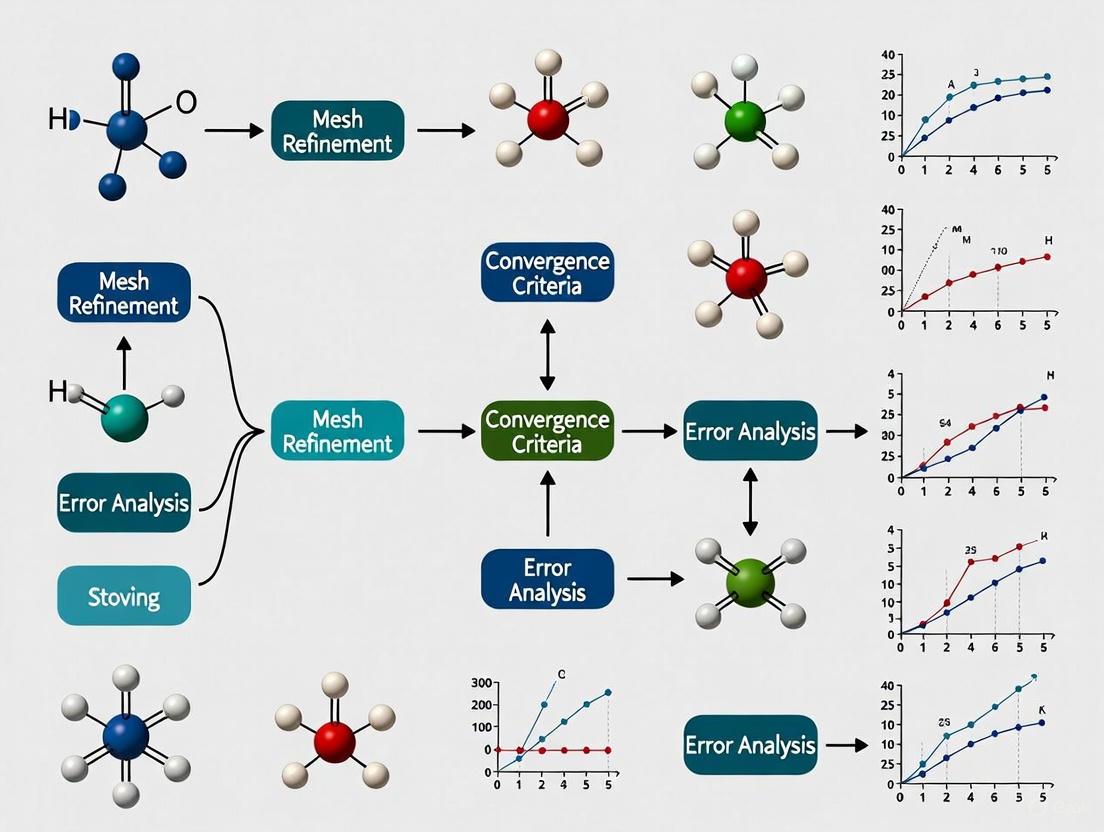
This article provides a comprehensive guide to mesh convergence studies in Finite Element Analysis, tailored for researchers and professionals in biomedical and drug development.
Mesh Convergence in FEA: A Complete Guide for Reliable Biomedical Simulations
Abstract
This article provides a comprehensive guide to mesh convergence studies in Finite Element Analysis, tailored for researchers and professionals in biomedical and drug development. It covers foundational principles, demonstrating why convergence is a non-negotiable pillar for credible computational results. The guide details systematic methodologies for performing convergence studies, including both h- and p-refinement techniques, and addresses common challenges like singularities and nonlinearities. Finally, it establishes a robust framework for validating FEA models against analytical solutions and experimental data, empowering scientists to build confidence in their simulations of medical devices, bioprinted tissues, and other critical biomedical systems.
What is Mesh Convergence and Why is it Critical for Biomedical FEA?
Finite Element Analysis (FEA) is a fundamental computational technique for numerically solving differential equations arising in engineering and mathematical modeling, particularly for problems where analytical solutions are unavailable or impractical [1]. The method subdivides a large, complex physical system into smaller, simpler parts called finite elements, creating a mesh that transforms partial differential equations into solvable algebraic equations [1]. The reliability of these solutions hinges critically on the concept of convergence—the process whereby the approximate FEA solution stabilizes and approaches a true value as key numerical parameters are refined [2].
Achieving convergence transforms FEA from a mere approximation tool into a source of trustworthy results. This process ensures that the solution is not artificially dependent on numerical choices like mesh density, time step size, or load increment specification [2]. For researchers across disciplines, including drug development and biomedical engineering, establishing convergence is a non-negotiable step in validating computational models that inform critical decisions, from implant design to biomechanical interactions [3].
The Critical Role of Mesh Convergence Studies
Fundamental Principles
Mesh convergence is arguably the most foundational type of convergence in FEA. The core principle is straightforward: as the finite element mesh is progressively refined, the computed solution should approach a stable, asymptotic value [4]. The primary goal of a mesh convergence study is to find a mesh that is fine enough that further refinement does not yield relevant increases in accuracy, yet as coarse as possible to conserve computational resources such as computing time and memory space [4].
In practice, reaching the convergence limit is typically identified by monitoring the change in key results between successive refinement steps. A common criterion is less than 1% change in critical outcomes like displacement or stress values [4]. It is important to note that convergence behavior varies significantly depending on the physical quantity being examined. Displacements and primary variables typically converge more readily and with coarser meshes than higher-order results like stresses and strains, which often require more refined discretization due to their dependence on derivatives of the primary solution [4].
Quantitative Demonstration of Mesh Convergence
The following table summarizes data from a mesh convergence study conducted on an aluminum cantilever model, analyzing the influence of mesh density and element type on the calculated displacement at the beam's end [4].
Table 1: Mesh Convergence Study for Cantilever Displacement
| Model Type | Element Description | Target FE Size (mm) | Calculated Displacement (mm) | Relative Change (%) |
|---|---|---|---|---|
| Beam (Bernoulli) | - | - | 7.145 | Reference |
| Beam (Timoshenko) | - | - | 7.365 | Reference |
| Surface (Quad) | Coarse | 20.0 | 6.950 | - |
| Surface (Quad) | Medium | 10.0 | 7.210 | +3.74 |
| Surface (Quad) | Fine | 5.0 | 7.305 | +1.32 |
| Surface (Quad) | Very Fine | 2.5 | 7.340 | +0.48 |
| Surface (Tri) | Coarse | 20.0 | 6.750 | - |
| Surface (Tri) | Medium | 10.0 | 7.150 | +5.93 |
| Surface (Tri) | Fine | 5.0 | 7.290 | +1.96 |
| Surface (Tri) | Very Fine | 2.5 | 7.330 | +0.55 |
The data demonstrates several key principles. First, beam elements (which have analytical shape functions) show no mesh dependence in this simple case. Second, surface models consistently approach the more accurate Timoshenko beam solution (7.365 mm) as the mesh is refined, with the relative change between steps dropping below 1% at the finest refinement level. Third, quadrilateral elements generally demonstrate slightly superior convergence characteristics compared to triangular elements at equivalent mesh sizes [4].
Convergence behavior becomes even more critical when examining stress results. A separate study on a plate with a concentrated load monitored principal stress and strain at a critical point [4]. The results showed that with a target FE element length of 0.01 m, both stress and strain deviated by only about 0.2% from the previous refinement step, indicating satisfactory convergence for engineering purposes [4].
Methodological Approaches to Mesh Refinement
Two primary methodological approaches exist for achieving mesh convergence:
H-Method: This approach uses simple first-order linear or quadratic elements and improves solution accuracy by systematically increasing the number of elements (decreasing element size, 'h') in the model [2]. The computational time increases with the number of elements. The solution progressively approaches the analytical value with each refinement, and the goal is to find the mesh resolution where further refinement does not significantly alter the results [2].
P-Method: This method keeps the number of elements minimal and achieves convergence by increasing the order of the interpolation polynomials (element order, 'p') within each element [2]. While computationally efficient in terms of mesh generation, the computational time increases with element order as degrees of freedom rise exponentially. The P-method often achieves faster convergence for smooth solutions [2].
Table 2: Comparison of H-Method and P-Method Strategies
| Characteristic | H-Method | P-Method |
|---|---|---|
| Refinement Strategy | Decrease element size ('h') | Increase element order ('p') |
| Mesh Structure | Changes with refinement | Remains constant |
| Computational Cost | Increases with number of elements | Increases with element order |
| Implementation | Widely used in codes like Abaqus | Less common, requires high-order elements |
| Application Strength | General purpose, handles singularities | Efficient for smooth solutions |
Comprehensive Convergence Protocol for FEA Research
Workflow for Convergence Verification
The following diagram illustrates the systematic workflow for verifying convergence in finite element analysis, integrating mesh, time, and iterative convergence aspects.
Detailed Experimental Protocol for Mesh Convergence
Objective: To determine a computationally efficient mesh that produces results independent of further mesh refinement for a given FEA model.
Materials and Software:
- FEA software with mesh generation and refinement capabilities (e.g., RFEM, Abaqus) [4] [2]
- Computer workstation with sufficient memory for multiple model solutions
- The physical model to be analyzed with defined geometry, material properties, loads, and boundary conditions
Step-by-Step Procedure:
Model Setup and Baseline Generation
- Create the FEA model with complete geometry, material properties, boundary conditions, and loading.
- Identify critical locations for result monitoring (e.g., maximum stress regions, points of interest). For accurate tracking, use geometrically defined nodes or result points that maintain consistent relative positions during mesh refinement [4].
- Generate an initial, relatively coarse mesh appropriate for the geometry.
Initial Solution and Result Recording
- Solve the model with the initial mesh.
- Record key results from the predefined critical locations, particularly displacements, stresses, strains, or other relevant quantities.
- Document computational resources used (solution time, memory requirements).
Systematic Mesh Refinement
- Refine the mesh globally or apply local refinement in critical regions where high stress gradients are anticipated or observed [4].
- For the h-method, reduce the target element size by a consistent factor (e.g., 1.5-2x refinement). For the p-method, increase the element order.
- Resolve the model and record the same key results and computational metrics.
Convergence Assessment
- Calculate the relative change in key results between successive refinement steps using the formula: [ \text{Relative Change (\%)} = \frac{|R{i} - R{i-1}|}{R{i-1}} \times 100\% ] where (R{i}) is the result at refinement step i.
- Plot results versus element size or degrees of freedom to visualize convergence behavior.
Termination Criteria Evaluation
- Continue the refinement process until the relative change in all critical results falls below a predefined threshold (e.g., 1-5% depending on required accuracy) [4].
- The mesh from the previous refinement step is typically selected as the converged mesh, providing an optimal balance between accuracy and computational efficiency.
Troubleshooting Notes:
- If no convergence is observed with mesh refinement, investigate potential singularities (e.g., reentrant corners, point loads, crack tips) which may require special treatment [4] [2].
- For complex models, consider applying local mesh refinement only in critical regions rather than globally to reduce computational burden [4].
- If stresses fail to converge while displacements do, this often indicates the need for further localized refinement in high-stress gradient regions [4].
Advanced Convergence Considerations
Convergence in Nonlinear Analysis
Convergence challenges become significantly more complex when nonlinearities are introduced into an FEA model through material behavior (e.g., plasticity, hyperelasticity), boundary conditions (e.g., contact, friction), or geometric effects (large deformations) [2]. Unlike linear problems with unique solutions, nonlinear problems may have zero, one, many, or infinite solutions, and the solution depends on the entire load history [2].
Solving nonlinear problems requires breaking the total load into smaller increments and employing iterative methods like Newton-Raphson or Quasi-Newton techniques to find equilibrium at each load step [2]. The convergence criterion for these iterations typically requires that the residual forces (the difference between external and internal forces) fall below specified tolerances [2]:
[ P - I = R \leq \text{Tolerances} ]
Time Integration Convergence
For dynamic simulations involving structural vibrations, impact analysis, or transient thermal behavior, time integration accuracy becomes critical for convergence [2]. The time step must be small enough to capture all relevant physical phenomena while balancing computational cost. Higher-order time integration methods (e.g., implicit/explicit Runge-Kutta) provide improved accuracy but at increased computational expense [2]. Most commercial FEA packages provide user-specified parameters to control time integration accuracy, such as half-increment residual tolerance or maximum change allowed in field variables per increment [2].
Methodological Gaps in Current Practice
Recent literature reviews identify persistent methodological shortcomings in FEA research, particularly in biomedical applications. Common issues include: oversimplified material properties (e.g., uniform bone characteristics); static loading conditions neglecting dynamic physiological forces; idealized fracture geometries missing clinical variation; and unverified interface conditions that may exaggerate implant stability [3]. These gaps highlight the importance of comprehensive convergence studies beyond mere mesh refinement, including material modeling and loading conditions, to ensure clinically relevant results [3].
The Scientist's Toolkit: Essential Research Reagent Solutions
Table 3: Essential Research Reagents for FEA Convergence Studies
| Reagent Solution | Function/Purpose | Implementation Examples |
|---|---|---|
| Mesh Generation Software | Creates finite element discretization of physical geometry | Built-in meshers in FEA packages (Abaqus, ANSYS, RFEM); h-refinement vs. p-refinement capabilities [4] [2] |
| Convergence Metrics Calculator | Quantifies differences between refinement iterations | Custom scripts or built-in tools to calculate relative change (%) in key results; visualization of convergence plots [4] |
| Result Interpolation Tools | Enables consistent result comparison across different meshes | Spatial interpolation algorithms; result points at fixed geometric locations [4] |
| Nonlinear Solution Algorithms | Solves equilibrium equations for nonlinear problems | Newton-Raphson method; Quasi-Newton methods; arc-length methods for unstable structural responses [2] |
| Time Integration Schemes | Advances solution through time in dynamic analyses | Implicit vs. explicit methods; Runge-Kutta methods; automatic time stepping controls [2] |
Convergence studies represent the critical bridge between approximate computational results and trustworthy scientific findings in finite element analysis. A systematic approach to convergence—encompassing mesh refinement, nonlinear solution techniques, and time integration accuracy—ensures that FEA results reflect the underlying physics rather than numerical artifacts. For researchers across disciplines, particularly in safety-critical fields like biomedical device development, rigorous convergence protocols are not merely academic exercises but essential components of responsible computational science. By adopting the comprehensive frameworks and methodologies outlined in this document, scientists can significantly enhance the reliability and credibility of their computational findings, ultimately leading to more robust designs and discoveries.
In biomedical engineering, the concept of convergence represents the integration of distinct technological disciplines to create innovative solutions that surpass the capabilities of any single field. This paradigm is exemplified by the synergy between advanced manufacturing like 3D bioprinting and computational modeling techniques such as Finite Element Analysis (FEA). The critical process of mesh convergence within FEA ensures that digital simulations accurately predict physical behavior, thereby validating designs before they are ever physically realized [5]. This foundational accuracy is paramount across biomedical applications, from engineered tissues that mimic physiological functions to patient-specific implants that restore biological function.
The transformative potential of this convergence is accelerating the development of personalized medical solutions. By combining the structural precision of 3D printing with the predictive power of converged computational models, researchers can create biocompatible constructs with enhanced accuracy and functionality [6] [7]. This approach is revolutionizing regenerative medicine, drug development, and implant design, ultimately leading to more effective patient-specific therapeutic outcomes.
Convergence in 3D Bioprinting and Nanotechnology
The integration of 3D bioprinting with nanotechnology represents a frontier of convergence in biomedicine. This synergy enables the fabrication of complex, functional structures with unprecedented molecular-level control. 3D printing provides the macro-scale structural framework, while nanotechnology introduces dynamic, smart functionalities at the micro and nano scales [6].
Key convergent technologies in this domain include:
- Smart Implants: 3D-printed structures incorporating nanomaterials (e.g., graphene, carbon nanotubes, hydroxyapatite) that provide enhanced mechanical strength, electrical conductivity, and bio-responsiveness [6].
- Targeted Drug Delivery Systems: Nanoengineered 3D-printed scaffolds that enable controlled release of therapeutic agents in response to specific biological stimuli [6].
- Bioresponsive Tissue Scaffolds: Constructs that dynamically interact with their biological environment to promote tissue integration and regeneration [6].
The incorporation of functional nanomaterials into 3D bioprinting processes is spearheading a revolutionary change in biomedical engineering. These nanomaterials endow 3D-printed constructs with novel characteristics including enhanced mechanical strength, electrical conductivity, antibacterial functionality, and bio-responsiveness [6]. These capabilities facilitate the development of advanced medical devices and implants that closely mimic the properties of natural tissues.
Research Reagent Solutions for Convergent Bioprinting
Table 1: Essential materials and reagents for convergent 3D bioprinting applications.
| Category/Name | Function | Example Applications |
|---|---|---|
| Natural Bioinks (Alginate, Chitosan, Gelatin) | Mimic native ECM; provide structural support and biocompatibility [8]. | Soft tissue engineering, cell encapsulation [8]. |
| Synthetic Polymers (PCL, PLA, PVA) | Provide superior mechanical properties and tunable degradation rates [8]. | Load-bearing bone scaffolds, customized implants [8]. |
| Functional Nanomaterials (Graphene, CNTs, Metal Nanoparticles) | Enhance electrical conductivity, mechanical strength, and bio-responsive behavior [6]. | Neural interfaces, smart implants, biosensors [6]. |
| Photoinitiators (e.g., for GelMA) | Enable UV-induced cross-linking of bioinks for rapid solidification [8]. | High-resolution hydrogel constructs [8]. |
Fundamental Principles of Mesh Convergence in FEA
Mesh convergence is a critical computational principle that ensures the reliability and accuracy of Finite Element Analysis. It refers to the process of progressively refining a model's mesh until the results stabilize within an acceptable tolerance, indicating that the solution is no longer significantly affected by element size [9] [5]. In biomedical applications, where predicting stress distribution, strain, and thermal conductivity is essential for patient safety, neglecting this process can lead to dangerously inaccurate conclusions.
The formal method for establishing mesh convergence involves creating a convergence curve, where a critical result parameter (such as peak stress) is plotted against a measure of mesh density [5]. As the mesh is refined, the results should asymptotically approach a stable value, indicating convergence.
Protocol: Conducting a Mesh Convergence Study
Application Note: This protocol provides a standardized methodology for performing a mesh convergence study, essential for validating any FEA model in biomedical research, from implant mechanics to tissue scaffold design.
Principle: To determine the mesh density at which a chosen output (e.g., maximal stress, displacement) becomes independent of further element refinement, thereby ensuring result accuracy and computational efficiency [9] [5].
Materials and Software:
- FEA Software (e.g., Abaqus, Ansys, COMSOL)
- 3D Geometry of the model (e.g., from CAD software or CT scan)
- Computational Workstation
Procedure:
- Model Setup: Develop the initial FEA model with complete geometry, material properties, and boundary conditions representative of the biomedical scenario [10].
- Initial Mesh Generation: Create a starting mesh using the software's default settings or an initial, relatively coarse element size estimate [9].
- Solve and Record: Run the simulation and record the value of the critical output parameter from the region of interest.
- Systematic Refinement: Refine the mesh globally or, more efficiently, locally in regions of interest (e.g., stress concentrations, geometric features) [5].
- Iterate and Plot: Repeat steps 3 and 4 for at least 3-5 different mesh density levels. Plot the critical result parameter against the number of elements or average element size.
- Analyze Convergence: Determine the point where the change in the result between successive refinements falls below a pre-defined threshold (e.g., 2-5%). The mesh prior to this point is often considered sufficiently converged for engineering purposes [9] [11].
Troubleshooting Tips:
- Lack of Convergence: If results do not stabilize, check for modeling errors such as sharp re-entrant corners with no radius, which can create a theoretical stress singularity [5].
- Computational Limits: For very large models, use sub-modeling techniques to perform a detailed convergence study only on the critical region.
- Element Type Consideration: Higher-order elements (e.g., QUAD8, C3D10) often converge faster and more accurately than linear elements (e.g., QUAD4) [9].
Diagram 1: Mesh Convergence Study Workflow. This flowchart outlines the iterative process of solving and refining a finite element model to achieve a mesh-independent result.
Applied Case Study: FEA and Convergence in Dental Implant Design
A compelling application of convergence in biomedical FEA is the design and analysis of restorative dental posts for endodontically treated teeth (ETT). A 2025 study used 3D FEA to assess stress distribution in a severely damaged mandibular first molar restored with different configurations of titanium posts [10].
Protocol: FEA of Restored Endodontically Treated Tooth
Application Note: This protocol details the steps for creating a patient-specific FEA model to evaluate the mechanical performance of dental restorations, informing clinical decisions for optimal stress distribution.
Principle: To simulate occlusal loading conditions on a virtual model of a restored tooth derived from medical imaging data, identifying stress concentrations that may lead to clinical failure [10].
Materials and Software:
- CBCT Scan Data
- Image Processing Software (e.g., MIMICS)
- 3D Modeling Software (e.g., SolidWorks)
- FEA Software (e.g., Abaqus)
Procedure:
- Model Generation: Import and process a high-resolution CBCT scan of a human mandibular first molar using image processing software to create a 3D stereolithography (STL) file of the enamel and dentin structures [10].
- Geometric Reconstruction: Combine the enamel and dentin geometries in CAD software. Model supporting structures, including the periodontal ligament (PDL) as a uniform 200 μm layer and the surrounding alveolar bone [10].
- Restoration Modeling: Modify the tooth model to simulate clinical procedures:
- Create an access cavity and shape root canals.
- Model post spaces in the canals (e.g., distal, mesiobuccal, mesiolingual).
- Insert virtual models of the posts (e.g., titanium FILPOST).
- Build up the core with composite resin and design a zirconia crown [10].
- Material Properties Assignment: Assign linear, isotropic, and homogeneous material properties to all components based on literature values (Young's modulus, Poisson's ratio) [10].
- Mesh Generation and Convergence: Generate a finite element mesh and perform a convergence study as described in Protocol 3.1 to determine the appropriate mesh density.
- Boundary Conditions and Loading: Constrain the outer surface of the alveolar bone. Apply a simulated occlusal load (e.g., 200 N) at a specific angle on the crown's occlusal surface [10].
- Analysis and Post-Processing: Solve the model and analyze the resulting stress distributions (e.g., von Mises stress) at critical locations: the occlusal surface, finish line, furcation area, and along the root canal.
Key Findings from Case Study [10]:
- The model with a single distal post (Model D) recorded the highest stress values at all assessed locations.
- The model with two posts in the distal and mesiolingual canals (Model DML) reported the lowest stress values.
- The use of two posts significantly reduced stress concentrations compared to a single-post design, suggesting enhanced structural durability.
Table 2: Maximum stress values (MPa) reported for different dental post configurations in a mandibular molar FEA study [10].
| Tooth Location | Model D (Single Post) | Model DMB (Distal + Mesiobuccal) | Model DML (Distal + Mesiolingual) |
|---|---|---|---|
| Occlusal Surface | Highest Value | Intermediate Value | Lowest Value |
| Finish Line | Highest Value | Intermediate Value | Lowest Value |
| Furcation Area | Highest Value | Intermediate Value | Lowest Value |
| Root Canal (7mm from apex) | Highest Value | Intermediate Value | Lowest Value |
Advanced Convergence: Integrating FEA with Machine Learning
A frontier in computational convergence is the coupling of FEA with Machine Learning (ML) to create ultra-efficient predictive models. This approach is particularly valuable for characterizing the mechanical behavior of complex 3D-printed meta-biomaterials used in orthopedic implants, where traditional FEA can be computationally prohibitive [11].
In one implementation, an ML model, specifically a Physics-Informed Artificial Neural Network (PIANN), was trained using a large dataset generated from an automated FEA workflow [11]. The trained network learned to predict optimal FEA modeling parameters directly from experimental force-displacement data, thereby inverting the conventional process. This convergence of ML and FEA resulted in accurate simulations that agreed with experimental observations while outperforming state-of-the-art models in terms of quantitative and qualitative accuracy [11].
Diagram 2: ML-Augmented FEA Workflow. This diagram illustrates the data-driven process of using machine learning to predict accurate parameters for finite element simulations, enhancing model reliability and efficiency.
The critical role of convergence in biomedical applications is undeniable, creating a powerful synergy between 3D bioprinting, advanced materials, and computational mechanics. Mesh convergence studies within FEA provide the foundational assurance that digital prototypes will behave as predicted in the physical world, de-risking the development of patient-specific implants and tissue constructs. Furthermore, the emerging convergence of FEA with machine learning heralds a new era of computational efficiency, enabling the rapid exploration and optimization of complex biomedical designs that were previously infeasible. As these fields continue to co-evolve, they will accelerate the translation of innovative engineering solutions into clinical practice, ultimately advancing the frontier of personalized medicine and improving patient outcomes.
In finite element analysis (FEA), mesh convergence studies are fundamental for ensuring the accuracy and reliability of computational simulations. For researchers and scientists in fields including drug development and biomechanics, understanding the convergence behavior of key output parameters—displacements, stresses, and error norms—is critical for validating model predictions [12]. The process involves systematically refining the finite element mesh until the solution stabilizes, indicating that further refinement will not substantially change the results [13]. This document establishes detailed application notes and protocols for conducting mesh convergence studies, with specific emphasis on quantifying convergence through displacement, stress, and mathematical error norms.
The core principle of mesh convergence is that as element sizes decrease (h-refinement) or element order increases (p-refinement), the numerical solution should approach the true analytical solution [12]. However, different physical quantities converge at different rates, and understanding these differences is essential for correct interpretation of FEA results. For instance, displacements typically converge faster than stresses, as stresses are derived from displacement derivatives [14]. This article provides a structured framework for evaluating convergence across these different quantities, with specific application to both compressible and nearly-incompressible material models relevant to biological tissues and pharmaceutical materials [15].
Theoretical Foundation
Displacement and Stress Convergence
In finite element analysis, the displacement field represents the primary solution variable, with the stress field derived from these displacements through constitutive relationships. The accuracy of each field exhibits distinct convergence characteristics during mesh refinement.
Displacement solutions typically show monotonic convergence toward the true solution with mesh refinement. For example, in a cantilever beam model with quadrilateral elements (QUAD4), the tip displacement progressively approaches the theoretical value as the number of elements increases [9]. Stress solutions, being dependent on displacement derivatives, generally converge more slowly than displacements and may exhibit oscillatory behavior during initial refinement stages [14]. This occurs because stresses are calculated from strain-displacement matrices that amplify numerical errors present in the displacement solution.
Higher-order elements demonstrate superior convergence characteristics compared to linear elements. Research shows that 8-node quadrilateral elements (QUAD8) can achieve converged stress solutions with far fewer elements than their 4-node counterparts [9]. In some cases, higher-order elements may even produce constant stress solutions regardless of mesh density for simple problems, immediately providing the converged answer [9].
Error Norms in Convergence Analysis
Error norms provide quantitative measures of solution accuracy in finite element analysis, enabling researchers to objectively evaluate convergence during mesh refinement studies.
- L2-Norm for Displacements: The L2-norm measures the root-mean-square error in displacement solutions over the entire domain. It is defined as the square root of the integral of the squared difference between exact and finite element solutions [14]. This norm provides a global measure of displacement accuracy and typically converges at a rate of (p+1), where (p) is the polynomial order of the element shape functions [12].
- Energy Norm: The energy norm measures error in the energy of the system, incorporating both displacement and stress fields. It converges at a rate of (p) and is particularly useful for evaluating overall solution quality [12] [15].
- L2-Norm for Stresses: This norm quantifies errors in stress solutions, which are critical for failure analysis and strength predictions. Stress L2-norms typically converge more slowly than displacement norms due to their derivation from displacement derivatives [14].
Table 1: Error Norms in Finite Element Convergence Analysis
| Error Norm Type | Physical Interpretation | Convergence Rate | Primary Application |
|---|---|---|---|
| L2-Norm (Displacement) | Global displacement error | (p+1) | Overall deformation accuracy |
| Energy Norm | System energy error | (p) | General solution quality |
| L2-Norm (Stress) | Global stress error | Typically ( | Stress accuracy assessment |
Special Considerations for Nearly-Incompressible Materials
Nearly-incompressible materials, such as rubber-like materials and soft biological tissues, present particular challenges for finite element analysis. These materials experience minimal volume change under loading, with Poisson's ratios approaching 0.5 [15]. Standard displacement-based finite elements often exhibit "volumetric locking," severely underestimating displacements and producing inaccurate stress distributions [15].
Specialized element formulations are required to address this limitation. Bubble-function enriched elements (bES-FEM, bFS-FEM) introduce additional displacement modes that prevent locking while maintaining stability [15]. Mixed displacement-pressure formulations ((u-p) elements) separately interpolate displacements and pressure, effectively bypassing the locking phenomenon [15] [14]. For nearly-incompressible materials, researchers should prioritize these specialized elements to ensure proper convergence of both displacement and stress fields.
Quantitative Data on Convergence Behavior
Experimental convergence studies provide concrete data on expected convergence rates for different element types and analysis conditions. These quantitative benchmarks help researchers set appropriate expectations for mesh refinement studies.
Table 2: Exemplary Convergence Rates for Triangular Elements in Elasticity
| Problem Type | Element Formulation | Displacement Error Convergence Rate | Stress Error Convergence Rate | Source |
|---|---|---|---|---|
| Compressible Elastic Plate | Higher-order triangular | 1.97 | 2.90 (Recovered) | [14] |
| Nearly-Incompressible Elastic Plate | Higher-order triangular | 0.98 | 1.78 (Recovered) | [14] |
| Nearly-Incompressible Elasticity | bES-FEM/bFS-FEM (Bubble-enriched) | Optimal rates achieved | Optimal rates achieved | [15] |
Research demonstrates that error recovery techniques significantly improve convergence rates for stress solutions. The superconvergent patch recovery (SPR) technique, which fits higher-order polynomials to stress sampling points, can produce stress convergence rates exceeding displacement convergence rates [14]. For nearly-incompressible materials, standard elements exhibit significantly degraded convergence (approximately 0.98 for displacements), while specialized formulations restore optimal convergence behavior [14].
The number of elements required for convergence varies substantially by element type. For a simple cantilever beam model, QUAD8 elements achieved the exact solution (300 MPa maximum stress) with just a single element, while QUAD4 elements required approximately 50 elements along the length to achieve results within 1% of the converged value (297 MPa vs. 299.7 MPa) [9].
Experimental Protocols for Convergence Studies
General Mesh Convergence Protocol
This protocol establishes a standardized methodology for performing mesh convergence studies applicable to a wide range of finite element analyses.
Objective: To determine the mesh density required for results of acceptable accuracy while minimizing computational resources.
Workflow:
Procedure:
Problem Definition: Clearly define the physical problem, including geometry, material properties, boundary conditions, and loading. For nonlinear problems, include all relevant nonlinearities (geometric, material, contact).
Quantity of Interest Identification: Identify specific solution quantities to monitor during convergence studies. These typically include:
- Critical displacements at key locations
- Maximum and minimum stress values
- Stress concentrations at critical features
- Reaction forces at supports
- For error norm calculation: select appropriate norms (L2, energy) [14]
Initial Mesh Creation: Generate an initial coarse mesh appropriate for the problem geometry. Document initial mesh statistics:
- Number of nodes and elements
- Element type and order (linear/quadratic)
- Minimum and average element quality metrics
Finite Element Solution: Solve the finite element model with the current mesh. For nonlinear problems, ensure equilibrium convergence is achieved.
Result Extraction: Extract the identified quantities of interest from the solution. For stress values, note the sampling location (nodes, Gauss points, element centers).
Mesh Refinement: Systematically refine the mesh using one of these approaches:
Convergence Assessment: Compare current results with previous mesh solution. Calculate percentage differences for each quantity of interest. Convergence is typically achieved when differences fall below 2-5% for most engineering applications [9].
Termination: When results stabilize within acceptable tolerances, the solution has converged. The penultimate mesh generally provides the optimal balance of accuracy and computational efficiency.
Error Norm Calculation Protocol
This specialized protocol details the calculation of mathematical error norms for rigorous quantification of solution accuracy.
Objective: To quantitatively evaluate finite element solution accuracy using L2 and energy error norms.
Workflow:
Procedure:
Reference Solution Preparation:
- For problems with analytical solutions, compute exact displacement and stress fields
- For complex problems without analytical solutions, use a highly refined "overkill" mesh solution as reference
- Ensure reference solution accuracy through verification procedures
Finite Element Analysis: Perform analysis with the current mesh density. Export complete displacement and stress fields.
Solution Recovery: Implement recovery procedures to improve solution accuracy:
- Superconvergent Patch Recovery (SPR): Fit higher-order polynomials to stress values at optimal sampling points (Gauss points) over patches of elements [14]
- Displacement Recovery: Fit higher-order polynomials to nodal displacements over element patches to obtain improved displacement derivatives [14]
Error Norm Calculation: Compute mathematical norms of the solution error:
Effectivity Index Calculation: Compute the effectivity index (θ) as the ratio of the estimated error to the actual error. This validates the error estimation procedure, with ideal effectivity index approaching 1.0 [14].
Convergence Rate Documentation: Plot error norms against element size on log-log scales. Calculate convergence rates from the slope of these curves for comparison with theoretical expectations.
Protocol for Nearly-Incompressible Materials
Objective: To ensure proper displacement, stress, and error norm convergence for nearly-incompressible materials.
Procedure:
Element Selection: Choose elements specifically designed for nearly-incompressible behavior:
Material Definition: Precisely define material properties with Poisson's ratio approaching 0.5 (typically >0.49 for rubber-like materials, 0.499+ for biological tissues).
Convergence Monitoring: Pay particular attention to:
- Pressure field oscillations (check for checkerboarding patterns)
- Volume change errors (should be minimal)
- Stress accuracy in regions of constraint
Specialized Error Norms: Implement error norms specific to mixed formulations, including separate displacement and pressure error measures [15].
The Scientist's Toolkit
Table 3: Essential Research Reagent Solutions for Finite Element Convergence Studies
| Tool Category | Specific Solution | Function in Convergence Studies |
|---|---|---|
| FEA Software Platforms | Ansys Mechanical [13] | Provides automated mesh convergence tools and adaptive refinement capabilities |
| Element Formulations | QUAD8/QUAD4 [9], bES-FEM/bFS-FEM [15] | Different element technologies with distinct convergence characteristics |
| Error Assessment Tools | L2 Norm Calculators [14], Energy Norm Algorithms [15] | Quantify solution errors for rigorous convergence assessment |
| Reference Solutions | Analytical Benchmarks [9], Overkill Meshes [14] | Provide "true" solutions for error calculation |
| Mesh Generation Tools | Adaptive Meshing Algorithms [13], Local Refinement Tools [13] | Enable systematic mesh refinement in critical regions |
| Visualization Packages | Stress Contour Plotters, Convergence Graph Tools | Identify convergence patterns and problem areas |
Mesh convergence studies represent a critical step in validating finite element analyses across scientific and engineering disciplines. Through systematic application of the protocols outlined herein, researchers can confidently establish the accuracy of displacement, stress, and error norm predictions. Particular attention should be paid to material-dependent considerations, especially for nearly-incompressible biological and pharmaceutical materials requiring specialized element formulations. The quantitative framework presented enables objective assessment of solution quality, ensuring reliable computational results for research and development applications.
In Finite Element Analysis (FEA), a mesh convergence study is a critical process for ensuring that a computational model's predictions are accurate and not unduly influenced by the discretization choices made during model creation. It involves progressively refining the mesh (increasing the number of elements) and observing the stabilization of key output quantities. Ignoring this essential procedure can lead to false positives, where non-converged results are mistaken for valid predictions, and unreliable predictions that fail to represent the true physical behavior of the system under investigation. This application note details the protocols for conducting robust convergence studies, framed within the broader thesis that such studies are fundamental to credible computational research in biomechanics and engineering.
Quantitative Evidence: The Impact of Discretization
The following tables summarize common pitfalls and quantitative outcomes associated with inadequate mesh convergence.
Table 1: Categories of Modeling Errors in FEA [16]
| Error Category | Description | Impact on Model Convergence |
|---|---|---|
| Idealisation Errors | Simplifications of mechanical behaviour (e.g., modelling a plate as a beam), inaccurate mass assignment, erroneous boundary conditions. | Cannot be corrected by mesh refinement alone; requires structural model changes. |
| Discretization Errors | Mesh is too coarse, leading to unconverged modal data; poor element shape sensitivity; truncation errors from order reduction. | Directly addressed and mitigated through mesh convergence studies. |
| Parameter Errors | Incorrect assumptions for material properties (Young's modulus), geometric properties (shell thickness), or non-structural mass. | Parameter updating can be performed, but requires a converged mesh for reliable results. |
Table 2: Convergence Study Outcomes and Interpretations
| Observed Outcome | Possible Interpretation | Risk of Ignoring Convergence |
|---|---|---|
| Results change significantly with mesh refinement. | Solution is mesh-dependent; current mesh is too coarse. | False Positive: An incorrect solution is accepted as correct. |
| Results stabilize within an acceptable tolerance. | Solution is mesh-converged; results are reliable for the defined physics. | N/A - The study has been correctly performed. |
| Results oscillate or diverge with refinement. | Potential existence of model structure errors (e.g., ill-posed boundary conditions) or numerical instabilities. | Unreliable Prediction: The model is not fit for purpose, leading to misguided conclusions. |
Experimental Protocols
Protocol for a Basic Mesh Convergence Study
This protocol provides a step-by-step methodology for performing a h-convergence study, where the mesh size (h) is systematically reduced.
Problem Definition and Quantity of Interest (QoI) Selection:
- Define the specific output variable(s) to monitor for convergence. Common QoIs include:
- Maximum von Mises stress in a critical region.
- Maximum displacement at a loaded point.
- Natural frequency of a specific mode.
- Define an acceptable convergence tolerance (e.g., 2% change between successive refinements).
- Define the specific output variable(s) to monitor for convergence. Common QoIs include:
Initial Mesh Generation:
- Create an initial, relatively coarse mesh that captures the essential geometry.
- Document the initial mesh statistics: number of elements, number of nodes, and element type.
Iterative Solution and Refinement:
- Run the FEA simulation and record the value of the selected QoI(s).
- Refine the mesh globally or in areas of high stress/strain gradients. Adaptive meshing techniques can automate this process.
- For each refinement level, repeat the simulation and record the QoI(s) and mesh statistics.
- Continue until the change in the QoI(s) between two consecutive refinements is less than the pre-defined tolerance.
Data Analysis and Reporting:
- Plot the QoI(s) against a measure of mesh density (e.g., number of elements, element size).
- Confirm the solution is asymptotically approaching a stable value.
- In publications, report the final mesh density and the convergence behavior as evidence of result reliability [17].
Protocol for Integration with Model Updating
For models being updated with experimental data, convergence is equally critical. The following workflow integrates these processes.
Figure 1: Integrated workflow for FEA model validation, highlighting the prerequisite of mesh convergence before parameter updating [16].
- Sensitivity Analysis: This step involves computing the sensitivity of model outputs (e.g., natural frequencies) to changes in updating parameters (e.g., material properties). The relationship is linearized as:
ε_z = z_m - z(θ) ≈ r_i - G_i(θ - θ_i), whereG_iis the sensitivity matrix [16]. A converged mesh is essential for a stable and meaningful sensitivity matrix. - Parameter Estimation & Model Updating: Using a weighted least-squares approach, model parameters are adjusted to minimize the difference between analytical predictions and test data. The objective function is often of the form
J = ε_z^T W_z ε_z + (θ - θ_0)^T W_θ (θ - θ_0), which minimizes the residual while penalizing large parameter changes from their initial valuesθ_0[16]. - Validation Assessment: The updated model must be assessed for its ability to predict system behavior under conditions not used in the updating process. A model updated using a non-converged mesh will fail this predictive assessment.
The Scientist's Toolkit: Research Reagent Solutions
Table 3: Essential Components for a Robust FEA Convergence Study
| Item | Function & Relevance to Convergence |
|---|---|
| FEA Software with Solver Verification | The foundation. Software must use verified numerical solvers. Without this, convergence studies are meaningless. |
| Mesh Generation Tool | Creates the discrete model. Must support both global and local (adaptive) refinement capabilities. |
| Convergence Metric | A predefined criterion (e.g., 2% change in max stress) to objectively stop the refinement process. |
| Parameter Selection Algorithm | Identifies the most sensitive parameters for model updating, preventing ill-conditioning by focusing on influential parameters [16]. |
| Regularization Method | Addresses ill-conditioned systems common in model updating (e.g., Tikhonov regularization) to ensure stable and physically meaningful parameter corrections [16]. |
| High-Performance Computing (HPC) | Provides the computational resources needed to run multiple iterations of a high-fidelity model rapidly. |
| Artificial Neural Networks (ANNs) | Can be integrated to create surrogate models, drastically reducing the time required for repeated analyses in convergence studies and parameter optimization [18]. |
In Finite Element Analysis (FEA), mesh convergence describes a solution that becomes stable and does not change significantly with further mesh refinement. Achieving mesh convergence is fundamental to ensuring the accuracy and reliability of simulation results, as it confirms that the discretization error introduced by modeling a continuous structure with finite elements is acceptably small [12]. This document uses the universally recognized cantilever beam example to establish a clear protocol for conducting mesh convergence studies, providing researchers with a practical framework applicable to complex analyses in fields including biomechanics and medical device development.
The cantilever beam, a simple structural member fixed at one end and free at the other, serves as an excellent analog for many biological and mechanical structures, from micro-scale implant struts to macro-scale architectural components. Its well-understood theoretical behavior provides a robust benchmark for validating numerical models [19] [20]. The core principle of a convergence study is to iteratively refine the mesh and observe the change in a Quantity of Interest (QoI), such as displacement or stress, until the solution stabilizes within a pre-defined tolerance [21] [22].
Theoretical Foundation and Key Concepts
The "h-" and "p-" Refinement Methods
Two primary strategies exist for improving solution accuracy in FEA:
- h-refinement: Reducing the characteristic size (
h) of elements in the mesh. This method increases the number of elements and nodes [12]. - p-refinement: Increasing the polynomial order (
p) of the element's shape functions. This enhances the element's ability to represent complex stress fields without changing the mesh density [12].
For many practical applications, particularly with standard element types, the h-refinement method is the most straightforward and commonly adopted approach.
Quantifying Convergence and Error
Convergence is quantitatively assessed by tracking the QoI across multiple refinement steps. The relative change between successive simulations is calculated, and convergence is typically declared when this change falls below a target threshold (e.g., 1-2%) [21]. For a more rigorous analysis, error norms can be computed. The L2-norm (displacement error) and energy-norm (stress error) are standard measures, with the expected convergence rates being p+1 and p, respectively, where p is the order of the element [12].
Experimental Protocol: A Mesh Convergence Study on a Cantilever Beam
This protocol outlines the systematic procedure for performing a mesh convergence study, using a cantilever beam as the test case.
Research Reagent Solutions and Materials
Table 1: Key materials and software used in the cantilever beam convergence study.
| Item Name | Specification / Example | Primary Function in the Protocol |
|---|---|---|
| Cantilever Beam Specimen | Aluminum, Length=100 mm, Cross-section=20x1 mm [21] | Serves as the physical or numerical test article for analysis. |
| FEA Software Platform | ANSYS, ABAQUS, SAP2000, or equivalent [19] [20] | Provides the computational environment for discretization and solving. |
| Mesh Generation Tool | Integrated within FEA platform | Creates the finite element mesh with controllable parameters. |
| Convergence Metric | Maximum Displacement / Maximum Von Mises Stress [21] [12] | The specific QoI monitored to assess solution stability. |
Step-by-Step Workflow
The following diagram illustrates the core iterative workflow of a mesh convergence study.
Step 1: Model Setup and Initial Meshing
- Create a geometric model of a cantilever beam with defined dimensions and material properties (e.g., Young's Modulus = 70 GPa for aluminum) [21].
- Apply a representative load (e.g., a 1 kN point load at the free end) and boundary conditions (fully fixed at one end).
- Generate an initial, relatively coarse mesh. The choice of element type (e.g., linear quadrilateral vs. triangular) can influence the convergence path and should be noted [21].
Step 2: Iterative Solution and Refinement
- Solve the FEA model and record the QoI, such as the displacement at the free end.
- Systematically refine the mesh. For global refinement, reduce the average element size across the entire model. For greater efficiency, use local mesh refinement in regions with high stress gradients, ensuring a smooth transition to coarser areas [12] [22].
- Repeat the solve-and-record process for at least three to four progressively finer meshes to establish a trend [22].
Step 3: Convergence Assessment
- Calculate the relative difference for the QoI between successive mesh refinement levels.
- Plot the QoI against a measure of mesh density (e.g., number of nodes or element size).
- Declare convergence when the relative change between the last two iterations is below a pre-defined tolerance (e.g., <1-2%) [21].
Data Presentation and Analysis
The results from the convergence study should be compiled into a table for clear comparison and trend analysis. Table 2: Example results from a mesh convergence study of a cantilever beam under a 1 kN end load.
| Mesh Density Level | Number of Elements | Max Displacement (mm) | Relative Change in Displacement (%) | Max Von Mises Stress (MPa) | Relative Change in Stress (%) |
|---|---|---|---|---|---|
| Coarse | 100 | 7.10 | - | 285 | - |
| Medium | 500 | 7.32 | 3.00 | 310 | 8.77 |
| Fine | 2000 | 7.35 | 0.41 | 325 | 4.84 |
| Very Fine | 8000 | 7.36 | 0.14 | 328 | 0.92 |
Analysis of Results:
- Displacement Convergence: Displacements, being a global measure, typically converge rapidly. In this example, the displacement stabilizes after the "Fine" mesh, with a change of only 0.14% to the "Very Fine" mesh [21].
- Stress Convergence: Stresses, being derivative quantities, converge more slowly. The stress is still changing by 0.92% in the final step, suggesting that further refinement may be needed for highly accurate stress values [21] [12].
Experimental Validation and Model Updating
A converged computational model gains full credibility when validated against experimental data. This process closes the loop of the "Simulation-Verification-Validation" cycle.
Experimental Modal Validation Protocol
For dynamic analyses, such as predicting natural frequencies, the following validation protocol is employed:
- Experimental Setup: A steel cantilever beam is instrumented with accelerometers at multiple points along its length [20].
- Data Acquisition: The beam is excited (e.g., with an impact hammer), and its dynamic response is recorded. Through techniques like Frequency Domain Decomposition (FDD), the experimental natural frequencies and mode shapes are extracted [19] [20].
- Model Updating: The FEA model's input parameters (e.g., material properties, boundary conditions) are iteratively adjusted within physical bounds to minimize the discrepancy between simulated and experimental results. The Modal Assurance Criterion (MAC) is used to quantitatively compare mode shapes [20]. A MAC value above 0.9 indicates excellent correlation [20].
Integrated Workflow for Validated Analysis
The diagram below outlines the comprehensive workflow integrating FEA with experimental validation.
Advanced Considerations and Best Practices
Pitfalls and Special Cases
- Geometric Singularities: In regions with re-entrant corners or zero-radius fillets, stress is theoretically infinite. Mesh refinement in these areas will cause stress to increase without bound. The solution is to model the actual, non-zero radius present in the physical part [12] [22].
- Locking Phenomena: Volumetric locking (in incompressible materials) and shear locking (in bending) can cause overly stiff behavior. Using second-order elements (p-refinement) is often an effective remedy [12].
Integration with Digital Workflows
Validated and converged FEA models can serve as the foundation for Digital Twins. As demonstrated in recent research, updated FEA results can be integrated into a Building Information Modeling (BIM) framework, enabling real-time visualization of structural performance and supporting condition assessment and maintenance planning [20].
The cantilever beam example provides a foundational analogy for understanding and executing mesh convergence studies. The rigorous, iterative protocol of model refinement, solution, and comparison against experimental data is essential for producing trustworthy simulation results. This practice is a critical component of the finite element method, transforming it from a simple design tool into a powerful, predictive technology that can reliably inform decision-making in scientific research and professional engineering.
A Step-by-Step Methodology for Performing Convergence Studies
In Finite Element Analysis (FEA), a Quantity of Interest (QoI) is a specific, numerically computed value that serves as a key indicator of a system's physical response under prescribed conditions. The careful selection of an appropriate QoI is fundamental to the reliability and relevance of any FEA study, particularly within the framework of mesh convergence. Mesh convergence studies evaluate how the numerical solution changes as the mesh is refined, and a model is considered converged when the results for the chosen QoI stabilize with progressively finer meshes [23]. This process ensures numerical accuracy and transforms simulation from an exercise in approximation into a tool for engineering certainty [23].
The selection process is not merely a technical step but a strategic one, dictated by the primary research or design question. Stresses are paramount in failure and yield analysis, displacements are critical in stiffness and deformation studies, and natural frequencies are essential for vibrational and dynamic response characterization. This document provides detailed application notes and protocols for researchers on the selection, calculation, and convergence verification of these primary quantities of interest.
Characteristics of Key Quantities of Interest
The table below summarizes the core characteristics, applications, and convergence considerations for the three primary categories of QoIs.
Table 1: Comparison of Key Quantities of Interest in FEA
| Quantity of Interest | Primary Physical Significance | Typical Applications | Convergence Behavior & Considerations |
|---|---|---|---|
| Stresses (e.g., Von Mises) | Predicts yielding and failure in ductile materials [24]. | Structural integrity analysis of implants [3], biomechanics of bone [24] [25], and component design. | Generally slower to converge than displacements. Requires finer meshes, especially near stress concentrations. Sensitive to mesh quality and boundary conditions [23]. |
| Displacements | Measures deformation and structural stiffness. | Analysis of structural deformations [25], gap and interference checks, and fixation device displacement under load [3]. | Typically the fastest converging variable. Often used as a primary convergence criterion as it is less sensitive than stress [23]. |
| Natural Frequencies | Defines inherent dynamic characteristics and resonance modes. | Vibration analysis, seismic studies, and dynamic load design. | Convergence is assessed by tracking frequency values (Hz) across mesh refinements. Ensures the model captures the correct global and local dynamic stiffness. |
Protocols for Mesh Convergence Studies
General Workflow for a Convergence Study
A robust mesh convergence study follows a systematic procedure to validate the FEA model. The workflow below outlines the key steps, from initial mesh generation to the final decision on mesh adequacy.
Protocol 1: Convergence for Stress Analysis
Stress analysis, particularly with the Von Mises stress, is common in biomechanical and engineering applications but presents specific challenges for convergence.
- Objective: To obtain a mesh-independent stress distribution for accurate failure prediction.
- Materials & Software: FEA Pre-processor (for meshing), FEA Solver (e.g., Abaqus, ANSYS, open-source alternatives like OpenSees [1]), Post-processor, and a tool for statistical analysis of stress data.
- Procedure:
- Mesh Generation: Begin with a coarse mesh. Subsequent refinements should focus on regions of high stress gradients, such as geometric discontinuities, holes, and load application points. Both uniform and adaptive (non-uniform) meshes can be used, with the latter being more efficient for complex geometries [24].
- Simulation Execution: Run the simulation for each mesh refinement level and extract the stress field.
- Data Processing - Handling Non-Uniform Meshes: For meaningful comparison across different non-uniform meshes, use statistics that account for element size.
- The Mesh-Weighted Arithmetic Mean (MWAM) is the recommended central tendency statistic for a global stress value. It is calculated by summing the product of the stress in each element and its area (or volume), then dividing by the total area (or volume) [24]:
MWAM = Σ(σ_i * A_i) / Σ(A_i)whereσ_iis the stress in elementiandA_iis its area. - This prevents skewing of results, as larger elements appropriately contribute more to the global stress value than smaller ones [24].
- The Mesh-Weighted Arithmetic Mean (MWAM) is the recommended central tendency statistic for a global stress value. It is calculated by summing the product of the stress in each element and its area (or volume), then dividing by the total area (or volume) [24]:
- Convergence Check: Plot the MWAM of stress (or the maximum stress in a critical region) against mesh density (e.g., number of degrees of freedom). Convergence is achieved when the change in this value between subsequent refinements falls below a predetermined threshold (e.g., 2-5%).
Protocol 2: Convergence for Displacement Analysis
Displacement analysis is often more straightforward, as displacements converge faster than stresses.
- Objective: To ensure that the calculated deformations and stiffness of the system are mesh-independent.
- Materials & Software: FEA Pre-processor, FEA Solver, Post-processor.
- Procedure:
- Mesh Generation: Systematically refine the mesh globally. As displacements are a global response, local refinement is less critical than in stress analysis.
- Simulation Execution: Run the simulation for each mesh refinement level.
- Data Processing: Extract the maximum displacement in the model or the displacement at specific critical points (e.g., the tip of a cantilever, the center of a plate) [3].
- Convergence Check: Plot the selected displacement value against mesh density. The solution is considered converged once the displacement value plateaus with further refinement [23].
The Researcher's Toolkit for FEA Convergence
Table 2: Essential Research Reagents and Solutions for FEA Convergence Studies
| Item / Solution | Function in Convergence Studies |
|---|---|
| FEA Software with Meshing Tools | Provides the computational environment for generating meshes, solving the underlying differential equations, and extracting results. Essential for performing the systematic refinements required for convergence testing [1]. |
| Automated Meshing Scripts | Custom or built-in scripts that allow for batch generation of meshes with varying levels of refinement. Critical for ensuring systematic and consistent changes between mesh iterations, especially in complex geometries [26]. |
| Statistical Analysis Package | Software (e.g., Python with Pandas/NumPy, R) used to compute mesh-weighted statistics like the MWAM, which are crucial for accurately comparing stress results from non-uniform meshes [24]. |
| High-Performance Computing (HPC) Resources | Clusters or workstations with significant memory and processing power. Convergence studies require multiple simulation runs, which can be computationally expensive, making HPC resources highly valuable [1]. |
| Quasi-Ideal Mesh | A conceptual or practical mesh template that defines the target level of homogeneity and refinement. It serves as a benchmark to ensure different models are compared on a consistent basis, accounting for differences in element size [24]. |
Advanced Considerations and Troubleshooting
Despite a structured protocol, convergence can be elusive. Several advanced factors must be considered. Non-converging results may signal underlying issues beyond mere mesh density, including poor element quality, incorrect boundary conditions, or unaccounted-for nonlinear effects [23]. Furthermore, the simplifications inherent in material modeling—such as assuming uniform bone properties—can create a significant gap between a converged simulation and physical reality, limiting predictive accuracy [3] [25]. For dynamic problems, the QoI shifts to natural frequencies and mode shapes. Convergence must be verified for the frequencies of interest, ensuring the model correctly captures the inertial and stiffness properties that govern dynamic response.
The diagram above illustrates that the path to a converged result is not solely dependent on mesh density. The selected QoI is intrinsically linked to and influenced by solver algorithms (e.g., direct vs. iterative), the geometric construction and quality of the mesh, and the fidelity of the assigned material properties. A successful convergence study must therefore holistically address all these factors.
In Finite Element Analysis (FEA), achieving accurate and reliable results is paramount for researchers and engineers. The principle of mesh convergence states that as a computational mesh is refined, the numerical solution should approach the true physical solution of the underlying partial differential equations [12]. Two principal methodologies have emerged for systematic mesh refinement: h-refinement and p-refinement. The strategic selection between these approaches directly impacts computational efficiency, resource allocation, and result accuracy across diverse applications from structural mechanics to biomedical engineering [27] [28]. For researchers in drug development and biomedical fields, where modeling may involve complex biological structures or fluid-structure interactions, understanding these refinement strategies is essential for constructing valid computational models that predict real-world behavior without excessive computational cost.
Theoretical Foundations of Refinement Methods
H-Refinement Methodology
H-refinement is a mesh improvement technique that enhances solution accuracy by systematically reducing element sizes in critical regions while maintaining constant polynomial order of the shape functions [29]. This method increases the number of elements (and consequently degrees of freedom) in the computational domain, particularly targeting areas where error estimators indicate significant discretization errors [27]. The fundamental premise of h-refinement is that smaller elements can better capture high solution gradients and complex geometric features, leading to a more accurate representation of the physical phenomena being studied. The process is typically iterative, with each adaptation cycle identifying regions requiring finer discretization based on error assessment, subdividing elements in those regions, and resolving the system until satisfactory convergence is achieved [27].
P-Refinement Methodology
In contrast to h-refinement, p-refinement enhances solution accuracy by increasing the polynomial order (p) of the element shape functions while maintaining a fixed mesh topology [28] [29]. This approach elevates the mathematical sophistication of the solution approximation within each element rather than increasing element count. For sufficiently smooth solutions, p-refinement offers exponential error reduction as the polynomial order increases, whereas h-refinement typically provides only algebraic error reduction [28]. This makes p-refinement particularly effective for problems with smooth solutions where high-order approximations can dramatically accelerate convergence. The p-method essentially enriches the approximation space by employing higher-order polynomials, allowing more complex solution variations to be captured within each element without altering the computational grid.
The R-Refinement Alternative
A less common third approach, r-refinement, involves redistributing existing nodes within the domain to minimize potential energy without changing the total number of elements or their polynomial order [29]. This method relocates nodes toward regions where higher solution resolution is needed, effectively optimizing the mesh topology for a fixed number of degrees of freedom. While theoretically interesting, r-refinement remains less widely implemented in commercial FEA software and is considered obsolete for most practical applications [29].
Comparative Analysis: H-Refinement vs. P-Refinement
Table 1: Fundamental Characteristics of H- and P-Refinement
| Characteristic | H-Refinement | P-Refinement |
|---|---|---|
| Primary Mechanism | Decreases element size | Increases polynomial order |
| Mesh Topology | Changes with refinement | Remains constant |
| Error Reduction Rate | Algebraic convergence | Exponential convergence for smooth solutions |
| Computational Cost | Increases degrees of freedom significantly | Increases degrees of freedom moderately |
| Implementation Complexity | Requires handling of hanging nodes | Avoids hanging nodes |
| Geometric Adaptation | Excellent for capturing complex geometries | Limited by initial mesh geometry |
| Solution Smoothness Requirement | Effective for non-smooth solutions | Requires smooth solutions for optimal performance |
Table 2: Performance Comparison in Practical Applications
| Application Domain | H-Refinement Effectiveness | P-Refinement Effectiveness | Key Research Findings |
|---|---|---|---|
| Wind Turbine Wake Simulation [28] | High (resolves fine wake details) | High (exponential error reduction for smooth flows) | P-refinement potential for 60,000x DOF reduction for same precision |
| Brain Stimulation Modeling [27] | Critical for accuracy | Not implemented in study | <25% element increase exposed >60% errors in unrefined models |
| Metal Forming Analysis [30] | Computationally efficient | Not specified | Comparison carried out to evaluate computational efficiency |
| Structural Analysis [12] | Effective for stress concentrations | Superior for incompressible materials | Second-order elements preferred for incompressibility |
Key Advantages and Limitations
H-refinement demonstrates particular strength in handling problems with complex geometries, discontinuities, or singularities where the solution lacks smoothness [12]. By concentrating smaller elements in regions of interest, it can effectively capture localized phenomena such as stress concentrations around geometric features. However, this approach significantly increases the total number of degrees of freedom, leading to greater computational resource requirements for both processing and data storage [9]. The introduction of "hanging nodes" at interfaces between refined and unrefined regions adds implementation complexity that must be properly managed through constraint equations or special transition elements.
P-refinement excels in scenarios with smooth solutions where increasing the polynomial order delivers rapid convergence without altering mesh connectivity [28]. This method avoids hanging nodes and can achieve high accuracy with relatively few elements, making it computationally efficient for appropriate problems. However, its effectiveness diminishes when solutions contain discontinuities or sharp gradients, and it offers limited ability to improve geometric representation beyond the initial mesh resolution [12]. Additionally, higher-order elements require more sophisticated integration schemes and can lead to ill-conditioned systems if not properly implemented.
Experimental Protocols and Implementation
Protocol for H-Refinement Study
Objective: To quantitatively evaluate solution convergence through systematic element size reduction in regions of high discretization error.
Materials and Computational Tools:
- FEA software with adaptive meshing capabilities (e.g., Ansys Mechanical 2025R1 [13] or BEM-FMM [27])
- Error estimation algorithms (e.g., based on stress gradients or residual methods)
- Model of the physical system to be analyzed
Methodology:
- Initial Analysis: Perform FEA simulation with a baseline mesh configuration
- Error Assessment: Calculate error distribution across the domain using appropriate error estimators
- Element Selection: Identify elements exceeding predefined error thresholds for refinement
- Mesh Adaptation: Subdivide selected elements while maintaining mesh compatibility
- Iterative Solution: Repeat analysis with refined mesh until convergence criteria satisfied
- Result Verification: Compare key parameters (stresses, displacements, potentials) across refinement cycles
In brain stimulation modeling, researchers implementing this protocol discovered that increasing mesh elements by less than 25% in critical regions exposed electric field errors exceeding 60% in unrefined models [27]. This demonstrates the critical importance of targeted refinement in computational models for biomedical applications.
Protocol for P-Refinement Study
Objective: To assess convergence behavior through elevation of element polynomial order while maintaining fixed mesh topology.
Materials and Computational Tools:
- High-order FEA solver (e.g., Horses3D [28] or p-version FEA software)
- Mesh generation software capable of supporting higher-order elements
- Appropriate quadrature rules for numerical integration
Methodology:
- Baseline Establishment: Solve problem using linear (p=1) or quadratic (p=2) elements
- Polynomial Enhancement: Systematically increase approximation order across the domain or in selected regions
- Solution Tracking: Monitor convergence of quantities of interest with increasing p-levels
- Condition Monitoring: Observe system conditioning and address potential numerical issues
- Convergence Assessment: Determine when further polynomial increase provides diminishing returns
In wind turbine wake simulations, this approach has demonstrated potential for dramatic reductions in degrees of freedom – up to 60,000 times reduction compared to low-order methods for equivalent precision [28].
Convergence Assessment Protocol
Objective: To establish quantitative criteria for determining when a solution has sufficiently converged.
Methodology:
- Parameter Selection: Identify critical response quantities (displacements, stresses, potentials, etc.)
- Progressive Refinement: Execute multiple analysis cycles with either h- or p-refinement
- Change Monitoring: Track variation in key parameters between refinement cycles
- Convergence Criteria: Establish threshold for acceptable change (typically 1-5% depending on application)
- Termination Decision: Conclude refinement when changes fall below established thresholds
As demonstrated in cantilever beam studies, convergence can be determined when stress variations between refinement cycles reduce to approximately 0.9% [9]. For less critical applications, variations up to 5% may be acceptable depending on computational constraints and engineering requirements.
Table 3: Research Reagent Solutions for Refinement Studies
| Tool/Reagent | Function | Application Context |
|---|---|---|
| BEM-FMM Solver [27] | Boundary Element Method with Fast Multipole Acceleration | Electromagnetic modeling for brain stimulation |
| Horses3D [28] | High-order discontinuous Galerkin solver | Wind turbine wake simulation and fluid dynamics |
| Ansys Mechanical [13] | Commercial FEA with adaptive meshing | Structural analysis with automatic refinement |
| Error Estimators | Identify regions requiring refinement | Guide adaptive processes in both h- and p-methods |
| Fast Multipole Method | Accelerates boundary element calculations | Enables higher resolution models in BEM-FMM |
Application-Specific Implementation Guidelines
Biomedical Engineering Applications
In computational models of brain stimulation (TES, TMS) and electrophysiology (EEG), adaptive h-refinement has proven essential for accuracy. Studies using Boundary Element Method with Fast Multipole Acceleration (BEM-FMM) have demonstrated that strategically increasing mesh elements by less than 25% in critical regions can expose electric field errors exceeding 60% in unrefined models [27]. This has profound implications for TES dosing prediction and EEG lead field calculations, where accurate electric field strength is crucial. For these applications, implementing an automated adaptive refinement algorithm that efficiently allocates additional unknowns to critical areas significantly improves solution accuracy without prohibitive computational cost.
Fluid Dynamics and Wind Energy
For wind turbine wake simulation, both h- and p-refinement strategies offer distinct advantages. Research indicates that p-refinement provides exponential error reduction for sufficiently smooth flows, potentially reducing degrees of freedom by orders of magnitude compared to traditional low-order methods [28]. In one study, researchers projected that a low-order mesh with 100 million degrees of freedom could be replaced by a high-order mesh with just 1.6 thousand degrees of freedom for equivalent precision – a 60,000-fold reduction [28]. This dramatic efficiency gain makes p-refinement particularly attractive for large-scale fluid dynamics simulations where computational resources constrain model fidelity.
Structural Mechanics
In traditional structural analysis, the choice between h- and p-refinement depends on specific problem characteristics. H-refinement effectively captures stress concentrations around geometric features and is more robust for problems with material discontinuities or contact [12]. Conversely, p-refinement demonstrates superiority for problems involving incompressible materials (e.g., hyperelastic polymers, biological tissues) where second-order elements help mitigate volumetric locking issues [12]. Cantilever beam studies show that while both methods eventually converge, p-refinement with 8-node quadrilateral elements (QUAD8) can achieve constant stress results even with a single element, whereas h-refinement with 4-node quadrilateral elements (QUAD4) requires multiple elements to approach the correct solution [9].
The strategic selection between h- and p-refinement represents a critical decision point in finite element analysis that directly impacts computational efficiency and result accuracy. H-refinement excels at handling complex geometries, discontinuities, and singularities through targeted element subdivision, while p-refinement offers exponential convergence for smooth solutions through polynomial enrichment. Contemporary research demonstrates that adaptive refinement strategies – particularly in biomedical engineering and fluid dynamics – can dramatically improve solution accuracy with minimal increase in computational cost. For researchers in drug development and biomedical fields, implementing systematic convergence studies using these protocols ensures reliable computational results that faithfully represent physical reality. The optimal approach in many advanced applications may indeed involve combined hp-refinement strategies that leverage the respective advantages of both methodologies.
Within the framework of finite element analysis (FEA) research, a mesh convergence study is an indispensable procedural step to ensure that simulation results are not materially affected by the discretization of the geometry and can be trusted for making scientific conclusions [12]. For researchers and scientists in drug development, particularly those modeling pharmaceutical powder compaction or the mechanical performance of novel meta-biomaterials, a rigorous approach to mesh convergence is critical for predictive accuracy and resource efficiency [31] [11]. This application note provides a detailed, practical protocol for executing a robust mesh convergence study, from an initial coarse mesh to a fully converged solution.
Theoretical Foundation of Convergence
In FEA, the computational domain (geometry) is subdivided into smaller pieces called elements [31]. The process of mesh refinement involves successively resolving the model with finer meshes and comparing the results [32]. The core principle is that as the elements are made smaller and smaller, the computed solution will approach the true solution of the underlying mathematical model [32].
A critical consideration is the presence of singularities—locations such as sharp internal corners or cracks where stresses are theoretically infinite [12]. In these instances, stress values will not converge with mesh refinement and require specialized engineering treatment, such as assuming an actual radius instead of a perfect sharp corner [12].
A Systematic Workflow for Mesh Convergence
The following section outlines a step-by-step experimental protocol for performing a mesh convergence study.
The diagram below illustrates the logical flow of the entire convergence study workflow, integrating both initial setup and iterative refinement.
Detailed Experimental Protocol
Step 1: Preliminary Model Setup and Coarse Mesh Generation
- Define Geometry: Create a computer-aided design (CAD) model of the system. Simplify the geometry by removing extraneous cosmetic or manufacturing details that are non-essential for the analysis [32]. Exploit symmetry (e.g., axial, planar) where possible to significantly reduce computation time [31].
- Establish Physics and Boundary Conditions: Define all relevant physical properties, material models (e.g., Drucker-Prager Cap model for pharmaceutical powders [31]), loads, and constraints [31] [32].
- Generate a Coarse Preliminary Mesh: Begin with a mesh that is "as coarse as possible" [32]. Use global mesh settings to define an initial element size, often derived from the characteristic CAD size (e.g., the thickness of ribs) [33]. This initial mesh serves as a rough check on the applied loads and constraints and provides a baseline solution.
Step 2: Solution and Analysis of Coarse Mesh
- Solve the FEA model with the coarse mesh.
- Visual Inspection: Check the results for obvious errors or inconsistencies. Visually inspect the mesh for uniformity and element proportion [33].
- Element Quality Assessment: Evaluate basic mesh quality criteria such as aspect ratio and distortion. A good rule of thumb is to adhere to an 80:20 rule, where the vast majority of elements meet quality thresholds [33].
Step 3: Iterative Mesh Refinement and Convergence Checking
- Select a Convergence Metric: Identify a specific, scalar quantity of interest for monitoring convergence. This metric can be a local value (e.g., the displacement or stress at a critical point) or a global value (e.g., the integral of strain energy density over the entire model) [12] [32]. The choice of metric is critical, as different metrics converge at different rates [32].
- Refine the Mesh Systematically: Apply a mesh refinement technique. A minimum of three successive solutions with increasing mesh resolution are recommended to observe asymptotic behavior [12] [32].
- Solve and Compare: For each new, refined mesh, solve the FEA model and calculate the chosen metric. Compare the value to those obtained from previous, coarser meshes.
- Check for Convergence: Convergence is typically assumed when the change in the metric of interest between two subsequent mesh refinements becomes "small enough" based on the analyst's judgment and the acceptable uncertainty in the results [32]. For example, a convergence criterion could be a change of less than 2% in a peak reaction force [11] or a stress drop of less than 10% within an element [33].
Step 4: Final Validation and Documentation
- Once convergence is achieved, the finest mesh from the study can be considered the "converged solution."
- It is considered good practice to perform a final run with this mesh and document all parameters, including the final element count, the convergence metric history, and the specific refinement techniques used.
Mesh Refinement Techniques and Metrics
Multiple strategies exist for refining a finite element mesh. The table below summarizes the most common techniques, their advantages, and disadvantages.
Table 1: Comparison of Finite Element Mesh Refinement Techniques
| Refinement Technique | Description | Advantages | Disadvantages |
|---|---|---|---|
| Reducing Element Size (h-refinement) [12] [32] | Uniformly or locally decreasing the size of elements throughout the mesh. | Simple to implement and understand. | Computationally inefficient if applied globally; no preferential refinement in critical regions. |
| Increasing Element Order (p-refinement) [12] [32] | Increasing the order of the polynomial shape functions within elements without changing the mesh. | No need for remeshing; can be more accurate per degree of freedom. | Computational requirements increase faster than with h-refinement. |
| Global/Local Adaptive Mesh Refinement [32] | The FEA software uses an error estimate to automatically refine the mesh in regions with high numerical error. | Automated; requires minimal user input; effective at capturing unknown high-error regions. | User has little control; may over-refine areas of less interest. |
| Manual Mesh Adjustment [32] [33] | The analyst manually creates a series of meshes based on physics intuition and knowledge of the geometry. | Can be the most computationally efficient method when done correctly. | Requires significant experience and time; labor-intensive. |
The rate of convergence and the appropriate refinement strategy can be guided by the type of metric being monitored. The table below categorizes common convergence metrics.
Table 2: Categories of Convergence Metrics in FEA
| Metric Category | Description | Examples | Convergence Notes |
|---|---|---|---|
| Global Metric [32] | An integral value computed over the entire model or a large portion of it. | Total Strain Energy, Mass, Volume. | Generally converges faster than local metrics. Useful for overall model validation [33]. |
| Local Metric (Solution Field) [32] | The value of a primary solution variable at a specific point of interest. | Displacement at a node, Temperature at a point. | Converges at a medium rate. Sensitive to local mesh quality. |
| Local Metric (Gradient Field) [32] [33] | The value of a derived quantity, which is based on the gradient of the solution. | Stress at a point, Strain. | Converges slowest because gradients are less accurately captured. Requires the finest mesh in areas of interest. |
The Researcher's Toolkit for FEA Convergence
Table 3: Essential Research Reagent Solutions for FEA Convergence Studies
| Item / Reagent | Function / Role in the Convergence Workflow |
|---|---|
| Computer-Aided Design (CAD) Software | Creates the geometric model of the system to be analyzed, which is the foundational input for FEA [32]. |
| FEA Software with Meshing Capabilities | The primary computational environment for discretizing the geometry, applying physics, solving the system, and post-processing results (e.g., Abaqus, COMSOL, Ansys) [11] [32]. |
| Constitutive Material Model | A mathematical relationship that defines the material's behavior under load (e.g., Elastic, Plastic, Drucker-Prager Cap model for powders) [31]. |
| Error Norm (L2, Energy) | A quantitative measure used to calculate the difference between approximate and true solutions, providing a mathematical basis for assessing convergence [12]. |
| High-Performance Computing (HPC) Resources | Computational resources required to solve the large systems of linear equations generated by fine meshes, especially in 3D models [33]. |
Interpreting Convergence Plots and Determining the 'Optimal' Mesh
In Finite Element Analysis (FEA), a mesh convergence study is a critical process for validating the accuracy and reliability of computational models. The fundamental principle is that as the finite element mesh is progressively refined, the computed solution should approach the true analytical solution of the governing physical equations [12]. The "optimal" mesh is therefore not necessarily the finest one, but the coarsest mesh that provides results within an acceptable error tolerance while minimizing computational cost [34]. This balance is essential for practical engineering applications where computational resources and time are limiting factors.
For researchers, scientists, and drug development professionals, these studies are particularly valuable in biomedical applications such as implant design, tissue modeling, and drug delivery system analysis. In these contexts, mesh convergence ensures that critical parameters like stress concentrations in medical devices or flow distributions in delivery systems are accurately captured, providing confidence in the predictive capabilities of the simulation before proceeding to costly experimental validation.
Theoretical Framework of Convergence
Types of Convergence in FEA
In computational mechanics, convergence manifests in several distinct forms, each addressing different aspects of the numerical solution:
- Mesh Convergence: Also known as h-convergence, this occurs when the computed solution stabilizes as the element size (h) decreases. The mesh must be refined until the quantity of interest shows minimal change with further refinement [2].
- Solution Convergence for Nonlinear Problems: In nonlinear analyses involving contacts, large deformations, or nonlinear materials, convergence refers to the iterative process where the solution satisfies the equilibrium conditions within specified tolerances for each load increment [2].
- Time Step Convergence: For dynamic or transient simulations, the time step must be sufficiently small to capture the physical phenomena accurately without excessive computational burden [2].
Mathematical Foundation
The mathematical basis for convergence lies in how the error between the numerical solution and the true solution decreases with mesh refinement. The convergence rate follows predictable patterns based on element type and refinement strategy:
- For h-refinement (reducing element size), the error decreases at a rate of p+1 for the L2-norm (displacement error) and at a rate of p for the energy-norm (stress error), where p is the order of the element [12].
- For p-refinement (increasing element order), the error decreases exponentially without changing the mesh topology [2].
Table: Convergence Rates for Different Element Types and Refinement Strategies
| Refinement Type | L2-Norm (Displacement) Error Rate | Energy-Norm (Stress) Error Rate |
|---|---|---|
| Linear Elements (p=1) | h² | h |
| Quadratic Elements (p=2) | h³ | h² |
| Cubic Elements (p=3) | h⁴ | h³ |
| p-Method | Exponential | Exponential |
Quantitative Data on Mesh Convergence
Convergence Metrics and Error Assessment
Different metrics converge at varying rates, with global metrics typically converging faster than local ones, particularly those based on solution gradients like stresses [32]. The table below illustrates how different metrics behave during a typical convergence study:
Table: Convergence Behavior of Different FEA Metrics
| Metric Type | Example | Convergence Rate | Application Context |
|---|---|---|---|
| Global Metric | Strain Energy | Fastest | Overall solution accuracy |
| Local Metric (Solution Field) | Displacement at a Point | Intermediate | Specific point tracking |
| Local Metric (Gradient Field) | Stress at a Point | Slowest | Critical for failure analysis |
Quantitative Convergence Data
Empirical data from convergence studies reveals the relationship between mesh density, accuracy, and computational cost:
Table: Representative Mesh Convergence Data for a Shell Structure [34]
| Element Size | Number of Nodes | Output Result | Error (%) | Computing Time |
|---|---|---|---|---|
| Coarse | 121 | 0.72 | 3.6 | Baseline |
| Medium | 256 | 0.698 | 0.5 | 2.5x Baseline |
| Fine | 529 | 0.695 | 0.14 | 7x Baseline |
| Very Fine | 1024 | 0.6947 | 0.0 | 18x Baseline |
The data demonstrates the principle of diminishing returns - refining from medium to fine mesh only improves accuracy by 0.36% while increasing computation time by nearly 3 times [34].
Experimental Protocols for Convergence Studies
Standard Protocol for Mesh Convergence Study
Diagram: Workflow for Systematic Mesh Convergence Study
Objective: To determine the optimal mesh density that provides results within an acceptable error tolerance for the specific analysis.
Materials and Software Requirements:
- FEA software package (e.g., SimScale, Abaqus, COMSOL)
- CAD geometry of the model
- Computational resources appropriate for the problem size
- Data analysis tool (e.g., Microsoft Excel, Python)
Procedure:
- Initial Setup:
Iterative Analysis:
Convergence Assessment:
- Plot the quantities of interest against mesh density (e.g., number of nodes or element size).
- Calculate the relative change between successive solutions.
- Continue refinement until the change falls below the predetermined threshold.
Optimal Mesh Selection:
- Select the mesh where further refinement yields diminishing returns - minimal improvement in accuracy with significant increase in computational cost [34].
- Document the mesh parameters and the estimated error associated with the chosen mesh.
Protocol for Handling Singularities and Stress Concentrations
Objective: To properly address areas with theoretical stress singularities where standard convergence approaches may fail.
Background: In regions with sharp corners, cracks, or point loads, stresses are theoretically infinite, preventing normal mesh convergence [12].
Procedure:
- Identify potential singularity regions in the model (sharp re-entrant corners, crack tips).
- For sharp corners, modify the geometry to include a small, realistic radius when physically justified [12].
- For essential singularities (e.g., crack tips), use specialized elements or solution techniques.
- Perform convergence studies on global parameters (e.g., strain energy) or displacements away from the singularity.
- Document the approach and acknowledge limitations in regions where convergence cannot be achieved.
Visualization and Interpretation of Convergence Plots
Types of Convergence Plots
Diagram: Convergence Plot Interpretation Methodology
Traditional Convergence Plot:
- X-axis: Mesh density parameter (number of nodes, elements, or 1/element size)
- Y-axis: Quantity of interest (stress, displacement, frequency)
- Interpretation: Look for the point where the curve flattens, indicating diminished returns with further refinement [34]
Linearized Convergence Plot:
- X-axis: 1/(number of nodes) or 1/(element size)
- Y-axis: Quantity of interest
- Interpretation: Use linear extrapolation to find the Y-intercept (X=0), which represents the theoretical value at infinite mesh refinement [34]
Error vs. Computational Cost Plot:
- X-axis: Computing time or resource requirements
- Y-axis: Estimated error percentage
- Interpretation: Identify the "knee" of the curve where further refinement yields minimal accuracy improvement for significant computational cost [34]
Recognizing Convergence Patterns
- Healthy Convergence: Smooth, asymptotic approach to a stable value with successive refinements [12].
- Oscillatory Convergence: Values oscillate around the asymptotic value; may indicate inadequate refinement in critical regions.
- Divergence: Solution fails to stabilize; often indicates modeling errors, ill-conditioning, or the presence of singularities [12].
- Arrested Convergence: Solution plateaus but at an incorrect value; suggests fundamental issues with boundary conditions or material properties.
Research Reagent Solutions
Table: Essential Computational Tools for Mesh Convergence Studies
| Tool Category | Specific Examples | Function in Convergence Studies |
|---|---|---|
| FEA Software Platforms | SimScale, COMSOL, Abaqus | Provide mesh generation capabilities and solvers for running convergence studies [35] [32] |
| Cloud Simulation Tools | SimScale | Enable resource-intensive convergence studies without local hardware limitations [35] |
| Mesh Refinement Algorithms | Global Adaptive Refinement, Local Adaptive Refinement | Automatically refine mesh based on error estimates [32] |
| Convergence Monitoring Tools | Altair Inspire Convergence Plot | Track engineering quantities and equation residuals during analysis [36] |
| Data Analysis Tools | Microsoft Excel, Python | Process results, create convergence plots, and perform extrapolations [35] [34] |
Specialized Techniques for Advanced Applications
Time-Domain Adaptive Refinement: For transient problems, the mesh is adapted at different time intervals to capture evolving phenomena, such as in fluid-structure interaction or impact analysis [32].
Wavelength-Adaptive Refinement: For frequency-domain simulations, element size is controlled based on the wavelength in different materials, crucial for acoustic and electromagnetic applications [32].
Goal-Oriented Adaptation: Mesh refinement is driven by specific output functionals rather than global error measures, optimizing computational effort for particular quantities of interest [32].
Mesh convergence studies represent a cornerstone of rigorous finite element analysis, ensuring that computational predictions are trustworthy and meaningful. The determination of the "optimal" mesh requires both technical understanding of convergence principles and practical consideration of computational constraints. By implementing the protocols outlined in this document and carefully interpreting convergence plots, researchers can establish mesh-independent solutions with quantified error estimates, significantly enhancing the validity of their simulation results. In biomedical applications particularly, where patient safety and therapeutic efficacy may depend on these analyses, robust convergence studies are not merely academic exercises but essential components of responsible research and development.
In finite element analysis (FEA) of 3D-printed biomaterials, mesh convergence is a fundamental prerequisite for obtaining physically meaningful and quantitatively accurate simulation results. Without verified convergence, predictions of scaffold mechanical performance, deformation behavior, and stress distribution lack reliability, potentially compromising subsequent experimental validation and clinical translation. The layer-by-layer deposition process of fused deposition modeling (FDM) creates anisotropic microstructures that necessitate careful computational characterization [37]. Furthermore, the intricate architectures of meta-biomaterials—with their complex pore networks and strut geometries—demand particularly rigorous mesh refinement studies to ensure simulation fidelity [11].
The convergence process systematically refines the finite element mesh until key output parameters (such as peak stress or displacement) stabilize within an acceptable tolerance. For 3D-printed scaffolds, this ensures that numerical artifacts do not obscure the true mechanical response arising from their complex geometries. As FEA becomes an FDA-acknowledged alternative to experimental testing for medical devices, establishing robust convergence protocols becomes increasingly critical for regulatory acceptance and scientific credibility [11].
Computational Protocols for Mesh Convergence Studies
Defining Convergence Criteria for Scaffold Structures
For 3D-printed meta-biomaterials, convergence criteria must be selected to capture both global structural response and local stress concentrations that may initiate failure. The following parameters should be monitored during mesh refinement:
- Primary Monitoring Parameter: Maximum principal stress at critical strut junctions
- Secondary Monitoring Parameters: Peak reaction force under compressive loading, total strain energy, and displacement at specified control points
Convergence is typically achieved when the percentage difference in these parameters between successive mesh refinements falls below a predetermined threshold, often 2-5% depending on the required accuracy [37] [11]. For stress analysis in porous structures, the maximum principal stress generally requires finer meshing than displacement or strain energy to achieve convergence.
Systematic Mesh Refinement Workflow
The following workflow outlines a standardized protocol for conducting mesh convergence studies on 3D-printed scaffold structures:
Figure 1: Mesh Convergence Study Workflow. This systematic approach ensures progressive mesh refinement until key simulation parameters stabilize within an acceptable tolerance (typically 2-5%).
Element Selection and Mesh Configuration
The choice of finite elements significantly impacts convergence behavior for 3D-printed structures:
- Element Type: Modified quadratic tetrahedral elements (C3D10M in Abaqus) are preferred over standard quadratic elements (C3D10) for applications involving contact scenarios and large strains, common in scaffold compression tests [11].
- Mesh Density Control: For lattice structures, a minimum of three elements per strut diameter is recommended as an initial seeding criterion.
- Local Refinement: Areas with high stress gradients, such as strut junctions and contact regions, require localized mesh refinement to accelerate convergence of stress values.
For the complex curvilinear geometries found in triply periodic minimal surface (TPMS) scaffolds or auxetic structures, swept meshing techniques with hexahedral elements may provide more efficient convergence paths when geometry permits.
Advanced Integration with Machine Learning and High-Performance Computing
Machine Learning-Assisted Convergence Parameter Identification
Recent advances integrate machine learning with FEA to streamline the convergence process. Physics-informed artificial neural networks (PIANNs) can predict optimal modeling parameters, including mesh configuration, by learning from existing simulation databases [11]. The implementation protocol involves:
- Training Data Generation: Create a library of force-displacement curves and associated mesh parameters using automated FEA workflows
- Network Architecture: Implement a multilayer perceptron with three hidden layers activated by rectified linear unit (ReLU) functions
- Hyperparameter Optimization: Systematically study network configurations through cross-validation (e.g., 1350 parameter combinations)
- Model Validation: Compare ANN-predicted parameters with experimental data for validation
This approach is particularly valuable for identifying the minimal mesh density required for convergence without excessive computational expense.
High-Performance Computing for Complex Bioprinting Simulations
High-performance computing (HPC) resources enable the high-fidelity simulations necessary for accurate bioprinting process modeling. The exascale computing era facilitates more sophisticated simulations that capture the multi-phase nature of bioinks and their interaction with deposition processes [38]. Key considerations include:
- Parallelization Strategies: Domain decomposition techniques that distribute mesh elements across multiple computing nodes
- Memory Management: Optimized memory allocation for handling refined meshes with millions of elements
- Algorithm Selection: Efficient linear solvers (e.g., conjugate gradient methods) preconditioned for specific bioprinting simulation types
Table 1: Quantitative Mesh Convergence Criteria for Different Simulation Types in 3D Bioprinting
| Simulation Type | Primary Convergence Parameter | Acceptable Tolerance | Typical Element Count Range | Recommended Element Type |
|---|---|---|---|---|
| Scaffold Compression | Peak reaction force | 2.5% [11] | 500,000 - 2,000,000 | C3D10M |
| Strut-Level Stress Analysis | Maximum principal stress | 5% | 100,000 - 500,000 | C3D10M |
| Bioink Deposition | Interface shear stress | 3% | 2,000,000 - 5,000,000 | C3D8R |
| Thermal Analysis | Temperature gradient | 2% | 500,000 - 1,500,000 | DC3D10 |
Validation Framework for Converged Simulations
Integration with Experimental Mechanical Testing
Validating converged simulations against experimental data is essential for establishing their predictive capability. A robust validation protocol includes:
- Experimental Benchmarking: Compare simulation results with compression tests of 3D-printed scaffolds, ensuring correlation exceeds 95% for displacement fields and reaction forces [37]
- Multi-Modal Validation: Incorporate digital image correlation (DIC) data to validate full-field strain predictions
- Statistical Analysis: Apply two-way ANOVA to identify significant interaction effects between core geometry and load type, as demonstrated in studies where F(2,12) = 15.14, p < 0.001 indicated architecture-dependent mechanical performance [39]
Homogenization Techniques for Effective Properties
For porous scaffold designs, homogenization methods provide an efficient approach for predicting effective macroscopic properties and validating simulation results:
- Representative Volume Elements (RVEs): Isolate periodic unit cells of scaffold architectures for efficient computation
- Orthotropic Property Calculation: Determine nine independent elastic constants (E₁, E₂, E₃, ν₁₂, ν₁₃, ν₂₃, G₁₂, G₁₃, G₂₃) through virtual testing
- Multi-Objective Optimization: Implement genetic algorithms (e.g., NSGA-II, MOGA) for inverse identification of material parameters [37]
Table 2: Research Reagent Solutions for 3D Bioprinting Simulation Validation
| Material/Software | Function in Convergence Studies | Specific Application Example |
|---|---|---|
| Polylactic Acid (PLA) | Benchmark material for FDM-printed scaffold validation [39] [37] | Validation of anisotropic properties in rectilinear (0°/90°) infill patterns |
| Abaqus FEA Software | Platform for mesh convergence studies and parametric scripting [11] | Python scripting for automated mesh refinement and result extraction |
| Micro-CT Imaging | Geometric validation of as-printed versus as-modeled structures [11] | Strut diameter measurement for accurate mesh generation |
| Python with Keras/TensorFlow | Machine learning implementation for parameter prediction [11] | Physics-informed ANN for identifying optimal mesh parameters |
| Urban Institute R Theme (urbnthemes) | Standardized visualization of convergence data [40] | Consistent graphing of mesh refinement studies for publication |
Application to Specific Bioprinting Scenarios
Process-Oriented Simulations
Simulating the bioprinting process itself introduces additional convergence challenges due to the multi-phase, time-dependent nature of bioink deposition. Key considerations include:
- Pre-Printing Phase: Model bioink as a composite material with cell-induced modifications to viscoelastic properties [38]
- During Printing: Account for shear-thinning behavior where viscosity reduces when shear rate increases [38]
- Post-Printing: Simulate structural evolution due to cell migration and proliferation that alter mechanical properties
For these transient simulations, convergence must be established for both spatial discretization (mesh) and temporal discretization (time steps).
Multi-Scale Modeling Approach
Comprehensive bioprinting simulation often requires a multi-scale approach with convergence established at each level:
Figure 2: Multi-Scale Modeling Framework for Bioprinting Simulations. This approach establishes convergence at each scale before transferring parameters between modeling levels, ensuring consistent accuracy across different physical domains.
Ensuring mesh convergence in 3D bioprinting simulations is not merely a technical formality but a fundamental requirement for producing reliable, predictive computational models. The protocols outlined in this document provide a structured approach to verification and validation that accommodates the unique challenges of additive manufacturing and biomaterial complexities. As the field progresses toward more sophisticated in silico experimentation, robust convergence studies will play an increasingly vital role in accelerating the development of novel bioprinting strategies and tissue engineering applications.
Troubleshooting Common Convergence Problems in Complex Models
Identifying and Managing Stress Singularities at Re-entrant Corners and Cracks
In finite element analysis (FEA), a stress singularity is a mathematical phenomenon where stresses theoretically tend toward an infinite value at a specific point in a model [41]. This occurs at geometric features or loading points where the underlying equations of elasticity produce unbounded stress solutions. Unlike stress concentrations, which converge to a finite value with mesh refinement, stress singularities exhibit diverging behavior—stresses continue to increase indefinitely as the mesh becomes finer [42] [43]. Within the context of mesh convergence studies, this divergent behavior serves as a primary indicator for identifying singularities, contrasting sharply with the convergent behavior expected in well-posed FEA problems.
The most common locations for stress singularities include perfectly sharp re-entrant corners (inside corners with an angle greater than 180°), crack tips, point loads, and point constraints [42] [44] [41]. At crack tips, the singularity is an intrinsic part of the fracture mechanics problem and must be properly characterized using specialized techniques. However, at re-entrant corners in structural components, the singularity often represents a numerical artifact stemming from geometric idealization rather than physical reality [42] [45].
Fundamental Mechanisms and Theoretical Background
The Re-entrant Corner Problem
A re-entrant corner can be defined as a perfectly sharp inside corner that causes an infinite change in stiffness within a component [42]. From a mathematical perspective, this geometric feature creates a discontinuity that prevents the stress field from converging to a finite value. The fundamental issue arises because elements adjacent to the corner node cannot properly represent the rapid stiffness transition. For instance, when beam elements are arranged at a right angle, the stiffness matrix at the corner node may contain only zeros, leading to the singularity [42]. This mathematical limitation manifests in FEA as mesh-dependent stress values that increase with refinement rather than converging.
For researchers performing mesh convergence studies, this presents a significant challenge. The standard approach of comparing results across sequentially refined meshes fails when singularities are present, as the stress values at the singularity point will show continuous increase without stabilization [42] [43]. The table below summarizes the key differences between stress singularities and stress concentrations:
Table 1: Distinction Between Stress Singularities and Stress Concentrations
| Characteristic | Stress Singularity | Stress Concentration |
|---|---|---|
| Mathematical Behavior | Theoretical stress approaches infinity | Finite stress value |
| Mesh Convergence | Diverges with mesh refinement | Converges with mesh refinement |
| Geometric Cause | Perfectly sharp corners, cracks | Small radii, holes, notches |
| Physical Reality | Often a modeling artifact | Physically present |
| Common Handling | Special numerical techniques | Standard mesh refinement |
Crack Tips as Singularities
In linear elastic fracture mechanics, crack tips represent a special case of stress singularities where stresses theoretically approach infinity as the distance from the crack tip approaches zero. The order of the singularity depends on the material properties and loading conditions [46] [47]. Unlike re-entrant corners which often exist due to modeling simplifications, crack tip singularities represent physical reality and require specialized treatment to compute parameters like stress intensity factors for fracture predictions.
Advanced FEA techniques have been developed specifically for handling crack tip singularities, including the use of quarter-point elements that can represent the known √r displacement field near crack tips [46]. For researchers conducting mesh convergence studies in fracture mechanics, traditional stress-based convergence criteria are insufficient, and energy-based approaches or specialized error measures must be employed instead.
Identification Protocols for Stress Singularities
Mesh Convergence Studies for Singularity Detection
The primary methodology for identifying stress singularities involves systematic mesh convergence studies. The standard protocol requires running a series of simulations with progressively refined meshes, particularly in regions suspected of singular behavior. The step-by-step experimental protocol is as follows:
Initial Mesh Generation: Create an initial mesh with uniform element size throughout the domain, documenting the baseline element size in the region of interest.
Progressive Refinement: Systematically refine the mesh in the potential singularity region, reducing the element size by a consistent factor (typically 1.5-2x) for each subsequent simulation.
Stress Monitoring: Track the maximum stress value in the region of interest for each refinement level, recording both the value and its location.
Convergence Assessment: Analyze the stress values versus element size or number of degrees of freedom. Non-converging, continuously increasing stresses indicate a singularity.
Field Examination: Plot stress distributions along paths radiating from the suspected singularity to determine the extent of the affected region.
The following diagram illustrates the logical workflow for identifying singularities through mesh convergence studies:
Diagram 1: Mesh Convergence Study Workflow for Singularity Identification
Quantitative Assessment of Singularity Strength
For researchers requiring quantitative characterization of singularities, the rate of stress divergence provides valuable information about the singularity's strength. The experimental protocol for this assessment involves:
Stress Extraction: Extract stress values at consistent distances from the singularity point across all mesh refinement levels.
Log-Log Analysis: Plot the logarithm of stress against the logarithm of element size or the logarithm of distance from the singularity.
Singularity Exponent: Determine the exponent of the stress singularity by calculating the slope of the log-log plot, where stress σ ∝ r^(-λ), with λ representing the singularity strength [46].
Comparison with Theory: Compare empirically determined singularity exponents with theoretical predictions where available (e.g., 0.5 for crack tips in homogeneous isotropic materials).
Table 2: Characteristic Stress Behavior in Convergence Studies
| Mesh Refinement Level | Element Size at Corner (mm) | Maximum Stress (MPa) | Convergence Status |
|---|---|---|---|
| Coarse | 1.0 | 285 | - |
| Medium | 0.5 | 412 | Diverging |
| Fine | 0.25 | 612 | Diverging |
| Very Fine | 0.125 | 895 | Diverging |
| Ultra Fine | 0.0625 | 1324 | Diverging |
Management Strategies for Stress Singularities
Geometric Modifications
The most straightforward approach to eliminating stress singularities involves modifying the geometric representation to reflect physical reality. The recommended experimental protocols include:
Fillet Addition Protocol:
- Identify the re-entrant corner causing the singularity
- Add a small fillet radius based on manufacturing capabilities (typically 0.1-0.5 mm for machined parts)
- Ensure sufficient mesh refinement through the radius (typically 8-16 elements through the fillet)
- Verify convergence with mesh refinement after fillet addition
- Correlate results with analytical stress concentration factors where possible [42]
Submodeling Technique:
- Create and solve a global model with simplified geometry
- Cut a submodel region surrounding the critical area with detailed geometry
- Apply interpolated boundary conditions from the global solution to the submodel boundaries
- Include accurate geometric features (fillets, etc.) in the submodel
- Perform detailed analysis on the submodel with appropriate mesh density [44]
Advanced Numerical Treatments
For cases where geometric modification is impractical or when analyzing genuine singularities like crack tips, specialized numerical techniques are required:
Singular Element Enrichment: Advanced finite element techniques automatically enrich the approximation space near singular points with functions that capture the singular behavior. The protocol involves:
- Identifying singular points in the domain through preliminary analysis
- Enriching standard finite elements with semi-analytical singular modes
- Constructing enrichment functions using methods like the Scaled Boundary Finite Element Method (SBFEM)
- Combining enriched elements with standard finite elements without transitional elements [46]
Material Nonlinearity Incorporation: For ductile materials, incorporating plastic material behavior can effectively eliminate artificial singularities:
- Replace linear elastic material models with appropriate elastoplastic models
- Ensure proper representation of yield surface and hardening behavior
- Verify that plastic strains remain within acceptable limits
- Interpret results in terms of plastic strain distribution rather than stress singularities [43]
The Researcher's Toolkit: Methods for Singularity Management
Table 3: Research Reagent Solutions for Stress Singularity Analysis
| Method Category | Specific Technique | Primary Function | Implementation Considerations |
|---|---|---|---|
| Geometric Modification | Fillet Addition | Replaces singularity with quantifiable stress concentration | Requires manufacturing knowledge; mesh sensitivity through radius |
| Submodeling | Enables local geometric detail without global computational cost | Dependent on global model boundary conditions | |
| Numerical Treatment | Singular Element Enrichment | Directly captures singular behavior in approximation space | Requires specialized implementation; automated detection beneficial |
| High-Order Elements | Improves stress prediction accuracy | p-refinement approach; more effective away from singularity | |
| Material Modeling | Elastoplasticity | Limits stresses through yield criterion | Appropriate for ductile materials; requires strain limits |
| Result Interpretation | Stress Linearization | Extracts through-thickness stress components | Standard in pressure vessel design; requires path definition |
| Saint-Venant's Principle | Justifies ignoring local effects for global behavior | Valid only sufficiently far from singularity location |
Practical Application Protocol for Pharmaceutical Tableting
In pharmaceutical powder compaction simulations, stress singularities may appear at sharp transitions in punch geometry or at tablet edges. The specialized protocol for this domain includes:
Geometry Preparation: Implement small fillets (minimum 0.1 mm) at all sharp internal corners of punch faces and tablet geometries, reflecting manufacturing realities.
Material Model Selection: Employ appropriate constitutive models for powder behavior (e.g., Drucker-Prager Cap model) that incorporate yielding and density-dependent hardening [31].
Mesh Design: Utilize mapped meshing with biased refinement toward critical regions, ensuring progressive element size transition.
Convergence Metric: Focus convergence assessment on density distributions and overall compaction forces rather than localized stress peaks.
Experimental Validation: Correlate simulation results with experimental tablet hardness, density measurements, and visual inspection for capping or lamination.
The following diagram illustrates the integrated approach for handling singularities in pharmaceutical tableting simulations:
Diagram 2: Pharmaceutical Tableting Simulation Protocol
Proper identification and management of stress singularities at re-entrant corners and cracks is essential for reliable finite element analysis in research applications. Through systematic mesh convergence studies, researchers can distinguish between numerical artifacts and genuine stress concentrations. Implementation of appropriate strategies—whether through geometric modification, advanced numerical treatments, or result interpretation principles—ensures physically meaningful simulation outcomes. For pharmaceutical applications, particularly in tableting process simulation, integrating these protocols with domain-specific material models and validation experiments provides robust methodology for research and development.
Finite Element Analysis (FEA) is a fundamental computational tool for researchers and engineers simulating complex physical phenomena. In linear analysis, a structure's response maintains a proportional relationship with the applied load, governed by a constant stiffness matrix {F} = [K]{u} [48]. However, many real-world problems in drug development instrumentation, biomedical device design, and advanced materials science exhibit nonlinear behaviors where this simple relationship no longer holds. Achieving reliable convergence in these nonlinear simulations represents a significant challenge in computational mechanics.
Nonlinear FEA problems are broadly categorized into three types based on their source: material nonlinearity, geometric nonlinearity, and contact nonlinearity [49]. Material nonlinearity arises when stress-strain relationships deviate from linear elasticity, as seen in plastic deformation or hyperelastic materials. Geometric nonlinearity occurs when structures undergo large deformations or rotations that significantly alter their load-carrying characteristics [48]. Contact nonlinearity involves changing interaction conditions between components, where both contact area and status evolve during loading [49].
The convergence of a nonlinear solution refers to achieving a stable, consistent result where residuals and errors decrease to acceptable tolerance levels as the analysis progresses [2]. For researchers, ensuring convergence is not merely a numerical exercise but a fundamental requirement for producing physically meaningful, reliable data for publication and decision-making.
Theoretical Foundations of Nonlinearity
Material Nonlinearity
Material nonlinearity describes the behavior of materials whose constitutive relationships cannot be adequately represented by linear elasticity. This encompasses a wide range of phenomena critical to pharmaceutical and biomedical applications:
- Elastic-Plastic Behavior: Permanent deformation occurs when stresses exceed the material's yield point, relevant to metal components in manufacturing equipment.
- Hyperelasticity: Large elastic deformations in polymers, elastomers, and biological tissues described by strain energy density functions.
- Creep and Viscoplasticity: Time-dependent inelastic deformation under sustained loading, crucial for long-term stability assessment.
- Damage and Failure: Progressive material degradation leading to stiffness reduction and eventual structural failure.
Unlike linear analysis where the stress-strain relationship remains constant, material nonlinearity requires continuous updating of the material stiffness matrix based on the current strain state and loading history.
Geometric Nonlinearity
Geometric nonlinearity becomes significant when deformations are sufficiently large to alter a structure's load-resisting characteristics. In these scenarios, the stiffness matrix [K] must be redefined throughout the analysis to account for changing geometric configuration [48]. This occurs through two primary mechanisms:
- Large Displacements: When displacements and rotations are large enough to significantly change the structural geometry, as in the bending of slender beams or the stretching of membranes [48] [50].
- Large Strains: When the strain measure itself must account for finite deformation, moving beyond the infinitesimal strain approximation [50].
For a rod element in 2D space, the engineering strain definition becomes nonlinear due to displacement coupling: ( L = \sqrt{\left(L0+ux(L)\right)^2 + \left(uy(L)\right)^2} ), where ( L0 ) is the original length, and ( ux(L) ), ( uy(L) ) are displacements [50]. The transition from linear to nonlinear kinematics is particularly relevant for simulating flexible structures in biomedical devices and soft robotic systems for laboratory automation.
Contact Nonlinearity
Contact nonlinearity presents some of the most challenging convergence problems in FEA. It arises when the interaction between components introduces changing boundary conditions and load transfer paths that evolve throughout the simulation [49]. Key characteristics include:
- Unpredictable Contact Area: The region of contact between bodies changes nonlinearly with load application.
- Frictional Effects: Coulomb friction introduces path-dependent, nonsmooth response.
- Boundary Condition Changes: Contact status (open, closed, sliding) changes abruptly, creating discontinuities.
The fundamental challenge in contact problems lies in their inequality constraints – gaps must remain non-negative and contact pressures must be compressive. Classical Hertz contact theory provides analytical solutions for simple cases, but complex scenarios require sophisticated numerical algorithms [49].
Table 1: Comparison of Nonlinearity Types in FEA
| Nonlinearity Type | Governing Physics | Mathematical Representation | Common Applications |
|---|---|---|---|
| Material | Nonlinear stress-strain relationship | ( \bsig = f(\beps, \dot{\beps}, \text{history}) ) | Plastic deformation of metal components, hyperelastic seals |
| Geometric | Large displacements/rotations changing stiffness | Updating ( \bK ) based on ( \bu ) | Membrane stretching, beam buckling, flexible structures |
| Contact | Changing boundary conditions | Inequality constraints: ( gN \geq 0, pN \leq 0 ) | Component interfaces, sealing surfaces, support contacts |
Mesh Convergence in Nonlinear Analysis
Fundamentals of Mesh Convergence Studies
Mesh convergence studies are essential for establishing numerical accuracy and result reliability in nonlinear FEA. The core principle involves systematically refining the discretization until key solution metrics stabilize within acceptable tolerances [9] [51]. For researchers, this process validates that numerical errors from discretization are sufficiently small relative to the physical phenomena being studied.
The convergence study process follows these general steps:
- Begin with a coarse but computationally efficient mesh
- Solve the nonlinear problem with appropriate solution techniques
- Refine the mesh strategically based on error indicators
- Compare solution quantities of interest (stresses, displacements)
- Continue refinement until changes fall below target thresholds [51]
Different solution variables converge at different rates. Displacements typically converge first, followed by stresses and strains, which require finer discretization [51]. This is particularly important in nonlinear problems where stress concentrations often drive material yielding or damage initiation.
H-Method vs. P-Method Refinement
Two primary approaches exist for mesh refinement in convergence studies:
- H-Method: Refinement occurs by increasing element count while maintaining element order. First-order linear or simple quadratic elements are used, and accuracy improves as element size decreases [2].
- P-Method: The number of elements remains relatively constant, but the polynomial order of element shape functions increases (4th, 5th, or 6th order) [2].
Table 2: Comparison of Mesh Refinement Strategies
| Refinement Method | Implementation Approach | Convergence Rate | Computational Cost | Best Applications |
|---|---|---|---|---|
| H-Method | Increase number of elements | Slower, more predictable | Higher memory requirements | General nonlinear problems, contact |
| P-Method | Increase element polynomial order | Faster, exponential possible | Higher computation per element | Smooth solutions, geometric nonlinearity |
The H-method is more widely implemented in commercial FEA software like Abaqus and provides more direct control over element sizing in critical regions [2]. For nonlinear problems with localized phenomena like plastic zones or contact stresses, targeted h-refinement in these regions often provides the most efficient convergence path.
Convergence Criteria and Assessment
Establishing quantitative convergence criteria is essential for objective assessment of mesh independence. Common approaches include:
- Relative Difference Method: ( \frac{\left| S{i+1} - Si \right|}{S{i+1}} \leq \tau ) where ( Si ) is the solution quantity at refinement level i, and ( \tau ) is the tolerance (typically 1-5%) [51].
- Asymptotic Extrapolation: Estimating the exact solution through Richardson extrapolation and measuring relative error.
- Error Norm-Based: Evaluating energy norms or other global error measures.
For the cantilever example in [9], stress values converged to within 0.9% difference between models with 50 and 500 elements along the length, demonstrating sufficient convergence for most engineering applications. Research requiring higher precision, such as fatigue life prediction or fracture mechanics, may demand tighter tolerances.
Diagram 1: Mesh Convergence Study Workflow for Nonlinear Problems
Solution Techniques for Nonlinear Problems
Nonlinear Solution Algorithms
Solving nonlinear FEA problems requires specialized iterative algorithms that handle the path-dependent nature of the response. The fundamental equilibrium equation, ( \bP - \bI(\bu) = \bzero ), where ( \bP ) represents external forces and ( \bI ) internal forces, must be satisfied incrementally [2].
The Newton-Raphson method represents the most widely used approach, characterized by:
- Reformulating the nonlinear equation system as ( \bR(\bu) = \bP - \bI(\bu) = \bzero )
- Iterative correction using ( \bK_T^{(i)} \Delta \bu^{(i)} = \bR^{(i)} )
- Updating the solution ( \bu^{(i+1)} = \bu^{(i)} + \Delta \bu^{(i)} )
- Recalculating the tangent stiffness matrix ( \bK_T ) each iteration [2]
The Quasi-Newton methods (e.g., BFGS) offer an alternative that approximates the stiffness matrix update to reduce computational cost, though with potentially slower convergence [2].
For geometric nonlinearity specifically, the element force vector is computed as: [ \fint^\ue = \int{L0} \bB^T\bsig\,dx ] where both the strain-displacement matrix ( \bB ) and stresses ( \bsig ) depend on the displacement solution ( \bu ) [50].
Load Stepping and Incrementation
Nonlinear problems are typically solved using incremental loading strategies, where the total load is applied in smaller steps to accurately trace the equilibrium path [2]. The size of these increments critically affects both solution accuracy and convergence likelihood.
Automatic incrementation control algorithms adjust step sizes based on convergence difficulty:
- Reduce increment size when iterations diverge or slow
- Increase increment size when convergence is rapid
- Maintain balance between computational efficiency and solution fidelity
For problems with sharp nonlinearities (e.g., contact engagement, material yielding), smaller increments are essential to capture the physical response accurately. The Abaqus software provides parameters to control time integration accuracy, including half-increment residual tolerance and maximum allowable change in state variables [2].
Convergence Criteria and Tolerance Selection
Appropriate convergence criteria are essential for terminating iterations without sacrificing accuracy. Common approaches include:
- Force Residual Criteria: ( \| \bP - \bI(\bu) \| \leq \tau_R \| \bP \| )
- Displacement Correction Criteria: ( \| \Delta \bu \| \leq \tau_U \| \bu \| )
- Energy Criteria: ( \Delta \bu^T (\bP - \bI(\bu)) \leq \tau_E )
Typical tolerance values ( \tau ) range from ( 10^{-2} ) to ( 10^{-4} ), with stricter tolerances required for problems with sensitive post-peak response or complex contact conditions. Tolerances that are too strict can lead to excessive computation, while overly relaxed tolerances may yield inaccurate results [2].
Practical Protocols for Nonlinear Convergence
General Procedure for Nonlinear Analysis
Achieving convergence in nonlinear problems requires a systematic approach that addresses each potential source of difficulty. The following protocol provides a robust framework:
Problem Assessment
- Identify expected nonlinear sources (material, geometric, contact)
- Estimate expected deformation magnitudes and nonlinearity severity
- Determine appropriate element types and formulations
Mesh Design
- Perform initial mesh convergence study on linearized version
- Identify regions requiring refined discretization (stress concentrations, contact areas)
- Balance mesh density with computational resources
Solution Strategy Selection
- Choose appropriate nonlinear solver (Newton-Raphson, Quasi-Newton, Arc-Length)
- Define initial load increments and automatic control parameters
- Set convergence tolerances based on accuracy requirements
Execution and Monitoring
- Monitor solution progress through iteration counts and residuals
- Intervene with strategy adjustments if convergence difficulties arise
- Verify equilibrium through multiple assessment methods
Validation
- Check mesh sensitivity through selective refinement
- Verify physical plausibility of results
- Confirm equilibrium satisfaction through force balances
Protocol for Material Nonlinearity
For problems involving plastic deformation, hyperelasticity, or other material nonlinearities:
Material Characterization
- Obtain high-quality experimental data for material parameters
- Select appropriate material model (J2 plasticity, Ogden hyperelastic, etc.)
- Calibrate model parameters through inverse fitting if necessary
Element Selection
- Use elements with appropriate integration schemes (full vs. reduced integration)
- Consider hybrid formulation for nearly incompressible behavior
- Avoid overly distorted elements that can cause volumetric locking
Stabilization
- Apply viscous stabilization for quasi-static analyses with plasticity
- Use line searches to improve convergence in highly nonlinear regimes
- Consider viscoplastic regularization to smooth yield surface discontinuities
Protocol for Geometric Nonlinearity
For problems involving large displacements, rotations, or buckling:
Kinematic Formulation
- Select appropriate element formulation for large rotations (corotational, total Lagrangian)
- Enable large displacement option in FEA software
- Verify strain measures appropriate for deformation magnitude
Load Application
- Use conservative load increments, especially near bifurcation points
- Consider displacement control for post-buckling analysis
- Apply follower forces for pressure loads on deforming surfaces
Buckling and Instability
- Perform eigenvalue buckling analysis to identify critical loads
- Introduce appropriate imperfections to trigger buckling modes
- Use arc-length methods for tracing post-buckling equilibrium paths
Table 3: Geometric Nonlinearity Decision Guidelines
| Deformation Scenario | Strain Measure | Element Recommendation | Load Stepping Strategy |
|---|---|---|---|
| Large displacements, small strains | Engineering strain | Corotational formulation | Moderate increments with automatic control |
| Large rotations | Green-Lagrange strain | Total Lagrangian | Conservative increments near critical points |
| Large strains | Logarithmic (true) strain | Updated Lagrangian | Small increments with equilibrium checks |
| Buckling and post-buckling | Appropriate to strain magnitude | Elements with drilling DOF | Arc-length method with imperfection sensitivity |
Protocol for Contact Nonlinearity
For problems involving contact between multiple bodies:
Contact Formulation
- Select appropriate contact discretization (node-to-surface, surface-to-surface)
- Define contact interaction properties (hard contact, penalty method, augmented Lagrangian)
- Specify friction model and parameters based on experimental data
Stabilization Techniques
- Apply small damping factors to control rigid body motions
- Use automatic stabilization for quasi-static analyses
- Introduce temporary boundary conditions to establish initial contact
Numerical Parameters
- Adjust penalty stiffness to balance accuracy and convergence
- Use bisection for load increments when contact status changes frequently
- Monitor contact pressure distributions for physical plausibility
Diagram 2: Comprehensive Nonlinear Solution Protocol
Computational Tools and Software
Successful nonlinear FEA requires appropriate software tools with robust implementation of nonlinear solution algorithms:
- Abaqus/Standard: General-purpose implicit FEA with extensive material models and contact capabilities [48] [2]
- ADINA: Nonlinear analysis specializing in fluid-structure interaction and multiphysics [52]
- ANSYS Mechanical: Comprehensive nonlinear capabilities with Workbench integration
- LS-DYNA: Explicit dynamics with advanced material models for impact and crash
- COMSOL Multiphysics: Equation-based modeling for coupled physics problems
Establishing confidence in nonlinear solutions requires rigorous verification and validation:
- NAFEMS Benchmarks: Standard nonlinear verification problems with reference solutions
- Analytical Solutions: Limited closed-form solutions for specific nonlinear scenarios
- Experimental Correlation: Physical testing for model validation under controlled conditions
- Mesh Quality Metrics: Tools for assessing element distortion, aspect ratios, and other discretization quality measures
Documentation and Reporting Standards
For research publications and regulatory submissions, comprehensive documentation of nonlinear analyses should include:
- Complete specification of material models and parameters
- Mesh convergence study results and justification of final discretization
- Nonlinear solution parameters (algorithms, tolerances, increment controls)
- Verification against established benchmarks or analytical solutions
- Sensitivity studies for uncertain parameters or modeling assumptions
Table 4: Research Reagent Solutions for Nonlinear FEA
| Tool Category | Specific Tools/Functions | Primary Application | Critical Parameters |
|---|---|---|---|
| Element Formulations | Quad8, Tet10, Hybrid elements | Appropriate discretization for different nonlinearities | Integration scheme, hourglass control |
| Material Models | J2 Plasticity, Ogden Hyperelastic, Concrete Damaged Plasticity | Specific material behavior representation | Yield stress, hardening parameters, damage evolution |
| Contact Algorithms | Surface-to-surface, Node-to-surface, Penalty method | Different contact scenarios and accuracy requirements | Penalty stiffness, friction model, contact detection |
| Nonlinear Solvers | Newton-Raphson, Arc-Length, Quasi-Newton | Different convergence characteristics and application suitability | Tolerance settings, line search parameters, iteration limits |
| Stabilization Techniques | Viscous regularization, Artificial damping, Automatic stabilization | Convergence improvement in challenging problems | Damping factor, stabilization energy ratio |
Achieving reliable convergence in nonlinear FEA problems containing material, geometric, and contact nonlinearities requires both theoretical understanding and practical expertise. By implementing systematic mesh convergence studies, appropriate solution algorithms, and problem-specific protocols, researchers can generate validated, high-quality computational results. The frameworks presented in this document provide comprehensive guidance for addressing the unique challenges posed by each nonlinearity type while maintaining computational efficiency. As FEA continues to advance in pharmaceutical research, biomedical engineering, and materials development, robust nonlinear analysis capabilities remain essential for extracting meaningful insights from complex computational models.
Finite Element Analysis (FEA) has become an indispensable tool across engineering and scientific disciplines, from aerospace engineering to biomedical device development. The global FEA software market, valued at approximately $7.01 billion in 2024, reflects this widespread adoption, with projections indicating growth to $12.38 billion by 2029 [53]. This expansion is driven by increasing computational capabilities and the adoption of virtual prototyping technologies [54]. However, a fundamental challenge persists: the tension between simulation accuracy and computational resource constraints.
Within mesh convergence studies, this balancing act becomes particularly critical. Mesh refinement improves result precision but exponentially increases computational demands regarding memory, processing power, and time. This application note establishes structured protocols for optimizing this cost-accuracy tradeoff, framed within the context of comprehensive mesh convergence research. By implementing rigorous methodologies and emerging technologies such as artificial intelligence (AI), researchers can achieve sufficient accuracy within practical resource boundaries, accelerating development cycles while maintaining scientific rigor.
Quantitative Landscape of FEA Applications
Understanding the computational cost landscape requires examining both market trends and performance metrics from current literature. The following table summarizes key quantitative indicators relevant to resource planning in FEA research:
Table 1: FEA Market and Software Performance Metrics
| Metric Category | Specific Metric | Value or Trend | Source/Context |
|---|---|---|---|
| Market Size & Growth | Global FEA Service Market (2024) | $134 Million | [54] |
| Global FEA Software Market (2024) | $7.01 Billion | [53] | |
| Projected FEA Software Market (2029) | $12.38 Billion (12.2% CAGR) | [53] | |
| Computational Efficiency | AI/ML Acceleration Demonstrated | >600x speedup with <2% deviation | ML-driven surrogates in biomedical FEA [55] |
| Reliability Analysis Efficiency | 80 runs vs. 2,711 for Monte Carlo | FORM method in structural fragility analysis [56] | |
| Technology Adoption | Cloud-Based FEA Solutions | Emerging trend, accelerating adoption | Driven by cost-effective access to HPC [54] [57] |
| Multi-physics Simulations | Creating new market opportunities | Growth beyond structural analysis [54] |
These metrics highlight a rapidly evolving field where efficient computational strategies are becoming increasingly valuable. The demonstrated efficiencies from AI and advanced reliability methods provide a benchmark for what is achievable in computational cost optimization.
Foundational Principles of Mesh Convergence
The Convergence Study Paradigm
Mesh convergence studies operate on the principle that as a finite element mesh is progressively refined, the numerical solution should approach the exact solution of the underlying mathematical model. The process involves solving the same problem with sequentially finer meshes and monitoring key output variables (e.g., maximum stress, displacement, natural frequency). Convergence is typically considered achieved when the difference in these outputs between successive refinements falls below a predetermined tolerance threshold. The core challenge lies in selecting a mesh density that provides engineering-grade accuracy without excessive computational expense.
Methodological Gaps and Their Impact
Insufficient attention to mesh convergence can invalidate results, as illustrated by critiques of published FEA research. A recent methodological evaluation of an FEA study on orthopedic hook plates identified several gaps, including unverified interfaces that potentially exaggerated implant stability and oversimplified material properties that misrepresented biomechanical reality [3]. Such shortcomings often originate from inadequate mesh convergence studies and resource-saving assumptions, ultimately compromising the clinical relevance of findings. These examples underscore that optimizing computational cost must not come at the expense of methodological rigor, particularly in regulated fields like medical device development.
Experimental Protocols for Convergence Studies
Core Mesh Convergence Protocol
This protocol provides a systematic workflow for establishing a converged mesh suitable for a wide range of FEA applications.
Table 2: Research Reagent Solutions for Computational FEA Studies
| Item Category | Specific Tool/Solution | Function in Research |
|---|---|---|
| FEA Software Platforms | ANSYS, Dassault Systèmes (Abaqus), Altair Radioss, COMSOL Multiphysics | Core simulation environment for solving boundary value problems using finite element methods. |
| Reliability Integration | FERUM (Finite Element Reliability Using MATLAB) | Interface for integrating reliability analysis (e.g., FORM) with FEA software for probabilistic assessment. |
| Specialized FEA Solvers | RCAHEST (Reinforced Concrete Analysis) | Domain-specific FEA for nonlinear analysis of reinforced concrete structures under seismic loads. |
| Mesh Generation Tools | Built-in meshers (e.g., in ANSYS, Abaqus) or stand-alone tools (e.g., Gmsh) | Discretize complex geometries into finite elements; often allow for local refinement. |
| High-Performance Computing (HPC) | Cloud-based clusters (AWS, Azure) or on-premise servers | Provide the computational power required for large-scale, high-fidelity, or multiphysics simulations. |
Procedure:
- Initial Mesh Generation: Create a baseline coarse mesh with uniform element size, ensuring it adequately captures the fundamental geometry.
- Benchmark Simulation: Run the analysis with the baseline mesh and record key output parameters of interest (e.g., peak von Mises stress, maximum displacement).
- Systematic Refinement: Refine the mesh globally by reducing the average element size by a factor (e.g., 1.5x to 2x). Alternatively, use local refinement in regions of high stress gradients or geometric complexity.
- Iterative Solution and Tracking: Solve the refined model and record the same output parameters. Calculate the percentage change from the previous iteration.
- Convergence Check: Compare the percentage change against the pre-defined tolerance (e.g., 2-5% for engineering applications). If the change is above the tolerance, return to step 3.
- Result Validation: Once converged, the solution from the final mesh is considered sufficiently accurate. Document the final mesh density and all result parameters.
Advanced AI-Accelerated Protocol
For problems where traditional convergence studies are prohibitively expensive, an AI-driven protocol can be implemented, as demonstrated in biomedical simulations for drug-eluting balloons [55].
Procedure:
- Initial Data Generation: Perform a limited set of high-fidelity FEA simulations (5-10 runs) across a designed parameter space (e.g., varying mesh densities, material properties, boundary conditions).
- Surrogate Model Training: Use the simulation results to train a machine learning model (e.g., a physics-informed neural network) to predict FEA outputs based on input parameters.
- Rapid Prediction and Exploration: Employ the trained surrogate model to explore thousands of parameter combinations and mesh configurations in a fraction of the time required for full FEA.
- Targeted High-Fidelity Validation: Identify optimal configurations using the surrogate model and validate these select cases with full high-fidelity FEA runs. This step confirms the surrogate model's predictions and provides final, reliable results.
Visualization of Workflows
The following diagrams illustrate the core logical relationships and workflows described in the experimental protocols.
Diagram 1: Core mesh convergence study workflow.
Diagram 2: AI-accelerated workflow for rapid parameter exploration.
Advanced Integration for Computational Efficiency
Reliability Methods for Uncertainty Quantification
For problems involving uncertain inputs (e.g., material properties, loads), reliability methods offer significant computational savings over traditional sampling approaches. The First-Order Reliability Method (FORM) integrated with FEA provides a powerful framework [56].
Procedure:
- Define Limit State Function: Formulate a function G(X) that defines failure (G(X) ≤ 0) based on FEA outputs and capacity thresholds, where X is a vector of random input variables.
- Transform and Optimize: Transform X into standard normal space U and find the Most Probable Point (MPP) of failure on the limit state surface (G(U)=0). This is an optimization problem to find the point on G=0 closest to the origin.
- Compute Reliability Index: The distance from the origin to the MPP in U-space is the reliability index (β). The failure probability is then P_f = Φ(-β).
- Efficient Fragility Analysis: By repeating this process for different intensity levels (e.g., different load levels), one can efficiently construct full fragility curves with a fraction of the simulations required by Monte Carlo methods—e.g., 80 runs vs. 2,711 [56].
Cloud-Native and Multi-Physics Considerations
The shift toward cloud-based FEA solutions enables researchers to access scalable computational resources on-demand, converting high capital expenditure into manageable operating expenses [54] [57]. This is particularly beneficial for mesh convergence studies, which involve multiple large-scale runs. Furthermore, the growing demand for multi-physics simulations (e.g., Fluid-Structure Interaction) necessitates careful mesh compatibility at coupling interfaces, where convergence must be checked for all interacting physical fields simultaneously [58] [53].
Optimizing computational cost while maintaining accuracy is not merely a technical exercise but a strategic imperative in modern FEA research. By implementing the structured protocols for mesh convergence and adopting emerging technologies like AI-driven surrogate modeling and efficient reliability methods, researchers and drug development professionals can significantly enhance the return on investment of their simulation efforts. These approaches enable deeper insights, more robust designs, and faster innovation cycles, all while operating within the practical constraints of computational resources. The future of FEA lies in intelligently balancing the fidelity of simulations with the efficiency of their execution.
Finite Element Analysis (FEA) has become an indispensable tool in biomechanics for simulating soft tissue behavior where in vivo or ex vivo experimentation is not feasible [59]. However, the accuracy of conventional FEA solutions is significantly compromised by locking phenomena when analyzing near-incompressible biological soft tissues or thin-walled anatomical structures [60]. Locking represents a pathological numerical stiffening effect that produces unrealistic displacement predictions and erroneous stress distributions, fundamentally threatening the validity of computational biomechanics studies.
Soft tissues such as muscles, ligaments, and pelvic floor structures typically exhibit near-incompressible behavior [59], making them particularly susceptible to volumetric locking. This phenomenon occurs when linearly interpolated displacement fields attempt to model incompressible or nearly incompressible material behavior, resulting in erroneous solutions and artificially slow convergence rates [61]. Similarly, shear locking plagues elements subjected to bending-dominated deformations, where artificial shear strains develop due to the element's inability to accurately capture bending modes [62]. These numerical artifacts are especially problematic in biomedical applications where accurate strain predictions are crucial for understanding tissue injury mechanisms, surgical outcomes, and medical device interactions.
The following sections provide a comprehensive technical overview of locking detection methodologies, alleviation techniques, and verification protocols specifically contextualized for soft tissue biomechanics research within the broader framework of mesh convergence studies.
Locking Detection and Assessment Methodologies
A Posteriori Detection Algorithms
Advanced locking detection employs sensitivity-based algorithms that operate after initial solution computation. These methods are particularly valuable for complex soft tissue geometries where locking susceptibility may not be intuitively obvious. The fundamental approach involves:
- Local Sensitivity Analysis: Compare element solutions corresponding to two different approximation orders (p and p+Δp) [63]. For each finite element in potentially affected domains, solve two local problems and evaluate the sensitivity of strain energy to approximation order enhancement.
- Locking Identification: Calculate the relative solution difference metric: ( RSD = \frac{|U{p+\Delta p} - Up|}{|U_{p+\Delta p}|} ) where ( U ) represents the solution norm. An RSD exceeding a predetermined threshold (e.g., >0.15) indicates significant locking influence [63].
- Phenomenon Classification: Determine whether shear, membrane, or volumetric locking dominates based on the strain energy components most affected by approximation order enhancement.
This detection framework integrates seamlessly with hpq-adaptive finite element methods, where h denotes element size, p and q represent longitudinal and transverse approximation orders, and adaptive refinement targets locking-affected regions specifically [63].
Indicator-Based Assessment Protocols
For rapid assessment during preliminary analyses, the following indicators help identify potential locking:
- Unexpected Stiffness: Displacements significantly smaller (>20%) than analytical solutions or expected physiological ranges.
- Mesh Sensitivity Paradox: Solution accuracy deteriorates with mesh refinement in bending-dominated or incompressible scenarios.
- Stress Oscillations: Unphysical stress distributions, particularly at integration points in fully-integrated elements [62].
- Convergence Stagnation: Minimal improvement in solution accuracy despite substantial mesh refinement.
Table 1: Characteristic Signatures of Different Locking Types in Soft Tissue FEA
| Locking Type | Primary Triggers | Characteristic Symptoms | Common in Soft Tissues |
|---|---|---|---|
| Volumetric Locking | Near-incompressibility (Poisson's ratio → 0.5) [61] | Pressure stress oscillations; Over-stiffened response [62] | Pelvic floor muscles, intervertebral discs [59] |
| Shear Locking | Bending-dominated problems with full integration [62] | Artificial shear strains; Stiffness over-estimation >25% | Arterial walls, ligament bending, skin stretching |
| Membrane Locking | Thin-walled structures with curved geometry | In-plane strain artifacts; Reduced displacement accuracy | Organ walls, fascial layers, placental membranes |
| Poisson Locking | Specific to ANCF elements with trapezoidal cross-sections [64] | Inability to represent trapezoidal deformation in bending | Continuum-based beam models of tendons/ligaments |
Locking Alleviation Techniques and Implementation
Volumetric Locking Mitigation Strategies
Volumetric locking plagues soft tissue simulations due to their nearly incompressible nature. Effective mitigation approaches include:
Selective Reduced Integration (SRI) This technique applies reduced integration specifically to volumetric strain energy terms while maintaining full integration for deviatoric components [61]. Implementation requires modifying the element formulation to split the constitutive matrix into volumetric and deviatoric parts, with reduced integration applied only to the volumetric contribution. This prevents unrealistic pressure stresses from developing at integration points while maintaining accuracy for shear response [62].
F-bar Method The F-bar approach modifies the deformation gradient to alleviate volumetric constraints [61]. Implementation involves:
- Calculating the standard deformation gradient F at integration points
- Computing a mean volumetric component over the element
- Reconstructing a modified deformation gradient ( \bar{F} ) that preserves the deviatoric component while using the mean volumetric response This method effectively decouples volume change from shape change, reducing the numerical constraints that cause locking.
Hybrid Element Formulation Hybrid elements introduce pressure as an independent field variable alongside displacements, specifically designed for near-incompressible materials [62]. These elements employ a mixed variational principle (typically Hellinger-Reissner) that separately interpolates displacement and pressure fields, effectively eliminating the numerical constraints that cause volumetric locking.
Shear Locking Mitigation Strategies
Assumed Natural Strain (ANS) The ANS technique modifies the transverse shear strain field to prevent parasitic shear strains in bending [60]. Implementation involves:
- Calculating shear strains at discrete points within the element where parasitic strains vanish
- Interpolating these sampled values to construct an improved shear strain field
- Replacing the compatible shear strains with this assumed strain field in the element formulation
Enhanced Assumed Strain (EAS) EAS methods enrich the strain field with additional modes that improve bending performance [60] [64]. The implementation extends the standard compatible strains with enhanced components: ( \epsilon = \epsilon^c + \epsilon^{enh} ) where the enhanced strains are constructed from additional internal parameters that are condensed at the element level. This approach increases computational cost but effectively eliminates shear locking without requiring excessive mesh refinement.
Incompatible Mode Elements Elements like Abaqus C3D8I introduce additional deformation modes that improve bending behavior [62]. These elements include internal degrees of freedom that allow the element to deform in ways not captured by standard shape functions, specifically targeting the hourglassing and shear locking problems of first-order hexahedral elements.
Table 2: Comparative Analysis of Locking Alleviation Techniques for Soft Tissues
| Technique | Implementation Complexity | Computational Cost | Effectiveness | Applicable Elements |
|---|---|---|---|---|
| Selective Reduced Integration | Moderate | Low | High for volumetric locking [61] | Hexahedral, tetrahedral |
| F-bar Method | High | Moderate | High for volumetric locking [61] | Continuum elements |
| Enhanced Assumed Strain (EAS) | High | High | Comprehensive for shear/volumetric [60] | Solid-shell, continuum |
| Assumed Natural Strain (ANS) | Moderate | Moderate | Excellent for shear locking [60] | Shells, continuum shells |
| Incompatible Mode Elements | Low (built-in) | Low | Excellent for bending [62] | First-order hexahedra |
| Mixed Formulations | High | High | Superior for incompressibility [60] | Hybrid elements |
Experimental Protocols for Locking Verification
Mesh Convergence Study Protocol for Locking Assessment
Mesh convergence studies provide the fundamental methodology for quantifying locking effects and verifying their alleviation. The following protocol ensures comprehensive assessment:
Phase 1: Preliminary Analysis
- Model Setup: Create a simplified representative model capturing key anatomical features and loading conditions.
- Boundary Conditions: Apply physiologically relevant constraints and loads based on experimental data or clinical observations [65].
- Material Properties: Assign appropriate constitutive models (e.g., Ogden, Mooney-Rivlin, or neo-Hookean for soft tissues) with near-incompressible parameters (Poisson's ratio > 0.49) [59].
Phase 2: Progressive Refinement Study
- Baseline Mesh: Generate an initial mesh with moderate refinement (3-5 elements through thickness).
- Systematic Refinement: Implement at least 4 levels of progressive mesh refinement, targeting both global and local refinement.
- Element Technology Comparison: Test identical mesh sequences with different element technologies (e.g., C3D8, C3D8R, C3D8I, C3D10) [62].
Phase 3: Solution Monitoring and Evaluation
- Key Metrics: Track displacement maxima, strain energy, and critical stress concentrations across refinement levels.
- Convergence Criteria: Establish quantitative convergence thresholds (e.g., <5% change in key metrics between refinement levels).
- Locking Indicators: Monitor for divergence or oscillation in solution metrics with refinement, particularly in bending or volume-changing deformation modes.
Phase 4: Alleviation Technique Implementation
- Method Selection: Choose appropriate locking alleviation techniques based on observed symptoms (refer to Table 2).
- Parameter Calibration: Optimize method-specific parameters (e.g., number of enhanced modes in EAS, integration schemes in SRI).
- Validation: Verify improved convergence behavior and compare against analytical solutions or experimental data where available.
Patch Test Protocol for Element Verification
The patch test provides a fundamental assessment of element correctness and locking susceptibility:
- Test Configuration: Create a small assembly of distorted elements subjected to constant stress states.
- Loading Conditions: Apply displacements or tractions that produce constant strain fields.
- Evaluation Criteria: Elements must exactly reproduce constant strain states to pass the patch test.
- Locking Assessment: Elements failing the patch test typically exhibit severe locking behavior.
The Scientist's Toolkit: Research Reagent Solutions
Table 3: Essential Computational Tools for Locking Assessment in Soft Tissue FEA
| Tool Category | Specific Examples | Function in Locking Research | Implementation Notes |
|---|---|---|---|
| Element Technologies | C3D8H (Hybrid), C3D10, C3D8I, C3D10M [65] [62] | Provide built-in locking alleviation for different scenarios | C3D10M preferred for soft tissue static analysis [65] |
| Material Models | Mooney-Rivlin, Ogden, neo-Hookean with nearly-incompressible formulation [59] | Represent soft tissue mechanics without introducing numerical artifacts | Hybrid formulation essential for true incompressibility |
| Analysis Systems | Abaqus, FEBio, Marc Mentat, ANSYS [66] [59] | Provide element libraries and analysis frameworks for locking assessment | Open-source alternatives available for method implementation |
| Mesh Generators | Hypermesh, ANSYS Meshing, Gmsh, Abaqus/CAE | Create structured/unstructured meshes for convergence studies | Hexahedral dominant for accuracy; tetrahedral for complex anatomy [65] |
| Detection Algorithms | Sensitivity-based methods, order elevation tests [63] | Automate identification and quantification of locking effects | Can be implemented as user subroutines or post-processing scripts |
| Benchmark Cases | Cantilever bending, Cook's membrane, inflated membrane, pressurized cylinder | Provide standardized assessment of locking alleviation techniques | Essential for method validation and comparison |
Addressing locking phenomena is essential for producing valid, predictive soft tissue simulations in biomechanics research. Based on current literature and methodological advances, the following implementation pathway is recommended:
For general soft tissue applications with moderate deformation, begin with second-order tetrahedral elements (C3D10) or incompatible mode hexahedral elements (C3D8I), which provide reasonable locking resistance with moderate computational demands. For challenging scenarios involving extreme deformations, near-incompressibility, or thin-walled structures, implement advanced techniques like EAS or mixed formulations, despite their higher implementation complexity.
Validation remains paramount – all locking alleviation strategies must be verified through comprehensive mesh convergence studies and, where possible, comparison with experimental data. Future research directions should focus on developing automated locking detection and resolution frameworks specifically optimized for complex anatomical geometries and heterogeneous tissue properties characteristic of biomedical applications.
Leveraging AI and Machine Learning for Faster Convergence
In the realm of computational modeling for drug development, Finite Element Analysis (FEA) provides critical insights into biomechanical interactions, implantable device performance, and tissue-level responses to therapies. The reliability of these simulations hinges on mesh convergence, a process where results become stable and independent of further mesh refinement [13] [12]. For researchers and scientists in pharmaceutical development, achieving convergence is computationally expensive and time-consuming, often creating bottlenecks in the design-validation cycle. The integration of Artificial Intelligence (AI) and Machine Learning (ML) presents a transformative opportunity to accelerate this process, ensuring robust and predictive simulations while significantly reducing computational costs and time in preclinical development stages [67] [68].
The Critical Role of Mesh Convergence in Reliable Simulations
Mesh convergence ensures that an FEA solution accurately represents the underlying physics of the problem rather than numerical artifacts of the discretization [69]. In drug development, this is paramount when simulating physical systems such as the mechanical performance of 3D-printed drug delivery implants, where predicting stress and strain accurately is essential for design validation [39].
The core principle is that as the mesh is refined (i.e., elements are made smaller and more numerous), the quantity of interest—such as maximum stress, displacement, or strain energy—should approach a stable, asymptotic value [12] [2]. A solution is considered converged when further refinements lead to negligible changes in the results [13]. The standard methodology involves a mesh sensitivity study, where the analysis is run with progressively finer meshes, and the key results are monitored until they stabilize [12] [69].
Table 1: Key Concepts in Mesh Convergence
| Concept | Description | Importance in FEA |
|---|---|---|
| Mesh Convergence [12] [69] | The process of refining a mesh until the solution stabilizes. | Ensures results are accurate and are not dependent on the mesh size. |
| h-refinement [12] [2] | Reducing the size of elements to improve accuracy. | Increases the number of elements and nodes, capturing stress gradients more effectively. |
| p-refinement [12] [2] | Increasing the order of the element shape functions. | Improves accuracy without drastically increasing the number of elements, often better for capturing smooth fields. |
| Local Refinement [13] | Refining the mesh only in regions of interest, such as stress concentrations. | Optimizes computational resources by focusing effort where higher accuracy is needed. |
Failure to achieve convergence can lead to misleading results. For instance, in regions with geometric discontinuities like sharp corners, stress singularities can occur, where stresses theoretically approach infinity [13] [12]. Without proper convergence studies and mesh refinement, an engineer might misinterpret these numerical artifacts as real, high-stress areas, leading to over-designed components or, worse, overlooking genuine failure risks [13].
AI and ML Approaches for Accelerated Convergence
AI and ML algorithms are uniquely suited to optimize the mesh convergence process by learning from data to predict optimal mesh parameters, thereby reducing or eliminating the need for multiple, iterative simulations.
Predictive Mesh Generation
AI models can be trained to predict regions within a model that will require a finer mesh. By analyzing historical simulation data from similar geometries, an ML algorithm can learn to identify features that typically lead to high stress or strain gradients [13]. This allows for the pre-emptive creation of an optimized, non-uniform mesh that is coarse in areas of low interest and fine in critical regions, drastically reducing the number of elements and computation time from the outset [13].
Surrogate Modeling
ML-powered surrogate models (or metamodels) offer one of the most significant accelerations. Instead of running a computationally expensive FEA simulation for every mesh refinement step, a surrogate model can be trained on a limited set of high-fidelity FEA results [67]. This model learns the input-output relationship—for example, between mesh parameters and the resulting maximum stress. Once trained, the surrogate can predict results for new mesh configurations almost instantaneously, enabling a rapid and computationally cheap exploration of the convergence path [68].
Adaptive Meshing Guided by ML
Modern simulation software, like Ansys Mechanical 2025 R1, is beginning to incorporate advanced, automated adaptive meshing features [13]. These systems can be enhanced with ML to make smarter decisions during analysis. An AI can monitor solution progress in real-time and intelligently guide the adaptive meshing algorithms to refine only the most impactful regions, leading to faster and more efficient convergence compared to traditional methods [13].
Application Note: Protocol for an AI-Accelerated Convergence Study
This protocol details a methodology for leveraging a surrogate ML model to perform a mesh convergence study for a 3D-printed PLA+ auxetic core under compression, a system relevant to novel drug delivery device design [39].
Experimental Setup and Workflow
The following workflow diagrams the integration of a limited FEA dataset with ML to predict convergence.
AI-Accelerated Mesh Convergence Workflow
Detailed Methodology
Step 1: Initial FEA Dataset Generation
- Geometry Preparation: Prepare the CAD model of the auxetic core unit cell [39].
- Material Definition: Assign a PLA+ material model with elastic and plastic properties as defined in the relevant ASTM standard [39].
- Boundary Conditions: Apply compression platens and set necessary contact and boundary conditions to replicate experimental compression tests [39].
- Generate Base Meshes: Create a series of 5-7 global mesh seeds with varying element sizes (e.g., from 1.0 mm to 0.2 mm).
- Run High-Fidelity FEA: Execute nonlinear static FEA for each mesh configuration using a validated solver (e.g., Abaqus) [39].
- Data Extraction: For each simulation, extract the quantitative results of interest, specifically:
- Maximum von Mises stress (MPa)
- Reaction force at the platen (N)
- Strain energy of the model (J)
- Computational time (s)
Step 2: Machine Learning Phase
- Data Preparation: Structure the data from Step 1 into a feature-target format. The feature is the
element size. The targets aremax_stress,reaction_force, andstrain_energy. - Model Training: Train a ensemble method like a Gradient Boosting Regressor (e.g., XGBoost) or a Random Forest Regressor on ~80% of the generated FEA data. These models are effective for learning non-linear relationships from small datasets.
- Prediction: Use the trained model to predict the stress, force, and energy for a much wider range of element sizes (e.g., 0.15 mm, 0.12 mm, 0.10 mm, etc.), simulating the results of dozens of virtual FEA runs.
Step 3: Convergence Validation
- Plot Convergence Curve: Plot the ML-predicted results against element size (or number of elements) to visualize the asymptotic behavior.
- Select Validation Points: Identify 1-2 key mesh sizes near the predicted convergence point.
- Run Validation FEA: Perform actual high-fidelity FEA at these selected mesh sizes.
- Compare and Establish Convergence: Compare the FEA results with the ML predictions. If the relative error is below a pre-defined threshold (e.g., 2%), the solution is considered converged. The converged value is taken from the high-fidelity validation run.
Expected Quantitative Outcomes
Table 2: Exemplar Results from an AI-Accelerated Convergence Study
| Global Element Size (mm) | Number of Elements | Max Stress (MPa) - FEA | Max Stress (MPa) - ML Prediction | Relative Error (%) | Comp. Time (min) |
|---|---|---|---|---|---|
| 1.00 | 1,250 | 22.5 | (Training Data) | - | 5 |
| 0.70 | 3,800 | 26.8 | (Training Data) | - | 12 |
| 0.50 | 10,500 | 29.3 | (Training Data) | - | 35 |
| 0.35 | 30,000 | 30.5 | (Training Data) | - | 105 |
| 0.25 | - | - | 31.1 | - | < 1 |
| 0.18 | - | - | 31.4 | - | < 1 |
| 0.15 | - | - | 31.5 | - | < 1 |
| 0.15 (Validation) | 85,000 | 31.5 | 31.5 | < 0.1 | 320 |
This table illustrates the core benefit: the ML model accurately predicts the converged stress of 31.5 MPa at a fine mesh of 0.15 mm, which was then confirmed by a single, final FEA run. This avoids the need to run multiple FEA simulations at 0.25 mm, 0.18 mm, and 0.15 mm, saving significant computational time.
The Scientist's Toolkit: Essential Research Reagents and Solutions
Table 3: Key Tools for AI-Enhanced FEA Convergence Studies
| Tool / Solution | Function in the Workflow |
|---|---|
| Ansys Mechanical 2025 R1 [13] | Provides robust FEA solver with advanced, AI-informed adaptive meshing capabilities for automated local refinement. |
| SimScale [35] [12] | Cloud-native simulation platform enabling easy access to computational power for running multiple mesh sensitivity analyses. |
| Abaqus FEA Solver [39] [2] | A standard solver for nonlinear problems, used for generating high-fidelity validation data in complex biomechanical simulations. |
| Python (Scikit-learn, XGBoost) | The primary programming environment for building, training, and deploying surrogate ML models for result prediction. |
| 3D-Printed PLA+ Specimens [39] | Physical prototypes used for experimental validation of FEA models, following ASTM standards for mechanical testing. |
The fusion of AI and ML with traditional FEA practices marks a significant leap forward for simulation-driven drug development. The protocol outlined herein demonstrates a practical and powerful method to achieve faster mesh convergence, slashing computational time and resources. This acceleration enables researchers and scientists to perform more thorough design explorations, rapidly iterate on novel biomedical device concepts, and deliver safer, more effective therapeutic solutions to patients with greater speed and confidence. As AI models and computational power continue to evolve, their role in ensuring simulation accuracy and efficiency will become indispensable.
Validation and Verification: Proving Your Model's Real-World Accuracy
In Finite Element Analysis (FEA), the credibility of simulation results is paramount for researchers and engineers. Two fundamental processes underpin this credibility: verification and validation. Verification is the process of ensuring that the mathematical model is solved correctly, answering the question "Are we solving the equations right?" In contrast, validation determines the accuracy of the mathematical model in representing the real-world physical system, answering "Are we solving the right equations?" [2]. Within the context of a broader thesis on mesh convergence studies in FEA research, these processes are not merely academic exercises but essential protocols for ensuring that computational models yield reliable, predictive, and actionable data. This document outlines detailed application notes and experimental protocols, framed around mesh convergence as a critical component of verification.
Core Concepts and Mathematical Foundation
Defining the Framework
Verification and validation (V&V) form a structured framework for quantifying and building confidence in numerical simulations.
- Verification: This is primarily a mathematics-focused activity. It involves checking that the governing partial differential equations are solved accurately by the computational model. A central pillar of verification is demonstrating that the solution does not significantly change with further refinement of the numerical model's parameters, a state known as convergence [2].
- Validation: This is a physics-focused activity. It assesses how well the computational results correlate with experimental data collected from a real physical system. A model can be verified (i.e., the equations are solved correctly) but not valid (i.e., the equations themselves are an inadequate representation of the physics).
The Role of Mesh Convergence in Verification
The finite element method approximates the behavior of a continuous physical system by dividing it into a finite number of discrete elements. The size and type of these elements directly influence the solution's accuracy. A mesh convergence study is, therefore, a fundamental verification procedure to ensure that the solution is sufficiently independent of the discretization [2].
The core principle is to refine the mesh and observe the change in key output parameters, such as stress or displacement. The solution is considered converged when further refinement produces a negligible change in these results, indicating that the discretization error is acceptably small.
Experimental Protocols for Mesh Convergence Studies
Protocol: H-Refinement Convergence Study
This is the most common method for achieving mesh convergence, where the size of the elements is systematically reduced.
1. Objective: To determine a mesh density that yields a numerically converged solution for a specific output parameter (e.g., maximum von Mises stress).
2. Materials and Software:
- FEA Software: A commercial package such as Abaqus, ANSYS, or Solidworks Simulation [39] [70].
- Computational Resources: Workstation or high-performance computing cluster capable of handling increasingly dense meshes.
3. Procedure:
a. Initial Mesh: Create an initial coarse mesh for the model geometry.
b. Baseline Analysis: Run the FEA simulation and record the value of the output parameter of interest (e.g., Stress_initial).
c. Systematic Refinement: Refine the global mesh size by a consistent factor (e.g., reduce the element size by half) or apply local refinement in regions of high-stress gradients.
d. Iterative Analysis: Run the simulation with the refined mesh and record the new output value (Stress_refined).
e. Convergence Check: Calculate the relative change in the output parameter: |(Stress_refined - Stress_initial) / Stress_initial| * 100%.
f. Repeat: Repeat steps c-e until the relative change between successive simulations falls below a pre-defined tolerance (e.g., 2-5%).
4. Data Interpretation: The results should be plotted to visualize convergence. The following graph illustrates the typical trend, where the output parameter asymptotically approaches a stable value with increasing mesh density [2].
Protocol: P-Refinement Convergence Study
An alternative to H-refinement, this method increases the order of the shape functions (polynomial order) within the elements while keeping the number of elements relatively constant [2].
1. Objective: To achieve a converged solution by increasing the element order, which can be more computationally efficient for certain problems.
2. Procedure: a. Begin with a mesh of low-order elements (e.g., linear). b. Run the simulation and record the output parameter. c. Increase the element order (e.g., from linear to quadratic) and re-run the simulation. d. Record the new output value and calculate the relative change. e. Repeat the process until the solution converges within the specified tolerance.
Quantitative Data from Convergence Studies
The data from a convergence study should be systematically recorded. The table below summarizes hypothetical data from an H-refinement study on a bracket, demonstrating convergence for maximum von Mises stress.
Table 1: Exemplary Data from an H-Refinement Mesh Convergence Study
| Mesh ID | Global Element Size (mm) | Number of Elements | Max Von Mises Stress (MPa) | Relative Change (%) |
|---|---|---|---|---|
| M1 | 4.0 | 1,250 | 158.4 | -- |
| M2 | 2.0 | 8,540 | 172.1 | 8.65% |
| M3 | 1.0 | 52,117 | 178.5 | 3.72% |
| M4 | 0.5 | 381,455 | 180.2 | 0.95% |
| M5 | 0.25 | 2,845,122 | 180.5 | 0.17% |
Based on methodologies described in [2].
The Scientist's Toolkit: Essential Research Reagents and Materials
The following table details key solutions and materials essential for conducting rigorous FEA research, particularly within a thesis environment focused on convergence and validation.
Table 2: Key Research Reagent Solutions for FEA Convergence Studies
| Item | Function in FEA Research |
|---|---|
| FEA Software (Abaqus, ANSYS) | The primary computational environment for building the mathematical model, applying loads and boundary conditions, solving the equations, and post-processing results [39] [70]. |
| High-Performance Computing (HPC) Cluster | Provides the necessary computational power to run multiple iterations of complex models with fine meshes and nonlinear material properties in a feasible timeframe [71]. |
| Nonlinear Material Model | A critical input for accurate validation when parts of the model may yield. Using a bilinear elastic-plastic model allows for the calculation of acceptable plastic strain, moving beyond the limitations of linear analysis [71]. |
| Validation Experiment Dataset | Data from physical tests (e.g., compression, bending, impact per ASTM standards) used to quantify the predictive accuracy of the computational model [39]. |
| Convergence Metric (e.g., Relative Change) | A pre-defined quantitative measure, such as the percentage change in maximum stress or displacement, used to objectively determine when a mesh is sufficiently refined [2]. |
Integration with Broader Validation and Analysis Protocols
The Complete V&V Workflow
Mesh convergence is a critical step within the larger, iterative process of model verification and validation. The following diagram outlines the complete workflow, showing how verification and validation activities interact to build confidence in a computational model.
Protocol: Validation Against Experimental Data
Once the model is verified, its predictive capability must be validated.
1. Objective: To quantify the accuracy of the FEA model by comparing its predictions with data from a controlled physical experiment.
2. Materials:
- Physical Test Specimen: Fabricated to precise geometric specifications (e.g., 3D-printed PLA+ honeycomb and auxetic cores) [39].
- Testing Apparatus: Equipment to apply controlled loads (e.g., compression, three-point bending) per relevant standards like ASTM or EN 1859 [39] [70].
- Data Acquisition System: Sensors (e.g., strain gauges, LVDTs) to measure physical responses like strain, force, and displacement.
3. Procedure: a. Test Configuration: Perform physical tests (e.g., compression tests) on the specimens, recording applied loads and resulting displacements/strains. b. Simulate Test: Recreate the exact test conditions (geometry, constraints, loads) in the verified FEA model. c. Data Comparison: Extract the same response parameters (e.g., strain energy absorption, deformation) from both the experimental data and the FEA results. d. Statistical Analysis: Perform statistical comparisons (e.g., two-way ANOVA) to identify any significant interaction effects between variables and quantify the level of agreement [39].
4. Data Interpretation: A successful validation is demonstrated by a close match between the FEA and experimental results. For example, a study on 3D-printed cores might report that "FEA results for specific energy absorption were within 5% of experimental measurements, confirming model validity" [39].
In the field of finite element analysis (FEA), the predictive accuracy of computational models is paramount. Mesh convergence studies form the mathematical foundation of this accuracy, ensuring that simulation results are independent of the discretization of the geometry [12]. The Validation Pyramid is a systematic framework, also known as the Building Block Approach (BBA), that supports the verification and validation of these models across multiple scales of physical testing [72] [73] [74]. This structured process, progressing from material test coupons to full-system assemblies, is crucial for integrating validated, high-fidelity simulations into the design and certification process, thereby reducing empiricism and enabling more cost-effective and lightweight designs [73].
This application note details the protocols for implementing this pyramid within the specific context of FEA mesh convergence research, providing researchers with a structured methodology for generating evidence of model validity.
The Validation Pyramid Structure and Its Relation to FEA
The Validation Pyramid is a hierarchical structure that organizes testing into multiple levels. Each ascending level represents an increase in structural complexity, with the foundational lower levels providing the material and property data essential for calibrating FEA models. The higher levels of the pyramid are then used to validate the predictive capability of these models against progressively more complex physical specimens [72] [74].
The core principle is that understanding and validating performance at lower, simpler levels creates a reliable foundation for predicting behavior at higher, more complex levels. This process is intrinsically linked to FEA, as the validated models from lower levels can be scaled and integrated to simulate component and full-system behavior with high confidence. This approach is fundamental to the "analysis, supported by tests" philosophy required by many airworthiness regulations and is transferable to other highly regulated sectors [74].
Table 1: Levels of the Validation Pyramid and Corresponding FEA Activities
| Pyramid Level | Description | Key FEA Activities & Mesh Convergence Focus |
|---|---|---|
| Level 1: Coupon | Tests on simple, homogeneous material samples. | Characterization of fundamental material properties (e.g., Young’s modulus, yield strength, Poisson's ratio) for constitutive models. Basic mesh and material model convergence studies [31] [75]. |
| Level 2: Element | Tests on structural details & features (e.g., joints, connections). | Validation of model response for specific failure modes (e.g., stress concentrations around a hole). Localized mesh refinement studies and validation of failure criteria [74]. |
| Level 3: Component | Tests on major sub-assemblies (e.g., wing spar, fuselage panel). | Validation of global and local structural response under complex loads. Sub-modeling strategies, connection of differently meshed parts, and system-level convergence [73] [74]. |
| Level 4: Full System | Tests on the complete, integrated system (e.g., full aircraft). | Final validation of the integrated computational model under realistic loading conditions. Correlation of global displacements, strains, and natural frequencies [74]. |
Figure 1: The hierarchical structure of the Validation Pyramid, illustrating the flow of model validation from simple coupons to the complete system.
Core Experimental Protocols
Protocol 1: Mesh Convergence Study for a Metallic Stent Frame
This protocol outlines the methodology for performing a mesh convergence study on a cardiovascular stent frame, a common medical device component. The goal is to determine the appropriate mesh discretization that balances computational cost with numerical accuracy [76].
1. Objective: To determine the mesh density required for a converged solution of peak strain in a laser-cut nitinol stent frame under diametric compression.
2. Research Reagent Solutions: Table 2: Essential Materials and Software for FEA of Stent Frames
| Item | Function/Description |
|---|---|
| CAD Software | Creates the 3D geometric model of the stent frame (e.g., Autodesk Fusion 360, SolidWorks) [75]. |
| FEA Solver | Performs the numerical simulation (e.g., Ansys, Abaqus). Must support nonlinear and contact analysis [76]. |
| High-Performance Computing (HPC) Resources | Reduces solution time for multiple simulations with refined meshes. |
| Nitinol Material Model | A constitutive model capturing the superelasticity and shape-memory effects of the nitinol alloy. |
3. Methodology:
- Step 1: Geometry Preparation: Create or import the stent frame geometry. Leverage symmetry (e.g., quarter or half-model) to reduce computational cost [31] [12].
- Step 2: Base Mesh Generation: Discretize the geometry with an initial, relatively coarse mesh of hexahedral or tetrahedral elements. Record the characteristic element size (h) [76].
- Step 3: Boundary Conditions & Loading: Apply realistic constraints and loads. For a stent, this typically involves a diametric compression displacement to simulate crimping or in-vivo loading [76].
- Step 4: Successive Refinement: Systematically refine the mesh by reducing the average element size (e.g., by a factor of 2) to create at least three more model variants with progressively finer meshes [76] [12].
- Step 5: Solution and Data Extraction: Run the simulation for each mesh variant. Extract the Quantity of Interest (QoI), which for durability is often the peak strain at the element integration points [76].
- Step 6: Discretization Error Calculation: For each pair of successive meshes (coarse 'C' and fine 'F'), calculate the fractional change (ε) in the QoI using the formula:
ε = |(wC - wF) / w_F| * 100 [76]
where
w_Candw_Fare the outputs from the coarse and fine meshes, respectively. - Step 7: Convergence Assessment: Plot the QoI against element size or computational cost. The solution is considered converged when the fractional change ε between the two finest meshes falls below a pre-defined threshold (e.g., 5%) [76].
4. Data Analysis: The results of the mesh convergence study for a representative stent frame are shown below. The goal is to select a mesh that provides a suitable balance between accuracy and cost for the specific decision context.
Table 3: Sample Mesh Convergence Study Output for a Stent Frame
| Mesh Level | Element Size (mm) | Peak Strain (%) | Fractional Change, ε (%) | Relative Computational Cost |
|---|---|---|---|---|
| Coarse | 0.080 | 2.15 | 12.5 | 1x |
| Medium | 0.040 | 2.42 | 5.7 | 8x |
| Fine | 0.020 | 2.56 | 2.3 | 64x |
| Extra Fine | 0.010 | 2.62 | - | 512x |
Protocol 2: Integrating Coupon Test Data for a Composite Material
This protocol covers the process of using coupon-level tests to generate material property inputs for an FEA model, focusing on a carbon fiber-reinforced polymer (CFRP) composite.
1. Objective: To generate validated constitutive model parameters for a CFRP material by correlating FEA simulations with physical coupon tests.
2. Methodology:
- Step 1: Coupon Testing: Manufacture and test coupons according to relevant standards (e.g., ASTM D3039 for tensile properties). Tests should capture behavior in different material orientations (0°, 45°, 90°) [73] [74].
- Step 2: Full-Field Data Collection: Utilize techniques like Digital Image Correlation (DIC) to obtain full-field strain maps on the coupon surface during testing [73].
- Step 3: Preliminary FEA Modeling: Develop a finite element model of the coupon test. Use shell or solid elements with an initial estimate of the orthotropic material properties (e.g., E1, E2, ν12, G12).
- Step 4: Bayesian Model Updating: Implement a Bayesian inference loop. Compare the FEA-predicted global force-displacement response and full-field strains with the experimental data. Statistically update the material properties to minimize the discrepancy between the simulation and test data [73].
- Step 5: Model Validation: The updated material model is considered validated at the coupon level when its predictions fall within the uncertainty bounds of the experimental measurements. This validated model then becomes the building block for element-level analyses.
Figure 2: Workflow for integrating coupon test data with FEA through a Bayesian updating loop to achieve a validated material model.
Advanced Integration and Future Outlook
The traditional Validation Pyramid is being reshaped by new technologies. The current trend is to reduce the number of tests at the pyramid's base (coupon and element levels) by replacing them with high-fidelity, validated virtual models [73]. This "reshaping" relies on robust mesh convergence and advanced data integration.
Machine Learning (ML) Assisted FEA: ML is emerging as a powerful tool for inverse parameter identification. For instance, a Physics-Informed Artificial Neural Network (PIANN) can be trained to predict optimal FEA model parameters (including material properties and boundary conditions) directly from experimental force-displacement data. This automates and accelerates the calibration process, ensuring highly accurate simulations that closely match physical test outcomes [11].
Full-Field Data Fusion: The use of full-field measurement techniques like DIC and Thermoelastic Stress Analysis (TSA) is becoming standard. The rich datasets from these methods allow for a more comprehensive validation of FEA models beyond a few strain gauge readings, enabling the development of highly accurate "digital twins" of components [73].
The Validation Pyramid, underpinned by rigorous mesh convergence studies, provides a rigorous and traceable framework for establishing confidence in finite element models. By systematically building evidence from simple tests to complex systems, researchers and product developers can create lighter, more efficient, and safer products. The ongoing integration of machine learning and full-field data fusion promises to further enhance this paradigm, shifting the focus from extensive physical testing towards a culture of high-fidelity virtual design and certification.
Comparison with Analytical Solutions for Simple Benchmark Problems
Within the broader context of finite element analysis (FEA) research, mesh convergence studies serve as a critical methodology for ensuring the reliability and accuracy of computational simulations. This protocol details the application of simple benchmark problems with known analytical solutions for verifying FEA results and conducting proper convergence studies. The process of verification—determining that the mathematical equations are solved correctly—is a fundamental prerequisite to validation, which confirms that the correct equations are being solved for the physical system [77]. Comparison with analytical solutions provides the most direct method for this verification, establishing confidence in numerical results before applying FEA to complex problems lacking closed-form solutions.
Theoretical Foundation
The Role of Benchmarks in FEA Verification
Benchmark problems with known analytical solutions provide reference points against which FEA software and methodologies can be evaluated. Organizations like NAFEMS (the International Association for the Engineering Modelling, Analysis and Simulation Community) develop and maintain standardized benchmarks specifically for comparing solutions from multiple FEA tools to determine proximity to exact solutions [77]. These benchmarks help researchers identify whether differences from expected results stem from the mathematical approximation inherent in the finite element method or from errors in idealization, such as incorrect boundary conditions or material properties [77].
Convergence Fundamentals in FEA
Convergence in FEA refers to the progressive refinement of the numerical solution toward a stable value as discretization parameters are improved. Two primary refinement strategies exist:
- h-refinement: Reduction of individual element sizes while maintaining the same element order [12].
- p-refinement: Increase of the polynomial order of element shape functions while maintaining the same mesh structure [12].
The convergence process requires identifying a quantity of interest (e.g., stress, displacement, natural frequency) and systematically tracking its behavior through at least three mesh refinement stages until subsequent refinements produce negligible changes in results [12].
Established Benchmark Problems
The following table summarizes commonly referenced benchmark problems suitable for convergence studies:
Table 1: Established Benchmark Problems for FEA Verification
| Benchmark Problem | Analytical Solution Source | Primary Quantities of Interest | Convergence Considerations |
|---|---|---|---|
| Standard NAFEMS Linear Elastic Tests [77] | NAFEMS published benchmarks | Stress, displacement | Linear elastic material behavior |
| Girkmann Problem [77] | Classical shell theory | Shearing force, bending moment | Requires accuracy within 5% for verification |
| Square Plate with Linear Boundary Tractions [77] | NAFEMS Benchmark Challenge | Stress at plate center | Boundary condition implementation |
| Simple 3D Structure with Known Structural Response [78] | Hand calculations | Stress, strain, displacement | Support condition modeling |
| Beam Bending [12] | Euler-Bernoulli beam theory | Deflection at free end | Shear locking effects with certain elements |
| Pressurized Pipe [12] | Thick-walled cylinder theory | Radial displacement, hoop stress | Volumetric locking with incompressible materials |
Experimental Protocol: Mesh Convergence Study
The following diagram illustrates the systematic workflow for performing a mesh convergence study using analytical benchmarks:
Detailed Methodology
Problem Selection and Setup
- Benchmark Selection: Choose an appropriate benchmark problem from Table 1 based on the physics and element types relevant to your research.
- Geometry Creation: Develop the computational geometry, respecting any symmetry conditions to reduce model size and computation time [12].
- Boundary Conditions and Loading: Apply constraints and loads exactly as specified in the benchmark definition. Even minor deviations can significantly affect results.
Mesh Generation and Refinement
- Initial Mesh: Create a coarse initial mesh that captures the basic geometry but is not expected to provide highly accurate results.
- Refinement Strategy: Implement either:
- Regional Refinement: Focus refinement efforts in regions of interest based on Saint-Venant's Principle, which states that local stresses in one region do not affect stresses elsewhere [12]. Implement transition zones between coarse and fine mesh regions.
Solution and Data Extraction
- Solve FEA Model: Execute analysis for each mesh refinement level.
- Quantity Extraction: Record the specific quantities of interest (stresses, displacements, etc.) at consistent locations for each refinement iteration.
Convergence Assessment
- Convergence Plotting: Graph the quantity of interest against an appropriate refinement parameter (element size for h-refinement, polynomial order for p-refinement).
- Convergence Criteria: Establish specific convergence criteria, such as when two subsequent mesh refinements change the result by less than 1-2% [77] [12].
- Error Quantification: Calculate quantitative error measures comparing FEA results to analytical solutions.
Error Measurement and Analysis
For rigorous convergence studies, implement the following error measurement approaches:
Table 2: Error Norms for Convergence Measurement
| Error Norm | Calculation Method | Application | Expected Convergence Rate |
|---|---|---|---|
| L² Norm | (|e|{L^2} = \left( \int\Omega (u{exact} - u{fea})^2 d\Omega \right)^{1/2}) | Displacement fields | p+1 for polynomial order p [12] |
| Energy Norm | (|e|{E} = \left( \frac{1}{2} \int\Omega (\sigma{exact} - \sigma{fea})^T (\varepsilon{exact} - \varepsilon{fea}) d\Omega \right)^{1/2}) | Stress and strain fields | p for polynomial order p [12] |
| Root Mean Square (RMS) | (|e|{RMS} = \sqrt{\frac{1}{n} \sum{i=1}^n (u{exact}(xi) - u{fea}(xi))^2}) | Discrete point comparisons | Dimensionless assessment |
The non-dimensional RMS error is particularly useful for practical applications as it facilitates comparison across different problem types and scales [12].
Special Considerations
Singularity Management
Geometric features such as sharp corners, cracks, or re-entrant corners create stress singularities where stresses theoretically approach infinity. In these regions:
- Stress Convergence: Stresses will not converge with mesh refinement but will continue to increase toward infinity [12].
- Alternative Approaches: Implement a small but finite radius at corners, use special singularity elements, or focus on displacement convergence rather than stress convergence.
- Practical Example: The rounded edges of airplane windows represent engineering solutions to avoid singularity issues [12].
Locking Phenomena
Certain problem types exhibit locking behaviors that impede convergence:
- Volumetric Locking: Occurs in nearly incompressible materials (e.g., rubber, polymers) as Poisson's ratio approaches 0.5 [12].
- Shear Locking: Affects bending-dominated problems, particularly with certain element formulations [12].
- Mitigation Strategies: Employ higher-order elements or specialized element formulations designed to circumvent locking issues.
Research Reagent Solutions
Table 3: Essential Computational Tools for FEA Verification Studies
| Tool Category | Specific Examples | Function in Verification Protocol |
|---|---|---|
| FEA Software | StressCheck Professional, ANSYS, ABAQUS, SimScale | Primary platforms for implementing FEA simulations |
| Benchmark Libraries | NAFEMS Standards, ESRD Handbook Library | Source of verified benchmark problems with reference solutions |
| Mesh Generation Tools | Built-in meshers, Gmsh, Altair HyperMesh | Creation of initial and refined mesh models |
| Error Calculation Utilities | Custom MATLAB/Python scripts, OctAFEM | Quantitative computation of error norms and convergence metrics |
| Visualization Software | ParaView, Ensight, FieldView | Post-processing and comparison of result fields |
Validation Framework
The following diagram illustrates the comprehensive position of benchmark comparison within the overall FEA validation framework:
This framework emphasizes that verification through benchmark comparison must precede validation against experimental data, as it is logically inconsistent to attempt validation with unverified solution methodologies [77].
Systematic comparison with analytical solutions for simple benchmark problems provides the foundational verification necessary for credible FEA research. Through rigorous mesh convergence studies employing the protocols outlined herein, researchers can establish quantified confidence in their computational methodologies before progressing to more complex problems lacking analytical solutions. This approach aligns with established quality management systems for FEA [79] and ensures that subsequent research findings rest upon a verified computational foundation.
Within computational mechanics, Finite Element Analysis (FEA) is an indispensable numerical technique for predicting how physical systems will respond to real-world forces, vibration, heat, and other physical effects [80]. It is a computer-based method for simulating or analyzing the behavior of structures or components [81]. However, the transition from a virtual model to a reliable predictive tool is non-trivial. The principle that a model is only truly validated when its predictions are consistently confirmed by empirical measurements is foundational to rigorous engineering science. This is especially critical within the context of mesh convergence studies, where the goal is to ensure that the numerical solution is independent of the discretization of the model into finite elements [1].
This document outlines application notes and detailed protocols for the systematic experimental validation of finite element models, framing this process as the ultimate step in establishing model credibility.
The Critical Need for Experimental Validation
Finite element analysis, while powerful, is only as reliable as the assignment of loads, constraints, and boundary conditions allows it to be [82]. A model, even with a converged mesh, may be based on inaccurate material properties, imperfect geometric representations, or oversimplified assumptions about the physical environment. Experimental validation serves as the critical check that identifies these discrepancies, preventing costly failures and building confidence in the simulation results.
The consequences of relying on unvalidated models can be severe, leading to unexpected product failures during testing or, worse, in the field. Once an FEA model has been validated against experimental data, further iterative modeling and design optimization can be performed with significantly reduced risk [82]. This synergy between FEA and experimental mechanics creates a robust framework for product development.
Application Notes: A Framework for Validation
A structured approach to validation is essential for obtaining meaningful results. The following workflow outlines the key stages, from initial model preparation to the final iterative improvement.
Diagram 1: The FEA experimental validation workflow.
Key Quantitative Metrics for Correlation
The comparison between FEA predictions and experimental data must be quantitative. The table below summarizes essential metrics used to assess the quality of the correlation.
Table 1: Key Quantitative Metrics for FEA-Experimental Correlation
| Metric | Formula/Description | Application Context | Interpretation |
|---|---|---|---|
| Specific Energy Absorption (SEA) | Energy absorbed per unit mass [39] | Impact, crushing, compression analyses (e.g., of 3D-printed cores) [39] | Higher SEA indicates superior lightweight energy absorption performance [39]. |
| Statistical Significance (p-value) | Probability that observed difference is due to chance [39] | Comparing performance across different design architectures (e.g., honeycomb vs. auxetic) [39] | A p-value < 0.05 generally indicates a statistically significant difference between groups [39]. |
| Strain/Stress Correlation | Direct comparison of strain/stress values at homologous points | Structural static analyses; validated with strain gages or PhotoStress [82] | Good correlation indicates accurate modeling of material response and boundary conditions. |
| Natural Frequencies | Difference between predicted and experimental modal frequencies | Dynamic and vibrational analyses | Close agreement (e.g., <5% error) validates mass and stiffness distribution in the model. |
Detailed Experimental Protocols
Protocol: Validation of a 3D-Printed Sandwich Core in Compression
This protocol is adapted from integrated experimental-numerical studies on additive manufactured structures [39].
4.1.1 Research Reagent Solutions
Table 2: Essential Materials and Equipment for Core Compression Testing
| Item | Function |
|---|---|
| FDM 3D Printer | Fabrication of test specimens (e.g., honeycomb and auxetic sandwich cores) using materials like PLA+ [39]. |
| Universal Testing Machine (UTM) | Application of controlled compressive displacement or force while measuring load and displacement [39]. |
| Digital Image Correlation (DIC) System | Non-contact, full-field measurement of strain and deformation on the specimen surface. |
| Strain Gages | Localized, high-precision measurement of strain at specific points on the specimen [82]. |
4.1.2 Methodologies
Specimen Fabrication:
- Design CAD models for the core architectures under investigation (e.g., honeycomb, auxetic).
- Manufacture specimens using Fused Deposition Modeling (FDM) with consistent print parameters (layer height, infill density, print speed) and a standardized material like PLA+ [39].
- Ensure a minimum number of replicates (e.g., n=3) for statistical power.
Experimental Compression Testing:
- Follow the relevant ASTM standard for compression testing.
- Mount the specimen on the UTM's lower platen.
- Apply a pre-load to ensure proper contact, then proceed with a constant crosshead displacement rate.
- Record the load-displacement data until specimen failure or densification.
- Simultaneously, use DIC or strain gages to capture strain fields or local strains.
Computational Simulation:
- Develop an FEA model replicating the experimental geometry and conditions in software like Abaqus [39].
- Assign the material properties based on characterized data for the 3D-printed PLA+.
- Apply boundary conditions mimicking the experimental setup (e.g., fixed bottom platen, displacement-controlled top platen).
- Execute the simulation and extract data for force, displacement, and strain.
Data Analysis and Correlation:
- Plot overlaid load-displacement curves from the experiment and FEA.
- Calculate the Specific Energy Absorption (SEA) from both datasets by integrating the area under the load-displacement curve and dividing by the mass.
- Perform a statistical analysis, such as a two-way ANOVA, to investigate the interaction effects between core geometry and load type, reporting F-statistics and p-values [39]. For example, a study might find a significant interaction (F(2,12) = 15.14, p < 0.001) with auxetic cores exhibiting ~51% higher SEA than honeycomb cores in compression [39].
Protocol: Model Validation Using Static Strain Measurements
This protocol leverages strain gages for precise local validation [82].
4.2.1 Research Reagent Solutions
Table 3: Essential Materials for Strain Gage Validation
| Item | Function |
|---|---|
| Strain Gages | Sensors bonded to the structure that change resistance with applied strain. |
| Strain Gage Adhesive | Ensures optimal bond to transfer strain from the specimen to the gage. |
| Strain Gage Amplifier/Data Acquisition System | Conditions the signal from the strain gage and converts it into a digital strain reading [82]. |
| PhotoStress Equipment | Provides a full-field visual strain pattern for qualitative correlation and hotspot identification [82]. |
4.2.2 Methodologies
Test Article Preparation:
- This can be performed on a rapid prototype or a final production part [82].
- Select strain gage locations based on FEA-predicted areas of high stress and strain gradients.
- Carefully prepare the surface and bond the strain gages following manufacturer specifications.
Experimental Data Acquisition:
- Subject the part to the known service loads or boundary conditions.
- Use a data acquisition system to record strain readings from all gages simultaneously.
Computational Correlation:
- In the FEA software, create "virtual strain gages" by extracting strain data from elements at locations exactly corresponding to the physical gage locations.
- Compare the experimental and FEA strain values directly.
Model Calibration:
- If discrepancies exist outside acceptable limits (e.g., >10%), the FEA model must be calibrated.
- Adjust model inputs such as material properties (e.g., Young's modulus), constraint conditions, or load applications.
- Iterate the simulation until the correlation with experimental strain data falls within the acceptance criteria.
Diagram 2: Integrating mesh convergence with experimental validation.
The path to a trustworthy finite element model is inextricably linked to rigorous experimental validation. By following structured protocols—incorporating mesh convergence studies, employing appropriate quantitative metrics like SEA and statistical analysis, and utilizing precise experimental tools—researchers can transform their FEA models from abstract computations into validated digital twins. This process, while demanding, is non-negotiable for ensuring the reliability, safety, and efficacy of engineered products and is the ultimate validation of any finite element analysis.
Reporting Standards and Checklists for Credible Biomechanics Studies
Finite Element Analysis (FEA) is a foundational computational method in biomechanics for predicting the physical behavior of biological systems and devices under various loading conditions. The credibility of any FEA study hinges on the demonstration that the obtained numerical solution accurately represents the true physical behavior of the system, rather than being an artifact of the computational discretization. This process, known as mesh convergence, is a critical methodological checkpoint that must be documented in any credible biomechanics research report.
A "converged solution" is achieved when the computed results become stable and do not change significantly with further refinement of the numerical model parameters. Achieving and reporting mesh convergence is essential because a non-converged solution may not reflect the actual behavior of the physical system being studied, potentially leading to erroneous engineering conclusions and design decisions [2].
Theoretical Foundations of Mesh Convergence
Types of Convergence in FEA
In finite element analysis, convergence must be considered across several dimensions of the numerical solution process:
- Mesh Convergence: This refers to the stability of the solution with successive refinement of the spatial discretization (the mesh). The solution should approach a stable value as element size decreases [2].
- Time Integration Accuracy: For dynamic simulations, the size of the time step must be small enough to capture all relevant phenomena without introducing numerical artifacts [2].
- Convergence of Nonlinear Solution: For problems involving material, geometric, or contact nonlinearities, the iterative solution process must converge at each load increment to satisfy equilibrium conditions [2].
Methods for Achieving Mesh Convergence
Two primary methodologies exist for achieving mesh convergence in FEA studies:
- H-Method: The physical domain is meshed using simple first-order elements, and solution accuracy is improved by systematically increasing the number of elements (decreasing element size). The computational time increases with the number of elements. This method is predominant in packages like Abaqus but may not be applicable to problems with singular solutions such as reentrant corners or crack tips [2].
- P-Based Method: The number of elements is kept minimal, and convergence is achieved by increasing the order of the elements (4th, 5th, or 6th order). Computational time increases with element order as degrees of freedom increase exponentially [2].
Table 1: Comparison of Mesh Convergence Methods
| Feature | H-Method | P-Based Method |
|---|---|---|
| Element Complexity | Simple (linear/quadratic) | Higher-order (4th, 5th, 6th order) |
| Refinement Approach | Increase number of elements | Increase element order |
| Computational Cost | Increases with element count | Increases with element order |
| Applicability | General problems | Problems requiring higher accuracy |
| Limitations | Less efficient for some problems | More complex implementation |
Reporting Standards for Mesh Convergence Studies
Quantitative Documentation Requirements
Credible reporting of mesh convergence studies requires comprehensive documentation of both the process and outcomes. The following parameters must be explicitly reported:
- Mesh Parameters: Document initial and final element counts, element types, and refinement strategies employed.
- Convergence Metrics: Report key outcome variables (e.g., stress, strain, displacement) at each refinement level.
- Stopping Criteria: Specify the tolerance values used to determine convergence (e.g., percentage change in critical outcomes between successive refinements).
- Computational Resources: Note the computational time and hardware requirements for the final converged model.
The convergence process should be visualized through graphs showing how key output parameters (e.g., maximum stress, displacement) change with increasing mesh density or element order until they stabilize within an acceptable tolerance range.
Statistical Considerations for Convergence Validation
Recent studies in biomechanics have demonstrated the value of incorporating statistical measures when reporting convergence. For example, a 2025 study on 3D-printed sandwich composite cores utilized two-way ANOVA to reveal a significant interaction effect between core geometry and load type (F(2,12) = 15.14, p < 0.001), providing statistical validation of performance differences observed through FEA [39].
Another 2025 study on stainless steel chimney systems employed Gaussian Process Regression (GPR) machine learning models to predict FEA outcomes, achieving exceptionally high accuracy (R² > 0.999) for Von Mises stress predictions when validated against conventional FEA results [70]. While such advanced statistical validation may not be required for all studies, some form of quantitative convergence assessment beyond visual inspection is increasingly expected in high-impact publications.
Experimental Protocols for Validation Studies
Integrated Experimental-FEA Validation Framework
Credible biomechanics studies must include experimental validation of FEA predictions. The following protocol outlines a comprehensive approach for validating FEA models of structural components, adapted from recent literature [39] [70]:
Table 2: Experimental Validation Protocol for FEA Studies
| Phase | Procedure | Standards | Output Metrics |
|---|---|---|---|
| Specimen Preparation | Fabricate test specimens with standardized dimensions and material properties | ISO/ASTM standards appropriate to material | Dimensional accuracy, surface quality |
| Mechanical Testing | Perform compression, bending, and impact testing under controlled conditions | Relevant ASTM standards | Stress-strain curves, failure modes |
| FEA Simulation | Implement matched boundary conditions and loading scenarios in FEA software | Document all assumptions | Stress distribution, deformation |
| Validation Analysis | Compare experimental and computational results statistically | Correlation analysis, error quantification | R² values, percentage error |
| Reporting | Document all discrepancies and potential sources of error | Transparent reporting | Methodology limitations, future improvements |
Case Study: Protocol Implementation
A 2025 study on 3D-printed honeycomb and auxetic sandwich cores provides an exemplary implementation of this protocol. The researchers performed:
- Mechanical Characterization: Specimens were tested under compression, three-point bending, and Charpy impact following relevant ASTM standards [39].
- FEA Validation: Finite Element Analysis in Abaqus was validated through mesh convergence and energy balance checks [39].
- Statistical Comparison: Two-way ANOVA revealed significant interaction effects between core geometry and load type, providing statistical confidence in the FEA predictions [39].
This integrated experimental-numerical approach established robust validation of the computational models before proceeding with parametric studies.
The Scientist's Toolkit: Essential Research Reagents & Materials
Table 3: Essential Research Reagents and Computational Tools for Biomechanics FEA
| Item | Function | Example Applications |
|---|---|---|
| FEA Software (Abaqus) | Primary computational environment for finite element analysis | Structural analysis, mesh convergence studies [39] [2] |
| MATLAB/Python | Statistical analysis and custom algorithm development | ANOVA, regression analysis, data processing [39] |
| 3D Printing (FDM) | Specimen fabrication for experimental validation | Creating test specimens with complex architectures [39] |
| PLA+ Filament | Primary material for additive manufacturing of test specimens | Fabricating honeycomb and auxetic structures for validation [39] |
| Gaussian Process Regression | Machine learning for predictive modeling | Predicting FEA outcomes for new scenarios [70] |
| Material Testing System | Experimental validation of mechanical properties | Compression, tension, and bending tests [39] |
Comprehensive Checklist for Credible Reporting
Detailed Checklist Items
Pre-Analysis Planning:
- Define primary outcome variables (e.g., maximum stress, displacement, strain energy)
- Establish quantitative convergence criteria (e.g., <2% change in critical outcomes)
- Select appropriate mesh refinement method (H-method or P-based method) for the specific problem
- Document all material properties and their sources
- Specify boundary conditions and loading scenarios
Mesh Convergence Documentation:
- Report initial mesh density and element types
- Document mesh refinement progression with element counts at each stage
- Show convergence plots for all key parameters against mesh density or element order
- Justify final mesh selection based on convergence data and computational efficiency
- Report computational time requirements for convergence study
Validation & Verification:
- Perform experimental validation using standardized mechanical tests
- Include statistical comparisons between experimental and computational results
- Report error metrics (e.g., R² values, percentage errors) for all key outcomes
- Validate against analytical solutions for simplified cases where possible
- Perform sensitivity analyses for critical input parameters
Final Reporting:
- Document all assumptions and modeling decisions
- State limitations of the model and convergence approach clearly
- Provide access to models and data when possible to enable reproducibility
- Discuss potential sources of error and their impact on conclusions
- Reference relevant reporting standards or guidelines followed
Adherence to rigorous reporting standards for mesh convergence studies is not merely an academic exercise but a fundamental requirement for producing credible biomechanics research. By implementing the protocols, checklists, and documentation standards outlined in this article, researchers can ensure their finite element analyses withstand scholarly scrutiny and contribute meaningfully to the advancement of biomechanics knowledge. The integration of statistical validation and experimental correlation further strengthens the credibility of computational findings, bridging the gap between numerical prediction and physical reality in biomechanical systems.
Conclusion
Mesh convergence is not merely a technical step but a fundamental requirement for generating reliable, credible FEA results in biomedical research. By mastering the foundational principles, implementing rigorous methodological checks, proactively troubleshooting issues, and adhering to strict validation protocols, researchers can transform their simulations from black-box approximations into trusted predictive tools. The future of biomedical FEA lies in tighter integration with adaptive workflows, AI-assisted optimization, and the development of specialized convergence criteria for complex biological phenomena. Embracing these disciplined practices will accelerate the development of safer medical devices, more accurate surgical planning, and ultimately, more successful patient outcomes.
References
- 1. Finite element method [https://en.wikipedia.org/wiki/Finite_element_method]
- 2. Convergence In FEA - What Should We Look Out For? [https://www.fidelisfea.com/post/convergence-in-fea-what-should-we-look-out-for]
- 3. Addressing Methodological Gaps in Finite Element ... [https://www.sciencedirect.com/science/article/abs/pii/S0020138325007181]
- 4. KB 1914 | Mesh Convergence Study [https://www.dlubal.com/en/support-and-learning/support/knowledge-base/001914?srsltid=AfmBOopHAhNfBdErU2kUXweCgrZMMD2pfcntoq6zQMoKFI48p1Yr9jCR]
- 5. The Importance of Mesh Convergence [https://www.nafems.org/publications/knowledge-base/the-importance-of-mesh-convergence-part-1/?srsltid=AfmBOorHUI50X1NjAgXwpI0iB0MiasAKbb9zziKJ8jzw6Xx87IyeODKy]
- 6. Advanced 3D printing and multiscale technologies (nano to ... [https://www.sciencedirect.com/science/article/abs/pii/S2405886625000466]
- 7. 3D printing in biomedicine: advancing personalized care ... [https://www.explorationpub.com/Journals/em/Article/1001200]
- 8. Recent Trends and Future Directions in 3D Printing of ... [https://www.mdpi.com/2504-4494/9/4/129]
- 9. Mesh convergence with examples [https://enterfea.com/examples-mesh-convergence/]
- 10. Generated stresses finite element analysis of restored ... [https://www.nature.com/articles/s41598-025-26931-z]
- 11. Machine learning-assisted finite element modeling of ... [https://threedmedprint.biomedcentral.com/articles/10.1186/s41205-025-00286-7]
- 12. What is Convergence in Finite Element Analysis? [https://www.simscale.com/blog/convergence-finite-element-analysis/]
- 13. Ansys Mechanical in 2025R1 - Mesh Convergence [https://blog.cadfem.ai/ansys-mechanical-in-2025r1/]
- 14. Norm Based a Posteriori Error Estimates of Compressible ... [https://www.mdpi.com/2076-3417/12/8/3999]
- 15. On stability, convergence and accuracy of bES-FEM ... [https://www.sciencedirect.com/science/article/abs/pii/S0045782514003922]
- 16. The sensitivity method in finite element model updating [https://www.sciencedirect.com/science/article/abs/pii/S0888327010003316]
- 17. Considerations for Reporting Finite Element Analysis ... [https://pmc.ncbi.nlm.nih.gov/articles/PMC3278509/]
- 18. A Review of Finite Element Analysis and Artificial Neural ... [https://www.mdpi.com/1996-1944/14/20/6135]
- 19. Modal Analysis of a cantilever beam using Finite Element ... [https://isjem.com/download/modal-analysis-of-a-cantilever-beam-using-finite-element-method-and-its-experimental-validation/]
- 20. Finite Element Model Updating of a Steel Cantilever Beam [https://www.mdpi.com/2075-5309/15/21/3890]
- 21. KB 1914 | Mesh Convergence Study [https://www.dlubal.com/en/support-and-learning/support/knowledge-base/001914?srsltid=AfmBOorTKAYC0SZwlli0CCPKz1BU9CSLiC4z6PLOw5Dy8DuBVlvnyG7v]
- 22. The Importance of Mesh Convergence [https://www.nafems.org/publications/knowledge-base/the-importance-of-mesh-convergence-part-1/?srsltid=AfmBOooPquNvPTdhCQFDO83mpIrwAdW1kFWE99P2DmOJ2p0g6iXPJPps]
- 23. Understanding Mesh Convergence in FEA for Simulation ... [https://www.linkedin.com/posts/biplabradhikary_fea-meshconvergence-simulationvalidation-activity-7374408046405431296-bYHs]
- 24. Statistical approach of FEA [https://palaeo-electronica.org/content/2016/1548-statistical-approach-of-fea]
- 25. Finite Element Method for the Evaluation of the Human Spine [https://pmc.ncbi.nlm.nih.gov/articles/PMC8395922/]
- 26. Mesh generation, sizing and convergence for onshore and ... [https://www.sciencedirect.com/science/article/pii/S0021999118305540]
- 27. An Adaptive H-Refinement Method for the Boundary Element ... [https://pmc.ncbi.nlm.nih.gov/articles/PMC10461998/]
- 28. A comparison of h - and p - refinement to capture wind turbine wakes [https://arxiv.org/html/2409.16901v1]
- 29. "h and p-method for numerical convergence" [https://www.linkedin.com/pulse/h-p-method-numerical-convergence-chetan-mahajan]
- 30. and H Mesh P in the Metal-Forming F.E.M. Refinement Analysis [https://link.springer.com/chapter/10.1007/978-94-009-1411-7_6]
- 31. Finite Element Analysis and Modeling in Pharmaceutical ... [https://pmc.ncbi.nlm.nih.gov/articles/PMC8951224/]
- 32. Finite Element Mesh Refinement Definition and Techniques [https://www.comsol.com/multiphysics/mesh-refinement]
- 33. The FEM mesh of the future - mastering complexity ... [https://blog.cadfem.net/en/the-fem-mesh-of-the-future-mastering-complexity-automating-the-mesh]
- 34. Correct mesh size - a quick guide! [https://enterfea.com/correct-mesh-size-quick-guide/]
- 35. and Finite Independence Element Analysis Convergence Mesh [https://www.coursera.org/projects/finite-element-analysis-convergence-and-mesh-independence-study-mw7ah]
- 36. View Convergence Plots and Tables [https://2022.help.altair.com/2022.3/inspire/en_us/topics/cfd/view_convergence_plot_t.htm]
- 37. Mechanical Characterization of 3D-Printed Scaffolds: A Multi ... [https://pmc.ncbi.nlm.nih.gov/articles/PMC12467746/]
- 38. Mathematical Tools for Simulation of 3D Bioprinting ... [https://www.mdpi.com/2076-3417/14/14/6110]
- 39. Unified Experimental and Finite Element Analysis of the ... [https://www.sciencedirect.com/science/article/pii/S2666682025000982]
- 40. Urban Institute Data Visualization style guide - GitHub Pages [http://urbaninstitute.github.io/graphics-styleguide/]
- 41. Errors in FEA and Understanding Singularities (Beginner) [https://www.simscale.com/blog/errors-in-fea-and-singularities/]
- 42. Stress Singularities At Reentrant Corners [https://www.fidelisfea.com/post/stress-singularities-at-reentrant-corners-a-fundamental-problem-in-fea]
- 43. Stress singularity - an honest discussion [https://enterfea.com/stress-singularity-an-honest-discussion/]
- 44. Singularities in Finite Element Models: Dealing with Red ... [https://www.comsol.com/blogs/singularities-in-finite-element-models-dealing-with-red-spots]
- 45. Re-entrant stress analysis in Finite Element ... [https://www.motovated.co.nz/stress-analysis-tips-tricks-re-entrant-corners/]
- 46. A high-order finite element technique with automatic ... [https://www.sciencedirect.com/science/article/abs/pii/S0045782519303688]
- 47. On the stress concentration at sharp re-entrant corners in ... [https://www.sciencedirect.com/science/article/abs/pii/002074038490002X]
- 48. What Is Nonlinear Geometry In FEA? And When Should ... [https://www.fidelisfea.com/post/what-is-nonlinear-geometry-in-fea-and-when-should-you-use-it]
- 49. Review of contact modelling in nonlinear finite element ... [https://www.sciencedirect.com/science/article/abs/pii/S2214785321034295]
- 50. 5.4. Geometrically nonlinear problems [https://teachbooks.tudelft.nl/computational-modelling/solid_nonlinear/geometric_nonlinearity.html]
- 51. KB 1914 | Mesh Convergence Study [https://www.dlubal.com/en/support-and-learning/support/knowledge-base/001914?srsltid=AfmBOoopo4GK7lvuqkKqnNeJrkPBdrrT9BYyoAuqrNeeDwCHKAJ4gWFC]
- 52. Nonlinear Analysis | Finite Element Procedures for Solids ... [https://ocw.mit.edu/courses/res-2-002-finite-element-procedures-for-solids-and-structures-spring-2010/video_galleries/nonlinear/]
- 53. Global Finite Element Analysis FEA Software Market [https://www.thebusinessresearchcompany.com/report/finite-element-analysis-fea-software-global-market-report]
- 54. Finite Element Service Market Outlook 2025-2032 [https://www.intelmarketresearch.com/finite-element-service-market-7246]
- 55. Computational modeling of drug-eluting balloons in peripheral ... [https://pmc.ncbi.nlm.nih.gov/articles/PMC12395082/]
- 56. A finite element reliability analysis platform for damage ... [https://www.nature.com/articles/s41598-025-22571-5]
- 57. Finite Element Analysis Market Size & Share 2025-2032 [https://www.360iresearch.com/library/intelligence/finite-element-analysis]
- 58. Soaring Demand Set to Propel Finite Element Analysis (FEA) [https://www.openpr.com/news/4237173/soaring-demand-set-to-propel-finite-element-analysis-fea]
- 59. Finite element modeling in obstetrics and gynecology [https://pmc.ncbi.nlm.nih.gov/articles/PMC12426243/]
- 60. A Comprehensive Comparative Review of Various Advanced Finite ... [https://link.springer.com/article/10.1007/s11831-023-10050-x]
- 61. Alleviation techniques for volumetric locking in elements ... [https://www.sciencedirect.com/science/article/pii/S0168874X23000835]
- 62. Hourglassing and Shear - What Are They And Why Does It... Locking [https://www.fidelisfea.com/post/hourglassing-and-shear-locking-what-are-they-and-why-does-it-matter]
- 63. A Posteriori Detection of Numerical Locking in hpq ... [https://www.mdpi.com/2076-3417/10/22/8247]
- 64. Performance review of locking alleviation methods for ... [https://link.springer.com/article/10.1007/s11071-022-07518-z]
- 65. A review of finite element modeling and surgical simulation ... [https://www.frontiersin.org/journals/medicine/articles/10.3389/fmed.2025.1661943/full]
- 66. Finite element analysis and clinical evaluation of cross ... [https://www.nature.com/articles/s41598-025-97090-4]
- 67. Transformative Role of Artificial Intelligence in Drug ... [https://pmc.ncbi.nlm.nih.gov/articles/PMC12406033/]
- 68. The future of pharmaceuticals: Artificial intelligence in drug ... [https://www.sciencedirect.com/science/article/pii/S2095177925000656]
- 69. Why Accuracy Depends on Mesh in Convergence FEA [https://www.linkedin.com/pulse/why-accuracy-depends-mesh-convergence-fea-skill-lync-gnkjc]
- 70. Integrated use of finite element analysis and gaussian ... [https://www.nature.com/articles/s41598-025-21678-z]
- 71. How to Interpret FEA Results? [https://enterfea.com/how-to-interpret-fea-results/]
- 72. Test Pyramid - an overview [https://www.sciencedirect.com/topics/engineering/test-pyramid]
- 73. Certification for Design - Reshaping the Testing Pyramid [https://gtr.ukri.org/projects?ref=EP%2FS017038%2F1]
- 74. Durability and damage tolerance analysis methods for ... [https://www.sciencedirect.com/science/article/pii/S258884042200004X]
- 75. Studies on Finite Element Analysis in Hydroforming of ... [https://www.mdpi.com/2227-7390/11/11/2437]
- 76. Finite element analysis of cardiovascular stent frames [https://www.frontiersin.org/journals/medical-engineering/articles/10.3389/fmede.2025.1606951/full]
- 77. ESRD Benchmarks [https://www.esrd.com/simulation-technology/esrd-benchmarks/]
- 78. A benchmark to check the validity of a finite element analysis [https://engineering.stackexchange.com/a/55634]
- 79. Management of Finite Element Analysis - Guidelines to ... [https://www.nafems.org/publications/resource_center/r0033/?srsltid=AfmBOopoTQWuHcj9OssXWC4fO6Q9viHKdj3yay0C9M6fcDYIHgsu0TEz]
- 80. Principles of Finite Element Analysis Now Available [https://solidprofessor.com/blog/principles-finite-element-analysis-now-available/]
- 81. Finite Element Analysis MeSH Descriptor Data 2025 [https://meshb.nlm.nih.gov/record/ui?ui=D020342]
- 82. Validating Finite Element Models Using Experimental Methods [https://strainblog.micro-measurements.com/content/validating-finite-element-models-using-experimental-methods]