Active Learning in Drug Discovery: Current Applications, Methodological Advances, and Future Outlook
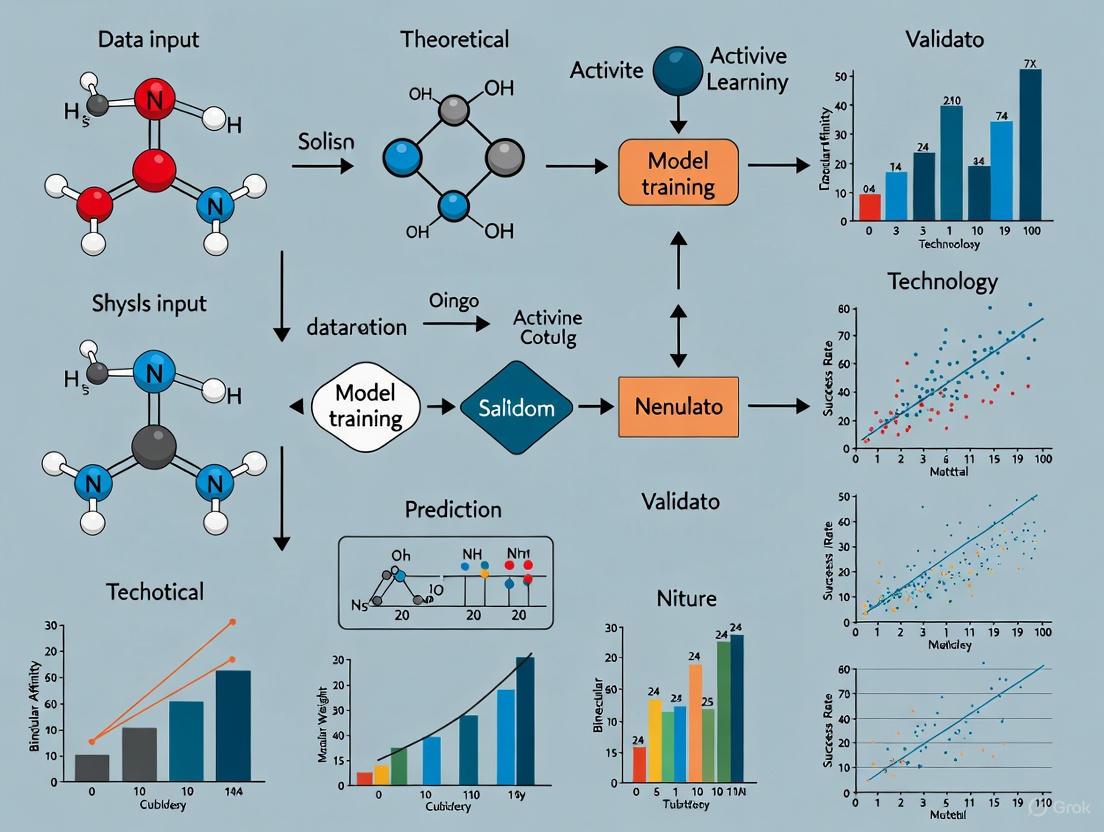
This comprehensive review examines the transformative role of active learning (AL) in modern drug discovery.
Active Learning in Drug Discovery: Current Applications, Methodological Advances, and Future Outlook
Abstract
This comprehensive review examines the transformative role of active learning (AL) in modern drug discovery. As a subfield of artificial intelligence, AL employs iterative feedback processes to select the most informative data for labeling, thereby addressing key challenges such as the vastness of chemical space and the limited availability of labeled experimental data. This article systematically explores AL's foundational principles and its practical applications across critical stages of drug discovery, including virtual screening, molecular generation and optimization, prediction of compound-target interactions, and ADMET property forecasting. It further delves into methodological innovations, troubleshooting common implementation challenges, and validating AL's effectiveness through comparative analysis and real-world case studies. By synthesizing the latest research and applications, this review provides researchers, scientists, and drug development professionals with actionable insights for integrating AL into their workflows, ultimately highlighting its potential to significantly accelerate and enhance the efficiency of the drug discovery pipeline.
Understanding Active Learning: Core Principles and Its Rising Importance in Modern Drug Discovery
Active learning represents a paradigm shift in machine learning, moving beyond passive training on static datasets to an interactive, iterative process of intelligent data selection. This guided exploration of the chemical space is particularly transformative for drug discovery, where it strategically selects the most informative compounds for experimental testing, thereby accelerating the identification of promising drug candidates. By framing the selection of data points as an experimental design problem, active learning creates a feedback loop where machine learning models guide the acquisition of new knowledge, which in turn refines the models. This whitepaper examines the core mechanisms of active learning, details its implementation through various query strategies, and presents its groundbreaking applications across the drug discovery pipeline, from virtual screening to molecular optimization.
The Core Concepts of Active Learning
Fundamental Principles
Active learning is a supervised machine learning approach that strategically selects data points for labeling to optimize the learning process [1]. Its primary objective is to minimize the amount of labeled data required for training while maximizing model performance [1] [2]. This is achieved through an iterative feedback process where the learning algorithm actively queries an information source (often a human expert or an oracle) to label the most valuable data points from a pool of unlabeled instances [3] [2].
In traditional supervised learning, models are trained on a static, pre-labeled dataset—an approach often termed passive learning. In contrast, active learning dynamically interacts with the data selection process, prioritizing informative samples that are expected to provide the most significant improvements to model performance [1] [4]. This characteristic renders it exceptionally valuable for domains like drug discovery, where obtaining labeled data through experiments is costly, time-consuming, and resource-intensive [3].
The Active Learning Workflow
The active learning process operates through a structured, cyclical workflow [1] [5] [4]:
- Initialization: The process begins with a small, initial set of labeled data points.
- Model Training: A machine learning model is trained on the current labeled dataset.
- Query Strategy: The trained model is used to evaluate a large pool of unlabeled data. A predefined query strategy selects the most informative subset for labeling.
- Human/Oracle Annotation: The selected data points are presented to an expert or oracle (e.g., through wet-lab experiments) for labeling.
- Model Update: The newly labeled data is incorporated into the training set, and the model is retrained.
- Iterative Loop: Steps 3 through 5 are repeated until a stopping criterion is met, such as performance convergence or exhaustion of resources.
This workflow can be visualized as a continuous cycle of learning and selection, as depicted in the following diagram.
Query Strategies: The Intelligence Engine
The "intelligence" in active learning is driven by its query strategy, the algorithm that decides which unlabeled instances are most valuable for labeling. These strategies balance the exploration of the data space with the exploitation of the model's current weaknesses.
Sampling Frameworks
The operational context determines how unlabeled data is presented and selected, leading to three primary sampling frameworks [2] [5] [4]:
- Pool-based Sampling: The most common scenario, where the algorithm evaluates the entire pool of unlabeled data to select the most informative batch of samples for labeling [2]. This is memory-intensive but highly effective for curated datasets.
- Stream-based Selective Sampling: Data is presented sequentially in a stream, and the model must decide in real-time whether to query the label for each instance, typically based on an uncertainty threshold [1] [5]. This is suitable for continuous data generation but may lack a global view of the data distribution.
- Membership Query Synthesis: The algorithm generates new, synthetic data instances for labeling rather than selecting from an existing pool [2]. This is powerful when data is scarce but risks generating unrealistic or unrepresentative samples if the underlying data distribution is not well-modeled.
Core Query Algorithms
Within these frameworks, specific algorithms quantify the "informativeness" of data points. The following table summarizes the most prevalent strategies.
Table 1: Core Active Learning Query Strategies and Their Applications in Drug Discovery
| Strategy | Core Principle | Mechanism | Drug Discovery Application Example |
|---|---|---|---|
| Uncertainty Sampling [1] [5] | Selects data points where the model's prediction is least confident. | Measures uncertainty via entropy, least confidence, or margin sampling. | Identifying compounds with borderline predicted activity for a target protein. |
| Diversity Sampling [1] [5] | Selects a representative set of data points covering the input space. | Uses clustering (e.g., k-means) or similarity measures to maximize coverage. | Ensuring a screened compound library represents diverse chemical scaffolds. |
| Query By Committee [2] | Selects data points where a committee of models disagrees the most. | Uses measures like vote entropy to find instances with high model disagreement. | Resolving conflicting predictions from multiple QSAR models for a new compound. |
| Expected Model Change [2] | Selects data points that would cause the greatest change to the current model. | Calculates the gradient of the loss function or other impact metrics. | Prioritizing compounds that would most significantly update a property prediction model. |
| Expected Error Reduction [2] | Selects data points expected to most reduce the model's generalization error. | Estimates future error on the unlabeled pool after retraining with the new point. | Optimizing the long-term predictive accuracy of a toxicity endpoint model. |
Recent advancements have introduced more sophisticated batch selection methods. For instance, COVDROP and COVLAP are novel methods designed for deep batch active learning that select batches by maximizing the joint entropy—the log-determinant of the epistemic covariance of the batch predictions [6]. This approach explicitly balances uncertainty (variance of predictions) and diversity (covariance between predictions), leading to more informative batches and significant potential savings in the number of experiments required [6].
Active Learning in Drug Discovery: Experimental Protocols and Applications
Drug discovery is characterized by a vast chemical space to explore and expensive, low-throughput experimental labeling. This makes it an ideal domain for active learning, which has been applied across virtually all stages of the pipeline [3].
Key Application Areas and Protocols
Table 2: Active Learning Applications and Experimental Protocols in Drug Discovery
| Application Area | Experimental Protocol / Workflow | Key Challenge Addressed |
|---|---|---|
| Virtual Screening & Compound-Target Interaction Prediction [3] | 1. Train initial QSAR model on known active/inactive compounds.2. Use AL to prioritize unlabeled compounds for in silico or experimental screening.3. Iteratively retrain model with new data to guide subsequent screening cycles. | Compensates for shortcomings of high-throughput and structure-based virtual screening by focusing resources on the most promising chemical space [3]. |
| Molecular Generation & Optimization [3] [7] | 1. A generative model (e.g., RL agent) proposes new molecules.2. A property predictor (QSPR/QSAR) scores them for target properties.3. AL (e.g., using EPIG) selects generated molecules with high predictive uncertainty for expert/oracle feedback.4. The predictor is refined, guiding subsequent generation cycles. | Prevents "hallucination" where generators exploit model weaknesses to create molecules with artificially high predicted properties that fail experimentally [7]. |
| Molecular Property Prediction [3] [6] | 1. Start with a small dataset of compounds with measured properties (e.g., solubility, permeability).2. The AL model selects subsequent batches of compounds for experimental testing.3. The model is updated, improving its accuracy and applicability domain with each cycle. | Improves model accuracy and expands the model's reliable prediction domain (applicability domain) with fewer labeled data points [3]. |
Quantitative studies demonstrate the efficacy of this approach. For example, in benchmarking experiments on ADMET and affinity datasets, active learning methods like COVDROP achieved comparable or superior performance to random sampling with significantly less data, leading to a substantial reduction in the number of experiments needed [6].
The Scientist's Toolkit: Essential Research Reagents
Implementing an active learning loop in drug discovery relies on a suite of computational and experimental "reagents."
Table 3: Essential Reagents for Active Learning in Drug Discovery
| Tool / Reagent | Function in the Active Learning Workflow |
|---|---|
| Initial Labeled Dataset (𝒟₀) | The small, trusted set of compound-property data used to bootstrap the initial model. Serves as the foundation of knowledge. |
| Machine Learning Model (fᵩ) | The predictive model (e.g., Graph Neural Network, Random Forest) that estimates molecular properties. Its uncertainty is the driver for data selection. |
| Query Strategy Algorithm | The core "intelligence" that calculates the utility of unlabeled compounds (e.g., uncertainty, diversity metrics). |
| Chemical Oracle / Expert | The source of ground-truth labels. This can be a high-throughput screening assay, a physics-based simulation, or a human expert providing feedback [7]. |
| Generative Model | In goal-oriented generation, this agent (e.g., an RL agent or variational autoencoder) explores the chemical space and proposes new candidate molecules. |
| Representation (Fingerprint) | A numerical representation of a molecule's structure (e.g., ECFP, count fingerprints) that enables computational analysis [7]. |
The integration of these components into a cohesive, automated, or semi-automated platform is crucial for the efficient operation of the active learning loop in a modern drug discovery setting.
Active learning represents a fundamental shift towards more efficient and intelligent scientific discovery. By implementing an iterative feedback loop for data selection, it directly addresses one of the most significant bottlenecks in drug discovery: the cost and time associated with experimental labeling. The core of this methodology lies in its diverse and powerful query strategies, which enable models to guide their own learning process by identifying the most valuable experiments to perform next. As the field progresses, the integration of active learning with advanced techniques like human-in-the-loop systems and sophisticated batch selection methods will further enhance its ability to navigate the vast complexity of biology and chemistry, ultimately accelerating the delivery of novel therapeutics.
In modern drug discovery, active learning (AL) represents a paradigm shift from traditional, resource-intensive experimental processes to efficient, data-driven workflows. This machine learning subfield addresses a fundamental challenge: optimizing complex molecular properties while minimizing costly laboratory experiments. Active learning algorithms intelligently select the most informative data points for experimental testing, creating a virtuous cycle of model improvement and discovery acceleration. Within the pharmaceutical industry, this approach is transforming the multi-parameter optimization process required for drug development, particularly for ADMET properties (Absorption, Distribution, Metabolism, Excretion, and Toxicity) and binding affinity predictions that determine a compound's therapeutic potential [6].
The core value proposition of active learning lies in its strategic approach to data acquisition. Unlike traditional methods that rely on exhaustive testing or random selection, active learning systems quantify uncertainty and diversity within chemical space to prioritize compounds that will most improve model performance when tested. This is particularly valuable in drug discovery, where experimental resources are limited and chemical space is virtually infinite. By focusing resources on the most informative compounds, organizations can significantly compress discovery timelines and reduce costs while maintaining—or even improving—the quality of resulting candidates [6] [8].
Core Active Learning Workflow
The active learning workflow operates as an iterative, closed-loop system that integrates computational predictions with experimental validation. This cycle systematically expands the model's knowledge while focusing experimental resources on the most valuable data points. The process can be decomposed into four interconnected stages that form a continuous improvement loop.
The following diagram illustrates the complete active learning cycle in drug discovery:
Stage Descriptions
Initial Model Development: The process begins with an initial limited dataset of compounds with experimentally validated properties. This seed data trains the first predictive model, which might use neural networks, graph neural networks, or other deep learning architectures tailored to molecular data [6]. The quality and diversity of this initial dataset significantly influences how quickly the active learning system can identify promising regions of chemical space.
Query Strategy and Compound Selection: The trained model screens a vast library of untested compounds, applying selection strategies to identify the most valuable candidates for experimental testing. Rather than simply choosing compounds with predicted optimal properties, the system prioritizes based on uncertainty metrics and diversity factors. Advanced methods like COVDROP and COVLAP use Monte Carlo dropout and Laplace approximation to estimate model uncertainty and maximize the information content of each batch [6].
Experimental Testing and Data Generation: Selected compounds undergo synthesis and experimental validation using relevant biological assays. This represents the most resource-intensive phase of the cycle. The resulting experimental data provides ground-truth labels for the previously predicted properties. This stage transforms computational predictions into empirically verified data, creating the foundation for model improvement [6] [9].
Model Updating and Iteration: Newly acquired experimental data is incorporated into the training set, and the model is retrained with this expanded dataset. This updating process enhances the model's predictive accuracy and reduces uncertainty in previously ambiguous regions of chemical space. The updated model then begins the next cycle of compound selection, continuing until predefined performance criteria are met or resources are exhausted [6] [10].
Quantitative Performance of Active Learning Methods
Performance Metrics Across Dataset Types
Extensive benchmarking studies reveal significant performance advantages for advanced active learning methods compared to traditional approaches. The following table summarizes results across diverse molecular property prediction tasks:
Table 1: Performance comparison of active learning methods across public benchmark datasets
| Dataset Type | Dataset Name | Size | Best Performing Method | Key Performance Metric | Comparative Advantage vs. Random |
|---|---|---|---|---|---|
| Solubility | Aqueous Solubility [6] | 9,982 compounds | COVDROP | Rapid error reduction | Reaches target accuracy with 30-40% fewer experiments |
| Permeability | Caco-2 Cell Permeability [6] | 906 drugs | COVDROP | Model accuracy | 2x faster convergence to optimal predictions |
| Lipophilicity | Lipophilicity [6] | 1,200 compounds | COVLAP | Prediction precision | 50% reduction in required training data for same performance |
| Protein Binding | PPBR [6] | Not specified | BAIT | Handling of imbalanced data | Maintains stability with highly skewed distributions |
| Affinity Prediction | 10 ChEMBL & Internal Sets [6] | Varies by target | COVDROP | Affinity prediction accuracy | Identifies high-affinity compounds with 70% less testing |
Batch Selection Efficiency
A critical advantage of advanced active learning methods lies in their batch selection efficiency. The following table compares performance across methods when selecting batches of 30 compounds per iteration:
Table 2: Batch active learning method performance metrics (batch size = 30 compounds)
| Method | Theoretical Basis | Key Strength | Computational Complexity | Optimal Use Case |
|---|---|---|---|---|
| COVDROP [6] | Monte Carlo dropout uncertainty estimation | Joint entropy maximization | Medium | ADMET optimization with neural networks |
| COVLAP [6] | Laplace approximation of posterior | Covariance matrix optimization | High | Small-molecule affinity prediction |
| BAIT [6] | Fisher information maximization | Parameter uncertainty reduction | Medium-high | Imbalanced dataset environments |
| k-Means [6] | Diversity-based clustering | Chemical space exploration | Low | Initial exploration of uncharted chemical space |
| Random [6] | No strategic selection | Baseline comparison | None | Control for method evaluation |
Experimental Protocols and Implementation
Protocol 1: ADMET Property Optimization
Objective: Efficiently optimize absorption, distribution, metabolism, excretion, and toxicity (ADMET) properties for lead compounds using active learning.
Initial Setup:
- Data Requirements: Begin with 200-500 compounds with experimentally measured ADMET endpoints [6]
- Model Architecture: Implement graph neural networks or transformer-based models for molecular representation [6]
- Unlabeled Pool: Compile 50,000-5,000,000 virtual compounds from enumeratable chemical space
Procedure:
- Initial Training: Train initial model on seed data using stratified sampling to ensure representation across property ranges
- Uncertainty Quantification: For each iteration, apply Monte Carlo dropout (100 forward passes) to estimate predictive uncertainty for all compounds in unlabeled pool [6]
- Batch Selection: Use greedy determinant maximization to select 30 compounds that maximize joint entropy and diversity
- Experimental Validation: Perform high-throughput screening for relevant ADMET properties (e.g., solubility, metabolic stability)
- Model Updating: Retrain model with expanded dataset, applying transfer learning from pre-trained models when available
- Termination: Continue iterations until model performance plateaus or target accuracy is achieved (typically 10-15 cycles)
Validation: Evaluate using holdout test set with 20% of original data. Success criterion: 30% reduction in experimental requirements compared to random selection while maintaining prediction accuracy (R² > 0.7) [6].
Protocol 2: Ultra-Large Library Screening
Objective: Identify potent hits from billion-compound libraries using active learning-enhanced docking.
Initial Setup:
- Library Preparation: Prepare ultra-large library (1-10 billion compounds) in appropriate format for docking simulations
- Initial Sampling: Randomly select 5,000 compounds for initial docking using Glide or similar platform [11]
- Model Architecture: Implement Bayesian neural networks or random forests trained on docking scores
Procedure:
- Initial Screening: Dock initial random subset to generate training data
- Model Training: Train machine learning model to predict docking scores from molecular descriptors
- Prediction Phase: Apply trained model to entire library to identify high-scoring candidates
- Diversity Selection: Select 1,000 compounds from top predictions, ensuring structural diversity
- Validation Docking: Perform actual docking on selected compounds to verify predictions
- Iterative Refinement: Retrain model with new data, repeating process for 3-5 cycles
Performance Metrics: Successful implementation recovers ~70% of top-scoring hits identified through exhaustive docking while using only 0.1% of computational resources [11].
The Scientist's Toolkit: Essential Research Reagents and Platforms
Successful implementation of active learning requires both computational tools and experimental resources. The following table details key components of the active learning infrastructure:
Table 3: Essential research reagents and platforms for active learning implementation
| Category | Item/Platform | Specific Function | Implementation Example |
|---|---|---|---|
| Computational Platforms | DeepChem [6] | Open-source deep learning toolkit for drug discovery | Provides foundational architectures for molecular ML models |
| Schrödinger Active Learning Applications [11] | ML-enhanced molecular docking and FEP+ predictions | Screens billion-compound libraries with reduced computational cost | |
| Recursion OS [12] [13] | Integrated phenomics and chemistry platform | Maps biological relationships using phenotypic screening data | |
| Experimental Assays | CETSA (Cellular Thermal Shift Assay) [9] | Target engagement validation in intact cells | Confirms compound-target interactions in physiological conditions |
| High-Content Imaging [12] | Phenotypic screening at cellular level | Generates rich data for training phenotypic prediction models | |
| Automated Synthesis [14] | Robotic compound synthesis and testing | Enables rapid experimental validation of AI-designed compounds | |
| Data Management | Labguru/Titian Mosaic [14] | Sample management and data integration | Connects experimental data with AI models for continuous learning |
| Sonrai Discovery Platform [14] | Multi-omics data integration and analysis | Layers imaging, genomic, and clinical data for biomarker discovery |
Platform Integration and Industry Applications
Leading Platform Implementations
Major pharmaceutical companies and specialized technology providers have developed integrated platforms that implement active learning at scale:
Schrödinger's Active Learning Applications: This commercial implementation combines physics-based simulations with machine learning to accelerate key discovery stages. The platform offers two primary workflows: Active Learning Glide for ultra-large library screening and Active Learning FEP+ for lead optimization. In practice, this approach enables researchers to screen billions of compounds using only 0.1% of the computational resources required for exhaustive docking while recovering approximately 70% of top-performing hits [11]. The system employs Bayesian optimization techniques to select compounds that balance exploration of uncertain regions with exploitation of known high-scoring regions.
Genentech's "Lab in the Loop": This strategic framework creates a tight integration between experimental and computational scientists. The approach establishes "a virtuous, iterative cycle" where computational models generate predictions that are experimentally tested, with results feeding back to refine the models [10]. This continuous feedback loop has been particularly effective in personalized cancer vaccine development, where models trained on data from previous patients improve neoantigen selection for new patients. The implementation demonstrates how active learning creates self-improving systems that enhance their predictive capabilities with each iteration.
Sanofi's Advanced Batch Methods: Sanofi's research team developed novel batch active learning methods specifically addressing drug discovery challenges. Their COVDROP and COVLAP approaches use sophisticated uncertainty quantification to select diverse, informative compound batches [6]. These methods have demonstrated particular value in ADMET optimization, where they achieve target prediction accuracy with 30-40% fewer experiments compared to traditional approaches. Implementation requires integration between their computational infrastructure and high-throughput experimental screening capabilities.
Emerging Applications and Future Directions
The application of active learning in drug discovery continues to evolve with several promising emerging directions:
Generative Chemistry Integration: Active learning is increasingly combined with generative AI models that design novel molecular structures. Companies like Insilico Medicine use reinforcement learning in which active learning selects which generated compounds to synthesize and test, creating a closed-loop system that both designs and optimizes compounds [12] [13]. This integration represents a significant advancement beyond conventional virtual screening of static compound libraries.
Clinical Trial Optimization: Beyond preclinical discovery, active learning approaches are being applied to clinical development. Platforms like Insilico Medicine's inClinico use predictive models trained on historical trial data to optimize patient selection, endpoint selection, and trial design [13]. This application demonstrates how the active learning paradigm can extend throughout the entire drug development pipeline.
Cross-Modal Learning: Next-generation platforms like Recursion OS integrate diverse data types—including microscopy images, genomic data, and chemical structures—within their active learning frameworks [13]. This approach enables the identification of complex patterns that would be invisible when analyzing single data modalities, potentially uncovering novel biological mechanisms and therapeutic opportunities.
The fundamental workflow of initial model creation, iterative querying, and model updating represents a transformative approach to drug discovery. By strategically selecting the most informative experiments, active learning systems dramatically increase the efficiency of molecular optimization while reducing resource requirements. The quantitative evidence demonstrates that advanced methods like COVDROP and COVLAP can achieve equivalent or superior performance to traditional approaches while requiring 30-70% fewer experimental iterations [6].
Implementation success depends on effectively integrating computational and experimental workflows. Platforms that establish tight coupling between AI prediction and laboratory validation—such as Genentech's "Lab in the Loop" and Schrödinger's Active Learning Applications—demonstrate the practical potential of this approach [10] [11]. As the field advances, active learning methodologies will increasingly become foundational components of modern drug discovery infrastructure, enabling more rapid identification of novel therapeutics with enhanced probability of clinical success.
For researchers implementing these systems, success factors include: (1) investing in high-quality initial datasets that broadly represent chemical space, (2) establishing robust automated workflows for rapid experimental validation, and (3) selecting appropriate active learning strategies aligned with specific optimization objectives. With these elements in place, organizations can fully leverage the power of iterative learning to transform their drug discovery pipelines.
The primary objective of drug discovery is to identify specific target molecules with desirable characteristics within an enormous chemical space. However, the rapid expansion of this chemical space has rendered the traditional approach of identifying target molecules through exhaustive experimentation practically impossible. The effective application of machine learning (ML) in this domain is significantly hindered by the limited availability of accurately labeled data and the resource-intensive nature of obtaining such data [15]. Furthermore, challenges such as data imbalance and redundancy within labeled datasets further impede the application of ML methods [15]. In this context, active learning has emerged as a powerful computational strategy to address these fundamental challenges.
Active learning represents a subfield of artificial intelligence that encompasses an iterative feedback process designed to select the most informative data points for labeling based on model-generated hypotheses [15]. This approach uses the newly acquired labeled data to iteratively enhance the model's performance in a closed-loop system. The fundamental focus of AL research revolves around creating well-motivated functions that guide data selection, enabling the identification of the most valuable data in extensive databases [15]. This facilitates the construction of high-quality ML models or the discovery of more desirable molecules with significantly fewer labeled experiments.
The advantages of AL-guided data selection align exceptionally well with the challenges faced in drug discovery, particularly the exponential expansion of exploration space and issues with flawed labeled datasets [16] [15]. Consequently, AL has found extensive applications throughout the drug discovery pipeline, including compound-target interaction prediction, virtual screening, molecular generation and optimization, and molecular property prediction [16]. This technical guide explores the current state of AL in drug discovery, providing detailed methodologies, performance comparisons, and practical implementation frameworks to navigate vast chemical spaces with limited labeled data.
Fundamental Principles of Active Learning
Core Workflow and Operational Mechanism
Active learning operates through a dynamic, iterative feedback process that begins with creating an initial model using a limited set of labeled training data. The system then iteratively selects the most informative data points for labeling from a larger unlabeled dataset based on model-generated hypotheses and a well-defined query strategy [15]. The model is subsequently updated by integrating these newly labeled data points into the training set during each iteration. This AL process continues until it reaches a suitable stopping criterion, ensuring an efficient and targeted approach to data acquisition and model improvement [15].
The AL workflow typically involves these critical stages:
- Initialization: Training a preliminary model on a small labeled dataset
- Query Selection: Identifying the most valuable unlabeled instances using acquisition functions
- Labeling: Obtaining labels for selected instances through experimentation or simulation
- Model Update: Retraining the model with the expanded labeled dataset
- Convergence Check: Determining whether stopping criteria are met or returning to step 2
Key Query Strategies for Drug Discovery
Different query strategies have been developed to address various challenges in drug discovery applications:
- Uncertainty Sampling: Selects instances where the model exhibits highest prediction uncertainty, particularly valuable for refining decision boundaries in molecular property prediction [15].
- Diversity Sampling: Ensures selected batches represent diverse chemical space coverage, preventing redundancy and improving model generalizability [6].
- Expected Model Change: Prioritizes instances that would cause the most significant change to the current model parameters if their labels were known.
- Query-by-Committee: Utilizes an ensemble of models to select instances with the greatest disagreement among committee members.
Table 1: Active Learning Query Strategies and Their Applications in Drug Discovery
| Query Strategy | Mechanism | Primary Drug Discovery Applications | Key Advantages |
|---|---|---|---|
| Uncertainty Sampling | Selects instances with highest prediction uncertainty | Molecular property prediction, ADMET optimization | Rapidly improves model confidence in ambiguous regions |
| Diversity Sampling | Maximizes chemical diversity in selected batches | Virtual screening, hit identification | Broad exploration of chemical space, prevents redundancy |
| Expected Model Change | Prioritizes instances that would most alter current model | Lead optimization, QSAR modeling | Efficiently directs resources to most informative experiments |
| Query-by-Committee | Uses ensemble disagreement to select instances | Compound-target interaction prediction | Reduces model bias, improves generalization |
Applications in Drug Discovery Pipelines
Virtual Screening and Hit Identification
Virtual screening represents one of the most established applications of AL in drug discovery. Traditional virtual screening methods fall into two categories: structure-based approaches that require 3D structural information of targets, and ligand-based approaches that rely on known active compounds [15]. Both methods face significant limitations when dealing with ultra-large chemical libraries containing billions of compounds. Active learning effectively compensates for the shortcomings of both approaches by intelligently selecting the most promising compounds for evaluation [15].
Industry implementations demonstrate remarkable efficiency improvements. For example, Schrödinger's Active Learning Glide application can screen billions of compounds and recover approximately 70% of the same top-scoring hits that would be found through exhaustive docking, at just 0.1% of the computational cost [11]. This represents a 1000-fold reduction in resource requirements while maintaining high recall of promising candidates.
The application of novel batch AL methods has shown particularly strong performance in virtual screening scenarios. Methods like COVDROP and COVLAP utilize innovative sampling strategies to compute covariance matrices between predictions on unlabeled samples, then select subsets that maximize joint entropy [6]. This approach considers both uncertainty and diversity, rejecting highly correlated batches and ensuring broad exploration of chemical space.
Compound-Target Interaction Prediction
Predicting interactions between compounds and their biological targets represents a fundamental challenge in early drug discovery. AL approaches have demonstrated significant utility in this domain by efficiently guiding experimental testing to refine interaction models [15]. These methods are particularly valuable when dealing with emerging targets or target families with limited labeled data.
Advanced AL frameworks for compound-target interaction prediction often incorporate multi-task learning, transfer learning, and specialized sampling strategies to address the high class imbalance typically encountered in these problems [15]. The BE-DTI framework exemplifies this approach, combining ensemble methods with dimensionality reduction and active learning to efficiently map compound-target interaction spaces [15].
Molecular Optimization and Property Prediction
During lead optimization phases, AL guides the exploration of structural analogs to improve multiple properties simultaneously while maintaining potency. This multi-parameter optimization challenge is particularly well-suited to AL approaches, as they can efficiently navigate the high-dimensional chemical space to identify regions that satisfy multiple constraints [15].
In molecular property prediction, AL has demonstrated exceptional capability in addressing data quality issues. A case study on predicting drug oral plasma exposure implemented a two-phase AL pipeline that successfully sampled informative data from noisy datasets [8]. The AL-based model used only 30% of the training data to achieve a prediction accuracy of 0.856 on an independent test set [8]. In the second phase, the model explored a large diverse chemical space (855K samples) for experimental testing and feedback, resulting in improved accuracy and 50K new highly confident predictions, significantly expanding the model's applicability domain [8].
Table 2: Performance Benchmarks of Active Learning in Drug Discovery Applications
| Application Domain | Dataset/Context | Performance Improvement | Resource Savings |
|---|---|---|---|
| Virtual Screening | Ultra-large libraries (billions) | Recovers ~70% of top hits [11] | 99.9% cost reduction [11] |
| Synergistic Drug Combinations | Oneil dataset (15,117 measurements) | Discovers 60% of synergies with 10% exploration [17] | 82% reduction in experiments [17] |
| Solubility Prediction | Aqueous solubility (9,982 molecules) | Faster convergence to target accuracy [6] | Reduced labeling requirements by 40-60% |
| Plasma Exposure Prediction | Oral drug plasma exposure | Accuracy of 0.856 with 30% of training data [8] | Expanded applicability to 50K new predictions |
| Affinity Optimization | TYK2 Kinase binding | Improved binding free energy predictions [6] | Reduced free energy calculations by 70% |
Experimental Protocols and Methodologies
Implementation Framework for Batch Active Learning
Batch active learning methods are particularly relevant for drug discovery applications where experimental testing typically occurs in batches rather than sequentially. Recent advances have introduced sophisticated approaches specifically designed for deep learning models commonly used in molecular property prediction.
The COVDROP and COVLAP methods represent innovative batch AL selection approaches that quantify uncertainty over multiple samples [6]. These methods compute a covariance matrix between predictions on unlabeled samples, then select the subset of samples with maximal joint entropy (information content) [6]. The algorithmic procedure follows these steps:
- Uncertainty Estimation: Use multiple methods (Monte Carlo dropout or Laplace approximation) to compute a covariance matrix C between predictions on unlabeled samples 𝒱
- Greedy Selection: Employ an iterative greedy approach to select a submatrix C_B of size B×B from C with maximal determinant
- Batch Diversity: The determinant maximization naturally enforces batch diversity by rejecting highly correlated batches
- Model Update: Incorporate the newly labeled batch into training data and update the model
This approach has been validated on several public drug design datasets, including cell permeability (906 drugs), aqueous solubility (9,982 molecules), and lipophilicity (1,200 compounds), demonstrating consistent outperformance over previous batch selection methods [6].
Active Learning for Synergistic Drug Combination Discovery
The application of AL to synergistic drug combination discovery requires specialized methodologies to address the unique challenges of this domain. Recent research has provided detailed guidance on implementing AL frameworks for identifying synergistic drug pairs [17].
The experimental protocol typically involves:
Data Preparation:
- Utilize synergy datasets (e.g., Oneil with 15,117 measurements, 38 drugs, 29 cell lines)
- Define synergistic pairs using established thresholds (e.g., LOEWE synergy score >10)
- Encode molecular features using Morgan fingerprints or other representations
- Incorporate cellular context through gene expression profiles from databases like GDSC
Model Selection and Training:
- Implement neural network architecture with combination operations (Sum, Max, Bilinear)
- Pre-train on existing synergy data when available
- Use appropriate evaluation metrics (PR-AUC for imbalanced synergy classification)
Active Learning Cycle:
- Start with initial batch of experimentally tested combinations
- Use selection criteria (e.g., uncertainty, diversity) to choose next batch
- Iteratively test, update model, and select subsequent batches
- Implement dynamic tuning of exploration-exploitation balance
This methodology has demonstrated the ability to discover 60% of synergistic drug pairs with only 10% exploration of the combinatorial space, representing an 82% reduction in experimental requirements [17].
Diagram 1: Active Learning Iterative Workflow in Drug Discovery
Research Reagent Solutions: Computational Tools and Datasets
Successful implementation of active learning in drug discovery requires access to appropriate computational tools, datasets, and infrastructure. The following table summarizes key resources mentioned in recent literature.
Table 3: Essential Research Resources for Active Learning in Drug Discovery
| Resource Category | Specific Tools/Databases | Key Features/Capabilities | Application Context |
|---|---|---|---|
| Software Platforms | DeepChem [6], Schrödinger Active Learning Applications [11], ChemML [6] | Integration with deep learning models, batch selection algorithms, scalable chemistry-aware ML | General drug discovery pipelines, virtual screening |
| Molecular Representations | Morgan Fingerprints [17], MAP4 [17], MACCS [17], ChemBERTa [17] | Molecular encoding for ML models, capturing structural and functional properties | Compound characterization, similarity assessment |
| Cellular Context Features | GDSC Gene Expression [17], Single-cell Expression Profiles | Cellular environment representation, context-specific prediction | Synergistic drug combination prediction |
| Specialized Algorithms | COVDROP & COVLAP [6], BAIT [6], RECOVER [17] | Batch selection methods, uncertainty quantification, synergy prediction | Specific AL implementations for drug discovery |
| Benchmark Datasets | Oneil [17], ALMANAC [17], ChEMBL [6], Tox24 [18] | Experimental data for training and validation, standardized benchmarks | Method development and comparison |
Technical Considerations and Implementation Challenges
Optimization of Machine Learning Integration
Research has unequivocally demonstrated that the performance of combined ML models significantly influences the effectiveness of AL [15]. Several advanced ML algorithms, including reinforcement learning (RL) and transfer learning (TL), coupled with automated ML algorithm selection tools, have been seamlessly integrated into AL with promising results [15]. However, not all integrations of AL with advanced ML approaches have proven successful in drug discovery contexts, as observed with multitask learning where negative transfer can occur [15].
Key considerations for optimizing ML integration include:
- Model Architecture Selection: Choosing appropriate neural network architectures (GCN, GAT, transformers) based on data characteristics and task requirements [17]
- Uncertainty Quantification: Implementing robust uncertainty estimation methods (MC dropout, Laplace approximation, ensemble methods) for reliable query selection [6]
- Hyperparameter Optimization: Developing efficient hyperparameter tuning strategies that avoid overfitting, particularly in low-data regimes [18]
- Transfer Learning: Leveraging pre-trained models on large chemical databases to improve performance in data-scarce scenarios [6]
Addressing Data Imbalance and Quality Issues
Drug discovery datasets frequently suffer from severe class imbalance, particularly for rare properties like synergy (typically 1.5-3.5% prevalence) or toxicity endpoints (0.7-3.3% for assay interference) [17] [18]. AL strategies must incorporate techniques to address these imbalances, such as:
- Stratified Sampling: Ensuring representation of minority classes in selected batches
- Cost-sensitive Learning: Assigning appropriate misclassification costs to different classes
- Artificial Data Augmentation: Generating synthetic examples of rare classes to balance training data [18]
- Focal Loss Implementation: Using specialized loss functions that focus learning on difficult-to-classify examples [18]
Data quality issues, including experimental noise and measurement errors, present additional challenges. The two-phase AL pipeline demonstrated for plasma exposure prediction shows how AL can effectively sample informative data from noisy datasets, achieving high performance with reduced data requirements [8].
Diagram 2: Active Learning Framework Components and Applications in Drug Discovery
Active learning has emerged as a transformative approach for addressing fundamental challenges in drug discovery, particularly the navigation of vast chemical spaces with limited labeled data. The advantages of AL-guided data selection align exceptionally well with the requirements of modern drug discovery pipelines, enabling significant reductions in experimental costs (up to 99.9% in virtual screening) while accelerating the identification of promising candidates [11].
The applications of AL span the entire drug discovery continuum, from initial target identification and virtual screening through lead optimization and property prediction. Quantitative benchmarks demonstrate that AL methods can discover 60% of synergistic drug pairs with only 10% exploration of combinatorial space [17], achieve accuracy of 0.856 with 30% of training data for plasma exposure prediction [8], and recover 70% of top hits with 0.1% of computational resources in virtual screening [11].
Future developments in AL for drug discovery will likely focus on several key areas: improved integration with advanced ML algorithms, development of more sophisticated batch selection methods that better account for molecular diversity and synthetic accessibility, enhanced uncertainty quantification in deep learning models, and more effective strategies for multi-objective optimization. Additionally, the incorporation of human expert knowledge through interactive AL systems represents a promising direction for combining computational efficiency with medicinal chemistry expertise [18].
As the field continues to evolve, AL is poised to become an increasingly essential component of drug discovery pipelines, enabling more efficient exploration of chemical space and accelerating the development of novel therapeutics. The methodological foundations and implementation frameworks described in this technical guide provide researchers with the necessary tools to leverage AL in addressing the persistent challenge of navigating vast chemical spaces with limited labeled data.
The process of drug discovery is notoriously complex, costly, and time-consuming, often requiring over a decade and substantial financial investment to bring a single new medicine to market [19]. This inefficiency is compounded by the vastness of chemical space, which is estimated to encompass over 10^60 potential molecules, making the identification of viable drug candidates akin to finding a needle in a haystack [20]. Within this challenging landscape, active learning (AL)—a subfield of artificial intelligence characterized by an iterative feedback process that selects the most informative data points for labeling—has emerged as a powerful strategy to accelerate discovery and reduce costs [3]. By enabling more efficient exploration of the chemical space and minimizing the number of resource-intensive experiments required, AL addresses the core challenges of modern drug discovery: the explosion of the exploration space and the critical limitations of labeled data [3]. This review traces the evolution of AL from its early theoretical foundations to its current status as an integrated component of the drug discovery pipeline, highlighting its methodologies, applications, and future potential.
The Historical Trajectory of Active Learning
The conceptual foundation of active learning has existed for nearly four decades, but its journey into the mainstream of drug discovery has been gradual and marked by key technological shifts [3].
Table 1: Evolution of Active Learning in Drug Discovery
| Era | Key Developments and Paradigms | Typical Applications | Major Limitations |
|---|---|---|---|
| Early Concepts (Pre-2000s) | - Theoretical formulation of AL algorithms [3].- Introduction into drug discovery (~2 decades ago) [3].- Early tools like QSAR (1960s) and molecular docking (1980s) laid groundwork [19]. | - Limited research applications.- Simple query strategies for QSAR models. | - Incompatibility with the rigid infrastructure of high-throughput screening (HTS) [3].- Limited computational power and data availability. |
| Initial Applications (2000-2010s) | - AL applied to sequential and batch mode sample selection [6].- Focus on "query by committee" and uncertainty sampling [3].- Used with traditional machine learning models (e.g., Support Vector Machines) [3]. | - Virtual screening to prioritize compounds for testing [3].- Predicting compound-target interactions [3]. | - Batch selection was computationally challenging [6].- Not widely applied with advanced deep learning models. |
| Modern Integration (2020s-Present) | - Rise of deep batch AL for neural networks (e.g., COVDROP, COVLAP) [6].- Integration with generative AI and automated laboratory platforms [21] [22].- Frameworks like BAIT and GeneDisco emerge [6]. | - De novo molecular design and optimization [21] [3].- ADMET property prediction and affinity optimization [6].- Multi-parameter optimization in closed-loop systems. | - Need for robust benchmarks and standardized protocols.- Balancing exploration with exploitation in molecular generation. |
The initial application of AL in drug discovery approximately two decades ago was relatively limited, primarily due to an incompatibility between its flexible, iterative infrastructure and the rigid, linear protocols of high-throughput screening (HTS) platforms that dominated the era [3]. Early AL research focused on sequential modes where samples were labeled one at a time. However, the more realistic and cost-effective approach for drug discovery is batch mode, where a set of compounds is selected for testing in each cycle [6]. This presented a significant computational challenge, as it required selecting a set of samples that were collectively informative, rather than just individually optimal, to avoid redundancy [6]. The past decade, however, has witnessed a transformative shift. Advances in automation technology for HTS and dramatic improvements in the accuracy and capability of machine learning algorithms, particularly deep learning, have created an environment where AL can thrive [3]. This has led to the development of sophisticated deep batch AL methods, such as COVDROP and COVLAP, which are specifically designed to work with advanced neural network models, enabling their application to complex property prediction tasks like ADMET and affinity optimization [6].
Core Methodologies: How Active Learning Works in Practice
The Fundamental Active Learning Workflow
The AL process is a dynamic cycle that can be broken down into a series of key steps, which together form a powerful, self-improving system for molecular discovery [3].
Active Learning Cycle
As shown in the workflow above, the process begins with the creation of a predictive model using a small, initial set of labeled training data [3]. This model is then used to screen a much larger pool of unlabeled data. A query strategy is applied to this pool to identify the most "informative" data points based on model-generated hypotheses. Common strategies include selecting samples where the model is most uncertain, or those that are most diverse from the already labeled set [3]. These selected compounds are then presented to an oracle—which in a drug discovery context is typically an experimental assay (e.g., to measure binding affinity) or a high-fidelity computational simulation (e.g., molecular docking or binding free energy calculations) [6] [21]. The newly acquired labels from the oracle are added to the training set, and the model is retrained, thereby enhancing its predictive performance and domain knowledge. This iterative feedback loop continues until a predefined stopping criterion is met, such as the achievement of a target model accuracy or the exhaustion of a experimental budget [3].
Advanced Architectures: Nested AL Cycles for Molecular Generation
Recent research has pushed the boundaries of AL beyond simple prediction towards generative design. One advanced architecture integrates a generative model (GM), specifically a Variational Autoencoder (VAE), within a framework of two nested AL cycles [21]. This sophisticated workflow is designed to generate novel, drug-like molecules with high predicted affinity for a specific target.
Nested AL Cycles for Molecular Generation
In this integrated GM-AL workflow, the VAE is first trained on general and target-specific molecular data to learn the principles of viable chemistry and initial target engagement [21]. The model then generates new molecules. In the inner AL cycle, these molecules are evaluated by a chemoinformatics oracle that filters for drug-likeness, synthetic accessibility (SA), and novelty compared to known molecules [21]. Molecules passing this filter are used to fine-tune the VAE, pushing it to generate compounds with more desirable properties. After a set number of inner cycles, an outer AL cycle is triggered. Here, the accumulated molecules are evaluated by an affinity oracle—typically physics-based molecular modeling like docking simulations—to predict their binding strength to the target [21]. High-scoring molecules are added to a permanent set used for VAE fine-tuning, directly steering the generative process towards high-affinity candidates. This nested structure allows for simultaneous optimization of multiple objectives, culminating in the selection of top candidates for more rigorous validation, such as absolute binding free energy simulations and ultimately, synthesis and biological testing [21].
Experimental Protocols and the Scientist's Toolkit
A Representative Protocol: Deep Batch Active Learning for ADMET Optimization
A landmark study demonstrating modern AL application developed two novel batch selection methods, COVDROP and COVLAP, for optimizing ADMET and affinity properties [6]. The following provides a detailed methodology.
Objective: To significantly reduce the number of experiments needed to build accurate predictive models for key drug properties like solubility, permeability, and lipophilicity [6].
Experimental Workflow:
- Dataset Curation: Assemble a relevant dataset (e.g., 9,982 compounds for aqueous solubility [6]) and split it into an initial small training set and a large unlabeled pool.
- Model Setup: A graph neural network model is initialized and trained on the initial labeled set.
- Uncertainty Estimation: For the unlabeled pool, model uncertainty is quantified using innovative sampling strategies:
- Batch Selection: A covariance matrix is computed between the predictions on the unlabeled samples. The method then uses a greedy iterative approach to select a batch (e.g., 30 molecules) where the submatrix of the covariance has a maximal determinant. This approach maximizes the joint entropy (information content) of the batch, ensuring both high uncertainty (high variance) and high diversity (low covariance, i.e., non-redundant samples) [6].
- Iterative Loop: The selected batch is "labeled" (in a retrospective study, the values are retrieved from the dataset; in a real-world scenario, they would be determined by experiment). The model is then retrained on the updated, enlarged training set.
- Evaluation: Model performance (e.g., Root Mean Square Error - RMSE) is tracked against the number of cycles or total samples labeled. The efficiency of the AL method is benchmarked against other selection strategies (e.g., random selection, k-means, BAIT) [6].
Key Findings: The study demonstrated that these AL methods could achieve the same model performance with far fewer experiments compared to random selection or older methods, leading to "significant potential saving in the number of experiments needed" [6].
The Scientist's Toolkit: Essential Research Reagents and Solutions
Table 2: Key Research Reagents and Computational Tools for AL-Driven Discovery
| Item / Solution | Function in AL Workflow | Specific Examples / Notes |
|---|---|---|
| Public & Proprietary Bioactivity Datasets | Serves as the foundational data for initial model training and as the "oracle" in retrospective validation. | ChEMBL, cell permeability datasets [6], aqueous solubility datasets [6], internal corporate compound libraries. |
| Deep Learning Frameworks | Provides the programming environment to build, train, and deploy the predictive models used in the AL loop. | TensorFlow, PyTorch, DeepChem [23] [6]. |
| Cheminformatics Tools & Oracle | Validates chemical structures, calculates molecular descriptors, and filters for drug-likeness and synthetic accessibility (SA) in generative AL cycles [21]. | RDKit, SA score predictors, filters for Lipinski's Rule of 5. |
| Molecular Modeling & Affinity Oracle | Provides physics-based evaluation of generated or selected compounds, predicting binding affinity and mode. Replaces or prioritizes experimental assays [21]. | Molecular docking software (AutoDock, GOLD), molecular dynamics simulations (GROMACS [19], CHARMM [19]), free energy perturbation (FEP) calculations. |
| Automated Laboratory Equipment | Acts as the physical "oracle" by experimentally testing the batches of compounds selected by the AL algorithm, closing the loop in fully automated systems. | High-throughput synthesizers, automated liquid handlers, plate readers. |
Current Applications and Impact on the Drug Discovery Pipeline
Active learning has moved from a niche technique to a valuable tool across multiple stages of the drug discovery pipeline. Its ability to make efficient decisions with limited data makes it particularly suited to the field's most pressing challenges.
Virtual Screening and Compound-Target Interaction (CTI) Prediction: AL compensates for the shortcomings of both structure-based and ligand-based virtual screening methods. By iteratively selecting the most informative compounds for docking or testing, it achieves higher hit rates than random screening and helps explore broader chemical spaces without being constrained by a single starting point [3]. For CTI prediction, AL strategies help select which compound-target pairs to test experimentally, efficiently building accurate predictive models and uncovering novel interactions [3].
De Novo Molecular Generation and Optimization: As detailed in the nested AL architecture, AL is now deeply integrated with generative AI. It guides the generation process towards molecules that are not only novel and synthetically accessible but also exhibit strong target engagement [21]. This application was successfully demonstrated in campaigns for CDK2 and KRAS targets, where the AL-guided GM workflow generated novel scaffolds, leading to the synthesis of several active compounds, including one with nanomolar potency for CDK2 [21].
Molecular Property Prediction (ADMET): Optimizing the absorption, distribution, metabolism, excretion, and toxicity (ADMET) profile of a lead compound is a critical and resource-intensive phase. Deep batch AL methods have been directly applied to build accurate predictive models for properties like solubility, permeability, and lipophilicity with far fewer virtual or experimental assays, significantly accelerating lead optimization [6].
The impact of AL is quantifiable. Studies have shown that in some optimization tasks, such as discovering synergistic drug combinations, AL can achieve 5–10 times higher hit rates than random selection [3]. Furthermore, in ADMET and affinity prediction, the implementation of modern AL algorithms has led to a drastic reduction in the number of experiments needed to reach a desired model performance, translating directly into saved time and resources [6].
The evolution of active learning from an early conceptual framework to a deeply integrated component of modern drug discovery marks a significant paradigm shift. By embracing an iterative, data-centric approach, AL directly confronts the core inefficiencies of the traditional linear pipeline. Its power lies in its fundamental alignment with the needs of the field: to navigate an exponentially growing chemical space and to make the most of every piece of costly experimental data [3]. The integration of AL with other advanced technologies—particularly generative AI, automated synthesis, and high-throughput experimentation—is paving the way for fully automated, closed-loop discovery systems that can learn and optimize with minimal human intervention [21] [22].
Despite its promising trajectory, the widespread adoption of AL faces several challenges. There is a need for more robust benchmarking standards and accessible, user-friendly tools to facilitate its use by medicinal chemists and biologists, not just computational experts [3]. Furthermore, developing AL strategies that can seamlessly handle multi-objective optimization—simultaneously balancing potency, selectivity, ADMET, and synthetic feasibility—remains an area of active research [3]. As these hurdles are overcome, and with the continuous growth of high-quality biological and chemical data, active learning is poised to become an indispensable pillar of pharmaceutical R&D, fundamentally accelerating the delivery of new therapeutics to patients.
Why Now? The Convergence of Automation, Improved ML Accuracy, and High-Throughput Screening
The field of drug discovery is currently experiencing a paradigm shift, driven by the simultaneous maturation of three critical technologies: advanced automation, more reliable machine learning (ML) models, and sophisticated high-throughput screening (HTS). This convergence marks a transition from isolated technological demonstrations to integrated, practical workflows that are actively compressing drug development timelines and enhancing the quality of therapeutic candidates. Framed within the broader context of active learning in drug discovery, this whitepaper examines the technical advances in each domain, details the experimental protocols enabling their integration, and presents quantitative data illustrating their collective impact on modern pharmaceutical research and development.
The traditional drug discovery process is notoriously lengthy, costly, and prone to failure, often taking over a decade and costing billions of dollars to bring a single new drug to market [24] [25]. For years, automation, machine learning, and screening technologies have been developing on parallel tracks. The pivotal change occurring now is their convergence into a cohesive, iterative cycle that closely aligns with the principles of active learning. This framework involves a closed-loop system where computational models propose experiments, automated platforms execute them and generate high-quality data, and the results are used to refine the models, thereby accelerating the entire discovery pipeline [14] [12]. The atmosphere at recent industry conferences, such as ELRIG's Drug Discovery 2025, has been notably focused on this practical integration, moving beyond grandiose claims to tangible progress in creating tools that help scientists work smarter [14].
The Pillars of Convergence
The Rise of Practical and Accessible Automation
Automation in the lab has evolved from bulky, inflexible systems to modular, user-centric tools designed for seamless integration into existing workflows. The current focus is on usability and reproducibility, empowering scientists rather than replacing them.
Key Advancements:
- Ergonomic and Accessible Design: New automation tools are built with the scientist in mind. For instance, Eppendorf's Research 3 neo pipette was developed from extensive surveys of working scientists, featuring a lighter frame, shorter travel distance, and a larger plunger to reduce physical strain over long periods [14]. The goal is to make automation confidently usable, saving time for analysis and thinking.
- Modular and Scalable Systems: The automation landscape is branching into two complementary paths: simple, accessible benchtop systems for widespread use (e.g., Tecan's Veya liquid handler) and large, unattended multi-robot workflows for maximum throughput [14]. This flexibility allows labs to scale their automation capabilities according to their needs.
- Biology-First Automation: Automation is increasingly applied to complex biological models to enhance their relevance and reproducibility. Companies like mo:re have developed fully automated platforms, such as the MO:BOT, which standardizes 3D cell culture by automating seeding, media exchange, and quality control. This produces consistent, human-derived tissue models that provide more predictive safety and efficacy data, reducing the reliance on animal models [14].
Overcoming the Machine Learning Generalizability Gap
A significant historical roadblock for ML in drug discovery has been its unpredictable failure when encountering chemical structures outside its training data. Recent research has directly addressed this generalizability gap, paving the way for more reliable and trustworthy AI tools.
Key Advancements:
- Task-Specific Model Architectures: Instead of learning from entire 3D structures of proteins and drug molecules, which can lead to learning spurious structural shortcuts, new models are intentionally restricted. They learn only from a representation of the protein-ligand interaction space, which captures the distance-dependent physicochemical interactions between atom pairs. This forces the model to learn the transferable principles of molecular binding [26].
- Rigorous and Realistic Benchmarking: The development of more stringent evaluation protocols is critical. To simulate real-world scenarios, models are now tested by training them on a set of protein families and then evaluating them on entirely excluded superfamilies. This practice reveals that contemporary models which perform well on standard benchmarks can show a significant performance drop when faced with novel protein families, highlighting the need for these more rigorous validation methods [26].
- Transparent and Explainable AI: As AI is integrated into critical decision-making, transparency becomes paramount. Companies like Sonrai Analytics emphasize completely open workflows within trusted research environments, allowing clients to verify every input and output. This builds confidence with both partners and regulators, which is essential for clinical adoption [14].
The Evolution of High-Throughput Screening
HTS has long been a staple of early drug discovery for rapidly testing thousands to hundreds of thousands of compounds. Its evolution into ultra-high-throughput screening (uHTS) and its integration with AI-driven data analysis have dramatically increased its power and value.
Key Advancements:
- Ultra-High-Throughput and Miniaturization: uHTS can achieve throughputs of over 300,000 compounds per day, a significant leap from traditional HTS. This is enabled by advances in microfluidics and the use of high-density microwell plates (e.g., 1536-well formats) with volumes as low as 1–2 µL [27].
- Advanced Detection Technologies: The move beyond simple fluorescence-based assays to more sophisticated methods like mass spectrometry (MS) and differential scanning fluorimetry (DSF) provides richer data and helps reduce false positives resulting from assay interference [27].
- AI-Powered Data Triage: The massive datasets generated by HTS/uHTS are now managed using machine learning models trained on historical HTS data. These models help rank output into categories of success probability, effectively identifying and filtering false positives caused by chemical reactivity, autofluorescence, or colloidal aggregation [27].
Quantitative Analysis of Technological Impact
| Attribute | HTS | uHTS | Comments |
|---|---|---|---|
| Throughput (assays/day) | < 100,000 | >300,000 | uHTS offers a significant speed advantage. |
| Complexity & Cost | Lower | Significantly Greater | uHTS requires more sophisticated instrumentation and infrastructure. |
| Data Analysis Needs | High | Very High | uHTS necessitates faster processing, often requiring AI. |
| Ability to Monitor Multiple Analytes | Limited | Enhanced | uHTS benefits from miniaturized, multiplexed sensor systems. |
| False Positive/Negative Bias | Present | Present | Sophisticated cheminformatics and AI triage are required for both. |
| Segment | Leading Category (Market Share) | High-Growth Category (CAGR) |
|---|---|---|
| Application Stage | Lead Optimization (~30%) | Clinical Trial Design & Recruitment |
| Algorithm Type | Supervised Learning (~40%) | Deep Learning |
| Deployment Mode | Cloud-Based (~70%) | Hybrid Deployment |
| Therapeutic Area | Oncology (~45%) | Neurological Disorders |
| End User | Pharmaceutical Companies (~50%) | AI-Focused Startups |
| Region | North America (48%) | Asia Pacific |
Experimental Protocols for Integrated Workflows
The true power of the current convergence is realized when these pillars are combined into a single, active learning-driven workflow. The following protocols detail how this is achieved in practice.
Protocol: AI-Driven de novo Molecular Design and Validation
This protocol, exemplified by companies like Schrödinger and Exscientia, leverages ML and physics-based models to rapidly explore vast chemical spaces [12] [28].
1. Problem Formulation & Target Profiling:
- Define the target product profile (TPP), including potency, selectivity, ADMET (absorption, distribution, metabolism, excretion, and toxicity) properties, and the structure of the target protein [12] [25].
2. Generative Molecular Design:
- Use generative models (e.g., generative adversarial networks, reinforcement learning) to create novel molecular structures predicted to satisfy the TPP.
- Example: Schrödinger's large-scale de novo design workflow explored 23 billion molecular designs for an EGFR inhibitor project in just six days, identifying four novel scaffolds [28].
3. In Silico Affinity and Selectivity Screening:
- Employ rigorous ML and physics-based scoring functions to rank generated compounds.
- Methodology: Use a generalizable deep learning framework focused on the protein-ligand interaction space to predict binding affinity, avoiding over-reliance on training data structural biases [26].
- Apply free energy perturbation (FEP+) calculations, potentially optimized by active learning (e.g., FEP+ Protocol Builder), for highly accurate binding affinity predictions [28].
4. Automated Synthesis and Testing (Make-Test):
- Transfer top-ranking compound designs to an automated synthesis platform.
- Example: Exscientia's "AutomationStudio" uses state-of-the-art robotics to synthesize and test candidate molecules, closing the design-make-test-learn loop [12].
- Validate predictions using automated, miniaturized biochemical or cell-based assays (see Section 4.2).
5. Model Refinement:
- Feed the experimental results from the automated testing back into the ML models to refine their predictions, initiating the next, more informed design cycle [12].
Protocol: High-Content Screening with AI-Driven Analysis
This protocol combines automated biology, high-content imaging, and AI to extract complex, phenotypic information from cell-based assays.
1. Development of Biologically Relevant Assay Systems:
- Prepare standardized, biomimetic assay platforms. This can involve protein micropatterning to create consistent cellular microenvironments or the use of 3D cell cultures and organoids [29].
- Automation: Use platforms like the MO:BOT to automate the seeding and maintenance of 3D organoids, ensuring reproducibility and rejecting sub-standard cultures before screening [14].
2. Automated Staining and Imaging:
- Use robotic liquid handlers to process assays in microplates (96- to 1536-well format).
- Acquire high-content images using automated microscopy systems.
3. AI-Powered Image and Data Analysis:
- Process the multiplexed imaging data using foundation models trained on thousands of histopathology and multiplex imaging slides.
- Methodology: Use convolutional neural networks (CNNs) or similar deep learning architectures to identify complex morphological features and biomarkers that are not apparent to the human eye [14] [24].
- Integrate the imaging data with other omics datasets (e.g., genomic, proteomic) within a single analytical framework to uncover links between molecular features and disease mechanisms [14].
4. Insight Generation and Validation:
- The AI analysis generates directly interpretable biological insights, such as new biomarker candidates or hypotheses on disease mechanisms, which are then forwarded for further validation in downstream experiments [14].
The Scientist's Toolkit: Essential Research Reagents and Solutions
Table 3: Key Research Reagent Solutions for Convergent Discovery
| Item | Function in Workflow |
|---|---|
| Automated Liquid Handlers (e.g., Tecan Veya) | Provide precise, nanoliter-scale dispensing for assay setup and reagent addition in HTS/uHTS, ensuring robustness and reproducibility [14] [27]. |
| 3D Cell Culture Systems (e.g., mo:re MO:BOT) | Generate human-relevant tissue models in a standardized, automated fashion, improving the translational predictive power of screening data [14]. |
| Cartridge-Based Protein Expression (e.g., Nuclera eProtein) | Automate protein production from DNA to purified protein in under 48 hours, providing high-quality targets for screening and structural studies [14]. |
| Validated Assay Kits (e.g., Agilent SureSelect) | Provide robust, off-the-shelf biochemistry (e.g., for library prep) that is optimized for integration with automated platforms, ensuring data reliability [14]. |
| Cloud-Based Data Platforms (e.g., Cenevo/Labguru) | Unite sample management, experimental data, and instrument outputs, creating structured, AI-ready data lakes that are essential for model training and insight generation [14]. |
Workflow Visualization
The following diagram synthesizes the components discussed above into a single, integrated active learning cycle for modern drug discovery.
Diagram 1: Integrated Active Learning Cycle in Drug Discovery
The question "Why Now?" is answered by the simultaneous arrival of a critical mass of maturity in automation, machine learning, and screening technologies. This is not a hypothetical future but a present-day reality, as evidenced by AI-designed molecules entering clinical trials and fully automated discovery platforms coming online. The convergence is creating a new, more efficient paradigm grounded in the principles of active learning, where predictive models and automated experiments exist in a tight, iterative loop. For researchers and drug development professionals, mastering this integrated landscape is no longer optional but essential for driving the next generation of therapeutic innovation. The tools are now here—ergonomic, reliable, and connected—to empower scientists to work smarter, explore broader chemical and biological spaces, and ultimately, translate discoveries to patients faster.
AL in Action: Key Methodologies and Transformative Applications Across the Drug Discovery Pipeline
Virtual screening and hit identification represent the foundational stage in the modern drug discovery pipeline, where vast chemical libraries are computationally interrogated to find promising starting points for drug development [30]. This process serves as the first major decision gate, narrowing millions or even billions of potential compounds to a manageable set of experimentally validated "hits" – small molecules with confirmed, reproducible activity against a biological target [30]. The acceleration of this phase through advanced computational methods, particularly artificial intelligence and active learning, has dramatically transformed early drug discovery from a labor-intensive, time-consuming process to a precision-guided, efficient workflow [24].
The traditional drug discovery pipeline typically requires over 12 years and costs approximately $2.6 billion, with hit identification constituting a critical path toward reducing both timelines and associated expenses [31]. With the advent of ultra-large chemical libraries now exceeding 75 billion make-on-demand molecules, the ability to efficiently navigate this expansive chemical space has become both a challenge and an opportunity for computational methods [32]. Virtual screening technologies have evolved to meet this challenge, leveraging increasing computational power and data availability to enhance research efficiency while reducing synthesis and testing requirements [33].
This technical guide explores the current state of virtual screening and hit identification, with particular emphasis on their integration within active learning frameworks that represent the cutting edge of AI-driven drug discovery (AIDD). By examining methodologies, experimental protocols, and real-world applications, we provide researchers with a comprehensive resource for implementing these accelerated approaches in their drug discovery workflows.
Virtual Screening Methodologies
Virtual screening methodologies fall into two primary categories – ligand-based and structure-based approaches – each with distinct advantages, limitations, and optimal use cases. Understanding these methods and their strategic integration forms the basis for effective hit identification campaigns.
Ligand-Based Virtual Screening (LBVS)
Ligand-based virtual screening operates without requiring a target protein structure, instead leveraging known active ligands to identify compounds with similar structural or pharmacophoric features [33]. These approaches excel at pattern recognition and generalization across diverse chemistries, offering faster and cheaper computation than structure-based methods [33].
Key LBVS Techniques:
Shape and Electrostatic Similarity: Methods like ROCS (Rapid Overlay of Chemical Structures) and FieldAlign maximize similarity by superimposing 3D structures to align pharmacophoric features including shape, electrostatics, and hydrogen bonding interactions [34] [33]. The BART (bidirectional and auto-regressive transformers) extension enhances this approach through improved shape similarity ranking [34].
Quantitative Structure-Activity Relationship (QSAR): Advanced techniques like Quantitative Surface-field Analysis (QuanSA) construct physically interpretable binding-site models using multiple-instance machine learning, predicting both ligand binding pose and quantitative affinity across chemically diverse compounds [33].
Pharmacophore Screening: Ultra-large screening technologies like infiniSee and exaScreen efficiently assess pharmacophoric similarities across tens of billions of compounds, identifying potential to form specific interaction types while trading some precision for unprecedented scale [33].
LBVS is particularly valuable during early discovery stages for prioritizing large chemical libraries when no protein structure is available. These methods typically provide ranking scores for library enrichment, though advanced implementations can offer quantitative affinity predictions to guide compound design [33].
Structure-Based Virtual Screening (SBVS)
Structure-based virtual screening utilizes target protein structural information to identify potential binders through computational docking and binding affinity prediction [32]. This approach provides atomic-level insights into interactions like hydrogen bonds and hydrophobic contacts, often delivering better enrichment by incorporating explicit information about binding pocket shape and volume [33].
Key SBVS Techniques:
Molecular Docking: Programs like Glide, AutoDock Vina, GOLD, and OpenEye FRED place ligands into binding sites and score their interactions [30] [35]. The recently developed RosettaVS implements two docking modes: Virtual Screening Express (VSX) for rapid initial screening and Virtual Screening High-precision (VSH) for final ranking with full receptor flexibility [35].
Free Energy Calculations: Free Energy Perturbation (FEP) represents the state-of-the-art for affinity prediction, offering high accuracy but with substantial computational demands that typically limit application to small structural modifications around known reference compounds [33].
AI-Accelerated Docking: Modern platforms like OpenVS integrate active learning to train target-specific neural networks during docking computations, efficiently triaging and selecting promising compounds for expensive docking calculations [35].
The success of SBVS depends critically on both the accuracy of binding pose prediction and the ability to distinguish true binders from non-binders through scoring functions [35]. Recent advances in modeling receptor flexibility have proven particularly important for targets requiring induced conformational changes upon ligand binding [35].
Hybrid and Integrated Approaches
Strategic integration of ligand- and structure-based methods creates complementary workflows that outperform either approach alone [33]. Two primary integration strategies have emerged:
Sequential Integration first employs rapid ligand-based filtering of large compound libraries, followed by structure-based refinement of the most promising subsets [33]. This approach conserves computationally expensive calculations for compounds already pre-selected for likelihood of success [33].
Parallel Screening involves running ligand- and structure-based screening independently on the same compound library, then comparing or combining results through consensus scoring frameworks [33]. Parallel scoring selects top candidates from both approaches to increase potential active recovery, while hybrid consensus scoring creates a unified ranking that favors compounds performing well across both methods [33].
A collaboration between Bristol Myers Squibb and Optibrium demonstrated the power of hybrid approaches, where averaging predictions from ligand-based QuanSA and structure-based FEP+ methods performed better than either method alone through partial cancellation of errors [33].
Table 1: Comparison of Virtual Screening Methodologies
| Method | Data Requirements | Strengths | Limitations | Best Use Cases |
|---|---|---|---|---|
| Ligand-Based | Known active ligands | Fast computation; Pattern recognition across diverse chemistries | Limited to similarity with known actives | Early library prioritization; No protein structure available |
| Structure-Based | Protein 3D structure | Atomic-level interaction insights; Better enrichment factors | Computationally expensive; Dependent on structure quality | Targets with high-quality structures; Detailed binding mode analysis |
| Hybrid Approaches | Both ligands and structure | Error cancellation; Increased confidence in hits | Implementation complexity | Lead optimization; Challenging targets with some known actives |
Active Learning Integration
Active learning (AL), a machine learning method that iteratively directs a search process, has emerged as a transformative approach for applying computationally expensive virtual screening methods to ultra-large chemical spaces [36]. By intelligently selecting the most informative compounds for evaluation, active learning systems dramatically reduce the computational burden of screening billions of molecules while maintaining, and often improving, hit identification performance [36] [35].
Active Learning Frameworks for Virtual Screening
Active learning frameworks for virtual screening typically employ an iterative cycle of prediction, selection, and model refinement [35]. The OpenVS platform exemplifies this approach, using active learning to simultaneously train a target-specific neural network during docking computations [35]. This enables efficient triaging and selection of promising compounds for expensive physics-based docking calculations that would be prohibitively expensive to apply across entire billion-compound libraries [35].
The fundamental AL workflow for virtual screening consists of several key stages. First, an initial diverse subset of compounds is selected from the ultra-large library for detailed docking and scoring. These results then train a machine learning model to predict the likelihood of compounds being active. The trained model screens the remaining library to identify promising candidates, which undergo validation through precise docking methods. Finally, these newly evaluated compounds are incorporated into the training set, and the process repeats until convergence or resource exhaustion [35].
Diagram: Active Learning Cycle in Virtual Screening. This iterative process uses machine learning to progressively focus computational resources on the most promising regions of chemical space.
Technical Implementation
Practical implementation of active learning for virtual screening requires addressing several technical considerations. For molecular representation, graph neural networks (GNNs) have demonstrated particular effectiveness for encoding molecular structures and predicting drug-target interactions [34]. In the AI-enhanced virtual screening approach for GluN1/GluN3A NMDA receptors, a GNN-based drug-target interaction model significantly enhanced docking accuracy after initial shape similarity ranking [34].
Selection strategies for choosing which compounds to evaluate next are crucial for AL efficiency. The OpenVS platform employs Bayesian optimization and other acquisition functions to balance exploration of uncertain regions of chemical space with exploitation of known promising areas [37] [35]. This strategic selection enables the application of relative binding free energy (RBFE) calculations, traditionally too computationally expensive for large datasets, to sets containing thousands of molecules [36].
A key advantage of active learning systems is their ability to continuously improve through iteration. As described for the Pharma.AI platform, this continuous active learning and iterative feedback process involves retraining models on new experimental data, including biochemical assays, phenotypic screens, and in vivo validations [13]. This accelerates the design-make-test-analyze (DMTA) cycle by rapidly eliminating suboptimal candidates and enhancing lead generation [13].
Experimental Protocols and Validation
Computational predictions from virtual screening require rigorous experimental validation to confirm biological activity and therapeutic potential. This section outlines standard protocols for hit confirmation and characterization, emphasizing the critical bridge between in silico predictions and empirical verification.
Hit Confirmation Workflow
The transition from computational hits to experimentally validated compounds follows a structured workflow designed to eliminate false positives and confirm genuine activity. Initial activity confirmation begins with retesting identified compounds in the primary assay, typically with concentration-response curves to determine half-maximal inhibitory concentration (IC50) or effective concentration (EC50) values [30]. For the AI-enhanced screening of GluN1/GluN3A NMDAR receptors, this involved functional validation using calcium flux (FDSS/μCell) assays that identified two compounds with IC50 values below 10 μM, including one candidate with potent inhibitory activity (IC50 = 5.31 ± 1.65 μM) [34].
Following initial confirmation, compounds undergo resynthesis and purity verification, particularly important for hits originating from DNA-encoded libraries (DELs) or virtual screening of unsynthesized compounds [30]. Orthogonal assay validation then employs different assay formats or readouts to exclude technology-specific artifacts [31]. Counterscreening assesses selectivity against related targets and examines potential interference mechanisms such as aggregation, autofluorescence, or redox activity [30].
Diagram: Experimental Hit Validation Workflow. This multi-stage process ensures computational hits demonstrate genuine, specific biological activity with favorable drug-like properties.
Benchmarking and Performance Metrics
Rigorous benchmarking using standardized datasets and metrics is essential for evaluating virtual screening performance. The Comparative Assessment of Scoring Functions (CASF) benchmark provides standardized tests for assessing docking power (binding pose prediction) and screening power (active enrichment) [35]. On the CASF-2016 benchmark, the RosettaGenFF-VS method achieved a top 1% enrichment factor (EF1%) of 16.72, significantly outperforming the second-best method (EF1% = 11.9) [35].
The Directory of Useful Decoys (DUD) dataset, containing 40 pharmaceutically relevant targets with over 100,000 small molecules, provides another standard benchmark [35]. Common metrics for virtual screening performance include:
- Enrichment Factor (EF): Measures early recognition capability, calculated as the ratio of true positives in the top X% of ranked compounds versus random selection [35].
- Area Under the Curve (AUC): The area under the receiver operating characteristic curve, evaluating overall ranking performance across all thresholds [35].
- Success Rate: The percentage of targets for which the true binder is ranked within the top 1%, 5%, or 10% of all compounds [35].
For the RosettaVS method, analysis across screening power subsets showed significant improvements in more polar, shallower, and smaller protein pockets compared to other methods [35].
Case Study: AI-Accelerated Platform Implementation
A recent Nature Communications publication demonstrated the implementation of an AI-accelerated virtual screening platform against two unrelated targets: KLHDC2 (a ubiquitin ligase) and the human voltage-gated sodium channel NaV1.7 [35]. The platform employed active learning to screen multi-billion compound libraries in less than seven days using a local HPC cluster with 3000 CPUs and one RTX2080 GPU per target [35].
The campaign identified seven hits for KLHDC2 (14% hit rate) and four hits for NaV1.7 (44% hit rate), all with single-digit micromolar binding affinities [35]. For KLHDC2, a high-resolution X-ray crystallographic structure validated the predicted docking pose, demonstrating remarkable agreement with computational predictions and confirming the effectiveness of the methodology for lead discovery [35].
Table 2: Key Experimental Assays for Hit Validation
| Assay Type | Key Measurements | Technical Platforms | Information Gained |
|---|---|---|---|
| Biochemical Assays | IC50, Ki, enzyme inhibition kinetics | Fluorescence, luminescence, absorbance, HTRF, AlphaScreen | Target engagement; Potency; Mechanism of action |
| Cell-Based Functional Assays | EC50, cell viability, pathway modulation | High-content screening, reporter genes, calcium flux | Cellular activity; Functional potency; Membrane permeability |
| Binding Affinity Measurements | KD, kon, koff | Surface plasmon resonance (SPR), isothermal titration calorimetry (ITC) | Binding thermodynamics; Kinetics |
| Counter-Screening | Selectivity against related targets; Anti-target activity | Kinome panels, receptor profiling | Selectivity; Potential off-target effects |
| Early ADME | Solubility, metabolic stability, permeability | LC-MS/MS, Caco-2, microsomal stability | Drug-like properties; Preliminary pharmacokinetics |
Implementing effective virtual screening and hit identification campaigns requires access to specialized computational tools, chemical libraries, and experimental resources. This section catalogs essential components of the modern drug discovery toolkit.
Computational Tools and Platforms
Commercial Platforms:
- ROCS (Rapid Overlay of Chemical Structures): Ligand-based virtual screening using 3D shape similarity and electrostatics [34] [33].
- Schrödinger Glide: High-accuracy molecular docking with comprehensive virtual screening capabilities [30] [35].
- OpenEye Toolkits: Diverse cheminformatics applications including FRED docking and ROCS for shape similarity [30] [33].
- Optibrium eSim/QuanSA: Hybrid screening technologies combining ligand- and structure-based approaches [33].
Open-Source Resources:
- AutoDock Vina: Widely-used molecular docking program with good balance of speed and accuracy [30] [35].
- RDKit: Open-source cheminformatics platform with extensive support for descriptor calculations and molecular modeling [32].
- OpenVS: AI-accelerated virtual screening platform integrating RosettaVS with active learning for ultra-large library screening [35].
- KNIME/Pipeline Pilot: Workflow platforms for creating reproducible computational screening pipelines [32].
The expansion of commercially available and virtual compound libraries has dramatically increased accessible chemical space. Key resources include:
- Enamine REAL Space: Over 65 billion make-on-demand compounds with readily available synthesis protocols [31].
- ZINC/ChemBL: Curated databases of commercially available and bioactive compounds for library construction [32].
- DNA-Encoded Libraries (DELs) : Billions of DNA-barcoded compounds screenable in single-tube affinity selections [30].
- Virtual Chemical Libraries: The vIMS library containing over 800,000 compounds generated from existing scaffolds and R-groups, filtered for drug-like properties and synthetic accessibility [32].
Research Reagent Solutions
Table 3: Essential Research Reagents for Hit Identification
| Reagent/Resource | Function/Purpose | Example Applications |
|---|---|---|
| Purified Target Proteins | Biochemical assays; Binding studies; Crystallography | Enzyme inhibition assays; SPR binding studies; Structural biology |
| Cell Lines | Functional cellular assays; Selectivity profiling | Pathway reporter assays; Cytotoxicity testing; Counter-screening |
| DNA-Encoded Libraries | Ultra-high-throughput affinity selection | Binder Trap Enrichment (BTE); Cellular BTE (cBTE) screening |
| Assay Kits | Standardized biochemical measurements | Kinase activity; GPCR signaling; Ion channel function |
| Reference Compounds | Assay controls; Benchmarking | Known inhibitors/activators; Tool compounds for validation |
Virtual screening and hit identification have evolved from complementary approaches to central pillars of modern drug discovery, particularly when integrated with active learning frameworks. The ability to efficiently navigate ultra-large chemical spaces containing billions of compounds has transformed early discovery from a bottleneck into an accelerated, precision-guided process.
The most successful implementations combine multiple methodologies – ligand-based screening for rapid exploration, structure-based docking for detailed interaction analysis, and active learning for intelligent resource allocation. This integrated approach, coupled with rigorous experimental validation, creates a powerful engine for identifying novel starting points across diverse target classes.
As AI methodologies continue to advance, particularly through transformer architectures, graph neural networks, and multi-modal learning, virtual screening capabilities will further accelerate. However, the critical role of experimental validation remains unchanged, ensuring computational predictions translate into genuine therapeutic opportunities. By leveraging the tools, protocols, and resources outlined in this technical guide, researchers can effectively harness these technologies to advance their drug discovery pipelines.
The process of drug discovery is characterized by its immense theoretical chemical space, estimated to contain up to 10^60 feasible compounds, making traditional screening methods increasingly intractable [38]. In this context, the fusion of generative artificial intelligence (GAI) and active learning (AL) has emerged as a transformative methodology for navigating this complexity and accelerating the design of novel molecular scaffolds. This synergy represents a shift from the traditional "design first then predict" paradigm to an inverse "describe first then design" approach, where molecules are computationally imagined and optimized before any laboratory synthesis occurs [39] [21].
Active learning, an iterative feedback process that efficiently identifies valuable data within vast chemical spaces even with limited labeled data, has gained significant prominence across all stages of drug discovery [16]. When combined with generative AI models, AL creates a self-improving cycle that simultaneously explores novel regions of chemical space while focusing on molecules with higher predicted affinity and improved drug-like properties [21]. This technical guide examines the core principles, implementation frameworks, and experimental validation of this powerful combination, providing researchers with a comprehensive resource for advancing their molecular design capabilities.
Theoretical Foundations: Scaffold Hopping and Molecular Representation
Scaffold Hopping Strategies
Scaffold hopping, introduced in 1999 by Gisbert Schneider, describes the process of identifying isofunctional molecular structures with different core backbones while retaining desired biological activity [40] [41]. This strategy is crucial for overcoming limitations of existing lead compounds, generating new intellectual property space, and improving pharmacodynamic, physiochemical, and pharmacokinetic properties (P3 properties) [40].
Table: Classification of Scaffold Hopping Strategies
| Strategy Type | Structural Modification | Key Applications |
|---|---|---|
| Heterocycle Replacement (1°-scaffold hopping) | Substituting or swapping carbon and heteroatoms in backbone rings | Creating backup compounds with improved ADME/Tox profiles |
| Ring Opening/Closure (2°-scaffold hopping) | Changing ring size or converting acyclic to cyclic structures | Modulating molecular flexibility and conformational preferences |
| Peptide Mimicry | Replacing peptide bonds with bioisosteric functional groups | Enhancing metabolic stability of peptide-based therapeutics |
| Topology-Based Hopping | Altering molecular framework while maintaining pharmacophore geometry | Exploring entirely new patent spaces for established targets |
Molecular Representation Methods
Effective molecular representation forms the foundational layer for both generative AI and active learning systems, serving as the bridge between chemical structures and their computational analysis [41].
Traditional representations include:
- String-based formats: SMILES (Simplified Molecular Input Line Entry System), SELFIES, and InChI provide compact string encodings of molecular structure [41]
- Molecular fingerprints: Extended-connectivity fingerprints (ECFPs) encode substructural information as binary strings for similarity searching and QSAR modeling [41]
- Molecular descriptors: Quantifiable physicochemical properties (molecular weight, hydrophobicity, topological indices) [41]
AI-driven representations have emerged as more powerful alternatives:
- Graph-based representations: Graph neural networks (GNNs) natively model molecules as atoms (nodes) and bonds (edges), capturing structural relationships directly [41]
- Language model-based approaches: Transformer architectures treat SMILES strings as chemical language, enabling capture of syntactic and semantic patterns [41]
- 3D spatial representations: Methods like 3D-SMGE extract molecular features in three-dimensional space, crucial for predicting binding interactions [42]
Integrated Framework: Generative AI with Active Learning Cycles
Core Architecture Components
The integration of generative models with active learning follows a structured pipeline designed to iteratively improve both model performance and molecular output quality. The key components include:
Generative Model Variants:
- Variational Autoencoders (VAEs): Create continuous, structured latent spaces enabling smooth interpolation and controlled generation [21] [43]
- Generative Adversarial Networks (GANs): Employ generator-discriminator competition to produce highly realistic molecular structures [43]
- Diffusion Models: Iteratively denoise random noise into valid molecular graphs, providing exceptional sample diversity [21]
- Autoregressive Transformers: Generate molecules token-by-token, leveraging pre-trained chemical language models [21]
Active Learning Selection Methods:
- Uncertainty Sampling: Selects molecules where the model shows highest prediction uncertainty [6]
- Diversity Sampling: Maximizes structural diversity in batch selections using approaches like k-means [6]
- Bayesian Methods: COVDROP and COVLAP use Monte Carlo dropout and Laplace approximation to estimate model uncertainty and maximize joint entropy in batch selection [6]
- Information-Theoretic Approaches: BAIT utilizes Fisher information to optimally select samples that maximize information about model parameters [6]
Nested Active Learning Cycles
A sophisticated implementation described in recent literature features a VAE with two nested AL cycles that create a self-improving feedback loop [21]:
Nested Active Learning Workflow for Molecular Generation
This architecture creates a sophisticated feedback loop where:
- Inner AL cycles focus on cheminformatic optimization using property oracles for drug-likeness, synthetic accessibility (SA), and novelty relative to training data [21]
- Outer AL cycles employ physics-based evaluation through molecular docking simulations to assess target engagement [21]
- Cross-cycle feedback ensures that molecules meeting threshold criteria in each cycle are used to fine-tune the generative VAE, creating a continuous improvement loop [21]
Experimental Protocols and Validation
Case Study: CDK2 and KRAS Inhibitor Development
A recent landmark study validated this integrated framework on two pharmaceutically relevant targets with different data availability profiles [21]:
CDK2 Application (Data-Rich Target):
- Training Data: Thousands of disclosed CDK2 inhibitors
- Generative Challenge: Explore novel chemical spaces beyond established patent landscapes
- Results: 9 molecules synthesized with 8 showing in vitro activity, including one nanomolar potency inhibitor
KRAS Application (Data-Sparse Target):
- Training Data: Limited to primarily single-scaffold inhibitors (e.g., MRTX1133)
- Generative Challenge: Discover novel scaffolds for challenging oncogenic target
- Results: 4 molecules identified with predicted activity through in silico validation
Active Learning Batch Selection Methodology
The batch active learning process follows a precise experimental protocol:
Batch Active Learning Selection Process
Implementation Details:
- Batch Size: Typically 30 compounds per iteration [6]
- Uncertainty Estimation: Multiple methods including Monte Carlo dropout (COVDROP) and Laplace approximation (COVLAP) [6]
- Selection Criterion: Maximize the determinant of the epistemic covariance matrix to ensure both high uncertainty and diversity [6]
- Stopping Condition: Cycle continues until experimental resources exhausted or performance plateaus [6]
Performance Metrics and Outcomes
Table: Active Learning Performance Across Molecular Properties
| Dataset | Molecules | AL Method | Performance Improvement | Key Metric |
|---|---|---|---|---|
| Aqueous Solubility | 9,982 | COVDROP | Rapid convergence vs. random | RMSE reduction [6] |
| Cell Permeability | 906 | COVDROP | Significant efficiency gain | Early model accuracy [6] |
| Lipophilicity | 1,200 | COVLAP | Superior to k-means/BAIT | Data efficiency [6] |
| PPBR | 1,197 | COVDROP | Handles imbalance better | Target distribution coverage [6] |
Table: Experimental Validation of Generated Molecules
| Target | Generated Molecules | Synthesized | Active Compounds | Best Potency | Novel Scaffolds |
|---|---|---|---|---|---|
| CDK2 | Multiple batches | 9 | 8 | Nanomolar | Yes [21] |
| KRAS | Multiple batches | 4 (predicted) | 4 (in silico) | Not specified | Yes [21] |
Table: Key Research Reagent Solutions for Implementation
| Resource Category | Specific Tools/Platforms | Function | Access |
|---|---|---|---|
| Generative Model Architectures | VAE, GAN, Diffusion Models, Transformers | Molecular generation and optimization | Open-source implementations [21] [43] |
| Active Learning Frameworks | DeepChem, ChemML, GeneDisco | Batch selection and model iteration | Open-source libraries [6] |
| Property Prediction Oracles | Molecular docking, QSAR models, ADMET predictors | Evaluation of generated molecules | Commercial and open-source [42] [21] |
| Synthetic Accessibility Tools | SAscore, RAscore, retrosynthesis predictors | Assessment of synthetic feasibility | Open-source and commercial [21] |
| Molecular Representation | ECFP, Graph Neural Networks, 3D-SMGE | Molecular featurization for ML | Open-source cheminformatics packages [42] [41] |
| Validation Platforms | PELE, ABFE simulations, Experimental assays | Candidate verification | Academic and commercial [21] |
Discussion and Future Perspectives
The integration of generative AI with active learning represents a fundamental shift in molecular design paradigms, moving from serendipitous discovery to targeted generation of novel scaffolds with predefined properties. The experimental validations across multiple targets demonstrate this methodology's ability to explore chemical spaces beyond human intuition and traditional screening approaches [21].
Key advantages of this integrated approach include:
- Data Efficiency: Active learning reduces experimental burden by 5-10× compared to random selection in some applications [6]
- Novelty Generation: Successful creation of novel scaffolds distinct from training data, as demonstrated with CDK2 and KRAS [21]
- Multi-property Optimization: Simultaneous optimization of affinity, drug-likeness, and synthetic accessibility through iterative refinement [21]
Future developments will likely focus on enhancing model generalizability, improving 3D molecular representation, integrating synthetic planning directly into generation cycles, and establishing regulatory frameworks for AI-designed therapeutics [39] [38]. As these computational methods continue maturing, the human role evolves from manual design to strategic oversight, leveraging machine intelligence to explore broader chemical spaces and accelerate the discovery of novel therapeutics for challenging disease targets.
The convergence of generative AI and active learning marks the beginning of a new era in molecular design—one where computational imagination and experimental validation work in concert to expand the boundaries of drug discovery.
The accurate prediction of Compound-Target Interactions (CTIs) represents a cornerstone of modern drug discovery, serving as a critical filter to identify promising therapeutic candidates while avoiding costly late-stage failures. Traditional experimental methods for determining drug-target affinity, while reliable, are notoriously time-consuming, expensive, and low-throughput, creating a significant bottleneck in pharmaceutical development [44]. The global pharmaceutical market's projection to reach $1.5 trillion by 2025 further underscores the urgent need for efficient discovery pipelines [45]. Computational approaches, particularly those leveraging artificial intelligence (AI) and machine learning (ML), have emerged as transformative solutions, enabling researchers to triage vast chemical libraries and prioritize candidates for experimental validation with unprecedented speed and accuracy [9] [44].
The challenge of CTI prediction is multifaceted, extending beyond simple interaction detection to the crucial assessment of binding affinity and drug selectivity. Affinity quantifies the strength of the interaction between a compound and its target, typically measured by values such as IC50, Kd, or Ki. Selectivity, on the other hand, refers to a drug's ability to modulate a specific intended target without affecting other biologically related targets, thereby minimizing off-target effects and subsequent toxicity [46]. The emerging paradigm of poly-pharmacology, where drugs intentionally interact with multiple targets, and drug repositioning, finding new therapeutic uses for existing drugs, further amplifies the importance of robust and precise CTI prediction models [44]. This technical guide examines the current state of computational frameworks for CTI prediction, with a specific focus on the integration of active learning strategies to enhance the forecasting of affinity and selectivity.
Key Challenges in CTI Prediction
Despite significant advancements, the development of accurate CTI prediction models must overcome several persistent technical hurdles.
Data Imbalance and Quality: Experimental datasets of known drug-target interactions are inherently skewed, with a vast overabundance of negative (non-interacting) examples compared to positive ones. This imbalance leads to models that are biased toward the majority class, resulting in reduced sensitivity and higher false-negative rates [45]. Furthermore, bioactivity data can be heterogeneous, originating from different experimental conditions and assays, introducing noise and inconsistency.
Feature Representation Complexity: Effectively capturing the complex structural and biochemical properties of both compounds and proteins in a machine-readable format is non-trivial. Models must find a way to unify representations of small molecules (often via chemical fingerprints or graphs) with representations of target proteins (via sequences or structures) to enable the learning of meaningful interaction patterns [45] [46].
The Selectivity Prediction Bottleneck: Predicting selectivity requires modeling the subtle differences in how a compound interacts with a primary target versus off-targets, often from the same protein family. Conventional models are frequently constructed for specific pairs of targets with limited data, making them difficult to generalize to novel targets [46].
Interpretability and Generalization: Many state-of-the-art deep learning models operate as "black boxes," providing limited insight into the structural or mechanistic rationale behind their predictions. This lack of interpretability is a significant barrier to adoption in a field that requires mechanistic understanding for candidate optimization. Additionally, ensuring that models perform well on novel, unseen data (generalization) remains a key challenge [44].
Computational Approaches and Model Architectures
Computational frameworks for CTI prediction have evolved from traditional ligand-based and docking simulations to sophisticated machine learning and deep learning models. These can be broadly categorized based on their input representations and architectural design.
Input Representations for Compounds and Targets
The choice of input representation fundamentally shapes a model's ability to learn relevant features.
Table 1: Input Representations for Compounds and Proteins
| Entity | Representation Type | Description | Example Features |
|---|---|---|---|
| Compound | Molecular Fingerprints | Binary vectors representing the presence/absence of specific substructures. | MACCS keys [45] |
| Compound | Molecular Graph | Topological structure where atoms are nodes and bonds are edges. | Atom symbol, degree, number of hydrogens, aromaticity (extracted via RDKit) [46] |
| Compound | SMILES String | Text-based linear notation of the compound's 2D structure. | Processed by Recurrent Neural Networks (RNNs) [46] |
| Protein | Amino Acid Sequence | Primary protein sequence of amino acids. | One-hot encoding, pretrained embeddings from TAPE or ESM [46] |
| Protein | Dipeptide Composition | Composition of adjacent amino acid pairs in the sequence. | Used to represent biomolecular properties [45] |
Deep Learning Model Architectures
Deep learning models have set new benchmarks for CTI prediction performance. A recent review analyzed over 180 deep learning methods published between 2016 and 2025, categorizing them by their input data modalities [44]. Common architectural paradigms include:
- Y-Shaped Architectures: These models process compounds and proteins through separate, dedicated encoding branches. The resulting feature vectors are then fused for the final prediction. For instance, the PMF-CPI model uses a GraphSAGE encoder for compounds and a recurrent neural network (RNN) for protein sequences processed through the pretrained TAPE embedding model. The fusion of these two branches is achieved via a Kronecker product [46].
- Hybrid and Multi-Modal Models: To overcome the limitations of single data types, advanced frameworks combine multiple representations. For example, MDCT-DTA incorporates a multi-scale graph diffusion convolution (MGDC) module for drugs and a CNN-Transformer Network (CTN) for proteins to capture intricate interactions [45].
- Leveraging Pretrained Models: Transfer learning has become a powerful strategy. Using protein language models like TAPE and ESM, which are pretrained on millions of sequences, allows CTI models to incorporate rich, contextual biological knowledge, enhancing their performance and generalizability, especially on targets with limited labeled data [46].
The following diagram illustrates a typical Y-shaped architecture for a multi-functional CPI prediction model.
Quantitative Performance of State-of-the-Art Models
Benchmarking on large, public datasets like BindingDB demonstrates the impressive accuracy modern models can achieve.
Table 2: Performance of Select State-of-the-Art CTI Models
| Model | Dataset | Key Metric | Performance | Description |
|---|---|---|---|---|
| GAN + Random Forest [45] | BindingDB-Kd | Accuracy | 97.46% | Hybrid framework using GANs for data balancing and Random Forest for classification. |
| ROC-AUC | 99.42% | |||
| GAN + Random Forest [45] | BindingDB-Ki | Accuracy | 91.69% | Applied to a different binding measurement type. |
| ROC-AUC | 97.32% | |||
| BarlowDTI [45] | BindingDB-kd | ROC-AUC | 0.9364 | Uses Barlow Twins architecture for feature extraction. |
| kNN-DTA [45] | BindingDB-IC50 | RMSE | 0.684 | Employs a k-nearest neighbors approach for drug-target affinity (DTA) prediction. |
| MDCT-DTA [45] | BindingDB | MSE | 0.475 | Combines multi-scale diffusion and interactive learning. |
Active Learning for Enhanced CTI Prediction
Active learning is a machine learning paradigm that strategically selects the most informative data points for labeling, thereby maximizing model performance while minimizing experimental cost. This approach is exceptionally well-suited to drug discovery, where wet-lab validation remains a resource-intensive bottleneck.
Active Learning Framework and Workflow
A typical active learning cycle for CTI prediction starts with a model trained on an initial, often small, set of labeled compound-target pairs. The model then iteratively evaluates a large pool of unlabeled pairs and queries an "oracle" (e.g., a high-throughput assay or a medicinal chemist) to label the instances from which it can learn the most. The core of this framework is the acquisition function, which ranks the informativeness of unlabeled data points [47].
Common acquisition strategies include:
- Uncertainty Sampling: Selecting instances where the model's prediction is most uncertain (e.g., classification probability closest to 0.5).
- Query-by-Committee: Selecting instances that cause the most disagreement among an ensemble of models.
- Expected Model Change: Selecting instances that would cause the greatest change to the current model parameters if their label were known.
A recent study demonstrated the power of this approach in optimizing dual-drug-loaded nanoparticles. The research utilized Gaussian Process Regression, a model that naturally provides uncertainty estimates alongside predictions. By focusing experimental efforts on the most uncertain and promising regions of the chemical design space, the method identified optimal drug combination conditions with only 25% of the traditional experimental workload [47].
The following diagram outlines the iterative workflow of an active learning cycle applied to CTI prediction.
Experimental Protocol for an Active Learning Cycle
Objective: To efficiently expand a labeled dataset for training a robust CTI prediction model with minimal wet-lab experiments.
Procedure:
- Initialization: Begin with a small, curated seed dataset of compound-target pairs with known binding affinities or interaction labels (e.g., 5-10% of a full dataset like BindingDB).
- Model Training: Train an initial CTI prediction model (e.g., a Graph Neural Network or a hybrid model like PMF-CPI) on the seed dataset.
- Pool-Based Selection:
- Use the trained model to predict on a large pool of unlabeled compound-target pairs.
- Apply the acquisition function (e.g., uncertainty sampling, where uncertainty is measured as the variance in an ensemble's predictions or the confidence score of a single model) to rank all unlabeled instances.
- Select the top k (e.g., 100-500) most uncertain instances for experimental validation.
- Oracle Query (Experimental Validation):
- Synthesize or source the selected compounds.
- Perform the relevant binding assays (e.g., ELISA, SPR) or functional assays to determine the true interaction label or affinity value for the selected compound-target pairs.
- Model Update: Add the newly labeled data to the training set. Retrain or fine-tune the CTI model on this expanded dataset.
- Iteration: Repeat steps 3-5 for a predefined number of cycles or until model performance on a held-out test set converges to a satisfactory level.
This protocol directly addresses the data imbalance challenge by strategically seeking out informative positive examples and can significantly improve model performance, particularly for predicting drug selectivity across related targets [47].
Successful development and implementation of CTI models rely on a foundation of specific datasets, software tools, and experimental reagents.
Table 3: Key Resources for CTI Research
| Category | Item | Function and Description |
|---|---|---|
| Databases | BindingDB [45] [44] | A public database of measured binding affinities, focusing on interactions between drug-like molecules and protein targets. Provides Kd, Ki, IC50 values. |
| Davis [44] | A benchmark dataset containing kinase inhibition data, specifically for the interaction between kinases and drugs. | |
| Software & Libraries | RDKit [46] | Open-source cheminformatics software used for manipulating chemical structures, generating molecular descriptors, and creating molecular graphs from SMILES strings. |
| DeepChem [46] | A deep learning library specifically designed for drug discovery and computational chemistry, providing implementations of various graph models and featurizers. | |
| Experimental Reagents | CETSA (Cellular Thermal Shift Assay) [9] | An experimental method for validating direct target engagement of a drug in intact cells or tissues, providing physiologically relevant confirmation of computational predictions. |
| Immortalized B-cell Libraries [48] | Libraries used to screen for novel disease-relevant antigens and antibodies, generating valuable datasets of antibodies and targets with desired binding properties. | |
| Computational Resources | Pretrained Protein Language Models (TAPE, ESM) [46] | Provide rich, contextual embeddings for protein sequences, transferring knowledge from vast sequence databases to improve CTI model accuracy and generalizability. |
The field of CTI prediction is undergoing a rapid transformation, driven by advances in deep learning and strategic computational frameworks like active learning. The integration of sophisticated feature engineering with models capable of quantifying their own uncertainty is creating a new paradigm for drug discovery—one that is more efficient, predictive, and actionable. These technologies are compressing early-stage discovery timelines, with some AI-driven companies reporting the identification of lead compounds in under 18 months, a process that traditionally takes years [48].
Looking forward, several trends are poised to further redefine the landscape. There will be a greater emphasis on model interpretability, moving beyond black-box predictions to provide structural and mechanistic insights that are trusted by medicinal chemists. The integration of multi-omics data and real-world evidence will create more holistic models of drug action and poly-pharmacology. Furthermore, as computational methods become more entrenched in the pipeline, regulatory bodies like the FDA are expected to evolve their processes to evaluate and approve AI-driven solutions, fostering a new era of intelligent drug development [48]. The convergence of machine and human intelligence, powered by active learning, will undoubtedly accelerate the delivery of novel, effective, and safe therapeutics to patients.
The evaluation of Absorption, Distribution, Metabolism, Excretion, and Toxicity (ADMET) properties represents a critical determinant of clinical success for drug candidates. These properties collectively govern the pharmacokinetics (PK) and safety profile of a compound, directly influencing its bioavailability, therapeutic efficacy, and ultimate viability for regulatory approval [49]. In the contemporary drug development landscape, ADMET optimization has transitioned from a secondary consideration in late-stage development to a fundamental component of early-stage drug design. This paradigm shift is largely driven by the persistent challenge of high attrition rates, where poor ADMET profiles remain a predominant cause of failure during clinical trials [50] [51]. The pharmaceutical industry faces staggering statistics: for every 5,000–10,000 chemical compounds that enter the discovery pipeline, only 1–2 ultimately reach the market, a process typically spanning 10–15 years [50].
Traditional experimental methods for ADMET assessment, while reliable, are notoriously resource-intensive, time-consuming, and limited in scalability [52] [49]. This has catalyzed the rapid adoption of in silico approaches, particularly machine learning (ML), which provide scalable, efficient alternatives for predictive modeling [52]. The integration of ML into ADMET prediction exemplifies the transformative role of artificial intelligence in reshaping modern drug discovery by mitigating late-stage attrition, supporting preclinical decision-making, and expediting the development of safer therapeutics [52] [49]. Furthermore, the application of active learning (AL) strategies—iterative feedback processes that efficiently identify valuable data within vast chemical spaces—has emerged as a powerful approach to address the fundamental challenges of limited labeled data and the ever-expanding exploration space in drug discovery [16] [3].
Fundamental ADMET Properties and Their Impact on Drug Efficacy
Core ADMET Components
Absorption: This parameter determines the rate and extent to which a drug enters the systemic circulation after administration. Key considerations include permeability across biological membranes (often evaluated using Caco-2 cell models), aqueous solubility, and interactions with efflux transporters like P-glycoprotein (P-gp) that can actively transport drugs out of cells, thereby limiting bioavailability [49]. The human intestinal absorption rate is a primary metric for oral drugs.
Distribution: This phase describes the reversible transfer of a drug between systemic circulation and various tissues and organs. Distribution affects both therapeutic targeting and potential off-site effects, with volume of distribution (Vd) serving as a key pharmacokinetic parameter. Distribution is influenced by factors such as plasma protein binding, tissue permeability, and blood flow rates [49].
Metabolism: This encompasses the enzymatic biotransformation of drug compounds, primarily occurring in the liver through cytochrome P450 enzymes. Metabolism directly influences drug half-life, bioactivation, and detoxification. Predicting metabolic stability and potential drug-drug interactions is crucial for determining appropriate dosing regimens [49].
Excretion: This process involves the elimination of drugs and their metabolites from the body, primarily through renal (kidney) or biliary (feces) routes. Excretion mechanisms impact the duration of drug action and potential accumulation, with clearance (CL) representing a fundamental pharmacokinetic parameter for dosing interval determination [49].
Toxicity: This critical property evaluates the potential adverse effects of drug candidates on biological systems. Toxicity remains a pivotal cause of clinical failure and includes specific endpoints such as hERG channel-induced cardiac toxicity, hepatotoxicity, and genotoxicity [53] [49].
The Molecular Biologist's Toolkit for ADMET Prediction
Table 1: Essential Research Reagents and Computational Tools for ADMET Prediction
| Tool/Reagent | Type | Primary Function | Application in ADMET |
|---|---|---|---|
| Caco-2 Cell Lines | In vitro Model | Predict intestinal permeability | Absorption prediction for oral drugs |
| Human Hepatocytes | In vitro System | Study metabolic pathways & stability | Metabolism and toxicity assessment |
| hERG Assay Kits | In vitro Assay | Identify cardiac toxicity risks | Toxicity screening for safety profiling |
| ChemDraw/Drawing Software | Cheminformatics Tool | Draw and convert chemical structures | Structure preparation for in silico screening |
| ADMET Prediction Software | Computational Platform | Predict properties from chemical structure | Early-stage compound prioritization |
| RDKit | Cheminformatics Library | Calculate molecular descriptors | Feature generation for ML models |
| DeepChem | ML Framework | Deep learning for drug discovery | Building neural network models for ADMET |
| Schrödinger Active Learning | Commercial Platform | ML-accelerated compound screening | Virtual screening & free energy calculations |
The ADMET evaluation workflow typically begins with chemical structure drawing using tools like ChemDraw, followed by file conversion to .mol format [50]. Researchers then utilize specialized software—either commercial platforms like Schrödinger's suite or open-source alternatives—to calculate critical parameters [50] [11]. Key predictive outputs include aqueous solubility, lipophilicity (LogP), metabolic stability, and toxicity indicators such as hERG inhibition [53]. As a rule of thumb, compounds with molecular weight <500 and LogP<5 generally exhibit more favorable drug-like properties, though these are not absolute determinants [50].
Machine Learning Approaches for ADMET Prediction
Algorithmic Frameworks and Architectures
Recent advancements in machine learning have fundamentally transformed ADMET prediction capabilities. Several algorithmic frameworks have demonstrated particular efficacy:
Graph Neural Networks (GNNs): These deep learning architectures represent molecules as graphs with atoms as nodes and bonds as edges, automatically learning relevant features from molecular topology [51] [49]. GNNs capture complex structure-property relationships that traditional descriptors might miss, achieving unprecedented accuracy in predicting various ADMET endpoints including solubility, permeability, and toxicity [49].
Ensemble Learning Methods: Techniques such as random forests and gradient boosting combine multiple models to enhance predictive performance and robustness [49]. These methods are particularly valuable for addressing data imbalance and reducing variance in predictions, making them suitable for diverse chemical spaces [51].
Multitask Learning (MTL) Frameworks: MTL models simultaneously predict multiple ADMET properties by sharing representations across related tasks [49]. This approach leverages commonalities between properties, improving generalization and data efficiency—a crucial advantage when labeled data is limited [52].
Active Learning Integration: AL strategies iteratively select the most informative compounds for experimental testing based on model uncertainty and diversity metrics [16] [6]. This creates a feedback loop where each newly tested batch enhances model performance, dramatically reducing the number of experiments required to achieve target accuracy [3].
Feature Engineering and Molecular Representation
The predictive performance of ML models heavily depends on effective feature representation of chemical structures:
Molecular Descriptors: These numerical representations encode structural and physicochemical attributes from 1D, 2D, or 3D molecular structures [51]. Software tools can calculate thousands of descriptors encompassing constitutional, topological, and electronic properties that correlate with ADMET behavior.
Learned Representations: Unlike fixed fingerprints, GNNs and other deep learning approaches learn task-specific features directly from data, often capturing more nuanced structure-property relationships [51]. These learned representations have demonstrated superior performance across multiple ADMET prediction tasks compared to traditional descriptors [49].
Feature Selection Techniques: With numerous potential descriptors available, selection methods including filter, wrapper, and embedded approaches help identify the most relevant features for specific prediction tasks, improving model interpretability and performance while reducing computational complexity [51].
Figure 1: Machine Learning Workflow for ADMET Prediction with Active Learning Integration
Active Learning Methodologies in ADMET Optimization
Fundamental Principles and Workflow
Active learning represents a paradigm shift from traditional passive learning approaches in drug discovery. The core principle of AL involves an iterative feedback process that strategically selects the most valuable data points for experimental testing from a vast pool of unlabeled compounds [16] [3]. This approach directly addresses two fundamental challenges in drug discovery: the exponentially expanding chemical space and the severe limitation of labeled data [3].
The AL workflow follows a systematic sequence: (1) initial model training on a limited labeled dataset; (2) selection of informative unlabeled samples based on query strategies; (3) experimental labeling of selected compounds; (4) model updating with newly labeled data; and (5) repetition of the cycle until meeting predefined stopping criteria [3]. This process creates a virtuous cycle of data acquisition and model improvement, where each experimentally tested batch maximally enhances model performance for subsequent iterations.
Advanced Batch Selection Strategies
While early AL approaches focused on sequential sample selection, practical constraints in drug discovery necessitate batch selection methods that choose multiple compounds for parallel testing. Recent research has developed sophisticated batch selection strategies specifically for ADMET optimization:
COVDROP and COVLAP Methods: These innovative approaches use Monte Carlo dropout and Laplace approximation, respectively, to quantify model uncertainty over multiple samples [6]. They select batches that maximize joint entropy by optimizing the log-determinant of the epistemic covariance matrix of batch predictions, effectively balancing uncertainty and diversity in selected compounds [6].
BAIT Framework: This method employs a probabilistic approach using Fisher information to optimally select samples that maximize information about model parameters [6]. By focusing on the learning procedure itself, BAIT aims to select samples that most efficiently reduce model uncertainty.
Exploration-Exploitation Balance: Effective AL requires careful tuning between exploring uncertain regions of chemical space and exploiting known promising areas [54]. Dynamic adjustment of this balance based on batch size and project stage is critical for optimal performance, with smaller batch sizes typically favoring more exploitation [54].
Table 2: Performance Comparison of Active Learning Methods on ADMET Datasets
| AL Method | Batch Selection Strategy | Key Advantage | Reported Efficiency Gain | Applicable Properties |
|---|---|---|---|---|
| COVDROP | Covariance matrix with MC dropout | Balances uncertainty & diversity | ~40-60% reduction in experiments needed | Solubility, Permeability, Affinity |
| COVLAP | Covariance matrix with Laplace approximation | Theoretical grounding in Bayesian inference | Comparable to COVDROP | Lipophilicity, Metabolic Stability |
| BAIT | Fisher information optimization | Focuses on model parameter information | Significant vs. random baseline | Various ADMET endpoints |
| k-Means | Cluster-based diversity | Ensures chemical space coverage | Moderate improvements | General molecular properties |
| Random | No strategic selection | Baseline for comparison | Reference point | All properties |
Quantitative Performance Benchmarks
Empirical evaluations demonstrate the significant efficiency gains afforded by advanced AL methods. In comprehensive benchmarking across multiple public ADMET datasets—including cell permeability (906 drugs), aqueous solubility (9,982 compounds), and lipophilicity (1,200 molecules)—the COVDROP method consistently achieved target model performance with far fewer experimental cycles [6]. For instance, in synergistic drug combination screening, AL frameworks discovered 60% of synergistic drug pairs while exploring only 10% of the combinatorial space, representing an 82% reduction in experimental requirements [54].
The synergy yield ratio was observed to be even higher with smaller batch sizes, where dynamic tuning of the exploration-exploitation strategy can further enhance performance [54]. These efficiency improvements translate directly to substantial cost savings and accelerated timelines in drug discovery programs.
Experimental Protocols and Implementation Guidelines
Standardized ADMET Prediction Protocol
Implementing a robust ADMET prediction workflow requires careful attention to experimental design and methodology. The following step-by-step protocol provides a standardized approach:
Structure Preparation: Draw chemical structures of test molecules using cheminformatics software (e.g., ChemDraw) and convert files to .mol format. Include 2-3 standard drugs with known ADMET profiles as positive controls for result validation [50].
Software Selection: Choose appropriate ADMET prediction tools based on target properties. Options range from commercial platforms (e.g., Schrödinger's Active Learning Applications) to open-source alternatives (e.g., DeepChem) [50] [11].
Parameter Calculation: Execute ADMET predictions for critical parameters including aqueous solubility, lipophilicity (LogP), metabolic stability, permeability, and toxicity endpoints (e.g., hERG inhibition) [50] [53].
Result Validation: Analyze outputs across multiple software platforms when possible. Compare results with positive controls and established rules of thumb (e.g., MW <500, LogP<5) to identify potential outliers or calculation errors [50].
Decision Making: Prioritize compounds with favorable ADMET profiles for synthesis and experimental validation. Use unfavorable predictions to guide structural modifications in iterative design cycles [53].
Active Learning Implementation Framework
For researchers integrating active learning into ADMET optimization, the following implementation framework provides a structured approach:
Figure 2: Active Learning Iterative Framework for ADMET Optimization
Initial Model Setup: Begin with a base model trained on available labeled ADMET data. This can be as small as a few dozen compounds with known properties, though larger initial datasets generally produce more stable starting points [3].
Query Strategy Implementation: Employ appropriate query strategies based on project goals. Common approaches include:
- Uncertainty Sampling: Select compounds where model predictions have highest uncertainty (e.g., highest variance in ensemble methods) [6]
- Diversity Sampling: Ensure selected batches cover chemical space broadly to prevent oversampling in specific regions [3]
- Hybrid Approaches: Combine uncertainty and diversity metrics, as in COVDROP and COVLAP methods [6]
Batch Size Determination: Choose batch sizes based on experimental capacity and project stage. Smaller batches (5-20 compounds) allow more frequent model updates, while larger batches (30-100 compounds) better accommodate high-throughput screening capabilities [6] [54].
Iteration and Stopping Criteria: Continue cycles until meeting predefined stopping conditions, which may include:
- Performance plateaus (minimal improvement in model accuracy)
- Resource exhaustion (experimental budget or time constraints)
- Achievement of target property profiles in discovered compounds [3]
Challenges and Future Perspectives
Despite significant advances, several challenges persist in ML-driven ADMET prediction. Data quality and availability remain fundamental limitations, with issues of imbalance, noise, and reproducibility affecting model performance [51] [49]. The black-box nature of complex ML algorithms like deep neural networks creates interpretability challenges, potentially limiting regulatory acceptance and mechanistic insights [49]. Additionally, generalization to novel chemical spaces continues to present difficulties, as models trained on existing data may struggle with truly innovative scaffold classes [49].
Future developments in ADMET prediction will likely focus on several key areas. Multimodal data integration—combining molecular structures with bioactivity profiles, genomics data, and real-world evidence—promises to enhance model robustness and clinical relevance [52] [49]. Explainable AI (XAI) techniques are emerging to address interpretability concerns, making model decisions more transparent and actionable for medicinal chemists [49]. Furthermore, the tight integration of AL with automated synthesis and screening platforms represents a frontier in closed-loop drug discovery, potentially dramatically accelerating the design-make-test-analyze cycle [3].
As these technologies mature, ML-driven ADMET prediction is poised to become increasingly central to drug discovery workflows, potentially reducing late-stage attrition through earlier and more accurate identification of viable drug candidates. The continued refinement of active learning approaches will play a crucial role in this transformation, enabling more efficient navigation of the vast chemical space and optimization of complex multi-parameter profiles required for successful therapeutics.
The screening of synergistic drug combinations is a cornerstone of modern therapeutic development, particularly in oncology, for overcoming drug resistance and improving treatment efficacy. However, the combinatorial explosion of potential drug pairs and the low inherent frequency of synergistic interactions make exhaustive experimental screening infeasible and prohibitively expensive. This whitepaper details how active learning (AL), a subfield of artificial intelligence, is transforming this process. By iteratively guiding experiments with computational predictions, active learning enables the efficient discovery of effective drug pairs, exploring as little as 10% of the combinatorial space to identify up to 60% of all synergistic combinations [17]. Framed within a broader review of active learning in drug discovery, this guide provides a technical deep dive into the core components, experimental protocols, and material requirements for implementing an active learning framework in synergistic drug screening.
Combination therapy is a established strategy for treating complex diseases like cancer, where targeting multiple pathways can enhance efficacy, reduce toxicity, and counter resistance mechanisms [55]. A synergistic combination—where the combined effect is greater than the sum of the individual effects—is particularly desirable. The scale of the challenge, however, is immense. Public databases aggregate data on thousands of drugs and cell lines, encompassing hundreds of thousands of tested combinations [17]. Despite this, synergy is a rare event, with large datasets reporting synergy rates of only 1.5–3.5% [17]. Traditional high-throughput screening (HTS) of all possible pairs is a resource-intensive process, often involving hundreds of thousands of experiments and making it impractical for most research settings [17] [56].
Computational methods have emerged to prioritize combinations for testing. While machine learning (ML) and deep learning (DL) models show promise, their performance is inherently limited by the scarcity of labeled synergistic data [17] [57]. Active learning directly addresses this bottleneck by creating an iterative, closed-loop between computation and experiment. Instead of a single, large-scale screen, AL involves sequential batches of experiments, where each batch is intelligently selected by a model that learns from all preceding data. This dynamic feedback loop dramatically increases the efficiency of the discovery campaign [15].
Core Components of an Active Learning Framework for Drug Synergy
An active learning framework for drug synergy is composed of four key interactive components: the data repository, the AI prediction algorithm, the experimental testing platform, and the selection strategy that connects them. The relationships and workflow between these components are illustrated below.
The AI Prediction Algorithm
The AI model is the core engine of the AL cycle. Its primary function is to predict the synergy score (e.g., Bliss, Loewe) for untested drug pairs based on features of the drugs and the biological context.
- Molecular Representations: The choice of how to numerically represent a drug molecule has a limited impact on model performance in a low-data regime. Studies show that simple Morgan fingerprints can perform as well as or better than more complex representations like MinHashed atom-pair fingerprints (MAP4) or pre-trained representations from large language models (ChemBERTa) [17].
- Cellular Context Features: In contrast to molecular encoding, features describing the cellular environment are critical for accurate predictions. Using gene expression profiles from sources like the Genomics of Drug Sensitivity in Cancer (GDSC) database provides a significant performance boost. Remarkably, as few as 10 carefully selected genes can be sufficient to capture the essential information needed for effective synergy prediction [17].
- Algorithm Selection: A range of algorithms can be employed, from parameter-light models like XGBoost to parameter-heavy deep learning architectures like DeepDDS and DTSyn. For active learning, where initial training data is scarce, data efficiency is a key consideration. The number of parameters can range from 700k for a standard neural network to 81 million for a large transformer model [17].
Table: Benchmarking AI Algorithm Components for Synergy Prediction
| Component | Option | Key Finding | Impact on Performance |
|---|---|---|---|
| Molecular Encoding | Morgan Fingerprints | Robust, simple, and effective [17] | Limited impact |
| MAP4, ChemBERTa | More complex alternatives [17] | No striking gain | |
| Cellular Features | Gene Expression (e.g., GDSC) | Captures cellular context [17] | Significant improvement (0.02-0.06 PR-AUC gain) |
| Trained Representation | Learned from data [17] | Lower performance | |
| AI Algorithm | XGBoost / Logistic Regression | Parameter-light, data-efficient [17] | Varies with data size |
| Deep Neural Network (NN) | Parameter-medium (e.g., 700k parameters) [17] | Balanced performance | |
| DTSyn (Transformer) | Parameter-heavy (e.g., 81M parameters) [17] | Potential, but data-hungry |
The Selection Strategy: The Exploration-Exploitation Trade-off
The selection, or "query," strategy is the decision-making process that identifies the most informative drug combinations to test in the next experimental batch. This is the core of the "active" component and typically balances exploration (probing uncertain regions of the space) with exploitation (testing candidates predicted to be highly synergistic).
- Uncertainty Sampling: Selects drug pairs for which the model's prediction is most uncertain, helping to refine the model in poorly understood areas of the chemical space.
- Greedy Selection: Selects drug pairs with the highest predicted synergy scores, focusing on immediate discovery.
- Dynamic Tuning: The balance between exploration and exploitation is not static. Evidence suggests that smaller batch sizes and dynamic tuning of this trade-off during the campaign can significantly enhance the overall synergy yield [17].
The following diagram illustrates the decision flow for selecting the next batch of experiments.
Quantitative Performance of Active Learning
The implementation of active learning in simulated drug synergy campaigns demonstrates its profound impact on research efficiency. As shown in the table below, active learning can achieve high discovery yields while testing only a fraction of the total combinatorial space.
Table: Efficiency Gains from Active Learning in Drug Synergy Screening
| Metric | Traditional Screening | Active Learning Screening | Efficiency Gain |
|---|---|---|---|
| Combinations Tested | 8,253 | 1,488 | 82% reduction in experimental load [17] |
| Synergistic Pairs Found | 300 | 300 | Same number of hits found |
| Discovery Rate | 3.6% | 20.2% | 5.6x higher hit rate [17] |
| Space Exploration | Exhaustive | ~10% | Identifies 60% of synergies [17] |
Experimental Protocols for Combination Screening
A robust experimental protocol is essential for generating high-quality data to train and refine the active learning model. Below are detailed methodologies for two common screening platforms.
High-Throughput Screening in 384-Well Plates
This protocol, based on established pipelines, is designed for larger-scale screening using automation [56].
Cell Culture and Preparation:
- Use established cancer cell lines or patient-derived samples.
- Dissociate cells to achieve a single-cell suspension using trypsin-EDTA or HyQTase.
- Titrate cells to define the optimal seeding density for exponential growth (typically 500-2,000 cells/well in a 384-well plate).
Drug Combination Plate Design:
- Utilize software (e.g., FIMMcherry) to design assay plates for a dose-response matrix, where each drug is tested at multiple concentrations alone and in combination.
- Use a non-contact acoustic dispenser (e.g., Labcyte Echo) to transfer compounds from source plates to assay plates with high precision.
Assay Execution:
- Seed cells in pre-drugged assay plates using an automated dispenser.
- Culture cells for 72 hours at 37°C with 5% CO₂.
- For viability measurement, add CellTiter-Glo reagent, shake, and record luminescence. For concurrent cytotoxicity measurement, include CellTox Green reagent and record fluorescence.
Data Analysis:
- Use software tools (e.g., the SynergyFinder R package) to calculate synergy scores (HSA, Loewe, Bliss, or ZIP) across the dose-response matrix to identify synergistic interactions.
Microfluidics Platform for Low-Input Biopsies
This protocol is designed for screening when cell numbers are severely limited, such as with patient biopsies [58].
Platform and Principle:
- Use a plug-based microfluidics platform integrated with Braille valves. The system generates nanoliter-volume aqueous plugs (separated by oil) that act as independent reaction vessels.
- The Braille valves allow for dynamic, on-demand composition of each plug, enabling high combinatorial complexity.
Sample and Reagent Preparation:
- Prepare a single-cell suspension from the biopsy sample. Use protein-free media (e.g., FreeStyle Media) to prevent surface wetting and plug cross-contamination.
- Load drugs, cell suspension, and assay reagents (e.g., a Caspase-3 substrate for apoptosis) into separate syringes connected to the microfluidic chip.
Plug Generation and Barcoding:
- Configure Braille valves to combine cells, drugs, and reagents at a T-junction, where fluorinated oil is injected to segment the aqueous stream into plugs.
- Implement a sequential barcoding system by generating plugs with high/low concentrations of a fluorescent dye before each new condition. This allows for unambiguous identification of plug composition during readout, even if plugs break or fuse.
Incubation and Readout:
- Collect plugs in PTFE tubing for incubation.
- After incubation, flush plugs through a detection module with multiple lasers and photomultiplier tubes (PMTs).
- Measure fluorescence signals from the barcodes and the assay readout (e.g., fluorescence from Caspase-3 activity) to determine drug combination effects for each condition.
The Scientist's Toolkit: Essential Research Reagents and Materials
The following table details key materials and reagents required for establishing a synergistic drug combination screening pipeline, particularly following the high-throughput protocol [56].
Table: Essential Research Reagents and Solutions for Combination Screening
| Category | Item / Reagent | Function / Application |
|---|---|---|
| Cell Culture | Cancer Cell Lines / Patient-Derived Samples | Biological model for screening [56] |
| Cell Culture Media & Supplements | Cell growth and maintenance [56] | |
| Trypsin-EDTA or HyQTase | Dissociation of adherent cells [56] | |
| Assay & Readout | CellTiter-Glo / CellTiter-Glo 2.0 | Luminescent assay for cell viability quantification [56] |
| CellTox Green Cytotoxicity Reagent | Fluorescent assay for real-time cytotoxicity monitoring [56] | |
| Caspase-3 Substrate (e.g., Rhodamine 110) | Microfluidics apoptosis assay [58] | |
| Automation & Screening | 384-Well Tissue Culture Treated Plates | Standard format for high-throughput screening [56] |
| Labcyte Echo Acoustic Dispenser | Contactless, precise transfer of compound solutions [56] | |
| FIMMcherry Software | Design and visualization of combination assay plates [56] | |
| Data Analysis | SynergyFinder R Package | Calculate and visualize synergy scores from dose-response matrix data [56] |
Active learning represents a paradigm shift in the approach to synergistic drug combination screening. By strategically integrating predictive computational models with iterative experimental testing, it directly confronts the challenges of vast combinatorial spaces and rare synergistic events. The framework outlined in this whitepaper—comprising data-efficient AI algorithms, dynamic selection strategies, and robust experimental protocols—provides a roadmap for significantly accelerating the discovery of effective multi-drug therapies. As the field progresses, the continued refinement of active learning promises to enhance the personalization of cancer treatment and the efficiency of therapeutic development across complex diseases.
Overcoming Hurdles: Strategic Optimization and Practical Solutions for AL Implementation
In the high-stakes field of drug discovery, the efficient allocation of experimental resources is paramount. Batch selection strategies within active learning (AL) frameworks have emerged as powerful methodologies for navigating complex experimental landscapes. These strategies aim to balance exploration of the vast chemical space with exploitation of promising molecular regions, thereby accelerating the identification of viable drug candidates while significantly reducing costs. The traditional drug discovery process is notoriously time-consuming and expensive, often requiring over a decade and billions of dollars to bring a single drug to market [24]. Active learning, particularly in batch mode, addresses this challenge by strategically selecting groups of compounds for testing in each iteration, leveraging information from previous cycles to inform subsequent selections [6] [59]. This guide provides an in-depth examination of core batch selection methodologies, their quantitative performance, and detailed experimental protocols for implementation in modern drug discovery pipelines.
Core Principles of Batch Active Learning
Batch-mode active learning operates on the fundamental principle of selecting multiple data points concurrently for experimental validation based on their collective merit [59]. Unlike sequential selection, batch approaches are particularly suited to real-world drug discovery where parallelized experimental platforms—such as high-throughput screening—are standard. The central challenge lies in formulating selection criteria that account for both the individual informativeness of each sample and the diversity and representativeness of the batch as a whole, thus avoiding redundancy [59] [60].
The exploration-exploitation dichotomy manifests in batch selection as:
- Exploration: Prioritizing compounds from under-sampled regions of the chemical space to improve model generalizability and uncover novel structure-activity relationships.
- Exploitation: Focusing selection on regions near currently predicted active compounds to refine activity models and optimize potency and properties.
Advanced batch selection methods explicitly manage this trade-off by combining uncertainty metrics with diversity constraints, ensuring that selected batches collectively maximize information gain per experimental cycle [6] [54].
Quantitative Comparison of Batch Selection Methods
Extensive benchmarking studies across diverse drug discovery datasets reveal consistent performance patterns among batch selection strategies. The following table summarizes key quantitative findings from recent investigations:
Table 1: Performance Comparison of Batch Selection Methods on Drug Discovery Benchmarks
| Method | Core Principle | Reported Efficiency Gain | Key Advantages | Optimal Use Cases |
|---|---|---|---|---|
| COVDROP/COVLAP [6] | Maximizes joint entropy via covariance matrix determinant | "Significant potential saving" in experiments; ~60% synergy found with 10% space explored [54] | Balances uncertainty & diversity; no retraining needed | ADMET prediction, affinity optimization |
| BAIT [6] | Fisher information maximization | Solid evidence of efficiency [6] | Probabilistic optimality guarantees | Data-rich early stages |
| k-Means Clustering [6] | Geographic diversity via clustering | Improved over random sampling [6] | Computational efficiency; simple implementation | Initial exploration phases |
| MMD Reduction [59] | Minimizes distribution discrepancy between labeled/unlabeled sets | Superior/comparable to state-of-art [59] | Ensures statistical representativeness | Balanced dataset construction |
| Uncertainty Sampling [60] | Selects least confident predictions | Faster model improvement in early stages [54] | Simple implementation; rapid initial gains | Low-data regimes |
Different methods excel in specific experimental contexts. Research on synergistic drug combination discovery demonstrated that active learning could identify 60% of synergistic drug pairs by exploring only 10% of the combinatorial space, a substantial improvement over random screening which required over 8,000 measurements to achieve similar results [54]. The synergy yield ratio was observed to be even higher with smaller batch sizes, where dynamic tuning of the exploration-exploitation strategy can further enhance performance [54].
Table 2: Impact of Batch Size on Experimental Efficiency in Synergy Screening
| Batch Size | Synergy Yield Ratio | Total Experiments to Find 300 Synergies | Exploration-Exploitation Character |
|---|---|---|---|
| Small (5-10) | Higher | ~1,500 | More exploratory |
| Medium (20-30) | Balanced | ~1,488 | Balanced |
| Large (50+) | Lower | >2,000 | More exploitative |
Recent innovations include adaptive batch sizing, which dynamically adjusts batch dimensions throughout the active learning process. This Probabilistic Numerics approach frames batch selection as a quadrature task, automatically tuning batch sizes to meet precision objectives without exhaustive search across potential sizes [61].
Experimental Protocols and Methodologies
Covariance-Based Batch Selection (COVDROP/COVLAP)
Objective: Select a batch of compounds that collectively maximize information gain through joint entropy maximization.
Materials:
- Unlabeled Compound Pool (U): 10,000-100,000 small molecules
- Initial Training Set (L): 500-1,000 compounds with experimental data
- Predictive Model: Graph neural network or other deep learning architecture
- Uncertainty Quantification Method: Monte Carlo dropout or Laplace approximation
Procedure:
- Model Training: Train initial predictive model on labeled set L.
- Uncertainty Estimation: For all compounds in unlabeled pool U, compute predictive uncertainties using:
- Covariance Matrix Construction: Compute epistemic covariance matrix C between predictions on unlabeled samples, where each element C_ij represents the covariance between compounds i and j.
- Batch Selection: Using a greedy approach, select a submatrix C_B of size B×B from C with maximal determinant, where B is the desired batch size (typically 20-30) [6].
- Experimental Validation: Synthesize and test selected compounds to obtain ground-truth measurements.
- Model Update: Retrain predictive model with expanded labeled set.
- Iteration: Repeat steps 2-6 until performance convergence or experimental budget exhaustion.
Validation Metrics: Monitor root mean square error (RMSE) convergence on validation sets, ensuring the gap between training and validation performance remains minimal to prevent overfitting [60].
Distribution-Matching Batch Selection (MMD-Based)
Objective: Select batches that minimize distribution discrepancy between labeled and unlabeled data.
Materials:
- Representative Kernel Function: Gaussian or Laplace kernel
- Optimization Solver: Quadratic programming or linear programming solver
Procedure:
- Feature Representation: Encode all compounds (labeled and unlabeled) into feature space using molecular fingerprints or graph embeddings.
- Maximum Mean Discrepancy (MMD) Calculation: Compute MMD between labeled set L and unlabeled set U using characteristic reproducing kernel Hilbert space (RKHS) [59].
- Optimization Formulation: Formulate batch selection as an integer quadratic programming problem aiming to minimize MMD between L∪S and U\S, where S is the candidate batch.
- Constraint Incorporation: Apply budget constraints to limit batch size according to experimental capacity.
- Batch Selection: Solve optimization problem using convex relaxation or linear programming approximation.
- Experimental Validation and Iteration: As in protocol 4.1.
Visualization of Workflows and Relationships
Conceptual Framework for Exploration-Exploitation
Experimental Workflow for Batch Active Learning
Successful implementation of batch selection strategies requires both computational and experimental resources. The following table details essential components for establishing an active learning pipeline in drug discovery:
Table 3: Essential Research Reagents and Computational Resources for Batch Active Learning
| Resource Category | Specific Examples | Function in Batch AL Pipeline |
|---|---|---|
| Chemical Libraries | DrugComb [54], ChEMBL [6] | Provide initial unlabeled compound pools for screening and exploration |
| Molecular Encodings | Morgan Fingerprints [54], MAP4 [54], Graph Representations [18] | Convert molecular structures to feature representations for model input |
| Cellular Context Data | GDSC Gene Expression [54], Cell Line Genomic Profiles | Incorporate biological context for targeted discovery (e.g., specific cancer types) |
| AI Platforms | DeepChem [6], ChemProp [18], Gnina [18] | Provide implemented algorithms for model training and uncertainty quantification |
| Experimental Validation | High-Throughput Screening Platforms, Automated Synthesis [12] | Enable parallel testing of selected batches for rapid iteration |
| Performance Metrics | RMSE [60], PR-AUC [54], MMD [59] | Quantify model performance and guide batch selection strategy refinement |
Key considerations for resource selection include:
- Molecular Representation: Morgan fingerprints with addition operations have demonstrated superior performance in synergy prediction tasks, while cellular context features (e.g., gene expression profiles) significantly enhance prediction quality [54].
- Model Architecture: The choice between parameter-light (logistic regression) and parameter-heavy (transformers, GNNs) algorithms depends on data availability, with simpler models often outperforming in low-data regimes [54].
- Experimental Infrastructure: Integration with automated synthesis and screening platforms, such as Exscientia's "AutomationStudio," enables closed-loop design-make-test-analyze cycles essential for efficient batch active learning [12].
Strategic batch selection represents a paradigm shift in experimental design for drug discovery. By rigorously balancing exploration and exploitation through methods such as COVDROP, MMD reduction, and adaptive batch sizing, research teams can dramatically increase the efficiency of molecular optimization campaigns. The implementation of these methodologies requires careful consideration of computational frameworks, molecular representations, and experimental constraints. As the field advances, the integration of human expert feedback [18], adaptive batch sizing [61], and multi-objective optimization will further enhance the capability to navigate complex chemical and biological spaces. When properly implemented, these approaches enable the discovery of novel therapeutic agents with reduced experimental burden and accelerated timelines, ultimately advancing the frontier of computational drug discovery.
Active learning (AL) has emerged as a transformative methodology in drug discovery, addressing fundamental challenges of expanding chemical space exploration and limited labeled data. As a subfield of artificial intelligence, AL encompasses an iterative feedback process that selects valuable data for labeling based on model-generated hypotheses, using this newly labeled data to iteratively enhance model performance [3]. The fundamental focus of AL research revolves around creating well-motivated functions that guide data selection, enabling the construction of high-quality machine learning models or the discovery of more desirable molecules with fewer labeled experiments [3]. This characteristic renders it particularly valuable for drug discovery, where traditional experimental approaches are often time-consuming, expensive, and impractical for navigating vast chemical spaces [3].
The active learning process operates through a dynamic cycle that begins with creating a model using a limited set of labeled training data. It subsequently iteratively selects informative data points for labeling from a dataset based on model-generated hypotheses, employing a well-defined query strategy. The model is then updated by integrating these newly labeled data points into the training set during each iteration, with the process culminating when it attains a suitable stopping point [3]. This efficient approach aligns neatly with the challenges faced in drug discovery, making AL integration a valuable facilitator throughout the drug development pipeline.
The Active Learning Loop: Core Framework
The active learning process operates as a repeated cycle that systematically improves a machine learning model while reducing manual data labeling requirements [62]. This framework provides the foundation upon which advanced query strategies are implemented.
Step-by-Step Process
Step 1: Initial Training: The process begins with initialization, where a small set of labeled training data is used to train the first version of the model. This initial set gives the model a starting point to recognize patterns and relationships in the data, allowing it to perform better than random guessing [62].
Step 2: Inference on the Unlabeled Pool: After the initial model is trained, it assesses a set of unlabeled data instances. For each data point, the model calculates a score (a set of probabilities over the possible classes) that shows its confidence or uncertainty [62].
Step 3: Querying via an Acquisition Function: Using the model's predictions, a query strategy selects the most valuable data points from the unlabeled samples. Data points with higher scores are expected to produce greater value for model training if labeled. The definition of "most valuable" depends on the specific active learning method employed [62].
Step 4: Oracle Annotation (Human-in-the-Loop): The selected data points are sent to human annotators (oracles) who use their domain knowledge to provide correct labels, resolving ambiguities or classifying challenging examples. In drug discovery, this often involves experimental validation [62] [21].
Step 5: Augmenting the Labeled Set and Model Retraining: The newly labeled data is added to the existing training data. The model then retrains with this enhanced dataset to improve its overall predictive performance. This continuous feedback loop allows the model to learn from its previous uncertainties [62].
The active learning loop repeats these steps in a cycle until the model reaches a desired performance level, stops improving, or meets another stopping criterion [62]. This framework is visualized in the following workflow diagram:
Core Query Strategies: Theoretical Foundations
Advanced query strategies form the intellectual core of active learning systems, determining which unlabeled instances will provide maximum information gain when labeled. In drug discovery, these strategies enable efficient navigation of chemical space while minimizing experimental costs.
Uncertainty Sampling
Uncertainty sampling operates on the principle of selecting samples for which the model exhibits the highest uncertainty, aiming to minimize annotation costs while maximizing model performance [63]. This approach has expanded from traditional classification tasks to regression problems, achieving widespread adoption in domains including molecular property prediction [63]. The fundamental mathematical basis for uncertainty sampling involves quantifying prediction uncertainty through various measures:
Least Confident Score: The model targets the sample where it is least sure about its most likely prediction. For a model with parameter set θ, this is formalized as ( x^*{LC} = \arg \maxx (1 - P\theta(\hat{y}|x)) = \arg \minx P\theta(\hat{y}|x) ), where ( \hat{y} = \arg \maxy P_\theta(y|x) ) represents the category predicted with the highest probability [62] [63].
Margin Sampling: The model selects examples with the smallest difference between the probabilities of the two most likely classes. This approach helps find cases where the model is uncertain about its top options, formalized as ( x^*M = \arg \minx (P\theta(\hat{y}1|x) - P\theta(\hat{y}2|x)) ), where ( \hat{y}1 ) and ( \hat{y}2 ) represent the most likely and second most likely predicted categories, respectively [62] [63].
Entropy Sampling: The model picks the instance with the highest entropy in its prediction, where high entropy indicates the model's guesses are spread out across many classes, indicating higher uncertainty. This is calculated as ( x^*H = \arg \maxx (-\sumi P\theta(\hat{y}i|x) \cdot \ln P\theta(\hat{y}i|x)) ), where ( P\theta(\hat{y}_i|x) ) represents the probability of the i-th information state [62] [63].
Diversity Sampling
While uncertainty sampling focuses on difficult examples for the model, it can sometimes select very similar data points, leading to redundancy. Diversity-based sampling addresses this limitation by selecting a group of data points that are both uncertain and different from each other, better representing the overall data distribution [62]. This approach is particularly valuable in drug discovery for exploring diverse regions of chemical space rather than over-sampling similar molecular scaffolds.
Diversity-based sampling typically uses data features or embeddings to ensure representative coverage. The process might first filter uncertain samples, then apply clustering methods to group these samples, or select a diverse set using a core-set approach based on their features [62]. This helps cover more data variety and prevents the model from focusing on a small subset of data. In practice, diversity sampling can be implemented using embedding spaces to select visually or chemically diverse samples, as demonstrated in this configuration for selecting 100 diverse samples based on embeddings [62]:
Expected Model Change
Expected model change represents a decision-theoretic approach to active learning that involves selecting the instance that would impart the most change to the current model if its label were known [62]. Rather than focusing solely on uncertainty, this strategy estimates the potential impact of each sample on model parameters.
A closely related approach is expected error reduction, which measures how much a model's mistakes are likely to be reduced in the future, rather than just how much the model might change immediately [62]. The underlying idea is to estimate the model's future error when trained with current labeled data plus a new sample from unlabeled data. The sample expected to minimize the most errors is selected for labeling. While powerful, these approaches are significantly more computationally demanding than uncertainty or diversity sampling and may not be practical for all applications [64].
Hybrid Approaches
Hybrid approaches combine elements of multiple strategies to overcome limitations of individual methods. For instance, methods that integrate uncertainty with diversity considerations can address the tendency of pure uncertainty sampling to select similar points [62]. Similarly, incorporating category information with uncertainty sampling has been shown to mitigate class imbalance issues in multi-class scenarios [63]. These integrated approaches are particularly valuable in drug discovery applications where multiple objectives must be balanced, such as exploring novel chemical space while optimizing specific molecular properties.
Table 1: Comparative Analysis of Core Active Learning Query Strategies
| Strategy | Core Principle | Computational Complexity | Best-Suited Applications | Key Limitations |
|---|---|---|---|---|
| Uncertainty Sampling | Selects samples with highest prediction uncertainty [62] | Low | Molecular classification, binary property prediction [63] | Sensitive to model miscalibration; can select redundant samples [62] |
| Diversity Sampling | Selects diverse samples representing data distribution [62] | Medium to High | Scaffold hopping, exploring novel chemical space [62] | May select uninformative samples; requires meaningful feature representation [62] |
| Expected Model Change | Selects samples causing largest model parameter changes [62] | High | Lead optimization, molecular dynamics [62] | Computationally intensive; requires gradient calculations [64] |
| Query-by-Committee | Uses model disagreement to select samples [62] | Medium to High (depends on committee size) | Virtual screening, binding affinity prediction [62] | Requires training multiple models; increased resource needs [62] |
Implementation in Drug Discovery: Methodologies and Protocols
The theoretical foundations of active learning query strategies translate into practical implementations across various drug discovery domains. These methodologies demonstrate how strategic data selection accelerates compound identification and optimization.
Deep Batch Active Learning for Molecular Property Prediction
Advanced batch active learning methods have been developed specifically for drug discovery applications, addressing the need to select multiple compounds for experimental testing in each iteration. Recent work has introduced novel batch selection methods that quantify uncertainty over multiple samples and select subsets with maximal joint entropy (information content) [65].
The methodology employs innovative sampling strategies to determine model uncertainty without extra model training. The approach uses multiple methods to compute a covariance matrix, C, between predictions on unlabeled samples, 𝒱. Then, using an iterative greedy approach, the method selects a submatrix C_B of size B × B from C with maximal determinant. This approach considers both uncertainty (manifested in the variance of each sample) and diversity (reflected in the covariance) [65].
Implementation typically involves these steps:
- Model Training: Train initial graph neural network or other deep learning model on available labeled compounds
- Uncertainty Quantification: Use Monte Carlo dropout or Laplace approximation to estimate predictive uncertainty
- Covariance Computation: Calculate covariance matrix between predictions on unlabeled compounds
- Batch Selection: Select batch maximizing determinant of corresponding covariance submatrix
- Experimental Testing: Conduct wet-lab experiments on selected compounds
- Model Update: Retrain model with newly acquired labeled data
This methodology has been evaluated on several public drug design datasets, including cell permeability (906 drugs), aqueous solubility (9,982 small molecules), and lipophilicity data (1,200 small molecules), demonstrating significant improvements over random selection and previous active learning methods [65].
Enhanced Uncertainty Sampling with Category Information
Traditional uncertainty sampling methods often neglect category information, leading to imbalanced sample selection in multi-class scenarios. Enhanced approaches integrate category information with uncertainty sampling through novel active learning frameworks [63].
The methodology employs a pre-trained VGG16 architecture and cosine similarity metrics to efficiently extract category features without requiring additional model training. The framework combines these features with traditional uncertainty measures to ensure balanced sampling across classes while maintaining computational efficiency [63].
The experimental protocol involves:
- Feature Extraction: Use pre-trained CNN (e.g., VGG16) to extract high-level features from molecular representations or images
- Category Assignment: Assign class identifiers to each candidate sample using cosine similarity to labeled calibration set
- Uncertainty Estimation: Calculate traditional uncertainty measures (entropy, margin, or least confidence)
- Integrated Scoring: Combine category information with uncertainty scores for comprehensive evaluation
- Sample Selection: Select samples based on integrated scores to ensure both informativeness and class balance
This approach has been validated across both object detection and image classification tasks, achieving competitive performance while ensuring balanced category representation and reducing computational overhead by up to 80% compared to deep learning-based sampling strategies [63].
Physics-Based Active Learning Framework for Generative Molecular Design
Active learning has been successfully integrated with generative models to create a physics-based framework for drug design. This approach combines a variational autoencoder (VAE) with two nested active learning cycles that iteratively refine predictions using chemoinformatics and molecular modeling predictors [21].
The workflow follows this protocol:
- Data Representation: Represent training molecules as SMILES, tokenize, and convert to one-hot encoding vectors
- Initial Training: Train VAE on general training set, then fine-tune on target-specific set
- Molecule Generation: Sample VAE to generate new molecules
- Inner AL Cycles: Evaluate generated molecules for druggability, synthetic accessibility, and similarity using chemoinformatic predictors
- Outer AL Cycle: Conduct docking simulations on accumulated molecules as affinity oracle
- Candidate Selection: Apply stringent filtration and selection processes to identify promising candidates
This nested cycle approach enables the generation of diverse, drug-like molecules with excellent docking scores and predicted synthetic accessibility for challenging targets like CDK2 and KRAS [21]. For CDK2, this approach yielded 9 synthesized molecules with 8 showing in vitro activity, including one with nanomolar potency [21].
Table 2: Experimental Results of Active Learning Methods in Drug Discovery Applications
| Application Domain | AL Method | Dataset | Performance Improvement | Experimental Validation |
|---|---|---|---|---|
| Molecular Property Prediction | COVDROP (Batch AL) [65] | Aqueous Solubility (9,982 compounds) | Significant RMSE reduction vs. random sampling | Public benchmark datasets |
| Molecular Property Prediction | COVDROP (Batch AL) [65] | Cell Permeability (906 drugs) | Faster convergence to target accuracy | Public benchmark datasets |
| Affinity Optimization | Physics-based AL with VAE [21] | CDK2 inhibitors | Generated novel scaffolds with nanomolar potency | 8/9 synthesized compounds showed in vitro activity |
| Affinity Optimization | Physics-based AL with VAE [21] | KRAS inhibitors | Identified molecules with potential activity | In silico validation with binding free energy simulations |
| Virtual Screening | Uncertainty Sampling [3] | Compound-target interaction prediction | Improved hit rates vs. high-throughput screening | Retrospective studies on known actives |
| Toxicity Prediction | Deep Batch AL [65] | hERG toxicity | Early identification of toxic compounds | Public toxicity datasets |
Integrated Workflow and Strategic Implementation
The most effective applications of active learning in drug discovery combine multiple query strategies within integrated workflows that leverage both computational and experimental components.
Strategic Integration of Query Methods
Successful active learning implementations in drug discovery often combine multiple query strategies to balance exploration and exploitation. The following diagram illustrates how different strategies can be integrated within a comprehensive drug discovery workflow:
Implementation of advanced active learning strategies in drug discovery requires specialized computational and experimental resources. The following table details key components of the research toolkit:
Table 3: Essential Research Reagents and Computational Tools for Active Learning in Drug Discovery
| Tool/Resource | Type | Function in Active Learning | Example Implementations |
|---|---|---|---|
| Molecular Representations | Data Preprocessing | Convert chemical structures to machine-readable formats | SMILES, Graph representations, Molecular fingerprints [21] |
| Deep Learning Frameworks | Computational | Model training and uncertainty quantification | PyTorch, TensorFlow, DeepChem [65] |
| Active Learning Libraries | Computational | Implement query strategies and learning loops | Lightly, PHYSBO, BMDAL [62] [66] [65] |
| Docking Software | Computational/Oracle | Provide affinity predictions for structure-based design | AutoDock, Gnina [18] [21] |
| Cheminformatics Tools | Computational | Calculate molecular properties and filters | RDKit, Chemoinformatics pipelines [21] |
| Experimental Assay Systems | Wet-lab/Oracle | Validate computational predictions experimentally | High-throughput screening, binding assays, ADMET testing [3] [21] |
Advanced query strategies including uncertainty sampling, diversity sampling, and expected model change have transformed active learning from a theoretical concept to a practical tool accelerating drug discovery. These approaches enable more efficient navigation of vast chemical spaces, strategically selecting compounds for experimental testing to maximize information gain while minimizing resources.
The continued evolution of active learning methodologies points toward several promising directions: increased integration with generative models for de novo molecular design [21], improved handling of multi-objective optimization problems common in drug development [3], and development of more sophisticated hybrid query strategies that dynamically adapt to project needs [63]. Furthermore, as automated experimentation platforms become more widespread, the tight integration of active learning cycles with high-throughput experimental validation will likely become standard practice in pharmaceutical research and development.
For researchers and drug development professionals, mastering these advanced query strategies provides a powerful framework for addressing the fundamental challenges of modern drug discovery: expanding chemical spaces, limited labeled data, and the need for more efficient optimization processes. By strategically implementing these approaches across discovery pipelines, organizations can significantly accelerate the identification and optimization of novel therapeutic compounds.
The process of drug discovery is characterized by its high costs, long timelines, and substantial failure rates. In recent years, artificial intelligence (AI) and machine learning (ML) have emerged as transformative tools, offering innovative solutions to these complex challenges [67] [24]. Among ML paradigms, active learning (AL) has gained prominence as a strategic framework for optimizing the discovery process. AL operates in cycles where, instead of full-deck screening, focused subsets of compounds are tested, and experimental feedback refines molecule selection for subsequent iterations [68]. This approach significantly reduces experimental costs and saves precious materials by adapting the structure-activity landscape through continuous feedback.
However, standard AL approaches often face limitations in efficiency and effectiveness when navigating the vast chemical space. This technical guide examines the sophisticated integration of reinforcement learning (RL) and transfer learning within AL cycles to address these challenges. RL introduces a dynamic decision-making capability, where an AI agent learns optimal strategies for compound selection through rewards and penalties [69] [70]. Meanwhile, transfer learning leverages knowledge from related tasks or large-scale datasets to accelerate learning on new, specific drug discovery problems [71] [6]. When strategically combined, these technologies create a powerful, adaptive system for de novo molecular design and optimization, enabling researchers to explore chemical space more intelligently and efficiently. The following sections provide an in-depth analysis of this integrated framework, its experimental implementations, and its practical applications in modern drug discovery.
Core Concepts: RL and Transfer Learning as Enhancers of AL
The Active Learning Cycle in Drug Discovery
In pharmaceutical research, the conventional AL cycle follows a structured, iterative process: (1) an initial model is trained on a small set of labeled compounds; (2) this model selects the most informative candidates from a pool of unlabeled data for experimental testing; (3) the newly acquired data is incorporated into the training set; and (4) the model is retrained before beginning the next cycle [68]. The core objective is to maximize information gain while minimizing experimental burden. In batch-mode AL—particularly relevant to drug discovery where compounds are tested in groups—selection strategies must balance two key criteria: uncertainty (choosing samples where the model makes least confident predictions) and diversity (selecting a representative batch that covers the chemical space effectively) [6].
Reinforcement Learning: Adaptive Decision-Making
Reinforcement learning brings a fundamentally different perspective to molecular design by framing it as a sequential decision-making problem. In RL, an agent (typically a generative model) interacts with an environment (which includes the chemical space and property predictors) by taking actions (adding molecular fragments or characters to build molecules) and receiving rewards (based on predicted or measured properties of generated molecules) [69] [70]. The primary objective is to learn a policy—a strategy for action selection—that maximizes cumulative reward over time.
In de novo drug design, deep generative models such as recurrent neural networks (RNNs) or transformer decoders are often used as the agent, generating molecular structures encoded as SMILES strings or molecular graphs [71] [69] [70]. The environment includes scoring functions that predict molecular properties such as binding affinity, solubility, or toxicity. The RL formulation for this task defines the state space (S) as all possible strings in the alphabet with lengths from zero to T, the action space (A) as the collection of characters used to define canonical SMILES strings, and the reward (r(sT)) as a function of the predicted property of the terminal state (the completed molecule) [69].
The fundamental advantage RL brings to AL cycles is its dynamic adaptation capability. Unlike static selection criteria, RL policies continuously evolve based on feedback, learning which exploration strategies yield the most valuable compounds for specific targets. This is particularly valuable for addressing the sparse rewards problem common in drug discovery, where the probability of randomly discovering a highly active compound is extremely low [71].
Transfer Learning: Leveraging Prior Knowledge
Transfer learning addresses a fundamental challenge in applying deep learning to drug discovery: the scarcity of labeled data for specific targets. This approach involves pre-training models on large, diverse chemical datasets (such as ChEMBL, which contains millions of compound activity data points) to learn general chemical principles and representation, then fine-tuning the models on smaller, target-specific datasets [71] [6].
The technical implementation typically involves two stages: first, a generative model is trained from scratch on a vast dataset in a supervised manner to produce chemically valid molecules without property optimization; second, the model is fine-tuned with RL or other methods to optimize specific property values of the generated molecules [71]. This approach significantly reduces the amount of target-specific data needed to achieve high performance by transferring knowledge of chemical feasibility, synthetic accessibility, and basic structure-property relationships learned from the broader chemical space.
When integrated into AL cycles, transfer learning provides a knowledge-informed starting point that dramatically accelerates the initial phases of discovery. Instead of beginning with random exploration, the cycle starts with a model that already understands chemical rules and can generate valid, drug-like molecules, focusing the experimental resources on optimizing for specific biological targets rather than learning basic chemistry.
Integrated Framework: Synergistic Implementation
The powerful synergy between RL, transfer learning, and AL emerges when these components are systematically integrated into a unified framework. This integrated approach creates an intelligent, adaptive system for drug discovery that leverages prior knowledge, learns from continuous feedback, and strategically selects experiments for maximum information gain.
Table 1: Core Components of the Integrated Framework
| Component | Role in Framework | Key Implementation |
|---|---|---|
| Transfer Learning | Provides foundational chemical knowledge | Pre-training on large datasets (e.g., ChEMBL) |
| Reinforcement Learning | Optimizes for target properties | Policy gradient methods with reward shaping |
| Active Learning | Selects informative experiments | Batch selection based on uncertainty and diversity |
| Experience Replay | Maintains knowledge of successful candidates | Buffer of high-scoring molecules for repeated training |
| Real-time Reward Shaping | Guides exploration toward promising regions | Dynamic adjustment of reward function based on acquired knowledge |
The workflow begins with a transfer learning phase, where a generative model is pre-trained on a large, diverse chemical database to learn the fundamental principles of chemical structure and validity [71]. This model serves as the initial policy for the RL agent. During the AL cycle, this agent generates batches of candidate molecules, which are then evaluated using predictive models or experimental assays. The results inform the reward function, which is used to update the RL policy through policy gradient methods or other RL algorithms [71] [69].
Critical to this integrated framework are several technical enhancements that address specific challenges in drug discovery:
- Experience Replay: Maintaining a buffer of predicted active molecules encountered during training helps combat the sparse rewards problem by ensuring the model continues to see positive examples [71].
- Reward Shaping: Designing appropriate reward functions that balance multiple objectives (e.g., activity, selectivity, synthesizability) is essential for guiding the agent toward practically useful compounds [71].
- Batch Diversity Enforcement: Methods that maximize the joint entropy (log-determinant of the epistemic covariance) of selected batches ensure diverse exploration of chemical space [6].
The following diagram illustrates the integrated workflow combining these elements:
Experimental Protocols and Case Studies
Benchmarking Advanced Batch Active Learning
Recent research has introduced novel batch active learning methods specifically designed for drug discovery applications. Deep batch active learning approaches utilize advanced neural network models and address the challenge of selecting diverse, informative batches of compounds for experimental testing [6]. The core methodology involves:
Experimental Protocol:
- Uncertainty Quantification: Using Monte Carlo dropout or Laplace approximation to compute a covariance matrix between predictions on unlabeled samples.
- Batch Selection: Employing a greedy iterative approach to select a submatrix of size B×B with maximal determinant, ensuring both uncertainty and diversity in batch selection.
- Model Training: Iteratively updating predictive models with newly acquired experimental data and repeating the batch selection process.
This method was evaluated on several public drug design datasets, including cell permeability (906 drugs), aqueous solubility (9,982 compounds), and lipophilicity (1,200 molecules) [6]. The results demonstrated significant improvements over traditional approaches, with the COVDROP method (using Monte Carlo dropout for uncertainty estimation) quickly achieving better performance compared to random selection or other active learning methods, leading to substantial potential savings in the number of experiments required to reach the same model performance.
Addressing Sparse Rewards in Generative Molecular Design
A critical challenge in applying RL to molecular design is the sparse rewards problem, where the majority of generated molecules are predicted as inactive. A proof-of-concept study targeting epidermal growth factor receptor (EGFR) inhibitors proposed and validated several technical solutions [71]:
Experimental Protocol:
- Initial Phase: Pre-training a generative model on the ChEMBL database (~2 million compounds) to learn chemical feasibility.
- RL Optimization: Applying policy gradient algorithms with three enhancements:
- Transfer learning from the pre-trained model
- Experience replay of predicted active molecules
- Real-time reward shaping based on acquired knowledge
- Evaluation: Generating 16,000 molecules for assessment of activity and diversity.
The results demonstrated that while policy gradient alone failed to discover high-activity compounds due to sparse rewards, the combination with transfer learning, experience replay, and reward shaping significantly improved exploration and increased the number of generated molecules with high active class probabilities [71]. This approach successfully rediscovered known active scaffolds for EGFR and led to experimental validation of novel bioactive compounds.
Activity Cliff-Aware Reinforcement Learning
The recently proposed Activity Cliff-Aware Reinforcement Learning (ACARL) framework addresses a fundamental challenge in molecular design: activity cliffs, where small structural changes lead to significant shifts in biological activity [70].
Experimental Protocol:
- Activity Cliff Identification: Calculating an Activity Cliff Index (ACI) based on structural similarity and activity differences between molecular pairs.
- Contrastive Loss Integration: Incorporating a tailored contrastive loss function within the RL framework that prioritizes learning from activity cliff compounds.
- Transformer-Based Generation: Using a transformer decoder architecture for molecular generation with SMILES strings.
- Evaluation: Testing on multiple protein targets with docking scores as reward functions.
ACARL demonstrated superior performance in generating high-affinity molecules compared to state-of-the-art algorithms by explicitly modeling and leveraging SAR discontinuities [70]. This approach represents a significant advancement in incorporating domain knowledge of structure-activity relationships into AI-driven molecular design.
Table 2: Performance Comparison of Molecular Design Algorithms
| Algorithm | Key Innovation | Target Properties | Performance Advantage |
|---|---|---|---|
| COVDROP/COVLAP [6] | Batch selection via covariance maximization | Solubility, Permeability, Lipophilicity | Faster convergence, reduced experiments |
| Enhanced RL [71] | Transfer learning + experience replay | EGFR inhibition | Overcame sparse rewards, discovered novel actives |
| ACARL [70] | Activity cliff awareness via contrastive loss | Multiple protein targets | Superior high-affinity molecule generation |
| ReLeaSE [69] | Integrated generative + predictive models | JAK2 inhibition, LogP, QED | Controlled generation of libraries with targeted properties |
The Scientist's Toolkit: Research Reagent Solutions
Implementing integrated RL and transfer learning in AL cycles requires specialized computational tools and resources. The following table outlines key components of the research toolkit for scientists embarking on these methodologies:
Table 3: Essential Research Reagent Solutions for Integrated ML in Drug Discovery
| Tool/Resource | Type | Function in Workflow | Examples/Implementations |
|---|---|---|---|
| Chemical Databases | Data | Pre-training for transfer learning | ChEMBL [71] [70], ZINC, PubChem |
| Deep Learning Frameworks | Software | Model implementation | TensorFlow, PyTorch, DeepChem [6] |
| Active Learning Libraries | Software | Batch selection algorithms | COVDROP/COVLAP [6], BAIT, GeneDisco |
| Molecular Representation | Computational Method | Structure encoding | SMILES strings [69] [70], Molecular graphs [71] |
| Property Predictors | Software/Oracles | Reward calculation | QSAR models [71], Docking software [70] |
| Experience Replay Buffer | Computational Method | Knowledge retention | Storage and sampling of high-reward molecules [71] |
Technical Implementation: Workflows and Methodologies
Molecular Representation and Generative Models
The foundation of any ML-driven drug discovery pipeline is the representation of molecular structures. The most common approaches include:
- SMILES Strings: Linear notations of molecular structure that enable the use of natural language processing techniques [69] [70]. Generative models for SMILES often employ recurrent neural networks (RNNs) or transformer architectures that learn the syntax and grammar of chemical structures.
- Molecular Graphs: Graph-based representations that explicitly encode atoms as nodes and bonds as edges [71]. Graph neural networks (GNNs) can operate directly on these structures, potentially capturing richer structural information.
In the ReLeaSE framework, a stack-augmented memory network generates chemically feasible SMILES strings, while a predictive model forecasts properties of the generated compounds [69]. The two models are first trained separately with supervised learning, then jointly optimized with RL to bias generation toward molecules with desired properties.
Reward Formulation and Optimization
Designing appropriate reward functions is critical for successful RL application in drug discovery. The reward (r(sT)) is typically a function of the predicted property of the completed molecule: r(sT) = f(P(sT)), where P is the predictive model and f is a function chosen depending on the task [69]. Common formulations include:
- Maximization: f(x) = x for properties where higher values are better (e.g., binding affinity)
- Minimization: f(x) = -x for properties where lower values are better (e.g., toxicity)
- Target Range: f(x) = -|x - target| for properties requiring specific values (e.g., logP)
Advanced frameworks like ACARL introduce specialized reward components, such as contrastive loss that amplifies learning from activity cliff compounds [70]. The policy parameters (Θ) are optimized to maximize the expected reward J(Θ) = E[r(sT)|s0,Θ], typically estimated using policy gradient methods like REINFORCE [69].
Addressing Activity Cliffs in SAR Landscape
Activity cliffs present a particular challenge for ML models, which typically assume smooth structure-activity relationships. The ACARL framework addresses this through:
- Activity Cliff Index (ACI): A quantitative metric that identifies SAR discontinuities by comparing structural similarity with differences in biological activity [70].
- Contrastive Loss: A specialized loss function that amplifies the influence of activity cliff compounds during RL training, focusing model optimization on high-impact regions of the SAR landscape.
The following diagram illustrates the ACARL framework's specialized approach to handling activity cliffs:
The integration of reinforcement learning and transfer learning within active learning cycles represents a paradigm shift in computational drug discovery. This synergistic framework addresses fundamental challenges: sparse rewards through transfer learning and experience replay [71]; batch diversity through advanced selection methods [6]; and SAR discontinuities through activity cliff-aware optimization [70].
Future research directions will likely focus on several key areas:
- Multi-objective optimization balancing potency, selectivity, ADMET properties, and synthesizability
- Integration of experimental feedback into continuous learning cycles
- Explainable AI approaches to build trust and provide medicinal chemistry insights
- Federated learning frameworks to leverage distributed data while preserving privacy
As these technologies mature, the integration of advanced ML approaches promises to significantly accelerate the drug discovery process, reduce costs, and increase success rates. The frameworks and methodologies outlined in this technical guide provide researchers with both the theoretical foundation and practical protocols to implement these cutting-edge approaches in their drug discovery programs.
In the field of AI-driven drug discovery, the presence of class-imbalanced datasets represents a fundamental challenge that can severely compromise model reliability and translational potential. Imbalanced data occurs when one class label (the majority class) is significantly more frequent than another (the minority class), a common scenario when searching for rare bioactive compounds or predicting subtle toxicological endpoints [72]. In such cases, standard machine learning models often develop a prediction bias toward the majority class, delivering misleadingly high accuracy while failing to detect the critically important minority classes—such as toxic compounds or promising drug candidates [73].
This challenge is further compounded by data redundancy, where highly similar molecular representations dominate the chemical space, wasting computational resources and reinforcing existing biases. Within the context of active learning for drug discovery—an iterative feedback process that selects valuable data for labeling based on model-generated hypotheses—addressing both imbalance and redundancy becomes paramount for building effective screening pipelines [3]. This technical guide examines systematic approaches for constructing balanced training sets, with specific methodologies tailored to the unique data challenges in modern computational drug development.
Understanding Data Imbalance and Its Consequences
Defining Class Imbalance
In machine learning classification tasks, a balanced dataset contains approximately equal numbers of observations for each target class. In contrast, a class-imbalanced dataset exhibits a substantial skew in its distribution, where one class (the majority class) heavily outnumbers another (the minority class) [72] [74]. In real-world drug discovery applications, severe imbalance is the norm rather than the exception. For instance, in virtual screening of large compound libraries, the number of inactive compounds typically dwarfs the number of hits by several orders of magnitude. Similarly, datasets for predicting rare adverse events or specific molecular properties may contain minority classes representing less than 0.1% of the total data [72].
Impact on Model Performance and Generalization
Data imbalance introduces multiple critical failure modes in predictive modeling:
- Biased Predictions: Models become excessively influenced by the majority class and develop a tendency to consistently predict the most common outcome, as this strategy minimizes overall loss during training [74] [73].
- Misleading Accuracy Metrics: A model can achieve superficially high accuracy (e.g., 99%) while completely failing to identify the minority class of interest. In a medical context, this could mean correctly identifying healthy patients while missing all disease cases [73].
- Poor Generalization: Models trained on imbalanced data typically struggle to generalize to new, unseen data, particularly for the minority class, limiting their real-world applicability in critical decision-making processes [74].
- Loss of Insight: Important patterns and relationships within the minority class may remain undetected, leading to missed opportunities for novel compound identification or critical safety signals [74].
Table 1: Problems Caused by Imbalanced Data in Drug Discovery Applications
| Problem | Impact on Model | Consequence in Drug Discovery |
|---|---|---|
| Bias Toward Majority Class | Model consistently predicts majority class | Fails to identify active compounds or toxic molecules |
| Misleading High Accuracy | 95%+ accuracy with 0% recall for minority class | Misses crucial discoveries; creates false confidence |
| Skewed Probability Estimates | Poor calibration of prediction probabilities | Unreliable compound prioritization for experimental testing |
| Inadequate Feature Learning | Model ignores discriminative features of minority class | Fails to learn structural determinants of activity or toxicity |
Foundational Techniques for Data Balancing
Data-Level Approaches: Resampling Methods
Resampling techniques modify the composition of the training dataset to achieve a more balanced class distribution, and can be broadly categorized into undersampling and oversampling approaches [74].
Undersampling Techniques
Undersampling aims to reduce the number of majority class examples to balance the class distribution. The simplest method, random undersampling, randomly removes examples from the majority class until balance is achieved. While computationally efficient, this approach risks discarding potentially useful information and reducing model performance [74] [75].
More sophisticated methods include Tomek Links, which identify and remove pairs of examples from different classes that are nearest neighbors, thereby increasing the separation between classes and making the classification task easier. Another approach, Edited Nearest Neighbors (ENN), removes majority class examples whose class label differs from most of its k-nearest neighbors [74].
Table 2: Comparison of Undersampling Techniques
| Technique | Mechanism | Advantages | Limitations |
|---|---|---|---|
| Random Undersampling | Randomly removes majority class examples | Simple, fast, reduces training time | Potentially discards informative data |
| Tomek Links | Removes overlapping examples between classes | Cleans boundary areas, improves separation | May not address severe imbalance alone |
| Edited Nearest Neighbors (ENN) | Removes misclassified majority examples | Smoothes decision boundary, reduces noise | Computationally intensive for large datasets |
Oversampling Techniques
Oversampling involves increasing the number of minority class examples to balance the dataset. Random oversampling simply duplicates existing minority class instances, but this can lead to overfitting as the model encounters identical examples multiple times during training [74].
The Synthetic Minority Over-sampling Technique (SMOTE) represents a more advanced approach that generates synthetic minority class examples rather than simply duplicating existing ones. SMOTE operates by selecting a random minority class instance, finding its k-nearest neighbors, and creating new synthetic examples along the line segments joining the instance to its neighbors. This approach increases diversity within the minority class while maintaining its general characteristic [75].
Hybrid Approaches
Hybrid techniques combine both undersampling and oversampling to maximize benefits while minimizing drawbacks. The SMOTEENN method first applies SMOTE to generate synthetic minority examples, then uses ENN to clean the resulting space by removing examples from both classes that are misclassified by their nearest neighbors. Similarly, SMOTETomek combines SMOTE with Tomek Links for data cleaning [74]. These hybrid approaches often yield superior performance compared to using either technique in isolation.
Algorithm-Level Approaches
Algorithm-level techniques address class imbalance without modifying the training data distribution, instead adapting the learning algorithm to compensate for the imbalance.
Cost-Sensitive Learning and Class Weighting
Cost-sensitive learning assigns different misclassification costs to different classes, typically imposing a higher penalty for errors on the minority class. Most machine learning implementations provide mechanisms for setting class weights, which effectively scale the loss function to account for class imbalance [72] [73].
For tree-based models like XGBoost and Random Forests, the scale_pos_weight parameter can be set to the ratio of majority to minority class examples:
For logistic regression and SVM models, scikit-learn's class_weight='balanced' option automatically adjusts weights inversely proportional to class frequencies:
The downsampling and upweighting technique represents a particularly effective hybrid approach. This method involves downsampling the majority class during training, then upweighting the downsampled examples in the loss function by the same factor to correct for the introduced bias [72]. This approach offers dual benefits: it exposes the model to more minority class examples during each training iteration while maintaining awareness of the true data distribution through appropriate weighting.
Ensemble Methods for Imbalanced Data
Ensemble methods combine multiple models to improve overall performance, and several specialized ensembles have been developed specifically for imbalanced data. The BalancedBaggingClassifier from the imbalanced-learn library extends standard ensemble methods by incorporating additional balancing during training [75].
This approach ensures that each base estimator in the ensemble is trained on a balanced subset of the data, reducing bias toward the majority class.
Evaluation Metrics for Imbalanced Data
Traditional accuracy metrics are fundamentally misleading when evaluating models on imbalanced datasets. Instead, specialized metrics that focus on minority class performance should be employed [73] [75]:
- Precision: Measures the proportion of positive predictions that are correct among all positive predictions.
- Recall (Sensitivity): Assesses the proportion of true positives among all actual positive samples.
- F1-Score: The harmonic mean of precision and recall, providing a balanced measure of both.
- ROC-AUC: Measures the model's ability to distinguish between classes across all classification thresholds.
- PR-AUC (Precision-Recall AUC): Particularly valuable for severe imbalance, as it focuses specifically on the performance for the positive class.
Threshold tuning represents another powerful but underutilized strategy. Rather than using the default 0.5 decision threshold, systematically evaluating different thresholds and selecting the one that optimizes for business objectives (e.g., maximizing recall while maintaining acceptable precision) can dramatically improve model utility in imbalanced scenarios [73].
Advanced Active Learning Frameworks for Data Balancing
Active Learning for Intelligent Data Selection
Active learning (AL) represents a powerful paradigm for addressing both data imbalance and redundancy through intelligent, iterative data selection. In drug discovery, where experimental validation of compounds is resource-intensive, AL provides a framework for prioritizing the most informative examples for labeling [3].
The fundamental AL workflow operates through an iterative feedback process:
- Train an initial model on a limited set of labeled data
- Use the model to select the most informative unlabeled data points for experimental validation
- Incorporate the newly labeled data into the training set
- Retrain the model and repeat until meeting stopping criteria [3]
This approach is particularly valuable for addressing the "cold start" problem in imbalanced datasets, where initial labeled data may contain few or no examples of the minority class. By strategically selecting diverse and informative examples, AL systems can rapidly identify minority class instances that would otherwise be overlooked in random sampling approaches.
Query Strategies for Balancing and Diversity
The core of any active learning system is its query strategy—the method for selecting which unlabeled examples to prioritize for labeling. Different strategies serve complementary purposes in addressing imbalance and redundancy:
- Uncertainty Sampling: Selects examples where the model is most uncertain, typically those with prediction probabilities closest to 0.5. This approach is highly effective for refining decision boundaries but may overlook diverse minority class examples.
- Diversity Sampling: Selects examples that maximize coverage of the feature space, reducing redundancy and ensuring representation across different regions of the chemical space.
- Representative Sampling: Prioritizes examples that are representative of the overall data distribution, helping maintain model stability.
- Hybrid Approaches: Combine multiple criteria, such as selecting examples that are both uncertain and diverse, often yielding superior performance [3].
In the context of drug discovery, these strategies enable researchers to strategically expand their training data to include more minority class examples while minimizing redundant information. For instance, when screening large compound libraries, AL can identify structurally diverse compounds with high potential for activity, rather than testing numerous similar compounds that provide redundant information.
Active Learning for Virtual Screening and Compound Prioritization
In virtual screening applications, AL has demonstrated remarkable effectiveness in navigating vast chemical spaces to identify promising candidates. Traditional virtual screening methods either rely on exhaustive molecular docking (computationally intensive) or similarity searching (limited exploration). AL bridges this gap by iteratively refining prediction models to focus computational resources on the most promising regions of chemical space [3].
The application of AL to virtual screening follows a specific workflow:
- Initialization: Start with a small set of known actives and inactives
- Model Training: Train a classification model to predict activity
- Compound Selection: Use query strategies to select the most informative compounds from large unlabeled libraries
- Virtual Screening: Apply computational methods (e.g., molecular docking) only to the selected compounds
- Model Update: Incorporate results and repeat
This approach has been shown to identify active compounds with significantly less computational effort than exhaustive screening, while simultaneously addressing imbalance by strategically enriching the training set with informative active compounds [3].
Experimental Design and Implementation Protocols
Stratified Data Splitting and Cross-Validation
Proper experimental design begins with appropriate data splitting techniques that preserve class distribution across splits. Stratified splitting ensures that each subset (training, validation, testing) maintains approximately the same percentage of samples of each class as the complete dataset [73].
For model evaluation, stratified cross-validation provides a more reliable estimate of performance on imbalanced data by maintaining class ratios in each fold. This approach prevents scenarios where certain folds contain no minority class examples, which could lead to misleading performance estimates [74].
Protocol for Comparing Balancing Techniques
A systematic experimental protocol for evaluating different balancing techniques involves:
- Baseline Establishment: Train and evaluate a model on the original imbalanced data without any balancing techniques
- Technique Application: Apply various balancing methods (SMOTE, class weights, undersampling, etc.) to the training data only
- Model Training: Train identical model architectures on each balanced dataset
- Comprehensive Evaluation: Assess performance using multiple metrics (precision, recall, F1, AUC-PR, AUC-ROC) on the untouched test set
- Statistical Validation: Perform multiple runs with different random seeds to ensure result stability
Table 3: Experimental Comparison of Balancing Techniques on a Hypothetical Drug Toxicity Dataset
| Technique | Precision | Recall | F1-Score | AUC-ROC | AUC-PR |
|---|---|---|---|---|---|
| No Balancing (Baseline) | 0.95 | 0.12 | 0.21 | 0.68 | 0.18 |
| Random Oversampling | 0.45 | 0.82 | 0.58 | 0.85 | 0.52 |
| SMOTE | 0.52 | 0.85 | 0.65 | 0.87 | 0.61 |
| Class Weighting | 0.58 | 0.79 | 0.67 | 0.88 | 0.63 |
| Downsampling + Upweighting | 0.61 | 0.81 | 0.70 | 0.90 | 0.68 |
| Active Learning | 0.65 | 0.83 | 0.73 | 0.92 | 0.75 |
Implementation Framework for Active Learning in Drug Discovery
Implementing active learning for drug discovery requires careful consideration of the molecular representation, model architecture, and stopping criteria:
- Molecular Representation: Choose appropriate representations (ECFP fingerprints, graph representations, or learned embeddings) that capture relevant chemical features for the specific task [41]
- Initialization: Start with a diverse set of initially labeled compounds, potentially selected through diversity sampling or based on existing domain knowledge
- Batch Selection: In each iteration, select a batch of compounds that balance uncertainty, diversity, and representation
- Experimental Validation: Utilize appropriate experimental assays (e.g., high-throughput screening, binding assays) to label selected compounds
- Stopping Criteria: Define clear stopping conditions, which may include performance plateaus, budget constraints, or discovery of a sufficient number of active compounds
The Scientist's Toolkit: Essential Research Reagents
Table 4: Essential Computational Tools for Handling Data Imbalance in Drug Discovery
| Tool/Category | Specific Examples | Function in Addressing Imbalance | Application Context |
|---|---|---|---|
| Resampling Libraries | imbalanced-learn (SMOTE, SMOTEENN) | Generate synthetic minority examples or reduce majority examples | Data preprocessing for traditional ML models |
| Ensemble Methods | BalancedBaggingClassifier, BalancedRandomForest | Train multiple models on balanced subsets | Improving robustness on imbalanced molecular data |
| Deep Learning Architectures | Focal Loss, Weighted Cross-Entropy | Adjust loss function to focus on hard examples | Deep learning models for molecular property prediction |
| Active Learning Frameworks | modAL, ALiPy, custom implementations | Iteratively select informative examples for labeling | Virtual screening and compound prioritization |
| Molecular Representations | ECFP fingerprints, Graph Neural Networks | Encode molecular structure for machine learning | Feature engineering for compound analysis |
| Evaluation Metrics | Precision-Recall curves, F1-score, AUC-PR | Properly assess model performance on imbalanced data | Model validation and selection |
Addressing data imbalance and redundancy is not merely a preprocessing step but a fundamental consideration in developing reliable AI systems for drug discovery. The techniques discussed—from basic resampling methods to sophisticated active learning frameworks—provide researchers with a comprehensive toolbox for building balanced training sets that yield models with improved generalization and predictive power.
The integration of active learning approaches represents a particularly promising direction, as it simultaneously addresses both imbalance and redundancy while accounting for the practical constraints of experimental validation in drug discovery. By strategically selecting the most informative compounds for testing, these systems maximize learning while minimizing resource expenditure.
As AI continues to transform drug discovery, embracing these data balancing techniques will be essential for developing models that can reliably identify rare events—whether promising drug candidates or critical safety signals—amid the overwhelming complexity of biological systems and chemical space. The future will likely see increased integration of these methods with advanced molecular representations and multi-objective optimization frameworks to further enhance their effectiveness in addressing the fundamental challenges of imbalanced data in pharmaceutical research.
The application of Active Learning (AL) in drug discovery represents a paradigm shift in navigating the vast chemical space. AL is an iterative feedback process that selects the most informative data points for labeling to improve machine learning (ML) models efficiently, a crucial advantage given the limited availability of labeled experimental data and the resource-intensive nature of wet-lab experiments [3]. However, a significant challenge persists: ML-based property predictors often struggle to generalize beyond their initial training data, leading to the generation of molecules with artificially high predicted probabilities that subsequently fail experimental validation [7].
To address this, Human-in-the-Loop Active Learning (HITL-AL) has emerged as a powerful adaptive approach. This framework integrates the domain knowledge of human experts directly into the AL cycle to refine property predictors and guide molecular generation towards regions of chemical space that are both promising and practically relevant [7] [76]. By leveraging expert insight, HITL-AL ensures that the optimization of molecules not only satisfies predicted property profiles but also incorporates critical practical considerations such as drug-likeness, synthetic accessibility, and a balance between exploration and exploitation [7] [77].
Theoretical Framework: The HITL-AL Cycle
The HITL-AL cycle creates a closed-loop system where a model's uncertainties guide human input, and that input, in turn, enhances the model. The core of this framework lies in its acquisition function, which determines which molecules are most critical for an expert to evaluate.
The Active Learning Workflow
At its core, AL is a dynamic process that begins with an initial model trained on a limited set of labeled data. It then iteratively selects the most informative data points from a pool of unlabeled data for labeling, based on a specific query strategy. These newly labeled points are added to the training set, and the model is updated. The cycle continues until a stopping criterion is met, such as a performance target or the exhaustion of a budget [3]. In drug discovery, this process efficiently identifies compounds with desired properties, such as biological activity or optimal ADMET (Absorption, Distribution, Metabolism, Excretion, and Toxicity) profiles, while minimizing costly experimental cycles [6] [3].
Integrating the Human Expert
In traditional AL, an "oracle" (e.g., a wet-lab experiment) provides labels. HITL-AL replaces or augments this with a human expert, making the process more agile and cost-effective, especially when immediate experimental validation is impractical [7]. The expert's role is to provide feedback on molecules selected by the acquisition strategy. This feedback can take several forms:
- Confirming or refuting predicted properties for a molecule [7].
- Providing confidence levels in their assessments, allowing for cautious model refinement [7].
- Giving direct feedback on molecular desirability to help learn a scoring function that better aligns with the expert's implicit goals, such as optimizing multi-parameter objectives [76].
Acquisition Strategies for Expert Feedback
The choice of acquisition function is critical for efficiently using expert time. The goal is to select molecules that are most likely to reduce model uncertainty in regions of interest.
- Uncertainty Sampling: The simplest method queries molecules where the model's predictive uncertainty is highest.
- Expected Predictive Information Gain (EPIG): This more sophisticated criterion, used in recent HITL-AL work, selects molecules expected to provide the greatest reduction in predictive uncertainty for subsequently generated molecules. This is particularly suited for goal-oriented generation, as it focuses on improving predictions for top-ranking candidates [7].
- Thompson Sampling: A Bayesian optimization heuristic that chooses actions (molecules to query) that maximize the expected reward with respect to a randomly drawn belief, effectively balancing exploration and exploitation [76].
The following diagram illustrates the complete iterative workflow of a HITL-AL system, from model initiation to expert feedback integration.
Implementation Protocols and Methodologies
This section details specific methods and algorithms for implementing HITL-AL systems, from batch selection to probabilistic user modeling.
Batch Active Learning for Molecular Data
Given that experimental testing is often done in batches, Batch AL methods are essential for practical drug discovery. These methods select a diverse set of informative molecules per cycle, considering the correlation between samples to maximize the joint information content of the batch [6].
Covariance-Based Batch Selection (COVDROP/COVLAP): This innovative strategy quantifies uncertainty over multiple samples and selects a batch that maximizes the joint entropy [6].
- Compute Covariance Matrix: Using techniques like Monte Carlo Dropout (COVDROP) or Laplace Approximation (COVLAP), compute the covariance matrix C of predictions for the unlabeled pool 𝒱. This matrix captures both predictive uncertainty (variance) and similarity between molecules (covariance) [6].
- Maximize Determinant: Using a greedy algorithm, select a submatrix C_B of size B × B from C with the maximal determinant. This step ensures the selected batch is both highly uncertain and diverse, avoiding redundant information from highly correlated molecules [6].
Table 1: Comparison of Batch Active Learning Methods
| Method | Mechanism | Key Advantage | Typical Use Case |
|---|---|---|---|
| COVDROP/COVLAP [6] | Maximizes log-determinant of the epistemic covariance matrix. | Explicitly enforces batch diversity by rejecting correlated samples. | ADMET and affinity prediction with advanced neural networks. |
| BAIT [6] | Optimally selects samples to maximize Fisher information for model parameters. | Provides strong theoretical guarantees for parameter estimation. | General purpose batch selection, particularly for linear models. |
| k-Means [6] | Clusters the data and selects samples from cluster centers. | Promotes diversity by covering different regions of the chemical space. | A simple, computationally efficient baseline method. |
Probabilistic Modeling of Expert Feedback
To adapt a scoring function based on expert input, a principled approach is to model the expert's goals probabilistically. This is particularly useful for multi-parameter optimization (MPO), where the desired trade-offs between properties are complex [76].
Task 1: Learning Desirability Function Parameters This method infers the parameters of desirability functions for known molecular properties in an MPO scoring function [76].
- Define Scoring Function: The composite score ( S{r,t}(x) ) for molecule ( x ) is a weighted sum of ( K ) molecular property scores, each transformed by a desirability function ( \phi{r,t,k} ) [76].
- Probabilistic User Model: Treat the parameters of the desirability functions (e.g., ideal value ranges) as random variables. The expert's feedback on specific molecules (e.g., "good" or "bad") is used to update the belief over these parameters using Bayesian inference [76].
- Active Query Selection: Bayesian optimization or Thompson sampling is used to select which molecules to present to the expert to most efficiently reduce uncertainty about the desirability function parameters [76].
The diagram below visualizes the uncertainty sampling process, a core component of the acquisition function that drives the interactive learning loop.
Experimental Validation and Case Studies
Empirical evaluations demonstrate that HITL-AL consistently refines property predictors and leads to the generation of molecules that better align with true target properties and expert goals.
Simulated and Real Human-in-the-Loop Experiments
A 2024 study validated the HITL-AL approach using both simulated oracles and real chemists [7].
- Methodology: The study optimized a scoring function for goal-oriented molecule generation, where a target property was predicted by a QSAR model. The HITL-AL cycle with the EPIG acquisition criterion was used to select molecules for evaluation. In the simulation, a noisy oracle acted as the expert; in the real experiment, chemistry experts provided feedback via a user interface [7].
- Outcomes: The approach was robust to noise in expert feedback and consistently improved the alignment of the property predictor with the oracle's assessments. The top-ranking generated molecules showed improved accuracy of predicted properties and enhanced drug-likeness compared to baselines without HITL-AL [7].
Performance Gains in Molecular Optimization
HITL-AL has shown significant performance gains in practical molecular optimization tasks.
- Efficiency: In one case study, a probabilistic model was able to achieve significant improvement in less than 200 feedback queries for goals like optimizing a high QED score (drug-likeness) or identifying potent molecules for the DRD2 receptor [76].
- Batch AL Efficacy: On benchmark ADMET and affinity datasets, the COVDROP batch AL method rapidly led to better model performance (lower RMSE) compared to random selection and other AL methods, indicating substantial potential savings in the number of experiments needed [6].
Table 2: Quantitative Evaluation Metrics from HITL-AL Studies
| Evaluation Metric | Application Context | Reported Outcome with HITL-AL |
|---|---|---|
| Prediction Accuracy (RMSE) [6] | ADMET & Affinity Prediction | COVDROP method achieved lower RMSE faster than other batch methods (e.g., BAIT, k-Means) and random selection. |
| Alignment with Oracle [7] | Goal-Oriented Generation | Refined property predictors showed better alignment with oracle assessments, reducing false positives. |
| Drug-Likeness of Top Molecules [7] | De Novo Molecular Design | Improved drug-likeness scores among top-ranking generated molecules. |
| Query Efficiency [76] | Multi-Parameter Optimization | Significant improvement in scoring function alignment achieved in less than 200 expert feedback queries. |
The Scientist's Toolkit: Research Reagent Solutions
Implementing a successful HITL-AL system requires a suite of computational and experimental tools. The following table details key resources as exemplified in recent research.
Table 3: Essential Research Reagents and Tools for HITL-AL
| Item / Resource | Function / Role in HITL-AL | Example from Literature |
|---|---|---|
| Expected Predictive Information Gain (EPIG) | An acquisition criterion that selects molecules expected to most reduce predictive uncertainty for future top candidates. | Used as the primary query strategy in human-in-the-loop active learning for goal-oriented molecule generation [7]. |
| Probabilistic User Model | A Bayesian model that captures the chemist's goal and uncertainty, updating its parameters based on feedback. | Employed to infer parameters of desirability functions in multi-parameter optimization from expert feedback [76]. |
| Covariance-Based Batch Selection (COVDROP) | A batch AL method that uses model uncertainty to select a diverse, high-information batch of molecules for testing. | Achieved state-of-the-art performance on ADMET and affinity datasets, enabling faster model convergence [6]. |
| Interactive User Interface | A graphical tool that allows chemists to easily browse and evaluate generated molecules, providing feedback to the system. | The Metis interface was used to facilitate interaction between chemistry experts and the generative model [7]. |
| QSAR/QSPR Predictors | Machine learning models that predict biological activity or molecular properties from chemical structure data. | Act as the initial, imperfect property predictors that are refined through the HITL-AL cycle [7] [3]. |
Human-in-the-Loop Active Learning represents a significant advancement in de novo molecular design. By integrating the irreplaceable domain knowledge of medicinal chemists with the computational efficiency of active learning, HITL-AL creates a synergistic cycle that produces more reliable, relevant, and optimised molecules. Frameworks that leverage sophisticated acquisition functions like EPIG and probabilistic user modeling have demonstrated robustness to noisy feedback and improved outcomes in both simulated and real-world settings. As the field progresses, the fusion of human expertise with adaptive machine learning algorithms like HITL-AL will be crucial for navigating the complex trade-offs in drug discovery, ultimately leading to more efficient and successful identification of viable therapeutic candidates.
Proving Efficacy: Validation Frameworks, Performance Benchmarks, and Real-World Impact
Active Learning (AL) has emerged as a powerful strategy to accelerate drug discovery by making the iterative screening of chemical compounds more efficient. This guide synthesizes findings from key benchmarking studies to provide a technical comparison of AL performance against random sampling and traditional methods, offering protocols and resources for research applications.
Quantitative Performance Benchmarking
Benchmarking studies consistently demonstrate that Active Learning can significantly outperform random sampling and other traditional screening methods, particularly in data-scarce environments typical of early drug discovery.
Table 1: Performance Metrics of Active Learning in Various Drug Discovery Applications
| Application Area | Performance Metric | AL Performance | Comparison Method | Key Finding |
|---|---|---|---|---|
| Systematic Review Screening [78] | Work Saved over Sampling @95% Recall (WSS@95) | 63.9% to 91.7% reduction in screening | Random Sampling | AL drastically reduces manual screening workload. |
| Low-data Drug Discovery [79] | Hit Discovery Rate | Up to 6-fold improvement | Traditional Non-iterative Screening | AL is particularly effective in low-data scenarios. |
| Molecular Property Prediction [65] | Model Accuracy (RMSE) | Faster convergence to lower error | Random Batch Selection (e.g., on Solubility Datasets) | Novel batch AL methods (COVDROP) achieve superior performance with fewer experiments. |
| Quantum Liquid Water ML Potentials [80] | Test Set Error | Similar or better accuracy | Random Sampling of Training Set | AL achieves comparable accuracy with potentially fewer data points, though random sampling can be competitive. |
The performance of AL is influenced by several factors, including the choice of machine learning model, query strategy, and the molecular representation used [78] [65]. For instance, in systematic review screening, a combination of Naive Bayes classifier with TF-IDF feature extraction was found to be particularly effective [78]. In deep learning contexts, batch selection methods that maximize joint entropy (e.g., COVDROP) show strong performance by ensuring both uncertainty and diversity in selected samples [65].
Detailed Experimental Protocols
Implementing a robust AL benchmarking experiment requires a structured workflow. The following protocols are synthesized from multiple studies that evaluated AL for virtual screening and molecular property prediction [78] [65] [79].
Core Active Learning Workflow for Virtual Screening
This protocol outlines the iterative cycle for benchmarking an AL-driven virtual screening campaign.
Step 1: Initialization
- Input: A large, unlabeled chemical library (e.g., from ZINC or ChEMBL) and a target property (e.g., solubility, binding affinity).
- Start: Select a very small initial training set (e.g., 1-5% of the total library) through random sampling. This simulates a low-data starting point [79].
Step 2: Model Training
- Train a machine learning model to predict the target property using the current labeled training set.
- Common Models: Graph Neural Networks (GNNs), Random Forest, or Support Vector Machines are frequently used [65]. The model should be capable of providing uncertainty estimates (e.g., via Monte Carlo Dropout or Ensemble methods).
Step 3: Query Strategy and Batch Selection
- Use the trained model to evaluate all compounds in the large, unlabeled pool.
- Strategy: Select the most informative compounds for the next round of "testing." Common strategies include:
- Uncertainty Sampling: Select compounds where the model's prediction is most uncertain [65].
- Diversity Sampling: Select a batch of compounds that are diverse from each other to cover the chemical space [65].
- Expected Model Change: Select compounds that would cause the greatest change to the current model if their labels were known.
- In batch mode, methods like COVDROP are used to select a set of compounds that jointly maximize information (e.g., by maximizing the determinant of the epistemic covariance matrix) [65].
Step 4: Oracle & Model Update
- An "oracle" (e.g., a computational simulator or historical experimental data) provides the true labels for the selected batch of compounds [65].
- These newly labeled compounds are added to the training set.
Step 5: Iteration and Stopping
- Repeat Steps 2-4 for a fixed number of iterations or until a performance metric (e.g., model accuracy or the rate of hit discovery) converges.
- Benchmarking: In parallel, run a control experiment where batches are selected via random sampling from the same initial pool. Compare the learning curves of both methods.
Performance Evaluation Metrics
To objectively compare AL with random sampling, the following metrics should be tracked throughout the experiment:
- Work Saved over Sampling (WSS): Measures the fraction of samples one does not have to screen compared to random reading to achieve a desired recall level (e.g., 95%). A higher WSS@95 indicates greater efficiency [78].
- Recall / Hit Discovery Rate: The proportion of total relevant records (e.g., active compounds) found after screening a given percentage of the library [78] [79].
- Root Mean Square Error (RMSE): Tracks the model's prediction error as a function of the number of labeled compounds acquired. A steeper descent indicates faster learning [65].
- Average Time to Discovery (ATD): A newer metric representing the average fraction of records that need to be screened to find a relevant record. It summarizes performance across the entire screening process without an arbitrary cut-off point [78].
The Scientist's Toolkit
This section details essential computational tools and methodological components for implementing and benchmarking Active Learning in drug discovery research.
Table 2: Key Research Reagents and Computational Tools
| Tool / Component | Type | Function in AL Experiments | Example/Reference |
|---|---|---|---|
| ASReview | Software Platform | Simulation software for benchmarking AL algorithms on labeled datasets; includes insights for metrics like ATD. [78] | PMC10280866 [78] |
| DeepChem | Open-Source Library | Provides deep learning tools for atomistic systems; can be extended to implement AL cycles. [65] | elife 89679 [65] |
| Uncertainty Quantification | Methodological Component | Techniques like MC Dropout or Laplace Approximation enable query strategies by estimating model confidence. | COVDROP/COVLAP methods [65] |
| Query by Committee | Query Strategy | Uses a committee of models; data points with the highest disagreement are selected for labeling. | Used in ML Potentials [80] |
| Chemical Databases | Data Resource | Source of unlabeled molecular structures for the screening pool (e.g., ChEMBL, ZINC). | Public & internal affinity datasets [65] |
| Benchmark Datasets | Data Resource | Curated datasets with chronological data for retrospective validation of AL methods. | Internal ADMET/Affinity data [65] |
Critical Considerations and Challenges
While AL shows significant promise, its superiority is not absolute. Successful implementation requires careful consideration of several challenges.
- Data Quality and Bias: The initial training set and the molecular representation (e.g., fingerprints, graph representations) can introduce bias, impacting the AL model's exploration of chemical space [65]. In some cases, this can even lead to random sampling performing equally well or better for certain end properties [80].
- Correlation of Uncertainty: The efficacy of uncertainty-based query strategies depends on the correlation between the model's estimated uncertainty and its actual prediction error. A weak correlation can lead to suboptimal data selection [80].
- Stopping Criteria: Determining the optimal point to halt the AL cycle is non-trivial. While performance convergence is a common indicator, practical constraints like budget and time also play a role [3].
- Domain Specificity: The optimal AL configuration (model, query strategy, representation) can vary depending on the specific drug discovery task, such as virtual screening versus molecular optimization [3] [65]. There is no universal best setup.
The discovery of novel kinase inhibitors represents a significant challenge in oncology drug development, particularly for targets with highly conserved active sites or limited chemical starting points. Traditional drug discovery paradigms often struggle with the efficient exploration of vast chemical spaces and are hampered by high resource requirements and low success rates. Active learning (AL), an iterative machine learning process that selects the most informative data points for experimental testing, has emerged as a powerful framework to address these limitations [3]. This case study examines the application of a specialized AL-driven generative workflow to design novel inhibitors for two challenging oncology targets: cyclin-dependent kinase 2 (CDK2) and Kirsten rat sarcoma viral oncogene homolog (KRAS) [21].
CDK2 regulates cell cycle progression and is a potential therapeutic target for certain tumors, yet a truly selective inhibitor remains elusive despite thousands of disclosed compounds [21]. KRAS is a well-known oncogene driver in pancreatic, lung, and colorectal cancers, but its inhibition has proven exceptionally difficult, with most known inhibitors based on a single scaffold [21]. These targets were strategically selected to evaluate the generative AI workflow on both a densely populated (CDK2) and a sparsely populated (KRAS) chemical space, providing a robust test of its generalizability and novel scaffold generation capabilities [21].
Methodology: The VAE-AL Generative Workflow
The developed molecular generative model (GM) workflow integrates a variational autoencoder (VAE) with two nested active learning cycles, creating a self-improving system for compound design and optimization [21].
Workflow Architecture and Data Representation
- Molecular Representation: Training molecules were represented as SMILES strings, which were then tokenized and converted into one-hot encoding vectors before being input into the VAE [21].
- Initial Model Training: The VAE was first trained on a general molecular dataset to learn viable chemical structures, then fine-tuned on a target-specific training set to increase initial target engagement [21].
- Nested Active Learning Cycles: The workflow features two interconnected feedback loops:
- Inner AL Cycles: Generated molecules are evaluated by chemoinformatics oracles for drug-likeness, synthetic accessibility (SA), and novelty. Molecules meeting thresholds are added to a temporal-specific set used to fine-tune the VAE, progressively improving chemical properties [21].
- Outer AL Cycles: After set intervals, molecules accumulated in the temporal-specific set undergo physics-based evaluation through docking simulations. Those meeting docking score thresholds graduate to a permanent-specific set, which is used to fine-tune the VAE for improved target affinity [21].
Oracle Functions and Candidate Selection
- Chemoinformatics Oracles: These computational filters assess fundamental drug-like properties including synthetic accessibility, structural novelty compared to training data, and adherence to established drug-likeness rules [21].
- Physics-Based Oracles: Molecular docking simulations predict binding modes and affinity scores against the target protein structure. For enhanced accuracy, docking was performed against an ensemble of protein conformations generated by molecular dynamics (MD) simulations, accounting for inherent protein flexibility [21] [81].
- Advanced Filtration and Validation: Top-ranked candidates underwent more rigorous molecular modeling simulations, including Protein Energy Landscape Exploration (PELE) for binding pose refinement and absolute binding free energy (ABFE) calculations for improved affinity prediction [21].
Table 1: Key Components of the VAE-AL Workflow
| Component | Description | Function in Workflow |
|---|---|---|
| Variational Autoencoder (VAE) | Generative machine learning model | Encodes molecules to latent space; decodes to generate novel molecular structures |
| Inner AL Cycle | Iterative feedback loop with chemical oracles | Optimizes generated molecules for drug-likeness and synthetic accessibility |
| Outer AL Cycle | Iterative feedback loop with affinity oracles | Optimizes generated molecules for predicted target binding affinity |
| Molecular Docking | Physics-based binding pose prediction | Scores protein-ligand interactions using scoring functions |
| Molecular Dynamics (MD) | Simulation of protein conformational dynamics | Generates structural ensembles for more comprehensive docking |
Application to CDK2 Inhibitor Discovery
Experimental Protocol and Target Engagement
The CDK2 application benefited from over 10,000 disclosed inhibitors for initial training. The AL workflow was iterated through multiple cycles of generation, oracle evaluation, and model fine-tuning. A critical step involved docking generated molecules against a structural ensemble of CDK2, which increased the likelihood of identifying compounds capable of binding to physiologically relevant conformations [21] [81]. Following computational screening, promising candidates were selected for chemical synthesis and experimental validation.
Results and Experimental Validation
The VAE-AL workflow successfully generated diverse, drug-like molecules with excellent predicted docking scores and synthetic accessibility for CDK2. Notably, the generated compounds contained novel scaffolds distinct from those in the known CDK2 inhibitor literature [21].
Based on the computational results, ten molecules were selected for chemical synthesis. This effort yielded nine synthesized compounds (six primary designs and three close analogs), of which eight demonstrated in vitro activity against CDK2. Most significantly, one compound exhibited nanomolar potency, underscoring the workflow's ability to generate functionally active inhibitors [21]. The experimental hit rate of approximately 89% (8 out of 9) is exceptionally high compared to traditional screening methods, highlighting the efficiency of the AL-driven prioritization.
Table 2: Experimental Results for CDK2 Inhibitors
| Metric | Result | Significance |
|---|---|---|
| Molecules Selected for Synthesis | 10 | Candidates prioritized from generated virtual library |
| Successfully Synthesized | 9 | High synthetic accessibility of designed molecules |
| Molecules with In Vitro Activity | 8 | ~89% experimental hit rate |
| Most Potent Compound | Nanomolar IC₅₀ | Potency competitive with known inhibitors |
Application to KRAS Inhibitor Discovery
Experimental Protocol and Strategy
KRAS presented a greater challenge due to its sparsely populated chemical space, with most known inhibitors targeting the KRAS(^{G12C}) mutant via a single common scaffold [21]. The workflow was applied to target the SII allosteric site, which is relevant for multiple KRAS mutants including KRAS(^{G12D}) [21]. Given the lower quantity of target-specific training data, the reliability of the affinity prediction was even more critical. The success of the absolute binding free energy (ABFE) simulations in the CDK2 campaign provided confidence in their application for KRAS candidate selection [21].
Results and Computational Validation
The workflow generated novel chemical scaffolds for KRAS inhibition that were distinct from the established inhibitor classes. Using in silico methods whose reliability was validated by the CDK2 experimental assays, researchers identified four molecules with predicted activity against KRAS [21]. These compounds represent promising starting points for further experimental investigation and optimization.
The Scientist's Toolkit: Key Research Reagents and Solutions
Table 3: Essential Computational and Experimental Resources
| Tool/Reagent | Type | Function in Workflow |
|---|---|---|
| Variational Autoencoder (VAE) | Generative AI Model | Core engine for de novo molecular generation |
| Molecular Dynamics (MD) Software | Simulation Software | Generates ensemble of protein conformations for docking |
| Docking Software (e.g., AutoDock, Gnina) | Simulation Software | Predicts binding poses and scores protein-ligand interactions |
| FEgrow | Cheminformatics Package | Builds and optimizes congeneric ligand series in binding pockets [82] |
| PELE (Protein Energy Landscape Exploration) | Simulation Algorithm | Refines binding poses and assesses binding stability [21] |
| Absolute Binding Free Energy (ABFE) | Simulation Method | Provides high-accuracy affinity predictions for candidate prioritization [21] |
| Target-Specific Score (e.g., h-score) | Custom Scoring Function | Empirically defined or learned metric to better predict inhibition over docking score [81] |
| On-Demand Chemical Libraries (e.g., Enamine REAL) | Compound Database | Source of purchasable compounds for seeding searches or experimental testing [82] |
Discussion and Future Perspectives
This case study demonstrates that an Active Learning framework integrating generative AI with physics-based simulations can successfully design novel, active inhibitors for challenging oncology targets. The key achievement lies not only in the generated molecules themselves but in the dramatic increase in efficiency—exemplified by the 89% experimental hit rate for CDK2—compared to traditional screening [21]. This approach effectively navigates the trade-off between exploring novel chemical space and exploiting known structure-activity relationships.
The successful application to both data-rich (CDK2) and data-sparse (KRAS) targets suggests the VAE-AL workflow is a generalizable strategy. For KRAS, the computational identification of novel scaffolds is a significant step toward overcoming the current scaffold monotony in the field. Future work will focus on the experimental synthesis and testing of these KRAS candidates.
The integration of target-specific scoring functions, as demonstrated in other successful AL campaigns [81], and the use of fragment-based growing workflows coupled with AL [82] represent promising directions for further enhancing the efficiency and success rate of such generative AI platforms. As these technologies mature, AL-driven drug discovery is poised to become a standard paradigm for accelerating the development of targeted therapies, particularly in complex fields like oncology.
Active learning (AL) has emerged as a transformative paradigm within drug discovery, directly addressing the field's most pressing challenges: the exponential growth of chemical space and the severe constraints of limited labeled data [3]. This machine learning approach employs an iterative feedback process that strategically selects the most informative data points for labeling, thereby maximizing model performance while minimizing resource-intensive experimentation [3]. For researchers and drug development professionals, quantifying the precise efficiency gains delivered by AL is crucial for justifying its adoption and optimizing its implementation. This guide provides a detailed technical examination of the metrics, methodologies, and experimental protocols that demonstrate how AL achieves significant reductions in both experimental costs and development timelines.
Core Metrics for Quantifying Efficiency
The efficacy of Active Learning is measured through distinct quantitative metrics that capture savings in computational effort, wet-lab experimentation, and overall process acceleration. The tables below summarize the key metrics and representative findings from recent studies.
Table 1: Metrics for Computational and Experimental Efficiency
| Metric Category | Specific Metric | Representative Finding | Source Context |
|---|---|---|---|
| Computational Efficiency | Simulation Time Reduction | ~29-fold reduction in computational cost [81] | TMPRSS2 Inhibitor Discovery |
| Compounds Screened | Reduced from 2755 to 262 compounds (90% reduction) to identify hits [81] | TMPRSS2 Inhibitor Discovery | |
| Experimental Efficiency | Experiments to Identify Hits | Reduced number of compounds needing experimental testing to <20 [81] | TMPRSS2 Inhibitor Discovery |
| Data for Model Convergence | Requires less than 30% of total data to reach optimal candidates [83] | LLM-based AL in Materials Science | |
| Hit Identification Rate | Known inhibitors ranked in top 5.6 positions vs. top 1299.4 with traditional methods [81] | Virtual Screening Validation |
Table 2: Metrics for Model and Process Efficiency
| Metric Category | Specific Metric | Representative Finding | Source Context |
|---|---|---|---|
| Model Data Efficiency | Early-Stage Performance | Uncertainty-driven strategies outperform random sampling early in acquisition process [84] | AutoML Benchmarking |
| Sampling Strategy Optimal | Strategy balancing uncertainty and representativeness strongest with fixed learning budget [85] | Human-in-the-Loop AL | |
| Process Acceleration | Preclinical Timeline | Target identification to pre-clinical candidate in ~18 months vs. 4-6 years [86] | AI in Drug Discovery (Industry Report) |
| Molecule Design Timeline | AI-designed molecule entered trials in <12 months [86] | AI in Drug Discovery (Industry Report) |
Detailed Experimental Protocols and Workflows
Protocol 1: Active Learning for Virtual Screening (MD-AL)
This protocol, used to discover a broad coronavirus inhibitor, combines molecular dynamics (MD) with active learning to drastically reduce the number of candidates requiring experimental testing [81].
1. Problem Setup and Initialization
- Objective: Identify potent inhibitors from a large chemical library (e.g., DrugBank).
- Initial Labeled Set: Randomly select a small initial subset (e.g., 1% of the library) for scoring.
- Receptor Ensemble Preparation: Generate an ensemble of receptor conformations (e.g., 20 snapshots) from extensive molecular dynamics simulations (≈100 µs) to account for protein flexibility [81].
2. Active Learning Cycle The core AL process is an iterative loop consisting of four key steps as shown in the workflow diagram below:
3. Key Components and Procedures
- Target-Specific Scoring (Static h-score): Develop an empirical score that rewards occlusion of the S1 pocket and adjacent hydrophobic patch, and short distances for features describing reactive and recognition states [81]. This score outperforms standard docking scores.
- Molecular Dynamics for Scoring (Dynamic h-score): For a more robust assessment, run MD simulations (e.g., 10-ns) of the top docked complexes and re-score the poses. This can increase sensitivity in classifying true inhibitors [81].
- Query Strategy: Select the top-ranked candidates from the unlabeled pool based on the target-specific score for experimental testing.
- Stopping Criterion: The cycle continues until a pre-determined performance threshold is met (e.g., all known inhibitors are identified or a desired potency is confirmed).
Protocol 2: LLM-Based Active Learning (LLM-AL)
This training-free framework leverages Large Language Models (LLMs) as surrogate models for experiment selection, mitigating the "cold-start" problem of traditional ML [83].
1. Problem Setup and Initialization
- Objective: Guide experimental design or optimize a target property across diverse domains (e.g., alloy design, polymer nanocomposites).
- Textual Representation: Convert candidate materials into a textual format. Two primary strategies exist:
- Parameter-Format: Structured as concise feature-value pairs. Best for datasets with many independent variables (e.g., compositions) [83].
- Report-Format: Expanded into descriptive, narrative experimental descriptions. Best for datasets with procedural descriptors that benefit from added context [83].
- Initial Labeled Set: Begin with a small set of labeled examples (e.g., 5-10) to provide initial context.
2. Active Learning Cycle The LLM-AL framework uses in-context learning to iteratively propose experiments based on prior results, as visualized below:
3. Key Components and Procedures
- Prompt Design: The prompt includes the task instruction, the current labeled set of experiments and their outcomes, and the list of unlabeled candidates. The LLM is instructed to select the most promising candidate from the unlabeled pool [83].
- Query Strategy: The LLM's inherent reasoning, based on its pretrained knowledge and the in-context examples, acts as the query strategy. It performs a broader, more exploratory search while still efficiently reaching optimal candidates [83].
- Model Update: The model is updated in-context by appending the results of the latest experiment to the labeled set for the next iteration. No fine-tuning of the LLM is required.
- Stability Analysis: Given the non-deterministic nature of LLMs, it is recommended to perform multiple runs to ensure the performance and recommendations are consistent, though studies show variability is comparable to traditional ML models [83].
The Scientist's Toolkit: Essential Research Reagents and Solutions
Table 3: Key Research Reagents and Computational Tools
| Item Name | Function/Application | Specific Use-Case |
|---|---|---|
| Receptor Ensemble | A collection of protein structures from MD simulations to account for flexible docking. | Increases likelihood of docking to binding-competent conformations; critical for accurate virtual screening [81]. |
| Target-Specific Score (e.g., h-score) | An empirical or learned scoring function tailored to a specific protein target or family. | More accurately ranks potential inhibitors than generic docking scores; can generalize across protein families (e.g., trypsin-domain) [81]. |
| Chemical Compound Libraries (e.g., DrugBank, NCATS) | Curated collections of compounds for virtual and experimental screening. | Serves as the search space for AL; starting point for hit identification [81]. |
| Large Language Model (LLM) as Surrogate | A pre-trained LLM used for experiment proposal via in-context learning. | Provides a generalizable, tuning-free AL model that mitigates the "cold-start" problem in diverse scientific domains [83]. |
| Automated Machine Learning (AutoML) | Framework for automatic model selection and hyperparameter tuning. | Maintains robust predictive performance with limited data; reduces manual tuning effort in AL pipelines [84]. |
Discussion and Technical Considerations
The quantitative data unequivocally demonstrates that AL can deliver order-of-magnitude improvements in efficiency across the drug discovery pipeline. The choice of surrogate model—whether a traditional ML model like a Gaussian Process Regressor, a simulation-informed score, or an LLM—profoundly impacts performance. LLM-AL offers a particularly promising, generalizable approach that leverages vast pre-existing scientific knowledge [83].
Furthermore, the design of the query strategy is critical. In early stages with scarce data, uncertainty-driven or hybrid strategies consistently outperform random sampling [84]. In human-in-the-loop settings, a strategy balancing uncertainty and representativeness is most effective under a fixed labeling budget [85]. Finally, the representation of data matters, especially for LLM-AL, where the choice between a concise parameter-format and a descriptive report-format must be tailored to the dataset characteristics [83].
In conclusion, the rigorous application of the metrics and protocols outlined in this guide enables researchers to not only achieve dramatic reductions in experimental cost and time but also to build a compelling, data-driven case for the strategic integration of Active Learning into modern drug discovery workflows.
In the field of drug discovery, active learning (AL) has emerged as a transformative machine learning paradigm that strategically selects the most informative data points for experimental testing, thereby maximizing knowledge gain while minimizing resource expenditure [3]. This iterative feedback process is particularly valuable for navigating the vast chemical space and overcoming the limitations of sparse, expensive-to-acquire biological data [3]. Leading biopharmaceutical companies like Sanofi and Evotec are at the forefront of deploying AL across their research and development value chains, moving beyond theoretical applications to real-world, industrial-scale implementations. These deployments are demonstrating tangible impacts, from accelerating the design of complex biologics and mRNA vaccines to optimizing the pharmacokinetic profiles of small molecules [87] [37] [6]. This technical guide examines the core AL strategies, experimental protocols, and quantitative results from these industry leaders, providing a framework for researchers and scientists aiming to integrate these methodologies into their own drug discovery pipelines.
Core Active Learning Methodologies and Industrial Workflows
At its core, an AL workflow begins with training a model on a limited set of labeled data. This model is then used to iteratively select the most informative data points from a large pool of unlabeled data based on a specific query strategy [3]. These selected points are experimentally labeled, added to the training set, and the model is updated, creating a self-improving cycle that continues until a performance threshold is met or resources are exhausted [3]. Sanofi and Evotec have developed sophisticated industrial workflows that build upon this foundational principle.
Sanofi's Deep Batch Active Learning for Molecular Optimization
Sanofi's R&D team has developed novel batch active learning methods to address a key challenge in small molecule optimization: selecting the optimal set of compounds for testing in each cycle, rather than single compounds [6]. Their methods, COVDROP and COVLAP, leverage Bayesian deep regression to quantify model uncertainty and select batches of molecules that maximize joint entropy and diversity [6].
- Algorithmic Foundation: The methods compute a covariance matrix (C) between predictions on unlabeled samples. They then use a greedy iterative approach to select a submatrix (C_B) of batch size B that possesses the maximal determinant [6]. This approach inherently balances the "uncertainty" (variance of each sample) and "diversity" (covariance between samples) of the selected batch.
- Integration with Deep Learning: COVDROP uses Monte Carlo dropout to estimate the epistemic uncertainty of the model's predictions, while COVLAP employs a Laplace approximation [6]. This allows the methods to work seamlessly with advanced graph neural network models, which are the standard for small molecule property prediction.
Evotec's Design-Decide-Make-Test-Learn (D2MTL) Framework
Evotec's approach, as detailed in their 2025 publication, industrializes AL by embedding it within the traditional drug design cycle, formalized as the Design-Decide-Make-Test-Learn (D2MTL) framework [37]. This framework integrates AI-driven decision-making and feedback loops directly into the experimental workflow, creating a continuous learning system [37].
- Cycle Automation: The "Decide" phase is where AL query strategies are applied to prioritize compounds for the "Make" and "Test" phases. Techniques like Bayesian optimization and deep learning-based chemical representations are used to design novel compounds and predict key properties before synthesis and biological testing [37].
- Holistic Optimization: The D2MTL framework is applied across multiple parameters simultaneously, including target affinity, Absorption, Distribution, Metabolism, Excretion, and Toxicity (ADMET) properties, and synthetic feasibility, ensuring a balanced optimization process [37].
Nested AL Cycles for Generative AI-Driven Design
A sophisticated workflow reported in a 2025 Nature Communications Chemistry paper involves nesting AL cycles within a generative AI process [21]. This hybrid approach combines the novelty of de novo molecule generation with the precision of physics-based and chemoinformatic evaluation.
- Inner AL Cycle (Cheminformatics Oracle): Generated molecules are evaluated for drug-likeness, synthetic accessibility, and similarity to known actives. Molecules passing these filters are used to fine-tune the generative model (a Variational Autoencoder) [21].
- Outer AL Cycle (Affinity Oracle): After several inner cycles, accumulated molecules undergo molecular docking simulations. Those with favorable docking scores are added to a permanent set used for further model fine-tuning, directly steering the generation toward structures with high predicted target engagement [21].
Table 1: Key Industrial-Grade Active Learning Frameworks
| Framework/Company | Core Methodology | Primary Application | Key Innovation |
|---|---|---|---|
| Sanofi Deep Batch AL [6] | Maximizing joint entropy via covariance matrix determinant (COVDROP/COVLAP) | Small molecule ADMET & affinity optimization | Bayesian deep learning integration for optimal batch diversity and uncertainty sampling. |
| Evotec D2DM TL [37] | Integrating AL into the Design-Decide-Make-Test-Learn cycle | End-to-end drug discovery pipeline | Closed-loop automation, combining AL with high-throughput experimental data generation. |
| Generative AI with Nested AL [21] | VAE with inner (cheminformatics) & outer (docking) AL cycles | De novo design for novel scaffolds | Merges generative AI's creativity with physics-based and data-driven oracles for targeted exploration. |
The following diagram illustrates the logical structure of the nested AL workflow for generative AI-driven drug design, showcasing the interaction between its core components:
Diagram 1: Nested AL Workflow for Generative AI-Driven Drug Design. This workflow integrates a generative model with iterative refinement cycles guided by cheminformatic and molecular docking oracles [21].
Quantitative Performance and Real-World Case Studies
The efficacy of AL in industrial settings is demonstrated through robust benchmarking against traditional methods and successful application in live drug discovery programs. Sanofi has conducted extensive internal evaluations of its deep batch AL methods.
Table 2: Sanofi's Deep Batch AL Performance on Public Benchmark Datasets [6]
| Dataset | Property | Size | Best Performing AL Method | Key Result |
|---|---|---|---|---|
| Aqueous Solubility [6] | Solubility (logS) | ~10,000 molecules | COVDROP | Consistently lower RMSE achieved with fewer experiments compared to random sampling and other AL baselines. |
| Cell Permeability (Caco-2) [6] | Effective Permeability | 906 drugs | COVDROP | Rapid model performance improvement, requiring fewer batches to reach high predictive accuracy. |
| Lipophilicity [6] | LogP | 1,200 molecules | COVDROP/COVLAP | Significant potential saving in the number of experiments needed to reach the same model performance. |
| Plasma Protein Binding (PPBR) [6] | Binding Rate | Not Specified | COVDROP | Effectively navigated highly imbalanced target distribution, improving model performance on underrepresented regions. |
Case Study: Oral Drug Plasma Exposure
A seminal case study applied a two-phase AL pipeline to predict the plasma exposure of orally administered drugs, a critical ADMET property [8]. In Phase I, the AL model demonstrated a remarkable capability to sample informative data from a noisy dataset, using only 30% of the training data to achieve a prediction accuracy of 0.856 on an independent test set [8]. In Phase II, the model was set to explore a large, diverse chemical space of 855,000 samples. The iterative feedback loop led to both improved accuracy and the identification of 50,000 new samples with highly confident predictions, significantly expanding the model's applicability domain [8].
Case Study: Generative AI with AL for CDK2 and KRAS Inhibitors
The nested AL workflow was experimentally validated on two therapeutically relevant targets: CDK2 (a well-populated chemical space) and KRAS (a sparse chemical space) [21]. The workflow successfully generated diverse, drug-like molecules with excellent predicted docking scores and synthetic accessibility for both targets [21]. For CDK2, 9 molecules were synthesized based on the AL-guided designs. Of these, 8 showed in vitro activity, with one compound achieving nanomolar potency [21]. This case provides strong evidence for the ability of AL-guided generative models to explore novel chemical spaces and produce functionally active molecules.
The Scientist's Toolkit: Essential Research Reagents and Platforms
Deploying AL at an industrial scale requires a combination of proprietary computational platforms, high-quality data generation capabilities, and collaborative partnerships.
Table 3: Key Platforms and "Reagent Solutions" for AL-Driven Discovery
| Tool/Platform | Company | Function / Role in AL Workflow |
|---|---|---|
| CodonBERT / RiboNN [87] | Sanofi | Large language models for mRNA sequence optimization; act as predictive oracles for stability and translatability, drastically cutting design time. |
| plai [88] [89] | Sanofi | An internal AI-powered app that democratizes data access and insights, supporting data-driven decisions across the R&D value chain. |
| High-Throughput ADME-Tox Assays [90] | Evotec (Cyprotex) | Generates the high-quality, scalable experimental data required to train and iteratively validate AL models for pharmacokinetics and toxicity. |
| Automated Synthesis & Screening [37] [90] | Evotec | Provides the "Make" and "Test" capabilities of the D2MTL framework, enabling rapid physical realization and validation of AL-designed compounds. |
| AlphaFold & Molecular Modeling Suites [37] | Industry Standard | Provides protein structure and drug-target interaction insights, serving as critical physics-based oracles in AL cycles for target engagement [37]. |
Discussion and Forward-Looking Perspective
The industrial applications of AL at Sanofi and Evotec highlight a clear paradigm shift towards data-centric, iterative, and computationally driven drug discovery. The consistent theme across these implementations is the strategic closure of the loop between prediction and experiment, creating a learning system that becomes more efficient and intelligent with each cycle.
Key challenges remain, including the need for high-quality, standardized data to fuel these models and the computational expense of some advanced methods [3] [90]. Furthermore, as noted in academic reviews, the optimal integration of advanced machine learning algorithms like reinforcement learning and transfer learning with AL is an area of ongoing research [3]. Future directions will likely involve greater automation, more sophisticated multi-objective optimization balancing efficacy and safety, and the wider adoption of generative AL workflows for novel biologic modalities like antibodies and mRNA vaccines [87] [21].
Sanofi's declaration of being "all in" on AI and Evotec's industrial-scale D2MTL framework are testaments to the enduring value of AL [89]. As these technologies mature, they promise to further compress timelines, reduce costs, and ultimately increase the probability of success in bringing new, life-changing therapies to patients.
Active Learning (AL) has emerged as a transformative paradigm in computational drug discovery, promising to accelerate the identification of therapeutic candidates while significantly reducing resource consumption. By iteratively selecting the most informative data points for experimental validation, AL strategies aim to maximize model performance with minimal data generation [21]. However, the practical deployment of these systems is constrained by fundamental limitations, most notably the concept of the Applicability Domain (AD)—the defined chemical or structural space where a model's predictions are reliable [91] [92]. Beyond this domain, model performance degrades unpredictably, posing significant risks for decision-making in high-stakes drug development pipelines. This analysis provides a critical examination of the current constraints of AL frameworks, quantitatively evaluates methodologies for defining and expanding applicability domains, and presents structured experimental protocols for domain-aware model development. Understanding these limitations is not merely an academic exercise but a practical necessity for researchers and scientists aiming to deploy AL systems that are both efficient and reliably scoped for real-world drug discovery applications.
Defining the Applicability Domain in Machine Learning Models
The Applicability Domain (AD) of a machine learning model constitutes the region of the feature space where the model is expected to perform with reliable accuracy. In the context of drug discovery, this translates to the chemical, biological, or structural space—defined by molecular descriptors, protein targets, or experimental conditions—where predictive models for properties like binding affinity, toxicity, or synthetic accessibility can be trusted [92]. The core challenge is that models are often developed and evaluated using global performance metrics (e.g., average test error across a dataset), which can mask severe performance variations in specific sub-regions [92]. Consequently, a model with a satisfactory average error may be dangerously unreliable for screening tasks targeting particular chemistries or target classes.
Technical Frameworks for Domain Identification
- Subgroup Discovery (SGD) for DA Identification: This descriptive data mining technique identifies domains of applicability as simple, interpretable regions within the feature space. SGD finds logical conjunctions (e.g.,
x_j ≤ v) that describe convex regions where a model's error is substantially lower than its global average. This allows researchers to systematically identify subdomains with high reliability for focused screening [92]. - Distance-Based Approaches: These methods define the AD based on the similarity of new query compounds to the training set, often using molecular fingerprints like MACCS keys. The chemical space is visualized using dimensionality reduction techniques like t-Distributed Stochastic Neighbor Embedding (t-SNE), and the Euclidean distance between a new compound and its nearest neighbor in the training set is used as a measure of reliability. Compounds falling beyond a predefined distance threshold are considered outside the AD [91].
- One-Class Classification: This approach models the boundaries of the training data distribution itself, effectively learning a domain description that distinguishes between "in-domain" and "out-of-domain" samples without needing negative examples, thus defining the AD for the model [91].
Critical Limitations of Active Learning Systems
The Fundamental Challenge of Applicability Domain Generalization
A primary constraint of AL is its inherent dependency on the initial model's applicability domain. When an AL system ventures to select samples from regions of chemical space poorly represented in its training set, it operates outside its AD, and its selection criteria (e.g., uncertainty sampling) become unreliable [91]. This can lead to a feedback loop where the model reinforces its existing biases or selects outliers that do not contribute meaningfully to improving model robustness. A study aimed at expanding the AD of a CYP2B6 inhibition model highlighted this issue; intentionally selecting diverse compounds from a drug-repurposing library for experimental testing and model retraining successfully increased the chemical space coverage of the training set but did not appreciably increase the performance or the applicability domain of the model. The new structural variation was often interpreted by the model as background noise, rendering the additional compounds indistinguishable from randomly generated molecules when assessed using standard molecular descriptors [91].
Data Quality, Quantity, and Feature Dependency
The performance of any AL strategy is intrinsically linked to the data on which it operates. In drug discovery, several data-related constraints create significant bottlenecks:
- Limited Public Data: For many critical targets, such as the metabolic enzyme CYP2B6, the amount of publicly available bioactivity data is orders of magnitude smaller than for other targets. This results in a correspondingly small AD, limiting the number of chemicals for which predictions are reliable [91].
- Data Imbalance: Properties of interest, such as toxicity or specific biological activity, often have very few active compounds compared to inactive ones. This imbalance can skew AL sampling strategies, causing them to overlook rare but critical active compounds [18].
- Descriptor Dependency: The definition of the AD and the effectiveness of diversity-based AL sampling are wholly dependent on the chosen molecular descriptors and feature representations. A domain defined using one set of features (e.g., MACCS keys) may not align with the domain defined by another (e.g., ECFP fingerprints), leading to inconsistent performance and unreliable domain estimation [91] [92].
Computational and Resource Overheads
Implementing sophisticated AL workflows introduces significant practical constraints. Physics-based oracles, such as molecular docking or absolute binding free energy (ABFE) simulations, provide more reliable predictions than data-driven models in low-data regimes but are computationally intensive [21]. Nested AL cycles, while effective for multi-objective optimization, compound this cost. Furthermore, the integration of expert feedback into the AL loop, though valuable for navigating chemical space, creates a resource bottleneck and limits scalability [18].
Table 1: Quantitative Summary of Active Learning Performance and Limitations
| Study Focus | Key AL Approach | Reported Performance | Identified Limitation/Scope |
|---|---|---|---|
| CYP2B6 Inhibition Prediction [91] | Distance-based diversity sampling to expand AD | Increased training set diversity, but no appreciable increase in model performance or AD. | Intentional AD expansion is non-trivial; new diverse data can be treated as noise. |
| ACOPF Optimization Proxies [93] | Constraint-informed sampling using active sets | Superior generalization over existing methods; significant reduction in tail (worst-case) prediction errors. | Input space partitioning alone is insufficient; integration of optimization problem structure is critical. |
| Generative AI (VAE-AL) [21] | Nested AL cycles with physics-based oracles | Generated novel, synthesizable scaffolds for CDK2/KRAS; 8/9 synthesized molecules showed activity. | Performance is contingent on the reliability of the affinity oracle (e.g., docking) and chemical oracles (e.g., SA). |
| Materials Science (TCO Formation Energy) [92] | Subgroup Discovery (SGD) for DA identification | Identified DAs with a ~2x reduction in average error and ~7.5x reduction in critical errors. | Models with indistinguishable global performance had distinctly different and non-overlapping DAs. |
Methodologies for Domain-Informed Active Learning
Protocol 1: Constraint-Informed Active Sampling for Optimization Proxies
This protocol is designed for learning optimization proxies, such as those for AC Optimal Power Flow (ACOPF), where understanding the underlying problem structure is vital.
- Initial Model Training: Train an initial Deep Neural Network (DNN) proxy model on a randomly sampled subset of the problem space (e.g., various load profiles for ACOPF) [93].
- Performance Bucketing: Partition a held-out validation set into "buckets" based on domain-specific input features (e.g., load perturbation magnitude). Calculate the model's average error within each bucket [93].
- Active Set Feature Extraction: For new candidate points, solve the optimization problem and extract the active constraint set—the set of constraints that are binding at the optimal solution. This set defines the solution polytope and is a structural feature of the optimization problem [93].
- Informed Sample Selection: Prioritize candidate points for labeling that not only reside in high-error buckets but also exhibit a shift in their active constraint set compared to points already in the training data. This ensures the model learns the solution landscape across different structural regimes [93].
- Iterative Retraining: Add the newly labeled, informative points to the training set and retrain the DNN proxy model. Repeat steps 2-4 until a performance threshold is met or the labeling budget is exhausted.
Diagram 1: Constraint-informed active learning workflow.
Protocol 2: Nested Active Learning for Generative Models
This protocol leverages AL within a generative model framework to design novel, drug-like molecules with optimized properties for a specific target.
- Initial Model Training: Train a Variational Autoencoder (VAE) on a broad set of drug-like molecules. Fine-tune the VAE on a target-specific training set to establish initial target engagement [21].
- Inner AL Cycle (Chemical Optimization):
- Generate: Sample new molecules from the VAE.
- Evaluate: Use fast chemoinformatic oracles (filters) to assess drug-likeness, synthetic accessibility (SA), and dissimilarity from the current training set.
- Select & Retrain: Molecules passing the thresholds are added to a temporal set, which is used to fine-tune the VAE. This cycle iteratively improves chemical properties [21].
- Outer AL Cycle (Affinity Optimization):
- After several inner cycles, evaluate the accumulated molecules in the temporal set using a physics-based affinity oracle (e.g., molecular docking).
- Select & Retrain: Molecules with favorable affinity scores are promoted to a permanent-specific set, which is used to fine-tune the VAE. This cycle directly optimizes for target binding [21].
- Candidate Selection: After multiple outer cycles, select top candidates from the permanent set for more rigorous evaluation (e.g., Absolute Binding Free Energy simulations) and finally, synthesis and experimental validation [21].
The Scientist's Toolkit: Essential Research Reagents and Materials
Table 2: Key Research Reagents and Computational Tools for AL in Drug Discovery
| Item/Tool Name | Type | Primary Function in AL Workflow | Relevant Context |
|---|---|---|---|
| MACCS Keys | Molecular Descriptor | 166-bit structural key fingerprints used to define chemical similarity and diversity for AD expansion and sampling [91]. | Distance-based AD definition. |
| t-SNE Plot | Visualization Tool | Dimensionality reduction technique to visualize and compare the chemical space of a training set versus a compound library in 2D [91]. | Analyzing chemical diversity. |
| Variational Autoencoder (VAE) | Generative Model | Neural network architecture that learns a continuous latent representation of molecules, enabling generation of novel structures and interpolation in chemical space [21]. | De novo molecular design. |
| Molecular Docking (e.g., AutoDock, Gnina) | Affinity Oracle | Predicts the binding pose and score of a small molecule within a protein target's binding site; used as a computationally expensive but physics-informed evaluation step [21] [18]. | Evaluating generated molecules. |
| Active Constraint Set | Optimization Feature | The set of constraints that are binding at an optimal solution; used as a feature to guide sampling in complex optimization problems [93]. | Informed sampling for ACOPF. |
| CYP2B6 Inhibition Assay | In Vitro Assay | High-throughput screening assay to measure the half-maximal inhibitory concentration (IC50) of compounds against the CYP2B6 enzyme [91]. | Generating new training data. |
The critical analysis of Active Learning's applicability domain and associated constraints reveals a field navigating a path toward maturity. The initial promise of AL as a simple tool for data efficiency has been tempered by the nuanced reality that its effectiveness is tightly bound by the initial model's applicability domain, the quality and representation of feature descriptors, and the computational cost of high-fidelity oracles. The emergence of structured methodologies—such as constraint-informed sampling for optimization proxies and nested AL cycles for generative models—provides a roadmap for developing more robust and domain-aware systems [93] [21]. Future progress will likely depend on developing more dynamic and accurate methods for defining the AD in real-time, creating more efficient physics-based oracles, and establishing standardized benchmarking practices that evaluate AL performance not just on average, but across the entire domain of applicability [92] [18]. For researchers and drug development professionals, a disciplined approach that rigorously defines and respects the limitations of a model's applicability domain is not a barrier to innovation but the fundamental basis for its trustworthy and successful application.
Conclusion
Active learning has firmly established itself as a powerful paradigm to address the core inefficiencies of traditional drug discovery. By intelligently prioritizing the most informative experiments, AL significantly reduces the resource burden and time required to navigate expansive chemical and biological spaces. The synthesis of evidence from foundational principles, diverse applications—from virtual screening to synergistic combination therapy—and robust validation case studies confirms its transformative potential. Future progress hinges on overcoming existing challenges, such as the seamless integration of advanced machine learning models like transformers and graph neural networks into AL frameworks, and improving the handling of complex multi-objective optimization tasks. As AL methodologies mature and are more widely adopted, they are poised to fundamentally accelerate the delivery of novel therapeutics, marking a shift towards more efficient, data-driven, and autonomous drug discovery pipelines. The ongoing integration of human expertise with AL's computational power will be crucial in realizing this full potential, ultimately bridging the gap between in-silico predictions and successful clinical outcomes.
References
- 1. Active Learning in Machine Learning: Guide & Strategies ... [https://encord.com/blog/active-learning-machine-learning-guide/]
- 2. Active learning (machine learning) [https://en.wikipedia.org/wiki/Active_learning_(machine_learning)]
- 3. The present state and challenges of active learning in drug ... [https://www.sciencedirect.com/science/article/abs/pii/S1359644624001107]
- 4. Active Learning in Machine Learning: What It Is and How ... [https://learn.g2.com/active-learning-in-machine-learning]
- 5. Active Learning in Computer Vision – Complete Guide [https://viso.ai/deep-learning/active-learning/]
- 6. Deep Batch Active Learning for Drug Discovery [https://elifesciences.org/reviewed-preprints/89679]
- 7. Human-in-the-loop active learning for goal-oriented molecule ... [https://jcheminf.biomedcentral.com/articles/10.1186/s13321-024-00924-y]
- 8. Active Learning for Drug Design: A Case Study on the ... [https://pubmed.ncbi.nlm.nih.gov/34779199/]
- 9. Top 5 Drug Discovery Trends 2025 Driving Breakthroughs [https://www.pelagobio.com/cetsa-drug-discovery-resources/blog/drug-discovery-trends-2025/]
- 10. A new, iterative model of drug discovery using AI - STAT News [https://www.statnews.com/sponsor/2024/12/16/a-new-iterative-model-of-drug-discovery-using-ai/]
- 11. Active Learning Applications - Schrödinger [https://www.schrodinger.com/platform/products/active-learning-applications/]
- 12. Leading AI-Driven Drug Discovery Platforms [https://www.sciencedirect.com/science/article/abs/pii/S0031699725075118]
- 13. Beyond Legacy Tools: Defining Modern AI Drug Discovery ... [https://www.biopharmatrend.com/business-intelligence/what-is-ai-drug-discovery/]
- 14. Inside ELRIG's Drug Discovery 2025 [https://www.drugtargetreview.com/article/190237/inside-elrigs-drug-discovery-2025/]
- 15. The present state and challenges of active learning in drug ... [https://www.sciencedirect.com/science/article/pii/S1359644624001107]
- 16. The present state and challenges of active learning in drug ... [https://pubmed.ncbi.nlm.nih.gov/38642700/]
- 17. A guide for active learning in synergistic drug discovery [https://www.nature.com/articles/s41598-025-85600-3]
- 18. Advanced machine learning for innovative drug discovery [https://jcheminf.biomedcentral.com/articles/10.1186/s13321-025-01061-w]
- 19. Inside Big Pharma's AI Playbook: From Molecule Discovery ... [https://www.techlifesci.com/p/inside-big-pharmas-ai-playbook-from]
- 20. Explainable Artificial Intelligence: A Perspective on Drug ... [https://pmc.ncbi.nlm.nih.gov/articles/PMC12472777/]
- 21. Optimizing drug design by merging generative AI with a ... [https://www.nature.com/articles/s42004-025-01635-7]
- 22. Automating drug discovery [https://www.nature.com/articles/nrd.2017.232]
- 23. Applications of machine learning in drug discovery and ... [https://pmc.ncbi.nlm.nih.gov/articles/PMC6552674/]
- 24. Transformative Role of Artificial Intelligence in Drug ... [https://pmc.ncbi.nlm.nih.gov/articles/PMC12406033/]
- 25. How AI is taking over every step of drug discovery - C&EN [https://cen.acs.org/physical-chemistry/computational-chemistry/AI-taking-over-step-drug/103/web/2025/10]
- 26. Vanderbilt scientist tackles key roadblock for AI in drug discovery [https://medschool.vanderbilt.edu/basic-sciences/2025/10/16/vanderbilt-scientist-tackles-key-roadblock-for-ai-in-drug-discovery/]
- 27. High-Throughput Screening - Drug Discovery [https://www.technologynetworks.com/drug-discovery/articles/high-throughput-screening-principles-applications-and-advancements-405121]
- 28. AI in Drug Discovery 2025 - Schrödinger [https://www.schrodinger.com/life-science/resources/event/ai-in-drug-discovery-2025/]
- 29. Transforming drug discovery through the fusion of AI-driven ... [https://pubmed.ncbi.nlm.nih.gov/41065671/]
- 30. Hit Identification in Drug Discovery [https://www.vipergen.com/hit-identification-in-drug-discovery/]
- 31. From Patterns to Pills: How Informatics Is Shaping Medicinal ... [https://pmc.ncbi.nlm.nih.gov/articles/PMC12114992/]
- 32. How Cheminformatics is Used in Drug Discovery in 2025? [https://neovarsity.org/blogs/how-cheminformatics-is-used-in-drug-discovery]
- 33. Combining Ligand- and Structure-Based Methods for More ... [https://www.genengnews.com/topics/drug-discovery/combining-ligand-and-structure-based-methods-for-more-effective-virtual-screening/]
- 34. AI-enhanced virtual screening approach to hit identification ... [https://pubmed.ncbi.nlm.nih.gov/40858884/]
- 35. An artificial intelligence accelerated virtual screening ... [https://www.nature.com/articles/s41467-024-52061-7]
- 36. Applying Active Learning in Drug Discovery [https://drughunter.com/drug-hunter-flash-talk-registration-february-6th-2025]
- 37. Real-World Applications of AI/ML in Drug Discovery [https://www.evotec.com/sciencepool/real-world-applications-of-ai-ml-in-drug-discovery]
- 38. Generative molecular design and discovery on the rise [https://www.nature.com/articles/s43588-025-00802-z]
- 39. AI-Powered Molecular Innovation: Breakthroughs and ... [https://www.mantellassociates.com/ai-powered-molecular-innovation-breakthroughs-and-2025-growth/]
- 40. Molecular medicinal insights into scaffold hopping-based ... [https://www.sciencedirect.com/science/article/abs/pii/S1359644623003616]
- 41. Recent advances in molecular representation methods and ... [https://www.nature.com/articles/s44386-025-00017-2]
- 42. 3D-SMGE: a pipeline for scaffold-based molecular ... [https://pubmed.ncbi.nlm.nih.gov/37756591/]
- 43. Active learning inspired method in generative models [https://www.sciencedirect.com/science/article/abs/pii/S0957417424004470]
- 44. Drug-target interaction/affinity prediction: Deep learning ... [https://www.sciencedirect.com/science/article/abs/pii/S0010482525007899]
- 45. Predicting drug-target interactions using machine learning ... [https://www.nature.com/articles/s41598-025-03932-6]
- 46. PMF-CPI: assessing drug selectivity with a pretrained multi ... [https://jcheminf.biomedcentral.com/articles/10.1186/s13321-023-00767-z]
- 47. Active Learning-Based Prediction of Drug Combination ... [https://pubmed.ncbi.nlm.nih.gov/40304271/]
- 48. Tech, ML and AI: Industry predictions for 2025 [https://www.ddw-online.com/tech-ml-and-ai-industry-predictions-for-2025-33318-202501/]
- 49. Machine learning approaches for next-generation ADMET ... [https://www.sciencedirect.com/science/article/abs/pii/S1359644625002004]
- 50. Using ADMET to Move Forward from Drug Discovery ... [https://bitesizebio.com/24006/using-admet-to-move-forward-from-drug-discovery-to-development/]
- 51. Leveraging machine learning models in evaluating ADMET ... [https://pmc.ncbi.nlm.nih.gov/articles/PMC12205928/]
- 52. Machine learning approaches for next-generation ADMET ... [https://pubmed.ncbi.nlm.nih.gov/41052751/]
- 53. ADMET Prediction - Rowan Scientific [https://www.rowansci.com/tools/admet]
- 54. A guide for active in synergistic learning | Scientific... drug discovery [https://www.nature.com/articles/s41598-025-85600-3?error=cookies_not_supported&code=7aae4d3d-f911-4306-9252-8a200f1666e3]
- 55. Machine learning approaches for drug combination therapies [https://pmc.ncbi.nlm.nih.gov/articles/PMC8574999/]
- 56. Methods for High-throughput Drug Combination Screening ... [https://pmc.ncbi.nlm.nih.gov/articles/PMC6383747/]
- 57. Harnessing machine learning to find synergistic ... [https://www.nature.com/articles/s41598-024-52814-w]
- 58. A microfluidics platform for combinatorial drug screening ... [https://www.nature.com/articles/s41467-018-04919-w]
- 59. Batch Mode Active Sampling based on Marginal ... [https://pmc.ncbi.nlm.nih.gov/articles/PMC4191836/]
- 60. Batch Selection & Labeling Efficiency [https://keylabs.ai/blog/optimizing-batch-selection-for-annotation-techniques-and-tips/]
- 61. Adaptive Batch Sizes for Active Learning A Probabilistic ... [https://arxiv.org/abs/2306.05843]
- 62. The Practitioner Guide to Active Learning in Machine ... [https://www.lightly.ai/blog/active-learning-in-machine-learning]
- 63. Enhanced uncertainty sampling with category information for ... [https://pmc.ncbi.nlm.nih.gov/articles/PMC12233261/]
- 64. Supercharge Your Classifier Development with Active ... [https://statisticalhorizons.com/supercharge-your-classifier-development-with-active-learning/]
- 65. Deep Batch Active Learning for Drug Discovery [https://elifesciences.org/reviewed-preprints/89679v2]
- 66. Performance of uncertainty-based active learning for ... [https://www.nature.com/articles/s41598-024-76800-4]
- 67. Integrating Artificial Intelligence for Drug Discovery in the ... [https://pmc.ncbi.nlm.nih.gov/articles/PMC10890405/]
- 68. Active-learning strategies in computer-assisted drug ... [https://pubmed.ncbi.nlm.nih.gov/25499665/]
- 69. Deep reinforcement learning for de novo drug design [https://pmc.ncbi.nlm.nih.gov/articles/PMC6059760/]
- 70. Activity cliff-aware reinforcement learning for de novo drug ... [https://jcheminf.biomedcentral.com/articles/10.1186/s13321-025-01006-3]
- 71. Generative and reinforcement learning approaches for the ... [https://www.nature.com/articles/s42004-022-00733-0]
- 72. Class-imbalanced datasets | Machine Learning [https://developers.google.com/machine-learning/crash-course/overfitting/imbalanced-datasets]
- 73. Class Imbalance in Machine Learning — The Complete ... [https://medium.com/@dewasheesh.rana/class-imbalance-in-machine-learning-the-complete-2025-guide-with-code-math-visuals-best-731edc76fd1c]
- 74. Strategies for balancing your training dataset [https://www.innovatiana.com/en/post/how-to-balance-training-datasets]
- 75. Handling Imbalanced Data for Classification [https://www.geeksforgeeks.org/machine-learning/handling-imbalanced-data-for-classification/]
- 76. Human-in-the-loop assisted de novo molecular design [https://jcheminf.biomedcentral.com/articles/10.1186/s13321-022-00667-8]
- 77. Human-in-the-loop active learning for goal-oriented ... [https://pubmed.ncbi.nlm.nih.gov/39654043/]
- 78. Performance of active learning models for screening ... [https://pmc.ncbi.nlm.nih.gov/articles/PMC10280866/]
- 79. Traversing Chemical Space with Active Deep Learning: A ... [https://chemrxiv.org/engage/chemrxiv/article-details/65d8833ce9ebbb4db9098cb5]
- 80. Random sampling versus active learning algorithms for ... [https://arxiv.org/html/2410.10698v1]
- 81. Simulations and active learning enable efficient ... [https://www.nature.com/articles/s41467-025-62139-5]
- 82. Active learning driven prioritisation of compounds from on ... [https://pubs.rsc.org/en/content/articlehtml/2025/dd/d4dd00343h]
- 83. Training-Free Active Learning Framework in Materials ... [https://arxiv.org/html/2511.19730v1]
- 84. A comprehensive benchmark of active learning strategies ... [https://www.nature.com/articles/s41598-025-24613-4]
- 85. Model-Informed Oracle Training for Enhancing Active ... [https://www.sciencedirect.com/science/article/pii/S2666827025001586]
- 86. From Lab to Clinic: How Artificial Intelligence (AI) Is ... [https://pmc.ncbi.nlm.nih.gov/articles/PMC12298131/]
- 87. AI Across the R&D Value Chain: Drug Discovery [https://www.sanofi.com/en/magazine/our-science/ai-across-the-randd-value-chain-drug-discovery]
- 88. Digital Transformation and Artificial Intelligence [https://www.sanofi.com/en/our-science/digital-artificial-intelligence]
- 89. Press Release: Sanofi “all in” on artificial intelligence and ... [https://www.sanofi.com/en/media-room/press-releases/2023/2023-06-13-12-00-00-2687072]
- 90. AI Drug Discovery | Cyprotex ADME-Tox Solutions [https://www.evotec.com/solutions/drug-discovery-preclinical-development/cyprotex-adme-tox-solutions/about-cyprotex/working-with-cyprotex/ai-drug-discovery]
- 91. Applicability Domain Expansion Studies for Machine ... [https://www.sciencedirect.com/science/article/abs/pii/S009095562509169X]
- 92. Identifying domains of applicability of machine learning ... [https://www.nature.com/articles/s41467-020-17112-9]
- 93. Constraint-Informed Active Learning for End-to- ... [https://arxiv.org/html/2511.06248v1]