Benchmarking Quantum Mechanical Methods for Reaction Pathway Prediction: A Guide for Computational Chemists and Drug Developers
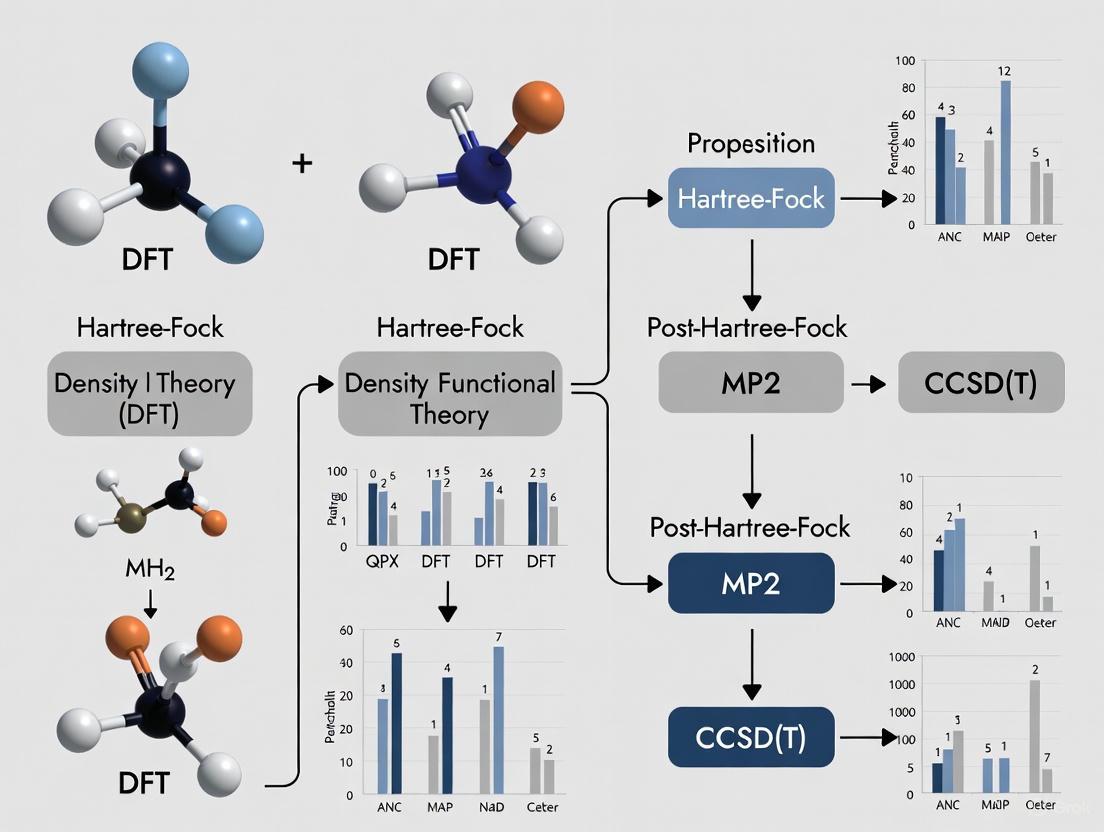
This article provides a comprehensive comparison of quantum mechanical (QM) methods for modeling chemical reaction pathways, a critical task in drug discovery and synthetic methodology development.
Benchmarking Quantum Mechanical Methods for Reaction Pathway Prediction: A Guide for Computational Chemists and Drug Developers
Abstract
This article provides a comprehensive comparison of quantum mechanical (QM) methods for modeling chemical reaction pathways, a critical task in drug discovery and synthetic methodology development. It explores the foundational theories, from semiempirical to ab initio and density functional theory (DFT), and details their practical application in locating transition states and elucidating mechanisms. The content further addresses common challenges and optimization strategies, including the use of hybrid QM/MM and continuum solvation models. Finally, it offers a rigorous framework for validating and benchmarking these computational methods against experimental data and high-level theoretical references, empowering researchers to select the most accurate and efficient approaches for their projects.
Quantum Mechanics in Chemistry: Core Principles for Modeling Reaction Pathways
The Schrödinger equation is the fundamental partial differential equation that governs the wave function of a non-relativistic quantum-mechanical system, forming the cornerstone of quantum chemistry and our understanding of molecular behavior [1]. Its discovery by Erwin Schrödinger in 1925 provided the crucial link between the wave-particle duality of matter and the stable, quantized states observed in atoms and molecules [1] [2]. Conceptually, it serves as the quantum counterpart to Newton's second law in classical mechanics, predicting the evolution of a system's quantum state over time where Newton's laws predict a physical path [1].
The time-independent, non-relativistic Schrödinger equation for a single particle is expressed as:
[ \hat{H}|\Psi\rangle = E|\Psi\rangle ]
where (\hat{H}) is the Hamiltonian operator, (E) is the energy eigenvalue, and (|\Psi\rangle) is the wave function of the system [1]. For chemical systems, solving this equation provides access to molecular structures, energies, reaction pathways, and spectroscopic properties.
However, obtaining exact solutions to the Schrödinger equation for systems with more than one electron is analytically impossible due to the complex nature of electron-electron correlations [3]. This intractability has driven the development of numerous computational approximations, each balancing accuracy against computational cost. These methods, ranging from highly accurate but expensive ab initio post-Hartree-Fock approaches to more efficient Density Functional Theory (DFT) and semi-empirical methods, form the essential toolkit for modern computational chemistry, enabling the study of complex chemical reactions and materials that would otherwise be beyond our analytical reach [3] [4] [5].
A Hierarchy of Computational Approximations
The landscape of computational quantum chemistry methods can be viewed as a hierarchy, where each level introduces specific approximations to the Schrödinger equation to make calculations feasible.
TheAb InitioSuite: From Hartree-Fock to Correlated Methods
Ab initio (Latin for "from the beginning") methods are a class of computational techniques based directly on quantum mechanics, using only physical constants and the positions and number of electrons in the system as input, without relying on empirical parameters [3].
Hartree-Fock (HF) Method: The simplest ab initio approach, where the instantaneous Coulombic electron-electron repulsion is not specifically taken into account; only its average effect (mean field) is included in the calculation. This provides a qualitatively correct but quantitatively inadequate description, as it completely misses electron correlation [3].
Post-Hartree-Fock Methods: These methods correct for the electron correlation missing in the HF method. Key approaches include:
- Møller-Plesset Perturbation Theory: A hierarchical approach where MP2 (second-order) scales as N⁴, MP3 as N⁶, and MP4 as N⁷, with N being a relative measure of system size [3].
- Coupled Cluster (CC) Theory: A highly accurate method where CCSD scales as N⁶, and CCSD(T) – often called the "gold standard" for single-reference calculations – scales as N⁷ [3].
- Configuration Interaction (CI): A variational approach that converges to the exact solution when all possible configurations are included ("Full CI"), but is computationally prohibitive for all but the smallest systems [3].
Density Functional Theory (DFT) and Semi-Empirical Methods
Density Functional Theory: As discussed in the benchmarking study, DFT methods like B97-3c, r2SCAN-3c, and ωB97X-3c offer a different approach by expressing the energy as a functional of the electron density rather than the wave function, providing good accuracy with reduced computational cost compared to correlated ab initio methods [5].
Semi-Empirical Quantum Mechanical (SQM) Methods: Approaches like GFN2-xTB and g-xTB incorporate empirical parameters to further reduce computational cost, enabling the study of very large systems, though with potentially lower accuracy for certain properties [5].
Emerging Approaches: Neural Network Potentials and Quantum Computing
Recent advances have introduced novel computational paradigms:
Neural Network Potentials (NNPs): Models like the OMol25-trained NNPs (eSEN and UMA) learn the relationship between molecular structure and energy from large quantum chemistry datasets, offering potentially high speed while maintaining accuracy, even without explicitly considering charge-based physics in their architecture [5].
Quantum Computing Approaches: Variational quantum algorithms represent an emerging frontier, using adaptive quantum circuit evolution to solve electronic structure problems, with potential advantages for specific problem classes [6].
Comparative Performance Benchmarking
The true test of any computational method lies in its ability to reproduce experimental observables and high-level theoretical reference data. Recent comprehensive benchmarks provide critical insights into the performance hierarchy of these methods.
Accuracy in Predicting Reduction Potentials
Reduction potential quantifies the voltage at which a species gains an electron in solution, making it a sensitive probe of a method's ability to handle changes in charge and spin states. The following table compares the performance of various methods on main-group and organometallic datasets:
Table 1: Performance of computational methods for predicting reduction potentials (in Volts) [5]
| Method | System Type | Mean Absolute Error (MAE) | Root Mean Square Error (RMSE) | R² |
|---|---|---|---|---|
| B97-3c | Main-group (OROP) | 0.260 | 0.366 | 0.943 |
| Organometallic (OMROP) | 0.414 | 0.520 | 0.800 | |
| GFN2-xTB | Main-group (OROP) | 0.303 | 0.407 | 0.940 |
| Organometallic (OMROP) | 0.733 | 0.938 | 0.528 | |
| UMA-S (NNP) | Main-group (OROP) | 0.261 | 0.596 | 0.878 |
| Organometallic (OMROP) | 0.262 | 0.375 | 0.896 | |
| UMA-M (NNP) | Main-group (OROP) | 0.407 | 1.216 | 0.596 |
| Organometallic (OMROP) | 0.365 | 0.560 | 0.775 |
The data reveals that the B97-3c functional excels for main-group systems, while the UMA-S neural network potential shows remarkable consistency across both main-group and organometallic species, outperforming GFN2-xTB for organometallics. Interestingly, the neural network potentials demonstrate a reversed accuracy trend compared to traditional methods, performing better on organometallic species than on main-group compounds [5].
Performance in Calculating Electron Affinities
Electron affinity measures the energy change when a species gains an electron in the gas phase, providing another stringent test of methodological accuracy, particularly for charge-related properties.
Table 2: Performance of computational methods for predicting electron affinities (in eV) [5]
| Method | Main-Group Species (MAE) | Organometallic Species (MAE) |
|---|---|---|
| r2SCAN-3c | 0.087 | 0.234 |
| ωB97X-3c | 0.082 | 0.191* |
| g-xTB | 0.136 | 0.298 |
| GFN2-xTB | 0.178 | 0.330 |
| UMA-S (NNP) | 0.123 | 0.186 |
| UMA-M (NNP) | 0.160 | 0.252 |
Note: ωB97X-3c encountered convergence issues with some organometallic structures [5]
For electron affinities, DFT methods (r2SCAN-3c and ωB97X-3c) achieve the highest accuracy for main-group species, while the UMA-S neural network potential performs competitively for organometallic systems, surpassing even the DFT functionals for this challenging class of compounds [5].
Case Study: Mapping Reaction Pathways for RDX Decomposition
The thermal decomposition of the energetic material RDX (research department explosive) provides an excellent case study for comparing how different approximations to the Schrödinger equation handle complex reaction pathways with competing mechanisms.
Experimental Protocol and Computational Methodology
In a comprehensive quantum mechanics investigation of RDX decomposition, researchers employed both experimental and computational approaches [4]:
Experimental Technique: Confined Rapid Thermolysis (CRT) coupled with FTIR and Time-of-Flight Mass Spectrometry (ToFMS) to identify decomposition products from approximately 0.5 mg samples heated to 515 K, with sensitivity to liquid-phase processes [4].
Computational Methods: Density functional theory (DFT) with the B3LYP functional and 6-311++G(d,p) basis set was used to optimize geometries and locate transition states. Solvent effects for the liquid phase were incorporated using the SMD solvation model, and final energies were refined using high-level ab initio methods like G3B3 and CCSD(T) [4].
The relationship between the fundamental Schrödinger equation and the various computational approximations used in such investigations can be visualized as follows:
Competing Reaction Pathways Revealed Through Computational Chemistry
The study identified five competing initial reaction pathways for RDX decomposition, with barriers and energetics critically dependent on the computational method used [4]:
Table 3: Competing initial decomposition pathways for RDX in liquid phase [4]
| Pathway | Description | Key Products | Barrier (kcal/mol) | Method |
|---|---|---|---|---|
| P1 | HONO elimination | INT175 + HONO | ~39.2 | B3LYP/SMD |
| P2 | N‑NO₂ homolysis | RDR + NO₂ | ~39.0 | B3LYP/SMD |
| P3 | Reaction with NO | ONDNTA | ~42.5 | B3LYP/SMD |
| P4 | Prompt oxidation | HONO/ONNO₂ adducts | ~35.2 | B3LYP/SMD |
| P5 | Hydrogen abstraction | Various radicals | ~41.8 | B3LYP/SMD |
The intricate network of these competing pathways and their subsequent ring-opening reactions can be mapped as:
The investigation revealed that early ring-opening reactions occur through multiple simultaneous pathways, with the dominant mechanism shifting depending on environmental conditions. Particularly important was the discovery that bimolecular reactions and autocatalytic pathways (P4 and P5) play crucial roles in liquid-phase decomposition, explaining previously unaccounted-for experimental observations such as the formation of highly oxidized carbon species [4].
Modern computational chemistry relies on a sophisticated ecosystem of software tools, methods, and theoretical approaches.
Table 4: Essential computational resources for quantum chemistry studies [3] [4] [5]
| Resource Category | Specific Examples | Primary Function | Application Context |
|---|---|---|---|
| Software Packages | Gaussian 09, Psi4 | Quantum chemistry calculations | Method development, application studies |
| Density Functionals | B3LYP, B97-3c, ωB97X-3c | Electron correlation treatment | Balanced accuracy/cost studies |
| Basis Sets | 6-311++G(d,p), def2-TZVPD | Spatial resolution for orbitals | Systematic improvement of accuracy |
| Semi-empirical Methods | GFN2-xTB, g-xTB | Rapid geometry optimization | Large system screening, MD simulations |
| Neural Network Potentials | UMA-S, UMA-M, eSEN | Machine-learned energy prediction | High-throughput screening, dynamics |
| Solvation Models | SMD, CPCM-X | Implicit solvent effects | Solution-phase reaction modeling |
The Schrödinger equation remains the indispensable foundation of quantum chemistry, but its practical application requires carefully chosen approximations tailored to specific research questions. Our comparison reveals that:
For maximum accuracy in small systems, coupled cluster methods like CCSD(T) provide benchmark quality, but at computational costs that limit application to larger molecules [3].
For balanced performance across chemical space, modern density functionals like B97-3c and ωB97X-3c offer excellent accuracy for both energies and properties, explaining their widespread adoption [5].
For high-throughput screening and dynamics simulations of large systems, neural network potentials like UMA-S show remarkable promise, achieving competitive accuracy without explicit physical models of electron interaction [5].
For complex reaction networks like RDX decomposition, DFT methods with appropriate solvation models successfully unravel intricate competing pathways, demonstrating the crucial role of computational chemistry in elucidating mechanisms that are experimentally inaccessible [4].
The optimal approximation depends critically on the target system size, property of interest, and available computational resources. As method development continues, particularly in machine learning and quantum computing, the accessible chemical space will expand further, but the Schrödinger equation will remain the fundamental theory from which all these approximations derive their power and legitimacy.
In the field of computational chemistry, particularly for modeling reaction pathways in drug discovery and materials science, researchers navigate a hierarchical spectrum of quantum mechanical methods. This spectrum represents a fundamental trade-off between computational cost and accuracy, requiring scientists to match the method to the specific research question and available resources. Semiempirical methods, Density Functional Theory (DFT), and ab initio post-Hartree-Fock techniques form the core of this hierarchy, each with distinct capabilities and limitations for predicting molecular structures, energies, and reaction mechanisms [7] [8].
The choice of method is not merely technical but fundamentally influences research outcomes. For instance, in pharmaceutical research, accurately predicting drug-protein interaction energies or reaction barriers is essential for reducing costly late-stage failures [7]. This guide provides an objective comparison of these quantum mechanical methods, supported by experimental data and detailed protocols, to inform researchers in selecting appropriate computational tools for reaction pathway analysis.
Theoretical Foundation and Method Hierarchies
The Accuracy-Cost Spectrum
Computational quantum methods exist along a continuous spectrum where increasing accuracy typically demands exponentially greater computational resources. At one end lie semiempirical methods which employ extensive approximations and parameterization to achieve computational speeds thousands of times faster than standard DFT [8]. In the middle range, Density Functional Theory offers a balance between accuracy and cost for many chemical systems, while ab initio post-Hartree-Fock methods (such as coupled-cluster theory) reside at the high-accuracy end, providing benchmark-quality results for smaller systems but becoming prohibitively expensive for large biomolecules [7] [9].
Fundamental Theoretical Differences
The mathematical foundations differentiate these methodological classes. Semiempirical methods simplify the quantum mechanical Hamiltonian by neglecting or approximating many electronic integrals, introducing parameters fitted to experimental data or higher-level computations [8]. For example, Density Functional Tight Binding (DFTB), a semiempirical method derived from DFT, expands the total energy in a Taylor series around a reference density and truncates at different orders (DFTB1, DFTB2, DFTB3), with each level incorporating progressively more terms from the expansion [8].
In contrast, DFT methods compute the electron density directly using exchange-correlation functionals without empirical parameterization for specific elements, while ab initio post-Hartree-Fock methods systematically approximate the electron correlation energy missing in the Hartree-Fock method through mathematically rigorous approaches like perturbation theory (MP2, MP4) or coupled-cluster theory (CCSD(T)) [9]. These fundamental differences in approach directly impact their computational scaling: semiempirical methods typically scale as O(N²) to O(N³), DFT generally O(N³) to O(N⁴), and high-level ab initio methods can scale from O(N⁵) to O(N⁷) or worse, where N represents system size [8].
Quantitative Performance Comparison
Accuracy Benchmarks for Isomerization Enthalpies
A comprehensive study evaluating gas-phase isomerization enthalpies for organic compounds provides critical benchmarking data across methodological classes. The research examined 562 isomerization reactions spanning pure hydrocarbons and nitrogen-, oxygen-, sulfur-, and halogen-substituted hydrocarbons using multiple theoretical methods [9]. The following table summarizes key performance metrics:
Table 1: Performance of quantum mechanical methods for calculating isomerization enthalpies
| Methodological Class | Specific Method | Basis Set | Mean Signed Error (MSE) | Mean Absolute Error (MAE) |
|---|---|---|---|---|
| Semiempirical | AM1 | - | 2.93 kcal/mol | 3.58 kcal/mol |
| Semiempirical | PM3 | - | 2.37 kcal/mol | 2.96 kcal/mol |
| Semiempirical | PM6 | - | 1.51 kcal/mol | 2.14 kcal/mol |
| DFT | B3LYP | 6-31G(d) | 1.84 kcal/mol | 2.19 kcal/mol |
| DFT | B3LYP | 6-311+G(3df,2p) | 0.68 kcal/mol | 0.96 kcal/mol |
| DFT | M06-2X | 6-311+G(3df,2p) | 0.32 kcal/mol | 0.63 kcal/mol |
| Ab Initio Post-HF | G3(MP2) | - | 0.30 kcal/mol | 0.61 kcal/mol |
| Ab Initio Post-HF | G4 | - | 0.21 kcal/mol | 0.52 kcal/mol |
The data reveals clear hierarchical patterns. Semiempirical methods show the largest errors (MAEs of 2.14-3.58 kcal/mol), with PM6 performing best in this class. DFT methods demonstrate significantly improved accuracy, particularly with larger basis sets (MAEs of 0.63-2.19 kcal/mol), while ab initio post-Hartree-Fock composite methods (G3(MP2) and G4) deliver the highest accuracy, with MAEs below 1 kcal/mol, essential for precise reaction barrier predictions [9].
Computational Efficiency Comparison
The computational cost hierarchy presents the practical constraint in method selection. Quantitative assessments show that semiempirical methods like DFTB are approximately three orders of magnitude faster than DFT with medium-sized basis sets, while DFT is about three orders of magnitude faster than empirical force field methods (Molecular Mechanics) [8]. This efficiency enables molecular dynamics simulations on nanosecond timescales with DFTB compared to picosecond timescales with conventional DFT for comparable systems [8].
Table 2: Computational efficiency and typical application ranges
| Method Class | Relative Speed | Typical System Size | Time Scales for MD | Reaction Modeling Capability |
|---|---|---|---|---|
| Semiempirical | 1000× faster than DFT | 100-10,000 atoms | Nanoseconds | Limited to parametrized reactions |
| DFT | Benchmark | 10-1000 atoms | Picoseconds | Broad, including bond breaking/formation |
| Ab Initio Post-HF | 10-1000× slower than DFT | 3-50 atoms | Not practical | High accuracy for small systems |
This efficiency hierarchy enables specific application ranges: semiempirical methods for large systems (e.g., proteins) and long timescales, DFT for medium-sized systems and reaction pathways, and ab initio methods for benchmark calculations on model systems [8].
Methodological Protocols and Workflows
Selecting Computational Methods: A Decision Hierarchy
The following workflow diagram outlines a systematic approach for selecting quantum mechanical methods based on research objectives and constraints:
Reaction Pathway Analysis Protocol
For mapping reaction pathways, a multi-level computational approach provides both efficiency and accuracy:
Initial Conformational Sampling: Utilize semiempirical methods (PM7, DFTB) or molecular mechanics to explore potential energy surfaces and identify stable conformers and approximate transition states [8] [9].
Geometry Optimization: Refine molecular structures of reactants, products, and transition states using DFT with medium-sized basis sets (e.g., B3LYP/6-31G* or M06-2X/6-31G*) [9].
Energy Refinement: Perform single-point energy calculations on optimized geometries using higher-level methods (e.g., DLPNO-CCSD(T)/def2-TZVP or G4) for thermochemical accuracy [9].
Solvation and Environmental Effects: Incorporate implicit solvation models (PCM, SMD) or explicit solvent molecules, potentially using QM/MM approaches for biological systems [8].
Thermochemical Corrections: Calculate zero-point energies, thermal corrections, and entropy contributions using frequency analyses at the optimization level to obtain Gibbs free energies [9].
This protocol balances computational efficiency with accuracy, leveraging the strengths of each methodological tier while mitigating their respective limitations.
The Scientist's Toolkit: Essential Research Reagents
Table 3: Essential computational tools for quantum mechanical calculations
| Tool Category | Specific Examples | Function | Typical Use Cases |
|---|---|---|---|
| Semiempirical Software | MOPAC, DFTB+ | Fast geometry optimization, molecular dynamics | Large system preliminary screening, nanosecond MD |
| DFT Packages | Gaussian, ORCA, Q-Chem | Electronic structure, reaction pathways, spectroscopy | Reaction mechanism studies, excitation energies |
| Ab Initio Packages | GAMESS, Molpro, NWChem | High-accuracy benchmark calculations | Small system thermochemistry, method validation |
| Composite Methods | Gaussian-n series, CBS | High-accuracy thermochemistry via approximation schemes | Benchmark reaction energies and barriers |
| Plane-Wave DFT | VASP, Quantum ESPRESSO | Periodic boundary conditions, solid-state systems | Catalytic surfaces, materials science |
| Quantum/Molecular Mechanics | AMBER, CHARMM, QSimulate QUELO | Multi-scale modeling of biological systems | Enzyme catalysis, drug-protein interactions [10] |
| Visualization & Analysis | GaussView, VMD, Jmol | Molecular structure visualization, property analysis | Results interpretation, publication graphics |
| Force Field Packages | AMBER, CHARMM, OpenMM | Classical molecular dynamics | Conformational sampling of large biomolecules |
Emerging Trends and Future Directions
The field of computational quantum chemistry is rapidly evolving, with several emerging trends bridging methodological hierarchies. Hybrid quantum-classical approaches are gaining prominence, particularly for drug discovery applications where companies like QSimulate are developing quantum-informed simulation tools that operate on classical computers but incorporate quantum mechanical principles for increased accuracy [10]. These approaches can provide speed improvements of up to 1000× compared to traditional methods, reducing processes that once took months to just hours [10].
Another significant trend involves integrating machine learning with quantum chemistry. For instance, Qubit Pharmaceuticals has introduced foundation models built entirely on synthetic quantum chemistry simulations, enabling reactive molecular dynamics at unprecedented scales while maintaining quantum accuracy [10]. Similarly, hierarchical quantum computing architectures are being developed to distribute quantum computations across multiple systems, potentially enabling more complex simulations as quantum hardware advances [11].
For reaction pathway research specifically, methodological development continues to address known limitations. DFT functionals are being refined for more accurate treatment of dispersion interactions and reaction barriers, while semiempirical methods are expanding parameterization to broader chemical spaces, including transition metals [8] [9]. These advances progressively narrow the accuracy gaps between methodological tiers while expanding their accessible application domains.
The study of chemical reaction mechanisms relies fundamentally on three interconnected concepts: the Potential Energy Surface (PES), Transition States (TS), and the Intrinsic Reaction Coordinate (IRC). Together, these constructs provide a comprehensive framework for understanding how molecular systems evolve from reactants to products, enabling researchers to predict reaction rates, optimize catalysts, and design novel chemical entities in fields including pharmaceutical development. The PES represents the energy of a molecular system as a function of its nuclear coordinates, conceptually similar to a topographical map where valleys correspond to stable molecular geometries and mountain passes represent transition states between them [12]. First-order saddle points on this surface, the transition states, are characterized by having a zero gradient in all directions but exactly one negative eigenvalue in the Hessian matrix (the matrix of second derivatives), indicating precisely one direction of negative curvature [13]. The IRC, originally defined by Fukui, is the minimum energy pathway in mass-weighted coordinates connecting transition states to reactants and products, representing the path a molecule would follow with zero kinetic energy moving down the reactant and product valleys [14] [15] [16].
Theoretical Foundations and Mathematical Frameworks
The Potential Energy Surface (PES)
The Potential Energy Surface is governed by the Born-Oppenheimer approximation, which separates nuclear and electronic motion, allowing the electronic Schrödinger equation to be solved for fixed nuclear positions [17]. Mathematically, this enables the representation of the potential energy as ( V(\mathbf{R}) = E{\text{electronic}}(\mathbf{R}) + \sum{i>j} \frac{Zi Zj e^2}{4\pi\epsilon0|\mathbf{R}i - \mathbf{R}j|} ), where ( \mathbf{R} ) represents nuclear coordinates, ( E{\text{electronic}} ) is the energy from solving the electronic Schrödinger equation, and the final term represents nuclear repulsion energy [17]. Critical points on the PES occur where the gradient vanishes (( \nabla V(\mathbf{R}) = 0 )), with their character determined by the eigenvalues of the Hessian matrix [17].
- Local Minima: All eigenvalues are positive; represent stable reactant, product, or intermediate structures.
- First-Order Saddle Points (Transition States): Exactly one negative eigenvalue; represent the highest energy point along the minimum energy path between minima.
- Higher-Order Saddle Points: Multiple negative eigenvalues; generally less chemically relevant [17].
The PES can be classified as attractive (early-downhill) or repulsive (late-downhill) based on bond length extensions in the activated complex relative to reactants and products, which determines how reaction energy is distributed [12].
Transition State Theory
Transition states are defined as the highest energy point on the minimum energy path between reactants and products, characterized by a zero gradient in all directions and a single imaginary frequency (negative eigenvalue in the Hessian) [13]. In the words of Kenichi Fukui, transition states represent "the highest energy point on the lowest-energy path connecting reactants and products" [15]. Identifying these first-order saddle points is computationally challenging due to the high-dimensional space molecules inhabit, requiring specialized optimization algorithms that maximize energy along the reaction coordinate while minimizing energy along all other coordinates [13].
Intrinsic Reaction Coordinate Theory
The IRC provides a rigorous definition of the reaction pathway, essentially constituting a sequence of small, steepest-descent paths going downhill from the transition state [14]. Formally, the IRC path is defined in mass-weighted Cartesian coordinates, following the path of maximum instantaneous acceleration rather than simply the steepest descent direction, making it somewhat related to molecular dynamics methods [18]. The IRC can be calculated using various algorithms, with the Gonzalez-Schlegel method implementing a predictor-corrector approach where the calculation involves walking down the IRC in steps with fixed step size, each step involving a constrained optimization on a hypersphere to remain on the true reaction path [16].
Computational Methodologies and Protocols
Transition State Optimization Methods
Locating transition states requires specialized computational approaches, several of which are compared below:
Synchronous Transit Methods: These include Linear Synchronous Transit (LST), which naïvely interpolates between reactants and products to find the highest energy point, and Quadratic Synchronous Transit (QST), which uses quadratic interpolation to provide greater flexibility. QST3, which incorporates an initial TS guess, is particularly robust for recovering proper transition states even from poor initial guesses [13].
Elastic Band Methods: The Nudged Elastic Band (NEB) method places multiple images (nodes) along a guess pathway connected by spring forces. Forces are decomposed into tangent and normal components, with only the tangent component of the spring force and normal component of the gradient used to optimize nodes, preventing "corner-cutting." Climbing-Image NEB (CI-NEB) further improves this by allowing the highest energy image to climb up the gradient along the tangent while minimizing energy in other directions [13].
Channel Following Methods: The Dimer method estimates local curvature using a pair of geometries separated by a small distance (the "dimer"), avoiding explicit Hessian calculation. The dimer is rotated to find the direction of lowest curvature, then steps are taken uphill along this direction until a saddle point is reached [13].
Coordinate-Driven Methods: Constrained optimization involves guessing the local geometry of the transition state and fixing key coordinates (bonds, angles, dihedrals) involved in the transition mode while optimizing all other coordinates [13].
IRC Calculation Protocols
IRC calculations follow specific algorithmic procedures, typically involving nested loops with the outer loop running over IRC points and the inner loop performing geometry optimization at each point [18]. The Gonzalez-Schlegel method implements this through a specific workflow:
- Initialization: Starting from a verified transition state geometry with computed Hessian, determine the initial direction using the eigenvector corresponding to the imaginary frequency [14] [16].
- Step Construction: From point P1 on the path, construct an auxiliary point P' at a distance of step-size/2 along the tangent direction [16].
- Constrained Optimization: On a hypersphere of radius step-size/2 centered at P', search for the point of lowest energy P2 through constrained optimization, requiring multiple energy and gradient calculations [16].
- Convergence Check: Check if geometry convergence criteria are fulfilled along the pathway. If the angle between successive steps becomes smaller than 90 degrees, the calculation may switch to direct energy minimization [18].
- Path Completion: Repeat until maximum steps reached or minima identified, then perform in both forward and reverse directions from the TS [14] [18].
Different software packages implement IRC with specific parameters. For example, in Q-Chem, key $rem variables include RPATH_COORDS (coordinate system), RPATH_DIRECTION, RPATH_MAX_CYCLES, RPATH_MAX_STEPSIZE, and RPATH_TOL_DISPLACEMENT [14]. In Gaussian, the step size is specified via irc=(stepsize=n) in units of 0.01 amu⁻⁰·⁵Bohr, with typical values of 10 for normal systems or 3 for strongly curved paths [16].
Diagram 1: IRC Calculation Workflow. Illustrates the iterative predictor-corrector algorithm used in IRC path following.
Performance Comparison of Computational Methods
Electronic Structure Methods for PES Construction
The accuracy of PES, TS, and IRC calculations depends critically on the chosen electronic structure method. The following table compares popular quantum chemical methods used in computational chemistry:
Table 1: Comparison of Electronic Structure Methods for Reaction Pathway Analysis
| Method | Theoretical Foundation | Computational Cost | Key Strengths | Key Limitations | Optimal Use Cases |
|---|---|---|---|---|---|
| Hartree-Fock (HF) | Wavefunction theory, mean-field approximation | Low | Fast calculations, systematic improvability | Lacks electron correlation, poor reaction barriers | Initial scanning, educational purposes |
| Density Functional Theory (DFT) | Electron density functional | Moderate | Good accuracy/cost balance, includes electron correlation | Functional-dependent results | Routine reaction modeling, large systems |
| ωB97X-3c | Composite DFT with dispersion correction | Moderate-high | 5.2 kcal/mol MAE, good for halogens, comparable to quadruple-zeta [19] | More expensive than minimal basis DFT | Accurate benchmarking, halogen-containing systems |
| MP2 | Perturbation theory | High | Includes electron correlation, systematically improvable | Fails for diradicals, spin-contamination | When DFT unreliable, initial high-level guess |
| CCSD(T) | Coupled-cluster theory | Very high | "Gold standard" for single-reference systems | Prohibitively expensive for large systems | Final high-accuracy validation |
Recent benchmarking on the DIET test set shows that the ωB97X-3c composite method achieves a weighted mean absolute error (MAE) of 5.2 kcal/mol with a computational time of 115 minutes per calculation, representing an optimal compromise between accuracy and efficiency—delivering quadruple-zeta quality at significantly reduced cost [19]. In comparison, ωB97X-D4/def2-QZVPPD achieved the best accuracy (4.5 kcal/mol weighted MAE) but required 571 minutes per calculation, while ωB97X/6-31G(d) showed unacceptably high weighted MAEs of 15.2 kcal/mol [19].
IRC Algorithm Performance Characteristics
Different IRC algorithms exhibit distinct performance characteristics and limitations:
Table 2: Comparison of IRC Algorithms and Implementation
| Algorithm/Software | Methodology | Step Control | Convergence Behavior | Key Advantages |
|---|---|---|---|---|
| Q-Chem (Schmidt et al.) | Predictor-corrector with gradient bisector and line search [14] | Fixed step size, default 0.15 a.u. [14] | Reduced "stitching" (zig-zag) behavior [14] | Improved stability over basic steepest descent |
| Gaussian (Gonzalez-Schlegel) | Hypersphere-based constrained optimization [16] | User-defined step size (default 10, ~0.1 amu⁻⁰·⁵Bohr) [16] | Requires proper convergence criteria setting [16] | Well-established, widely available |
| AMS | Mass-weighted coordinate following [18] | Adaptive step reduction for high curvature [18] | Automatic switching to minimization near endpoints [18] | Robust handling of path termination |
The predictor-corrector algorithm developed by Ishida et al. and improved by Schmidt et al. addresses the fundamental limitation of basic steepest-descent methods, which tend to "stitch" back and forth across the true reaction path [14]. This method involves a second gradient calculation after the initial steepest-descent step, followed by a line search along the gradient bisector to return to the correct path [14].
Applications in Pharmaceutical and Reaction Research
Drug Discovery Applications
The integration of PES, TS, and IRC analysis into pharmaceutical research enables more predictive modeling of drug-receptor interactions, metabolic pathways, and reactivity. Quantum-informed approaches are particularly valuable for modeling peptide drugs, covalent inhibitors, and halogen-containing compounds, which constitute approximately 25% of pharmaceuticals [19] [10]. For instance, hybrid quantum-classical approaches have been successfully applied to model prodrug activation and covalent inhibitors targeting the cancer-associated KRAS G12C mutation, providing more accurate predictions of molecular behavior, reaction pathways, and electronic properties than classical methods alone [10]. Companies like QSimulate have developed quantum-enabled platforms (QUELO) that claim to accelerate molecular modeling by up to 1000× compared to traditional methods, reducing processes that once took months to just hours [10].
Dataset Development for Machine Learning
Large-scale reaction pathway datasets are crucial for training machine learning interatomic potentials (MLIPs) that combine quantum accuracy with classical speed. The Halo8 dataset represents a significant advance, comprising approximately 20 million quantum chemical calculations from 19,000 unique reaction pathways incorporating fluorine, chlorine, and bromine chemistry [19]. This dataset, generated using a multi-level workflow achieving a 110-fold speedup over pure DFT approaches, provides diverse structural distortions and chemical environments essential for training reactive MLIPs applicable to pharmaceutical discovery [19]. Such datasets address the critical limitation of existing MLIPs trained predominantly on equilibrium structures with limited halogen coverage, enabling more accurate modeling of halogen-specific reactive phenomena like halogen bonding in transition states and polarizability changes during bond breaking [19].
Table 3: Essential Computational Tools for Reaction Pathway Analysis
| Tool/Resource | Type | Key Features | Application Context |
|---|---|---|---|
| Gaussian | Software package | Industry standard, comprehensive IRC implementation [16] | General reaction mechanism studies |
| Q-Chem | Software package | Advanced methods, efficient IRC with predictor-corrector [14] | High-accuracy reaction pathway mapping |
| ORCA | Software package | Free, efficient, user-friendly interface [19] | Accessible high-performance computation |
| AMS | Software package | IRC with automatic termination, robust restarts [18] | Complex reaction network exploration |
| Halo8 Dataset | Training data | 20M calculations, halogen chemistry coverage [19] | MLIP training for pharmaceutical applications |
| Transition1x | Training data | Large-scale reaction pathways (C, N, O) [19] | MLIP training for organic reactions |
| ωB97X-3c | DFT method | Optimal accuracy/cost for reaction barriers [19] | Benchmark studies of reaction pathways |
| Dandelion | Computational workflow | Automated reaction discovery, 110× speedup [19] | High-throughput reaction screening |
Diagram 2: PES Topology and IRC Path. Shows the relationship between reactants, transition state, products, and the intrinsic reaction coordinate on a potential energy surface.
The integrated framework of Potential Energy Surfaces, Transition States, and Intrinsic Reaction Coordinates provides an essential foundation for understanding and predicting chemical reactivity across diverse applications from fundamental chemistry to drug discovery. Current methodological advances focus on improving the accuracy and efficiency of these calculations through better density functionals (e.g., ωB97X-3c), robust algorithms for locating and verifying transition states, and sophisticated path-following techniques. The growing integration of quantum mechanical data with machine learning approaches promises to further revolutionize this field, enabling the exploration of complex reaction networks and the design of novel transformations with unprecedented precision. As hybrid quantum-classical methods mature and large-scale reaction datasets like Halo8 become available, researchers gain increasingly powerful tools to navigate chemical space and accelerate the discovery of new pharmaceuticals and materials.
The Critical Role of Basis Sets in Balancing Computational Cost and Accuracy
In computational chemistry, the prediction of reaction pathways is fundamental to advancements in pharmaceutical discovery and materials design. The accuracy of these quantum mechanical simulations hinges on a critical choice: the selection of an atomic orbital basis set. This choice dictates the trade-off between computational cost and the physical realism of the resulting model. Diffuse functions, while essential for modeling key interactions like halogen bonding and van der Waals forces, can drastically reduce the sparsity of the one-particle density matrix, creating a significant computational bottleneck [20]. This guide provides an objective comparison of popular basis sets, evaluating their performance and cost to help researchers make informed decisions for reaction pathway studies.
Quantitative Comparison of Basis Set Performance
The performance of a basis set is measured by its ability to reproduce accurate interaction energies, particularly for non-covalent interactions (NCIs), which are crucial in biochemical systems. The following table summarizes key metrics for selected standard and diffuse-augmented basis sets, using the ωB97X-V density functional and referenced to the high-level aug-cc-pV6Z basis set [20].
Table 1: Performance and Cost Metrics of Selected Basis Sets
| Basis Set | Type | Total RMSD (M+B) (kJ/mol) | NCI RMSD (M+B) (kJ/mol) | Relative Compute Time (s) |
|---|---|---|---|---|
| def2-SVP | Standard | 33.32 | 31.51 | 151 |
| def2-TZVP | Standard | 17.36 | 8.20 | 481 |
| def2-QZVP | Standard | 16.53 | 2.98 | 1,935 |
| cc-pVDZ | Standard | 32.82 | 30.31 | 178 |
| cc-pVTZ | Standard | 18.52 | 12.73 | 573 |
| cc-pV5Z | Standard | 16.46 | 2.81 | 6,439 |
| def2-SVPD | Diffuse-Augmented | 26.50 | 7.53 | 521 |
| def2-TZVPPD | Diffuse-Augmented | 16.40 | 2.45 | 1,440 |
| aug-cc-pVDZ | Diffuse-Augmented | 26.75 | 4.83 | 975 |
| aug-cc-pVTZ | Diffuse-Augmented | 17.01 | 2.50 | 2,706 |
Key Insights from Performance Data:
- The Necessity of Diffuse Functions: The data shows that unaugmented basis sets, even large ones like def2-QZVP and cc-pV5Z, struggle to achieve high accuracy for non-covalent interactions (NCI RMSD > 2.8 kJ/mol). In contrast, medium-sized diffuse-augmented basis sets like def2-TZVPPD and aug-cc-pVTZ deliver excellent NCI accuracy (NCI RMSD ~2.5 kJ/mol) at a fraction of the cost of massive standard sets [20].
- The Onset of Sufficient Accuracy: For systems where NCIs are critical, def2-TZVPPD and aug-cc-pVTZ represent a "sweet spot," being the smallest basis sets where the combined method and basis set error is sufficiently converged [20].
- The Blessing and Curse of Diffuse Functions: While essential for accuracy, diffuse functions significantly increase computational time and reduce the sparsity of the one-particle density matrix. This "curse of sparsity" can push linear-scaling algorithms into impractical regimes, as even medium-sized diffuse basis sets can eliminate usable sparsity in large systems like DNA fragments [20].
Experimental Protocols for Benchmarking
The quantitative data presented in Table 1 is derived from rigorous benchmarking protocols. Understanding these methodologies is critical for evaluating the results and designing new studies.
Table 2: Key Experimental Protocols in Basis Set Benchmarking
| Protocol Component | Description | Purpose |
|---|---|---|
| Benchmark Database | Use of the ASCDB benchmark, which contains a statistically relevant cross-section of relative energies for various chemical problems, including a dedicated subset for non-covalent interactions (NCI) [20]. | Provides a comprehensive and representative test set to ensure benchmarking results are generalizable beyond single-molecule cases. |
| Reference Method | Calculations are performed with a robust, modern density functional like ωB97X-V. The results are referenced against those obtained with a very large, near-complete basis set (e.g., aug-cc-pV6Z) [20]. | Establishes a reliable baseline for "truth," allowing for the quantification of errors from smaller basis sets. |
| Error Metric | Root-Mean-Square Deviation (RMSD) of relative energies, calculated for the entire database and specifically for the NCI subset. No counterpoise corrections are applied in the cited data [20]. | Quantifies the average error magnitude, with a focus on the chemically critical domain of non-covalent interactions. |
| Cost Metric | Wall-clock time for a single SCF calculation on a standardized system (e.g., a 260-atom DNA fragment) [20]. | Provides a practical, empirical measure of computational expense that incorporates the basis set's impact on SCF convergence. |
Visualizing the Basis Set Selection Workflow
The following diagram illustrates the logical workflow and trade-offs involved in selecting a basis set for reaction pathway studies, integrating the factors of accuracy, cost, and sparsity.
The Scientist's Toolkit for Reaction Pathway Studies
Beyond basis sets, modern computational studies of reaction pathways rely on a suite of tools and datasets. The following table details essential "research reagents" for this field.
Table 3: Essential Tools and Datasets for Reaction Pathway Research
| Tool / Resource | Type | Primary Function |
|---|---|---|
| Halo8 Dataset [19] | Quantum Chemical Dataset | Provides ~20 million quantum chemical calculations across 19,000 reaction pathways, incorporating fluorine, chlorine, and bromine chemistry to train machine learning interatomic potentials. |
| ωB97X-3c Composite Method [19] | Quantum Chemical Method | Offers an optimal balance of accuracy and cost for large datasets, providing near quadruple-zeta quality with a triple-zeta computational cost, including dispersion corrections. |
| Dandelion Pipeline [19] | Computational Workflow | An efficient multi-level (xTB/DFT) pipeline for reaction discovery and pathway characterization, achieving a 110-fold speedup over pure DFT approaches. |
| ARplorer [21] | Automated Reaction Exploration Program | Integrates QM methods with rule-based approaches and LLM-guided chemical logic to automate the exploration of potential energy surfaces and identify multistep reaction pathways. |
| FlowER [22] | Generative AI Reaction Model | Uses a bond-electron matrix to predict reaction outcomes while strictly adhering to physical constraints like conservation of mass and electrons. |
| Complementary Auxiliary Basis Set (CABS) [20] | Computational Correction | A proposed solution to the diffuse basis set conundrum, which can help recover accuracy with more compact basis sets by correcting for basis set incompleteness. |
The critical trade-off between computational cost and accuracy, governed by basis set selection, is a central challenge in simulating reaction pathways. For systems where non-covalent interactions, halogen chemistry, or high-accuracy reaction barriers are paramount, diffuse-augmented triple-zeta basis sets like def2-TZVPPD or aug-cc-pVTZ represent a scientifically justified and computationally feasible standard [19] [20]. However, for initial screening of very large systems or when such interactions are less critical, standard triple-zeta or double-zeta basis sets offer a pragmatic alternative. The emerging integration of these calculations with large-scale datasets and machine learning potentials further underscores the need for strategic basis set choices that ensure data quality without rendering computations prohibitively expensive [19] [10]. The ongoing development of methods like the CABS correction promises to help navigate this enduring conundrum [20].
Practical Application: Selecting and Applying QM Methods for Reaction Discovery
This guide provides an objective comparison of quantum mechanical methods for studying chemical reaction pathways, a critical task in fields like pharmaceutical development. It evaluates methods based on their theoretical foundations, computational cost, and performance on benchmark systems, supported by experimental data.
The table below summarizes the key characteristics, strengths, and limitations of each method.
| Method | Theoretical Foundation | Key Strengths | Primary Limitations | Representative Cost (vs. DFT) |
|---|---|---|---|---|
| CASSCF | Multireference Wavefunction: Divides orbitals into inactive, active, and virtual spaces; performs full CI within the active space [23]. | Gold standard for multireference systems (e.g., bond breaking, diradicals, excited states); treats static correlation exactly within the active space [23]. | Exponential cost scaling with active space size; limited to ~18 electrons in 18 orbitals; requires expert selection of active space [23]. | Significantly higher (often 10-100x) |
| SAC-CI | Wavefunction-Based: Linked to cluster expansion theory; describes ground, excited, ionized, and electron-attached states [24]. | Accurate for various electron processes (excitation, ionization); size-consistent; good for molecular spectroscopy [24] [25]. | Higher computational cost than TD-DFT; performance can depend on the reference state and level of excitation [25]. | Higher (often 5-50x) |
| MP2 | Wavefunction-Based: Applies second-order Møller-Plesset perturbation theory to account for electron correlation [26]. | More accurate than HF for non-covalent interactions and many closed-shell systems; often a good cost/accuracy trade-off [26]. | Fails for multireference systems; can overestimate dispersion; performance depends on system [26]. | Moderate (2-10x) |
| TD-DFT | Density-Based: Computes excited states by linear response of the ground-state electron density. | Most common method for excited states; favorable cost/accuracy balance; applicable to large systems [25]. | Accuracy depends heavily on the functional; can fail for charge-transfer states, Rydberg states, and multireference systems [25]. | Low (1-3x) |
| CIS | Wavefunction-Based: Configuration Interaction with Single excitations from a Hartree-Fock reference. | Simple, inexpensive method for initial excited-state estimates; variational and size-consistent. | Neglects electron correlation; often overestimates excitation energies; inaccurate for quantitative work [23]. | Low (~1x) |
| ZINDO | Semi-Empirical: Approximates the Hartree-Fock equations using empirical parameters to fit experimental data. | Very fast; historically popular for spectroscopic properties of large molecules (e.g., organic chromophores). | Low accuracy due to approximations; limited transferability; largely superseded by more robust ab initio methods. | Minimal (0.001x) |
Workflow for Reaction Pathway Exploration
Selecting a method is only one part of a broader computational workflow for discovering and characterizing reaction pathways. The diagram below outlines a general strategy that incorporates these methods.
Workflow Description: Modern pathway exploration often uses a multi-level approach. Efficient, lower-level methods like semi-empirical GFN-xTB or DFT are used for initial pathway screening and transition state search (as in the IACTA or Dandelion workflows) [27] [28]. The geometries and pathways discovered are then refined using a higher-level method chosen based on the system's electronic structure. Finally, even higher-level single-point energy calculations (e.g., using composite methods like G3X or DLPNO-CCSD(T)) can be performed on the optimized structures for final validation and accurate barrier heights [26].
Benchmarking Studies and Experimental Data
Case Study 1: Oxidative Addition of SO₂ by OH Radical
This key atmospheric reaction tests a method's ability to locate a subtle transition state.
- Experimental Reference: Experimental enthalpy of reaction is -113.3 ± 6 kJ mol⁻¹ at 298 K [26].
- Computational Protocols:
- Geometries: Optimized using UMP2 (for OH and HOSO₂) and RMP2 (for SO₂) with the 6-31++G(2df,2p) basis set [26].
- Frequency Analysis: Calculated at the same level to confirm stationary points and obtain thermochemistry [26].
- Single-Point Energies: For higher accuracy, QCISD(T) single-point calculations were performed on MP2-optimized structures [26].
- Performance Data:
| Method | Basis Set | Barrier Height (kJ mol⁻¹) | Reaction Enthalpy (kJ mol⁻¹) | Notes |
|---|---|---|---|---|
| MP2=Full | 6-31++G(2df,2p) | 4.9 | -110.8 | Located a true transition state [26]. |
| B3LYP | 6-31++G(2df,2p) | Barrierless | -111.2 | Failed to locate a true transition state [26]. |
| QCISD(T)//MP2 | 6-311+G(2df,2p) | ~2.0 | - | Barrier height close to experimental suggestion [26]. |
| G3X//B3LYP | - | 0.5 | -109.3 | Very low barrier located [26]. |
Conclusion: MP2-based methods were successful in locating a transition state for this reaction, whereas B3LYP predicted a barrierless pathway. Higher-level corrections (e.g., QCISD(T) or G3X) are crucial for obtaining accurate barrier heights [26].
Case Study 2: Excited State Potential Energy Surfaces
The performance of excited-state methods was benchmarked for an excited-state proton transfer reaction.
- Computational Protocols:
- Reference Method: SAC-CI was used to generate benchmark potential energy surfaces [25].
- Comparison Method: Multiple TD-DFT functionals from different families (e.g., global hybrids) were tested [25].
- Solvation: Calculations were performed in both the gas phase and toluene (modeled as a polarizable continuum) [25].
- Key Finding: The study found that for excited states with varying polarity along the reaction path, TD-DFT's performance was highly functional-dependent. A "subtle compensation" between the functional's intrinsic error and solvent stabilization was needed for global hybrids with low exact exchange to correctly describe the reaction [25]. SAC-CI provided a more robust reference.
Case Study 3: Dataset Construction for Machine Learning
The creation of the Halo8 dataset highlights method selection for large-scale data generation.
- Goal: Generate ~20 million quantum chemical calculations for reaction pathways involving halogens to train machine learning interatomic potentials [27].
- Method Selected: ωB97X-3c [27].
- Benchmarking Result: On the DIET test set, ωB97X-3c achieved a weighted mean absolute error (MAE) of 5.2 kcal/mol, comparable to quadruple-zeta quality methods. In contrast, ωB97X/6-31G(d) showed an unacceptably high MAE of 15.2 kcal/mol [27].
- Rationale: ωB97X-3c was chosen as the optimal compromise between accuracy and computational cost, providing high accuracy for halogen-containing systems at a manageable cost for a dataset of this scale [27].
The Scientist's Toolkit: Essential Computational Reagents
The table below lists key software and computational models used in modern reaction pathway studies.
| Tool Name | Type | Primary Function in Reaction Studies |
|---|---|---|
| Dandelion Pipeline [27] | Computational Workflow | Automates reaction discovery and characterization (e.g., product search via SE-GSM, pathway refinement with NEB) using a multi-level (xTB/DFT) approach [27]. |
| IACTA (Imposed Activation) [28] | Exploration Method | Guides reaction discovery by activating a single user-selected coordinate (e.g., a bond length) combined with constrained conformer search [28]. |
| Effective Fragment Potential (EFP) [29] | Solvation Model | Describes solute-solvent interactions using effective potentials for discrete solvent molecules, useful for modeling explicit solvent shells [29]. |
| COSMO | Solvation Model | A polarizable continuum model (PCM) that treats the solvent as a dielectric continuum, accounting for bulk solvation effects [29]. |
| ORCA | Quantum Chemistry Software | A widely used package for ab init and DFT calculations; used for the Halo8 dataset [27]. |
| GFN-xTB | Semi-Empirical Method | Used for fast geometry optimizations, conformational searching, and initial pathway screening in multi-level workflows [27] [28]. |
Method Selection Guide
- For Organic Ground-State Reactions with Dynamic Correlation: DFT (with a validated functional) or MP2 are standard choices. MP2 can be more reliable for non-covalent interactions but should be checked for systematic errors [26].
- For Reactions Involving Bond Breaking/Forming in Multireference Systems: CASSCF is essential. Its results can be improved with perturbation theory (e.g., CASPT2) to account for dynamic correlation [23].
- For Excited-State Reactions and Spectroscopy: TD-DFT is efficient for large systems but requires functional benchmarking. SAC-CI is a more accurate but costly alternative, especially for challenging electronic states [25].
- For High-Throughput Data Generation: Composite methods like ωB97X-3c offer an excellent balance of accuracy and speed for generating large datasets for MLIP training [27].
- For Initial Exploration and Screening: Fast semi-empirical methods like GFN-xTB or force fields are invaluable in automated workflows (e.g., IACTA) to narrow down potential pathways before refinement with higher-level methods [28].
No single method is universally superior. A hierarchical strategy, combining the speed of low-level methods for sampling with the accuracy of high-level methods for validation, is the most effective approach for navigating the complex landscape of chemical reaction pathways.
In computational chemistry, a transition state (TS) is a first-order saddle point on the potential energy surface (PES)—the highest energy point on the minimum energy pathway (MEP) connecting reactant and product states [13]. The accurate location of transition states is fundamental to predicting reaction rates and understanding chemical mechanisms, as the energy barrier exponentially influences the reaction kinetics via the Eyring equation [30]. However, unlike local minima, saddle points are inherently more challenging to locate, requiring specialized optimization techniques that can navigate the complex, high-dimensional PES [31].
Transition state optimization methods can be broadly classified into single-ended and double-ended algorithms [32]. Single-ended methods, such as quasi-Newton and coordinate driving (or dimer methods), require only a single initial guess structure and explore the PES locally. In contrast, double-ended methods, including various interpolation approaches, utilize the known geometries of both reactants and products to constrain the search for the connecting saddle point [13] [32]. This guide provides a comparative analysis of these dominant methodological families—quasi-Newton, coordinate driving, and interpolation approaches—focusing on their theoretical foundations, practical performance, and applicability in modern research settings, including drug development.
The following table summarizes the core characteristics, advantages, and limitations of the three primary classes of transition state optimization methods.
Table 1: Comparison of Transition State Optimization Methods
| Method Category | Representative Algorithms | Key Features | Computational Cost | Convergence Reliability | Ideal Use Cases |
|---|---|---|---|---|---|
| Interpolation Methods | Linear Synchronous Transit (LST), Quadratic Synchronous Transit (QST), Nudged Elastic Band (NEB), Freezing String Method (FSM) | Uses reactant and product structures to define an initial path; optimizes nodes to find the MEP and TS [31] [13]. | High (scales with the number of nodes/images) [13] | Moderate to High (highly dependent on initial path quality) [31] | Reactions with known endpoints; complex paths with intermediates; automated workflows [31] [32]. |
| Quasi-Newton Methods | Partitioned Rational Function Optimization (P-RFO), BFGS-based updates (e.g., TS-BFGS) | Requires an initial TS guess and Hessian; uses iterative Hessian updates to converge on the saddle point [31] [30]. | Low to Moderate (avoids frequent Hessian calculation) [30] | High (with a good initial guess and Hessian) [31] | Well-understood reactions with a reasonable TS guess; often used as a final refinement step [31]. |
| Coordinate Driving (Dimer) Methods | Dimer Method, Improved Dimer Method | Locates saddle points by following low-curvature modes; requires only gradient evaluations, not the full Hessian [31] [13]. | Moderate (requires multiple gradient calculations per step) [31] | Moderate (can be misled by multiple low-energy modes) [13] | Large systems where Hessian is prohibitive; when the initial guess is poor and the reaction coordinate is unknown [31] [32]. |
Interpolation Approaches
Interpolation methods construct a series of structures (a "string" or "band") between reactants and products. The Freezing String Method (FSM) is an advanced interpolation algorithm implemented in Q-Chem. It starts with two string fragments representing the reactant and product, which are "grown" until they join, forming a complete reaction path [31]. Key parameters controlling its performance include FSM_NNODE (number of nodes, typically 10-20), FSM_NGRAD (number of perpendicular gradient steps per node, usually 2-6), and FSM_MODE (preferably LST interpolation) [31]. The highest-energy node on the final string provides an excellent guess for subsequent transition state optimization.
The Nudged Elastic Band (NEB) method and its variant, Climbing-Image NEB (CI-NEB), are other widely used double-ended methods. In standard NEB, multiple images are connected by spring forces and optimized simultaneously, but only the force component perpendicular to the path is used to push images toward the MEP ("nudging") [13]. CI-NEB enhances this by converting the highest-energy image into a TS optimizer—it climbs upwards along the tangent to the path while minimizing in all other directions, directly locating the saddle point [13].
Quasi-Newton Methods
Quasi-Newton methods, such as Partitioned Rational Function Optimization (P-RFO), are local surface-walking algorithms ideal for refining a good initial guess into an exact transition state [31]. Their primary advantage is avoiding the expensive calculation of the exact Hessian at every step. Instead, they begin with an initial Hessian estimate and update it iteratively using gradient information from subsequent steps (e.g., via the BFGS or SR1 update schemes) [30].
The performance of these methods is critically dependent on the quality of the initial guess and the initial Hessian. A poor initial Hessian can lead to slow convergence or convergence to the wrong saddle point. A powerful hybrid workflow combines the robustness of a double-ended method with the efficiency of a quasi-Newton method: the FSM provides a high-quality TS guess and an approximate Hessian (derived from the path tangent), which is then fed into a P-RFO calculation for final, precise optimization [31]. This "Hessian-free" approach can successfully locate transition states without performing a single exact Hessian calculation.
Coordinate Driving and the Dimer Method
The Dimer Method is a single-ended algorithm that locates saddle points by following reaction channels without requiring a pre-computed Hessian [31] [13]. It estimates the local curvature by using a pair of geometries (a "dimer") separated by a small distance. The method involves two key steps: rotating the dimer to find the direction of lowest curvature and then moving the dimer uphill along this direction [13]. This process is repeated until a saddle point is reached.
This method is particularly valuable for large systems where calculating the full Hessian is computationally prohibitive. It is also more robust than naive coordinate-following when the initial guess is poor and the reaction coordinate is not aligned with a simple vibrational mode [13]. However, it can struggle in systems with many low-frequency modes, as it may get lost on the complex PES [13].
Performance Data and Experimental Protocols
Quantitative Performance Comparison
Benchmarking studies provide critical insights into the real-world performance of different optimization algorithms. The following table synthesizes performance data from evaluations of various methods and software implementations.
Table 2: Experimental Performance Metrics for Optimization Methods
| Method / Software | Test System | Success Rate | Average Steps to Convergence | Key Performance Notes | Source |
|---|---|---|---|---|---|
| NewtonNet (ML Hessian) | 240 Organic Reactions | High (Robust) | 2-3x fewer than QN methods | Full analytical Hessians at every step; less reliant on initial guess. | [30] |
| Sella (Internal Coords) | 25 Drug-like Molecules (with OMol25 eSEN NNP) | 25/25 | ~15 | Efficient for transition state searches on neural network potentials. | [33] |
| L-BFGS | 25 Drug-like Molecules (with AIMNet2 NNP) | 25/25 | ~1.2 | Very fast convergence for local minima optimization on smooth PES. | [33] |
| geomeTRIC (TRIC) | 25 Drug-like Molecules (with GFN2-xTB) | 25/25 | ~103.5 | Reliable convergence using translation-rotation internal coordinates. | [33] |
| Quasi-Newton (DFT) | General Organic Reactions | Moderate | Baseline | Performance heavily dependent on initial Hessian guess quality. | [30] |
Detailed Experimental Protocols
Protocol 1: Freezing String Method (FSM) with Subsequent P-RFO Refinement
This is a robust, two-step protocol for locating transition states when reactant and product geometries are known [31].
- FSM Setup: In the
$moleculesection of a Q-Chem input file, provide the optimized geometries of the reactant and product, separated by. The order of atoms must be consistent. - FSM $rem Settings: Set
JOBTYPE = fsm. Key parameters include:METHODandBASIS: Define the level of theory (e.g.,b3lyp/6-31g).FSM_NNODE = 18: A higher number of nodes is recommended for subsequent TS search.FSM_NGRAD = 3: Typically sufficient for most reaction paths.FSM_MODE = 2: Selects LST interpolation.FSM_OPT_MODE = 2: Uses the more efficient quasi-Newton optimizer.
- FSM Execution: The calculation outputs a
stringfile.txtcontaining the energy and geometry of each node. The highest-energy node is the TS guess. - P-RFO Refinement: A subsequent Q-Chem job is set up with
JOBTYPE = ts. The$moleculesection reads the guess geometry (read), and critical$remvariables includeGEOM_OPT_HESSIAN = read(to use the approximate Hessian from FSM) andSCF_GUESS = read[31].
Protocol 2: Nudged Elastic Band (NEB) Workflow
NEB is a standard method for mapping reaction pathways and providing TS guesses [13] [32].
- Endpoint Optimization: Fully optimize the reactant and product structures.
- Image Generation: Generate initial guesses for a series of images (typically 5-20) between the endpoints via linear interpolation.
- NEB Calculation: Run an NEB calculation where all images are optimized simultaneously. The key is to "nudge" the forces: only the component of the true force perpendicular to the path and the component of the spring force parallel to the path are used. This keeps images equally spaced while on the MEP.
- TS Identification: Upon convergence, the image with the highest energy is a good approximation of the TS. For greater accuracy, use the Climbing-Image (CI-NEB) variant, where this image is allowed to climb upwards along the path to the saddle point without being constrained by springs [13].
Workflow Visualization
The following diagram illustrates a hybrid computational workflow that integrates interpolation and quasi-Newton methods for robust transition state location, as described in the experimental protocols.
Hybrid TS Optimization Workflow
The Scientist's Toolkit: Essential Research Reagents
Table 3: Key Software and Computational Tools for Transition State Optimization
| Tool / Resource | Type | Primary Function | Relevant Methods |
|---|---|---|---|
| Q-Chem | Quantum Chemistry Software | Performs ab initio calculations and geometry optimizations. | FSM, P-RFO, Dimer Method [31] |
| Sella | Geometry Optimization Library | Specialized optimizer for minima and transition states. | Internal coordinate TS optimization [33] |
| geomeTRIC | Geometry Optimization Library | General-purpose optimizer with advanced internal coordinates. | L-BFGS with TRIC coordinates [33] |
| Atomic Simulation Environment (ASE) | Python Library | Atomistic simulations and integrations. | NEB, L-BFGS, FIRE optimizers [33] |
| NewtonNet | Differentiable Neural Network Potential | Machine-learned potential with analytical Hessians. | Full-Hessian TS optimization [30] |
| Transition-1X (T1x) | Dataset | Benchmark dataset of organic reaction pathways. | Training and validating ML models [30] |
The comparative analysis presented in this guide demonstrates that no single transition state optimization method is universally superior. The choice of algorithm depends heavily on the specific problem, available computational resources, and prior knowledge of the reaction. Interpolation methods like FSM and NEB are powerful for exploratory studies where reactant and product structures are known, while quasi-Newton methods excel at the rapid refinement of good initial guesses. The Dimer method offers a compelling alternative for large systems or when Hessian information is unavailable.
A prominent trend is the move towards hybrid strategies that leverage the strengths of multiple approaches, such as using FSM to generate a high-quality guess and an approximate Hessian for a subsequent, highly efficient P-RFO search [31]. Furthermore, the field is being transformed by machine learning. The development of fully differentiable neural network potentials like NewtonNet, which can provide analytical Hessians at a fraction of the cost of DFT, promises to make robust, second-order TS optimization routines the new standard, drastically reducing the number of steps and reliance on expert intuition [30]. As these ML-based methods mature and are integrated into commercial and open-source software, they will significantly accelerate research in catalyst design, drug discovery, and materials science.
Hybrid Quantum Mechanics/Molecular Mechanics (QM/MM) methodologies represent a cornerstone approach in computational chemistry and biology, enabling researchers to overcome the fundamental limitations of applying a full quantum mechanical treatment to extensive biomolecular systems. The inception of this multiscale concept can be traced to the visionary work of Arieh Warshel and Michael Levitt in their seminal study of enzymatic reactions, and it has since evolved into an indispensable tool for studying chemical reactivity in complex biological environments [34]. The core strength of QM/MM approaches lies in their strategic partitioning of the system: a chemically active region (where bond breaking/formation occurs) is treated with quantum mechanical accuracy, while the surrounding environment is modeled using computationally efficient molecular mechanics force fields [35] [36]. This dual-resolution strategy allows researchers to simulate systems comprising hundreds of thousands of atoms while maintaining quantum accuracy where it matters most, effectively bridging the gap between electronic structure details and biological complexity.
The recognition of QM/MM's transformative impact was underscored when Martin Karplus, Michael Levitt, and Arieh Warshel were awarded the Nobel Prize in Chemistry in 2013 for "the development of multiscale models for complex chemical systems" [36]. Today, QM/MM simulations have become a versatile tool applied to diverse challenges including enzymatic reaction mechanisms, ligand-protein interactions, crystal structure refinement, and the analysis of spectroscopic properties [37]. As the field progresses, these methods continue to evolve with enhancements in sampling algorithms, incorporation of polarizable force fields, and integration with machine learning approaches, pushing the boundaries of what can be simulated with atomic precision.
Quantitative Performance Comparison of QM Methods in QM/MM
Accuracy Benchmarking for Hydration Free Energies
Evaluating the performance of different quantum mechanical methods within QM/MM frameworks requires careful benchmarking against experimental observables. Hydration free energy (ΔGhyd) calculations provide a rigorous test case, as they quantify the free energy change of transferring a solute from gas phase to aqueous solution and are sensitive to the description of solute-solvent interactions [38]. A comprehensive study compared the performance of various QM methods when coupled with both fixed-charge and polarizable MM force fields for computing hydration free energies of twelve simple solutes [38].
Table 1: Performance of QM Methods in QM/MM Hydration Free Energy Calculations
| QM Method | MM Environment | Performance vs. Classical MM | Key Observations |
|---|---|---|---|
| MP2 | Fixed Charge | Inferior to classical | - |
| Hartree-Fock | Fixed Charge | Inferior to classical | - |
| BLYP | Fixed Charge | Inferior to classical | - |
| B3LYP | Fixed Charge | Inferior to classical | - |
| M06-2X | Fixed Charge | Inferior to classical | - |
| OM2 | Fixed Charge | Inferior to classical | - |
| AM1 | Fixed Charge | Inferior to classical | - |
| MP2 | Drude Polarizable | Marginally better than fixed charge | - |
| Hartree-Fock | Drude Polarizable | Marginally better than fixed charge | - |
| BLYP | Drude Polarizable | Marginally better than fixed charge | - |
| B3LYP | Drude Polarizable | Marginally better than fixed charge | - |
| M06-2X | Drude Polarizable | Marginally better than fixed charge | - |
| OM2 | Drude Polarizable | Marginally better than fixed charge | - |
| AM1 | Drude Polarizable | Marginally better than fixed charge | - |
The results revealed a significant finding: across all tested QM methods, the QM/MM hydration free energies were inferior to purely classical molecular mechanics results [38]. Furthermore, the polarizable Drude force field provided only marginal improvements over fixed-charge models in QM/MM simulations [38]. This underscores a critical challenge in QM/MM implementations: the need for balanced interactions between the quantum and classical regions. The highly divergent results across different QM methods, with almost inverted trends for polarizable and fixed charge water models, highlight the importance of careful parameter matching between QM and MM components to avoid artifacts from biased solute-solvent interactions [38].
Method Selection for Reaction Pathway Prediction
Beyond hydration energies, the accuracy of QM methods is particularly crucial for predicting chemical reaction pathways. Recent advances have introduced physically-constrained generative AI approaches like FlowER (Flow matching for Electron Redistribution), which explicitly conserves atoms and electrons using a bond-electron matrix representation [22]. This method demonstrates how incorporating fundamental physical principles can enhance prediction reliability compared to conventional approaches that may violate conservation laws.
For biomolecular applications, the selection of an appropriate QM method involves balancing several factors. Density Functional Theory (DFT) remains the most popular choice due to its favorable accuracy-to-cost ratio, especially for QM regions containing hundreds of atoms [37]. However, different functionals show varying performance: the ωB97X-3c composite method has emerged as an optimal compromise, achieving 5.2 kcal/mol accuracy on benchmark tests while being five times faster than quadruple-zeta quality calculations [19]. This level of accuracy is essential for modeling halogen-containing systems prevalent in pharmaceutical compounds, where approximately 25% of small-molecule drugs contain fluorine [19].
Table 2: Accuracy and Efficiency Comparison of QM Methods for Reaction Pathways
| Method | Basis Set | Weighted MAE (kcal/mol) | Relative Computational Cost | Recommended Use Cases |
|---|---|---|---|---|
| ωB97X-3c | Specially optimized | 5.2 | 1× (Reference) | General organic molecules, halogen-containing systems |
| ωB97X | 6-31G(d) | 15.2 | ~0.5× | Limited to elements with basis set parameters |
| ωB97X-D4 | def2-QZVPPD | 4.5 | 5× | High-accuracy reference calculations |
| DFTB3 | - | Varies | ~0.1× | Initial sampling, large QM regions |
| xTB | - | Varies | ~0.01× | Geometry optimization, initial pathway exploration |
Methodological Approaches and Embedding Schemes
QM/MM Implementation Frameworks
QM/MM methodologies can be implemented through different schemes, each with distinct advantages and limitations. The two primary approaches are subtractive and additive schemes [37]. In subtractive schemes (exemplified by ONIOM), three separate calculations are performed: (1) a QM calculation on the QM region, (2) an MM calculation on the entire system, and (3) an MM calculation on the QM region [37]. The total energy is then computed as E(QM/MM) = EQM(QM) + EMM(Full) - E_MM(QM). This approach ensures no double-counting of interactions and can be implemented with standard QM and MM software without code modifications [37].
In contrast, additive schemes explicitly compute the QM/MM coupling terms: E(QM/MM) = EQM(QM) + EMM(MM) + E_QM/MM(Coupling) [37]. This approach, which is gaining popularity in biological applications, avoids the need for MM parameters for QM atoms since their energy contributions are calculated quantum mechanically [37]. The GROMACS/CP2K implementation exemplifies this additive approach, using electrostatic embedding where MM point charges are included in the QM Hamiltonian to polarize the electron density [39].
Electrostatic Embedding Strategies
The treatment of electrostatic interactions between QM and MM regions represents a critical aspect of QM/MM implementations. The most common approaches can be classified into three categories:
Mechanical Embedding: The simplest scheme where QM-MM interactions are calculated at the MM level, and the QM wavefunction is computed for an isolated subsystem. This approach fails to account for polarization of the QM region by the MM environment and is not recommended for modeling chemical reactions [37].
Electrostatic Embedding: The standard approach in most state-of-the-art QM/MM codes, where MM point charges are included directly in the QM Hamiltonian, allowing polarization of the electron density by the classical environment [39] [37]. This method provides a more physically realistic description but may lead to overpolarization when MM charges are too close to the QM region.
Polarizable Embedding: The most sophisticated approach that incorporates mutual polarization between QM and MM regions using polarizable force fields. While theoretically superior, this method is not yet widely adopted due to limitations in current polarizable force fields for biomolecular simulations [37].
Diagram: QM/MM Methodological Approaches and Their Characteristics
The Researcher's Toolkit: Essential Components for QM/MM Simulations
Successful implementation of QM/MM simulations requires careful selection of software components, parameter sets, and computational strategies. The table below outlines essential "research reagent solutions" for setting up and running QM/MM studies of biomolecular systems.
Table 3: Essential Research Reagent Solutions for QM/MM Simulations
| Component | Representative Examples | Function/Role | Key Considerations |
|---|---|---|---|
| QM/MM Software | GROMACS-CP2K [39], CHARMM [38], AMBER, Chemshell [40] | Simulation frameworks providing QM/MM functionality | Interface stability, performance scaling, method availability |
| QM Codes | CP2K [39], ORCA [19], Gaussian, Q-Chem [40] | Electronic structure calculations for QM region | Method support, parallel efficiency, QM/MM interoperability |
| MM Force Fields | CHARMM [38], AMBER [35], OPLS | Classical description of biomolecular environment | Compatibility with QM region, polarizable options [38] |
| QM Methods | DFT (BLYP, PBE) [39], semi-empirical (DFTB3, OM2, AM1) [38] [40], MP2 [38] | Quantum treatment of reactive region | Accuracy vs. cost, system size limitations [37] |
| Enhanced Sampling | Metadynamics, Umbrella Sampling [35] | Accelerate rare events and improve sampling | Compatibility with QM/MM, computational overhead |
| System Preparation | VMD [34], RDKit [19] | Model building, parameter assignment | QM/MM partitioning, boundary handling |
Experimental Protocols and Workflows
Standard Protocol for QM/MM Free Energy Simulations
The computation of hydration free energies following the protocol outlined in the search results involves several methodical steps [38]. The process begins with system preparation, where the solute molecule is parameterized using an appropriate force field (e.g., CGenFF for organic molecules) and solvated in a water box containing approximately 1687 water molecules, followed by energy minimization and equilibration in the NPT ensemble to determine proper box dimensions [38].
For the free energy calculations, the solute molecule is alchemically annihilated in both aqueous solution and gas phase using thermodynamic integration or free energy perturbation approaches. The aqueous phase simulations typically employ periodic boundary conditions with a cubic simulation cell, while gas phase simulations use Langevin dynamics with a friction coefficient of 1 ps⁻¹ at 300 K [38]. Extensive sampling is critical, with simulation times of 500 ns and coordinate saving every 20 ps to ensure proper convergence of free energy estimates [38].
The QM/MM reweighting step involves taking the classical ensembles and reweighting them to obtain QM/MM hydration free energies using various quantum methods. This requires careful compatibility testing between QM methods and MM water models, as imbalances can lead to significant artifacts in the computed solvation free energies [38].
Reaction Pathway Sampling Protocol
For studying chemical reactivity, the Halo8 dataset construction provides an exemplary workflow for reaction pathway sampling [19]. The process begins with reactant selection from chemical databases like GDB-13, followed by comprehensive structure preparation using tools like RDKit for stereoisomer enumeration and MMFF94 for 3D coordinate generation [19].
The computational workflow employs a multi-level approach: (1) reactant preparation with GFN2-xTB geometry optimization, (2) product search via single-ended growing string method (SE-GSM) to explore possible bond rearrangements, (3) landscape exploration using nudged elastic band (NEB) calculations with climbing image for transition state location, and (4) pathway filtering based on chemical validity criteria [19]. This protocol achieves a 110-fold speedup compared to pure DFT workflows while maintaining chemical accuracy through the strategic use of semi-empirical methods for initial sampling [19].
The final DFT refinement stage performs single-point calculations at the ωB97X-3c level on selected structures along each pathway, providing accurate energies, forces, dipole moments, and partial charges for machine learning interatomic potential training [19].
Diagram: Reaction Pathway Sampling Workflow
Applications in Biomolecular Systems and Drug Design
Pharmaceutical Applications and Case Studies
QM/MM methods have demonstrated particular value in pharmaceutical research, where understanding precise interaction mechanisms can guide drug optimization. These approaches provide more reliable insights than classical mechanics for several key aspects of drug design: geometry optimization of protein-ligand complexes, conformational sampling of flexible ligands, binding energy estimations, and mechanistic illustration of covalent inhibition processes [36].
Specific case studies highlight this utility: investigations of monoamine oxidase B interactions with naringenin revealed detailed binding mechanisms inaccessible to purely classical approaches [36]. Studies of covalent inhibitors like ibrutinib provided atomic-level insights into their binding mechanisms with Bruton's tyrosine kinase, explaining selectivity patterns crucial for drug safety [36]. The analysis of staurosporine's preference for specific kinase conformations demonstrated how QM/MM can elucidate molecular basis for drug selectivity, potentially reducing off-target effects [36].
Enzyme Catalysis and Mechanism Elucidation
QM/MM approaches have revolutionized the study of enzymatic catalysis, correcting textbook mechanisms that were previously based solely on kinetic data and mutagenesis experiments [37]. Properly executed QM/MM simulations can provide sensible mechanistic predictions for enzymatic reactions, with calculated activation energies typically falling between 5-25 kcal/mol, consistent with experimental observations [37].
Comparative studies of reaction energetics across different environments (gas phase, aqueous solution, and enzyme active site) serve as an important validation test: adequate theoretical methods should clearly show the catalytic effect of the protein environment [37]. The incorporation of dispersion corrections has proven particularly important for biomolecular applications, as dispersion competes significantly with other effects in these systems, and standard DFT provides an incomplete treatment of these interactions [37].
Current Challenges and Future Directions
Despite significant advances, QM/MM methodologies face several persistent challenges that represent active research areas. The balance between QM and MM interactions remains problematic, as evidenced by hydration free energy studies where QM/MM results underperformed purely classical approaches [38]. This highlights the need for better parameter matching and potentially reparameterized MM force fields specifically designed for QM/MM interfaces.
The treatment of metal ions in biomolecular systems presents particular difficulties, as the highly localized nature of d and f electrons requires reliable treatment of electron correlation [40]. Current semi-empirical methods like DFTB3, while efficient, show limitations in describing different spin states and charge transfer processes [40]. Promising solutions include DFTB3+U approaches that incorporate Hubbard corrections, or multi-determinant formulations that better capture static correlation effects [40].
Computational efficiency continues to limit QM/MM applications, with typical ab initio QM/MD simulations spanning at most hundreds of picoseconds—often insufficient to spontaneously observe slow catalytic events [35]. Multiple strategies are being developed to address this limitation: enhanced sampling approaches to accelerate rare events, multiple time step algorithms that reduce computational overhead, and machine learning potentials that learn from QM data while achieving near-MM speeds [35] [40].
The integration of machine learning approaches with QM/MM represents a particularly promising direction. ML models can improve the accuracy of approximate QM methods while maintaining computational efficiency, potentially enabling more extensive sampling [40]. For realistic biomolecular applications, the judicious combination of physical reference QM levels with machine learning corrections offers an optimal balance of accuracy, robustness, and transferability [40].
As these methodological challenges are addressed, QM/MM simulations are poised to expand their impact across broader domains, including electrochemistry, heterogeneous catalysis, and the design of artificial enzymes for industrial biocatalysis [35] [40]. The continued development of efficient, accurate, and robust QM/MM methodologies will ensure their central role in bridging quantum chemistry and biological complexity for the foreseeable future.
The pursuit of novel therapeutics relies heavily on a fundamental understanding of the molecular interactions between drug candidates and their protein targets. Enzymatic mechanisms and ligand-protein interactions represent a central focus in this endeavor, as enzymes are successful targets for many small-molecule drugs [41]. Traditional drug discovery approaches, while productive, often treat proteins as static entities and rely on empirical parameters that can limit their predictive power and applicability to novel target classes. The integration of advanced computational methods, particularly those based on quantum mechanics (QM), is reshaping this landscape by providing a more rigorous, physics-based framework capable of modeling the dynamic nature of proteins and the electronic complexities of binding events. This guide objectively compares the performance and application of contemporary QM-based methodologies against classical approaches, providing researchers with experimental data and protocols to inform their choice of tools for studying enzyme mechanisms and ligand-protein interactions.
The Computational Toolkit: Method Comparisons
Performance Benchmarking of Computational Methods
Table 1: Performance Comparison of Computational Methods for Ligand Pose Prediction
| Method | Type | PDBbind Test Set (RMSD < 2Å) | MDT Test Set (RMSD < 2Å) | Key Strengths | Key Limitations |
|---|---|---|---|---|---|
| DynamicBind | Deep Learning (Dynamic Docking) | 33% | 39% | Samples large conformational changes, identifies cryptic pockets | Lower throughput than traditional docking |
| DiffDock | Deep Learning (Docking) | 19% (stringent criterion) | - | Fast pose prediction | Treats protein largely as rigid |
| GNINA/GLIDE/VINA | Classical Force Field (Docking) | - | - | Fast, high throughput | Limited treatment of protein flexibility, empirical scoring |
| QM-PBSA (Full-protein DFT) | Quantum Mechanical | N/A (Binding affinity) | N/A | Significant improvement over MM-PBSA; explicit electronic structure | Computationally demanding for large systems |
Technical Specifications and Applications
Table 2: Technical Specifications of Quantum-Mechanical Methods
| Method | Computational Cost | System Size Limit | Key Interactions Captured | Typical Applications |
|---|---|---|---|---|
| QM/MM (DFT) | High (10-30 ps/day with B3LYP-D3) [42] | ~50-100 QM atoms [42] | Bond breaking/formation, transition states, electronic polarization | Enzymatic reaction mechanisms, minimum energy pathways [42] |
| QM/MM (Semiempirical) | Moderate (>1 ns/day with DFTB) [42] | Larger QM regions possible | Approximate bond rearrangements, basic electronic effects | Enhanced configurational sampling, reaction profiling in solution/enzymes [43] |
| Full-protein QM-PBSA (DFT) | Very High | Entire protein-ligand complex | All physical interactions non-empirically | Protein-ligand binding free energies [44] |
| Quantum Fragmentation (MFCC-MBE) | Variable (High with high-order terms) | Essentially unlimited | Protein-ligand interaction energies from first principles | Accurate interaction energies for machine learning potential parametrization [45] |
Experimental Protocols for Key Methodologies
QM/MM Minimum Energy Pathway and Free Energy Calculations
Protocol for Enzymatic Reaction Pathway Analysis (Adapted from GENESIS-QSimulate) [42]:
System Preparation: Obtain the initial protein-ligand complex structure from crystallography or homology modeling. Prepare the system using molecular mechanics force fields for the MM region, assigning appropriate protonation states for residues.
QM Region Selection: Define the QM region to include the ligand and key catalytic residues involved in bond breaking/formation (typically 50-150 atoms). The remaining protein and solvent constitute the MM region.
Interface Configuration: Establish communication between the MD engine (GENESIS) and QM software (QSimulate-QM) through a shared library interface for efficient parallel computation.
Minimum Energy Pathway (MEP) Calculation: Implement the zero-temperature string method to locate the MEP:
- Discretize the reaction coordinate into multiple images.
- For each image, minimize the energy of the MM region while constraining the QM region.
- Iteratively update the string of images until convergence to the MEP is achieved.
Potential of Mean Force (PMF) Calculation: Employ umbrella sampling along the determined reaction coordinate:
- Run multiple constrained QM/MM molecular dynamics simulations at different points along the coordinate.
- Use the weighted histogram analysis method (WHAM) to reconstruct the free energy profile.
- Validate convergence through replica exchange and extended sampling.
Data Analysis: Calculate activation free energies from PMF profiles and analyze electronic structure changes at stationary points to elucidate catalytic mechanisms.
Diagram 1: QM/MM Reaction Pathway Analysis Workflow. This flowchart outlines the key steps in using QM/MM simulations to determine minimum energy pathways and free energy profiles for enzymatic reactions, integrating molecular dynamics with quantum chemical calculations.
Quantum Mechanical Benchmarking with the QUID Framework
Protocol for Establishing Accurate Interaction Energy Benchmarks [46]:
Dimer Selection and Preparation: Curate diverse drug-like molecules (up to 64 atoms) representing common ligand-pocket interaction motifs. Include equilibrium and non-equilibrium geometries sampled along dissociation pathways.
Reference Energy Calculation - Coupled Cluster: Perform rigorous Localized Natural Orbital Coupled Cluster Singles, Doubles, and Perturbative Triples [LNO-CCSD(T)] calculations with careful extrapolation to the complete basis set (CBS) limit.
Reference Energy Calculation - Quantum Monte Carlo: Conduct complementary Fixed-Node Diffusion Monte Carlo (FN-DMC) calculations with carefully optimized trial wavefunctions.
Platinum Standard Establishment: Define a "platinum standard" interaction energy through tight agreement (target: 0.5 kcal/mol) between the two independent "gold standard" methods (LNO-CCSD(T) and FN-DMC), significantly reducing methodological uncertainty.
Method Evaluation: Test the performance of various density functional approximations (DFAs), semiempirical methods, and force fields against the established platinum standard benchmarks.
Interaction Component Analysis: Use Symmetry-Adapted Perturbation Theory (SAPT) to decompose interaction energies into physically meaningful components (electrostatics, exchange-repulsion, induction, dispersion) for deeper insights.
DynamicBind for Ligand-Specific Conformational Changes
Protocol for Dynamic Docking with Large Protein Flexibility [47]:
Input Preparation: Provide the apo protein structure (e.g., AlphaFold-predicted conformation) and ligand structure in SMILES or SDF format.
Initial Ligand Placement: Randomly place the ligand, with its initial conformation generated using RDKit, around the protein binding site.
Iterative Transformation: Execute 20 iterations of progressive structural refinement:
- Steps 1-5: Adjust ligand conformation through translation, rotation, and torsion updates.
- Steps 6-20: Simultaneously adjust both ligand conformation and protein residue positions (global translation/rotation and side-chain χ angles).
Equivariant Processing: At each step, process features and coordinates through an SE(3)-equivariant interaction network to maintain physical consistency under rotational and translational transformations.
Structure Selection: Generate multiple candidate complex structures and select the final prediction using a contact-based Local Distance Difference Test (cLDDT) scoring module that correlates with pose accuracy.
Diagram 2: DynamicBind Dynamic Docking Protocol. This workflow illustrates the key stages of the DynamicBind method for predicting ligand-specific protein conformations, highlighting its unique capability to adjust both ligand and protein coordinates during the docking process.
Research Reagent Solutions
Table 3: Essential Computational Tools and Resources
| Resource Name | Type | Primary Function | Application Context |
|---|---|---|---|
| GENESIS with QSimulate-QM | QM/MM Software Suite | High-performance QM/MM MD simulations | Enzymatic reaction pathways, minimum energy calculations [42] |
| QUID Framework | Benchmark Dataset | Platinum-standard interaction energies | Method validation, force field development [46] |
| DynamicBind | Deep Learning Model | Dynamic docking with full protein flexibility | Ligand pose prediction for flexible targets, cryptic pocket identification [47] |
| MFCC-MBE Scheme | Quantum Fragmentation Method | Protein-ligand interaction energy calculation | Accurate QM energies for large systems, ML potential training [45] |
| ABPP Platforms | Experimental Chemoproteomics | Mapping ligandable pockets in native systems | Target engagement, ligand discovery for uncharacterized proteins [48] |
| LNO-CCSD(T)/CBS | Quantum Chemical Method | Gold-standard coupled cluster calculations | Benchmark energy references [46] |
| FN-DMC | Quantum Monte Carlo Method | Alternative gold-standard electronic structure | Benchmark validation [46] |
The integration of advanced quantum mechanical methods into drug discovery pipelines represents a paradigm shift in our ability to understand and predict enzyme mechanisms and ligand-protein interactions. As demonstrated through the case studies and benchmarks presented, methods such as full-protein QM-PBSA, dynamic docking with deep learning, and rigorously benchmarked QM/MM approaches offer significant improvements over classical methods in accuracy and physical insight. While computational cost remains a consideration for some applications, the development of more efficient algorithms and fragmentation schemes continues to expand the practical applicability of these methods. The experimental protocols and performance data provided herein offer researchers a foundation for selecting appropriate methodologies based on their specific research questions, whether focused on enzymatic reaction mechanisms, binding affinity prediction, or ligand discovery for challenging targets. As these quantum-mechanical approaches continue to mature and integrate with experimental structural biology and chemoproteomics, they promise to accelerate the discovery and optimization of novel therapeutic agents targeting enzymatic processes.
Accelerating Synthetic Methodology Development with Computational Prediction
The development of novel synthetic methodologies is a cornerstone of advanced chemical research, particularly in pharmaceutical development where the demand for new chemical entities is incessant. Traditional experimental approaches to reaction discovery and optimization are often time-consuming, resource-intensive, and limited by human intuition. Computational prediction has emerged as a transformative force in this domain, enabling researchers to explore reaction pathways, predict outcomes, and optimize conditions with unprecedented speed and accuracy. This guide provides a comparative analysis of current computational methodologies, focusing on their application to reaction pathway prediction within the broader context of quantum mechanical methods research.
The fundamental challenge in computational reaction prediction lies in accurately modeling the potential energy surface (PES) that governs chemical transformations. The PES determines critical points such as transition states and intermediates, which in turn dictate reaction kinetics and product distributions. Quantum mechanical (QM) methods have long provided the most accurate approach for these simulations, but their computational expense has historically limited applications to small systems or limited chemical space exploration. Recent advances in machine learning (ML) and specialized hardware acceleration are now breaking these barriers, creating new possibilities for predictive synthetic methodology development.
Comparative Analysis of Computational Methods
Quantum Mechanical Approaches: From Foundation to Frontier
Traditional QM methods form the physical foundation for accurate reaction modeling but face significant trade-offs between computational cost and accuracy.
Density Functional Theory (DFT) has served as the workhorse for computational reaction studies due to its favorable balance of accuracy and efficiency for systems containing hundreds of atoms. DFT operates by solving for electron density rather than wavefunctions, with accuracy heavily dependent on the exchange-correlation functional employed [49]. In drug discovery contexts, DFT applications include modeling electronic structures, calculating binding energies, predicting spectroscopic properties, and evaluating reaction pathways [49]. The ωB97X-3c composite method has emerged as a particularly efficient option, achieving accuracy comparable to quadruple-zeta quality methods while requiring only a fraction of the computational time (115 minutes per calculation versus 571 minutes for higher-level methods) [19]. This makes it suitable for generating large-scale datasets like Halo8, which contains approximately 20 million quantum chemical calculations [19].
The Hartree-Fock (HF) method provides a simpler wavefunction-based approach that serves as a starting point for more accurate methods. However, HF neglects electron correlation, leading to underestimated binding energies and poor performance for weak non-covalent interactions crucial in many chemical systems [49]. Its limitations make it unsuitable for accurate reaction barrier predictions despite its computational efficiency.
For highest accuracy, coupled-cluster methods like CCSD(T) represent the gold standard, potentially achieving chemical accuracy of 1 kcal/mol error in energies [50]. However, their prohibitive computational cost restricts application to small systems, making them impractical for routine studies of complex reactions or large-scale screening.
Table 1: Comparison of Traditional Quantum Mechanical Methods for Reaction Prediction
| Method | Accuracy Level | Computational Cost | Best Applications | Key Limitations |
|---|---|---|---|---|
| Coupled-Cluster (e.g., CCSD(T)) | Gold standard (chemical accuracy) | Prohibitive for large systems | Small system benchmarks; final energy corrections | Exponential scaling with system size; impractical for large molecules |
| Density Functional Theory (DFT) | Moderate to high (depends on functional) | Moderate to high (~hours per calculation) | Reaction pathway mapping; transition state optimization; medium-sized systems | Functional dependence; struggles with dispersion; cost limits large-scale screening |
| Hartree-Fock (HF) | Low (no electron correlation) | Low to moderate | Initial geometry optimizations; starting point for higher methods | Poor for reaction barriers; inaccurate for non-covalent interactions |
| ωB97X-3c (Composite Method) | High (approaching quadruple-zeta) | Moderate (~115 min/calculation) | Large dataset generation; halogen-containing systems; balanced accuracy/speed | Still more expensive than pure ML methods; requires significant resources |
Machine Learning Accelerated Approaches
Machine learning interatomic potentials (MLIPs) have emerged as powerful surrogates for quantum mechanical calculations, offering dramatic speed improvements while maintaining high accuracy.
AIQM2 represents a breakthrough in universal MLIPs, combining a semi-empirical GFN2-xTB baseline with neural network corrections and dispersion corrections [50]. This hybrid approach achieves accuracy approaching coupled-cluster levels at speeds orders of magnitude faster than DFT, enabling large-scale reaction dynamics studies previously impossible with traditional QM methods. In benchmark tests, AIQM2 has demonstrated superior performance for transition state optimizations and barrier heights compared to both its predecessor AIQM1 and popular DFT functionals [50]. The method's efficiency was showcased in a study where thousands of high-quality trajectories for a bifurcating pericyclic reaction were propagated in parallel on 16 CPUs within one day, effectively revising previous DFT-based mechanistic understanding [50].
Specialized ML Potentials targeting specific chemical spaces offer alternative approaches for focused applications. The EMFF-2025 neural network potential specializes in energetic materials containing C, H, N, and O elements, achieving DFT-level accuracy for predicting structures, mechanical properties, and decomposition characteristics [51]. Similarly, the Halo8 dataset provides extensive training data for halogen-containing systems, addressing a critical gap in existing quantum chemical datasets where halogen representation remains limited despite their presence in approximately 25% of pharmaceuticals [19].
Table 2: Comparison of Machine Learning Approaches for Reaction Prediction
| Method | Architecture | Speed Advantage | Accuracy Claim | Element Coverage | Transferability |
|---|---|---|---|---|---|
| AIQM2 | Δ-learning with GFN2-xTB baseline + neural network corrections | Orders of magnitude faster than DFT | Approaches coupled-cluster accuracy | Broad organic chemistry scope | High (universal potential) |
| AIQM1 | Δ-learning with semi-empirical baseline | Much faster than DFT | Coupled-cluster level for stable molecules | CHNO elements | Limited to CHNO without extrapolation |
| EMFF-2025 | Deep Potential framework with transfer learning | DFT-level accuracy with higher efficiency | DFT-level for mechanical and decomposition properties | C, H, N, O elements | Specialized for energetic materials |
| Halo8-Trained Models | Various MLIPs trained on specialized dataset | 110x speedup over pure DFT workflow | ωB97X-3c level accuracy | C, N, O, F, Cl, Br | Optimized for halogen chemistry |
Hybrid and Quantum-Inspired Approaches
Hybrid quantum-classical methods combine the strengths of multiple computational approaches to balance accuracy and efficiency. The QM/MM (Quantum Mechanics/Molecular Mechanics) method partitions systems into QM regions for chemically active sites and MM regions for the surrounding environment, enabling study of reactions in complex biomolecular contexts [49]. Similarly, the Fragment Molecular Orbital (FMO) method fragments large molecules into smaller subsystems, calculating each with QM before combining results, enabling application to very large systems like protein-ligand complexes [49].
Quantum-informed AI represents an emerging frontier where insights from quantum mechanics enhance machine learning approaches. Companies like QSimulate are developing platforms that use quantum mechanics to design faster, more accurate molecular simulations, achieving up to 1,000-fold acceleration over traditional methods [10]. These approaches integrate quantum mechanical principles directly into drug discovery pipelines, reducing processes that once took months to just hours while maintaining quantum accuracy [10].
Experimental Protocols and Workflows
Reaction Pathway Sampling with Multi-Level Workflows
The Dandelion computational pipeline exemplifies an efficient multi-level workflow for comprehensive reaction exploration [19]. This protocol begins with reactant selection from chemical databases like GDB-13, followed by structure preparation using RDKit for stereoisomer enumeration and MMFF94 force field for 3D coordinate generation [19]. The core discovery phase employs product search via single-ended growing string method (SE-GSM) to explore possible bond rearrangements, followed by landscape exploration using nudged elastic band (NEB) calculations with climbing image for improved transition state location [19]. Finally, filtering criteria ensure chemical validity by excluding trivial pathways with strictly uphill energy trajectories or negligible energy variations [19]. This multi-level approach utilizing xTB for initial sampling and DFT for final refinement achieves a 110-fold speedup over pure DFT workflows while maintaining chemical accuracy [19].
Neural Network Potential Training and Validation
Robust training protocols are essential for developing accurate MLIPs. The EMFF-2025 development strategy employs transfer learning from pre-trained models supplemented with minimal new DFT data [51]. Validation includes comparing predicted energies and forces against DFT benchmarks, with successful models achieving mean absolute errors within ±0.1 eV/atom for energies and ±2 eV/Å for forces [51]. For universal potentials like AIQM2, validation encompasses diverse chemical benchmarks including reaction energies, transition state optimizations, and barrier heights, with performance assessed against both DFT and coupled-cluster reference data [50].
High-Throughput Screening with Neural Network Emulation
For large-scale parametric screening, neural network emulation of mechanism-based models provides dramatic acceleration. The protocol involves generating limited simulation data from the mechanistic model (e.g., 105 simulations for a pattern formation system), training LSTM networks to map parameters to outcomes, and screening vast parameter spaces (e.g., 108 combinations) with the trained network [52]. This approach demonstrated ~30,000-fold computational acceleration while maintaining high accuracy (R² values of 0.987 for peak value predictions and 0.998 for shape predictions) [52].
Computational Workflow for Reaction Prediction - This diagram illustrates the integrated computational pipeline from reactant selection to experimental validation, highlighting the multi-level approach combining quantum calculations and machine learning.
Performance Comparison and Benchmark Data
Accuracy Metrics Across Method Classes
Quantitative benchmarking reveals distinct performance characteristics across computational methods. Traditional DFT functionals with moderate basis sets typically achieve errors of 5-15 kcal/mol in barrier heights and reaction energies, insufficient for chemical accuracy [19] [50]. The ωB97X-3c composite method reduces weighted mean absolute errors to approximately 5.2 kcal/mol on the DIET test set, comparable to quadruple-zeta quality at significantly reduced computational cost [19]. ML-enhanced methods like AIQM2 further improve accuracy, approaching coupled-cluster level with errors potentially within 1-3 kcal/mol for many organic reactions [50].
For specialized applications, method performance varies significantly. In halogen-containing systems, the ωB97X/6-31G(d) level shows unacceptably high errors (15.2 kcal/mol weighted MAE) with many entries unable to be calculated due to basis set limitations, while ωB97X-3c delivers consistent accuracy for fluorine, chlorine, and bromine-containing systems [19]. Neural network potentials like EMFF-2025 demonstrate robust performance for energetic materials, predicting mechanical properties and decomposition characteristics with DFT-level accuracy [51].
Computational Efficiency and Scaling
Computational cost differences between methods span multiple orders of magnitude. Traditional DFT calculations typically require hours per optimization on standard computational resources, with cost scaling as O(N³) where N is system size [49]. Coupled-cluster methods scale even less favorably (O(N⁷) for CCSD(T)), limiting practical application to small molecules [50]. In contrast, MLIPs like AIQM2 achieve speeds orders of magnitude faster than DFT while maintaining high accuracy, enabling overnight molecular dynamics studies that would require years with conventional QM methods [50].
Specialized acceleration techniques provide additional efficiency gains. Multi-level workflows like the Dandelion pipeline achieve 110-fold speedups over pure DFT approaches through strategic use of approximate methods (xTB) for initial sampling [19]. Hardware acceleration using FPGAs with High-Level Synthesis techniques further enhances performance for specific algorithms, enabling real-time processing in high-energy physics applications with similar potential in chemical simulation [53].
Table 3: Computational Efficiency Comparison for Representative Tasks
| Computational Task | DFT Approach | ML-Accelerated Approach | Speedup Factor |
|---|---|---|---|
| Reaction pathway sampling | Pure DFT workflow | Multi-level (xTB → DFT) workflow | 110x [19] |
| Parametric space screening | Direct numerical simulation (PDE solving) | Neural network emulation (LSTM) | ~30,000x [52] |
| Reaction dynamics (bifurcating pericyclic reaction) | DFT-based molecular dynamics | AIQM2 trajectory propagation | Orders of magnitude (overnight vs. impractical) [50] |
| Spatial pattern prediction | PDE simulation (5 min/simulation) | Trained neural network prediction | ~30,000x [52] |
Software and Computational Platforms
MLatom provides an open-source platform hosting AIQM2 and other AI-enhanced quantum mechanical methods, enabling reaction simulations beyond DFT capabilities [50]. Dandelion offers a specialized computational pipeline for efficient reaction pathway sampling, implementing multi-level workflows that dramatically accelerate reaction discovery [19]. Commercial platforms like QSimulate's QUELO leverage quantum-informed approaches to accelerate molecular simulations by up to 1,000-fold compared to traditional methods [10]. AMD Vitis HLS enables hardware acceleration by converting high-level algorithm descriptions into FPGA implementations, particularly valuable for real-time processing applications [53].
Halo8 addresses a critical gap in chemical datasets by providing approximately 20 million quantum chemical calculations focused on halogen-containing systems, enabling development of specialized ML potentials for pharmaceutical and materials applications [19]. Transition1x provides foundational reaction pathway data recalculated in Halo8 at consistent theory levels, ensuring compatibility and expanded coverage [19]. UAIQM (Universal and Updatable AI-enhanced QM foundational models) serves as an umbrella platform collecting various models in a coherent library, enabling automatic model selection based on user needs [50].
Experimental Integration Tools
Computer-Assisted Synthesis Planning (CASP) tools have evolved from early rule-based systems to data-driven machine learning models that propose retrosynthetic disconnections and multi-step synthetic routes [54]. Chemical Inventory Management Systems integrated with vendor catalogs enable rapid identification and sourcing of building blocks, with virtual catalogues like Enamine MADE expanding accessible chemical space to over a billion synthesizable compounds [54]. AI-powered reaction condition predictors utilize graph neural networks and Bayesian optimization to recommend optimal solvents, catalysts, and reagents for specific transformations, reducing experimental screening requirements [54].
The accelerating convergence of quantum mechanical methods, machine learning, and specialized hardware is creating unprecedented opportunities for computational prediction in synthetic methodology development. Methods like AIQM2 demonstrate that accuracy approaching coupled-cluster levels can now be achieved at computational costs orders of magnitude lower than traditional DFT, enabling previously impossible reaction simulations and discovery workflows. As these technologies mature, several trends are likely to shape future developments.
Hybrid approaches that combine the physical rigor of quantum mechanics with the efficiency of machine learning will continue to dominate, with Δ-learning architectures providing particularly promising pathways toward universal, transferable potentials. The critical importance of high-quality, diverse training data is driving increased attention to dataset development, as exemplified by specialized collections like Halo8 for halogen chemistry. Integration of these computational tools into automated experimental platforms will further close the loop between prediction and validation, accelerating the entire discovery cycle.
For researchers navigating this rapidly evolving landscape, the optimal approach depends strongly on specific application requirements. For highest accuracy in well-defined chemical spaces, traditional QM methods remain valuable, particularly with efficient composite methods like ωB97X-3c. For large-scale screening and dynamics simulations, MLIPs like AIQM2 offer transformative capabilities. Specialized applications may benefit from targeted potentials like EMFF-2025 for energetic materials or halogen-optimized models trained on Halo8. As computational prediction continues to mature, its role in accelerating synthetic methodology development will only expand, potentially transforming how we discover and optimize chemical reactions across fundamental research and applied industries.
Overcoming Computational Hurdles: Strategies for Efficient and Accurate QM Calculations
Selecting the appropriate computational method is a critical step in the study of chemical reaction pathways. This choice is inherently a trade-off between the computational cost of the calculation and the chemical accuracy required to make reliable predictions. A poor selection can lead to inaccurate reaction barriers, misidentified mechanisms, or prohibitive calculation times. This guide provides an objective comparison of modern quantum mechanical (QM), molecular mechanics (MM), and machine learning (ML) methods, focusing on their application in reaction pathway research for fields like drug development and materials science.
The contemporary computational landscape has moved beyond simple comparisons of pure QM methods. Researchers now often leverage hybrid multiscale approaches (e.g., QM/MM) and AI-enhanced quantum methods (e.g., AIQM2) to achieve a favorable balance [55] [56]. The following sections compare these methods using quantitative performance data, detail essential experimental protocols, and provide a curated toolkit to inform the selection of the right "level of theory" for a given research problem.
Classification of Computational Methods
Computational methods for modeling chemical systems can be broadly categorized based on their underlying physical model and computational demand. The table below summarizes the core classes of methods relevant to reaction pathway studies.
Table: Core Computational Method Classes for Reaction Pathway Studies
| Method Class | Underlying Theory | Key Capabilities | Inherent Limitations |
|---|---|---|---|
| Ab Initio QM (e.g., CCSD(T), MP2) [55] | First principles quantum mechanics, no empirical parameters. | High accuracy; considered a "gold standard" for energies. | Extremely high computational cost; infeasible for large systems or long dynamics. |
| Density Functional Theory (DFT) [55] [56] | Models electron density via exchange-correlation functionals. | Good balance of cost/accuracy; workhorse for geometry optimization and reaction probing. | Accuracy is functional-dependent; can struggle with dispersion, strongly correlated systems. |
| Semi-Empirical QM (e.g., GFN2-xTB) [55] [50] | QM with empirical parameters to simplify calculations. | Very fast; suitable for large systems and initial conformational sampling. | Lower accuracy than DFT/ab initio; parameter-dependent. |
| Molecular Mechanics (MM) [56] | Classical physics; atoms as balls, bonds as springs. | Fastest method; can simulate very large systems (e.g., proteins). | Cannot model bond breaking/forming; unsuitable for chemical reactions. |
| Machine Learning Potentials (MLIPs) (e.g., ANI, Deep Potential) [51] [19] | Machine-learned potentials from QM data. | DFT-level accuracy at a fraction of the cost; enables large-scale reactive MD. | Performance depends on training data quality/coverage; risk of catastrophic failure outside training set. |
| AI-Enhanced QM (e.g., AIQM1, AIQM2) [50] [57] | Δ-learning: ML corrects a fast semi-empirical QM baseline. | Approaches coupled-cluster accuracy at semi-empirical cost; robust and transferable. | Primarily developed for organic molecules (CHNO elements). |
Comparative Performance Data
The ultimate test for any method is its performance on chemically relevant properties. The following tables summarize benchmark data for key methods on reaction energies and barrier heights—critical metrics for reaction pathway analysis.
Table: Benchmarking Method Performance on Reaction and Barrier Heights (Mean Absolute Error, MAE)
| Method | Speed vs. DFT | Reaction Energy MAE (kcal/mol) | Barrier Height MAE (kcal/mol) | Key Application Notes |
|---|---|---|---|---|
| AIQM2 [50] | ~Orders of magnitude faster | ~1-2 (approaches CCSD(T) level) | ~1-2 | Universal organic reaction simulations; includes uncertainty quantification. |
| AIQM1 [57] | ~100x faster than DFT | ~1-2 for confident predictions | ~2-4 (outperforms B3LYP/6-31G*) | Good for fast TS optimizations; confident predictions via built-in uncertainty. |
| CCSD(T) [55] [50] | ~Thousands of times slower | ~0.5-1.0 (reference) | ~0.5-1.0 (reference) | "Gold standard" for single-point energies; cost prohibitive for large systems/MD. |
| DFT (hybrid) [55] [57] | 1x (baseline) | ~3-5 | ~3-5 | Balance of cost/accuracy; performance varies with functional/basis set. |
| DFT (double-hybrid) [50] | ~Slower than hybrid DFT | ~1-3 | ~1-3 | Higher accuracy, but often prohibitive for geometry optimizations of large systems. |
| Semi-Empirical (GFN2-xTB) [55] [57] | ~100-1000x faster than DFT | ~5-10 | ~5-10 | Useful for broad, initial screening and geometry pre-optimization. |
Table: Performance of Neural Network Potentials on Material Properties
| Method / Model | Target System | Energy MAE | Force MAE | Demonstrated Application |
|---|---|---|---|---|
| EMFF-2025 [51] | Energetic Materials (CHNO) | < 0.1 eV/atom | < 2 eV/Å | Predicts crystal structures, mechanical properties, and thermal decomposition pathways. |
| Halo8-trained MLIPs [19] | Halogenated Organic Molecules | N/A (Dataset provides diverse structures for training) | Enables training of MLIPs for reaction pathways involving F, Cl, Br. |
Protocols for Method Selection and Application
Workflow for Reaction Pathway Exploration
The following diagram illustrates a robust, multi-level computational workflow for exploring reaction pathways, which efficiently balances cost and accuracy.
Diagram: Multi-level workflow for reaction exploration, balancing low-cost screening and high-accuracy refinement.
Step-by-Step Protocol:
- Conformational Search: Use fast semi-empirical methods (e.g., GFN2-xTB) or AI-enhanced methods (e.g., AIQM1/2) to identify low-energy conformers of reactants and potential products [55] [50]. This step efficiently explores the conformational space at a low cost.
- Reaction Pathway Exploration: Employ the same low-cost methods with automated reaction pathway samplers (e.g., Nudged Elastic Band, single-ended growing string methods) to locate approximate transition states and map initial reaction paths [19]. Tools like the Dandelion pipeline can achieve a 110-fold speedup over pure-DFT workflows [19].
- High-Level Energy Refinement: Perform single-point energy calculations on the optimized structures (reactants, transition states, products) using a high-level method (e.g., CCSD(T) or double-hybrid DFT) [50] [57]. This "cheap" step provides accurate energies without the extreme cost of high-level geometry optimization.
- Reaction Dynamics Validation (Optional but Recommended): For complex reactions with potential bifurcating pathways or dynamic effects, run molecular dynamics trajectories using a robust and fast method like AIQM2 or a specialized Neural Network Potential (NNP) [51] [50]. This tests the mechanism under dynamic conditions and can provide product branching ratios.
Protocol for Solvated Reactions Using Multiscale Methods
For reactions in solution or enzymes, explicitly modeling the solvent environment is crucial. Multiscale methods are the most efficient approach [56].
Step-by-Step Protocol:
- System Preparation: Create a simulation box containing the solute (e.g., an organic molecule) solvated with explicit solvent molecules (e.g., water).
- Region Definition:
- QM Region: The core reacting atoms (where bonds break/form). Treat with an accurate QM method (e.g., DFT, AIQM2).
- MM Region: The surrounding solvent molecules. Treat with a classical force field (e.g., AMBER, CHARMM).
- Active Region: A sphere containing the QM region and the immediately surrounding solvent molecules that are allowed to move during optimization [56].
- Geometry Optimization: Use a QM/MM geometry optimizer (e.g., in ORCA) to optimize the structure of the active region, which includes finding transition states [56].
- Energy Calculation: The final QM/MM energy accurately reflects the solute-solvent interactions, typically providing a more realistic model than implicit solvation for specific interactions.
In computational chemistry, "reagents" are the software, datasets, and computational models used to conduct research. The following table details key resources for reaction pathway studies.
Table: Essential Computational Tools and Datasets
| Tool / Resource Name | Type | Primary Function | Relevance to Reaction Pathways |
|---|---|---|---|
| AIQM2 [50] | AI-Enhanced QM Method | Provides coupled-cluster level accuracy at semi-empirical cost for organic molecules. | Enables fast and accurate TS optimizations, barrier height calculations, and reactive MD. |
| ORCA [56] | Quantum Chemistry Software Suite | Performs QM, MM, and multiscale (QM/MM, QM1/QM2) calculations. | Industry-standard for optimizing reaction pathways and calculating energies in complex environments. |
| Halo8 Dataset [19] | Quantum Chemical Dataset | Contains ~20 million structures and energies for halogen-containing reaction pathways. | Training data for developing MLIPs that accurately model reactions of pharmaceutical relevance. |
| MLatom [50] | Software Package | Provides a platform for using various ML-based quantum methods, including AIQM2. | Allows researchers to easily apply state-of-the-art AI-enhanced methods to their systems. |
| Dandelion Pipeline [19] | Computational Workflow | Automates reaction pathway discovery using a multi-level (xTB/DFT) approach. | Accelerates the initial discovery of reaction mechanisms from reactant molecules. |
| EMFF-2025 [51] | Neural Network Potential (NNP) | A general-purpose NNP for condensed-phase CHNO systems. | Predicts thermal decomposition mechanisms and material properties with DFT-level accuracy. |
| GFN2-xTB [55] [19] | Semi-Empirical QM Method | Fast geometry optimization and molecular dynamics. | Ideal for the initial stages of workflow: conformational search and preliminary pathway screening. |
The choice of computational method for reaction pathway research is no longer a simple binary decision. As the data shows, AI-enhanced quantum methods like AIQM2 now offer a compelling new tier of performance, delivering high accuracy for organic reactions at speeds orders of magnitude faster than traditional DFT [50]. For system-specific studies, specialized NNPs like EMFF-2025 provide DFT-level accuracy for large-scale molecular dynamics simulations [51]. Meanwhile, well-established multiscale QM/MM approaches remain indispensable for modeling reactions in explicit solvent or biological environments [56].
The optimal strategy is a hierarchical one: use fast, low-cost methods (semi-empirical, AIQM) for broad exploration and initial geometry optimization, and reserve high-accuracy, expensive methods (CCSD(T), double-hybrid DFT) for final energy refinement on critical points. By understanding the performance benchmarks and implementing the structured protocols outlined in this guide, researchers can make informed decisions to efficiently and accurately illuminate chemical reaction mechanisms.
In the pursuit of accurate reaction pathway prediction, quantum mechanical methods are indispensable tools for computational chemistry and drug discovery research. However, their predictive power is fundamentally limited by systematic errors, particularly those arising from the inadequate description of non-covalent interactions, such as dispersion forces. These forces are crucial for modeling halogen bonding, supramolecular assembly, and many catalytic cycles, yet many widely used density functional theory (DFT) methods fail to capture them correctly [19]. This guide provides an objective comparison of contemporary quantum chemical approaches, with a focused examination of how modern dispersion corrections address these systematic errors to improve accuracy in reaction pathway research.
Performance Comparison of Quantum Chemical Methods
Selecting an appropriate level of theory requires balancing computational cost with the required accuracy for specific chemical properties. The following table summarizes the performance of different methods based on benchmark studies.
Table 1: Performance Benchmark of DFT Methods on the DIET and HAL59 Test Sets
| DFT Method | Basis Set | Dispersion Correction | Weighted MAE (DIET, kcal/mol) [19] | Computational Cost (min/calculation) [19] | Key Strengths and Applicability |
|---|---|---|---|---|---|
| ωB97X-3c [19] | Implicitly defined in composite method | D4 [19] | 5.2 | 115 | Optimal balance of accuracy and cost; recommended for general reaction pathway sampling involving halogens. |
| ωB97X-D4 [19] | def2-QZVPPD [19] | D4 | 4.5 | 571 | High accuracy; suitable for final single-point energy refinements on pre-optimized structures. |
| ωB97X [19] | 6-31G(d) | None | 15.2 | Not Specified | Computationally efficient but high systematic error; inadequate for systems requiring dispersion interactions. |
| GFN2-xTB [58] | Semi-empirical | - | Higher than DFT | Low | Very fast; ideal for initial geometry optimizations, conformational searching, and high-throughput screening. |
The benchmark data reveals a clear trade-off between accuracy and computational expense. The ωB97X/6-31G(d) level, historically used in datasets like Transition1x, shows unacceptably high errors, failing to describe crucial interactions in halogenated systems [19]. In contrast, the ωB97X-3c composite method achieves accuracy comparable to more expensive quadruple-zeta basis set methods but at a fraction of the cost, making it particularly suited for generating large-scale training data for machine learning interatomic potentials (MLIPs) [19].
Detailed Experimental Protocols
To ensure the reproducibility of computational benchmarks and pathway explorations, the following sections detail standard methodologies.
Benchmarking Protocol for Method Selection
The quantitative data in Table 1 was generated using a rigorous benchmarking workflow against established test sets.
Table 2: Experimental Protocol for Method Benchmarking
| Protocol Step | Description | Key Parameters & Rationale |
|---|---|---|
| 1. Test Set Selection | Use standardized test suites like the DIET subset of the GMTKN55 database and the HAL59 halogen dimer set [19]. | DIET provides a broad evaluation of chemical interactions; HAL59 specifically tests performance on halogen-containing systems. |
| 2. Computational Setup | Perform single-point energy calculations on provided benchmark structures using identical settings across all methods. | Ensures a fair, controlled comparison. Use ORCA software with keywords like notrah and nososcf for consistent SCF convergence [19]. |
| 3. Error Calculation | Calculate the weighted Mean Absolute Error (MAE) for each method across all benchmark entries. | The weighted MAE normalizes errors across molecules of different sizes and energy scales, enabling a fair comparison [19]. |
| 4. Cost Assessment | Measure the average computational time required for a single-point energy calculation on a representative molecule. | Provides a practical metric for assessing the feasibility of applying the method to large datasets. |
Protocol for Reaction Pathway Sampling
Exploring potential energy surfaces to locate transition states and minimum energy pathways is a core task in reaction prediction. The following workflow, implemented in pipelines like Dandelion, is designed for efficiency and comprehensiveness [19].
Figure 1: Workflow for automated reaction pathway sampling.
- Reactant Preparation: Molecular structures from databases like GDB-13 are generated and optimized using a fast semi-empirical method like GFN2-xTB to ensure diverse and reasonable starting geometries [19].
- Product Search: The Single-Ended Growing String Method (SE-GSM) explores possible bond rearrangements from the reactant to discover potential reaction products [19] [59].
- Landscape Exploration: The Nudged Elastic Band (NEB) method with a climbing image is used to refine the minimum energy path and accurately locate the transition state [19] [59].
- Pathway Filtering: Automated filters remove chemically invalid pathways, such as those with trivial energy changes or those lacking a genuine transition state with a single imaginary frequency [19].
- Final Refinement: Selected structures along the pathway are recalculated at a higher level of DFT (e.g., ωB97X-3c) to obtain accurate energies, forces, and electronic properties for MLIP training [19].
The Scientist's Toolkit: Essential Research Reagents and Software
This table catalogs the key computational "reagents" — software, algorithms, and datasets — that constitute the modern workflow for reaction pathway research.
Table 3: Essential Research Reagent Solutions for Reaction Pathway Simulation
| Tool Name | Type | Primary Function | Relevance to Addressing Systematic Errors |
|---|---|---|---|
| ORCA [19] | Quantum Chemistry Software | Performs DFT and ab initio calculations. | Provides robust implementations of modern DFT functionals (ωB97X) and dispersion corrections (D4). |
| Dandelion [19] | Computational Pipeline | Automates reaction discovery and pathway characterization. | Integrates multi-level (xTB/DFT) calculations to efficiently generate accurate pathway data, mitigating the cost of high-level theory. |
| GMTKN55 Database [19] | Benchmark Test Set | A comprehensive collection for evaluating computational methods. | Allows for the quantitative identification of systematic errors across diverse chemical interactions, guiding method selection. |
| GFN2-xTB [19] | Semi-empirical Method | Provides fast geometry optimizations and preliminary calculations. | Enables rapid sampling and pre-optimization, making subsequent high-level DFT calculations more efficient and stable. |
| Halo8 Dataset [19] | Quantum Chemical Dataset | Contains ~20M calculations from ~19k reaction pathways with halogens. | Serves as a benchmark and training resource for testing methods on complex systems where dispersion and polarizability are critical. |
| ASE [19] | Simulation Environment | A python library for setting up and analyzing atomistic simulations. | Facilitates workflow automation and manipulation of molecular structures and their associated data across different codes. |
The systematic errors introduced by the neglect of dispersion interactions represent a significant hurdle in quantum mechanical reaction prediction. As the comparative data shows, the strategic integration of modern dispersion corrections, such as D4 within composite methods like ωB97X-3c, effectively addresses these errors without rendering computations prohibitively expensive. For researchers in drug development, where halogenated compounds are prevalent, adopting these more accurate and robust methods is no longer optional but necessary for reliable predictions. The continued development and benchmarking of quantum chemical methods, guided by comprehensive datasets and automated workflows, are paving the way for more predictive and trustworthy computational models in chemical research.
Incorporating Solvent Effects with Implicit and Explicit Models
In computational chemistry, accurately modeling solvent effects is paramount for predicting reaction pathways, mechanisms, and kinetics, as solvents influence the stability of intermediates and transition states, thereby altering reaction rates and product distributions. [60] Solvent effects arise from interactions between solute and solvent molecules, which, although generally weak, significantly impact overall reaction dynamics. [60] Two predominant computational approaches exist for modeling these effects: implicit solvent models, which treat the solvent as a continuous polarizable medium, and explicit solvent models, which provide an atomistic representation of individual solvent molecules. [61] Implicit models offer computational simplicity and efficiency but fail to capture specific solute-solvent interactions such as hydrogen bonding and entropy effects. [60] Explicit models, while computationally demanding, provide a more detailed physical representation of the solvent environment, crucial when solvent molecules participate directly in the reaction or when specific non-covalent interactions dictate reactivity. [60] [61] This guide objectively compares the performance, applicability, and implementation of these contrasting approaches within the broader context of evaluating quantum mechanical methods for reaction pathway research, providing researchers with the data needed to make informed methodological choices.
Implicit Solvent Models
Implicit solvent models, such as the SMD (Solvation Model based on Density) model, approximate the solvent as a structureless continuum characterized by its dielectric constant. The solute is placed within a cavity in this continuum, and the model computes the electrostatic, cavitation, and dispersion interactions between the solute and the continuum. [61] The primary advantage of this approach is its computational efficiency, as it dramatically reduces the number of particles in the system. Consequently, implicit models are widely used for geometry optimizations, transition state searches, and initial reaction pathway explorations where computational cost is a limiting factor. [61] The performance of implicit models is generally satisfactory for reactions in isotropic polar solvents where no specific solute-solvent interactions (e.g., strong hydrogen bonding) are present. However, their mean-field nature inherently averages out atomic-level details of the solvent shell, which can be critical for accurately capturing preorganization effects, entropy contributions, and solvent dynamics that influence reaction barriers and mechanisms. [60]
Explicit Solvent Models
Explicit solvent models simulate solvent molecules individually, typically surrounding the solute within a defined box (using Periodic Boundary Conditions, PBC) or a cluster of solvent molecules. [60] This allows for a direct, atomistic account of specific interactions like hydrogen bonding, dipole-dipole interactions, and van der Waals forces. The most rigorous approach involves using ab initio molecular dynamics (AIMD), where forces are computed at a quantum mechanical (QM) level for the entire system. [60] However, the computational cost of pure AIMD for sufficient sampling is often prohibitive. More practical hybrid strategies include Quantum Mechanics/Molecular Mechanics (QM/MM) and, more recently, Machine Learning Potentials (MLPs). [60] [61] In QM/MM, the solute and potentially key solvent molecules are treated with QM, while the bulk solvent is handled with a classical force field, balancing accuracy and cost. [61] MLPs, trained on high-level QM data, are emerging as powerful surrogates that can approach QM accuracy at a fraction of the computational cost, enabling extensive sampling of reactive events in explicit solvents. [60] [50]
Hybrid and Machine Learning-Enhanced Approaches
The field is increasingly adopting hybrid and machine learning-enhanced strategies to overcome the limitations of pure implicit or explicit models. For instance, AIQM2, a universal AI-enhanced quantum mechanical method, uses a Δ-learning approach where a neural network corrects a semi-empirical QM baseline (GFN2-xTB), achieving accuracy near the coupled-cluster level at dramatically lower computational cost. [50] This allows for large-scale reaction simulations, including transition state searches and reactive dynamics, which are often prohibitive with standard DFT. Furthermore, active learning (AL) strategies combined with descriptor-based selectors are being employed to build efficient MLPs for modeling reactions in explicit solvents. These strategies intelligently select the most informative configurations for QM calculations, constructing data-efficient training sets that span the relevant chemical and conformational space. [60]
Table 1: Comparison of Fundamental Solvent Modeling Approaches.
| Feature | Implicit Models (e.g., SMD) | Explicit Models (AIMD) | Explicit Models (QM/MM) | Machine Learning Potentials (MLPs) |
|---|---|---|---|---|
| Fundamental Principle | Continuum dielectric medium | Atomistic QM for all atoms | QM for solute region, MM for solvent | Surrogate PES trained on QM data |
| Computational Cost | Low | Very High | Moderate to High | Low (after training) |
| Key Advantages | Speed, efficiency for optimization | Theoretically most accurate for the model system | Balances accuracy/cost, specific interactions | Near-QM accuracy, high speed for MD |
| Key Limitations | Misses specific interactions, entropy effects | Extremely resource-intensive, limited sampling | QM/MM boundary artifacts, force field dependency | Training data quality/dependency, transferability |
| Ideal Use Case | High-throughput screening, initial pathway mapping | Small systems requiring ultimate accuracy | Reactions in complex environments (e.g., enzymes) | High-throughput reaction dynamics in solution |
Performance Comparison: Accuracy, Computational Cost, and Applicability
Quantitative Benchmarking in Organometallic Catalysis
A direct comparative study of silver-catalyzed furan ring formation provides robust quantitative data on the performance of implicit and explicit solvent models. [61] The research evaluated three distinct reaction pathways (with negative, neutral, and positive charge states) using both QM/MM (explicit DMF solvent) and SMD (implicit DMF) models. The results demonstrated that both methodologies consistently identified the same most favorable and least likely reaction pathways.
Table 2: Comparison of Activation Free Energies (kcal mol⁻¹) for Ag-catalyzed Furan Ring Formation in DMF. [61]
| Reaction Pathway | Charge State | QM/MM (Explicit) | SMD (Implicit) / PBE+D3 | SMD (Implicit) / M06 |
|---|---|---|---|---|
| Reaction 1 | Negative | 40.8 | 41.8 | 43.6 |
| Reaction 2 | Neutral | 22.9 | 22.3 | 22.8 |
| Reaction 3 | Positive | 30.8 | 32.1 | 31.2 |
The data in Table 2 reveals a strong quantitative agreement between the explicit and implicit solvation approaches for this system. The mean absolute deviation between QM/MM and the SMD(M06) results is about 1 kcal mol⁻¹, which is remarkably close to the target for "chemical accuracy." The study concluded that for this type of reaction—where the solvent (DMF) is polar and aprotic and does not participate directly in the reaction chemistry—an implicit solvation model is sufficient to rationalize the mechanism in terms of activation barriers and reaction free energies. [61] Further analysis of the QM/MM trajectories confirmed neither direct solvent participation nor any strong, persistent site-specific interactions between the solute and solvent molecules, justifying the success of the implicit model. [61]
Performance in Modeling Complex Solvation Effects
While implicit models succeed in many scenarios, explicit solvent models coupled with MLPs are essential for capturing subtle solvation effects that the continuum approach misses. A key application is the study of the Diels-Alder reaction between cyclopentadiene (CP) and methyl vinyl ketone (MVK) in water and methanol. [60] Water, due to its ability to form extensive hydrogen-bond networks, often exerts unique solvent effects that can accelerate reactions through mechanisms like polar solvation and hydrophobic packing. The study employed an active learning strategy to train MLPs, which then provided reaction rates in agreement with experimental data and allowed for a detailed analysis of how the different solvents influence the reaction mechanism. [60] This demonstrates the unique capability of explicit solvent MLPs to quantitatively predict kinetic observables and deconvolute the complex role of specific solvents, a task beyond the reach of standard implicit models.
Computational Cost and Efficiency Analysis
The trade-off between accuracy and computational resource requirements is a primary consideration for researchers.
- Implicit Models (SMD): The cost of adding an implicit solvation model to a DFT calculation is relatively minor, often resulting in a calculation that is only 2-3 times more expensive than a gas-phase calculation. This makes it feasible for high-throughput screening of reaction pathways or transition state searches. [61]
- Explicit QM/MM: A QM/MM molecular dynamics simulation for free energy profile determination, as in the Ag-catalysis study, requires significant computational effort. The protocol involved equilibration runs of tens of picoseconds followed by thermodynamic integration over multiple fixed reaction coordinates, each requiring several picoseconds of production simulation. [61] This is orders of magnitude more expensive than a single implicit solvent calculation.
- Explicit MLPs: After the initial investment of generating the training data and training the potential, MLPs can perform molecular dynamics simulations at a speed comparable to classical force fields while maintaining QM-level accuracy. [60] [50] For example, the AIQM2 method is reported to be "orders of magnitude faster than common DFT," enabling the propagation of thousands of reactive trajectories for a bifurcating pericyclic reaction in parallel on 16 CPUs within one day. [50] This represents a revolutionary advance for accessing statistically meaningful reaction dynamics in solution.
The following diagram illustrates the general workflow for employing an active learning strategy to generate MLPs for explicit solvent reaction modeling, a method that enhances data efficiency.
Integrated Workflows and Protocol Recommendations for Reaction Pathway Research
Recommended Decision Workflow for Method Selection
Choosing the appropriate solvent model requires careful consideration of the scientific question, system properties, and available resources. The following workflow provides a logical decision-making pathway for researchers.
Detailed Experimental and Computational Protocols
Protocol for Implicit Solvent Calculation (SMD)
This protocol is adapted from the benchmarking study on Ag-catalyzed reactions. [61]
- Software and Method: Use a quantum chemistry package like Gaussian 09/16. Employ a density functional such as M06 or PBE-D3, with a medium-sized basis set (e.g., 6-31G*). For metal atoms like Ag, use an effective core potential and basis set (e.g., LANL2DZ).
- Geometry Optimization: Optimize the molecular geometry of reactants, transition states (TS), and products directly within the implicit solvent field (e.g., SMD with DMF parameters). TS structures must be verified to have one imaginary frequency corresponding to the intended reaction coordinate.
- Frequency Calculation: Perform a frequency calculation at the same level of theory on all optimized structures to confirm minima (no imaginary frequencies) or TS (one imaginary frequency) and to obtain thermodynamic corrections (enthalpy and entropy) at the standard state (e.g., 1 atm).
- Energy Evaluation: The electronic energy from the SMD calculation combined with the thermal correction to Gibbs free energy from the frequency calculation provides the final Gibbs free energy in solution. Activation and reaction free energies are calculated from the differences between these values.
Protocol for Explicit Solvent Calculation (QM/MM)
This protocol is based on the study of furan ring formation. [61]
- System Setup: Place the solute molecule (e.g., reaction intermediate) in a periodic box filled with explicit solvent molecules (e.g., 112 DMF molecules). Ensure realistic density.
- QM/MM Partitioning: Treat the solute molecule with a QM method (e.g., DFT with PBE-D3 functional and a double-ζ basis set). Describe the solvent molecules with a classical molecular mechanics force field (e.g., CHARMM general force field).
- Electrostatic Coupling: Account for electrostatic interactions between the QM and MM regions using a specialized coupling scheme (e.g., the method of Laino et al.).
- Molecular Dynamics and Free Energy Calculation:
- Equilibrate the system classically, then with QM/MM.
- Use an enhanced sampling method like thermodynamic integration (TI) or umbrella sampling to compute the free energy profile along a defined reaction coordinate (e.g., distance between two forming/breaking atoms).
- For TI, select multiple configurations at different values of the reaction coordinate. At each, run a constrained MD simulation (e.g., 5 ps production) to compute the average force. Integrate these forces to obtain the potential of mean force (PMF), which is the free energy profile.
Protocol for Explicit Solvent Machine Learning Potential (MLP)
This protocol follows the active learning strategy for modeling the Diels-Alder reaction in solution. [60]
- Initial Data Generation: Create a small initial training set. This should include:
- Configurations of the reacting substrates in the gas phase or implicit solvent, generated by random displacement of atomic coordinates, often starting from the transition state.
- Configurations of the substrate with explicit solvent molecules, ideally generated as cluster models from relevant QM snapshots.
- Active Learning Loop:
- Train MLP: Train the initial MLP (e.g., an ACE model) on the current training set.
- Run MD: Propagate short MD simulations using the trained MLP.
- Select Structures: Use a descriptor-based selector (e.g., Smooth Overlap of Atomic Positions, SOAP) to identify new configurations that are poorly represented in the training set.
- Query QM: Perform accurate QM calculations on the selected structures to get reference energies and forces.
- Augment Training Set: Add these new QM-labeled structures to the training set.
- Iterate until the MLP performance is converged and no new chemical space is being explored.
- Production Simulation: Use the converged MLP to run extensive MD simulations (hundreds of ps to ns) or biased simulations (e.g., for free energy calculation) to study the reaction in solution.
The Scientist's Toolkit: Essential Research Reagents and Software
Table 3: Key Software Tools and Computational "Reagents" for Solvent Modeling.
| Tool Name | Type | Primary Function in Solvent Modeling | Applicable Model |
|---|---|---|---|
| Gaussian | Software Package | Geometry optimization, TS search, and energy calculation with implicit solvation (SMD). | Implicit |
| CP2K | Software Package | Performing QM/MM and AIMD simulations with explicit solvent models. | Explicit |
| MLatom | Software Platform | Running AI-enhanced QM methods like AIQM2 for fast, accurate PES exploration. | Explicit/MLP |
| GFN2-xTB | Semi-empirical Method | Fast PES generation and geometry optimization; serves as baseline in AIQM2. | Implicit/Explicit/MLP |
| CHARMM/GAFF | Force Field | Providing MM parameters for explicit solvent molecules in QM/MM simulations. | Explicit (QM/MM) |
| SMD Model | Implicit Solvent | A universal solvation model for estimating solvation free energies in continuum. | Implicit |
| SOAP Descriptor | Structural Descriptor | Quantifying similarity of atomic environments for active learning in MLP training. | Explicit (MLP) |
The comparative analysis of implicit and explicit solvent models reveals a clear, context-dependent hierarchy for reaction pathway research. Implicit models like SMD are highly effective and computationally efficient for initial mechanistic studies, particularly in polar aprotic solvents where specific solute-solvent interactions are minimal, as demonstrated by their strong agreement with explicit QM/MM results for Ag-catalyzed reactions. [61] However, explicit solvent models are indispensable when solvent molecules participate directly in the reaction, when specific non-covalent interactions (e.g., hydrogen bonding in water) are critical, or when accurate free energy barriers and reaction dynamics are required. [60]
The future of solvent modeling is being shaped by the integration of machine learning. Methods like AIQM2 offer a paradigm shift, providing coupled-cluster level accuracy at semi-empirical cost, thereby making high-accuracy explicit solvent reaction dynamics accessible for routine research. [50] Furthermore, active learning strategies for building MLPs are systematically addressing the challenge of data efficiency, enabling the robust modeling of complex chemical processes in explicit solvents. [60] As these AI-enhanced tools become more integrated into mainstream computational software, the distinction between cost and accuracy will continue to blur, empowering researchers to incorporate sophisticated solvent effects into their studies of reaction pathways with unprecedented fidelity and scale.
Managing Convergence Failures in Transition State Searches
In computational chemistry, locating transition states (TS) is fundamental for characterizing chemical reaction mechanisms and predicting kinetic parameters. A transition state exists as a first-order saddle point on the Born-Oppenheimer potential energy surface (PES) of atomic systems, representing the highest energy point along the minimum energy pathway between reactants and products [62]. Unlike ground state optimizations that locate energy minima, TS searches navigate inherently unstable structures, making them particularly prone to convergence failures [63]. Success rates depend heavily on initial structure quality and appropriate computational protocols, with poor guesses leading to optimization failure or convergence to incorrect stationary points [62] [64].
This guide objectively compares the performance of predominant TS localization strategies, from traditional quantum chemical approaches to emerging machine learning-assisted methods, providing researchers with validated protocols for overcoming convergence challenges in reaction pathway analysis.
Performance Comparison of TS Search Algorithms
Traditional Quantum Chemical Methods
Traditional TS search algorithms utilize first derivative and Hessian information to explore PES and locate saddle points. These methods can be broadly categorized into surface-walking and interpolation-based approaches [62].
Table 1: Performance Comparison of Traditional TS Search Methods
| Method Type | Specific Algorithm | Key Features | Convergence Reliability | Computational Cost |
|---|---|---|---|---|
| Synchronous Transit | QST2 | Requires optimized reactant/product structures; guesses TS via linear interpolation | Moderate (fails with chemically illogical "average" geometry) [63] | Low (fewer iterations) |
| Synchronous Transit | QST3 | Uses reactant, product, plus TS ansatz structure; parabolic search path | Higher than QST2 with proper ansatz [63] | Moderate |
| Coordinate Driving | Relaxed PES Scan | Scans potential energy surface along specified coordinate | Low (risk of missing true saddle) [63] | High (many single points) |
| Surface Walking | Quasi-Newton with Frozen Bonds | Freezes key bond lengths/angles during initial optimization | High with proper chemical intuition [63] | Moderate to High |
Machine Learning-Assisted Methods
Machine learning (ML) approaches have emerged to address the limitations of traditional methods, particularly regarding initial guess quality and computational expense.
Table 2: Performance of Machine Learning-Assisted TS Search Methods
| Method | ML Approach | Success Rate | Key Advantage | Validation Cases |
|---|---|---|---|---|
| Bitmap Representation with CNN [64] | Convolutional Neural Network + Genetic Algorithm | 81.8% (HFCs), 80.9% (HFEs) [64] | Quantifies guess-to-TS mismatch; enables high-quality guess generation | Atmospheric degradation reactions |
| Neural Network Potentials (NNPs) [62] | Graph Neural Network Potentials | 47% reduction in ab-initio calculations [62] | Accelerates PES evaluation while maintaining accuracy | Organic chemical reactions |
| LLM-Guided Chemical Logic [21] | Large Language Model-generated SMARTS patterns | Enhanced pathway exploration efficiency | Combines general and system-specific chemical knowledge | Multi-step organic/organometallic reactions |
Experimental Protocols for TS Localization
Traditional QST2/QST3 Workflow
The synchronous transit methods represent some of the most reliable traditional approaches for TS localization [63].
Protocol Details:
- Structure Preparation: For QST2, fully optimize reactant and product ensembles, ensuring atom numbering consistency between structures. For QST3, additionally prepare a TS "ansatz" - an initial guess of the transition structure [63].
- Calculation Setup: Use
OPT=QST2orOPT=QST3keywords in Gaussian, combined with frequency calculation (Freq) to verify saddle point character [63]. - Convergence Enhancement: For difficult cases, add
CalcFCto calculate force constants at the first optimization step, orCalcALLfor force constants at every step (significantly more expensive) [63]. - Verification: Successful optimization must yield exactly one imaginary frequency (negative vibrational mode) corresponding to the reaction coordinate. Follow with Intrinsic Reaction Coordinate (IRC) calculations to confirm connection between reactant and product basins [59].
Machine Learning-Guided Workflow
ML approaches generate high-quality initial guesses, dramatically improving optimization success rates [64].
Protocol Details:
- Data Preparation: Compile extensive dataset of molecular structures and their corresponding transition states through quantum chemistry computations. For hydrogen abstraction reactions, include hydrofluorocarbons (HFCs), hydrofluoroethers (HFEs), and hydroxyl radicals [64].
- Model Training: Implement convolutional neural network (ResNet50) using 2D bitmap representations of chemical structures. Apply early stopping with minimal validation loss (33rd epoch for HFCs, 54th for HFEs) to prevent overfitting [64].
- Guess Generation: Employ genetic algorithm to evolve molecular structures toward higher ML model scores, indicating better TS guess quality. Structures with hydroxyl radicals pointing toward neighboring fluorine atoms typically achieve higher scores due to hydrogen bonding stabilization [64].
- Quantum Validation: Optimize high-score structures using density functional theory (ωB97X/pcseg-1 or M08-HX/pcseg-1 recommended over B3LYP) [64]. Verify through standard frequency analysis.
Frozen Bond Approximation Workflow
When synchronous transit methods fail, the frozen bond approach leverages chemical intuition to constrain key reaction coordinates [63].
Protocol Details:
- Initial Guess Construction: Design TS model using chemical intuition, focusing on atoms involved in bond formation/breaking.
- Partial Optimization: Freeze key reaction coordinate bonds using
ModRedundantorAddGICkeywords in Gaussian, while optimizing remaining structural parameters [63]. - Full Optimization: Remove coordinate constraints and perform complete TS optimization using
OPT=TSwithCalcFCfor initial force constant calculation [63]. - Troubleshooting: If oscillation occurs between similar structures, use intermediate geometry as new starting point. Relaxation to reactants/products indicates incorrect initial guess requiring geometry adjustment [63].
The Scientist's Toolkit: Essential Research Reagents & Computational Solutions
Table 3: Key Computational Tools for TS Searches
| Tool/Solution | Function | Application Context |
|---|---|---|
| GFN2-xTB [21] | Semi-empirical quantum method for rapid PES generation | Initial pathway screening in automated reaction exploration |
| Neural Network Potentials (NNPs) [62] | Machine learning force fields for accelerated PES evaluation | Reducing ab-initio calculations in TS searches by ~47% |
| Large Language Models (Chemistry-trained) [21] | Generate general and system-specific chemical logic/SMARTS patterns | Automated identification of active sites and bond-breaking locations |
| Genetic Algorithms [64] | Evolve molecular structures toward higher-quality TS guesses | Generating initial structures for difficult bi-molecular reactions |
| Quantum Chemical Software (Gaussian [63], GAMESS [65], NWChem [65]) | Perform structure optimization and frequency calculations | Final TS optimization and verification at DFT/ab-initio levels |
| Automated Exploration Tools (ARplorer [21], Kinbot [21]) | Implement biased auto-search mechanisms with efficient filtering | High-throughput screening of multi-step reaction pathways |
Managing convergence failures in transition state searches requires strategic method selection based on system characteristics and available resources. Traditional synchronous transit methods (QST2/QST3) provide reliable performance for straightforward reactions with reasonable initial guesses. For challenging systems with complex reaction coordinates or limited chemical intuition, machine learning approaches offer significantly higher success rates (≥80%) by generating physico-chemically informed initial structures.
Frozen bond approximations remain valuable for expert-guided exploration of specific reaction coordinates, while modern automated tools like ARplorer enable high-throughput screening of multi-step reactions. As ML potentials and quantum computing algorithms advance [66] [67], the integration of these technologies with traditional quantum chemistry methods promises further reductions in computational cost and improved reliability for tackling the most challenging convergence failures in transition state searches.
The Promise of Linear-Scaling Methods and Quantum Computing for Future Applications
The precise simulation of chemical reaction pathways is a cornerstone of modern scientific discovery, with direct applications in pharmaceutical development, materials science, and catalyst design. For decades, computational chemists have been constrained by a fundamental trade-off: the high accuracy of quantum mechanical (QM) methods comes with computational costs that scale prohibitively with system size. This limitation has driven the development of two transformative technological paths: linear-scaling quantum mechanical methods that dramatically increase the feasibility of conventional computations, and quantum computing which promises an entirely new paradigm for tackling currently intractable problems. Linear-scaling methods, particularly machine learning interatomic potentials (MLIPs), are already demonstrating order-of-magnitude accelerations in reaction pathway sampling, enabling datasets of unprecedented scale and chemical diversity [19]. Meanwhile, quantum computing architectures are advancing toward fault tolerance, with recent systems integrating dozens of photonic chips and billions of entangled modes [68]. This guide provides an objective comparison of these technologies, their current performance benchmarks, and their readiness for addressing real-world research challenges in reaction pathway analysis.
Linear-Scaling Quantum Mechanical Methods: Revolutionizing Conventional Computation
Fundamental Approaches and Key Advancements
Linear-scaling methods encompass computational strategies that reduce the traditional polynomial scaling of quantum chemical calculations to approximately linear relationships between computational cost and system size. The most impactful development in this domain is the emergence of machine learning interatomic potentials (MLIPs), which learn from accurate quantum chemical data to predict molecular energies and forces at a fraction of the computational cost [19]. Unlike traditional quantum methods whose cost scales cubically or worse with electron count, MLIPs enable rapid simulations of large systems and long timescales while preserving quantum mechanical accuracy.
The Halo8 dataset development exemplifies the power of this approach, employing a multi-level computational workflow that achieved a 110-fold speedup over pure density functional theory (DFT) methods for chemical reaction pathway sampling [19]. This acceleration enabled the creation of a comprehensive dataset comprising approximately 20 million quantum chemical calculations from 19,000 unique reaction pathways, systematically incorporating fluorine, chlorine, and bromine chemistry—elements critically underrepresented in previous datasets despite their presence in approximately 25% of pharmaceuticals [19].
Table 1: Performance Benchmarks for Linear-Scaling Computational Workflows
| Method | Computational Cost | Weighted MAE (kcal/mol) | Application Scope |
|---|---|---|---|
| ωB97X-3c (Halo8) | 115 minutes/calculation | 5.2 | Halogen-containing reaction pathways |
| ωB97X/6-31G(d) (Transition1x) | Not specified | 15.2 | Limited halogen coverage |
| ωB97X-D4/def2-QZVPPD | 571 minutes/calculation | 4.5 | Highest accuracy reference |
Experimental Protocols and Methodologies
The groundbreaking efficiency of modern linear-scaling approaches stems from sophisticated multi-level workflows. The Dandelion computational pipeline, used for the Halo8 dataset, implements a rigorous protocol [19]:
Reactant Preparation: Molecules from the GDB-13 database undergo 3D coordinate generation using the MMFF94 force field via OpenBabel, followed by geometry optimization with GFN2-xTB [19].
Reaction Discovery: The single-ended growing string method (SE-GSM) explores possible bond rearrangements from reactants with automatically generated driving coordinates [19].
Pathway Optimization: Identified pathways proceed through nudged elastic band (NEB) calculations with climbing image for precise transition state location [19].
Quality Control: Filters exclude trivial pathways with strictly uphill energy trajectories, negligible energy variations, or repetitive structures. Pathways must exhibit proper transition state characteristics, including a single imaginary frequency [19].
DFT Refinement: Single-point DFT calculations at the ωB97X-3c level of theory provide final energies, forces, dipole moments, and partial charges [19].
This workflow strategically uses faster semi-empirical methods (xTB) for initial sampling and more accurate DFT only for final refinement, maximizing efficiency while maintaining accuracy. The ωB97X-3c composite method was specifically selected through rigorous benchmarking, providing accuracy comparable to quadruple-zeta basis sets at a five-fold reduced computational cost [19].
Quantum Computing Approaches: Emerging Capabilities
Current Quantum Computing Architectures
Quantum computing represents a fundamentally different approach to computational challenges, harnessing quantum phenomena like superposition and entanglement to solve problems that are intractable for classical computers. Two primary architectures dominate current research: gate-based quantum computers and quantum annealers [69]. The recently demonstrated Aurora system exemplifies the rapid progress in photonic quantum computing, integrating 35 photonic chips with 84 squeezers and 36 photon-number-resolving detectors to create a 86.4 billion-mode cluster state entangled across separate chips [68]. This system successfully implemented the foliated distance-2 repetition code with real-time decoding, demonstrating key building blocks needed for fault tolerance [68].
Quantum annealers, particularly D-Wave's systems, specialize in solving optimization problems by evolving qubits from the ground state of an initial Hamiltonian to a final state encoding the solution [69]. Unlike universal gate-based computers, annealers are especially suited for quadratic unconstrained binary optimization (QUBO) problems, which can be mapped to the Ising model from statistical mechanics [69]. Recent developments have enabled these systems to tackle mixed integer linear programming (MILP) problems, significantly expanding their applicability to real-world optimization challenges [69].
Performance Benchmarks for Optimization Problems
Comprehensive benchmarking studies have evaluated D-Wave's hybrid solvers against industry-leading classical solvers (CPLEX, Gurobi, IPOPT) across diverse problem categories [69]. The results indicate that D-Wave's hybrid solver currently shows greatest advantage for integer quadratic objective functions and demonstrates potential for problems with quadratic constraints [69]. However, for many problem types, including the MILP unit commitment problem in energy systems, D-Wave's performance has not yet surpassed classical counterparts [69].
Table 2: Quantum vs. Classical Solver Performance Comparison
| Problem Type | Best Performing Solver | Quantum Advantage | Application Example |
|---|---|---|---|
| Integer Quadratic Programming | D-Wave Hybrid | Significant | Optimization with quadratic objectives |
| Quadratic Constrained Problems | D-Wave Hybrid (Potential) | Emerging | Engineering design constraints |
| Mixed Integer Linear Programming (MILP) | CPLEX, Gurobi | Not Yet Demonstrated | Energy unit commitment |
| Binary Linear Programming | Classical Solvers | Limited | Traditional optimization |
The fundamental limitation of current quantum annealers remains their specialization for specific problem types, particularly QUBO formulations. Additionally, scalability challenges persist, with quantum error correction overheads requiring millions of physical qubits to implement useful algorithms with hundreds of logical qubits [68].
Comparative Analysis: Readiness for Research Applications
Technology Readiness Levels for Reaction Pathway Research
When evaluating these technologies for reaction pathway research, their positions on the technology readiness spectrum differ significantly:
Linear-Scaling Methods (MLIPs): Currently at mature implementation stage with proven capabilities for generating large-scale datasets like Halo8, which provides comprehensive coverage of halogen chemistry essential for pharmaceutical research [19]. These methods are immediately applicable to reaction pathway prediction, catalyst design, and materials discovery.
Quantum Computing for Chemical Simulation: Still in early development stage for direct chemical pathway modeling. Current applications focus on optimization problems rather than full quantum chemistry simulation, though this represents a promising future direction [69].
Quantum Annealing for Optimization: At emerging application stage with demonstrated capabilities for specific problem classes, particularly those expressible as QUBO problems [69]. Direct application to chemical reaction pathway search remains limited but represents an active research frontier.
Accuracy and Performance Trade-offs
The accuracy trade-offs between these approaches reflect their different maturity levels:
Linear-scaling methods using MLIPs trained on high-quality DFT data can achieve remarkable accuracy, with the ωB97X-3c method demonstrating weighted mean absolute errors of 5.2 kcal/mol compared to higher-level methods, while providing a 5-fold speedup over quadruple-zeta basis sets [19]. This level of accuracy is sufficient for many practical applications in pharmaceutical and materials research.
Quantum computing accuracy remains limited by qubit coherence times, error rates, and the challenges of implementing error correction. The Aurora photonic system represents significant progress toward fault tolerance, but current quantum annealers still struggle to match classical solvers for many practical optimization problems [68] [69].
Table 3: Essential Computational Tools for Reaction Pathway Research
| Tool/Resource | Function | Application Context |
|---|---|---|
| Halo8 Dataset | Provides 20M+ quantum chemical calculations for halogen-containing pathways | Training MLIPs for pharmaceutical and materials research |
| Dandelion Pipeline | Automated reaction pathway discovery and characterization | High-throughput screening of reaction networks |
| ωB97X-3c Method | Composite DFT method with D4 dispersion corrections | Accurate treatment of non-covalent interactions at reduced cost |
| ORCA 6.0.1 | Quantum chemistry package for DFT calculations | Electronic structure calculations for dataset generation |
| D-Wave Hybrid Solver | Quantum-classical hybrid optimization | Problems with quadratic objectives and constraints |
| Aurora Photonic System | Modular photonic quantum computer architecture | Future fault-tolerant quantum computation |
Future Outlook and Strategic Implementation
The convergence of linear-scaling methods and quantum computing represents the future of computational chemistry. Linear-scaling methods will continue to dominate practical applications in the near-to-medium term, with ongoing improvements in MLIP accuracy, dataset diversity, and sampling efficiency. The systematic inclusion of halogen chemistry in datasets like Halo8 addresses a critical gap in pharmaceutical research, and similar expansions to other underrepresented elements will further enhance utility [19].
Quantum computing's path to impacting reaction pathway research will likely proceed through hybrid quantum-classical algorithms, with quantum processors handling specific subproblems like optimal configuration search or excited state dynamics. The demonstration of key fault-tolerance building blocks in systems like Aurora indicates that practical applications may emerge within the next decade [68].
For research organizations, a strategic approach involves investing in linear-scaling methods for current projects while maintaining active monitoring of quantum computing developments. The tools and datasets now available, particularly the Halo8 dataset and associated workflows, provide immediate capability enhancements for reaction pathway prediction. Meanwhile, prototyping optimization problems on hybrid quantum-classical systems like D-Wave's platform offers valuable experience with emerging computational paradigms.
Linear-scaling quantum mechanical methods and quantum computing represent complementary pathways toward overcoming computational barriers in reaction pathway research. Linear-scaling methods, particularly MLIPs, currently deliver practical solutions with demonstrated 110-fold speedups and massive datasets encompassing previously underrepresented chemistry [19]. Quantum computing, while showing promise for specific optimization problems, has not yet surpassed classical solvers for many practical applications [69]. Research organizations should prioritize implementation of linear-scaling methods for immediate projects while developing strategic expertise in quantum computing through targeted pilot programs. The ongoing rapid advancement in both fields suggests a future where these technologies increasingly converge, creating unprecedented capabilities for understanding and predicting chemical transformations across pharmaceutical development, materials design, and catalyst optimization.
Benchmarking and Validation: Ensuring Predictive Power in Reaction Pathway Analysis
The Critical Need for Experimental Benchmarking in Quantum Chemistry
The performance of computational models in quantum chemistry is not merely an academic concern; it directly dictates the reliability of simulations used in critical applications like pharmaceutical design and materials science. The field is defined by a fundamental trade-off: the tension between computational cost and predictive accuracy. Without rigorous, standardized benchmarking, researchers have no objective basis for selecting a quantum chemical method that is both tractable and sufficiently accurate for their specific problem, particularly when modeling complex processes like chemical reaction pathways. This guide provides an objective comparison of contemporary methods and datasets, grounding its analysis in experimental data and detailed protocols to equip researchers with the evidence needed to make informed choices.
Comparative Performance of Quantum Chemical Methods
Accuracy and Cost Trade-offs
The selection of a density functional theory (DFT) method is a primary decision point. The following table summarizes the performance of several popular methods, benchmarked against standardized test sets.
Table 1: Benchmarking of DFT Methods on the DIET and HAL59 Test Sets [19]
| DFT Method | Basis Set / Composite | Weighted MAE (DIET, kcal/mol) | Computational Cost (Relative Time) | Key Strengths and Limitations |
|---|---|---|---|---|
| ωB97X-3c | 3c | 5.2 | 1x (115 min) | Optimal balance of accuracy and speed; includes D4 dispersion; good for halogens. [19] |
| ωB97X-D4 | def2-QZVPPD | 4.5 | ~5x (571 min) | Highest accuracy; prohibitive cost for large-scale dataset generation. [19] |
| ωB97X | 6-31G(d) | 15.2 | N/A | Lower accuracy; basis set limitations for heavier elements. [19] |
Performance of Machine Learning Potentials and Datasets
The accuracy of Machine Learning Interatomic Potentials (MLIPs) is intrinsically linked to the quality and diversity of their training data. The following table compares recently developed chemical datasets.
Table 2: Comparison of Quantum Chemical Datasets for Training MLIPs [19]
| Dataset | Heavy Atom Focus | Approx. Size (Structures) | Key Feature | Significance for Reaction Pathways |
|---|---|---|---|---|
| Halo8 | C, N, O, F, Cl, Br | ~20 million | Extensive halogen-containing reaction pathways. | Addresses gap in halogen chemistry; essential for pharmaceutical research (~25% of drugs contain F). [19] |
| Transition1x | C, N, O | ~9.4 million (in Halo8) | Focus on reactive processes. | Pioneering dataset for reaction pathways; limited halogen coverage. [19] |
| QM-series | H, C, N, O, (limited F) | N/A | Focus on equilibrium structures. | Foundational for MLIPs; poor coverage of reactive and halogen chemistry. [19] |
| ANI-series | H, C, N, O, F, Cl | N/A | Extensive conformational sampling. | Expands on QM-series; emphasizes equilibrium/near-equilibrium states over reactions. [19] |
Experimental Benchmarking Methodologies
Protocol 1: Benchmarking DFT Method Selection
This protocol outlines the steps for evaluating the performance of different DFT methods, as employed in the creation of the Halo8 dataset. [19]
- Test Set Selection: Utilize a standardized test set that encompasses a wide range of chemical interactions. The DIET test set (a subset of the GMTKN55 database) is a strong choice for general organic molecules, while the HAL59 subset is specialized for halogen dimer interactions. [19]
- Method Evaluation: Calculate the energies for all molecules in the test set using the candidate DFT methods.
- Error Calculation: For each method, compute the Weighted Mean Absolute Error (MAE) against high-level reference data. This metric normalizes errors across molecules of different sizes and energy scales, allowing for a fair comparison. [19]
- Cost Assessment: Record the computational time required for a representative calculation for each method to establish a cost-vs-accuracy profile.
- Decision Point: Select the method that offers the best compromise between accuracy (lowest weighted MAE) and computational cost for the intended application scale.
Protocol 2: Automated Reaction Pathway Exploration with ARplorer
This protocol describes the workflow for using the ARplorer program to explore potential energy surfaces, which integrates quantum mechanics with rule-based approaches guided by a Large Language Model (LLM). [21]
- Chemical Logic Curation:
- General Logic: Process and index data sources (books, research articles) to build a general chemical knowledge base, which is refined into general SMARTS patterns. [21]
- System-Specific Logic: Convert the specific reaction system into SMILES format. Use a specialized LLM, prompted with the general knowledge base, to generate targeted chemical logic and SMARTS patterns for the system under investigation. [21]
- Active Site Identification: Use a tool like
Pybelto compile a list of active atom pairs and potential bond-breaking locations based on the curated chemical logic. [21] - Reaction Pathway Exploration: The core loop of ARplorer is a recursive algorithm: [21]
- Setup: Use the active site analysis to set up multiple input molecular structures.
- Transition State Search: Optimize molecular structures through iterative TS searches, employing active-learning sampling and potential energy assessments. This can use faster methods like GFN2-xTB for initial screening. [21]
- Pathway Validation: Perform Intrinsic Reaction Coordinate (IRC) analysis on optimized structures to derive new reaction pathways.
- Filtering: Eliminate duplicate pathways and finalize structures for the next iterative input.
Protocol 3: Machine Learning Prediction of Reaction Barriers
This protocol leverages a hybrid graph- and geometry-based machine learning model to predict reaction barrier heights without expensive quantum calculations for every new system. [70]
- Input Representation: Encode the reaction using a Condensed Graph of Reaction (CGR), which superimposes the molecular graphs of reactants and products into a single reaction graph. This explicitly captures changes in bond connectivity. [70]
- Feature Engineering:
- 2D Graph Features: Compute standard atom and bond feature vectors (e.g., atomic number, bond order, hybridization) for the CGR using RDKit. [70]
- 3D Geometry Features (On-the-fly): Use a generative model (e.g., TSDiff, GoFlow) to predict the 3D geometry of the transition state directly from the 2D graph information. [70] Encode the 3D local environments around each atom into feature vectors.
- Model Training/Inference: Process the 2D CGR features using a Directed Message-Passing Neural Network (D-MPNN). The model can be augmented by concatenating the generated 3D feature vectors with the standard 2D features at the atom or molecular level. [70]
- Prediction: The model outputs a predicted activation energy, relying only on 2D molecular graphs as input while implicitly capturing critical 3D structural insights from the generated transition state. [70]
The Scientist's Toolkit: Essential Research Reagents and Solutions
Table 3: Key Software and Computational Tools for Reaction Pathway Research
| Tool Name | Function | Application in Benchmarking |
|---|---|---|
| ORCA | Quantum Chemistry Package | A widely used software for performing DFT and other high-level quantum calculations; used for data generation in Halo8. [19] [71] |
| ARplorer | Automated Reaction Exploration | Python/Fortran program that integrates QM methods with LLM-guided chemical logic to automate PES searching. [21] |
| ChemTorch / chemprop | Machine Learning Framework | Open-source frameworks for developing and benchmarking GNNs for chemical property prediction (e.g., reaction barriers). [70] |
| RDKit | Cheminformatics Toolkit | Used for generating molecular graphs, calculating descriptors, and handling SMILES/SMARTS patterns in ML and analysis workflows. [70] |
| D-MPNN | Graph Neural Network Architecture | A specific type of GNN that operates on directed bonds; state-of-the-art for molecular and reaction property prediction from 2D graphs. [70] |
| GFN2-xTB | Semi-empirical Quantum Method | Fast, approximate quantum method used for initial geometry optimization, conformer searching, and initial pathway sampling in high-throughput workflows. [19] [21] |
| GoFlow / TSDiff | Generative Geometry Models | E(3)-equivariant neural networks that predict transition state geometries from 2D graphs, enabling 3D-aware property prediction. [70] |
The experimental data and methodologies presented here underscore a clear trend: the future of quantum chemistry benchmarking lies in hybrid approaches. The integration of efficient DFT, automated workflow management, physically informed machine learning, and even LLM-guided chemical logic is creating a new paradigm. These methods leverage their respective strengths to push the boundaries of what is computationally feasible while maintaining accuracy. For the researcher, this means that the choice of method is no longer a binary one. By understanding the performance trade-offs and leveraging these integrated tools, scientists can design more robust computational studies, accelerating the discovery of new reactions and materials with greater confidence.
The computational investigation of reaction pathways provides atomistic-level information on the efficiency and mechanism of chemical transformations, guiding experimental reaction design and in silico reaction planning [59]. The potential energy surface (PES) is a fundamental concept in this process, where critical points such as minima (reactants, products, intermediates) and first-order saddle points (transition states) determine kinetics and thermochemical properties [50]. The paramount challenge is achieving chemical accuracy, typically defined as an error of 1 kcal mol⁻¹ in energies, as reaction rates depend exponentially on the Gibbs energy of activation according to the Eyring equation [50]. Similarly, product distributions under thermodynamic control are highly sensitive to minute differences in product free energies [50].
Among quantum mechanical methods, the coupled cluster singles and doubles with perturbative triples (CCSD(T)) method has emerged as the uncontested gold standard for achieving this level of accuracy [72] [73] [50]. This guide provides a comprehensive comparison of CCSD(T) against alternative quantum chemical methods, focusing on their performance in calculating reaction pathways, with supporting experimental data and detailed methodologies to inform researchers and drug development professionals.
Computational methods for studying reaction pathways form a hierarchy, with trade-offs between computational cost and accuracy. The following diagram illustrates the relationship between these methods and their typical positioning in research workflows.
Figure 1. Hierarchy of quantum chemical methods for reaction pathway studies, showing the typical relationship between computational cost and accuracy.
The Gold Standard: CCSD(T)
CCSD(T) is widely regarded as the most reliable quantum chemical method for achieving chemical accuracy [72] [73] [50]. It expands the Hartree-Fock wavefunction to include electron correlation effects through single and double excitations, with a perturbative treatment of triple excitations. This sophisticated treatment of electron correlation makes it particularly accurate for predicting reaction energies, barrier heights, and non-covalent interactions [72].
Alternative Quantum Mechanical Approaches
- Density Functional Theory (DFT): DFT serves as the workhorse for most computational studies of reaction mechanisms due to its favorable balance between cost and accuracy [59] [50]. However, its performance depends heavily on the selected exchange-correlation functional [72].
- Semi-Empirical Methods: These methods simplify quantum mechanical calculations by utilizing empirical parameters derived from experimental data or higher-level calculations, dramatically reducing computational cost while retaining reasonable accuracy for many molecular systems [74]. Popular examples include PM3, AM1, and GFN2-xTB [74] [50].
- AI-Enhanced Quantum Mechanics: Emerging approaches like AIQM2 use Δ-learning, where neural networks correct semi-empirical methods to approach CCSD(T) accuracy at significantly lower computational cost [50].
Comparative Performance Analysis
Accuracy Benchmarks for Reaction Energies and Barriers
Table 1. Performance comparison of quantum chemical methods for reaction energies and barrier heights (mean absolute errors in kcal mol⁻¹).
| Method Category | Specific Method | Reaction Energies | Barrier Heights | Non-Covalent Interactions | Reference Level |
|---|---|---|---|---|---|
| Gold Standard | CCSD(T) | 0.0 (reference) | 0.0 (reference) | 0.0 (reference) | Self |
| Double Hybrid DFT | DSD-PBEP86 | ~1-3 | ~1-3 | ~0.5-1.5 | CCSD(T) [50] |
| Hybrid DFT | ωB97X-D | ~2-5 | ~2-5 | ~0.5-1.0 | CCSD(T) [73] |
| Semi-Empirical | GFN2-xTB | >5 | >5 | Varies | CCSD(T) [50] |
| AI-Enhanced | AIQM2 | ~1-2 | ~1-2 | ~0.3-0.8 | CCSD(T) [50] |
A benchmark study on carbocation systems, which play key roles in classical organic reactions and enzymatic catalysis, highlights the critical importance of method selection [72]. This research found that only CCSD(T) and carefully selected double-hybrid density functionals consistently achieved chemical accuracy needed to distinguish between competing reaction pathways in these challenging systems [72].
Computational Cost and Scalability
Table 2. Computational resource requirements and practical system size limitations.
| Method | Computational Scaling | Typical Time for TS Optimization (CPU hours) | Maximum Practical System Size (Atoms) |
|---|---|---|---|
| CCSD(T) | N⁷ | 100-10,000 | 10-20 (geometry), 50-100 (single points) |
| Double Hybrid DFT | N⁵ | 10-1,000 | 50-100 |
| Hybrid DFT | N⁴ | 1-100 | 100-200 |
| Semi-Empirical | N²-N³ | 0.1-1 | 1,000+ |
| AI-Enhanced | N²-N³ | 0.1-1 (approaching CCSD(T) accuracy) | 100-200 [50] |
The prohibitive cost of CCSD(T), which scales as N⁷ where N is the number of basis functions, renders it impractical for routine applications to large systems or reaction dynamics simulations requiring numerous energy evaluations [50] [75]. This limitation has motivated the development of hybrid approaches and more efficient alternatives.
Experimental Protocols and Workflows
The Composite Approach: Leveraging CCSD(T) in Practical Studies
Given its computational expense, CCSD(T) is most practically employed in composite schemes, where cheaper methods handle geometry optimizations and frequency calculations, while CCSD(T) provides high-quality single-point energy corrections [73]. The following workflow illustrates a typical protocol for reaction pathway analysis:
Figure 2. Workflow for accurate reaction pathway studies using a composite approach that incorporates CCSD(T) single-point energies.
This protocol was exemplified in a study of acetaldehyde formation on interstellar ice clusters, where structures were optimized at the UωB97XD/6-311++G(2d,p) level of theory, with subsequent energy refinement using CCSD(T) single-point computations [73]. This approach combined the computational feasibility of studying large clusters with the energy accuracy of CCSD(T).
Active Research Areas and Application-Specific Recommendations
Table 3. Recommended methods for specific research applications in reaction pathway studies.
| Research Area | Recommended Methods | Key Considerations | Reference |
|---|---|---|---|
| Carbocation Chemistry | CCSD(T) for benchmarking, then selected double-hybrid functionals | Essential for distinguishing competing pathways with chemical accuracy | [72] |
| Reaction Dynamics & Bifurcations | AIQM2 for sufficient trajectories, CCSD(T) for validation | Requires extensive sampling; traditional methods too costly | [50] |
| Enzymatic Reaction Mechanisms (QM/MM) | CCSD(T) for model systems, DFT for full QM/MM | QM region size limited by computational cost | [72] [75] |
| Large Organic Molecule Synthesis | Composite schemes with CCSD(T)//DFT, or AIQM2 | Balance between system size and accuracy crucial | [59] [50] |
| Prebiotic Chemistry & Astrochemistry | CCSD(T)-refined DFT for reaction energies | Complex environments with competing pathways | [73] |
For studies of bifurcating pericyclic reactions or other systems requiring reaction dynamics simulations, AIQM2 has demonstrated capability to propagate thousands of high-quality trajectories overnight, revising mechanistic understanding previously limited by DFT inaccuracies [50].
Essential Research Reagent Solutions
Table 4. Key computational tools and resources for reaction pathway studies.
| Tool Name | Type | Primary Function | Role in Reaction Pathway Research |
|---|---|---|---|
| Gaussian 16 | Software Package | Electronic structure calculations | Industry-standard for CCSD(T), DFT calculations, and IRC pathway analysis [73] |
| MLatom | Software Package | AI-enhanced quantum chemistry | Interface for running AIQM2 calculations [50] |
| GFN2-xTB | Semi-empirical Method | Fast geometry optimizations | Baseline method for AIQM2; initial structure screening [50] |
| DLPNO-CCSD(T) | Approximation Method | Coupled cluster for large systems | Enables CCSD(T)-level calculations for larger systems [72] |
| Intrinsic Reaction Coordinate (IRC) | Computational Protocol | Reaction path tracing | Follows minimum energy path from transition states to reactants/products [59] [73] |
CCSD(T) remains the gold standard for accuracy in quantum chemical studies of reaction pathways, providing benchmark-quality data essential for method validation and systems where chemical accuracy is paramount [72] [73]. However, its prohibitive computational cost necessitates strategic application through composite schemes or selective use for the most critical energy evaluations.
The computational landscape is evolving rapidly, with emerging methods like AIQM2 showing promise in approaching CCSD(T) accuracy at orders-of-magnitude reduced cost [50]. For the foreseeable future, optimal research strategies will continue to leverage the unique strengths of each method class: the speed of semi-empirical methods for initial screening, the balance of DFT for geometry optimizations, and the uncompromising accuracy of CCSD(T) for final energy evaluations—complemented by AI-enhanced methods for large-scale dynamics simulations.
Comparative Analysis of QM Methods on Cohesive Energies and Molecular Crystals
The accurate prediction of cohesive energy—the energy stabilizing a molecular crystal relative to its isolated gas-phase molecules—is a cornerstone of computational chemistry and materials science. This property directly influences the prediction of crystal packing, stability, polymorphism, and bulk physical properties, which are critical for rational drug design and the development of advanced materials. The formidable challenge lies in accurately capturing the subtle interplay of intermolecular forces, including dispersion interactions, hydrogen bonding, and electrostatic effects, which govern crystal formation. Quantum mechanical (QM) methods offer a first-principles path to these predictions, but the computational chemist must navigate a landscape of methods with varying degrees of accuracy, computational cost, and applicability. This guide provides an objective comparison of contemporary QM methods for predicting the structure and cohesive energy of molecular crystals, framing the discussion within the broader context of reaction pathways and stability research.
Comparative Performance of QM Methods
Key Methods and Benchmark Findings
A pivotal comparative assessment evaluated the performance of several quantum mechanical methods for predicting the structure and cohesive energy of molecular crystals using a fully periodic approach. The study employed three benchmark sets (X23, G60, and K7) encompassing 82 molecular crystals in total (denoted as the MC82 set) [76]. The performance of three methods was critically examined: the semiempirical HF-3c method, the density functional theory method B3LYP-D*, and the wavefunction-based Local MP2 (LMP2) method [76].
The findings revealed that no single method was universally superior across all metrics, leading to a practical recommendation for a cost-effective, multi-level strategy. The original HF-3c method demonstrated a tendency to overbind molecular crystals, particularly for weakly bounded systems, though its mean absolute error (MAE) for cohesive energies on the X23 set was comparable to that of the more sophisticated LMP2 method [76]. A refinement of the HF-3c method by tuning its dispersion term resulted in optimized unit cell volumes that were in excellent agreement with experimental data, albeit with a slight worsening of cohesive energy predictions [76]. Overall, the B3LYP-D* method, when combined with a triple-zeta polarizable (TZP) basis set, provided the best overall results for these molecular crystal properties [76].
Table 1: Summary of QM Method Performance on Molecular Crystals (MC82 Benchmark Set)
| Method | Level of Theory | Key Findings on Cohesive Energy | Key Findings on Crystal Structure | Computational Cost |
|---|---|---|---|---|
| HF-3c | Semiempirical Hartree-Fock with dispersion correction | Good performance but tends to overbind, especially for weak systems; MAE comparable to LMP2 for X23 set [76] | Good; refined dispersion term yields excellent unit cell volumes [76] | Low |
| B3LYP-D* | Density Functional Theory (DFT) with dispersion correction | Best overall performance for cohesive energy prediction [76] | Provides high-quality structural data [76] | High |
| LMP2 | Local Møller-Plesset Perturbation Theory (Wavefunction) | Good performance, MAE comparable to HF-3c for X23 set [76] | Good performance [76] | Very High |
| ωB97X-3c | DFT with D4 dispersion and optimized basis set | High accuracy (5.2 kcal/mol MAE on DIET benchmark); optimal for halogenated systems [19] | Accurate for diverse structural distortions and reactive systems [19] | Medium (5x faster than quadruple-zeta methods) [19] |
Recommended Computational Strategy
Based on the benchmark results, a hybrid, cost-effective computational protocol was proposed for accurate and efficient modeling of molecular crystals [76]:
- Geometry Optimization: Perform optimization of the unit cell geometry using the dispersion-scaled HF-3c method (specifically HF-3c(0.27)).
- Single-Point Energy Calculation: Compute the cohesive energy by performing a single-point energy calculation at the B3LYP-D*/TZP level of theory on the pre-optimized HF-3c geometry.
This protocol, denoted as SP-B3LYP-D, leverages the strengths of both methods: the efficient and structurally accurate HF-3c optimization and the energetically superior B3LYP-D/TZP single-point calculation [76].
Experimental Protocols & Workflows
Benchmarking Methodology for Molecular Crystals
The foundational study assessing HF-3c, B3LYP-D*, and LMP2 followed a rigorous and reproducible protocol [76]. The workflow for such a benchmark study is outlined in the diagram below.
Figure 1: Workflow for benchmarking QM methods on molecular crystals.
Detailed Protocol Steps:
- Benchmark Set Curation: The assessment is performed on established benchmark sets of molecular crystals with high-quality experimental data. The combined MC82 set (amalgamating X23, G60, and K7) is a modern standard for this purpose, comprising 82 diverse molecular crystals [76].
- Input Generation: Initial atomic coordinates and unit cell parameters are taken from experimentally determined crystal structures.
- Method Selection & Computation: Selected QM methods (e.g., HF-3c, B3LYP-D*/TZP, LMP2) are applied using a fully periodic approach. Calculations typically involve:
- Geometry Optimization: Simultaneous optimization of atomic positions and unit cell parameters.
- Cohesive Energy Calculation: The cohesive energy ((E{coh})) is computed as the difference between the energy of the periodic crystal per molecule ((E{crystal})) and the energy of an isolated, gas-phase molecule ((E{molecule})) in its optimized geometry: (E{coh} = E{crystal} - E{molecule}).
- Validation and Error Analysis: The predicted properties (cohesive energy and unit cell volume) are compared against experimental reference data. Statistical measures, such as Mean Absolute Error (MAE), are calculated to quantify performance.
Workflow for Reaction Pathway Exploration
Understanding reaction pathways is a related but distinct challenge that requires exploring the Potential Energy Surface (PES). Advanced automated workflows, such as the one implemented in the ARplorer program, integrate quantum mechanics with rule-based methodologies and LLM-guided chemical logic to efficiently locate reactants, intermediates, and transition states [21]. The Halo8 dataset generation also exemplifies a modern, high-throughput workflow for sampling reaction pathways, particularly for halogenated systems, using a multi-level approach that achieves a significant speedup over pure DFT [19].
Figure 2: Automated workflow for reaction pathway exploration.
This section details key software, datasets, and computational methods essential for researchers in this field.
Table 2: Research Reagent Solutions for QM Modeling
| Tool Name | Type | Primary Function | Relevance to Cohesive Energy & Reaction Pathways |
|---|---|---|---|
| MC82 Dataset [76] | Benchmark Data | A consolidated set of 82 molecular crystals | Provides a standard benchmark for validating new methods and force fields for crystal structure prediction. |
| Halo8 Dataset [19] | Quantum Chemical Data | ~20 million calculations from 19k reaction pathways with halogens | Essential for training machine learning potentials and benchmarking methods on halogen-containing systems, crucial in pharmaceuticals. |
| ωB97X-3c [19] | Quantum Chemical Method | A composite DFT method with D4 dispersion | Offers a favorable balance of accuracy and cost for large-scale dataset generation and property calculation, including for reactive systems. |
| OPLS4 [77] | Force Field | A modern, comprehensive force field for molecular simulations | Used in molecular dynamics (MD) to predict properties like cohesive energy and density; can be a faster alternative to QM for large systems. |
| ARplorer [21] | Software Program | Automated exploration of reaction pathways | Integrates QM with rule-based and LLM-guided logic to efficiently find reaction pathways and transition states on complex PES. |
| Desmond [77] | MD Engine | High-performance molecular dynamics | Used with force fields like OPLS4 to run simulations for property prediction, such as solvation free energy and cohesive energy density. |
The comparative analysis of quantum mechanical methods reveals a nuanced landscape for predicting cohesive energies and structures of molecular crystals. High-accuracy wavefunction methods like LMP2 remain valuable but are often computationally prohibitive for large-scale use. The semiempirical HF-3c method offers an efficient pathway for structural optimization, while the DFT method B3LYP-D/TZP delivers superior cohesive energy predictions. For comprehensive studies, particularly those involving reaction pathways or diverse chemical spaces including halogens, the ωB97X-3c method presents an excellent compromise between accuracy and computational expense. The emerging paradigm favors hybrid and multi-level computational strategies, such as SP-B3LYP-D, which strategically combine the strengths of different methods to achieve predictive accuracy at a feasible computational cost. This approach, supported by robust benchmarking datasets and automated workflows, is paving the way for more reliable in silico design of pharmaceuticals and functional materials.
The computational study of photo-induced processes and energy transfer in molecular systems is a cornerstone of modern chemical and materials research, with direct implications for the development of organic electro-optical devices, photovoltaic materials, and understanding of biological systems such as photosynthesis [78] [79]. At the heart of these processes lie two fundamental quantum mechanical properties: excitation energies, which determine the energy required to promote a molecule to an excited state, and electronic couplings, which govern the rate of energy or charge transfer between molecular units [79]. Accurate prediction of these properties is essential for simulating reaction pathways and designing materials with tailored photophysical characteristics.
This guide provides an objective comparison of quantum mechanical methods for calculating excitation energies and electronic couplings, focusing on their performance metrics, computational requirements, and applicability to different chemical systems. We synthesize data from benchmark studies and methodological reviews to assist researchers in selecting appropriate computational protocols for their specific investigations, particularly in the context of reaction pathway analysis and material design.
Quantum mechanical methods for studying excited states and electronic couplings vary considerably in their theoretical foundation, computational cost, and accuracy. These methods can be broadly categorized into several classes based on their underlying approximations.
Wavefunction-based methods include Configuration Interaction with Singles (CIS), Complete Active Space Self-Consistent Field (CASSCF), and Coupled Cluster theories, particularly CCSD(T) which is often considered the "gold standard" for quantum chemical accuracy [80]. These methods systematically approach the exact solution of the Schrödinger equation but at increasing computational cost. For excited states specifically, the Symmetry-Adapted Cluster-CI (SAC-CI) method provides another high-accuracy approach [78].
Density-based methods comprise Time-Dependent Density Functional Theory (TD-DFT) and its variants, which offer a favorable balance between accuracy and computational efficiency for many systems [78]. Their performance, however, is highly dependent on the chosen exchange-correlation functional.
Semi-empirical methods such as ZINDO (Zerner's Intermediate Neglect of Differential Overlap) parameterize certain integrals to experimental data, providing computationally inexpensive albeit generally less accurate solutions [78].
Green's function methods, particularly the GW approximation with the Bethe-Salpeter equation (GW-BSE), have emerged as powerful tools for describing electronically excited states, including both localized excitations and charge-transfer states [81].
For calculating electronic couplings in excitation energy transfer (EET) and electron transfer (ET), several diabatization schemes are commonly employed, including the Generalized Mulliken-Hush (GMH), Fragment-Charge Difference (FCD), Fragment-Excitation Difference (FED), and Fragment-Spin Difference (FSD) methods [82]. These approaches transform the adiabatic states obtained from electronic structure calculations into diabatic states with localized character, enabling the extraction of coupling elements between donor and acceptor units.
Performance Comparison of Quantum Mechanical Methods
Table 1: Performance Comparison of QM Methods for Excitation Energy Transfer Properties
| Method | Excitation Energy Accuracy | Electronic Coupling Accuracy | Computational Cost | Recommended Use Cases |
|---|---|---|---|---|
| ZINDO | Low to Moderate | Moderate | Very Low | Initial screening of large systems; Qualitative trends |
| CIS | Moderate | Moderate to High | Low to Moderate | Systems with dominant single excitations; EET couplings |
| TD-DFT | Moderate to High (functional-dependent) | Moderate to High | Moderate | Balanced accuracy/efficiency for medium systems |
| CASSCF | High (active space-dependent) | High | High to Very High | Systems with strong static correlation; Multireference character |
| SAC-CI | High | High | High to Very High | Benchmark-quality calculations for small systems |
| CCSD(T) | Very High (Gold Standard) | Very High | Very High | Benchmark references; Small system validation |
| GW-BSE | High for CT and LE states | High (method-dependent) | High | Charge-transfer systems; Organic photovoltaics |
A comprehensive comparative study examining excitation energies, transition densities, and EET electronic couplings for chromophores relevant to organic electro-optical devices and photosynthetic systems revealed that the choice of QM method affects electronic couplings much less than it affects excitation energies [78]. This study applied five different QM levels of increasing accuracy (ZINDO, CIS, TD-DFT, CASSCF, and SAC-CI) and found that reasonable estimates of electronic couplings can be obtained using moderate basis sets and relatively inexpensive methods like CIS or TD-DFT when coupled with realistic solvation models such as the Polarizable Continuum Model (PCM) [78].
For general reaction energy calculations, benchmarking against CCSD(T)/aug-cc-pVTZ results revealed that MP2 and SCS-MP2 provide similar quality results with mean absolute errors of 1.2 and 1.3 kcal mol⁻¹ respectively, while popular DFT functionals showed reasonably good performance with mean absolute errors in the range of 2.5-5.1 kcal mol⁻¹ [80]. Semi-empirical methods (AM1, PM3, SCC-DFTB) exhibited significantly larger errors with MAEs of 11.6-14.6 kcal mol⁻¹, limiting their utility for quantitative predictions [80].
Diabatization Methods for Electronic Coupling Calculations
Table 2: Performance of Diabatization Methods for Electronic Coupling Elements
| Method | Physical Basis | Applicable Transfers | Implementation | Accuracy Considerations |
|---|---|---|---|---|
| GMH | Transition dipole moments | ET and EET | Widely available | Good for weak coupling; Sensitive to dipole alignment |
| FCD | Charge localization | Electron Transfer (ET) | Q-Chem [82] | Requires fragment definition; Good for charge-localized states |
| FED | Excitation localization | Excitation Energy Transfer (EET) | Q-Chem [82] | Specific to EET; Based on attachment/detachment densities |
| FSD | Spin density localization | Triplet Energy Transfer | Q-Chem [82] | Appropriate for spin-forbidden transfers |
| Edmiston-Ruedenberg | Localization energy maximization | ET and EET | Specialized codes | High accuracy; Computationally demanding |
Recent work investigating the determination of electronic coupling between localized excitations (LEs) and charge-transfer (CT) excitations based on many-body Green's functions theory in the GW approximation with the Bethe-Salpeter equation (GW-BSE) has compared different diabatization methods [81]. For disordered systems of bulky molecules, differences in couplings based on Edmiston-Ruedenberg diabatization compared to the more approximate Generalized Mulliken-Hush and fragment charge difference formalisms have been observed, affecting the details of state populations in kinetic models on intermediate time scales [81].
Experimental Protocols and Computational Workflows
Standard Protocol for EET Coupling Calculations
The following workflow outlines a standardized protocol for calculating electronic couplings for excitation energy transfer, incorporating best practices from methodological studies:
System Preparation: Begin with geometry optimization of the molecular system in the ground state using an appropriate level of theory (e.g., DFT with dispersion correction for van der Waals complexes). Define donor and acceptor fragments consecutively in the molecular coordinate input to facilitate fragment-based analysis methods [82]. Incorporate solvation effects through implicit models such as PCM, which have been shown to significantly impact excitation energies and electronic couplings, particularly for polar environments [78].
Electronic Structure Calculation: Select an appropriate QM method based on the system size and accuracy requirements. CIS and TD-DFT with moderate basis sets (e.g., 6-31+G*) often provide a reasonable balance between accuracy and computational cost for EET couplings [78] [82]. Calculate sufficient excited state roots to ensure inclusion of states with appropriate donor and acceptor character.
Coupling Calculation: Apply diabatization methods such as FED for excitation energy transfer or FSD for triplet energy transfer [82]. For systems with multiple charge or excitation centers, consider Boys or Edmiston-Ruedenberg localization schemes [82]. Extract coupling elements and perform statistical analysis over multiple geometries if studying dynamic systems or systems with structural disorder.
Specialized Protocol for Charge-Transfer Systems
For systems involving charge-transfer excitations, such as those relevant to organic photovoltaics, the GW-BSE approach provides a more accurate description:
This protocol emphasizes the importance of many-body effects in charge-transfer systems and incorporates polarizable embedding to account for environmental effects on CT state energies [81]. The workflow involves: (1) DFT ground state calculation; (2) GW quasiparticle correction to obtain improved orbital energies; (3) BSE calculation to obtain excited states including CT states; (4) polarizable embedding to include environmental effects; (5) application of multiple diabatization methods (ER, GMH, FCD) for coupling calculations; and (6) kinetic modeling of the conversion between localized and charge-transfer states.
Research Reagent Solutions: Computational Tools
Table 3: Essential Computational Tools for Excitation Energy and Coupling Calculations
| Tool Category | Specific Implementations | Key Features | Typical Applications |
|---|---|---|---|
| Electronic Structure Packages | Q-Chem, Gaussian, VOTCA-XTP, GAMESS | Excited state methods; Diabatization schemes | General QM calculations; Specialized EET/ET coupling |
| Diabatization Methods | GMH, FCD, FED, FSD, Boys, Edmiston-Ruedenberg | Localized state construction; Coupling extraction | Electronic coupling calculations |
| Solvation Models | PCM, COSMO, SMD | Environmental polarization effects | Solvated systems; Protein environments |
| Embedding Methods | QM/MM, Polarizable Embedding | Multiscale descriptions | Large systems; Complex environments |
| Analysis Tools | NBO, TDCalc, Various wavefunction analyzers | Wavefunction analysis; Property calculation | Bonding analysis; Excited state characterization |
Electronic Structure Packages: Q-Chem provides comprehensive capabilities for calculating electronic couplings for both electron transfer and excitation energy transfer processes, with implementations of GMH, FCD, FED, and FSD methods [82]. The VOTCA-XTP software implements GW-BSE methods for excited state calculations with polarizable embedding [81].
Diabatization Methods: The Generalized Mulliken-Hush (GMH) method computes couplings based on transition dipole moments between states, while Fragment-Excitation Difference (FED) is specifically designed for excitation energy transfer couplings using attachment and detachment densities [82]. Fragment-Spin Difference (FSD) is appropriate for triplet energy transfer calculations [82].
Solvation and Embedding: The Polarizable Continuum Model (PCM) has been shown to significantly impact excitation energies and electronic couplings, making it essential for modeling solvent or protein environments [78]. For larger systems, QM/MM and polarizable embedding approaches enable the inclusion of environmental effects while maintaining quantum mechanical accuracy for the region of interest [81].
Applications to Molecular Systems and Reaction Pathways
The performance of quantum mechanical methods for excitation energies and electronic couplings has been extensively tested across various molecular systems, from model dimers to complex biological assemblies.
In photosystem II, excitation energy transfer couplings between chlorophylls and pheophytins have been evaluated using time-dependent density functional theory with a QM/MM approach, revealing weakly coupled chlorophyll pairs in the reaction center despite short edge-to-edge distances of 3.6 Å [83]. These calculations identified strongly coupled chlorophyll pairs in the CP47 and CP43 core antennas with couplings exceeding 100 cm⁻¹, which are candidates for the red-shifted chlorophylls observed in spectroscopic studies [83].
For organic electronic materials, studies of rubrene and fullerene blends have demonstrated how electronic couplings between localized excitations and charge-transfer states govern the conversion dynamics in organic solar cell materials [81]. These investigations highlight the importance of disorder and molecular orientation on coupling elements and subsequent energy conversion efficiency.
The influence of collective vibrational strong coupling on vibrational energy transfer pathways has been investigated for water clusters, demonstrating how cavity quantum electrodynamics can modify traditional energy transfer mechanisms [84]. Such studies provide insights into potential strategies for controlling energy flow in molecular systems through manipulation of photonic environments.
The evaluation of quantum mechanical methods for calculating excitation energies and electronic couplings reveals a complex landscape where method selection must balance accuracy, computational cost, and system-specific requirements. For excitation energies, high-level wavefunction methods like CCSD(T) provide benchmark accuracy but are limited to small systems, while TD-DFT offers a practical compromise for many applications. Electronic couplings demonstrate less sensitivity to methodological choices than excitation energies, with moderate-level methods like CIS and TD-DFT providing reasonable estimates when combined with appropriate diabatization schemes and solvation models.
The development of advanced diabatization methods and embedding techniques continues to extend the applicability of these computational approaches to increasingly complex systems, from organic photovoltaics to biological energy transfer networks. Researchers studying reaction pathways should select methods based on the specific requirements of their systems, considering the balance between single-reference and multi-reference character, the importance of charge-transfer states, and the role of the environmental embedding.
In the intricate world of protein science, the ability to distinguish biologically functional, native protein structures from non-native decoys stands as a fundamental challenge with far-reaching implications for drug discovery and therapeutic development. The underlying premise, guided by the thermodynamic hypothesis of protein folding, positions the native structure at a global minimum in the free energy landscape [85]. However, reliable discrimination between native and non-native conformations remains a persistent obstacle, particularly as computational methods generate vast decoy sets where native-like structures may be rarely sampled or incorrectly scored [85]. The discrimination problem is further compounded by limitations in sampling algorithms and scoring functions, which may fail to generate or retain native-like states, especially for difficult prediction targets [85].
This challenge forms an critical bridge to quantum mechanical (QM) methods in reaction pathway research. Just as protein folding explores energy landscapes to find stable states, QM analyses of chemical reactions map potential energy surfaces to locate transition states and intermediates. In both fields, the accuracy of sampling and the reliability of scoring determine success. Recent advances in machine learning interatomic potentials (MLIPs) for chemical systems highlight this connection; their performance depends critically on the quality and diversity of training data, particularly for simulating reactive processes involving halogens, which are present in approximately 25% of pharmaceuticals [19]. This comparison guide objectively evaluates current methodologies for discriminating native from non-native protein structures, examining their performance characteristics, underlying mechanisms, and relationship to broader computational challenges in molecular modeling.
Fundamental Concepts: Decoy Sets, Sampling, and Scoring
The Nature and Purpose of Protein Decoy Sets
Protein decoy sets are collections of computer-generated three-dimensional structures that represent plausible but typically non-native protein conformations. These datasets serve as essential testing grounds for evaluating the discriminatory power of scoring functions. In fragment-based protein structure prediction, short fragments of structural information are assembled into complete structures using Monte Carlo strategies, with fragments typically selected based on local sequence similarity to the target sequence [85]. The central challenge lies in the fact that for difficult prediction problems, native-like conformational states are rarely generated during multiple runs of search protocols, and even when generated, they may not be retained due to scoring function limitations [85].
The generation of decoy sets involves a critical balance between conformational diversity and structural plausibility. Research has demonstrated that the rate at which native-like local minima are accessed during sampling runs significantly impacts eventual distributions of predictive accuracy in decoy sets [85]. This sampling challenge interacts with the composition of fragment sets and move operators, influencing the accessibility of native-like structures for given targets [85]. Consequently, the design of effective decoy sets must address both the accessibility problem (generating native-like structures) and the retention problem (preserving them for analysis).
Relationship to Quantum Mechanical Reaction Pathway Research
The challenges in protein decoy discrimination mirror fundamental problems in quantum mechanical studies of reaction pathways. In QM research, particularly with MLIPs, the performance of models depends critically on training data that captures diverse structural distortions and chemical environments essential for reactive systems [19]. The Halo8 dataset, for example, addresses limitations in existing quantum chemical datasets that predominantly focus on equilibrium structures by systematically incorporating reaction pathway sampling for halogen-containing molecules [19].
This parallel extends to sampling methodologies. While equilibrium sampling yields only local minima, reaction pathway sampling (RPS) systematically explores potential energy surfaces by connecting reactants to products, capturing structures along minimum energy pathways including transition states, reactive intermediates, and bond-breaking/forming regions [19]. This approach provides the out-of-distribution structures critical for training reactive MLIPs, similar to how diverse decoy sets improve protein structure prediction. The computational strategies employed—such as the multi-level workflow that achieved a 110-fold speedup over pure density functional theory (DFT) approaches [19]—demonstrate how efficiency innovations in both fields enable more comprehensive sampling of complex energy landscapes.
Methodological Approaches to Scoring and Discrimination
Classical Scoring Functions: Categories and Mechanisms
Classical scoring functions for protein-protein docking can be categorized into four distinct groups based on their theoretical foundations and computational approaches [86]. The table below summarizes these categories, their underlying principles, key characteristics, and representative methods:
Table 1: Categories of Classical Scoring Functions for Protein Docking
| Category | Theoretical Foundation | Key Characteristics | Representative Methods |
|---|---|---|---|
| Physics-Based | Classical force field methods | Calculates binding energy by summing Van der Waals and electrostatic interactions; high computational cost | RosettaDock [86] |
| Empirical-Based | Weighted sum of energy terms | Estimates binding affinity by summing weighted energy terms; simpler computation | FireDock, ZRANK2 [86] |
| Knowledge-Based | Statistical potentials from known structures | Uses pairwise distances converted to potentials via Boltzmann inversion; balanced accuracy/speed | AP-PISA, CP-PIE, SIPPER [86] |
| Hybrid Methods | Combined approaches | Balances multiple energy terms; incorporates experimental data | PyDock, HADDOCK [86] |
Each category exhibits distinct strengths and limitations. Physics-based methods like RosettaDock score refined complexes by minimizing an energy function that sums contributions from van der Waals forces, hydrogen bonds, electrostatics, solvation, and side chain rotamer energies [86]. While theoretically comprehensive, these approaches incur high computational costs. Empirical-based methods like FireDock calculate the free energy change of residues at the interface of a complex, using support vector machines to calibrate weights and calculating linear weighted sums of energy terms [86]. These offer simpler computation but may lack physical rigor.
Knowledge-based approaches like AP-PISA use distance-dependent pairwise atomic potential in combination with residue potential to rescore refined complexes [86]. The complementary signals from different potentials increase the chance of generating correct solutions. Hybrid methods like HADDOCK incorporate both energetic considerations (Van der Waals forces, electrostatic interactions, desolvation energy) and empirical data (interface residues, solvent accessibility, intermolecular distances) [86]. This multifaceted approach potentially offers more robust discrimination but requires more complex parameterization.
Deep Learning and Alternative Approaches
Beyond classical scoring functions, deep learning (DL) has emerged as a powerful alternative for estimating scoring functions. DL approaches can learn complex transfer functions that map combinations of interface features, energy, and accessible surface area terms to predict scoring functions [86]. Unlike classical functions with explicit mathematical forms, DL models leverage pattern recognition from large datasets to make discrimination decisions.
Alternative acceptance criteria have also been developed to address limitations of score-only retention strategies. Multiobjectivisation through scoring function decomposition recasts single-objective problems as multiobjective ones by decomposing energy functions into two or more sets of terms [85]. This approach can remove or "smooth out" local optima in the original energy landscape while retaining guidance toward native-like solutions [85]. Diversity-based decoy acceptance criteria use measures of conformational dissimilarity as orthogonal acceptance or selection criteria in addition to score-based information [85]. These strategies aim to retain relatively high-energy but promising structures without fundamentally altering search algorithm behavior.
Quantum Mechanical Connections to Scoring
The evolution of scoring methodologies parallels advances in QM techniques for molecular modeling. As with protein scoring functions, QM methods range in complexity from efficient but approximate to highly accurate but computationally demanding. The Hartree-Fock (HF) method, for example, provides baseline electronic structures but neglects electron correlation, leading to underestimated binding energies particularly for weak non-covalent interactions [49]. In contrast, density functional theory (DFT) handles electron correlation more effectively, modeling molecular properties like electronic structures, binding energies, and reaction pathways with better accuracy [49].
Hybrid approaches in QM, such as QM/MM (quantum mechanics/molecular mechanics), combine QM accuracy with MM efficiency for large biomolecular systems [49]. This mirrors hybrid scoring functions in protein docking. The recent development of foundation models like FeNNix-Bio1, built entirely on synthetic quantum chemistry simulations, enables reactive molecular dynamics at scales traditionally out of reach while maintaining quantum accuracy [10]. Such approaches point toward increasingly integrated strategies that leverage the strengths of multiple methodological paradigms.
Experimental Protocols and Performance Assessment
Standard Evaluation Methodologies
The evaluation of scoring function performance follows standardized protocols centered on the ability to discriminate native structures from decoys. The Critical Assessment of PRediction of Interactions (CAPRI) provides a community-wide framework for assessing protein-protein interaction prediction methods, including scoring functions [86]. Standard evaluation metrics include:
- Success Rates: The ability to identify near-native models from decoy sets, typically measured as the percentage of targets for which a scoring function ranks a near-native structure within the top K positions.
- Ranking Quality: Assessment of how closely scoring function rankings align with structural similarity to native structures, often measured using Spearman correlation coefficients or related metrics.
- Runtime Efficiency: Comparison of computational requirements, as runtime directly impacts use in large-scale docking applications [86].
Evaluation typically occurs across multiple, diverse datasets to assess generalizability rather than optimization for specific targets. Standardized decoy sets with known native structures enable direct comparison between different scoring functions. Recent comprehensive surveys have evaluated performance across seven public and popular datasets to address concerns about tools being fine-tuned for specific "in-distributions" [86].
Key Experimental Findings
Comparative studies reveal distinct performance patterns across scoring function categories. The table below summarizes representative experimental findings from systematic evaluations:
Table 2: Performance Characteristics of Scoring Function Categories
| Method Category | Discrimination Accuracy | Runtime Efficiency | Strengths | Weaknesses |
|---|---|---|---|---|
| Physics-Based | Variable; high for some targets | Lower due to computational complexity | Physical rigor; theoretical completeness | High computational cost; parameter sensitivity |
| Empirical-Based | Generally good performance | Moderate to high | Balanced performance; experimental integration | Potential for overfitting to training data |
| Knowledge-Based | Consistently competitive | High | Speed/accuracy balance; knowledge leverage | Database dependence; transferability questions |
| Deep Learning | State-of-the-art for many targets | Variable (training vs. inference) | Complex pattern recognition; minimal feature engineering | Data hunger; limited interpretability |
Research has demonstrated that the fragment set composition interacting with sampling algorithms significantly influences native-like state accessibility [85]. For some targets, the most frequently sampled states are substantially different from the native structure, with only a small number of decoys located fairly close to the native structure [85]. This suggests that sampling limitations rather than scoring deficiencies may sometimes be the primary constraint.
The retention strategy for decoys also impacts final outcomes. Studies comparing energy-based retention with diversity-based approaches have found that the latter can retain more diverse sets of structures and, for a few targets, more native-like solutions [85]. However, in general, the rate at which native-like structural states are generated has a much stronger effect on eventual distributions of predictive accuracy in decoy sets compared to the specific retention strategy used [85].
Research Reagent Solutions: Essential Tools for Decoy Discrimination
The experimental and computational methodologies discussed rely on specialized tools and resources. The following table catalogues key research reagent solutions essential for work in protein decoy generation and discrimination:
Table 3: Essential Research Reagents and Tools for Protein Decoy Research
| Resource Name | Type | Primary Function | Relevance to Decoy Discrimination |
|---|---|---|---|
| CCharPPI Server [86] | Computational Server | Assessment of scoring functions independent of docking | Enables isolated evaluation of scoring components |
| ATLAS Database [87] | MD Database | Comprehensive simulations of representative proteins | Provides dynamic conformational data for evaluation |
| GPCRmd [87] | Specialized MD Database | Molecular dynamics of GPCR family proteins | Offers target-specific decoy evaluation resources |
| precisION [88] | Software Package | Identification of native proteoforms via mass spectrometry | Enables experimental validation of native structures |
| Halo8 Dataset [19] | Quantum Chemical Data | Reaction pathways incorporating halogen chemistry | Connects protein and chemical discrimination challenges |
| Dandelion [19] | Computational Pipeline | Processes molecules through reaction discovery | Illustrates efficient sampling methodologies |
These resources represent the infrastructure supporting advances in decoy discrimination research. The CCharPPI server is particularly valuable for scoring function development as it allows assessment independent of docking processes, enabling researchers to isolate and optimize the scoring component [86]. Specialized molecular dynamics databases like ATLAS and GPCRmd provide reference data for specific protein families, while tools like precisION enable experimental validation through native top-down mass spectrometry [88].
The experimental workflow for comprehensive decoy discrimination studies typically involves multiple stages, from initial decoy generation through final evaluation. The following diagram illustrates this end-to-end process:
Future Directions and Integration with Quantum Mechanical Methods
The field of protein decoy discrimination is evolving toward more integrated approaches that leverage insights from quantum mechanical methods and address the growing importance of protein dynamics. Several key trends are shaping future developments:
Integration of Dynamic Information
The paradigm of protein research is gradually shifting from static structures to dynamic conformations, recognizing that protein function is fundamentally governed by dynamic transitions between multiple conformational states [87]. This shift has profound implications for decoy discrimination, as scoring functions must account for conformational ensembles rather than single structures. Databases capturing protein dynamic conformations, such as ATLAS and GPCRmd, provide essential resources for developing these more sophisticated discrimination approaches [87].
The relationship between conformational diversity and functional relevance necessitates scoring functions that can evaluate states beyond single energy minima. As with reaction pathway research in quantum mechanics, where multiple transition states and intermediates must be characterized, protein decoy discrimination must increasingly address ensembles of biologically relevant conformations [87]. This represents a fundamental expansion from binary native/non-native discrimination to multi-state functional characterization.
Quantum-Informed and AI-Enhanced Approaches
Hybrid methodologies that combine classical computing, artificial intelligence, and quantum-informed algorithms are emerging as powerful approaches for molecular modeling challenges [10]. Companies like QSimulate, Qubit Pharmaceuticals, and Gero are pioneering quantum-informed AI approaches that explore chemical space in ways classical methods cannot [10]. These techniques promise to enhance both sampling and scoring for protein structures by more accurately capturing electronic interactions and quantum effects.
Foundation models like FeNNix-Bio1, built entirely on synthetic quantum chemistry simulations, enable reactive molecular dynamics at unprecedented scales while maintaining quantum accuracy [10]. Such approaches can simulate systems with up to a million atoms over nanosecond timescales, supporting the formation and breaking of bonds, proton transfer, and quantum nuclear effects [10]. This capability to model dynamic protein-drug interactions and molecular energetics at quantum accuracy complements static structure prediction and offers new dimensions for decoy discrimination.
Addressing Challenging Target Classes
Future advances will need to address particularly challenging protein classes, including membrane proteins, disordered proteins, and large complexes. These systems often exhibit conformational heterogeneity that complicates traditional discrimination approaches [88]. Methods like precisION for native top-down mass spectrometry are emerging to characterize such complex systems, discovering hidden protein modifications and truncations that would not be detected using established approaches [88].
The relationship between protein modifications and conformational states presents both challenges and opportunities for decoy discrimination. Post-translational modifications regulate biomolecular function by modulating protein dynamics, interactions, and localization patterns [88]. Distinctly modified protein isoforms act as unique biological effectors, enabling dynamic control of cellular phenotypes [88]. Scoring functions that incorporate modification-specific effects will provide more accurate discrimination for biologically relevant proteoforms.
The following diagram illustrates the conceptual relationships between different scoring function categories and their methodological foundations:
The discrimination of native from non-native protein structures remains a fundamental challenge in structural biology with direct implications for drug discovery and therapeutic development. This comparative analysis demonstrates that effective discrimination requires addressing both sampling limitations (generating native-like structures) and scoring challenges (correctly identifying them). Classical scoring functions, categorized as physics-based, empirical-based, knowledge-based, and hybrid methods, offer complementary strengths and limitations, with no single approach universally superior across all target types and scenarios.
The field is evolving toward more integrated strategies that incorporate protein dynamics, quantum mechanical insights, and deep learning capabilities. These advances mirror developments in quantum mechanical reaction pathway research, where comprehensive sampling of energy landscapes and accurate characterization of transition states present analogous challenges. The ongoing shift from static structures to dynamic conformational ensembles represents a paradigm change that will require next-generation discrimination methods capable of evaluating functional states rather than single energy minima.
As quantum-informed AI approaches mature and experimental validation methods improve, the integration of multiple methodological perspectives promises more robust solutions to the decoy discrimination problem. This progress will ultimately enhance our ability to predict protein structure and function, accelerating drug discovery and expanding our understanding of biological mechanisms at molecular resolution.
Conclusion
The comparative analysis of quantum mechanical methods reveals a nuanced landscape where no single method is universally superior. The choice depends critically on the specific chemical problem, required accuracy, and available computational resources. While inexpensive methods like DFT can provide reasonable estimates for electronic couplings, higher-level theories are often necessary for accurate reaction barriers and excitation energies. The future of the field hinges on closer collaboration between theoreticians and experimentalists to establish reliable benchmarks and a stronger culture of validation against real-world data. Emerging technologies, including machine learning-accelerated simulations, adaptive QM/MM schemes, and quantum computing, hold immense potential to push the boundaries of system size and accuracy, ultimately accelerating drug discovery and the development of new synthetic methodologies by providing more reliable in silico predictions.
References
- 1. Schrödinger equation [https://en.wikipedia.org/wiki/Schr%C3%B6dinger_equation]
- 2. 3.1: The Schrödinger Equation [https://chem.libretexts.org/Bookshelves/Physical_and_Theoretical_Chemistry_Textbook_Maps/Physical_Chemistry_(LibreTexts)/03%3A_The_Schrodinger_Equation_and_a_Particle_in_a_Box/3.01%3A_The_Schrodinger_Equation]
- 3. Ab initio quantum chemistry methods [https://en.wikipedia.org/wiki/Ab_initio_quantum_chemistry_methods]
- 4. Quantum mechanics investigation of initial reaction ... [https://www.sciencedirect.com/science/article/pii/S001021801630400X]
- 5. Benchmarking OMol25-Trained Models on Experimental ... [https://rowansci.com/publications/omol25-redox]
- 6. [2206.11246] Exploiting subspace constraints and ab initio ... [https://arxiv.org/abs/2206.11246]
- 7. Quantum mechanics implementation in drug-design ... [https://pmc.ncbi.nlm.nih.gov/articles/PMC5587087/]
- 8. Density Functional Tight Binding: values of semi-empirical ... [https://pmc.ncbi.nlm.nih.gov/articles/PMC4836871/]
- 9. Gas phase isomerization enthalpies of organic compounds [https://www.sciencedirect.com/science/article/abs/pii/S0166128010001806]
- 10. Quantum techniques offer a glimpse of next-generation ... [https://www.drugdiscoverynews.com/quantum-techniques-offer-a-glimpse-of-next-generation-medicine-16815]
- 11. A hierarchical approach for building distributed quantum ... [https://www.nature.com/articles/s41598-022-18989-w]
- 12. Potential energy surface [https://en.wikipedia.org/wiki/Potential_energy_surface]
- 13. Guessing Transition States - Rowan Scientific [https://rowansci.com/blog/guessing-transition-states]
- 14. 10.5 Intrinsic ‣ Chapter 10 Exploring Reaction ... Coordinate Potential [https://manual.q-chem.com/5.2/Ch10.S5.html]
- 15. Thermodynamics of Intrinsic Reaction Coordinate (IRC ... [https://pmc.ncbi.nlm.nih.gov/articles/PMC12025748/]
- 16. following the intrinsic reaction coordinate [https://www.cup.lmu.de/ch/compchem/geom/irc1.html]
- 17. Understanding Potential Energy Surfaces: An Interactive ... [https://shahjalal-shanto.com/blog/potential-energy-surfaces-interactive-guide]
- 18. Intrinsic Reaction Coordinate (IRC) - SCM [https://www.scm.com/doc/AMS/Tasks/IRC.html]
- 19. A dataset of chemical reaction pathways incorporating ... [https://www.nature.com/articles/s41597-025-05944-3]
- 20. The Conundrum of Diffuse Basis Sets: A Blessing ... [https://arxiv.org/html/2502.04631v1]
- 21. Large language model guided automated reaction ... [https://www.nature.com/articles/s42004-025-01630-y]
- 22. A new generative AI approach to predicting chemical ... [https://news.mit.edu/2025/generative-ai-approach-to-predicting-chemical-reactions-0903]
- 23. CASSCF Calculation - an overview [https://www.sciencedirect.com/topics/chemistry/casscf-calculation]
- 24. SAC-CI method applied to molecular spectroscopy [https://www.sciencedirect.com/science/article/abs/pii/B9780444517197500822]
- 25. An excited state proton transfer reaction as case study [https://pubmed.ncbi.nlm.nih.gov/28409849/]
- 26. A quantum chemical calculation of the potential energy ... [https://www.sciencedirect.com/science/article/abs/pii/S1352231010007727]
- 27. A dataset of chemical reaction pathways incorporating ... [https://pmc.ncbi.nlm.nih.gov/articles/PMC12537968/]
- 28. Guided discovery of chemical reaction pathways with ... [https://pmc.ncbi.nlm.nih.gov/articles/PMC9710306/]
- 29. A quantum chemical computational study of the relative ... [https://www.sciencedirect.com/science/article/abs/pii/S0010854504001407]
- 30. Analytical ab initio hessian from a deep learning potential ... [https://www.nature.com/articles/s41467-024-52481-5]
- 31. 9.2 Improved Algorithms for Transition-Structure Optimization [https://manual.q-chem.com/4.4/sec-better_TS_guess.html]
- 32. Machine learning approaches for transition state prediction [https://www.sciencedirect.com/science/article/abs/pii/S2667109325001964]
- 33. Which Optimizer Should You Use With NNPs? | Rowan [https://www.rowansci.com/blog/which-optimizer-should-you-use-with-nnps]
- 34. Quantum mechanics/molecular mechanics multiscale ... [https://www.sciencedirect.com/science/article/abs/pii/S0065316020300046]
- 35. Insights from hybrid QM/MM MD simulations [https://www.sciencedirect.com/science/article/abs/pii/S002195172500586X]
- 36. Benefits of hybrid QM/MM over traditional classical ... [https://www.sciencedirect.com/science/article/abs/pii/S1359644622003671]
- 37. Overview and summary — Best Practices in QM/MM ... [https://docs.bioexcel.eu/qmmm_simulation_bpg/en/main/summary.html]
- 38. A Comparison of QM/MM Simulations with and without the ... [https://pmc.ncbi.nlm.nih.gov/articles/PMC6222909/]
- 39. Hybrid Quantum-Classical simulations (QM/MM) with CP2K ... [https://manual.gromacs.org/2025-rc/reference-manual/special/qmmm.html]
- 40. Biomolecular QM/MM Simulations: What are some of the “ ... [https://pmc.ncbi.nlm.nih.gov/articles/PMC8360698/]
- 41. Mechanistic enzymology in drug discovery: a fresh ... [https://www.nature.com/articles/nrd.2017.219]
- 42. Exploring the Minimum-Energy Pathways and Free ... [https://pmc.ncbi.nlm.nih.gov/articles/PMC10986901/]
- 43. Advances in QM/MM Simulations for Organic and Enzymatic ... [https://pmc.ncbi.nlm.nih.gov/articles/PMC2880334/]
- 44. BRD4: quantum mechanical protein–ligand binding free ... [https://pubs.rsc.org/en/content/articlelanding/2022/cp/d2cp03705j]
- 45. Protein–Ligand Interaction Energies from Quantum ... [https://pmc.ncbi.nlm.nih.gov/articles/PMC11613497/]
- 46. Extending quantum-mechanical benchmark accuracy to ... [https://www.nature.com/articles/s41467-025-63587-9]
- 47. DynamicBind: predicting ligand-specific protein ... [https://www.nature.com/articles/s41467-024-45461-2]
- 48. Ligand Discovery by Activity-Based Protein Profiling - PMC [https://pmc.ncbi.nlm.nih.gov/articles/PMC11662599/]
- 49. Quantum Mechanics in Drug Discovery - PubMed Central - NIH [https://pmc.ncbi.nlm.nih.gov/articles/PMC12249871/]
- 50. AIQM2: organic reaction simulations beyond DFT [https://pubs.rsc.org/en/content/articlehtml/2025/sc/d5sc02802g]
- 51. EMFF-2025: a general neural network potential for ... [https://www.nature.com/articles/s41524-025-01809-w]
- 52. Massive computational acceleration by using neural ... [https://pmc.ncbi.nlm.nih.gov/articles/PMC6761138/]
- 53. Harnessing Hardware Acceleration in High-Energy Physics ... [https://arxiv.org/html/2501.01338v1]
- 54. Accelerating compound synthesis in drug discovery [https://pmc.ncbi.nlm.nih.gov/articles/PMC12560346/]
- 55. Advancing predictive modeling in computational chemistry ... [https://link.springer.com/article/10.1007/s44371-025-00363-0]
- 56. Assessing the accuracy and efficacy of multiscale ... [https://www.nature.com/articles/s41598-024-67468-x]
- 57. Evaluating AIQM1 on Reaction Barrier Heights - Dral's Group [http://dr-dral.com/evaluating-aiqm1-on-reaction-barrier-heights/]
- 58. Review on atomistic and quantum mechanical simulation ... [https://www.sciencedirect.com/science/article/pii/S2666523925001278]
- 59. Quantum chemical calculations for reaction prediction in the ... [https://pubs.rsc.org/en/content/articlehtml/2023/sc/d3sc03319h]
- 60. Modelling chemical processes in explicit solvents with ... [https://www.nature.com/articles/s41467-024-50418-6]
- 61. Assessment of reactivities with explicit and implicit solvent ... [https://pubs.rsc.org/en/content/articlehtml/2019/nj/c9nj04003j]
- 62. Efficient Transition State Searches by Freezing String ... [https://arxiv.org/html/2501.06159v1]
- 63. The art of finding transition structures · The DFT Course - Nathan [https://thisisntnathan.github.io/dftCourse/LongCourse/transitionStructureSearch.html]
- 64. Transition state structure detection with machine learningś [https://www.nature.com/articles/s41524-025-01693-4]
- 65. Comparison of the results of two QM/MM approaches [https://www.sciencedirect.com/science/article/abs/pii/S2210271X12000230]
- 66. Error convergence of quantum linear system solvers [https://arxiv.org/abs/2410.18736]
- 67. The Fast Forward Quantum Optimization Algorithm: A study ... [https://www.sciencedirect.com/science/article/abs/pii/S0045782525003111]
- 68. Scaling and networking a modular photonic quantum ... [https://www.nature.com/articles/s41586-024-08406-9]
- 69. Quantum annealing applications, challenges and ... [https://www.nature.com/articles/s41598-025-96220-2]
- 70. Graph-based prediction of reaction barrier heights with on-the ... [https://pubs.rsc.org/en/content/articlehtml/2025/dd/d5dd00240k]
- 71. A perspective on the future of quantum chemical software [https://pubs.rsc.org/en/content/articlehtml/2024/fd/d4fd00056k]
- 72. A Benchmark Study of Quantum Mechanics and ... [https://pubmed.ncbi.nlm.nih.gov/34905380/]
- 73. Quantum chemical study of the reaction paths and kinetics ... [https://pmc.ncbi.nlm.nih.gov/articles/PMC9241153/]
- 74. Understanding Semi-Empirical Methods in Chemistry [https://www.ai-futureschool.com/en/chemistry/understanding-semi-empirical-methods-in-chemistry.php]
- 75. Empirical Force Fields for Mechanistic Studies of Chemical ... [https://www.sciencedirect.com/science/article/abs/pii/S0076687916300805]
- 76. Assessment of Different Quantum for the... Mechanical Methods [https://pubmed.ncbi.nlm.nih.gov/27304925/]
- 77. OPLS4 - Schrödinger [https://www.schrodinger.com/platform/products/ms-opls4/]
- 78. Quantum mechanical methods applied to excitation energy ... [https://pubmed.ncbi.nlm.nih.gov/18647013/]
- 79. Modeling electronic coupling in excitation energy transfer [https://www.advancedsciencenews.com/modeling-electronic-coupling-in-excitation-energy-transfer/]
- 80. Benchmarking quantum mechanical methods for ... [https://peerj.com/articles/pchem-8/]
- 81. Electronic Couplings and Conversion Dynamics between ... [https://pmc.ncbi.nlm.nih.gov/articles/PMC11171285/]
- 82. Electronic Couplings for Electron Transfer and Energy ... [https://manual.q-chem.com/4.3/sec-ElCoupl.html]
- 83. Quantum mechanical analysis of excitation energy transfer ... [https://www.sciencedirect.com/science/article/pii/S0006349523000024]
- 84. Theoretical and quantum mechanical deconstruction of ... [https://www.nature.com/articles/s41467-025-62117-x]
- 85. Reliable Generation of Native-Like Decoys Limits ... [https://pmc.ncbi.nlm.nih.gov/articles/PMC6843117/]
- 86. A comprehensive survey of scoring functions for protein ... [https://bmcbioinformatics.biomedcentral.com/articles/10.1186/s12859-024-05991-4]
- 87. Beyond static structures: protein dynamic conformations ... [https://pmc.ncbi.nlm.nih.gov/articles/PMC12262120/]
- 88. Uncovering hidden protein modifications with native top ... [https://www.nature.com/articles/s41592-025-02846-5]