Beyond Missing Values: A 2025 Guide to Incomplete Data Model Validation in Drug Development
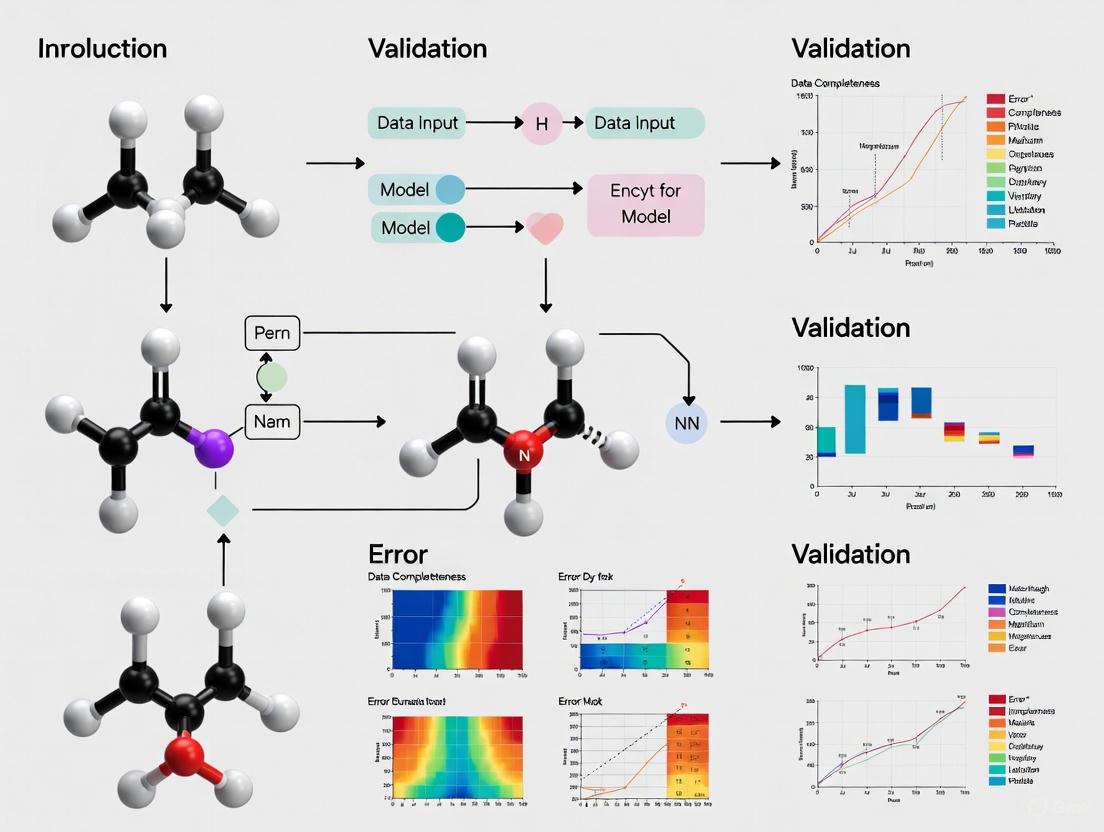
This guide addresses the critical challenge of incomplete data in biomedical research, moving beyond simple identification to provide a comprehensive framework for validation.
Beyond Missing Values: A 2025 Guide to Incomplete Data Model Validation in Drug Development
Abstract
This guide addresses the critical challenge of incomplete data in biomedical research, moving beyond simple identification to provide a comprehensive framework for validation. Tailored for researchers, scientists, and drug development professionals, it covers the foundational costs of poor data, methodological techniques for handling missingness, advanced troubleshooting for complex datasets, and strategies for building robust, validated models that meet regulatory standards. The article synthesizes modern approaches, including AI-driven validation and continuous monitoring, to ensure data integrity from pre-clinical research to clinical trials.
The High Stakes of Incomplete Data in Clinical and Pre-Clinical Research
Understanding Incomplete Data in Research
In almost all clinical and scientific research, missing data presents a common challenge that can significantly reduce statistical power and produce biased estimates if not handled properly [1]. Incomplete data extends beyond simple missing values to encompass various mechanisms and patterns that researchers must understand to select appropriate handling methods.
Frequently Asked Questions
What are the different mechanisms by which data can be missing?
Data can be missing through three primary mechanisms, each with different implications for analysis [1] [2]:
- Missing Completely at Random (MCAR): The probability of missing data is unrelated to any observed or unobserved variables
- Missing at Random (MAR): The missingness relates to other observed variables but not the missing values themselves
- Missing Not at Random (MNAR): The missingness relates to the unobserved missing values themselves
When is complete case analysis (listwise deletion) acceptable?
Complete case analysis may be valid only when data are MCAR or in some specific situations when data are MAR [2]. However, this approach reduces statistical power by decreasing sample size and may introduce bias if the missingness mechanism isn't truly MCAR [1].
What is the fundamental difference between deterministic and stochastic imputation?
Deterministic imputation replaces missing values with single fixed estimates, while stochastic (multiple) imputation generates several plausible values for each missing data point, accounting for uncertainty in the imputation process [3].
Troubleshooting Common Experimental Data Issues
Problem: High Percentage of Missing Biomarker Measurements
Issue: More than 30% of participants lack complete biomarker panels in a longitudinal drug efficacy study.
Solution: Implement Multiple Imputation by Chained Equations (MICE) to preserve sample size and statistical power while accounting for uncertainty.
Protocol:
- Perform diagnostic analysis to assess missingness pattern
- Create 5-20 imputed datasets using predictive mean matching
- Analyze each complete dataset separately
- Pool results using Rubin's rules
Problem: Differential Missingness Between Treatment Arms
Issue: Missing outcome data occurs more frequently in the placebo group than active treatment.
Solution: Apply inverse probability weighting to correct for potential bias.
Protocol:
- Model the probability of missingness using baseline covariates
- Calculate inverse probability weights for complete cases
- Apply weights to the analysis
- Conduct sensitivity analysis for MNAR assumption
Problem: Missing Covariate Data in Predictive Model Development
Issue: Developing a clinical risk prediction model with incomplete predictor variables.
Solution: Apply bootstrapping followed by deterministic imputation, which is particularly suited for prediction models as it doesn't require the outcome variable in the imputation model and simplifies model deployment [3].
Protocol:
- Generate multiple bootstrap samples from original incomplete data
- Perform deterministic imputation separately within each sample
- Develop prediction models within each complete bootstrap sample
- Aggregate model performance across bootstrap samples
Experimental Protocols for Handling Missing Data
Protocol 1: Multiple Imputation Workflow
Protocol 2: Data Missingness Assessment
Objective: Systematically evaluate pattern and mechanism of missing data.
Procedure:
- Calculate percentage missing for each variable
- Create missingness pattern visualizations
- Test for associations between missingness and observed variables
- Document potential mechanisms (MCAR, MAR, MNAR)
Interpretation:
- MCAR: Little pattern in missingness
- MAR: Missingness correlates with observed variables
- MNAR: Missingness likely relates to unobserved values
Research Reagent Solutions
| Reagent/Method | Primary Function | Application Context |
|---|---|---|
| Multiple Imputation | Accounts for imputation uncertainty | Final analysis for publication |
| Deterministic Imputation | Creates single complete dataset | Clinical prediction model development [3] |
| Complete Case Analysis | Uses only complete observations | Preliminary analysis or MCAR data [2] |
| Maximum Likelihood | Model-based handling of missing data | Structural equation modeling |
| Sensitivity Analysis | Tests robustness to missing data assumptions | All studies with missing data |
Advanced Method Selection Framework
Performance Metrics for Imputation Methods
| Method | Bias Reduction | Variance Handling | Computational Intensity | Deployment Ease |
|---|---|---|---|---|
| Complete Case | Low for MCAR only | Poor | Low | High |
| Single Imputation | Variable | Underestimates | Medium | High |
| Multiple Imputation | High | Proper accounting | High | Medium |
| Deterministic Imputation | Medium when outcome omitted [3] | Requires bootstrapping [3] | Low | Very High [3] |
Best Practices for Prevention and Documentation
Preventive Measures [1]:
- Limit data collection to essential variables
- Develop comprehensive study documentation
- Train all study personnel thoroughly
- Conduct pilot studies to identify issues
- Set a priori targets for acceptable missing data levels
- Aggressively engage participants at risk of dropout
Documentation Requirements:
- Percentage missing for each variable
- Suspected mechanism of missingness
- Methods used to handle missing data
- Results of sensitivity analyses
- Justification for chosen handling method
Successful handling of incomplete data requires understanding the missingness mechanisms, selecting appropriate methods based on the research context, and thoroughly documenting the process to ensure the validity and reliability of research findings.
Frequently Asked Questions (FAQs)
Q1: What are the most common data quality issues in scientific research? Researchers commonly face data quality issues that can invalidate findings. The most frequent problems include:
- Incomplete Data: Essential information is missing from datasets, which can hinder accurate analysis and lead to biased results in clinical or experimental data [4].
- Inaccurate Data: This includes incorrect values entered during manual input, or data that is technically correct but wrong in context or meaning (a problem known as low veracity) [5] [4].
- Duplicate Entries: The same data point or record is entered more than once, which can skew aggregates and analytical outcomes [6] [4].
- Inconsistent Data: Mismatches in formats, units, or schemas occur when integrating data from diverse sources, such as different lab equipment or clinical systems [6] [4].
- Outdated Data: Data that is no longer current or useful can lead to misleading insights, especially in fast-moving research fields [6].
Q2: What is the concrete financial impact of poor data quality? The financial toll of poor data quality is staggering and goes far beyond simple cleanup costs.
- Organizational Costs: Gartner research indicates that poor data quality costs organizations an average of $12.9 million annually [7] [5].
- Revenue Loss: MIT Sloan Management Review research found that companies lose 15-25% of their annual revenue due to poor data quality [7].
- Stock Devaluation: Flawed data can directly impact market value. For example, Unity, a video game software company, saw its stock drop by 37% in 2022 after inaccurate data compromised a machine learning algorithm [5].
Q3: How does poor data quality specifically compromise research validity? Poor data quality directly undermines the scientific method by introducing bias, error, and unreliability.
- Compromised Predictive Models: In clinical prediction modeling, missing or erroneous predictor values can lead to inaccurate risk assessments for new patients, potentially affecting treatment decisions [8].
- Skewed Results and Insights: Duplicate records inflate data volume and can distort statistical analysis and aggregates, while inconsistent data from multiple sources can lead to incorrect conclusions [6] [4].
- Wasted Resources: Engineers and analysts can spend as much as half their time fixing data issues instead of conducting new research or delivering new features [5].
Q4: What methodologies can be used to validate data models with incomplete data? Several robust statistical methods are employed to handle missing data during model validation and application.
- Targeted Validation Sampling: This involves selecting the most informative subset of patients or data points for rigorous validation (e.g., through chart review) to efficiently improve data quality and completeness for the entire dataset [9].
- Submodels: Using models that are based only on the variables observed for a new patient, avoiding the need to impute missing values for that specific case [8].
- Multiple Imputation: Using statistical techniques to fill in missing values with multiple plausible estimates, creating several complete datasets for analysis [8].
Quantitative Impact of Poor Data Quality
The following tables summarize key statistics that highlight the scale and impact of data quality issues.
Table 1: Financial and Operational Costs
| Metric | Impact | Source |
|---|---|---|
| Average Annual Cost per Organization | $12.9 million | Gartner [7] [5] |
| Annual Revenue Loss | 15-25% | MIT Sloan & Cork University [7] |
| Time Spent Fixing Data Issues | Up to 50% for data teams | Alation [5] |
| Stock Price Impact (Unity Case) | 37% drop | IBM (via Alation) [5] |
Table 2: Prevalence of Data Quality Issues
| Metric | Prevalence | Source |
|---|---|---|
| Data Meeting Basic Quality Standards | Only 3% of companies | Harvard Business Review [7] |
| New Records with Critical Errors | 47% | MIT Sloan & Thomas Redman [7] |
| Data Duplication | Affects 10-30% of business records | Industry Analysis [7] |
| Data Decay (Email Invalidation) | 28% within 12 months | ZeroBounce [7] |
Experimental Protocols for Data Validation
Protocol 1: Targeted Validation with Enriched Chart Review
This protocol is designed for robust and efficient data quality improvement in electronic health record (EHR) research [9].
Objective: To ensure the quality and promote the completeness of EHR data for operationalizing a whole-person health measure (like the allostatic load index) by validating a targeted subset of patient records.
Workflow: The following diagram illustrates the targeted validation workflow.
Methodology:
- Initial Sampling & Analysis: Extract a representative sample from the EHR (e.g., 1000 patients). Perform a preliminary analysis and fit initial statistical models to this data [9].
- Targeted Patient Selection: Using the results from the initial model, calculate residuals to identify which patients are most "informative" (e.g., those whose outcomes are poorly predicted by the initial model). Select a subset (e.g., 100 patients) from this group for validation. This "residual sampling" method is statistically efficient for uncovering data issues [9].
- Enriched Chart Review: Conduct a thorough chart review of the selected patients. This review should not only check for errors but also actively recover missing data by looking for auxiliary information present in the patients' charts. The cited study found this protocol increased the number of non-missing data components per patient from 6 to 7, on average [9].
- Model Incorporation: Integrate the now-validated and more complete data from the chart review back into the statistical models. This creates a more accurate and reliable final model for prediction [9].
Protocol 2: Handling Missing Predictors for New Patients
This protocol addresses the challenge of applying a pre-existing prediction model to a new individual with missing data [8].
Objective: To generate a valid prediction for a single new patient when one or more predictor variables required by the model are missing.
Workflow: The diagram below shows the decision pathway for handling missing data for a new patient.
Methodology:
- Submodels: If the prediction model was developed with this in mind, it may have accompanying "submodels" that are based on different combinations of observed variables. For a new patient, you would use the submodel that corresponds to the specific set of predictors that are available for that individual [8].
- Marginalization: If the full model's distribution is known, you can statistically "average over" or marginalize the missing variables to obtain a prediction based only on the observed values. This method integrates out the uncertainty of the missing data [8].
- Single Imputation: For a single new patient, you can use an imputation method (like fully conditional specification) to generate a plausible value for the missing predictor based on the patient's other observed characteristics. This imputed value is then used alongside the truly observed values to generate a prediction [8].
The Scientist's Toolkit: Research Reagent Solutions
Table 3: Essential Tools for Data Quality Management
| Tool Category | Function | Example Use-Case |
|---|---|---|
| Data Profiling & Cleansing Tools | Automatically scans data columns for nulls, outliers, and pattern violations. Assesses data integrity and uncovers hidden relationships or orphaned records [5]. | Identifying a higher-than-expected rate of missing values in a key biomarker column before analysis. |
| Deduplication Engines | Uses fuzzy matching algorithms to identify and merge duplicate records across different systems (e.g., CRM, EHR). Algorithms like Levenshtein distance calculate the edits needed to make two strings identical [5]. | Merging patient records that were created multiple times due to slight variations in name spelling (e.g., "Jon" vs "John"). |
| Validation Frameworks | Allows researchers to codify custom business or logic rules (e.g., "date of diagnosis must precede date of treatment") in SQL or other languages to automatically flag invalid records [5]. | Ensuring that all lab values in a dataset fall within physiologically plausible ranges. |
| Data Catalogs | Provides a centralized inventory of an organization's data assets. Helps uncover "dark data" by making it discoverable and includes metadata like lineage and ownership, which is critical for assessing trustworthiness [6]. | A research team discovering an existing, relevant dataset from another department that was previously unknown to them. |
| Statistical Software with Multiple Imputation | Advanced statistical packages (e.g., R, Python libraries) that implement rigorous methods for handling missing data, such as multiple imputation, which is a gold standard for addressing missingness in research datasets. | Creating multiple complete versions of a dataset with missing values imputed, analyzing each one, and pooling the results to get accurate estimates that account for the uncertainty of the imputation. |
FAQs on Laboratory Errors and Data Quality
What are the most common root causes of errors in a laboratory environment? Errors in laboratories stem from a combination of human, procedural, and system-level causes. A prevalent issue is the tendency to blame individuals instead of identifying weaknesses in the quality system itself [10]. The most common failure in root cause analysis is incorrectly citing "lack of training" as a root cause when a training program already exists; the real cause is often deeper, such as why the training wasn't retained or applied [10]. Other frequent causes include patient identification errors, specimen mislabeling, the use of expired reagents, and improper sample storage [11].
Which phase of the testing process is most vulnerable to errors? The pre-analytical phase, which includes steps like test ordering, patient preparation, and sample collection and transportation, is the most vulnerable. Studies indicate that pre-pre-analytical errors can account for up to 70% of all mistakes in laboratory diagnostics [12]. In contrast, the analytical phase has seen a significant reduction in error rates due to improved technology and standardization [12].
How can we prevent recurring data entry and specimen identification errors? Prevention requires a systemic approach that often combines technology and standardized procedures [11].
- For Data Entry: Implement systems that require double entry of critical data, use input masking for data validation (e.g., for dates, IDs), and leverage a user-friendly order entry interface with drop-down menus to reduce free-text errors [11].
- For Specimen Identification: Assign a unique ID to every specimen and its derivatives, utilize a barcode system, and enforce a two-point verification protocol (e.g., verifying patient name and date of birth) [11].
What is a robust methodology for investigating the root cause of a lab error? A highly effective method is the "Rule of 3 Whys" [10]. This involves iteratively asking "why" to move beyond symptoms and uncover a systemic cause.
- Why #1: Identify the immediate reason for the error.
- Why #2: Investigate why that immediate reason occurred.
- Why #3: Uncover the process or system failure that allowed it to happen. For example, if staff cannot locate a spill kit, asking "why" three times might reveal that the kit was stored in an unlabeled cupboard, not simply that staff "forgot" its location [10].
What are the essential practices for ensuring data quality and validation? Ensuring data quality involves proactive and reactive measures [13] [14]:
- Define Clear Validation Rules: Establish rules for data type, range, format, and pattern matching (e.g., for email addresses, numeric ranges) [14].
- Automate Validation Processes: Use automated checks to reduce human error and improve efficiency [15] [13].
- Conduct Regular Audits and Monitoring: Schedule regular data reviews to detect stale, incomplete, or incorrect data [13].
- Establish Data Governance: Assign clear ownership of data assets and define roles and policies to enforce accountability [13].
Troubleshooting Guides
Guide 1: Troubleshooting Pre-Analytical Data & Specimen Errors
| Symptom | Common Root Cause | Corrective & Preventive Actions |
|---|---|---|
| Inaccurate or Incomplete Patient Data [13] [11] | Manual data entry errors; lack of validation rules. | Implement internal double-entry systems; use input masking and drop-down menus in the order entry interface [11]. |
| Mislabeled or Swapped Specimens [11] | Failure to use at least two unique patient identifiers; no barcode system. | Use a barcoding system for all specimens; enforce a two-person verification system during collection and labeling [11]. |
| Missing or Incomplete Data [13] | Required fields not enforced during data entry; unclear procedures. | Apply data validation rules to enforce completeness; conduct regular audits to identify workflow gaps [11] [14]. |
Experimental Protocol: Two-Point Verification for Specimen Handling
- Purpose: To prevent patient misidentification and specimen swapping.
- Methodology:
- Upon specimen collection, ask the patient to state their full name and date of birth.
- Match these two identifiers against the requisition form and patient ID band.
- Label the specimen container at the bedside with a pre-printed barcode that includes the two unique identifiers.
- Before processing in the lab, a second staff member independently verifies that the information on the specimen label matches the requisition form.
Guide 2: Troubleshooting Analytical & Data Integrity Errors
| Symptom | Common Root Cause | Corrective & Preventive Actions |
|---|---|---|
| Contamination [11] | Deviation from hygiene protocols; cross-contamination from equipment. | Enforce strict PPE use and surface disinfection; separate clean and contaminated material workflows; perform regular air quality monitoring [11]. |
| Use of Expired Reagents [11] | Inadequate inventory management; lack of visible expiration date labeling. | Implement a digital inventory system with alert functions; follow the "first-expired, first-out" (FEFO) principle; clearly label all reagents [11]. |
| Inconsistent Data Across Systems [13] | Siloed systems; lack of standardized data definitions and formats. | Apply consistent formats and naming conventions; define a "single source of truth" for shared data; use data governance platforms to harmonize assets [13]. |
Experimental Protocol: Data Validation and Cleansing
- Purpose: To identify and rectify errors, inconsistencies, and duplicates within a dataset to ensure its accuracy and reliability [13] [14].
- Methodology:
- Data Profiling: Analyze the dataset to understand its structure, content, and quality by assessing value distributions and identifying null values [15].
- Validation & Cleansing:
- Perform format validation (e.g., email structure) and range validation (e.g., plausible numeric values) [13].
- Execute de-duplication using fuzzy or rule-based matching to merge duplicate records [13].
- Correct inaccurate data, such as misspelled names or inconsistent formats, based on predefined business rules [13].
- Verification: After cleansing, re-profile the data to verify that error rates have been reduced and data quality dimensions (completeness, accuracy, uniqueness) are improved.
Quantitative Data on Laboratory Errors
Table 1: Error Distribution Across the Total Testing Process (TTP)
| Testing Phase | Description of Phase | Estimated Frequency of Errors | Potential Impact on Patient Safety |
|---|---|---|---|
| Pre-Pre-Analytical | Test ordering, patient preparation, and sample collection [12]. | Up to 70% of all lab errors originate here [12]. | High risk of diagnostic errors and inappropriate care [12]. |
| Analytical | Sample analysis and testing within the laboratory [12]. | As low as 447 errors per million tests (0.0447%) in modern labs [12]. | Lower due to quality controls, but immunoassay interference remains a concern [12]. |
| Post-Post-Analytical | Result interpretation, patient notification, and follow-up [12]. | Failure to inform patients of abnormal results occurs in ~7.1% of cases [12]. | High risk of missed/delayed diagnosis and lack of treatment [12]. |
Table 2: Common Data Quality Problems and Fixes
| Data Quality Problem | Description | Prevention Strategy |
|---|---|---|
| Incomplete Data [13] | Missing or incomplete information in a dataset. | Implement data validation processes to ensure required fields are filled; improve data collection methods [13]. |
| Inaccurate Data [13] | Errors, discrepancies, or inconsistencies within the data. | Implement rigorous data validation and cleansing procedures; use data quality monitoring with alerts [13]. |
| Duplicate Data [13] | Multiple entries for the same entity across systems. | Implement de-duplication processes and use unique identifiers (e.g., customer IDs) [13]. |
| Outdated Data [13] | Information that is no longer current or relevant. | Establish data aging policies and regular data update/refresh procedures [13]. |
Workflow Diagrams
Root Cause Analysis (RCA) Workflow
Total Testing Process (TTP) Error Mapping
The Scientist's Toolkit: Research Reagent Solutions
| Item | Function | Quality Control Consideration |
|---|---|---|
| Barcoded Specimen Containers [11] | Provides a unique identifier for each sample, preventing misidentification and swapping throughout the testing workflow. | Ensure compatibility with laboratory scanners and the Laboratory Information System (LIS). |
| Digital Reagent Inventory [11] | A tracking system that monitors reagent stock levels and expiration dates, sending alerts for replenishment. | Must be regularly updated and reviewed to prevent the use of expired reagents. |
| Personal Protective Equipment (PPE) [11] | Protects specimens from operator contamination and protects staff from biohazards. | Adherence to strict hygiene protocols and a defined cleaning schedule is critical for effectiveness. |
| Quality Control (QC) Materials | Used to monitor the precision and accuracy of analytical instruments and assays. | QC materials should be stored and handled according to manufacturer specifications to maintain integrity. |
Technical Support & Troubleshooting Guides
Frequently Asked Questions (FAQs)
Q: What is the recommended method for handling missing covariate data in clinical risk prediction models?
A: For clinical risk prediction models where the goal is to predict outcomes for future patients, deterministic imputation (single imputation) is often better suited than multiple imputation. In deterministic imputation, the outcome is not included in the imputation model, making it easier to apply to future patients where the outcome is unknown. This method is computationally efficient for model deployment [3].
Q: What is the correct sequence for combining internal validation and imputation for incomplete data?
A: You should perform bootstrapping prior to imputation. Conducting imputation before bootstrapping may use information from the development process in the validation process, which is not methodologically sound. The recommended "Val-MI" approach (validation followed by multiple imputation) provides largely unbiased performance estimates [3] [16].
Q: What are the core data integrity principles required for FDA submissions?
A: FDA submissions must adhere to ALCOA+ principles, which require data to be Attributable, Legible, Contemporaneous, Original, and Accurate, with the "+" representing Complete, Consistent, Enduring, and Available. These principles are fundamental to Good Clinical Practice (GCP) guidelines and are validated to guarantee adherence to data integrity standards [17].
Q: What common data integrity issues lead to FDA 483 Observations?
A: Common citations include unvalidated computer systems, lack of audit trails, or missing data. To minimize these risks, ensure your submission software and processes are fully validated, maintain complete timestamped audit logs, and implement ongoing oversight with periodic reviews of system logs [18].
Q: How should prognostic models be validated when limited incomplete data is available?
A: Implement a generic framework for validation based on uncertainty propagation. This can be achieved using sensitivity indices, correlation coefficients, Monte Carlo simulations, and analytical approaches to quantify uncertainty in model outputs, enabling validation even with data limitations [19].
Experimental Protocols for Incomplete Data Handling
Protocol: Bootstrapping with Deterministic Imputation for Clinical Prediction Models
This protocol is appropriate when developing and validating clinical risk prediction models with missing covariate data [3].
- Bootstrap Resampling: Draw multiple bootstrap samples (with replacement) from the original incomplete dataset.
- Deterministic Imputation: For each bootstrap sample, fit a separate deterministic imputation model for each missing variable using observed data within that sample. Crucially, do not include the outcome variable in the imputation models.
- Model Development: Develop the clinical prediction model (e.g., using logistic regression) on each completed bootstrap sample.
- Performance Validation: Apply each developed model to the original dataset (or out-of-bag samples) to estimate predictive performance metrics (e.g., AUC, calibration).
- Aggregate Results: Aggregate the performance estimates across all bootstrap samples to obtain a robust, internally validated measure of model performance, correcting for optimism.
Protocol: Combining Internal Validation and Multiple Imputation (Val-MI)
This method provides unbiased estimates of predictive performance measures for prognostic models developed on incomplete data [16].
- Data Splitting: Split the incomplete dataset into training and test sets using a resampling method (e.g., bootstrapping or cross-validation).
- Multiple Imputation on Training Data: Perform multiple imputation (M times) only on the training set to create M completed training datasets. The outcome can be included in the imputation model for this step.
- Model Training: Develop the prognostic model on each of the M imputed training datasets.
- Imputation on Test Data: For each of the M models, impute the missing data in the test set using the imputation model derived from its corresponding training set.
- Performance Assessment: Evaluate the model's performance on each of the M imputed test sets.
- Performance Pooling: Combine the M performance estimates (e.g., using Rubin's rules or similar) to obtain a final, optimism-corrected estimate of predictive performance.
Data Presentation
Quantitative Data Tables
Table 1: Comparison of Imputation Methods for Clinical Prediction Models
| Feature | Deterministic Imputation | Multiple Imputation (MI) |
|---|---|---|
| Core Principle | Single, fixed value replaces missing data [3] | Multiple plausible values sampled from a distribution [3] |
| Inclusion of Outcome in Imputation Model | Must not be included [3] | Must be included to ensure unbiased results [3] |
| Computational Efficiency at Deployment | High (static model, fast prediction) [3] | Low (requires development data, intensive computation) [3] |
| Primary Use Case | Prognostic clinical risk prediction models [3] | Estimation and inference in clinical research [3] |
| Handling of Imputation Uncertainty | Accounted for via bootstrapping [3] | Accounted for via between- and within-imputation variance [3] |
Table 2: Key FDA Validation Rules for SDTM Submission Data
| Validation Aspect | Key Requirements & Rules |
|---|---|
| Conformance to Standards | Data must align with CDISC SDTM Implementation Guide (IG) for domain structures, variables, and controlled terminology [17]. |
| Dataset Structure | Must follow prescribed row/column structure with correct required, expected, and permissible variables [17]. |
| Consistency Across Datasets | Relationships between datasets (e.g., DM vs. AE) must be maintained with consistent unique subject identifiers (USUBJID) [17]. |
| Controlled Terminology | Values must conform to CDISC Controlled Terminology for uniformity [17]. |
| Referential Integrity | Values in related datasets must match (e.g., subjects in AE dataset must exist in DM dataset) [17]. |
| Metadata Compliance | Define.xml must accurately describe structures, variables, and terminology [17]. |
Mandatory Visualizations
Workflow for Validating Models with Incomplete Data
Data Integrity Control System for FDA Submissions
The Scientist's Toolkit
Table 3: Essential Research Reagent Solutions for Data Validation
| Tool / Solution | Function & Explanation |
|---|---|
| Pinnacle 21 | Industry-standard software for automated validation of datasets against FDA submission guidelines (e.g., SDTM, SEND). It checks for compliance, errors, and formatting issues before submission [17]. |
| Deterministic Imputation | A single imputation method where a static model replaces missing values with fixed predictions. Essential for prognostic model deployment where the outcome is unknown for future patients [3]. |
| Bootstrap Resampling | A statistical technique that involves repeatedly sampling from a dataset with replacement. Used for internal validation of predictive performance, especially when combining with imputation methods [3]. |
| Uncertainty Propagation Framework | A methodological approach using sensitivity indices and Monte Carlo simulations to quantify uncertainty in prognostic model outputs, enabling validation even with limited or incomplete data [19]. |
| Electronic Submissions Gateway (ESG) | The FDA's mandatory portal for all electronic regulatory submissions. Using it with proper AS2 protocols and encryption is essential for successful data transmission and integrity [18]. |
Technical Support Center: Troubleshooting Data Integrity in Clinical Research
This technical support center provides troubleshooting guides and FAQs to help researchers, scientists, and drug development professionals address the critical challenge of flawed and incomplete data in clinical trials. The content is framed within the broader context of handling incomplete data model validation research.
Troubleshooting Guide: Common Data Flaws and Solutions
Table: Common Data Flaws, Consequences, and Resolution Strategies
| Data Flaw Type | Real-World Consequence | Recommended Resolution Strategy |
|---|---|---|
| Inconsistent/Incomplete Data [20] | Delayed trial timelines, jeopardized approvals, biased outcomes, and incorrect conclusions. | Implement Electronic Data Capture (EDC) systems, standardize data collection procedures, and conduct regular staff training [20]. |
| Missing Data [20] | Gaps in trial results, reduced statistical power, and increased risk of biased conclusions. | Use statistical imputation techniques and improve patient follow-up practices. For new predictions, use submodels or marginalization methods [8] [20]. |
| Poor Quality Data (Human Error) [20] | Dramatically altered analyses (e.g., incorrect dosage evaluation), compromising trial validity. | Deploy automated validation tools and real-time data monitoring with built-in edit checks to minimize manual entry errors [21] [20]. |
| Non-Compliant Data [22] | Regulatory submission rejections, costly delays, and failure to gain drug approval. | Use validation tools (e.g., Pinnacle 21) to check against FDA rules and ensure adherence to CDISC standards like SDTM and ADaM [20] [22]. |
| Non-Representative Data [23] | Biased results that fail to capture how different demographic groups respond to treatments. | Set specific inclusion goals for underrepresented populations and use AI-powered tools to broaden recruitment strategies [23] [24]. |
Frequently Asked Questions (FAQs)
Q1: What is the most effective strategy to prevent data inconsistencies across multiple trial sites?
A: The most effective strategy is a combination of technology and standardization [20].
- Implement EDC Systems: These digital systems reduce reliance on paper forms and incorporate built-in validation checks, improving data accuracy by over 30% [20].
- Adopt Standardized Data Models: Align data organization with CDISC standards, such as the Study Data Tabulation Model (SDTM), to ensure interoperability and streamline regulatory submissions [20].
- Establish Uniform SOPs: Create and enforce Standard Operating Procedures and data dictionaries for all sites to minimize site-to-site variability [20].
Q2: How can we proactively identify and handle missing data in clinical prediction models?
A: Proactive handling requires robust study design and statistical techniques.
- Targeted Validation Designs: For data sourced from Electronic Health Records (EHR), use statistically efficient validation studies. Methods like residual sampling can help select the most informative subset of patient records for manual chart review to recover missing data and correct errors [9].
- Employ Robust Statistical Methods: Utilize techniques like semiparametric maximum likelihood estimation to incorporate all available patient information, even when some data is missing [9].
- Apply Methods for New Patients: When applying a model to a new patient with missing data, use methods based on submodels, marginalization over missing variables, or imputation to generate a valid prediction [8].
Q3: What framework should we use to ensure data integrity from the start of a trial?
A: Embed data integrity into your processes by adhering to the ALCOA+ principles [25] [22]. This framework ensures data is:
- Attributable: Traceable to its source.
- Legible: Clearly documented.
- Contemporaneous: Recorded at the time it is generated.
- Original: The first recorded instance.
- Accurate: Correct and error-free. The "+" adds that data must be Complete, Consistent, Enduring, and Available [25] [22]. Implementing this framework requires clear policies, regular training, and technological solutions that enforce these principles by design [25].
Q4: Can AI and automation help with data quality, and what are the key challenges?
A: Yes, AI is transformative but requires careful implementation.
- Opportunities: AI can dramatically improve data quality and efficiency. It is used for automated data validation, predicting patient enrollment with 85% accuracy, and identifying data anomalies. AI integration can accelerate trial timelines by 30–50% [23] [21] [26].
- Challenges: Key challenges include algorithmic bias (if training data is flawed, AI may produce discriminatory outcomes), accountability issues when errors occur, and regulatory uncertainty [23] [26]. Ensuring AI systems are transparent, equitable, and used with human oversight is critical [23].
Q5: Our global trial faces varying data privacy laws. How can we ensure compliance?
A: Managing global data privacy requires a proactive and layered approach.
- Understand Key Regulations: Key frameworks include the EU's General Data Protection Regulation (GDPR) and the US Health Insurance Portability and Accountability Act (HIPAA). Be aware that laws in India, Brazil, and Canada also introduce unique requirements [20].
- Implement Strict Access Controls: Ensure data is accessible only to authorized personnel and is stored and transmitted securely [25] [20].
- Plan for Data Transfers: For cross-border data transfer under GDPR, mechanisms like Standard Contractual Clauses (SCCs) or local data storage may be necessary [20].
- Prioritize Consent Management: Implement clear processes for obtaining participant consent, detailing how their data will be used, stored, and shared, and allowing for easy withdrawal [23] [20].
Experimental Protocols for Data Validation
Protocol 1: Targeted Chart Review for EHR Data Enrichment
This protocol is designed to validate and enrich Electronic Health Record (EHR) data for research, which is often prone to missingness and errors [9].
- Objective: To ensure the quality and completeness of EHR data for a defined study (e.g., operationalizing a whole-person health measure like the allostatic load index).
- Preliminary Data Extraction: Extract a preliminary dataset from the EHR for the patient cohort.
- Patient Selection for Validation: Employ a targeted sampling strategy (e.g., residual sampling) on the preliminary data to identify the ~10% of patients whose records are most informative for validation. This maximizes efficiency versus random sampling [9].
- Chart Review Execution: For each selected patient record, manually review the original clinical charts (the source documents). This "enriched validation" protocol involves:
- Error Checking: Verify that the extracted EHR data matches the source document.
- Data Recovery: Actively search for and record any missing data points using auxiliary information found in the charts [9].
- Data Integration and Analysis: Update the master dataset with the validated and recovered data. Use robust statistical methods (e.g., semiparametric maximum likelihood estimation) that incorporate all available data, both validated and non-validated [9].
Protocol 2: FDA Validation Rules Compliance
This protocol ensures clinical trial data is compliant with FDA standards, which is mandatory for submission [22].
- Planning: Establish and document validation protocols. Determine which FDA validation rules (business rules, study data validator rules) and technical standards (e.g., CDISC formats) will be applied. Share these guidelines with all stakeholders, including external vendors [22].
- Implementation: Configure validation software (e.g., Pinnacle 21 Enterprise) to execute the planned checks automatically [22].
- Testing & Correction: Run the validation tools on the clinical datasets. Address all flagged issues:
- Errors: Critical issues that must be resolved before submission.
- Warnings: Issues that may need clarification but do not necessarily block submission [22].
- Ongoing Monitoring: Integrate validation checks throughout the trial lifecycle, not just at the end. This allows for early detection and correction of issues [22].
Workflow Visualization: Clinical Data Validation
The diagram below illustrates the core workflow for validating clinical data, from problem identification to analysis, incorporating strategies like targeted sampling.
Data Validation and Analysis Workflow
The Scientist's Toolkit: Research Reagent Solutions
Table: Essential Solutions for Managing Clinical Trial Data
| Tool / Solution | Primary Function | Relevance to Data Integrity |
|---|---|---|
| Electronic Data Capture (EDC) Systems [20] [27] | Digital platform for input, storage, and management of clinical trial data. | Reduces manual entry errors via built-in validation checks; provides real-time data access and audit trails. |
| AI-Powered Validation Tools [21] [27] | Automated software using artificial intelligence to check for data discrepancies and anomalies. | Identifies inconsistencies and patterns faster than manual methods, improving data cleaning efficiency. |
| Pinnacle 21 Enterprise [22] | A specialized software platform for clinical data validation. | Automates compliance checks against FDA validation rules and CDISC standards to prepare data for regulatory submission. |
| CDISC Standards (SDTM/ADaM) [20] | A set of standardized models for organizing and presenting clinical trial data. | Ensures data consistency and interoperability across studies and sites, which is critical for regulatory compliance. |
| Data Visualization Platforms (e.g., Tableau, Power BI) [27] | Tools that transform complex datasets into intuitive dashboards and visual reports. | Enables real-time monitoring of study progress and quick identification of trends and outliers for proactive decision-making. |
Building Your Validation Toolkit: Techniques for Robust Data Handling
FAQs on Core Data Validation Checks
1. What is the difference between the 'Presence' and 'Completeness' checks? While both deal with data existence, "Presence" is a record-level check verifying that a required data record exists at all. "Completeness" is an attribute-level check, measuring the percentage of fields populated with non-null values within a record against the expectation of 100% fulfillment [28]. For example, a patient's record might be present, but critical attributes like phone number or email address could be missing, rendering the data incomplete for communication purposes [28].
2. Why is the 'Uniqueness' check critical in patient datasets? The Uniqueness dimension ensures that each patient or event is recorded only once. Violations can lead to duplicate records for a single patient (e.g., "Thomas" and "Tom") [28]. This can cause misdiagnoses, double-counting in reports, and fragmented clinical information, severely impacting the integrity of research analyses and patient safety [28] [29].
3. What are common technical causes for 'Completeness' errors? Common technical root causes include ETL (Extract, Transform, Load) process failures, such as data truncation during loading if target attributes are not large enough to capture the full length of the data values [28]. Other causes include system interoperability issues and human error during manual data entry [29].
4. How can I validate the 'Accuracy' of a patient's data? Data Accuracy is the degree to which data correctly represents the real-world object or event. It can be measured by comparing data values to a reliable reference source. For instance, you could validate a patient's diagnostic code against the latest version of the ICD (International Classification of Diseases) standard [28].
Troubleshooting Guides
Issue 1: High Number of Duplicate Patient Records
- Problem: One physical patient is represented by multiple records in the system, often with slight variations in identifying information (e.g., "Jon Snow" vs. "Jonathan Snow") [28].
- Solution:
- Implement Identity Resolution Algorithms: Use deterministic or probabilistic matching on multiple attributes.
- Create a Single Patient View: Consolidate duplicates by merging records and retaining the most accurate and recent information from all sources.
- Establish Data Entry Protocols: Enforce standardized formats for names and addresses at the point of entry to prevent future duplicates [30].
Issue 2: Persistent Missing Values in Critical Patient Attributes
- Problem: Essential fields like "Allergies" or "Primary Care Physician" are frequently found to be empty, compromising data completeness [28] [29].
- Solution:
- Enforce Validation at Source: Configure your data entry systems (EHR/EDC) to mandate the completion of critical fields before saving a record [30].
- Implement Automated Data Quality Rules: Create database rules or scripts that regularly scan for and report on records with null values in key columns.
- Staff Training and Clear Definitions: Ensure all personnel understand the importance of each field. Maintain a centralized data dictionary that clearly defines each attribute to avoid confusion [30].
Quantitative Data on Data Quality Dimensions
The table below summarizes the core data quality dimensions relevant to patient dataset validation, their definitions, and examples of common issues [28].
| Data Quality Dimension | Core Question | Example of Data Issue |
|---|---|---|
| Presence / Completeness | Is all the expected data available and populated? | A patient record exists, but the email address and phone number fields are left blank, making follow-up impossible [28]. |
| Uniqueness | Is each entity or event recorded only once? | A single patient is recorded twice, initially as "Thomas" and later by a nickname "Tom," leading to double-counting [28]. |
| Accuracy | Does the data correctly reflect reality? | A patient's weight is recorded as 200 kg due to a data entry error, when their actual weight is 80 kg [28]. |
| Consistency | Does data remain uniform across systems and over time? | The order dataset shows one gown ordered, but the shipping dataset for the same order indicates three gowns to be shipped [28]. |
| Validity | Does the data conform to the required format, type, or range? | A patient's age is entered as "fifty" instead of the numeric value "50," violating the field's data type rule [28]. |
Experimental Protocol for Data Validation
Objective: To systematically identify and measure violations of Presence, Completeness, and Uniqueness in a given patient dataset.
Materials:
- Source Patient Dataset: The dataset to be validated (e.g., an export from an Electronic Health Record system).
- Reference Data: A trusted source for validation, such as an official patient master index or a previously validated dataset.
- Data Processing Environment: A SQL database, Python/Pandas script, or a specialized data quality tool (e.g., an AI-powered data mapping tool) [30].
- Validation Framework Scripts: Pre-written queries or functions to execute the checks below.
Methodology:
- Presence Check:
- Reconcile the record count of your source dataset against a reference dataset or a known baseline.
- SQL Example:
SELECT COUNT(*) FROM source_patient_data; - Compare this count to the count in the reference system. A discrepancy indicates missing or extra records [28].
Completeness Check:
- For each critical attribute (e.g.,
patient_id,last_name,email), calculate the percentage of non-null and non-empty values. - SQL Example:
SELECT (COUNT(patient_id) / COUNT(*)) * 100 AS id_completeness_percent FROM source_patient_data; - Perform this for all key columns to identify fields with unacceptable levels of missingness [28].
- For each critical attribute (e.g.,
Uniqueness Check:
- Check for duplicate values in attributes that must be unique, such as
patient_idor a composite key ofssn,last_name, anddate_of_birth. - SQL Example:
SELECT patient_id, COUNT(*) FROM source_patient_data GROUP BY patient_id HAVING COUNT(*) > 1; - This query will return all patient IDs that are duplicated within the dataset [28].
- Check for duplicate values in attributes that must be unique, such as
Analysis and Reporting:
- Compile the results from all checks into a validation report.
- Quantify the error rates for each dimension (e.g., "Completeness for 'email' field is 85%").
- Document specific record IDs or examples for each type of failure to facilitate root cause analysis and data correction.
Research Reagent Solutions
The table below lists key tools and conceptual "reagents" essential for conducting rigorous data validation in a research context.
| Reagent / Tool | Function in Validation Experiment |
|---|---|
| SQL Database System | The primary environment for running structured queries to perform record counts, null checks, and identify duplicates across large datasets. |
| Reference Data / Master Patient Index | Serves as the "gold standard" or control group against which the accuracy and presence of records in the test dataset are validated [28]. |
| Data Profiling Tool | Software that automatically scans data to uncover patterns, statistics, and anomalies, providing a first-pass assessment of completeness and uniqueness [30]. |
| AI-Powered Data Mapping Tool | Uses machine learning to automatically detect, map, and align data formats from multiple sources, helping to identify inconsistencies and duplicates in complex datasets [30]. |
Data Validation Workflow Diagram
The diagram below visualizes the sequential and iterative process of applying core validation checks to a patient dataset.
Patient Record Consistency Diagram
This diagram illustrates the logical relationships and potential consistency issues between different subject areas within a patient data ecosystem, such as between ordering and shipping systems.
FAQs on Data Quality Fundamentals
Q1: What are the core characteristics of high-quality data in a research context? High-quality data is defined by several key characteristics, often measured as metrics during profiling [31]:
- Validity: Data adheres to predefined rules and standards (e.g., a patient's age is a plausible number like "150" would be invalid) [31].
- Accuracy: Data correctly represents the real-world values it is intended to capture (e.g., a lab result is recorded as "5.0 mmol/L" and not "50 mmol/L") [31].
- Completeness: All necessary data is present, with no missing values in critical fields that could bias analysis [31].
- Consistency: Data is coherent and does not contradict itself across different systems or time points (e.g., a patient's status is not "In Progress" in one record and "Completed" in another for the same visit) [31].
- Uniformity: Data follows a standard format, facilitating comparison and analysis (e.g., all dates are in the YYYY-MM-DD format) [32] [31].
Q2: Our clinical data has many missing values. What is the best approach to handle this? The approach depends on the pattern and extent of the missingness. Common methodologies include [32] [31]:
- Removal: Discard records with missing values if the amount is minimal and unlikely to affect overall results.
- Imputation: Fill missing values with a statistical estimate like the mean, median, or mode. More advanced techniques include K-Nearest Neighbors (KNN) or Multiple Imputation by Chained Equations (MICE), which provide more accurate estimates by considering relationships between variables [32]. This is crucial for building complete predictive models where removing data would cause significant information loss [32].
Q3: How can we automatically ensure text labels on our data visualizations (e.g., bar charts) are always readable? You can implement an algorithm that dynamically selects the text color based on the background color to ensure high contrast. In tools like R, this can be achieved by using the
prismatic::best_contrast()function within theggplot2plotting system to automatically choose white or black text for optimal readability [33].
Troubleshooting Guides
Guide 1: Resolving Duplicate Patient Records
- Problem: Suspected duplicate records for the same patient across merged datasets from multiple clinical sites, leading to incorrect patient counts and skewed analysis.
- Investigation: Profile the data to identify records with similar names, birth dates, or patient IDs. Look for variations like "John Smith," "J. Smith," and "Johnathan Smith" that may refer to the same individual [32].
- Solution: Implement a deduplication process with the following steps [32]:
- Exact Matching: Identify and merge records identical across all key fields.
- Fuzzy Matching: Use algorithms to detect non-exact matches based on similarities.
- Confidence Scoring: Assign a score to potential duplicates; automatically merge high-confidence matches and flag low-confidence ones for manual review.
- Validation: Test deduplication rules on a sample dataset before full-scale application.
Guide 2: Correcting Inconsistent Data Formats from Multi-Site Trials
- Problem: Inconsistent formatting of dates, numerical values, and categorical responses (e.g., "N/A", "Not Applicable") from different sources, making aggregation and analysis impossible [31].
- Investigation: Use data profiling to uncover the different formats and representations present in the dataset.
- Solution: Apply data standardization [32]:
- Document Rules: Create a comprehensive guide for standardization rules (e.g., all dates must be in ISO 8601 format YYYY-MM-DD, all "N/A" variants become "Not Applicable") [32].
- Automate Transformation: Use data quality tools to enforce these rules across the dataset.
- Preserve Originals: If feasible, store the original, unstandardized data in a separate field for auditability [32].
Guide 3: Identifying and Handling Anomalous Laboratory Readings
- Problem: Potential outliers in laboratory data that could distort statistical analysis or indicate data entry errors.
- Investigation: Use visual and numerical methods for outlier detection [32] [31]:
- Visualization: Create box plots, histograms, or scatterplots to spot extreme values.
- Statistical Methods: Apply Z-scores or the Interquartile Range (IQR) method to mathematically flag outliers.
- Solution: Treat outliers based on context [32] [31]:
- Consult Experts: Before removal, determine if an outlier is a legitimate, albeit rare, occurrence (e.g., a genuinely abnormal lab result).
- Take Action: Choose to remove, cap (replace with a max/min value), or transform the outlier. In cases like fraud detection, the outlier itself may be the subject of interest.
Experimental Protocols for Data Validation
Protocol 1: Quantitative Data Quality Assessment
Purpose: To establish a baseline measurement of data health for a given dataset using standardized metrics [31].
Methodology:
- Inspection and Profiling: Use data profiling tools to scan the dataset and compile statistics [31].
- Metric Calculation: Calculate the following key metrics for critical data fields. The results should be summarized in a table for easy comparison and monitoring.
Table: Data Quality Assessment Metrics
| Quality Dimension | Metric | Calculation Method | Target Threshold |
|---|---|---|---|
| Completeness | Percentage of non-null values | (Number of non-null entries / Total entries) * 100 | > 99% for critical fields |
| Validity | Percentage of valid entries | (Number of entries adhering to rules / Total entries) * 100 | 100% |
| Accuracy | Error rate | (Number of incorrect entries / Total entries) * 100 | < 0.1% |
| Consistency | Number of logical conflicts | Count of records violating cross-field rules (e.g., discharge date before admission) | 0 |
| Uniqueness | Percentage of duplicate records | (Number of duplicate records / Total records) * 100 | 0% |
* Note: Measuring accuracy often requires verification against an external, trusted source of truth [31].
Protocol 2: Handling Missing Data in Longitudinal Studies
Purpose: To methodically address missing data points in time-series or repeated-measures data to prevent bias in analysis.
Methodology:
- Pattern Analysis: Determine the mechanism of missingness: Missing Completely at Random (MCAR), Missing at Random (MAR), or Not Missing at Random (MNAR). This guides the choice of imputation method [32].
- Technique Selection: Choose an appropriate imputation method based on the pattern and data structure [32]:
- For MCAR/MAR: Use Multiple Imputation (e.g., with R's
MICEpackage) or K-Nearest Neighbors (KNN) imputation to create several complete datasets and account for uncertainty. - For Numerical Variables: Mean/Median imputation is fast but can distort variance.
- For Categorical Variables: Mode imputation is common.
- For MCAR/MAR: Use Multiple Imputation (e.g., with R's
- Validation: Use cross-validation techniques to assess the performance and impact of the chosen imputation method on downstream analysis [32].
Data Quality Workflow Visualization
Data Quality Management Workflow
The Scientist's Toolkit: Research Reagent Solutions
Table: Essential Tools for Data Profiling and Cleansing
| Tool Name | Type / Category | Primary Function in Research |
|---|---|---|
| Great Expectations [34] | Open-source Validation Framework | Enforces data quality by allowing teams to define, document, and automate "expectations" (rules) that data must meet, integrating directly into CI/CD pipelines. |
| OvalEdge [34] | Unified Data Governance Platform | Combines data cataloging, lineage visualization, and quality monitoring to provide a single source of truth, automate anomaly detection, and assign data ownership. |
| Soda Core & Soda Cloud [34] | Data Quality Monitoring | Provides a framework for defining data tests as code (Soda Core) and a cloud platform for real-time monitoring, anomaly detection, and collaborative alerting (Soda Cloud). |
| Informatica Cloud Data Quality [34] [35] | Enterprise Data Quality | Offers deep capabilities for profiling, standardization, and deduplication with prebuilt rules and AI, often used in regulated environments for governance. |
| Monte Carlo [34] | Data Observability Platform | Uses AI to automatically detect anomalies in data freshness, volume, and schema, mapping lineage to identify root causes of data incidents and reduce downtime. |
| Genedata Profiler [36] | Specialized Multi-Omics Platform | An end-to-end enterprise platform for securely integrating, harmonizing, and analyzing complex translational and clinical data, such as molecular and biomarker data, in a validation-ready environment. |
Foundational Concepts: Understanding Missing Data Mechanisms
What are the three primary types of missing data, and why are these distinctions critical for pre-clinical research?
Incomplete data presents a significant challenge in pre-clinical studies, and proper handling begins with understanding the underlying missing data mechanism. Rubin (1976) classified these mechanisms into three categories that determine the statistical methods required for valid inference [37].
Missing Completely at Random (MCAR): The probability of data being missing is unrelated to any observed or unobserved variables [37] [38]. For example, a sample might be lost due to a freezer malfunction, where the missingness is purely random [39]. Under MCAR, the complete cases remain a random subset of the original sample, making analysis less complex but often unrealistic in practice [37] [40].
Missing at Random (MAR): The probability of missingness depends on observed variables but not on the unobserved missing values themselves [37] [39]. For instance, in a study where older mice are less likely to have a specific biomarker measured due to procedural difficulties, the missingness relates to the observed variable (age) rather than the unobserved biomarker value itself [38]. Modern missing data methods generally rely on the MAR assumption [37].
Missing Not at Random (MNAR): The probability of missingness depends on the unobserved missing values themselves [37] [38]. This occurs when, for example, compounds with higher toxicity levels (the missing values) are less likely to have complete assay results because they damaged the testing equipment [37]. MNAR is the most complex scenario and requires specialized handling techniques [37].
How can I determine whether my pre-clinical data are MCAR, MAR, or MNAR?
Diagnosing the missing data mechanism involves both statistical tests and logical deduction based on study design and data collection procedures.
Statistical Tests for MCAR: Formal tests like Little's MCAR test can examine whether missingness patterns are completely random across all variables. A significant p-value suggests violation of the MCAR assumption [40].
Pattern Examination: Conduct descriptive analyses comparing records with and without missing values across other measured variables. Systematic differences suggest data are not MCAR [37] [38]. For example, if animals with higher baseline weight measurements are more likely to have missing endpoint data, this suggests MAR, with weight influencing missingness.
Study Process Knowledge: Understanding data collection protocols is crucial. If research staff document reasons for missing measurements (e.g., equipment failure, sample degradation, technical errors), these records can help classify the missing mechanism [38].
The following diagram illustrates the logical relationship between the missing data mechanisms and their defining characteristics:
Troubleshooting Guides: Addressing Specific Experimental Scenarios
How should I handle missing biomarker data in longitudinal animal studies?
Longitudinal pre-clinical studies frequently encounter missing biomarker measurements at various timepoints. The appropriate handling method depends on the suspected missing mechanism.
Scenario 1: Sporadic missing across timepoints without pattern
- Suspected mechanism: MCAR
- Recommended approach: Multiple imputation using time as a variable [38] [41]
- Protocol:
- Structure data in long format with time as a variable
- Use multiple imputation methods that incorporate the longitudinal structure
- Include baseline characteristics and previous measurements as predictors
- Pool results across imputed datasets for final analysis
Scenario 2: Increased missingness in later study phases particularly for specific treatment groups
- Suspected mechanism: MAR (missingness related to treatment group and time)
- Recommended approach: Maximum likelihood estimation or multiple imputation including treatment-time interactions [38] [41]
- Protocol:
- Include treatment group, time, and their interaction in imputation models
- Incorporate auxiliary variables that may predict missingness
- Consider sensitivity analyses to test robustness of findings
Scenario 3: Missing values concentrated among extremely high or low measurements
- Suspected mechanism: MNAR
- Recommended approach: Pattern-mixture models or selection models [37]
- Protocol:
- Document evidence suggesting MNAR (e.g., assay detection limits)
- Implement MNAR-specific methods with explicit modeling of missingness mechanism
- Conduct comprehensive sensitivity analyses under different MNAR assumptions
What strategies effectively address missing data in high-content screening assays?
High-content screening generates multidimensional data where missing values can arise from technical failures or quality control exclusions.
Prevention Strategies:
- Implement randomized plate designs to distribute potential technical artifacts
- Include quality control wells in each plate to monitor assay performance
- Establish automated quality metrics to flag potentially unreliable measurements [38]
Imputation Methods for Multiparametric Data:
- k-Nearest Neighbors (kNN) Imputation: Identify compounds with similar phenotypic profiles and impute missing values based on nearest neighbors [41]
- Iterative Imputation: Use multivariate imputation by chained equations (MICE) to leverage correlations between parameters [41]
- Hybrid Methods: Combine clustering with imputation, such as the FCKI method that integrates fuzzy c-means, kNN, and iterative imputation [41]
The following workflow diagram illustrates the recommended process for handling missing data in high-content screening:
Comparative Methodologies: Structured Analysis of Imputation Techniques
What are the advantages and limitations of different imputation methods for pre-clinical data?
Table 1: Comparison of Missing Data Handling Methods for Pre-Clinical Research
| Method | Best For Mechanism | Advantages | Limitations | Software Implementation |
|---|---|---|---|---|
| Complete Case Analysis | MCAR | Simple, unbiased if truly MCAR | Inefficient, biased if not MCAR | Standard statistical packages |
| Mean/Median Imputation | MCAR | Simple, preserves sample size | Distorts distribution, underestimates variance | Standard statistical packages |
| k-Nearest Neighbors (kNN) | MAR | Uses local similarity structure | Computationally intensive for large datasets [41] | Python: sklearn, R: VIM |
| Multiple Imputation | MAR | Accounts for imputation uncertainty, provides valid inference | Complex implementation, requires careful model specification [38] | R: mice, Python: sklearn IterativeImputer |
| Maximum Likelihood | MAR | Efficient, uses all available data | Requires specialized software, computationally intensive [38] | R: nlme, OpenMx |
| Hybrid Methods (FCKI) | MAR, MNAR | High accuracy, handles complex patterns [41] | Complex implementation, computationally demanding [41] | Custom implementation required |
How do I implement multiple imputation correctly for pre-clinical data validation studies?
Proper implementation of multiple imputation requires careful attention to model specification and analysis workstream.
Inclusion of Auxiliary Variables: Include variables that are associated with missingness or with the incomplete variables, even if they are not in the final analysis model. This improves the MAR assumption and imputation accuracy [38].
Model Specification: Use appropriate imputation models for different variable types (linear regression for continuous, logistic for binary, multinomial for categorical). For longitudinal data, include time structure and random effects if appropriate.
Number of Imputations: Current recommendations suggest 20-100 imputations depending on the percentage of missing data, with higher missing rates requiring more imputations.
Analysis and Pooling: Analyze each imputed dataset separately using standard complete-data methods, then combine results using Rubin's rules, which account for both within- and between-imputation variability.
Advanced Experimental Protocols: Implementing Cutting-Edge Imputation Strategies
Protocol: Hybrid missing data imputation integrating fuzzy clustering and kNN (FCKI method)
The FCKI method represents an advanced approach that combines multiple algorithms to improve imputation accuracy, particularly for complex pre-clinical datasets with nontrivial missing patterns [41].
Step 1: Data Preprocessing
- Standardize all continuous variables to mean 0 and standard deviation 1
- Convert categorical variables to appropriate numeric representations
- Identify missing data patterns and percentages by variable
Step 2: Fuzzy Clustering Partitioning
- Apply fuzzy c-means clustering to partition dataset into overlapping clusters
- Determine optimal number of clusters using validity indices
- Each record belongs to multiple clusters with different membership degrees
Step 3: Local kNN Imputation within Clusters
- For each missing value, identify the most relevant cluster based on membership degrees
- Within selected cluster, automatically determine optimal k value using similarity measures
- Find k-nearest neighbors based on available variables using appropriate distance metrics
Step 4: Iterative Imputation Refinement
- Apply iterative imputation using the global correlation structure among selected neighbors
- Cycle through missing variables, updating imputations in each iteration
- Continue until convergence criteria are met (minimal change in imputed values)
Step 5: Validation and Sensitivity Analysis
- Assess imputation quality using root mean square error (RMSE) on artificially masked data
- Compare distribution of imputed versus observed values
- Conduct sensitivity analysis to evaluate robustness to missing data assumptions
Protocol: Sensitivity analysis for potential MNAR mechanisms
When MNAR cannot be ruled out, sensitivity analysis is essential to evaluate how conclusions might change under different missingness assumptions.
Step 1: Pattern-Mixture Model Framework
- Stratify data based on missingness patterns
- Specify different distributional assumptions for each pattern
- Incorporate uncertainty about MNAR mechanism through prior distributions
Step 2: Selection Model Implementation
- Model the joint distribution of the data and missingness mechanism
- Specify selection function that links probability of missingness to unobserved values
- Estimate parameters using maximum likelihood or Bayesian methods
Step 3: Multiple Imputation under MNAR
- Implement MNAR-based imputation models that explicitly model the missingness mechanism
- Specify delta parameters representing the influence of unobserved values on missingness
- Vary delta parameters across plausible ranges to assess robustness
The following diagram illustrates the sensitivity analysis process for MNAR data:
Research Reagent Solutions: Essential Materials for Missing Data Studies
Table 2: Key Computational Tools for Implementing Advanced Imputation Methods
| Tool/Resource | Primary Function | Application Context | Implementation Considerations |
|---|---|---|---|
| R mice Package | Multiple imputation by chained equations | Flexible imputation of mixed data types | Supports various imputation models; requires programming expertise |
| Python SciKit-Learn IterativeImputer | Multivariate imputation | Python-based data analysis workflows | Integrates with scikit-learn pipeline; limited to continuous data |
| Fuzzy C-Means Algorithms | Soft clustering for hybrid imputation | Complex datasets with overlapping patterns | Available in R (ppclust) and Python (skfuzzy); requires parameter tuning |
| kNN Imputation Implementations | Nearest neighbor-based imputation | Datasets with local similarity structures | Sensitive to distance metrics and k selection; available in most platforms |
| Maximum Likelihood Estimation Software | Direct likelihood-based analysis | Longitudinal and multilevel data | Implemented in specialized packages (OpenMx, nlme); model specification critical |
| Sensitivity Analysis Tools | MNAR mechanism evaluation | Studies with potential MNAR data | Often requires custom programming; available in R (brms, mitools) |
Frequently Asked Questions: Addressing Common Implementation Challenges
What percentage of missing data is acceptable in pre-clinical studies?
There is no universal threshold for acceptable missing data, as the impact depends on the missingness mechanism, analysis method, and study objectives. However, these guidelines apply:
- <5% missingness: Generally minimal impact regardless of mechanism or method
- 5-20% missingness: Requires appropriate statistical methods (multiple imputation, maximum likelihood)
- >20% missingness: Substantial concerns about precision and potential bias; requires robust methods and comprehensive sensitivity analyses
- >40% missingness: Severe concerns about reliability regardless of method used
The critical factor is not merely the percentage missing, but whether the missingness mechanism has been properly addressed and the analysis method provides valid statistical inference [37] [38].
How can I minimize missing data in prospective pre-clinical studies?
Prevention represents the optimal strategy for handling missing data. Implement these practices in study design and conduct:
- Protocol Design: Include explicit procedures for data collection, handling of missed assessments, and contingency plans for technical failures [38]
- Training: Standardize procedures across all technical staff to reduce operator-dependent missingness [38]
- Pilot Studies: Conduct small-scale pilot studies to identify potential sources of missing data before main study initiation [38]
- Quality Control Systems: Implement real-time quality monitoring to detect systematic missingness patterns early
- Automated Data Capture: Where possible, use automated systems to reduce manual data entry errors
When should I consult a statistician about missing data in my validation research?
Engage statistical expertise in these scenarios:
- Planning Stage: When designing studies with potential for missing data
- >10% missingness: When any variable exceeds 10% missingness
- Complex Mechanisms: When missingness may be MNAR or have complex patterns
- Regulatory Submissions: When studies will support regulatory submissions requiring complete data justification
- Novel Methods: When considering advanced imputation methods beyond simple approaches
Early statistical consultation can improve study design, minimize missing data, and ensure appropriate analysis methods.
Leveraging Automated Tools and AI for Real-Time Validation in High-Throughput Experiments
Technical Support Center
Frequently Asked Questions (FAQs)
Q1: Our AI model's performance is degrading over time with new experimental data. What could be causing this and how can we address it? A: This is a classic case of model drift, a common challenge in adaptive AI systems. To address this:
- Implement a Predetermined Change Control Plan (PCCP) as outlined in recent FDA guidance to manage controlled model updates without complete revalidation [42].
- Establish continuous performance monitoring with statistical control charts to detect performance decay early [42].
- Maintain version control for both your AI models and the validation datasets to track performance changes systematically [42].
Q2: We're experiencing overwhelming data volumes from our HCS (High Content Screening) systems. How can we manage the data analysis and storage burden? A: This is a frequently reported challenge in HTS laboratories [43]. Solutions include:
- Deploy specialized database management systems like the Cellomics Store, an enterprise-class relational database specifically designed to manage, track, and archive large volumes of HCS data and images [43].
- Implement automated data reduction pipelines that extract key features in real-time, similar to the AMDEE project's event-driven data infrastructure [44].
- Utilize AI-powered analysis tools like Cellomics BioApplications which provide sophisticated image analysis algorithms to make complex measurements without requiring imaging expertise [43].
Q3: How can we validate AI systems that continuously learn and adapt, given our traditional validation frameworks are designed for static software? A: This requires shifting from static to continuous validation approaches [42]:
- Adopt a risk-based validation framework that integrates traditional deterministic validation with agile, data-centric controls [42].
- Implement the ALCOA++ principles (Attributable, Legible, Contemporaneous, Original, Accurate, Complete, Consistent, Enduring, Available) for AI/ML systems, ensuring data integrity throughout the model lifecycle [42].
- Follow the FDA SaMD AI/ML Action Plan which emphasizes predetermined change control, Good Machine Learning Practices, and real-world performance monitoring [42].
Q4: What's the most efficient way to handle cell line instability and falling expression levels in our cell-based assays? A: This persistent bottleneck in HTS operations can be mitigated through [43]:
- Implementing standardized cell banking procedures with rigorous quality controls and passage number monitoring.
- Using PathHunter technology from DiscoveRx, which provides a homogeneous, non-antibody approach for detecting protein translocations without requiring stable overexpression, thus avoiding expression instability issues [43].
- Developing transient transfection methods that eliminate the need for stably transfected cell lines and their associated expression stability problems [43].
Q5: Our visual validation tests are generating too many false positives with dynamic content. How can we improve accuracy? A: Consider implementing specialized visual AI tools:
- Applitools uses advanced visual AI rather than simple pixel-to-pixel comparison, significantly reducing false positives through layout and content algorithms that can handle dynamic content [45].
- Establish baseline management strategies that account for acceptable visual variations while flagging functionally significant changes.
- Implement AI-powered visual testing platforms that have been trained on billions of app screens to provide human-like judgment at automated speed [45].
Troubleshooting Guides
Issue: High False Positive/Negative Rates in HTS Assays
Symptoms
- Inconsistent results between experimental runs
- Poor Z'-factor (<0.5) indicating inadequate assay quality
- Failure to detect known active compounds
Diagnostic Steps
- Verify assay quality metrics: Calculate Z'-factor using positive and negative controls. A value below 0.5 indicates marginal assay quality [43].
- Check signal-to-noise ratios: Ensure robust ratios, particularly critical in 1536 formats with fewer cells per well [43].
- Validate reference compounds: Test with established reference compounds to verify assay responsiveness [46].
- Review data integrity: Apply ALCOA++ principles to ensure data quality throughout the capture and processing pipeline [42].
Resolution Protocols
- Optimize cell culture conditions and passage numbers for improved consistency [43].
- Implement label-free systems like the CellKey System that use impedance-based detection to avoid interference from fluorescence or luminescence probes [43].
- Deploy AI-powered validation tools like Code Intelligence that autonomously detect issues with zero false positives [47].
- Increase replicate testing to improve statistical significance, particularly for low-potency compounds [46].
Issue: Automated Test Maintenance Overload
Symptoms
- Frequent test failures due to UI changes
- High maintenance time exceeding new test creation time
- Flaky tests with inconsistent results
Resolution Strategies
- Implement self-healing test automation tools like Virtuoso QA (reduces maintenance by 85%) or Mabl that automatically adapt to application changes [48].
- Utilize AI-powered element locators like those in Testim that use machine learning for dynamic element identification, eliminating brittle selectors [49] [48].
- Adopt visual AI validation with tools like Applitools that validate UI appearance without relying on underlying code structure [45].
- Establish continuous test optimization where AI prioritizes high-impact tests and identifies unstable patterns [48].
Issue: Integration Failures in Automated Workflows
Symptoms
- Robotic stations failing to hand off samples properly
- Data synchronization issues between instruments
- Protocol execution errors in complex workflows
Troubleshooting Checklist
- Verify event-driven data infrastructure is properly configured for real-time integration between stations [44].
- Confirm data streaming protocols (like Apache Kafka in the AMDEE platform) are correctly implemented for live data flow [44].
- Validate cross-platform interoperability using standardized data formats and APIs [44].
- Check FAIR data practices (Findable, Accessible, Interoperable, Reusable) are implemented across the workflow [44].
Performance Metrics and Validation Tables
AI Testing Tool Efficiency Metrics
Table 1: Quantified Efficiency Gains from AI Testing Tools
| Tool/Platform | Test Creation Speed | Maintenance Reduction | Coverage Improvement | Validation Time Savings |
|---|---|---|---|---|
| Applitools | 9x increase [45] | 4x reduction [45] | 100x growth [45] | 500 manual hours/month saved [45] |
| Virtuoso QA | Industry-leading with NLP [48] | 85% reduction [48] | Comprehensive UI+API coverage [48] | Not specified |
| Automated Data Validation (Selenium) | Not specified | 70% manual effort reduction [50] | Not specified | 90% reduction (5h to 25min) [50] |
| Mabl | Fast test authoring [49] | Significant via self-healing [49] | Reliable end-to-end coverage [49] | 2 weeks to 2 hours for some teams [49] |
HTS Assay Validation Standards
Table 2: Key Validation Parameters for HTS Assays in Prioritization Applications
| Validation Parameter | Traditional Standard | Streamlined HTS Prioritization Standard | Assessment Method |
|---|---|---|---|
| Inter-laboratory Transferability | Required [46] | Largely eliminated [46] | Single-lab validation with reference compounds [46] |
| Peer Review Process | Extensive, multi-year [46] | Expedited, similar to manuscript review [46] | Web-based transparent review [46] |
| Relevance Demonstration | Link to apical endpoints [46] | Link to Key Events (KEs) in toxicity pathways [46] | Reference compound response [46] |
| Reliability Assessment | Comprehensive statistical analysis [46] | Quantitative reproducibility measures [46] | Blinded replicate testing [46] |
| Fitness for Purpose | Replacement for guideline tests [46] | Chemical prioritization capability [46] | Sensitivity/specificity for identifying toxic chemicals [46] |
Experimental Protocols
Protocol 1: Implementing AI-Guided Closed-Loop Experimentation
Based on the AMDEE Platform Methodology [44]
Objective: Establish autonomous materials design through integrated AI, high-throughput experimentation, and robotic automation.
Materials Required:
- High-throughput fabrication systems (sputtering, DED)
- Automated characterization instruments (XRD/XRF, nanoindentation)
- Robotic handling systems
- AI/ML computation infrastructure
- Event-driven data streaming platform (Apache Kafka)
Procedure:
- Setup Phase:
- Deploy modular experimental stations with robotic automation bridges
- Implement event-driven data infrastructure for real-time integration
- Configure AI prediction models for target properties
Execution Phase:
- AI generates candidate materials using Bayesian optimization
- Automated high-throughput fabrication creates samples
- Robotic systems transfer samples between characterization stations
- Real-time data streaming updates AI models
- Autonomous decision-making selects next experiments
Validation Phase:
- Implement continuous performance monitoring
- Compare AI predictions with experimental results
- Quantify uncertainty in predictions
- Update models with new data
Quality Controls:
- Real-time data integrity checks using ALCOA++ principles [42]
- Cross-validation of AI predictions with known materials
- Regular calibration of automated instrumentation
- Statistical process control for experimental conditions
Protocol 2: Risk-Based AI Validation for Pharmaceutical Applications
Based on GAMP 5 and FDA Guidance [42]
Objective: Establish regulatory-compliant validation for AI/ML systems in GxP environments.
Materials Required:
- Documented risk assessment framework
- Version control system for models and data
- Performance monitoring dashboard
- Change control management system
Procedure:
- Context and Risk Assessment:
- Define Context of Use (COU) and risk classification per FDA guidance [42]
- Identify critical quality attributes and model performance metrics
- Document intended use and limitations
Lifecycle Validation:
- Install qualified infrastructure (IQ)
- Operate with predefined protocols (OQ)
- Performance qualification with representative data (PQ)
- Implement continuous monitoring for model drift and bias
Change Management:
- Establish Predetermined Change Control Plans (PCCPs)
- Define acceptable change boundaries
- Implement version control and rollback capabilities
- Document all changes and performance impacts
Compliance Requirements:
- Adhere to ALCOA++ data integrity principles [42]
- Maintain comprehensive documentation per FDA SaMD AI/ML Action Plan [42]
- Implement human oversight controls as required by EU AI Act [42]
- Conduct regular audits and performance reviews
The Scientist's Toolkit: Research Reagent Solutions
Table 3: Essential Research Reagents and Solutions for HTS Validation
| Reagent/Solution | Function | Application Example | Validation Consideration |
|---|---|---|---|
| PathHunter Cell Lines | β-galactosidase complementation for detecting protein translocation without imaging [43] | Monitoring key cell signaling events in HTS format [43] | Z'-factor >0.70; robust performance with chemiluminescence detection [43] |
| Reference Compounds | Establish assay reliability and relevance [46] | Demonstrating appropriate response in validation studies [46] | Carefully selected to represent mechanism of action; tested in blinded fashion [46] |
| CellKey System | Label-free, impedance-based detection of cellular activity [43] | Measuring endogenous receptor responses without overexpression [43] | Eliminates need for fluorescent probes; works with endogenous expression levels [43] |
| Combinatorial Processing Libraries | High-throughput sample fabrication with composition gradients [44] | Rapid screening of composition-property relationships [44] | Requires automated handling and characterization for validation [44] |
| FAIR Data Repositories | Findable, Accessible, Interoperable, Reusable data management [44] | Supporting AI/ML model training and validation [44] | Must maintain ALCOA++ compliance throughout data lifecycle [42] |
Workflow Visualization
High-Throughput Autonomous Experimentation Workflow
AI System Validation Framework
Implementing a Data Quality Management (DQM) Lifecycle from Ingestion to Reporting
Troubleshooting Guides
Guide 1: Troubleshooting Data Ingestion and Validation Issues
Problem: Ingested raw data is causing downstream transformation failures.
| # | Symptom | Possible Root Cause | Resolution Steps | Prevention Strategy |
|---|---|---|---|---|
| 1 | Upstream source sends data in a new, unexpected format. | Lack of schema validation and contract enforcement at the point of ingestion [51]. | 1. Isolate the new data on a branch for validation [51]. 2. Profile data to identify specific format changes [52]. 3. Update transformation logic or contact data owner to revert to agreed format. | Implement and automate schema-on-write validation checks [52]. |
| 2 | Data pipeline fails due to a sudden surge in data volume. | Processing infrastructure lacks dynamic scalability. | 1. Check orchestration tool (e.g., Airflow) logs for memory/ timeout errors [51]. 2. Scale up computing resources temporarily. 3. Partition incoming data into smaller batches. | Proactively monitor data volume trends and set up alerts for anomalies [53]. |
| 3 | Missing values in critical fields upon ingestion. | Failure in the source system or change in data extraction logic. | 1. Use data profiling to measure "completeness" dimension [52]. 2. Check source system logs. 3. Implement rule-based defaults or halt pipeline for critical data. | Define "Completeness" requirements in the Data Management Plan (DMP) and use electronic systems with built-in checks [54]. |
Problem: Data quality deteriorates after a workflow or infrastructure update.
| # | Symptom | Possible Root Cause | Resolution Steps | Prevention Strategy |
|---|---|---|---|---|
| 1 | A new version of a transformation workflow produces different results. | Introduction of a logic error or non-deterministic behavior during an update [55]. | 1. Run old and new workflow versions in parallel on the same input data [55]. 2. Use a tool like Diftong to compare result databases and pinpoint differences [55]. 3. Perform root cause analysis on the identified discrepancies. | Integrate automated database comparison into your CI/CD pipeline before deploying new workflow versions [55]. |
| 2 | Model performance degrades after retraining with new data. | Underlying data distribution has shifted (data drift), or the new data has quality issues [56]. | 1. Use automated monitoring tools to detect data drift and concept drift [56]. 2. Re-profile the new training data against the "Accuracy" and "Consistency" dimensions [53]. 3. Review and update feature selection or model hyperparameters. | Implement continuous validation of data and model performance using holdout validation and K-Fold Cross-Validation techniques [56]. |
Guide 2: Troubleshooting Data Reporting and Analysis Issues
Problem: End-users report inconsistencies in final reports or dashboards.
| # | Symptom | Possible Root Cause | Resolution Steps | Prevention Strategy |
|---|---|---|---|---|
| 1 | The same metric shows different values in different reports. | Violation of the "Consistency" dimension; conflicting business logic or data sources are used [53]. | 1. Use metadata management and lineage tracking to trace both reports back to their source tables [52]. 2. Document and standardize the metric's calculation logic in a central data catalog [57]. 3. Align all reports on the single source of truth. | Establish a strong data governance policy that defines standard calculations and ownership [52]. |
| 2 | Reports are generated with stale data. | Failure in the "Timeliness" dimension; a job in the data pipeline is delayed or failed [52]. | 1. Check the orchestration tool for failed or delayed job executions [51]. 2. Verify the SLA with the data source. 3. Inform stakeholders and work on backfilling data. | Set up proactive monitoring and alerting for all data pipeline jobs and establish clear SLAs [51] [57]. |
Frequently Asked Questions (FAQs)
Q1: What is the most effective way to start implementing a DQM lifecycle in an existing, complex data environment? Begin by assessing your current state: identify critical data elements, profile them to understand existing quality levels, and define clear, measurable objectives for improvement [52]. Start with a small, high-impact project to demonstrate value. Implement a phased plan, beginning with robust data ingestion practices that include validation and isolation (e.g., using branches) to prevent bad data from polluting downstream systems [51].
Q2: How can we validate data when there is no complete, clean "golden" dataset to use as a ground truth? In scenarios with incomplete validation research, focus on other dimensions of quality. You can implement:
- Internal Consistency Checks: Validate that data does not contradict itself based on defined business rules [52].
- Workflow-Centric Validation: Evaluate the output of the entire data workflow, not just individual tasks. This can reveal if the data, even with imperfections, still leads to correct final outcomes or user decisions [58].
- Automated Comparison: When updating workflows, run old and new versions in parallel and use automated tools to compare their outputs, ensuring changes are benign [55].
Q3: Our clinical trial data comes from multiple sources (eCRF, labs, wearables). How do we ensure its combined quality? This is a common challenge. Best practices include:
- Data Management Plan (DMP): Create a strong DMP that outlines roles, data collection methods, and cleaning processes [54].
- Standardized Collection: Use standardized forms (like CDASH) and medical terms (MedDRA) [54].
- Careful Integration: Create Data Transfer Agreements (DTAs) with partners and set up validation checks to ensure sources agree when combined [54].
- Active Monitoring: Use dashboards to actively monitor for missing or unusual data across all sources [54].
Q4: What is the difference between Data Quality Management (DQM) and Data Governance? Data Governance is the strategic framework of policies, standards, and roles that define how data is managed. It answers the "who, what, when, where, and why" of data. DQM is the tactical execution of those rules; it's the "how" of ensuring data is accurate and reliable. In short, governance sets the policies, and DQM enforces them [53].
Q5: How do we measure the quality of our data? Measure data quality against standardized dimensions. The table below summarizes the core dimensions, their meaning, and how to validate them [52] [53]:
Data Quality Dimensions and Validation Metrics
| Dimension | Description | Example Validation Metric / Method |
|---|---|---|
| Accuracy | Data correctly represents the real-world object or event. | Cross-reference with a trusted source; percentage of values matching verified reality [52]. |
| Completeness | All required data is present. | Percentage of non-null values for a critical field [52] [59]. |
| Consistency | Data is uniform across different systems. | Count of records where status in CRM ≠ status in billing system [53]. |
| Timeliness | Data is available when needed. | Time delta between event occurrence and data availability; freshness score [52] [59]. |
| Uniqueness | No unintended duplicate records exist. | Number of duplicate customer records per defined rules [52]. |
| Validity | Data conforms to the required format and rules. | Percentage of records conforming to syntax, format, and range constraints [52]. |
The Scientist's Toolkit: Essential Research Reagents for Data Quality
This table details key solutions and tools used in the field of Data Quality Management.
Research Reagent Solutions for Data Quality Management
| Item / Solution | Function / Explanation |
|---|---|
| Data Profiling Tool | Software that automatically analyzes data to assess its structure, content, and quality, providing statistics on completeness, uniqueness, and patterns [52]. |
| Data Validation Tool (e.g., Diftong) | A tool that automatically compares two tabular databases (e.g., from different workflow versions) to detect and quantify unwanted alterations, enabling agile updates [55]. |
| Orchestration Tool (e.g., Airflow) | Platforms that manage, schedule, and monitor complex data pipelines, managing dependencies between tasks like ingestion, testing, and transformation [51]. |
| Data Catalog | A centralized system that documents datasets, their owners, lineage, and governance policies, enabling search, discovery, and understanding of context [57]. |
| Clinical Data Management System (CDMS) | 21 CFR Part 11-compliant software (e.g., Rave) used to electronically store, capture, protect, and manage clinical trial data [60]. |
| Medical Coding Dictionary (MedDRA) | A standardized medical terminology used to classify adverse event reports for regulatory activities, ensuring consistency [54]. |
Experimental Protocols for Data Quality
Protocol 1: Validating a Data Transformation Workflow Update
Objective: To ensure that a new version of a data transformation workflow (W2) produces outputs that are equivalent to the old version (W1) or that identified differences are understood and benign.
Methodology:
- Parallel Execution: Run both workflow versions, W1 and W2, in a non-production environment using the same input dataset [55].
- Output Comparison: Use a specialized data validation tool (e.g., Diftong) to automatically compare the two output databases. The tool should generate row-based and column-based statistics to quantify differences [55].
- Non-Determinism Check: To rule out inherent non-determinism in W1, run W1 in parallel with itself (W1_baseline) and compare the results. If the same differences appear, the issue is in the original workflow logic, not the update [55].
- Root Cause Analysis: For any significant differences identified, perform a detailed investigation into the transformation logic of both workflows to understand the cause.
- Decision Point: If outputs are identical or differences are deemed benign, W2 can be deployed. If not, W2 must be corrected and the protocol repeated.
Protocol 2: Implementing a Workflow-Centric ML Model Validation
Objective: To evaluate a Machine Learning model's performance based on its impact on an end-to-end user workflow, rather than on an isolated task.
Methodology:
- Workflow Definition: Collaborate with domain experts (e.g., clinical researchers) to map the sequence of tasks in their decision-making process (e.g., from raw medical image to treatment recommendation) [58].
- Dataset Curation: Create or use a dataset (like SKM-TEA) that provides ground truth labels at multiple stages of the workflow, from raw data to final analysis [58].
- Metric Definition: Define evaluation metrics that are aligned with user-relevant outcomes (e.g., accuracy of a derived biomarker, success of the final treatment decision) rather than just generalist metrics like accuracy [58].
- Integrated Benchmarking: Benchmark the ML model at each stage of the workflow independently and then evaluate the quality of the final workflow output. This helps study error propagation from upstream to downstream tasks [58].
DQM Lifecycle Workflow Diagram
DQM Lifecycle from Ingestion to Reporting - This diagram illustrates the four core stages of the Data Quality Management lifecycle, governed by an overarching Data Governance framework and connected by continuous feedback loops.
Solving Complex Validation Challenges in Biomedical Data Pipelines
Troubleshooting Guides
This guide provides solutions for researchers facing data quality anomalies during model validation, particularly with incomplete datasets.
Scenario 1: Sudden Drop in Data Completeness
- Problem: An automated pipeline begins ingesting data, but you notice a sudden, significant increase in NULL or missing values in critical fields, jeopardizing the analyzable sample size.
- Investigation & Diagnosis:
- Identify the Scope: Determine if the drop affects all data or specific segments (e.g., data from a particular instrument or study site).
- Check Data Sources: Verify if the issue originates from an external partner or an internal data capture system [61].
- Review Recent Changes: Investigate if recent updates to data extraction or transformation code (e.g., a faulty JOIN or filter) could be causing the issue [61].
- Solution:
- Immediate Triage: Isolate the affected data pipelines or tables to prevent corruption of downstream models.
- Implement Alerts: Configure data quality rules to monitor for completeness. A common rule in a system like AWS Glue Data Quality is
IsComplete "critical_column_name"to ensure no empty values are present [62]. - Leverage Seasonality: Use an anomaly detection system that learns seasonal patterns. For example, if data from certain sites is typically lower on weekends, the system should not flag this as an anomaly [62].
Scenario 2: Unexpected Drift in Data Distribution
- Problem: The statistical distribution of a key variable (e.g., patient age or a specific biomarker reading) shifts unexpectedly, potentially indicating a data collection error or a change in the underlying population.
- Investigation & Diagnosis:
- Establish a Baseline: Use historical data to understand the normal range, mean, and standard deviation for the variable.
- Statistical Analysis: Calculate the Z-score (number of standard deviations from the mean) or the Interquartile Range (IQR) to quantify the drift [61].
- Solution:
- Configure Distribution Monitors: Use data quality tools to set up "metrics monitors" that learn the statistical profile of data fields and alert you to violations [61].
- Analyzer Configuration: In systems like AWS Glue, use Analyzers like
AllStatistics "field_name"to continuously gather statistics (e.g., mean, median, standard deviation) without defining explicit rules, allowing the system to detect anomalies based on learned trends [62].
Scenario 3: Anomalies Due to Known Missing Data Mechanisms
- Problem: You need to assess the predictive performance of a model on an incomplete dataset without introducing bias, and you must understand the mechanism of missingness.
- Investigation & Diagnosis:
- Classify Missing Data:
- Missing Completely at Random (MCAR): The missingness is unrelated to any observed or unobserved variables (e.g., a sample tube breaks).
- Missing at Random (MAR): The missingness is related to observed variables (e.g., older patients are more likely to have missing mobility tests).
- Missing Not at Random (MNAR): The missingness is related to the unobserved value itself (e.g., patients with very high pain scores fail to report them) [38].
- Classify Missing Data:
- Solution:
- Choose the Right Handling Technique: Based on the diagnosis, select an appropriate method.
- Implement Multiple Imputation: For MAR data, use Multiple Imputation (MI) to create several complete datasets, analyze each one, and pool the results. This accounts for the uncertainty of the imputed values and provides better results than single imputation [38] [16].
- Combine with Internal Validation: To get an unbiased estimate of model performance on incomplete data, use the Val-MI strategy: perform internal validation (e.g., bootstrapping) first, followed by multiple imputation on each training and test set [16].
Frequently Asked Questions
Q1: What are the most common data quality issues we should proactively monitor for? Several common issues can impact research data, and detecting them early is key. The table below summarizes these issues and their potential impact.
| Data Quality Issue | Description | Impact on Research |
|---|---|---|
| Incomplete Data [6] [63] | Records with missing information in key fields. | Reduces analyzable sample size, leads to biased and imprecise estimates [38]. |
| Inaccurate Data [6] [63] | Data that is wrong, misspelled, or erroneous. | Renders analysis unusable, leading to misguided conclusions and invalid models. |
| Data Format Inconsistencies [6] [63] | The same information represented in different formats (e.g., date formats, units). | Causes errors in data integration and analysis, potentially leading to catastrophic misinterpretation. |
| Duplicate Data [6] [63] | The same object or event recorded multiple times. | Skews analytical outcomes and can generate biased ML models if used as training data. |
| Unstructured Data [63] | Data that does not fit a predefined row-column structure (e.g., text, audio). | Difficult to store and analyze, often containing duplicates, irrelevant data, or errors. |
Q2: Our anomaly detection system generates too many false alerts. How can we improve it? Fine-tuning an anomaly detection system is critical for its adoption and effectiveness.
- Acknowledge and Provide Feedback: When a genuine anomaly is detected, acknowledge it. When the system flags a normal fluctuation, reject the alert. This feedback helps the machine learning model learn and improve over time [62].
- Leverage Seasonality: Use an algorithm that can capture seasonal patterns. For instance, it should learn that data intake is typically lower on weekends and not flag this as an anomaly [62].
- Adjust Thresholds and Use Segmentation: Set smarter thresholds based on historical baselines and standard deviations to ignore minor fluctuations [64]. Also, create segmented alerts (e.g., by study site or data source) to avoid global alerts that mask localized issues [64].
Q3: What is the minimum data required to start using machine learning for anomaly detection? AWS Glue Data Quality requires a minimum of three data points to begin detecting anomalies. The system uses these points to learn past trends and predict future values [62].
Q4: How do we handle missing data without biasing our validation models? Simply deleting cases with missing data (complete-case analysis) can introduce significant bias. The preferred method for data Missing at Random (MAR) is Multiple Imputation (MI). MI creates several plausible versions of the complete dataset, analyzes each one, and pools the results. This method accounts for the uncertainty of the imputed values. For model validation, combine MI with internal validation using the Val-MI strategy for the most reliable performance estimates [16].
Protocol 1: Setting Up a Rule-Based Alert for Data Completeness
This protocol uses AWS Glue Data Quality's Data Quality Definition Language (DQDL) as an example [62].
- Define the Rule: Create a rule to check for completeness and validity in a critical column. For example:
Rules = [ IsComplete "patient_id", IsComplete "biomarker_value", ColumnValues "biomarker_value" between 0 and 100 ] - Configure and Schedule: Apply this rule set to your target dataset and schedule it to run with your data pipeline (e.g., daily or upon each new data load).
- Set Up Notifications: Integrate the rule evaluation outcome with a notification service (e.g., email, Slack) to alert the research team immediately upon rule failure.
Protocol 2: Implementing a Proactive Statistical Anomaly Detector
This protocol outlines steps for setting up a monitor for unexpected drifts in data distribution.
- Baseline Historical Data: Calculate baseline statistics (mean, median, standard deviation, IQR) for the key variable of interest using a period of known-good data.
- Select Detection Algorithm:
- Z-Score: Flag data points that are more than 2 or 3 standard deviations from the mean.
- IQR: Calculate Q1 (25th percentile) and Q3 (75th percentile). Any data point below
Q1 - 1.5*IQRor aboveQ3 + 1.5*IQRcan be considered an outlier [61].
- Implement and Automate: Code this logic into your data validation script or use a data observability tool that can apply these statistical monitors automatically [61].
- Alert and Investigate: Configure alerts for when the number or magnitude of outliers exceeds a predefined threshold and investigate the root cause.
Summary of Key Data Quality Dimensions for Monitoring The table below quantifies the core dimensions of data quality that should be measured.
| Dimension | Description | Example Metric to Track |
|---|---|---|
| Completeness [61] | Percentage of data populated vs. potential for complete fulfillment. | (Count of Non-NULL values / Total count of values) * 100 |
| Uniqueness [61] | How many times an object or event is recorded. | Count of distinct patient IDs vs. total records. |
| Accuracy [61] | Whether data correctly represents real-world values. | Percentage of data matching a verified source (hard to measure, often done via sampling). |
| Validity [61] | Data conforms to a defined syntax or range. | Percentage of data points falling within predefined value bounds (e.g., 0-100 for a percentage). |
| Timeliness [61] | Lag between an event and when it is available. | Data timestamp vs. pipeline ingestion timestamp. |
The Scientist's Toolkit: Research Reagent Solutions
This table details key components for building a robust data quality monitoring system.
| Item / Solution | Function in Data Quality |
|---|---|
| Data Quality Rules Engine (e.g., DQDL [62]) | Defines and executes explicit, rule-based checks (e.g., IsComplete, ColumnCorrelation) to enforce data expectations. |
| Statistical Profilers & Analyzers [62] | Automatically gathers statistics (mean, distinct count, distribution) from data without pre-defined rules, establishing a baseline for monitoring. |
| Anomaly Detection Algorithm [62] | Uses ML to learn from historical data trends and seasonality, identifying deviations that rule-based systems might miss. |
Multiple Imputation Software (e.g., R's mice, Python's Scikit-learn) [16] |
Handles missing data by creating multiple plausible datasets, preserving statistical power and reducing bias in model validation. |
| Data Observability Platform (e.g., Monte Carlo [61]) | Provides end-to-end monitoring across the data stack, automatically detecting anomalies in freshness, volume, and schema. |
Workflow Visualization
Proactive Data Quality Assurance Workflow
Anomaly Detection Logic Flow
Troubleshooting Guides
Guide 1: Resolving Data Quality and Integration Failures Caused by Schema Drift
Problem: Data pipelines are failing or producing inaccurate results after changes were made to the structure of a source dataset. Errors indicate missing fields, data type mismatches, or unexpected values.
Explanation: Schema drift occurs when the structure, format, or organization of data within a source system changes over time [65]. In longitudinal studies, this is common when new variables are added, measurement scales are updated, or data collection methods evolve. This can cause mismatches between expected and actual data structures, disrupting analytics and research outcomes [65].
Step-by-Step Resolution:
Detect the Change: Implement automated monitoring to compare incoming data structures against the established schema. Look for:
- New, unrecognized fields.
- Missing expected fields.
- Changes in data types (e.g., a numeric field suddenly contains text).
- Changes in allowed values or categories [66].
Assess Impact: Determine which data pipelines, reports, or analysis scripts rely on the changed field. This impact analysis is crucial for prioritizing fixes.
Execute Solution: Based on the change type, take one of the following actions:
- For new fields: Update the target data schema to include the new field if it is relevant to the study. If not, configure the pipeline to ignore it.
- For missing fields: If a field is temporarily or permanently missing, decide on a rule for historical data. Options include carrying forward the last value, using a statistical estimate, or clearly marking the data as missing.
- For data type changes: Implement data type validation and transformation rules within the pipeline to convert the incoming data to the required type, or flag records that cannot be converted for review.
Document and Version: Log the schema change and the corresponding solution applied. Use schema versioning to maintain a history of all structural changes, which is essential for research reproducibility [65].
Prevention Best Practice: Adopt a flexible data integration platform and establish a formal change management process. This promotes cross-team collaboration and ensures that data stewards are aware of potential schema changes before they are deployed to production [65].
Guide 2: Addressing High Participant Attrition in Longitudinal Data Collection
Problem: A significant percentage of participants are lost between waves of data collection, leading to incomplete longitudinal data and potential bias in results.
Explanation: Attrition is the loss of participants between data collection waves. High attrition undermines longitudinal analysis by creating incomplete stories and can compromise the statistical validity and generalizability of the study's findings [67].
Step-by-Step Resolution:
Diagnose the Cause: Analyze the point of drop-off.
- Is it after a particularly long or burdensome survey?
- Is it difficult for participants to re-enter the study due to generic or confusing survey links?
- Have contact details become outdated?
Implement Persistent Participant Tracking: The core technical solution is to use a unique, system-generated participant ID that connects all data points for a single individual across time [67].
- At Intake: Create a participant record in a centralized database (a lightweight CRM) and assign a Unique Participant ID.
- For All Surveys: Use personalized survey links that embed this participant ID. This ensures every response is automatically linked to the correct record without manual matching [67].
Reduce Participant Burden:
- Keep follow-up surveys concise and focused on key change metrics.
- Use persistent links that allow participants to return and update their responses if needed.
- Send reminders and consider offering incentives for participation.
Build Data Verification Loops: In follow-up surveys, show participants their previous responses and ask for confirmation or updates. For example: "Last time you reported working 20 hours/week. Is that still accurate?" This catches errors in real-time [67].
Frequently Asked Questions (FAQs)
Q1: What is the fundamental difference between longitudinal and cross-sectional data? A: Cross-sectional data is a snapshot, capturing information from different individuals at a single point in time. Longitudinal data tracks the same individuals repeatedly over time, allowing researchers to measure within-person change, growth, and trends, which is essential for proving causation and sustained outcomes [67].
| Aspect | Cross-Sectional Data | Longitudinal Data |
|---|---|---|
| Timing | Single point in time | Multiple points over time |
| Participants | Different people at each measurement | Same people tracked repeatedly |
| Analysis Focus | Comparison between groups | Within-person change over time |
| Impact Measurement | Cannot prove causation or lasting change | Demonstrates individual transformation and sustained outcomes [67] |
Q2: What are the most common data quality issues in longitudinal studies? A: The primary challenges are maintaining data consistency and accuracy across waves [66]. Key issues include:
- Incomplete, Inaccurate, or Inconsistent Data: Missing fields, incorrect values, or mismatched formats [68].
- Schema Drift: Gradual changes in data structure (new fields, changed data types) that cause integration failures [65].
- High Attrition: Loss of participants between data collection waves, leading to biased and incomplete datasets [67].
- Lack of Measurement Standardization: Using different instruments or methods to measure the same construct across waves, making comparisons difficult [69].
Q3: How can we manage schema drift proactively? A: Proactive management requires a combination of strategy and tools:
- Versioning and Change Tracking: Maintain a history of schema changes [65].
- Monitoring and Alerts: Implement tools that automatically detect and alert teams to schema changes [66] [65].
- Flexible Data Platforms: Use integration platforms that can handle schema changes without requiring manual pipeline adjustments [66] [65].
- Collaboration: Foster communication between data collectors, curators, and analysts to anticipate changes [65].
Q4: What are the key components of a robust longitudinal data collection workflow? A: A robust workflow is built on persistent participant tracking [67]:
- Create Participant Records: Before any data collection, establish a roster with unique IDs.
- Link All Data to IDs: Configure all surveys and instruments to require the participant ID.
- Use Unique Links: Distribute personalized links for data collection that embed the participant ID.
- Verify Data Over Time: Use follow-ups to confirm or update previous responses.
The Scientist's Toolkit: Essential Research Reagents & Materials
The following table details key solutions and tools for managing longitudinal data integrity.
| Item | Function & Purpose |
|---|---|
| Unique Participant ID | A system-generated, persistent identifier that connects all data points for a single individual across time, forming the backbone of longitudinal analysis [67]. |
| Participant Tracking System (Lightweight CRM) | A centralized contact database (e.g., Sopact Sense Contacts) that manages participant records, unique IDs, and contact information to prevent fragmentation [67]. |
| Schema Monitoring Tool | A tool that automatically detects changes in data structure (schema drift), such as new fields or altered data types, and alerts administrators [66] [65]. |
| Data Validation & Transformation Engine | Software or scripts that perform data quality checks (e.g., for completeness, consistency) and transform data types to maintain integration pipeline reliability [65]. |
| Persistent Personalized Survey Links | Unique URLs distributed to participants that embed their ID, ensuring all responses are correctly linked to their record without manual matching [67]. |
Experimental Protocols & Workflows
Protocol 1: Workflow for Managing Schema Drift
Objective: To systematically detect, assess, and adapt to changes in source data schemas, ensuring continuous data integrity and pipeline functionality.
Methodology:
- Establish Baseline Schema: Document the expected data structure, including field names, data types, and value constraints.
- Implement Continuous Monitoring: Use automated tools to compare incoming data against the baseline schema in real-time [66].
- Categorize Drift: Classify detected changes (e.g., additive, modificative, deletive).
- Execute Pre-Defined Rules: Apply handling rules based on the change category (e.g., accept new fields, transform data types, handle missing fields with nulls).
- Version and Log: Record all schema changes and the actions taken for auditability and reproducibility [65].
The following diagram visualizes this continuous management cycle.
Protocol 2: End-to-End Longitudinal Data Collection Workflow
Objective: To collect clean, connected longitudinal data from the same participants over multiple time waves, minimizing attrition and ensuring data is automatically linkable.
Methodology:
- Intake & ID Assignment: Upon enrollment, create a record for each participant in a centralized database and assign a Unique Participant ID [67].
- Baseline Data Collection: Distribute the initial (baseline) survey using personalized links that contain the participant's unique ID.
- Wave-to-Wave Participant Tracking: For all subsequent follow-up waves, use the same system of personalized links. This automatically connects new data to the existing participant record [67].
- Attrition Mitigation: Employ reminder emails, incentives, and concise surveys to maintain participant engagement.
- Data Verification: In follow-up waves, implement feedback loops that show previous responses for confirmation, enhancing data quality over time [67].
The workflow for a single participant across three waves of data collection is shown below.
Troubleshooting Guides
Genomic Data Validation Issues
Problem 1: Inconsistent Variant Calls in NGS Data
Symptoms: Different variant callers produce conflicting results for the same sample; low concordance in variant identification.
- Step 1: Verify input data quality. Check that your raw sequence files (FASTQ) have a minimum Phred quality score of 30 and adequate coverage depth (typically >30x for whole-genome sequencing) [70].
- Step 2: Recalibrate base quality scores using a tool like GATK's Base Quality Score Recalibration (BQSR) to correct for systematic technical errors [70].
- Step 3: Standardize the variant calling pipeline. Use AI-powered tools like DeepVariant, which employs deep learning to consistently identify genetic variants from sequencing data, reducing false positives [70].
- Step 4: Validate against a known truth set, such as GIAB (Genome in a Bottle), to benchmark your pipeline's performance and identify systematic errors.
Problem 2: Failed Multi-Omics Data Integration
Symptoms: Inability to correlate genomic variants with transcriptomic or proteomic profiles; data type mismatches break analysis pipelines.
- Step 1: Perform individual data quality control for each omics layer (genomics, transcriptomics, proteomics) before integration [70].
- Step 2: Use a centralized data management system, like a cloud-based Laboratory Information Management System (LIMS), to handle the variety and volume of multi-omics data and ensure consistent sample tracking [71].
- Step 3: Employ specialized integration tools or platforms that support multi-omics data types and can handle the complex relationships between different biological layers [70].
- Step 4: Implement metadata standards (e.g., ISA-Tab) to ensure consistent annotation across all data types, which is crucial for meaningful integration.
Problem 3: Cloud-Based Genomic Analysis Performance Bottlenecks
Symptoms: Slow processing times for large genomic datasets; jobs timing out in cloud environments.
- Step 1: Check data locality. Ensure computational nodes are in the same cloud region as your data storage to minimize data transfer latency [70].
- Step 2: Optimize workflow parallelism. Use cloud-native genomic pipelines that can split tasks (e.g., per-chromosome analysis) across multiple compute instances [70] [71].
- Step 3: Right-size computing resources. For memory-intensive tasks like sequence alignment, select high-memory instance types. For highly parallel tasks, use many smaller instances [70].
- Step 4: Leverage scalable cloud storage solutions like Google Cloud Genomics or Amazon Web Services (AWS) that are optimized for large-scale genomic data operations [70].
IoT Sensor Data Validation Issues
Problem 1: Erratic or Missing Sensor Readings
Symptoms: Gaps in time-series data streams; sudden, unexplained spikes or drops in sensor values.
- Step 1: Perform physical device checks. Inspect for power supply issues, environmental damage, or loose connections, as these are common causes of data gaps [72].
- Step 2: Validate data packets. Use a network analysis tool like Wireshark to inspect MQTT or CoAP packets for corruption, ensuring the data structure from the sensor is intact [72].
- Step 3: Implement range validation on the data ingestion endpoint. Configure rules to automatically flag or discard values outside plausible physical limits (e.g., a temperature sensor reading outside -40°C to 100°C) [73].
- Step 4: Check for network connectivity issues. Simulate poor network conditions using tools to identify if packet loss or latency is causing the missing data [72].
Problem 2: IoT Device Authentication Failures
Symptoms: Devices unable to connect to the platform; "authentication failed" errors in device logs.
- Step 1: Verify credential management. Ensure devices are not using default passwords and are employing strong, unique credentials or, preferably, certificate-based authentication [74] [75].
- Step 2: Inspect the device onboarding process. Use a secure provisioning service to automate identity provisioning and certificate management, eliminating manual errors [75].
- Step 3: Check for clock skew on the device. Mismatched system times can cause certificate validation to fail; implement secure time synchronization [74].
- Step 4: Confirm network policies. Ensure that firewalls or security groups are not blocking access to authentication servers and that the device can reach the necessary endpoints [75].
Problem 3: High Latency in IoT Data Streams
Symptoms: Delayed data arrival from edge devices to the cloud; stale data in monitoring dashboards.
- Step 1: Conduct a network performance test. Use tools to measure latency and bandwidth between the device's network and the cloud endpoint, identifying network bottlenecks [72].
- Step 2: Optimize data payloads. Reduce the size and frequency of messages by batching data or using more efficient data serialization formats like Protocol Buffers instead of JSON [72].
- Step 3: Implement edge computing. Pre-process and filter data at the edge gateway to reduce the volume of data sent to the cloud, decreasing latency for critical alerts [72].
- Step 4: Evaluate the choice of communication protocol. For real-time needs, ensure you are using a low-overhead protocol like MQTT instead of HTTP for device-to-cloud telemetry [72].
Frequently Asked Questions (FAQs)
Genomic Data FAQs
Q1: What are the most critical data quality metrics for NGS data, and what are their acceptable ranges? The table below summarizes key NGS quality metrics [70]:
| Metric | Description | Acceptable Range |
|---|---|---|
| Q-score | Probability of a base call error | > Q30 (99.9% accuracy) |
| Coverage Depth | Number of times a base is sequenced | > 30x for WGS |
| Duplication Rate | Percentage of PCR duplicates | < 20% |
| Alignment Rate | Percentage of reads mapped to reference | > 90% |
Q2: How can AI improve the accuracy of genomic data validation? AI and machine learning tools, such as Google's DeepVariant, use deep learning models to identify genetic variants from sequencing data with higher accuracy than traditional methods. They are particularly effective at distinguishing true genetic variants from sequencing artifacts and can learn from new data to continuously improve performance [70].
Q3: What are the best practices for securing sensitive genomic data in the cloud? Use cloud platforms (e.g., AWS, Google Cloud) that comply with regulatory frameworks like HIPAA and GDPR. Implement encryption for data both at rest and in transit. Employ strict access controls and audit logging. For collaborative projects, use a data governance model that allows for secure data sharing without moving the raw data [70] [71].
IoT Sensor Data FAQs
Q4: What are the most common security threats to IoT sensor data integrity in 2025? The primary threats include IoT botnets for DDoS attacks, weak authentication leading to device hijacking, insecure interfaces using unencrypted protocols (e.g., MQTT, CoAP), unpatched firmware vulnerabilities, and ransomware targeting operational technology systems. One in three global data breaches involves an IoT device [74].
Q5: What is the best way to handle data validation for a large-scale IoT deployment with thousands of sensors? Create a "digital twin" (a virtual replica) of your IoT environment to test data flows and validation rules at scale before full deployment. Use a scalable IoT platform (e.g., AWS IoT, Azure IoT) that can handle the data ingestion and apply validation rules (like range and format checks) in real-time. Automate the device onboarding and certificate rotation process to maintain security at scale [72] [75].
Q6: How can we ensure the battery life of wireless sensors while maintaining frequent data validation? Optimize the device's duty cycle (the frequency of data transmission and sensing). Use lightweight data validation checks on the device itself (edge computing) to only transmit essential data. Employ power profiling tests during the development phase to identify and mitigate sources of battery drain [72].
Experimental Protocols & Workflows
Protocol 1: End-to-End Workflow for Validating a Genomic Sequencing Run
This protocol ensures data integrity from the sequencer to the final variant call file, which is critical for clinical and research applications [70] [71].
- Raw Data QC (FASTQ): Run FastQC on the raw sequence files to assess per-base sequence quality, sequence duplication levels, and adapter contamination.
- Alignment (to BAM): Align reads to a reference genome (e.g., GRCh38) using a aligner like BWA-MEM. Check the resulting BAM file for alignment metrics (e.g., >90% aligned) and insert size.
- Post-Alignment Processing & QC: Mark PCR duplicates, recalibrate base quality scores (BQSR), and generate a final QC report with tools like Qualimap or MultiQC.
- Variant Calling (to VCF): Call variants using your chosen pipeline (e.g., GATK HaplotypeCaller or DeepVariant).
- Variant Filtering & Annotation: Apply hard filters or variant quality score recalibration (VQSR) to the raw VCF. Annotate variants using databases like dbSNP and ClinVar.
- Final Report: Generate a comprehensive report summarizing all QC metrics and the final variant count.
The following workflow diagram illustrates this multi-step genomic data validation process.
Protocol 2: Functional and Security Validation for a New IoT Sensor Deployment
This protocol validates both the data output and security posture of IoT sensors before and during field deployment [72] [74] [75].
- Bench Testing & Functional Validation:
- Sensor Accuracy: Place the sensor in a controlled environment and compare its readings against a calibrated reference device.
- Protocol Compliance: Use a tool like Wireshark to verify the device correctly uses communication protocols (e.g., MQTT, CoAP).
- Power Consumption: Profile battery drain under different operating modes and data transmission intervals.
- Security Hardening & Validation:
- Credential Check: Verify that default passwords are changed and that the device supports certificate-based authentication.
- Firmware Scan: Check for known vulnerabilities in the device firmware using a security scanner.
- OTA Update Test: Validate that over-the-air (OTA) firmware updates are delivered securely and that a rollback mechanism is functional in case of a failed update.
- Network Integration & Stress Testing:
- Data Ingestion Test: Send sensor data to the cloud platform and verify it passes through validation rules (format, range).
- Scalability Test: Use a simulator like IoTIFY to simulate thousands of devices connecting to the platform to test for bottlenecks.
- Network Impairment Test: Simulate poor network conditions (packet loss, latency) to observe device behavior and data recovery mechanisms.
The following diagram outlines the key stages of IoT sensor validation.
The Scientist's Toolkit: Research Reagent Solutions
The following table details key platforms and tools essential for managing and validating large-scale genomic and IoT data [70] [72] [76].
| Tool / Platform | Primary Function | Key Feature / Use Case |
|---|---|---|
| NovaSeq X (Illumina) | High-throughput Sequencing | Foundational NGS platform for generating large-scale genomic data [70]. |
| DeepVariant | AI-Powered Variant Calling | Uses a deep learning model to accurately identify genetic variants from NGS data [70]. |
| Cloud Platforms (AWS, Google Cloud) | Scalable Data Storage & Compute | Provides on-demand resources for storing and analyzing massive genomic datasets [70]. |
| Wireshark | Network Protocol Analyzer | Inspects and debugs MQTT/CoAP communication from IoT sensors [72]. |
| IoTIFY | Virtual Device Simulator | Simulates millions of virtual IoT devices to test data ingestion and platform scalability [72]. |
| Postman | API Testing | Validates the REST/GraphQL APIs that connect IoT devices and applications to cloud backends [72]. |
| Astera | Enterprise Data Validation | Provides automated data profiling, cleansing, and application of custom validation rules [77]. |
| KeyScaler | IoT Identity & Lifecycle Management | Automates device onboarding, certificate management, and enforces Zero Trust security policies [75]. |
Establishing Clear Data Governance and Ownership with Cross-Functional Stewards
Data Governance Support Center
Frequently Asked Questions (FAQs)
1. What is the primary goal of data governance in a research environment? The primary goal is to ensure data is accurate, available, secure, and usable to support informed decision-making, maintain regulatory compliance, and protect sensitive information [78]. In drug development, this is critical as the entire process runs on high-quality, statistically interpretable data [60].
2. We have unclear data ownership. Who is typically responsible for data? Data governance establishes clear roles. Data Owners are business people with direct line responsibility for a functional area and make decisions about data usage. Data Stewards are business people charged with the formation and execution of data policies for their domain (e.g., finance, operations). Data Custodians, often in IT, implement the technology and security for data delivery [79] [78].
3. How can we justify the expense of a data governance program? Implementing data governance is an investment that justifies itself through risk mitigation (reducing fines for non-compliance), cost savings (by eliminating redundancies and manual data cleanup), and unlocking business opportunities with high-quality, reliable data [80].
4. What are the most common data quality issues we will face? The most common data quality problems are incomplete data, inaccurate data, misclassified data, duplicate data, inconsistent data, outdated data, data integrity issues, and data security gaps [13]. These issues can disrupt operations, compromise decision-making, and erode trust.
5. How do we handle data quality issues when they are identified? Handling data quality issues involves a structured approach: First, perform a root cause analysis to identify the source. Then, conduct data cleaning to correct the errors. Finally, implement preventive measures, such as automated data validation, and communicate the issues and resolutions to all stakeholders [78].
6. How does cross-functional collaboration improve data governance? Cross-functional teams break down silos, bringing together diverse expertise from IT, legal, compliance, and various business units. This leads to improved decision-making, comprehensive data mapping, and better management of regulatory requirements and risks [81].
Troubleshooting Guides
Issue: Incomplete or Inaccurate Data in Validation Models
Symptoms: Missing required data fields, errors in dataset values, broken workflows, and faulty analysis [13].
Resolution Protocol:
- Data Profiling and Assessment: Use rule-based and statistical checks to assess the extent of missing or erroneous data. Checks should include format validation, range validation, and presence validation for required fields [13] [78].
- Root Cause Analysis: Identify the source of the issue, which could be data entry errors, system malfunctions, or problems during data integration from multiple sources [13] [78].
- Data Cleaning and Correction: Execute data cleansing procedures to correct misspelled names, eliminate inconsistent formats, and input missing values where possible and accurate [13] [78].
- Implement Preventive Controls:
- Validation Rules: Establish automated data validation rules at the point of entry [13].
- Standardization: Apply consistent formats, codes, and naming conventions across all systems [13].
- Clear Ownership: Assign a Data Steward for the domain to monitor quality metrics and be accountable for resolution [82].
Issue: Proliferation of Duplicate Data Entries
Symptoms: Multiple records for the same entity (e.g., patient, compound), redundant data, increased storage costs, and misinterpretation of information [13].
Resolution Protocol:
- Identification: Use automated tools to scan datasets. Employ fuzzy matching or rule-based algorithms to identify potential duplicates that are not exact matches [13].
- De-duplication: Merge duplicate records into a single, golden record after verification.
- Prevention:
Issue: Inconsistent Data Definitions Across Departments
Symptoms: Conflicting values for the same field across systems, broken dashboards, incorrect KPIs, and teams using different definitions for key business terms [13].
Resolution Protocol:
- Establish a Business Glossary: Develop a centralized glossary that clearly defines key terms (e.g., "active patient," "treatment cycle") [82].
- Form a Cross-Functional Council: Create a Data Governance Council with representatives from all relevant departments to agree upon and ratify data standards [79] [81].
- Communicate and Enforce Standards: Roll out the approved definitions and formats across the organization. Use a data catalog to link these business terms to technical assets, providing clarity and context for all users [82].
Table: Common Data Quality Problems & Solutions
| Data Quality Problem | Description | Recommended Solution |
|---|---|---|
| Incomplete Data [13] | Missing or incomplete information within a dataset, leading to broken workflows. | Implement data validation processes and improve data collection procedures [13]. |
| Inaccurate Data [13] | Errors, discrepancies, or inconsistencies that mislead analytics. | Enforce rigorous data validation, cleansing, and data quality monitoring [13]. |
| Duplicate Data [13] | Multiple entries for the same entity across different systems. | Execute de-duplication processes and implement unique identifiers [13]. |
| Inconsistent Data [13] | Conflicting values for the same field across systems (e.g., CRM vs. EHR). | Establish and enforce clear data standards and governance policies [13]. |
| Data Integrity Issues [13] | Broken relationships between data entities, such as missing foreign keys. | Implement strong data validation, constraints, and access controls [13]. |
Table: Research Reagent Solutions for Data Governance
| Item | Function in Data Governance |
|---|---|
| Data Catalog [82] | A central inventory of data assets that enables discovery, documents lineage, and provides context through connection to a business glossary. |
| Business Glossary [82] | Defines key business terms to ensure a shared understanding across the organization, preventing misclassification. |
| Data Quality Tools [78] | Software (e.g., Informatica, Talend) used to profile, cleanse, validate, and monitor data for accuracy and completeness. |
| Master Data Management (MDM) [78] | A tool and method to create a single, trusted source of truth for critical data entities like patients or compounds. |
| Metadata Management Tools [78] | Manage data about data, providing crucial context on sources, formats, and transformations, which is essential for validation. |
Workflow and Relationship Diagrams
Data Governance Organizational Structure
Data Quality Issue Resolution Protocol
Creating Effective Error Handling and Automated Remediation Workflows
Frequently Asked Questions (FAQs)
1. What are the most common types of errors or missing data I will encounter in clinical research datasets?
In clinical research, you will typically encounter several types of data issues. The most common errors relate to data incompleteness, which is categorized by its mechanism [38]:
- Missing Completely at Random (MCAR): The missingness is unrelated to any observed or unobserved data (e.g., a dropped data packet due to a network error).
- Missing at Random (MAR): The missingness is related to observed variables but not the missing value itself (e.g., older patients are more likely to have missing mobility test data).
- Missing Not at Random (MNAR): The missingness is related to the unobserved missing value itself (e.g., patients with high pain scores fail to report them).
Other frequent errors include data inconsistency (e.g., conflicting data points like a treatment end date that is before the start date), type mismatches (e.g., a text string in a field defined for numerical values), and duplicate entries for the same subject [83].
2. What is the difference between automated and manual remediation, and when should I use each?
The choice between automated and manual remediation depends on the nature and complexity of the data error [84].
- Automated Remediation is best for common, well-defined errors. It uses scripts or software to apply fixes across large datasets quickly. It is ideal for consistent issues like correcting date formats, filling in missing values using predefined rules (e.g., mean imputation for MCAR data), or identifying duplicate records based on a set of keys [83] [85].
- Manual Remediation requires expert human intervention and is necessary for complex, nuanced errors. This includes handling MNAR data, resolving inconsistencies that require deep domain knowledge to interpret, and validating the clinical logic of automated imputations. Manual remediation is also crucial for implementing complex statistical techniques like Multiple Imputation (MI) [86].
3. How can I validate a predictive model when my training data has missing values?
Validating a predictive model on incomplete data requires a robust strategy that correctly combines internal validation with missing data handling. Research indicates that the order of operations is critical [16]. The recommended strategy is Validation before Multiple Imputation (Val-MI):
- Perform internal validation (e.g., bootstrapping or cross-validation) on the original, incomplete dataset.
- Within each resampled training set, perform Multiple Imputation to create complete datasets.
- Train your model on each of the imputed training sets.
- Validate the trained model on the respective resampled test set (which should not be imputed using the training model's parameters).
- Pool the performance estimates across all imputations and resamples.
This approach avoids the optimistic bias that occurs when imputation is performed on the entire dataset before validation (MI-Val) [16].
4. What are the regulatory considerations for handling missing data in drug development trials?
Regulatory bodies like the FDA and EMA, guided by ICH-GCP principles, require that data integrity be maintained throughout the clinical trial process [85]. While specific statistical methods may not be prescribed, the handling of missing data must be justified and pre-specified in the Data Validation Plan and statistical analysis plan (SAP). Using inappropriate methods that introduce bias (e.g., complete-case analysis for MAR data) can jeopardize regulatory approval. For endpoints critical to safety and efficacy, demonstrating that the handling of missing data (e.g., via Multiple Imputation) does not alter the trial's conclusions is paramount [38] [86]. Furthermore, electronic data capture (EDC) systems used must comply with regulations like 21 CFR Part 11, which governs electronic records and signatures [85].
Troubleshooting Guides
Guide 1: Diagnosing the Mechanism of Missing Data
Problem: A variable crucial for your analysis has a significant portion of missing values. You need to determine the appropriate handling strategy by diagnosing the mechanism of missingness.
Solution: Follow this diagnostic workflow to characterize the nature of your missing data. The following diagram outlines the logical steps and questions to ask.
Steps:
- Formulate Hypotheses: Based on your domain knowledge, brainstorm why the data is missing. Was it an equipment malfunction? Is it related to another measured variable (e.g., a sensitive question avoided by a specific demographic)? Could it be related to the value itself (e.g., patients with very high blood pressure skipped a measurement)?
- Conduct Exploratory Analysis: Statistically test your hypotheses.
- Compare the distributions of other variables between the group with observed data and the group with missing data. A significant difference suggests the data is not MCAR.
- Use logistic regression to model the probability of a value being missing based on other observed variables and the observed component of the variable itself.
- Decide on Mechanism: Based on the evidence, classify the missingness as MCAR, MAR, or MNAR. Note that confirming MNAR is often difficult as it depends on the unobserved data [38] [86].
Guide 2: Implementing a Multiple Imputation Workflow
Problem: You have identified that your data is MAR, and you need to create a complete dataset for analysis without introducing bias or misrepresenting uncertainty.
Solution: Multiple Imputation is a robust method for handling MAR data. It involves creating several plausible versions of the complete dataset, analyzing each one, and then pooling the results [86].
Protocol:
- Build the Imputation Model: Choose an appropriate method (e.g., Predictive Mean Matching, Multivariate Imputation by Chained Equations - MICE). Include all variables that will be in the final analysis model, as well as auxiliary variables that may be related to the missingness. The outcome variable should be included in the imputation model [86].
- Generate M Datasets: Execute the imputation model to create M completed datasets (common choices for M range from 5 to 20, though more may be needed for high rates of missingness). Each dataset has the missing values filled in with different plausible values.
- Analyze Each Dataset: Run your planned statistical analysis (e.g., logistic regression, survival analysis) separately on each of the M datasets.
- Pool the Results: Use Rubin's Rules to combine the results:
- The final parameter estimate is the average of the estimates from the M analyses.
- The final variance is a combination of the within-imputation variance (average of the variances from each analysis) and the between-imputation variance (variance of the estimates themselves). The formula is: ( T = \bar{U} + (1 + \frac{1}{M})B ) [86].
Guide 3: Setting Up Automated Data Validation Checks
Problem: You want to proactively catch data errors as soon as they enter your system (e.g., via an Electronic Data Capture - EDC system) to minimize the need for later remediation.
Solution: Implement a set of automated validation checks. These are often configured within your EDC system or data management pipeline to run in real-time or as batch jobs [85].
Protocol:
- Define Validation Rules: Based on the study protocol and data specifications, create a set of rules. Common types include [85]:
- Range Checks: Ensure values fall within a predefined physiological or logical range (e.g.,
Body Temperature > 28 & < 45°C). - Format Checks: Verify data conforms to a specified format (e.g.,
Date fields = DD/MM/YYYY). - Consistency Checks: Ensure logical relationships between variables hold true (e.g.,
Date of Death >= Date of Birth). - Logic Checks: Enforce protocol-specific logic (e.g.,
If 'Adverse Event' = 'Yes', then 'AE Severity' must not be null).
- Range Checks: Ensure values fall within a predefined physiological or logical range (e.g.,
- Implement in EDC/System: Work with your data management team to code these rules into your data capture system. Most modern EDC systems allow for the configuration of such checks to trigger automated queries upon data entry.
- Establish a Query Workflow: Define a clear process for resolving triggered queries. This typically involves notifying the site data entry personnel, who then review and correct the data, providing a justification for the change if necessary. All steps should be documented in an audit trail [85].
The following tables summarize key quantitative findings from research on handling incomplete data.
Table 1: Comparison of Common Missing Data Handling Methods
| Method | Typical Use Case | Key Advantages | Key Limitations / Risks |
|---|---|---|---|
| Complete-Case Analysis [38] | Data is MCAR. | Simple to implement. | Can lead to severe loss of statistical power and biased estimates if data is not MCAR. |
| Single Imputation (Mean/Median) [38] | Quick, simple fix for MCAR data. | Preserves sample size. | Underestimates variance and distorts relationships between variables; generally not recommended. |
| Last Observation Carried Forward (LOCF) [38] | Longitudinal studies (now largely discouraged). | Simple for monotonic data. | Introduces strong and often unrealistic assumptions, leading to biased results. |
| Multiple Imputation (MI) [38] [86] | Data is MAR. | Accounts for uncertainty in the imputed values, providing valid statistical inferences. | Computationally intensive; requires careful specification of the imputation model. |
| Maximum Likelihood [38] | Data is MAR. | Provides efficient and unbiased estimates under MAR. | Can be computationally complex and may require specialized software. |
Table 2: Performance of Validation-Imputation Combination Strategies
This table is based on simulation studies comparing strategies for estimating predictive performance (e.g., AUC) on datasets with missing values [16].
| Combination Strategy | Description | Performance Bias |
|---|---|---|
| MI-Val | Multiple Imputation is performed first on the entire dataset, followed by Internal Validation (e.g., bootstrapping). | Optimistically biased. Tends to overestimate model performance. |
| MI(-y)-Val | Multiple Imputation is performed first, but the outcome (Y) is omitted from the imputation model, followed by Internal Validation. | Pessimistically biased. Tends to underestimate model performance when a true effect exists. |
| Val-MI | Internal Validation (e.g., bootstrapping) is performed first, followed by Multiple Imputation only on the training set for each resample. | Largely unbiased. Considered the valid strategy for performance estimation. |
The Scientist's Toolkit: Research Reagent Solutions
Table 3: Essential Software and Tools for Data Validation & Remediation
| Tool / Solution | Primary Function | Application in Research |
|---|---|---|
| R Statistical Software [85] | A programming language for statistical computing and graphics. | Ideal for implementing complex data validation scripts, multiple imputation (e.g., with the mice package), and custom statistical analyses to handle missing data. |
| SAS Software [85] | A suite of software for advanced analytics, multivariate analysis, and data management. | Widely used in clinical trials for data validation, managing large datasets, and performing PROCs for multiple imputation and statistical analysis compliant with regulatory standards. |
| Electronic Data Capture (EDC) Systems [85] | Software that electronically captures clinical trial data at the investigational site. | Provides the first line of defense via real-time data validation checks (range, consistency), ensuring data quality at the point of entry and reducing downstream errors. |
| Veeva Vault CDMS [85] | A cloud-based clinical data management system. | Integrates EDC, data management, and analytics, allowing for a unified platform to implement and manage validation rules and remediation workflows. |
Conclusion
Effective handling of incomplete data is not a one-time fix but a continuous, strategic imperative in drug development. By integrating the foundational understanding of data costs, a robust methodological toolkit, proactive troubleshooting, and a rigorous validation framework, research organizations can build unshakable trust in their data models. The future of biomedical research lies in embracing AI-driven automation and real-time monitoring to create self-healing data pipelines. Adopting these practices will directly translate to more reliable scientific discoveries, accelerated time-to-market for new therapies, and ultimately, improved patient outcomes. The journey toward perfect data may be unrealistic, but the path to perfectly validated, trustworthy models is within reach.
References
- 1. The prevention and handling of the missing data - PMC [https://pmc.ncbi.nlm.nih.gov/articles/PMC3668100/]
- 2. Handling missing data in clinical research [https://www.sciencedirect.com/science/article/pii/S0895435622002189]
- 3. Combining Missing Data Imputation and Internal Validation ... [https://pmc.ncbi.nlm.nih.gov/articles/PMC12330338/]
- 4. 9 Common Data Quality Issues to Fix in 2025 [https://atlan.com/data-quality-issues/]
- 5. Data Quality Challenges: Enterprise Strategies in 2025 [https://www.alation.com/blog/data-quality-challenges-large-scale-data-environments/]
- 6. 14 Most Common Data Quality Issues and How to Fix Them [https://lakefs.io/data-quality/data-quality-issues/]
- 7. Data Quality Improvement Stats from ETL – 50+ Key Facts ... [https://www.integrate.io/blog/data-quality-improvement-stats-from-etl/]
- 8. Handling missing predictor values when validating and ... [https://pubmed.ncbi.nlm.nih.gov/32687233/]
- 9. Overcoming data challenges through enriched validation ... [https://www.sciencedirect.com/science/article/abs/pii/S1532046425001339]
- 10. Root Cause Analysis: The Fix for Recurring Lab Errors [https://www.labmanager.com/root-cause-analysis-the-fix-for-recurring-lab-errors-34044]
- 11. Top 10 Medical Laboratory Mistakes and How to Prevent ... [https://www.ligolab.com/post/top-10-medical-laboratory-mistakes-and-how-to-prevent-them-from-happening-in-your-lab]
- 12. Diagnostic Errors and Laboratory Medicine – Causes ... [https://pmc.ncbi.nlm.nih.gov/articles/PMC4975219/]
- 13. Data Quality Problems? 8 Ways to Fix Them in 2025 [https://atlan.com/data-quality-problems/]
- 14. Guide: How to improve data quality through validation and ... [https://data.org/guides/how-to-improve-data-quality-through-validation-and-quality-checks/]
- 15. Data Validation Essential Practices for Accuracy [https://www.decube.io/post/data-validation-essential-practices-for-accuracy]
- 16. Assessment of predictive performance in incomplete data by ... [https://bmcmedresmethodol.biomedcentral.com/articles/10.1186/s12874-016-0239-7]
- 17. FDA Validation Rules for Submission Data: Avoid Costly ... [https://prorelixresearch.com/fda-validation-rules-for-submission-data/]
- 18. Data Integrity in Regulatory Submissions: Best Practices for ... [https://aayutechnologies.com/blog/data-integrity-in-regulatory-submissions/]
- 19. Validation of a Physics-based Prognostic Model with ... [https://papers.phmsociety.org/index.php/ijphm/article/view/3283]
- 20. Key Challenges in Clinical Trial Data Management [https://ccrps.org/clinical-research-blog/challenges-in-clinical-trial-data-management]
- 21. Role of Data Management in Successful Clinical Trials [https://ccrps.org/clinical-research-blog/data-management-in-clinical-trials]
- 22. How to Validate Your Clinical Data with FDA Validation Rules [https://www.certara.com/blog/how-to-validate-your-clinical-data-using-fda-validation-rules/]
- 23. Top challenges with clinical trial ethics in 2025 [https://clinicaltrialrisk.org/clinical-trial-design/top-challenges-with-clinical-trial-ethics/]
- 24. How AI Is Transforming Clinical Trials | AHA [https://www.aha.org/aha-center-health-innovation-market-scan/2025-10-21-how-ai-transforming-clinical-trials]
- 25. 4 Steps to Achieve Data Integrity by Design in Pharma [https://www.avslifesciences.com/blog-post/4-steps-to-achieve-data-integrity-by-design-in-pharma]
- 26. Artificial intelligence in clinical trials: A comprehensive ... [https://www.sciencedirect.com/science/article/pii/S1386505625003582]
- 27. Clinical Trial Analytics: Data Management Insights 2025 [https://www.egnyte.com/guides/life-sciences/clinical-trial-analytics-data-management-2025]
- 28. 6 Data Quality Dimensions: Complete Guide with ... [https://icedq.com/6-data-quality-dimensions]
- 29. 11 Critical Medical Record Data Entry Errors To Avoid [https://perfectdataentry.com/11-critical-medical-record-data-entry-errors-to-avoid/]
- 30. Top 10 Tips for Data Standardization Success in 2025 [https://www.intellectyx.com/top-10-best-practices-for-effective-data-standardization-in-2025/]
- 31. Data Cleansing Guide: Fix Errors & Improve Data Quality [https://infomineo.com/services/data-analytics/data-cleansing-guide-fix-errors-improve-data-quality/]
- 32. 8 Essential Data Cleansing Techniques for 2025 [https://truelist.io/blog/data-cleansing-techniques]
- 33. How can I set a text color to always contrast with the fill ... [https://stackoverflow.com/questions/62800823/how-can-i-set-a-text-color-to-always-contrast-with-the-fill-color-of-a-chart]
- 34. Data Quality Tools 2025: The Complete Buyer's Guide to ... [https://www.ovaledge.com/blog/data-quality-tools/]
- 35. 10 Top Data Cleansing Tools for 2025 [https://www.integrate.io/blog/top-10-data-cleansing-tools/]
- 36. Profiler Platform for Multi-Omics Data [https://www.genedata.com/platform/profiler]
- 37. 1.2 Concepts of MCAR, MAR and MNAR [https://stefvanbuuren.name/fimd/sec-MCAR.html]
- 38. Handling missing data in research - PMC [https://pmc.ncbi.nlm.nih.gov/articles/PMC11101000/]
- 39. What are the differences between MCAR, MAR, and MNAR ... [https://medium.com/@sujathamudadla1213/what-are-the-differences-between-mcar-mar-and-mnar-missing-data-and-why-do-they-matter-for-aaa884938a8e]
- 40. 5 Effective Strategies to Handle Missing Values in Data ... [https://www.analyticsvidhya.com/blog/2021/10/handling-missing-value/]
- 41. Advanced methods for missing values imputation based on ... [https://pmc.ncbi.nlm.nih.gov/articles/PMC8323724/]
- 42. Risk- Based Validation of Software, Automation and ... [https://www.biotech-asia.org/vol22no4/risk-based-validation-of-software-automation-and-artificial-intelligence-in-pharmaceuticals/]
- 43. meeting the challenges of more cell-based assays and HCS [https://www.ddw-online.com/high-throughput-screening-meeting-the-challenges-of-more-cell-based-assays-and-hcs-681-200512/]
- 44. AI-Driven Integrated and Automated Materials Design for ... [https://hemi.jhu.edu/caimee/center-research/amdee/]
- 45. Applitools | AI-Automated Compliance Testing [https://applitools.com/]
- 46. Perspectives on Validation of High-Throughput Assays ... [https://pmc.ncbi.nlm.nih.gov/articles/PMC3934015/]
- 47. Top 18 AI-Powered Software Testing Tools in 2024 [https://www.code-intelligence.com/blog/ai-testing-tools]
- 48. 12 Best AI Testing Tools & Platforms in 2025 [https://www.virtuosoqa.com/post/best-ai-testing-tools]
- 49. 11 Best AI Test Automation Tools for 2025: The Third Wave [https://testguild.com/7-innovative-ai-test-automation-tools-future-third-wave/]
- 50. Top 6 Automated Data Validation Tools for 2025 [https://aqua-cloud.io/automated-data-validation/]
- 51. What is Data Lifecycle Management (DLM): Complete Guide [https://lakefs.io/blog/what-is-data-lifecycle-management/]
- 52. Data Quality Management (DQM): The Only Ultimate Guide ... [https://atlan.com/data-quality-management/]
- 53. Data Quality Management: The Ultimate Guide ... [https://improvado.io/blog/data-quality-management]
- 54. Best Practices for Ensuring Data Quality in Clinical Trials [https://cytel.com/perspectives/best-practices-for-ensuring-data-quality-in-clinical-trials/]
- 55. Diftong: a tool for validating big data workflows [https://journalofbigdata.springeropen.com/articles/10.1186/s40537-019-0204-5]
- 56. AI Model Validation: Best Practices for Accuracy & Reliability [https://galileo.ai/blog/best-practices-for-ai-model-validation-in-machine-learning]
- 57. The Data Ingestion Framework: A Comprehensive Guide to ... [https://medium.com/@chameleon13/the-data-ingestion-framework-a-comprehensive-guide-to-managing-ingested-data-1df324aa0f85]
- 58. A Paradigm Shift in ML Validation: Evaluating Workflows, ... [https://hazyresearch.stanford.edu/blog/2023-08-21-workflows]
- 59. Data Quality Frameworks guide for pharma & life sciences [https://www.ideagen.com/thought-leadership/blog/data-quality-frameworks-dqf-guide]
- 60. Data Management 101 for drug developers: A peek behind ... [https://pmc.ncbi.nlm.nih.gov/articles/PMC10499417/]
- 61. Data Quality Anomaly Detection: Everything You Need To ... [https://www.montecarlodata.com/blog-data-quality-anomaly-detection-everything-you-need-to-know/]
- 62. Anomaly detection in AWS Glue Data Quality [https://docs.aws.amazon.com/glue/latest/dg/data-quality-anomaly-detection.html]
- 63. 10 Common Data Quality Issues (And How to Solve Them) [https://firsteigen.com/blog/10-common-data-quality-issues-and-how-to-solve-them/]
- 64. How to Set Up Alerts for Drops in Conversion Rate [https://eduwik.com/how-to-set-up-alerts-for-drops-in-conversion-rate-a-marketers-complete-guide/]
- 65. Schema Drift – Definition & Overview [https://www.snaplogic.com/glossary/schema-drift]
- 66. Real-Time Contract Data: Trends for 2025 - Trackado [https://www.trackado.com/blog/real-time-contract-data-trends/]
- 67. What Is Longitudinal Data? Tracking Change Over Time with Clean, Connected Insights [https://www.sopact.com/use-case/longitudinal-data]
- 68. Data Quality Issues: Incomplete, Inaccurate, or Inconsistent ... [https://medium.com/codetodeploy/data-quality-issues-incomplete-inaccurate-or-inconsistent-data-2d5e98a9fa34]
- 69. Exploring the world for longitudinal datasets [https://pmc.ncbi.nlm.nih.gov/articles/PMC12279296/]
- 70. 2025 and Beyond: The Future of Genomic Data Analysis ... [https://blog.crownbio.com/2025-and-beyond-the-future-of-genomic-data-analysis-and-innovations-in-genomics-services]
- 71. Addressing Data Management Challenges in Genomics ... [https://astrixinc.com/blog/lab-informatics/top-data-management-challenges-in-genomics-research/]
- 72. What is the ultimate guide to IoT testing in 2025 ... [https://www.webasha.com/blog/what-is-the-ultimate-guide-to-iot-testing-and-what-tools-methods-and-best-practices-should-professionals-use]
- 73. 8 Essential Data Validation Techniques for 2025 [https://osher.com.au/blog/data-validation-techniques/]
- 74. The Reality of IoT Security in 2025 and Our Solution [https://www.growthaccelerationpartners.com/blog/52-hours-under-attack-the-reality-of-iot-security-in-mid-2025]
- 75. Why Unmanaged IoT Devices Pose a Major Risk in 2025 [https://deviceauthority.com/why-unmanaged-iot-devices-pose-a-major-risk-in-2025/]
- 76. The Best 5 Data in Validation - Numerous.ai Tools 2025 [https://numerous.ai/blog/data-validation-tools]
- 77. Top 7 Data to Explore in Validation | Astera Tools 2025 [https://www.astera.com/type/blog/data-validation-tools/]
- 78. 18 Top Data Governance Interview Questions & Answers [https://skillora.ai/blog/data-governance-interview-questions]
- 79. Data Governance Roles: Key Titles and Structure [https://www.ewsolutions.com/data-governance-organization-and-titles/]
- 80. Effective Data Governance: 10 Answers that Address Your ... [https://www.analytics8.com/blog/effective-data-governance-ten-answers-that-address-your-concerns/]
- 81. What are Cross-Functional Data Governance Teams [https://www.secoda.co/glossary/what-are-cross-functional-data-governance-teams]
- 82. The Role of Data Stewards in Data Governance - Benefits [https://www.datagalaxy.com/en/blog/the-role-of-data-stewards-in-data-governance/]
- 83. & Maintaining Data Integrity in ETL Processes Handling Errors [https://www.lonti.com/blog/handling-errors-maintaining-data-integrity-in-etl-processes]
- 84. Accessibility Remediation : A Complete Guide for 2025 [https://www.wcag.com/solutions/automated-remediation/]
- 85. Data Validation in Clinical Data Management [https://www.quanticate.com/blog/data-validation-in-clinical-data-management]
- 86. Missing Data in Clinical Research: A Tutorial on Multiple ... [https://www.sciencedirect.com/science/article/pii/S0828282X20311119]