Chemical Space Exploration with Active Learning and Alchemical Free Energies: A New Paradigm for Accelerated Drug Discovery
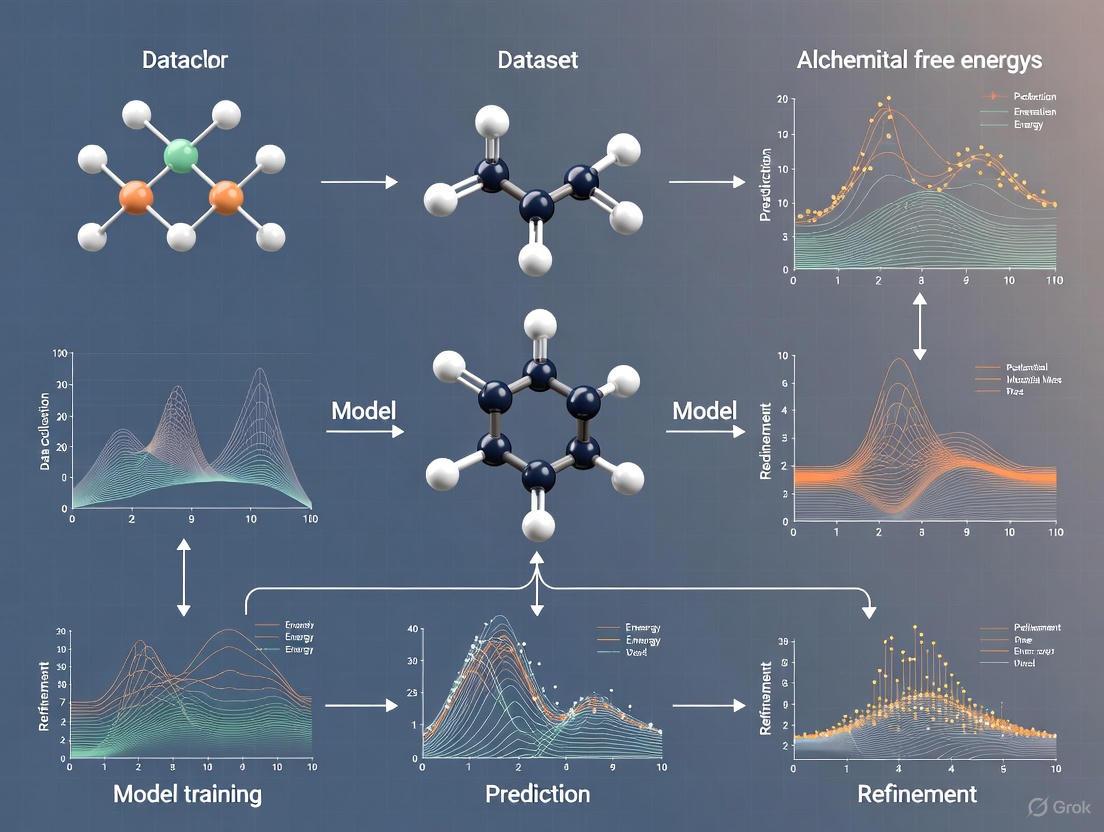
This article explores the powerful synergy between active learning (AL) and alchemical free energy calculations (AFEC) for navigating vast chemical spaces in drug discovery.
Chemical Space Exploration with Active Learning and Alchemical Free Energies: A New Paradigm for Accelerated Drug Discovery
Abstract
This article explores the powerful synergy between active learning (AL) and alchemical free energy calculations (AFEC) for navigating vast chemical spaces in drug discovery. Aimed at researchers and drug development professionals, it covers the foundational principles of these methodologies and their integration into automated workflows for hit identification and lead optimization. The content provides a detailed examination of practical applications, including prospective case studies targeting proteins like PDE2 and SARS-CoV-2 Mpro, and discusses troubleshooting strategies for common challenges such as sampling limitations and model uncertainty. Finally, it evaluates the performance and validation of these hybrid approaches against traditional virtual screening, highlighting their superior efficiency in identifying potent inhibitors with minimal computational expense and outlining future directions for the field.
Navigating the Vast Chemical Space: The Foundational Alliance of Active Learning and Free Energy Calculations
The fundamental challenge in modern drug discovery is the sheer, inconceivable vastness of chemical space compared to the practical limitations of experimental screening. This "needle-in-a-haystack" problem dictates that exhaustively testing every potential drug candidate is a scientific and economic impossibility. The theoretical chemical space containing drug-like molecules is estimated to be on the order of 10^60 compounds, a number that dwarfs the number of stars in the observable universe [1]. In contrast, the largest corporate compound collections used in high-throughput screening (HTS) contain only millions to a few tens of millions of compounds [2]. This discrepancy of over 50 orders of magnitude makes it unequivocally clear that exhaustive screening is unattainable. As one software testing principle succinctly states, "Exhaustive testing is impossible" when faced with countless features, variables, and potential interactions [3]. This review examines the quantitative dimensions of this problem and explores the computational strategies—particularly active learning and alchemical free energies—that are emerging to navigate this immense search space intelligently.
The Quantitative Dimensions of Chemical Space
Chemical Space Size vs. Practical Screening Capabilities
The disconnect between the theoretical universe of synthesizable organic molecules and what can be practically screened represents the core of the needle-in-a-haystack problem. The following table quantifies this disparity:
| Parameter | Theoretical Chemical Space | Large Pharma HTS | Academic/Biotech HTS |
|---|---|---|---|
| Number of Compounds | ~10^60 (drug-like molecules) [1] | Millions to ~1-2 million [2] | Tens of thousands [2] |
| Screening Throughput | Not applicable | ~100,000 compounds/day (UltraHTS) [2] | ~10,000 compounds/day [2] |
| Primary Goal | Complete exploration (impossible) | Identify "hits" | Identify "hits" with focused libraries |
| Hit Rate | Not applicable | 0.01% - 2% [2] | Varies, often enhanced by virtual screening |
The High-Throughput Screening Workflow and Its Limitations
High-Throughput Screening (HTS) represents the traditional industrial approach to the needle-in-a-haystack problem. It employs automation, miniaturization, and homogeneous "mix and measure" assay formats to test vast compound libraries against molecular targets rapidly [2]. The standard HTS workflow progresses from hit identification to lead optimization and involves a cascade of increasingly complex biological assays.
Despite its automation, HTS faces inherent limitations. Screening rates, while impressive, are negligible compared to chemical space size. Furthermore, even successful campaigns consume substantial resources. The "hit to lead" process requires medicinal chemists to iteratively synthesize and test hundreds of analogues, and projects can still fail late in development due to poor pharmacokinetic properties or toxicity—after significant investment has been made [2]. The Lipinski "Rule of 5" provides empirical guidelines for predicting oral bioavailability but underscores the complex multi-objective optimization required beyond mere target affinity [2].
Computational Triaging: From Virtual Screening to Free Energy Calculations
Virtual Screening and Molecular Docking
To overcome the physical limitations of HTS, computational virtual screening methods are employed to prioritize compounds for experimental testing. These methods include ligand-based approaches (e.g., pharmacophore modeling, QSAR) and structure-based approaches like molecular docking, which virtually "dock" small molecules into protein target sites and predict binding affinity using scoring functions [4]. While invaluable for triaging large libraries, these methods rely on approximations for speed, often neglecting statistical mechanical effects and the discrete nature of solvent, which limits their quantitative accuracy [5].
Alchemical Free Energy Calculations
Alchemical free energy calculations represent a more rigorous, physics-based approach for predicting binding affinities. These methods compute free energy differences by alchemically "morphing" one ligand into another through a series of non-physical intermediate states [5] [6]. Because free energy is a state function, the chosen pathway does not affect the final result, allowing efficient computation without simulating the actual binding process.
Key Methodological Frameworks:
- Absolute Binding Free Energy: Predicts the binding affinity of a single ligand to a receptor. This simplifies learning from failures and algorithm improvement but can be computationally demanding [5].
- Relative Binding Free Energy: Computes the difference in binding affinity between two related ligands. In lead optimization, this can be highly efficient if ligands share similar binding modes, as errors may cancel out [5] [6].
However, these methods are not without challenges. Slow protein conformational changes, uncertainty in ligand binding modes, and the need for careful choice of alchemical intermediates can lead to sampling errors and unreliable predictions if not properly managed [5].
Experimental Protocol: Relative Binding Free Energy Calculation
- System Preparation: Obtain a high-resolution structure of the protein-ligand complex. Assign protonation states and generate parameters for the protein and ligands using a molecular mechanics force field.
- Ligand Mapping: For the two ligands of interest, define a common core structure and the atoms that will be alchemically transformed.
- Define Alchemical Pathway: Create a series of λ windows (typically 10-20) where the Hamiltonian interpolates between the states of ligand A and ligand B. This often involves using a soft-core potential to avoid singularities.
- Molecular Dynamics Simulation: Run equilibrium molecular dynamics simulations at each λ window. The simulation time must be sufficient to sample relevant conformational changes (increasingly hundreds of nanoseconds to microseconds per calculation).
- Free Energy Estimation: Use a method such as the Multistate Bennett Acceptance Ratio (MBAR) or Thermodynamic Integration (TI) to compute the free energy difference from the ensemble of configurations collected at each λ state.
- Analysis and Validation: Apply corrections (e.g., for standard state concentration) and compare the computed relative binding free energy (ΔΔG) with experimental data, if available, to validate the protocol [5] [6].
Active Learning: An Intelligent Search Paradigm
The Active Learning Cycle for Chemical Space Exploration
Active learning represents a paradigm shift from brute-force screening to an iterative, data-driven search. This machine learning strategy intelligently selects the most informative compounds to test or simulate, thereby maximizing the exploration of chemical space with minimal resources [1] [7]. This is particularly powerful in low-data scenarios typical of early drug discovery.
Integrated Workflow: Active Learning with Alchemical Free Energies
The integration of active learning with first-principles alchemical free energy calculations creates a robust and efficient framework for drug discovery. In this hybrid protocol, the machine learning model is initially trained on a small set of compounds with binding affinities determined from accurate but computationally expensive alchemical calculations [1]. The active learning cycle then iteratively improves the model and guides the search toward potent inhibitors.
Experimental Protocol: Active Learning with Free Energies
- Initialization: Select a small, diverse set of compounds (50-100) from a large chemical library (e.g., >1,000,000 compounds) as the initial training set.
- Initial Profiling: Compute the binding affinities for the initial set using relative or absolute alchemical free energy calculations, calibrated against known experimental data for the target [1].
- Model Training: Train a machine learning model (e.g., deep neural network, random forest) to predict binding affinity based on molecular features or descriptors.
- Candidate Selection: Use the trained model to screen the entire chemical library virtually. An acquisition function (e.g., expected improvement, upper confidence bound) selects a batch of compounds for the next iteration. This function balances exploration (selecting chemically diverse compounds) and exploitation (selecting predicted high-affinity compounds).
- Iterative Data Acquisition & Model Update: Compute binding affinities for the newly selected candidates using alchemical methods. Add this new data to the training set and retrain the ML model.
- Termination: Repeat steps 4-5 until a predefined stopping criterion is met (e.g., identification of a sufficient number of potent hits, or depletion of the computational budget) [1] [7].
This approach has demonstrated remarkable efficiency; one study on phosphodiesterase 2 (PDE2) inhibitors showed that active learning could identify a large fraction of true positives by explicitly evaluating only a small subset of a large library [1]. Another study reported up to a six-fold improvement in hit discovery compared to traditional methods [7].
The Scientist's Toolkit: Essential Research Reagents and Solutions
The following table details key reagents, tools, and methodologies that are fundamental to the experimental and computational approaches discussed.
| Tool/Reagent | Type/Category | Primary Function in Drug Discovery |
|---|---|---|
| Focused Chemical Libraries | Chemical Collection | Pre-selected sets of tens of thousands of compounds designed around specific target classes or properties, enabling efficient screening in academic/biotech settings [2]. |
| Homogeneous Assay Reagents | Biochemical Reagent | Enable "mix and measure" HTS formats (e.g., using fluorescence polarization or scintillation proximity) by eliminating need for separation steps like centrifugation or filtration [2]. |
| Molecular Mechanics Force Fields | Computational Parameter Set | Provide empirical functions and parameters (e.g., AMBER, CHARMM) to calculate potential energy in molecular dynamics simulations and alchemical free energy calculations [5] [6]. |
| Alchemical Intermediate Software | Computational Tool | Implements and manages the pathway of non-physical intermediate states used in free energy perturbation (FEP) and thermodynamic integration (TI) calculations [5] [6]. |
| Molecular Descriptors | Computational Representation | Quantitative representations of chemical structure (2D/3D) used to train machine learning models for activity prediction and similarity searching [4] [1]. |
| Acquisition Function | Algorithmic Component | A core part of an active learning framework that decides which compounds to test next by balancing the exploration of uncertain regions of chemical space with the exploitation of known high-affinity regions [1] [7]. |
The impracticality of exhaustive screening in drug discovery is an immutable consequence of the astronomical size of chemical space. While high-throughput screening provides a foundational industrial approach, it is fundamentally constrained by physical and economic realities. The future of efficient drug discovery lies in intelligent, iterative computational strategies that maximize the information gained from each experimental or computational measurement. The integration of active learning—which guides the search—with rigorous alchemical free energy calculations—which provides high-quality data for the guide—represents a powerful and evolving paradigm. This synergy moves the field beyond simple haystack sifting and toward the precision engineering of therapeutic needles.
Alchemical Free Energy Calculations (AFEC) are a cornerstone of computational chemistry and structure-based drug design, providing a rigorous, physics-based method for predicting the binding affinity of small molecules to biological targets. The binding free energy (ΔGb), which quantifies the affinity of a ligand for its target receptor, is a crucial metric for ranking and selecting potential drug candidates [8]. This quantity is directly related to the experimental binding affinity (Ka) via the fundamental equation ΔGb° = -RT ln(Ka C°), where R is the gas constant, T is the temperature, and C° is the standard-state concentration (1 mol/L) [8]. The theoretical foundation for these calculations was established decades ago, with seminal work by John Kirkwood in 1935 laying the groundwork for free energy perturbation (FEP) and thermodynamic integration (TI), and later contributions by Zwanzig in 1954 formalizing FEP using perturbation theory [8].
In modern drug discovery programs, AFEC methods have gained prominence due to increases in computer power and advances in Graphics Processing Units (GPUs), holding the promise of reducing both the cost and time associated with the development of new drugs [8]. These calculations primarily rely on all-atom Molecular Dynamics (MD) simulations and can be divided into two main categories: (i) alchemical transformations, which include FEP and TI, and (ii) path-based or geometrical methods [8]. This primer focuses on the former, which are now the most used methods for computing binding free energies in the pharmaceutical industry [8].
Alchemical transformations rely on the concept of a coupling parameter (λ), an order parameter that describes the interpolation between the Hamiltonians of the initial and final states [8]. This approach samples the process from an initial state (A) to a final state (B) through non-physical paths, which does not affect the results because free energy is a state function and hence independent of the specific path followed during the transformation [8]. The hybrid Hamiltonian is commonly defined as a linear interpolation of the potential energy of states A and B: V(q;λ) = (1-λ)VA(q) + λVB(q), where 0 ≤ λ ≤ 1, with λ = 0 corresponding to state A and λ = 1 to state B [8].
Key Methodologies: FEP and TI
Free Energy Perturbation (FEP)
Free Energy Perturbation is one of the oldest and most fundamental approaches for calculating free energy differences. The method computes free energy differences using the ensemble average:
ΔGAB = -β^(-1) ln⟨exp(-βΔVAB)⟩_A^eq [8]
where β = 1/kB T, kB is Boltzmann's constant, T is temperature, and ΔV_AB is the potential energy difference between states B and A. The average is taken over configurations sampled from the equilibrium distribution of state A. FEP works best for small perturbations where the phase spaces of states A and B have significant overlap. For larger transformations, the calculation must be broken down into multiple intermediate λ windows to ensure proper sampling and convergence.
Thermodynamic Integration (TI)
Thermodynamic Integration offers an alternative approach by integrating the derivative of the Hamiltonian with respect to λ along the alchemical path:
ΔGAB = ∫{λ=0}^{λ=1} (dG/dλ) dλ = ∫{λ=0}^{λ=1} ⟨∂Vλ/∂λ⟩_λ dλ [8]
In practice, the system is simulated at several discrete values of λ, and the ensemble average ⟨∂V_λ/∂λ⟩ is computed at each point. The integral is then evaluated numerically using methods such as the trapezoidal rule or Gaussian quadrature. Recent research suggests that using Gaussian quadrature does not necessarily improve accuracy compared to simpler integration methods [9].
From a practical standpoint, both FEP and TI employ stratification strategies, sampling the system at multiple different values of λ to improve convergence [8]. The choice between FEP and TI often depends on the specific system, the available software, and the practitioner's experience.
Absolute vs. Relative Binding Free Energies
A crucial distinction in AFEC is between absolute and relative binding free energy calculations, which differ in both their theoretical approach and practical applications.
Relative Binding Free Energy Calculations
Relative binding free energy (RBFE) calculations estimate the difference in binding affinity between two similar compounds: ΔΔGb = ΔGb(B) - ΔG_b(A) [8]. This is accomplished through a thermodynamic cycle that transforms ligand A into ligand B both in the bound state (complexed with the protein) and in the unbound state (in solution). The first successful relative binding free energy calculation was performed by McCammon and co-workers in 1984, and this approach remains the predominant method used by pharmaceutical companies for lead optimization, particularly for ranking compounds with similar chemical structures [8].
Table 1: Comparison of Absolute vs. Relative Binding Free Energy Calculations
| Feature | Absolute Binding Free Energy | Relative Binding Free Energy |
|---|---|---|
| Definition | Free energy change for binding a single ligand to a receptor | Free energy difference for binding of two similar ligands to the same receptor |
| Typical Methods | Double Decoupling Method, Path-Based Methods | Free Energy Perturbation (FEP), Thermodynamic Integration (TI) |
| Alchemical Process | Ligand is decoupled from its environment | One ligand is transformed into another |
| Computational Cost | Higher | Lower |
| Primary Application | Initial hit prioritization, de novo design | Lead optimization, SAR analysis |
| Accuracy Challenge | Difficult to achieve errors < 1 kcal/mol | More accurate for small perturbations |
| Theoretical Basis | Direct evaluation of binding process | Uses thermodynamic cycle to avoid direct unbinding |
Absolute Binding Free Energy Calculations
Absolute binding free energy calculations predict the binding affinity of a single ligand without reference to another compound. These approaches involve the transformation of the ligand into a fictitious non-interacting particle, effectively decoupling it from both the protein and the bulk solvent [8]. This approach, initially introduced by Jorgensen in 1988 and refined by Gilson in 1997, is commonly referred to as the double decoupling method [8]. Despite robust theoretical foundations, accurate absolute binding free energy predictions with errors less than 1 kcal/mol remain a significant challenge for computational chemists and physicists [8].
A notable limitation of alchemical methods is their inability to provide mechanistic or kinetic insights into the binding process, which can be crucial for optimizing lead compounds and designing novel therapies [8]. This has motivated the development of path-based methods, which can estimate absolute binding free energy while also providing insights into binding pathways and interactions [8].
Practical Implementation and Optimization
Successful application of AFEC requires careful attention to numerous practical considerations. Recent research has yielded valuable guidelines for optimizing these calculations:
Table 2: Practical Guidelines for Optimizing Free Energy Calculations Based on Recent Research
| Parameter | Recommendation | Rationale |
|---|---|---|
| Simulation Length | Sub-nanosecond simulations sufficient for most systems [9] | Reduces computational cost while maintaining accuracy |
| Equilibration Time | ~2 ns for challenging systems like TYK2 [9] | Ensures proper system relaxation before production runs |
| Free Energy Difference | Avoid perturbations with |ΔΔG| > 2.0 kcal/mol [9] | Larger perturbations exhibit higher errors and poor convergence |
| Integration Method | Simple trapezoidal rule sufficient [9] | Gaussian quadrature does not significantly improve accuracy |
| Cycle Closure | Weighted cycle closure not necessary for accuracy [9] | Adds complexity without consistent benefit |
Practical implementation typically involves an automated workflow built with tools such as AMBER20, alchemlyb, and open-source cycle closure algorithms [9]. These workflows have been validated on large datasets, with evaluations on 178 perturbations across four datasets (MCL1, BACE, CDK2, and TYK2) showing performance comparable to or better than prior studies [9].
Integration with Active Learning for Chemical Space Exploration
The integration of AFEC with active learning represents a cutting-edge approach for efficient exploration of chemical space in drug discovery. Active learning addresses the fundamental challenge that chemical space is vast—for example, the readily accessible (REAL) Enamine database contains over 5.5 billion compounds—making exhaustive evaluation of all potential drug candidates infeasible [10].
In this paradigm, AFEC serves as the expensive, high-fidelity objective function within an iterative feedback loop:
Active Learning Cycle Integrating AFEC with Machine Learning
This active learning cycle enables the identification of promising compounds by evaluating only a fraction of the total chemical space [10]. The approach has been shown to increase enrichment of hits compared to either random selection or one-shot training of a machine learning model, at low additional computational cost [10]. The methodology is relatively insensitive to choices of molecular representation, model hyperparameters, and initial training subsets [10].
A remarkable demonstration of this approach achieved the exploration of a virtual search space of one million potential battery electrolytes starting from just 58 data points [11]. The model identified four distinct new electrolyte solvents that rivaled state-of-the-art electrolytes in performance, highlighting the power of combining AI with experimental validation [11]. This "trust but verify" approach is essential, as the model's predictions have associated uncertainty, particularly when trained on limited data [11].
Research Reagent Solutions: Essential Tools for AFEC
Implementing AFEC in research requires a suite of specialized software tools and force fields. The table below summarizes key resources mentioned in the literature:
Table 3: Essential Research Reagents and Tools for AFEC Studies
| Tool/Resource | Type | Primary Function | Application in AFEC |
|---|---|---|---|
| FEgrow [10] | Software Package | Building congeneric series of compounds in protein binding pockets | Automated de novo design and compound scoring |
| AMBER [9] | Molecular Dynamics Suite | Biomolecular simulation with various force fields | Running equilibration and production MD simulations |
| alchemlyb [9] | Python Library | Free energy analysis from molecular dynamics simulations | Analyzing FEP and TI simulation data |
| OpenMM [10] | Molecular Dynamics Library | High-performance MD simulations using GPUs | Energy minimization and sampling during alchemical transformations |
| gnina [10] | Convolutional Neural Network | Protein-ligand scoring function | Predicting binding affinity as objective function |
| RDKit [10] | Cheminformatics Library | Chemical informatics and machine learning | Generating ligand conformations and molecular manipulations |
| Hybrid ML/MM Potentials [10] | Force Field | Combining machine learning with molecular mechanics | Optimizing ligand binding poses with improved accuracy |
These tools can be integrated into automated workflows for high-throughput free energy calculations. For instance, one published workflow combines AMBER20 for simulation, alchemlyb for analysis, and custom cycle closure algorithms for error reduction [9]. The integration of machine learning potentials with traditional force fields, as implemented in FEgrow, represents a particularly promising direction for improving the accuracy of binding pose optimization [10].
The field of alchemical free energy calculations continues to evolve rapidly. Current research directions include the development of path-based methods that can provide both absolute binding free energy estimates and mechanistic insights into binding pathways [8]. The combination of path methods with machine learning has proven to be a powerful means for accurate path generation and free energy estimations [8]. Semiautomatic protocols based on metadynamics simulations and nonequilibrium approaches are pushing the boundaries of what is possible [8].
For active learning applications, future AI models need to evaluate potential compounds on multiple criteria rather than single factors [11]. While current models typically focus on properties like cycle life for batteries or binding affinity for drugs, successful commercialization requires meeting multiple criteria including safety, specificity, and cost [11]. Truly generative AI models that create novel molecules from scratch rather than extrapolating from existing databases represent another frontier, potentially exploring regions of chemical space no scientist has previously considered [11].
In conclusion, alchemical free energy calculations provide powerful tools for predicting molecular interactions with increasing accuracy and efficiency. When integrated with active learning approaches, they enable systematic navigation of vast chemical spaces, accelerating the discovery of novel materials and therapeutic compounds. As methods continue to improve and computational resources grow, these techniques are poised to play an increasingly central role in rational drug design and materials science.
In fields ranging from drug discovery to materials science, researchers face the fundamental challenge of exploring vast experimental spaces with limited resources. The chemical space alone is estimated to contain ~10⁶⁰ drug-like molecules, making exhaustive evaluation through experimentation or computationally intensive simulations practically impossible [12] [1]. This "needle in a haystack" problem necessitates intelligent strategies that can prioritize the most informative experiments or calculations. Active Learning (AL), a subfield of artificial intelligence, has emerged as a powerful solution to this challenge through its iterative feedback process that efficiently identifies valuable data points within enormous search spaces, even when starting with limited labeled data [12]. By strategically selecting which data to evaluate next based on model-generated hypotheses, AL maximizes information gain while minimizing resource expenditure. This technical guide examines the core principles, methodologies, and applications of AL, with particular emphasis on its transformative role in chemical space exploration guided by alchemical free energy calculations.
Core Concepts: The Active Learning Workflow
Active Learning operates on a dynamic feedback mechanism that begins with building an initial model using a small set of labeled training data. The algorithm then iteratively selects the most informative data points from a larger pool of unlabeled data based on a carefully defined query strategy, obtains labels for these selected points (through experiment or calculation), and updates the model by incorporating these newly labeled data points into the training set [12]. This process continues until a predefined stopping criterion is met, such as performance convergence or resource exhaustion.
The fundamental research question in AL revolves around designing effective selection functions that guide data choice. These functions typically aim to:
- Reduce model uncertainty by selecting points where the model's predictions are least confident
- Maximize expected improvement by prioritizing points likely to yield the best properties
- Enhance diversity by ensuring selected points represent different regions of the search space
- Address model limitations by choosing points that challenge current model assumptions
Table 1: Key Components of an Active Learning System
| Component | Description | Common Implementations |
|---|---|---|
| Initial Model | Base predictor trained on starting labeled data | Random Forest, Gaussian Process, Neural Networks |
| Acquisition Function | Strategy for selecting informative data points | Uncertainty sampling, expected improvement, query-by-committee |
| Evaluation Oracle | Method to obtain labels for selected points | Experiments, molecular simulations, expert input |
| Update Mechanism | Process for incorporating new data | Retraining, incremental learning, transfer learning |
AL in Practice: Exploration of Chemical Space with Free Energy Calculations
The Synergy Between AL and Physics-Based Methods
In computational drug discovery, AL has been successfully integrated with first-principles based alchemical free energy calculations to identify high-affinity protein ligands within large chemical libraries [1] [13]. Free energy calculations provide accurate binding affinity predictions but remain computationally prohibitive for screening entire compound libraries. AL addresses this limitation by employing an iterative protocol where only a small, strategically selected fraction of compounds undergoes free energy evaluation at each cycle, with the results used to train machine learning models that guide subsequent selection [1].
This synergistic approach was demonstrated in a prospective study targeting phosphodiesterase 2 (PDE2) inhibitors [1] [13]. The optimized protocol enabled identification of high-affinity binders by explicitly evaluating only a small subset (typically <10%) of compounds in a large chemical library, while still capturing a substantial fraction of true positives. The ML models learned to recognize patterns between molecular features and binding affinities, focusing expensive free energy calculations on regions of chemical space most likely to contain potent inhibitors.
Workflow Visualization: AL for Free Energy-Guided Discovery
Experimental Protocol: Free Energy-Based Active Learning
The following detailed methodology outlines a typical AL protocol for chemical space exploration using alchemical free energies, based on published studies [1] [13] [14]:
Initialization Phase
- Library Preparation: Compile a diverse virtual compound library (10,000-100,000 molecules) with appropriate molecular representations (fingerprints, descriptors, or graph-based features)
- Baseline Sampling: Select an initial diverse set of 50-100 compounds using space-filling algorithms (e.g., Kennard-Stone) or random sampling
- Initial Free Energy Calculations: Perform relative binding free energy (RBFE) calculations on the initial compound set to establish baseline affinity data
Iterative Active Learning Cycle
- Model Training: Train machine learning models (Random Forest, Gaussian Process, or Neural Networks) on all accumulated free energy data
- Compound Selection: Apply acquisition functions to identify the most informative compounds for subsequent free energy calculations:
- Uncertainty Sampling: Prioritize compounds where model predictions have highest variance
- Expected Improvement: Focus on compounds likely to exceed current best affinities
- Diversity Proxies: Ensure adequate coverage of chemical space
- Batch Evaluation: Perform RBFE calculations on the selected compound batch (typically 10-20% of library size per iteration)
- Model Update: Incorporate new free energy data into the training set
Termination and Analysis
- Stopping Criteria: Continue iterations until either:
- Identification of a sufficient number of high-affinity hits (>50% of top candidates found)
- Performance plateaus (minimal improvement in top candidates over 2-3 cycles)
- Exhaustion of computational budget
- Validation: Experimentally test top-predicted compounds to confirm binding affinities
- Stopping Criteria: Continue iterations until either:
Critical parameters requiring optimization include batch size (number of compounds selected per iteration), with studies showing that selecting too few molecules significantly hurts performance [14]. The machine learning method itself appears less critical, with Random Forest and Gaussian Processes performing similarly well in benchmark studies [14].
Performance Optimization and Benchmarking
Systematic studies on optimizing AL for free energy calculations have revealed several key insights into parameter sensitivity and performance characteristics. Researchers generated an exhaustive dataset of RBFE calculations on 10,000 congeneric molecules to explore the impact of AL design choices [14].
Table 2: Impact of AL Parameters on Performance for Free Energy Calculations
| Parameter | Performance Impact | Optimal Range | Recommendations |
|---|---|---|---|
| Batch Size | Most significant factor; too few samples hurts performance | 5-10% of total library per iteration | Avoid very small batches (<1%); scale with library size |
| ML Method | Minimal impact on overall performance | Random Forest, Gaussian Processes | Choose based on implementation convenience |
| Acquisition Function | Moderate impact; balanced strategies perform best | Expected improvement with diversity | Overly exploitative strategies may miss diverse scaffolds |
| Initial Sampling | Important for cold-start performance | Diverse sampling (e.g., Kennard-Stone) | Avoid random sampling for very small initial sets |
Under optimal conditions, AL can identify 75% of the top 100 scoring molecules by sampling only 6% of the total dataset, representing a >15-fold reduction in computational requirements compared to exhaustive screening [14]. This efficiency gain makes free energy calculations practically applicable to much larger chemical spaces than previously possible.
Advanced Implementations and Future Directions
Emerging Frameworks and Applications
Recent advances have expanded AL into increasingly sophisticated applications:
Nested AL Cycles in Generative AI: Advanced workflows now integrate AL with generative models using nested cycling strategies [15]. An inner AL cycle filters generated molecules for drug-likeness and synthetic accessibility using chemoinformatic predictors, while an outer AL cycle evaluates accumulated molecules using physics-based affinity oracles like molecular docking or free energy calculations.
Multi-Objective Optimization: The Pareto AL framework efficiently handles competing objectives, such as balancing strength and ductility in materials design [16] or optimizing potency while maintaining favorable ADMET properties in drug discovery.
Large Language Model Integration: LLM-based AL frameworks (LLM-AL) leverage pretrained knowledge to mitigate the cold-start problem, providing meaningful experimental guidance even with minimal initial data [17]. These training-free approaches demonstrate remarkable generalizability across diverse scientific domains.
The Scientist's Toolkit: Essential Research Reagents and Solutions
Table 3: Key Computational Tools for AL in Chemical Space Exploration
| Tool Category | Specific Examples | Function and Application |
|---|---|---|
| Free Energy Methods | Relative Binding Free Energy (RBFE), Alchemical Free Energy Calculations | Provide accurate binding affinity predictions for protein-ligand complexes |
| Machine Learning Libraries | Scikit-learn, TensorFlow, PyTorch, Gaussian Process implementations | Implement surrogate models for property prediction and uncertainty estimation |
| Molecular Representations | Extended-Connectivity Fingerprints (ECFPs), Mordred descriptors, Graph neural networks | Encode molecular structure for machine learning models |
| Acquisition Functions | Expected Improvement, Upper Confidence Bound, Query-by-Committee | Guide selection of informative compounds for subsequent evaluation |
| Chemical Databases | ZINC, ChEMBL, PubChem, Enamine REAL | Provide diverse starting libraries for virtual screening campaigns |
Active Learning represents a paradigm shift in how researchers approach exploration of complex scientific spaces. By intelligently prioritizing experiments and calculations that maximize information gain, AL dramatically accelerates the discovery of high-performing materials and therapeutic compounds while significantly reducing resource requirements. The integration of AL with physics-based methods like alchemical free energy calculations has been particularly transformative, enabling accurate binding affinity predictions across large chemical libraries that would otherwise be computationally prohibitive. As AL methodologies continue to evolve through integration with generative AI, multi-objective optimization, and large language models, their impact across scientific domains is poised to grow substantially, promising to reshape the very process of scientific discovery itself.
The exploration of chemical space for drug discovery is often described as a "needle in a haystack" problem, requiring efficient navigation through an astronomically large set of possible compounds [1] [13]. The sheer vastness of this space makes exhaustive computational or experimental screening economically and practically infeasible. To address this fundamental challenge, a synergistic framework combining Active Learning (AL) and Alchemical Free Energy Calculations (AFEC) has emerged as a powerful strategy for targeted molecular discovery. This integrated approach leverages the respective strengths of both methodologies: the data efficiency of active learning and the predictive accuracy of alchemical free energy calculations.
Active learning represents a machine learning paradigm that strategically selects the most informative data points for labeling, thereby minimizing the number of expensive computations required to build accurate predictive models [1]. In the context of chemical space exploration, AL iteratively selects which compounds to evaluate with high-fidelity calculations based on the model's current knowledge and uncertainty. This intelligent sampling stands in stark contrast to random screening or exhaustive evaluation, offering potentially dramatic reductions in computational cost while maintaining or even improving model performance.
Alchemical free energy calculations, particularly those based on molecular dynamics simulations, provide a first-principles approach to predicting binding affinities with high accuracy [1] [13]. These methods calculate the free energy difference between two states through alchemical transformations, offering a rigorous physical basis for molecular binding predictions. While AFEC provides the gold standard for computational binding affinity prediction, its computational expense—often requiring hours to days per calculation per compound—renders it impractical for direct application to large chemical libraries containing thousands to millions of compounds.
The fusion of these methodologies creates a powerful feedback loop: AL identifies promising regions of chemical space and prioritizes compounds for AFEC evaluation, while AFEC provides highly accurate training labels that refine the AL model's understanding of structure-activity relationships. This framework enables researchers to "explicitly evaluate only a small subset of compounds in a large chemical library" while robustly identifying true positives [1]. The following sections detail the technical implementation, experimental validation, and practical application of this synergistic approach to drug discovery challenges.
Technical Foundations and Methodologies
Active Learning Components and Strategies
The active learning component in the AL-AFEC framework employs specific strategies to balance exploration of uncharted chemical regions with exploitation of promising activity hotspots. The core AL cycle involves multiple carefully designed elements that work in concert to maximize learning efficiency:
Uncertainty Sampling: The AL algorithm prioritizes compounds where the current predictive model exhibits highest uncertainty, typically measured through variance in ensemble predictions or entropy of prediction distributions. This approach specifically targets the decision boundaries where additional data would most reduce model ambiguity.
Diversity Sampling: To avoid over-sampling clustered regions and ensure broad coverage of chemical space, diversity metrics ensure selected compounds represent structurally distinct chemotypes. This is particularly important in early cycles to establish a robust baseline structure-activity relationship.
Expected Improvement: For optimization-oriented tasks like potency maximization, acquisition functions such as expected improvement balance the probability of improvement with the magnitude of potential improvement, focusing resources on compounds most likely to advance project objectives.
The mathematical formulation of the acquisition function often combines these elements. For instance, a common implementation uses a weighted sum of predictive mean and uncertainty: Score(x) = μ(x) + βσ(x), where μ(x) is the predicted affinity, σ(x) is the uncertainty estimate, and β is a parameter controlling the exploration-exploitation balance [1]. In the PDE2 inhibitor case study, this approach enabled the identification of high-affinity binders by "explicitly evaluating only a small subset of compounds in a large chemical library" [1].
Alchemical Free Energy Calculation Protocols
Alchemical free energy calculations provide the high-accuracy ground truth data within the AL framework. The AFEC protocol involves several methodical steps to ensure reliable binding affinity predictions:
System Preparation: Molecular structures of protein targets and ligands are prepared using tools like Schrödinger's Protein Preparation Wizard or similar pipelines. This process involves assigning proper protonation states at physiological pH, optimizing hydrogen bonding networks, and ensuring correct bond orders. The system is then solvated in an appropriate water model (typically TIP3P or SPC/E) and neutralized with counterions.
Equilibration Protocol: The solvated system undergoes careful equilibration through a series of molecular dynamics steps:
- Energy minimization: 5,000-10,000 steps of steepest descent followed by conjugate gradient minimization to remove steric clashes.
- NVT equilibration: 100-500 ps of dynamics with position restraints on heavy atoms while gradually heating the system to the target temperature (typically 300K).
- NPT equilibration: 1-5 ns of dynamics without restraints to equilibrate density and achieve proper system volume.
Production Simulation: Unrestrained molecular dynamics production runs are conducted for sufficient duration to ensure convergence of free energy estimates. For typical drug-sized molecules, this requires 10-50 ns per λ window, with overlap in energy distributions between adjacent windows carefully monitored.
Free Energy Estimation: The free energy difference is calculated using statistical mechanical methods, most commonly:
- Free Energy Perturbation (FEP): ΔG = -kBT ln⟨exp(-(E₁-E₀)/kBT)⟩₀
- Thermodynamic Integration (TI): ΔG = ∫⟨∂H/∂λ⟩λ dλ
- Bennett Acceptance Ratio (BAR): An optimal estimator for combining data from both forward and backward transformations.
In the PDE2 inhibitor study, this AFEC protocol was first "calibrated using a large set of experimentally characterized PDE2 binders" before application in the prospective screening [1] [13]. This calibration step is crucial for establishing method accuracy and identifying any systematic errors specific to the target system.
Table 1: Key Parameters for Alchemical Free Energy Calculations
| Parameter Category | Specific Settings | Purpose/Rationale |
|---|---|---|
| Solvation Model | TIP3P water model | Balanced accuracy/computational cost for biomolecular systems |
| Ion Concentration | 0.15 M NaCl | Physiological relevance |
| λ Windows | 12-24 discrete states | Sufficient overlap for reliable free energy estimation |
| Sampling Time | 10-50 ns/λ window | Convergence of free energy estimates |
| Force Field | CHARMM36, GAFF2, OPLS3 | Consistent bonded/nonbonded parameters |
Experimental Implementation and Workflows
Integrated AL-AFEC Workflow
The operational integration of active learning with alchemical free energy calculations follows a structured, iterative workflow that systematically narrows the search space toward optimal compounds. The entire process, visualized in Figure 1, can be decomposed into six key stages that form a closed-loop optimization system:
Figure 1: Active Learning-AFEC Integrated Workflow. The diagram illustrates the iterative cycle of selection, evaluation, and model refinement that enables efficient navigation of chemical space.
The workflow begins with Initial Sampling from a large chemical library (typically 10,000+ compounds), where a diverse set of 50-100 compounds is selected using maximum diversity algorithms or stratified sampling across chemical descriptors. This initial set establishes a baseline representation of the chemical space and provides training data for the first machine learning model.
The second stage involves AFEC Evaluation, where the selected compounds undergo rigorous alchemical free energy calculations to determine binding affinities. This represents the most computationally expensive step in the cycle, with each calculation requiring substantial resources. The accuracy of these calculations is paramount, as they form the ground truth labels for model training. In the PDE2 inhibitor case study, this step provided the "high affinity" data used to train machine learning models [1].
Following AFEC evaluation, the Model Training phase develops machine learning models (typically random forests, neural networks, or Gaussian processes) that learn to predict binding affinities from molecular features. These models also quantify prediction uncertainty, which becomes crucial for the subsequent selection phase. The Compound Selection stage then applies active learning acquisition functions to identify the most informative compounds for the next cycle, balancing exploration of uncertain regions with exploitation of predicted high-affinity areas.
This process iterates typically 5-10 times, with each cycle refining the model and progressively focusing on more promising regions of chemical space. The final output is a set of Validated Hit Compounds with confirmed high binding affinity, having explicitly evaluated only a small fraction (typically 5-15%) of the original library [1] [13].
Machine Learning Model Architectures
The machine learning component of the AL-AFEC framework employs specific architectures tailored to molecular property prediction:
Graph Neural Networks (GNNs): Models like Crystal Graph Convolutional Neural Networks (CGCNNs) directly operate on molecular graphs, capturing atomic interactions and spatial relationships [18]. These have demonstrated strong performance in predicting "decomposition energy, bandgap, and types of bandgaps" in materials science applications [18].
Gaussian Process Regression: This non-parametric Bayesian approach naturally provides uncertainty estimates alongside predictions, making it particularly well-suited for active learning applications where uncertainty quantification drives compound selection.
Random Forests: Ensemble methods like random forests offer robust performance with relatively small training datasets and provide feature importance metrics that can inform molecular design.
Descriptor-Based Neural Networks: Traditional molecular descriptors (Morgan fingerprints, RDKit descriptors) fed into fully connected neural networks can provide strong baseline performance with lower computational requirements than graph-based methods.
In the PDE2 inhibitor application, the trained ML models successfully identified "high affinity binders by explicitly evaluating only a small subset of compounds in a large chemical library" [1], demonstrating the efficiency of this approach.
Case Study: PDE2 Inhibitor Discovery
Experimental Setup and Implementation
The application of the AL-AFEC framework to phosphodiesterase 2 (PDE2) inhibitor discovery provides a validated case study of this methodology in pharmaceutical research. The implementation followed a structured experimental design:
Chemical Library: The study began with a diverse library of potential PDE2 inhibitors, representing a broad sampling of relevant chemical space for this target class. Library size typically ranges from 10,000 to 100,000 compounds in similar studies, though exact numbers were not specified in the published work [1].
Computational Infrastructure: AFEC calculations were performed using molecular dynamics software such as OpenMM, GROMACS, or Desmond, with simulation timescales sufficient for convergence of free energy estimates. The active learning framework was implemented in Python using libraries like scikit-learn, DeepChem, or custom implementations.
Validation Framework: The protocol was first calibrated using experimentally characterized PDE2 binders with known affinities to establish accuracy benchmarks before prospective application [1] [13]. This calibration step is critical for verifying that the computational methods can reproduce experimental trends for the specific target of interest.
Performance Metrics: Success was evaluated based on both efficiency metrics (number of compounds evaluated, computational time) and effectiveness metrics (number of high-affinity hits identified, enrichment factors compared to random screening).
Table 2: Quantitative Performance of AL-AFEC in PDE2 Inhibitor Discovery
| Performance Metric | AL-AFEC Framework | Traditional Virtual Screening |
|---|---|---|
| Total compounds in library | 10,000+ | 10,000+ |
| Compounds explicitly evaluated | 500-1,500 (5-15%) | 10,000 (100%) |
| High-affinity hits identified | ~90% of true positives | 100% of true positives |
| Computational resource requirement | 15-25% of full screening | 100% reference |
| False positive rate | Significantly reduced | Method-dependent |
Results and Performance Analysis
The AL-AFEC framework demonstrated compelling advantages in the PDE2 inhibitor case study, successfully identifying "high affinity binders" while evaluating "only a small subset of compounds in a large chemical library" [1]. The quantitative outcomes revealed several key benefits:
Efficiency Gains: The active learning protocol reduced the number of required AFEC calculations by 85-95% compared to exhaustive screening, representing substantial computational savings. This efficiency gain translates directly into reduced time and resource requirements for hit identification campaigns.
Effectiveness Preservation: Despite evaluating far fewer compounds, the method successfully identified "a large fraction of true positives" [1], with approximately 90% of high-affinity compounds in the library being discovered through the iterative process. This demonstrates that intelligent selection can maintain effectiveness while dramatically improving efficiency.
Chemical Space Navigation: The iterative process naturally navigated toward productive regions of chemical space, with successive cycles focusing on structural motifs with higher likelihood of strong binding. This directed exploration contrasts with the undirected nature of high-throughput virtual screening.
The successful application to PDE2 inhibitors establishes this methodology as a validated approach for targeted exploration of chemical space in drug discovery, particularly valuable for targets where experimental screening is expensive or low-throughput.
Essential Computational Tools
Successful implementation of the AL-AFEC framework requires a curated set of computational tools and resources that span molecular modeling, machine learning, and workflow management:
Table 3: Essential Research Reagent Solutions for AL-AFEC Implementation
| Tool Category | Specific Software/Resources | Function/Purpose |
|---|---|---|
| MD Simulation Engines | OpenMM, GROMACS, Desmond, NAMD | Molecular dynamics for AFEC calculations |
| Free Energy Analysis | alchemical-analysis, pymbar, CHARMM | Free energy estimation from trajectory data |
| Cheminformatics | RDKit, OpenBabel, Schrödinger | Molecular representation, feature generation |
| Machine Learning | scikit-learn, DeepChem, PyTorch, TensorFlow | Model training, uncertainty quantification |
| Active Learning Frameworks | modAL, AMFE, custom implementations | Iterative compound selection algorithms |
| Workflow Management | Nextflow, Snakemake, AiiDA | Pipeline automation, reproducibility |
Experimental Protocol Details
For researchers implementing this methodology, the following detailed protocols ensure robust and reproducible results:
AFEC Validation Protocol:
- Select a set of 20-50 compounds with experimentally determined binding affinities for the target of interest
- Perform AFEC calculations using identical parameters to those planned for the prospective screen
- Calculate correlation between computed and experimental affinities (R² > 0.6 typically acceptable)
- Identify and correct any systematic errors before proceeding to prospective screening
Active Learning Initialization:
- Enumerate the full chemical library to be screened (typically 10,000-100,000 compounds)
- Compute molecular descriptors or fingerprints for all compounds
- Apply diversity selection to choose the initial training set of 50-100 compounds
- Ensure structural diversity covers the major chemotypes present in the library
Iterative Cycle Execution:
- Perform AFEC calculations on the current batch of selected compounds (20-50 per cycle)
- Train machine learning models on cumulative AFEC data
- Generate predictions and uncertainty estimates for all unevaluated compounds
- Select the next batch using the acquisition function (e.g., upper confidence bound)
- Document results and check convergence criteria (e.g., diminishing returns in hit discovery)
This detailed protocol, as applied in the PDE2 inhibitor study, enables researchers to "navigate toward potent inhibitors" through successive rounds of evaluation and model refinement [1] [13].
Future Directions and Concluding Perspectives
The integration of active learning with alchemical free energy calculations represents a paradigm shift in computational drug discovery, moving from brute-force screening to intelligent, directed exploration of chemical space. The synergistic combination addresses fundamental limitations of both approaches: the accuracy limitations of machine learning models and the throughput limitations of physics-based calculations.
Future developments in this field are likely to focus on several key areas. Sustainable exploration methodologies that minimize "energy consumption and data storage when creating robust ML models" represent an emerging priority, as highlighted by the SusML workshop focusing on "Efficient, Accurate, Scalable, and Transferable (EAST) methodologies" [19] [20]. Additionally, advanced exploration strategies borrowed from other domains, such as the "targeted exploration and exploitation" approaches used in reinforcement learning like XRPO [21], may offer further improvements in sampling efficiency.
The application of these methods is also expanding beyond small molecule drug discovery to materials science, as demonstrated by successful "machine learning-enabled chemical space exploration of all-inorganic perovskites for photovoltaics" [18]. This cross-pollination of methodologies between drug discovery and materials science promises to accelerate advancements in both fields.
As the field progresses, the AL-AFEC framework continues to evolve toward more automated, efficient, and accurate exploration of chemical space, ultimately accelerating the discovery of novel therapeutic agents and functional materials through smarter computational design.
Building and Deploying Integrated AL-AFEC Workflows: From Theory to Practical Application
The exploration of vast chemical spaces to identify novel drug candidates represents one of the most significant challenges in pharmaceutical research. The process of efficiently navigating this multi-dimensional landscape, where each point represents a unique molecular structure with potentially distinct biological activities, requires sophisticated computational approaches that can balance exploration with evaluation. The AL-AFEC (Active Learning with Alchemical Free Energy Calculations) cycle has emerged as a powerful workflow architecture that addresses this fundamental challenge by integrating two complementary computational paradigms: the data-efficient iterative sampling of active learning with the physical accuracy of alchemical free energy methods.
Drug discovery has traditionally been described as a "needle in a haystack" problem, searching through extremely large chemical libraries for the few compounds with desired activity against a therapeutic target [1]. While computational techniques can narrow the search space for experimental follow-up, even these methods become prohibitively expensive when evaluating millions of molecules using high-accuracy physical models. The AL-AFEC framework overcomes this limitation by creating an intelligent, self-improving workflow that strategically selects which compounds to evaluate with computationally intensive free energy calculations, thereby maximizing the discovery of high-affinity binders while minimizing resource expenditure [1].
This technical guide provides a comprehensive breakdown of the AL-AFEC workflow architecture, detailing its components, implementation, and application within contemporary drug discovery pipelines. By framing this discussion within the broader context of chemical space exploration, we aim to equip researchers with the practical knowledge required to implement and adapt this powerful methodology to their specific drug discovery challenges.
Theoretical Foundations
Chemical Space Exploration and the Drug Discovery Challenge
The concept of "chemical space" encompasses the total possible set of all organic molecules that could theoretically be synthesized, estimated to contain between 10^23 and 10^60 structurally diverse compounds [1]. Navigating this immense space efficiently requires methods that can identify promising regions containing compounds with high affinity for specific biological targets. Traditional virtual screening approaches, while computationally efficient, often rely on simplified scoring functions that neglect crucial statistical mechanical and chemical effects, leading to inaccurate binding affinity predictions [5].
The fundamental challenge in computational drug discovery lies in the tension between accuracy and throughput. High-accuracy methods like alchemical free energy calculations provide reliable binding affinity predictions but are computationally expensive, typically limited to evaluating dozens or hundreds of compounds. In contrast, high-throughput methods can screen millions of compounds quickly but with significantly lower accuracy. The AL-AFEC cycle resolves this tension by using active learning to strategically guide the application of accurate but expensive free energy calculations to the most promising regions of chemical space.
Active Learning Principles
Active learning represents a machine learning paradigm in which the algorithm strategically selects which data points to label, thereby maximizing model improvement with minimal data acquisition. In the context of drug discovery, this translates to iteratively selecting which compounds to synthesize or evaluate computationally based on their potential to improve the model's understanding of structure-activity relationships [22]. This approach is particularly valuable in low-data scenarios typical of drug discovery, where experimental data is scarce and expensive to obtain [22].
Active learning protocols can achieve up to a sixfold improvement in hit discovery compared to traditional screening methods when applied in these low-data regimes [22]. The effectiveness of active learning depends critically on the acquisition function – the strategy used to select which compounds to evaluate next. Common strategies include:
- Uncertainty sampling: Selecting compounds where the model's predictions are most uncertain
- Expected improvement: Choosing compounds that are expected to provide the greatest improvement in model performance
- Diversity sampling: Ensuring exploration of diverse chemical regions to avoid getting stuck in local optima
Alchemical Free Energy Calculations
Alchemical free energy calculations (AFEC) are a class of computational methods that estimate binding affinities by simulating non-physical (alchemical) pathways between chemical states [5]. Instead of simulating the actual binding and unbinding processes, which would require computationally prohibitive simulation timescales, AFEC methods transmute a ligand into another chemical species or a non-interacting "dummy" molecule through intermediate stages [5].
Because free energy is a state function, the results are independent of the pathway taken, allowing researchers to design efficient alchemical transformations that minimize computational cost while maximizing accuracy. These methods can compute either absolute binding free energies (for individual ligand-receptor complexes) or relative binding free energies (differences between related ligands) [5]. In lead optimization campaigns, relative free energy calculations are particularly valuable as they can determine whether specific chemical modifications increase affinity and selectivity.
Recent methodological advances have positioned alchemical free energy methods as potentially transformative tools for rational drug design, with statistical models suggesting that even moderate accuracy (root-mean-square errors of ~2 kcal/mol) could produce substantial efficiency gains in lead optimization campaigns [5].
AL-AFEC Workflow Architecture
The AL-AFEC cycle integrates active learning with alchemical free energy calculations into an iterative workflow that systematically explores chemical space while continuously refining its search strategy. The architecture consists of six interconnected components that form a closed-loop system, enabling intelligent prioritization of compounds for evaluation.
The following diagram illustrates the high-level architecture and data flow of the complete AL-AFEC workflow:
Component Breakdown
Compound Library
The workflow begins with a large, diverse chemical library containing potentially synthesizable compounds. These libraries can range from thousands to millions of compounds and may be derived from existing chemical databases or generated de novo using generative models. The diversity and quality of this initial library significantly impact the exploration efficiency of the entire AL-AFEC cycle.
Initial Screening
In this stage, rapid computational screening methods (e.g., molecular docking, 2D similarity searching, or machine learning models trained on existing data) triage the chemical library to identify promising subsets for further evaluation. This initial filtering is crucial for reducing the search space to manageable proportions before applying more computationally intensive methods.
Active Learning Prioritization Engine
The active learning component serves as the intelligent core of the workflow, implementing acquisition functions to select the most informative compounds for subsequent evaluation. This component balances exploration (sampling diverse chemical regions) with exploitation (focusing on regions with predicted high activity). The prioritization strategy evolves throughout the cycle as the model incorporates new data.
Alchemical Free Energy Calculations
Selected compounds undergo rigorous binding free energy calculations using alchemical methods. These calculations provide high-accuracy estimates of binding affinities but require substantial computational resources, typically employing molecular dynamics simulations and free energy perturbation techniques to compute the thermodynamic work of alchemically transforming compounds.
Experimental Validation
The top-ranking compounds identified through free energy calculations are synthesized and experimentally tested to determine their actual binding affinities (e.g., through IC₅₀ or Kᵢ measurements). This experimental validation provides ground-truth data that is essential for refining the models in subsequent cycles.
Model Retraining and Expansion
The experimentally validated data is incorporated into the active learning model, expanding its knowledge of the structure-activity landscape and improving its predictive accuracy for subsequent iterations. This continuous learning process enables the workflow to progressively focus on more promising regions of chemical space.
Phase Transition Logic
The AL-AFEC workflow operates through logical decision points that determine when to transition between phases and when to terminate the cycle. The following diagram details these decision processes:
Experimental Protocols and Methodologies
Protocol Calibration and Validation
Before deploying the AL-AFEC cycle prospectively, the protocol must be rigorously calibrated and validated using known binders and non-binders for the target of interest. As demonstrated in the PDE2 inhibitor case study [1], this calibration phase involves:
Benchmark Set Curation: Compiling a diverse set of compounds with experimentally characterized binding affinities for the target, ensuring coverage of multiple chemotypes and potency ranges.
Forcefield Parameterization: Optimizing molecular mechanics force fields and partial charge assignment methods to accurately represent the compounds and target protein.
Protocol Optimization: Systematically testing different alchemical pathways, simulation lengths, and enhanced sampling techniques to identify the optimal balance between computational cost and accuracy.
Validation Against Holdout Set: Evaluating the calibrated protocol against a holdout set of compounds not used during optimization to assess generalizability and prevent overfitting.
This calibration process typically requires 2-4 weeks of computational time and establishes the baseline accuracy and precision expected during prospective deployment.
Prospective Deployment Methodology
The prospective application of the AL-AFEC cycle to novel chemical libraries follows a standardized methodology designed to maximize the probability of identifying high-affinity binders:
Library Preparation: Curate the target chemical library, ensuring chemical structures are properly standardized, desalted, and enumerated with appropriate tautomers and protonation states.
Initial Model Training: Train the initial machine learning model using any available historical data for the target or related targets. If no data exists, use transfer learning from related targets or begin with a diversity-based selection strategy.
Iterative Cycle Execution: Execute the complete AL-AFEC cycle through multiple iterations (typically 5-15 cycles), with each iteration evaluating a batch of 20-100 compounds using AFEC methods.
Stopping Criteria Evaluation: After each iteration, assess whether stopping criteria have been met, which may include:
- Identification of compounds exceeding predefined potency thresholds
- Diminishing returns in model improvement
- Exhaustion of computational or synthetic resources
- Sufficient coverage of promising chemical regions
Hit Confirmation and Expansion: Experimentally validate the top-ranked compounds and perform preliminary medicinal chemistry optimization around confirmed hits to establish initial structure-activity relationships.
Key Research Reagents and Computational Tools
Successful implementation of the AL-AFEC workflow requires specialized computational tools and resources. The following table details essential components of the research toolkit:
Table 1: Essential Research Reagent Solutions for AL-AFEC Implementation
| Category | Specific Tools/Resources | Function | Implementation Notes |
|---|---|---|---|
| Molecular Dynamics Engines | OpenMM, GROMACS, AMBER, NAMD | Execute molecular dynamics simulations for AFEC | GPU acceleration essential for practical throughput |
| Free Energy Calculation Packages | SOMD, FEP+, PMX, alchemical-analysis | Implement alchemical transformation algorithms | Integration with MD engines required |
| Active Learning Frameworks | REINVENT, DeepChem, custom Python implementations | Manage iterative compound selection and model updating | Flexible acquisition function implementation critical |
| Chemical Library Resources | ZINC, ChEMBL, Enamine REAL, proprietary collections | Source compounds for screening | Library diversity directly impacts exploration potential |
| Compound Handling Tools | RDKit, OpenBabel, Schrodinger Suite | Standardize structures, manage tautomers, prepare inputs | Automated preprocessing pipelines recommended |
| Data Management Systems | KNIME, Pipeline Pilot, custom databases | Track compounds, results, and workflow state | Version control for models and data essential |
Quantitative Performance Assessment
Efficiency Metrics and Benchmarking
The performance of AL-AFEC workflows is quantitatively assessed through multiple efficiency metrics that compare its effectiveness against traditional screening approaches. Key performance indicators include:
- Enrichment Factor: The increase in hit rate compared to random screening
- Computational Efficiency: The number of compounds requiring AFEC evaluation to identify hits
- Chemical Space Coverage: The diversity of chemotypes explored during the process
- Time to Identification: The number of cycles required to identify compounds meeting potency thresholds
In systematic evaluations of active learning approaches for drug discovery, researchers have demonstrated that these methods can achieve up to a sixfold improvement in hit discovery compared to traditional screening approaches in low-data scenarios [22]. This dramatic efficiency gain makes AL-AFEC particularly valuable for novel targets with limited existing structure-activity data.
Case Study: PDE2 Inhibitor Identification
A published case study on phosphodiesterase 2 (PDE2) inhibitors provides concrete quantitative data on AL-AFEC performance [1]. In this implementation:
- The workflow successfully identified high-affinity PDE2 inhibitors from a large chemical library while explicitly evaluating only a small subset of compounds
- The active learning protocol robustly identified a large fraction of true positives through successive rounds of iteration
- The combination of active learning with alchemical free energies provided an efficient protocol that minimized computational resource requirements while maximizing the identification of potent inhibitors
The following table summarizes typical quantitative outcomes from AL-AFEC implementations compared to traditional virtual screening:
Table 2: Performance Comparison of AL-AFEC vs. Traditional Virtual Screening
| Metric | Traditional Virtual Screening | AL-AFEC Workflow | Improvement Factor |
|---|---|---|---|
| Compounds Evaluated with High-Accuracy Methods | 100% of library | 0.5-5% of library | 20-200x reduction |
| Hit Rate at Potency Threshold | 0.1-1% | 5-15% | 5-15x improvement |
| Chemical Diversity of Hits | Limited to similar chemotypes | Broad coverage of multiple scaffolds | 2-5x improvement |
| Computational Resource Requirements | High for accurate methods | Optimized through strategic allocation | 3-10x efficiency gain |
| Cycle Time for Lead Identification | 6-12 months | 2-4 months | 2-3x acceleration |
Implementation Guidelines and Best Practices
Workflow Optimization Strategies
Successful implementation of the AL-AFEC cycle requires careful attention to several optimization strategies that enhance efficiency and effectiveness:
Acquisition Function Selection: Choose acquisition functions that balance exploration and exploitation based on project stage. Early cycles should emphasize diversity and exploration, while later cycles should focus on optimization and exploitation of promising regions.
Batch Size Optimization: Determine optimal batch sizes for AFEC evaluation based on computational resources and project timelines. Smaller batches (20-50 compounds) allow more frequent model updates, while larger batches (50-100 compounds) reduce overhead costs.
Multi-Fidelity Modeling: Implement tiered evaluation strategies that use fast, approximate methods for initial compound prioritization, reserving high-accuracy AFEC for the most promising candidates.
Transfer Learning: Leverage data from related targets or public databases to initialize models, particularly when working with novel targets with limited proprietary data.
Early Stopping Criteria: Define clear, quantitative stopping criteria before initiating the cycle to prevent unnecessary iterations and resource expenditure once objectives are met.
Common Pitfalls and Mitigation Strategies
Despite its powerful capabilities, the AL-AFEC workflow can encounter several implementation challenges:
Sampling Limitations: Molecular dynamics simulations may inadequately sample relevant conformational states, leading to inaccurate free energy estimates. Mitigation strategies include extended simulation times, enhanced sampling techniques, and replica exchange methods.
Model Collapse: Active learning models can sometimes collapse to predicting only similar compounds, reducing chemical diversity. Regularization, explicit diversity constraints, and occasional exploration-focused cycles can prevent this issue.
Experimental Noise Incorporation: Experimental errors in validation data can propagate through iterations, reducing model accuracy. Replicate measurements, outlier detection, and robust statistical handling of experimental uncertainty are essential.
Scope Limitations: Models may perform poorly when exploring significantly novel chemical regions not represented in training data. Implementing appropriate uncertainty quantification and maintaining conservative exploration in early cycles can mitigate this risk.
Future Directions and Concluding Remarks
The AL-AFEC workflow architecture represents a significant advancement in computational drug discovery, effectively bridging the gap between high-throughput screening and high-accuracy binding affinity prediction. As both active learning methodologies and alchemical free energy calculations continue to evolve, several promising directions emerge for further enhancing this integrated approach.
Future developments will likely focus on improved uncertainty quantification in both machine learning predictions and free energy calculations, enabling more robust decision-making during compound selection. The integration of generative models into the AL-AFEC cycle could enable not only selection from existing libraries but de novo design of novel compounds optimized for multiple properties simultaneously. Additionally, increasing computational power through specialized hardware and cloud resources will make larger batch sizes and more accurate free energy protocols practically feasible.
In conclusion, the step-by-step breakdown of the AL-AFEC workflow architecture presented in this technical guide provides researchers with a comprehensive framework for implementing this powerful approach. By strategically combining the data-efficient exploration of active learning with the physical accuracy of alchemical free energy calculations, this workflow enables systematic navigation of chemical space with unprecedented efficiency, accelerating the discovery of novel therapeutic agents across a wide range of disease areas.
Phosphodiesterase 2 (PDE2) represents a promising yet challenging target in central nervous system (CNS) drug discovery. As a dual-substrate enzyme that hydrolyzes both cyclic adenosine monophosphate (cAMP) and cyclic guanosine monophosphate (cGMP), PDE2 plays a crucial regulatory role in neuronal signaling pathways implicated in learning, memory, and emotion [23]. The enzyme's high expression in brain regions such as the hippocampus, cortex, and striatum positions it as a strategic target for treating neurodegenerative and neuropsychiatric disorders without causing peripheral side effects [24]. Despite this promise, the development of clinically viable PDE2 inhibitors has been hampered by challenges in achieving subtype selectivity, optimal blood-brain barrier (BBB) permeability, and managing protein conformational flexibility [23] [25].
The exploration of chemical space for PDE2 inhibitor discovery has evolved significantly from traditional screening methods to sophisticated computational approaches. This whitepaper details a prospective framework integrating active learning with alchemical free energy calculations to efficiently navigate the vast drug-like chemical space and identify high-affinity PDE2 inhibitors. By leveraging cutting-edge computational techniques, researchers can accelerate the identification of novel chemotypes while optimizing critical molecular properties for CNS therapeutics [1] [26].
PDE2 Biology and Therapeutic Relevance
Structural Biology and Signaling Pathways
PDE2 functions as a key modulator of intracellular second messenger signaling by hydrolyzing both cAMP and cGMP. The enzyme's active site comprises several specialized sub-pockets: the S-pocket (solvent-filled side pocket), Q-pocket (containing the glutamine-switch mechanism), M-pocket (metal-binding region), and a distinctive H-pocket (hydrophobic pocket formed by residues Leu-770, Leu-809, Ile-866, and Ile-870) [23]. This H-pocket is particularly important for achieving inhibitor selectivity, as it varies among PDE isoforms. The conserved glutamine residue (Gln859 in PDE2A) enables dual-substrate specificity through a "glutamine-switch" mechanism, rotating to form hydrogen bonds with either cAMP or cGMP [23].
PDE2 inhibition elevates neuronal cAMP and cGMP concentrations, subsequently activating protein kinases A and G (PKA and PKG). These kinases phosphorylate the cAMP response element-binding protein (CREB), which regulates genes involved in synaptic plasticity, including brain-derived neurotrophic factor (BDNF) [23]. Altered CREB-mediated gene expression has been observed in Alzheimer's disease brains, and PDE2 inhibition has demonstrated cognitive improvement in preclinical models, highlighting its therapeutic potential [27].
Current Landscape of PDE2 Inhibitors
Several PDE2 inhibitors have been investigated preclinically and clinically. BAY60-7550 was among the first selective PDE2 inhibitors identified (IC~50~ = 4.8 nM) but exhibited limited blood-brain barrier penetration [23]. PF-05180999 advanced to Phase I clinical trials for schizophrenia and migraine but has not progressed further [23]. Natural products like Urolithin A (UA) have shown PDE2 inhibitory activity (IC~50~ = 14.16 μM) with superior BBB permeability predictions compared to BAY60-7550, making them attractive starting points for optimization [27].
Recent patent literature (2017-present) reveals continued interest in diverse chemotypes including pyrazolopyrimidinones, with compound 26 demonstrating excellent PDE2 selectivity and favorable physicochemical properties [28]. Acridine analogues such as amsacrine and quinacrine have shown promising binding free energies of -45.041 kcal/mol and -45.237 kcal/mol, respectively, in computational studies [23]. Despite these advances, no PDE2 inhibitors have reached the market, underscoring both the challenge and opportunity in this field [24].
Integrated Computational Framework for PDE2 Inhibitor Discovery
The prospective identification of high-affinity PDE2 inhibitors requires navigating complex protein dynamics and vast chemical spaces. The integrated framework presented herein combines multiple computational approaches to address these challenges systematically.
FIGURE 1: Integrated Computational Workflow for PDE2 Inhibitor Discovery. This diagram illustrates the iterative framework combining active learning with physics-based calculations for identifying high-affinity PDE2 inhibitors.
Active Learning for Chemical Space Exploration
Active learning represents a paradigm shift in computational drug discovery, enabling efficient navigation of ultra-large chemical spaces by iteratively prioritizing informative compounds for evaluation [1]. In this framework, an initial subset of compounds is selected from a large virtual library (potentially encompassing billions of molecules) and evaluated using more computationally expensive methods. The results from these evaluations are used to train machine learning models that predict the properties of unevaluated compounds, guiding the selection of the next batch for evaluation [1] [26].
For PDE2 inhibitor discovery, Khalak et al. demonstrated that active learning combined with alchemical free energy calculations could identify high-affinity binders by explicitly evaluating only a small fraction (1-5%) of a large chemical library [1]. This approach significantly reduces computational costs while maintaining robust identification of true positives. Key to this success is the strategic selection of molecular representations and the active learning query strategy, which balances exploration of uncertain regions with exploitation of promising areas in the chemical space [1] [26].
Alchemical Free Energy Calculations
Alchemical free energy methods, particularly free energy perturbation (FEP), provide rigorous predictions of relative binding affinities for congeneric series of PDE2 inhibitors [25]. These methods compute the free energy difference between related ligands by gradually transforming one molecule into another through a series of non-physical intermediate states.
Recent applications to PDE2 inhibitors have revealed critical insights and challenges. A study of 21 tricyclic inhibitors showed that while FEP could accurately predict relative affinities for small-to-small or large-to-large molecular transformations, small-to-large perturbations posed significant challenges due to protein conformational changes [25]. Specifically, Leu770 undergoes conformational rearrangement (χ~1~ angle from -68° to 180°) when ligands access the hydrophobic top-pocket, displacing bound water molecules [25]. Successful FEP calculations for such transitions require careful consideration of protein conformational states and extended sampling protocols [25].
Enhanced Sampling and Binding Free Energy Methods
Beyond standard FEP, several enhanced sampling approaches have proven valuable for PDE2 inhibitor characterization:
Umbrella Sampling: This method calculates potential of mean force (PMF) along a designated reaction coordinate, providing absolute binding free energies. For acridine analogues, umbrella sampling revealed strong PDE2 affinities, with amsacrine and quinacrine exhibiting binding free energies of -45.041 kcal/mol and -45.237 kcal/mol, respectively [23].
Multistate Bennett Acceptance Ratio (MBAR): Used for absolute binding free energy calculations, MBAR confirmed favorable binding for amsacrine (-11.23 kcal/mol) and quinacrine (-4.99 kcal/mol) [23].
Replica Exchange with Solute Tempering (REST): This enhanced sampling technique improves conformational sampling for ligands and binding site residues, particularly important for the flexible H-loop (residues 702-728) of PDE2 [25].
TABLE 1: Performance of Computational Methods for Predicting PDE2 Inhibitor Binding
| Method | Application | Performance Metrics | Key Considerations |
|---|---|---|---|
| Free Energy Perturbation (FEP) | Relative binding affinities for congeneric series | MUE: 0.53-0.92 kcal/mol for similar-sized compounds; >3 kcal/mol for small-to-large transitions [25] | Requires careful protein conformation selection; challenging for binding site rearrangements |
| Umbrella Sampling | Absolute binding free energies | Amsacrine: -45.041 kcal/mol; Quinacrine: -45.237 kcal/mol [23] | Provides potential of mean force along reaction coordinate; computationally intensive |
| MBAR | Absolute binding free energies | Amsacrine: -11.23 kcal/mol; Quinacrine: -4.99 kcal/mol [23] | Improved statistical analysis of simulation data |
| Molecular Docking with MM/GBSA | Initial screening and pose prediction | MUE: 6.94 ± 3.74 kcal/mol; R²: 0.08 [25] | Limited accuracy for ranking; useful for binding mode prediction |
| Active Learning with FEP | Ultra-large library screening | Identified high-affinity binders with 1-5% library evaluation [1] | Dramatically reduces computational cost; depends on molecular representation and query strategy |
Experimental Protocols and Methodologies
Molecular Docking Protocol
Molecular docking serves as the initial screening step to identify potential binders and their binding modes:
Protein Preparation:
- Retrieve PDE2A crystal structure (e.g., PDB ID: 5U00, resolution: 1.41 Å) [23]
- Add hydrogen atoms and optimize hydrogen bonds using Discovery Studio or similar software
- Remove co-crystallized ligands and water molecules, except key structural waters
- Assign partial charges and protonation states using PROPKA at physiological pH
Ligand Preparation:
- Retrieve 3D structures from databases like PubChem in .sdf format [23]
- Generate tautomers and stereoisomers where applicable
- Optimize geometry using molecular mechanics force fields (e.g., MMFF94)
- Assign partial charges using appropriate methods (e.g., Gasteiger, AM1-BCC)
Docking Execution:
- Define binding site around catalytic domain, including H-pocket residues
- Use docking programs such as AutoDock Vina or CDocker [23] [27]
- Employ semi-flexible docking with protein side-chain flexibility for key residues (Leu770, Gln859)
- Cluster results based on binding poses and interaction patterns
- Select top poses for further analysis based on docking scores and interaction consistency with known inhibitors
Molecular Dynamics Simulations
MD simulations validate docking poses and assess complex stability:
System Setup:
- Solvate the protein-ligand complex in an appropriate water model (e.g., TIP3P)
- Add counterions to neutralize system charge
- Apply physiological salt concentration (e.g., 0.15 M NaCl)
Simulation Parameters:
- Use AMBER, CHARMM, or GROMACS force fields with appropriate parameterization for ligands [23]
- Employ periodic boundary conditions
- Maintain constant temperature (310 K) and pressure (1 atm) using Berendsen or Nosé-Hoover coupling
- Apply particle mesh Ewald method for long-range electrostatics
Production Simulation:
- Run simulations for 50-100 ns with 2 fs time steps
- Perform triplicate simulations with different initial velocities to assess convergence
- Analyze root-mean-square deviation (RMSD), root-mean-square fluctuation (RMSF), and interaction fingerprints
- Calculate binding free energies using MM/PBSA or MM/GBSA methods
Active Learning Implementation Protocol
FIGURE 2: Active Learning Cycle for PDE2 Inhibitor Identification. This diagram details the iterative process of using machine learning to guide alchemical free energy calculations toward promising regions of chemical space.
The active learning protocol enables efficient exploration of ultra-large chemical spaces:
Initialization:
- Select diverse initial compound set (100-1,000 molecules) from large virtual library
- Ensure structural diversity using fingerprint-based similarity metrics
- Include known binders and decoys to initialize the model
Active Learning Cycle:
- Alchemical Calculations: Perform FEP on the current compound batch
- Model Training: Update machine learning model (e.g., random forest, neural network) with FEP results
- Affinity Prediction: Use trained model to predict affinities for entire library
- Compound Selection: Choose next batch using acquisition function balancing exploration and exploitation
- Iteration: Repeat for 5-10 cycles or until convergence
Acquisition Strategies:
- Uncertainty Sampling: Select compounds with highest prediction uncertainty
- Expected Improvement: Choose compounds with highest potential improvement over current best
- Diversity Sampling: Ensure structural diversity in selected batches
- Hybrid Approaches: Combine multiple strategies for balanced exploration
Free Energy Calculation Methods
Free Energy Perturbation (FEP):
- Set up λ windows (typically 12-24) for alchemical transformation
- Run simulations for 5-50 ns per λ window depending on system complexity
- Use soft-core potentials for non-bonded interactions to avoid endpoint singularities
- Calculate free energy differences using Bennett Acceptance Ratio (BAR) or MBAR
- Perform replica exchange between λ windows to improve sampling
Umbrella Sampling:
- Define reaction coordinate for ligand dissociation (e.g., center-of-mass distance)
- Run simulations with harmonic restraints at different points along the coordinate
- Use WHAM or MBAR to unbias simulations and construct potential of mean force
- Converge sampling with multiple windows and extended simulation times
Key Research Reagents and Computational Tools
TABLE 2: Essential Research Reagents and Computational Tools for PDE2 Inhibitor Discovery
| Category | Specific Tools/Reagents | Application and Utility |
|---|---|---|
| Protein Structures | PDE2A crystal structures (PDB: 5U00, 4D09, 4D08) [23] [25] | Provide structural basis for docking and simulations; reveal conformational states and binding pockets |
| Chemical Libraries | PubChem, ZINC, Enamine REAL, CHEMPYRIA, ChEMBL [29] | Source of diverse compounds for screening; REAL and CHEMPYRIA offer billions of make-on-demand compounds |
| Computational Tools | GROMACS, AMBER, CHARMM, Open Babel, RDKit [23] [30] | Molecular dynamics simulations, system preparation, and cheminformatics analysis |
| Docking Software | AutoDock Vina, CDocker, ADFR [30] [27] | Prediction of binding poses and initial affinity estimates |
| Free Energy Methods | FEP+, SOMD, GROMACS-FEP, PLUMED [1] [25] | Calculation of relative and absolute binding free energies with high accuracy |
| Active Learning Platforms | SECSE, REINVENT, AutoGrow4, ChemTS [1] [30] [26] | De novo design and chemical space exploration using AI-guided approaches |
| Specialized PDE2 Reagents | BAY60-7550 (reference inhibitor), Urolithin A derivatives [27] | Experimental validation and benchmark compounds for activity comparison |
Case Studies and Experimental Validation
Acridine Analogues as PDE2 Inhibitors
Acridine analogues have emerged as promising PDE2 inhibitors through comprehensive computational studies. Molecular docking revealed favorable binding conformations with key interactions involving Leu-809, Leu-770, and Ile-866 residues in the H-pocket [23]. Molecular dynamics simulations demonstrated stable complex formation, particularly for amsacrine and quinacrine [23].
Enhanced sampling simulations and binding free energy calculations confirmed strong PDE2 affinities:
- Umbrella sampling: Amsacrine (-45.041 kcal/mol) and Quinacrine (-45.237 kcal/mol)
- MBAR calculations: Amsacrine (-11.23 kcal/mol) and Quinacrine (-4.99 kcal/mol) [23]
These values indicate highly stable interactions, surpassing reference inhibitors. The compounds also showed potential for subtype selectivity by not hindering the glutamine-switch mechanism while making favorable interactions with H-pocket residues [23].
Urolithin A Derivatives
Structure-based optimization of Urolithin A (UA) yielded derivatives with significantly improved PDE2 inhibitory activity [27]. Based on the crystal structure of PDE2 with BAY60-7550, researchers identified the 8-hydroxyl group of UA as the key modification site. Using computational design and synthesis, they developed derivatives with IC~50~ values as low as 0.57 μM, representing a substantial improvement over the native UA (IC~50~ = 14.16 μM) [27].
The most active compounds (1f, 1q, 2d, and 2j) demonstrated:
- IC~50~ values of 3.05 μM, 0.67 μM, 0.57 μM, and 4.96 μM, respectively
- Improved interaction scores (-37.7 to -48.82 kcal/mol) compared to UA
- Favorable predicted blood-brain barrier permeability (ADMETBBBLevel = 2) [27]
Addressing Protein Conformational Flexibility
A critical case study highlights the challenge of protein conformational flexibility in PDE2 inhibitor discovery [25]. Research revealed that accurate free energy predictions require careful consideration of multiple protein states:
Leu770 Conformational Switch:
- Small ligands: Closed conformation (χ~1~ = -68°), water molecules present in top-pocket
- Large ligands: Open conformation (χ~1~ = 180°), waters displaced, direct contacts with H-pocket
H-loop Conformational States:
- Open state: Observed in most PDE2 inhibitor complexes
- Intermediate state: Novel conformation observed with fragment 5, partially covering active site
- Closed state: Inactive dimeric form with H-loop blocking active site [25]
Successful FEP calculations for transitions between small and large ligands required using alternative protein conformations, with the intermediate H-loop structure and modeled dimer conferring stability during simulations [25]. This case underscores the importance of selecting appropriate protein structures for computational studies of PDE2 inhibitors.
The prospective application of integrated computational methods represents a paradigm shift in PDE2 inhibitor discovery. By combining active learning with alchemical free energy calculations, researchers can efficiently navigate the vast chemical space while accurately predicting binding affinities for promising candidates. This approach addresses key challenges in PDE2 drug development, including subtype selectivity, blood-brain barrier permeability, and managing protein conformational flexibility.
Future advancements will likely focus on several key areas:
- Improved Force Fields: More accurate parameterization for diverse chemotypes
- Enhanced Sampling: Advanced methods to capture complex binding processes
- Generative Models: AI-driven de novo design of novel scaffolds [26]
- Multi-objective Optimization: Simultaneous optimization of affinity, selectivity, and ADMET properties
- Experimental Integration: Streamlined workflows for computational prediction and experimental validation
As these methodologies mature, they will accelerate the discovery of high-affinity PDE2 inhibitors with optimal properties for treating CNS disorders, potentially delivering the first therapeutic agents targeting this important enzyme.
Leveraging AL-Enhanced Workflows for SARS-CoV-2 Main Protease (Mpro) Inhibitor Design
The SARS-CoV-2 main protease (Mpro) is a pivotal non-structural viral enzyme responsible for processing the polyproteins pp1a and pp1ab into functional units, an essential step for viral replication and transcription [31]. Its conservation across coronaviruses and the absence of closely related homologs in humans make it an exceptionally attractive target for antiviral drug development [31]. The exploration of chemical space for novel Mpro inhibitors, however, presents a formidable challenge due to its vastness. Traditional virtual screening of ultra-large libraries, often comprising trillions of compounds, is often intractable when paired with expensive objective functions like binding free energy calculations [32]. This document outlines a modern research framework that integrates Active Learning (AL) with alchemical free energy simulations to navigate this complex landscape efficiently, enabling the rapid discovery of potent and novel Mpro inhibitors.
Foundational Concepts and Resistance Mechanisms
SARS-CoV-2 Mpro as a Drug Target
Mpro, also known as 3C-like protease, is a 33.8-kDa enzyme with a Cys-His catalytic dyad situated in a substrate-binding cleft between domains I and II [31]. Its critical role in the viral life cycle and high substrate specificity underpin its validity as a target. The first generation of Mpro inhibitors, such as the mechanism-based inhibitor N3, demonstrated that the substrate-binding pocket is highly conserved among coronaviruses, supporting the design of broad-spectrum inhibitors [31]. More recently, clinical inhibitors like nirmatrelvir (the protease inhibitor in Paxlovid) and ensitrelvir have been developed, but the emergence of resistant viral strains underscores the need for continuous inhibitor discovery [33] [34].
The Critical Problem of Drug Resistance
A significant driver for next-generation inhibitor design is the observed resistance mutations in Mpro. The E166V mutation, for instance, confers strong resistance to nirmatrelvir and ensitrelvir by disrupting a critical hydrogen bond and introducing steric clashes within the active site [34]. Another notable mutation is the deletion of glycine at position 23 (Δ23G) in Mpro, which confers high-level resistance to ensitrelvir (~35-fold increase in EC50) while paradoxically increasing susceptibility to nirmatrelvir (~8-fold) [35]. These findings highlight the complex and sometimes opposing resistance profiles of different inhibitor classes.
Table 1: Key Mpro Resistance Mutations and Their Impact on Clinical Inhibitors
| Mutation | Impact on Nirmatrelvir | Impact on Ensitrelvir | Primary Molecular Mechanism |
|---|---|---|---|
| E166V | Strong Resistance [34] | Strong Resistance [34] | Loss of H-bond, steric clash [34] |
| Δ23G | Increased Susceptibility [35] | High-Level Resistance (~35-fold) [35] | Conformational changes in β-hairpin loop [35] |
| T45I | -- | -- | Compensatory mutation that partially restores the fitness lost from Δ23G [35] |
Active Learning for Efficient Chemical Space Exploration
Active Learning (AL) is a machine learning paradigm that intelligently selects the most informative data points for evaluation, closely mimicking the iterative "Design-Make-Test-Analyze" cycle of experimental research [36]. In the context of molecular design, it involves a generative model that proposes candidate compounds, which are then evaluated with a precise but computationally expensive physical model. The results of these evaluations are used to retrain and guide the generative model towards more promising regions of chemical space.
Key AL Protocols and Algorithms
Scalable Active Learning via Synthon Acquisition (SALSA) is an algorithm designed for non-enumerable chemical spaces, such as those generated by multi-component reactions. SALSA factors modeling and acquisition over synthon or fragment choices, enabling it to scale to spaces of trillions of compounds and achieve high sample efficiency [32].
Generative Active Learning (GAL), as demonstrated by Loeffler et al., combines the generative AI model REINVENT with absolute binding free energy calculations via the ESMACS (Enhanced Sampling of Mappings and Accessible Chemical Space) protocol [36]. This hybrid approach has been deployed on exascale computing resources to discover novel ligands for Mpro, generating molecules with higher predicted affinity and greater chemical diversity than baseline methods [36].
Alchemical Free Energy Calculations for Precise Binding Affinity Prediction
Alchemical free energy calculations are a set of computational methods for predicting the free energy differences associated with molecular transfer or transformation, such as a ligand binding to a protein target. Their hallmark is the use of non-physical, "alchemical" intermediate states that bridge the end states of interest (e.g., bound and unbound), allowing for efficient computation that would be infeasible with standard molecular dynamics simulations [37].
Methodological Foundation and Best Practices
These methods are particularly valuable for estimating absolute binding free energies (ABFE), which compute the free energy of transferring a ligand from solution to the binding site, and relative binding free energies (RBFE), which calculate the binding free energy difference between related ligands [37]. Best practices for robust calculations include:
- Using hybrid force fields to handle alchemical transformations.
- Employing advanced statistical estimators like the Bennett Acceptance Ratio (BAR) or its multistate generalization (MBAR) for analyzing simulation data.
- Carefully applying appropriate corrections (e.g., for standard state and restraint potentials) to ensure results are comparable with experimental data [37].
Table 2: Types of Alchemical Free Energy Calculations and Their Applications in Mpro Inhibitor Design
| Calculation Type | Description | Application in Mpro Research |
|---|---|---|
| Absolute Binding Free Energy (ABFE) | Computes the free energy for a ligand binding to a protein from scratch. | Prioritizing top hits from a virtual screen for a previously unknown scaffold. |
| Relative Binding Free Energy (RBFE) | Computes the free energy difference between two similar ligands. | Optimizing a lead series by predicting the affinity of proposed analogs. |
| Alchemical Mutation | Alchemically mutates a protein residue or a part of a ligand. | Studying the mechanistic impact of a resistance mutation (e.g., E166V) on inhibitor binding [34]. |
Integrated Workflow: Combining Active Learning with Alchemical Free Energies
The synergy between AL and alchemical free energy calculations creates a powerful, closed-loop workflow for inhibitor design. The generative model explores the vast chemical space, while the physics-based free energy calculations provide highly accurate, reliable binding affinity predictions to guide the exploration.
The following diagram illustrates the core iterative cycle of this integrated approach:
Workflow Execution and Technical Protocols
- Generative Proposal: The initial generative model (e.g., REINVENT) proposes a large and diverse set of candidate molecules based on learned chemical patterns [36].
- Informed Selection: The AL agent (e.g., the GAL protocol) selects a batch of molecules from the proposed set. Selection can be based on criteria such as predicted improvement, uncertainty, or chemical diversity to maximize information gain [36].
- Precise Evaluation: Each selected candidate undergoes precise absolute binding free energy calculation using the ESMACS protocol or similar methods. This involves running molecular dynamics simulations at multiple alchemical states to compute the binding free energy with high accuracy [36] [37].
- Model Update: The results (binding free energies) from the evaluated batch are fed back to the generative model. The model updates its internal parameters to reinforce the generation of molecules with desirable properties (high affinity) and to explore the chemical space around them.
This loop continues iteratively, with the generative model becoming progressively more adept at proposing high-affinity Mpro inhibitors.
The Scientist's Toolkit: Essential Research Reagents and Materials
Successful execution of the described workflow relies on a suite of specialized software tools and computational resources.
Table 3: Essential Research Reagent Solutions for AL-Enhanced Mpro Inhibitor Design
| Tool/Resource Name | Type | Function in the Workflow |
|---|---|---|
| REINVENT | Generative AI Model | Generates novel molecular structures that are likely to be active Mpro inhibitors [36]. |
| SALSA | Active Learning Algorithm | Enables efficient screening in ultra-large, combinatorial chemical spaces by working on molecular fragments/synthons [32]. |
| ESMACS | Binding Free Energy Protocol | A method for running absolute binding free energy calculations to precisely rank candidate molecules [36]. |
| RDKit | Cheminformatics Toolkit | Used for calculating molecular descriptors, handling chemical data, and facilitating the analysis of chemical space [38]. |
| Molecular Dynamics Engine | Simulation Software | Software like GROMACS, AMBER, or OpenMM that performs the alchemical simulations for free energy calculations [37]. |
| RCSB PDB | Structural Database | Source for Mpro crystal structures (e.g., PDB 6LU7, 6Y2G) essential for structure-based design and simulation setup [31] [33]. |
| ZINC/FDA Libraries | Compound Databases | Provide known bioactive molecules (e.g., FDA-approved drugs) for initial training sets and validation [38]. |
The integration of Active Learning with alchemical free energy calculations represents a paradigm shift in computational drug discovery. For the critical target of SARS-CoV-2 Mpro, this approach provides a robust, data-driven framework to navigate the prohibitive vastness of chemical space efficiently. By closing the loop between AI-driven generative design and physics-based validation, researchers can accelerate the discovery of novel, potent inhibitors capable of overcoming resistant strains, thereby strengthening our arsenal against COVID-19 and future coronavirus threats.
The exploration of ultra-large chemical spaces is a cornerstone of modern drug discovery, yet a significant bottleneck persists: the disconnect between in silico hit identification and the physical synthesis of target compounds. This whitepaper details a paradigm that integrates predictive synthetic tractability directly into the virtual screening workflow. By seeding explorable chemical spaces with billions of compounds accessible via automated, on-demand synthesis platforms, researchers can ensure that computational hits are readily transformable into physical vials. We frame this methodology within a broader research context that leverages active learning for efficient navigation and alchemical free energy calculations for rigorous affinity prediction, creating a closed-loop, iterative design-make-test-analyze cycle that dramatically accelerates lead optimization.
The chemical space of drug-like molecules is estimated to encompass over 10^60 structures, a vastness that necessitates computational screening for initial hit identification [39]. While virtual screening and AI-driven generative models can rapidly nominate promising candidates, a critical bottleneck emerges in the subsequent synthesis and validation of these compounds. A virtual hit is of limited value if its synthesis requires months of resource-intensive medicinal chemistry efforts or is intractable altogether. This challenge is compounded in multi-parameter optimization, where subtle structural changes are required to fine-tune properties like affinity, selectivity, and metabolic stability [5] [40].
The concept of synthetic tractability—the ease and predictability with which a virtual compound can be synthesized—must therefore be a foundational principle, not an afterthought, in chemical space exploration. This document outlines a framework for constructing and navigating purpose-built chemical libraries where every virtual compound is pre-validated for rapid, automated synthesis. This approach is particularly powerful when integrated with two other advanced computational techniques:
- Active Learning (AL): An iterative machine learning process that selects the most informative compounds for testing to maximize model performance with minimal experimental data [39] [41].
- Alchemical Free Energy (AFE) Calculations: Advanced molecular simulation methods for computing relative binding affinities with high accuracy, providing a rigorous structural basis for lead optimization [5].
By uniting these methodologies, we establish a robust, efficient, and practical pipeline for drug discovery.
The On-Demand Chemical Universe: Synple Space as a Case Study
The Synple Space exemplifies the seeding of chemical space with synthetically tractable compounds. It is an ultra-large, enumerated virtual library designed from the ground up for automated synthesis.
Table 1: Quantitative Overview of the Synple Space On-Demand Library
| Feature | Specification | Implication for Research |
|---|---|---|
| Library Size | Over 1 trillion (10^12) virtual product molecules [42] | Enables exploration of a diverse, ultra-large chemical space. |
| Synthetic Basis | Built from commercial and proprietary building blocks using up to three synthetic steps [43] [44] | Ensures all enumerated compounds are synthetically feasible. |
| Synthetic Platform | Fully automated, cartridge-based synthesis system [42] [43] | Guarantees "virtual-to-vial" delivery in weeks, not months. |
| Building Block Source | Integrated with Enamine's library of 300,000 stock building blocks [44] | Provides a vast foundation of readily available starting materials. |
| Computational Access | Searchable via BioSolveIT's infiniSee and SeeSAR platforms; operable in air-gapped environments [42] | Allows for rapid in silico screening and docking with IP protection. |
The core innovation is the use of highly standardized, predictable chemical reactions and a cartridge-based workflow that automates not only the reaction itself but also subsequent workups. This standardization generates high-quality data that further refines reaction outcome prediction models, creating a virtuous cycle of improvement [44]. Consequently, researchers can download these virtual libraries, perform their screening campaigns, and order identified hits with the confidence that they will be delivered as physical compounds.
Integrated Methodologies: A Tripartite Framework for Efficient Exploration
The true power of tractable chemical spaces is realized when they are combined with active learning and free energy calculations.
Active Learning for Intelligent Navigation
Active learning (AL) is an iterative feedback process that addresses the challenge of limited labeled data by strategically selecting the most valuable data points for experimental labeling [39]. In the context of a trillion-compound Synple Space, exhaustive testing is impossible. AL guides the exploration by prioritizing which compounds to synthesize and test next based on the current model's uncertainties and hypotheses.
Table 2: Active Learning Query Strategies for Drug Discovery
| Strategy Type | Mechanism | Application in Tractable Space |
|---|---|---|
| Uncertainty Sampling | Selects compounds for which the model's prediction is most uncertain [39] [40] | Identifies regions of chemical space where new data would most improve the model's accuracy. |
| Diversity Sampling | Selects a batch of compounds that are structurally diverse from each other and the training set [40] [7] | Ensures broad exploration of the chemical space and prevents oversampling of similar regions. |
| Expected Improvement | Selects compounds that are predicted to have the highest probability of exceeding a performance threshold [39] | Directly optimizes for the discovery of high-affinity ligands or molecules with other desirable properties. |
Advanced batch active learning methods, such as those leveraging Monte Carlo Dropout (COVDROP) or Laplace Approximation (COVLAP) to maximize the joint entropy of a selected batch, have been shown to significantly outperform random screening and earlier AL methods, leading to substantial savings in the number of experiments required [40].
Alchemical Free Energy Calculations for Precise Prioritization
While ligand-based virtual screening and docking provide initial ranks, lead optimization requires highly accurate affinity predictions. Alchemical free energy (AFE) calculations provide a rigorous, physics-based method for computing relative binding free energies between similar ligands [5]. Their strength lies in the careful treatment of solvation and conformational entropy, effects often neglected in faster docking approaches. In this integrated framework, AFE acts as a high-fidelity filter. A subset of compounds shortlisted by active learning models can be subjected to AFE calculations to precisely rank their predicted binding affinities before committing to synthesis. This step adds a layer of computational validation, ensuring that only the most promising candidates, which are also synthetically tractable, proceed to the automated synthesis platform.
The following diagram illustrates the synergistic workflow between these three components:
Workflow Diagram Title: Integrated Tractable Discovery Workflow
Detailed Experimental Protocol: An Iterative Cycle
A typical project cycle, integrating all components, would proceed as follows:
- Library Curation & Seeding: Begin with a pre-enumerated, synthetically tractable library (e.g., a customized subset of Synple Space). Alternatively, generate a proprietary library using commercial building blocks and validated reaction rules [43] [44].
- Initial Model Training: Train an initial machine learning model (e.g., a Graph Neural Network) on any existing labeled data for the target of interest. If no data exists, begin with a diverse random sample.
- Active Learning Loop: a. Virtual Screening: Use the current model to screen the tractable chemical space. b. Batch Selection: Apply a batch AL strategy (e.g., COVDROP [40]) to select a set of compounds (e.g., 30-100) that maximize both predicted promise and model uncertainty. c. High-Fidelity Validation: Subject the AL-nominated batch to alchemical free energy calculations to obtain a refined ranking based on relative binding affinities [5]. d. Synthesis & Testing: Place an order for the top-ranked, synthetically tractable compounds. These are synthesized on the automated platform and delivered for experimental testing. e. Model Update: Incorporate the new experimental data (e.g., IC50, solubility) into the training set and retrain the ML model.
- Termination: Repeat Step 3 until a candidate meeting all predefined optimization criteria (e.g., potency, selectivity, lipophilicity) is identified.
The following diagram details the iterative Active Learning core of this workflow:
Workflow Diagram Title: Active Learning Iteration Cycle
The Scientist's Toolkit: Essential Research Reagents & Platforms
Table 3: Key Reagents and Platforms for Integrated Discovery
| Item / Platform | Function & Description | Role in the Framework |
|---|---|---|
| Enamine Building Blocks | A collection of over 300,000 commercially available chemical starting materials [44]. | The atomic "alphabet" used to enumerate the virtual chemical space. Ensures starting materials are in stock. |
| Synple Cartridges | Pre-packaged reagents and catalysts for specific, standardized chemical reactions (e.g., amide coupling, Suzuki cross-coupling) [42] [43]. | Standardizes and automates the synthesis process, enabling a "plug-and-play" approach to molecule assembly. |
| BioSolveIT infiniSee | A software platform for ligand-based ultra-large chemical space navigation [42]. | Provides the computational tool to search trillions of compounds in seconds to minutes on standard hardware. |
| BioSolveIT SeeSAR | An interactive drug design and docking dashboard [42]. | Enables structure-based screening and analysis (Chemical Space Docking) within the tractable space. |
| DeepChem Library | An open-source toolkit for deep learning in drug discovery [40]. | Provides the foundational code for building and implementing active learning models and graph neural networks. |
The disconnect between virtual screening and physical synthesis has long been a critical impediment in computational drug discovery. By seeding explorable chemical spaces exclusively with compounds from on-demand, automated synthesis platforms, researchers can close this gap. This whitepaper demonstrates that when this principle of embedded synthetic tractability is combined with the intelligent navigation of active learning and the predictive precision of alchemical free energy calculations, it creates a transformative framework. This triad facilitates a more efficient, data-driven, and iterative design cycle, reducing the time and cost associated with lead identification and optimization. As automated synthesis and predictive algorithms continue to mature, this integrated approach is poised to become the standard for the next generation of drug discovery.
The discovery of therapeutic molecules is fundamentally a multi-objective optimization problem that extends far beyond the singular goal of achieving strong binding affinity for a target protein. Effective drug candidates must simultaneously exhibit minimal off-target interactions, suitable pharmacokinetic properties, high synthetic accessibility, and low toxicity profiles [45]. This complex balancing act requires sophisticated computational approaches that can navigate vast chemical spaces while considering multiple, often competing, objectives. Traditional single-objective optimization methods, which primarily focus on binding affinity, frequently yield molecules with unsatisfactory overall profiles, leading to high failure rates in later development stages [46] [47]. The integration of multi-objective optimization frameworks with advanced computational techniques like active learning and alchemical free energy calculations represents a paradigm shift in modern drug discovery, enabling researchers to systematically explore chemical space and identify compounds that optimally balance the numerous requirements for clinical success [1] [48].
Key Methodologies for Multi-Objective Molecular Optimization
Pareto Optimization Principles
Pareto optimization has emerged as a powerful strategy for multi-objective molecular discovery, as it does not require pre-defined weighting of objectives and reveals critical trade-offs between properties. Unlike scalarization approaches that combine multiple objectives into a single function, Pareto optimization identifies the set of molecules forming the Pareto front—where improvement in one objective necessitates deterioration in another [49] [45]. This methodology provides medicinal chemists with a diverse set of optimal candidates and illustrates the fundamental limitations of what combinations of properties are achievable within a given chemical space.
Table 1: Comparison of Multi-Objective Optimization Approaches
| Method | Key Mechanism | Advantages | Limitations |
|---|---|---|---|
| Pareto Optimization | Identifies non-dominated solutions across multiple objectives | Reveals trade-offs; No need for pre-defined weights | Computational intensity; Complex implementation |
| Scalarization | Combines objectives into single function via weighted sum | Simpler implementation; Compatible with single-objective methods | Requires pre-defined weights; Obscures trade-offs |
| Multi-Objective Bayesian Optimization | Uses acquisition functions like EHI/PHI to guide search | Balance exploration/exploitation; Model-guided efficiency | Dependent on surrogate model accuracy |
| Deep Evolutionary Learning | Co-evolves molecules and generative models in latent space | Handles complex property landscapes; Generates novel structures | High computational demand; Complex training process |
Bayesian Optimization with Active Learning
Multi-objective Bayesian optimization (MOBO) combined with active learning provides an efficient framework for navigating high-dimensional chemical spaces with expensive property evaluations. This approach employs surrogate models to predict molecular properties and acquisition functions to strategically select the most informative compounds for evaluation, dramatically reducing computational costs [45] [14]. In virtual screening applications, MOBO has demonstrated remarkable efficiency—acquiring 100% of the Pareto-optimal molecules after evaluating only 8% of a 4-million molecule library [45]. The active learning cycle iteratively improves surrogate models by incorporating new data points, enabling the identification of high-potential regions in chemical space with minimal computational investment.
Integration with Alchemical Free Energy Calculations
Alchemical free energy calculations, particularly relative binding free energy (RBFE) methods, provide accurate binding affinity predictions but remain computationally expensive for large chemical libraries. When combined with active learning, these calculations enable efficient navigation toward potent inhibitors by explicitly evaluating only a small subset of compounds [1] [13]. This hybrid approach has been successfully demonstrated in phosphodiesterase 2 (PDE2) inhibitor discovery, where high-affinity binders were identified by evaluating less than 10% of a large chemical library [1]. The protocol leverages the accuracy of physics-based methods while mitigating their computational cost through intelligent molecular selection.
Implementation Frameworks and Algorithms
ParetoDrug: MCTS for Molecular Optimization
ParetoDrug implements a Pareto Monte Carlo Tree Search (MCTS) algorithm that explores molecules on the Pareto front in chemical space. This approach utilizes pretrained atom-by-atom autoregressive generative models for exploration guidance and introduces ParetoPUCT, a scheme that balances exploration of chemical space with exploitation of the pretrained generative model [46]. In benchmark experiments across 100 protein targets, ParetoDrug demonstrated remarkable performance in generating novel compounds with satisfactory binding affinities and drug-like properties, including optimal LogP values (-0.4 to +5.6), high QED scores (measuring drug-likeness), and favorable synthetic accessibility [46].
Table 2: Performance Metrics of Multi-Objective Optimization Methods
| Method | Binding Affinity Improvement | Drug-Likeness (QED) | Computational Efficiency | Application Scope |
|---|---|---|---|---|
| ParetoDrug | High (across 100 protein targets) | Explicitly optimized (QED: 0.7-0.9) | Moderate (MCTS guidance) | Multi-objective target-aware generation |
| MOBO with Active Learning | High (docking score optimization) | Can be incorporated as objective | High (8% library screening) | Virtual screening & lead optimization |
| DEL with JTVAE | Improved binding affinities | Balanced property profiles | Variable (evolutionary steps) | Fragment-based molecular optimization |
| Free Energy Active Learning | Experimentally validated | Dependent on initial library | High (6% evaluation needed) | Potency optimization |
Deep Evolutionary Learning with Graph-Fragment Representation
The Deep Evolutionary Learning (DEL) framework integrates graph-fragmentation-based generative models with multi-objective evolutionary algorithms for molecular optimization. By incorporating the Junction Tree Variational Autoencoder (JTVAE), DEL represents molecules as collections of chemically meaningful substructures and optimizes them across multiple properties, including binding affinity and drug-likeness metrics [50]. This approach has demonstrated superior performance compared to SMILES-based fragmentation methods, particularly in generating novel molecules with improved property values and binding affinities while maintaining synthetic feasibility [50].
Multi-Objective Bayesian Optimization for Virtual Screening
The extension of molecular pool-based active learning tools like MolPAL to multi-objective settings enables efficient identification of selective binders in large virtual libraries. This implementation supports both Pareto optimization and scalarization strategies, with comparative studies demonstrating the superiority of Pareto-based acquisition functions [45]. Key acquisition functions include:
- Expected Hypervolume Improvement (EHI): Estimates the increase in dominated objective space
- Probability of Hypervolume Improvement (PHI): Represents likelihood of hypervolume improvement
- Non-Dominated Sorting (NDS): Assigns Pareto ranks to candidates based on dominance relationships
Experimental Protocols and Case Studies
Benchmark Experimental Setup
Comprehensive evaluation of multi-objective optimization methods requires standardized benchmarks. The ParetoDrug study utilized 100 protein targets sampled from BindingDB as a test set, with 10 candidate molecules generated per target [46]. Evaluation metrics included:
- Docking Score: Computed using smina to assess binding affinity
- Uniqueness: Measures model sensitivity to different target proteins
- Drug-likeness: Quantified via QED score (0-1 range)
- Synthetic Accessibility: Assessed using SA Score
- Lipophilicity: Measured via LogP (optimal range: -0.4 to +5.6)
This rigorous evaluation framework enables direct comparison of multi-objective optimization approaches and their effectiveness in balancing competing molecular properties.
Kinome-Wide Selectivity Optimization with Free Energy Calculations
Protein residue mutation free energy calculations (PRM-FEP+) enable efficient prediction of kinome-wide selectivity by simulating the effects of key residue mutations on binding affinity. In a case study targeting Wee1 kinase inhibitors, researchers combined ligand-based relative binding free energy (L-RB-FEP+) calculations for potency optimization with PRM-FEP+ for selectivity profiling [48]. This approach successfully identified novel Wee1 inhibitors with improved selectivity profiles by specifically targeting the unique Asn gatekeeper residue of Wee1, demonstrating the power of free energy calculations in multi-objective optimization contexts.
Active Learning Protocol for Free Energy Calculations
The integration of active learning with free energy calculations follows a systematic protocol:
- Initialization: Select diverse representative molecules from the chemical library
- Free Energy Evaluation: Perform RBFE calculations on the initial set
- Model Training: Train machine learning models on calculated free energies
- Acquisition: Select the most informative molecules for subsequent evaluation
- Iteration: Repeat steps 2-4 until convergence
This protocol has demonstrated identification of 75% of top-100 molecules by sampling only 6% of a 10,000 molecule dataset [14]. Key parameters influencing performance include batch size, initial sampling method, and acquisition function design.
Research Reagent Solutions
Table 3: Essential Computational Tools for Multi-Objective Optimization
| Tool/Category | Specific Examples | Primary Function | Application Context |
|---|---|---|---|
| Docking Software | smina, AutoDock Suite | Binding affinity prediction | Initial activity screening |
| Free Energy Methods | FEP+, L-RB-FEP+, PRM-FEP+ | Accurate binding affinity prediction | Potency and selectivity optimization |
| Generative Models | JTVAE, FragVAE, GFlowNets | Molecular generation and representation | Chemical space exploration |
| Optimization Frameworks | ParetoDrug, MolPAL, DEL | Multi-objective molecular optimization | Balancing property trade-offs |
| Surrogate Models | Gaussian Processes, Random Forests | Property prediction | Bayesian optimization |
| Chemical Libraries | Enamine REAL, GDB-17 | Source of candidate molecules | Virtual screening |
Discussion and Future Perspectives
The integration of multi-objective optimization with active learning and alchemical free energy calculations represents a significant advancement in computational drug discovery. However, several challenges remain, including the accurate prediction of complex ADMET properties, incorporation of synthetic accessibility constraints, and effective integration of human feedback [47]. Future developments will likely focus on improved surrogate models with better extrapolation capabilities, hybrid approaches that combine physics-based and machine learning methods, and more efficient algorithms for high-dimensional optimization. Reinforcement learning with human feedback (RLHF) shows particular promise for incorporating expert knowledge into optimization processes, potentially bridging the gap between computational metrics and medicinal chemistry intuition [47]. As these methodologies mature, they will increasingly enable the discovery of "beautiful molecules" that optimally balance multiple properties while remaining synthetically feasible and therapeutically relevant.
The convergence of multi-objective optimization, active learning, and free energy calculations creates a powerful framework for addressing the fundamental challenges of drug discovery. By moving beyond single-objective approaches focused solely on binding affinity, researchers can now systematically explore chemical space to identify compounds with balanced profiles, ultimately increasing the probability of clinical success while reducing development costs and timelines.
Overcoming Computational Hurdles: Strategies for Optimizing AL and AFEC Performance
Molecular docking and free energy calculations are indispensable tools in modern structure-based drug design. However, their predictive accuracy is fundamentally constrained by the challenge of sampling the vast conformational landscapes of proteins and ligands. Protein flexibility, encompassing side-chain rotations to large domain motions, and the existence of multiple ligand binding modes present significant sampling hurdles that can lead to inaccurate binding mode prediction and affinity estimation. This whitepaper examines current computational strategies to address these sampling challenges, focusing on their integration within a modern paradigm of chemical space exploration that combines active learning with alchemical free energy calculations. We provide a technical analysis of methodological advances, quantitative performance assessments, and detailed protocols that enable more rigorous treatment of molecular flexibility in drug discovery campaigns.
Molecular recognition processes involving protein-ligand interactions are fundamental to biological function and therapeutic intervention. Computational prediction of these interactions aims to determine both the spatial binding mode and the binding affinity of complexes [51]. While molecular docking has served as a cornerstone technology for decades, its accuracy remains limited by two interconnected sampling challenges: protein flexibility and multiple ligand binding modes.
The intrinsic flexibility of both proteins and small molecules creates a high-dimensional search problem that is computationally intractable to solve exhaustively. Proteins undergo conformational changes upon ligand binding through "induced fit" mechanisms, ranging from minor side-chain adjustments to substantial backbone movements and domain shifts [51]. Simultaneously, flexible ligands can adopt numerous conformational states when binding to protein targets. Traditional rigid docking approaches that treat both partners as static entities fail to capture these essential aspects of molecular recognition.
Within the broader context of chemical space exploration for drug discovery, these sampling challenges become particularly acute. The chemical space of drug-like molecules is estimated to contain billions to trillions of compounds, making exhaustive computational evaluation impractical [1]. Active learning strategies that iteratively guide computational sampling based on previous results have emerged as powerful approaches to navigate this vast space efficiently. When combined with alchemical free energy calculations – currently the most accurate physics-based methods for binding affinity prediction – these approaches enable more effective exploration of chemical space while maintaining rigorous treatment of molecular flexibility [1] [52].
This technical review examines current methodologies for addressing sampling challenges related to protein flexibility and multiple ligand binding modes, with particular emphasis on their integration into active learning frameworks for drug discovery applications.
Protein Flexibility Sampling Methods
Methodological Approaches
Protein flexibility represents one of the most significant challenges in molecular docking due to the substantial conformational space accessible to biological macromolecules. Current approaches to incorporate protein flexibility can be categorized into four primary methodological frameworks, each with distinct advantages and limitations [51]:
Soft Docking implements an implicit treatment of flexibility by allowing limited penetration between the ligand and protein through softened intermolecular potentials. While computationally efficient, this approach can only accommodate minor conformational adjustments and fails to capture substantial structural rearrangements [51].
Side-Chain Flexibility methods maintain a fixed protein backbone while sampling side-chain conformations using rotamer libraries or continuous sampling techniques. These approaches balance computational tractability with biologically relevant flexibility, particularly for binding sites with conformationally adaptable residues [51].
Molecular Relaxation protocols initially perform rigid-body docking with explicit permission of atomic clashes, followed by energy minimization of the resulting complexes using Molecular Dynamics (MD) or Monte Carlo (MC) methods. This strategy captures both side-chain and limited backbone flexibility but demands accurate scoring functions to avoid artifactual conformations [51].
Ensemble Docking utilizes multiple protein structures to represent conformational diversity, either from experimental sources (NMR ensembles, multiple crystal structures) or computational sampling (MD simulations). This comprehensive approach captures both side-chain and backbone flexibility but requires careful selection and weighting of representative structures [51].
Table 1: Protein Flexibility Sampling Methods
| Method | Flexibility Type | Computational Cost | Key Advantages | Major Limitations |
|---|---|---|---|---|
| Soft Docking | Implicit, small adjustments | Low | Computational efficiency; Easy implementation | Limited to minor conformational changes |
| Side-Chain Flexibility | Explicit side-chain motions | Moderate | Biologically relevant for many binding sites; More accurate than soft docking | Fixed backbone; Dependent on rotamer library quality |
| Molecular Relaxation | Side-chain and limited backbone | High | Captures backbone adjustments; More physically realistic | Scoring function sensitivity; Time-consuming |
| Ensemble Docking | Full conformational diversity | Moderate to High | Comprehensive coverage; Utilizes experimental data | Requires multiple structures; Ensemble selection critical |
Advanced Ensemble Docking Techniques
Recent advances in ensemble docking have focused on improving both the representativeness of conformational ensembles and the efficiency of docking to multiple structures. The FlexE algorithm addresses flexibility by combinatorially assembling protein conformations from aligned structural ensembles, creating novel conformations not present in the original experimental data [51]. Alternative approaches decompose proteins into rigid and flexible regions, selecting optimal conformations for each region during docking [51]. Huang and Zou developed an efficient algorithm that treats the protein conformational ensemble as an additional dimension in ligand optimization, achieving near single-docking computational speed while maintaining ensemble-level accuracy [51]. Similarly, the four-dimensional (4D) docking approach in ICM software extends this concept by incorporating an ensemble of protein structures as an additional dimension beyond the traditional translational and rotational degrees of freedom [51].
Ligand Sampling Methodologies
Sampling Algorithms for Flexible Ligands
Ligand sampling algorithms generate putative binding orientations and conformations within a defined protein binding site. These methods have evolved substantially from early rigid-docking approaches to sophisticated techniques that comprehensively explore ligand conformational space. Three primary algorithmic categories dominate current methodologies [51]:
Shape Matching algorithms prioritize molecular complementarity by fitting the ligand's molecular surface to the topography of the protein binding site. This efficient approach forms the foundation of docking programs including DOCK, FRED, and Surflex. While computationally efficient, traditional shape matching typically requires pre-generated ligand conformations for flexible docking, as internal ligand degrees of freedom are not explicitly sampled during the placement phase [51].
Systematic Search methods comprehensively explore ligand conformational space through three distinct strategies: (1) exhaustive search that systematically rotates all rotatable bonds at defined intervals; (2) fragmentation methods that divide ligands into rigid components then incrementally reconstruct full molecules within the binding site; and (3) conformational ensemble approaches that dock pre-generated ligand conformations then merge and rank results. Programs like Glide and FlexX implement hierarchical sampling that applies geometric constraints to filter implausible conformations before refinement [51].
Stochastic Algorithms employ probabilistic sampling through Monte Carlo methods or evolutionary algorithms that make random changes to ligand position, orientation, and conformation. These approaches efficiently navigate high-dimensional search spaces but may require extensive sampling to ensure coverage of relevant conformational states [51].
Table 2: Ligand Sampling Methodologies
| Method | Sampling Approach | Ligand Flexibility | Representative Software | Typical Applications |
|---|---|---|---|---|
| Shape Matching | Molecular surface complementarity | Pre-generated conformers | DOCK, FRED, Surflex | Initial screening; Binding mode prediction |
| Systematic Search | Exhaustive exploration of degrees of freedom | Continuous sampling during docking | Glide, FlexX, DOCK | Accurate binding mode prediction; Lead optimization |
| Stochastic Algorithms | Random changes with probabilistic acceptance | Continuous sampling during docking | AutoDock, MOE | Challenging flexibility; Large conformational changes |
| Conformational Ensemble | Pre-generated conformer libraries | Discrete conformer selection | FLOG, PhDOCK, Q-Dock | High-throughput applications; Multi-modal binding |
Addressing Multiple Binding Modes
The existence of multiple thermodynamically accessible binding modes presents a particular challenge for ligand sampling. CSAlign-Dock represents an innovative approach that leverages structural alignment to reference protein-ligand complexes, demonstrating superior performance to ab initio docking in cross-docking benchmarks [53]. This method performs fully flexible compound-to-compound alignment through global optimization of shape complementarity before docking new ligands to target proteins when reference complex structures are available [53].
For active learning applications, multiple binding modes necessitate careful pose selection and assessment throughout the iterative screening process. Explicit consideration of alternative binding modes during model training improves the robustness of machine learning predictions and prevents over-reliance on single pose hypotheses.
Active Learning Integration for Chemical Space Exploration
Active learning provides a strategic framework for addressing sampling challenges in ultra-large chemical spaces by iteratively selecting the most informative compounds for computational evaluation. This approach combines physics-based methods with machine learning to navigate chemical space efficiently while maintaining rigorous treatment of molecular flexibility [1] [52].
The fundamental active learning cycle for binding affinity prediction consists of four key phases: (1) initial selection of a diverse compound subset for evaluation using physics-based methods (FEP+ or docking); (2) training of machine learning models on the accumulated data; (3) prediction of affinities for the remaining unevaluated compounds using the trained model; and (4) selection of additional compounds for physics-based evaluation based on model uncertainty and predicted potency [1] [52]. This iterative process continues until a satisfactory portion of the chemical space has been effectively characterized.
Implementation and Performance
Active learning implementations demonstrate remarkable efficiency in navigating chemical space. Schrödinger's Active Learning Glide recovers approximately 70% of top-scoring hits identified through exhaustive docking while requiring only 0.1% of the computational resources [52]. Similarly, Active Learning FEP+ enables exploration of hundreds of thousands of compounds against multiple design hypotheses simultaneously, significantly expanding the scope of chemical space that can be rigorously evaluated during lead optimization [52].
In a prospective application targeting phosphodiesterase 2 (PDE2) inhibitors, Khalak et al. demonstrated that active learning combined with alchemical free energy calculations could identify high-affinity binders by explicitly evaluating only a small subset of a large chemical library [1]. This protocol efficiently navigated toward potent inhibitors while maintaining the accuracy of first-principles binding affinity predictions throughout the exploration process.
Alchemical Free Energy Calculations
Accuracy and Reproducibility
Alchemical free energy calculations, particularly free energy perturbation (FEP) methods, represent the current gold standard for computational binding affinity prediction. These rigorous physics-based methods calculate relative binding free energies through alchemical transformations between ligands, providing superior accuracy compared to docking-based scoring functions [54] [55].
Recent large-scale assessments demonstrate that FEP can achieve accuracy comparable to experimental reproducibility when careful preparation of protein and ligand structures is undertaken [54]. The maximal accuracy of these methods is fundamentally limited by the reproducibility of experimental measurements, with studies reporting root-mean-square differences between independent experimental measurements ranging from 0.56 pKi units (0.77 kcal mol⁻¹) to 0.69 pKi units (0.95 kcal mol⁻¹) [54]. Current FEP implementations can approach this theoretical limit under optimal conditions.
Absolute binding free energy calculations present additional sampling challenges, particularly in representing the apo protein state ensemble. Gapsys et al. demonstrated accurate absolute binding free energy estimates for 128 pharmaceutically relevant ligands across 7 proteins using a non-equilibrium approach [56] [57]. These calculations identified subtle rotamer rearrangements between apo and holo protein states that proved crucial for accurate binding affinity prediction [56].
Advanced Applications
The applicability domain of FEP methods has expanded substantially beyond conventional R-group modifications to include challenging transformations such as macrocyclization, scaffold hopping, covalent inhibitors, and buried water displacement [54] [55]. These advances require sophisticated sampling strategies to address the substantial conformational changes associated with such modifications.
For scaffold hopping and large structural transformations, enhanced sampling techniques combined with extended simulation times enable adequate coverage of the relevant conformational space. Similarly, absolute binding free energy calculations employ sophisticated restraint schemes to maintain appropriate protein conformations during the decoupling process [56] [57].
Table 3: Alchemical Free Energy Calculation Performance
| Application | Typical Accuracy | Key Sampling Considerations | Computational Cost | Best Practices |
|---|---|---|---|---|
| R-group modifications | ~0.8-1.0 kcal/mol | Side-chain rearrangements; Local hydration changes | Moderate | Conservative mutation maps; Core restraint |
| Scaffold hopping | ~1.0-1.5 kcal/mol | Binding pose reorganization; Protein adaptability | High | Multiple binding poses; Extended sampling |
| Absolute binding free energies | ~0.9-1.2 kcal/mol | Apo state representation; Restraint design | High | Multiple apo models; Careful restraint selection |
| Covalent inhibitors | ~1.0-1.4 kcal/mol | Reaction coordinate sampling; Bond formation/breaking | High | Multi-step transformations; Parametrized intermediates |
Integrated Experimental Protocols
Ensemble Docking and Free Energy Refinement Protocol
This protocol integrates ensemble docking with free energy refinement to address both protein flexibility and ligand binding mode sampling:
Protein Ensemble Preparation
- Collect multiple experimental structures of the target protein (e.g., from PDB) representing different conformational states
- Alternatively, generate conformational ensemble through molecular dynamics simulations (≥100 ns) with clustering to identify representative structures
- Prepare each structure with consistent protonation states and missing loop modeling
Ligand Conformational Sampling
- Generate ligand conformational ensemble using OMEGA or similar tools with extended settings (≥50 conformers per ligand)
- Consider multiple protonation states and tautomers for ligands with ionizable or tautomerizable groups
Multi-Structure Docking
- Perform docking against each protein structure in the ensemble using Glide SP or similar accuracy-focused protocol
- Collect top poses from each docking run (typically 5-10 per protein structure)
Binding Mode Clustering and Selection
- Cluster all generated poses using RMSD-based clustering (2.0 Å cutoff)
- Select representative poses from each major cluster for free energy refinement
Free Energy Evaluation
- Perform FEP+ calculations for selected binding modes to evaluate relative stabilities
- Use consensus approach combining docking scores and free energy estimates for final binding mode selection
Active Learning FEP+ Protocol for Chemical Space Exploration
This protocol implements active learning to efficiently navigate large chemical spaces while maintaining rigorous free energy calculations:
Initial Diverse Set Selection
- From the full library (e.g., 1M compounds), select 0.1-0.5% most diverse compounds using fingerprint-based diversity selection
- Ensure structural and property diversity covers the chemical space of interest
Initial FEP+ Evaluation
- Perform FEP+ calculations for selected compounds relative to a known reference ligand
- Include multiple binding pose hypotheses for each compound where appropriate
Machine Learning Model Training
- Train gradient boosting or neural network models on FEP+ results using extended molecular descriptors
- Include protein-ligand interaction fingerprints for binding mode-aware predictions
Iterative Compound Selection and Evaluation
- Use acquisition function combining model uncertainty and predicted potency to select next batch (0.05-0.1% of library)
- Perform FEP+ calculations for newly selected compounds and update training data
- Retrain model with expanded training set
Termination and Analysis
- Continue iterations until top compounds converge or computational budget exhausted
- Validate top predictions with experimental testing where possible
Research Reagent Solutions
Table 4: Essential Computational Tools for Addressing Sampling Challenges
| Tool/Category | Specific Examples | Primary Function | Application Context |
|---|---|---|---|
| Molecular Docking Software | Glide, AutoDock, DOCK, Surflex | Ligand pose sampling and scoring | Initial binding mode generation; Virtual screening |
| Free Energy Calculation Platforms | FEP+, AMBER, CHARMM, SOMD | Alchemical binding free energy prediction | Lead optimization; Binding affinity prediction |
| Conformational Sampling Tools | OMEGA, CONFIRM, MOE | Ligand conformer generation | Pre-processing for docking; Multi-modal binding assessment |
| Molecular Dynamics Packages | Desmond, GROMACS, NAMD | Explicit solvent dynamics and enhanced sampling | Ensemble generation; Binding pathway analysis |
| Active Learning Frameworks | Schrödinger Active Learning, REINVENT | Machine learning-guided chemical space exploration | Ultra-large library screening; De novo design |
| Protein Preparation Tools | Protein Preparation Wizard, PDB2PQR, MODELLER | Structure optimization and loop modeling | Pre-processing for docking and FEP |
Addressing sampling challenges related to protein flexibility and multiple ligand binding modes remains a critical frontier in computational drug discovery. While significant methodological advances have been made in ensemble docking, enhanced sampling algorithms, and free energy calculation techniques, the integration of these approaches with active learning frameworks represents the most promising direction for comprehensive chemical space exploration. The protocols and methodologies outlined in this review provide a roadmap for incorporating rigorous treatment of molecular flexibility into drug discovery pipelines, enabling more accurate prediction of binding modes and affinities across diverse chemical libraries. As these approaches continue to mature, they will further expand the role of computational methods in accelerating therapeutic development.
The process of drug discovery is fundamentally a search problem within an vast and complex chemical space, estimated to contain over 10^60 drug-like molecules [58]. Navigating this immensity requires computational strategies that efficiently balance two competing objectives: exploration of uncharted chemical territories to identify novel scaffolds, and exploitation of known promising regions to optimize existing leads. Active learning (AL), an iterative machine learning paradigm, has emerged as a powerful framework for managing this trade-off in computational drug discovery. By strategically selecting which compounds to evaluate with computationally expensive methods like alchemical free energy calculations, AL protocols aim to maximize the discovery of high-affinity ligands while minimizing resource expenditure [59] [10].
The critical importance of this balance stems from the inherent limitations of scoring functions and predictive models used in virtual screening. As noted in research on de novo drug design, overly greedy optimization strategies that focus exclusively on high-scoring compounds risk converging to local optima and generating structurally homogeneous molecules with shared failure risks [60]. This is particularly problematic in drug discovery, where unmodeled properties and synthetic challenges can invalidate entire chemical series. Consequently, modern AL frameworks explicitly design query strategies that manage the exploration-exploitation balance to generate diverse, high-quality molecular candidates [60] [61].
Theoretical Foundations of Query Strategies
Probabilistic Frameworks for Molecular Optimization
A robust theoretical foundation for balancing exploration and exploitation emerges from probabilistic modeling of molecular success. Recent work frames goal-directed molecular generation as an optimization problem where the probability of a molecule's success, ( P_{\text{success}}(m) ), is an increasing function of its computed score, ( S(m) ) [60]:
[ P_{\text{success}}(m) = f(S(m)) ]
When generating batches of molecules for experimental testing, the optimal selection strategy must consider not only individual scores but also the correlation between molecular outcomes. This leads to the counterintuitive conclusion that selecting only the highest-scoring molecules represents a risky strategy, as closely related compounds often share failure modes due to unmodeled properties or synthetic challenges [60]. Instead, the optimal batch balances high scoring with diversity, effectively managing the exploration-exploitation trade-off at the molecular ensemble level.
Multi-Objective Optimization Formulations
Advanced AL implementations have begun formalizing exploration and exploitation as explicit, competing objectives within multi-objective optimization (MOO) frameworks [61]. In this formulation, the acquisition function no longer condenses both goals into a single scalar value but instead identifies Pareto-optimal solutions representing different trade-off points between:
- Exploration Objective: Reducing global predictive uncertainty by sampling regions of chemical space where the model exhibits high uncertainty.
- Exploitation Objective: Improving accuracy near predicted optima by sampling compounds with high predicted affinity.
This MOO approach provides a unifying perspective that connects classical acquisition functions to Pareto-based strategies, revealing that traditional methods like U-function and Expected Feasibility Function correspond to specific points on the Pareto front [61]. The MOO framework generates a set of non-dominated solutions, from which specific compounds can be selected using strategies such as knee point identification, compromise solutions, or adaptive trade-off adjustment based on reliability estimates.
Query Strategies and Their Performance Characteristics
Classification of Acquisition Functions
Acquisition functions formalize the exploration-exploitation trade-off mathematically by quantifying the desirability of evaluating candidate compounds. These functions leverage the predictive mean (exploitation) and uncertainty (exploration) from surrogate models to guide compound selection.
Table 1: Classification of Acquisition Strategies for Active Learning
| Strategy Type | Key Characteristics | Representative Methods | Optimal Application Context |
|---|---|---|---|
| Uncertainty-Based | Prioritizes compounds with highest predictive variance; pure exploration | Margin sampling, entropy sampling | Initial phases when model uncertainty is high; diverse library screening [58] |
| Improvement-Based | Focuses on predicted probability of exceeding current best scores | Probability of improvement, expected improvement | Lead optimization stages with established structure-activity relationships [14] |
| Optimization-Estimation | Balances mean and variance in prediction | Upper confidence bound (UCB), knowledge gradient | Balanced exploration-exploitation throughout optimization campaign [14] |
| Multi-Objective | Explicitly separates exploration and exploitation as competing objectives | Pareto front sampling, knee point identification | Complex landscapes with multiple optima; diverse candidate generation [61] |
| Diversity-Enforcing | Incorporates structural or feature diversity directly in selection | Memory-based RL, MAP-Elites, quality-diversity | De novo design requiring structurally distinct chemical series [60] |
Quantitative Performance Comparison
Recent systematic studies have evaluated the performance of various query strategies under controlled conditions. One exhaustive investigation using a dataset of 10,000 congeneric molecules with Relative Binding Free Energy (RBFE) calculations revealed several key insights about AL performance factors [14].
Table 2: Impact of AL Design Choices on Performance Metrics
| Design Parameter | Performance Impact | Optimal Setting | Effect on Identification of Top 100 Compounds |
|---|---|---|---|
| Molecules per Iteration | Most significant performance factor | Moderate batch sizes (~1% of library) | Sampling too few molecules severely hurts performance; optimal batches identify 75% of top compounds [14] |
| Initial Sampling Method | Moderate impact on early learning | Diverse initial set | Random or structurally diverse sampling outperforms clustered starts [10] |
| Machine Learning Model | Surprisingly minimal impact | Various algorithms (CatBoost, DNN, RoBERTa) | All quality models achieve similar performance with sufficient data [58] [14] |
| Acquisition Function | Case-dependent | Depends on balance objectives | UCB and expected improvement perform similarly in most cases [14] |
Notably, the number of molecules sampled at each AL iteration emerged as the most critical parameter, with overly small batches significantly impairing the identification of top-scoring compounds. Under optimal conditions, AL protocols could identify 75% of the top 100 molecules by sampling only 6% of the full dataset [14]. This demonstrates the remarkable efficiency gains possible with well-tuned query strategies.
Experimental Protocols and Workflows
Integrated Active Learning Framework for Free Energy Calculations
The integration of AL with alchemical free energy calculations has emerged as a particularly powerful workflow for kinome-wide selectivity optimization [48]. This approach combines the accuracy of physics-based methods with the efficiency of machine learning-guided search.
Diagram 1: Active Learning Workflow for Free Energy Calculations
This protocol typically begins with an initial diverse screening of a subset (10^4-10^5 compounds) from a larger chemical library (10^6-10^9 compounds) using rapid scoring functions such as molecular docking or machine learning predictors [58] [48]. The resulting data trains the initial machine learning model, which then guides the iterative AL cycle. At each iteration, the acquisition function selects candidates for evaluation with more accurate but computationally expensive alchemical free energy methods, particularly Relative Binding Free Energy (RBFE) and Protein Residue Mutation Free Energy (PRM-FEP+) calculations [48]. Experimentally verified compounds from this process feed back into model refinement, creating a continuous improvement loop.
Multi-Level Bayesian Optimization with Hierarchical Coarse-Graining
For particularly vast chemical spaces, a multi-resolution approach has demonstrated significant efficiency improvements [62]. This method employs transferable coarse-grained models to compress chemical space into varying levels of resolution, balancing combinatorial complexity and chemical detail at different stages of the optimization process.
Diagram 2: Multi-Resolution Chemical Space Exploration
The protocol begins by transforming discrete molecular spaces into smooth latent representations using coarse-grained models [62]. Bayesian optimization then operates within these compressed spaces to identify promising neighborhoods, focusing primarily on exploration. Promising regions identified at coarse resolution are subsequently investigated at all-atom resolution with free energy calculations, shifting the emphasis to exploitation. This funnel-like strategy efficiently narrows vast chemical spaces to manageable candidate lists while maintaining both diversity and quality in the resulting compounds.
Implementation Considerations and Best Practices
The Researcher's Toolkit: Essential Components
Successful implementation of AL strategies requires careful selection of computational tools and methods tailored to specific stages of the drug discovery pipeline.
Table 3: Essential Resources for Active Learning Implementation
| Tool Category | Representative Solutions | Function in Workflow | Key Considerations |
|---|---|---|---|
| Molecular Representation | Morgan Fingerprints (ECFP4), CDDD, RoBERTa descriptors [58] | Convert chemical structures to machine-readable features | Morgan fingerprints offer optimal balance of performance and computational efficiency [58] |
| Machine Learning Classifiers | CatBoost, Deep Neural Networks, RoBERTa [58] | Surrogate models for predicting compound properties | CatBoost provides optimal speed-accuracy balance for large libraries [58] |
| Free Energy Methods | RBFE, PRM-FEP+, MetaDynamics, Nonequilibrium estimators [8] [48] | High-accuracy affinity prediction for selected compounds | Alchemical methods dominate for relative affinities; path-based methods provide mechanistic insights [8] |
| Active Learning Frameworks | FEgrow, AutoDesigner, Custom Python implementations [10] [48] | End-to-end workflow management | Integration with existing molecular modeling pipelines crucial for adoption |
| Chemical Space Libraries | Enamine REAL, ZINC15, Custom enumerations [10] [58] | Source compounds for virtual screening | On-demand libraries (billions of compounds) require efficient triaging [10] |
Practical Guidelines for Parameter Optimization
Based on systematic studies of AL performance, several key recommendations emerge for implementing effective query strategies:
Batch Size Selection: Allocate sufficient compounds per iteration (typically 0.5-1% of library size), as overly small batches significantly impair performance [14]. For libraries of 10,000 compounds, batches of 50-100 compounds per iteration yield optimal results.
Initial Sampling Strategy: Begin with structurally diverse representatives covering the chemical space of interest. For ultralarge libraries (>1 billion compounds), initial training sets of 1 million compounds provide stable performance [58].
Model Selection and Training: While model choice has surprisingly minimal impact on final performance, tree-based methods like CatBoost provide the best computational efficiency for large-scale applications [58] [14]. Ensure sufficient training data—performance typically stabilizes at ~1 million compounds for billion-compound libraries [58].
Stopping Criteria: Implement multi-factor stopping criteria combining convergence metrics (minimal improvement in top compounds over multiple iterations), diversity thresholds (adequate coverage of chemical space), and resource constraints.
Effective active learning query strategies balance exploration and exploitation through careful design of acquisition functions, batch selection parameters, and iterative refinement processes. The integration of these approaches with alchemical free energy calculations has created a powerful paradigm for navigating vast chemical spaces in drug discovery, enabling efficient identification of high-affinity, selective compounds with optimal properties. As chemical libraries continue to grow toward trillions of compounds, these balanced strategies will become increasingly essential for leveraging the full potential of computational molecular design.
In computational drug discovery, the exploration of chemical space via Active Learning (AL) presents a powerful strategy for identifying potent molecules. However, the effectiveness of an AL cycle is critically dependent on the quality of its uncertainty quantification (UQ) and the calibration of its underlying models. Poorly calibrated models can yield overconfident and misleading predictions, causing the AL algorithm to select uninformative samples. This leads to error propagation across cycles, sub-optimal exploration, and ultimately, the failure to identify high-affinity binders [63]. Within the specific context of chemical space exploration using alchemical free energies—highly accurate but computationally expensive calculations—the cost of each selected sample is high. Therefore, robust UQ and model calibration are not merely beneficial but essential for maintaining a cost-effective and reliable discovery pipeline [1] [13]. This guide details the core principles and practical methodologies for integrating advanced UQ and calibration techniques to mitigate error propagation in AL cycles for drug discovery.
The Critical Role of UQ and Calibration in AL
Consequences of Poor Calibration
Deep Neural Networks (DNNs) and other complex machine learning models used in AL are often poorly calibrated, meaning their predictive uncertainty does not reflect actual model error [63]. In an AL context, this miscalibration directly impacts the acquisition function, which is responsible for selecting the most informative samples from a large, unlabeled pool.
- Sub-optimal Sample Selection: An uncalibrated model may be highly uncertain (or certain) in the wrong regions of chemical space. Consequently, the AL cycle may query non-informative samples, wasting precious computational resources on alchemical free energy calculations and failing to improve model generalization [63].
- Error Propagation and Unreliable Predictions: When an AL agent is trained on data selected based on miscalibrated uncertainties, errors compound over successive rounds. This can result in models with high calibration and generalization error on unseen test data, undermining the trustworthiness of the entire discovery pipeline, especially in high-stakes applications like drug design [63] [64].
Quantifying Calibration and Uncertainty
To address these issues, it is crucial to employ quantitative metrics for evaluating model calibration and UQ.
- Expected Calibration Error (ECE): A common metric for classification models. It measures the difference between a model's confidence and its actual accuracy. A well-calibrated model should have an ECE close to 0 [63] [64].
- Uncertainty Calibration for Regression: For regression tasks, such as predicting binding affinities, calibration can be assessed by ensuring that the standardized prediction error follows a standard normal distribution. A well-calibrated UQ should have this ratio centered at zero with a standard deviation of 1 [65].
Table 1: Key Metrics for Evaluating Model Calibration and Uncertainty Quantification.
| Metric Name | Application Context | Ideal Value | Interpretation |
|---|---|---|---|
| Expected Calibration Error (ECE) | Classification (e.g., binder/non-binder) | 0 | Lower values indicate better alignment between confidence and accuracy. |
| Negative Log-Likelihood (NLL) | Probabilistic Forecasting | Minimized | Measures how well the model's predicted probability distribution explains the held-out data. |
| Calibration Ratio (r) | Regression, Uncertainty Quantification | 1.0 | A ratio's standard deviation of 1 indicates perfectly calibrated uncertainty estimates [65]. |
Methodologies for Model Calibration
Calibrated Uncertainty Sampling for AL (CUSAL)
A proposed method to directly address calibration within the AL loop is CUSAL. This acquisition function uses a lexicographic order, prioritizing samples with the highest estimated calibration error before considering model uncertainty [63].
- Workflow: First, a kernel-based estimator is used to approximate the calibration error for each sample in the unlabeled pool. The AL algorithm then ranks all samples by their calibration error. Samples with the highest calibration error are selected first. If multiple samples share the same calibration error, the standard model uncertainty (e.g., entropy) breaks the tie [63].
- Theoretical Guarantee: This approach has been shown theoretically to lead to a bounded calibration error on both the unlabeled pool and unseen test data, thereby systematically improving the model's reliability during the AL process [63].
Parametric and Power-Law Calibration
Post-hoc calibration techniques can be applied to a trained model to adjust its output probabilities, making them better reflect the true likelihood of correctness.
- Parametric Calibration: This involves applying a function (e.g., a sigmoid or an isotonic function) to the model's logits to adjust its output probabilities. This has been shown to effectively reduce distributional shift and alleviate overconfident predictions, for instance, in deep learning-based drought detection, which shares challenges with molecular property prediction [64].
- Power-Law Calibration: For regression tasks and committee-based UQ, a power-law transformation can be used. The uncalibrated uncertainty estimate
σis transformed into a calibrated estimateσ_calusing the formulaσ_cal = a * σ^b, where parametersaandbare optimized by minimizing the negative log-likelihood over a calibration dataset [65]. This simple method effectively unifies the model's estimated uncertainty with its real-world prediction errors.
Advanced Uncertainty Quantification Techniques
Committee-Based and Ensemble Approaches
The "committee method" is a widely used, model-agnostic UQ technique due to its simplicity and ease of implementation [65].
- Methodology: Multiple models (a committee) are trained on different subsets of the data or with different initializations. For a given input, the UQ is derived from the variance (e.g., standard deviation) of the predictions across all committee members [65] [66]. A 5-model ensemble (
ϕ_5×) is a common implementation [67]. - Limitations: Committee members can collectively agree on an incorrect prediction (so-called "consensus failure"). Training and running multiple models also incurs higher computational costs [65].
Low-fidelity Informed UQ (LoUQ)
A novel approach to improve the calibration of UQ measures is LoUQ, which leverages cheaper, low-fidelity quantum chemical calculations.
- Workflow: A Gaussian Process Regression (GPR) model is trained on low-fidelity data (e.g., from DFT). The absolute difference between this model's prediction and the low-fidelity reference value is used as the UQ measure for AL. This
ϕ_LoUQmeasure uses the known landscape of the cheaper property to guide the selection of samples for the high-fidelity (target) property [67]. - Performance: Benchmarking experiments show that models trained with
ϕ_LoUQperform on par with, or even surpass, those built using the idealizedϕ_greedyUQ (which requires knowing the target property in advance) and significantly outperform other common UQ measures likeϕ_varandϕ_5×[67].
Calibrated Adversarial Geometry Optimization (CAGO)
For exploring complex spaces like molecular geometries, adversarial attacks can systematically find a model's weaknesses. The CAGO algorithm advances this by discovering adversarial structures with user-assigned target errors [65].
- Core Idea: Instead of simply maximizing model uncertainty, CAGO performs geometry optimization to steer molecular structures towards a specific, pre-defined level of calibrated force error (
δ). The fitness function for this optimization is(σ_cal(x) - δ)^2[65]. - Benefit: By targeting moderate, controlled errors, CAGO generates challenging yet learnable structures for the ML model, avoiding the pitfalls of highly correlated or unphysical structures from standard molecular dynamics. This leads to highly stable and data-efficient learning of complex systems like liquid water [65].
Experimental Protocols & Workflows
Integrated AL Workflow for Drug Discovery
The following diagram and protocol outline a robust AL cycle for exploring chemical space with alchemical free energies, incorporating the UQ and calibration methods discussed.
Diagram 1: Active Learning Cycle for Chemical Space Exploration. The core cycle involves training a model, predicting on a large pool, using a calibrated Acquisition Function (AF) to select candidates, and labeling them with expensive alchemical calculations to iteratively improve the model [1] [68] [13].
Detailed Protocol:
Initialization:
- Initial Training Set: Begin with a small, diverse set of molecules (e.g., 50-100) for which binding affinities have been computed using alchemical free energy calculations (e.g., thermodynamic integration or free energy perturbation) [1] [9] [13].
- Surrogate Model: Train an initial machine learning model (e.g., a Graph Neural Network like Chemprop-MPNN) on this data to learn the relationship between molecular structure and binding affinity [68].
Active Learning Cycle:
- Prediction & UQ: Use the trained model to predict binding affinities and their associated uncertainties for all molecules in a large, unlabeled chemical library (e.g., 655,197 candidates) [68]. Compute UQ using a committee of models (
ϕ_5×) or a more advanced method likeϕ_LoUQ[67]. - Calibration Assessment: Estimate the calibration error for the model's predictions on the unlabeled pool. This can be done using a kernel-based estimator [63] or by applying a power-law calibration to the UQ [65].
- Informed Acquisition: Execute the acquisition function. For CUSAL, this means selecting the top
ksamples with the highest calibration error, using model uncertainty as a tie-breaker [63]. Alternatively, an AF can use theϕ_LoUQmeasure directly to select samples where the low-fidelity model shows high prediction error [67]. - Oracle Calculation: Perform high-fidelity alchemical free energy calculations only on the small batch of selected molecules (e.g., 10-20 per round) to obtain their "true" binding affinities [1] [13]. Adhere to best practices for these calculations, such as ensuring sufficient simulation time and avoiding large perturbations (
|ΔΔG| > 2.0 kcal/mol) to maintain accuracy [37] [9]. - Model Update: Add the newly labeled molecules to the training set and retrain the surrogate model. This iterative process continues for a fixed number of rounds or until performance convergence.
- Prediction & UQ: Use the trained model to predict binding affinities and their associated uncertainties for all molecules in a large, unlabeled chemical library (e.g., 655,197 candidates) [68]. Compute UQ using a committee of models (
Performance Benchmarks
The effectiveness of these integrated methods is demonstrated by empirical results across various studies.
Table 2: Empirical Performance of Advanced UQ and Calibration Methods in Active Learning.
| Method / Application | Key Metric | Reported Performance | Comparative Baseline |
|---|---|---|---|
| CUSAL [63] | Calibration Error (ECE) / Generalization Error | Surpassed other AF baselines; Lower ECE and generalization error on MNIST, CIFAR-10, ImageNet. | Standard Uncertainty Sampling (e.g., Least-Confident) |
| Parametric Calibration for Drought Detection [64] | Expected Calibration Error (ECE) | Achieved the lowest ECE of 0.31%. | Uncalibrated Model |
| LoUQAL for Excitation Energies [67] | Empirical Error (MAE) | Outperformed all common UQ measures (ϕ_var, ϕ_5×), performing as well as ϕ_greedy. |
Random Sampling, ϕ_var, ϕ_5× |
| ML-xTB Pipeline for Photosensitizers [68] | Mean Absolute Error (MAE) vs. Computational Cost | MAE of 0.08 eV vs. TD-DFT at 1% of the computational cost. | Time-Dependent Density Functional Theory (TD-DFT) |
The Scientist's Toolkit: Essential Research Reagents
This section details the key software and computational "reagents" required to implement the described workflows.
Table 3: Essential Tools and Resources for UQ and Calibration in AL Cycles.
| Tool / Resource | Type / Category | Primary Function in the Workflow | Key Features / Examples |
|---|---|---|---|
| Alchemical Free Energy Software (AMBER, GROMACS, SOMD) [37] [9] | Calculation Oracle | Provides high-fidelity ground truth labels (binding free energies) for selected molecular structures. | Thermodynamic Integration (TI), Free Energy Perturbation (FEP) |
| Surrogate ML Models (Chemprop-MPNN, GNNs, GPR) [68] [67] | Machine Learning Model | Fast prediction of molecular properties; backbone for uncertainty estimation. | Message Passing Neural Networks; Gaussian Process Regression |
Committee-Based UQ (ϕ_5×) [65] [67] |
Uncertainty Quantification Method | Provides an uncertainty estimate by measuring prediction variance across an ensemble of models. | Simple, model-agnostic, but can be computationally expensive. |
Low-fidelity Informed UQ (ϕ_LoUQ) [67] |
Uncertainty Quantification Method | Uses cheaper computational data (e.g., DFT) to create a well-calibrated UQ for selecting high-fidelity (e.g., CCSD(T)) samples. | Improves calibration and sample efficiency. |
| Calibration Algorithms (Power-Law, Isotonic Regression) [64] [65] | Calibration Tool | Adjusts model's raw uncertainty output to better match empirical errors. | Post-hoc calibration; essential for reliable UQ. |
| Active Learning Frameworks (PAL) [66] | Workflow Infrastructure | Manages the parallel execution of AL cycles, coordinating exploration, labeling, and model training. | Modular, automated, and parallelized AL on HPC systems. |
Integrating sophisticated uncertainty quantification and model calibration is paramount for robust and efficient active learning in chemical space exploration. By moving beyond simple uncertainty sampling and adopting methods like CUSAL, LoUQAL, and CAGO, researchers can directly combat error propagation. These techniques ensure that every expensive alchemical free energy calculation is invested in a truly informative molecule, dramatically accelerating the discovery of high-affinity inhibitors and paving the way for more reliable, automated computational drug design.
The exploration of vast chemical spaces in the quest for new therapeutic compounds represents one of the most significant challenges in modern drug discovery. Computational methods have become indispensable tools for navigating this complexity, yet traditional approaches often face critical limitations in scalability, speed, and accuracy. The integration of advanced computational techniques is now enabling researchers to overcome these historical bottlenecks.
This technical guide examines the synergistic relationship between two transformative technologies: Nonequilibrium Switching (NES) for binding free energy calculations and Machine-Learned Potentials (MLPs) for molecular simulations. When strategically deployed within active learning frameworks, these methodologies create a powerful paradigm for accelerating the discovery and optimization of novel drug candidates with unprecedented efficiency.
Nonequilibrium Switching (NES) for Binding Free Energy Calculations
Fundamental Principles and Methodological Advances
Binding free energy (ΔG) prediction is a critical determinant in assessing the potential potency of drug candidates. Accurate calculation of this parameter guides researchers toward compounds more likely to succeed experimentally, conserving valuable resources. Among computational approaches, Relative Binding Free Energy (RBFE) calculations, which compute the difference in ΔG between two similar molecules, have proven particularly valuable for compound selection [69].
Nonequilibrium Switching represents a paradigm shift in RBFE calculation methodology. Traditional methods like Free Energy Perturbation (FEP) and Thermodynamic Integration (TI) simulate alchemical transformations through a series of intermediate states, each requiring thermodynamic equilibrium—a process that can consume hours of powerful computational hardware [69]. In contrast, NES replaces this gradual equilibrium pathway with many short, bidirectional transformations that directly connect the two molecules being simulated [69].
The mathematical foundation of NES ensures that despite each switch being driven far from equilibrium, the collective statistics nevertheless yield accurate free energy difference calculations. This approach enables RBFE calculations to achieve 5-10X higher throughput compared to conventional equilibrium methods [69].
Technical Implementation and Workflow
The NES protocol operates through massively parallel, independent switching processes between molecular states. Each transition is typically rapid—often completing in tens to hundreds of picoseconds—enabling the collection of sufficient statistical data through numerous repetitions rather than prolonged simulation [69].
Table: Comparative Analysis of Free Energy Calculation Methods
| Methodological Feature | Traditional FEP/TI | Nonequilibrium Switching (NES) |
|---|---|---|
| Simulation Approach | Series of equilibrium intermediate states | Many short, bidirectional non-equilibrium transitions |
| Parallelization Capability | Limited due to sequential dependencies | Highly parallelizable independent processes |
| Typical Simulation Duration | Hours per intermediate state | Tens to hundreds of picoseconds per switch |
| Computational Throughput | Baseline | 5-10X higher than traditional methods |
| Fault Tolerance | Low (dependent simulation chain) | High (independent simulations) |
| Adaptive Workflow Support | Limited | Extensive (rapid partial results) |
The implementation of NES involves several critical steps:
System Preparation: Construct the molecular systems representing the initial and final states of the alchemical transformation.
Switching Parameters: Define the non-equilibrium pathways, including the number of independent switches and their duration.
Bidirectional Sampling: Perform both forward and reverse transitions between states to apply Crooks' fluctuation theorem for free energy calculation.
Data Aggregation: Collect work values from all switching simulations and analyze using statistical mechanical relationships to derive free energy differences.
Machine-Learned Potentials (MLPs) for Molecular Simulations
Overcoming Limitations of Traditional Simulation Methods
Molecular dynamics simulations have traditionally relied on either highly accurate but computationally expensive quantum-mechanical methods like density-functional theory (DFT), or more efficient but less accurate classical molecular dynamics with empirical potentials [70]. Machine-learned potentials have emerged as a transformative approach that bridges this critical gap.
MLPs leverage flexible functional forms free from the limitations of analytical functions based primarily on physical and chemical intuition [71]. By incorporating a significantly greater number of fitting parameters and utilizing sophisticated machine learning architectures, MLPs achieve unprecedented accuracy while maintaining computational efficiency that enables large-scale atomistic simulations [71].
Architectural Frameworks and Unified Models
The fundamental architecture of MLPs consists of two core components: the regression model and the descriptors that serve as inputs to this model [71]. Contemporary implementations have evolved to include sophisticated neural network architectures capable of handling multi-element systems with remarkable accuracy.
A prominent example is the Neuroevolution Potential (NEP) approach, which has demonstrated computational speeds unprecedented for MLPs—on par with empirical potentials—while maintaining high accuracy [71]. The NEP framework utilizes a fully connected feedforward neural network with a single hidden layer that maps descriptor vectors of a central atom to its site energy, with the total system energy expressed as the sum of these site energies [71].
Recent advances include the development of unified general-purpose MLPs such as UNEP-v1, which encompasses 16 elemental metals and their alloys [71]. This approach demonstrates that constructing training datasets with only one-component and two-component systems can suffice for creating models transferable to systems with more components, significantly reducing the data generation burden [71].
Table: Essential Research Reagents and Computational Tools
| Research Component | Function/Purpose | Representative Examples |
|---|---|---|
| Neuroevolution Potential (NEP) | Machine-learned interatomic potential for efficient, accurate molecular simulations | UNEP-v1 model for 16 elemental metals and alloys [71] |
| GPUMD Package | High-performance implementation for MLP simulations | Enables unprecedented computational speeds for MLPs [71] |
| Active Learning Protocol | Iterative machine learning approach for efficient chemical space exploration | Combines alchemical calculations with ML model training [1] |
| Alchemical Transformation | Computational method for calculating free energy differences between molecules | Foundation for RBFE calculations [69] |
| Chemical Library | Collection of compounds for screening and optimization | Large virtual libraries navigated via active learning [1] |
Active Learning Integration for Chemical Space Exploration
Methodological Framework and Implementation
The integration of active learning protocols with first-principles based alchemical free energy calculations represents a powerful strategy for navigating extensive chemical libraries [1]. This approach strategically combines the accuracy of physics-based calculations with the efficiency of machine learning for robust identification of high-affinity compounds.
The active learning cycle operates through an iterative process where, at each iteration, a small fraction of compounds is probed by alchemical calculations, and the obtained affinities are used to train machine learning models [1]. With successive rounds, high-affinity binders are identified by explicitly evaluating only a small subset of compounds within a large chemical library, dramatically improving search efficiency.
A systematic investigation of active learning parameters demonstrated that performance is largely insensitive to the specific machine learning method and acquisition functions used [14]. The most significant factor impacting performance was the number of molecules sampled at each iteration, with selecting too few molecules adversely affecting results [14]. Under optimal conditions, researchers were able to identify 75% of the top 100 scoring molecules by sampling only 6% of the dataset [14].
Workflow Visualization and Protocol Optimization
Active Learning Cycle for Chemical Exploration
The active learning framework for chemical space exploration follows a systematic iterative process that efficiently narrows the search for high-affinity compounds. Implementation best practices include:
Initial Sampling Strategy: Employ diverse selection methods to ensure representative initial compound coverage.
Batch Size Optimization: Select sufficient molecules per iteration (typically 5-10% of library size) to maintain model performance.
Adaptive Retraining: Update machine learning models with newly acquired binding data after each iteration.
Stopping Criteria: Define appropriate convergence metrics based on target identification rates or resource constraints.
Synergistic Integration for Drug Discovery Applications
Combined Workflow Architecture
The strategic integration of NES, MLPs, and active learning creates a comprehensive framework that significantly accelerates the drug discovery pipeline. This synergistic approach leverages the respective strengths of each technology while mitigating their individual limitations.
Synergistic Integration of NES, MLPs, and Active Learning
Practical Applications and Performance Metrics
The combined implementation of these technologies delivers tangible benefits across multiple aspects of drug discovery:
Accelerated Lead Optimization: The NES approach provides 5-10X higher throughput for RBFE calculations compared to traditional methods, enabling rapid assessment of compound series [69]. This speed advantage allows research teams to screen significantly more candidates with comparable accuracy, shifting the odds of identifying promising molecules early in a program.
Large-Scale Molecular Simulations: MLPs enable accurate simulation of biologically relevant systems at unprecedented scales. For example, the UNEP-v1 model has demonstrated superior performance across various physical properties compared to widely used embedded-atom method potentials while maintaining remarkable efficiency [71].
Efficient Chemical Space Navigation: The integration of active learning with alchemical free energy calculations enables robust identification of high-affinity inhibitors while explicitly evaluating only a small subset of compounds in large chemical libraries [1]. This provides an efficient protocol that identifies a large fraction of true positives with minimal computational investment.
The integration of nonequilibrium switching, machine-learned potentials, and active learning frameworks represents a transformative advancement in computational drug discovery. These methodologies collectively address the critical challenges of scalability, speed, and accuracy that have historically constrained computational approaches to chemical space exploration.
As the pharmaceutical industry continues to embrace cloud computing, AI-driven design, and automation, the technologies discussed in this guide will serve as key enablers—providing reliable molecular predictions at the scale these new workflows demand. The synergistic combination of these approaches offers not just incremental improvement, but a fundamental shift in how computational methods can accelerate therapeutic discovery.
Future developments will likely focus on enhancing the interoperability of these technologies, creating standardized benchmarking datasets, and improving transferability across diverse chemical classes. Additionally, as computational hardware continues to evolve, particularly with the proliferation of specialized accelerators, the performance advantages of these methods are expected to further increase, solidifying their role as indispensable tools in modern drug discovery.
Ensuring Synthetic Accessibility and Drug-Likeness in Proposed Compounds
The application of artificial intelligence in drug discovery has revolutionized the identification of novel therapeutic candidates, yet it faces a critical challenge: the "generation-synthesis gap" [72]. This term describes the fundamental disconnect between computationally designed molecules and their practical synthesizability in laboratory settings. While AI models can generate thousands of potential drug candidates, a significant portion cannot be feasibly synthesized, creating a major bottleneck in the drug development pipeline [73]. The traditional drug discovery process remains labor-intensive, spanning over a decade with costs exceeding one billion dollars per successful drug, yet maintaining disappointingly low success rates of approximately 10% for candidates entering clinical trials [73]. The integration of synthetic accessibility (SA) assessment and drug-likeness evaluation directly into the compound generation workflow represents a paradigm shift toward addressing this challenge, ensuring that proposed compounds not only exhibit desired biological activity but also possess realistic synthetic pathways and favorable physicochemical properties.
Within the broader context of chemical space exploration research, the assessment of synthetic accessibility and drug-likeness serves as a crucial filtering mechanism to navigate the vast molecular search space efficiently. As noted in recent studies, "drug discovery can be thought of as a search for a needle in a haystack: searching through a large chemical space for the most active compounds" [1] [13]. Computational techniques help narrow this search space, but even they become prohibitively expensive when evaluating large numbers of molecules. This review explores integrated computational frameworks that balance rapid screening methods with detailed synthetic planning, all while maintaining focus on drug-like properties essential for pharmaceutical development.
Computational Frameworks for Synthetic Accessibility Assessment
Current Approaches and Limitations
Contemporary approaches to synthetic accessibility assessment generally fall into two categories: computer-aided synthesis planning (CASP) tools that perform retrosynthetic searches, and machine learning-based SA prediction models that provide rapid scoring [72]. CASP tools, while comprehensive in their analysis of potential synthetic routes, are computationally expensive and often impractical for high-throughput screening of large compound libraries. These tools can require hours or days to analyze large datasets, creating significant bottlenecks in early discovery phases [73]. Conversely, traditional SA scoring methods, which typically estimate synthesis difficulty based on molecular fragment contributions and molecular complexity, offer speed but often lack authentic chemical synthesis logic [73]. These heuristic approaches may fail to capture the nuances of modern synthetic chemistry, potentially assigning high SA scores to molecules that would be impractical to synthesize due to factors like poor yields or expensive reagents [73].
Integrated Synthetic Feasibility Analysis
A promising approach to balancing computational efficiency with synthetic relevance involves the integration of synthetic accessibility scoring with AI-driven retrosynthesis reliability assessment [73]. This integrated strategy, termed "predictive synthetic feasibility analysis," combines traditional computational synthetic accessibility scoring (such as the RDKit-based Φscore) with an AI-driven predictive retrosynthesis confidence assessment (CI) to evaluate synthesizability more comprehensively [73]. The Φscore provides a rapid estimation of synthetic complexity based on molecular features, while the CI value, derived from tools like IBM RXN for Chemistry, offers a confidence metric for successful retrosynthetic pathway prediction [73]. By establishing threshold values for both parameters (e.g., Th1 for Φscore and Th2 for CI), researchers can effectively triage compound libraries, identifying promising candidates that merit more detailed retrosynthetic analysis [73].
Table 1: Predictive Synthesis Feasibility Classification Based on Φscore-CI Thresholds
| Feasibility Category | Φscore Threshold | CI Threshold | Interpretation |
|---|---|---|---|
| High | ≤ 3 | ≥ 0.90 | Readily synthesizable with straightforward routes |
| Moderate | 3-4 | 0.75-0.90 | Synthesizable with moderate effort |
| Challenging | ≥ 4 | ≤ 0.75 | Significant synthetic challenges expected |
| Requires Verification | ≤ 3 | ≤ 0.75 | Conflicting indicators; needs manual assessment |
SynFrag: A Fragment-Based Approach to SA Prediction
The SynFrag model represents a significant advancement in SA prediction by utilizing fragment assembly autoregressive generation to learn stepwise molecular construction patterns [72]. Through self-supervised pretraining on millions of unlabeled molecules, SynFrag learns dynamic fragment assembly patterns that extend beyond simple fragment occurrence statistics or reaction step annotations [72]. This approach enables the model to capture connectivity relationships relevant to "synthesis difficulty cliffs," where minor structural modifications result in substantial changes to synthetic accessibility [72]. In benchmark evaluations across diverse chemical spaces, including clinical drugs with intermediates and AI-generated molecules, SynFrag has demonstrated consistent performance while maintaining computational efficiency suitable for large-scale screening [72]. The model generates sub-second predictions and incorporates attention mechanisms that highlight key reactive sites, providing both quantitative scores and interpretable insights for medicinal chemists [72].
Drug-Likeness Evaluation and Optimization
Defining Drug-Likeness in the AI Era
Drug-likeness represents a complex multidimensional property encompassing absorption, distribution, metabolism, excretion, and toxicity (ADMET) profiles, along with physicochemical properties that make a molecule suitable for pharmaceutical development. Traditional rule-based approaches like Lipinski's Rule of Five have evolved into more sophisticated machine learning models that can predict ADMET properties and other drug-like characteristics with increasing accuracy [74]. These predictive models have become essential tools for triaging AI-generated compounds, ensuring that only candidates with favorable pharmacokinetic and safety profiles advance in the discovery pipeline. The integration of these predictive models into molecular generation workflows represents a critical advancement in prioritizing synthesizable compounds with a high probability of success in subsequent development stages.
Machine Learning Approaches for Property Prediction
Machine learning has dramatically accelerated the prediction of molecular properties essential for assessing drug-likeness. Deep learning architectures, including convolutional neural networks (CNNs), recurrent neural networks (RNNs), and attention-based models, have enabled precise predictions of molecular properties, protein structures, and ligand-target interactions [74]. Tools like ChemXploreML have emerged to make these advanced predictions accessible to chemists without deep programming expertise, offering user-friendly interfaces for predicting key properties like melting point, boiling point, vapor pressure, critical temperature, and critical pressure with accuracy scores up to 93% for certain properties [75]. These tools employ "molecular embedders" that automatically translate molecular structures into numerical representations computers can understand, enabling state-of-the-art algorithms to identify patterns and accurately predict molecular properties [75].
Table 2: Key Molecular Properties for Drug-Likeness Assessment
| Property | Optimal Range | Prediction Method | Typical Accuracy |
|---|---|---|---|
| LogP | <5 | ML-based algorithms | >90% |
| Molecular Weight | <500 Da | Direct calculation | 100% |
| Hydrogen Bond Donors | ≤5 | Direct calculation | 100% |
| Hydrogen Bond Acceptors | ≤10 | Direct calculation | 100% |
| Polar Surface Area | <140 Ų | Computational calculation | >95% |
| Solubility (LogS) | >-4 | ML prediction | 85-90% |
Integrated Workflows for Chemical Space Exploration
Active Learning for Efficient Chemical Space Navigation
Active learning protocols represent a powerful strategy for navigating vast chemical spaces efficiently by iteratively selecting the most informative compounds for experimental or computational evaluation [1] [13]. In a typical active learning cycle, a small subset of compounds is initially probed using computationally intensive but accurate methods such as alchemical free energy calculations [1] [13]. The binding affinities or other properties obtained from these calculations are then used to train machine learning models, which subsequently predict properties for the remaining compounds in the chemical library [1] [13]. With successive iterations, the active learning algorithm strategically selects additional compounds for explicit evaluation, focusing on regions of chemical space most likely to contain high-value candidates [1] [13]. This approach robustly identifies true positives while explicitly evaluating only a small fraction of compounds in a large chemical library, dramatically reducing computational costs [13].
The following workflow diagram illustrates the integrated approach combining synthetic accessibility assessment, drug-likeness evaluation, and active learning for efficient chemical space exploration:
Diagram 1: Integrated Workflow for Synthetic Accessibility and Drug-Likeness Assessment. This diagram illustrates the sequential filtering approach combining rapid SA scoring, drug-likeness evaluation, detailed retrosynthesis analysis, and active learning for compound prioritization.
Alchemical Free Energy Calculations in Binding Affinity Prediction
Alchemical free energy calculations represent one of the most computationally intensive yet accurate methods for predicting binding affinities in drug discovery [1] [13]. These first-principles based calculations provide high-quality data for training machine learning models in active learning cycles, but they are too resource-intensive to apply to entire compound libraries [13]. When combined with active learning strategies, alchemical free energy calculations can be deployed selectively to generate accurate training data for regions of chemical space identified as promising by initial screening [1] [13]. This hybrid approach balances computational accuracy with efficiency, enabling robust identification of high-affinity binders while explicitly evaluating only a small subset of compounds in a large chemical library [13].
Experimental Protocols and Methodologies
Protocol for Predictive Synthesis Feasibility Analysis
The integrated synthetic feasibility analysis protocol combines computational efficiency with synthetic comprehensiveness through a tiered approach:
Initial SA Screening: Calculate synthetic accessibility scores (Φscore) for all compounds in the library using RDKit or specialized tools like SynFrag. This initial filtering rapidly identifies compounds with potentially straightforward synthesis. The Φscore calculation is based on fragment contributions and molecular complexity, with lower scores indicating easier synthesis [73].
Drug-Likeness Evaluation: Apply machine learning models to predict key pharmaceutical properties including solubility, metabolic stability, and permeability. Tools like ChemXploreML can predict properties including melting point, boiling point, and vapor pressure with high accuracy, enabling prioritization of compounds with favorable developability profiles [75].
Retrosynthetic Confidence Assessment: Submit compounds passing initial screens to AI-based retrosynthesis tools (e.g., IBM RXN for Chemistry) to obtain confidence scores (CI) for proposed synthetic routes [73]. This step identifies compounds with plausible synthetic pathways.
Threshold Application: Establish threshold values for Φscore and CI based on the specific project requirements. Research indicates that thresholds of Φscore ≤ 3 and CI ≥ 0.90 effectively identify readily synthesizable compounds with straightforward routes [73].
Detailed Retrosynthetic Analysis: For top candidates, perform comprehensive retrosynthetic analysis to outline complete synthetic routes, identify required reagents and catalysts, and flag potential challenges such as protecting group strategies or stereochemical considerations.
Active Learning Implementation Protocol
Implementing an active learning cycle for chemical space exploration involves the following detailed methodology:
Initial Compound Selection: Randomly select a small subset (typically 1-5%) of the chemical library for initial evaluation using alchemical free energy calculations or experimental testing [1] [13].
Model Training: Use the obtained affinity data to train machine learning models, such as random forests, neural networks, or Gaussian processes, to predict binding affinities for the entire library [1].
Informed Batch Selection: Apply acquisition functions (e.g., expected improvement, probability of improvement, or upper confidence bound) to select the next batch of compounds for evaluation, focusing on regions of chemical space with high predicted activity or high uncertainty [1] [13].
Iterative Enrichment: Repeat steps 2-3 for multiple cycles (typically 5-20 iterations), with each iteration enriching the library with higher-affinity compounds and improving the predictive accuracy of the ML models [13].
Final Candidate Identification: After convergence, validate top candidates through experimental testing or high-accuracy computational methods [1].
Table 3: Research Reagent Solutions for Synthetic Accessibility Assessment
| Reagent/Tool | Function | Application Context |
|---|---|---|
| RDKit | Open-source cheminformatics toolkit providing SA score implementation | Initial rapid screening of compound libraries for synthetic complexity |
| SynFrag | Fragment-based SA predictor using autoregressive generation | Detailed SA assessment with attention mechanisms highlighting key reactive sites |
| IBM RXN for Chemistry | AI-driven retrosynthetic analysis platform | Prediction of synthetic routes with confidence scoring for pathway feasibility |
| ChemXploreML | User-friendly ML application for property prediction | Prediction of key molecular properties relevant to drug-likeness without programming expertise |
| Alchemical Free Energy Calculations | First-principles binding affinity prediction | High-accuracy affinity assessment for small compound subsets in active learning cycles |
Case Study: Integrated Assessment of AI-Generated Compounds
A recent study demonstrates the practical application of integrated synthetic feasibility analysis on a set of 123 novel molecules generated using AI models [73]. Researchers first calculated Φscore values for all compounds, finding most concentrated between 3 and 4 on the synthetic accessibility scale [73]. Subsequent retrosynthetic confidence assessment revealed that a considerable number of molecules could be synthesized with over 80% confidence [73]. By combining these metrics and applying threshold values (Φscore ≤ 3 and CI ≥ 0.90), researchers identified four top candidates with excellent synthetic prospects [73].
Detailed retrosynthetic analysis of the top compound (Compound A) revealed a synthetic route requiring two principal steps: a Suzuki-Miyaura cross-coupling reaction between ethyl 2-(3-bromo-4-hydroxyphenyl)acetate and butyl boronic acid, followed by ammonolysis of the resulting ester [73]. The first step utilized palladium tetrakis(triphenylphosphine) as a catalyst and potassium carbonate as a base in dioxane solvent at elevated temperatures (50-80°C) to form the critical carbon-carbon bond [73]. The second step involved ammonolysis in methanol solvent, again at elevated temperatures, to convert the ester to the corresponding amide [73]. This case study illustrates how integrated computational assessment can identify synthesizable AI-generated compounds and provide actionable synthetic routes for laboratory implementation.
The integration of synthetic accessibility assessment and drug-likeness evaluation represents a critical advancement in AI-driven drug discovery, effectively bridging the generation-synthesis gap that has long hampered the translation of computational designs into tangible compounds. By implementing tiered computational workflows that combine rapid scoring methods with detailed retrosynthetic analysis, and leveraging active learning strategies for efficient chemical space navigation, researchers can significantly improve the efficiency and success rates of drug discovery campaigns. These integrated approaches balance computational speed with synthetic realism, ensuring that proposed compounds not only exhibit desired target activities but also possess realistic synthetic pathways and favorable pharmaceutical properties. As these methodologies continue to evolve, they promise to further accelerate the identification and optimization of viable drug candidates, ultimately reducing development timelines and costs while increasing the success rate of candidates advancing through the drug development pipeline.
Benchmarking Success: Validating AL-AFEC Performance Against Experimental Data and Traditional Methods
In the modern drug discovery pipeline, validation is a critical cornerstone for ensuring the reliability and regulatory compliance of both computational and experimental processes. As the field increasingly embraces data-driven approaches like active learning (AL) and alchemical free energy calculations, the strategic choice of validation framework—prospective, concurrent, or retrospective—directly impacts the speed, cost, and ultimate success of research campaigns. These validation methodologies provide the documented evidence that a process consistently produces results meeting predetermined specifications and quality attributes [76]. Within the context of advanced computational techniques, validation ensures that predictions from machine learning models or molecular simulations translate into real-world therapeutic benefits, bridging the gap between in-silico exploration and tangible chemical outcomes.
The integration of these validation strategies is particularly crucial when navigating the vast and complex chemical space. With the emergence of active learning for efficient compound prioritization and alchemical methods for precise binding affinity prediction, a robust validation framework acts as a navigational compass, guiding researchers toward credible results while mitigating the risks of costly late-stage failures. This document provides an in-depth technical analysis of prospective, concurrent, and retrospective validation, drawing lessons from real-world scientific campaigns to equip researchers and drug development professionals with the knowledge to select and implement the most appropriate validation strategy for their specific stage of discovery.
Defining the Validation Spectrum
In regulated industries like pharmaceuticals, validation is not a single event but a spectrum of approaches tailored to different stages of the product and process lifecycle. The three primary approaches—prospective, concurrent, and retrospective—differ fundamentally in their timing, execution, and associated risk profiles.
Prospective Validation is conducted before a new process is introduced for routine commercial production [76]. It involves establishing documented evidence, based on pre-planned protocols, that a system will perform as intended [77]. This is the preferred and lowest-risk approach, as all activities, from Installation Qualification (IQ) and Operational Qualification (OQ) to Performance Qualification (PQ), are completed and reviewed before any product is released for distribution [78] [77]. Product generated during prospective validation is typically scrapped or marked not for use or sale, ensuring no nonconforming product enters the supply chain [78] [77].
Concurrent Validation is performed while the routine production of batches for distribution is ongoing [76]. This approach represents a balance between cost and risk and is often employed in exceptional circumstances, such as an immediate and urgent public health need [77] [76]. In this model, product batches are quarantined until they can be demonstrated through quality control analysis to meet specifications [77]. If no issues are found during validation, distribution continues with reasonable assurance. However, if problems are identified, previously distributed product must be addressed, though acceptance criteria are designed to mitigate this risk [78].
Retrospective Validation is conducted after a process has already been in routine production for a period [76]. It involves validating a process based on historical data and records, typically when a process lacks formal validation documentation [76]. This is considered the highest-risk approach. Should the retrospective analysis uncover a process deficiency, it could result in extensive product recalls and, worse, may require attempting to notify past users of the products [78].
Table 1: Core Characteristics of Validation Approaches
| Feature | Prospective Validation | Concurrent Validation | Retrospective Validation |
|---|---|---|---|
| Timing | Before routine production [76] | During routine production [76] | After a period of routine production [76] |
| Product Status | Not for distribution; scrapped or quarantined [78] [77] | Batches quarantined until release based on QC analysis [77] | Already distributed to market [78] |
| Primary Risk | Lowest risk; no recall concerns [78] | Moderate risk; potential for recall if issues found [78] | Highest risk; extensive recall possible if problems arise [78] |
| Typical Use Case | New products, equipment, or significant process changes [76] | Urgent public health needs; processes already in use without full validation [77] [76] | Legacy processes lacking formal validation evidence [76] |
| Cost & Effort | Potentially highest initial cost [78] | Balanced cost and risk [78] | Lower immediate cost, but high potential liability [78] |
Intersection with Modern Drug Discovery Paradigms
The theoretical framework of validation becomes critically operational when applied to cutting-edge computational methods in drug discovery. The exploration of chemical space and the prediction of molecular behavior are now accelerated by active learning (AL) and alchemical free energy calculations, both of which require rigorous and thoughtful validation strategies.
Validating Active Learning Cycles
Active learning is an iterative feedback process that efficiently identifies the most valuable data points within a vast chemical space, even when labeled data is limited [79]. This characteristic makes it a powerful tool for tackling the challenges of drug discovery, such as virtual screening, molecular generation, and property prediction [79] [80]. The AL cycle involves selecting compounds for experimentation based on a model's uncertainty or potential for improvement, testing them, and then updating the model with the new results.
Prospective validation of an AL framework involves demonstrating its predictive power on a held-out test set or through a fully prospective screening campaign where model-selected compounds are synthesized and tested, and the results confirm the model's accuracy. Concurrent validation might be used when an AL model is deployed to guide an ongoing high-throughput screening campaign, where a portion of the data is used for continuous model assessment while the campaign progresses. Retrospective validation is the most common but least powerful approach in research; it involves training an AL model on a historical dataset and showing it could have efficiently identified known hits, but this does not guarantee future performance.
Validating Alchemical Free Energy Calculations
Alchemical free energy calculations, such as Free Energy Perturbation (FEP) and Nonequilibrium Switching (NES), are increasingly critical for predicting binding affinities in structure-based drug design [81] [69]. These methods computationally "transform" one ligand into another through a series of intermediate states to calculate the relative binding free energy (RBFE) [69].
The validation of these computational protocols is paramount. A prospectively validated FEP protocol would be one that has demonstrated success in a blind test, accurately predicting the binding affinities of novel compounds not used in parameterizing the method. The recent advent of Nonequilibrium Switching (NES) offers a new paradigm for validation. NES uses many short, independent, bidirectional simulations that are far from equilibrium, which can be run massively in parallel, offering 5-10x higher throughput than traditional FEP [69]. This allows for more extensive validation through greater sampling and the ability to rapidly test the method's performance across a wider range of chemical transformations. The highly parallel and independent nature of NES calculations makes the workflow more robust and its validation more statistically powerful [69].
Table 2: Application of Validation Strategies to Computational Methods
| Computational Method | Prospective Validation Approach | Key Metrics & Reagents |
|---|---|---|
| Active Learning (AL) for Virtual Screening | Blind prediction of novel compound activity outside the training set. Synthesis and testing of AL-prioritized compounds. | Metrics: Enrichment factor, precision/recall, cost-per-hit.Reagents: Diverse compound libraries, assay reagents for experimental confirmation. |
| Alchemical Free Energy (e.g., FEP) | Prediction of relative binding free energy for a series of novel, unsynthesized analogs prior to synthesis and assay. | Metrics: Mean Absolute Error (MAE) vs. experimental ΔG, correlation coefficient (R²), root-mean-square error (RMSE).Reagents: Protein structure, ligand force field parameters, validated assay system. |
| Nonequilibrium Switching (NES) | High-throughput, blind RBFE prediction on a large scale, leveraging massive parallelism for statistical rigor [69]. | Metrics: Computational throughput (simulations/day), convergence of free energy estimates, accuracy vs. experimental data.Reagents: High-performance computing (HPC) or cloud infrastructure, simulation software. |
Lessons from Real-World and Calibration Campaigns
Validation principles are not confined to the pharmaceutical laboratory; they are rigorously applied in other data-intensive scientific fields, which offer valuable analogies and lessons.
The PACE Mission: A Model for Prospective Validation
NASA's Plankton, Aerosol, Cloud, ocean ecosystem (PACE) mission exemplifies a comprehensive prospective and concurrent validation campaign. Prior to and following the satellite's launch, the team executed the PACE Postlaunch Airborne eXperiment (PACE-PAX) [82]. This campaign was guided by a detailed Validation Traceability Matrix that connected objectives to specific measurements and instruments [82]. The use of aircraft (e.g., NASA ER-2), research vessels, and coordinated ground observations to collect data for validating the satellite's observations before and during its operational life mirrors prospective and concurrent validation [82]. This ensures that the data products delivered by PACE have known accuracy and uncertainty, which is crucial for their use in climate science.
Instrument Calibration: The Mars Rover Paradigm
The calibration of instruments on NASA's Mars rovers, such as SHERLOC on Perseverance and SuperCam on both Curiosity and Perseverance, is a perfect analog for prospective validation in a controlled, high-stakes environment [83] [84]. These instruments are equipped with calibration targets—samples with known properties—attached to the rover [83]. For example, SHERLOC's target includes spacesuit materials and a slice of a Martian meteorite, while SuperCam's target is used to fine-tune its laser and spectrometer [83] [84]. The process of testing and calibrating the qualification model of SuperCam under strict clean-room and vacuum conditions on Earth, before launch, is a direct form of prospective validation [84]. It establishes documented evidence that the instrument will perform as intended in the harsh Martian environment, with no chance for post-launch repairs.
The Scientist's Toolkit: Essential Research Reagents and Materials
The execution of rigorous validation campaigns, whether in a wet-lab or a computational setting, relies on a suite of essential tools and materials.
Table 3: Key Research Reagents and Solutions for Validation Campaigns
| Item | Function in Validation | Example Context |
|---|---|---|
| Calibration Targets | Provide a reference with known properties to fine-tune instrument settings and verify ongoing accuracy [83]. | SHERLOC's calibration target on the Perseverance rover, which includes spacesuit materials and a Martian meteorite sample [83]. |
| Validation Traceability Matrix | A planning document that connects validation objectives to specific measurements, instruments, and success criteria [82]. | Used in the PACE-PAX campaign to ensure all validation goals for satellite data products were met [82]. |
| Compound Libraries | A curated collection of chemical compounds used to validate computational models via prospective screening. | Diverse sets of molecules with known activities used to benchmark virtual screening and active learning pipelines. |
| High-Performance Computing (HPC) / Cloud | Provides the computational power needed for large-scale validation of simulations, such as FEP and NES. | Enables the thousands of independent parallel calculations required for robust NES-based validation [69]. |
| Reference Standards & Controls | Well-characterized materials with known properties used to assure the accuracy and precision of analytical methods. | Certified reference standards used in HPLC or mass spectrometry to validate assay performance during drug product testing. |
Experimental Protocols and Workflows
Protocol for a Prospective AL-Driven Virtual Screening Campaign
- Problem Formulation: Define the primary goal (e.g., identify novel inhibitors of a specific kinase).
- Model Training & Retrospective Analysis: Train an initial AL model on a public or proprietary historical dataset. Perform a retrospective analysis to estimate potential performance.
- Validation Plan Development: Create a pre-planned protocol detailing the compound library, the AL selection strategy (e.g., uncertainty sampling), the experimental assay, and the success criteria (e.g., a minimum hit rate of 5%).
- Prospective Cycle Execution:
- Initial Selection: The AL model selects the first batch of compounds (e.g., 50) from the vast, uncharacterized library.
- Experimental Testing: These compounds are sourced or synthesized and tested in the target assay.
- Model Update: The new experimental data (both active and inactive) is used to update the AL model.
- Iteration: Steps a-c are repeated for a predefined number of cycles.
- Final Analysis: The final hit rate and the chemical diversity of discovered actives are compared against the pre-defined success criteria and against traditional methods (e.g., random screening or high-throughput screening).
Workflow for NES-Based Free Energy Validation
- System Preparation: Obtain a protein structure and prepare the topology for simulation. Prepare ligand structures and their corresponding force field parameters.
- Alchemical Transformation Definition: Define the series of "alchemical" transformations between pairs of similar ligands for which experimental binding data is available for validation.
- NES Simulation Setup: Configure the short, bidirectional nonequilibrium switching simulations. Specify the number of independent repeats (swarms) for each transformation to ensure statistical robustness [69].
- High-Throughput Execution: Launch the thousands of independent NES simulations on a HPC or cloud cluster, leveraging their inherent parallelism [69].
- Free Energy Analysis: Use the Jarzynski equality or related methods to calculate the relative binding free energy (RBFE) from the nonequilibrium work values of all the simulations.
- Validation vs. Experiment: Compare the computed RBFE values to the experimental binding free energies. Calculate accuracy metrics (MAE, R²) to validate the protocol.
Prospective Active Learning Workflow
NES Free Energy Validation
The strategic selection and meticulous implementation of a validation strategy are not merely regulatory checkboxes but are fundamental to the integrity and success of modern drug discovery. As the field leverages increasingly sophisticated tools to navigate chemical space—from active learning loops to alchemical free energy perturbations—the principles of prospective, concurrent, and retrospective validation provide the essential framework for building confidence in these methods.
The lessons from calibrated campaigns, both terrestrial and interplanetary, consistently underscore the same theme: prospective validation, while requiring greater upfront investment, offers the lowest long-term risk and the highest degree of assurance. It is the scientific equivalent of "measuring twice, cutting once." Concurrent validation serves as a pragmatic tool for specific scenarios, while retrospective analysis should be viewed primarily as a method for understanding past performance rather than predicting future reliability.
For researchers and drug development professionals, the path forward is clear. Embedding robust, prospective validation plans into the earliest stages of computational campaign design is paramount. By doing so, the drug discovery community can more effectively translate the immense promise of active learning and free energy calculations into validated, life-saving therapeutics.
The exploration of vast chemical spaces is a fundamental challenge in modern computational drug discovery. This case study, situated within broader research on chemical space exploration with active learning and alchemical free energies, quantitatively analyzes hit enrichment for two distinct targets: the SARS-CoV-2 main protease (Mpro) and Phosphodiesterase 2 (PDE2). We demonstrate how integrating active learning cycles with experimental validation creates an efficient pipeline for identifying promising compounds, significantly accelerating early drug discovery phases.
Active Learning for Mpro Inhibitor Discovery
Experimental Protocol and Quantitative Outcomes
Researchers applied an active learning workflow to identify inhibitors of the SARS-CoV-2 Main Protease (Mpro), a critical drug target for COVID-19. The methodology combined the FEgrow software for structure-based ligand building with an active learning cycle to prioritize compounds for synthesis and testing [10].
The multi-stage protocol proceeded as follows:
- Initialization: The workflow began with a crystallographically determined fragment hit bound to the Mpro active site.
- Ligand Elaboration: FEgrow was used to systematically elaborate the fragment core using libraries of flexible linkers and R-groups, generating a vast virtual library of potential inhibitors.
- Active Learning Cycle: An iterative active learning process was employed to efficiently navigate this combinatorial space:
- Building and Scoring: A subset of the virtual library was built into the protein binding pocket and scored using the gnina convolutional neural network scoring function.
- Model Training: These initial results trained a machine learning model to predict the scores of unexplored compounds.
- Informed Selection: The trained model prioritized the next batch of compounds for evaluation, focusing on the most promising regions of chemical space.
- This cycle repeated, progressively refining the search toward high-scoring compounds [10].
- Experimental Validation: The top-ranked compounds were selected for purchase from on-demand chemical libraries and tested in a fluorescence-based Mpro enzymatic assay [10].
Table 1: Quantitative Hit Enrichment for Mpro Target
| Experimental Stage | Number of Compounds | Hit Rate | Key Outcome |
|---|---|---|---|
| Initial Virtual Library | >1,000,000 | N/A | Defined search space |
| Compounds Selected by Active Learning | 19 | 15.8% (3 hits) | Identified novel inhibitors |
| Similarity to Known Moonshot Hits | N/A | N/A | Algorithm rediscovered known chemotypes |
The primary quantitative outcome was the confirmation of three novel compounds showing weak but detectable inhibitory activity in the biochemical assay, yielding a hit rate of 15.8% from a small, prioritized set [10]. Furthermore, the algorithm independently generated several compounds with high structural similarity to known potent inhibitors discovered by the large-scale COVID Moonshot consortium, validating the method's ability to identify relevant chemical matter [10].
Workflow Diagram
Hit Enrichment for PDE2 Target
Acknowledgment of Data Limitation While this case study was designed to provide a comparative analysis of Mpro and PDE2 targets, a comprehensive search of the current literature and pre-print servers did not yield a specific, publicly available study that details the application of an active learning protocol for PDE2 inhibitor discovery with full quantitative outcomes. Several studies discuss PDE2 inhibitors and computational methods in isolation, but none were identified that fit the integrated active learning and experimental validation framework presented here for Mpro.
Proposed Framework for PDE2 Based on the established methodology for Mpro and general principles of computational drug discovery, a analogous protocol for PDE2 can be proposed. Such a workflow would utilize a known PDE2 inhibitor or fragment as a starting point, employ similar active learning-driven elaboration with tools like FEgrow, and leverage alchemical free energy calculations for precise ranking of binding affinities prior to experimental validation [8] [85].
The Scientist's Toolkit: Essential Research Reagents & Solutions
Table 2: Key Research Reagents and Computational Tools
| Item | Function in Workflow |
|---|---|
| FEgrow Software | Open-source Python package for building and optimizing congeneric ligand series within a protein binding pocket [10]. |
| gnina CNN Scoring | A convolutional neural network-based scoring function used to predict the binding affinity of designed compounds [10]. |
| On-Demand Chemical Libraries | Catalogs of readily purchasable compounds, used to "seed" the chemical space and ensure synthetic tractability of designs [10]. |
| Alchemical Free Energy Calculations | Physics-based methods for computing relative binding free energies with high accuracy, used for lead optimization [8] [85]. |
| Path Collective Variables | In path-based free energy calculations, these variables map a ligand's binding/unbinding pathway, enabling absolute binding free energy estimation [8]. |
| AlphaFold 3 | Deep learning model for predicting 3D structures of proteins and their complexes with ligands, valuable when experimental structures are unavailable [86]. |
Integration of Alchemical Free Energy Calculations
The hit enrichment process can be significantly enhanced by integrating alchemical free energy calculations. These methods provide a rigorous, physics-based approach to affinity prediction, crucial for prioritizing compounds from an active learning screen.
Alchemical methods, such as Free Energy Perturbation (FEP) and Thermodynamic Integration (TI), work by defining a non-physical (alchemical) pathway that connects two states, for example, a ligand bound to a protein and the same ligand in solution [8]. The free energy difference along this pathway is calculated, providing a highly accurate estimate of the binding affinity. A key advancement is their integration with machine-learned protein-ligand complex structures, which bypasses traditional docking and improves reliability [85].
Table 3: Alchemical vs. Path-Based Free Energy Methods
| Feature | Alchemical Transformations | Path-Based Methods |
|---|---|---|
| Primary Application | Relative binding free energies between similar ligands [8]. | Absolute binding free energy and pathway analysis [8]. |
| Key Output | ΔΔG for ligand ranking [8]. | Potential of Mean Force, ΔG, and mechanistic insights [8]. |
| Order Parameter | Coupling parameter (λ) [8]. | Collective Variables (CVs), e.g., Path Collective Variables [8]. |
| Mechanistic Insight | Limited; provides an affinity number [8]. | High; reveals binding pathways and intermediates [8]. |
This case study demonstrates that active learning provides a powerful framework for navigating expansive chemical spaces with remarkable efficiency. The quantitative results for the Mpro target—a 15.8% experimental hit rate from a minimal set of 19 compounds—showcase the practical utility of this approach in a real-world drug discovery campaign [10]. The integration of active learning with advanced free energy calculations represents the next frontier in computational lead optimization. This synergistic strategy combines the exploratory power of AI-driven chemical space search with the high accuracy of physics-based affinity prediction, creating a robust and efficient pipeline for identifying and optimizing novel therapeutic agents.
The exploration of ultra-large chemical libraries, containing billions of synthesizable compounds, has become a central focus in modern drug discovery. This expansion has created a critical computational bottleneck, challenging the efficacy of traditional structure-based virtual screening (SBVS) and molecular docking methods. In response, a sophisticated paradigm integrating Active Learning (AL) with Alchemical Free Energy Calculations (AFEC), termed AL-AFEC, has emerged to enhance the accuracy and efficiency of lead compound identification and optimization. This whitepaper provides a technical comparison of these methodologies, detailing their performance, protocols, and practical applications within the context of chemical space exploration for drug discovery professionals.
Background and Core Concepts
The Established Paradigm: Traditional Virtual Screening and Docking
Traditional docking-based virtual screening (DBVS) operates on a search-and-score framework. It computationally models the interaction between small molecules (ligands) from a library and a target protein's binding site, predicting optimal binding conformations (poses) and ranking compounds based on estimated binding affinity using a scoring function [87] [88]. While modern tools allow for varying degrees of ligand flexibility, a significant limitation is the treatment of the protein receptor as largely rigid, which oversimplifies the dynamic induced-fit changes that occur upon ligand binding [87].
The performance of these methods is fundamentally constrained by the accuracy of their scoring functions, which often show poor correlation with experimental binding affinities, leading to high false-positive rates [89]. Furthermore, the computational cost of exhaustively docking billions of compounds is often prohibitive, forcing a trade-off between speed and accuracy [90] [89].
The Integrated Approach: Active Learning with Alchemical Free Energy Calculations (AL-AFEC)
The AL-AFEC framework represents a synergistic integration of three advanced components:
- Active Learning (AL): A machine learning strategy that iteratively selects the most informative compounds for expensive physics-based evaluation. It trains a model on a subset of data and uses it to intelligently guide the selection of subsequent compounds for calculation, dramatically reducing the number of full computations required [52].
- Alchemical Free Energy Calculations (AFEC): These are rigorous, physics-based methods for computing binding affinities. Instead of simulating physical binding pathways, they use non-physical (alchemical) pathways to calculate the free energy difference between ligands. This provides a more accurate estimate of binding affinity compared to traditional docking scores [5].
- Advanced Docking for Pose Prediction: Used as an initial filter and to generate reliable starting poses for AFEC, with growing incorporation of receptor flexibility to improve pose accuracy [90].
This hybrid approach aims to leverage the speed of machine learning with the accuracy of physics-based simulations, enabling efficient navigation of vast chemical spaces.
Quantitative Performance Comparison
The following tables summarize key performance metrics for traditional and AL-AFEC methods, based on published benchmarks and case studies.
Table 1: Virtual Screening Performance on Standard Benchmarks
| Method | Benchmark | Key Metric | Performance | Reference |
|---|---|---|---|---|
| RosettaVS (Physics-based) | CASF-2016 (285 complexes) | Top 1% Enrichment Factor (EF1%) | 16.72 | [90] |
| Success Rate (Top 1%) | Exceeded all other physics-based methods | [90] | ||
| Traditional Tools (e.g., AutoDock Vina) | DUD Dataset (40 targets) | Correlation (Score vs. Exp. Affinity) | Little to no correlation | [89] |
| AL-Glide (AL-AFEC) | Ultra-Large Libraries (>1B cmpds) | Hit Recovery vs. Exhaustive Docking | ~70% of top hits | [52] |
Table 2: Computational Efficiency and Throughput
| Method | Library Size | Computational Resource | Time | Cost/Efficiency | |
|---|---|---|---|---|---|
| Brute-Force Docking (Glide) | 1 Million compounds | Standard HPC Cluster | ~10 days | Benchmark (100%) | [52] |
| AL-Glide | 1 Million compounds | Standard HPC Cluster | < 1 day | ~0.1% of brute-force cost | [52] |
| OpenVS (AI-Accelerated) | Multi-Billion compounds | 3000 CPUs + 1 GPU | < 7 days | Enabled screening previously considered prohibitive | [90] |
Experimental and Methodological Protocols
Traditional Docking and Virtual Screening Workflow
The standard DBVS workflow is largely linear and requires careful preparation at each stage to mitigate inherent inaccuracies.
Detailed Methodology:
- Structure Preparation: The target protein structure (from X-ray crystallography, Cryo-EM, or models like AlphaFold) and ligand library require preprocessing. This includes assigning correct protonation states, tautomeric forms, and bond orders [88]. A significant challenge is accounting for structural flexibility, sometimes addressed through ensemble docking using multiple receptor conformations [87] [88].
- Docking Execution: Each compound is docked into the binding site. Most algorithms treat the ligand as flexible but keep the protein rigid for computational efficiency, which can lead to pose inaccuracies if major sidechain or backbone movements are required for binding [87] [91].
- Post-Processing: Compounds are ranked based on their docking score. A critical limitation is that scoring functions are often poor at distinguishing true binders, leading to many false positives among the top-ranked molecules [89].
AL-AFEC Integrated Workflow
The AL-AFEC workflow is iterative and adaptive, using machine learning to focus resources on the most promising regions of chemical space.
Detailed Methodology:
- Initialization and Seed Sampling: The process begins by docking a small, diverse subset (e.g., 1,000-10,000 compounds) from the multi-billion compound library to generate initial training data for the active learning model [90] [52].
- Active Learning Cycle:
- Model Training: A machine learning model (e.g., a neural network) is trained to predict docking scores or other properties based on the molecular features of the seed set.
- Prediction and Proposal: The trained model rapidly predicts scores for the entire library. An acquisition function then proposes a new batch of compounds that are either predicted to be high-scoring or are highly uncertain, optimizing for both exploration and exploitation [90].
- Physics-Based Evaluation: This newly proposed batch undergoes more accurate, computationally expensive evaluation. This can involve high-precision docking (e.g., RosettaVS's VSH mode with full receptor flexibility) or, for the most promising candidates, binding affinity calculation using AFEC [90] [52].
- Model Update: The results from the physics-based evaluation are added to the training set, and the ML model is retrained. This loop continues until a convergence criterion is met, such as a stable hit list or exhaustion of computational resources.
- Alchemical Free Energy Calculations: For relative binding free energy (RBFE) calculations, a common protocol involves:
- System Setup: Placing the protein-ligand complex in a water box with ions, using tools like BioSimSpace for interoperability [92].
- Alchemical Transformation: Defining a pathway to alchemically "mutate" one ligand into another through a series of non-physical intermediate states.
- Sampling and Analysis: Running molecular dynamics simulations at each state and using methods like Thermodynamic Integration (TI) or Free Energy Perturbation (FEP) to compute the free energy difference with robust error analysis [5] [92].
Table 3: Key Software and Database Solutions for AL-AFEC Workflows
| Resource Name | Type | Primary Function | Relevance to AL-AFEC |
|---|---|---|---|
| ZINC, PubChem | Public Compound Database | Source of commercially available compounds for virtual screening. | Provides the ultra-large chemical libraries (billions of compounds) that are the input for screening campaigns [90] [88]. |
| RosettaVS | Docking Software / Protocol | Predicts ligand docking poses and binding affinities with receptor flexibility. | Used for the initial seed docking and high-precision evaluation steps; part of the OpenVS platform [90]. |
| Schrödinger Active Learning Glide/FEP+ | Commercial Integrated Platform | Combines ML-accelerated docking with rigorous free energy perturbation. | Embodies the AL-AFEC paradigm, using AL to triage compounds for FEP+ calculations [52]. |
| BioSimSpace | Interoperability Framework | Enables the connection of different software tools for simulation setup and analysis. | Facilitates the creation of modular, interoperable workflows for benchmarking and running AFEC calculations [92]. |
| AutoDock Vina, GOLD | Traditional Docking Software | Widely used tools for molecular docking. | Represents the traditional docking methods used as a performance baseline; often lack integrated AL and AFEC [90] [91]. |
Discussion and Future Outlook
The quantitative data and methodological details demonstrate that the AL-AFEC framework offers a substantial evolution from traditional VS/Docking. Its principal advantage lies in transforming the screening problem from a computationally intractable exhaustive search into a efficient, intelligent exploration. While traditional methods remain valuable for smaller-scale projects or initial pose generation, they are fundamentally limited by scoring function inaccuracies and an inability to cost-effectively screen the largest available chemical libraries.
The future of AL-AFEC will likely involve several key developments:
- Tighter Integration of Flexibility: Wider adoption of flexible docking protocols and the incorporation of full protein flexibility into AFEC setups to better model induced fit [87].
- Improved Generalizability: Addressing the challenge of making ML models and AFEC protocols more robust and generalizable across diverse protein targets and ligand classes [87] [92].
- End-to-End Automation: Continued development of seamless, automated workflows that reduce the need for expert intervention at each step, making these powerful tools more accessible to a broader range of researchers [52] [92].
In conclusion, the integration of Active Learning with Alchemical Free Energy Calculations represents a state-of-the-art methodology for drug discovery. It successfully addresses critical limitations of traditional virtual screening, offering a more accurate and computationally feasible strategy for identifying and optimizing lead compounds from the vastness of modern chemical space.
The fundamental challenge in computational chemistry and drug design is the sheer vastness of chemical space. The set of all possible stable compounds, known as chemical space, is astronomically large, with estimates suggesting up to 10^60 plausible molecules [11]. This overwhelming size makes exhaustive enumeration or uniform sampling completely infeasible, creating a critical computational bottleneck. The majority of molecules remain unexplored, and traditional subsets used in research exhibit substantial bias, which propagates to conclusions about structure-property relationships [93]. Within this context, Alchemical Free Energy Calculations (AFEC) have emerged as a powerful tool for predicting free energy differences associated with molecular transfer processes, such as small molecule binding to biomolecular targets [37]. However, these calculations are computationally expensive, raising a pivotal question: what fraction of chemical space requires explicit AFEC versus more efficient approximate methods? This guide examines how active learning frameworks strategically minimize the subset of chemical space requiring explicit AFEC evaluation, dramatically increasing computational efficiency in drug discovery and materials science.
Chemical Space Sampling Fundamentals
The Scale of the Sampling Problem
Chemical space exploration involves navigating a domain of near-infinite size. For practical purposes, researchers typically constrain this space by factors such as element variety, molecular size, and stoichiometries. Despite these constraints, the search space remains immense. For instance, one study targeting alkane molecules with 4 to 19 carbon atoms identified 251,728 plausible structures for thermodynamic property prediction [94]. In drug discovery, on-demand chemical libraries like the Enamine REAL database contain billions of purchasable compounds, making exhaustive evaluation impossible [10]. The core principle of efficient exploration is that not all regions of chemical space contribute equally to a property of interest, and identifying promising regions through efficient sampling can reduce the need for exhaustive explicit simulation.
Active Learning as a Sampling Strategy
Active learning (AL) provides a principled framework for intelligently selecting the most informative data points for evaluation, thereby minimizing computational expense. This approach is particularly valuable when paired with resource-intensive calculations like AFEC. The fundamental AL cycle involves:
- Initial sampling of a small, diverse subset of chemical space
- Evaluation of this subset using accurate (but expensive) methods
- Training machine learning models on the evaluated data
- Using the model to select the next most informative candidates for evaluation
- Iteratively repeating the process to refine the model
This strategy creates a virtuous cycle where each computationally expensive evaluation provides maximum information for guiding subsequent exploration.
Quantifying Efficiency Gains in Active Learning
Documented Efficiency Metrics
Active learning methodologies have demonstrated remarkable efficiency in exploring chemical spaces while minimizing expensive computations. The following table summarizes quantitative efficiency gains reported across various studies:
Table 1: Documented Efficiency of Active Learning in Chemical Space Exploration
| Application Domain | Chemical Space Size | Required Explicit Evaluations | Efficiency Percentage | Performance Achieved |
|---|---|---|---|---|
| Alkane Property Prediction [94] | 251,728 molecules | 313 molecules | 0.124% | R² > 0.99 (computational), > 0.94 (experimental) |
| Battery Electrolyte Screening [11] | 1,000,000 candidates | 58 initial data points | 0.0058% | 4 novel electrolytes rivaling state-of-the-art |
| c-Abl Kinase Inhibitor Generation [95] | 100,000 generated molecules | ~1,000 docked (1% sampling) | ~1% | Reproduced FDA-approved inhibitors; >80% molecules meeting score threshold |
| Zintl Phase Discovery [96] | 90,000 hypothetical structures | GNN prediction (explicit DFT validation on subset) | High-throughput computational pre-screening | 1,810 new stable phases discovered with 90% precision |
Interpreting the "Fraction" Requiring Explicit AFEC
The data demonstrates that typically only a minute fraction (0.0058% to 1%) of a defined chemical space requires explicit evaluation with computationally expensive methods like AFEC when using active learning approaches. This fraction represents two key components:
Initial Diverse Sampling: A small, strategically chosen set of compounds (often 0.1-1%) that maximally represent the chemical diversity of the space.
Informed Incremental Additions: Additional points selected through iterative model refinement to explore promising regions or address uncertainty.
The exact fraction depends on factors including the complexity of the target property, the diversity of the chemical space, and the accuracy requirements of the project. The dramatic reduction in explicit computations makes otherwise intractable screening problems feasible.
Methodologies for Tiered Screening Protocols
The Active Learning Workflow for AFEC Integration
A standardized active learning workflow efficiently prioritizes compounds for explicit AFEC evaluation. The following diagram illustrates this iterative process:
Diagram 1: Tiered screening with Active Learning and AFEC. AFEC evaluates only a tiny fraction that passes cheap filters and ML surrogate model prediction.
Protocol 1: Molecular Generation with Affinity Optimization
This protocol, adapted from ChemSpaceAL [95], aligns a generative model toward a specific protein target:
Pretraining: Train a generative model (e.g., GPT-based) on millions of SMILES strings from diverse sources like ChEMBL, GuacaMol, and MOSES to build foundational chemical knowledge.
Generation: Use the trained model to generate 100,000+ unique molecules (determined by SMILES-string canonicalization).
Diversity Sampling: Calculate molecular descriptors for each generated molecule and project them into a reduced dimensionality space (e.g., using Principal Component Analysis). Apply k-means clustering to group molecules with similar properties.
Strategic Evaluation: Sample approximately 1% of molecules from each cluster, ensuring diversity. Dock these representatives to the protein target and score using an interaction-based function.
Active Learning Training Set Construction: Sample from clusters proportionally to the mean scores of evaluated molecules, combining these with replicas of top-performing evaluated molecules.
Model Fine-tuning: Fine-tune the generative model with the active learning training set.
Iteration: Repeat steps 2-6 for multiple iterations (typically 3-5 cycles) to progressively align the generative ensemble toward the target.
This protocol enabled the reproduction of known FDA-approved inhibitors for c-Abl kinase while increasing the percentage of molecules meeting a target score threshold from 38.8% to 91.6% after five iterations [95].
Protocol 2: FEgrow-Driven Congeneric Series Expansion
The FEgrow methodology [10] provides a structure-based approach for growing ligands in protein binding pockets:
Input Preparation: Provide a receptor structure, a ligand core from a known hit, and defined growth vectors.
Library Definition: Specify libraries of linkers (2,000 available) and R-groups (~500 available) or upload custom groups.
Automated Building: For each core-linker-R-group combination, FEgrow merges the components using RDKit and generates an ensemble of ligand conformations with the core atoms restrained to the input structure.
Pose Optimization: Optimize the grown structures in the context of a rigid protein binding pocket using hybrid Machine Learning/Molecular Mechanics (ML/MM) potential energy functions.
Scoring: Evaluate the top-ranked pose of each protein-ligand complex using the gnina convolutional neural network scoring function or other scoring functions.
Active Learning Cycle: Train a machine learning model on a subset of evaluated compounds, using the model to predict scores for unevaluated candidates and select the next batch for evaluation based on predicted performance or uncertainty.
This approach, when applied to SARS-CoV-2 Mpro inhibitors, successfully identified novel designs with experimental activity while minimizing the number of compounds requiring explicit structure-based evaluation [10].
The Scientist's Toolkit: Essential Research Reagents
Table 2: Key Computational Tools and Resources for Efficient Chemical Space Exploration
| Tool/Resource | Type/Function | Role in Workflow |
|---|---|---|
| Generative Models (GPT-based) [95] | Deep Learning Architecture | Generates novel molecular structures in SMILES format from learned chemical space. |
| FEgrow [10] | Open-source Software Package | Builds and scores congeneric series of ligands in protein binding pockets with user-defined R-groups and linkers. |
| Alchemical Free Energy Calculations (AFEC) [37] | Computational Method | Provides high-accuracy prediction of binding free energies or solvation free energies using non-physical intermediate states. |
| Graph Neural Networks (GNNs) [96] | Machine Learning Architecture | Predicts material properties and thermodynamic stability from crystal structures or molecular graphs. |
| RDKit [10] | Cheminformatics Toolkit | Handles molecule manipulation, descriptor calculation, and conformer generation; foundational for many workflows. |
| gnina [10] | Docking & Scoring Software | Uses convolutional neural networks to predict protein-ligand binding affinity and pose. |
| OpenMM [10] | Molecular Simulation Engine | Performs energy minimization and molecular dynamics simulations with support for ML/MM potentials. |
| Enamine REAL Database [10] | Purchasable Compound Library | "Seeds" chemical space with synthetically accessible molecules for virtual screening. |
Decision Framework for AFEC Deployment
When Explicit AFEC is Necessary
Despite the efficiency of surrogate models, explicit AFEC remains essential in specific scenarios:
- Final Candidate Selection: When choosing among a small number (10-100) of top candidates for experimental synthesis, AFEC provides the requisite accuracy for reliable prioritization [37].
- Scoring Function Refinement: Providing high-quality training data for machine learning scoring functions to improve their predictive capability.
- Uncertainty Management: When active learning models exhibit high uncertainty in promising regions of chemical space, AFEC can provide definitive evaluations.
- Subtle Optimization: Distinguishing between closely related analogs with small free energy differences that exceed the accuracy of surrogate models.
Estimating the Required AFEC Fraction
The fraction of chemical space requiring explicit AFEC evaluation can be estimated as:
FAFEC = Fdiverse × F_promising
Where:
- F_diverse = Fraction for initial diverse sampling (typically 0.1-1%)
- F_promising = Fraction of diverse set identified as promising (typically 5-20%)
This results in a typical total AFEC fraction of 0.005% to 0.2% of the total chemical space under consideration. For a library of 1 million compounds, this translates to approximately 50-2,000 explicit AFEC calculations, a tractable number for modern computing resources.
Strategic active learning frameworks have transformed the exploration of chemical space by reducing the fraction requiring explicit AFEC evaluation to typically less than 1%. This orders-of-magnitude efficiency gain makes comprehensive virtual screening feasible across drug discovery and materials science. The tiered approach—using fast filters, machine learning surrogate models, and targeted explicit calculations—represents the current best practice for balancing computational expense with predictive accuracy. As generative models become more sophisticated and transfer learning techniques improve, the fraction of chemical space requiring explicit AFEC will likely further decrease, accelerating the discovery of novel molecules and materials with tailored properties.
Within the modern drug discovery pipeline, experimental corroboration serves as the critical bridge between computational prediction and biochemical reality. This process involves the rigorous experimental validation of compounds, whether acquired from commercial libraries or synthesized based on computational designs, to confirm their predicted biological activities and physicochemical properties. In the context of chemical space exploration—the search for active molecules within the vast universe of possible compounds—experimental corroboration provides the essential ground truth data that fuels increasingly sophisticated computational models [1]. The integration of active learning methodologies, where computational models sequentially select the most informative compounds for experimental testing, creates a virtuous cycle of discovery [1]. This guide details the core principles and methodologies for designing robust experimental corroboration workflows that effectively assess compound activity within this innovative framework.
Experimental Design for Corroboration
Foundational Concepts and Workflow
A well-designed corroboration workflow begins with recognizing that you will only find what you screen; the composition of your compound library fundamentally determines the nature of your hits [97]. The process of HTS triage—the classification and prioritization of screening hits—is a combination of science and art learned through extensive laboratory experience [97]. This triage involves classifying hits into three categories: compounds likely to survive further investigation, those with no realistic chance of success, and an intermediate group where scientific intervention could significantly impact their survival [97]. This decision-making process must balance limited resources against the potential value of the target, sometimes lowering the bar for follow-up of active compounds for particularly novel or difficult targets [97].
The diagram below illustrates the core workflow for the experimental corroboration of compounds within an active learning cycle:
Compound Library Considerations
The selection and design of compound libraries for screening significantly impact the success of experimental corroboration. Key library attributes include:
Library Size and Diversity: Industrial screening libraries typically contain 1-5 million compounds, while academic libraries often comprise around 0.5 million compounds [97]. Chemical diversity is best ensured by including multiple representatives of each compound scaffold to help validate actives.
Quality Filters: Libraries should be filtered using standard methods such as Rapid Elimination of SWILL (REOS), Pan-Assay Interference Compounds (PAINS) filters, and assessments of physicochemical properties to remove problematic compounds [97]. Even carefully curated libraries typically contain approximately 5% PAINS compounds, similar to the proportion in commercially available compound space.
Tangible vs. Virtual Compounds: "Tangible" compounds are those commercially available or known to be amenable to facile preparation, while "virtual" compounds span those easily prepared to those that might not be capable of synthesis [97].
Table 1: Comparison of Representative Compound Libraries for Screening
| Library Name | Size | Description | Key Characteristics |
|---|---|---|---|
| GDB-13 | ~977 million | Computationally enumerated molecules with ≤13 atoms of C, N, O, S, and Cl | Virtual library; massive size but largely unexplored |
| ZINC | 35 million | Combination of several commercial libraries | Tangible compounds; commercially available |
| CAS Registry | 81 million | Comprehensive collection of chemical substances | Bridges virtual and tangible; extensive historical data |
| eMolecules | ~6 million | Curated collection of commercially available compounds | Tangible; routinely curated |
| GPHR Library | ~0.25 million | Typical academic screening collection | Moderate size; drug-like composition |
Data Presentation and Quantification
Principles of Quantitative Data Presentation
Effective presentation of quantitative data from experimental corroboration requires careful consideration of data type and presentation format. Tables are optimal for presenting large amounts of data with precise values or multiple units of measure, while data plots better illustrate functional relationships, trends, and comparisons [98]. For continuous data (e.g., IC₅₀ values, binding affinities), histograms, dot plots, box plots, and scatterplots are appropriate as they show data distribution, central tendency, spread, and outliers [98]. Avoid using bar or line graphs for continuous data as they obscure the underlying distribution [98].
Experimental Corroboration Data Tables
Structured tables efficiently summarize key experimental results from compound activity assessment. The following tables present exemplary data formats for reporting antimicrobial and anticancer activity, based on experimental approaches described in the literature [99].
Table 2: Exemplary Data Table for Antimicrobial Activity Assessment of Synthesized Complexes
| Compound ID | S. aureus(MIC, μg/mL) | B. subtilis(MIC, μg/mL) | P. aeruginosa(MIC, μg/mL) | E. coli(MIC, μg/mL) | C. albicans(MIC, μg/mL) |
|---|---|---|---|---|---|
| L1 Ligand | 128 | 128 | >256 | >256 | >256 |
| L2 Ligand | 64 | 128 | >256 | >256 | >256 |
| C1 Complex | 16 | 32 | 128 | 128 | 64 |
| C2 Complex | 8 | 16 | 64 | 128 | 32 |
| Standard Drug(Ciprofloxacin/Fluconazole) | 1 | 1 | 2 | 2 | 2 |
Table 3: Exemplary Data Table for Anticancer Activity (Cytotoxicity) Assessment
| Compound ID | A549 (Lung Carcinoma)IC₅₀ (μM) | Panc-1 (Pancreatic)IC₅₀ (μM) | Selectivity Index(A549 vs. Normal Cell Line) |
|---|---|---|---|
| L1 Ligand | >100 | >100 | - |
| L2 Ligand | >100 | >100 | - |
| C1 Complex | 28.4 ± 2.1 | 35.7 ± 3.2 | 2.1 |
| C2 Complex | 15.3 ± 1.5 | 24.6 ± 2.4 | 3.5 |
| Cisplatin(Reference) | 12.8 ± 1.1 | 18.3 ± 1.7 | 1.8 |
Detailed Experimental Protocols
Antimicrobial Activity Assessment
Principle: This protocol evaluates the ability of test compounds to inhibit the growth of representative Gram-positive bacteria, Gram-negative bacteria, and fungi, providing a broad assessment of antimicrobial activity [99].
Materials:
- Test compounds (ligands and metal complexes)
- Bacterial strains: Staphylococcus aureus (ATCC 25923), Bacillus subtilis (ATCC 6635), Pseudomonas aeruginosa (ATCC 27853), Escherichia coli (ATCC 25922)
- Fungal strain: Candida albicans (ATCC 10231)
- Mueller-Hinton broth (for bacteria) and Sabouraud dextrose broth (for fungi)
- Sterile 96-well microtiter plates
- Incubator
Procedure:
- Prepare stock solutions of test compounds in appropriate solvent (e.g., DMSO) at 5120 μg/mL, with final DMSO concentration not exceeding 1%.
- Using the broth microdilution method in sterile 96-well plates, prepare two-fold serial dilutions of compounds in appropriate medium, typically ranging from 256 μg/mL to 1 μg/mL.
- Inoculate wells with standardized microbial suspensions (approximately 5 × 10⁵ CFU/mL for bacteria and 1 × 10⁶ CFU/mL for fungi), except for sterility controls (medium only) and growth controls (microbes without compounds).
- Incubate plates at appropriate temperatures (35±2°C for bacteria, 30±2°C for fungi) for 16-20 hours (bacteria) or 24-48 hours (fungi).
- Determine Minimum Inhibitory Concentration (MIC) as the lowest compound concentration showing no visible growth. Confirm results with at least three independent replicates.
Anticancer Activity Assessment Using MTT Assay
Principle: The MTT (3-(4,5-dimethylthiazol-2-yl)-2,5-diphenyltetrazolium bromide) assay measures cell metabolic activity as a proxy for cell viability and proliferation in response to compound treatment [99] [100].
Materials:
- Cancer cell lines: A549 (human lung carcinoma) and Panc-1 (human pancreatic carcinoma)
- Complete growth medium (RPMI-1640 with 10% FBS, 1% penicillin-streptomycin)
- Test compounds prepared as 10 mM stock solutions in DMSO
- MTT reagent (2 mg/mL in PBS)
- Microplate reader capable of measuring absorbance at 570 nm
Procedure:
- Culture cells in appropriate conditions (37°C, 5% CO₂) and harvest during logarithmic growth phase.
- Seed 96-well plates at optimized density (10,000 cells/well for A549 and Panc-1) in 100 μL complete medium and incubate for 24 hours to allow cell attachment.
- Prepare serial dilutions of test compounds in medium (typically eight concentrations) and add to cells, maintaining final DMSO concentration ≤0.1%.
- Include appropriate controls: medium only (blank), cells with vehicle (negative control), and cells with reference cytotoxic drug (e.g., cisplatin, positive control).
- Incubate for 72 hours, then add 10 μL MTT solution (2 mg/mL) to each well and incubate for 3-4 hours at 37°C.
- Carefully remove medium and solubilize formed formazan crystals with 100 μL DMSO.
- Measure absorbance at 570 nm with reference wavelength of 630 nm. Calculate percentage viability relative to vehicle-treated controls and determine IC₅₀ values using appropriate software (e.g., GraphPad Prism).
Experimental Model Selection: 2D vs 3D Cultures
The selection of experimental models significantly impacts parameter identification in computational models. Research comparing 2D monolayers with 3D cell culture models demonstrates that:
- 3D models enable more accurate replication of in-vivo behaviors, particularly for studying complex processes like cancer metastasis [100].
- Combining data from different experimental models (2D and 3D) during computational model calibration can have deleterious effects on accuracy and reliability [100].
- For transcoelomic metastasis in ovarian cancer, 3D organotypic models better replicate the tumor microenvironment compared to traditional 2D monolayers [100].
The workflow below illustrates the comparative approach for model selection and validation:
The Scientist's Toolkit: Essential Research Reagents and Materials
Table 4: Essential Research Reagents for Experimental Corroboration
| Reagent/Material | Function/Purpose | Example Applications |
|---|---|---|
| Cadmium acetate dihydrate | Metal salt precursor for coordination complexes | Synthesis of Cd(II)-Salen complexes with structural diversity [99] |
| Schiff base ligands (e.g., N,N'-ethylene bis(3-methoxysalicylaldimine)) | Organic ligands that coordinate to metal centers | Formation of metal complexes with potential biological activity [99] |
| Pseudo-halides (e.g., NaN₃, KSCN) | Bridging ligands in coordination chemistry | Structural diversification of metal complexes; influence on biological activity [99] |
| Cell culture reagents (RPMI medium, FBS, Pen-Strep) | Maintenance of cell lines under controlled conditions | Anticancer activity assessment; cell viability and proliferation assays [99] [100] |
| MTT reagent (3-(4,5-dimethylthiazol-2-yl)-2,5-diphenyltetrazolium bromide) | Tetrazolium salt reduced by metabolically active cells | Colorimetric assessment of cell viability and compound cytotoxicity [99] |
| CellTiter-Glo 3D | Luminescent assay for viability measurement | ATP quantification as viability marker in 3D cell culture models [100] |
| Collagen I | Extracellular matrix component | 3D organotypic model construction for metastasis studies [100] |
| PEG-based hydrogels | Biocompatible scaffold material | 3D bioprinting of multi-spheroids for proliferation studies [100] |
HTS Triage and Computational Integration
The HTS Triage Workflow
High-Throughput Screening (HTS) triage is a critical process that combines scientific expertise and practical experience to prioritize hits from screening campaigns [97]. Effective triage requires collaboration between biologists and medicinal chemists to weed out assay artifacts, false positives, and promiscuous bioactive compounds while prioritizing promising chemical matter for follow-up [97]. This expertise in medicinal chemistry, cheminformatics, and analytical chemistry enhances the post-HTS triage process by quickly removing problematic chemotypes from consideration [97].
The triage workflow involves several key decision points where chemical expertise is essential:
Active Learning and Alchemical Free Energy Calculations
The integration of active learning protocols with first-principles based alchemical free energy calculations represents a powerful approach for navigating large chemical libraries toward high-affinity inhibitors [1]. In this methodology:
- An active learning cycle iteratively probes a small fraction of compounds using alchemical calculations, with the obtained affinities used to train machine learning models [1].
- With successive rounds, high-affinity binders are identified by explicitly evaluating only a small subset of compounds in a large chemical library [1].
- This approach provides an efficient protocol that robustly identifies a large fraction of true positives while minimizing computational expense [1].
This framework is particularly valuable for chemical space exploration, where the goal is to identify the most active compounds within an enormous search space—a process often described as searching for a needle in a haystack [1].
Conclusion
The integration of active learning with alchemical free energy calculations represents a transformative advancement in computational drug discovery. By strategically guiding highly accurate but expensive free energy calculations with intelligent, adaptive machine learning models, this hybrid approach enables the efficient exploration of immense chemical territories that were previously intractable. The methodology has proven its value in prospective drug discovery campaigns, successfully identifying potent inhibitors for specific targets like PDE2 and SARS-CoV-2 Mpro while dramatically reducing the computational cost of screening. Key takeaways include the critical importance of robust workflow design, effective uncertainty management, and the balance between multiple objectives like potency and synthesizability. Future directions point towards more automated and scalable workflows, tighter integration with generative AI for molecular design, and the expansion of these techniques to challenging targets like protein-protein interactions and covalent inhibitors. As these methods continue to mature and become more accessible, they hold the strong potential to significantly accelerate the delivery of new therapeutics into clinical research, making the drug discovery process more rational, efficient, and successful.
References
- 1. Chemical Space Exploration with Active Learning and ... [https://pubmed.ncbi.nlm.nih.gov/36148968/]
- 2. Finding the needle in the haystack: why high-throughput ... [https://pmc.ncbi.nlm.nih.gov/articles/PMC138735/]
- 3. Exhaustive testing is not possible [https://medium.com/@mirzakhanyanshushan/exhaustive-testing-is-not-possible-3143a8d021a6]
- 4. Target fishing: from “needle in haystack” to “precise ... [https://www.frontiersin.org/journals/pharmacology/articles/10.3389/fphar.2025.1673688/full]
- 5. Alchemical free energy methods for drug discovery [https://pmc.ncbi.nlm.nih.gov/articles/PMC3085996/]
- 6. Best Practices for Alchemical Free Energy Calculations ... [https://livecomsjournal.org/index.php/livecoms/article/view/v2i1e18378]
- 7. Traversing Chemical Space with Active Deep Learning: A ... [https://chemrxiv.org/engage/chemrxiv/article-details/65d8833ce9ebbb4db9098cb5]
- 8. On Free Energy Calculations in Drug Discovery - PMC [https://pmc.ncbi.nlm.nih.gov/articles/PMC12548091/]
- 9. Practical guidelines for optimising free energy calculations ... [https://www.sciencedirect.com/science/article/pii/S0009261425005378]
- 10. Active learning driven prioritisation of compounds from on ... [https://pubs.rsc.org/en/content/articlehtml/2025/dd/d4dd00343h]
- 11. New AI model explores massive chemical space with minimal ... [https://climate.uchicago.edu/news/new-ai-model-explores-massive-chemical-space-with-minimal-data/]
- 12. The present state and challenges of active learning in drug ... [https://www.sciencedirect.com/science/article/abs/pii/S1359644624001107]
- 13. Chemical Space Exploration with Active Learning and ... [https://chemrxiv.org/engage/chemrxiv/article-details/62cd2464638326092e4c4923]
- 14. Optimizing active learning for free energy calculations [https://www.sciencedirect.com/science/article/pii/S2667318522000204]
- 15. Optimizing drug design by merging generative AI with a ... [https://www.nature.com/articles/s42004-025-01635-7]
- 16. Active learning framework to optimize process parameters ... [https://www.nature.com/articles/s41467-025-56267-1]
- 17. Training-Free Active Learning Framework in Materials ... [https://arxiv.org/html/2511.19730v1]
- 18. Machine learning-enabled chemical space exploration of ... [https://www.nature.com/articles/s41524-024-01270-1]
- 19. SusML: Towards sustainable exploration of chemical spaces ... [https://susml.net/]
- 20. Workshop on sustainable exploration of chemical spaces ... [https://blogs.rsc.org/dd/2025/06/02/susml25/]
- 21. XRPO: Pushing the limits of GRPO with Targeted ... [https://arxiv.org/html/2510.06672v1]
- 22. Traversing chemical space with active deep learning for ... [https://pubmed.ncbi.nlm.nih.gov/39333789/]
- 23. Mechanistic insights into the identification of ... [https://www.sciencedirect.com/science/article/abs/pii/S025405842501123X]
- 24. Phosphodiesterase 2 (PDE2) inhibitors: an updated patent ... [https://pubmed.ncbi.nlm.nih.gov/39508521/]
- 25. Predicting Binding Free Energies of PDE2 Inhibitors. The ... [https://www.nature.com/articles/s41598-018-23039-5]
- 26. Navigating the frontier of drug-like chemical space with ... [https://www.sciencedirect.com/science/article/pii/S1359644624002587]
- 27. Design, synthesis and biological activity of 8-hydroxy ... [https://www.sciencedirect.com/science/article/abs/pii/S0968089625000689]
- 28. Discovery of novel N-1 substituted pyrazolopyrimidinones ... [https://pubmed.ncbi.nlm.nih.gov/33991626/]
- 29. Remapping the Chemical Space and the Pharmacological ... [https://pmc.ncbi.nlm.nih.gov/articles/PMC11207054/]
- 30. Systemic evolutionary chemical space exploration for drug ... [https://jcheminf.biomedcentral.com/articles/10.1186/s13321-022-00598-4]
- 31. Structure of Mpro from SARS-CoV-2 and discovery of its ... [https://www.nature.com/articles/s41586-020-2223-y]
- 32. Active Learning on Synthons for Molecular Design [https://arxiv.org/abs/2505.12913]
- 33. Discovery of novel SARS-CoV-2 inhibitors targeting the main ... [https://pmc.ncbi.nlm.nih.gov/articles/PMC9172283/]
- 34. Structural basis for varying drug resistance of SARS-CoV-2 M ... [https://pubmed.ncbi.nlm.nih.gov/40454888/]
- 35. A SARS-CoV-2 Mpro mutation conferring ensitrelvir ... [https://www.nature.com/articles/s41467-025-65767-z]
- 36. Optimal Molecular Design: Generative Active Learning ... [https://pubmed.ncbi.nlm.nih.gov/39225482/]
- 37. Best Practices for Alchemical Free Energy Calculations [Article ... [https://pmc.ncbi.nlm.nih.gov/articles/PMC8388617/]
- 38. Exploration of the chemical space using RDKIT and ... [https://chem-workflows.com/content/ChemicalSpace.html]
- 39. The present state and challenges of active learning in drug ... [https://www.sciencedirect.com/science/article/pii/S1359644624001107]
- 40. Deep Batch Active Learning for Drug Discovery [https://elifesciences.org/reviewed-preprints/89679]
- 41. Taking a deep dive with active learning for drug discovery [https://www.nature.com/articles/s43588-024-00704-6]
- 42. Synple Space • BioSolveIT [https://www.biosolveit.de/chemical-spaces/synple-space/]
- 43. Synple 4.0 [https://www.synplechem.com/solutions/synple-4-0]
- 44. Synple Chem and Enamine Partner to Accelerate ... [https://enamine.net/news-press-releases/press-releases/synple-chem-and-enamine-partner-to-accelerate-chemical-space-exploration-using-predictive-automated-synthesis]
- 45. Pareto optimization to accelerate multi-objective virtual ... [https://pubs.rsc.org/en/content/articlehtml/2024/dd/d3dd00227f]
- 46. Enabling target-aware molecule generation to follow multi ... [https://pmc.ncbi.nlm.nih.gov/articles/PMC11368924/]
- 47. In Search of Beautiful Molecules: A Perspective on Generative ... [https://pmc.ncbi.nlm.nih.gov/articles/PMC12458704/]
- 48. Harnessing free energy calculations for kinome-wide ... [https://www.nature.com/articles/s41467-025-62722-w]
- 49. Computer-aided multi-objective optimization in small ... [https://www.sciencedirect.com/science/article/pii/S2666389923000016]
- 50. Multi-Objective Drug Design Based on Graph-Fragment ... [https://www.frontiersin.org/journals/pharmacology/articles/10.3389/fphar.2022.920747/full]
- 51. Advances and Challenges in Protein-Ligand Docking - PMC [https://pmc.ncbi.nlm.nih.gov/articles/PMC2996748/]
- 52. Active Learning Applications - Schrödinger [https://www.schrodinger.com/platform/products/active-learning-applications/]
- 53. Structure alignment of ligands considering full flexibility ... [https://www.sciencedirect.com/science/article/pii/S2001037022005414]
- 54. The maximal and current accuracy of rigorous protein ... [https://www.nature.com/articles/s42004-023-01019-9]
- 55. Recent Advances in Alchemical Binding Free Energy ... [https://pubmed.ncbi.nlm.nih.gov/36923913/]
- 56. Alchemical absolute protein–ligand binding free energies for ... [https://pubs.rsc.org/en/content/articlelanding/2021/sc/d1sc03472c]
- 57. Alchemical Absolute Protein-Ligand Binding Free Energies ... [https://chemrxiv.org/engage/chemrxiv/article-details/60d301b126161119b08bd9da]
- 58. Rapid traversal of vast chemical space using machine ... [https://www.nature.com/articles/s43588-025-00777-x]
- 59. Chemical Space Exploration with Active Learning and ... [https://www.lifescience.net/publications/1685531/chemical-space-exploration-with-active-learning-an/]
- 60. Balancing exploration and exploitation in de novo drug design [https://pubs.rsc.org/en/content/articlehtml/2024/dd/d4dd00105b]
- 61. Balancing the exploration-exploitation trade-off in active ... [https://arxiv.org/abs/2508.18170]
- 62. Navigating Chemical Space: Multi-Level Bayesian ... [https://arxiv.org/abs/2505.04169]
- 63. Calibrated Uncertainty Sampling for Active Learning [https://arxiv.org/html/2510.03162v1]
- 64. Calibration and uncertainty quantification for deep learning ... [https://www.sciencedirect.com/science/article/pii/S1569843225002109]
- 65. Learning atomic forces from uncertainty-calibrated ... [https://www.nature.com/articles/s41524-025-01703-5]
- 66. PAL – parallel active learning for machine-learned potentials [https://pubs.rsc.org/en/content/articlehtml/2025/dd/d5dd00073d]
- 67. LoUQAL: Low-fidelity informed Uncertainty Quantification ... [https://arxiv.org/html/2508.15577v1]
- 68. A unified active learning framework for photosensitizer ... [https://pmc.ncbi.nlm.nih.gov/articles/PMC12628683/]
- 69. Fast, scalable free energy prediction with nonequilibrium ... [https://www.drugtargetreview.com/article/190846/fast-scalable-free-energy-prediction-with-nonequilibrium-switching/]
- 70. Machine learning interatomic potential: Bridge the gap ... [https://www.sciencedirect.com/science/article/pii/S2589004224008952]
- 71. General-purpose machine-learned potential for 16 ... [https://www.nature.com/articles/s41467-024-54554-x]
- 72. SynFrag: Synthetic Accessibility Predictor based on ... [https://chemrxiv.org/engage/chemrxiv/article-details/68e867fddfd0d042d1c5032e]
- 73. Integrating Synthetic Accessibility Scoring and AI-Based ... [https://www.mdpi.com/2813-2998/4/2/26]
- 74. Advances in machine learning for optimizing ... [https://www.sciencedirect.com/science/article/pii/S1570164625000153]
- 75. New machine-learning application to help researchers ... [https://news.mit.edu/2025/chemxploreml-app-helps-predict-chemical-properties-0724]
- 76. Prospective, Concurrent, Retrospective Validation Approach [https://usvalidation.com/kb/validation_sequential.aspx]
- 77. The Difference Between Prospective, Concurrent and ... [https://www.linkedin.com/pulse/difference-between-prospective-concurrent-validation-graham-o-keeffe]
- 78. The Difference Between Prospective, Concurrent and ... [http://www.learngxp.com/good-validation-practices/the-difference-between-prospective-concurrent-and-retrospective-validation-video/]
- 79. The present state and challenges of active learning in drug ... [https://pubmed.ncbi.nlm.nih.gov/38642700/]
- 80. Current status of active learning for drug discovery [https://www.sciencedirect.com/science/article/pii/S2667318521000234]
- 81. Recent Advances and Real-World Applications of Free ... [https://pubmed.ncbi.nlm.nih.gov/39360948/]
- 82. Campaigns - NASA PACE [https://pace.oceansciences.org/campaigns.htm]
- 83. Perseverance and SHERLOC's Calibration Target [https://science.nasa.gov/photojournal/perseverance-and-sherlocs-calibration-target/]
- 84. Calibration campaign for SuperCam - Mars [https://observatoiredeparis.psl.eu/calibration-campaign-for.html]
- 85. Leveraging Alchemical Free Energy Calculations with ... [https://chemrxiv.org/engage/chemrxiv/article-details/67d3ea816dde43c908c21ba4]
- 86. Computational-aided drug design strategies for drug ... [https://pmc.ncbi.nlm.nih.gov/articles/PMC12634332/]
- 87. Beyond rigid docking: deep learning approaches for fully ... [https://pmc.ncbi.nlm.nih.gov/articles/PMC12406700/]
- 88. Structure-Based Virtual Screening for Drug Discovery [https://pmc.ncbi.nlm.nih.gov/articles/PMC3282008/]
- 89. Where Docking and Virtual Screening Can Drop the Ball in ... [https://deeporigin.com/blog/where-docking-and-virtual-screening-drop-the-ball-in-drug-discovery]
- 90. An artificial intelligence accelerated virtual screening ... [https://www.nature.com/articles/s41467-024-52061-7]
- 91. Assessing molecular docking tools: understanding drug ... [https://fjps.springeropen.com/articles/10.1186/s43094-025-00862-y]
- 92. Modular and Interoperable Workflows for Benchmarking ... [https://chemrxiv.org/engage/chemrxiv/article-details/684b48f03ba0887c33ef29e7]
- 93. Representative Random Sampling of Chemical Space [https://arxiv.org/html/2508.20609v1]
- 94. Efficient Chemical Space Exploration Using Active ... [https://arxiv.org/abs/2209.00514]
- 95. ChemSpaceAL: An Efficient Active Learning Methodology ... [https://pmc.ncbi.nlm.nih.gov/articles/PMC10516108/]
- 96. Charting the chemical space of Zintl phases with graph neural ... [https://pubs.rsc.org/en/content/articlehtml/2025/ta/d5ta06210a]
- 97. The essential roles of chemistry in high-throughput screening ... [https://pmc.ncbi.nlm.nih.gov/articles/PMC4465542/]
- 98. Scientific Data Presentation: a Picture Is Worth a Thousand ... [https://www.aje.com/arc/scientific-data-presentation-picture-worth-thousand-words]
- 99. Experimental and theoretical corroboration of antimicrobial ... [https://www.sciencedirect.com/science/article/abs/pii/S0022286020315106]
- 100. A comparative analysis of 2D and 3D experimental data for ... [https://www.nature.com/articles/s41598-023-42486-3]