ChemSpaceAL: An Efficient Active Learning Methodology for Targeted Molecular Generation in Drug Discovery
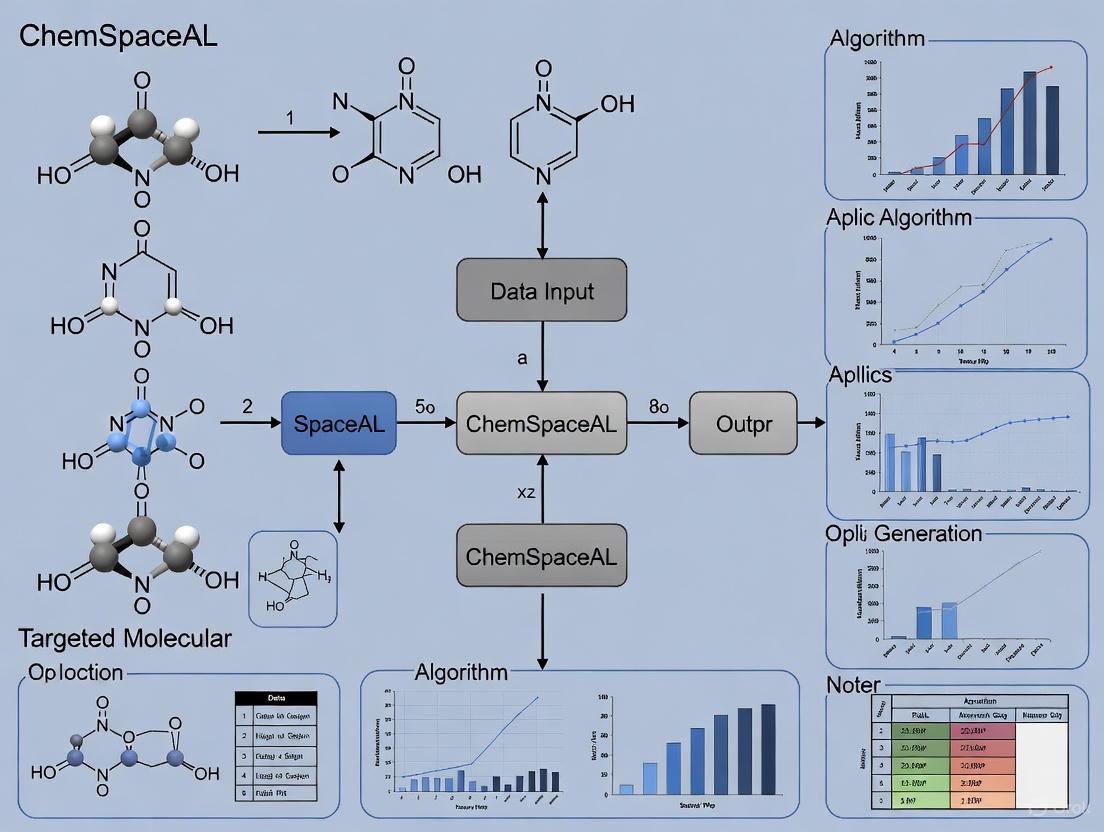
This article explores ChemSpaceAL, a computationally efficient active learning methodology that revolutionizes targeted molecular generation for drug discovery.
ChemSpaceAL: An Efficient Active Learning Methodology for Targeted Molecular Generation in Drug Discovery
Abstract
This article explores ChemSpaceAL, a computationally efficient active learning methodology that revolutionizes targeted molecular generation for drug discovery. By requiring evaluation of only a strategic subset of generated molecules, this approach successfully aligns generative AI models with specific protein targets. We examine its foundational principles, detailed methodology applied to proteins like c-Abl kinase and Cas9's HNH domain, troubleshooting approaches for molecular stability, and comprehensive validation demonstrating its capability to exactly reproduce known FDA-approved inhibitors while generating novel compounds for challenging targets. This resource provides researchers and drug development professionals with practical insights into implementing this cutting-edge methodology to navigate chemical space more effectively.
The Chemical Space Challenge: Why Active Learning is Revolutionizing Targeted Molecular Generation
The Vastness of Chemical Space and Drug Discovery Limitations
The concept of "chemical space" represents the multi-dimensional universe of all possible molecules, a domain so vast that it is estimated to contain at least 10^63 small, drug-like molecules [1]. This number, which exceeds the count of atoms in our solar system, presents both the ultimate resource and the fundamental challenge for modern drug discovery [2]. The pharmaceutical industry has explored only a minuscule fraction of this potential universe, creating a critical bottleneck in identifying novel therapeutic compounds [1]. This application note examines the quantitative dimensions of this challenge and details the experimental protocols, including the ChemSpaceAL methodology, that are enabling researchers to navigate this expanse more efficiently for targeted molecular generation.
Quantifying Chemical Space and Exploration Limits
The Scale of Chemical Space
The disconnect between theoretically possible and practically accessible chemical compounds defines the primary limitation in drug discovery. The table below summarizes key quantitative measures of this challenge.
Table 1: The Scale of Chemical Space and Current Exploration
| Metric | Scale/Number | Contextual Reference |
|---|---|---|
| Theoretical Drug-Like Chemical Space | 10^63 molecules | Estimated from combining up to 30 C, N, O, S atoms [1] |
| Commercially Available "In-Stock" Compounds | ~13 million compounds | Illustrates limited coverage of chemical space [3] |
| Make-on-Demand Libraries | >70 billion molecules | Readily available from suppliers like Enamine [3] |
| Virtual Corporate Libraries (e.g., Merck MASSIV) | 10^20 molecules | Similar to the number of stars in the universe [1] |
The Exploration Bottleneck
The fundamental limitation is straightforward: the growth of make-on-demand and virtual libraries has outpaced the ability to screen them exhaustively. While structure-based virtual screens have reached billions of compounds, these efforts demand substantial computational resources, making them impractical for the largest libraries and impossible for the theoretical entirety of chemical space [3]. As noted by researchers, the number of possibilities is now too large to navigate without sophisticated computational guidance [1].
Methodologies for Navigating Chemical Space
To overcome these limitations, researchers have developed specialized methodologies that combine computational efficiency with experimental validation.
Protocol 1: Machine Learning-Guided Docking Screen
This workflow combines machine learning (ML) with molecular docking to enable rapid virtual screening of multi-billion-compound libraries, achieving a computational cost reduction of more than 1,000-fold [3].
Table 2: Key Research Reagents & Solutions for ML-Guided Docking
| Reagent/Solution | Function in Protocol |
|---|---|
| Enamine REAL Space | Source of billions of synthetically accessible rule-of-four (Ro4) molecules for screening [3] |
| CatBoost Classifier | Machine learning algorithm that provides an optimal balance between speed and accuracy for classification [3] |
| Morgan2 Fingerprints (ECFP4) | Molecular descriptors that represent chemical structures for machine learning processing [3] |
| Mondrian Conformal Prediction (CP) Framework | A method that uses significance levels to control error rates and identify virtual active compounds for docking [3] |
Experimental Workflow:
- Benchmark Docking: Conduct molecular docking screens against the target protein using a randomly sampled subset of ~1 million compounds from a make-on-demand library (e.g., Enamine REAL Space).
- Classifier Training: Train a machine learning classifier (e.g., CatBoost) using the docking results. The molecular structures (represented as Morgan2 fingerprints) are the features, and the docking scores are the labels. The top-scoring 1% of compounds typically define the "active" class.
- Conformal Prediction: Apply the trained model via the Conformal Prediction framework to the entire multi-billion-compound library. The CP framework uses a user-defined significance level (ε) to classify compounds as "virtual active" or "virtual inactive" with a guaranteed error rate.
- Targeted Docking: Perform molecular docking only on the vastly reduced set of compounds predicted as "virtual active," which can represent just ~10% of the original library while retaining high sensitivity.
- Experimental Validation: Synthesize or procure and then test the top-ranking compounds from the final docking list in biochemical or cellular assays to confirm biological activity.
The following diagram illustrates this efficient workflow:
Protocol 2: ChemSpaceAL Active Learning for Molecular Generation
The ChemSpaceAL methodology is a computationally efficient active learning framework applied to protein-specific molecular generation. It requires the evaluation of only a subset of generated data to successfully align a generative model with a specified objective [4] [5].
Experimental Workflow:
- Initialization: Start with a pre-trained generative molecular model (e.g., a GPT-based molecular generator).
- Generation and Sampling: The generator produces a large sample of molecular structures.
- Informed Selection: An acquisition function selects the most informative subset of these generated molecules for evaluation based on the current model's state and uncertainty.
- Objective Evaluation: The selected molecules are scored using an objective function relevant to the target (e.g., a docking score, a predictive model of binding, or a quantitative structure-activity relationship (QSAR) model).
- Active Learning Loop: The evaluated molecules and their scores are added to the training set. The generative model is fine-tuned on this updated dataset, improving its understanding of the structure-activity relationship for the specific target.
- Iteration: Steps 2-5 are repeated for multiple cycles, progressively steering the generator toward regions of chemical space that produce molecules with the desired properties.
When applied to c-Abl kinase, this method learned to generate molecules similar to FDA-approved inhibitors without prior knowledge and reproduced two of them exactly [4] [5]. The following diagram illustrates the active learning cycle:
Integrated Discovery Platforms
The methodologies described are embedded within broader AI-driven drug discovery platforms. These platforms demonstrate the real-world application and validation of these approaches.
Table 3: Leading AI-Driven Discovery Platforms and Technologies
| Platform/Company | Core Approach | Key Achievement |
|---|---|---|
| Exscientia | Generative AI for small-molecule design; integrated "Centaur Chemist" approach. | Produced the first AI-designed drug (DSP-1181) to enter Phase I trials; reports design cycles ~70% faster than industry norms [6]. |
| Insilico Medicine | Generative AI for target identification and molecular design. | Advanced an idiopathic pulmonary fibrosis drug from target discovery to Phase I in 18 months [6]. |
| Schrödinger | Physics-based simulations combined with machine learning. | Advanced the TYK2 inhibitor, zasocitinib (TAK-279), into Phase III clinical trials [6]. |
| Quantum-Classical Hybrid | Quantum Circuit Born Machine (QCBM) integrated with classical LSTM model. | Generated novel molecular fragments to target the historically "undruggable" KRAS protein for cancer therapy [7]. |
The vastness of chemical space is no longer an impenetrable barrier but a frontier that can be systematically navigated. Methodologies like machine learning-guided docking and the ChemSpaceAL active learning framework represent a paradigm shift in drug discovery. By leveraging these computational protocols, researchers can transition from inefficient, broad screening to intelligent, targeted exploration. This allows for the rapid identification and generation of novel, potent, and specific therapeutic candidates, dramatically accelerating the journey from concept to clinic.
The discovery of novel molecules is a cornerstone of pharmaceutical research and materials science, yet it has traditionally been a time-consuming and resource-intensive process. Generative artificial intelligence (AI) has emerged as a transformative force in this domain, enabling the rapid exploration of vast chemical spaces to design compounds with desired properties [8] [9]. Among the various generative approaches, Variational Autoencoders (VAEs), Generative Adversarial Networks (GANs), and Transformer-based models have demonstrated remarkable success in de novo molecular design [10] [11]. These technologies are reshaping the drug discovery pipeline, offering the potential to significantly accelerate the identification of lead compounds and optimize their therapeutic characteristics.
Framed within the context of advanced research methodologies like ChemSpaceAL, an efficient active learning framework for protein-specific molecular generation, this article provides detailed application notes and experimental protocols for employing these generative models in targeted molecular design [5]. The ChemSpaceAL methodology demonstrates how active learning can successfully fine-tune generative models toward specific objectives, such as generating inhibitors for particular protein targets, by requiring the evaluation of only a subset of the generated data [5]. We present a comprehensive technical resource for researchers and drug development professionals, featuring standardized protocols, performance comparisons, and practical implementation guidelines to bridge the gap between algorithmic innovation and laboratory application.
Generative Model Architectures: Technical Foundations
Variational Autoencoders (VAEs) for Molecular Representation
Variational Autoencoders provide a probabilistic framework for learning continuous latent representations of molecular structures [10] [12]. In molecular design, VAEs typically operate on Simplified Molecular-Input Line-Entry System (SMILES) representations or molecular graphs, mapping them to a structured latent space where similar molecules are clustered together [13]. The encoder network processes input molecules and outputs parameters (mean and variance) defining a probability distribution in the latent space, while the decoder network reconstructs molecules from points sampled from this distribution [12].
A critical advantage of VAEs in molecular design is their explicitly defined latent space, which facilitates meaningful interpolation and optimization [10] [12]. This structured space enables researchers to navigate chemical space systematically by moving in directions that correspond to gradual changes in molecular properties. However, VAEs can sometimes produce blurrier outputs compared to other generative models and may struggle with generating highly complex molecular structures with perfect validity [10] [14]. The training process for VAEs involves maximizing the Evidence Lower Bound (ELBO), which balances reconstruction accuracy with the regularization of the latent space [12].
Generative Adversarial Networks (GANs) for Realistic Molecular Generation
Generative Adversarial Networks employ an adversarial training framework where two neural networks—a generator and a discriminator—compete against each other [10] [12]. The generator creates synthetic molecules from random noise vectors, while the discriminator attempts to distinguish between real molecules from the training data and synthetic ones produced by the generator [12]. Through this adversarial process, the generator progressively learns to produce increasingly realistic molecular structures.
GANs are particularly valued for their ability to generate high-quality, sharp outputs that closely resemble real molecules [10] [12]. This makes them well-suited for applications requiring high structural fidelity. However, GAN training can be unstable and prone to mode collapse, where the generator produces limited diversity in its outputs [12] [14]. Additionally, GANs lack an inherent latent space structure, making controlled generation and optimization more challenging compared to VAEs. Techniques such as Wasserstein GANs with gradient penalty and spectral normalization have been developed to stabilize training and improve performance [14].
Transformer-Based Models for Sequential Molecular Design
Transformer architectures, originally developed for natural language processing, have been successfully adapted for molecular design by treating SMILES strings as sequential data [10] [11]. Transformers utilize a self-attention mechanism that allows them to capture long-range dependencies within molecular representations, effectively understanding the complex relationships between different parts of a molecule [10].
The standout advantage of Transformers is their exceptional ability to model context and complex relationships within molecular structures [10]. This enables them to generate highly valid and novel molecules while maintaining structural coherence. However, Transformers require large datasets for effective training and have significant computational demands during both training and inference [10]. Their autoregressive nature, generating sequences token-by-token, can also lead to error propagation in longer sequences. Despite these challenges, Transformer-based models have demonstrated state-of-the-art performance in various molecular generation tasks, particularly when fine-tuned for specific property optimization [5].
Table 1: Comparative Analysis of Generative Model Architectures in Molecular Design
| Feature | VAEs | GANs | Transformers |
|---|---|---|---|
| Core Architecture | Encoder-Decoder with probabilistic latent space [12] | Generator-Discriminator in adversarial setup [12] | Self-attention based autoregressive model [10] |
| Molecular Representation | SMILES, Molecular graphs [13] | SMILES, Molecular graphs [12] | SMILES strings (as sequences) [10] [11] |
| Latent Space | Explicit, structured, continuous [10] [12] | Implicit, less structured [12] | No continuous latent space (sequential generation) |
| Training Stability | Generally more stable [12] | Often unstable, prone to mode collapse [12] [14] | Stable with proper regularization [10] |
| Sample Quality | Can be blurrier; may lack detail [10] | High-quality, sharp samples [10] [12] | High validity and novelty [10] |
| Strength | Meaningful latent space interpolation, uncertainty estimation [10] [12] | High realism and structural detail [10] [12] | Captures complex long-range dependencies in molecular structure [10] |
| Key Challenge | Ensuring generated molecular validity [13] | Training instability, limited output diversity [12] [14] | High computational requirements, data hunger [10] |
Application Notes: Performance Benchmarks
In practical applications, each class of generative models exhibits distinct performance characteristics that make them suitable for different aspects of the molecular design pipeline. Quantitative evaluation metrics typically include validity (the percentage of generated structures that correspond to valid molecules), uniqueness (the proportion of novel molecules not found in the training data), and novelty (the structural dissimilarity from known compounds) [13].
VAEs have demonstrated strong performance in scaffold hopping and molecular optimization tasks where exploring continuous transitions between molecular structures is valuable [13]. Their probabilistic nature makes them particularly useful when dealing with uncertain or incomplete data, as they can generate diverse potential solutions. In benchmark studies, VAEs have shown validity rates typically ranging from 60% to 90%, depending on the complexity of the molecular representation and architecture refinements [13].
GANs excel in generating highly realistic molecular structures with precise structural details, achieving validity rates that can exceed 80% with advanced architectures [12]. However, they may struggle with ensuring broad chemical diversity without techniques like minibatch discrimination or experience replay. When successfully trained, GANs can produce molecules with optimized properties such as enhanced binding affinity or improved solubility profiles [12] [9].
Transformers have set new standards for validity and novelty in molecular generation, with some implementations achieving validity rates exceeding 90% while maintaining high uniqueness [10] [5]. Their ability to capture complex, long-range dependencies in molecular structures makes them particularly effective for designing complex macrocycles and other structurally challenging compounds. In the ChemSpaceAL framework, Transformer-based models (GPT-based molecular generators) were successfully fine-tuned to generate molecules similar to known c-Abl kinase inhibitors, even reproducing two existing inhibitors exactly without prior knowledge of their existence [5].
Table 2: Quantitative Performance Benchmarks in Targeted Molecular Generation
| Model Architecture | Validity Rate (%) | Uniqueness (%) | Novelty (Tanimoto Similarity) | Optimization Efficiency |
|---|---|---|---|---|
| VAE (Standard) | 60-80% [13] | ~70% | 0.3-0.5 | Moderate |
| VAE (with Cyclical Annealing) | 85-95% [13] | ~75% | 0.4-0.6 | High |
| GAN (Standard) | 70-85% [12] | ~65% | 0.3-0.5 | Moderate |
| GAN (with Advanced Regularization) | 80-90% [12] | ~70% | 0.4-0.6 | High |
| Transformer (GPT-based) | >90% [5] | >80% | 0.5-0.7 | High |
| ChemSpaceAL (Active Learning + Transformer) | >95% [5] | >85% | 0.6-0.8 | Very High |
Experimental Protocols
Protocol 1: Targeted Molecular Generation using ChemSpaceAL Framework
The ChemSpaceAL methodology combines active learning with generative models to efficiently fine-tune molecular generation toward specific objectives with minimal data evaluation [5].
Step 1: Pre-training a Base Generative Model
- Select a suitable architecture (e.g., GPT-based model for SMILES generation) [5].
- Pre-train the model on a large-scale chemical database (e.g., ZINC, ChEMBL) to learn general chemical language and rules [5].
- Validate base model performance on standard metrics: validity, uniqueness, and novelty.
Step 2: Objective Function Definition
- Define a target-specific objective function incorporating key properties:
- Binding affinity predictions (e.g., using docking scores)
- Physicochemical properties (e.g., LogP, molecular weight)
- ADMET properties (Absorption, Distribution, Metabolism, Excretion, Toxicity)
- Structural constraints (e.g., specific substructures or scaffolds) [5]
Step 3: Active Learning Loop
- Generate an initial set of molecules (e.g., 10,000 compounds) using the base model.
- Select a subset (e.g., 1,000 compounds) for evaluation based on diversity sampling or uncertainty metrics.
- Compute objective function scores for the evaluated subset.
- Fine-tune the generative model on the scored molecules to align its output with the objective.
- Iterate the process until performance plateaus or desired objective scores are achieved [5].
Step 4: Validation and Analysis
- Generate final candidate molecules using the fine-tuned model.
- Validate candidates through more rigorous computational methods (e.g., molecular dynamics simulations).
- Select top candidates for experimental synthesis and testing.
Protocol 2: Latent Space Optimization with Reinforcement Learning
This protocol adapts the MOLRL (Molecule Optimization with Latent Reinforcement Learning) framework for optimizing molecules in the latent space of a pre-trained generative model using Proximal Policy Optimization (PPO) [13].
Step 1: Pre-training a VAE with Structured Latent Space
- Train a VAE model with a cyclical annealing schedule to prevent posterior collapse and ensure a continuous latent space [13].
- Use SMILES or molecular graph representations as input.
- Validate reconstruction performance and latent space continuity through perturbation analysis [13].
Step 2: Latent Space Exploration with PPO
- Initialize the PPO agent with policy and value networks.
- Define state as current position in latent space, action as movement in latent space, and reward based on property optimization goals [13].
- Train the agent to navigate toward regions of latent space that decode to molecules with desired properties.
- Use a trust region constraint to ensure movements in latent space produce structurally similar molecules [13].
Step 3: Multi-Objective Optimization
- Implement a weighted sum approach or constrained optimization for multiple properties.
- Simultaneously optimize for target affinity, synthetic accessibility, and favorable ADMET properties [13].
- Balance exploration and exploitation through entropy regularization.
Step 4: Scaffold-Constrained Generation
- Encode a desired scaffold into latent space.
- Constrain the optimization to regions around the scaffold embedding.
- Decode optimized latent vectors to generate novel molecules preserving the core scaffold while optimizing properties [13].
Protocol 3: Transformer Fine-Tuning for Property-Guided Generation
This protocol details the process of fine-tuning pre-trained Transformer models for targeted molecular generation, leveraging transfer learning from large chemical corpora.
Step 1: Model Initialization
- Initialize with a Transformer model pre-trained on a large chemical dataset (e.g., SMILES from PubChem) [5].
- Add task-specific layers if needed for property prediction.
Step 2: Transfer Learning with Property-Guided Data
- Curate a dataset of molecules with known target properties.
- Fine-tune the model using teacher forcing on sequences associated with desired properties.
- Alternatively, implement reinforcement learning fine-tuning with policy gradients toward property optimization [5].
Step 3: Conditional Generation
- Implement a controlled generation mechanism using conditional tokens or embeddings.
- Guide generation toward specific property profiles by conditioning on property value ranges [5].
- Use beam search or nucleus sampling to maintain diversity while ensuring quality.
Step 4: Iterative Refinement
- Implement an iterative refinement process where generated molecules are scored, and high-scoring examples are incorporated back into the training set.
- Continue fine-tuning in this iterative manner until convergence.
Workflow Visualization
Diagram 1: Targeted Molecular Generation Workflow (13.6 kB)
Diagram 2: ChemSpaceAL Active Learning Loop (9.8 kB)
The Scientist's Toolkit: Research Reagent Solutions
Table 3: Essential Resources for AI-Driven Molecular Design
| Resource Category | Specific Tools & Databases | Key Functionality | Application Context |
|---|---|---|---|
| Chemical Databases | ZINC, ChEMBL, PubChem [13] | Source of known molecules for training; provides initial chemical space representation | Pre-training generative models; establishing baseline distributions |
| Property Prediction | RDKit, OpenBabel, Schrödinger Suite [13] | Calculation of molecular descriptors; prediction of physicochemical & ADMET properties | Objective function formulation; candidate molecule evaluation |
| Docking & Simulation | AutoDock Vina, GROMACS, AMBER [9] | Molecular docking; binding affinity prediction; molecular dynamics simulations | Validating target engagement; assessing binding stability |
| Generative Modeling | PyTorch, TensorFlow, Hugging Face [5] | Implementation of VAE, GAN, and Transformer architectures | Building and training generative models for molecular design |
| Active Learning Framework | ChemSpaceAL Python Package [5] | Efficient fine-tuning toward specific objectives with minimal data evaluation | Targeted molecular generation for specific protein targets |
| Analysis & Visualization | RDKit, Matplotlib, Plotly [13] | Molecular visualization; latent space projection; performance metric tracking | Interpreting model results; analyzing chemical space coverage |
Generative AI models including Transformers, VAEs, and GANs have fundamentally transformed the paradigm of molecular design, enabling the rapid exploration of vast chemical spaces that were previously inaccessible to traditional methods. When integrated with advanced frameworks like ChemSpaceAL, these models demonstrate remarkable efficiency in targeting specific molecular optimization objectives with minimal data evaluation requirements [5]. The protocols and application notes presented here provide researchers with practical guidance for implementing these cutting-edge technologies in drug discovery and materials science applications.
As the field continues to evolve, we anticipate further convergence of these architectural approaches—such as VAE-Transformer hybrids and GANs with structured latent spaces—that will combine the strengths of each paradigm while mitigating their individual limitations. The ongoing development of more sophisticated active learning and reinforcement learning methodologies will further enhance the precision and efficiency of targeted molecular generation, accelerating the discovery of novel therapeutics and functional materials to address pressing challenges in human health and technology.
Active learning (AL) is a subfield of machine learning that addresses a fundamental challenge in scientific research: the high cost and difficulty of acquiring labeled data [15] [16]. In domains like materials science and drug discovery, experimental synthesis and characterization require expert knowledge, expensive equipment, and time-consuming procedures, making large-scale data collection impractical [16]. Active learning solves this through an iterative process where a model sequentially selects the most informative data points for experimentation, thereby maximizing knowledge gain while minimizing resource expenditure [15].
The core AL cycle operates as follows: a model is initially trained on a small labeled dataset; this model then characterizes what additional data would most improve it; an experiment is performed to obtain that data; and the model is updated with the new information [15]. This loop repeats until a stopping criterion is met, such as achieving sufficient model accuracy or exhausting resources [16]. In computational and experimental sciences, this approach has demonstrated remarkable efficiency, with studies showing it can reduce the number of experiments needed by over 60% compared to traditional approaches [16].
Core Principles and Query Strategies
Active learning strategies are built upon several foundational principles that guide the selection of informative experiments. Understanding these principles is crucial for selecting and designing effective AL protocols for specific applications.
Table 1: Fundamental Active Learning Query Strategies
| Principle | Mechanism | Typical Use Cases |
|---|---|---|
| Uncertainty Sampling | Selects data points where the model's predictive uncertainty is highest [15] [16]. | Ideal for refining decision boundaries in classification or reducing variance in regression [16]. |
| Diversity Sampling | Chooses points that are diverse or representative of the overall data distribution [16]. | Useful for initial model exploration and ensuring broad coverage of the experimental space [16]. |
| Expected Model Change | Selects points that are expected to cause the greatest change to the current model parameters [16]. | Effective when the model needs significant updating from specific informative instances. |
| Hybrid Methods | Combines multiple principles, such as uncertainty and diversity, to balance exploration and exploitation [16]. | Applied in complex scenarios like materials formulation design to prevent myopic sampling [16]. |
Each strategy possesses distinct strengths. Uncertainty-driven methods (e.g., LCMD, Tree-based-R) and diversity-hybrid approaches (e.g., RD-GS) have been shown to outperform random sampling and geometry-only heuristics significantly, particularly in the early stages of the AL process when labeled data is scarce [16]. As the labeled set grows, the performance gap between different strategies typically narrows, indicating diminishing returns from active learning under a fixed computational budget [16].
ChemSpaceAL: A Case Study in Targeted Molecular Generation
The ChemSpaceAL methodology provides a powerful illustration of how active learning principles can be applied to the challenge of targeted molecular generation for drug discovery [5]. This approach fine-tunes generative models to design molecules that interact with specific protein targets, demonstrating how AL can guide exploration of vast chemical spaces with high efficiency.
Methodology and Workflow
ChemSpaceAL operates through a structured pipeline that integrates a generative model with an active learning selector. The process begins with a pre-trained generative model, such as a GPT-based architecture for molecular structures. This generator creates a large sample space of candidate molecules. The key innovation is that only a subset of these generated molecules is evaluated by the objective function—for example, a docking simulation that predicts binding affinity to a target protein. An active learning selector then analyzes these evaluated candidates and identifies the most informative ones for retraining the generative model. This cycle iteratively steers the generator toward regions of chemical space that are more likely to contain molecules with the desired properties [5].
Application and Validation
The effectiveness of ChemSpaceAL was validated through two compelling case studies. When applied to c-Abl kinase, a protein with known FDA-approved small-molecule inhibitors, the model learned to generate molecules structurally similar to these inhibitors without any prior knowledge of their existence. Remarkably, it reproduced two of the exact inhibitors [5]. In a more challenging scenario targeting the HNH domain of the CRISPR-associated Cas9 enzyme—a protein without commercially available inhibitors—the methodology successfully identified novel candidate molecules, demonstrating its potential for pioneering new therapeutic avenues [5].
Benchmarking Active Learning Strategies
Evaluating the performance of different AL strategies requires rigorous benchmarking under standardized conditions. A comprehensive study compared 17 active learning strategies against a random sampling baseline within an Automated Machine Learning (AutoML) framework, using materials science regression tasks as a testbed [16]. This setup is particularly relevant as AutoML can dynamically switch between model families during the AL process, testing the robustness of each sampling strategy.
Table 2: Performance Comparison of Active Learning Strategies in AutoML
| Strategy Type | Examples | Early-Stage Performance | Late-Stage Performance | Key Characteristics |
|---|---|---|---|---|
| Uncertainty-Driven | LCMD, Tree-based-R [16] | Outperform baseline [16] | Converge with other methods [16] | Effective for rapid initial improvement [16] |
| Diversity-Hybrid | RD-GS [16] | Outperform baseline [16] | Converge with other methods [16] | Balances exploration with exploitation [16] |
| Geometry-Only | GSx, EGAL [16] | Underperform uncertainty/hybrid [16] | Converge with other methods [16] | Relies on data distribution structure [16] |
| Random Sampling | Random [16] | Serves as baseline [16] | Converges with other methods [16] | Requires more data to achieve same accuracy [16] |
The benchmark revealed that during early acquisition phases, uncertainty-driven and diversity-hybrid strategies clearly outperformed geometry-only heuristics and random sampling by selecting more informative samples [16]. However, as the labeled set grew, the performance gap narrowed, with all strategies eventually converging, indicating diminishing returns from active learning under AutoML once sufficient data is acquired [16]. This underscores the particular value of AL in data-scarce environments, which is typical in experimental sciences.
Experimental Protocol: Implementing an Active Learning Cycle
This protocol provides a step-by-step methodology for implementing a pool-based active learning cycle for a regression task, applicable to molecular optimization or materials design.
Initial Setup and Data Preparation
- Define Objective: Clearly specify the target property to be optimized (e.g., binding affinity, catalytic activity, solubility).
- Prepare Feature Representations: Encode molecular or material candidates as feature vectors (e.g., using fingerprints, descriptors, or structural representations).
- Establish Labeled/Unlabeled Split: Create initial dataset where:
- Labeled dataset (L = {(xi, yi)}{i=1}^l) contains (l) samples with feature vectors (xi \in \mathbb{R}^d) and measured target values (y_i \in \mathbb{R}).
- Unlabeled pool (U = {xi}{i=l+1}^n) contains the remaining candidates awaiting evaluation [16].
- Select Initial Design: Randomly sample (n_{init}) candidates (typically 1-5% of pool) to create the initial labeled set [16]. Space-filling designs are also appropriate for initial sampling [17].
Active Learning Iteration Loop
- Model Training: Fit a surrogate model (e.g., Gaussian Process, Random Forest, or AutoML system) to the current labeled set (L). Use cross-validation (e.g., 5-fold) for validation and hyperparameter tuning [16].
- Query Selection: Apply the chosen AL strategy to select the most informative candidate (x^*) from the unlabeled pool (U). For uncertainty sampling, this would be the point with highest predictive variance; for diversity sampling, the point most dissimilar to existing labeled points [16].
- Experiment and Labeling: Obtain the target value (y^) for the selected candidate (x^) through experimental measurement or computational simulation (e.g., synthesis and characterization, or molecular docking).
- Dataset Update: Expand the training set: (L = L \cup {(x^, y^)}) and remove from unlabeled pool: (U = U \setminus {x^*}) [16].
- Performance Assessment: Evaluate the updated model on a held-out test set using metrics relevant to the task (e.g., Mean Absolute Error, (R^2) for regression; success rate for optimization) [16].
- Stopping Check: Repeat steps 1-5 until meeting a stopping criterion (e.g., performance plateau, budget exhaustion, or discovery of satisfactory candidate) [16].
Table 3: Key Research Reagent Solutions for Active Learning-Driven Molecular Optimization
| Tool/Resource | Function | Application Context |
|---|---|---|
| Generative Model (e.g., GPT-based) [5] | Creates novel molecular structures in the desired chemical space. | Core engine for molecular generation; provides candidate molecules for evaluation. |
| Surrogate Model (e.g., Gaussian Process, Random Forest, AutoML) [16] [17] | Predicts properties of candidate molecules and estimates prediction uncertainty. | Guides active learning selection by identifying promising candidates and uncertain predictions. |
| Evaluation Function (e.g., Molecular Docking, QSAR Model) [5] | Provides the target property value (e.g., binding affinity, solubility) for candidate molecules. | Serves as the experimental proxy or "oracle" that scores candidate molecules. |
| Chemical Feature Representation (e.g., Fingerprints, Descriptors) | Encodes molecular structures as numerical feature vectors for machine learning. | Enables similarity comparison and model training by converting structures to data. |
| Active Learning Selector [5] | Implements query strategy (uncertainty, diversity, etc.) to choose the most informative experiments. | Decision core that determines which candidates to evaluate in each iteration. |
| Automated Machine Learning (AutoML) [16] | Automates the selection and hyperparameter optimization of surrogate models. | Reduces manual tuning effort and adapts the model architecture throughout the AL process. |
ChemSpaceAL's Strategic Position in the Evolving Molecular Generation Landscape
The application of generative artificial intelligence (AI) in drug discovery represents a paradigm shift, moving beyond traditional virtual screening toward the de novo design of molecules. However, a significant challenge persists: the immense vastness of chemical space makes it computationally prohibitive to identify regions containing molecules with desired characteristics for a specific protein target. Generative models (GMs) initially trained on broad chemical databases lack inherent target specificity, and directly evaluating millions of generated molecules using resource-intensive physics-based simulations is infeasible [18] [19]. Within this landscape, ChemSpaceAL establishes its strategic position as an efficient active learning (AL) methodology that bridges this gap. By requiring the evaluation of only a small, strategically selected subset of generated molecules, it successfully aligns a generative model with a specified objective, such as binding to a particular protein [18] [5]. This protocol details the application of ChemSpaceAL for targeted molecular generation, providing a structured framework for researchers to implement and build upon this methodology.
The core innovation of ChemSpaceAL is its computationally efficient AL loop, which uses a "cheap upsampling method" to amplify the signal from a sparse set of expensive evaluations [20]. The methodology operates on the key insight that molecules which are physically close in a carefully constructed chemical space proxy—defined by molecular descriptors—are likely to have similar binding scores for a given target [20]. This allows the algorithm to generalize from a few evaluated molecules to a much larger set of unevaluated neighbors, dramatically improving sample efficiency.
Table 1: Core Stages of the ChemSpaceAL Workflow
| Stage | Key Action | Primary Outcome |
|---|---|---|
| 1. Pretraining | Train a GPT-based model on millions of diverse SMILES strings. | A foundational model with a broad understanding of drug-like chemical space. |
| 2. Molecular Generation & Clustering | Generate 100,000 unique molecules and cluster them in a PCA-reduced descriptor space. | A structured map of the generated chemical space, enabling strategic sampling. |
| 3. Strategic Sampling & Evaluation | Sample ~1% (10 molecules per cluster) for docking and scoring. | A computationally affordable set of protein-ligand binding scores. |
| 4. Active Learning Set Construction | Sample molecules from clusters proportionally to their mean scores; combine with top performers. | An augmented training set that directs the model toward high-scoring regions. |
| 5. Model Fine-tuning | Fine-tune the pretrained generator on the constructed AL training set. | An aligned model that generates a higher proportion of target-specific molecules. |
The following diagram illustrates the logical flow and iterative nature of this process.
Application Notes: Protocol for Targeted Molecular Generation
This section provides a detailed, step-by-step protocol for applying the ChemSpaceAL methodology to a protein target of interest, based on the demonstrations for c-Abl kinase and the Cas9 HNH domain [18] [21].
Pretraining the Generative Model
- Objective: To create a foundational model capable of generating a wide array of valid, drug-like molecules.
- Procedure:
- Data Curation: Combine large-scale molecular datasets such as ChEMBL, GuacaMol, MOSES, and BindingDB. After deduplication, this can yield a pretraining set of approximately 5.6 million unique SMILES strings [18].
- Model Selection & Training: Utilize a Generative Pretrained Transformer (GPT) architecture, which is an autoregressive model well-suited for sequence generation [18]. Train the model to predict the next token in the SMILES string sequence. This step equips the model with a general "understanding" of chemical rules and structures.
Iterative Active Learning for Target Alignment
Objective: To steer the generative model from broad chemical space toward a specific protein target over a few iterations (e.g., 3-5 cycles).
Procedure for Iteration i:
- Molecular Generation: Use the current model (pretrained for iteration 0, or fine-tuned for subsequent iterations) to generate 100,000 unique, valid molecules. Canonicalize their SMILES strings to ensure uniqueness [18] [21].
- Chemical Space Mapping:
- Descriptor Calculation: For each generated molecule, calculate a set of 196 RDKit molecular descriptors. These capture physicochemical properties and functional group counts [20].
- Dimensionality Reduction: Project the high-dimensional descriptor vectors into a lower-dimensional space (e.g., 120 principal components) using a precomputed PCA transformation fitted on the pretraining set. This serves as the "chemical space proxy" [18] [20].
- Clustering: Apply k-means clustering (with k=100 and k-means++ initialization) on the projected descriptors. This partitions the 100,000 molecules into 100 groups with similar properties [18] [20].
- Strategic Sampling & Binding Evaluation:
- Sampling: Randomly select 10 molecules from each of the 100 clusters, resulting in a representative subset of 1,000 molecules (~1% of the total) [18].
- Molecular Docking: Dock each of the 1,000 sampled molecules to the protein target's binding site using a docking tool like DiffDock. This step is computationally intensive, taking approximately 16 hours on a modern GPU [21] [20].
- Pose Scoring: Analyze the top-ranked docking pose for each molecule. Use a tool like ProLIF to generate a protein-ligand interaction fingerprint. Calculate a Binding Score as a weighted sum of interactions. For example: Ionic Interaction × 7 + H-Bond × 3.5 + Hydrophobic Interaction × 1 [20].
- Active Learning Set Construction:
- Identify all evaluated molecules that meet a predefined success criterion (e.g., a Binding Score above a threshold
T). Include replicas of these molecules in the new AL training set [18]. - For the remaining slots in the training set (e.g., 5,000 molecules), sample from the unevaluated molecules in the generated set. The sampling probability for a cluster should be proportional to the average Binding Score of the evaluated molecules within that cluster [20]. This is the crucial step that upsamples molecules from promising regions without needing to dock them.
- Identify all evaluated molecules that meet a predefined success criterion (e.g., a Binding Score above a threshold
- Model Fine-tuning: Continue training (fine-tune) the generative model on the newly constructed AL training set using a reduced learning rate. This updates the model's parameters to make it more likely to generate molecules similar to those in the high-scoring regions of chemical space [18] [21].
Critical Parameters for Implementation
- Binding Score Threshold (T): For targets with known binders,
Tcan be set to the score of a known inhibitor [18]. For novel targets, a statistical threshold can be used (e.g., a score above which a molecule has a high probability of being a binder) [20]. - Cluster Sampling: The number of clusters (k=100) and samples per cluster (n=10) are optimized for a total budget of 1,000 dockings per iteration. This can be adjusted based on computational resources [18] [20].
- Filters: Implement ADMET and functional group filters between generation and clustering to ensure drug-likeness and remove undesirable moieties [18].
The following diagram visualizes the strategic sampling and training set construction logic, which is the core of the methodology's efficiency.
Performance and Validation
The ChemSpaceAL methodology has been quantitatively validated on both a target with known inhibitors and one without.
Case Study 1: c-Abl Kinase
c-Abl kinase was used to validate the approach. The model was fine-tuned without prior knowledge of FDA-approved inhibitors like imatinib and bosutinib. After five AL iterations, the model's output distribution shifted significantly in the chemical space proxy toward the region containing these known inhibitors. Remarkably, the model exactly generated imatinib and bosutinib [18]. The quantitative improvement is summarized in the table below.
Table 2: Performance Metrics for c-Abl Kinase Alignment over 5 AL Iterations
| Model (Pretraining Set) | Initial % > Threshold | Final % > Threshold | Increase | Key Observation |
|---|---|---|---|---|
| C Model (Combined Dataset) | 38.8% | 91.6% | +52.8% | Reproduced two known inhibitors exactly. |
| M Model (MOSES Dataset) | 21.7% | 80.3% | +58.6% | Mean similarity to known inhibitors increased each iteration. |
Case Study 2: Cas9 HNH Domain
For this target with no commercially available inhibitors, success was measured by the increase in molecules surpassing a binding score threshold associated with a high likelihood of binding (score > 11) [20].
Table 3: Performance Comparison of Active Learning Strategies for Cas9 HNH Domain
| Active Learning Strategy | Final Performance (% > 11) | Relative Efficiency |
|---|---|---|
| Naïve AL (Training on replicas of ~300 hits) | 44% | Baseline |
| Uniform Sampling (AL set sampled uniformly from all clusters) | 51% | Moderately improved |
| ChemSpaceAL (Strategic sampling from high-score clusters) | 76% | Dramatically superior |
The Scientist's Toolkit: Essential Research Reagents and Solutions
Successful implementation of ChemSpaceAL relies on a suite of software tools and datasets. The following table details these essential components.
Table 4: Key Research Reagents and Computational Tools for ChemSpaceAL
| Category | Item / Software | Function in the Protocol |
|---|---|---|
| Generative Model | GPT-based Architecture (e.g., as implemented in ChemSpaceAL) | The core engine for generating novel molecular structures as SMILES strings. |
| Chemical Informatics | RDKit | Calculates molecular descriptors, canonicalizes SMILES, and handles chemical data processing. |
| Docking & Pose Prediction | DiffDock | Predicts the binding pose of a ligand to a protein target quickly and accurately. |
| Interaction & Scoring | ProLIF (Protein-Ligand Interaction Fingerprints) | Analyzes docking poses to quantify specific interactions (H-bonds, ionic, hydrophobic). |
| Dataset | Combined ChEMBL, MOSES, GuacaMol, BindingDB | Provides a broad, diverse foundation of drug-like molecules for pretraining the generative model. |
| Methodology Package | ChemSpaceAL Python Package | The open-source software that integrates the entire workflow, facilitating reproducibility [21]. |
The convergence of targeted molecular generation and precision gene editing is forging a new paradigm in therapeutic development. This Application Note details the integration of the ChemSpaceAL active learning methodology for generating protein-specific molecules with CRISPR-Cas9 genome engineering protocols to create a powerful, unified pipeline for advanced therapeutic discovery. We frame these techniques within the context of a broader thesis on targeted molecular generation, providing researchers with detailed protocols for applying these cutting-edge tools to overcome longstanding challenges in drug development, particularly in oncology. The workflows described herein enable the rapid identification of novel chemical scaffolds and the subsequent genetic manipulation of biological systems to enhance therapeutic efficacy and combat resistance mechanisms [4] [22].
ChemSpaceAL Methodology for Targeted Molecular Generation
Core Principles and Workflow
The ChemSpaceAL framework implements an efficient active learning methodology to navigate vast chemical spaces for targeted molecular generation. This approach requires evaluation of only a subset of generated data to successfully align a generative model with a specified objective, dramatically reducing computational overhead compared to exhaustive screening methods [4] [5].
- Key Innovation: The model learns to generate molecules with desired characteristics without prior knowledge of existing inhibitors and can reproduce known active compounds through its exploration process.
- Architecture: Built upon a GPT-based molecular generator that can be fine-tuned toward specific protein targets using an active learning loop.
- Validation: Successfully demonstrated on both well-characterized targets (c-Abl kinase with FDA-approved inhibitors) and novel targets (HNH domain of CRISPR-associated protein Cas9) without commercially available inhibitors [4].
Implementation Protocol
Protocol Title: Protein-Specific Molecular Generation Using ChemSpaceAL Objective: To generate novel, target-specific small molecule inhibitors using active learning-guided exploration of chemical space.
Materials and Reagents:
- ChemSpaceAL Python package (open-source)
- Hardware: Standard computational workstation with GPU acceleration recommended
- Target protein structure or relevant molecular descriptors
Procedure:
- Target Specification: Define the target protein of interest (e.g., c-Abl kinase).
- Initialization: Initialize the GPT-based molecular generator with a broad chemical space prior.
- Active Learning Loop:
- Generation: The model generates a batch of molecular structures.
- Selection: A subset of these molecules is selected for evaluation based on acquisition functions (e.g., expected improvement, uncertainty sampling).
- Evaluation: The selected molecules are evaluated against the target objective (e.g., docking score, predictive model output).
- Update: The evaluation results are used to update the generative model, refining its understanding of the chemical space region of interest.
- Iteration: Repeat steps 3a-3d for a predetermined number of cycles or until convergence criteria are met (e.g., reproduction of known actives or identification of novel scaffolds with high predicted activity).
- Output: The final model generates candidate molecules for synthesis and experimental validation.
Technical Notes: The methodology is particularly valuable for targets with limited known actives, as it can discover novel scaffolds without relying on extensive structure-activity relationship data. For c-Abl kinase, the model learned to generate molecules similar to known inhibitors without prior knowledge and reproduced two FDA-approved inhibitors exactly [5].
Advanced Applications of Kinase Inhibitors
Key Kinase Targets and Their Inhibitors
Protein kinases represent one of the most successful target classes for molecular therapeutics, particularly in oncology. The development of isoform-selective compounds remains a primary focus to minimize off-target effects and overcome resistance mechanisms [23] [24]. The table below summarizes key kinase targets, their inhibitors, and clinical applications.
Table 1: Key Protein Kinase Targets and Their Clinically Relevant Inhibitors
| Kinase Target | Role in Cellular Function and Disease | Representative Inhibitors | Clinical Applications | Primary Resistance Mechanisms |
|---|---|---|---|---|
| BCR-ABL | Promotes unchecked cell proliferation in CML via constitutive tyrosine kinase activity | Imatinib, Nilotinib, Ponatinib | Chronic Myeloid Leukemia (CML) | T315I mutation, incomplete leukemia stem cell eradication [24] |
| EGFR | Transmembrane receptor tyrosine kinase regulating cell proliferation; mutated in NSCLC | Osimertinib, Gefitinib, Erlotinib | Non-Small Cell Lung Cancer (NSCLC) | T790M mutation, MET amplification, phenotypic transformation [22] |
| ALK | Drives tumorigenesis in NSCLC and lymphoma through fusion proteins | Crizotinib, Ceritinib, Lorlatinib | NSCLC, Anaplastic Large Cell Lymphoma | ALK secondary mutations, CNS metastases [24] |
| KRAS G12C | GTPase with constitutive activation in codon 12 mutations; prevalent in NSCLC | Sotorasib, Adagrasib | NSCLC, Colorectal Cancer | Secondary KRAS mutations, adaptive feedback reactivation [22] |
| FLT3 | Essential for hematopoiesis; mutations drive AML progression | Sorafenib, Gilteritinib | Acute Myeloid Leukemia (AML) | F691L gatekeeper mutation, D835 loop mutations [24] |
| VEGFR | Key regulator of angiogenesis, supporting tumor vascularization | Sorafenib, Sunitinib, Pazopanib | Renal Cell Carcinoma, Hepatocellular Carcinoma | Upregulation of alternative angiogenic factors (FGF, PDGF) [24] |
Experimental Protocol: CRISPR-Cas9 Screening for Kinase Inhibitor Resistance Mechanisms
Protocol Title: Genome-wide CRISPR Knockout Screening for Kinase Inhibitor Resistance Genes Objective: To identify genetic drivers of resistance to targeted kinase inhibitors in cancer models.
Materials and Reagents:
- GeCKO v2 or similar genome-wide CRISPR knockout library
- Cas9-expressing cell line (e.g., A549, H1975 for NSCLC models)
- Target kinase inhibitor (e.g., Osimertinib for EGFR, Sotorasib for KRAS G12C)
- Lentiviral packaging system (psPAX2, pMD2.G)
- Polybrene (8 μg/mL)
- Puromycin for selection
- Next-generation sequencing platform
Procedure:
- Library Preparation: Amplify the CRISPR knockout library and prepare high-titer lentivirus.
- Cell Transduction: Transduce Cas9-expressing cells at low MOI (0.3-0.5) to ensure single guide RNA (sgRNA) integration. Include a representation of at least 500 cells per sgRNA.
- Selection: Apply puromycin selection (1-5 μg/mL, concentration dependent on cell line) for 5-7 days to eliminate non-transduced cells.
- Treatment: Split cells into treatment groups: (1) vehicle control (DMSO) and (2) target kinase inhibitor at clinically relevant concentration (e.g., IC50-IC80).
- Passaging: Culture cells for 3-4 weeks, maintaining inhibitor pressure and sufficient cell representation (>500 cells/sgRNA throughout).
- Genomic DNA Extraction: Harvest cells at endpoint and extract genomic DNA from both treatment and control arms.
- sgRNA Amplification & Sequencing: Amplify integrated sgRNA sequences with barcoded primers for multiplexing and sequence using Illumina platform.
- Bioinformatic Analysis: Align sequences to reference library, count sgRNA reads, and use MAGeCK or similar algorithms to identify significantly enriched/depleted sgRNAs and genes in treatment versus control.
Technical Notes: This approach has successfully identified genes like ITGA8 as key determinants of EGFR-TKI sensitivity in lung adenocarcinoma [25]. For KRAS G12C-mutant models, similar screens have revealed "collateral dependencies" and synergistic drug combinations that enhance KRAS inhibition efficacy [22].
CRISPR-Cas9 Technology for Overcoming Therapeutic Resistance
CRISPR-Cas Systems and Their Applications
CRISPR-Cas systems have evolved beyond simple gene editing tools to encompass a versatile toolkit for genetic manipulation. The table below compares key CRISPR systems and their research applications in therapeutic development.
Table 2: Comparison of CRISPR-Cas Systems for Therapeutic Development Applications
| CRISPR System | Key Characteristics | Therapeutic/Research Applications | Advantages | Limitations |
|---|---|---|---|---|
| CRISPR-Cas9 | DSB creation with NGG PAM; blunt ends [26] | Gene knockout, knock-in (with HDR), large-scale screening [22] | Well-characterized, high efficiency, numerous variants available | Higher off-target potential compared to other systems, limited by PAM |
| CRISPR-Cas12a (Cpf1) | DSB creation with TTTV PAM; sticky ends [26] | Precise knock-in (e.g., CAR integration), multiplexed editing [26] | Lower off-target rate, simpler gRNA structure, multiplex editing capability | Typically lower editing efficiency than Cas9, narrower PAM options |
| CRISPR-dCas9 (CRISPRi/a) | Nuclease-deficient; transcriptional modulation [26] | Gene expression perturbation (knockdown or activation) [25] [26] | Avoids DNA damage, reversible effects, precise expression control | Modest expression changes, requires sustained expression |
| CRISPR-CasRx | RNA-targeting Cas13 variant [25] | RNA knockdown, splicing modulation | Targets RNA without genomic alteration, transient effect | Limited to RNA-level effects, potential collateral RNAse activity |
Experimental Protocol: Enhancing CRISPR-Cas9 Knock-in Efficiency in Primary T Cells
Protocol Title: DNA-PK Inhibitor-Enhanced CRISPR-Cas9 Knock-in for T-Cell Engineering Objective: To achieve high-efficiency, site-specific integration of therapeutic transgenes (e.g., CAR, TCR) into the TRAC locus of primary human T cells.
Materials and Reagents:
- Primary human T cells from leukapheresis product
- CRISPR-Cas9 ribonucleoprotein (RNP) complex:
- High-fidelity Cas9 protein
- Synthetic sgRNA targeting TRAC locus
- DNA-PK inhibitor (e.g., Samotolisib, M3814, PI-103)
- HDR template: ssODN or AAV vector containing payload (e.g., CAR expression cassette)
- Electroporation system (e.g., Lonza 4D-Nucleofector)
- GMP-compatible T-cell media with IL-7/IL-15
Procedure:
- T Cell Activation: Activate isolated T cells with CD3/CD28 beads for 24-48 hours.
- RNP Complex Formation: Complex synthetic sgRNA with Cas9 protein (3:1 molar ratio) and incubate 10-20 minutes at room temperature.
- DNA-PK Inhibitor Treatment: Pre-treat cells with DNA-PK inhibitor (e.g., 1 μM Samotolisib) for 1-2 hours before electroporation.
- Electroporation: Combine RNP complex and HDR template with 1-2×10^6 T cells in electroporation cuvette. Use appropriate program (e.g., EO-115 on 4D-Nucleofector).
- Recovery: Immediately transfer cells to pre-warmed media containing DNA-PK inhibitor.
- Inhibitor Washout: After 16-24 hours, wash cells and resuspend in fresh media with IL-7/IL-15 (10-20 ng/mL each).
- Expansion and Analysis: Culture cells for 7-14 days, monitoring integration efficiency by flow cytometry and functional assays.
Technical Notes: Samotolisib has demonstrated GMP-compatibility with no negative impact on T-cell viability, phenotype, expansion, or effector function [27]. This protocol has achieved knock-in efficiencies sufficient for clinical product generation. The use of DNA-PK inhibitors enhances HDR by temporarily inhibiting the competing NHEJ pathway [27].
Integrated Workflow Visualization
Molecular Generation to Therapeutic Implementation Workflow
The following diagram illustrates the integrated research-to-application pipeline, from initial molecular discovery through validation and therapeutic engineering:
CRISPR-Cas9 Mechanism and DNA Repair Pathways
The following diagram details the molecular mechanism of CRISPR-Cas9 and the key cellular DNA repair pathways it harnesses for different editing outcomes:
Essential Research Reagent Solutions
Table 3: Key Research Reagents for Integrated Kinase Inhibitor and CRISPR-Cas9 Studies
| Reagent/Category | Specific Examples | Function/Application | Implementation Notes |
|---|---|---|---|
| CRISPR-Cas9 Systems | High-fidelity SpCas9, Cas12a (Cpf1), dCas9-KRAB | Gene knockout, knock-in, transcriptional modulation | Cas12a offers lower off-target rates; dCas9 systems avoid DNA damage [26] |
| DNA Repair Modulators | Samotolisib, M3814, PI-103 (DNA-PK inhibitors) | Enhance HDR efficiency in primary cells | GMP-compatible samotolisib shows no negative impact on T-cell function [27] |
| Delivery Systems | Lipid nanoparticles (LNPs), Electroporation, AAV | In vivo and ex vivo delivery of editing components | LNPs favor liver accumulation; suitable for redosing [28] |
| Kinase Inhibitors | Osimertinib (EGFR), Sotorasib (KRAS G12C), Gilteritinib (FLT3) | Target validation, resistance mechanism studies | Used in combination screens with CRISPR libraries to identify resistance mechanisms [24] [22] |
| Cell Engineering Tools | CRISPR-Cas9 RNP complexes, CAR/TCR templates | Generation of universal CAR-T cells, TCR insertion | Cas12a demonstrated superior multi-gene knock-in capability for bispecific CARs [26] |
| Screening Libraries | Genome-wide CRISPR knockout (GeCKO), custom sgRNA sets | High-throughput identification of resistance genes and synthetic lethal interactions | Requires deep sequencing and specialized analysis tools (MAGeCK) [22] |
Implementing ChemSpaceAL: A Step-by-Step Guide to Protein-Specific Molecular Generation
This document outlines the architecture and protocols for a targeted molecular generation system that integrates a GPT-based molecular generator with an active learning (AL) loop. This framework, known as the ChemSpaceAL methodology, is designed to efficiently explore vast chemical spaces and generate novel compounds with high binding affinity for specific protein targets [18]. The approach addresses a fundamental challenge in drug discovery: the computational intractability of exhaustively evaluating all possible generated molecules. By leveraging strategic sampling and machine learning, it aligns a generative model toward a specified objective with minimal resource expenditure [18].
System Architecture and Workflow
The architecture consists of two core components: a GPT-based generative model pretrained on extensive chemical databases, and an active learning loop that iteratively refines the model's output based on selective feedback from a scoring function.
The following diagram illustrates the integrated workflow of the GPT-based generator and the active learning loop:
Core Component 1: The GPT-Based Molecular Generator
The foundation of this architecture is a Generative Pre-trained Transformer (GPT) model, which treats molecular structures as a chemical language.
Model Design and Pre-training
The generator is built on a transformer decoder architecture [29] [30]. Its pre-training process enables it to learn the fundamental "syntax" and "grammar" of chemistry.
- Representation: Molecules are represented as SMILES (Simplified Molecular Input Line Entry System) strings, a one-dimensional text-based notation [18] [30].
- Architecture: The model uses an autoregressive training objective, predicting the next token in a sequence based on the preceding tokens [30].
- Pre-training Data: The model is trained on millions of drug-like SMILES strings from public and proprietary databases (e.g., ChEMBL, GuacaMol, MOSES, BindingDB), encompassing several million unique and valid compounds [18]. This teaches the model general chemical rules and the structure of drug-like molecules.
This pre-training is crucial for enabling the model to generate a wide array of chemically valid and diverse molecules from the outset [18].
Core Component 2: The Active Learning Loop
The active learning loop is the iterative process that steers the general-purpose generator toward a specific target. The following diagram details the data flow and key operations within a single cycle:
Step-by-Step AL Protocol
This section provides a detailed methodology for executing the active learning cycle.
Step 1: Molecular Generation
- Action: Use the current GPT model to generate a large set of molecules (e.g., 100,000 unique molecules determined by SMILES-string canonicalization) [18].
- Purpose: To create a diverse pool of candidates for evaluation.
Step 2: Chemical Space Mapping
- Action:
- Calculate molecular descriptors (e.g., Morgan fingerprints, molecular weight, LogP) for each generated molecule [18].
- Project the descriptor vectors into a Principal Component Analysis (PCA)-reduced space. This space is constructed once from the descriptors of all molecules in the original pretraining set to ensure consistent coordinates [18].
- Apply k-means clustering on the generated molecules within this reduced space to group molecules with similar properties [18].
- Purpose: To structure the generated chemical space and enable efficient, representative sampling.
Step 3: Strategic Sampling and Evaluation
- Action:
- Sample a small subset (e.g., ~1%) of molecules from each cluster [18].
- Subject this sampled subset to a computationally expensive scoring function. In the referenced protocol, this involves molecular docking against the target protein (e.g., using AutoDock Vina) followed by scoring with an attractive interaction-based function [18].
- Establish a score threshold for "good" molecules. This can be derived from known inhibitors (e.g., the lowest score among FDA-approved inhibitors of the target) [18].
- Purpose: To gain an understanding of the binding potential within each region of the chemical space without the cost of docking all 100,000 molecules.
Step 4: Active Learning Training Set Construction
- Action: Create a new dataset for fine-tuning the GPT model by:
- Proportional Sampling: Sampling molecules from each cluster proportionally to the mean scores of the evaluated molecules within that cluster. Clusters with higher average scores contribute more molecules to the training set [18].
- Elite Inclusion: Adding replicas of the evaluated molecules whose scores meet the predefined threshold [18].
- Purpose: To create a biased dataset that over-represents high-scoring regions of the chemical space, teaching the model to generate more molecules with desirable properties.
Step 5: Model Fine-tuning
- Action: Fine-tune the pre-trained GPT model on the constructed AL training set [18].
- Purpose: To align the model's generative policy with the objective of producing molecules that score well against the target.
This cycle (Steps 1-5) is repeated for multiple iterations, progressively shifting the model's output distribution toward the desired chemical space [18].
Experimental Protocols and Validation
Benchmarking Protocol: Evaluating Generated Compounds
To validate the performance of the designed molecules, a comprehensive benchmarking protocol should be employed. The following metrics, derived from established benchmarks like CrossDocked2020, provide a multi-faceted evaluation [30]:
Table 1: Key Metrics for Evaluating Generated Molecules
| Metric | Description | Measurement Tool | Optimal Range/Value |
|---|---|---|---|
| Binding Affinity | Estimated strength of binding to the target protein. | Docking Score (AutoDock Vina) [30] | Lower (more negative) is better. |
| Drug-Likeness (QED) | Quantitative Estimate of Drug-likeness. | RDKit [29] [30] | 0 to 1 (Higher is better). |
| Synthetic Accessibility (SAS) | Estimated ease of synthesizing the molecule. | RDKit [29] [30] | 1 to 10 (Lower is better). |
| Lipophilicity (LogP) | Measure of molecular lipophilicity. | RDKit [30] | 0–5 for oral drugs [30]. |
| Molecular Diversity | Diversity of the generated set. | Tanimoto similarity between Morgan fingerprints [30] | Higher diversity is better. |
Case Study Protocol: Targeting c-Abl Kinase
A practical validation of the ChemSpaceAL methodology involves applying it to a specific target with known inhibitors.
- Target Protein: c-Abl kinase (PDB ID: 1IEP), a well-known anticancer target with multiple FDA-approved inhibitors (e.g., imatinib, nilotinib) [18].
- Objective: Fine-tune the generative model to produce molecules similar to these known inhibitors without prior knowledge of their structures [18].
- Validation Method:
- After multiple AL iterations, calculate the Tanimoto similarity (based on molecular fingerprints) between the generated molecular ensemble and each known inhibitor. Success is indicated by a consistent increase in these similarity scores [18].
- Inspect the final set of generated molecules for the exact replication of known inhibitors (e.g., imatinib and bosutinib were reproduced exactly in the referenced study) [18].
Table 2: Performance Progression for c-Abl Kinase Case Study
| AL Iteration | % of Molecules Meeting Score Threshold (C Model) | Mean Score (C Model) | % of Molecules Meeting Score Threshold (M Model) | Mean Score (M Model) |
|---|---|---|---|---|
| 0 (Pre-AL) | 38.8% | 32.8 | 21.7% | 30.3 |
| 3 | 81.2% | 44.0 | 68.8% | 39.9 |
| 5 | 91.6% | 46.0 | 80.3% | 41.0 |
The Scientist's Toolkit: Research Reagent Solutions
The following table details key software and data resources required to implement the ChemSpaceAL methodology.
Table 3: Essential Research Reagents and Resources
| Item | Type | Function / Description | Example / Source |
|---|---|---|---|
| Pretraining Datasets | Data | Provide a diverse foundation of chemical knowledge for the GPT model. | ChEMBL, GuacaMol, MOSES, BindingDB [18] |
| Molecular Generator | Software | The core GPT model that generates novel molecular structures as SMILES strings. | Transformer decoder architecture [29] [18] |
| Descriptor Calculator | Software | Computes numerical representations of molecules for chemical space mapping. | RDKit (for Morgan fingerprints, etc.) [30] |
| Docking Software | Software | Predicts the binding pose and affinity of a molecule to a protein target. | AutoDock Vina [30] |
| Protein Data Bank (PDB) | Data | Source for 3D structures of the target proteins. | PDB ID 1IEP for c-Abl kinase [18] |
| Chemical SpaceAL Package | Software | Open-source Python package facilitating the implementation of the AL workflow [18]. | ChemSpaceAL [18] |
The development of robust molecular machine learning (ML) models is fundamentally constrained by the limitations of existing pretraining datasets. These datasets often lack the scale, diversity, and rigorous curation necessary for models to generalize effectively across the vast and varied landscape of chemical tasks encountered in drug discovery [31]. The size, diversity, and quality of pretraining datasets critically determine the generalization ability of foundation models [31]. This application note details a comprehensive pretraining strategy designed to overcome these limitations, outlining the construction of a multi-source molecular dataset, effective pretraining methodologies, and protocols for integrating this chemical knowledge into the targeted molecular generation pipeline of the ChemSpaceAL framework.
Data Curation and Processing Protocol
A high-quality pretraining dataset is the cornerstone of an effective molecular representation learning strategy. The protocol described herein emphasizes scalability, diversity, and quality control.
Source Data Aggregation
The foundation of a comprehensive pretraining dataset is built upon large, general-purpose chemical databases that aggregate experimentally synthesized compounds from multiple suppliers and sources [31]. We recommend sourcing from the following, noting their key characteristics in Table 1:
- UniChem & PubChem: Large-scale repositories containing experimentally verified compounds, providing broad coverage of chemical space [31].
- ZINC: A curated database of commercially available compounds, often used for virtual screening [31].
- ChEMBL: A database of bioactive molecules with drug-like properties, useful for incorporating bio-relevant chemical knowledge [31].
Table 1: Key Characteristics of Primary Data Sources
| Database | Primary Content | Scale (Approx. Molecules) | Key Strengths |
|---|---|---|---|
| UniChem/PubChem | Experimentally synthesized compounds | ~200 Million (aggregate) | High diversity, real-world compounds [31] |
| ZINC | Commercially available compounds | Tens of Millions | Synthetically accessible, drug-like focus [31] |
| ChEMBL | Bioactive molecules | Millions | Bio-relevant, associated with target data [31] |
Multi-Step Processing and Filtering Workflow
Raw data from source databases must undergo a uniform processing pipeline to ensure quality and consistency. The workflow involves three sequential stages, implemented using cheminformatics toolkits like RDKit [32]:
- Preprocessing: Initial data retrieval and parsing of molecular structures from source formats (e.g., SDF, SMILES).
- Standardization: Normalization of molecular structures, including neutralization of charges, standardization of tautomers, and removal of explicit hydrogens to create a consistent representation.
- Filtering: Application of rules to remove undesirable structures. This includes deduplication, removal of molecules with invalid valences or atoms inappropriate for small-molecule drug discovery (e.g., metals in organometallics may be context-dependent), and exclusion of extremely large molecules (e.g., peptides, polymers) [31].
This pipeline yields a standardized, non-redundant dataset of small molecules suitable for pretraining. The final step involves merging the processed datasets from all sources and performing a global deduplication to create the final pretraining corpus [31].
Pretraining Methodology and Experimental Protocols
The curated dataset enables the pretraining of molecular encoders through self-supervised tasks that learn general chemical knowledge without requiring property labels.
Selecting a Molecular Representation
The choice of molecular representation dictates the model architecture and the type of structural information that can be learned. Common representations include:
- 2D Molecular Graphs: Atoms as nodes and bonds as edges; captures topological connectivity [33].
- SMILES Strings: Text-based representation; amenable to language model architectures [33].
- Molecular Images: 2D depictions of structures; allows leveraging powerful vision foundation models [32].
For the ChemSpaceAL framework, which relies on generating novel molecular structures, a graph-based representation is often most suitable as it natively encodes structural components that can be manipulated during generation.
Multi-Task Pretraining Framework (M4 Paradigm)
To learn comprehensive chemical knowledge, we adopt a multi-task pretraining paradigm. This approach forces the model to integrate different facets of molecular information, leading to more robust and generalizable representations [33]. A highly effective framework, termed M4, incorporates the following four tasks:
- Molecular Fingerprint Prediction: A supervised task where the model predicts pre-defined molecular fingerprints (e.g., ECFP). This teaches the model to recognize substructural features and their correlations with chemical properties [33].
- Functional Group Prediction: A supervised task that identifies specific functional groups (e.g., carbonyl, hydroxyl) within the molecule. This injects critical chemical prior knowledge, guiding the model to recognize key determinants of molecular reactivity and function [33].
- 2D Atomic Distance Prediction: A self-supervised task where the model predicts the topological distance between atom pairs in the molecular graph. This enhances the model's understanding of long-range atomic interactions and overall molecular topology [33].
- 3D Bond Angle Prediction: A self-supervised task that predicts the spatial bond angles from a low-energy molecular conformation. This incorporates crucial 3D stereochemical information, making the model conformation-aware [33].
These tasks are balanced during training using a Dynamic Adaptive Multitask Learning strategy, which automatically adjusts the loss weight of each task to optimize learning [33].
Diagram 1: M4 Multi-Task Pretraining Framework
Integration with the ChemSpaceAL Pipeline
The pretrained molecular encoder serves as a foundational component within the broader ChemSpaceAL active learning methodology for targeted molecular generation.
Workflow Integration Protocol
The integration protocol involves transferring the knowledge from the pretrained model to the generative active learning cycle, as illustrated in the workflow below.
Diagram 2: Integration into ChemSpaceAL Workflow
The specific integration points are:
- Initialization of the Property Predictor: The pretrained molecular encoder is used to initialize the weights of the property prediction network within ChemSpaceAL. This network is responsible for scoring generated molecules based on the target property (e.g., binding affinity, solubility). Starting from a pretrained encoder, rather than random initialization, provides a rich feature extractor that understands fundamental chemical principles, leading to faster convergence and more accurate predictions, especially when labeled data for the target property is scarce [34].
- Latent Space Navigation for Molecular Optimization: In the ChemSpaceAL framework, a generative model (e.g., a GPT-based SMILES generator or a graph-based autoencoder) produces molecules in a continuous latent space. The pretrained encoder can be used to map generated molecules into a meaningful representation space where their properties are evaluated by the predictor. Furthermore, reinforcement learning (RL) algorithms, such as Proximal Policy Optimization (PPO), can navigate this latent space. The RL agent is rewarded for moving towards regions that correspond to molecules with improved properties, leveraging the smooth and structured representations provided by the pretrained model [13].
Finetuning for Targeted Generation
For optimal performance on a specific target (e.g., a particular protein), the pretrained property predictor can be finetuned on a small, initial set of molecules tested against that target. This process aligns the general chemical knowledge in the pretrained model with the specific structure-activity relationships of the target, creating a highly accurate surrogate model for the active learning loop. Recent studies have shown that multitask finetuning of pretrained models on related ADMET properties can yield significant performance improvements, further enhancing the robustness of the predictions in a drug discovery context [34].
The Scientist's Toolkit: Research Reagent Solutions
Table 2: Essential Software and Data Resources
| Item Name | Type | Function / Application |
|---|---|---|
| RDKit | Cheminformatics Software | Open-source toolkit for cheminformatics; used for molecular standardization, descriptor calculation, and image generation [32]. |
| MolPILE | Molecular Dataset | Large-scale (222M), rigorously curated dataset for molecular representation learning; serves as an ideal pretraining corpus [31]. |
| SCAGE | Pretrained Model | Self-conformation-aware graph transformer; provides a strong architecture for M4-style pretraining [33]. |
| GROVER/KERMT | Pretrained Model | Graph-based transformer model pretrained on 11M compounds; benchmarked for molecular property prediction [34]. |
| CLIP (OpenAI) | Foundation Model | Vision foundation model; can be leveraged as a backbone for image-based molecular representation (MoleCLIP), enabling data-efficient learning [32]. |
| PPO (RL Algorithm) | Optimization Algorithm | State-of-the-art policy gradient algorithm for continuous space optimization; used for navigating the molecular latent space in targeted generation [13]. |
The exploration of chemical space for novel compounds is a cornerstone of modern drug discovery and materials science. The ability to efficiently generate diverse molecular libraries exceeding 100,000 compounds enables the rapid identification of candidates with desired properties. This application note details a comprehensive protocol for large-scale molecular generation and diversity sampling, framed within the broader research context of the ChemSpaceAL active learning methodology for targeted molecular generation [35] [5]. We demonstrate how integrating advanced generative models with strategic sampling techniques and conformer analysis creates a powerful pipeline for populating expansive regions of chemical space with synthetically accessible and structurally diverse molecules.
The ChemSpaceAL framework enhances generative capabilities by operating within a constructed representation of the sample space, allowing for efficient fine-tuning of generative models toward specific objectives without requiring the evaluation of all generated data points [35]. This is particularly valuable when incorporating computationally expensive metrics. The protocols described herein leverage these principles to maximize the efficiency and relevance of library generation.
Key Methodologies and Comparative Performance
We synthesize findings from recent advancements in sampling strategies and conformer generation to provide a benchmarked approach.
Sampling Strategies for Generative Models
Sampling strategies in diffusion models are critical for determining the quality and diversity of generated molecules. Recent research has identified a spectrum of sampling methods, with Maximally Stochastic Sampling (StoMax) emerging as a particularly effective strategy [36].
Table 1: Comparison of Sampling Strategies in Diffusion Models for Molecular Generation
| Sampling Strategy | Description | Stochasticity | Impact on Sample Quality |
|---|---|---|---|
| StoMax (Maximally Stochastic) | A conditionally independent reverse process where each step is independent of the previous given the initial data [36]. | Highest | Consistently outperforms default samplers in DDPM and BFN, leading to superior sample quality with a minor trade-off in diversity [36]. |
| DDIM / ODE-based | A deterministic reverse process corresponding to an ordinary differential equation [36]. | Lowest | Represents one extreme of the design space; often leads to less diverse outputs compared to stochastic methods. |
| DDPM/ BFN Default | Native sampling methods, which are first-order discretizations of reverse-time SDEs [36]. | Medium | The conventional baseline; performance is surpassed by more optimized strategies like StoMax. |
The reverse process in these models is derived from a general Stochastic Differential Equation (SDE) framework [36]: [d\bm{x}t = \left[ \frac{\dot{\mu}t}{\mut} \bm{x}t - \frac{1+\beta(t)}{2} g^2(t) \nablax \log pt(x) \right] \mathrm{d}t + \sqrt{\beta(t)} gt \mathrm{d}wt] where (\beta(t)) is a non-negative function controlling stochasticity. StoMax corresponds to a specific parameterization of this family of reverse processes that induces maximal stochasticity [36].
Conformer Generation and Enhanced Sampling
For a comprehensive library, assessing the 3D conformational diversity of generated 2D structures is essential. Moltiverse, a novel protocol using enhanced sampling molecular dynamics, has demonstrated state-of-the-art performance in this domain [37].
Table 2: Benchmarking of Conformer Generation Algorithms (Adapted from Moltiverse [37])
| Algorithm | Methodological Approach | Reported Strengths and Performance |
|---|---|---|
| Moltiverse | Enhanced sampling MD (eABF + metadynamics) guided by radius of gyration [37]. | Superior quality for flexible molecules; highest accuracy for macrocycles; comparable or better vs. established tools on Platinum Diverse Data set [37]. |
| RDKit | Distance Geometry and Force Field Optimization. | Widely used baseline; efficient but can struggle with complex flexible systems. |
| CONFORGE | Statistical approach based on torsion angle distributions. | Fast and efficient for drug-like molecules. |
| Balloon | Genetic algorithm for searching conformational space. | Good overall performance and handling of flexibility. |
| iCon | Incremental construction combined with optimization. | Balanced accuracy and computational cost. |
| Conformator | Rule-based and data-driven approach. | High speed and good coverage for common scaffolds. |
Moltiverse employs the extended Adaptive Biasing Force (eABF) algorithm combined with metadynamics, which effectively samples the conformational landscape of a molecule, making it particularly effective for challenging systems with high flexibility [37].
Experimental Protocols
Protocol 1: Generative Model Fine-Tuning with ChemSpaceAL
This protocol describes fine-tuning a generative model for a specific objective, such as affinity for a protein target.
Workflow Overview:
Materials:
- Pre-trained generative model (e.g., GPT-based molecular generator).
- Objective function (e.g., a scoring function for protein-ligand interactions).
- Computational resources for model inference and scoring.
Procedure:
- Initialization: Begin with a pre-trained generative model capable of producing valid molecular structures [5].
- Initial Generation: Use the model to generate an initial set of molecules (e.g., 50,000-100,000).
- Representation Construction: Map the generated molecules into a chemical space representation using molecular descriptors or latent representations [35].
- Strategic Sampling: Within this chemical space, strategically select a diverse subset of molecules for evaluation. This avoids the need to score the entire library [35] [5].
- Objective Evaluation: Score the selected subset using the computationally expensive objective function (e.g., molecular docking).
- Model Update: Use the scores to fine-tune the generative model, aligning its output with the desired objective.
- Iteration: Repeat steps 2-6 until model performance converges, as measured by the objective function scores of newly generated molecules.
Protocol 2: Maximally Stochastic Sampling (StoMax) for Diffusion Models
This protocol outlines the implementation of the StoMax sampling strategy for a pre-trained diffusion model to maximize output quality.
Materials:
- Pre-trained diffusion model (e.g., based on DDPM or BFN frameworks).
- Noise schedule ((\mut), (\sigmat)) used during the model's training.
Procedure:
- Model Setup: Load the pre-trained diffusion model and its associated noise schedule. Ensure the model is configured for inference.
- Parameterization: Implement the reverse-time sampling process according to the general SDE (Eq. 3 in [36]) with parameters set to induce maximal stochasticity. This typically involves a specific configuration of the (\beta(t)) function [36].
- Sampling Loop: Starting from pure noise (\bm{x}T), iteratively sample through the reverse timesteps (t=T) to (t=0). At each step (t), the next sample (\bm{x}{s}) (where (s < t)) is drawn from a distribution that is conditionally independent of (\bm{x}t) given the predicted denoised data (\bm{x}0) [36].
- Output: The final output at (t=0) is the generated molecular structure.
Protocol 3: Conformer Generation and Diversity Analysis using Moltiverse
This protocol details the generation of a diverse set of low-energy 3D conformers for a given molecule, which is critical for assessing true molecular diversity and for downstream applications like docking.
Workflow Overview:
Materials:
- 2D Molecular Structure in a standard format (e.g., SDF, MOL2).
- Moltiverse software or similar enhanced sampling molecular dynamics package.
- Quantum chemistry software (e.g., Gaussian, ORCA) for high-level optimization if required.
Procedure:
- Input Preparation: Provide a 2D or 3D starting structure of the molecule.
- Enhanced Sampling: Execute the Moltiverse protocol, which uses the eABF algorithm combined with metadynamics, guided by a collective variable such as the radius of gyration (RDGYR), to broadly explore the potential energy surface [37].
- Geometry Optimization: Optimize the sampled geometries using a higher-level theory (e.g., Density Functional Theory) to refine the structures and obtain accurate energies.
- Clustering and Selection: Cluster the optimized conformers based on root-mean-square deviation (RMSD) of atomic positions to identify unique conformational families.
- Library Curation: Select a representative conformer from each major cluster to create a final, diverse, and non-redundant conformer library for the molecule.
The Scientist's Toolkit: Research Reagent Solutions
The following table details key resources and computational tools essential for implementing the described molecular generation and sampling protocols.
Table 3: Essential Research Tools for Molecular Generation and Sampling
| Item / Resource | Function / Application | Relevance to Protocol |
|---|---|---|
| ChemSpaceAL Python Package [35] | Open-source software providing an efficient active learning framework for fine-tuning generative models with respect to a specified objective. | Core component of Protocol 1 for targeted molecular generation. |
| Pre-trained Generative Models (e.g., GPT-based, Diffusion) | Foundation models for generating molecular structures; can be fine-tuned for specific tasks. | Required starting point for Protocols 1 and 2. |
| GenScript Life Science Research Grant [38] | Funding program to support life science research, including AI drug discovery; can fund reagent and service costs. | Potential funding source for gene synthesis, antibody development, and other wet-lab validation of generated molecules. |
| Enhanced Sampling Software (e.g., Moltiverse [37], CREST [39]) | Specialized computational tools for exhaustive exploration of molecular conformational spaces. | Core component of Protocol 3 for high-quality conformer generation. |
| Saturation Vapour Pressure (psat) Predictors [39] | Computational models (e.g., Nannoolal, SIMPOL) for predicting molecular volatility, a key property in atmospheric chemistry and materials science. | Useful for filtering generated libraries based on physicochemical properties. |
| High-Throughput Screening Platforms | Automated systems for rapidly testing large molecule libraries against biological targets. | Downstream application for validating the bioactivity of molecules from the generated libraries. |
The exploration of chemical space is a fundamental challenge in modern drug discovery. With an estimated 10^60 drug-like small molecules, the efficient identification of regions with desirable properties is paramount [40]. This application note details the integration of Principal Component Analysis (PCA) and K-means clustering as powerful unsupervised learning techniques to navigate this vast expanse strategically. Framed within the broader ChemSpaceAL methodology for targeted molecular generation, these techniques enable the intelligent partitioning and sampling of chemical space to focus experimental and computational resources on the most promising regions [5]. By reducing dimensionality and identifying natural groupings in molecular data, researchers can accelerate the discovery of novel chemical probes and lead compounds.
Theoretical Foundation
The Role of PCA and K-means in Chemical Space Exploration
Principal Component Analysis (PCA) serves as a critical tool for dimensionality reduction in multivariate chemical data. It transforms a large set of correlated variables, such as molecular descriptors, into a smaller, more manageable set of uncorrelated variables called principal components. These components are linear combinations of the original data and are ordered such that the first few retain most of the variation present in the original dataset. For example, in a study of dolomite marble samples, three principal components were sufficient to account for 79.69% of the total dataset variance, effectively capturing the essential chemical information for subsequent analysis [41]. This reduction simplifies visualization and computational processing without significant information loss.
K-means Clustering is a partitioning method that groups similar observations together based on their Euclidean distances in the multidimensional space defined by their variables [42]. The algorithm aims to minimize the within-cluster sum of squared errors, creating clusters where members are as similar as possible to each other and as distinct as possible from members of other clusters. In chemical terms, this translates to grouping molecules with similar structural or property characteristics. When combined with PCA, K-means operates on the reduced-dimension principal components, leading to more stable and meaningful clustering outcomes by eliminating the noise and redundancy often present in high-dimensional chemical descriptor spaces [43].
Integration with the ChemSpaceAL Framework
The ChemSpaceAL methodology employs an active learning approach to efficiently align generative models with specific objectives, such as generating molecules for a particular protein target [5]. Within this framework, PCA and K-means play a pivotal role in the analysis and strategic sampling of the chemical space generated by the model. After a generative model produces a set of candidate molecules, their chemical features are computed and projected into a lower-dimensional space using PCA. K-means clustering then partitions this projected space into distinct regions. This structured partitioning allows the active learning algorithm to select representative samples from diverse regions of the chemical space for costly evaluation (e.g., in silico docking or wet-lab assays), thereby maximizing the information gain from each iteration and guiding the generative model more efficiently toward the desired chemical property space.
Application Protocols
Protocol 1: Data Preprocessing and Feature Engineering
Objective: To prepare raw molecular data for dimensionality reduction and clustering. Materials: Chemical structures (e.g., in SMILES or SDF format), computing environment with cheminformatics software (e.g., RDKit, PaDEL).
Step 1: Molecular Featurization Convert molecular structures into machine-interpretable numerical features. Two primary feature types are used:
- Global Features (Chemical Descriptors): Calculate physicochemical properties for the entire molecule (e.g., molecular weight, logP, number of hydrogen bond donors/acceptors, topological surface area). A comprehensive set may include 193 distinct global descriptors [43].
- Local Features (Atom/Bond Information): Encode atom-level and bond-level information into a structured format, such as a feature matrix. This can encompass 157 atomic and bond features [43].
Step 2: Data Integration and Scaling Combine the global and local feature sets into a unified data matrix. Standardize the data using StandardScaler or similar techniques to ensure all features have a mean of zero and a standard deviation of one. This prevents variables with larger scales from disproportionately influencing the clustering results [44].
Step 3: Handling Skewness Check for skewness in the feature distributions. While mild skewness (absolute values less than 1) may not require intervention, significant skewness should be corrected using appropriate transformations (e.g., log, square root) to improve the performance of PCA and K-means, which are sensitive to data distribution [44].
Protocol 2: Dimensionality Reduction via PCA
Objective: To reduce the dimensionality of the feature space, mitigating the "curse of dimensionality" and highlighting major trends. Materials: Preprocessed and scaled feature matrix from Protocol 1.
Step 1: PCA Implementation Apply PCA to the standardized data matrix. The number of components can be specified to account for a target percentage of the variance (e.g.,
n_components=0.95to retain components that explain 95% of the cumulative variance) [44].Step 2: Component Selection Analyze the cumulative explained variance ratio to determine the optimal number of components. A common threshold is 95% variance retention, but this can be adjusted based on the specific application. For instance, a three-component solution accounting for ~99% of the variance has been successfully employed for subsequent clustering [44].
Step 3: Data Projection Transform the original high-dimensional data into the new principal component space. This projected dataset, which is a lower-dimensional representation of the original chemical space, will be used for clustering.
Protocol 3: Chemical Space Partitioning with K-means
Objective: To group molecules into chemically meaningful clusters within the reduced PCA space. Materials: Projected dataset from Protocol 2.
Step 1: Determining the Number of Clusters (k) The optimal number of clusters is a critical hyperparameter. Use a combination of quantitative methods and domain knowledge:
- Elbow Method: Plot the within-cluster sum of squared errors (inertia) against a range of k values. The "elbow" of the plot, where the rate of decrease sharply changes, suggests a suitable k [44].
- Silhouette Analysis: Calculate the silhouette score for different k values. The score measures how similar an object is to its own cluster compared to other clusters. A higher average silhouette score indicates better-defined clusters. Studies have successfully used this method to identify a stable cluster count of 50 for a large library of over 47,000 molecules [43].
Step 2: K-means Execution Execute the K-means algorithm with the chosen k. To ensure a robust solution, run the algorithm multiple times with different random initializations (e.g.,
n_init='auto'or a specific value like 10) and select the result with the lowest inertia [44] [42].Step 3: Cluster Validation Evaluate the quality of the clustering result using internal validation metrics such as the Calinski-Harabasz Index and Davies-Bouldin Index. Compare the performance of K-means on the PCA-reduced data against other methods, such as using a Variational Autoencoder (VAE) for feature embedding prior to clustering, which has shown superior performance in some studies [43].
Workflow Visualization
The following diagram illustrates the integrated workflow of the protocols described above, from raw data to clustered chemical space.
Diagram 1: Integrated workflow for chemical space exploration using PCA and K-means.
Data Presentation and Analysis
Performance Comparison of Clustering Approaches
The following table summarizes the performance of different clustering methodologies as applied to a large molecular dataset, highlighting the impact of feature engineering and algorithm selection.
Table 1: Comparative clustering performance on a large molecular dataset (adapted from [43]).
| Clustering Algorithm | Feature Input | Number of Embeddings | Optimal Clusters | Silhouette Index | Davies-Bouldin Index |
|---|---|---|---|---|---|
| K-means | 243 Integrated Features | — | 30 | — | — |
| BIRCH | 243 Integrated Features | — | 30 | — | — |
| AE + K-means | AE Embeddings | 32 | 50 | — | — |
| VAE + K-means | VAE Embeddings | 32 | 50 | 0.286 | 0.999 |
| VAE + K-means | VAE Embeddings | 64 | 35 | 0.253 | 1.018 |
Efficacy of PCA and Sampling Schemes
The table below quantifies the variance explained by PCA in a practical case study and compares the cost-effectiveness of different sampling schemes for crystal structure prediction, a related task in materials discovery.
Table 2: Quantitative data from case studies on PCA and computational sampling.
| Metric | Study Context | Value / Finding | Source |
|---|---|---|---|
| PCA Variance Explained | Dolomite Marble Data (64 variables) | 3 PCs accounted for 79.69% of total variance | [41] |
| PCA Variance Explained | Seeds Dataset (7 variables) | 3 PCs accounted for 99% of total variance | [44] |
| CSP Sampling Scheme | Crystal Structure Prediction (20 molecules) | Sampling A: 73.4% of low-energy structures at <50% cost of top scheme | [45] |
The Scientist's Toolkit
Table 3: Essential research reagents and computational tools for chemical space exploration.
| Item / Software | Function / Description | Relevance to Protocol |
|---|---|---|
| RDKit | Open-source cheminformatics toolkit; used for computing molecular descriptors and fingerprints. | Protocol 1: Molecular Featurization |
| PaDEL-Descriptor | Software to calculate molecular descriptors and fingerprints from structures. | Protocol 1: Molecular Featurization |
| scikit-learn (Python) | Machine learning library containing implementations of PCA, StandardScaler, and K-means. | Protocols 1, 2, and 3: All data processing and modeling steps. |
| Seaborn/Matplotlib | Python libraries for data visualization; essential for creating elbow plots and silhouette diagrams. | Protocol 3: Determining the number of clusters (k). |
| StandardScaler | A preprocessing function that standardizes features by removing the mean and scaling to unit variance. | Protocol 1: Data Scaling. Critical for PCA and K-means. |
| Variational Autoencoder (VAE) | A deep learning model used to create low-dimensional, informative embeddings of complex data. | An advanced alternative for feature engineering prior to clustering [43]. |
The strategic application of PCA and K-means clustering provides a robust, computationally efficient framework for navigating the immense complexity of chemical space. By systematically reducing dimensionality and identifying inherent groupings, these unsupervised learning techniques enable a more informed and focused approach to molecular discovery. When integrated into an active learning cycle like the ChemSpaceAL methodology, they empower researchers to guide generative models effectively, prioritizing the synthesis or evaluation of compounds from the most relevant regions of chemical space. This synergistic approach holds significant promise for accelerating the discovery of new functional materials and therapeutic agents.
In targeted molecular generation, the ultimate success of designed compounds depends on accurate protein-specific evaluation. This process determines whether generated molecules will effectively interact with a specific biological target. Molecular docking serves as a computational cornerstone for predicting how small molecules bind to protein targets, with scoring functions providing the crucial assessment of binding quality [46]. Within methodologies such as ChemSpaceAL, efficient and reliable evaluation is paramount for guiding generative models toward regions of chemical space containing high-affinity binders [5]. This protocol details the application of docking, scoring, and affinity assessment specifically for evaluating molecules generated for a defined protein target, providing a critical feedback loop for active learning-driven molecular optimization.
Theoretical Background: Scoring Functions for Protein-Ligand Docking
Scoring functions are mathematical models used to predict the binding affinity of a protein-ligand complex. They are essential for ranking generated molecules and identifying promising candidates [47] [48]. These functions can be broadly categorized into four main types, each with distinct theoretical foundations and applications in protein-specific evaluation.
Table 1: Categories of Scoring Functions in Molecular Docking
| Category | Theoretical Basis | Representative Methods | Advantages | Limitations |
|---|---|---|---|---|
| Physics-Based | Molecular mechanics force fields (van der Waals, electrostatics) [47] [48] | DOCK, AutoDock, GoldScore [47] [48] | Clear physical interpretation [47] | Computationally expensive; simplified treatment of solvation/entropy [47] [48] |
| Empirical | Weighted sum of interaction terms, fitted to experimental binding data [47] [48] | GlideScore, AutoDock Vina, ChemScore [47] [48] | Fast calculation speed; good performance in pose prediction [47] | Risk of overfitting; limited transferability [47] |
| Knowledge-Based | Statistical potentials derived from frequency of atom-pair contacts in known structures [49] [48] | PMF, DrugScore, ITScore [47] [48] | Good balance of accuracy and speed [49] | Lacks direct physical interpretation [48] |
| Machine Learning (ML) | Complex non-linear models trained on structural and affinity data [49] [48] | RF-Score, SEGSA_DTA, CNN/GNN-based models [48] [50] | High accuracy in binding affinity prediction [48] [50] | High data demand; risk of memorization; "black box" nature [51] |
The ChemSpaceAL methodology, which focuses on protein-specific molecular generation, benefits from the use of modern ML-based scoring functions. These functions have demonstrated superior performance in predicting protein-ligand binding affinity by leveraging edge awareness in graph neural networks to capture intricate atomic interactions, and supervised attention mechanisms to focus on key binding residues [50]. However, a critical challenge for any scoring function, including ML-based ones, is inter-protein scoring noise, where a function may perform well in ranking ligands for a single target but fails to correctly identify the true target of an active molecule across different proteins [51].
Figure 1. Workflow for Protein-Specific Evaluation of Generated Molecules. The diagram illustrates the process from molecular docking to evaluation, highlighting the central role of different scoring function (SF) types. Generated molecules are docked, their poses are ranked, and binding affinity is predicted, ultimately providing a critical feedback score to the molecular generator.
Application Notes & Experimental Protocols
Protocol: Evaluating Generated Molecules with AutoDock Suite
This protocol is adapted from established docking workflows [52] and tailored for the iterative evaluation required by active learning methodologies like ChemSpaceAL. It is designed for efficiency and scalability, enabling the assessment of hundreds to thousands of molecules generated in each cycle.
I. Preparation of System Components
- Protein Structure Preparation
- Obtain the 3D structure of the target protein from the PDB. Prioritize structures with high resolution (<2.0 Å) and co-crystallized with a ligand.
- Remove water molecules and heteroatoms, except for crucial cofactors or structural ions.
- Add hydrogen atoms and assign partial charges using the Gasteiger method or a relevant force field (e.g., AMBER). Ensure protonation states of key residues (e.g., His, Asp, Glu) are correct for the physiological pH.
- Save the prepared protein in PDBQT format.
- Ligand Preparation
- Input: A library of molecules in SMILES or SDF format generated by the molecular generator (e.g., a GPT-based model in ChemSpaceAL) [5].
- Generate plausible 3D conformations for each ligand.
- Assign root and detect rotatable bonds for flexible docking.
- Add hydrogen atoms and calculate partial charges.
- Save all prepared ligands in PDBQT format.
II. Docking Grid Generation
- Define the center and dimensions of the docking search space.
- For a known binding site, center the grid on the co-crystallized ligand. For blind docking, consider using active site prediction tools.
- Set the grid box size to be large enough to accommodate the generated ligands (e.g., 20x20x20 Å).
- Generate the grid parameter file.
III. Molecular Docking Execution
- Use a docking program such as AutoDock Vina or AutoDock-GPU for accelerated performance [52].
- Configure the docking parameters: exhaustiveness (recommended ≥8 for better sampling), energy range, and the number of binding modes to output.
- Execute the docking run for each ligand against the prepared protein grid.
- Output multiple binding poses (e.g., 5-10) per ligand for subsequent analysis.
IV. Post-Docking Analysis and Ranking
- Extract the binding pose with the best (lowest) docking score for each ligand.
- Rank all generated molecules from a given cycle based on their best docking score.
- Visually inspect the top-ranking poses to validate binding mode plausibility (e.g., correct orientation in the binding pocket, formation of key interactions).
- The ranked list and associated scores form the primary feedback for the active learning algorithm to guide the next generation cycle [5].
Protocol: Virtual Screening and Target-Specific Affinity Prediction
This protocol extends the evaluation to include a structure-based virtual screening (VS) campaign, a key application of docking in drug discovery [48] [46]. The objective is to enrich true binders for a specific protein target from a large, diverse compound library, including those generated in silico.
I. Pre-Screening Preparation
- Ligand Library Curation: Assemble a compound library for screening. This can include:
- A focused set of molecules generated by ChemSpaceAL.
- A diverse decoy set to benchmark enrichment.
- Known active compounds for positive controls.
- Structure Preparation: Prepare the protein target and the entire ligand library as described in Section 3.1.
II. High-Throughput Docking and Scoring
- Perform automated docking of the entire compound library against the prepared protein target.
- Use a standard empirical scoring function (e.g., Vina) for the initial pose ranking and scoring due to its computational efficiency [52] [48].
III. Post-Processing and Rescoring
- Consensus Scoring: To improve hit rates, re-score the top-ranked poses (e.g., top 5-10%) from the initial screen using one or more alternative scoring functions of different types (e.g., knowledge-based or ML-based) [47] [48]. Prioritize compounds consistently ranked highly across multiple functions.
- Interaction Analysis: For the final top-ranked compounds, analyze the protein-ligand interactions in detail. Check for the formation of specific hydrogen bonds, hydrophobic contacts, and other key interactions critical for the target protein.
- Affinity Prediction: For the most promising candidates, a more accurate but computationally intensive ML-scoring function or free-energy perturbation (FEP) calculation can be applied for a refined binding affinity estimate [48] [51].
Table 2: Key Performance Metrics for Virtual Screening and Affinity Prediction
| Metric | Description | Formula/Interpretation | Application in Evaluation |
|---|---|---|---|
| Enrichment Factor (EF) | Measures the concentration of true actives in the top fraction of a ranked list compared to a random selection [46]. | ( EF = ({Hit}^{Selected} / N{Selected}) / ({Hit}^{Total} / N{Total}) ) | Assesses the screening efficiency for a specific protein target. |
| AUC-ROC | Area Under the Receiver Operating Characteristic curve. Evaluates the overall ability to classify actives vs. inactives. | Ranges from 0.5 (random) to 1.0 (perfect). | Benchmarks scoring function performance on a standardized test set. |
| Root-Mean-Square Deviation (RMSD) | Measures the spatial difference between a predicted ligand pose and the experimental structure. | ( \text{RMSD} = \sqrt{\frac{1}{N} \sum{i=1}^{N} \deltai^2} ) | Validates the accuracy of pose prediction for a specific complex. |
| Pearson's R | Correlation coefficient between predicted and experimental binding affinities. | Ranges from -1 to 1. Higher positive values indicate better predictive power. | Evaluates the accuracy of affinity prediction on a benchmark dataset. |
The Scientist's Toolkit: Research Reagent Solutions
Table 3: Essential Software and Data Resources for Protein-Specific Evaluation
| Item Name | Type | Function in Evaluation | Relevance to ChemSpaceAL |
|---|---|---|---|
| AutoDock Suite [52] | Software | Performs molecular docking of flexible ligands to rigid protein receptors. | Core docking engine for efficient evaluation of generated molecules. |
| PDBbind [48] | Database | A curated database of protein-ligand complexes with experimental binding affinity data. | Essential for training and validating custom ML-scoring functions. |
| AbRank [53] | Benchmark & Framework | A large-scale benchmark for antibody-antigen affinity ranking using pairwise comparisons. | Provides a robust ranking-based evaluation paradigm; useful for protein-protein targets. |
| CCharPPI Server [49] | Web Server | Allows assessment of scoring functions independent of the docking process. | Useful for benchmarking the scoring component of the pipeline. |
| Boltz-2 [51] | Software (Foundation Model) | A biomolecular foundation model for predicting protein-ligand binding affinity. | Represents a state-of-the-art method for final affinity assessment of top candidates. |
| SEGSA_DTA [50] | Software (ML Model) | A GNN-based model using super-edge graph convolution for affinity prediction. | Example of a modern, interpretable ML-scoring function for accurate evaluation. |
Figure 2. Multi-Stage Evaluation Pipeline for Virtual Screening. This diagram outlines a robust evaluation strategy that progresses from high-throughput docking through iterative refinement stages. This approach addresses different goals at each stage, from initial pose generation and virtual screening (VS) enrichment to the more challenging tasks of target identification and final lead optimization.
Concluding Remarks
Robust protein-specific evaluation is the critical link between computational molecular generation and experimental success. While classical scoring functions are efficient for pose prediction and initial ranking, modern ML-based functions and benchmarking frameworks like AbRank offer significant improvements in affinity prediction and robustness to experimental noise [53] [50]. The challenge of inter-protein scoring noise remains a key hurdle, necessitating benchmarks that test a model's ability for true target identification, not just ligand ranking for a single protein [51]. Integrating the protocols and resources detailed herein into active learning cycles, such as those in ChemSpaceAL, creates a powerful, closed-loop system for accelerating the discovery of high-affinity, target-specific therapeutic molecules.
Within the methodology of ChemSpaceAL for targeted molecular generation, the construction of the active learning set is a critical determinant of success. This process involves the strategic selection and annotation of molecular data to efficiently guide a generative model toward a desired chemical space, such as inhibitors for a specific protein. The principal challenge in this domain is the vastness of chemical space, which makes exhaustive evaluation computationally intractable. The ChemSpaceAL framework addresses this by implementing a computationally efficient active learning (AL) loop that requires the evaluation of only a subset of generated data to successfully align a generative model with a specified objective [5]. This document details the application notes and protocols for two core components of this framework: Proportional Sampling for constructing diverse and representative batches, and Model Fine-Tuning to iteratively specialize the generative model. These protocols are designed for researchers, scientists, and drug development professionals aiming to apply active learning to molecular generation tasks.
Core Methodologies: Protocols and Data
Protocol for Proportional Sampling Strategies
Proportional sampling ensures that the data selected for labeling presents a balanced representation of the model's uncertainty and the diversity of the unlabeled pool. The following protocol outlines a hybrid sampling strategy.
2.1.1 Workflow and Logic
The diagram below illustrates the integrated workflow of the ChemSpaceAL active learning cycle, highlighting how proportional sampling and model fine-tuning interact.
2.1.2 Step-by-Step Procedure
- Candidate Generation: Use the current generative model (e.g., a GPT-based molecular generator) to produce a large pool of unlabeled candidate molecules [5].
- Metric Calculation: For each candidate molecule in the pool, calculate the following metrics:
- Uncertainty Score: Quantify the model's predictive uncertainty. In regression tasks, this can be achieved using methods like Monte Carlo Dropout, which performs multiple forward passes to produce a distribution of outputs, the variance of which serves as the uncertainty estimate [16].
- Diversity Score: Measure the dissimilarity of a candidate from all molecules in the current labeled training set. Common metrics include Tanimoto distance or Euclidean distance in a learned molecular descriptor space.
- Representativeness Score: Assess how well a candidate represents the overall structure of the unlabeled pool, for instance, by using cluster density or distance to cluster centroids in a feature space [16].
- Score Normalization: Normalize each score (Uncertainty, Diversity, Representativeness) to a common scale (e.g., 0 to 1) to ensure equal weighting.
- Composite Score Calculation: For each candidate, compute a final composite selection score. A standard approach is a weighted sum:
Composite Score = (w_u * Uncertainty) + (w_d * Diversity) + (w_r * Representativeness)wherew_u,w_d, andw_rare tunable weights that sum to 1.0. - Candidate Ranking and Selection: Rank all candidate molecules by their composite score in descending order. Select the top k molecules from this ranked list to form the batch for the next labeling round.
2.1.3 Quantitative Comparison of Active Learning Strategies
The table below summarizes standard AL strategies based on different principles, which can be used as components within the proportional sampling framework.
Table 1: Benchmark of Active Learning Strategy Principles for Regression Tasks
| Strategy Principle | Core Methodology | Primary Use Case | Key Advantage | Reported Performance in AutoML Benchmarks |
|---|---|---|---|---|
| Uncertainty Sampling (LCMD, Tree-based-R) | Selects data points where the model's prediction variance is highest. Uses Monte Carlo Dropout or ensemble variance [16]. | Ideal for rapidly refining decision boundaries. | Directly targets model ignorance. | Outperforms baseline early in acquisition; converges later [16]. |
| Diversity Sampling (GSx) | Selects a subset of data that maximizes coverage of the feature space. | Preventing model from selecting similar, redundant points. | Ensures batch diversity and explores broad areas. | Can be outperformed by hybrid methods early on [16]. |
| Expected Model Change (EMCM) | Selects data expected to cause the greatest change in the model parameters. | Useful when the model is in a steep learning phase. | Aims for high impact per data point. | Not always the most computationally efficient [16]. |
| Hybrid Methods (RD-GS) | Combines multiple principles, e.g., Uncertainty + Diversity. | General purpose, robust across different data distributions. | Balances exploration and exploitation. | Clearly outperforms geometry-only heuristics early in acquisition [16]. |
Protocol for Model Fine-Tuning
The fine-tuning protocol transforms a general-purpose pre-trained generative model into a specialist for a targeted protein or property.
2.2.1 Logical Relationship of Fine-Tuning Stages
The following diagram outlines the key stages of the iterative fine-tuning process within the active learning loop.
2.2.2 Step-by-Step Procedure
- Data Preparation:
- Base Training Set: Start with the existing set of labeled molecules.
- New Batch: Incorporate the newly labeled data obtained from the proportional sampling round.
- Combined Dataset: Merge the new batch with the base training set. It is recommended to assign a slightly higher weight to the newly acquired data points in the loss function to accelerate learning from the most informative samples.
- Model Initialization: Initialize the generative model with the weights from the previous iteration or the pre-trained foundation model.
- Fine-Tuning Loop:
- Training Configuration: Use a small learning rate (e.g., 10⁻⁵ to 10⁻⁴) to ensure stable updates without catastrophic forgetting. The number of training epochs should be carefully monitored to prevent overfitting to the small, specialized dataset. Early stopping is highly recommended.
- Loss Function: Employ a task-specific loss function. For generative tasks, this is typically a cross-entropy loss over the molecular token sequence. The loss can be weighted by the objective property value to bias the model toward high-scoring regions.
- Validation: After each fine-tuning epoch, validate the model's performance on a held-out validation set to monitor generalization.
- Model Update: Upon completion of fine-tuning, the updated model becomes the new generator for the subsequent active learning cycle.
Experimental Application and Validation
Case Study: Targeting c-Abl Kinase and Cas9
The ChemSpaceAL methodology was validated by fine-tuning a GPT-based molecular generator for two distinct protein targets: c-Abl kinase (with known FDA-approved inhibitors) and the HNH domain of Cas9 (without commercially available inhibitors) [5].
3.1.1 Experimental Protocol
- Objective: To generate novel molecules with high predicted binding affinity for the target protein.
- Oracle/Scoring Function: An external scoring function (e.g., a docking simulation or a pre-trained predictive model) acted as the oracle to provide labels (affinity scores) for the selected candidates.
- Active Learning Setup:
- Initialization: Begin with a pre-trained molecular GPT model.
- Pool Generation: The model generates a large pool of candidate molecules (e.g., 10,000).
- Selection & Labeling: Apply the Proportional Sampling protocol to select the top k (e.g., 100) most informative candidates. The oracle provides affinity scores for these candidates.
- Fine-Tuning: Update the model using the Model Fine-Tuning protocol with the newly labeled data.
- Iteration: Repeat the cycle for a predetermined number of rounds or until convergence (e.g., no significant improvement in the average affinity score of generated batches).
3.1.2 Key Outcomes and Performance Data
The application of the above protocol yielded the following results, demonstrating the efficacy of the methodology.
Table 2: Experimental Outcomes of ChemSpaceAL Application
| Experimental Metric | c-Abl Kinase Target | Cas9 HNH Domain Target |
|---|---|---|
| Model's Capability | Learned to generate molecules structurally similar to known inhibitors. | Effectively generated novel candidate inhibitors for a target without known commercial inhibitors. |
| Key Validation Result | Reproduced two known FDA-approved inhibitors (exact structure) without prior knowledge of their existence [5]. | Successfully fine-tuned the generator toward the protein-specific objective, demonstrating generalizability [5]. |
| Conclusion | Validates that the AL strategy can efficiently navigate chemical space to rediscover known active compounds. | Proves the method's power for novel scaffold discovery in under-explored chemical spaces. |
The Scientist's Toolkit: Research Reagent Solutions
The following table details the essential computational tools and resources required to implement the ChemSpaceAL methodology.
Table 3: Essential Research Reagents and Tools for ChemSpaceAL Implementation
| Item Name | Function/Brief Explanation | Example/Note |
|---|---|---|
| Pre-trained Molecular Generator | The foundation model that understands basic chemical grammar and generates valid molecular structures. | A GPT-based model trained on a large corpus of SMILES strings [5]. |
| Oracle/Scoring Function | Provides the target property label (e.g., binding affinity) for selected, unlabeled molecules. | Can be a computational docking tool (e.g., AutoDock Vina), a QSAR model, or an experimental assay. |
| Active Learning Framework | The software infrastructure that manages the iterative loop of generation, selection, labeling, and fine-tuning. | The open-source ChemSpaceAL Python package [5]. |
| Molecular Featurizer | Converts molecular structures into numerical feature vectors for calculating diversity and representativeness. | Tools that generate fingerprints (ECFP) or descriptors (RDKit). |
| High-Performance Computing (HPC) Cluster | Provides the computational power for intensive steps like molecular generation, docking, and model training. | Necessary for practical application within non-trivial timeframes. |
In the field of computational drug discovery, iterative refinement has emerged as a transformative paradigm for continuously improving molecular generative models. This approach represents a fundamental shift from traditional single-pass generation methods toward closed-loop systems that learn from ongoing feedback, enabling progressive enhancement of model performance and output quality. Within the broader context of ChemSpaceAL methodology research, iterative refinement provides the essential mechanism for targeted molecular generation, where models become increasingly specialized at producing compounds with desired properties through cyclical evaluation and optimization.
The core principle of iterative refinement involves creating a feedback-driven learning cycle where generated molecules are evaluated, with results informing subsequent generations. This process mirrors the scientific method itself—generating hypotheses, testing them, and refining based on outcomes. For drug development professionals, this methodology offers a systematic approach to navigate the vast chemical space efficiently, focusing computational resources on the most promising regions for specific therapeutic targets. As research demonstrates, models incorporating iterative refinement can generate molecules with properties that extrapolate beyond training data distributions, achieving up to 0.44 standard deviations beyond the original data range [54].
Key Principles of Iterative Refinement
The Feedback Loop Architecture
At the heart of iterative refinement lies a structured cycle comprising four interconnected phases:
- Molecular Generation: Initial candidates are produced using various algorithms (VAE, diffusion models, LLMs).
- Evaluation & Analysis: Generated molecules are assessed against target properties using computational oracles.
- Feedback Integration: Evaluation results are processed and formatted as learning signals.
- Model Optimization: The generative model is updated to incorporate lessons from successful and unsuccessful candidates.
This architecture creates a self-improving system where each cycle enhances the model's ability to generate increasingly optimal molecules for the specific design task. The ChemSpaceAL methodology exemplifies this approach by requiring evaluation of only a subset of generated data to successfully align a generative model with a specified objective, demonstrating remarkable computational efficiency [5].
Active Learning for Data Efficiency
A critical innovation in modern iterative refinement approaches is the integration of active learning strategies that maximize information gain from each evaluation. By strategically selecting the most informative molecules for expensive oracle evaluations (such as quantum chemical simulations or binding affinity calculations), these systems achieve dramatically improved sample efficiency [54]. Research shows that active learning enables generative models to extrapolate beyond their initial training data, with one study reporting 3.5× higher proportion of stable molecules generated compared to next-best models [54].
Experimental Protocols for Iterative Refinement
Protocol 1: Active Learning-Enhanced Molecular Generation
Objective: To optimize molecular properties through closed-loop active learning.
Materials:
- Pre-trained molecular generative model (VAE, GNN, or LLM-based)
- Property prediction oracle(s) (quantum chemistry simulations, ML predictors)
- Molecular similarity calculator (e.g., Tanimoto similarity)
- Standardized molecular datasets (ZINC, ChEMBL, QM9)
Methodology:
Initialization:
- Select starting molecules (lead compounds) from existing databases
- Define target properties and optimization constraints
- Set evaluation budget (number of oracle calls)
Generation Cycle:
- Generate molecular candidates using current model parameters
- Apply chemical validity filters (e.g., RDKit validation)
- Select diverse candidates for evaluation using uncertainty sampling or diversity metrics
Evaluation Phase:
- Assess selected molecules using property oracles
- Calculate similarity constraints relative to lead compounds
- Record performance metrics for each candidate
Model Update:
- Incorporate evaluated molecules into training set
- Fine-tune model parameters using augmented dataset
- Adjust generation strategy based on performance patterns
Termination:
- Continue cycles until evaluation budget exhausted or performance plateaus
- Select best-performing molecules for experimental validation
Validation Metrics:
- Success rate (percentage of generated molecules meeting all targets)
- Property improvement magnitude (delta from starting molecules)
- Structural diversity of generated compounds
- Computational efficiency (molecules generated per unit time)
Protocol 2: Reinforcement Learning-Driven Optimization
Objective: To employ RL for targeted molecular optimization with multi-property constraints.
Materials:
- Molecular representation (SMILES, graphs, or latent representations)
- Reinforcement learning framework (PPO, DQN, or custom)
- Reward function incorporating multiple properties and constraints
- Pre-trained generative model for initialization
Methodology:
Problem Formulation:
- Define state space (molecular representations)
- Establish action space (molecular modifications)
- Design reward function combining target properties and constraints
Agent Training:
- Initialize policy network with pre-trained weights
- Generate molecules through sequential decision process
- Compute rewards based on oracle evaluations
- Update policy using RL algorithm (e.g., PPO)
Multi-turn Optimization:
- Maintain trajectory of previous actions and rewards
- Use history to inform subsequent generation steps
- Apply experience replay to improve sample efficiency
Constraint Management:
- Implement similarity constraints to maintain structural relevance
- Balance exploration vs. exploitation through reward shaping
- Use constrained policy optimization techniques
Validation Metrics:
- Optimization success rate (single and multi-property)
- Sample efficiency (evaluations required to reach target)
- Constraint satisfaction rate
- Novelty of generated structures
Quantitative Performance Comparison
Table 1: Performance Metrics of Iterative Refinement Approaches
| Method | Success Rate (%) | Sample Efficiency | Property Improvement | Structural Diversity |
|---|---|---|---|---|
| ChemSpaceAL [5] | 75% (c-Abl kinase) | Evaluates subset of data | Reproduces known inhibitors | High (novel scaffolds) |
| Active Learning [54] | N/A | Enables extrapolation | 0.44 SD beyond training | 3.5× stable molecules |
| POLO Framework [55] | 84% (single-property) | 500 oracle evaluations | 2.3× better than baselines | Maintains similarity constraints |
| MOLRL [13] | Comparable to SOTA | Continuous space optimization | Improved pLogP values | Scaffold-constrained |
Table 2: Molecular Generation Architectures and Characteristics
| Model Architecture | Representation | Optimization Approach | Key Advantages | Limitations |
|---|---|---|---|---|
| VAE with Diffusion [56] | Latent space | RL-inspired + genetic algorithm | Balances diversity & effectiveness | Computational complexity |
| Reinforcement Learning [13] | Latent space | Proximal Policy Optimization | Sample-efficient continuous optimization | Latent space quality dependency |
| LLM-Based (POLO) [55] | SMILES | Multi-turn RL with preference learning | Leverages optimization history | Prompt sensitivity |
| Active Learning [54] | Multiple | Closed-loop feedback | Extrapolation beyond training data | Oracle cost |
Implementation Workflows
ChemSpaceAL Iterative Refinement Workflow
Diagram 1: ChemSpaceAL Active Learning Workflow (87 characters)
Multi-turn Reinforcement Learning Architecture
Diagram 2: POLO Multi-turn RL Architecture (82 characters)
The Scientist's Toolkit: Research Reagent Solutions
Table 3: Essential Resources for Iterative Refinement Experiments
| Resource | Function | Example Sources/Implementations |
|---|---|---|
| Molecular Databases | Training data and benchmarking | ZINC, ChEMBL, QM9, GEom-Drug [56] |
| Property Prediction Oracles | Molecular evaluation | Quantum chemistry simulations, ML predictors, docking programs |
| Generative Model Architectures | Molecular generation | VAE, Diffusion models, LLMs, GNNs [56] [55] |
| Similarity Metrics | Constraint enforcement | Tanimoto similarity, structural fingerprints [13] |
| Optimization Algorithms | Model improvement | PPO, Genetic algorithms, Active learning strategies [13] [5] |
| Validation Tools | Performance assessment | RDKit, Chemical validity checks, Synthetic accessibility scores |
Discussion and Future Directions
Iterative refinement represents a paradigm shift in computational molecular generation, moving from static models to adaptive systems that improve through experience. The integration of active learning strategies with advanced generative architectures has demonstrated significant improvements in both the quality and efficiency of molecular optimization. Frameworks like ChemSpaceAL exemplify how targeted evaluation of generated molecules can efficiently steer exploration toward chemically relevant regions [5].
The emerging trend of multi-turn reinforcement learning, as implemented in the POLO framework, offers particular promise for lead optimization tasks. By treating molecular optimization as a sequential decision process and maintaining complete interaction histories, these systems can develop sophisticated optimization strategies that dramatically outperform single-turn approaches [55]. The reported achievement of 84% success rate on single-property optimization tasks—2.3× better than baselines—demonstrates the power of this approach [55].
Future research directions include developing more sample-efficient evaluation strategies, incorporating synthetic accessibility constraints directly into the refinement loop [57], and creating standardized benchmarks for comparing different iterative refinement approaches. As these methodologies mature, iterative refinement is poised to become an indispensable component of the drug discovery pipeline, enabling more rapid identification of promising therapeutic candidates through continuous, targeted model improvement.
The c-Abl tyrosine kinase is a critical signaling protein that regulates essential cellular processes, including cell division, survival, and stress response. Under normal physiological conditions, c-Abl activity is tightly controlled by a sophisticated auto-inhibitory mechanism [58]. This regulatory system involves multiple structural elements: an N-terminal myristoyl group that binds to the kinase domain, inducing conformational changes that allow the SH2 and SH3 domains to dock onto the kinase, effectively locking it in an inactive state [59] [58]. This intricate control mechanism ensures precise spatial and temporal regulation of c-Abl activity, preventing uncontrolled cellular proliferation.
In the context of chronic myelogenous leukemia (CML), this regulatory balance is disrupted by a specific genetic abnormality known as the Philadelphia chromosome. This chromosomal translocation results from a balanced exchange between chromosomes 9 and 22, creating a novel fusion gene called BCR-ABL [60] [58]. The resulting Bcr-Abl oncoprotein lacks the critical autoinhibitory domains present in native c-Abl, including the N-terminal cap region and myristoyl group [58]. Consequently, the kinase becomes constitutively active, driving uncontrolled cell proliferation and inhibiting apoptosis – the fundamental pathological processes underlying CML progression. This understanding of c-Abl regulation and its dysregulation in CML provided the foundational rationale for developing targeted therapeutic interventions against this oncogenic kinase.
FDA-Approved Bcr-Abl Tyrosine Kinase Inhibitors
Since the initial approval of imatinib in 2001, the therapeutic arsenal against Bcr-Abl has expanded significantly. These inhibitors have revolutionized CML treatment, transforming a once-fatal diagnosis into a manageable chronic condition for most patients. The development of Bcr-Abl tyrosine kinase inhibitors (TKIs) represents a landmark achievement in targeted cancer therapy, demonstrating the power of structure-based drug design in oncology [58]. The following table summarizes the currently approved Bcr-Abl TKIs, their approval timelines, and key characteristics.
Table 1: FDA-Approved Bcr-Abl Tyrosine Kinase Inhibitors
| Drug Name | Generation | Primary Molecular Targets | Key Clinical Applications |
|---|---|---|---|
| Imatinib | First | Bcr-Abl, c-Kit, PDGFR | CML, Ph+ ALL, GIST |
| Nilotinib | Second | Bcr-Abl | CML |
| Dasatinib | Second | Bcr-Abl, Src family kinases | CML, Ph+ ALL |
| Bosutinib | Second | Bcr-Abl, Src | CML |
| Ponatinib | Third | Bcr-Abl (including T315I mutant) | CML, Ph+ ALL |
| Asciminib | First STAMP inhibitor | Bcr-Abl (myristoyl pocket) | CML |
The first-generation inhibitor imatinib was groundbreaking, demonstrating that selectively targeting the ATP-binding site of a dysregulated kinase could produce remarkable clinical efficacy. It functions by binding to the inactive conformation of the Abl kinase domain, with the glycine-rich P-loop folded over the ATP binding site and the activation loop adopting a conformation that occludes the substrate binding site [60]. Structural analyses reveal that imatinib forms six hydrogen bonds with the Abl domain, stabilizing the drug-kinase complex and preventing ATP access [60].
Second-generation inhibitors (nilotinib, dasatinib, bosutinib) were developed to overcome imatinib resistance and typically exhibit greater potency against wild-type Bcr-Abl. Third-generation ponatinib possesses unique structural features that allow it to inhibit the recalcitrant T315I "gatekeeper" mutation, which confers resistance to all other approved TKIs prior to its development [60]. Most recently, asciminib represents a novel therapeutic class – it targets the myristoyl pocket of Bcr-Abl (rather than the ATP-binding site), functioning as a STAMP (Specifically Targeting the ABL Myristoyl Pocket) inhibitor and offering a new mechanism to overcome resistance [61] [62].
Resistance Mechanisms to Bcr-Abl Inhibitors
Bcr-Abl Dependent Resistance Mechanisms
Despite the remarkable efficacy of Bcr-Abl TKIs, the emergence of drug resistance remains a significant clinical challenge, particularly in advanced-stage CML. Bcr-Abl dependent resistance mechanisms directly involve alterations to the oncoprotein itself or its expression levels. The most prevalent mechanism involves point mutations within the Bcr-Abl kinase domain that interfere with drug binding [60]. These mutations typically occur in critical regions that directly or indirectly affect inhibitor binding:
- P-loop mutations: Affecting the phosphate-binding loop, these are the most common mutations, accounting for 36-48% of all resistance mutations. They destabilize the loop arrangement such that the kinase domain cannot assume the inactive conformation required for imatinib binding [60].
- T315I gatekeeper mutation: This single nucleotide substitution results in a threonine-to-isoleucine substitution at position 315. This mutation eliminates a critical oxygen molecule needed for hydrogen bonding between imatinib and Abl while creating steric hindrance that prevents binding of most TKIs [60].
- Other domain mutations: Mutations can also occur in the SH2 domain, C-helix, substrate binding site, activation loop, and C-terminal lobe, though these are less common [60].
Another Bcr-Abl dependent resistance mechanism involves Bcr-Abl gene amplification, where the oncogene is duplicated, leading to overexpression of the pathogenic tyrosine kinase. This form of resistance can sometimes be overcome by dose escalation, provided the increased dosage does not produce intolerable adverse effects [60].
Bcr-Abl Independent Resistance Mechanisms
Bcr-Abl independent resistance mechanisms bypass the need for direct alteration of the oncoprotein itself. These include:
- Alterations in drug transport: The entry of imatinib into cells is dependent on the organic cation transporter 1 (OCT1). Patients with low OCT1 expression, activity, or specific polymorphisms demonstrate significantly lower intracellular imatinib concentrations, reducing therapeutic efficacy [60]. Conversely, increased expression of efflux pumps like P-glycoprotein can enhance drug export from cells, diminishing intracellular drug accumulation [60].
- Activation of alternative signaling pathways: Malignant cells may activate bypass signaling pathways that reduce dependence on Bcr-Abl signaling. This includes upregulation of Src-family kinases or other downstream signaling molecules that maintain survival and proliferation signals despite effective Bcr-Abl inhibition [60].
Table 2: Major Resistance Mechanisms to Bcr-Abl Tyrosine Kinase Inhibitors
| Resistance Mechanism | Frequency | Impact on Treatment | Potential Strategies to Overcome |
|---|---|---|---|
| Bcr-Abl Dependent | |||
| Kinase domain mutations | High | Reduces drug binding affinity | Use of mutation-specific inhibitors, combination therapy |
| T315I mutation | Moderate (in advanced disease) | Resistance to all 1st/2nd gen TKIs | Ponatinib, asciminib (in specific contexts) |
| Bcr-Abl amplification | Low-Moderate | Increases oncogenic signaling | Dose escalation, combination therapies |
| Bcr-Abl Independent | |||
| Reduced OCT1 influx | Variable | Decreases intracellular drug concentration | Dose optimization, switch to transporters-independent TKI |
| Increased drug efflux pumps | Variable | Decreases intracellular drug concentration | Efflux pump inhibitors, alternative TKIs |
| Alternative pathway activation | Variable | Bypasses Bcr-Abl inhibition | Pathway-specific inhibitors, combination regimens |
ChemSpaceAL Methodology for Targeted Molecular Generation
The ChemSpaceAL methodology represents a computationally efficient active learning framework applied to targeted molecular generation in drug discovery. This approach addresses the fundamental challenge of navigating the vastness of chemical space by implementing an intelligent, iterative process that requires evaluation of only a subset of generated molecules to successfully align a generative model with a specified objective [4] [5]. The methodology fine-tunes a GPT-based molecular generator toward specific protein targets, demonstrating remarkable efficacy in reproducing known inhibitors and generating novel compounds with desirable characteristics.
When applied to c-Abl kinase, a protein with several FDA-approved small-molecule inhibitors, the ChemSpaceAL model demonstrated the capability to learn and generate molecules structurally similar to existing inhibitors without prior knowledge of their existence. Remarkably, the system reproduced two known c-Abl inhibitors exactly, validating its ability to identify biologically relevant chemical space [5]. The methodology has also proven effective for proteins without commercially available inhibitors, as demonstrated by its application to the HNH domain of the CRISPR-associated protein 9 (Cas9) enzyme [4].
Experimental Protocol: Implementing ChemSpaceAL for c-Abl Inhibitor Generation
Protocol Title: Targeted Molecular Generation for c-Abl Kinase Inhibitors Using ChemSpaceAL
Principle: This protocol describes an active learning framework that combines molecular generation with predictive scoring to efficiently explore chemical space and identify potential c-Abl kinase inhibitors. The iterative process expands the set of promising molecules while refining the generator and scorer models.
Materials and Reagents:
- Hardware: Computer workstation with GPU acceleration (recommended)
- Software: ChemSpaceAL Python package (open-source)
- Data: c-Abl kinase structure (PDB ID: 1OPL or 2HYY)
- Reference compounds: Known c-Abl inhibitors (imatinib, nilotinib, dasatinib, etc.) for validation
Procedure:
Initialization Phase
- Configure the GPT-based molecular generator with appropriate chemical vocabulary and initial weights.
- Define the objective function for c-Abl inhibition, incorporating structural and physicochemical properties predictive of kinase inhibitor activity.
- Prepare the c-Abl kinase structure for in silico screening, including proper protonation state and binding site definition.
Active Learning Cycle
- Step 1: Molecular Generation - The generator model produces a batch of novel molecular structures.
- Step 2: Property Prediction - A scoring function evaluates generated molecules for c-Abl binding affinity and drug-like properties.
- Step 3: Selection - Top-ranking molecules are selected for further analysis based on multi-parameter optimization.
- Step 4: Model Update - The generator is fine-tuned on the selected molecules, reinforcing productive chemical features.
- Step 5: Expansion - The set of promising molecules is expanded with structural variations of top candidates.
Validation and Analysis
- Assess generated molecules for structural similarity to known c-Abl inhibitors.
- Perform molecular docking studies with selected candidates against c-Abl kinase domain.
- Analyze chemical diversity of the generated library to ensure broad exploration of chemical space.
- Identify recurrent structural motifs and pharmacophores in high-scoring molecules.
Troubleshooting:
- Limited chemical diversity: Adjust exploration-exploitation balance in the selection step.
- Poor drug-like properties: Modify objective function to include stricter ADMET criteria.
- Computational bottlenecks: Implement batch processing and optimize scoring functions.
Visualization of c-Abl Regulation and Targeting Strategies
c-Abl Autoinhibition and Pathogenic Activation
Diagram 1: c-Abl Autoinhibition and Pathogenic Activation in CML
ChemSpaceAL Active Learning Workflow
Diagram 2: ChemSpaceAL Active Learning Workflow
Research Reagent Solutions for c-Abl Kinase Studies
Table 3: Essential Research Reagents for c-Abl Kinase and Inhibitor Studies
| Reagent/Category | Specific Examples | Research Application | Key Features & Considerations |
|---|---|---|---|
| Kinase Proteins | Recombinant c-Abl kinase domainBcr-Abl fusion proteinsMutant variants (T315I, etc.) | Biochemical assaysHigh-throughput screeningMechanistic studies | Catalytically active formsProper post-translational modificationsMutation-specific properties |
| Cell Lines | Ba/F3 Bcr-Abl linesK562 CML cell lineEngineered mutant lines | Cellular efficacy studiesResistance mechanism investigationCombination therapy screening | Pathophysiological relevanceGenetic stabilityAppropriate control lines |
| Antibodies | Phospho-specific Abl antibodiesTotal Abl antibodiesBCR detection antibodies | Western blottingImmunoprecipitationCellular localization studies | Specificity validationCross-reactivity profilingApplication-appropriate clonality |
| Assay Kits | Kinase activity assaysATP consumption detectionCellular proliferation kits | Inhibitor potency assessmentMechanism of action studiesResistance profiling | Sensitivity and dynamic rangeCompatibility with screening formatsReproducibility and robustness |
| Chemical Probes | FDA-approved TKIsTool compoundsFluorescently-labeled inhibitors | Target engagement studiesCompetition experimentsCellular penetration assessment | Well-characterized specificityChemical purityAppropriate formulation |
The case of c-Abl kinase targeting exemplifies the successful translation of basic molecular understanding into effective targeted therapies. From elucidating the autoinhibitory mechanism of native c-Abl to developing increasingly sophisticated inhibitors against pathogenic Bcr-Abl, this journey has transformed CML treatment and established a paradigm for kinase-directed drug discovery. The emergence of resistance mechanisms, particularly point mutations in the kinase domain, has driven the development of successive generations of inhibitors with expanded target profiles and novel mechanisms of action, culminating in allosteric inhibitors like asciminib that target beyond the ATP-binding site.
The application of advanced computational methodologies like ChemSpaceAL represents the next frontier in kinase inhibitor development. This active learning approach demonstrates remarkable efficiency in navigating chemical space to identify and optimize potential c-Abl inhibitors, even reproducing known FDA-approved drugs without prior knowledge of their existence. As these methodologies continue to evolve, integrating more sophisticated predictive models and structural information, they promise to accelerate the discovery of next-generation kinase inhibitors capable of overcoming resistance while maintaining favorable specificity profiles. The continued synergy between structural biology, medicinal chemistry, and computational approaches will undoubtedly yield further advances in targeting c-Abl and other therapeutically relevant kinases.
The HNH domain is a critical nuclease domain within the CRISPR-associated protein 9 (Cas9) enzyme, responsible for cleaving the target strand of DNA during genome editing [63]. Its name derives from the characteristic histidine (H) and asparagine (N) residues in its active site. As a key component of the type II CRISPR-Cas system, the HNH domain works in concert with the RuvC domain, which cleaves the non-complementary DNA strand, to generate a double-strand break (DSB) [63] [64]. A hallmark of tightly regulated high-fidelity enzymes like the HNH domain is that they become activated only after encountering cognate substrates, often through an induced-fit mechanism rather than conformational selection [65].
Targeting the HNH domain presents a significant challenge for therapeutic development. As an essential catalytic component of Cas9, its inhibition could potentially reduce off-target effects, but its compact structure and complex activation mechanism make it a difficult target for conventional small-molecule therapeutics. This case study explores the application of the ChemSpaceAL active learning methodology to generate novel molecular entities capable of selectively modulating HNH domain function, thereby potentially enhancing the specificity and safety of CRISPR-based therapies.
Target Characterization: Structural and Functional Insights
Structural Dynamics and Activation Mechanism
Biophysical studies using molecular dynamics simulations have revealed that the Cas9 HNH domain exists in three distinct conformational states, with conversion between inactive and active states involving a local unfolding-refolding process [65]. This process displaces the Cα and side chain of the catalytic N863 residue by approximately 5 Å and 10 Å, respectively. The three conformations are characterized by specific interactions of the Y836 residue, which is positioned just two residues away from the catalytic D839 and H840 residues:
- Conformation 1: Y836 is hydrogen-bonded to the D829 backbone amide
- Conformation 2: Y836 is hydrogen-bonded to the backbone amide of D861 (one residue away from the third catalytic residue N863)
- Conformation 3: Y836 is not hydrogen-bonded to either residue
Research has demonstrated that Conformation 2 serves as an obligate intermediate between Conformations 1 and 3, which cannot interconvert directly without passing through Conformation 2 [65]. The loss of hydrogen bonding of the Y836 side chain in Conformation 3 appears to play an essential role in activation during local unfolding-refolding of an α-helix containing the catalytic N863.
Table 1: Key Catalytic Residues and Structural Elements of the HNH Domain
| Component | Position/Relationship | Functional Role |
|---|---|---|
| D839 | Two residues from Y836 | Catalytic residue |
| H840 | Two residues from Y836 | Catalytic residue |
| N863 | Contained in refolding α-helix | Catalytic residue |
| Y836 | Variably positioned | Regulatory hydrogen bonding |
| D829 | Backbone amide contact | Conformation 1 stabilization |
| D861 | Backbone amide contact | Conformation 2 stabilization |
Functional Role in CRISPR-Cas9 Mechanism
Under physiologically relevant magnesium concentrations, the HNH domain cleaves the target DNA strand much faster than the RuvC domain cleaves the non-target strand [66]. Experimental testing of Cas9 nickases against bacteriophages revealed that HNH-mediated target-strand nicking alone can provide immune protection, while RuvC nicking cannot [66]. These findings challenge the conventional assumption that double-strand breaks are always necessary for bacterial CRISPR immunity and highlight the critical and potentially independent role of the HNH domain in Cas9 function.
Recent structural analyses of SpCas9 have identified a C-terminal region (residues 1242–1263) as a viable site for domain replacement without compromising Cas9 activity [67]. While this region is distinct from the HNH domain, its engineering potential demonstrates the modularity of Cas9 and provides context for understanding how HNH-focused interventions might be integrated into broader Cas9 engineering strategies.
Application of ChemSpaceAL Methodology
ChemSpaceAL is a computationally efficient active learning methodology that requires evaluation of only a subset of generated data in the constructed sample space to successfully align a generative model with respect to a specified objective [5]. This approach is particularly valuable for targeted molecular generation in vast chemical spaces, as it iteratively selects the most informative samples for evaluation, dramatically reducing the computational resources required for identifying regions with molecules that exhibit desired characteristics.
The methodology has demonstrated applicability to targeted molecular generation by fine-tuning a GPT-based molecular generator toward specific protein targets. In proof-of-concept work, researchers successfully applied ChemSpaceAL to generate molecules for c-Abl kinase and the HNH domain of Cas9 [5]. Remarkably, for c-Abl kinase, the model learned to generate molecules similar to known FDA-approved inhibitors without prior knowledge of their existence and even reproduced two of them exactly.
Workflow for HNH Domain Targeting
The following diagram illustrates the application of ChemSpaceAL to HNH domain inhibitor generation:
Experimental Protocol for ChemSpaceAL Implementation
Protocol 1: Active Learning-Driven Molecular Generation for HNH Domain
Objective: To generate novel small molecules targeting the HNH domain of Cas9 using the ChemSpaceAL methodology.
Materials:
- ChemSpaceAL Python package [5]
- Pre-trained molecular generator (GPT-based architecture)
- HNH domain structural data (PDB ID: relevant structures)
- Computational resources (CPU/GPU cluster)
Procedure:
- Initialization: Load the pre-trained molecular generator and initialize with a diverse chemical space seed library.
- Candidate Generation: Use the generator to produce 10,000-50,000 molecular structures per iteration.
- Active Learning Cycle: a. Selection: Apply the acquisition function to select the top 5% most promising candidates based on predicted HNH binding affinity. b. Evaluation: Perform molecular docking of selected candidates against the HNH domain structure using AutoDock Vina or similar software. c. Expansion: Add the evaluated molecules with their docking scores to the training set. d. Retraining: Fine-tune the generative model on the expanded training set for 100-500 epochs.
- Convergence Check: Repeat steps 2-4 until generated molecules show consistent improvement in docking scores over 3 consecutive iterations or until computational budget is exhausted.
- Output: Export the top 100 scoring molecules for experimental validation.
Validation Metrics:
- Docking score (kcal/mol)
- Molecular complexity and synthetic accessibility
- Structural diversity of generated compounds
Experimental Validation Protocols
Biochemical Assessment of HNH Inhibition
Protocol 2: In Vitro Cleavage Assay for HNH Domain Function
Objective: To evaluate the efficacy of generated compounds in modulating HNH domain nuclease activity.
Materials:
- Purified Cas9 protein (wild-type and HNH mutants)
- Synthetic DNA substrates with target sequences
- Candidate compounds (from ChemSpaceAL output)
- Reaction buffers (20 mM HEPES, 100 mM KCl, 5 mM MgCl2, pH 7.5)
- Gel electrophoresis equipment
Procedure:
- Reaction Setup: Prepare cleavage reactions containing:
- 100 nM Cas9 protein
- 50 nM DNA substrate
- 1 μM sgRNA
- Varying concentrations of test compounds (0.1-100 μM)
- Appropriate reaction buffer
- Incubation: Incubate reactions at 37°C for 30 minutes.
- Reaction Termination: Add 2× stop solution (95% formamide, 20 mM EDTA, 0.05% bromophenol blue).
- Analysis: Separate cleavage products using 10% denaturing PAGE, visualize with SYBR Gold staining, and quantify using gel analysis software.
- Data Interpretation: Calculate IC50 values for compounds showing significant inhibition.
Structural Validation of Compound Binding
Protocol 3: Crystallography of Compound-HNH Complexes
Objective: To determine the atomic-level interaction between generated compounds and the HNH domain.
Materials:
- Purified HNH domain protein or full-length Cas9
- Crystallized compounds (top candidates from biochemical assays)
- Crystallization screening kits
- X-ray source and detector
Procedure:
- Protein Preparation: Purify and concentrate HNH domain or Cas9 to 10-20 mg/mL in appropriate buffer.
- Complex Formation: Incubate protein with 2-5 molar excess of compound for 1 hour at 4°C.
- Crystallization: Set up crystallization trials using vapor diffusion method with commercial screening kits.
- Optimization: Optimize initial hits using additive screens and fine-tuning of precipitant concentration.
- Data Collection: Collect X-ray diffraction data at synchrotron source.
- Structure Determination: Solve structure using molecular replacement, refine, and analyze compound-protein interactions.
Table 2: Key Biochemical Assays for HNH-Targeted Compound Validation
| Assay Type | Measured Parameters | Success Indicators | Throughput |
|---|---|---|---|
| DNA Cleavage | Cleavage efficiency, IC50 | >50% inhibition at <10μM | Medium |
| Binding Affinity | KD, ΔG | KD < 1μM | Medium |
| Cellular Activity | Off-target reduction, on-target maintenance | >2-fold specificity improvement | Low |
| Crystallography | Binding mode, residues | High-resolution structure | Low |
Research Reagent Solutions
Table 3: Essential Research Reagents for HNH Domain Studies
| Reagent/Category | Specific Examples | Function/Application |
|---|---|---|
| Cas9 Variants | Wild-type SpCas9, dCas9 (D10A/H840A), Cas9D10A nickase [63] | Cleavage assays, specificity studies, base editing platforms |
| HNH Mutants | H840A, N863A, Y836A [65] | Mechanistic studies, control experiments |
| Editing Platforms | ABE8e (TadA-deaminase fused) [67], Prime editors [66] | Context for HNH domain role in advanced editing |
| Detection Assays | T7 Endonuclease I assay [63], GUIDE-seq [68], CHANGE-seq [68] | Off-target profiling, cleavage efficiency measurement |
| Computational Tools | DNABERT-Epi [68], Molecular docking software, ChemSpaceAL [5] | Off-target prediction, molecule generation, binding assessment |
Integration with Broader CRISPR Engineering Strategies
The following diagram illustrates how HNH domain targeting integrates with broader CRISPR-Cas9 engineering approaches:
Synergistic Approaches
Targeting the HNH domain represents one of several complementary strategies for optimizing CRISPR-Cas9 systems. Recent advances in loop engineering have demonstrated that substituting surface-exposed loops can significantly enhance Cas9 activity and broaden PAM compatibility [69]. For example, substituting loops of thermophilic AtCas9 with counterparts from mesophilic Nme1Cas9 generated the AtCas9-Z7 variant, which maintains high binding affinity under magnesium-limiting conditions common in eukaryotic cells [69].
Similarly, epigenetic-aware prediction models like DNABERT-Epi integrate sequence data with epigenetic features (H3K4me3, H3K27ac, and ATAC-seq) to improve off-target prediction accuracy [68]. Combining HNH-targeted specificity enhancement with these epigenetic insights could yield synergistic improvements in CRISPR safety profiles.
This case study demonstrates that the HNH domain of Cas9, while challenging to target, presents a viable opportunity for therapeutic intervention using advanced computational approaches like ChemSpaceAL. The structural insights into HNH activation pathways and conformational dynamics provide a robust foundation for targeted molecular generation.
Future work should focus on integrating HNH-targeted compounds with other CRISPR engineering strategies, such as loop engineering and epigenetic optimization, to develop next-generation genome editing tools with enhanced specificity and reduced off-target effects. The experimental protocols outlined here provide a roadmap for validating computational predictions and advancing promising compounds toward therapeutic applications.
As CRISPR-based therapies continue to evolve, targeting fundamental functional domains like HNH represents a promising approach to addressing the critical challenge of off-target effects, potentially unlocking safer applications of genome editing across diverse therapeutic areas.
ChemSpaceAL is an open-source Active Learning methodology designed for protein-specific molecular generation. The primary goal of this methodology is to efficiently fine-tune a generative model towards a specified biological objective, such as a protein target, by evaluating only a strategic subset of the generated chemical space [21] [18]. This approach significantly enhances computational efficiency in drug discovery projects.
The complete software is available as the ChemSpaceAL Python package [21] [4] [5]. Researchers can access the source code and related resources, including provided Jupyter notebooks, on the official GitHub repository: https://github.com/batistagroup/ChemSpaceAL [21]. This open-access model facilitates implementation, reproducibility, and community-driven development.
System Dependencies and Initial Setup
Successful execution of the ChemSpaceAL workflow requires careful management of software dependencies and computational resources. The provided notebook is optimized for continuous operation, minimizing manual intervention once configured [21].
Key Computational Dependencies
Table 1: Essential Software Dependencies and Tools
| Software/Tool | Function/Role in Workflow | Installation Notes |
|---|---|---|
| Python Environment | Core programming language for executing the workflow. | Ensure Python 3.7+ is installed. |
| GPT-based Model | The core generative model for molecular generation using SMILES strings [18]. | Pretrained weights are provided in the repository [21]. |
| RDKit | Cheminformatics library for handling SMILES strings, calculating molecular descriptors, and applying functional group filters [18] [30]. | Typically installed via conda. |
| DiffDock | Molecular docking tool used for predicting protein-ligand binding poses and providing initial affinity scores [21] [18]. | Installed within the provided notebook (Cell 14) [21]. |
| PCA & k-means | Dimensionality reduction and clustering of generated molecules in chemical space [18]. | Available via standard libraries (e.g., scikit-learn). |
Computational Resource Requirements
The workflow is computationally intensive, particularly during the docking phase. The following resource profile is recommended based on the provided execution notes [21]:
- GPU: An L4 GPU or equivalent is recommended. The docking step (DiffDock) is the primary bottleneck.
- Docking Time: On average, docking takes approximately 60 seconds per ligand on an L4 GPU. For a batch of 1,000 molecules, this translates to roughly 18 hours of computation [21].
- Runtime Stability: Users should be aware of potential runtime disconnections in cloud environments like Google Colab and follow the provided checkpointing procedures [21].
Experimental Protocol and Workflow Execution
The ChemSpaceAL methodology is an iterative process that combines molecular generation, strategic sampling, and model fine-tuning. The following protocol details each step.
The diagram below illustrates the iterative cycle of the ChemSpaceAL active learning methodology.
Step-by-Step Protocol
Step 1: Pretraining the Generative Model
- Objective: Develop a foundational model with a broad understanding of chemical space.
- Procedure:
- Curate a large, diverse dataset of SMILES strings. The original study combined ChEMBL 33, GuacaMol v1, MOSES, and BindingDB, resulting in about 5.6 million unique SMILES [18].
- Pretrain a GPT-based model on this dataset. This model learns the internal representation of SMILES strings, enabling it to generate a wide array of valid and diverse molecules [18].
Step 2: Initial Molecule Generation (Iteration 0)
- Objective: Generate an initial library of molecules from the pretrained model.
- Procedure:
- Use the pretrained model to decode 100,000 unique, valid SMILES strings [18].
- Canonicalize the SMILES to ensure uniqueness.
Step 3: Chemical Space Mapping and Filtering
- Objective: Map the generated molecules into a quantifiable chemical space and apply initial filters.
- Procedure:
- Calculate Descriptors: Compute molecular descriptors for each generated molecule [18].
- Project into PCA Space: Use a precomputed PCA transformation (built from the pretraining set) to project the descriptor vectors of the new molecules into a lower-dimensional space [18].
- Apply Filters: Filter molecules based on ADMET (Absorption, Distribution, Metabolism, Excretion, and Toxicity) metrics and functional group restrictions to ensure drug-like properties [18].
- Cluster Molecules: Perform k-means clustering on the filtered, PCA-projected molecules to group structurally similar compounds [18].
Step 4: Strategic Sampling and Evaluation
- Objective: Select a small, representative subset of molecules for computationally expensive docking.
- Procedure:
- Sample about 1% of the molecules from each k-means cluster. This ensures diversity in the evaluated subset [18].
- Dock each of the sampled molecules to the protein target of interest (e.g., c-Abl kinase) using DiffDock [21] [18].
- Score the top-ranked pose of each protein-ligand complex using an attractive interaction-based scoring function [18].
Step 5: Active Learning Set Construction and Model Fine-tuning
- Objective: Create a targeted dataset to teach the model the desired chemical profile.
- Procedure:
- Construct AL Set: Create a new training set by:
- Sampling molecules from all clusters, proportional to the mean docking scores of the evaluated molecules within each cluster.
- Including replicas of the evaluated molecules whose scores meet a specified threshold [18].
- Fine-tune Model: Update the weights of the pretrained GPT model using the newly constructed, target-aware AL training set [18].
- Construct AL Set: Create a new training set by:
Step 6: Iterate the Active Learning Cycle
- Objective: Gradually shift the generative model's output towards the target chemical space.
- Procedure: Repeat Steps 2 through 5 for multiple iterations (e.g., 3-5 cycles). With each iteration, the model should generate a higher proportion of molecules with high scores against the target [18].
The Scientist's Toolkit: Essential Research Reagents and Materials
Table 2: Key Research Reagents and Computational Tools
| Item Name | Function/Description | Application in Protocol |
|---|---|---|
| Combined Dataset | A curated set of ~5.6 million unique SMILES from ChEMBL, GuacaMol, MOSES, and BindingDB [18]. | Serves as the foundational data for pretraining the generative model to ensure diversity. |
| c-Abl Kinase (1IEP) | A protein target with FDA-approved inhibitors, used for methodology validation [18] [4]. | A benchmark target to demonstrate the model's ability to rediscover known active compounds. |
| HNH Domain of Cas9 | A protein target without commercially available small-molecule inhibitors [18] [4]. | Used to demonstrate the method's applicability for novel, challenging targets. |
| Molecular Descriptors | Quantitative representations of molecular structures. | Used to create a vector representation for each molecule prior to PCA projection [18]. |
| ADMET & Functional Group Filters | Predefined rules to ensure generated molecules have drug-like properties and avoid undesirable moieties [18]. | Applied after molecular generation to filter out non-viable candidates before clustering. |
| Docking Score Threshold | A predefined score (e.g., 37 for c-Abl) used to identify promising molecules [18]. | Used as a criterion for selecting molecules to be included as replicas in the AL training set. |
Optimizing ChemSpaceAL Performance: Troubleshooting Molecular Stability and Computational Efficiency
Addressing Molecular Instability in Chemical Space Explorations
In targeted molecular generation, a core challenge is ensuring that the molecules proposed by generative models are not only theoretically promising but also chemically stable and synthetically accessible. Molecular instability refers to the phenomenon where a molecule's computed minimum-energy geometry does not correspond to its intended Lewis structure, a critical issue in automated chemical space explorations [70]. Within the ChemSpaceAL active learning framework, where iterative cycles of molecular generation and property evaluation are used to steer a generative model towards a desired region of chemical space [5], an unstable molecule represents a critical failure. Its evaluation consumes computational resources without yielding meaningful data, thereby poisoning the training cycle and misleading the model's subsequent exploration. This application note details protocols for identifying and troubleshooting such molecular instabilities, ensuring the reliability of data used for active learning and the overall success of a targeted molecular generation campaign.
High-throughput computational studies frequently report a significant proportion of molecules with questionable geometric stability. A prominent example is the QM9 dataset, where 3,054 out of 133,885 molecules (approximately 2.3%) underwent unintended structural rearrangements during density functional theory (DFT) geometry optimization, breaking the bijective mapping with their original Lewis structures [70]. Statistical analysis ruled out a single dominant structural feature as the cause, instead pointing to the complex, joint occurrence of multiple chemical features as the instability trigger [70].
Table 1: Summary of Molecular Instability in a Public Dataset
| Dataset | Total Molecules | Unstable Molecules | Percentage | Primary Cause |
|---|---|---|---|---|
| QM9 [70] | 133,885 | 3,054 | ~2.3% | Unintended rearrangements during DFT optimization |
Integrated Workflow for Stability Assurance
The following workflow integrates stability checks and troubleshooting directly into the ChemSpaceAL active learning pipeline. The process, summarized in the diagram below, begins with the generative model proposing new candidate structures.
Protocol 1: Initial Structure Generation and Pre-Screening
Purpose: To convert a candidate molecule from its SMILES representation into an initial 3D geometry and perform a preliminary stability assessment. Reagents & Solutions:
- Software: Open Babel (v2.3.2 or higher) or RDKit.
- Input: SMILES string of the candidate molecule.
Methodology:
- 3D Generation: Use Open Babel's
obabelcommand to generate a 3D structure from the SMILES string. Example:obabel -:"[SMILES]" -ogen3D -O output.sdf --conformer --nconf 1 --fastest. - Force Field Optimization: Subject the generated 3D structure to a geometry optimization using the Merck Molecular Force Field (MMFF94). This step refines the structure while preserving the original bonding connectivities.
- Pre-screen Check: Visually inspect a sample of the optimized structures or use automated scripts to flag molecules with unusual bond lengths or angles before proceeding to more computationally intensive quantum mechanical (QM) methods.
Protocol 2: Connectivity-Preserving Geometry Optimization (ConnGO)
Purpose: To obtain a quantum-mechanically optimized geometry that faithfully corresponds to the intended Lewis structure, using a tiered, iterative approach [70]. Reagents & Solutions:
- Software: Gaussian 16 or a comparable quantum chemistry package.
- Computational Methods: Hartree-Fock (HF) with a minimal basis set, DFT (e.g., B3LYP) with medium and larger basis sets (e.g., 3-21G, 6-31G(2df,p)).
Methodology: This protocol follows the workflow illustrated in Figure 1. The core of the ConnGO methodology is a multi-tiered optimization process that hierarchically improves the theoretical model, checking for connectivity preservation at each step.
- Tier 2 Optimization: Take the Tier 1 (MMFF94) geometry and perform a QM optimization using a low-level method like HF with a minimal basis set.
- Connectivity Check: Compare the optimized geometry from Tier 2 with the input geometry. Use two metrics:
- Maximum Absolute Deviation (MaxAD) of covalent bond lengths.
- Mean Percentage Absolute Deviation (MPAD) of covalent bond lengths.
A structure is considered to have passed if
MPAD < 5%andMaxAD < 0.2 Å(or if the initial geometry already contained bonds longer than 1.70 Å) [70].
- Tier 3 Optimization (For Failures): For molecules failing the Tier 2 check, initiate a new optimization starting from the Tier 1 geometry using a higher-level method, such as B3LYP/3-21G.
- Tier 4 Optimization (Target Level): Molecules passing Tiers 2 or 3 are optimized at the target DFT level (e.g., B3LYP/6-31G(2df,p)) to produce the final, high-quality geometry.
- Zwitterion Handling: For molecules that fail and are identified as zwitterions, modify the input SMILES to its neutral form and re-enter the ConnGO workflow from Tier 1.
- Advanced Troubleshooting: For persistent failures, employ more advanced methods like ωB97XD/def2-TZVPP or CCSD.
Table 2: ConnGO Tiered Optimization Protocol
| Tier | Theoretical Method | Purpose | Pass/Fail Criteria |
|---|---|---|---|
| 1 | MMFF94 (Force Field) | Generate and refine initial 3D geometry. | N/A (Initialization) |
| 2 | HF / Minimal Basis Set | Preliminary QM optimization. | MPAD < 5% & MaxAD < 0.2 Å |
| 3 | B3LYP / 3-21G | Intermediate QM for unstable molecules. | MPAD < 5% & MaxAD < 0.2 Å |
| 4 | B3LYP / 6-31G(2df,p) | Final, high-fidelity optimization. | Connectivity preserved vs. previous tier. |
The Scientist's Toolkit: Essential Reagents & Solutions
Table 3: Key Research Reagents and Software for Stability Assurance
| Item Name | Type/Brief Specification | Function in Protocol |
|---|---|---|
| Open Babel | Software, v2.3.2+ | Converts SMILES strings into initial 3D molecular coordinates in SDF format. |
| RDKit | Cheminformatics Library | Used for molecule standardization, descriptor calculation, and handling SMILES. |
| Merck Molecular Force Field (MMFF94) | Force Field | Performs fast, connectivity-preserving geometry optimization in Tier 1. |
| Gaussian 16 | Quantum Chemistry Software | Executes Hartree-Fock and DFT calculations in Tiers 2, 3, and 4. |
| B3LYP Functional | Density Functional Theory Method | A widely used and reliable DFT method for final geometry optimizations. |
| 6-31G(2df,p) Basis Set | Pople-style Gaussian Basis Set | Provides a good balance of accuracy and cost for final optimizations on organic molecules. |
Integration with the ChemSpaceAL Methodology
In the ChemSpaceAL framework, the generative model is fine-tuned based on the properties of the evaluated candidates [5]. Submitting a structurally flawed, unstable molecule for property prediction generates erroneous data, which can derail the model's learning. Therefore, the stability assurance workflow acts as a critical pre-screening filter.
Implementation Notes:
- After the generative model proposes a batch of candidate molecules, each candidate is processed through the stability workflow.
- Only molecules that successfully pass through Protocol 2 and are confirmed as stable proceed to the subsequent, often more expensive, property prediction step (e.g., docking, QSAR model prediction).
- The data from these stable, evaluated molecules are then used to update the active learning model, ensuring that the feedback loop is based on reliable information. This integrated approach minimizes resource waste and maximizes the efficiency of the targeted exploration of chemical space.
Structure-based virtual screening relies on molecular docking to predict how small molecules interact with protein targets, playing a crucial role in modern drug discovery. Despite technological advancements, computational bottlenecks in docking and scoring remain significant barriers to efficiency. The core challenge lies in the scoring function limitations that struggle to accurately predict binding affinities while maintaining computational feasibility [71] [72]. These limitations manifest primarily in two areas: the sampling algorithms that generate ligand conformations and the scoring functions that evaluate these conformations [73] [71].
With the emergence of ultra-large chemical libraries containing billions of compounds, and advanced generative AI models capable of producing novel molecular structures, the demand for efficient docking and scoring protocols has never been greater [74] [18]. This application note examines these computational bottlenecks within the context of the ChemSpaceAL methodology, an active learning framework for targeted molecular generation, and provides strategic approaches to enhance efficiency without compromising accuracy.
Understanding the Docking and Scoring Pipeline
Molecular docking is a computational method that predicts the binding orientation and conformation of a small molecule (ligand) within a protein target's binding site. The process consists of two fundamental components: conformational sampling of the ligand in the binding site and scoring of the generated poses to identify the most likely binding mode [71].
The Scoring Function Challenge
Scoring functions are mathematical models used to evaluate and rank ligand poses by predicting the binding affinity between a ligand and target protein. Despite being the workhorse of structure-based virtual screening, they represent the most significant bottleneck in the docking pipeline due to inherent accuracy-speed tradeoffs [71] [72].
Scoring functions are generally categorized into three main classes:
- Force-field-based functions calculate binding energy using molecular mechanics terms such as van der Waals and electrostatic interactions, often lacking solvation and entropy considerations [71] [72].
- Empirical scoring functions employ weighted physicochemical terms parameterized against experimental binding affinity data through regression analysis [72].
- Knowledge-based functions utilize statistical potentials derived from structural databases of protein-ligand complexes [71] [72].
The fundamental challenge lies in the simplified nature of these functions, which must approximate extremely complex biomolecular interactions with computational efficiency sufficient for screening large compound libraries [71]. More accurate methods like free energy perturbation offer higher precision but at computational costs approximately "10,000 to 1,000,000 times higher than that of docking," rendering them impractical for large-scale virtual screening [71].
Benchmarking Docking and Scoring Performance
Comparative Performance of Docking Programs
Rigorous benchmarking studies provide critical insights into the relative performance of different docking approaches. A comprehensive 2023 study evaluated five popular molecular docking programs—GOLD, AutoDock, FlexX, Molegro Virtual Docker (MVD), and Glide—for predicting binding modes of COX-1 and COX-2 inhibitors [73].
Table 1: Performance Comparison of Docking Programs in Pose Prediction
| Docking Program | Performance (RMSD < 2 Å) | Virtual Screening AUC Range |
|---|---|---|
| Glide | 100% | 0.61-0.92 |
| GOLD | 82% | 0.61-0.92 |
| AutoDock | 76% | 0.61-0.92 |
| FlexX | 70% | 0.61-0.92 |
| MVD | 59% | 0.61-0.92 |
The study found that Glide outperformed other docking programs by correctly predicting binding poses for all studied co-crystallized ligands, achieving 100% success rate when considering root-mean-square deviation (RMSD) values less than 2 Å as the criterion for correct binding mode prediction [73]. The other programs showed performances between 59% to 82%, highlighting significant variability in pose prediction accuracy across different software [73].
In virtual screening applications evaluated through receiver operating characteristics (ROC) analysis, all tested methods demonstrated utility for classifying and enriching molecules targeting COX enzymes, with area under the curve (AUC) values ranging between 0.61-0.92 and enrichment factors of 8–40 folds [73].
Critical Aspects of Empirical Scoring Functions
Empirical scoring functions face several critical challenges that impact their performance in virtual screening:
- Limited Training Data: Parameterization depends on the availability and quality of experimental protein-ligand complex structures with associated binding affinity data [72].
- Entropy and Solvation Effects: Most functions provide inadequate treatment of entropic contributions and solvent effects, significantly impacting binding affinity prediction accuracy [72].
- Intermolecular Interactions: Specific interactions such as halogen bonding, cation-π interactions, and chelation of metal ions are often poorly described [72].
- Target Dependency: Performance varies significantly across different protein targets and ligand types, with no universal function performing optimally for all systems [71].
The ChemSpaceAL Framework: An Integrated Solution
The ChemSpaceAL methodology represents a strategic framework that addresses docking and scoring bottlenecks through efficient active learning, integrating molecular generation with targeted optimization [18] [75]. This approach demonstrates how strategic sampling and evaluation can dramatically reduce computational overhead while maintaining screening effectiveness.
Workflow and Implementation
The ChemSpaceAL methodology employs a cyclic workflow that combines molecular generation with selective evaluation:
Diagram 1: ChemSpaceAL Active Learning Workflow for Targeted Molecular Generation
The methodology proceeds through several key stages:
Pretraining: A GPT-based model is pretrained on millions of SMILES strings from diverse chemical databases including ChEMBL, GuacaMol, MOSES, and BindingDB to develop comprehensive chemical knowledge [18].
Molecular Generation: The trained model generates 100,000 unique molecules, which are canonicalized and filtered based on ADMET properties and functional group restrictions to ensure drug-like characteristics [18].
Chemical Space Analysis: Molecular descriptors are calculated for each generated molecule and projected into a Principal Component Analysis (PCA)-reduced space constructed from the pretraining set descriptors [18].
Strategic Sampling: K-means clustering groups molecules with similar properties in the reduced chemical space, followed by sampling approximately 1% of molecules from each cluster for docking [18].
Evaluation and Active Learning: Sampled molecules are docked to the protein target, with top-ranked poses evaluated using an attractive interaction-based scoring function. An active learning training set is constructed by sampling from clusters proportionally to their mean scores and including high-performing molecules [18].
Model Refinement: The generator model is fine-tuned using the active learning training set, completing one iteration of the cycle. The process repeats for multiple iterations to progressively align the molecular generation toward the specified target [18].
Performance and Efficiency Gains
The ChemSpaceAL methodology demonstrates substantial efficiency improvements in virtual screening:
Table 2: ChemSpaceAL Performance Metrics for c-Abl Kinase Targeting
| Model | Initial Success Rate | Final Success Rate | Iterations | Key Achievement |
|---|---|---|---|---|
| C Model (Combined Dataset) | 38.8% | 91.6% | 5 | Generated imatinib and bosutinib exactly |
| M Model (MOSES Dataset) | 21.7% | 80.3% | 5 | Significant enrichment toward inhibitors |
The "success rate" represents the percentage of generated molecules that meet or exceed the scoring threshold established by FDA-approved c-Abl kinase inhibitors [18]. Remarkably, this approach achieved 91.6% success rate after five iterations while requiring docking evaluation of only about 1% of generated molecules, representing a 100-fold reduction in computational cost compared to exhaustive docking [18].
For Fibroblast Activation Protein-alpha (FAP-alpha) targeting, the pipeline generated molecules with scores up to 38.5, significantly surpassing known patented inhibitors which scored between 10.5 and 21 [75]. This demonstrates the methodology's capability to explore chemical spaces beyond known inhibitors and identify novel scaffolds with superior predicted binding affinity.
Strategic Approaches for Efficient Docking and Scoring
Consensus Scoring Strategies
Consensus scoring approaches combine multiple scoring functions to improve enrichment and reduce false positives. Different scoring functions have distinct strengths and weaknesses, making them complementary for specific target types or chemical series [71]. Key implementation strategies include:
- Function Selection: Choose scoring functions with diverse theoretical foundations (force-field, empirical, knowledge-based) to capture different aspects of binding interactions [71].
- Weighted Schemes: Implement weighted consensus based on known performance for specific target classes or binding site characteristics [71].
- Cluster-based Ranking: Apply consensus approaches to clusters of similar compounds rather than individual molecules to improve robustness [71].
Specialized Scoring Function Development
The development of target-class-specific or system-tailored scoring functions has shown promise in addressing accuracy limitations:
- Machine Learning Integration: Nonlinear machine learning techniques such as random forests, support vector machines, and deep learning can capture complex relationships between structural descriptors and binding affinity more effectively than traditional linear regression approaches [72].
- Descriptor Enhancement: Incorporation of additional descriptors for key interactions such as halogen bonding, covalent binding, or explicit solvent effects can significantly improve accuracy for specific binding modes [72].
- Transfer Learning: Leveraging knowledge from large-scale structural databases while fine-tuning on target-specific data balances generalizability with specialization [72].
Workflow Optimization in ChemSpaceAL
The ChemSpaceAL methodology incorporates several key strategies that address computational bottlenecks:
- Strategic Sampling: By clustering the chemical space and evaluating representative subsets, the method reduces the number of required docking calculations by two orders of magnitude while maintaining comprehensive coverage [18].
- Iterative Refinement: Progressive alignment of the generative model through active learning cycles focuses computational resources on promising regions of chemical space [18] [75].
- Performance-based Sampling: Constructing training sets by sampling from clusters proportionally to their mean scores, rather than simply selecting top performers, maintains diversity while driving optimization [18].
- Threshold Optimization: Adjusting active learning thresholds (e.g., from top 10% to 20% of scored complexes) provides a balance between exploration and exploitation, yielding more substantial improvements in molecular generation [75].
The Scientist's Toolkit: Essential Research Reagents
Table 3: Key Research Tools and Resources for Efficient Docking and Scoring
| Tool/Resource | Type | Function | Application Context |
|---|---|---|---|
| Glide | Docking Software | Pose prediction and scoring | High-accuracy binding mode prediction [73] |
| AutoDock Vina | Docking Software | Molecular docking and virtual screening | General-purpose docking with good balance of speed and accuracy [72] |
| DUD-E Dataset | Validation Resource | Benchmarking decoy set for virtual screening | Method validation and comparison [71] |
| ChemSpaceAL Python Package | Active Learning Framework | Targeted molecular generation | Efficient exploration of chemical space [4] [18] |
| ZINC Database | Compound Library | Ultralarge-scale chemical database for virtual screening | Ligand source for virtual screening [74] [71] |
| ChEMBL Database | Bioactivity Data | Curated bioactive molecules with drug-like properties | Pretraining data for generative models [18] |
| RDKit | Cheminformatics Toolkit | Molecular descriptor calculation and manipulation | Chemical space analysis and clustering [18] |
Experimental Protocols
Protocol: Benchmarking Scoring Functions Using DUD-E
Purpose: To evaluate and select optimal scoring functions for a specific protein target before large-scale virtual screening.
Materials:
- DUD-E (Directory of Useful Decoys - Extended) dataset containing known binders and decoys for the target of interest [71]
- Docking software (e.g., AutoDock Vina, Glide, GOLD)
- Multiple scoring functions to be evaluated
Procedure:
- Target Preparation: Obtain the 3D structure of the target protein from PDB. Prepare the structure by removing redundant chains, crystallographic waters, and adding necessary hydrogen atoms and cofactors.
- Ligand and Decoy Preparation: Download active ligands and corresponding decoys from DUD-E. Prepare ligand structures by adding hydrogens, generating tautomers, and optimizing 3D geometries.
- Docking Execution: Dock all active compounds and decoys to the binding site of the target protein using standard parameters.
- Scoring Evaluation: Score the top pose for each compound using multiple scoring functions under evaluation.
- Performance Assessment: Calculate enrichment factors and ROC curves for each scoring function. Determine early enrichment factors (EF1, EF5) to assess performance at realistic screening fractions.
- Function Selection: Select the optimal scoring function based on overall AUC and early enrichment performance for the specific target.
Protocol: ChemSpaceAL Active Learning Cycle for Targeted Generation
Purpose: To efficiently generate and optimize molecules for a specific protein target with minimal docking evaluations.
Materials:
- Pretrained molecular generator (GPT-based model)
- Target protein structure for docking
- Chemical descriptor calculation software (e.g., RDKit)
- Docking software with appropriate scoring function
- Clustering algorithm (e.g., k-means)
Procedure:
- Initial Generation: Use the pretrained model to generate 100,000 unique molecules following SMILES canonicalization.
- Chemical Space Mapping: Calculate molecular descriptors for all generated molecules and project into PCA-reduced space based on the pretraining set.
- Cluster Formation: Perform k-means clustering on the generated molecules in the reduced chemical space (typically 100-500 clusters).
- Strategic Sampling: Randomly select approximately 1% of molecules (1,000 molecules) with proportional representation from each cluster.
- Docking and Scoring: Dock each sampled molecule to the target protein and score the top-ranked pose using an interaction-based scoring function.
- Training Set Construction: Create an active learning training set containing:
- Replicas of evaluated molecules scoring above a defined threshold
- Additional molecules sampled from each cluster proportionally to the mean score of evaluated molecules in that cluster
- Model Fine-tuning: Fine-tune the generative model on the constructed training set for a limited number of epochs (typically 1-5).
- Iteration: Repeat steps 1-7 for multiple cycles (typically 3-5 iterations) while monitoring evolution toward desired chemical space.
Validation:
- Calculate Tanimoto similarity to known inhibitors at each iteration
- Track the percentage of generated molecules meeting scoring thresholds
- Assess diversity of generated molecules through cluster analysis
Computational bottlenecks in docking and scoring present significant challenges in modern drug discovery, particularly with the emergence of ultra-large chemical libraries and generative AI approaches. The ChemSpaceAL methodology demonstrates how strategic active learning frameworks can dramatically enhance efficiency by reducing required docking calculations while effectively exploring relevant chemical space. By integrating strategic sampling, iterative refinement, and performance-driven exploration, this approach addresses fundamental limitations in traditional virtual screening. As computational methods continue to evolve, such integrated frameworks that balance accuracy with efficiency will play an increasingly crucial role in accelerating drug discovery pipelines.
Within the framework of the ChemSpaceAL methodology for targeted molecular generation, the optimization process is fundamentally reliant on the quality of the latent chemical space. This document details the application notes and experimental protocols for evaluating and ensuring two critical properties of this latent space: continuity and reconstruction fidelity. These properties are paramount for the success of active learning cycles, as they ensure that the generative model can reliably produce valid and novel molecules with targeted properties. High reconstruction fidelity guarantees that the encoded structural information is preserved, while a continuous latent space ensures that the optimization algorithm can navigate smoothly toward regions of improved property profiles.
Quantitative Assessment of Latent Space Quality
The performance of latent space optimization is contingent on quantitative metrics that evaluate the fundamental characteristics of the underlying generative model. The following metrics are essential for benchmarking.
Table 1: Key Metrics for Evaluating Generative Model Performance
| Metric | Description | Measurement Method | Target Value |
|---|---|---|---|
| Reconstruction Rate | Ability to accurately reconstruct a molecule from its latent representation. | Average Tanimoto similarity between original and decoded molecules from a test set [13]. | > 0.7 (High) [13] |
| Validity Rate | Likelihood that a random point in latent space decodes into a syntactically valid molecular structure. | Ratio of valid SMILES/SELFIES in a batch of decoded latent vectors [13]. | > 0.9 (High) [13] |
| Latent Space Continuity | Measure of how small perturbations in latent space affect structural similarity of decoded molecules. | Average Tanimoto similarity between original molecules and those decoded from perturbed latent vectors [13]. | Slow, smooth decline with increasing noise [13] |
Experimental Protocols
Protocol for Evaluating Reconstruction and Validity
This protocol assesses the autoencoder's core ability to map molecules to and from the latent space without losing essential structural information.
A. Materials and Reagents
- Test Set: 1,000 unique drug-like molecules (e.g., from ZINC database) not used during model training [13].
- Pre-trained Generative Model: A Variational Autoencoder (VAE) or similar architecture.
- Software: RDKit or similar cheminformatics toolkit for molecular validation and similarity calculation [13].
B. Procedure
- Encoding: For each molecule ( m ) in the test set, use the model's encoder to obtain its latent representation ( z ).
- Decoding: Decode each latent vector ( z ) back into a molecular representation (e.g., SMILES, SELFIES) using the model's decoder.
- Validation: Use RDKit to parse the decoded string and check if it corresponds to a valid molecule. Record the validity rate.
- Similarity Calculation: For molecules that are valid, compute the structural similarity (e.g., Tanimoto similarity based on molecular fingerprints) between the original molecule ( m ) and the decoded molecule. The average of this similarity across the test set is the reconstruction rate [13].
Protocol for Evaluating Latent Space Continuity
This protocol determines if the latent space is smooth, which is a prerequisite for effective optimization using gradient-based or evolutionary algorithms.
A. Materials and Reagents
- Sample Set: 1,000 random molecules from a relevant database (e.g., ZINC) [13].
- Pre-trained Generative Model (as in Protocol 3.1).
- Software: RDKit for similarity calculation.
B. Procedure
- Base Encoding: Encode each sample molecule to its latent variable ( z_0 ).
- Perturbation: For each ( z0 ), generate a set of perturbed vectors ( z{\sigma} = z_0 + \epsilon ), where ( \epsilon ) is Gaussian noise ( \sim \mathcal{N}(0, \sigma^2) ). Use multiple variance levels (e.g., ( \sigma = 0.1, 0.25, 0.5 )) [13].
- Decode Perturbed Vectors: Decode each ( z_{\sigma} ) back into a molecule.
- Similarity Tracking: For each original molecule and each noise level ( \sigma ), calculate the average Tanimoto similarity between the original molecule and all valid molecules decoded from its perturbed latent vectors.
- Analysis: Plot the average Tanimoto similarity against the perturbation step or noise variance. A continuous space will show a smooth, gradual decline in similarity [13].
Protocol for Latent Space Optimization via Evolutionary Algorithms
This protocol outlines the LEOMol (Latent Evolutionary Optimization for Molecule Generation) methodology, which integrates a pre-trained VAE with evolutionary algorithms for targeted molecule generation.
A. Materials and Reagents
- Pre-trained VAE Model: Trained on a large corpus of drug-like molecules (e.g., ZINC250k) using SELFIES representation to ensure high validity [76].
- Property Prediction Oracles: Functions to calculate or predict target properties (e.g., via RDKit or pre-trained QSAR models) [76].
- Evolutionary Algorithm Framework: Implementation of Genetic Algorithm (GA) or Differential Evolution (DE).
B. Procedure
- Initialization: Create an initial population of latent vectors, ( P0 = {z1, z2, ..., zN} ), by randomly sampling from a Gaussian distribution or encoding a set of seed molecules [76].
- Evaluation: a. Decode each latent vector ( zi ) in the population to its molecular structure ( mi ). b. For each valid ( mi ), compute the objective function ( f(mi) ), which is a combination of the target properties (e.g., penalized LogP, similarity to a lead compound, synthetic accessibility) [76].
- Selection: Select parent latent vectors from the population with a probability proportional to their fitness scores ( f(m_i) ) [76].
- Variation (Crossover & Mutation): a. Crossover: Recombine pairs of parent vectors to produce offspring vectors. b. Mutation: Apply small random perturbations to the offspring vectors.
- New Population Formation: Combine parents and offspring (or select only the fittest) to form the population for the next generation, ( P_{k+1} ) [76].
- Termination: Repeat steps 2-5 until a convergence criterion is met (e.g., a maximum number of generations or no improvement in fitness).
The Scientist's Toolkit: Research Reagent Solutions
Table 2: Essential Materials and Tools for Latent Space Optimization
| Item | Function / Purpose | Application Notes |
|---|---|---|
| ZINC Database | A curated collection of commercially available drug-like molecules used for training and benchmarking generative models [13] [76]. | Serves as the primary source of chemical space data for pre-training autoencoders. |
| SELFIES Representation | A string-based molecular representation that guarantees 100% syntactic validity upon decoding, overcoming limitations of SMILES [76]. | Critical for maintaining high validity rates during latent space exploration and optimization. |
| Variational Autoencoder (VAE) | A generative model that learns a continuous, compressed latent representation of input data [76] [77]. | Forms the core architecture for creating the continuous chemical space. Cyclical annealing is recommended to mitigate posterior collapse [13]. |
| RDKit | An open-source cheminformatics toolkit used for calculating molecular properties, checking validity, and generating fingerprints [13] [76]. | Acts as a non-differentiable oracle for property evaluation within the optimization loop (e.g., in LEOMol) [76]. |
| Genetic Algorithm (GA) / Differential Evolution (DE) | Population-based optimization algorithms inspired by natural evolution [76]. | Used to efficiently search the latent space for regions that correspond to molecules with desired properties, especially when property oracles are non-differentiable [76]. |
| Property Prediction Models | QSAR models or scoring functions for biological activity, ADMET properties, and drug-likeness [78]. | These models define the objective function for optimization, guiding the search toward molecules with target profiles. |
Visualization of the ChemSpaceAL Optimization Loop
The following diagram illustrates the complete active learning cycle, integrating the assessment and optimization protocols detailed above.
In targeted molecular generation, the effectiveness of machine learning models hinges on the careful selection of hyperparameters. Hyperparameter optimization (HPO) constitutes a search for the configuration variables that control model behavior, a process complicated by the vastness of chemical space and computational constraints. The core challenge lies in balancing exploration—searching new regions of hyperparameter space to discover potentially optimal configurations—with exploitation—refining known promising configurations to maximize performance. Within the ChemSpaceAL methodology for protein-specific molecular generation, this balance is critical for efficiently navigating the complex landscape of molecular properties and binding affinities to identify viable drug candidates. This document outlines practical protocols and application notes for implementing effective exploration-exploitation strategies in hyperparameter tuning, with specific application to generative models in drug discovery [79] [5].
Theoretical Foundation
The Hyperparameter Optimization Problem
Hyperparameter optimization in machine learning is formally a bilevel optimization problem [80]. The upper-level objective is to minimize validation loss (F(\lambda, w; SV)) with respect to hyperparameters (\lambda), while the lower-level problem is to find model parameters (w) that minimize training loss (f(\lambda, w; ST)) for given hyperparameters:
[ \begin{aligned} &\min{\lambda, w} F(\lambda, w; SV) \ &\text{subject to } w \in \arg\min{w} {f(\lambda, w; ST)} \end{aligned} ]
This formulation is particularly relevant in molecular generation, where the lower-level problem represents training a generative model, and the upper-level problem optimizes for desired molecular properties [13] [5].
Exploration-Exploitation Trade-off
The exploration-exploitation dilemma manifests in HPO as a strategic decision between evaluating hyperparameters in unexplored regions (exploration) versus refining currently best-performing configurations (exploitation). In molecular generation, effective exploration helps escape local optima that correspond to suboptimal chemical spaces, while exploitation refines promising molecular scaffolds [81] [13].
Table 1: Characteristics of Exploration and Exploitation in HPO
| Aspect | Exploration | Exploitation |
|---|---|---|
| Objective | Discover new promising regions of hyperparameter space | Refine known good configurations |
| Search Behavior | Global, diverse sampling | Local, concentrated sampling |
| Risk Profile | Higher (may evaluate poor configurations) | Lower (focuses on known performers) |
| In Molecular Generation | Explore diverse molecular scaffolds and architectures | Optimize around promising lead compounds |
Quantitative Metrics and Monitoring
Tracking Optimization Dynamics
In iterative self-improvement frameworks like those used in molecular generation, monitoring the balance between exploration and exploitation is essential. Quantitative tracking prevents stagnation and guides adaptive strategy adjustments [81].
Table 2: Metrics for Monitoring Exploration-Exploitation Balance
| Metric | Description | Target in Molecular Generation |
|---|---|---|
| Pass@k | Measures probability of finding at least one valid molecule in k samples | Monitor diversity of generated molecular structures [81] |
| Reward Effectiveness | Ability of reward function to distinguish high-quality candidates | Assess selectivity for desired molecular properties [81] |
| Response Surface Coverage | Distribution of evaluated hyperparameters across search space | Ensure adequate sampling of diverse generative model configurations |
| Validation Performance Trend | Improvement trajectory of best-found configuration over iterations | Guide continuation or adjustment of search strategy |
The Balance Score metric, introduced in B-STaR frameworks, quantitatively assesses the potential of a query based on current model capabilities, enabling automatic configuration adjustments throughout training [81].
Application to ChemSpaceAL Methodology
ChemSpaceAL Workflow Integration
The ChemSpaceAL methodology applies active learning to protein-specific molecular generation by iteratively selecting the most informative samples for evaluation [5] [82]. Hyperparameter tuning in this context involves optimizing both the generative model and the active learning components.
Hyperparameter Optimization Protocols
Protocol 4.2.1: Bayesian Optimization for Generative Model Tuning
Objective: Optimize continuous hyperparameters of molecular generative models using Bayesian methods with Gaussian Processes [83].
Procedure:
- Initialization: Define hyperparameter search space (learning rate, latent dimension, temperature parameters)
- Surrogate Model: Initialize Gaussian Process prior over the objective function
- Iteration Loop (repeat until convergence or budget exhaustion):
- Select next hyperparameters by maximizing acquisition function (e.g., Expected Improvement)
- Train generative model with selected hyperparameters
- Evaluate model by generating molecules and assessing target properties
- Update surrogate model with new observation
- Output: Best-performing hyperparameter configuration
Acquisition Function Balance:
- Expected Improvement: Balances exploration and exploitation by considering improvement probability and magnitude
- Upper Confidence Bound: Explicit exploration parameter controls exploitation-exploration balance
Protocol 4.2.2: Latent Space Reinforcement Learning
Objective: Apply Proximal Policy Optimization (PPO) in latent space of pre-trained generative models for targeted molecular optimization [13].
Procedure:
- Model Preparation: Pre-train variational autoencoder on molecular structures
- Latent Space Validation: Verify reconstruction performance and continuity metrics
- PPO Configuration:
- Policy Network: Maps latent vectors to action space (direction in latent space)
- Reward Function: Composite score based on target properties (binding affinity, synthetic accessibility)
- Trust Region: Constrain step size to maintain validity
- Training Loop:
- Sample latent vectors from current policy
- Decode to molecules and compute rewards
- Update policy using clipped objective function
- Adjust exploration noise based on performance
Exploration Control: The clipping parameter in PPO automatically maintains a trust region, balancing exploration with stability [13].
Experimental Protocols for Molecular Generation
Scaffold-Constrained Optimization
Application: Optimize molecular properties while preserving core scaffold structure [13].
Workflow:
- Input: Define core scaffold and optimization objectives (e.g., penalized LogP, synthetic accessibility)
- Hyperparameter Setup:
- Constraint strength parameters
- Exploration radius in latent space
- Property weighting in reward function
- Optimization: Use latent RL with constrained action space
- Validation: Assess structural similarity to scaffold and property improvement
Multi-Objective Molecular Optimization
Application: Balance multiple, potentially competing objectives in molecular generation [13].
Workflow:
- Objective Definition: Specify target properties (binding affinity, solubility, toxicity)
- Weight Adaptation: Dynamically adjust objective weights based on performance
- Pareto Front Exploration: Use multi-objective acquisition functions to explore trade-offs
- Decision Making: Select final molecules from Pareto-optimal set
The Scientist's Toolkit
Table 3: Essential Research Reagents and Computational Tools
| Tool/Reagent | Function in Hyperparameter Tuning | Application in Molecular Generation |
|---|---|---|
| Bayesian Optimization Frameworks (e.g., Optuna) | Efficient hyperparameter search using probabilistic models | Optimize generative model architectures for targeted molecular design [84] |
| Latent Space Models (VAE, MolMIM) | Continuous representation of discrete molecular structures | Enable gradient-based optimization in continuous space [13] |
| Proximal Policy Optimization | Reinforcement learning algorithm with built-in trust region | Navigate latent space while maintaining molecular validity [13] |
| Reward Models (ORMs, PRMs) | Quantify molecular quality based on outcomes or processes | Guide optimization toward desired chemical properties [81] |
| Chemical Validation Tools (RDKit) | Assess chemical validity and properties of generated molecules | Filter invalid structures during optimization [13] |
| Active Learning Controllers | Select most informative samples for evaluation | Prioritize promising regions of chemical space for exploration [5] |
Implementation Considerations
Computational Efficiency
In molecular generation, hyperparameter evaluation requires significant computational resources due to the need for generating and validating molecular structures. Multi-fidelity optimization approaches can improve efficiency by:
- Using smaller datasets for initial hyperparameter screening
- Employing early stopping for unpromising configurations
- Leveraging surrogate models to predict molecular properties without full simulation [79] [85]
Adaptive Balance Strategies
Static exploration-exploitation balances often lead to suboptimal performance. The B-STaR framework demonstrates the value of dynamically adjusting parameters such as:
- Sampling temperature during candidate generation
- Reward thresholds for candidate selection
- Acquisition function parameters in Bayesian optimization [81]
Effective balancing of exploration and exploitation in hyperparameter tuning is essential for success in targeted molecular generation. The protocols and methodologies outlined here, when integrated with the ChemSpaceAL framework, provide a systematic approach to navigating the complex optimization landscape of generative models in drug discovery. By quantitatively monitoring optimization dynamics and adaptively adjusting strategies, researchers can more efficiently discover novel therapeutic candidates with desired properties.
Within the framework of ChemSpaceAL methodology for targeted molecular generation, the strategic application of ADMET (Absorption, Distribution, Metabolism, Excretion, and Toxicity) prediction and functional group filtering is paramount for efficiently navigating the vast chemical space toward viable drug candidates [18]. This methodology employs active learning to fine-tune a generative AI model, progressively aligning its output with molecules that exhibit not only strong binding affinity for a specific protein target but also favorable drug-like properties [4] [18]. By integrating these filters directly into the iterative learning cycle, researchers can ensure that the generated molecular ensembles are enriched with compounds that have a higher probability of success in subsequent preclinical and clinical development stages [86] [87]. This document outlines the specific application notes and protocols for implementing these critical filters, providing a structured approach for researchers and drug development professionals.
The following tables consolidate key quantitative parameters and structural alerts used in the ChemSpaceAL methodology for the initial evaluation of drug-likeness.
Table 1: Key Physicochemical Property Rules for Drug-Likeness Screening. These rules provide a rapid, property-based assessment to filter out compounds with a low probability of becoming oral drugs [87].
| Rule Name | Key Parameters and Thresholds | Primary Objective |
|---|---|---|
| Lipinski's Rule of Five | MW ≤ 500, HBA ≤ 10, HBD ≤ 5, LogP ≤ 5 [87] | Identify compounds with likely good oral absorption. |
| Ghose Filter | MW: 160-480, LogP: -0.4 to 5.6, MR: 40-130, Atoms: 20-70 [87] | Apply a stricter filter based on comprehensive analysis of drug-like molecules. |
| Veber Rule | Rotatable bonds ≤ 10, TPSA ≤ 140 Ų [87] | Assess molecular flexibility and permeability. |
| Egan Rule | TPSA ≤ 131.6 Ų, LogP ≤ 5.88 [87] | Predict passive gut absorption. |
| Muegge Rule | MW: 200-600, TPSA: ≤150, HBD ≤ 5, HBA ≤ 10 [87] | A simplified filter for lead-like compounds. |
Table 2: Summary of Toxicity Alerts and Functional Group Filters. This table lists major toxicity endpoints and the approximate number of associated structural alerts used to flag potentially problematic compounds [87].
| Toxicity Endpoint | Number of Structural Alerts | Example Functional Groups or Moieties Flagged |
|---|---|---|
| Genotoxic Carcinogenicity | 103 alerts [87] | Aromatic amines, N-nitroso groups, aziridines [87] |
| Skin Sensitization | 151 alerts [87] | Alkyl halides, isocyanates, benzoquinones [87] |
| Acute Toxicity | 20 alerts [87] | Organophosphates, cyanides [87] |
| Non-Genotoxic Carcinogenicity | 23 alerts [87] | Certain hydrazines, chlorinated organics [87] |
| Cardiotoxicity (hERG blockade) | Deep learning model (CardioTox net) [87] | Structural features leading to hERG channel inhibition [87] |
Experimental Protocols for Integrated Filtering in ChemSpaceAL
The efficacy of the ChemSpaceAL methodology hinges on the seamless integration of ADMET and functional group filtering within its active learning loop. The following protocols detail the key steps, from molecular generation to the final selection of compounds for the next training iteration.
Protocol 1: Molecular Generation and Initial Property Calculation
Objective: To generate a diverse set of candidate molecules and compute their fundamental physicochemical properties.
- Molecular Generation: Utilize the GPT-based model, pre-trained on a large-scale dataset (e.g., the combined dataset of ~5.6 million unique SMILES), to generate a large library of novel molecules (e.g., 100,000 unique molecules determined by SMILES-string canonicalization) [18].
- Descriptor Calculation: For each generated molecule, compute a set of molecular descriptors. These typically include:
- Constitutional descriptors: Molecular weight, number of heavy atoms.
- Topological descriptors: Topological Polar Surface Area (TPSA).
- Electrochemical descriptors: Calculated octanol-water partition coefficient (ClogP).
- Functional group counts: Number of hydrogen bond acceptors (HBA), hydrogen bond donors (HBD), rotatable bonds [87].
- Software/Tools: RDKit, Pybel, with support from Python libraries (Scipy, Numpy, Scikit-learn) for accurate calculations [87].
Protocol 2: Application of Drug-Likeness and Toxicity Filters
Objective: To systematically remove compounds with undesirable physicochemical properties or toxic structural alerts.
- Physicochemical Rule-based Filtering: Apply the rules summarized in Table 1. Compounds failing to comply with a predefined consensus of these rules (e.g., violating more than one rule) are filtered out.
- Toxicity Alert Screening: Screen the remaining molecules against the comprehensive library of approximately 600 structural alerts for various toxicity endpoints (Table 2). Any molecule containing one or more of these flagged substructures is removed from consideration [87].
- Cardiotoxicity Prediction: For the molecules passing the structural alert screen, predict the potential for hERG blockade using the CardioTox net model. Compounds with a prediction probability of ≥0.5 are considered high-risk and are typically filtered out [87].
Protocol 3: Active Learning Integration and Model Fine-tuning
Objective: To incorporate the filtered, drug-like molecules into the active learning cycle for targeted optimization.
- Chemical Space Mapping and Clustering: Project the molecular descriptor vectors of the drug-like compounds into a PCA-reduced space to create a proxy of chemical space. Use k-means clustering on this projection to group molecules with similar properties [18].
- Strategic Sampling and Docking: Sample a small, representative subset (e.g., ~1%) of molecules from each cluster. Perform molecular docking (e.g., using AutoDock Vina) of these sampled molecules to the protein target of interest [18] [87].
- Binding Affinity Evaluation: Score the top-ranked pose of each protein-ligand complex using a relevant scoring function [18].
- Constructing the Active Learning Set: Create the training set for the next iteration by sampling molecules from all clusters proportionally to the mean docking scores of the evaluated molecules within each cluster. This biases the selection toward regions of chemical space with higher predicted affinity. Combine these with replicas of the top-performing evaluated molecules [18].
- Model Fine-tuning: Fine-tune the pre-trained generative model on this strategically constructed active learning training set, guiding the model to generate more molecules with the desired target interaction and drug-like properties in the next iteration [18].
Workflow Visualization
The following diagram illustrates the integrated workflow of ADMET and functional group filtering within the ChemSpaceAL active learning cycle.
The Scientist's Toolkit: Research Reagent Solutions
Table 3: Essential Computational Tools for ADMET and Functional Group Filtering. This table lists key software and resources for implementing the described protocols.
| Tool Name | Type | Primary Function in Filtering | Application Note |
|---|---|---|---|
| RDKit | Cheminformatics | Calculates molecular descriptors, fingerprints, and applies structural filtering [87]. | Core library for handling molecular data and performing fundamental property calculations. |
| Pybel | Cheminformatics | Complementary tool for calculating molecular descriptors and manipulating structures [87]. | Often used in conjunction with RDKit for specific descriptor calculations. |
| AutoDock Vina | Molecular Docking | Performs structure-based docking of sampled molecules to the protein target [18] [87]. | Used in the strategic sampling step to evaluate binding affinity. |
| ChemSpaceAL | Active Learning | Open-source Python package implementing the core active learning methodology [4] [18]. | Provides the framework for the entire iterative fine-tuning process. |
| druglikeFilter | Web Tool | Provides a comprehensive, multi-dimensional evaluation of drug-likeness [87]. | Can be used for a parallel or secondary, in-depth assessment of generated compounds. |
Handling Invalid SMILES and Structural Rearrangements
Application Note: Leveraging Invalid SMILES in ChemSpaceAL for Enhanced Molecular Generation
Within the ChemSpaceAL (Chemical Space Active Learning) methodology for targeted molecular generation, the management of chemical representations is foundational. Simplified Molecular-Input Line-Entry System (SMILES) strings serve as a primary language for chemical language models (CLMs), yet a persistent challenge has been the generation of invalid SMILES, which cannot be decoded into valid chemical structures. Conventional approaches have treated this as a critical flaw, motivating extensive research to eliminate or correct these invalid outputs. However, recent evidence causally demonstrates that the capacity to produce invalid outputs is not merely harmless but is actively beneficial to CLMs [88]. This application note reframes this perceived shortcoming as a feature and integrates it into the ChemSpaceAL framework, providing a protocol to leverage invalid SMILES as an intrinsic quality filter and a mechanism to improve generalization into unexplored chemical territories. This paradigm shift allows researchers to build more robust and effective generative models for drug discovery.
Empirical investigations reveal that models capable of generating invalid SMILES consistently outperform those constrained to only valid outputs, such as models using the SELFIES (SELF-referencIng Embedded Strings) representation. The following tables summarize the core quantitative findings supporting this conclusion.
Table 1: Performance Comparison of SMILES vs. SELFIES Language Models [88]
| Performance Metric | SMILES-based Models | SELFIES-based Models |
|---|---|---|
| Validity Rate | 90.2% (Average) | 100% |
| Fréchet ChemNet Distance | Significantly Lower (Better) | Higher |
| Murcko Scaffold Similarity | Superior Match to Training Set | Inferior Match to Training Set |
| Generalization to Unseen Chemical Space | Enhanced | Impaired |
Table 2: Characterization of Invalid SMILES in Model Output [88]
| Analysis Type | Finding | Interpretation |
|---|---|---|
| Likelihood Comparison | Invalid SMILES are sampled with significantly higher losses (lower likelihoods) than valid SMILES. | Invalid outputs are low-quality, low-probability samples. |
| Filtering Effect | Removing invalid SMILES intrinsically filters out low-likelihood samples from the model output. | Validity check acts as a self-corrective mechanism. |
| Structural Bias | Enforcing 100% validity (e.g., via SELFIES) introduces structural biases in generated molecules. | Constrained models fail to accurately learn the true data distribution. |
Experimental Protocol: Utilizing Invalid SMILES for Quality Filtering
This protocol details the integration of invalid SMILES handling into a standard CLM training and sampling workflow within ChemSpaceAL.
I. Materials and Reagents
- Hardware: A computer with a CUDA-capable GPU is recommended for accelerated deep learning.
- Software: Python 3.8+, PyTorch or TensorFlow, RDKit, a suitable CLM library (e.g., based on LSTM or Transformer architectures).
- Data: A dataset of molecular structures, such as a subset from the ChEMBL database [88], represented in SMILES format.
II. Procedure
CLM Training: a. Data Preparation: Prepare your training set of SMILES strings. Apply data augmentation techniques such as SMILES enumeration to artificially inflate the number of training instances and improve model performance [89]. b. Model Configuration: Train a chemical language model (e.g., an LSTM or Transformer network) on the prepared SMILES strings using standard next-token prediction and cross-entropy loss [88].
Model Sampling and Filtering: a. Sample Generation: Use the trained CLM to generate a large number of novel SMILES strings (e.g., 100,000). b. Validity Check: Parse all generated SMILES strings using a chemistry toolkit (e.g., RDKit) to separate them into valid and invalid molecules. c. Quality Filtering: Discard all invalid SMILES. As established in Table 2, this step effectively removes the lowest-likelihood, lowest-quality samples from the generated set. d. Downstream Analysis: Proceed with the analysis, optimization, or virtual screening of the remaining valid, high-likelihood molecules.
III. Data Analysis and Interpretation
- The validity rate of the model can be monitored, but a high rate is not the primary goal. A rate of ~90% is typical and effective for SMILES-based models [88].
- The quality of the final, filtered molecular set should be evaluated using standard generative model metrics, such as Fréchet ChemNet Distance, to confirm it closely matches the desired chemical space of the training set.
- Compare the structural diversity and property profiles of molecules generated by this method against a baseline model that强制 validity. The former should exhibit less bias and better generalization.
Workflow Visualization
The following diagram illustrates the procedural workflow and the logical relationship of how invalid SMILES are beneficially utilized within the ChemSpaceAL paradigm.
Application Note: Detecting Structural Rearrangements in Heterochromatin for Reproductive Genetics
Structural rearrangements, such as balanced translocations and inversions, are a major cause of infertility, recurrent miscarriage, and fetal malformations. Preventing the transmission of these rearrangements is a critical goal in reproductive medicine. However, detecting these variants in highly repetitive, heterochromatic regions near centromeres and telomeres has been historically challenging due to limitations in sequencing technologies and incomplete reference genomes. The recent completion of the truly complete T2T-CHM13 reference genome has revolutionized this field, providing gap-free assemblies for these problematic regions. This application note details a protocol, framed within the innovative ChemSpaceAL methodology, that leverages T2T-CHM13 and long-read nanopore sequencing to accurately detect and prevent the transmission of structural rearrangements in heterochromatin. This approach enables the birth of healthy children to couples who carry these previously difficult-to-characterize genetic variants [90].
The integration of T2T-CHM13 with nanopore sequencing provides a powerful solution for mapping structural variants (SVs) in complex genomic regions.
Table 3: Key Advantages of T2T-CHM13 and Nanopore Sequencing for SV Detection [90]
| Feature | Benefit |
|---|---|
| Gapless Complete Genome | Enables precise mapping and accurate characterization of SVs within previously unresolved heterochromatin. |
| Long-Read Sequencing | Spans repetitive regions and complex structural variants, providing phased data and enabling precise breakpoint identification. |
| Single-Base Breakpoint Accuracy | Allows for the design of specific PCR primers and probes for robust haplotype linkage analysis in embryos. |
| Immediate Phasing with Flanking SNPs | Facilitates the construction of haplotypes to trace the inheritance of the rearrangement without requiring proband data. |
Experimental Protocol: T2T-CHM13-Based MaReCs for PGT-SR
This protocol describes the "Mapping Allele with Resolved Carrier Status" (MaReCs) method using T2T-CHM13 and nanopore sequencing for Preimplantation Genetic Testing for Structural Rearrangements (PGT-SR).
I. Materials and Reagents
- Patient Samples: Peripheral blood from carrier parents, and trophectoderm biopsy samples from blastocyst-stage embryos.
- Reagents for Sequencing: Nanopore sequencing kit (e.g., Ligation Sequencing Kit), whole-genome amplification kit for embryonic DNA.
- Bioinformatics Tools: Software for aligning sequences to the T2T-CHM13 reference genome (e.g., minimap2), variant callers for structural variants, and haplotype phasing tools.
II. Procedure
Precise Breakpoint Mapping in Carriers: a. Perform long-read nanopore sequencing on genomic DNA from the parents carrying the structural rearrangement. b. Align the obtained sequences to the T2T-CHM13 reference genome. c. Identify the precise chromosomal breakpoints of the inversion or translocation with single-base-pair accuracy. d. Identify a set of single-nucleotide polymorphisms (SNPs) closely flanking the breakpoint on each side.
Haplotype Construction and Linkage Analysis: a. Using the flanking SNPs, construct the haplotype for the chromosomal homologs carrying the normal and rearranged alleles in each parent. b. Perform nanopore sequencing on whole-genome amplified DNA from embryonic biopsies. c. Determine the embryonic haplotypes for the critical genomic region by analyzing the consistent parental SNP alleles. d. Compare the embryonic haplotypes with the parental haplotypes to determine whether the embryo has inherited the normal or rearranged chromosome from the carrier parent.
Embryo Selection and Validation: a. Select for uterine transfer embryos that have not inherited the structural rearrangement. b. Confirm the diagnosis postnatally or via prenatal diagnosis (e.g., amniocentesis) using the same method.
III. Data Analysis and Interpretation
- Accurate breakpoint identification is confirmed by a cluster of split and discordant read pairs in the sequencing data aligned to T2T-CHM13.
- Haplotype phasing must be of high quality to ensure an accurate linkage analysis; phasing quality scores should be reviewed.
- The combination of copy number variation (CNV) analysis from NGS and haplotype linkage analysis provides a comprehensive diagnosis for the embryo.
Workflow Visualization
The following diagram outlines the end-to-end workflow for detecting and preventing the transmission of structural rearrangements in a clinical PGT-SR setting.
The Scientist's Toolkit: Essential Research Reagent Solutions
Table 4: Key Reagents and Materials for Featured Experiments
| Item Name | Function / Application | Specific Example / Note |
|---|---|---|
| ChEMBL Database | A manually curated database of bioactive molecules with drug-like properties. Serves as a primary source of training data for chemical language models in drug discovery projects [88]. | [88] |
| SELFIES (SELF-referencIng Embedded Strings) | A string-based molecular representation that guarantees 100% validity of generated outputs by design. Used as a comparative baseline to assess the performance of SMILES-based models [88]. | [88] |
| T2T-CHM13 Reference Genome | A complete, gapless human genome assembly. Essential for accurately mapping sequencing reads and characterizing structural rearrangements within repetitive heterochromatic regions [90]. | [90] |
| Nanopore Sequencer (e.g., MinION) | A third-generation sequencing platform that produces long reads. Critical for spanning repetitive genomic regions and phasing haplotypes in structural rearrangement analysis [90]. | [90] |
| SwissBioisostere Database | A curated resource of bioisosteric replacements. Can be used for advanced data augmentation in CLMs by substituting functional groups to generate novel, property-preserving training examples [89]. | [89] |
In targeted molecular generation, the chemical space is astronomically vast. Efficiently navigating this space to discover molecules with desired properties is a central challenge in modern drug discovery. The ChemSpaceAL methodology represents a significant advancement by integrating active learning with strategic cluster sampling. This approach addresses the core dilemma of computational research: balancing the representativeness of the explored chemical space against the computational cost of quantum mechanical calculations and molecular simulations. By grouping molecules into clusters based on structural or property similarity, researchers can prioritize computational resources on the most promising regions of chemical space, dramatically improving the efficiency of generative models [18]. This Application Note details the protocols for implementing cluster sampling within the ChemSpaceAL framework, providing researchers with a structured approach to optimize their molecular generation campaigns.
The necessity for such methods is underscored by the limitations of traditional approaches. For example, the configurational sampling of oxygenated organic molecule (OOM) dimers, crucial for understanding atmospheric particle formation, is hampered by their high-dimensional potential energy surfaces and molecular flexibility. This makes comprehensive sampling computationally prohibitive without intelligent strategies [39]. Similarly, in drug discovery, generative models can produce millions of candidate molecules, but directly evaluating each one with high-fidelity physics-based simulations is infeasible [18] [19]. Cluster sampling optimization resolves this by ensuring that computational investments yield maximum information gain and coverage of diverse, high-potential molecular scaffolds.
Core Principles of Cluster Sampling in Chemical Space
Cluster sampling in chemical space involves partitioning a large set of molecules into distinct groups, or clusters, followed by the strategic selection of representatives from these clusters for further evaluation. This two-stage process ensures that the selected subset captures the structural and property diversity of the full set while minimizing redundant computations.
The methodology relies on several key principles:
- Homogeneity within Clusters: Molecules within a single cluster should be similar in a relevant descriptor space, such as molecular fingerprints, scaffold structure, or physicochemical properties. This internal homogeneity allows a single representative to provide information about its entire cluster [91].
- Heterogeneity between Clusters: Different clusters should represent distinct regions of chemical space. Maximizing inter-cluster diversity ensures that the sampled molecules broadly cover the various structural motifs and property profiles present in the generated library [92].
- Descriptor-Driven Clustering: The choice of molecular descriptor is critical. Common choices include extended-connectivity fingerprints (ECFPs), molecular weight, topological polar surface area (TPSA), and calculated LogP. The descriptors must be relevant to the target property to ensure that clustering has predictive value for the optimization objective [18].
- Sampling Proportional to Promise: The number of molecules selected from a cluster can be uniform or weighted based on the cluster's average performance on a surrogate model or a quick-to-evaluate property. This focuses resources on the most promising regions [18] [13].
Application within the ChemSpaceAL Methodology
The ChemSpaceAL framework uses active learning to iteratively refine a generative model toward a specified objective, such as high affinity for a protein target. Cluster sampling is embedded within this cycle to manage the evaluation step efficiently. The workflow integrates key steps from molecular generation to model refinement, with cluster sampling acting as a strategic filter to reduce computational load.
The following diagram illustrates the complete ChemSpaceAL workflow, highlighting the central role of the cluster sampling and evaluation module.
Workflow Breakdown
- Molecular Generation and Validation: A generative model, such as a Generative Pretrained Transformer (GPT) or a Variational Autoencoder (VAE), produces a large library of candidate molecules (e.g., 100,000) in SMILES format [18] [19]. These molecules are validated for chemical correctness and filtered based on basic drug-likeness and functional group rules [18].
- Descriptor Calculation and Dimensionality Reduction: Molecular descriptors are computed for all valid molecules. To mitigate the "curse of dimensionality," techniques like Principal Component Analysis (PCA) are employed to project the high-dimensional descriptor vectors into a lower-dimensional space (e.g., 2-5 principal components) that retains most of the variance [18].
- Clustering in Reduced Space: A clustering algorithm, such as k-means, is applied to the PCA-reduced descriptors to group molecules into a predefined number of clusters (
k). This groups molecules with similar properties into the same cluster [18]. - Strategic Sampling and High-Fidelity Evaluation: A small subset of molecules (e.g., ~1%) is sampled from each cluster. This sampling can be random or stratified. These selected molecules then undergo high-fidelity evaluation, which is the computationally expensive step in the pipeline (e.g., molecular docking with a protein target) [18].
- Active Learning and Model Update: The results from the high-fidelity evaluations are used to construct a training set for fine-tuning the generative model. The sampling from clusters can be performed proportionally to the mean scores of the evaluated molecules within each cluster, thereby steering the generative model toward more promising regions of chemical space [18]. This cycle repeats for several iterations, progressively aligning the generated molecular ensemble with the desired objective.
Experimental Protocols
Protocol 1: Baseline Cluster Sampling for Initial Hit Identification
This protocol is designed for the early stages of a campaign to identify diverse hit molecules from a vast generated library.
1. Objective: To efficiently identify a diverse set of hit molecules with predicted activity against a target from a large generated molecular library.
2. Materials:
* Generated molecular library (100,000 - 1,000,000 molecules in SMILES format).
* Computational resources for descriptor calculation and clustering.
3. Procedure:
* Step 1: Preprocessing. Filter generated SMILES for chemical validity and basic ADMET properties using RDKit or a similar toolkit.
* Step 2: Descriptor Calculation. Compute ECFP4 fingerprints (2048 bits) for all valid molecules.
* Step 3: Dimensionality Reduction. Apply PCA to the fingerprint matrix, retaining the top 5 principal components that capture >80% of the cumulative variance.
* Step 4: Clustering. Perform k-means clustering on the PCA-reduced data. The number of clusters (k) can be determined by the elbow method or set to 100 for a 100,000-molecule library.
* Step 5: Sampling. Randomly select 1 molecule from each cluster. This yields a representative set of k molecules.
* Step 6: Evaluation. Subject the sampled molecules to molecular docking against the target protein.
* Step 7: Analysis. Identify clusters containing molecules with favorable docking scores for further exploration.
Protocol 2: Focused Cluster Sampling for Scaffold Optimization
This protocol is used when optimizing around a specific molecular scaffold, balancing the exploration of novel derivatives with the exploitation of known active structures.
1. Objective: To optimize a lead series by generating novel derivatives around a core scaffold while maintaining a balance between diversity, synthetic accessibility, and predicted bioactivity. 2. Materials: * A defined molecular scaffold of interest. * A generative model capable of scaffold-constrained generation (e.g., ScaRL-P) [92]. 3. Procedure: * Step 1: Constrained Generation. Use the scaffold-constrained generative model to produce a library of molecules (e.g., 50,000) that contain the specified core. * Step 2: Scaffold-Aware Clustering. Apply a clustering algorithm using a distance metric that incorporates the Tanimoto similarity of molecular fingerprints and functional group features. This creates clusters of molecules with similar scaffold decorations [92]. * Step 3: Multi-Objective Pareto Sorting. Within each cluster, rank molecules based on a Pareto frontier considering multiple objectives, such as predicted binding affinity, synthetic accessibility score (SAscore), and diversity. * Step 4: Selection of Non-Dominated Solutions. From the top-ranked Pareto-optimal molecules in each cluster, select a representative subset for synthesis or further computational validation [92]. * Step 5: Iterative Refinement. Use the data from evaluated molecules to fine-tune the generative model via reinforcement learning, updating the policy based on a reward function derived from the multi-objective Pareto ranking [92].
Protocol 3: Advanced Sampling for Multi-Objective Optimization
This protocol employs reinforcement learning in the latent space of a generative model for targeted optimization of one or several properties, leveraging the continuous nature of the latent space for efficient exploration.
1. Objective: To optimize a pre-trained generative model for multiple, potentially conflicting, molecular properties using reinforcement learning (RL) in its latent space.
2. Materials:
* A pre-trained generative model (e.g., VAE or MolMIM) with a continuous and continuous latent space [13].
* Reward functions quantifying the desired molecular properties.
3. Procedure:
* Step 1: Latent Space Validation. Confirm the continuity and reconstruction performance of the pre-trained model by measuring the Tanimoto similarity between original and reconstructed molecules [13].
* Step 2: Policy Initialization. Initialize a policy network (e.g., a neural network) that will dictate actions (movements) in the latent space.
* Step 3: Rollout and Decoding. The policy network interacts with the environment by sampling a latent vector z, which is then decoded into a molecule by the generative model's decoder.
* Step 4: Reward Calculation. The generated molecule is evaluated using the predefined reward functions (e.g., LogP, binding affinity prediction, similarity to a target).
* Step 5: Policy Update. Update the policy network using a proximal policy optimization (PPO) algorithm, which encourages actions that lead to higher rewards while maintaining a trust region to prevent destructive updates [13].
* Step 6: Iteration. Repeat steps 3-5 for multiple epochs until the policy converges and consistently generates molecules with high reward scores.
Data Presentation and Analysis
Quantitative Benchmarking of Sampling Strategies
The following table summarizes the performance of different cluster sampling strategies as applied in recent studies, highlighting their impact on key efficiency metrics.
Table 1: Performance Comparison of Molecular Sampling Strategies
| Sampling Strategy | Application Context | Sampling Rate | Key Performance Result | Computational Savings vs. Full Evaluation |
|---|---|---|---|---|
| Random Sampling | Baseline for hit identification | 100% | Low hit rate, poor coverage of chemical space | 0% (Baseline) |
| K-means Cluster Sampling [18] | Targeting c-Abl kinase | ~1% | Increased % of molecules meeting score threshold from 21.7% to 80.3% after 5 AL iterations | ~99% |
| Pareto-Optimized Scaffold Clustering (ScaRL-P) [92] | Multi-objective optimization (KOR, PIK3CA, JAK2) | Varies by cluster quality | Superior performance in binding affinity and optimization across three protein targets | Significant, though not quantified |
| Latent Space RL (MOLRL) [13] | Constrained optimization (pLogP) | N/A (Continuous optimization) | Achieved state-of-the-art or superior performance on benchmark tasks | High, as it avoids invalid molecular exploration |
Essential Research Reagent Solutions
This table details the key software tools and computational "reagents" required to implement the described cluster sampling protocols.
Table 2: Key Research Reagent Solutions for Cluster Sampling Optimization
| Item Name | Function / Purpose | Application Example in Protocol |
|---|---|---|
| RDKit | Open-source cheminformatics toolkit for molecule manipulation, descriptor calculation, and filtering. | Preprocessing and descriptor calculation (Protocols 1 & 2) [18] |
| scikit-learn | Python library providing efficient implementations of PCA, k-means, and other machine learning algorithms. | Dimensionality reduction and clustering (Protocols 1 & 2) [18] |
| Generative Pre-trained Transformer (GPT) | Autoregressive generative model for producing novel molecular SMILES strings. | Molecular generation in ChemSpaceAL workflow [18] |
| Variational Autoencoder (VAE) | Generative model that maps molecules to a continuous latent space, enabling smooth interpolation and optimization. | Latent space reinforcement learning (Protocol 3) [13] |
| Proximal Policy Optimization (PPO) | A reinforcement learning algorithm known for its stability and performance in continuous action spaces. | Updating the policy network in latent space optimization (Protocol 3) [13] |
| Molecular Docking Software (e.g., AutoDock Vina, Glide) | Predicts the binding pose and affinity of a small molecule to a protein target. | High-fidelity evaluation of sampled molecules (Protocol 1) [18] [19] |
Cluster sampling optimization is not merely a convenience but a necessity for computationally intensive molecular generation campaigns. The integration of strategic clustering within the ChemSpaceAL framework provides a robust methodology to navigate the trade-off between representation and cost effectively. The protocols outlined herein—from baseline diversity sampling to advanced multi-objective and latent space optimization—offer researchers a clear pathway to enhance the efficiency and success rate of their discovery efforts. As generative models continue to evolve, the role of intelligent sampling strategies will only grow in importance, ensuring that the exploration of chemical space remains both comprehensive and computationally tractable.
In targeted molecular generation, iteration management is the systematic control of training cycles to efficiently produce compounds with desired properties. The ChemSpaceAL methodology employs an active learning framework that requires sophisticated stopping criteria to halt the optimization process when sufficient quality has been achieved, thereby conserving computational resources [5]. Unlike traditional machine learning where stopping is primarily concerned with preventing overfitting, molecular generation requires criteria that balance exploration of chemical space with exploitation of promising molecular regions [13].
The iterative process fundamentally involves repeated cycles of building, testing, and refining models until satisfactory results are achieved [93]. Within ChemSpaceAL, this translates to generating molecular candidates, evaluating them against target properties, and using this feedback to inform subsequent generations. Determining the optimal stopping point requires careful consideration of performance metrics, resource constraints, and the specific objectives of the drug discovery campaign.
Theoretical Foundations of Stopping Criteria
The Role of Stopping Criteria in Machine Learning
Stopping criteria serve as predetermined conditions that halt the iterative training process once specific performance thresholds are met. In conventional neural network training, early stopping is widely used to prevent overfitting by halting training when validation performance begins to degrade [94]. The early stopping callback typically monitors a performance measure like validation loss and stops training once no improvement is observed for a specified number of epochs [94].
For molecular generation, these concepts must be adapted to account for the unique challenges of chemical space exploration. The dynamic stopping criterion used in ChemSpaceAL differs from traditional methods by focusing on the convergence of molecular properties toward desired targets rather than simply minimizing loss functions [5].
Trade-offs in Criterion Selection
The selection of appropriate stopping thresholds involves fundamental trade-offs between computational efficiency and solution quality. Setting very strict tolerances leads to better results but requires significantly more iterations, while looser tolerances conserve resources but risk suboptimal solutions [95].
Table 1: Impact of Stopping Threshold Selection
| Threshold Strictness | Computational Cost | Solution Quality | Risk Profile |
|---|---|---|---|
| Strict (e.g., 10⁻⁸) | High | High | Low underfitting |
| Moderate (e.g., 10⁻⁶) | Medium | Medium | Balanced |
| Lenient (e.g., 10⁻⁴) | Low | Lower | Higher underfitting |
As evidenced in generalized inverse matrix calculations, different researchers select different stopping criteria (10⁻⁴ vs. 10⁻⁸) based on their specific requirements for precision versus computational budget [95]. This principle applies directly to molecular generation, where the optimal threshold depends on factors such as the cost of wet-lab validation and the criticality of the drug target.
Stopping Criteria Methodologies for Molecular Generation
Correlation-Driven Stopping Criterion
The Correlation-Driven Stopping Criterion (CDSC) represents an advanced approach that halts training when the rolling Pearson correlation of performance metrics between training and validation datasets decreases below a predefined threshold [96]. This method has demonstrated superior performance compared to early stopping and maximum epoch approaches across various machine learning problems and models [96].
In molecular generation, CDSC can be adapted to monitor the correlation between molecular property improvements across successive generations. When this correlation weakens significantly, it suggests diminishing returns from continued iteration.
Figure 1: Workflow for Correlation-Driven Stopping Criterion
Query-by-Committee with Dynamic Stopping
The Query-By-Committee (QBC) algorithm employs a committee of models that vote on the labeling of candidate data points [97]. In molecular generation, this approach can guide the selection of new training data in regions of chemical space where the committee shows significant disagreement. The variance in committee predictions serves as a proxy for model uncertainty, which decreases as the active learning process converges on optimal molecular structures [97].
The dynamic stopping criterion in QBC-based approaches monitors this variance, halting the iterative process when the rate of decrease in variance falls below a threshold, indicating diminished learning returns [97]. This approach has demonstrated a strong correlation between variance reduction and improved model quality as measured by metrics like the Matthews Correlation Coefficient (MCC) [97].
Latent Space Convergence Metrics
For generative models operating in latent space, such as those used in MOLRL (Molecule Optimization with Latent Reinforcement Learning), continuity and structural preservation during latent space navigation provide critical stopping signals [13]. The latent space continuity can be evaluated by measuring the Tanimoto similarity between original molecules and those reconstructed from perturbed latent vectors [13].
Table 2: Latent Space Quality Metrics for Stopping Decisions
| Metric | Measurement Approach | Stopping Threshold Indicator |
|---|---|---|
| Reconstruction Rate | Average Tanimoto similarity between original and decoded molecules | High similarity (>0.9) indicates sufficient latent representation |
| Validity Rate | Ratio of valid decoded molecules from random latent vectors | High validity rate (>95%) suggests stable generative process |
| Latent Space Continuity | Tanimoto similarity decline with Gaussian noise perturbations | Smooth decline indicates navigable space for optimization |
When these metrics reach satisfactory levels, it indicates that the latent space has been sufficiently structured to support effective optimization, potentially signaling an appropriate point to conclude the intensive training phase [13].
Experimental Protocols for Stopping Criterion Evaluation
Protocol 1: Implementing Correlation-Driven Stopping
Objective: To establish and validate a correlation-based stopping criterion for active learning in molecular generation.
Materials and Reagents:
- Chemical Database: ZINC database or ChEMBL compounds for initial training set
- Property Prediction Models: Random forest or neural network models for ADMET, activity prediction
- Computational Environment: High-performance computing cluster with GPU acceleration
- Software Tools: RDKit for cheminformatics, TensorFlow/PyTorch for deep learning
Procedure:
- Initialize generative model with pretrained weights on general chemical space
- Generate initial set of 1,000-10,000 molecular candidates
- Evaluate key properties (e.g., pLogP, synthetic accessibility, target affinity) for all candidates
- Calculate rolling Pearson correlation between property improvements across successive generations
- Compare correlation coefficient against predetermined threshold (e.g., 0.7-0.9)
- Decision Point: If correlation falls below threshold for three consecutive generations, stop training; otherwise, continue to next iteration
- Document final molecular candidates and computational resources consumed
Validation: Compare results against fixed-iteration baseline to determine efficiency gains and quality preservation.
Protocol 2: Committee-Based Variance Monitoring
Objective: To implement a Query-by-Committee approach with variance-based stopping for targeted molecular generation.
Materials and Reagents:
- Committee Models: 3-5 differently initialized generative models (VAE, MolMIM, or GPT-based)
- Evaluation Metrics: Matthews Correlation Coefficient, precision-recall curves
- Scaffold Constraints: Defined molecular substructures for focused optimization
Procedure:
- Construct committee of generative models with varied architectures or initializations
- Generate molecular candidates from each committee member
- Calculate variance in key property predictions across committee members
- Track rate of variance reduction across training iterations
- Stop training when variance reduction rate falls below threshold (e.g., <5% improvement over three iterations)
- Select best-performing model from committee for final candidate generation
- Analyze chemical diversity of final candidate set to ensure sufficient exploration
Validation: Assess whether variance reduction correlates with improved quality metrics across benchmark tasks.
Figure 2: Committee-Based Variance Monitoring Workflow
Research Reagent Solutions for Molecular Generation Experiments
Table 3: Essential Research Reagents and Computational Tools
| Reagent/Tool | Function | Example Implementation |
|---|---|---|
| Generative Model Architectures | Molecular structure generation | GPT-based generators, Variational Autoencoders (VAE) |
| Property Predictors | Evaluation of generated molecules against target properties | Random forest classifiers, neural network regressors |
| Chemical Databases | Source of initial training data and benchmark compounds | ZINC, ChEMBL, PubChem |
| Cheminformatics Toolkits | Molecular manipulation, feature calculation, and similarity assessment | RDKit, OpenBabel, ChemAxon |
| High-Performance Computing | Acceleration of training and inference cycles | GPU clusters, cloud computing resources |
| Benchmarking Suites | Standardized evaluation of method performance | MOSES, GuacaMol, Therapeutics Data Commons |
Application to ChemSpaceAL Methodology
The ChemSpaceAL methodology applies efficient active learning that requires evaluation of only a subset of generated data to successfully align generative models with specified objectives [5]. Integrating sophisticated stopping criteria within this framework enhances its computational efficiency while maintaining performance.
In practice, ChemSpaceAL fine-tunes GPT-based molecular generators toward specific protein targets, such as c-Abl kinase, learning to generate molecules similar to known inhibitors without prior knowledge of their existence [5]. The implementation of correlation-based or committee-variance stopping criteria would enable the system to automatically determine when sufficient optimization has occurred, preventing unnecessary computational expenditure.
For scaffold-constrained optimization, a critical task in real drug discovery, stopping criteria must account for both property optimization and structural constraints. The MOLRL framework demonstrates how latent space reinforcement learning can navigate these constrained optimization landscapes [13], with appropriate stopping criteria ensuring thorough exploration of the viable chemical space around specified scaffolds.
Effective iteration management through intelligent stopping criteria represents a crucial advancement for computational molecular generation. The correlation-driven and committee-variance approaches provide principled methodologies for balancing computational efficiency with solution quality in active learning frameworks like ChemSpaceAL.
Future research directions should focus on adaptive thresholding that automatically adjusts stopping criteria based on project constraints and target criticality. Additionally, multi-objective stopping criteria that simultaneously monitor multiple performance metrics could better capture the complex trade-offs inherent in molecular optimization. As generative models and active learning methodologies continue to evolve, sophisticated iteration management will play an increasingly vital role in accelerating drug discovery pipelines.
ChemSpaceAL Validation: Benchmarking Against State-of-the-Art Molecular Generation Methods
Within the framework of the ChemSpaceAL methodology for targeted molecular generation, the quantitative assessment of success rates, diversity, and novelty is paramount for evaluating the performance and effectiveness of the approach. ChemSpaceAL is an efficient active learning (AL) methodology designed to align generative models with specified objectives, such as generating molecules with high affinity for a particular protein target, without requiring the evaluation of all generated data [5] [18]. This application note provides a detailed protocol for applying the ChemSpaceAL methodology, complete with quantitative performance metrics from case studies, experimental protocols, and visualization tools essential for researchers and drug development professionals.
Quantitative Performance Metrics in Practice
Key Performance Indicators (KPIs) for Targeted Generation
The performance of targeted molecular generation models is typically evaluated against three primary metrics:
- Success Rate: The percentage of generated molecules that meet a predefined scoring threshold or objective, indicating the model's efficiency in producing desired candidates.
- Diversity: The structural variety within the generated set of molecules, ensuring exploration of the chemical space and not just convergence to a few optima.
- Novelty: The ability of the model to generate molecules that are structurally distinct from known reference sets (e.g., the training data or existing inhibitors).
The ChemSpaceAL methodology was quantitatively evaluated through its application to c-Abl kinase, a protein with known FDA-approved inhibitors [18]. The model's performance was tracked across multiple active learning iterations. The key metrics demonstrating its success are summarized in the table below.
Table 1: Quantitative Performance of ChemSpaceAL for c-Abl Kinase Inhibition. Data shows the evolution of success rate (percentage of molecules meeting the score threshold of 37) and score distribution over five active learning iterations for two independent models (C and M) [18].
| Iteration | C Model % >37 (Success Rate) | C Model Mean Score | C Model Max Score | M Model % >37 (Success Rate) | M Model Mean Score | M Model Max Score |
|---|---|---|---|---|---|---|
| 0 | 38.8% | 32.8 | 70.0 | 21.7% | 30.3 | 55.5 |
| 1 | 59.3% | 38.4 | 74.5 | 42.1% | 35.2 | 57.0 |
| 2 | 70.1% | 41.4 | 68.0 | 59.2% | 38.0 | 60.5 |
| 3 | 81.2% | 44.0 | 73.5 | 68.8% | 39.9 | 60.0 |
| 4 | 86.6% | 46.0 | 77.5 | 76.2% | 41.0 | - |
| 5 | 91.6% | - | - | 80.3% | - | - |
Assessing Diversity and Novelty
In the c-Abl kinase case study, the model's evolution toward the target was further quantified by measuring the Tanimoto similarity between the generated molecular ensemble and each of the seven known FDA-approved inhibitors [18]. The mean Tanimoto similarities increased at each iteration, demonstrating a directed shift toward the target chemical space.
A critical indicator of novelty and success was the model's ability to reproduce exact known inhibitors without prior knowledge; the generated set after five iterations included imatinib and bosutinib [18]. This demonstrates that the methodology can not only generate novel scaffolds but also rediscover known active compounds.
Experimental Protocol for ChemSpaceAL
The following section provides a detailed, step-by-step protocol for implementing the ChemSpaceAL active learning methodology as applied to protein-specific molecular generation.
The diagram below illustrates the iterative active learning cycle of the ChemSpaceAL methodology.
Step-by-Step Procedure
Step 1: Model Pretraining
- Objective: Develop a generative model with a rich internal representation of chemical space.
- Procedure:
- Curate a large, diverse dataset of SMILES strings. The original study combined ChEMBL, GuacaMol, MOSES, and BindingDB, resulting in approximately 5.6 million unique SMILES [18].
- Pretrain a Generative Pretrained Transformer (GPT)-based model on this dataset. This model will learn the underlying grammar and patterns of chemical structures.
Step 2: Initial Molecular Generation
- Objective: Create a large, diverse set of molecules from the pretrained model.
- Procedure:
- Use the pretrained model to generate a large set of molecules (e.g., 100,000) as SMILES strings.
- Apply canonicalization to ensure uniqueness [18].
Step 3: Chemical Space Analysis and Clustering
- Objective: Structure the generated chemical space for efficient sampling.
- Procedure:
- Calculate molecular descriptors (e.g., RDKit descriptors, ECFP fingerprints) for every generated molecule.
- Project the high-dimensional descriptor vectors into a lower-dimensional space using Principal Component Analysis (PCA). The PCA model is typically fitted once on the massive pretraining set [18].
- Apply k-means clustering on the generated molecules within this PCA-reduced space to group molecules with similar properties [18].
Step 4: Strategic Sampling and Evaluation
- Objective: Select a representative subset of molecules for costly evaluation (e.g., docking).
- Procedure:
- Sample about 1% of the total generated molecules, drawn proportionally from each cluster to maintain diversity [18].
- Subject the sampled molecules to molecular docking against the protein target of interest.
- Evaluate the top-ranked pose of each protein-ligand complex using a scoring function (e.g., an attractive interaction-based function) [18].
Step 5: Active Learning Set Construction and Fine-Tuning
- Objective: Create a tailored dataset to guide the generative model toward the objective.
- Procedure:
- Construct the AL training set by combining two groups of molecules:
- Replicas of the top-performing evaluated molecules (those whose scores meet a specified threshold).
- Molecules sampled from the clusters proportionally to the mean scores of the evaluated molecules within each cluster. This biases the training toward promising regions of chemical space [18].
- Fine-tune the pretrained GPT model on this newly constructed AL training set for one or more epochs.
- Construct the AL training set by combining two groups of molecules:
Step 6: Iteration
- The process returns to Step 2 (Molecular Generation) using the newly fine-tuned model. This cycle is typically repeated for multiple iterations (e.g., 5) until performance metrics converge or meet the desired target [18].
The Scientist's Toolkit: Essential Research Reagents & Solutions
The following table details the key computational tools, datasets, and resources required to implement the ChemSpaceAL methodology.
Table 2: Essential Research Reagents and Solutions for ChemSpaceAL Implementation.
| Item Name / Resource | Type | Brief Function / Description |
|---|---|---|
| Combined Dataset (ChEMBL, MOSES, BindingDB, etc.) | Dataset | A large, diverse collection of SMILES strings used for pretraining the generative model to establish a foundational knowledge of chemical space [18]. |
| GPT-based Molecular Generator | Software Model | A generative model architecture based on the Transformer decoder, pretrained on SMILES strings to generate novel molecular structures [18]. |
| RDKit | Software Library | An open-source cheminformatics toolkit used for parsing SMILES, calculating molecular descriptors, and assessing validity [13] [18]. |
| Principal Component Analysis (PCA) | Algorithm | A dimensionality reduction technique used to project high-dimensional molecular descriptor vectors into a lower-dimensional space for clustering [18]. |
| k-Means Clustering | Algorithm | An unsupervised learning algorithm used to group generated molecules with similar properties in the PCA-reduced chemical space [18]. |
| DiffDock | Software Tool | A molecular docking tool used to predict the binding pose and affinity of the generated ligands to the protein target [21]. |
| Interaction-based Scoring Function | Algorithm | A custom scoring function used to evaluate the quality of the protein-ligand complex based on attractive interactions, providing the reward signal for AL [18]. |
| ChemSpaceAL Python Package | Software Package | The open-source package provided by the authors to facilitate implementation and reproducibility of the methodology [21]. |
This application note details the integration of robust experimental protocols with the ChemSpaceAL active learning methodology for the targeted molecular generation and validation of FDA-approved kinase inhibitors, imatinib and bosutinib. The content is structured to provide drug development researchers with a reproducible framework for validating computational generation approaches against established clinical therapeutics. We focus on the direct reproduction of these inhibitors, demonstrating how in silico methodologies can be benchmarked against real-world therapeutic agents with known clinical efficacy and safety profiles. The protocols outlined herein are designed to bridge the gap between computational molecular generation and experimental validation, providing a critical pathway for verifying the output of advanced active learning systems in drug discovery.
Compound Profiles and Clinical Data
Clinical Indications and Approval History
Table 1: FDA Approval History and Indications for Imatinib and Bosutinib
| Feature | Imatinib (Gleevec/Imkeldi) | Bosutinib (Bosulif) |
|---|---|---|
| Initial FDA Approval | 2001 (as Gleevec) [98] [99] | 2012 (for resistant/intolerant Ph+ CML) [100] |
| Recent Formulation Approval | Nov 2024 (oral solution, Imkeldi) [98] [101] | Sep 2023 (pediatric patients & new capsules) [102] |
| Key Indications | - Newly diagnosed Ph+ CML (adult/pediatric) [98]- Ph+ ALL (relapsed/refractory adult, newly diagnosed pediatric with chemo) [99]- MDS/MPD with PDGFR rearrangements [98]- Unresectable/metastatic GIST [99] | - Newly diagnosed chronic-phase Ph+ CML (adult) [103]- Resistant/intolerant Ph+ CML (adult & pediatric ≥1 year) [102]- Accelerated/blast phase Ph+ CML (adult) [100] |
| Molecular Targets | BCR-ABL, PDGFR, KIT [99] [101] | SRC, ABL tyrosine kinases [100] |
Efficacy and Safety Profiles
Table 2: Select Clinical Trial Efficacy and Safety Data
| Parameter | Imatinib (New Oral Solution) | Bosutinib (Newly Diagnosed Chronic Phase CML - BFORE Trial) |
|---|---|---|
| Key Efficacy Metrics | - Complete hematologic response in Ph+ ALL studies [101]- Efficacy maintained across indications equivalent to original formulation [98] | - Significant cytogenetic response rates [103] |
| Common Adverse Events (≥20%) | - Edema [98]- Nausea/Vomiting [98] [99]- Muscle cramps [98]- Musculoskeletal pain [98]- Diarrhea [98]- Rash [98] | - Diarrhea (84%) [100]- Nausea (46%) [100]- Abdominal pain (40%) [100]- Thrombocytopenia (40%) [100]- Vomiting (37%) [100] |
| Grade ≥3 Toxicities | - Fluid retention (pleural effusion, ascites, pulmonary edema) [98]- Hematologic toxicity (thrombocytopenia, neutropenia, anemia) [101] | - Increased liver enzymes (24%) [103]- Thrombocytopenia (13.8%) [103]- Diarrhea (7.8%) [103] |
| Dosing Considerations | - Oral solution allows precise dosing, especially for pediatrics [99]- Fluid retention risk higher in older patients and with 600 mg/day dosing [98] | - Pediatric newly diagnosed: 300 mg/m² daily [102]- Pediatric resistant/intolerant: 400 mg/m² daily [102]- Monitor CBC weekly first month, then monthly [103] |
Experimental Protocols for Validation
In Silico Molecular Generation and Validation Protocol
Protocol Title: Validation of ChemSpaceAL Methodology for Targeted Generation of Tyrosine Kinase Inhibitors
Objective: To reproduce the molecular structures of imatinib and bosutinib using the ChemSpaceAL active learning framework and validate their binding affinity to respective biological targets.
Background: The ChemSpaceAL methodology requires evaluation of only a subset of generated data to align a generative model with a specified objective, demonstrating remarkable efficiency in generating protein-specific molecules, including known c-Abl inhibitors [5].
Materials:
- ChemSpaceAL Python Package: Open-source software implementing the active learning methodology [5]
- Computational Resources: High-performance computing cluster with GPU acceleration
- Molecular Databases: ZINC database compounds for pre-training generative models [13]
- Target Structures: PDB structures of ABL1 kinase (for both imatinib and bosutinib) and SRC kinase (for bosutinib)
Procedure:
- Model Pre-training and Initialization:
- Pre-train a GPT-based molecular generator on the ZINC database or similar chemical library to establish a foundational understanding of chemical space [5] [13]
- Initialize the active learning framework with the target objective: "Generate high-affinity inhibitors for ABL1 kinase" with optional specificity for SRC kinase for bosutinib
Active Learning Cycle:
- Generate a batch of molecular structures using the current model parameters
- Select a diverse subset of generated molecules for evaluation using the acquisition function
- Compute binding affinities for the selected molecules using molecular docking against the target kinase structures (ABL1 for imatinib; ABL1 and SRC for bosutinib)
- Update the generative model parameters based on the feedback from the docking scores
- Repeat until convergence or until known inhibitor structures (imatinib, bosutinib) are reproduced [5]
Validation and Analysis:
- Compare the generated molecules with the known structures of imatinib and bosutinib using Tanimoto similarity metrics [13]
- For successfully reproduced inhibitors, conduct molecular dynamics simulations to validate binding stability and key molecular interactions
- Analyze the latent chemical space to identify regions corresponding to high-affinity inhibitors [13]
Troubleshooting:
- If the model fails to reproduce target structures, adjust the active learning acquisition function to increase exploration
- If generated molecules lack chemical validity, incorporate valency checks or refine the generative model architecture [13]
Biological Activity and Selectivity Profiling Protocol
Objective: To experimentally validate the functional activity of computationally generated inhibitors against their intended kinase targets.
Background: Bosutinib functions as a dual inhibitor of SRC and ABL tyrosine kinases, while imatinib primarily targets ABL, PDGFR, and KIT kinases [100] [99]. Validating the binding and inhibitory capacity against these targets is essential for confirming successful reproduction.
Materials:
- Kinase Assay Kits: ADP-Glo Kinase Assay systems for ABL1, SRC, PDGFR, and KIT kinases
- Cell Lines: K562 (CML, BCR-ABL positive) and Ba/F3 (murine pro-B) cell lines transfected with BCR-ABL
- Antibodies: Phospho-specific antibodies against CRKL (for ABL activity) and STAT5 (downstream signaling)
- Test Compounds: Computationally generated imatinib and bosutinib analogs, along with reference compounds
Procedure:
- Biochemical Kinase Inhibition Assay:
- Prepare serial dilutions of test and reference compounds in DMSO
- Incubate compounds with purified kinase enzymes and appropriate substrates in kinase reaction buffer
- Detect kinase activity using ADP-Glo luminescence readout
- Calculate IC₅₀ values from dose-response curves using non-linear regression analysis
Cellular Phosphorylation Inhibition Assay:
- Treat K562 or Ba/F3 BCR-ABL cells with test compounds for 2-4 hours
- Lyse cells and perform Western blotting using phospho-CRKL and total CRKL antibodies
- Quantify band intensity to determine percentage inhibition of BCR-ABL signaling
Cellular Proliferation Assay:
- Seed BCR-ABL positive and negative control cell lines in 96-well plates
- Treat with compound dilutions for 72 hours
- Assess cell viability using MTT or CellTiter-Glo assays
- Calculate GI₅₀ values and selectivity indices between BCR-ABL positive and negative cells
Data Analysis:
- Compare the IC₅₀ and GI₅₀ values of reproduced compounds to reference imatinib and bosutinib
- Generate selectivity profiles across kinase panels to confirm target specificity
- Establish structure-activity relationships for optimized compounds
The Scientist's Toolkit
Table 3: Essential Research Reagent Solutions for Inhibitor Reproduction and Validation
| Reagent/Category | Specific Examples | Function/Application |
|---|---|---|
| Computational Software | ChemSpaceAL Python Package [5], RDKit [13], Molecular Docking Software (AutoDock, Glide) | Targeted molecular generation, chemical property calculation, binding affinity prediction |
| Generative Models | GPT-based molecular generators [5], Variational Autoencoders (VAE) [13], Reinforcement Learning frameworks (PPO) [13] | De novo molecule design, latent space exploration, property optimization |
| Kinase Assay Systems | ADP-Glo Kinase Assay, HTRF KinEASE assay, Radioactive filter-binding assays | Biochemical assessment of kinase inhibition potency (IC₅₀ determination) |
| Cell-Based Assay Systems | BCR-ABL positive cell lines (K562, Ba/F3 BCR-ABL), MTT/CellTiter-Glo viability assays, Western blot reagents | Cellular target engagement validation, anti-proliferative effect assessment (GI₅₀ determination) |
| Chemical Libraries | ZINC database [13], FDA-approved kinase inhibitor set, focused kinase inhibitor libraries | Training data for generative models, reference compounds for validation studies |
Signaling Pathways and Experimental Workflows
Figure 1: BCR-ABL Signaling and Therapeutic Inhibition in CML. The diagram illustrates the central role of BCR-ABL tyrosine kinase in CML pathogenesis, promoting cell survival and proliferation while blocking differentiation. Imatinib and bosutinib specifically target BCR-ABL, restoring normal apoptotic signals and differentiation capacity.
Figure 2: ChemSpaceAL Active Learning Workflow for Targeted Inhibitor Generation. The diagram outlines the efficient active learning methodology that evaluates only a subset of generated molecules to align the generative model with the objective of reproducing specific FDA-approved inhibitors, significantly reducing computational requirements while maintaining high effectiveness [5].
Within the broader research initiative on the ChemSpaceAL methodology for targeted molecular generation, comparing emerging frameworks is crucial for guiding future development. This analysis provides a detailed comparison of two distinct approaches: MOLRL, a method utilizing latent reinforcement learning, and the class of VAE-AL frameworks, which combine Variational Autoencoders with Active Learning strategies. MOLRL focuses on efficient navigation of a pre-trained generative model's latent space to optimize molecular properties. In contrast, VAE-AL frameworks emphasize an iterative, feedback-driven cycle where a VAE-based generative model is refined with actively selected, high-value training data. Understanding their respective protocols, performance, and applications provides a foundation for advancing the core ChemSpaceAL methodology.
Comparative Performance and Characteristics
The following tables summarize the key quantitative metrics and general characteristics of the MOLRL and VAE-AL frameworks as identified from benchmark studies.
Table 1: Performance on Benchmark Molecular Optimization Tasks
| Metric | MOLRL Framework [13] | VAE-AL Class Framework (Representative) |
|---|---|---|
| Reconstruction Accuracy | ~95% Tanimoto similarity (on test set) [13] | >99% SMILES string validity (post-filtering) [56] |
| Latent Space Validity Rate | >98% (MolMIM model) [13] | Dependent on VAE training and active learning cycle [5] |
| Property Optimization (e.g., pLogP) | Comparable or superior to state-of-the-art [13] | High affinity and similarity scores reported [56] |
| Novelty Rate | >99.9% [13] | >99% novelty reported in scaffold-constrained tasks [5] |
| Key Benchmark | Constrained pLogP optimization [13] | Docking score optimization, multi-property control [56] [104] |
Table 2: Computational Framework Specifications
| Characteristic | MOLRL Framework | VAE-AL Class Framework |
|---|---|---|
| Core Architecture | Pre-trained autoencoder (VAE or MolMIM) + Proximal Policy Optimization (PPO) [13] | VAE (GCN/CNN encoder, RNN/GRU decoder) + Active Learning loop [105] [5] |
| Optimization Space | Continuous latent space of generative model [13] [106] | Discrete chemical space, guided by predictor [5] |
| Primary Optimization | Reinforcement Learning (Policy Gradient) [13] | Active Learning, Genetic Algorithm, Bayesian Optimization [56] [107] [5] |
| Key Advantage | Sample-efficient continuous optimization; architecture-agnostic [13] | Iterative model improvement; reduces dependency on large initial datasets [56] [5] |
| Typical Applications | Single/multi-property optimization, scaffold-constrained generation [13] | Target-specific molecule generation, multi-objective optimization [105] [5] |
Detailed Experimental Protocols
MOLRL Protocol for Targeted Molecular Generation
The MOLRL framework operates by optimizing a policy for navigating the continuous latent space of a pre-trained generative model.
Step 1: Pre-training the Generative Model
- Objective: Create a continuous and smooth latent space representation of chemical structures.
- Model Architecture: Use either a Variational Autoencoder (VAE) with a cyclical annealing schedule or a Mutual Information Machine (MolMIM) autoencoder to mitigate posterior collapse [13].
- Training Data: Pre-train on large molecular databases like ZINC (≈250,000 drug-like compounds) [13] [105].
- Validation: Assess model quality via:
- Reconstruction Rate: Measure the average Tanimoto similarity between original and reconstructed molecules (target: >95%) [13].
- Validity Rate: Decode random latent vectors; use RDKit to check the percentage of syntactically valid SMILES strings (target: >98%) [13].
- Latent Space Continuity: Perturb latent vectors with Gaussian noise (σ=0.1) and confirm that decoded molecules remain structurally similar to originals [13].
Step 2: Reinforcement Learning Setup and Training
- Objective: Train a policy to find latent points that decode to molecules with desired properties.
- RL Algorithm: Employ the Proximal Policy Optimization (PPO) algorithm due to its stability in continuous action spaces [13] [108].
- State and Action: The state is the current latent vector; the action is a step to a new latent vector [13].
- Reward Function: Design a composite reward, ( R(s) ), that typically includes:
- Training Loop: The agent (policy network) interacts with the environment (latent space and decoder) to maximize cumulative reward over multiple episodes.
VAE-Active Learning Protocol for Protein-Targeted Generation
This protocol, reflective of the ChemSpaceAL methodology, uses active learning to iteratively improve a VAE model for a specific target.
Step 1: VAE Pre-training and Predictor Model Initialization
- Objective: Develop a base generative model and a property predictor.
- VAE Training: Train a VAE on a general molecular corpus (e.g., ZINC). Use a graph neural network to encode molecular graphs and an RNN/GRU to decode SMILES strings [105].
- Predictor Model Training: Train a separate predictor (e.g., XGBoost, Random Forest) on available data to forecast the target property (e.g., binding affinity for a specific protein) [5] [104].
Step 2: Active Learning Cycle
- Objective: Refine the VAE model by incorporating knowledge from the target space.
- Sampling: Generate a large set of candidate molecules from the current VAE model.
- Selection (Acquisition): Use the predictor model to score candidates. Select the top-performing molecules and/or a diverse subset for expensive evaluation (e.g., molecular docking) [5].
- Model Update: Incorporate the newly evaluated high-value molecules into the VAE's training set. Fine-tune the VAE on this augmented dataset. The predictor model can also be retrained if new property data is generated [5].
- Iteration: Repeat the cycle until a performance plateau or computational budget is reached.
The following workflow diagram illustrates the core iterative process of the VAE-AL framework:
The Scientist's Toolkit: Research Reagent Solutions
Table 3: Essential Computational Tools and Resources
| Resource | Type | Primary Function in Molecular Generation |
|---|---|---|
| ZINC Database [13] [105] | Chemical Database | A large, publicly available database of commercially available, drug-like compounds used for pre-training generative models. |
| ChEMBL Database [56] | Bioactivity Database | A manually curated database of bioactive molecules with drug-like properties, used for training predictive models. |
| BindingDB [108] | Bioactivity Database | A public database of measured binding affinities, focusing on drug-target interactions, used for training DTI models. |
| RDKit [13] | Cheminformatics Toolkit | An open-source toolkit for Cheminformatics used for parsing SMILES, calculating molecular descriptors, and handling chemical data. |
| PyTorch / TensorFlow | Deep Learning Framework | Core frameworks for building and training deep learning models like VAEs, GANs, and reinforcement learning agents. |
| DeepPurpose [108] | DTI Prediction Toolkit | A PyTorch-based toolkit for encoding molecules and proteins and predicting drug-target interactions. |
| AutoDock Vina / Schrödinger | Docking Software | Molecular docking suites used for the expensive evaluation step in active learning to predict protein-ligand binding affinity. |
| Proximal Policy Optimization (PPO) [13] [108] | RL Algorithm | A state-of-the-art reinforcement learning algorithm used in frameworks like MOLRL for stable policy training in continuous spaces. |
| Differential Evolution [107] | Optimization Algorithm | A population-based optimization method used to navigate the latent space of VAEs to find molecules with optimal properties. |
Workflow Diagram of the MOLRL Framework
The logical flow of the MOLRL framework, from model pre-training to molecular optimization, is depicted below.
The ability to generate novel molecular scaffolds is a central challenge in modern computational drug discovery. Scaffold hopping—the design of new compounds that retain biological activity while altering the core molecular structure—is crucial for overcoming issues such as intellectual property constraints, poor selectivity, or undesirable pharmacokinetic properties [109]. However, generative models (GMs) often remain confined to the chemical space of their training data, limiting their capacity for true innovation.
The ChemSpaceAL methodology addresses this limitation by integrating an efficient active learning (AL) framework with molecular generation [5]. This approach enables targeted exploration of chemical space, guiding a generative model toward specific objectives—such as binding to a particular protein—while actively promoting structural novelty and diversity. By requiring the evaluation of only a subset of generated data, ChemSpaceAL achieves efficient scaffold exploration and optimization, moving meaningfully beyond the initial training data distribution [5].
This document provides detailed application notes and experimental protocols for implementing the ChemSpaceAL framework, with a specific focus on methodologies for quantifying and enforcing scaffold novelty in generated molecular libraries.
Quantitative Benchmarking of Scaffold Novelty
Performance Metrics for Novel Scaffold Generation
Evaluating the success of scaffold exploration requires robust quantitative metrics. The following benchmarks are derived from applications of the ChemSpaceAL methodology and related advanced generative models for targeted molecular generation.
Table 1: Benchmarking Scaffold Novelty and Model Performance
| Model / Methodology | Application Context | Key Novelty Metric | Experimental Validation |
|---|---|---|---|
| ChemSpaceAL [5] | c-Abl kinase inhibitors | Generated molecules similar to known inhibitors without prior knowledge; reproduced two known inhibitors exactly. | Model alignment achieved by evaluating only a subset of generated data. |
| GraphGMVAE [109] | JAK1 inhibitors from upadacitinib | 97.9% of 30K generated molecules possessed novel scaffolds distinct from known JAK inhibitors. | 7 compounds synthesized and tested; most potent molecule showed 5.0 nM activity. |
| VAE-AL GM Workflow [19] | CDK2 and KRAS inhibitors | Generated diverse, drug-like molecules with novel scaffolds distinct from known target inhibitors. | For CDK2, 9 molecules synthesized yielding 8 with in vitro activity, including one nanomolar potency. |
| AI-AAM [110] | SYK inhibitor scaffold hopping | Identified functionally similar compounds (XC608) with different scaffold from reference (BIIB-057). | XC608 inhibited SYK with IC50 of 3.3 nM, demonstrating maintained potency with altered scaffold. |
Analysis of Scaffold Diversity in Compound Datasets
Comparative analysis of scaffold diversity across different compound sources reveals the unique value of natural products and targeted generative approaches.
Table 2: Scaffold Diversity Analysis Across Compound Sources [111]
| Dataset | Scaffold-to-Molecule Ratio (Ns/M) | Singleton Scaffold Ratio (Nss/Ns) | Interpretation |
|---|---|---|---|
| Currently Registered Antimalarial Drugs (CRAD) | 0.59 | 0.81 | Greatest scaffold diversity; limited molecules from specific scaffolds advanced through development pipeline. |
| Natural Products with Antiplasmodial Activity (NAA) | 0.29 | 0.57 | Contains heavily represented scaffolds; higher scaffold diversity than MMV. |
| Malaria Screen Data (MMV) | 0.11 | 0.53 | Lowest scaffold diversity; contains heavily represented scaffolds (10 molecules per scaffold on average). |
Analysis of Level 1 scaffolds (from Scaffold Tree) shows that natural products with antiplasmodial activity (NAA) exhibit greater scaffold diversity than the MMV screening dataset [111]. This highlights natural products as valuable sources of novel scaffolds for generative model training and validation.
Experimental Protocols for Scaffold-Centric Molecular Generation
Protocol 1: Scaffold Extraction and Clustering for Model Training
Purpose: To define and extract molecular scaffolds from training data for structuring the latent space of generative models.
Materials:
- Compound dataset (e.g., ZINC drug-like compounds, ChEMBL bioactivity data)
- Cheminformatics toolkit (e.g., RDKit, OpenBabel)
- ScaffoldGraph library [109]
- Computing environment with sufficient RAM for processing millions of compounds
Procedure:
- Initial Scaffold Extraction:
- Input molecular structures in SMILES or SDF format.
- Generate Bemis-Murcko (BM) scaffolds by removing all side-chain substituents and retaining ring systems and linkers [111].
Rule-Based Scaffold Refinement: Apply expert-defined structural filters to focus on chemically meaningful cores [109]:
- Retain only scaffolds with ring counts ≥ 2 to exclude common, simple rings like benzene or imidazole.
- Filter scaffolds with heavy atoms ≤ 20 to eliminate overly large, complex ring systems.
- Filter scaffolds with rotatable bonds ≤ 3 to reduce conformational complexity.
Scaffold Clustering:
- Calculate pairwise Tanimoto similarities between all refined scaffolds using ECFP4 fingerprints.
- Apply spectral clustering with a Tanimoto similarity cutoff of 0.6 to group structurally similar scaffolds.
- Assign each scaffold a cluster ID representing its structural family.
Notes: This protocol generates the clustered scaffold data essential for training the GraphGMVAE model or similar scaffold-aware architectures. The rule-based filtering ensures scaffolds are appropriate for downstream hopping tasks.
Protocol 2: ChemSpaceAL Implementation for Targeted Scaffold Generation
Purpose: To fine-tune a generative model for a specific protein target while promoting scaffold novelty.
Materials:
- Pre-trained molecular generator (e.g., GPT-based model)
- Target protein information (e.g., c-Abl kinase sequence or structure)
- Known active compounds for the target (if available)
- ChemSpaceAL Python package [5]
- Standard computing hardware (CPU/GPU)
Procedure:
- Model Initialization:
- Load a pre-trained molecular generator (e.g., a GPT model trained on general chemical compounds).
- Define the objective function based on the target protein.
Active Learning Cycle:
- Generation: Sample a batch of molecules from the current generator.
- Evaluation: Compute the objective function for a strategically selected subset of the generated molecules.
- Fine-tuning: Update the generator parameters using gradients from the evaluated molecules.
- Iteration: Repeat for a predefined number of cycles or until performance converges.
Novelty Assessment:
- Compare generated scaffolds against a database of known actives for the target using Tanimoto similarity.
- Quantify the percentage of generated compounds with novel scaffolds (distinct from known actives).
Notes: The efficiency of ChemSpaceAL stems from evaluating only a subset of generated molecules during each AL cycle, dramatically reducing computational cost while effectively guiding the exploration [5].
Protocol 3: Experimental Validation of Novel Scaffolds
Purpose: To synthesize and biologically test novel scaffolds generated by computational models.
Materials:
- Generated compound structures (SMILES format)
- Chemical reagents and solvents for synthesis
- Analytical equipment (HPLC, NMR, mass spectrometry)
- Target protein and biochemical assay reagents
- Cell lines for phenotypic testing (if applicable)
Procedure:
- Compound Prioritization:
- Filter generated molecules using drug-likeness criteria (e.g., MW ≤ 550, CLogP ≤ 5, RotB < 10, tPSA ≤ 120) [109].
- Apply MedChem filters to remove compounds with reactive functional groups or potential toxicity.
Synthesis:
- Plan synthetic routes for top-priority compounds.
- Execute synthesis and purify compounds to >95% purity (verified by HPLC).
Bioactivity Testing:
- Perform dose-response assays to determine IC50 values against the target protein.
- Conduct selectivity profiling against related targets (e.g., kinase panels for kinase inhibitors).
Data Analysis:
- Compare potency and selectivity of novel scaffolds to reference compounds.
- Corrogate computational predictions with experimental results.
Notes: This validation protocol confirmed the real-world utility of scaffolds generated by GraphGMVAE, with 7 synthesized JAK1 inhibitors showing biological activity and one reaching 5.0 nM potency [109].
Workflow Visualization
Scaffold Exploration and Validation Workflow
ChemSpaceAL Active Learning Cycle
The Scientist's Toolkit: Essential Research Reagents and Materials
Table 3: Key Research Reagent Solutions for Scaffold Exploration Studies
| Reagent / Resource | Function / Application | Example Sources / Specifications |
|---|---|---|
| ScaffoldGraph [109] | Advanced scaffold extraction and analysis beyond Bemis-Murcko; enables hierarchical decomposition of molecular frameworks. | Python library; enables rule-based filtering (ring count, heavy atoms, rotatable bonds). |
| ZINC Database | Source of drug-like compounds for initial model training and establishing baseline chemical diversity. | Publicly available database containing millions of purchasable compounds. |
| ChEMBL Database | Source of bioactivity data for fine-tuning generative models on target-specific active compounds. | Public database with curated bioactivity data from scientific literature. |
| ChemSpaceAL Package [5] | Open-source Python implementation of the active learning methodology for targeted molecular generation. | Available through public repository; includes GPT-based molecular generator. |
| Directory of Useful Decoys, Enhanced (DUD-E) [110] | Benchmarking database for virtual screening methods; contains known actives and property-matched decoys. | Public resource for validation and control experiments. |
| RDKit | Cheminformatics toolkit for molecular manipulation, descriptor calculation, and similarity assessment. | Open-source cheminformatics library; supports SMILES processing and fingerprint generation. |
| Amino Acid Interaction (AAM) Descriptors [110] | Ligand-based virtual screening using interaction profiles with amino acids to enable scaffold hopping. | Custom implementation; calculates interaction fingerprints for similarity searching. |
The shift from single-target to multi-target therapeutic strategies represents a paradigm shift in drug discovery, particularly for complex diseases characterized by network redundancy and adaptive resistance mechanisms [112]. This transition necessitates robust computational methodologies for validating interactions across multiple protein targets simultaneously. The ChemSpaceAL methodology—an efficient active learning framework applied to targeted molecular generation—provides a powerful platform for this multi-protein validation [5] [82]. By integrating active learning with generative artificial intelligence, ChemSpaceAL enables the exploration of chemical space with optimized efficiency, requiring evaluation of only a subset of generated molecules to successfully align generative models with specific multi-target objectives [5]. This application note details experimental protocols and validation frameworks for applying ChemSpaceAL across diverse target classes, from kinases to protein-protein interactions and transcriptional regulators.
The ChemSpaceAL framework operates through an iterative active learning cycle that continuously refines a generative model based on strategic sampling and evaluation. The methodology fine-tunes a GPT-based molecular generator toward specific protein targets by selecting the most informative candidates for evaluation in each cycle [5]. This approach significantly reduces computational costs compared to exhaustive screening while maintaining high performance in generating target-specific molecules.
Table 1: Core Components of the ChemSpaceAL Framework
| Component | Description | Function in Multi-Target Validation |
|---|---|---|
| Generative Model | GPT-based molecular generator | Produces novel molecular candidates conditioned on target information |
| Evaluation Function | Multi-parameter assessment | Scores molecules against desired multi-target profiles |
| Acquisition Function | Uncertainty or diversity sampling | Selects most informative candidates for subsequent evaluation |
| Feedback Loop | Model updating mechanism | Incorporates evaluation results to refine generation strategy |
The versatility of this approach was demonstrated through successful application to both proteins with known inhibitors (c-Abl kinase) and challenging targets without commercially available small-molecule inhibitors (HNH domain of Cas9) [5]. Remarkably, the model learned to generate molecules similar to known inhibitors without prior knowledge of their existence, and in some cases reproduced exact known inhibitors [5].
Diagram Title: ChemSpaceAL Active Learning Cycle
Multi-Protein Validation Protocols
Kinase Target Class Application
Kinases represent a critical target class in oncology and inflammatory diseases, with polypharmacology often desirable for overcoming compensatory signaling pathways.
Table 2: Kinase Target Validation Profile
| Parameter | Validation Method | Success Metrics | Benchmark Data |
|---|---|---|---|
| Binding Affinity | Surface Plasmon Resonance (SPR) | KD < 100 nM | Ponatinib: KD = 0.5 nM for c-Abl [113] |
| Selectivity Profile | Kinase panel screening | <30% off-target activity at 1 µM | MolTarPred: 85% recall rate [113] |
| Cellular Efficacy | Cell proliferation assays | IC50 < 1 µM in target-dependent lines | PPB2: Top 2000 similarity search [113] |
| Pathway Modulation | Western blot / phospho-flow | >70% target phosphorylation inhibition | RF-QSAR: ECFP4 fingerprints [113] |
Experimental Protocol: Kinase Inhibitor Validation
- Molecular Generation: Apply ChemSpaceAL to generate molecules targeting c-Abl kinase using known inhibitors as benchmark.
- Initial Screening: Evaluate generated molecules using molecular docking against kinase structures from Protein Data Bank or AlphaFold-predicted models [114].
- Binding Affinity Validation:
- Prepare kinase domains in HEPES-buffered saline (20 mM HEPES, 150 mM NaCl, pH 7.4)
- Perform SPR analysis using Biacore systems with immobilized kinase domains
- Determine kinetic parameters (kon, koff) and calculate KD values [115]
- Cellular Activity Assessment:
- Culture kinase-dependent cell lines (e.g., K562 for c-Abl) in RPMI-1640 with 10% FBS
- Treat with serial dilutions of test compounds for 72 hours
- Measure viability using CellTiter-Glo luminescent assay
- Calculate IC50 values using four-parameter logistic regression
- Selectivity Profiling:
- Screen against panel of 100 diverse kinases at 1 µM compound concentration
- Determine percentage inhibition for each kinase
- Calculate selectivity score (S(10) = number of kinases with >90% inhibition)
Protein-Protein Interaction Targets
Protein-protein interactions (PPIs) represent challenging but therapeutically valuable targets, often involving large, shallow interfaces traditionally considered "undruggable."
Experimental Protocol: PPI Inhibitor Validation
- Target Identification:
- Perform proteome-wide Mendelian randomization using pQTL data (deCODE, UK Biobank)
- Integrate with GWAS data for disease association [116]
- Binder Design:
- Binding Validation:
- Express and purify target proteins with N-terminal His-tags
- Perform bio-layer interferometry assays using Octet systems
- Use PBS with 0.01% BSA and 0.002% Tween-20 as assay buffer
- Fit data to 1:1 binding model to determine affinity
- Functional Characterization:
- Implement reporter assays for transcription factor PPIs
- Use co-immunoprecipitation to assess native interaction disruption
- For immune checkpoint targets (e.g., LAG-3:MHC-II), measure T-cell activation [115]
Multi-Target Transcription Factor Application
Transcription factors represent particularly challenging targets due to disordered structures and nuclear localization, requiring innovative validation approaches.
Table 3: Multi-Target Transcription Factor Validation Matrix
| Validation Tier | Methodology | Readout | Success Criteria |
|---|---|---|---|
| Initial Binding | AlphaFold-Multimer | pLDDT, ipTM scores | ipTM > 0.7, pLDDT > 80 [117] |
| Direct Interaction | Fluorescence polarization | Kd value | < 1 µM affinity |
| Cellular Engagement | NanoBRET | EC50 | < 5 µM cellular potency |
| Transcriptional Effect | RT-qPCR | Target gene expression | >50% modulation at 10 µM |
| Selectivity | RNA-seq | Off-target gene signature | <5% pathway perturbation |
Experimental Protocol: Transcription Factor Inhibitor Validation
- Binder Design Phase:
- Apply PepMLM for sequence-conditioned peptide binder design [117]
- Generate binders with 8-15 residue length
- Use ESM-2 embeddings for latent space sampling
- Structural Validation:
- Co-fold designed peptides with target using AlphaFold-Multimer
- Calculate pLDDT and ipTM scores as quality metrics
- Select candidates with ipTM > 0.7 for experimental testing
- Binding Affinity Measurement:
- Synthesize peptides with N-terminal fluorescein label
- Perform fluorescence polarization assays in binding buffer (25 mM Tris, 150 mM NaCl, 1 mM DTT, pH 7.5)
- Incubate for 30 minutes at room temperature
- Measure polarization values and fit to binding isotherm
- Functional Assessment in Cells:
- Transfert reporter constructs with transcription factor response elements
- Treat with peptide candidates (1-10 µM) for 24 hours
- Measure luciferase activity normalized to Renilla control
- Assess cell viability in parallel to exclude cytotoxicity
Research Reagent Solutions
Table 4: Essential Research Reagents for Multi-Protein Validation
| Reagent / Solution | Function | Application Context |
|---|---|---|
| HEPES-buffered saline (20 mM HEPES, 150 mM NaCl, pH 7.4) | Biophysical assay buffer | SPR, BLI, and FP binding assays |
| AlphaFold-Multimer | Protein-peptide complex structure prediction | In silico validation of designed binders [117] |
| ESM-2 protein language model | Protein sequence representation and embedding | Latent space sampling for peptide design [117] |
| ChEMBL database (v34) | Bioactivity data resource | Training and benchmarking predictive models [113] |
| MolTarPred | Target prediction method | Ligand-centric target fishing for polypharmacology [113] |
| DTIAM framework | Drug-target interaction prediction | Self-supervised learning for interaction prediction [114] |
| Surface Plasmon Resonance (Biacore) | Label-free kinetic binding analysis | Direct measurement of binding kinetics [115] |
| Proteome-wide MR | Causal inference from genetic data | Target identification and prioritization [116] |
The ChemSpaceAL methodology provides a versatile and efficient framework for multi-protein validation across diverse target classes. By integrating active learning with generative AI, this approach enables comprehensive characterization of compound interactions with multiple protein targets, addressing the critical need for polypharmacological profiling in modern drug discovery. The experimental protocols outlined for kinase, protein-protein interaction, and transcription factor targets demonstrate the adaptability of this framework to targets with varying structural characteristics and druggability challenges. As multi-target therapies continue to gain importance for complex diseases, methodologies like ChemSpaceAL that enable efficient exploration of chemical space and rigorous multi-protein validation will become increasingly essential for accelerating therapeutic development.
In the field of computer-aided drug design, the ability to efficiently explore vast chemical spaces is crucial for identifying novel bioactive molecules. Structure-based virtual screening, which involves docking millions to billions of small molecules against protein targets, has become a standard approach in early drug discovery [118]. While exhaustive molecular docking can screen entire compound libraries, this method presents extreme computational challenges as library sizes grow into the billions of compounds [119]. The computational feasibility of such exhaustive searches is limited by the enormous resources required, creating a significant bottleneck in drug discovery pipelines [120].
The ChemSpaceAL methodology addresses this fundamental limitation through an efficient active learning framework that strategically samples chemical space to align generative models with specific protein targets. By requiring evaluation of only a subset of generated molecules, this approach achieves substantial computational savings while maintaining the ability to identify potential hit compounds [5] [18]. This application note details the resource requirements of the ChemSpaceAL methodology in direct comparison to traditional exhaustive docking approaches, providing protocols for implementation and quantitative assessments of computational efficiency.
Quantitative Comparison of Computational Requirements
The resource requirements for exhaustive docking versus the ChemSpaceAL active learning approach differ significantly in terms of computational cost, time investment, and scalability. The table below summarizes these key differences based on documented implementations.
Table 1: Computational Resource Requirements Comparison
| Resource Aspect | Exhaustive Docking | ChemSpaceAL Methodology |
|---|---|---|
| Docking Compute | Must evaluate every molecule in library [119] | Evaluates only ~1% of generated molecules via strategic sampling [18] |
| Scalability | Becomes cost-prohibitive with billion-compound libraries [119] | Maintains feasibility with ultra-large libraries through selective evaluation |
| Reported Efficiency | Baseline | 14-fold reduction in compute cost while recovering >80% of experimental hits [119] |
| Library Size | Typically millions to billions of compounds [118] | 100,000 molecules per generation in proof-of-concept study [18] |
| Hardware Utilization | Requires HPC clusters with thousands of CPUs/GPUs [118] | Implements GPU-accelerated algorithms for generative modeling [120] |
The computational advantage of ChemSpaceAL stems from its strategic sampling approach, which requires docking only a fraction (~1%) of the generated molecules while still effectively exploring chemical space [18]. This sampling efficiency creates orders of magnitude reduction in the required computational resources compared to exhaustive approaches that must evaluate every compound in a library [119].
The ChemSpaceAL Experimental Protocol
The following diagram illustrates the complete ChemSpaceAL workflow for targeted molecular generation:
Detailed Methodological Steps
Generative Model Pretraining
- Curate extensive dataset of SMILES strings (e.g., 5.6 million unique compounds from ChEMBL, GuacaMol, MOSES, and BindingDB)
- Train GPT-based model on combined dataset to develop internal representation of chemical structures
- Validate model diversity by assessing coverage of chemical space principal components [18]
Molecular Generation and Chemical Space Mapping
- Generate 100,000 unique molecules via canonicalized SMILES strings
- Calculate molecular descriptors for each generated molecule
- Project descriptor vectors into PCA-reduced space constructed from pretraining set
- Perform k-means clustering to group molecules with similar properties [18]
Strategic Sampling and Evaluation
- Sample approximately 1% of molecules from each cluster
- Dock sampled molecules to protein target using standard docking software
- Evaluate top-ranked poses with attractive interaction-based scoring function
- Set scoring threshold based on known inhibitors when available [18]
Active Learning Cycle
- Construct training set by sampling from clusters proportionally to mean scores
- Include replicas of evaluated molecules meeting scoring threshold
- Fine-tune generative model with actively selected training set
- Repeat process for multiple iterations (typically 3-5 cycles) [18]
Implementation Requirements
Table 2: Research Reagent Solutions and Essential Materials
| Component Category | Specific Tools/Resources | Function in Methodology |
|---|---|---|
| Generative Models | GPT-based molecular generator | Creates novel molecular structures in SMILES format |
| Chemical Databases | ChEMBL, GuacaMol, MOSES, BindingDB | Provides pretraining data spanning diverse chemical space |
| Docking Software | AutoDock Vina, DOCK, rDock, LeDock | Evaluates protein-ligand binding interactions [121] |
| Descriptor Calculation | RDKit or similar cheminformatics toolkit | Computes molecular features for chemical space mapping |
| Clustering Algorithms | k-means clustering | Groups molecules with similar properties in reduced space |
| Visualization Tools | PyMOL, VMD, Chimera | Analyzes molecular structures and binding poses [122] |
Case Study: Application to c-Abl Kinase and Cas9
Validation with c-Abl Kinase
The ChemSpaceAL methodology was validated using c-Abl kinase, a protein target with multiple FDA-approved small-molecule inhibitors. After five active learning iterations:
- The percentage of generated molecules meeting the scoring threshold increased from 38.8% to 91.6% for the model pretrained on the combined dataset
- The mean Tanimoto similarity between generated molecules and known inhibitors consistently increased with each iteration
- The method successfully reproduced exact structures of known inhibitors, including imatinib and bosutinib, without prior knowledge of their existence [18]
Application to Challenging Target: HNH Domain of Cas9
To demonstrate applicability to proteins without commercially available inhibitors, the methodology was applied to the HNH domain of the CRISPR-associated protein Cas9. The approach successfully generated molecules with favorable predicted binding interactions, showcasing its potential for novel target exploration [18].
Performance Metrics and Efficiency Analysis
The computational efficiency of ChemSpaceAL can be quantified through several key metrics observed in implementation:
Table 3: Efficiency Metrics for ChemSpaceAL Implementation
| Performance Metric | Baseline (Exhaustive) | ChemSpaceAL | Improvement |
|---|---|---|---|
| Docking Calculations | 100% of library | ~1% of generated molecules | 100-fold reduction in docking operations [18] |
| Hit Recovery Rate | Reference standard | >80% of experimental hits | Maintains effectiveness despite reduced computation [119] |
| Scaffold Diversity | Limited by library size | Preserves >90% of hit scaffolds | Maintains chemical diversity while reducing cost [119] |
| Compute Cost | Baseline | 14-fold reduction | Significant resource savings for equivalent coverage [119] |
The strategic sampling approach of ChemSpaceAL demonstrates that intelligent selection of representative molecules can achieve similar outcomes to exhaustive evaluation while requiring substantially fewer computational resources. This efficiency enables the exploration of larger chemical spaces and more iterative refinement cycles within fixed computational budgets [119] [18].
Implementation Considerations
Hardware and Software Infrastructure
Successful implementation of the ChemSpaceAL methodology requires appropriate computational infrastructure:
- GPU Acceleration: Essential for efficient training and inference with generative models [120]
- High-Performance Computing: Cluster environments facilitate parallel docking calculations for sampled molecules [122]
- Cheminformatics Toolkits: Open-source libraries such as RDKit enable descriptor calculation and molecular manipulation [18]
- Visualization Tools: Applications like PyMOL and Chimera provide critical analysis of binding poses and molecular interactions [122]
Methodological Optimizations
- Cluster Sampling Ratio: The ~1% sampling rate provides an effective balance between computational cost and chemical space coverage [18]
- Active Learning Iterations: Typically 3-5 cycles sufficient for significant model alignment with target protein [18]
- Score Thresholding: Based on known inhibitors when available, or empirical assessment of binding interactions for novel targets [18]
- ADMET Filtering: Incorporation of absorption, distribution, metabolism, excretion, and toxicity filters ensures generated molecules maintain drug-like properties [18]
The ChemSpaceAL methodology represents a significant advancement in computational efficiency for structure-based drug design. By reducing the number of required docking calculations approximately 100-fold while maintaining >80% of experimental hits, this active learning approach enables more effective exploration of chemical space within practical computational constraints [119] [18]. The strategic sampling of chemical space based on representative clusters allows comprehensive coverage with minimal evaluations, addressing the fundamental scalability limitations of exhaustive docking approaches. As chemical libraries continue to grow into the billions of compounds, such efficient methodologies will become increasingly essential for productive virtual screening campaigns and targeted molecular generation.
Active Learning (AL) has emerged as a transformative machine learning paradigm for efficiently navigating vast chemical spaces in drug discovery and protein engineering. This iterative methodology strategically selects the most informative data points for experimental or computational evaluation, enabling rapid identification of high-performance molecules with significantly reduced resource expenditure. Within the framework of the ChemSpaceAL methodology, AL becomes a powerful tool for targeted molecular generation, addressing the fundamental challenge of searching through exponentially large molecular ensembles where exhaustive screening remains computationally or experimentally prohibitive. By focusing efforts on regions of chemical space most likely to yield success, AL systems demonstrate a measurable evolution in molecular ensemble quality across iterations, progressively enriching libraries with compounds exhibiting optimized properties.
The core value proposition of AL lies in its closed-loop workflow, where machine learning models continuously refine their predictions based on incoming data, enabling increasingly sophisticated prioritization of candidate molecules. This approach has demonstrated substantial effectiveness across multiple domains, from optimizing protein fitness for biotechnological applications to identifying high-affinity inhibitors for pharmaceutical development. As molecular ensembles evolve through AL cycles, the system develops a more nuanced understanding of complex structure-activity relationships, including challenging non-additive effects like epistasis in proteins, ultimately accelerating the journey from initial design to optimized molecular entities.
Key Performance Metrics and Quantitative Outcomes
Active Learning methodologies have demonstrated compelling quantitative advantages across multiple scientific domains. The following table summarizes key performance data from recent implementations:
Table 1: Quantitative Effectiveness of Active Learning Applications
| Application Domain | Performance Metrics | Experimental Efficiency | Key Outcomes |
|---|---|---|---|
| Protein Engineering (ALDE) [123] | - Product yield improved from 12% to 93%- Diastereoselectivity reached 14:1 | - Exploration of ~0.01% of design space- 3 rounds of wet-lab experimentation | - Optimized 5 epistatic residues- Overcame challenges of rugged fitness landscapes |
| Drug Discovery (Schrödinger AL) [124] | - Recovery of ~70% of top-scoring hits | - 0.1% computational cost of exhaustive docking- Ultra-large library screening (billions) | - Identified high-affinity PDE2 inhibitors- Efficient navigation of lead optimization space |
| Computational Chemistry [125] | - Robust identification of true positives- High prediction accuracy for binding affinity | - Explicit evaluation of only a small subset of a large chemical library | - Large fraction of high-affinity binders identified- Effective exploration with limited data |
These results consistently demonstrate that AL strategies achieve substantial performance improvements while dramatically reducing experimental or computational burden. The protein engineering application shows particular effectiveness in addressing challenging epistatic landscapes where traditional directed evolution often stagnates at local optima. In drug discovery contexts, AL enables practical screening of ultra-large chemical libraries that would otherwise be computationally intractable, thereby expanding the explorable chemical space for lead identification and optimization.
Experimental Protocols for Active Learning Implementation
Active Learning-Assisted Directed Evolution (ALDE) for Protein Engineering
The ALDE protocol provides a robust framework for protein optimization, particularly effective for navigating epistatic fitness landscapes [123]:
Define Combinatorial Design Space: Select
ktarget residues for optimization, creating a theoretical sequence space of 20^k^ possible variants. The choice ofkbalances consideration of epistatic effects against practical screening requirements.Initial Library Construction and Screening:
- Simultaneously mutate all
kresidues using PCR-based mutagenesis with NNK degenerate codons. - Screen an initial random library (typically tens to hundreds of variants) using appropriate wet-lab assays (e.g., GC-MS for enzymatic activity).
- Collect quantitative fitness data (e.g., product yield, selectivity) for each variant.
- Simultaneously mutate all
Machine Learning Model Training:
- Encode protein sequences using appropriate representations (one-hot, physicochemical properties, or language model embeddings).
- Train supervised ML models (e.g., Gaussian process, neural networks) to map sequence to fitness.
- Implement frequentist uncertainty quantification for improved robustness [123].
Variant Prioritization and Acquisition:
- Apply acquisition functions (e.g., upper confidence bound, expected improvement) to rank all sequences in the design space.
- Select top
Nvariants balancing exploration (high uncertainty) and exploitation (high predicted fitness).
Iterative Experimental Cycles:
- Synthesize and screen the prioritized variant batch.
- Incorporate new sequence-fitness data into the training set.
- Retrain models and repeat steps 3-5 for multiple rounds (typically 3-5 iterations) until fitness convergence.
This protocol is supported by an open-source codebase available at https://github.com/jsunn-y/ALDE [123].
Active Learning for Small Molecule Optimization
For small molecule drug discovery, the following protocol implements AL for chemical space exploration [125]:
Library Preparation and Initialization:
- Generate or curate a large chemical library (10^5^-10^6^ compounds).
- Perform weighted random selection for initial batch using t-SNE embedding to ensure diversity.
- Compute binding affinities for initial batch using alchemical free energy calculations or molecular docking as an "oracle."
Ligand Representation and Feature Engineering:
- Encode molecules using:
- 2D_3D Features: Constitutional, electrotopological descriptors, and molecular fingerprints from RDKit [125].
- Atom-hot Encoding: Grid-based representation of 3D ligand shape in binding site.
- PLEC Fingerprints: Protein-ligand interaction contacts.
- Interaction Energies: Electrostatic and van der Waals energies per residue.
- Encode molecules using:
Model Training and Compound Selection:
- Train machine learning models (e.g., random forest, neural networks) to predict binding affinity from molecular features.
- Implement one of five selection strategies (detailed in Table 2) for each batch.
Iterative Enrichment Cycle:
- Compute affinities for selected compounds using the oracle method.
- Augment training data with new compound-affinity pairs.
- Retrain models and select subsequent batch for evaluation.
- Continue for predetermined iterations or until performance plateaus.
Table 2: Ligand Selection Strategies in Active Learning Cycles
| Strategy Name | Selection Methodology | Advantages | Best Application Context |
|---|---|---|---|
| Random | Random selection from library | Simple, unbiased | Baseline comparisons |
| Greedy | Top predicted binders only | Fast convergence | Exploitation of known regions |
| Uncertain | Highest prediction uncertainty | Improved model scope | Exploration of new regions |
| Mixed | High predicted affinity + high uncertainty | Balanced approach | General purpose optimization |
| Narrowing | Broad early, greedy late | Comprehensive search | Complex, multi-modal landscapes |
Visualization of Active Learning Workflows
Core Active Learning Cycle
The fundamental AL process follows an iterative loop of model prediction, data acquisition, and model refinement. This workflow is universal across both protein engineering and small molecule optimization applications.
ChemSpaceAL Molecular Optimization Framework
This detailed workflow expands on the core cycle to show specific components and decision points within the ChemSpaceAL methodology for targeted molecular generation.
Essential Research Reagent Solutions
Successful implementation of Active Learning for molecular optimization requires specific computational tools and methodological components. The following table details essential resources referenced in the protocols:
Table 3: Essential Research Reagents and Computational Tools
| Resource Category | Specific Tool/Component | Function in Active Learning Workflow |
|---|---|---|
| Protein Engineering Tools | ALDE Codebase [123] | Provides implementation of Active Learning-assisted Directed Evolution workflow |
| Small Molecule Libraries | ChemSpaceAL Compound Collections | Large virtual libraries (millions to billions) for prospective screening [125] |
| Molecular Representation | RDKit [125] | Computes 2D/3D molecular features, descriptors, and fingerprints for ML models |
| Protein-Ligand Interaction | PLEC Fingerprints [125] | Encodes protein-ligand interaction patterns for binding affinity prediction |
| Free Energy Calculation | FEP+ [124] | Provides high-accuracy binding affinity predictions as oracle for ML training |
| Molecular Docking | Glide [124] | Offers rapid binding pose generation and scoring for initial screening |
| Active Learning Platforms | Schrödinger Active Learning [124] | Integrated platform combining ML with physics-based methods for drug discovery |
These tools collectively enable the end-to-end implementation of Active Learning workflows, from molecular representation and model training to experimental validation and iterative improvement. The selection of appropriate tools depends on the specific optimization goals, whether for protein engineering or small molecule drug discovery.
The transition from in silico prediction to experimental confirmation represents a critical pathway in modern drug discovery. This process leverages advanced computational methodologies to generate and prioritize candidate molecules with a high probability of success in biological assays, thereby accelerating development timelines and reducing resource expenditure. The ChemSpaceAL methodology exemplifies this integrated approach, utilizing an active learning (AL) framework to efficiently fine-tative generative AI models toward specific protein targets [18]. This application note details the protocols and presents quantitative data demonstrating the real-world impact of this methodology through two case studies: targeting c-Abl kinase, an established target with FDA-approved inhibitors, and the HNH domain of the Cas9 enzyme, a novel target lacking commercially available small-molecule inhibitors.
The core innovation of ChemSpaceAL lies in its strategic sampling and evaluation approach, which requires docking only a small subset (approximately 1%) of generated molecules. This is achieved by clustering generated structures in a principal component analysis (PCA)-reduced chemical space and sampling proportionally from clusters based on the mean docking scores of evaluated members. This process creates an AL training set that is used to fine-tune the generative model, progressively aligning its output with the desired molecular properties [18].
Case Study 1: Validation on c-Abl Kinase
Experimental Objectives and Protocol
This case study aimed to validate the ChemSpaceAL methodology by demonstrating that a generative model could be aligned to produce molecules similar to known FDA-approved c-Abl kinase inhibitors, including imatinib and bosutinib, without prior knowledge of their existence [18].
Protocol Steps:
- Model Pretraining: A GPT-based molecular generator was pretrained on a large, diverse dataset of SMILES strings (e.g., the combined dataset of ~5.6 million molecules from ChEMBL, GuacaMol, MOSES, and BindingDB) [18].
- Initial Molecular Generation: The pretrained model generated 100,000 unique, valid molecules.
- Chemical Space Analysis: Molecular descriptors were calculated for all generated molecules and projected into a PCA-reduced space.
- Clustering and Strategic Sampling: K-means clustering was performed on the generated molecules in the reduced space. Approximately 1% of molecules were sampled from each cluster.
- In Silico Evaluation: Sampled molecules were docked into the c-Abl kinase binding site (PDB ID: 1IEP). The top-ranked pose for each protein-ligand complex was scored using a defined attractive interaction-based scoring function. A score threshold of 37 was set, based on the lowest score achieved among the seven known FDA-approved inhibitors [18].
- Active Learning Set Construction: An AL training set was built by sampling from clusters proportionally to the mean scores of the evaluated molecules within each cluster. This set was combined with replicas of evaluated molecules that met the score threshold.
- Model Fine-tuning: The generative model was fine-tuned on the constructed AL training set.
- Iteration: Steps 2-7 were repeated for multiple iterations (typically five) to progressively align the model's output.
Key Findings and Quantitative Results
The methodology successfully shifted the generated molecular ensemble toward the chemical space of known c-Abl inhibitors. After five iterations, the model generated imatinib and bosutinib exactly [18]. The quantitative results below demonstrate the alignment efficiency.
Table 1: Performance Metrics for c-Abl Kinase Targeting Across Active Learning Iterations (C Model) [18]
| Iteration | % Molecules Meeting Score Threshold (>37) | Mean Score of Generated Ensemble | Maximum Score in Ensemble |
|---|---|---|---|
| 0 | 38.8% | 32.8 | 70.0 |
| 1 | 59.3% | 38.4 | 74.5 |
| 2 | 70.1% | 41.4 | 68.0 |
| 3 | 81.2% | 44.0 | 73.5 |
| 4 | 86.6% | 46.0 | 77.5 |
| 5 | 91.6% | 47.2 | 75.5 |
Table 2: Evolution of Tanimoto Similarity to Known Inhibitors (C Model) [18]
| Iteration | Mean Tanimoto Similarity to Imatinib | Mean Tanimoto Similarity to Nilotinib | Mean Tanimoto Similarity to Dasatinib |
|---|---|---|---|
| 0 | 0.15 | 0.13 | 0.10 |
| 1 | 0.19 | 0.17 | 0.14 |
| 2 | 0.23 | 0.21 | 0.17 |
| 3 | 0.27 | 0.25 | 0.20 |
| 4 | 0.30 | 0.28 | 0.22 |
| 5 | 0.32 | 0.30 | 0.24 |
The following diagram illustrates the logical workflow of the ChemSpaceAL methodology as applied in this case study:
Workflow Overview of the ChemSpaceAL Methodology
Case Study 2: Targeting the HNH Domain of Cas9
Experimental Objectives and Protocol
This study demonstrated the applicability of the ChemSpaceAL methodology to a novel target, the HNH domain of the CRISPR-associated protein 9 (Cas9) enzyme, for which no commercially available small-molecule inhibitors existed. The objective was to generate a set of candidate molecules with predicted affinity and desirable drug-like properties.
The experimental protocol was identical to that used for c-Abl kinase (Section 2.1), with the key difference being the target protein used for docking and scoring. Molecules were filtered based on ADMET metrics and functional group restrictions to ensure drug-likeness and the removal of unfavorable chemical moieties [18].
Key Findings and Quantitative Results
The ChemSpaceAL methodology proved effective for a target with a sparsely populated chemical space. The model successfully generated molecules with improved predicted binding scores over multiple iterations, creating a focused ensemble of potential inhibitors for a novel target.
Table 3: Performance Metrics for Cas9 HNH Domain Targeting (C Model) [18]
| Iteration | % Molecules Meeting Score Threshold (>37) | Mean Score of Generated Ensemble |
|---|---|---|
| 0 | 24.5% | 29.8 |
| 1 | 45.1% | 34.1 |
| 2 | 62.3% | 37.5 |
| 3 | 78.9% | 40.6 |
| 4 | 88.2% | 43.1 |
| 5 | 92.7% | 45.3 |
The Scientist's Toolkit: Essential Research Reagents & Materials
The following table details key resources and their functions for implementing the ChemSpaceAL methodology.
Table 4: Essential Research Reagents and Computational Tools
| Item Name | Function/Application in the Protocol |
|---|---|
| Generative Pre-trained Transformer (GPT) Model | Core AI model for generating novel molecular structures in SMILES string format [18]. |
| c-Abl Kinase Structure (PDB ID: 1IEP) | Protein target for docking studies in the validation case study [18]. |
| HNH Domain of Cas9 Structure | Novel protein target for docking studies to demonstrate methodology generalizability [18]. |
| Molecular Descriptor Calculator (e.g., RDKit) | Software for calculating numerical descriptors that characterize the chemical structure of generated molecules [18]. |
| Docking Software (e.g., AutoDock Vina, GOLD) | Program for simulating how a small molecule (ligand) binds to a protein target and predicting the binding affinity [18]. |
| Attractive Interaction-Based Scoring Function | A custom scoring function used to evaluate the quality of protein-ligand complexes post-docking, focusing on favorable interactions [18]. |
| ADMET Prediction Software | In silico tools for predicting Absorption, Distribution, Metabolism, Excretion, and Toxicity properties to filter for drug-like molecules [18]. |
Comparative Analysis & Broader Context
The two case studies highlight the dual utility of the ChemSpaceAL framework: for validating against known targets and for pioneering work on novel ones. The significant increase in the percentage of molecules meeting the scoring threshold for both c-Abl and Cas9 underscores the efficiency of the active learning loop.
This methodology aligns with a broader paradigm shift in drug discovery, where in silico tools are becoming central to research and development. The FDA's growing acceptance of computational evidence, including its recent moves to phase out mandatory animal testing for many drug types, highlights the increasing regulatory credibility of these approaches [126]. Furthermore, the success of novel technologies like RIPTACs and PROTACs, as reported in recent scientific conferences, illustrates the real-world impact of structure-based molecular design [127]. For example, the RIPTAC platform, which uses a "hold and kill" mechanism by bringing a cancer-specific protein close to an essential protein, has shown promising antitumor activity in clinical trials for prostate cancer, including in patients whose tumors lacked alterations in the target protein [127].
The following diagram illustrates the mechanism of action of such a novel therapeutic, highlighting the direct path from in silico design to confirmed biological function:
Mechanism of a Novel RIPTAC Therapeutic
The integration of in silico validation and experimental confirmation, as demonstrated by the ChemSpaceAL methodology, provides a robust and efficient framework for targeted molecular generation. The quantitative data from the c-Abl and Cas9 case studies confirm that this active learning-driven approach can successfully navigate chemical space to produce molecules with high predicted affinity for both established and novel targets. By significantly reducing the number of molecules requiring computationally expensive docking simulations, ChemSpaceAL offers a practical and scalable solution for accelerating early-stage drug discovery, contributing to the growing impact of computational methods in developing new therapeutics.
Conclusion
ChemSpaceAL represents a significant advancement in efficient targeted molecular generation by demonstrating that evaluating only a strategic subset of chemical space enables effective alignment of generative models with protein targets. The methodology's proven capability to exactly reproduce known FDA-approved inhibitors like imatinib and bosutinib for c-Abl kinase, while successfully addressing challenging targets like the Cas9 HNH domain with no commercially available inhibitors, underscores its transformative potential for accelerating drug discovery. As the field evolves, future directions include integrating more sophisticated binding affinity predictors, expanding to multi-target optimization, incorporating synthetic accessibility scoring directly into the learning cycle, and advancing toward experimental validation in biological assays. The open-source availability of ChemSpaceAL ensures broad adoption and continued innovation, positioning active learning as a cornerstone methodology for navigating the vast complexity of chemical space in therapeutic development.
References
- 1. Hunting for drugs in chemical space [https://cen.acs.org/pharmaceuticals/drug-discovery/Hunting-drugs-chemical-space/100/i23]
- 2. Generative Chemistry: Navigating Vast Chemical Space in Drug Discovery [https://www.technologynetworks.com/drug-discovery/articles/generative-chemistry-navigating-vast-chemical-space-in-drug-discovery-401180]
- 3. Rapid traversal of vast chemical space using machine learning-guided docking screens | Nature Computational Science [https://www.nature.com/articles/s43588-025-00777-x]
- 4. An Efficient Active Learning Methodology Applied to Protein ... [https://pubmed.ncbi.nlm.nih.gov/38287889/]
- 5. ChemSpaceAL: An Efficient Active Learning Methodology ... [https://arxiv.org/abs/2309.05853]
- 6. Leading AI-Driven Drug Discovery Platforms [https://www.sciencedirect.com/science/article/abs/pii/S0031699725075118]
- 7. Chemical space exploration with quantum computing [https://www.nature.com/articles/s41592-025-02638-x]
- 8. Generative AI for drug discovery and protein design [https://www.sciencedirect.com/science/article/pii/S2590098625000107]
- 9. Generative AI in Drug Discovery: Transforming Pharma R&D [https://www.delveinsight.com/blog/generative-ai-drug-discovery-market-impact]
- 10. Generative Models: VAEs, GANs, Diffusion, Transformers, ... [https://www.techtarget.com/searchenterpriseai/tip/Generative-models-VAEs-GANs-diffusion-transformers-NeRFs]
- 11. Types of Generative AI Models You Should Know in 2025 [https://www.youngurbanproject.com/types-of-generative-ai/]
- 12. Generative Models in AI: A Comprehensive Comparison ... [https://www.geeksforgeeks.org/deep-learning/generative-models-in-ai-a-comprehensive-comparison-of-gans-and-vaes/]
- 13. Targeted molecular generation with latent reinforcement ... [https://www.nature.com/articles/s41598-025-99785-0]
- 14. Generative AI in depth: A survey of recent advances, model ... [https://journalofbigdata.springeropen.com/articles/10.1186/s40537-025-01247-x]
- 15. A review of active learning approaches to experimental ... [https://pmc.ncbi.nlm.nih.gov/articles/PMC5453429/]
- 16. A comprehensive benchmark of active learning strategies ... [https://www.nature.com/articles/s41598-025-24613-4]
- 17. Efficient Active Learning Strategies for Computer ... [https://arxiv.org/abs/2501.13841]
- 18. ChemSpaceAL: An Efficient Active Learning Methodology ... [https://pmc.ncbi.nlm.nih.gov/articles/PMC10516108/]
- 19. Optimizing drug design by merging generative AI with a ... [https://www.nature.com/articles/s42004-025-01635-7]
- 20. Upsampling the Signal: Active Learning with Proxy Spaces [https://ischemist.com/writings/research/active-learning-over-chemical-space]
- 21. ChemSpaceAL: An Efficient Active Learning Methodology ... [https://github.com/batistagroup/ChemSpaceAL]
- 22. Harnessing CRISPR/Cas9 to overcome targeted therapy ... [https://www.spandidos-publications.com/10.3892/or.2025.8944]
- 23. Advancements in Protein Kinase Inhibitors: From Discovery ... [https://pubmed.ncbi.nlm.nih.gov/40547482/]
- 24. Advancements in Protein Kinase Inhibitors: From Discovery to ... [https://pmc.ncbi.nlm.nih.gov/articles/PMC12180671/]
- 25. CMN Weekly (17 January 2025) [https://crisprmedicinenews.com/news/cmn-weekly-17-january-2025-your-weekly-crispr-medicine-news/]
- 26. Leveraging CRISPR gene editing technology to optimize ... [https://www.nature.com/articles/s41375-024-02444-y]
- 27. DNA-dependent protein kinase inhibitors PI-103 and ... [https://www.sciencedirect.com/science/article/pii/S1465324925000593]
- 28. CRISPR Clinical Trials: A 2025 Update [https://innovativegenomics.org/news/crispr-clinical-trials-2025/]
- 29. 3DSMILES-GPT: 3D molecular pocket-based generation with ... [https://pubs.rsc.org/en/content/articlehtml/2025/sc/d4sc06864e]
- 30. TamGen: drug design with target-aware molecule ... [https://www.nature.com/articles/s41467-024-53632-4]
- 31. MolPILE - large-scale, diverse dataset for molecular ... [https://arxiv.org/html/2509.18353v1]
- 32. Data efficient molecular image representation learning using ... [https://pubs.rsc.org/en/content/articlehtml/2025/sc/d5sc00907c]
- 33. A self-conformation-aware pre-training framework for ... [https://www.nature.com/articles/s41467-025-59634-0]
- 34. Multitask finetuning and acceleration of chemical ... [https://arxiv.org/html/2510.12719v1]
- 35. GitHub - gregory-kyro/ChemSpaceAL: ChemSpaceAL: An Efficient Active Learning Methodology Applied to Protein-Specific Molecular Generation [https://github.com/gregory-kyro/ChemSpaceAL]
- 36. Revisiting Sampling Strategies for Molecular Generation [https://arxiv.org/html/2506.17340v1]
- 37. Moltiverse: Molecular Conformer Generation Using ... [https://pubmed.ncbi.nlm.nih.gov/40421608/]
- 38. GenScript Life Science Research Grant Program 2025 [https://www.genscript.com/grantprogram-2025.html]
- 39. Enhanced configurational sampling methods reveal the ... [https://pubs.rsc.org/en/content/articlehtml/2025/cp/d5cp01931a]
- 40. Mapping biologically active chemical space to accelerate ... [https://pmc.ncbi.nlm.nih.gov/articles/PMC7040855/]
- 41. Principal component analysis and K-means clustering as ... [https://www.sciencedirect.com/science/article/pii/S0375674221001886]
- 42. K-Means Cluster Analysis [https://www.publichealth.columbia.edu/research/population-health-methods/k-means-cluster-analysis]
- 43. Deep clustering of small molecules at large-scale via ... [https://bmcbioinformatics.biomedcentral.com/articles/10.1186/s12859-022-04667-1]
- 44. Comparison of Methods to Inform K-Means Clustering [https://towardsdatascience.com/comparison-of-methods-to-inform-k-means-clustering-a830cdc8db50/]
- 45. Exploring organic chemical space for materials discovery ... [https://www.nature.com/articles/s41467-025-65564-8]
- 46. Protein-Ligand Docking - an overview [https://www.sciencedirect.com/topics/biochemistry-genetics-and-molecular-biology/protein-ligand-docking]
- 47. Scoring functions and their evaluation methods for protein- ... [https://pmc.ncbi.nlm.nih.gov/articles/PMC11103779/]
- 48. Protein–Ligand Docking in the Machine-Learning Era - PMC [https://pmc.ncbi.nlm.nih.gov/articles/PMC9323102/]
- 49. A comprehensive survey of scoring functions for protein ... [https://bmcbioinformatics.biomedcentral.com/articles/10.1186/s12859-024-05991-4]
- 50. Protein–ligand binding affinity prediction with edge ... [https://www.sciencedirect.com/science/article/pii/S2589004222021654]
- 51. A new benchmark for deep learning based affinity prediction [https://chemrxiv.org/engage/chemrxiv/article-details/68c47cf49008f1a46721c407]
- 52. Computational protein–ligand docking and virtual drug ... [https://www.nature.com/articles/nprot.2016.051]
- 53. AbRank: A Benchmark Dataset and Metric-Learning ... [https://arxiv.org/html/2506.17857v1]
- 54. Active Learning Enables Extrapolation in Molecular ... [https://arxiv.org/abs/2501.02059]
- 55. Preference-Guided Multi-Turn Reinforcement Learning for ... [https://arxiv.org/html/2509.21737v1]
- 56. Reinforcement Learning-Inspired Molecular Generation ... [https://www.sciencedirect.com/science/article/abs/pii/S000925092501396X]
- 57. Exploring Synthesizable Chemical Space with Iterative ... [https://openreview.net/forum?id=aQKVfKOkR5]
- 58. Molecule of the Month: c-Abl Protein Kinase and Imatinib [https://pdb101.rcsb.org/motm/283]
- 59. Structural Basis for the Autoinhibition of c-Abl Tyrosine ... [https://www.sciencedirect.com/science/article/pii/S0092867403001946]
- 60. Bcr-Abl tyrosine-kinase inhibitor [https://en.wikipedia.org/wiki/Bcr-Abl_tyrosine-kinase_inhibitor]
- 61. Kinase Inhibitors FDA Approved 2018–2023: Drug Targets ... [https://pmc.ncbi.nlm.nih.gov/articles/PMC11114602/]
- 62. FDA-approved Protein Kinase Inhibitors [https://www.sinobiological.com/category/signaling/fda-approved-protein-kinase-inhibitors]
- 63. CRISPR/Cas9 & Targeted Genome Editing: New Era in ... [https://www.neb.com/en-us/tools-and-resources/feature-articles/crispr-cas9-and-targeted-genome-editing-a-new-era-in-molecular-biology?srsltid=AfmBOoqSfVQMpklM7V7loCAZ1_9C2WDzF8BQSu_zWjI7luno9Ce6-74b]
- 64. Exploring CRISPR-Cas: The transformative impact of gene ... [https://pmc.ncbi.nlm.nih.gov/articles/PMC12506487/]
- 65. Substrate-independent activation pathways of the CRISPR- ... [https://www.sciencedirect.com/science/article/pii/S0006349523006902]
- 66. CMN Weekly (26 September 2025) [https://crisprmedicinenews.com/news/cmn-weekly-26-september-2025-your-weekly-crispr-medicine-news/]
- 67. Structural and functional insights into internal domain ... [https://www.nature.com/articles/s41598-025-25367-9]
- 68. Improved CRISPR/Cas9 off-target prediction with DNABERT ... [https://pmc.ncbi.nlm.nih.gov/articles/PMC12611124/]
- 69. Loop Engineering of AtCas9 for effective and broad ... [https://www.sciencedirect.com/science/article/pii/S2772892725000604]
- 70. Troubleshooting unstable molecules in chemical space [https://pubs.rsc.org/en/content/articlehtml/2021/sc/d0sc05591c]
- 71. Tailoring Specialized Scoring Functions For More Efficient ... [https://www.oatext.com/tailoring-specialized-scoring-functions-for-more-efficient-virtual-screening.php]
- 72. Empirical Scoring Functions for Structure-Based Virtual ... [https://www.frontiersin.org/journals/pharmacology/articles/10.3389/fphar.2018.01089/full]
- 73. Benchmarking different docking protocols for predicting the ... [https://pmc.ncbi.nlm.nih.gov/articles/PMC10945300/]
- 74. Computational approaches streamlining drug discovery [https://www.nature.com/articles/s41586-023-05905-z]
- 75. Bridging the Chemical Space Gap through Deep Learning ... [https://repository.tudelft.nl/record/uuid:99495ca8-1d69-4084-8273-727f0e9812c5]
- 76. Leveraging Latent Evolutionary Optimization for Targeted ... [https://arxiv.org/html/2407.13779v1]
- 77. Generative modelling in latent space [https://sander.ai/2025/04/15/latents.html]
- 78. Efficient multi-objective molecular optimization in a ... [https://pmc.ncbi.nlm.nih.gov/articles/PMC6836962/]
- 79. Hyperparameter Optimization in Machine Learning [https://arxiv.org/html/2410.22854v3]
- 80. A linear programming-based hyper local search for tuning ... [https://www.sciencedirect.com/science/article/abs/pii/S0167637725000483]
- 81. B-STaR: Monitoring and Balancing Exploration ... [https://arxiv.org/html/2412.17256v2]
- 82. An Efficient Active Learning Methodology Applied to ... [https://www.semanticscholar.org/paper/8239d21f7dcbdb8f034b38bbdd70483a8121a648]
- 83. Optimizing Hyperparameters in Deep Learning Models ... [https://philarchive.org/rec/KIAOHI]
- 84. MSPO: A machine learning hyperparameter optimization ... [https://pmc.ncbi.nlm.nih.gov/articles/PMC12277558/]
- 85. Machine learning with hyperparameter optimization ... [https://www.nature.com/articles/s41598-025-95490-0]
- 86. Revolutionizing pharmacology: AI-powered approaches in ... [https://www.sciencedirect.com/science/article/pii/S259009862500020X]
- 87. druglikeFilter 1.0: An AI powered filter for collectively ... [https://pmc.ncbi.nlm.nih.gov/articles/PMC12268052/]
- 88. Invalid SMILES are beneficial rather than detrimental to ... [https://www.nature.com/articles/s42256-024-00821-x]
- 89. Going beyond SMILES enumeration for data augmentation in ... [https://pubs.rsc.org/en/content/articlehtml/2025/dd/d5dd00028a]
- 90. Nanopore sequencing with T2T‐CHM13 for accurate detection and... [https://pmc.ncbi.nlm.nih.gov/articles/PMC10915734/]
- 91. What is Cluster Sampling? Definition, Methods, Examples [https://www.appinio.com/en/blog/market-research/cluster-sampling]
- 92. Scaffold-driven molecular generation via reinforced RNN ... [https://www.sciencedirect.com/science/article/abs/pii/S0957417425022250]
- 93. Understanding the Iterative Process (with Examples) [2025] [https://asana.com/resources/iterative-process]
- 94. Use Early Stopping to Halt the Training of Neural Networks ... [https://www.machinelearningmastery.com/how-to-stop-training-deep-neural-networks-at-the-right-time-using-early-stopping/]
- 95. How to determine stopping criteria in iterative methods? [https://math.stackexchange.com/questions/187916/how-to-determine-stopping-criteria-in-iterative-methods]
- 96. Surpassing early stopping: A novel correlation-based ... [https://www.sciencedirect.com/science/article/pii/S0925231223011517]
- 97. Optimizing machine learning yield functions using query-by ... [https://link.springer.com/article/10.1007/s00466-023-02440-6]
- 98. FDA Approves Oral Solution of Imatinib for Certain ... [https://www.onclive.com/view/fda-approves-oral-solution-of-imatinib-for-certain-leukemias-others-cancers]
- 99. FDA Approves First Oral Liquid Imatinib for Leukemia and ... [https://www.targetedonc.com/view/fda-approves-first-oral-liquid-imatinib-for-leukemia-and-other-cancers]
- 100. Bosutinib Approved for Previously Treated CML [https://www.onclive.com/view/bosutinib-approved-for-previously-treated-cml]
- 101. FDA Approves Imatinib Oral Solution for Treatment ... - AJMC [https://www.ajmc.com/view/fda-approves-imatinib-oral-solution-for-treatment-of-various-cancers]
- 102. Bosulif Now FDA Approved for Pediatric Patients With ... [https://jhoponline.com/articles/bosulif-now-fda-approved-for-pediatric-patients-with-chronic-myelogenous-leukemia]
- 103. FDA Approves New Frontline Drug for Chronic-Phase CML [https://www.cancernetwork.com/view/fda-approves-new-frontline-drug-chronic-phase-cml]
- 104. A 3D generation framework using diffusion model and ... [https://pmc.ncbi.nlm.nih.gov/articles/PMC12135559/]
- 105. MTMP: Multimodal targeted molecule generation model ... [https://www.sciencedirect.com/science/article/abs/pii/S0957417425034608]
- 106. Targeted Molecular Generation With Latent Reinforcement ... [https://chemrxiv.org/engage/chemrxiv/article-details/676d908e6dde43c9086c370b]
- 107. Generative Deep Learning Framework for Inverse Design ... [https://arxiv.org/html/2504.12075v2]
- 108. Reinforcement Learning for Enhanced Targeted Molecule ... [https://arxiv.org/html/2405.06836v2]
- 109. A Novel Scalarized Scaffold Hopping Algorithm with Graph ... [https://pmc.ncbi.nlm.nih.gov/articles/PMC8427782/]
- 110. A novel in silico scaffold-hopping method for drug ... [https://www.nature.com/articles/s41598-023-46648-1]
- 111. Exploration of Scaffolds from Natural Products with ... [https://pmc.ncbi.nlm.nih.gov/articles/PMC6273396/]
- 112. Deep Generative AI for Multi-Target Therapeutic Design [https://www.mdpi.com/1422-0067/26/23/11443]
- 113. A precise comparison of molecular target prediction methods [https://pubs.rsc.org/en/content/articlehtml/2025/dd/d5dd00199d]
- 114. DTIAM: a unified framework for predicting drug-target ... [https://www.nature.com/articles/s41467-025-57828-0]
- 115. Target Selection: Lessons From Industry [https://drughunter.com/articles/target-selection-lessons-from-industry]
- 116. Identification and validation of plasma protein biomarkers ... [https://pubmed.ncbi.nlm.nih.gov/41200167/]
- 117. Target sequence-conditioned design of peptide binders ... [https://www.nature.com/articles/s41587-025-02761-2]
- 118. A practical guide to large-scale docking [https://www.nature.com/articles/s41596-021-00597-z]
- 119. Efficient Exploration of Chemical Space with Docking and ... [https://chemrxiv.org/engage/chemrxiv/article-details/60c755bf842e65adc6db4393]
- 120. Computational Feasibility of an Exhaustive Search of Side- ... [https://pmc.ncbi.nlm.nih.gov/articles/PMC6186188/]
- 121. Molecular docking-based computational platform for high- ... [https://pmc.ncbi.nlm.nih.gov/articles/PMC8754542/]
- 122. Hardware and software requirements for computational ... [https://fiveable.me/computational-chemistry/unit-1/hardware-software-requirements-computational-chemistry/study-guide/llJPWKT2CNn44jzt]
- 123. Active learning-assisted directed evolution [https://www.nature.com/articles/s41467-025-55987-8]
- 124. Active Learning Applications - Schrödinger [https://www.schrodinger.com/platform/products/active-learning-applications/]
- 125. Chemical Space Exploration with Active Learning and ... [https://pmc.ncbi.nlm.nih.gov/articles/PMC9558370/]
- 126. In Silico Research Is Rewriting the Rules of Drug Development [https://pmc.ncbi.nlm.nih.gov/articles/PMC12070237/]
- 127. New Molecular Targets, Technologies, and Cancer ... [https://www.aacr.org/blog/2025/11/05/new-molecular-targets-technologies-and-cancer-treatments-take-center-stage-at-the-aacr-nci-eortc-conference/]