Computational Chemistry in Drug Design: Accelerating Discovery from Target to Clinic
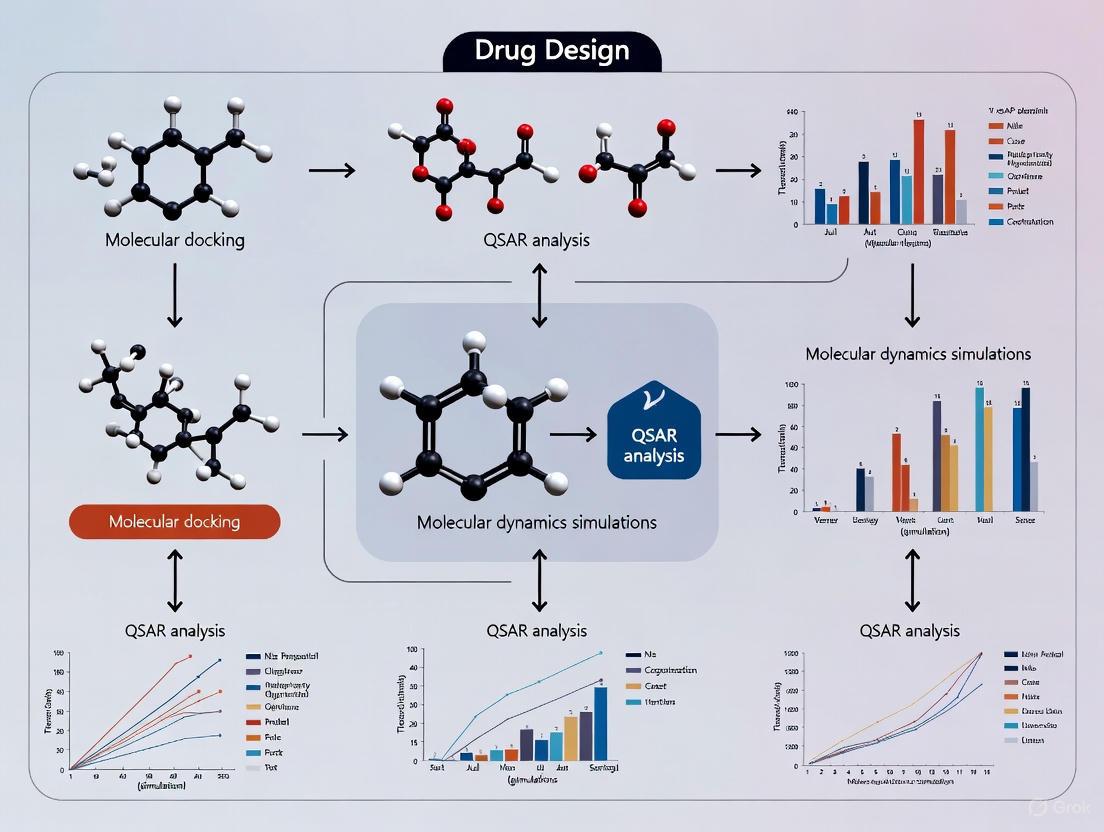
This comprehensive review explores the transformative role of computational chemistry in modern drug discovery, addressing the critical needs of researchers and drug development professionals.
Computational Chemistry in Drug Design: Accelerating Discovery from Target to Clinic
Abstract
This comprehensive review explores the transformative role of computational chemistry in modern drug discovery, addressing the critical needs of researchers and drug development professionals. The article covers foundational principles of computer-aided drug design (CADD), detailed methodologies including structure-based and ligand-based approaches, troubleshooting for common computational challenges, and validation through real-world case studies. By synthesizing current literature and emerging trends, we demonstrate how computational techniques dramatically reduce development timelines and costs while improving success rates, with particular focus on the integration of artificial intelligence, machine learning, and multiscale modeling approaches that are reshaping pharmaceutical research paradigms.
The Computational Revolution in Drug Discovery: Core Principles and Historical Evolution
Computer-Aided Drug Design (CADD) represents a transformative force in modern pharmaceuticals, constituting a multidisciplinary field that integrates computational chemistry, biology, and informatics to rationalize and accelerate drug discovery [1]. CADD employs computational methods to simulate drug-target interactions, predicting molecular behavior, binding affinity, and pharmacological properties before synthetic efforts commence [2]. The core premise of CADD is the application of computer algorithms to chemical and biological data to understand and predict how drug molecules interact with biological targets, typically proteins or nucleic acids, within a biological system [1] [3].
The historical evolution of CADD parallels advancements in structural biology and computational power, transitioning drug discovery from serendipitous findings and trial-and-error approaches to a targeted, rational process [1] [4]. Early successes like the anti-influenza drug Zanamivir demonstrated CADD's potential to significantly truncate drug discovery timelines [1] [4]. CADD methodologies are broadly categorized into two complementary approaches: Structure-Based Drug Design (SBDD), which leverages three-dimensional structural information of biological targets, and Ligand-Based Drug Design (LBDD), which utilizes knowledge of known active compounds [1] [3] [2]. This methodological framework enables researchers to minimize extensive chemical synthesis and biological testing by focusing computational resources on the most promising candidates, thereby reducing costs and development cycles [2] [5].
Key Methodological Frameworks and Computational Approaches
Structure-Based Drug Design (SBDD)
SBDD relies on knowledge of the three-dimensional structure of the biological target, obtained through experimental methods like X-ray crystallography, NMR spectroscopy, or cryo-electron microscopy, or through computational techniques like homology modeling when experimental structures are unavailable [3] [6]. The foundational steps of SBDD involve target structure preparation, binding site identification, and molecular docking to predict how small molecules interact with the target [5].
Molecular Docking is a cornerstone SBDD technique that predicts the preferred orientation and binding affinity of a small molecule (ligand) within a target's binding site [1]. Docking algorithms sample possible conformational states of the ligand-protein complex and employ scoring functions to rank these poses based on estimated binding energy [1]. Virtual Screening (VS) extends this concept by computationally evaluating massive libraries of compounds (often millions) to identify potential hits, dramatically increasing screening efficiency compared to traditional high-throughput physical screening [1] [3].
Molecular Dynamics (MD) Simulations provide a dynamic view of biomolecular systems by calculating the time-dependent behavior of proteins and ligands, capturing conformational changes, binding pathways, and stability interactions that static structures cannot reveal [1] [3]. MD simulations, performed with software like GROMACS, NAMD, CHARMM, and AMBER, are crucial for understanding the flexibility and thermodynamic properties influencing drug binding [1] [3].
Ligand-Based Drug Design (LBDD)
When three-dimensional structural information of the biological target is unavailable, LBDD approaches provide powerful alternatives by exploiting knowledge derived from known active ligands [3] [2]. The fundamental hypothesis underpinning LBDD is that similar molecules often exhibit similar biological activities [6].
Quantitative Structure-Activity Relationship (QSAR) modeling establishes statistical correlations between quantitatively described molecular structures (descriptors) and their biological activities [1] [4]. Once a reliable QSAR model is developed and validated, it can predict the activity of novel compounds, guiding the optimization of lead compounds by suggesting structural modifications likely to enhance potency [1] [4].
Pharmacophore Modeling entails identifying the essential molecular features and their spatial arrangements necessary for biological activity [3] [5]. A pharmacophore model typically includes features like hydrogen bond donors/acceptors, hydrophobic regions, charged groups, and aromatic rings. This model serves as a three-dimensional query for virtual screening of compound databases to retrieve new chemical entities possessing the critical features required for binding [5].
Application Notes: Experimental Protocols in CADD
Protocol for Structure-Based Virtual Screening
This protocol outlines a standard workflow for identifying novel hit compounds through structure-based virtual screening, suitable for implementation by computational researchers and drug discovery scientists.
- Objective: To identify potential small-molecule inhibitors of a target protein from a large commercial or in-house compound library.
- Prerequisites: Three-dimensional structure of the target protein (from PDB or homology modeling) and a database of small molecules in 3D format (e.g., ZINC, Enamine).
Step-by-Step Workflow:
Target Preparation:
- Obtain the protein structure from the Protein Data Bank (PDB) or via homology modeling using tools like SWISS-MODEL or MODELLER [3] [5].
- Using molecular modeling software (e.g., Schrödinger Maestro, Discovery Studio), add hydrogen atoms, assign protonation states for ionizable residues (Asp, Glu, His, Lys), and optimize hydrogen bonding networks.
- Perform energy minimization to relieve steric clashes and geometric strain using a molecular mechanics force field (e.g., CHARMM, AMBER).
Binding Site Identification and Grid Generation:
- Define the binding site coordinates based on known co-crystallized ligands or using cavity detection programs like CASTp or Q-SiteFinder [5].
- Generate a grid box encompassing the binding site to define the search space for docking algorithms. The box should be large enough to accommodate diverse ligands.
Ligand Database Preparation:
- Download or curate a database of compounds (e.g., ZINC, ChEMBL, in-house library) [3].
- Prepare ligands by generating likely tautomeric states and protonation states at physiological pH (e.g., pH 7.4 ± 0.5).
- Generate multiple low-energy 3D conformations for each ligand to account for flexibility.
Molecular Docking and Virtual Screening:
- Select a docking program (e.g., AutoDock Vina, Glide, GOLD, DOCK) and configure its parameters [1] [3].
- Execute the virtual screening job, which docks each compound from the prepared library into the target's binding site.
- Collect the top-ranked compounds based on the docking score (estimated binding affinity).
Post-Docking Analysis and Hit Selection:
- Visually inspect the predicted binding modes of the top-scoring compounds. Prioritize those forming key interactions with the target (e.g., hydrogen bonds, hydrophobic contacts, salt bridges).
- Cluster hits based on chemical scaffolds to ensure structural diversity.
- Apply additional filters based on drug-likeness (e.g., Lipinski's Rule of Five) and synthetic accessibility.
Experimental Validation:
- Procure or synthesize the selected hit compounds.
- Subject them to in vitro biological assays to experimentally confirm binding affinity and functional activity.
Protocol for 3D-QSAR Model Development
This protocol describes the creation and validation of a 3D-QSAR model for lead optimization, a core technique in ligand-based drug design.
- Objective: To develop a predictive 3D-QSAR model that correlates the three-dimensional molecular fields of a congeneric series of compounds with their biological activity.
- Prerequisites: A set of 20+ compounds with known, quantitative biological activity values (e.g., IC50, Ki) measured in the same assay.
Step-by-Step Workflow:
Data Set Compilation and Curation:
- Collect structures and corresponding biological activities for a series of analogous compounds.
- Divide the data set into a training set (~70-80%) for model generation and a test set (~20-30%) for external validation.
Molecular Modeling and Conformational Alignment:
- Build 3D molecular models of all compounds.
- Identify a common core structure (scaffold) shared by all molecules.
- For each compound, generate a low-energy conformation believed to be the bioactive conformation. A common method is to align all compounds to the structure of a known high-affinity ligand.
Molecular Field Calculation:
- Place each aligned molecule within a 3D grid.
- Calculate interaction energies between a probe atom and each molecule at every grid point. Typical probes include:
- A steric probe (e.g., an sp³ carbon atom) to map van der Waals interactions.
- An electrostatic probe (e.g., a proton) to map Coulombic potentials.
- Software like CoMFA (Comparative Molecular Field Analysis) or CoMSIA (Comparative Molecular Similarity Indices Analysis) within packages like SYBYL is typically used.
Partial Least Squares (PLS) Analysis:
- The calculated steric and electrostatic field values for the training set molecules serve as independent variables (X), and the biological activity data serve as dependent variables (Y).
- PLS regression is used to derive the 3D-QSAR model, which relates the molecular field variations to the observed biological activity.
Model Validation:
- Internal Validation: Assess the model's predictive power for the training set using cross-validation techniques (e.g., leave-one-out). The key metric is the cross-validated correlation coefficient (q²), which should typically be >0.5.
- External Validation: Use the model to predict the activities of the test set molecules, which were not used in model building. The predictive correlation coefficient (r²_pred) should be >0.6.
Model Interpretation and Application:
- Visualize the 3D-QSAR coefficients as contour maps around representative molecules.
- Green contours indicate regions where increased steric bulk is favorable for activity; red contours indicate unfavorable regions.
- Blue contours indicate regions where positive charge is favorable; red contours indicate where negative charge is favorable.
- Use these maps to guide the design of new analogs with predicted higher potency.
- Visualize the 3D-QSAR coefficients as contour maps around representative molecules.
Visualization of CADD Workflows
CADD Methodology Pathway
Molecular Docking Process
The following table details key resources required for executing CADD protocols, encompassing software, databases, and computational tools.
Table 1: Essential Research Reagents and Computational Resources for CADD
| Category | Resource Name | Function & Application |
|---|---|---|
| Molecular Modeling & Dynamics | GROMACS, NAMD, CHARMM, AMBER [1] [3] | Performs molecular dynamics simulations to study protein-ligand complex stability, conformational changes, and free energy calculations. |
| Homology Modeling | SWISS-MODEL, MODELLER, I-TASSER [1] [3] [5] | Predicts the 3D structure of a target protein based on the known structure of a homologous template protein. |
| Molecular Docking | AutoDock Vina, Glide (Schrödinger), GOLD, DOCK [1] [3] [5] | Predicts the preferred orientation and binding affinity of a small molecule ligand within a protein's binding site. |
| Virtual Screening | DOCK, Pharmer, ZINCPharmer [1] [3] [5] | Rapidly screens large virtual compound libraries to identify potential hits that bind to a biological target. |
| Pharmacophore Modeling | LigandScout, Phase (Schrödinger) [5] | Identifies and models the essential 3D features responsible for a ligand's biological activity, used for database searching. |
| QSAR Analysis | Various open-source and commercial packages (e.g., in KNIME, Python/R libraries) | Develops statistical models linking chemical structure descriptors to biological activity for predictive design. |
| Compound Databases | ZINC, ChEMBL, PubChem [3] [5] | Provides access to millions of commercially available or bioactive compounds for virtual screening and lead discovery. |
| Protein Data Bank | RCSB Protein Data Bank (PDB) [3] | Central repository for experimentally determined 3D structures of proteins, nucleic acids, and complex assemblies. |
| Force Fields | CHARMM, AMBER, CGenFF [3] | Provides the mathematical functions and parameters needed to calculate the potential energy of a molecular system for simulations. |
| ADMET Prediction | admetSAR, QikProp, SwissADME [5] | Predicts absorption, distribution, metabolism, excretion, and toxicity properties of drug candidates in silico. |
Future Perspectives and Concluding Remarks
The trajectory of CADD is marked by rapid integration with emerging technologies. The confluence of Artificial Intelligence (AI) and Machine Learning (ML) is substantially amplifying predictive capabilities in target identification, molecular generation, and property prediction [1] [7] [8]. Deep learning models, particularly AlphaFold2 and its successors, have revolutionized protein structure prediction, providing high-accuracy models for targets with previously unknown structures [1] [7]. Furthermore, quantum computing holds future promise for solving intricate molecular simulations and optimization problems currently intractable for classical computers [7].
Despite these advancements, challenges persist. Ensuring predictive accuracy, addressing biases in AI/ML models, incorporating sustainability metrics, and developing robust ethical frameworks remain critical frontiers [1] [8]. The field must also navigate the "hype cycle" associated with new methodologies, emphasizing proper validation, education, and collaborative efforts to translate computational predictions into clinically successful therapeutics [8]. As CADD continues to evolve, its synergy with experimental validation will be paramount in shaping a more efficient, cost-effective, and innovative future for drug discovery, ultimately bridging the realms of biology and technology to deliver novel therapeutic solutions [1] [2].
The field of computational chemistry has undergone a revolutionary transformation in its application to drug design research, evolving from foundational physics-based molecular mechanics to contemporary artificial intelligence (AI)-driven discovery platforms. This paradigm shift has fundamentally redefined the entire pharmaceutical research and development (R&D) workflow, enabling unprecedented acceleration in identifying therapeutic targets, generating novel molecular entities, and optimizing lead compounds. Where traditional computational approaches operated within constrained parameters and limited datasets, modern AI systems integrate multimodal biological data to model disease complexity with holistic precision [9]. This article traces critical historical milestones in this evolution, provides detailed experimental protocols for key methodologies, and presents quantitative analyses of performance metrics that demonstrate the dramatic efficiency gains achieved in computational drug discovery. By examining both the theoretical underpinnings and practical applications of these technologies, we aim to provide researchers and drug development professionals with comprehensive insights into the current state and future trajectory of computational chemistry in pharmaceutical sciences.
Historical Evolution of Computational Methods
The journey from molecular mechanics to AI-driven discovery represents a series of conceptual and technological breakthroughs that have progressively expanded our capacity to explore chemical space and predict biological activity.
Foundations in Molecular Mechanics and Structure-Based Design
The theoretical foundations of computational drug discovery were established with the development of molecular mechanics approaches based on classical Newtonian physics. These methods employ force fields to calculate the potential energy of molecular systems by accounting for bond stretching, angle bending, torsional rotations, and non-bonded interactions [10]. The 2013 Nobel Prize in Chemistry awarded for "the development of multiscale models for complex chemical systems" recognized the fundamental importance of these computational approaches [10]. Structure-based drug design emerged as a dominant paradigm, relying on known three-dimensional structures of target proteins obtained through X-ray crystallography, nuclear magnetic resonance (NMR), or homology modeling [10]. These structures enabled virtual screening of compound libraries through molecular docking, where computational algorithms predict how small molecules bind to protein targets and estimate binding affinity [10].
Traditional computer-aided drug design (CADD) encompassed ligand-based, structure-based, and systems-based approaches that provided a rational framework for hit finding and lead optimization [11]. These tools excelled at exploring how candidate molecules might interact with specific targets but were inherently limited by library size, scoring biases, and a narrow view of biological context [11]. The quantitative structure-activity relationship (QSAR) paradigm, developed as a ligand-based approach, established statistical correlations between molecular descriptors and biological activity to guide chemical optimization [10] [12]. While these methods represented significant advances over purely empirical approaches, they operated primarily within a reductionist framework that examined drug-target interactions in isolation rather than considering the complexity of biological systems [9].
The Rise of AI and Machine Learning
The past decade has witnessed a fundamental shift from physics-driven and knowledge-driven approaches to data-centric methodologies powered by machine learning and deep learning [11]. This transition has scaled pattern discovery across expansive chemical and biological spaces, elevating predictive modeling from local heuristics to global signals [11]. The expansion of large-scale open data repositories containing chemical and pharmacological datasets has been instrumental in this transformation, with resources like PubChem and ZINC databases providing tens of millions of compounds for analysis [13].
A critical development in this evolution has been the emergence of generative AI models for de novo molecular design. Unlike virtual screening which searches existing chemical libraries, these systems actively generate novel molecular structures optimized for specific therapeutic objectives [9]. Companies like Insilico Medicine pioneered the use of generative adversarial networks (GANs) and reinforcement learning for multi-objective optimization of drug candidates, balancing parameters such as potency, selectivity, and metabolic stability [9]. This approach represents a fundamental shift from searching chemical space to creatively exploring it.
Table 1: Historical Timeline of Key Milestones in Computational Drug Discovery
| Time Period | Technological Paradigm | Key Methodologies | Representative Advances |
|---|---|---|---|
| 1980s-1990s | Molecular Mechanics | Force field development, Molecular dynamics | Implementation of classical physics for biomolecular simulation |
| 1990s-2000s | Structure-Based Design | Molecular docking, QSAR, Virtual screening | First automated docking algorithms, Lipinski's Rule of 5 |
| 2000s-2010s | Multiscale Biomolecular Simulations | QM/MM, Enhanced sampling MD | Nobel Prize 2013 for multiscale models, FBDD yields FDA-approved drugs |
| 2010s-2020s | Machine Learning & Deep Learning | Neural networks, Predictive modeling | AI-designed drug candidates enter clinical trials (e.g., DSP-1181) |
| 2020s-Present | Generative AI & Holistic Biology | Generative models, Knowledge graphs, Transformer architectures | First fully digital drug development cycle (Monash University), Quantum-AI integration |
Contemporary AI-Driven Discovery Platforms
By 2025, AI-driven drug discovery has matured into an integrated discipline characterized by holistic modeling of biological complexity [9]. Leading platforms exemplify this paradigm through their ability to represent multimodal data—including chemical structures, omics profiles, phenotypic readouts, and clinical information—within unified computational frameworks [9]. For instance, Recursion's OS Platform leverages approximately 65 petabytes of proprietary data to map trillions of biological, chemical, and patient-centric relationships, utilizing advanced models like Phenom-2 (a 1.9 billion-parameter vision transformer) to extract insights from biological images [9].
The year 2025 has been identified as an inflection point where hybrid quantum computing and AI converge to create breakthrough capabilities in drug discovery [14]. Quantum computing applications have demonstrated over 20-fold improvement in time-to-solution for fundamental chemical processes like the Suzuki-Miyaura reaction, achieving chemical accuracy levels (<1 kcal/mol) impossible with classical approximations alone [14]. This convergence represents the current frontier in computational chemistry, enabling precise simulation of complex electronic properties and reaction mechanisms that underlie drug-target interactions.
Quantitative Impact Assessment
The evolution from molecular mechanics to AI-driven approaches has produced measurable improvements in drug discovery efficiency and effectiveness. The pharmaceutical industry is witnessing unprecedented acceleration in R&D timelines, with AI enabling reductions of up to 50% in early discovery phases [15]. By analyzing comparative performance metrics across different eras of computational methodology, we can quantitatively assess the transformative impact of these technological advances.
Performance Metrics Across Methodological Eras
Table 2: Comparative Performance of Computational Drug Discovery Methods
| Methodology | Time to Lead Identification | Compounds Synthesized | Success Rate | Representative Case |
|---|---|---|---|---|
| Traditional Medicinal Chemistry | 4-6 years | Thousands | <10% | Conventional HTS campaigns |
| Structure-Based Virtual Screening | 12-24 months | Hundreds | 10-15% | Docking-based lead identification |
| Fragment-Based Drug Design | 18-36 months | Dozens | 20-30% | Vemurafenib discovery |
| AI-Driven De Novo Design | 3-12 months | <150 | >30% | Exscientia's CDK7 inhibitor (136 compounds) |
| Generative AI with Quantum Computing | 3-6 months | Computational generation | Not yet established | Quantum-AI platform for NDM-1 inhibitors |
The efficiency gains demonstrated in Table 2 highlight the progressive optimization of the drug discovery process. Exscientia's achievement in identifying a clinical candidate CDK7 inhibitor after synthesizing only 136 compounds stands in stark contrast to traditional programs that often require thousands of synthesized compounds [16]. Similarly, Insilico Medicine's generative AI-discovered drug for idiopathic pulmonary fibrosis progressed from target discovery to Phase I trials in just 18 months, compared to the traditional 4-6 year timeline [16]. These accelerated timelines represent not merely incremental improvements but fundamental paradigm shifts in pharmaceutical R&D.
Market Validation and Clinical Translation
The quantitative impact of AI-driven discovery is further evidenced by market growth and clinical advancement. The AI in drug discovery market, valued at $1.72 billion in 2024, is projected to reach $8.53 billion by 2030, reflecting a compound annual growth rate of 30.59% that signals robust adoption and validation of these technologies [14]. By mid-2025, over 75 AI-derived molecules had reached clinical stages, with the number growing exponentially from early examples around 2018-2020 [16]. This rapid clinical translation demonstrates that AI-discovered candidates can successfully navigate the transition from in silico predictions to human testing.
Despite these advances, important quantitative distinctions remain between accelerated discovery and demonstrated clinical efficacy. As of 2025, no AI-discovered drug has received full regulatory approval, with most programs remaining in early-stage trials [16]. This underscores that while AI dramatically compresses early discovery timelines, the fundamental requirements for demonstrating safety and efficacy in human trials remain unchanged. The true test of AI-driven discovery will be whether these computationally generated compounds demonstrate superior clinical outcomes or success rates compared to conventionally discovered drugs [16].
Experimental Protocols and Methodologies
This section provides detailed protocols for key methodologies that exemplify the integration of computational approaches across the drug discovery pipeline, from target identification to lead optimization.
Protocol 1: AI-Driven Target Identification Using Knowledge Graphs
Principle: This protocol leverages multimodal biological data to systematically identify and prioritize novel therapeutic targets based on their inferred role in disease mechanisms [9].
Materials and Reagents:
- Biological Databases: OMIM, DisGeNET, GTEx, TCGA for disease-gene associations and expression profiles
- Literature Corpus: PubMed, PubMed Central, patent databases (40+ million documents)
- Omics Data Sources: RNA sequencing datasets, proteomics data from 10+ million biological samples
- Computational Tools: Natural language processing (NLP) models, graph neural networks, embedding algorithms
Procedure:
- Data Aggregation and Graph Construction: Compile approximately 1.9 trillion data points from genomic, transcriptomic, proteomic, and literature sources into a unified knowledge graph [9].
- Relationship Extraction: Apply NLP and transformer-based models to extract entity-relationship-entity triples from textual sources, establishing connections between genes, diseases, compounds, and biological processes.
- Graph Embedding Generation: Encode biological entities and relationships into low-dimensional vector spaces using knowledge graph embedding algorithms, preserving topological and semantic relationships.
- Target Prioritization Scoring: Implement multi-parameter optimization scoring that incorporates genetic evidence, tractability, novelty, and commercial potential to rank candidate targets.
- Biological Validation Planning: Design experimental validation workflows using CRISPR screening, transcriptomic profiling, or phenotypic assays to confirm target-disease association.
Technical Notes: Effective implementation requires distributed computing infrastructure for processing trillion-scale data points. Attention-based neural architectures can refine hypotheses by focusing on biologically relevant subgraphs [9].
Protocol 2: Generative Molecular Design with Multi-Objective Optimization
Principle: This protocol employs deep generative models to design novel molecular structures optimized for multiple drug-like properties simultaneously [9].
Materials and Reagents:
- Chemical Databases: ChEMBL, DrugBank, ZINC, proprietary compound libraries
- Generative Models: Generative adversarial networks (GANs), variational autoencoders (VAEs), or transformer architectures
- Property Prediction Tools: ADMET prediction models, molecular dynamics simulation packages
- Synthetic Accessibility Assessment: Retrosynthesis tools, reaction databases
Procedure:
- Model Pretraining: Train generative models on 10+ million known chemical structures to learn fundamental principles of chemical validity and stability.
- Reward Function Definition: Establish multi-objective reward functions balancing potency, selectivity, metabolic stability, solubility, and synthetic accessibility.
- Reinforcement Learning Cycle: Implement policy-gradient-based reinforcement learning to optimize generated structures against the multi-parameter reward function.
- Structural Refinement: Apply transfer learning to fine-tune generated molecules for specific target classes or binding pockets.
- In Silico Validation: Execute molecular dynamics simulations to assess binding stability and free energy calculations (MM/PBSA, MM/GBSA) to predict binding affinity.
Technical Notes: Chemistry-aware representation methods like SELFIES encoding guarantee 100% valid molecular generation, overcoming limitations of traditional SMILES-based approaches [14]. Distributed training frameworks such as DeepSpeed with ZeRO optimizer partitioning can reduce memory requirements by 50% while enabling linear scaling across multiple GPUs [14].
Protocol 3: Quantum-Enhanced Binding Affinity Calculation
Principle: This protocol utilizes hybrid quantum-classical algorithms to achieve chemical accuracy in predicting drug-target binding energetics, particularly for challenging targets with metal coordination or complex electronic properties [14].
Materials and Reagents:
- Quantum Computing Access: Cloud-based quantum processing units (QPUs) via AWS Braket, Azure Quantum, or similar services
- Classical Computing Resources: High-performance computing clusters with GPU acceleration
- Molecular Preparation Tools: Protein preparation software, quantum chemistry packages for initial structure optimization
Procedure:
- System Partitioning: Divide the molecular system into quantum mechanical (QM) region (active site with ligand and key residues) and molecular mechanical (MM) region (remaining protein and solvent).
- Hamiltonian Formulation: Construct the molecular Hamiltonian for the QM region, incorporating electronic degrees of freedom.
- Variational Quantum Eigensolver (VQE) Execution: Run VQE algorithms on quantum hardware to compute ground state energy of the ligand-target complex with chemical accuracy (<1 kcal/mol error) [14].
- Binding Free Energy Calculation: Combine quantum mechanical energies with classical force field contributions using MM/PBSA or MM/GBSA approaches.
- Ensemble Averaging: Perform molecular dynamics sampling to generate multiple conformational snapshots, with quantum calculations on representative structures.
Technical Notes: This approach is particularly valuable for metalloenzyme targets like NDM-1 metallo-β-lactamase, where classical force fields struggle to accurately model zinc coordination chemistry [14]. Current implementations typically utilize hybrid quantum-classical algorithms due to limitations in quantum hardware coherence times.
Visualization of Workflows
The following diagrams illustrate key experimental workflows and architectural frameworks described in the protocols, generated using Graphviz DOT language with adherence to the specified color palette and contrast requirements.
AI-Driven Drug Discovery Pipeline
Diagram 1: AI-Driven Drug Discovery Pipeline
Quantum-Classical Computational Workflow
Diagram 2: Quantum-Classical Computational Workflow
Research Reagent Solutions
The following table details essential computational tools, data resources, and platform components that constitute the modern researcher's toolkit for AI-driven drug discovery.
Table 3: Essential Research Reagent Solutions for AI-Driven Drug Discovery
| Resource Category | Specific Tools/Platforms | Function | Access Method |
|---|---|---|---|
| Generative AI Platforms | Insilico Medicine Pharma.AI, Iambic Therapeutics Platform | De novo molecular design with multi-parameter optimization | Commercial licensing |
| Knowledge Graph Systems | Recursion OS Knowledge Graph, PandaOmics | Target identification through biological relationship mapping | Commercial platforms |
| Quantum Computing Access | AWS Braket, Azure Quantum | High-accuracy molecular simulation via quantum processors | Cloud-based services |
| Specialized AI Models | NeuralPLexer (Iambic), Phenom-2 (Recursion) | Protein-ligand complex prediction, Phenotypic screening analysis | Integrated within platforms |
| Data Resources | PubChem, ZINC, ChEMBL, GDB-17 | Chemical libraries for training and validation | Public access |
| Validation Tools | Molecular dynamics packages, ADMET prediction models | In silico assessment of compound properties | Open source and commercial |
The historical progression from molecular mechanics to AI-driven discovery represents a fundamental transformation in computational chemistry's role in drug design research. What began as specialized tools for simulating molecular interactions has evolved into comprehensive platforms capable of representing biological complexity holistically and generating novel therapeutic candidates with optimized properties. The quantitative evidence demonstrates unambiguous acceleration in early discovery timelines, with AI-driven approaches compressing years of work into months while reducing the number of compounds requiring synthesis and testing. As we look toward the future, the convergence of AI with quantum computing and automated experimental validation promises to further redefine the boundaries of computational drug discovery. For researchers and drug development professionals, understanding these methodological advances and their practical implementation through detailed protocols provides critical insights for leveraging these technologies in the pursuit of novel therapeutics. The ongoing challenge remains the translation of computational efficiency gains into demonstrated clinical success, which will ultimately validate the transformative potential of AI-driven discovery approaches.
Computational chemistry provides the essential tools to understand molecular interactions at an atomic level, forming a critical foundation for modern drug discovery and development. The process of bringing a new drug to market is notoriously time-consuming and expensive, often taking 12–16 years of exhaustive research and clinical trials [17]. In this context, computational methods offer powerful approaches to accelerate discovery timelines and reduce costly late-stage failures. Among these methods, three complementary paradigms have emerged as particularly transformative: Quantum Mechanics (QM), Molecular Mechanics (MM), and Multiscale Modeling that strategically integrates both approaches [18] [19].
These techniques enable researchers to probe drug-target interactions with varying degrees of accuracy and computational efficiency, creating a versatile toolkit for addressing different challenges in structure-based drug design. The pharmaceutical industry increasingly relies on these computational approaches to elucidate complex biological mechanisms, predict binding affinities, and optimize lead compounds with greater precision than traditional experimental methods alone can provide [17] [18].
Theoretical Foundations
Quantum Mechanics (QM)
Quantum Mechanics methods apply the fundamental laws of quantum physics to approximate molecular wave functions and solve the Schrödinger equation for molecular systems [17]. Unlike simpler approaches, QM explicitly treats electrons, providing detailed information about electron distribution, bonding characteristics, and chemical reactivity. This makes QM particularly valuable for studying chemical reactions, charge transfer processes, and spectroscopic properties [17] [19].
The fundamental time-independent Schrödinger equation is represented as:
HΨ = EΨ
Where H is the Hamiltonian operator, Ψ is the wave function, and E is the energy of the system [17]. While exact solutions are only possible for one-electron systems, modern computational implementations employ sophisticated approximations that bring QM accuracy to increasingly complex biomolecular systems relevant to drug design [17] [20].
Molecular Mechanics (MM)
Molecular Mechanics approaches biomolecular systems through classical mechanics, treating atoms as spheres and bonds as springs. This simplification allows MM to handle much larger systems than QM, including entire proteins in their physiological environments [17]. MM describes the total potential energy of a system using a combination of bonded and non-bonded terms:
Etot = Estr + Ebend + Etor + Evdw + Eelec [17]
Where the components represent bond stretching (Estr), angle bending (Ebend), torsional angles (Etor), van der Waals interactions (Evdw), and electrostatic forces (Eelec) [17]. The efficiency of MM force fields enables molecular dynamics simulations that can explore microsecond to millisecond timescales, providing crucial insights into protein flexibility, ligand binding pathways, and conformational changes [18].
Multiscale Modeling (QM/MM)
Multiscale QM/MM methods combine the accuracy of QM for describing reactive regions with the efficiency of MM for treating the surrounding environment [21] [19]. This hybrid approach was pioneered by Warshel and Levitt in 1976 and recognized with the 2013 Nobel Prize in Chemistry [18]. QM/MM simulations partition the system into two regions: a QM region (typically the active site with substrate) where chemical bonds are formed and broken, and an MM region (protein scaffold and solvent) that provides a realistic environmental context [19].
Recent advances have extended QM/MM to massively parallel implementations capable of strong scaling with ~70% parallel efficiency on more than 80,000 cores, opening the door to simulating increasingly complex biological processes with quantum accuracy [21]. Furthermore, the incorporation of machine learning potentials (MLPs) has accelerated these methods to approach coupled-cluster accuracy while dramatically reducing computational costs [20].
Quantitative Comparison of Methodologies
Table 1: Key Characteristics of Computational Chemistry Methods
| Parameter | Quantum Mechanics (QM) | Molecular Mechanics (MM) | Multiscale QM/MM |
|---|---|---|---|
| Theoretical Foundation | Quantum physics, Schrödinger equation | Classical mechanics, Newton's laws | Combined quantum-classical |
| System Treatment | Electrons and nuclei explicitly treated | Atoms as spheres, bonds as springs | QM: Electronic structure; MM: Classical atoms |
| Computational Cost | Very high (O(N³) to O(eⁿ)) | Low to moderate | High, but less than full QM |
| System Size Limit | Small (typically <500 atoms) | Very large (>1,000,000 atoms) | Medium to large |
| Accuracy for Reactions | High | Poor | High in QM region |
| Typical Applications | Chemical reactions, spectroscopy, excitation states | Protein dynamics, conformational sampling, binding | Enzyme mechanisms, catalytic pathways, drug binding |
| Recent Advances | Machine learning potentials [20] | Enhanced sampling, free energy calculations [22] | Exascale computing, ML-aided sampling [21] [22] |
Table 2: Performance Metrics for MLP Methods in Drug Structure Optimization (QR50 Dataset) [20]
| Method | Bond Distance MAD (Å) | Angle MAD (°) | Rotatable Dihedral MAD (°) | Applicable Elements |
|---|---|---|---|---|
| ωB97X-D/6-31G(d) | Reference | Reference | Reference | Essentially all |
| AIQM1 | 0.005 | 0.6 | 11.2 | C, H, O, N |
| ANI-2x | 0.008 | 0.9 | 16.1 | C, H, O, N, F, Cl, S |
| GFN2-xTB | 0.008 | 0.9 | 16.1 | Essentially all |
Application Notes for Drug Design
Quantum Refinement of Protein-Drug Complexes
Quantum refinement (QR) methods employ QM calculations during the crystallographic refinement process to improve the structural quality of protein-drug complexes [20]. Standard refinement based on molecular mechanics force fields struggles with the enormous diversity of chemical space occupied by drug molecules, particularly for systems with complex electronic effects such as conjugation and delocalization [20]. QR methods overcome these limitations by providing a more reliable description of the electronic structure of bound ligands.
A landmark application of QR involved the SARS-CoV-2 main protease (MPro) in complex with the FDA-approved drug nirmatrelvir. Through QR approaches, researchers obtained computational evidence for the coexistence of both bonded and nonbonded forms of the drug within the same crystal structure [20]. This atomic-level insight provides valuable information for designing improved antiviral agents with optimized binding characteristics.
The integration of machine learning potentials with multiscale ONIOM schemes has dramatically accelerated QR applications. Novel methods such as ONIOM3(MLP-CC:MLP-DFT:MM) and ONIOM4(MLP-CC:MLP-DFT:SE:MM) achieve coupled-cluster quality results while maintaining computational efficiency sufficient for routine application to protein-drug systems [20].
Binding Affinity Prediction with QM/MM
Accurate prediction of binding free energies remains a central challenge in structure-based drug design. Traditional MM-based approaches, while computationally efficient, often lack the precision required for reliable lead optimization due to their simplified treatment of electronic effects and non-covalent interactions [22]. QM/MM methods address this limitation by providing a more physical description of critical interactions such as hydrogen bonding, charge transfer, and polarization effects.
Combining QM/MM with free energy perturbation techniques and machine learning-enhanced sampling algorithms represents a promising frontier in drug design [22]. This integrated approach allows researchers to map binding energy landscapes with quantum accuracy while accessing biologically relevant timescales. The implementation of these methods on exascale computing architectures further extends their applicability to pharmaceutically relevant targets [21] [22].
Successful applications of QM/MM in binding affinity prediction include studies of acetylcholinesterase with the anti-Alzheimer drug donepezil and serine proteases with benzamidinium-based inhibitors [20]. These implementations demonstrate the potential of QM/MM to deliver both qualitative insights into binding mechanisms and quantitative predictions of binding affinities.
Experimental Protocols
Protocol 1: Quantum Refinement of Protein-Ligand Complex
Objective: Improve the structural quality of a crystallographic protein-ligand complex using quantum refinement techniques.
Materials and Software:
- Initial protein-ligand structure (PDB format)
- Crystallographic structure factor data
- Quantum chemistry software (e.g., Gaussian, ORCA)
- Molecular dynamics package with QM/MM capability
- Machine learning potential implementation (e.g., ANI-2x, AIQM1)
Procedure:
- System Preparation:
- Extract the ligand and active site residues from the PDB file
- Add hydrogen atoms appropriate for physiological pH
- Define the QM region (typically the ligand and key catalytic residues)
- Set up the MM region (remaining protein and solvent environment)
Multiscale Setup:
- Apply the ONIOM (Our own N-layered Integrated molecular Orbital and molecular Mechanics) scheme
- Implement the electrostatic embedding to account for polarization effects
- Define the boundary between QM and MM regions using link atoms
Geometry Optimization:
- Perform initial optimization with DFT method (e.g., ωB97X-D/6-31G(d))
- Compare results with MLP methods (AIQM1 or ANI-2x for eligible elements)
- Calculate final energies with higher-level theory if needed
Refinement Validation:
- Analyze geometric parameters (bond lengths, angles, dihedrals)
- Calculate R and Rfree factors against experimental data
- Compare electron density maps before and after refinement
Troubleshooting Tips:
- For charged ligand systems, verify the performance of MLP methods on similar chemical motifs
- If convergence issues occur, consider increasing the QM region size or adjusting optimization algorithms
- Validate results against multiple DFT functionals when possible [20]
Protocol 2: QM/MM Molecular Dynamics with Enhanced Sampling
Objective: Characterize the binding pathway and mechanism of a drug candidate to its protein target.
Materials and Software:
- High-performance computing cluster (CPU/GPU hybrid)
- QM/MM-enabled MD software (e.g., AMBER, CP2K, MiMiC)
- Machine learning-enhanced sampling plugins (e.g., PLUMED, SSAGES)
- Visualization tools (VMD, PyMOL)
Procedure:
- System Initialization:
- Prepare the solvated protein-ligand system with appropriate ion concentration
- Define the QM region to include the ligand and binding site residues
- Select appropriate QM method (DFT for accuracy, semiempirical for efficiency)
- Apply MM force field (e.g., AMBER, CHARMM) to the remainder
Equilibration Phase:
- Perform MM-only minimization and heating (0-300K)
- Switch to QM/MM dynamics with constrained protein backbone
- Gradually release constraints while monitoring system stability
Enhanced Sampling Production:
- Implement machine learning-aided sampling algorithm
- For binding free energy calculations, employ metadynamics or adaptive sampling
- Run multiple independent replicas (≥3) to ensure statistical significance
- Collect aggregate simulation time of ≥100 ns per replica
Data Analysis:
- Identify key binding intermediates and transition states
- Calculate binding free energy and decomposition
- Map interaction networks and evolution over time [22]
Advanced Applications:
- For large systems, leverage massively parallel implementations (e.g., MiMiC framework)
- Incorporate experimental data as constraints during simulation
- Use Markov state models to analyze kinetics from multiple trajectories [21]
Visualization and Workflow
Diagram 1: Integrated QM/MM Drug Design Workflow. This workflow illustrates the strategic integration of molecular mechanics, quantum mechanics, and multiscale approaches in structure-based drug design.
The Scientist's Toolkit
Table 3: Essential Software and Computational Tools
| Tool Name | Type | Primary Function | License | Key Features |
|---|---|---|---|---|
| Avogadro | Molecular Editor | Molecule building/visualization | Free open-source, GPL | Cross-platform, flexible rendering, Python extensibility [23] [24] |
| VMD | Visualization & Analysis | Molecular dynamics analysis | Free for noncommercial use | Extensive trajectory analysis, Tcl/Python scripting [23] |
| Molden | Visualization | Quantum chemical results | Proprietary, free academic use | Molecular orbitals, vibrations, multiple formats [23] |
| Jmol | Viewer | Structure visualization | Free open-source | Java-based, advanced capabilities, symmetry [23] |
| PyMOL | Visualization | Publication-quality images | Open-source | Python integration, scripting capabilities [25] |
| MiMiC | QM/MM Framework | Multiscale simulations | Not specified | Massively parallel, exascale-ready [21] |
| ANI-2x | Machine Learning Potential | Accelerated QM calculations | Not specified | DFT accuracy for C,H,O,N,F,Cl,S [20] |
| AIQM1 | Machine Learning Potential | Coupled-cluster level accuracy | Not specified | Approach CC accuracy for organic molecules [20] |
The integration of Quantum Mechanics, Molecular Mechanics, and Multiscale Modeling represents a paradigm shift in computational chemistry's application to drug design. These complementary approaches enable researchers to navigate the complex landscape of molecular interactions with an unprecedented combination of accuracy and efficiency. The continuing evolution of these methods—driven by advances in exascale computing, machine learning algorithms, and multiscale methodologies—promises to further transform pharmaceutical development.
As these computational techniques become increasingly sophisticated and accessible, they offer the potential to address long-standing challenges in drug discovery, including the prediction of off-target effects, the design of covalent inhibitors, and the characterization of allosteric binding mechanisms. The convergence of physical simulation methods with data-driven approaches establishes a powerful framework for accelerating the development of novel therapeutics, ultimately contributing to improved human health and more efficient pharmaceutical research pipelines.
Modern drug discovery is a complex, costly, and time-intensive endeavor. The integration of computational chemistry has revolutionized this process, enhancing efficiency and precision across the entire pipeline. From initial target identification to lead optimization, computational methods provide powerful tools for predicting molecular behavior, optimizing drug-like properties, and reducing experimental failure rates. This application note details specific computational methodologies, complete with quantitative benchmarks and experimental protocols, to guide researchers in leveraging these technologies for accelerated therapeutic development [26] [27].
The drug discovery pipeline has evolved from serendipitous findings to a rational, system-based design. Early methods often relied on accidental discoveries, such as penicillin, but advances in molecular cloning, X-ray crystallography, and robotics now enable targeted drug design [27]. Computational approaches are indispensable in this modern framework, allowing researchers to navigate vast chemical and biological spaces that would be impractical to explore through traditional experimental means alone [26]. These methods are broadly classified into structure-based and ligand-based design, each with distinct applications and advantages depending on the available biological and chemical information [28] [27].
Core Computational Strategies and Their Quantitative Impact
Computational methods create value by providing predictive models and enabling virtual screening of immense compound libraries. The following strategies represent the most impactful applications in the current drug discovery landscape.
Structure-Based Drug Design (SBDD) utilizes three-dimensional structural information about a biological target, typically from X-ray crystallography or cryo-electron microscopy. The primary advantage of SBDD is its ability to design novel compounds that are shape-complementary to the target's active site, facilitating optimal interactions [27]. Ligand-Based Drug Design (LBDD) is employed when the target structure is unknown or difficult to obtain. This approach extracts essential chemical features from known active compounds to predict the biological properties of new molecules [27]. The underlying principle is that structurally similar molecules likely exhibit similar biological activities [27].
Targeted Protein Degradation (TPD) represents a paradigm shift from traditional inhibition to degradation. This approach employs small molecules, such as PROteolysis TArgeting Chimeras (PROTACs), to tag undruggable proteins for degradation via the ubiquitin-proteasome system [26]. DNA-Encoded Libraries (DELs) combine combinatorial chemistry with molecular biology, allowing for the high-throughput screening of millions to billions of compounds by using DNA barcodes to record synthetic history [26]. Click Chemistry provides highly efficient and selective reactions, such as the copper-catalyzed azide-alkyne cycloaddition (CuAAC), to rapidly synthesize diverse compound libraries and complex structures like PROTACs [26].
Table 1: Key Computational Strategies in Drug Discovery
| Strategy | Primary Application | Data Requirements | Reported Efficiency Gains |
|---|---|---|---|
| Structure-Based Design (SBDD) [28] [27] | De novo drug design, lead optimization | Target protein structure (X-ray, Cryo-EM, Homology Model) | Up to 10-fold reduction in candidate synthesis vs. HTS [27] |
| Ligand-Based Design (LBDD) [28] [27] | Hit finding, lead optimization, toxicity prediction | Known active ligand(s) and their bioactivity data | >80% accurate target prediction via similarity methods [27] |
| Targeted Protein Degradation (TPD) [26] | Addressing "undruggable" targets (e.g., scaffolding proteins) | Ligand for E3 ligase + ligand for target protein | Enabled degradation of ~600 disease targets previously considered undruggable [26] |
| DNA-Encoded Libraries (DELs) [26] | Ultra-high-throughput screening | Library construction with DNA barcodes | Screening of >10^8 compounds in a single experiment [26] |
| Click Chemistry [26] | Library synthesis, PROTAC assembly, bioconjugation | Azide and alkyne-functionalized precursors | Reaction yields often >95% with minimal byproducts [26] |
Application Notes and Experimental Protocols
Protocol 1: Structure-Based Virtual Screening Workflow
This protocol outlines a standard procedure for identifying novel hit compounds through molecular docking against a protein target of known structure [28] [27].
Step 1: Target Preparation
- Isolate the protein structure from a protein data bank (PDB) file.
- Remove water molecules and co-crystallized ligands, except for crucial structural waters or cofactors.
- Add hydrogen atoms and assign partial charges using a molecular mechanics force field (e.g., AMBER, CHARMM).
- Define the binding site as a 3D grid, typically centered on the native ligand's location or a known active site.
Step 2: Ligand Library Preparation
- Acquire a small molecule library in a standard format (e.g., SDF, SMILES).
- Generate plausible 3D conformations for each compound.
- Assign correct protonation states at physiological pH (7.4) and minimize energy.
Step 3: Molecular Docking
- Select a docking algorithm (e.g., Glide, AutoDock Vina, GOLD).
- Execute the docking run, allowing ligands to flex within the rigid or semi-flexible protein binding site.
- Generate multiple pose predictions per ligand.
Step 4: Post-Docking Analysis and Scoring
- Rank all docked poses using a scoring function to estimate binding affinity.
- Visually inspect the top-ranking poses (e.g., top 100-500) to assess binding mode rationality, key interactions (H-bonds, hydrophobic contacts, pi-stacking), and chemical sensibility.
- Select a diverse subset of high-ranking compounds (50-200) for in vitro experimental validation.
Protocol 2: Ligand-Based Similarity Search and SAR Analysis
This protocol is used when a known active compound exists but the 3D structure of the target is unavailable [27].
Step 1: Query Compound and Fingerprint Selection
- Select the known active compound as the query.
- Choose an appropriate chemical fingerprinting method:
- Path-based (e.g., Daylight): Encodes all possible molecular paths of specified lengths. Offers high specificity.
- Substructure-based (e.g., MACCS keys): Encodes the presence/absence of a predefined set of chemical substructures. Better for "scaffold hopping."
Step 2: Database Search and Similarity Calculation
- Search a large chemical database (e.g., ZINC, ChEMBL, in-house library) using the query fingerprint.
- Calculate pairwise similarity using the Tanimoto coefficient:
- T(A,B) = (Number of common bits in A and B) / (Total number of bits in A or B)
- Compounds with a Tanimoto score > 0.7 - 0.8 are generally considered highly similar.
Step 3: Structure-Activity Relationship (SAR) Analysis
- Cluster the similar compounds based on their core scaffolds.
- Correlate structural variations (e.g., addition of a methyl group, change from -OH to -NH₂) with changes in biological activity (e.g., IC₅₀, Ki).
- Use this SAR to guide the design of new analogs with predicted improved potency or selectivity.
Table 2: Research Reagent Solutions for Computational Protocols
| Reagent / Resource | Type | Function in Protocol |
|---|---|---|
| Protein Data Bank (PDB) | Database | Primary source of 3D protein structures for target preparation [27]. |
| ZINC/ChEMBL Database | Database | Publicly available repositories of purchasable and bioactive compounds for virtual screening [27]. |
| Daylight/MACCS Fingerprints | Computational Descriptor | Mathematical representation of molecular structure for similarity searching and machine learning [27]. |
| Tanimoto Coefficient | Algorithm | Quantitative metric (0-1) for calculating chemical similarity between two molecular fingerprints [27]. |
| Homology Modeling Tool (e.g., MODELLER) | Software | Generates a 3D protein model from its amino acid sequence when an experimental structure is unavailable [28]. |
| E3 Ligase Ligand (e.g., for VHL) | Chemical Probe | Critical component for designing PROTACs in Targeted Protein Degradation (TPD) campaigns [26]. |
Emerging Frontiers: AI and Automation
The next frontier of computational drug discovery lies in the synergistic application of artificial intelligence (AI) and automation. Machine learning (ML) models, particularly deep learning, are now being used to extract maximum knowledge from existing chemical and biological data [26] [29]. These models can predict complex molecular properties, design novel compounds with desired attributes de novo, and even forecast clinical trial outcomes.
A key development is the integration of machine learning with physics-based computational chemistry [29]. This hybrid approach leverages the predictive power of AI while grounding it in the physical laws that govern molecular interactions. For instance, AI can be used to rapidly pre-screen millions of compounds, while more computationally intensive, physics-based free-energy perturbation (FEP) calculations provide highly accurate binding affinity predictions for a much smaller, prioritized subset [29]. This combined strategy dramatically accelerates the lead optimization cycle. The role of computational chemists is evolving into that of "drug hunters" who must understand and apply this expanding toolbox to make efficient and effective decisions in therapeutic development [30].
In the modern drug discovery pipeline, computational chemistry serves as a critical foundation for reducing the immense costs and high attrition rates associated with bringing new therapeutics to market. With the estimated cost of drug development exceeding $2 billion per approved drug, efficient navigation of the initial discovery phases through computational approaches provides a significant strategic advantage [31]. Central to these approaches are publicly accessible chemical and biological databases that provide the structural and bioactivity data necessary for informed decision-making.
This application note details the essential characteristics and practical applications of four cornerstone databases: the Protein Data Bank (PDB), ZINC, ChEMBL, and BindingDB. Each database occupies a distinct niche within the computational workflow, from providing three-dimensional structural blueprints of biological macromolecules to offering vast libraries of purchasable compounds and curated bioactivity data. By understanding their complementary strengths, researchers can strategically leverage these resources to streamline the journey from target identification to lead compound optimization, thereby de-risking the early stages of drug development [31].
Database Comparative Analysis
The table below provides a quantitative summary and comparative overview of the four core databases, highlighting their primary functions, content focus, and key access mechanisms.
Table 1: Essential Databases for Computational Drug Discovery
| Database | Primary Function | Key Content | Data Volume (Approx.) | Unique Features & Access |
|---|---|---|---|---|
| PDB [32] | 3D structural repository for macromolecules | Experimentally-determined structures of proteins, nucleic acids, and complexes | >200,000 experimental structures | Provides visualization & analysis tools; integrates with AlphaFold DB CSMs |
| ZINC [33] [34] | Curated library of commercially available compounds | "Ready-to-dock" small molecules for virtual screening | ~1.4 billion compounds | Features SmallWorld for similarity search & Arthor for substructure search |
| ChEMBL [35] | Manually curated bioactivity database | Drug-like molecules, ADMET properties, and bioassay data | Millions of bioactivities | Open, FAIR data; includes curated data for SARS-CoV-2 screens |
| BindingDB [36] | Focused binding affinity database | Measured binding affinities (e.g., IC50, Ki) for protein-ligand pairs | ~1.1 million binding data points | Supports queries by chemical structure, protein sequence, and affinity range |
Database-Specific Application Notes
Protein Data Bank (PDB)
Overview and Strategic Value: The Protein Data Bank serves as the universal archive for three-dimensional structural data of biological macromolecules, determined through experimental methods such as X-ray crystallography, NMR spectroscopy, and Cryo-Electron Microscopy [32]. Its strategic value lies in providing atomic-level insights into drug targets, enabling researchers to understand active sites, binding pockets, and molecular mechanisms of action, which form the basis for structure-based drug design.
Key Applications:
- Target Identification and Validation: Researchers can explore structures of potential drug targets, including their native state and complexes with natural ligands or other proteins, to assess their "druggability" [31].
- Structure-Based Drug Design: The 3D structural coordinates from the PDB are used to model ligand docking, identify key interactions, and guide the rational optimization of lead compounds [37].
- Comparative Analysis: By examining multiple structures of the same target with different ligands, scientists can derive critical structure-activity relationships (SAR) to inform chemical modifications.
Protocol 1.1: Retrieving and Preparing a Protein Structure for Molecular Docking
- Structure Retrieval: Navigate to the RCSB PDB website (https://www.rcsb.org) [32]. Search for your target protein using its name or PDB ID. From the search results, select the most appropriate structure based on resolution (prioritize lower numbers, e.g., <2.0 Å for X-ray structures), the presence of a relevant ligand or co-crystalized inhibitor, and the absence of major mutations.
- Structure Analysis: On the structure summary page, use the integrated 3D viewer to visually inspect the binding site of interest. Review the accompanying publication to understand the biological context of the structure.
- Data Preparation: Download the PDB file. Using molecular visualization software (e.g., PyMOL, Chimera), remove water molecules, heteroatoms, and original ligands not relevant to your study. Add necessary hydrogen atoms and assign correct protonation states to key residues (e.g., Asp, Glu, His) in the binding site. Finally, minimize the energy of the prepared structure to relieve any steric clashes.
ZINC Database
Overview and Strategic Value: ZINC is a meticulously curated collection of commercially available chemical compounds optimized for virtual screening [33] [34]. Its primary strategic value is in bridging computational predictions and experimental validation by providing a source of tangible molecules that can be purchased for biological testing shortly after computational prioritization.
Key Applications:
- Virtual High-Throughput Screening (vHTS): ZINC's "ready-to-dock" molecular formats and pre-filtered libraries (e.g., by drug-likeness, lead-likeness) enable rapid in silico screening of billions of compounds against a target structure [33].
- Hit Identification and Expansion: Researchers can use ZINC's integrated tools, like the SmallWorld graph-based similarity search, to find close structural analogs of a weak hit compound, thereby exploring the local chemical space to improve potency or other properties [33].
Protocol 1.2: Conducting a Large-Scale Virtual Screen with ZINC20
- Library Selection: Access the ZINC20 website and navigate to the "Subsets" section. Based on your target and screening goals (e.g., lead discovery vs. fragment-based screening), select a pre-defined subset such as "ZINC22 Lead-Like," "ZINC22 Drug-Like," or a target-focused library.
- Compound Download: Use the provided filters to specify desired properties (e.g., molecular weight, logP, number of rotatable bonds). Download the resulting library in a suitable format for your docking software (e.g., SDF, MOL2).
- Virtual Screening Execution: Prepare the downloaded library by adding charges and energy minimizing if required. Perform molecular docking against your prepared protein target (from Protocol 1.1) using software like AutoDock Vina or DOCK. Rank the results based on the docking score or predicted binding affinity.
- Hit Procurement: For the top-ranking compounds, use the provided ZINC vendor information and catalog IDs to purchase the physical samples for subsequent experimental validation in biochemical or cellular assays.
ChEMBL Database
Overview and Strategic Value: ChEMBL is a large-scale, open-source database manually curated from the scientific literature to contain bioactive molecules with drug-like properties [35]. Its strategic value lies in its extensive collection of annotated bioactivity data (e.g., IC50, Ki), which allows researchers to perform robust SAR analyses, predict potential off-target effects, and gain insights into ADMET (Absorption, Distribution, Metabolism, Excretion, and Toxicity) properties early in the discovery process [31] [35].
Key Applications:
- Lead Optimization: By querying ChEMBL for a lead compound's close analogs and their associated bioactivity data, medicinal chemists can make data-driven decisions on which chemical groups to modify to enhance potency or selectivity.
- Drug Repurposing: Systematic screening of ChEMBL's bioactivity data for approved drugs can reveal novel activities against different therapeutic targets, identifying new indications for existing drugs [35].
- Bioactivity Profiling: Before investing in a new chemical series, researchers can search ChEMBL to check for any reported activities on other targets, helping to assess the potential for adverse effects.
Protocol 1.3: Mining Structure-Activity Relationships (SAR) in ChEMBL
- Query Input: Access the ChEMBL web interface (https://www.ebi.ac.uk/chembl/) [35]. Input the SMILES string or chemical structure of your lead compound using the chemical search tool.
- Data Retrieval and Filtering: Execute the search and navigate to the compound report card. Review the list of associated bioassays and target information. Use filters to select data for your specific target of interest and a consistent activity type (e.g., IC50).
- SAR Analysis: Export the activity data for the compound and its analogs. In a spreadsheet or chemoinformatics tool, organize the data by chemical scaffold and R-group substitutions. Correlate specific structural changes with changes in potency to generate hypotheses for the next round of chemical synthesis.
BindingDB Database
Overview and Strategic Value: BindingDB focuses specifically on providing measured binding affinities, primarily for protein targets considered relevant to drug discovery [36]. It complements ChEMBL by offering a concentrated resource of quantitative interaction data, which is crucial for developing and validating predictive computational models.
Key Applications:
- Benchmarking Docking Algorithms: The high-quality, experimentally determined binding affinities in BindingDB are used as "ground truth" to calibrate and assess the performance of scoring functions in molecular docking software [36].
- Predictive Model Training: The database serves as a key data source for training machine learning models to predict the binding strength of novel compounds.
- Chemical Probe Identification: Researchers can quickly identify the most potent known ligands for a protein target of interest to use as chemical probes in functional studies.
Protocol 1.4: Validating a Docking Pose and Scoring Function with BindingDB
- Identify a Benchmark Set: Query BindingDB using the advanced search option. Specify your target protein (by name or UniProt ID) and set a filter for high-affinity ligands (e.g., Ki < 100 nM) with available PDB structures of their complexes.
- Data Compilation: Download the 3D structures of the protein-ligand complexes from the PDB. From BindingDB, export the corresponding binding affinity data for these complexes.
- Docking and Correlation: Using your chosen docking software, re-dock each ligand into its respective protein structure. Calculate the correlation between the docking scores generated by the software and the experimental binding affinities from BindingDB. A strong correlation increases confidence in the docking protocol's ability to rank novel compounds correctly.
Integrated Workflow for Lead Identification
The true power of these databases is realized when they are used in a coordinated, sequential workflow. The following diagram and protocol outline a typical pathway for computational lead identification and optimization.
Diagram: Integrated computational workflow for lead identification.
Protocol 1.5: Integrated Workflow for Structure-Based Lead Discovery
- Target Selection and Structure Acquisition: Begin with a genetically validated therapeutic target (e.g., a kinase). Search the PDB for a high-resolution crystal structure of the target, preferably in a complex with an active-site inhibitor [32].
- Virtual Screening Library Preparation: Prepare the protein structure as in Protocol 1.1. Simultaneously, download a relevant, filtered subset (e.g., "drug-like") of several million compounds from the ZINC database [33].
- High-Throughput Docking and Hit Selection: Perform molecular docking of the ZINC library against the prepared target. From the millions of docked poses, select a few hundred top-ranking compounds based on docking score and binding pose quality.
- In Silico Bioactivity Profiling: Interrogate ChEMBL and BindingDB with the structures of the putative hits [35] [36]. This step checks for any known undesirable off-target activities or, conversely, may reveal additional therapeutic potential. It also helps prioritize compounds with structural similarities to known active molecules.
- Procurement and Experimental Testing: Purchase the top 20-50 prioritized compounds from commercial vendors via their ZINC IDs. Subject these compounds to experimental assays to confirm binding and functional activity, thus initiating the cycle of lead optimization.
The following table lists key computational and experimental "reagents" essential for executing the protocols described in this document.
Table 2: Essential Research Reagents and Resources for Computational Drug Discovery
| Category | Item/Resource | Function/Description | Example/Source |
|---|---|---|---|
| Computational Tools | Molecular Visualization Software | Visualizes 3D structures from PDB; prepares structures for docking. | PyMOL, UCSF Chimera |
| Molecular Docking Software | Predicts how small molecules bind to a protein target. | AutoDock Vina, Glide, DOCK | |
| Cheminformatics Toolkit | Manipulates chemical structures, handles file formats, calculates descriptors. | RDKit, Open Babel | |
| Data Resources | Protein Target Sequence | Uniquely identifies the protein target for database searches. | UniProt Knowledgebase |
| Canonical SMILES | Text-based representation of a molecule's structure for database queries. | Generated via RDKit or from PubChem | |
| Commercial Compound Vendor | Source for physical samples of computationally identified hits. | Suppliers listed in ZINC (e.g., Enamine, Sigma-Aldrich) | |
| Experimental Reagents | Purified Target Protein | Required for experimental validation of binding (e.g., SPR, ITC). | Recombinant expression |
| Biochemical/Cellular Assay | Measures the functional activity of hit compounds. | Target-specific activity assay |
The strategic integration of PDB, ZINC, ChEMBL, and BindingDB creates a powerful, synergistic ecosystem for computational drug discovery. Each database fills a critical niche: PDB provides the structural blueprints, ZINC offers the chemical matter, while ChEMBL and BindingDB deliver the essential bioactivity context. By adhering to the application notes and detailed protocols outlined in this document, researchers can construct a robust and efficient workflow. This approach systematically transitions from a biological target to experimentally validated lead compounds, thereby accelerating the early drug discovery pipeline and enhancing the probability of technical success.
Computational Methodologies in Action: Structure-Based and Ligand-Based Approaches
Molecular docking is a fundamental computational technique in structural biology and computer-aided drug design (CADD) used to predict the preferred orientation and binding mode of a small molecule (ligand) when bound to a protein target [38]. This method is essential for understanding biochemical processes, elucidating molecular recognition, and designing novel therapeutic agents [39]. By predicting ligand-receptor interactions, docking facilitates hit identification, lead optimization, and the rational design of compounds with improved affinity and specificity [38] [27].
The docking process involves two key components: pose prediction, which generates plausible binding conformations, and scoring, which ranks these poses based on estimated binding affinity [40]. Successful docking can reproduce experimental binding modes, typically validated by calculating the root mean square deviation (RMSD) between predicted and crystallographic poses, with values less than 2.0 Å indicating satisfactory prediction [40].
Principles of Protein-Ligand Interactions
The binding of a ligand to its protein target is governed by complementary non-covalent interactions. Understanding these principles is crucial for interpreting docking results and designing effective drugs [38].
The following diagram illustrates the logical workflow and key decision points in a molecular docking experiment:
Key Interaction Types
- Shape Complementarity: The ligand must sterically fit into the binding pocket of the protein [38].
- Electrostatic Interactions: Include hydrogen bonding and ionic interactions (salt bridges), crucial for binding specificity and affinity [38].
- Hydrophobic Interactions: Occur between non-polar regions of the ligand and protein, contributing significantly to binding energy through the hydrophobic effect [38].
- Van der Waals Forces: Encompass both attractive (dispersion) and repulsive components, playing an important role in close-range interactions [38].
- π-π Stacking: Interactions between aromatic rings in the ligand and protein, often involving pi orbitals [38].
Energetic Considerations
The binding process involves a complex balance of energy components. Desolvation energy, required to displace water molecules from the binding site, is a critical factor influencing the final binding affinity [38]. The overall binding free energy (ΔG) determines the stability of the protein-ligand complex and can be estimated using scoring functions with the general form:
[ \Delta G = \sum{i=1}^{N} wi \times f_i ]
where (wi) represents weights and (fi) represents individual energy terms [38].
Docking Algorithms and Scoring Functions
Various docking algorithms have been developed, each employing different search strategies and scoring functions to predict ligand binding.
Popular Docking Algorithms
Table 1: Comparison of Popular Molecular Docking Software
| Docking Algorithm | Search Protocol | Scoring Function | Key Features |
|---|---|---|---|
| AutoDock | Lamarckian Genetic Algorithm | AutoDock4 Scoring Function | Widely used, robust protocol [38] |
| Glide | Hierarchical Search Protocol | GlideScore | High accuracy, hierarchical filters [38] |
| GOLD | Genetic Algorithm | GoldScore, ChemScore | Handles large ligands, robust performance [38] |
| FlexX | Incremental Construction | Various | Efficient fragment-based approach [40] |
| Molegro Virtual Docker (MVD) | Evolutionary Algorithm | MolDock Score | Integrated visualization environment [40] |
Performance Benchmarking
A comprehensive study evaluating five docking programs for predicting binding modes of cyclooxygenase (COX) inhibitors demonstrated varying performance levels [40]. The Glide program correctly predicted binding poses (RMSD < 2Å) for all studied co-crystallized ligands of COX-1 and COX-2 enzymes, achieving 100% success rate. Other programs showed performance between 59-82% in pose prediction [40].
In virtual screening applications, these methods demonstrated area under the curve (AUC) values of 0.61-0.92 in receiver operating characteristics (ROC) analysis, with enrichment factors of 8-40 folds, highlighting their utility in identifying active compounds from chemical libraries [40].
Scoring Function Types
- Force-Field Based: Use molecular mechanics force fields to evaluate binding energy, incorporating van der Waals, electrostatic, and sometimes solvation terms [38].
- Empirical: Utilize parameterized formulas derived from experimental binding data, often with terms for hydrogen bonding, hydrophobic contacts, and rotatable bond penalties [38].
- Knowledge-Based: Employ statistical potentials derived from analysis of known protein-ligand complexes in the Protein Data Bank [38].
Experimental Protocols
Standard Molecular Docking Protocol
Objective: Predict the binding mode and orientation of a ligand within a protein's binding site.
Materials and Software:
- Protein structure (PDB format)
- Ligand structure (SDF, MOL2 formats)
- Docking software (AutoDock, Glide, GOLD, or similar)
- Workstation with sufficient computational resources
Procedure:
Protein Preparation
- Obtain the 3D structure of the target protein from the Protein Data Bank (RCSB PDB, https://www.rcsb.org/) [40].
- Remove redundant chains, water molecules, and heteroatoms not involved in binding using molecular visualization software [40].
- Add missing hydrogen atoms and assign appropriate protonation states for ionizable residues at physiological pH.
- For structures lacking essential cofactors (e.g., heme in cyclooxygenases), add these components to ensure biological relevance [40].
- Energy minimization may be performed to relieve steric clashes.
Ligand Preparation
- Obtain or draw the 3D structure of the ligand.
- Generate possible tautomers and stereoisomers if relevant.
- Assign appropriate bond orders and formal charges.
- Perform geometry optimization using molecular mechanics or quantum chemical methods.
- Generate multiple conformations if flexible docking is not being used.
Binding Site Definition
- Identify the binding site coordinates from known cocrystallized ligands or literature.
- Alternatively, use pocket detection algorithms to identify potential binding sites.
- Define a grid box large enough to accommodate ligand movement and rotation.
Docking Execution
- Select appropriate docking parameters based on the flexibility of the ligand and protein.
- For flexible docking, define rotatable bonds in the ligand.
- Run the docking simulation to generate multiple poses (typically 10-100).
- Set the algorithm to perform sufficient runs to ensure reproducibility.
Pose Analysis and Validation
- Calculate RMSD values between predicted poses and experimental structures when available [40].
- Cluster similar poses to identify consensus binding modes.
- Analyze key interactions (hydrogen bonds, hydrophobic contacts, π-π stacking).
- Select the most plausible pose based on scoring function values and interaction patterns.
Troubleshooting Tips:
- If poses show high RMSD (>2.0 Å), adjust docking parameters or try different algorithms.
- For poor scoring function correlation with experimental data, consider using consensus scoring or more advanced scoring functions.
- When binding affinity predictions are inaccurate, utilize more rigorous methods like free energy perturbation or molecular dynamics simulations.
Virtual Screening Protocol
Objective: Identify potential hit compounds from large chemical libraries through structure-based virtual screening.
Procedure:
Library Preparation
- Curate a database of commercially available or in-house compounds.
- Filter compounds using drug-likeness rules (e.g., Lipinski's Rule of Five).
- Prepare 3D structures of all compounds with consistent protonation states.
High-Throughput Docking
- Use standardized protein preparation as in Section 4.1.
- Perform rapid docking of the entire library using validated parameters.
- Rank compounds based on docking scores.
Post-Screening Analysis
- Select top-ranking compounds (typically 1-5% of library) for more rigorous docking.
- Visually inspect predicted binding modes of top hits.
- Apply additional filters based on interaction patterns and chemical diversity.
- Select final compounds for experimental validation.
Table 2: Essential Resources for Molecular Docking Studies
| Resource Category | Specific Tools/Resources | Function and Application |
|---|---|---|
| Protein Structure Databases | RCSB Protein Data Bank (PDB) | Repository of experimentally determined 3D structures of proteins and nucleic acids [40] |
| Chemical Compound Databases | PubChem, ChEMBL, ZINC | Sources of small molecule structures for virtual screening [39] |
| Docking Software | AutoDock, Glide, GOLD, FlexX | Programs for predicting protein-ligand binding modes and affinities [38] [40] |
| Visualization Tools | PyMOL, Chimera, Discovery Studio | Molecular graphics programs for analyzing and visualizing docking results [40] |
| Molecular Dynamics Software | GROMACS, AMBER, NAMD | Tools for refining docking poses and assessing binding stability through dynamics simulations [38] |
| Scripting and Automation | Python, Bash, R | Custom scripting for workflow automation and result analysis [41] |
Advanced Applications and Future Directions
Integration with Molecular Dynamics
Molecular dynamics (MD) simulations complement docking by providing temporal resolution and accounting for protein flexibility [38]. The integration of docking with MD follows a logical workflow as shown below:
MD simulations refine initial docking poses by sampling conformational space under more realistic conditions, providing insight into binding kinetics and mechanisms [38]. This approach can identify potential allosteric sites and provide more accurate binding free energy estimates through methods like MM/PBSA and MM/GBSA.
Machine Learning in Molecular Docking
Machine learning (ML), particularly deep learning (DL), is revolutionizing molecular docking through improved scoring functions, binding pose prediction, and binding affinity estimation [41]. DL architectures such as Convolutional Neural Networks (CNNs) and Deep Belief Networks (DBNs) can extract relevant features from raw structural data, enabling more accurate predictions of protein-ligand interactions [41].
Multi-task learning approaches allow simultaneous prediction of multiple related properties (e.g., binding affinity, toxicity, pharmacokinetics), addressing the need for comprehensive compound profiling in early drug discovery [41]. These methods are particularly valuable when training data for specific targets is limited, as they leverage information from related targets.
Future Perspectives
The field of molecular docking continues to evolve with several promising directions:
- AI-Enhanced Docking: Integration of deep learning for improved pose prediction and scoring [41].
- Quantum Mechanical Methods: Incorporation of QM calculations for more accurate treatment of electronic effects in binding.
- Structural Poly-Pharmacology: Application of docking to predict interactions with multiple targets, enabling design of selective or multi-target drugs [27].
- High-Performance Computing: Leveraging GPUs and cloud computing for large-scale virtual screening and ensemble docking.
As these advancements mature, molecular docking will continue to play a pivotal role in accelerating drug discovery and improving our understanding of molecular recognition processes.
Within the broader context of a thesis on computational chemistry applications in drug design, this document details practical protocols for three foundational ligand-based approaches: Quantitative Structure-Activity Relationship (QSAR), pharmacophore modeling, and similarity searching. These methodologies are indispensable when the three-dimensional structure of the biological target is unknown, relying instead on the analysis of known active ligands to guide the design and discovery of new therapeutics [42] [43]. By abstracting key molecular features responsible for biological activity, these techniques enable virtual screening, lead optimization, and the identification of novel chemotypes through scaffold hopping [44]. The following sections provide detailed application notes and standardized protocols for their implementation, complete with data tables, workflow visualizations, and essential reagent solutions.
Quantitative Structure-Activity Relationship (QSAR)
QSAR modeling correlates the biological activity of a series of compounds with their quantitative physicochemical and structural properties (molecular descriptors) to create a predictive mathematical model [42] [45]. This model can then forecast the activity of new, untested compounds, prioritizing synthesis and testing.
Application Note: Anti-Breast Cancer QSAR Model
A QSAR study was conducted on 26 Parvifloron derivatives to identify potent anti-breast cancer agents targeting the MCF-7 cell line [45]. The half-maximal inhibitory concentration (IC50) values were converted to pIC50 (pIC50 = -log10(IC50 × 10–6)) for model construction. The best model demonstrated strong predictive power, validated both internally and externally.
Table 1: Statistical Parameters of the Optimized QSAR Model for Parvifloron Derivatives [45]
| Statistical Parameter | Value | Interpretation |
|---|---|---|
| R² | 0.9444 | Excellent goodness-of-fit |
| R²adj | 0.9273 | Adjusted R², accounts for number of descriptors |
| Q²cv (LOO) | 0.8945 | High internal predictive ability |
| R²pred | 0.6214 | Acceptable external predictive ability |
Protocol: QSAR Model Development and Validation
The following protocol, adapted from studies on anti-breast cancer and anti-tubercular agents, outlines the key steps for building and validating a QSAR model [45] [46].
Procedure:
- Data Set Curation and Preparation: Collect a homogeneous set of compounds with consistent biological activity data (e.g., IC50, Ki). Convert activity values to pIC50 for normalization. Divide the data set into training and test sets using an algorithm like Kennard-Stone to ensure representative distribution.
- Molecular Geometry Optimization: Draw the 2D structures of all compounds and convert them to 3D format. Perform geometry optimization using computational methods such as Density Functional Theory (DFT) with a basis set like B3LYP/6-311G to obtain low-energy, stable conformations [45].
- Molecular Descriptor Calculation: Use software like PaDEL-Descriptor to calculate a wide range of molecular descriptors (e.g., topological, electronic, geometrical) for the optimized structures [47] [45].
- Descriptor Selection and Model Building: Pre-treat the calculated descriptors to remove constants and near-constants. Use the training set and a variable selection method like Genetic Function Approximation (GFA) to build a multiple linear regression (MLR) model that relates the descriptors to the biological activity [45].
- Model Validation:
- Internal Validation: Use Leave-One-Out (LOO) cross-validation on the training set. Calculate Q²cv; a value >0.5 is considered acceptable [45].
- External Validation: Use the generated model to predict the activity of the held-out test set. Calculate the predicted R² (R²pred). A value >0.6 is generally indicative of a robust model [45] [46].
- Applicability Domain (AD) Definition: Establish the model's domain of applicability using leverage calculations. Plot a Williams plot (standardized residuals vs. leverage) to identify response outliers and structurally influential compounds [45].
Diagram 1: QSAR model development and validation workflow.
Pharmacophore Modeling
A pharmacophore is defined as "the ensemble of steric and electronic features that is necessary to ensure the optimal supramolecular interactions with a specific biological target structure and to trigger (or to block) its biological response" [44] [48]. Ligand-based pharmacophore modeling identifies common chemical features from a set of aligned active molecules.
Application Note: Dengue Protease Inhibitor Identification
A ligand-based pharmacophore model was generated using top active 4-Benzyloxy Phenyl Glycine derivatives to identify inhibitors of the dengue NS2B-NS3 protease, a key viral replication target [47]. The model was used to screen the ZINC database, and retrieved hits were filtered by a QSAR-predicted pIC50. Top compounds like ZINC36596404 and ZINC22973642 showed high predicted activity (pIC50 6.477 and 7.872) and excellent binding energies in molecular docking (-8.3 and -8.1 kcal/mol, respectively), confirming the pharmacophore's utility [47].
Protocol: Ligand-Based Ensemble Pharmacophore Generation
This protocol describes creating an ensemble pharmacophore from a set of pre-aligned active ligands, a common technique for targets like EGFR [48].
Procedure:
- Ligand Preparation and Alignment: Obtain a set of known active ligands. If not already aligned, perform molecular alignment using flexible ligand alignment methods in software like Maestro or RDKit to superimpose them based on their common 3D pharmacophore [48] [46].
- Pharmacophore Feature Extraction: For each aligned ligand, identify key pharmacophoric features. Common features include:
- Feature Clustering: Collect the 3D coordinates of each feature type from all ligands. Use a clustering algorithm, such as k-means, to group spatial coordinates for each feature type into a defined number (k) of clusters.
- Static Parameter Setting: Determine the number of clusters (k) for each feature type based on the spatial distribution of features and the desired complexity of the final model [48].
- Ensemble Pharmacophore Generation: For each feature type, select the cluster with the most points (the dominant interaction pattern). The centroid of this cluster becomes the representative feature point in the final ensemble pharmacophore model [48].
- Model Validation and Virtual Screening: Use the ensemble pharmacophore as a query to screen compound databases (e.g., ZINC, in-house libraries). Validate the model by its ability to retrieve known active compounds and discard inactives. Experimentally test top-ranking novel hits for biological activity [47] [48].
Diagram 2: Ligand-based ensemble pharmacophore generation workflow.
Similarity Searching
Similarity searching is based on the principle that structurally similar molecules are likely to exhibit similar biological activities [46]. It is a rapid and efficient method for virtual screening, especially in the early stages of lead identification or for scaffold hopping.
Application Note: Multi-Target Anti-Tubercular Agents
A similarity search was employed to discover novel multi-target inhibitors for Mycobacterium tuberculosis [46]. The most active compound from a series of 58 anti-tubercular agents was used as the reference structure to screen 237 compounds from the PubChem database. The screened compound, labeled MK3, exhibited high structural similarity to the reference and showed superior docking scores against two key target proteins, InhA (-9.2 kcal/mol) and DprE1 (-8.3 kcal/mol). Subsequent molecular dynamics simulations confirmed the stability of the MK3-protein complexes, identifying it as a promising lead candidate [46].
Protocol: Structure-Based Similarity Search
This protocol uses a known active compound as a query to find structurally similar molecules with potential improved activity or better drug-like properties [46].
Procedure:
- Query Compound Selection: Select a known, highly active compound (the "lead") as the reference or query structure for the search.
- Molecular Representation and Fingerprint Generation: Represent the query compound using a structural fingerprint. Common fingerprints include Extended Connectivity Fingerprints (ECFP4) or other topological descriptors that encode molecular structure as a bit string [49].
- Database Screening: Screen a chemical database (e.g., PubChem, ZINC, ChEMBL) by comparing the query fingerprint with the fingerprints of every compound in the database.
- Similarity Calculation: Calculate a similarity metric (e.g., Tanimoto coefficient) between the query fingerprint and each database compound's fingerprint. The Tanimoto coefficient ranges from 0 (no similarity) to 1 (identical fingerprints).
- Result Ranking and Filtering: Rank the database compounds based on their similarity score. Apply filters such as drug-likeness (Lipinski's Rule of Five), predicted ADMET properties, or specific chemical substructures to prioritize the most promising candidates from the top-ranked hits [46].
- Experimental Validation: Subject the final, filtered hits to further computational analysis (e.g., molecular docking, QSAR activity prediction) and subsequent experimental validation to confirm biological activity.
Table 2: Key Research Reagent Solutions for Ligand-Based Drug Design
| Reagent / Resource | Type | Primary Function in Research | Example Use Case |
|---|---|---|---|
| PaDEL-Descriptor [47] [45] | Software | Calculates molecular descriptors for QSAR | Generating 1D and 2D molecular descriptors from compound structures. |
| ZINC Database [47] | Database | Publicly accessible library of commercially available compounds. | Virtual screening for potential active hits using pharmacophore or similarity searches. |
| RDKit [48] | Cheminformatics Toolkit | Provides cheminformatics functionality (e.g., fingerprint generation, pharmacophore features, molecule manipulation). | Aligning ligands and extracting pharmacophore features in Python scripts. |
| Pharmacophore Modeling Software (e.g., PharmaGist, LigandScout) [47] [48] | Software | Creates and validates structure- and ligand-based pharmacophore models. | Generating a consensus pharmacophore hypothesis from a set of active ligands. |
| Tanimoto Coefficient [46] | Algorithm/Metric | Quantifies the structural similarity between two molecules based on their fingerprints. | Ranking compounds from a database search by their similarity to a known active compound. |
Within the modern drug discovery pipeline, virtual screening has emerged as a cornerstone computational technique for efficiently interrogating vast chemical spaces that can encompass billions of compounds [50]. This methodology leverages cheminformatics and computational power to identify promising lead molecules, significantly accelerating the early stages of drug development. The ability to computationally prioritize a small number of candidates for experimental testing from immense virtual libraries frames virtual screening as a critical application of computational chemistry within broader drug design research [51] [50]. The success of these computational simulations hinges on robust protocols for preparing molecular databases and applying effective filtering strategies to navigate the chemical universe [51] [50].
Key Strategies for Mining Large Chemical Spaces
Navigating the billion-compound chemical space requires a multi-faceted approach to reduce the number of candidates to a computationally tractable and chemically relevant set. The following strategies are commonly employed in sequence or in parallel.
Table 1: Key Strategies for Virtual Screening of Large Chemical Spaces
| Strategy | Description | Key Considerations |
|---|---|---|
| Physicochemical Filtering | Applies rules (e.g., Lipinski's Rule of Five) to filter compounds based on properties like molecular weight and lipophilicity to improve drug-likeness [51]. | Rapidly reduces library size; may eliminate potentially valuable compounds if applied too stringently. |
| Similarity Searching | Identifies compounds structurally similar to a known active molecule using molecular fingerprints and similarity coefficients. | Highly dependent on the choice of reference ligand and similarity metric; effective for "scaffold hopping". |
| Target-Based Selection (Docking) | Uses molecular docking to predict how a small molecule fits and binds within a protein target's 3D structure. | Computationally intensive; requires a high-quality protein structure; scoring function accuracy is critical. |
| API-Based Mining | Utilizes programming interfaces (APIs) of public databases to programmatically extract and filter compounds. | Enables automated, up-to-date queries of large databases like PubChem and ZINC [50]. |
The integration of machine learning models trained on existing bioactivity data represents a recent trend, adding a powerful predictive layer to these strategies [50]. Furthermore, a fragment-based approach can be highly efficient, where smaller, simpler molecules are screened initially, and hits are then grown or linked to form more potent leads [51].
Detailed Protocols for Virtual Screening
Protocol: Preparation of a Virtual Fragment Library
The foundation of a successful virtual screen, especially a fragment-based screen, is a well-curated molecular library [51].
1. Objective: To create a database of virtual fragments with optimized 2D structures, 3D conformations, and accurate partial atomic charges for computational simulations.
2. Materials:
- Source Compounds: Publicly available databases such as PubChem, ZINC, or ChEMBL [50].
- Software: Molecular modeling software (e.g., MOE, Schrodinger Suite) or cheminformatics toolkits (e.g., RDKit, Open Babel).
- Computing Infrastructure: Access to high-performance computing (HPC) resources for processing large datasets.
3. Procedure:
- Step 1: 2D Structure Selection and Curation
- Acquire molecular structures in SMILES or SDF format from chosen databases.
- Apply desalting and neutralization steps.
- Filter fragments based on criteria such as the "Rule of Three" (molecular weight < 300, heavy atoms ≤ 3, etc.) to ensure fragments are suitable for subsequent optimization [51].
- Assess and prioritize fragments for synthetic accessibility to facilitate future medicinal chemistry efforts.
Step 2: 3D Conformation Generation
- For each curated 2D structure, generate an ensemble of low-energy 3D conformers.
- Use a conformer generation algorithm (e.g., stochastic search, systematic torsion driving).
- A typical protocol may generate 10-50 conformers per molecule, optimizing with a molecular mechanics force field (e.g., MMFF94) [51].
Step 3: Partial Charge Assignment
- Assign electrostatic potential-derived atomic point charges to each atom in the 3D structure.
- Common methods include AM1-BCC (for speed and practicality) or higher-level quantum mechanical calculations (e.g., using Gaussian at the HF/6-31G* level) for maximum accuracy in binding affinity predictions [51].
- Ensure charge assignment is consistent across the entire fragment library.
4. Analysis: The final output is a formatted database file (e.g., SDF, MOL2) containing the unique fragment ID, 2D structure, multiple 3D conformations, and assigned partial charges for each entry.
Protocol: Quantitative High-Throughput Screening (qHTS) Data Analysis
While virtual screening is computational, its results are often validated experimentally using qHTS. Analyzing the resulting data requires careful statistical handling [52].
1. Objective: To fit a dose-response model to qHTS data and extract robust pharmacological parameters for hit identification and prioritization.
2. Materials:
- Data: Luminescence, fluorescence, or absorbance readings across a series of compound concentrations (typically in a 1536-well plate format) [52] [53].
- Software: Data analysis software (e.g., Knime, R packages like
drc, or proprietary HTS analysis suites).
3. Procedure:
- Step 1: Data Normalization
- Normalize raw response data from each well to plate-based positive (e.g., 100% activity) and negative (e.g., 0% activity) controls.
- Apply correction algorithms if systematic errors (e.g., edge effects) are detected.
Step 2: Curve Fitting with the Hill Equation
Fit the normalized concentration-response data to a four-parameter logistic (Hill) model [52]:
( Ri = E0 + \frac{(E{\infty} - E0)}{1 + 10^{-h(\log Ci - \log AC{50})}} )
where ( Ri ) is the response at concentration ( Ci ), ( E0 ) is the baseline response, ( E{\infty} ) is the maximal response, ( h ) is the Hill slope, and ( AC_{50} ) is the half-maximal activity concentration [52].
- Use nonlinear least-squares regression for parameter estimation.
Step 3: Quality Control and Hit Selection
- Apply quality control metrics such as the Z'-factor to assess assay robustness.
- Classify compounds based on the quality of the curve fit and the derived parameters. Compounds with a full sigmoidal curve defining both upper and lower asymptotes yield the most reliable ( AC_{50} ) estimates [52].
- Prioritize hits using a combination of efficacy (( E{\infty} )), potency (( AC{50} )), and curve shape. The use of SSMD (Strictly Standardized Mean Difference) is recommended for a robust statistical measure of effect size [52].
4. Analysis: The final outputs are a curated list of hit compounds with associated potency (e.g., ( AC_{50} )), efficacy (e.g., ( Emax )), and Hill slope values, ready for downstream validation.
Workflow Visualization
The following diagram illustrates the integrated computational and experimental workflow for mining large chemical spaces, from library preparation to experimental validation.
The Scientist's Toolkit: Essential Research Reagents & Materials
Table 2: Essential Research Reagents and Materials for Virtual Screening and Validation
| Item | Function / Application |
|---|---|
| Public Chemical Databases (e.g., PubChem, ZINC, ChEMBL) | Source of billions of purchasable and virtual compounds for screening libraries; provide annotated bioactivity data [50]. |
| Microtiter Plates (96- to 1536-well) | Standardized labware for conducting high-throughput experimental assays in small volumes [53] [54]. |
| Liquid Handling Robots & Automation | Automated systems for precise, high-speed transfer of samples and reagents, enabling the testing of thousands of compounds [53] [54]. |
| Plate Readers | Detectors that measure assay readouts (e.g., fluorescence, luminescence, absorbance) across all wells of a microplate [53]. |
| Molecular Modeling Software | Platforms (commercial or open-source) used for structure preparation, molecular docking, and physicochemical property calculation. |
| High-Performance Computing (HPC) Cluster | Essential for running computationally intensive virtual screens across large compound libraries in a feasible timeframe. |
Molecular dynamics (MD) simulations have emerged as a powerful computational technique, bridging the gap between static structural biology and the dynamic reality of biomolecular function [55]. By applying Newtonian physics to atomic models, MD transforms static three-dimensional structures into flexible models that capture the intrinsic motion of biological systems [56]. In the field of drug discovery, this capability is transformative—allowing researchers to study protein-ligand interactions, predict binding affinities, and elucidate binding pathways at atomic resolution and with femtosecond temporal resolution [55]. This application note details protocols and methodologies for employing MD simulations to capture protein-ligand interactions in motion, framed within the broader context of computational chemistry applications in drug design research.
The fundamental principle of MD simulations involves solving equations of motion for all atoms in a system, using a potential energy function (force field) to describe atomic interactions [57] [56]. Several molecular dynamics packages including AMBER, GROMACS, NAMD, and CHARMM have been widely used for studying biomolecular systems, each with specialized force fields and algorithms [57] [55]. Unlike static structural approaches or docking simulations, MD accounts for the full flexibility of both protein and ligand, solvation effects, and the critical role of molecular motion in binding events [58].
Theoretical Framework and Significance
Force Fields and Energy Functions
The accuracy of MD simulations hinges on the force field—a set of parameters describing the potential energy surface of the system [56]. The most popular force fields include CHARMM, AMBER, GROMOS, and OPLS, which differ mainly in their parameterization approaches but generally yield similar results [56]. The AMBER potential energy function exemplifies these calculations:
[ V{Amber} = \sum{bonds} kr(r - r{eq})^2 + \sum{angles} k\theta(\theta - \theta{eq})^2 + \sum{dihedrals} \frac{Vn}{2}[1 + cos(n\phi - \gamma)] + \sum{i
The first three terms represent bonded interactions (two-atom bonds, three-atom angles, and four-atom dihedral angles), while the last two terms describe non-bonded van der Waals and electrostatic interactions [57]. Proper parameterization of the force field is essential for accurate simulation of protein-ligand interactions.
The Importance of Dynamics in Drug Discovery
Traditional structure-based drug design often targets binding sites with rigid structures, limiting practical applications [59]. MD simulations overcome this limitation by capturing the dynamic nature of protein binding pockets, which often undergo significant conformational changes upon ligand binding [59]. This dynamic information is crucial for understanding allosteric binding mechanisms, induced fit phenomena, and the role of water molecules in binding affinity and specificity [58].
Free Energy Perturbation methods, a class of rigorous alchemical free energy calculations, have emerged as the most consistently accurate computational technique for predicting relative binding affinities [60]. When careful preparation of protein and ligand structures is undertaken, FEP can achieve accuracy comparable to experimental reproducibility, making it increasingly valuable in drug discovery pipelines [60].
Computational Protocols and Methodologies
System Preparation and Equilibration
Proper system preparation is essential for meaningful MD simulations of protein-ligand complexes. The following protocol outlines key steps for preparing biologically relevant systems:
Table 1: System Preparation Steps for Protein-Ligand MD Simulations
| Step | Procedure | Purpose | Key Parameters |
|---|---|---|---|
| Initial Structure Preparation | Obtain structure from PDB; model missing residues/loops; protonate at pH 7.4 | Ensure complete, physiologically relevant starting structure | UCSF Chimera for loop modeling; H++ server for protonation |
| Force Field Assignment | Apply protein force field (ff14SB); ligand parameters (GAFF2) via antechamber | Consistent energy calculations across the system | AMBER ff14SB for proteins; GAFF2 for small molecules |
| Solvation | Immerse in orthorhombic TIP3P water box with 10Å extension from protein surface | Create physiological aqueous environment | 10Å buffer ensures sufficient solvent layer |
| Neutralization | Add counter ions to maintain charge neutrality | Establish physiologically relevant ionic conditions | Ions placed to optimize electrostatic distribution |
For initial structures, natural biomolecular structures captured by X-ray crystallography and NMR spectroscopy are commonly used [57]. Missing residues should be modeled, and proteins should be protonated at physiological pH (7.4) using specialized servers like H++ [58]. The tleap program in AMBERtools can build the necessary input files for the complex system, including protein, ligand, cofactors, and crystal water molecules [58].
Production MD and Free Energy Calculations
After thorough system preparation and equilibration, production MD simulations can be conducted to study protein-ligand interactions. The following workflow outlines a typical protocol:
Table 2: Production MD and Binding Affinity Calculation Protocol
| Stage | Description | Duration | Analysis Outputs |
|---|---|---|---|
| Energy Minimization | Remove steric clashes using L-BFGS minimizer with harmonic restraints | 1000-2000 steps | Minimized structure with proper atomic geometry |
| System Equilibration | Gradual heating from 50K to 300K; NVT and NPT ensemble equilibration | 1-2 ns per phase | Equilibrated system at target temperature/pressure |
| Production Simulation | Unrestrained MD in NPT ensemble at 300K and 1 atm | 4 ns to µs-scale | Trajectory files for analysis |
| Binding Affinity Calculation | MMPBSA/MMGBSA using single trajectory approach | Post-processing | ΔG binding, energy components |
For binding affinity calculations, the Molecular Mechanics/Poisson-Boltzmann Surface Area method provides a reliable approach [58]. The binding affinity is calculated as:
ΔGMMPBSA = ΔEMM + ΔGSol
Where ΔEMM includes electrostatic (ΔEele) and van der Waals (ΔEvdw) interaction energies, and ΔGSol comprises polar (ΔGpol) and non-polar (ΔGnp) solvation contributions [58]. For higher accuracy, alchemical free energy methods such as Free Energy Perturbation can achieve accuracy comparable to experimental reproducibility when careful system preparation is undertaken [60].
Figure 1: Comprehensive MD workflow for protein-ligand binding studies, from initial structure preparation to final binding affinity calculation.
Advanced Sampling and Machine Learning Integration
Enhanced Sampling Techniques
Standard MD simulations may struggle to capture rare events or adequately sample conformational space due to energy barriers. Enhanced sampling methods address these limitations:
Replica Exchange MD (REMD) utilizes multiple simulations running in parallel at different temperatures, allowing periodic exchange of configurations between replicas [61]. This approach facilitates better sampling of conformational space by overcoming energy barriers. Reservoir REMD (RREMD) further accelerates conformational sampling by 5-20 times through the use of pre-equilibrated structural reservoirs [61]. With GPU-accelerated implementations, RREMD can achieve 15 times faster convergence rates compared to conventional REMD, even for larger proteins exceeding 50 amino acids [61].
Implicit solvent models offer an alternative to explicit water simulations, significantly reducing computational demand by treating solvent as a dielectric continuum [62]. GROMACS offers three generalized Born implementations: Still, Hawkins-Cramer-Truhlar, and Onufriev-Bashford-Case, which can provide substantial time reductions for MD calculations [62].
Integration with Machine Learning
The combination of MD simulations with machine learning represents a cutting-edge approach in computational drug discovery. Large-scale MD datasets such as PLAS-20k—containing 97,500 independent simulations on 19,500 different protein-ligand complexes—enable training of ML models that incorporate dynamic features beyond static structures [58]. These integrated approaches can:
- Predict binding affinities more accurately than docking scores alone
- Classify strong versus weak binders with higher reliability
- Generate novel holo-like protein conformations for structure-based drug design
Generative modeling approaches, such as DynamicFlow, can learn to transform apo protein pockets and noisy ligands into holo conformations with corresponding ligand molecules, providing superior inputs for traditional structure-based drug design [59].
Figure 2: Free Energy Perturbation workflow for relative binding affinity prediction between ligand pairs.
Table 3: Essential Research Tools for Protein-Ligand MD Simulations
| Tool Name | Type | Primary Function | Application in Protein-Ligand MD |
|---|---|---|---|
| AMBER | MD Package | Biomolecular simulation with specialized force fields | Production MD simulations; MMPBSA binding affinity calculations [57] |
| GROMACS | MD Package | High-performance molecular dynamics | GPU-accelerated simulations; implicit solvent models [62] |
| Gaussian | Quantum Chemistry | Electronic structure modeling | Partial charge calculations for novel ligands [57] |
| VMD | Visualization/Analysis | Trajectory visualization and analysis | MD trajectory analysis; distance/angle measurements; RMSD calculations [57] |
| PyMOL | Visualization | Molecular graphics and visualization | Structure preparation; trajectory visualization; plugin integration [62] |
| PyMOL Geo-Measures | Plugin | MD trajectory analysis GUI | User-friendly analysis of MD simulations; Free Energy Landscape workflow [56] |
| ProDy | Python Library | Protein structural dynamics analysis | Normal mode analysis; principal component analysis [62] |
| PLAS-20k Dataset | Benchmark Data | MD trajectories and binding affinities | Machine learning model training; method validation [58] |
Molecular dynamics simulations provide an indispensable tool for capturing protein-ligand interactions in motion, offering unprecedented insights into dynamic binding processes that static structures cannot reveal. Through rigorous system preparation, appropriate force field selection, and careful application of enhanced sampling methods, MD simulations can accurately predict binding affinities and elucidate binding mechanisms. The integration of MD with machine learning approaches and the availability of large-scale simulation datasets promise to further accelerate drug discovery efforts. As computational power continues to grow and methodologies refine, MD simulations will play an increasingly central role in the rational design of therapeutic compounds, bridging the gap between structural biology and functional dynamics in drug development research.
In the competitive landscape of drug discovery, the accurate prediction of how strongly a potential drug molecule will bind to its target protein remains a central challenge. Free energy calculations represent a class of computational techniques that predict the binding affinity between ligands and their biological targets. These physics-based computational techniques have transitioned from academic exercises to essential tools in industrial drug discovery pipelines, offering a more efficient path to optimizing lead compounds. By providing accurate affinity predictions that closely match experimental results, these methods help reduce the high costs and long timelines traditionally associated with drug development. The integration of artificial intelligence and molecular simulations has further enhanced the accuracy and scalability of these approaches, enabling researchers to prioritize the most promising candidates for synthesis and experimental testing.
Current Paradigms in Free Energy Calculation
The field is currently dominated by several complementary methodologies, each with distinct strengths and applications. The table below summarizes the key characteristics of three prominent approaches.
Table 1: Comparison of Modern Free Energy Calculation Platforms
| Platform/Method | Primary Approach | Key Features | Reported Accuracy/Performance |
|---|---|---|---|
| FEP+ (Schrödinger) [63] | Physics-based Free Energy Perturbation | High-performance calculations for broad chemical space; Industry standard for lead optimization | Accuracy approaching 1 kcal/mol, matching experimental methods [63] |
| AQFEP (SandboxAQ) [64] | AI-Accelerated Free Energy Perturbation | AI-driven structure prediction and side-chain refinement; Rapid convergence (~6 hours on standard GPUs) | Spearman correlation up to 0.67 vs. experimental data; >90% convergence in triplicate simulations [64] |
| PBCNet (Academic AI) [65] | Physics-Informed Graph Neural Network | Pairwise binding comparison using a graph attention mechanism; Fast predictions with high throughput | Performance comparable to FEP+ after fine-tuning with limited data; Accelerates projects by ~473% [65] |
Detailed Experimental Protocols
Protocol 1: Absolute Binding Affinity Calculation with AQFEP
SandboxAQ's AQFEP protocol provides a robust framework for predicting absolute binding affinities, even without crystallographic structures [64].
Step 1: System Preparation
- Input Structure Generation: Utilize AI-predicted structures from AQCoFolder for antibody-antigen complexes without relying on crystallographic priors. For systems with available structures, perform deep learning side-chain refinement (DL SCR) to improve starting model quality [64].
- Solvation and Neutralization: Embed the protein-ligand complex in a TIP3P water box, maintaining a minimum buffer distance. Add ions to neutralize system charge and achieve physiological concentration [64].
Step 2: AQFEP Simulation Setup
- Alchemical Transformation: Employ a double-decoupling alchemical protocol for absolute binding affinity calculations. Define a sufficient lambda schedule for the complete transformation of the ligand.
- Enhanced Sampling: Apply enhanced alchemical sampling techniques to improve phase space exploration and convergence [64].
Step 3: Production Run and Analysis
- Triplicate Simulations: Execute a minimum of three independent simulations to assess reproducibility and convergence. Monitor for >90% convergence across replicates.
- Free Energy Extraction: Calculate the absolute binding free energy using the multistate Bennett acceptance ratio (MBAR) or similar analysis methods on the collected data [64].
Protocol 2: Relative Binding Affinity with FEP+
Schrödinger's FEP+ provides a validated protocol for calculating relative binding free energies in lead optimization campaigns [63].
Step 1: Perturbation Map Design
- Ligand Pair Selection: Design a perturbation network that connects all ligands in the congeneric series through a series of small, feasible transformations, ensuring maximum connectivity with minimal transformations.
- Core Constraint: Identify and apply core constraints to maintain the structural alignment of the shared molecular framework during the simulation [63].
Step 2: System Setup and Equilibration
- Protein Preparation: Use the Protein Preparation Wizard to optimize hydrogen bonding networks, assign protonation states, and perform restrained minimization of the protein structure.
- Ligand Parametrization: Parameterize all ligands using the OPLS4 force field. Solvate the system in an orthorhombic water box with appropriate buffer dimensions [63].
Step 3: FEP+ Simulation and Validation
- Molecular Dynamics: Run FEP simulations for each perturbation in the map, using 5 ns or more per window. Employ replica exchange with solute tempering (REST2) for enhanced sampling.
- Result Validation: Inspect the calculated relative free energies for hysteresis, convergence, and consistency with the perturbation network. Achieve a target accuracy of 1.0 kcal/mol compared to experimental data [63].
Workflow Visualization
The following diagram illustrates the integrated workflow of a free energy calculation campaign, from initial sequence generation to final candidate selection.
Diagram 1: Free energy calculation workflow.
The Scientist's Toolkit: Essential Research Reagents and Computational Solutions
Successful implementation of free energy protocols relies on a suite of specialized software tools and force fields.
Table 2: Essential Computational Tools for Free Energy Calculations
| Tool/Solution | Type | Primary Function | Key Application in Workflow |
|---|---|---|---|
| OPLS4/OPLS5 Force Field [63] | Molecular Mechanics Force Field | Defines potential energy functions and parameters for atoms and molecules | Provides the fundamental physical model for energy evaluations in FEP+ and MD simulations [63] |
| AQCoFolder [64] | AI-powered Structural Modeling | Predicts 3D structures of antibody-antigen complexes without crystal structures | Generates reliable input structures for FEP calculations when experimental structures are unavailable [64] |
| Maestro [63] | Comprehensive Modeling Environment | Integrated platform for molecular modeling, simulation setup, and results analysis | Serves as the primary interface for constructing, running, and analyzing FEP+ calculations [63] |
| PBCNet Web Service [65] | AI-based Affinity Prediction | Online tool for fast relative binding affinity ranking using graph neural networks | Provides rapid, initial affinity ranking for congeneric series, useful for triage before more costly FEP [65] |
| Active Learning Applications [63] | Machine Learning Workflow | Trains project-specific ML models on FEP+ data to process large compound libraries | Enables scaling of FEP+ accuracy to millions of compounds by focusing resources on informative calculations [63] |
Free energy calculations have firmly established their value in modern drug discovery by providing quantitatively accurate predictions of binding affinity that directly inform the optimization of therapeutic candidates. The convergence of physics-based simulations with artificial intelligence, exemplified by platforms like FEP+, AQFEP, and PBCNet, is pushing the boundaries of predictive accuracy and computational efficiency. As these methods continue to evolve toward greater automation, broader applicability, and improved usability, they are poised to become even more deeply embedded in the central workflow of computational chemistry and drug design. This progression promises to significantly accelerate the discovery of novel therapeutics while reducing the reliance on resource-intensive experimental methods.
De novo drug design is a computational approach that generates novel molecular structures from atomic building blocks with no a priori relationships, exploring a broader chemical space and designing compounds that constitute novel intellectual property [66]. This methodology creates novel chemical entities based only on information regarding a biological target or its known active binders, offering the potential for novel and improved therapies and the development of drug candidates in a cost- and time-efficient manner [66]. The field has evolved significantly from conventional growth algorithms to incorporate advanced machine learning methodologies, with deep reinforcement learning successfully employed to develop novel approaches using various artificial networks [66]. As the pharmaceutical industry faces challenges with traditional drug discovery being laborious, expensive, and prone to failure – with just one of 5,000 tested candidates reaching the market – de novo design presents a promising strategy to accelerate and refine this process [66] [67].
Fundamental Methodologies and Sampling Approaches
Structure-Based and Ligand-Based Design Frameworks
De novo drug design employs two primary approaches depending on available structural information. Structure-based design utilizes the three-dimensional structure of a biological target, typically obtained through X-ray crystallography, NMR, or electron microscopy [66]. The process begins with defining the active site of the receptor and analyzing its molecular shape, physical, and chemical properties to determine shape constraints and non-covalent interactions for a ligand [66]. Various methods are used to define interaction sites, including rule-based approaches like HSITE (hydrogen-bonding regions), LUDI and PRO_LIGAND (hydrogen-bonding and hydrophobic interactions), and HIPPO (covalent bonds and metal ion bonds) [66]. Grid-based approaches calculate interaction energies for hydrogen-bonding or hydrophobic interactions using probe atoms or fragments at each grid point in the active site [66].
Ligand-based design represents an alternative strategy employed when the three-dimensional structure of a biological target is unavailable [66]. This method relies on known active binders from screening efforts or structure-activity relationship studies, using one or more active compounds to establish a ligand pharmacophore model for designing novel structures [66]. The quality of the pharmacophore model depends significantly on the structural diversity of known binders, with the assumption of a common binding mode to build the pharmacophore model [66].
Molecular Sampling Strategies
Sampling of candidate structures employs either atom-based or fragment-based approaches, each with distinct advantages and limitations [66].
Table 1: Comparison of Sampling Methods in De Novo Drug Design
| Sampling Method | Description | Advantages | Limitations | Representative Algorithms |
|---|---|---|---|---|
| Atom-Based | Places initial atom randomly in active site as seed for molecular construction | Higher exploration of chemical space; greater number and variety of structures | High number of generated structures difficult to evaluate; synthetic challenges | LEGEND [66] |
| Fragment-Based | Builds molecules as fragment assemblies from predefined databases | Narrower chemical search space; maintains good diversity; better synthetic accessibility | Potentially limited exploration of novel chemotypes | LUDI, PRO_LIGAND, SPROUT, CONCERTS [66] |
Fragment-based sampling has emerged as the preferred method in de novo drug design as it generates candidate compounds with better chemical accessibility and optimal ADMET properties [66]. This approach narrows the chemical search space while maintaining diversity through the use of fragment databases obtained either virtually or experimentally [66].
Computational Frameworks and Machine Learning Advances
Evolutionary Algorithms and Conventional Methods
Evolutionary algorithms have been extensively used in de novo drug design, implementing mechanisms inspired by biological evolution such as reproduction, mutation, recombination, and selection [66]. These population-based optimization methods create structures encoded by randomly generated chromosomes, with each member of the population undergoing transformation and evaluation through iterative cycles [66]. The evolutionary approach enables efficient exploration of chemical space while optimizing for desired molecular properties.
Deep Learning and Generative Models
Recent advancements in artificial intelligence have revolutionized de novo drug design through various deep learning architectures:
DRAGONFLY (Drug-target interActome-based GeneratiON oF noveL biologicallY active molecules) combines graph neural networks with chemical language models, utilizing deep interactome learning that captures connections between small-molecule ligands and their macromolecular targets [68]. This approach processes both small-molecule ligand templates and three-dimensional protein binding site information, operating on diverse chemical alphabets without requiring fine-tuning through transfer or reinforcement learning for specific applications [68]. The method has demonstrated strong correlation between desired and actual molecular properties (Pearson correlation coefficients ≥0.95 for molecular weight, rotatable bonds, hydrogen bond acceptors/donors, polar surface area, and lipophilicity) and outperformed standard chemical language models across most templates and properties examined [68].
DeepLigBuilder incorporates a Ligand Neural Network (L-Net), a graph generative model specifically designed to generate 3D drug-like molecules [69]. This approach combines deep generative models with Monte Carlo tree search to optimize molecules directly inside binding pockets, operating on 3D molecular structures and optimizing both topological and 3D structures simultaneously [69]. Trained on drug-like compounds from ChEMBL, the model generates chemically correct, conformationally valid molecules using a state encoder and policy network that iteratively refines existing structures [69].
DrugFlow represents a more recent advancement that integrates continuous flow matching with discrete Markov bridges, demonstrating state-of-the-art performance in learning chemical, geometric, and physical aspects of three-dimensional protein-ligand data [70]. This generative model includes an uncertainty estimate to detect out-of-distribution samples and implements an end-to-end size estimation method that adapts molecule size during the generative process rather than requiring pre-specification [70].
Diagram 1: De Novo Drug Design Workflow showing the iterative process from data collection through candidate selection.
Experimental Protocols and Application Notes
Protocol 1: Fragment-Based Design Using Growing Strategy
Objective: To generate novel molecular entities through fragment-based growing approach for a target with known structure.
Materials and Methods:
- Protein Preparation: Obtain 3D structure from PDB or homology modeling. Prepare protein by adding hydrogen atoms, optimizing hydrogen bonding networks, and assigning partial charges using molecular mechanics force fields.
- Binding Site Definition: Define binding site using coordinates of known ligand or through active site detection algorithms like FPOCKET.
- Fragment Library Curation: Compile fragment library with 500-1500 drug-like fragments with molecular weight 150-250 Da. Include fragments with hydrogen bond donors/acceptors, hydrophobic groups, and aromatic rings.
- Anchor Placement: Dock initial fragment seed into binding site using molecular docking software with high precision settings.
- Iterative Growing: Employ growing algorithm that adds fragments from library to expanding molecule, evaluating each addition using scoring function.
- Scoring and Evaluation: Use consensus scoring combining force field-based, empirical, and knowledge-based scoring functions. Apply drug-like filters (Lipinski's Rule of Five, Veber's rules) after each growing cycle.
Validation: Assess binding affinity through molecular dynamics simulations (50-100 ns) and MM/GBSA calculations. Evaluate synthetic accessibility using retrosynthetic analysis tools.
Protocol 2: Deep Learning-Based Design with DRAGONFLY
Objective: To generate target-specific molecules using interactome-based deep learning without application-specific fine-tuning.
Materials and Methods:
- Interactome Preparation: Compile drug-target interactome from ChEMBL database, including ligands with binding affinity ≤200 nM. For structure-based design, include only targets with known 3D structures.
- Model Configuration: Implement DRAGONFLY architecture combining Graph Transformer Neural Network (GTNN) with Long-Short Term Memory (LSTM) network for graph-to-sequence translation.
- Input Processing: Represent input as molecular graph (2D for ligands, 3D for binding sites). Convert to SMILES strings through graph-to-sequence model.
- Property Conditioning: Specify desired physicochemical properties including molecular weight (200-500 Da), rotatable bonds (≤10), hydrogen bond donors/acceptors (≤5 each), polar surface area (60-140 Ų), and lipophilicity (MolLogP 1-5).
- Generation and Filtering: Generate 10,000-100,000 virtual molecules. Filter based on novelty (Tanimoto coefficient <0.3 for both scaffold and structural similarity to known actives), synthesizability (RAScore ≥0.5), and predicted bioactivity (pIC50 ≥6.5 from QSAR models).
Validation: Develop QSAR models using kernel ridge regression with ECFP4, CATS, and USRCAT descriptors. Validate model performance with mean absolute error ≤0.6 for pIC50 prediction.
Protocol 3: 3D Structure-Based Design with DeepLigBuilder
Objective: To generate 3D molecular structures directly inside target binding sites using deep generative models.
Materials and Methods:
- Model Setup: Implement L-Net (Ligand Neural Network) with graph generative architecture incorporating graph pooling and rotational covariance.
- Training Data Preparation: Curate drug-like dataset (QED >0.5) from ChEMBL with 3D conformations generated using RDKit. Include common atom types: {C, H, O, N, P, S, F, Cl, Br, I}.
- Molecular Generation: Initialize with minimal seed structure. Iteratively refine using state encoder and policy network that determines new atom types, bond types, and 3D positions while respecting valence constraints and local geometries.
- Structure-Based Optimization: Combine L-Net with Monte Carlo tree search to optimize molecules within binding pocket using structure-based scoring function.
- Conformational Sampling: Generate multiple conformers for each molecule and optimize binding pose through flexible docking.
Validation: Assess generated molecules for chemical validity (valency, bond lengths, angles), conformational quality (strain energy), and binding mode similarity to known inhibitors.
Quantitative Assessment and Benchmarking
Performance Metrics for De Novo Design Algorithms
Table 2: Key Evaluation Metrics for De Novo Generated Molecules
| Metric Category | Specific Metrics | Target Values | Evaluation Methods |
|---|---|---|---|
| Drug-Likeness | Molecular weight, LogP, HBD/HBA, Rotatable bonds, Polar surface area | QED >0.5, Lipinski compliance | QED calculator, Rule-based filters |
| Synthetic Accessibility | Retrosynthetic accessibility score (RAScore), Fragment complexity | RAScore ≥0.5 | Retrosynthetic analysis, Reaction rule compliance |
| Novelty | Scaffold novelty, Structural similarity (Tanimoto) | Tc <0.3-0.4 for fingerprints | Database mining, Similarity searching |
| Bioactivity | Predicted pIC50, Binding affinity | pIC50 ≥6.5 | QSAR models, Docking scores |
| Structural Quality | Chemical validity, Conformational strain | Valence compliance, Strain <15 kcal/mol | Valence checking, Force field evaluation |
Comparative Performance of Advanced Algorithms
Recent studies demonstrate the advancing capabilities of de novo design algorithms. DRAGONFLY showed superior performance over fine-tuned recurrent neural networks across majority of templates and properties for twenty well-studied macromolecular targets [68]. In prospective validation, DRAGONFLY-generated molecules targeting human peroxisome proliferator-activated receptor gamma were synthesized and biochemically characterized, identifying potent partial agonists with desired selectivity profiles, confirmed by crystal structure determination [68].
DeepLigBuilder demonstrated capability in designing inhibitors for SARS-CoV-2 main protease, generating drug-like compounds with novel chemical structures, high predicted affinity, and similar binding features to known inhibitors [69]. The L-Net model achieved significantly better chemical validity than previous state-of-the-art models (G-SchNet) while maintaining improved quality for generated conformers [69].
Research Reagents and Computational Tools
Table 3: Essential Research Reagents and Computational Tools for De Novo Drug Design
| Resource Type | Specific Tools/Resources | Function | Access |
|---|---|---|---|
| Protein Structure Databases | PDB, AlphaFold Protein Structure Database | Source of 3D protein structures for structure-based design | Public/Web |
| Bioactivity Databases | ChEMBL, BindingDB | Source of ligand bioactivity data for training and validation | Public/Web |
| Chemical Databases | ZINC, PubChem | Source of fragment libraries and building blocks | Public/Web |
| Fragment-Based Design Tools | LUDI, SPROUT, LigBuilder V3 | Fragment growing, linking, and merging | Academic/Commercial |
| Deep Learning Frameworks | DRAGONFLY, DeepLigBuilder, DrugFlow | AI-based molecular generation | Academic/Research |
| Molecular Docking | AutoDock Vina, GOLD, Glide | Binding pose prediction and scoring | Academic/Commercial |
| Molecular Dynamics | GROMACS, AMBER, Desmond | Conformational sampling and binding stability | Academic/Commercial |
| Synthetic Accessibility | RAScore, RDChiral | Retrosynthetic analysis and reaction planning | Open source |
Implementation Workflow and Decision Framework
Diagram 2: Method Selection Framework guiding algorithm choice based on available data.
The implementation of de novo drug design requires careful consideration of available data and resources. For targets with high-quality 3D structures, structure-based methods like DeepLigBuilder provide direct optimization of binding interactions [69]. When multiple active ligands are known but structural information is limited, ligand-based approaches like DRAGONFLY offer effective alternatives [68]. In cases with limited structural and ligand data, conventional fragment-based methods provide more constrained but synthetically accessible solutions [71].
Successful implementation requires iterative refinement through the design-make-test-analyze (DMTA) cycle, where computational designs inform synthesis and testing, with experimental results feeding back to improve subsequent computational designs [67]. This iterative process has been successfully applied in various drug discovery programs, such as EGFR and WEE1 inhibitor development, where de novo design explored billions of novel structures and identified new scaffolds with favorable potency and selectivity profiles [72].
De novo drug design has evolved from conventional fragment-based methods to advanced AI-driven approaches that can generate novel molecular entities with specific pharmacological properties. The integration of deep learning architectures, particularly those combining graph neural networks with chemical language models, has demonstrated significant potential in prospective applications with experimental validation [68]. As these technologies continue to mature and integrate with experimental workflows, they promise to accelerate drug discovery by efficiently exploring the vast chemical space beyond existing compound libraries [66] [67]. Future directions include improved handling of synthetic accessibility, incorporation of protein flexibility, and more accurate prediction of ADMET properties, further enhancing the utility of de novo design in medicinal chemistry and drug development.
The integration of artificial intelligence (AI) and machine learning (ML) into computational chemistry has fundamentally transformed the landscape of drug discovery research. Among the most impactful technologies are Transformer architectures, Graph Neural Networks (GNNs), and generative models, which have enabled the de novo design of novel drug candidates with specific target properties. These approaches leverage the natural graph structure of molecules or process simplified molecular input line-entry system (SMILES) strings as sequences to learn complex structure-property relationships, thereby accelerating the identification of promising therapeutic compounds [73]. This document provides detailed application notes and experimental protocols for implementing these advanced ML techniques within computational chemistry frameworks, specifically tailored for drug development professionals and researchers.
Performance Comparison of Key Generative Models
The table below summarizes the core performance metrics of prominent generative models as reported in recent literature, providing a benchmark for model selection in drug discovery projects.
Table 1: Performance Comparison of Generative Models for Molecular Design
| Model Name | Architecture Type | Key Application | Reported Performance | Key Advantage |
|---|---|---|---|---|
| DrugGEN [74] | Graph Transformer GAN | Target-specific inhibitor design (e.g., AKT1) | Generated compounds showed low micromolar inhibition in vitro; effective docking & MD results. | End-to-end target-aware generation. |
| E(3) Equivariant Diffusion [75] [76] | Equivariant Diffusion Model | 3D molecular structure generation | Successfully learns complex distributions of 3D molecular geometries. | Native generation of 3D geometries crucial for binding. |
| Transformer-Encoder + RL [77] | Transformer & Reinforcement Learning | BRAF inhibitor design | 98.2% valid molecules; high structural diversity & improved synthetic accessibility. | Superior with long SMILES sequences. |
| GNN Inversion (DIDgen) [78] | Inverted GNN Predictor | Target electronic properties (e.g., HOMO-LUMO gap) | Hit target properties at rates comparable/better than state-of-the-art; high diversity. | No additional generative training required. |
| REINVENT + Transformer [79] | Transformer & Reinforcement Learning | Molecular optimization & scaffold discovery | Effectively guided generation towards DRD2-active chemical space. | Flexible, user-defined multi-parameter optimization. |
Detailed Experimental Protocols
Protocol: Structure-Based Drug Design with Equivariant Diffusion Models
This protocol details the generation of novel 3D molecular structures within a protein binding pocket using an Equivariant Diffusion Model, such as those described in [75] [76].
1. Research Reagent Solutions
- 3D Protein Structure File (.pdb): Contains the atomic coordinates of the target protein.
- Pocket Definition Coordinates: Text file specifying the 3D spatial coordinates of the binding pocket.
- 3D Equivariant Diffusion Model (e.g., EDM, GeoDiff): The pre-trained generative model. Key hyperparameters include the number of diffusion steps
Tand the noise scheduleβ₁,...,β_T. - Equivariant Graph Neural Network (EGNN): Serves as the denoising network within the diffusion model.
- Molecular Dynamics (MD) Simulation Suite (e.g., GROMACS): For validating the stability of generated protein-ligand complexes.
2. Procedure
1. Data Preparation and Preprocessing: Isolate the target protein's binding pocket from the .pdb file. Convert the pocket into a graph representation where nodes are atoms and edges represent bonds or spatial proximities.
2. Model Initialization: Load the pre-trained equivariant diffusion model. Initialize the model with the predefined noise schedule and number of steps T.
3. Forward Process (Noising): Begin with a random point cloud of atoms within the defined pocket coordinates. Apply the forward Markov process over T steps to gradually add noise to the initial structure, transforming it into a nearly standard Gaussian distribution.
4. Reverse Process (Denoising): The EGNN learns to reverse the noising process. Conditioned on the protein pocket context, it iteratively denoises the structure over T steps to generate a coherent 3D molecular structure with valid bond lengths and angles.
5. Validity Check and Post-processing: Use a toolkit like RDKit to check the chemical validity of the generated molecule (e.g., correct valences, bond types). Extract the final 3D coordinates of the generated ligand.
6. Validation via Docking and MD: Perform molecular docking to refine the pose of the generated ligand in the pocket. Run short MD simulations to assess the stability of the generated protein-ligand complex.
3. Diagram: 3D Molecular Generation via Equivariant Diffusion
Protocol: Target-Specific Molecular Generation with DrugGEN
This protocol outlines the steps for using the DrugGEN system [74] to design novel drug candidates targeting a specific protein.
1. Research Reagent Solutions
- DrugGEN Model Codebase: Open-source code available from the official repository.
- Pre-trained Model Weights: For the autoencoder and discriminator components.
- Bioactive Dataset (e.g., from ChEMBL): A set of known bioactive molecules for the target protein (e.g., AKT1 inhibitors).
- Drug-like Compound Database (e.g., ZINC): A large collection of drug-like molecules for pre-training.
- Docking Software (e.g., AutoDock Vina): For preliminary binding affinity assessment.
- Molecular Dynamics Software: For advanced binding mode validation.
2. Procedure 1. Model Setup: Clone the DrugGEN codebase and download the pre-trained weights. The model employs a generative adversarial network (GAN) where both the generator and discriminator use graph transformer layers. 2. Data Curation: Compile a dataset of known bioactive molecules for your target. Represent all molecules as graphs (adjacency matrices and node feature matrices). 3. Training (Two Phases): * Pre-training: Train the model on a broad drug-like compound database (e.g., ZINC) to learn general chemical rules and structures. * Target-Specific Training: Fine-tune the pre-trained model on the curated dataset of target-specific bioactive molecules. This conditions the generator on the specific structural features required for binding to the target protein. 4. Generation and Sampling: Use the trained generator to sample new molecular graphs. The model outputs novel compounds that are structurally similar to known actives but contain new scaffolds. 5. In-silico Validation: Evaluate the generated molecules using molecular docking to predict binding poses and affinities. Perform more rigorous molecular dynamics simulations to confirm binding stability and interaction patterns. 6. Attention Analysis: Utilize the attention maps from the graph transformer layers to interpret the model's reasoning, identifying which sub-structural features the model deems important for activity.
3. Diagram: DrugGEN Target-Specific Generation Workflow
Protocol: Molecular Optimization via Reinforcement Learning on Transformers
This protocol describes how to apply Reinforcement Learning (RL) to a transformer-based molecular generator to optimize compounds towards a specific profile of properties, as implemented in frameworks like REINVENT [79] [77].
1. Research Reagent Solutions
- Pre-trained Transformer Model: A model trained on a large corpus of SMILES strings (e.g., from PubChem or ChEMBL) to generate valid molecular sequences.
- Reinforcement Learning Framework (e.g., REINVENT): The RL scaffolding that manages the training loop.
- Scoring Function (
S(T)): A user-defined function that aggregates multiple property predictions (e.g., activity, solubility, logP) into a single reward score between 0 and 1. - Property Prediction Models: Pre-trained QSAR/QSPR models for the properties of interest.
- Diversity Filter (DF): A mechanism to penalize the generation of duplicate molecules or overused scaffolds, encouraging structural diversity.
2. Procedure
1. Agent Initialization: Initialize the RL agent with the pre-trained transformer model, which serves as the "prior." This model already knows how to generate chemically valid molecules.
2. Scoring Function Definition: Define the scoring function S(T) by combining multiple scoring components (e.g., S(T) = w₁*Activity(T) + w₂*QED(T) - w₃*SA(T)), where w are weighting coefficients.
3. Reinforcement Learning Loop:
a. Sampling: The agent (transformer) generates a batch of molecules given an input starting molecule.
b. Scoring: Each generated molecule is evaluated by the scoring function S(T) to obtain a reward.
c. Loss Calculation and Update: The agent's parameters are updated by minimizing the loss function L(θ) = (NLL_aug(T|X) - NLL(T|X; θ))², where NLL_aug incorporates the reward signal. This encourages the agent to generate molecules with high scores while staying close to the prior to maintain chemical validity.
4. Diversity Enforcement: The Diversity Filter tracks generated scaffolds and applies a penalty to molecules with over-represented scaffolds, ensuring a diverse output set.
5. Output and Analysis: After a set number of RL steps, sample the final optimized molecules from the tuned agent and analyze their properties and structural novelty.
3. Diagram: Transformer Reinforcement Learning Optimization
The Scientist's Toolkit: Key Research Reagent Solutions
Table 2: Essential Materials and Tools for AI-Driven Molecular Generation
| Item Name | Function/Application | Specific Examples |
|---|---|---|
| Pre-trained Generative Models | Provides a foundation of chemical knowledge for generating valid molecules or fine-tuning for specific tasks. | DrugGEN [74], EDM [75], PubChem-trained Transformer [79]. |
| Bioactivity Databases | Source of target-specific molecule data for model conditioning and fine-tuning. | ChEMBL [74] [77], ExCAPE-DB [79]. |
| Molecular Property Predictors | Key components of scoring functions in RL; used for virtual screening of generated molecules. | GNN predictors for HOMO-LUMO gap [78], DRD2 activity model [79], QSAR models for pIC50 [77]. |
| Molecular Representation Toolkits | Converts molecules between different representations (SMILES, graphs, 3D coordinates) for model input. | RDKit [77], PyTorch Geometric [80]. |
| Simulation & Validation Suites | Validates the binding mode and stability of generated molecules through physics-based simulations. | Molecular Docking (AutoDock Vina) [74], Molecular Dynamics (GROMACS) [75] [74], Density Functional Theory (DFT) [78]. |
Overcoming Computational Challenges: Accuracy, Efficiency, and Reproducibility
Addressing Scoring Function Limitations in Molecular Docking
In the realm of computer-aided drug design (CADD), molecular docking has become an indispensable technique for predicting how small molecule ligands interact with biological targets, a process fundamental to structure-based drug discovery [39] [81]. The predictive power of any docking experiment hinges critically on its scoring function—a mathematical algorithm used to predict the binding affinity between two molecules after they have been docked [82] [83]. Scoring functions are tasked with two primary objectives: first, to identify the correct binding pose (pose prediction), and second, to accurately estimate the binding affinity or rank the effectiveness of different compounds (virtual screening and affinity prediction) [83]. By rapidly evaluating thousands to millions of potential ligand poses and compounds, these functions dramatically reduce the time and cost associated with experimental high-throughput screening [39].
Despite their crucial role, contemporary scoring functions face significant challenges that limit their accuracy and reliability. Traditional scoring functions are generally categorized into three main classes: force field-based, empirical, and knowledge-based [83]. Each approach suffers from distinct limitations. Force field-based functions, while physically detailed, are computationally expensive and often neglect key entropic and solvation effects [83]. Empirical functions, parameterized using experimental affinity data, frequently rely on over-simplified linear energy combinations and struggle with transferability across diverse protein families [84] [83]. Knowledge-based functions, derived from statistical analyses of protein-ligand complexes, can capture complex interactions but may lack a direct physical interpretation [83]. A common limitation across all these approaches is the inadequate treatment of critical physical effects such as protein flexibility, solvent dynamics, and entropy contributions, leading to unreliable binding affinity predictions in many practical applications [85] [86] [83]. This application note examines these limitations in detail and presents advanced methodologies and protocols to address them, framed within the broader context of computational chemistry applications in drug design research.
Key Limitations of Current Scoring Functions
The development of more robust scoring functions requires a thorough understanding of the specific shortcomings inherent in current approaches. These limitations manifest across multiple dimensions, from fundamental physical approximations to practical implementation challenges, and directly impact the success rates of structure-based drug discovery campaigns.
Inadequate Treatment of Protein Flexibility and Solvation Effects
One of the most significant approximations in molecular docking is the treatment of the protein receptor as a rigid body. In biological systems, however, proteins exhibit considerable structural flexibility, undergoing conformational changes upon ligand binding in processes described as "induced fit" [85]. Most docking tools provide high flexibility to the ligand while keeping the protein more or less fixed or providing limited flexibility only to residues near the active site [82]. This simplification can lead to incorrect binding mode predictions when substantial protein rearrangement occurs, particularly for allosteric binding sites or highly flexible binding pockets [85]. Attempting to model full protein flexibility increases computational complexity exponentially, creating a fundamental trade-off between accuracy and feasibility for large-scale virtual screening [82].
Similarly, the treatment of solvation effects and entropic contributions remains particularly challenging. The binding process involves stripping water molecules from both the ligand and the protein binding site, with significant energetic implications that are often poorly captured by scoring functions [85] [83]. While continuum solvation models like Poisson-Boltzmann or Generalized Born exist, they are computationally demanding and not widely implemented in standard docking workflows [83]. Entropic contributions, especially those arising from changes in ligand conformational flexibility upon binding, are frequently estimated using oversimplified formulas based on the number of rotatable bonds, failing to capture the complexity of these thermodynamic components [86] [83].
Limited Accuracy in Binding Affinity Prediction
Perhaps the most critical limitation of current scoring functions is their unsatisfactory correlation with experimental binding affinity data [86] [83]. While pose prediction has achieved reasonable accuracy for many systems, the correct prediction of binding affinity remains elusive [83]. This deficiency stems from several factors, including the simplified functional forms used to describe complex biomolecular interactions and the incomplete physics incorporated into the models [85] [86].
The performance of scoring functions is also highly heterogeneous across different target classes [86]. A function that performs well for kinase inhibitors may perform poorly for protease targets or protein-protein interaction inhibitors, suggesting that the optimal weighting of different energy contributions varies across target types [86]. This variability highlights the limitations of "one-size-fits-all" approaches and underscores the need for target-specific strategies. Furthermore, traditional scoring functions often fail to correctly rank congeneric series of compounds during lead optimization, where small structural modifications can lead to dramatic changes in binding affinity that current functions cannot reliably predict [83].
Table 1: Key Limitations of Traditional Scoring Functions and Their Implications for Drug Discovery
| Limitation Category | Specific Challenge | Impact on Drug Discovery |
|---|---|---|
| Physical Approximations | Rigid receptor approximation | Poor prediction for flexible targets and induced-fit binding |
| Inadequate solvation/entropy models | Systematic errors in affinity prediction | |
| Neglect of polarization effects | Inaccurate electrostatic interaction energies | |
| Functional Form | Over-simplified linear models | Inability to capture complex binding phenomena |
| Poor transferability across targets | Variable performance across protein families | |
| Data & Parameterization | Limited training set diversity | Biased predictions for novel target classes |
| Quantity and quality of experimental data | Limited model robustness and reliability | |
| Practical Implementation | Computational efficiency constraints | Trade-offs between accuracy and throughput |
| Limited standardization and validation | Reproducibility challenges across platforms |
Technical and Methodological Challenges
Beyond physical approximations, several technical and methodological issues impede the development of more accurate scoring functions. The lack of standardized benchmarking datasets and protocols makes it difficult to compare the performance of different functions objectively [82]. Researchers often manipulate data before using them as input for docking programs, and the absence of a community-agreed standard test set hinders systematic advancement in the field [82].
The quality and quantity of available training data also present significant constraints. The data used for developing scoring functions should ideally be obtained under consistent experimental conditions, but in practice, experimental binding data are compiled from diverse sources with varying measurement techniques and error profiles [82]. As the adage attributed to Charles Babbage reminds us: "if you put into the machine wrong figures, will the right answers come out?" – highlighting that starting with poor-quality data inevitably compromises results regardless of algorithmic sophistication [82].
Furthermore, there is an inherent tension between computational efficiency and accuracy. While sophisticated methods exist for calculating binding free energies (such as alchemical free energy perturbation), these are too computationally intensive for screening large compound libraries [83]. Scoring functions must strike a balance between physical rigor and practical applicability, often sacrificing accuracy for speed in high-throughput virtual screening scenarios.
Advanced Approaches to Improve Scoring Functions
To overcome the limitations of traditional scoring functions, researchers have developed increasingly sophisticated strategies that leverage machine learning, incorporate better physical models, and adopt target-specific approaches. These advanced methods represent the cutting edge of scoring function development and have demonstrated significant improvements in both pose prediction and binding affinity estimation.
Machine Learning-Augmented Scoring Functions
Machine learning (ML) has emerged as a powerful approach for developing more accurate scoring functions by capturing complex, nonlinear relationships between structural features and binding affinities that elude traditional linear models [84] [86]. Unlike empirical scoring functions that use predefined functional forms, ML-based functions learn directly from large datasets of protein-ligand complexes with associated experimental binding data [84] [83].
A particularly effective strategy involves augmenting traditional scoring functions with ML-based correction terms. For instance, the OnionNet-SFCT model enhances the robust AutoDock Vina scoring function with a correction term developed using an AdaBoost random forest model [84]. This hybrid approach combines the physical interpretability and robustness of traditional scoring with the pattern recognition capabilities of machine learning. In benchmark tests, this combination increased the top1 pose success rate of AutoDock Vina from 70.5% to 76.8% for redocking tasks and from 32.3% to 42.9% for cross-docking tasks, demonstrating substantially improved performance while maintaining the benefits of the established scoring function [84].
ML-based scoring functions can utilize diverse feature sets, including physics-based descriptors (van der Waals forces, electrostatics), structural features (interatomic contacts, surface complementarity), and chemical features (functional groups, pharmacophores) [84] [86]. Deep learning models, such as 3D convolutional neural networks (CNNs), can automatically learn relevant features from the 3D structural data of protein-ligand complexes, further reducing the need for manual feature engineering [84]. These models have shown exceptional performance in recognizing patterns associated with strong binding, though they require large training datasets and extensive computational resources for model development.
Physics-Based and Target-Specific Scoring Functions
Incorporating more rigorous physics-based models represents another promising direction for improving scoring functions. These approaches address specific limitations of traditional functions by explicitly modeling important physical effects that contribute to binding affinity. The DockTScore suite of scoring functions exemplifies this strategy by combining optimized MMFF94S force-field terms with improved treatments of solvation, lipophilic interactions, and ligand torsional entropy contributions [86]. By using multiple linear regression, support vector machine, and random forest algorithms to calibrate these physics-based terms, DockTScore achieves a better balance between physical meaningfulness and predictive accuracy [86].
Recognizing that scoring function performance varies significantly across target classes, target-specific scoring functions have been developed for particular protein families or binding sites [86]. These specialized functions are trained exclusively on relevant complexes, allowing them to learn the specific interaction patterns and energy term weightings that govern binding to particular targets. For example, specialized scoring functions have been created for proteases and protein-protein interactions (PPIs), which present unique challenges for small-molecule inhibition [86]. Target-specific functions can capture nuances such as the extended binding interfaces and hotspot residues characteristic of PPIs, leading to more reliable virtual screening for these difficult targets [86].
Table 2: Comparison of Advanced Scoring Function Approaches
| Approach | Key Methodology | Advantages | Limitations |
|---|---|---|---|
| Machine Learning-Augmented | ML correction terms added to traditional functions | Combines robustness with improved accuracy; demonstrated success in benchmarks | Complex models may overfit; limited physical interpretability |
| Physics-Based | Explicit modeling of solvation, entropy, and force field terms | Better physical foundation; more transferable across systems | Computationally more intensive; requires careful parameterization |
| Target-Specific | Training on specific protein families (e.g., proteases, PPIs) | Higher accuracy for focused applications; captures target-specific binding patterns | Limited applicability to novel targets; requires sufficient training data |
| Deep Learning | 3D convolutional neural networks on structural data | Automatic feature learning; state-of-the-art performance on some tasks | "Black box" nature; extensive data and computational resources needed |
| Hybrid Methods | Combination of multiple scoring approaches through consensus | Improved robustness and reliability; compensates for individual weaknesses | Increased computational cost; complex implementation |
Consensus and Hybrid Scoring Strategies
Consensus scoring, which combines multiple scoring functions to rank compounds, has proven effective for improving the reliability of virtual screening results [83]. By integrating predictions from several functions with different strengths and weaknesses, consensus approaches can mitigate individual failures and provide more robust compound ranking. Hybrid scoring functions represent a more integrated approach, combining elements from different scoring function categories (e.g., force field-based, empirical, and knowledge-based) into a unified framework [87] [83].
These strategies recognize that no single scoring function excels at all aspects of the docking problem, and that carefully designed combinations can leverage complementary strengths. For instance, a hybrid approach might incorporate precise physics-based terms for electrostatic interactions alongside knowledge-based potentials for contact preferences and empirical terms for hydrogen bonding [83]. The development of these integrated approaches represents a pragmatic response to the multifaceted challenge of scoring function development, acknowledging that a diverse set of theoretical frameworks may be necessary to fully capture the complexity of molecular recognition.
Experimental Protocols and Workflows
Translating theoretical advances into practical drug discovery applications requires standardized protocols and workflows that systematically address scoring function limitations. The following section outlines detailed methodologies for implementing advanced scoring strategies, complete with visualization of key workflows and essential research reagents.
Protocol for Machine Learning-Augmented Docking
This protocol describes the implementation of a hybrid scoring approach combining traditional docking with machine learning correction, based on the successful OnionNet-SFCT methodology [84].
Step 1: System Preparation
- Obtain protein structures from the Protein Data Bank (PDB) or generate via homology modeling for targets without experimental structures [82].
- Prepare protein structures using standard preprocessing tools (e.g., Protein Preparation Wizard in Maestro) to add hydrogen atoms, assign protonation states, optimize hydrogen bonding networks, and perform restrained energy minimization [86].
- Prepare ligand structures by generating 3D conformations, assigning correct tautomeric and ionization states at physiological pH (using tools such as Epik), and applying appropriate force field parameters [86].
Step 2: Traditional Docking Execution
- Perform molecular docking using established programs such as AutoDock Vina, GOLD, or Glide to generate an ensemble of binding poses for each ligand [84] [38].
- Use standard docking parameters with appropriate search space dimensions centered on the binding site.
- Retain multiple poses per ligand (typically 10-20) for subsequent rescoring rather than only the top-ranked pose.
Step 3: Feature Extraction for Machine Learning
- For each protein-ligand pose, calculate structural features including:
- Compile features into standardized format for machine learning model input.
Step 4: ML-Based Rescoring and Integration
- Apply pre-trained machine learning model (e.g., random forest, gradient boosting, or neural network) to generate binding affinity predictions or pose quality scores [84].
- Combine traditional scoring function output with ML correction term (e.g., OnionNet-SFCT + Vina score) [84].
- Rank poses and compounds based on the combined score to identify top candidates for experimental validation.
Step 5: Validation and Iteration
- Validate top-ranked compounds through experimental testing (e.g., binding assays, functional assays).
- Use experimental results to refine and retrain machine learning models in an iterative feedback loop.
- Perform retrospective analysis to identify systematic errors and improve feature selection and model architecture.
Diagram 1: Machine learning-augmented docking workflow. This protocol combines traditional docking with ML-based rescoring to improve accuracy.
Protocol for Development of Target-Specific Scoring Functions
This protocol outlines the process for creating specialized scoring functions optimized for specific target classes, such as proteases or protein-protein interactions [86].
Step 1: Curate Target-Specific Dataset
- Collect high-quality protein-ligand complex structures for the target class of interest from databases such as PDBbind [86].
- Include diverse complexes within the target class to ensure broad coverage of relevant binding modes.
- Annotate each complex with experimental binding affinity data (Kd, Ki, or IC50 values) from reliable sources.
- Apply strict quality filters based on resolution (<2.5 Å for crystal structures), binding affinity measurement consistency, and structural completeness [86].
Step 2: Data Preprocessing and Feature Selection
- Apply consistent structure preparation protocols across all complexes, including:
- Protonation state assignment for protein residues and ligands
- Hydrogen bond network optimization
- Removal of crystallographic water molecules (unless functionally important)
- Limited energy minimization to relieve steric clashes [86]
- Calculate comprehensive feature sets including:
- Physics-based interaction energies (van der Waals, electrostatic)
- Structure-based features (hydrogen bonds, hydrophobic contacts, π-interactions)
- Solvation and desolvation terms
- Ligand-based descriptors (molecular weight, rotatable bonds, etc.)
Step 3: Model Training and Validation
- Split dataset into training (75%) and test (25%) sets, ensuring representative distribution of binding affinities and structural diversity [86].
- Train multiple model types (multiple linear regression, random forest, support vector machines) using the selected features as independent variables and experimental binding affinities as dependent variables [86].
- Apply cross-validation techniques to optimize hyperparameters and prevent overfitting.
- Validate model performance on the independent test set using metrics such as Pearson's R, root mean square error (RMSE), and enrichment factors.
Step 4: Benchmarking and Implementation
- Compare performance of target-specific function against general-purpose scoring functions using standardized benchmarks [86].
- Implement the validated function in docking workflows for virtual screening against the target class.
- Establish performance baselines for expected enrichment factors and hit rates to guide practical applications.
Table 3: Essential Research Reagents and Computational Resources
| Category | Item | Specification/Function | Example Sources/Platforms |
|---|---|---|---|
| Data Resources | Protein-Ligand Complex Structures | Experimental structures for training and validation | PDBbind, Protein Data Bank (PDB) [86] [82] |
| Binding Affinity Data | Experimental Kd, Ki, IC50 values for model training | PDBbind, BindingDB [86] | |
| Benchmarking Sets | Standardized sets for method comparison | CASF, DUD-E, DEKOIS [84] [86] | |
| Software Tools | Docking Programs | Pose generation and traditional scoring | AutoDock Vina, GOLD, Glide, DockThor [84] [83] [38] |
| Machine Learning Frameworks | ML model development and implementation | Scikit-learn, TensorFlow, PyTorch [84] | |
| Structure Preparation | Molecular modeling and system setup | Protein Preparation Wizard, OpenBabel, RDKit [86] | |
| Computational Resources | Molecular Dynamics Packages | Advanced sampling and refinement | AMBER, GROMACS, NAMD [10] |
| High-Performance Computing | Parallel processing for large-scale screening | GPU clusters, cloud computing resources |
Implementation Guide and Best Practices
Successfully addressing scoring function limitations requires not only advanced methodologies but also careful attention to implementation details and adherence to established best practices. This section provides practical guidance for integrating improved scoring strategies into drug discovery workflows.
Practical Implementation Considerations
When implementing advanced scoring approaches, researchers should consider several practical aspects to maximize effectiveness and efficiency. For machine learning-augmented scoring, begin with established correction terms like OnionNet-SFCT that are compatible with popular docking software such as AutoDock Vina [84]. These pre-trained models provide immediate improvements without requiring extensive ML expertise. For custom implementations, ensure robust feature engineering that captures relevant physical interactions while maintaining computational efficiency for virtual screening applications [84] [86].
For target-specific scoring functions, carefully curate training datasets that adequately represent the structural and chemical diversity relevant to the target class [86]. Include sufficient negative examples (weak binders or non-binders) to improve the model's ability to discriminate between active and inactive compounds. When developing these specialized functions, balance model complexity with available data – sophisticated deep learning models require large training sets, while simpler models may be more appropriate for target classes with limited structural data [86].
Consensus approaches offer a practical intermediate step between standard and advanced scoring. Implement consensus scoring by combining results from multiple established functions (e.g., Vina, GlideScore, ChemPLP) rather than developing entirely new functions [83]. This strategy can immediately improve reliability while more sophisticated solutions are being developed. For resource-intensive methods, employ hierarchical protocols that use fast functions for initial screening followed by more accurate but computationally expensive methods for top hits [83].
Validation and Quality Control
Rigorous validation is essential for ensuring the reliability of any scoring approach. Performance should be assessed across multiple metrics including pose prediction accuracy (RMSD from experimental structures), screening power (enrichment of known actives), and scoring power (correlation with experimental affinities) [83]. Use independent test sets that were not used during model development to obtain unbiased performance estimates [82].
Employ benchmarking datasets such as the CASF benchmark, DUD-E, or DEKOIS that provide standardized test conditions for fair comparison between different methods [84] [86]. These resources help identify strengths and weaknesses specific to different target classes and binding modes. Additionally, perform prospective validation on new compound classes not represented in training or test sets to assess real-world performance [86].
Implement continuous monitoring of scoring function performance in actual drug discovery projects. Track the correlation between computational predictions and experimental results across multiple campaigns to identify systematic errors or changing performance with new chemical series. This feedback loop is essential for iterative improvement of scoring methodologies [86] [82].
Diagram 2: Scoring function validation workflow. A comprehensive validation strategy incorporates multiple performance metrics and continuous improvement.
The limitations of traditional scoring functions present significant challenges for structure-based drug discovery, but substantial progress is being made through machine learning augmentation, improved physical models, and target-specific approaches. The integration of machine learning correction terms with established scoring functions has demonstrated remarkable improvements in both pose prediction and virtual screening accuracy, offering a practical path forward for immediate applications [84]. Meanwhile, the development of more sophisticated physics-based models and target-specific functions addresses fundamental limitations in our ability to capture the complex thermodynamics of molecular recognition [86].
Looking ahead, several emerging trends are likely to shape the future of scoring function development. The integration of molecular dynamics simulations with docking workflows provides a promising approach to account for protein flexibility and explicit solvent effects, moving beyond the rigid receptor approximation [10] [38]. Advanced sampling methods can generate structural ensembles that better represent the dynamic nature of protein-ligand interactions, while end-point free energy calculations offer more rigorous affinity prediction without the computational cost of full free energy perturbation [10].
The exploitation of increasingly large structural and bioactivity datasets will continue to drive improvements in data-driven approaches. As structural genomics initiatives expand the coverage of protein fold space and high-throughput screening programs generate more comprehensive bioactivity data, machine learning models will have richer training resources for recognizing complex patterns in molecular recognition [84] [86]. Furthermore, the development of standardized benchmarks and validation protocols will enable more rigorous comparison of different approaches and accelerate community-wide progress [82].
Perhaps most importantly, the field is moving toward more holistic approaches that consider the broader context of drug discovery beyond pure binding affinity. Future scoring functions may incorporate predictions of pharmacokinetic properties, toxicity, and selectivity directly into the scoring process, helping to optimize multiple parameters simultaneously during virtual screening [39] [81]. By addressing both the fundamental limitations of current approaches and the practical requirements of drug discovery pipelines, these advanced scoring methodologies will continue to enhance the role of computational chemistry in accelerating the development of novel therapeutics.
Managing Receptor Flexibility and Induced Fit Effects
In the field of structure-based drug design, the static view of protein-ligand interactions has long been a significant limitation. Most biological receptors, including enzymes, G-protein-coupled receptors (GPCRs), and nuclear receptors, exhibit considerable structural flexibility, which allows them to adapt their binding sites to accommodate diverse ligand structures [88]. This phenomenon, known as "induced fit," describes the conformational changes in both the receptor and ligand that occur upon binding to form a stable complex. For researchers and drug development professionals, accounting for these dynamic processes is crucial for accurate virtual screening and rational drug design, particularly for challenging targets with highly flexible binding sites, such as matrix metalloproteinases (MMPs) [88] and GPCRs [89].
The failure to consider receptor flexibility and induced fit effects has been a contributing factor to the high attrition rates of drug candidates in clinical trials. For example, nearly all MMP inhibitors have failed in clinical trials, partly due to lack of specificity arising from the highly dynamic nature of MMP binding pockets [88]. This application note examines current computational methodologies for managing receptor flexibility within the broader context of computational chemistry applications in drug design research, providing detailed protocols and resources for implementation.
Key Methodologies and Applications
Theoretical Framework and Significance
Protein receptor rearrangements upon ligand binding represent a major complicating factor in structure-based drug design [90]. Traditional rigid-receptor docking methods are useful when the receptor structure does not change substantially upon ligand binding, but their success is limited when the protein must be "induced" into the correct binding conformation [91]. The ability to accurately model ligand-induced receptor movement has proven critical for obtaining high enrichment factors in virtual screening [92].
For targets like MMPs, which possess highly flexible binding pockets, the rational design of inhibitors must take into account the dynamic motions of these pockets [88]. Molecular dynamics simulations of apo MMP-2 have revealed that the binding pockets sample multiple states, characterized as "open" and "closed" conformations, with the S1' loop being among the most mobile segments of MMP tertiary structure [88]. This flexibility directly impacts the accurate prediction of inhibitor-protein complexes and presents both a challenge and an opportunity for designing selective therapeutics.
Computational Approaches and Protocols
Relaxed-Complex Scheme
The relaxed-complex scheme represents a novel virtual screening approach that accounts for receptor flexibility by incorporating protein conformational sampling from molecular dynamics (MD) simulations [88]. This method has been successfully applied to several pharmaceutically relevant targets, including HIV-1 integrase and MMP-2.
Experimental Protocol:
- System Preparation: Begin with an experimental crystal structure or homology model of the target receptor. Remove crystal waters and bound ligands. Protonate basic and acidic residues appropriately, and assign correct protonation states to histidine residues.
- Molecular Dynamics Simulation: Perform MD simulations of the apo receptor using packages such as AMBER [88]. Utilize explicit solvent models with periodic boundary conditions. Run simulations for sufficient time to observe relevant conformational changes (typically 50-100 ns minimum).
- Trajectory Analysis: Extract snapshots from the MD trajectory at regular intervals (e.g., every 100 ps). Cluster structures based on binding site geometry to identify representative conformations.
- Ensemble Docking: Dock candidate compounds into multiple receptor conformations from the ensemble. For MMPs, position zinc-binding groups using bioinorganic model complexes as alignment templates [88].
- Binding Energy Calculation: Re-rank compounds according to ensemble-average predicted binding energy to account for induced-fit effects.
Table 1: Performance Metrics of Relaxed-Complex Approach
| Target Protein | Simulation Time | Number of Conformations | Enrichment Improvement | Reference |
|---|---|---|---|---|
| MMP-2 | 50 ns | 500 | 3.5-fold | [88] |
| HIV-1 Integrase | 100 ns | 1000 | 4.2-fold | [88] |
| Trypanosoma brucei RNA editing ligase 1 | 75 ns | 750 | 2.8-fold | [88] |
Ensemble Docking Methods
ICM 4D Docking ICM software provides multiple approaches for incorporating receptor flexibility, with 4D docking being the most efficient for handling multiple receptor conformations simultaneously [93] [89].
Experimental Protocol:
- Ensemble Generation:
- For multiple experimental structures: Align all available X-ray structures of the target.
- For single structures: Generate conformational ensembles using methods like:
- Ligand-Guided Modeling: Use known binders to mold the binding pocket through flexible docking and side-chain optimization [89].
- Normal Modes: Sample backbone conformations using ICM Elastic Network modeling [89].
- Fumigation: Sample torsion angles of pocket side-chains in the presence of a repulsive density representing a generic ligand [89].
- Conformation Selection: Cluster generated conformations and select 4-6 representative structures for the ensemble.
- Map Preparation: Generate potential maps for each receptor conformation and store them in a single multi-dimensional map file (4D grid).
- Docking Execution: Perform docking using ICM's Biased Probability Monte Carlo (BPMC) method, allowing the ligand to sample both Cartesian coordinates and receptor conformation indices.
- Pose Analysis: Review results in the ICM workspace, examining the positioning of flexible loops and side-chains in the vicinity of the binding pocket.
Application Example – Aldose Reductase Inhibitors:
- Load PDB structure 1PWM and remove non-essential atoms (e.g., chlorine atoms).
- Separate the ligand from the receptor and define the binding site around the ligand.
- For flexible loop regions (e.g., residues 298-302), use ICM loop modeling to generate alternative conformations.
- Retain the top 4 loop conformations by energy and build maps for each conformation.
- Dock ligand database using the multiple receptor conformations and compare results to rigid-receptor docking [93].
Iterative Induced-Fit Docking
Adaptive BP-Dock Protocol Adaptive BP-Dock represents an advanced induced fit docking approach that integrates perturbation response scanning (PRS) with flexible docking protocols in an iterative manner [94].
Experimental Protocol:
- Initial Structure Preparation: Obtain the receptor structure in apo form or with a reference ligand removed.
- Perturbation Response Scanning: Apply systematic perturbations to binding pocket residues and calculate residue response fluctuation profiles.
- Conformation Generation: Generate new receptor conformations based on the PRS output.
- Ligand Docking: Dock the ligand to the new conformation using RosettaLigand.
- Iterative Refinement: Repeat steps 2-4 for several iterations (typically 5-10) to simultaneously sample protein and ligand conformations.
- Consensus Scoring: Rank final complexes using a combination of docking scores and force field energies.
Fleksy Protocol The Fleksy method employs a flexible docking approach that combines ensemble docking with complex optimization [90] [95].
Experimental Protocol:
- Receptor Ensemble Construction:
- Use a backbone-dependent rotamer library to sample side-chain conformations.
- Implement interaction sampling to evaluate different orientations of ambivalent interaction partners (Asn, Gln, His).
- Ensemble Soft-Docking: Perform initial docking using FlexX-Ensemble with softened potential to allow for minor steric clashes.
- Flexible Complex Optimization: Refine top scoring poses using Yasara dynamics, allowing both receptor and ligand flexibility.
- Consensus Ranking: Rank final complexes using a consensus scoring function that combines docking scores and force field energies.
Table 2: Performance Comparison of Induced-Fit Docking Methods
| Method | Success Rate* (%) | RMSD Range (Å) | Computational Demand | Key Applications |
|---|---|---|---|---|
| Fleksy | 78 | ≤2.0 | High | Pharmaceutical targets [90] |
| Adaptive BP-Dock | N/A | N/A | High | HIV-1 proteins [94] |
| ICM 4D Docking | ~80 | ≤2.0 | Medium | GPCRs, kinases [89] |
| Relaxed-Complex | Varies by target | Varies | Very High | MMPs, viral enzymes [88] |
| *Success rate defined as reproduction of observed binding mode within 2.0 Å |
Visualization of Workflows
Relaxed-Complex Scheme Workflow
Diagram 1: Relaxed-complex method workflow. This approach uses molecular dynamics simulations to generate multiple receptor conformations for improved docking accuracy.
Integrated Induced-Fit Docking Workflow
Diagram 2: Iterative induced-fit docking. This workflow demonstrates the cyclic process of ensemble generation, docking, and optimization used in methods like Adaptive BP-Dock.
The Scientist's Toolkit: Research Reagent Solutions
Table 3: Essential Computational Resources for Induced-Fit Docking
| Resource/Category | Specific Examples | Function/Application | Key Features |
|---|---|---|---|
| Molecular Dynamics Software | AMBER [88], GROMACS, Yasara [90] | Sampling receptor conformational space | Explicit solvent models, enhanced sampling methods |
| Docking Programs | ICM [93] [89], Glide [91], RosettaLigand [94], FlexX [90] | Ligand placement and scoring | Multiple receptor conformation handling, force field integration |
| Structure Preparation Tools | MolSoft ICM, Schrodinger Maestro, OpenEye Toolkits | Protein and ligand preprocessing | Protonation state assignment, missing loop modeling |
| Conformational Sampling | Normal Modes [89], Fumigation [89], Perturbation Response Scanning [94] | Generating receptor ensembles | Backbone flexibility, side-chain rotamers, pocket sampling |
| Force Fields | AMBER FF, CHARMM, OPLS-AA | Energy calculation and scoring | Protein parameters, ligand parameterization |
| Visualization & Analysis | ICM Workspace [93], PyMOL, VMD | Results interpretation and visualization | Binding pose analysis, interaction mapping |
The accurate management of receptor flexibility and induced fit effects represents a significant advancement in computational drug design. The methodologies outlined in this application note—from the relaxed-complex scheme to ensemble docking and iterative induced-fit approaches—provide researchers with powerful tools to address the dynamic nature of biological targets. Implementation of these protocols requires careful consideration of computational resources and target-specific characteristics, but can yield substantial improvements in virtual screening enrichment and binding mode prediction. As these methods continue to evolve, they will play an increasingly vital role in the successful discovery and optimization of novel therapeutic agents, particularly for challenging targets with high conformational flexibility.
Solvation and Entropy Considerations in Binding Affinity Predictions
Accurately predicting the binding affinity of a small molecule to its biological target is a cornerstone of computational drug design. For decades, the primary challenge has moved beyond simply identifying poses where a ligand fits structurally into a binding pocket. The central hurdle now lies in quantitatively estimating the strength of that interaction, a process dominated by two "invisible" but critical factors: solvation and entropy [96]. While a static crystal structure might show a perfect hydrogen bond, it cannot reveal the energy cost of stripping water molecules from the ligand and protein, nor the entropic penalty of restricting flexible molecules into a single, bound conformation [96]. Ignoring these effects, as many simple docking scores do, often leads to predictions that fail in experimental validation. This application note details the theoretical underpinnings, practical methodologies, and key reagents for incorporating solvation and entropy into binding affinity predictions, providing a critical framework for modern drug discovery research.
Theoretical Background: The Thermodynamics of Binding
The Binding Equilibrium and Solvation
Binding affinity is governed by the Gibbs free energy of binding (ΔGbind), which is directly related to the dissociation constant (KD) [96]. A common misconception is that strengthening interactions within the protein-ligand complex always improves affinity. This ignores the fact that binding occurs in aqueous solution, and the relevant thermodynamic cycle must account for solvation and desolvation [96].
Figure 1: Thermodynamic Cycle of Ligand Binding
As illustrated in Figure 1, the ligand and protein must first be desolvated (top and left arrows), an energetically costly process, before they can interact in the gas phase (right arrow). The resulting complex is then re-solvated (bottom arrow). The experimental binding free energy, ΔGbind, is a sum of all these contributions. A favorable gain in gas-phase binding energy (ΔGbind,vac) can be easily offset by a large desolvation penalty [96].
The Role of Conformational Entropy
Upon binding, a ligand loses flexibility as it transitions from sampling many conformations in solution to being locked into a single, or few, bound poses. This reduction in conformational freedom represents a loss of entropy, which makes an unfavorable (positive) contribution to ΔGbind [96]. The statistical definition of entropy, S = kB ln Ω (where k_B is Boltzmann's constant and Ω is the number of accessible microstates), formalizes this concept: fewer available states mean higher order and lower entropy [96].
The assumption that each rotatable bond contributes a fixed penalty is an oversimplification. The actual entropic cost depends on the conformational ensemble; if the bound conformation is already highly populated in solution, the penalty is small. Furthermore, vibrational entropy losses and solvent entropy changes (e.g., the hydrophobic effect, where water molecules are released from structured cages around hydrophobic surfaces) also play significant roles [96] [97].
Methodologies and Protocols
Several computational methods have been developed to estimate binding free energies that account for solvation and entropy. They exist on a spectrum from highly accurate but computationally expensive to fast but approximate.
Table 1: Comparison of Binding Affinity Prediction Methods
| Method | Description | Solvation Treatment | Entropy Treatment | Relative Cost | Best Use Case |
|---|---|---|---|---|---|
| Alchemical Perturbation (AP) | Statistically rigorous method simulating physical and non-physical states [98]. | Explicit solvent | Implicit in simulation | Very High | High-accuracy lead optimization for congeneric series |
| MM/PBSA & MM/GBSA | End-point method using molecular dynamics snapshots [98]. | Implicit (Poisson-Boltzmann/Generalized Born) & SASA | Often omitted or via normal-mode analysis [98] [97] | Medium | Moderate-throughput screening; binding hotspot analysis |
| Knowledge-Based Scoring (ITScore/SE) | Statistical potentials derived from structural databases [99] [100]. | Implicit via iterative SASA-based term [100] | Implicit via iterative parameterization [100] | Low | Virtual screening; binding mode prediction |
| Machine Learning/Deep Learning | Models trained on binding affinity data and structural features [101]. | Implicit, learned from data | Implicit, learned from data | Low (after training) | Large-scale virtual screening with diverse compounds |
Protocol: MM/GBSA Calculation
The Molecular Mechanics/Generalized Born Surface Area method is a popular end-point approach that offers a balance between accuracy and computational cost [98].
Figure 2: MM/GBSA Workflow
Detailed Protocol:
System Preparation:
- Start with a solvated protein-ligand complex. A typical setup involves placing the complex in a water box (e.g., TIP3P) with counterions to neutralize the system.
- Use molecular modeling software such as Schrödinger's Maestro, AMBER's tleap, or GROMACS tools.
Molecular Dynamics Simulation:
- Energy minimization is performed to remove steric clashes.
- The system is gradually heated to the target temperature (e.g., 300 K) under constant volume (NVT ensemble).
- Equilibrium simulation is conducted under constant pressure (NPT ensemble) to achieve proper density.
- A production run is performed (typically 10-100 ns) with coordinates saved every 1-100 ps. This explicit solvent simulation ensures realistic sampling.
Snapshot Extraction:
- Hundreds to thousands of snapshots are extracted from the stable portion of the production trajectory.
- All explicit water molecules and ions are stripped away, leaving only the protein-ligand complex for the subsequent implicit solvation calculation.
Free Energy Calculation per Snapshot:
- For each snapshot, the free energy is calculated using the MM/GBSA equation:
- G = EMM + Gsolv - TS
- E_MM: Molecular mechanics energy (bonded + electrostatic + van der Waals).
- Gsolv: Solvation free energy, decomposed into:
- -TS: Entropic contribution, often estimated by normal-mode or quasi-harmonic analysis of a subset of snapshots. This term is computationally expensive and is sometimes omitted for relative comparisons [98] [97].
- For each snapshot, the free energy is calculated using the MM/GBSA equation:
Ensemble Averaging:
- The final binding free energy is the average over all snapshots: ΔG_bind =
- - .
- The final binding free energy is the average over all snapshots: ΔG_bind =
Key Considerations: The "one-average" approach (using only the complex trajectory to generate the unbound states) is common as it improves precision, but it ignores conformational changes in the protein and ligand upon unbinding [98]. The results are highly sensitive to the chosen force field, GB model, and the extent of sampling.
Protocol: Knowledge-Based Scoring with Solvation and Entropy (ITScore/SE)
This protocol describes integrating solvation and entropy into knowledge-based scoring functions for improved binding mode and affinity prediction [99] [100].
Potential and Parameter Initialization:
- Initialize pairwise potentials ( u_{ij}^{(0)}(r) ) between protein atom type i and ligand atom type j.
- Initialize atomic solvation parameters ( σ_i^{(0)} ) to zero.
Decoy Generation:
- For each protein-ligand complex in the training set, generate a large ensemble of decoy conformations (non-native binding poses) in addition to the native crystal structure.
Iterative Optimization:
- The scoring function is defined as: ( ΔG{bind} = \sum{ij} u{ij}(r) + \sum{i} σi ΔSAi ), where the second term explicitly accounts for solvation via the change in SASA (( ΔSA_i )) for atom type i [100].
- The parameters are refined iteratively by comparing the predicted structural features (pair distribution functions ( g{ij}(r) ) and SASA distributions ( f{ΔSA_i} )) with the experimentally observed features from the native structures.
- Update rules:
- Pair Potentials: ( u{ij}^{(n+1)}(r) = u{ij}^{(n)}(r) + λkBT[g{ij}^{(n)}(r) - g{ij}^{obs}(r)] )
- Solvation Parameters: ( σi^{(n+1)} = σi^{(n)} + λkBT[f{ΔSAi}^{(n)} - f{ΔSAi}^{obs}] )
- The configurational entropy is implicitly included during this iterative extraction process, as the potentials are derived to favor the native, low-entropy state over the decoy ensemble [100].
Convergence:
- The iteration continues until the predicted distribution functions converge to the observed ones. The resulting potentials, ( u{ij}(r) ) and ( σi ), can then be used to score new complexes.
Table 2: Key Software and Databases for Binding Affinity Prediction
| Resource Name | Type | Function in Research | Example Use Case |
|---|---|---|---|
| AMBER | Software Suite | Performs MD simulations & MM/PBSA calculations [98]. | Setting up and running explicit solvent MD for a protein-ligand complex prior to MM/GBSA. |
| GROMACS | Software Suite | High-performance MD engine for simulation. | Generating conformational ensembles for end-point free energy methods. |
| OpenEye FreeForm | Software Tool | Calculates conformational entropy penalty upon binding [96]. | Estimating the free energy cost of restricting a flexible ligand to its bioactive conformation. |
| PDBbind | Database | Curated database of protein-ligand complexes with binding affinity data [101]. | Training and validating knowledge-based and machine-learning scoring functions. |
| BindingDB | Database | Public database of measured binding affinities [101]. | Providing experimental data for model benchmarking. |
| MEHnet | ML Model | Multi-task neural network for electronic properties [102]. | Predicting multiple quantum-chemical properties (dipole, polarizability) with high accuracy. |
Case Study: HIV-1 Protease Inhibitors
A study on picomolar inhibitors of HIV-1 protease (KNI-10033 and KNI-10075) demonstrates the critical importance of solvation and entropy. MM-PBSA calculations revealed that drug resistance in the I50V mutant was driven by unfavorable shifts in van der Waals interactions and, notably, configurational entropy [97]. This shows that neglecting entropy can lead to incorrect predictions of resistance mechanisms.
Furthermore, when comparing KNI inhibitors to Darunavir, the KNI inhibitors had more favorable intermolecular interactions and non-polar solvation. However, their overall affinity was similar because the polar solvation free energy was less unfavorable for Darunavir [97]. This underscores that visual inspection of protein-ligand complexes is insufficient; the balance of solvation effects ultimately determines binding affinity.
Future Perspectives
The field is rapidly evolving with the integration of machine learning and advanced quantum chemistry. Neural network architectures like MEHnet can now predict electronic properties with coupled-cluster theory [CCSD(T)] accuracy at a fraction of the cost, providing superior inputs for binding energy calculations [102]. Furthermore, the ability to simulate entire cellular-scale systems with molecular dynamics promises to place binding events in a more realistic biological context, accounting for crowding and complex solvation effects [103]. As these tools mature, the explicit and accurate integration of solvation and entropy will become the standard, rather than the exception, in computational drug design.
Force Field Selection and Parameterization for Novel Chemotypes
The accurate description of molecular energetics and structure is a cornerstone of reliable molecular dynamics (MD) simulations in computational chemistry and drug design. Molecular mechanics force fields (FFs) provide the mathematical framework for this description, representing the potential energy of a system as a function of atomic coordinates through a sum of bonded and non-bonded interaction terms [104] [105]. The selection and parameterization of an appropriate force field are particularly critical when investigating novel chemotypes—chemical structures not fully represented in existing parameter sets. This application note details structured methodologies for force field selection, parametrization, and validation to ensure accurate simulation of novel chemical entities in drug discovery research.
Force Field Selection Criteria
Several general-purpose force fields are widely used in biomolecular simulations, each with specific strengths and recommended applications. The table below summarizes key force fields and their primary uses:
Table 1: Recommended Force Fields for Biomolecular Simulations
| Molecule/Ion Type | Recommended Force Field | Primary Application Domain |
|---|---|---|
| Proteins | ff19SB [106] | Protein structure and dynamics |
| DNA | OL24 [106] | Nucleic acids |
| RNA | OL3 [106] | Nucleic acids |
| Carbohydrates | GLYCAM_06j [106] | Sugars and glycoconjugates |
| Lipids | lipids21 [106] | Lipid membranes |
| Organic Molecules (Ligands) | gaff2 [106] | Drug-like small molecules |
| Ions | Matched to water model [106] | Solvation and ion effects |
For novel small molecules and chemotypes, the General Amber Force Field (GAFF) and its updated version GAFF2 are typically the starting points due to their broad parameterization for organic molecules commonly encountered in drug discovery [3] [106]. These are designed to be compatible with the AMBER simulation package and the various AMBER protein force fields (e.g., ff19SB) [106].
Assessing the Need for Re-parameterization
Standard force fields often provide inadequate descriptions of conjugated polymers and donor-acceptor copolymers due to limitations in representing torsional potentials affected by electron conjugation [104]. Key indicators that re-parameterization may be necessary include:
- Systematic Deviations: Poor agreement between default force field torsional profiles and ab initio quantum mechanical (QM) calculations for key dihedral angles in the backbone [104].
- Experimental Discrepancies: Inability to reproduce experimental data such as NMR scalar coupling constants [107] [108] or J-coupling constants [109].
- Presence of Unique Moieties: Existence of specialized functional groups (e.g., electron-deficient benzothiadiazole units in PCDTBT) not adequately described by existing parameters [104].
Parameterization Methodologies for Novel Chemotypes
Workflow for Systematic Parameterization
The following diagram outlines a comprehensive workflow for parameterizing force fields for novel chemotypes:
Derivation of Partial Atomic Charges
Partial atomic charges must be derived to mimic the electrostatic environment of a full polymer chain, even when using simplified model compounds for parameterization. The recommended approach involves:
- Select a Representative Moiety: Choose a chemical fragment that captures the essential electronic structure of the novel chemotype. For complex polymers like PCDTBT, this may involve removing side chains and saturating bonds with hydrogen atoms to create a simplified backbone structure [104].
- Quantum Mechanical Calculation: Perform a full geometry optimization using Density Functional Theory (DFT) with appropriate functionals and basis sets. The long-range corrected LC-ωPBE functional with the 6-31G(d,p) basis set has been successfully used for conjugated polymers, as it reduces many-electron self-interaction error and improves torsion barrier height description [104].
- Charge Fitting: Fit electrostatic potential-derived charges using methodologies such as RESP (Restrained Electrostatic Potential) to determine atomic partial charges compatible with the target force field [104] [109].
Reparameterization of Torsional Potentials
Torsional terms have the greatest impact on conformational sampling and must be carefully parameterized for novel chemotypes:
- Identify Critical Dihedrals: Determine all dihedral angles in the molecular backbone that control conformational flexibility. For PCDTBT, three key dihedrals (φ1, φ2, φ3) were identified along the donor-acceptor backbone [104].
- Generate Ab Initio Torsional Profiles: For each dihedral angle, perform a series of constrained geometry optimizations while rotating the dihedral in 5° increments. At each point, calculate the single-point energy to create a quantum mechanical potential energy surface [104].
- Fit Force Field Parameters: Adjust the torsional term parameters (Vn, n, γ) in the force field to match the ab initio energy profile. The total potential energy is expressed as Etot(φ) = E0(φ) + V(φ), where V(φ) is the torsional term being optimized [104].
Data-Driven Parameterization Approaches
Modern data-driven approaches are emerging to expand chemical space coverage:
- ByteFF: An Amber-compatible force field that uses graph neural networks (GNNs) trained on large-scale QM datasets (2.4 million optimized molecular fragment geometries and 3.2 million torsion profiles) to predict parameters for drug-like molecules [110].
- Espaloma: Utilizes graph neural networks to assign force field parameters based on chemical environment, offering improved transferability over traditional look-up table approaches [110].
These methods are particularly valuable for novel chemotypes where traditional parameterization by analogy may be insufficient.
Experimental Validation Protocols
Validation Workflow
After parameter development, rigorous validation is essential. The following workflow outlines the key validation steps:
Structural Property Validation
Large-scale Molecular Dynamics simulations should be employed to compute key structural properties for comparison with experimental data:
Table 2: Key Structural Properties for Force Field Validation
| Property | Calculation Method | Experimental Reference | Acceptance Criteria |
|---|---|---|---|
| Mass Density | From equilibrated simulation box dimensions and total mass | Experimental density measurements [104] | Within 5% of experimental value |
| Persistence Length | From exponential decay of bond vector autocorrelation function | Small-angle X-ray scattering [104] | Within 10% of literature values |
| Kuhn Segment Length | Related to persistence length: lK = 2*lp | Polymer characterization studies [104] | Consistent with persistence length |
| Glass Transition Temperature (Tg) | From specific volume vs. temperature simulation | Differential scanning calorimetry [104] | Within 10K of experimental value |
NMR Data Validation
Nuclear Magnetic Resonance (NMR) data provides excellent validation for force field performance:
- Scalar Coupling Constants (J-couplings): Perform replica-exchange MD simulations and calculate J-coupling constants using appropriate Karplus relationships [107] [108] [111].
- Residual Dipolar Couplings (RDCs): Calculate RDCs as ensemble averages and compare with experimental measurements [111].
- Side-Chain Conformations: Compare rotamer distributions from simulation with Protein Data Bank statistics and NMR-derived conformational preferences [111].
For the ff99SB force field, studies have shown excellent agreement with experimental order parameters and residual dipolar couplings, though careful validation with J-coupling constants for short polyalanines is recommended [107] [108].
Case Study: PCDTBT Force Field Development
The development of a specialized force field for the conjugated polymer PCDTBT (poly[N-9′-heptadecanyl-2,7-carbazole-alt-5,5-(4′,7′-di-2-thienyl-2′,1′,3′-benzothiadiazole)]) illustrates the application of these protocols:
Parameterization:
- Simplified the PCDTBT repeat unit by removing side chains and saturating with hydrogen atoms.
- Performed DFT geometry optimization with LC-ωPBE/6-31G(d,p).
- Derived torsional parameters for three key backbone dihedrals (φ1, φ2, φ3) from ab initio scans [104].
Validation:
- Conducted large-scale MD simulations of three PCDTBT oligomers.
- Calculated mass density, persistence length, Kuhn length, and glass transition temperature.
- Achieved good agreement with available experimental data, confirming the force field's suitability [104].
The Scientist's Toolkit
Table 3: Essential Research Reagents and Computational Tools
| Item | Function | Example Resources |
|---|---|---|
| MD Simulation Software | Performs molecular dynamics simulations | AMBER [3], CHARMM [3], GROMACS [3], NAMD [3], OpenMM [3] |
| Quantum Chemistry Package | Performs ab initio calculations for parameter development | Gaussian, Q-Chem, Psi4 |
| Force Field Parameterization Tools | Generates parameters for novel molecules | Antechamber (with AMBER) [3], CGenFF (with CHARMM) [3], ByteFF [110] |
| Ligand Database | Source of compound structures for virtual screening | ZINC (90 million compounds) [3], in-house databases |
| Visualization Software | Analyzes simulation trajectories and molecular structures | VMD, PyMol, Chimera |
| Specialized Force Fields | Parameter sets for specific molecule classes | GAFF/GAFF2 (organic molecules) [106], GLYCAM (carbohydrates) [106], lipids21 (lipids) [106] |
The accurate selection and parameterization of force fields for novel chemotypes requires a methodical approach combining quantum mechanical calculations, systematic parameter fitting, and rigorous validation against experimental data. By following the protocols outlined in this application note, researchers can develop tailored force fields that reliably capture the structural and energetic features of unique chemical entities, thereby enhancing the predictive power of molecular simulations in drug design projects. The ongoing development of data-driven parameterization methods promises to further expand the accessible chemical space for computational drug discovery.
Reproducibility is a cornerstone of the scientific method, yet it remains a significant challenge in computational research, including the critical field of computational chemistry and drug design [112]. The ability to independently obtain the same results from a computational study, given the same input data, code, and computational environment, defines computational reproducibility [113]. This foundation of verifiability builds trust in research findings, facilitates collaboration, and ensures the long-term validity and utility of scientific work [113].
Within drug discovery, where computational methods are revolutionizing the identification and optimization of lead compounds, the stakes for reproducibility are particularly high [114]. The recent expansion of accessible chemical space to billions of compounds, coupled with advanced virtual screening and machine learning techniques, has dramatically accelerated early-stage discovery [114] [10]. However, this increased reliance on complex computational pipelines makes robust reproducibility strategies not merely beneficial but essential for ensuring that promising computational results translate into viable clinical candidates.
Defining a Framework for Reproducibility
A comprehensive understanding of reproducibility moves beyond a simple binary definition. It is useful to conceptualize it through a tiered system that acknowledges different levels of external verification [115]. This system helps researchers set clear goals for their reproducibility efforts.
- First-Order Reproducibility (1CR): The original authors can regenerate their own results using the original data, code, and computational environment. This is the most basic level and a prerequisite for all higher levels.
- Second-Order Reproducibility (2CR): Trusted third parties, such as collaborators or reviewers with direct access to the original project resources, can verify the reported results.
- Third-Order Reproducibility (3CR): Any researcher, using only the shared data, code, and documentation, can reproduce the findings. This represents the highest standard of computational reproducibility and is the target for open science [115].
Achieving these levels of reproducibility is often hindered by several common barriers, including undocumented manual processing steps, unavailable or outdated software, changes in public repositories, and a general lack of comprehensive documentation [116]. Overcoming these requires a multi-faceted approach addressing the research environment, workflow, and documentation.
Best Practices for Reproducible Workflows
Implementing reproducibility requires actionable strategies throughout the research lifecycle. The following protocols and tools form the foundation of a robust, reproducible computational project.
Environment Capture and Management
The computational environment—encompassing the operating system, software versions, programming languages, and all library dependencies—is a frequent source of irreproducibility. Capturing this environment is therefore critical [113].
Protocol 3.1.1: Creating an Isolated Python Environment with venv and pip
- Create the virtual environment: In your project directory, execute
python3 -m venv .venvin the terminal. This creates a directory named.venvcontaining an isolated Python environment. - Activate the environment:
- On Linux/macOS:
source .venv/bin/activate - On Windows:
.venv\Scripts\activate.batA successful activation is indicated by a(.venv)prefix in your terminal prompt.
- On Linux/macOS:
- Install project dependencies: With the environment active, use
pipto install required packages (e.g.,pip install numpy scipy pandas). - Capture the environment state: Generate a
requirements.txtfile listing all pinned dependencies and their exact versions by runningpip freeze > requirements.txt. This file is essential for recreation. - Recreate the environment: Another user (or your future self) can recreate the environment by creating a new
venv, activating it, and runningpip install -r requirements.txt[113].
Protocol 3.1.2: Containerization with Docker for Full Stack Reproducibility
For complex dependencies beyond Python packages, containerization provides a more comprehensive solution. Docker encapsulates the entire operating system environment.
- Create a Dockerfile: Define a
Dockerfilein your project root. Specify a base image, set up the environment, and copy project files. - Build the Docker image: Run
docker build -t reproducible-experiment .to build an immutable image of your project and its environment. - Run the container: Execute
docker run reproducible-experimentto run the analysis in a consistent environment, regardless of the host machine's configuration [117].
Project Organization and Version Control
A standardized project structure and version control are non-negotiable for reproducible and collaborative research.
Protocol 3.2.1: Implementing Standardized File System Structure (sFSS)
Frameworks like ENCORE advocate for a standardized File System Structure (sFSS) to simplify documentation and sharing [116]. A typical structure includes:
Protocol 3.2.2: Version Control with Git
- Initialize a repository: Run
git initin your project directory. - Make incremental commits: Stage changes (
git add .) and commit them with descriptive messages (git commit -m "Added data normalization step"). - Utilize a remote repository: Host the repository on GitHub or GitLab for backup, collaboration, and sharing. This also serves as a citable resource [118] [117].
Workflow Automation and Documentation
Automating the analysis pipeline ensures that every step, from data preprocessing to result generation, is executed in a fixed, documented sequence.
Protocol 3.3.1: Automation with Snakemake
Workflow management tools like Snakemake define rules that link input files to output files via shell commands or scripts.
- Create a
Snakefile: Define the rules for your workflow. - Execute the workflow: Run
snakemakein the terminal to execute the entire pipeline. Snakemake automatically handles dependencies between rules [117].
The following workflow diagram illustrates the integration of these best practices into a coherent, reproducible research pipeline.
The Scientist's Toolkit: Essential Reagents for Reproducible Computational Research
The following table details key "research reagent solutions"—software tools and platforms—that are essential for implementing reproducible computational workflows in drug design.
Table 1: Essential Research Reagents and Software Tools for Reproducible Computational Research
| Tool Name | Category | Primary Function | Application in Drug Design |
|---|---|---|---|
| Git & GitHub/GitLab [118] [117] | Version Control | Tracks all changes to code and documentation, enables collaboration. | Managing scripts for molecular dynamics simulations, QSAR model code, and virtual screening pipelines. |
Python venv & pip [113] |
Environment Management | Creates isolated Python environments and manages package dependencies. | Ensuring consistent versions of key libraries like RDKit, OpenBabel, and NumPy across different projects. |
| Docker [117] | Containerization | Encapsulates the entire computational environment (OS, software, code) into a portable container. | Packaging a complete virtual screening workflow to ensure identical execution on a researcher's laptop and a high-performance computing cluster. |
| Snakemake/Nextflow [117] | Workflow Management | Automates multi-step computational pipelines, managing dependencies between tasks. | Orchestrating a lead optimization pipeline that sequentially runs docking, scoring, and ADMET prediction scripts. |
| Jupyter Notebooks [117] | Interactive Computing | Combines code, results, and rich text documentation in a single interactive document. | Exploratory data analysis of HTS results, prototyping machine learning models for toxicity prediction, and creating interactive reports. |
| ENCORE Framework [116] | Project Structure | Provides a standardized File System Structure (sFSS) for organizing research projects. | Imposing a consistent and well-documented layout for all computational chemistry projects within a research lab or company. |
Reproducibility in Action: A Protocol for a Virtual Screening Campaign
Applying these best practices, the following protocol outlines a reproducible workflow for a structure-based virtual screening campaign, a cornerstone of modern computational drug discovery [114] [10].
Protocol 5.1: Reproducible Virtual Screening for Hit Identification
Objective: To identify potential small-molecule inhibitors for a target protein from an ultra-large virtual library in a reproducible manner.
Principle: Molecular docking will be used to computationally screen a library of compounds against the 3D structure of a target protein (e.g., a GPCR or kinase). The top-ranking compounds will be selected for further experimental validation [10].
Table 2: Key Experimental Parameters for Virtual Screening
| Parameter | Setting | Rationale |
|---|---|---|
| Target Protein | PDB ID: 4ZUD (Example Kinase) | Well-resolved crystal structure with a co-crystallized ligand. |
| Virtual Library | Enamine REAL Database (Section) [114] | Billions of synthesizable, drug-like compounds. |
| Docking Software | AutoDock Vina (v1.2.3) | Popular, open-source docking program with a balance of speed and accuracy. |
| Binding Site | Defined by co-crystallized ligand coordinates (x, y, z) | Focuses screening on the biologically relevant site. |
| Search Space | Grid box: 20x20x20 Å, center on ligand | Provides sufficient space for ligand conformational sampling. |
| Exhaustiveness | 8 | Standard value for a balance between thoroughness and computational time. |
| Random Seed | 42 | Ensures deterministic behavior; results are identical upon rerunning. |
Procedure:
Project Setup:
- Create a new project directory following the sFSS structure (
project_root/data/raw,/code,/results). - Initialize a Git repository and link it to a remote host (e.g., GitHub).
- Create a
Dockerfilespecifying the base OS and arequirements.txtfile listing all Python dependencies (e.g.,vina==1.2.3,openbabel==3.1.1).
- Create a new project directory following the sFSS structure (
Data Preparation:
- Target Preparation: Place the target protein PDB file (
4ZUD.pdb) indata/raw/. Document all preprocessing steps (e.g., removing water molecules, adding hydrogens, optimizing protonation states) in a scriptcode/scripts/prepare_target.py. - Ligand Library Preparation: Download a predefined subset of the Enamine REAL database. Document the exact download date and product code. Use a standardized script (
code/scripts/prepare_ligands.py) to convert the library format for docking.
- Target Preparation: Place the target protein PDB file (
Virtual Screening Execution:
- Create a
Snakefiledefining the virtual screening workflow. Key rules include:rule run_docking: Takes preprocessed protein and ligand files as input, runs AutoDock Vina with the parameters defined in Table 2, and outputs a docking score file.rule aggregate_results: Collates all individual docking results into a single ranked list inresults/screening_ranked.csv.
- Create a
Result Analysis and Reporting:
- Create a Jupyter Notebook (
code/notebooks/analyze_results.ipynb) to visualize the top hits, analyze chemical diversity, and generate dose-response curves for selected compounds. - The final results directory should contain all output files, figures, and the final ranked list of candidates for experimental testing.
- Create a Jupyter Notebook (
The entire workflow, from data preparation to final report generation, can be executed with a single command (e.g., snakemake --cores 4) inside the Docker container, guaranteeing full reproducibility.
Achieving reproducibility in computational research is not a single action but a cultural and practical commitment integrated across the entire project lifecycle. For the field of computational chemistry and drug design, where the translation of in silico findings to tangible therapeutics is the ultimate goal, this commitment is paramount. By adopting the structured frameworks, practical protocols, and essential tools outlined in these application notes—from environment capture with venv and Docker to workflow automation with Snakemake—researchers can significantly enhance the robustness, transparency, and reliability of their work. This disciplined approach ensures that computational discoveries in drug hunting are built on a verifiable foundation, accelerating the development of safer and more effective medicines.
Modern drug discovery faces unprecedented challenges, requiring over a decade and more than a billion dollars to bring a single drug to market, with a success rate of merely 1 in 20,000 to 30,000 compounds entering preclinical stages eventually achieving FDA approval [119]. Within this high-stakes environment, computational chemistry has emerged as a transformative discipline, leveraging advanced computing resources to accelerate therapeutic development. The integration of computational approaches—spanning molecular dynamics, virtual screening, and machine learning—has demonstrated potential to significantly reduce both the time and financial investments required while improving the safety and efficacy profiles of candidate molecules [120].
The contemporary computational drug discovery pipeline relies on two fundamental technological pillars: GPU-accelerated computing for complex simulations and cloud computing infrastructure for scalable, collaborative research. Graphics Processing Units have revolutionized molecular modeling by providing massively parallel processing capabilities that accelerate calculations by orders of magnitude compared to traditional CPUs [121]. Meanwhile, cloud platforms deliver on-demand access to specialized hardware and software resources without substantial capital investment, enabling research organizations to scale their computational capacity elastically according to project demands [122]. This document provides detailed application notes and experimental protocols for optimizing these computational resources within drug design research, with specific guidance on implementation, performance metrics, and integration strategies.
Computational Resource Frameworks and Performance Metrics
GPU Computing Architectures and Applications
Graphics Processing Units have become indispensable in computational chemistry due to their parallel architecture ideally suited to molecular simulations. Unlike CPUs with a few cores optimized for sequential processing, GPUs contain thousands of smaller cores designed for simultaneous computation, dramatically accelerating biomolecular calculations [121]. The NVIDIA CUDA platform has emerged as the dominant programming model for scientific computing, providing researchers with direct access to GPU capabilities for specialized computational workflows.
Table 1: GPU-Accelerated Applications in Drug Discovery
| Application Domain | Specific Software/Tools | Performance Gain vs CPU | Primary Use Case in Drug Design |
|---|---|---|---|
| Molecular Dynamics | GROMACS, OpenMM, AMBER | 3-7x faster simulation throughput [121] | Protein-ligand binding simulations, conformational sampling |
| Virtual Screening | AutoDock-GPU, OpenEye OMEGA | 30x faster conformer generation [121] | High-throughput docking of compound libraries |
| AI/Deep Learning | PyTorch, TensorFlow, NVIDIA NIM | 28.8% CAGR in deep learning market [123] | Drug target prediction, molecular property optimization |
| Quantum Chemistry | GPU-accelerated DFT, QM/MM | 5x acceleration for electronic structure [124] | Reaction mechanism studies, excited state calculations |
Specialized microservices like NVIDIA NIM and cuEquivariance libraries further optimize molecular AI model inference and training, addressing the skyrocketing demand for faster computational workflows following breakthroughs like AlphaFold2 [121]. For molecular dynamics simulations, techniques such as CUDA Graphs and coroutines eliminate CPU overhead by batching multiple kernel launches, while Multi-Process Service enables concurrent execution of multiple simulations on a single GPU, maximizing hardware utilization for high-throughput virtual screening campaigns [121].
Cloud Computing Service Models and Configurations
Cloud computing provides flexible, on-demand access to computational resources through remote servers, eliminating the need for substantial upfront investment in local infrastructure. For drug discovery applications, cloud platforms offer specialized configurations across three primary service models, each with distinct advantages for research workflows [125]:
Infrastructure as a Service provides fundamental computing resources, including virtual servers, storage, and networking. This model is particularly valuable for genomic data processing and high-performance computing applications in medical research, where computational demands can vary significantly between projects [125]. IaaS enables researchers to deploy specialized software stacks with full control over operating systems and applications while maintaining compliance with data security regulations.
Platform as a Service offers cloud-based environments for developing, testing, and deploying applications without managing the underlying infrastructure. This model supports custom application development for specialized analytics, interoperability solutions through API development, and data analytics platforms for predictive modeling in clinical research [122]. PaaS solutions significantly reduce setup time and accelerate the deployment of novel computational tools.
Software as a Service delivers cloud-hosted applications accessible via web browsers, eliminating installation and maintenance overhead. In drug discovery, SaaS applications include electronic health record integration tools, telemedicine platforms for clinical trials, and practice management software for research operations [125]. The automatic updates and accessibility from multiple locations make SaaS particularly valuable for collaborative research teams.
Table 2: Cloud Service Models for Drug Discovery Applications
| Service Model | Drug Discovery Applications | Key Benefits | Implementation Examples |
|---|---|---|---|
| IaaS | Genomic data processing, Molecular dynamics simulations, Data storage and backups | Flexible infrastructure, Full control, Cost savings | AWS EC2 for HPC, Google Cloud Storage for genomic data [122] |
| PaaS | Custom application development, Interoperability solutions, Data analytics platforms | Simplified development, Scalability, Streamlined deployment | Google Cloud AI Platform, AWS SageMaker for ML models [122] [125] |
| SaaS | Electronic Health Records, Telemedicine platforms, Practice management software | Cost efficiency, Automatic updates, Accessibility | Tempus precision medicine platforms, EHR integration tools [125] |
The integration of 5G and edge computing with cloud resources is emerging as a significant trend, particularly for real-time data processing applications in remote patient monitoring and high-resolution medical imaging [125]. This hybrid approach enables faster data transfer speeds while maintaining data privacy through localized processing of sensitive information.
Experimental Protocols and Optimization Methodologies
Protocol: GPU-Accelerated Molecular Dynamics Simulations
Objective: Implement and optimize molecular dynamics simulations for protein-ligand binding analysis using GPU acceleration to reduce computation time from weeks to days while maintaining accuracy.
Materials and Reagents:
- Molecular System: Protein structure (PDB format), ligand molecule (MOL2/SDF format)
- Software Stack: GROMACS 2023+ or OpenMM, NVIDIA CUDA Toolkit 11.0+
- Computational Resources: NVIDIA GPU (Volta/Ampere/Ada Lovelace architecture), 32+ GB CPU RAM
- Supporting Tools: NVIDIA Nsight Systems for performance profiling [121]
Methodology:
- System Preparation:
- Obtain protein structure from Protein Data Bank or predicted structure from AlphaFold2 database
- Parameterize ligand using ANTECHAMBER/GAFF or CGenFF force fields
- Solvate the protein-ligand complex in explicit water model (TIP3P/SPC) using triclinic water box with 1.2 nm minimum distance between protein and box edge
- Add ions to neutralize system charge using Monte Carlo ion placement
GPU Acceleration Configuration:
- Enable CUDA graph support in GROMACS to reduce kernel launch overhead (
-DGMX_CUDA_GRAPH=ON) - Configure particle-mesh Ewald electrostatics to utilize GPU-accelerated Fast Fourier Transforms
- Assign bonded, non-bonded, and PME calculations to separate GPU streams for concurrent execution
- Implement multi-process service to enable multiple simulations per GPU where appropriate
- Enable CUDA graph support in GROMACS to reduce kernel launch overhead (
Simulation Workflow:
- Energy minimization using steepest descent algorithm (maximum 5000 steps)
- NVT equilibration (100 ps) with position restraints on protein heavy atoms
- NPT equilibration (100 ps) with position restraints on protein heavy atoms
- Production MD simulation (100 ns - 1 μs) with 2 fs time step
- Enable trajectory writing every 100 ps for analysis
Performance Optimization:
- Use NVIDIA Nsight Systems to identify performance bottlenecks in simulation workflow
- Adjust domain decomposition parameters to balance CPU-GPU workload
- Optimize neighbor list update frequency based on system stability
- Implement multi-GPU parallelization for systems exceeding 500,000 atoms
Validation and Quality Control:
- Verify energy stability during equilibration phases (temperature/density fluctuations < 5%)
- Confirm root mean square deviation plateau indicating proper equilibration
- Validate simulation results against experimental data (crystallographic B-factors, NMR measurements)
- Reproduce known binding poses for benchmark systems
Protocol: Cloud-Based Virtual Screening Pipeline
Objective: Establish a scalable virtual screening workflow on cloud infrastructure to rapidly identify potential lead compounds from large chemical libraries.
Materials and Reagents:
- Compound Libraries: ZINC20, Enamine REAL, ChEMBL (500,000 - 10 million compounds)
- Target Preparation: Protein structure (experimental or predicted), binding site definition
- Cloud Resources: AWS EC2 P3/P4 instances or Google Cloud A2 VMs, object storage for results
- Software Tools: Molecular docking software (AutoDock Vina, DOCK3), cheminformatics toolkit (RDKit)
Methodology:
- Cloud Environment Configuration:
- Select GPU-optimized instances (NVIDIA A100/V100) for docking calculations
- Configure auto-scaling group to handle variable computational loads
- Set up distributed storage (AWS S3, Google Cloud Storage) for compound libraries and results
- Implement containerization (Docker) for reproducible deployment of docking software
Pre-Screening Preparation:
- Prepare protein target: add hydrogen atoms, optimize side-chain conformations, assign partial charges
- Define binding site using crystallographic ligands or computational prediction tools
- Pre-filter compound library using physicochemical properties (Lipinski's Rule of Five, solubility)
- Generate 3D conformers for all screening compounds using tools like OpenEye OMEGA
Distributed Docking Workflow:
- Partition compound library into chunks (10,000 compounds each) for parallel processing
- Implement job distribution system (AWS Batch, Google Cloud Tasks) to manage docking tasks
- Execute molecular docking with consistent parameters across all instances
- Collect and aggregate results based on docking scores and interaction patterns
Post-Screening Analysis:
- Apply clustering algorithms to identify structural patterns among top hits
- Filter results based on drug-likeness and synthetic accessibility scores
- Perform interaction fingerprint analysis to validate binding modes
- Select top 100-500 compounds for further experimental validation
Validation and Quality Control:
- Benchmark against known active compounds for the target (enrichment factor > 10)
- Reproduce native ligand binding pose (RMSD < 2.0 Å)
- Verify consistency across parallel instances with control compounds
- Validate cloud costs against budget projections
Table 3: Essential Computational Tools for Resource-Optimized Drug Discovery
| Tool/Resource | Category | Specific Function | Implementation Considerations |
|---|---|---|---|
| NVIDIA CUDA | GPU Computing Platform | Parallel processing framework for scientific computations | Requires NVIDIA GPU; optimizations needed for memory bandwidth [121] |
| GROMACS | Molecular Dynamics Software | Biomolecular simulations with GPU acceleration | CUDA Graphs implementation reduces kernel launch overhead [121] |
| AutoDock-GPU | Molecular Docking | High-throughput virtual screening on GPUs | Optimized for massive parallelization across GPU cores [120] |
| AWS EC2 P4 Instances | Cloud Infrastructure | GPU-optimized virtual machines for HPC | Features NVIDIA A100 GPUs; auto-scaling capability [122] |
| Google Cloud AI Platform | Machine Learning Services | Cloud-based ML model training and deployment | Integrates with TensorFlow/PyTorch for drug discovery models [122] [123] |
| NVIDIA NIM | AI Microservices | Optimized inference for molecular AI models | Accelerates models like AlphaFold2; containerized deployment [121] |
| OpenEye OMEGA | Conformer Generation | Rapid 3D molecular structure generation | 30x faster on GPUs vs CPUs [121] |
| RDKit | Cheminformatics | Open-source toolkit for cheminformatics | Cloud-deployable for distributed compound processing [124] |
| TensorFlow/PyTorch | Deep Learning Frameworks | Neural network training for drug property prediction | GPU-accelerated training; cloud-native implementations [123] [119] |
| PharmMapper | Target Prediction | Reverse pharmacophore mapping for target identification | Web server accessible; cloud-deployable [120] |
Integration Strategies and Performance Benchmarking
Hybrid Computing Architectures
The most effective computational strategies for drug discovery often employ hybrid architectures that leverage both local GPU resources and cloud scalability. A typical implementation maintains local GPU clusters for sensitive core research and daily tasks while utilizing cloud bursting capabilities for peak demands during large virtual screening campaigns or ensemble molecular dynamics simulations [122]. This approach balances data security concerns with computational flexibility, enabling research organizations to maintain control over proprietary data while accessing virtually unlimited resources for computationally intensive tasks.
Implementation of hybrid architectures requires careful consideration of data transfer optimization, particularly for large chemical libraries or molecular trajectory files. Strategies include data compression, pre-positioning of frequently accessed datasets in cloud storage, and selective transfer of only essential results back to local infrastructure. The emergence of 5G connectivity and edge computing solutions further enhances these architectures by reducing latency for remote visualization and interactive analysis of simulation results [125].
Performance Metrics and Cost Optimization
Benchmarking computational performance is essential for resource optimization in drug discovery pipelines. Key metrics include:
- Simulation Throughput: Measured in nanoseconds of simulation per day, this metric should show 3-7x improvement on GPUs compared to CPU-only implementations [121]
- Docking Rate: Compounds processed per hour in virtual screening, with GPU-accelerated docking achieving 30x speedup over conventional methods [121]
- Cost Efficiency: Total computational cost per project, with cloud implementations typically showing 30-50% reduction compared to maintaining on-premises infrastructure at full capacity [122]
- Enrichment Factors: In virtual screening, the ratio of true active compounds identified compared to random selection, with optimized workflows typically achieving enrichment factors >10 [120]
Cost management in cloud environments requires implementation of auto-scaling policies that automatically adjust computational resources based on workload demands, spot instance utilization for fault-tolerant batch processing jobs, and reserved instance purchases for stable baseline workloads. Monitoring and alerting systems should track computational spending against project budgets, with particular attention to data egress charges that can significantly impact total costs in data-intensive research workflows.
Future Directions and Emerging Technologies
The computational landscape for drug discovery continues to evolve rapidly, with several emerging technologies promising further optimization of resources. Quantum computing applications, though still in early stages, show potential for solving particularly challenging molecular simulation problems that exceed the capabilities of classical computing approaches. The integration of explainable AI addresses the "black-box" limitations of current deep learning models, enhancing researcher trust and adoption of AI-driven discovery tools [123].
The convergence of generative AI with physics-based simulations represents a particularly promising direction, combining the exploration efficiency of generative models with the accuracy of first-principles calculations. Recent advances in models like AlphaFold2 for protein structure prediction have demonstrated the transformative potential of specialized AI architectures for biological problems [119]. The development of foundation models for chemistry and biological systems will likely further accelerate the early stages of drug discovery by enabling more accurate prediction of molecular properties and binding affinities.
As computational resources continue to evolve, the drug discovery pipeline will increasingly rely on optimized combinations of specialized hardware, cloud infrastructure, and intelligent algorithms to reduce development timelines and improve success rates. Researchers who strategically implement these computational resources will possess a significant advantage in the competitive landscape of therapeutic development.
In the field of computational chemistry applications for drug design, the development of predictive models relies fundamentally on the quality and integrity of the underlying data. High-quality, well-curated data enables accurate predictions of molecular properties, binding affinities, and ADMET (Absorption, Distribution, Metabolism, Excretion, and Toxicity) profiles, directly impacting the efficiency and success rate of drug discovery pipelines [126]. Conversely, models built upon flawed or noisy data propagate errors through computational workflows, leading to misguided synthetic efforts and costly experimental validation. This application note establishes comprehensive protocols for ensuring data quality and curation throughout the model development lifecycle, with a specific focus on computational chemistry contexts.
The critical importance of data quality extends across all methodological approaches in computational chemistry, from traditional physics-based simulations to modern machine learning (ML) techniques [29]. As the field increasingly leverages ML to extract maximum knowledge from existing data, the principle of "garbage in, garbage out" becomes particularly pertinent. The synergy between machine learning and physics-based computational chemistry can only be fully realized when ML models are trained on reliable, well-curated datasets that accurately represent molecular structures and their biological activities [127] [29].
Foundational Principles of Data Quality
Defining Data Quality Dimensions
For computational chemistry applications, data quality encompasses several interconnected dimensions that collectively determine the suitability of data for model development. The framework presented in Table 1 outlines these critical dimensions and their specific manifestations within drug discovery research contexts.
Table 1: Data Quality Dimensions in Computational Chemistry
| Quality Dimension | Definition | Impact on Model Development | Common Pitfalls in Drug Discovery |
|---|---|---|---|
| Completeness | Degree to which expected data attributes are present | Affects training stability and predictive coverage | Missing assay readouts, incomplete molecular descriptors |
| Accuracy | Closeness of data values to true or accepted values | Determines model reliability and prediction validity | Incorrect stereochemistry assignment, transcription errors in IC50 values |
| Consistency | Absence of contradictions in data representations | Ensures uniform feature interpretation across datasets | Inconsistent units (nM vs. μM), mixed representation of tautomeric states |
| Timeliness | Availability of data within appropriate timeframes | Impacts model relevance for current research | Using outdated assay technologies no longer relevant to current projects |
| Accessibility | Ease with which data can be retrieved and processed | Affects research efficiency and collaboration potential | Data siloed across different departments without unified access |
Data Curation Lifecycle
Effective data curation follows a systematic lifecycle that transforms raw experimental results into structured, analysis-ready datasets. This process involves multiple stages of validation, standardization, and enrichment specifically tailored to chemical data. The following protocol outlines the standardized workflow for data curation in computational chemistry environments.
Data Curation Workflow
Experimental Protocols for Data Quality Assurance
Protocol 1: Chemical Structure Standardization
Objective: To establish consistent, reproducible representation of molecular structures across all datasets to ensure accurate descriptor calculation and model interpretation.
Materials and Reagents:
- Chemical structure files (SDF, MOL, SMILES)
- Standardization software (OpenEye toolkit, RDKit)
- Canonical representation protocol
Procedure:
- Remove Salts and Counterions: Identify and strip inorganic salts, counterions, and solvents using predefined molecular fragmentation patterns.
- Normalize Tautomeric Forms: Apply consistent tautomer representation rules using the Mobile-Hydrogen model (default in OpenEye toolkit) or fixed tautomer representation (RDKit).
- Standardize Stereochemistry: Explicitly define stereocenters using 3D coordinates or stereochemical descriptors; flag ambiguous stereochemistry for manual review.
- Generate Canonical Tautomer: Apply algorithm to generate consistent tautomeric form across all structures using the InChIKey generation protocol.
- Validate Structural Integrity: Confirm molecular integrity through ring perception, bond order assignment, and valency checks.
Quality Control Measures:
- Document all transformations applied to original structures
- Maintain audit trail of structural changes
- Verify <2% error rate in standardized structures through random sampling
Protocol 2: Bioactivity Data Curation
Objective: To normalize and validate experimental bioactivity measurements for reliable model training, ensuring cross-assay comparability and minimizing systematic bias.
Materials and Reagents:
- Raw assay data from high-throughput screening (HTS)
- Reference compounds with known activity
- Data normalization templates
Procedure:
- Unit Standardization: Convert all activity measurements to consistent units (nM for potency, % for efficacy) using logarithmic transformation where appropriate.
- Experimental Artifact Correction:
- Apply background subtraction using negative controls
- Normalize to positive controls on per-plate basis
- Correct for compound interference (fluorescence, quenching)
- Data Thresholding:
- Flag values exceeding assay dynamic range for special handling
- Apply minimum significant ratio criteria for potency measurements (typically 2-3 fold difference)
- Aggregate Replicate Measurements: Calculate geometric mean of valid replicates; exclude statistical outliers using Grubbs' test (α=0.05).
- Confidence Categorization: Assign data quality flags based on number of replicates, assay quality metrics, and correlation with orthogonal assays.
Quality Control Measures:
- Include reference compounds in each assay batch to monitor performance
- Maintain coefficient of variation <25% for replicate measurements
- Document all data transformation steps for audit purposes
Protocol 3: Dataset Balancing and Representation
Objective: To ensure chemical diversity and appropriate activity distribution in training datasets to prevent model bias and improve predictive accuracy across chemical space.
Materials and Reagents:
- Curated chemical structures with associated bioactivity data
- Molecular descriptor calculation software
- Chemical space mapping tools
Procedure:
- Chemical Space Analysis: Calculate molecular descriptors (MW, logP, HBD, HBA, TPSA) and perform Principal Component Analysis (PCA) to visualize chemical space coverage.
- Activity Distribution Assessment: Analyze distribution of activity values; identify and address class imbalance in classification datasets.
- Representativeness Evaluation: Compare dataset chemical diversity to target chemical space using Tanimoto similarity and scaffold diversity metrics.
- Strategic Enrichment: Identify underrepresented regions of chemical space for targeted compound acquisition or virtual library expansion.
- Split Strategy Implementation: Apply appropriate data splitting methods (scaffold-based, time-based, or random) based on intended model application.
Quality Control Measures:
- Achieve minimum Tanimoto similarity <0.3 between training and test sets for scaffold-based splits
- Maintain similar activity distribution across all data splits
- Document chemical space coverage gaps for transparent reporting
Visualization and Data Presentation Protocols
Effective Data Presentation Strategies
Appropriate data presentation is critical for interpreting computational chemistry results and communicating data quality metrics effectively. Different presentation formats serve distinct purposes in scientific communication, as outlined in Table 2.
Table 2: Data Presentation Methods in Computational Chemistry Research
| Presentation Method | Best Use Cases | Computational Chemistry Examples | Effectiveness Metrics |
|---|---|---|---|
| Tables | Presenting precise, detailed data for direct comparison | Molecular properties, calculated descriptors, QC metrics | 65% increase in understanding complex data [126] [128] |
| Graphs | Showing trends, relationships, or patterns over variables | Structure-activity relationships, optimization trajectories | 40% increase in data retention compared to text [126] [128] |
| Charts | Representing proportions or categorical distributions | Chemical series breakdown, assay outcome distributions | Enhanced understanding of parts of a whole [128] |
| Heat Maps | Visualizing complex data tables with color-coded values | Correlation matrices, clustering results, assay profiles | Quick identification of patterns and outliers [126] |
Data Quality Assessment Dashboard
Implementing a comprehensive data quality dashboard enables researchers to monitor key metrics throughout the curation process. The following visualization represents the interconnected nature of data quality assessment in computational chemistry.
Data Quality Metrics Interdependence
The Scientist's Toolkit: Research Reagent Solutions
Successful implementation of data quality and curation protocols requires specific computational tools and resources. Table 3 details essential research reagent solutions for computational chemists engaged in data-driven drug discovery.
Table 3: Essential Research Reagent Solutions for Data Curation
| Tool Category | Specific Solutions | Function in Data Curation | Implementation Considerations |
|---|---|---|---|
| Chemical Informatics | OpenEye Toolkit, RDKit, CCDC tools | Structure standardization, descriptor calculation, scaffold analysis | GOLD for docking pose prediction; CSD-CrossMiner for pharmacophore search [129] |
| Data Management Platforms | CDD Vault, ORION | Centralized data storage, version control, collaborative analysis | CDD Vault offers functionality for registration of chemicals, biologicals, assay management, and SAR visualization [129] |
| Cheminformatics Analysis | Schrödinger Suite, MCPairs | Matched molecular pair analysis, SAR trend identification, visualization | MCPairs platform for SAR knowledge extraction and compound design [129] |
| Quantum Chemical Calculations | Best-practice DFT protocols [127] | High-accuracy molecular property prediction for validation | Multi-level approaches for optimal balance of accuracy and efficiency [127] |
| Specialized Screening | PharmScreen, exaScreen | Ultra-large chemical space exploration with accurate 3D descriptors | exaScreen enables fast exploration of billion+ compound libraries using quantum-mechanical computations [129] |
Robust data quality and curation practices form the essential foundation for reliable computational model development in drug discovery research. By implementing the standardized protocols and quality control measures outlined in this application note, research teams can significantly enhance the predictive accuracy and translational value of their computational chemistry efforts. The integrated approach—spanning structural standardization, bioactivity validation, chemical diversity assessment, and appropriate data presentation—ensures that models are built upon trustworthy data with clearly documented provenance. As computational methods continue to evolve, maintaining rigorous attention to data quality will remain paramount for accelerating drug discovery and delivering improved therapeutic candidates.
Validating Computational Predictions: Case Studies and Performance Benchmarks
Computational chemistry has become an indispensable tool in the modern drug discovery pipeline, dramatically reducing the time and cost associated with bringing new therapeutics to market [10] [39]. This field leverages computer-based models to simulate molecular interactions, predict biological activity, and optimize pharmacokinetic properties, thereby providing a valuable complement to experimental methods [130]. The application of these techniques spans the entire drug development continuum, from initial target identification to lead optimization and beyond. This article details specific, validated success stories where computational methodologies have directly contributed to the creation of clinical-stage drug candidates and provided critical support for regulatory approvals, framing these achievements within the broader thesis that computational chemistry is a fundamental pillar of contemporary pharmaceutical research.
Success Story: Pre-Clinical Drug Approval Prediction with ChemAP
Background and Objective
A significant challenge in pharmaceutical research is the high attrition rate of drug candidates; only approximately 10% of compounds entering Phase 1 clinical trials ultimately gain approval [131]. Conventional computational models that predict approval likelihood often rely on clinical trial data, which is not available during the early-stage drug discovery phase. The objective, therefore, was to develop a deep learning model, termed ChemAP (Chemical structure-based drug Approval Predictor), capable of accurately predicting drug approval based solely on chemical structure information. This would enable earlier and more cost-effective prioritization of drug candidates [131].
Experimental Protocol and Workflow
The ChemAP framework employs a teacher-student knowledge distillation paradigm to bridge the information gap between data-rich late-stage development and data-scarce early discovery [131].
Step 1: Multi-Modal Teacher Model Training
- Data Integration: A teacher model was trained on a multi-modal dataset for each drug, incorporating:
- Chemical structure (e.g., SMILES strings, molecular fingerprints)
- Physico-chemical properties (e.g., lipophilicity, solubility)
- Clinical trial-related features
- Patent-related features
- Embedding Generation: The model learned to generate a unified multi-modal embedding space that encapsulates the complex semantic knowledge required for accurate drug approval prediction.
Step 2: Knowledge Distillation to Student Model
- Training with Distillation: A student model was trained using only chemical structures. Its learning was guided not just by the approval labels, but also by the semantic knowledge embedded in the teacher model's output.
- Ensemble Prediction: The final ChemAP student model comprises two predictors that learn from different perspectives of the chemical structure. Their predictions are ensembled via soft voting to produce a robust approval probability.
- Interpretation: The model provides 2D fragment-based predictive analysis, identifying key chemical substructures associated with drug approval and un-approval.
The following workflow diagram illustrates this two-step process:
Key Results and Performance Metrics
ChemAP demonstrated state-of-the-art performance in predicting drug approval, validating its utility for early-stage decision-making. The table below summarizes its predictive performance on benchmark and external validation datasets.
Table 1: Predictive Performance of the ChemAP Model
| Model | Dataset | AUROC | AUPRC | Key Input Features |
|---|---|---|---|---|
| ChemAP (Teacher Model) | Drug Approval Benchmark | 0.880 | 0.923 | Chemical structure, physico-chemical properties, clinical trials, patents |
| DrugApp (Comparison Model) | Drug Approval Benchmark | 0.871 | 0.911 | Chemical structure, physico-chemical properties, clinical trials, patents |
| ChemAP (Student Model) | Drug Approval Benchmark | 0.782 | 0.842 | Chemical structure only |
| ChemAP (Student Model) | External Validation (2023/2024 drugs) | 0.694 | 0.851 | Chemical structure only |
The ChemAP student model's ability to achieve high-fidelity predictions using only chemical structures, a feat once considered nearly impossible, underscores the power of knowledge distillation in computational chemistry [131]. This model provides a practical tool for prioritizing drug candidates and optimizing resource allocation before significant investments in clinical development are made.
Success Story: Clinical Candidates from a Computational Chemist
The direct impact of expert computational and medicinal chemists is exemplified by the work of Dr. Lewis D. Pennington. Over a 25-year career spanning leading pharmaceutical and biotechnology companies, Dr. Pennington has contributed to the invention of multiple clinical-stage compounds [132]. His work demonstrates how computational principles and property-based design are applied in real-world drug discovery projects to solve complex challenges and advance viable drug candidates.
Methodologies and Computational Strategies
The success of these clinical candidates is rooted in the rigorous application of several key computational and medicinal chemistry strategies:
1. Multiparameter Optimization (MPO): Moving beyond simple potency, Dr. Pennington's work has involved defining concepts and tactics for the simultaneous optimization of multiple drug properties. This includes balancing target affinity with Absorption, Distribution, Metabolism, Excretion, and Toxicity (ADMET) characteristics to improve the likelihood of clinical success [132] [39].
2. Structure-Property Relationship (SPR) Analysis: The development of structure-brain exposure relationships is a specific example of deriving predictive rules to guide the design of compounds targeting the central nervous system, a particularly challenging area for drug development [132].
3. Advanced Structural Analogue Scanning: Techniques such as "positional analogue scanning" and "nitrogen scanning" were employed to systematically explore chemical space and identify optimal molecular structures. Notably, the "necessary nitrogen atom" concept contributed to the foundation of the emerging field of synthetic chemistry known as skeletal editing [132].
4. Holistic Drug Design: This approach integrates diverse data streams—including computational predictions, in vitro assay data, and structural information—to make informed decisions on compound prioritization and design. The use of software platforms for data management and analysis (e.g., CDD Vault) is critical for enabling this integrative strategy [129].
Outcomes and Recognized Impact
The application of these methodologies has led to tangible outcomes, including:
- The invention of ALKS 2680 (alixorexton), a clinical drug candidate that has advanced to Phase 2/3 trials, for which Dr. Pennington was the lead inventor [132].
- Contribution to the development of five additional clinical candidates [132].
- The generation of a substantial body of knowledge, evidenced by 34 peer-reviewed publications, 20 granted US patents, and 39 published WO patent applications [132].
This case proves that computational and medicinal chemistry, when deeply integrated, can consistently produce drug candidates with the requisite properties to progress into clinical development.
Success Story: NIW Petition Approval for a Computational Chemist
Context and Significance
In a compelling non-therapeutic success story, a Computational Chemist and Machine Learning Scientist from India received approval for an EB-2 National Interest Waiver (NIW) petition in just four days through premium processing [133]. This U.S. immigration category requires demonstrating that the applicant's work has "substantial merit" and "national importance." The swift approval serves as a powerful external validation of the value and impact that computational chemistry research holds at a national level.
Quantitative Evidence of Research Impact
The petition, prepared by Chen Immigration Law Associates, was supported by a robust quantitative record of the researcher's contributions to the field of computational chemistry and drug discovery [133]. The key metrics presented are summarized below:
Table 2: Scholarly Record of the Computational Chemist in the NIW Case
| Metric Category | Specific Achievements |
|---|---|
| Publication Record | 13 peer-reviewed journal articles (8 first-authored) and 3 preprints (1 first-authored) |
| Research Impact | 271 citations received, with several articles ranking in the highest citation percentiles for their publication years |
| Peer Recognition | Completed peer reviews for multiple high-impact journals in the field |
| Expertise & Potential | Ph.D. in chemistry, professional experience as a Computational Chemist and Machine Learning Scientist, and a proposed endeavor focused on accelerating drug discovery for chronic diseases |
Implication for the Field
The USCIS's rapid approval, based on this evidence, officially recognizes that:
- The client's research in developing machine learning and computational chemistry methods to predict molecular properties "directly supports national health and biomedical priorities" by reducing costs and accelerating drug discovery [133].
- The client was "exceptionally well prepared" to advance his proposed endeavor, underscoring the critical demand for professionals with this specific skill set [133].
This case establishes a legal and policy precedent that advanced computational drug discovery is a field of substantial merit and national importance for the United States, validating the entire discipline.
The Scientist's Toolkit: Essential Research Reagents & Software
The successful application of computational chemistry relies on a suite of specialized software and data resources. The following table details key tools and their functions relevant to the described success stories and broader field applications.
Table 3: Essential Computational Tools and Resources for Drug Discovery
| Tool/Resource Name | Type | Primary Function(s) | Relevance to Success Stories |
|---|---|---|---|
| KNIME [134] | Data Analytics Platform | Data access, transformation, analysis, and predictive modeling workflow creation. | Integrated with the IDAAPM database for ADMET and adverse effect modeling. |
| IDAAPM [134] | Integrated Database | Relational database of FDA-approved drugs with ADMET properties, adverse effects, targets, and bioactivity data. | Provides clean, normalized data for training predictive models like ChemAP. |
| ORION (OpenEye) [129] | Cloud-based Drug Discovery Platform | Large-scale molecular docking, pose analysis using molecular dynamics, and visualization. | Used in workshops for combining ligand- and structure-based lead discovery methods. |
| CDD Vault [129] | Data Management Platform | Centralized management of chemical and biological data, SAR analysis, visualization, and collaboration. | Enables the integrative, holistic drug design approach exemplified in clinical candidate stories. |
| Schrödinger Suite [129] [130] | Comprehensive Software Package | Molecular modeling, simulation, ligand docking (Glide), ADMET prediction (QikProp), and bioinformatics. | Used in industry and workshops for structure-based design and molecular dynamics simulations. |
| CSD Tools (CCDC) [129] | Structural Informatics | Database and tools for analyzing small-molecule crystallography data (CSD); binding pose prediction; scaffold modification. | Helps understand drug-target binding and generate novel molecular modifications. |
| PharmScreen (Pharmacelera) [129] | Virtual Screening Tool | Ultra-large chemical space exploration using accurate 3D molecular descriptors from QM computations. | Finds novel scaffolds in hit identification campaigns, increasing chemical diversity. |
| MCPairs (Medchemica) [129] | AI Design Platform | SAR knowledge extraction and compound design using Matched Molecular Pair analysis to solve ADMET and potency issues. | Suggests new compounds to make based on a knowledge base of chemical transformations. |
The documented success stories provide irrefutable evidence of the transformative impact of computational chemistry in drug development. From the predictive power of deep learning models like ChemAP that guide early investment, to the direct invention of clinical candidates through sophisticated multiparameter optimization, and the formal recognition of the field's national importance, computational methods are fundamentally reshaping pharmaceutical research. As algorithms, computing power, and integrated data resources continue to advance, the role of computational chemistry will only expand, solidifying its status as an indispensable driver of therapeutic innovation.
Molecular docking is an indispensable tool in structure-based drug design, enabling researchers to predict the preferred orientation of a small molecule (ligand) when bound to a macromolecular target (receptor) [135]. The primary goals of docking include predicting binding poses and estimating binding affinity, which facilitate virtual screening of compound libraries and elucidate fundamental biochemical interactions [135]. This application note provides a comparative analysis of four widely used docking software packages—AutoDock, Glide, GOLD, and DOCK—within the context of computational chemistry applications in drug design research. We focus on their methodological approaches, performance characteristics, and practical implementation protocols to guide researchers in selecting and applying these tools effectively.
The fundamental challenge in molecular docking lies in balancing computational efficiency with predictive accuracy. Docking programs must navigate the complex conformational, orientational, and positional space of the ligand relative to the receptor while accounting for molecular flexibility and solvation effects [135]. As the field advances toward more challenging targets with limited known actives, the development of performant virtual screening methods that reliably deliver novel hits becomes increasingly crucial [136].
Fundamental Docking Approaches
Molecular docking methodologies generally fall into two categories: shape complementarity and simulation-based approaches [135]. Shape complementarity methods treat the protein and ligand as complementary surfaces, using geometric matching algorithms to find optimal orientations. These approaches are typically fast and robust, allowing rapid screening of thousands of compounds [135]. In contrast, simulation-based methods simulate the actual docking process by calculating ligand-protein pairwise interaction energies as the ligand explores its conformational space within the binding site. While more computationally intensive, these methods more accurately model molecular recognition events in biological systems [135].
Search Algorithms and Scoring Functions
All docking programs incorporate two essential components: a search algorithm that explores possible ligand conformations and orientations within the binding site, and a scoring function that evaluates and ranks the resulting poses [135]. The search algorithm must efficiently navigate an enormous conformational space, which is computationally challenging. Common strategies include systematic or stochastic torsional searches, molecular dynamics simulations, and genetic algorithms [135].
Scoring functions are typically physics-based molecular mechanics force fields that estimate the binding energy of each pose. The overall binding free energy (ΔGbind) can be decomposed into multiple components: ΔGsolvent (solvent effects), ΔGconf (conformational changes), ΔGint (protein-ligand interactions), ΔGrot (internal rotations), ΔGt/t (association energy), and ΔGvib (vibrational mode changes) [135]. Accurate scoring functions must balance all these contributions to successfully identify true binding poses and estimate binding affinities.
Table 1: Core Methodological Features of Docking Software
| Software | Search Algorithm | Scoring Function | Flexibility Handling |
|---|---|---|---|
| AutoDock | Genetic Algorithm, Monte Carlo | Force-field based | Full ligand flexibility |
| Glide | Hierarchical filter with systematic search | Empirical & force-field based | Flexible ligand, partial protein flexibility |
| GOLD | Genetic Algorithm | Goldscore, Chemscore | Full ligand flexibility, partial protein flexibility |
| DOCK | Geometric matching & incremental construction | Force-field based | Flexible ligand, optional receptor flexibility |
Comparative Performance Analysis
Docking Accuracy and Pose Prediction
Docking accuracy, typically measured by the root-mean-square deviation (RMSD) between predicted and experimental binding poses, varies significantly among docking programs. In a comprehensive assessment, Glide demonstrated particularly high accuracy, correctly docking ligands from 282 cocrystallized PDB complexes with errors in geometry of less than 1 Å in nearly half of the cases and greater than 2 Å in only about one-third [137]. The same study found Glide to be nearly twice as accurate as GOLD and more than twice as accurate as FlexX for ligands with up to 20 rotatable bonds [137].
GOLD achieves success rates of 71-81% in identifying experimental binding modes, depending on the search settings and scoring function used [138] [139]. The implementation of the Chemscore function in GOLD improved performance for drug-like and fragment-like ligands, though Goldscore remains superior for larger ligands [138]. Combined docking protocols such as "Goldscore-CS" (docking with Goldscore followed by ranking with Chemscore) can achieve success rates of up to 81% [138].
Recent developments continue to improve docking accuracy. The new Glide WS method, which incorporates an explicit representation of water structure and dynamics, achieves a self-docking accuracy of 92% on a diverse set of 1477 protein-ligand complexes, compared to 85% for Glide SP (Standard Precision) using a 2.5 Å criterion [136].
Virtual Screening and Enrichment Performance
Virtual screening enrichment—the ability to prioritize active compounds over inactive ones—is another critical performance metric. Glide WS shows significantly improved virtual screening enrichment across 38 targets using three different computationally generated decoy libraries combined with known ChEMBL actives [136]. This method particularly improves performance in the top few percent of ranked compounds, which is most relevant for practical virtual screening campaigns, and achieves a remarkable reduction in poorly scoring decoys compared to Glide SP [136].
A 2020 case study on Fructose-1,6-Bisphosphatase (FBPase) inhibitors evaluated AutoDock, Glide, GOLD, and SurflexDock using Free Energy Perturbation (FEP) reference data [140]. The analysis considered docking pose, scoring, ranking accuracy, and sensitivity analysis, and introduced a relative ranking score. Glide provided reasonably consistent results across all parameters for the system studied, while GOLD and AutoDock also demonstrated strong performance. AutoDock results were notably superior in terms of scoring accuracy compared to the other programs [140].
Performance with Metal-Containing Systems
Metal-containing complexes present special challenges for docking due to limitations in force fields for appropriately defining metal centers. A comparative study evaluating AutoDock, GOLD, and Glide for predicting targets of Ru(II)-based anticancer complexes found that all three methods could successfully identify experimentally confirmed targets such as CatB and kinases [141]. However, disparities were observed in the ranking of complexes, particularly with Glide [141]. This highlights the importance of considering specific system characteristics when selecting docking software.
Table 2: Quantitative Performance Comparison Across Multiple Studies
| Software | Pose Prediction Accuracy | Virtual Screening Enrichment | Scoring Accuracy | Speed Considerations |
|---|---|---|---|---|
| AutoDock | Not explicitly reported | Good performance in FBPase case study [140] | Superior in FBPase study [140] | Varies with system size |
| Glide | 85% (SP) to 92% (WS) [136] | Significantly improved with WS [136] | Reasonably consistent [140] | Hierarchical filtering increases speed |
| GOLD | 71-81% [138] [139] | Good performance in FBPase case study [140] | Good with Goldscore function [138] | 0.25-1.3 min/compound (Chemscore-GS) [138] |
| DOCK | Not explicitly reported in results | Not explicitly reported in results | Not explicitly reported in results | Grid-based scoring enhances efficiency |
Application Notes for Metal-Based Anticancer Agents
Special Considerations for Metallodrugs
Metal-based complexes represent promising candidates in cancer chemotherapy, as demonstrated by the clinical success of cisplatin and its derivatives [141]. However, their rational design is complicated by the complexity of their mechanisms of action, incomplete knowledge of their biological targets, and limitations in force fields for appropriately defining metal centers in organometallic complexes [141]. When docking Ru(II)-based complexes such as rapta-based compounds formulated as [Ru(η6-p-cymene)L2(pta)], researchers should note that:
- Experimentally confirmed targets like CatB and kinases are successfully predicted by AutoDock, GOLD, and Glide [141]
- TopII and HDAC7 are predicted by only one or two of the methods as best targets, indicating method-specific variations [141]
- Introduction of unusual ligands significantly improves the activities of most complexes studied [141]
- Strong correlations exist in predicted binding sites and ligand orientation between methods, despite ranking disparities [141]
Protocol for Docking Metal Complexes
Receptor Preparation: Obtain protein structures from the PDB database. Process to add hydrogen atoms, assign partial charges, and define metal coordination spheres appropriately.
Ligand Preparation: Define force field parameters for metal centers, including coordination geometry and partial atomic charges. Specialized parameterization may be required for accurate representation.
Docking Execution: Run multiple docking programs if possible to compare results. Pay particular attention to the placement of the metal center and its coordination environment.
Pose Analysis: Prioritize poses that maintain proper metal coordination geometry while maximizing complementary interactions with the binding site.
Validation: Compare predictions across multiple docking programs and against experimental data when available.
Experimental Protocols
Standardized Docking Workflow
The following diagram illustrates the generalized molecular docking workflow common to all major docking software, with program-specific variations occurring primarily in the search algorithm and scoring function implementation:
Receptor Preparation Protocol
Source Selection: Obtain high-resolution protein structures from the Protein Data Bank (PDB), prioritizing structures with high resolution (<2.0 Å) and minimal mutations in the binding site.
Structure Processing:
- Remove crystallographic water molecules, except those involved in key binding interactions
- Add missing hydrogen atoms appropriate for physiological pH
- Assign correct protonation states for histidine residues and acidic/basic amino acids
- Fix missing side chains or loops using modeling software
Binding Site Definition:
- Identify the binding site using co-crystallized ligands or known catalytic residues
- Generate a grid box centered on the binding site with sufficient dimensions to accommodate ligand movement
- For geometric matching algorithms like DOCK, create sphere representations of the binding cavity [142]
Ligand Preparation Protocol
Initial Structure Generation:
- Build ligand structures from SMILES strings or molecular databases
- Generate likely tautomers and protonation states for physiological pH
- Perform conformational analysis to identify low-energy starting conformations
Molecular Optimization:
- Assign appropriate atomic charges (e.g., Gasteiger, AM1-BCC)
- Define rotatable bonds and flexibility parameters
- For metal complexes, carefully parameterize the metal center and coordinating atoms [141]
File Format Preparation:
- Convert structures to appropriate file formats for each docking program (PDBQT for AutoDock, MOL2 for GOLD and Glide)
Docking Execution Parameters
Table 3: Recommended Parameters for Each Docking Program
| Software | Search Algorithm Settings | Scoring Function | Special Considerations |
|---|---|---|---|
| AutoDock | Genetic Algorithm with 100 runs, 25 million evaluations | Hybrid force field | Use appropriate atomic charges for metal complexes |
| Glide | Standard Precision (SP) or Extra Precision (XP) mode | Empirical scoring with OPLS-AA | For challenging targets, use Glide WS with explicit water [136] |
| GOLD | Genetic Algorithm with standard settings, automatic number of operations | Goldscore for pose prediction, Chemscore for screening [138] | For virtual screening, use "Chemscore-GS" protocol [138] |
| DOCK | Distance matching and incremental construction | Grid-based force field scoring | Define negative image of binding pocket with spheres [142] |
Table 4: Key Research Reagents and Computational Resources
| Resource | Function | Application Notes |
|---|---|---|
| Protein Data Bank (PDB) | Source of 3D protein structures | Select high-resolution structures with relevant bound ligands |
| CHEMBL Database | Repository of bioactive molecules with binding data | Source of known actives for validation and decoy sets [136] [140] |
| OPLS-AA Force Field | Molecular mechanics force field | Used in Glide for energy optimization during docking [137] |
| Genetic Algorithm | Search methodology for conformational space | Core algorithm in GOLD and AutoDock for flexible docking [138] [139] |
| Free Energy Perturbation (FEP) | High-accuracy binding free energy calculation | Used as reference for docking validation studies [140] |
| Decoy Libraries | Computationally generated non-binders | Critical for evaluating virtual screening enrichment [136] |
The comparative analysis of AutoDock, Glide, GOLD, and DOCK reveals distinct strengths and optimal application domains for each software package. Glide demonstrates superior performance in pose prediction accuracy, particularly with its latest WS implementation that incorporates explicit water modeling [136] [137]. GOLD provides robust performance across various ligand types, with combined scoring protocols enhancing its accuracy [138]. AutoDock shows notable scoring accuracy in systematic evaluations [140], while DOCK's geometric algorithm offers a fundamentally different approach suitable for specific applications like nucleic acid targeting [142].
For researchers working with conventional organic ligands, Glide and GOLD currently offer the best balance of accuracy and performance. For metal-containing complexes, employing multiple docking programs and comparing results is advisable due to the unique challenges these systems present [141]. As docking methodologies continue to evolve, incorporating more sophisticated treatment of water molecules, protein flexibility, and binding energy calculations, the predictive power of these tools will further enhance their value in rational drug design.
Benchmarking Free Energy Methods Against Experimental Data
Introduction The accurate prediction of binding free energies represents a central challenge in structure-based drug design, serving as a critical link between computational models and experimental reality. Within the context of computational chemistry applications in drug design research, the ability to reliably rank-order ligands by their binding affinity directly impacts the efficiency and success of lead optimization. While computational methods have dramatically reduced the time and cost of drug discovery [10], their predictive power must be rigorously validated against experimental data. This application note provides a detailed overview of the primary computational methods for free energy calculation, presents a comparative analysis of their performance against experimental benchmarks, and offers structured protocols for their application, thereby furnishing researchers and drug development professionals with a framework for informed methodological selection.
Free energy calculation methods can be broadly categorized by their underlying physics-based principles and computational demands. The choice of method often involves a trade-off between theoretical rigor, computational cost, and the specific biological question at hand [143].
1.1 Alchemical Pathway Methods are considered the gold standard for accuracy. These methods, including Free Energy Perturbation (FEP) and Thermodynamic Integration (TI), theoretically provide the most rigorous estimates of binding free energy [144]. They operate by simulating a series of alchemical intermediate states along a pathway that physically decouples the ligand from its environment. Although highly accurate, these methods are computationally resource-intensive and require complex setup and significant sampling to ensure convergence [144]. FEP, in particular, is emerging as one of the most accurate and powerful methods for predicting binding affinities, with recent large-scale benchmarks containing around 40,000 ligands being developed to better reflect real-world drug discovery challenges [145].
1.2 End-Point Methods such as Molecular Mechanics Poisson-Boltzmann Surface Area (MM-PBSA) and its Generalized Born equivalent (MM-GBSA) offer a balanced approach. These methods calculate the binding free energy using only the endpoints of a molecular dynamics simulation—the bound complex and the unbound protein and ligand [143]. A key approximation is the use of implicit solvation, which coarse-grains solvent as a continuum to simplify calculations [143]. While less computationally demanding than alchemical methods, this simplification can lead to difficulties with highly charged ligands [143]. The binding free energy is derived from the difference in free energies: ΔG_bind = G_complex - G_protein - G_ligand [143].
1.3 Pathway Sampling Methods, including funnel metadynamics, simulate the physical binding and unbinding process of the ligand. Funnel metadynamics combines a bias potential with a funnel-shaped restraint to accelerate the observation of multiple binding/unbinding events, enabling the calculation of the absolute binding free energy and revealing the binding mechanism [146]. The standard free energy of binding is calculated as ΔG_b = -k_B * T * ln(C_0 * K_b), where K_b is the equilibrium binding constant obtained from the free-energy difference between the bound and unbound states [146].
1.4 Emerging Machine Learning (ML) Methods present a cost-effective alternative. These models are trained on large datasets of experimental binding affinities and can capture complex, non-linear patterns in molecular data [144]. However, their predictive accuracy is highly dependent on the quality and quantity of the experimental data used for training and they may lack the explicit physicochemical interpretability of physics-based methods [144].
Table 1: Summary of Key Free Energy Calculation Methods
| Method | Theoretical Basis | Computational Cost | Key Outputs | Primary Applications |
|---|---|---|---|---|
| Alchemical (FEP/TI) [144] | Statistical mechanics, pathway intermediates | Very High | Relative binding free energies (ΔΔG) | Lead optimization, SAR analysis |
| End-Point (MM-PBSA/GBSA) [143] | Molecular mechanics, implicit solvent | Medium | Absolute binding free energy (ΔG) | Virtual screening, binding mode analysis |
| Pathway (Funnel Metadynamics) [146] | Enhanced sampling, physical pathway | High | Absolute binding free energy (ΔG), binding mechanism | Binding mechanism elucidation, kinetics |
| Machine Learning [144] | Pattern recognition, trained on experimental data | Low (after training) | Predicted binding affinity | High-throughput initial screening |
Figure 1: A classification tree of major free energy calculation methods used in drug discovery.
Quantitative Benchmarking and Performance
Retrospective evaluations using internal pharmaceutical data provide critical insights into the real-world performance of free energy methods. A study evaluating 172 ligands across four protein targets (including kinases) compared multiple state-of-the-art methods, measuring performance via Pearson’s R correlation between calculated and experimental binding affinities [144].
Table 2: Comparative Performance of Free Energy Methods Across Protein Targets [144]
| Method | Target 1 (Enzyme) | Target 2 (Kinase) - Dataset 1 | Target 2 (Kinase) - Dataset 2 | Target 3 (Kinase) | Target 4 (Kinase) |
|---|---|---|---|---|---|
| Glide SP Docking | N/S | 0.65 | N/S | N/S | N/S |
| Prime MM-GBSA (Rigid) | N/S | 0.76 | 0.27 | 0.66 | 0.58 |
| FEP+ | 0.43 | 0.84 | 0.61 | 0.79 | 0.72 |
| Amber-TI (MOE) | 0.28 | 0.35 | N/S | N/S | N/S |
| Machine Learning | Varies | Varies | Varies | Varies | Varies |
N/S: No significant correlation reported.
Key findings from this benchmarking include:
- Alchemical Methods: FEP+ consistently showed the highest correlations, outperforming other physics-based methods across all targets [144]. Its enhanced sampling was particularly beneficial for Target 1, a enzyme with a large hydrophobic pocket and multiple ligand binding modes [144].
- End-Point Methods: Prime MM-GBSA with a rigid protein performed well for kinase targets (Targets 2-4), offering a good trade-off between computational cost and accuracy [144]. Counterintuitively, allowing protein flexibility in the MM-GBSA calculations did not improve correlations in this study [144].
- Context-Dependent Performance: A stark difference was observed between two datasets for the same kinase target (Target 2). Optimization in the solvent-exposed region (Dataset 1) was easier to predict than optimization towards the P-loop (Dataset 2), highlighting how the location of chemical modifications impacts prediction difficulty [144].
- Machine Learning: The accuracy of ML methods is highly dependent on the experimental data available for training, and they offer a cost-effective alternative for high-throughput screening when sufficient training data exists [144].
Detailed Experimental Protocols
Protocol for Absolute Binding Free Energy with Funnel Metadynamics
Funnel Metadynamics is a powerful method for calculating absolute binding free energies and elucidating binding mechanisms [146]. The following protocol is adapted from the Funnel-Metadynamics Advanced Protocol (FMAP) [146].
Step 1: System Preparation
- Obtain the 3D structure of the protein-ligand complex from crystallography, cryo-EM, or homology modeling.
- Parameterize the ligand using appropriate force field tools (e.g., GAFF for small molecules).
- Solvate the system in a rectangular water box, add counter-ions to neutralize the system, and add physiological salt concentration (e.g., 150 mM NaCl).
Step 2: Defining the Funnel and Collective Variables (CVs)
- Place the Funnel: The funnel-shape restraint potential is centered on the binding site. The cone should encompass the suspected binding pathway, while the cylindrical portion extends into the solvent. If the goal is solely free energy calculation (not mechanism), the funnel need not include the most probable path, as the free energy is a state function [146].
- Select Collective Variables (CVs): Typically, the distance between the ligand and the protein's binding pocket serves as the primary CV. Additional CVs can describe ligand orientation or protein conformational changes for complex systems.
Step 3: Equilibration and Production Simulation
- Energy minimization and equilibration under NVT and NPT ensembles are performed to stabilize the system.
- Launch the production funnel metadynamics simulation. The adaptive bias potential, built as a sum of Gaussians along the CVs, encourages the ligand to escape local energy minima and sample multiple binding/unbinding events [146].
Step 4: Analysis of Results
- The simulation yields a Binding Free Energy Surface (BFES). The ligand binding mode is identified as the global free-energy minimum on this surface.
- The absolute protein–ligand binding free energy (ΔG_b^0) is computed using the formula:
ΔG_b^0 = -k_B * T * ln(C^0 * K_b), whereK_bis the equilibrium constant derived from the free-energy difference between the bound and unbound states [146].
Typical Workflow Duration: For a system of ~105,000 atoms (e.g., benzamidine–trypsin), the entire protocol took approximately 2.8 days using a high-performance computing cluster (Cray XC50) [146].
Figure 2: A workflow for performing absolute binding free energy calculations using funnel metadynamics.
Protocol for End-Point MM-PBSA/GBSA Calculations
MM-PBSA is a widely used method that provides a balance between accuracy and computational cost [143].
Step 1: Generate Molecular Dynamics Trajectories
- Two primary approaches exist:
- Single Trajectory Approach: Run one MD simulation of the protein-ligand complex. The conformations for the unbound protein and ligand are extracted from this single trajectory. This method assumes no large-scale conformational changes upon binding [143].
- Multiple Trajectory Approach: Run three separate MD simulations: for the complex, the apo receptor, and the free ligand in solution. This is better for systems with significant conformational changes but is noisier and requires more simulation time [143].
- Simulations are typically carried out with explicit solvent to ensure accurate conformational sampling.
Step 2: Post-Processing and Energy Calculation
- For each frame analyzed, strip away explicit solvent and ions.
- Calculate the gas-phase molecular mechanics energy (ΔEMM), which includes internal (bonds, angles, torsions), electrostatic (ΔEelec), and van der Waals (ΔE_vdW) components [143].
- Compute the solvation free energy (ΔGsolv) as the sum of polar (ΔGpolar) and non-polar (ΔG_non-polar) contributions. The polar term is obtained by solving the Poisson-Boltzmann equation, while the non-polar term is often estimated from the solvent-accessible surface area (SASA) [143].
Step 3: Entropy Estimation (Optional)
- The configurational entropy term (-TΔS) is often omitted due to its high computational cost and difficulty in achieving convergence [143]. When included, it can be estimated via normal mode or quasi-harmonic analysis.
The final binding free energy is approximated as: ΔG_bind ≈ ΔE_MM + ΔG_solv - TΔS [143].
Table 3: Key Computational Tools and Datasets for Free Energy Benchmarking
| Resource Name | Type | Primary Function | Relevance to Benchmarking |
|---|---|---|---|
| Uni-FEP Benchmarks [145] | Dataset | Large-scale public benchmark for FEP | Provides ~1000 protein-ligand systems and ~40,000 ligands reflecting real-world drug discovery challenges for rigorous method evaluation. |
| REAL Database [114] | Virtual Library | Gigascale on-demand compound library | Enables virtual screening of billions of synthesizable compounds, expanding the chemical space for discovering potent, selective, and drug-like ligands. |
| Funnel-Metadynamics Advanced Protocol (FMAP) [146] | Software Protocol | GUI-based protocol for funnel metadynamics | Guides users through setup, simulation, and analysis, improving accessibility and reproducibility of absolute binding free energy calculations. |
| GPU-Accelerated FEP Workflows (e.g., FEP+) [144] | Computational Method | Automated alchemical free energy calculations | Increases the rigor and throughput of simulation-based methods, making them more practical for application in drug discovery pipelines. |
In modern drug discovery, the integration of experimental and computational methods has become indispensable for understanding complex biological interactions and accelerating the development of therapeutic compounds. This application note details established protocols for creating synergistic feedback loops between structural biology techniques, particularly X-ray crystallography, and computational assessments of molecular binding. These integrated workflows are essential for addressing key challenges in drug design, including the identification of allosteric sites, the reconciliation of discrepant structural data, and the optimization of compound affinity and specificity. The following sections provide a comprehensive framework for implementing these methodologies, complete with detailed protocols, essential computational tools, and standardized data reporting formats to enhance reproducibility and cross-platform analysis within the research community.
Application Examples & Data Presentation
Key Studies Implementing Feedback Loops
Table 1: Representative Studies Utilizing Experimental-Computational Feedback Loops
| Study Focus | Experimental Method | Computational Method | Key Finding | Impact on Drug Discovery |
|---|---|---|---|---|
| Identifying Allosteric Networks in PTP1B [147] | Multitemperature X-ray crystallography; Fragment screening | Ensemble analysis; Covalent tethering | Revealed hidden low-occupancy conformational states and novel allosteric sites coupled to the active site. | Opened new avenues for allosteric inhibitor development against a challenging therapeutic target. |
| Reconciling ASPP-p53 Binding Modes [148] | X-ray crystallography; Solution NMR | Multi-scale Molecular Dynamics (MD) simulations; Free energy calculations | Demonstrated that crystallography and NMR capture complementary, co-existing binding modes within an ensemble. | Provided a dynamic framework for understanding protein-protein interactions, crucial for inhibitor design. |
| Accelerated Lead Compound Identification [149] | Click Chemistry Synthesis | Virtual Screening (VS); Molecular Docking; ADMET prediction | Enabled rapid synthesis and computational prioritization of triazole-based compounds for various therapeutic targets. | Greatly reduced time and cost from hit identification to lead optimization. |
Quantitative Data from Computational Methods
Table 2: Common Computational Chemistry Methods and Their Outputs in Drug Design [10] [150]
| Computational Method | Primary Calculated Properties | Typical Application in Feedback Loop |
|---|---|---|
| Molecular Docking | Binding pose; Predicted binding affinity (kcal/mol); Protein-ligand interaction fingerprints. | Prioritizing compounds for synthesis or purchase based on predicted complementarity to a target site. |
| Molecular Dynamics (MD) | Root Mean Square Deviation (RMSD); Radius of Gyration (Rg); Binding Free Energy (ΔG, kJ/mol); Hydrogen bond occupancy (%). | Validating the stability of a crystallographically observed pose and exploring conformational dynamics. |
| Quantitative Structure-Activity Relationship (QSAR) | Biological activity (e.g., IC50, Ki); Physicochemical descriptors (e.g., LogP, polar surface area). | Building predictive models to guide the chemical optimization of lead series. |
| Pharmacophore Modeling | Spatial arrangement of chemical features (e.g., H-bond donors/acceptors, hydrophobic regions). | Providing a blueprint for virtual screening or for rationalizing activity differences among analogs. |
Experimental Protocols
Protocol 1: Integrated Workflow for Allosteric Site Discovery and Validation
This protocol combines multitemperature crystallography and fragment screening to identify and validate allosteric sites, as demonstrated for PTP1B [147].
Procedure:
- Protein Crystallization: Generate crystals of the target protein (e.g., PTP1B) using standard vapor-diffusion or microbatch methods.
- Multitemperature X-ray Data Collection:
- Collect X-ray diffraction datasets for the apo (ligand-free) protein crystal at multiple temperatures (e.g., 100 K, 200 K, 270 K, 300 K).
- Processing: Index, integrate, and scale the data using software like
XDSorDIALS. Perform molecular replacement to solve the structures. - Refinement and Ensemble Analysis: Refine structures against each dataset using
PHENIXorBUSTER. Use low-contour electron density maps and multi-conformer modeling to identify and model alternative side-chain and backbone conformations. Residues with conformational heterogeneity are potential allosteric nodes.
- High-Throughput Fragment Soaking:
- Soak apo crystals in solutions containing a diverse library of small-molecule fragments (e.g., 1627 compounds [147]).
- Collect X-ray data for each soaked crystal and solve structures.
- Use algorithms like
AFITTorPHENIX LigandFitto identify and model low-occupancy fragment binding.
- Data Integration and Hotspot Identification:
- Map all fragment-binding sites onto the protein surface.
- Cross-reference these sites with regions of conformational heterogeneity identified in Step 2. Sites where fragments bind and that display dynamics are high-priority allosteric hotspots.
- Functional Validation:
- Covalent Tethering: Design or select molecules that can covalently bind to the identified hotspot. Soak these into crystals and solve the structures to confirm the binding mode.
- Activity Assays: Perform enzymatic activity assays (e.g., fluorescence-based phosphatase assay for PTP1B) to determine if binding at the hotspot inhibits or activates the target.
Protocol 2: Reconciliation of Structural Discrepancies via Ensemble MD Simulations
This protocol uses molecular dynamics simulations to reconcile conflicting binding modes observed in crystallography and NMR, as applied to the iASPP-p53 complex [148].
Procedure:
- System Preparation:
- Initial Structures: Obtain the starting coordinates from crystallography (e.g., PDB: 6RZ3) and NMR models.
- Parameterization: Use a molecular mechanics force field (e.g., CHARMM36, AMBER ff19SB) for the protein. Parameterize small molecule ligands with tools like
CGenFForACPYPE. - Solvation: Solvate the protein-ligand complex in a triclinic water box (e.g., TIP3P model), ensuring a minimum 10 Å distance between the protein and box edge.
- Neutralization: Add ions (e.g., Na⁺, Cl⁻) to neutralize the system and then add additional ions to simulate physiological concentration (e.g., 150 mM NaCl).
- Equilibration:
- Perform energy minimization using the steepest descent algorithm for 5,000 steps.
- Gradually heat the system from 0 K to 300 K over 100 ps in the NVT ensemble with positional restraints on protein heavy atoms.
- Further equilibrate for 1 ns in the NPT ensemble (1 atm, 300 K) with the same restraints to stabilize pressure and density.
- Production MD Simulation:
- Run unrestrained production simulations for a timescale relevant to the biological process (typically hundreds of nanoseconds to microseconds).
- Use a 2-fs integration time step. Save atomic coordinates every 100 ps for analysis.
- Trajectory Analysis:
- Cluster Analysis: Use algorithms like
GROMOSork-meansto cluster saved snapshots into structurally similar groups. This identifies the predominant binding modes sampled during the simulation. - Contact Analysis: Calculate the frequency of inter-residue contacts between the protein and ligand across the entire simulation ensemble.
- Free Energy Calculations: Employ methods like Molecular Mechanics/Generalized Born Surface Area (MM/GBSA) or free energy perturbation to estimate the binding free energy for each major cluster.
- Cluster Analysis: Use algorithms like
- Validation and Ensemble Model Building:
- Compare the ensemble-average inter-protein contacting residues with interfacial residues detected by solution NMR.
- Propose an ensemble-binding model where both crystallographic and NMR-derived poses are represented as members of the dynamic equilibrium, with their relative populations potentially influenced by the crystal environment.
The Scientist's Toolkit
Table 3: Essential Research Reagent Solutions for Integrated Structural-Computational Workflows
| Reagent / Material | Function and Application Notes |
|---|---|
| Crystallization Screening Kits | Commercial sparse-matrix screens (e.g., from Hampton Research, Molecular Dimensions) provide a standardized starting point for obtaining initial protein crystals. |
| Fragment Libraries | Curated collections of 500-2000 small, synthetically tractable molecules (MW < 250) used for experimental screening to map binding hotspots on proteins [147]. |
| Molecular Mechanics Force Fields | Parameter sets (e.g., CHARMM36, AMBER ff19SB) that define energy terms for bonded and non-bonded interactions, forming the foundation for MD simulations and energy calculations [148]. |
| Crystallography Software Suite (e.g., PHENIX, CCP4) | Integrated suites for processing diffraction data, solving structures via molecular replacement or experimental phasing, and model refinement and validation [151]. |
| Molecular Dynamics Software (e.g., GROMACS, AMBER, NAMD) | High-performance computing packages for running MD simulations, which include tools for system setup, simulation execution, and trajectory analysis [10] [148]. |
| Visualization & Analysis Tools (e.g., PyMOL, ChimeraX, VMD) | Essential for visualizing 3D structures, electron density maps, simulation snapshots, and analyzing molecular interactions. |
Workflow Visualization
The following diagram illustrates the core feedback loop integrating crystallography, binding assays, and computational chemistry.
Integrated Drug Discovery Workflow
The core feedback cycle begins with experimental structure determination (red nodes), which informs initial computational modeling (green nodes). Computational simulations and analysis (blue node) generate an integrated model that drives the design of new compounds (yellow node), which are then synthesized and tested experimentally, closing the loop.
The integration of artificial intelligence (AI) into drug discovery represents a paradigm shift in pharmaceutical research and development. This transition is largely driven by the need to address the inherently lengthy, costly, and high-attrition nature of traditional drug development, which typically requires over a decade and an investment averaging $2.8 billion per approved drug [152] [153]. Conventional methods suffer from a success rate of only about 8% from early-stage candidates to market, necessitating innovative approaches to improve efficiency and outcomes [154]. AI, particularly machine learning (ML) and deep learning, has emerged as a transformative force by enabling the rapid analysis of vast, complex biological and chemical datasets. This capability allows researchers to identify potential drug candidates, predict their properties, and optimize their structures with unprecedented speed and accuracy [155] [152]. The application of AI spans the entire drug discovery continuum, from initial target identification and virtual screening to de novo drug design and predictive toxicology, fundamentally accelerating the journey from hypothesis to clinical candidate [153] [154]. This document details specific case studies and protocols that exemplify the successful implementation of AI-driven strategies, providing a framework for their application within modern computational chemistry and drug design research.
Case Studies in AI-Accelerated Drug Discovery
The following case studies provide concrete evidence of AI's impact on compressing drug discovery timelines and improving the quality of clinical candidates.
Case Study 1: DSP-1181 for Obsessive-Compulsive Disorder (OCD)
- Developer: Exscientia (AI) in partnership with Sumitomo Dainippon Pharma [154].
- Therapeutic Area: Central Nervous System (Obsessive-Compulsive Disorder).
- AI Technology: AI-driven platform for automated compound design and multi-parameter optimization [154].
- Key Outcome Metrics: The following table summarizes the quantitative impact of AI on this development program.
| Metric | Traditional Benchmark | AI-Accelerated Performance (DSP-1181) |
|---|---|---|
| Timeline (Discovery to Clinical Trial) | ~4-5 years [154] | 12 months [154] |
| Compounds Synthesized & Tested | ~2,500 compounds [154] | 350 compounds [154] |
| Efficiency Gain | Baseline | ~85% reduction in compounds required [154] |
- Experimental Protocol & Workflow:
- Objective Definition: The AI system was provided with the primary biological target (a serotonin receptor) and a set of desired compound properties, including potency, selectivity, and pharmacokinetic (ADME) profiles.
- Generative Design: The AI platform employed generative models to explore a vast chemical space, proposing novel molecular structures that were predicted to meet the target product profile.
- In Silico Prioritization: Proposed compounds were virtually screened using predictive models for properties like synthetic accessibility, potential off-target interactions, and toxicity.
- Iterative Design-Make-Test-Analyze (DMTA) Cycle: A shortlist of top-ranking virtual compounds was synthesized and tested in vitro. The resulting biological data was fed back into the AI system to refine its model and generate an improved set of compounds for the next design cycle.
- Lead Selection: After several iterative cycles, DSP-1181 was identified as the lead candidate fulfilling all critical criteria and was advanced into clinical trials [154].
Case Study 2: ISM001-055 for Idiopathic Pulmonary Fibrosis (IPF)
- Developer: Insilico Medicine [152] [154].
- Therapeutic Area: Immunology / Respiratory (Idiopathic Pulmonary Fibrosis).
- AI Technology: End-to-end AI platform utilizing generative adversarial networks (GANs) for target discovery and molecule generation [152].
- Key Outcome Metrics: The table below contrasts the traditional approach with the AI-driven development of ISM001-055.
| Metric | Traditional Benchmark | AI-Accelerated Performance (ISM001-055) |
|---|---|---|
| Timeline (Target-to-Candidate) | Several years | Under 18 months [154] |
| Reported Cost | Baseline (100%) | ~10% of traditional program cost [154] |
| Clinical Progress | N/A | Phase I trials initiated in 2021; Positive Phase IIa results reported by 2024 [154] |
- Experimental Protocol & Workflow:
- Target Identification: Insilico's AI (PandaOmics) analyzed multi-omics data from IPF patient tissues to identify a novel, previously unexplored drug target implicated in the disease pathology.
- Generative Chemistry: Using a GAN-based system (Chemistry42), the team generated thousands of novel molecular structures designed to inhibit the newly identified target. The generator created candidate molecules, while the discriminator evaluated them against known drugs and desired properties.
- Lead Optimization: The most promising generated compounds were prioritized based on AI-predicted activity, synthetic feasibility, and safety profiles. A limited number (~80) were synthesized and tested, leading to the identification of ISM001-055 [152] [154].
- Preclinical Validation: The candidate was successfully validated in standard in vitro and in vivo models of IPF, confirming the AI-derived predictions of efficacy and safety [154].
Case Study 3: Baricitinib for COVID-19 (Drug Repurposing)
- Therapeutic Area: Infectious Disease (COVID-19).
- AI Technology: Knowledge graph-based machine learning [154].
- Key Outcome Metrics: This case demonstrates the extreme acceleration possible with AI-driven drug repurposing.
| Metric | Traditional Repurposing | AI-Accelerated Performance (Baricitinib) |
|---|---|---|
| Hypothesis Generation Time | Weeks to months | ~48 hours [154] |
| Timeline (Idea to EUA) | Typically several years | ~10 months (Jan-Nov 2020) [154] |
- Experimental Protocol & Workflow:
- Knowledge Graph Query: BenevolentAI's platform used a massive knowledge graph integrating scientific literature, clinical trial data, and omics data. In January 2020, the graph was queried for existing, approved drugs that could potentially inhibit the viral infection process and mitigate the damaging immune response in severe COVID-19.
- Hypothesis Ranking: The AI algorithm identified Baricitinib, an approved rheumatoid arthritis drug, as a top candidate. It hypothesized that the drug could both inhibit host proteins involved in viral entry and reduce the activity of pro-inflammatory cytokines [154].
- Rapid Clinical Validation: This computational hypothesis was quickly published and directly led to the design and initiation of clinical trials, which confirmed the drug's benefit, leading to regulatory authorization [154].
Detailed Experimental Protocols for Key AI Methodologies
This section provides step-by-step protocols for core computational techniques that underpin AI-driven drug discovery.
Protocol: AI-Driven Generative Chemistry forDe NovoDesign
- Objective: To generate novel, synthetically accessible drug-like molecules with high predicted activity against a specific biological target.
- Principal Technologies: Generative Adversarial Networks (GANs) or Variational Autoencoders (VAEs) [153].
- Workflow Diagram:
- Step-by-Step Procedure:
- Data Curation and Molecular Representation:
- Input: Assemble a training set of known active and inactive molecules for the target or related targets from databases like ChEMBL [152] or PubChem [155].
- Representation: Convert molecular structures into a computer-readable format, such as SMILES strings, molecular fingerprints, or graph representations [152].
- Model Training (Generator): Train a generative model (e.g., a GAN's generator) to produce new molecular structures that mimic the chemical space and properties of the active compounds in the training set.
- Model Training (Discriminator): Train a discriminative model (e.g., the GAN's discriminator) to distinguish between real active molecules from the training set and the molecules generated by the generator [153].
- Adversarial Optimization: Run an iterative process where the generator strives to create molecules that the discriminator cannot tell apart from real actives, thereby improving the quality of the generated compounds.
- Predictive Filtering: Pass the generated molecules through a series of predictive AI models (QSAR, ADMET) to filter out those with poor predicted properties (e.g., toxicity, poor solubility) [153].
- Output and Validation: The final output is a shortlist of novel, AI-designed molecules. These are then synthesized and experimentally validated in biochemical and cellular assays.
- Data Curation and Molecular Representation:
Protocol: Large-Scale Virtual Screening with Deep Learning
- Objective: To rapidly screen millions of commercially available or virtual compounds to identify "hit" molecules with high probability of activity against a target.
- Principal Technologies: Deep Neural Networks (DNNs), Convolutional Neural Networks (CNNs) [155].
- Workflow Diagram:
- Step-by-Step Procedure:
- Model Development: Train a deep learning model on a large, high-quality dataset of chemical structures and their corresponding biological activities (e.g., IC50, Ki) from public sources like ChEMBL or proprietary corporate databases [155] [152]. The model learns to map complex structural features to biological activity.
- Library Preparation: Compile a digital library of compounds to be screened. This can include millions of structures from vendor catalogs (e.g., ZINC, ChemDB [152]) or virtual enumerated libraries.
- Virtual Screening Execution: Input all compounds from the library into the trained deep learning model to obtain a predicted activity score for each compound.
- Hit Triage and Prioritization: Rank all compounds based on their predicted activity. Apply additional filters based on drug-likeness (e.g., Lipinski's Rule of Five), patentability, and synthetic accessibility.
- Experimental Confirmation: Select the top-ranking compounds (typically a few hundred) for procurement and experimental testing in a primary assay to confirm activity.
The Scientist's Toolkit: Essential Research Reagents & Databases
Successful AI-driven discovery relies on high-quality data and specialized computational tools. The table below catalogs key resources.
| Resource Name | Type / Category | Function & Application in AI-Driven Discovery |
|---|---|---|
| ChEMBL [152] | Bioactivity Database | A manually curated database of bioactive molecules with drug-like properties. Used to train AI models for target prediction and activity forecasting. |
| PubChem [155] [152] | Chemical & Bioassay Repository | A public repository containing millions of chemical structures and hundreds of bioassays. Provides essential data for training ML models on chemical properties and biological responses. |
| DrugBank [155] [152] | Drug & Target Database | Contains comprehensive information on approved drugs, their mechanisms, interactions, and targets. Crucial for drug repurposing studies and safety prediction. |
| Generative Adversarial Network (GAN) [153] | AI Algorithm | A deep learning framework consisting of a generator and a discriminator used for de novo design of novel molecular structures. |
| Molecular Descriptors & Fingerprints [152] [153] | Data Representation | Mathematical representations of molecular structure (e.g., ECFP fingerprints, molecular weight, logP) that convert molecules into a numerical format readable by AI models. |
| Quantitative Structure-Activity Relationship (QSAR) Model [155] [153] | Predictive Model | A computational model that relates a compound's quantitative molecular properties (descriptors) to its biological activity. Foundation of many AI-based predictive tasks. |
| STITCH [152] | Interaction Database | A database of known and predicted interactions between chemicals and proteins. Used to build knowledge graphs for target and mechanism identification. |
Within the paradigm of modern computational chemistry, the selection of a screening methodology is a critical strategic decision that profoundly impacts the efficiency and success of drug discovery campaigns. High-Throughput Screening (HTS) has long been the established cornerstone for experimentally testing large compound libraries against biological targets [156]. In parallel, computational screening methods, leveraging advances in algorithms and computer power, have developed as powerful complementary approaches [10] [157]. These primarily include structure-based techniques like molecular docking and ligand-based techniques such as pharmacophore modeling and Quantitative Structure-Activity Relationship (QSAR) studies [10] [158] [157].
The integration of these paradigms is increasingly central to a broader thesis on computational chemistry applications in drug design. This document provides a detailed cost-benefit analysis and outlines standardized protocols to guide researchers in selecting and implementing the most efficient screening strategy for their specific project requirements.
Comparative Cost-Benefit Analysis
A quantitative comparison of key performance metrics reveals the distinct advantages and trade-offs between computational and traditional screening methodologies.
Table 1: Comparative Analysis of Key Screening Metrics
| Parameter | Computational Screening | Traditional HTS |
|---|---|---|
| Theoretical Throughput | Millions to billions of compounds [159] [160] | 100,000 compounds per day (Ultra HTS) [156] |
| Typical Library Size | Vast virtual libraries (>10⁶ compounds) [159] | 10⁴ to 10⁶ physical compounds [160] |
| Direct Cost per Screen | Very low (primarily computational resources) [157] | Very high (reagents, equipment, labor) [160] |
| Time per Screen | Hours to days [159] | Days to weeks [160] |
| Protein Consumption | None (in silico) or minimal for validation | Micrograms to milligrams [160] |
| Primary Readout | Predicted binding affinity/pose (Docking) [10]; Structural similarity (Ligand-based) [158] | Functional activity (e.g., fluorescence, luminescence) [156] [160] |
| Key Strengths | Rapid, low-cost exploration of vast chemical space; No compound synthesis required [159] [157] | Direct experimental measurement of functional activity; Can discover unexpected mechanisms [156] |
| Key Limitations | Reliant on accuracy of models/force fields; May miss functionally active compounds [10] [159] | High upfront investment; Limited by physical library diversity and size [156] [160] |
The emergence of DNA-Encoded Libraries (DELs) represents a hybrid approach, combining aspects of both computational and traditional screening. DELs allow for the experimental screening of incredibly large libraries (up to 10¹² compounds) in a single tube through affinity selection, with compounds identified via DNA barcode sequencing [160]. This method offers a unique compromise, providing access to a much larger chemical space than traditional HTS at a lower cost per compound, though it still requires significant investment in library synthesis and identifies binders rather than direct functional modulators [160].
Table 2: Qualitative Strengths and Weaknesses for Application Context
| Aspect | Computational Screening | Traditional HTS |
|---|---|---|
| Best-Suited Applications | Target-focused lead discovery, scaffold hopping, when protein structure is known [10] [159] | Phenotypic screening, functional modulator discovery, when target is unknown or complex [156] |
| Data Output | Structural hypotheses for binding, enrichment of libraries [159] | Experimentally confirmed dose-response curves (IC₅₀, EC₅₀) [156] |
| Resource Requirements | High-performance computing, specialized software, skilled computational chemists [10] | Robotics, liquid handlers, assay development experts, compound management infrastructure [156] |
| Risk of Artifacts | False positives/negatives due to model inaccuracies or poor scoring functions [10] | Assay interference (e.g., fluorescence, compound aggregation) [160] |
Experimental Protocols
Protocol for Structure-Based Virtual Screening (SBVS)
This protocol outlines the process for identifying potential hit compounds by computationally docking small molecules into a three-dimensional protein structure [10] [159].
Research Reagent Solutions & Materials
Table 3: Key Reagents and Tools for SBVS
| Item | Function/Description |
|---|---|
| Protein Data Bank (PDB) File | A file containing the 3D atomic coordinates of the target macromolecule (e.g., from X-ray crystallography, NMR, or homology modeling) [10]. |
| Small Molecule Library | A digital database of compounds in a suitable format (e.g., SDF, MOL2) for docking, such as ZINC or an in-house corporate library [10] [159]. |
| Molecular Docking Software | Program for predicting the binding pose and affinity of small molecules in the protein's binding site (e.g., AutoDock Vina, Glide, GOLD) [159]. |
| Protein Preparation Tool | Software module used to add hydrogen atoms, assign partial charges, and correct residue protonation states of the protein structure (e.g., Protein Preparation Wizard in Schrödinger) [10]. |
| Ligand Preparation Tool | Software to generate 3D conformers and optimize the geometry of small molecules from the library, often including tautomer and ionization state enumeration (e.g., LigPrep in Schrödinger) [159]. |
Step-by-Step Methodology
- Target Preparation: Obtain the 3D structure of the target protein (e.g., PDB ID: 1ABC). Using protein preparation software, remove crystallographic water molecules (unless critical for binding), add missing hydrogen atoms, and optimize the hydrogen-bonding network. Define the binding site coordinates, typically centered on a known co-crystallized ligand or a key residue, with a grid box of sufficient size (e.g., 20x20x20 Å) to encompass the site [10].
- Ligand Library Preparation: Process the virtual compound library. Generate plausible 3D conformations for each molecule, calculate correct tautomeric and protonation states at physiological pH (e.g., 7.4), and perform energy minimization to ensure structural integrity [159].
- Molecular Docking Execution: Perform the docking simulation using the prepared protein and ligand files. The software will automatically sample multiple binding poses and conformations for each ligand within the defined active site. This step is computationally intensive and is often run on high-performance computing clusters [10] [159].
- Post-Docking Analysis & Hit Selection: Analyze the output using the docking program's scoring function to rank compounds based on predicted binding affinity (e.g., docking score, ΔG). Visually inspect the top-ranking poses (e.g., 100-500 compounds) to confirm logical binding interactions (e.g., hydrogen bonds, hydrophobic contacts). Select a final, chemically diverse subset of compounds (e.g., 20-100) for procurement and experimental validation [159].
The following workflow diagram illustrates the key steps and decision points in the SBVS process.
Protocol for Traditional High-Throughput Screening (HTS)
This protocol describes the standard procedure for experimentally screening a large library of physical compounds to identify modulators of a target's biological activity [156].
Research Reagent Solutions & Materials
Table 4: Key Reagents and Tools for Traditional HTS
| Item | Function/Description |
|---|---|
| Compound Library | A physical collection of tens of thousands to millions of small molecules, stored in microplates (e.g., 384 or 1536-well format) [156]. |
| Assay Reagents | The biological components required for the assay, including the purified target (e.g., enzyme, receptor), substrates, and detection reagents (e.g., fluorescent probes, antibodies) [156]. |
| Automated Liquid Handling System | A robotic workstation capable of accurately dispensing nanoliter to microliter volumes of compounds and reagents into high-density microplates [156]. |
| Multi-Mode Microplate Reader | An instrument configured to detect the assay signal (e.g., fluorescence, luminescence, absorbance) from high-density microplates in a rapid, automated fashion [156]. |
| HTS Data Analysis Software | A specialized software platform for processing raw signal data, normalizing results, calculating Z'-factors for quality control, and identifying active "hits" based on a predefined threshold (e.g., >50% inhibition/activation) [156]. |
Step-by-Step Methodology
- Assay Development & Miniaturization: Adapt a biochemical or cell-based assay to a miniaturized format (e.g., 384-well plate). Optimize reagent concentrations and incubation times to achieve a robust and reproducible signal-to-background ratio. Validate the assay quality using a statistical parameter like Z'-factor (Z' > 0.5 is acceptable) [156].
- Compound Library Reformating & Dispensing: Using an automated liquid handler, transfer a small, nanoliter-scale volume of each compound from the source library plates into the assay plates. This step is critical for maintaining accuracy and preventing cross-contamination [156].
- Assay Execution & Signal Detection: Add the assay reagents (target, substrate, etc.) to the assay plates according to the optimized protocol. Incubate the plates under controlled conditions (temperature, CO₂). Subsequently, measure the assay signal using an appropriate microplate reader [156].
- Primary Data Analysis & Hit Identification: Process the raw data using HTS analysis software. Normalize the data to positive (e.g., 100% inhibition) and negative (e.g., 0% inhibition) controls. Apply a hit threshold (e.g., compounds showing activity >3 standard deviations from the mean) to identify primary hits from the primary screen [156].
- Hit Confirmation (Secondary Screening): Re-test the primary hits in a dose-response format (e.g., 10-point dilution series) to confirm activity and calculate half-maximal inhibitory/effective concentrations (IC₅₀/EC₅₀). This step eliminates false positives and provides quantitative potency data [156].
The workflow for a traditional HTS campaign is summarized in the following diagram.
Integrated Screening Workflows and Future Outlook
The most effective modern drug discovery pipelines synergistically combine computational and traditional methods. A common strategy employs Virtual High-Throughput Screening (vHTS) to computationally prioritize a manageable number of compounds (e.g., a few hundred) from multi-million compound libraries, which are then progressed for experimental validation in a focused, lower-cost HTS campaign [159] [157]. This integrated approach leverages the strength of computational methods to explore vast chemical spaces in silico with the confirmatory power of traditional biochemical assays.
Emerging technologies are further blurring the lines between these paradigms. Artificial intelligence, particularly deep learning models, is being used for de novo drug design, generating novel molecular structures with optimized properties from scratch [10] [161]. Furthermore, DNA-Encoded Libraries (DELs) represent a powerful hybrid technology, using affinity-based selection on pooled libraries of billions of DNA-barcoded compounds, offering a unique combination of immense library size and experimental screening [160].
The future of screening lies in the intelligent integration of these diverse methods. AI will not only generate compounds but also improve the predictive accuracy of virtual screening models. DELs will provide massive experimental datasets to train these AI models, creating a virtuous cycle that accelerates the identification of high-quality lead compounds and solidifies the role of computational chemistry as an indispensable component of drug design research [161] [160].
Conclusion
Computational chemistry has fundamentally transformed drug discovery from a largely empirical process to a rational, targeted endeavor. The integration of structure-based and ligand-based methods, enhanced by AI and machine learning, enables researchers to explore vast chemical spaces efficiently and predict molecular behavior with increasing accuracy. Despite persistent challenges in scoring function reliability and system complexity, recent advances in hard-ware capabilities, algorithmic sophistication, and data availability continue to push the boundaries of what's computationally feasible. The future points toward more integrated multi-scale models, increased adoption of AI-driven generative chemistry, and stronger emphasis on reproducibility and validation. As these technologies mature, computational chemistry will play an even more central role in delivering safer, more effective therapeutics through personalized medicine approaches and the democratization of drug discovery capabilities across the research community.
References
- 1. - Computer and Aided Discovery: A Prospective... Drug Design Drug [https://pmc.ncbi.nlm.nih.gov/articles/PMC10819513/]
- 2. Computer-Aided Drug Design - an overview | ScienceDirect Topics [https://www.sciencedirect.com/topics/pharmacology-toxicology-and-pharmaceutical-science/computer-aided-drug-design]
- 3. Computer-Aided Drug Design Methods - PMC [https://pmc.ncbi.nlm.nih.gov/articles/PMC5248982/]
- 4. - Computer | BMC Chemistry | Full Text aided drug design [https://bmcchem.biomedcentral.com/articles/10.1186/s13065-023-00939-w]
- 5. Computer-Aided Drug Design (CADD): Types, Uses, Examples, Softwares [https://microbenotes.com/computer-aided-drug-design-cadd/]
- 6. ( Computer ) | PPTX aided drug design CADD [https://www.slideshare.net/slideshow/computer-aided-drug-designcadd/73025097]
- 7. Computer-aided drug discovery: From traditional simulation methods to language models and quantum computing - ScienceDirect [https://www.sciencedirect.com/science/article/pii/S2666386424006489]
- 8. Frontiers | Grand Challenges of Computer-Aided Drug Design: The Road Ahead [https://www.frontiersin.org/journals/drug-discovery/articles/10.3389/fddsv.2021.728551/full]
- 9. Beyond Legacy Tools: Defining Modern AI Drug Discovery for 2025 and Beyond [https://www.biopharmatrend.com/ai-drug-discovery-pipeline-2024/]
- 10. A Review on Applications of Computational Methods in Drug Screening and Design - PMC [https://pmc.ncbi.nlm.nih.gov/articles/PMC7144386/]
- 11. Frontiers | Editorial: Advancing drug discovery with AI : drug –target... [https://www.frontiersin.org/journals/pharmacology/articles/10.3389/fphar.2025.1721323/full]
- 12. Frontiers | Exploring chemical space for “druglike” small molecules in the age of AI [https://www.frontiersin.org/journals/molecular-biosciences/articles/10.3389/fmolb.2025.1553667/full]
- 13. Towards reproducible computational drug discovery | Journal of Cheminformatics | Full Text [https://jcheminf.biomedcentral.com/articles/10.1186/s13321-020-0408-x]
- 14. : The Inflection Year for Quantum- 2025 Discovery - How We... AI Drug [https://www.linkedin.com/pulse/2025-inflection-year-quantum-ai-drug-discovery-how-g8goc]
- 15. AI-Driven Drug Discovery 2025: How Pharma Giants Are Cutting R&D Timelines by 50% | DataM Intelligence [https://www.datamintelligence.com/blogs/ai-driven-drug-discovery-2025-how-pharma-giants-are-cutting-rd-timelines-by-50]
- 16. Leading AI-Driven Drug Discovery Platforms: 2025 Landscape and Global Outlook - ScienceDirect [https://www.sciencedirect.com/science/article/abs/pii/S0031699725075118]
- 17. Quantum mechanics implementation in drug-design workflows: does it really help? - PMC [https://pmc.ncbi.nlm.nih.gov/articles/PMC5587087/]
- 18. Multiscale Methods in Drug Design Bridge Chemical and Biological Complexity in the Search for Cures - PMC [https://pmc.ncbi.nlm.nih.gov/articles/PMC6445369/]
- 19. Hybrid Quantum / Mechanics ... Molecular Mechanics [https://pubmed.ncbi.nlm.nih.gov/34620049/]
- 20. Accelerating reliable multiscale refinement of protein– quantum ... drug [https://www.nature.com/articles/s41467-024-48453-4?error=cookies_not_supported&code=97efcf31-268e-42b3-ad08-898bf0d183d3]
- 21. Drug Design in the Exascale Era: A Perspective from Massively Parallel QM/MM Simulations - PubMed [https://pubmed.ncbi.nlm.nih.gov/37319347/]
- 22. How exascale computing can shape drug design: A perspective from multiscale QM/MM molecular dynamics simulations and machine learning-aided enhanced sampling algorithms - PubMed [https://pubmed.ncbi.nlm.nih.gov/38631106/]
- 23. Chemistry Visualization - TalTech HPC User Guides [https://docs.hpc.taltech.ee/chemistry/visualization.html]
- 24. Avogadro - Free cross-platform molecular editor - Avogadro [https://avogadro.cc/]
- 25. List of molecular graphics systems - Wikipedia [https://en.wikipedia.org/wiki/List_of_molecular_graphics_systems]
- 26. Frontiers | New strategies to enhance the efficiency and precision of... [https://www.frontiersin.org/journals/pharmacology/articles/10.3389/fphar.2025.1550158/full]
- 27. in System-Based Quantitative | IntechOpen Methods Drug Discovery [https://www.intechopen.com/chapters/53186]
- 28. in Computational methods drug discovery [https://pubmed.ncbi.nlm.nih.gov/24381236/]
- 29. Aided 2025 Conference GRC Computer Drug Design [https://www.grc.org/computer-aided-drug-design-conference/2025/]
- 30. What drug hunters need to know about computational II chemistry [https://www.soci.org/events/young-chemists-panel/2025/what-drug-hunters-need-to-know-about-computational-chemistry-2025]
- 31. A Strategic Guide to Chemical Databases in Modern Drug Development [https://www.drugpatentwatch.com/blog/a-comprehensive-review-of-database-resources-in-chemistry/]
- 32. RCSB PDB: Homepage [https://www.rcsb.org/]
- 33. Erasmus Mundus Joint Master - ChEMoinformatics+ : ZINC 20... [https://masterchemoinfo.u-strasbg.fr/en/blog/zinc20-enabling-drug-discovery-through-comprehensive-chemical-search]
- 34. Unlocking the Chemistry of Possibilities: A Deep Dive into GDB-17... [https://www.linkedin.com/pulse/unlocking-chemistry-possibilities-deep-dive-gdb-17-cas-jeyaraman-ldgzc]
- 35. The ChEMBL in 2023: a drug discovery platform spanning... Database [https://pubmed.ncbi.nlm.nih.gov/37933841/]
- 36. - BindingDB Commons Database [https://ngdc.cncb.ac.cn/databasecommons/database/id/1537]
- 37. , Computational , and Chemistry Re-Discovery... Drug Design Drug [https://escholarship.org/uc/item/9hr644j2]
- 38. Mastering Molecular Techniques Docking [https://www.numberanalytics.com/blog/mastering-molecular-docking-techniques-computational-chemistry]
- 39. Computational Methods in Drug Discovery - PMC [https://pmc.ncbi.nlm.nih.gov/articles/PMC3880464/]
- 40. Benchmarking different docking for protocols the predicting ... binding [https://pmc.ncbi.nlm.nih.gov/articles/PMC10945300/]
- 41. Advances and Perspectives in Applying Deep Learning for Drug Design and Discovery - PMC [https://pmc.ncbi.nlm.nih.gov/articles/PMC7805776/]
- 42. BJOC - Computational methods in drug discovery [https://www.beilstein-journals.org/bjoc/articles/12/267]
- 43. of Applications in computational | PPTX chemistry drug designing [https://www.slideshare.net/slideshow/applications-of-computational-chemistry-in-drug-designing-66819986/66819986]
- 44. Drug Design by Pharmacophore and Virtual Screening Approach ... [https://pmc.ncbi.nlm.nih.gov/articles/PMC9145410/]
- 45. QSAR, Ligand Based Design and Pharmacokinetic Studies of Parviflorons Derivatives as Anti-Breast Cancer Drug Compounds Against MCF-7 Cell Line | Chemistry Africa [https://link.springer.com/article/10.1007/s42250-020-00207-7]
- 46. Computational approaches : atom- based 3D- QSAR , molecular... [https://bmcchem.biomedcentral.com/articles/10.1186/s13065-024-01357-2]
- 47. Frontiers | Ligand-based pharmacophore modeling and QSAR approach to identify potential dengue protease inhibitors [https://www.frontiersin.org/journals/molecular-biosciences/articles/10.3389/fmolb.2023.1106128/full]
- 48. T009 · Ligand - based — TeachOpenCADD... pharmacophores [https://projects.volkamerlab.org/teachopencadd/talktorials/T009_compound_ensemble_pharmacophores.html]
- 49. Prospective de novo drug design with deep interactome learning - PMC [https://pmc.ncbi.nlm.nih.gov/articles/PMC11035696/]
- 50. Exploiting PubChem and other public databases for virtual ... screening [https://pubmed.ncbi.nlm.nih.gov/40908921/]
- 51. Fragment Preparation for Virtual Fragment-Based... Computational [https://experiments.springernature.com/articles/10.1007/978-1-4939-2486-8_4?error=cookies_not_supported&code=9c0712d3-7ff0-4e6c-8952-ff7ee7ab8306]
- 52. - Quantitative : challenges... high throughput screening data analysis [https://pmc.ncbi.nlm.nih.gov/articles/PMC4375054/]
- 53. An Overview of High | The Scientist Throughput Screening [https://www.the-scientist.com/an-overview-of-high-throughput-screening-71561]
- 54. - High - Wikipedia throughput screening [https://en.wikipedia.org/wiki/High-throughput_screening]
- 55. : Insights into Molecular and dynamics ... simulations protein protein [https://pubmed.ncbi.nlm.nih.gov/40175039/]
- 56. Geo-Measures: A PyMOL plugin for protein structure ensembles analysis - ScienceDirect [https://www.sciencedirect.com/science/article/abs/pii/S147692712030181X]
- 57. for Molecular Dynamics Protocols of RNA... Simulations [https://pmc.ncbi.nlm.nih.gov/articles/PMC10802794/]
- 58. PLAS-20k: Extended Dataset of Protein-Ligand Affinities from MD Simulations for Machine Learning Applications | Scientific Data [https://www.nature.com/articles/s41597-023-02872-y]
- 59. [2503.03989] Integrating Protein into Structure-Based Dynamics ... Drug [https://arxiv.org/abs/2503.03989]
- 60. The maximal and current accuracy of rigorous protein - ligand ... binding [https://pmc.ncbi.nlm.nih.gov/articles/PMC10576784/]
- 61. Exploring Protocols to Build Reservoirs to Accelerate Replica... [https://chemrxiv.org/engage/chemrxiv/article-details/60c74b67bdbb897c91a395b6]
- 62. Improvements in GROMACS plugin for PyMOL including implicit solvent simulations and displaying results of PCA analysis - PMC [https://pmc.ncbi.nlm.nih.gov/articles/PMC4842225/]
- 63. High-performance free for energy discovery calculations drug [https://www.schrodinger.com/platform/products/fep/]
- 64. Redefining Antibody Design with AI and AQFEP | SandboxAQ [https://www.sandboxaq.com/post/accelerating-antibody-optimization-with-scalable-pharmacological-modeling-and-drug-discovery-software]
- 65. Efficient prediction of relative ligand binding in affinity discovery drug [https://www.nature.com/articles/s43588-023-00531-1?error=cookies_not_supported&code=83920a17-a622-4c8c-80b4-7b88f8378d78]
- 66. Advances in De Novo Drug Design: From Conventional ... [https://pmc.ncbi.nlm.nih.gov/articles/PMC7915729/]
- 67. De novo drug design through artificial intelligence [https://www.frontiersin.org/journals/hematology/articles/10.3389/frhem.2024.1305741/full]
- 68. Prospective de novo drug design with deep interactome ... [https://www.nature.com/articles/s41467-024-47613-w]
- 69. Structure-based de novo drug design using 3D deep ... [https://pmc.ncbi.nlm.nih.gov/articles/PMC8549794/]
- 70. Multi-domain Distribution Learning for De Novo Drug Design [https://arxiv.org/html/2508.17815v1]
- 71. Recent Advances in Automated Structure-Based De Novo ... [https://pmc.ncbi.nlm.nih.gov/articles/PMC10966644/]
- 72. Advancing drug discovery programs with machine learning ... [https://www.schrodinger.com/life-science/resources/webinar/advancing-drug-discovery-programs-with-machine-learning-enhanced-de-novo-design/]
- 73. A review of transformer models in drug discovery and beyond - ScienceDirect [https://www.sciencedirect.com/science/article/pii/S2095177924001783]
- 74. Target-specific de novo design of drug candidate molecules with graph-transformer-based generative adversarial networks | Nature Machine Intelligence [https://www.nature.com/articles/s42256-025-01082-y]
- 75. Diffusion Models in De Novo Drug Design [https://arxiv.org/html/2406.08511v1]
- 76. Diffusion Models in De Novo Drug - PMC Design [https://pmc.ncbi.nlm.nih.gov/articles/PMC11481093/]
- 77. Transformer-Based Generative Model Accelerating the Development of Novel BRAF Inhibitors - PMC [https://pmc.ncbi.nlm.nih.gov/articles/PMC8674994/]
- 78. Using GNN property predictors as molecule generators | Nature Communications [https://www.nature.com/articles/s41467-025-59439-1]
- 79. Evaluation of reinforcement learning in transformer -based molecular... [https://jcheminf.biomedcentral.com/articles/10.1186/s13321-024-00887-0]
- 80. Enhancing molecular property prediction with quantized GNN models | Journal of Cheminformatics | Full Text [https://jcheminf.biomedcentral.com/articles/10.1186/s13321-025-00989-3]
- 81. Computational drug discovery | Acta Pharmacologica Sinica [https://www.nature.com/articles/aps2012109]
- 82. 7 Limitations of Molecular & Computer Aided Drug Design... Docking [https://amitray.com/7-limitations-of-molecular-docking-computer-aided-drug-design-and-discovery/]
- 83. Frontiers | Empirical Scoring Functions for Structure-Based Virtual Screening: Applications, Critical Aspects, and Challenges [https://www.frontiersin.org/journals/pharmacology/articles/10.3389/fphar.2018.01089/full]
- 84. Improving protein–ligand docking and screening accuracies by incorporating a scoring function correction term - PMC [https://pmc.ncbi.nlm.nih.gov/articles/PMC9116214/]
- 85. The Limitations of Molecular : What Every Computational... Docking [https://www.linkedin.com/pulse/limitations-molecular-docking-what-every-chemist-should-serhii-vakal-6dn8f]
- 86. New machine learning and physics-based scoring functions for drug discovery | Scientific Reports [https://www.nature.com/articles/s41598-021-82410-1]
- 87. A comprehensive survey of scoring functions for protein docking models | BMC Bioinformatics | Full Text [https://bmcbioinformatics.biomedcentral.com/articles/10.1186/s12859-024-05991-4]
- 88. Including Receptor and Flexibility Effects into the Induced ... Fit Design [https://pmc.ncbi.nlm.nih.gov/articles/PMC2950069/]
- 89. Molsoft L.L.C.: ICM Methods for Induced Docking Fit [https://www.molsoft.com/induced-fit.html]
- 90. Fleksy: a flexible approach to induced docking | Journal of... fit [https://jcheminf.biomedcentral.com/articles/10.1186/1758-2946-2-S1-O24]
- 91. Novel procedure for modeling ligand/receptor induced fit effects - PubMed [https://pubmed.ncbi.nlm.nih.gov/16420040/]
- 92. Use of an induced fit receptor structure in virtual screening - PubMed [https://pubmed.ncbi.nlm.nih.gov/16492153/]
- 93. ICM User's Guide: Induced ( Fit ) Docking Tutorials Flexibility [https://www.molsoft.com/gui/induced-fit.html]
- 94. Adaptive BP-Dock: An Induced Docking Approach for Full... Fit [https://pubmed.ncbi.nlm.nih.gov/26971620/]
- 95. A flexible approach to induced fit docking - PubMed [https://pubmed.ncbi.nlm.nih.gov/18031000/]
- 96. basics for medicinal Computational . chemistry chemists [https://www.linkedin.com/pulse/computational-chemistry-basics-medicinal-chemists-part-andreas-ritz%C3%A9n-z6e3f]
- 97. Importance of polar solvation and configurational entropy for design ... [https://pubmed.ncbi.nlm.nih.gov/23614718/]
- 98. The MM/PBSA and MM/GBSA methods to estimate ligand- binding ... [https://pmc.ncbi.nlm.nih.gov/articles/PMC4487606/]
- 99. Inclusion of solvation and entropy in the knowledge-based scoring function for protein-ligand interactions - PubMed [https://pubmed.ncbi.nlm.nih.gov/20088605/]
- 100. Inclusion of Solvation and Entropy in the Knowledge-based Scoring Function for Protein-ligand Interactions - PMC [https://pmc.ncbi.nlm.nih.gov/articles/PMC3199178/]
- 101. Binding Affinity Prediction: From Conventional to Machine Learning-Based Approaches [https://arxiv.org/html/2410.00709v1]
- 102. New computational chemistry techniques accelerate the prediction of molecules and materials | MIT News | Massachusetts Institute of Technology [https://news.mit.edu/2025/new-computational-chemistry-techniques-accelerate-prediction-molecules-materials-0114]
- 103. What to watch for in chemistry in 2025 [https://cen.acs.org/people/what-to-watch-in-chemistry-2025/102/i39]
- 104. PCDTBT: Force and Properties by Field ... Parameterization Molecular [https://pmc.ncbi.nlm.nih.gov/articles/PMC11973877/]
- 105. 13 Molecular mechanics approaches for rational drug ... design [https://www.degruyterbrill.com/document/doi/10.1515/9783110682045-013/html]
- 106. The Amber Force Fields [https://ambermd.org/AmberModels.php]
- 107. Evaluating the performance of the ff99SB force field based on NMR scalar coupling data - PubMed [https://pubmed.ncbi.nlm.nih.gov/19651043/]
- 108. Evaluating the Performance of the ff99SB Force Field Based on NMR Scalar Coupling Data - ScienceDirect [https://www.sciencedirect.com/science/article/pii/S0006349509010315]
- 109. Comparison of multiple AMBER force fields and development of improved protein backbone parameters - PMC [https://pmc.ncbi.nlm.nih.gov/articles/PMC4805110/]
- 110. Data-Driven Parametrization of Molecular Mechanics Force for... Fields [https://arxiv.org/html/2408.12817v1]
- 111. Improved side-chain torsion potentials for the Amber ff99SB protein force field - PMC [https://pmc.ncbi.nlm.nih.gov/articles/PMC2970904/]
- 112. EGUsphere - Overcoming barriers to reproducibility in geoscientific... [https://egusphere.copernicus.org/preprints/2025/egusphere-2025-5210/]
- 113. : A Computational /26 Guide Reproducibility 2025 [https://infhere.com/blog/computational-reproducibility-a-2025-26]
- 114. Computational approaches streamlining drug discovery | Nature [https://www.nature.com/articles/s41586-023-05905-z]
- 115. Enhancing Reproducibility in Computational Research [https://scisimple.com/en/articles/2025-10-24-enhancing-reproducibility-in-computational-research--ak6qdzn]
- 116. ENCORE: Revolutionizing Reproducibility in Computational Research [https://communities.springernature.com/posts/encore-revolutionizing-reproducibility-in-computational-research]
- 117. Advancing Reproducibility in Computational Experiments for... [https://www.numberanalytics.com/blog/advancing-reproducibility-computational-experiments-reliable-outcomes]
- 118. GitHub - glowform/ reproducible _ research _ 2025 : Course material for... [https://github.com/glowform/reproducible_research_2025]
- 119. Frontiers | Editorial: Machine learning in computer-aided drug design [https://www.frontiersin.org/journals/molecular-biosciences/articles/10.3389/fmolb.2025.1568437/full]
- 120. Reimagining Drug Discovery With Computational Biology – SeiMaxim [https://www.seimaxim.com/kb/gpu/reimagining-drug-discovery-with-computational-biology-using-ai-and-high-performance-computing-to-optimize-and-accelerate-the-drug-discovery-pipeline]
- 121. Tag: Molecular Dynamics | NVIDIA Technical Blog [https://developer.nvidia.com/blog/tag/molecular-dynamics/]
- 122. Cell Biology Genomics And Cloud Development... Computing In Drug [https://www.linkedin.com/pulse/cloud-computing-cell-biology-genomics-drug-development-3mhlf]
- 123. and Diagnostics Market Report Deep Learning in Drug Discovery 2025 [https://www.researchandmarkets.com/reports/6035252/deep-learning-in-drug-discovery-diagnostics]
- 124. Miscellaneous Topics in Computer-Aided Drug Design: Synthetic Accessibility and GPU Computing, and Other Topics - PubMed [https://pubmed.ncbi.nlm.nih.gov/27075578/]
- 125. Healthcare and Medicine in Cloud - Carmatec Computing in 2025 [https://www.carmatec.com/blog/cloud-computing-in-healthcare-and-medicine-key-trends/]
- 126. Statistical data - PMC presentation [https://pmc.ncbi.nlm.nih.gov/articles/PMC5453888/]
- 127. Best-Practice DFT Protocols for Basic Molecular Computational ... [https://pubmed.ncbi.nlm.nih.gov/36103607/]
- 128. of Presentation and Evidence Data [https://smartacademicwriting.com/presentation-of-data-and-evidence/]
- 129. SCI-RSC Workshop on Computational Tools for Drug Discovery 2025 [https://www.soci.org/events/fine-chemicals-group/2025/sci-rsc-workshop-on-computational-tools-for-drug-discovery-2025]
- 130. Software and resources for computational medicinal chemistry - PMC [https://pmc.ncbi.nlm.nih.gov/articles/PMC3413324/]
- 131. ChemAP: predicting drug with approval structures before... chemical [https://www.nature.com/articles/s41598-024-72868-0?error=cookies_not_supported]
- 132. CompMedChem 2025 - Program [https://www.compmedchem.org/programme]
- 133. : NIW Approved Fast in Just 4 Days! Success ... Story Computational [https://www.wegreened.com/blog/niw/success-story-niw-approved-fast-in-just-4-days-computational-chemist-scientist-from-india-secures-success-with-premium-processing/]
- 134. IDAAPM: integrated database of ADMET and adverse effects of... [https://jcheminf.biomedcentral.com/articles/10.1186/s13321-016-0141-7]
- 135. Docking (molecular) - Wikipedia [https://en.wikipedia.org/wiki/Docking_(molecular)]
- 136. WS: Methodology and Initial Assessment of Performance for... Glide [https://chemrxiv.org/engage/chemrxiv/article-details/68948418fc5f0acb520d7013]
- 137. : a new approach for rapid, Glide docking and scoring. accurate [https://pubmed.ncbi.nlm.nih.gov/15027865/]
- 138. Improved protein-ligand docking using GOLD - PubMed [https://pubmed.ncbi.nlm.nih.gov/12910460/]
- 139. Development and validation of a genetic algorithm for flexible docking - PubMed [https://pubmed.ncbi.nlm.nih.gov/9126849/]
- 140. Performance Evaluation of Docking Programs- Glide , GOLD ... | CoLab [https://colab.ws/articles/10.2174/1389557520666200526183353]
- 141. the suitability of Comparing , autodock and gold for the glide ... docking [https://pubmed.ncbi.nlm.nih.gov/23529035/]
- 142. Overview of DOCK [https://dock.compbio.ucsf.edu/Overview_of_DOCK/index.htm]
- 143. Recent Developments in Free Energy Calculations for Drug Discovery - PMC [https://pmc.ncbi.nlm.nih.gov/articles/PMC8387144/]
- 144. Machine Learning Methods as a Cost-Effective Alternative to Physics-Based Binding Free Energy Calculations - PMC [https://pmc.ncbi.nlm.nih.gov/articles/PMC10893267/]
- 145. Breaking Barriers in FEP Benchmarking : A Large-Scale Dataset... [https://chemrxiv.org/engage/chemrxiv/article-details/687294afe1957b8c618d81e6]
- 146. Ligand binding free - energy with... | Nature calculations Protocols [https://www.nature.com/articles/s41596-020-0342-4?error=cookies_not_supported&code=2045a139-e01e-4db7-886a-9965b0c167b3]
- 147. An expanded allosteric network in PTP1B by multitemperature... [https://elifesciences.org/articles/36307]
- 148. Reconciling ASPP-p53 binding mode discrepancies through an... [https://journals.plos.org/ploscompbiol/article?id=10.1371/journal.pcbi.1011519]
- 149. Frontiers | Recent updates in click and computational chemistry for drug discovery and development [https://www.frontiersin.org/journals/chemistry/articles/10.3389/fchem.2023.1114970/full]
- 150. Application of Computational Chemistry in Drug Design and Organic [https://www.longdom.org/open-access/application-of-computational-chemistry-in-drug-design-and-organic-photovoltaics-material-design-94664.html]
- 151. GitHub - cctbx/cctbx_project: Computational Toolbox Crystallography [https://github.com/cctbx/cctbx_project]
- 152. Artificial intelligence for drug discovery: Resources, methods, and applications - PMC [https://pmc.ncbi.nlm.nih.gov/articles/PMC10009646/]
- 153. Artificial Intelligence ( AI ) Applications in Drug and Discovery ... Drug [https://pmc.ncbi.nlm.nih.gov/articles/PMC11510778/]
- 154. Accelerating Drug Development with AI in the... | IntuitionLabs [https://intuitionlabs.ai/articles/accelerating-drug-development-ai-pharma]
- 155. Big Data and Artificial Intelligence Modeling for Drug Discovery - PMC [https://pmc.ncbi.nlm.nih.gov/articles/PMC7010403/]
- 156. Adaptation of High-Throughput Screening in Drug Discovery—Toxicological Screening Tests - PMC [https://pmc.ncbi.nlm.nih.gov/articles/PMC3269696/]
- 157. methods in Computational discovery | international journal of... drug [https://ijpsr.com/bft-article/computational-methods-in-drug-discovery/?view=fulltext]
- 158. The Use of Computational Tools in Ligand-Based Drug Design [https://www.azolifesciences.com/article/Computational-Tools-in-Ligand-Based-Drug-Design.aspx]
- 159. Virtual screening strategies in drug – methods and applications design [https://discovery.dundee.ac.uk/en/publications/virtual-screening-strategies-in-drug-design-methods-and-applicati]
- 160. The Advantages of Using DNA-Encoded Libraries (DELs) in Hit Identification Compared to Traditional High-Throughput Screening (HTS) - vipergen [https://www.vipergen.com/the-advantages-of-using-dna-encoded-libraries/]
- 161. Prospective de novo drug with deep... | Nature Communications design [https://www.nature.com/articles/s41467-024-47613-w?error=cookies_not_supported&code=864d9d6e-dd0c-44b7-aef6-a2f051c4ac02]