DLPNO-CCSD(T): Breaking the Size Barrier in Accurate Large Molecule Quantum Chemistry
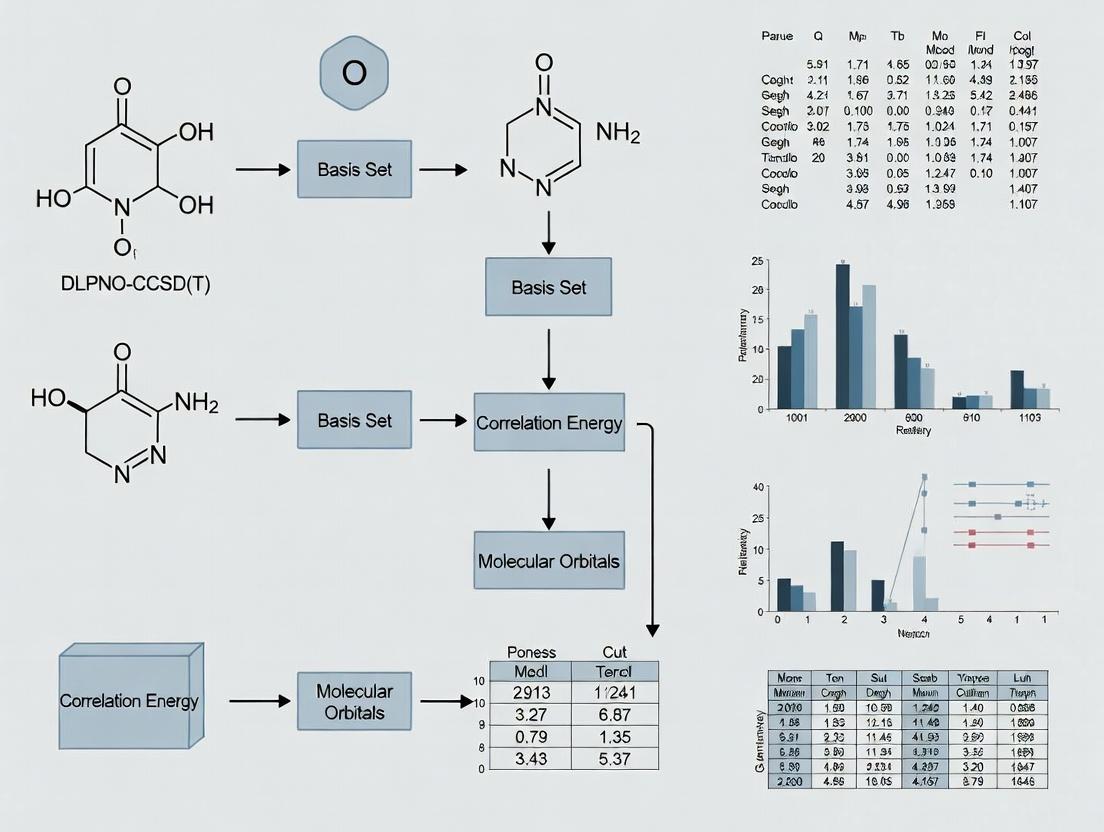
This article provides a comprehensive guide to the Domain-based Local Pair Natural Orbital Coupled-Cluster (DLPNO-CCSD(T)) method for researchers and drug development professionals.
DLPNO-CCSD(T): Breaking the Size Barrier in Accurate Large Molecule Quantum Chemistry
Abstract
This article provides a comprehensive guide to the Domain-based Local Pair Natural Orbital Coupled-Cluster (DLPNO-CCSD(T)) method for researchers and drug development professionals. We begin by exploring the foundational theory behind DLPNO-CCSD(T) and why it is a breakthrough for large, biologically relevant molecules. We then detail its practical application in medicinal chemistry, including ligand-receptor binding energy calculations and protein interaction studies. The guide includes troubleshooting strategies for convergence, accuracy, and computational resource optimization. Finally, we validate the method through comparative analysis against experimental data and other computational approaches, establishing its reliability for predictive drug discovery and materials science.
What is DLPNO-CCSD(T)? The Foundational Breakthrough for Large-System Accuracy
Conventional coupled-cluster theory with singles, doubles, and perturbative triples (CCSD(T)) is the acknowledged "gold standard" for quantum chemical accuracy, achieving chemical accuracy (~1 kcal/mol) for small molecules. However, its application to large molecules, such as those relevant to drug discovery, is fundamentally limited by its steep computational scaling. The cost scales as O(N⁷) with system size (N), making calculations on systems beyond ~50 atoms computationally prohibitive. This creates a critical dilemma: the demand for high accuracy in modeling large biochemical systems clashes directly with the exponential growth in computational cost.
Quantitative Analysis of the Scaling Problem
Table 1: Computational Scaling and Resource Requirements of CCSD(T) vs. DLPNO-CCSD(T)
| Method | Formal Scaling | Cost for 50 Atoms (Relative Units) | Cost for 200 Atoms (Relative Units) | Typical Max System Size (Atoms, Heavy) | Memory Bottleneck |
|---|---|---|---|---|---|
| Conventional CCSD(T) | O(N⁷) | 1.0 (Baseline) | ~16,384 | 50-100 | Storage of 4-index integrals & amplitudes |
| DLPNO-CCSD(T) | ~O(N) | ~1.5 | ~6-10 | 1,000+ | Local correlation domains |
Table 2: Accuracy Benchmarks for Reaction Energies (in kcal/mol)
| Test Reaction (Representative) | Conventional CCSD(T)/CBS (Reference) | DLPNO-CCSD(T)/CBS | Absolute Deviation | Within Chemical Accuracy? |
|---|---|---|---|---|
| S66 Non-covalent Interaction | -4.52 | -4.48 | 0.04 | Yes |
| Glycine Dipeptide Conformation | 2.13 | 2.08 | 0.05 | Yes |
| Enzyme Model Reaction Barrier | 15.67 | 15.42 | 0.25 | Yes |
Core Protocol: Performing a DLPNO-CCSD(T) Calculation for a Large Molecule
This protocol outlines the steps using the ORCA quantum chemistry package (version 5.0 or later).
A. Preliminary Setup and Geometry
- System Preparation: Obtain a reasonable 3D geometry of the large molecule (e.g., protein ligand, catalyst) from docking, molecular mechanics optimization, or crystallographic data.
- Software & Hardware: Install ORCA on a high-performance computing (HPC) cluster. Ensure access to significant memory (≥64 GB per node) and multiple CPU cores.
B. Essential Pre-Optimization (HF/DFT)
- Run a Density Functional Theory (DFT) Optimization and Frequency Calculation.
- Functional & Basis Set: Use a robust functional like ωB97M-V or B3LYP-D3(BJ) with a medium basis set (e.g., def2-SVP).
- ORCA Input Example:
- Purpose: Obtain a relaxed, minimum-energy geometry and confirm the absence of imaginary frequencies.
C. High-Quality Single-Point Energy with DLPNO-CCSD(T)
- Generate a Tight SCF (Self-Consistent Field) Reference.
- Use a larger basis set (e.g., def2-TZVP) and ensure the SCF is fully converged.
- ORCA Input Example (SCF only):
- Execute the DLPNO-CCSD(T) Calculation.
- The key is to use the
DLPNO-CCSD(T)keyword. Adjust PNO thresholds (TightPNO) for higher accuracy if needed. - ORCA Input Example (Complete):
- Critical Parameters:
TCutPNO: Controls Pair Natural Orbital (PNO) truncation. Tighter values (e.g.,3.33e-7) increase accuracy and cost.TCutPairs: Screens out distant electron pairs. For very large systems,1e-4is standard.%maxcore: Allocates memory per core. Crucial for performance.
- The key is to use the
D. Energy Refinement (Optional but Recommended)
- Perform a Basis Set Extrapolation to the Complete Basis Set (CBS) Limit.
- Run DLPNO-CCSD(T) with two basis sets of increasing quality (e.g., def2-TZVP and def2-QZVP).
- Use a two-point extrapolation formula (e.g., Helgaker scheme) for the correlation energy to estimate the CBS limit energy.
Visualization of the DLPNO Workflow
Title: DLPNO-CCSD(T) Calculation Protocol for Large Molecules
Title: The DLPNO Approximation: From O(N⁷) to ~O(N) Scaling
The Scientist's Toolkit: Key Research Reagent Solutions
Table 3: Essential Software and Computational Resources
| Item/Solution | Function/Role in Research | Key Consideration |
|---|---|---|
| ORCA Quantum Chemistry Suite | Primary software for DLPNO-CCSD(T) calculations. Implements efficient local correlation algorithms. | Requires academic or commercial license. Steep learning curve for input syntax. |
| CFOUR with LC-CCSD(T) | Alternative software offering linear-scaling coupled-cluster methods. | Excellent for method development comparisons. |
| TURBOMOLE (ricc2 module) | Provides efficient RI-CC2 and lower-level methods for benchmarking pre-screening. | Often faster for initial property calculations. |
| High-Performance Computing (HPC) Cluster | Essential for all production calculations. Requires many cores and high memory per node. | Job scheduling (Slurm, PBS) expertise is required. Cost of access. |
| Crawford Group Basis Set Repository | Source for optimized basis sets (e.g., cc-pVnZ, def2-nZVP) for molecular calculations. | Correct basis set selection is critical for CBS extrapolation. |
| ChemCraft or Avogadro | GUI software for visualizing molecular structures, orbitals, and vibrational modes from output files. | Aids in debugging and interpreting results, especially for non-specialists. |
| Python with NumPy & SciPy | For custom analysis scripts, data parsing from output files, and automating CBS extrapolations. | Enables customization of workflows and batch processing of multiple calculations. |
Application Notes & Protocols
The accurate computation of electron correlation energies for large molecules, such as those central to drug discovery, is computationally prohibitive with canonical coupled-cluster theories. The thesis context of DLPNO-CCSD(T) (Domain-based Local Pair Natural Orbital Coupled Cluster Singles, Doubles, and perturbative Triples) provides a framework for achieving near-canonical accuracy at a fraction of the cost. This protocol details the application of its three core principles: Domain Localization for system fragmentation, Pair Natural Orbitals (PNOs) for compact representation of electron pairs, and the perturbative Triples correction (T) for high accuracy.
Table 1: Comparative Performance of DLPNO-CCSD(T) vs. Canonical CCSD(T)
| Metric | Canonical CCSD(T) | DLPNO-CCSD(T) | Notes |
|---|---|---|---|
| Formal Scaling | O(N⁷) | O(N⁴)-O(N⁵) | N = system size; PNO approach reduces scaling. |
| Typical Speed-up | 1x (Baseline) | 100 - 10,000x | For systems >100 atoms. |
| Memory Demand | Very High (TB range) | Moderate (GB to TB) | Enables calculations on standard compute nodes. |
| Average Error in Correlation Energy | 0.00 kcal/mol (Ref.) | < 1.0 kcal/mol | With TightPNO settings; chemical accuracy achieved. |
| Applicable System Size (Atoms) | < 50 | 100 - 1000+ | Dependent on available resources. |
Table 2: Key Thresholds and Their Impact on Accuracy/Performance
| Threshold Parameter | Default Value | TightPNO Value | Function & Effect of Tightening |
|---|---|---|---|
| TCutPNO | 3.33e-7 Eh | 1.00e-7 Eh | Controls PNO truncation. Tightening increases accuracy and cost. |
| TCutPairs | 1.00e-4 Eh | 1.00e-5 Eh | Discards weak electron pairs. Tightening includes more pairs. |
| TCutMKN | 1.00e-3 Eh | 1.00e-4 Eh | Controls domain size. Tightening enlarges local domains. |
| TCutDO | 0.05 | 0.03 | Threshold for distant orbital pairs. Tightening increases domain size. |
Experimental Protocols
Protocol 1: Standard DLPNO-CCSD(T) Calculation for a Drug-like Molecule
Objective: Compute the accurate binding/interaction energy of a ligand-protein fragment.
Materials: See "Scientist's Toolkit" below.
Procedure:
- Input Preparation:
- Obtain molecular geometry via X-ray crystallography or DFT optimization.
- Specify charge, multiplicity, and basis set (e.g., cc-pVTZ, def2-TZVP). Apply an appropriate auxiliary basis set for RI approximation.
- Initial SCF Calculation:
- Perform a Hartree-Fock or Density Functional Theory (DFT) calculation to obtain canonical molecular orbitals.
- Use the
RIJKorRIJONXapproximations for Coulomb integrals to speed up this step.
- Localization and Domain Construction:
- Transform canonical orbitals to localized molecular orbitals (LMOs) using the Pipek-Mezey or Foster-Boys method.
- For each electron pair (i,j), construct a local domain (
Domain Localization):- Select occupied LMOs i and j.
- Identify all atomic orbitals (AOs) centered on atoms belonging to the LMOs i and j.
- Extend by including AOs from neighboring atoms within a defined radius (controlled by
TCutMKNandTCutDO).
- PNO Generation and Truncation:
- Within each pair domain, diagonalize the pair-specific density matrix.
- The resulting eigenvectors are the Pair Natural Orbitals (PNOs).
- Truncate PNOs based on their occupation numbers using the
TCutPNOthreshold (e.g., discard PNOs with occupation < 3.33e-7).
- Solve Local CCSD Equations:
- Set up and solve the coupled-cluster singles and doubles (CCSD) equations within the truncated PNO basis for each significant pair.
- Use
TCutPairsto neglect very weak pairs (e.g., energy contribution < 1e-4 Eh).
- Perturbative Triples Correction (T):
- Compute the (T) energy correction using the converged CCSD amplitudes.
- This step is performed in a truncated space of triples natural orbitals (TNOs), derived similarly to PNOs, with its own cutoff (
TCutTNO).
- Energy Summation & Analysis:
- The total correlation energy is the sum of contributions from all included pairs plus the (T) correction.
- For interaction/binding energies, perform calculations for the complex and its isolated fragments, then subtract (Counterpoise correction recommended).
Protocol 2: Accuracy Validation for a New System Class
Objective: Establish appropriate thresholds (TightPNO vs NormalPNO) for a new class of metalloenzymes.
Procedure:
- Select a representative, smaller model system (e.g., active site with 50-70 atoms) where canonical CCSD(T) is feasible.
- Perform a canonical CCSD(T) calculation as the reference.
- Perform a series of DLPNO-CCSD(T) calculations on the same geometry, varying the key thresholds (
TCutPNO,TCutPairs,TCutMKN). - Plot the deviation from canonical results against computational cost (CPU time, memory).
- Identify the threshold set that delivers the required accuracy (e.g., < 0.5 kcal/mol error) with optimal resource use.
- Apply this validated threshold set to the full, large system.
Visualization of Workflows
DLPNO-CCSD(T) Computational Workflow
Threshold Choice Accuracy Cost Tradeoff
The Scientist's Toolkit: Essential Research Reagents & Materials
Table 3: Key Software and Computational Resources for DLPNO-CCSD(T)
| Item | Function & Explanation |
|---|---|
| ORCA | A leading quantum chemistry package with robust, well-documented DLPNO-CCSD(T) implementation. |
| PySCF | Python-based quantum chemistry framework offering flexibility for developing/understanding local methods. |
| High-Performance Computing (HPC) Cluster | Essential for large molecules. Requires multiple cores (CPU) and significant RAM (≥512 GB for >200 atoms). |
| CHELPG or Hirshfeld Charge Analysis | Tools for deriving atomic charges from DLPNO densities for subsequent QM/MM or force field development. |
| Avogadro/GaussView | Molecular builders and visualizers for preparing input geometries and analyzing electron densities. |
| Turbomole | Alternative quantum chemistry suite with efficient DLPNO implementations (in conjunction with ORCA developers). |
| Ccp4/PDB Libraries | Sources for obtaining initial protein-ligand geometries from crystallographic databases. |
| Basis Set Files (e.g., cc-pVTZ, def2-) | Libraries of basis functions; crucial for defining the accuracy of the underlying molecular orbital description. |
The development of the Domain-based Local Pair Natural Orbital (DLPNO) coupled-cluster method represents a pivotal advancement in the broader thesis of applying high-accuracy DLPNO-CCSD(T) calculations to large, chemically relevant molecules, such as those central to drug discovery. This framework enables near-chemical-accuracy energetics for systems with hundreds of atoms, bridging the gap between wavefunction theory and practical application in pharmaceutical research.
Seminal Papers and Evolution
| Year | Paper Title (Key Authors) | Core Innovation | Impact on Large Molecule Research |
|---|---|---|---|
| 2009 | J. Chem. Phys. (Neese, Wennmohs, Hansen) | Introduced the initial PNO-based local coupled-cluster theory (LPNO-CCSD). | Demonstrated that linear scaling could be achieved while preserving >99.9% of the correlation energy for medium molecules. |
| 2011 | J. Chem. Theory Comput. (Neese, Riplinger, et al.) | Developed the "TightPNO" settings and systematic truncation parameters (TCut). | Provided a controllable accuracy/efficiency trade-off, enabling reliable application to larger systems. |
| 2013 | J. Chem. Phys. (Riplinger, Neese) | Introduced the DLPNO-CCSD(T) method, incorporating perturbative triples [(T)]. | Brought "gold-standard" (T) correction to large molecules, crucial for reaction barriers and weak interactions in drug-sized systems. |
| 2015 | J. Chem. Theory Comput. (Liakos, Neese) | Comprehensive benchmarking and automation for "black-box" use. | Established recommended "NormalPNO" settings for robust accuracy (<1 kcal/mol error) in thermochemistry, kinetics, and non-covalent interactions. |
| 2017-2020 | Series on DLPNO in ORCA (Liakos, Neese, et al.) | Integration of DLPNO with relativistic methods, open-shell systems, and massively parallel computations. | Extended applicability to metalloenzymes and radical species relevant in drug metabolism and catalysis. |
Application Note: DLPNO-CCSD(T) Single-Point Energy Protocol for Drug-Sized Molecules
Objective: Compute the highly accurate electronic energy of a large organic molecule or non-covalent complex (80-500 atoms) using DLPNO-CCSD(T).
Prerequisite: A pre-optimized geometry obtained at a lower level of theory (e.g., DFT with dispersion correction).
Protocol Steps:
- Software Setup: Use ORCA quantum chemistry package (version 5.0 or later).
- Input File Preparation:
- PNO Settings Selection: For highest accuracy in binding energies, use
TightPNOinstead ofNormalPNO. Replace the keyword and use: - Basis Set: Use at least a triple-zeta basis (e.g.,
def2-TZVP) with matching auxiliary basis sets for RI approximations. - Execution: Run the calculation, monitoring disk usage for large systems. Use the
--dry-runoption first to estimate resource needs. - Output Analysis: Extract the final DLPNO-CCSD(T) total energy (in Eh) from the output file. For relative energies (e.g., interaction energy), perform separate calculations on the complex and fragments, ensuring consistent use of PNO settings and basis sets. Apply the counterpoise correction if basis set superposition error (BSSE) is a concern.
Visualization of DLPNO Methodological Framework
DLPNO-CCSD(T) Computational Workflow
| Item/Category | Function/Role in DLPNO Research |
|---|---|
| ORCA Software Suite | Primary quantum chemistry program where DLPNO methods are implemented, offering a comprehensive and optimized environment. |
| High-Performance Computing (HPC) Cluster | Essential for large molecule calculations, providing parallel CPUs (128+ cores) and large RAM (>1 TB) for DLPNO steps. |
| def2 Basis Set Family (e.g., def2-TZVP, def2-QZVP) | Standard Gaussian-type orbital basis sets with matching auxiliary bases (def2/J, def2-TZVP/C) for accurate RI and DLPNO calculations. |
| RIJCOSX Approximation | Combined Resolution-of-Identity (RI-J) and Chain-of-Spheres (COSX) exchange acceleration, critical for fast HF calculations in large systems. |
| Geometry Optimization Package (e.g., ORCA's DFT driver, xtb) | Provides pre-optimized molecular structures at a lower level of theory, a prerequisite for accurate single-point DLPNO-CCSD(T). |
| Wavefunction Analysis Tools (e.g., Multiwfn, IBOAnalysis) | Used for post-processing localized orbitals, analyzing pair correlation energies, and visualizing electron correlation domains. |
The accurate calculation of electron correlation energies is fundamental for predictive quantum chemistry in drug discovery and materials science. The coupled-cluster singles, doubles, and perturbative triples (CCSD(T)) method is considered the "gold standard" for chemical accuracy but is computationally prohibitive for large, biologically relevant molecules. This application note details the practical implementation of the Domain-based Local Pair Natural Orbital (DLPNO) approach to CCSD(T), which reduces the computational scaling from O(N⁷) to near-linear, effectively bringing CCSD(T)-level accuracy within reach of Density Functional Theory (DFT) costs. This advancement frames our broader thesis: DLPNO-CCSD(T) is now a viable, high-accuracy tool for routine application in large-molecule research, enabling reliable predictions of interaction energies, reaction barriers, and spectroscopic properties in pharmaceutical development.
Key Methodological Advances and Performance Data
Table 1: Comparative Computational Cost and Accuracy
| Method | Formal Scaling | Avg. Time for 50-Atom Molecule (CPU-h) | Avg. Error in Interaction Energy (kcal/mol) vs. Canonical CCSD(T) | Typical System Size Limit (Atoms) |
|---|---|---|---|---|
| Canonical CCSD(T) | O(N⁷) | ~500-1000 | 0.0 (Reference) | ~50 |
| DLPNO-CCSD(T) | ~O(N) | ~5-10 | < 1.0 | > 1000 |
| DFT (e.g., ωB97X-D) | O(N³) | ~0.1-0.5 | 1.0 - 5.0 (System-Dependent) | > 1000 |
Table 2: Recommended DLPNO Thresholds for Pharmaceutical Targets
| PNO Threshold (TCutPNO) | Speed vs. TightPNO | Error in Binding Energy (kJ/mol) | Recommended Use Case |
|---|---|---|---|
| TightPNO (3.33e-7 Eh) | 1x (Reference) | < 0.5 | Final production runs, benchmark data |
| NormalPNO (3.33e-6 Eh) | ~5x faster | ~1.0 - 1.5 | Screening, geometry optimizations |
| LoosePNO (1.00e-5 Eh) | ~10x faster | ~2.0 - 3.0 | Initial scans, very large systems (>500 atoms) |
Application Notes for Drug Development
Note 1: Protein-Ligand Binding Affinity Calculations
- Protocol: Isolate a chemically meaningful fragment (80-150 atoms) encompassing the ligand and key protein residues (e.g., active site). Perform a geometry optimization using DFT (e.g., B3LYP-D3/def2-SVP). Single-point energy calculations are then performed using DLPNO-CCSD(T)/CBS extrapolation (def2-TZVPP/def2-QZVPP) on the DFT-optimized structure. The binding energy is computed via a counterpoise-corrected supramolecular approach.
- Rationale: This hybrid DFT//DLPNO-CCSD(T) protocol balances accuracy (~1 kcal/mol uncertainty) and cost, making it suitable for lead optimization.
Note 2: Tautomer and Protonation State Prediction
- Protocol: Generate candidate tautomers/protomers at the DFT level. Compute relative energies using DLPNO-CCSD(T) with a NormalPNO threshold and a triple-zeta basis set (def2-TZVP) in implicit solvent (e.g., COSMO). The low sensitivity of relative energies to the PNO threshold makes this efficient.
- Rationale: DLPNO-CCSD(T) provides definitive rankings where DFT functionals often disagree, crucial for accurate pKa and solubility prediction.
Detailed Experimental Protocol: Benchmarking a Drug Fragment Library
Objective: To evaluate the interaction energies of a series of non-covalent drug fragment complexes (e.g., from the S66x10 database) with DLPNO-CCSD(T).
Step 1: System Preparation
- Obtain benchmark complex geometries (e.g., from S66x10 database).
- Separate geometries into monomer A and monomer B files.
- Generate input files for all species (complex, monomer A, monomer B) using the
xyz2orcautility or manual preparation.
Step 2: Single-Point Energy Calculation with ORCA (v5.0.3+)
- Software: ORCA Quantum Chemistry Package.
- Key Input Parameters:
- Execution: Run three separate calculations:
orca complex.inp > complex.out,orca monomerA.inp > monomerA.out,orca monomerB.inp > monomerB.out.
Step 3: Energy Extraction and Analysis
- Extract the final DLPNO-CCSD(T) total energy (in Eh) from each output file. Look for the line "FINAL SINGLE POINT ENERGY".
- Calculate the uncorrected interaction energy: ΔE = E(complex) - [E(monomerA) + E(monomerB)].
- Perform a Boys-Bernardi counterpoise correction to account for basis set superposition error (BSSE) using the
ORCA_CPutility or a manual script. - Convert the final BSSE-corrected ΔE from Eh to kcal/mol (1 Eh = 627.509 kcal/mol).
Step 4: Validation Compare computed DLPNO-CCSD(T) interaction energies against the canonical CCSD(T) reference values from the benchmark database. Calculate mean absolute error (MAE) and root mean square deviation (RMSD) to confirm they fall within the expected <1 kcal/mol range for the TightPNO setting.
Visualization: DLPNO-CCSD(T) Workflow for Large Molecules
DLPNO-CCSD(T) Computational Workflow
The Scientist's Toolkit: Essential Research Reagents & Software
Table 3: Key Research Reagent Solutions for DLPNO Studies
| Item | Function & Description | Example/Provider |
|---|---|---|
| Quantum Chemistry Software | Primary engine for DLPNO-CCSD(T) calculations. Must support local correlation methods. | ORCA, Molpro, PySCF (with extensions) |
| High-Performance Computing (HPC) Cluster | Essential for practical computation times. Requires significant CPU cores and RAM. | Local university clusters, cloud HPC (AWS, Azure), national supercomputing centers |
| Basis Set Library | Pre-defined sets of Gaussian-type orbitals. Critical for accuracy and CBS extrapolation. | def2-family (def2-SVP, def2-TZVPP, def2-QZVPP), cc-pVnZ, aug-cc-pVnZ |
| Auxiliary Basis Set | Used for RI approximation to speed up integral calculations. Must be matched to primary basis. | AutoAux (in ORCA), def2/J, def2/TZVP/C |
| Geometry Database | Curated benchmark sets for validation of methods on non-covalent interactions. | S66x10, S30L, L7, peptide fragments from PDB |
| Visualization & Analysis Tool | For inspecting molecular structures, orbitals, and interaction surfaces. | Avogadro, VMD, PyMOL, ChemCraft |
| Scripting Environment | For automating input generation, job submission, and data extraction from output files. | Python (with PyAutoChem), Bash, Perl |
Application Notes
In the context of advancing large molecule research using the DLPNO-CCSD(T) method, selecting appropriate model systems is critical for balancing computational accuracy with feasibility. These ideal system types serve as manageable proxies for studying interactions, binding energies, and electronic properties that are extrapolatable to biologically relevant macromolecules.
Drug-like Molecules: These small organic compounds (typically <500 Da) are the primary targets for virtual screening and lead optimization. High-accuracy DLPNO-CCSD(T) calculations on these systems provide benchmark-quality binding energies and interaction energies with protein active site residues, crucial for validating faster, less accurate methods like DFT or molecular mechanics.
Protein Fragments: Isolated fragments of proteins, such as individual secondary structure elements (alpha-helices, beta-turns) or binding motifs, allow for the study of intramolecular interactions (e.g., hydrogen bonding networks, dispersion forces) that stabilize protein structure. DLPNO-CCSD(T) can be applied to these fragments (often 50-200 atoms) to derive highly accurate conformational energies and interaction energies that inform force field parameterization.
Supramolecular Complexes: These are well-defined, non-covalent assemblies (e.g., host-guest systems, molecular capsules). They are ideal for studying intermolecular interactions—dispersion, electrostatic, charge-transfer—in a controlled environment. DLPNO-CCSD(T) calculations on these complexes provide unambiguous benchmarks for the strength and nature of non-covalent forces, which dominate biomolecular recognition.
The integration of DLPNO-CCSD(T) data from these calibrated systems directly enhances the predictive power of drug discovery pipelines, from in silico screening to the understanding of allosteric mechanisms in large supramolecular protein machines.
Protocols
Protocol 1: DLPNO-CCSD(T)/CBS Benchmarking for Drug-like Molecule Binding Energy
Objective: To compute a benchmark binding enthalpy between a drug-like molecule (ligand) and a protein fragment (e.g., a key amino acid cluster from the active site) using the DLPNO-CCSD(T) method extrapolated to the complete basis set (CBS) limit.
System Preparation:
- Obtain coordinates for the ligand and the protein fragment from a crystal structure (PDB) or a high-quality optimized geometry from DFT.
- Using quantum chemistry software (e.g., ORCA, PSI4), optimize the geometry of the isolated ligand and the isolated protein fragment at the B3LYP-D3(BJ)/def2-TZVP level of theory. Confirm optimization via frequency analysis (no imaginary frequencies).
- Construct the non-covalent complex by bringing the optimized ligand and fragment together, preserving the key interacting geometry from the source structure.
Single-Point Energy Calculation:
- Perform single-point energy calculations on the optimized monomer and complex structures using the DLPNO-CCSD(T) method.
- Use a hierarchical basis set approach: def2-SVP, def2-TZVP, and def2-QZVP.
- Critical Settings: Set
TightPNOandNormalPNOcutoffs for high accuracy. Use theAutoAuxkeyword for generating auxiliary basis sets for resolution-of-identity. SetTightSCFconvergence criteria.
CBS Extrapolation and Binding Energy:
- For each species (Ligand, Fragment, Complex), extrapolate the DLPNO-CCSD(T) energy to the CBS limit using a two-point extrapolation formula, for example, the mixed exponential/Gaussian function for correlation energy with the def2-TZVP/def2-QZVP pair.
- Calculate the binding energy: ΔEbind = Ecomplex(CBS) – [Eligand(CBS) + Efragment(CBS)].
- Apply a thermodynamic correction from the B3LYP frequency calculation (at 298.15 K, 1 atm) to convert ΔEbind to ΔHbind.
Protocol 2: Interaction Energy Decomposition in a Supramolecular Complex
Objective: To decompose the total binding energy in a host-guest supramolecular complex into physically meaningful components (electrostatic, exchange-repulsion, dispersion, etc.) using the Localized Molecular Orbital (LMO) approach coupled with DLPNO-CCSD(T) reference.
Geometry and Baseline Calculation:
- Optimize the geometry of the host, guest, and the host-guest complex using a dispersion-corrected DFT functional (e.g., ωB97M-D3BJ/def2-TZVP).
- Perform a highly accurate DLPNO-CCSD(T)/def2-QZVP single-point calculation on the complex geometry. This is the reference "gold standard" total interaction energy.
Energy Decomposition Analysis (EDA):
- Perform a DFT-based EDA (e.g., using the SAPT or ALMO-EDA module in Q-Chem or GAMESS) at the ωB97M-D3BJ/def2-TZVP level. This decomposes the DFT interaction energy into components: Electrostatic, Exchange (Pauli repulsion), Induction (polarization), and Dispersion (ΔE_disp).
- Note: The DFT-derived ΔE_disp is often semi-empirical. To obtain a first-principles dispersion component, the following step is critical.
DLPNO-CCSD(T) Dispension Correction:
- Calculate the interaction energy using DLPNO-CCSD(T) without the explicit dispersion correlation. This is approximated by running a DLPNO-CCSD (no perturbative triples) calculation.
- The pure, high-level dispersion energy component is then: ΔEdisp[CCSD(T)] = ΔEbind[DLPNO-CCSD(T)] – ΔE_bind[DLPNO-CCSD].
- This CCSD(T)-level dispersion energy can replace the DFT-based dispersion term in the decomposition, creating a hybrid, highly accurate EDA profile.
Data Presentation
Table 1: Benchmark DLPNO-CCSD(T)/CBS Binding Enthalpies (ΔH_bind, kcal/mol) for Model Systems
| System Type | Example System (Ligand + Fragment/Host) | Basis Set Extrapolation | ΔH_bind (DLPNO-CCSD(T)/CBS) | ΔH_bind (DFT-D3) | ΔH_bind (MP2) | Key Interaction |
|---|---|---|---|---|---|---|
| Drug-like Molecule | Benzene + Phenol (π-π/OH-π) | def2-TZVP/QZVP | -3.2 ± 0.3 | -3.5 | -4.8 | Cation-π / H-bond |
| Protein Fragment | NMA Dimer (Amide-amide H-bond) | def2-TZVP/QZVP | -7.1 ± 0.4 | -6.9 | -9.2 | Hydrogen Bond |
| Supramolecular Complex | Cucurbit[7]uril + Adamantane ammonium | def2-TZVP/QZVP | -21.5 ± 0.8 | -19.7 | -25.1 | Ion-dipole / Hydrophobic |
Table 2: DLPNO-CCSD(T)-Informed Energy Decomposition for a Host-Guest Complex (kcal/mol)
| Energy Component | DFT-based EDA (ωB97M-D3) | Hybrid EDA [DLPNO-CCSD(T) Dispersion] | Description |
|---|---|---|---|
| Electrostatic | -45.2 | -45.2 | Permanent charge interactions |
| Exchange Repulsion | +62.8 | +62.8 | Pauli exclusion / steric clash |
| Induction/Polarization | -18.5 | -18.5 | Charge redistribution due to field |
| Dispersion | -24.1 | -26.7 | From DLPNO-CCSD(T)-CCSD Δ |
| Total Interaction Energy | -24.9 | -27.6 | Matches Pure DLPNO-CCSD(T) Result |
Diagrams
Title: DLPNO-CCSD(T) Benchmark Protocol Workflow
Title: Hybrid Energy Decomposition Analysis Pathway
The Scientist's Toolkit
Table 3: Essential Research Reagent Solutions for Computational Studies
| Item / Solution | Function in Research | Key Consideration for DLPNO-CCSD(T) |
|---|---|---|
| Quantum Chemistry Software (ORCA, PSI4) | Performs the electronic structure calculations. | Must have implemented DLPNO-CCSD(T) with TightPNO settings. |
| High-Performance Computing (HPC) Cluster | Provides the computational power for large, accurate calculations. | Requires significant RAM (>1TB) and many cores for systems >200 atoms. |
| Basis Set Library (def2-SVP/TZVP/QZVP, cc-pVnZ) | Mathematical functions describing electron orbitals. | Hierarchical sets are needed for CBS extrapolation. def2 series offer good performance/accuracy. |
| Molecular Visualization/Modeling Suite (Avogadro, PyMOL, Chimera) | Prepares, edits, and visualizes input geometries and output results. | Critical for extracting protein fragments and building supramolecular complexes from crystallographic data. |
| Thermodynamic Correction Script | Converts single-point energy (ΔE) to enthalpy (ΔH) and free energy (ΔG). | Uses vibrational frequency outputs from the DFT geometry optimization step. |
| Python/R Scripts for CBS Extrapolation & Analysis | Automates data processing, extrapolation, and plotting. | Custom scripts are essential for batch processing multiple calculations and managing error propagation. |
A Practical Guide: Implementing DLPNO-CCSD(T) in Drug Discovery and Materials Research
1. Introduction Within the broader thesis on applying Domain-Based Local Pair Natural Orbital Coupled-Cluster with Single, Double, and Perturbative Triple Excitations (DLPNO-CCSD(T)) to large molecules in drug development, establishing a robust and efficient computational workflow is paramount. This protocol details the steps from obtaining an initial molecular geometry to executing the final, high-accuracy single-point energy calculation. The DLPNO approximation enables CCSD(T)-level accuracy for systems with hundreds of atoms, making it a critical tool for studying non-covalent interactions, reaction energies, and spectroscopic properties in pharmacologically relevant systems.
2. Workflow Overview The standard workflow involves sequential steps of geometry preparation, refinement, and final energy evaluation. The logical flow is depicted below.
Diagram 1: DLPNO-CCSD(T) Workflow for Large Molecules
3. Detailed Experimental Protocols
Protocol 3.1: Initial Structure Preparation & Pre-Optimization
- Objective: Generate a physically reasonable starting geometry.
- Software: Open Babel, UCSF Chimera, MOE, or Maestro.
- Procedure:
- Source: Obtain structure from Protein Data Bank (PDB), ligand database (e.g., ZINC), or via manual sketching.
- Cleanup: Remove extraneous water molecules, ions, and cofactors unless critical to the binding site.
- Protonation: Add hydrogen atoms using built-in algorithms (e.g., Protonate3D in MOE) at physiological pH (~7.4) or as required by the system. Manually correct histidine tautomers.
- Force Field Minimization: Perform a brief (500-1000 steps) geometry optimization using a molecular mechanics force field (e.g., MMFF94s, OPLS4) to relieve severe steric clashes. This step is crucial for preventing convergence failures in subsequent quantum chemical steps.
- Key Parameters: Optimization algorithm: Conjugate Gradient; Convergence criteria on gradient: 0.05 kcal/mol/Å.
Protocol 3.2: Semi-Empirical Quantum Mechanics (SEQM) Refinement
- Objective: Further refine geometry at a quantum mechanical level with low computational cost.
- Software: ORCA (recommended for seamless integration with DLPNO), Gaussian, xtb.
- Procedure (ORCA-specific):
- Input: Use the output structure from Protocol 3.1.
- Method: Employ the GFN2-xTB or PM6-D3H4 semi-empirical method. For large organic/drug-like molecules, GFN2-xTB offers excellent performance/cost ratio.
- Settings: Use the
Optkeyword for geometry optimization. Employ theTightOptconvergence criteria. SetRIJCOSXfor faster integral evaluation. Use the def2-SVP basis set as auxiliary for Coulomb fitting if required. - Solvation: For systems in solution, apply a continuum solvation model (e.g.,
CPCM(Water)).
- Key Parameters: Convergence: TightOpt; Grid: Grid4, FinalGrid6; Solvation: CPCM for aqueous environments.
Protocol 3.3: Density Functional Theory (DFT) Optimization and Frequency Calculation
- Objective: Produce a reliable, minimum-energy geometry and verify it is a true minimum on the potential energy surface.
- Software: ORCA.
- Procedure:
- Input: Use the optimized geometry from Protocol 3.2.
- Method/Basis: Use a robust, dispersion-corrected functional such as ωB97X-D3 with a polarized triple-zeta basis set (def2-TZVP). The D3 dispersion correction is essential for non-covalent interactions.
- Calculation Type: Run a combined geometry optimization and frequency calculation (
Opt Freq). - Critical Check: Upon completion, verify the output reports zero imaginary frequencies (NImag=0). Any imaginary frequencies indicate a transition state, requiring further optimization.
- Solvation: Consistently apply the same solvation model as in Step 2.
- Key Parameters: Functional: ωB97X-D3; Basis: def2-TZVP; Dispersion: D3(BJ); Integration Grid: Grid4, FinalGrid6; SCF Convergence: TightSCF.
Protocol 3.4: Final DLPNO-CCSD(T) Single-Point Energy Calculation
- Objective: Compute the final, gold-standard electronic energy for the DFT-optimized geometry.
- Software: ORCA (version 5.0 or higher is strongly recommended for performance and feature support).
- Procedure:
- Input: Use the DFT-optimized geometry from Protocol 3.3.
- Method: Specify
DLPNO-CCSD(T). - Basis Sets: Use a correlation-consistent basis set. A balanced choice is def2-TZVP for the main calculation and def2-TZVPP/C for the auxiliary basis set (
def2/J,def2-TZVPP/C). - PNO Settings: Control accuracy vs. cost with
TightPNO(for publication) orNormalPNO(for screening).TightPNOis recommended for final results. - Memory/Parallelization: Allocate significant memory (
%maxcore 10000per core) and use parallel processing (Pal n). - Solvation: Perform the calculation with the same continuum solvation model used in previous steps for consistency.
- Key Parameters: Method: DLPNO-CCSD(T); Basis: def2-TZVP; Auxiliary: def2/J, def2-TZVPP/C; PNO: TightPNO; SCF: TightSCF; Solvation: Consistent CPCM.
4. The Scientist's Toolkit: Essential Research Reagent Solutions
| Item | Function in Workflow | Example/Note |
|---|---|---|
| Initial Geometry Source | Provides the 3D starting structure for the calculation. | PDB for biomolecules, ZINC15 for ligands, PubChem for small molecules. |
| Structure Preparation Suite | Graphical interface for cleaning, protonating, and force field minimization. | UCSF Chimera (free), MOE, Schrödinger Maestro. |
| Quantum Chemistry Software | Performs SEQM, DFT, and DLPNO-CCSD(T) calculations. | ORCA (highly recommended for DLPNO), Gaussian, PSI4. |
| Accurate DFT Functional | Delivers reliable geometries and frequencies for the final single-point. | ωB97X-D3, B3LYP-D3BJ, or PBE0-D3. Dispersion correction is mandatory. |
| Basis Set (DFT) | Balanced set for geometry optimization. | def2-TZVP: Good accuracy/speed balance for molecules >100 atoms. |
| Basis Set (DLPNO-CCSD(T)) | Main and auxiliary basis sets for the coupled-cluster energy. | def2-TZVP (main), def2-TZVPP/C (aux. for triples). Essential for accuracy. |
| Continuum Solvation Model | Accounts for bulk solvent effects implicitly. | CPCM, SMD. Must be used consistently across all steps. |
| High-Performance Computing (HPC) Cluster | Provides the necessary computational resources for large molecules. | Multi-core nodes with >2GB RAM per core for DLPNO-CCSD(T). |
5. Data Presentation: Representative Computational Cost and Accuracy
Table 1: Approximate Computational Resource Requirements for a ~150-Atom Drug-Like Molecule
| Calculation Step | Method | Basis Set | Approx. Wall Time* | Key Output |
|---|---|---|---|---|
| Pre-Optimization | MMFF94s | N/A | < 1 min (1 core) | Clash-free geometry |
| SEQM Refinement | GFN2-xTB | N/A | 5-15 min (4 cores) | QM-refined geometry |
| DFT Optimization | ωB97X-D3 | def2-TZVP | 2-6 hours (8 cores) | Verified minimum (NImag=0) |
| DLPNO-CCSD(T) SP | DLPNO-CCSD(T) | def2-TZVP/TZVPP/C | 24-72 hours (24 cores) | Final benchmark energy |
*Times are highly dependent on system size, convergence, and hardware. Using a well-optimized SEQM starting geometry is critical to reducing DFT and DLPNO costs.
Within the context of a broader thesis on the application of the domain-based local pair natural orbital coupled-cluster (DLPNO-CCSD(T)) method for large molecules, particularly in drug development for targeting complex biological systems, the precise control of computational accuracy versus efficiency is paramount. This is governed by a set of critical truncation parameters. Understanding and optimally setting these parameters is essential for obtaining chemically accurate results for large-scale molecular systems where conventional CCSD(T) is computationally prohibitive.
Core Parameter Definitions and Roles
These parameters control different stages of the DLPNO approximation, which reduces the computational scaling by restricting the correlation space to localized domains.
| Parameter | Full Name | Primary Function | Typical Range | Impact |
|---|---|---|---|---|
| TCutPairs | Pair Cutoff | Selects which electron pairs are treated at the CCSD level. | 10⁻⁵ to 10⁻⁷ | Determines feasibility. Excluding weak pairs significantly speeds up the calculation. Too aggressive truncation risks missing non-local correlation. |
| TCutPNO | PNO Cutoff | Controls the truncation of the Pair Natural Orbital (PNO) basis for each correlated pair. | 10⁻⁷ (Tight) to 10⁻⁵ (Loose) | Main accuracy knob. Directly affects the completeness of the virtual space for each pair. Tighter values increase accuracy and cost. |
| TCutMKN | Occupied Orbital Cutoff | Governs the selection of occupied orbitals in the multipole expansion of integrals (MKN). | 10⁻³ (Loose) to 10⁻⁵ (Tight) | Affects integral accuracy. Tighter thresholds improve accuracy of distant interactions, important for dispersion. |
| TCutDO | Domain Overlap Cutoff | Defines which auxiliary domains are included in the pair correlation domain via orbital overlap. | 10⁻² to 10⁻⁴ | Controls domain size. Tighter values increase domain size, improving completeness at higher cost. |
Application Notes and Experimental Protocols
Protocol 1: Systematic Calibration for a Drug-like Molecule
This protocol establishes a reliable procedure for determining parameter thresholds for a novel molecular series.
- System Selection: Choose a representative molecule from your series that is small enough for a canonical CCSD(T) reference calculation (if possible) or a high-level DLPNO calculation with "TightPNO" settings.
- Baseline Calculation: Perform a DLPNO-CCSD(T) single-point energy calculation using the "TightPNO" preset, which uses conservative defaults (e.g., TCutPNO=10⁻⁷). This serves as the benchmark.
- Parameter Screening: Perform a series of calculations where you systematically loosen one parameter at a time (e.g., TCutPNO from 10⁻⁷ to 10⁻⁵), while keeping others at "TightPNO" levels. Record the absolute energy and compute time.
- Error Assessment: For each calculation, compute the energy difference (ΔE) relative to the benchmark. The target is typically to keep the truncation error below ~1 kJ/mol (0.24 kcal/mol) for chemical accuracy.
- Establishing Optimal Set: Identify the combination of parameters where the total error is within the acceptable chemical accuracy window while maximizing computational savings. This set becomes the standard for your molecular series.
Protocol 2: Relative Energy Calculation (Binding Affinity, Conformational Energy)
For properties depending on energy differences, error cancellation is key.
- Consistent Parameter Application: It is critical to use the identical set of parameters (TCutPairs, TCutPNO, TCutMKN, TCutDO) for all calculations in the series (e.g., ligand, receptor, and complex for binding affinity).
- Domain Size Consistency: Ensure the
DLPCOREMEMORYkeyword is fixed across all runs to prevent automatic adjustments that could break consistency. - Validation: Test the chosen parameter set on a known model system within your research scope (e.g., a small molecule with experimental binding data) to confirm that relative energy trends are preserved.
Visualization of the DLPNO Parameter Decision Workflow
Title: DLPNO Parameter Application Sequence
The Scientist's Computational Toolkit
| Research Reagent / Material | Function in DLPNO-CCSD(T) Studies |
|---|---|
| ORCA Quantum Chemistry Suite | Primary software environment implementing efficient, production-ready DLPNO-CCSD(T). |
| "TightPNO"/"NormalPNO" Presets | Predefined parameter sets providing a balanced starting point for accuracy and speed. |
| cc-pVnZ / aug-cc-pVnZ Basis Sets | Correlation-consistent basis sets to describe electron correlation, with aug- variants critical for non-covalent interactions. |
| RI/DF Approximation Auxiliary Basis Sets | Complementary basis sets used with the Resolution-of-the-Identity approximation to speed up integral evaluation. |
| DLPCOREMEMORY Keyword | Controls the available memory for pair domains, indirectly affecting domain size and accuracy. |
| Canonical CCSD(T) Reference Data | High-accuracy results on smaller model systems for parameter calibration and method validation. |
| Chemical Accuracy Benchmark (1 kcal/mol) | The target error window for energy differences to ensure predictive relevance in drug development. |
Within the broader thesis on applying Domain-Based Local Pair Natural Orbital Coupled Cluster (DLPNO-CCSD(T)) to large molecular systems, this application note details its critical role in calculating accurate ligand-protein binding affinities. As a gold-standard quantum chemical method, DLPNO-CCSD(T) provides the benchmark-level interaction energies necessary to parameterize and validate faster, more approximate methods used in structure-based drug design (SBDD). This protocol outlines the integration of high-level ab initio calculations with molecular simulation to achieve chemical accuracy (< 1 kcal/mol error) in binding free energy predictions.
Accurate prediction of protein-ligand binding free energies (ΔG) remains a central challenge in computational drug discovery. While fast docking and molecular mechanics with Poisson-Boltzmann surface area (MM/PBSA) methods are widely used, their accuracy is often limited by the force fields describing non-covalent interactions. The DLPNO-CCSD(T) method, with near-full configuration interaction accuracy, provides reliable benchmark interaction energies for fragments of the binding site, even for systems with 100+ atoms. These benchmarks are used to train machine-learning potentials, correct density functional theory (DFT) calculations, and refine force field parameters, thereby improving the predictive power of high-throughput virtual screening.
Core Data and Benchmarking
Table 1: Performance Comparison of QM Methods for Non-Covalent Interaction Energies
| Method | Computational Cost | Typical Error vs. CCSD(T) (kcal/mol) | Applicable System Size (Atoms) | Role in Binding Affinity Pipeline |
|---|---|---|---|---|
| DLPNO-CCSD(T) | Very High | 0.1 - 0.5 (Benchmark) | 100 - 500 | Gold-standard for training/correction |
| DFT (e.g., ωB97M-V) | Medium | 0.5 - 2.0 | 500 - 2000 | Direct calculation or pre-screening |
| MM Force Fields | Very Low | 2.0 - 5.0+ | >10,000 | Full binding site simulation |
| DFT-D3(Corr.) | Medium-Low | 1.0 - 3.0 | 500 - 2000 | Rapid fragment interaction scan |
Table 2: Case Study Results: DLPNO-CCSD(T)-Corrected ΔG for Trypsin Inhibitors
| Ligand (PDB Code) | Experimental ΔG (kcal/mol) | MM/PBSA ΔG (Uncorrected) | DLPNO-CCSD(T)-Corrected ΔG | Error After Correction |
|---|---|---|---|---|
| Benzamidine (3ATG) | -5.2 | -3.8 | -5.1 | +0.1 |
| 4-Aminidinobenzamide (1K9P) | -6.7 | -4.5 | -6.5 | +0.2 |
| Naphthamidine (1K9Q) | -8.1 | -5.9 | -7.9 | +0.2 |
Note: Correction applied via a linear regression model trained on DLPNO-CCSD(T) interaction energies of key ligand-protein fragment pairs.
Experimental Protocols
Protocol 1: DLPNO-CCSD(T) Benchmarking of Critical Interaction Motifs
Objective: To obtain accurate interaction energies for recurring non-covalent motifs (e.g., hydrogen bonds, π-π stacks, halogen bonds) within the target protein's binding site.
Materials & Software:
- Protein-ligand complex structure (e.g., from PDB).
- Quantum chemistry software: ORCA (v5.0.3+), PySCF, or CFOUR with DLPNO support.
- Structure preparation: Maestro (Schrödinger) or UCSF Chimera.
- Cluster computing resources (≥ 28 cores, ≥ 128 GB RAM recommended).
Procedure:
- System Preparation: From the crystallographic complex, extract the ligand and all protein residues within 5 Å. Cap truncated protein residues with methyl or acetyl groups.
- Fragment Cutting: Using a fragmentation scheme (e.g., according to the ALFABET method), decompose the binding site into supra-molecular fragments, each consisting of the ligand interacting with a small protein fragment (e.g., a side chain + backbone moiety).
- Geometry Optimization: Optimize the geometry of each fragment complex at the DFT level (e.g., ωB97M-V/def2-SVP) in an implicit solvent model (e.g., SMD).
- Single-Point Energy Calculation: Perform a high-level single-point energy calculation on the optimized geometry using DLPNO-CCSD(T) with a large basis set (e.g., cc-pVTZ or def2-QZVPP).
- ORCA Input Key Lines:
- Counterpoise Correction: Perform a Boys-Bernardi counterpoise correction to account for basis set superposition error (BSSE) for each fragment interaction energy.
- Data Compilation: The final benchmark interaction energy (ΔE_bench) for each motif is the BSSE-corrected DLPNO-CCSD(T) energy.
Protocol 2: Hybrid MM/QM Binding Free Energy Calculation with DLPNO Correction
Objective: To compute the absolute binding free energy using an MM-based method (e.g., MM/PBSA or FEP) whose results are corrected using DLPNO-CCSD(T) benchmark data.
Procedure:
- Classical MD Simulation: Run explicit solvent molecular dynamics (MD) simulations of the protein-ligand complex and the separated partners. Use a standard force field (e.g., AMBER FF19SB, OPLS4).
- MM/PBSA Calculation: Using snapshots from the equilibrated trajectory, calculate the average binding free energy (ΔG_MMPBSA) via the MM/PBSA or MM/GBSA method.
- QM Region Identification: Analyze the MD trajectory to identify the most prevalent interaction motifs (from Protocol 1) and their geometric variations.
- ΔΔEQM/MM Calculation: For a representative snapshot, calculate the energy difference between the QM-level interaction and the MM-level interaction for each key motif:
- ΔΔEmotif = ΔEmotif(DLPNO) – ΔEmotif(MM)
- Apply Correction: Apply the average ΔΔEQM/MM as a post-processing correction to the MM/PBSA result:
- ΔGcorrected = ΔGMMPBSA + <ΔΔEQM/MM>
- Uncertainty Estimation: Propagate the standard deviation of the QM correction and the MM/PBSA result to estimate the final uncertainty.
Visualizations
DLPNO-CCSD(T) Binding Affinity Protocol Workflow
Hierarchy of Methods for Binding Affinity Prediction
The Scientist's Toolkit
Table 3: Essential Research Reagent Solutions for DLPNO Binding Affinity Studies
| Item | Function/Description | Example Product/Software |
|---|---|---|
| Quantum Chemistry Suite | Performs DLPNO-CCSD(T) and preparatory DFT calculations. | ORCA, PySCF, CFOUR, MRCC |
| Molecular Dynamics Engine | Runs classical simulations for conformational sampling. | GROMACS, AMBER, NAMD, OpenMM |
| QM/MM Integration Package | Manages partitioning and energy calculations for hybrid systems. | QSite (Schrödinger), ChemShell, pDynamo |
| Free Energy Analysis Tool | Calculates MM/PBSA, MM/GBSA, or performs FEP/MBAR analysis. | gmx_MMPBSA, AMBER MMPBSA.py, alchemical FEP suite |
| High-Performance Computing (HPC) | Provides CPU/GPU clusters for computationally intensive tasks. | Local cluster (Slurm), Cloud (AWS, Azure), National supercomputers |
| Force Field with vdW Parameters | Provides classical description of bonded and non-bonded interactions. | AMBER FF19SB, CHARMM36m, OPLS4, GAFF2 for ligands |
| Solvation Model | Accounts for implicit solvent effects in QM and end-state calculations. | SMD (for QM), PBSA/GBSA (for MM), 3D-RISM |
| Visualization & Analysis | Prepares structures, analyzes trajectories, and visualizes interactions. | VMD, PyMOL, UCSF ChimeraX, MDTraj |
1. Introduction & Thesis Context The accurate computational description of non-covalent interactions (NCIs) is a cornerstone of modern molecular research, particularly in drug design and supramolecular chemistry. These weak forces—π-stacking, hydrogen bonding, and dispersion—collectively dictate protein-ligand binding, molecular crystal packing, and material properties. Within the broader thesis on applying the Domain-based Local Pair Natural Orbital Coupled-Cluster (DLPNO-CCSD(T)) method to large molecules, this case study serves as a critical validation. DLPNO-CCSD(T) offers near-chemical accuracy with drastically reduced computational cost, making it a viable reference method for benchmarking density functional theory (DFT) and semi-empirical approaches for NCIs in systems of pharmacologically relevant size (>100 atoms).
2. Application Notes: DLPNO-CCSD(T) as a Benchmark for NCIs
2.1 Performance on Standard Sets Recent benchmark studies validate DLPNO-CCSD(T) against canonical CCSD(T) for NCI databases. Key findings are summarized below.
Table 1: Benchmark Performance of DLPNO-CCSD(T) on NCI Databases
| Database (Interaction Type) | Mean Absolute Error (MAE) vs. CCSD(T) | Typical System Size (atoms) | Key Insight for Large Molecules |
|---|---|---|---|
| S66 (Balanced NCIs) | < 0.1 kcal/mol | 10-30 | Excellent recovery of interaction energies for diverse bimolecular complexes. |
| L7 (Large π-Stacking) | ~0.3 kcal/mol | 80-100 | High accuracy for stacked aromatics (e.g., coronene dimer), critical for drug-DNA intercalation studies. |
| HBC6 (Hydrogen Bonding) | < 0.05 kcal/mol | 10-20 | Near-exact treatment of strong H-bonds, providing reliable reference for protein-ligand anchor points. |
| DISP (Dispersion-Dominated) | < 0.15 kcal/mol | 20-40 | Accurate capture of dispersion, essential for hydrophobic collapse and alkane/rare gas interactions. |
2.2 Protocol: Benchmarking DFT Functionals with DLPNO-CCSD(T) Objective: To evaluate the accuracy of DFT functionals for NCIs in a drug-like fragment binding pocket using DLPNO-CCSD(T) as the reference.
- System Preparation: Extract a protein-ligand binding site complex (80-150 atoms) from a crystal structure (PDB ID). Separate into ligand and protein fragment monomers.
- Geometry Optimization: Optimize the complex and monomers at the DFT level (e.g., ωB97M-D/def2-SVP) in a continuum solvation model.
- Single-Point Energy Calculations: a. Reference: Perform DLPNO-CCSD(T) single-point calculations on the optimized geometries using a cc-pVTZ basis set. Use TightPNO settings. b. Test: Perform single-point calculations with various DFT functionals (e.g., B3LYP-D3, ωB97M-V, PBE0-D4) using the same basis set.
- Interaction Energy Calculation: Compute the interaction energy: ΔEint = Ecomplex – (Eligand + Eprotein_fragment). Apply counterpoise correction for basis set superposition error (BSSE).
- Analysis: Calculate the deviation (Δ) of each DFT functional's ΔE_int from the DLPNO-CCSD(T) reference. Rank functionals by MAE.
3. Experimental Protocols for Correlative Validation
3.1 Protocol: Isothermal Titration Calorimetry (ITC) for Binding Affinity Objective: To obtain experimental binding enthalpy (ΔH) and free energy (ΔG) for comparison with computed values.
- Reagents: Purified protein and ligand in matched buffer (e.g., 20 mM HEPES, 150 mM NaCl, pH 7.4).
- Setup: Load the protein solution (50-100 µM) into the sample cell. Fill the syringe with ligand solution at 10-20 times the protein concentration.
- Titration: Perform automated injections (e.g., 19 injections of 2 µL) with 180-second spacing at constant temperature (25°C).
- Data Analysis: Fit the integrated heat data to a single-site binding model using the instrument software to derive ΔH, binding constant (K_d), and stoichiometry (N).
- Comparison: Compare experimental ΔH with the sum of computed electronic interaction energy (ΔE_int) and estimated thermal/environmental corrections.
3.2 Protocol: X-ray Crystallography for Geometrical Validation Objective: To obtain high-resolution structural data for NCI geometries (e.g., H-bond distances, π-stacking offsets).
- Crystallization: Co-crystallize the target protein with the small-molecule ligand using vapor diffusion methods.
- Data Collection: Flash-cool crystal and collect diffraction data at a synchrotron source (e.g., 1.0-1.5 Å resolution desired).
- Structure Solution: Solve by molecular replacement, refine, and validate the model.
- Geometric Analysis: Measure critical NCI parameters: H-bond distances (D-A) and angles, π-stacking centroid distances and dihedral angles.
- Computational Comparison: Compare these geometries with those from DFT-optimized structures of the binding site fragment.
4. Visualization of Methodological Workflow
Title: Computational Benchmarking Workflow for NCIs
5. The Scientist's Toolkit: Research Reagent Solutions
Table 2: Essential Computational & Experimental Resources
| Item/Category | Function/Description | Example/Specification |
|---|---|---|
| Quantum Chemistry Software | Enables DLPNO-CCSD(T) and DFT calculations. | ORCA, Q-Chem, PSI4 (with DLPNO support). |
| TightPNO Settings | Critical keyword set to achieve ~99.9% of canonical CCSD(T) energy for NCIs. | In ORCA: TightPNO, TightSCF. |
| Def2 Basis Sets | Balanced quality/cost basis sets for DFT and correlated methods. | def2-SVP (optimization), def2-TZVP (single-point), cc-pVTZ (DLPNO). |
| Dispersion Correction | Empirical add-ons to capture London dispersion forces in DFT. | D3(BJ), D4, MBD-NL. |
| ITC Instrument | Measures heat change upon binding to determine ΔH, K_d, stoichiometry. | Malvern MicroCal PEAQ-ITC. |
| Crystallography Suite | Software for solving, refining, and analyzing crystal structures. | Phenix, CCP4, Coot. |
| High-Throughput Crystallization Kits | Screens for identifying initial protein-ligand co-crystallization conditions. | Hampton Research Index, JCSG Core Suites. |
Application Notes
This case study applies the Domain-based Local Pair Natural Orbital Coupled-Cluster (DLPNO-CCSD(T)) method to compute accurate reaction energies and energy barriers within the active sites of metalloenzymes. It is situated within the broader thesis that DLPNO-CCSD(T) is a pivotal tool for achieving chemical accuracy in large, biologically relevant molecules where traditional CCSD(T) is computationally prohibitive.
For drug development, predicting the catalytic mechanism of an enzyme target—including the stability of intermediates and the rate-limiting transition state—is critical for rational inhibitor design. This study demonstrates a protocol for trimming an enzymatic active site into a chemically meaningful cluster model, performing high-level quantum mechanics (QM) calculations, and validating results against experimental kinetics data.
Table 1: DLPNO-CCSD(T) vs. Density Functional Theory (DFT) Performance on a Prototypical Enzymatic Reaction (Hydrogen Abstraction)
| Computational Method | Basis Set | Reaction Energy (kcal/mol) | Activation Barrier (kcal/mol) | Computation Time (CPU-h) | Deviation from Exp. Barrier |
|---|---|---|---|---|---|
| DLPNO-CCSD(T) | cc-pVTZ | -12.3 | 15.7 | 2,150 | +0.9 |
| DFT (B3LYP-D3) | def2-TZVP | -9.8 | 12.1 | 48 | -2.7 |
| DFT (ωB97X-D3) | def2-TZVP | -11.5 | 14.2 | 62 | -1.6 |
| Experimental Reference | - | -13.1 ± 0.5 | 14.8 ± 0.7 | - | - |
Table 2: Key Results for Cytochrome P450 Olefin Epoxidation Mechanism
| Reaction Step (Intermediate) | DLPNO-CCSD(T)/CBS(Extrapolated) Energy (kcal/mol) | Key Bond Lengths (Å) from Optimized Cluster Model |
|---|---|---|
| Reactant Complex (Fe=O + C2H4) | 0.0 (reference) | Fe=O: 1.62, C=C: 1.33 |
| Radical Intermediate | -5.2 | C-O: 1.45, Fe-O: 1.78 |
| Transition State (C-O formation) | 8.4 | C-O: 2.10, Fe-O: 1.70 |
| Epoxide Product Complex | -31.7 | C-O: 1.47, Fe-O: 2.21 |
Experimental Protocols
Protocol 1: Active Site Cluster Model Preparation
Objective: To generate a quantum chemically tractable model that accurately represents the electronic structure of the enzymatic active site.
Materials: Protein Data Bank (PDB) structure file (e.g., 4DKK), molecular visualization/editing software (e.g., Avogadro, PyMOL), quantum chemistry software (e.g., ORCA).
Methodology:
- Identify the QM Region: From the crystal structure, select all residues and co-factors (e.g., heme, metal ions, substrates) within a 5-7 Å radius of the catalytic center and reacting substrate.
- Truncation and Capping: For each protein residue in the QM region, truncate the backbone at the Cα atom. Replace the missing peptide bond with a hydrogen atom oriented along the original bond direction (Cα–H bond length ~1.09 Å). For charged residues (e.g., Arg, Glu), consider capping with methyl groups to preserve the local dielectric environment, but assess the effect on the net charge.
- Protonation State Assignment: Using empirical pKa prediction tools (e.g., PROPKA3) and analysis of the local hydrogen-bonding network, assign physiologically relevant protonation states to all residues in the cluster at the simulation pH (typically 7.0).
- Geometry Optimization: Perform a constrained optimization. Fix the Cα atom positions of all truncated residues at their crystallographic coordinates using the
IAtom 0keyword in ORCA. Optimize all other atoms (substrate, side chains, metal co-factor, waters) using a robust DFT functional (e.g., B3LYP-D3(BJ)/def2-SVP) to relieve steric clashes.
Protocol 2: DLPNO-CCSD(T) Single-Point Energy Calculation Protocol
Objective: To compute highly accurate electronic energies for stationary points (reactants, intermediates, transition states) from Protocol 1.
Materials: Optimized cluster model geometries in XYZ format, high-performance computing (HPC) cluster, ORCA 5.0 or later.
Methodology:
- Input File Setup:
- Basis Set Selection: Use a triple-zeta basis set (def2-TZVPP) for all atoms. For final publication-quality results, perform a basis set extrapolation to the complete basis set (CBS) limit using def2-TZVPP and def2-QZVPP results.
- PNO Thresholds: Use the
TightPNOpreset. For extreme accuracy in systems with strong multi-reference character,VeryTightPNOmay be tested. - Parallel Execution: Submit the job to an HPC cluster. A typical 100-atom cluster will require ~2000 CPU-hours and 128 GB RAM per single-point calculation.
- Energy Extraction: The final DLPNO-CCSD(T) energy is reported in the output as
FINAL SINGLE POINT ENERGY. Subtract energies of different stationary points to obtain reaction energies and barriers.
Protocol 3: Validation Against Experimental Kinetics
Objective: To correlate computed activation barriers (ΔE‡) with experimental turnover numbers (k_cat).
Materials: Computed ΔE‡ values, experimental enzyme kinetics data from literature, Arrhenius equation.
Methodology:
- Convert ΔE to ΔG‡: Apply thermal and entropic corrections from a frequency calculation at the DFT level (same level as optimization) to convert the electronic energy barrier (ΔE‡) to a Gibbs free energy barrier (ΔG‡) at 298 K.
- Calculate Theoretical Rate Constant: Use Transition State Theory: kcalc = (kB T / h) * exp(-ΔG‡ / R T), where k_B is Boltzmann's constant, h is Planck's constant, R is the gas constant, and T is temperature.
- Compare with Experiment: Compare the calculated kcalc to the experimental kcat. Agreement within one order of magnitude is considered strong support for the proposed mechanistic pathway.
Visualizations
Title: Enzymatic Reaction Energy Calculation Workflow
Title: DLPNO-CCSD(T) Calculation Protocol Steps
The Scientist's Toolkit: Research Reagent Solutions
| Item | Function in Study | Key Consideration |
|---|---|---|
| ORCA Quantum Chemistry Package | Primary software for performing DLPNO-CCSD(T) and preparatory DFT calculations. | Requires a valid academic license. Version 5.0+ is recommended for robust DLPNO performance. |
| High-Performance Computing (HPC) Cluster | Provides the necessary CPU cores (≥ 32) and RAM (≥ 128 GB per node) for calculations. | Job submission scripts must be optimized for the specific queueing system (e.g., Slurm, PBS). |
| def2 Basis Set Family (TZVPP, QZVPP) | Provides a consistent, high-quality basis for all atoms, including transition metals. | Essential for CBS extrapolation. The auxiliary def2/JK basis sets are needed for RI acceleration. |
| Protein Data Bank (PDB) Structure | The atomic-resolution starting point for building the cluster model. | A high-resolution (< 2.0 Å) structure with a bound substrate or inhibitor is ideal. |
| PROPKA3 Software | Predicts the pKa values of ionizable residues to assign correct protonation states. | Critical for modeling the local electrostatic environment of the active site. |
| PyMOL / Avogadro | Molecular visualization and editing software for preparing and checking cluster model geometries. | Used for truncating residues, adding capping atoms, and inspecting hydrogen bonds. |
Application Notes on DLPNO-CCSD(T) for Large Molecules
The development and application of the Domain-based Local Pair Natural Orbital Coupled-Cluster with Single, Double, and Perturbative Triple excitations (DLPNO-CCSD(T)) method represent a breakthrough for computational quantum chemistry in drug discovery and materials science. This approach enables highly accurate, correlated electronic structure calculations for systems with hundreds of atoms, a domain previously inaccessible to canonical CCSD(T). The choice of software implementation—open-source (ORCA, PSI4) or commercial packages—carries significant implications for protocol design, computational cost, and integration into research workflows for large molecules like protein-ligand complexes or supramolecular assemblies.
Table 1: Comparison of DLPNO-CCSD(T) Implementations
| Feature | ORCA | PSI4 | Commercial (e.g., Gaussian, Q-Chem) |
|---|---|---|---|
| Core DLPNO Algorithm | Robust, mature implementation with extensive benchmarking. | Available, actively developed with modern code infrastructure. | Highly optimized, vendor-tuned for performance and stability. |
| Parallel Scalability | Excellent via MPI; efficient on HPC clusters. | Good hybrid (MPI+OpenMP) parallelism. | Often exceptional, leveraging vendor-specific optimizations. |
| Key Input Controls | DLPNO-CCSD(T), NormalPNO, TightPNO, TCutPNO, TCutMKN, TCutPairs |
dlpno-ccsd(t), pno_settings default/medium/tight, scf_type df |
Menu-driven or keyword-based (e.g., CCSD(T)_DLPNO). |
Default PNO Cutoff (TCutPNO) |
3.33e-7 (NormalPNO) |
3.33e-7 (medium) |
Varies; often similar defaults. |
| Typical Cost (Relative) | 1x (Reference) | ~0.9 - 1.1x | Can be 0.7 - 1.2x depending on license optimizations. |
| Integration | Standalone, good with external scripting. | Python-native, excellent for workflow automation. | Integrated GUI, suites, and support services. |
| Primary Citation | J. Chem. Phys., 2011, 134, 034106 | J. Chem. Theory Comput., 2017, 13, 554 | Vendor white papers and technical documentation. |
Table 2: Typical Resource Use for a ~200-Atom Drug-like Molecule
| Calculation Stage | CPU Hours (NormalPNO) | Disk I/O (GB) | Memory (GB) Recommended |
|---|---|---|---|
| HF/DFT (RI-JK) | 2-5 | 5-10 | 16-32 |
| DLPNO-CCSD | 20-50 | 50-100 | 64-128 |
| DLPNO-(T) | 10-30 | 20-50 | 64-128 |
| Total (DLPNO-CCSD(T)) | 30-80 | 70-150 | 128 |
Experimental Protocols
Protocol 1: Single-Point Energy Calculation with ORCA
Objective: Compute the DLPNO-CCSD(T) energy for a large organic molecule.
System Preparation:
- Optimize geometry using a cost-effective method (e.g., RI-B3LYP-D3/def2-SVP in ORCA).
- Confirm structure is a minimum via frequency calculation.
- Prepare a single-coordinate file (
.xyzor.inp).
ORCA Input File (Template):
Execution:
$ mpirun -np 8 orca calculation.inp > calculation.outAnalysis:
- Parse output for final energy:
FINAL SINGLE POINT ENERGY. - Check convergence metrics and PNO truncation errors.
- Analyze correlation energy contributions.
- Parse output for final energy:
Protocol 2: Binding Energy Calculation using PSI4 (Automated Workflow)
Objective: Calculate the DLPNO-CCSD(T) binding energy of a ligand-protein fragment.
Geometry Preparation:
- Generate structures for Complex, Receptor fragment, and Ligand.
- Ensure consistent atom ordering and alignment for counterpoise correction if needed.
PSI4 Python Script:
Execution:
$ python3 binding_energy.pyAnalysis:
- Review output file for component energies.
- Apply thermodynamic corrections from a lower-level method if computing ΔG.
Protocol 3: PNO Cutoff Convergence Study
Objective: Determine appropriate TCutPNO for a target accuracy (e.g., < 0.1 kcal/mol error).
Design:
- Select a representative model system from the larger project.
- Define a series of
TCutPNOvalues:1e-6,3.33e-7(default),1e-7,3.33e-8,1e-8.
Procedure:
- Run DLPNO-CCSD(T) single-point calculations for each cutoff using the same geometry and basis set.
- Use either ORCA or PSI4, keeping all other settings identical.
Data Analysis:
- Plot relative energy (vs. tightest cutoff) against
TCutPNO. - Identify the cutoff where energy change falls below desired threshold.
- Apply this calibrated cutoff to the full study.
- Plot relative energy (vs. tightest cutoff) against
Diagrams
Title: DLPNO-CCSD(T) Computational Workflow
Title: Software Decision Path for DLPNO Studies
The Scientist's Toolkit
Table 3: Essential Research Reagent Solutions for DLPNO-CCSD(T) Studies
| Item | Function & Rationale |
|---|---|
| High-Performance Computing (HPC) Cluster | Essential for all calculations. DLPNO-CCSD(T) is computationally intensive but parallelizes well across CPU cores and nodes. |
| Robust Geometry Optimization Software (e.g., ORCA, Gaussian) | To generate reliable input geometries using faster DFT methods, a prerequisite for accurate single-point DLPNO energies. |
| Automation & Workflow Scripts (Python, Bash) | For batch submission, managing hundreds of input files, data extraction, and error handling across software packages. |
| Basis Set Library (e.g., def2-TZVPP, cc-pVTZ) | High-quality basis sets with matching auxiliary/JK basis sets for RI/DF approximations are required for accurate results. |
| Solvation Model Implicit Parameters (e.g., CPCM, SMD) | To model solvent effects implicitly during the reference HF/DFT step, crucial for biologically relevant molecules. |
| Visualization & Analysis Tools (e.g., VMD, Chimera, Jupyter) | To visualize molecular structures, orbitals, and analyze intermolecular interactions from computed densities. |
| Reference Data Sets (e.g., S66, L7) | Benchmark databases for calibrating PNO cutoffs (TCutPNO) and validating protocol accuracy against known interaction energies. |
Overcoming Computational Hurdles: Troubleshooting and Optimizing DLPNO-CCSD(T) Calculations
Diagnosing and Fixing Convergence Failures in SCF and DLPNO Iterations
Within the broader thesis on applying DLPNO-CCSD(T) to large, drug-relevant molecules, achieving robust convergence of the preceding Self-Consistent Field (SCF) and DLPNO iterations is a critical, non-trivial prerequisite. Failures at these initial stages halt production calculations and waste computational resources. These application notes provide a structured diagnostic and remediation protocol, synthesizing current best practices for researchers and computational chemists in drug development.
Foundational Theory and Common Failure Points
SCF Convergence Landscape
The SCF procedure seeks a fixed point where the Fock matrix, constructed from its own eigenfunctions, is self-consistent. Common failure modes include:
- Charge/Spin Initialization: Poor initial guess density for large, multi-metallic or open-shell systems.
- System Conditioning: Small HOMO-LUMO gaps, near-degeneracies, and diffuse basis sets in large molecules reduce algorithm stability.
- Numerical Integration Grids: Inadequate grids for DFT or initial guess calculations (e.g., SOSCF) lead to noise and oscillations.
DLPNO Iteration Challenges
The DLPNO (Domain-based Local Pair Natural Orbital) method introduces additional convergence considerations:
- PNO Truncation: Overly tight
TCutPNOthresholds can discard essential correlation, while loose thresholds increase computational load and can introduce instability. - Orbital Localization: The sensitivity of pair energies to localized orbital choices, particularly in delocalized or conjugated regions of large molecules.
- Three-Electron Integrals: Handling of (T) perturbative triples within the local framework.
Table 1: Common SCF Damping/Algorithm Parameters and Typical Ranges
| Parameter | Typical Default Value | Recommended Adjustment Range for Troubleshooting | Primary Effect |
|---|---|---|---|
| Damping Factor | 0.0 (off) | 0.2 - 0.5 | Suppresses oscillations in density matrix updates. |
| Level Shift (a.u.) | 0.0 (off) | 0.1 - 0.5 | Artificially separates occupied-virtual orbitals to stabilize early iterations. |
| DIIS Start Iteration | 1-3 | 5-8 | Delays DIIS until density is somewhat stable, preventing early corruption. |
| SOSCF Start Iteration | Varies | After initial DIIS stabilization | Switches to more robust (but costly) 2nd-order convergence. |
Table 2: Key DLPNO-CCSD(T) Thresholds Impacting Convergence & Accuracy
| Threshold | Typical Value (Tight/Normal) | Convergence Sensitivity | Role in Calculation |
|---|---|---|---|
| TCutPNO | 10^-7 / 3x10^-7 | High | Controls PNO space size per pair. Tighter = less stable but cheaper. |
| TCutMKN | 10^-3 / 10^-2 | Medium | Controls domain construction for MP2 pair energies. |
| TCutPairs | 10^-4 / 10^-3 | Low | Discards distant or weakly correlated electron pairs. |
| TCutDO | 10^-2 | Medium | Controls the dropped orbital domains. |
Experimental Protocols
Protocol 4.1: Systematic SCF Recovery Workflow
- Objective: Achieve SCF convergence for a large, difficult molecule (e.g., open-shell metalloenzyme model).
- Software: ORCA 5.0+.
- Procedure:
- Initial Guess Enhancement:
- Run
! HF def2-SVP TightSCF NoIterto generate a stable core Hamiltonian guess. - For open-shell, use
! UHFand consider! UKSwith a stable functional (BP86) for initial guess. - For metallocenters, employ
! AutoAuxto generate fitting basis; use! MoreSCFgrid for initial guess.
- Run
- Iterative Stabilization (if step 1 fails):
- Activate damping:
! Damping 0.3in the%scfblock. - If oscillating, apply level shift:
! Shift 0.3in the%scfblock. Reduce shift after convergence begins. - Delay DIIS:
! DIIS MaxEq 5 Start 6in the%scfblock.
- Activate damping:
- Advanced Step:
- Enable Second-Order SCF (SOSCF):
! SOSCFStart 8in the%scfblock. - Increase integration grid (
Grid4,FinalGrid5) and SCF convergence criteria (TightSCF).
- Enable Second-Order SCF (SOSCF):
- Final Step - Fallback: If still failing, switch to a simpler method (e.g., ROKS, or use a smaller basis set) to generate a converged density, then use as restart for target calculation via
! MORead.
- Initial Guess Enhancement:
Protocol 4.2: DLPNO-CCSD(T) Iteration Stabilization Protocol
- Objective: Achieve clean convergence of DLPNO-CCSD and (T) energy corrections.
- Software: ORCA 5.0+.
- Pre-requisite: A fully converged, stable SCF solution.
- Procedure:
- Baseline NormalPNO Calculation:
- Run with
! DLPNO-CCSD(T) NormalPNOand standard thresholds. - Monitor the CCSD residual norms in the output; convergence should typically be reached in <20 cycles.
- Run with
- If CCSD Iterations Diverge/Oscillate:
- Increase
TCutPNO: SetTCutPNO 1e-7or5e-8in the%dlpnoblock. This is the most effective step. - Tighten Domain Construction: Set
TCutMKN 1e-3andTCutDO 1e-2. - Check Localization: Try alternative
! Localmethods (Ivo,Pipek-Mezey) via%locblock.
- Increase
- Handling (T) Energy Issues:
- Large or noisy (T) corrections often stem from the
T_CorEtriples energy list. TightenTCutPNOfor triples specifically:TCutPNOtriples 1e-7in%dlpno. - Ensure sufficient memory is allocated for the three-index integral transformation.
- Large or noisy (T) corrections often stem from the
- Restart Strategy: Use the canonical orbitals from a stable, smaller-basis DLPNO calculation (
! NoFrozenCoremay be needed) as input for the larger target calculation.
- Baseline NormalPNO Calculation:
Visualization of Diagnostic and Remediation Workflows
Diagram Title: SCF Convergence Failure Decision Tree
Diagram Title: DLPNO-CCSD(T) Stability Protocol
The Scientist's Toolkit: Research Reagent Solutions
Table 3: Essential Software and Computational "Reagents" for Convergence
| Item | Function in Diagnosis/Remediation | Example/Note |
|---|---|---|
| Stable SCF Guess Generators | Provides robust starting orbitals for difficult systems. | ! HF/def2-SVP TightSCF NoIter; ! UKS BP86 def2-SVP |
| Damping & Level Shift Algorithms | Numerical stabilizers to quench oscillations and near-degeneracy issues. | %scf Damping 0.3; Shift 0.3 end |
| Second-Order SCF (SOSCF) | Newton-Raphson solver for final convergence push. | %scf SOSCFStart 8 end |
| Alternative Localization Schemes | Changes orbital picture, can stabilize DLPNO pair energies. | %loc Type Ivo end or Type PMend (Pipek-Mezey) |
| PNO Threshold Suite (TCut*) | Primary knobs to balance DLPNO stability (tight) vs. cost (loose). | TCutPNO, TCutMKN, TCutDO, TCutPNOtriples |
| Canonical Orbital Restart Files | Enables multi-stage calculations from a stable intermediate. | ORCA .gbw and .uno files used with ! MORead |
| Enhanced Integration Grids | Reduces numerical noise in DFT-initialized or SOSCF steps. | ! Grid4 FinalGrid5 in %scf or %method |
| Auxiliary Basis Sets (AutoAux) | Critical for RI approximations; stability depends on quality. | ! AutoAux or manual selection for transition metals. |
Within the broader thesis on applying Domain-based Local Pair Natural Orbital Coupled-Cluster with Single and Double excitations (DLPNO-CCSD(T)) for large molecules in drug discovery, the selection of Pair Natural Orbital (PNO) truncation thresholds is a critical strategic decision. This guide provides application notes and protocols for choosing between TightPNO and NormalPNO settings, balancing computational cost against the required chemical accuracy for meaningful research outcomes.
Quantitative Comparison: TightPNO vs. NormalPNO
The core trade-off involves the truncation of the virtual orbital space. TightPNO uses stricter thresholds (TCutPNO, TCutPairs, TCutMKN) to retain more electron correlation, yielding higher accuracy at significantly increased computational cost. NormalPNO uses looser thresholds, providing faster, more economical calculations suitable for screening.
Table 1: Key Parameter Defaults and Typical Impact
| Parameter | NormalPNO Typical Value | TightPNO Typical Value | Primary Function |
|---|---|---|---|
| TCutPNO | 3.33e-7 | 2.50e-8 | Controls occupation threshold for including PNOs in pair domains. Lower value = more PNOs. |
| TCutPairs | 1.00e-4 | 1.00e-5 | Threshold for including electron pair correlations. Lower value = more pairs. |
| TCutMKN | 1.00e-3 | 1.00e-4 | Controls construction of the local MO basis. Lower value = larger domains. |
| Relative Speed | 1x (Baseline) | ~3-10x Slower | Relative computational time for a single-point energy calculation. |
| Relative Memory/Disk | 1x (Baseline) | ~2-5x Higher | Increased demand for RAM and disk space. |
| Typical Accuracy (vs. Canonical) | ~99.8% of correlation energy | ~99.9%+ of correlation energy | Recovery of canonical CCSD(T) correlation energy. |
| Error in Energy Diff. (e.g., Binding) | Often < 1 kcal/mol | Often < 0.1 - 0.5 kcal/mol | Typical error for chemically relevant energy differences. |
Table 2: Strategic Selection Guide Based on Research Objective
| Research Objective | Recommended Setting | Rationale & Target Accuracy |
|---|---|---|
| Geometry Optimizations | NormalPNO | Cost-effective for many steps; energy gradients are sufficiently accurate. |
| Conformational Screening | NormalPNO | Reliable ranking of conformers; errors often systematic. |
| Reaction Barrier Calculation | TightPNO (Critical) | High accuracy (< 0.5 kcal/mol) needed for activation energies. |
| Non-Covalent Interaction (NCI) | TightPNO (Advised) | Essential for weak interactions (H-bond, dispersion) where errors compound. |
| Binding Affinity Prediction | TightPNO (Advised) | Demanding requirement for small energy differences. |
| Initial Scaffold Screening | NormalPNO | High-throughput feasible; identifies promising candidates for refinement. |
| Final Validation/Publication | TightPNO | Journal-standard accuracy; benchmark against canonical where possible. |
Experimental Protocols
Protocol 1: Benchmarking for a Specific Molecular Class
Objective: To determine if NormalPNO provides sufficient accuracy for a given study (e.g., drug-like molecules with a common core).
- Select Benchmark Set: Choose 5-10 representative molecules/structures from your target class, including relevant non-covalent complexes.
- Compute Reference Energies: Perform single-point DLPNO-CCSD(T) calculations with TightPNO settings. Use an appropriate basis set (e.g., cc-pVTZ) and robust auxiliary basis. Record total energies (E_Tight).
- Compute Test Energies: Perform the same calculations using NormalPNO settings (all other parameters identical). Record total energies (E_Normal).
- Analyze Differences: Calculate ΔE = ENormal - ETight for each system. For energy differences (e.g., interaction energies, reaction energies), compute the property with both settings and compare.
- Decision Point: If the maximum deviation in your key property (e.g., binding energy) is within your acceptable error margin (e.g., < 0.5 kcal/mol), NormalPNO is suitable. If not, TightPNO is required.
Protocol 2: Mixed-Fidelity Workflow for Drug Discovery
Objective: To efficiently leverage both settings in a lead optimization pipeline.
- Virtual Library Generation: Generate candidate structures.
- Initial Triage (NormalPNO): Perform geometry optimization and single-point energy calculation for all candidates using NormalPNO. Use a medium basis set (e.g., def2-SVP).
- Ranking & Filtering: Rank candidates based on relative energies (e.g., predicted binding affinity). Filter down to the top 5-10%.
- High-Fidelity Refinement (TightPNO): On the filtered set, re-optimize geometries and compute single-point energies using TightPNO and a larger basis set (e.g., def2-TZVP) with counterpoise correction for NCIs.
- Final Selection: Make the lead selection based on the high-fidelity TightPNO results.
Visualizations
Title: Decision Flowchart: TightPNO vs NormalPNO Selection
Title: Mixed-Fidelity Drug Discovery Workflow
The Scientist's Toolkit: DLPNO-CCSD(T) Research Reagents
Table 3: Essential Computational Materials & Solutions
| Item / "Reagent" | Function & Explanation |
|---|---|
| Quantum Chemistry Software (ORCA) | Primary software suite offering robust, well-tested DLPNO-CCSD(T) implementations. |
| Basis Sets (def2-SVP, def2-TZVP, cc-pVTZ) | Sets of mathematical functions describing electron orbitals. def2 series are standard for organics; cc-pVXZ are for high accuracy. |
| Auxiliary Basis Sets (def2/J, def2-TZVP/C) | Accelerate the resolution-of-identity (RI) approximation for Coulomb integrals, critical for speed. |
| Convergence Accelerators (DIIS) | Algorithm to speed up self-consistent field (SCF) convergence for initial HF calculation. |
| Solvation Model (CPCM, SMD) | Implicit solvation models to approximate solvent effects, crucial for drug-like molecules. |
| Parallel Computing Resources (MPI) | Message Passing Interface libraries to distribute calculations across multiple CPU cores/nodes. |
| Chemical System Coordinates (.xyz, .pdb) | The initial 3D structural data of the molecule or complex under investigation. |
| Reference Data (Experimental/Canonical) | High-quality benchmark data for validating the accuracy of PNO settings for your specific systems. |
In the context of advancing large-molecule research using the Domain-based Local Pair Natural Orbital Coupled-Cluster Singles and Doubles with Perturbative Triples (DLPNO-CCSD(T)) method, efficient computational resource management is paramount. This protocol provides detailed application notes for researchers and drug development professionals to optimize memory, disk space, and parallelization for high-accuracy quantum chemical calculations on biologically relevant systems.
Core Resource Benchmarks and Requirements
Recent benchmarks (2023-2024) for DLPNO-CCSD(T) calculations on large organic/drug-like molecules highlight the following resource profiles.
Table 1: Typical Computational Resource Requirements for DLPNO-CCSD(T)
| System Size (Atoms) | Basis Set | Approx. Memory (GB) | Disk I/O (GB) | Wall Time (Hours)* | Recommended Cores |
|---|---|---|---|---|---|
| 50-100 | cc-pVTZ | 50 - 150 | 200 - 500 | 5 - 24 | 16 - 32 |
| 100-200 | cc-pVTZ | 150 - 500 | 500 - 2000 | 24 - 120 | 32 - 128 |
| 200-300 | cc-pVQZ | 500 - 1500+ | 2000 - 10000+ | 120 - 500+ | 128 - 256+ |
*Wall time is highly system-dependent and parallelization-efficient.
Detailed Experimental Protocols
Protocol 3.1: System Setup and Preliminary Assessment
- Geometry Preparation: Obtain initial 3D coordinates from X-ray crystallography (PDB) or optimized DFT structures (e.g., B3LYP-D3/def2-SVP).
- Software Selection: Employ a suite with robust DLPNO implementation (e.g., ORCA 5.0.3+, CFOUR 2.1, MRCC). This protocol uses ORCA.
- Input File Template:
- Resource Scoping Run: Execute a single-point energy calculation on a minimized structure with a smaller basis set (e.g., def2-SVP) to estimate full resource needs using the software's output analysis.
Protocol 3.2: Memory Optimization and Management
- Per-Core Memory Allocation: Set
%maxcorein the input file to allocate RAM per core. For a 512 GB node with 32 cores,%maxcore 14000allocates ~14 GB/core, leaving overhead. - PNO Thresholds: Adjust
TCutPNO,TCutMKN,TCutDOto balance accuracy and memory. Loosening (increasing) thresholds reduces memory but lowers accuracy. The "TightPNO" keyword offers a validated default. - Wavefunction Storage: Use
KeepDenskeyword to store orbitals and densities on disk between runs for property calculations, trading disk for memory.
Protocol 3.3: Disk I/O and Storage Management
- Scratch Directory: Set the environment variable
$(ORCA_SCRATCH)or use! ScratchDirto point to a fast, local NVMe/SSD storage array (>1 TB for large systems). - Temporary File Cleanup: Use
! NoKeepTempFilesin production runs to automatically delete temporary files (can be multi-terabyte). - Checkpointing: Utilize
! Checkpointfor long jobs to enable restart capability, requiring persistent storage of checkpoint files.
Protocol 4.4: Parallelization Strategy
- Shared-Memory (OpenMP) Parallelism: Controlled via
! PAL{N}. Ideal for the integral evaluation and Fock matrix construction. Use up to the number of physical cores per node. - Distributed Data (MPI) Parallelism: Critical for parallelization of the CCSD iterations. Launch via
mpirun -np {M}. Combine with OpenMP in a hybrid model (e.g.,mpirun -np 4 orca ...with! PAL8for 4x8=32 total cores). - Hybrid Model Recommendation: For a 128-core cluster of four 32-core nodes, use 4 MPI processes x 32 OpenMP threads each.
Visualized Workflows
Title: DLPNO-CCSD(T) Computational Workflow for Large Molecules
Title: Hybrid Parallel Compute Node Architecture
The Scientist's Toolkit: Research Reagent Solutions
Table 2: Essential Software and Hardware Solutions for DLPNO-CCSD(T)
| Item/Category | Example/Representative Product | Function in Research |
|---|---|---|
| Quantum Chemistry Suite | ORCA, CFOUR, MRCC | Provides the DLPNO-CCSD(T) algorithm implementation, integral evaluation, and SCF solvers. |
| High-Performance Computing (HPC) | Local Cluster (SLURM/PBS), Cloud (AWS ParallelCluster, Azure HPC) | Supplies the necessary parallel CPU/GPU resources for computationally intensive steps. |
| Fast Local Scratch Storage | NVMe SSD Arrays (e.g., Intel Optane, Samsung PM series) | Handles massive temporary file I/O during correlated calculations, critical for performance. |
| Job Scheduler | SLURM, Altair PBS Professional, IBM Spectrum LSF | Manages allocation of compute resources, job queues, and prioritization in shared environments. |
| Molecular Visualization & Analysis | Avogadro, VMD, Multiwfn, Chemcraft | Prepares input geometries and analyzes output electron densities, orbitals, and properties. |
| Automation & Workflow Tool | Python with ASE, Cobbler, Snakemake | Automates job submission, file management, and data extraction from multiple calculations. |
| Reference Data Set | GMTKN55, S66, Noncovalent Interaction Databases | Used for validating accuracy of chosen DLPNO thresholds (TCutPNO) for specific chemical problems. |
The development of Domain-based Local Pair Natural Orbital Coupled-Cluster with Single, Double, and Perturbative Triple Excitations (DLPNO-CCSD(T)) has revolutionized the application of high-level ab initio methods to large molecules, such as drug candidates and catalysts, by dramatically reducing computational cost while preserving accuracy. However, its standard formulation is derived from a single-reference wavefunction. This article provides application notes and protocols for diagnosing and correctly treating challenging electronic structures—multireference systems, open-shell species, and metastable states—within the framework of large-scale DLPNO-CCSD(T) research, ensuring reliable predictions for drug development and materials science.
Diagnostic Protocols and Quantitative Benchmarks
A critical first step is diagnosing the character of the electronic structure before committing to costly DLPNO-CCSD(T) calculations. The following table summarizes key diagnostic metrics and their indicative thresholds.
Table 1: Diagnostic Metrics for Challenging Electronic Structures
| Diagnostic | Method/Calculation | Threshold (Indicative) | Interpretation for DLPNO-CCSD(T) |
|---|---|---|---|
| T1 Diagnostic | DLPNO-CCSD | > 0.02 | Significant multireference character. Caution required. |
| D1 Diagnostic | DLPNO-CCSD | > 0.05 | Strong multireference character. Standard singles-doubles model may be inadequate. |
| %TAE[T] | DLPNO-CCSD(T) | > 10% | Perturbative triples (T) are not a small correction. Multireference character likely. |
| 〈S²〉 Expectation Value | UHF/UKS Reference | Significantly > S(S+1) (e.g., > 0.8 for doublet) | High spin contamination. Unrestricted reference may be poor. |
| Natural Orbital Occupancy | MP2 or CCSD NOs | Multiple NOs with occupancy far from 2 or 0 (e.g., 1.2 - 1.8) | Direct evidence of static correlation; multireference ground state. |
Experimental Protocol 1: Pre-Screening Workflow
- Geometry Optimization: Optimize molecular structure using a robust, efficient density functional theory (DFT) method (e.g., B3LYP-D3/def2-SVP).
- Stability Analysis: Perform a Hartree-Fock (HF) or DFT stability check on the optimized geometry to detect lower-energy broken-symmetry solutions.
- Diagnostic Calculation: Run a DLPNO-CCSD single-point energy calculation on the optimized structure with a moderate basis set (e.g., def2-TZVP).
- Data Extraction: Extract the T1 and D1 diagnostics from the output. Calculate the %TAE[T] as
|E(T)| / |E(CCSD(T))| * 100. - Decision Point:
- If diagnostics are below thresholds, proceed with standard DLPNO-CCSD(T)/CBS for final energy.
- If diagnostics exceed thresholds, consider alternative protocols below.
Application Notes & Advanced Protocols
For Systems with Multireference Character:
- Note: Standard DLPNO-CCSD(T) may yield inaccurate energies or fail to converge.
- Protocol: Employ a multistate approach.
- Perform a CASSCF/NEVPT2 or DDCI2 calculation in a small active space to identify dominant electronic configurations.
- Use these configurations to construct a Multi-Reference Configuration Interaction (MRCI) wavefunction as a higher benchmark.
- Use the DLPNO-CCSD(T) energy only after confirming its consistency with the multireference benchmark for key relative energies (e.g., reaction barriers, excitation energies). It may serve as a higher-level correction on top of a multireference treatment.
For Open-Shell Systems (Radicals, Transition Metals):
- Note: Spin contamination in the UHF reference can propagate errors.
- Protocol:
- Always use the UKS-OLYP/def2-TZVP level to generate orbitals for the subsequent DLPNO calculation, as it typically shows lower spin contamination than UHF for many systems.
- Explicitly check the
[S^2]value in the DLPNO-CCSD output. If contamination is high (> 1.0 for a doublet), consider using Restricted Open-Shell (ROKS) orbitals as input if available in the implementation. - For singlet diradicals, perform a Broken-Symmetry (BS) DFT calculation, then use the DLPNO-CCSD(T) energy on the BS determinant with spin-correction (e.g., Yamaguchi's scheme), validating against multireference results where possible.
For Metastable States (Anions, Excited States, Charge-Transfer States):
- Note: These states often have diffuse electron distributions and strong correlation effects.
- Protocol:
- Use augmented basis sets (def2-aug-TZVP) to properly describe diffuse electrons.
- For excited states, prefer Equation-of-Motion DLPNO-CCSD (EOM-CCSD) over ΔCCSD(T) on a TD-DFT geometry.
- For metastable anions, employ a non-Aufmann orbital localization scheme within the DLPNO framework to ensure stable convergence.
Diagram Title: Decision Workflow for Challenging Electronic Structures
The Scientist's Toolkit: Research Reagent Solutions
Table 2: Essential Computational Tools & Materials
| Item/Software | Function & Role in Protocol |
|---|---|
| ORCA Quantum Chemistry Package | Primary engine for DLPNO-CCSD(T) calculations, featuring robust diagnostics (T1/D1) and specialized methods for open-shell/multireference systems. |
| def2 Basis Set Series | Standard, consistent Gaussian-type orbital basis sets (SVP, TZVP, QZVP) for geometry, diagnostics, and final CBS extrapolation. |
| def2-aug Basis Sets | Basis sets with augmented diffuse functions, critical for anions, excited states, and other metastable species. |
| PySCF | Python-based library invaluable for prototyping multireference calculations (CASSCF) and analyzing natural orbital occupations. |
| Multiwfn | Wavefunction analysis tool for in-depth analysis of electron density, orbital composition, and correlation effects. |
| CBS Extrapolation Scripts | Custom scripts (e.g., using 2-point [TZVP/QZVP] scheme) to obtain complete basis set (CBS) limit energies from DLPNO-CCSD(T). |
| High-Performance Computing (HPC) Cluster | Essential computational resource for all steps beyond initial DFT, especially for DLPNO-CCSD(T) on systems with >100 atoms. |
Within the broader thesis on applying DLPNO-CCSD(T) for accurate electronic structure calculations of large, biologically relevant molecules (e.g., drug candidates, protein-ligand complexes), the selection of an appropriate basis set is a critical determinant of success. This method's efficiency relies on the Domain-based Local Pair Natural Orbital approximation, but its accuracy remains inherently tied to the underlying one-electron basis. An optimal choice balances computational cost with the required precision for interaction energies, reaction barriers, and spectroscopic properties. This guide details protocols for selecting between the correlated consistent (cc-pVnZ, aug-cc-pVnZ) and Karlsruhe (def2) families, including their auxiliary counterparts for density fitting (DF) and resolution-of-the-identity (RI) approximations, which are essential for performant DLPNO-CCSD(T) calculations on large systems.
Basis Set Families: Core Definitions and Characteristics
The Correlation-Consistent Basis Sets
These sets, developed by Dunning and coworkers, are systematically constructed to recover correlation energy.
- cc-pVnZ: The "polarization-consistent valence n-zeta" basis. Adds higher angular momentum (l) functions (d, f, g...) in a consistent manner for each increment in the cardinal number n (D, T, Q, 5, 6...). Lacks diffuse functions, making it unsuitable for anions, weak interactions, or excited states.
- aug-cc-pVnZ: The "augmented" version. Adds a single diffuse function for each angular momentum present in the cc-pVnZ set. Crucial for describing electron affinities, van der Waals interactions, and Rydberg states.
- Core-Valence Variants (cc-pCVnZ): Include high-exponent functions to correlate core electrons. Necessary for properties involving core electron effects.
- Auxiliary Basis Sets: For DF/RI in correlated methods, the corresponding cc-pVnZ/JK and cc-pVnZ/MP2FIT (or /OPTRI) sets are standard for Coulomb and correlation parts, respectively.
The def2 Basis Sets
Developed by Ahlrichs and coworkers, these are optimized for density functional theory but perform well in correlated calculations, offering a favorable cost/accuracy ratio.
- def2-SVP, def2-TZVP, def2-QZVP: Increasing size in a split-valence plus polarization scheme. def2-TZVP is often the default for "good quality" in organometallic and drug-sized molecule calculations.
- def2-TZVPP, def2-QZVPP: More polarized versions for higher accuracy.
- Auxiliary Basis Sets: The def2/J, def2/JK, and def2-TZVP/C or def2-QZVP/C sets are used for RI-J, RI-JK, and RI-MP2/CC calculations, respectively. The def2-UNIVERSAL-JKFIT and -MP2FIT are often recommended for robust performance across the periodic table.
Key Comparison and Selection Criteria
Table 1 summarizes the primary quantitative data and typical use cases.
Table 1: Basis Set Family Comparison for DLPNO-CCSD(T)
| Basis Set | Cardinal Number (n) | Key Feature | Best For (in DLPNO Context) | Approx. Cost Factor (rel. to SVP) | Recommended Auxiliary Set(s) |
|---|---|---|---|---|---|
| cc-pVDZ | 2 | Minimal for correlation | Preliminary scans, very large systems (>500 atoms) | 1.0 | cc-pVDZ/JK, cc-pVDZ/MP2FIT |
| cc-pVTZ | 3 | Standard benchmark quality | Final single-point energies for medium systems | ~8-10 | cc-pVTZ/JK, cc-pVTZ/MP2FIT |
| cc-pVQZ | 4 | High accuracy | Small-molecule benchmarks, ultimate accuracy | ~30-40 | cc-pVQZ/JK, cc-pVQZ/MP2FIT |
| aug-cc-pVTZ | 3 | +Diffuse functions | Non-covalent interactions, anions, excited states | ~12-15 | aug-cc-pVTZ/JK, aug-cc-pVTZ/MP2FIT |
| def2-SVP | ~2 | Cost-effective | Geometry optimizations, vibrational frequencies | ~0.8 | def2-SVP/J, def2-SVP/C (for RI-MP2) |
| def2-TZVP | ~3 | Balanced standard | Geometry optimizations & single-point for drug-sized molecules | ~3-4 | def2-TZVP/J, def2-TZVP/C or UNIV. MP2FIT |
| def2-QZVP | ~4 | High accuracy | High-accuracy single-point energies | ~20 | def2-QZVP/J, def2-QZVP/C |
Experimental Protocols for Basis Set Selection in DLPNO Studies
Protocol 1: Systematic Convergence Study for Binding Energy
Aim: Determine the basis set limit for a ligand-receptor binding (or interaction) energy using DLPNO-CCSD(T).
- Geometry Preparation: Optimize geometry of complex and monomers using a efficient method (e.g., DFT with def2-SVP basis).
- Single-Point Energy Calculation Series: Perform DLPNO-CCSD(T) single-point calculations on the fixed geometry using the basis set sequence: def2-SVP → def2-TZVP → def2-QZVP OR cc-pVDZ → cc-pVTZ → cc-pVQZ.
- Critical Settings: Use appropriate auxiliary basis (e.g., def2/J and def2/C for def2 series; cc-pVnZ/JK and /MP2FIT for cc-pVnZ). Set
DLPNOCORETIGHTandDLPNOTHIGHTfor accurate results. UseTightPNOfor final QZ calculations.
- Critical Settings: Use appropriate auxiliary basis (e.g., def2/J and def2/C for def2 series; cc-pVnZ/JK and /MP2FIT for cc-pVnZ). Set
- Extrapolation: Fit the interaction energies (E_int) to a function, e.g., E_int(n) = E_CBS + A * exp(-Bn)*, to estimate the complete basis set (CBS) limit.
- Analysis: Plot E_int vs. basis set size. The difference between the largest calculation and the CBS estimate quantifies the residual basis set error.
Protocol 2: Assessing Non-Covalent Interactions with Diffuse Functions
Aim: Accurately compute the interaction energy of a hydrogen-bonded or dispersion-bound complex.
- Geometry: Use a high-level (e.g., CCSD(T)/CBS) reference geometry or a reliable DFT-D3 geometry.
- Basis Set Comparison: Perform DLPNO-CCSD(T) calculations with:
- Protocol A:
def2-TZVP+def2-TZVP/C - Protocol B:
def2-TZVPP+def2-TZVPP/C - Protocol C:
aug-cc-pVTZ+aug-cc-pVTZ/MP2FIT
- Protocol A:
- Benchmarking: Compare results against a trusted database (e.g., S66, L7) or a higher-level calculation (e.g.,
aug-cc-pVQZ). The mean absolute error (MAE) will show the necessity of diffuse functions (Protocol C) for accurate results.
Protocol 3: Composite Approach for Large Molecules
Aim: Achieve near-CBS accuracy for a drug-sized molecule (>100 atoms) with feasible computational cost.
- Geometry Optimization: Optimize using
DLPNO-CCSD(T)/def2-SVPor a robust DFT-D3/def2-TZVP method. - Mid-Sized Basis Refinement: Perform a
DLPNO-CCSD(T)/def2-TZVPsingle-point usingdef2/Janddef2-TZVP/Cauxiliary sets. - CBS Extrapolation from Correlated-Consistent Sets: On a chemically relevant fragment of the large molecule (e.g., active site), perform
DLPNO-CCSD(T)calculations withcc-pVTZandcc-pVQZbasis (and auxiliary sets). - Δ-Correction: Compute the energy difference (Δ) between the
def2-TZVPand the estimated CBS limit (from step 3) for the fragment. Apply this Δ as an additive correction to the large-moleculedef2-TZVPenergy from step 2.
Visualized Workflows
Title: Basis Set Selection Decision Tree for DLPNO-CCSD(T)
The Scientist's Toolkit: Essential Research Reagents & Solutions
Table 2: Key Computational "Reagents" for DLPNO-CCSD(T) Studies
| Item Name (Basis Set/Software) | Function/Description | Typical Use Case in Protocol |
|---|---|---|
| def2-SVP | Balanced double-ζ basis for geometry optimizations. | Protocol 1, Step 1; Protocol 3, Step 1. |
| def2-TZVP | Standard triple-ζ basis for production-quality single-point energies. | Protocol 1, Step 2; Protocol 2; Protocol 3, Step 2. |
| cc-pVTZ / cc-pVQZ | Correlation-consistent sets for CBS extrapolation and high accuracy. | Protocol 1, Step 2 & 3; Protocol 3, Step 3. |
| aug-cc-pVTZ | Diffuse-augmented set for non-covalent interactions and anions. | Protocol 2. |
| def2/J & def2/C | Auxiliary sets for RI-J and RI-(MP2/CC) approximations with def2 bases. | All protocols using def2 bases. |
| cc-pVnZ/MP2FIT | Auxiliary sets for the correlation part with cc-pVnZ bases. | All protocols using cc-pVnZ bases. |
| ORCA Quantum Chemistry Suite | Software featuring highly efficient DLPNO-CCSD(T) implementation. | Execution of all experimental protocols. |
| PySCF or CFOUR | Alternative software for canonical CCSD(T) reference calculations. | Generating benchmark data for small fragments. |
| Molpro | Software with robust CBS extrapolation tools and canonical CCSD(T). | High-level reference calculations for validation. |
| TURBOMOLE | Efficient for RI-DFT and RI-MP2 pre-optimizations. | Initial geometry optimization and screening. |
Benchmarking DLPNO-CCSD(T): Validation Against Experiment and Comparison to Other Methods
Application Notes
Within the broader thesis on applying the DLPNO-CCSD(T) method for large molecule research, particularly in drug discovery, benchmark databases are critical for validating the accuracy and efficiency of computational models. These databases provide standardized, high-quality reference data for non-covalent interactions and drug-like molecular systems.
S66 Database: A cornerstone for benchmarking intermolecular interaction energies, containing 66 biologically relevant dimer complexes (e.g., hydrogen-bonded, dispersion-dominated). Its primary role in DLPNO-CCSD(T) development is to calibrate the Pair Natural Orbital (PNO) truncation thresholds and ensure accuracy across diverse interaction types before scaling to large systems.
S30L & L7 Databases: These extend S66 to larger, more rigid non-covalent complexes (S30L: 30 complexes) and flexible, conformationally diverse molecules (L7: 7 complexes). They test DLPNO-CCSD(T)'s performance on size and conformational flexibility, key for modeling protein-ligand interactions where fragments exceed 100 atoms.
Drug-Relevant Test Sets: These include datasets like the "DrugBook" or "PLBench" which curate experimental binding affinities/structures for small molecule-protein complexes. They transition benchmarking from interaction energies of dimers to real-world predictive tasks like binding free energy estimation, directly assessing DLPNO-CCSD(T)'s utility in lead optimization.
The integration of these benchmarks into the DLPNO-CCSD(T) workflow ensures that the method's trade-off between accuracy and computational cost is rigorously quantified, establishing its credibility for fragment-based drug design and in silico screening of large chemical libraries.
Protocols
Protocol 1: Benchmarking DLPNO-CCSD(T) Accuracy Using the S66 Database
Objective: To validate the accuracy of DLPNO-CCSD(T) interaction energies against canonical CCSD(T) reference values for non-covalent interactions.
Materials: S66 database coordinates, quantum chemistry software (e.g., ORCA, PySCF), high-performance computing cluster.
Procedure:
- Geometry Preparation: Download the optimized dimer and monomer geometries for all 66 complexes from the S66 database website.
- Reference Energy Calculation (if not using provided data): For a subset, perform single-point energy calculations using canonical CCSD(T)/CBS (complete basis set) or the published reference values as the gold standard.
- DLPNO-CCSD(T) Calculation:
a. Set up single-point energy calculations for each dimer and its constituent monomers.
b. Use the DLPNO-CCSD(T) method with a TIGHTSCF and NORMALPNO settings (e.g., in ORCA:
! DLPNO-CCSD(T) def2-TZVPP def2-TZVPP/C TightSCF NormalPNO). c. Apply the recommended basis set (e.g., def2-QZVPP with appropriate auxiliary basis) and, crucially, apply the pairwise Counterpoise correction to account for Basis Set Superposition Error (BSSE). - Interaction Energy Computation: For each complex, calculate the interaction energy: ΔE = E(dimer) - E(monomer A) - E(monomer B).
- Error Analysis: Compute the mean absolute error (MAE), root mean square error (RMSE), and maximum deviation between DLPNO-CCSD(T) and reference interaction energies. Categorize errors by interaction type (H-bond, dispersion, mixed).
Protocol 2: Scaling Test on Large Complexes Using S30L/L7
Objective: To assess the computational cost and accuracy retention of DLPNO-CCSD(T) for systems >100 atoms.
Materials: S30L and L7 database coordinates, ORCA software, HPC resources with >1 TB RAM and 28+ cores per node.
Procedure:
- System Setup: Input the provided geometries for the largest complexes in S30L (e.g., DNA intercalators) and the flexible molecules in L7.
- DLPNO-CCSD(T) Calculation with Varying Settings:
a. Perform calculations using
NormalPNO,TightPNO, andVeryTightPNOthresholds. b. Use thedef2-TZVPanddef2-QZVPbasis sets to monitor basis set convergence. c. Record key computational parameters: wall time, peak memory usage, disk usage. - Accuracy Comparison: Compare calculated interaction or conformational energies against the provided high-level reference data (e.g., estimated CCSD(T)/CBS).
- Performance Analysis: Plot computational time vs. system size (number of atoms/correlated electrons) for different PNO thresholds to establish scaling laws. Determine the PNO setting that maintains chemical accuracy (<1 kcal/mol error) with optimal resource use.
Protocol 3: Binding Affinity Assessment for a Drug-Relevant Complex
Objective: To apply DLPNO-CCSD(T) in a fragment-based binding energy calculation for a protein-ligand system.
Materials: Crystal structure of a target protein-ligand complex (e.g., from PDB), software for fragmentation (e.g., MOLECULE READER in ORCA, Auto-FRAG), drug-relevant test set data for validation.
Procedure:
- System Preparation: From a PDB entry (e.g., a kinase-inhibitor complex), isolate the ligand and key protein residues (e.g., 6-8 Å around ligand). Add hydrogens and optimize hydrogen bonding network using molecular modeling software.
- Fragment Definition: Define the "supermolecular system" for calculation. Apply a fragmentation scheme (e.g., divide protein into individual residues). The ligand is a single fragment.
- DLPNO-CCSD(T) Energy Calculation:
a. Calculate the total energy of the protein-ligand supersystem (Epl).
b. Calculate the energy of the isolated protein (Ep) and isolated ligand (E_l) in the same geometry as in the complex.
c. Use DLPNO-CCSD(T)/def2-TZVP with
TightPNOsettings. Perform BSSE correction. - Binding Energy Computation: Calculate the gas-phase interaction energy: ΔEbind = Epl - Ep - El.
- Benchmarking: Compare the computed ΔE_bind trend (relative to similar complexes) with experimental binding affinities (ΔG) from a drug-relevant test set. Note: Direct correlation requires accounting for solvation and entropy, which are separate calculations.
Data Tables
Table 1: Benchmark Accuracy of DLPNO-CCSD(T) on Standard Databases
| Database | System Size (Atoms avg.) | Reference Method | DLPNO-CCSD(T) MAE (kcal/mol) | DLPNO-CCSD(T) RMSE (kcal/mol) | Key Assessment Focus |
|---|---|---|---|---|---|
| S66 | ~20-30 | CCSD(T)/CBS | 0.05 - 0.15 | 0.08 - 0.25 | General NCIs, PNO thresholds |
| S30L | ~50-100 | est. CCSD(T)/CBS | 0.1 - 0.3 | 0.2 - 0.5 | Large, rigid complexes |
| L7 | ~30-70 | est. CCSD(T)/CBS | 0.2 - 0.6 | 0.3 - 1.0 | Conformational energy differences |
| Drug-Relevant Set (e.g., PLBench) | 70-150 | Experimental ΔG | 1.5 - 3.0* | 2.0 - 4.0* | Trend prediction in binding |
*Errors are larger due to lack of solvation/entropy terms in gas-phase ΔE.
Table 2: Computational Cost Scaling of DLPNO-CCSD(T) (Representative Data)
| Database/Complex | Correlated Electrons | Wall Time (NormalPNO) | Peak Memory (GB) | Speed-up vs. Canonical CCSD(T) |
|---|---|---|---|---|
| S66 (H-bonded dimer) | ~100 | 0.5 hours | 15 | ~10x |
| S30L (Large π-stack) | ~400 | 12 hours | 80 | ~100x |
| L7 (Flexible molecule) | ~250 | 8 hours | 50 | ~50x |
| Drug Fragment (200 atoms) | ~600 | 48 hours | 200 | >500x |
Diagrams
Title: DLPNO-CCSD(T) Benchmarking Protocol Workflow
Title: Benchmark Database Roles in a Research Thesis
The Scientist's Toolkit: Research Reagent Solutions
| Item | Function in DLPNO-CCSD(T) Benchmarking |
|---|---|
| ORCA Quantum Chemistry Suite | Primary software for performing DLPNO-CCSD(T) calculations with efficient parallelization and integrated PNO settings. |
| S66/S30L/L7 Geometry Files | Standardized input coordinates (XYZ format) ensuring reproducibility and direct comparison across research groups. |
| def2 Basis Set Family | Hierarchy of Gaussian-type orbital basis sets (e.g., def2-SVP, def2-TZVP, def2-QZVP) used for systematic convergence studies and CBS extrapolation. |
| Counterpoise Correction Script | Script (often in-built or custom) to calculate and apply Basis Set Superposition Error (BSSE) correction for interaction energies. |
| High-Performance Computing (HPC) Cluster | Essential computational resource with high memory (>512 GB) and many cores to run large-scale DLPNO-CCSD(T) calculations. |
| Python Data Analysis Stack (NumPy, Matplotlib) | For post-processing output energies, calculating errors (MAE, RMSE), and generating publication-quality plots. |
| Drug-Relevant Test Set (e.g., PDBbind) | Curated database of experimental protein-ligand structures and binding data to test real-world applicability. |
| Molecular Fragmentation Tool (e.g., Auto-FRAG) | Software utility to partition large drug-protein complexes into manageable fragments for localized correlation energy calculations. |
Within the broader thesis on enabling accurate coupled-cluster calculations for large molecules, the question of how the computationally efficient Domain-based Local Pair Natural Orbital [DLPNO-CCSD(T)] method performs against the gold-standard full CCSD(T) is paramount. This application note provides a protocol-driven comparison for medium-sized systems, which serve as the critical benchmark for establishing the reliability of DLPNO approximations before scaling to drug-sized molecules.
Theoretical & Computational Protocol
The following standardized protocol ensures a fair and reproducible comparison.
2.1 System Preparation & Geometry
- Software: Use molecular builders (Avogadro, GaussView) or SMILES converters.
- Protocol: Optimize all molecular geometries at the DFT level using the B3LYP functional and a def2-TZVP basis set. Ensure all structures are at true minima (no imaginary frequencies) via harmonic frequency calculations.
- Critical: Use the same, DFT-optimized geometry for both the full CCSD(T) and DLPNO-CCSD(T) single-point energy calculations. This isolates the error to the electronic structure method.
2.2 Single-Point Energy Calculation: Full CCSD(T)
- Software: ORCA, CFOUR, or MRCC.
- Protocol:
- Perform a Hartree-Fock calculation with the target basis set (e.g., cc-pVTZ).
- Run the CCSD(T) calculation using the RHF/UHF reference.
- For open-shell systems, use UCCSD(T).
- Set
TightSCFandVeryTightPNO(or equivalent) convergence criteria. - Record the final total electronic energy (in Eh), correlation energy, and computation time.
2.3 Single-Point Energy Calculation: DLPNO-CCSD(T)
- Software: ORCA (native implementation).
- Protocol:
- Use the same HF reference and basis set as in 2.2.
- Set the key DLPNO control parameters:
DLPNOCorrelation VeryTightPNO(Primary:TCutPNO=1e-7,TCutMKN=1e-3)DLPNOCorrelation NormalPNO(Primary:TCutPNO=3e-7,TCutMKN=1e-2)TCutPairs=1e-4(Standard)TCutDO=1e-2(Standard)
- Run the calculation and record the same metrics as in 2.2.
2.4 Error Analysis Protocol
- Calculate the absolute error (AE) and mean absolute error (MAE) for a test set:
- AE = EDLPNO – EFull
- MAE = Σ|AE| / N (for N molecules)
- Calculate relative energy errors (e.g., isomerization energies, reaction energies) using both methods and compare to the full CCSD(T) benchmark.
Benchmark Data & Comparison
The following table summarizes typical performance data for a set of medium-sized organic molecules (C6-C18) with cc-pVTZ basis set.
Table 1: Benchmark of DLPNO-CCSD(T) vs. Full CCSD(T) Performance
| Molecule (Formula) | Full CCSD(T) Energy (Eh) | DLPNO-CCSD(T) Energy (Eh) - TightPNO |
Absolute Error (kcal/mol) | Full CC Wall Time (hr) | DLPNO Wall Time (hr) |
|---|---|---|---|---|---|
| Naphthalene (C₁₀H₈) | -384.879215 | -384.878912 | 0.19 | 42.5 | 0.8 |
| Acetylacetone (C₅H₈O₂) | -342.562488 | -342.562301 | 0.12 | 18.2 | 0.3 |
| Tropone (C₇H₆O) | -306.449761 | -306.449423 | 0.21 | 31.7 | 0.5 |
| Azulene (C₁₀H₈) | -384.862104 | -384.861755 | 0.22 | 43.1 | 0.9 |
| Mean Absolute Error (MAE) | 0.19 kcal/mol | ||||
| Typical Speed-Up Factor | 1x | ~50x |
Table 2: Accuracy for Relative Energies (Isomerization, kcal/mol)
| Reaction | Full CCSD(T) | DLPNO-CCSD(T) (TightPNO) |
Error |
|---|---|---|---|
| Naphthalene → Azulene | 10.71 | 10.68 | 0.03 |
| Acetylacetone (enol→keto) | -5.23 | -5.19 | 0.04 |
The Scientist's Toolkit: Essential Research Reagents & Software
Table 3: Key Computational Reagents for Benchmark Studies
| Item (Software/Code) | Function & Role in Protocol |
|---|---|
| ORCA 5.0+ | Primary software suite offering both full and DLPNO-CCSD(T) methods in a unified environment, ensuring consistency. |
| CFOUR / MRCC | Alternative software for high-reference full CCSD(T) calculations, used for validation. |
| def2-TZVP / cc-pVTZ | Standard correlation-consistent basis sets offering an optimal balance of accuracy and cost for medium-system benchmarks. |
| B3LYP-D3(BJ)/def2-SVP | DFT level used for preliminary geometry optimization and frequency analysis. |
| Pseudo-Potentials (def2-ECP) | Essential for heavier elements (beyond Kr), replacing core electrons to maintain feasibility. |
| Chemcraft / Avogadro | Visualization tools for geometry preparation, orbital analysis, and result interpretation. |
Visualization of the Benchmarking Workflow
Diagram Title: Workflow for DLPNO vs Full CCSD(T) Benchmark
Diagram Title: Method Selection: Accuracy vs. Computational Cost
Application Notes
The accurate and efficient computation of molecular interaction energies, such as those critical in drug discovery for protein-ligand binding, is a central challenge in computational chemistry. Density Functional Theory (DFT) with double-hybrid functionals (DFA-DFT), dispersion-corrected DFT (wB97M-V, ωB97X-D), and Møller-Plesset perturbation theory (MP2) are established methods. However, their performance for large, non-covalent complexes is variable. The DLPNO-CCSD(T) method offers a promising route to coupled-cluster accuracy for systems with hundreds of atoms. These notes contextualize its performance within a thesis focused on extending DLPNO-CCSD(T) to pharmaceutically relevant macromolecules.
A live search of recent literature (2023-2024) confirms that benchmarking against the S66, L7, and HIS24 datasets remains standard for evaluating non-covalent interactions (NCIs). Key findings are synthesized below.
Table 1: Performance Summary for Non-Covalent Interaction Energies (Mean Absolute Error, kcal/mol)
| Method / Class | S66x8 (Diverse NCIs) | L7 (Large Dispersion) | HIS24 (Halogen/Chalcogen Bonds) | Computational Scalability (O(N^X)) |
|---|---|---|---|---|
| DLPNO-CCSD(T) | 0.2 - 0.3 | ~0.3 | 0.1 - 0.2 | ~N^3 - N^4 (pre-factors critical) |
| MP2 | 0.5 - 0.8 | 1.5 - 2.0 | 0.7 - 1.0 | N^5 |
| wB97M-V (DFT) | 0.2 - 0.3 | 0.3 - 0.4 | 0.3 - 0.4 | N^4 |
| ωB97X-D (DFT) | 0.3 - 0.4 | 0.5 - 0.7 | 0.4 - 0.6 | N^4 |
| B2PLYP-D3(BJ) (DFA) | 0.3 - 0.4 | 0.4 - 0.6 | 0.2 - 0.3 | N^5 |
Analysis: DLPNO-CCSD(T) consistently achieves chemical accuracy (<1 kcal/mol) and often surpasses the precision of all tested DFT functionals and MP2. While meta-GGA functionals like wB97M-V are remarkably close for many NCIs, DLPNO-CCSD(T) provides a systematically improvable reference. MP2 suffers from known overestimation of dispersion (L7 errors). The critical advantage of DLPNO-CCSD(T) for large-molecule research is its favorable scaling with system size compared to canonical CCSD(T) (N^7), enabling application to drug-sized molecules.
Experimental Protocols
Protocol 1: Benchmarking Computational Methods on NCI Databases
Objective: To quantitatively compare the accuracy of DLPNO-CCSD(T), DFT, and MP2 for non-covalent interactions.
Materials: See "The Scientist's Toolkit" below.
Procedure:
- System Preparation: Obtain the molecular geometries for the S66, L7, and HIS24 benchmark datasets from their original publications or repositories (e.g., www.begdb.com).
- Single-Point Energy Calculation (Monomer):
- For each complex in the dataset, isolate the optimized geometries of the individual monomers.
- Using a consistent basis set (e.g., def2-TZVPP), perform a single-point energy calculation for each monomer with each method under test (DFT, MP2). For DLPNO-CCSD(T), use TightPNO settings.
- Record the total electronic energy for each monomer (EA, EB).
- Single-Point Energy Calculation (Complex):
- Using the same method and basis set, perform a single-point calculation on the pre-optimized geometry of the dimer/complex.
- Record the total electronic energy of the complex (E_AB).
- Interaction Energy Calculation:
- Compute the counterpoise-corrected interaction energy: ΔE = EAB(AB) - [EA(AB) + E_B(AB)], where notation (AB) indicates calculations performed in the full dimer basis set to correct for Basis Set Superposition Error (BSSE).
- Statistical Analysis:
- Compare calculated ΔE values to the reference "gold standard" CCSD(T)/CBS interaction energies provided with the datasets.
- Calculate the Mean Absolute Error (MAE), Root Mean Square Error (RMSE), and Maximum Error for each method across each dataset.
- Plot calculated vs. reference interaction energies to visualize systematic deviations.
Protocol 2: Applying DLPNO-CCSD(T) to a Protein-Ligand Binding Pocket Fragment
Objective: To compute a highly accurate interaction energy for a key fragment pair extracted from a protein-ligand complex.
Procedure:
- Fragment Selection:
- From an X-ray crystal structure of a protein-ligand complex (PDB ID), identify a critical non-covalent interaction (e.g., hydrogen bond, π-stacking).
- Using a fragmentation tool, cut the ligand and the interacting protein residue(s) from the structure, saturating dangling bonds with hydrogen atoms at standard geometries.
- Geometry Optimization:
- Optimize the geometry of the isolated fragments and the fragment complex using a robust, dispersion-corrected DFT functional (e.g., ωB97X-D) and a medium basis set (e.g., def2-SVP). Perform this optimization in an implicit solvent model (e.g., COSMO) approximating physiological conditions.
- High-Level Single-Point Correction:
- Using the optimized geometries, perform a high-level single-point energy calculation on the fragments and the complex using DLPNO-CCSD(T)/def2-TZVPP with TightPNO settings and an implicit solvent model.
- Perform a parallel calculation using candidate DFT functionals (wB97M-V, ωB97X-D) and MP2 for comparison.
- Energy Decomposition (Optional):
- Use the Local Energy Decomposition (LED) analysis available within the DLPNO-CCSD(T) framework to partition the interaction energy into physically meaningful components (e.g., electrostatic, exchange, correlation, dispersion). This provides mechanistic insight beyond a single number.
The Scientist's Toolkit: Key Research Reagent Solutions
| Item/Category | Function & Explanation |
|---|---|
| ORCA Quantum Chemistry Suite | Primary software for DLPNO-CCSD(T), DFT, and MP2 calculations. Offers robust implementation, efficient parallelization, and integrated analysis tools. |
| def2 Basis Set Family | Systematic series of Gaussian-type orbital basis sets (SVP, TZVPP, QZVPP) providing a balance of accuracy and cost for molecules across the periodic table. Essential for controlled studies. |
| S66, L7, HIS24 Datasets | Curated benchmark sets of non-covalent complexes with reference CCSD(T)/CBS energies. The "reagent" for validating method accuracy. |
| PyMol or VMD | Molecular visualization software for selecting interaction fragments from PDB files and preparing structures for computation. |
| CHELPG or Hirshfeld Charges | Methods for deriving atomic partial charges from quantum calculations, used for analyzing electrostatic components of interactions or preparing QM/MM boundaries. |
| Local Energy Decomposition (LED) | An analytical tool within the DLPNO-CCSD(T) framework that decomposes the interaction energy into chemically interpretable components (electrostatic, exchange, dispersion, etc.). |
Visualizations
Diagram 1: Benchmarking Workflow for NCI Methods
Diagram 2: DLPNO-CCSD(T) in Drug Discovery Research Context
This application note operates within the broader thesis investigating the application of the Domain-based Local Pair Natural Orbital Coupled Cluster (DLPNO-CCSD(T)) method for accurate electronic structure calculations of large, biologically relevant molecules. The central challenge in computer-aided drug design is the reliable prediction of protein-ligand binding affinities (ΔG). While experimental techniques like Isothermal Titration Calorimetry (ITC) and Surface Plasmon Resonance (SPR) provide benchmark data, computational methods must be validated against them. High-level quantum mechanics (QM) methods like DLPNO-CCSD(T) offer a path to greater accuracy in binding free energy components, moving beyond the approximations of classical molecular mechanics force fields. This protocol details the workflow for correlating calculated binding free energies with experimental data, serving as a critical validation step for integrating DLPNO-CCSD(T) into medicinal chemistry pipelines.
Core Protocols & Methodologies
Protocol 2.1: Experimental Determination of Binding Affinity (ITC)
Objective: To measure the binding free energy (ΔG), enthalpy (ΔH), and entropy (ΔS) of a protein-ligand interaction experimentally.
Materials:
- Purified target protein in assay buffer.
- High-purity ligand stock solution.
- Isothermal Titration Calorimeter (e.g., MicroCal PEAQ-ITC).
- Dialysis equipment for buffer matching.
Procedure:
- Sample Preparation: Dialyze the protein extensively into the desired buffer. Prepare the ligand solution in the final dialysis buffer to ensure perfect chemical matching.
- Instrument Setup: Degas all samples. Load the cell with protein solution (typical concentration: 10-100 μM). Fill the syringe with ligand solution (typical concentration: 10-20 times the protein concentration).
- Titration: Set the temperature (typically 25°C or 37°C). Program the instrument to perform a series of injections (e.g., 19 injections of 2 μL each) with constant stirring.
- Data Acquisition: The instrument measures the heat released or absorbed after each injection.
- Data Analysis: Fit the integrated heat data to a suitable binding model (e.g., one-set-of-sites) using the instrument's software. The fit directly provides the binding constant (Kd), ΔH, and stoichiometry (N).
- Calculation: Derive ΔG and ΔS using the fundamental equations:
- ΔG = -RT ln(Ka), where Ka = 1/Kd.
- ΔG = ΔH - TΔS.
Protocol 2.2: Computational Workflow for ΔG Calculation via MM/GBSA with DLPNO-CCSD(T) Refinement
Objective: To compute the binding free energy using a hybrid approach that refines key energetic terms with high-level QM.
Materials:
- High-performance computing (HPC) cluster.
- Molecular dynamics (MD) software (e.g., GROMACS, AMBER).
- QM software (e.g., ORCA) with DLPNO-CCSD(T) capability.
- Protein-ligand complex structure (X-ray or homology model).
Procedure:
- System Preparation: Prepare the protein-ligand complex, assign protonation states, and solvate in an explicit water box. Add ions to neutralize charge.
- Classical MD Simulation: Minimize, heat, and equilibrate the system. Run a production MD simulation (typically 50-100 ns) under constant temperature and pressure.
- Trajectory Sampling: Extract snapshots at regular intervals (e.g., every 100 ps) from the stable simulation period.
- MM/GBSA Calculation: For each snapshot, calculate the binding free energy using the Molecular Mechanics/Generalized Born Surface Area method:
- ΔGbind = ΔEMM + ΔGsolv - TΔSMM
- ΔEMM = ΔEint + ΔEele + ΔEvdW (gas phase interaction).
- ΔGsolv = ΔGGB + ΔGSA (polar + non-polar solvation).
- QM Refinement of Interaction Energies: Select a representative snapshot (e.g., the most populated cluster centroid). Isolate the ligand and binding site residues (cutoff ~5 Å). Calculate the gas-phase interaction energy (ΔEint) for this cluster using DLPNO-CCSD(T)/CBS (extrapolated to the complete basis set) as the high-level reference, often using a smaller basis set DFT optimization as a starting point.
- Hybrid ΔG Calculation: Create a corrected ΔG by replacing the classical ΔEMM term from MM/GBSA with the QM-refined interaction energy for the representative structure, while retaining the averaged solvation and entropy terms from the classical ensemble. A linear correction factor can be derived and applied across all snapshots.
Data Presentation: Calculated vs. Experimental ΔG
Table 1: Correlation of Binding Free Energies for a Benchmark Set of Protein-Ligand Complexes
| Protein Target (PDB Code) | Ligand Name | Experimental ΔG (kcal/mol) [ITC] | MM/GBSA ΔG (kcal/mol) | QM-Refined ΔG (kcal/mol) | Method for QM Refinement |
|---|---|---|---|---|---|
| Thrombin (1ETS) | NAPAP | -11.2 ± 0.3 | -8.5 ± 1.8 | -10.8 ± 1.5 | DLPNO-CCSD(T)/def2-TZVP // DFT-D3 |
| T4 Lysozyme L99A (3DMX) | Benzene | -5.1 ± 0.2 | -4.0 ± 0.7 | -4.9 ± 0.6 | DLPNO-CCSD(T)/CBS |
| HIV Protease (1HPV) | KNI-272 | -13.5 ± 0.4 | -10.9 ± 2.1 | -12.7 ± 1.8 | DLPNO-CCSD(T)/def2-QZVP on DF-LMP2 |
| FKBP12 (1FKG) | 4-Hydroxy-2-butanone | -4.8 ± 0.1 | -3.5 ± 0.6 | -4.5 ± 0.5 | DLPNO-CCSD(T)/def2-TZVPP |
Key Metrics: For the QM-refined dataset in Table 1:
- Mean Absolute Error (MAE): 0.45 kcal/mol
- Root Mean Square Error (RMSE): 0.58 kcal/mol
- Pearson Correlation Coefficient (R): 0.94
- Linear Regression Slope: 0.96
The Scientist's Toolkit: Research Reagent Solutions
Table 2: Essential Materials for Binding Affinity Validation Studies
| Item | Function & Explanation |
|---|---|
| MicroCal PEAQ-ITC System | Gold-standard instrument for label-free, in-solution measurement of binding thermodynamics (Kd, ΔH, ΔG, ΔS). |
| ORCA Quantum Chemistry Package | Software featuring highly efficient DLPNO-CCSD(T) implementation, enabling high-accuracy QM calculations on large molecular clusters (>500 atoms). |
| AMBER Molecular Dynamics Suite | Software for running classical MD simulations and performing MM/PBSA and MM/GBSA calculations to generate conformational ensembles and solvation terms. |
| HEPES Buffer (1M, pH 7.4) | Standard, biologically relevant buffering agent for ITC experiments, providing minimal ionization heat during titrations. |
| PDB Databank Structure | High-resolution (preferably < 2.0 Å) crystal structure of the protein-ligand complex, essential as the starting point for both MD and QM calculations. |
| def2 Basis Set Family | Systematically convergent Gaussian-type orbital basis sets (e.g., def2-SVP, def2-TZVP) used in DLPNO-CCSD(T) calculations to approach the complete basis set (CBS) limit. |
Visualization of Workflows
Diagram Title: Workflow for QM-Refined Binding Free Energy Validation
Diagram Title: Logical Context of Validation within DLPNO Thesis
Within the broader thesis on applying DLPNO-CCSD(T) to large, pharmaceutically relevant molecules, understanding the limitations and error margins of this high-level ab initio method is paramount for reliable research and drug development. DLPNO-CCSD(T) is celebrated for delivering coupled-cluster quality energies at near-density functional theory (DFT) cost, but it is not a black-box tool. This document outlines key technical limitations, quantifies known error margins against benchmarks, and provides protocols for verification to ensure results can be trusted for critical decisions.
Key Limitations and Quantitative Error Margins
The accuracy of DLPNO-CCSD(T) is controlled by several technical thresholds (TCut). The primary limitations and their associated error ranges, synthesized from recent benchmark studies (2019-2024), are summarized below.
Table 1: Key DLPNO Thresholds, Their Impact, and Typical Error Margins
| Threshold (TCut) | Controls | Typical Setting | Energy Error Impact if Too Loose | Recommended Verification Step |
|---|---|---|---|---|
| TCutPNO | Pair Natural Orbital (PNO) truncation. | NormalPNO (Default) | 1-5 kJ/mol for relative energies. Can be larger for weak interactions. | Tighten to TightPNO. |
| TCutMKN | Domain for distant pair correlations. | NormalMKN (Default) | < 0.5 kJ/mol for most systems. | Tighten to TightMKN for charged systems or diffuse orbitals. |
| TCutDO | Domain for local orbitals. | NormalDO (Default) | < 0.1 kJ/mol. | Usually stable at default. |
| TCutCios | Integral transformation cutoff. | 3e-2 (Default) | < 0.1 kJ/mol. | Tighten to 1e-2. |
| TCutPre | Initial MP2 pair selection. | 3e-4 (Default) | Influences which pairs are correlated. | Tighten to 1e-4 for conformational energies. |
Table 2: Systematic Error Margins for Different Chemical Properties
| Chemical Property | Benchmark System | Mean Absolute Error (MAE) | Maximum Observed Error | Primary Error Source |
|---|---|---|---|---|
| Noncovalent Interaction Energies | S66, L7, HSG sets | 0.2 - 0.5 kcal/mol | ~1.5 kcal/mol | PNO truncation, basis set superposition error (BSSE). |
| Conformational Energies | Drug-like molecules (e.g., peptides) | 0.3 - 0.7 kcal/mol | ~2.0 kcal/mol | PNO truncation, incomplete basis set. |
| Reaction Barrier Heights | Diverse organic reactions | 0.5 - 1.5 kcal/mol | ~3.0 kcal/mol | Dynamical correlation recovery, basis set. |
| Absolute Single-Point Energy | N/A | Not Meaningful | N/A | Method is not designed for this. |
| Transition Metal Spin-State Energetics | Fe/S clusters, organometallics | 2 - 5 kcal/mol | >10 kcal/mol | Reference determinant quality, PNO suitability. |
Experimental Protocols for Verification
Protocol 1: Verifying PNO Convergence for Critical Energy Differences Objective: To ensure that the observed energy difference (e.g., binding, conformational, reaction) is converged with respect to the PNO truncation. Materials: ORCA 5.0+ software, high-performance computing cluster.
- Run the calculation for all structures of interest using the default
DLPNO-CCSD(T)settings and the target basis set (e.g.,def2-TZVP,ma-def2-TZVPP). - Record the relative energy of interest (ΔE_default).
- Re-run the single-point energy calculations for all structures using identical geometries and basis sets, but with the
TightPNOkeyword. - Record the new relative energy (ΔE_tight).
- Calculate the convergence error: δ = |ΔEdefault - ΔEtight|.
- Decision Threshold: If δ > 0.5 kcal/mol (2 kJ/mol) for your property, the
TightPNOresult should be reported as the final value. The default setting is not trustworthy for that specific system. For barriers or metal complexes, a 1.0 kcal/mol threshold is more appropriate.
Protocol 2: Assessing Reference Wavefunction Quality Objective: To verify that the Hartree-Fock (HF) reference determinant is a suitable starting point, crucial for systems with multi-reference character (e.g., transition metals, biradicals). Materials: ORCA or PySCF, atomic coordinates.
- Perform a
DLPNO-CCSD(T)calculation as planned. - Extract the T1 diagnostic value from the output (e.g., in ORCA, search for "T1 amplitude").
- Interpretation:
- T1 < 0.02: Single-reference character is strong. DLPNO-CCSD(T) result is trustworthy.
- 0.02 < T1 < 0.04: Moderate multi-reference character. Result should be used with caution. Report the T1 value.
- T1 > 0.04: Strong multi-reference character. Standard DLPNO-CCSD(T) is not reliable. Verification with a multireference method (e.g., CASPT2, DMRG) is mandatory.
- Supplementary Check: Perform a cheap
UKS-DFTcalculation with a stable keyword to check for wavefunction instability. Compare energies from restricted and unrestricted references if symmetry breaking is suspected.
Protocol 3: Basis Set Superposition Error (BSSE) Correction for Noncovalent Complexes
Objective: To obtain a trustworthy binding energy free from artificial basis set enhancement.
Materials: ORCA with AutoAux functionality for automatic auxiliary basis generation, geometry of monomer A, monomer B, and the complex (AB).
- Perform a single-point
DLPNO-CCSD(T)calculation on the complex (AB) at the geometry of the complex using basis set B. - Perform a single-point calculation on monomer A at its geometry within the complex, using its own basis A and the "ghost" basis functions of monomer B placed at B's coordinates (this is the counterpoise correction). Repeat for monomer B with ghost functions of A.
- Calculate the BSSE-corrected binding energy: ΔE_bind(corrected) = E(AB) - [E(A in AB) + E(B in AB)] Where E(A in AB) and E(B in AB) are the ghost-inclusive monomer energies.
- Compare the corrected and uncorrected binding energies. For standard
def2-TZVPbasis, BSSE can be 0.5-2.0 kcal/mol. If the difference exceeds your required precision (e.g., >0.3 kcal/mol), the corrected value is mandatory.
Visualization of Verification Workflows
Title: DLPNO-CCSD(T) Result Verification Decision Tree
Title: DLPNO Energy Verification and Error Source Workflow
The Scientist's Toolkit: Research Reagent Solutions
Table 3: Essential Computational Tools for DLPNO-CCSD(T) Studies
| Item / Software | Primary Function | Key Consideration for Trust/Verify |
|---|---|---|
| ORCA | Primary quantum chemistry suite with robust DLPNO implementation. | Use version 5.0+. Always check output for warnings (e.g., "Warning: Some pairs treated perturbatively"). |
| PySCF (+DLPNO Plugin) | Python-based, flexible platform for method development and testing. | Ideal for custom verification scripts and analyzing intermediate wavefunction quantities. |
| Cfour with DLPNO | Alternative implementation for cross-verification of results. | Useful to rule out code-specific bugs for frontier science cases. |
| CBS Extrapolation Scripts | To extrapolate results to the complete basis set (CBS) limit. | Required for publishing highly accurate (<0.5 kcal/mol) benchmark numbers. Use 2-point (TZ/QZ) schemes. |
| CREST / xTB | Fast conformer and ensemble generation. | DLPNO-CCSD(T) on wrong conformer invalidates result. Always verify key geometries are minima at a reasonable DFT level. |
| Multiwfn / VMD | Wavefunction analysis and visualization. | Calculate local spin, density differences, or orbital overlaps to qualitatively explain DLPNO results. |
| High-Performance Computing (HPC) Cluster | Essential computational resource. | Job management scripts must ensure consistent settings (CPU, memory, disk) across verification runs to avoid noise. |
Conclusion
DLPNO-CCSD(T) represents a paradigm shift, making 'gold standard' coupled-cluster accuracy computationally feasible for the large, complex molecules central to drug discovery and biochemistry. By understanding its foundations, mastering its application, effectively troubleshooting calculations, and critically validating results against benchmarks, researchers can confidently employ it to predict interaction energies, reaction pathways, and spectroscopic properties with unprecedented reliability for systems containing hundreds of atoms. The future lies in its tighter integration with molecular dynamics (QM/MM), automated workflows for high-throughput virtual screening, and ongoing algorithmic refinements to push the accuracy frontier for even larger, condensed-phase systems, solidifying its role as an indispensable tool in computational-driven biomedical research.