From Battlefields to Breakthroughs: How the World Wars Forged Modern Pharmaceutical Chemistry
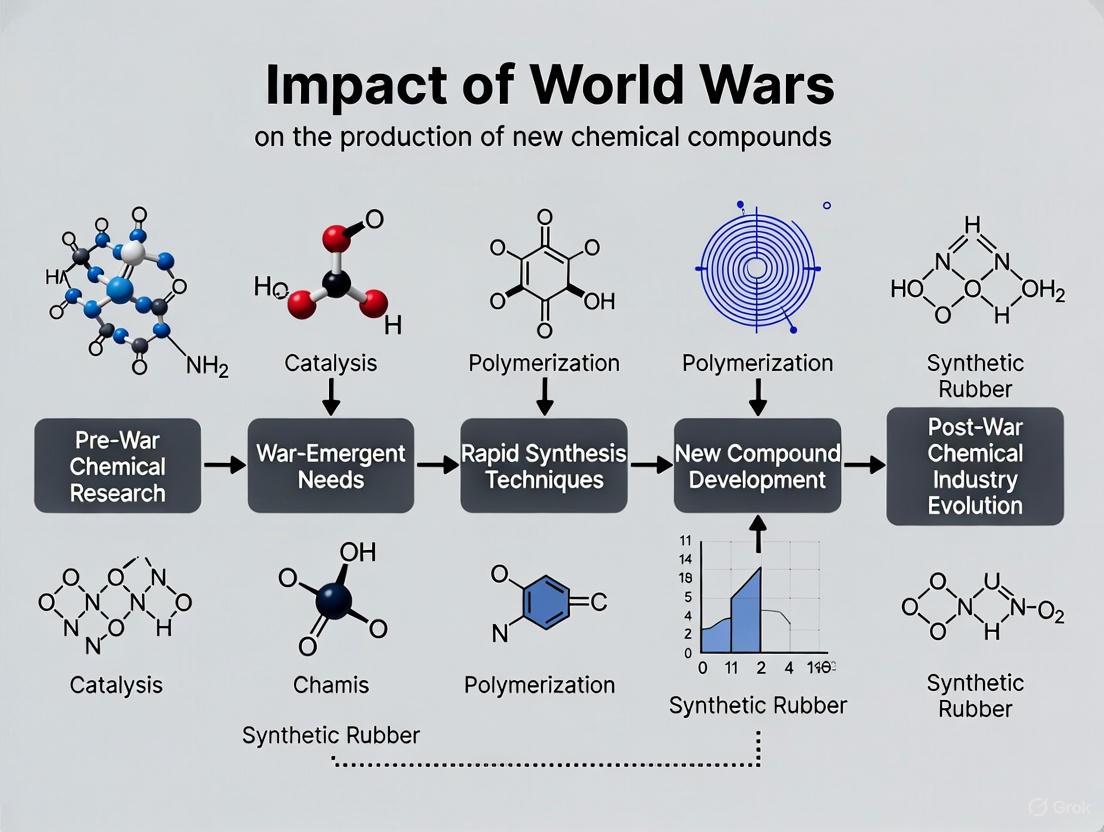
This article explores the profound and lasting impact of the two World Wars on the development of new chemical compounds, with a specific focus on implications for drug development.
From Battlefields to Breakthroughs: How the World Wars Forged Modern Pharmaceutical Chemistry
Abstract
This article explores the profound and lasting impact of the two World Wars on the development of new chemical compounds, with a specific focus on implications for drug development. It examines how the urgent demands of total war catalyzed the industrial-scale production of novel chemicals, from warfare agents to life-saving medicines. The analysis covers the foundational science of war-driven chemistry, the methodological shifts in large-scale production and research, the troubleshooting of efficacy and safety issues, and a comparative validation of these innovations against pre-war capabilities. For researchers and scientists, this historical overview provides critical insights into how crisis-driven innovation can accelerate chemical and pharmaceutical progress, shaping the modern landscape of drug discovery and production.
The Chemist's War: Foundational Discoveries in Chemical Synthesis and Production
The period of the World Wars marked a transformative era for chemical science, channeling industrial and academic research toward the development of novel chemical compounds for warfare. The First World War, in particular, witnessed the first large-scale deployment of chemical weapons, moving their production from laboratory curiosities to industrialized manufacturing processes [1]. This shift was facilitated by the advanced state of European chemical industry, which provided the necessary expertise, infrastructure, and production capacity [2] [3]. The genesis of industrial chemical warfare during this period represents a pivotal moment in the relationship between scientific progress, industrial capacity, and military application, creating a legacy that would influence chemical research, drug development, and international policy for decades to follow.
Historical Context and Deployment
The First World War created a stalemate on the Western Front that military leaders sought to break through technological innovation. Chemical weapons emerged as a potential solution, offering a means to incapacitate entrenched defenders and create breakthroughs in fortified lines [4]. Germany, possessing the world's most advanced chemical industry at the time, took the lead in this new form of warfare under the scientific direction of Fritz Haber of the Kaiser Wilhelm Institute for Physical Chemistry and Electrochemistry in Berlin [3] [1].
The first significant deployment of chemical weapons occurred on April 22, 1915, near Ypres, Belgium, when German specialist troops opened 5,730 cylinders containing approximately 168 tons of chlorine gas [2] [5] [1]. The resulting greenish-yellow cloud drifted toward French and Algerian positions, causing approximately 1,100 fatalities and 4,000 injuries through asphyxiation and respiratory damage [1] [6]. This attack marked a turning point in military history, representing the first successful large-scale use of a traditional weapon of mass destruction [1].
The table below summarizes the key chemical agents deployed during World War I and their impact:
Table 1: Key Chemical Warfare Agents of World War I
| Agent | First Major Use | Primary Inventor/Program | Physiological Classification | Total Casualties (WWI) | Fatalities (WWI) |
|---|---|---|---|---|---|
| Chlorine | April 1915 at Ypres | Fritz Haber (Germany) | Lung irritant/Choking agent | Not specified | ~1,100 in first attack [7] [1] |
| Phosgene | December 1915 at Ypres | Fritz Haber (Germany) | Lung injurant/Choking agent | Responsible for 85% of gas fatalities [7] [3] | ~90,000 total gas fatalities [1] |
| Mustard Gas | July 1917 at Ypres | Germany | Vesicant/Blistering agent | >120,000 casualties [3] | 2-3% mortality rate [7] |
The rapid escalation of chemical warfare prompted corresponding advances in defensive measures. Initial primitive protections such as urine-soaked rags quickly evolved into sophisticated filter respirators using charcoal and chemical neutralizers [5] [4]. This cycle of offensive innovation and defensive countermeasures characterized the chemical arms race throughout the war, with both sides investing significantly in research, development, and production capabilities [1].
Chemical Agent Profiles and Mechanisms of Action
Chlorine: The Prototypical Warfare Gas
Chlorine (Cl₂), a pale green diatomic gas approximately 2.5 times denser than air, was among the first chemical weapons deployed on an industrial scale [2] [1]. Its production was facilitated by the existing industrial infrastructure of German chemical companies BASF, Hoechst, and Bayer, which produced chlorine as a by-product of their dye manufacturing operations [5].
Physiological Action: When inhaled, chlorine reacts with water in the lungs to form hydrochloric acid (HCl) and hypochlorous acid (HClO), which destroy respiratory tissue and cause death by asphyxiation through chemical burns and pulmonary edema [2] [7]. The immediate irritant effects occur at concentrations as low as 3-5 parts per million (ppm), with concentrations of several hundred ppm proving rapidly fatal [2].
Chemical Properties and Limitations: Chlorine's distinct greenish color and strong bleach-like odor made detection straightforward, allowing for warning and potential evacuation [2]. Furthermore, its water solubility meant that simple countermeasures such as water-or urine-soaked cloths could provide some protection by dissolving the gas before inhalation [5].
Phosgene: The Silent Killer
Phosgene (COCl₂), a colorless gas with an odor often described as "musty hay," represented a significant advancement in chemical warfare agents due to its increased potency and stealth characteristics [7] [3]. It was six times more deadly than chlorine and presented particular danger because symptoms were often delayed for up to 48 hours after exposure [3].
Physiological Action: Phosgene reacts with proteins in the pulmonary alveoli, disrupting the blood-air barrier and leading to suffocation through gradual accumulation of fluid in the lungs (pulmonary edema) [7]. The minimal immediate effects are lachrymatory, with severe respiratory distress developing hours after exposure [7].
Industrial Significance: Beyond its use as a weapon, phosgene served as an important industrial reagent and precursor to pharmaceuticals and other organic compounds, illustrating the dual-use nature of many chemical warfare agents [7].
Mustard Gas: The Persistent Vesicant
Mustard gas (bis(2-chloroethyl) sulfide), first deployed in July 1917, differed fundamentally from earlier chemical agents through its persistent vesicant (blistering) properties and multifactorial mechanism of action [3] [8]. In pure form, it is a colorless, oily liquid, but when used in warfare, it typically appeared yellow-brown with a garlic or horseradish-like odor [7] [8].
Physiological Action: Mustard gas acts as a potent alkylating agent, dissolving in skin and then producing severe chemical burns and blisters, particularly in moist areas of the body [8] [1]. Its effects are typically delayed for several hours, and by the time symptoms appear, preventative measures are ineffective [8]. The mortality rate was relatively low (2-3%), but those exposed suffered prolonged hospitalizations and increased cancer risk [7] [8].
Chemical Stability and Persistence: With a boiling point of 215-217°C and low solubility in water, mustard gas could persist in the environment for weeks, contaminating terrain and posing ongoing hazards [8] [1].
Table 2: Physicochemical Properties of Major Chemical Warfare Agents
| Property | Chlorine | Phosgene | Mustard Gas |
|---|---|---|---|
| Chemical Formula | Cl₂ | COCl₂ | C₄H₈Cl₂S or (ClCH₂CH₂)₂S |
| Molecular Weight | 70.9 g/mol | 98.92 g/mol | 159.07 g/mol |
| Physical State at Room Temp | Gas | Gas | Oily Liquid |
| Vapor Density (Air=1) | 2.5 [1] | 3.5 [1] | 5.5 (vapor) [1] |
| Odor | Bleach-like [3] | Musty Hay [3] | Garlic, Horseradish [7] |
| Rate of Action | Immediate (minutes) | Delayed (up to 48 hours) [3] | Delayed (2-24 hours) [8] |
Experimental Protocols and Molecular Mechanisms
Mustard Gas Synthesis: Levinstein Process
The primary industrial method for mustard gas production during WWI was the Levinstein Process, which involved the reaction of ethylene with sulfur dichloride [9] [8]. The fundamental reactions are as follows:
Addition of sulfur dichloride to ethylene to form 2-chloroethylsulfenyl chloride: SCl₂ + CH₂=CH₂ → ClCH₂CH₂SCl
Addition of this intermediate to a second molecule of ethylene: ClCH₂CH₂SCl + CH₂=CH₂ → (ClCH₂CH₂)₂S
The resulting Levinstein mustard gas contained approximately 70% sulfur mustard with various impurities, but physiological tests showed no appreciable difference in vesicant activity compared to purified material [9].
Hydrolysis Kinetics of Sulfur Mustard
The mechanism and kinetics of sulfur mustard hydrolysis have been extensively studied to understand its environmental persistence and biological activity [9]. The reaction proceeds through a transient cyclic sulfonium cation, which then reacts with water:
- Formation of cyclic sulfonium cation intermediate
- Reaction with water to form 2-chloroethyl-2-hydroxysulfide and a hydrogen ion
- Repeat sequence to form thiodiglycol
The rate constant for hydrolysis is markedly dependent on temperature and the presence of chloride ions, which retard the hydrolysis rate without altering reaction products [9]. At greater substrate concentrations, the reaction becomes more complex, with initial products reacting with the sulfonium cation to form dimeric sulfonium cations with their own notable toxicity [9].
DNA Alkylation and Cytotoxicity Mechanisms
The consensus scientific view holds that the cytotoxicity of sulfur mustard is primarily due to alkylation of DNA, with evidence first obtained in the late 1940s from studies with bacteria and transforming DNA [9]. The mechanism involves:
Alkylation Specificity: Sulfur mustard preferentially alkylates purine bases in DNA, primarily at the N-7 position of guanine and N-1 position of adenine, though reactions with O-6 and N-2 of guanine and N-6 of adenine have also been reported [9].
Cross-link Formation: Due to its bifunctional nature, sulfur mustard can form interstrand cross-links between guanine bases in the DNA double helix, preventing strand separation during replication and transcription [9].
Cellular Consequences: The interstrand cross-links produced by sulfur mustard represent the lesion that produces lethality at the lowest frequency of occurrence. However, cell death from this lesion is delayed until the cell attempts DNA replication or division [9].
Diagram 1: Mustard Gas Mechanism of Cellular Toxicity
The Scientist's Toolkit: Key Research Reagents and Methodologies
The study of chemical warfare agents requires specific reagents and methodologies to understand their mechanisms and develop countermeasures. The following toolkit outlines essential materials and their research applications:
Table 3: Essential Research Reagents for Chemical Agent Studies
| Reagent/Material | Chemical Composition | Research Application | Mechanistic Function |
|---|---|---|---|
| Thiodiglycol | (HOCH₂CH₂)₂S | Mustard gas biomarker detection [9] [8] | Hydrolysis product used to confirm exposure through urine analysis |
| N-Acetyl-L-Cysteine (NAC) | C₅H₉NO₃S | Apoptosis inhibition studies [10] | Protects actin filaments from reorganization by mustard gas |
| Sodium Thiosulfate | Na₂S₂O₃₅ | Decontamination solution [8] | Nucleophile that reacts with mustard agent to form non-toxic products |
| Competitive Nucleophiles | Various (e.g., amines, thiols) | Reaction kinetics studies [9] | Quantitative measurement of sulfonium ion reactivity |
| Bleaching Powder | Ca(ClO)₂ | Surface decontamination [1] | Oxidizing agent that neutralizes mustard gas |
| Charcoal | C | Gas mask filtration [5] [4] | Adsorbent for chemical agent vapors |
| Silver Sulfadiazine | C₁₀H₉AgN₄O₂S | Treatment of skin lesions [8] | Antimicrobial for preventing infection of chemical burns |
Impact on Chemical Research and Pharmaceutical Development
The industrial-scale production of chemical warfare agents during the World Wars had profound and lasting impacts on chemical research and pharmaceutical development:
Acceleration of Industrial Chemical Processes
The war effort necessitated rapid scaling of chemical production, leading to innovations in industrial chemistry. Germany's annual production of chlorine reached approximately 55 million metric tons by the war period, making it one of the ten most produced chemicals in the United States [2]. This massive scaling of production capabilities directly transferred to postwar chemical manufacturing and pharmaceutical synthesis.
From Chemical Warfare to Chemotherapy
The discovery that sulfur mustards caused bone marrow suppression and lymphocytotoxicity led directly to the development of nitrogen mustards as chemotherapeutic agents [9] [10]. Researchers recognized that the same alkylating mechanism that caused cellular damage could be harnessed to target rapidly dividing cancer cells, marking the birth of modern cancer chemotherapy.
Advancements in Toxicological Research
The need to understand the mechanisms of chemical agents accelerated developments in toxicology and biochemistry. Studies on the kinetics of mustard gas hydrolysis and its reaction with biological nucleophiles provided fundamental insights into chemical-biological interactions that informed both pharmaceutical development and safety assessment [9].
Diagram 2: Warfare Research to Pharmaceutical Applications
The genesis of industrial chemical warfare during the World Wars represents a complex legacy in the history of chemistry and pharmacology. While born from conflict and destruction, the large-scale production and mechanistic studies of compounds like chlorine, phosgene, and mustard gas ultimately contributed to significant scientific advances that transcended their military origins. The industrial processes developed for mass production of these agents formed the foundation for modern chemical manufacturing capabilities, while the investigation of their biological mechanisms provided crucial insights that enabled the development of life-saving chemotherapeutic agents. This duality illustrates the broader theme of how military research needs can drive scientific and industrial progress, with outcomes that extend far beyond their original destructive purposes to benefit pharmaceutical development and medical science.
The two World Wars of the 20th century represented pivotal turning points in the relationship between scientific research, industrial production, and military objectives. This period witnessed the systematic militarization of chemistry, transforming it from a primarily academic and commercial pursuit into a strategically directed enterprise focused on national security needs. The unprecedented scale of these conflicts necessitated the large-scale mobilization of scientific personnel, institutional reorganization of research, and massive government investment in chemical production capabilities. This whitepaper examines how this mobilization during World War I and World War II fundamentally redirected chemical research agendas, accelerated the development of new compounds, and established enduring frameworks for government-academic-industrial collaboration that continue to influence modern drug development and materials science.
The World Wars created what historians have termed "the chemists' war," particularly in reference to WWI, where the successful deployment of chemical weapons reflected the increasing sophistication of scientific and engineering practice [1]. By the time of the armistice in 1918, chemical weapons had resulted in more than 1.3 million casualties and approximately 90,000 deaths [11] [1]. This stark statistic underscores both the devastating application of chemical research and the immense resources dedicated to its development. The institutional frameworks established during this period enabled a unique environment of accelerated innovation, driven by military necessity rather than commercial markets or pure scientific curiosity.
World War I: The Genesis of Modern Chemical Warfare
The Initial Deployment of Chemical Agents
World War I marked the first systematic, large-scale application of chemical weapons in modern warfare, beginning with the German chlorine gas attack at Ypres, Belgium, on April 22, 1915. This engagement demonstrated the tactical potential of chemical agents and initiated a rapid cycle of offensive and defensive innovation that would characterize the entire conflict. On that day, German military specialists opened 6,000 steel cylinders containing 160 tons of chlorine gas, creating a dense, poisonous cloud that drifted toward Allied positions [1] [6]. Within minutes, this first successful use of lethal chemical weapons on the battlefield killed more than 1,000 French and Algerian soldiers while wounding approximately 4,000 more [1].
The technological development behind this attack was spearheaded by Fritz Haber, a prominent German chemist and future Nobel laureate, who now is often referred to as the "father of chemical weapons" [1] [3]. Haber and his team at the Kaiser Wilhelm Institute in Berlin selected chlorine gas because it was readily available from Germany's advanced dye industry and could be weaponized effectively [12]. Haber's approach exemplified the new militarization of science—he moved enthusiastically between the front lines and his research institute, solving ongoing problems in chemical agent development and deployment while organizing the German chemical warfare program [11] [1].
The Escalating Arms Race of Chemical Agents
Following the initial deployment of chlorine gas, all major combatants rapidly developed and deployed increasingly sophisticated chemical agents throughout WWI, creating a technological arms race that drew heavily on academic and industrial resources.
Table 1: Major Chemical Warfare Agents of World War I
| Agent | Chemical Composition | First Major Use | Physiological Effects | Fatalities & Casualties |
|---|---|---|---|---|
| Chlorine | Cl₂ | April 1915 by Germany | Lung irritant, asphyxiation | ~1,000 deaths in initial attack [1] |
| Phosgene | COCl₂ | December 1915 by Germany | 6x more deadly than chlorine, pulmonary edema | Responsible for 85% of chemical weapons fatalities [3] |
| Mustard Gas | (ClCH₂CH₂)₂S | July 1917 by Germany | Vesicant (blistering), delayed symptoms | Highest casualties (~120,000) but few direct deaths [3] |
| Lewisite | ClCH=CHAsCl₂ | Developed 1918 by U.S. | Vesicant, systemic poison | Mass-produced but war ended before deployment [11] |
This technological competition extended beyond offensive capabilities to include defensive measures and detection systems. By 1915, Allied forces developed rudimentary protective masks, which evolved into more sophisticated gas masks as the war progressed [6]. Nations also established specialized training programs, such as Germany's Royal Prussian Army Gas School, where soldiers learned "gas defense in the trenches," "first aid for gas illnesses," and "exercises for handling of gas masks" [6].
Institutional Mobilization for Chemical Warfare
The development and production of chemical weapons during WWI required an unprecedented mobilization of scientific resources across academic, industrial, and governmental sectors. Germany's initial leadership in this area reflected its pre-war dominance in academic and industrial chemistry, but Allied nations quickly responded with their own comprehensive mobilization efforts.
In the United States, the origins of an organized chemical warfare program emerged from the civilian sector. On February 8, 1917, Van H. Manning, director of the Bureau of Mines, offered the technical services of his agency to the Military Committee of the National Research Council [11]. This initiative evolved rapidly after the U.S. declaration of war on April 6, 1917, leading to the establishment of the National Research Council subcommittee on noxious gases tasked to "carry on investigations into noxious gases, generation, antidote for same, for war purposes" [11].
The American chemical warfare program eventually involved research at numerous prestigious universities and medical schools, including MIT, Johns Hopkins, Harvard, and Yale, in addition to leading industrial firms [11]. Directed from laboratories at American University in Washington, DC, the program encompassed investigations into "gas mask research; pyrotechnic research; small-scale manufacturing; mechanical research; pharmacological research" and related areas [11]. By July 1918, this research and development enterprise involved more than 1,900 scientists and technicians, making it the largest government research program in American history at that time [11].
Table 2: National Chemical Weapons Production in World War I
| Country | Tons Produced | Key Institutions Mobilized | Notable Scientists |
|---|---|---|---|
| Germany | 68,000 tons [6] | Kaiser Wilhelm Institute, University of Berlin | Fritz Haber, Walther Nernst |
| France | 36,000 tons [6] | University of Paris, leading medical schools | Unknown |
| Great Britain | 25,000 tons [6] | Oxford, Cambridge, University College London | Unknown |
| United States | Unknown | American University, Bureau of Mines, leading universities | James B. Conant, Wilfred Lee Lewis |
The French government took a more direct approach by militarizing the chemistry, pathology, and physiology departments of leading medical schools and institutes, while Britain enlisted scientists at Oxford, Cambridge, University College London, and other academic institutions to work on both offensive and defensive aspects of gas warfare [11]. Historians estimate that by war's end, more than 5,500 university-trained scientists and technicians and tens of thousands of industrial workers on both sides worked on chemical weapons [11].
World War II: Expanding the Model to Strategic Materials
The Synthetic Rubber Program
While chemical weapons played a less prominent role in WWII battlefield tactics, the mobilization model established during WWI expanded to address critical shortages in strategic materials, most notably in the development of synthetic rubber. With the natural rubber supply from Southeast Asia cut off at the beginning of WWII, the United States faced the loss of a material essential for military operations—a single battleship required 75 tons of rubber, a tank needed about one ton, and a military airplane used one-half ton [13].
In response to this crisis, the U.S. government established the Rubber Reserve Company (RRC) in June 1940 and eventually launched an unprecedented collaboration between government, industry, and academic researchers [13]. This consortium included the "big four" rubber companies (Firestone, B.F. Goodrich, Goodyear, and United States Rubber Company) along with petroleum companies like Standard Oil of New Jersey, working under government coordination to produce a general-purpose synthetic rubber designated GR-S (Government Rubber-Styrene) [13].
The scientific and engineering achievement was remarkable—the U.S. synthetic rubber industry expanded from an annual output of 231 tons of general purpose rubber in 1941 to 70,000 tons per month in 1945 [13]. This success demonstrated how effectively the militarized research model could be applied to strategic materials beyond weapons systems, establishing a template for large-scale directed research that would characterize much postwar industrial policy.
The Penicillin Program
Another significant example of WWII scientific mobilization was the crash program to mass-produce penicillin, which represented a different application of the militarized chemistry model—addressing medical rather than tactical needs. When the war began, penicillin remained a laboratory curiosity with no commercial production method, despite its recognized antibacterial potential [14].
The U.S. government established a broad coalition involving multiple agencies, including the Office of Scientific Research and Development and the War Production Board (WPB), which coordinated efforts across 21 companies, 5 academic groups, and several government agencies [14]. Unlike traditional commercial development, this project emphasized open exchange of scientific information rather than proprietary control. The WPB worked "to circulate new information among its participants, lifting restrictions on scientific exchange induced by property rights" and even obtained exemptions from the Justice Department allowing companies to pool technical information without antitrust concerns [14].
The results were dramatic—where laboratory scientists initially could only produce minimal amounts of crude, unstable penicillin, by January 1945 U.S. production had soared to 4 million sterile packages per month, with the WPB releasing penicillin for commercial distribution to the public in March 1945 [14]. This success created the foundation for the modern antibiotic industry and demonstrated how government-directed collaboration could accelerate pharmaceutical development by years or even decades.
Methodological Approaches: Experimental Protocols and Research Tools
Chemical Agent Development and Testing Protocols
The rapid development of chemical agents during WWI followed systematic methodologies that established patterns for later military-directed research. The protocol for developing new chemical warfare agents typically involved multiple stages:
Compound Identification and Synthesis: Researchers systematically investigated toxic compounds available from industrial processes, particularly Germany's dye industry which provided chlorine and other potential warfare agents [12]. Later, more targeted synthesis programs emerged, such as the U.S. development of lewisite (β-chlorovinyldichloroarsine) by Wilfred Lee Lewis, which was mass-produced under the direction of chemist James B. Conant [11].
Efficacy Testing: Initial screening evaluated physiological effects on animal models, followed by controlled field tests to determine dispersal characteristics and environmental persistence. For example, Germany's first experimental work on chemical agents in late 1914, at the suggestion of University of Berlin chemist Walther Nernst, quickly produced an effective tear gas artillery shell [11].
Delivery System Development: Engineers worked to develop effective dispersal mechanisms, beginning with simple cylinder-based systems and advancing to specialized artillery shells and mortars. The Germans developed "projectors made from recalibrated 180 millimeter mortars with the capacity to launch between three to four gallons of chemical agent a distance of one to two miles" [12].
Defensive Countermeasure Development: Parallel programs focused on protective equipment including gas masks and protective clothing, as well as detection systems and decontamination procedures [6].
The Scientist's Toolkit: Key Research Reagents and Materials
The chemical warfare research conducted during the World Wars relied on specialized materials and reagents that formed the essential toolkit for investigators in this field.
Table 3: Essential Research Materials for Chemical Warfare Development
| Material/Reagent | Function | Application Example |
|---|---|---|
| Chlorine Gas (Cl₂) | Primary warfare agent, industrial chemical | First major chemical weapon deployed at Ypres [1] [3] |
| Phosgene (COCl₂) | More potent successor to chlorine | Responsible for 85% of chemical weapons fatalities in WWI [3] |
| Sulfur Mustard ((ClCH₂CH₂)₂S) | Persistent vesicant (blistering agent) | Caused the highest number of chemical casualties in WWI [3] |
| Lewisite (ClCH=CHAsCl₂) | Arsenic-based vesicant | Developed by U.S. in 1918 as potential new warfare agent [11] |
| Sodium Thiosulfate | Reducing agent for decontamination | Used in early protective solutions against chlorine [6] |
| Activated Charcoal | Adsorbent for gas masks | Critical component in respiratory protection systems [6] |
| Bleaching Powder | Oxidizing agent for decontamination | Used to neutralize mustard gas and other agents [1] |
Organizational Frameworks: Diagramming the Research Infrastructure
The militarization of chemistry during the World Wars required creating new organizational structures that could direct scientific research toward military objectives. The following diagram illustrates the integrated system that emerged, particularly in the United States, showing the relationships between governmental, academic, and industrial components.
Diagram 1: Organizational Structure of U.S. Chemical Mobilization
This organizational framework enabled unprecedented coordination across sectors that had previously operated independently. The government agencies served as both strategic directors and coordinators, ensuring that academic research addressed militarily relevant problems while industrial partners focused on scalable production methods.
The research and development workflow for specific chemical programs followed a systematic progression from basic research to mass production, as illustrated in the following diagram of the penicillin development process.
Diagram 2: Penicillin Development Workflow
Impact and Legacy: Transformation of Chemical Research
The militarization of academic and industrial chemistry during the World Wars created lasting impacts that transformed the practice and organization of chemical research in the postwar period:
Institutionalization of Large-Scale Collaborative Research: The success of the wartime research model established precedents for large-scale, mission-directed research projects that would characterize postwar science policy, including nuclear energy, space exploration, and later, initiatives like the Human Genome Project.
Transformation of the Pharmaceutical Industry: The penicillin program demonstrated the potential of systematic antibiotic development and created the template for postwar pharmaceutical research, transitioning the industry from small-scale operations to large, research-intensive enterprises [14].
Establishment of the Petrochemical Industry: The synthetic rubber program cemented the relationship between petroleum feedstocks and chemical production, establishing the foundation for the modern petrochemical industry [13].
Ethical Reconsiderations in Scientific Research: The development of chemical weapons, particularly following WWII, prompted ongoing debates about the ethical responsibilities of scientists and the appropriate boundaries between military and civilian research [3].
Creation of the Military-Academic-Industrial Complex: The organizational frameworks developed during the World Wars evolved into the permanent infrastructure of government-funded research that continues to influence scientific priorities and funding patterns to the present day.
The chemistries mobilized for warfare—whether destructive agents like mustard gas or beneficial products like penicillin and synthetic rubber—shared common developmental pathways rooted in the unique pressures and resources of wartime mobilization. This period represents a fundamental transformation point where chemical research became systematically aligned with national objectives, establishing patterns of innovation that would dominate much of 20th-century science and technology policy. For contemporary researchers and drug development professionals, understanding these historical foundations provides essential context for modern research ecosystems and their inherent tensions between scientific autonomy, commercial application, and public purpose.
The World Wars acted as a profound catalyst for industrial chemistry, compressing decades of peacetime research and development into a few years to meet urgent strategic needs. This period was defined by the intertwined activities of key individuals like Fritz Haber, corporate entities like IG Farben, and research institutions like the Kaiser Wilhelm Institute. Their collaboration led to groundbreaking technological advances, most notably the large-scale synthesis of ammonia and the development of chemical warfare, which fundamentally altered global food production and the conduct of war. This guide details the technical methodologies, institutional frameworks, and lasting impacts of these developments, providing a comprehensive resource for understanding this pivotal era in chemical research.
The outbreak of World War I presented Germany with an immediate and severe strategic challenge: a naval blockade that cut off vital supplies of raw materials, most notably Chilean saltpeter (sodium nitrate), which was essential for both fertilizers and the production of explosives [15] [16]. This crisis created an unprecedented demand for the synthetic production of key chemical compounds. In response, a powerful triad formed between ambitious scientists, state-supported research institutes, and large-scale industry. The Kaiser Wilhelm Institute for Physical Chemistry and Electrochemistry, under the leadership of Fritz Haber, became the central research hub for these efforts [17] [18]. The industrial conglomerate IG Farben, in turn, was responsible for scaling these discoveries to an industrial level, most famously with the Haber-Bosch process [19]. This collaboration between state, science, and industry not only sustained the German war effort but also laid the foundation for the modern chemical industry, demonstrating how national crisis can dramatically accelerate and redirect scientific research.
Key Institutional and Individual Profiles
Fritz Haber: The Scientist-Patriarch
Fritz Haber (1868–1934) was a German physical chemist whose work epitomizes the dual-use nature of chemical innovation. His legacy is a complex mixture of profound benefit and devastating application.
Scientific Contributions: In 1909, Haber achieved the catalytic synthesis of ammonia (NH₃) from nitrogen (N₂) and hydrogen (H₂) gases [16]. This process, which utilized high pressure (185 atmospheres) and high temperature (500-600°C) over a catalyst such as osmium or uranium, solved the critical problem of nitrogen fixation [16] [20]. For this work, which Carl Bosch later scaled industrially, Haber was awarded the Nobel Prize in Chemistry in 1918 [15] [20].
Wartime Role: Driven by intense patriotism, Haber redirected his institute entirely to the German war effort after 1914 [17] [18]. He is often called the "father of chemical warfare" for his pivotal role in developing and deploying weaponized chlorine gas [15] [21]. His personal motto, "In peace for mankind, in war for the fatherland," succinctly captures this ethical dichotomy [17].
Table 1: Key Figures in German Wartime Chemistry
| Name | Role & Affiliation | Key Contribution | Impact |
|---|---|---|---|
| Fritz Haber | Director, Kaiser Wilhelm Institute for Physical Chemistry [17] | Invention of the ammonia synthesis process; development and deployment of chemical weapons [17] [15] | Enabled Germany's prolonged war effort; revolutionized agriculture; introduced modern chemical warfare [16] |
| Carl Bosch | BASF/IG Farben [19] | Industrial scale-up of the Haber process (Haber-Bosch process) [15] | Made mass production of synthetic fertilizers and explosives feasible [15] |
| James Franck | Department Head, Kaiser Wilhelm Institute [18] | Research on atomic collisions; Nobel Prize in Physics (1925) [18] | Advanced fundamental understanding of atomic physics |
Kaiser Wilhelm Institute: The Research Engine
The Kaiser Wilhelm Institute for Physical Chemistry and Electrochemistry (founded 1911) was a premier research institution that became a central laboratory for Germany's wartime chemical research [22] [18].
Wartime Mobilization: At the outbreak of war, the institute was placed under military control and its research was almost entirely dedicated to the war effort [18]. Under Haber's direction, it transformed into the central development and testing facility for chemical weapons and protective measures like gas masks [17] [18].
Scale of Operations: The institute's staff grew exponentially during the war, forming a team of over 1,000 scientists and assistants working on warfare-related projects [18]. This included notable scientists like James Franck, Otto Hahn, and Herbert Freundlich [18].
IG Farben: The Industrial Powerhouse
IG Farben was a German chemical and pharmaceutical conglomerate formed in 1925 through the merger of several major companies, including BASF, Bayer, and Hoechst [19]. Its role was critical in bridging the gap between laboratory discovery and mass production.
Industrial Scale-Up: The challenge of scaling Haber's laboratory ammonia synthesis to an industrial level was immense. Carl Bosch of BASF (later part of IG Farben) led a team that conducted tens of thousands of experiments to find a commercially viable catalyst and build reactors capable of withstanding the high-pressure process [16]. This resulted in the Haber-Bosch process, a cornerstone of the modern chemical industry.
Strategic Production: During WWI, the Haber-Bosch plants at Oppau and Leuna provided Germany with the ammonia necessary for nitric acid production, which was used to make explosives and propellants, thus overcoming the Allied blockade on nitrates [16] [20].
Technical Methodologies and Breakthroughs
The Haber-Bosch Process for Ammonia Synthesis
The synthesis of ammonia was one of the most critical chemical breakthroughs of the early 20th century, driven by wartime necessity.
Experimental Protocol
The methodology for ammonia synthesis involves a high-pressure catalytic reaction.
- Feedstock Preparation: Hydrogen gas (H₂) is typically obtained through the steam reforming of methane or the gasification of coke. Nitrogen gas (N₂) is sourced from the fractional distillation of liquefied air [16].
- Gas Purification: The reactant gases must be meticulously purified to remove impurities such as sulfur compounds, oxygen, and carbon monoxide, which can poison the catalyst [20].
- Compression and Reaction: The purified gas mixture (in a 3:1 H₂ to N₂ ratio) is compressed to a high pressure, typically 150–200 atmospheres [20]. The compressed gas is then passed over a solid-bed catalyst at an elevated temperature of 400–500°C [16] [20].
- Catalyst Selection: Haber's initial laboratory setup used catalysts like osmium or uranium [16]. For industrial scale, Bosch's team developed a promoted iron catalyst, often referred to as "dirty iron," which is a mixture of iron oxide (Fe₃O₄) with promoters such as potassium oxide and aluminum oxide [16].
- Ammonia Recovery: The effluent gas from the reactor contains a percentage of ammonia, which is cooled and liquefied for separation from the unreacted hydrogen and nitrogen gases. The unreacted gases are recycled back into the reactor to improve overall yield [20].
The Scientist's Toolkit: Key Research Reagents and Materials
Table 2: Essential Materials for Ammonia Synthesis
| Material/Reagent | Function in the Process |
|---|---|
| Nitrogen Gas (N₂) | Primary reactant, sourced from the atmosphere. |
| Hydrogen Gas (H₂) | Primary reactant, typically derived from natural gas or coal. |
| Promoted Iron Catalyst | A solid catalyst that lowers the activation energy required for the reaction between N₂ and H₂, enabling practical reaction rates at moderate temperatures [16]. |
| High-Pressure Reactor | A specially designed steel vessel (converter) capable of withstanding extreme pressures and temperatures, which are necessary to achieve a favorable equilibrium concentration of ammonia [20]. |
Development and Deployment of Chemical Weapons
The stalemate of trench warfare during WWI prompted the development of a new class of weaponry designed to overcome entrenched defenses.
Experimental Protocol: Chlorine Gas Cloud Attack
The first large-scale use of chemical weapons followed a specific military-operational protocol.
- Chemical Agent Selection: Chlorine (Cl₂) was chosen as the first agent because it is a dense, heavier-than-air gas that would flow into enemy trenches, causing suffocation through pulmonary edema [17].
- Delivery System Preparation: Approximately 5,730 steel cylinders (1,600 large and 4,130 small) were filled with liquefied chlorine and manually emplaced along a 6 km segment of the German front line near Ypres [17]. The cylinders were dug in upright, shielded with sandbags, and fitted with lead pipes directed toward Allied positions [17].
- Meteorological Assessment: The release was entirely dependent on wind conditions. Scientists, including meteorologists, were integrated into the gas units to advise on the optimal time for release. The attack at Ypres was preceded by seven aborted attempts due to unfavorable winds [17].
- Weapon Deployment: On April 22, 1915, at 17:00 GMT, the valves on the cylinders were opened simultaneously, releasing an estimated 150 tons of chlorine [17]. The gas formed a greenish-yellow cloud that drifted into French and Algerian positions.
- Tactical Evaluation: The attack caused widespread panic and significant casualties, with an estimated 5,000 injuries and 1,000 deaths, and created a major breach in the Allied line [17]. However, the German military was unprepared to fully exploit this tactical advantage, revealing the weapon's limitations as a decisive strategic tool [17].
Diagram: Chemical Weapon Deployment at Ypres (1915)
The Scientist's Toolkit: Chemical Warfare Agents
Table 3: Early Chemical Warfare Agents and Their Effects
| Agent (Code Name) | Chemical Composition | Physiological Effect | Limitations & Countermeasures |
|---|---|---|---|
| Chlorine (Cl₂) | Diatomic chlorine gas | Pulmonary irritant; causes suffocation through lung tissue damage and edema [17]. | Highly dependent on wind direction and speed; relatively easy to detect by sight and smell [17]. |
| Xylyl Bromide (T-Stoff) | C₆H₄(CH₃)CH₂Br | Potent lachrymator (tear-inducing agent) [17]. | Low vapor pressure in cold weather, rendering it ineffective on the Eastern front [17]. |
| Phosgene (COCl₂) | Carbonyl chloride | Severe pulmonary irritant, causing delayed-onset fatal pulmonary edema. | More lethal than chlorine but with a less immediate symptom onset, complicating tactical assessment. |
Quantitative Impact Assessment
The industrial and military chemical innovations of the World War era had quantifiable impacts on both the war efforts and global industry.
Table 4: Quantitative Impact of Wartime Chemical Innovations
| Parameter | Wartime Impact & Scale | Post-War Legacy & Global Significance |
|---|---|---|
| Ammonia Production | Enabled German munitions production after the blockade cut off Chilean saltpeter; Oppau and Leuna plants were critical [16] [20]. | An estimated one-third of annual global food production now relies on nitrogen fertilizers from the Haber-Bosch process, supporting nearly half the world's population [21]. |
| Chemical Warfare | First use at Ypres (1915): 150 tons of chlorine released, causing ~1,000 deaths and ~5,000 injuries [17]. Overall, chemical weapons killed ~92,000 and injured ~1.3 million in WWI [16]. | Led to the 1925 Geneva Protocol banning chemical weapons; established a new, horrific paradigm in warfare that persists as a global security concern. |
| Institutional Scale | Kaiser Wilhelm Institute staff grew to over 1,000 people during WWI [18]. | Evolved into the Fritz Haber Institute of the Max Planck Society (1953), continuing foundational research in physical chemistry and surface science [22] [23]. |
The collaboration between Fritz Haber, the Kaiser Wilhelm Institute, and IG Farben during the World Wars represents a paradigm of crisis-driven innovation. The imperative to overcome strategic shortages led to technological leaps, most notably the Haber-Bosch process, which permanently altered global agriculture and demographics. Simultaneously, the application of scientific research to chemical warfare introduced a new dimension of destruction, creating an enduring ethical dilemma for the scientific community. The legacy of this period is thus a dual one: foundational technologies that underpin modern civilization, born from an era of immense conflict and moral complexity. This history serves as a powerful case study on the profound responsibility that accompanies scientific and technological prowess.
The two World Wars of the twentieth century represented a pivotal transformation point for the chemical industry, particularly in Germany. What began as a sophisticated dye production infrastructure rapidly evolved into a centralized weapons development and manufacturing apparatus capable of altering modern warfare. This transition from civilian to military chemical production exemplifies how scientific innovation, industrial capacity, and geopolitical ambition can converge with devastating consequences. The German experience demonstrates how specialized chemical knowledge and industrial plants can be systematically repurposed to develop and deploy novel chemical weapons on an unprecedented scale [24] [1]. This transformation had profound implications for the pace of chemical discovery, with historical analysis revealing quantifiable dips in new compound discovery during both World Wars, followed by rapid recovery within five years after each conflict ended [25].
This technical analysis examines the strategic leveraging of Germany's chemical industry for warfare, focusing on the key technological breakthroughs, industrial reorganization, and production methodologies that enabled this conversion. The assessment extends to the lasting environmental and public health consequences of these activities, which continue to demand attention nearly a century later [24]. Understanding this historical transformation provides valuable insights for researchers, scientists, and drug development professionals studying the complex relationship between scientific progress, industrial capacity, and weapons development.
The Foundation: Germany's Pre-War Chemical Industry
The remarkable transformation of Germany's chemical industry from dyes to weapons was built upon a foundation of extraordinary scientific and industrial achievement that predated World War I. By the late 19th century, Germany had established global dominance in synthetic dye production, with its eight major firms producing nearly 90% of the world supply of dyestuffs and selling approximately 80% of their production abroad [26]. This commercial success was underpinned by significant advances in organic chemistry and the strategic utilization of coal tar, previously considered a waste product, which was discovered to contain aniline suitable for producing coal-tar dyes [27].
The industry's structure evolved toward increasing consolidation through complex business arrangements. The first major step toward consolidation occurred in 1904 when Bayer, BASF, and Agfa formed a profit-pooling alliance known as the Dreibund (Triple Confederation) or "little IG" [26] [28]. This was followed by a competing alliance between Hoechst and Cassella. These alliances represented early experiments in cooperation while maintaining operational independence, setting the stage for the more comprehensive consolidation that would follow.
Three key developments established the technological bridge between dye manufacturing and weapons production:
Dual-Use Chemical Processes: Many production processes developed for dyes proved readily adaptable to military applications. For instance, chlorine gas production utilized similar electrochemical processes already employed in dye manufacturing [27].
High-Pressure Chemical Engineering: The pioneering work of Fritz Haber and Carl Bosch in developing ammonia synthesis from nitrogen and hydrogen under high pressures (the Haber-Bosch process) represented a fundamental technological breakthrough with direct military applications [27]. This process, industrialized by BASF beginning in 1913, enabled Germany to produce ammonia for both nitrate fertilizers and explosives without relying on imported saltpeter [24] [27].
Organizational Innovation: German chemical companies pioneered the model of large-scale, managerial-industrial enterprises with professional management structures and integrated research and development capabilities [26]. This organizational sophistication would prove crucial for the rapid mobilization of chemical production for warfare.
Table 1: Major German Chemical Companies Before World War I
| Company | Year Founded | Primary Specialization | Later Role in IG Farben |
|---|---|---|---|
| BASF | 1865 | Dyes, ammonia synthesis | Core company (27.4% of equity) |
| Bayer | 1863 | Dyes, pharmaceuticals | Core company (27.4% of equity) |
| Hoechst | 1863 | Dyes, pharmaceuticals | Core company (27.4% of equity) |
| Agfa | 1873 | Photographic chemicals | Participant (9% of equity) |
| Griesheim-Elektron | 1863 | Electrochemicals | Participant (6.9% of equity) |
| Weiler Ter Meer | 1861 | Aniline production | Participant (1.9% of equity) |
World War I: The Birth of Industrial Chemical Warfare
World War I marked the first systematic large-scale deployment of chemical weapons, transforming chemical warfare from a theoretical concept into a devastating battlefield reality. The conflict has been aptly described as "the chemist's war" due to the extensive mobilization of scientific and engineering resources for chemical weapons development and production [1]. The German chemical industry, with its sophisticated infrastructure and technical expertise, was uniquely positioned to lead this transformation.
The first major deployment of chemical weapons occurred on April 22, 1915, near Ypres, Belgium, when German forces released approximately 160 tons of chlorine gas from over 6,000 pre-positioned cylinders [1]. This attack, planned and executed under the direction of chemist Fritz Haber, exploited wind patterns to carry the toxic cloud across French and Algerian positions, causing approximately 1,000 fatalities and 4,000 casualties in a matter of minutes [1]. The psychological impact of this new weapon far exceeded its tactical effectiveness, generating widespread "gas fright" and forcing rapid adaptations in military doctrine and personal protection.
The scale of chemical production during World War I was staggering. Throughout the war, Germany produced approximately 47,400 metric tons of chemical warfare agents across seven dedicated production facilities [24]. This industrial effort required massive quantities of intermediate products, some of which diverted resources from civilian needs, including limited food supplies [24]. The production network encompassed both state-controlled facilities and private chemical companies operating under military direction.
Table 2: Primary Chemical Warfare Agents of World War I
| Agent | Chemical Formula | Physiological Classification | First Major Use | Total Casualties |
|---|---|---|---|---|
| Chlorine | Cl₂ | Lung injurant | April 1915, Ypres | ~90,000 deaths, >1,000,000 casualties |
| Phosgene | COCl₂ | Lung injurant | 1915 | Highly lethal, caused most gas-related deaths |
| Mustard Gas | (ClCH₂CH₂)₂S | Vesicant (blistering agent) | July 1917, Ypres | Delayed action, persistent contamination |
The development and production of these chemical weapons relied heavily on the pre-existing infrastructure and expertise of the dye industry. For instance, chlorine production utilized electrochemical processes already established in dye manufacturing, while the chemical synthesis of more complex agents like mustard gas drew directly on organic chemistry expertise developed for dye research [27]. This synergy between dye chemistry and weapons development established a pattern that would continue and intensify in the subsequent decades.
Key Experimental Protocols and Methodologies
The rapid development of chemical weapons during WWI depended on standardized experimental approaches and production methodologies:
Protocol 1: Large-Scale Chlorine Production and Deployment
- Objective: Industrial-scale production and battlefield delivery of chlorine gas
- Method: Electrolytic production of chlorine using processes adapted from dye industry; compression and liquefaction for storage in steel cylinders; battlefield deployment via wind-dependent release from trench-positioned cylinders
- Key Parameters: Purity >98%; storage pressure 6-8 atm; meteorological assessment of wind patterns and velocity; concentration thresholds of 2.53 mg/L for 30-minute exposure (lethal to 50% of subjects) [1]
- Safety Considerations: Limited protective equipment for deploying forces; dependence on wind stability to prevent backflow
Protocol 2: Synthesis and Weaponization of Mustard Gas
- Objective: Development of persistent vesicant agent with delayed symptoms
- Method: Direct reaction of ethylene with sulfur chloride (Levinstein process); purification through distillation; deployment in artillery shells for area denial
- Key Parameters: Optimal concentration 0.07 mg/L for 30-minute exposure (lethal); persistency 24 hours in open, 1 week in woods; decontamination via bleaching powder (3% solution) or sodium sulfide [1]
- Characterization: Odor of garlic or horseradish; vapor density 5.5 (heavier than air); dissolution in skin followed by delayed burns
The Interwar Period: Consolidation and Preparation
The period between World Wars witnessed the further consolidation and strategic realignment of Germany's chemical industry, creating an even more powerful and centralized structure primed for military mobilization. The most significant development was the formation of IG Farbenindustrie AG on December 2, 1925, through the merger of six major German chemical companies: BASF, Bayer, Hoechst, Agfa, Griesheim-Elektron, and Weiler-ter-Meer [26]. This consolidation created the world's largest chemical and pharmaceutical conglomerate, with unprecedented technical and financial resources.
IG Farben's organizational structure balanced centralized policy-making with decentralized operations. The company divided production into five industrial zones (Upper Rhine, Middle Rhine, Lower Rhine, Middle Germany, and Berlin) and established specialized technical commissions to oversee different product ranges [28]. This sophisticated management structure enabled efficient resource allocation and strategic planning while maintaining operational flexibility. By 1938, IG Farben employed approximately 218,090 people and maintained an extensive international network of trust arrangements and interests [26].
Throughout the 1930s, IG Farben underwent a process of political alignment with the rising Nazi regime. Despite initial tensions—the company had been accused by Nazis of being an "international capitalist Jewish company" in the 1920s—IG Farben became a significant Nazi Party donor and government contractor after 1933 [26]. The company systematically purged its Jewish employees, completing this process by 1938 following Hermann Göring's decree linking foreign exchange allocations to the removal of Jewish staff [26]. This political and ideological alignment facilitated deep integration with the Nazi war machine.
Technically, the interwar period saw significant advances in chemical research with direct military applications. IG Farben scientists made fundamental contributions across multiple chemical domains, including Otto Bayer's 1937 discovery of polyaddition for polyurethane synthesis [26]. The company also developed critical capabilities in synthetic fuel production through coal liquefaction processes, reducing dependence on imported petroleum [26]. Perhaps most significantly, IG Farben pioneered the first nerve agents, with the initial discovery of sarin representing a new class of chemical weapons far more lethal than previous agents [26].
World War II: Industrialized Chemical Warfare Production
World War II witnessed the full mobilization of Germany's consolidated chemical industry for total war, with IG Farben at the center of an unprecedented expansion of chemical weapons production and related military materials. The scale of production dramatically exceeded World War I levels, with ten factories producing 69,500 metric tons of chemical warfare agents, alongside 977,500 metric tons of explosives and 974,000 metric tons of propellants [24]. This massive output required approximately 805,000 metric tons of intermediate products, demonstrating the extensive industrial infrastructure dedicated to wartime chemical production [24].
The production and deployment network for chemical weapons during World War II was highly systematized. Chemical warfare agents were manufactured at 24 production sites, though only 13 were responsible for the total output of 69,500 tons [24]. Five sites were operated directly by private companies, including two facilities each in Ludwigshafen and Uerdingen operated by IG Farben, leveraging existing chemical infrastructure [24]. Munitions filling occurred at seven specialized plants—five operated by the army and two by the air force—though particularly dangerous agents like phosgene and the modern nerve gas tabun were filled at their production facilities due to safety concerns [24].
The most notorious example of IG Farben's direct involvement in Nazi atrocities was the establishment of a synthetic rubber and oil plant at Auschwitz in 1941 to exploit slave labor from the concentration camp [26] [28]. The company employed approximately 30,000 slave laborers from Auschwitz and conducted medical experiments on inmates at both Auschwitz and Mauthausen concentration camps [26]. One IG Farben subsidiary supplied Zyklon B, the poison gas used to murder over one million people in Holocaust gas chambers [26]. These activities led to the post-war IG Farben Trial (1947-1948), where 23 company directors were tried for war crimes and 13 were convicted [26].
Table 3: Chemical Weapons Production in Germany During World War II
| Aspect | World War I | World War II |
|---|---|---|
| Total Chemical Warfare Agents Produced | 47,400 tons | 69,500 tons |
| Number of Production Sites | 7 factories | 13 primary sites (of 24 total) |
| Explosives Production | 510,000 tons | 977,500 tons |
| Propellants Production | 285,000 tons | 974,000 tons |
| Primary Organizational Structure | Loose coordination between companies | Centralized through IG Farben |
| Notable New Agents | Chlorine, phosgene, mustard gas | Nerve agents (tabun, sarin) |
Technical Protocols for Nerve Agent Production
The development and production of nerve agents represented a significant technological advancement in chemical weapons during WWII:
Protocol 3: Synthesis and Weaponization of Tabun
- Objective: Industrial-scale production of organophosphate nerve agents
- Method: Multi-step synthesis involving dimethylamidophosphoric dichloride reaction with sodium cyanide and ethanol; quality control via infrared spectroscopy; direct filling into munitions at production facility (Dyhernfurth)
- Key Parameters: High purity requirements (>95%) to prevent decomposition; extreme toxicity (LCt50 ~200 mg·min/m³); rapid percutaneous absorption
- Safety Protocol: Closed-system production; remote handling equipment; atmospheric monitoring for leaks; rapid decontamination with alkaline solutions
Protocol 4: Synthetic Fuel Production
- Objective: Manufacture of liquid fuels from coal to support war effort
- Method: Coal liquefaction via high-pressure hydrogenation (Bergius process); catalytic refinement to gasoline specifications; quality assurance through distillation testing
- Key Parameters: Operation at 200-700 atm pressure; temperature range 380-550°C; catalytic systems (tin oxalate, molybdenum compounds); daily production capacity ~1,000 tons
- Process Flow: Coal preparation → slurry preparation with oil → catalytic hydrogenation → fractionation → product stabilization
The Scientist's Toolkit: Key Research Reagent Solutions
The transformation of Germany's chemical industry from dyes to weapons relied on specific chemical compounds and processes that served dual civilian and military purposes. Understanding these key reagents provides insight into the technical foundation that enabled this strategic pivot.
Table 4: Essential Research Reagents and Their Applications
| Reagent/Chemical | Primary Civilian Application | Military Adaptation | Key Properties |
|---|---|---|---|
| Aniline | Dyestuff intermediate | Explosives precursor | Amine group enables diazotization; basic building block |
| Chlorine | Bleaching agent in textile industry | Chemical warfare agent | High reactivity; pulmonary damage; dense gas cloud |
| Phosgene | Chemical intermediate for dyes | Chemical warfare agent | Delayed action; lower respiratory damage |
| Sulfur Chloride | Chemical intermediate | Mustard gas precursor | Reacts with ethylene to form vesicant agents |
| Hydrogen Cyanide | Fumigant, chemical synthesis | Zyklon B production | Rapid toxicity; interference with cellular respiration |
| Nitric Acid | Fertilizer production | Explosives manufacturing | Strong oxidizing agent; nitration of organic compounds |
| Ammonia | Fertilizer production | Explosives precursor | Haber-Bosch process; oxidation to nitrate |
| Dimethylamidophosphoric Dichloride | Chemical research | Nerve agent precursor | Phosphorylation of acetylcholinesterase |
Analytical Approaches and Technical Visualization
The systematic transformation of Germany's chemical industry from dyes to weapons can be visualized through several key process flows and organizational structures. The following technical diagrams illustrate the critical pathways and relationships that enabled this strategic conversion.
Chemical Industry Mobilization Pathway
Dual-Use Chemical Production Process
Legacy and Environmental Impact
The legacy of Germany's weaponized chemical industry extends far beyond the conclusion of hostilities in 1945. The environmental and public health consequences of chemical weapons production and disposal continue to pose significant challenges nearly a century later. As noted in contemporary assessments, "the effects of chemical warfare agents—their production and deployment at the frontline—continue to pose a risk 100 years later" [24]. The cleanup costs for contaminated sites have proven enormous, with the former munitions site at Stadtallendorf alone requiring approximately 160 million euros for remediation [24].
The environmental impact stems from multiple sources: deliberate disposal of chemical weapons through detonation or burial, accidental releases during production, and residual contamination of production facilities. Many demolition sites remain unknown today, creating ongoing risks for development and land use [24]. Modern risk assessment methodologies for these sites typically involve phased approaches, beginning with historical documentation analysis (Phase I), proceeding to risk assessment through orientation and detailed studies (Phase II), and culminating in safety or cleanup measures (Phase III) [24].
The post-war period saw the deliberate dismantling of IG Farben by the Allies, with the conglomerate formally split into its constituent companies in 1951, eventually reemerging as BASF, Bayer, and Hoechst in West Germany [26] [28]. Despite this dissolution, the technical expertise and industrial capabilities that enabled the chemical warfare programs persisted, contributing significantly to West Germany's "Wirtschaftswunder" (economic miracle) in the postwar period [26].
From a research perspective, the World Wars had a measurable impact on the pace of chemical discovery. Analysis of chemical compound discovery rates reveals "two large dips over the past two centuries during the two world wars," though the pace recovered to original levels within five years after each conflict [25]. This suggests that while war temporarily redirected chemical research toward immediate military applications, it did not fundamentally diminish long-term chemical innovation capacity.
The transformation of Germany's chemical industry from dyes to weapons represents a compelling case study in the mobilization of scientific and industrial capacity for warfare. This technical analysis has demonstrated how existing chemical infrastructure, expertise, and organizational structures were systematically leveraged to develop and produce chemical weapons on an unprecedented scale. The continuity from the pre-war dye industry through the formation of IG Farben to the massive chemical weapons production of both World Wars reveals a pattern of increasing integration between industrial capability and military ambition.
For contemporary researchers, scientists, and drug development professionals, this historical example offers several crucial insights. First, it demonstrates the dual-use potential of chemical research and production capabilities, where similar technologies can serve both civilian and military purposes. Second, it highlights the critical importance of organizational structures in enabling the rapid redirection of scientific and industrial capacity. Finally, it underscores the long-term environmental and ethical consequences of weapons development programs, with contamination and disposal challenges persisting for generations.
The German experience with chemical weapons development remains highly relevant today, as advances in chemical and pharmaceutical research continue to present dual-use dilemmas. Understanding this historical trajectory provides valuable perspective for current professionals navigating the complex ethical landscape of chemical research and its potential applications.
The first large-scale use of chemical weapons in modern warfare occurred on April 22, 1915, when German forces released 160 tons of chlorine gas from approximately 6,000 pre-positioned cylinders at Ypres, Belgium [1]. This attack created an 8,000-yard gap in the Allied lines, causing approximately 1,000 fatalities and 4,000 casualties in a matter of minutes through asphyxiation and pulmonary damage [1] [5]. This event represented not merely a tactical challenge but a fundamental crisis in military science, demanding an immediate and multifaceted response from Allied nations. The Allied response to chemical warfare encompassed two parallel trajectories: the rapid development of defensive countermeasures to protect soldiers, and the establishment of offensive capabilities to retaliate in kind. This technological and industrial mobilization reflected the first large-scale militarization of academic and industrial chemistry, creating a new paradigm for chemical research driven by military necessity [1]. The development of these capabilities during World War I illustrates how wartime imperatives can dramatically accelerate applied research in chemical synthesis, toxicology, and protective technology, ultimately shaping the landscape of chemical innovation for decades to follow.
Initial Defensive Countermeasures
Early Improvisation and Stopgap Solutions
Faced with an unprecedented threat, Allied forces initially resorted to improvised solutions based on available materials. The first response to the chlorine attacks involved simple water-soaked cloths held over the mouth and nose, capitalizing on chlorine's water solubility to reduce its effects [5]. Soldiers soon discovered that urine-soaked rags offered superior protection because the urea reacted with chlorine to form less harmful dichloro urea [5]. These primitive methods provided limited protection but demonstrated the critical principle of chemical neutralization. Within days, military medical services and engineering units organized the mass production of simple pad respirators. The British Army, for instance, distributed cotton waste pads soaked in bicarbonate solution, while French civilians were employed to manufacture rudimentary pads from muslin, flannel, and gauze [5]. The Royal Engineers established specialized companies for chemical warfare response, marking the beginning of an organized institutional approach to chemical defense [4].
Evolution of Gas Mask Technology
The rapid evolution of respiratory protection progressed through several distinct generations of technology, each improving upon the limitations of its predecessor:
Table: Evolution of Allied Gas Mask Technology During WWI
| Appearance Timeline | Device Name/Type | Key Components | Protection Mechanism | Limitations |
|---|---|---|---|---|
| April-May 1915 | Hypo Helmet [5] | Flannel bag, celluloid window | Chemical-soaked fabric neutralized gases | Limited field of vision, breathing resistance |
| Mid-1915 | Smoke Helmet (MacPherson) [5] | Flannel bag, celluloid window | Entire head coverage, chemical impregnation | Uncomfortable, fogging, limited duration |
| July 1915 | PH Helmet [5] | Cotton skull cap, eyepieces, mouth tube | Phenate hexamine solution for neutralization | Improved over predecessors but still limited |
| 1916 onward | Box Respirator [4] | Facepiece, corrugated tube, canister | Charcoal/chemical filters in separate canister | Comprehensive protection, longer duration |
The technological breakthrough came with the introduction of the box respirator, which represented a fundamental shift in protective design. This system separated the filtering apparatus from the facepiece, allowing for more effective filtration media and greater comfort during extended use [4]. The canister contained activated charcoal to absorb toxic gases and chemical sorbents to neutralize specific agents, creating a more comprehensive and reliable protection system [4]. This evolution from primitive pads to sophisticated respirators occurred within just eighteen months, demonstrating remarkable acceleration in applied chemical engineering under wartime pressure.
Development of Offensive Retaliatory Capabilities
Organizational and Industrial Mobilization
The psychological impact of chemical weapons created intense pressure for retaliation. As Lieutenant General Sir Charles Ferguson of the British II Corps stated: "We cannot win this war unless we kill or incapacitate more of our enemies than they do of us, and if this can only be done by our copying the enemy in his choice of weapons, we must not refuse to do so" [5]. This sentiment led to the rapid establishment of dedicated chemical warfare institutions. Britain formed specialized Royal Engineer companies responsible for offensive gas warfare, while the United States created the Chemical Warfare Service in 1918, consolidating research, development, and production [4] [3]. The Allied approach represented a full-scale mobilization of academic and industrial resources. Major chemical companies, academic institutions, and government laboratories were integrated into a coordinated research and production network. In the United States, research was centralized at American University in Maryland before moving to the Edgewood Arsenal, where approximately 10% of all American artillery shells were eventually filled with chemical agents [3].
Chemical Agents and Delivery Systems
Allied offensive chemical capabilities evolved significantly throughout the war, both in the agents used and their methods of delivery:
Table: Primary Chemical Warfare Agents Deployed by Allied Forces
| Chemical Agent | First Used By | Physiological Classification | Allied Deployment Methods | Tactical Purpose |
|---|---|---|---|---|
| Chlorine [1] [3] | Germany, April 1915 | Lung injurant | Cylinder releases, artillery shells | Casualty agent, area denial |
| Phosgene [1] [3] | Germany, December 1915 | Lung injurant | Artillery shells | Primary lethal agent |
| Mustard Gas [1] [3] | Germany, July 1917 | Vesicant (blister agent) | Artillery shells, mortar bombs | Persistent casualty agent |
The British first used chlorine at the Battle of Loos on September 25, 1915, employing cylinder releases similar to the German method [3]. However, this approach proved problematic when wind conditions shifted, blowing gas back toward British positions [4]. This experience drove the transition to artillery-based delivery systems, which offered greater reliability and tactical flexibility. By 1916, gas was primarily delivered by shells, allowing attacks from greater ranges without dependence on weather conditions [4]. The Allies particularly capitalized on phosgene, which became their primary lethal chemical agent and was responsible for approximately 85% of all chemical weapons fatalities during WWI [7] [3]. The development of mustard gas capabilities represented a further escalation, as this persistent vesicant caused serious burns, respiratory damage, and long-term casualties, while also contaminating terrain [1] [3].
Research Methodologies and Experimental Protocols
Chemical Agent Development and Testing
The rapid development of new chemical agents and delivery systems required systematic research approaches that combined empirical testing with emerging toxicological principles. The experimental workflow for chemical warfare agent development followed a structured methodology:
The experimental protocols for chemical agent evaluation encompassed several critical methodologies:
Toxicological Screening: Researchers exposed animal models (typically dogs, cats, or monkeys) to varying concentrations of candidate agents to determine median lethal concentrations (LC50) and median lethal doses (LD50). Exposure chambers were used to maintain precise atmospheric concentrations, with animals monitored for delayed effects over 48-72 hours, particularly for agents like phosgene with delayed symptom onset [1] [7].
Environmental Behavior Studies: Scientists conducted field tests to understand how agents behaved under various meteorological conditions. This included evaluating vapor density (compared to air), persistence in different environments (open terrain vs. woods, summer vs. winter), and interaction with environmental factors like rain, temperature, and wind patterns [1].
Materials Compatibility Testing: Researchers assessed how candidate agents interacted with potential storage and delivery materials, including steel artillery shells, brass fittings, and various protective coatings. This determined shelf life and identified potential corrosion issues that could compromise weapon reliability [1].
Protective Equipment Evaluation
The development of effective countermeasures required rigorous testing methodologies to evaluate protective materials and designs:
Filtration Efficiency Protocols: Researchers constructed test chambers with precise agent concentrations, then measured breakthrough times for various filtration media including activated charcoal, chemical sorbents, and multi-layer fabric systems. Efficiency was measured against progressively more challenging agents, from tear gases to phosgene and eventually mustard gas [5].
Human Factors Assessment: Prototype respirators were evaluated in simulated combat conditions to assess field of vision, breathing resistance, communication capability, and mobility. This iterative process led to design improvements such as separate filter canisters to reduce weight on the face and improve comfort during extended wear [5].
Neutralization Chemistry Verification: Laboratory protocols were established to test the efficacy of proposed neutralization methods. For example, researchers quantitatively measured the reaction rates between chlorine and various potential neutralizing agents, including bicarbonate solutions, sodium thiosulfate, and hexamethylenetetramine, to identify the most effective chemistries for impregnation into protective equipment [5].
The Scientist's Toolkit: Key Research Reagents and Materials
The chemical warfare research effort required specialized materials and reagents that formed the essential toolkit for scientists and engineers working on both offensive and defensive capabilities.
Table: Essential Research Materials for Chemical Warfare Development
| Research Material | Composition/Type | Primary Function | Application Context |
|---|---|---|---|
| Activated Charcoal [4] | High-surface-area carbon | Adsorption of toxic gases | Gas mask canister filters |
| Hypo Solution [5] | Sodium thiosulfate | Chlorine neutralization | Chemical impregnation for early respirators |
| Phenate-Hexamine [5] | Phenol & hexamethylenetetramine | Acid gas neutralization | PH Helmet impregnation solution |
| Bleaching Powder [1] | Calcium hypochlorite | Mustard gas neutralization | Decontamination of terrain and equipment |
| Chloropicrin [7] | Trichloronitromethane | Tear gas/mask breaker | Chemical weapon filler, training agent |
| Phosgene [1] | Carbonyl chloride | Lethal pulmonary agent | Chemical weapon filler, industrial precursor |
The research and development process also required specialized laboratory equipment for safe handling and testing of these hazardous materials. This included closed-system reaction vessels for chemical synthesis, gas-tight exposure chambers for toxicological evaluation, precision analytical instruments for quantifying agent concentrations, and environmental simulation equipment for studying agent behavior under various conditions. The development of these specialized tools and methodologies created a foundation for modern toxicology and chemical defense research that extended far beyond immediate military applications.
The Allied response to chemical warfare during World War I established patterns of government-academic-industrial collaboration that would characterize much of 20th-century chemical research. The rapid development of both offensive and defensive chemical capabilities demonstrated how effectively scientific resources could be mobilized under wartime pressure, but also raised profound ethical questions about the direction of chemical research. The institutional frameworks created during this period, such as the U.S. Chemical Warfare Service, continued to influence chemical defense policy long after the armistice. The technological innovations in chemical synthesis, protective materials, and toxicological testing methodologies developed during this crisis period ultimately found applications in industrial safety, pharmaceutical development, and environmental science. However, this legacy remains complex, embodying both the remarkable innovative potential of focused scientific effort and the sobering responsibility that accompanies technological advancement in service of warfare.
From Weapons to Medicines: Methodological Shifts in Chemical Production and Application
The World Wars of the 20th century represented a transformative period for chemical manufacturing, compelling an unprecedented scale-up from laboratory curiosities to industrial-scale production. This whitepaper examines the technological and methodological innovations driven by the imperative of mass chemical production during wartime, with a focus on World War I as the genesis of modern chemical warfare. The analysis details how global conflicts catalyzed the development of new chemical compounds, advanced production methodologies, and established research and development paradigms that extended far beyond their initial military applications. For researchers and drug development professionals, understanding these historical scaling challenges provides valuable insights into managing complex production pipelines under constrained timelines and resources.
World War I marked a fundamental shift in chemical weapons deployment, transitioning from incidental use to systematic, industrial-scale application [29]. This period witnessed the emergence of what we now term "modern chemical warfare," where the toxic properties of chemicals were weaponized with scientific precision rather than merely employing substances for their flammable characteristics [29]. The massive scaling of chemical production during this era established foundational principles for contemporary chemical manufacturing processes, including quality control at scale, rapid prototyping, and supply chain optimization—challenges that remain relevant to today's pharmaceutical and industrial chemical sectors.
Historical Context: WWI and the Dawn of Modern Chemical Warfare
The Evolution of Chemical Warfare
While chemical substances had seen limited use in conflicts throughout history, World War I institutionalized their deployment through industrial production systems. Prior to WWI, documented instances included the use of toxic smoke during the siege of Dura Europos in 256 BC and the Strasbourg Agreement of 1675, which represented the first international accord prohibiting "perfidious and odious" toxic devices [29]. However, these historical precedents lacked the systematic industrial approach that characterized WWI chemical weapons deployment.
The international community had attempted to regulate chemical warfare through pre-war agreements, including the Brussels Convention of 1874 and the Hague Conventions of 1899 and 1907, which specifically prohibited "projectiles whose sole purpose was to spread asphyxiating or deleterious gases" [29]. Despite these diplomatic efforts, the strategic stalemate of trench warfare and the industrial capacity of belligerent nations created conditions ripe for the escalation of chemical weapons development and deployment.
WWI as Technological Catalyst
World War I created a paradigm shift in military technology, incorporating not only chemical weapons but also tanks, military aviation, and advanced artillery on an unprecedented industrial scale [29] [30]. The conflict "reflected a trend toward industrialism and the application of mass-production methods to weapons and to the technology of warfare in general" [30]. This industrialization of warfare demanded corresponding advances in chemical manufacturing capabilities, particularly as nations sought to break the deadlock of trench warfare.
Germany's well-established chemical industry, which "accounted for more than 80% of the world's dye and chemical production" at the war's outbreak, provided a significant strategic advantage [30]. This industrial capacity, particularly in dye manufacturing, proved readily adaptable to weapons development, creating what some analysts have termed an "ideal situation for offensive chemical development" [29]. The convergence of industrial capacity with military necessity thus created fertile ground for the rapid scaling of chemical weapons production.
Technical Analysis of Chemical Weapons Deployment
Chemical Agents and Their Properties
The escalation of chemical warfare during WWI followed a pattern of innovation and countermeasure, with belligerents developing increasingly sophisticated agents and delivery systems. The progression of chemical agents reflected an ongoing technological arms race, with each side seeking temporary advantage through novel compounds or delivery methods.
Table 1: Primary Chemical Agents Deployed in World War I
| Chemical Agent | Introduction Date | Key Properties | Military Effects | Manufacturing Challenges |
|---|---|---|---|---|
| Ethyl Bromoacetate | August 1914 | Tear gas, irritant | Temporary incapacitation, psychological terror | Limited toxicity, early French development [29] |
| Chlorine Gas | April 1915 | Greenish-yellow cloud, pungent odor | Pulmonary damage, asphyxiation, panic | Required large volumes (150 tons at Ypres), wind-dependent [29] [30] |
| Phosgene | December 1915 | 6x more potent than chlorine, sweet smell of onions | Delayed action, pulmonary edema, often fatal | Required precise synthesis, more complex manufacturing [29] |
| Mustard Gas | 1917 | Persistent agent, delayed symptoms | Severe blistering, contamination of terrain | Complex production process, environmental persistence [30] |
Production Scaling Methodologies
The mass production of chemical agents during WWI required innovative solutions to numerous technical challenges, from synthesis at scale to effective deployment on the battlefield. Germany's approach, spearheaded by Fritz Haber of the Kaiser Wilhelm Institute, leveraged existing industrial infrastructure—particularly adapting "commercial cylinders of chlorine gas as a dispersion system" [29]. Haber selected chlorine not only for its toxicity but because it was "readily available in the dye industry" and qualified for military use due to its "immediate effect, volatility, and potential lethality" [29].
The scaling process revealed critical production bottlenecks, particularly in precursor availability, purification methods, and containment technologies. Nations addressed these challenges through:
- Industrial Repurposing: Converting dye and fertilizer plants to chemical weapons production
- Process Innovation: Developing continuous-flow production methods for consistent output
- Quality Control: Implementing testing protocols to ensure agent potency and stability
- Safety Measures: Creating containment systems to protect workers during manufacturing
The British response to the Shell Crisis of 1915 exemplified the industrial mobilization required, with factories "hastily converted from other purposes to make more ammunition" and expansion of "railways to the front" to address logistics challenges [30]. This demonstrates how chemical weapons production necessitated holistic supply chain development rather than isolated manufacturing advances.
Delivery Systems and Deployment Protocols
The effective deployment of chemical agents required parallel development of delivery mechanisms that evolved significantly throughout the war:
Early Dispersion Methods: Initial German attacks used stationary cylinders relying on wind direction for delivery, creating vulnerability to weather changes and potential blowback on friendly forces [29] [30].
Artillery Delivery: The unreliability of wind-driven clouds led to the development of specialized chemical artillery shells, allowing more precise targeting and reduced weather dependence [30]. By 1917, the British had developed specialized "wire-cutting No. 106 fuze" specifically designed for chemical deployment [30].
Projector Systems: The Germans developed specialized "projectors made from recalibrated 180 millimeter mortars" with the capacity to launch "three to four gallons of chemical agent a distance of one to two miles" [29].
Tactical Integration: Chemical weapons became integrated with conventional tactics, exemplified by the German "creeping barrage" that combined high explosives with chemical agents to maximize disruption [30].
The evolution of delivery systems demonstrates how scaling chemical warfare required advances in both the chemicals themselves and the technologies for their effective deployment.
Research and Development Frameworks
Wartime R&D Organizational Structures
The chemical warfare initiatives of WWI established organizational templates for large-scale, mission-directed research that would be refined during WWII. The WWII-era Office of Scientific Research and Development (OSRD) exemplified this approach, executing "over 2,200 R&D contracts with industrial and academic contractors, spending roughly $7.4 billion in current dollars" [31]. This centralized coordination of scientific resources established a model for directing research toward specific technological objectives within constrained timeframes.
The OSRD framework demonstrated several key advantages for mission-directed research:
- Resource Concentration: Focusing financial and technical resources on priority challenges
- Cross-Sector Collaboration: Integrating academic, industrial, and military expertise
- Parallel Development Pathways: Pursuing multiple technical solutions simultaneously
- Rapid Prototyping: Accelerating the transition from basic research to applied technology
This organizational model proved exceptionally effective, generating not only immediate military applications but also establishing "technology clusters that fostered post-war discoveries and related employment growth" [31].
Knowledge Transfer and Postwar Innovation
The wartime R&D efforts generated significant spillover effects that influenced postwar technological development. Analysis of patent patterns shows that by 1970, "U.S. patenting in the technologies that were the focus of OSRD-supported research was more than 50 percent higher than in Great Britain and France" [31]. This suggests that wartime research infrastructure created persistent competitive advantages in specific technological domains.
The geographical concentration of research funding also had long-term implications, with counties that received significant OSRD support showing "persistent growth" in patenting activity and higher employment in "communications and electronics manufacturing — industries that were closely tied to the wartime research effort" in subsequent decades [31]. This illustrates how wartime chemical research initiatives established innovation ecosystems with lasting impact beyond their immediate military applications.
Experimental Protocols and Methodologies
Chemical Agent Development Workflow
The development and scaling of chemical weapons during WWI followed a systematic methodology that progressed from laboratory discovery to industrial production. The workflow integrated theoretical knowledge with empirical testing under severe time constraints.
This development workflow highlights the iterative process of moving from basic research to battlefield deployment. The German development of phosgene as a successor to chlorine demonstrates this process, addressing chlorine's limitations through a more potent agent that required different synthesis and handling protocols [29].
Protective Countermeasures Development
The offensive use of chemical weapons necessitated parallel development of defensive technologies, creating a cyclical pattern of measure and countermeasure. Protective equipment development followed a similar methodological approach to offensive agents but with different technical requirements.
Table 2: Chemical Defense Research Materials and Methodologies
| Research Material | Technical Function | Experimental Application | Evolution During WWI |
|---|---|---|---|
| Activated Charcoal | Adsorption medium for toxic gases | Testing filtration efficiency against various agents | Early improvised masks to sophisticated canister designs |
| Various Textile Substrates | Carrier matrix for reactive chemicals | Impregnation with neutralizing compounds | From urine-soaked rags to standardized chemical treatments |
| Animal Membranes/Tissues | Simulation of pulmonary exposure | In vitro testing of agent permeability | Established safety thresholds for human exposure |
| Sulfur Compounds | Potential neutralizing agents | Reactivity screening against chemical agents | Limited application due to efficiency constraints |
The rapid evolution of gas masks exemplifies this defensive research pathway. Initial makeshift protections consisting of "rags soaked in water or urine" were quickly supplanted by "relatively effective gas masks" that "greatly reduced the effectiveness of gas as a weapon" [30]. This demonstrates how chemical defense research progressed from immediate field expedients to systematically engineered solutions.
The Scientist's Toolkit: Key Research Reagents and Materials
The scaling of chemical warfare production depended on both specialized chemical reagents and industrial processing materials that enabled mass manufacture. The following toolkit represents critical materials categories that supported this research and production ecosystem.
Table 3: Essential Research and Production Materials for Chemical Weapons Development
| Material Category | Specific Examples | Technical Function | Scaling Significance |
|---|---|---|---|
| Primary Precursors | Sulfur, Chlorine, Carbon Monoxide | Base compounds for agent synthesis | Industrial availability dictated production capacity |
| Catalysts | Metal Oxides, Activated Carbon | Reaction rate acceleration | Determined production efficiency and purity |
| Adsorption Media | Activated Charcoal, Silica Gel | Filtration and protection | Enabled worker safety and maintained production continuity |
| Corrosion-Resistant Materials | Glass-Lined Steel, Lead Alloys | Equipment construction | Contained aggressive chemicals during production |
| Analytical Reagents | pH Indicators, Specific Ion Sensors | Quality control testing | Ensured batch consistency and agent potency |
Germany's dominance in the pre-war chemical industry, particularly in dye manufacturing, provided access to established precursor supply chains and processing expertise that proved readily adaptable to weapons production [30]. This highlights how civilian chemical infrastructure became strategically vital for military applications.
Modern Parallels and Research Implications
Contemporary Defense Production Challenges
Modern defense manufacturing faces analogous scaling challenges to those encountered during the World Wars, particularly regarding specialized materials and production capabilities. A 2025 analysis identifies seven critical material chokepoints where "short-term risk to military supply chains is greatest," including gallium, germanium, battery chemicals, tungsten, titanium sponge, antimony, and graphite [32]. These materials share characteristics with WWI chemical precursors in their strategic importance and supply chain vulnerabilities.
The modern approach to addressing these challenges mirrors historical patterns, combining domestic production initiatives with allied partnerships. The Pentagon's response includes "targeted interventions in mineral and material markets, such as price floors, long-term offtakes, concessional loans, and allied partnerships" to "de-risk supply chains within two to four years" [32]. This structured approach echoes the WWII OSRD model of directed development with defined timelines.
Research Infrastructure Legacy
The wartime chemical weapons development initiatives established institutional frameworks for large-scale scientific research that evolved into enduring components of national innovation systems. The U.S. Department of Energy exemplifies this legacy, maintaining dual missions in both energy research and nuclear weapons development that trace back to WWII-era programs [33]. Its annual budget of "roughly $50 billion supports some 14,000 employees and 95,000 contractors" [33], demonstrating the scale of contemporary scientific enterprise rooted in wartime precedents.
The National Nuclear Security Administration (NNSA), a semi-autonomous agency within the Department of Energy, represents a direct institutional descendant of the Manhattan Project, maintaining responsibility for "designing and supporting the nuclear reactors that propel Navy ships and submarines" and "storing and securing warheads" [33]. This continuity illustrates how wartime imperatives can generate enduring research and production infrastructures with ongoing scientific and technological impact.
The imperative to scale chemical production during the World Wars catalyzed transformative advances in manufacturing methodologies, research organization, and technological innovation. The progression from basic chemical research to industrial-scale deployment during WWI established patterns for mission-directed science that would characterize subsequent major research initiatives. The development of chemical weapons, while destructive in purpose, generated systematic approaches to scaling chemical production that informed later pharmaceutical and industrial manufacturing practices.
For contemporary researchers and drug development professionals, this historical context offers valuable insights into managing complex scaling challenges under constrained timeframes. The organizational models, technical methodologies, and production frameworks pioneered during this period continue to influence how society approaches the translation of basic chemical research into practical applications at scale. Understanding these historical patterns provides both practical guidance for current challenges and cautionary perspectives on the ethical dimensions of scientific research directed toward military applications.
The two World Wars acted as unprecedented catalysts for pharmaceutical innovation, directly driving the development and mass production of the first modern antibiotics: sulfa drugs and penicillin. This whitepaper details the technical and methodological breakthroughs that enabled this revolution, focusing on the key experiments, production protocols, and chemical engineering challenges overcome during these periods of intense conflict. The transition from sulfonamides, the first broadly effective systemic antibacterial agents originating from German industrial chemistry, to penicillin, a potent natural antibiotic scaled to mass production through Allied cooperation, fundamentally reshaped drug discovery, manufacturing, and the treatment of infectious diseases. This analysis provides a detailed guide to the core scientific and industrial achievements that defined this era.
At the dawn of the 20th century, chemotherapy was dominated by Paul Ehrlich's "magic bullet" concept, culminating in the organoarsenical drug Salvarsan for syphilis [34]. However, options for treating common bacterial infections like pneumonia, gonorrhea, or blood poisoning remained virtually nonexistent [35]. The outbreak of World War I saw the first large-scale use of chemical weapons, which, despite their horrific consequences, demonstrated the power of synthetic chemistry and mobilized industrial and academic scientific resources for national goals [1]. This militarization of chemistry set the stage for the breakthroughs that would follow.
World War II intensified this trend, creating an urgent need for agents to treat battlefield wound infections and epidemic diseases among troops. This demand directly stimulated the development and industrial-scale production of two foundational antibiotic classes: the synthetic sulfa drugs and the natural product penicillin. The following sections provide a technical dissection of their discovery, the key experiments that validated their efficacy, and the revolutionary production methodologies developed during the war.
The Sulfa Drugs: The First Synthetic Antibiotics
Discovery and Early Development
Sulfonamide drugs, or sulfa drugs, were the first broadly effective systemic antibacterial agents to be used clinically, paving the way for the antibiotic revolution [36]. Their development originated in the laboratories of the German chemical trust IG Farben, where a team led by physician/researcher Gerhard Domagk systematically investigated coal-tar dyes for antibacterial properties [36] [37]. After years of research, a red dye synthesized by chemist Josef Klarer, later trade-named Prontosil, showed remarkable efficacy in protecting mice against deadly streptococci and staphylococci [36] [34].
A critical scientific paradox emerged: Prontosil was effective in live animals but had no effect in laboratory test tubes [36] [37]. In 1935, a French research team at the Pasteur Institute discovered that the active molecule was not the dye itself, but a smaller, colorless metabolite called sulfanilamide [36]. This discovery established the concept of "bioactivation" (Prontosil is a prodrug) and opened the floodgates for chemical derivatization, as sulfanilamide's patent had long expired [36].
Table 1: Key Early Sulfa Drugs and Their Origins
| Drug Name | Type | Origin/Significance |
|---|---|---|
| Prontosil | Prodrug | First sulfonamide discovered; metabolized to sulfanilamide in vivo [36]. |
| Sulfanilamide | Active Metabolite | The true active antibacterial agent derived from Prontosil [36] [37]. |
| Sulfapyridine (M&B 693) | Derivative | The "M&B" drug used to treat Winston Churchill's pneumonia in 1943 [38]. |
Mechanism of Action and Quantitative Impact
Sulfa drugs function as bacteriostatic agents. They act as competitive inhibitors of the bacterial enzyme dihydropteroate synthase (DHPS), which is essential for the synthesis of folate [36]. Bacteria must synthesize folate de novo, whereas humans acquire it from their diet, providing a basis for selective toxicity [36].
The clinical impact of sulfa drugs before and during WWII was profound. A study found that between 1937 and 1943, sulfa drugs reduced maternal mortality by 25–40%, pneumonia mortality by 17–36%, and scarlet fever mortality by 52–67% [36]. Overall, they reduced infectious disease mortality by 2–4% and increased life expectancy by 0.4 to 0.8 years [36]. During WWII, every American soldier was issued a first-aid kit containing sulfa pills and powder to sprinkle on wounds, a scene immortalized in countless films [36] [38].
Penicillin: From Laboratory Curiosity to Wartime Wonder Drug
Discovery and the Oxford Experiments
The discovery of penicillin is attributed to Alexander Fleming at St. Mary's Hospital in London in 1928, who observed the antibacterial zone around a contaminating Penicillium mold on a staphylococcal culture plate [35] [39]. He named the active substance "penicillin" but found it too unstable to isolate for therapeutic use [35] [37].
The pivotal work to transform penicillin into a practical drug began in 1939 at Oxford University under the direction of Howard Florey, with a team including Ernst Chain and Norman Heatley [35] [39]. Their systematic research program involved developing methods for cultivating the mold, extracting the unstable compound, and purifying it for clinical use.
Experimental Protocol: The Mouse Protection Assay (1940)
The Oxford team's definitive experiment, published in The Lancet in August 1940, provided the first clear evidence of penicillin's therapeutic potential in vivo [37].
- Objective: To determine if penicillin could protect mice from a lethal bacterial infection.
- Pathogen: A virulent strain of Streptococcus.
- Animal Model: Eight mice.
- Procedure:
- All eight mice were injected with the lethal pathogen.
- Four mice were subsequently treated with injections of partially purified penicillin.
- The remaining four mice were left as untreated controls.
- Results: By the next morning, all four untreated control mice were dead. All four penicillin-treated mice survived [37]. Ernst Chain described the results as "a miracle" [37].
This experiment established penicillin's efficacy and low toxicity, prompting the first human clinical trials.
Mass Production: The Anglo-American Wartime Effort
With Britain's industrial capacity devoted to the war, Florey and Heatley traveled to the United States in the summer of 1941 to seek help with mass production [35] [40]. This led to an unprecedented collaboration between government, academia, and industry, coordinated by the Office of Scientific Research and Development (OSRD) and the War Production Board (WPB) [14].
The U.S. Department of Agriculture's Northern Regional Research Laboratory (NRRL) in Peoria, Illinois, was pivotal in revolutionizing production. Key innovations included [35] [40]:
- Corn Steep Liquor: A by-product of corn wet-milling, added to the fermentation medium, which increased yields ten-fold.
- Submerged Fermentation: Growing the mold in deep tanks with constant aeration and agitation, rather than in shallow surface cultures. This was a far more efficient and scalable process.
- High-Yield Strain Discovery: A global search for better producers led to the isolation of a Penicillium chrysogenum strain from a moldy cantaloupe in a Peoria market. This strain, and mutants of it created using X-ray and UV radiation, dramatically increased productivity [35] [40].
The WPB facilitated the open exchange of this technical information among 21 participating pharmaceutical companies, exempt from antitrust concerns, to maximize production for the war effort [14].
Table 2: Key Innovations in Penicillin Production at the NRRL, Peoria
| Innovation | Previous Method (Oxford) | Improved U.S. Method (NRRL) | Impact |
|---|---|---|---|
| Culture Medium | Sucrose-based [35] | Lactose and Corn Steep Liquor [35] [40] | Ten-fold increase in yield [35]. |
| Fermentation Process | Surface growth in beds, bottles, and bedpans [35] [38] | Deep-tank, submerged fermentation [35] [40] | Enabled large-scale, efficient production in tanks >10,000 gallons. |
| Production Strain | Fleming's original P. notatum [35] | High-yielding P. chrysogenum from a cantaloupe, improved via mutagenesis [35] [40] | Yield increased exponentially, making mass production economical. |
The success of this program was staggering. U.S. production, which was insufficient to treat a single patient in 1941, soared to 4 million sterile packages per month by January 1945, making it available for Allied troops on D-Day and for public distribution by March 1945 [14] [40]. The price per dose plummeted from nearly priceless in 1940 to $20 per dose in July 1943, to $0.55 per dose by 1946 [40].
The Scientist's Toolkit: Essential Research Reagents and Materials
The following table details key materials and reagents that were fundamental to the discovery and scale-up of penicillin.
Table 3: Key Research Reagents and Materials for Penicillin Research and Production
| Reagent/Material | Function and Significance |
|---|---|
| Penicillium notatum/chrysogenum | The filamentous fungus that naturally secretes penicillin. Strain selection and improvement were critical to increasing yield [35] [40]. |
| Corn Steep Liquor | A nitrogen-rich nutrient source from corn processing that dramatically boosted penicillin yields in fermentation media [35] [40]. |
| Lactose | A sugar carbon source used in the optimized fermentation medium to replace sucrose, supporting better mold growth and penicillin production [35]. |
| Phenylacetic Acid | A precursor added to the fermentation broth that was efficiently incorporated by the mold to produce the more potent benzylpenicillin (Penicillin G) [35]. |
| Amyl Acetate | A solvent used in the early counter-current extraction process to isolate and concentrate penicillin from the aqueous fermentation broth [35]. |
| Alumina Column Chromatography | A purification technique employed at Oxford to remove impurities from the crude penicillin extract prior to clinical trials [35]. |
Visualizing the Production Workflow and Experimental Logic
The following diagrams summarize the core experimental and production workflows described in this whitepaper.
Penicillin Production Workflow
Key Experiment Logic: The 1940 Mouse Assay
The wartime development of sulfa drugs and penicillin represents a paradigm shift in medical science and industrial pharmacology. Driven by the urgent demands of global conflict, these programs demonstrated how targeted scientific collaboration, open exchange of technical information, and massive government-led industrial mobilization could overcome profound technical challenges in an astonishingly short time. The sulfa drugs, products of synthetic chemistry, proved that systemic antibacterial treatment was possible. Penicillin, a natural product scaled to industrial production through fermentation engineering, revealed a new realm of therapeutic power. Together, they launched the antibiotic era, saving countless lives and permanently transforming the landscape of drug research, development, and production. The model of intense, goal-oriented collaboration from this period remains a powerful template for addressing modern challenges in antibiotic resistance and drug discovery.
The World Wars of the 20th century acted as unprecedented catalysts for chemical innovation, compelling the industry to achieve remarkable feats of production and research under immense pressure. However, the end of these conflicts presented a new challenge: how to transition from large-scale military production to sustainable peacetime operations. This transformation required strategic diversification into new markets and product lines, fundamentally reshaping the core identity of major chemical firms. For companies like DuPont and Dow Chemical, the post-war period became an era of profound reinvention, driven by the need to repurpose wartime technological capabilities for civilian applications [41]. This strategic pivot not only ensured their survival but also permanently altered the consumer landscape, introducing a wave of novel materials and products that defined modern living. The interplay between war-driven innovation and peacetime commercialization represents a critical case study in the adaptation of industrial capacity and its impact on chemical research trajectories.
Historical Context: From Munitions to Materials
The foundation for post-war diversification was laid during the wars themselves, which pushed the boundaries of chemical production and research. The Second Industrial Revolution had already established a framework for systematically integrating scientific research into industrial innovation, a synergy that intensified between 1914 and 1945 [42]. Wartime demands led to the creation of new organizations and the mobilization of scientific talent for military purposes. For instance, the German war effort led to the creation of the Kriegsrohstoffabteilung (KRA), or War Raw Materials Office, to regulate the production and supply of critical resources and develop substitutes, a effort led by scientifically-trained civilians like Walther Rathenau [42].
Similarly, on the Allied side, organizations like the Ministry of Munitions in Britain were created to address massive shell shortages and manage the mobilization of chemists for war, including responding to the introduction of chemical warfare [42]. This period cemented the role of the chemical industry in national defense and established vast manufacturing capabilities and a skilled research workforce. When peace returned, these assets—ranging from specialized production facilities to fundamental research knowledge—formed the platform from which diversification could spring. The industry's subsequent shift from military to consumer markets was not merely a change of customer but a fundamental reimagining of product applications and business strategy, setting the stage for the "Age of Consumption" that would follow [41].
Strategic Diversification Pathways
The Drive Toward Consumer Markets
In the late 1940s and 1950s, chemical companies faced the dual pressures of maintaining relevance in a peacetime economy and exploiting the technological advantages gained during the war. For Dow, a company historically oriented toward industrial customers, this meant venturing into the direct-to-consumer market for the first time [43]. This strategic shift was encapsulated by Leland I. Doan, president of Dow, who stated in 1949: "We have reached the final step in the buyer-seller relationship, that of marketing a product directly to the consumer, and with it, the necessity of reaching out directly to millions of American people" [43]. This philosophy marked a dramatic departure from the company's traditional business-to-business model and required the development of entirely new capabilities in marketing, distribution, and consumer product design.
The industry-wide approach was to provide a visual embodiment of the normalcy that Americans craved after decades of economic depression and war—a comfortable suburban lifestyle defined by ease, convenience, and plenty [41]. Advertisements from the period illustrate how companies like Dow, DuPont, and Hercules placed their new consumer durables at the center of this modern ideal, selling not just products but an aspirational way of life [41]. This marketing strategy was crucial for creating demand for materials that were often unknown to the public just years earlier.
Product Diversification and Development
The most tangible manifestation of diversification was the explosion of new chemical-based products aimed at the consumer and industrial markets. Table 1 summarizes the key product developments and their origins for DuPont and Dow during the post-war period.
Table 1: Post-War Product Diversification of DuPont and Dow
| Company | Era | Key Products | Original Wartime or Pre-War Application | Post-War Consumer/Industrial Application |
|---|---|---|---|---|
| DuPont | 1930s-1950s | Nylon, Neoprene, Teflon, Lycra, Kevlar [44] | Military applications (e.g., parachutes, synthetic rubber) | Textiles, apparel, non-stick cookware, automotive parts [44] |
| DuPont | Post-WWI | Dyes, Rayon fibers, Cellophane films, Plastics [44] | Replacement for German dyes; diversification from explosives [44] | Packaging, consumer goods, clothing [44] |
| Dow | 1950s | Saran Wrap [43] | Developed for WWII for the U.S. Army to wrap equipment [43] | Food storage and preservation in households [43] |
| Dow | 1960s-1970s | Ziploc bags, Dow Bathroom Cleaner [43] | N/A (new product development) | Household storage and cleaning [43] |
| Dow | 1960s | Styron (polystyrene) [43] | N/A | Refrigerator shelves, disposable consumer goods, insulation [43] |
| Dow | 1960s | Measles Vaccine [43] | Acquired via purchase of Pitman-Moore [43] | Public health (one-shot measles vaccine) [43] |
The development of Saran Wrap is a quintessential example of this diversification pathway. Originally developed during World War II as a green, oily film designed to protect military equipment from corrosion, it was repackaged by enterprising Dow employees into household-size rolls and sold to Midland housewives as "Clingwrap" [43]. Its instant local success led to the 1953 national launch of Saran Wrap, Dow's first consumer product [43]. To build a national brand—a novel concept for the company—Dow sponsored the television show Medic on NBC, which won a Sylvania TV Award in 1954 and helped make Saran Wrap a household name [43]. By 1958, 200 million rolls had been sold [43].
Global Expansion and Structural Reorganization
Diversification was not limited to products; it also encompassed geographic and corporate strategy. In the 1950s, Dow began a decisive shift from a domestic U.S. company to an international enterprise [43]. Its post-war export department, initially just a manager and two salesmen, was quickly supplanted by formal international divisions: Dow Chemical Inter-American (for Latin America) and Dow Chemical International (for the rest of the world) [43].
A key strategy was forming joint ventures to build production facilities abroad, stimulating local demand for its products. The first overseas subsidiary was Asahi-Dow Limited in Japan (1952), which became a major plastics supplier [43]. This was followed by investments in plants across Europe (e.g., Greece, Germany, Italy, and a major complex in Terneuzen, The Netherlands), as well as in New Zealand, Argentina, and Colombia [43]. To manage these sprawling operations, Dow decentralized in 1965, creating continental headquarters (Dow Europe, Dow Latin America, Dow Pacific) and global technology centers [43].
This international expansion was a form of market diversification, reducing dependence on the U.S. market and positioning the company to participate directly in the post-war economic recoveries of other nations.
The Evolution of Corporate Strategy
The strategic drivers behind diversification evolved in the decades following World War II. Initially, the push was a direct response to the end of wartime production contracts and the opportunity presented by pent-up consumer demand. However, by the 1960s and 1970s, companies like Dow and DuPont, along with the chemical industry more broadly, pushed the boundaries of diversification, sometimes moving into completely unrelated business lines in line with the conglomerate trend popular on Wall Street [45]. Dow invested in educational toys, protein foods, and electronics, while DuPont ventured into building materials and other non-chemical areas [45].
This approach proved misguided. Beginning in the 1980s, these companies, like many other diversified U.S. firms, spun off unrelated units and refocused on their "core competencies" [45]. The industry faced a general slowdown in innovation, shrinking profits, and intensified global competition, particularly in commodity chemicals [44]. In response, Dow under CEO Frank Popoff set a goal in 1978 to derive 50% of revenues from high-value product lines, a target it met by 1985 through acquisitions and joint ventures in pharmaceuticals, consumer products, and agricultural chemicals [46].
The ultimate expression of this continuous strategic refinement was the merger of Dow and DuPont in 2015, followed by a split into three more focused, publicly traded companies centered on agriculture, specialty products, and materials science [45]. This move was designed to enhance competitiveness by creating entities that were more focused and nimbler than the sprawling, diversified giants they once were [45]. As one historian noted, this allowed the companies to "let less sophisticated firms duke it out in commodities" while they focused on high-value-added businesses [45].
Research and Development Methodologies
The post-war diversification was underpinned by a systematic approach to Research & Development (R&D), transforming wartime problem-solving into peacetime innovation engines.
The Experimental Workflow for Product Commercialization
The journey from a wartime chemical innovation to a successful commercial product followed a structured, albeit iterative, experimental pathway. The following diagram visualizes this core methodology.
Diagram Title: R&D Workflow for Post-War Product Diversification
This workflow was applied to the development of numerous products. For example, Dow's Saran Wrap began as a military-grade film [43]. The identification of its potential for food storage (Identify Civilian Application) led to research efforts to modify it into a clear, non-oily film (Laboratory Modification & Formulation) [43]. Subsequent testing and small-scale home packaging by employees (Field/Market Testing) validated its appeal before national launch (Commercial Product) [43]. Similarly, DuPont's pioneering work on polymers like neoprene and nylon, which began pre-war, was rapidly scaled and adapted for a multitude of consumer and industrial uses in the post-war years through a similar iterative process of testing and refinement [44].
The Scientist's Toolkit: Key Research Reagents and Materials
The post-war R&D effort relied on a core set of materials and reagents that enabled the creation and testing of new chemical products. Table 2 details several key categories essential to this work.
Table 2: Key Research Reagents and Materials for Post-War Chemical Diversification
| Reagent/Material Category | Example Compounds/Systems | Primary Function in R&D |
|---|---|---|
| Polymer Monomers | Styrene, Ethylene, Vinyl Chloride, Caprolactam | Fundamental building blocks for creating new plastics (e.g., polystyrene, polyethylene, PVC, nylon) and synthetic fibers [43] [44]. |
| Solvents & Catalysts | Various organic solvents; Ziegler-Natta catalysts | Enabling chemical reactions, polymerizing monomers under controlled conditions, and processing materials into final forms (films, fibers, molded parts) [44]. |
| Stabilizers & Plasticizers | Organophosphites, Metallic Soaps (e.g., Tin, Cadmium); Phthalate Esters | Preventing polymer degradation during processing and use (stabilizers) and modifying flexibility/durability of final plastic products (plasticizers) [44]. |
| Surface Active Agents | Early surfactants and emulsifiers | Key for developing water-based paints, coatings, and cleaning products, enabling a shift from solvent-based systems [44]. |
The post-war diversification of chemical companies such as DuPont and Dow represents a pivotal chapter in the history of industrial science. Driven by necessity, these firms successfully navigated the transition from suppliers of munitions to architects of the modern material world. This transformation was not accidental but was achieved through deliberate corporate strategy, geographic expansion, and, most importantly, the systematic redirection of R&D capabilities toward solving peacetime challenges. The legacy of this era is all around us, embedded in the polymers that package our food, the fibers that compose our clothing, and the materials that build our infrastructure. The journey "beyond the battlefield" underscores a broader theme: the profound and lasting impact of war-driven research on civilian technology, and the critical role of strategic vision in harnessing scientific potential for economic and societal progress.
The World Wars of the 20th century represented periods of unprecedented scientific mobilization that fundamentally transformed the landscape of materials science and medical technology. The urgent demands of total war—from the need for lightweight aircraft canopies to synthetic rubber for tires and life-saving antibiotics—accelerated the development and industrial-scale production of novel chemical compounds that would later find extensive medical applications. This technological transition was not merely a byproduct of wartime research but the result of directed government intervention, the suspension of traditional market barriers, and an unprecedented level of scientific collaboration between academia, industry, and the military [14] [47]. What began as solutions to strategic wartime problems evolved into a foundation for modern medical practice, enabling everything from polymer-based drug delivery systems to synthetic implants.
The paradigm of medical material development shifted dramatically during this period. Prior to the wars, material innovation often proceeded at a pace dictated by commercial interests and academic curiosity. The wartime imperative, however, compressed development timelines from years to months, demonstrating that concentrated scientific effort could solve seemingly intractable problems. The successful mass production of penicillin, the creation of general-purpose synthetic rubber, and the refinement of polymers for medical devices established a new model for large-scale scientific and engineering endeavors with profound implications for peacetime medicine [13] [14]. This whitepaper explores the key materials developed during this period, their pathways from military application to medical use, and the experimental methodologies that enabled their rapid deployment.
Historical Context: The Wartime Imperative for Innovation
World War I and the Genesis of Synthetic Materials
The First World War, often called the "chemist's war," witnessed the first large-scale deployment of chemical weapons and the corresponding need for protective materials and synthetic alternatives to scarce natural resources [1]. The blockade of Germany and its allies created critical shortages of natural rubber, a strategic material essential for tires, gaskets, driving belts, and medical equipment such as gloves and tubing [48]. This shortage catalyzed the development of synthetic substitutes. As early as 1909, German scientist Fritz Hofmann had filed a patent for synthetic rubber, but it was the war that provided the impetus for its commercial-scale production [49]. Similarly, the first use of chemical weapons at Ypres in 1915 created an immediate need for protective equipment, leading to the rapid evolution of gas masks featuring rubber-coated textiles to create a gas-tight seal [1] [48]. The German war machine's reliance on imports meant that by the war's end, their gas masks (models GM17 and GM18) had to be made predominantly from less effective leather due to the crippling rubber shortage [48].
Table 1: Key Material Developments of World War I and Their Medical Implications
| Material | Primary Wartime Use | Medical Application | Impact |
|---|---|---|---|
| Synthetic Rubber (e.g., Methyl Rubber) | Vehicle tires, gaskets, gas mask seals [48] | Surgical gloves, waterproof dressings, medical tubing [48] | Provided a sterile, reliable alternative to natural rubber; enabled mass production of disposable medical goods. |
| Polymer-Coated Textiles | Gas masks (for gas-tight seals) [48] | Protective barriers, wound dressings | Established the principle of using polymeric coatings to create impermeable yet flexible medical fabrics. |
| Chlorine & Phosgene | Chemical warfare agents [1] [3] | (Byproduct) Stimulated research into pulmonary toxicology and treatments for chemical injuries. | Led to a deeper understanding of lung pathophysiology, indirectly informing respiratory medicine. |
World War II and the Industrialization of Innovation
World War II triggered an even more profound mobilization of scientific resources. The scale of the conflict and the technological sophistication of the combatants necessitated a systematic approach to research and development. In the United States, the government established new organizations such as the Office of Scientific Research and Development (OSRD) and its Committee on Medical Research, which coordinated research into antimalarial drugs, blood substitutes, and, most famously, penicillin [14] [47]. The war effort was characterized by a unique collaborative model. For penicillin, the War Production Board (WPB) worked with 21 companies, five academic groups, and several government agencies, facilitating an open exchange of technical information that would have been unthinkable in a competitive peacetime market [14]. This government-stewarded, cooperative model was equally evident in the U.S. Synthetic Rubber Program, which averted a crippling rubber shortage by uniting companies like Firestone, Goodyear, and Standard Oil in a patent-sharing consortium under the Rubber Reserve Company [13].
Table 2: World War II-Era Collaborative Models for Material Development
| Program | Coordinating Body | Key Participants | Outcome |
|---|---|---|---|
| Penicillin Mass Production | Office of Scientific Research & Development (OSRD), War Production Board (WPB) [14] | Merck, Pfizer, Abbott, USDA Northern Lab, academic researchers [14] [47] | Production increased from minimal lab amounts to 4 million sterile packages per month by 1945; drug released for civilian use post-war [14]. |
| U.S. Synthetic Rubber (GR-S) | Rubber Reserve Company (RRC) [13] | Firestone, Goodyear, Goodrich, U.S. Rubber, Standard Oil of New Jersey [13] | Annual output soared from 231 tons in 1941 to 70,000 tons per month in 1945; 70% of rubber used today is synthetic [13]. |
| Chemical Weapons & Defense | Chemical Warfare Service (U.S.) [1] | University researchers, industrial chemists | Led to improved protective equipment and a deeper understanding of toxicology, with indirect benefits for emergency medicine. |
Technical Analysis of Key Material Classes
Synthetic Polymers and Elastomers
The development of synthetic rubber, particularly Government Rubber-Styrene (GR-S), was a landmark achievement in polymer science. GR-S was a copolymer of butadiene and styrene polymerized in an emulsion system, a technology derived from German pre-war work on Buna S [13]. The fundamental challenge was not just the chemistry but the large-scale production of monomers from petroleum sources. Jersey Standard chemists pioneered the catalytic dehydrogenation of hydrocarbons to produce butadiene in the quantities required [13]. The resulting material, while initially inferior to natural rubber in some properties, proved adequate for most military applications, including tires for trucks and aircraft. The wartime success of GR-S established the foundation for the modern synthetic rubber industry, which today produces a vast array of specialized elastomers.
The medical implications were significant. Synthetic rubbers, and later other synthetic polymers like poly(vinyl chloride) (PVC) and polyethylene (PE), provided materials that could be sterilized, were chemically consistent, and could be engineered for specific properties such as flexibility, durability, or biocompatibility [50] [51]. These materials became the basis for a revolution in single-use medical devices, including flexible tubing, catheters, and surgical gloves, reducing the risk of infection and enabling complex surgical procedures.
The Antibiotic Revolution: Penicillin as a "Biological Material"
Although not a synthetic polymer, the story of penicillin is inextricably linked to the development of new materials and processes for its production. The initial challenge was one of fermentation technology and material science. Early production methods used static surface culture in a myriad of containers, including milk bottles and bedpans, yielding minuscule quantities of impure product [47]. The breakthrough came with the development of deep-tank submerged fermentation at the USDA's Northern Regional Research Laboratory (NRRL) in Peoria [47]. This process required new strains of the mold (Penicillium chrysogenum), a better culture medium (corn steep liquor), and the engineering of large, aerated fermentation tanks [14] [47]. This transformation from a laboratory curiosity to an industrial product was a monumental feat of biochemical engineering, executed in a few short years under the pressure of war.
Table 3: Key Reagents and Materials in the Wartime Penicillin Project
| Research Reagent / Material | Function in Development/Production |
|---|---|
| Penicillium chrysogenum Mold Strain | High-yielding strain isolated from a cantaloupe in Peoria; the biological "factory" for penicillin production [47]. |
| Corn Steep Liquor | A byproduct of corn processing used as a nutrient-rich culture medium that dramatically increased yields [47]. |
| Deep-Tank Fermenter | Large (10,000-gallon), aerated stainless steel tanks enabling submerged, large-scale production instead of surface culture [14]. |
| Solvents (e.g., Amyl Acetate) | Used in the complex multi-step process to extract and purify active penicillin from the fermentation broth [47]. |
| Chromatography Adsorbents | Used in research settings for the purification and analysis of penicillin compounds. |
The following diagram illustrates the collaborative, multi-institutional network that was essential to the rapid development and mass production of penicillin during WWII.
Plastics and Acrylics in Medical Device Fabrication
While the search results provided less direct detail on plastics like plexiglas, their development was critically important. Poly(methyl methacrylate) (PMMA), known by brand names such as Plexiglas and Perspex, was developed in the 1930s and saw extensive use in World War II for aircraft windows, canopies, and gun turrets due to its optical clarity, light weight, and shatter resistance compared to glass [50]. This material's excellent biocompatibility was recognized post-war, leading to its adoption in a wide range of medical devices. Most notably, PMMA became the material of choice for rigid intraocular lenses (IOLs) implanted after cataract surgery, restoring sight to millions. It is also a key component in bone cements used in orthopedic surgery to anchor prosthetic joints like hips and knees, and for dental prosthetics and dentures [50] [51].
The evolution of PMMA from an aircraft canopy to an implantable device exemplifies the wartime-to-medical material pipeline. The large-scale industrial production capacity built for the war was readily adaptable to post-war needs. Furthermore, the understanding of polymer chemistry gained during the war accelerated the development of other synthetic polymers for medicine, such as polyethylene (PE) for orthopedic bearings, poly(vinyl chloride) (PVC) for blood bags and tubing, and poly(lactic-co-glycolic acid) (PLGA) for biodegradable sutures and drug delivery systems [50] [51].
Experimental Protocols & Methodologies
The wartime acceleration of material development relied on standardized, scalable experimental protocols. The following section details key methodologies that enabled the transition from laboratory discovery to industrial-scale production.
Deep-Tank Fermentation for Penicillin Production
The following diagram outlines the core production workflow for natural penicillin, a method scaled to industrial level during WWII.
Protocol Title: Industrial-Scale Production of Penicillin via Submerged Fermentation [14] [47].
Objective: To produce large quantities of purified, pharmaceutically active penicillin from cultures of Penicillium chrysogenum.
Materials & Reagents:
- Microbial Strain: High-yielding Penicillium chrysogenum (e.g., NRRL-1951).
- Culture Medium: Corn steep liquor (4-5%), lactose (3-4%), mineral salts.
- Bioreactor: Stainless steel deep-tank fermenter with aeration, agitation, and temperature control.
- Extraction Solvents: Amyl acetate or butyl acetate.
- Purification Reagents: Buffered phosphate solutions, activated carbon.
- Equipment: Centrifuges, filtration units, sterile packaging apparatus.
Detailed Methodology:
- Inoculum Development: A spore suspension of P. chrysogenum is used to inoculate a small seed fermenter containing the culture medium. This is grown for 24-48 hours to create a viable, active culture.
- Large-Scale Fermentation: The seed culture is transferred aseptically to the main production fermenter (10,000-30,000 gallon capacity). Critical parameters are rigorously controlled:
- Temperature: Maintained at 23-25°C.
- Aeration: Sterile air is sparged through the medium at a high rate to maintain dissolved oxygen.
- Agitation: Impellers ensure homogeneous mixing and oxygen transfer.
- pH: Monitored and adjusted as necessary.
- Duration: The fermentation runs for 5-7 days.
- Harvest and Primary Separation: The fermentation broth is cooled and filtered or centrifuged to remove the fungal mycelium, yielding a crude penicillin-containing broth.
- Solvent Extraction: The broth is acidified to pH 2-2.5, converting penicillin to its acid form, which is then extracted into an organic solvent (e.g., amyl acetate). The aqueous and organic phases are separated.
- Back-Extraction and Purification: The penicillin is extracted back into an aqueous buffer at a neutral pH. This process may be repeated with activated carbon treatment to further purify the solution.
- Crystallization: The purified aqueous solution is treated with a potassium or sodium source, leading to the crystallization of the stable penicillin G or V salt.
- Finishing: The crystals are collected, washed, dried under vacuum, and then aseptically packaged into sterile vials for distribution.
Emulsion Polymerization of GR-S Synthetic Rubber
Protocol Title: Emulsion Copolymerization of Butadiene and Styrene (GR-S) [13].
Objective: To produce a general-purpose synthetic rubber copolymer from petroleum-derived monomers.
Materials & Reagents:
- Monomers: Butadiene (75 parts), Styrene (25 parts).
- Emulsifier: Fatty acid soap (e.g., oleic acid).
- Initiator: Potassium persulfate.
- Modifier: tert-Dodecyl mercaptan (to control molecular weight and prevent cross-linking).
- Water: Deoxygenated, deionized water.
- Reactor: Sealed, agitated pressure vessel (autoclave).
Detailed Methodology:
- Charge Preparation: The water, emulsifier, monomers, and modifier are charged into the reactor. The system is purged of oxygen, which inhibits the polymerization reaction.
- Initiation and Reaction: The reactor is heated to 50°C, and the initiator solution is added. The reaction proceeds for 12-18 hours under agitation with a final conversion target of ~75%.
- Short-Stop: Once the target conversion is reached, a "short-stop" agent (e.g., hydroquinone) is added to terminate the polymerization.
- Recovery and Finishing: The unreacted monomers are recovered by flashing and recycled. The resulting latex is coagulated by adding acids or salts, causing the rubber crumb to precipitate. The crumb is washed to remove residues and then dried and baled for shipment.
The Scientist's Toolkit: Key Research Reagents and Materials
The development and production of these new medical materials relied on a suite of critical reagents and components.
Table 4: Essential Research Reagents and Materials for Polymer and Antibiotic Development
| Reagent/Material | Core Function | Specific Example & Role |
|---|---|---|
| Monomer Feedstocks | Building blocks for synthetic polymers. | Butadiene & Styrene: Petroleum-derived monomers for GR-S rubber [13]. Methyl Methacrylate: Monomer for Plexiglas (PMMA) [50]. |
| Emulsifiers & Surfactants | Stabilize emulsion polymerization systems. | Fatty Acid Soaps: Created micelles for GR-S polymerization in water [13]. |
| Polymerization Initiators | Start the chain reaction to form polymers. | Potassium Persulfate: Free-radical initiator for GR-S emulsion polymerization [13]. |
| Fermentation Substrates | Nutrient source for microbial growth and product synthesis. | Corn Steep Liquor: Complex nutrient source that dramatically boosted penicillin yields [47]. |
| Extraction Solvents | Isolate and purify the desired product from a complex mixture. | Amyl Acetate: Solvent for extracting penicillin from fermented broth at low pH [47]. |
| Cross-linking Agents | Impart strength and stability to polymers. | Sulfur: The key agent in vulcanizing rubber to improve its durability and elasticity [48]. |
The World Wars fundamentally reshaped the trajectory of materials science for medicine. The development of synthetic polymers, the industrial-scale production of antibiotics, and the creation of new high-performance plastics were all direct consequences of the wartime imperative. The successful models of collaboration—characterized by government stewardship, open scientific exchange, and industry-wide cooperation—demonstrate that profound innovation can be achieved when scientific effort is focused on a common goal [13] [14]. This period proved that the timelines for moving a material from fundamental research to clinical application could be dramatically compressed.
The legacy of this era is all around us in modern hospitals. The catheters, surgical gloves, and tubing made from synthetic elastomers; the intraocular lenses and bone cements derived from wartime acrylics; the antibiotics produced through advanced fermentation; and the drug delivery systems based on biodegradable polymers all have their technological roots in the chemical innovations of the World Wars [50] [51]. The paradigm of focused, collaborative research continues to inform modern efforts in regenerative medicine, nanotechnology, and the fight against antimicrobial resistance. The lessons learned from this unique period in history—the power of collaboration, the importance of government support for basic and applied research, and the need for rapid scaling of production—remain vital for addressing the medical material challenges of the 21st century.
The two World Wars of the 20th century represented a watershed moment in chemical research, directly catalyzing the development of countless new compounds and analytical methodologies. The large-scale, state-sponsored mobilization of science during these conflicts, particularly World War I—dubbed "the chemist's war"—led to the systematic development, production, and deployment of chemical weapons on an unprecedented scale [1]. This research effort was not limited to weapons alone; it also spurred parallel advances in protective medicine, toxicology, and rapid assessment techniques necessary for managing mass casualties from chemical exposures.
The first large-scale use of a traditional weapon of mass destruction involved the successful deployment of chemical weapons during World War I (1914–1918) [1]. The German program, led by future Nobel laureate Fritz Haber, exemplified the militarization of academic and industrial chemistry, solving complex engineering challenges to weaponize chlorine, phosgene, and mustard gas [1] [3]. By the war's end, chemical weapons had caused approximately 1.3 million casualties and 90,000 deaths [1]. This dark legacy of chemical weapons research created an enduring need for robust chemical detection, patient triage, and medical response protocols that continue to evolve in modern drug testing and emergency medicine.
Historical Context: From Battlefield Gases to Modern Toxicology
The chemical weapons developed during WWI established foundational knowledge in toxicology and mass casualty management. Their effects and required medical responses demonstrated early principles of triage and exposure assessment.
Table 1: Principal Chemical Warfare Agents of World War I and Their Clinical Effects
| Agent | Class | Clinical Effects | Latency Period | Fatalities |
|---|---|---|---|---|
| Chlorine | Lung injurant | Eye/nose/lung irritation, asphyxiation | Immediate | ~1,000 at Ypres [1] |
| Phosgene | Lung injurant | Pulmonary edema, suffocation | Delayed (up to 48 hours) | Primary cause of 85% of chemical weapons fatalities [3] |
| Mustard Gas | Vesicant | Blistering of skin/mucous membranes, temporary blindness | Delayed (2-24 hours) | Caused highest number of casualties (~120,000) but few direct deaths [3] |
The triage protocols developed in response to these agents established early standardization in mass casualty assessment. Medical personnel learned to sort victims by exposure type and symptom severity, creating precursor systems to modern triage. The delayed onset of symptoms from agents like phosgene and mustard gas necessitated observation periods and repeated assessment, concepts that remain crucial in contemporary toxicology and emergency medicine [1] [3].
Modern Drug Testing Methodologies and Standardization
The technological legacy of chemical detection has evolved into sophisticated modern drug testing protocols used in workplace safety, clinical toxicology, and triage medicine. These methodologies provide standardized approaches for detecting substance exposure.
Current Testing Modalities
Table 2: Comparison of Modern Drug Testing Methodologies
| Method | Detection Window | Primary Applications | Advantages | Limitations |
|---|---|---|---|---|
| Urine Testing | 3-30 days [52] | Pre-employment, random testing [52] | Cost-effective, well-established [52] | Cannot determine current impairment [52] |
| Oral Fluid Testing | 1-3 days [52] | Reasonable suspicion, post-accident [52] | Detects recent use, less invasive [52] | Shorter detection window [52] |
| Hair Testing | Up to 90 days [52] | Pre-employment, historical use patterns [52] | Long detection window [52] | Cannot detect very recent use [52] |
| Blood Testing | Hours | Post-accident, legal proceedings [52] | Determines current impairment [52] | Invasive, expensive [52] |
Regulatory Framework and Standardization
The Department of Transportation (DOT) maintains stringent testing requirements for safety-sensitive positions, with random testing rates maintained at 50% for 2025 [53]. Recent regulatory changes include the approval of oral fluid testing as an alternative to urine testing, providing greater flexibility in collection while maintaining rigorous standards [53]. Post-accident testing must occur within strict timelines: 32 hours for drugs and 8 hours for alcohol [53].
For employers operating in multiple jurisdictions, the patchwork of state cannabis laws presents significant compliance challenges, particularly with states implementing protections for off-duty cannabis use [52]. This evolving legal landscape necessitates drug testing policies that balance workplace safety with changing societal norms and legal requirements.
Triage Medicine: Principles and Protocols for Chemical Exposure
Modern triage medicine applies standardized assessment and prioritization protocols to manage multiple casualties efficiently, a concept with roots in World War I battlefield medicine [54].
Core Triage Principles
The term "triage" is derived from the French verb trier, meaning to sort or to choose, and originated on the battlefields of World War I [54]. The fundamental goals of triage are to:
- Promptly identify patients requiring immediate treatment for life-threatening conditions
- Prioritize care for other patients according to their acuity level [54]
- Provide periodic reassessments of waiting patients to detect changes in condition [54]
The mis-triage rate in emergency departments is approximately 5.5%, often attributable to lack of standardization and validation of triage processes [54]. Implementation of explicit standardized screening guidelines has been demonstrated to improve reliability and safety of emergency department screening [54].
Chemical Exposure Triage Protocol
The following workflow outlines a standardized approach for triaging patients with potential chemical exposure, incorporating historical lessons from chemical weapons treatment with modern emergency response principles:
Diagram 1: Chemical Exposure Triage Protocol
Emergency Department Overcrowding and Triage Reliability
Emergency department overcrowding presents significant challenges to effective triage implementation. A nationwide survey found that 91% of ED directors reported overcrowding as a problem [54]. Consequences include patients leaving without being seen and potential violations of patient antidumping statutes [54]. The Crowding Resources Task Force of the American College of Emergency Physicians recommends solutions including real-time monitoring of crowding metrics, written triage protocols, and flexible staffing to address these challenges [54].
Experimental Protocols and Research Methodologies
This section provides detailed methodologies for key experiments and assessments relevant to chemical exposure triage and drug testing.
Oral Fluid Drug Testing Protocol
Purpose: To detect recent drug use through oral fluid analysis, particularly useful for post-accident and reasonable suspicion testing [52].
Materials:
- FDA-approved oral fluid collection device
- Tamper-evident containers and seals
- Chain of custody forms
- Temperature monitoring strips
- Shipping container meeting regulatory requirements
Procedure:
- Don personal protective equipment (gloves) to prevent contamination
- Verify patient identity using photographic identification
- Instruct patient not to place anything in mouth for at least 10 minutes prior to collection
- Remove collection device from packaging and position sponge/absorbent pad in mouth
- Collect sample for recommended time (typically 2-5 minutes) until indicator shows adequate volume
- Place collection device into storage vial containing preservative
- Seal container with tamper-evident tape and initial across seal
- Complete chain of custody documentation with all required signatures
- Package for shipment with temperature monitoring device
- Transport to certified laboratory for analysis within 24 hours
Interpretation: Positive screening results require confirmatory testing using mass spectrometry for verification [55].
Chemical Exposure Triage Assessment Protocol
Purpose: To rapidly identify and prioritize patients exposed to chemical agents based on injury severity and exposure type.
Materials:
- Personal protective equipment (PPE) for responders
- Chemical agent detection equipment (if available)
- Triage tags or color-coded system
- Vital signs monitoring equipment
- Decontamination supplies
Procedure:
- Ensure responder safety with appropriate PPE before approaching casualties
- Conduct initial visual assessment from safe distance to identify obvious critical patients
- Perform rapid primary survey (≤60 seconds per patient) focusing on:
- Airway patency and breathing effectiveness
- Circulatory status and major hemorrhage
- Neurological status (consciousness, seizures)
- Evidence of specific chemical exposures (skin lesions, respiratory distress)
- Assign triage category based on findings:
- Immediate (Red): Compromised airway, respiratory distress, seizures, hypotension
- Delayed (Yellow): Stable vital signs with moderate symptoms (blistering, nausea)
- Minimal (Green): Ambulatory with minor symptoms only
- Document findings using triage tags or electronic tracking system
- Reassess waiting patients every 15 minutes for changes in condition
- Coordinate with decontamination team for prioritized decontamination based on triage category
Essential Research Reagents and Materials
The following table details key reagents and materials essential for chemical exposure research and drug testing protocols.
Table 3: Essential Research Reagents for Chemical Exposure and Drug Testing Research
| Reagent/Material | Function/Application | Technical Specifications |
|---|---|---|
| Immunoassay Screening Kits | Initial drug detection in biological samples | Target specific drug classes (opioids, cannabinoids, stimulants); cross-reactivity varies by manufacturer |
| Mass Spectrometry Standards | Confirmatory testing and quantification | Certified reference materials for target analytes; isotopically labeled internal standards |
| Chemical Neutralization Agents | Decontamination of chemical exposures | Bleaching powder (3% solution) for mustard agents; alkaline solutions for chlorine [1] |
| Chain of Custody Forms | Legal documentation of specimen handling | Standardized forms tracking specimen from collection to final disposition |
| Biological Sample Collection Devices | Specimen acquisition and preservation | FDA-approved devices for urine, oral fluid, or hair collection with preservatives |
| Personal Protective Equipment (PPE) | Researcher safety during chemical handling | Chemical-resistant gloves, gowns, eye protection, and respiratory protection as needed |
The legacy of chemical weapons research from the World Wars continues to influence contemporary approaches to drug testing and triage medicine. The mass casualty incidents of World War I necessitated the development of standardized triage systems, while the analytical chemistry advances from that period laid the groundwork for modern toxicological testing [1] [54]. Today's challenges, including increasing chemical terror attacks and evolving substance use trends, require continued refinement of these protocols [56] [53].
Future directions in the field include the development of non-invasive impairment testing technologies, expanded testing panels for emerging synthetic drugs, and integrated electronic systems for managing mass casualty incidents [52] [57]. The historical perspective provided by early chemical weapons research underscores the enduring importance of standardization, safety protocols, and evidence-based methodologies in protecting both individual patients and public health in an increasingly complex chemical environment.
Solving for Safety and Scale: Troubleshooting Chemical Efficacy and Production
World War I marked a pivotal moment in the history of warfare, often referred to as "the chemist's war" because of the extensive mobilization of scientific and engineering resources to develop new weapons of mass destruction [1]. The first large-scale use of chemical weapons occurred on April 22, 1915, when German forces released 160 tons of chlorine gas from over 6,000 steel cylinders positioned at Ypres, Belgium [1]. This attack created a 6-kilometer gap in the French line, caused approximately 1,000 fatalities, and wounded 4,000 soldiers within minutes [1]. The introduction of chemical warfare necessitated an unprecedented scientific response—the rapid development and optimization of protective equipment that would evolve throughout the war and leave a lasting legacy on personal protective technology.
The psychological impact of chemical weapons far exceeded their lethal effectiveness. While chemical agents accounted for only 3–3.5% of overall casualties in WWI (approximately 90,000 fatalities out of 1.3 million gas casualties), they created pervasive "gas fright" among soldiers and presented a complex public health threat that endangered both military and civilian populations [5] [1]. This paper examines the scientific and technological response to this threat within the context of a broader thesis on how the World Wars catalyzed research into new chemical compounds and protective technologies, tracing the evolution of gas masks from primitive improvisations to sophisticated respiratory systems.
The Evolving Chemical Threat Landscape
The progression of chemical warfare during World War I drove a continuous cycle of innovation and countermeasure development. Belligerent nations rapidly deployed increasingly sophisticated chemical agents, each requiring specific countermeasures and protection technologies.
Table 1: Major Chemical Warfare Agents of World War I
| Agent | Introduction | Physiological Classification | Physiological Action | Protection Required |
|---|---|---|---|---|
| Chlorine (Cl₂) | April 1915 (Germany) | Lung injurant | Destroyed alveoli, causing victims to "drown" in bodily fluid [58] [1] | Early: soaked cloth/cotton pads; Later: chemical-absorbing filters [5] |
| Phosgene (COCl₂) | 1915 (Germany) | Lung injurant | More powerful than chlorine; attacked lower lung surfaces causing edema [58] [1] | Improved chemical impregnation in masks; specialized filters [58] |
| Mustard Gas (ββ'-Dichlorethyl Sulfide) | 1917 (Germany) | Vesicant | Caused severe skin damage, blindness, and respiratory injury [58] [1] | No effective skin protection during WWI; full-body protection needed [58] |
The German military, leveraging its advanced chemical industry including companies like BASF, Hoechst, and Bayer (later IG Farben), pioneered the militarization of academic and industrial chemistry under the direction of Fritz Haber of the Kaiser Wilhelm Institute [5] [1]. By the war's end, Germany had produced 68,000 tons of poison gas, compared to 36,000 tons by France and 25,000 tons by Britain [6]. This industrial-scale chemical weapons production represented one of the first systematic applications of scientific research to weapons development, establishing a pattern that would continue throughout the 20th century.
Technical Evolution of Gas Mask Technologies
Initial Improvisation and Early Prototypes
The immediate response to the first chlorine attacks exemplified battlefield improvisation. Allied soldiers, lacking any specialized equipment, resorted to using cotton wool pads wrapped in muslin or linen masks soaked in water [58] [5]. Some accounts suggest that soldiers used urine instead of water, knowing that chlorine reacted with urea to form less harmful compounds [5]. While primitive, these methods provided limited protection because chlorine's water-solubility meant damp cloth could absorb some of the gas.
The scientific community quickly organized to develop more systematic solutions. By May 1915, British physiologist John Scott Haldane developed the Black Veil Respirator, consisting of a cotton pad soaked in an absorbent solution secured with black cotton veiling [59]. This was rapidly superseded by the first full-head protection system, invented by Dr. Cluny Macpherson of the Newfoundland Regiment. Macpherson's design featured a khaki-colored flannel bag soaked in a solution of glycerin and sodium thiosulphate (hypo solution) with a single mica window, officially designated the British Smoke Hood [58] [59].
The Progression of British Respirator Systems
The British anti-gas effort progressed through several distinct generations of technology, each addressing limitations of previous designs and countering new German chemical agents:
PH Helmet (1915): Also known as the P or PHG helmet, this improved hood featured two mica eyepieces and an exhalation valve. It was impregnated with different chemicals to counter phosgene, but the thick impregnating solution often created a "sticky mess" [58].
Large Box Respirator (LBR) - Early 1916: Developed by Edward Harrison, Bertram Lambert, and John Sadd, this system separated the facepiece from the filtering canister, which was carried on the back. It introduced activated charcoal filtration but proved too bulky for frontline use [58] [59].
Small Box Respirator (SBR) - August 1916: The SBR became the primary British gas mask for the remainder of the war. It featured a single-piece, close-fitting rubberized mask with eyepieces and a separate box filter worn around the neck in a canvas bag. This design allowed for upgrades as filter technology improved and was produced in the millions [58].
Table 2: Evolution of British Gas Mask Technology During WWI
| Model | Introduction Date | Key Technological Features | Limitations |
|---|---|---|---|
| Field Improvisations | April 1915 | Cotton pads/cloth soaked in water or urine; minimal protection | Provided limited protection; ineffective against higher concentrations |
| Black Veil Respirator | May 1915 | Chemically soaked cotton pad with veiling attachment | Limited sealing; single-use protection |
| Macpherson "Smoke Hood" | June 1915 | Full-head flannel bag; chemical-impregnated; single mica window | Uncomfortable; limited visibility; ineffective against phosgene |
| PH Helmet | Late 1915 | Two mica eyepieces; exhalation valve; improved chemical impregnation | Poor visibility; sticky impregnating solution; uncomfortable |
| Large Box Respirator (LBR) | Early 1916 | Separate facepiece and canister; activated charcoal filtration | Too bulky for frontline troops; complex design |
| Small Box Respirator (SBR) | August 1916 | Close-fitting facepiece; neck-worn filter; upgradable design | Limited peripheral vision; filter saturation concerns |
International Developments and Specialized Masks
Other combatant nations developed parallel technologies, often reflecting different design philosophies and industrial capabilities:
French M-2 Mask: This mask featured an all-in-one unit with chemically impregnated pads and a single panoramic cellophane eyepiece (early model) or two circular double-layered eyepieces (later model). Over 29 million were produced and used by French, American, Italian, and Belgian forces, though American forces primarily used it as a backup to the British SBR [58].
German Lederschutzmaske 1917: This sophisticated German mask featured a rubberized fabric mask with eyepieces and a separate cylindrical screw-fit filter that could be replaced once exhausted. Produced in three sizes, it set a new standard that was later copied by the French in their ARS 17 mask [58].
Russian Zelinski-Kummant Mask: This mask incorporated a rubber head cover and represented one of the earliest implementations of effective activated charcoal filtration, invented by Russian chemist Nikolay Zelinsky in 1915 [59].
Specialized masks were also developed for dogs and horses, which were extensively used on the front lines for various functions, demonstrating the comprehensive approach to chemical protection [59].
Scientific Principles and Experimental Protocols
Filtration Chemistry and Material Science
The effectiveness of gas masks depended on understanding and exploiting the chemical principles of adsorption and absorption. Early filtration systems evolved from simple physical barriers to sophisticated chemical neutralization systems:
Activated Charcoal Technology: Researchers discovered that charcoals made from fruit and nut shells (coconuts, chestnuts, peach stones) performed significantly better than wood charcoal for absorbing poison gases. This led to massive public recycling programs to obtain these materials [59].
Chemical Impregnation: Fabrics were treated with various chemical solutions designed to neutralize specific agents. For example, sodium thiosulphate effectively neutralized chlorine, while other compounds were developed to counter phosgene [58].
Multi-layered Filtration: Advanced canisters incorporated multiple filtration stages, including particulate filters, chemical absorbers, and adsorbent materials, creating a comprehensive protection system against diverse threat agents.
Experimental Methodology for Mask Testing
The rapid development of gas masks necessitated rigorous testing protocols, though documentation from the period is limited. Based on historical accounts, the following experimental approaches were employed:
Laboratory Chamber Testing: Masks were exposed to known concentrations of chemical agents in controlled environments to assess filtration efficiency and breakthrough times.
Field Testing Under Simulated Combat Conditions: Prototypes were evaluated in trench environments with simulated gas attacks to assess practical usability, comfort, and reliability.
Physiological Impact Assessment: Medical researchers evaluated the physiological impact on wearers, including breathing resistance, carbon dioxide buildup, and heat stress.
Material Compatibility Testing: Different construction materials were tested for durability when exposed to chemical agents and for compatibility with impregnating solutions.
The experimental workflow for gas mask development followed an iterative design-test-refine cycle, as illustrated below:
Diagram: Gas Mask Development Workflow - This diagram illustrates the iterative cycle of research, development, and testing that characterized gas mask advancement during World War I.
The Scientist's Toolkit: Key Research Reagents and Materials
Gas mask development required interdisciplinary collaboration across chemistry, materials science, and physiology. The table below details essential research components and their functions in developing and testing protective equipment.
Table 3: Research Reagent Solutions and Essential Materials in Gas Mask Development
| Material/Reagent | Function | Application in Research & Development |
|---|---|---|
| Activated Charcoal | Adsorbent for toxic gases | Filter canister media; researched different source materials (wood, coconut shells) for optimal porosity [59] |
| Sodium Thiosulphate | Chlorine neutralization | Chemical impregnation for fabrics; active component in "hypo solution" [58] |
| Glycerin | Moisture retention | Additive in impregnation solutions to prevent drying of protective fabrics [58] |
| Gauze/Cotton Wool | Particulate filtration | Basic filter media in early respirators; tested for efficiency and breathing resistance [5] |
| Rubberized Fabrics | Gas-tight seals | Material development for facepieces; tested for durability and flexibility [58] |
| Mica/Cellophane | Lens materials | Visual clarity testing under various conditions; evaluated for fogging and chemical resistance [58] |
| Test Gases (Cl₂, COCl₂) | Agent simulation | Controlled testing of mask effectiveness using calibrated concentrations [1] |
Technological Transfer and Modern Legacy
The technological advances in respiratory protection developed during World War I established foundational principles that continue to influence modern personal protective equipment. The timeline below illustrates key developments in gas mask technology from their inception through their contemporary applications:
Diagram: Evolution of Respiratory Protection - This timeline shows the progression of gas mask technology from World War I to contemporary applications across multiple sectors.
The global gas masks market, valued at USD 6.13 billion for 2025-2029 and projected to grow at a 10.8% CAGR, demonstrates the enduring legacy of these early innovations [60] [61]. Modern applications span multiple sectors:
Industrial Safety: Chemical industry workers require protection against acid gases, inorganic vapors, and organic vapors during production processes [60].
Healthcare: Respiratory protection has become essential in healthcare settings, particularly highlighted during the COVID-19 pandemic when global usage peaked at 129 billion masks per month [62].
Emergency Response: First responders including firefighters, police, and HAZMAT teams rely on advanced respiratory protection during emergency operations [60] [62].
Military CBRN: Modern military masks provide comprehensive protection against chemical, biological, radiological, and nuclear threats, incorporating communications systems and improved compatibility with other equipment [59].
Contemporary research focuses on enhancing filtration efficiency, improving user comfort through ergonomic design, developing sustainable materials to address environmental concerns, and integrating smart technologies for real-time monitoring of filter status and environmental hazards [62]. These advancements directly build upon the foundational work initiated during the World Wars, demonstrating how military necessity continues to drive innovations with broad civilian applications.
The rapid development and optimization of gas masks during the World Wars represents a compelling case study in how military necessity catalyzes scientific and technological innovation. What began as improvised field responses to a novel threat evolved into sophisticated personal protection systems through the systematic application of chemical research, materials science, and physiological understanding. This development pathway exemplifies the broader impact of the World Wars on chemical compound research, where the urgent demands of warfare accelerated scientific progress that would later find applications in industrial safety, healthcare, and environmental protection.
The legacy of these early innovations continues to shape contemporary personal protective equipment, with modern research building upon principles established a century ago while incorporating new capabilities through digital integration and advanced materials. As current market analysis indicates continued growth and innovation in respiratory protection, the historical evolution of gas masks remains relevant for researchers, scientists, and safety professionals developing the next generation of protective technologies.
The World Wars represented a catastrophic catalyst for chemical innovation, directly spurring the research and production of novel chemical compounds for warfare. The first large-scale use of chemical weapons in World War I, beginning at Ypres in 1915, and the subsequent industrial-scale production of agents like sulfur mustard, phosgene, and the nerve agents developed leading into World War II, created a legacy of toxic threats that persist today [63]. These events forced the simultaneous development of medical countermeasures and decontamination strategies to address the toxicity of these new compounds. The core challenge lies in the precise understanding of dosage, the management of debilitating side effects, and the effective neutralization of the agents themselves—a trifecta of problems that originated in the wartime era and continues to drive research in toxicology, emergency medicine, and environmental science. This guide provides an in-depth technical analysis of these challenges, focusing on the mechanisms, measurement, and mitigation of chemical warfare agent (CWA) toxicity for a research and development audience.
Chemical Agent Toxicity and Dosage Metrics
Quantitative Measures of Toxicity
The toxicity of chemical warfare agents is quantitatively expressed through standardized measures that predict their effects on an unprotected population. These metrics are foundational for risk assessment, establishing safety thresholds, and evaluating the efficacy of medical and decontamination countermeasures [64].
Table 1: Standard Toxicity Measures for Chemical Warfare Agents
| Metric | Definition | Units | Agent Type |
|---|---|---|---|
| LD₅₀ | Median lethal dose for 50% of a population | mg or mg/kg of body weight | Liquid agents [64] |
| LCt₅₀ | Median lethal exposure (concentration × time) for 50% of a population | mg·min/m³ | Vapor or aerosol agents [64] |
| ID₅₀ / ED₅₀ | Median incapacitating dose or dose producing severe effects in 50% of a population | mg or mg/kg of body weight | Liquid agents [64] |
| ICt₅₀ | Median incapacitating exposure (concentration × time) for 50% of a population | mg·min/m³ | Vapor or aerosol agents [64] |
| AEL (Allowable Exposure Level) | Chemical concentration in air considered safe for continuous exposure (8-hour day/40-hour week) | mg/m³ | General air concentration [64] |
These measures are critically influenced by the route of exposure—whether inhalation, dermal contact, or ocular exposure—and environmental factors such as temperature and wind, which affect agent persistence and concentration [64]. Furthermore, the physiological activity level of exposed individuals, which impacts breathing rate, can significantly alter the received dose and the resulting toxicological outcome [64].
Mechanisms of Action and Pathophysiological Effects
Chemical warfare agents are classified by their primary physiological effects, which dictate their clinical presentation and the required medical response.
- Nerve Agents (e.g., Sarin (GB), Soman (GD), VX): These organophosphorus compounds exert their toxicity by irreversibly inhibiting the enzyme acetylcholinesterase (AChE) at synaptic junctions [65] [63]. This inhibition leads to an accumulation of the neurotransmitter acetylcholine, resulting in overstimulation of muscarinic and nicotinic receptors. This cholinergic crisis manifests as a well-defined toxidrome [66].
- Blister Agents (Vesicants, e.g., Sulfur Mustard (HD), Lewisite): These agents function as potent alkylating agents, causing severe damage to the skin, eyes, and respiratory tract. Sulfur mustard's effects are characterized by a latent period followed by erythema, blistering, and potentially systemic toxicity, including bone marrow suppression [66] [63]. The primary challenge is the lack of a specific antidote, necessitating supportive, symptom-based care that can consume immense medical resources [66].
- Blood Agents (e.g., Hydrogen Cyanide): These agents disrupt cellular respiration by inhibiting cytochrome c oxidase, preventing the utilization of oxygen and leading to histotoxic hypoxia [63].
- Choking Agents (e.g., Chlorine, Phosgene): These agents cause damage to the pulmonary tract, leading to inflammation, fluid buildup (pulmonary edema), and potentially fatal respiratory failure [63].
The following diagram illustrates the mechanism of nerve agent toxicity at the synaptic junction.
Diagram: Nerve Agent Synaptic Mechanism.
Medical Countermeasures and Management of Side Effects
Medical responses to CWA exposure must be immediate and targeted, focusing on specific antidotes and supportive care to manage severe side effects and prevent death.
Nerve Agent Antidotes and Treatment Protocols
The standard of care for nerve agent poisoning is a multi-pronged approach involving rapid administration of antidotes and management of symptoms [66] [65].
Antidote Administration:
- Atropine: A competitive antagonist of muscarinic acetylcholine receptors. It is administered to counteract life-threatening effects such as bronchoconstriction, excessive respiratory secretions, and bradycardia. A key challenge is that a "more aggressive atropinisation" is often required in severe cases than previously standardized [66].
- Oximes (e.g., Pralidoxime (2-PAM), Obidoxime): These compounds reactivate acetylcholinesterase by breaking the nerve agent-enzyme bond. Their efficacy is highly dependent on the specific nerve agent and the time elapsed since exposure. A significant research gap is the need for "more effective oximes with a broad spectrum or a combination of different oximes" to cover the range of threat agents [66]. Oxime therapy is most effective before the process of "aging," where the agent-enzyme bond becomes permanent.
Supportive Care and Managing Complications:
- Seizure Control: Benzodiazepines, such as diazepam or midazolam, are the first-line treatment for seizures induced by nerve agents [66].
- Respiratory Support: Endotracheal intubation and mechanical ventilation are often necessary due to respiratory muscle paralysis, bronchoconstriction, and excessive secretions. The requirement for "long-lasting artificial ventilation" can be reduced with optimized oxime therapy [66].
Table 2: Key Research Reagents for CWA Medical Countermeasures
| Reagent / Material | Function / Application | Key Consideration / Challenge |
|---|---|---|
| Atropine | Muscarinic receptor antagonist; counters excessive secretions and bronchoconstriction. | Dosing must be aggressive and titrated to effect; side effects include tachycardia and confusion. |
| Pralidoxime (2-PAM) Chloride | Oxime reactivator of acetylcholinesterase. | Efficacy varies by agent (e.g., poor for soman); must be administered before aging occurs. |
| Obidoxime | Oxime reactivator of acetylcholinesterase. | Broader spectrum than pralidoxime for some agents, but potential for hepatotoxicity with high doses. |
| HI-6 | Experimental oxime. | Shows promise against a wider range of nerve agents, including soman; subject to ongoing research. |
| Benzodiazepines (Diazepam) | Anticonvulsant; controls nerve agent-induced seizures. | Critical for preventing brain damage from status epilepticus. |
| Recombinant Human Butyrylcholinesterase | Bioscavenger; binds circulating nerve agents in the bloodstream before they reach synaptic targets. | Prophylactic use; represents a promising pre-treatment strategy to reduce toxic load [66]. |
| Human Serum Paraoxonase (PON1) | Enzyme capable of hydrolyzing organophosphorus compounds. | Investigated as a catalytic bioscavenger for prophylactic and therapeutic use [66]. |
Challenges in Treatment and Side Effect Management
Several significant challenges complicate the treatment of CWA poisoning:
- Mass Casualty Scenarios: The logistics of providing immediate, personalized antidote treatment and prolonged intensive care (e.g., ventilation) in a mass casualty event are daunting and can overwhelm medical systems [66].
- Low-Level Exposure and Long-Term Effects: While high-dose exposure is often rapidly fatal, low-level exposure may lead to chronic illness. The relationship is probabilistic; as low-level chemical exposures increase, so does the probability of disease [64]. Survivors of acute high-dose sarin exposure may experience long-lasting symptoms, including muscle weakness, paralysis, and neurological sequelae [67].
- Persistent Agents and Sustained Crisis: Exposure to persistent nerve agents like VX can lead to a "sustained cholinergic crisis," requiring prolonged antidote infusion and supportive care [66].
Chemical Agent Neutralization and Decontamination Strategies
Decontamination—the process of converting toxic chemicals into harmless products—is a critical component in managing CWA threats, protecting personnel, infrastructure, and the environment [63].
Established Decontamination Methodologies
Traditional decontamination methods have been widely used due to their proven effectiveness and relative simplicity.
- Hydrolysis: Utilizes water, often heated and with pH adjustment, to break down CWAs via nucleophilic substitution. While cost-effective and simple, its application is limited by the poor solubility of some agents in water and slow reaction rates under ambient conditions [63].
- Chlorine-Based Oxidation: Employes compounds like hypochlorite (bleach) to oxidize and degrade CWAs. Despite their effectiveness and low cost, these chlorinating agents are corrosive, can damage equipment and skin, and pose environmental risks [68] [63].
- Incineration: A high-temperature destruction method that converts agents and munitions into ash, water vapor, and carbon dioxide. This was the U.S. Department of Defense's preferred method for destroying the bulk of its chemical stockpile and is considered a reliable and safe technology [68].
Experimental Protocol: Alkaline Hydrolysis of a Nerve Agent Simulant
- Objective: To demonstrate the neutralization of a phosphate-based nerve agent simulant (e.g., diisopropyl fluorophosphate, DFP) via alkaline hydrolysis.
- Materials:
- Nerve agent simulant (e.g., DFP) in a sealed vial.
- 1M Sodium Hydroxide (NaOH) solution.
- Phosphate assay kit or pH indicator.
- Lab coat, gloves, goggles, and fume hood.
- Procedure:
- Work inside a certified fume hood. Don appropriate personal protective equipment (PPE).
- Transfer 10 mL of 1M NaOH solution to a round-bottom flask.
- Using a micropipette, add a small, precise volume (e.g., 10 µL) of the simulant to the NaOH solution while stirring.
- Maintain the reaction mixture at 60°C for 2 hours with continuous stirring.
- Monitor the reaction progress by tracking the release of fluoride ion (using a fluoride-ion selective electrode) or the decrease in parent compound (via GC-MS if available).
- Neutralize the final reaction mixture with dilute hydrochloric acid before disposal according to institutional hazardous waste protocols.
Advanced and Emerging Decontamination Technologies
Recent research focuses on developing more efficient, safer, and environmentally friendly decontamination strategies.
- Advanced Oxidation Processes (AOPs): These techniques generate highly reactive hydroxyl radicals (•OH) that can mineralize CWAs into harmless end-products. Examples include photocatalysis (e.g., using TiO₂) and Fenton's reaction. While highly effective, AOPs can require complex setups and specific conditions [63].
- Nanostructured Metal Oxides: Materials like MgO and Al₂O₃ nanoparticles can both adsorb and catalytically degrade CWAs. Their high surface area and active sites make them effective for decontamination of surfaces and filtration systems [63].
- Metal-Organic Frameworks (MOFs): These highly porous, crystalline materials with tunable structures show immense potential for CWA capture and catalytic degradation. Their high surface area and customizable chemistry allow for the design of specific sites that can hydrolyze or oxidize agents [63].
- Reactive Polymers and Polyoxometalates (POMs): Reactive polymers contain functional groups (e.g., oximes, nucleophiles) that can actively neutralize CWAs upon contact. POMs are anionic metal-oxide clusters that act as oxidation catalysts for agent breakdown [63].
The following diagram outlines the decision workflow for selecting a decontamination strategy.
Diagram: Decontamination Strategy Workflow.
Table 3: Comparison of CWA Decontamination Methods
| Method | Mechanism | Advantages | Disadvantages |
|---|---|---|---|
| Hydrolysis | Nucleophilic attack by water/OH⁻ | Simple, low-cost, non-corrosive (neutral pH) | Slow for some agents, ineffective for poorly soluble agents [63] |
| Chlorine-Based (e.g., Hypochlorite) | Oxidation, Chlorination | Highly effective, fast, low cost, widely available | Corrosive, damages materials, hazardous by-products, environmental concern [63] |
| Incineration | High-temperature combustion | Complete destruction, reliable for stockpiles | High energy cost, requires specialized facilities, public perception issues [68] |
| Neutralization (Hydrolysis + Biotreatment/SCWO) | Chemical breakdown followed by biological/oxidative processing | Environmentally friendly for effluent, effective | Multiple steps required, can be complex [68] |
| Advanced Oxidation Processes (AOPs) | Radical-mediated oxidation (•OH) | Highly efficient, can achieve mineralization | Complex setup, may require catalysts and UV light, cost [63] |
| Metal-Organic Frameworks (MOFs) | Adsorption & Catalytic degradation | High capacity, tunable, reusable | Cost of synthesis, stability (some are water-sensitive), scalability [63] |
The challenge of addressing the toxicity of chemical agents born from the World Wars remains a dynamic and critical field of research. The interplay between precise dosage understanding, management of acute and long-term side effects, and the development of rapid, effective neutralization technologies defines the front line of defense against these threats. While significant progress has been made in medical countermeasures—with standardized antidotes and treatment protocols—gaps remain, particularly concerning broad-spectrum oximes and treatments for vesicant agents. Simultaneously, the field of decontamination is undergoing a revolution, moving from corrosive, traditional methods toward sophisticated, tailored materials like MOFs and reactive polymers. Continuous, interdisciplinary research is paramount to further refine these strategies, ultimately enhancing our ability to protect human health, critical infrastructure, and the environment from the persistent threat of chemical warfare agents.
The development of penicillin manufacturing during World War II represents a seminal case study in how global conflict can catalyze scientific and industrial innovation. Prior to the war, penicillin was merely a laboratory curiosity—Alexander Fleming's original 1928 discovery showed promise but remained clinically inaccessible due to inability to produce it in meaningful quantities [69] [70]. The outbreak of World War II created an urgent need for effective antibacterial agents to treat infected wounds among Allied soldiers, transforming penicillin production from an academic pursuit into a strategic military objective [14] [71]. This unprecedented demand triggered a massive collaborative effort between governments, academic institutions, and pharmaceutical companies to overcome what seemed like insurmountable production hurdles [14].
The central challenge was fundamentally one of fermentation science: how to transition from growing Penicillium mold in handful of bedpans and milk bottles to producing thousands of liters of purified, clinically active compound [69] [70]. This article examines the technical innovations that enabled this transition, focusing on the fermentation breakthroughs that turned a scarce laboratory substance into a widely available therapeutic agent, ultimately saving countless lives and launching the modern antibiotic era [47].
The Initial Production Crisis: From Laboratory to First Clinical Trials
The Oxford Production Methods
When Howard Florey, Ernst Chain, and Norman Heatley began their work on penicillin at Oxford University in 1939, they faced monumental challenges in producing even gram quantities of the drug. Their initial production system relied on surface culture fermentation in a variety of makeshift vessels [69] [70]. Norman Heatley designed ceramic vessels that were mass-produced by a nearby pottery firm, each containing approximately one liter of growth medium [69]. The team also repurposed bedpans, milk churns, food tins, and even bathtubs to grow the Penicillium notatum mold [70]. This surface culture method was painfully inefficient, requiring gallons of mold broth to produce just a fingernail's amount of penicillin [70]. The Oxford laboratory essentially became a small-scale penicillin factory, employing six women—known as the "Penicillin Girls"—to tend to the fermenting broth and extract precious milligrams of penicillin each week [70].
The limitations of this production system became starkly apparent during the first human trials. In February 1941, the first patient to receive penicillin—a policeman with a severe infection—initially showed remarkable improvement, but the limited supply was exhausted before his infection was fully eradicated, and he ultimately died [69] [70]. This case highlighted the critical need for improved production methods, as approximately 80% of each administered dose was being recovered from patient urine and recycled to extend the meager supplies [70].
Quantitative Limitations of Early Production
The table below summarizes the production challenges faced by the Oxford team between 1940-1941:
Table 1: Penicillin Production Challenges at Oxford (1940-1941)
| Production Aspect | Initial Status | Key Limitations |
|---|---|---|
| Production Vessels | Bedpans, milk churns, ceramic pots [69] [70] | Limited surface area, non-sterile conditions, manual handling |
| Penicillium Strain | Fleming's original P. notatum [37] | Low penicillin yield |
| Culture Method | Surface culture [47] | Limited oxygen transfer, difficult to scale |
| Yield Efficiency | "Gallons of mould broth required for a fingernail of penicillin" [70] | Extremely low concentration in broth |
| Cumulative Output | Sufficient for only 10 patients after 3 years of work [71] | Clinically inadequate for widespread use |
The American Collaboration: Industrialization of Penicillin Fermentation
The Peoria Laboratory and Deep-Tank Fermentation
In June 1941, with British industrial capacity fully committed to the war effort, Howard Florey and Norman Heatley traveled to the United States to seek assistance with scaling up penicillin production [37] [70]. They connected with researchers at the US Department of Agriculture's Northern Regional Research Laboratory (NRRL) in Peoria, Illinois, which had extensive expertise in fermentation technologies [37] [47]. This collaboration proved transformative, as the NRRL team introduced the revolutionary concept of deep-tank fermentation [47] [70].
Unlike the surface culture method used at Oxford, deep-tank fermentation involved growing the Penicillium mold throughout the volume of the medium rather than just on the surface [47]. This was achieved by bubbling air through the tank while agitating it with an electric stirrer, which provided optimal aeration and stimulated tremendous growth of the mold [37]. Margaret Hutchinson Rousseau, a chemical engineer, further developed this concept by designing the first large-scale fermentation plant capable of growing Penicillium in 10,000-gallon tanks [71]. This transition from surface culture to submerged fermentation represented a quantum leap in production capability, increasing yields exponentially and making large-scale production feasible for the first time [47].
Medium Optimization and Strain Improvement
Concurrent with the development of deep-tank fermentation, researchers at Peoria made two other crucial advances. First, they discovered that adding corn steep liquor—a by-product of corn starch processing that was readily available in the Midwest—to the growth medium dramatically increased penicillin yields [37] [70]. The high concentration of sugars, amino acids, and nitrogen in corn steep liquor created an excellent environment for mold fermentation [70].
Second, researchers initiated a global search for more productive Penicillium strains [37] [70]. While hundreds of soil samples were sent to the laboratory from around the world, the breakthrough came from a much more local source when Mary Hunt, an assistant at the Peoria lab, found a rotting cantaloupe at a local market [70]. The mold on this cantaloupe was identified as Penicillium chrysogenum and produced approximately six times more penicillin than Fleming's original strain [37] [70].
Further strain improvement was achieved through deliberate mutagenesis. At Cold Spring Harbor Laboratory, Milislav Demerec and his team used radiation to induce mutations in Penicillium strains, individually testing approximately 5,000 mutant strains [72]. From this extensive screening, they identified one standout strain designated X-1612 that yielded double the amount of penicillin compared to the parent strain [72]. This strain was widely adopted by the growing penicillin industry and contributed significantly to increasing production volumes.
Government Coordination and Information Sharing
The success of the penicillin production effort depended not only on technical innovations but also on unprecedented organizational coordination. The US government, through the War Production Board (WPB), actively facilitated collaboration between competing pharmaceutical companies [14]. The WPB encouraged the free exchange of technical information through memorandums, plant tours, and routine meetings, and even obtained exemptions from the Justice Department to protect companies from antitrust concerns while sharing proprietary information [14]. This open exchange allowed for rapid industry-wide adoption of the most valuable developments in penicillin production, with 21 factories eventually commencing production using deep-tank fermentation methods [14].
Technical Methodologies: From Laboratory to Industrial Scale
Deep-Tank Fermentation Protocol
The transition from surface culture to deep-tank fermentation followed a systematic methodology that became the standard for industrial penicillin production:
Inoculum Preparation: Penicillium chrysogenum spores from the cantaloupe-derived strain or improved mutant strains like X-1612 were first cultivated in smaller vessels to create a sufficient biomass for seeding production tanks [37] [72].
Medium Formulation: The growth medium was optimized to include corn steep liquor (2-4%) as a nitrogen source, lactose (3-5%) as a slow-metabolizing carbon source, and various mineral salts [37] [70]. The pH was maintained between 6.8-7.4 throughout the fermentation process.
Tank Operation: Production tanks ranging from 10,000 to 30,000 gallons were filled to approximately 75-80% capacity with the medium [71]. The inoculum was added under sterile conditions, and sterile air was bubbled through the medium at a rate of 0.5-1.0 volumes of air per volume of medium per minute (VVM) [47].
Process Control: Temperature was maintained at 23-25°C, and agitation was provided by impellers operating at 100-200 RPM to ensure oxygen transfer while avoiding mechanical damage to the fungal mycelia [47]. The fermentation process typically lasted 4-7 days, during which penicillin was secreted into the medium [47].
Harvesting: The fermentation broth was separated from the fungal biomass using filtration or centrifugation, and the penicillin was extracted from the aqueous phase using organic solvents such as amyl acetate or chloroform at acidic pH [47].
Strain Improvement Through Mutagenesis
The protocol for improving penicillin yields through mutagenesis, as implemented by Demerec and colleagues, involved:
Mutagen Treatment: Penicillium spores were exposed to ultraviolet radiation or chemical mutagens to induce random genetic mutations [72].
Primary Screening: Treated spores were plated on solid medium and allowed to form colonies. Approximately 5,000 strains were individually tested in small-scale fermentation assays [72].
Secondary Screening: The 504 most promising strains (about 10% of the total) were subjected to more detailed analysis in larger culture vessels to confirm improved yield [72].
Stability Testing: High-yielding strains were subcultured repeatedly to ensure genetic stability and consistent penicillin production across generations [72].
Scale-Up Validation: The most promising strains, such as X-1612, were transferred to the University of Minnesota, which had large-scale equipment needed for industrial validation [72].
Quantitative Outcomes: Measuring the Production Revolution
The impact of these fermentation improvements is clearly demonstrated by the dramatic increase in penicillin production between 1941 and 1944:
Table 2: Progression of Penicillin Production Capabilities During World War II
| Time Period | Production Method | Output Volume | Clinical Impact |
|---|---|---|---|
| Early 1941 | Surface culture (Oxford) [69] | Sufficient for ~10 patients [71] | Limited to small clinical trials |
| Late 1942 | Early deep-tank fermentation [47] | Enough to treat ~100 patients [47] | Restricted military testing |
| Mid-1943 | Optimized deep-tank fermentation [37] | 9 billion units per week [47] | Expanded military use |
| By 1945 | Industrial-scale production [69] | 4 million doses per month [69] | Widespread military and civilian use |
The improvement in production efficiency was equally dramatic. Where initially it took approximately 2,000 liters of mold broth to treat one serious case of infection, the optimized deep-tank fermentation process reduced this requirement by more than 99% [70]. By January 1945, US production had soared to 4 million sterile packages of penicillin per month, making it widely available for both military and civilian use [69].
Research Reagent Solutions for Penicillin Fermentation
The table below details the key research reagents and materials essential to the penicillin fermentation process, along with their specific functions:
Table 3: Essential Research Reagents in Penicillin Fermentation Production
| Reagent/Material | Function in Production Process | Significance |
|---|---|---|
| Penicillium chrysogenum | Production organism [37] | Cantaloupe-derived strain yielded 6x more penicillin than Fleming's original P. notatum [70] |
| Corn steep liquor | Culture medium additive [37] [70] | By-product of corn processing provided optimal nutrients for mold growth and penicillin production |
| Lactose | Carbon source in fermentation medium [37] | Slow-metabolizing sugar favored penicillin production over mold growth |
| Amyl acetate/Chloroform | Extraction solvents [47] | Used to extract penicillin from aqueous fermentation broth at acidic pH |
| Ceramic vessels | Initial production containers [69] | Provided sterile environment for surface culture fermentation at Oxford |
| Deep-tank fermenters | Large-scale production vessels [47] [71] | Enabled submerged fermentation with aeration; scaled to 10,000 gallons |
The successful resolution of the penicillin fermentation challenge during World War II represents one of the most remarkable achievements in the history of pharmaceutical manufacturing. In just five years, production evolved from growing mold in bedpans to operating sophisticated deep-tank fermentation facilities capable of supplying Allied forces worldwide [69] [14]. This transformation was made possible by unprecedented collaboration between academic researchers, government agencies, and pharmaceutical companies, all driven by the urgent demands of war [14].
The technical innovations developed during this period—deep-tank fermentation, medium optimization, and strain improvement through mutagenesis—established the foundational methodologies for the modern antibiotic industry [47] [72]. More broadly, the penicillin project demonstrated how focused, well-coordinated scientific effort could overcome seemingly intractable production challenges, providing a template for subsequent biotechnological development [14]. The legacy of this achievement extends far beyond the specific case of penicillin, having established the paradigm for large-scale production of microbial metabolites that continues to inform industrial biotechnology to this day.
The advent of industrial warfare in the early 20th century created a surgical crisis. The high-velocity artillery and machine gun fire that characterized World War I caused severe soft-tissue injuries contaminated with soil bacteria from trench environments, leading to devastating infection rates [73]. At the Battle of Champagne in 1915, approximately 80% of wounded soldiers developed gas gangrene infections, with amputation and mortality representing frequent outcomes [73]. This clinical challenge emerged within a broader context of rapid chemical innovation driven by military needs, encompassing everything from explosive manufacturing to the development of chemical weapons [1] [74]. Within this environment, the collaborative work of French surgeon Alexis Carrel and English chemist Henry Dakin produced a seminal advancement in wound management: the Carrel-Dakin method [73] [75]. This technique, combining mechanical debridement with continuous chemical sterilization using a buffered hypochlorite solution, fundamentally transformed infection control paradigms and reflected the broader impact of war-driven chemical research on medical practice.
The historical significance of this development cannot be overstated. During the U.S. Civil War, over half of patients undergoing lower-extremity amputation subsequently died, with infection being a primary contributor [73]. By World War I, despite more severe and contaminated wounds, an injured soldier was less likely to undergo amputation—only 35% of soldiers with femur fractures required amputation compared to 56% during the Civil War [73]. This improvement was attributable largely to the Carrel-Dakin technique, which provided a systematic approach to controlling bacterial contamination before the antibiotic era [73] [75]. The method represented a convergence of chemical innovation and clinical practice, emerging from the same wartime scientific mobilization that produced other chemical advances [76].
The Carrel-Dakin Method: Components and Mechanism of Action
Chemical Composition and Formulation
The Carrel-Dakin method centers on Dakin's solution, a specifically formulated antiseptic whose development resulted from systematic chemical investigation. The solution contains sodium hypochlorite (0.4% to 0.5%) and boric acid (4%) diluted in water [77]. The boric acid serves as a critical buffering agent, maintaining a pH between 9 and 10, as alkalinity outside this range proves significantly more irritating to tissues [77]. This precise formulation distinguished it from simpler hypochlorite solutions used previously.
Henry Dakin's investigation occurred in laboratory settings rather than clinical environments, focusing on identifying an anti-bacterial agent effective in the presence of body fluids that would not harm normal tissues, particularly white blood cells critical to natural healing processes [77]. He recognized that existing antiseptics like iodine and carbolic acid were so potent that they killed human cells indiscriminately and were quickly rendered ineffective by binding to amino acids in wound exudate [77]. His research demonstrated that diluted sodium hypochlorite addressed these limitations while maintaining efficacy against pathogenic microorganisms.
Table 1: Composition of Dakin's Solution
| Component | Concentration | Function |
|---|---|---|
| Sodium Hypochlorite | 0.4%-0.5% | Primary bactericidal agent via oxidation |
| Boric Acid | 4% | pH buffering to 9-10 to reduce tissue irritation |
| Water | q.s. to 100% | Solvent and carrier |
Antimicrobial Mechanism of Action
The bactericidal activity of Dakin's solution derives primarily from the oxidizing capacity of hypochlorite, which chemically disrupts microbial enzymes and cellular structures [75]. This oxidation reaction involves the transfer of electrons from microbial substrates—including proteins, carbohydrates, and lipids—leading to disruption and cleavage of chemical bonds in these biomolecules [78]. The solution is effective against a broad spectrum of microorganisms, including bacteria and fungi, with particular efficacy against common wound pathogens [75].
Dakin originally theorized that the bactericidal activity might involve the formation of chloramine moieties within tissues, with subsequent chlorine release providing additional antimicrobial action [75]. Contemporary understanding confirms that sodium hypochlorite solutions act as potent oxidizing agents, damaging essential microbial components through chemical oxidation [78] [75]. This mechanism differs fundamentally from antibiotics that target specific metabolic pathways, making it effective against diverse microorganisms without inducing specific enzymatic resistance mechanisms.
Diagram 1: Antimicrobial Mechanism of Dakin's Solution. The oxidative action of hypochlorite targets multiple microbial components, leading to cell death.
Technical Protocol: Implementation and Optimization
The Carrel-Dakin Technique
The complete Carrel-Dakin method comprises a systematic protocol combining surgical and chemical approaches. The technique begins with thorough surgical debridement, removing all foreign debris and necrotic tissue from the wound bed [73]. Following debridement, surgeons irrigate the wound continuously with Dakin's solution using specially designed tubes placed directly into the wound site [77]. A critical innovation was the delayed wound closure, which occurred only after bacterial counts demonstrated sterility, representing an early application of microbiological assessment to guide clinical decision-making [73].
The implementation of this method during World War I produced dramatic clinical outcomes. When used during the Battle of the Somme in 1916, the incidence of gas gangene infection dropped to approximately 20%, compared to the 80% rate observed at the Battle of Champagne the previous year before its widespread implementation [73]. This substantial reduction in serious infections directly translated to improved limb salvage rates and survival outcomes.
Diagram 2: Carrel-Dakin Method Workflow. The systematic protocol emphasizes debridement, continuous irrigation, and microbiological assessment before closure.
Factors Influencing Efficacy
Multiple factors influence the antimicrobial efficacy of Dakin's solution and similar antiseptics. Understanding these variables is essential for optimizing clinical application and research protocols.
Table 2: Factors Affecting Antiseptic Efficacy
| Factor | Impact on Efficacy | Clinical/Research Consideration |
|---|---|---|
| Organic Load (serum, blood, pus) | Significant reduction due to chemical binding and physical barrier effects [79] | Thorough wound cleaning before application; may require more frequent dressing changes |
| Biofilm Formation | Up to 1000x increased microbial resistance [79] | Mechanical disruption of biofilm enhances antiseptic penetration |
| Solution Concentration | Higher concentrations increase efficacy but may increase tissue toxicity [79] | Use minimum effective concentration (0.125% variant now common) [75] |
| Contact Time | Longer exposure improves microbial kill [79] | Continuous irrigation preferred over single application |
| pH | Alkaline pH (9-10) optimizes stability and efficacy while reducing irritation [77] | Boric acid buffer maintains optimal pH range |
| Microbial Type | Variable innate resistance; spores > mycobacteria > vegetative bacteria [79] | Method particularly effective against common wound pathogens |
The presence of organic material significantly impacts efficacy, as serum, blood, pus, or other biological materials can chemically react with the germicide or create a physical barrier that protects microorganisms [79]. This underscores the essential requirement for thorough debridement before Dakin's solution application. Similarly, microbial communities within biofilms demonstrate dramatically increased resistance to antimicrobial agents—up to 1,000 times more resistant than planktonic cells—highlighting the importance of mechanical disruption of biofilms within wounds [79].
Modern Applications and Research Reagents
Contemporary Formulations and Usage
Despite being developed over a century ago, Dakin's solution remains in clinical use with modified formulations. Contemporary practice often employs lower concentration variants, with 0.125% sodium hypochlorite representing a common formulation that balances antimicrobial activity with reduced tissue toxicity [75]. The solution continues to be valued for its efficacy against a broad spectrum of microorganisms, including Pseudomonas aeruginosa, Escherichia coli, Proteus mirabilis, Serratia marcescens, Enterobacter cloacae, enterococci, Bacteroides fragilis, Staphylococcus species (including methicillin-resistant strains), and fungi such as Candida albicans [75].
The volume of Dakin's solution used at major medical centers demonstrates its ongoing clinical relevance. At Indiana University Health, consumption increased from approximately 205,000 ml in 2012 to 395,000 ml in 2017, reflecting its continued importance in wound management nearly a century after its development [75]. This sustained utilization underscores the method's enduring value, particularly in managing complex wounds with significant bacterial burden.
Essential Research Reagents and Materials
Table 3: Key Research Reagents for Antiseptic Methodology
| Reagent/Material | Function | Technical Notes |
|---|---|---|
| Sodium Hypochlorite (NaOCl) | Primary antimicrobial agent | Concentration critical: 0.4-0.5% for original formulation; 0.125% for modified contemporary use [75] [77] |
| Boric Acid (H₃BO₃) | Buffering agent | Maintains pH 9-10 to reduce tissue irritation while optimizing stability [77] |
| Sterile Water | Solvent and carrier | Must be sterile to prevent additional contamination |
| Culture Media | Microbial viability assessment | Essential for bacterial counts to determine wound sterility before closure [73] |
| Surgical Tubing | Solution delivery | Enables continuous irrigation and penetration into wound depths [77] |
The development of the Carrel-Dakin method did not occur in isolation but rather as part of the extensive scientific mobilization characteristic of World War I. This period witnessed unprecedented collaboration between academic, industrial, and military sectors to address strategic challenges [1] [76]. The same chemical expertise applied to wound antisepsis was simultaneously directed toward chemical weapons development, with the German chemical industry—led by figures like Fritz Haber—pioneering the military application of chlorine, phosgene, and mustard gas [1]. In the United States, this mobilization prompted the creation of the Chemical Warfare Service in 1918, consolidating research and development efforts that spanned multiple institutions [80] [76].
The Carrel-Dakin method exemplifies how wartime imperatives accelerated specific chemical innovations with lasting medical impact. The technique's success established several enduring principles in wound management: the importance of systematic debridement, the value of continuous antiseptic irrigation, and the utility of microbiological assessment to guide closure decisions [73] [75]. Furthermore, it demonstrated that chemical solutions could effectively manage infection even in the absence of systemic antibacterial agents, a concept that regained relevance in the era of antibiotic resistance.
Nearly a century after its development, the ongoing clinical use of Dakin's solution at major medical institutions testifies to the enduring legacy of this World War I innovation. Its story represents a significant chapter in the broader narrative of how military conflict has driven chemical research and development, producing technologies with profound and lasting impacts on medical practice.
The two World Wars acted as a powerful catalyst for the rapid development and industrial-scale production of new chemical compounds. This period witnessed the militarization of science, where academic and industrial chemists were mobilized to develop new technologies for warfare [1] [11]. The large-scale use of chemical weapons on the battlefield and the parallel expansion of munitions production on the home front created novel and severe health risks for two key populations: soldiers and chemical workers. The first successful use of lethal chemical weapons during World War I at Ypres in 1915 marked a turning point in military history, introducing a new public health threat that endangered both soldiers in the trenches and workers in manufacturing plants [1]. This whitepaper examines the historical health impacts on these groups and details the evolving strategies for risk mitigation, providing a technical guide for understanding the foundations of modern chemical safety protocols.
Chemical Hazards on the Battlefield
The battlefields of World War I served as a testing ground for a variety of chemical warfare agents (CWAs), leading to unprecedented medical challenges and mass casualties.
Evolution and Physiological Impact of Chemical Warfare Agents
Chemical warfare agents were deployed strategically to incapacitate and cause mass casualties, with their development reflecting an increasing sophistication in chemical engineering and physiological understanding [1] [11].
Table 1: Major Chemical Warfare Agents of the World Wars
| Agent Name | Chemical Formula / Designation | Physiological Classification | Primary Effects and Symptoms | Odor Description |
|---|---|---|---|---|
| Chlorine | Cl₂ | Lung Injurant | Burns upper respiratory tract, causes pulmonary edema; can be fatal [1] [7]. | Pungent, mix of pineapple and pepper [7]. |
| Phosgene | COCl₂ | Lung Injurant | Burns lower lung surfaces, causing severe edema; symptoms can be delayed up to 48 hours [1] [7]. | Musty hay [1] [7]. |
| Mustard Gas | (ClCH₂CH₂)₂S | Vesicant (Blister Agent) | Dissolves in skin, causing severe chemical burns, blistering; damages eyes and respiratory tract [1] [7]. | Garlic or horseradish [1] [7]. |
| Lewisite | ClCH=CHAsCl₂ | Vesicant | Dissolves in skin causing burns; liberates arsenic oxide which poisons the body [1]. | Geraniums [1]. |
The following diagram illustrates the logical relationship between the deployment of chemical weapons, their primary physiological targets, and the subsequent health impacts that drove the need for medical countermeasures.
Diagram: Physiological Pathways and Impacts of Major Chemical Warfare Agent Classes
Quantitative Analysis of Battlefield Casualties
The human cost of chemical warfare was staggering. By the end of World War I, the use of chemical weapons had resulted in more than 1.3 million casualties and approximately 90,000 deaths [1] [11]. Although chemical weapons caused less than 1% of total deaths in WWI, their psychological impact, or "gas fright," was formidable and contributed significantly to their tactical use [1] [7]. Phosgene and its related agent, diphosgene, were particularly lethal, accounting for an estimated 85% of the 91,000 gas deaths in WWI [7].
Health Risks in Munitions Production
While soldiers faced hazards on the front, the mobilization of industry created a new arena of risk within munitions factories. The massive scale of production necessitated a large workforce, which included hundreds of thousands of women, known as "munitionettes," who took on these hazardous roles [81].
Primary Industrial Hazards and Pathophysiological Outcomes
Munitions workers were exposed to a range of dangerous substances and physical hazards, with Trinitrotoluene (TNT) exposure being the most notorious.
Table 2: Primary Health Hazards in WWI Munitions Factories
| Hazard Category | Specific Agent / Cause | Acute Health Effects | Chronic/Long-Term Health Consequences |
|---|---|---|---|
| Chemical Exposure | TNT (Trinitrotoluene) | Skin and hair turned yellow ("Canary Girls"); toxic jaundice, liver damage, fatal aplastic anemia [81] [82]. | Chronic liver disease, bone disintegration, persistent dermatitis [82]. |
| Chemical Exposure | Picric Acid, Cordite | Respiratory irritation, dermatitis, toxic poisoning [81]. | Long-term damage to respiratory system and other organs. |
| Physical Hazards | Explosions, Machinery | Loss of limbs, blindness, burns, death from detonation of sensitive materials [81] [82]. | Permanent disability, disfigurement. |
| Ergonomic/Environmental | Long Hours, Repetitive Work | Physical exhaustion, increased risk of accidents [81]. | Chronic musculoskeletal conditions. |
The most visible effect of TNT exposure was cutaneous yellowing, which earned workers the nickname "Canary Girls" [81] [82]. This staining was a superficial indicator of a more serious systemic threat. Prolonged exposure to TNT dust or fumes could lead to toxic jaundice, a severe liver disease that was often fatal. One worker, Ethel Dean, recalled, "Everything that that powder touches goes yellow. All the girls' faces were yellow, all round their mouths... Everything they touched went yellow – chairs, tables, everything" [81]. The hazard was so significant that by 1915, toxic jaundice became a notifiable disease in the UK [82].
Beyond chemical exposure, the ever-present risk of catastrophic explosions posed a direct physical threat. Fatal blasts were reported at factories in Ashton-under-Lyne, Barnbow near Leeds, and Chilwell in Nottinghamshire [82]. Workers operated under strict rules to minimize risks, including wearing wooden clogs to avoid sparks and being prohibited from carrying metal items like hairpins or jewelry [81].
Mitigation Strategies and Protocols
The severe health impacts on soldiers and workers prompted the rapid development of mitigation strategies, spanning immediate medical responses, personal protection, and industrial safety protocols.
Battlefield Medical Response and Decontamination
The response to chemical warfare necessitated the creation of entirely new defensive and medical doctrines.
- Personal Protective Equipment (PPE): The initial and most critical defense was the gas mask. Early masks were simple, with soldiers sometimes using water- or urine-soaked rags to neutralize chlorine before proper masks were widely issued [7]. Canisters contained absorbents to filter out toxic gases [1].
- Medical Treatment Protocols: Treatment varied by agent. For lung injurants like phosgene, the protocol was to keep the patient calm and administer oxygen in severe cases. For vesicants like mustard gas, the standard was to wash affected parts with kerosene or gasoline followed by soap and water, requiring decontamination within 3 minutes of exposure to be effective [1].
- Psychological Casualty Management: The principle of PIE (Proximity, Immediacy, Expectancy) was developed for acute psychiatric casualties ("shell shock" or "war neurosis"). Treatment was most effective when done close to the front (proximity), as soon as possible (immediacy), and with the expectation of a rapid return to unit (expectancy) [83].
Industrial Safety and Medical Surveillance in Munitions Production
The mitigation of health risks in factories involved a combination of environmental controls, medical surveillance, and strict behavioral protocols.
Environmental and Administrative Controls:
- Ventilation: Factories were equipped with ventilation systems to reduce ambient concentrations of toxic dust and vapors, though their effectiveness varied [81].
- Protective Clothing: Workers were provided with overalls and caps to minimize skin contact with TNT, though the pervasive dust often rendered these measures incomplete [82].
- Prohibition of Ignition Sources: Strict rules were enforced, including bans on silk or nylon clothing (which could create static sparks), metal hairpins, and matches, with severe penalties for violations [81] [82].
Medical Surveillance and Protocols:
- Symptom Monitoring: Workers were monitored for the early signs of TNT poisoning, particularly the yellowing of the skin and eyes, which signaled the need for removal from exposure [82].
- Treatment for TNT Poisoning: While specific antidotes were limited, the primary protocol was to immediately remove the affected worker from the exposure source. Severe cases of toxic jaundice required hospitalization, though the fatality rate was high [82].
The Scientist's Toolkit: Key Reagents and Materials
The research and development of chemical agents and their countermeasures relied on a specific set of chemical reagents and materials.
Table 3: Key Research Reagents and Materials in Chemical Warfare Research
| Reagent / Material | Chemical Function | Technical Application |
|---|---|---|
| Chlorine (Cl₂) | Oxidizing Agent, Precursor | One of the first war gases deployed; also a precursor in the synthesis of more complex agents like mustard gas [1] [7]. |
| Phosgene (COCl₂) | Carboxylating Agent, Precursor | Highly toxic lung agent; also an industrial reagent and precursor for pharmaceuticals and organic compounds [1] [7]. |
| Sulfur Monochloride (S₂Cl₂) | Chlorinating/Sulfurating Agent | Key precursor in the synthesis of sulfur mustard (mustard gas) via reaction with ethylene [1]. |
| Thionyl Chloride (SOCl₂) | Chlorinating Agent | Used in organic synthesis to convert alcohols and carboxylic acids to alkyl chlorides and acid chlorides, respectively. |
| Hydrofluoric Acid (HF) | Fluorinating Agent | Essential in the synthesis of organophosphorus nerve agents like sarin (GB) and soman (GD) [63]. |
| Sodium Hypochlorite (NaOCl) | Oxidizing, Chlorinating Agent | Active component in bleaching powder (HTH, STB); used for decontamination of vesicants and chemical equipment [1] [63]. |
| Metal-Organic Frameworks (MOFs) | Catalytic Decontamination | Emerging materials with high surface area and tunable structures for capture and catalytic degradation of CWAs [63]. |
The World Wars represented a pivotal moment where the scale and scope of chemical production for warfare created parallel health crises on the battlefield and in the factory. The development of chemical weapons and the mass production of munitions exposed soldiers and workers to unprecedented hazards, from the vesicant and pulmonary effects of agents like mustard gas and phosgene to the systemic toxicity of TNT. The mitigation strategies developed in response—ranging from gas masks and decontamination protocols to industrial ventilation and medical surveillance—laid the groundwork for modern occupational health and safety practices and CBRN (Chemical, Biological, Radiological, Nuclear) defense. This historical context underscores a critical, albeit sobering, legacy of the World Wars: a profound acceleration in our understanding of toxicology and the imperative to protect human health in the face of technological advancement in chemistry.
Validating Impact: A Comparative Analysis of Wartime vs. Peacetime Chemical Innovation
The trajectory of chemical discovery has long been characterized by exponential growth, yet this progression has been punctuated by significant historical events that disrupted scientific enterprise. This analysis examines the impact of the World Wars on the production of new chemical compounds, providing a quantitative framework for understanding how global conflicts redirected chemical research priorities. By applying statistical methods to comprehensive chemical databases, we can delineate the specific effects of wartime mobilization on the pace and direction of chemical exploration. The findings reveal both unexpected resiliencies and pronounced disruptions in chemical discovery, offering valuable insights for researchers and drug development professionals who operate within today's complex geopolitical landscape.
Quantitative Analysis of Chemical Production
Long-term Trends and Historical Regimes
Analysis of the Reaxys database, encompassing 14,341,955 compounds and 16,356,012 reactions reported between 1800 and 2015, reveals that chemical discovery has followed an exponential growth pattern with a remarkable long-term stability. The annual production rate of new compounds has maintained 4.4% annual growth over this 215-year period, despite major geopolitical upheavals including both World Wars [84] [25].
Statistical analysis using heteroskedasticity models identifies three distinct historical regimes in the exploration of chemical space [84]:
Proto-organic Regime (pre-1860): Characterized by high year-to-year variability (σ = 0.4984) with a 4.04% annual growth rate. This period featured a mix of organic and inorganic compounds, with metal-containing compounds representing their highest proportion across all eras [84].
Organic Regime (1861-1980): Marked by significantly reduced variability (σ = 0.1251) and increased 4.57% annual growth, attributed to the guiding influence of structural theory which enabled more directed synthesis approaches [84].
Organometallic Regime (1981-present): Exhibiting the lowest variability (σ = 0.0450) with a 2.96% annual growth rate, reflecting a mature, highly systematic approach to chemical exploration with renewed focus on metal-containing compounds [84].
World War Impacts and Recovery Patterns
Contrary to assumptions about wartime scientific stagnation, the long-term exponential growth of chemical discovery remained unaffected in its overall trajectory by either World War. However, both conflicts produced sharp, quantifiable deviations followed by rapid recovery periods [84].
Table 1: Impact of World Wars on Chemical Compound Production
| Period | Timespan | Annual Growth Rate (μ) | Variability (σ) | Key Characteristics |
|---|---|---|---|---|
| Pre-WW1 | 1861-1913 | +4.45% | 0.1229 | Stable organic regime growth |
| WW1 | 1914-1918 | -17.95% | 0.0682 | Sharp decline in new compounds |
| Post-WW1a | 1919-1924 | +18.98% | 0.1321 | Rapid recovery and overshoot |
| Post-WW1b | 1925-1939 | +4.38% | 0.0487 | Return to pre-war growth pattern |
| WW2 | 1940-1945 | -6.00% | 0.0745 | Moderate decline, less severe than WW1 |
| Post-WW2a | 1946-1959 | +12.11% | 0.0826 | Strong post-war recovery |
| Post-WW2b | 1960-1979 | +4.25% | 0.1217 | Stabilization at historical growth rate |
The data reveals that World War I caused a more severe disruption than World War II, with a nearly threefold greater decline in annual production. In both cases, the chemical research enterprise demonstrated remarkable resilience, recovering to pre-war growth rates within 5-6 years after each conflict [84].
Experimental and Methodological Framework
Data Source and Processing Protocol
Table 2: Key Research Reagents and Database Solutions
| Research Resource | Type | Primary Function | Relevance to Analysis |
|---|---|---|---|
| Reaxys Database | Chemical Database | Repository of chemical compounds and reactions | Primary data source containing >14 million compounds [84] |
| Beilstein Handbook | Historical Reference | Comprehensive organic chemistry resource | Incorporated into Reaxys, provides historical data [84] |
| Gmelin Handbook | Historical Reference | Comprehensive inorganic chemistry resource | Incorporated into Reaxys, provides historical data [84] |
| Heteroskedasticity Model | Statistical Model | Analyzes variance in time-series data | Identified regime transitions and wartime effects [84] |
Primary Data Extraction: The analysis utilized the Reaxys database, built from the Beilstein and Gmelin Handbooks and the Patent Chemistry Database, covering data from 16,400 journals and patents. The initial dataset underwent rigorous filtering to eliminate duplicates and ensure accurate temporal attribution [84].
Temporal Attribution: Each compound was assigned a "discovery year" based on its first reported appearance in any reaction within the database. This approach prevented multiple counting of the same compound across different publications [84].
Statistical Modeling: Researchers employed heteroskedasticity models capable of distinguishing between different variance regimes while calculating growth rates. The model specification accounted for both the exponential growth trend and changing variability across different historical periods [84].
Analytical Workflow
The following diagram illustrates the sequential methodology for quantifying chemical production trends:
Diagram 1: Analytical workflow for chemical production analysis
Wartime Research Transformation
Chemical Warfare and Its Scientific Legacy
World War I represented a pivotal transformation in chemical research, earning the designation "the chemist's war" due to the unprecedented mobilization of scientific resources for chemical weapons development [1]. This period witnessed:
Weaponized Industrial Chemistry: The first large-scale deployment of chemical weapons occurred on April 22, 1915, when German forces released 160 tons of chlorine gas against Allied positions at Ypres, causing approximately 1,000 fatalities and 4,000 casualties in a single engagement [1].
Rapid Technological Escalation: Initial tear gas agents (ethyl bromoacetate) were quickly superseded by more lethal substances including chlorine, phosgene, and mustard gas. By war's end, chemical weapons had caused an estimated 90,000 fatalities and 1.3 million total casualties [1].
Institutional Transformation: The United States established its Chemical Warfare Service (CWS) in 1918, consolidating previously scattered functions related to gas offense and defense. This represented one of the earliest examples of large-scale government-directed scientific mobilization [80].
Structural Shifts in Research Priorities
The World Wars catalyzed profound changes in the organization and direction of chemical research:
Academic-Military Integration: The boundaries between academic, industrial, and military research blurred dramatically. In Germany, Fritz Haber directed poison-gas research while maintaining his position at the Kaiser Wilhelm Institute, collaborating with industrial giants BASF, Hoechst, and Bayer [1] [76].
American Research Mobilization: The U.S. Bureau of Mines coordinated a network of 118 chemists across 3 corporations, 3 government agencies, and 21 universities. Research facilities were established at American University, with the payroll growing to over 1,000 scientists and technicians within two years [76].
Compound Selection Shifts: Analysis of starting materials used in synthesis reveals that chemists exhibited conservative selection preferences throughout history, particularly during periods of disruption. Wartime pressures intensified focus on specific compound classes with immediate applications [84].
Visualization of Historical Trends
The following timeline diagram synthesizes the key periods, regimes, and disruptive events in the history of chemical production:
Diagram 2: Chemical production regimes and wartime disruptions
The statistical analysis of chemical production volumes reveals a complex legacy of the World Wars on chemical research. While the long-term exponential growth pattern remained remarkably resilient, both conflicts produced sharp, quantifiable disruptions followed by vigorous recovery periods. The data demonstrates that World War I had a more pronounced negative impact on the production of new compounds than World War II, suggesting an adaptation of the scientific enterprise to maintain research continuity during prolonged conflicts.
Beyond production volumes, the wars catalyzed profound structural transformations in chemical research, including the integration of academic and military institutions, the reorientation of research priorities toward applied problems, and the development of new methodologies for large-scale, coordinated scientific projects. These institutional changes had enduring effects that shaped the trajectory of chemical discovery throughout the 20th century.
For contemporary researchers and drug development professionals, this analysis offers valuable insights into the resilience of scientific progress amid geopolitical disruptions and provides a methodological framework for quantifying the impact of external shocks on research productivity. The findings suggest that while scientific progress demonstrates remarkable robustness, deliberate institutional structures are necessary to preserve fundamental research capabilities during periods of global conflict.
The World Wars of the 20th century represented a catastrophic loss of human life, yet simultaneously catalyzed unprecedented advances in medical science and chemical research. This whitepaper examines the paradoxical relationship between industrialized warfare and medical progress, focusing specifically on the impact of war-driven chemical innovation on infection and injury mortality. The analysis reveals that the very conflicts that developed chemical weapons also spurred the antimicrobial and therapeutic breakthroughs that drastically reduced combat mortality. By examining the quantitative shifts in mortality rates from the pre-World War I era through subsequent conflicts, this paper provides researchers and drug development professionals with critical insights into how pressure-induced innovation can accelerate chemical discovery and therapeutic development. The data demonstrate a fundamental transition: where infection once claimed more lives than battle injuries, systematic application of chemical research reversed this equation, saving countless lives through improved anti-infective strategies and wound management protocols.
Historical Mortality Trends: Quantitative Analysis
Evolution of Battlefield Lethality
Analysis of two centuries of warfare data reveals a dramatic decline in the lethality of battlefield wounds, attributable primarily to advances in medical care and anti-infective strategies [85]. The table below summarizes key mortality metrics across major conflicts, illustrating this progressive improvement.
Table 1: Comparative Battlefield Mortality Across Conflicts
| Conflict | Non-fatal Wounds + Deaths | Deaths | Percent Lethality | Primary Causes of Death |
|---|---|---|---|---|
| Civil War (Union) | 422,295 | 140,414 | 33% | Disease, hemorrhage, infection |
| World War I | 257,404 | 53,402 | 21% | Combat injuries, infection, chemical weapons |
| World War II | 963,403 | 291,557 | 30% | Combat injuries, infection |
| Vietnam War | 200,737 | 47,434 | 24% | Head injury, hemorrhage, sepsis |
| Iraq/Afghanistan (OIF/OEF) | 10,369 | 1,004 | 10% | Hemorrhage, sepsis [85] |
The data reveals a steady decline in the ratio of deaths to wounds, dropping from 42% in the Revolutionary War to 10% in recent conflicts in Iraq and Afghanistan [85]. This progressive improvement highlights the cumulative impact of medical advances, particularly in infection control.
The Transition from Infection to Injury as Primary Cause of Death
A fundamental epidemiological transition occurred throughout the 20th century, wherein infection relinquished its status as the dominant cause of military mortality to traumatic injury.
Table 2: Infection-Related Mortality in 20th Century Conflicts
| Conflict | Infection-Related Mortality | Leading Pathogens | Notable Advances |
|---|---|---|---|
| World War I | Significant cause of death post-injury | Gas gangrene organisms | Early antiseptic techniques, wound debridement |
| Vietnam War | Sepsis: 3rd leading cause of surgical mortality (12% of deaths) [86] | Gram-negative pathogens (Pseudomonas, Klebsiella) [86] | Improved evacuation, antibiotic protocols |
| OIF/OEF (2002-2011) | Sepsis: 2-9% of preventable deaths [86] | Multidrug-resistant Acinetobacter, Pseudomonas [87] | Rapid evacuation, targeted antimicrobial therapy |
During the Vietnam War, sepsis was the third leading cause of overall mortality in surgical patients, accounting for 12% of deaths, second only to head injury and hemorrhagic shock [86]. After the first 24 hours, the most common cause of death was sepsis, accounting for 38% of deaths [86]. In contrast, during OIF/OEF, sepsis accounted for only 2-9% of preventable deaths, demonstrating substantial progress in infection control [86].
The Chemical Research Imperative: War-Driven Innovation
Wartime Chemical Production Trends
Analysis of chemical compound production reveals that World Wars did not disrupt the exponential growth of chemical discovery, highlighting the resilience and military importance of chemical research.
Table 3: Chemical Production Regimes and Wartime Impact
| Period | Designation | Annual Growth Rate | Impact of Wars |
|---|---|---|---|
| Before 1861 | Proto-organic | 4.04% | N/A |
| 1861-1980 | Organic | 4.57% | Short-term disruptions followed by recovery |
| 1981-2015 | Organometallic | 2.96% | Minimal disruption |
Analysis of the Reaxys database comprising over 14 million compounds demonstrates that chemical research has reported new compounds in an exponential fashion from 1800 to 2015 with a stable 4.4% annual growth rate, in the long run neither affected by World Wars nor affected by the introduction of new theories [84]. This sustained growth occurred despite the profound societal disruptions of the World Wars, indicating the strategic priority accorded to chemical research during these conflicts.
From Chemical Weapons to Therapeutic Agents
The World Wars, particularly WWI, witnessed the first large-scale deployment of chemical weapons, which created an urgent need for medical countermeasures and therapeutic innovations [1]. The following diagram illustrates this dual-use pathway of chemical research during wartime:
Figure 1: Dual-use pathway of chemical research in World War I, showing how weapon development drove medical advances.
The first successful use of chemical weapons on a large scale occurred on April 22, 1915, when German forces released 160 tons of chlorine gas at Ypres, Belgium, killing more than 1,000 soldiers and wounding approximately 4,000 more [1]. By the war's end, chemical weapons including chlorine, phosgene, and mustard gas had resulted in more than 1.3 million casualties and approximately 90,000 deaths [1]. This chemical arms race necessitated parallel developments in medical chemistry, including improved antisepsis and therapeutic agents.
Experimental Protocols and Methodologies
Combat Casualty Infection Surveillance (TIDOS Protocol)
The Trauma Infectious Disease Outcome Study (TIDOS) represents a sophisticated modern methodology for tracking infection complications in combat casualties, establishing a robust protocol for monitoring the efficacy of antimicrobial strategies [87].
Experimental Workflow:
Figure 2: TIDOS study methodology for tracking infection complications in combat casualties.
The TIDOS protocol employed standardized definitions from the National Healthcare Safety Network for infection classification, combined with physician diagnosis and directed antibiotic therapy (≥5 days for skin/soft tissue infections, ≥21 days for osteomyelitis) without an alternative diagnosis [87]. Microbiologic evaluation was performed at the discretion of the clinical team, with antibiotic susceptibility determined by each institution's clinical microbiology laboratory [87]. Multidrug-resistant (MDR) organisms were classified as resistant to three or more classes of antibiotic agents or if they expressed extended-spectrum β-lactamases or carbapenemases [87].
Historical Antisepsis and Wound Management (Dakin-Carrel Method)
Developed during World War I, the Dakin-Carrel method represented a systematic approach to wound antisepsis that significantly reduced infection-related mortality.
Key Methodological Steps:
- Surgical Debridement: Thorough removal of devitalized tissue and foreign bodies from wounds
- Catheter Placement: Installation of perforated rubber tubing throughout the wound cavity
- Irrigation Protocol: Continuous or intermittent irrigation with dilute sodium hypochlorite solution (Dakin's solution)
- Microbial Monitoring: Regular bacteriological monitoring of wound exudate
- Closure Timing: Delayed primary closure only after bacteriological confirmation of infection control
This method represented a significant advance over Civil War-era practices, where suppuration was not only expected but considered desirable, with surgeons referring to "laudable pus" [88]. The introduction of antiseptic methods fundamentally transformed military surgery, enabling complex procedures that would previously have been fatal due to septic poisoning [88].
The Scientist's Toolkit: Key Research Reagents and Methodologies
Essential Materials for Combat-Related Infection Research
Table 4: Key Research Reagent Solutions for Infection and Trauma Research
| Reagent/Category | Function/Application | Historical Context |
|---|---|---|
| Dakin's Solution (Dilute NaOCl) | Wound irrigation and antisepsis | Developed WWI; Dakin-Carrel method [88] |
| Acetic Acid | Antimicrobial against multidrug-resistant pathogens | Modern usage for wound care in combat injuries |
| Silver-based Formulations | Broad-spectrum antimicrobial for burns and wounds | Advanced during WWII and subsequent conflicts |
| Bis(2-chloroethyl) Sulfide | Vesicant chemical weapon; research on chemical injuries | Mustard gas, WWI [7] |
| Phosgene (Carbonyl Chloride) | Pulmonary agent; respiratory injury models | Lethal chemical weapon, WWI [1] [7] |
| Chlorine Gas | Pulmonary irritant; acute lung injury research | First major chemical weapon, Ypres 1915 [1] |
| Acinetobacter baumannii Strains | Multidrug-resistant infection models | Prominent pathogen in OIF/OEF infections [87] |
| Pseudomonas aeruginosa Strains | Biofilm-forming wound pathogen | Common in Vietnam and OIF/OEF infections [86] |
Analytical Frameworks for Mortality and Efficacy Assessment
The progression of military medicine required not only new therapeutic agents but also sophisticated analytical approaches to evaluate their efficacy.
Statistical Modeling Evolution:
- Civil War Era: Basic mortality rates and cause-of-death tabulations
- World War I: Introduction of systematic casualty classification and treatment outcome tracking
- Vietnam War: Beginning of multivariate analysis of risk factors for infection and mortality
- OIF/OEF Era: Advanced statistical methods including Cox proportional hazards models and logistic regression for identifying infection risk factors [87]
For the TIDOS study, multivariable Cox proportional hazards and logistic regression models were used to evaluate potential factors associated with infection, examining covariates with p ≤ 0.2 from univariable models in initial full multivariable models [87]. Time-to-event modeling was employed to examine the relation of potential risk factors from the time of injury to first infection [87].
Discussion: Implications for Contemporary Drug Development
The historical data reveals several principles with direct relevance to modern pharmaceutical research. First, the sustained exponential growth in chemical compound production despite major societal disruptions suggests that focused research imperatives can maintain innovation even under adverse conditions [84]. Second, the transition in infection-related mortality demonstrates that systemic approaches integrating rapid evacuation, surgical intervention, and antimicrobial therapy yield superior outcomes to any single intervention. Third, the persistent challenge of antimicrobial resistance underscores the continuing need for novel anti-infective agents, particularly against gram-negative pathogens.
The mortality data reveals that despite dramatic improvements in survival from battle injuries, infection remains a significant cause of morbidity and mortality in combat casualties [86]. In OIF/OEF, one-third of combat casualties developed infections during their initial hospitalization, with skin, soft tissue, and bone infections comprising half of all infections [87]. Infected wounds most commonly grew Enterococcus faecium, Pseudomonas aeruginosa, Acinetobacter spp., or Escherichia coli [87]. These findings highlight the ongoing evolution of pathogenic threats and the continuous need for innovative antimicrobial strategies.
The analysis of pre-war and post-war mortality rates from infection and injury reveals a complex interplay between destructive capacity and medical innovation. The World Wars, while unleashing unprecedented destructive power, simultaneously accelerated chemical research and therapeutic development, ultimately saving lives through improved antimicrobial and wound management strategies. The data demonstrate a consistent trend: each major conflict produced initial spikes in mortality followed by progressive declines as medical innovations were implemented. The chemical research imperative driven by warfare has yielded dual-use technologies with both destructive and therapeutic applications. For contemporary researchers and drug development professionals, this historical analysis provides both a cautionary tale and a roadmap for crisis-driven innovation. The challenge for the scientific community remains the conscious direction of chemical research toward therapeutic rather than destructive ends, while maintaining preparedness for emerging threats, including multidrug-resistant infections that continue to complicate combat casualty care.
The development of chemical weapons during the World Wars represents one of the most profound examples of science's dual-use potential. What began as military research for creating more effective battlefield agents frequently yielded discoveries with significant pharmaceutical applications. This paradox is rooted in a fundamental biochemical reality: the mechanisms that make chemicals toxic to humans often operate on physiological pathways that, when modulated precisely, can produce therapeutic effects. The World Wars created unprecedented pressure for chemical innovation, mobilizing scientific resources on an unprecedented scale and accelerating the pace of discovery in organic chemistry, toxicology, and pharmacology. The organophosphate nerve agents developed for warfare, for instance, emerged from the same chemical family as pesticides and later provided insights for developing treatments for neurodegenerative diseases [89]. Similarly, nitrogen mustard compounds, initially designed as devastating vesicant weapons, became the foundation for modern cancer chemotherapy [90] [91]. This whitepaper examines the technical and ethical dimensions of this dual-use dilemma, analyzing how weapons of war have been transformed into medical treatments, and explores the contemporary implications for researchers working at the intersection of chemistry, pharmacology, and ethics.
Historical Context: Chemical Weapons Development During the World Wars
World War I: The Dawn of Modern Chemical Warfare
The First World War marked the first large-scale deployment of chemical weapons in modern warfare, earning it the designation as "the chemist's war" [1]. The period witnessed rapid sequential innovation in chemical warfare agents, driven by military needs to overcome the stalemate of trench warfare. The German chemical program, under the direction of Fritz Haber, pioneered the military application of industrial chemicals, beginning with chlorine gas first deployed at Ypres in April 1915 [1] [7] [3]. This initial attack released 168 tons of chlorine from 5,730 cylinders, affecting approximately 15,000 soldiers and causing an estimated 5,000 deaths [92]. The French and British quickly developed and deployed their own chemical weapons programs in response, initiating a cycle of offensive and defensive innovation that would characterize chemical warfare throughout the conflict [5].
The evolution of chemical weapons during WWI followed a clear trajectory from relatively simple agents to more complex and deadly compounds, as detailed in Table 1. Phosgene, introduced after chlorine, proved significantly more potent—responsible for approximately 85% of all chemical weapon fatalities during the war despite being less noticeable due to its more subtle odor resembling "musty hay" [7] [3]. By 1917, the introduction of sulfur mustard (mustard gas) represented a further sophistication in chemical warfare. Unlike the pulmonary agents that preceded it, mustard gas acted as a potent vesicant (blistering agent) that could penetrate leather and fabrics, necessitating the development of more sophisticated personal protective equipment [7] [5]. Its persistence in the environment for days or even weeks created long-term contamination of battlefields, while its delayed symptom onset (2-4 hours after exposure) meant soldiers were often unaware of exposure until it was too late for effective intervention [3].
Table 1: Principal Chemical Warfare Agents of World War I
| Agent | Chemical Formula | Class | Mechanism of Action | Medical Impact | Casualties (Estimated) |
|---|---|---|---|---|---|
| Chlorine | Cl₂ | Pulmonary irritant | Reacts with lung tissue water to form hydrochloric acid, causing tissue damage and asphyxiation | Acute lung injury, permanent pulmonary damage | ~1,900 immediate deaths at Ypres [1] [7] |
| Phosgene | COCl₂ | Pulmonary irritant | Acylates nucleophilic functional groups in alveoli, disrupting blood-air barrier | Severe pulmonary edema, delayed symptoms (up to 48h) | ~85% of WWI chemical deaths (est. 85,000) [7] [3] |
| Mustard Gas | (ClCH₂CH₂)₂S | Vesicant | Alkylates DNA, proteins, and membranes; causes severe chemical burns | Skin blistering, eye damage, respiratory injury, carcinogenicity | ~120,000 casualties (few direct deaths) [5] [3] |
| Diphosgene | C₂Cl₄O | Pulmonary irritant | Similar to phosgene | Similar to phosgene | Included in phosgene statistics |
| Chloropicrin | CCl₃NO₂ | Lung irritant/tear gas | Severe respiratory irritant | Pulmonary edema, eye irritation | Used in mixture with other agents |
The large-scale production of these chemical agents during WWI represented an unprecedented mobilization of industrial and scientific resources. By the war's conclusion, approximately 125,000 tons of chemical agents had been deployed, resulting in an estimated 1.3 million casualties, including 90,000-100,000 fatalities [92] [3]. The psychological impact of chemical weapons far exceeded their tactical military value, creating what contemporaries termed "gas fright" that became a persistent element of soldiers' battlefield experience [1]. The traumatic legacy of chemical warfare in WWI led to the 1925 Geneva Protocol, which prohibited the use of chemical and biological weapons in international conflicts, though notably not their development, production, or stockpiling [89] [3].
World War II and the Cold War: Advanced Nerve Agents
The interwar period and World War II witnessed the development of significantly more toxic chemical agents, particularly the organophosphate nerve agents. The initial discovery emerged from industrial pesticide research rather than direct weapons development. In 1936, Gerhard Schrader, a chemist working for IG Farben, synthesized tabun (GA) while attempting to develop more effective insecticides [89] [92] [3]. This discovery was followed by the even more toxic agents sarin (GB) in 1939 and soman (GD) in 1944. These compounds represented a new generation of chemical weapons that were orders of magnitude more lethal than the agents of WWI, with sarin being approximately 500 times more toxic than phosgene [89].
The Cold War period saw further refinement of nerve agents, including the development of the V-series agents (such as VX) with enhanced persistence and dermal penetration capabilities [89]. The fundamental mechanism of these agents involves irreversible inhibition of acetylcholinesterase (AChE), the enzyme responsible for breaking down the neurotransmitter acetylcholine in synaptic clefts. This inhibition leads to accumulation of acetylcholine and subsequent overstimulation of muscarinic and nicotinic receptors, resulting in a characteristic cholinergic crisis: uncontrolled secretions, muscle fasciculations, seizures, respiratory failure, and death [89].
Table 2: Evolution of Nerve Agents Following WWII
| Agent | Year Discovered | LD₅₀ (skin, mg/kg) | Volatility | Persistence | Key Properties |
|---|---|---|---|---|---|
| Tabun (GA) | 1936 | 14-21 | Medium | Low-Medium | First G-series agent; less volatile than sarin |
| Sarin (GB) | 1939 | 24 | High | Low | Rapid-acting; primary non-persistent threat |
| Soman (GD) | 1944 | 5-10 | Medium-High | Medium | Rapid aging of AChE complex (2-6 minutes) |
| Cyclosarin (GF) | 1949 | 5-10 | Low | High | Similar toxicity to soman; lower volatility |
| VX | 1952 | 0.04-0.14 | Very Low | Very High | High dermal toxicity; environmental persistence |
The extreme toxicity of nerve agents—with VX having an LD₅₀ as low as 0.04 mg/kg percutaneously—made them formidable chemical weapons [89]. However, research into their mechanisms also advanced fundamental understanding of cholinergic neuropharmacology, with implications for treating neurological disorders and poisonings. This period also saw the development of the first effective countermeasures, including anticholinergic drugs like atropine and AChE reactivators such as pralidoxime, which would later find applications in civilian medical practice [89].
Pharmaceutical Transformations: From Weapons to Medicines
Nitrogen Mustards: From Chemical Weapons to Cancer Chemotherapy
The transformation of nitrogen mustard from a chemical weapon to a cancer therapeutic represents one of the most significant medical applications originating from weapons research. During World War I, sulfur mustard was responsible for approximately 120,000 casualties, with many victims experiencing profound suppression of white blood cell counts alongside the characteristic blistering and respiratory effects [90] [91]. This myelosuppressive effect attracted scientific interest for potential applications in treating hematological malignancies.
Systematic investigation of nitrogen mustard compounds began during World War II, culminating in the first clinical trials in the 1940s. Researchers discovered that these compounds function as bifunctional alkylating agents that crosslink DNA strands, particularly at the N-7 position of guanine residues, thereby inhibiting DNA replication and cell division [90]. This mechanism proved particularly effective against rapidly dividing cells, including cancer cells of hematopoietic origin.
The development of mustard agents as chemotherapeutics required careful modification of their chemical structure to balance efficacy with reduced toxicity. The transition from mechlorethamine to later analogs such as cyclophosphamide incorporated structural changes that improved therapeutic index and administration convenience, as detailed in Table 3.
Table 3: Evolution of Mustard Agents from Weapons to Therapeutics
| Compound | Chemical Structure | Therapeutic Application | Key Advantages | Major Toxicities |
|---|---|---|---|---|
| Sulfur Mustard (Mustard Gas) | (ClCH₂CH₂)₂S | Chemical weapon only | - | Vesication, bone marrow suppression, pulmonary damage |
| Mechlorethamine | ClCH₂CH₂-N(CH₃)-CH₂CH₂Cl | Hodgkin's lymphoma | First nitrogen mustard antineoplastic | Severe myelosuppression, nausea/vomiting |
| Cyclophosphamide | Oxazaphosphorine ring structure | Various leukemias, lymphomas, solid tumors | Prodrug activation; improved therapeutic index | Myelosuppression, hemorrhagic cystitis |
| Melphalan | Phenylalanine derivative | Multiple myeloma, ovarian cancer | Tissue-specific transport | Myelosuppression, moderate emetogenicity |
| Chlorambucil | Aromatic mustard with butyric acid side chain | Chronic lymphocytic leukemia | Slow activation; oral bioavailability | Myelosuppression, relatively well-tolerated |
The successful translation of nitrogen mustards into clinical oncology established the foundation for modern cancer chemotherapy and inspired the development of additional alkylating agents with improved therapeutic profiles. This transformation from a chemical weapon to a life-saving medical treatment exemplifies the dual-use potential of chemical compounds and established the principle that cytotoxicity, when carefully controlled and targeted, could be harnessed for therapeutic benefit [90] [91].
Nerve Agents and Cholinergic Pharmacology
The extreme toxicity of organophosphate (OP) nerve agents stems from their irreversible inhibition of acetylcholinesterase (AChE), leading to accumulation of acetylcholine and subsequent overstimulation of both muscarinic and nicotinic cholinergic receptors [89]. While these compounds were developed and weaponized for their lethal effects, research into their mechanisms has yielded significant insights with pharmaceutical applications.
The structural similarity between nerve agents and the neurotransmitter acetylcholine enables them to interact with the active site of AChE. The phosphorylation of the serine hydroxyl group in the enzyme's active site results in a stable, largely irreversible conjugate that cannot hydrolyze acetylcholine [89]. Research on this mechanism has informed:
Development of AChE inhibitors for therapeutic use: Reversible AChE inhibitors such as donepezil, rivastigmine, and galantamine are now first-line treatments for Alzheimer's disease, enhancing cholinergic neurotransmission to mitigate cognitive deficits.
Advanced reactivators for OP poisoning: Structural studies of the AChE active site have guided the development of increasingly effective oxime reactivators such as obidoxime and HI-6, which remove the phosphoryl group from the serine residue if administered before "aging" occurs.
Understanding of cholinergic neurobiology: Nerve agent research has advanced fundamental knowledge of cholinergic signaling in both the central and peripheral nervous systems, with implications for treating conditions ranging from myasthenia gravis to Parkinson's disease.
The following diagram illustrates the molecular mechanism of nerve agent toxicity and the site of action for medical countermeasures:
Diagram: Mechanism of nerve agent toxicity and medical countermeasures
Psychoactive Compounds as Incapacitating Agents
The potential use of pharmaceutical compounds as non-lethal incapacitating agents represents a modern manifestation of the dual-use dilemma. Several high-profile incidents have demonstrated this risk, most notably the 2002 Moscow theater hostage crisis, during which Russian forces deployed an aerosolized fentanyl derivative to incapacitate Chechen terrorists [89] [91]. The operation resulted in the deaths of 129 hostages, highlighting the significant risk associated with using potent pharmaceuticals in uncontained environments [89].
Fentanyl and its analogs exemplify this concern due to their extreme potency—approximately 50-100 times more potent than morphine—and rapid onset of action [89]. These properties make them valuable tools in clinical anesthesia and pain management but also create potential for misuse as chemical weapons. The structural flexibility of the fentanyl scaffold has enabled the development of numerous analogs with varying potencies and pharmacokinetic profiles, complicating detection and medical response.
Other psychoactive compounds with potential dual-use risk include:
- Phencyclidine (PCP) analogs: Originally developed as general anesthetics but discontinued due to psychotomimetic side effects
- Synthetic cannabinoids: Potent and unpredictable effects with potential for mass incapacitation
- Benzodiazepine analogs: Could be used to induce sedation or unconsciousness
- Lysergamides: Potent hallucinogens that could impair military or civilian operational capability
The proliferation of new psychoactive substances (NPS)—with over 1,200 identified by the UN Office on Drugs and Crime in the past decade—significantly expands the palette of compounds that could potentially be misused as incapacitating agents [89]. Many NPS are characterized by high potency, ease of synthesis, and limited detection capability using standard analytical methods, creating substantial challenges for both regulatory control and medical response.
Technical Methodologies: Experimental Approaches to Dual-Use Compounds
Analytical Techniques for Detection and Characterization
The analysis of potential dual-use compounds requires sophisticated analytical methodologies to detect, identify, and quantify these substances across diverse matrices. The techniques outlined below form the foundation of modern chemical threat assessment and pharmaceutical analysis.
Table 4: Essential Analytical Techniques for Dual-Use Compound Research
| Technique | Principles | Applications | Sensitivity Range | Limitations |
|---|---|---|---|---|
| Gas Chromatography-Mass Spectrometry (GC-MS) | Separation by volatility followed by electron ionization and mass analysis | Volatile agents and precursors; metabolite identification | Low ppb for most compounds | Requires volatility or derivatization; thermal degradation possible |
| Liquid Chromatography-Tandem Mass Spectrometry (LC-MS/MS) | Separation by polarity followed by electrospray ionization and multiple reaction monitoring | Non-volatile compounds, metabolites, degradation products | Low ppt for targeted analytes | Matrix effects; requires method optimization |
| Raman Spectroscopy | Inelastic scattering of monochromatic light providing vibrational fingerprint | Field identification of unknown substances; through-container screening | Varies by compound (%-ppm) | Fluorescence interference; library-dependent |
| Nuclear Magnetic Resonance (NMR) Spectroscopy | Magnetic properties of atomic nuclei in strong magnetic field | Structural elucidation; reaction monitoring | mM concentrations for 1D NMR | Lower sensitivity than MS; requires pure compounds |
| Acetylcholinesterase Activity Assays | Spectrophotometric measurement of enzyme activity before and after exposure | Screening for anticholinesterase activity | nM-pM for potent inhibitors | Non-specific; confirms presence but not identity |
The experimental workflow for evaluating potential dual-use compounds typically follows a tiered approach beginning with presumptive field testing and progressing through confirmatory laboratory analysis. Handheld Raman and FTIR spectrometers provide initial field identification, while GC-MS and LC-MS/MS deliver definitive confirmation and quantification [91]. For novel compounds, NMR and high-resolution mass spectrometry enable complete structural characterization.
Molecular Modeling and AI-Based Compound Design
Recent advances in artificial intelligence and molecular modeling have dramatically accelerated the identification of biologically active compounds, with significant dual-use implications. A 2022 demonstration by Collaborations Pharmaceuticals highlighted this risk when their AI-based MegaSyn software, typically used for therapeutic discovery, was repurposed to generate toxic molecules similar to VX nerve agent [93]. The system generated 40,000 potentially toxic molecules in less than six hours, including known chemical weapons and novel compounds with predicted toxicity exceeding VX [93].
The following diagram illustrates the contrasting workflows for therapeutic discovery versus toxic compound generation using AI platforms:
Diagram: Dual-use potential of AI in compound discovery
The underlying methodology for AI-based compound discovery typically involves:
- Data Curation: Assembling training datasets containing chemical structures paired with biological activity data (IC₅₀, LD₅₀, etc.)
- Feature Representation: Converting chemical structures into machine-readable formats (fingerprints, graph representations, SMILES strings)
- Model Training: Using neural networks or other machine learning approaches to learn structure-activity relationships
- Compound Generation: Employing generative models (VAEs, GANs, transformer architectures) to propose novel structures with desired properties
- Virtual Screening: Applying trained models to evaluate existing compound libraries or generated molecules for target properties
This methodology demonstrates concerning symmetry between therapeutic and weapon development pipelines, differing primarily in the optimization objective (safety versus toxicity) [93]. The same encodings, model architectures, and training procedures can be redirected from identifying treatments for neurodegenerative diseases to generating novel neurotoxins.
The Scientist's Toolkit: Essential Research Reagents and Materials
Research into dual-use compounds requires specific reagents and materials to safely handle, analyze, and evaluate these substances. The following table details essential components of the chemical research toolkit for this field.
Table 5: Essential Research Reagents and Materials for Dual-Use Compound Research
| Reagent/Material | Technical Function | Application Examples | Safety Considerations |
|---|---|---|---|
| Acetylcholinesterase (AChE) | Enzyme target for inhibition studies | Nerve agent mechanism studies; antidote screening | Handle in fume hood; use appropriate PPE |
| Atropine Sulfate | Muscarinic acetylcholine receptor antagonist | Positive control for anticholinergic effects; medical countermeasure | Controlled substance; dose-dependent toxicity |
| Pralidoxime Chloride (2-PAM) | Acetylcholinesterase reactivator | Nerve agent poisoning treatment; reactivation kinetics studies | Stability concerns in solution; monitor purity |
| Bovine Serum Albumin (BSA) | Nonspecific binding agent; protein standard | Assay development; reduction of surface adsorption | Potential allergen; use appropriate handling |
| Ellman's Reagent (DTNB) | Thiol-reactive chromogenic compound | AChE activity quantification; kinetic studies | Light-sensitive; prepare fresh solutions |
| Solid Phase Extraction (SPE) Cartridges | Sample clean-up and concentration | Sample preparation for analytical methods | Method-specific stationary phases required |
| Deuterated Solvents | NMR spectroscopy | Compound structural elucidation; reaction monitoring | Moisture-sensitive; proper storage essential |
| Silica Gel Chromatography Media | Compound purification by polarity | Isolation of synthetic products; impurity removal | Inhalation hazard; use in ventilated area |
| In Vitro Toxicity Assay Kits | Cell viability and cytotoxicity assessment | Preliminary toxicity screening | Standard curve essential; matrix effects possible |
| Stabilized Acetylthiocholine | AChE substrate | Enzyme activity assays; inhibitor screening | Hydrolyzes spontaneously; cold storage required |
The appropriate selection and application of these reagents requires specialized training in both analytical chemistry and toxicology. Researchers must implement rigorous quality control measures, including the use of certified reference standards, method validation protocols, and regular instrument calibration to ensure data reliability. Furthermore, working with potentially hazardous compounds necessitates comprehensive safety protocols, including engineering controls (fume hoods, containment), administrative controls (standard operating procedures, training), and personal protective equipment appropriate to the hazard level.
The historical trajectory from chemical weapons to pharmaceutical applications demonstrates the profound dual-use potential of chemical research. From the transformation of nitrogen mustards from vesicant agents to cancer therapeutics to the application of nerve agent research in understanding cholinergic neuropharmacology, this dual-use dilemma continues to present both opportunities and challenges for the scientific community [90] [89]. The recent demonstration that AI-based drug discovery platforms can be repurposed to generate novel toxic compounds in mere hours underscores the escalating nature of this challenge in an era of accelerated technological change [93].
Addressing this dilemma requires multidisciplinary approaches that integrate technical capability with ethical responsibility. Potential frameworks include:
- Enhanced chemical ethics education integrated into chemistry and pharmacology curricula
- Differential technology development that prioritizes beneficial applications while impeding harmful ones
- Responsible research practices that include consideration of dual-use potential in experimental design
- International cooperation to establish norms and verification mechanisms for chemical research
- Strengthened review processes for research proposals with significant dual-use potential
The scientific community bears particular responsibility for navigating this complex landscape, balancing the imperative for open scientific exchange with the need to prevent misuse of research findings. As technological capabilities advance—particularly in artificial intelligence, synthetic biology, and nanotechnology—the potential for dual-use applications will likely expand, making ongoing vigilance and ethical engagement essential components of responsible scientific practice.
The staggering improvement in the survival rate of wounded soldiers from 4% in World War I to 50% in World War II represents one of the most significant medical achievements in military history [94]. This leap was not the result of a single innovation but a confluence of advancements across military medicine, trauma surgery, and chemical compound research [85]. Driven by the unprecedented scale of injury in the first World War, the interwar and WWII periods saw the systematic application of scientific research to the problems of shock, infection, and logistics of casualty care. This whitepaper details the specific methodologies, chemical agents, and procedural protocols that defined this paradigm shift, providing a historical benchmark for medical progress under extreme duress.
World War I (WWI) introduced casualties on an industrial scale, with an estimated 8.5 million soldier deaths and millions more wounded [95]. The conflict demonstrated the horrifying inefficacy of existing medical systems when faced with modern artillery, small arms, and chemical weapons [85]. The subsequent 1.3 million chemical weapon casualties in WWI, including approximately 90,000 deaths, presented a novel and complex public health threat that demanded new medical responses [1] [3].
The 4% survival rate for wounded personnel in WWI underscored a critical failure: the ability to deliver effective care close to the battlefield and rapidly evacuate casualties to definitive treatment [94]. The 50% survival rate achieved in World War II (WWII) was a direct result of applying rigorous scientific research to these systemic failures, leading to breakthroughs in the management of blood loss, infection, and soft tissue trauma [94] [85].
Quantitative Benchmark: Casualty Statistics Across World Wars
The data below quantifies the dramatic reduction in lethality for wounded soldiers between the two World Wars.
Table 1: Comparative U.S. Military Casualties and Survival Metrics [94] [85]
| Metric | World War I | World War II |
|---|---|---|
| Total Battle Casualties (Wounded & Killed) | 257,404 | 963,403 |
| Deaths (Killed/Died of Wounds) | 53,402 | 291,557 |
| Calculated Survival Rate for Wounded | ~4% | ~50% |
| Percent Lethality (Deaths/Casualties) | 21% | 30% |
Table 2: Key Advancements Driving Improved Survival [94] [85]
| Advancement Area | World War I Status | World War II Status |
|---|---|---|
| Blood Substitute | Saline solutions | Plasma; Serum Albumin (whole blood with oxygen-carrying red cells) |
| Infection Control | Basic antiseptics (e.g., Carrel-Dakin irrigation) | Widespread use of Penicillin and Streptomycin |
| Evacuation | Primarily ground-based, slow | Routine air evacuation established |
| Surgery | Delayed, high amputation mortality | Forward surgical teams, improved techniques reducing amputations |
Experimental Protocols & Core Methodologies
The survival rate leap was engineered through specific, reproducible protocols developed and scaled during WWII.
Protocol: Forward Surgical Intervention and Wound Debridement
The management of penetrating and blast injuries was revolutionized by a systematic approach to wound care.
- Objective: To prevent infection and gas gangrene by removing non-viable tissue and foreign bodies from traumatic wounds prior to closure.
- Procedure:
- Initial Triage: Wounded soldiers were assessed at Battalion Aid Stations. Those with survivable wounds requiring surgery were prioritized for evacuation to Forward Surgical Teams (FSTs) [85].
- Surgical Debridement: At the FST, the wound tract was surgically explored and widened. All devitalized muscle, skin, and fascia were meticulously excised [85].
- Contamination Removal: Bone fragments, clothing, and other embedded debris were removed. The wound was left open and not sutured [85].
- Delayed Primary Closure: After 4-7 days, if no signs of infection were present, the wound was surgically closed at a rear-line hospital [85].
- Impact: This protocol drastically reduced the incidence of post-traumatic sepsis and gangrene, which were major causes of death in WWI. The mortality from amputations dropped from 50% in the Civil War to 5% in WWI and even lower in WWII due to these techniques [85].
Protocol: Systemic Administration of Penicillin for Battlefield Infections
The deployment of penicillin represented a direct application of chemical compound research to military medicine.
- Objective: To systemically treat and prevent bacterial infections in contaminated soft-tissue wounds and compound fractures.
- Procedure:
- Early Administration: Intramuscular injections of penicillin were initiated as soon as possible after wounding, often at the Aid Station [94].
- Dosage Regimen: A typical regimen involved repeated injections of 20,000-30,000 units every 3-4 hours for several days to maintain therapeutic blood levels [94].
- Adjunct to Surgery: Antibiotic therapy was used in conjunction with, not as a replacement for, thorough surgical debridement.
- Impact: Penicillin and streptomycin were successfully administered for the first time in large-scale combat, controlling infections that were previously fatal [94]. This was a key factor in the sharp decline in deaths from wound infections.
Protocol: Staged Evacuation with Air Transport
The "chain of survival" concept was operationalized through a structured evacuation system.
- Objective: To rapidly move casualties from the point of injury through progressively higher levels of medical care.
- Procedure:
- Buddy Aid/Medic: Immediate first aid on the battlefield (e.g., hemorrhage control with tourniquets).
- Battalion Aid Station: Initial medical triage and stabilization, including plasma administration.
- Evacuation to FST/Field Hospital: Transport via jeep or ambulance to a surgical unit for emergency life- and limb-saving surgery.
- Air Transport to General Hospital: Stable postoperative patients were flown from combat zones to fully-equipped hospitals for convalescence and rehabilitation [94].
- Impact: This was the first major war in which air evacuation of the wounded became available, drastically reducing the time to definitive care and improving outcomes [94].
Visualization of Medical Workflows
The following diagrams illustrate the critical pathways and systems that defined the new standard of care in WWII.
The WWII Casualty Evacuation Chain
Wound Management Protocol
The Scientist's Toolkit: Key Research Reagents & Materials
The medical advancements of WWII were underpinned by specific chemical and material solutions.
Table 3: Essential Research Reagents and Materials in WWII Military Medicine
| Reagent/Material | Function & Mechanism | Experimental/Clinical Role |
|---|---|---|
| Penicillin | Broad-spectrum β-lactam antibiotic; inhibits bacterial cell wall synthesis. | First-line systemic treatment for Gram-positive infections; used post-debridement to prevent sepsis [94]. |
| Dried Plasma | Lyophilized blood plasma fraction; restores circulating volume and oncotic pressure. | Pre-packaged, portable volume resuscitator for shock at Aid Stations; replaced saline [94] [85]. |
| Serum Albumin | Concentrated human albumin from whole blood; provides superior volume expansion vs. plasma. | Advanced blood substitute for shock; carried oxygen-rich red cells, improving tissue perfusion [94]. |
| Sulfa Drugs | Synthetic antimicrobials; competitive antagonists of para-aminobenzoic acid (PABA) in bacteria. | Used topically as wound powders before penicillin's wide availability [85]. |
| Atabrine | Synthetic quinacrine derivative; intercalates into DNA of Plasmodium parasites. | Primary chemoprophylaxis against malaria in Pacific and African theaters [94]. |
| Tetanus Toxoid | Formalin-inactivated C. tetani toxin; induces active immunization. | Routine vaccination prevented tetanus, a common fatal complication of war wounds in prior conflicts [94]. |
| Flak Jacket (Nylon) | Synthetic polyamide polymer; woven into layered vests. | Personal protective equipment to reduce penetrating torso injuries from shrapnel [94]. |
Discussion: Integration and Systemic Impact
The leap in survival rates was an engineering problem in human physiology, solved by integrating discrete advancements into a coherent system. The synergy between rapid evacuation, forward surgery, effective antimicrobials, and robust volume resuscitation created a whole that was greater than the sum of its parts. The establishment of specialized corps—such as the Army Nurse Corps and a more sophisticated Medical Corps—provided the organizational backbone to deploy this system globally [85].
This period cemented the role of applied chemical and pharmaceutical research as a decisive element in national security. The massive investment in producing penicillin and blood products demonstrated a commitment to preserving manpower through science, a principle that continues to drive military medical research today. The legacy of these protocols is evident in modern combat casualty care, where survival rates for U.S. troops in Iraq and Afghanistan have reached 92%, building directly on the foundational systems established in WWII [94].
The World Wars of the twentieth century, despite their unparalleled destruction, functioned as unprecedented catalysts for scientific and medical progress. The urgent demands of warfare accelerated research, broke down institutional barriers, and channeled vast resources into solving critical problems. This whitepaper examines how specific wartime challenges directly fostered foundational advances in three distinct fields: heart surgery, antibiotics, and polymer science. Within the broader thesis exploring the impact of the World Wars on the production of new chemical compounds and research, these case studies demonstrate how conflict-driven innovation created long-term trajectories that permanently transformed medicine and materials science. The mobilization of scientific talent during these periods blurred the traditional lines between academic, industrial, and military research, leading to collaborative models that yielded extraordinary breakthroughs under immense pressure [42]. This analysis provides researchers, scientists, and drug development professionals with a detailed technical examination of the key experiments, methodologies, and materials that emerged from these wartime contexts.
Wartime Necessity and the Dawn of Cardiac Surgery
Overcoming Surgical Dogma in World War I
Prior to World War I, the heart was considered off-limits to surgeons. Medical authorities like Stephen Paget and Professor Billroth had declared that heart wounds were beyond the "limits set by nature" and that any surgeon attempting to suture a heart wound "deserves to lose the esteem of his colleagues" [96]. The unprecedented volume of thoracic injuries during the war, however, forced surgeons to challenge this dogma. Despite the initial conservatism, the war "familiarized surgeons with conditions which were previously rare," ultimately establishing heart wound treatment as "a definite and promising field for the surgeon" [96].
A landmark case occurred in 1917, when British surgeon George Grey Turner operated on a soldier who had been shot by a machine-gun bullet that lodged in his heart. The surgical conditions were primitive: no blood bank, no antibiotics, only primitive ether anesthesia, and poor lighting [97] [96]. Turner exposed the heart through an incision in the left chest. After initially failing to locate the bullet, he rotated the heart—a maneuver that caused cardiac arrest. The team successfully resuscitated the heart without pacemakers or defibrillators and wisely closed the incision without removing the bullet. The patient survived for another 25 years, demonstrating the feasibility of cardiac intervention [97] [96].
Table 1: Key Cardiac Surgery Cases in World War I
| Surgeon/Context | Injury | Surgical Method | Innovation/Outcome |
|---|---|---|---|
| George Grey Turner (1917, Battle of Cambrai) | Machine-gun bullet lodged in the interventricular septum [97]. | Left chest incision, cardiac rotation. | Demonstrated cardiac manipulation was survivable; patient lived 25+ years post-operation [97] [96]. |
| Unknown Surgeon (1917, Malta) | Bullet in the right ventricle of a cavalry soldier [97]. | Successful removal of the bullet from the heart. | Proof-of-concept for foreign body removal; patient died months later from infection [97]. |
| Ludwig Rehn (1896, pre-war) | Stab wound to the heart [96]. | Successful suture of a heart wound. | First successful cardiac suture, challenging prevailing surgical dogma before the war [96]. |
World War II and the Standardization of Cardiac Procedures
World War II built upon the tentative progress of the previous conflict, leading to more systematic and successful approaches. Dr. Dwight Harken of the U.S. Army, based at the Fifteenth Thoracic Center in England, played a pivotal role. He and his team developed a protocol for removing missiles from the heart and surrounding great vessels, achieving remarkable results.
Harken's series involved 134 operations to remove shrapnel from the heart and pericardium without a single mortality [96]. This success was attributable to a rigorous methodology and the use of newly available technologies. The preoperative, intraoperative, and postoperative protocol is detailed below.
Diagram 1: Harken's Cardiac Surgery Protocol
The Harken protocol was groundbreaking. The use of whole blood transfusion under pressure to manage catastrophic blood loss and the administration of penicillin to prevent sepsis were key technological advances that made this level of surgery possible [96]. The work of Harken and his contemporaries provided the confidence and technical foundation for the subsequent development of elective cardiac surgery in the post-war period, including procedures on cardiac valves [96].
The Cardiac Surgeon's Toolkit: Essential Research Reagents and Materials
The pioneering cardiac procedures of both World Wars relied on a specific set of materials and technologies, many of which were refined or widely implemented due to wartime necessity.
Table 2: Key Materials in Early Cardiac Surgery
| Research Reagent / Material | Function in Experimental Protocol |
|---|---|
| Ether / Pentothal Sodium | Provided general anesthesia for major thoracic procedures [97] [96]. |
| Whole Blood | Transfused, often under pressure, to replace massive blood loss from cardiac wounds; deemed more effective than plasma [96]. |
| Penicillin | Administered postoperatively to prevent septic complications, a major cause of mortality in earlier wars [96]. |
| Fluoroscopy / X-Ray | Enabled preoperative and intraoperative visualization and localization of metallic foreign bodies within the heart [97] [96]. |
| Endotracheal Tube | Secured the airway and enabled assisted respiration during open chest procedures [96]. |
The Antibiotic Revolution: The Mass Production of Penicillin
From Laboratory Curiosity to Wartime Imperative
The story of penicillin's transformation from a laboratory observation to an industrial-scale product is a prime example of wartime research mobilization. While Alexander Fleming discovered the antibacterial properties of Penicillium notatum in 1928, he was unable to purify or produce it in stable quantities [35] [37]. The compound remained a scientific curiosity for a decade until the outbreak of World War II. In 1939, Howard Florey, Ernst Chain, and their team at Oxford University took up the challenge. They successfully purified penicillin and demonstrated its efficacy in mouse protection experiments and later in human patients [35] [37]. However, with British industry already overwhelmed by the war effort, large-scale production was impossible in the United Kingdom.
The research and development model for penicillin was unique. It was "rooted in government stewardship, intraindustry cooperation, and the open exchange of scientific information" rather than relying solely on economic enticements and commercial competition [14]. In the United States, the Office of Scientific Research and Development (OSRD) and the War Production Board (WPB) coordinated a massive collaborative effort involving 21 companies, 5 academic groups, and several government agencies [14]. The WPB facilitated this by obtaining exemptions from the Justice Department so that pooling technical information would not violate antitrust laws [14].
Key Technical Innovations in Penicillin Fermentation and Production
The successful mass production of penicillin depended on several critical technical breakthroughs achieved by this collaborative network. The following diagram outlines the core experimental workflow for penicillin production, highlighting the key innovations.
Diagram 2: Penicillin Production Workflow
The work at the Northern Regional Research Laboratory (NRRL) in Peoria, Illinois, was particularly transformative. Key improvements included:
- Strain Improvement: A global search for better producers led to the discovery of Penicillium chrysogenum on a moldy cantaloupe in a Peoria market. This strain, further improved via mutation with X-rays and ultraviolet radiation, yielded six times more penicillin than Fleming's original strain [35] [37].
- Media Optimization: Andrew Moyer at the NRRL found that substituting lactose for sucrose and, crucially, adding corn steep liquor—a waste product of corn processing—could increase yields tenfold [14] [35].
- Fermentation Technology: The shift from surface growth in bottles to deep-tank submerged fermentation was a fundamental engineering advance. This process, involving bubbling air through large, agitated tanks, allowed for the industrial-scale production of the mold [35] [37].
The quantitative impact of these innovations was staggering, as shown in the table below.
Table 3: Quantitative Impact of Wartime Penicillin Production
| Metric | Pre-War/ Early War (c. 1941) | By End of WWII (c. 1945) | Notes |
|---|---|---|---|
| U.S. Production Capacity | Insufficient to treat a single patient in 1941 [37]. | 4 million sterile packages per month by Jan 1945 [14]. | Enabled treatment of Allied armed forces and civilians. |
| Global Production | Laboratory-scale only. | Worldwide production quadrupled from 1939-1945 [14]. | Increased from under 100,000 tonnes in 1939 to 365,000 tonnes in 1945. |
| Process Yield | Low-yield, labor-intensive surface culture [35]. | Yields increased exponentially with deep-tank fermentation [37]. | Corn steep liquor and high-yield strains led to a 250x increase in monthly production within a year [14]. |
The Penicillin Researcher's Toolkit
The development and production of penicillin relied on a suite of biological, chemical, and engineering materials.
Table 4: Essential Materials for Penicillin Research & Production
| Research Reagent / Material | Function in Experimental Protocol |
|---|---|
| Penicillium chrysogenum (NRRL-1951) | High-yielding mold strain isolated from a cantaloupe; the progenitor of all modern production strains [35] [37]. |
| Corn Steep Liquor | A by-product of corn wet-milling that provided a rich, undefined nutrient source, dramatically increasing penicillin yields [14] [35]. |
| Lactose | Used as a carbon source in the fermentation medium, found to be more effective than sucrose for penicillin production [35]. |
| Amyl Acetate | A solvent used in the counter-current extraction process to isolate penicillin from the fermented broth [35]. |
| Alumina Column | Used in chromatography to purify penicillin extracts by removing impurities prior to clinical use [35]. |
Polymer Science: From Macromolecular Theory to Synthetic Materials
Foundational Science and Wartime Application
The field of polymer science was born from the resolution of a fundamental scientific debate. In the early 20th century, materials like rubber, cellulose, and resins were thought to be aggregates of small molecules held together by colloidal forces. Hermann Staudinger championed the then-controversial macromolecular theory, proposing that these substances were actually long chains of atoms linked by covalent bonds [98]. His work, for which he won the Nobel Prize in 1953, demonstrated that the properties of these materials were intrinsic to their molecular structure, not the result of physical aggregation [98].
World War II acted as a massive disruptive event that accelerated the application of this theory into industrial production [99]. Traditional materials like steel and rubber were diverted to the war effort, creating severe shortages in the consumer goods sector. Plastics stepped in to fill this void. The U.S. Army, for example, mandated that combs issued to servicemen be made of plastic instead of rubber, freeing up rubber for vehicle and aircraft tires [99]. This drive for substitutes and new materials led to an explosion in the plastics industry, with worldwide production quadrupling from under 100,000 tonnes in 1939 to 365,000 tonnes in 1945 [99].
Key Wartime Polymer Developments
The war effort stimulated both the production of existing polymers and the development of new ones. The demand for synthetic rubber, in particular, was driven by the need for vehicle tires, hoses, and other essential equipment. This period saw the large-scale production of materials like neoprene (the first synthetic rubber) and polyvinyl chloride (PVC), which were used in countless applications from parachute cords to helmet liners and aircraft components [98] [99]. The following table summarizes key polymers and their wartime roles.
Table 5: Key Synthetic Polymers and Their Wartime Applications
| Polymer | Chemical Nature | Key Wartime Applications & Significance |
|---|---|---|
| Synthetic Rubber (Neoprene, etc.) | Cross-linked synthetic elastomers. | Vehicle tires, gaskets, hoses; crucial after natural rubber supplies were cut off [98]. |
| Nylon | Synthetic polyamide. | Parachutes, cords, ropes; replaced silk, which was in short supply [98]. |
| Polyvinyl Chloride (PVC) | Vinyl polymer. | Wire insulation, coatings, waterproof fabrics [98]. |
| Polyethylene | Polyolefin. | Critical for insulating radar cables, which significantly enhanced Allied radar capabilities [98]. |
| Polystyrene | Vinyl polymer. | Various consumer goods replacing scarce traditional materials [99]. |
The legacy of this wartime expansion was profound. The industry developed the skills and production capacity to manufacture plastics at scale. After the war, this capacity was turned toward consumer goods, fueling the economic recovery and creating the "age of plastics" in the 1950s and 1960s [99]. The foundational work of Staudinger and the catalytic effect of the war transformed polymers from scientific curiosities into a cornerstone of the modern materials industry.
The trajectories established by wartime research in heart surgery, antibiotics, and polymer science have had enduring impacts that extend far beyond the conflicts that spawned them. In each case, the pressure of necessity broke down established paradigms, fostered unprecedented collaboration, and accelerated the pace of innovation from theoretical understanding to practical application. The successful government-led, industry-wide collaboration for penicillin production created a model for "big science" projects [14]. The daring surgical innovations on the battlefield proved that the human heart could be operated on, paving the way for modern cardiothoracic surgery [97] [96]. The massive investment in polymer production established an industry that would define post-war manufacturing [98] [99]. For today's researchers, scientists, and drug development professionals, these case studies serve as powerful historical examples of how focused collaboration, adequate resourcing, and a clear, urgent goal can overcome seemingly insurmountable scientific and technical challenges. The long-term trajectories initiated in the crucible of war continue to shape our technological and medical landscape.
Conclusion
The World Wars acted as a unprecedented catalyst for chemical innovation, forcibly bridging the gap between academic research and large-scale industrial production. The urgent needs of conflict accelerated the development of everything from lethal agents to life-saving antibiotics, fundamentally reshaping the chemical and pharmaceutical industries. The methodological rigor, scaled production capabilities, and collaborative research models forged in this period provided a durable foundation for post-war medical advances, including sophisticated surgery, novel pharmaceuticals, and biomedical materials. For today's researchers and drug development professionals, this history underscores the profound impact of focused investment and interdisciplinary collaboration in overcoming complex scientific challenges. Future directions in biomedical research can draw lessons from this era, particularly the potential for targeted, mission-driven initiatives to accelerate the translation of basic chemical research into clinical breakthroughs that define new eras of medicine.
References
- 1. Chemical Warfare and Medical Response During World War I [https://pmc.ncbi.nlm.nih.gov/articles/PMC2376985/]
- 2. Industrial Chemicals as Weapons: Chlorine [https://www.nti.org/analysis/articles/industrial-chemicals-weapons-chlorine/]
- 3. A Brief History of Chemical War [https://www.sciencehistory.org/stories/magazine/a-brief-history-of-chemical-war/]
- 4. How Gas Became A Terror Weapon In The First World War [https://www.iwm.org.uk/history/how-gas-became-a-terror-weapon-in-the-first-world-war]
- 5. Chemical weapons in World War I [https://en.wikipedia.org/wiki/Chemical_weapons_in_World_War_I]
- 6. First Usage of Poison Gas [https://www.theworldwar.org/learn/about-wwi/spotlight-first-usage-poison-gas]
- 7. Gas in The Great War [https://www.kumc.edu/school-of-medicine/academics/departments/history-and-philosophy-of-medicine/archives/wwi/essays/medicine/gas-in-the-great-war.html]
- 8. Mustard gas (PIM 354) [https://www.inchem.org/documents/pims/chemical/mustardg.htm]
- 9. Chemistry of Sulfur Mustard and Lewisite - NCBI - NIH [https://www.ncbi.nlm.nih.gov/books/NBK236079/]
- 10. Mustard gas [https://en.wikipedia.org/wiki/Mustard_gas]
- 11. The Militarization of Science : A Case Study—Academic ... [http://roadstothegreatwar-ww1.blogspot.com/2023/04/the-militarization-of-science-case.html]
- 12. Modern chemical weapons and World War I [http://www.scielo.org.mx/scielo.php?script=sci_arttext&pid=S0187-893X2016000300233]
- 13. U.S. Synthetic Rubber Program [https://www.acs.org/education/whatischemistry/landmarks/syntheticrubber.html]
- 14. Rethinking Antibiotic Research and Development: World War ... [https://pmc.ncbi.nlm.nih.gov/articles/PMC3673487/]
- 15. Fritz Haber [https://www.sciencehistory.org/education/scientific-biographies/fritz-haber/]
- 16. 200 Years of Pioneering Spirit: Scientific Progress and ... [https://www.kit.edu/kit/english/202506-200-years-of-pioneering-spirit-scientific-progress-and-ethical-responsibility.php]
- 17. The Role of Fritz Haber and His Kaiser Wilhelm Institute in ... [https://link.springer.com/chapter/10.1007/978-3-319-51664-6_3]
- 18. History - Fritz Haber Institute - Max-Planck-Gesellschaft [https://www.fhi.mpg.de/history]
- 19. The German Chemical Industry in the Twentieth Century, ... [http://www.hyle.org/journal/issues/8-2/rev_pence.html]
- 20. Fritz Haber – Biographical - NobelPrize.org [https://www.nobelprize.org/prizes/chemistry/1918/haber/biographical/]
- 21. Fritz Haber [https://en.wikipedia.org/wiki/Fritz_Haber]
- 22. One hundred years of the Fritz Haber Institute [https://pubmed.ncbi.nlm.nih.gov/21957069/]
- 23. Fritz Haber Institute of the Max Planck Society [https://en.wikipedia.org/wiki/Fritz_Haber_Institute_of_the_Max_Planck_Society]
- 24. The Reconstruction of Production and Storage Sites for Chemical Warfare Agents and Weapons from Both World Wars in the Context of Assessing Former Munitions Sites | SpringerLink [https://link.springer.com/chapter/10.1007/978-3-319-51664-6_16]
- 25. Chemists discovered new compounds at an exponential rate ... [https://cen.acs.org/synthesis/Chemists-discovered-new-compounds-exponential/97/i25]
- 26. IG Farben [https://en.wikipedia.org/wiki/IG_Farben]
- 27. The Genesis of the German Dye Industry in the Nineteenth ... [http://www.wollheim-memorial.de/en/entstehung_der_deutschen_farbenindustrie_en]
- 28. IG Farben | German Cartel & WW2 Impact | Britannica [https://www.britannica.com/topic/IG-Farben]
- 29. Modern chemical weapons and World War I [https://www.elsevier.es/es-revista-educacion-quimica-78-articulo-one-hundred-one-years-after-S0187893X16300064]
- 30. Technology during World War I [https://en.wikipedia.org/wiki/Technology_during_World_War_I]
- 31. World War II R&D Spending Catalyzed Post ... [https://www.nber.org/digest/sep20/world-war-ii-rd-spending-catalyzed-post-war-innovation-hubs]
- 32. These Materials Could Cripple America's Defense ... [https://warontherocks.com/2025/08/these-materials-could-cripple-americas-defense-industrial-base/]
- 33. From Watts to Warheads: Secretary of Energy Oversees ... [https://www.gatech.edu/news/2025/01/12/watts-warheads-secretary-energy-oversees-big-science-research-and-us-nuclear]
- 34. The Evolving Role of Chemical Synthesis in Antibacterial Drug ... [https://pmc.ncbi.nlm.nih.gov/articles/PMC4536949/]
- 35. Alexander Fleming Discovery and Development of Penicillin [https://www.acs.org/education/whatischemistry/landmarks/flemingpenicillin.html]
- 36. Sulfonamide (medicine) [https://en.wikipedia.org/wiki/Sulfonamide_(medicine)]
- 37. The Discovery of Penicillin—New Insights After More Than ... [https://wwwnc.cdc.gov/eid/article/23/5/16-1556_article]
- 38. : Wonder Penicillin of World Drug II War [https://www.historynet.com/penicillin-wonder-drug-world-war-ii/]
- 39. History of penicillin [https://en.wikipedia.org/wiki/History_of_penicillin]
- 40. Penicillin: Opening the Era of Antibiotics [https://www.ars.usda.gov/midwest-area/peoria-il/national-center-for-agricultural-utilization-research/docs/penicillin-opening-the-era-of-antibiotics/]
- 41. It's a Mad, Mad World: Dow and the Age of Consumption [https://www.sciencehistory.org/stories/magazine/its-a-mad-mad-world-dow-and-the-age-of-consumption/]
- 42. Science and Technology [https://encyclopedia.1914-1918-online.net/article/science-and-technology/]
- 43. The Postwar Boom | History [https://corporate.dow.com/en-us/about-dow/company/history/the-postwar-boom.html]
- 44. Chemical Industry [https://philadelphiaencyclopedia.org/essays/chemical-industry/]
- 45. DuPont-Dow Merger: Taking the Long View - Maryland Smith [https://www.rhsmith.umd.edu/news/dupont-dow-merger-taking-long-view]
- 46. Market-Facing Products and Diversification [https://corporate.dow.com/en-us/about-dow/company/history/timeline/market-facing-products-and-diversification.html]
- 47. Antibacterial Warfare: The Production of Natural Penicillin ... [https://jmvh.org/article/antibacterial-warfare-the-production-of-natural-penicillin-and-the-search-for-synthetic-penicillin-during-the-second-world-war/]
- 48. Rubber [https://encyclopedia.1914-1918-online.net/article/rubber/]
- 49. WWI: The Development of Synthetic Rubber | Blog [https://www.coruba.co.uk/blog/wwi-the-development-of-synthetic-rubber/]
- 50. Natural and Synthetic Polymers for Biomedical ... [https://www.mdpi.com/2073-4360/16/8/1159]
- 51. Applications of synthetic polymers in clinical medicine [https://www.sciencedirect.com/science/article/pii/S2405451815000434]
- 52. The Evolving Landscape of Drug Testing: A Guide for ... [https://www.cichecked.com/blog/the-evolving-landscape-of-drug-testing-a-guide-for-modern-employers]
- 53. Understanding the DOT Drug Testing Changes 2025 [https://drugtestingsupplies.com/blog/dot/understanding-the-dot-drug-testing-changes-2025]
- 54. Triage Time Bomb | PSNet - AHRQ [https://psnet.ahrq.gov/web-mm/triage-time-bomb]
- 55. Drug Testing | National Institute on Drug Abuse - NIDA [https://nida.nih.gov/research-topics/drug-testing]
- 56. Five Decades of Global Chemical Terror Attacks [https://pmc.ncbi.nlm.nih.gov/articles/PMC7855324/]
- 57. Drug Testing Evolution: Navigating New Laws and Tech [https://www.omahamagazine.com/business/drug-testing-evolution-navigating-new-laws-and-tech/]
- 58. Gas Masks of the Great War [https://warfarehistorynetwork.com/article/gas-masks-of-the-great-war/]
- 59. Gas mask [https://en.wikipedia.org/wiki/Gas_mask]
- 60. Gas Masks Market Size 2025-2029 [https://www.technavio.com/report/gas-masks-market-industry-analysis]
- 61. Gas Masks Market 2025-2029 [https://www.researchandmarkets.com/reports/5125602/gas-masks-market-2025-2029?srsltid=AfmBOopPKqpwW__qgcm1_BXTNkmjLPkuD8QvfTD4HMUgoT5VfJcLrxcK]
- 62. Top 5 PPE and Safety Supply Trends You Can't Miss in 2025 [https://maadho.com/top-5-ppe-and-safety-supply-trends-you-cant-miss-in-2025]
- 63. A comprehensive review of chemical warfare agent ... [https://www.sciencedirect.com/science/article/abs/pii/S2213343724023741]
- 64. Thresholds of Health Effects for Chemical and Biological Agents [https://www.ncbi.nlm.nih.gov/books/NBK225370/]
- 65. Facts About Nerve Agents [https://www.health.ny.gov/environmental/emergency/chemical_terrorism/nerve_agents_general.htm]
- 66. Limitations and challenges in treatment of acute chemical ... [https://www.sciencedirect.com/science/article/abs/pii/S0009279713002408]
- 67. Sarin | Chemical Emergencies [https://www.cdc.gov/chemical-emergencies/chemical-fact-sheets/sarin.html]
- 68. Methods Used to Destroy Chemical Warfare Agents [https://archive.cdc.gov/www_cdc_gov/nceh/demil/methods.htm]
- 69. Penicillin's Discovery and Antibiotic Resistance: Lessons ... [https://pmc.ncbi.nlm.nih.gov/articles/PMC5369031/]
- 70. How was penicillin developed? [https://www.sciencemuseum.org.uk/objects-and-stories/how-was-penicillin-developed]
- 71. Medical Innovations: Antibiotics [https://www.nationalww2museum.org/medical-innovations-antibiotics]
- 72. Solving the problem with penicillin [https://www.cshl.edu/labdish/solving-the-problem-with-penicillin/]
- 73. Fighting Wartime Wound Infections with the Carrel-Dakin ... [https://pmc.ncbi.nlm.nih.gov/articles/PMC6907325/]
- 74. World War II and the Transformation of the American ... [https://link.springer.com/chapter/10.1007/978-94-017-2958-1_2]
- 75. Historical review of Dakin's solution applications [https://www.sciencedirect.com/science/article/abs/pii/S1748681518301773]
- 76. Chemical Warfare: From the European Battlefield to the ... [https://www.sciencehistory.org/stories/magazine/chemical-warfare-from-the-european-battlefield-to-the-american-laboratory/]
- 77. Dakin's Solution: The Recipe for Turning Dirty Wounds Into ... [https://www.kumc.edu/school-of-medicine/academics/departments/history-and-philosophy-of-medicine/archives/wwi/essays/medicine/dakins-solution.html]
- 78. Antiseptics and Disinfectants: Activity, Action, and Resistance [https://pmc.ncbi.nlm.nih.gov/articles/PMC88911/]
- 79. Factors Affecting the Efficacy of Disinfection and Sterilization [https://www.cdc.gov/infection-control/hcp/disinfection-sterilization/efficacy-factors.html]
- 80. Records of the Chemical Warfare Service [https://www.archives.gov/research/guide-fed-records/groups/175.html]
- 81. The Dangers Of Working In World War 1 Munitions Factory [https://www.iwm.org.uk/history/9-women-reveal-the-dangers-of-working-in-a-first-world-war-munitions-factory]
- 82. The Canary Girls: The workers the war turned yellow [https://www.bbc.com/news/uk-england-39434504]
- 83. Risks to Deployed Forces - NCBI - NIH [https://www.ncbi.nlm.nih.gov/books/NBK225082/]
- 84. Exploration of the chemical space and its three historical ... [https://pmc.ncbi.nlm.nih.gov/articles/PMC6600933/]
- 85. War, Medicine & Death - PMC [https://pmc.ncbi.nlm.nih.gov/articles/PMC9762220/]
- 86. Lessons of War: Combat-related Injury Infections during the ... [https://pmc.ncbi.nlm.nih.gov/articles/PMC4586048/]
- 87. Early Infections Complicating the Care of Combat Casualties ... [https://pmc.ncbi.nlm.nih.gov/articles/PMC5867509/]
- 88. The Chances of Getting Killed or Hurt in This War [https://www.civilwarmed.org/explore/bibs/general/gorgas-wwi/]
- 89. The Blurred Lines Between New Psychoactive Substances ... [https://www.mdpi.com/2305-6304/13/8/659]
- 90. Drugs as Chemical Weapons: Past and Perspectives - PMC [https://pmc.ncbi.nlm.nih.gov/articles/PMC9866636/]
- 91. Weaponized Pharmaceutical Compounds are a Clear and ... [https://rigaku.com/products/handheld-raman/learning/blog/weaponized-pharmaceutical-compounds-are-a-clear-and-present-danger]
- 92. Towards a historical context of chemical weapons [https://auctoresonline.org/article/towards-a-historical-context-of-chemical-weapons]
- 93. AI Drug Discovery Systems Might Be Repurposed to Make ... [https://www.scientificamerican.com/article/ai-drug-discovery-systems-might-be-repurposed-to-make-chemical-weapons-researchers-warn/]
- 94. Medical Improvements Saved Many Lives During World ... [https://www.war.gov/News/Feature-Stories/story/Article/2115192/medical-improvements-saved-many-lives-during-world-war-ii/]
- 95. World War I - Casualties, Armistice, Legacy | Britannica [https://www.britannica.com/event/World-War-I/Killed-wounded-and-missing]
- 96. War and the First Century of Heart Surgery [http://www.worldwar1.com/tgws/rel009.htm]
- 97. Recent Discovery: World War I and the Origins of Heart ... [https://health.mountsinai.org/blog/recent-discovery-world-war-i-and-the-origins-of-heart-surgery/]
- 98. A Century of Polymer Science: A Look at the Key ... [https://www.azom.com/article.aspx?ArticleID=19088]
- 99. How World War II Changed The Plastics Industry - ENL Group [https://enl.co.uk/war-on-plastics-how-world-war-ii-changed-the-plastics-industry/]