From Bone to Barrier
How Cow Bones are Purifying Copper-Contaminated Water
In a world where industrial progress often comes at an environmental cost, an unexpected hero emerges from our kitchens—ordinary animal bones—offering a powerful solution to water pollution.
An Unexpected Solution to Water Pollution
Imagine a world where industrial waste can be cleaned not with complex, expensive technologies, but with discarded animal bones. This is not science fiction but the reality of ongoing research into hydroxyapatite, a remarkable material derived from bovine bone that shows extraordinary promise in removing toxic copper from contaminated water.
Copper contamination in water resources has become a worldwide concern, originating from various industrial activities including electroplating, metallurgy, and electronics manufacturing. While essential in trace amounts, excessive copper in water systems can destroy enzyme systems in aquatic organisms, threaten entire food chains through bioconcentration, and cause serious health issues in humans including liver and kidney damage 1 .
Traditional water treatment methods often encounter issues such as high operational costs and secondary pollution, making the search for efficient, low-cost, and environmentally friendly alternatives more urgent than ever 1 .
Industrial Source
Electroplating, metallurgy, and electronics manufacturing contribute to copper contamination
Ecological Impact
Excessive copper destroys enzyme systems in aquatic organisms and threatens food chains
Human Health
Can cause serious health issues including liver and kidney damage in humans
The Science of Bone: Nature's Blueprint for Purification
The secret to bovine bone's purification power lies in its intricate chemical structure. Bone primarily consists of hydroxyapatite (HAp), a calcium phosphate mineral with the formula Ca₁₀(PO₄)₆(OH)₂, combined with organic components like collagen 6 7 .
Hydroxyapatite Structure
What makes hydroxyapatite particularly effective for water purification is its unique crystalline architecture that enables multiple mechanisms of contaminant removal:
- Ion Exchange: Calcium ions in the crystal structure can be replaced by heavy metal ions like copper 1
- Surface Complexation: Functional groups on the surface form strong bonds with metal ions 7
- Dissolution-Precipitation: The partial dissolution of hydroxyapatite leads to the precipitation of new, stable copper-containing minerals
Transformation Process
The synthesis of this valuable material from waste bovine bone involves a carefully controlled process of carbonization and pyrolysis—heating the bones at temperatures between 400-600°C in an oxygen-limited environment 7 . This process transforms the bone into a composite material containing both carbon and hydroxyapatite (often called CHAP), which possesses an ideal mesoporous structure with a high surface area ranging from 80-120 m²/g, perfect for capturing copper ions 2 7 .
Raw Material
Bovine bones collected as waste
Cleaning
Thorough washing and drying
Pyrolysis
Heating at 500°C in nitrogen atmosphere
CHAP Material
Carbon/hydroxyapatite composite ready for use
A Closer Look: The Carbon/Hydroxyapatite Experiment
Groundbreaking research has systematically evaluated the effectiveness of carbon/hydroxyapatite composites derived from bovine bone for copper removal under both static and dynamic conditions 2 . This experiment provides crucial insights into how this material performs in real-world scenarios.
Methodology: Step-by-Step
Bovine bone was converted to CHAP through pretreatment (washing and drying) followed by pyrolysis in a nitrogen atmosphere at 500°C for 2 hours 2 .
Researchers mixed 0.04g of CHAP with 20mL of copper solution at varying concentrations, agitating the mixture at 200 rpm for different time intervals 2 .
CHAP was packed into columns to simulate permeable reactive barriers (PRBs), allowing copper-contaminated water to flow through continuously 2 .
Copper concentration changes were measured using inductively coupled plasma spectrometry, while the reacted materials were examined with XRD, FT-IR, and TEM 2 .
Results and Significance
The experimental findings demonstrated that CHAP derived from bovine bone possesses exceptional adsorption properties for copper ions. Under static conditions, the material achieved an impressive adsorption capacity of 80 mg/g for copper 2 .
Perhaps even more notably, the dynamic experiments revealed that CHAP-packed columns could effectively treat large volumes of contaminated water, with a theoretical service life reaching 613.6 pore volumes for copper removal before exhaustion 2 . This longevity confirms its potential for use in permeable reactive barriers—an in-situ groundwater remediation technology where a reactive material is placed underground to intercept and treat contaminated plumes as they flow through.
| Heavy Metal | Adsorption Capacity (mg/g) | Removal Efficiency |
|---|---|---|
| Copper (Cu) | 80.00 | High |
| Zinc (Zn) | 67.86 | High |
| Manganese (Mn) | 49.29 | Moderate to High |
| Mixed Ions | Varies | High |
How Hydroxyapatite Stacks Up Against Other Methods
When compared to traditional water treatment approaches, hydroxyapatite biomaterials offer distinct advantages that make them particularly valuable for sustainable water purification.
| Synthesis Method | Advantages | Disadvantages | Cost Efficiency |
|---|---|---|---|
| Precipitation | Mild conditions, simple operation, lower cost | Potential impurity introduction | High |
| Hydrothermal | High purity, controlled morphology | Equipment demanding, high energy consumption | Low |
| Sol-Gel | High product purity, nanosized particles | Time-consuming, expensive organic reagents | Moderate |
| Calcination | Utilizes waste sources, relatively simple | High temperature may degrade HAp structure | Moderate to High |
The precipitation method stands out for its significant resource potential, especially when utilizing discarded calcium and phosphorus sources as precursors 1 . Similarly, the synthesis of hydroxyapatite from bovine bone represents a sustainable approach that transforms waste into a valuable water purification material 7 .
Beyond its environmental benefits, hydroxyapatite demonstrates excellent practical performance. Research has shown that under optimal conditions (pH 4, 4 g·L⁻¹ HAP concentration, 2 minutes contact time), hydroxyapatite can achieve a remarkable 99.1% removal rate of copper from wastewater with an initial concentration of 500 mg·L⁻¹ 1 .
The Researcher's Toolkit: Essential Materials for Hydroxyapatite Studies
| Reagent/Material | Function in Research |
|---|---|
| Bovine Bone Powder | Primary raw material for producing carbon/hydroxyapatite composites |
| Copper Nitrate (Cu(NO₃)₂·3H₂O) | Source of copper ions in simulated wastewater for controlled experiments |
| Nitrogen Gas | Creates oxygen-free atmosphere during pyrolysis to prevent complete combustion |
| Phosphoric Acid | Reacts with calcium sources in alternative HAp synthesis methods |
| ICP Spectrometer | Precisely measures heavy metal concentrations before and after treatment |
| XRD Diffractometer | Analyzes crystal structure and confirms successful hydroxyapatite formation |
| FT-IR Spectrometer | Identifies functional groups and molecular bonds involved in copper adsorption |
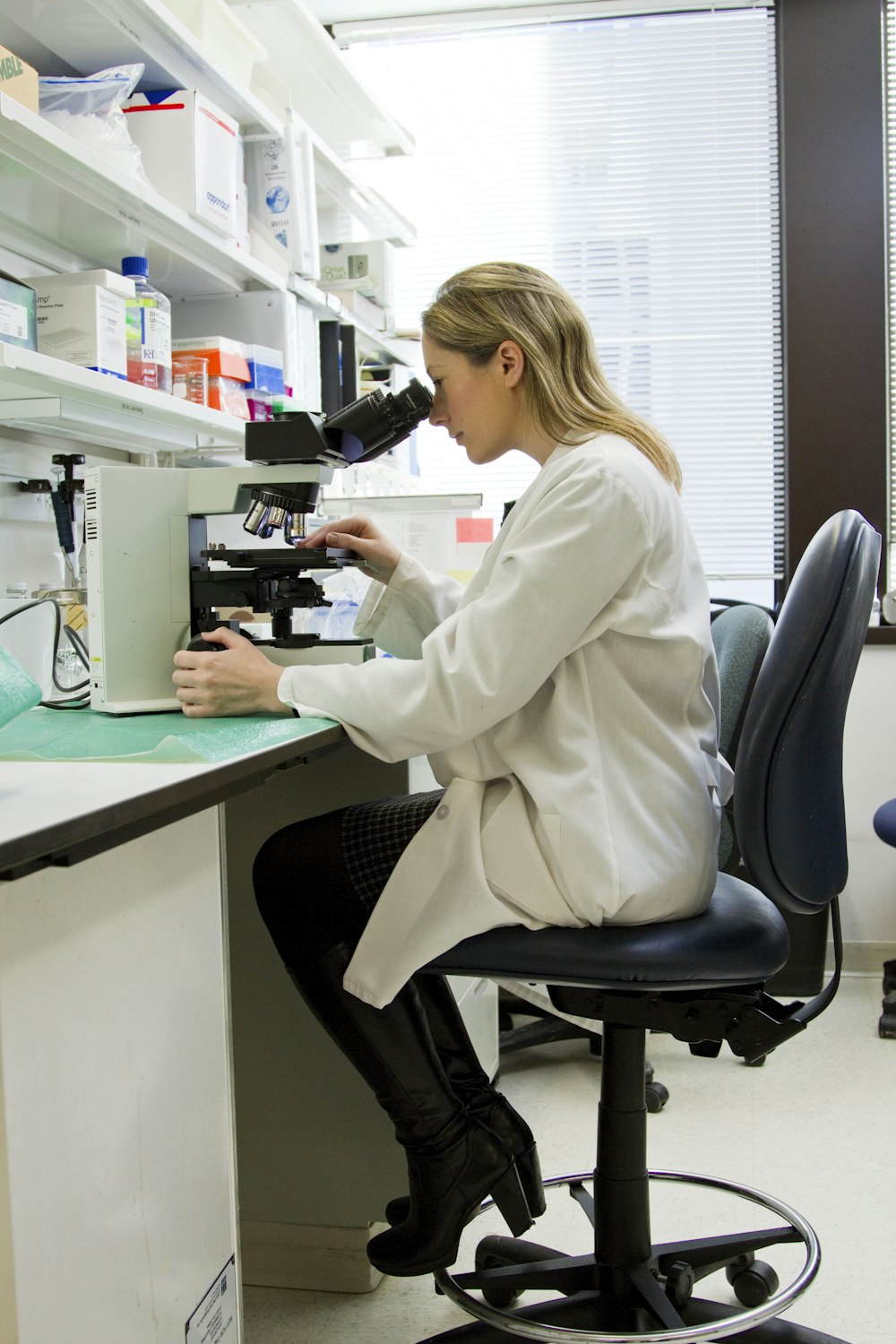
Analysis Equipment
Advanced instruments like XRD and FT-IR spectrometers are essential for material characterization
Chemical Reagents
High-purity chemicals ensure accurate simulation of contaminated water conditions
Thermal Processing
Controlled heating equipment enables precise pyrolysis conditions for optimal CHAP production
The Future of Water Purification: Bones and Beyond
The application of bovine bone-derived hydroxyapatite for copper removal represents more than just an innovative water treatment solution—it embodies the principles of circular economy and sustainable resource management. By transforming waste into a valuable material for environmental remediation, this approach addresses two challenges simultaneously: waste reduction and water purification 7 .
Current research continues to optimize this process, exploring factors such as particle size, thermal treatment conditions, and modification with other metals to enhance performance 5 .
As research advances, the potential applications of hydroxyapatite biomaterials continue to expand. From permeable reactive barriers for groundwater treatment to filter systems for industrial wastewater, this ancient material—perfected through millions of years of evolution—offers a surprisingly modern solution to one of our most pressing environmental challenges.
The Hidden Potential
The next time you see an animal bone, consider the hidden potential within—a potential that might one day help ensure clean water for communities around the world.