High-Performance Computing for Ab Initio Simulations: Revolutionizing Drug Discovery and Materials Science
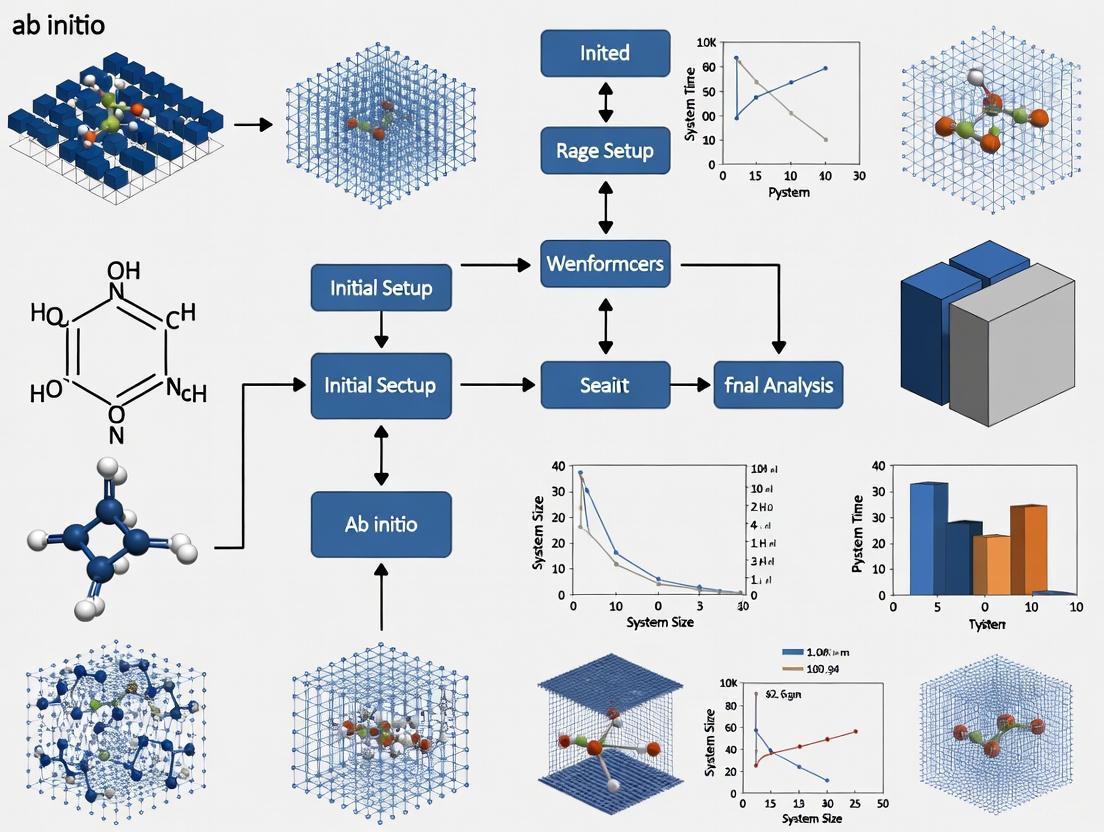
This article explores the transformative impact of high-performance computing (HPC) on ab initio simulations, which provide quantum-mechanically accurate insights into molecular and material behavior.
High-Performance Computing for Ab Initio Simulations: Revolutionizing Drug Discovery and Materials Science
Abstract
This article explores the transformative impact of high-performance computing (HPC) on ab initio simulations, which provide quantum-mechanically accurate insights into molecular and material behavior. Aimed at researchers, scientists, and drug development professionals, it covers foundational principles and the pressing challenges of achieving exascale performance. The article details key methodological advances, including machine learning-accelerated molecular dynamics and specialized software, alongside their concrete applications in drug discovery and materials design. It further provides a practical guide for troubleshooting performance bottlenecks and optimizing simulations on modern, heterogeneous HPC architectures. Finally, it examines validation frameworks and comparative analyses of different computational approaches, offering a comprehensive resource for leveraging HPC to push the boundaries of computational chemistry and biology.
Ab Initio Principles and the Drive to Exascale HPC
Ab initio molecular dynamics (AIMD) is a powerful computational method that simulates the physical movements of atoms over time based on first-principles quantum mechanics, without relying on empirical potentials [1]. This approach bridges molecular dynamics with quantum mechanics by calculating the forces acting on atoms directly from quantum-mechanical principles [2]. Density Functional Theory (DFT) serves as the foundational quantum mechanical theory for most modern AIMD simulations, providing a framework for determining the electronic structure of many-body systems [3]. The integration of these methodologies enables researchers to study complex systems undergoing chemical reactions, phase transitions, and other dynamic processes with quantum mechanical accuracy, making AIMD particularly valuable for systems where chemical bond breaking and forming occur [1].
Theoretical Foundations
Density Functional Theory Fundamentals
Density Functional Theory (DFT) begins with the Hohenberg-Kohn theorems, which demonstrate that all ground-state properties of a many-electron system are uniquely determined by its electron density, a function of only three spatial coordinates [3]. This revolutionary concept reduces the intractable many-body problem of N electrons with 3N spatial coordinates to a problem dealing with just three spatial coordinates through the use of functionals of the electron density [3].
The Kohn-Sham equations, developed later, form the practical basis for most DFT calculations by introducing a system of non-interacting electrons that produce the same density as the real system [2] [3]. The total energy functional in Kohn-Sham DFT is expressed as:
[ E{\text{KS}}[\rho(\mathbf{r})] = \int d\mathbf{r} \rho(\mathbf{r})V{\text{ext}}(\mathbf{r},\mathbf{R}) + K[\rho(\mathbf{r})] + V{\text{ee}}[\rho(\mathbf{r})] + E{\text{xc}}[\rho(\mathbf{r})] ]
where the terms represent, respectively: the interaction of electrons with an external potential (typically from nuclei), the kinetic energy of a non-interacting reference system, the electron-electron Coulombic energy, and the exchange-correlation energy [2]. The exchange-correlation functional ( E_{\text{xc}}[\rho(\mathbf{r})] ) encompasses all quantum mechanical effects not captured by the other terms and must be approximated in practical calculations [2] [3].
Ab Initio Molecular Dynamics Methodologies
AIMD simulations generate finite-temperature dynamical trajectories using forces obtained directly from electronic structure calculations performed "on the fly" as the simulation proceeds [2]. The classical dynamics of the nuclei follows Newton's equations:
[ MI \frac{\partial^2 \mathbf{R}I}{\partial t^2} = -\nablaI [\epsilon0(\mathbf{R}) + V{nn}(\mathbf{R})], \quad (I=1,\ldots,Nn) ]
where ( MI ) and ( \mathbf{R}I ) refer to the nuclear mass and coordinates, ( \epsilon0(\mathbf{R}) ) is the ground-state energy at nuclear configuration ( \mathbf{R} ), and ( V{nn} ) represents nuclear-nuclear Coulomb repulsion [2].
Two primary algorithmic approaches dominate the AIMD landscape:
Born-Oppenheimer Molecular Dynamics (BOMD): This approach treats the electronic structure problem within the time-independent Schrödinger equation, requiring explicit electronic minimization at each molecular dynamics time step [1].
Car-Parrinello Molecular Dynamics (CPMD): This method explicitly includes electronic degrees of freedom as fictitious dynamical variables through an extended Lagrangian, avoiding the need for self-consistent iterative minimization at each step [1]. The Car-Parrinello Lagrangian is defined as: [ \mathcal{L} = \frac{1}{2} \left( \sum{I}^{\text{nuclei}} MI \dot{\mathbf{R}}I^2 + \mu \sum{i}^{\text{orbitals}} \int d\mathbf{r} \, |\dot{\psi}i(\mathbf{r},t)|^2 \right) - E[{\psii},{\mathbf{R}I}] + \sum{ij} \Lambda{ij} \left( \int d\mathbf{r} \, \psii \psij - \delta{ij} \right) ] where ( \mu ) is a fictitious mass parameter assigned to the electronic orbitals [1].
Table 1: Comparison of AIMD Methodological Approaches
| Feature | Born-Oppenheimer MD | Car-Parrinello MD |
|---|---|---|
| Electronic minimization | Required at each time step | Avoided after initial step |
| Electronic degrees of freedom | Treated implicitly | Explicit dynamical variables |
| Time steps | Larger (1-10 fs) [1] | Smaller (due to fictitious electron mass) [1] |
| Computational cost per step | Higher | Lower |
| Typical systems | Wide range | Metallic systems can be challenging |
Computational Implementation
Essential Software Solutions
Several specialized software packages have been developed to implement AIMD simulations, each with particular strengths and specializations. These packages implement the complex algorithms necessary to solve the Kohn-Sham equations efficiently on high-performance computing architectures.
Table 2: Prominent Software Packages for AIMD Simulations
| Software | License | Key Features | Basis Set |
|---|---|---|---|
| VASP [4] [5] | Commercial | Robust pseudopotential library; hybrid functionals; GW methods | Plane waves |
| Quantum ESPRESSO [5] | Open-source | Car-Parrinello implementation; phonon calculations; TDDFPT | Plane waves |
| CP2K [5] [6] | Open-source | Quickstep module; mixed Gaussian/plane waves; good for large systems | Gaussian and plane waves |
| CPMD [1] [5] | Open-source | Original Car-Parrinello code; QM/MM capabilities | Plane waves |
| ABINIT [5] | Open-source | Many-body perturbation theory; excited states; wavelets | Plane waves/wavelets |
| SIESTA [7] | Open-source | Linear-scaling; numerical atomic orbitals | Numerical atomic orbitals |
Selection of appropriate software depends on multiple factors including system size, elemental composition, properties of interest, and available computational resources [5]. Key considerations include the availability of pseudopotentials for all elements in the system, parallel scalability, and the specific physical properties needing investigation [5].
Performance Considerations on HPC Systems
AIMD simulations are computationally demanding, with traditional DFT calculations scaling as N³ with system size (where N is the number of atoms) [2]. This computational complexity has driven the development of novel algorithms and their implementation on modern high-performance computing (HPC) systems.
Performance analyses of electronic structure codes on HPC architectures reveal several critical considerations:
- Strong scaling (fixed system size, increasing cores) efficiency typically decreases with rising core counts, but this decrease is less pronounced for larger systems [7].
- Weak scaling (increasing system size proportionally with cores) performance varies significantly with supercomputer topology and network architecture [7].
- System size dependence must be considered when evaluating parallel performance, as efficiency generally improves with larger simulation sizes [7].
Recent algorithmic advances have focused on achieving linear-scaling (O(N)) methods that take advantage of the "nearsightedness" of quantum mechanical systems, where local electronic properties depend predominantly on nearby atoms [2]. These approaches, such as the embedded divide-and-conquer scheme, enable simulations of increasingly large systems (up to 19,000 atoms demonstrated) [2].
Application Notes: Phase-Change Memory Materials
Experimental Background and Objectives
Phase-change random access memory (PRAM) utilizes the dramatic contrast in electrical resistance between amorphous and crystalline states of chalcogenide materials for data storage [8]. While Ge₂Sb₂Te₅ has served as the core material in commercial PRAM devices, its relatively low crystallization temperature (~150°C) makes it unsuitable for embedded memory applications requiring high-temperature stability, such as automotive electronics that must endure temperatures above 300°C [8].
This application note details a comprehensive AIMD study investigating Ge-rich Ge-Sb-Te alloys as potential high-temperature alternatives, focusing on the compositional range from Ge₂Sb₁Te₂ to Ge₇Sb₁Te₂ [8]. The research aimed to elucidate the atomic-scale structural features and bonding nature responsible for enhanced amorphous-phase stability in these materials.
Computational Methodology and Workflow
The investigation employed AIMD simulations based on density functional theory to generate structural models of various GST compositions using a melt-quench protocol [8]. The specific workflow encompassed:
Figure 1: AIMD melt-quench protocol workflow for modeling amorphous materials [8].
Step 1: Model Generation
- Created cubic supercells containing 189-540 atoms representing 3×3×3 expansions of the cubic rocksalt crystal structure [8]
- Systematically varied Ge content while maintaining fixed Sb and Te atom counts [8]
- Adjusted simulation box sizes during quenching to minimize internal pressure [8]
Step 2: Melt-Quench Protocol
- Employed AIMD simulations to melt structures at high temperature (2000 K) [8]
- Quenched systems to 300 K at approximately 50 K/ps [8]
- Performed three independent runs for each composition to ensure statistical reliability [8]
Step 3: Structural and Electronic Analysis
- Calculated radial distribution functions to characterize atomic structure [8]
- Performed chemical bonding analysis using crystal orbital overlap population (COOP) method [8]
- Applied Smooth Overlap of Atomic Positions (SOAP) similarity analysis to compare local environments [8]
Computational Details:
- Software: Density functional theory code (specific package not identified) [8]
- Pseudopotentials: Plane-wave basis set with pseudopotential approximation [2]
- Exchange-Correlation: Semi-local PBE functional [8]
- Simulation Cell: Periodic boundary conditions [8]
- Temperature Control: Langevin dynamics or Nosé-Hoover thermostat [8]
The Researcher's Toolkit
Table 3: Essential Computational Materials for AIMD Simulations of Phase-Change Materials
| Component | Function/Role | Specific Examples |
|---|---|---|
| Pseudopotentials | Represent core electrons and reduce computational cost | Norm-conserving, ultrasoft, PAW datasets [2] |
| Basis Set | Expand electronic wavefunctions | Plane waves, numerical atomic orbitals, Gaussians [2] |
| Exchange-Correlation Functional | Approximate quantum interactions | PBE, LDA, hybrid functionals [8] |
| Molecular Dynamics Ensemble | Control simulation conditions | NVE, NVT, NPT ensembles [8] |
| Analysis Tools | Extract structural and electronic properties | RDF, COOP, SOAP similarity [8] |
Key Findings and Materials Design Principles
The AIMD simulations revealed that increasing Ge content in GST alloys significantly enhances the stability of the amorphous phase while systematically altering structural properties:
- Structural Homogeneity: All generated amorphous models, including Ge-rich compositions, maintained homogeneous phases without substantial de-mixing [8]
- Density Evolution: Theoretical number density increased progressively with Ge content: 0.0278 Å⁻³ (Ge₂Sb₂Te₅) → 0.0310 Å⁻³ (Ge₂Sb₁Te₂) → 0.0327 Å⁻³ (Ge₄Sb₁Te₂) → 0.0358 Å⁻³ (Ge₇Sb₁Te₂) [8]
- Bonding Analysis: COOP calculations showed no strong antibonding interactions at the Fermi level, indicating chemical stability of the amorphous models [8]
- Compositional Threshold: Identified a maximum Ge concentration threshold beyond which phase separation occurs, compromising device performance [8]
Based on these atomic-scale insights, the research established concrete materials design principles for embedded phase-change memories:
- Balance Ge content to achieve high crystallization temperature while maintaining reasonable switching speed [8]
- Avoid exceeding the compositional threshold for homogeneous amorphous phase formation [8]
- Utilize the identified "golden composition" region (marked in the ternary phase diagram) for optimal performance [8]
Figure 2: Composition-property relationships for Ge-rich phase-change materials [8].
Ab initio molecular dynamics integrated with density functional theory provides a powerful framework for investigating and designing advanced materials at the atomic scale. The case study of Ge-rich phase-change memory materials demonstrates how AIMD simulations can reveal fundamental structure-property relationships and establish practical design principles for technological applications. As computational methods continue to advance, with improved exchange-correlation functionals, linear-scaling algorithms, and enhanced performance on extreme-scale computing architectures, AIMD will play an increasingly vital role in materials discovery and optimization across diverse fields including energy storage, catalysis, and electronic devices.
The field of high-performance computing (HPC) is undergoing a transformative shift, moving from traditional CPU-based clusters to heterogeneous architectures that integrate GPU acceleration, a change that is particularly impactful for ab initio simulations research. This evolution, marked by the deployment of pre-exascale systems, enables scientists to tackle problems of unprecedented complexity in materials science and drug development. These advanced computational platforms provide the foundation for exploring biological and chemical systems with quantum mechanical accuracy, significantly accelerating the pace of discovery. This article details the current HPC landscape, provides actionable protocols for leveraging these systems, and showcases their application through a case study on simulating phase-change materials, offering a blueprint for researchers in computational chemistry and physics.
The Evolving HPC Hardware Landscape
The hardware underpinning modern HPC has diversified beyond homogeneous CPU clusters. Today's systems are characterized by a hybrid architecture that combines CPUs with GPUs, designed to handle specific workloads with optimal efficiency.
Central Processing Unit (CPU) clusters have been the traditional workhorses of HPC, excellent for handling tasks that require complex, serial processing and for managing the orchestration of large-scale simulations. In contrast, Graphics Processing Units (GPUs) are designed for massive parallelism, making them ideal for accelerating the computationally intensive, matrix-based mathematical operations that are fundamental to ab initio methods and molecular dynamics. The core distinction lies in their design philosophy: CPUs have a few complex cores optimized for single-thread performance, while GPUs contain thousands of simpler cores designed for parallel execution [9].
The emergence of pre-exascale systems, such as the pan-European supercomputer LEONARDO, represents the current frontier. LEONARDO is a exemplar of this modern architecture, featuring a partition with over 14,000 NVIDIA Ampere A100 GPUs alongside a robust CPU partition, all interconnected with high-speed fabrics to support both traditional HPC and emerging AI applications [10]. This convergence of AI and HPC is a key trend, with AI-optimized hardware being increasingly utilized for both AI training and traditional simulation workloads [11].
Table 1: Key Hardware Considerations for Scientific Simulations
| Hardware Component | Key Consideration | Relevance to Ab Initio Simulations |
|---|---|---|
| GPU (Graphics Processing Unit) | Parallel processing capability; Single (FP32) vs. Double (FP64) Precision | Crucial for accelerating quantum chemistry calculations (e.g., density functional theory). FP64 is often mandatory for accuracy [9]. |
| CPU (Central Processing Unit) | Single-thread performance; core count | Manages serial portions of code, input/output operations, and coordinates parallel tasks across GPUs. |
| Interconnect | Bandwidth and latency (e.g., InfiniBand, Ultra Ethernet) | Critical for performance in multi-node simulations, affecting how quickly data is exchanged between GPUs/CPUs [11]. |
| Memory (VRAM) | Capacity and bandwidth | Limits the maximum system size (number of atoms) that can be simulated on a single GPU node. |
A critical decision point for researchers is the precision requirement of their computational code. Many research codes can operate effectively in mixed precision, but methods like Density Functional Theory (DFT) in codes such as CP2K, Quantum ESPRESSO, and VASP often mandate true double precision (FP64) throughout [9]. Consumer-grade GPUs (e.g., GeForce RTX series) have intentionally limited FP64 throughput, making them a poor fit for such workloads. For FP64-dominated codes, data-center GPUs like the NVIDIA A100/H100 or AMD Instinct MI300X are necessary to achieve maximum performance [9] [12].
Performance Metrics and Comparison Frameworks
Evaluating the performance of HPC systems, particularly when comparing CPU and GPU architectures, requires metrics that provide fair and actionable insights. Traditional metrics like simple speedup ratios can be misleading as they are highly dependent on the specific workload size.
To address this, recent research proposes two peak-based performance metrics [13]:
- Peak Ratio Crossover (PRC): The problem size at which the performance of a GPU begins to surpass that of a CPU.
- Peak-to-Peak Ratio (PPR): The ratio of the best achievable performance on a GPU to the best achievable performance on a CPU for a given application.
These metrics help researchers make informed decisions about which hardware is best suited for their specific problem size and performance goals. For instance, a benchmark study on the Cloud Layers Unified by Binormals (CLUBB) model demonstrated how these metrics can guide execution strategy and prioritize optimization efforts [13].
Table 2: Performance Results from Real-World Applications
| Application / Case Study | Hardware Configuration | Performance Result | Key Implication |
|---|---|---|---|
| Aerospace CFD (Ansys Fluent) | 8x AMD Instinct MI300X GPUs | Simulated 5 sec of physical flow time in 3.7 hrs (single precision) [12]. | GPU acceleration compresses simulation time from weeks to hours, enabling more design iterations. |
| Aerospace CFD (Ansys Fluent) | 16x AMD Instinct MI300X GPUs | Simulation completed in under 4.4 hrs (double precision) [12]. | Confirms feasibility of high-fidelity, FP64-required simulations on modern GPU clusters in practical timeframes. |
| Phase-Change Materials (GST-ACE-24) | ARCHER2 CPU-based HPC system | Achieved >400x higher efficiency compared to previous model (GST-GAP-22) [14]. | Algorithmic and model improvements (ML potentials) can yield performance gains that rival or exceed hardware upgrades. |
Experimental Protocols for HPC Simulations
Protocol: Benchmarking CPU-GPU Performance
Objective: To determine the optimal hardware (CPU vs. GPU) for a specific scientific application and problem size.
- Hardware Selection: Identify representative CPU and GPU nodes available within your HPC ecosystem.
- Workload Definition: Create a set of input files that represent a range of typical problem sizes for your application (e.g., small, medium, large).
- Baseline Measurement: For each workload, run the application on the CPU node and record the wall-clock time to completion. Ensure the run utilizes the CPU fully (e.g., using all available cores).
- GPU Measurement: For each workload, run the same application on the GPU node, making sure to use a GPU-accelerated version of the code and to transfer all computationally intensive kernels to the GPU.
- Data Analysis: Calculate the speedup (CPU time / GPU time) for each workload size. Plot the speedup against the problem size to identify the Peak Ratio Crossover (PRC) point [13].
- Reporting: Document the exact software versions, compiler flags, input parameters, and wall-clock times to ensure reproducibility.
Protocol: Running a Molecular Dynamics Simulation with GPU Acceleration
Objective: To efficiently run a molecular dynamics simulation using a code like GROMACS on a GPU-equipped HPC node.
- Environment Setup: Begin by loading the necessary environment modules on the HPC cluster. This typically includes the compiler (e.g., GCC), MPI library (e.g., OpenMPI), CUDA toolkit, and the GROMACS installation compiled with GPU support.
- Job Configuration: Prepare a job submission script for the cluster's job scheduler (e.g., Slurm, PBS). Request access to a node with one or more GPUs.
- Execution Command: Use explicit flags to ensure all possible computation is offloaded to the GPU. A typical GROMACS command would be:
Where
-nb gpuoffloads short-range non-bonded forces,-pme gpuhandles the Particle Mesh Ewald calculation, and-update gpuand-bonded gpuoffload coordinate updates and bonded forces, respectively [9]. - Performance Monitoring: During the run, monitor performance metrics such as nanoseconds-per-day and the load distribution between CPU and GPU cores to identify potential bottlenecks.
- Reproducibility: Record a "run card" – a one-page text file containing the input dataset hash, all solver parameters (.mdp file for GROMACS), command line, environment variables, and software version details [9].
Case Study: Full-Cycle Device-Scale Simulations of Phase-Change Materials
This case study illustrates the convergence of advanced algorithms and HPC hardware to solve a problem previously considered intractable.
5.1 Background and Objective Phase-change materials (PCMs) like Ge–Sb–Te (GST) alloys are crucial for non-volatile memory and neuromorphic computing. Understanding their switching mechanisms (SET crystallisation and RESET amorphisation) requires atomistic simulations that cover the entire device programming cycle. The challenge was simultaneously reaching the necessary length scales (millions of atoms) and time scales (nanoseconds) for realistic device simulation, which was prohibitively expensive with previous methods like Density-Functional Theory (DFT) or even earlier machine-learned potentials [14].
5.2 Methodology and HPC Implementation The research team developed a ultra-fast machine-learned interatomic potential using the Atomic Cluster Expansion (ACE) framework, known as GST-ACE-24 [14].
- Training: The potential was trained on a comprehensive DFT dataset, followed by several iterations of "self-correction" to include configurations from melt-quenched and phase-transition processes, ensuring robustness and accuracy.
- Software and Workflow: The custom ACE potential was integrated with molecular dynamics software to simulate the current pulses that induce Joule heating and phase transitions in a realistic device geometry containing hundreds of thousands of atoms.
- HPC Execution: The simulations were performed on the ARCHER2 supercomputer. The computational efficiency of the ACE framework allowed for excellent strong scaling, meaning the simulation speed increased efficiently when using more CPU cores, up to 65,536 cores for a 1-million-atom model [14].
5.3 Key Findings and HPC Impact The GST-ACE-24 potential demonstrated a more than 400-fold increase in computational efficiency compared to its predecessor (GST-GAP-22) on the same CPU-based ARCHER2 system [14]. This dramatic improvement was not due to new hardware but to a more efficient algorithm. This efficiency enabled the first full-cycle simulation of a PCM device, including the time-consuming crystallisation process, which would have been infeasible in terms of time, cost, and carbon emissions with prior methods. This showcases how algorithmic advances, leveraged on pre-exascale HPC systems, can open new frontiers in computational materials science.
The Scientist's Toolkit: Research Reagent Solutions
Table 3: Essential Software and Hardware for HPC-Accelerated Ab Initio Research
| Item | Function / Description | Example Use Case |
|---|---|---|
| Machine-Learned Interatomic Potentials (MLIPs) | Fast, accurate force fields trained on DFT data; bridge the gap between quantum accuracy and classical MD scale. | Enabling large-scale, long-time-scale molecular dynamics simulations of materials, as in the PCM case study [14]. |
| GPU-Accelerated Simulation Codes | Scientific software (e.g., GROMACS, LAMMPS, Ansys Fluent) compiled to offload computations to GPUs. | Dramatically reducing time-to-solution for MD and CFD simulations compared to CPU-only execution [9] [12]. |
| Container Technology (e.g., Docker, Singularity) | Packages code, libraries, and dependencies into a single, reproducible, and portable image. | Ensuring simulation reproducibility and simplifying the deployment of complex software stacks on diverse HPC systems [9]. |
| Pre-Exascale Supercomputers | Large-scale HPC systems (e.g., LEONARDO) integrating many thousands of GPUs and CPUs with high-speed interconnects. | Providing the aggregate compute power and memory required for device-scale or system-scale ab initio quality simulations [10]. |
| Performance Profiling Tools | Software (e.g., NVIDIA Nsight, ARM MAP) to identify computational bottlenecks in code. | Guiding optimization efforts by pinpointing the specific functions or kernels that consume the most time [13]. |
Visualizations
Diagram 1: The evolution of HPC system architecture and applications over time.
Diagram 2: A simplified workflow of a typical GPU-accelerated scientific simulation.
In the field of high-performance computing for ab initio simulations, researchers face three interconnected fundamental challenges: achieving scalable performance across thousands of compute cores, managing communication overhead in distributed memory systems, and optimizing data movement across complex memory hierarchies. These challenges become particularly acute as scientific inquiries expand to larger molecular systems, more complex materials, and longer time scales requiring statistically significant sampling. The pursuit of predictive accuracy in applications ranging from drug discovery to materials design necessitates constant advancement in computational methods that address these bottlenecks directly. This document outlines specific computational challenges, presents quantitative performance data, and provides detailed protocols for optimizing simulations, framed within the context of modern computational research infrastructure.
Quantitative Analysis of Computational Performance
Table 1: Performance Comparison of Machine-Learning Potentials for Molecular Dynamics
| Potential Type | Computational Framework | Speedup Factor | System Size Demonstrated | Parallel Efficiency | Key Limitation |
|---|---|---|---|---|---|
| Gaussian Approximation Potential (GAP) [15] | DFT-based MD | 1x (Baseline) | ~500,000 atoms | Not Reported | ~150M CPU hours for 10 ns simulation |
| Atomic Cluster Expansion (ACE) [15] | DFT-based MD | >400x vs. GAP | >1,000,000 atoms | Good scaling to 65,536 cores | Performance drop for small systems on many nodes |
| ViSNet / AI2BMD [16] | AI-driven MD | "Orders of magnitude" faster than DFT | >10,000 atoms | Not Reported | Higher cost than classical MD, but much lower than DFT |
| Neural Network Quantum States [17] | Quantum Chemistry | 8.41x speedup with optimized framework | Large molecules on Fugaku supercomputer | 95.8% on 1,536 nodes | Exponentially growing cost with system size |
Table 2: Communication and Scaling Performance of ab Initio Software
| Software / Method | Communication Library | Parallelization Strategy | Scaling Performance | Key Optimization |
|---|---|---|---|---|
| VASP (Hybrid DFT) [18] | NVIDIA NCCL | Multi-node GPU | >80% efficiency on 32 nodes; Good to 256 nodes | GPU-initiated, stream-aware communication hiding |
| CPMD (USPP) [19] [20] | Hybrid MPI+OpenMP | Multi-node CPU | Demonstrated for 32-2048 water molecules | Overlapped computation/communication; Batched 3D FFTs |
| Neural Network Quantum States [17] | Custom | Multi-level Sampling Parallelism | 95.8% efficiency on 1,536 nodes | Cache-centric optimization for transformer ansatz |
Detailed Experimental Protocols
Protocol 1: Full-Device Phase-Change Memory Simulation using ACE
Objective: To simulate the full SET-RESET cycle of a Ge-Sb-Te (GST) based phase-change memory device, encompassing the computationally intensive crystallisation process.
Background: Simulating the crystallisation (SET operation) of GST has been prohibitively expensive, requiring hundreds of millions of CPU core hours with previous ML potentials [15].
Materials and Reagents:
- Software: LAMMPS or similar MD engine integrated with the ACE potential.
- Computational Resources: High-performance computing cluster with CPU-based nodes (e.g., ARCHER2). The protocol is optimized for ~65,536 CPU cores.
- Initial Structure: Atomic coordinate file for a cross-point or mushroom-type device geometry containing 500,000 to 1,000,000 atoms.
Procedure:
- Potential Initialization: Load the trained GST-ACE-24 potential, which has undergone iterative refinement (iter-0 to iter-5) on a dataset including melt-quenched disordered structures and phase-transition intermediates [15].
- System Equilibration:
- Thermalize the system to the target temperature (e.g., 300 K) using an NVT ensemble for 100 ps.
- Apply a Langevin thermostat or Nosé-Hoover chain to maintain temperature control.
- RESET Operation (Amorphisation):
- Apply a steep temperature ramp to 900-1000 K over 10 ps to simulate Joule heating-induced melting.
- Hold the system at the peak temperature for 5 ps.
- Quench the system rapidly to 300 K over 15 ps to vitrify the molten region. The total RESET simulation should be ~50 ps [15].
- SET Operation (Crystallisation):
- Apply a moderate, sub-melting temperature pulse (e.g., 600-700 K) for a significantly longer duration (10-50 ns) to induce nucleation and crystal growth.
- Monitor the potential energy and radial distribution function (RDF) to track the phase transition.
- Data Analysis:
- Use common neighbor analysis or bond-order parameters to distinguish between crystalline and amorphous atoms.
- Calculate the ionic conductivity contrast between the two states to confirm the switching event.
Protocol 2: Scaling VASP Hybrid-DFT Calculations with NCCL
Objective: To efficiently compute the electronic band structure of a doped HfO₂ (hafnia) system using hybrid density functional theory (HSE06) on a multi-node, GPU-accelerated supercomputer.
Background: Hybrid-DFT provides superior accuracy for band gaps but is computationally demanding. Efficient scaling is essential for practical system sizes [18].
Materials and Reagents:
- Software: Vienna Ab initio Simulation Package (VASP) compiled with NVIDIA HPC SDK and support for NCCL.
- Computational Resources: GPU-accelerated cluster (e.g., nodes with 8x A100/A800 GPUs) interconnected with high-bandwidth fabric (InfiniBand).
- Input File: A VASP input set (INCAR, POSCAR, KPOINTS, POTCAR) for a doped HfO₂ supercell (e.g., 256-atom Si-doped cell).
Procedure:
- Baseline Calculation:
- Run a single ionic step on a single node (8 GPUs) with NCCL enabled to establish a reference runtime.
- Use the
-DNCflag in theINCARfile to enable the use of NCCL for all communications.
- Strong Scaling Test:
- Run the same calculation on 4, 8, 16, 32, 64, and 128 nodes (32, 64, 128, 256, 512, 1024 GPUs).
- Use
mpirunorsrunto launch VASP across all allocated nodes. - For each run, record the total wall time and the time spent in the electronic minimization loop.
- Performance Analysis:
- Calculate the Speedup as (Reference Runtime on 1 node) / (Runtime on N nodes).
- Calculate the Parallel Efficiency as (Speedup on N nodes) / (Ideal Speedup on N nodes) * 100%.
- The ideal scaling target is >80% parallel efficiency on 32 nodes for a system of this size [18].
- Result Extraction: Upon completion, analyze the
OUTCARfile for the final total energy and the calculated band gap.
Protocol 3: Large-Scale Ab Initio MD of an Electrochemical Interface
Objective: To characterize the atomistic structure of the electric double layer (EDL) at a metal-water electrolyte interface under potential control.
Background: Reliable modeling requires statistical sampling of the liquid electrolyte, necessitating long simulation times (>>100 ps) for large systems (>500 atoms) to achieve converged properties [21].
Materials and Reagents:
- Software: Ab initio molecular dynamics package (e.g., CPMD, VASP) with capabilities for applied potential or fixed-charge simulations.
- Model System: A slab model of a Pt(111) electrode in contact with ~30 layers of liquid water, totaling ~1000 atoms.
- Methodology: Plane-wave Density Functional Theory (DFT) with a hybrid functional (e.g., PBE0) for improved accuracy.
Procedure:
- System Preparation:
- Construct the metal slab with a vacuum layer >15 Å.
- Insert pre-equilibrated water molecules using classical MD.
- Apply the desired electrode potential using an implicit solvent method or an explicit countercharge [21].
- Equilibration:
- Run >20 ps of AIMD in the NVT ensemble (T=300 K) to equilibrate the water structure, discarding this data from production analysis.
- Production Run:
- Extend the simulation for a minimum of 100-200 ps to ensure proper sampling of water orientations and ion distributions in the EDL.
- Write trajectory frames every 5-10 fs.
- Post-Processing and Analysis:
- Averaging: Calculate the time-averaged number density profiles for water oxygen and hydrogen atoms along the surface normal (z-axis).
- Orientation: Compute the distribution of water dipole moments as a function of distance from the electrode.
- Validation: Compare the simulated X-ray reflectivity or capacitance with experimental data, if available.
Visualization of Optimization Strategies and Relationships
The following diagram illustrates the logical relationships between the key computational challenges, the optimization strategies employed to address them, and the resulting performance outcomes.
The Scientist's Toolkit: Essential Research Reagents
Table 3: Key Software and Library Solutions for High-Performance Ab Initio Simulation
| Tool Name | Type | Primary Function | Application Context |
|---|---|---|---|
| VASP [22] [18] | Electronic Structure Code | Performs DFT calculations and AIMD simulations for materials science. | Predicting material properties (band gaps, phase stability) and simulating solid-state and molecular systems. |
| CPMD [19] [20] | Ab Initio MD Code | Specialized in plane-wave/pseudopotential AIMD simulations. | Simulating condensed phase systems, including liquids and electrochemical interfaces. |
| ACE Framework [15] | Machine-Learning Potential | Provides ultra-fast, scalable force fields trained on DFT data. | Enabling device-scale MD simulations of phase-change materials and other complex systems. |
| GAP Framework [15] | Machine-Learning Potential | Creates highly accurate interatomic potentials with high data efficiency. | Initial model development and simulation of complex alloys and functional materials. |
| NVIDIA NCCL [18] | Communication Library | Optimizes multi-GPU and multi-node collective communications. | Scaling VASP and other CUDA-aware codes on GPU-based supercomputers with high parallel efficiency. |
| ViSNet / AI2BMD [16] | AI-driven MD System | Provides a machine-learned force field for proteins with ab initio accuracy. | Performing high-accuracy biomolecular dynamics for drug discovery and protein interaction studies. |
| Neural Network Quantum States [17] [23] | Quantum Chemistry Solver | Solves the electronic Schrödinger equation for quantum many-body problems. | High-accuracy ab initio calculations of strongly correlated molecular systems. |
Application Notes: The State of Quantum Computing in Scientific Simulation
The integration of quantum computing with high-performance computing (HPC) for ab initio simulations represents a paradigm shift, moving from theoretical promise to tangible experimental utility in 2025. The field is characterized by rapid hardware scaling, intensified investment, and the demonstration of early quantum advantages for specific scientific problems, particularly in molecular simulation.
Market and Hardware Landscape
The quantitative landscape of the quantum computing sector reflects its transition into a commercially relevant technology. The data below summarizes key market and hardware metrics.
Table 1: Quantum Computing Market and Investment Landscape (2025)
| Metric | Value / Status | Source/Projection |
|---|---|---|
| Global Market Size (2025) | $1.8 - $3.5 billion | Industry Report [24] |
| Projected Market (2029) | $5.3 billion (32.7% CAGR) | Industry Projection [24] |
| Venture Capital (2024) | ~$2.0 billion | McKinsey Analysis [25] |
| Government Investment (2024) | $1.8 billion | McKinsey Analysis [25] |
| Quantum Computing Revenue (2024) | $650 - $750 million | McKinsey Analysis [25] |
Table 2: Recent Quantum Hardware Breakthroughs and Roadmaps
| Company/Institution | Breakthrough / System | Key Specification |
|---|---|---|
| Willow Chip | 105 superconducting qubits; demonstrated calculation 13,000x faster than supercomputer [24] | |
| IBM | Quantum Starling (Roadmap) | Target: 200 logical qubits by 2029 [24] |
| Fujitsu & RIKEN | Superconducting System | 256-qubit system; 1,000-qubit machine planned for 2026 [24] |
| Microsoft & Atom Computing | Topological/Majorana Qubits | Demonstrated 28 logical qubits with 1,000-fold error reduction [24] |
| Pasqal | Neutral-Atom Quantum Computer (Orion) | Used for first quantum algorithm for protein hydration analysis [26] |
Application in Drug Discovery and Materials Science
Quantum computing is demonstrating practical value in simulating molecular systems, a core task of ab initio simulation research.
- Protein-Ligand Binding and Hydration: A collaboration between Pasqal and Qubit Pharmaceuticals has established a hybrid quantum-classical approach to analyze water molecule distribution within protein pockets. This is a critical step in predicting drug binding affinity and accuracy. Their quantum algorithm, run on Pasqal's Orion neutral-atom computer, evaluates numerous molecular configurations far more efficiently than classical systems, marking a significant step in computational drug discovery [26].
- Quantum-Enhanced CADD: Computer-Assisted Drug Discovery (CADD) tools like molecular dynamics (MD) and density functional theory (DFT) are limited on classical HPC for medium-to-large molecules. Quantum computing is poised to enhance CADD by enabling more accurate prediction of molecular properties, protein folding, and protein-ligand interactions. This could significantly shorten screening times and reduce dead-end research cycles [27].
- Demonstrated Quantum Advantage: In March 2025, IonQ and Ansys reported running a medical device simulation on a 36-qubit computer that outperformed classical HPC by 12%, providing one of the first documented cases of practical quantum advantage in a real-world application [24].
Experimental Protocols
This section provides detailed methodologies for implementing novel quantum computing paradigms in scientific research workflows.
Protocol 1: Hybrid Quantum-Classical Approach for Protein Hydration Site Analysis
This protocol details the methodology pioneered by Pasqal and Qubit Pharmaceuticals for determining the location and energetics of water molecules in protein binding pockets [26].
Objective: To accurately and efficiently map the distribution and free energy of water molecules within protein cavities using a hybrid quantum-classical computational workflow.
Materials and Reagents:
- Protein Structure File: A experimentally determined (e.g., X-ray crystallography) or computationally predicted (e.g., AlphaFold) 3D structure of the target protein in PDB format.
- Classical HPC Resources: For running molecular dynamics (MD) or classical Monte Carlo simulations.
- Quantum Computing Access: Quantum-as-a-Service (QaaS) platform with access to a neutral-atom quantum processor (e.g., Pasqal's Orion) or an equivalent gate-based system.
- Software Stack: Classical molecular simulation software (e.g., GROMACS, AMBER) and quantum algorithm development kits (e.g., Qiskit, Cirq, Pulser).
Procedure:
- Classical Pre-Processing (Water Density Generation):
- Solvate the protein structure in a virtual water box using classical MD simulation software.
- Run an MD simulation to generate an ensemble of water molecule configurations around the protein.
- From the simulation trajectories, calculate the classical water density map within the protein's binding pocket of interest.
Quantum Algorithm Execution (Water Placement):
- Formulate the water placement problem as a quantum optimization problem, where the goal is to find the lowest-energy configuration of water molecules within the pocket.
- Encode the classical water density data and protein atomic positions into the quantum processor. This involves mapping possible water sites to qubits and their interactions to quantum gates or entanglement.
- Implement a quantum algorithm, such as the Quantum Approximate Optimization Algorithm (QAOA) or a variational quantum eigensolver (VQE), on the quantum processor to find the optimal water molecule positions, particularly in challenging, buried regions of the pocket.
- Execute the quantum circuit and perform multiple measurements to obtain a statistical distribution of results.
Classical Post-Processing and Validation:
- Decode the quantum processor's output to determine the predicted coordinates and orientations of water molecules.
- Calculate the binding free energy of the predicted water molecules.
- Validate the quantum-derived hydration sites by comparing them to experimental data (e.g., from high-resolution X-ray structures) or against results from highly detailed, computationally expensive classical methods (e.g., 3D-RISM).
Figure 1: Hybrid Quantum-Classical Workflow for Protein Hydration Analysis.
Protocol 2: Topologically Protected Grover's Oracle for the Partition Problem
This protocol outlines a novel hardware-specific approach developed at Los Alamos National Laboratory that rethinks quantum algorithm implementation to reduce errors and complexity [28].
Objective: To implement Grover's algorithm for an unstructured search problem (e.g., the partition problem) using a hybrid hardware design that replaces complex quantum gate sequences with a natural physical interaction, thereby achieving topological protection against control errors.
Materials and Reagents:
- Specialized Quantum Processor: A quantum system designed for this protocol, where one "spin" qubit can naturally interact with a set of computational qubits without requiring direct qubit-qubit gates.
- Control System: Hardware for applying simple, time-dependent external magnetic field pulses to rotate the single spin qubit.
Procedure:
- Problem Initialization:
- Initialize the register of computational qubits to a superposition of all possible states, as per the standard Grover's algorithm initialization.
- Initialize the single, dedicated "oracle spin" qubit.
Topologically Protected Oracle Implementation:
- Instead of constructing the oracle—the black-box function that identifies the solution—using a complex circuit of two-qubit gates, allow the computational qubits to naturally interact with the oracle spin.
- Apply a sequence of simple, time-dependent external field pulses that rotate the oracle spin. The entire oracle operation is achieved through this natural interaction and the pulse sequence, requiring no direct interactions between the computational qubits.
- This method is "topologically protected," meaning its success is robust against small imprecisions in the control fields and other physical parameters, even in the absence of full quantum error correction.
Grover Iteration and Measurement:
- Complete the Grover iteration by applying the standard diffusion operator (inversion about the mean) to the computational qubits.
- Repeat the iteration the optimal number of times to amplify the solution state(s).
- Measure the computational qubits to read out the solution to the search problem.
Figure 2: Topologically Protected Grover's Algorithm Workflow.
The Scientist's Toolkit: Essential Reagents for QuantumAb InitioResearch
This table details key resources required to conduct quantum computing research in the field of ab initio simulations.
Table 3: Key Research Reagents and Platforms
| Item / Resource | Type | Function / Application | Example Providers / Instances |
|---|---|---|---|
| Quantum-as-a-Service (QaaS) | Platform | Cloud-based access to quantum processors and simulators; democratizes experimental use. | IBM Quantum, Microsoft Azure Quantum, Amazon Braket, SpinQ [24] |
| Neutral-Atom Quantum Computer | Hardware | Uses laser-cooled atoms as qubits; suitable for quantum simulation and optimization problems. | Pasqal's Orion, Atom Computing [24] [26] |
| Superconducting Quantum Processor | Hardware | Uses superconducting circuits as qubits; a leading platform for gate-based quantum computing. | Google's Willow, IBM's Kookaburra, Fujitsu [24] |
| Ab Initio Molecular Dynamics Software | Software | Performs first-principles MD simulations on classical HPC; used for pre/post-processing. | CP2K, VASP [4] [6] |
| Replacement-Type Quantum Gates | Novel Hardware Component | A new class of bias-preserving gates that reduce quantum error correction overhead. | ParityQC [29] |
| Post-Quantum Cryptography (PQC) | Security | Quantum-safe encryption algorithms to secure data against future quantum attacks. | NIST Standards (ML-KEM, ML-DSA, SLH-DSA) [24] |
| Federated Learning with FHE and QC | Software Framework | A privacy-preserving ML paradigm that integrates quantum layers with homomorphic encryption. | Emerging research framework [30] |
HPC-Accelerated Methods and Real-World Applications in Biomedicine
Molecular dynamics (MD) simulation serves as a "computational microscope," providing atomic-level insights into the dynamic behavior of molecular systems, from small organic compounds to massive biomolecular complexes [31]. The choice of software platform is critical, as it directly influences the accuracy, scale, and type of scientific questions researchers can address. Within the realm of high-performance computing (HPC) for ab initio simulations, the software ecosystem has diversified into specialized tools catering to different methodological approaches. This application note details four leading platforms—GROMACS, AMBER, CP2K, and DeePMD-kit—contrasting their capabilities, optimal use cases, and implementation protocols to guide researchers in selecting and effectively employing the right tool for their specific research objectives in computational chemistry, structural biology, and drug development.
The MD software landscape encompasses highly optimized classical simulators, advanced ab initio packages, and innovative machine-learning driven platforms.
AMBER (Assisted Model Building with Energy Refinement) is a highly respected suite renowned for its precision in simulating biomolecular systems, with a strong focus on the development of robust force fields for proteins, nucleic acids, and carbohydrates [32] [33]. Its comprehensive tools for parameterization, free energy calculations, and hybrid quantum mechanics/molecular mechanics (QM/MM) simulations make it indispensable for researchers demanding high accuracy [32].
GROMACS (GROningen MAchine for Chemical Simulations) is a powerful and versatile molecular dynamics engine celebrated for its exceptional speed and efficiency in parallel computations [32] [34]. It is optimized for both CPUs and GPUs, making it one of the fastest MD programs available, and is an excellent choice for large-scale simulations and high-throughput studies [32].
CP2K is a comprehensive software package that performs atomistic simulations using ab initio electronic structure methods like Density-Functional Theory (DFT), Hartree-Fock (HF), and second-order Møller-Plesset perturbation theory (MP2) [35] [36]. It is especially aimed at massively parallel and linear scaling electronic structure methods and state-of-the-art ab initio molecular dynamics (AIMD) simulations, offering capabilities that classical force fields cannot provide, such as modeling chemical reactions and electronic properties [36].
DeePMD-kit represents a paradigm shift, employing deep learning to construct potential energy models trained on first-principles data [37] [38]. It aims to resolve the accuracy-versus-efficiency dilemma by providing ab initio accuracy at a computational cost that is several orders of magnitude lower than conventional ab initio methods, enabling simulations of large biomolecules with quantum-chemical fidelity [31] [38].
Table 1: Quantitative Comparison of Key MD Simulation Platforms
| Platform | Primary Methodology | Computational Scaling | Key Strength | Typical System Size | Accuracy Level |
|---|---|---|---|---|---|
| GROMACS | Classical MD | Linear (Highly optimized) | Speed & Scalability | >100,000 atoms | Force field accuracy |
| AMBER | Classical MD | Linear (Biomolecule-optimized) | Biomolecular force fields | ~10,000-100,000 atoms | High for proteins/NA |
| CP2K | Ab Initio MD (DFT, MP2) | O(N³) for DFT | Electronic structure | ~100-1,000 atoms | Chemical accuracy |
| DeePMD-kit | Machine Learning Potential | Near-linear | Accuracy & Efficiency | ~1,000-100,000 atoms | Ab initio accuracy |
Table 2: Specialized Capabilities and Force Field Support
| Platform | QM/MM Support | Free Energy Methods | Supported Force Fields | ML Integration |
|---|---|---|---|---|
| GROMACS | Limited | Thermodynamic integration | AMBER, CHARMM, OPLS, GROMOS | Traditional ML potentials |
| AMBER | Excellent (Native) | MM-PBSA, TI, FEP | AMBER (ff14SB, GAFF) | DeePMD-kit, QM/MM-ΔMLP |
| CP2K | Native (QM/MM) | Metadynamics | AMBER, CHARMM (in MM region) | Internal ML workflows |
| DeePMD-kit | Via interfaces (e.g., AMBER) | Via MD engine | Trained from ab initio data | Native (Deep Potential models) |
Methodologies and Experimental Protocols
The following diagram illustrates the high-level workflow common to molecular dynamics studies, highlighting the parallel pathways for different simulation methodologies.
Protocol 1: Classical MD for Protein-Ligand Binding (AMBER/GROMACS)
Objective: Characterize binding dynamics and affinity between a protein and small molecule ligand using classical force fields.
Required Research Reagents:
Table 3: Essential Components for Classical MD Simulations
| Component | Function | Example/Format |
|---|---|---|
| Protein Structure | Simulation template | PDB ID or experimental structure |
| Ligand Parameterization | Define non-standard residues | antechamber (AMBER) or CGenFF (GROMACS) |
| Force Field | Potential energy function | AMBER ff19SB or CHARMM36m |
| Solvation Model | Aqueous environment | TIP3P water box, 10-12 Å padding |
| Neutralizing Ions | Physiological ionic concentration | Na⁺, Cl⁻ ions (~150 mM) |
Step-by-Step Procedure:
System Preparation:
- Obtain initial coordinates from experimental structures (e.g., PDB) or homology modeling.
- For AMBER: Use the
tLEaPmodule to load protein, standard residues, and force fields (e.g., ff19SB). For non-standard ligands, useantechamberto generate GAFF parameters. Solvate the system in a TIP3P water box with 10-12 Å padding and add neutralizing ions [33]. - For GROMACS: Use
pdb2gmxto process the protein and apply a force field. For ligands, useacpypeor similar tools to generate parameters. Solvate usinggmx solvateand add ions withgmx genion.
Energy Minimization:
- Perform steepest descent followed by conjugate gradient minimization to remove bad contacts and high-energy configurations.
- Typical protocol: 5,000 steps of solvent minimization with protein heavy atoms restrained, followed by 10,000 steps of full-system minimization.
System Equilibration:
- NVT Ensemble: Gradually heat the system from 0 K to 300 K over 100 ps using a Langevin thermostat or velocity rescaling, with position restraints on protein and ligand heavy atoms.
- NPT Ensemble: Equilibrate the system density for 100-500 ps at 1 bar using a Parrinello-Rahman or Berendsen barostat, maintaining position restraints.
Production MD:
- Run unrestrained simulation for 100 ns to 1 µs (depending on system size and research question) with a 2-fs time step. Use LINCS (GROMACS) or SHAKE (AMBER) constraints on hydrogen-heavy atom bonds.
- For binding affinity calculations, use the AMBER
MMPBSA.pyscript or GROMACS withg_mmpbsato compute binding free energies from trajectory snapshots [33].
Protocol 2: Ab Initio Biomolecular Dynamics with AI2BMD (DeePMD-kit)
Objective: Simulate protein dynamics with ab initio accuracy using a machine learning force field.
Required Research Reagents:
Table 4: Essential Components for AI-Driven MD Simulations
| Component | Function | Example/Format |
|---|---|---|
| Reference Data | Training ML potentials | DFT-level energies/forces for fragments |
| Fragmentation Scheme | Divide-and-conquer approach | 21 standard protein dipeptide units |
| ML Potential | Energy/force predictor | ViSNet model (in AI2BMD) |
| Polarizable Solvent | Explicit solvent model | AMOEBA force field |
Step-by-Step Procedure:
Data Generation and Preparation:
- Fragment the target protein into standardized dipeptide units. For generalizable accuracy, AI2BMD uses a universal set of 21 protein units [31].
- Generate comprehensive training data by scanning main-chain dihedrals of all protein units and running AIMD simulations at the DFT level (e.g., M06-2X/6-31g*) to obtain energies and forces [31].
- Use
dpdatato convert the ab initio data (from VASP, CP2K, ABACUS, etc.) into DeePMD-kit's compressed format (training_data/,validation_data/) [38].
Model Training:
- Prepare an
input.jsonfile specifying the neural network architecture (e.g., descriptor, fitting network), training parameters (learning rate, loss function), and training/validation data paths [38]. - Run
dp train input.jsonto train the Deep Potential model. Monitor the loss and validation error to ensure proper convergence.
- Prepare an
Model Freezing and Compression:
- Freeze the trained model into a standardized format for efficient inference:
dp freeze -o model.pb. - (Optional) Compress the model to accelerate inference 4-15 times using
dp compress -i model.pb -o model_compressed.pb[37].
- Freeze the trained model into a standardized format for efficient inference:
Molecular Dynamics Simulation:
- Use the DeePMD-kit interface with LAMMPS, GROMACS, or AMBER to perform production MD. In LAMMPS, this involves using the
pair_style deepmdcommand and providing the path to the frozen model [38]. - Run the simulation with an explicit solvent model (e.g., AMOEBA) [31]. The ML potential will provide energies and forces with ab initio accuracy at a fraction of the computational cost.
- Use the DeePMD-kit interface with LAMMPS, GROMACS, or AMBER to perform production MD. In LAMMPS, this involves using the
Performance Benchmarks and Hardware Considerations
The computational performance and hardware requirements vary significantly across the different platforms, directly impacting research feasibility and cost.
Table 5: Hardware Recommendations and Performance Characteristics
| Platform | Recommended CPU | Recommended GPU | Parallelization Strategy | Typical Performance |
|---|---|---|---|---|
| GROMACS | High clock speed, 32-64 cores | RTX 4090, RTX 6000 Ada | Excellent multi-core CPU & GPU | ~100 ns/day for 100k atoms |
| AMBER | Mid-range, 2 cores/GPU | RTX 4090, RTX 6000 Ada | Primarily GPU-accelerated | ~50-100 ns/day on single GPU |
| CP2K | High core count, fast memory | GPU support for specific kernels | MPI for DFT, hybrid for MM | Minutes/step for 500 atoms |
| DeePMD-kit | Standard HPC node | High-end GPU for training/inference | MPI, GPU, linear scaling | Near-DFT accuracy, 10⁶ speedup |
The following diagram illustrates the relative positioning of each platform in the critical trade-off between computational accuracy and efficiency for biomolecular simulations.
Quantitative benchmarks demonstrate the transformative efficiency of machine learning approaches. AI2BMD, built upon DeePMD-kit principles, can perform energy calculations for a protein like Trp-cage (281 atoms) in 0.072 seconds per step—compared to 21 minutes required for DFT, an improvement of several orders of magnitude [31]. For larger systems like aminopeptidase N (13,728 atoms), DFT calculations become infeasible (estimated at >254 days), while AI2BMD requires only 2.61 seconds per step [31].
Integrated Research Applications and Future Directions
Application Note: Multi-Scale Drug Discovery Pipeline
An integrated pipeline leveraging the strengths of multiple platforms accelerates structure-based drug discovery:
Rapid Screening with GROMACS: Utilize GROMACS for high-throughput molecular docking and scoring of compound libraries against a protein target, leveraging its exceptional simulation speed for initial screening [32].
Binding Affinity Refinement with AMBER: Employ AMBER's advanced free energy perturbation (FEP) and MM-PBSA capabilities on top-ranked hits to obtain accurate binding free energy estimates, capitalizing on its highly accurate biomolecular force fields [32] [33].
Reaction Mechanism Studies with CP2K: For covalent inhibitors or enzymatic reactions, use CP2K to model the electronic structure changes and reaction pathways at the DFT or QM/MM level, providing insights into chemical mechanisms [36].
High-Fidelity Dynamics with DeePMD-kit: For particularly challenging systems where classical force fields may be inadequate, perform final validation simulations using DeePMD-kit with a potential trained on ab initio data of the specific binding pocket, achieving near-DFT accuracy at MD speeds [31].
Emerging Frontiers: Interoperability and Machine Learning
The future of MD software ecosystems lies in enhanced interoperability and the pervasive integration of machine learning:
DeePMD-GNN Plugin: This extension of DeePMD-kit enables seamless integration of popular graph neural network potentials (e.g., NequIP, MACE) within the DeePMD-kit ecosystem, facilitating consistent benchmarking and application [39]. It also supports the development of range-corrected ΔMLP models for QM/MM applications within AMBER, correcting inexpensive semiempirical QM methods to reproduce target ab initio accuracy [39].
Automated Parameterization and Active Learning: Tools like
dpdatastreamline the conversion between different MD data formats, while active learning platforms (e.g., DP-GEN) automate the process of generating robust ML potentials by intelligently sampling new configurations for ab initio labeling [38] [39].
These advancements are democratizing access to high-accuracy simulations, enabling drug development professionals to routinely incorporate ab initio quality insights into their research workflows, ultimately accelerating the discovery of novel therapeutics.
Ab initio molecular dynamics (AIMD) serves as a cornerstone computational method in materials science, chemistry, and drug development, enabling the study of atomic-scale dynamics with quantum mechanical accuracy. However, its prohibitive computational cost has historically restricted accessible timescales to the picosecond range, making it challenging to study complex phenomena such as chemical reactions, phase transitions, and protein folding that require nanosecond-scale simulations or longer. The emergence of machine learning interatomic potentials (MLIPs) has revolutionized this landscape by bridging the gap between the high accuracy of quantum mechanics and the computational efficiency of classical force fields. These potentials leverage machine learning algorithms to construct accurate representations of potential energy surfaces from AIMD data, enabling nanosecond-scale simulations with ab initio fidelity [40]. This paradigm shift is particularly transformative for fields like drug development, where understanding molecular interactions at biologically relevant timescales is crucial for rational drug design.
The integration of MLIPs with high-performance computing (HPC) resources, especially GPU acceleration, has been instrumental in achieving these advances. By combining innovative ML architectures with optimized simulation packages, researchers can now access previously unreachable spatiotemporal scales while maintaining the precision required for predictive simulations. This Application Note details the protocols, benchmarks, and implementation strategies that empower researchers to leverage MLIPs for nanosecond-scale AIMD simulations, with specific attention to performance optimization and validation within HPC environments.
Key Advances in Machine Learning Interatomic Potentials
From Specific to Universal Potentials
The development of MLIPs has evolved from system-specific potentials to universal models (uMLIPs) capable of handling diverse chemistries and crystal structures. Early MLIPs were typically trained for specific chemical systems with limited transferability, but recent advances have produced foundational models like M3GNet, CHGNet, and MACE-MP-0 that demonstrate remarkable accuracy across broad domains of materials science [41]. These uMLIPs are trained on extensive datasets containing numerous elements and crystal structures, enabling their application to novel systems without retraining. Benchmark studies reveal that these universal models can predict harmonic phonon properties—which depend on the curvature of the potential energy surface—with accuracy comparable to the variability between different density functional theory approximations [41].
Architectural Innovations
Several key architectural innovations have driven improvements in MLIP accuracy and efficiency:
- Message-Passing Neural Networks: Frameworks that update atomic representations by iteratively passing information between neighboring atoms, effectively capturing many-body interactions [41].
- Equivariant Models: Architectures that respect the physical symmetries of atomic systems (rotation, translation, and permutation invariance), leading to better data efficiency and accuracy [42].
- Higher-Order Representations: Models incorporating three-body and higher-order interactions that more accurately describe complex bonding environments [41].
These architectural advances have substantially improved the data efficiency of MLIPs, reducing the amount of expensive ab initio reference data required for training while improving generalization to unseen configurations.
Performance Benchmarks and Hardware Considerations
MLIP Model Performance Comparison
Table 1: Performance comparison of universal machine learning interatomic potentials for phonon property prediction.
| Model | Energy MAE (eV/atom) | Forces MAE (eV/Å) | Structure Relaxation Failure Rate (%) | Phonon Accuracy |
|---|---|---|---|---|
| M3GNet | 0.035 | - | 0.22 | Medium |
| CHGNet | 0.086 | - | 0.09 | Medium |
| MACE-MP-0 | - | - | 0.21 | High |
| SevenNet-0 | - | - | 0.22 | Medium |
| MatterSim-v1 | - | - | 0.10 | High |
| ORB | - | - | 0.47 | Medium-High |
| eqV2-M | - | - | 0.85 | High |
Hardware Performance for Molecular Dynamics Simulations
Table 2: GPU performance benchmarks for molecular dynamics simulations (throughput in ns/day).
| GPU Model | ~44K Atoms (OpenMM) | ~24K Atoms (AMBER) | ~1M Atoms (AMBER) | Relative Cost Efficiency |
|---|---|---|---|---|
| NVIDIA H200 | 555 | - | 114.16 | 1.13x |
| NVIDIA L40S | 536 | - | - | 1.60x |
| NVIDIA RTX 5090 | - | 1632.97 | 109.75 | Best value |
| NVIDIA H100 PCIe | - | 1500.37 | 74.50 | Medium |
| NVIDIA A100 | 250 | - | - | 1.25x |
| NVIDIA V100 | 237 | - | - | 0.77x |
| NVIDIA T4 | 103 | - | - | Baseline |
The benchmarking data reveals several critical considerations for HPC resource allocation. First, the L40S GPU demonstrates exceptional cost-efficiency for traditional MD workloads, offering nearly H200-level performance at a significantly reduced cost [43]. Second, the RTX 5090 provides the best performance for its cost, particularly for single-GPU workstations, though it lacks multi-GPU scalability [44]. For large-scale simulations exceeding one million atoms, the B200 SXM and H200 GPUs deliver the highest absolute performance, making them suitable for resource-intensive production runs where time-to-solution is critical [44].
A crucial technical consideration is I/O optimization. Studies show that frequent trajectory saving (e.g., every 10 steps) can reduce GPU utilization by up to 4× due to data transfer overhead between GPU and CPU memory [43]. Optimizing output intervals to every 1,000-10,000 steps maintains high GPU utilization and significantly improves simulation throughput, especially for shorter simulations where I/O represents a larger fraction of total runtime.
Application Notes and Protocols
Protocol 1: MLIP-Accelerated Electrochemical Interface Simulation
The ElectroFace dataset provides a exemplary framework for implementing MLIP-accelerated AIMD for complex interfaces [45]. The following protocol details the workflow for simulating solid-liquid electrochemical interfaces:
Step 1: System Preparation
- Construct a slab-vacuum model by cleaving the bulk material along the desired facet (e.g., Pt(111), SnO2(110))
- Ensure slab symmetry along the surface normal to avoid spurious dipole interactions under periodic boundary conditions
- Maintain stoichiometry to prevent introduction of excess charge carriers
- Determine slab thickness through convergence tests of band alignment and water adsorption energies
Step 2: Solvation and Equilibration
- Create an orthorhombic simulation box matching the slab's lateral dimensions with approximately 25 Å height in the z-dimension
- Fill the box with water molecules using PACKMOL to achieve a density of 1 g/cm³
- Equilibrate the water box using classical MD with the SPC/E force field in the NVT ensemble
- Merge the slab and water box, saturating under-coordinated surface atoms with water molecules when possible
Step 3: AIMD Production and Active Learning
- Perform a 20-30 ps AIMD simulation using CP2K/QUICKSTEP with PBE functional and D3 dispersion correction
- Use a Gaussian-type DZVP basis set with 400-600 Ry plane-wave cutoff
- Maintain temperature at 330 K using a Nosé-Hoover thermostat (elevated temperature prevents PBE water glassy behavior)
- Extract 50-100 evenly distributed structures from the AIMD trajectory as initial training data
Step 4: MLIP Training via Active Learning
- Implement concurrent learning using DP-GEN or ai2-kit packages
- Train multiple MLIPs (typically four) with different initializations on the current dataset
- Use one MLIP for exploration through molecular dynamics sampling
- Screen sampled structures based on maximum force disagreement among MLIPs
- Label 50 structures from the "decent" category (moderate disagreement) with AIMD calculations
- Add newly labeled structures to the training set and iterate until >99% of sampled structures fall into the "good" category over consecutive iterations
Step 5: MLMD Production Simulation
- Execute nanosecond-scale MLMD simulations using LAMMPS with the trained DeePMD-kit potential
- Analyze interfacial properties using specialized toolkits (e.g., ECToolkits for water density profiles, ai2-kit for proton transfer pathways)
Protocol 2: Dynamic Training for Enhanced MLIP Accuracy
Conventional MLIP training minimizes errors on individual configurations but may accumulate errors during extended MD simulations. Dynamic training (DT) addresses this limitation by incorporating temporal sequence information:
Step 1: Data Preprocessing from AIMD Trajectories
- Extract unit cell parameters, atomic positions, and elemental types for each AIMD structure
- Form atomic graphs using radius-based neighbor criteria with a suitable cutoff
- Store reference energies, forces, positions, and velocities for each configuration
- For each data point, include subsequent S_max-1 configurations from the AIMD trajectory
Step 2: Model Architecture Selection
- Implement an Equivariant Graph Neural Network (EGNN) to respect physical symmetries
- Use one-hot vectors for atomic element representation as node features
- Encode interatomic distances as edge features
- Set global learning targets as DFT-computed energies and forces
Step 3: Progressive Dynamic Training
- Phase 1 (S=1): Train on individual structures using standard energy and force loss minimization
- Phase 2 (S>1): Incrementally increase subsequence length during training
- For each training iteration with subsequence length S:
- Predict energies and forces for the initial structure
- Propagate dynamics using the velocity Verlet algorithm
- Generate subsequent structures using predicted forces
- Compute loss against reference AIMD data for the entire subsequence
- Employ neighbor lists from reference AIMD calculations to maintain differentiability
Step 4: Validation with Extended Sequences
- Use longer subsequences for validation (typically 10× training sequence length)
- Monitor error propagation across time steps
- Evaluate stability of long simulations beyond training data duration
This approach demonstrates superior accuracy for challenging systems such as H₂ interaction with Pd₆ clusters on graphene vacancies, maintaining stability over extended simulation timescales [42].
The Scientist's Toolkit: Essential Research Reagents
Table 3: Essential software tools and resources for MLIP-driven molecular dynamics.
| Tool/Resource | Type | Primary Function | Application Context |
|---|---|---|---|
| CP2K/QUICKSTEP | Software | AIMD production with mixed Gaussian/plane-wave basis | Generating reference data for MLIP training [45] |
| DeePMD-kit | Software | Training and running deep neural network potentials | MLIP implementation with high accuracy [45] |
| LAMMPS | Software | Large-scale MD simulations with MLIP support | Production MLMD simulations [46] |
| DP-GEN/ai2-kit | Software | Active learning workflow automation | Efficient and robust MLIP training [45] |
| ElectroFace | Dataset | AI²MD trajectories for electrochemical interfaces | Benchmarking and training for interface systems [45] |
| ML-IAP-Kokkos | Interface | PyTorch-LAMMPS integration for MLIPs | Deployment of custom ML models in MD [46] |
| MACE-MP-0 | ML Model | Universal MLIP with atomic cluster expansion | High-accuracy materials simulations [41] |
| CHGNet | ML Model | Universal MLIP with magnetic awareness | Materials simulations with electron density [41] |
Implementation Guide: ML-IAP-Kokkos Interface
The ML-IAP-Kokkos interface enables seamless integration of PyTorch-based MLIPs with LAMMPS for scalable, GPU-accelerated simulations [46]. Implementation requires the following steps:
Environment Configuration
- Install LAMMPS with Kokkos, MPI, ML-IAP, and Python support
- Ensure Python environment with PyTorch and necessary dependencies
- Prepare trained PyTorch MLIP model (optionally with cuEquivariance support)
Model Implementation
- Implement the
MLIAPUnifiedabstract class from LAMMPS - Define
compute_forcesfunction to infer energies and forces from LAMMPS data - Specify element types and cutoff radius during initialization
- Serialize the model using
torch.save()for LAMMPS loading
LAMMPS Integration
- Use
pair_style mliap unifiedcommand to load the serialized model - Map element types to LAMMPS atom types using
pair_coeff - Execute with Kokkos acceleration for GPU utilization
This interface maintains full GPU acceleration across the simulation workflow while providing flexibility for custom model architectures. The implementation handles distributed memory parallelism through LAMMPS's built-in communication capabilities, enabling large-scale simulations across multiple GPUs.
Validation and Best Practices
Technical Validation
Robust validation is essential for ensuring MLIP reliability:
- Geometry Optimization: Verify force convergence below 0.005 eV/Å for relaxed structures [41]
- Phonon Dispersion: Compare with DFT-calculated phonon spectra to validate potential energy surface curvature [41]
- Thermodynamic Properties: Evaluate consistency of derived properties (free energy, thermal expansion) with experimental or high-level theoretical data
- Transferability Testing: Assess performance on structures far from training data distribution
Optimization Guidelines
- I/O Optimization: Balance trajectory saving frequency (typically 1,000-10,000 steps) to minimize GPU idle time [43]
- Hardware Selection: Choose GPUs based on both performance and cost-effectiveness for specific system sizes [44]
- Active Learning: Implement iterative data collection to focus computational resources on chemically relevant configurations [45]
- Model Selection: Evaluate universal MLIPs for broad applicability or system-specific models for targeted studies
The integration of machine learning potentials with high-performance computing represents a paradigm shift in computational molecular dynamics, enabling nanosecond-scale simulations with ab initio accuracy. As MLIP methodologies continue to mature and HPC resources become increasingly accessible, these techniques will play an indispensable role in accelerating materials discovery and drug development across diverse scientific domains.
The process of drug discovery is characterized by significant challenges, including high costs (often exceeding one billion dollars), low success rates (typically below 10%), and extremely long development cycles (frequently over a decade) [47]. Computer-aided drug discovery (CADD) has become an indispensable tool in the pharmaceutical industry to address these challenges. Within this field, virtual screening and binding affinity prediction are critical computational techniques for identifying and optimizing potential drug candidates. These methods are increasingly reliant on high-performance computing (HPC) to perform the computationally intensive simulations required for accurate predictions [48]. This case study examines the application of HPC-powered virtual screening and binding affinity prediction, detailing protocols, performance benchmarks, and practical implementations.
Quantitative Performance Benchmarks
Accuracy in virtual screening and binding affinity prediction is paramount. The tables below summarize key performance metrics for various state-of-the-art methods and datasets.
Table 1: Virtual Screening Performance on the DUD-E Dataset [49]
| Method | AUC | ROC Enrichment | Notes |
|---|---|---|---|
| RosettaVS (VSH Mode) | 0.80 | 35.2 | Highest accuracy, models receptor flexibility |
| RosettaVS (VSX Mode) | 0.76 | 28.5 | Rapid initial screening |
| Autodock Vina | 0.72 | ~20.0 (est.) | Widely used free program |
| Schrödinger Glide | High | N/A | Leading commercial solution |
Table 2: Binding Affinity Prediction Performance on CASF2016 Benchmark [49]
| Method | Docking Power (Success Rate) | Screening Power (EF1%) | Ranking Power (ρ) |
|---|---|---|---|
| RosettaGenFF-VS | 87.5% | 16.72 | 0.731 |
| GenScore | ~80% (on biased data) | <10.0 (on CleanSplit) | Lower on CleanSplit |
| Pafnucy | ~75% (on biased data) | <10.0 (on CleanSplit) | Lower on CleanSplit |
| Other Physics-Based SFs | 70-80% | ~11.9 (2nd best) | <0.700 |
Table 3: Impact of Data Bias on Model Generalization [50]
| Training/Testing Scenario | Reported Performance (e.g., EF1%) | True Generalization Performance | Cause |
|---|---|---|---|
| Standard PDBbind on CASF | High (e.g., >15) | Significantly Overestimated | Train-test data leakage |
| Models on PDBbind CleanSplit | Lower initial metrics | Accurately Estimated | Eliminated data leakage |
| Simple Similarity Search Algorithm | Competitive with some deep learning models | N/A | Highlights leakage problem |
Experimental Protocols
Protocol 1: AI-Accelerated Virtual Screening for Hit Identification
This protocol describes a modern workflow for screening ultra-large chemical libraries, integrating machine learning and HPC to achieve high hit rates [49] [51].
Step 1: Pre-Screening Setup
- Target Preparation: Obtain the 3D structure of the target protein (e.g., from X-ray crystallography, cryo-EM, or AlphaFold 3 prediction [47]). Define the binding site coordinates.
- Library Curation: Select an ultra-large chemical library (e.g., Enamine REAL, containing billions of compounds). Pre-filter based on physicochemical properties (e.g., molecular weight, lipophilicity) to eliminate undesired compounds.
Step 2: Machine Learning-Guided Docking
- Objective: Rapidly reduce the billion-compound library to a manageable number of top candidates for rigorous scoring.
- Procedure:
- Initial Batch Docking: Dock a randomly selected batch of compounds (e.g., 10,000) from the full library using a docking program like Glide.
- Active Learning Loop:
- Train a machine learning model (e.g., a neural network) on the docked compounds to predict docking scores.
- Use the ML model to screen the entire library, predicting scores for all compounds.
- Select the next batch of compounds for docking based on the ML predictions (e.g., those with the best predicted scores).
- Iterate this process, updating the ML model with new docking results until convergence. This method allows for the evaluation of billions of compounds by docking only a small fraction (e.g., 10-100 million) [51].
Step 3: Rescoring with Advanced Docking
- Take the top-ranked compounds from Step 2 (e.g., 100,000 - 1,000,000) and subject them to a more sophisticated docking calculation.
- Methods like Glide WS can be employed, which explicitly model water molecules in the binding site, leading to improved pose prediction and enrichment [51].
Step 4: Absolute Binding Free Energy Calculation (ABFEP+)
- Objective: Achieve high-accuracy ranking of diverse chemotypes with accuracy matching experimental methods.
- Procedure: This is a computationally intensive step typically performed on HPC clusters, often utilizing GPUs.
- Select the top 1,000 - 10,000 compounds from Step 3.
- Run Absolute Binding Free Energy perturbation (ABFEP+) calculations. This method uses alchemical pathways to calculate the absolute free energy of binding between the ligand and protein.
- An active learning approach can be integrated here as well to efficiently score a larger number of compounds [51].
- Output: A final list of compounds ranked by predicted binding affinity (Kd or ΔG).
Step 5: Experimental Validation
- The top-ranked compounds (typically 10-50) are procured or synthesized.
- Their binding affinity and functional activity are validated using experimental assays (e.g., enzymatic activity assays, surface plasmon resonance).
AI-Accelerated Virtual Screening Workflow
Protocol 2: Robust Binding Affinity Prediction with Graph Neural Networks
This protocol focuses on training a model to predict binding affinities that generalizes well to new, unseen protein-ligand complexes, addressing the critical issue of data bias [50].
Step 1: Curating a Non-Biased Training Dataset (PDBbind CleanSplit)
- Problem: Standard datasets like PDBbind have significant data leakage with common benchmarks (CASF), inflating performance metrics.
- Solution: Create PDBbind CleanSplit.
- Structure-Based Clustering: Use a multimodal algorithm to compare all protein-ligand complexes.
- Similarity Metrics: Combine protein similarity (TM-score), ligand similarity (Tanimoto score), and binding conformation similarity (pocket-aligned ligand RMSD).
- Filtering:
- Remove any training complex that is highly similar to any complex in the CASF test set.
- Remove training complexes with ligands identical to those in the test set (Tanimoto > 0.9).
- Additionally, remove redundant complexes within the training set itself to discourage memorization.
- Output: A filtered training dataset strictly separated from the test benchmarks.
Step 2: Model Architecture (Graph Neural Network for Efficient Molecular Scoring - GEMS)
- Graph Construction: Represent the protein-ligand complex as a graph.
- Nodes: Represent protein residues and ligand atoms.
- Edges: Represent interactions (e.g., covalent bonds, spatial proximity).
- Sparse Graph Modeling: Use a sparse graph to efficiently model protein-ligand interactions.
- Transfer Learning: Initialize node features using pre-trained language models (e.g., for protein sequences or molecular SMILES strings) to incorporate broader biochemical knowledge.
Step 3: Model Training and Validation
- Training: Train the GNN model on the PDBbind CleanSplit training set to predict experimental binding affinities (e.g., Kd, Ki, IC50).
- Validation: Validate the model on a hold-out validation set derived from CleanSplit.
- Testing: Perform final evaluation on the strictly independent CASF benchmark to obtain a genuine measure of generalization capability.
Binding Affinity Prediction Protocol
The Scientist's Toolkit: Research Reagent Solutions
Table 4: Essential Software, Data, and Hardware for Virtual Screening
| Category | Name | Function/Brief Explanation |
|---|---|---|
| Software & Platforms | OpenVS [49] | An open-source, AI-accelerated virtual screening platform that integrates active learning for efficient ultra-large library screening. |
| RosettaVS [49] | A state-of-the-art physics-based virtual screening protocol within the Rosetta software suite, excellent for pose and affinity prediction. | |
| Schrödinger Suite [51] | A comprehensive commercial platform offering Glide for docking, FEP+ for binding free energy calculations, and active learning workflows. | |
| AutoDock Vina [50] [49] | A widely used, open-source molecular docking program. | |
| GroupDock [48] | Parallelized molecular docking software designed for HPC systems, enabling high-throughput virtual screening. | |
| Datasets & Libraries | PDBbind CleanSplit [50] | A curated version of the PDBbind database designed to eliminate train-test data leakage, enabling robust model training and evaluation. |
| Enamine REAL [51] | An ultra-large commercial chemical library containing billions of readily synthesizable compounds for virtual screening. | |
| CASF Benchmark [50] [49] [52] | The Comparative Assessment of Scoring Functions benchmark, used for standardized evaluation of scoring functions. | |
| Computing Infrastructure | HPC Cluster [48] [49] | High-performance computing clusters with thousands of CPUs are essential for massive parallelization of docking and MD simulations. |
| GPU Accelerators [49] [51] | Graphics Processing Units are critical for accelerating deep learning model training and free energy calculations (e.g., ABFEP+). |
The advent of high-performance computing (HPC) has fundamentally transformed materials science, enabling researchers to perform accurate ab initio simulations of complex systems that are difficult to probe experimentally. This case study examines the application of HPC-powered computational methods to two distinct yet challenging domains: electrochemical interfaces and energetic materials. These fields share a critical dependence on atomistic modeling to understand processes occurring at unprecedented spatial and temporal scales. Electrochemical interfaces, central to energy conversion and storage technologies, present challenges due to their liquid-solid nature and applied potentials. Similarly, energetic materials exhibit complex decomposition mechanisms under extreme conditions that are difficult to observe experimentally. This article details specific application notes, protocols, and computational toolkits that leverage HPC resources to advance research in these fields, with a particular focus on the integration of machine learning potentials to extend the reach of traditional ab initio methods.
Computational Methodologies and HPC Protocols
Ab Initio Molecular Dynamics for Electrochemical Interfaces
Protocol 1: AIMD Simulation of Solid-Liquid Electrochemical Interfaces
This protocol outlines the procedure for setting up and performing ab initio molecular dynamics (AIMD) simulations of electrochemical interfaces, based on established methodologies from the ElectroFace dataset project [45].
Step 1: Slab Model Preparation
- Cleave the bulk material along the desired crystallographic facet (e.g., Pt(111), SnO2(110)) to create a slab-vacuum model.
- Ensure the slab is symmetric along the surface normal direction to avoid spurious dipole interactions under periodic boundary conditions.
- Maintain stoichiometry to prevent introducing excess holes or electrons.
- Determine slab thickness through convergence tests of band alignment and water adsorption energies on preferred surface sites.
Step 2: Solvent Box Equilibration
- Create an orthorhombic simulation box with lateral (xy) dimensions matching the slab and a height of approximately 25 Å in the z-dimension.
- Fill the box with water molecules using the PACKMOL package to achieve a density of 1 g/cm³.
- Equilibrate the water box using classical MD simulations in the NVT ensemble with the SPC/E force field.
Step 3: Interface Construction and Validation
- Merge the equilibrated slab and water box to create the initial interface model.
- Saturate under-coordinated surface atoms with water molecules where possible.
- Perform a preliminary 5-picosecond AIMD simulation to validate the water density in the bulk region (should be 1.0 g/cm³ ± 5%).
- Iteratively add or remove water molecules and repeat the short AIMD until the density requirement is met. Use the final structure for production runs.
Step 4: Production AIMD Simulation
- Perform a 20-30 ps AIMD simulation using the CP2K/QUICKSTEP code.
- Employ the PBE functional with Grimme D3 dispersion correction.
- Use a Gaussian-type DZVP basis set and an auxiliary plane-wave basis with 400-600 Ry cutoff.
- Apply GTH pseudopotentials for core electrons.
- Run simulations in the NVT ensemble with a 0.5 fs time step, controlled at 330 K using a Nosé-Hoover thermostat.
Machine Learning-Accelerated Molecular Dynamics
Protocol 2: Developing Neural Network Potentials for Enhanced Sampling
This protocol describes the generation of machine learning potentials (MLPs) to accelerate AIMD simulations, enabling nanosecond-scale simulations with ab initio accuracy [45].
Step 1: Initial Dataset Generation
- Extract 50-100 structures evenly distributed from a conventional AIMD trajectory.
- This serves as the initial training dataset for the active learning workflow.
Step 2: Concurrent Learning Workflow (e.g., using DP-GEN)
- Training: Generate four MLPs with identical architectures but different initializations on the current dataset.
- Exploration: Use one of the MLPs to perform molecular dynamics sampling.
- Screening: Categorize sampled structures into "good," "decent," and "poor" groups based on the maximum standard deviation of force predictions across the four MLPs.
- Labeling: Randomly select 50 structures from the "decent" group and recompute their energies and forces with CP2K at the ab initio level. Add these to the training dataset.
Step 3: Iteration and Validation
- Repeat the training-exploration-screening-labeling cycle until 99% of sampled structures fall into the "good" category over two consecutive iterations.
- The final MLP can then be deployed in the LAMMPS code for large-scale, long-time MD simulations.
Internal Standard-Assisted AIMD for Energetic Materials
Protocol 3: Comparative Thermal Stability Analysis
This protocol utilizes an internal standard method within AIMD simulations to enable direct and reliable comparison of the thermal stability of different energetic molecules [53].
Step 1: Molecule Pair Selection
- Select a pair of energetic molecules: the "object molecule" (whose properties are under investigation) and a "reference molecule" with known experimental thermal stability.
Step 2: Parallel Simulation Setup
- Subject both molecules to identical AIMD simulation conditions (temperature, simulation time, DFT functional, basis set, etc.).
Step 3: Decomposition Event Analysis
- Monitor and statistically analyze the frequency of initial decomposition events and the types of chemical bonds broken for each molecule across multiple simulation runs.
Step 4: Relative Stability Assessment
- The molecule that decomposes first with higher frequency is assigned the lower thermal stability. This qualitative ranking provides a reliable comparative assessment, mitigating issues related to temperature fluctuations in AIMD.
The following workflow diagram illustrates the integrated computational approach for simulating electrochemical interfaces and energetic materials, combining AIMD, machine learning acceleration, and comparative analysis.
Key Applications and Results
Electrochemical Interface Modeling
The application of HPC-based ab initio modeling has yielded significant insights into the structure and processes at electrochemical interfaces. For instance, simulations of water/metal interfaces have refined our understanding of water adsorption structures and hydrogen bonding networks, which are crucial for electrocatalytic processes like the hydrogen evolution reaction [21]. Furthermore, the use of many-body perturbation theory (GW method) within the WEST code has enabled the accurate prediction of band edge positions at semiconductor-electrolyte interfaces with an accuracy of 0.1-0.2 eV, a critical parameter for photoelectrochemical device design [54].
Table 1: Performance Metrics of Computational Codes for Electrochemical Interface Modeling [54]
| Software Code | System Size Limit | Time Scale | Key Functionality | Accuracy/Constraints |
|---|---|---|---|---|
| qball | ~2,000 atoms | Tens of picoseconds | AIMD with potentiostat (ESM method) | DFT/PBE-GGA level; suitable for metals |
| MGMol | ~1.2 million atoms | Tens of picoseconds | Linear-scaling AIMD for large systems | Cannot simulate metallic systems |
| WEST | Few hundred atoms | N/A | Many-body perturbation theory (GW) | Band edge positions accurate to 0.1-0.2 eV |
Energetic Materials Design and Analysis
Neural network potentials have dramatically advanced the simulation of energetic materials. For example, a general NNP model (EMFF-2025) developed for C, H, N, O-based high-energy materials (HEMs) achieves Density Functional Theory (DFT)-level accuracy in predicting structures, mechanical properties, and decomposition characteristics [55]. In a specific application, an ab initio neural network potential was used to simulate the thermal decomposition of a CL-20/TNT co-crystal, revealing that TNT molecules act as a buffer to slow down chain reactions triggered by nitrogen dioxide, thereby increasing thermal stability. This simulation was accelerated by more than three orders of magnitude compared to traditional AIMD while preserving DFT accuracy [56].
Table 2: Properties of Selected Energetic Materials Accessible via NNP-MD Simulations [55] [56]
| Material | Property Analyzed | Simulation Method | Key Finding |
|---|---|---|---|
| CL-20/TNT Co-crystal | Thermal decomposition | NNP-MD | Intermolecular H-bonds increase stability; TNT buffers NO₂-triggered reactions. |
| 20 various HEMs | Crystal structure, Mechanical properties | EMFF-2025 NNP | DFT-level accuracy (MAE: ~0.1 eV/atom for energy, ~2 eV/Å for force). |
| β-HMX | Thermoelasticity data | NNP-guided curve fitting | Provides higher-order constants for high-fidelity continuum models [57]. |
The Scientist's Toolkit
This section details essential software, computational resources, and data resources that form the core toolkit for researchers in this field.
Table 3: Essential Computational Tools and Resources
| Tool/Resource Name | Type | Function/Capability | Access/Reference |
|---|---|---|---|
| CP2K/QUICKSTEP | Software Code | AIMD simulations with mixed Gaussian/plane-wave basis sets. | https://www.cp2k.org/ [45] |
| DP-GEN | Software Code | Concurrent learning platform for generating neural network potentials. | https://github.com/deepmodeling/dp-gen [45] |
| DeePMD-kit | Software Code | Training and running deep neural network potentials. | https://github.com/deepmodeling/deepmd-kit [45] |
| LAMMPS | Software Code | Molecular dynamics simulator supporting ML potentials. | https://www.lammps.org/ [45] |
| ElectroFace | Dataset | AI-accelerated AIMD dataset for electrochemical interfaces. | https://dataverse.ai4ec.ac.cn/ [45] |
| HPCQS Hybrid Infrastructure | HPC Resource | Federated HPC infrastructure integrating quantum processors. | Forschungszentrum Jülich & CEA [58] |
Optimizing Ab Initio Workflows on Modern HPC Architectures
In high-performance computing (HPC) for ab initio simulations, understanding how computational performance scales with increasing resources is fundamental to advancing research in drug development and materials science. Scaling efficiency determines whether researchers can tackle larger molecular systems or achieve faster time-to-solution, directly impacting the scope and accuracy of computational chemistry and molecular dynamics simulations. This application note provides a structured framework for analyzing strong and weak scaling within the specific context of ab initio quantum chemistry, offering researchers detailed protocols, quantitative benchmarks, and visualization tools to optimize resource utilization on modern HPC systems.
Theoretical Foundations of Scaling
Scaling analysis measures how an application's performance changes as computational resources are increased. In HPC, this is categorized into two primary types:
Strong Scaling refers to keeping the problem size fixed while increasing the number of processors. The ideal goal is to reduce the time-to-solution linearly with the addition of each processor [59]. Its efficiency is quantified by speedup, defined as ( Speedup = t(1)/t(N) ), where ( t(1) ) is the computational time on one processor and ( t(N) ) is the time on N processors [59]. Strong scaling is governed by Amdahl's Law, which states that the maximum speedup is limited by the serial fraction of the code ( (s) ): ( Speedup \leq 1/(s + p/N) ), where ( p ) is the parallel fraction [59]. This is particularly relevant for CPU-bound applications where the objective is to solve a fixed-size problem faster.
Weak Scaling refers to increasing the problem size proportionally with the number of processors, maintaining a constant workload per processor [59]. The ideal scenario is for the solution time to remain constant as both the system and resources scale. Its efficiency is measured as ( Efficiency = t(1)/t(N) ), where ( t(1) ) is the time for one work unit on one processor, and ( t(N) ) is the time for N work units on N processors [59]. Weak scaling is described by Gustafson's Law, which provides a scaled speedup of ( Speedup = s + p \times N ) [59]. This approach is essential for memory-bound applications, such as large-scale ab initio molecular dynamics, where the scientific goal is to simulate increasingly larger systems that would not fit in the memory of a single node.
Quantitative Benchmarking Data from Ab Initio Codes
The following tables consolidate performance data from recent scaling studies on electronic structure codes, providing a reference for expected performance in quantum chemistry simulations.
Table 1: Strong Scaling Performance of Quantum Chemistry Codes
| Code/System | Problem Description | Core Range | Speedup / Parallel Efficiency | Key Finding / Limiting Factor |
|---|---|---|---|---|
| SIESTA (DFT) [60] | Liquid water (12288 atoms) | 32 to 4096 | Efficiency decreases with core count; system-size dependent | Strong scaling efficiency increases with simulation size; topology-dependent. |
| QChem-Trainer (NQS) [61] | Neural Network Quantum State | 1 to 1536 nodes (Fugaku) | Up to 95.8% parallel efficiency | Scalable sampling and local energy parallelism overcome exponential complexity. |
Table 2: Weak Scaling Performance and Hardware Topology Impact
| Code/System | Problem Scaling | Core / System Scale | Weak Scaling Efficiency | Architecture / Topology |
|---|---|---|---|---|
| SIESTA [60] | 1 to 32 water molecules per core | Up to 4096 cores | Maintained near-constant time | Fat Tree (Curie, SuperMUC), 5D Torus (JUQUEEN) |
| Electronic Structure Codes (General) [59] | Problem size ∝ core count | Large-scale (≥1000 cores) | Linear scaling achievable | Algorithms with nearest-neighbour communication scale best. |
Experimental Protocols for Scaling Analysis
A robust methodology for scaling tests is critical for generating reliable and actionable performance data. The following protocol outlines the key stages.
Figure 1: The workflow for conducting and analyzing scaling tests on an HPC cluster.
System Preparation and Baseline Measurement
- Select Representative Molecular Systems: Choose chemically relevant systems that reflect production work. For weak scaling, prepare a series of systems of increasing size (e.g., 64, 128, 256 water molecules [60]). For strong scaling, select a single, sufficiently large system that warrants parallelization. The system should lack high symmetry to ensure a "worst-case" timing profile [60].
- Establish a Single-Core Baseline: Execute the simulation on a single core to measure ( t(1) ). If the problem is too large for one core, use the smallest possible number of cores where the job completes successfully as the baseline, clearly noting this adjustment in the report [62].
Job Parameterization and Resource Allocation
- Define Core Counts and Problem Sizes: For strong scaling, select a range of core counts (e.g., 16, 32, 64, 128, 256) while keeping the problem fixed. For weak scaling, increase the problem size in direct proportion to the core count. Use power-of-two increments for core counts to match common HPC configurations [59].
- Request Appropriate Hardware: Allocate jobs on a partition with a uniform hardware set to ensure consistent results [62]. Be cognizant of network topology (e.g., Fat Tree vs. Torus), as it significantly impacts communication overhead at high core counts [60].
- Configure Memory and Runtime: Use empirical testing to request memory with a 10% buffer above observed usage to avoid out-of-memory errors without wasting allocated resources [62]. Set a wall-time limit based on baseline measurements to prevent job termination.
Execution, Data Collection, and Analysis
- Run Multiple Trials and Collect Wallclock Time: Execute each unique (core count, problem size) configuration at least three times to account for system noise. Use the median wallclock time for calculations [59]. The primary data collected should be the total time to complete a consistent unit of work (e.g., one SCF iteration or one MD step).
- Calculate Metrics and Visualize: Compute speedup ( (t{base}/tN) ) and efficiency ( (Speedup/N \ or \ t1/tN) ) for all configurations [59]. Plot speedup vs. cores (strong scaling) and time vs. cores (weak scaling). Fit the strong scaling data to Amdahl's Law to estimate the serial fraction ( s ), which identifies the ultimate scalability limit [60].
The Scientist's Toolkit for HPC Benchmarking
Table 3: Essential Software and Hardware Tools for HPC Performance Analysis
| Tool / Resource | Category | Function in Benchmarking | Example Use in Quantum Chemistry |
|---|---|---|---|
| ScaLAPACK [60] | Software Library | Parallel linear algebra operations for distributed memory systems. | Diagonalization of the Hamiltonian matrix in SIESTA [60]. |
| Scheduler (Slurm) [62] | System Software | Allocates computational resources and manages job queues. | Requesting specific core counts and memory for scaling tests. |
| Performance Profilers | Analysis Tool | Identifies computational bottlenecks and load imbalance. | Pinpointing time-consuming functions in an ab initio code. |
| High-Speed Interconnect | Hardware | Low-latency, high-bandwidth network connecting compute nodes. | Handling message-passing (MPI) traffic in large NQS training [61]. |
| PRACE Tier-0 Systems [60] | HPC Infrastructure | Provides diverse, large-scale supercomputing architectures for testing. | Cross-platform benchmarking on Cray XE6, IBM BlueGene/Q, etc. [60] |
Visualization of Scaling Laws and Relationships
Understanding the theoretical limits of parallel performance is key to interpreting benchmark results. The following diagram illustrates the relationship between key scaling concepts and their governing laws.
Figure 2: A conceptual map differentiating strong and weak scaling, showing their distinct goals, governing laws, metrics, and primary applications in computational research.
In the field of high-performance computing for ab initio simulations, the strategic use of hardware has become paramount. The diversification and increasing complexity of multicore/manycore processor architectures—encompassing CPUs, GPUs, and AI accelerators—present both a significant challenge and a substantial opportunity for performance optimization in computational research and drug development [63]. This document provides detailed application notes and protocols for leveraging these hardware-specific strategies, framed within the context of achieving high-fidelity, large-scale molecular and materials simulations. The focus is on practical implementation, providing researchers with the methodologies to harness the full potential of modern computing platforms, from workstations to exascale supercomputers.
Hardware Selection and Performance Characteristics
Selecting the appropriate hardware is the foundational step in building an efficient computational workflow. The choice between different types of processors depends heavily on the specific requirements of the simulation software and the characteristics of the system under study.
GPU Selection Guide for Scientific Workloads
The following table summarizes the key characteristics of modern GPUs relevant to scientific simulation, based on their architectural strengths and the precision requirements of the software [9] [64].
Table 1: GPU Selection Guide for Scientific Computing Workloads
| Application / Workload Type | Recommended Precision | Suitability for Consumer GPUs (e.g., RTX 4090/5090) | Recommended GPU(s) | Key Considerations |
|---|---|---|---|---|
| Molecular Dynamics (GROMACS, AMBER, NAMD) | Mixed (FP32/FP64) | Excellent Fit [9] [64] | NVIDIA RTX 4090, RTX 6000 Ada [64] | Use -nb gpu -pme gpu -update gpu flags in GROMACS. RTX 6000 Ada preferred for very large systems due to 48 GB VRAM [64]. |
| Docking & Virtual Screening (AutoDock-GPU) | Mixed (FP32/FP64) | Excellent Fit [9] | NVIDIA RTX 4090, RTX 5000 Ada [64] | Throughput-driven; excellent price/performance for batch screening [9]. |
| CFD & Structural Mechanics (Fluent, Abaqus) | Mixed (FP32/FP64) | Good Fit [9] | NVIDIA RTX 6000 Ada, A100 [9] | Native GPU solver support is expanding. Verify solver coverage for specific physics [9]. |
| Ab-initio/DFT Codes (CP2K, Quantum ESPRESSO, VASP) | Double Precision (FP64) | Poor Fit / Tricky [9] | NVIDIA A100/H100, Data Center GPUs [9] | Require high FP64 throughput; consumer GPUs are throttled. CPU clusters are a viable alternative [9]. |
| Memory-Bound / Large-Scale ML Potentials | Mixed (FP32/FP64) | Conditionally Suitable [9] | NVIDIA RTX 6000 Ada (48 GB), A100 (80 GB) [9] [64] | Model size is limited by VRAM. Very large meshes or neighbor lists may exceed 24-32 GB [9]. |
CPU and Many-Core Processor Strategies
While GPUs accelerate the most computationally intensive segments of a simulation, CPUs play a critical role in managing the simulation, handling input/output, and executing parts of the code that are not parallelized for GPUs.
- Core Count vs. Clock Speed: For molecular dynamics workloads, it is generally advisable to prioritize processor clock speeds over core count. A processor with too many cores, like a 96-core Threadripper PRO 7995WX, can lead to underutilized cores. A balanced mid-tier workstation CPU with higher base and boost clock speeds is often a more suitable choice [64].
- RAM and System Configuration: Ensure sufficient RAM capacity and PCIe lanes, especially when configuring multi-GPU workstations or servers. Dual CPU setups with data center CPUs (e.g., AMD EPYC, Intel Xeon Scalable) can be considered for workloads requiring very high core counts [64].
Experimental Protocols for Hardware-Specific Optimization
This section provides detailed, step-by-step methodologies for deploying and benchmarking simulations on accelerated hardware.
Protocol 1: Enabling GPU Acceleration in GROMACS
Objective: To configure and execute a standard molecular dynamics simulation using GROMACS with full GPU offloading. Materials:
- Software: GROMACS (CUDA-enabled version), containerized deployment recommended (e.g., Docker, Singularity).
- Hardware: NVIDIA GPU (RTX 4090 or higher recommended).
- Input: Protein Data Bank (PDB) file of the target system, molecular topology file, simulation parameter (.mdp) file.
Methodology:
- Environment Setup:
- Pin specific versions of CUDA and GROMACS for reproducibility (e.g.,
cuda=11.8,gromacs=2023.x). - Use a CUDA-ready container image from a verified source (e.g., NVIDIA NGC).
- Pin specific versions of CUDA and GROMACS for reproducibility (e.g.,
- Simulation Configuration:
- In your
.mdpfile, explicitly set the following flags to enable GPU offloading [9]:
- In your
- Execution:
- Launch the simulation using the
gmx mdruncommand with appropriate flags. - The
-pin on -ntomp 4flags ensure efficient CPU threading to feed the GPU.
- Launch the simulation using the
- Performance Validation:
- Record the performance metric of nanoseconds per day (ns/day) from the log file.
- Monitor GPU utilization with
nvidia-smito ensure the GPU is the primary compute resource.
Protocol 2: Benchmarking for Hardware Suitability and Cost-Efficiency
Objective: To determine the most cost-effective hardware profile for a specific research task by running a small, representative benchmark.
Materials:
- A small, representative input case (e.g., a minimized protein-ligand system).
- Access to target hardware platforms (e.g., local workstation with RTX 4090, cloud instance with A100).
- Data transfer tools (
rsync,rclone).
Methodology:
- Standardized Setup:
- Execution and Data Collection:
- Run the benchmark case on each hardware profile.
- Collect the wall-clock time, iterations/second, and the primary performance metric (e.g., ns/day for MD, ligands screened/sec for docking).
- For cloud instances, record the instance type and cost per unit time.
- Cost-Benefit Analysis:
- Compute the cost per result using simple math [9]:
- Molecular Dynamics: €/ns/day
- Docking: €/10k ligands screened
- CFD: €/converged case of size X
- Compare the results to identify the hardware that provides the best performance within the computational budget. If performance or accuracy is insufficient, switch hardware profiles before scaling up [9].
- Compute the cost per result using simple math [9]:
Protocol 3: Large-Scale Simulation with Machine-Learned Potentials
Objective: To perform a large-scale, ab initio accurate molecular dynamics simulation of a complex system (e.g., phase-change materials) using machine-learned potentials on a high-performance computing (HPC) platform.
Materials:
- Software: DeePMD-kit or equivalent (e.g., BerkeleyGW for quantum simulations) [65] [66].
- Hardware: CPU-based HPC cluster or GPU-accelerated supercomputer.
- Input: Pre-trained machine-learning interatomic potential (e.g., Atomic Cluster Expansion - ACE - model), initial atomic configuration.
Methodology:
- Model Deployment:
- Leverage highly optimized potentials like the ACE framework, which can be over 400 times more efficient than earlier Gaussian Approximation Potential (GAP) models on large-scale CPU architectures [14].
- Resource Allocation and Scaling:
- For a system of ~1 million atoms, scale the computation across hundreds of nodes (e.g., 512 nodes / 65,536 CPU cores) as demonstrated on the ARCHER2 supercomputer [14].
- Note that for smaller structures (~100,000 atoms), using too many nodes can lead to a drop in efficiency due to inter-processor communication overhead outweighing computational cost [14].
- Execution and Monitoring:
- Launch the simulation using a workload manager (e.g., Slurm).
- Monitor the strong and weak scaling efficiency. The goal is to maintain a high fraction of peak performance, as demonstrated by BerkeleyGW achieving >1 ExaFLOP/s on exascale systems [65].
Table 2: Key Performance Metrics from Advanced Hardware Implementations
| Simulation Method / Hardware | Reported Performance Metric | System Scale | Key Outcome |
|---|---|---|---|
| ACE Potential on ARCHER2 (CPU HPC) [14] | >400x higher efficiency vs. GAP model | 1 million atoms | Enabled full-cycle device-scale simulations of phase-change materials. |
| BerkeleyGW on Frontier (Exascale) [65] | 1.069 ExaFLOP/s (59.45% of peak) | 17,574 atoms | Breakthrough in quantum many-body calculations for complex heterogeneous systems. |
| Special-Purpose MDPU [67] | ~10³ (vs. MLMD) to 10⁹ (vs. AIMD) reduction in time/power | N/A | Proposed hardware solution to overcome "memory wall" and "power wall" bottlenecks. |
| DP-perf Performance Model [66] | Prediction error < 20% (MAPE) | Top Supercomputers | Accurately predicts DeePMD-kit execution time for optimal machine selection. |
The Scientist's Toolkit: Essential Research Reagents and Materials
The following table details key software, hardware, and data components essential for conducting high-performance ab initio simulations.
Table 3: Essential Research Reagents and Materials for High-Performance Simulations
| Item Name | Type | Function / Purpose |
|---|---|---|
| DeePMD-kit | Software Package | Implements the Deep Potential scheme for running ab initio accurate molecular dynamics at large scale [66]. |
| BerkeleyGW | Software Package | Enables quantum many-body GW calculations for electronic excited states and couplings on exascale platforms [65]. |
| ACE (Atomic Cluster Expansion) | ML Potential Framework | Provides a computationally efficient, linear model for fast and accurate interatomic potential evaluation on CPU clusters [14]. |
| NVIDIA RTX 6000 Ada GPU | Hardware | Workstation GPU with 48 GB VRAM, ideal for memory-intensive simulations that exceed the capacity of consumer cards [64]. |
| Pre-trained Potential (e.g., GST-ACE-24) | Data/Model | A ready-to-use, chemically transferable machine-learned potential for specific material systems (e.g., Ge-Sb-Te), enabling device-scale simulations [14]. |
| Container Image (NGC) | Software Environment | Provides a reproducible, pre-configured software stack with pinned dependencies for CUDA-enabled applications like GROMACS [9]. |
Workflow and Decision Diagrams
The following diagrams illustrate the logical workflow for hardware selection and the structure of a high-performance simulation protocol.
Hardware Selection Strategy
High-Performance Simulation Protocol
In the field of high-performance computing (HPC) for ab initio simulations, the quest for both high accuracy and long-timescale molecular dynamics (MD) simulations presents a significant challenge. While neural-network-based molecular dynamics (NNMD) packages like DeePMD-kit have succeeded in achieving ab initio accuracy with linear computational complexity, their ability to simulate physical phenomena occurring over nanoseconds to milliseconds has been limited by communication overhead and poor scalability at high node counts [68]. This application note details a node-based parallelization scheme and associated optimization methodologies that have successfully addressed these bottlenecks, enabling a 31.7x improvement in time-to-solution and opening the door for millisecond-scale simulations with ab initio accuracy [68].
Performance Analysis & Benchmarking
The optimization efforts focused on enhancing the strong scaling limit of the DeePMD-kit on the Fugaku supercomputer. The key performance metrics before and after optimization are summarized in Table 1.
Table 1: Performance Comparison of DeePMD-kit Before and After Optimization on Fugaku
| Performance Metric | Previous State-of-the-Art (2022) | This Work (2024) | Improvement Factor |
|---|---|---|---|
| Simulation Speed (Copper System) | 4.7 ns/day | 149 ns/day | 31.7x |
| Total Communication Overhead | Baseline | 81% reduction | - |
| Computational Kernel Efficiency | Baseline | 14.11x improvement | 14.11x |
| Maximum Load Imbalance Mitigation | Baseline | 18.5% performance improvement | - |
| Simulation Speed (Water System) | Not Reported | 68.5 ns/day | - |
Note: The copper system contained 0.54 million atoms, and the water system contained 0.56 million atoms. Simulations were performed on 12,000 nodes (576,000 CPU cores) of the Fugaku supercomputer [68].
Node-Based Parallelization Protocol
The core innovation for reducing communication was a novel node-based parallelization scheme, designed to exploit the specific hardware architecture of modern supercomputers.
Detailed Methodology
- System Preparation: The molecular system is spatially decomposed across all available computing nodes using the inherent domain decomposition of the LAMMPS MD framework [68].
- Communication Pattern Matching:
- Intra-node Communication: The scheme is carefully matched to the Network-on-Chip (NoC) ring bus topology within each node. This optimization enables high-speed gather/scatter operations for data sharing among CPU cores on the same node [68].
- Inter-node Communication: The scheme is aligned with the Tofu Interconnect D network (TofuD) of Fugaku. This facilitates direct peer-to-peer (P2P) communication between nodes, minimizing latency and bypassing slower, collective communication paths where possible [68].
- Ghost Region Assignment: Instead of using a fine-grained, atom-based approach, the communication of "ghost" atoms (atoms from neighboring domains required for local force calculations) is managed on a per-node basis. This aggregates communication and drastically reduces the number of individual messages, which is critical in strong scaling scenarios where the ghost region may span multiple layers of the 3D MPI rank topology [68].
Logical Workflow
The following diagram illustrates the logical flow and communication pathways of the optimized parallelization scheme.
Supplementary Optimization Protocols
Computational Kernel Optimization
This protocol targets the computationally intensive matrix-matrix multiplications (GEMM) during neural network inference.
- Framework Overhead Removal: Bypass or remove the TensorFlow framework to reduce computational latency [68].
- SVE-GEMM Implementation: Optimize the General Matrix Multiply (GEMM) kernels using the Scalable Vector Extension (SVE) instructions available on the Fugaku's ARM architecture [68].
- Mixed-Precision Arithmetic: Implement mixed-precision calculations, using lower precision (e.g., single-precision or half-precision) for operations where it does not critically impact the final ab initio accuracy, thereby speeding up computation [68].
Intra-Node Load Balancing Protocol
This protocol addresses atomic dispersion that causes some MPI ranks to be idle while others are working.
- Spatial Analysis: Within each computing node, analyze the spatial distribution of atoms assigned to the different local MPI ranks.
- Atom Redistribution: Dynamically redistribute atoms between the ranks on the same node to ensure that each rank holds a nearly equal number of atoms. This is a refinement of the global domain decomposition at the local level [68].
- Performance Validation: Monitor the simulation performance and adjust the redistribution strategy if necessary. This protocol reduced atomic dispersion by 79.7% [68].
The Scientist's Toolkit: Essential Research Reagents
Table 2: Key Software and Hardware Components for HPC-driven ab initio MD
| Component Name | Type | Function in the Workflow |
|---|---|---|
| DeePMD-kit | Software / Neural Network Potential | Provides the machine-learned force field with ab initio accuracy for calculating energies and atomic forces [68]. |
| LAMMPS | Software / MD Engine | Manages core molecular dynamics operations: domain decomposition, neighbor list construction, MPI communication, and time integration [68]. |
| Fugaku Supercomputer | Hardware / HPC System | The many-core ARM architecture (48 cores/node) and high-speed 6D torus/TofuD interconnect provide the foundation for the node-based optimizations [68]. |
| SVE-GEMM Kernel | Software / Optimized Library | A highly optimized linear algebra kernel that leverages the platform's vector processing capabilities to accelerate the core computations of the neural network [68]. |
| MPI (Message Passing Interface) | Software / Communication Library | The standard for implementing inter-process communication across distributed memory nodes, used for both the baseline and optimized schemes [68]. |
In the domain of high-performance computing (HPC) for ab initio simulations, researchers are increasingly leveraging neural network interatomic potentials (NNIPs) to achieve quantum-mechanical accuracy at a fraction of the computational cost. These models, such as AlphaNet, demonstrate remarkable precision in predicting energy and forces in complex molecular systems [69]. However, deploying these large-scale models in production environments introduces significant challenges in managing computational resources efficiently. The interplay between sophisticated load balancing strategies and optimized neural network inference has become critical for maximizing throughput and minimizing latency in scientific research. This document outlines application notes and protocols for overcoming these bottlenecks, specifically tailored for HPC environments supporting ab initio simulation research.
Performance Analysis and Quantitative Benchmarks
Optimized inference systems can achieve 5-10x better price-performance ratios compared to unoptimized deployments, with organizations reporting 60-80% reductions in infrastructure costs while simultaneously improving response times [70]. For large language models (LLMs), techniques like PagedAttention can sustain significantly larger batch sizes and higher concurrency, translating to serving 100 concurrent users on hardware that might otherwise handle only 10 [71].
The following table summarizes key performance improvements achievable through various optimization techniques:
Table 1: Performance Impact of Inference Optimization Techniques
| Optimization Technique | Performance Improvement | Primary Benefit | Implementation Complexity |
|---|---|---|---|
| TensorRT Integration | 2-3x inference speed [70] | Reduced latency | Medium |
| Comprehensive Optimization | 5-10x performance improvements [70] | Cost reduction & throughput | High |
| Dynamic Batching | 15x throughput in batch-64 scenarios [72] | Increased GPU utilization | Medium |
| PagedAttention | 10x concurrent users [71] | Higher concurrency | High |
| Cluster-based Load Balancing | 10% reduction in makespan, 15% decrease in idle time [73] | Improved resource utilization | High |
| Distributed Inference | 6x speedup in single-batch processing [72] | Horizontal scaling | High |
For NNIPs in scientific applications, AlphaNet demonstrates state-of-the-art accuracy while maintaining computational efficiency, achieving mean absolute errors of 42.5 meV/Å for forces and 0.23 meV/atom for energy in formate decomposition simulations [69]. This balance of accuracy and efficiency enables longer molecular dynamics trajectories and larger system sizes critical for drug development research.
Application Protocols
Protocol 1: Implementing Dynamic Batching and Caching for NNIP Inference
Purpose: To maximize GPU utilization while maintaining low latency for interactive ab initio simulations.
Materials:
- NVIDIA Triton Inference Server or vLLM [74] [71]
- High-performance computing cluster with GPU nodes
- Model repository with version control
- Monitoring system for latency and throughput metrics
Procedure:
- Configure Batch Parameters: Set optimal batch size based on model architecture and GPU memory constraints. For NNIPs like AlphaNet, start with batch sizes of 8-16 and adjust based on performance profiling [70] [69].
- Implement Continuous Batching: For vLLM deployment, enable continuous batching to allow new requests to join running batches between decoding steps, dramatically improving GPU utilization [71].
- Establish Cache Strategy: Implement model output caching for identical or similar molecular configurations. Cache intermediate activations for requests with similar input prefixes to eliminate redundant computations [70].
- Set Batch Timeout: Configure timeout parameters (typically 50-100ms) that balance latency requirements with throughput optimization. Shorter timeouts reduce individual request latency while longer timeouts enable larger, more efficient batches [70].
- Monitor and Adjust: Continuously track inference latency (P50, P95, P99), throughput (requests/second), and resource utilization. Use this data to refine batching parameters [70].
Validation:
- Verify that average inference latency remains below 500ms for interactive molecular dynamics simulations.
- Confirm GPU utilization exceeds 70% during peak loads.
- Ensure cache hit rate exceeds 40% for similar molecular configurations.
Protocol 2: Distributed Load Balancing for Federated Learning in Cloud HPC
Purpose: To efficiently distribute computational workloads across heterogeneous virtual machines while maintaining model accuracy for multi-institution research collaborations.
Materials:
- Kubernetes-based container orchestration platform
- Cluster-based Federated Learning framework [73]
- Virtual machine cluster with heterogeneous resources
- Monitoring tools for makespan, idle time, and degree of imbalance metrics
Procedure:
- Cluster Virtual Machines: Apply unsupervised learning to group VMs with similar characteristics (CPU capacity, memory, GPU capabilities) into cohesive clusters [73].
- Deploy Federated Learning Controller: Implement a Cluster-based FL framework that facilitates collaborative model training across distributed participants without centralized data aggregation [73].
- Configure Load Balancer: Set up intelligent routing that considers current instance load, model loading status, and request characteristics to optimize resource utilization across multiple inference instances [70].
- Implement Dynamic Scaling: Use historical usage patterns to predict load and pre-scale infrastructure before demand increases. Maintain performance during traffic spikes while optimizing costs during low-demand periods [70].
- Establish Priority Queue: Implement priority-based scheduling that ensures high-priority ab initio calculations receive immediate processing while lower-priority batch requests utilize remaining capacity efficiently [70].
Validation:
- Measure makespan reduction (target: 10% improvement) [73].
- Evaluate idle time reduction (target: 15% improvement) [73].
- Assess degree of imbalance across VMs to ensure equitable load distribution.
Protocol 3: Memory Optimization for Large-Scale Neural Network Potentials
Purpose: To enable inference of large neural network potentials that exceed single GPU memory capacity.
Materials:
- vLLM with PagedAttention capabilities [71]
- High-performance GPUs with NVLink interconnects
- Model quantization tools (FP16, INT8)
- Memory profiling utilities
Procedure:
- Implement PagedAttention: Configure vLLM to treat GPU memory like virtual memory, allowing non-contiguous storage of key-value cache blocks and dynamic allocation as sequences grow [71].
- Apply Model Quantization: Convert model precision from FP32 to FP16 or INT8, reducing memory footprint by 50-75% while maintaining acceptable accuracy for most applications [70].
- Configure Tensor Parallelism: For models too large for a single accelerator, split model weights across multiple GPUs, ensuring synchronized computation through high-speed interconnects like NVLink [71].
- Set Up Continuous Batching: Enable dynamic request addition where new requests join running batches between decoding steps, with early completion handling to free resources instantly [71].
- Monitor Memory Usage: Track GPU memory utilization, cache hit rates, and memory fragmentation to identify optimization opportunities.
Validation:
- Verify model accuracy remains within 1% of baseline after quantization.
- Confirm memory footprint reduction meets targets (50% for FP16, 75% for INT8).
- Ensure throughput increases proportionally to batch size without latency degradation.
Workflow Visualization
Diagram 1: Distributed NN Inference Workflow
Research Reagent Solutions
Table 2: Essential Tools for Optimized Neural Network Inference in HPC
| Tool/Platform | Primary Function | Application in Ab Initio Research |
|---|---|---|
| vLLM | High-performance inference engine with PagedAttention [71] | Serving large neural network potentials with optimized memory utilization |
| NVIDIA Triton | Multi-framework inference server with GPU optimization [74] | Deploying ensemble models for multi-scale simulations |
| ONNX Runtime | Cross-platform inference with hardware acceleration [74] | Portable deployment across heterogeneous HPC resources |
| TensorRT | SDK for high-performance deep learning inference [70] | Optimizing NNIP inference latency on NVIDIA GPUs |
| Kubernetes | Container orchestration for scalable deployment [74] [71] | Managing distributed inference across HPC clusters |
| Cluster-based FL | Federated learning framework for heterogeneous clients [73] | Collaborative model training across research institutions |
| AlphaNet | Local-frame-based equivariant model for interatomic potentials [69] | Accurate molecular dynamics with quantum-mechanical precision |
Effective load balancing and neural network inference optimization are no longer ancillary concerns but fundamental components of high-performance computational research pipelines. The protocols and methodologies outlined herein provide a roadmap for researchers to overcome common bottlenecks in deploying neural network potentials for ab initio simulations. By implementing dynamic batching, distributed load balancing, and memory optimization strategies, research teams can significantly enhance throughput while reducing computational costs. These advancements enable longer molecular dynamics trajectories, larger system sizes, and more sophisticated simulations – ultimately accelerating scientific discovery in drug development and materials design.
Benchmarking, Validating, and Selecting Computational Approaches
The integration of high-performance computing (HPC) into ab initio simulation research has revolutionized the field of computational chemistry and drug discovery. As these simulations grow in complexity and scale, the establishment of robust validation frameworks becomes paramount to ensure their predictive accuracy and scientific relevance [47]. Validation through comparison with experimental data forms the critical bridge between computational theory and empirical reality, transforming in silico models from abstract calculations into trustworthy tools for scientific discovery [75]. This protocol outlines comprehensive methodologies for validating computational results across multiple domains, providing researchers with structured approaches to verify the accuracy and reliability of their simulations. The framework addresses various aspects of biomolecular modeling, from protein dynamics to chemical reaction pathways, ensuring that computational predictions align with observable phenomena.
Validation Approaches and Quantitative Metrics
Biomolecular Structure and Dynamics Validation
For proteins and peptides, validation frameworks typically employ multiple experimental comparators to assess different aspects of computational predictions. Nuclear magnetic resonance (NMR) spectroscopy provides key quantitative metrics for protein folding validation, particularly through the measurement of three-bond J-couplings (³J-couplings) that report on backbone dihedral angles [76]. The alignment between computed and experimental ³J-couplings serves as a sensitive indicator of a simulation's ability to capture native protein conformation.
Thermodynamic validation involves comparing computational folding simulations with experimental melting temperature (Tm) data, establishing whether the simulation accurately reproduces the thermal stability profile of the protein [76]. Structural validation extends to assessing a method's capability to distinguish between folded, intermediate, and unfolded states, with successful simulations correctly populating these conformational states according to experimental observations.
Table 1: Validation Metrics for Biomolecular Simulations
| Validation Type | Computational Output | Experimental Comparator | Target Accuracy |
|---|---|---|---|
| Protein Folding | ³J-couplings from dynamics trajectories | NMR ³J-coupling measurements | Quantitative match (R² > 0.9) [76] |
| Thermodynamic Properties | Folding/unfolding free energy | Melting temperature (Tm) | Quantitative alignment [76] |
| Conformational Sampling | Population of folded/intermediate/unfolded states | Experimental structural ensembles | Correct state identification [76] |
| Energy/Force Accuracy | Potential energy and atomic forces | DFT calculations | MAE: ~0.038 kcal mol⁻¹ per atom (energy), ~1.974 kcal mol⁻¹ Å⁻¹ (force) [76] |
Chemical Reaction Dynamics Validation
For chemical reactions and molecular dynamics, validation requires comparing ensemble-average properties from simulations with experimental measurements. Key metrics include reaction cross sections, scattering angles, and rotational excitation profiles [77]. These parameters provide sensitive tests of a potential energy surface's accuracy, as they depend on the complete dynamical evolution of the system rather than single-point energies.
Machine-learned potential energy surfaces must demonstrate chemical accuracy (approximately 1 kcal/mol) across diverse molecular geometries to be considered valid for reaction dynamics studies [77]. The validation process involves both static assessments (comparing energies for many configurations) and dynamic assessments (comparing trajectory ensemble properties).
Table 2: Reaction Dynamics Validation Parameters
| Validation Parameter | Computational Method | Experimental Measurement | Performance Target |
|---|---|---|---|
| Potential Energy Surface Accuracy | MLFF predictions across configurations | Ab initio reference calculations | Chemical accuracy (~1 kcal/mol) [77] |
| Reaction Cross Sections | Ensemble averaging from ML-MD trajectories | Experimental cross section measurements | Quantitative agreement [77] |
| Scattering Angles | Trajectory analysis from ML-MD | Experimental angular distributions | Statistical agreement [77] |
| Rotational Excitation | Final state analysis from trajectories | Experimental rotational state populations | Quantitative match [77] |
Experimental Protocols
Protocol 1: Validation of Protein Folding Simulations
Objective: To validate ab initio biomolecular dynamics simulations of protein folding against experimental NMR data and thermodynamic measurements.
Computational Methods:
- System Preparation: Initialize simulations with folded, unfolded, and intermediate conformations derived from replica-exchange MD simulations. For each protein, use 5 folded, 5 unfolded, and 10 intermediate structures as starting points [76].
- Simulation Parameters: Conduct AI-driven MD simulations (e.g., using AI2BMD system) with explicit solvent modeled by a polarizable force field (AMOEBA). Run simulations for hundreds of nanoseconds to adequately sample conformational space [76].
- Data Generation: Calculate ³J-couplings from trajectory data using established Karplus relationships. Compute free energy profiles for folding/unfolding transitions. Collect potential energy and atomic force data for comparison with ab initio reference calculations.
Experimental Validation Methods:
- NMR Spectroscopy: Acquire ³J-couplings for the target protein under native conditions using standard NMR experiments (e.g., HNHA for ³J_HN-HA couplings). Perform measurements at multiple temperatures to assess thermal stability [76].
- Thermal Denaturation: Monitor protein unfolding using circular dichroism (CD) spectroscopy or differential scanning calorimetry (DSC) to determine melting temperature (Tm). Use standard buffer conditions appropriate for the target protein.
- Data Analysis: Compare computed and experimental ³J-couplings using correlation analysis (R²). Assess alignment between computed and experimental melting temperatures. Evaluate whether simulations correctly identify native, intermediate, and denatured states.
Protocol 2: Validation of Reaction Dynamics Simulations
Objective: To validate machine-learned potential energy surfaces for chemical reactions by comparing simulation results with experimental reaction dynamics data.
Computational Methods:
- Potential Energy Surface Construction: Train machine learning potentials (neural networks or kernel regression methods) on ab initio data covering multiple dissociation channels and reaction pathways. Use training sets of thousands to tens of thousands of molecular configurations [77].
- Dynamics Simulations: Run extensive molecular dynamics trajectories (10,000+ per collision energy) on the ML-PES. Calculate ensemble-average properties including reaction cross sections, scattering angles, and rotational excitation profiles [77].
- Reference Calculations: Perform ab initio molecular dynamics calculations for benchmark comparisons where computationally feasible.
Experimental Validation Methods:
- Cross Section Measurements: Determine reaction cross sections using crossed molecular beams experiments with time-of-flight mass spectrometry detection. Measure as a function of collision energy [77].
- Angular Distributions: Acquire product angular distributions using velocity map imaging techniques. Analyze anisotropy parameters to characterize the reaction dynamics.
- Rotational State Populations: Measure rotational state distributions of reaction products using resonance-enhanced multiphoton ionization (REMPI) spectroscopy.
- Data Analysis: Compare computed and experimental cross sections across the collision energy range. Assess alignment of angular distributions and rotational state populations. Use statistical measures (e.g., χ²) to quantify agreement.
Workflow Visualization
Figure 1: Comprehensive validation workflow integrating computational and experimental approaches.
Research Reagent Solutions
Table 3: Essential Research Tools for Computational Validation
| Tool/Category | Specific Examples | Function in Validation |
|---|---|---|
| Machine Learning Force Fields | ViSNet [76], MACE [78], GRACE [78], DeePMD-kit [45] | Accelerated ab initio quality MD simulations for large biomolecules |
| Ab Initio Software | CP2K/QUICKSTEP [45], Quantum Chemistry Packages | Generate reference data for MLFF training and validation |
| Molecular Dynamics Engines | LAMMPS [45], AI2BMD [76], AIMD codes | Perform dynamics simulations with various potential functions |
| Experimental Data Generation | NMR Spectrometers, Crossed Molecular Beams, Mass Spectrometers | Generate empirical data for computational validation |
| Analysis Toolkits | ECToolkits [45], MDAnalysis [45], aMACEing Toolkit [78] | Process trajectories, calculate properties, compare with experiments |
| Active Learning Workflows | DP-GEN [45], ai2-kit [45] | Automate ML potential training and refinement |
| Supercomputing Resources | Frontier Exascale System [79], GPU Clusters | Provide computational power for large-scale simulations |
Robust validation frameworks serve as the cornerstone of reliable computational research in ab initio simulations and drug discovery. By systematically comparing computational results with experimental data across multiple domains—from protein folding to chemical reaction dynamics—researchers can establish the accuracy and predictive power of their simulations. The protocols outlined herein provide structured methodologies for this essential validation process, emphasizing quantitative metrics, rigorous experimental comparators, and standardized workflows. As high-performance computing continues to evolve, enabling ever more complex and large-scale simulations, the importance of these validation frameworks will only increase, ensuring that computational advancements translate into genuine scientific insights and practical applications in drug development and molecular design.
This application note provides a systematic comparison of software performance for ab initio simulations, a cornerstone of modern computational materials science and drug development. For researchers relying on high-performance computing (HPC), understanding the timing, scalability, and feature sets of available software is crucial for allocating resources efficiently and tackling scientifically demanding problems. We focus on performance benchmarks across different computational approaches, from traditional density functional theory (DFT) to emerging machine-learning potentials, and provide detailed protocols for performance evaluation.
Quantitative Performance Comparison
Performance in ab initio software is multi-faceted, encompassing raw speed, parallel scaling, and time-to-solution for specific scientific problems. The tables below summarize key performance metrics.
Reported Performance Benchmarks
Table 1: Reported Performance of Molecular Dynamics and Ab Initio Software
| Software/Package | Performance Metric | Scale/Architecture | Key Finding | Source |
|---|---|---|---|---|
| DeePMD-kit (Optimized) | 149 ns/day | 12,000 nodes, Fugaku supercomputer | 31.7x speedup over previous state-of-the-art; enables millisecond-scale ab initio MD in a week. [80] | SC '24 |
| MacroDFT | Sub-linear Scaling | Petascale resources (e.g., Mira supercomputer) | Novel coarse-grained DFT method for systems >250,000 atoms; captures long-range dislocation fields. [81] | J. Comp. Phys. '20 |
| DeePMD-kit (Previous) | 4.7 ns/day | Fugaku supercomputer | Baseline for comparison, highlighting the significance of recent optimizations. [80] | SC '24 |
Key Software Features and Capabilities
Table 2: Feature Comparison of Selected Modeling Software
| Software | Primary Methodology | Key Features | Strengths & Applications | License |
|---|---|---|---|---|
| VASP [82] [83] | DFT, Plane Waves | Phonons, hybrid functionals (HSE, PBE0), GW, RPA, TD-DFT, electron-phonon | Widely used in materials science; comprehensive post-DFT methods. | Proprietary |
| Quantum ESPRESSO [84] | DFT, Plane Waves | Electronic-structure, CPMD | Strong community support; flexibility and open-source. | GNU GPL |
| CP2K [84] | DFT, Mixed Gaussian/Plane Waves | Atomistic simulations, solid state, liquid, biological systems | Versatile for various systems and phases. | GNU GPL |
| DeePMD-kit [55] [80] | Neural Network Potential (NNP) | ML-driven MD with ab initio accuracy, high performance on HPC | Extreme-scale MD simulations (nanoseconds/day). | Free |
| EMFF-2025 [55] | General NNP | Transfer learning, predicts structure, mechanical properties, decomposition | Specialized for C,H,N,O-based high-energy materials. | N/A |
| GROMACS [84] | Molecular Dynamics | High-performance MD, GPU acceleration | Fast MD for biomolecules, soft matter. | GNU GPL |
| NAMD [84] | Molecular Dynamics | Parallel MD, CUDA, VMD for visualization | Fast, parallel MD; popular in biophysics. | Free Academic |
| AMBER [84] | Molecular Dynamics | Biomolecular MD, comprehensive analysis tools | Specialized for proteins, nucleic acids, drug discovery. | Proprietary/Free |
Experimental Protocols and Workflows
Protocol for Developing and Benchmarking a Neural Network Potential
The development of the EMFF-2025 potential demonstrates a modern workflow combining ab initio data generation, machine learning, and validation [55].
- Data Generation via DFT Calculations: Perform high-throughput first-principles calculations (e.g., using VASP or Quantum ESPRESSO) on target systems to generate a diverse training dataset. This includes various molecular configurations, crystal structures, and relevant thermodynamic states.
- Model Training with Transfer Learning: Begin with a pre-trained neural network potential (e.g., DP-CHNO-2024). Use a transfer learning strategy, leveraging a minimal amount of new DFT data to adapt the model to new molecular systems, thus reducing computational cost.
- Concurrent Learning and Sampling: Employ an iterative scheme (e.g., using the DP-GEN framework) to automatically identify and label new, relevant configurations that improve the model's robustness and extrapolation capability.
- Model Validation:
- Energy/Force Accuracy: Validate the trained model by comparing its predictions of atomic energies and forces against held-out DFT data. The mean absolute error (MAE) should be within chemical accuracy targets (e.g., MAE for energy within ± 0.1 eV/atom, force within ± 2 eV/Å) [55].
- Property Prediction: Use the potential in molecular dynamics (MD) simulations to predict macroscopic properties (e.g., crystal structures, mechanical moduli, thermal decomposition profiles). Rigorously benchmark these results against experimental data.
- Performance Benchmarking: Conduct strong and weak scaling tests on HPC systems to measure computational throughput (e.g., nanoseconds of simulation time per day) and parallel efficiency.
The following diagram visualizes the key steps in developing and validating a neural network potential like EMFF-2025:
Protocol for Laser-Driven Dynamics with Electron-Temperature-Dependent Potentials
Simulating laser-matter interactions requires accounting for highly non-equilibrium states where electrons and ions are at different temperatures. The following protocol, based on the TTM-DPMD method, outlines this process [85].
- Construct Electron-Temperature-Dependent Potential (ETD-DP):
- Sampling: Use an iterative concurrent learning scheme to sample the expanded configuration space defined by atomic coordinates (
R), ionic temperature (Ti), and electron temperature (Te). - Training: Train an ensemble of neural network models where the potential energy
Adepends on both the local atomic environment andTe:A = A(R, Te). - Validation: Validate the model's accuracy in describing lattice dynamics and thermophysical properties under both equilibrium (
Te = Ti) and laser-excited (Te ≫ Ti) conditions.
- Sampling: Use an iterative concurrent learning scheme to sample the expanded configuration space defined by atomic coordinates (
- Couple to Two-Temperature Model (TTM):
- Integrate the ETD-DP potential into the TTM-MD framework. The electronic subsystem is modeled as a continuum governed by a heat diffusion equation, which includes a laser source term
S(r,t), electron heat conduction, and electron-phonon couplingg_ei.
- Integrate the ETD-DP potential into the TTM-MD framework. The electronic subsystem is modeled as a continuum governed by a heat diffusion equation, which includes a laser source term
- Run Coupled TTM-DPMD Simulation:
- Electronic Subsystem: Solve the TTM equation for the spatial and temporal evolution of
Te. - Ionic Subsystem: Propagate the ions using molecular dynamics on the instantaneous
Te-dependent potential energy surface. The ions experience forces from the gradient ofA(Te)as well as fluctuation-dissipation forces from the electron sea.
- Electronic Subsystem: Solve the TTM equation for the spatial and temporal evolution of
- Analysis: Analyze the resulting atomic trajectories to study non-thermal effects, phase transformations, and structural dynamics induced by the laser excitation.
The logical flow of the TTM-DPMD simulation is illustrated below:
The Scientist's Toolkit
This section details essential software and computational reagents used in the featured studies.
Table 3: Key Research Reagent Solutions
| Tool/Solution | Function in Research |
|---|---|
| VASP [82] [83] | Provides benchmark DFT calculations for generating training data and validating model predictions. Its wide range of electronic structure methods makes it a standard in the field. |
| DeePMD-kit [80] | A package for performing molecular dynamics using the Deep Potential neural network model, enabling large-scale simulations with ab initio accuracy. |
| DP-GEN (Deep Potential Generator) [55] | An automated concurrent learning framework that efficiently explores configuration space and generates a uniform dataset for training accurate, generalizable neural network potentials. |
| EMFF-2025 Potential [55] | A general neural network potential for energetic materials (C, H, N, O), used to predict mechanical properties and decomposition mechanisms at DFT-level accuracy. |
| Two-Temperature Model (TTM) [85] | A continuum model that describes the temporal evolution of electron temperature after laser excitation and its energy exchange with the ionic lattice via electron-phonon coupling. |
| MacroDFT [81] | A coarse-grained DFT code with sub-linear scaling, enabling ab initio simulations of massive systems (e.g., dislocations with 250,000+ atoms) by focusing computational effort on regions where the electronic field varies significantly. |
The landscape of ab initio simulation software is diverse, with performance highly dependent on the specific methodology and application. Traditional DFT packages like VASP and Quantum ESPRESSO remain indispensable for their accuracy and breadth of methods, particularly for electronic property calculations. However, for accessing longer timescales and larger system sizes in molecular dynamics, machine-learning potentials like DeePMD-kit and EMFF-2025 represent a paradigm shift, achieving unprecedented simulation speeds on modern HPC architectures while maintaining near-ab initio accuracy. The choice of software must therefore be guided by a careful consideration of the scientific question, required accuracy, and available computational resources. The protocols provided herein offer a roadmap for researchers to rigorously evaluate and leverage these powerful tools.
Atomistic simulations have become an indispensable tool in computational chemistry and materials science, providing unprecedented insights into processes ranging from chemical reactions in enzymes to the design of novel energy materials. The central quantity in these simulations is the potential-energy surface (PES), a high-dimensional function of the positions of all atoms in the system. The choice of methodology for exploring this surface represents a critical decision point for researchers, balancing physical accuracy against computational feasibility [86]. Within the context of high-performance computing (HPC) for ab initio simulations, three methodological paradigms have emerged: Ab Initio Molecular Dynamics (AIMD), Machine Learning Molecular Dynamics (ML-MD), and Hybrid Quantum Mechanics/Molecular Mechanics (QM/MM).
AIMD simulations, which calculate energies and forces by solving the electronic structure problem at each step, offer the highest physical accuracy but at tremendous computational cost. ML-MD methods use machine-learned potentials trained on quantum mechanical data to achieve near-QM accuracy at a fraction of the computational cost. Hybrid QM/MM approaches partition the system into a QM region treated quantum-mechanically and an MM region described with molecular mechanics, offering a balanced compromise [86]. This Application Note provides a detailed comparison of these methodologies, complete with quantitative benchmarks, experimental protocols, and practical implementation guidelines to inform researchers' choice of method for specific scientific problems.
Methodology Comparison & Quantitative Benchmarks
Performance Characteristics and Application Domains
Table 1: Comparative analysis of AIMD, ML-MD, and Hybrid QM/MM methodologies
| Feature | AIMD | ML-MD | Hybrid QM/MM |
|---|---|---|---|
| Physical Accuracy | High (first-principles) | Near QM accuracy (when properly trained) | High in QM region, MM accuracy in surroundings |
| System Size Limit | ~100-1,000 atoms [87] [86] | 1,000-100,000 atoms [86] | >100,000 atoms (QM region typically <1,000 atoms) |
| Timescale Accessible | Picoseconds [86] | Nanoseconds to microseconds [86] | Nanoseconds for QM region [88] |
| Computational Scaling | O(N³) with electrons N [86] | ~O(N) to O(N²) [86] | Depends on QM method size and MM system size |
| Reactive Capability | Full bond breaking/forming | Full bond breaking/forming (if trained) | Full in QM region only |
| Transferability | Universal | Limited to training domain [89] | QM method universal, MM specific |
| HPC Parallelization | MPI, OpenMP, GPU acceleration [87] | Highly parallelizable on CPUs/GPUs | Mixed parallelization strategies |
| Key Software | VASP [87] | ANI, DeepMD [89] [86] | VASP, QM/MM-NN [88] |
Quantitative Performance Metrics
Table 2: Computational efficiency and accuracy benchmarks
| Metric | AIMD (DFT) | ML-MD (Neural Network) | Hybrid QM/MM |
|---|---|---|---|
| Speed vs AIMD | 1x | 100-1,000x acceleration [86] | 10-100x for QM region [88] |
| Accuracy Error | Reference | ~1-3 kcal/mol for energies [89] | Depends on QM method and QM/MM boundary |
| Memory Requirements | High | Moderate to high | Mixed (high for QM, low for MM) |
| Training Data Needs | Not applicable | 1,000-100,000 configurations [86] | Not applicable for conventional QM/MM |
| Delta-Learning Efficiency | Not applicable | 2 orders of magnitude saving [88] | Adaptive QM/MM-NN achieves similar savings [88] |
Detailed Experimental Protocols
Protocol for AIMD Simulations Using VASP
Objective: Perform ab initio molecular dynamics of a catalytic surface with ~200 atoms to study adsorption energies and reaction barriers.
Materials and Computational Setup:
- Software: Vienna Ab-initio Simulation Package (VASP) [87]
- HPC Resources: Multi-node CPU cluster with MPI/OpenMP parallelization or GPU-accelerated nodes
- System Preparation: POSCAR file with crystal structure, POTCAR with pseudopotentials
- Key Parameters: K-point mesh, plane-wave cutoff energy, exchange-correlation functional
Procedure:
- Convergence Tests: Perform systematic cutoff energy and k-point convergence tests to establish computational parameters [90]
- Electronic Structure Setup: Configure INCAR file with appropriate settings (e.g., IBRION=0 for MD, NSW=number of steps, POTIM=time step)
- Bayesian Optimization: Implement data-efficient Bayesian algorithm to optimize charge mixing parameters, reducing self-consistent field iterations necessary for convergence [90]
- Production Run: Execute AIMD simulation with appropriate thermostat (e.g., Nose-Hoover) to maintain desired temperature
- Trajectory Analysis: Process trajectory files to extract structural evolution, vibrational properties, and reaction coordinates
Troubleshooting Tips:
- If SCF convergence fails, adjust ALGO or increase AMIN
- For metal systems, use smearing (ISMEAR=1) with appropriate SIGMA value
- Monitor conservation of energy for NVE simulations to verify numerical stability
Protocol for Adaptive QM/MM-NN Molecular Dynamics
Objective: Achieve ab initio QM/MM accuracy for chemical reactions in solution with direct MD simulations at significantly reduced computational cost [88].
Materials and Computational Setup:
- Software: Custom QM/MM-NN implementation with neural network correction [88]
- QM Method: Semiempirical (AM1, SCC-DFTB) or DFT for reference calculations [88]
- MM Force Field: Standard biomolecular force field (AMBER, CHARMM, OPLS-AA) [91] [86]
- Neural Network Framework: High-dimensional neural network with symmetry functions [88]
Procedure:
- Initial Sampling: Perform SQM/MM MD simulations to generate initial configuration database [88]
- Reference Calculations: Execute ab initio QM/MM single-point calculations on selected configurations from trajectory
- Neural Network Training: Train NN to predict potential energy difference between SQM/MM and ab initio QM/MM using structural descriptors [88]
- Adaptive MD Iteration:
- Run MD on NN-corrected PES
- Identify new configurations with high prediction uncertainty
- Perform ab initio QM/MM calculations on these configurations
- Retrain NN with expanded database [88]
- Convergence Check: Repeat iterative updates until NN prediction stabilizes and statistical properties converge
Validation:
- Compare free energy profiles with pure ab initio QM/MM results
- Verify conservation of energy in NVE simulations
- Check reproducibility with different initial configurations
Figure 1: Adaptive QM/MM-NN molecular dynamics workflow for achieving ab initio accuracy with efficient sampling.
Protocol for ML-Accelerated Molecular Dynamics with Delta-Learning
Objective: Simulate large biomolecular systems (>10,000 atoms) with quantum-mechanical accuracy using machine-learned potentials.
Materials and Computational Setup:
- Software: ANI, DeepMD, Gaussian Approximation Potentials (GAP) [89] [86]
- Reference Method: High-level DFT or CCSD(T) for training data
- Training Set: Diverse configurations covering relevant chemical space
- Descriptors: Atomic environment descriptors (SOAP, ACSF, etc.)
Procedure:
- Training Set Generation:
- Perform ab initio MD on small representative systems
- Sample diverse configurations (reactants, products, transition states)
- Include various environmental conditions
- Model Training:
- Train neural network potential to reproduce QM energies and forces
- Use delta-learning approach: predict correction to low-level theory [89]
- Validate against hold-out set of QM calculations
- Production MD:
- Run extended MD simulations using ML potential
- Monitor energy conservation and stability
- Model Refinement:
- Implement active learning to identify poorly sampled regions
- Augment training set with new QM calculations as needed
Quality Control:
- Compare vibrational spectra with pure QM results
- Validate against experimental observables (e.g., radial distribution functions)
- Test transferability to similar systems not in training set
The Scientist's Toolkit: Essential Research Reagents
Table 3: Key software tools and their applications in atomistic simulations
| Tool Name | Type | Primary Function | HPC Compatibility |
|---|---|---|---|
| VASP [87] | AIMD/DFT | Electronic structure calculations for materials and surfaces | MPI, OpenMP, GPU acceleration [87] |
| ANI [89] | ML-MD | Neural network potential for organic molecules | GPU-optimized |
| DeepMD [86] | ML-MD | Deep potential molecular dynamics | CPU/GPU parallelization |
| QM/MM-NN [88] | Hybrid | Neural network correction for QM/MM potential energy | Adaptive HPC workload |
| CHARMM/AMBER [86] | MM | Biomolecular force fields for MD simulations | MPI parallelization |
| PLOTKIN | Analysis | Free energy perturbation and analysis | Varies with implementation |
Method Selection Guide & Decision Framework
Figure 2: Decision framework for selecting appropriate molecular dynamics methodology based on system characteristics and computational constraints.
Application-Specific Recommendations:
Catalysis and Surface Science: For studying reaction mechanisms on catalytic surfaces with 100-500 atoms, AIMD with VASP provides the highest accuracy. The Bayesian optimization of charge mixing parameters can significantly reduce computational time [90]. Example: hydrogen evolution reactions or carbon reduction on transition metal surfaces [87].
Biomolecular Systems in Solution: For chemical reactions in enzymes or solution with thousands of atoms, adaptive QM/MM-NN offers the ideal balance between accuracy and computational feasibility [88]. The QM region handles bond breaking/forming while the MM region efficiently models the environment.
Materials Discovery and High-Throughput Screening: For screening thousands of candidate materials or simulating large systems, ML-MD with neural network potentials provides near-QM accuracy at dramatically reduced cost [86]. The initial investment in generating training data pays off through rapid evaluation of candidate systems.
Complex Biomolecular Dynamics: For simulating protein folding, ligand binding, or large-scale conformational changes, coarse-grained models or classical MD remain the most practical choice, possibly with ML-corrected force fields [92].
The methodological showdown between AIMD, ML-MD, and Hybrid QM/MM reveals a nuanced landscape where each approach excels in specific domains. AIMD remains the gold standard for accuracy in small systems but faces severe limitations in system size and timescale. ML-MD has dramatically extended the reach of quantum-accurate simulations to previously inaccessible scales but requires careful training and validation. Hybrid QM/MM offers a pragmatic compromise for systems with localized quantum effects in large molecular environments.
Future developments point toward increased integration of these methodologies, with ML techniques accelerating both AIMD and QM/MM simulations through improved delta-learning schemes, more efficient neural network architectures, and active learning strategies that minimize the quantum mechanical computations required. As HPC resources continue to evolve, these hybrid approaches will likely become the dominant paradigm for ab initio simulations, enabling researchers to tackle increasingly complex problems in computational chemistry, drug discovery, and materials design with unprecedented accuracy and efficiency.
The integration of quantum processing units (QPUs) with classical high-performance computing (HPC) infrastructure represents a foundational shift in computational science, particularly for ab initio simulations. This hybrid paradigm moves quantum computers from isolated experimental platforms to integrated co-processors within established HPC environments. The evolution is not a singular event but a structured progression across three horizons: initial software integration, hybrid algorithmic loops, and eventual fault-tolerant symbiosis [93]. For research in ab initio simulations, which relies on first-principles calculations without empirical parameters, this convergence offers a pathway to overcome fundamental limitations of classical computational methods. The hybrid model leverages quantum computers for specific, computationally intractable subroutines while utilizing classical systems for control, optimization, and data-intensive post-processing, creating a powerful framework for tackling problems in quantum chemistry, material science, and drug discovery [94] [95].
Current Research and Application in Ab Initio Simulations
The application of hybrid quantum-classical pipelines to ab initio simulations is advancing rapidly across both academic and industrial research. Leading institutions are deploying integrated systems to explore practical applications. For instance, the Poznań Supercomputing and Networking Center (PCSS) has implemented a multi-user, multi-QPU environment integrated with the SLURM workload manager, demonstrating hybrid algorithms for machine learning and optimization tasks relevant to computational science [95]. Similarly, RIKEN has enhanced its hybrid research platform by integrating the Fire Opal performance management system into its IBM Quantum System Two, aiming to explore applications in quantum chemistry and computational engineering [96].
In the pharmaceutical industry, where ab initio molecular simulation is crucial, these pipelines are demonstrating tangible value. A notable 2025 study by Insilico Medicine employed a hybrid quantum-classical approach to target the KRAS-G12D protein, a challenging oncology target. Their pipeline combined quantum circuit Born machines (QCBMs) with deep learning to screen 100 million molecules, ultimately synthesizing 15 compounds and identifying one with promising biological activity [97]. Such demonstrations underscore the potential of hybrid systems to expand the explorable chemical space and accelerate hit discovery.
Table 1: Selected Current Hybrid Quantum-HPC Integrations for Research
| Institution/Organization | Quantum System(s) | Classical HPC Integration | Primary Research Focus |
|---|---|---|---|
| Oak Ridge National Lab (ORNL) [98] | IQM Radiance (20-qubit, superconducting) | On-premises integration with ORNL HPC systems | Fluid dynamics, particle physics, electronic structure simulations |
| Poznań Supercomputing Center (PCSS) [95] | Two ORCA Computing PT-1 (photonic) | SLURM workload manager; NVIDIA CUDA-Q on GPU-accelerated nodes (V100, H100) | Hybrid quantum machine learning, optimization |
| RIKEN [96] | IBM Quantum System Two | Integration with RIKEN Center for Computational Science | Quantum chemistry, machine learning, computational engineering |
| Quantinuum & NVIDIA Collaboration [99] | Helios (trapped-ion) | NVIDIA Grace Blackwell, CUDA-Q, GB200 NVL72 supercomputer | Quantum AI, quantum error correction, chemistry (e.g., ADAPT-GQE framework) |
Algorithmically, the field is moving beyond early variational algorithms. Research presented at the APS March Meeting 2025 highlighted quantum diagonalization methods, such as Krylov and sample-based quantum diagonalization. These methods overcome scaling limitations of pure variational approaches, enabling ground state calculations for lattice models of up to 50 spins and chemistry computations of up to 77 qubits by leveraging a quantum-centric supercomputing architecture [100].
Methodologies, Workflows, and Reagents
The Three-Horizon Integration Workflow
The integration of quantum and classical computing resources follows a logical progression, conceptualized as three distinct horizons. This workflow guides infrastructure providers and researchers in the staged development of capabilities.
Protocol for a Variational Hybrid Workflow
A common experimental protocol in the second horizon is the execution of a Variational Quantum Algorithm (VQA), such as the Variational Quantum Linear Solver (VQLS) or the Variational Quantum Eigensolver (VQE). The following provides a detailed methodology for such a hybrid workflow, as applied to an ab initio electronic structure problem.
Objective: To compute the ground-state energy of a molecule (e.g., Imipramine, as explored in a recent Quantinuum-NVIDIA study [99]) using a hybrid quantum-classical pipeline. Primary Components: A classical HPC cluster, a quantum processing unit (QPU) or simulator, and hybrid software stack (e.g., NVIDIA CUDA-Q [95]).
Step-by-Step Protocol:
- Problem Formulation (Classical HPC): Map the electronic structure problem (e.g., from a Hartree-Fock calculation) to a qubit Hamiltonian. This involves selecting an active space and performing a fermion-to-qubit transformation (e.g., Jordan-Wigner or Bravyi-Kitaev).
- Ansatz Circuit Design (Classical HPC): Choose a parameterized quantum circuit (ansatz). For chemistry problems, this is often a heuristic ansatz or one derived from the problem structure (e.g., Unitary Coupled Cluster).
- Circuit Optimization: Use a software platform like Classiq to automatically synthesize and optimize the circuit, reducing qubit count and gate depth where possible [101].
- Parameter Initialization (Classical HPC): Initialize the classical parameter vector (θ) for the ansatz. This can be random, based on classical approximations, or informed by pre-trained AI models (e.g., the ADAPT-GQE framework [99]).
- Hybrid Iterative Loop:
a. Circuit Execution (QPU): Prepare the quantum state by running the parameterized ansatz circuit on the QPU for a specified number of shots (measurements).
b. Expectation Value Estimation (QPU → HPC): Transmit the measurement results back to the classical optimizer. Process these results to compute the expectation value of the Hamiltonian, ⟨ψ(θ)|H|ψ(θ)⟩, which is an estimate of the energy.
c. Classical Optimization (HPC): The classical optimizer (e.g., L-BFGS, SPSA) analyzes the energy value and computes a new set of parameters θ to minimize the energy.
d. Parameter Update (HPC → QPU): The updated parameters are sent back to the quantum processor.
- Iteration: Steps 4a-4d are repeated until the energy converges to a minimum within a predefined tolerance or a maximum number of iterations is reached.
- Result Validation and Analysis (Classical HPC): The converged energy and final wavefunction are analyzed. Results can be validated against classical computational chemistry methods or experimental data.
The Scientist's Toolkit: Key Research Reagents and Solutions
Table 2: Essential Components for Hybrid Quantum-Classical Experimental Research
| Item / Solution | Type | Function / Relevance in Hybrid Pipelines | Example Instances |
|---|---|---|---|
| Quantum Processing Units (QPUs) | Hardware | Specialized accelerators for executing quantum circuits; differentiated by qubit modality, fidelity, and connectivity. | ORCA PT-1 (Photonic) [95], IQM Radiance (Superconducting) [98], Quantinuum Helios (Trapped-Ion) [99] |
| Hybrid Software Platform | Software | Unified programming model for developing and deploying hybrid algorithms across QPUs, GPUs, and CPUs. | NVIDIA CUDA-Q [95] [101], Classiq Platform [101] |
| Workload Manager | Software | Manages job scheduling and resource allocation across the heterogeneous HPC-QPU environment. | SLURM [95] [93], PBS Pro [93] |
| Circuit Synthesis Tool | Software | Automates the design and optimization of quantum circuits from high-level models, improving efficiency. | Classiq Platform [101] |
| Domain-Specific SDK | Software | Provides libraries and tools for applying quantum algorithms to specific problem domains like chemistry. | Quantinuum's InQuanto [99], BQPhy for simulation [101] |
Detailed Experimental Protocols
Protocol for a VQLS-based Digital Twin Simulation
This protocol details the methodology behind the collaborative demonstration by Classiq, BQP, and NVIDIA for integrating a VQLS into a Computational Fluid Dynamics (CFD) and digital twin workload [101].
Objective: To solve a linear system (A⃗x = ⃗b) that arises in a CFD simulation using a hybrid quantum-classical approach, making the problem quantum-ready for future scale. Key Differentiator: The use of automated circuit synthesis to reduce circuit size, qubit usage, and the number of trainable parameters compared to traditional VQLS formulations.
Step-by-Step Protocol:
- Problem Encoding (Classical HPC): The classical CFD solver (e.g., within the BQPhy platform) identifies a linear system A⃗x = ⃗b that is a candidate for quantum acceleration. The matrix A and vector ⃗b are prepared on the classical system.
- Circuit Synthesis and Optimization (Classical HPC): Instead of manually designing a VQLS circuit, the high-level problem description is input into the Classiq platform. The platform's synthesis engine automatically generates an optimized quantum circuit that implements the VQLS algorithm, specifically minimizing the resource requirements (qubits and gates).
- Hybrid Solver Loop: a. Ansatz Execution (QPU): The synthesized, parameterized VQLS circuit is executed on the QPU (or simulator) via the NVIDIA CUDA-Q platform. b. Cost Function Calculation (HPC): The classical component calculates the cost function, F(θ), which measures the fidelity of the solution |x(θ)⟩. c. Classical Optimization (HPC): A classical optimizer adjusts the parameters θ to minimize F(θ). d. The loop (a-c) repeats until convergence.
- Solution Extraction and Integration (HPC): The final parameter set θ* is used to produce the quantum state |x(θ*)⟩, which is measured. The classical solution vector ⃗x is reconstructed from the measurements and fed back into the larger-scale digital twin simulation running on the classical HPC cluster.
Protocol for Quantum Error Correction Code Concatenation
This protocol outlines the methodology for creating advanced quantum error correction (QEC) codes, a critical step towards Horizon 3 (fault-tolerant symbiosis), as detailed in recent research from Quantinuum [99].
Objective: To construct a concatenated symplectic double code that offers a high encoding rate (logical qubits per physical qubit) and a set of easily implementable logical gates ("SWAP-transversal" gates). Significance: Such codes are essential for performing long, complex ab initio simulations on future fault-tolerant quantum computers without prohibitive physical qubit overhead.
Step-by-Step Protocol:
- Base Code Selection: Select the constituent codes. The protocol uses the "genon codes" (or symplectic double codes) as the outer code and the [[4,2,2]] "Iceberg code" as the inner code [99].
- Code Concatenation: Construct the concatenated code by using the logical qubits of the inner code as the physical qubits for the outer code. This is analogous to nesting dolls, creating a hierarchical structure.
- Logical Gate "Upgrade": A key step is to show how the concatenation procedure upgrades the available logical gates. The symplectic double codes natively support "SWAP-transversal" gates, which are high-fidelity on architectures with all-to-all connectivity (e.g., Quantinuum's trapped-ion QCCD architecture). The concatenation is designed to preserve and enhance this beneficial property.
- Numerical Simulation (Classical HPC): Perform large-scale numerical simulations on classical HPC resources to evaluate the performance of the new concatenated code. This involves calculating metrics like the logical error rate and threshold to provide evidence that the code is a good quantum memory.
- Experimental Demonstration (QPU): Implement the code and its logical gates on actual hardware to validate the theoretical predictions and numerical simulations, a process ongoing with current-generation systems.
Table 3: Performance Metrics in Recent Hybrid Quantum-Classical Demonstrations
| Application Area | Key Metric | Reported Performance | System / Method Used |
|---|---|---|---|
| Drug Discovery [97] | Hit Rate (In vitro validation) | 100% (12/12 compounds active) | GALILEO (Generative AI) |
| Hit Rate (Oncology target) | Identified 2 active compounds from 15 synthesized | Insilico Medicine (Hybrid Quantum-AI) | |
| Quantum Error Correction [99] | Logical Fidelity Improvement | >3% improvement via GPU-based decoding | Quantinuum Helios + NVIDIA GPU decoder |
| Generative Quantum AI [99] | Training Data Generation Speed-up | 234x acceleration for complex molecules | ADAPT-GQE Framework (Quantinuum & NVIDIA) |
| Algorithm Implementation [101] | Resource Scaling | Reduced circuit size & trainable parameters vs. traditional VQLS | Classiq Automated Synthesis + VQLS |
Conclusion
The integration of high-performance computing with ab initio simulations is fundamentally advancing our ability to model complex chemical and biological systems with unprecedented accuracy and scale. The key takeaways are the critical role of machine learning in bridging time-scale gaps, the necessity of specialized optimization for exascale-ready hardware, and the proven impact of these tools in accelerating drug discovery and materials design. Future progress hinges on the continued co-design of algorithms and HPC architectures, the wider adoption of open data and software platforms, and the nascent integration of quantum computing. For biomedical research, this trajectory promises more rapid development of targeted therapies, a deeper understanding of disease mechanisms at the atomic level, and the eventual realization of fully personalized, computationally driven medicine.
References
- 1. Car–Parrinello molecular dynamics [https://en.wikipedia.org/wiki/Car%E2%80%93Parrinello_molecular_dynamics]
- 2. Ab-Initio Molecular Dynamics - an overview [https://www.sciencedirect.com/topics/biochemistry-genetics-and-molecular-biology/ab-initio-molecular-dynamics]
- 3. Density functional theory [https://en.wikipedia.org/wiki/Density_functional_theory]
- 4. Vienna Ab-initio Simulation Package (VASP) and ... [https://hpc-portal.eu/node/1942]
- 5. Five Most Popular Ab Initio Molecular Dynamics Software [https://nusit.nus.edu.sg/services/hpc-newsletter/five-popular-ab-initio-molecular-dynamics-software/]
- 6. High performance ab Initio Molecular Dynamics with CP2K [https://www.chem.uzh.ch/en/research/groups/iannuzzi/research/research_4.html]
- 7. Performance Analysis of Electronic Structure Codes on HPC ... [https://journals.plos.org/plosone/article?id=10.1371/journal.pone.0095390]
- 8. Ab initio molecular dynamics and materials design for ... [https://www.nature.com/articles/s41524-021-00496-7]
- 9. Scientific modeling on cloud GPUs: fit guide for 2025 [https://compute.hivenet.com/post/scientific-modeling-cloud-gpus-fit-guide]
- 10. [2307.16885] LEONARDO: A Pan-European Pre-Exascale ... [https://arxiv.org/abs/2307.16885]
- 11. 2025 IS THE YEAR OF EXTREME SCALING [https://isc-hpc.com/2025-is-the-year-of-extreme-scaling/]
- 12. Shaping the Future of Scalable Engineering at ... [https://www.ansys.com/blog/shaping-future-scalable-engineering-supercomputing-2025]
- 13. Actionable reporting of CPU-GPU performance comparisons [https://egusphere.copernicus.org/preprints/2025/egusphere-2025-4435/]
- 14. Full-cycle device-scale simulations of memory materials ... [https://pmc.ncbi.nlm.nih.gov/articles/PMC12484596/]
- 15. Full-cycle device-scale simulations of memory materials ... [https://www.nature.com/articles/s41467-025-63732-4]
- 16. From static prediction to dynamic characterization... - Microsoft Research [https://www.microsoft.com/en-us/research/blog/from-static-prediction-to-dynamic-characterization-ai2bmd-advances-protein-dynamics-with-ab-initio-accuracy/]
- 17. Large-scale Neural Network Quantum States for ab initio ... [https://arxiv.org/abs/2506.23809]
- 18. Scaling VASP with NVIDIA Magnum IO | NVIDIA Technical Blog [https://developer.nvidia.com/blog/scaling-vasp-with-nvidia-magnum-io/]
- 19. [2003.08477] Integrating State of the Art Compute, Communication ... [https://arxiv.org/abs/2003.08477]
- 20. Integrating State of the Art Compute, Communication , and... | DeepAI [https://deepai.org/publication/integrating-state-of-the-art-compute-communication-and-autotuning-strategies-to-multiply-the-performance-of-the-application-programm-cpmd-for-ab-initio-molecular-dynamics-sim]
- 21. Challenges for ab initio molecular dynamics simulations of ... [https://www.sciencedirect.com/science/article/abs/pii/S2451910323001382]
- 22. sciencedirect.com/topics/materials-science/ ab - initio - simulation [https://www.sciencedirect.com/topics/materials-science/ab-initio-simulation]
- 23. Optimizing Neural Network Backflow for Scalable Ab-Initio ... [https://archive.aps.org/smt/2025/mar-l37/3/]
- 24. Quantum Computing Industry Trends 2025: A Year of ... [https://www.spinquanta.com/news-detail/quantum-computing-industry-trends-2025-breakthrough-milestones-commercial-transition]
- 25. The Year of Quantum: From concept to reality in 2025 [https://www.mckinsey.com/capabilities/tech-and-ai/our-insights/the-year-of-quantum-from-concept-to-reality-in-2025]
- 26. How quantum computing is changing drug development ... [https://www.weforum.org/stories/2025/01/quantum-computing-drug-development/]
- 27. Quantum computing in drug research and development [https://www.mckinsey.com/industries/life-sciences/our-insights/pharmas-digital-rx-quantum-computing-in-drug-research-and-development]
- 28. Novel Hardware Approach Produces a New Quantum ... [https://www.energy.gov/science/ascr/articles/novel-hardware-approach-produces-new-quantum-computing-paradigm]
- 29. Novel quantum computer building blocks: replacement- ... [https://parityqc.com/novel-replacement-type-quantum-gates]
- 30. Federated Learning with Quantum Computing and Fully ... [https://arxiv.org/abs/2409.11430]
- 31. Ab initio characterization of protein molecular dynamics ... [https://www.nature.com/articles/s41586-024-08127-z]
- 32. AMBER vs GROMACS - DiPhyx Stories [https://diphyx.com/stories/amber-vs-gromacs/]
- 33. The Amber Biomolecular Simulation Programs - PMC [https://pmc.ncbi.nlm.nih.gov/articles/PMC1989667/]
- 34. Introduction - GROMACS 2025.4 documentation [https://manual.gromacs.org/documentation/current/reference-manual/introduction.html]
- 35. about [CP2K Open Source Molecular Dynamics ] [https://www.cp2k.org/]
- 36. features [CP2K Open Source Molecular Dynamics ] [https://www.cp2k.org/features]
- 37. deepmodeling/deepmd-kit: A deep learning package for ... [https://github.com/deepmodeling/deepmd-kit]
- 38. 2. DeePMD-kit Quick Start Tutorial [https://docs.deepmodeling.com/projects/deepmd/en/r2/getting-started/quick_start.html]
- 39. A DeePMD-kit Plugin for External Graph Neural Network ... [https://pmc.ncbi.nlm.nih.gov/articles/PMC12030209/]
- 40. Machine learning interatomic potential: Bridge the gap ... [https://www.sciencedirect.com/science/article/pii/S2589004224008952]
- 41. Universal machine learning interatomic potentials are ... [https://www.nature.com/articles/s41524-025-01650-1]
- 42. Dynamic Training Enhances Machine Learning Potentials ... [https://pmc.ncbi.nlm.nih.gov/articles/PMC12344694/]
- 43. Benchmarking GPUs for MD Simulations [https://www.linkedin.com/pulse/benchmarking-gpus-md-simulations-speed-cost-insights-barbosa-farias-ynoke]
- 44. AMBER 24 NVIDIA GPU Benchmarks | B200, RTX PRO ... [https://www.exxactcorp.com/blog/molecular-dynamics/amber-molecular-dynamics-nvidia-gpu-benchmarks]
- 45. An artificial intelligence accelerated ab initio molecular ... [https://www.nature.com/articles/s41597-025-05338-5]
- 46. Enabling Scalable AI-Driven Molecular Dynamics ... [https://developer.nvidia.com/blog/enabling-scalable-ai-driven-molecular-dynamics-simulations/]
- 47. Computer-aided drug discovery: From traditional ... [https://www.sciencedirect.com/science/article/pii/S2666386424006489]
- 48. Applying high-performance computing in drug discovery and ... [https://pmc.ncbi.nlm.nih.gov/articles/PMC7107815/]
- 49. An artificial intelligence accelerated virtual screening ... [https://www.nature.com/articles/s41467-024-52061-7]
- 50. Resolving data bias improves generalization in binding ... [https://www.nature.com/articles/s42256-025-01124-5]
- 51. Dramatically improving hit rates with a modern virtual ... [https://www.schrodinger.com/life-science/learn/white-papers/dramatically-improving-hit-rates-modern-virtual-screening-workflow/]
- 52. Binding Affinity Prediction: From Conventional to Machine ... [https://arxiv.org/html/2410.00709v2]
- 53. Internal Standard-Assisted Ab Initio MD Simulation for ... [http://www.sciencedirect.com/science/article/pii/S266664722500048X]
- 54. Ab Initio Modeling of Electrochemical Interfaces [https://www.energy.gov/eere/h2awsm/ab-initio-modeling-electrochemical-interfaces]
- 55. EMFF-2025: a general neural network potential for ... [https://www.nature.com/articles/s41524-025-01809-w]
- 56. Ab initio neural network MD simulation of thermal ... [https://pubs.rsc.org/en/content/articlelanding/2022/cp/d2cp00710j]
- 57. Energetic Materials - SCCM 2025 [https://archive.aps.org/sccm/2025/1j/]
- 58. Inauguration of Jade and Ruby Quantum Processors [https://www.fz-juelich.de/en/news/archive/press-release/2025/jade]
- 59. Scaling [https://hpc-wiki.info/hpc/Scaling]
- 60. Performance Analysis of Electronic Structure Codes on HPC ... [https://pmc.ncbi.nlm.nih.gov/articles/PMC3991679/]
- 61. Large-scale Neural Network Quantum States for ab initio ... [https://arxiv.org/html/2506.23809v1]
- 62. Job Efficiency and Optimization Best Practices [https://docs.rc.fas.harvard.edu/kb/job-efficiency-and-optimization-best-practices/]
- 63. POAT2025 [https://atrg.jp/poat/2025/]
- 64. Best CPU, GPU, RAM for Molecular Dynamics in 2024 ... [https://bizon-tech.com/blog/best-cpu-gpu-ram-for-molecular-dynamics?srsltid=AfmBOoqQwAew8_dVGErMDhxVQUDNSSxrFOi6YD-dkXqxsrdqxbeLJ2M1]
- 65. Advancing Quantum Many-Body GW Calculations ... [https://arxiv.org/html/2509.23018v1]
- 66. An interpretable DeePMD-kit performance model for ... [https://link.springer.com/article/10.1007/s42514-024-00209-8]
- 67. High-speed and low-power molecular dynamics ... [https://www.nature.com/articles/s41524-024-01422-3]
- 68. Scaling Molecular Dynamics with ab initio Accuracy to 149 ... [https://arxiv.org/html/2410.22867v1]
- 69. AlphaNet: scaling up local-frame-based neural network ... [https://www.nature.com/articles/s41524-025-01817-w]
- 70. AI Inference Optimization: Achieving Maximum Throughput ... [https://www.runpod.io/articles/guides/ai-inference-optimization-achieving-maximum-throughput-with-minimal-latency]
- 71. Why vLLM is the best choice for AI inference today [https://developers.redhat.com/articles/2025/10/30/why-vllm-best-choice-ai-inference-today]
- 72. Distributed ML model inference [https://www.scaleway.com/en/blog/distributed-ml-model-inference/]
- 73. Load balancing for cloud computing using optimized ... [https://www.nature.com/articles/s41598-025-25220-z]
- 74. AI Inference: Guide and Best Practices [https://www.mirantis.com/blog/what-is-ai-inference-a-guide-and-best-practices/]
- 75. Structure-based Drug Design on Protein Targets - PMC [https://pmc.ncbi.nlm.nih.gov/articles/PMC3820560/]
- 76. Ab initio characterization of protein molecular dynamics with ... [https://pmc.ncbi.nlm.nih.gov/articles/PMC11602711/]
- 77. Ab initio molecular dynamics benchmarking study of ... [https://www.sciencedirect.com/science/article/pii/S2667056923000123]
- 78. Fine-Tuning Unifies Foundational Machine-learned ... [https://arxiv.org/html/2511.05337v1]
- 79. Supercomputer speeds drug discovery, enabling precision ... [https://www.drugdiscoverytrends.com/pushing-the-frontier-of-drug-discovery-with-the-worlds-most-powerful-supercomputer/]
- 80. Scaling Molecular Dynamics with ab initio Accuracy to 149 ... [https://arxiv.org/abs/2410.22867]
- 81. Large scale ab-initio simulations of dislocations [https://www.sciencedirect.com/science/article/abs/pii/S0021999120300231]
- 82. Vienna Ab initio Simulation Package [https://en.wikipedia.org/wiki/Vienna_Ab_initio_Simulation_Package]
- 83. VASP - Vienna Ab initio Simulation Package [https://www.vasp.at/]
- 84. Comparison of software for molecular mechanics modeling [https://en.wikipedia.org/wiki/Comparison_of_software_for_molecular_mechanics_modeling]
- 85. Full-scale ab initio simulations of laser-driven atomistic ... [https://www.nature.com/articles/s41524-023-01168-4]
- 86. Machine learning-accelerated quantum mechanics-based ... [https://pmc.ncbi.nlm.nih.gov/articles/PMC8018928/]
- 87. Vienna Ab-initio Simulation Package and Applications 2025 [https://hpc-portal.eu/node/2213]
- 88. Molecular Dynamics Simulations with Quantum Mechanics ... [https://pmc.ncbi.nlm.nih.gov/articles/PMC6233882/]
- 89. Hybrid Models in Computational Chemistry [https://www.kamithinktank.com/computational-chemist/hybrid-models-in-computational-chemistry]
- 90. Simple approach to more efficient density functional theory ... [https://www.sciencedirect.com/science/article/abs/pii/S2352214325000115]
- 91. A hybrid molecular dynamics–machine learning framework ... [https://www.sciencedirect.com/science/article/pii/S2214157X2500944X]
- 92. Recent advances in machine learning and coarse-grained ... [https://www.sciencedirect.com/science/article/pii/S0006349525003790]
- 93. Navigating the Three Horizons of Quantum-HPC Integration [https://www.quera.com/blog-posts/the-road-to-convergence-navigating-the-three-horizons-of-quantum-hpc-integration]
- 94. Quantum computing in life sciences and drug discovery [https://www.mckinsey.com/industries/life-sciences/our-insights/the-quantum-revolution-in-pharma-faster-smarter-and-more-precise]
- 95. A demonstration of a multi-user, multi-QPU and multi-GPU ... [https://arxiv.org/html/2508.16297v2]
- 96. New system to enhance RIKEN's hybrid quantum-classical ... [https://www.riken.jp/en/news_pubs/news/2025/20251114_2/index.html]
- 97. The Future of Drug Discovery: 2025 as the Inflection Year ... [https://modelmedicines.com/newsroom/the-future-of-drug-discovery-2025-as-the-inflection-year-for-hybrid-ai-and-quantum-computing]
- 98. IQM to integrate quantum computer into Oak Ridge ... [https://meetiqm.com/press-releases/iqm-to-integrate-quantum-computer-into-oak-ridge-national-laboratorys-hpc-systems/]
- 99. Quantinuum at SC25: Advancing the Integration of ... [https://www.quantinuum.com/blog/quantinuum-at-sc25-advancing-the-integration-of-quantum-and-high-performance-computing]
- 100. Hybrid Quantum-Classical Simulations [https://schedule.aps.org/smt/2025/events/MAR-C34/6]
- 101. Classiq and BQP Demonstrate Hybrid Quantum-Classical ... [https://www.classiq.io/insights/classiq-and-bqp-demonstrate-hybrid-quantum-classical-breakthrough-for-scalable-digital-twin-and-cfd-simulation-with-nvidia]