Hyperparameter Optimization for Chemical Machine Learning: A Practical Guide for Drug Discovery
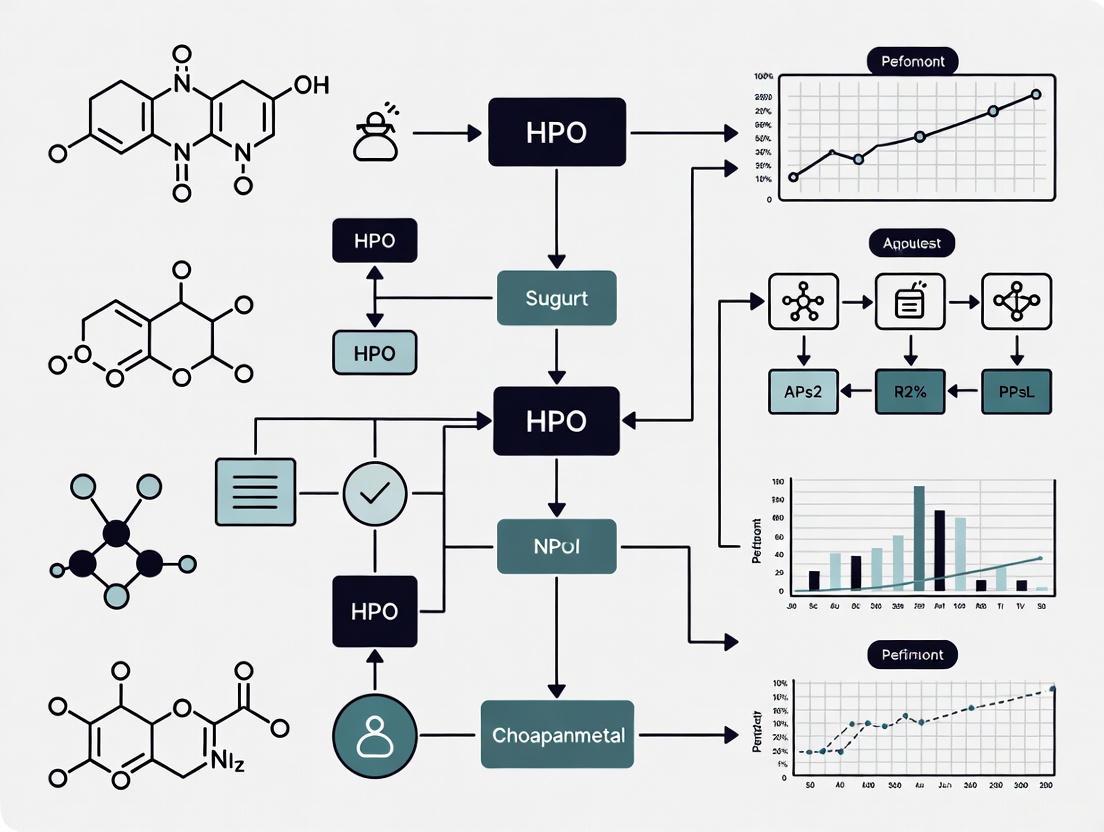
This article provides a comprehensive introduction to Hyperparameter Optimization (HPO) for chemical machine learning (ML) models, a critical step for enhancing prediction accuracy in drug discovery.
Hyperparameter Optimization for Chemical Machine Learning: A Practical Guide for Drug Discovery
Abstract
This article provides a comprehensive introduction to Hyperparameter Optimization (HPO) for chemical machine learning (ML) models, a critical step for enhancing prediction accuracy in drug discovery. Tailored for researchers and drug development professionals, it covers the foundational role of HPO in predicting molecular properties and drug-target interactions. The scope extends from core concepts and a comparison of HPO algorithms like Hyperband and Bayesian optimization to their practical application in pipelines for tasks such as molecular property prediction. It further addresses advanced strategies for overcoming computational challenges and includes a framework for the rigorous validation and comparative analysis of optimized models to ensure robust, reliable performance in biomedical research.
Why Hyperparameter Optimization is a Keystone of Chemical Machine Learning
In the development of machine learning (ML) models for chemical sciences, such as predicting molecular properties or optimizing reaction conditions, configuring the learning algorithm is as crucial as the data itself. This configuration hinges on understanding two distinct classes of variables: model parameters and hyperparameters. The precise distinction between them forms the foundational knowledge required for effective model tuning and, ultimately, for achieving state-of-the-art performance in applications like drug discovery and material design [1] [2].
This guide provides an in-depth technical explanation of model parameters and hyperparameters, framed within the context of hyperparameter optimization (HPO) for chemical machine learning. We will define these concepts, illustrate their differences, and detail modern methodologies for optimizing hyperparameters to enhance the efficiency and accuracy of deep chemical models.
Core Definitions and Conceptual Distinctions
What are Model Parameters?
Model parameters are internal variables that the machine learning model learns autonomously from the training data. They are not set manually by the practitioner but are instead estimated or learned by the optimization algorithm (e.g., Gradient Descent, Adam) during the training process [3] [4]. These parameters quantitatively capture the relationships between input features and the target output.
Examples in different models:
- Linear Regression: The slope (m) and intercept (c) of the regression line [3] [5].
- Neural Networks: The weights and biases connecting the neurons across different layers [3] [1].
What are Hyperparameters?
Hyperparameters are external configuration variables that control the overarching behavior of the learning algorithm. They are set before the training process begins and remain fixed throughout it. These variables govern the process of learning itself, influencing how the model parameters are estimated [6] [3] [4].
Examples in different models:
- General Learning Algorithms: Learning rate, number of training iterations (epochs), and batch size [3] [1].
- Neural Networks: Number of hidden layers, number of neurons per layer, choice of activation function, and dropout rate [1] [4].
- Tree-based Models: Maximum depth of the tree, minimum samples per leaf, and the criterion for splitting (e.g., Gini or entropy) [6] [5].
The following diagram illustrates the fundamental relationship between data, hyperparameters, the learning algorithm, and the resulting model parameters.
The table below provides a structured comparison to crystallize the differences.
Table 1: A comparative summary of model parameters versus hyperparameters.
| Aspect | Model Parameters | Hyperparameters |
|---|---|---|
| Definition | Internal variables learned from data [3]. | External configuration variables set before training [3]. |
| Purpose | Used to make predictions on new data [3]. | Control the learning process and how parameters are estimated [3]. |
| Determination | Learned automatically by optimization algorithms during training [3] [4]. | Set manually by the researcher or determined via HPO [3] [4]. |
| Examples | Weights in a neural network; coefficients in linear regression [3] [5]. | Learning rate; number of layers in a neural network; regularization strength [3] [1]. |
| Influence | Determine the performance of the final model on unseen data [3]. | Determine the efficiency and effectiveness of the training process [3]. |
The Critical Role of Hyperparameters in Chemical Machine Learning
In scientific machine learning, particularly in chemistry, the cost of data acquisition can be high and models must be both accurate and generalizable. Proper hyperparameter tuning is not merely a technical step but a fundamental research activity for several reasons:
- Improved Model Performance: Finding the optimal combination of hyperparameters can significantly boost model accuracy and robustness, which is critical for reliable molecular property prediction (MPP) [6] [1].
- Prevention of Overfitting and Underfitting: Chemical data can be complex and high-dimensional. Tuning hyperparameters like regularization strength or network size helps create a well-balanced model that generalizes well to new, unseen molecules [6] [5].
- Optimized Resource Utilization: Training large-scale chemical models like deep neural networks is computationally intensive. Efficient HPO avoids unnecessary work and can lead to massive savings in time and compute resources [6] [2]. A study on deep chemical models highlighted that HPO is often the most resource-intensive step in model training, making its efficiency paramount [1].
Techniques for Hyperparameter Optimization (HPO)
The process of finding the optimal set of hyperparameters is known as Hyperparameter Optimization (HPO). Several strategies have been developed, ranging from brute-force to sophisticated learning-based approaches [6] [7].
Common HPO Algorithms
Table 2: Summary of key Hyperparameter Optimization (HPO) techniques and their characteristics.
| Technique | Core Principle | Advantages | Disadvantages |
|---|---|---|---|
| Grid Search [6] | Exhaustively searches over a predefined set of hyperparameter values. | Guaranteed to find the best combination within the grid. | Computationally prohibitive for high-dimensional spaces; inefficient. |
| Random Search [6] | Randomly samples hyperparameter combinations from defined distributions. | More efficient than Grid Search; better at exploring large spaces. | No guarantee of finding the optimum; can miss important regions. |
| Bayesian Optimization [6] [1] | Builds a probabilistic model (surrogate) of the objective function to guide the search. | Smarter and more sample-efficient than random/grid search. | Higher computational overhead per trial; complex to implement. |
| Hyperband [1] | Uses an adaptive resource allocation and early-stopping strategy to speed up random search. | High computational efficiency; fast identification of promising configurations. | Does not use a predictive model like Bayesian optimization. |
Recent research on HPO for deep neural networks in molecular property prediction has concluded that the Hyperband algorithm is particularly advantageous due to its computational efficiency, providing results that are optimal or nearly optimal in terms of prediction accuracy [1]. Another promising approach is the combination of Bayesian Optimization with Hyperband (BOHB), which aims to leverage the strengths of both methods [1].
Practical HPO Workflow
A standardized workflow for HPO is essential for reproducible and successful results in chemical ML research. The following diagram outlines a generalized protocol for conducting HPO, from problem definition to model deployment.
Experimental Protocols and Research Reagents for HPO
Case Study: Accelerated HPO for Large Chemical Models
A seminal study on the neural scaling of deep chemical models introduced a methodology called Training Performance Estimation (TPE) to drastically accelerate HPO [2]. This is critical when dealing with large models and datasets where full training is computationally expensive.
Methodology:
- Objective: Quickly identify hyperparameter settings (e.g., learning rate, batch size) that lead to optimal model convergence without completing the full training.
- Procedure: Train multiple model instances with different hyperparameter configurations for only a small fraction of the total training budget (e.g., 10-20% of the total epochs).
- Estimation: Use the learning curves from this short training to predict the final performance of each configuration. The study achieved a high rank correlation (Spearman's ρ = 1.0 for ChemGPT) between predicted and final loss, allowing for the early discarding of poor configurations [2].
- Outcome: This approach reduced the total time and compute budgets for HPO by up to 90%, enabling the subsequent large-scale scaling experiments for ChemGPT and graph neural network interatomic potentials [2].
The Scientist's Toolkit: Essential Software for HPO
Implementing advanced HPO algorithms requires robust software libraries. The table below details key tools that have become essential in the modern chemical ML researcher's toolkit.
Table 3: Key software tools and platforms for Hyperparameter Optimization.
| Tool / Library | Type | Key Features | Recommended Use Case |
|---|---|---|---|
| Optuna [8] [9] | Open-source Python framework | Define-by-run API; efficient sampling & pruning algorithms; supports distributed optimization [9]. | General-purpose HPO for ML/DL; user-friendly for Python developers. |
| KerasTuner [1] | Open-source Python library | Intuitive, user-friendly, and easy to code; integrates seamlessly with Keras and TensorFlow. | HPO for dense DNNs and CNNs, particularly in chemical ML [1]. |
| Ray Tune [9] | Open-source Python library | Scalable to distributed computing; integrates with many optimization libraries (Ax, HyperOpt, etc.). | Large-scale HPO requiring distributed computing across multiple nodes/GPUs. |
| HyperOpt [9] | Open-source Python library | Bayesian optimization using Tree of Parzen Estimators (TPE); supports conditional search spaces. | HPO over complex, conditional parameter spaces. |
The distinction between model parameters and hyperparameters is a fundamental concept in machine learning. For researchers in chemistry and drug development, mastering this distinction and the subsequent practice of hyperparameter optimization is no longer optional but a prerequisite for building competitive and reliable models. As chemical models grow in size and complexity, exemplified by billion-parameter networks, the adoption of efficient, automated HPO methodologies—such as Hyperband and Bayesian Optimization—becomes critical to harness the full potential of deep learning for scientific discovery. By leveraging modern software frameworks and accelerated protocols, scientists can systematically navigate the hyperparameter space, leading to more accurate, robust, and generalizable chemical models that accelerate innovation.
The Critical Impact of HPO on Prediction Accuracy in Molecular Property Prediction
The escalating energy crisis and the demands of modern drug discovery have intensified the search for highly functional organic compounds, making the accurate prediction of molecular properties more critical than ever [10]. Traditional trial-and-error methods for discovering these compounds are notoriously expensive and time-consuming, creating an urgent need for efficient computational approaches [10]. In this context, Hyperparameter Optimization (HPO) has emerged as a pivotal process in machine learning (ML) that significantly affects prediction accuracy, especially for Molecular Property Prediction (MPP) [11] [1].
HPO refers to the automated process of efficiently setting all necessary hyperparameter values before the training phase, which results in the best performance on a dataset within a reasonable time [1]. In deep learning, hyperparameters are broadly categorized into two types: (1) those describing the structural configuration of Deep Neural Networks (DNNs), such as the number of layers, neurons per layer, and activation functions; and (2) those associated with the learning algorithms, such as learning rate, number of epochs, and batch size [1]. The selection of these values profoundly impacts the potential performance of neural network models.
Despite its importance, HPO is often the most resource-intensive step in model training, leading many prior MPP studies to pay limited attention to this crucial process [1]. This neglect typically results in suboptimal values of predicted molecular properties. As Boldini et al. concluded from their comprehensive evaluation, "the relevance of each hyperparameter varies greatly across datasets and that it is crucial to optimize as many hyperparameters as possible to maximize the predictive performance" [1]. The transition from manual trial-and-error hyperparameter adjustment to automated HPO represents a fundamental shift toward more robust, accurate, and efficient molecular property prediction.
The Necessity of HPO in MPP: Overcoming Traditional Limitations
Limitations of Manual Hyperparameter Tuning
Traditional approaches to hyperparameter tuning in machine learning models have relied heavily on manual adjustment through trial and error. This method presents significant limitations that are particularly pronounced in the complex domain of molecular property prediction. Manual tuning is inherently subjective and often results in only locally optimal solutions rather than globally optimal configurations [11]. The process is exceptionally time-consuming, requiring extensive computational resources and expert knowledge, which creates substantial bottlenecks in model development pipelines [1]. Furthermore, the manual approach struggles to explore the complex, high-dimensional hyperparameter spaces with interactions that are difficult to understand, making it virtually impossible to exhaustively search the entire parameter space [11] [1].
The consequences of inadequate hyperparameter optimization are clearly demonstrated in comparative studies. As shown in Table 1, models without proper HPO consistently deliver suboptimal performance across various molecular property prediction tasks. This performance gap becomes increasingly critical in applications with real-world implications, such as drug discovery and materials science, where accurate predictions can significantly accelerate research and development timelines.
Table 1: Comparative Performance of ML Models Without and With HPO for MPP
| Molecular Property | Model Type | Performance Without HPO | Performance With HPO | Improvement |
|---|---|---|---|---|
| Melt Index (MI) of HDPE | Dense DNN | R²: 0.847 | R²: 0.920 | +8.6% |
| Glass Transition Temperature (Tg) | Dense DNN | R²: 0.769 | R²: 0.893 | +12.4% |
| Polymer Property Prediction | CNN | Suboptimal | Optimal | Significant [1] |
Impact on Prediction Accuracy and Model Reliability
The implementation of systematic HPO directly addresses the limitations of manual approaches by substantially enhancing both prediction accuracy and model reliability. Comprehensive HPO enables ML models to capture complex, nonlinear relationships between molecular structures and their properties more effectively [11]. This capability is particularly valuable in molecular property prediction, where such relationships are often governed by intricate quantum mechanical and structural factors.
Proper hyperparameter optimization also significantly improves model generalizability, reducing the risk of overfitting to training data—a common challenge in chemical informatics where datasets may be limited [1]. By finding optimal hyperparameter configurations, HPO ensures that models maintain robust performance on unseen molecular structures, enhancing their utility in practical screening scenarios. Furthermore, optimized models demonstrate increased consistency and reproducibility, crucial factors for scientific applications where reliable predictions inform experimental design and resource allocation [1].
The critical importance of HPO is further emphasized by its impact on advanced molecular representation learning approaches. As demonstrated by the Org-Mol pre-trained model, which uses a 3D transformer-based algorithm, appropriate fine-tuning—essentially a form of HPO—enables accurate prediction of various physical properties of pure organics, with test set R² values exceeding 0.92 [10]. This level of performance would be unattainable without systematic optimization of the model's hyperparameters.
HPO Methodologies: Algorithms and Technical Approaches
The evolution of HPO has produced several distinct algorithmic approaches, each with unique strengths and limitations for molecular property prediction. Understanding these methods is essential for selecting appropriate optimization strategies for specific MPP tasks.
Grid Search (GS) represents one of the most straightforward approaches, systematically working through multiple combinations of hyperparameter values. While simple to implement and parallelize, GS suffers from the "curse of dimensionality," becoming computationally prohibitive as the hyperparameter space grows [1]. Random Grid Search (RGS) addresses this limitation by sampling hyperparameter combinations randomly, often achieving comparable results to GS with significantly fewer iterations [11].
More sophisticated approaches include Bayesian Optimization, which builds a probabilistic model of the objective function to direct the search toward promising hyperparameters. This method is particularly effective for expensive-to-evaluate functions, as it balances exploration and exploitation of the search space [1]. The Tree-structured Parzen Estimator (TPE) is a Bayesian optimization variant that has demonstrated exceptional performance in HPO-ML approaches for spatial prediction tasks [11].
The Hyperband algorithm introduces a novel approach by leveraging early-stopping to dynamically allocate resources to the most promising configurations. This method has shown remarkable computational efficiency, providing MPP results that are optimal or nearly optimal in terms of prediction accuracy [1]. For particularly challenging optimization problems, combinations of these methods such as Bayesian Optimization with Hyperband (BOHB) can leverage the strengths of multiple approaches [1].
Table 2: Comparison of HPO Algorithms for Molecular Property Prediction
| Algorithm | Key Mechanism | Advantages | Limitations | Best Suited MPP Tasks |
|---|---|---|---|---|
| Grid Search (GS) | Exhaustive search over specified values | Simple, parallelizable | Computationally expensive for large spaces | Small hyperparameter spaces |
| Random Grid Search (RGS) | Random sampling of combinations | Better efficiency than GS | May miss important regions | Moderate-dimensional spaces |
| Bayesian Optimization | Probabilistic model of objective function | Efficient for expensive functions | Complex implementation | High-dimensional continuous spaces |
| Tree-structured Parzen Estimator (TPE) | Sequential model-based optimization | Handles complex conditional spaces | Requires careful initialization | Spatial prediction of molecular properties [11] |
| Hyperband | Early-stopping with successive halving | High computational efficiency | Limited by minimum resources | Large-scale screening projects [1] |
HPO-Enhanced Machine Learning Frameworks
The implementation of HPO in molecular property prediction has given rise to specialized frameworks that integrate optimization algorithms with machine learning models. The HPO-ML approach represents a comprehensive methodology that combines auto hyperparameter optimization with ML models like Random Forest (RF) and Extreme Gradient Boosting (XGBoost) [11]. This framework employs search algorithms to automatically identify optimal hyperparameters, significantly enhancing prediction accuracy for various molecular properties.
In practice, HPO-empowered machine learning has demonstrated remarkable performance across diverse prediction tasks. For instance, in spatial prediction of soil heavy metals—a problem analogous to molecular property prediction—the TPE-XGBoost model achieved the highest accuracy for predicting various elements including As (R² = 70.35%), Cd (R² = 75.43%), and Cr (R² = 82.11%) [11]. These results substantially outperformed models without systematic HPO, highlighting the critical importance of proper hyperparameter optimization.
For deep learning applications in MPP, methodology combining HPO with DNNs has shown significant improvements in prediction accuracy [1]. As evidenced in Table 1, implementing comprehensive HPO for dense DNNs increased R² values from 0.847 to 0.920 for predicting the melt index of HDPE and from 0.769 to 0.893 for glass transition temperature prediction [1]. These improvements demonstrate that regardless of the specific ML architecture employed, systematic HPO is essential for achieving state-of-the-art performance in molecular property prediction.
Experimental Protocols and Implementation Guidelines
Step-by-Step HPO Methodology for MPP
Implementing effective hyperparameter optimization for molecular property prediction requires a systematic approach. The following methodology provides a comprehensive framework for integrating HPO into MPP workflows:
Step 1: Problem Formulation and Objective Definition Clearly define the molecular property prediction task and establish evaluation metrics. For MPP, common objectives include regression metrics (R², RMSE) for continuous properties or classification metrics (AUROC, accuracy) for categorical properties. The selection of appropriate metrics directly influences the optimization trajectory and final model performance [1].
Step 2: Hyperparameter Space Configuration Establish the bounds and distributions for all hyperparameters to be optimized. This includes structural hyperparameters (number of layers, units per layer, activation functions) and algorithmic hyperparameters (learning rate, batch size, optimizer settings) [1]. The definition of this search space should incorporate domain knowledge about molecular representations and their relationship to target properties.
Step 3: Selection of HPO Algorithm Choose an appropriate optimization algorithm based on the problem characteristics, computational resources, and search space dimensionality. For most MPP tasks, Hyperband is recommended due to its computational efficiency, while Bayesian methods are preferable for limited data scenarios [1].
Step 4: Implementation with Parallel Execution Utilize HPO software platforms that enable parallel execution of multiple hyperparameter instances, significantly reducing optimization time. Recommended platforms include KerasTuner for its user-friendly interface and Optuna for advanced functionality [1]. Parallelization is particularly valuable for MPP, where model training can be computationally intensive.
Step 5: Iterative Optimization and Evaluation Execute the HPO process, continuously evaluating candidate configurations using cross-validation to ensure robustness. For molecular data, stratified splitting methods that maintain similar distributions of key molecular features across folds are essential [1].
Step 6: Final Model Selection and Validation Select the best-performing hyperparameter configuration and perform comprehensive validation on held-out test sets containing diverse molecular scaffolds not seen during optimization. This step verifies the generalizability of the optimized model [1].
Research Reagent Solutions: Software Tools for HPO in MPP
Successful implementation of HPO for molecular property prediction requires specialized software tools that facilitate efficient optimization workflows. The table below details essential "research reagents" in the form of software platforms and their specific functions in the HPO process.
Table 3: Essential Software Tools for HPO in Molecular Property Prediction
| Tool/Platform | Type | Primary Function | Advantages for MPP | Implementation Example |
|---|---|---|---|---|
| KerasTuner | HPO Library | Automated hyperparameter tuning for Keras models | User-friendly, intuitive API suitable for chemical engineers | Hyperparameter optimization for DNNs predicting polymer properties [1] |
| Optuna | HPO Framework | Define-by-run API for automated hyperparameter optimization | Flexible search spaces and efficient algorithms for complex molecular representations | Bayesian Optimization with Hyperband (BOHB) for property prediction [1] |
| Scikit-learn | ML Library | Traditional ML models with built-in HPO utilities | Comprehensive traditional ML algorithms for baseline comparisons | Random Forest and XGBoost with GridSearchCV [11] |
| Python | Programming Language | Implementation environment for custom HPO workflows | Extensive ecosystem for cheminformatics and machine learning | Custom HPO-ML pipelines for spatial prediction [11] |
| DNN Frameworks (TensorFlow, PyTorch) | Deep Learning Platforms | Neural network construction and training | State-of-the-art architectures for molecular graph processing | Dense DNN and CNN models for property prediction [1] |
Case Studies and Performance Analysis
HPO in Polymer Property Prediction
The impact of comprehensive hyperparameter optimization is powerfully demonstrated in polymer property prediction, where accurate models are essential for materials design and selection. A recent systematic study investigated HPO for deep neural networks predicting key polymer properties, including melt index (MI) of high-density polyethylene (HDPE) and glass transition temperature (Tg) [1].
In this study, researchers implemented a rigorous HPO methodology comparing random search, Bayesian optimization, and hyperband algorithms within the KerasTuner framework. The base case without HPO utilized a dense DNN with an input layer of 9 nodes, three hidden layers with 64 nodes each, and ReLU activation functions [1]. Through systematic HPO, the optimal architecture and training parameters were identified, resulting in dramatic improvements in prediction accuracy.
The findings revealed that the hyperband algorithm was most computationally efficient, providing MPP results that were optimal or nearly optimal in terms of prediction accuracy [1]. For MI prediction, the R² value improved from 0.847 without HPO to 0.920 with HPO, while for Tg prediction, the improvement was even more substantial—from 0.769 to 0.893 [1]. These results underscore that even well-conceived initial architectures can benefit significantly from systematic hyperparameter optimization, with performance gains that could substantially impact materials development timelines.
Large-Scale Molecular Screening with Optimized Models
The practical value of HPO-optimized models extends beyond individual property prediction to large-scale molecular screening applications. The Org-Mol pre-trained model exemplifies this capability, utilizing a 3D transformer-based molecular representation learning algorithm trained on 60 million semi-empirically optimized small organic molecule structures [10]. After fine-tuning—a specialized form of HPO—with public experimental data, the model achieved exceptional accuracy in predicting various physical properties of pure organics, with test set R² values exceeding 0.92 [10].
This optimized model enabled high-throughput screening of millions of ester molecules to identify novel immersion coolants, resulting in the experimental validation of two promising candidates [10]. The success of this large-scale screening effort was directly dependent on the accuracy of the property predictions, which in turn relied on appropriate fine-tuning of the model's hyperparameters. Without systematic HPO, the model would have lacked the precision necessary to reliably distinguish between promising and unsuitable candidates from the vast chemical space.
The implementation of HPO in this context addressed the challenge of predicting bulk properties from single-molecule inputs—a fundamental limitation in molecular property prediction. By bridging static molecular geometry with bulk phenomena through careful optimization, the fine-tuned model corrected single-molecule limitations and enabled accurate predictions despite the complexity of collective effects [10]. This case study demonstrates how HPO transforms molecular property prediction from a theoretical exercise to a practical tool for accelerated molecular discovery.
Emerging Trends in HPO for MPP
The field of hyperparameter optimization for molecular property prediction continues to evolve, with several emerging trends shaping its future development. Automated Machine Learning (AutoML) systems represent a natural extension of HPO, seeking to automate the entire ML pipeline from data preprocessing to model selection and deployment [11]. These systems are particularly valuable for molecular property prediction, where they can help domain experts without extensive ML expertise leverage advanced prediction models.
Multi-fidelity optimization methods, which use cheaper approximations of the objective function to guide the search process, are gaining traction for computationally intensive molecular simulations [1]. These approaches enable more efficient exploration of hyperparameter spaces when full model training is prohibitively expensive. Similarly, meta-learning approaches that transfer knowledge from previously solved MPP tasks to new problems show promise for reducing the computational burden of HPO [1].
The integration of HPO with explainable AI (XAI) techniques represents another important direction. Methods like SHapley Additive exPlanations (SHAP) are being used not only to interpret model predictions but also to understand the influence of different hyperparameters on model behavior [11] [12]. This integration is particularly valuable in scientific contexts where interpretability is as important as accuracy.
Hyperparameter Optimization has unequivocally established itself as a critical component of accurate molecular property prediction. The evidence from multiple studies demonstrates that systematic HPO can dramatically improve prediction accuracy, with performance gains of 8-12% in R² values commonly observed [1]. These improvements are not merely statistical artifacts but translate to practical advantages in real-world applications, from polymer design to molecular screening for energy applications.
The implementation of HPO requires careful consideration of algorithmic choices, with Hyperband emerging as particularly efficient for many MPP tasks, while Bayesian methods offer advantages in sample-efficient optimization [1]. The development of user-friendly software tools like KerasTuner and Optuna has made sophisticated HPO accessible to researchers without extensive machine learning expertise, further accelerating adoption across chemical and materials science domains [1].
As molecular property prediction continues to evolve, HPO will play an increasingly central role in ensuring model reliability and accuracy. The growing complexity of molecular representations and the expanding scale of chemical space exploration make efficient optimization not merely desirable but essential. By embracing systematic HPO methodologies, researchers can unlock the full potential of machine learning for molecular property prediction, accelerating the discovery of novel compounds with tailored properties for energy, healthcare, and materials applications.
The application of machine learning (ML) in chemical research represents a paradigm shift from traditional Edisonian approaches to data-driven discovery. This transition is primarily hampered by two interconnected core challenges: the high-dimensionality of chemical space and the prohibitive cost of experimental data generation. This whitepaper details these challenges within the context of hyperparameter optimization (HPO) for chemical ML models, framing them as a dual problem of model and experimental efficiency. We present a technical analysis of advanced strategies—including innovative HPO methods, Bayesian optimization, and high-throughput experimentation—that are proving effective in navigating this complex landscape. The discussion is supported by summarized quantitative data, detailed experimental protocols, and visual workflows, providing researchers and drug development professionals with a practical guide for accelerating ML-driven chemical innovation.
The discovery and development of new molecules and materials are fundamentally constrained by the vastness of chemical space, estimated to exceed 10^60 for drug-like molecules and 10^100 for materials, making brute-force exploration impossible [13]. Traditional research relies on costly, laborious trial-and-error, exemplified by the thousands of experiments required for historic breakthroughs like the Haber-Bosch catalyst [13]. Machine learning promises to traverse this space more efficiently but introduces its own set of challenges. The performance and generalizability of ML models are critically dependent on their hyperparameters, the configuration settings not learned from data. The process of Hyperparameter Optimization (HPO) is thus a essential yet computationally demanding step in building reliable chemical ML models. This whitepaper examines how the core challenges of chemical ML—high-dimensional spaces and costly experiments—are intrinsically linked and how advanced HPO and experimental design strategies are creating a path forward.
Core Challenge 1: Navigating High-Dimensional Chemical Spaces
The Problem of Dimensionality
In chemical ML, molecular structures are represented using numerical descriptors or features. These can include physicochemical properties, structural fingerprints, or quantum chemical calculations, often resulting in hundreds or thousands of dimensions [13] [14]. This high dimensionality leads to the "Curse of Dimensionality," where the data becomes sparse, and the distance between points becomes less meaningful, severely impacting model performance [14].
- Sparse Data Coverage: The volume of space grows exponentially with dimensionality, meaning available datasets cover a minuscule fraction of the possible chemical space.
- Increased Model Complexity and Overfitting: Models with fixed training data size become more prone to overfitting as dimensionality increases, learning noise rather than underlying patterns.
- Computational Intractability: Many ML algorithms suffer from computational costs that scale poorly with the number of features.
Strategies for Dimensionality Management
Several strategies are employed to mitigate the curse of dimensionality in chemical ML:
- Dimensionality Reduction Techniques: Algorithms like Principal Component Analysis (PCA) and t-Distributed Stochastic Neighbor Embedding (t-SNE) project high-dimensional data into a lower-dimensional space while preserving meaningful structure, aiding both visualization and model input [15] [14].
- Chemical Space Visualization: As highlighted by Sosnin (2025), new methods for large-scale visualization of chemical space are crucial for human-in-the-loop navigation of these vast datasets, allowing researchers to identify clusters and trends [15].
- Automated Feature Selection: Instead of using all available descriptors, algorithms can automatically identify and retain the most informative features for a given prediction task, reducing noise and computational load.
Table 1: Impact of High Dimensionality on Chemical ML Models
| Aspect | Challenge in High Dimensions | Potential Solution |
|---|---|---|
| Data Sparsity | Data points are isolated; models cannot reliably infer patterns. | Dimensionality reduction (PCA, t-SNE) [15] [14]. |
| Model Performance | Increased overfitting and reduced generalizability to new compounds. | Regularization, feature selection, and ensemble methods. |
| Computational Cost | Training times and resource demands increase dramatically. | Efficient HPO and feature selection algorithms. |
| Human Interpretation | Difficulty in understanding model decisions and chemical patterns. | Visual navigation tools and interpretable ML [15] [16]. |
Core Challenge 2: The High Cost of Experimental Data
The Bottleneck of Experimentation
The "Big Data" era in medicinal chemistry is paradoxically constrained by the difficulty of obtaining high-quality, relevant experimental data. Generating data for chemical ML models involves real-world experiments that can be slow, resource-intensive, and expensive. Some experiments, particularly in fields like battery development or catalysis, can take "weeks or months and significant resources to carry out" [17]. This creates a critical bottleneck, as the accuracy of ML models is often directly proportional to the quantity and quality of the data on which they are trained.
Strategies for Experimental Efficiency
To overcome this bottleneck, researchers are developing methods to extract maximum information from a minimal number of experiments.
- Bayesian Optimization (BO): BO is a powerful statistical technique for guiding experimentation. It builds a probabilistic model (a surrogate model) that relates experimental parameters (e.g., temperature, concentration) to an outcome (e.g., yield, purity). It then uses an acquisition function to recommend the next most informative experiment, balancing exploration (testing uncertain conditions) and exploitation (refining known promising conditions) [17].
- Advanced BO Algorithms: Recent research, such as the award-winning work by Folch et al., adapts BO to real-world chemical R&D. Their algorithm handles "multi-fidelity" data (integrating cheap, approximate experiments with costly, accurate ones) and "asynchronous batch" experiments (where different experiments have varying completion times), maximizing the use of available resources [17].
- High-Throughput Experimentation (HTE) Integrated with ML: Automated HTE platforms can conduct hundreds or thousands of reactions in parallel [18]. When coupled with ML, these platforms can become self-optimizing systems. The ML model guides the HTE platform on which experiments to run, and the data generated by the platform is used to refine the ML model, creating a closed-loop discovery cycle [18].
Optimizing the Model: Hyperparameter Optimization (HPO) in Chemical ML
Hyperparameter optimization is the process of searching for the optimal configuration of a machine learning model's hyperparameters to maximize its predictive performance on a given task. In chemical ML, this is especially critical because a well-tuned model can mean the difference between identifying a promising candidate molecule and wasting costly experimental resources on a false lead.
The Computational Burden of HPO
Standard HPO practices like manual or grid search are not only archaic but also computationally expensive, often requiring the training and validation of a model hundreds or thousands of times. This "poses a notable challenge to ML applications, as suboptimal hyperparameter selections curtail the potential of ML model performance" [19].
A Case Study in Efficient HPO: The Two-Step Method
To address this, researchers at Pacific Northwest National Laboratory (PNNL) developed a two-step HPO method that drastically reduces computation time. The protocol is detailed below [19].
Experimental Protocol: Two-Step Hyperparameter Optimization
- Objective: To accelerate the hyperparameter search for a neural network model designed to predict aerosol activation.
- Principle: Identify promising hyperparameter configurations using a tiny fraction of the training data before committing resources to full training.
Step 1: Preliminary Screening
- A wide search over the hyperparameter space is conducted.
- For each hyperparameter set, the model is trained and validated on a very small, representative subset of the full training dataset (e.g., 0.0025%, or a few thousand samples).
- The performance of each model from this initial screening is evaluated and ranked.
- Output: A shortlist of the top-performing hyperparameter configurations from the initial screen.
Step 2: Full-Dataset Validation
- Only the shortlisted, top-performing models from Step 1 are retrained from scratch using the entire training dataset.
- The final performance of these fully-trained models is evaluated on a held-out test set.
- Output: The best-performing model from this final group is selected for deployment.
- Result: This method achieved a 135x speed-up in finding the optimal hyperparameter configuration compared to a full search, with minimal drop in final model accuracy [19]. This approach efficiently identifies the minimal model complexity required for the best performance, which is crucial for deploying models in resource-intensive environments like global climate simulations.
Case Study: Integrated ML for Flame Retardant Discovery
A groundbreaking study by Chen et al. provides a comprehensive example of overcoming both high-dimensional and experimental cost challenges in practice. They developed a novel ML framework to discover high-performance flame retardants for epoxy resins, a task traditionally reliant on empirical methods [20].
Experimental Protocol: ML-Driven Molecular Generation and Screening
- Data Curation: Two datasets were constructed: a labeled dataset with known Limiting Oxygen Index (LOI) values and associated features (chemical structures, addition amounts, curing agent details), and an unlabeled dataset of typical flame retardant functional groups.
- Model Framework:
- Unsupervised Learning: The labeled dataset was initially clustered using the K-Means algorithm to identify inherent structure-property relationships.
- Supervised Learning: A predictive model was trained, achieving a high coefficient of determination (R² = 0.83) for LOI.
- Molecular Generation and Virtual Screening: Molecular generation techniques were used to create a diverse library of over 860,000 candidate molecules. The trained model was then used to screen this entire library in silico, prioritizing only 8 high-potential candidates for experimental validation.
- Experimental Validation: The top candidates were synthesized and tested. Results were remarkable: a compounded flame retardant system achieved a record LOI of 42.5, placing it in the top 0.4% of reported benchmarks. Crucially, this was achieved with a 95.6% reduction in material cost and a 30% formulation cost reduction [20].
This case study exemplifies the power of integrated ML to navigate high-dimensional molecular space and drastically reduce the number of required lab experiments, accelerating discovery while cutting costs.
Table 2: Key Research Reagents and Solutions in Chemical ML
| Reagent / Solution | Function in Chemical ML Research |
|---|---|
| High-Throughput Experimentation (HTE) Platforms [18] | Automated systems that conduct many reactions in parallel, generating large, uniform datasets for training ML models. |
| Bayesian Optimization (BO) Algorithms [17] | A statistical framework that guides experimenters on which parameters to test next to find an optimum with the fewest experiments. |
| Gaussian Process (GP) Surrogate Models [18] | A probabilistic model used within BO to relate input variables (e.g., reaction conditions) to the objective (e.g., yield). |
| Variational Autoencoder (VAE) [18] | A type of neural network that can compress high-dimensional molecular representations into a lower-dimensional latent space for more efficient search and generation. |
| Open Reaction Database [18] | A community-driven initiative to standardize and share chemical reaction data, addressing data scarcity and quality issues. |
The Critical Role of Interpretability and Future Outlook
As ML models become more complex, their "black-box" nature poses a significant barrier to adoption in risk-averse chemical and pharmaceutical industries. Interpretable ML is therefore not a luxury but a necessity. It is "the degree to which a human can understand the cause of a decision" [16]. In chemical contexts, interpretability tools like SHAP (SHapley Additive exPlanations) help researchers:
- Debug and Audit Models: Identify if a model is relying on spurious correlations (e.g., a husky/wolf classifier using snow as a feature) [16].
- Build Trust and Gain Insights: Understand the molecular features driving property predictions, leading to new scientific knowledge and more reliable safety protocols [21].
- Ensure Fairness and Robustness: Detect unintended bias and ensure model predictions are robust to small changes in input [16].
The future of chemical ML lies in the tighter integration of robust HPO, interpretable models, and self-driving experimental platforms. This will create a virtuous cycle where models guide experiments, and experiments enrich models, systematically accelerating the journey from a hypothesis to a validated material or molecule.
Hyperparameter Optimization (HPO) is a critical, yet often overlooked, process that directly addresses the core challenges of time and cost in AI-driven drug discovery. By systematically tuning the configuration settings of deep learning models, HPO transitions AI from an experimental curiosity to a reliable engine for clinical candidate identification. This whitepaper details how HPO compresses early-stage research and development (R&D) timelines, which traditionally take approximately five years, down to as little as 18 months for AI-designed candidates, while simultaneously improving the predictive accuracy of molecular property models. We present a step-by-step methodology and comparative data demonstrating that modern HPO algorithms, particularly Hyperband, achieve optimal or near-optimal prediction accuracy with superior computational efficiency, thereby delivering a faster, more cost-effective path to investigational new drug (IND) approval [1] [22].
The application of artificial intelligence (AI) in drug discovery has surged, with over 75 AI-derived molecules reaching clinical stages by the end of 2024 [22]. AI platforms claim to drastically shorten early-stage R&D, with notable examples like Insilico Medicine's generative-AI-designed idiopathic pulmonary fibrosis (IPF) drug progressing from target discovery to Phase I trials in just 18 months—a fraction of the typical 5-year timeline [22]. However, this acceleration is contingent on the performance and reliability of the underlying machine learning (ML) models. The design of these models is governed by hyperparameters—configuration settings that must be set before the training process begins. These include structural hyperparameters (e.g., number of layers and neurons in a deep neural network) and algorithmic hyperparameters (e.g., learning rate, batch size) [1].
Most prior applications of deep learning to molecular property prediction (MPP) have paid only limited attention to HPO, resulting in models with suboptimal predictive accuracy [1]. As "hyperparameter optimization is often the most resource-intensive step in model training," it is frequently bypassed, undermining the potential of AI in this high-stakes field [1]. This whitepaper establishes the business case for HPO as a non-negotiable step, demonstrating through experimental data and case studies how a rigorous HPO strategy is fundamental to realizing the promised efficiencies of AI in drug discovery.
The Direct Impact of HPO on Discovery Efficiency
Quantitative Gains in Model Accuracy
Ignoring HPO leads to inaccurate molecular property predictions, which can misdirect entire research programs. Conversely, a comprehensive HPO process directly and significantly enhances model performance. The table below summarizes the quantitative improvement in prediction accuracy for two molecular property prediction case studies after implementing HPO [1].
Table 1: Impact of HPO on Model Accuracy for Molecular Property Prediction
| Molecular Property | Model Type | Performance Metric | Without HPO | With HPO | Improvement |
|---|---|---|---|---|---|
| Melt Index (MI) of HDPE | Dense DNN | Mean Absolute Error (MAE) | 0.92 | 0.27 | ~70% reduction in error [1] |
| Glass Transition Temp (Tg) | Convolutional Neural Network (CNN) | Mean Absolute Error (MAE) | 16.5 | 6.5 | ~61% reduction in error [1] |
Compression of Discovery Timelines
The accuracy gains from HPO directly translate into faster and more reliable decision-making throughout the discovery pipeline:
- Accelerated Design-Make-Test-Analyze (DMTA) Cycles: Companies like Exscientia report that their AI-powered platforms, which rely on optimized models, can complete in silico design cycles approximately 70% faster and require 10 times fewer synthesized compounds than industry norms [22]. This represents a dramatic compression of the iterative DMTA cycle.
- From Target to Clinic in Record Time: The high predictive accuracy of well-tuned models enables more confident selection of candidate molecules for synthesis and testing. This efficiency is evidenced by Insilico Medicine's ISM001-055, which progressed from target discovery to Phase I clinical trials for idiopathic pulmonary fibrosis in only 18 months [22].
- Efficient Resource Allocation: By reducing the number of compounds that need to be synthesized and tested experimentally, HPO directs financial and laboratory resources toward the most promising candidates, lowering overall R&D costs [22].
HPO Methodologies: Algorithms and Comparative Performance
Selecting the right HPO algorithm is crucial for balancing computational cost with model performance. The following section details the primary HPO methods and their applicability to drug discovery.
- Random Search: Evaluates random combinations of hyperparameters within a defined search space. It is more efficient than an exhaustive grid search and serves as a reliable baseline [1].
- Bayesian Optimization: A sequential model-based optimization technique that builds a probabilistic model of the function mapping hyperparameters to model performance. It uses this model to select the most promising hyperparameters to evaluate next, making it more sample-efficient than random search [1].
- Hyperband: An innovative algorithm that accelerates random search through adaptive resource allocation and early-stopping of poorly performing trials. It uses a multi-fidelity approach, quickly evaluating a large number of configurations with small resources (e.g., few training epochs) and then allocating more resources only to the most promising candidates [1].
- BOHB (Bayesian Optimization and HyperBand): A hybrid algorithm that combines the robustness of Hyperband with the guidance of Bayesian optimization. It uses the Hyperband structure to manage resource allocation while leveraging a probabilistic model to select promising configurations, aiming for the best of both worlds [1].
Comparative Performance of HPO Algorithms
A comparative study on molecular property prediction tasks provides clear evidence for algorithm selection based on the goals of accuracy and efficiency.
Table 2: Comparative Performance of HPO Algorithms on Molecular Property Prediction
| HPO Algorithm | Computational Efficiency | Prediction Accuracy | Key Strengths | Recommended Use Case |
|---|---|---|---|---|
| Hyperband | Highest | Optimal or Nearly Optimal | Dramatically reduces computation time via early-stopping | Default choice for most MPP tasks [1] |
| Bayesian Optimization | Medium | High | High sample-efficiency; finds excellent configurations | When computational budget is moderate and high accuracy is critical [1] |
| BOHB (Hybrid) | High | High | Combines robustness of Hyperband with guidance of BO | Complex search spaces where pure Hyperband may be less effective [1] |
| Random Search | Low | Variable, Suboptimal | Simple to implement and parallelize | Useful as a baseline to benchmark more advanced methods [1] |
Based on this empirical evidence, the study concludes that "we recommend the use of the hyperband algorithm... it gives MPP results that are optimal or nearly optimal in terms of prediction accuracy" and is the most computationally efficient [1].
Experimental Protocol: Implementing HPO for Molecular Property Prediction
This section provides a detailed, step-by-step methodology for implementing HPO to develop accurate Deep Neural Network (DNN) models for predicting molecular properties.
The following diagram illustrates the end-to-end HPO workflow for an AI-driven drug discovery project, from data preparation to the deployment of an optimized model.
Step-by-Step Methodology
Step 1: Establish a Base-Case Model
Before beginning HPO, establish a baseline model for performance comparison. A typical base-case DNN for MPP might consist of an input layer, three densely connected hidden layers with 64 nodes each using ReLU activation, and an output layer with a linear activation. The Adam optimizer and Mean Squared Error (MSE) loss function are common starting points [1].
Step 2: Define the Hyperparameter Search Space
The next step is to define the range of values for the hyperparameters to be optimized. The following table outlines a recommended search space for a DNN for MPP.
Table 3: Example Hyperparameter Search Space for a Dense DNN
| Hyperparameter Category | Hyperparameter | Recommended Search Space |
|---|---|---|
| Structural Configuration | Number of Hidden Layers | Int[1, 5] |
| Number of Neurons per Layer | Int[32, 512] | |
| Activation Function | Choice['relu', 'tanh', 'selu'] | |
| Dropout Rate | Float[0.0, 0.5] | |
| Algorithmic Configuration | Learning Rate | Float[1e-5, 1e-2] (log scale) |
| Batch Size | Choice[32, 64, 128, 256] | |
| Optimizer | Choice['adam', 'rmsprop', 'sgd'] |
Step 3: Execute the HPO Algorithm
Using a software library like KerasTuner, execute the chosen HPO algorithm (e.g., Hyperband). Configure the tuner to run multiple trials in parallel to reduce optimization time. A key parameter for Hyperband is the max_epochs, which defines the maximum resources allocated to a single model configuration [1].
Step 4: Evaluate and Validate
Once the HPO process is complete, retrieve the top-performing model configurations. It is critical to train these top models from scratch on the full training dataset and then evaluate them on a held-out test set to confirm performance. The model with the best validation performance is selected as the "champion" for final training and deployment.
Implementing a successful HPO strategy requires both software tools and computational resources. The table below catalogs the essential components of the HPO toolkit for AI-driven drug discovery.
Table 4: Research Reagent Solutions for HPO in AI-Driven Drug Discovery
| Tool Category | Specific Tool / Resource | Function and Application |
|---|---|---|
| HPO Software Libraries | KerasTuner | User-friendly Python library ideal for HPO of Keras and TensorFlow models. Recommended for its intuitiveness and ease of coding [1]. |
| Optuna | A more flexible, define-by-run Python library for HPO. Suitable for complex search spaces and supports advanced algorithms like BOHB [1]. | |
| Machine Learning Frameworks | TensorFlow / Keras | Core frameworks for building, training, and deploying deep learning models for MPP [1]. |
| Data Generation & Validation | High-Throughput Molecular Dynamics (MD) Simulations | Generates comprehensive, consistent datasets of molecular properties (e.g., ~30,000 solvent mixtures) to train and benchmark ML models when experimental data is scarce [23]. |
| Computational Infrastructure | Cloud Platforms (e.g., AWS) | Provides scalable computing power for the parallel execution of multiple HPO trials, which is essential for searching large parameter spaces efficiently [1] [22]. |
| Robotic Automation | Integrated platforms (e.g., Exscientia's AutomationStudio) use robotics to synthesize and test AI-designed molecules, creating a closed-loop "design-make-test-learn" cycle [22]. |
Hyperparameter Optimization is not a mere technical refinement but a strategic imperative that directly accelerates AI-driven drug discovery. By systematically implementing modern HPO algorithms like Hyperband, research organizations can build more accurate and reliable AI models, leading to faster identification of clinical candidates and significant reductions in R&D costs. The experimental evidence is clear: HPO delivers measurable improvements in predictive accuracy, which in turn compresses discovery timelines from years to months. As the industry moves forward, integrating HPO into a seamless, automated workflow—from AI design to robotic synthesis and testing—will be the hallmark of the most efficient and successful drug discovery enterprises.
A Practical Guide to HPO Algorithms and Their Implementation
In the field of chemical machine learning (ML), the prediction of molecular properties, reaction outcomes, and catalyst performance has become increasingly reliant on sophisticated algorithms like deep neural networks and graph neural networks. The performance of these models is critically dependent on their hyperparameters—the configuration variables that control the learning process itself. These include settings for model architecture (e.g., number of layers, neurons per layer) and learning algorithms (e.g., learning rate, batch size), which must be set before training begins [1]. Unlike model parameters (e.g., weights and biases) that are learned from data, hyperparameters are not learned and thus require alternative optimization strategies.
Hyperparameter Optimization (HPO) presents a significant challenge in computational chemistry and drug discovery. The process is inherently computationally expensive, with evaluation times ranging from hours to days for large models and datasets. Furthermore, the configuration space is often complex, high-dimensional, and may contain conditional parameters, making exhaustive search infeasible [24]. For chemical ML applications, where datasets may be small and overfitting is a major concern, proper HPO becomes even more critical [25]. This technical guide provides an in-depth analysis of three core HPO algorithms—Grid Search, Random Search, and Bayesian Optimization—framed within the context of chemical ML research for molecular property prediction and related tasks.
Core HPO Algorithms: Theoretical Foundations and Mechanisms
Grid Search
Grid Search (GS) represents the most straightforward approach to HPO, operating as a systematic brute-force method that evaluates every possible combination within a user-defined hyperparameter grid [26] [27]. Imagine a multi-dimensional grid where each axis represents a hyperparameter, and every intersection point corresponds to a unique model configuration awaiting evaluation [27].
The algorithm functions by creating a discrete grid from predefined hyperparameter values and executing a comprehensive search across this grid. For each combination, it trains a model and assesses performance using a validation protocol such as cross-validation. The configuration yielding the optimal performance is selected [26]. While GS is thorough and deterministic, its computational cost grows exponentially with the number of hyperparameters, a phenomenon known as the "curse of dimensionality" [24].
Random Search
Random Search (RS) addresses GS's computational limitations by adopting a probabilistic sampling approach. Rather than exhaustively evaluating all combinations, RS randomly samples configurations from specified distributions over the hyperparameter space for a fixed number of iterations [26] [27].
This method benefits from the empirical observation that in high-dimensional spaces, hyperparameters exhibit varying levels of importance—some parameters significantly influence performance while others have minimal effect. By randomly sampling across the entire space, RS has a higher probability of finding good configurations with far fewer evaluations than GS, making it particularly efficient for high-dimensional problems [27].
Bayesian Optimization
Bayesian Optimization (BO) represents a more sophisticated, sequential model-based approach that builds a probabilistic surrogate model to approximate the objective function [26]. Unlike the model-free GS and RS methods, BO uses past evaluation results to inform future selections [27].
The algorithm operates through an iterative process: initially sampling a few random points, constructing a surrogate model (typically a Gaussian Process) of the objective function, and employing an acquisition function to determine the most promising next point to evaluate by balancing exploration (testing uncertain regions) and exploitation (refining known promising areas) [26] [7]. This adaptive learning mechanism enables BO to often find high-performing configurations with significantly fewer evaluations than GS or RS [26].
Comparative Analysis of HPO Algorithms
Qualitative Comparison of Algorithm Characteristics
Table 1: Qualitative comparison of core HPO algorithms
| Characteristic | Grid Search | Random Search | Bayesian Optimization |
|---|---|---|---|
| Search Strategy | Exhaustive, systematic | Randomized sampling | Sequential, model-based |
| Parameter Space Exploration | Uniform, structured | Random, unstructured | Adaptive, informed |
| Theoretical Guarantees | Finds best in grid | Probabilistic convergence | Bayesian optimality |
| Handling of Conditional Parameters | Difficult | Straightforward | Possible with tailored surrogates |
| Implementation Complexity | Low | Low | High |
| Parallelization Potential | High | High | Limited |
Quantitative Performance Comparison
Table 2: Empirical performance comparison across different domains
| Study Context | Grid Search Performance | Random Search Performance | Bayesian Optimization Performance | Key Metrics |
|---|---|---|---|---|
| Molecular Property Prediction [1] | - | Suboptimal | Optimal/Nearly Optimal (with Hyperband) | Prediction Accuracy |
| Heart Failure Prediction [26] | Accuracy: 0.6294 (SVM) | Similar to GS | Best computational efficiency | Accuracy, AUC, Processing Time |
| General ML Classification [27] | Best CV score: 0.9043 (108 combinations) | Best CV score: 0.9129 (30 combinations) | - | Cross-validation Score |
| Computational Complexity [28] | High computational cost | Moderate computational cost | Variable (lower with good surrogate) | Execution Time, Resource Usage |
Chemical ML Case Study: Molecular Property Prediction
Recent research specifically addressing HPO for molecular property prediction (MPP) provides compelling evidence for algorithm selection. A comprehensive methodology applied to deep neural networks for MPP compared Random Search, Bayesian Optimization, and Hyperband (a multi-fidelity extension of Random Search). The study concluded that the Hyperband algorithm—which has not been widely used in previous MPP studies—demonstrated superior computational efficiency while delivering optimal or nearly optimal prediction accuracy [1].
The researchers recommended the Python library KerasTuner for implementing HPO in chemical ML applications, noting its user-friendly interface and support for parallel execution, which significantly reduces optimization time [1]. This finding is particularly relevant for drug development professionals working with large chemical datasets or complex molecular representations like Graph Neural Networks (GNNs), where HPO is essential for achieving state-of-the-art performance [29].
Experimental Protocols for HPO in Chemical ML
Methodology for Molecular Property Prediction with DNNs
A rigorous experimental protocol for HPO in molecular property prediction was outlined in a recent study that established a step-by-step methodology [1]:
Base Case Establishment: Begin with a baseline dense Deep Neural Network (DNN) without HPO. A typical architecture includes an input layer (e.g., 9 nodes for molecular features), three densely connected hidden layers (e.g., 64 nodes each), and an output layer with linear activation for regression tasks. The ReLU activation function and Adam optimizer are commonly employed [1].
HPO Implementation: Implement three primary HPO algorithms—Random Search, Bayesian Optimization, and Hyperband—using the KerasTuner library with parallel execution capabilities.
Performance Validation: Compare results against the base case using appropriate validation protocols, such as repeated k-fold cross-validation, to ensure robustness, particularly in low-data regimes common in chemical applications [1] [25].
Advanced Techniques: For enhanced performance, combine Bayesian Optimization with Hyperband (BOHB) using libraries like Optuna, which integrates the adaptive strength of BO with the efficiency of multi-fidelity approaches [1].
Workflow for Low-Data Chemical Scenarios
Chemical ML often faces data scarcity challenges, where overfitting is a significant concern. The ROBERT software framework introduces a specialized workflow for such scenarios [25]:
Data Splitting: Reserve 20% of initial data (minimum four data points) as an external test set using an "even" distribution split to ensure balanced representation of target values.
Combined Metric Formulation: Create an objective function that combines interpolation performance (assessed via 10-times repeated 5-fold cross-validation) with extrapolation capability (evaluated through selective sorted 5-fold CV based on target value) [25].
Bayesian HPO: Execute Bayesian optimization using this combined RMSE metric as the objective function, systematically exploring the hyperparameter space while penalizing overfitting.
Model Scoring: Implement a comprehensive scoring system (on a scale of ten) that evaluates predictive ability, overfitting, prediction uncertainty, and robustness against spurious correlations [25].
Implementation Framework
The Scientist's Toolkit: Essential Software and Libraries
Table 3: Essential tools for implementing HPO in chemical ML research
| Tool/Library | Primary Function | Key Features | Chemical ML Applicability |
|---|---|---|---|
| KerasTuner [1] | HPO for Keras models | User-friendly, parallel execution, supports RS, BO, Hyperband | Molecular property prediction with DNNs |
| Optuna [1] | Hyperparameter optimization | Define-by-run API, efficient sampling, pruning | BOHB for complex chemical models |
| ROBERT [25] | Automated ML workflows for chemistry | Data curation, Bayesian HPO, model selection, specialized for small datasets | Low-data chemical scenarios, reaction optimization |
| Scikit-learn [26] [27] | Traditional ML with HPO | GridSearchCV, RandomizedSearchCV | Preprocessing and baseline model development |
Decision Framework for Algorithm Selection
Based on the comparative analysis, the following decision framework is recommended for chemical ML researchers:
Grid Search: Suitable only for low-dimensional hyperparameter spaces (typically ≤3 dimensions) with discrete values where computational cost is not prohibitive [27] [24].
Random Search: Recommended as the default starting point for most chemical ML applications, particularly when exploring high-dimensional spaces (≥4 hyperparameters) or when computational resources are limited [1] [27].
Bayesian Optimization: Ideal for expensive model evaluations where the number of trials must be minimized, and when sufficient computational resources are available for the sequential optimization process [26].
Hyperband/BOHB: Recommended for large-scale chemical ML projects involving deep neural networks or graph neural networks, where it provides the best balance of efficiency and performance [1].
For chemical ML applications specifically, recent research emphasizes the importance of optimizing as many hyperparameters as possible and selecting software platforms that enable parallel execution to manage computational demands [1].
Visualizations
HPO Algorithm Decision Flowchart
Bayesian Optimization Workflow
The comparative analysis of core HPO algorithms reveals a clear evolution from brute-force methods (Grid Search) through stochastic approaches (Random Search) to intelligent, adaptive strategies (Bayesian Optimization). For chemical ML applications, including molecular property prediction and reaction optimization, the selection of an HPO algorithm must balance computational efficiency with prediction accuracy. Recent research demonstrates that while Grid Search provides a straightforward baseline, and Random Search offers efficient exploration of high-dimensional spaces, Bayesian Optimization and its extensions (particularly Hyperband and BOHB) deliver superior performance for complex chemical models. As automated ML workflows become increasingly integrated into chemical research, the strategic implementation of these HPO algorithms will play a pivotal role in accelerating drug discovery and materials development.
In the field of chemical machine learning (ML), the performance of models predicting molecular properties, reaction outcomes, or optimizing synthesis pathways is highly sensitive to hyperparameter settings. Hyperparameters are configuration variables that control the ML training process itself, such as learning rate, network architecture, or batch size, and cannot be learned directly from the data [30] [31]. Hyperparameter optimization (HPO) is the process of finding the optimal set of these variables to maximize model performance. For chemical researchers, this often translates to more accurate predictions of yield, selectivity, or other critical reaction objectives, directly impacting experimental efficiency and resource allocation [32] [33].
Traditional HPO methods like grid search—which exhaustively evaluates a Cartesian product of hyperparameter values—become computationally intractable for high-dimensional search spaces common in complex chemical models [31]. Random search, while more efficient, can still waste significant resources evaluating poor-performing configurations [34] [35]. This has spurred the adoption of advanced strategies, including the highly efficient Hyperband algorithm and robust Genetic Algorithms (GAs), which are particularly suited to the challenges of chemical ML, such as noisy experimental data and complex, multi-objective optimization landscapes [32] [36].
Hyperband: A Strategy for Computational Efficiency
Core Principles and Mechanics
Hyperband is an innovative HPO algorithm designed to dramatically increase efficiency through adaptive resource allocation and early-stopping of underperforming trials [34] [37] [35]. It is built on two key ideas: treating HPO as a configuration evaluation problem rather than a selection problem, and leveraging the Successive Halving procedure.
Successive Halving starts by allocating a minimal budget (e.g., a small number of training epochs) to a large set of randomly sampled hyperparameter configurations. After evaluating all configurations with this budget, it discards the worst-performing half and allocates a larger budget to the remaining top half. This process repeats until only one configuration remains [34] [35]. A critical challenge in Successive Halving is choosing the initial number of configurations (n). Hyperband solves this by considering multiple possible values for n in a single run, effectively hedging its bets between exploring many configurations (large n) and deeply evaluating a few (small n) [37].
The algorithm requires two inputs:
R: The maximum amount of resources (e.g., epochs, training time) that can be allocated to a single configuration.η: The proportion of configurations discarded in each round of Successive Halving (aggression factor). A default value of 3 or 4 is typically recommended, as performance is not highly sensitive to this parameter [37] [35].
The following diagram illustrates the logical workflow of the Hyperband algorithm.
Hyperband in Practice: An Example for a Chemical ML Model
The table below outlines a hypothetical resource allocation for a Hyperband run with R=81 and η=3, targeting a chemical property prediction model. This demonstrates how Hyperband dynamically allocates resources across different "brackets" (values of s).
Table 1: Example Hyperband Resource Allocation (R=81, η=3)
| Bracket (s) | Initial Configs (n) | Resource per Config (r_i) in Successive Rounds | Configs Left After Each Round |
|---|---|---|---|
| s=4 (Most exploratory) | 81 | 1, 3, 9, 27, 81 | 81 → 27 → 9 → 3 → 1 |
| s=3 | 27 | 3, 9, 27, 81 | 27 → 9 → 3 → 1 |
| s=2 | 9 | 9, 27, 81 | 9 → 3 → 1 |
| s=1 | 6 | 27, 81 | 6 → 2 |
| s=0 (Most conservative) | 5 | 81 | 5 |
This strategy allows Hyperband to explore a vast hyperparameter space efficiently. In the time a naive method might evaluate 5 configurations for 81 epochs each, Hyperband's most aggressive bracket (s=4) evaluates 81 different configurations, albeit for a single epoch initially, quickly weeding out non-viable options [37].
Key Parameters and Research Reagents
Implementing Hyperband requires defining key components and their functions, analogous to research reagents in a laboratory setting.
Table 2: Hyperband "Research Reagent" Solutions
| Component/Reagent | Function & Description | Typical Specification |
|---|---|---|
| Resource (r) | The budget allocated to a configuration (e.g., number of training epochs, dataset subset size). Determines the fidelity of the performance evaluation. | Defined by R (max) and scaled by η. |
| Configuration Sampler | A function that draws random hyperparameter configurations from a predefined search space. | Uniform random sampling is standard, but can be informed by prior knowledge. |
| Validation Loss Function | The objective function that quantifies model performance (e.g., mean squared error for yield prediction). Used to rank configurations. | Must be carefully chosen to reflect the primary chemical ML objective. |
| Aggression Factor (η) | Controls the proportion of configurations discarded in each Successive Halving round. A higher η leads to more aggressive pruning. | Default value of 3 or 4. |
Genetic Algorithms: A Strategy for Robustness
Core Principles and Mechanics
Genetic Algorithms (GAs) are population-based, metaheuristic optimization algorithms inspired by the process of natural selection [36] [31]. Unlike Hyperband's focus on resource efficiency, GAs excel at robustly navigating complex, noisy, and highly structured search spaces—precisely the characteristics often found in chemical kinetics and reaction optimization problems [36]. They are less prone to becoming trapped in local optima compared to gradient-based methods.
GAs operate on a population of candidate solutions (individual hyperparameter sets). This population evolves over generations through the application of genetic operators:
- Selection: Individuals are selected for reproduction based on their fitness (e.g., the inverse of the validation loss). Fitter individuals have a higher probability of being selected.
- Crossover (Recombination): Pairs of selected "parent" solutions combine their "genes" (hyperparameters) to produce "offspring" solutions. This exploits existing good solutions.
- Mutation: Random alterations are applied to some offspring with a small probability. This introduces new genetic material and explores new regions of the search space, aiding robustness [36] [31].
The following diagram illustrates the iterative workflow of a standard Genetic Algorithm.
GAs in Practice: Application in Chemical Kinetics
GAs have proven highly effective for solving the "inverse problem of chemical kinetics," which involves finding the optimal reaction rate coefficients for a given reaction mechanism [36]. This is a complex, high-dimensional optimization problem where objective functions can have multiple ridges and valleys, and gradient information is often unavailable.
In one documented application, a multi-objective GA was used to optimize reaction mechanisms for hydrogen and methane combustion. The algorithm incorporated data from both Perfectly Stirred Reactors (PSR) and laminar premixed flames, producing reaction mechanisms with improved predictive capabilities. The GA successfully handled the complex trade-offs between fitting different types of experimental data, a task for which traditional gradient-based methods struggle due to the problem's ill-posed nature and the noise present in measurements [36].
Key Parameters and Research Reagents
Implementing a GA for HPO requires careful setting of its own hyperparameters and components.
Table 3: Genetic Algorithm "Research Reagent" Solutions
| Component/Reagent | Function & Description | Typical Specification |
|---|---|---|
| Population | A set of candidate hyperparameter configurations (individuals). The diversity of the population is key to exploration. | Size typically ranges from tens to hundreds. |
| Fitness Function | The objective function that evaluates the performance of a configuration (e.g., model accuracy). Guides the selection process. | Must be designed to accurately reflect the ultimate goal of the chemical ML model. |
| Selection Operator | The strategy for selecting parents (e.g., tournament selection, roulette wheel). Balishes selection pressure with diversity. | Tournament selection is common and effective. |
| Crossover Operator | The method for combining two parent solutions (e.g., single-point, uniform, simulated binary crossover). | Type and rate must be chosen based on the representation of the hyperparameters. |
| Mutation Operator | The method for randomly perturbing offspring (e.g., Gaussian noise, bit-flip). Maintains population diversity. | Mutation rate is typically kept low to avoid turning the search into a random walk. |
Comparative Analysis and Protocol for Implementation
Strategic Comparison and Selection Guide
Choosing between Hyperband and a GA depends on the specific constraints and goals of the chemical ML project. The following table provides a direct comparison to guide this decision.
Table 4: Strategic Comparison: Hyperband vs. Genetic Algorithms
| Feature | Hyperband | Genetic Algorithms (GA) |
|---|---|---|
| Primary Strength | Exceptional computational and time efficiency. | Robustness in complex, noisy, multi-modal landscapes. |
| Core Mechanism | Adaptive resource allocation and early stopping (Successive Halving). | Population evolution via selection, crossover, and mutation. |
| Best Suited For | Optimizing iterative algorithms (e.g., neural networks) where performance can be estimated from partial training. | Problems with deceptive landscapes, multiple local optima, or where gradient information is unavailable. |
| Parallelization | Naturally suited for highly parallel evaluation of configurations within a batch. | The population-based nature is inherently parallelizable. |
| Key Advantage | Can evaluate orders of magnitude more configurations than other methods under a fixed budget. | Effective at avoiding premature convergence to local optima. |
| Considerations | Early stopping may be misled by hyperparameters like learning rate, which require longer training to show merit. | Can require more total function evaluations (model trainings) than Bayesian methods, though less than grid search. |
Detailed Experimental Protocol for a Hyperband Run
This protocol outlines the steps to perform HPO using Hyperband for a chemical property prediction model, such as a neural network predicting reaction yield.
Step 1: Define the Search Space
- Specify the hyperparameters to be optimized and their value ranges. For example:
- Learning Rate: Log-uniform in [1e-4, 1e-1]
- Batch Size: Categorical from [32, 64, 128, 256]
- Number of Hidden Layers: Integer in [1, 5]
- Dropout Rate: Uniform in [0.0, 0.5]
- Specify the hyperparameters to be optimized and their value ranges. For example:
Step 2: Configure Hyperband Parameters
- Set the maximum resource
R. This should be the maximum number of epochs you would be willing to train a single model. - Set the aggression factor
η. A value of 3 is a standard and effective choice.
- Set the maximum resource
Step 3: Implement the Core Hooks
get_hyperparameter_configuration(): This function must return a random set of hyperparameters sampled from the search space defined in Step 1.run_then_return_val_loss(t, r_i): This function takes a hyperparameter configurationtand a resource valuer_i(number of epochs), trains the model forr_iepochs, and returns the validation loss (e.g., validation mean squared error).
Step 4: Execute the Algorithm
- Run the Hyperband algorithm as defined in Section 2.1. It will automatically iterate through different brackets, performing Successive Halving and returning the best-performing configuration found.
Detailed Experimental Protocol for a Genetic Algorithm Run
This protocol outlines the steps for using a GA to optimize a support vector machine (SVM) for classifying molecular activity.
Step 1: Define the Search Space and Encoding
- Define the hyperparameters and their ranges (e.g.,
C: [1e-5, 1e5],gamma: [1e-5, 1e5]). - Decide on an encoding scheme to represent each hyperparameter set as a "chromosome" (e.g., a real-valued vector).
- Define the hyperparameters and their ranges (e.g.,
Step 2: Configure GA Parameters
- Population Size: Start with a size of 50-100.
- Crossover Rate: Typically high, e.g., 0.8.
- Mutation Rate: Typically low, e.g., 0.1.
- Selection Method: Choose a method like tournament selection.
- Stopping Criterion: Define a maximum number of generations or a convergence threshold.
Step 3: Define the Fitness Function
- The fitness function should train an SVM with the given hyperparameters on the training set and return a performance metric, such as the balanced accuracy from a cross-validation fold. Higher values should indicate better fitness.
Step 4: Execute the Algorithm
- Initialization: Generate an initial population of random chromosomes.
- Evaluation: Calculate the fitness for each individual in the population.
- Evolution Loop: While the stopping criterion is not met:
- Selection: Select parents from the current population.
- Crossover: Create offspring from the parents.
- Mutation: Apply mutation to the offspring.
- Evaluation: Evaluate the fitness of the new offspring.
- Replacement: Form the next generation by selecting individuals from the parents and offspring.
Hyperparameter optimization is a critical step in building effective machine learning models for chemical research. Hyperband and Genetic Algorithms represent two powerful but philosophically distinct strategies. Hyperband is the undisputed choice for maximizing efficiency, allowing researchers to screen a vast number of configurations by leveraging early feedback and adaptive resource allocation. In contrast, Genetic Algorithms offer superior robustness, making them ideal for navigating the complex, noisy, and multi-modal optimization landscapes frequently encountered in domains like chemical kinetics and molecular design.
The choice between them is not mutually exclusive; they can even be hybridized. For instance, a GA could be used for global exploration of the search space, while Hyperband is employed to efficiently evaluate the fitness of each candidate configuration by managing the training of the underlying ML model. By understanding the core mechanics and relative strengths of these algorithms, chemical researchers and drug development professionals can make informed decisions, significantly accelerating their ML-driven discovery and optimization processes.
In the field of chemical machine learning (ML), where models predict molecular properties, optimize formulations, and accelerate drug discovery, achieving optimal model performance is paramount. Hyperparameter optimization (HPO) serves as a critical bridge between a conceptual ML model and one that delivers reliable, accurate predictions for real-world chemical applications. These hyperparameters are configuration variables that govern the model's architecture and learning process—such as the number of layers in a neural network, the learning rate, or the dropout rate—which are not learned from the data but set prior to training. The process of finding the right combination of these hyperparameters significantly influences the model's ability to learn complex structure-property relationships from chemical data.
Traditional manual tuning approaches are often inadequate for chemical ML, where datasets may be limited and models complex. As noted in research on molecular property prediction, most prior applications of deep learning in this domain "have paid no or only limited attention to conducting HPO," typically resulting in suboptimal numerical values of the desired molecular properties [1]. This guide provides a comprehensive methodology for implementing automated HPO using Python's Keras Tuner framework, specifically contextualized for chemical ML applications. We will explore practical steps to integrate HPO into your research workflow, potentially leading to more accurate predictions of properties such as solubility, toxicity, bioactivity, and other crucial parameters in chemical and pharmaceutical development.
Hyperparameter Optimization Fundamentals
Hyperparameters vs. Parameters
Understanding the distinction between hyperparameters and parameters is fundamental to implementing effective HPO. Model parameters are variables that the model learns automatically from the training data during the optimization process. Examples include weights and biases in neural networks or split points in decision trees. In contrast, hyperparameters are configuration variables external to the model whose values cannot be estimated from the data. They are set before the training process begins and control critical aspects of both the model's architecture and the learning algorithm's behavior.
The two primary types of hyperparameters in deep learning include:
- Model hyperparameters: These define the structural aspects of the model, such as the number and type of layers, number of units per layer, choice of activation functions, and dropout rates [38] [1].
- Algorithm hyperparameters: These influence and control the learning process itself, including the learning rate, choice of optimization algorithm, batch size, and number of training epochs [38] [1].
The Importance of HPO in Chemical ML
In chemical ML applications, HPO moves beyond being merely a best practice to becoming an essential component of model development. The complex relationships between molecular structures and their properties often require sophisticated models with many configuration options. A study on molecular property prediction demonstrated that HPO can lead to significant improvements in prediction accuracy for deep neural networks compared to using default hyperparameter values [1].
The challenges of HPO are particularly pronounced in chemical ML due to several factors:
- Expensive evaluations: Training complex models on large molecular datasets can be computationally expensive, with each evaluation taking hours or even days.
- Complex configuration spaces: Hyperparameter spaces in chemical ML often include a mix of continuous, categorical, and conditional hyperparameters, creating high-dimensional search landscapes [24].
- Limited data availability: In many chemical applications, experimentally validated data is scarce and expensive to produce, making efficient HPO crucial for maximizing model performance.
HPO Search Algorithms
Several search algorithms have been developed to navigate hyperparameter spaces efficiently. The choice of algorithm significantly impacts both the computational cost and the quality of results.
Table 1: Comparison of HPO Search Algorithms
| Algorithm | Key Mechanism | Advantages | Limitations | Best Use Cases |
|---|---|---|---|---|
| Grid Search | Exhaustively searches all combinations in a predefined grid | Guaranteed to find best combination in grid, highly interpretable | Computational expensive, suffers from curse of dimensionality | Small hyperparameter spaces (2-3 parameters) |
| Random Search | Randomly samples hyperparameter combinations | More efficient than grid search for high-dimensional spaces, simple to implement | May miss important regions, inefficient for expensive evaluations | Medium-dimensional spaces with limited computational budget |
| Bayesian Optimization | Builds probabilistic model of objective function to guide search | Sample-efficient, learns from previous evaluations | Computational overhead for model updates, complex implementation | Expensive black-box functions with moderate dimensions |
| Hyperband | Uses early-stopping and adaptive resource allocation | Computational efficient, good for large search spaces | May prune promising configurations prematurely | Large search spaces and limited computational resources |
Algorithm Selection for Chemical ML
For chemical ML applications, research suggests that the Hyperband algorithm often provides an optimal balance between efficiency and accuracy. A comprehensive study on hyperparameter tuning for molecular property prediction concluded that "the hyperband algorithm, which has not been used in previous MPP studies, is most computationally efficient; it gives MPP results that are optimal or nearly optimal in terms of prediction accuracy" [1]. This efficiency is particularly valuable in chemical ML, where model training can be computationally expensive due to complex neural architectures or large molecular datasets.
Bayesian optimization also presents a powerful alternative, especially when the computational budget allows for thorough exploration. This approach "uses past evaluation results to guide the search toward promising regions" by building a probabilistic model of the objective function [39]. For researchers working with particularly expensive-to-evaluate models (such as those incorporating molecular dynamics features), Bayesian optimization can find good hyperparameter configurations with fewer evaluations than random search.
Implementing HPO with Keras Tuner
Installation and Setup
Begin by installing the necessary packages and importing the required libraries:
Keras Tuner requires Python 3.6+ and TensorFlow 2.0+ [38]. These dependencies are typically pre-installed in cloud environments like Google Colab, but should be verified for local installations.
Defining the Hypermodel
The core of Keras Tuner implementation is creating a hypermodel-building function that defines both the model architecture and the hyperparameter search space.
This hypermodel function demonstrates several key aspects of defining a search space:
hp.Int()for integer hyperparameters like the number of layers and units per layerhp.Float()for continuous hyperparameters like learning rate and dropout rate- Dynamic architecture that can vary the number of layers based on the search
- Conditional hyperparameters where dropout is applied per layer
Selecting and Configuring the Tuner
After defining the hypermodel, the next step is selecting an appropriate tuner algorithm and configuring it for the search:
Alternative tuners include RandomSearch and BayesianOptimization. For chemical ML applications with potentially large search spaces, Hyperband is recommended due to its efficiency through early-stopping of poorly performing trials [1].
Executing the Hyperparameter Search
With the tuner configured, execute the search process:
The search process will iterate through multiple hyperparameter combinations, training and evaluating each configuration to identify the best-performing set.
Keras Tuner Workflow Visualization
The following diagram illustrates the complete HPO workflow using Keras Tuner:
Chemical ML Case Study: Molecular Property Prediction
Application to Drug Property Prediction
In pharmaceutical research, predicting the physicochemical properties of drug candidates is crucial for optimizing efficacy and reducing side effects. Quantitative Structure-Property Relationship (QSPR) models have demonstrated success in predicting properties such as polarizability, molar refractivity, and molar volume from molecular structures [40]. These models increasingly rely on machine learning approaches, where HPO plays a critical role in maximizing predictive accuracy.
A recent study on tricyclic antidepressant drugs compared linear regression (LR) and support vector regression (SVR) models for property prediction, finding that "SVR provided more accurate results" for capturing non-linear relationships [40]. The study also highlighted that "hydrogen representation had a stronger impact on SVR's predictions," emphasizing the importance of both molecular representation and algorithm selection in chemical ML. Implementing HPO for such models would involve tuning hyperparameters like:
- Kernel type and parameters for SVR models
- Regularization parameters (C in SVR, alpha in ridge regression)
- Architecture decisions for neural network-based QSPR models
Experimental Protocol for Chemical ML HPO
When implementing HPO for chemical ML applications, follow this structured protocol:
Data Preparation and Splitting
- Represent molecular structures consistently (SMILES, graphs, fingerprints)
- Split data into training, validation, and test sets using scaffold splitting or temporal splitting to avoid data leakage
- Standardize features and targets as appropriate for the algorithm
Search Space Definition
- Define chemically plausible ranges for hyperparameters
- Include both architectural and training hyperparameters
- Consider algorithm-specific critical parameters
Search Execution
- Run HPO on the training set, using validation set for guidance
- Implement early stopping to conserve computational resources
- Track all trials for post-hoc analysis
Final Model Evaluation
- Train final model with optimal hyperparameters on combined training and validation data
- Evaluate on held-out test set for unbiased performance estimate
- Compare against baseline models without HPO
The Scientist's Toolkit: Essential Research Reagents
Table 2: Essential Tools for HPO in Chemical Machine Learning
| Tool/Category | Specific Examples | Function in HPO Workflow |
|---|---|---|
| Hyperparameter Optimization Frameworks | Keras Tuner, Optuna, Scikit-Optimize | Automate the search for optimal hyperparameters using various algorithms |
| Molecular Representation | RDKit, DeepChem, SMILES conversion | Convert chemical structures into machine-readable features for model training |
| Deep Learning Frameworks | TensorFlow/Keras, PyTorch | Build and train neural network models for chemical property prediction |
| Chemical Datasets | PubChem, ChEMBL, MoleculeNet | Provide standardized benchmarks for training and evaluating chemical ML models |
| Visualization Tools | TensorBoard, Matplotlib, Seaborn | Monitor training progress and analyze hyperparameter effects |
| Computational Resources | GPU clusters, Cloud computing platforms | Accelerate the computationally intensive HPO process |
Advanced Techniques and Best Practices
Multi-Fidelity Optimization for Chemical ML
Given the computational expense of training complex models on large chemical datasets, multi-fidelity optimization techniques can dramatically improve HPO efficiency. These methods use cheaper approximations of the objective function to identify promising hyperparameter configurations:
- Epoch-based selection: Train configurations for a few epochs initially, only continuing promising candidates
- Subsampling: Use smaller subsets of the training data for initial evaluations
- Feature reduction: Begin with simplified molecular representations before using full feature sets
The Hyperband algorithm implemented in Keras Tuner automatically employs such strategies by "using early-stopping and adaptive resource allocation to speed up the search by pruning bad trials early" [39]. This approach is particularly valuable in chemical ML where full model training might require hours or days.
Conditional Hyperparameter Spaces
In chemical ML, the optimal hyperparameters often interact in complex ways. Conditional hyperparameter spaces allow certain hyperparameters to only be relevant when others take specific values. For example:
- The specific parameters of a certain layer type only matter if that layer is included in the architecture
- The parameters of specific regularization techniques only apply when those techniques are enabled
Keras Tuner supports such conditional spaces through its define-by-run API, where the hyperparameter structure can depend on the values of other hyperparameters [38].
Result Interpretation and Model Selection
After completing the HPO process, careful interpretation of results is crucial:
- Analyze hyperparameter importance: Identify which hyperparameters most significantly impact model performance
- Check for convergence: Ensure that the search explored the space sufficiently
- Validate on test set: Finally evaluate the best-performing model on a completely held-out test set
- Consider ensemble approaches: Instead of selecting a single configuration, consider combining multiple good-performing models
Research suggests that "instead of using the argmin-operator over these, it is possible to either construct an ensemble," which can be particularly effective in chemical ML applications where diverse model architectures might capture different aspects of the structure-property relationships [24].
Implementing systematic hyperparameter optimization with Keras Tuner represents a crucial methodology for advancing chemical machine learning research. By moving beyond manual tuning and default configurations, researchers can develop models that more accurately predict molecular properties, optimize formulations, and accelerate the drug discovery process. The step-by-step approach outlined in this guide—from defining the hypermodel to executing and interpreting the search—provides a practical framework for integrating HPO into chemical ML workflows.
As the field continues to evolve, the importance of efficient, automated HPO will only increase, particularly with the growing complexity of deep learning models applied to chemical problems. By adopting these methodologies and leveraging tools like Keras Tuner, chemical researchers and drug development professionals can maximize the predictive power of their models, potentially leading to more efficient discovery processes and better understanding of structure-property relationships in molecular systems.
The discovery of new Drug-Target Interactions is a critical yet time-consuming and expensive step in drug development. Modern deep learning models, particularly those leveraging graph-based structures, have shown great promise in accelerating this process by predicting interactions in silico [41]. However, the performance of these models is highly sensitive to their hyperparameters (HPs), which are the configuration settings that govern the learning process [29] [42]. Manual HP tuning is inefficient and often fails to find optimal configurations, making Hyperparameter Optimization a cornerstone of effective, reproducible, and high-performance chemical machine learning research [26] [2]. This case study examines the optimization of deep neural networks for DTI prediction, framing HPO not as an ancillary step, but as a fundamental prerequisite for building predictive and reliable models.
Key HPO Methods in Chemical Machine Learning
Selecting an HPO method is a primary decision that balances computational cost, complexity, and performance. The table below summarizes the core algorithms relevant to DTI prediction.
Table 1: Core Hyperparameter Optimization Methods
| Method | Core Principle | Advantages | Disadvantages |
|---|---|---|---|
| Grid Search (GS) [26] | Exhaustive search over a predefined set of HP values. | Simple to implement and parallelize; guaranteed to find the best combination within the grid. | Computationally intractable for high-dimensional HP spaces; inefficient in resource use. |
| Random Search (RS) [26] | Randomly samples HP combinations from predefined distributions. | More efficient than GS; better at exploring high-dimensional spaces; easy to parallelize. | No guarantee of finding the global optimum; may still miss important regions of the space. |
| Bayesian Optimization (BO) [29] [26] | Builds a probabilistic surrogate model to guide the search towards promising HPs. | Highly sample-efficient; typically finds high-performing HPs with fewer evaluations. | Higher computational overhead per iteration; can be more complex to implement. |
| Evolutionary Algorithms (EA) [42] | Uses mechanisms inspired by biological evolution (e.g., mutation, crossover, selection). | Well-suited for complex, non-differentiable spaces; can escape local optima. | Can require a large number of function evaluations; performance depends on algorithm parameters. |
For DTI prediction, where model training can be costly due to large, heterogeneous graphs, Bayesian Optimization has emerged as a favored method for its sample efficiency. Studies have shown that BO, particularly with the Tree-structured Parzen Estimator, can identify optimal configurations for ensemble models like XGBoost with superior stability compared to GS and RS [11] [26]. Furthermore, Evolutionary Algorithms, such as the Differential Evolution strategy used to optimize a hybrid CNN-BiLSTM model, have demonstrated the ability to find HP configurations that significantly outperform manually set baselines [42].
HPO in Action: Optimizing a DTI Prediction Model
The Model and Optimization Challenge
To illustrate the impact of HPO, we consider the CNN-AbiLSTM model, a hybrid deep learning architecture designed for predicting drug-target binding affinities [42]. This model combines a Convolutional Neural Network to extract local features from drug and protein sequence representations with an attention-based bidirectional LSTM to capture long-range contextual dependencies. The HP search space for such a hybrid model is vast and complex, including parameters like the number of filters and their size in the CNN, the number of hidden units in the BiLSTM, the learning rate, the batch size, and the dropout rates. Manually tuning this multi-dimensional space is infeasible.
Optimization Protocol and Quantitative Results
A Differential Evolution algorithm was employed to automate the HPO for the CNN-AbiLSTM model [42]. DE is a population-based EA that evolves a set of candidate HP configurations over generations by combining and mutating them. The fitness of each configuration was evaluated by training the model on a benchmark DTI dataset and measuring its performance on a validation set.
The quantitative results from this HPO process demonstrate its critical value. The DE-optimized model was compared against baseline methods and a version of the CNN-AbiLSTM with manually tuned hyperparameters.
Table 2: Performance Comparison of DTI Prediction Models
| Model | MSE | CI | rm² | AUPR |
|---|---|---|---|---|
| Manual CNN-AbiLSTM | 0.514 | 0.844 | 0.405 | 0.761 |
| DE-CNN-AbiLSTM | 0.432 | 0.881 | 0.501 | 0.813 |
| KronRLS [42] | 0.689 | 0.783 | 0.202 | 0.657 |
| SimBoost [42] | 0.595 | 0.821 | 0.311 | 0.712 |
The results show that the DE-optimized model achieved superior performance across all metrics, including lower Mean Squared Error and higher Concordance Index. Notably, it substantially outperformed its manually tuned counterpart, underscoring that expert intuition is often insufficient for navigating complex HP spaces. This performance gain translates directly to more accurate prediction of drug-target binding affinities, which can streamline the drug discovery pipeline.
Experimental Protocols for HPO in DTI
Implementing a robust HPO workflow requires careful experimental design. Below is a detailed protocol for a typical HPO run for a deep learning-based DTI model.
The following diagram visualizes the end-to-end HPO workflow, from data preparation to the final trained model.
Detailed Methodological Steps
Dataset Preparation and Splitting
- Source: Use a benchmark DTI dataset, such as those from Luo et al. or Zeng et al., which integrate diverse biological information [41].
- Preprocessing: Represent drugs and targets as numerical features. This can include molecular fingerprints for drugs, amino acid sequence embeddings for proteins, or constructing a heterogeneous graph with drugs, proteins, diseases, and side effects as nodes [41].
- Splitting: Partition the data into three sets: Training (~60-70%), Validation (~15-20%), and Held-out Test (~15-20%). The validation set is used to guide the HPO process, while the test set provides a final, unbiased evaluation of the model optimized with the selected HPs.
Defining the Search Space
- Identify the most impactful HPs for the chosen model architecture. For a graph neural network, this typically includes:
- Learning Rate: Log-uniform distribution between 1e-5 and 1e-2.
- Batch Size: Categorical values from {32, 64, 128, 256}.
- Number of GNN Layers: Integer uniform distribution between 2 and 6.
- Hidden Layer Dimensionality: Categorical values from {128, 256, 512}.
- Dropout Rate: Uniform distribution between 0.0 and 0.5.
- Identify the most impactful HPs for the chosen model architecture. For a graph neural network, this typically includes:
Executing the HPO Algorithm
- Initialization: Initialize the HPO algorithm (e.g., create a random population for DE or define the prior for BO).
- Iteration Loop: For a fixed number of iterations or until performance plateaus:
- Proposal: The HPO algorithm proposes one or more candidate HP sets.
- Training & Evaluation: For each candidate, instantiate a model with those HPs, train it on the training set, and compute the objective function (e.g., validation set loss or AUPR) [41].
- Update: The HPO algorithm uses the performance feedback to update its internal model and generate better candidate HPs in the next iteration.
Final Model Training and Evaluation
- Once the HPO loop is complete, select the HP configuration that achieved the best performance on the validation set.
- Train a final model from scratch on the combined training and validation data using these optimal HPs.
- Report the final model's performance on the held-out test set to obtain an unbiased estimate of its generalization ability.
Advanced Techniques and Considerations
Accelerating HPO with Early Stopping
Given the high cost of model training, Training Performance Estimation (TPE) has been developed to predict the final performance of a model after only a fraction of the total training epochs [2]. By training a model for just 10 epochs and predicting its loss at 50 epochs, TPE can achieve a rank correlation (Spearman's ρ) of 1.0 for architectures like ChemGPT, allowing for the early discarding of poor HP configurations and reducing the total HPO compute budget by up to 90% [2].
The Scientist's Toolkit for DTI HPO
Table 3: Essential Research Reagents and Tools for DTI HPO
| Tool / Resource | Type | Function in HPO for DTI |
|---|---|---|
| Benchmark Datasets (e.g., Luo et al. [41]) | Data | Provides standardized, biologically meaningful data for training and fair comparison of different models and HP configurations. |
| Hyperparameter Optimization Libraries (e.g., based on GS, RS, BO [26]) | Software | Automates the search process, managing the iteration loop, candidate proposal, and performance tracking. |
| Deep Learning Frameworks (e.g., PyTorch, TensorFlow) | Software | Provides the flexible infrastructure to build, train, and evaluate complex DTI models like GNNs and hybrid CNNs. |
| Training Performance Estimation (TPE) [2] | Algorithm | Drastically reduces HPO computation time by predicting final model performance from early training epochs. |
| High-Performance Computing (HPC) Cluster | Hardware | Provides the parallel processing power required to train multiple model instances with different HPs simultaneously. |
This case study has established that rigorous Hyperparameter Optimization is not a mere technicality but a fundamental component of building high-performance deep learning models for Drug-Target Interaction prediction. As models grow in complexity—from hybrid CNN-RNN architectures to large-scale Graph Neural Networks [41] [2] [42]—the intuition of domain experts becomes increasingly inadequate for navigating the expansive and complex HP search spaces. The empirical evidence is clear: automated HPO strategies, such as Bayesian Optimization and Evolutionary Algorithms, consistently uncover configurations that yield models with significantly higher predictive accuracy and robustness than manual tuning. For researchers in chemical machine learning, integrating a systematic and computationally efficient HPO pipeline is therefore indispensable for advancing the state of the art in in silico drug discovery and repurposing.
Overcoming Common HPO Pitfalls and Enhancing Model Performance
Strategies for Managing the Computational Cost and Time of HPO
Hyperparameter Optimization (HPO) is a critical step in developing high-performing machine learning (ML) models, a fact that holds particular significance in the field of chemical and molecular informatics. The performance of models used for tasks such as molecular property prediction, reaction optimization, and de novo molecular design is highly sensitive to their architectural and training configurations [29]. However, the process of finding these optimal configurations is notoriously computationally expensive and time-consuming. In an era of increasingly complex models and vast chemical datasets, the computational burden of HPO can become a major bottleneck for research and development, especially when leveraging resource-intensive Graph Neural Networks (GNNs) to model molecular structures [29]. This guide outlines actionable, state-of-the-art strategies to effectively manage the computational cost and time of HPO, enabling researchers and scientists to accelerate their AI-driven discovery pipelines in cheminformatics and drug development.
The Computational Challenge of HPO in Chemical ML
The pursuit of optimal hyperparameters is inherently resource-intensive. Training AI models at scale often requires running hundreds or even thousands of training experiments, each demanding significant processing power, memory, and time [43]. This challenge is amplified in chemical ML for several reasons:
- High-Dimensional Search Spaces: The design of chemical products and functional materials often involves navigating vast search spaces; for instance, the space of drug-like molecules is approximately 10^23, of which only a minuscule fraction has been synthesized and tested [44].
- Non-Stationarity in Reinforcement Learning (RL): For ML applications that involve interactive learning or dynamic environments, such as in molecular design, the optimal hyperparameters may vary across different training stages, making traditional HPO methods less effective [45].
- Cost of Physical and Computational Experiments: In domains like reaction optimization, each data point may require an expensive wet-lab experiment or a computationally intensive molecular simulation [44]. Consequently, the goal shifts from minimizing the number of HPO iterations to minimizing the number of expensive experimental cycles.
Without strategic management, HPO can consume excessive computational budgets and slow down critical research timelines. Fortunately, systematic approaches can dramatically improve efficiency, with some reports indicating potential cost reductions of up to 90% [43].
Strategic Approaches to Efficient HPO
A range of strategies exists to curb the computational demands of HPO. The choice of strategy depends on the specific context, including the model type, the available computational resources, and the nature of the chemical problem.
Advanced Optimization Algorithms
Moving beyond naive manual or grid search is the first step toward efficiency. The table below summarizes the core HPO algorithms and their suitability for chemical ML tasks.
Table 1: Overview of Hyperparameter Optimization Algorithms
| Algorithm | Core Principle | Strengths | Weaknesses | Ideal Use Case in Chemical ML |
|---|---|---|---|---|
| Random Search [43] | Randomly samples hyperparameter combinations from predefined ranges. | Simpler than grid search; often finds good solutions faster than grid search. | Can still be inefficient in very high-dimensional spaces; does not use past results to inform future sampling. | Initial, broad exploration of a large hyperparameter space. |
| Bayesian Optimization (BO) [43] [44] | Builds a probabilistic surrogate model to map hyperparameters to performance; uses an acquisition function to guide the search. | Highly sample-efficient; ideal when function evaluations are expensive. | Can be computationally complex to fit the surrogate model. | Optimizing complex models like GNNs or guiding expensive experimental campaigns (e.g., reaction optimization) [44] [33]. |
| Multi-Fidelity Methods (e.g., Hyperband) [45] | Dynamically allocates resources to promising configurations, early-stopping poor ones. | Reduces cost by not running all configurations to completion. | Requires a lower-fidelity, cheaper evaluation metric (e.g., performance on a subset of data). | Fast screening of hyperparameter configurations for deep learning models on large molecular datasets. |
| Population-Based Training (PBT) [45] | Simultaneously trains and optimizes a population of models, allowing them to learn from each other. | Adapts hyperparameters online during training; handles non-stationary objectives. | Computationally intensive as it requires maintaining a population of models. | Deep Reinforcement Learning (RL) tasks in chemistry where the optimal settings may change during training. |
| Gradient-Free Methods (e.g., GA, PSO) [46] [47] | Uses heuristic principles (e.g., evolution, swarm behavior) to explore the search space. | Effective for discrete, integer, or mixed-integer problems; makes few assumptions about the problem. | Can converge slowly for high-dimensional problems [46]. | Optimizing hyperparameters that are categorical or have complex, non-linear interactions. |
Leveraging Automation and Scalable Infrastructure
Automation is a powerful force multiplier in the HPO process.
- Automated Machine Learning (AutoML): AutoML platforms automate not only HPO but also model selection and feature engineering. These tools are becoming more accessible, offering domain-specific templates that can be leveraged for chemical data [43] [48]. They often combine multiple efficient techniques like Bayesian optimization and early stopping.
- Cloud and Distributed Computing: Cloud infrastructure enables the scalable parallelization of HPO workloads. By distributing training across multiple nodes, researchers can dramatically cut down the total calendar time required for experimentation [43]. Frameworks like Ray Tune and Optuna are designed to facilitate distributed HPO [43].
- Secretary-Based Early Termination: A novel strategy inspired by the classic "secretary problem" proposes wrapping the HPO process with a termination criterion that stops the search based on the sequence of evaluated hyperparameters. This method has been shown to accelerate the HPO process by an average of 34% with only a minimal trade-off in solution quality of 8% [47].
Algorithmic Innovations for Specific Domains
Tailoring HPO methods to the specific characteristics of a problem can yield significant efficiency gains.
- For Chemical Reaction Optimization: The Minerva framework demonstrates how Bayesian optimization can be scaled for highly parallel, multi-objective reaction optimization in high-throughput experimentation (HTE). It efficiently navigates high-dimensional search spaces (e.g., 88,000 possible conditions) with batch sizes of 96, outperforming traditional chemist-designed grid searches [33]. Its key innovation lies in scalable acquisition functions that can handle large parallel batches.
- For Deep Reinforcement Learning: The ULTHO framework formulates HPO as a multi-armed bandit problem with clustered arms. This ultra-lightweight approach achieves efficient HPO within a single training run, requiring no internal gradient data and thus minimizing computational overhead, which is crucial for non-stationary RL environments [45].
Quantitative Comparison of HPO Techniques
Understanding the empirical performance of different HPO methods is crucial for making an informed selection. The following table synthesizes data from various studies, highlighting the relative efficiency and performance of different techniques.
Table 2: Performance Comparison of HPO Techniques on Benchmark Tasks
| Technique | Reported Efficiency Gain / Performance | Context / Benchmark | Key Metric |
|---|---|---|---|
| Strategic HPO (General) | Cuts AI learning costs by up to 90% [43]. | General AI model training. | Computational Cost Reduction |
| Bayesian Optimization | Often requires an order of magnitude fewer experiments than Edisonian search [44]. | Chemical product and functional materials design. | Number of Experiments |
| Secretary-Based HPO Wrapper | Accelerates HPO process by an average of 34% [47]. | General ML models (wrapping RS, BO, GA, PSO). | Time & Resource Saving |
| Minerva Framework | Identified conditions with 76% yield & 92% selectivity where traditional HTE plates failed [33]. | Ni-catalyzed Suzuki reaction optimization. | Final Yield & Selectivity |
| ULTHO Framework | Achieves superior performance with a simple architecture and minimal overhead [45]. | Deep RL benchmarks (ALE, Procgen). | Performance & Efficiency |
Implementing Efficient HPO: A Workflow for Chemical ML
Integrating the above strategies into a coherent workflow is essential for success. The following diagram and accompanying explanation outline a robust, iterative protocol for managing HPO in a chemical ML context.
Diagram 1: Efficient HPO Workflow for Chemical ML.
Detailed Experimental Protocol
The workflow in Diagram 1 can be broken down into the following detailed methodological steps:
- Define Problem & HPO Budget: Clearly articulate the optimization objective (e.g., maximize reaction yield, improve model accuracy for molecular property prediction). Establish the computational, temporal, and/or experimental budget (e.g., number of GPU hours, maximum number of HTE plates). This initial scoping is critical for selecting an appropriate HPO strategy [43] [33].
- Select Initial HPO Strategy: Choose an optimization algorithm based on the problem context from Table 1. For most chemical ML applications with expensive evaluations, Bayesian Optimization is a strong starting point due to its sample efficiency [44] [33].
- Design Initial Batch: Use a space-filling design like Sobol sampling to select an initial batch of hyperparameter configurations. This ensures a diverse and representative exploration of the search space from the outset, increasing the likelihood of discovering promising regions [33].
- Execute Experiments: Run the experiments defined by the selected hyperparameters. In cheminformatics, this could mean training a GNN and validating it [29], or in process chemistry, executing a batch of reactions on an automated HTE platform [33].
- Evaluate Performance: Calculate the performance metric(s) for each experiment. In multi-objective optimization (e.g., maximizing yield while minimizing cost), this may involve calculating a composite score or using a metric like hypervolume to quantify the quality of the identified Pareto front [33].
- Update Model & Select Next Batch: Using all collected data, update the surrogate model (in the case of BO) or the relevant selection mechanism. The acquisition function (e.g., q-NParEgo, TS-HVI for large batches) will then balance exploration and exploitation to propose the next most informative batch of hyperparameters to evaluate [33].
- Iterate or Terminate: Repeat steps 4-6 until the predefined budget is exhausted or a performance target is met. Consider implementing an early-stopping strategy, like the secretary-based approach, to halt the process if the probability of significant further improvement is low [47].
Successful and efficient HPO relies on a suite of software tools and computational resources. The following table details essential "research reagents" for your HPO experiments.
Table 3: Essential Software Tools for Efficient HPO
| Tool Name | Type / Category | Primary Function in HPO | Relevance to Chemical ML |
|---|---|---|---|
| Optuna [43] [49] | Open-Source HPO Framework | Automates hyperparameter tuning with efficient algorithms like BO and TPE. | General-purpose; can be applied to optimize GNNs and other chemical models. |
| Ray Tune [43] | Open-Source HPO Library | Enables scalable distributed hyperparameter tuning. | Speeds up HPO for large-scale molecular datasets by leveraging cluster computing. |
| AutoML Platforms (e.g., H2O.ai) [48] | Automated Machine Learning | Automates the end-to-end ML pipeline, including HPO and model selection. | Lowers the barrier to entry for applying optimized ML to chemical problems. |
| Scikit-learn [43] | Machine Learning Library | Provides simple implementations of GridSearchCV and RandomizedSearchCV. | Good for initial HPO on smaller-scale models or for educational purposes. |
| Minerva [33] | Specialized ML Framework | Scalable Bayesian optimization for highly parallel chemical reaction optimization. | Directly applicable for guiding HTE campaigns in process chemistry and drug discovery. |
| Gaussian Process (GP) Regressor [44] [33] | Statistical Model / Surrogate | Models the relationship between hyperparameters and performance in BO. | The core of many BO implementations; crucial for sample-efficient optimization. |
Effectively managing the computational cost and time of Hyperparameter Optimization is not merely a technical exercise; it is a strategic imperative for accelerating research in chemical machine learning. By moving beyond naive search methods, leveraging sample-efficient algorithms like Bayesian Optimization, embracing automation and distributed computing, and adopting frameworks specifically designed for chemical applications like Minerva, researchers can achieve superior model and reaction performance in a fraction of the time and cost. Integrating these strategies into a systematic, iterative workflow ensures that valuable computational and experimental resources are focused where they matter most, ultimately speeding up the journey from hypothesis to discovery in the complex and rewarding domain of chemical sciences.
In the application of machine learning (ML) to chemical and drug discovery, the primary goal is to build models that can accurately predict molecular properties, biological activity, or reaction outcomes for new, previously unseen compounds. Overfitting fundamentally undermines this goal; it occurs when a model learns not only the underlying patterns in the training data but also the noise and random fluctuations, resulting in poor generalization to new data [50]. This is often characterized by a model that has high accuracy on its training set but performs significantly worse on a separate test set, indicating high variance [51] [50].
For chemical ML models, where datasets are often high-dimensional and experimentally costly to obtain, the risk of overfitting is particularly acute. Preventing it is not merely a technical detail but a prerequisite for producing reliable, actionable research outcomes. This guide frames the discussion of validation strategies within the essential process of Hyperparameter Optimization (HPO). HPO is the procedure for finding the optimal configuration of an ML algorithm's hyperparameters—the settings that control the learning process itself—which is critical for maximizing model performance [52] [53]. The choice of validation strategy directly determines the reliability of the HPO process and, by extension, the real-world utility of the final model.
Core Validation Strategies
The cornerstone of robust model evaluation is the separation of data into distinct subsets, each serving a specific purpose in the training and validation pipeline. This separation prevents information from the test set from leaking into the model building process, giving a true estimate of generalization error.
The Hold-Out Set: Foundation of Model Evaluation
The hold-out method is the most fundamental validation technique. It involves a single, random partition of the dataset into two parts: a training set and a test set (or hold-out set) [54] [55].
- Purpose and Workflow: The model is trained on the training set, and its final performance is evaluated on the separate test set. This provides an estimate of how the model will perform on future, unseen data [54].
- Typical Splits: A common split ratio is 70% for training and 30% for testing, though 80-20 is also widely used [54] [56]. The optimal ratio depends on the dataset size.
- Role in HPO: In the context of HPO, a simple hold-out split is often insufficient. A more robust approach involves splitting the data into three parts: a training set (for model fitting), a validation set (for hyperparameter tuning and model selection), and a test set (for the final, unbiased evaluation of the chosen model) [54]. This ensures that the test set remains a pristine hold-out, untouched by any tuning decisions.
The following diagram illustrates the standard workflow for model evaluation using a hold-out set.
Resampling Methods: Cross-Validation
For smaller datasets common in early-stage chemical research, k-fold cross-validation provides a more robust performance estimate than a single hold-out split.
- Principle: The dataset is randomly partitioned into k equally sized folds or groups [57] [50]. For each of k iterations, one fold is held out as the validation set, and the remaining k-1 folds are used for training. The process is repeated until each fold has served as the validation set once. The final performance metric is the average of the k validation scores [57].
- Advantages: This method makes efficient use of all data points for both training and validation, reducing the variance of the performance estimate and providing a more reliable picture of model generalization, especially with limited data [57] [56].
- Considerations: The choice of k involves a trade-off. A higher k (e.g., 10) leads to a less biased estimate but is computationally more expensive [57]. Stratified k-fold cross-validation is recommended for imbalanced datasets (e.g., few active compounds in a high-throughput screening library) to preserve the class distribution in each fold [57].
The k-fold cross-validation process is visualized in the diagram below.
Strategy Comparison and Selection
The choice between hold-out and cross-validation depends on the context of the dataset and project goals. The table below summarizes the key characteristics to guide this decision.
Table 1: Comparison of Hold-Out and Cross-Validation Strategies
| Feature | Hold-Out Method | K-Fold Cross-Validation |
|---|---|---|
| Data Split | Single split into training and test sets (or training, validation, and test sets) [54] [57]. | Dataset divided into k folds; each fold serves as a validation set once [57]. |
| Computational Cost | Lower. Model is trained and evaluated only once [57] [56]. | Higher. Model is trained and evaluated k times [57] [56]. |
| Bias & Variance of Estimate | Higher risk of bias and high variance if the single split is not representative of the dataset [57]. | Lower bias, more reliable and stable performance estimate [57] [56]. |
| Best Use Cases | - Very large datasets [54] [56]- Initial model prototyping [54] [56]- Computationally intensive models (e.g., deep learning) | - Small to medium-sized datasets [57] [56]- Accurate model evaluation is critical [57]- Model selection and HPO |
The Critical Role of the Hold-Out Set in Hyperparameter Optimization (HPO)
HPO is the process of finding the hyperparameter configuration λ that minimizes a given loss function, which is typically estimated using a resampling method like hold-out or cross-validation on a validation set [52] [58]. The hold-out set, in its role as the final test set, is paramount for providing an unbiased assessment of the model developed through this process.
The HPO Workflow with a Strict Hold-Out
A rigorous HPO workflow that safeguards against overfitting involves three distinct data splits, as shown in the diagram below.
- Initial Split: The dataset is first divided into a Work Dataset (e.g., 80%) and a final Hold-Out Test Set (e.g., 20%). The test set is locked away and not used for any model training or tuning [54].
- HPO on the Work Dataset: The work dataset is further split into training and validation sets (e.g., via k-fold CV). The HPO algorithm (e.g., Grid Search, Bayesian Optimization) trains models with different hyperparameters on the training set and evaluates them on the validation set [54] [53].
- Final Model Training and Evaluation: The best-performing hyperparameter configuration is used to train a final model on the entire work dataset (training + validation data). This model is then evaluated exactly once on the held-out test set to obtain an unbiased estimate of its generalization error [54].
The Peril of Overtuning
A critical pitfall in HPO is overtuning, a form of overfitting at the hyperparameter level. This occurs when the hyperparameter search is too aggressive and exploits the noise in the validation set estimate, leading to the selection of a hyperparameter configuration (HPC) that performs well on the validation set but generalizes poorly to truly unseen data (the final test set) [58].
- Mechanism: The validation score is a stochastic estimate of the true generalization error. Over-optimizing this score can result in a model that is overly specialized to the particularities of the validation split [58].
- Prevalence: Overtuning is a common issue; one large-scale analysis found that in approximately 10% of HPO runs, the selected "optimal" configuration performed worse on the test set than a default or initial configuration [58].
- Mitigation: Using a larger validation set, employing cross-validation for more robust validation scores, and, most importantly, using a strict hold-out test set for final evaluation are key strategies to detect and prevent overtuning [58].
Experimental Protocols for Chemical ML
This section translates the theoretical validation framework into concrete, actionable protocols for chemical ML research, such as quantitative structure-activity relationship (QSAR) modeling or molecular property prediction.
Detailed Protocol for HPO with Nested Cross-Validation
For the most rigorous model evaluation that integrates HPO, a nested (or double) cross-validation protocol is recommended. This protocol uses two layers of resampling to provide an almost unbiased performance estimate while still performing HPO.
- Objective: To obtain a robust estimate of the performance of a modeling process (which includes the HPO step) on a limited chemical dataset.
- Workflow:
- Outer Loop: Split the entire dataset into k folds (e.g., k=5 or 10). One fold is designated as the outer test set; the remaining k-1 folds form the outer training set.
- Inner Loop: On the outer training set, perform a second, independent cross-validation (e.g., l=5 fold) for HPO. This is the inner loop. The goal here is to find the best hyperparameters without ever using the outer test set.
- Model Training and Evaluation: Train a model with the best inner-loop hyperparameters on the entire outer training set. Evaluate this model on the held-out outer test set.
- Repetition and Averaging: Repeat steps 1-3 for each fold in the outer loop, using a different fold as the outer test set each time. The average performance across all outer test folds is the final performance estimate of the modeling process.
Essential Research Reagents and Tools
The following table details key computational "reagents" and tools necessary for implementing the validation and HPO strategies discussed.
Table 2: Research Reagent Solutions for Chemical ML Validation and HPO
| Tool / Reagent | Function / Purpose | Example in Python Ecosystem |
|---|---|---|
| Data Splitting Module | Implements algorithms to partition datasets into training, validation, and test sets, including random and stratified splits. | sklearn.model_selection.train_test_split [54] |
| Resampling Iterator | Generates indices for k-fold cross-validation splits, including stratified k-fold for imbalanced data. | sklearn.model_selection.KFold, StratifiedKFold [57] |
| Hyperparameter Optimizer | Automates the search for optimal hyperparameters across a defined search space. | GridSearchCV, RandomizedSearchCV [53], Bayesian optimization (e.g., scikit-optimize, Optuna) [52] [59] |
| Performance Metrics | Quantifies model performance for evaluation and optimization (e.g., R², MAE, ROC-AUC, F1-score). | sklearn.metrics (e.g., mean_squared_error, r2_score, roc_auc_score) |
| Chemical Featurizer | Converts chemical structures (e.g., SMILES) into numerical feature vectors for machine learning. | RDKit, Mordred, DeepChem libraries |
In chemical machine learning, where predictive accuracy directly impacts experimental design and resource allocation, robust validation is non-negotiable. The strategic use of a strictly held-out test set is the most critical defense against overfitting and the misleading results caused by overtuning during HPO. While cross-validation provides a powerful tool for model selection and hyperparameter tuning on limited data, it is the final evaluation on a pristine, untouched test set that delivers the definitive estimate of a model's real-world utility. Adhering to the disciplined workflows and protocols outlined in this guide ensures that chemical ML models are not only sophisticated in their architecture but also reliable and generalizable in their application to the discovery of new drugs and materials.
The Role of Parallel Computing and Cloud Infrastructure in Scaling HPO
Hyperparameter Optimization (HPO) is a critical step in developing high-performing Machine Learning (ML) models for chemical sciences. The process of tuning model hyperparameters—such as learning rates, network architectures, and regularization terms—directly impacts a model's ability to accurately predict chemical properties, optimize reactions, and accelerate drug discovery. Traditional sequential HPO methods become computationally prohibitive when dealing with complex chemical ML models and large datasets, creating a significant bottleneck in research workflows.
Parallel computing and cloud infrastructure have emerged as transformative technologies that address these computational challenges. By distributing HPO tasks across multiple processing units and leveraging scalable cloud resources, researchers can dramatically reduce optimization time from weeks to hours while exploring more complex hyperparameter spaces. This technical guide examines the integration of parallel computing architectures and cloud infrastructure to scale HPO workflows for chemical ML applications, providing researchers with practical frameworks for implementing these technologies in drug development and materials science research.
Foundations of Hyperparameter Optimization in Chemical ML
HPO Methodologies and Their Computational Characteristics
Chemical ML applications employ various HPO methodologies, each with distinct computational requirements and parallelization characteristics. Bayesian Optimization (BO), a popular approach for expensive-to-evaluate functions, uses probabilistic surrogate models to guide the search for optimal hyperparameters. While effective, traditional BO struggles with high-dimensional spaces and is highly sensitive to the choice of priors and internal parameters [60]. Bandit-based approaches like Hyperband make different assumptions, focusing on fixed limiting values of arm rewards, while rising bandits model increasing pull-dependent rewards with diminishing returns [60].
For chemical reaction optimization, recent advancements have demonstrated the effectiveness of scalable ML frameworks like Minerva, which employs Bayesian optimization for highly parallel multi-objective reaction optimization with automated high-throughput experimentation [61]. This approach efficiently handles large parallel batches, high-dimensional search spaces, reaction noise, and batch constraints present in real-world laboratories, addressing key limitations of traditional experimentalist-driven methods.
Computational Challenges in Chemical ML Applications
Chemical ML models present unique computational challenges that necessitate advanced HPO strategies. Molecular dynamics simulations, computational fluid dynamics, and reaction optimization problems typically involve:
- High-dimensional parameter spaces with categorical and continuous variables
- Multiple competing objectives (yield, selectivity, cost)
- Expensive function evaluations requiring substantial computational resources
- Complex constraint handling for practical chemical feasibility
The Minerva framework for chemical reaction optimization exemplifies these challenges, where researchers must explore numerous combinations of reaction parameters (reagents, solvents, catalysts, temperatures) while simultaneously optimizing multiple objectives [61]. This creates a computational problem where exhaustive screening approaches remain intractable even with high-throughput experimentation, necessitating intelligent HPO strategies.
Parallel Computing Architectures for Distributed HPO
Hierarchical Parallelism in HPO Workflows
Effective parallelization of HPO requires a hierarchical approach that addresses multiple levels of the optimization process. The Process-Simulation Parallel Computing Framework (PSPCF) demonstrates this principle by formulating simulation problems as task graphs and utilizing advanced task graph computing systems for hierarchical parallel scheduling and execution [62]. This framework introduces a groundbreaking approach to process simulation by implementing a main graph setting system (MGSS) and a recycle subgraph generation system (RSGS) that enables layered parallelism in process-simulation calculation.
For HPO in chemical ML, this hierarchical parallelism can be implemented across three levels:
- Hyperparameter Level: Parallel evaluation of multiple hyperparameter configurations
- Model Training Level: Distributed training of individual model instances
- Data Level: Parallel processing of chemical datasets across computational nodes
Framework-Specific Parallelization Strategies
Different HPO frameworks employ distinct parallelization strategies, each with advantages for specific chemical ML applications:
Task-Graph Based Parallelism: The PSPCF framework demonstrates how task graphs can be used for hierarchical parallel scheduling and execution of unit operation tasks, achieving 35-40% speed-up for complex separation processes and over 60% reduction in processing time for simpler parallel column processes [62]. This approach integrates an advanced work-stealing scheme to automatically balance thread resources with the demanding workload of unit operation tasks.
Batch-Parallel Bayesian Optimization: For chemical reaction optimization, the Minerva framework implements scalable multi-objective acquisition functions including q-NParEgo, Thompson sampling with hypervolume improvement (TS-HVI), and q-Noisy Expected Hypervolume Improvement (q-NEHVI) to handle large parallel batches [61]. This addresses the computational limitations of traditional approaches like q-Expected Hypervolume Improvement (q-EHVI), which has time and memory space complexity scaling exponentially with batch size.
The following diagram illustrates the hierarchical task execution in a parallel computing framework for HPO:
Cloud Infrastructure for Scalable HPO
GPU Architectures for Chemical ML Workloads
Cloud GPU infrastructure provides the computational foundation for scalable HPO in chemical ML applications. The choice of GPU architecture significantly impacts HPO performance, with different GPU families optimized for specific aspects of the optimization process:
Table 1: GPU Performance Comparison for HPO Workloads (2025)
| GPU Model | Memory Capacity | Memory Bandwidth | FP8 Compute | Key Strengths for HPO |
|---|---|---|---|---|
| NVIDIA H100 | 80 GB HBM3 | 3.35 TB/s | ~2 PFLOPS | Widely available, reliable for diverse AI workloads |
| NVIDIA H200 | 141 GB HBM3e | ~4.8 TB/s | ~2 PFLOPS | Memory-intensive models, longer contexts |
| NVIDIA B200 | 192 GB HBM3e | ~8.0 TB/s | ~4.5 PFLOPS | Largest models, extreme contexts, up to 4× H100 training speed |
| AMD MI300X | 192 GB HBM3 | 5.2 TB/s | - | Matches/exceeds H200 memory, production-ready with ROCm |
| AMD MI350X | 288 GB HBM3E | - | - | Maximum memory headroom for large batch HPO |
For HPO applications, memory capacity and bandwidth often dictate performance more than raw compute metrics. Larger memory enables larger batch sizes during model training and more extensive parallel hyperparameter evaluations, while higher bandwidth reduces communication overhead in distributed setups. The B200's 192GB HBM3e memory and 8.0 TB/s bandwidth, for instance, make it particularly suitable for massive parallel HPO runs involving large chemical datasets [63].
Cloud Provider Landscape and Pricing Models
The cloud GPU market has evolved into distinct categories, each with different economic and operational characteristics for HPO workloads:
Table 2: Cloud Provider Categories for HPO Workloads (2025)
| Provider Category | Examples | Key Characteristics | Best for HPO |
|---|---|---|---|
| Classical Hyperscalers | AWS, Google Cloud, Azure, OCI | GPU SKUs bolted on general-purpose cloud | Mixed workloads, enterprise integration |
| Massive Neoclouds | CoreWeave, Lambda, Nebius, Crusoe | GPU-first operators with dense HGX/MI clusters | Large-scale dedicated HPO campaigns |
| Rapidly-Catching Neoclouds | RunPod, DataCrunch, Voltage Park, TensorWave | Aggressive expansion with newer hardware | Cost-sensitive research with flexible requirements |
| Cloud Marketplaces | NVIDIA DGX Cloud, Modal, Lightning AI | Unified API over multiple backends | Simplified multi-cloud management |
Pricing models significantly impact the total cost of HPO operations. Current cloud GPU pricing follows several patterns:
- On-demand: Highest cost but maximum flexibility (limited availability for premium SKUs)
- Spot/Preemptible: 60-90% discount but eviction-prone, requiring checkpointing
- Reserved Instances (1-3 years): 30-70% discount with high capacity assurance
- Calendar Capacity: Fixed-date bookings with guaranteed start times for planned HPO runs
- Short-term Commitments (6-12 months): 20-60% discount with capacity guarantees
The H100 pricing trend shows significant reductions due to new GPU generations, with AWS reducing H100 instance prices by 44% [64]. AMD MI300X pricing is also softening as MI350X/MI355X roll out, with some neoclouds undercutting H100/H200 on $/GPU-hr while offering more memory per GPU.
Multi-Cloud Strategy for HPO Resilience
Enterprise cloud strategies increasingly treat multicloud as "muscle, not fat"—a purposeful approach rather than accidental sprawl [65]. For HPO workloads, a multi-cloud control plane should be quota-aware and cost-aware, placing jobs where they'll start fastest at the best price/performance ratio while maximizing utilization through checkpointing, resumable pipelines, and efficient gang scheduling [64].
Integrated HPO Framework for Chemical ML
End-to-End Parallel HPO Workflow
Combining parallel computing architectures and cloud infrastructure enables a comprehensive HPO framework for chemical ML applications. The following workflow diagram illustrates the integrated system:
Experimental Protocols for Chemical HPO
The Minerva framework provides a validated protocol for pharmaceutical reaction optimization [61]:
Reaction Condition Space Definition: Represent the reaction condition space as a discrete combinatorial set of potential conditions comprising reaction parameters deemed plausible by a chemist for a given chemical transformation, with automatic filtering of impractical conditions.
Initial Sampling: Initiate the ML-driven Bayesian optimization workflow with algorithmic quasi-random Sobol sampling to select initial experiments, maximizing reaction space coverage to increase the likelihood of discovering informative regions containing optima.
Model Training: Using initial experimental data, train a Gaussian Process (GP) regressor to predict reaction outcomes (yield, selectivity) and their uncertainties for all reaction conditions.
Batch Selection: Apply scalable multi-objective acquisition functions (q-NParEgo, TS-HVI, q-NEHVI) to evaluate all reaction conditions and select the most promising next batch of experiments, balancing exploration and exploitation.
Iterative Optimization: Repeat the process for multiple iterations, terminating upon convergence, stagnation in improvement, or exhaustion of experimental budget, while integrating evolving insights with domain expertise.
Table 3: Essential Resources for Parallel HPO in Chemical ML
| Resource Category | Specific Solutions | Function in HPO Workflow |
|---|---|---|
| HPO Frameworks | Bayesian Optimization (Gaussian Processes), Hyperband, Rising Bandits | Core optimization algorithms for navigating hyperparameter spaces |
| Parallel Computing Frameworks | PSPCF (Process-Simulation Parallel Computing Framework), Taskflow | Hierarchical parallel scheduling and execution of unit operations |
| Cloud GPU Platforms | NVIDIA H100/H200/B200, AMD MI300X/MI350X | Scalable compute for distributed model training and parallel hyperparameter evaluation |
| Chemical ML Libraries | RDKit, Schrodinger Suite, OpenMM | Molecular representation, featurization, and chemical property prediction |
| High-Throughput Experimentation | Automated liquid handlers, robotic reactors, plate readers | Physical validation of optimized reaction conditions predicted by ML models |
| Multi-Objective Optimization | q-NParEgo, TS-HVI, q-NEHVI | Scalable acquisition functions for balancing multiple competing objectives (yield, selectivity, cost) |
| Data Management | SURF (Simple User-Friendly Reaction Format), XML, JSON | Standardized formats for chemical reaction data and HPO results |
Performance Evaluation and Benchmarking
Quantitative Assessment of HPO Speed-up
Parallel computing frameworks demonstrate significant performance improvements for chemical process simulation and optimization. The PSPCF framework achieved over 60% reduction in processing time for parallel column processes and 35-40% speed-up for more complex cracked gas separation processes [62]. These improvements highlight the potential of parallel computing to enhance the efficiency of chemical process simulations that form the basis for ML model training.
For HPO specifically, the hypervolume metric provides a comprehensive measure of optimization performance by calculating the volume of objective space enclosed by the set of reaction conditions selected by an algorithm [61]. This metric considers both convergence toward optimal reaction objectives and diversity of solutions, enabling quantitative comparison between sequential and parallel HPO approaches.
Case Study: Pharmaceutical Reaction Optimization
In a practical application, the Minerva framework was deployed for pharmaceutical process development, successfully optimizing two active pharmaceutical ingredient (API) syntheses [61]. For both a Ni-catalysed Suzuki coupling and a Pd-catalysed Buchwald-Hartwig reaction, the approach identified multiple conditions achieving >95 area percent (AP) yield and selectivity. In one case, the ML framework led to the identification of improved process conditions at scale in 4 weeks compared to a previous 6-month development campaign, demonstrating the dramatic acceleration enabled by parallel HPO methodologies.
The framework demonstrated robust performance in handling large parallel batches (96-well HTE), high-dimensional search spaces of 88,000 possible reaction conditions, and the chemical noise present in real-world laboratories. This represents a significant advancement over traditional Bayesian optimization approaches largely limited to small parallel batches of up to sixteen experiments [61].
Future Directions and Emerging Trends
The integration of parallel computing and cloud infrastructure for HPO in chemical ML is evolving rapidly, with several emerging trends shaping future developments:
Exascale Computing: The development of exascale computers is expected to further accelerate HPO simulations, enabling researchers to tackle even more complex problems in molecular dynamics and reaction optimization [66].
AI-Directed Cloud Resource Allocation: Cloud providers are increasingly incorporating artificial intelligence to optimize thread allocation and develop advanced scheduling algorithms that can scale across both GPUs and CPUs [62].
Theoretically-Grounded HPO Frameworks: A growing body of research from the learning theory community is successfully analyzing how to provably tune fundamental algorithms, with future research focusing on integration of these structure-aware principled approaches with currently used techniques [60].
Multi-Cloud Orchestration Maturation: Control plane technologies are evolving from basic orchestration to quota-aware, cost-aware systems that place jobs where they'll start fastest at the best price/performance ratio while enforcing portability across cloud environments [64].
These advancements promise to further reduce the computational barriers to comprehensive HPO, making sophisticated chemical ML models more accessible to researchers across pharmaceutical development, materials science, and chemical engineering.
In the field of chemical machine learning research, particularly in drug discovery, Hyperparameter Optimization (HPO) represents a critical bottleneck in developing accurate predictive models. The process of finding optimal hyperparameter configurations for machine learning algorithms has traditionally required extensive domain expertise and computational resources [67]. In chemical ML applications such as ADMET (Absorption, Distribution, Metabolism, Excretion, and Toxicity) prediction, model performance directly impacts the reliability of virtual screening and compound prioritization [68]. Traditional HPO methods, including Bayesian optimization, random search, and grid search, face significant challenges when applied to complex chemical data structures represented in formats such as SMILES (Simplified Molecular Input Line Entry System) [69]. The emergence of Large Language Model (LLM) agents offers a transformative approach to automating and enhancing HPO by leveraging natural language understanding, contextual reasoning, and dynamic adaptation to the specialized requirements of chemical ML pipelines.
Traditional HPO Methods and Limitations in Chemical ML
Foundational HPO Approaches
Traditional HPO methods have evolved from manual tuning to sophisticated algorithmic approaches:
Table 1: Traditional HPO Methods and Their Characteristics
| Method | Key Mechanism | Advantages | Limitations in Chemical ML |
|---|---|---|---|
| Manual Search | Human expert intuition | Domain knowledge application | Time-consuming, non-reproducible |
| Grid Search | Exhaustive parameter space exploration | Guaranteed coverage | Computationally intractable for large spaces |
| Random Search | Random sampling of parameter combinations | Better than grid for high dimensions | Inefficient utilization of computational budget |
| Bayesian Optimization | Surrogate model with acquisition function | Sample-efficient convergence | Struggles with conditional spaces (CASH problems) |
The Combined Algorithm Selection and Hyperparameter (CASH) optimization problem formalizes the challenge of simultaneously selecting machine learning algorithms and optimizing their hyperparameters [67]. In chemical ML applications such as ADMET prediction, this problem becomes particularly complex due to the high-dimensional nature of molecular descriptors and the computational expense of model evaluation [68].
Domain-Specific Challenges in Chemical Applications
Chemical ML models present unique HPO challenges that extend beyond conventional tabular data problems:
- Representation Complexity: Molecular structures encoded as SMILES strings or graph representations require specialized model architectures with corresponding hyperparameter spaces [69]
- Data Scarcity: Experimental ADMET data is often limited, requiring careful regularization and validation strategies to prevent overfitting [68]
- Multi-objective Optimization: Chemical optimization frequently requires balancing multiple properties such as potency, solubility, and metabolic stability
- Computational Constraints: Molecular dynamics simulations or quantum chemical calculations as feature inputs impose significant computational burdens
LLM Agents: A Paradigm Shift in HPO Automation
Foundations of LLM Agents for Scientific Workflows
Large Language Models have demonstrated remarkable capabilities in understanding and generating complex scientific text, including chemical literature and code [69]. When deployed as agents—systems that can plan, reason, and execute actions—LLMs can automate sophisticated scientific workflows. In the context of HPO for chemical ML, LLM agents leverage several key capabilities:
- Natural Language Understanding: Interpretation of experimental goals and constraints described in scientific terminology [70]
- Code Generation: Creation of scripts for model training, hyperparameter tuning, and results analysis [70]
- Contextual Reasoning: Dynamic adaptation of optimization strategies based on intermediate results [71]
- Tool Integration: Orchestration of specialized chemical informatics tools and libraries [72]
Architectural Framework for LLM-Driven HPO
The integration of LLM agents into HPO workflows follows a structured approach that combines linguistic understanding with algorithmic optimization:
Diagram 1: LLM Agent Architecture for HPO
Key Implementation Strategies for LLM-Enhanced HPO
Retrieval-Augmented Generation (RAG) for Domain Knowledge Integration
Retrieval-Augmented Generation (RAG) addresses the critical challenge of grounding LLM responses in authoritative chemical knowledge [73]. In HPO applications, RAG frameworks enable LLM agents to access and incorporate information from:
- Chemical databases (ChEMBL, PubChem) with experimental bioactivity data [68]
- Scientific literature on QSAR (Quantitative Structure-Activity Relationship) best practices
- Previous optimization experiments and their outcomes
- Molecular representation libraries (RDKit, DeepChem) documentation
The RAG-HPO system demonstrates how vector databases containing >54,000 phenotypic phrases can significantly improve accuracy in biomedical applications [73], with analogous applications possible in chemical ML.
Multi-Agent Collaborative Frameworks
Complex HPO tasks benefit from multi-agent systems where specialized LLM agents collaborate on subtasks. The CLADD framework exemplifies this approach in drug discovery, with specialized teams for planning, knowledge graph retrieval, and molecule understanding [72]:
Table 2: Multi-Agent Roles in HPO for Chemical ML
| Agent Role | Primary Function | HPO Application |
|---|---|---|
| Planning Team | Determines relevant data sources and optimization strategy | Selects appropriate HPO algorithm based on problem constraints |
| KG Team | Retrieves external heterogeneous information from knowledge graphs | Incorporates structure-activity relationships from chemical databases |
| Molecule Understanding Team | Analyzes query molecule based on structure and properties | Recommends model architectures suited to molecular representation |
| Optimization Orchestrator | Coordinates HPO execution across specialized agents | Dynamically adjusts search space based on intermediate results |
Adaptive Hyperparameter Optimization
LLM agents enable adaptive HPO strategies that dynamically adjust optimization approaches based on real-time performance feedback [70]. This represents a significant advancement over static search spaces and strategies in traditional HPO:
Diagram 2: Adaptive HPO Workflow
Experimental Protocols and Case Studies
ADMET Prediction with AutoML-HPO Integration
A comprehensive study demonstrates the application of automated HPO to ADMET prediction, achieving models with AUC >0.8 across 11 different ADMET properties [68]. The experimental protocol illustrates the integration of traditional HPO with emerging LLM capabilities:
Methodology:
- Data Collection: Structures and biological activity data retrieved from ChEMBL database and literature sources
- Data Preprocessing:
- Caco-2 permeability classified as high (Papp ≥ 8×10⁻⁶ cm/s) or low
- P-gp substrates labeled based on Efflux Ratio ≥ 2 (per FDA guidelines)
- BBB permeability classified using logBB ≥ -1 as threshold
- Model Construction: 40 classification algorithms including Random Forest, XGBoost, SVM with three predefined hyperparameter configurations
- HPO Method: Hyperopt-sklearn AutoML with Bayesian optimization
- Evaluation: Internal validation followed by external validation on independent datasets
Key Results:
- AutoML-derived models outperformed most published ADMET prediction models
- Demonstrated applicability of automated HPO in guiding compound design with favorable ADMET properties
- Reduced manual tuning effort while maintaining competitive performance
LLM-Driven HPO for Molecular Property Prediction
Recent implementations of LLM agents for chemical ML tasks provide protocols for integrating linguistic reasoning with HPO:
Experimental Framework [72] [70]:
- Task Formulation: Natural language description of target molecular property (e.g., "Predict liver toxicity")
- Context Retrieval: RAG system queries molecular annotation databases and knowledge graphs
- Strategy Generation: LLM agent analyzes task requirements and recommends:
- Appropriate molecular representations (SMILES, graphs, descriptors)
- Model architecture family (GNN, Transformer, etc.)
- Hyperparameter search space boundaries
- Optimization Execution: Integration with traditional HPO backends (Ray, Hyperopt)
- Iterative Refinement: LLM analysis of learning curves and performance metrics to adjust strategy
Table 3: Research Reagent Solutions for LLM-Enhanced HPO
| Tool/Category | Specific Examples | Function in HPO Workflow |
|---|---|---|
| AutoML Frameworks | Auto-sklearn, AutoGluon, TPOT | Provides backbone HPO algorithms and infrastructure [67] [74] |
| LLM Platforms | ChatGPT, Gemini, LLaMA, DeepSeek | Natural language understanding and code generation [69] [71] |
| Chemical Informatics | RDKit, DeepChem, OpenChem | Molecular representation and feature calculation [68] |
| HPO Backends | Ray Tune, Hyperopt, Optuna | Distributed execution of hyperparameter trials [67] |
| Knowledge Bases | ChEMBL, PubChem, DrugBank | Source of chemical structures and bioactivity data [68] |
| Multi-Agent Frameworks | CLADD, ChemCrow | Orchestration of specialized LLM agents for complex tasks [72] |
Performance Comparison and Quantitative Analysis
Benchmarking HPO Methods in Chemical ML
Comparative studies demonstrate the effectiveness of automated HPO approaches in chemical informatics applications:
Table 4: Performance Comparison of HPO Methods on ADMET Prediction
| HPO Method | AUC Range | Compute Time (Relative) | Key Advantages |
|---|---|---|---|
| Manual Tuning | 0.75-0.82 | 1.0× | Domain expert intuition |
| Grid Search | 0.79-0.83 | 3.5× | Comprehensive space coverage |
| Random Search | 0.80-0.84 | 2.0× | Better high-dimensional performance |
| Bayesian Optimization | 0.81-0.85 | 1.8× | Sample efficiency |
| AutoML (Hyperopt-sklearn) | 0.82-0.87 | 2.2× | Algorithm selection + HPO |
| LLM-Guided HPO | 0.83-0.88 | 1.5× | Contextual strategy adaptation |
LLM Agent Capabilities Assessment
Evaluation of LLM agents across drug discovery tasks reveals their potential in enhancing HPO workflows [72]:
- Molecular Captioning: LLM agents improved accuracy by 12-15% over baseline models through dynamic retrieval of relevant chemical context
- Drug-Target Interaction Prediction: Integration of knowledge graph reasoning enhanced performance by 18% compared to structure-only models
- Toxicity Prediction: Multi-agent collaboration achieved 92% accuracy in zero-shot settings by leveraging complementary expertise
Challenges and Future Directions
Current Limitations in LLM-Enhanced HPO
Despite promising results, several challenges remain in fully realizing the potential of LLM agents for HPO in chemical ML:
- Hallucination and Grounding: LLMs may generate plausible but incorrect hyperparameter recommendations without proper constraints [73]
- Domain Knowledge Gaps: General-purpose LLMs lack specialized understanding of molecular representations and QSAR principles [69]
- Computational Overhead: RAG and multi-agent coordination introduce additional latency in optimization loops [70]
- Evaluation Complexity: Assessing the quality of LLM-generated HPO strategies requires sophisticated benchmarking frameworks [75]
Emerging Research Frontiers
Several promising research directions are emerging at the intersection of LLM agents and HPO for chemical ML:
- Specialized Chemical LLMs: Models pre-trained on molecular sequences and chemical literature for improved domain reasoning [69]
- Reinforcement Learning Integration: Combining LLM reasoning with RL for long-horizon optimization strategy development [71]
- Human-in-the-Loop Systems: Interactive interfaces allowing domain experts to guide and constrain LLM-driven HPO [70]
- Multi-Objective Optimization Frameworks: Extending LLM capabilities to balance competing objectives in compound optimization [68]
- Automated Experimental Design: Coupling computational HPO with recommendation systems for wet-lab experimentation [72]
The integration of LLM agents into hyperparameter optimization workflows represents a paradigm shift in chemical machine learning research. By leveraging natural language understanding, contextual reasoning, and dynamic strategy adaptation, these systems address fundamental limitations of traditional HPO methods while maintaining the rigor required for scientific applications. The emerging frameworks combining retrieval-augmented generation, multi-agent collaboration, and adaptive optimization show particular promise for complex chemical informatics tasks such as ADMET prediction and molecular property optimization. As these technologies mature, they hold significant potential to accelerate the drug discovery pipeline and democratize access to advanced machine learning capabilities for chemical researchers with diverse computational backgrounds. Future advances will likely focus on enhancing the reliability, efficiency, and domain specificity of LLM-enhanced HPO systems while addressing current challenges related to hallucination, computational overhead, and evaluation complexity.
Benchmarking and Validating Your Optimized Chemical ML Model
In the development of robust chemical machine learning (ML) models for drug discovery, Hyperparameter Optimization (HPO) is an indispensable step for identifying the model and algorithmic settings that yield the best possible performance on a given dataset [76]. The process of evaluating candidate models during HPO most commonly relies on k-fold cross-validation, a statistical method used to estimate the skill of ML models on unseen data [77] [76]. This resampling procedure is crucial for providing a reliable performance estimate while using a limited data sample, which is often the case in chemical ML where data acquisition can be costly and time-consuming [78].
The core problem that k-fold cross-validation addresses is model overfitting, a scenario where an algorithm learns to make predictions based on patterns specific to the training dataset that do not generalize to new data [79]. This is a significant risk with modern deep neural networks and can lead to overoptimistic expectations for model performance in production [79]. By using k-fold cross-validation, researchers in chemical ML can obtain a more realistic estimate of how their model will perform on future data, thereby reducing the risk of late-stage failures in drug development pipelines [78].
Theoretical Foundations of k-Fold Cross-Validation
The k-Fold Algorithm: Core Procedure
The k-fold cross-validation procedure follows a standardized sequence of steps to ensure statistically sound model evaluation [77]:
- Shuffle the dataset randomly to eliminate any ordering effects.
- Split the dataset into k groups of approximately equal size, known as folds.
- For each unique fold:
- Take the current fold as the test set.
- Take the remaining k-1 folds as the training set.
- Fit a model on the training set.
- Evaluate the model on the test set.
- Retain the evaluation score and discard the model.
- Summarize the skill of the model using the sample of model evaluation scores, typically by calculating the mean and standard deviation.
A critical principle in this process is that any data preparation, feature selection, or hyperparameter tuning must occur within the cross-validation loop rather than on the broader dataset before splitting. Failure to adhere to this principle can result in data leakage, where information from the test set inadvertently influences the training process, leading to an optimistically biased performance estimate [77].
Key Advantages for Chemical Machine Learning
The k-fold cross-validation method offers several distinct advantages over simpler validation approaches like the holdout method, particularly in the context of chemical ML:
- Efficient Data Utilization: In scenarios with limited chemical data (e.g., novel targets with few known actives), k-fold cross-validation ensures all data points are used for both training and testing, maximizing the information available for model development [80] [57].
- More Reliable Performance Metrics: Unlike a single train-test split that provides only one performance result, k-fold produces multiple performance scores (k results), offering a better understanding of the model's consistency and generalizability [80] [81]. This is crucial for building confidence in a model's predictive ability for critical applications like toxicity prediction [78].
- Reduced Overfitting Risk: By testing the model on different data subsets, k-fold validation provides a more robust check against overfitting compared to a single validation set, ensuring the model learns generalizable patterns rather than memorizing the training data [57].
Table 1: Comparison of Validation Methods in Machine Learning
| Feature | k-Fold Cross-Validation | Holdout Method |
|---|---|---|
| Data Split | Dataset divided into k folds; each fold serves as test set once | Single split into training and testing sets |
| Training & Testing | Model trained and tested k times | Model trained once, tested once |
| Bias | Lower bias, more reliable performance estimate | Higher bias if split is not representative |
| Variance | Depends on k; generally modest variance | Results can vary significantly with different splits |
| Execution Time | Slower; model trained k times | Faster; only one training cycle |
| Best Use Case | Small to medium datasets, accurate estimation important | Very large datasets, quick evaluation needed |
Implementing k-Fold Cross-Validation
Standard k-Fold Implementation
The following diagram illustrates the standard k-fold cross-validation workflow with k=5, which is a common configuration in practice.
Figure 1: k-Fold Cross-Validation Workflow (k=5). This diagram illustrates the iterative process where each fold serves as the test set exactly once.
Implementing k-fold cross-validation in Python is straightforward using the scikit-learn library, which provides dedicated classes for this purpose [82] [57]. The following code demonstrates a basic implementation:
This implementation automatically handles the splitting of data, training, and validation, returning accuracy scores for each fold along with the mean accuracy [57].
Configuration of k: Critical Considerations
Choosing the appropriate value for k is essential for obtaining a reliable model performance estimate. The value of k directly influences the bias-variance tradeoff in model evaluation [77]:
- Low k values (e.g., k=2, 3, 5): Result in a larger difference between the size of the original dataset and the resampling subsets. This typically leads to higher bias in the performance estimate, potentially overestimating the model's true generalization error [80] [77].
- High k values (e.g., k=10, 15, n): Reduce the bias of the technique as the difference between training set size and original dataset decreases. However, very high k values can lead to higher variance in the estimate and increased computational cost [80] [77].
Through extensive empirical evidence, the data science community has generally settled on k=5 or k=10 as values that typically provide a good balance between bias and variance [77] [57]. These values have been shown empirically to yield test error rate estimates that suffer neither from excessively high bias nor from very high variance [77].
Table 2: Comparison of k Values in Cross-Validation
| k Value | Bias | Variance | Computational Cost | Recommended Use Case |
|---|---|---|---|---|
| k=5 | Moderate | Moderate | Low | Large datasets, quick iteration |
| k=10 | Low | Modest | Moderate | Standard choice for most datasets |
| k=n (LOOCV) | Very Low | High | Very High | Very small datasets |
| k=2, 3 | High | Low | Very Low | Extremely large datasets |
Advanced k-Fold Techniques for Chemical Data
Stratified k-Fold for Imbalanced Data
In chemical ML applications, datasets are frequently imbalanced, where one class of compounds (e.g., active molecules) is significantly outnumbered by another (e.g., inactive molecules) [83]. Standard k-fold cross-validation can perform poorly on such data because random partitioning may result in folds with unrepresentative class distributions [79] [83].
Stratified k-fold cross-validation addresses this issue by ensuring that each fold has approximately the same percentage of samples of each target class as the complete dataset [83]. This is particularly important for chemical classification tasks such as activity prediction, toxicity classification, or metabolic stability prediction, where the minority class is often of greatest interest [78].
The algorithm for stratified k-fold modifies the standard approach by:
- Calculating the percentage of samples belonging to each class in the full dataset.
- Ensuring each fold maintains these same class proportions.
- Proceeding with the same training and validation process as standard k-fold.
Nested Cross-Validation for Hyperparameter Optimization
When performing hyperparameter optimization for chemical ML models, a critical consideration is that using the same cross-validation split for both model selection and performance evaluation can lead to overfitting to the test set [79] [84]. Even though the model is never trained on test set samples, information from the test set can indirectly influence how the model is configured [79].
Nested cross-validation (or nested k-fold) addresses this issue by implementing two layers of cross-validation [79]:
- Inner loop: Used for hyperparameter tuning and model selection
- Outer loop: Used for performance estimation of the selected model
The following diagram illustrates this two-layer validation structure:
Figure 2: Nested Cross-Validation for Hyperparameter Optimization. This approach provides an unbiased performance estimate by keeping the test data completely separate from model selection decisions.
Experimental Protocols and Best Practices
Detailed Protocol for Model Validation
When establishing a robust validation framework for chemical ML models, follow this detailed experimental protocol:
Data Preprocessing:
- Clean the dataset: Handle missing values, remove duplicates, and standardize chemical representations [78].
- Compute molecular descriptors: Generate relevant 1D, 2D, or 3D molecular descriptors using specialized software [78].
- Split the data: Reserve a completely independent test set (10-20%) for final model evaluation only. Use the remaining data for cross-validation.
Feature Selection:
Cross-Validation Execution:
- Select k value based on dataset size and characteristics (typically k=5 or k=10).
- For imbalanced data, use stratified k-fold to maintain class distribution in each fold [83].
- Shuffle the data before splitting with a fixed random state for reproducibility.
Model Training and Evaluation:
- Train the model on the training folds using appropriate hyperparameters.
- Evaluate on the validation fold using metrics appropriate for the problem (e.g., AUC-ROC, precision-recall, RMSE).
- Repeat for all k folds, ensuring models are trained independently each time.
Performance Summarization:
- Calculate the mean and standard deviation of performance across all folds.
- Report both central tendency and variability to provide a complete picture of model performance.
The Scientist's Toolkit: Essential Research Reagents
Table 3: Essential Tools for Chemical ML Model Validation
| Tool/Category | Specific Examples | Function in Validation Framework |
|---|---|---|
| ML Libraries | Scikit-learn, TensorFlow, PyTorch | Provide implementations of k-fold CV, ML algorithms, and evaluation metrics [82] [57] |
| Cheminformatics Tools | RDKit, OpenBabel, PaDEL-Descriptor | Calculate molecular descriptors and fingerprints from chemical structures [78] |
| Hyperparameter Optimization | GridSearchCV, RandomizedSearchCV, Optuna | Systematically search hyperparameter space with cross-validation [76] |
| Chemical Databases | ChEMBL, PubChem, DrugBank | Provide labeled chemical data for training and validation [78] |
| Visualization Tools | Matplotlib, Seaborn, Plotly | Create performance visualizations and model interpretation plots |
Common Pitfalls and Mitigation Strategies
Chemical ML researchers should be aware of several common pitfalls when implementing k-fold cross-validation:
Nonrepresentative Test Sets: If patients or compounds in your test set are insufficiently representative of the deployment domain, performance estimates will be biased [79]. Mitigation: Ensure test sets are representative of the target population. For chemical data, consider splitting by structural scaffolds to ensure diversity.
Tuning to the Test Set: Repeatedly modifying and retraining models based on test set performance effectively optimizes the model to the test set, leading to overoptimistic generalization estimates [79]. Mitigation: Use nested cross-validation when performing hyperparameter optimization and algorithm selection.
Data Leakage: Performing data preprocessing, feature selection, or imputation before splitting the data can leak information from the test set into the training process [77]. Mitigation: Ensure all data preparation steps are performed within each cross-validation fold using only the training data.
Ignoring Dataset Shift: Models might work well on data from one source (e.g., a specific assay type) but fail on data with different characteristics (e.g., different measurement protocols) [79]. Mitigation: Use cross-validation splits that respect temporal, spatial, or methodological boundaries in the data.
k-Fold cross-validation represents a foundational technique in the development of robust, generalizable chemical machine learning models. When properly implemented as part of a comprehensive validation framework, it provides reliable performance estimates that help researchers select models with true predictive power for drug discovery applications. The stratification and nested cross-validation variants address specific challenges common in chemical data, such as class imbalance and the need for unbiased performance estimation during hyperparameter optimization. By adhering to the protocols and best practices outlined in this guide, researchers in chemical ML can establish validation frameworks that yield trustworthy models, ultimately accelerating the drug discovery process while reducing the risk of late-stage failures attributable to poorly generalizing models.
The application of machine learning (ML) in chemical research—spanning drug discovery, materials science, and molecular dynamics—demands rigorous model evaluation to ensure predictive reliability and scientific validity. This technical guide provides an in-depth analysis of four cornerstone performance metrics—R² (coefficient of determination), MSE (Mean Squared Error), MAE (Mean Absolute Error), and AUC-ROC (Area Under the Receiver Operating Characteristic Curve)—within the context of chemical ML. Framed as an introduction to hyperparameter optimization (HPO) for chemical models, this whitepaper equips researchers and drug development professionals with methodologies for quantitative model assessment, enabling more efficient development of accurate and generalizable chemical ML solutions.
In data-driven chemical sciences, performance metrics are not merely diagnostic tools but essential guides for model selection and optimization. The DeepChem framework, an open-source library democratizing deep-learning for drug discovery and materials science, emphasizes comprehensive performance tracking to avoid costly computational waste during long training cycles [85]. The selection of appropriate metrics directly influences how well a model will perform on real-world chemical tasks, from predicting molecular properties to classifying bioactivity.
The broader thesis of HPO in chemical ML research posits that systematic optimization of model parameters must be guided by metrics that align with the domain's specific challenges. These challenges include often small, skewed datasets (common in experimental science), the critical need to generalize beyond training data, and the necessity to quantify prediction uncertainty for reliable scientific inference [86] [87]. Consequently, understanding the mathematical behavior, strengths, and weaknesses of R², MSE, MAE, and AUC-ROC becomes a prerequisite for effective HPO.
Metric Definitions and Mathematical Foundations
Core Metric Formulae
The following table summarizes the core definitions and properties of the key metrics.
Table 1: Core Definitions of Key Performance Metrics
| Metric | Mathematical Formula | Range | Ideal Value | Core Interpretation |
|---|---|---|---|---|
| R² (R-Squared) | ( 1 - \frac{\sum{i=1}^{n}(yi - \hat{y}i)^2}{\sum{i=1}^{n}(y_i - \bar{y})^2} ) | (-∞, 1] | 1 | Proportion of variance in the dependent variable that is predictable from the independent variable(s). |
| MSE (Mean Squared Error) | ( \frac{1}{n}\sum{i=1}^{n}(yi - \hat{y}_i)^2 ) | [0, ∞) | 0 | Average of the squares of the errors between predicted and actual values. |
| MAE (Mean Absolute Error) | ( \frac{1}{n}\sum{i=1}^{n}|yi - \hat{y}_i| ) | [0, ∞) | 0 | Average of the absolute differences between predicted and actual values. |
| AUC-ROC | Area under the plot of True Positive Rate (TPR) vs. False Positive Rate (FPR) at various classification thresholds. | [0, 1] | 1 | Overall measure of a model's ability to distinguish between classes. |
In-Depth Mathematical and Behavioral Analysis
R² (Coefficient of Determination): While a value of 1 indicates a perfect fit, a value of 0 means the model performs no better than simply predicting the mean of the dataset. Negative values indicate that the model is arbitrarily worse. In chemical ML, a high R² suggests the model has successfully captured the underlying physical or property relationships governing the data [86].
MSE vs. MAE: The critical difference lies in the error weighting. MSE, by squaring the error term ( (yi - \hat{y}i)^2 ), heavily penalizes larger errors. This makes it more sensitive to outliers, which can be detrimental if the outliers are noise, but beneficial if they represent rare but critical events (e.g., a highly active drug candidate) [88]. MAE, on the other hand, treats all errors linearly. A key behavioral insight is that "MAE optimizes the median of the data, while RMSE (the root of MSE) optimizes the mean" [88]. This has profound implications for model selection on skewed chemical data, where the mean and median can differ significantly.
AUC-ROC: This metric is threshold-agnostic, evaluating the model's ranking capability across all possible classification thresholds. A model with an AUC of 0.5 is no better than random chance, while an AUC of 1.0 signifies perfect separability. It is particularly valuable in imbalanced datasets, such as classifying active versus inactive compounds where actives are rare [85].
Application in Chemical Machine Learning contexts
Metric Selection for Chemical Tasks
The choice of metric must be dictated by the specific chemical task and the nature of the data. The following workflow diagram outlines the decision-making process for selecting and utilizing these metrics within an HPO-driven chemical ML project.
Practical Considerations and Caveats
Data Skew and Outliers: In supply chain and chemical production data, demands often have peaks, leading to a skewed distribution [88]. If a model is optimized using MAE on such data, it may produce a biased prediction (towards the median). If these peaks are critical, MSE/RMSE might be a more appropriate choice despite its sensitivity to outliers.
Intermittent Demand: For tasks involving intermittent chemical demand or sparse biological activity, the sensitivity of RMSE to large errors can be advantageous. Optimizing for MAE might lead to a naive prediction of zero, whereas RMSE will guide the model towards predicting the average demand, which is often more correct in the aggregate [88].
Metric-Driven HPO: The choice of metric as the HPO objective directly shapes the final model. Optimizing for MSE will result in a model that performs best on average, while optimizing for MAE will yield a model robust to outlier influences. It is often prudent to monitor multiple metrics simultaneously during HPO to get a holistic view of model performance [85] [89].
Experimental Protocols for Metric Evaluation
Protocol for Regression Metric Evaluation (R², MSE, MAE)
This protocol is adapted from practices used in evaluating models like ChemGPT for molecular property prediction and materials regression tasks [90] [86].
1. Objective: Quantify the performance of a regression model (e.g., predicting molecular energy, material solubility, or reaction yield).
2. Materials & Software:
- Dataset: A cleaned and featurized chemical dataset (e.g., from PubChem, Materials Project).
- Model: A regression-capable ML model (e.g., Random Forest, Graph Neural Network, ChemGPT).
- Framework: A library such as DeepChem [85] or scikit-learn capable of calculating metrics.
- Validation Strategy: A defined train/validation/test split, typically 80/10/10 or via k-fold cross-validation.
3. Procedure: 1. Data Splitting: Partition the dataset into training, validation, and hold-out test sets. The validation set is used for HPO. 2. Model Training & HPO: Train the model on the training set. Use the validation set to run an HPO loop (e.g., using Hyperband or Bayesian Optimization [87]), with one of the regression metrics (e.g., MSE) as the optimization target. 3. Final Evaluation: Train the best-found model on the combined training and validation set. Evaluate it on the held-out test set, calculating R², MSE, and MAE. 4. Reporting: Report all three metrics on the test set. The MAE provides an interpretable error value, the MSE indicates the model's consistency, and the R² contextualizes performance against a baseline model.
Protocol for Classification Metric Evaluation (AUC-ROC)
This protocol is relevant for tasks like bioactivity classification, toxicity prediction, or material type categorization.
1. Objective: Evaluate the ability of a classification model to distinguish between two classes (e.g., active/inactive).
2. Materials & Software:
- Dataset: A labeled chemical dataset with binary classes.
- Model: A classification model (e.g., Logistic Regression, Random Forest, Deep Neural Network).
- Framework: DeepChem [85] or scikit-learn, which provide functions to compute ROC curves and AUC.
3. Procedure: 1. Data Splitting: Partition the data into training, validation, and test sets, ensuring class balance is maintained. 2. Model Training & HPO: Train the model and perform HPO using the validation set. The AUC-ROC can be the direct optimization target. 3. Prediction: Use the final model to predict probabilities for the positive class on the test set. 4. Calculation & Plotting: - Vary the classification threshold from 0 to 1. - For each threshold, calculate the TPR (Recall) and FPR. - Plot TPR against FPR to generate the ROC curve. - Calculate the AUC, typically using numerical integration methods like the trapezoidal rule. 5. Interpretation: An AUC > 0.9 is excellent, > 0.8 is good, and 0.5 suggests no discriminative power.
The Scientist's Toolkit: Essential Reagents for HPO in Chemical ML
The following table details key computational "reagents" and tools essential for implementing the experimental protocols and effectively evaluating model performance.
Table 2: Essential Computational Tools for Chemical ML HPO and Evaluation
| Tool / Solution | Function / Purpose | Relevance to Metrics & HPO |
|---|---|---|
| DeepChem [85] | An open-source framework for deep learning in drug discovery, chemistry, and biology. | Provides built-in functions for calculating MSE, MAE, R², and AUC-ROC. Its ValidationCallback allows for real-time metric tracking during training, directly informing HPO. |
| CUDA-X / cuML [89] | A suite of GPU-accelerated libraries for data science. | Dramatically accelerates the computation of metrics and the HPO process itself (e.g., 20x speedup for HPO tasks [89]), enabling more extensive experimentation. |
| Scikit-learn | A fundamental library for machine learning in Python. | Offers robust, standardized implementations for all discussed metrics and numerous HPO algorithms (e.g., GridSearchCV, RandomizedSearchCV). |
| Training Performance Estimator (TPE) [90] | A technique to predict final model performance early in the training process. | Crucial for efficient HPO; it can stop poorly-performing trials early, saving over 80% of computational resources [90] when searching for optimal model parameters. |
| TensorBoard [85] | A visualization toolkit for ML experimentation. | Integrates with frameworks like DeepChem to visually track and compare metrics like loss and AUC-ROC across different HPO trials, facilitating model selection. |
R², MSE, MAE, and AUC-ROC are not interchangeable checkboxes but specialized tools for diagnosing different aspects of chemical ML model performance. The strategic selection of these metrics, guided by the problem context and data characteristics, is a critical first step in the HPO process. As the field advances with ever-larger models like ChemGPT [90], the efficient and insightful use of these metrics will remain paramount. By embedding the evaluation of these metrics within a rigorous HPO framework and leveraging modern GPU-accelerated tools, researchers can systematically develop more reliable, interpretable, and powerful models to accelerate innovation in chemistry and drug discovery.
The adoption of machine learning (ML) in chemical research has introduced a powerful paradigm for accelerating discovery in domains ranging from drug development to materials science and catalysis. However, as these models grow increasingly complex, a critical challenge emerges: the paradoxical ability to produce accurate predictions that are difficult or impossible to interpret chemically. This "black box" problem is particularly acute when machine learning is deployed for high-stakes applications such as predicting chemical hazards, designing catalysts, or optimizing synthetic pathways. The research community is now confronting Coulson's maxim to "give us insight not numbers," emphasizing that predictive accuracy alone is insufficient without explanatory capability [91].
The pursuit of explainability intersects fundamentally with hyperparameter optimization (HPO), the process of automating the search for optimal model configurations. HPO is no longer solely concerned with maximizing predictive performance but must also consider interpretability as a key objective. As Franceschi et al. (2025) note, "Hyperparameters are configuration variables controlling the behavior of machine learning algorithms" that "determine the effectiveness of systems based on these technologies" [92]. The choice of hyperparameters can dramatically influence not only accuracy but also the transparency and chemical plausibility of model outputs. This technical guide examines current methodologies for interpreting model outputs within the context of chemical ML, providing researchers with practical frameworks for balancing predictive performance with explanatory power.
Foundational Concepts and Terminology
Explainable AI (XAI) encompasses techniques and methods that make the outputs of machine learning models understandable to human experts. In chemical contexts, this translates to revealing the physical, electronic, or structural features that drive predictions.
Explainable Chemical AI (XCAI) represents a specialized domain where explainability tools are integrated with chemically meaningful descriptors, enabling interpretations grounded in chemical theory [91].
Hyperparameter Optimization (HPO) refers to the automated process of selecting the optimal set of hyperparameters that govern a machine learning algorithm's learning process and architecture. As highlighted in a comprehensive review, HPO is crucial for GNNs in cheminformatics, where "the performance of GNNs is highly sensitive to architectural choices and hyperparameters, making optimal configuration selection a non-trivial task" [29].
Key techniques for model interpretation include:
- SHapley Additive exPlanations (SHAP): A game theory-based approach that quantifies the contribution of each feature to individual predictions, enabling researchers to identify critical molecular descriptors [21] [93].
- Real-space chemical descriptors: Physically meaningful properties derived from quantum chemical topology that provide rigorous, orbital-invariant interpretations of chemical phenomena [91].
- Partial dependence plots: Visualizations that illustrate the relationship between a feature and the predicted outcome while marginalizing the effects of other features.
Explainability Methodologies for Chemical Machine Learning
Model-Specific Interpretation Techniques
Tree-Based Models and Feature Importance
Tree-based models, including Gradient Boosting (GB) and Random Forests (RF), offer inherent interpretability through feature importance metrics. In predicting chemical hazards, GB and RF demonstrated superior performance while allowing identification of key molecular descriptors such as MIC4, ATSC2i, ATS4i, and ETAdEpsilonC for properties like toxicity, flammability, and reactivity [21]. The Gini importance metric quantifies how much a feature reduces impurity across all trees in the forest, while permutation importance measures the decrease in model performance when a feature's values are randomly shuffled.
Neural Networks and Real-Space Descriptors
For neural networks applied to chemical problems, novel architectures like SchNet4AIM enable explainability by learning real-space chemical descriptors directly from atomic coordinates. This approach "breaks the bottleneck that has prevented the use of real-space chemical descriptors in complex systems" by accurately predicting quantum chemical topology properties such as atomic charges, delocalization indices, and pairwise interaction energies [91]. These descriptors provide physically rigorous interpretations without expensive post-calculation computations, bridging the gap between accuracy and explainability.
Model-Agnostic Interpretation Frameworks
SHAP for Black-Box Models
SHAP (SHapley Additive exPlanations) provides a unified framework for interpreting predictions from any machine learning model by computing the marginal contribution of each feature to the prediction. In predicting heats of combustion and formation, SHAP analysis identified "key predictors, such as carbon-hydrogen and aromatic carbon–carbon bonds, demonstrating GB's interpretability" despite its complex ensemble structure [93]. SHAP values obey important mathematical properties including local accuracy (the sum of all feature contributions equals the model output) and consistency (if a model changes so that a feature's contribution increases, the SHAP value also increases).
Local Interpretable Model-agnostic Explanations (LIME)
LIME approximates black-box models with locally faithful interpretable models (typically linear models) to explain individual predictions. By perturbing input data and observing changes in predictions, LIME identifies features most influential for specific instances, making it particularly valuable for explaining outlier predictions or model failures in chemical datasets.
Integrated Workflows for Low-Data Regimes
In data-limited scenarios common in chemical research, specialized workflows must balance model complexity with interpretability. The ROBERT software implements automated workflows that "mitigate overfitting through Bayesian hyperparameter optimization by incorporating an objective function that accounts for overfitting in both interpolation and extrapolation" [25]. This approach evaluates models using a combined RMSE metric from cross-validation methods that test both interpolation (10× repeated 5-fold CV) and extrapolation (selective sorted 5-fold CV) capabilities, ensuring that interpretations remain chemically plausible beyond the training distribution.
Table 1: Comparison of Model Interpretation Techniques in Chemical ML
| Technique | Applicable Models | Interpretation Level | Key Advantages | Limitations |
|---|---|---|---|---|
| SHAP | Model-agnostic | Global & Local | Theoretical guarantees; Consistent explanations | Computationally intensive for large datasets |
| Real-space Descriptors | Neural networks (SchNet4AIM) | Local atomic contributions | Physically rigorous; Quantum-mechanically grounded | Requires specialized architecture |
| Feature Importance | Tree-based models | Global | Intuitive; Fast to compute | Can be biased toward high-cardinality features |
| Partial Dependence | Model-agnostic | Global | Easy to visualize; Intuitive | Assumes feature independence |
| LIME | Model-agnostic | Local | Fast; Flexible local approximations | Instability in explanations; Sensitive to parameters |
Hyperparameter Optimization for Explainable Models
Multi-Objective HPO for Performance and Interpretability
Traditional HPO focuses exclusively on maximizing predictive accuracy, but explainable chemical ML requires balancing multiple objectives. Multi-objective HPO frameworks can optimize for both accuracy and interpretability metrics, such as:
- Explanation stability: Consistency of explanations across similar inputs
- Explanation sparsity: Number of features required for adequate explanations
- Explanation faithfulness: How well explanations reflect the true reasoning process of the model
Bayesian optimization methods are particularly well-suited for this multi-objective setting, as they can efficiently explore the trade-offs between competing objectives without requiring exhaustive search of the hyperparameter space [92].
Regularization Strategies for Interpretable Models
Hyperparameters controlling regularization play a critical role in ensuring model interpretability. Proper tuning of L1/L2 regularization, dropout rates, tree depth, and minimum leaf size can produce models that are both accurate and interpretable. In low-data chemical regimes, ROBERT implements "Bayesian hyperparameter optimization by incorporating an objective function that accounts for overfitting in both interpolation and extrapolation" [25], preventing overly complex models that fit noise rather than genuine chemical relationships.
Table 2: Key Hyperparameters Impacting Model Interpretability
| Model Type | Hyperparameter | Interpretability Impact | Optimization Strategy |
|---|---|---|---|
| Tree-based | Maximum depth | Controls complexity; Deeper trees less interpretable | Start shallow; Increase if underfitting |
| Tree-based | Minimum samples per leaf | Affects feature selection granularity | Higher values promote generalizability |
| Neural Networks | L1 regularization | Promotes sparse feature weights | Enables feature selection; Increases interpretability |
| Neural Networks | Dropout rate | Affects ensemble diversity and stability | Moderate values improve explanation consistency |
| All Models | Number of features | Directly impacts explanation complexity | Forward selection or regularization |
Experimental Protocols and Implementation
Workflow for Explainable Chemical ML
The following diagram illustrates an integrated workflow combining HPO with explainability assessment:
Protocol: SHAP Analysis for Feature Importance
Objective: Identify key molecular descriptors driving predictions in chemical property models.
Materials:
- Trained machine learning model (GB, RF, or neural network)
- Preprocessed dataset with molecular descriptors
- SHAP library (Python)
- Visualization tools (matplotlib, seaborn)
Procedure:
- Compute SHAP values: For the trained model, calculate SHAP values using appropriate explainers (TreeExplainer for tree-based models, KernelExplainer for others).
- Global feature importance: Generate summary plots showing mean absolute SHAP values across the dataset.
- Local explanations: Select individual predictions of interest and create force plots visualizing feature contributions.
- Dependence analysis: Plot SHAP values for specific features against their feature values to reveal interaction effects.
- Chemical validation: Correlate high-importance features with known chemical principles and domain knowledge.
In predicting hazardous chemical properties, this protocol enabled researchers to identify that "MIC4, ATSC2i, ATS4i and ETAdEpsilonC [are] critical determinants for toxicity, flammability, reactivity, and RW respectively" [21].
Protocol: Real-Space Descriptor Prediction with SchNet4AIM
Objective: Implement explainable neural networks for quantum chemical properties.
Materials:
- SchNet4AIM architecture (implemented in SchNetPack)
- Molecular structures (XYZ coordinates or trajectory files)
- Reference QTAIM/IQA calculations for training
- Quantum chemistry software for validation
Procedure:
- Dataset preparation: Compile diverse molecular structures with corresponding QTAIM/IQA properties.
- Model configuration: Adapt SchNet4AIM architecture for local (atomic) and pairwise (interatomic) properties.
- Training: Optimize model parameters to predict real-space descriptors directly from atomic structures.
- Validation: Compare predicted descriptors with reference quantum chemical calculations.
- Interpretation: Analyze atomic contributions to molecular properties using the predicted descriptors.
This approach "breaks the QTAIM/IQA computational bottleneck by allowing a general user to follow the evolution of otherwise prohibitively expensive quantum chemical descriptors along relevant chemical processes" [91].
Case Studies in Chemical Explainability
Predicting Hazardous Chemical Properties
In a comprehensive study predicting toxicity, flammability, reactivity, and reactivity with water (RW), researchers developed eight ML models and found that "XGBoost achieved superior performance in predicting toxicity (0.768) and reactivity (0.917), while RF excelled in flammability (0.952) and RW (0.852) in terms of ROC-AUC" [21]. Through SHAP and Individual Conditional Expectation (ICE) analyses, they identified specific molecular descriptors driving each property, enabling chemical interpretation of the predictions. This interpretability was crucial for regulatory applications, as 100% of hazardous chemicals in the reference list were predicted flammable, 99.5% toxic, 66.4% reactive, and only 0.4% exhibited RW.
Plasma Catalysis for Hydrogen Production
In ammonia decomposition for hydrogen production, interpretable ML guided the discovery of optimal catalysts by linking catalytic activity to nitrogen adsorption energy (EN) [94]. The models identified an ideal EN of -0.51 eV for plasma catalysis and screened over 3,300 catalysts to design efficient, earth-abundant alloys. By providing explanations connecting features to catalytic performance, the models enabled researchers to understand why specific alloys (Fe₃Cu, Ni₃Mo, Ni₇Cu, Fe₁₅Ni) achieved higher conversions, with experimental validation confirming their superior performance.
Low-Data Regime Chemical Workflows
For chemical datasets with only 18-44 data points, specialized workflows in the ROBERT software demonstrated that "when properly tuned and regularized, non-linear models can perform on par with or outperform linear regression" while maintaining interpretability [25]. The automated workflows incorporated a scoring system based on predictive ability, overfitting assessment, prediction uncertainty, and detection of spurious predictions, ensuring that explanations remained chemically meaningful despite the limited data.
Table 3: Research Reagent Solutions for Explainable Chemical ML
| Tool/Category | Specific Implementation | Function in Explainable Chemical ML |
|---|---|---|
| Interpretation Libraries | SHAP, LIME, Eli5 | Model-agnostic explanation generation |
| Explainable Architectures | SchNet4AIM, TabPFN | Built-in interpretability for specialized domains |
| HPO Frameworks | ROBERT, Optuna, Hyperopt | Automated tuning for performance and interpretability |
| Chemical Descriptors | QTAIM, IQA, Molecular fingerprints | Chemically meaningful feature representations |
| Visualization Tools | Matplotlib, RDKit, ChemPlot | Chemical structure visualization with explanation overlays |
The integration of explainability into chemical machine learning represents a paradigm shift from pure prediction toward actionable insight. As foundation models like TabPFN demonstrate "accurate predictions on small data" through in-context learning [95], the challenge of interpretation becomes increasingly important. Future research directions include:
- Automated explanation validation: Developing metrics to quantitatively assess the chemical plausibility of explanations
- Integrated HPO-XAI frameworks: Creating unified systems that simultaneously optimize for performance and explainability
- Domain-adapted explanation methods: Tailoring interpretation techniques specifically for chemical concepts and representations
- Explanation-driven discovery: Using model interpretations to guide hypothesis generation and experimental design
In conclusion, interpretability is not merely an optional enhancement but a fundamental requirement for the responsible deployment of machine learning in chemical research. By integrating explainability considerations into hyperparameter optimization and model development workflows, researchers can build systems that not only predict but also illuminate the underlying chemical principles governing molecular behavior. This alignment between data-driven prediction and theoretical understanding will ultimately accelerate scientific discovery while maintaining the rigor and interpretability essential to chemical sciences.
Hyperparameter optimization (HPO) is a vital step in machine learning (ML) for enhancing model performance [47]. In chemical and pharmaceutical research, the application of ML for tasks like molecular property prediction (MPP) is crucial for accelerating drug discovery and materials design. However, the development of accurate deep learning models for these applications is particularly challenging, with HPO often being the most resource-intensive step in model training [1]. This analysis provides a comprehensive, technical examination of the performance gains achievable through systematic HPO, with a specific focus on dense deep neural networks (Dense DNNs) and convolutional neural networks (CNNs) for molecular property prediction. We present quantitative comparisons of major HPO algorithms, detail rigorous experimental protocols, and provide visual workflows to guide researchers in implementing these methods effectively within chemical ML pipelines.
Quantitative Performance Comparison of HPO Methods
The selection of an appropriate HPO algorithm significantly impacts both the computational efficiency and the final predictive accuracy of chemical ML models. The table below summarizes the key performance metrics of various HPO methods as demonstrated in MPP case studies.
Table 1: Performance Comparison of HPO Algorithms for Molecular Property Prediction
| HPO Algorithm | Key Principle | Computational Efficiency | Prediction Accuracy | Best-Suited Applications |
|---|---|---|---|---|
| Manual Tuning | Human expertise and intuition | Low | Variable, often suboptimal | Baseline establishment; preliminary exploration |
| Random Search | Random sampling of hyperparameters [1] | Moderate | Good, but inconsistent [1] | Low-dimensional spaces; initial benchmarking |
| Bayesian Optimization | Sequential model-based optimization [1] | Moderate to High (with good surrogate model) | High [1] [96] | Expensive-to-evaluate models; medium-dimensional spaces |
| Hyperband | Adaptive early-stopping and resource allocation [1] | Very High [1] | Optimal or nearly optimal [1] | Large search spaces; resource-constrained environments |
| BOHB | Combines Bayesian Optimization with Hyperband [1] | High | High | Robust performance across varied budgets and spaces |
The data clearly indicates that advanced HPO methods like Hyperband and BOHB (Bayesian Optimization Hyperband) offer superior computational efficiency while maintaining high prediction accuracy. For instance, in MPP case studies, the Hyperband algorithm was found to be the most computationally efficient, delivering optimal or nearly optimal results in terms of prediction accuracy [1]. This makes it particularly suitable for chemical ML research, where model training can be computationally expensive due to complex molecular structures and large datasets.
Another study focusing on Long Short-Term Memory (LSTM) networks for forecasting uncertain parameters in energy scheduling further confirmed the superiority of automated HPO. Strategies using Optuna with Bayesian optimization outperformed traditional manual tuning and automated grid search approaches [96].
Detailed Experimental Protocol for HPO in Molecular Property Prediction
To empirically validate the performance gains from HPO, researchers can follow this detailed experimental protocol, designed for a standard MPP task such as predicting the melt index of polymers or glass transition temperature (Tg).
Base Case Establishment (Without HPO)
- Model Architecture: Construct a baseline Dense DNN. A typical structure includes an input layer with a number of nodes corresponding to the molecular feature dimension (e.g., 9 nodes), three densely connected hidden layers with 64 nodes each, and a single-node output layer for regression [1].
- Hyperparameter Configuration: Fix the hyperparameters to commonly used default values.
- Activation Function: ReLU for input and hidden layers, linear for the output layer.
- Optimizer: Adam.
- Loss Function: Mean Squared Error (MSE).
- Learning Rate: A fixed value, e.g., 0.001.
- Batch Size: A fixed value, e.g., 32.
- Epochs: A fixed number sufficient for convergence.
- Evaluation: Train the model on the training set and evaluate its performance on a held-out test set using relevant metrics (e.g., Mean Absolute Error - MAE, R²).
HPO Implementation with KerasTuner
Define the Search Space: Specify the range of hyperparameters to be optimized. The following hyperparameters are critical for DNN performance in MPP [1]:
- Number of units in Dense layers: [16, 32, 64, 128, 256]
- Learning rate: [1e-5, 1e-4, 1e-3, 1e-2, 1e-1]
- Dropout rate: [0.1, 0.2, 0.3, 0.4, 0.5]
- Batch size: [16, 32, 64]
- Activation function: ['relu', 'tanh', 'elu']
Select and Execute HPO Algorithm: Configure a Hyperband tuner within the KerasTuner framework. Hyperband is recommended for its efficiency [1].
- Set the objective (e.g.,
val_mean_absolute_error). - Define
max_epochsandfactor(e.g., 3 for the reduction factor). - Execute the search over a predetermined number of trials (e.g., 50).
- Set the objective (e.g.,
Model Retraining and Evaluation: Retrieve the best hyperparameter configuration found by the tuner. Retrain the model on the full training set using these optimal hyperparameters and evaluate its performance on the test set.
Comparative Analysis: Compare the performance metrics (e.g., MAE, R²) of the HPO-optimized model against the baseline model. Document the percentage improvement in accuracy and the computational resources consumed.
The diagram below illustrates this experimental workflow.
Advanced HPO: Integrating Multi-Objective Optimization and Expert Knowledge
Modern HPO extends beyond single-objective optimization. In practical chemical ML applications, researchers often need to balance multiple, competing objectives such as prediction accuracy, computational cost, training time, and model fairness [97]. This necessitates Multi-Objective HPO (MO-HPO), the goal of which is to find a Pareto front of optimal trade-offs between these objectives.
A significant advancement in this area is the integration of expert prior knowledge. Deep learning experts often possess intuition about which hyperparameter regions might yield strong performance. The PriMO (Prior Informed Multi-objective Optimizer) algorithm is the first HPO method designed to incorporate such multi-objective user beliefs [97]. PriMO integrates prior beliefs into its Bayesian optimization acquisition function and can leverage cheap proxy tasks (e.g., training on a subset of data or for fewer epochs) to speed up the optimization process. It is designed to benefit from good priors while being robust enough to recover from misleading ones [97]. Empirical results across deep learning benchmarks show that PriMO can achieve up to 10x speedups over existing algorithms [97].
The following diagram outlines the core logic of a multi-objective HPO system that can incorporate such priors.
The Scientist's Toolkit: Essential Research Reagents and Software for HPO
Implementing effective HPO requires both software tools and methodological "reagents." The following table details the key components for a robust HPO experiment in chemical ML.
Table 2: Essential Toolkit for Hyperparameter Optimization Research
| Tool/Reagent | Type | Primary Function | Application Note |
|---|---|---|---|
| KerasTuner | Software Library | An intuitive, user-friendly framework for defining and executing HPO trials [1]. | Recommended for its ease of use, especially for researchers without extensive programming backgrounds. Supports parallel execution. |
| Optuna | Software Library | A define-by-run framework that supports various samplers (e.g., Bayesian, Grid Search) and pruning algorithms [96]. | Well-suited for more complex search spaces and dynamic trial scheduling. Often used for combining BO with Hyperband (BOHB). |
| Hyperband Algorithm | Methodological | An aggressive early-stopping method that dynamically allocates resources to promising configurations [1]. | Best Practice: Use as the primary HPO algorithm for its high computational efficiency and strong performance in MPP tasks [1]. |
| Bayesian Optimization | Methodological | A sequential model-based approach that uses a probabilistic surrogate model to guide the search [1] [96]. | Ideal when function evaluations are very expensive. Performance is highly dependent on the choice of surrogate model and acquisition function. |
| Expert Priors (Π_f) | Methodological | Probability distributions encoding expert belief about the location of optimal hyperparameters for different objectives [97]. | Incorporate via algorithms like PriMO to significantly accelerate the search, provided some prior knowledge is available. |
| Molecular Datasets | Data | Curated datasets of molecular structures and associated properties (e.g., Tg, Melt Index). | The quality and size of the dataset directly impact the validity of the HPO results and the generalizability of the final model. |
This comparative analysis unequivocally demonstrates that systematic hyperparameter optimization is not a mere incremental step, but a fundamental pillar for building high-performing deep learning models in chemical research and drug development. The transition from manual tuning to automated HPO strategies, particularly resource-efficient algorithms like Hyperband, yields substantial performance gains in molecular property prediction, enhancing both accuracy and computational efficiency. Furthermore, the emerging paradigm of multi-objective HPO, especially when augmented with domain-specific expert knowledge via algorithms like PriMO, provides a powerful framework for balancing the complex trade-offs inherent in real-world scientific applications. By adopting the experimental protocols, tools, and visual workflows outlined in this guide, researchers can rigorously quantify and leverage these performance gains, thereby accelerating the discovery and development of new chemical entities and materials.
Conclusion
Hyperparameter optimization is not a mere technical step but a fundamental pillar for building accurate, reliable, and efficient machine learning models in chemical and drug discovery research. By mastering foundational concepts, applying efficient methodological algorithms, proactively troubleshooting computational challenges, and adhering to rigorous validation standards, researchers can significantly enhance model performance. The future of HPO in biomedical research points toward greater automation through LLM agents, increased integration with cloud platforms, and a stronger emphasis on explainable AI. This progression will further solidify the role of optimized ML models in accelerating the development of novel therapeutics, ultimately shortening the path from discovery to clinical application.
References
- 1. Methodology for hyperparameter tuning of deep neural ... [https://www.sciencedirect.com/science/article/abs/pii/S0098135424003466]
- 2. Neural scaling of deep chemical models [https://www.nature.com/articles/s42256-023-00740-3]
- 3. Difference Between Model Parameters VS HyperParameters [https://www.geeksforgeeks.org/machine-learning/difference-between-model-parameters-vs-hyperparameters/]
- 4. Model Parameters and Hyperparameters in machine learning [https://ompramod.medium.com/model-parameters-and-hyperparameters-in-machine-learning-502799f982d7]
- 5. Hyperparameters in Machine Learning Explained [https://www.blog.trainindata.com/hyperparameters-in-machine-learning/]
- 6. Hyperparameter Tuning [https://www.geeksforgeeks.org/machine-learning/hyperparameter-tuning/]
- 7. Hyperparameter Optimization in Machine Learning [https://arxiv.org/abs/2410.22854]
- 8. Optuna - A hyperparameter optimization framework [https://optuna.org/]
- 9. Best Tools for Model Tuning and Hyperparameter ... [https://neptune.ai/blog/best-tools-for-model-tuning-and-hyperparameter-optimization]
- 10. High- accuracy physical property for pure organics via... prediction [https://www.nature.com/articles/s41524-025-01720-4?error=cookies_not_supported&code=53c1acf7-095a-4d17-a5ca-96c1a17e0425]
- 11. HPO-empowered machine learning with multiple ... [https://www.sciencedirect.com/science/article/abs/pii/S0168169923006427]
- 12. A predictive framework using advanced machine learning ... [https://www.nature.com/articles/s41598-025-00509-1]
- 13. Machine learning in experimental materials chemistry [https://www.sciencedirect.com/science/article/abs/pii/S0920586120305502]
- 14. The Curse of Dimensionality in Machine Learning [https://www.datacamp.com/blog/curse-of-dimensionality-machine-learning]
- 15. Chemical space visual navigation in the era of deep ... [https://www.sciencedirect.com/science/article/pii/S1359644625001059]
- 16. 2 Interpretability – Interpretable Machine Learning [https://christophm.github.io/interpretable-ml-book/interpretability.html]
- 17. Machine learning models to support chemical R&D ... [https://www.imperial.ac.uk/news/255753/machine-learning-models-support-chemical-rd/]
- 18. Toward machine learning-enhanced high-throughput ... [https://pmc.ncbi.nlm.nih.gov/articles/PMC7961180/]
- 19. TWO-STEP HYPERPARAMETER OPTIMIZATION ... [https://www.pnnl.gov/publications/two-step-hyperparameter-optimization-method-accelerating-hyperparameter-search-using]
- 20. Machine learning-driven molecular generation for ... [https://www.sciencedirect.com/science/article/abs/pii/S1385894725047813]
- 21. Interpretable machine learning for predicting key ... [https://www.sciencedirect.com/science/article/abs/pii/S0956053X25005227]
- 22. Leading AI-Driven Drug Discovery Platforms [https://www.sciencedirect.com/science/article/abs/pii/S0031699725075118]
- 23. Leveraging high-throughput molecular simulations and ... [https://www.nature.com/articles/s41524-025-01552-2]
- 24. Hyperparameter Optimization [https://link.springer.com/chapter/10.1007/978-3-030-05318-5_1]
- 25. Machine learning workflows beyond linear models in low-data ... [https://pubs.rsc.org/en/content/articlehtml/2025/sc/d5sc00996k]
- 26. A Comparative Analysis of Hyper-Parameter Optimization ... [https://www.mdpi.com/2076-3417/15/6/3393]
- 27. Hyperparameter Tuning: Grid, Random, Bayesian [https://medium.com/@pacosun/the-tuners-toolbox-grid-search-random-search-and-bayesian-optimization-unpacked-648abd7a8ff6]
- 28. Hyperparameter Search for Machine Learning Algorithms ... [https://www.mdpi.com/2227-9717/11/2/349]
- 29. Hyperparameter optimization and neural architecture ... [https://www.sciencedirect.com/science/article/pii/S0927025625002472]
- 30. Hyperparameter Optimization EM Algorithm via Bayesian ... [https://www.mdpi.com/1099-4300/27/7/678]
- 31. An improved hyperparameter optimization framework for ... [https://www.nature.com/articles/s41598-023-32027-3]
- 32. Bayesian Optimization for Chemical Synthesis in the Era of ... [https://www.mdpi.com/2227-9717/13/9/2687]
- 33. Highly parallel optimisation of chemical reactions through ... [https://www.nature.com/articles/s41467-025-61803-0]
- 34. Hyperband Hyperparameter Optimization | by Hey Amit [https://medium.com/@heyamit10/hyperband-hyperparameter-optimization-d7bd66faa8e8]
- 35. Utilizing the HyperBand Algorithm for Hyperparameter ... [https://2020blogfor.github.io/posts/2020/04/hyperband/]
- 36. Genetic algorithms for optimisation of chemical kinetics ... [https://www.sciencedirect.com/science/article/abs/pii/S0360128504000115]
- 37. Hyperband demo by kgjamieson [https://homes.cs.washington.edu/~jamieson/hyperband.html]
- 38. Automatic Hyperparameter Optimization With Keras Tuner [https://www.digitalocean.com/community/tutorials/hyperparameter-optimization-with-keras-tuner]
- 39. Keras Tuner for Hyperparameter Optimization [https://www.geeksforgeeks.org/deep-learning/keras-tuner-for-hyperparameter-optimization/]
- 40. Hydrogen-centric machine learning approach for analyzing ... [https://www.frontiersin.org/journals/chemistry/articles/10.3389/fchem.2025.1603948/full]
- 41. Heterogeneous network drug-target interaction prediction ... [https://www.nature.com/articles/s41598-025-16098-y]
- 42. EA-based hyperparameter optimization of hybrid deep ... [https://www.sciencedirect.com/science/article/abs/pii/S0957417421009349]
- 43. How hyperparameter tuning cuts AI learning costs by 90%. [https://acquinox.capital/blog/how-hyperparameter-tuning-cuts-ai-learning-costs-by-90]
- 44. Bayesian optimization for chemical products and functional ... [https://www.sciencedirect.com/science/article/abs/pii/S2211339821000605]
- 45. ULTHO: Ultra-Lightweight yet Efficient Hyperparameter ... [https://arxiv.org/html/2503.06101v2]
- 46. Types of gradient-free methods [https://openmdao.github.io/PracticalMDO/Notebooks/Optimization/types_of_gradient_free_methods.html]
- 47. Accelerating hyperparameter optimization with a secretary [https://www.sciencedirect.com/science/article/pii/S0925231225001274]
- 48. Machine Learning: Top ML Trends in 2025 | by Sidra Awan [https://medium.com/@sidraawan/machine-learning-top-ml-trends-in-2025-a800f89c534c]
- 49. AI Model Optimization Techniques for Enhanced ... [https://www.netguru.com/blog/ai-model-optimization]
- 50. What is Overfitting? | IBM [https://www.ibm.com/think/topics/overfitting]
- 51. How to Avoid Overfitting in Machine Learning? [https://www.geeksforgeeks.org/machine-learning/how-to-avoid-overfitting-in-machine-learning/]
- 52. Hyperparameter Optimization in Machine Learning [https://arxiv.org/html/2410.22854v1]
- 53. A Guide to Hyperparameter Optimization (HPO) - - Maël Fabien [https://maelfabien.github.io/machinelearning/Explorium4/]
- 54. Understanding Hold-Out Methods for Training Machine ... [https://www.comet.com/site/blog/understanding-hold-out-methods-for-training-machine-learning-models/]
- 55. 8 Simple Techniques to Prevent Overfitting [https://towardsdatascience.com/8-simple-techniques-to-prevent-overfitting-4d443da2ef7d/]
- 56. Hold-out vs. Cross-validation in Machine Learning [https://medium.com/@jaz1/holdout-vs-cross-validation-in-machine-learning-7637112d3f8f]
- 57. Cross Validation in Machine Learning [https://www.geeksforgeeks.org/machine-learning/cross-validation-machine-learning/]
- 58. Overtuning in Hyperparameter Optimization [https://arxiv.org/html/2506.19540v1]
- 59. Hyperparameter optimization of machine learning models ... [https://www.sciencedirect.com/science/article/pii/S2666827025000441]
- 60. Limitations of State-of-the-Art and a New Principled ... [https://2025.automl.cc/tutorials/limitations-of-state-of-the-art-and-a-new-principled-framework-for-hpo-and-algorithm-selection/]
- 61. Highly parallel optimisation of chemical reactions through automation and machine intelligence - PMC [https://pmc.ncbi.nlm.nih.gov/articles/PMC12255721/]
- 62. New parallel computing framework for chemical process simulation | EurekAlert! [https://www.eurekalert.org/news-releases/1096218]
- 63. Choosing GPU Infrastructure for LLM Training in 2025 [https://www.whitefiber.com/blog/choosing-gpu-infrastructure]
- 64. The state of cloud GPUs in 2025: costs, performance ... [https://dstack.ai/blog/state-of-cloud-gpu-2025/]
- 65. Announcing Our Top 10 Cloud Trends For 2025 [https://www.forrester.com/blogs/announcing-our-top-10-cloud-trends-for-2025/]
- 66. Unlocking HPC in Chemical Engineering [https://www.numberanalytics.com/blog/ultimate-guide-hpc-computational-methods-chemical-engineering]
- 67. Hyperparameter Optimization [https://www.automl.org/hpo-overview/]
- 68. Employing Automated Machine Learning (AutoML) Methods to ... [https://pmc.ncbi.nlm.nih.gov/articles/PMC12004515/]
- 69. Large language models for drug discovery and development [https://pmc.ncbi.nlm.nih.gov/articles/PMC12546459/]
- 70. A human-centered automated machine learning agent with ... [https://www.frontiersin.org/journals/artificial-intelligence/articles/10.3389/frai.2025.1680845/full]
- 71. Reasoning beyond limits: Advances and open problems for ... [https://www.sciencedirect.com/science/article/pii/S240595952500133X]
- 72. RAG-Enhanced Collaborative LLM Agents for Drug ... [https://arxiv.org/html/2502.17506v3]
- 73. Improving automated deep phenotyping through large ... [https://pmc.ncbi.nlm.nih.gov/articles/PMC12359922/]
- 74. AutoML: A systematic review on automated machine ... [https://www.sciencedirect.com/science/article/pii/S2949715923000604]
- 75. A Survey of Progress and Challenges in Aligning LLMs ... [https://arxiv.org/html/2502.09101v2]
- 76. Greed Is Good: Rapid Hyperparameter Optimization and ... [https://www.mdpi.com/2079-9292/10/16/1973]
- 77. A Gentle Introduction to k-fold Cross-Validation [https://www.machinelearningmastery.com/k-fold-cross-validation/]
- 78. Leveraging machine learning models in evaluating ADMET ... [https://pmc.ncbi.nlm.nih.gov/articles/PMC12205928/]
- 79. A Guide to Cross-Validation for Artificial Intelligence in ... [https://pmc.ncbi.nlm.nih.gov/articles/PMC10388213/]
- 80. Why Use k-fold Cross Validation? [https://www.kdnuggets.com/2022/07/kfold-cross-validation.html]
- 81. Cross-Validation in Machine Learning: How to Do It Right [https://neptune.ai/blog/cross-validation-in-machine-learning-how-to-do-it-right]
- 82. A Comprehensive Guide to K-Fold Cross Validation [https://www.datacamp.com/tutorial/k-fold-cross-validation]
- 83. A Comparative Study of the Use of Stratified Cross ... [https://www.mdpi.com/1424-8220/23/4/2333]
- 84. reanalyzing a large-scale comparison of deep learning and ... [https://pmc.ncbi.nlm.nih.gov/articles/PMC7292817/]
- 85. DeepChem监控系统:AI药物发现的模型性能实时追踪指南 [https://blog.csdn.net/gitblog_00286/article/details/151882058]
- 86. 面向少样本的知识与数据跨模态特征融合模型 - 工程科学学报 [http://cje.ustb.edu.cn/article/doi/10.13374/j.issn2095-9389.2024.10.30.004]
- 87. 机器学习模型部署都有哪些坑?剑桥研究者梳理了99篇相关研究 [https://picture.iczhiku.com/weixin/message1607908530646.html]
- 88. RMSE, MAE, MAPE & Bias哪个指标更好?Forecast KPIs [https://blog.csdn.net/weixin_47442572/article/details/122538742]
- 89. 构建交互式AI智能体,加速机器学习任务 [https://developer.nvidia.cn/blog/building-an-interactive-ai-agent-for-lightning-fast-machine-learning-tasks/]
- 90. MindSpore AI科学计算系列| 化学深度学习模型ChemGPT的 ... [https://blog.csdn.net/kenji_shinji/article/details/135883650]
- 91. Explainable chemical artificial intelligence from accurate ... [https://www.nature.com/articles/s41467-024-48567-9]
- 92. Hyperparameter Optimization in Machine Learning [https://www.nowpublishers.com/article/Details/MAL-088]
- 93. Predictions of heat of combustion and formation by ... [https://ui.adsabs.harvard.edu/abs/2025Fuel..39034699M/abstract]
- 94. Interpretable machine learning-guided plasma catalysis for ... [https://www.nature.com/articles/s44286-025-00287-7]
- 95. Accurate predictions on small data with a tabular ... [https://www.nature.com/articles/s41586-024-08328-6]
- 96. Hyperparameter optimization strategies for machine ... [https://www.sciencedirect.com/science/article/pii/S2772508122000370]
- 97. Multi-objective Hyperparameter Optimization in the Age of ... [https://arxiv.org/html/2511.08371v1]