Hyperparameter Tuning for Materials Science Machine Learning: A Practical Guide for Researchers
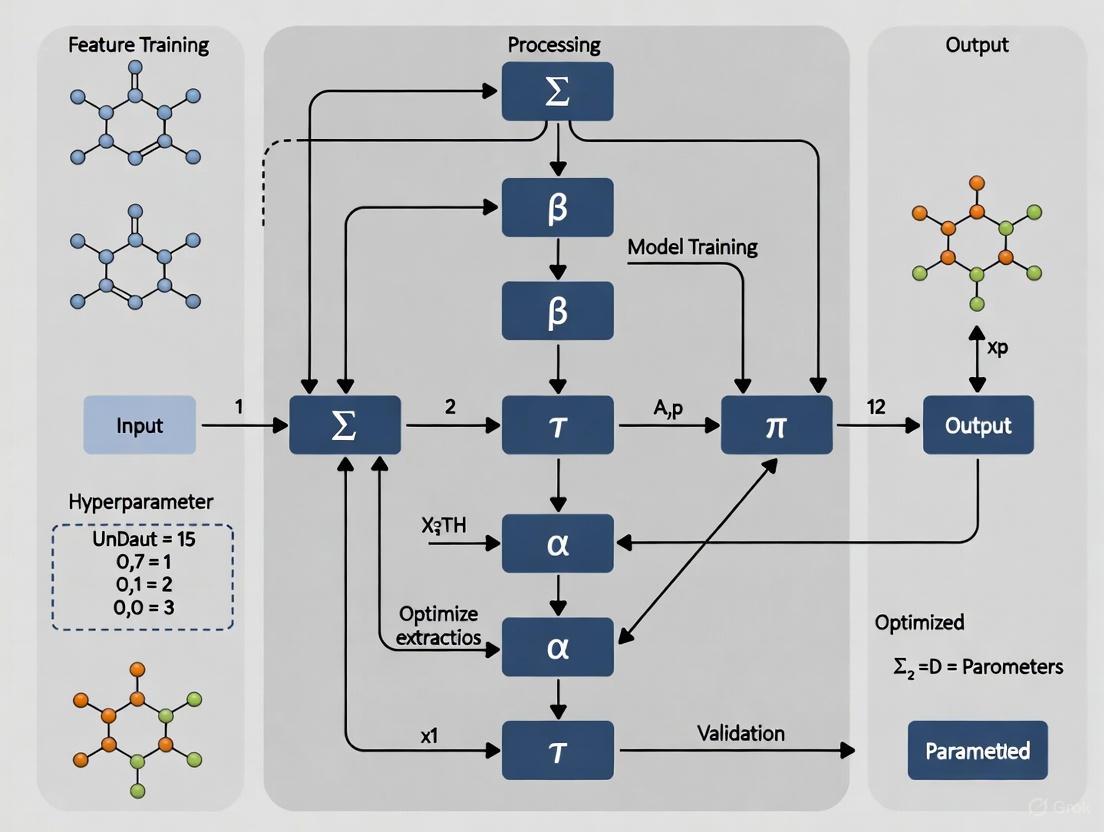
This article provides a comprehensive guide to hyperparameter tuning, tailored for researchers and professionals in materials science and drug development.
Hyperparameter Tuning for Materials Science Machine Learning: A Practical Guide for Researchers
Abstract
This article provides a comprehensive guide to hyperparameter tuning, tailored for researchers and professionals in materials science and drug development. It covers foundational concepts, core optimization algorithms like Grid Search, Random Search, and Bayesian Optimization, and their practical application in predicting material properties. The guide addresses common pitfalls such as overfitting and loss of model interpretability, offering troubleshooting strategies and best practices for rigorous model validation. By connecting methodological theory with real-world case studies from supercapacitors, metal forming, and alloy discovery, this resource aims to equip scientists with the knowledge to build more accurate, reliable, and interpretable machine learning models, thereby accelerating materials innovation.
Why Hyperparameters Matter: The Foundation of Reliable Materials Science ML
In the burgeoning field of materials informatics, the effective application of machine learning (ML) hinges on a nuanced understanding of a model's internal components. Central to this understanding is the critical distinction between model parameters and model hyperparameters. This distinction governs how models are built, trained, and optimized, directly impacting the success of data-driven materials discovery. This guide provides an in-depth technical exploration of these concepts, framed specifically for the workflows and challenges encountered in materials science research.
Core Definitions: Parameters vs. Hyperparameters
At its core, the difference between parameters and hyperparameters lies in how they are determined during the machine learning process.
Model Parameters: These are the internal variables of the model that are learned directly from the training data during the training process. They are not set manually but are estimated by the optimization algorithm (e.g., Gradient Descent, Adam) to map input features to the target output. Model parameters define the specific representation of the relationship inherent in your dataset [1] [2] [3].
Model Hyperparameters: These are the configuration variables that are set before the training process begins. They control the very structure of the model and the learning process itself. Hyperparameters are not learned from the data; instead, they must be tuned by the researcher to achieve the best performance for a given task [1] [2] [3].
The table below provides a consolidated comparison for clarity.
Table 1: Fundamental Differences Between Model Parameters and Hyperparameters
| Aspect | Model Parameters | Model Hyperparameters |
|---|---|---|
| Definition | Internal variables learned from the data. | External configuration set before training. |
| Purpose | Used to make predictions on new data. | Control the learning process and model structure. |
| Determination | Estimated automatically by optimization algorithms. | Set manually or via automated tuning. |
| Examples | Weights, biases, coefficients. | Learning rate, number of layers, number of estimators. |
The Critical "Why": Impact on Model Performance and Workflow
Understanding this distinction is not merely academic; it is fundamental to building effective and reliable ML models in materials science.
Role of Model Parameters: The learned parameters encapsulate the patterns found in your training data, such as the complex relationships between material composition, processing conditions, and a target property (e.g., tensile strength, band gap). The final values of these parameters determine how the model will perform on unseen experimental or computational data [1] [3].
Role of Model Hyperparameters: Hyperparameters act as the control knobs for the learning algorithm. They directly influence how efficiently and effectively the model parameters are learned. A poor choice of hyperparameters can lead to underfitting (where the model is too simple to capture trends) or overfitting (where the model memorizes the training data and fails to generalize) [1]. For instance, setting the learning rate too high might prevent the model from converging to a good solution, while setting it too low makes training unnecessarily slow.
The process of finding the optimal set of hyperparameters is known as Hyperparameter Optimization (HPO). In materials science, where datasets can be small and computationally expensive to generate, efficient HPO is crucial for maximizing the value of available data and accelerating discovery cycles [4] [5].
Hyperparameter Optimization in Practice: Methods and Protocols
Given that hyperparameters cannot be learned from data, researchers must employ systematic strategies to find the best configurations. The following workflow and methods form the backbone of modern HPO.
Diagram: Hyperparameter Optimization (HPO) Workflow
Common Hyperparameter Optimization Algorithms
Several algorithms exist for navigating the hyperparameter space, each with its own strengths and computational trade-offs [5] [6].
Table 2: Comparison of Common Hyperparameter Optimization Methods
| Method | Core Principle | Strengths | Weaknesses |
|---|---|---|---|
| Grid Search (GS) | Exhaustively searches over a predefined set of hyperparameter values. [6] | Guaranteed to find the best combination within the grid; simple to implement and parallelize. [6] | Computationally expensive and infeasible for high-dimensional spaces; performance depends on a well-chosen grid. [6] |
| Random Search (RS) | Randomly samples hyperparameter combinations from specified distributions. [6] | More efficient than GS, especially when some hyperparameters are less important; requires less processing time. [6] | Does not guarantee a global optimum; can still be inefficient in very large search spaces. [6] |
| Bayesian Optimization (BO) | Builds a probabilistic surrogate model to predict model performance and guides the search intelligently. [4] [6] | Highly sample-efficient; requires fewer evaluations to find good hyperparameters; superior computational efficiency. [4] [6] | More complex to implement; can have higher overhead per iteration. [6] |
Experimental Protocol for Hyperparameter Tuning
A typical HPO experiment, as applied in studies ranging from predicting heart failure outcomes to materials property prediction, follows a structured protocol [6]:
- Define the Search Space: For each hyperparameter (e.g., learning rate, number of layers, regularization strength), specify a range or list of possible values. This requires domain knowledge and an understanding of the model.
- Choose an Optimization Algorithm: Select an HPO method such as GS, RS, or BO based on the size of the search space and available computational budget.
- Select a Performance Metric: Choose an appropriate evaluation metric (e.g., R² for regression, AUC for classification, mean absolute error) that aligns with the research goal.
- Implement Cross-Validation: To ensure robustness and avoid overfitting, the performance of each hyperparameter set is typically evaluated using k-fold cross-validation (e.g., 10-fold cross-validation) on the training data [6].
- Execute the Search: The HPO algorithm iteratively proposes hyperparameter combinations, trains the model, and evaluates its performance.
- Validate the Best Model: Once the search is complete, the best hyperparameter set is used to train a final model on the entire training set, and its performance is confirmed on a held-out test set.
The Materials Science Context: Tools and Applications
The principles of HPO are universally applicable, but their implementation in materials science is often facilitated by specialized software and frameworks.
The Scientist's Toolkit: HPO in Materials Informatics
Table 3: Key Resources for Hyperparameter Optimization in Materials Science Research
| Tool / Category | Example(s) | Function in Materials Informatics |
|---|---|---|
| Automated ML Frameworks | MatSci-ML Studio, Autonomminer, MatPipe [4] | Provides end-to-end workflows, often with integrated HPO capabilities, lowering the barrier for domain experts. [4] |
| HPO Libraries | Optuna [4], Scikit-learn [6] | Provide flexible, state-of-the-art algorithms (like Bayesian Optimization) for tuning models built in Python. |
| Model Libraries | Scikit-learn, XGBoost, LightGBM, CatBoost [4] | Offer a wide array of models whose performance is critically dependent on effective hyperparameter tuning. |
| Specialized NN Optimizers | Gaussian Process Regressor, Bayesian Neural Networks [7] | Used as surrogate models in AL loops or for uncertainty quantification, themselves requiring HPO. |
Case in Point: HPO in Action
The importance of HPO is evident in real-world materials science applications. For example, the MatSci-ML Studio toolkit automates hyperparameter optimization using the Optuna library, which employs efficient Bayesian optimization to identify optimal model configurations [4]. This automation is vital for enabling materials scientists with limited coding expertise to build high-performing models for predicting properties from composition-process-property relationships [4].
Furthermore, in advanced applications like optimizing Graph Neural Networks (GNNs) for molecular property prediction in cheminformatics, HPO and Neural Architecture Search (NAS) are crucial for managing model complexity and computational cost [8]. Similarly, optimizing Convolutional Neural Networks (CNNs) requires systematic HPO to navigate their numerous architectural and optimization-related hyperparameters [5].
The clear separation between model parameters and hyperparameters is a foundational concept in machine learning. For materials scientists and drug development professionals, mastering this distinction—and the subsequent practice of hyperparameter optimization—is key to unlocking the full potential of data-driven research. By leveraging modern tools and protocols for HPO, researchers can systematically develop more accurate, robust, and predictive models, thereby accelerating the design and discovery of novel materials with tailored properties.
The Critical Impact of Hyperparameters on Model Performance and Generalization
In the domain of materials science machine learning (ML), the configuration of hyperparameters is not merely a technical preliminary but a fundamental determinant of research outcomes. Hyperparameters are the configuration variables that control the very behavior of machine learning algorithms [9]. Their selection dictates a model's ability to generalize from training data to unseen experimental results, a capability paramount for accelerating material discovery and optimizing complex formulations. The nested nature of hyperparameter optimization—where each evaluation requires training a model—presents unique challenges, including complex, heterogeneous search spaces and computationally expensive evaluation procedures [9]. Within materials science, where data is often scarce and costly to acquire from synthesis or characterization [10], efficient hyperparameter tuning becomes critical for building robust predictive models for properties such as ultimate tensile strength in alloys [4] or stress fields in composite materials [11]. This guide examines the profound impact of hyperparameters on model performance and generalization, providing materials scientists with structured experimental data, detailed protocols, and advanced frameworks to navigate this complex landscape.
Experimental Evidence from Materials Science
Case Study: Physics-Informed Deep Learning Networks
The critical role of bespoke hyperparameter optimization (HPO) is vividly demonstrated in physics-informed deep learning. A seminal study investigating Physics-Based Regularization (PBR) for predicting stress fields in high elastic contrast composites revealed that independently fine-tuning hyperparameters for each unique loss function implementation was essential for achieving peak performance [11].
Table 1: Hyperparameter Impact on Physics-Informed Network Accuracy
| Model / Loss Function Type | Key Hyperparameters | Optimization Method | Impact on Performance |
|---|---|---|---|
| Baseline Model (No PBR) | Learning Rate, Number of Epochs | Separate Fine-Tuning | Baseline for comparison [11] |
| Physics-Based Regularization (PBR) Loss 1 | Learning Rate, Loss Weight λ₁ | Separate Fine-Tuning | Enforced physical constraint more accurately than baseline [11] |
| Physics-Based Regularization (PBR) Loss 2 | Learning Rate, Loss Weight λ₂ | Separate Fine-Tuning | Faster convergence of stress equilibrium [11] |
The study concluded that assessing the relative effectiveness of different deep learning models requires this careful, individualized tuning process, as each loss formulation and dataset required different optimal learning rates and loss weights [11].
Benchmarking Active Learning Strategies with AutoML
The interplay between model selection and hyperparameter optimization is further clarified in the context of Active Learning (AL) for small-sample regression. A comprehensive benchmark study evaluated 17 different AL strategies using an Automated Machine Learning (AutoML) framework across multiple materials datasets [10]. The study underscored that AutoML automates the process of model and hyperparameter selection, which is crucial for reliable performance when labeled data is scarce [10]. The key findings are summarized below.
Table 2: Performance of Select Active Learning Strategies in AutoML (Early-Stage Data Acquisition)
| Active Learning Strategy | Underlying Principle | Performance vs. Random Sampling | Key Characteristics |
|---|---|---|---|
| LCMD | Uncertainty-Driven | Outperforms | Effective in data-scarce regimes [10] |
| Tree-based-R | Uncertainty-Driven | Outperforms | Effective in data-scarce regimes [10] |
| RD-GS | Diversity-Hybrid | Outperforms | Combines representativeness and diversity [10] |
| GSx, EGAL | Geometry-Only | Matches or slightly exceeds | Pure diversity heuristics [10] |
The benchmark revealed that early in the acquisition process, uncertainty-driven and diversity-hybrid strategies clearly outperformed geometry-only heuristics and random sampling by selecting more informative samples [10]. As the labeled set grew, the performance gap narrowed, indicating diminishing returns from AL under AutoML and a reduced relative impact of the initial hyperparameter and strategy choices [10].
Methodologies for Hyperparameter Optimization
A Taxonomy of HPO Algorithms
Hyperparameter optimization techniques can be broadly categorized into several families, each with distinct strengths and weaknesses. The selection of an appropriate method depends on factors such as the computational budget, the size and nature of the search space, and the cost of function evaluations [5] [9].
Implementing Bayesian Optimization
Bayesian Optimization (BO) is a powerful model-based approach for optimizing expensive black-box functions. It operates by constructing a probabilistic surrogate model, typically a Gaussian Process (GPR), to approximate the response function [9]. An acquisition function, such as Expected Improvement (EI), uses this model to decide which hyperparameters to evaluate next by balancing exploration and exploitation [9]. The process can be broken down into the following detailed protocol:
- Define the Search Space: Specify all hyperparameters and their domains (continuous, integer, categorical). For conditional hyperparameters (e.g., the number of layers only matters if a deep network is chosen), define the dependencies [9].
- Select a Surrogate Model: Choose a probabilistic model. Gaussian Process Regressors are common, but random forests can also be used (e.g., in the Tree-structured Parzen Estimator, TPE).
- Choose an Acquisition Function: Common choices include Expected Improvement (EI), Upper Confidence Bound (UCB), or Probability of Improvement (PI).
- Initialize with a Design of Experiments: Start by evaluating a small number (e.g., 10-20) of randomly selected hyperparameter configurations to build an initial surrogate model.
- Iterate until Convergence:
- Fit the surrogate model to all observations
{(H, L)}collected so far, whereHis a hyperparameter set andLis the resulting validation loss. - Find the hyperparameters
H_{next}that maximize the acquisition function. - Evaluate the true validation loss
L_{next}by training the model withH_{next}. - Add the new observation
(H_{next}, L_{next})to the dataset.
- Fit the surrogate model to all observations
- Final Output: After the budget is exhausted, return the hyperparameter set
H*that achieved the lowest validation lossL.
This framework was famously used to optimize the hyperparameters of the AlphaGo system, demonstrating its capability in high-stakes scenarios [9].
Table 3: Key Research Reagent Solutions for HPO in Materials Science
| Tool / Resource Name | Type | Primary Function | Relevance to Materials Science |
|---|---|---|---|
| MatSci-ML Studio [4] | Automated ML Toolkit | Provides a GUI for end-to-end ML workflow, including automated HPO and model training. | Democratizes ML for domain experts; incorporates SHAP interpretability and multi-objective optimization for material design. |
| Automatminer/MatPipe [4] | Python Framework | Automates featurization and model benchmarking from composition or structure. | Enables high-throughput model benchmarking for computational materials scientists. |
| Optuna [4] | HPO Library | Enables efficient Bayesian optimization with pruning algorithms. | Integrated into tools like MatSci-ML Studio for automated hyperparameter tuning. |
| Universal ML Interatomic Potentials (uMLIPs) [12] | Pre-trained Models | MLIPs like M3GNet, MACE, and CHGNet offer pre-optimized architectures for atomistic simulations. | Serve as direct replacements for DFT calculations at a fraction of the cost; reduce need for architecture HPO. |
| LLM-based Active Learning (LLM-AL) [7] | Novel AL Framework | Uses large language models as surrogate models for experiment selection in an iterative few-shot setting. | Aims to provide a generalizable, tuning-free alternative to conventional AL, mitigating the cold-start problem. |
Advanced Topics and Future Directions
The Frontier of Tuning-Free Optimization
Recent research explores paradigms that reduce reliance on traditional HPO. The introduction of Large Language Models for Active Learning (LLM-AL) demonstrates a promising alternative. This framework leverages the pretrained knowledge and in-context learning capabilities of LLMs to propose experiments directly from text-based descriptions, operating effectively in a few-shot setting without fine-tuning or explicit hyperparameter tuning for a surrogate model [7]. Benchmarks across diverse materials datasets showed that LLM-AL could reduce the number of experiments needed to reach top-performing candidates by over 70%, consistently outperforming traditional ML models like Random Forest and Gaussian Process Regressors [7]. This suggests a path toward more generalizable and accessible optimization tools for experimental science.
Hyperparameter Optimization in Physics-Informed Learning
As identified in the study on physics-informed deep learning networks, altering the loss function to incorporate physical knowledge changes the optimization landscape [11]. This makes hyperparameters like the learning rate and, crucially, the weights of individual physics-based loss terms, extremely sensitive. Future work in this area is likely to focus on dynamic and adaptive loss balancing methods to manage the competition between multiple loss terms during training [11]. Furthermore, the development of more sophisticated optimization algorithms, such as MetaOptimize, which dynamically adjusts meta-parameters like learning rates during training by tracking intrinsic properties like gradient autocorrelation, points toward a future of more automated and stable training processes for complex models [13].
Essential Hyperparameters Across Common ML Models in Materials Science
The application of machine learning (ML) in materials science has revolutionized the process of discovering and optimizing new functional materials, from high-performance alloys and energy storage materials to novel catalysts and photovoltaics [14]. However, the performance of these ML models is critically dependent on the careful configuration of their hyperparameters—the settings that govern the learning process itself [15] [16]. Unlike model parameters that are learned from data, hyperparameters are set before training begins and control aspects such as model complexity, learning speed, and convergence behavior [16]. Proper hyperparameter tuning is not merely a technical refinement; it is an absolute crucial step that determines whether a sophisticated algorithm will succeed in extracting meaningful structure-property relationships from often limited and costly materials data [15]. Without systematic tuning, researchers cannot conclusively determine that a poor model outcome stems from the algorithm itself rather than from suboptimal configuration choices [15].
This guide provides materials scientists with a comprehensive framework for hyperparameter optimization, focusing on the most impactful parameters across common ML models used in the field. We integrate foundational tuning principles with advanced strategies like Bayesian optimization and AutoML that have demonstrated significant success in recent materials informatics research [17] [10]. By structuring this information within practical workflows and providing experimentally-validated protocols, we aim to equip researchers with the methodologies needed to maximize the predictive accuracy of their ML-driven materials discovery efforts.
Core Hyperparameter Concepts
Definitions and Significance
In machine learning, a clear distinction exists between parameters and hyperparameters. Parameters are values that the model learns automatically during training from the data, such as weights and biases in a neural network or split points in a decision tree [15] [16]. In contrast, hyperparameters are configuration variables that guide the learning process itself and are set by the practitioner before training begins [15] [16]. Common examples include the learning rate in neural networks, the maximum depth in tree-based models, and the regularization strength in support vector machines.
The significance of hyperparameter tuning in materials science cannot be overstated. Well-tuned hyperparameters directly lead to improved model accuracy by guiding the model to learn efficiently from often limited experimental or computational datasets [16]. They play a critical role in avoiding overfitting (where the model memorizes training data noise and fails to generalize) and underfitting (where the model is too simple to capture underlying patterns) [16]. Given the high costs associated with both computational screening and experimental synthesis in materials science, efficient hyperparameter tuning also enables better resource utilization, ensuring that research cycles are not wasted on suboptimal models [16].
Hyperparameter Tuning Workflows
The process of hyperparameter optimization typically follows a structured workflow that can be implemented through various strategies. The diagram below illustrates this general process and the key optimization algorithms available at each stage.
General Hyperparameter Optimization Workflow
This workflow forms the foundation for most tuning operations, whether implemented manually or through automated frameworks. For materials science applications, where dataset sizes are often limited due to high acquisition costs, Bayesian optimization has demonstrated particular promise by achieving higher performance with reduced computation time compared to traditional methods like grid search [17]. Furthermore, the emergence of Automated Machine Learning (AutoML) frameworks has begun to transform this process, automating model selection, hyperparameter tuning, and feature engineering to significantly improve the efficiency of materials informatics [14] [10].
Model-Specific Hyperparameters
Neural Networks and Deep Learning
Deep learning architectures, including Graph Neural Networks (GNNs) and Convolutional Neural Networks (CNNs), have shown remarkable success in predicting material properties from complex input representations such as crystal structures, molecular graphs, and microstructural images [14] [18]. These models contain several hyperparameters that critically influence their performance.
Table: Essential Hyperparameters for Neural Networks in Materials Science
| Hyperparameter | Description | Impact on Learning | Common Values/Range | Materials Science Application Notes |
|---|---|---|---|---|
| Learning Rate | Step size for weight updates during optimization | Too high: unstable training, divergence. Too low: slow convergence, local minima [16]. | 0.1 to 10-6 (log scale) [15] | Most critical parameter to tune first [15]; often needs values <0.001 for predicting material properties [15] |
| Number of Layers | Depth of the neural network | Too few: unable to capture complex patterns. Too many: overfitting, vanishing gradients [16]. | 2-10+ | Deeper networks beneficial for complex structure-property relationships [14] |
| Batch Size | Number of samples processed before updating parameters | Smaller: noisy updates, better generalization. Larger: stable convergence, memory intensive [16]. | 32, 64, 128, 256 | Important for handling materials datasets of varying sizes [16] |
| Activation Function | Determines neuron output (non-linearity) | Choice affects learning capability and gradient flow [5]. | ReLU, Sigmoid, Tanh, Leaky ReLU | ReLU variants common for materials property prediction [5] |
| Dropout Rate | Fraction of neurons randomly disabled during training | Regularization to prevent overfitting [5]. | 0.2-0.5 | Particularly useful with limited experimental data [5] |
For neural networks applied to materials science problems, the learning rate is almost universally the most important hyperparameter to optimize first [15]. As highlighted in search results, when tuning learning rates, it is crucial to vary them in orders of magnitude (e.g., [0.01, 0.001, 0.0001, 0.00001]) rather than linear increments, as appropriate values are often found across different magnitude ranges [15]. Advanced strategies like learning rate schedules (step decay, exponential decay) and adaptive optimizers (Adam, RMSprop) can further enhance training stability and efficiency [16].
In practice, for predicting electronic and mechanical properties of materials under realistic finite-temperature conditions, Graph Neural Networks (GNNs) have demonstrated exceptional performance when trained on physically-informed datasets [18]. Recent research on predicting properties of anti-perovskite materials found that GNN performance was significantly enhanced when training configurations were generated using phonon-informed sampling rather than random atomic displacements, despite using fewer data points [18].
Tree-Based Models
Tree-based ensemble methods, including Random Forests and Gradient Boosting Machines (XGBoost, LightGBM, CatBoost), are extensively used for materials property prediction due to their strong performance on tabular datasets and relative ease of tuning [10] [4]. These models are particularly valuable for establishing baseline performance and for applications where model interpretability is important.
Table: Essential Hyperparameters for Tree-Based Models in Materials Science
| Hyperparameter | Description | Impact on Performance | Common Values/Range | Tuning Considerations |
|---|---|---|---|---|
| Number of Trees/Estimators | Number of trees in the ensemble | More trees: better performance, but diminishing returns and increased computation [4] | 100-1000 | Important for convergence; monitor OOB error for guidance [4] |
| Maximum Depth | Maximum depth of individual trees | Deeper: more complex patterns, risk of overfitting. Shallower: faster training, underfitting [4] | 3-20+ | Critical for controlling model complexity [4] |
| Minimum Samples Split | Minimum samples required to split an internal node | Higher values: prevent overfitting, create simpler trees [4] | 2-10+ | Useful regularization for small materials datasets [4] |
| Learning Rate (Boosting) | Shrinkage factor for subsequent trees in boosting | Smaller values: more robust but require more trees [4] | 0.01-0.3 | Interacts with number of trees; lower rate needs more trees [4] |
| Feature Sampling Rate | Fraction of features considered for each split | Lower values: more diverse trees, reduces overfitting [4] | 0.5-1.0 | Important for high-dimensional feature spaces [4] |
Tree-based models have been successfully applied across diverse materials science domains. For example, in predicting band gaps of low-symmetry perovskites, gradient boosting and support vector regressors achieved mean absolute errors as low as 0.18 eV [10]. Similarly, in modeling ultimate tensile strength of Al-Si-Cu-Mg-Ni alloys, Random Forest models achieved R² values of 0.84, with further improvements possible through ensemble methods like AdaBoost (R² = 0.94) [4].
Support Vector Machines (SVM)
Support Vector Machines remain valuable for many materials informatics tasks, particularly with smaller datasets where their strong theoretical foundations provide good generalization performance.
Table: Essential Hyperparameters for Support Vector Machines
| Hyperparameter | Description | Impact on Performance | Kernel-Specific Considerations |
|---|---|---|---|
| C (Regularization) | Trade-off between margin maximization and error minimization | Low C: smoother decision boundary, may underfit. High C: correct classification, may overfit [5] | Affects all kernels similarly [5] |
| Gamma (γ) | Inverse radius of influence for samples | Low gamma: far influence, decision boundary smoother. High gamma: close influence, captures complexity, may overfit [5] | Critical for RBF kernel; interpretable range varies with data [5] |
| Kernel Type | Determines transformation of feature space | Linear: efficient for separable data. RBF: powerful for non-linear relationships [5] | Choice depends on data structure and feature relationships [5] |
Advanced Optimization Methodologies
Bayesian Optimization
Bayesian optimization has emerged as a powerful methodology for hyperparameter tuning in materials science applications, particularly when dealing with computationally expensive model evaluations. Unlike grid or random search which treat each hyperparameter configuration independently, Bayesian optimization constructs a probabilistic model of the objective function and uses it to select the most promising hyperparameters to evaluate next [17].
This approach has demonstrated significant advantages in materials informatics. In a study focused on predicting actual evapotranspiration using machine learning models, Bayesian optimization not only achieved higher performance but also substantially reduced computation time compared to traditional grid search [17]. The efficiency gains make Bayesian optimization particularly valuable for tuning complex deep learning models like LSTMs and GRUs, which have shown superior performance for materials property prediction but typically require extensive hyperparameter optimization [17].
The optimization process typically involves:
- Surrogate Model: A Gaussian process or tree-based model approximates the unknown function mapping hyperparameters to model performance.
- Acquisition Function: A criterion (e.g., Expected Improvement, Probability of Improvement) balances exploration and exploitation to select the next hyperparameter set.
- Iterative Refinement: The surrogate model is updated with new evaluations until convergence or budget exhaustion.
Automated Machine Learning (AutoML) and Active Learning
The integration of Automated Machine Learning (AutoML) with active learning strategies represents a cutting-edge approach for addressing the data scarcity challenges common in materials science [10]. AutoML frameworks automate the entire model development process, including hyperparameter tuning, model selection, and feature engineering, significantly reducing the manual effort required from researchers [10] [4].
When combined with active learning—which strategically selects the most informative data points to label—this approach enables the construction of robust predictive models while substantially reducing the volume of labeled data required [10]. Recent benchmarking studies have evaluated 17 different active learning strategies within AutoML frameworks for materials science regression tasks, finding that uncertainty-driven and diversity-hybrid strategies particularly outperform random sampling, especially in early acquisition stages when labeled data is most limited [10].
Tools like MatSci-ML Studio are making these advanced methodologies more accessible to materials researchers by providing intuitive graphical interfaces that encapsulate comprehensive, end-to-end ML workflows, including automated hyperparameter optimization [4]. These platforms integrate multi-strategy feature selection, automated hyperparameter optimization using libraries like Optuna, and model interpretation capabilities—significantly lowering the technical barrier for implementing advanced ML strategies in materials research [4].
Experimental Protocols and Case Studies
Case Study: Hyperparameter Optimization for Predicting Actual Evapotranspiration
A comprehensive study on predicting actual evapotranspiration (AET) using machine learning provides a robust protocol for hyperparameter optimization in materials-inspired prediction tasks [17]. This research compared deep learning models (LSTM, GRU, CNN) against classical machine learning approaches (SVR, RF) using two different input combinations of meteorological and soil features.
Experimental Protocol:
- Data Preparation: Two input combinations were developed: (i) features selected through Pearson correlation, tolerance, and VIF scores to address multicollinearity; (ii) more accessible features for practical applicability.
- Model Selection: Both deep learning and classical ML models were implemented for comparison.
- Hyperparameter Optimization: Bayesian optimization and grid search were systematically compared for tuning model hyperparameters.
- Performance Evaluation: Models were evaluated using multiple statistical indicators (RMSE, MSE, MAE, R²) to ensure comprehensive assessment.
Results and Implications: The study demonstrated that Bayesian optimization consistently achieved higher performance with reduced computation time compared to grid search [17]. Among the models, LSTM networks achieved the best results (R²=0.8861 with five predictors, R²=0.8467 with four predictors), slightly outperforming SVR (R²=0.8456) with fewer predictors [17]. This case study underscores the importance of selecting appropriate optimization strategies and demonstrates that deep learning methods, particularly when combined with advanced hyperparameter tuning, can deliver superior performance for complex materials-related prediction tasks.
Case Study: Active Learning with AutoML for Small-Sample Regression
A benchmark study on integrating active learning with AutoML provides valuable insights for hyperparameter optimization under data constraints common in materials science [10]. This research evaluated 17 active learning strategies together with a random-sampling baseline across 9 materials formulation design datasets.
Methodology:
- Pool-based Active Learning Framework: Initial dataset comprised a small set of labeled samples and a large pool of unlabeled samples.
- Iterative Sampling: Different AL strategies performed multi-step sampling, with an AutoML model fitted at each step.
- Strategy Comparison: Methods based on uncertainty estimation, expected model change maximization, diversity, and representativeness were evaluated.
- Performance Metrics: Model accuracy was tracked using MAE and R² as the labeled set expanded.
Key Findings:
- Early Acquisition Phase: Uncertainty-driven (LCMD, Tree-based-R) and diversity-hybrid (RD-GS) strategies clearly outperformed geometry-only heuristics and random baseline [10].
- Diminishing Returns: As the labeled set grew, the performance gap narrowed and all methods eventually converged [10].
- Practical Implication: The optimal hyperparameter optimization strategy depends on the amount of available labeled data, with uncertainty-based methods particularly effective for data-scarce scenarios common in materials science [10].
Table: Essential Tools and Resources for Hyperparameter Optimization in Materials Science
| Tool/Resource | Type | Key Functionality | Applicability to Materials Science |
|---|---|---|---|
| Optuna | Hyperparameter Optimization Framework | Efficient Bayesian optimization with pruning algorithms [4] | Integrated in MatSci-ML Studio for automated hyperparameter tuning [4] |
| MatSci-ML Studio | GUI-based ML Toolkit | End-to-end workflow with automated HPO, feature selection, and SHAP interpretability [4] | Democratizes ML for materials scientists with limited coding expertise [4] |
| AutoGluon/TPOT/H2O.ai | AutoML Frameworks | Automated model selection, hyperparameter tuning, and feature engineering [14] | Reduces repetitive work in model design and parameterization [14] |
| Automated "A-Lab" Platforms | Experimental ML Integration | Literature-mined recipes coupled with active learning for autonomous synthesis [10] | Successfully synthesized 41 previously unreported inorganic compounds in 17 days [10] |
| SHAP Analysis | Model Interpretation | Explains model predictions by quantifying feature importance [19] | Reveals decisive design levers (e.g., valence-charge variance for band gap prediction) [10] |
Hyperparameter optimization represents a critical bridge between theoretical machine learning capabilities and practical materials science applications. As the field continues to evolve, several key principles emerge for researchers seeking to maximize the effectiveness of their ML-driven materials discovery efforts:
First, prioritize the most impactful hyperparameters, with the learning rate representing the universal starting point for any model involving gradient-based optimization [15]. Second, select optimization strategies appropriate for your computational budget and dataset size, with Bayesian optimization generally providing superior efficiency for complex models [17]. Third, leverage emerging AutoML and active learning frameworks to navigate the data scarcity challenges inherent in materials science [10] [4].
The integration of physical knowledge into the hyperparameter optimization process—whether through physically-informed training data generation [18], physics-constrained model architectures, or domain-aware search spaces—represents a particularly promising direction for future research. As demonstrated by recent advances, models trained on physically-representative datasets (e.g., phonon-informed configurations) can achieve higher accuracy and robustness with significantly fewer data points [18].
By adopting the systematic approaches and methodologies outlined in this guide, materials researchers can significantly enhance the predictive performance of their machine learning models, ultimately accelerating the discovery and development of next-generation functional materials for energy, electronics, medicine, and beyond.
Connecting Hyperparameter Tuning to Trust and Interpretability in Scientific AI
In the pursuit of scientific discovery, fields like materials science and drug development are increasingly leveraging sophisticated machine learning (ML) models. The exceptional accuracy of these models, however, often comes at the cost of explainability, creating a significant barrier to their adoption in high-stakes research environments. The most accurate models, such as deep neural networks (DNNs), can function as "black boxes," making it difficult for scientists to trust their predictions or extract actionable physical insights [19]. This technical guide posits that hyperparameter tuning—often viewed merely as a performance optimization step—is a critical, though underutilized, mechanism for bridging the gap between model accuracy and model trustworthiness. Framed within the broader thesis of establishing hyperparameter tuning fundamentals for materials science ML research, this paper will demonstrate how a deliberate tuning strategy, moving beyond brute-force accuracy maximization, is foundational to building interpretable and reliable scientific AI systems.
Hyperparameter Tuning: From Black Box to Trusted Scientific Tool
Defining the Role of Hyperparameters in Model Trust
Hyperparameters are the external configurations set prior to the training process that govern the learning algorithm itself. Examples include the learning rate, the number of layers in a neural network, the regularization strength, and the dropout ratio [16] [20]. In scientific contexts, the choice of these values directly influences a model's tendency to overfit or underfit, thus controlling its ability to generalize and produce reliable predictions on new, experimental data.
The connection to trust is direct: a model that generalizes well is inherently more trustworthy. Proper hyperparameter tuning systematically manages the bias-variance trade-off, preventing a model from being either too simple to capture key patterns (high bias, underfitting) or too complex, causing it to memorize noise and artifacts in the training data (high variance, overfitting) [20]. For instance, tuning regularization parameters or the dropout ratio directly controls model complexity, safeguarding against overfitting and leading to more robust and reliable predictions [21] [20]. This process is not just about achieving a high score on a validation set; it is about ensuring the model learns the underlying physical principles of the data rather than superficial correlations.
The Explainability-Accuracy Trade-off and the Path Forward
A well-documented challenge in modern ML is the trade-off between model accuracy and model explainability [19]. Simple, transparent models like linear regression are easy to interpret but often lack the expressive power for complex scientific tasks. Conversely, highly complex models like DNNs offer state-of-the-art accuracy but are notoriously difficult to explain. This creates a dilemma for researchers who require both high predictive power and causal understanding.
Hyperparameter tuning sits at the heart of this conflict. The pursuit of maximum accuracy can lead to extremely complex models that are incomprehensible. However, a more nuanced tuning strategy can help navigate this trade-off. By treating hyperparameters that control model complexity (e.g., network depth, number of trees in a forest) as scientific levers, researchers can methodically explore the Pareto frontier of accuracy versus interpretability. Often, a slightly less complex model with a minimal accuracy drop can be significantly more interpretable, fostering greater trust and yielding more scientific insights. Explainable Artificial Intelligence (XAI) techniques can then be applied more effectively to these "right-sized" models [19].
Quantitative Comparison of Tuning Methodologies in Scientific Research
Selecting an appropriate hyperparameter optimization (HPO) algorithm is crucial for both efficiency and final model quality. The table below summarizes the core HPO methods, their mechanisms, and their performance in scientific applications.
Table 1: Comparison of Hyperparameter Tuning Methodologies
| Method | Core Mechanism | Key Advantages | Key Disadvantages | Reported Performance in Research |
|---|---|---|---|---|
| Grid Search [21] [22] | Exhaustive search over a discrete grid of values | Systematic, comprehensive, simple to implement | Computationally prohibitive for high-dimensional spaces, inefficient | Often used as a baseline; generally outperformed by more efficient methods |
| Random Search [21] [22] | Random sampling from specified distributions | More computationally efficient than grid search, better at locating promising regions in large spaces | Does not use information from past experiments to inform next sample, can still be wasteful | A strong and practical baseline, especially when some hyperparameters are more important than others [21] |
| Bayesian Optimization [21] [17] [23] | Sequential model-based optimization using a probabilistic surrogate model (e.g., Gaussian Process) | Highly sample-efficient, uses past results to guide future searches, faster convergence to optimum | Sequential nature can be harder to parallelize, higher computational overhead per iteration | AET Prediction (LSTM): Bayesian Opt. achieved RMSE=0.0230, R²=0.8861, outperforming grid search [17]. Drug Discovery (Ensemble): Used to fine-tune models, contributing to R² of 0.92 [23] |
| Multi-Strategy Parrot Optimizer (MSPO) [24] | Metaheuristic algorithm enhanced with Sobol sequence, nonlinear decreasing inertia weight, and chaotic parameters | Enhanced global exploration, avoids premature convergence, high optimization precision | Newer method, less established in broad scientific communities | Breast Cancer Image Classification (ResNet18): Surpassed other optimizers in accuracy, precision, recall, and F1-score [24] |
The evidence from recent scientific studies strongly favors advanced optimization techniques. In a study predicting actual evapotranspiration, Bayesian optimization not only achieved higher performance with an LSTM model but also did so with reduced computation time compared to grid search [17]. Similarly, in AI-driven drug discovery, Bayesian optimization was employed to fine-tune state-of-the-art models like Graph Neural Networks and Stacking Ensembles, which achieved exceptional accuracy in predicting pharmacokinetic parameters [23]. For image classification in medical applications, novel metaheuristic algorithms like MSPO have demonstrated superior ability to optimize model architecture, leading to tangible improvements in diagnostic accuracy [24].
Experimental Protocols for Trust-Centric Hyperparameter Tuning
The Incremental Tuning Strategy for Scientific Insight
A scientific approach to tuning prioritizes long-term insight over short-term validation error improvements. This involves an incremental strategy where researchers build understanding through rounds of targeted experiments [25]. The core of this methodology is the classification of hyperparameters for a given experimental goal:
- Scientific Hyperparameters: The variables whose effect on performance you are actively trying to measure (e.g., "Does a model with more hidden layers have lower validation error?" where the number of layers is scientific).
- Nuisance Hyperparameters: Variables that must be optimized over to ensure a fair comparison of scientific hyperparameters (e.g., the learning rate, which must be tuned separately for each model architecture).
- Fixed Hyperparameters: Variables held constant for a round of experiments, accepting that conclusions may be limited to these settings [25].
This classification forces a deliberate experimental design. For example, to fairly compare the effect of different activation functions (scientific hyperparameters), one must tune nuisance hyperparameters like the learning rate separately for each function, rather than using a single fixed value.
A Protocol for Connecting Tuning to Interpretability
The following workflow provides a detailed protocol for a tuning experiment aimed at enhancing both performance and interpretability.
Table 2: The Scientist's Toolkit for Trust-Centric Hyperparameter Tuning
| Tool / Concept | Function in the Protocol | Application Example |
|---|---|---|
| Validation Set [21] | Used to evaluate and compare different hyperparameter configurations during tuning, preventing information leakage from the test set. | Holding out a portion of materials data (e.g., spectral images) to assess model generalization after each tuning round. |
| Bayesian Optimization [21] [17] | An intelligent search algorithm that models the performance landscape and suggests the most promising hyperparameters to evaluate next. | Efficiently searching the hyperparameter space of a Graph Neural Network for molecular property prediction. |
| Learning Rate Scheduler [16] | Dynamically adjusts the learning rate during training, which can improve convergence and help escape local minima. | Using a step decay schedule to fine-tune a pre-trained CNN on a new set of material micrographs. |
| Saliency Maps [19] | An XAI technique that highlights which regions of an input (e.g., an image) were most important for the model's prediction. | Visualizing which parts of a molecular structure or material microstructure the tuned model focuses on to predict a property. |
| Concept Visualization [19] | An XAI technique that identifies and visualizes the high-level concepts a model has learned. | Determining if a CNN trained on catalyst images has learned to recognize pore structures or surface defects. |
Step 1: Establish a Baseline and a Goal Begin with a simple, untuned model configuration. The goal for the first round of experiments should be scoped, for example: "Understand the impact of model depth (a scientific hyperparameter) on validation error and prediction consistency, while tuning the learning rate and weight decay (nuisance hyperparameters)."
Step 2: Design and Execute the Experiment Choose an efficient HPO method like Bayesian optimization. The search space for the scientific and nuisance hyperparameters should be defined based on domain knowledge. For interpretability analysis, plan to save the predictions and, if applicable, generate explanation maps (e.g., saliency maps) for the best-performing models from different architectural depths.
Step 3: Analyze Performance and Explanations Evaluate the results not just on raw accuracy (e.g., R², RMSE), but also on signs of robust learning, such as smooth training curves and minimal gap between training and validation loss [25]. Then, apply XAI techniques to the candidate models. A model that is both accurate and whose explanations align with domain knowledge (e.g., a model that bases its prediction of material strength on known microstructural features) is inherently more trustworthy.
Step 4: Adopt, Refine, or Iterate If a model configuration yields improved performance and its explanations are physically plausible, adopt the change. If the explanations are nonsensical despite good accuracy, it may indicate the model is relying on spurious correlations, and the configuration should be rejected or investigated further. This decision point is where tuning directly feeds into building trust.
The logical relationship between hyperparameter tuning, model performance, and the pillars of trust is summarized in the following workflow:
Hyperparameter tuning must be elevated from a mere technical pre-processing step to a core component of the scientific methodology in AI-driven research. As demonstrated, the strategic selection of tuning algorithms and the adoption of an incremental, insight-driven experimental protocol do not only maximize a model's predictive accuracy but also directly enhance its generalization, robustness, and interpretability. These factors are the fundamental pillars of trust. For researchers in materials science and drug development, where models inform critical and costly experimental decisions, fostering this trust is not optional—it is essential. By rigorously connecting hyperparameter tuning to trust and interpretability, we can unlock the full potential of AI as a reliable partner in scientific discovery.
Core Tuning Algorithms and Their Application in Materials Informatics
Hyperparameter tuning represents a critical step in the development of robust machine learning models for scientific research. This technical guide provides an in-depth examination of grid search, a systematic hyperparameter optimization technique, contextualized specifically for applications in materials science and drug development. We present the fundamental principles of grid search, detailed experimental protocols from case studies, quantitative performance comparisons with alternative methods, and practical implementation guidelines. The content is structured to equip researchers with both the theoretical foundation and practical tools necessary to effectively implement grid search methodologies within their machine learning pipelines, thereby enhancing model performance and predictive accuracy in materials informatics applications.
In machine learning, hyperparameters are configuration variables whose values are set prior to the commencement of the learning process, unlike model parameters which are learned during training [26]. These hyperparameters control critical aspects of the learning algorithm's behavior, such as model complexity, learning rate, and regularization strength. The process of identifying the optimal set of hyperparameter values that maximize model performance on a given task is known as hyperparameter optimization [27] [22]. For materials science researchers employing machine learning for tasks such as predicting material properties or optimizing synthesis parameters, proper hyperparameter tuning is not merely a refinement step but a fundamental necessity to ensure model reliability and scientific validity.
Several hyperparameter optimization strategies have been developed, ranging from simple manual search to sophisticated Bayesian approaches [28]. Among these, grid search stands as one of the most widely used and conceptually straightforward methods [29]. Its exhaustive nature provides a systematic framework for exploring the hyperparameter space, making it particularly valuable in scientific domains where reproducibility and thorough exploration are paramount. This guide focuses exclusively on grid search methodology, implementation considerations, and its application within materials science research contexts.
Theoretical Foundations of Grid Search
Core Principles and Algorithm
Grid search, also known as parameter sweep, is an exhaustive search strategy that systematically explores a predefined subset of the hyperparameter space [27]. The algorithm operates by constructing a multidimensional grid where each dimension corresponds to a different hyperparameter, and each point in the grid represents a specific combination of hyperparameter values [30]. The learning algorithm is then trained and evaluated at every point in this grid, with performance typically measured using cross-validation on the training set or evaluation on a hold-out validation set [27].
Mathematically, for a set of hyperparameters ( H1, H2, ..., Hn ) with corresponding value sets ( V1, V2, ..., Vn ), the search space ( S ) is the Cartesian product: [ S = V1 \times V2 \times \cdots \times Vn ] The algorithm evaluates the model performance function ( f ) for each element ( (v1, v2, ..., vn) ) in ( S ), ultimately selecting the combination that optimizes the predefined evaluation metric [27] [30].
Comparison with Other Optimization Methods
Grid search occupies a specific position within the landscape of hyperparameter optimization techniques. Unlike random search, which samples parameter combinations randomly from specified distributions [31] [28], grid search employs a deterministic, exhaustive approach. While more computationally expensive than random search in high-dimensional spaces, grid search provides comprehensive coverage of the predefined parameter grid and is guaranteed to find the optimal combination within that grid [31].
More advanced methods such as Bayesian optimization take a probabilistic approach, building a surrogate model of the objective function to guide the search toward promising regions [27] [28]. These methods can be more efficient but are also more complex to implement and interpret. The table below summarizes key comparisons between these approaches:
Table 1: Comparison of Hyperparameter Optimization Methods
| Method | Search Strategy | Advantages | Limitations | Best Use Cases |
|---|---|---|---|---|
| Grid Search | Exhaustive search over specified grid | Guaranteed to find best point in grid; simple to implement; easily parallelized | Computationally expensive; suffers from curse of dimensionality | Small parameter spaces (2-4 parameters); discrete parameters; when completeness is valued over speed |
| Random Search | Random sampling from specified distributions | More efficient for high-dimensional spaces; better for continuous parameters | May miss optimal combinations; no guarantee of finding best parameters | Larger parameter spaces; when computational budget is limited |
| Bayesian Optimization | Sequential model-based optimization | More sample-efficient; learns from previous evaluations | Complex to implement; difficult to parallelize; computationally intensive per iteration | Expensive model evaluations; limited evaluation budget |
Grid Search Implementation Methodology
Workflow and Process
The implementation of grid search follows a systematic workflow that ensures thorough exploration of the hyperparameter space. The following diagram illustrates this process:
Grid Search Algorithm Workflow
The workflow consists of five key phases:
Parameter Grid Definition: Researchers specify the hyperparameters to be optimized and the values to be explored for each parameter [30] [22]. This critical step requires domain knowledge to establish appropriate value ranges.
Model Training Iteration: For each hyperparameter combination in the grid, the algorithm instantiates a new model with those hyperparameters and trains it on the training data [26].
Cross-Validation Performance Assessment: Each model's performance is evaluated using k-fold cross-validation, which involves partitioning the training data into k subsets, training the model k times (each time using k-1 subsets for training and the remaining subset for validation), and averaging the performance metrics across all folds [26] [28].
Exhaustive Search: Steps 2-3 are repeated for all possible combinations of hyperparameters in the defined grid [27] [29].
Optimal Model Selection: After all combinations have been evaluated, the algorithm selects the hyperparameter configuration that yielded the best average performance during cross-validation [30] [26].
Practical Implementation with Scikit-Learn
The scikit-learn library provides the GridSearchCV class, which implements grid search with cross-validation [30]. The following code illustrates a typical implementation:
The GridSearchCV class provides several key parameters that control the search behavior. The cv parameter determines the cross-validation splitting strategy, while scoring defines the performance metric to optimize. The n_jobs parameter enables parallelization by specifying the number of jobs to run in parallel, with -1 indicating usage of all available processors [30] [26].
Experimental Protocols and Case Studies
Case Study: Grid Search in Additive Manufacturing
A comprehensive study applied grid search to optimize a Multilayer Perceptron (MLP) model for predicting critical quality metrics in Fused Filament Fabrication (FFF) additive manufacturing [32]. The experimental protocol was designed to systematically investigate the effects of hyperparameters on model performance.
Table 2: Hyperparameter Grid for Additive Manufacturing Case Study
| Hyperparameter | Values Tested | Role in Model | Optimal Value Found |
|---|---|---|---|
| Number of Neurons | Multiple values in hidden layer | Control model capacity and representation power | Specific optimal value not disclosed in abstract |
| Learning Rate | Multiple values tested | Control step size during optimization | Specific optimal value not disclosed in abstract |
| Number of Epochs | Multiple values tested | Determine training duration | Specific optimal value not disclosed in abstract |
| Train-Test Ratio | Two different ratios | Affect validation methodology | Specific optimal value not disclosed in abstract |
The dataset comprised five dominant input parameters (layer thickness, build orientation, extrusion temperature, building temperature, and print speed) and three output parameters (dimensional accuracy, porosity, and tensile strength). The experimental results demonstrated that grid search successfully identified optimal hyperparameter configurations that significantly improved model performance as measured by RMSE and computational time [32].
Case Study: HVAC System Performance Prediction
In a large-scale study on predicting HVAC heating coil performance, researchers employed grid search to optimize artificial neural network architectures [33]. The experimental design involved an extensive hyperparameter search across five key dimensions:
Table 3: Hyperparameter Configuration for HVAC Performance Prediction
| Hyperparameter | Values Tested | Experimental Range | Optimal Configuration |
|---|---|---|---|
| Number of Epochs | Multiple values | Varied systematically | 500 epochs |
| Network Size | Multiple configurations | Varied number of hidden layers | 17 hidden layers |
| Network Shape | Different architectures | Various topological arrangements | Left-triangle architecture |
| Learning Rate | Multiple values | Different precision levels | 5 × 10⁻⁵ |
| Optimizer | Different algorithms | Various optimization methods | Adam optimizer |
The experimental protocol involved developing 288 unique hyperparameter configurations, with each configuration tested three times, resulting in a total of 864 artificial neural network models [33]. This comprehensive approach ensured statistical reliability of the results. The best-performing model achieved a mean squared error of 0.469, demonstrating the critical importance of systematic hyperparameter tuning in complex scientific domains.
Performance Analysis and Computational Considerations
The computational requirements of grid search grow exponentially with the number of hyperparameters, a phenomenon known as the curse of dimensionality [27] [29]. For a grid search with (k) hyperparameters, each with (n) possible values, the total number of model evaluations is (n^k). This exponential relationship highlights the importance of carefully selecting which hyperparameters to include in the search and how many values to test for each.
In a direct comparison between grid search and random search for a random forest classifier on the Iris dataset, grid search evaluated 180 parameter combinations in 352.0 seconds, while random search with 50 iterations achieved comparable accuracy in only 75.5 seconds—approximately 21% of the computation time [28]. This efficiency advantage of random search becomes more pronounced as the dimensionality of the hyperparameter space increases.
Grid Search in Materials Science Research
Adaptation to Materials Informatics
For materials science researchers, grid search offers a systematic approach to optimizing machine learning models for various applications, including predicting material properties, optimizing synthesis parameters, and discovering new materials with targeted characteristics. The exhaustive nature of grid search aligns well with scientific methodology, providing comprehensive exploration of the hyperparameter space and generating valuable insights into model behavior across different parameter regions.
When applying grid search to materials informatics problems, researchers should consider:
Prioritizing Hyperparameters: Focus on hyperparameters with the greatest expected impact on model performance for the specific materials domain.
Domain-Informed Value Ranges: Leverage domain knowledge to set appropriate value ranges rather than relying on generic defaults.
Computational Budget Planning: Allocate sufficient computational resources for the expected number of model evaluations.
Performance Metric Selection: Choose evaluation metrics that align with materials science objectives, such as accuracy in property prediction or robustness across material classes.
Research Reagent Solutions: Computational Tools
The experimental implementation of grid search requires specific computational tools and libraries that constitute the essential "research reagents" for hyperparameter optimization:
Table 4: Essential Computational Tools for Grid Search Implementation
| Tool/Library | Function | Application Context | Key Features |
|---|---|---|---|
| Scikit-learn | Machine learning library | Primary implementation platform | GridSearchCV class with cross-validation |
| NumPy/SciPy | Numerical computing | Search space definition and mathematical operations | Array operations, statistical distributions |
| Python | Programming language | Algorithm implementation and execution | Extensive ecosystem, scientific computing support |
| Parallel Processing | Computational resource | Accelerating grid search execution | Multi-core CPU utilization (n_jobs parameter) |
| Cross-Validation | Evaluation framework | Model performance assessment | K-fold, stratified, or leave-one-out methods |
Advanced Grid Search Techniques
Successive Halving and Hybrid Approaches
To address the computational limitations of standard grid search, advanced techniques such as HalvingGridSearchCV implement successive halving algorithms [30]. This approach allocates more resources to promising hyperparameter combinations by:
- Evaluating all candidates with a small amount of resources initially
- Selecting the top-performing candidates for further evaluation
- Increasing resources iteratively while reducing the number of candidates
- Repeating until the optimal configuration is identified
The relationship between standard grid search and these advanced methods can be visualized as follows:
Advanced Grid Search Optimization Methods
Domain-Specific Optimization Strategies
For materials science applications, researchers have developed specialized grid search variants that incorporate domain-specific knowledge. The GridsearchWEF (Weighted Error Function) method, for instance, uses a weighted error function to improve performance in financial time series forecasting [34]. Similar domain-informed approaches could be adapted for materials science applications, such as:
- Multi-objective optimization for balancing multiple material properties
- Constraint-aware search that incorporates physical constraints or domain knowledge
- Transfer learning approaches that leverage hyperparameters from related materials systems
Grid search remains a fundamental hyperparameter optimization technique that offers significant value for materials science research. Its exhaustive nature ensures comprehensive exploration of the defined search space, while its conceptual simplicity promotes reproducibility and interpretability. Despite computational limitations in high-dimensional spaces, grid search provides a robust baseline against which more complex optimization methods can be compared.
For materials researchers implementing grid search, we recommend: (1) beginning with a coarse grid to identify promising regions of the hyperparameter space, (2) leveraging domain knowledge to prioritize the most impactful hyperparameters, (3) utilizing parallel computing resources to mitigate computational costs, and (4) considering hybrid approaches that combine grid search with successive halving or random search for more efficient optimization. When implemented systematically, grid search significantly enhances model performance and reliability, ultimately accelerating materials discovery and development.
In the field of materials science, machine learning (ML) has emerged as a transformative tool for accelerating the discovery and development of new materials, from high-performance alloys to novel pharmaceutical compounds [35]. The performance of these ML models is critically dependent on their hyperparameters—the configuration settings that govern the learning process itself [8]. These are not learned from data but must be set prior to training. Examples include the learning rate for neural networks, the depth of a decision tree, or the regularization strength in a support vector machine.
Traditional methods for hyperparameter tuning, such as manual search and Grid Search, often become prohibitively inefficient, especially as the number of hyperparameters (the dimensionality) grows. Manual search relies heavily on researcher intuition and iterative trial-and-error, a process that is not only time-consuming but difficult to replicate systematically [36]. Grid Search, which involves evaluating a predefined set of points across all hyperparameters, suffers from the "curse of dimensionality"; its computational cost grows exponentially with the number of hyperparameters, making it unsuitable for high-dimensional problems [36].
This article frames Random Search within the broader context of hyperparameter optimization (HPO) as a powerful and efficient alternative. Its fundamental strength lies in its ability to explore a broader, less correlated region of the hyperparameter space with a fixed computational budget, often leading to the discovery of superior model configurations faster than its grid-based counterpart.
Theoretical Foundations of Random Search
The Curse of Dimensionality in Hyperparameter Space
To understand the efficiency of Random Search, one must first appreciate the geometry of high-dimensional spaces. In a hyperparameter space with ( D ) dimensions, a Grid Search with ( k ) divisions along each axis requires ( k^D ) model evaluations. For example, with just 10 hyperparameters and 5 divisions each, this results in nearly 10 million configurations. Crucially, this exhaustive approach becomes highly redundant if some hyperparameters have little to no impact on the model's performance for a given dataset. The grid expends massive computational resources re-evaluating the same, unimportant values for these parameters.
The Random Search Algorithm
Random Search addresses this inefficiency by sampling hyperparameter configurations stochastically. Given a budget of ( N ) trials, it samples each configuration independently from a predefined probability distribution (e.g., uniform or log-uniform) over the hyperparameter space.
The theoretical justification is that for a fixed computational budget ( N ), Random Search has a higher probability of finding a high-performing region of the search space because it does not waste evaluations on correlated points. It treats every dimension as independent, allowing it to explore a much wider range of values for each hyperparameter with the same number of iterations.
Convergence Properties
Theoretical studies on the convergence of stochastic optimization algorithms provide a formal basis for Random Search. Research has shown that, given a continuous problem function and a discrete-time stochastic process, the Asymptotic Convergence Rate (ACR) is a key metric for analyzing performance [37]. The ACR is defined as the optimal constant ( C ) controlling the asymptotic behavior of the expected approximation errors, satisfying ( E[|f(Xt)-f^\star |] \le C^t \cdot E[|f(X0)-f_{opt}|] ) for large ( t ) [37]. A condition of ( ACR < 1 ) indicates linear convergence, characterized by an exponential decrease in error.
While some complex algorithms may achieve a lower ACR, Random Search provides a robust and theoretically sound baseline. Its convergence is guaranteed under general assumptions, and it serves as a natural benchmark against which the progress of more advanced sequential optimization algorithms can be measured [37].
Random Search in Practice: Methodologies and Protocols
Experimental Protocol for Implementing Random Search
Implementing Random Search for a materials science ML problem involves a standardized workflow. The following protocol details the essential steps:
Define the Hyperparameter Search Space: This is a critical first step. For each hyperparameter, specify a probability distribution.
- Continuous (e.g., learning rate): Use a log-uniform distribution over an interval like [1e-5, 1e-1].
- Integer (e.g., number of layers): Use a uniform distribution over a set like {2, 3, 4, 5, 6}.
- Categorical (e.g., optimizer type): Use a discrete uniform distribution over choices like {'Adam', 'SGD', 'RMSprop'}.
Set the Computational Budget: Determine the number of trials ( N ) based on available computational resources. A typical ( N ) might range from 50 to 200.
Execute the Random Search Loop: For ( i = 1 ) to ( N ): a. Sample a Configuration: Draw a new set of hyperparameters ( \thetai ) from the defined distributions. b. Train and Validate: Train the model using ( \thetai ) and evaluate its performance on a held-out validation set. The primary metric could be validation accuracy, F1-score, or mean squared error, depending on the problem. c. Store Result: Record the tuple ( (\thetai, \text{performance}i) ).
Select the Optimal Configuration: After all ( N ) trials, select the hyperparameter set ( \theta^* ) that achieved the best validation performance.
Final Evaluation: Train a final model on the combined training and validation data using ( \theta^* ), and report its performance on a completely held-out test set.
Comparative Analysis: Random Search vs. Grid Search
The following table summarizes a quantitative comparison between Grid Search and Random Search, based on empirical findings from the literature [36].
| Feature | Grid Search | Random Search |
|---|---|---|
| Search Strategy | Exhaustive over a grid | Stochastic sampling |
| Scalability | Poor; exponential cost ( O(k^D) ) | Good; linear cost ( O(N) ) |
| Dimensionality | Inefficient for high-dimensional spaces | More efficient for high-dimensional spaces |
| Parallelization | Embarrassingly parallel | Embarrassingly parallel |
| Best Use Case | Low-dimensional spaces (2-3 parameters) with important parameters known | Medium- to high-dimensional spaces, or when important parameters are unknown |
Workflow Visualization
The following diagram illustrates the logical workflow of a Random Search experiment, highlighting its iterative and stochastic nature.
The Scientist's Toolkit for Hyperparameter Optimization
Successful application of HPO in a research environment requires a suite of software tools and conceptual frameworks. The table below details key "research reagents" — the essential materials and software — for conducting rigorous hyperparameter optimization experiments.
| Tool / Concept | Type | Function in HPO |
|---|---|---|
| Scikit-learn | Software Library | Provides simple implementations of GridSearchCV and RandomizedSearchCV for classical ML models [35]. |
| TensorFlow / PyTorch | Software Library | Deep learning frameworks used to build and train complex models like GNNs; their computational graphs enable efficient gradient-based learning [35]. |
| Bayesian Optimization | Algorithm | A sequential model-based optimization technique that builds a probabilistic model to direct the search towards promising configurations [36]. |
| Support Vector Machine (SVM) | ML Model | A classifier whose performance is highly sensitive to hyperparameters like regularization (C) and kernel parameters, making it a common benchmark for HPO [36]. |
| Graph Neural Network (GNN) | ML Model | A specialized architecture for graph-structured data, crucial in cheminformatics and materials science; its performance is highly sensitive to architectural hyperparameters [8]. |
| Validation Set | Data | A held-out subset of training data used to evaluate the performance of a model trained with a specific hyperparameter set, guiding the HPO process [35]. |
Within the demanding context of materials science and drug discovery, where computational resources are valuable and model performance is paramount, Random Search establishes itself as a fundamental and powerfully efficient strategy for hyperparameter tuning. Its ability to navigate high-dimensional spaces more effectively than Grid Search, coupled with its simplicity and ease of parallelization, makes it an indispensable tool in the modern computational researcher's arsenal. While more sophisticated methods like Bayesian Optimization offer further refinements, Random Search provides a robust, theoretically-grounded baseline that consistently delivers strong results. By adopting Random Search, scientists and researchers can significantly accelerate their ML-driven discovery pipelines, optimizing the performance of their models to uncover new materials and therapeutics with greater speed and confidence.
Bayesian Optimization (BO) is a powerful, sequential design strategy for the global optimization of black-box functions that are expensive to evaluate. It does not assume any functional forms and is particularly well-suited for scenarios where each evaluation of the objective function is computationally costly or resource-intensive, such as in hyperparameter tuning for machine learning (ML) models, materials discovery, and pharmaceutical development [38] [39]. In the context of materials science ML research, where experiments and simulations can be prohibitively slow and costly, BO serves as a intelligent framework to navigate complex design spaces with minimal function evaluations.
The core dilemma in machine intelligence, especially in scientific fields, often involves a trade-off between model performance and interpretability. While deep learning models may offer superior predictive performance, they can be harder to interpret compared to simpler machine learning models [40]. BO helps mitigate this challenge by efficiently optimizing the hyperparameters of more interpretable models, enabling them to achieve performance comparable to their black-box counterparts, thus providing a pragmatic solution for research scientists who require both accuracy and insight [40].
Core Components and Strategy
The Bayesian Optimization framework is built upon two core components: a surrogate model that approximates the expensive objective function, and an acquisition function that guides the selection of the next point to evaluate by balancing exploration and exploitation [39] [38].
The Surrogate Model
The surrogate model, often a Gaussian Process (GP), is used as a probabilistic surrogate for the expensive black-box function. It provides a posterior distribution that captures beliefs about the function's behavior after observing data. This model is updated after each new evaluation, sequentially refining the understanding of the objective function [41] [38]. The use of a GP allows for not only prediction but also quantification of uncertainty at any point in the search space, which is critical for the acquisition function's decision-making process.
The Acquisition Function
The acquisition function uses the surrogate's posterior to decide the next most promising point to evaluate. It is designed to be inexpensive to optimize. Common acquisition functions include:
- Expected Improvement (EI): Aims to select the point that maximizes the expected improvement over the current best observation [41] [38].
- Upper Confidence Bound (UCB): Selects points based on a weighted sum of the predicted mean and uncertainty, where the weight controls the trade-off between exploration and exploitation [42].
- Probability of Improvement (PI): Focuses on the probability that a point will yield a better result than the current best [38].
This process of building the surrogate and using the acquisition function to propose the next evaluation is formally known as Sequential Model-Based Optimization (SMBO) [39] [43].
Bayesian Optimization in Practice: Applications and Performance
Bayesian Optimization has demonstrated significant success across various scientific and engineering domains, particularly in accelerating research and development cycles. The following table summarizes its performance in several real-world applications.
Table 1: Performance of Bayesian Optimization in Various Applications
| Application Domain | Specific Task | Key Outcome | Citation |
|---|---|---|---|
| Materials Discovery | Identifying high-performing Metal-Organic Frameworks (MOFs) | Efficiently navigates large, complex search spaces; Feature Adaptive BO (FABO) outperforms fixed-representation baselines | [42] |
| Drug Discovery | Predicting antibacterial candidates with a Random Forest model | Achieved ROC-AUC of 0.99 on training set; performance comparable to a complex deep learning model | [40] |
| Pharmaceutical Development | Optimizing formulation of orally disintegrating tablets | Reduced the number of required experiments from ~25 (using DoE) to just 10 | [44] |
| Geotechnical Engineering | Slope stability classification with hybrid DL-BO models | Best model (Bi-LSTM-BO) achieved 87.4% accuracy and 95.1% AUC | [41] |
| Bioprocess Engineering | Optimizing cell culture media for mammalian biomanufacturing | Integrated with thermodynamic constraints; yielded higher product titers than classical DoE | [45] |
Detailed Experimental Protocol: Drug Discovery Example
To illustrate a detailed BO methodology, we examine its application in predicting antibacterial candidates [40].
- Problem Formulation: The goal was to train a random forest classifier to identify antibacterial molecules, matching the performance of a state-of-the-art deep learning model. The dataset was highly imbalanced, containing 2335 molecules, only 120 of which were antibacterial.
- BO Setup:
- Objective Function: The performance metric to optimize was the model's ROC-AUC, validated via 5-fold cross-validation.
- Search Space: The hyperparameter space included model variables (e.g.,
n_estimators,max_depth), and crucially, strategies to handle class imbalance (e.g.,class_weightandsampling_strategy). This combined approach is termed Class Imbalance Learning with Bayesian Optimization (CILBO). - Optimization Procedure: The BO algorithm was run to suggest the best combination of hyperparameters by modeling the objective function and iteratively selecting new hyperparameters to evaluate based on previous results.
- Result Validation: The final model, configured with the best hyperparameters found by BO, was evaluated on a hold-out test set and also used to predict candidates from the Drug Repurposing Hub. Its performance was directly compared to the existing deep learning model, demonstrating comparable predictive capability while offering greater interpretability.
Advanced Techniques and Extensions
As BO is applied to more complex problems, advanced extensions have been developed.
Feature Adaptive Bayesian Optimization (FABO) addresses the challenge of selecting an optimal material representation (featurization) when prior knowledge is limited. FABO dynamically adapts the feature set during the BO cycles. It starts with a complete, high-dimensional representation of a material (e.g., for a Metal-Organic Framework, this includes both chemical and geometric pore characteristics). At each cycle, it uses feature selection methods (like Maximum Relevancy Minimum Redundancy - mRMR) to identify the most informative features based on all data collected so far, thereby refining the representation and improving the efficiency of the search [42].
Bayesian Algorithm Execution (BAX) is a framework designed for goals beyond simple optimization, such as finding a specific subset of the design space that meets user-defined criteria. For example, a researcher might want to find all processing conditions that result in a nanoparticle size within a specific range. Instead of designing a custom acquisition function, the user simply defines an algorithm that would return the target subset if the underlying function were known. The BAX framework (e.g., using InfoBAX or MeanBAX strategies) then automatically converts this algorithm into an acquisition function to efficiently find the desired subset [46].
Implementation and Workflow
Implementing Bayesian Optimization typically involves defining an objective function, a configuration space, and selecting appropriate surrogate models and acquisition functions. Libraries like HyperOpt provide accessible implementations, often using the Tree-structured Parzen Estimator (TPE) as the surrogate model [47].
The logical flow of the standard SMBO process is outlined below.
Diagram 1: Sequential Model-Based Optimization (SMBO) Workflow
The Scientist's Toolkit: Essential Research Reagents
When applying Bayesian Optimization in an experimental scientific context, the following "research reagents" and tools are essential.
Table 2: Key Tools and Packages for Bayesian Optimization
| Tool / Solution | Function / Description | Example Use Case |
|---|---|---|
| Gaussian Process (GP) | A probabilistic model used as a surrogate function to approximate the expensive black-box objective. | Provides uncertainty estimates alongside predictions, crucial for the acquisition function. [41] [38] |
| Expected Improvement (EI) | An acquisition function that selects the next point which maximizes the expected improvement over the current best. | A standard and widely effective choice for most optimization tasks. [41] [38] |
| Tree-structured Parzen Estimator (TPE) | A surrogate model that models densities of good and bad performing configurations. | Used in HyperOpt for efficient hyperparameter tuning with complex, hierarchical search spaces. [47] |
| HyperOpt / Scikit-optimize | Open-source Python libraries that provide implementations of BO algorithms. | Allows researchers to implement BO for ML model tuning with minimal boilerplate code. [47] |
| Feature Selection Method (e.g., mRMR) | Algorithm to identify the most relevant and non-redundant features from a larger set. | Integrated into the FABO framework to dynamically adapt material representations. [42] |
Bayesian Optimization has firmly established itself as a cornerstone technique for efficient hyperparameter tuning and the acceleration of scientific discovery. Its ability to intelligently navigate complex, expensive-to-evaluate black-box functions makes it exceptionally valuable for materials science and drug development researchers. By leveraging a sequential model-based strategy, BO drastically reduces the number of experiments or simulations required to find optimal solutions, saving both time and computational resources. Framed within the broader thesis of hyperparameter tuning, BO represents a sophisticated and practical approach that moves beyond brute-force methods like grid and random search, enabling researchers to extract maximum performance from their models and experimental campaigns. As the field evolves with advanced extensions like feature adaptation and targeted subset discovery, BO's role as a smart, automated decision-making tool in the scientist's arsenal is only set to grow.
Leveraging Automated ML (AutoML) Frameworks for End-to-End Optimization
Automated Machine Learning (AutoML) represents a paradigm shift in the development of predictive models by automating the complex and time-consuming processes of machine learning. In the context of materials science, AutoML frameworks are designed to automate key tasks such as data preprocessing, feature engineering, model selection, and hyperparameter optimization, thereby significantly accelerating the materials discovery and development pipeline [48]. The traditional machine learning approach requires a sequential series of manual actions including data preprocessing, identifying characteristic features and constructing new ones, choosing the appropriate learning model, optimizing hyperparameters, and finally training the model with optimal parameters [48]. This process can be exceptionally long and resource-intensive, as hypotheses must be tested repeatedly and refined at each step, creating bottlenecks in research progress.
The fundamental task of AutoML is to robotize all or at least some of these steps without sacrificing predictive accuracy. The ideal AutoML strategy enables materials science researchers to take raw data, build a model, and obtain predictions with the best possible accuracy for the available sample [48]. This automation is particularly valuable in materials science, where researchers often possess deep domain expertise but may lack extensive programming or machine learning specialization. AutoML technologies aim to eliminate the routine sequence of operations and manual enumeration of models so that experts can devote more time to the creative and interpretive aspects of their research [48]. The automation of these processes has demonstrated significant efficiency improvements, with data professionals potentially reducing time spent on preparatory and repetitive tasks from 80% to just 20% of their workload, thereby freeing up valuable resources for analytical and innovative work [48].
General-Purpose AutoML Frameworks
The AutoML landscape encompasses several powerful frameworks that can be applied to materials science problems. These frameworks offer varying capabilities, optimization approaches, and integration features that make them suitable for different aspects of materials informatics. The selection of an appropriate AutoML framework depends on project targets, technical capability, and infrastructure requirements [48]. Key evaluation factors include ease of use, model performance and customization capabilities, data processing capabilities, scalability and integration potential, and cost and licensing considerations [48].
Table 1: Comparison of General-Purpose AutoML Frameworks
| Framework | Core Capabilities | Optimization Methods | Materials Science Relevance |
|---|---|---|---|
| TransmogrifAI | Automated data cleansing, feature engineering, model selection | Hyperparameter tuning & optimization | High - Built on Scala and SparkML for enterprise-scale materials data [48] |
| AutoGluon | Tabular forecasting, image classification, text classification, object recognition | Automated deep learning with minimal configuration | Medium-High - Particularly strong for deep learning applications in materials science [48] |
| Auto-Sklearn | Characterization, model selection, hyperparameter settings | Bayesian optimization with meta-learning | Medium - Effective for small training datasets common in experimental materials science [48] |
| TPOT | Fully automated ML pipeline | Genetic algorithm for model selection | High - Can discover optimal ML pipelines for structure-property relationships [48] |
| MLBox | Data preparation, model selection, hyperparameter search | Automated preprocessing and optimization | Medium - Strong data preparation capabilities for messy experimental data [48] |
| H2O AutoML | Automated model training and tuning | Distributed processing for parallel experiments | High - Scalable framework suitable for large materials datasets [48] |
Specialized Frameworks for Materials Informatics
The unique challenges of materials science have prompted the development of specialized AutoML frameworks tailored to the specific needs of the community. These tools address domain-specific requirements such as composition-based featurization, structure-property relationship modeling, and integration with materials databases.
MatSci-ML Studio represents a significant advancement in this category, offering an interactive, user-friendly software toolkit designed specifically for materials scientists with limited coding expertise [4]. Unlike traditional code-based frameworks, MatSci-ML Studio features an intuitive graphical user interface that encapsulates a comprehensive, end-to-end ML workflow [4]. This integrated platform seamlessly guides users through data management, advanced preprocessing, multi-strategy feature selection, automated hyperparameter optimization, and model training, effectively democratizing advanced computational analysis for the materials community [4]. A notable advantage of this specialized framework is its incorporation of advanced capabilities such as SHapley Additive exPlanations (SHAP)-based interpretability analysis for explaining model predictions and a multi-objective optimization engine for exploring complex design spaces [4].
Formulation ML addresses another critical niche in materials science, specifically focusing on predicting properties based on ingredient structures and compositions [49]. This automated, supervised learning solution enables researchers to build formulation-property models for chemical mixtures with varying ingredient structures and compositions, scalable up to 100 ingredients or more [49]. The platform allows scientists to rapidly predict novel formulations with new chemistry and composition, requiring only seconds per formulation, and incorporates feature importance tools to identify key descriptors for properties using trained models [49].
AutoML Framework Evaluation and Selection Criteria
Selecting the most appropriate AutoML framework for materials science applications requires careful consideration of multiple technical and practical factors. These criteria ensure that the chosen framework aligns with both the immediate research objectives and long-term experimental goals.
Ease of Use: The selection depends on whether you need an interface that requires no coding or the capability to modify the tool. For example, Google AutoML provides an interface suitable for novice users, but Auto-Sklearn requires more technical competence as it operates as an open-source solution [48]. Specialized frameworks like MatSci-ML Studio specifically target domain experts with limited programming backgrounds by offering intuitive graphical interfaces [4].
Model Performance & Customization: The emphasis may vary between accuracy, speed, and interpretability depending on research priorities. Some AutoML tools, like Google AutoML and H2O AutoML, achieve top performance with their advanced adaptive hyperparameter controls, whereas other tools enable user adjustments for optimized business model specifications [48]. The ability to integrate domain knowledge through customized descriptors or constraints is particularly valuable in materials science applications.
Data Processing Capabilities: Effective frameworks should enable automatic feature generation, handle missing values, and implement data augmentation methods. Advanced AutoML tools automate these data science operations, decreasing the need for human user involvement [48]. For materials science specifically, capabilities for processing composition-based features, crystal structure representations, and process parameters are essential.
Scalability & Integration: Consideration must be given to whether the research involves enterprise-level big data or smaller experimental datasets. This distinction affects whether cloud-native solutions like AWS AutoML or locally deployable frameworks like AutoGluon are more appropriate [48]. Integration with existing materials databases (Materials Project, OQMD, AFLOW) and computational workflows is also critical for seamless adoption.
Cost & Licensing: Frameworks may be available through free access, subscription-based payment, or pay-per-use models. Open-source AutoML tools typically have lower costs but may require additional initialization time before usage, whereas commercial frameworks offer business-oriented technical support at a financial expense [48].
End-to-End AutoML Workflow for Materials Science
The implementation of AutoML in materials science follows a structured workflow that transforms raw materials data into predictive models and actionable insights. This workflow encompasses multiple stages, each with specific considerations for materials-centric applications.
AutoML Workflow for Materials Science
Data Management and Quality Assessment
The workflow begins with robust data management, which involves collecting and curating materials data from diverse sources including experiments, simulations, and literature. The data management module should support flexible data import from various common formats, including CSV, Excel, and direct clipboard pasting, to accommodate diverse data sources [4]. Upon loading, the software should automatically generate a statistical summary including data dimensions, data types, missing value counts, and a preview table, providing an immediate snapshot of the dataset's characteristics [4]. For materials science applications, this phase often involves integrating data from multiple modalities, including composition data, processing parameters, structural characterization, and property measurements. Modern approaches are increasingly leveraging natural language processing and vision transformer models to extract and structure information from scientific literature, figures, tables, and equations, creating machine-readable databases from previously unstructured information [50].
Advanced Preprocessing with Intelligent Assistance
Data preprocessing represents a critical and often complex step in materials informatics. An intelligent data quality analyzer should perform multi-dimensional analysis of the dataset, evaluating completeness, uniqueness, validity, and consistency [4]. This analysis generates an overall data quality score and provides a prioritized list of actionable recommendations for remediation [4]. The preprocessing stage should include interactive cleaning tools for handling missing data and outliers, with options ranging from simple statistical methods (mean, median) to advanced techniques such as KNNImputer, IterativeImputer, and Isolation Forest [4]. A crucial feature for experimental materials scientists is state management and reversibility, where a built-in StateManager tracks every preprocessing operation, providing full undo/redo functionality that empowers users to experiment with different cleaning strategies without the risk of irreversible changes [4].
Feature Engineering and Selection Strategies
Feature engineering and selection are particularly crucial in materials science, where the relationship between descriptors and target properties may be complex and non-intuitive. A comprehensive AutoML framework should offer a multi-strategy feature selection workflow that enables systematic reduction of dimensionality [4]. Importance-based filtering utilizes model-intrinsic metrics (e.g., featureimportances, coef_) for rapid, initial feature filtering, while advanced wrapper methods, including genetic algorithms (GA) and recursive feature elimination (RFE), evaluate feature subsets based on model performance for more rigorous selection [4]. For materials-specific applications, feature engineering may involve generating composition-based descriptors using packages like Mendeleev or Matminer, calculating domain-knowledge-informed features such as tolerance factors for perovskites, or applying advanced feature reconstruction techniques like the sure independence screening sparsifying operator (SISSO) method [51].
Model Training and Hyperparameter Optimization
The model training phase represents the core of the AutoML process, where automated algorithms select and optimize machine learning models for the specific materials science problem at hand. This requires integration of a broad model library encompassing algorithms from Scikit-learn, eXtreme Gradient Boosting (XGBoost), Light Gradient Boosting Machine (LightGBM), and Categorical Boosting (CatBoost), supporting both regression and classification tasks [4]. Hyperparameter tuning should be automated using advanced optimization libraries such as Optuna, which employs efficient Bayesian optimization to identify optimal model configurations [4]. The optimization process must be guided by appropriate objective functions relevant to materials science, such as predictive accuracy for property prediction models or multi-objective functions balancing multiple performance criteria for inverse design problems.
Hyperparameter Optimization Methods in AutoML
Hyperparameter optimization (HPO) is a fundamental component of AutoML systems that directly and significantly impacts model performance [52]. The objective of HPO is to find the optimal hyperparameter configuration λ* that minimizes the objective function F(λ), where F represents the model's loss or error function [52]. In AutoML for materials science, this process is treated as a black-box optimization problem where the actual relationship between hyperparameters and model performance is unknown, but outputs can be observed for specific inputs [52].
Table 2: Hyperparameter Optimization Techniques in AutoML
| Optimization Method | Core Principle | Advantages | Limitations | Materials Science Applications |
|---|---|---|---|---|
| Grid Search | Exhaustive search through manually specified parameter sets | Simple implementation, guaranteed to find best combination in discrete space | Computationally expensive, suffers from curse of dimensionality | Suitable for small parameter spaces with discrete values [52] |
| Random Search | Random selection of parameter combinations from search space | More efficient than grid search in high-dimensional spaces, parallelizable | May miss important regions, inefficient for correlated parameters | Effective for initial exploration of large parameter spaces [52] |
| Bayesian Optimization (BO) | Sequential model-based optimization using surrogate models | Efficient for expensive function evaluations, keeps track of past evaluations | Inherently serial, choice of acquisition function affects performance | Ideal for computationally expensive materials simulations [52] [53] |
| Genetic Algorithms (GA) | Population-based evolutionary approach inspired by natural selection | Handles complex, non-differentiable spaces, robust to local minima | Can require many function evaluations, parameter tuning needed | Effective for complex multi-objective materials optimization [52] |
| Tree-Structured Parzen Estimator (TPE) | Bayesian optimization variant modeling distributions of good and bad parameters | Handles conditional parameters, efficient for high-dimensional spaces | Performance sensitive to initial sampling | Used in frameworks like Optuna for automated HPO [53] |
Bayesian Optimization and Evolutionary Enhancements
Bayesian Optimization has emerged as a particularly powerful approach for HPO in AutoML systems, especially for materials science applications where function evaluations can be computationally expensive. Sequential Model-Based Optimization (SMBO) is a formalization of Bayesian Optimization that treats the black-box objective function as a random function and assumes a prior distribution over the loss function which is updated from new observations to a posterior distribution [52]. The BO approach constructs a probabilistic surrogate model that maps hyperparameters to a probability score, which serves as an approximation of the expensive-to-evaluate objective function [52]. SMBO runs multiple trials sequentially, finding more promising sets of hyperparameters each time, with the selection criterion for the next hyperparameter values determined by an acquisition function that uses the surrogate function information [52].
Recent research has focused on enhancing conventional Bayesian Optimization through integration with evolutionary algorithms. Studies have proposed using genetic algorithms, differential evolution, and covariance matrix adaptation-evolutionary strategy (CMA-ES) for acquisition function optimization [52]. Empirical comparisons have demonstrated that using covariance matrix adaptation-evolutionary strategy and differential evolution can improve the performance of standard Bayesian optimization, although Bayesian optimization tends to perform poorly when genetic algorithms are used for acquisition function optimization [52]. These hybrid approaches leverage the advantages of evolutionary algorithms, including ease of implementation, robustness, and parallelizability, to enhance the HPO process in AutoML systems for materials science [52].
Multi-Fidelity Optimization Methods
A significant challenge in HPO for materials science is the computational expense associated with training and evaluating models, particularly when dealing with large datasets or complex neural architectures. Multi-fidelity methods address this challenge by using cheaper approximations of the objective function to accelerate the optimization process [52]. These approaches include reducing the dataset size for training, decreasing the number of features, limiting iterations, and reducing cross-validation folds to obtain faster, approximate evaluations of hyperparameter configurations [52].
Learning curve-based prediction is one such method that eliminates configurations anticipated to perform poorly by examining the learning curve during HPO and stopping training early for hyperparameter settings that aren't expected to meet the performance level of the best model produced up to that point [52]. The implementation of these models combined with Bayesian optimization, referred to as Freeze-Thaw Bayesian optimization, maintains a set of frozen configurations and uses an information-theoretic decision framework to either thaw a setting chosen by Bayesian optimization and continue training or train a new configuration to find the best hyperparameters [52]. These approaches are particularly valuable in materials science applications where computational resources may be limited or where rapid iteration is required during exploratory research phases.
Experimental Protocols and Implementation Guidelines
Case Study: Hyperparameter Optimization with SHAP Analysis
A representative experimental protocol for AutoML implementation in materials science involves the systematic optimization and interpretation of hyperparameters using advanced visualization and analysis techniques. In a study focused on Probabilistic Curriculum Learning (PCL) for reinforcement learning in materials-relevant tasks, researchers employed a comprehensive approach combining optimization with interpretability analysis [53]. The methodology utilized the AlgOS framework integrated with Optuna's Tree-Structured Parzen Estimator (TPE) for hyperparameter optimization, conducting experiments on continuous control tasks including a DC Motor control environment and a more complex point-robot navigation task [53]. The hyperparameter spaces included both continuous and discrete parameters, clearly bounded and categorized via AlgOS, with the objective function defined as the coverage of goals the agent could achieve in the environment [53].
To systematically refine hyperparameter bounds, the researchers employed histograms to visualize distributions of successful hyperparameter values, identifying skewness or uniformity that suggested expansions or contractions of search spaces [53]. Additionally, they used two-dimensional surface plots to visualize pairwise hyperparameter interactions, enabling a deeper understanding of how hyperparameters jointly influence model performance [53]. The integration of SHAP (SHapley Additive exPlanations)-based interpretability provided a novel approach for analyzing hyperparameter impacts, offering clear insights into how individual hyperparameters and their interactions influence performance in materials-relevant learning tasks [53]. This methodology demonstrates how advanced AutoML techniques can be applied to complex optimization problems in materials science while maintaining interpretability and enabling researcher insight into the underlying processes.
Protocol for Automated Materials Discovery
A comprehensive protocol for automated materials discovery using AutoML frameworks involves multiple stages of data processing, model development, and validation. The process begins with data collection from diverse sources including high-throughput computations, experimental measurements, and literature sources, followed by data preprocessing to handle missing values, outliers, and inconsistencies [51]. Feature engineering involves generating domain-specific descriptors such as composition-based features, structural descriptors, and process parameters, followed by feature selection to identify the most relevant descriptors for the target property [51].
The model development phase employs AutoML frameworks to automatically select, train, and optimize multiple machine learning algorithms, using cross-validation to assess model performance and guard against overfitting [51]. For inverse materials design, the optimized models are integrated with optimization algorithms such as genetic algorithms or Bayesian optimization to identify candidate materials with desired properties [14]. The final stage involves experimental or computational validation of top candidate materials, with results feeding back into the database to improve future model training in an active learning cycle [14]. This comprehensive protocol demonstrates how AutoML can accelerate the materials discovery process while maintaining scientific rigor and enabling researcher oversight at critical decision points.
Advanced Applications and Future Directions
Multi-Objective Optimization for Materials Design
Real-world materials design problems typically involve balancing multiple, often competing objectives such as performance, cost, stability, and processability. AutoML frameworks are increasingly incorporating multi-objective optimization capabilities to address these complex design challenges. Advanced frameworks like MatSci-ML Studio include multi-objective optimization engines for exploring complex design spaces, enabling researchers to identify Pareto-optimal solutions that represent the best possible compromises between conflicting objectives [4]. These approaches can incorporate ε-constrained methods, convert multi-objective problems into single-objective ones using weighted methods, or employ dedicated multi-objective optimization algorithms to navigate the trade-offs inherent in materials design [51]. The integration of multi-objective optimization with AutoML represents a significant advancement toward practical materials design systems that can address the complex requirements of real-world applications.
AI-Driven Autonomous Experimentation
The integration of AutoML with robotic laboratories and high-throughput experimentation is transforming materials science by establishing fully automated pipelines for rapid synthesis and experimental validation [14]. These AI-driven autonomous laboratories combine AutoML for prediction and design with robotic systems for synthesis and characterization, drastically reducing the time and cost of materials discovery [14]. The automated workflow typically begins with AI-driven hypothesis generation, followed by automated experimental planning, robotic synthesis and processing, high-throughput characterization, automated data analysis, and model updating, creating a closed-loop system that continuously learns from experimental results and refines its predictions [14]. This integration of AutoML with physical experimentation represents the cutting edge of materials informatics, enabling accelerated discovery cycles and reducing human bias in experimental planning.
Interpretability and Explainability in AutoML
As AutoML systems become more sophisticated and autonomous, ensuring the interpretability and explainability of their predictions becomes increasingly important for scientific acceptance and insight generation. Advanced AutoML frameworks are incorporating explainable AI (XAI) techniques such as SHAP (SHapley Additive exPlanations) to provide insights into model predictions and feature importance [4] [53]. SHAP values, based on cooperative game theory, allocate contributions to model predictions among individual input features, ensuring a fair distribution of importance by averaging marginal contributions across all possible feature coalitions [53]. Unlike traditional sensitivity analyses, which often fail to capture nonlinear interactions or complex dependencies among variables, SHAP provides a rigorous theoretical basis for interpreting the contributions of each feature [53]. The incorporation of these interpretability methods into AutoML frameworks is particularly valuable in materials science, where understanding the physical relationships between descriptors and properties is as important as prediction accuracy for advancing fundamental knowledge.
Essential Research Reagent Solutions
Table 3: Key Research Tools and Platforms for AutoML in Materials Science
| Tool/Category | Function | Representative Examples | Application Context |
|---|---|---|---|
| AutoML Frameworks | Automated model selection, hyperparameter tuning, feature engineering | TransmogrifAI, AutoGluon, Auto-Sklearn, TPOT, H2O.ai [48] [14] | General-purpose automated machine learning |
| Materials-Specific AutoML | Domain-optimized automated workflows for materials science | MatSci-ML Studio, Formulation ML, Automatminer, MatPipe [4] [49] | Materials property prediction, formulation optimization |
| Hyperparameter Optimization Libraries | Efficient optimization of model hyperparameters | Optuna, Scikit-optimize, Hyperopt [4] [52] | Fine-tuning model performance |
| Materials Databases | Sources of training data and descriptors | Materials Project, OQMD, AFLOW, NOMAD [14] | Feature generation, model training |
| Descriptor Generation Tools | Automated feature generation from compositions/structures | Matminer, Mendeleev, Magpie, RDKit [4] [51] | Feature engineering for materials data |
| Interpretability Frameworks | Model explanation and feature importance analysis | SHAP, PDP, LIME [4] [53] [51] | Understanding model predictions and structure-property relationships |
The integration of Artificial Neural Networks (ANNs) into materials science represents a paradigm shift in how researchers approach the prediction of complex material properties. In industrial processes like cold rolling, where enhancing material hardness through strain hardening is a key objective, accurately predicting outcomes is crucial yet challenging due to the inherently nonlinear nature of deformation [54]. This case study examines the systematic hyperparameter tuning of ANNs for predicting hardness in cold-rolled metals, providing both a specific application framework and generalizable methodologies for researchers in materials science and related fields.
Within the broader context of hyperparameter tuning fundamentals, this study highlights a critical aspect often overlooked in materials informatics: the relationship between model architecture and performance stability. Where many studies rely on single simulation runs, this research demonstrates how methodical architectural investigation with repeated trials can yield more robust and reliable models [54]. The principles demonstrated have relevance beyond materials science to any field employing neural networks for property prediction, including drug development professionals working on quantitative structure-activity relationship (QSAR) models.
Background and Literature Review
Cold Rolling and Hardness Prediction Challenges
Cold rolling is a fundamental industrial process for enhancing mechanical properties of metals, particularly hardness, through strain hardening. However, the nonlinear deformation behavior introduces significant prediction challenges [54]. The complex interplay of process parameters—including thickness reduction, material composition, and thermal conditions—creates a multidimensional optimization problem that traditional physical models struggle to capture with sufficient accuracy.
Similar hardness prediction challenges exist across materials science domains. Research on austenitic stainless steels has demonstrated successful application of convolutional neural networks for hardness classification based on magnetic field data [55]. In metal additive manufacturing, machine learning approaches have shown promise for predicting mechanical properties where traditional experimental methods prove laborious and expensive [56]. These diverse applications highlight the broad relevance of neural network approaches for property prediction across materials systems.
Neural Networks in Materials Science
The adoption of ANNs in materials science has grown substantially due to their capability to model complex nonlinear relationships between process parameters and material outcomes [54]. ANNs have been successfully deployed across various metal deformation processes including extrusion, forging, deep drawing, and metal bending [54]. In rolling processes specifically, ANNs have predicted critical factors such as force, thickness, temperature, flatness, and mechanical properties [54].
Beyond traditional ANNs, more sophisticated architectures are emerging in materials research. Graph Neural Networks (GNNs) have shown particular promise for molecular property prediction in cheminformatics [8] [57], while large-scale GNNs have demonstrated unprecedented generalization capabilities for materials discovery [58]. These advanced architectures represent the cutting edge of materials informatics, though traditional ANNs remain highly relevant for well-defined industrial prediction tasks like hardness forecasting in cold rolling.
Methodology for Hyperparameter Optimization
Experimental Design and Data Collection
The foundational study for this case examination utilized 70-30 brass specimens (70% copper, 30% zinc) with detailed mechanical and thermal properties characterized before experimentation [54]. Specimens were prepared with dimensions of approximately 30 mm × 12 mm × 12 mm and annealed at 600°C to achieve an initial hardness below 10 on the Rockwell B scale before cold rolling.
The cold rolling process employed a two-high Stanat rolling mill with rollers of 5-inch diameter. Specimens underwent multiple rolling passes with random thickness reductions between 1 and 2.5 mm per pass, continuing until specimens achieved hardness exceeding 90 HRB. Throughout the process, height, width, and hardness measurements were recorded before and after each pass to track dimensional changes and correlate them with hardness evolution. To enhance model robustness, samples were collected from different operators, introducing natural process variations. This comprehensive data collection yielded a dataset of 1000 input-output pairs for model training and validation [54].
Neural Network Architecture Selection
The research employed feedforward neural networks trained using the Resilient Backpropagation (Rprop) algorithm with logsig transfer functions [54]. The experimental design systematically evaluated architectures with 1 to 3 hidden layers and neuron counts ranging from 4 to 12 per layer, resulting in 819 unique architectural configurations.
To ensure statistical significance, each configuration was executed 50 times, culminating in 40,950 total simulations [54]. This extensive repetition strategy addressed the inherent randomness in neural network training and provided more reliable performance comparisons across architectures—a methodological strength often missing in similar studies.
Evaluation Metrics and Validation
Model performance was assessed using multiple metrics including prediction accuracy, convergence speed, computational requirements, and result consistency across repeated trials [54]. This multifaceted evaluation approach provided comprehensive insights into the practical trade-offs between model complexity and performance.
Validation methodologies incorporated rigorous separation of training and testing datasets, with performance on unseen data serving as the primary indicator of model generalization capability. This approach aligns with established machine learning best practices and ensures practical relevance for industrial applications.
Figure 1: Experimental workflow for systematic hyperparameter optimization in hardness prediction.
Results and Discussion
Impact of Hidden Layer Configuration
The systematic investigation revealed significant insights into the relationship between network depth and predictive performance for hardness forecasting in cold-rolled metals.
Single vs. Multiple Hidden Layers
Architectures with a single hidden layer demonstrated acceptable but limited predictive capability, with higher variation in performance across repeated runs [54]. This inconsistency presents challenges for industrial deployment where reliability is paramount.
Enhancing network depth from one to two hidden layers produced substantial improvements in predictive performance [54]. Two-layer architectures achieved superior performance metrics, faster convergence, and lower variation compared to single-layer networks. This performance advantage highlights the importance of sufficient model complexity for capturing the nonlinear relationships inherent in cold rolling processes.
Diminishing Returns with Additional Layers
The introduction of a third hidden layer did not yield meaningful improvements in performance metrics despite increased model complexity [54]. While the top-performing three-layer model converged in fewer epochs, this modest advantage was offset by significantly increased computational requirements due to the greater number of weight elements [54]. This observation demonstrates the principle of diminishing returns in neural network depth for this specific application domain.
Comprehensive Performance Comparison
Table 1: Performance comparison of ANN architectures with different hidden layer configurations
| Architecture Configuration | Predictive Performance | Convergence Speed | Result Consistency | Computational Requirements |
|---|---|---|---|---|
| Single Hidden Layer | Moderate accuracy with higher error rates | Slower convergence | Higher variation across runs | Lowest computational demand |
| Two Hidden Layers | Best performance metrics | Faster convergence | Most consistent results | Moderate computational demand |
| Three Hidden Layers | No meaningful improvement over two layers | Fastest epochs but longer total time | Moderate consistency | Highest computational demand |
The superior performance of two-hidden-layer architectures aligns with heuristic guidelines for neural network design in materials property prediction. Empirical rules suggest hidden neuron counts should fall between input and output layer sizes, potentially following the "two-thirds" rule (two-thirds of input size plus output size) [54]. The optimal architectures identified in this study generally conform to these established guidelines.
Architectural Optimization Workflow
Figure 2: ANN architecture comparison showing optimal configuration with two hidden layers.
The Scientist's Toolkit
Table 2: Key research materials and computational tools for neural network-based hardness prediction
| Resource Category | Specific Implementation | Function and Purpose |
|---|---|---|
| Material Specimens | 70-30 brass (70% Cu, 30% Zn) | Primary test material representing commonly cold-rolled metals |
| Processing Equipment | Two-high Stanat rolling mill (5" rollers) | Industrial-scale deformation apparatus for cold rolling process |
| Measurement Tools | Rockwell B hardness tester, dimensional gauges | Quantification of input parameters and output hardness values |
| Data Collection System | 1000 input-output pair dataset | Comprehensive process representation for model training |
| Neural Network Framework | Feedforward ANN with Rprop training | Core predictive modeling architecture |
| Activation Function | Logsig transfer function | Nonlinear transformation between network layers |
| Computational Resources | Hardware for 40,950 simulations | Infrastructure for extensive hyperparameter testing |
This toolkit represents the essential components for replicating and extending the described research methodology. For researchers in pharmaceutical applications, similar frameworks can be adapted for QSAR modeling by substituting material specimens with molecular descriptors and hardness measurements with biological activity metrics.
Implications for Broader Materials Informatics
Methodological Contributions to Hyperparameter Tuning
This case study demonstrates several principles with broad relevance to hyperparameter tuning in scientific domains. First, the systematic approach to architectural optimization provides a template for similar investigations across materials science applications. Second, the demonstration of diminishing returns with excessive model complexity offers a cautionary note for researchers pursuing increasingly deep architectures without empirical validation.
The methodology also highlights the critical importance of statistical rigor in neural network evaluation. By running each configuration 50 times, the study mitigated the influence of random initialization and provided more reliable guidance for optimal architecture selection [54]. This approach should be standard practice in scientific applications where model reliability is paramount.
Connections to Advanced Architectures
While this study focused on traditional feedforward networks, the principles identified have relevance for more advanced architectures. Graph Neural Networks (GNNs), which have shown remarkable success in molecular property prediction [8] [57], face similar hyperparameter optimization challenges. The demonstrated relationship between model complexity and performance in traditional ANNs may inform similar investigations for GNN architectures.
Recent breakthroughs in materials discovery using scaled GNNs [58] further highlight the importance of systematic architecture optimization. As these advanced models become more prevalent in materials informatics, the fundamental principles demonstrated in this case study—appropriate model capacity, statistical validation, and complexity-performance tradeoffs—will remain essential considerations.
This case study demonstrates that methodical hyperparameter tuning is essential for developing reliable neural network models for predicting mechanical properties in cold-rolled metals. The research establishes that two-hidden-layer architectures provide the optimal balance of performance, consistency, and computational efficiency for this application, outperforming both simpler and more complex configurations.
Future research directions should explore the transferability of these findings to other material systems and processing methods. The integration of automated hyperparameter optimization techniques, including neural architecture search algorithms [8], represents a promising avenue for more efficient model development. Additionally, the combination of physical models with data-driven approaches may further enhance prediction accuracy while maintaining interpretability—a critical consideration for industrial adoption.
The principles and methodologies demonstrated in this case study provide a robust foundation for researchers across materials science and related fields, offering both specific guidance for hardness prediction and general insights for neural network application in scientific domains.
The development of high-performance supercapacitors is crucial for advancing renewable energy and electric vehicle technologies. Predicting specific capacitance, a key performance metric, traditionally relies on costly and time-consuming experimental methods. Machine learning (ML) offers a transformative approach by enabling rapid and accurate prediction of electrochemical properties from material descriptors. However, the performance of these ML models is critically dependent on the effective tuning of their hyperparameters. This case study, situated within a broader thesis on hyperparameter tuning basics for materials science ML research, provides an in-depth technical examination of optimizing predictive models for supercapacitor capacitance. We present a comprehensive analysis of model performance, detailed experimental protocols for hyperparameter optimization, and a structured framework for implementing these techniques in materials science research.
Performance Analysis of Machine Learning Models
Comparative Model Performance
Multiple studies have systematically evaluated various machine learning algorithms for predicting the specific capacitance of supercapacitor electrodes. Performance varies significantly across model architectures, with neural networks and ensemble methods generally demonstrating superior accuracy.
Table 1: Performance Metrics of ML Models for Specific Capacitance Prediction
| Model | R² Score | Mean Absolute Error (MAE) | Mean Squared Error (MSE) | Reference System |
|---|---|---|---|---|
| MLP (Multilayer Perceptron) | 0.9622 | 0.1452 | 0.0373 | Conducting Polymers [59] |
| CNN (1D Convolutional) | 0.941 | - | 550.43 | Carbon-based Electrodes [60] |
| Random Forest | 0.898 | - | 764.93 | Carbon-based Electrodes [60] |
| XGBoost | 0.9354 | - | - | Conducting Polymers [59] |
| Decision Tree | ~0.885 | 0.2107 | - | Conducting Polymers [59] |
| Support Vector Machine | ~0.885 | 0.2267 | - | Conducting Polymers [59] |
For hydrogel supercapacitors, Gradient Boosting Regressor (GBR) demonstrated exceptional performance for cycle stability prediction (testing R² = 0.7537), while XGBoost required hyperparameter optimization to address overfitting issues for specific capacitance prediction [61]. In the context of MnO₂ supercapacitors, Random Forest achieved the highest predictive accuracy among tested models [62].
Advanced Optimization Techniques
Sophisticated hybrid approaches combining multiple algorithms have shown remarkable effectiveness. One study integrated k-means clustering with Multi-Layer Perceptron (MLP) neural networks trained using metaheuristic algorithms [63]. This approach demonstrated exceptional predictive accuracy when applied to clustered data:
- MLP with Invasive Weed Optimization (MLP-IWO) achieved R² = 0.9998 in cluster 2 (population size Np = 40), representing a 105.53% improvement compared to the best unclustered model [63].
- MLP with Firefly Algorithm (MLP-FA) achieved R² values of 0.9983 and 0.9927 in clusters 1 and 3, respectively (Np = 30) [63].
These results highlight the effectiveness of integrating clustering with metaheuristic optimization for enhancing prediction accuracy in supercapacitor capacity modeling.
Hyperparameter Optimization Methodologies
Fundamental Hyperparameter Types
Hyperparameters in machine learning can be categorized into three distinct types, each requiring different optimization strategies [64] [65]:
- Model Hyperparameters: Define model architecture (e.g., number of layers in neural networks, kernel type in SVMs).
- Algorithm Hyperparameters: Govern the learning process (e.g., learning rate, batch size, momentum).
- Regularization Hyperparameters: Prevent overfitting (e.g., L2 penalties, dropout rates).
Optimization Techniques
Various optimization strategies with different computational efficiencies and applicabilities are employed:
Table 2: Hyperparameter Optimization Techniques
| Technique | Mechanism | Advantages | Limitations |
|---|---|---|---|
| Grid Search | Exhaustively tests all combinations in a defined space | Guaranteed to find best combination within search space | Computationally expensive for large spaces [65] |
| Random Search | Samples hyperparameters randomly from defined distributions | Often finds good configurations faster than grid search | May miss optimal combinations in complex landscapes [64] |
| Bayesian Optimization | Uses probabilistic models to predict performance and guide search | More efficient convergence for complex problems | Higher computational overhead per iteration [64] [65] |
| Evolutionary Algorithms (e.g., Genetic Algorithms) | Mimics natural selection with populations of hyperparameters | Effective for non-differentiable and complex spaces | Requires careful parameterization of evolutionary operations [66] |
Scalable HPO with Schedulers and Search Algorithms
For large-scale hyperparameter optimization, the integration of schedulers with search algorithms significantly improves efficiency:
- Async Successive Halving Algorithm (ASHA): Allocates small budgets to each configuration, keeps the top performers, increases budgets iteratively, and asynchronously promotes trials without waiting for entire rungs to complete [64].
- Async Hyperband (AHB): Loops over ASHA with various halving rates to balance early termination with adequate resource allocation [64].
- Population Based Training (PBT): Maintains a population of workers, where hyperparameter configurations of low-performing workers are replaced by those of high-performing ones, with added random perturbations for exploration [64].
Comparative studies have demonstrated that ASHA with Random Search (ASHA/RS) can improve time-to-solution by at least 5-10× compared to plain Random Search, while ASHA with Bayesian Optimization (ASHA/BO) provides further improvements through smarter search space navigation [64].
Experimental Protocols and Validation
Data Preparation and Feature Engineering
Successful model development begins with rigorous data preparation:
- Data Collection: Compile experimental datasets from peer-reviewed literature, encompassing diverse material compositions (e.g., conducting polymers, carbon materials, metal oxides) and electrochemical testing conditions [60] [62]. Typical dataset sizes range from 232-300 samples, though larger datasets (~5000 entries) yield more robust models [61] [62].
- Feature Selection: Key input features include specific surface area, pore volume, nitrogen doping content, current density, voltage window, polymer types, electrolyte formulations, and ionic conductivity [60] [61].
- Data Preprocessing: Normalize datasets between 0-1, handle missing values, and employ k-means clustering for feature selection in advanced implementations [63].
- Data Splitting: Partition data into training (75-80%), validation (where applicable), and testing (15-20%) sets to ensure proper model evaluation [60] [63].
Interpretable ML and Feature Importance
SHAP (SHapley Additive exPlanations) analysis quantifies parameter importance and reveals feature interactions:
- For carbon-based supercapacitors: surface area and pore volume are identified as key factors, followed by nitrogen doping and the ID/IG ratio from Raman spectroscopy [60].
- For hydrogel supercapacitors: ionic conductivity emerges as impactful despite moderate feature importance, with synthetic vinyl polymers strongly influencing specific capacitance and conductive polymers predominantly affecting cycle stability [61].
Experimental Validation of ML Predictions
ML-guided experimental synthesis validates predictive models:
- CART Analysis: Formulates decision rules for optimal conditions (e.g., electrolyte concentration, current density, material morphology) [62].
- Experimental Fabrication: Implements ML-optimized parameters to fabricate supercapacitor electrodes.
- Performance Validation: Measures resulting specific capacitance (e.g., 498 F/g for MnO₂ electrodes) and cycle stability (e.g., 84.12% retention over 10,000 cycles) to confirm ML predictions [62].
Research Reagent Solutions and Materials
Table 3: Essential Research Materials for Supercapacitor Electrode Development
| Material Category | Specific Examples | Function in Research |
|---|---|---|
| Electrode Materials | Polyaniline (PANI), Polypyrrole (Ppy), Polythiophene (PTh), MnO₂, Graphene oxide nano-rings (GONs) | Active charge storage components; provide specific capacitance through EDLC and pseudocapacitive mechanisms [59] [67] [62] |
| Carbon Materials | Graphene, Carbon nanotubes (CNTs), Activated carbon, Graphene oxide (GO) | High surface area substrates; enhance electrical conductivity and double-layer capacitance [60] [67] |
| Binder Systems | PVDF, PTFE | Structural integrity for electrode fabrication; bind active materials to current collectors [62] |
| Electrolytes | Aqueous (H₂SO₄, KOH), Organic, Ionic liquids | Ion transport medium; critical for determining voltage window and overall performance [61] [62] |
| Dopants/Additives | Nitrogen, Sulfur, Organic additives | Enhance pseudocapacitance; improve wettability and electrical conductivity [60] [61] |
| Current Collectors | Carbon paper, Metal foils, Carbon cloth | Electron transfer pathway; mechanical support for electrode materials [62] |
This case study demonstrates that hyperparameter-optimized machine learning models, particularly MLP, CNN, and ensemble methods, can achieve exceptional accuracy (R² > 0.96) in predicting supercapacitor specific capacitance. The integration of advanced optimization techniques—including metaheuristic algorithms with clustering, Bayesian optimization with ASHA scheduling, and interpretable ML with SHAP analysis—provides a robust framework for materials science researchers. The experimental validation of ML predictions confirms the practical efficacy of these approaches, enabling accelerated development of high-performance supercapacitor materials. Future work should focus on expanding datasets, incorporating dynamic hyperparameter optimization, and developing standardized benchmarking protocols for fair model comparisons across different material systems.
Avoiding Common Pitfalls: Strategies for Robust and Interpretable Models
In the rapidly evolving field of materials science machine learning (ML), overfitting represents a fundamental challenge that compromises the real-world utility of predictive models. Overfitting occurs when a model corresponds too closely to its training data, capturing not only the underlying patterns but also the noise and random fluctuations [68]. Such overfitted models typically demonstrate exceptional performance on validation metrics during development yet fail to generalize effectively to new, unseen experimental data or different material systems [69]. This performance generalization gap poses significant risks in materials research and development, where inaccurate predictions can misdirect substantial experimental resources and delay discovery cycles.
The consequences of overfitting are particularly acute in materials informatics due to the prevalence of small, heterogeneous datasets characteristic of many material property studies [70]. Unlike domains with massive data availability, materials science often deals with carefully measured but limited observations, creating conditions where complex models can easily memorize dataset-specific artifacts rather than learning transferable structure-property relationships [71]. Furthermore, the high-dimensional feature spaces common in materials descriptors exacerbate this vulnerability through the "curse of dimensionality," where data sparsity increases the risk of models identifying false correlations [69].
Within the framework of hyperparameter tuning basics, understanding and mitigating overfitting is not merely a technical consideration but a prerequisite for developing reliable ML pipelines that can genuinely accelerate materials discovery and optimization.
Theoretical Foundation: Bias-Variance Tradeoff and Model Complexity
The conceptual foundation for understanding overfitting lies in the bias-variance tradeoff, a fundamental concept governing model generalization. This tradeoff explains the tension between a model's ability to capture complex patterns (low bias) and its sensitivity to fluctuations in the training data (high variance) [69].
Underfitting occurs when a model is too simple to capture the underlying structure of the data, characterized by high bias and low variance. In materials science, this might manifest as a linear model attempting to represent nonlinear property-composition relationships, resulting in poor performance on both training and test data [68] [72]. Overfitting represents the opposite extreme, where a model becomes excessively complex, characterized by low bias but high variance. Such models may achieve near-perfect training performance but fail to generalize to new data [69].
Table 1: Characteristics of Model Fit Conditions
| Aspect | Underfitting | Good Fit | Overfitting |
|---|---|---|---|
| Bias | High | Balanced | Low |
| Variance | Low | Balanced | High |
| Training Data Performance | Poor | Good | Excellent |
| Unseen Data Performance | Poor | Good | Poor |
| Model Complexity | Too Simple | Appropriate | Too Complex |
The following diagram illustrates the relationship between model complexity and error, highlighting the optimal region that balances bias and variance:
In materials informatics, this tradeoff becomes particularly significant when selecting model architectures. For example, Graph Neural Networks (GNNs) offer substantial representational power for capturing complex structure-property relationships but exhibit high variance and overfitting when trained on small datasets typical of many materials science applications [70]. Simpler models based on composition features may exhibit higher bias but more stable performance when data is limited.
Detecting Overfitting: Diagnostic Approaches and Metrics
Effective identification of overfitting is a critical skill for materials scientists employing ML methods. Several established techniques can detect when a model begins to memorize training data artifacts rather than learning generalizable patterns.
Performance Discrepancy Analysis
The most straightforward indicator of overfitting is a growing disparity between performance on training data versus validation or test data [69]. When model accuracy or R² scores remain high on training data but deteriorate significantly on held-out test data, overfitting is likely occurring. This discrepancy signals that the model has learned dataset-specific patterns that do not transfer to new observations.
Learning Curves
Visualizing model performance through learning curves provides powerful diagnostic insight into overfitting. These curves plot training and validation error against increasing training iterations or dataset size [72]. Characteristic patterns indicate different model states:
- Healthy Convergence: Both training and validation errors decrease and stabilize at similar values
- Overfitting: Training error continues to decrease while validation error begins to increase after an initial improvement
- Underfitting: Both training and validation errors remain high and may plateau without convergence
Cross-Validation Techniques
K-fold cross-validation provides a robust framework for assessing model generalization while mitigating the influence of data partitioning artifacts [69]. By repeatedly partitioning data into training and validation subsets, researchers obtain performance estimates that more accurately reflect true generalization capability. Significant performance variation across folds may indicate sensitivity to specific data compositions—a warning sign of potential overfitting.
Table 2: Overfitting Detection Methods and Their Applications in Materials Science
| Detection Method | Key Principle | Materials Science Application Example | Interpretation of Overfitting |
|---|---|---|---|
| Train-Test Performance Gap | Discrepancy between training and test set performance | GNN model achieving R² = 0.95 on training but R² = 0.62 on test compositions | High variance due to model complexity |
| Learning Curves | Visualization of error trends during training | Monitoring ALIGNN training on formation energy datasets | Divergence between training and validation MAE curves |
| K-fold Cross-Validation | Repeated resampling for robust performance estimation | Evaluating composition-based property predictors | High variance in MAE/R² across different data splits |
| Early Stopping Monitoring | Tracking performance plateau during training | Neural network potential training for molecular dynamics | Validation loss increases while training loss decreases |
Mitigation Strategies: Practical Approaches for Materials Researchers
Several well-established techniques can prevent or reduce overfitting in materials informatics workflows. These approaches balance model complexity with available data quantity and quality.
Regularization Methods
Regularization techniques explicitly penalize model complexity to discourage overfitting [68] [69]:
- L1 Regularization (Lasso): Adds a penalty proportional to the absolute value of coefficients, encouraging sparsity and feature selection
- L2 Regularization (Ridge): Adds a penalty proportional to the square of coefficients, discouraging overly large weights without enforcing sparsity
- Dropout: Randomly omits units during training in neural networks, preventing complex co-adaptations and effectively creating an ensemble of thinner networks
For materials property prediction, L2 regularization often stabilizes training without eliminating potentially relevant features, which may have physical significance even with small coefficients.
Data-Centric Approaches
Increasing both the quantity and quality of training data represents one of the most effective strategies against overfitting [72]:
- Data Augmentation: Artificially expanding datasets through transformations that preserve underlying physical relationships. In materials science, this might include symmetry operations for crystal structures or adding noise within measurement uncertainty.
- Transfer Learning: Leveraging models pretrained on large source datasets (even from different domains) followed by fine-tuning on target materials data [70]. This approach has shown particular promise for small materials datasets.
- Multi-Property Pre-training: Simultaneous pre-training on multiple material properties creates more robust feature representations that generalize better to new properties or material systems [70].
Model Architecture and Training Strategies
Strategic decisions in model design and training procedures significantly impact overfitting:
- Ensemble Methods: Combining predictions from multiple models (e.g., random forests) averages out idiosyncrasies of individual models, reducing variance [69].
- Early Stopping: Halting training when validation performance plateaus or begins to degrade prevents the model from continuing to adapt to training-specific noise [72].
- Pruning: Removing unnecessary complexity from models (e.g., cutting back branches in decision trees or connections in neural networks) after initial training [68].
The following workflow illustrates an effective integrated strategy for mitigating overfitting in materials ML pipelines:
Case Studies in Materials Science: Lessons from Practical Applications
Transfer Learning for Small Materials Datasets
Recent research demonstrates how transfer learning strategies effectively combat overfitting when working with limited materials data. A systematic study exploring pre-training (PT) and fine-tuning (FT) strategies using ALIGNN (Atomistic Line Graph Neural Network) architecture showed that models pre-trained on larger source datasets (e.g., 132,752 formation energy calculations) then fine-tuned on smaller target properties consistently outperformed models trained from scratch [70].
Notably, multi-property pre-training (MPT) simultaneously on several diverse material properties created more robust representations that generalized better to completely out-of-domain materials, such as 2D material band gaps not represented in the training data [70]. This approach reduced overfitting by encouraging the model to learn fundamental materials physics rather than dataset-specific artifacts.
Hyperparameter Optimization in Bridge Damage Detection
A practical example from infrastructure materials science illustrates how hyperparameter tuning directly addresses overfitting. Research on bridge damage identification models found that optimizing three key hyperparameters—network depth (DEPTH), learning rate (LR), and training iterations (ITER)—significantly improved generalization accuracy [73].
Through systematic experimentation, researchers identified optimal hyperparameter combinations that balanced model complexity with available training data, achieving a 2.9% improvement in mean average precision (mAP) while reducing overfitting to specific visual artifacts in the training images [73]. This demonstrates how disciplined hyperparameter tuning serves as a practical safeguard against overfitting in applied materials informatics.
Extrapolative Predictions for Novel Material Domains
A particularly challenging scenario in materials informatics involves predicting properties for completely new material classes outside the training distribution. Recent work on meta-learning approaches addresses this through extrapolative episodic training (E2T), where models are explicitly trained on extrapolation tasks [74].
By repeatedly training on tasks that require predicting properties for material domains not seen in the support set, these models develop more robust representations that generalize better to truly novel materials. For example, models trained to predict polymer properties using this approach successfully adapted to hybrid organic-inorganic perovskites with minimal fine-tuning, demonstrating resistance to domain-specific overfitting [74].
Table 3: Research Reagent Solutions for Overfitting Mitigation in Materials Science
| Tool/Category | Specific Examples | Function in Overfitting Prevention | Application Context |
|---|---|---|---|
| Regularization Techniques | L1/L2 Regularization, Dropout | Explicit complexity penalty to discourage over-specialization | Training neural networks and linear models on small materials datasets |
| Data Augmentation Libraries | Crystal symmetry operations, Synthetic noise injection | Artificially expands effective dataset size | Limited experimental data for unique material systems |
| Transfer Learning Frameworks | Pre-trained GNNs (ALIGNN, CGCNN) | Leverages features learned from large datasets | Target properties with small datasets (<1000 samples) |
| Hyperparameter Optimization | Bayesian optimization, Grid search | Identifies optimal complexity-accuracy balance | Model selection and architecture tuning |
| Model Evaluation Tools | K-fold cross-validation, Learning curves | Detects overfitting during model development | Performance validation and model comparison |
| Meta-Learning Approaches | Matching Neural Networks (MNNs) | Explicitly trains for extrapolation capability | Predicting properties for novel material classes |
Navigating the overfitting trap requires both technical sophistication and scientific judgment. For materials researchers, the ultimate goal is not merely to optimize validation metrics but to develop models that capture genuine physical relationships transferable to new material systems and experimental conditions. The strategies outlined—from fundamental regularization techniques to advanced transfer learning approaches—provide a methodological foundation for building such robust predictive capabilities.
As materials informatics continues to evolve, emerging approaches like explainable AI [19] and meta-learning for extrapolation [74] offer promising directions for further addressing the generalization challenge. By maintaining focus on the fundamental goal of scientific insight rather than mere predictive accuracy, materials scientists can harness machine learning as a genuinely transformative tool for discovery and innovation.
Navigating the Trade-off Between Model Complexity and Interpretability
In the realm of materials science and drug discovery, machine learning (ML) has emerged as a transformative tool, enabling researchers to predict material properties, discover novel compounds, and optimize performance with unprecedented speed [14]. However, a fundamental tension exists at the core of applied ML: the trade-off between model complexity and interpretability [19]. As models become more complex to achieve higher accuracy, they often transform into "black boxes" whose decision-making processes are difficult to understand and trust [19].
This trade-off is particularly critical in scientific fields where models must not only predict but also provide insights that advance fundamental understanding. For materials scientists and drug development professionals, navigating this trade-off requires careful consideration of hyperparameter tuning, model selection, and explanation techniques to build systems that are both accurate and interpretable [19]. The ultimate goal is to create ML models that serve as collaborative partners in the scientific process, generating reliable predictions while remaining transparent enough to inspire new hypotheses and theoretical advances.
Theoretical Foundations: Complexity vs. Interpretability
The Spectrum of Model Interpretability
Machine learning models occupy different positions along the spectrum of interpretability. Simple models like linear regression, decision trees, and logistic regression are generally considered transparent because their entire structure is readily understandable by human experts [19]. These models allow direct examination of parameters and decision logic, making them intrinsically explainable. However, this transparency often comes at the cost of reduced predictive power, especially for complex, non-linear relationships common in materials science data [19].
On the opposite end of the spectrum lie complex models such as deep neural networks (DNNs), graph neural networks (GNNs), and ensemble methods, which achieve state-of-the-art accuracy but operate as black boxes [19] [75]. Their complexity makes it difficult to understand how input features combine to generate predictions, creating challenges for scientific validation and trust. As noted in research on explainable ML in materials science, "the most accurate machine learning models are usually difficult to explain" [19].
Characterizing the Trade-off
The trade-off between complexity and interpretability manifests through several interconnected dimensions. As model capacity increases to capture more complex patterns, the number of hyperparameters typically grows, increasing the risk of overfitting and reducing generalizability without proper regularization [76]. Simultaneously, the computational resources required for training and inference expand significantly, creating practical constraints for research teams [77].
Most importantly, as models become more complex, their decision processes become less transparent, making it difficult to extract scientifically meaningful insights [19]. This creates a fundamental challenge for materials science and drug discovery applications, where understanding the relationship between input features and outputs is often as valuable as the predictions themselves.
Table 1: Characteristics Across the Interpretability-Complexity Spectrum
| Characteristic | Simple/Interpretable Models | Complex/Black-Box Models |
|---|---|---|
| Example Algorithms | Linear Regression, Decision Trees, Logistic Regression | Deep Neural Networks, Graph Neural Networks, Ensemble Methods |
| Model Transparency | High - Entire model is readily understandable | Low - Internal mechanisms are opaque |
| Predictive Accuracy | Lower for complex, non-linear relationships | Higher for complex, non-linear relationships |
| Hyperparameter Count | Typically lower | Typically higher |
| Explanation Requirements | Often intrinsically explainable | Require post-hoc explanation techniques |
Explainable AI (XAI) Frameworks for Scientific Discovery
Post-hoc Explanation Techniques
Post-hoc explainability techniques provide interpretations after a model has made predictions, making them particularly valuable for explaining complex black-box models without modifying their internal structure [19]. These methods operate by analyzing the relationship between inputs and outputs or by creating simplified surrogate models.
Saliency maps and feature importance techniques highlight which input features most strongly influenced a particular prediction [19]. In materials science, these methods can identify which structural descriptors or composition features are most relevant for predicting properties like shear modulus or thermal stability [78]. Similarly, concept activation vectors can help determine whether specific scientific concepts (e.g., crystal symmetry or bond type) influence model predictions.
Surrogate models create simplified, interpretable approximations of complex models [19]. For instance, a black-box deep learning model predicting perovskite mechanical properties might be explained using a local linear model that approximates its behavior in specific regions of feature space [78]. Example-based explanations show representative cases similar to the input, helping scientists understand model behavior through analogy [19].
Intrinsically Interpretable Model Architectures
Ante-hoc or intrinsic interpretability is built directly into a model's architecture, providing transparency by design [19]. While these models may sacrifice some predictive power compared to the most complex black-box approaches, they often achieve an optimal balance for scientific applications.
Generalized additive models (GAMs) maintain transparency while capturing non-linear relationships by representing the target variable as a sum of individual feature transformations [19]. Similarly, attention mechanisms in transformer architectures provide inherent explanations by revealing which parts of an input sequence the model focuses on when making predictions [75]. In drug discovery, this can help identify which molecular substructures are most relevant for predicting properties like toxicity or binding affinity [75].
Rule-based systems and decision trees with limited depth offer complete transparency at the potential cost of expressiveness [19]. For many scientific applications, this trade-off is worthwhile, particularly during initial exploratory phases where insight generation is prioritized over maximal predictive accuracy.
Hyperparameter Optimization Strategies
Bayesian Optimization for Efficient Hyperparameter Tuning
Bayesian optimization has emerged as a powerful framework for hyperparameter optimization (HPO), particularly for computationally expensive model training procedures [79] [77]. This approach builds a probabilistic model of the objective function (typically model performance) and uses it to select the most promising hyperparameters to evaluate next [79].
The process begins by defining a search space encompassing the hyperparameters to optimize and their possible values [77]. For a neural network, this might include learning rate, number of layers, dropout rate, and regularization strength. Bayesian optimization then iteratively builds a surrogate model (often a Gaussian process) that approximates the relationship between hyperparameters and model performance [79]. An acquisition function uses this surrogate to balance exploration of uncertain regions with exploitation of known promising areas [79] [77].
The key advantage of Bayesian optimization is its sample efficiency—it typically requires far fewer evaluations than grid or random search to find high-performing hyperparameter configurations [79] [77]. This is particularly valuable in materials science and drug discovery, where model training may require significant computational resources or depend on limited experimental datasets [14].
Diagram 1: Bayesian optimization workflow for hyperparameter tuning.
Multi-Fidelity Optimization and Early Stopping
Given the computational expense of training complex models, multi-fidelity optimization techniques can dramatically improve HPO efficiency [77]. These methods leverage lower-fidelity approximations of model performance, such as training on subsets of data or for fewer epochs, to identify promising hyperparameter configurations.
Successive halving and Hyperband are popular algorithms that dynamically allocate resources to the most promising hyperparameter configurations [77]. They begin by training many configurations with minimal resources (e.g., few training epochs), then repeatedly select the best-performing half and double their resource allocation. This approach allows for quick elimination of poor hyperparameters while focusing computational budget on promising candidates.
For neural network training, early stopping techniques monitor validation performance during training and halt the process when overfitting is detected [77]. This simple yet effective strategy serves as an implicit hyperparameter optimization by automatically determining the optimal number of training epochs while preventing overfitting.
Experimental Protocols and Methodologies
Model Evaluation Framework
Rigorous evaluation protocols are essential for properly assessing both predictive performance and interpretability in materials science ML. The foundation of this evaluation begins with appropriate data splitting strategies that reflect real-world use cases [75]. While random splits are common, more sophisticated approaches like scaffold splits (grouping by molecular substructure) or time-based splits often provide more realistic assessments of model generalizability [75].
Performance metrics must capture multiple dimensions of model quality. For regression tasks common in materials property prediction, metrics like RMSE (Root Mean Square Error), MAE (Mean Absolute Error), and R² (coefficient of determination) provide complementary views of predictive accuracy [78]. For classification tasks in virtual screening or toxicity prediction, AUC-ROC (Area Under the Receiver Operating Characteristic Curve), precision, and recall are more appropriate [80].
Interpretability evaluation presents unique challenges, as quality assessments often require human subject studies or domain expert validation [19]. However, quantitative metrics like faithfulness (how well explanations match model behavior) and stability (consistency of explanations for similar inputs) can provide objective measures of explanation quality [19].
Table 2: Key Performance Metrics for Different Problem Types in Materials Informatics
| Problem Type | Primary Metrics | Secondary Metrics | Interpretability Assessment |
|---|---|---|---|
| Property Prediction (Regression) | RMSE, R² | MAE, Max Error | Feature importance consistency with domain knowledge |
| Virtual Screening (Classification) | AUC-ROC, Precision-Recall | F1-Score, MCC | Case-based reasoning validation |
| Material Classification | Accuracy, Balanced Accuracy | Cohen's Kappa | Decision rule alignment with theory |
| Generative Design | Reconstruction Accuracy, Diversity | Novelty, Validity | Latent space interpolation smoothness |
Benchmarking and Comparative Studies
Comparative studies across different model architectures and explanation techniques provide valuable guidance for navigating the complexity-interpretability trade-off. Recent benchmarking efforts in drug discovery have shown that properly tuned simpler models can sometimes compete with more complex alternatives [75]. For instance, one study found that tuned logistic regression performed comparably to convolutional neural networks on certain molecular property prediction tasks [75].
Similarly, research on perovskite mechanical properties demonstrated that ensemble methods like XGBoost could achieve excellent predictive performance (R² = 0.97 for shear modulus) while remaining amenable to interpretation through techniques like SHAP (SHapley Additive exPlanations) [78]. These studies highlight the importance of rigorous benchmarking before assuming more complex models are necessarily better.
When conducting comparative studies, it's essential to standardize training data, splitting strategies, and evaluation metrics to ensure fair comparisons [75]. Additionally, reporting confidence intervals or performance distributions across multiple data splits provides a more complete picture of model reliability than single-point estimates [78].
Case Studies in Materials and Drug Discovery
Predicting Mechanical Properties of Perovskites
A compelling example of balancing complexity and interpretability comes from research on ABX₃ perovskite compounds, where ensemble methods were used to predict mechanical properties including bulk, shear, and Young's moduli [78]. The study compared three ensemble techniques—XGBoost, CatBoost, and Random Forests—trained on features derived from density functional theory (DFT) calculations, including elastic constants, density, volume per atom, and ground state energy [78].
The results demonstrated that XGBoost achieved exceptional performance for predicting shear modulus (R² = 0.97) and Young's modulus, while CatBoost and Random Forest performed best for bulk modulus prediction [78]. More importantly, the researchers applied SHAP analysis to interpret model decisions, revealing that elastic constants were the most important input features across all models [78]. This interpretation aligned with materials theory, providing both predictive accuracy and scientific validation.
This case illustrates how combining powerful but complex ensemble methods with post-hoc explanation techniques can achieve both high accuracy and interpretability. The SHAP analysis provided locally accurate explanations for individual predictions while maintaining consistency with global materials science principles [78].
Structure-Based Drug Discovery
In drug discovery, the balance between model complexity and interpretability is critical for understanding protein-ligand interactions and optimizing candidate compounds [75]. Recent advances have integrated deep learning with traditional molecular docking, creating hybrid approaches that leverage the strengths of both methodologies.
The Gnina framework exemplifies this approach, using convolutional neural networks (CNNs) to score protein-ligand poses [75]. While the CNN architecture is complex, the system provides interpretability through attention mechanisms that highlight important interaction regions between the protein and ligand [75]. This allows medicinal chemists to understand which molecular features contribute to binding affinity, enabling rational optimization of candidate compounds.
Similarly, the PoLiGenX generative model addresses interpretability by conditioning ligand generation on reference molecules within specific protein pockets [75]. This approach produces ligands with favorable poses and lower strain energies while providing intuitive explanations based on molecular alignment and interaction patterns [75].
Research Reagent Solutions
Table 3: Essential Computational Tools for Interpretable ML in Materials Science
| Tool/Category | Primary Function | Application Context | Interpretability Features |
|---|---|---|---|
| SHAP | Model explanation | Feature importance analysis for any ML model | Game theory-based consistent attribution values |
| LIME | Local model explanation | Explaining individual predictions | Local surrogate model approximations |
| AutoML Frameworks (AutoGluon, TPOT, H2O.ai) | Automated model selection and HPO | Rapid prototyping and benchmarking | Model transparency and comparison tools |
| ChemProp | Molecular property prediction | Drug discovery and materials informatics | Attention visualization for molecular graphs |
| Gnina | Protein-ligand scoring | Structure-based drug design | CNN attention maps for binding sites |
| Algebraic Graph Learning | Structure-property modeling | Materials informatics | Subgraph-based descriptor interpretation |
Implementation Considerations
Successful implementation of interpretable ML systems requires careful attention to several practical considerations. Data quality and representation profoundly impact both performance and interpretability [14]. For materials science applications, well-curated feature sets that incorporate domain knowledge often yield more interpretable models than purely data-driven representations [78].
Computational resources must be allocated for both model training and explanation generation [77]. While explanation techniques like SHAP provide valuable insights, they can be computationally intensive, particularly for large datasets or complex models [78]. Similarly, Bayesian optimization for hyperparameter tuning requires significant computation, though typically less than exhaustive search strategies [79] [77].
Finally, integration with existing scientific workflows is essential for adoption [81]. Explanation interfaces should present insights in domain-specific language and visualizations that align with scientists' mental models and theoretical frameworks [19] [81].
Navigating the trade-off between model complexity and interpretability remains a central challenge in materials science and drug discovery ML applications. Rather than viewing this as a binary choice between simple, interpretable models and complex black boxes, the most effective approaches creatively combine elements of both. Strategies include using intrinsically interpretable architectures where possible, applying post-hoc explanation techniques to complex models, and developing hybrid systems that leverage the strengths of multiple approaches.
The future of interpretable ML in scientific domains will likely involve increased integration of domain knowledge directly into model architectures, more sophisticated explanation techniques that provide causal rather than correlational insights, and standardized evaluation frameworks for assessing explanation quality. As these technologies mature, they will increasingly serve as collaborative partners in scientific discovery—not just predicting outcomes but suggesting new hypotheses and theoretical frameworks that advance our fundamental understanding of materials and molecular interactions.
By thoughtfully applying the principles and techniques discussed in this review—careful hyperparameter optimization, appropriate model selection, rigorous evaluation, and comprehensive explanation—researchers can develop ML systems that provide both the predictive accuracy needed for practical applications and the interpretability required for scientific advancement.
The Art of Selecting Search Spaces and Scaling Hyperparameter Values
In the domain of materials science machine learning (ML), where data acquisition is often costly and resource-intensive, hyperparameter tuning transcends mere model refinement—it becomes a fundamental prerequisite for predictive accuracy and scientific discovery. The processes of selecting appropriate search spaces and scaling hyperparameter values directly influence a model's capacity to learn from typically small, expensive datasets, thereby determining the success of applications ranging from drug discovery to advanced material design [82] [10]. This technical guide examines the established methodologies and emerging best practices that enable researchers to systematically navigate this complex optimization landscape, transforming hyperparameter tuning from an art into a disciplined science.
The challenge is particularly acute in materials informatics. Experimental synthesis and characterization require expert knowledge, expensive equipment, and time-consuming procedures, drastically limiting dataset scales [10]. In such data-scarce environments, proper hyperparameter configuration is not merely beneficial but essential for building robust predictive models. Furthermore, as deep learning models demonstrate unprecedented generalization capabilities with increased scale, understanding the relationship between model size, data volume, and optimal hyperparameters becomes crucial for accelerating materials discovery [83] [58].
Theoretical Foundations: From Basic Concepts to Scaling Laws
Hyperparameter Optimization Fundamentals
Hyperparameter optimization (HPO) formally aims to identify an optimal set of hyperparameters (λ) that maximize an objective function, (f(\lambda)), which represents a chosen evaluation metric [84]. This process can be represented as:
[{\lambda }^{*}= \text{arg}\underset{\lambda \in\Lambda }{\text{max}}\ f(\lambda )]
where (\lambda) is a J-dimensional tuple of hyperparameters, (\Lambda) defines the search space (support) of these hyperparameters, and ({\lambda }^{*}) represents the optimal configuration [84]. In materials science, common optimization metrics include mean absolute error (MAE) for property prediction and hit rates for stable material discovery [58].
Empirical Scaling Laws in Materials ML
Recent research has revealed that deep learning models for materials property prediction exhibit predictable scaling behavior analogous to patterns observed in language and vision domains. Empirical studies demonstrate that validation loss decreases as a power law with increases in training data size, model parameters, and computational resources (FLOPs) [83].
This relationship can be mathematically represented as (L=\alpha \cdot N^{-\beta}), where (L) is the loss, (N) represents the relevant scaling variable (data size, model size, or compute), and (\alpha) and (\beta) are constants [83]. These scaling laws provide valuable heuristics for resource allocation, helping researchers anticipate performance improvements and identify points of diminishing returns when scaling models for materials science applications.
Table 1: Hyperparameter Types and Typical Search Space Considerations in Materials ML
| Hyperparameter Type | Definition | Materials Science Examples | Search Space Considerations |
|---|---|---|---|
| Model Architecture | Parameters defining the ML model structure | Graph neural network layers, attention mechanisms [83] [58] | Often requires expertise-driven constraints; symmetry preservation crucial |
| Optimization | Parameters controlling the training process | Learning rate, batch size, optimizer selection [85] [86] | Can be systematically searched; logarithmic scales often appropriate |
| Regularization | Parameters preventing overfitting | Dropout rate, weight decay, early stopping [85] | Particularly important for small materials datasets |
Strategic Search Space Design
Principles of Effective Search Space Definition
Well-designed search spaces balance comprehensiveness with computational feasibility, incorporating domain knowledge while maintaining sufficient flexibility for unexpected discoveries. Research comparing hyperparameter tuning methods for urban building energy modeling (UBEM) found that "suggested search spaces" specifically tailored to the algorithm and problem domain consistently outperformed generic, arbitrarily defined ranges [85]. This principle extends to materials science, where domain-specific constraints can dramatically improve search efficiency.
For instance, when tuning graph neural networks for material property prediction, search spaces should respect physical symmetries and constraints inherent to atomic systems [83] [58]. Equivariant architectures explicitly encode transformation invariances (e.g., rotation, translation), while unconstrained models may learn these properties implicitly given sufficient data [83]. The choice between these approaches fundamentally affects which architectural hyperparameters become relevant and what ranges produce physically plausible results.
Search Space Recommendations by Algorithm
Table 2: Representative Search Spaces for Common Algorithms in Materials Science
| Algorithm | Critical Hyperparameters | Recommended Search Space | Materials Science Evidence |
|---|---|---|---|
| Gradient Boosting (XGBoost) | learningrate, nestimators, max_depth, subsample | learningrate: [0.01, 0.3] (log), nestimators: [100, 1000], max_depth: [3, 10], subsample: [0.6, 1.0] [85] [86] | Improved concrete strength prediction R² from 0.922 to 0.961 [86] |
| Graph Neural Networks | hiddenchannels, numlayers, learningrate, batchsize | hiddenchannels: [64, 512], numlayers: [3, 12], learning_rate: [1e-4, 1e-2] (log) [83] [58] | Achieved 11 meV/atom prediction error on OMat24 dataset [83] |
| Support Vector Machines | C, gamma, kernel | C: [1e-3, 1e3] (log), gamma: [1e-4, 1e1] (log), kernel: {linear, poly, rbf} [85] | Used in band gap prediction with MAE of 0.18 eV [10] |
Hyperparameter Scaling Methodologies
Power Law Scaling for Deep Learning Models
The empirically observed power law relationship between model scale and performance has profound implications for hyperparameter selection in materials deep learning. Studies scaling transformer and EquiformerV2 models for material property prediction found consistent power law scaling across multiple orders of magnitude in model parameters (from 10² to nearly 10⁹) and training data size [83]. These scaling laws enable researchers to predict the performance of larger models without the computational expense of full training runs, informing decisions about model architecture and resource allocation.
The GNoME (Graph Networks for Materials Exploration) project demonstrated the practical impact of scaling laws, discovering 2.2 million stable crystal structures—an order-of-magnitude expansion from previous efforts—by systematically scaling graph network models through active learning [58]. Their models showed emergent out-of-distribution generalization, accurately predicting structures with 5+ unique elements despite minimal training data in this chemical space [58].
Diagram 1: Scaling law informed hyperparameter workflow (76 characters)
Data-Efficient Scaling with Active Learning and AutoML
For most materials science research where data remains scarce, combining hyperparameter optimization with active learning (AL) and Automated Machine Learning (AutoML) creates powerful data-efficient learning strategies. Benchmark studies demonstrate that uncertainty-driven AL strategies can reduce data requirements by 60-70% while maintaining performance parity with full-data models [10].
When integrated with AutoML, where the underlying model architecture may change between iterations, hybrid AL strategies combining uncertainty and diversity criteria (e.g., RD-GS) outperform geometry-only heuristics, particularly during early acquisition stages with limited labeled data [10]. As the labeled set grows, all strategies eventually converge, highlighting the diminishing returns of AL under AutoML with sufficient data [10].
Experimental Protocols and Evaluation Frameworks
Standardized HPO Evaluation Methodology
Robust evaluation of hyperparameter optimization strategies requires standardized protocols that account for the specific challenges of materials science data. The following methodology, adapted from multiple studies [85] [10] [86], provides a framework for comparative HPO assessment:
Data Partitioning: Split data into training (80%) and test (20%) sets, with the training set further divided for cross-validation [10]. For small materials datasets (common in concrete science where >55% of studies use <200 samples [86]), repeated cross-validation mitigates randomness in data splitting [85].
Baseline Establishment: Train models with default hyperparameters to establish performance baselines for comparison [85] [86].
HPO Execution: Apply multiple HPO methods with fixed computational budgets (typically 50-100 trials) to ensure fair comparison [85] [84].
Performance Assessment: Evaluate final models on held-out test sets using both discrimination (MAE, R²) and calibration metrics [84] [86].
Statistical Validation: Employ statistical tests to determine significance of performance differences between HPO strategies [86].
Comparative Analysis of HPO Methods
Table 3: Performance Comparison of HPO Methods Across Domains
| HPO Method | Computational Efficiency | Best For | Materials Science Evidence |
|---|---|---|---|
| Random Search | High | Initial exploration, high-dimensional spaces [85] [84] | Outperformed grid and Bayesian search in UBEM study [85] |
| Bayesian Optimization | Medium | Limited budgets, complex response surfaces [84] [86] | Improved concrete strength prediction R² from 0.899 to 0.942 [86] |
| Grid Search | Low | Small parameter spaces, categorical parameters [85] [86] | Achieved 98% concrete strength prediction accuracy vs. 92% baseline [86] |
Diagram 2: HPO method selection guide (76 characters)
The Materials Scientist's HPO Toolkit
Successful hyperparameter optimization in materials science requires both computational infrastructure and specialized software tools. The following toolkit represents essential components for modern materials informatics research:
Table 4: Essential HPO Toolkit for Materials Science Research
| Tool Category | Specific Solutions | Function in HPO Process | Evidence of Effectiveness |
|---|---|---|---|
| Compute Infrastructure | GPU clusters (e.g., Savio), high-performance computing | Enables large-scale scaling experiments and parallel HPO trials [83] | Used to train models from 10² to nearly 10⁹ parameters [83] |
| HPO Libraries | Hyperopt, Optuna, Scikit-optimize | Implements various search algorithms (random, Bayesian, evolutionary) [84] | Compared 9 HPO methods for clinical prediction [84] |
| AutoML Platforms | TPOT, AutoSklearn, H2O.ai | Automates model selection and hyperparameter tuning [10] | Enabled robust models with minimal labeled data [10] |
| Materials Datasets | OMat24, Materials Project, Matbench | Provides standardized benchmarks for HPO evaluation [83] [58] | OMat24 contains 118M structure-property pairs [83] |
Implementation Protocol: Case Study on Concrete Strength Prediction
A recent comparative study on hyperparameter tuning for concrete compressive strength prediction provides a representative protocol for materials science applications [86]:
Dataset Preparation: Three distinct concrete datasets were curated with varying input features (cement strength, water-cement ratio, aggregate properties) and sample sizes (ranging from 100-1000 observations) to evaluate HPO method generalizability [86].
HPO Configuration:
- Random Search: 100 independent samples from defined hyperparameter distributions
- Grid Search: Exhaustive search over discretized parameter space
- Bayesian Optimization: Gaussian process surrogate with expected improvement acquisition
Evaluation Framework:
- 5-fold cross-validation on training data
- Performance metrics: R², MAE, RMSE on held-out test set
- Post-hoc analysis with SHAP to validate feature importance alignment with domain knowledge [86]
Results: The effectiveness of HPO methods varied significantly by dataset characteristics. For one dataset, all HPO methods improved prediction accuracy; for others, performance gains were minimal or negative, highlighting the importance of dataset-specific HPO strategy selection [86].
The art of selecting search spaces and scaling hyperparameter values represents a critical frontier in materials informatics, where methodological rigor directly translates to accelerated discovery. By integrating empirical scaling laws with data-efficient optimization strategies, researchers can navigate the complex trade-offs between model complexity, data requirements, and computational constraints. The continuing evolution of benchmark datasets, standardized evaluation protocols, and automated tuning frameworks will further democratize these advanced techniques, empowering materials scientists to extract maximum insight from precious experimental and computational data. As the field progresses, the integration of physical constraints and domain knowledge into search space design will remain essential for developing models that are not only predictive but also physically consistent and scientifically interpretable.
Addressing the Challenge of Small and Expensive Materials Datasets
In the field of materials science, the acquisition of high-quality experimental data is often constrained by prohibitively high costs, extensive time requirements, and complex laboratory processes. Unlike domains with abundant data, materials researchers frequently encounter the significant challenge of developing accurate machine learning (ML) models from limited samples. This "small data" dilemma arises because data collection requires high experimental or computational costs, creating a situation where researchers must make strategic choices between comprehensive analysis of small data and simpler analysis of theoretically larger datasets within limited budgets [87]. The essence of effectively working with small data lies in consuming fewer resources to extract more meaningful information, making specialized approaches essential for success [87].
When framing this challenge within the context of hyperparameter tuning basics, it is crucial to recognize that model architecture decisions become even more critical with limited data. Hyperparameters—which define model structure rather than being learned from data—must be carefully selected to prevent overfitting and ensure generalizability when training examples are scarce [21]. The strategies discussed in this guide provide a systematic framework for maximizing information extraction from precious materials data while establishing proper foundations for model configuration.
Defining Small Data in Materials Informatics
In materials informatics, "small data" refers to datasets where the sample size is limited relative to the complexity of the problem space. While big data typically involves large-scale observations for predictive analysis, small data in materials science often derives from purposefully conducted experiments aimed at exploring causal relationships and understanding fundamental mechanisms [87]. This distinction is crucial because the quality of data frequently trumps quantity when the goal is exploratory analysis and mechanistic understanding rather than pure prediction [87].
The acquisition costs for materials data present significant barriers to expanding dataset sizes. Experimental procedures may involve expensive precursors, specialized equipment, and lengthy characterization processes. Computational methods like first-principles calculations, while valuable alternatives, still demand substantial computational resources and expertise [87]. Furthermore, the dimensionality challenge compounds the small data problem—materials are typically described by numerous features (descriptors) ranging from elemental composition to structural attributes and processing conditions, creating a high-dimensional space that is sparsely populated by limited samples [87].
Table 1: Characteristics of Small Data in Materials Science
| Characteristic | Description | Impact on ML Modeling |
|---|---|---|
| Limited Samples | Small number of experimental observations or computational data points | Increased risk of overfitting; challenges in validation |
| High Acquisition Cost | Expensive experiments, rare materials, lengthy processes | Difficult to expand dataset size; each data point is valuable |
| Feature-Rich | Many potential descriptors (composition, structure, processing) | Curse of dimensionality; need for careful feature selection |
| Data Quality Variance | Inconsistencies across publications, experimental setups | Requires extensive data cleaning and normalization |
| Imbalanced Classes | Rare materials classes or properties unevenly represented | Biased models; poor prediction for minority classes |
Strategic Approaches for Small Data Challenges
Data-Level Strategies
Data Extraction and Curation The first strategic approach focuses on expanding available data through systematic collection and enhancement. Published literature represents a valuable source of materials data, though it requires careful extraction and quality assessment. Inconsistent reporting standards and experimental methodologies across publications necessitate thorough data preprocessing to handle missing values, outliers, and normalization [87]. Establishing robust materials databases that consolidate information from multiple sources provides researchers with more extensive datasets, though challenges remain in data standardization and interoperability [88].
High-Throughput Methods High-throughput computation and experimentation have emerged as powerful approaches for generating materials data more efficiently. These methods systematically explore materials spaces by running parallel calculations or experiments, significantly accelerating data acquisition [87]. When implementing high-throughput approaches, strategic design of experiments is crucial to maximize information gain while minimizing resource consumption.
Data Augmentation For limited datasets, data augmentation techniques can artificially expand effective sample size by creating modified versions of existing data. In materials science, this might involve generating realistic variations of crystal structures, slightly modifying composition ratios, or applying physical constraints to create new data instances that remain consistent with materials science principles [89].
Algorithm-Level Strategies
Transfer Learning Transfer learning leverages knowledge from related domains or larger datasets to improve performance on small target datasets. This approach involves taking models pre-trained on large, diverse datasets and fine-tuning them on specialized materials data [89]. For example, models initially trained on general chemical databases can be adapted to specific materials systems with limited data. The typical implementation involves:
- Selecting a pre-trained model architecture aligned with the problem domain
- Freezing early layers that capture general features
- Fine-tuning later layers on the target materials dataset
- Potentially applying regularization techniques like dropout to prevent overfitting [89]
Active Learning Active learning strategically selects the most informative data points for experimental validation, maximizing knowledge gain from limited experiments. This approach involves an iterative cycle where the ML model identifies which samples would most reduce uncertainty if their properties were measured [88]. The active learning workflow typically includes:
- Training an initial model on available labeled data
- Using the model to evaluate unlabeled candidate materials
- Selecting candidates that maximize information gain (e.g., highest uncertainty)
- Conducting experiments on selected candidates
- Updating the model with new data and repeating the cycle
Self-Supervised and Semi-Supervised Learning These approaches leverage unlabeled data to improve model performance when labeled examples are scarce. Self-supervised learning creates pretext tasks that allow the model to learn useful representations from unlabeled data before fine-tuning on labeled examples [89]. Semi-supervised learning simultaneously learns from both labeled and unlabeled data, effectively expanding the training signal beyond the limited labeled examples.
Table 2: Comparison of Small Data Machine Learning Strategies
| Strategy | Mechanism | Best-Suited Scenarios | Implementation Considerations |
|---|---|---|---|
| Transfer Learning | Leverages pre-trained models from related domains | When relevant pre-trained models exist; similar feature spaces | Risk of negative transfer if source/target domains differ significantly |
| Active Learning | Iteratively selects most informative samples for labeling | When labeling (experimentation) is expensive but feasible | Requires human-in-the-loop; initial model may be weak |
| Data Augmentation | Artificially expands dataset through realistic transformations | When domain knowledge allows meaningful data variations | Risk of introducing biases if transformations aren't physically valid |
| Self-Supervised Learning | Learns representations from unlabeled data via pretext tasks | Large unlabeled datasets available; limited labels | Design of pretext tasks critical for learning useful representations |
| Multi-Task Learning | Shares representations across related prediction tasks | Multiple related properties to predict; shared underlying factors | Task balancing challenging; may require specialized architectures |
Experimental Design and Workflow Methodology
A systematic workflow is essential for effectively leveraging small materials datasets. The methodology encompasses multiple stages from data collection to model application, with each step requiring careful consideration of data limitations [87].
Figure 1: Materials Informatics Workflow for Small Datasets. This workflow illustrates the iterative process of developing machine learning models with limited materials data, highlighting key stages from problem definition to application.
Data Collection and Feature Engineering
The initial stage involves gathering diverse data sources while recognizing the limitations of each. Publications provide access to cutting-edge research but may contain data of mixed quality with inconsistencies across studies [87]. Materials databases offer structured access to larger datasets but may lack the most recent discoveries due to entry delays [87]. Purposeful experiments and computations provide high-quality, consistent data but at significant cost per data point [87].
Feature engineering is particularly critical for small datasets, as it directly addresses the dimensionality challenge. Materials descriptors typically fall into three categories:
- Element descriptors representing composition information at the atomic scale
- Structural descriptors capturing molecular-scale geometry and arrangement
- Process descriptors reflecting experimental conditions during synthesis or characterization [87]
Incorporating domain knowledge descriptors significantly enhances model performance with limited data. For instance, using physics-based features or empirical parameters derived from scientific principles helps constrain the model to physically plausible solutions [87]. Studies have demonstrated that models incorporating domain knowledge consistently outperform generic approaches when data is scarce [87].
Model Selection and Hyperparameter Tuning
With small datasets, model selection must balance complexity with generalization. Overly complex models tend to memorize noise in limited training data, while overly simple models may miss important patterns. The relationship between dataset size and model selection follows several key principles:
- Simpler models (linear models, decision trees) often perform better with very small datasets (tens to hundreds of samples)
- Regularized models (Lasso, Ridge, Elastic Net) help prevent overfitting by penalizing complexity
- Ensemble methods (Random Forests, Gradient Boosting) can be effective but require careful validation
- Neural networks typically require larger datasets but can be effective with transfer learning [89] [87]
Hyperparameter tuning with small datasets requires specialized approaches to ensure reliable performance estimation. Standard validation techniques may yield unstable performance estimates with limited data, making robust evaluation protocols essential [21].
Hyperparameter Tuning with Limited Data
Foundations of Hyperparameter Tuning
Hyperparameters are configuration settings that govern the model learning process itself, as opposed to parameters that are learned from data [21]. These include settings like the degree of polynomial features in linear models, maximum depth for decision trees, number of trees in random forests, learning rates for neural networks, and regularization strengths [21]. Unlike model parameters, hyperparameters cannot be directly learned from data through optimization algorithms like gradient descent and must be set before training begins [21].
The fundamental challenge in hyperparameter tuning is the absence of gradients—there is no direct way to calculate how to update hyperparameters to reduce loss [21]. This necessitates experimentation across different hyperparameter combinations, a process complicated by limited data in materials science applications.
Tuning Methods for Small Datasets
Cross-Validation Strategies With small datasets, data splitting becomes critical. The introduction of a separate validation set reduces data available for training, making techniques like k-fold cross-validation particularly valuable [21]. In k-fold cross-validation, the dataset is partitioned into k subsets, with each subset serving as validation while the remaining k-1 subsets form the training set. This provides more robust performance estimates while utilizing all available data. For time-series or ordered data, specialized approaches like blocked cross-validation or forward-chaining validation prevent data leakage [90].
Bayesian Optimization Bayesian optimization represents a sophisticated approach to hyperparameter tuning that is particularly valuable with limited data. Unlike grid or random search that treat each hyperparameter combination in isolation, Bayesian optimization uses results from previous evaluations to inform subsequent selections [21] [22]. The process involves:
- Building a probabilistic model (surrogate function) that predicts performance based on hyperparameters
- Using an acquisition function to determine the most promising hyperparameters to evaluate next
- Updating the surrogate model with new results
- Iterating until convergence to optimal hyperparameters [21]
This approach is more sample-efficient than grid or random search, making it well-suited for expensive model training or limited data scenarios [22].
Regularization-Focused Tuning With small datasets, regularization hyperparameters become critically important for preventing overfitting. The tuning process should prioritize finding optimal regularization strengths that balance model complexity with generalization. This includes L1/L2 regularization parameters, dropout rates for neural networks, and minimum samples per leaf for tree-based methods.
Table 3: Hyperparameter Tuning Methods for Small Datasets
| Method | Mechanism | Advantages for Small Data | Limitations |
|---|---|---|---|
| Grid Search | Exhaustive search over specified parameter values | Guaranteed to find best combination in grid; simple to implement | Computationally expensive; curse of dimensionality |
| Random Search | Random sampling from parameter distributions | Better coverage of high-dimensional spaces; more efficient than grid search | May miss important regions; less systematic |
| Bayesian Optimization | Sequential model-based optimization using surrogate models | Sample-efficient; uses past evaluations to inform next steps | More complex implementation; overhead of maintaining model |
| Cross-Validation | Rotating validation sets to maximize data usage | More reliable performance estimates with limited data | Computationally expensive; results can vary with splits |
Practical Implementation Guide
Implementing hyperparameter tuning for small materials datasets requires careful attention to validation methodology. The following protocol provides a robust framework:
Stratified Data Splitting: Ensure training, validation, and test sets maintain similar distributions of target properties, especially important for imbalanced datasets.
Nested Cross-Validation: Use an outer loop for performance estimation and an inner loop for hyperparameter tuning to prevent optimistic bias in performance metrics.
Domain-Informed Constraints: Incorporate materials knowledge to constrain hyperparameter search spaces, avoiding physically implausible regions.
Early Stopping: Implement early stopping criteria to halt training when validation performance plateaus, conserving computational resources.
Ensemble Selection: Consider generating multiple models with different hyperparameter configurations and creating ensembles to improve robustness.
The tuning process should prioritize interpretability and simplicity when dataset sizes are severely limited (e.g., <100 samples), as complex models are unlikely to generalize well regardless of hyperparameter optimization.
Table 4: Research Reagent Solutions for Materials Informatics
| Tool Category | Specific Tools/Libraries | Function | Application Context |
|---|---|---|---|
| Data Preprocessing | Scikit-learn, Pandas, PyCaret | Handles missing values, feature scaling, encoding | Data cleaning and normalization for inconsistent materials data |
| Feature Engineering | Dragon, PaDEL, RDKit | Generates structural and chemical descriptors | Converting molecular structures to machine-readable features |
| Hyperparameter Tuning | Scikit-learn, Optuna, Hyperopt | Automated search for optimal model settings | Optimizing model architecture with limited data |
| Model Development | Scikit-learn, XGBoost, PyTorch | Implements ML algorithms and neural networks | Building predictive models for materials properties |
| Workflow Management | DVC, MLflow, LakeFS | Tracks experiments, versions data and models | Maintaining reproducibility across iterative experiments |
| Materials Databases | Materials Project, AFLOW, NOMAD | Provides access to computed materials properties | Source of training data and benchmark information |
Addressing the challenge of small and expensive materials datasets requires a multifaceted approach combining strategic data collection, specialized machine learning techniques, and careful model selection. By leveraging transfer learning, active learning, and appropriate hyperparameter tuning methods, materials researchers can extract meaningful insights from limited data. The iterative workflow presented in this guide emphasizes the importance of domain knowledge integration and robust validation practices. As materials informatics continues to mature, developing and adhering to best practices for small data problems will be essential for generating reliable, reproducible results that accelerate materials discovery and development.
In materials science and drug development, machine learning (ML) has emerged as a transformative tool for predicting material properties, optimizing chemical processes, and accelerating discovery timelines. The performance of these ML models is critically dependent on their hyperparameters—configuration settings that are not learned from data but must be set prior to the training process. These include architectural choices such as the number of layers and neurons in a neural network, learning rates, regularization parameters, and algorithm-specific settings. Unlike model parameters that are learned during training, hyperparameters define the very structure of the model and the learning process itself [21]. The process of finding optimal hyperparameter combinations, known as hyperparameter tuning, presents a significant challenge for researchers. It requires navigating complex, high-dimensional spaces where the relationship between hyperparameter settings and model performance is often non-linear and non-convex.
The materials science community increasingly recognizes that effective hyperparameter tuning is essential for developing reliable predictive models for applications ranging from predicting material hardness in metal forming processes to estimating minimum miscibility pressure in CO₂ flooding for enhanced oil recovery [54] [91]. This technical guide examines the evolving ecosystem of tools and frameworks supporting hyperparameter tuning, from code-centric libraries requiring programming expertise to graphical user interface (GUI) platforms that democratize access for researchers without extensive coding backgrounds. By comparing these approaches within the context of materials science research, we provide a comprehensive resource for scientists seeking to optimize their ML workflows while balancing computational efficiency, model accuracy, and usability.
Theoretical Foundations of Hyperparameter Optimization
Hyperparameter tuning methods can be conceptually organized along a spectrum from exhaustive to guided search strategies. Understanding their theoretical underpinnings is crucial for selecting appropriate approaches for materials science problems, which often involve computationally expensive simulations and limited experimental datasets.
Exhaustive and Semi-Random Search Methods
Grid Search represents the most straightforward approach to hyperparameter optimization. This method involves specifying a discrete set of values for each hyperparameter and evaluating every possible combination through cross-validation. For example, when tuning a random forest model, researchers might define a grid of n_estimators = [10, 50, 100, 200] and max_depth = [3, 10, 20, 40], resulting in 16 distinct models to train and evaluate [21]. While grid search comprehensively explores the defined parameter space, its computational cost grows exponentially with each additional hyperparameter—a phenomenon known as the "curse of dimensionality." This makes it impractical for high-dimensional hyperparameter spaces or when model training is computationally expensive.
Random Search addresses a key limitation of grid search by sampling hyperparameter values from specified statistical distributions rather than exhaustive discrete grids. This approach benefits from the empirical observation that for most datasets, only a few hyperparameters significantly impact model performance [21]. By sampling randomly from the entire hyperparameter space, random search has a higher probability of finding good regions in fewer iterations compared to grid search, especially when some hyperparameters have minimal effect on the model's performance. The RandomizedSearchCV implementation in scikit-learn enables this approach, allowing researchers to specify distributions for continuous parameters and defining the number of iterations via the n_iter parameter [30].
Sequential Model-Based Optimization Methods
Bayesian Optimization represents a more sophisticated approach that uses the results of previous iterations to inform the next hyperparameter selection. This class of Sequential Model-Based Optimization (SMBO) algorithms models the unknown function that maps hyperparameters to model performance using a surrogate model, typically a Gaussian process. The method uses an acquisition function to balance exploration (sampling from uncertain regions) and exploitation (sampling near currently promising regions) [21]. Unlike random or grid search, Bayesian optimization builds a probabilistic model of the objective function and uses it to select the most promising hyperparameters to evaluate next. Frameworks like Optuna implement advanced Bayesian optimization techniques, making them particularly efficient for optimizing complex models with many hyperparameters where traditional methods struggle [92].
Successive Halving and Hyperband introduce resource allocation strategies to hyperparameter optimization. These algorithms initially evaluate many configurations with small resources (e.g., fewer training epochs, smaller data subsets) and only promote the most promising candidates to the next iteration with increased resources. Scikit-learn implements these approaches through HalvingGridSearchCV and HalvingRandomSearchCV, which are particularly valuable when dealing with large datasets or complex models where full training is computationally expensive [30]. The factor parameter controls the rate at which the number of candidates is reduced and resources increased each iteration, typically set to 3 for optimal performance.
Experimental Insights: Systematic Studies in Materials Science
Rigorous experimental studies provide valuable insights into hyperparameter effects specific to materials science applications. These investigations reveal how architectural choices impact model performance, guiding researchers in selecting appropriate tuning strategies.
ANN Architecture Tuning in Metal Forming Applications
A comprehensive study on predicting hardness in 70-30 brass specimens subjected to cold rolling provides exemplary methodology for systematic hyperparameter investigation. Researchers evaluated 819 unique artificial neural network (ANN) architectures with 1 to 3 hidden layers and 4 to 12 neurons per layer. Critically, each configuration was tested over 50 runs to reduce the influence of random initialization and enhance result consistency, totaling 40,950 simulations [54].
Table 1: Performance Comparison of ANN Architectures for Hardness Prediction
| Hidden Layers | Neurons per Layer | Performance Metrics | Convergence Speed | Computational Efficiency |
|---|---|---|---|---|
| 1 | 4-12 | Moderate R² | Slower convergence | High |
| 2 | 4-12 | High R², low variation | Faster convergence | Moderate |
| 3 | 4-12 | Similar to 2 layers | Fastest convergence | Lower due to complexity |
The findings demonstrated that increasing network depth from one to two hidden layers significantly improved predictive performance, with two-layer architectures achieving better metrics, faster convergence, and lower variation compared to single-layer networks. However, introducing a third hidden layer provided diminishing returns, with no meaningful improvements in performance metrics despite requiring more computational time due to increased model complexity [54]. This study highlights the importance of systematic architectural tuning while demonstrating that more complex models do not necessarily yield better performance for materials science applications.
Heuristic Approaches to ANN Architecture Design
Beyond exhaustive search, several heuristic approaches provide practical starting points for architectural decisions. Research suggests that hidden layer neuron counts should fall within the range bounded by the input and output layer sizes. One commonly cited guideline recommends the hidden neuron count be approximately two-thirds of the input layer dimension plus the output layer dimension, while an upper bound constraint suggests it should not exceed double the input layer size [54]. These heuristics provide valuable initial constraints for hyperparameter search spaces, particularly when computational resources limit exhaustive exploration.
The Researcher's Toolkit: Hyperparameter Optimization Frameworks
The ecosystem of hyperparameter tuning tools spans code-centric libraries requiring programming expertise to GUI platforms accessible to non-programmers. Each category offers distinct advantages for different user profiles and research contexts.
Code-Centric Libraries for Programmatic Control
Scikit-Learn provides fundamental hyperparameter tuning capabilities through GridSearchCV, RandomizedSearchCV, and their successive halving counterparts (HalvingGridSearchCV, HalvingRandomSearchCV). These implementations seamlessly integrate with the library's unified API for machine learning models, making them ideal for traditional ML algorithms such as support vector machines, random forests, and linear models [30]. The library's comprehensive documentation and extensive adoption in scientific computing create a low barrier to entry for researchers with Python proficiency.
Optuna represents a more advanced framework specifically designed for efficient hyperparameter optimization. Its define-by-run API allows users to construct complex parameter spaces dynamically using Python control structures such as loops and conditionals. Optuna implements state-of-the-art algorithms including Bayesian optimization and provides built-in pruning capabilities to terminate unpromising trials early [92]. The framework's architecture supports multi-objective optimization and easily parallelizes across multiple threads or processes without code modifications. For materials researchers working with complex deep learning models, Optuna offers specialized integrations with PyTorch, TensorFlow, and other deep learning frameworks.
Materials Graph Library (MatGL) addresses the unique needs of materials science by providing graph deep learning models specifically designed for atomic structures. Built on the Deep Graph Library (DGL) and Python Materials Genomics (Pymatgen), MatGL includes implementations of advanced architectures such as M3GNet, MEGNet, and CHGNet, which incorporate physical inductive biases for materials property prediction [93]. The library includes pre-trained foundation potentials with coverage across the periodic table, enabling transfer learning approaches that can reduce the hyperparameter search space for materials-specific applications.
Table 2: Comparison of Code-Centric Hyperparameter Optimization Libraries
| Library | Primary Optimization Methods | Materials Science Specialization | Ease of Use | Parallelization Support |
|---|---|---|---|---|
| Scikit-Learn | Grid search, random search, successive halving | No | Beginner-friendly | Yes |
| Optuna | Bayesian optimization, evolutionary methods | No | Intermediate | Yes |
| MatGL | Pre-trained models, transfer learning | Yes (graph models for materials) | Intermediate to advanced | Yes |
GUI Platforms for Accessible Hyperparameter Tuning
MADGUI (Multi-Application Design Graphical User Interface) addresses the accessibility gap by providing a no-code environment for active learning assisted by Bayesian optimization. Built using Streamlit in Python, MADGUI divides the optimization workflow into three intuitive parts, allowing users to select parameters and upload data files without programming knowledge [94]. This approach significantly lowers the barrier to entry for experimental researchers who may lack computational backgrounds but need to optimize processes or compositions using machine learning.
Similar GUI approaches are emerging across chemical sciences, such as the web-based interface for visualizing and analyzing chemical reaction networks within the Catalyst Acquisition by Data Science (CADS) platform [95]. These platforms enable researchers to perform sophisticated analyses including centrality calculations, clustering, and path searches through intuitive visual interfaces, making advanced computational techniques accessible to broader scientific audiences.
Experimental Protocols and Methodologies
Implementing effective hyperparameter optimization requires rigorous methodologies to ensure robust, reproducible results. The following protocols provide guidance for structuring tuning experiments in materials science contexts.
Data Partitioning and Validation Strategies
Proper data partitioning is essential for reliable hyperparameter evaluation. The dataset should be divided into three distinct subsets: training data for model fitting, validation data for hyperparameter tuning, and testing data for final evaluation [21]. This separation prevents information leakage and provides unbiased performance estimates. For limited datasets common in materials science, k-fold cross-validation provides more reliable performance estimation by repeatedly rotating the validation set across different data partitions. The GridSearchCV and RandomizedSearchCV implementations in scikit-learn automatically handle this cross-validation process, reducing implementation burden while ensuring methodological rigor [30].
Performance Metrics and Evaluation Criteria
Selecting appropriate evaluation metrics aligned with research objectives is critical for meaningful hyperparameter optimization. For regression tasks common in materials property prediction, metrics like Root Mean Square Error (RMSE) and R² coefficient provide complementary information about model accuracy and explanatory power. For example, in predicting Minimum Miscibility Pressure for CO₂ flooding, an optimized XGBoost model achieved remarkable performance with training RMSE of 0.2347 and R² of 0.9991, and testing RMSE of 1.0303 with R² of 0.9845 [91]. These metrics provided comprehensive assessment of both accuracy and generalization capability—essential considerations when deploying models for materials design decisions.
Integrated Workflow for Hyperparameter Optimization in Materials Science
Combining the theoretical foundations, tools, and methodologies discussed previously, this section presents an integrated workflow for hyperparameter optimization tailored to materials science applications. The following diagram visualizes this comprehensive approach:
Decision Framework for Tool Selection
The choice between code-centric libraries and GUI platforms depends on multiple factors including user expertise, project complexity, and customization requirements. The following diagram illustrates the decision process for selecting appropriate hyperparameter tuning tools:
The Materials Scientist's Toolkit: Essential Research Reagents
Successful hyperparameter optimization in materials science relies on both computational tools and domain-specific resources. The following table catalogues essential "research reagents" for hyperparameter tuning experiments in materials informatics.
Table 3: Essential Research Reagents for Hyperparameter Tuning in Materials Science
| Reagent Solution | Function | Example Implementation |
|---|---|---|
| Experimental Materials Datasets | Provide ground truth for training and validation | 70-30 brass hardness data (1000 input-output pairs) [54] |
| Graph Neural Network Architectures | Capture atomic structure-property relationships | M3GNet, MEGNet, CHGNet in MatGL [93] |
| Bayesian Optimization Algorithms | Efficiently navigate high-dimensional parameter spaces | Optuna's TPE sampler [92] |
| Cross-Validation Frameworks | Provide robust performance estimation with limited data | Scikit-learn's GridSearchCV [30] |
| Model Interpretation Tools | Explain model predictions and feature importance | SHAP analysis [91] |
| Pre-trained Foundation Models | Enable transfer learning and reduce data requirements | MatGL's pre-trained potentials [93] |
| Automated Hyperparameter Pruning | Terminate unpromising trials early to conserve computational resources | Optuna's median pruning rule [92] |
The hyperparameter tuning landscape offers diverse pathways from code-centric libraries to GUI platforms, each with distinct advantages for materials science applications. Code-centric approaches like Scikit-Learn, Optuna, and MatGL provide maximum flexibility and performance for computationally complex problems, while GUI platforms like MADGUI democratize access for experimental researchers. The strategic selection of appropriate tools, combined with rigorous experimental methodologies and domain-aware search strategies, enables materials scientists to maximize the predictive performance of their machine learning models. As these technologies continue evolving, increased integration between specialized materials informatics tools and user-friendly interfaces promises to further accelerate discovery across materials science and drug development domains.
Ensuring Scientific Rigor: Validation, Comparison, and Explainability
In the field of materials science machine learning (ML), researchers often face the dilemma of small data, where the acquisition of materials data requires high experimental or computational costs [87]. This reality makes the efficient use of available data through proper splitting methodologies not merely a technical formality but a fundamental prerequisite for developing robust, generalizable models. Within the broader context of hyperparameter tuning basics, data splitting provides the essential framework for objectively evaluating different model configurations and selecting those that will perform reliably on new, unseen materials data. The core challenge lies in consuming fewer resources to extract more information from limited datasets, which is the essence of working with small data in materials informatics [87].
The workflow of materials machine learning typically includes data collection, feature engineering, model selection and evaluation, and model application [87]. Data splitting directly impacts the model selection and evaluation phase, where the goal is to build ML models with good performance through algorithms and materials data to achieve accurate prediction of target properties for undetermined samples [87]. When datasets are improperly partitioned, models may appear to perform well during development but fail to generalize to real-world materials discovery and design applications, leading to wasted resources and erroneous scientific conclusions.
Fundamental Concepts: Training, Validation, and Test Sets
In machine learning, a common task is the study and construction of algorithms that can learn from and make predictions on data. Such algorithms function by making data-driven predictions or decisions through building a mathematical model from input data. These input data used to build the model are usually divided into multiple data sets, with three sets commonly used in different stages of the creation of the model: training, validation, and test sets [96].
The Training Set
The training set is the subset of data used to fit the parameters of the model [96]. During the training process, the model learns patterns, relationships, and structures within this data. Think of it as the "learning material" for the model—the dataset it uses to build its internal understanding of how to make predictions or decisions [97]. In materials science contexts, this could involve learning the relationship between material descriptors (e.g., composition, structure, or process parameters) and target properties (e.g., strength, conductivity, or catalytic activity) [87].
Most approaches that search through training data for empirical relationships tend to overfit the data, meaning they can identify and exploit apparent relationships in the training data that do not hold in general [96]. The quality and representativeness of the training data directly influence how well the model learns, with larger and more diverse training sets typically leading to better performance because the model is exposed to more variations and edge cases [97].
The Validation Set
A validation set is a separate subset of data used to tune the hyperparameters of a model and compare different model architectures [96] [15]. While the training set helps the model learn, the validation set acts as a checkpoint—it tells us how well the model is generalizing to data it hasn't seen during training [97]. This set provides an unbiased evaluation of a model fit on the training data set while tuning the model's hyperparameters, such as the number of hidden units in a neural network [96].
The validation set plays a crucial role in preventing overfitting by providing signals when performance starts degrading on data not used in training. It allows for model comparison by giving a fair estimate of performance during development, helping researchers select the best-performing model before final evaluation [97] [98]. In materials science applications, this might involve comparing different ML algorithms or architectural choices for predicting material properties from limited experimental data.
The Test Set
The test set is the final, untouched portion of the dataset used to provide an unbiased evaluation of a fully trained and tuned machine learning model [96] [97]. Unlike the training and validation sets, which influence the model during development, the test set remains completely isolated until the very end. This isolation ensures that the model's evaluation is unbiased and realistic—similar to how it would perform in the real world on truly new materials [97].
The goal of using the test set is to get a true estimate of the model's generalization ability—that is, how well it performs on data it has never seen or learned from [97]. If a model fit to the training and validation data set also fits the test data set well, minimal overfitting has taken place. A better fitting of the training or validation data sets as opposed to the test data set usually points to overfitting [96].
Table 1: Purpose and Characteristics of Data Subsets in Machine Learning
| Feature | Training Set | Validation Set | Test Set |
|---|---|---|---|
| Purpose | Model learning | Model tuning and hyperparameter optimization | Final model evaluation |
| Used in | Model training phase | Model validation phase | Final testing phase |
| Exposure to Model | Directly used for parameter fitting | Indirectly used for tuning decisions | Never used during training or tuning |
| Role in Materials Science | Learns relationships between material descriptors and properties | Selects best model architecture and hyperparameters | Estimates real-world performance on new materials |
| Risk of Overfitting | High if too small or overused | Medium | Low (if properly isolated) |
Data Splitting Methodologies and Strategies
Standard Splitting Approaches
The standard practice for splitting machine learning data is to divide the dataset into three partitions: training, validation, and test sets. A common approach allocates 60% for training, 20% for validation, and 20% for testing [97]. However, this ratio can vary depending on the dataset size and the complexity of the model. Larger datasets might allocate less to validation and testing, while smaller datasets might use techniques like cross-validation to make efficient use of limited data [97].
Several important considerations should guide the splitting process:
- Always shuffle data before splitting to avoid bias introduced by any inherent ordering in the dataset [97].
- Use stratified sampling for classification tasks to maintain class balance across sets, ensuring each subset represents the overall distribution of classes [97].
- Avoid any data leakage by ensuring that the test set remains completely unseen until the final evaluation [97]. Even subtle leaks can dramatically inflate performance metrics and create overly optimistic estimates of model capability.
Addressing Small Data Challenges in Materials Science
In materials science, researchers must often work with small datasets due to the high cost of materials synthesis, processing, and characterization [87]. When data is limited, standard splitting approaches may not provide sufficient samples for effective training or reliable validation. Several specialized techniques can help address these challenges:
- Cross-validation: This technique is particularly valuable for small datasets as it allows using all the data for both training and validation without overlap [97]. In k-fold cross-validation, the data is partitioned into k equally sized folds. The model is trained on k-1 folds and validated on the remaining fold, repeating this process k times with each fold serving as the validation set once [96].
- Nested cross-validation: For small materials datasets where both model selection and error estimation are crucial, nested cross-validation provides a more robust approach by combining an outer loop for performance estimation with an inner loop for parameter tuning [96].
- Active learning: This iterative approach selects the most informative data points for experimental validation, maximizing information gain while minimizing experimental costs [87].
- Transfer learning: Leveraging knowledge from related materials systems or larger datasets can help overcome limitations of small datasets for specific material classes [87].
Table 2: Data Splitting Strategies for Different Materials Data Scenarios
| Data Scenario | Recommended Splitting Strategy | Key Considerations | Potential Pitfalls |
|---|---|---|---|
| Large datasets (>10,000 samples) | Standard split (60-20-20 or 70-15-15) | Ensure representative sampling across material classes | Computational cost of training on large data |
| Medium datasets (1,000-10,000 samples) | Standard split with cross-validation for hyperparameter tuning | Stratified sampling to maintain class balance | Risk of overfitting with complex models |
| Small datasets (<1,000 samples) | Cross-validation or nested cross-validation | Consider active learning to prioritize data collection | High variance in performance estimates |
| Imbalanced materials classes | Stratified sampling or synthetic data generation | Address class imbalance explicitly | Model bias toward majority classes |
| Multiple data sources (computational + experimental) | Careful partitioning to avoid data leakage | Ensure consistent representation across splits | Source-specific biases affecting generalization |
The Connection Between Data Splitting and Hyperparameter Tuning
Hyperparameters are quantities that influence how the learning process executes, such as the number of layers in a neural network or the learning rate [15]. Unlike model parameters, which are learned during training, hyperparameters are set before the training process begins. Hyperparameter tuning is absolutely crucial for the performance of a learning algorithm—if they are poorly chosen, algorithms will not work effectively regardless of their theoretical capabilities [15].
The validation set plays an essential role in hyperparameter tuning by providing an unbiased platform for comparing different hyperparameter configurations. The basic process of using a validation set for model selection involves:
- Training different candidate models using various hyperparameter settings on the training set
- Evaluating their performance on the validation set
- Selecting the model with the best validation performance
- Finally assessing the chosen model on the test set [96]
This approach, known as the hold out method, helps prevent overfitting to the training data [96]. Since this procedure can itself lead to some overfitting to the validation set, the performance of the selected network should be confirmed by measuring its performance on a third independent set of data called a test set [96].
For effective hyperparameter optimization in materials informatics:
- Tune the most important parameters first, with learning rate being almost by definition the most important hyperparameter in most ML experiments [15].
- Vary hyperparameters in orders of magnitude rather than linear scales, as many hyperparameters (like learning rate) operate on logarithmic scales [15].
- Use grid search or random search to explore the hyperparameter space, trying combinations of 3-4 values for the most critical parameters [15].
Diagram 1: Hyperparameter Tuning Workflow with Data Splitting
Implementation Protocol for Materials Data
Step-by-Step Data Splitting Methodology
Implementing proper data splitting for materials science applications requires careful attention to domain-specific considerations. The following protocol provides a detailed methodology:
Data Preparation and Cleaning
- Collect materials data from published papers, materials databases, lab experiments, or first-principles calculations [87].
- Address inconsistencies in property values that may exist across different publications, even for the same material with the same synthesis methods [87].
- Perform feature engineering, including feature preprocessing, feature selection, and dimensionality reduction to handle high-dimensional materials descriptors [87].
Stratified Data Splitting
- For classification problems in materials science (e.g., classifying materials as metallic/insulating, stable/unstable), use stratified sampling to maintain the distribution of target classes across splits.
- For regression problems (e.g., predicting formation energy, band gap), consider discretizing the target variable into bins and using stratified sampling based on these bins.
- Always shuffle data before splitting to avoid biases related to the order of data collection or entry.
Size-Appropriate Splitting Strategy
- For large materials datasets (>10,000 samples): Use standard 60-20-20 or 70-15-15 splits.
- For medium datasets (1,000-10,000 samples): Use standard splits with k-fold cross-validation for hyperparameter tuning.
- For small datasets (<1,000 samples): Use k-fold or nested cross-validation without a fixed test set, or reserve a small percentage (10-15%) as a test set.
Temporal and Experimental Considerations
- When dealing with time-series materials data (e.g., degradation studies, accelerated testing), ensure time boundaries are respected in splits, with training data always preceding validation and test data chronologically.
- For datasets combining computational and experimental results, ensure that all splits contain representative samples from both sources to prevent source-specific biases.
Special Considerations for Materials Science Applications
Materials data presents unique challenges that require special attention during data splitting:
- Representation of Material Classes: Ensure that all material classes of interest (e.g., different crystal systems, composition spaces) are adequately represented in all splits, especially when working with imbalanced datasets.
- Processing History: For datasets including processing parameters, ensure that the range of processing conditions is represented across all splits to prevent the model from learning specific processing-property relationships that don't generalize.
- Data Source Heterogeneity: When combining data from multiple sources (different research groups, computational methods, characterization techniques), ensure that each split contains data from all sources to prevent the model from learning source-specific artifacts rather than fundamental materials relationships.
Diagram 2: Materials Data Splitting Decision Workflow
Essential Research Reagents and Computational Tools
Table 3: Essential Tools and "Reagents" for Materials Informatics Research
| Tool/Resource | Type | Primary Function | Application in Materials Science |
|---|---|---|---|
| Scikit-learn | Software Library | Data preprocessing, model training, and validation | Provides implementations of data splitting methods and ML algorithms for materials property prediction |
| Materials Databases (Materials Project, AFLOW, OQMD) | Data Resource | Source of calculated materials properties | Source of training data for ML models; requires careful splitting to avoid data leakage between similar materials |
| Dragon, PaDEL, RDkit | Descriptor Generation | Generate structural and compositional descriptors | Creates feature representations of materials for ML models [87] |
| Urban Institute Excel Macro | Visualization Tool | Apply consistent formatting to charts and graphs | Create standardized visualizations of model performance across data splits [99] |
| Cross-Validation Modules | Algorithm Implementation | K-fold, stratified, and nested cross-validation | Maximize utilization of limited materials data for training and validation |
| Hyperparameter Optimization Libraries (Optuna, Hyperopt) | Optimization Tools | Automated hyperparameter tuning | Efficiently search hyperparameter space using validation set performance |
| First-Principles Calculation Software (VASP, Quantum ESPRESSO) | Computational Tool | Generate electronic structure data | Create training data when experimental data is scarce; requires careful splitting of calculated materials |
Proper data splitting into training, validation, and test sets constitutes a foundational practice in materials informatics that directly impacts the reliability and utility of machine learning models. For materials researchers working within the constraints of small data, disciplined data partitioning provides the methodological rigor necessary to develop models that generalize beyond their training data to accelerate genuine materials discovery and design. The integration of thoughtful data splitting strategies with systematic hyperparameter tuning creates a robust framework for advancing materials science through machine learning, ensuring that reported performance metrics reflect true predictive capability rather than optimistic artifacts of improper methodology. As the field continues to evolve with increasingly sophisticated algorithms and growing materials databases, the principles of proper data partitioning remain essential for producing trustworthy, actionable results in computational materials research.
Hyperparameter tuning is a critical step in developing robust machine learning (ML) models in materials science, where predictive accuracy directly impacts the pace of discovery and development. This process involves optimizing the configuration settings that govern the ML training process, a task complicated by the complex, often multi-objective nature of materials design problems. The selection of an appropriate tuning method involves significant trade-offs between predictive accuracy, computational efficiency, and resource consumption. For materials scientists engaged in applications ranging from molecular property prediction to the discovery of novel alloys and optimized additive manufacturing processes, understanding these trade-offs is essential. This review provides a comprehensive technical analysis of prevailing hyperparameter optimization methods, evaluating their performance characteristics within the context of materials science research to guide method selection and implementation.
Hyperparameter Tuning Methods: Mechanisms and Workflows
Traditional and Sequential Search Methods
The most fundamental hyperparameter tuning strategies include manual search, grid search, and random search. Manual search relies on domain expertise and iterative experimentation but becomes intractable as model complexity increases. Grid Search (GS) performs an exhaustive search within a pre-defined hyperparameter space. While methodical, its computational cost grows exponentially with the number of hyperparameters ("curse of dimensionality"), making it unsuitable for high-dimensional problems [100]. Random Search (RS) samples hyperparameter combinations randomly from a given distribution. It often finds good solutions faster than grid search because it does not waste resources on uniformly spacing points and can more effectively explore the entire search space [85] [101].
More advanced sequential model-based optimization methods have been developed to improve efficiency. Bayesian Optimization (BO) constructs a probabilistic model of the objective function (e.g., using Gaussian Processes) to direct the search toward promising hyperparameters. It balances exploration (sampling from uncertain regions) and exploitation (sampling near current best solutions) through an acquisition function [102] [103]. Multi-Objective Bayesian Optimization (MOBO) extends this paradigm to handle multiple, often competing, objectives simultaneously. Instead of finding a single optimal solution, it identifies a Pareto front—a set of non-dominated solutions representing the best possible trade-offs between objectives [103].
Evolutionary and Hybrid Algorithms
Evolutionary Algorithms (EAs), such as Genetic Algorithms (GAs), are inspired by natural selection. A population of candidate solutions (hyperparameter sets) undergoes iterative selection, crossover, and mutation to evolve toward better solutions over generations [104]. Hybrid algorithms combine concepts from different paradigms. For instance, the Bayesian Genetic Algorithm (BayGA) integrates Bayesian techniques with symbolic genetic programming to automate hyperparameter tuning, demonstrating particular efficacy in complex prediction tasks [105].
Table 1: Summary of Hyperparameter Tuning Methodologies
| Method | Core Mechanism | Key Advantages | Inherent Limitations |
|---|---|---|---|
| Grid Search | Exhaustive search over a predefined grid | Guaranteed to find best point in grid; highly parallelizable | Computationally prohibitive for high-dimensional spaces [100] |
| Random Search | Random sampling from parameter distributions | More efficient than GS in high-dimensional spaces; easy to implement [85] | Can miss optimal regions; lacks guided search intelligence |
| Bayesian Optimization | Sequential model-based optimization using surrogate & acquisition functions | High sample efficiency; effective for expensive black-box functions [102] [8] | Overhead of model fitting; performance depends on surrogate model |
| Genetic Algorithms | Population-based search inspired by natural evolution | Explores multiple areas of search space simultaneously; robust [104] [105] | High computational cost; many hyperparameters to configure the algorithm itself |
| Multi-Objective BO | Extends BO to optimize several objectives concurrently | Finds trade-off solutions (Pareto front) for complex goals [103] | Increased complexity in modeling and visualizing outcomes |
The following workflow diagram illustrates the typical closed-loop process for sequential and autonomous tuning methods commonly used in materials science applications.
Quantitative Performance Comparison
Benchmarking Studies and Performance Metrics
Empirical evaluations across diverse domains provide critical insights into the real-world performance of different tuning methods. A large-scale study on urban building energy modeling (UBEM) compared Grid Search, Random Search, and Bayesian Optimization. It found that while all three methods showed similar final tuning performance, Random Search stood out for its effectiveness, speed, and implementation flexibility [85]. Another study focusing on fine-tuning Convolutional Neural Networks (CNNs) reported that hyperparameter optimization could improve classification accuracy by up to 6%, underscoring its material impact on model performance [101].
In the context of additive manufacturing, Multi-Objective Bayesian Optimization (MOBO) was benchmarked against Multi-Objective Random Search (MORS) and Multi-Objective Simulated Annealing (MOSA). MOBO demonstrated superior efficiency in navigating a complex input parameter space to optimize multiple print objectives simultaneously, a common scenario in materials processing [103]. For financial forecasting, a hybrid Bayesian Genetic Algorithm (BayGA) used to tune Deep Neural Networks (DNNs) significantly outperformed standard models, generating annualized returns that exceeded major stock indices by over 16% in some cases, with markedly improved Calmar Ratios [105].
Table 2: Comparative Performance of Tuning Methods Across Domains
| Application Domain | Evaluation Metric | Grid Search | Random Search | Bayesian Optimization | Evolutionary/Hybrid |
|---|---|---|---|---|---|
| Urban Building Energy | R² Score / RMSE / Speed | Moderate | High / Fast [85] | High / Moderate | Not Reported |
| CNN Image Classification | Classification Accuracy | Baseline | Competitive | Competitive (up to +6% gain) [101] | Not Reported |
| Additive Manufacturing | Multi-objective Efficiency | Not Used | Less Efficient (MORS) | Most Efficient (MOBO) [103] | Less Efficient (MOSA) |
| Financial Forecasting | Annualized Return/Calmar Ratio | Not Used | Not Reported | Not Reported | Superior (BayGA) [105] |
| General Scalability | High-Dimensional Search | Poor | Good | Excellent [8] | Good |
Impact of Search Budget and Search Space Definition
The effectiveness of a tuning method is heavily influenced by the allocated search budget (number of model evaluations) and the definition of the search space (ranges of hyperparameter values). The UBEM study revealed that expanding the search budget beyond approximately 96 model runs yielded only minimal performance gains, suggesting the existence of a point of diminishing returns for this specific task [85]. The same study also demonstrated that using a physically or empirically "suggested" search space for hyperparameters generally produced better results compared to a generic, arbitrarily defined space [85]. This highlights the value of incorporating domain knowledge into the tuning setup phase.
Experimental Protocols for Materials Science
Target-Oriented Optimization for Specific Material Properties
A key challenge in materials science is designing materials with specific target properties, rather than simply minimizing or maximizing a single objective. A target-oriented Bayesian optimization method (t-EGO) was developed for this purpose. Its experimental protocol is as follows [102]:
- Objective Definition: The goal is to find a material
xsuch that its propertyy(x)is as close as possible to a specific target valuet. The objective is to minimize|y(x) - t|. - Acquisition Function: Instead of the standard Expected Improvement (EI), t-EGO uses a target-specific Expected Improvement (t-EI). This function calculates the expectation of improvement over the current best
|y_t.min - t|, formally defined ast-EI = E[max(0, |y_t.min - t| - |Y - t|)], whereYis the random variable of the model's prediction. - Experimental Loop:
- Initialization: Start with a small initial dataset of known materials and their properties.
- Modeling: Fit a Gaussian process model to the data.
- Candidate Selection: Use the t-EI acquisition function to select the next material candidate to test.
- Evaluation: Conduct the experiment (e.g., synthesize the material) and measure its property.
- Update: Add the new data point to the training set and repeat until a material satisfying the target is found.
- Validation: This method was successfully used to discover a shape memory alloy
Ti0.20Ni0.36Cu0.12Hf0.24Zr0.08with a transformation temperature of 437.34°C, only 2.66°C from the target of 440°C, within just 3 experimental iterations [102].
Multi-Objective Optimization for Additive Manufacturing
Optimizing additive manufacturing processes often requires balancing multiple, conflicting objectives like print accuracy, material homogeneity, and strength. The protocol for Multi-Objective Bayesian Optimization (MOBO) is [103]:
- System Setup: An autonomous research system (AM-ARES) is configured, comprising a 3D printer, a machine vision system for characterization, and a central controller running the AI planner.
- Objective and Parameter Definition: The researcher defines the multiple objectives (e.g., maximize similarity to target geometry, maximize layer homogeneity) and specifies the controllable input parameters (e.g., print speed, temperature, material flow rate).
- Planner Configuration: The MOBO algorithm, using the Expected Hypervolume Improvement (EHVI) acquisition function, is selected as the planner. Hypervolume measures the volume in objective space covered by the current non-dominated solutions (Pareto front).
- Closed-Loop Autonomous Experimentation:
- The planner uses the current knowledge base to suggest a new set of print parameters.
- The AM-ARES system executes the print job.
- The printed specimen is characterized automatically (e.g., via onboard machine vision).
- The analysis results (objective scores) are fed back to update the knowledge base.
- The loop repeats until a termination condition is met (e.g., number of iterations, convergence of the Pareto front).
- Outcome Analysis: The final output is a Pareto front of optimal solutions, allowing the researcher to choose the best parameter set based on the desired trade-off between objectives.
The logical structure of this multi-objective optimization process, culminating in a Pareto front, is visualized below.
The Scientist's Toolkit: Essential Software and Libraries
The implementation of advanced hyperparameter tuning methods is facilitated by a growing ecosystem of software libraries and frameworks. These tools abstract away much of the complexity, allowing researchers to focus on their scientific objectives.
Table 3: Essential Software Tools for Hyperparameter Optimization in Materials Science
| Tool Name | Type / Category | Primary Function in Research | Key Features / Applications |
|---|---|---|---|
| MatGL | Graph Deep Learning Library | Models molecules/crystals as graphs for property prediction & interatomic potentials [93] | Pre-trained foundation potentials; integrates with Pymatgen/ASE; implements M3GNet, MEGNet |
| Optuna | Hyperparameter Optimization Framework | Defines search spaces & runs optimization trials with pruning [100] | Bayesian optimization; efficient algorithms (e.g., ASHA); ~6x to 100x faster than GS/RS [100] |
| Bayesian Optimization (BO) | Algorithmic Framework | Solves black-box optimization problems with minimal function evaluations [102] [103] | Core logic for t-EGO & MOBO; handles target-specific & multi-objective problems |
| Deep Graph Library (DGL) | Fundamental Framework | Backend for efficient graph neural network operations [93] | Underpins MatGL; provides performance advantages over other graph libraries |
| Genetic Algorithm (GA) | Evolutionary Algorithm | Optimizes hyperparameters or material compositions via population-based search [104] [105] | Used in hybrid models like BayGA; effective for complex, non-differentiable search spaces |
The comparative analysis of hyperparameter tuning methods reveals a clear trajectory from traditional, brute-force approaches toward more intelligent, sequential, and multi-objective strategies. For materials science researchers, the choice of method is not one-size-fits-all and should be guided by the specific problem context. Random Search offers a robust and surprisingly efficient baseline for initial explorations. When experimental or computational costs are high, Bayesian Optimization provides superior sample efficiency. For the prevalent challenge of balancing multiple performance criteria in materials design and manufacturing, Multi-Objective Bayesian Optimization is the state-of-the-art approach, capable of autonomously mapping optimal trade-offs. Furthermore, the emergence of target-oriented optimization addresses the critical need to discover materials with precise property values. The integration of these advanced tuning methods into open-source software libraries and autonomous research systems is fundamentally accelerating the materials discovery cycle, enabling more efficient and reliable development of new materials with tailored properties.
Benchmarking Model Performance with and without Hyperparameter Optimization
In materials science machine learning (ML) research, selecting the optimal model architecture is crucial for achieving reliable predictive performance. Hyperparameter tuning is the systematic process of finding this optimal architecture, distinct from model parameters that are learned during training [21]. This process is particularly vital for materials datasets, which often exhibit complexity, noise, and high-dimensionality [106] [107]. This guide provides materials scientists and researchers with a comprehensive framework for quantifying the value of hyperparameter optimization (HPO) through rigorous benchmarking, establishing whether the performance gains justify the computational investment for specific research problems.
Hyperparameter Tuning Methodologies
Before benchmarking, one must understand the available HPO methods. These techniques search the space of possible hyperparameter values to locate the optimal configuration [21].
Manual and Grid Search
Manual Tuning involves trial-and-error adjustment of hyperparameters based on observed model performance. While simple, it becomes impractical with many hyperparameters [108]. Grid Search is an exhaustive method that tries all possible combinations from a predefined set of hyperparameter values. It is guaranteed to find the best combination within the grid but is computationally expensive and often inefficient for high-dimensional spaces [108] [21].
Code Example 1: Implementing Grid Search with Scikit-Learn [108].
Randomized and Bayesian Search
Random Search samples hyperparameter values randomly from specified statistical distributions. It is often significantly faster than Grid Search and can find good configurations with fewer iterations, especially when some hyperparameters are more important than others [108] [21].
Bayesian Optimization is a more efficient, sequential model-based approach. It builds a probabilistic model (a surrogate) of the objective function and uses it to select the most promising hyperparameters to evaluate next. This balances exploration (trying uncertain areas) and exploitation (refining known good areas), often leading to better performance with fewer iterations [108] [106].
Code Example 2: Implementing Bayesian Optimization with Optuna [108].
Experimental Protocol for Rigorous Benchmarking
A standardized, reproducible protocol is essential for fair comparison between models with default and optimized hyperparameters.
Dataset Selection and Preprocessing
Benchmarking should use curated datasets that span a variety of sizes, feature types, and domain-specific complexities [109]. For materials science, this could include data from domains like perovskites, polymers, or nanomaterials [106]. Datasets must be profiled for characteristics like class balance, noise, missing values, and feature distributions. A rigorous protocol enforces balanced train/test splits, often using stratification for imbalanced classes, and pipelines all preprocessing (e.g., scaling, imputation) to prevent data leakage [109].
Model and Hyperparameter Selection
The benchmark should include diverse algorithmic families relevant to materials science:
- Tree-based ensembles (e.g., Random Forest, XGBoost) often perform well on tabular materials data [109].
- Deep learning models (e.g., CNNs, Transformers) for high-dimensional or unstructured data [110] [109].
- Linear models (e.g., SVM, Logistic Regression) as robust baselines [109].
For each model, define a relevant hyperparameter search space. For instance, for a Random Forest, key hyperparameters include
n_estimators,max_depth, andmin_samples_split[108].
Evaluation Methodology
The core of the protocol is Nested Cross-Validation:
- Outer Loop (Performance Estimation): Use k-fold cross-validation (e.g., 5- or 10-fold) to split the data repeatedly into training and test sets. This provides a robust estimate of generalization error.
- Inner Loop (Hyperparameter Tuning): Within each training fold of the outer loop, perform a second k-fold cross-validation to tune the hyperparameters. This isolates the tuning process from the final test set, preventing optimistic bias [109]. Use multiple evaluation metrics (e.g., Accuracy, F1, MSE, AUC) and report results as mean ± standard deviation across folds. Finally, employ statistical tests (e.g., paired t-tests) to confirm the significance of performance differences [109].
The diagram below visualizes the nested cross-validation workflow.
Diagram 1: Nested Cross-Validation Workflow
Quantitative Performance Benchmarks
The following tables consolidate findings from benchmark studies across various domains, illustrating the typical performance gains from HPO.
Table 1: Benchmarking Deep Learning Models for Bridge Defects Classification with Different Optimizers (Best Test Accuracy) [110]
| Model Architecture | Nadam | Adam | RMSprop | SGD |
|---|---|---|---|---|
| VGG16 | 96.2% | 95.8% | 95.1% | 92.4% |
| Xception | 95.9% | 95.5% | 94.7% | 90.1% |
| InceptionV3 | 94.1% | 93.5% | 92.8% | 88.5% |
| MobileNetV2 | 93.8% | 93.0% | 92.2% | 87.3% |
Table 2: Relative Performance of Optimization Algorithms in Materials Science Experiments (Normalized Atom Number) [106] [111]
| Optimization Method | Surrogate / Variant | 10 Parameters | 18 Parameters | Key Characteristics |
|---|---|---|---|---|
| Default Hyperparams | N/A | 0.61 | 0.55 | Baseline, no tuning |
| Bayesian Optimization | GP with ARD | 0.98 | 0.95 | Robust, handles anisotropy well |
| Bayesian Optimization | Random Forest (RF) | 0.96 | 0.92 | Fast, no distribution assumptions |
| Particle Swarm (PSO) | LILDE | 0.90 | 0.81 | Heuristic, population-based |
| Random Search | N/A | 0.85 | 0.76 | Faster than grid search |
| Grid Search | N/A | 0.89 | 0.72 | Exhaustive, computationally expensive |
Table 3: Performance and Computational Trade-offs of HPO Methods
| Tuning Method | Relative Performance Gain | Computational Cost | Search Efficiency | Best For |
|---|---|---|---|---|
| Default | Baseline | Very Low | N/A | Initial baselines, low-resource projects |
| Manual Search | Low to Moderate | Low (human time) | Low | Small search spaces, expert intuition |
| Grid Search | High (within grid) | Very High | Low | Small, low-dimensional parameter spaces |
| Random Search | High | Medium-High | Medium | Spaces where some parameters are more important |
| Bayesian Optimization | Very High | Medium (per iteration) | High | Complex, high-dimensional, expensive-to-evaluate models |
The Scientist's Toolkit: Essential Research Reagents
This section details key computational "reagents" and tools required to conduct rigorous HPO benchmarking in materials science.
Table 4: Essential Software Tools and Datasets for HPO Benchmarking
| Tool / Dataset Name | Type | Primary Function | Application in Materials Science |
|---|---|---|---|
| Scikit-Learn | Library | Provides GridSearchCV, RandomizedSearchCV, and ML models | Core ML and HPO for tabular data |
| Optuna | Library | Bayesian optimization framework with efficient sampling | Tuning complex models like CrabNet [107] |
| CrabNet HPO Dataset [107] | Dataset | Maps 23 hyperparameters to performance on Matbench band gap task | Benchmarking HPO on a real materials ML task |
| Materials Science Optimization Benchmarks [107] | Dataset Suite | Collection of benchmarking problems for materials science | Testing algorithm performance on diverse materials tasks |
| Experimental Materials Datasets [106] | Dataset Suite | Data from carbon nanotube-polymer blends, perovskites, etc. | Validating HPO methods on real experimental data |
| Gaussian Process (GP) | Surrogate Model | Models objective function for BO, provides uncertainty | Preferred for sample-efficient optimization [106] |
| Random Forest (RF) | Surrogate Model | Models objective function for BO, no distribution assumptions | Fast, robust alternative to GP [106] |
Performance Analysis and Workflow Integration
The quantitative results show that HPO consistently outperforms default parameters. The adaptive optimizers (Nadam, Adam) generally outperform SGD in DL models [110]. In materials experiments, BO with sophisticated surrogates (GP with ARD, RF) significantly surpasses random search and heuristic methods, especially as parameter space dimensionality increases from 10 to 18 [106].
The diagram below illustrates the decision-making workflow for determining when and how to apply HPO.
Diagram 2: HPO Method Selection Workflow
Benchmarking model performance with and without HPO is a critical step in developing robust ML models for materials science. The evidence demonstrates that systematic HPO—particularly using modern methods like Bayesian Optimization—can yield substantial performance improvements over models with default hyperparameters. The choice of HPO method should be guided by the problem's dimensionality, computational budget, and model evaluation cost. By adopting the standardized experimental protocols and benchmarking frameworks outlined in this guide, researchers can make evidence-based decisions in their model development, ensuring optimal performance and efficient resource allocation in their materials informatics research.
Using SHAP and Feature Importance to Validate Model Explanations
For researchers in materials science and drug development, machine learning models offer powerful tools for predicting complex properties—from the elastic modulus of new alloys to patient mortality risk. However, the predictive performance of these models means little without interpretability. As evidenced in clinical settings, the "black-box" nature of complex models significantly hampers their adoption, even when their performance exceeds traditional methods [112]. This technical guide frames model interpretability—specifically through SHAP and feature importance methods—within the essential context of hyperparameter tuning basics, providing scientists with methodologies to build models that are both accurate and explainable.
Conceptual Foundations: SHAP vs. Feature Importance
Defining the Interpretability Toolkit
Feature Importance provides a global, model-level perspective on which variables most influence your model's predictions overall. Common implementations include:
- Gini Importance: Used in Random Forests, ranking features by their ability to reduce node impurity.
- Permutation Importance: Measures performance drop when a feature's values are randomly shuffled.
- Coefficient Magnitude: In linear models, the absolute value of coefficients indicates feature influence [113].
SHAP (SHapley Additive exPlanations) values, grounded in cooperative game theory, offer both global and local interpretability. SHAP values distribute the "credit" for a prediction among the input features by considering all possible combinations of features, ensuring a consistent and fair attribution of importance [113].
Comparative Analysis: When to Use Each Method
The table below summarizes the core distinctions and optimal use cases for each method:
Table 1: Strategic Comparison of Explanation Methods
| Aspect | Feature Importance | SHAP Values |
|---|---|---|
| Scope | Global (entire dataset) | Global & Local (individual predictions) |
| Theoretical Basis | Model-specific (e.g., Gini impurity) | Cooperative game theory (model-agnostic) |
| Handling Correlated Features | Prone to bias, may inflate importance | More robust, fairly distributes importance |
| Model Compatibility | Often model-specific | Model-agnostic |
| Primary Use Case | Quick model understanding, feature selection | Debugging individual predictions, regulatory compliance, complex feature interactions |
For materials science applications, feature importance suffices for initial feature screening or when explaining overall model behavior. SHAP values are indispensable when you need to justify why a model predicted a specific material formulation would have high strength, or why a particular drug candidate was flagged as toxic [113].
Experimental Protocols and Benchmarking Studies
Clinical Decision-Making: A Benchmark for Explanation Efficacy
A rigorous study with 63 clinicians compared three explanation formats for a Clinical Decision Support System (CDSS) predicting perioperative blood transfusion needs:
- Results Only (RO): No explanation provided.
- Results with SHAP (RS): SHAP plots visualizing prediction contributions.
- Results with SHAP and Clinical Explanation (RSC): SHAP plots augmented with clinical context [112].
The findings, summarized below, underscore that technical explanations alone are insufficient without domain-specific interpretation:
Table 2: Impact of Explanation Method on Clinical Acceptance and Trust [112]
| Explanation Method | Acceptance (WOA) | Trust Score | Satisfaction Score | Usability (SUS) |
|---|---|---|---|---|
| Results Only (RO) | 0.50 | 25.75 | 18.63 | 60.32 |
| Results with SHAP (RS) | 0.61 | 28.89 | 26.97 | 68.53 |
| Results with SHAP + Clinical (RSC) | 0.73 | 30.98 | 31.89 | 72.74 |
Materials Science: Validating Feature Importance for Elastic Properties
In predicting bulk and shear moduli of materials, researchers developed a robust workflow to identify key descriptors:
- Featurization: A diverse set of 221 material attributes was created.
- Initial Feature Selection: The mRMR (Minimum Redundancy Maximum Relevance) algorithm identified "energy per atom" as the most critical initial feature.
- Model Benchmarking & SHAP Analysis: Eight ML models were trained. SHAP analysis was then applied to the best-performing models to generate a unified, task-specific ranking of features.
- Knowledge Transfer: This SHAP-derived feature ranking was used to enhance Graph Neural Networks (GNNs), improving their performance with smaller datasets [114].
This protocol demonstrates how SHAP-based feature importance can be rigorously validated and then used to inform and improve other, more data-intensive models.
Credit Card Fraud Detection: A Performance-Based Comparison
A large-scale empirical study compared feature selection methods using SHAP values versus model-built-in importance. Using five different classifiers, the results indicated that for larger datasets, built-in feature importance methods generally outperformed SHAP-value-based selection in terms of the Area under the Precision-Recall Curve (AUPRC) [115]. This finding is critical for researchers to note: while SHAP is superior for interpretation, computationally cheaper built-in importance may be more effective for the specific task of feature selection on large scientific datasets.
Integrated Methodologies for Model Development and Validation
The Model Explanation Validation Workflow
The following diagram outlines a comprehensive workflow for developing and validating an explainable ML model, integrating hyperparameter tuning and explanation methods.
Hyperparameter Tuning as an Interpretability Foundation
The choice of hyperparameters can significantly influence a model's explanatory outputs. Tuning is not just for accuracy but also for stability and reliability of explanations.
Core Tuning Techniques:
- Grid Search: Exhaustively searches over a specified parameter grid. Ideal for small parameter spaces but computationally prohibitive for large ones [22].
- Random Search: Samples parameter combinations randomly from specified distributions. More efficient than Grid Search for high-dimensional spaces and often finds good parameters faster [22] [116].
- Bayesian Optimization: Builds a probabilistic model of the objective function to direct the search toward promising hyperparameters. It is the most efficient method for tuning complex models like deep neural networks where each trial is computationally expensive [116] [117].
Table 3: Hyperparameter Tuning Techniques at a Glance
| Technique | Mechanism | Best For | Considerations for Interpretability |
|---|---|---|---|
| Grid Search | Exhaustive search over a defined grid | Small, discrete hyperparameter spaces | Ensures comprehensive coverage but may bias explanations if the grid is poorly chosen. |
| Random Search | Random sampling from distributions | Higher-dimensional spaces | Can yield more robust models by exploring diverse configurations. |
| Bayesian Optimization | Sequential model-based optimization | Computationally expensive models (e.g., Deep Learning) | Efficiently finds high-performing configurations, leading to more stable models and, consequently, more reliable explanations. |
For interpretability, a well-tuned model is crucial. An overfit model (due to poorly chosen hyperparameters) will produce unreliable and noisy SHAP values and feature importance, misleading scientific inference.
Table 4: Essential Computational "Reagents" for Explainable ML Research
| Tool / Resource | Function | Example Use Case |
|---|---|---|
| SHAP Library | Calculates SHAP values for any model. | Explaining individual predictions from a random forest model for drug toxicity. |
| ML Framework (e.g., Scikit-learn) | Provides built-in feature importance and model training. | Quick assessment of global feature importance using permutation importance. |
| Hyperparameter Tuning Library (e.g., Azure ML, Scikit-learn) | Automates the search for optimal model parameters. | Using Bayesian optimization in Azure ML to tune a neural network for materials property prediction [117]. |
| Model Evaluation Metrics (C-index, AUPRC) | Quantifies model performance beyond accuracy. | Using Area Under the Precision-Recall Curve (AUPRC) for imbalanced fraud detection data [115]. |
| Interactive Web App Framework (e.g., Shiny) | Deploys models as accessible tools for domain experts. | Creating a web app for clinicians to predict patient mortality risk with model explanations [118]. |
A Practical Framework for Comparative Explanation Analysis
To systematically validate your model's explanations, follow this comparative methodology. The process ensures that explanations are both technically sound and scientifically plausible.
Methodology Steps:
- Generate Explanations: Calculate both global SHAP values and the model's built-in feature importance.
- Rank and Correlate: Create ranked lists of features from both methods. Use Spearman's rank correlation to quantify their agreement. A high correlation increases confidence in the identified important features [119].
- Domain Expert Validation: The most critical step. Present the top features and individual prediction explanations (from local SHAP) to domain experts (e.g., materials scientists, biologists) to assess scientific plausibility. As the clinical study showed, explanations augmented with domain knowledge (RSC) are significantly more trusted and accepted [112].
In scientific machine learning, a model's value is determined equally by its predictive power and its interpretability. Using SHAP and feature importance in a complementary, validated manner moves models from inscrutable black boxes to reliable scientific tools. By grounding this process within a rigorous hyperparameter tuning framework and continuously validating explanations against domain knowledge, researchers in materials science and drug development can build systems that are not only intelligent but also intelligible and trustworthy.
In the rapidly evolving field of materials informatics, machine learning (ML) has emerged as a transformative tool for accelerating the discovery and development of advanced materials. However, the performance of ML models is critically dependent on the careful selection of hyperparameters—configuration variables that control the learning process itself. Unlike model parameters that are learned from data, hyperparameters must be set before the training process begins and dramatically influence both the predictive accuracy and generalizability of the resulting models [120]. For materials researchers dealing with high-cost experimental data and complex property-structure relationships, effective hyperparameter tuning is not merely a technical exercise but an essential discipline that bridges computational efficiency with scientific discovery.
The challenges are particularly acute in materials science applications, where datasets are often small due to the expensive and time-consuming nature of synthesis and characterization [10]. In such data-constrained environments, a poorly tuned model may fail to capture essential physical relationships or overfit to limited training examples, leading to unreliable predictions. Furthermore, the search spaces for materials are often complex and high-dimensional, with continuous, integer, and categorical hyperparameters interacting in non-obvious ways [121]. This whitepaper examines how systematic hyperparameter optimization, when integrated with domain knowledge, is enabling breakthroughs across three key materials classes: advanced alloys, functional polymers, and energy storage materials.
Hyperparameter Tuning Fundamentals for Materials Science
Core Concepts and Terminology
Hyperparameter tuning in machine learning involves three fundamental components: the search space (which hyperparameters to optimize and their possible values), the search algorithm (how to explore the search space), and the evaluation metric (how to define "good" performance) [120]. For materials science applications, common hyperparameters include those controlling model architecture (number of layers in a neural network, number of trees in a random forest), learning process (learning rate, batch size), and regularization (dropout rates, L1/L2 penalties) to prevent overfitting.
The nested nature of hyperparameter optimization presents unique challenges for materials researchers. Evaluating a single hyperparameter configuration requires training a model, which itself constitutes an optimization problem. This makes the response function—mapping hyperparameters to validation performance—computationally expensive to evaluate, non-differentiable, and often noisy [121]. These characteristics preclude the use of standard gradient-based optimization methods and have led to the development of specialized approaches tailored to the constraints of materials datasets.
Optimization Algorithms: From Grid Search to Bayesian Methods
Several algorithmic strategies have emerged for hyperparameter optimization, each with distinct trade-offs between computational efficiency and performance guarantees:
- Grid Search: Systematically explores all combinations within a predefined search space. While thorough, it suffers from the "curse of dimensionality" and becomes computationally prohibitive as the number of hyperparameters increases [120].
- Random Search: Evaluates random combinations within the search space and often finds good solutions more efficiently than grid search, particularly when some hyperparameters have greater influence on performance than others [120] [121].
- Bayesian Optimization: Builds a probabilistic model of the objective function and uses it to direct future evaluations toward promising regions of the search space. This approach is notably sample-efficient and can find optimal configurations with far fewer evaluations [120] [121]. Modern implementations like Optuna provide advanced features like early stopping of poorly performing trials, dramatically reducing computational requirements [120].
Table 1: Comparison of Hyperparameter Optimization Methods
| Method | Computational Efficiency | Best Use Cases | Key Limitations |
|---|---|---|---|
| Grid Search | Low | Small search spaces (2-3 hyperparameters) | Exponential cost with dimensionality |
| Random Search | Medium | Moderate-dimensional spaces | May miss subtle interactions |
| Bayesian Optimization | High | Expensive function evaluations | Complex implementation |
| Population-Based | Medium | Multi-modal objective functions | High memory usage |
For materials researchers, the choice of optimization strategy must balance computational constraints against the need for model accuracy. In practice, Bayesian optimization has demonstrated particular value in materials informatics, where each model evaluation may involve training on computationally derived datasets or limited experimental measurements [10].
Case Study 1: Inverse Design of Multi-Principal Element Alloys
Experimental Protocol and Workflow Design
A recent breakthrough in alloy design demonstrated a comprehensive computational workflow for identifying FeNiCrCoCu multi-principal element alloys (MPEAs) with targeted mechanical properties [122]. The approach integrated a stacked ensemble machine learning (SEML) model for predicting unstable stacking fault energy (USFE) and a one-dimensional convolutional neural network (1D-CNN) for bulk modulus prediction, with these models coupled to evolutionary algorithms for inverse design.
The experimental workflow proceeded through four distinct phases:
- Data Generation: Particle Swarm Optimization (PSO)-guided molecular dynamics (MD) simulations generated enriched, high-quality training data focused on compositions exhibiting high bulk modulus and USFE [122].
- Model Development and Training: A stacked ensemble model was constructed with a first layer containing multilayer perceptron (MLP), Bayesian ridge regression, and stochastic gradient descent models, whose predictions were fed to a second-layer MLP that produced final USFE predictions [122].
- Inverse Design Optimization: The trained models were integrated with three optimization algorithms (PSO, genetic algorithm, and reinforcement learning) to identify promising alloy compositions [122].
- Experimental Validation: Top candidate compositions were synthesized and characterized for crystal structure, hardness, and Young's modulus to validate predictions [122].
The following workflow diagram illustrates this integrated computational-experimental pipeline:
Hyperparameter Optimization Strategy
The ML models in this study required extensive hyperparameter tuning to achieve accurate property predictions. For the SEML model, key optimized hyperparameters included the number of hidden layers and units per layer in the MLP components, activation functions, regularization strengths, and learning rates. The 1D-CNN required optimization of convolutional filter sizes, pooling operations, and fully-connected layer architecture [122].
Bayesian optimization was employed through the Optuna framework, which implemented aggressive early stopping to prune underperforming trials—a critical efficiency measure given the computational expense of training multiple ensemble components [120]. The optimization objective was to minimize the mean absolute error (MAE) of property predictions on held-out validation sets using k-fold cross-validation (k=5) to ensure robust generalizability [122].
Key Results and Implementation Guidance
The tuned ensemble models achieved high predictive accuracy for both USFE and bulk modulus, enabling the identification of non-equimolar FeNiCrCoCu compositions with superior mechanical properties compared to baseline equimolar alloys [122]. Experimental validation confirmed single-phase face-centered cubic (FCC) structures in synthesized alloys, with Young's moduli in qualitative agreement with predictions.
Table 2: Research Reagent Solutions for MPEA Design
| Component | Function in Workflow | Implementation Notes |
|---|---|---|
| Stacked Ensemble ML | Integrates multiple base models to improve USFE prediction accuracy | First layer: MLP, Bayesian Ridge, SGD. Second layer: MLP as meta-learner [122] |
| 1D-CNN | Captures local compositional patterns for bulk modulus prediction | Uses element location arrays as input; optimized filter sizes critical [122] |
| SHAP Analysis | Explains model predictions and reveals feature-property relationships | Identified elemental concentration and chemical short-range order effects [122] |
| Bayesian Optimization | Efficiently searches hyperparameter space with early stopping | Implemented via Optuna; reduces computational cost by pruning poor trials [120] |
For researchers implementing similar workflows, the study highlights the importance of explainable AI techniques like SHAP (SHapley Additive exPlanations) analysis, which revealed nuanced relationships between elemental concentrations and mechanical properties, providing both validation of model behavior and physical insights for further alloy design [122].
Case Study 2: Active Learning with AutoML for Small-Sample Materials Data
Methodology for Data-Efficient Learning
A significant challenge in materials informatics is the development of accurate models from small datasets, where conventional ML approaches often overfit. A recent benchmark study addressed this problem by integrating active learning (AL) strategies with Automated Machine Learning (AutoML) frameworks specifically for small-sample regression tasks in materials science [10].
The pool-based active learning framework implemented in this study proceeded as follows:
- Initialization: A small labeled dataset (L = {(xi, yi)}{i=1}^l) is randomly selected from the available data, with the majority of samples remaining in the unlabeled pool (U = {xi}_{i=l+1}^n) [10].
- Iterative Querying: In each AL cycle, the most informative sample (x^*) is selected from (U) according to a specific acquisition function, "labeled" (in practice, by querying the ground truth value), and added to (L) [10].
- Model Update: The AutoML system retrains the model on the expanded dataset (L), and the process repeats until a stopping criterion is met (e.g., maximum budget or performance plateau) [10].
The benchmark evaluated 17 different AL strategies against a random sampling baseline, with strategies based on uncertainty estimation, expected model change maximization, diversity, and representativeness, plus hybrid approaches [10].
Hyperparameter Optimization in AutoML Context
In this study, hyperparameter optimization was embedded within the AutoML framework, which automatically searched across different model families (tree-based methods, neural networks, support vector machines) and their associated hyperparameters. This introduced the unique challenge of AL strategy robustness to model changes across iterations, as the underlying surrogate model could shift dramatically between AL cycles [10].
Key hyperparameters optimized by the AutoML system included:
- Model family selection and associated architecture parameters
- Learning rates and optimization parameters
- Regularization strengths and early stopping criteria
- Feature preprocessing methods
The evaluation metrics were mean absolute error (MAE) and coefficient of determination (R²), with performance compared across increasing labeled set sizes to assess data efficiency [10].
Performance Comparison and Practical Recommendations
The benchmark revealed that during early acquisition phases with very small labeled datasets, uncertainty-driven strategies (LCMD, Tree-based-R) and diversity-hybrid approaches (RD-GS) significantly outperformed geometry-only heuristics and random sampling [10]. As the labeled set grew, performance differences between strategies diminished, indicating decreasing marginal returns from active learning under AutoML.
The following diagram illustrates the iterative interaction between active learning and AutoML:
Table 3: Active Learning Strategy Performance for Small Materials Datasets
| Strategy Type | Early-Stage Performance | Late-Stage Performance | Computational Overhead |
|---|---|---|---|
| Uncertainty-Based | Highest efficiency | Moderate | Low |
| Diversity-Based | Moderate efficiency | High | Medium |
| Hybrid Methods | High efficiency | High | Medium |
| Random Baseline | Lowest efficiency | Moderate | Lowest |
For materials researchers working with small experimental datasets, the study recommends uncertainty-based or hybrid AL strategies integrated with AutoML frameworks, particularly during initial phases of data acquisition where selective sampling provides maximum benefit [10].
Case Study 3: Machine Learning for High-Entropy Energy Materials
Research Framework and Objectives
High-entropy materials (HEMs) represent an emerging class of materials with exceptional mechanical properties, tunable chemical characteristics, and outstanding stability, making them promising candidates for advanced energy storage applications [123]. However, their vast compositional space and complex chemical interactions present significant challenges to traditional research approaches.
Machine learning has demonstrated formidable capabilities in navigating this complexity, with applications including:
- Rapid Screening: Accelerating the identification of promising HEM compositions from exponentially large design spaces [123]
- Property Prediction: Forecasting electrochemical performance, structural stability, and synthesis parameters [123]
- Optimization: Balancing multiple competing objectives in energy storage materials (e.g., capacity, cyclability, rate capability) [123]
The integration of ML in HEM research follows a structured workflow encompassing data collection, feature engineering, model selection with hyperparameter optimization, validation, and experimental verification.
Hyperparameter Considerations for HEM Prediction Models
The development of accurate ML models for HEM property prediction requires careful attention to hyperparameter optimization, particularly given the diverse data types and multi-objective nature of energy storage applications. Key considerations include:
- Algorithm Selection: Tree-based methods (Random Forests, XGBoost) often perform well on tabular materials data with explicit feature representations, while neural networks excel with high-dimensional or structural data [124].
- Multi-Objective Optimization: Pareto front identification requires specialized approaches that balance competing objectives like prediction accuracy, computational efficiency, and experimental feasibility [120].
- Handling Data Imbalance: Rare compositions with exceptional properties necessitate stratified sampling or loss function weighting during model training.
For HEM researchers implementing ML workflows, hybrid approaches that combine physics-based models with data-driven ML have shown particular promise, offering both the interpretability of physical models and the pattern-recognition capabilities of ML [124].
Integrated Experimental Protocols and Best Practices
Standardized Hyperparameter Optimization Protocol
Based on the case studies and current literature, we recommend the following standardized protocol for hyperparameter optimization in materials informatics:
Problem Formulation:
- Define primary evaluation metric aligned with materials objective (e.g., MAE for property prediction, AUC for classification)
- Identify constraints (computational budget, time limits)
- Establish baseline performance with default hyperparameters
Search Space Definition:
- Specify continuous, integer, and categorical hyperparameters based on algorithm selection
- Incorporate domain knowledge to constrain ranges where possible
- Enable conditional spaces for algorithm-specific parameters
Optimization Loop:
- Initialize with quasi-random sampling for better space coverage
- Apply Bayesian optimization with early stopping for sample efficiency
- Implement cross-validation (k=5-10) for robust performance estimation
- Maintain reproducibility through explicit random seed setting
Validation and Deployment:
- Evaluate final candidate on held-out test set
- Perform statistical significance testing between top performers
- Document all hyperparameters and optimization results for reproducibility
Table 4: Essential Tools for Materials Informatics with Hyperparameter Optimization
| Tool Category | Specific Solutions | Applications in Materials Research |
|---|---|---|
| Hyperparameter Optimization | Optuna, BayesianOptimization, Hyperopt | Efficient parameter search with pruning capabilities [120] |
| AutoML Frameworks | Auto-sklearn, TPOT, H2O.ai | Automated model selection and hyperparameter tuning [10] |
| Materials Datasets | Materials Project, OQMD, AFLOW | Large-scale data for pretraining and transfer learning [124] |
| Explainable AI | SHAP, LIME, Partial Dependence Plots | Interpret model predictions and derive physical insights [122] |
Workflow Integration and Decision Framework
Successful integration of hyperparameter tuning into materials research workflows requires both technical implementation and strategic decision-making. The following diagram outlines a comprehensive framework connecting data sources to optimized material designs:
This framework emphasizes the iterative nature of ML-guided materials design, where insights from validation and explainable AI techniques feed back into both feature engineering and model selection stages, creating a continuous improvement cycle [124] [122].
The integration of systematic hyperparameter tuning into materials science ML research represents a critical step toward robust, reproducible, and high-impact computational materials discovery. As demonstrated across alloys, polymers, and energy materials applications, appropriate optimization strategies directly enhance model reliability and experimental efficiency.
Looking forward, several emerging trends promise to further advance the field:
- Multi-fidelity Optimization: Leveraging combinations of computational and experimental data with varying cost-accuracy tradeoffs
- Meta-Learning: Using knowledge from previous materials optimization problems to accelerate new campaigns
- Automated Experimentation: Closing the loop between prediction, synthesis, and characterization through autonomous platforms
- Physics-Informed ML: Incorporating domain knowledge directly into model architectures and loss functions
For materials researchers, developing proficiency with hyperparameter optimization tools and strategies is no longer optional but essential for leveraging the full potential of machine learning in accelerating materials discovery and development.
Conclusion
Hyperparameter tuning is not a mere technical step but a fundamental component of the scientific machine learning workflow, directly impacting the predictive accuracy, robustness, and, crucially, the interpretability of models in materials science. Mastering a range of techniques—from foundational Grid and Random Search to more advanced Bayesian Optimization—empowers researchers to build models that are not only high-performing but also trustworthy. The future of the field points toward greater automation through AutoML and tighter integration with robotic laboratories, enabling autonomous discovery cycles. For biomedical and clinical research, these rigorous tuning practices are essential for developing reliable predictive models for drug discovery and biomaterial design, ensuring that AI-driven insights are both statistically sound and scientifically meaningful.
References
- 1. Difference Between Model Parameters VS HyperParameters [https://www.geeksforgeeks.org/machine-learning/difference-between-model-parameters-vs-hyperparameters/]
- 2. What is the difference between model hyperparameters ... [https://datascience.stackexchange.com/questions/14187/what-is-the-difference-between-model-hyperparameters-and-model-parameters]
- 3. Model Parameters and Hyperparameters in machine learning [https://ompramod.medium.com/model-parameters-and-hyperparameters-in-machine-learning-502799f982d7]
- 4. MatSci-ML Studio: an interactive workflow toolkit for ... [https://www.oaepublish.com/articles/jmi.2025.45]
- 5. A systematic review of hyperparameter optimization ... [https://www.sciencedirect.com/science/article/pii/S2772662224000742]
- 6. A Comparative Analysis of Hyper-Parameter Optimization ... [https://www.mdpi.com/2076-3417/15/6/3393]
- 7. Training-Free Active Learning Framework in Materials ... [https://arxiv.org/html/2511.19730v1]
- 8. Hyperparameter optimization and neural architecture ... [https://www.sciencedirect.com/science/article/pii/S0927025625002472]
- 9. Hyperparameter Optimization in Machine Learning [https://arxiv.org/html/2410.22854]
- 10. A comprehensive benchmark of active learning strategies ... [https://www.nature.com/articles/s41598-025-24613-4]
- 11. Importance of Hyper-Parameter Optimization During Training of Physics-Informed Deep Learning Networks | Integrating Materials and Manufacturing Innovation [https://link.springer.com/article/10.1007/s40192-025-00394-6]
- 12. Universal Machine Learning Potential for Systems with ... [https://arxiv.org/html/2508.15614v1]
- 13. ICML 2025: Key Ideas on LLMs, Human-AI Alignment, and ... [https://www.twosigma.com/articles/icml-2025-key-ideas-on-llms-human-ai-alignment-and-more/]
- 14. Machine Learning-Driven Materials Discovery [https://www.sciencedirect.com/science/article/abs/pii/S235221432500139X]
- 15. Hyperparameter tuning - Academic skills [https://www.academic-skills.org/experimenting/hyperparameter-tuning]
- 16. Hyperparameter Tuning in Data Science [https://medium.com/@dharmateja522/hyperparameter-tuning-in-data-science-a-comprehensive-guide-to-optimizing-your-models-ffb52a1f8c72]
- 17. Hyperparameter optimization of machine learning models ... [https://www.sciencedirect.com/science/article/pii/S2666827025000441]
- 18. Why Physics Still Matters: Improving Machine Learning ... [https://arxiv.org/html/2511.15222v1]
- 19. Explainable machine learning in materials science [https://www.nature.com/articles/s41524-022-00884-7]
- 20. What is the hyperparameter tuning technique for model ... [https://www.impactive-ai.com/en-insight/what-is-hyper-parameter-tuning]
- 21. Hyperparameter tuning for machine learning models. [https://www.jeremyjordan.me/hyperparameter-tuning/]
- 22. Hyperparameter Tuning [https://www.geeksforgeeks.org/machine-learning/hyperparameter-tuning/]
- 23. Enhancing drug discovery with AI: Predictive modeling of ... [https://www.sciencedirect.com/science/article/pii/S2949866X24001187]
- 24. MSPO: A machine learning hyperparameter optimization ... [https://pubmed.ncbi.nlm.nih.gov/40693252/]
- 25. A scientific approach to improving model performance [https://developers.google.com/machine-learning/guides/deep-learning-tuning-playbook/scientific]
- 26. Tune Hyperparameters with GridSearchCV [https://www.analyticsvidhya.com/blog/2021/06/tune-hyperparameters-with-gridsearchcv/]
- 27. Hyperparameter optimization [https://en.wikipedia.org/wiki/Hyperparameter_optimization]
- 28. Hyperparameter Optimization - Intro and Implementation of ... [https://towardsdatascience.com/hyperparameter-optimization-intro-and-implementation-of-grid-search-random-search-and-bayesian-b2f16c00578a/]
- 29. What is Grid Search? [https://www.dremio.com/wiki/grid-search/]
- 30. 3.2. Tuning the hyper-parameters of an estimator [https://scikit-learn.org/stable/modules/grid_search.html]
- 31. Hyperparameter tuning. Grid search and random search [https://www.yourdatateacher.com/2021/05/19/hyperparameter-tuning-grid-search-and-random-search/]
- 32. Grid search hyperparameter tuning in additive ... [https://www.sciencedirect.com/science/article/pii/S221384632300113X]
- 33. Hyperparameter Optimization of Neural Networks Using ... [https://www.mdpi.com/2075-5309/15/15/2753]
- 34. Grid search with a weighted error function: Hyper ... [https://www.sciencedirect.com/science/article/pii/S1568494624001364]
- 35. Applications of machine learning in drug discovery and ... [https://pmc.ncbi.nlm.nih.gov/articles/PMC6552674/]
- 36. Hyperparameter Search for Machine Learning Algorithms ... [https://www.mdpi.com/2227-9717/11/2/349]
- 37. On asymptotic convergence rate of random search [https://link.springer.com/article/10.1007/s10898-023-01342-4]
- 38. Bayesian optimization [https://en.wikipedia.org/wiki/Bayesian_optimization]
- 39. Sequential Model-Based Optimization for Hyperparameter ... [https://medium.com/@tareksalhi0/sequential-model-based-optimization-for-hyperparameter-tuning-a-comprehensive-guide-647a04ea2a07]
- 40. Class imbalance learning with Bayesian optimization ... [https://pmc.ncbi.nlm.nih.gov/articles/PMC8827090/]
- 41. A hybrid deep learning-Bayesian optimization model for ... [https://www.sciencedirect.com/science/article/pii/S3050483X25000292]
- 42. Adaptive representation of molecules and materials in ... [https://pubs.rsc.org/en/content/articlehtml/2025/sc/d5sc00200a]
- 43. Understanding Sequential Model-Based Optimization for ... [https://stats.stackexchange.com/questions/614790/understanding-sequential-model-based-optimization-for-machine-learning]
- 44. Application of Bayesian Optimization for Pharmaceutical ... [https://www.tsudalab.org/en/publication/2019-sano-application/]
- 45. Integration of Bayesian optimization and solution ... [https://www.sciencedirect.com/science/article/pii/S2589004225012052]
- 46. Targeted materials discovery using Bayesian algorithm ... [https://www.nature.com/articles/s41524-024-01326-2]
- 47. HyperOpt: bayesian hyperparameter optimization [https://domino.ai/blog/hyperopt-bayesian-hyperparameter-optimization]
- 48. Top AutoML Frameworks for task automation in 2025 [https://geniusee.com/single-blog/automl-frameworks]
- 49. Formulation ML - Materials Science - Schrödinger [https://www.schrodinger.com/platform/products/formulation-ml/]
- 50. Towards an automated workflow in materials science for ... [https://www.sciencedirect.com/science/article/pii/S2352492825006981]
- 51. The mastery of details in the workflow of materials machine ... [https://www.nature.com/articles/s41524-024-01331-5]
- 52. An improved hyperparameter optimization framework for ... [https://www.nature.com/articles/s41598-023-32027-3]
- 53. Hyperparameter Optimisation with Practical Interpretability ... [https://arxiv.org/html/2504.06683v1]
- 54. Hyperparameter Tuning of Artificial Neural Network-Based ... [https://www.mdpi.com/2504-4494/9/8/260]
- 55. Neural Network-Based Evaluation of Hardness in Cold ... [https://www.semanticscholar.org/paper/Neural-Network-Based-Evaluation-of-Hardness-in-Heat-Smetana-Gala/f3a109e669d93ef5abc9d73c1f9f5c9218b3ad45]
- 56. Machine learning prediction of mechanical properties in ... [https://www.sciencedirect.com/science/article/pii/S221486042400366X]
- 57. Graph neural networks for materials science and chemistry [https://www.nature.com/articles/s43246-022-00315-6]
- 58. Scaling deep learning for materials discovery [https://www.nature.com/articles/s41586-023-06735-9]
- 59. Hyperparameter tuned machine learning predictions [https://ui.adsabs.harvard.edu/abs/2025ApPhA.131...67A/abstract]
- 60. Benchmarking classical machine learning and neural ... [https://www.sciencedirect.com/science/article/abs/pii/S0925963525011422]
- 61. Interpretable Machine Learning Analysis of Design Factors ... [https://pmc.ncbi.nlm.nih.gov/articles/PMC12192259/]
- 62. Machine Learning-Driven Optimization, Predictions, and ... [https://www.sciencedirect.com/science/article/abs/pii/S0927775725022952]
- 63. Data-based modeling for prediction of supercapacitor ... [https://www.sciencedirect.com/science/article/abs/pii/S1876107025000471]
- 64. A Novice's Guide to Hyperparameter Optimization at Scale [https://towardsdatascience.com/a-novices-guide-to-hyperparameter-optimization-at-scale-bfb4e5047150/]
- 65. Understanding Hyperparameters and LLM Optimization [https://kx.com/glossary/hyperparameters/]
- 66. Genetic algorithm for parameter optimization of supercapacitor ... [https://journals.plos.org/plosone/article?id=10.1371/journal.pone.0325645]
- 67. A machine learning approach for estimating supercapacitor ... [https://pubs.rsc.org/en/content/articlehtml/2025/ya/d4ya00577e]
- 68. - Wikipedia Overfitting [https://en.wikipedia.org/wiki/Overfitting]
- 69. What Is Overfitting vs. Underfitting? | IBM [https://www.ibm.com/think/topics/overfitting-vs-underfitting]
- 70. Optimal pre-train/fine-tune strategies for accurate material ... [https://www.nature.com/articles/s41524-024-01486-1]
- 71. Enhancing reliability in materials science analyses through ... [https://www.sciencedirect.com/science/article/pii/S2949822825007002]
- 72. and Underfitting in Overfitting ... - DEV Community Machine Learning [https://dev.to/nderitugichuki/overfitting-and-underfitting-in-machine-learning-finding-the-right-balance-for-your-models-22lc]
- 73. Hyperparameter Tuning Technique to Improve the ... [https://www.mdpi.com/2075-5309/14/10/3146]
- 74. Advancing extrapolative predictions of material properties ... [https://www.nature.com/articles/s43246-025-00754-x]
- 75. Advanced machine learning for innovative drug discovery [https://jcheminf.biomedcentral.com/articles/10.1186/s13321-025-01061-w]
- 76. The Fine Art of Hyperparameter Tuning: Elevating Machine ... [https://medium.com/@bragadeeshs/the-fine-art-of-hyperparameter-tuning-elevating-machine-learning-to-excellence-063773eab50a]
- 77. Hyperparameter Optimization in Machine Learning [https://arxiv.org/html/2410.22854v1]
- 78. Interpretable machine learning methods to predict the ... [https://www.sciencedirect.com/science/article/pii/S2211379724006636]
- 79. Hyperparameter Optimization for Machine Learning ... [https://www.sciencedirect.com/science/article/pii/S1674862X19300047]
- 80. Machine Learning in Drug Discovery: A Review - PMC [https://pmc.ncbi.nlm.nih.gov/articles/PMC8356896/]
- 81. Good Machine Learning Practice for Medical Device ... [https://www.fda.gov/medical-devices/software-medical-device-samd/good-machine-learning-practice-medical-device-development-guiding-principles]
- 82. Scope of machine learning in materials research—A review [https://www.sciencedirect.com/science/article/pii/S2666523923001575]
- 83. Scaling Laws for Neural Material Models [https://arxiv.org/html/2509.21811v1]
- 84. Comparison of methods for tuning machine learning model ... [https://bmcmedresmethodol.biomedcentral.com/articles/10.1186/s12874-025-02561-x]
- 85. Comparing hyperparameter tuning methods in machine ... [https://www.sciencedirect.com/science/article/abs/pii/S0378778824004699]
- 86. Comparative Study on Hyperparameter Tuning for ... [https://www.mdpi.com/2075-5309/15/13/2173]
- 87. Small data machine learning in materials science [https://www.nature.com/articles/s41524-023-01000-z]
- 88. Materials Informatics 2025-2035: Markets, Strategies, Players [https://www.idtechex.com/en/research-report/materials-informatics-2025/1096]
- 89. Where to Start when Data is Limited: A Guide | by Jake Minns [https://medium.com/data-science/effective-ml-with-limited-data-where-to-start-194492e7a6f8]
- 90. Data Preprocessing and Feature Engineering for Data Mining [https://www.mdpi.com/2673-2688/6/10/257]
- 91. Improved XGBoost model for predicting minimum ... [https://www.nature.com/articles/s41598-025-17802-8]
- 92. Optuna - A hyperparameter optimization framework [https://optuna.org/]
- 93. Materials Graph Library (MatGL), an open-source ... [https://www.nature.com/articles/s41524-025-01742-y]
- 94. MADGUI: Multi-Application Design Graphical User ... [https://www.sciencedirect.com/science/article/pii/S0169743925000085]
- 95. Web-based graphical user interface for visualizing and ... [https://pubs.rsc.org/en/content/articlelanding/2025/re/d5re00170f]
- 96. Training, validation, and test data sets [https://en.wikipedia.org/wiki/Training,_validation,_and_test_data_sets]
- 97. Training Set vs Validation Set vs Test Set [https://www.codecademy.com/article/training-validation-test-set]
- 98. A Guide to Data Splitting in Machine Learning [https://medium.com/@datasciencewizards/a-guide-to-data-splitting-in-machine-learning-49a959c95fa1]
- 99. Urban Institute Data Visualization style guide - GitHub Pages [http://urbaninstitute.github.io/graphics-styleguide/]
- 100. Optimizing Machine Learning Models for Urban Sciences [https://www.mdpi.com/2413-8851/9/9/348]
- 101. Improving classification accuracy of fine-tuned CNN models [https://www.sciencedirect.com/science/article/pii/S2405844024026173]
- 102. Materials design with target-oriented Bayesian optimization [https://www.nature.com/articles/s41524-025-01704-4]
- 103. Multi-objective Bayesian optimization: a case study in material ... [https://pubs.rsc.org/en/content/articlehtml/2025/dd/d4dd00281d]
- 104. Evolutionary Algorithms and Data-Driven Optimization in ... [https://www.nature.com/research-intelligence/nri-topic-summaries/evolutionary-algorithms-and-data-driven-optimization-in-materials-science-micro-355025]
- 105. A novel method of bayesian genetic optimization on ... [https://www.nature.com/articles/s41598-025-29383-7]
- 106. Benchmarking the performance of Bayesian optimization ... [https://www.nature.com/articles/s41524-021-00656-9]
- 107. Materials Science Optimization Benchmark Dataset for ... [https://chemrxiv.org/engage/chemrxiv/article-details/640198a363e8d44e59488465]
- 108. A Comprehensive Guide to Hyperparameter Tuning in ... [https://medium.com/@aditib259/a-comprehensive-guide-to-hyperparameter-tuning-in-machine-learning-dd9bb8072d02]
- 109. Benchmarking Machine Learning Algorithms [https://www.emergentmind.com/topics/benchmarking-machine-learning-algorithms]
- 110. Benchmarking Deep Learning models and ... [https://www.sciencedirect.com/science/article/pii/S1877050923003083]
- 111. Review and experimental benchmarking of machine ... [https://arxiv.org/html/2312.13397v1]
- 112. Comparison of SHAP and clinician friendly explanations ... [https://www.nature.com/articles/s41746-025-01958-8]
- 113. SHAP Values vs Feature Importance - Biased-Algorithms [https://medium.com/biased-algorithms/shap-values-vs-feature-importance-ba6b91c16319]
- 114. Evaluating generalized feature importance via ... [https://www.sciencedirect.com/science/article/abs/pii/S0927025624000685]
- 115. Feature selection strategies: a comparative analysis of SHAP ... [https://journalofbigdata.springeropen.com/articles/10.1186/s40537-024-00905-w]
- 116. The Ultimate Guide to Deep Learning Hyperparameter ... [https://www.blog.trainindata.com/the-ultimate-guide-to-deep-learning-hyperparameter-tuning/]
- 117. Hyperparameter tuning a model (v2) - Azure [https://learn.microsoft.com/en-us/azure/machine-learning/how-to-tune-hyperparameters?view=azureml-api-2]
- 118. Development and validation of an explainable machine ... [https://www.sciencedirect.com/science/article/pii/S2589537025000069]
- 119. Reevaluating feature importance in machine learning [https://www.sciencedirect.com/science/article/pii/S0043135425004270]
- 120. Hyperparameter Tuning: Complete 2025 Guide To ML ... [https://www.futureskillguides.com/hyperparameter-tuning-guide-2025/]
- 121. Hyperparameter Optimization in Machine Learning [https://arxiv.org/html/2410.22854v3]
- 122. Experimentally validated inverse design of FeNiCrCoCu ... [https://www.nature.com/articles/s41524-025-01600-x]
- 123. Recent advances in the high entropy materials for ... [https://www.sciencedirect.com/science/article/pii/S2666935825000679]
- 124. Materials informatics: A review of AI and machine learning ... [https://www.sciencedirect.com/science/article/pii/S2352492825020379]