Hyperparameter Tuning in Cheminformatics: A Practical Guide for Accelerating Drug Discovery
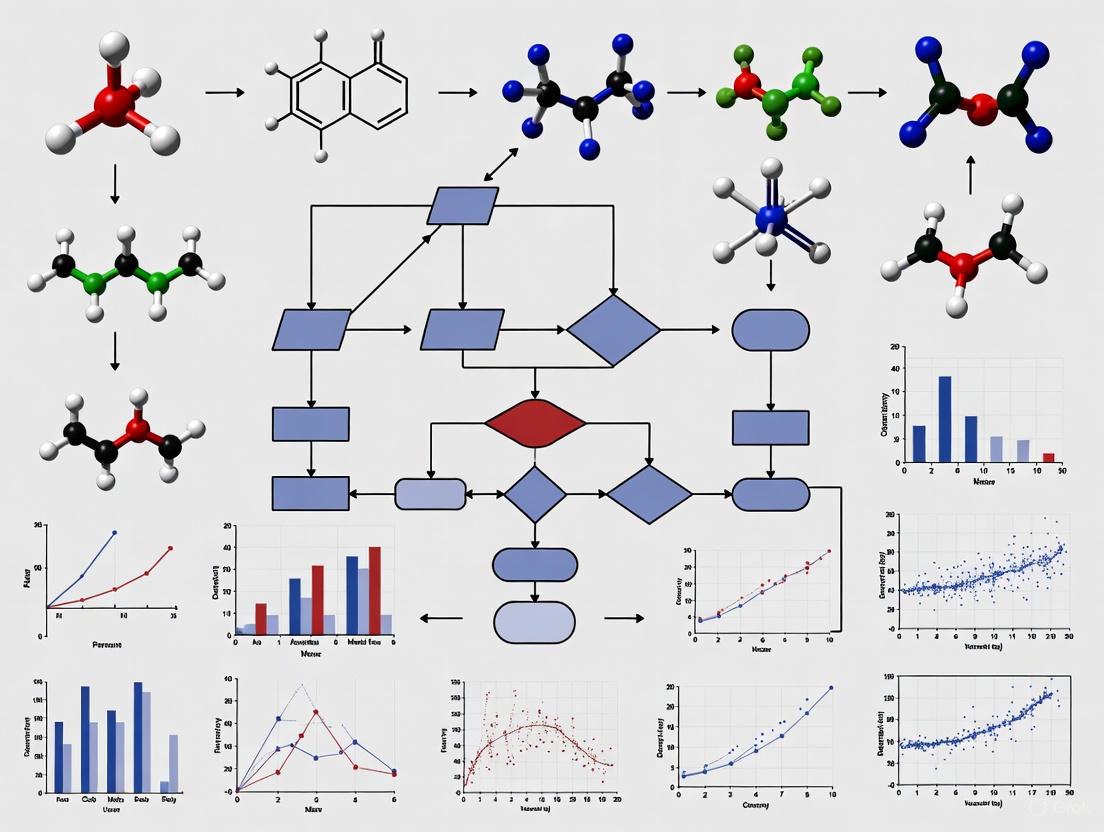
This guide provides cheminformatics researchers and drug development professionals with a comprehensive framework for implementing hyperparameter tuning to enhance the predictive performance of machine learning models.
Hyperparameter Tuning in Cheminformatics: A Practical Guide for Accelerating Drug Discovery
Abstract
This guide provides cheminformatics researchers and drug development professionals with a comprehensive framework for implementing hyperparameter tuning to enhance the predictive performance of machine learning models. Covering foundational concepts to advanced applications, it explores why hyperparameters are critical for tasks like molecular property prediction and binding affinity forecasting. The content details established and modern optimization techniques, from Grid Search to Bayesian methods, and addresses common pitfalls like overfitting. Through validation strategies and comparative analysis of real-world case studies, this article demonstrates how systematic hyperparameter optimization can lead to more reliable, efficient, and interpretable models, ultimately accelerating the drug discovery pipeline.
Why Hyperparameters Matter: The Foundation of Robust Cheminformatics Models
Defining Hyperparameters vs. Model Parameters in a Chemical Context
In the field of chemical informatics, the development of robust machine learning (ML) models is paramount for accelerating drug discovery, predicting molecular properties, and designing novel compounds. The performance of these models hinges on two fundamental concepts: model parameters and hyperparameters. Understanding their distinct roles is a critical first step in constructing effective predictive workflows. Model parameters are the internal variables that the model learns directly from the training data, such as the weights in a neural network. In contrast, hyperparameters are external configuration variables whose values are set prior to the commencement of the training process and control the very nature of that learning process [1] [2]. This guide provides an in-depth technical examination of these concepts, framed within the practical context of hyperparameter tuning for chemical informatics research.
Core Definitions and Conceptual Distinctions
Model Parameters: The Learned Variables
Model parameters are variables that a machine learning algorithm estimates or learns from the provided training data. They are intrinsic to the model and are essential for making predictions on new, unseen data [1] [2].
- Definition: A configuration variable that is internal to the model and whose value is estimated from the training data.
- Key Characteristics:
- Learned from Data: Their values are derived by optimizing an objective function (e.g., minimizing loss via algorithms like Gradient Descent or Adam) [1].
- Not Set Manually: Researchers do not directly specify parameter values; they are a consequence of the training process.
- Make Predictions Possible: The final learned parameters define the model's representation of the underlying data patterns, enabling it to make predictions [1].
- Examples in Common Models:
Hyperparameters: The Controlling Knobs
Hyperparameters are the configuration variables that govern the training process itself. They are set before the model begins learning and cannot be learned directly from the data [1] [4].
- Definition: An external configuration variable whose value is set before the learning process begins.
- Key Characteristics:
- Set Before Training: Their values are chosen by the researcher prior to initiating model training [1].
- Control Model Training: They influence how the model parameters are learned, impacting the speed, efficiency, and ultimate quality of the training [1].
- Estimated via Tuning: Optimal hyperparameters are found through systematic experimentation and optimization techniques, known as hyperparameter tuning (HPO) [1] [4].
- Categories of Hyperparameters [2]:
- Architecture Hyperparameters: Control the structure of the model (e.g., number of layers in a Neural Network, number of neurons per layer, number of trees in a Random Forest).
- Optimization Hyperparameters: Control the optimization process (e.g., learning rate, number of iterations/epochs, batch size).
- Regularization Hyperparameters: Help prevent overfitting (e.g., strength of L1/L2 regularization, dropout rate).
The table below provides a consolidated comparison of model parameters and hyperparameters.
Table 1: Comparative Analysis of Model Parameters and Hyperparameters
| Aspect | Model Parameters | Model Hyperparameters |
|---|---|---|
| Definition | Internal variables learned from data | External configurations set before training |
| Purpose | Make predictions on new data | Estimate model parameters effectively and control training |
| Determined By | Optimization algorithms (e.g., Gradient Descent) | The researcher via hyperparameter tuning [1] |
| Set Manually | No | Yes |
| Examples | Weights & biases in Neural Networks; Coefficients in Linear Regression | Learning rate; Number of epochs; Number of layers & neurons; Number of clusters (k) [1] |
Hyperparameters and Parameters in a Chemical Context
The theoretical distinction between hyperparameters and parameters becomes critically important when applied to concrete problems in cheminformatics, such as predicting molecular properties.
Case Study: Graph Neural Networks for Molecular Property Prediction
Graph Neural Networks (GNNs), such as ChemProp, have emerged as a powerful tool for modeling molecular structures. In these models, atoms are represented as nodes and bonds as edges in a graph [5] [6].
- Model Parameters in GNNs: These are the weights and biases within the message-passing neural network. They determine how information from an atom and its neighbors is aggregated and transformed to learn a meaningful representation of the entire molecule. These values are learned during training to minimize the error in predicting properties like solubility or toxicity [1] [6].
- Hyperparameters in GNNs: These are the architectural and optimization choices made before training, such as the number of message-passing steps (which defines the depth of the network and the "radius" of atomic interactions), the size of the hidden layers, the learning rate, and the dropout rate for regularization [5] [7]. The performance of GNNs is highly sensitive to these choices, making their optimization a non-trivial task [5].
A Practical Example: Solubility Prediction
A recent study on solubility prediction highlights the practical implications of hyperparameter tuning. Researchers found that while hyperparameter optimization (HPO) is common, an excessive search across a large parameter space can lead to overfitting on the validation set used for tuning. In some cases, using a set of sensible, pre-optimized hyperparameters yielded similar model performance to a computationally intensive grid optimization (requiring ~10,000 times more resources), but with a drastic reduction in computational effort [8]. This underscores that HPO, while powerful, must be applied judiciously to avoid overfitting and inefficiency.
Table 2: Examples of Parameters and Hyperparameters in Cheminformatics Models
| Model / Algorithm | Model Parameters (Learned from Data) | Key Hyperparameters (Set Before Training) |
|---|---|---|
| Graph Neural Network (e.g., ChemProp) | Weights and biases in graph convolution and fully connected layers [1] | Depth (message-passing steps), hidden layer size, learning rate, dropout rate [5] [7] |
| Support Vector Machine (SVM) | Coefficients defining the optimal separating hyperplane [3] | Kernel type (e.g., RBF), regularization strength (C), kernel-specific parameters (e.g., gamma) [3] |
| Random Forest | The structure and decision rules of individual trees | Number of trees, maximum depth of trees, number of features considered for a split |
| Artificial Neural Network (ANN) | Weights and biases between all connected neurons [1] [9] | Number of hidden layers, number of neurons per layer, learning rate, activation function, batch size [9] |
Methodologies for Hyperparameter Optimization (HPO)
Selecting the right hyperparameters is both an art and a science. Several algorithms and methodologies have been developed to systematize this process.
Common HPO Algorithms
- Grid Search: An exhaustive search over a predefined set of hyperparameter values. It is guaranteed to find the best combination within the grid but can be computationally prohibitive for a large number of hyperparameters [4].
- Random Search: Randomly samples hyperparameter combinations from defined distributions. It is often more efficient than grid search, as it can discover good configurations without exploring the entire space [4].
- Bayesian Optimization: A more sophisticated sequential approach that builds a probabilistic model of the function mapping hyperparameters to model performance. It uses this model to select the most promising hyperparameters to evaluate next, typically requiring fewer iterations to find a good optimum [4] [10].
- Hyperband: An algorithm that focuses on computational efficiency by leveraging early-stopping. It uses a multi-fidelity approach, running a large number of configurations for a small budget (e.g., few epochs) and only continuing the most promising ones for longer training. A study on molecular property prediction found Hyperband to be the most computationally efficient algorithm, providing optimal or near-optimal results [4].
Advanced Workflow: Mitigating Overfitting in Low-Data Regimes
In chemical research, datasets are often small. A workflow implemented in the ROBERT software addresses overfitting by using a specialized objective function during Bayesian hyperparameter optimization. This function combines:
- Interpolation Performance: Measured via a standard 10-times repeated 5-fold cross-validation (CV).
- Extrapolation Performance: Assessed via a sorted 5-fold CV that tests the model's ability to predict data at the extremes of the target value range [10].
This combined metric ensures that the selected hyperparameters produce a model that generalizes well not only to similar data but also to slightly novel scenarios, a common requirement in chemical exploration [10].
Experimental Protocols and the Scientist's Toolkit
Detailed Methodology: HPO for a DNN in Molecular Property Prediction
The following protocol, adapted from a study on optimizing deep neural networks (DNNs), provides a step-by-step methodology [4]:
- Problem Definition: Define the molecular property to be predicted (e.g., glass transition temperature, Tg) and the input features (e.g., molecular descriptors or fingerprints).
- Data Preprocessing: Clean the data, handle missing values, and standardize or normalize the features. Split the data into training, validation, and test sets.
- Base Model Definition: Establish a baseline DNN architecture (e.g., an input layer, 3 hidden layers with 64 neurons each using ReLU activation, and an output layer with linear activation) and a base optimizer (e.g., Adam).
- Select HPO Algorithm and Software: Choose an HPO algorithm (e.g., Hyperband) and a software platform that supports parallel execution (e.g., KerasTuner).
- Define the Search Space: Specify the range of hyperparameters to be explored:
- Number of hidden layers: 1 - 5
- Number of neurons per layer: 16 - 128
- Learning rate: 0.0001 - 0.1 (log scale)
- Dropout rate: 0.0 - 0.5
- Batch size: 16, 32, 64
- Execute HPO: Run the HPO process, where the tuner will train and evaluate numerous model configurations on the training/validation sets.
- Evaluate Best Model: Retrieve the best hyperparameter configuration found by the tuner, train a final model on the combined training and validation data, and evaluate its performance on the held-out test set.
The Scientist's Toolkit: Essential Reagents for HPO in Cheminformatics
Table 3: Key Software and Libraries for Hyperparameter Tuning in Cheminformatics
| Tool / Library | Function / Purpose | Application Context |
|---|---|---|
| KerasTuner [4] | A user-friendly, intuitive hyperparameter tuning library that integrates seamlessly with TensorFlow/Keras workflows. | Ideal for tuning DNNs and CNNs for molecular property prediction; allows parallel execution. |
| Optuna [4] | A define-by-run hyperparameter optimization framework that supports various samplers (like Bayesian optimization) and pruners (like Hyperband). | Suitable for more complex and customized HPO pipelines, including combining Bayesian Optimization with Hyperband (BOHB). |
| ChemProp [6] | A message-passing neural network specifically designed for molecular property prediction. | Includes built-in functionality for hyperparameter tuning, making it a top choice for graph-based molecular modeling. |
| ROBERT [10] | An automated workflow program for building ML models from CSV files, featuring Bayesian HPO with a focus on preventing overfitting. | Particularly valuable for working with small chemical datasets common in research. |
Visualizing the Relationship and Workflow
Conceptual Relationship
The following diagram illustrates the fundamental relationship between data, hyperparameters, and model parameters in the machine learning workflow.
Hyperparameter Optimization Workflow
This diagram outlines a generalized workflow for optimizing hyperparameters in a cheminformatics project.
A precise understanding of the distinction between model parameters and hyperparameters is a cornerstone of effective machine learning in chemical informatics. Model parameters are the essence of the learned model, while hyperparameters are the guiding hands that shape the learning process. As evidenced by research in solubility prediction and molecular property modeling, the careful and sometimes restrained application of hyperparameter optimization is critical for developing models that are both accurate and generalizable. By leveraging modern HPO algorithms like Hyperband and Bayesian optimization within specialized frameworks, researchers can systematically navigate the complex hyperparameter space, thereby building more predictive and reliable models to accelerate scientific discovery in chemistry and drug development.
Core Hyperparameters for Key Cheminformatics Algorithms (GNNs, Transformers, etc.)
In the interdisciplinary field of cheminformatics, where computational methods are applied to solve chemical and biological problems, machine learning has revolutionized traditional approaches to molecular property prediction, drug discovery, and material science [5]. The performance of sophisticated deep learning algorithms like Graph Neural Networks (GNNs) and Transformers in these tasks is highly sensitive to their architectural choices and parameter configurations [5]. Hyperparameter tuning—the process of selecting the optimal set of values that control the learning process—has thus emerged as a critical step in developing effective cheminformatics models. Unlike model parameters learned during training, hyperparameters are set before the training process begins and govern fundamental aspects of how the model learns [11]. For researchers and drug development professionals working with chemical data, mastering hyperparameter optimization (HPO) is essential for building models that can accurately predict molecular properties, generate novel compounds, and ultimately accelerate scientific discovery.
Core Hyperparameters in Deep Learning
Hyperparameters in deep learning can be categorized into two primary groups: core hyperparameters that are common across most neural network architectures, and architecture-specific hyperparameters that are particularly relevant to specific model types like GNNs or Transformers [11].
Universal Deep Learning Hyperparameters
The following table summarizes the core hyperparameters that influence nearly all deep learning models in cheminformatics:
Table 1: Core Hyperparameters in Deep Learning for Cheminformatics
| Hyperparameter | Impact on Learning Process | Typical Values/Ranges | Cheminformatics Considerations |
|---|---|---|---|
| Learning Rate | Controls step size during weight updates; too high causes divergence, too slow causes slow convergence [11] | 1e-5 to 1e-2 | Critical for stability when learning from limited chemical datasets |
| Batch Size | Number of samples processed before weight updates; affects gradient stability and generalization [11] | 16, 32, 64, 128 | Smaller batches may help escape local minima in molecular optimization |
| Number of Epochs | Complete passes through training data; too few underfits, too many overfits [11] | 50-1000 (dataset dependent) | Early stopping often necessary with small molecular datasets |
| Optimizer | Algorithm for weight updates (e.g., SGD, Adam, RMSprop) [11] | Adam, SGD with momentum | Adam often preferred for molecular property prediction tasks |
| Activation Function | Introduces non-linearity (e.g., ReLU, Tanh, Sigmoid) [11] | ReLU, GELU, Swish | Choice affects gradient flow in deep molecular networks |
| Dropout Rate | Fraction of neurons randomly disabled to prevent overfitting [11] | 0.1-0.5 | Essential for regularization with limited compound activity data |
| Weight Initialization | Sets initial weight values before training [11] | Xavier, He normal | Proper initialization prevents vanishing gradients in deep networks |
Hyperparameter Tuning Techniques
Several systematic approaches exist for navigating the complex hyperparameter space in deep learning:
Grid Search: Exhaustively tries all combinations of predefined hyperparameter values. While thorough, it becomes computationally prohibitive for models with many hyperparameters or large datasets [12]. For example, tuning a CNN for image data might test learning rates [0.001, 0.01, 0.1] with batch sizes [16, 32, 64], resulting in 9 combinations to train and evaluate [11].
Random Search: Randomly samples combinations from defined distributions, often more efficient than grid search for high-dimensional spaces [11] [12]. For a deep neural network for text classification, random search might sample dropout rates between 0.2-0.5 and learning rates from 1e-5 to 1e-2 from log-uniform distributions [11].
Bayesian Optimization: Builds a probabilistic model of the objective function to guide the search toward promising regions, balancing exploration and exploitation [11] [12]. This approach is particularly valuable for cheminformatics applications where model training is computationally expensive and time-consuming [11].
The following diagram illustrates the typical workflow for hyperparameter optimization in cheminformatics:
Graph Neural Networks (GNNs) in Cheminformatics
GNN Applications and Hyperparameter Challenges
Graph Neural Networks have emerged as a powerful tool for modeling molecular structures in cheminformatics, naturally representing molecules as graphs with atoms as nodes and bonds as edges [5]. This representation allows GNNs to learn from structural information in a manner that mirrors underlying chemical properties, making them particularly valuable for molecular property prediction, chemical reaction modeling, and de novo molecular design [5]. However, GNN performance is highly sensitive to architectural choices and hyperparameters, making optimal configuration selection a non-trivial task that often requires automated Neural Architecture Search (NAS) and Hyperparameter Optimization (HPO) approaches [5].
Key GNN Hyperparameters
Table 2: Key Hyperparameters for Graph Neural Networks in Cheminformatics
| Hyperparameter | Impact on Model Performance | Common Values | Molecular Design Considerations |
|---|---|---|---|
| Number of GNN Layers | Determines receptive field and message-passing steps; too few underfits, too many may cause over-smoothing [5] | 2-8 | Deeper networks needed for complex molecular properties |
| Hidden Dimension Size | Controls capacity to learn atom and bond representations [5] | 64-512 | Larger dimensions capture finer chemical details |
| Message Passing Mechanism | How information is aggregated between nodes (e.g., GCN, GAT, GraphSAGE) [5] | GCN, GAT, MPNN | Choice affects ability to capture specific molecular interactions |
| Readout Function | Aggregates node embeddings into graph-level representation [5] | Mean, Sum, Attention | Critical for molecular property prediction tasks |
| Graph Pooling Ratio | For hierarchical pooling methods; controls compression at each level [5] | 0.5-0.9 | Determines resolution of structural information retained |
| Attention Heads (GAT) | Multiple attention mechanisms to capture different bonding relationships [5] | 4-16 | More heads can model diverse atomic interactions |
Transformer Models in Cheminformatics
Transformer Applications for Molecular Data
Transformer models have gained significant traction in cheminformatics due to their ability to process sequential molecular representations like SMILES (Simplified Molecular-Input Line-Entry System) and SELFIES, as well as their emerging applications in molecular graph processing [13] [14] [15]. The self-attention mechanism in Transformers enables them to identify complex relationships between molecular substructures, making them particularly valuable for tasks such as molecular property prediction, molecular optimization, and de novo molecular design [13] [16]. For odor prediction, for instance, Transformer models have been used to investigate structure-odor relationships by visualizing attention mechanisms to identify which molecular substructures contribute to specific odor descriptors [13].
Key Transformer Hyperparameters
Table 3: Key Hyperparameters for Transformer Models in Cheminformatics
| Hyperparameter | Impact on Model Performance | Common Values | Molecular Sequence Considerations |
|---|---|---|---|
| Number of Attention Heads | Parallel attention layers learning different aspects of molecular relationships [11] | 8-16 | More heads capture diverse substructure relationships |
| Number of Transformer Layers | Defines model depth and capacity for complex pattern recognition [11] | 4-12 | Deeper models needed for complex chemical tasks |
| Embedding Dimension | Size of vector representations for atoms/tokens [11] | 256-1024 | Larger dimensions capture richer chemical semantics |
| Feedforward Dimension | Hidden size in position-wise feedforward networks [11] | 512-4096 | Affects model capacity and computational requirements |
| Warm-up Steps | Gradually increases learning rate in early training [11] | 1,000-10,000 | Stabilizes training for molecular language models |
| Attention Dropout | Prevents overfitting in attention weights [11] | 0.1-0.3 | Regularization for limited molecular activity data |
Experimental Protocols and Methodologies
Hyperparameter Optimization for Drug Design
Recent research has demonstrated innovative frameworks integrating Transformers with many-objective optimization for drug design. One comprehensive study compared two latent Transformer models (ReLSO and FragNet) on molecular generation tasks and evaluated six different many-objective metaheuristics based on evolutionary algorithms and particle swarm optimization [16]. The experimental protocol involved:
Molecular Representation: Using SELFIES representations for molecular generation to guarantee validity of generated molecules, and SMILES for ADMET prediction to match base model implementation [16].
Model Architecture Comparison: Fair comparative analysis between ReLSO and FragNet Transformer architectures, with ReLSO demonstrating superior performance in terms of reconstruction and latent space organization [16].
Many-Objective Optimization: Implementing a Pareto-based many-objective optimization approach handling more than three objectives simultaneously, including ADMET properties (absorption, distribution, metabolism, excretion, and toxicity) and binding affinity through molecular docking [16].
Evaluation Framework: Assessing generated molecules based on binding affinity, drug-likeness (QED), synthetic accessibility (SAS), and other physio-chemical properties [16].
The study found that multi-objective evolutionary algorithm based on dominance and decomposition performed best in finding molecules satisfying multiple objectives, demonstrating the potential of combining Transformers and many-objective computational intelligence for drug design [16].
Meta-Learning for Low-Data Molecular Optimization
For low-data scenarios common in early-phase drug discovery, meta-learning approaches have shown promise for predicting potent compounds using Transformer models. The experimental methodology typically involves:
Base Model Architecture: Adopting a transformer architecture designed for predicting highly potent compounds based on weakly potent templates, functioning as a chemical language model (CLM) [17].
Meta-Learning Framework: Implementing model-agnostic meta-learning (MAML) that learns parameter settings across individual tasks and updates them across different tasks to enable effective adaptation to new prediction tasks with limited data [17].
Task Distribution: For each activity class, dividing training data into support sets (for model updates) and query sets (for evaluating prediction loss) [17].
Fine-Tuning: For meta-testing, fine-tuning the trained meta-learning module on specific activity classes with adjusted parameters [17].
This approach has demonstrated statistically significant improvements in model performance, particularly when fine-tuning data were limited, and generated target compounds with higher potency and larger potency differences between templates and targets [17].
The following diagram illustrates the meta-learning workflow for molecular optimization:
The Scientist's Toolkit: Essential Research Reagents
Table 4: Essential Computational Tools for Cheminformatics Hyperparameter Optimization
| Tool/Resource | Function | Application Context |
|---|---|---|
| SMILES/SELFIES | String-based molecular representations | Input format for Transformer models [16] |
| Molecular Graphs | Node (atom) and edge (bond) representations | Native input format for GNNs [5] |
| IUPAC Names | Human-readable chemical nomenclature | Alternative input for chemical language models [18] |
| ADMET Predictors | Absorption, distribution, metabolism, excretion, toxicity profiling | Key objectives in drug design optimization [16] |
| Molecular Docking | Predicting ligand-target binding affinity | Objective function in generative drug design [16] |
| RDKit | Cheminformatics toolkit for molecular manipulation | Compound standardization, descriptor calculation [18] |
| Bayesian Optimization | Probabilistic hyperparameter search | Efficient HPO for computationally expensive models [11] [12] |
| Meta-Learning Frameworks | Algorithms for low-data regimes | Few-shot learning for molecular optimization [17] |
Hyperparameter optimization represents a critical component in the development of effective deep learning models for cheminformatics applications. As demonstrated throughout this guide, the optimal configuration of hyperparameters for GNNs and Transformers significantly influences model performance in key tasks such as molecular property prediction, de novo molecular design, and drug discovery. The interplay between architectural choices and hyperparameter settings necessitates systematic optimization approaches, particularly as models grow in complexity and computational requirements. For researchers and drug development professionals, mastering these tuning techniques—from foundational methods like grid and random search to more advanced approaches like Bayesian optimization and meta-learning—is essential for leveraging the full potential of deep learning in chemical informatics. As the field continues to evolve, automated optimization techniques are expected to play an increasingly pivotal role in advancing GNN and Transformer-based solutions in cheminformatics, ultimately accelerating the pace of scientific discovery and therapeutic development.
The Direct Impact of Tuning on Model Accuracy and Generalization
In chemical informatics research, machine learning (ML) has become indispensable for molecular property prediction (MPP), a task critical to drug discovery and materials design [4]. However, the performance of these models is profoundly influenced by hyperparameters—configuration settings that govern the training process itself. These are distinct from model parameters (e.g., weights and biases) that are learned from data [4]. Hyperparameter optimization (HPO) is the systematic process of finding the optimal set of these configurations. For researchers and drug development professionals, mastering HPO is not a minor technical detail but a fundamental practice to ensure models achieve their highest possible accuracy and can generalize reliably to new, unseen chemical data. This guide provides an in-depth examination of the direct impact of tuning on model performance, framed within practical chemical informatics applications.
Hyperparameter Tuning: Core Concepts for Chemical Informatics
The Criticality of HPO in Molecular Property Prediction
The landscape of ML in chemistry is evolving beyond the use of default hyperparameters. Latest research findings emphasize that HPO is a key step for building models that can lead to significant gains in model performance [4]. This is particularly true for deep neural networks (DNNs) applied to MPP, where the relationship between molecular structure and properties is complex and high-dimensional. A comparative study on predicting polymer properties demonstrated that HPO could drastically improve model accuracy, as summarized in Table 1 [4].
Table 1: Impact of HPO on Deep Neural Network Performance for Molecular Property Prediction
| Molecular Property | Model Type | Performance without HPO | Performance with HPO | Reference Metric |
|---|---|---|---|---|
| Melt Index (MI) of HDPE | Dense DNN | Mean Absolute Error (MAE): 0.132 | MAE: 0.022 | MAE (lower is better) |
| Glass Transition Temperature (Tg) | Convolutional Neural Network (CNN) | MAE: 0.245 | MAE: 0.155 | MAE (lower is better) |
The consequences of neglecting HPO are twofold. First, it results in suboptimal predictive accuracy, wasting the potential of valuable experimental and computational datasets [4]. Second, it can impair a model's generalizability, meaning it will perform poorly when presented with new molecular scaffolds or conditions outside its narrow training regime. As noted in a recent methodology paper, "hyperparameter optimization is often the most resource-intensive step in model training," which explains why it has often been overlooked in prior studies, but its impact is too substantial to ignore [4].
Categories of Hyperparameters
For chemical informatics researchers, the hyperparameters requiring optimization can be broadly categorized as follows [4]:
- Structural Hyperparameters: These define the architecture of the neural network.
- Number of layers and neurons per layer.
- Type of activation function (e.g., ReLU, sigmoid).
- Number of filters in a convolutional layer.
- Algorithmic Hyperparameters: These govern the learning process itself.
- Learning rate (arguably the most important single hyperparameter).
- Batch size and number of training epochs (iterations).
- Choice of optimizer (e.g., Adam, SGD) and its parameters.
- Regularization techniques like dropout rate and weight decay to prevent overfitting.
HPO Methodologies: Algorithms and Comparative Performance
Selecting the right HPO algorithm is crucial for balancing computational efficiency with the quality of the final model. Below is a summary of the primary strategies available.
Table 2: Comparison of Hyperparameter Optimization Algorithms
| HPO Algorithm | Key Principle | Advantages | Disadvantages | Best Suited For |
|---|---|---|---|---|
| Grid Search | Exhaustive search over a predefined set of values | Simple, guaranteed to find best point in grid | Computationally intractable for high-dimensional spaces | Small, low-dimensional hyperparameter spaces |
| Random Search | Randomly samples hyperparameters from distributions | More efficient than grid search; good for high-dimensional spaces | May miss optimal regions; no learning from past trials | Initial explorations and moderately complex spaces |
| Bayesian Optimization | Builds a probabilistic surrogate model to guide search | High sample efficiency; learns from prior evaluations | Computational overhead for model updates; complex implementation | Expensive-to-evaluate models (e.g., large DNNs) |
| Hyperband | Uses adaptive resource allocation and early-stopping | High computational efficiency; good for large-scale problems | Does not guide sampling like Bayesian methods | Large-scale hyperparameter spaces with varying budgets |
| BOHB (Bayesian Opt. & Hyperband) | Combines Bayesian optimization with the Hyperband framework | Simultaneously efficient and sample-effective | More complex to set up and run | Complex models where both efficiency and accuracy are critical |
Based on recent comparative studies for MPP, the Hyperband algorithm is highly recommended due to its computational efficiency, often yielding optimal or nearly optimal results much faster than other methods [4]. For the highest prediction accuracy, BOHB (a combination of Bayesian Optimization and Hyperband) represents a powerful, state-of-the-art alternative [4].
Advanced Tuning: Transfer Learning and Fine-Tuning Foundation Models
In data-sparse chemical domains, a powerful strategy is to leverage atomistic foundation models (FMs). These are large-scale models, such as MACE-MP, MatterSim, and ORB, pre-trained on vast and diverse datasets of atomic structures (e.g., the Materials Project) to learn general, fundamental geometric relationships [19] [20]. The process of adapting these broadly capable models to a specific, smaller downstream task (like predicting the property of a novel drug-like molecule) is known as fine-tuning or transfer learning.
Frozen Transfer Learning: A Data-Efficient Fine-Tuning Protocol
A highly effective fine-tuning technique is transfer learning with partially frozen weights and biases, also known as "frozen transfer learning" [19]. This method involves taking a pre-trained FM and freezing (keeping fixed) the parameters in a portion of its layers during training on the new, target dataset. The workflow for this process, which can be efficiently managed using platforms like MatterTune [20], is outlined below.
Diagram 1: Frozen Transfer Learning Workflow
This protocol offers two major advantages:
- Data Efficiency: It prevents catastrophic forgetting of general knowledge acquired during pre-training and allows the model to specialize using very small datasets. For instance, fine-tuning a MACE-MP foundation model with frozen layers (MACE-freeze) achieved state-of-the-art accuracy using only 10-20% of a target dataset—hundreds of data points—compared to the thousands required to train a model from scratch [19].
- Performance Retention: The frozen layers retain robust, transferable feature embeddings from the broad pre-training data. One study found that fine-tuning with four frozen layers (MACE-MP-f4) achieved force prediction accuracy on a challenging hydrogen/copper surface dataset that matched or exceeded a model trained from scratch on the full dataset [19].
Experimental Protocols and the Scientist's Toolkit
Detailed Methodology for HPO of a DNN
The following is a step-by-step protocol for optimizing a DNN for molecular property prediction using the KerasTuner library with the Hyperband algorithm, as validated in recent literature [4].
Problem Formulation and Data Preprocessing
- Define the MPP Task: Clearly specify the target property (e.g., solubility, binding affinity, glass transition temperature).
- Compile and Clean Dataset: Assemble a dataset of molecules with associated property values. Handle missing values and outliers appropriately.
- Featurize Molecules: Convert molecular structures into a numerical representation (e.g., molecular descriptors, fingerprints, or graph-based features).
- Split Data: Partition the data into training, validation, and test sets. The validation set is used by the HPO algorithm to evaluate performance.
Define the Search Space and Model-Building Function
- The search space is the range of hyperparameters the HPO algorithm will explore.
- Example Hyperparameter Ranges:
- Number of dense layers:
Int('num_layers', 2, 8) - Units per layer:
Int('units', 32, 256, step=32) - Learning rate:
Choice('learning_rate', [1e-2, 1e-3, 1e-4]) - Dropout rate:
Float('dropout', 0.1, 0.5)
- Number of dense layers:
- Create a function that builds and compiles a DNN model given a set of hyperparameters from the search space.
Configure and Execute the HPO Run
- Instantiate Tuner: Configure the Hyperband tuner, specifying the objective (e.g.,
val_mean_absolute_error) and maximum number of epochs per trial. - Run the Search: Execute the tuner, which will automatically train and evaluate numerous model configurations (trials). The tuner uses early-stopping to halt underperforming trials, a key to Hyperband's efficiency.
- Leverage Parallelization: Use a platform like KerasTuner that allows for parallel execution of trials to drastically reduce total optimization time [4].
- Instantiate Tuner: Configure the Hyperband tuner, specifying the objective (e.g.,
Retrain and Evaluate the Best Model
- Retrieve Best Hyperparameters: Once the search is complete, query the tuner for the best-performing set of hyperparameters.
- Train Final Model: Use the best hyperparameters to train a model on the combined training and validation data.
- Report Final Performance: Evaluate this final model on the held-out test set to obtain an unbiased estimate of its generalization error.
Essential Research Reagent Solutions
The following table details key software and data resources essential for modern hyperparameter tuning and model training in chemical informatics.
Table 3: Research Reagent Solutions for Model Tuning
| Tool / Resource | Type | Primary Function | Relevance to Chemical Informatics |
|---|---|---|---|
| KerasTuner [4] | Software Library | User-friendly HPO (Hyperband, Bayesian) | Simplifies HPO for DNNs on MPP tasks; ideal for researchers without extensive CS background. |
| Optuna [4] | Software Library | Advanced, define-by-run HPO | Offers greater flexibility for complex search spaces and BOHB algorithm. |
| MatterTune [20] | Software Framework | Fine-tuning atomistic foundation models | Standardizes and simplifies the process of adapting FMs (MACE, MatterSim) to downstream tasks. |
| MACE-MP Foundation Model [19] [20] | Pre-trained Model | Universal interatomic potential & feature extractor | Provides a powerful, pre-trained starting point for force field and property prediction tasks. |
| Materials Project (MPtrj) [19] | Dataset | Large-scale database of crystal structures & properties | Serves as the pre-training dataset for many FMs, enabling their broad transferability. |
Hyperparameter tuning is not an optional refinement but a core component of the machine learning workflow in chemical informatics. As demonstrated, the direct impact of systematic HPO is a dramatic increase in model accuracy and robustness, transforming a poorly performing model into a powerful predictive tool. Furthermore, the emergence of atomistic foundation models and data-efficient fine-tuning protocols like frozen transfer learning offers a paradigm shift, enabling high-accuracy modeling even in data-sparse regimes common in early-stage drug and materials development. By integrating these tuning methodologies—from foundational HPO algorithms to advanced transfer learning—researchers can fully leverage their valuable data, accelerating the discovery and development of novel chemical entities and materials.
Hyperparameter tuning represents a critical step in developing robust and predictive machine learning (ML) models for chemical informatics. However, this process is profoundly influenced by the quality and characteristics of the underlying data. Researchers frequently encounter three interconnected data challenges that complicate model development: small datasets common in experimental chemistry, class imbalance in bioactivity data, and experimental error in measured endpoints. These issues are particularly pronounced in drug discovery applications where data generation is costly and time-consuming. This technical guide examines these data challenges within the context of hyperparameter tuning, providing practical methodologies and solutions to enhance model performance and reliability in chemical informatics research.
Navigating the Small Data Regime in Chemical ML
The Small Data Challenge in Chemistry
Chemical ML often operates in low-data regimes due to the resource-intensive nature of experimental work. Datasets of 20-50 data points are common in areas like reaction optimization and catalyst design [10]. In these scenarios, traditional deep learning approaches struggle with overfitting, and multivariate linear regression (MVL) has historically prevailed due to its simplicity and robustness [10]. However, properly tuned non-linear models can now compete with or even surpass linear methods when appropriate regularization and validation strategies are implemented.
Automated Workflows for Small Data
Recent research has demonstrated that specialized ML workflows can effectively mitigate overfitting in small chemical datasets. The ROBERT software exemplifies this approach with its automated workflow that incorporates Bayesian hyperparameter optimization using a combined root mean squared error (RMSE) metric [10]. This metric evaluates both interpolation (via 10-times repeated 5-fold cross-validation) and extrapolation performance (via selective sorted 5-fold CV) to identify models that generalize well beyond their training data [10].
Table 1: Performance Comparison of ML Algorithms on Small Chemical Datasets (18-44 Data Points)
| Dataset | Size (Points) | Best Performing Algorithm | Key Finding |
|---|---|---|---|
| A | 19 | Non-linear (External Test) | Non-linear models matched or outperformed MVL in half of datasets |
| D | 21 | Neural Network | Competitive performance achieved with 21 data points |
| F | 44 | Non-linear | Non-linear algorithms superior for external test sets |
| H | 44 | Neural Network | Non-linear models captured chemical relationships similarly to linear |
Foundation Models for Tabular Data
The emergence of tabular foundation models like Tabular Prior-data Fitted Network (TabPFN) offers promising alternatives for small-data scenarios. TabPFN uses a transformer-based architecture pre-trained on millions of synthetic datasets to perform in-context learning on new tabular problems [21]. This approach significantly outperforms gradient-boosted decision trees on datasets with up to 10,000 samples while requiring substantially less computation time for hyperparameter optimization [21].
Small Data ML Workflow: Automated pipeline for handling small chemical datasets.
Strategies for Imbalanced Data in Chemical Classification
The Prevalence and Impact of Imbalance
Imbalanced data presents a fundamental challenge across chemical informatics applications, particularly in drug discovery where active compounds are significantly outnumbered by inactive ones in high-throughput screening datasets [22] [23]. This imbalance leads to biased models that exhibit poor predictive performance for the minority class (typically active compounds), ultimately limiting their utility in virtual screening campaigns [23].
Resampling Techniques and Their Applications
Multiple resampling strategies have been developed to address data imbalance, each with distinct advantages and limitations:
Oversampling techniques like SMOTE (Synthetic Minority Over-sampling Technique) generate new minority class samples by interpolating between existing instances [22]. Advanced variants include Borderline-SMOTE, which focuses on samples near class boundaries, and SVM-SMOTE, which uses support vector machines to identify important regions for oversampling [22].
Undersampling approaches reduce the majority class to balance dataset distribution. Random undersampling (RUS) removes random instances from the majority class, while NearMiss uses distance metrics to selectively retain majority samples [24]. Recent research indicates that moderate imbalance ratios (e.g., 1:10) rather than perfect balance (1:1) may optimize virtual screening performance [24].
Table 2: Performance of Resampling Techniques on PubChem Bioassay Data
| Resampling Method | HIV Dataset (IR 1:90) | Malaria Dataset (IR 1:82) | Trypanosomiasis Dataset | COVID-19 Dataset (IR 1:104) |
|---|---|---|---|---|
| None (Original) | MCC: -0.04 | Moderate performance across metrics | Worst performance across metrics | High accuracy but misleading |
| Random Oversampling (ROS) | Boosted recall, decreased precision | Enhanced balanced accuracy & recall | Improved vs. original | Highest balanced accuracy |
| Random Undersampling (RUS) | Best MCC & F1-score | Best MCC values & F1-score | Best overall performance | Significant recall improvement |
| SMOTE | Limited improvements | Similar to original data | Moderate improvement | Highest MCC & F1-score |
| ADASYN | Limited improvements | Highest precision | Moderate improvement | Highest precision |
| NearMiss | Highest recall | Highest recall, low other metrics | Moderate performance | Significant recall improvement |
Paradigm Shift in Evaluation Metrics
Traditional QSAR modeling practices emphasizing balanced accuracy and dataset balancing require reconsideration for virtual screening applications. For hit identification in ultra-large libraries, models with high positive predictive value (PPV) built on imbalanced training sets outperform balanced models [23]. In practical terms, training on imbalanced datasets achieves hit rates at least 30% higher than using balanced datasets when evaluating top-ranked compounds [23].
Imbalance Solutions Taxonomy: Classification of methods for handling imbalanced chemical data.
Accounting for Experimental Error and Variability
The Impact of Experimental Error on Model Validation
Experimental measurements in chemistry inherently contain error, which propagates into ML models and affects both training and validation. For biochemical assays, measurement errors of +/- 3-fold are not uncommon and must be considered when interpreting model performance differences [25]. Traditional statistical comparisons that ignore this experimental uncertainty may identify "significant" differences that lack practical relevance.
Robust Validation Protocols
Proper validation methodologies account for both model variability and experimental error:
Repeated Cross-Validation: 5x5-fold cross-validation (5 repetitions of 5-fold CV) provides more stable performance estimates than single train-test splits [25]. This approach mitigates the influence of random partitioning on performance metrics.
Statistical Significance Testing: Tukey's Honest Significant Difference (HSD) test with confidence interval plots enables robust model comparisons while accounting for multiple testing [25]. This method visually identifies models statistically equivalent to the best-performing approach.
Paired Performance Analysis: Comparing models across the same cross-validation folds using paired t-tests provides more sensitive discrimination of performance differences [25]. This approach controls for dataset-specific peculiarities that might favor one algorithm over another.
Integrated Hyperparameter Tuning Frameworks
Bayesian Optimization with Integrated Validation
Advanced hyperparameter tuning frameworks for chemical ML must address multiple data challenges simultaneously. Bayesian optimization with Gaussian process surrogates effectively navigates hyperparameter spaces while incorporating specialized validation strategies [10] [26]. The integration of a combined RMSE metric during optimization—accounting for both interpolation and extrapolation performance—has proven particularly effective for small datasets [10].
LLM-Enhanced Bayesian Optimization
Emerging frameworks like Reasoning BO enhance traditional Bayesian optimization by incorporating large language models (LLMs) for improved sampling and hypothesis generation [26]. This approach leverages domain knowledge encoded in language models to guide the optimization process, achieving significant performance improvements in chemical reaction optimization tasks [26]. For direct arylation reactions, Reasoning BO increased yields to 60.7% compared to 25.2% with traditional BO [26].
Pre-selected Hyperparameters for Small Data
For particularly small datasets, extensive hyperparameter optimization may be counterproductive due to overfitting. Recent research suggests that using pre-selected hyperparameters can produce models with similar or better accuracy than grid optimization for architectures like ChemProp and Attentive Fingerprint [7]. This approach reduces the computational burden while maintaining model quality.
Experimental Protocols and Methodologies
Protocol for Small Dataset Modeling
ROBERT Workflow Implementation:
- Data Curation: Input CSV database containing molecular structures and target properties
- Automated Splitting: Reserve 20% of data (minimum 4 points) as external test set with even distribution of target values
- Hyperparameter Optimization: Bayesian optimization using combined RMSE objective (interpolation + extrapolation)
- Model Selection: Choose configuration minimizing combined RMSE across 10× 5-fold CV and sorted extrapolation CV
- Comprehensive Reporting: Generate PDF with performance metrics, feature importance, and outlier detection [10]
Protocol for Imbalanced Data Handling
K-Ratio Undersampling Methodology:
- Initial Assessment: Calculate imbalance ratio (IR) as minority class size / majority class size
- Ratio Optimization: Test multiple IRs (1:50, 1:25, 1:10) rather than default balance (1:1)
- Model Training: Train ML models (RF, XGBoost, GCN, etc.) on resampled datasets
- Performance Evaluation: Focus on PPV for top-ranked predictions (e.g., first 128 compounds)
- External Validation: Assess generalization on completely independent test sets [24]
Protocol for Method Comparison
Statistically Rigorous Benchmarking:
- Cross-Validation Design: Implement 5x5-fold CV with identical splits across methods
- Performance Aggregation: Collect metrics across all folds and repetitions
- Statistical Testing: Apply Tukey's HSD test with confidence interval plots
- Practical Significance: Consider experimental error when interpreting differences
- Visualization: Create paired performance plots with statistical annotations [25]
The Scientist's Toolkit: Essential Research Reagents
Table 3: Key Computational Tools for Addressing Data Challenges in Chemical ML
| Tool/Resource | Function | Application Context |
|---|---|---|
| ROBERT Software | Automated workflow for small data | Mitigates overfitting in datasets with <50 points through specialized Bayesian optimization [10] |
| TabPFN | Tabular foundation model | In-context learning for small-to-medium tabular datasets without dataset-specific training [21] |
| SMOTE & Variants | Synthetic data generation | Addresses class imbalance by creating synthetic minority class samples [22] |
| Farthest Point Sampling | Diversity-based sampling | Enhances model performance by maximizing chemical diversity in training sets [27] |
| Reasoning BO | LLM-enhanced optimization | Incorporates domain knowledge and reasoning into Bayesian optimization loops [26] |
| ChemProp | Graph neural network | Specialized architecture for molecular property prediction with built-in regularization [7] |
Effective hyperparameter tuning in chemical informatics requires thoughtful consideration of underlying data challenges. Small datasets benefit from specialized workflows that explicitly optimize for generalization through combined validation metrics. Imbalanced data necessitates a paradigm shift from balanced accuracy to PPV-driven evaluation, particularly for virtual screening applications. Experimental error must be accounted for when comparing models to ensure practically significant improvements. Emerging approaches including foundation models for tabular data, LLM-enhanced Bayesian optimization, and diversity-based sampling strategies offer promising avenues for addressing these persistent challenges. By integrating these methodologies into their hyperparameter tuning workflows, chemical researchers can develop more robust and predictive models that accelerate scientific discovery and drug development.
Mastering the Methods: A Guide to Hyperparameter Optimization Techniques
In the data-driven field of chemical informatics, where predicting molecular properties, optimizing chemical reactions, and virtual screening are paramount, machine learning (ML) and deep learning (DL) models have become indispensable. The performance of these models, particularly complex architectures like Graph Neural Networks (GNNs) used to model molecular structures, is highly sensitive to their configuration settings, known as hyperparameters [5]. Hyperparameter optimization (HPO) is therefore not merely a final polishing step but a fundamental process for building robust, reliable, and high-performing models. It is the key to unlocking the full potential of AI in drug discovery and materials science [5] [7].
While advanced optimization methods like Bayesian Optimization and evolutionary algorithms like Paddy are gaining traction [28], Grid Search and Random Search remain the foundational "traditional workhorses" of HPO. Their simplicity, predictability, and ease of parallelization make them an ideal starting point for researchers embarking on hyperparameter tuning. This guide provides an in-depth technical examination of implementing these core methods within chemical informatics research, equipping scientists with the knowledge to systematically improve their predictive models.
Hyperparameter Tuning Fundamentals
What are Hyperparameters?
In machine learning, we distinguish between two types of variables:
- Model Parameters: These are internal variables whose values are learned from the data during the training process. Examples include the weights and biases in a neural network.
- Hyperparameters: These are external configuration variables whose values are set prior to the training process. They control the very learning process itself, acting as a steering mechanism for the optimization algorithm [29].
An apt analogy is to consider your model a race car. The model parameters are the driver's reflexes, learned through practice. The hyperparameters are the engine tuning—RPM limits, gear ratios, and tire selection. Set these incorrectly, and you will never win the race, no matter how much you practice [29].
The Impact of Key Hyperparameters
The following hyperparameters are frequently tuned in chemical informatics models, including neural networks for molecular property prediction:
Learning Rate: Perhaps the most critical hyperparameter. It controls the size of the steps the optimization algorithm takes when updating model weights [29] [11].
Batch Size: Determines how many training samples are processed before the model's internal parameters are updated. It affects both the stability of the training and the computational efficiency [29] [11].
Number of Epochs: Defines how many times the learning algorithm will work through the entire training dataset. Too few epochs result in underfitting, while too many can lead to overfitting [11].
Architecture-Specific Hyperparameters: For GNNs and other specialized architectures, this includes parameters like the number of graph convolutional layers, the dimensionality of node embeddings, and dropout rates [5] [11].
The Traditional Workhorses: A Comparative Analysis
Grid Search
Grid Search (GS) is a quintessential brute-force optimization algorithm. It operates by exhaustively searching over a manually specified subset of the hyperparameter space [30].
- Methodology: The researcher defines a set of discrete values for each hyperparameter to be tuned. Grid Search then trains and evaluates a model for every single possible combination of these values. The combination that yields the best performance on a validation set is selected as optimal [29] [30].
- Luck Factor: "0% Luck, but RIP the compute budget" [29]. Its strength is its comprehensiveness, but this comes at a high computational cost.
Random Search
Random Search (RS) addresses the computational inefficiency of Grid Search by adopting a stochastic approach.
- Methodology: Instead of an exhaustive search, Random Search randomly samples a fixed number of hyperparameter combinations from the defined search space (which can be specified as probability distributions). It evaluates these sampled configurations to find the best one [30].
- Luck Factor: "I'm not lucky, but a 10% chance beats 0%" [29]. It sacrifices guaranteed coverage for efficiency, often finding good solutions much faster than Grid Search.
The table below synthesizes the core characteristics of both methods to guide method selection.
Table 1: Comparative analysis of Grid Search and Random Search.
| Feature | Grid Search | Random Search |
|---|---|---|
| Core Principle | Exhaustive, brute-force search over a discrete grid [29] [30] | Stochastic random sampling from defined distributions [30] |
| Search Strategy | Systematic and sequential | Non-systematic and random |
| Computational Cost | Very high (grows exponentially with parameters) [29] | Lower and more controllable [30] |
| Best For | Small, low-dimensional hyperparameter spaces (e.g., 2-4 parameters) | Medium to high-dimensional spaces [11] |
| Key Advantage | Guaranteed to find the best point on the defined grid | More efficient exploration of large spaces; faster to find a good solution [30] |
| Key Disadvantage | Computationally prohibitive for large search spaces [29] [30] | No guarantee of finding the optimal configuration; can miss important regions |
The intuition behind Random Search's efficiency, especially in higher dimensions, is that for most practical problems, only a few hyperparameters truly critically impact the model's performance. Grid Search wastes massive resources by exhaustively varying the less important parameters, while Random Search explores a wider range of values for all parameters, increasing the probability of finding a good setting for the critical ones [11].
Implementation Protocols
This section provides detailed, step-by-step methodologies for implementing Grid and Random Search, using a hypothetical cheminformatics case study.
Case Study: Tuning a GNN for Molecular Property Prediction
Research Objective: Optimize a Graph Neural Network to predict compound solubility (a key ADMET property) using a molecular graph dataset.
Defined Hyperparameter Search Space:
- Learning Rate: Log-uniform distribution from
1e-5to1e-1 - Number of GNN Layers:
[2, 3, 4, 5] - Hidden Layer Dimension:
[64, 128, 256] - Dropout Rate: Uniform distribution from
0.1to0.5 - Batch Size:
[32, 64, 128]
Evaluation Metric: Mean Squared Error (MSE) on a held-out validation set.
Protocol 1: Grid Search Implementation
Discretize the Search Space: Convert all continuous parameters to a finite set of values. For example:
- Learning Rate:
[0.0001, 0.001, 0.01] - Number of GNN Layers:
[2, 3, 4] - Hidden Dimension:
[128, 256] - Dropout Rate:
[0.1, 0.3] - Batch Size:
[32, 64]
- Learning Rate:
Generate the Grid: Create the Cartesian product of all these sets. In this example, this results in (3 \times 3 \times 2 \times 2 \times 2 = 72) unique hyperparameter combinations.
Train and Evaluate: For each of the 72 configurations:
- Initialize the model with the configuration.
- Train on the training set for a fixed number of epochs.
- Evaluate the trained model on the validation set and record the MSE.
Select Optimal Configuration: Identify the hyperparameter set that achieved the lowest validation MSE. This is the final, optimized configuration.
Table 2: Example Grid Search configuration results (abridged).
| Trial | Learning Rate | GNN Layers | Hidden Dim | Dropout | Validation MSE |
|---|---|---|---|---|---|
| 1 | 0.001 | 3 | 128 | 0.1 | 0.89 |
| 2 | 0.001 | 3 | 128 | 0.3 | 0.92 |
| ... | ... | ... | ... | ... | ... |
| 72 (Best) | 0.0001 | 4 | 256 | 0.1 | 0.47 |
Protocol 2: Random Search Implementation
Define Parameter Distributions: Specify the sampling distribution for each hyperparameter.
- Learning Rate: Log-uniform between
1e-5and1e-1 - Number of GNN Layers: Choice of
[2, 3, 4, 5] - Hidden Dimension: Choice of
[64, 128, 256] - Dropout Rate: Uniform between
0.1and0.5 - Batch Size: Choice of
[32, 64, 128]
- Learning Rate: Log-uniform between
Set Computational Budget: Determine the number of random configurations to sample and evaluate (e.g.,
n_iter=50). This is a fixed budget, independent of the number of parameters.Sample and Train: For
iinn_iter:- Randomly sample one value for each hyperparameter from its distribution.
- Train and evaluate the model as in the Grid Search protocol.
- Record the validation MSE.
Select Optimal Configuration: After all 50 trials, select the configuration with the lowest validation MSE.
Workflow Visualization
The following diagram illustrates the logical flow and key decision points for both Grid Search and Random Search, highlighting their distinct approaches to exploring the hyperparameter space.
The Scientist's Toolkit: Research Reagent Solutions
Implementing these optimization techniques requires both software libraries and computational resources. The following table details the key components of a modern HPO toolkit for a chemical informatics researcher.
Table 3: Essential tools and resources for hyperparameter optimization.
| Tool / Resource | Type | Primary Function | Relevance to Cheminformatics |
|---|---|---|---|
| scikit-learn | Software Library | Provides ready-to-use GridSearchCV and RandomizedSearchCV implementations for ML models [31]. |
Ideal for tuning traditional ML models (e.g., Random Forest) on molecular fingerprints or descriptors. |
| PyTorch / TensorFlow | Software Library | Deep learning frameworks for building and training complex models like GNNs [31]. | The foundation for creating and tuning GNNs and other DL architectures for molecular data. |
| SpotPython / SPOT | Software Library | A hyperparameter tuning toolbox that can be integrated with various ML frameworks [31]. | Offers advanced search algorithms and analysis tools for rigorous optimization studies. |
| Ray Tune | Software Library | A scalable Python library for distributed HPO, compatible with PyTorch/TensorFlow [31]. | Enables efficient tuning of large, compute-intensive GNNs by leveraging cluster computing. |
| High-Performance Computing (HPC) Cluster | Hardware Resource | Provides massive parallel processing capabilities. | Crucial for running large-scale Grid Searches or multiple concurrent Random Search trials. |
| Graph Neural Network (GNN) Library (e.g., PyTorch Geometric) | Software Library | Specialized libraries for implementing GNNs. | Provides the model architectures whose hyperparameters (layers, hidden dim) are being tuned [5]. |
Application in Chemical Informatics: A Closer Look
The choice of HPO method can significantly impact research outcomes in chemical informatics. For instance, a study optimizing an Artificial Neural Network (ANN) to predict HVAC heating coil performance utilized a massive Grid Search, testing 288 unique hyperparameter configurations multiple times, resulting in a total of 864 trained models. This exhaustive search identified a highly specific, non-intuitive optimal architecture with 17 hidden layers and a left-triangular shape, which significantly outperformed other configurations [32]. This demonstrates Grid Search's power in smaller, well-defined search spaces where computational cost is acceptable.
In contrast, for tasks involving high-dimensional data or complex models like those common in drug discovery, Random Search often proves more efficient. A comparative analysis of HPO methods for predicting heart failure outcomes highlighted that Random Search required less processing time than Grid Search while maintaining robust model performance [30]. This efficiency is critical in cheminformatics, where model training can be time-consuming due to large datasets or complex architectures like GNNs and Transformers [7].
A critical consideration in this domain, especially when working with limited experimental data, is the risk of overfitting during HPO. It has been shown that extensive hyperparameter optimization (e.g., large grid searches) on small datasets can lead to models that perform well on the validation set but fail to generalize. In such cases, using a preselected set of hyperparameters can sometimes yield similar or even better real-world accuracy than an aggressively tuned model, underscoring the need for careful experimental design and robust validation practices like nested cross-validation [7].
Grid Search and Random Search are foundational techniques that form the bedrock of hyperparameter optimization in chemical informatics. Grid Search, with its brute-force comprehensiveness, is best deployed on small, low-dimensional search spaces where its guarantee of finding the grid optimum is worth the computational expense. Random Search, with its superior efficiency, is the preferred choice for exploring larger, more complex hyperparameter spaces commonly encountered with modern deep learning architectures like GNNs.
Mastering these traditional workhorses provides researchers with a reliable and interpretable methodology for improving model performance. This, in turn, accelerates the development of more accurate predictive models for molecular property prediction, virtual screening, and reaction optimization, thereby driving innovation in drug discovery and materials science. As a practical strategy, one can begin with a broad Random Search to identify a promising region of the hyperparameter space, followed by a more focused Grid Search in that region for fine-tuning, combining the strengths of both approaches [29].
Advanced Bayesian Optimization for Efficient Search in High-Dimensional Spaces
In chemical informatics research, optimizing complex, expensive-to-evaluate functions is a fundamental challenge, encountered in tasks ranging from molecular property prediction and reaction condition optimization to materials discovery. These problems are characterized by high-dimensional parameter spaces, costly experiments or simulations, and frequently, a lack of gradient information. Bayesian Optimization (BO) has emerged as a powerful, sample-efficient framework for navigating such black-box functions, making it particularly valuable for hyperparameter tuning of sophisticated models like Graph Neural Networks (GNNs) in cheminformatics [5] [33] [34].
However, applying BO in high-dimensional spaces—a common scenario in chemical informatics—presents significant challenges. The performance of traditional BO can degrade as dimensionality increases, a phenomenon often exacerbated by poor initialization of its surrogate model [35]. Furthermore, the choice of molecular or material representation critically influences the optimization efficiency, and an inappropriate, high-dimensional representation can hinder the search process [36]. This technical guide explores advanced BO methodologies designed to overcome these hurdles, providing cheminformatics researchers and drug development professionals with practical protocols and tools for efficient search in high-dimensional spaces.
Core Challenges in High-Dimensional Bayesian Optimization
Successfully deploying BO in high-dimensional settings requires an understanding of its inherent limitations. The primary challenges include:
- The Curse of Dimensionality: The volume of the search space grows exponentially with dimensionality, making it difficult for the surrogate model to effectively learn the underlying function. High-dimensional representations of molecules and materials, while informative, can lead to poor BO performance if not managed correctly [36].
- Vanishing Gradients and Model Initialization: Simple BO methods can fail in high dimensions due to vanishing gradients caused by specific Gaussian process (GP) initialization schemes. This can stall the optimization process early on [35].
- Inadequate Representation: The efficiency of BO is heavily influenced by the completeness and compactness of the feature representation for molecules and materials. Using a fixed, suboptimal representation can introduce bias and severely limit performance, especially when prior knowledge for a novel optimization task is unavailable [36].
- Local Optima Trapping: Traditional BO methods are prone to becoming trapped in local optima and often lack interpretable, scientific insights that could guide a more global search [26].
Advanced Methodologies and Algorithms
To address these challenges, several advanced BO frameworks have been developed. The table below summarizes key methodologies relevant to cheminformatics applications.
Table 1: Advanced Bayesian Optimization Algorithms for High-Dimensional Spaces
| Algorithm/Framework | Core Methodology | Key Advantage | Typical Use Case in Cheminformatics |
|---|---|---|---|
| Feature Adaptive BO (FABO) [36] | Integrates feature selection (e.g., mRMR, Spearman ranking) directly into the BO cycle. | Dynamically adapts material representations, reducing dimensionality without prior knowledge. | MOF discovery; molecular optimization when optimal features are unknown. |
| Maximum Likelihood Estimation (MLE) / MSR [35] | Uses MLE of GP length scales to promote effective local search behavior. | Simple yet state-of-the-art performance; mitigates vanishing gradient issues. | High-dimensional real-world tasks where standard BO fails. |
| Reasoning BO [26] | Leverages LLMs for hypothesis generation, multi-agent systems, and knowledge graphs. | Provides global heuristics to avoid local optima; offers interpretable insights. | Chemical reaction yield optimization; guiding experimental campaigns. |
| Heteroscedastic Noise Modeling [37] | Employs GP models that account for non-constant (input-dependent) measurement noise. | Robustly handles the unpredictable noise inherent in biological/chemical experiments. | Optimizing biological systems (e.g., shake flasks, bioreactors). |
Feature Adaptive Bayesian Optimization (FABO)
The FABO framework automates the process of identifying the most informative features during the optimization campaign itself, eliminating the need for large, pre-existing labeled datasets or expert intuition [36].
Experimental Protocol for FABO:
- Initialization: Begin with a complete, high-dimensional pool of features for the materials or molecules (e.g., combining chemical descriptors like RACs and geometric pore characteristics for Metal-Organic Frameworks).
- Data Labeling: Perform an experiment or simulation (e.g., measure CO₂ uptake of a MOF) to get a labeled data point.
- Feature Selection: At each BO cycle, apply a feature selection method (e.g., mRMR) only on the data acquired so far to select the top-k most relevant features.
- Model Update: Update the Gaussian Process surrogate model using the adapted, lower-dimensional representation.
- Next Experiment Selection: Use an acquisition function (e.g., Expected Improvement) on the updated model to select the next candidate to evaluate.
- Iteration: Repeat steps 2-5 until a stopping criterion is met.
This workflow has been benchmarked on tasks like MOF discovery for CO₂ adsorption and electronic band gap optimization, where it successfully identified representations that aligned with human chemical intuition and accelerated the discovery of top-performing materials [36].
Reasoning BO with Large Language Models
The Reasoning BO framework integrates the reasoning capabilities of Large Language Models (LLMs) to overcome the black-box nature of traditional BO [26].
Workflow of the Reasoning BO Framework:
Diagram 1: Reasoning BO architecture.
Experimental Protocol for Reaction Yield Optimization:
- Problem Definition: The user describes the optimization goal and search space in natural language via an "Experiment Compass" (e.g., "optimize the yield of a direct arylation reaction by varying catalyst, solvent, and temperature").
- Candidate Proposal & Evaluation: The BO core proposes candidate reaction conditions. The LLM reasons about these candidates, leveraging domain knowledge from its internal model and an integrated knowledge graph. It generates scientific hypotheses and assigns a confidence score to each candidate.
- Filtering & Safeguarding: Candidates are filtered based on their confidence scores and consistency with prior results to ensure scientific plausibility and avoid nonsensical or unsafe experiments.
- Experiment & Knowledge Update: The top candidate is run in the lab. The result is stored and assimilated into the dynamic knowledge management system, which updates the knowledge graph for use in subsequent cycles.
In a benchmark test optimizing a Direct Arylation reaction, Reasoning BO achieved a final yield of 94.39%, significantly outperforming traditional BO, which reached only 76.60% [26].
Practical Implementation and Workflow Design
Implementing an effective BO campaign requires careful workflow design. The following diagram and protocol outline a robust, generalizable process for cheminformatics.
End-to-End Bayesian Optimization Workflow:
Diagram 2: BO workflow with adaptive representation.
Detailed Implementation Protocol:
Problem Formulation
- Objective Function: Define the expensive black-box function to optimize (e.g., molecular property prediction accuracy of a GNN, chemical reaction yield, material adsorption capacity).
- Search Space: Define the high-dimensional parameter space. For hyperparameter tuning, this includes parameters like learning rate, number of layers, and dropout. For molecular design, it includes structural and chemical features.
Initial Experimental Design
- Start with a small set of initial evaluations (e.g., 5-10 points) selected via random sampling or space-filling designs like Latin Hypercube Sampling to build an initial surrogate model.
Iterative Optimization Loop
- Surrogate Modeling: Model the objective function with a Gaussian Process. Configure the GP kernel (e.g., Matérn, RBF) and consider heteroscedastic noise models if experimental noise is variable [37].
- Acquisition Function Selection: Choose an acquisition function based on goals:
- Expected Improvement (EI): Good for rapid convergence to the optimum.
- Upper Confidence Bound (UCB): Explicitly tunable exploration/exploitation trade-off.
- Thompson Sampling (TS): Effective for multi-objective problems via algorithms like TSEMO [33].
- Subspace & Representation Management: Integrate a feature selection module (as in FABO) or a generative model for dimensionality reduction to adapt the representation used by the surrogate model throughout the campaign [36].
Convergence and Termination
- Stop after a fixed number of iterations, when the objective plateaus, or when the acquisition function value falls below a threshold, indicating diminishing returns.
The Scientist's Toolkit: Essential Research Reagents and Software
Successful application of advanced BO requires both computational tools and an understanding of key chemical concepts. The table below lists "research reagents" for in-silico experiments.
Table 2: Key Research Reagents and Tools for BO in Cheminformatics
| Item Name | Type | Function / Relevance | Example Use Case |
|---|---|---|---|
| Revised Autocorrelation Calculations (RACs) [36] | Molecular Descriptor | Captures the chemical nature of molecules/MOFs from their graph representation using atomic properties. | Representing MOF chemistry for property prediction in BO. |
| Metal-Organic Frameworks (MOFs) [36] | Material Class | Porous, crystalline materials with highly tunable chemistry and geometry; a complex testbed for BO. | Discovery of MOFs with optimal gas adsorption or electronic properties. |
| Gaussian Process (GP) with Matern Kernel [35] [37] | Surrogate Model | A flexible probabilistic model that serves as the core surrogate in BO; the Matern kernel is a standard, robust choice. | Modeling the black-box function relating reaction conditions to yield. |
| BayBE [38] | Software Package | A Bayesian optimization library designed for chemical reaction and condition optimization. | Identifying an optimal set of conditions for a direct arylation reaction. |
| Summit [33] | Software Framework | A Python toolkit for reaction optimization that implements multiple BO strategies, including TSEMO. | Multi-objective optimization of chemical reactions (e.g., yield vs. selectivity). |
| mRMR Feature Selection [36] | Algorithm | Maximum Relevancy Minimum Redundancy; selects features that are predictive of the target and non-redundant. | Dynamically reducing feature dimensionality within the FABO framework. |
Advanced Bayesian Optimization techniques represent a paradigm shift for efficient search in the high-dimensional problems ubiquitous in chemical informatics. By moving beyond traditional BO through dynamic feature adaptation (FABO), robust model initialization (MLE/MSR), and the integration of reasoning and knowledge (Reasoning BO), researchers can dramatically accelerate the discovery of optimal molecules, materials, and reaction conditions. Framing hyperparameter tuning of complex models like GNNs within this advanced BO context ensures that precious computational and experimental resources are used with maximum efficiency, ultimately speeding up the entire drug and materials discovery pipeline. As these methodologies mature and become more accessible through user-friendly software, their adoption is poised to become a standard practice in data-driven chemical research.
Architecture-Specific Tuning for GNNs and Transformer Models
In chemical informatics, the accuracy of predicting molecular properties, reaction yields, and material behaviors hinges on the sophisticated interplay between machine learning model architecture and its hyperparameter configuration. Graph Neural Networks (GNNs) have emerged as a powerful tool for modeling molecular structures, naturally representing atoms as nodes and bonds as edges. More recently, Graph Transformer models (GTs) have shown promise as flexible alternatives, with an ability to capture long-range dependencies within molecular graphs. The performance of both architectures is highly sensitive to architectural choices and hyperparameters, making optimal configuration selection a non-trivial task that directly impacts research outcomes in drug discovery and materials science [5]. Within this context, Neural Architecture Search (NAS) and Hyperparameter Optimization (HPO) have become crucial methodologies for bridging the gap between standard model performance and state-of-the-art results, enabling researchers to systematically navigate the complex optimization landscape rather than relying on intuitive guesswork.
Architectural Landscape: GNNs and Transformers for Molecular Representation
Graph Neural Networks (GNNs)
GNNs operate on the fundamental principle of message passing, where information is iteratively aggregated from neighboring nodes to build meaningful representations of molecular structures. This inductive bias naturally aligns with chemical intuition, as local atomic environments often determine molecular properties and behaviors. Commonly employed GNN architectures in chemical informatics include Message Passing Neural Networks (MPNNs), Graph Isomorphism Networks (GIN), and specialized variants such as SchNet and Polarizable Atom Interaction Neural Network (PaiNN) that incorporate 3D structural information [39]. For instance, SchNet updates node states using messages informed by radial basis function expansions of interatomic distances, making it particularly suited for modeling quantum mechanical properties [39].
Graph Transformers (GTs) and Emerging Alternatives
Graph Transformers introduce a global attention mechanism that allows each atom to directly interact with every other atom in the molecule, potentially capturing long-range dependencies that local message-passing might miss. Models such as Graphormer leverage topological distances as bias terms in their attention mechanisms, while 3D-GT variants incorporate binned spatial distances to integrate geometric information [39]. Recent research indicates that even standard Transformers, when applied directly to Cartesian atomic coordinates without predefined graph structures or physical priors, can discover physically meaningful patterns—such as attention weights that decay inversely with interatomic distance—and achieve competitive performance on molecular property prediction tasks [40]. This challenges the necessity of hard-coded graph inductive biases, particularly as large-scale chemical datasets become more prevalent.
Table 1: Performance Comparison of GNN and GT Architectures on Molecular Tasks
| Architecture | Type | Key Features | Application Examples | Performance Notes |
|---|---|---|---|---|
| MPNN | GNN | Message passing | Cross-coupling reaction yield prediction [41] | R² = 0.75 (best among GNNs tested) |
| GIN-VN | GNN | Graph isomorphism with virtual node | Molecular property prediction [39] | Enhanced representational power |
| SchNet | 3D-GNN | Radial basis function distance expansion | Quantum property prediction [39] [42] | Suitable for energy/force learning |
| PaiNN | 3D-GNN | Rotational equivariance | Molecular property prediction [39] [42] | Equivariant message passing |
| Graphormer | GT | Topological distance bias | Sterimol parameters, binding energy [39] | On par with GNNs, faster inference |
| Standard Transformer | - | Cartesian coordinates, no graph | Molecular energy/force prediction [40] | Competitive with GNNs, follows scaling laws |
Hyperparameter Optimization Methodologies and Protocols
Accelerated Hyperparameter Optimization
The computational expense of traditional HPO presents a significant barrier in chemical informatics research. Training Speed Estimation (TPE) has emerged as a powerful technique to overcome this challenge, reducing total tuning time by up to 90% [42]. This method predicts the final performance of model configurations after only a fraction of the training budget (e.g., 20% of epochs), enabling rapid identification of promising hyperparameter combinations. In practice, TPE has demonstrated remarkable predictive accuracy for chemical models, achieving R² = 0.98 for ChemGPT language models and maintaining strong rank correlation (Spearman's ρ = 0.92) for complex architectures like SpookyNet [42].
Neural Scaling Laws
Empirical neural scaling laws provide a principled framework for understanding the relationship between model size, dataset size, and performance in chemical deep learning. Research has revealed that pre-training loss for chemical language models follows predictable scaling behavior, with exponents of 0.17 for dataset size and 0.26 for equivariant graph neural network interatomic potentials [42]. These scaling relationships enable more efficient allocation of computational resources and set realistic performance expectations when scaling up models or training data.
Diagram 1: Accelerated HPO and scaling analysis workflow. TPE enables efficient configuration selection.
Architecture-Specific Tuning Strategies
GNN-Specific Optimization
GNN performance is highly dependent on architectural depth, message passing mechanisms, and neighborhood aggregation functions. For chemical tasks, optimal performance often emerges from balancing model expressivity with physical constraints. Experimental results across diverse cross-coupling reactions demonstrate that MPNNs achieve superior predictive performance (R² = 0.75) compared to other GNN architectures like GAT, GCN, and GraphSAGE [41]. When optimizing GNNs, key considerations include:
- Depth and Over-smoothing: Deeper GNNs suffer from over-smoothing where node representations become indistinguishable, typically limiting practical depth to 3-7 layers.
- Edge Feature Integration: Explicit modeling of bond characteristics and spatial relationships enhances performance on chemically meaningful tasks.
- Pooling Strategies: Global attention pooling or virtual nodes often outperform simple sum/mean pooling for molecular-level predictions.
Transformer-Specific Optimization
Transformers introduce distinct hyperparameter considerations, particularly regarding attention mechanisms and positional encoding. For molecular representations, key findings include:
- Attention Patterns: Transformers trained on Cartesian coordinates naturally learn to attend to atoms based on spatial proximity, with attention weights exhibiting inverse relationships with interatomic distance [40].
- Positional Encoding: Both node-level (random walk, Laplacian eigenvectors) and edge-level positional encoding significantly enhance model performance [43].
- Global vs Local Balance: Hybrid approaches that combine local message passing with global attention often outperform pure architectures.
Table 2: Optimal Hyperparameter Ranges for Chemical Architecture Tuning
| Hyperparameter | GNN Recommendations | Transformer Recommendations | Impact on Performance |
|---|---|---|---|
| Hidden Dimension | 64-512 (128 common) [39] | 128-1024 | Larger dimensions improve expressivity but increase overfitting risk |
| Learning Rate | 1e-4 to 1e-2 (batch size dependent) [42] | 1e-5 to 1e-3 | Critical for convergence; interacts strongly with batch size |
| Batch Size | Small batches (even size 1) effective for NFFs [42] | 32-256 | Larger batches enable stable training but reduce gradient noise |
| Number of Layers | 3-7 message passing layers | 6-24 transformer blocks | Deeper models capture complex interactions but harder to train |
| Activation Function | Swish, ReLU, Leaky ReLU [44] | GELU, Swish | Swish shows superior performance in molecular tasks [44] |
Advanced Techniques and Framework Integration
Transfer Learning and Foundation Models
The emergence of atomistic foundation models (FMs) represents a paradigm shift in molecular machine learning, significantly reducing data requirements for downstream tasks. Models including ORB, MatterSim, JMP, and EquiformerV2, pre-trained on diverse, large-scale atomistic datasets (1.58M to 143M structures), demonstrate impressive generalizability [20]. Fine-tuning these FMs on application-specific datasets reduces data requirements by an order of magnitude or more compared to training from scratch. Frameworks like MatterTune provide standardized interfaces for fine-tuning atomistic FMs, offering modular components for model, data, trainer, and application subsystems that accelerate research workflows [20].
Hybrid Architecture Frameworks
Sophisticated hybrid frameworks that integrate multiple architectural paradigms have demonstrated state-of-the-art performance across diverse chemical informatics tasks. The CrysCo framework exemplifies this approach, combining a deep Graph Neural Network (CrysGNN) with a Transformer and Attention Network (CoTAN) to simultaneously model compositional features and structure-property relationships [45]. This hybrid approach explicitly captures up to four-body interactions (atom type, bond lengths, bond angles, dihedral angles) through a multi-graph representation, outperforming standalone architectures on 8 materials property regression tasks [45].
Diagram 2: Hybrid Transformer-GNN architecture for materials property prediction.
Experimental Protocols and Research Reagents
Benchmarking Methodology
Comprehensive architecture evaluation requires standardized benchmarking protocols across diverse molecular tasks. Key considerations include:
- Dataset Diversity: Evaluation across multiple chemical spaces including organometallic catalysts (BDE dataset), organophosphorus ligands (Kraken), and transition-metal complexes (tmQMg) ensures robust assessment of architectural strengths [39].
- Task Selection: Including both primary properties (formation energy, electronic properties) and secondary properties with limited data (mechanical properties) tests architectural data efficiency [45].
- Evaluation Metrics: Beyond traditional accuracy measures, assessment should include training efficiency, inference speed, and data efficiency metrics.
The Scientist's Toolkit: Essential Research Reagents
Table 3: Essential Computational Research Reagents for Architecture Tuning
| Tool/Resource | Type | Function | Example Applications |
|---|---|---|---|
| MatterTune Framework | Software Platform | Fine-tuning atomistic foundation models | Transfer learning for data-scarce properties [20] |
| Training Speed Estimation (TPE) | Optimization Algorithm | Accelerated hyperparameter prediction | Rapid HPO for GNNs and Transformers [42] |
| OMol25 Dataset | Molecular Dataset | Large-scale benchmark for MLIPs | Architecture evaluation at scale [40] |
| MPNN Architecture | GNN Model | Message passing with edge updates | Reaction yield prediction [41] |
| Graphormer | GT Model | Topological distance attention bias | Molecular property prediction [39] |
| CrysCo Framework | Hybrid Architecture | Integrated GNN-Transformer pipeline | Materials property prediction [45] |
| EHDGT | Enhanced Architecture | Combined GNN-Transformer with edge encoding | Link prediction in knowledge graphs [43] |
Architecture-specific tuning represents a critical competency for chemical informatics researchers seeking to maximize predictive performance while managing computational constraints. The emerging landscape is characterized by several definitive trends: the convergence of GNN and Transformer paradigms through hybrid architectures, the growing importance of transfer learning via atomistic foundation models, and the development of accelerated optimization techniques that dramatically reduce tuning time. Future advancements will likely focus on unified frameworks that seamlessly integrate multiple architectural families, automated tuning pipelines that adapt to dataset characteristics, and increasingly sophisticated scaling laws that account for chemical space coverage rather than simply dataset size. As chemical datasets continue to grow in both scale and diversity, the strategic integration of architectural inductive biases with systematic hyperparameter optimization will remain essential for advancing drug discovery and materials design.
The high attrition rate of drug candidates due to unfavorable pharmacokinetics or toxicity remains a significant challenge in pharmaceutical development. In silico prediction of Absorption, Distribution, Metabolism, Excretion, and Toxicity (ADMET) properties has emerged as a crucial strategy to address this issue early in the discovery pipeline [46]. Among these properties, prediction of human ether-à-go-go-related gene (hERG) channel blockage is particularly critical, as it is associated with potentially fatal drug-induced arrhythmias [47]. The emergence of artificial intelligence (AI) and machine learning (ML) has revolutionized this domain by enabling high-throughput, accurate predictive modeling [48].
For researchers and scientists entering the field of chemical informatics, understanding hyperparameter optimization is fundamental to developing robust predictive models. This process involves systematically searching for the optimal combination of model settings that control the learning process, which can significantly impact model performance and generalizability [30]. The adoption of Automated Machine Learning (AutoML) methods has further streamlined this process by automatically selecting algorithms and optimizing their hyperparameters [46]. This case study examines the practical application of hyperparameter tuning for ADMET and hERG toxicity prediction, providing a technical framework that balances computational efficiency with model performance.
Theoretical Background
ADMET and hERG Toxicity in Drug Discovery
ADMET properties collectively determine the viability of a compound as a therapeutic agent. Absorption refers to the compound's ability to enter systemic circulation, distribution describes its movement throughout the body, metabolism covers its biochemical modification, excretion involves its elimination, and toxicity encompasses its potential adverse effects [46]. The hERG potassium channel, encoded by the KCNH2 gene, is a particularly important toxicity endpoint because its blockade by pharmaceuticals can lead to long QT syndrome and potentially fatal ventricular arrhythmias [47]. Regulatory agencies now mandate evaluation of hERG channel blockage properties during preclinical development [47].
Traditional experimental methods for assessing ADMET properties and hERG toxicity, such as patch-clamp electrophysiology for hERG, are resource-intensive and low-throughput [47]. This creates a bottleneck in early drug discovery that computational approaches aim to alleviate. Quantitative Structure-Activity Relationship (QSAR) models were initially developed for this purpose, but their reliance on limited training datasets constrained robustness [47].
Hyperparameter Optimization Fundamentals
In machine learning, hyperparameters are configuration variables that govern the training process itself, as opposed to parameters that the model learns from the data. Examples include the number of trees in a random forest, the learning rate in gradient boosting, or the regularization strength in support vector machines [30]. Hyperparameter optimization (HPO) is the process of finding the optimal combination of these settings that minimizes a predefined loss function for a given dataset and algorithm.
The three primary HPO methods are:
- Grid Search (GS): An exhaustive search over a specified parameter grid that evaluates all possible combinations [30]. While comprehensive, it becomes computationally prohibitive for large parameter spaces.
- Random Search (RS): Evaluates random combinations of parameters from specified distributions [30]. It often finds good solutions faster than Grid Search, especially when some parameters have little impact on performance.
- Bayesian Optimization (BO): Builds a probabilistic model of the objective function to guide the search toward promising configurations [30]. It typically requires fewer evaluations than GS or RS and is particularly beneficial for expensive-to-evaluate functions.
Automated Machine Learning (AutoML) frameworks such as Hyperopt-sklearn, Auto-WEKA, and Autosklearn have emerged to automate algorithm selection and hyperparameter optimization, significantly accelerating the model development process [46].
Methodological Approaches
Data Collection and Preprocessing
The foundation of any robust predictive model is high-quality, well-curated data. For ADMET and hERG prediction, data is typically collected from public databases such as ChEMBL, Metrabase, and the Therapeutics Data Commons (TDC) [46] [49]. Experimental data for hERG inhibition can include patch-clamp electrophysiology results and high-throughput screening data [47].
Data preprocessing should include several critical steps:
- Standardization: SMILES strings should be standardized using tools like MolVS to ensure consistent representation [49].
- Salt Removal: Organic parent compounds should be extracted from their salt forms to focus on the active moiety [49].
- Deduplication: Both exact and stereochemical duplicates should be identified and removed, or consolidated with consistent labeling [8].
- Noise Reduction: For binary classification tasks, inconsistent labels for the same compound should be addressed, potentially through removal or expert curation [49].
The impact of data cleaning can be substantial. One study found that a kinetic solubility dataset contained approximately 37% duplicates due to different standardization procedures, which could significantly bias model performance estimates if not properly addressed [8].
Molecular Feature Representation
The choice of molecular representation significantly influences model performance. Researchers must select from several representation types, each with distinct advantages:
Table 1: Molecular Feature Representations for ADMET Modeling
| Representation Type | Examples | Advantages | Limitations |
|---|---|---|---|
| Descriptors | RDKit descriptors, MOE descriptors | Physicochemically interpretable, fixed dimensionality | May require domain knowledge for selection |
| Fingerprints | Morgan fingerprints, FCFP4 | Captures substructural patterns, well-established | Predefined rules may not generalize to novel scaffolds |
| Deep Learning Representations | Graph neural networks, Transformer embeddings | Learned from data, requires minimal feature engineering | Computationally intensive, requires large data |
| Hybrid Approaches | Concatenated descriptors + fingerprints + embeddings | Combines strengths of multiple representations | Increased dimensionality, potential redundancy |
Recent studies indicate that the optimal feature representation is often dataset-dependent [49]. One benchmarking study found that random forest models with fixed representations generally outperformed learned representations for ADMET tasks [49]. However, graph neural networks can capture complex structural relationships that may be missed by predefined fingerprints [47].
Model Selection and Hyperparameter Optimization
The selection of appropriate algorithms and their hyperparameters should be guided by both dataset characteristics and computational constraints. For ADMET prediction, tree-based methods (Random Forest, XGBoost), support vector machines, and graph neural networks have all demonstrated strong performance [46] [49].
Table 2: Performance Comparison of Optimization Methods Across Studies
| Study | Application Domain | Best Performing Method | Key Findings |
|---|---|---|---|
| ADMET Modeling [46] | 11 ADMET properties | AutoML (Hyperopt-sklearn) | All models achieved AUC >0.8; outperformed or matched published models |
| Heart Failure Prediction [30] | Clinical outcome prediction | Bayesian Optimization | Best computational efficiency; RF most robust after cross-validation |
| hERG Prediction [47] | hERG channel blockers | Grid Search + Early Stopping | Optimal: learning rate=10⁻³·⁵, 200 hidden units, dropout=0.1 |
| Solubility Prediction [8] | Thermodynamic & kinetic solubility | Pre-set parameters | Similar performance to HPO with 10,000× less computation |
The AttenhERG framework for hERG prediction employed a systematic approach combining grid search with early stopping, optimizing dropout rate, hidden layer units, learning rate, and L2 regularization exclusively on the validation set to prevent overfitting [47]. The resulting optimal configuration used a learning rate of 10⁻³·⁵, 200 hidden layer units, a dropout rate of 0.1, and an L2 regularization rate of 10⁻⁴·⁵ [47].
Notably, hyperparameter optimization does not always guarantee better performance. One study on solubility prediction found that using pre-set hyperparameters yielded similar results to extensive HPO with approximately 10,000 times less computational effort [8]. This highlights the importance of evaluating whether the computational cost of HPO is justified for specific applications.
Case Study: Implementing a hERG Prediction Model
Experimental Design and Workflow
Implementing a robust hERG prediction model requires a structured workflow that integrates data curation, feature engineering, model training with hyperparameter optimization, and rigorous validation. The following diagram illustrates this comprehensive process:
The Scientist's Toolkit: Essential Research Reagents
Implementing an ADMET or hERG prediction model requires both data resources and software tools. The following table catalogs essential "research reagents" for constructing such models:
Table 3: Essential Research Reagents for ADMET and hERG Modeling
| Category | Resource | Function | Application Example |
|---|---|---|---|
| Data Resources | ChEMBL, TDC, Metrabase | Provides curated chemical structures & bioactivity data | Training data for 11 ADMET properties [46] |
| Cheminformatics Tools | RDKit | Generates molecular descriptors & fingerprints | Creating Morgan fingerprints & RDKit descriptors [49] |
| AutoML Frameworks | Hyperopt-sklearn, Autosklearn | Automates algorithm selection & HPO | Developing optimal predictive models for ADMET properties [46] |
| Deep Learning Libraries | ChemProp, PyTorch | Implements graph neural networks & DNNs | Building AttenhERG with Attentive FP algorithm [47] |
| Optimization Libraries | Scikit-optimize, Optuna | Implements Bayesian & other HPO methods | Comparing GS, RS, BS for heart failure prediction [30] |
Model Interpretation and Validation Strategies
Beyond mere prediction accuracy, model interpretability is crucial for building trust and extracting chemical insights. The AttenhERG framework incorporates a dual-level attention mechanism that identifies important atoms and molecular structures contributing to hERG blockade [47]. This interpretability enables medicinal chemists to make informed decisions about compound optimization.
Validation should extend beyond standard train-test splits to include:
- Scaffold Splits: Grouping compounds by molecular scaffold to assess performance on structurally novel compounds [49].
- External Test Sets: Using completely independent datasets to evaluate generalizability [46] [47].
- Uncertainty Estimation: Quantifying prediction reliability, as implemented in BayeshERG and AttenhERG [47].
When using external validation, one study found that models relying on expert-defined molecular fingerprints showed significant performance degradation when encountering novel scaffolds, while graph neural networks maintained better performance [47]. This highlights the importance of evaluating models on structurally diverse test sets.
Discussion
Practical Considerations for Hyperparameter Optimization
While hyperparameter optimization can enhance model performance, researchers must balance potential gains against computational costs and overfitting risks. The relationship between optimization effort and model improvement is not always linear. In some cases, using pre-set hyperparameters can yield similar performance with substantially reduced computational requirements [8].
The choice of optimization method should align with project constraints:
- Grid Search is suitable for small parameter spaces where exhaustive search is feasible [30].
- Random Search works well for larger parameter spaces and typically outperforms Grid Search when computational resources are limited [30].
- Bayesian Optimization is ideal for expensive-to-evaluate functions and can find good solutions with fewer iterations [30].
- AutoML frameworks provide the highest level of automation but may reduce user control over the modeling process [46].
Researchers should also consider the comparative robustness of different algorithms after hyperparameter optimization. One study found that while Support Vector Machines achieved the highest initial accuracy for heart failure prediction, Random Forest models demonstrated superior robustness after cross-validation [30].
Emerging Trends and Future Directions
The field of ADMET and hERG prediction continues to evolve with several emerging trends. Hybrid approaches that combine multiple feature representations and model types show promise for enhancing performance [50]. The MaxQsaring framework, which integrates molecular descriptors, fingerprints, and deep-learning pretrained representations, achieved state-of-the-art performance on hERG prediction and ranked first in 19 out of 22 tasks in the TDC benchmarks [50].
Uncertainty quantification is increasingly recognized as essential for reliable predictions [47]. Methods such as Bayesian deep learning and ensemble approaches provide confidence estimates alongside predictions, helping researchers identify potentially unreliable results.
Transfer learning and multi-task learning represent promising approaches for leveraging related data sources to improve performance, particularly for endpoints with limited training data. As one study noted, "the improvements in experimental technologies have boosted the availability of large datasets of structural and activity information on chemical compounds" [46], creating opportunities for more sophisticated learning paradigms.
This case study has examined the end-to-end process of tuning models for ADMET and hERG toxicity prediction, with particular emphasis on hyperparameter optimization strategies. For researchers beginning work in chemical informatics, several key principles emerge:
First, data quality and appropriate representation are foundational to model performance. Meticulous data cleaning and thoughtful selection of molecular features can have as much impact as algorithm selection and tuning. Second, the choice of hyperparameter optimization method should be guided by the specific dataset, algorithm, and computational resources. While automated approaches can streamline the process, they do not eliminate the need for domain expertise and critical evaluation. Third, validation strategies should assess not just overall performance but also generalizability to novel chemical scaffolds and reliability through uncertainty estimation.
As the field advances, the integration of more sophisticated AI approaches with traditional computational methods will likely further enhance predictive capabilities. However, the fundamental principles outlined in this case study—rigorous validation, appropriate optimization, and practical interpretation—will remain essential for developing trustworthy models that can genuinely accelerate and improve drug discovery outcomes.
In the field of chemical informatics, the accurate prediction of molecular properties, activities, and interactions is paramount for accelerating drug discovery and materials science. The performance of machine learning (ML) models on these tasks critically depends on the selection of hyperparameters [51]. Traditional methods like grid search are often computationally prohibitive, while manual tuning relies heavily on expert intuition and can easily lead to suboptimal models [51] [7]. Automated hyperparameter optimization (HPO) frameworks have therefore become an essential component of the modern cheminformatics workflow, enabling researchers to efficiently navigate complex search spaces and identify high-performing model configurations.
This guide focuses on two prominent HPO frameworks, Optuna and Hyperopt, and explores emerging alternatives. It is structured to provide chemical informatics researchers and drug development professionals with the practical knowledge needed to integrate these powerful tools into their research, thereby enhancing the reliability and predictive power of their ML models.
Framework Comparison: Optuna vs. Hyperopt
At their core, both Optuna and Hyperopt aim to automate the search for optimal hyperparameters using sophisticated algorithms that go beyond random or grid search. The following table summarizes their key characteristics for direct comparison.
Table 1: Comparison between Optuna and Hyperopt.
| Feature | Optuna | Hyperopt |
|---|---|---|
| Defining Search Space | Imperative API: The search space is defined on-the-fly within the objective function using trial.suggest_*() methods, allowing for dynamic, conditional spaces with Python control flows like loops and conditionals [52]. |
Declarative API: The search space is defined statically upfront as a separate variable, often using hp.* functions. It supports complex, nested spaces through hp.choice [52]. |
| Core Algorithm | Supports various samplers, including TPE (Tree-structured Parzen Estimator) and CMA-ES [52] [53]. | Primarily uses TPE via tpe.suggest for Bayesian optimization [52] [54]. |
| Key Strength | High flexibility and a user-friendly, "define-by-run" API that reduces boilerplate code. Excellent pruning capabilities and integration with a wide range of ML libraries [52] [55]. | Extensive and mature set of sampling functions for parameter distributions. Proven efficacy in cheminformatics applications [52] [51]. |
| Ease of Use | Often considered slightly more intuitive due to less boilerplate and the ability to directly control the search space definition logic [52]. | Requires instantiating a Trials() object to track results, which adds a small amount of boilerplate code [52]. |
| Pruning | Built-in support for pruning (early stopping) of unpromising trials [53]. | Lacks built-in pruning mechanisms [52]. |
| Multi-objective Optimization | Native support for multi-objective optimization, identifying a Pareto front of best trials [53]. | Not covered in the provided search results. |
Practical Implementation in Cheminformatics
The choice between an imperative and declarative search space becomes critical when tuning complex ML pipelines common in chemical informatics. For instance, a researcher might need to decide between a Support Vector Machine (SVM) and a Random Forest, where each classifier has a entirely different set of hyperparameters.
With Optuna's imperative approach, this is handled naturally within the objective function [52]:
In contrast, Hyperopt uses a declarative, nested space definition [52]:
Experimental Protocols and Workflows
A Standardized HPO Workflow for Molecular Property Prediction
Implementing HPO effectively requires a structured workflow. The following diagram, generated from the DOT script below, illustrates a standardized protocol for molecular property prediction, integrating steps from data preparation to model deployment.
Diagram Title: Standard HPO Workflow for Chemical ML
A typical experimental protocol for hyperparameter optimization in chemical informatics involves several key stages [51]:
- Data Preparation: A dataset of molecules is featurized into a numerical representation. A common and powerful choice is the use of Extended Connectivity Fingerprints (ECFP6), which capture topological and functional group information [51]. The dataset is then split into training, validation, and hold-out test sets.
- Objective Function Definition: The researcher defines an objective function that takes a set of hyperparameters as input, trains a model (e.g., a Random Forest or Graph Neural Network) on the training set, and evaluates its performance on the validation set. The output is a single metric (e.g., AUC, F1-score) to be maximized or minimized [53].
- HPO Execution: An HPO framework (Optuna or Hyperopt) is configured with a chosen sampler (e.g., TPE) and a maximum number of trials. The framework then iteratively proposes hyperparameters, evaluates the objective function, and uses the results to guide subsequent proposals.
- Final Model Evaluation: Upon completion of the HPO process, the best-found hyperparameters are used to train a final model on the combined training and validation data. This model's performance is then rigorously assessed on the untouched hold-out test set to estimate its generalization capability [51].
Case Study: Multi-objective Optimization with Optuna
In many real-world chemical applications, a single metric is insufficient. A researcher may want to maximize a model's AUC while simultaneously minimizing the overfitting, represented by the difference between training and validation performance. Optuna natively supports such multi-objective optimization [53].
The objective function returns two values:
The study is then created with two directions:
Instead of a single "best" trial, Optuna identifies a set of Pareto-optimal trials—those where improving one objective would worsen the other. This Pareto front allows scientists to select a model that best suits their required trade-off between performance and robustness [53].
Advanced Concepts and Emerging Frameworks
Pruning and Early Stopping
A key feature of modern frameworks like Optuna is the ability to prune unpromising trials early. This can lead to massive computational savings, especially for long-running training processes like those for Deep Neural Networks (DNNs). If an intermediate result (e.g., validation loss after 50 epochs) is significantly worse than in previous trials, the framework can automatically stop the current trial, freeing up resources for more promising configurations [52] [53]. Optuna provides several pruners, such as MedianPruner and SuccessiveHalvingPruner, for this purpose.
The Evolving Landscape of Optimization Algorithms
While TPE is a cornerstone of both Hyperopt and Optuna, the field is rapidly advancing. Newer algorithms and frameworks are being developed, offering different trade-offs.
- BoTorch/Ax: Built on PyTorch, BoTorch is a framework for Bayesian optimization that specializes in Monte-Carlo-based acquisition functions. It is particularly well-suited for high-dimensional problems and offers state-of-the-art performance, especially when integrated into Meta's Ax platform for adaptive experimentation [56] [54].
- Evolutionary Algorithms (e.g., Paddy): A recent (2025) addition to the toolkit is Paddy, an evolutionary optimization algorithm inspired by plant propagation. Paddy operates by maintaining a population of solutions ("plants") and generating new candidate solutions ("seeds") based on the fitness and spatial density of the current population. It has demonstrated robust performance in various chemical optimization benchmarks, showing a particular strength in avoiding local minima and a lower runtime compared to some Bayesian methods [54]. The following diagram illustrates its unique, biology-inspired workflow.
Diagram Title: Paddy Field Algorithm Workflow
The Scientist's Toolkit
To successfully implement hyperparameter optimization in a cheminformatics project, a researcher requires a set of core software tools and libraries. The following table details these essential "research reagents."
Table 2: Essential Software Tools for HPO in Chemical Informatics.
| Tool/Framework | Function | Relevance to HPO |
|---|---|---|
| Optuna | A hyperparameter optimization framework with an imperative "define-by-run" API. | The primary tool for designing and executing optimization studies. Offers high flexibility and advanced features like pruning [53] [55]. |
| Hyperopt | A Python library for serial and parallel Bayesian optimization. | A mature and proven alternative for HPO, widely used in scientific literature for tuning ML models on chemical data [51] [54]. |
| Scikit-learn | A core machine learning library providing implementations of many standard algorithms (SVMs, Random Forests, etc.). | Provides the models whose hyperparameters are being tuned. Essential for building the objective function [52]. |
| Deep Learning Frameworks (PyTorch, TensorFlow, Keras) | Libraries for building and training deep neural networks. | Used when optimizing complex models like Graph Neural Networks (GNNs) or DNNs for molecular property prediction [5] [55]. |
| RDKit | An open-source toolkit for cheminformatics. | Used for handling molecular data, calculating descriptors, and generating fingerprints (e.g., ECFP) that serve as input features for ML models [51]. |
| Pandas & NumPy | Foundational libraries for data manipulation and numerical computation. | Used for loading, cleaning, and processing chemical datasets before and during the HPO process. |
| Matplotlib/Plotly | Libraries for creating static and interactive visualizations. | Used to visualize optimization histories, hyperparameter importances, and model performance, aiding in interpretation and reporting [53]. |
Automated hyperparameter optimization frameworks like Optuna and Hyperopt have fundamentally changed the workflow for building machine learning models in chemical informatics. They replace error-prone manual tuning with efficient, guided search, leading to more robust and predictive models for tasks ranging from molecular property prediction to reaction optimization. While Optuna offers a modern and flexible API with powerful features like pruning, Hyperopt remains a robust and effective choice with a strong track record in scientific applications.
The field continues to evolve with the emergence of new frameworks like BoTorch and novel algorithms like Paddy, each bringing unique strengths. For researchers in drug development and chemical science, mastering these tools is no longer a niche skill but a core component of conducting state-of-the-art, data-driven research. By integrating the protocols and comparisons outlined in this guide, scientists can make informed decisions and leverage automated HPO to unlock the full potential of their machine learning models.
Beyond the Basics: Troubleshooting and Advanced Optimization Strategies
In the field of chemical informatics and drug development, hyperparameter optimization (HPO) has emerged as a crucial yet potentially hazardous step in building robust machine learning models. While HPO aims to adapt algorithms to specific datasets for peak performance, excessive or improperly conducted optimization can inadvertently lead to overfitting, where models learn noise and idiosyncrasies of the training data rather than generalizable patterns. This phenomenon is particularly problematic in chemical informatics, where datasets are often limited in size, inherently noisy, and characterized by high-dimensional features. The consequences of overfit models in drug discovery can be severe, potentially misguiding experimental efforts and wasting valuable resources on false leads. Recent studies have demonstrated that intensive HPO does not always yield better models and may instead result in performance degradation on external test sets [8] [57]. This technical guide examines the mechanisms through which HPO induces overfitting, presents empirical evidence from chemical informatics research, and provides practical frameworks for achieving optimal model performance without compromising generalizability, specifically tailored for researchers and scientists embarking on hyperparameter tuning in drug development contexts.
The Overfitting Mechanism in Hyperparameter Optimization
Conceptual Foundations of HPO-Induced Overfitting
Hyperparameter optimization overfitting occurs when the tuning process itself captures dataset-specific noise rather than underlying data relationships. This phenomenon manifests through several interconnected mechanisms. First, the complex configuration spaces of modern machine learning algorithms, particularly graph neural networks and deep learning architectures popular in chemical informatics, create ample opportunity for the optimization process to memorize training examples rather than learn generalizable patterns [58]. Second, the limited data availability common in chemical datasets exacerbates this problem, as hyperparameters become tailored to small training sets without sufficient validation of generalizability [59]. Third, the use of inadequate validation protocols during HPO can create a false sense of model performance, particularly when statistical measures are inconsistently applied or when data leakage occurs between training and validation splits [8].
In chemical informatics applications, the risk is further amplified by the high cost of experimental data generation, which naturally restricts dataset sizes. When optimizing hyperparameters on such limited data, the model capacity effectively increases not just through architectural decisions but through the hyperparameter tuning process itself. Each hyperparameter combination tested represents a different model class, and the selection of the best-performing combination on validation data constitutes an additional degree of freedom that can be exploited to fit noise in the dataset [7]. This creates a scenario where the effective complexity of the final model exceeds what would be expected from its architecture alone, pushing the model toward the overfitting regime despite regularization techniques applied during training.
Visualization of HPO-Induced Overfitting Pathways
The diagram below illustrates the pathways through which excessive hyperparameter optimization leads to overfitted models with poor generalizability.
Empirical Evidence from Chemical Informatics
Case Study: Solubility Prediction
Recent research on solubility prediction provides compelling evidence of HPO overfitting risks. A 2024 study systematically investigated this phenomenon using seven thermodynamic and kinetic solubility datasets from different sources, employing state-of-the-art graph-based methods with different data cleaning protocols and HPO [8] [57]. The researchers made a striking discovery: hyperparameter optimization did not consistently result in better models despite substantial computational investment. In many cases, similar performance could be achieved using pre-set hyperparameters, reducing computational effort by approximately 10,000 times while maintaining comparable predictive accuracy [8]. This finding challenges the prevailing assumption that extensive HPO is always necessary for optimal model performance in chemical informatics applications.
The study further revealed that the Transformer CNN method, which uses natural language processing of SMILES strings, provided superior results compared to graph-based methods for 26 out of 28 pairwise comparisons while requiring only a tiny fraction of the computational time [57]. This suggests that architectural choices and representation learning approaches may have a more significant impact on performance than exhaustive hyperparameter tuning for certain chemical informatics tasks. Additionally, the research highlighted critical issues with data duplication across popular solubility datasets, with some collections containing over 37% duplicates due to different standardization procedures across data sources [8]. This data quality issue further complicates HPO, as models may appear to perform well by effectively memorizing repeated examples rather than learning generalizable structure-property relationships.
Table 1: Performance Comparison of HPO vs. Pre-set Hyperparameters in Solubility Prediction
| Dataset | Model Type | HPO RMSE | Pre-set RMSE | Computational Time Ratio |
|---|---|---|---|---|
| AQUA | ChemProp | 0.56 | 0.58 | 10,000:1 |
| ESOL | AttentiveFP | 0.61 | 0.63 | 10,000:1 |
| PHYSP | TransformerCNN | 0.52 | 0.51 | 100:1 |
| OCHEM | ChemProp | 0.67 | 0.68 | 10,000:1 |
| KINECT | TransformerCNN | 0.49 | 0.48 | 100:1 |
| CHEMBL | AttentiveFP | 0.72 | 0.74 | 10,000:1 |
| AQSOL | TransformerCNN | 0.54 | 0.55 | 100:1 |
Low-Data Regime Challenges
The risks of HPO-induced overfitting are particularly acute in low-data regimes common in chemical informatics research. A 2025 study introduced automated workflows specifically designed to mitigate overfitting through Bayesian hyperparameter optimization with an objective function that explicitly accounts for overfitting in both interpolation and extrapolation [59]. When benchmarking on eight diverse chemical datasets ranging from 18 to 44 data points, the researchers found that properly tuned and regularized non-linear models could perform on par with or outperform traditional multivariate linear regression (MVL) [59]. This demonstrates that with appropriate safeguards, even data-scarce scenarios can benefit from sophisticated machine learning approaches without succumbing to overfitting.
The ROBERT software implementation addressed the overfitting problem by using a combined Root Mean Squared Error (RMSE) calculated from different cross-validation methods as the optimization objective [59]. This metric evaluates a model's generalization capability by averaging both interpolation performance (assessed via 10-times repeated 5-fold cross-validation) and extrapolation performance (measured through a selective sorted 5-fold CV approach) [59]. This dual approach helps identify models that perform well during training while filtering out those that struggle with unseen data, directly addressing a key vulnerability in conventional HPO approaches.
Table 2: HPO Method Comparison in Low-Data Chemical Applications
| HPO Method | Best For Dataset Size | Overfitting Control | Computational Efficiency | Implementation Complexity |
|---|---|---|---|---|
| Bayesian Optimization with Combined RMSE | < 50 data points | Excellent | Moderate | High |
| Grid Search | Medium datasets (100-1,000 points) | Poor | Low | Low |
| Random Search | Medium to large datasets | Moderate | Medium | Low |
| Preset Hyperparameters | Any size (with validation) | Good | High | Low |
| Hierarchically Self-Adaptive PSO | Large datasets (>10,000 points) | Good | Medium | High |
Methodological Frameworks for Preventing HPO Overfitting
Robust Validation Protocols
Establishing robust validation protocols represents the first line of defense against HPO-induced overfitting. The critical importance of using consistent statistical measures when comparing results cannot be overstated [8]. Research has shown that inconsistencies in evaluation metrics, such as the use of custom "curated RMSE" (cuRMSE) functions that incorporate record weights, can obscure true model performance and facilitate overfitting [8]. The standard RMSE formula:
$$RMSE=\sqrt{\frac{\sum{i=0}^{n-1}(\underline{yi}-y_i)^2}{n}}$$
should be preferred over ad hoc alternatives unless there are compelling domain-specific reasons for modification, and any such modifications must be consistently applied and clearly documented.
For low-data scenarios common in chemical informatics, the selective sorted cross-validation approach provides enhanced protection against overfitting. This method sorts and partitions data based on the target value and considers the highest RMSE between top and bottom partitions, providing a realistic assessment of extrapolation capability [59]. Complementing this with 10-times repeated 5-fold cross-validation offers a comprehensive view of interpolation performance, creating a balanced objective function for Bayesian optimization that equally weights both interpolation and extrapolation capabilities [59]. Additionally, maintaining a strict hold-out test set (typically 20% of data or a minimum of four data points) with even distribution of target values prevents data leakage and provides a final, unbiased assessment of model generalizability [59].
Advanced Optimization Strategies
Beyond validation protocols, specific optimization strategies can directly mitigate overfitting risks. The combined RMSE metric implemented in the ROBERT software exemplifies this approach by explicitly incorporating both interpolation and extrapolation performance into the hyperparameter selection criteria [59]. This prevents the selection of hyperparameters that perform well on interpolation tasks but fail to generalize beyond the training data distribution—a common failure mode in chemical property prediction.
For larger datasets, hierarchically self-adaptive particle swarm optimization (HSAPSO) has demonstrated promising results by dynamically adapting hyperparameters during training to optimize the trade-off between exploration and exploitation [60]. This approach has achieved classification accuracy of 95.5% in drug-target interaction prediction while maintaining generalization across diverse pharmaceutical datasets [60]. The self-adaptive nature of the algorithm reduces the risk of becoming trapped in narrow, dataset-specific optima that characterize overfit models.
Bayesian optimization remains a preferred approach for HPO in chemical informatics due to its sample efficiency, but requires careful implementation to avoid overfitting. The Gaussian Process (GP) surrogate model should be configured with appropriate priors that discourage overly complex solutions, and acquisition functions must balance exploration with exploitation to prevent premature convergence to suboptimal hyperparameter combinations [58]. For resource-intensive models, multi-fidelity optimization approaches that use cheaper variants of the target function (e.g., training on data subsets or for fewer iterations) can provide effective hyperparameter screening before committing to full evaluations [58].
The Scientist's Toolkit: Essential Research Reagents and Computational Frameworks
Table 3: Essential Tools for Robust Hyperparameter Optimization in Chemical Informatics
| Tool/Category | Specific Examples | Function in HPO | Overfitting Mitigation Features |
|---|---|---|---|
| Optimization Algorithms | Bayesian Optimization, HSAPSO, Random Search | Efficiently navigate hyperparameter space | Balanced exploration/exploitation; convergence monitoring |
| Validation Frameworks | ROBERT, Custom CV pipelines | Model performance assessment | Combined interpolation/extrapolation metrics; sorted CV |
| Data Curation Tools | MolVS, InChi key generators | Data standardization and deduplication | Remove dataset biases; ensure molecular uniqueness |
| Molecular Representations | Transformer CNN, Graph Neural Networks, Fingerprints | Convert chemical structures to features | Architecture selection; representation learning |
| Benchmarking Suites | Custom solubility datasets, Tox24 challenge | Method comparison and validation | Standardized evaluation protocols; realistic test scenarios |
| Computational Resources | GPU clusters, Cloud computing | Enable efficient HPO | Make proper validation feasible; enable multiple random seeds |
Practical Workflow for HPO in Chemical Informatics
Recommended HPO Pipeline for Drug Discovery Applications
The diagram below illustrates a robust workflow for hyperparameter optimization in chemical informatics that incorporates multiple safeguards against overfitting.
Implementation Guidelines
The workflow begins with comprehensive data preparation, which research has shown to be at least as important as the HPO process itself [8]. This includes SMILES standardization using tools like MolVS, removal of duplicates through InChi key comparison (accounting for different stereochemistry representations and ionization states), and elimination of metal-containing compounds that cannot be processed by graph-based neural networks [8]. For datasets aggregating multiple sources, inter-dataset curation with appropriate weighting based on data quality is essential [8].
The validation protocol must be established before any hyperparameter optimization occurs to prevent unconscious bias. A minimum of 20% of data should be reserved as an external test set with even distribution of target values [59]. The combined RMSE metric—incorporating both standard cross-validation (interpolation) and sorted cross-validation (extrapolation)—should serve as the primary optimization objective [59]. This approach explicitly penalizes models that perform well on interpolation but poorly on extrapolation tasks.
For the HPO strategy itself, researchers should first test preset hyperparameters before embarking on extensive optimization [8] [7]. If performance is insufficient, Bayesian optimization with the combined metric should be employed with computational budgets scaled appropriately to dataset size. For very small datasets (under 50 points), extensive HPO is rarely justified and may be counterproductive [59]. For large datasets, hierarchically self-adaptive methods like HSAPSO may be appropriate [60].
Finally, model selection must be based primarily on performance on the hold-out test set, with comparison against baseline models using preset parameters to ensure that HPO has provided genuine improvement [8]. Complete documentation of all hyperparameters, random seeds, and evaluation metrics is essential for reproducibility and fair comparison across studies [58].
Hyperparameter optimization represents both a powerful tool and a potential pitfall in chemical informatics and drug discovery. The evidence clearly demonstrates that excessive or improperly conducted HPO can lead to overfit models with compromised generalizability, wasting computational resources and potentially misdirecting experimental efforts. The key to successful HPO lies not in maximizing optimization intensity but in implementing robust validation protocols, maintaining strict data hygiene, and carefully balancing model complexity with available data.
Future research directions should focus on developing more sophisticated optimization objectives that explicitly penalize overfitting, creating better default hyperparameters for chemical informatics applications, and establishing standardized benchmarking procedures that facilitate fair comparison across methods. The integration of domain knowledge through pharmacophore constraints and human expert feedback represents another promising avenue for improving HPO outcomes [7]. As the field progresses, the guiding principle should remain that hyperparameter optimization serves as a means to more generalizable and interpretable models rather than an end in itself. By adopting the practices outlined in this guide, researchers can navigate the perils of excessive HPO while developing robust, reliable models that accelerate drug discovery and advance chemical sciences.
In chemical informatics and drug discovery, the development of robust machine learning (ML) models hinges on credible performance estimates. A critical, yet often overlooked, component in this process is the strategy used to split data into training and test sets. The method chosen directly influences the reliability of hyperparameter tuning and the subsequent evaluation of a model's ability to generalize to new, previously unseen chemical matter. Within the context of a broader thesis on hyperparameter tuning, this guide details the operational mechanics, comparative strengths, and weaknesses of three fundamental data splitting strategies: Random, Scaffold, and UMAP-based clustering splits. Proper data splitting establishes a foundation for meaningful hyperparameter optimization by creating test conditions that realistically simulate a model's prospective use, thereby ensuring that tuned models are truly predictive and not just adept at memorizing training data [61] [62].
The Critical Role of Data Splitting in Hyperparameter Tuning
Hyperparameter tuning is the process of systematically searching for the optimal set of parameters that govern a machine learning model's learning process. The performance on a held-out test set is the primary metric for guiding this search and for ultimately selecting the best model. If the test set is not truly representative of the challenges the model will face in production, the entire tuning process can be misguided.
A random split, while simple and computationally efficient, often leads to an overly optimistic evaluation of model performance [61] [63]. This occurs because, in typical chemical datasets, molecules are not uniformly distributed across chemical space but are instead clustered into distinct structural families or "chemical series." With random splitting, it is highly probable that closely related analogues from the same series will appear in both the training and test sets. Consequently, the model's performance on the test set merely reflects its ability to interpolate within known chemical regions, rather than its capacity to extrapolate to novel scaffolds [61] [62].
This creates a significant problem for hyperparameter tuning: a set of hyperparameters might be selected because they yield excellent performance on a test set that is chemically similar to the training data. However, this model may fail catastrophically when presented with structurally distinct compounds in a real-world virtual screen. Therefore, the choice of data splitting strategy is not merely a procedural detail but a foundational decision that determines the validity and real-world applicability of the tuned model. More rigorous splitting strategies, such as Scaffold and UMAP splits, intentionally introduce a distributional shift between the training and test sets, providing a more challenging and realistic benchmark for model evaluation and, by extension, for hyperparameter optimization [63] [62].
Data Splitting Strategies: Core Concepts and Protocols
Random Split
Core Concept: The Random Split is the most straightforward data division method. It involves randomly assigning a portion (e.g., 70-80%) of the dataset to the training set and the remainder (20-30%) to the test set, without considering the chemical structures of the molecules [61].
Table 1: Random Split Protocol
| Step | Action | Key Parameters |
|---|---|---|
| 1 | Shuffle the entire dataset randomly. | Random seed for reproducibility. |
| 2 | Assign a fixed percentage of molecules to the training set. | Typical split: 70-80% for training. |
| 3 | Assign the remaining molecules to the test set. | Remaining 20-30% for testing. |
Considerations: Its primary advantage is simplicity and the guarantee that training and test sets follow the same underlying data distribution. However, this is also its major weakness in chemical applications. It often results in data leakage, where molecules in the test set are structurally very similar to those in the training set. This leads to an overestimation of the model's generalization power and provides a poor foundation for hyperparameter tuning [61] [63] [62].
Scaffold Split
Core Concept: The Scaffold Split, based on the Bemis-Murcko framework, groups molecules by their core molecular scaffold [62]. This method ensures that molecules sharing an identical Bemis-Murcko scaffold are assigned to the same set (either training or test), thereby enforcing that the model is tested on entirely novel core structures [61] [63].
Experimental Protocol:
- Scaffold Generation: For every molecule in the dataset, generate its Bemis-Murcko scaffold. This is done by iteratively removing side chains and retaining only ring systems and the linkers that connect them [61] [62].
- Generic Scaffold (Optional): For a more challenging split, the scaffold can be made "generic" by replacing all atoms with carbon and all bonds with single bonds, further grouping structurally related scaffolds [62].
- Group Assignment: Assign each molecule to a group based on its (generic) scaffold.
- Set Construction: Order the unique scaffolds by frequency and assign the molecules from the most common scaffolds to the training set and the molecules from the rarer scaffolds to the test set. This approach simulates a realistic scenario where a model is trained on well-established chemical series and must predict for novel, unexplored chemotypes [62].
Diagram 1: Scaffold Split Workflow
Considerations: Scaffold splitting is widely regarded as more rigorous than random splitting and provides a better assessment of a model's out-of-distribution generalization [62]. However, a key limitation is that two molecules with highly similar structures can be assigned to different sets if their scaffolds are technically different, potentially making prediction trivial for some test compounds [61]. Despite this, it remains a popular and recommended method for benchmarking.
UMAP-Based Clustering Split
Core Concept: The UMAP-based clustering split is a more advanced strategy that uses the Uniform Manifold Approximation and Projection (UMAP) algorithm for dimensionality reduction, followed by clustering to partition the chemical space [61] [63]. This method aims to maximize the structural dissimilarity between the training and test sets by ensuring they are drawn from distinct clusters in the latent chemical space.
Experimental Protocol:
- Fingerprint Generation: Encode all molecules in the dataset into a high-dimensional molecular fingerprint, such as a Morgan fingerprint (also known as an Extended-Connectivity Fingerprint, ECFP) [61] [63] [64].
- Dimensionality Reduction: Apply UMAP to project the high-dimensional fingerprints into a lower-dimensional space (e.g., 2D). UMAP is favored for its ability to preserve a balance of both local and global data structure more effectively than other methods like t-SNE [63] [64].
- Clustering: Cluster the data points in the UMAP-projected space using a clustering algorithm such as Agglomerative Clustering. The number of clusters is a key parameter; one study on a large dataset used 7 clusters, but variability in test set size decreases with a larger number of clusters (e.g., >35) [61] [63].
- Set Construction: Assign entire clusters to either the training or test set, ensuring no cluster is split between them. This guarantees a significant distribution shift and a challenging evaluation benchmark [63].
Diagram 2: UMAP Split Workflow
Considerations: Research has shown that UMAP splits provide a more challenging and realistic benchmark for model evaluation compared to scaffold or Butina splits, as they better mimic the chemical diversity encountered in real-world virtual screening libraries like ZINC20 [63]. The primary challenge is selecting the optimal number of clusters, which can influence the consistency of test set sizes [61].
Comparative Analysis of Splitting Strategies
Table 2: Quantitative Comparison of Splitting Strategies
| Strategy | Realism for VS | Effect on Reported Performance | Chemical Diversity in Test Set | Implementation Complexity |
|---|---|---|---|---|
| Random Split | Low | Overly Optimistic | Similar to Training | Low |
| Scaffold Split | Medium | Moderately Pessimistic | Novel Scaffolds | Medium |
| UMAP Split | High | Realistic / Challenging | Distinct Chemical Regions | High |
Key Insights from Comparative Studies: A comprehensive study on NCI-60 cancer cell line data evaluated four AI models across 60 datasets using different splitting methods. The results demonstrated that UMAP splits provided the most challenging and realistic benchmarks, followed by Butina, scaffold, and finally random splits, which were the most optimistic [63]. This hierarchy holds because UMAP splits more effectively separate the chemical space, forcing the model to generalize across a larger distributional gap.
Furthermore, the similarity between training and test sets, as measured by the Tanimoto similarity of each test molecule to its nearest neighbors in the training set, is a reliable predictor of model performance. More rigorous splits like UMAP and scaffold result in lower training-test similarity, leading to a more accurate and pessimistic assessment of model capability, which is crucial for estimating real-world performance [61].
The Scientist's Toolkit: Essential Research Reagents
Implementing these data splitting strategies requires a set of standard software tools and libraries.
Table 3: Essential Software Tools for Data Splitting in Cheminformatics
| Tool / Reagent | Function | Application Example |
|---|---|---|
| RDKit | An open-source cheminformatics toolkit. | Generating Bemis-Murcko scaffolds, calculating molecular fingerprints, and general molecule manipulation [61] [62]. |
| scikit-learn | A core library for machine learning in Python. | Using GroupKFold for cross-validation with groups, and for clustering algorithms [61]. |
| UMAP | A library for dimension reduction. | Projecting high-dimensional molecular fingerprints into a lower-dimensional space for clustering-based splits [61] [63] [64]. |
| HuggingFace | A platform for transformer models. | Fine-tuning chemical foundation models like ChemBERTa, often in conjunction with scaffold splits for evaluation [65]. |
| DeepChem | An open-source ecosystem for deep learning in drug discovery. | Provides featurizers, splitters, and model architectures tailored to molecular data [65]. |
Integration with Hyperparameter Tuning Workflow
For robust model development, the data splitting strategy must be integrated directly into the hyperparameter tuning pipeline. The recommended workflow is as follows:
- Initial Data Separation: Before any tuning begins, perform a rigorous split (e.g., Scaffold or UMAP) to create a final, held-out test set. This set should be locked away and used only for the final evaluation of the fully tuned model.
- Hyperparameter Tuning with Cross-Validation: Use the same rigorous splitting principle internally for cross-validation during the tuning phase. For example, instead of a simple
KFold, useGroupKFoldorGroupKFoldShufflewhere the groups are defined by scaffolds or UMAP clusters [61]. This ensures that the validation score used to guide the hyperparameter search (e.g., via Bayesian optimization or a genetic algorithm) is itself a reliable estimate of generalization. - Final Evaluation: Once hyperparameters are selected, train the model on the entire tuning dataset and perform a single, unbiased evaluation on the locked test set to report the final performance.
This end-to-end application of rigorous splitting prevents information leakage and ensures that the selected hyperparameters are optimized for generalization to new chemical space, not just for performance on a conveniently similar validation set.
Leveraging Domain Knowledge and Human Feedback to Guide the Search
In the field of chemical informatics, machine learning (ML) and deep learning have revolutionized the analysis of chemical data, advancing critical areas such as molecular property prediction, chemical reaction modeling, and de novo molecular design. Among the most powerful techniques are Graph Neural Networks (GNNs), which model molecules in a manner that directly mirrors their underlying chemical structures. However, the performance of GNNs is highly sensitive to architectural choices and hyperparameters, making optimal configuration selection a non-trivial task. Neural Architecture Search (NAS) and Hyperparameter Optimization (HPO) are therefore crucial for maximizing model performance. The complexity and computational cost of these processes have traditionally hindered progress, especially when using naive search methods that treat the model as a black box. This guide outlines a more efficient paradigm: leveraging domain knowledge and human expert feedback to intelligently guide the hyperparameter search process, thereby reducing computational costs, mitigating overfitting risks, and developing more robust and interpretable models for drug discovery applications.
The Imperative for Guided Hyperparameter Optimization
The conventional approach to HPO often involves extensive searches over a large parameter space, which can be computationally prohibitive and methodologically unsound. Recent studies in chemical informatics have demonstrated that an optimization over a large parameter space can result in model overfitting. In one comprehensive study on solubility prediction, researchers found that hyperparameter optimization did not always result in better models, likely due to this overfitting effect. Strikingly, similar predictive performance could be achieved using pre-set hyperparameters, reducing the computational effort by approximately 10,000 times [8]. This finding highlights a critical trade-off: exhaustive search may yield minimal performance gains at extreme computational cost, while guided approaches using informed priors can achieve robust results efficiently.
Furthermore, the complexity of chemical data in informatics presents unique challenges. Datasets often aggregate multiple sources and can contain duplicates or complex molecular structures that are difficult for graph-based neural networks to process, such as those with no bonds between heavy atoms or unsupported atom types [8]. These data intricacies make a pure black-box optimization approach suboptimal. Incorporating chemical domain knowledge directly into the search process helps navigate these complexities and leads to more generalizable models.
Methodologies for Integrating Domain Knowledge
Knowledge-Driven Search Space Pruning
The first step in guiding HPO is to restrict the search space using domain-informed constraints. This involves defining realistic value ranges for hyperparameters based on prior expertise and molecular dataset characteristics. The following table summarizes key hyperparameters for GNNs in chemical informatics and suggests principled starting points for their values.
Table 1: Domain-Informed Hyperparameter Ranges for GNNs in Chemical Informatics
| Hyperparameter | Typical Black-Box Search Range | Knowledge-Constrained Range | Rationale |
|---|---|---|---|
| Learning Rate | [1e-5, 1e-1] | [1e-4, 1e-2] | Smaller ranges prevent unstable training and slow convergence, especially for small, noisy chemical datasets. |
| Graph Layer Depth | [2, 12] | [2, 6] | Prevents over-smoothing of molecular graph representations; deeper networks rarely benefit typical molecular graphs. |
| Hidden Dimension | [64, 1024] | [128, 512] | Balances model capacity and risk of overfitting on typically limited experimental chemical data. |
| Dropout Rate | [0.0, 0.8] | [0.1, 0.5] | Provides sufficient regularization without excluding critical molecular substructure information. |
Utilizing Molecular Representations as Search Heuristics
The choice of molecular representation is a fundamental form of domain knowledge that can directly influence optimal hyperparameter configurations. For instance, models using graph-based representations (e.g., for GNNs like ChemProp) often benefit from different architectural parameters than those using sequence-based representations (e.g., SMILES with Transformer models). Evidence suggests that for certain tasks, such as solubility prediction, a Transformer CNN model applied to SMILES strings provided better results than graph-based methods for 26 out of 28 pairwise comparisons while using only a tiny fraction of the computational time [8]. This implies that the representation choice should be a primary decision, which then informs the subsequent hyperparameter search strategy.
Experimental Protocols for Human-in-the-Loop HPO
Active Learning with Expert Feedback
A robust methodology for incorporating human feedback involves an active learning loop where experts guide the search based on model interpretations. A referenced study demonstrates a protocol where a human expert's knowledge is used to improve active learning by refining the selection of molecules for evaluation [7]. The workflow can be adapted for HPO as follows:
- Initialization: Train an initial set of models with a diverse set of hyperparameters (e.g., via Latin Hypercube Sampling) on a curated molecular dataset.
- Interpretation and Visualization: Use explainable AI (XAI) techniques to interpret the predictions of the top-performing models. For GNNs, this may involve visualizing which atoms or bonds contributed most to a prediction [7]. For models based on group graphs or substructures, experts can unambiguously interpret the importance of specific chemical groups [7].
- Expert Evaluation: A domain expert (e.g., a medicinal chemist) reviews the interpretations. They assess whether the model's reasoning is chemically plausible. For example, a model predicting hERG toxicity should base its decision on known structural alerts, not spurious correlations.
- Feedback Integration: The expert's feedback is formalized as a constraint or a reward signal for the search algorithm. For instance, hyperparameter configurations that lead to models identifying chemically meaningful features can be prioritized in the next search iteration.
- Iteration: The process repeats, with the hyperparameter search increasingly focused on regions that produce not only accurate but also chemically interpretable models.
Protocol for Evaluating Optimization Success
To avoid overfitting and ensure fair comparison, a rigorous experimental protocol is essential. The following steps should be adhered to:
- Data Curation: Implement strict data cleaning and standardization protocols. This includes removing duplicates, standardizing SMILES representations, and filtering out molecules that cannot be processed (e.g., metals or inorganic complexes without bonds) [8].
- Data Splitting: Use challenging data splitting strategies such as scaffold splits or Uniform Manifold Approximation and Projection (UMAP) splits to create more realistic and difficult benchmarks for model evaluation, as they better simulate predicting novel chemotypes [7].
- Validation Metric: Define a clear, single metric for optimization. Be cautious of non-standard metrics. For example, in solubility prediction, using a weighted "curated RMSE" (cuRMSE) instead of the standard RMSE can make direct comparisons with other studies difficult [8].
- Statistical Testing: Compare the final performance of models (e.g., from a guided search vs. a default hyperparameter set) using multiple runs with different random seeds and appropriate statistical tests to ensure observed improvements are significant.
The workflow below summarizes the key steps in this human-in-the-loop process.
The Scientist's Toolkit: Essential Research Reagents & Software
Successful implementation of guided HPO requires a suite of software tools and computational resources. The following table details the key "research reagents" for conducting these experiments.
Table 2: Essential Toolkit for Guided Hyperparameter Optimization in Chemical Informatics
| Tool / Resource | Type | Function in Guided HPO | Reference / Example |
|---|---|---|---|
| ChemProp | Software Library | A widely-used GNN implementation for molecular property prediction; a common target for HPO. | [8] [7] |
| Attentive FP | Software Library | A GNN architecture that allows interpretation of atoms important for prediction; useful for expert feedback loops. | [7] |
| Transformer CNN | Software Library | A non-graph alternative using SMILES strings; can serve as a performance benchmark. | [8] |
| Optuna / Ray Tune | Software Library | Frameworks for designing and executing scalable HPO experiments with custom search spaces and early stopping. | - |
| OCHEM, AqSolDB | Data Repository | Sources of curated, experimental chemical data for training and benchmarking models. | [8] |
| Fastprop | Software Library | A descriptor-based method that provides fast baseline performance with default hyperparameters. | [7] |
| GPU Cluster | Hardware | Computational resource for training deep learning models and running parallel HPO trials. | - |
Hyperparameter optimization in chemical informatics is a necessity for building state-of-the-art models, but it is not a process that should be conducted in an intellectual vacuum. The evidence strongly suggests that exhaustive black-box search is computationally wasteful and prone to overfitting. By strategically infusing the optimization process with chemical domain knowledge—through prudent search space design, data-centric splitting strategies, and active learning loops with human experts—researchers can achieve superior results. This guided approach leads to models that are not only high-performing but also chemically intuitive, robust, and trustworthy, thereby accelerating the pace of rational drug discovery and materials design.
Balancing Computational Cost with Model Performance Gains
In chemical informatics, where researchers routinely develop models for molecular property prediction, reaction optimization, and materials discovery, hyperparameter tuning presents a critical challenge. The performance of machine learning models—particularly complex architectures like Graph Neural Networks (GNNs)—is highly sensitive to architectural choices and hyperparameters, making optimal configuration selection a non-trivial task [5]. However, these advanced models often require substantial computational resources for both training and hyperparameter optimization, creating a fundamental tension between model accuracy and practical feasibility. Researchers must therefore navigate the delicate balance between investing extensive computational resources to achieve marginal performance improvements and adopting more efficient strategies that deliver satisfactory results within constrained budgets. This whitepaper provides a structured framework for making these decisions strategically, with specific applications to chemical informatics workflows.
Hyperparameter Optimization Methods: A Computational Perspective
Method Taxonomy and Cost Considerations
Hyperparameter optimization methods span a spectrum from computationally intensive approaches that typically deliver high performance to more efficient methods that sacrifice some performance potential for reduced resource demands. The table below summarizes the key characteristics, advantages, and limitations of prevalent methods in the context of chemical informatics applications.
Table 1: Hyperparameter Optimization Methods: Performance vs. Cost Trade-offs
| Method | Computational Cost | Typical Performance | Best-Suited Chemical Informatics Scenarios | Key Limitations |
|---|---|---|---|---|
| Grid Search | Very High | High (exhaustive) | Small hyperparameter spaces (2-4 parameters); final model selection after narrowing ranges | Curse of dimensionality; impractical for large search spaces |
| Random Search | Medium-High | Medium-High | Moderate-dimensional spaces (5-10 parameters); initial exploration | Can miss optimal regions; inefficient resource usage |
| Bayesian Optimization | Medium | High | Expensive black-box functions; molecule optimization; reaction yield prediction | Initial sampling sensitivity; complex implementation |
| Gradient-Based Methods | Low-Medium | Medium | Differentiable architectures; neural network continuous parameters | Limited to continuous parameters; requires differentiable objective |
| Automated HPO Frameworks | Variable (configurable) | High | Limited expertise teams; standardized benchmarking; transfer learning scenarios | Framework dependency; potential black-box implementation |
For chemical informatics researchers, the choice among these methods depends heavily on specific constraints. Bayesian optimization has shown particular promise for optimizing expensive black-box functions, such as chemical reaction yield prediction, where it can significantly outperform traditional approaches [26]. In one compelling example from recent research, a reasoning-enhanced Bayesian optimization framework achieved a 60.7% yield in Direct Arylation reactions compared to only 25.2% with traditional Bayesian optimization, demonstrating how method advances can dramatically improve both performance and efficiency [26].
Emerging Efficient Optimization Paradigms
Recent methodological advances have introduced more sophisticated approaches that specifically address the computational cost challenge:
Multi-Fidelity Optimization reduces costs by evaluating hyperparameter configurations on cheaper approximations of the target task, such as smaller datasets or shorter training times. This approach is particularly valuable in chemical informatics where generating high-quality labeled data through quantum mechanical calculations or experimental measurements is expensive [66].
Meta-Learning and Transfer Learning leverage knowledge from previous hyperparameter optimization tasks to warm-start new optimizations. For instance, hyperparameters that work well for predicting one molecular property may provide excellent starting points for related properties, significantly reducing the search space [66].
Reasoning-Enhanced Bayesian Optimization incorporates large language models (LLMs) to guide the sampling process. This approach uses domain knowledge and real-time hypothesis generation to focus exploration on promising regions of the search space, reducing the number of expensive evaluations needed [26].
Experimental Protocols and Assessment Frameworks
Standardized Evaluation Methodologies
To quantitatively assess the trade-off between computational cost and model performance, researchers should implement standardized evaluation protocols. The following workflow provides a systematic approach for comparing optimization strategies:
Workflow: Hyperparameter Optimization Evaluation
When implementing this workflow in chemical informatics, several domain-specific considerations are crucial:
Dataset Selection and Splitting: Chemical datasets require careful splitting strategies to ensure meaningful performance estimates. Random splits often yield overly optimistic results, while scaffold splits that separate structurally distinct molecules provide more realistic estimates of model generalizability [67]. For the MoleculeNet benchmark, specific training, validation, and test set splits should be clearly defined to prevent data leakage and enable fair comparisons [67].
Performance Metrics: Beyond standard metrics like mean squared error or accuracy, chemical informatics applications should consider domain-relevant metrics such as early enrichment factors in virtual screening or synthetic accessibility scores in molecular design.
Computational Cost Tracking: Precisely record wall-clock time, GPU hours, and energy consumption for each optimization run. These metrics enable direct comparison of efficiency across methods.
Case Study: Graph Neural Network Optimization
GNNs have emerged as powerful tools for molecular modeling as they naturally represent molecular structures as graphs [5]. Optimizing GNNs presents unique challenges due to their numerous architectural hyperparameters. A representative experimental protocol for GNN hyperparameter optimization includes:
Table 2: Key Hyperparameters for GNNs in Chemical Informatics
| Hyperparameter Category | Specific Parameters | Typical Search Range | Impact on Performance | Impact on Computational Cost |
|---|---|---|---|---|
| Architectural | Number of message passing layers | 2-8 | High: Affects receptive field | Medium: More layers increase memory and time |
| Architectural | Hidden layer dimensionality | 64-512 | High: Model capacity | High: Major impact on memory usage |
| Architectural | Aggregation function | {mean, sum, max} | Medium: Information propagation | Low: Negligible difference |
| Training | Learning rate | 1e-4 to 1e-2 | Very High: Optimization stability | Low: Does not affect per-epoch time |
| Training | Batch size | 16-256 | Medium: Gradient estimation | High: Affects memory and convergence speed |
| Regularization | Dropout rate | 0.0-0.5 | Medium: Prevents overfitting | Low: Slight computational overhead |
Experimental Procedure:
- Define the search space based on the hyperparameters in Table 2
- Select an optimization algorithm considering computational constraints
- Implement a multi-fidelity approach by starting with reduced training epochs
- Execute the optimization with a predetermined computational budget
- Validate promising configurations with full training and evaluation
- Analyze results to identify which hyperparameters most significantly impact performance
This protocol can be enhanced through automated frameworks like ChemTorch, which provides standardized configuration and built-in data splitters for rigorous evaluation [68].
Practical Implementation Toolkit
Software Frameworks and Infrastructure
Implementing efficient hyperparameter optimization requires both software tools and appropriate computational infrastructure. The following table summarizes key resources for chemical informatics researchers:
Table 3: Research Reagent Solutions for Hyperparameter Optimization
| Tool Category | Specific Solutions | Key Functionality | Chemical Informatics Applications |
|---|---|---|---|
| Integrated Frameworks | MatterTune [20] | Fine-tuning atomistic foundation models | Transfer learning for materials property prediction |
| Integrated Frameworks | ChemTorch [68] | Benchmarking chemical reaction models | Reaction yield prediction with standardized evaluation |
| HPO Libraries | Bayesian Optimization | Bayesian optimization implementations | Sample-efficient hyperparameter search |
| HPO Libraries | Hyperopt | Distributed hyperparameter optimization | Large-scale experimentation |
| Model Architectures | Pre-trained GNNs [20] | Atomistic foundation models | Data-efficient learning on small datasets |
| Computational Resources | Cloud GPU instances | Scalable computing power | Managing variable computational demands |
Strategic Implementation Framework
Choosing the appropriate hyperparameter optimization strategy depends on multiple factors, including dataset size, model complexity, and available resources. The following decision framework helps researchers select an appropriate approach:
Framework: HPO Strategy Selection
This decision framework emphasizes several key strategies for balancing cost and performance:
For Small Datasets with Limited Compute: Leverage pre-trained atomistic foundation models through frameworks like MatterTune, which provides access to models such as ORB, MatterSim, JMP, MACE, and EquformerV2 that have been pre-trained on large-scale atomistic datasets [20]. Fine-tuning these models requires significantly fewer computational resources than training from scratch while still achieving competitive performance.
For Moderate Computational Budgets: Implement multi-fidelity approaches that evaluate hyperparameters on subsets of data or for fewer training epochs. This provides meaningful signal about promising configurations at a fraction of the computational cost of full evaluations.
For Complex Models with Ample Resources: Employ full Bayesian optimization with careful attention to initial sampling. Recent advances like Reasoning BO, which incorporates knowledge graphs and multi-agent systems, can enhance traditional Bayesian optimization by providing better initial points and more intelligent search guidance [26].
Balancing computational cost with model performance gains in chemical informatics requires a nuanced approach that combines methodological sophistication with practical constraints. By strategically selecting hyperparameter optimization methods based on specific research contexts, leveraging emerging techniques like transfer learning and multi-fidelity optimization, and utilizing domain-specific frameworks like MatterTune and ChemTorch, researchers can achieve optimal trade-offs between these competing objectives.
Future advancements in this area will likely include greater integration of domain knowledge directly into optimization processes, more sophisticated meta-learning approaches that leverage growing repositories of chemical informatics experiments, and specialized hardware that accelerates specific hyperparameter optimization algorithms. As the field progresses, the development of standardized benchmarking practices and carefully curated datasets will further enable researchers to make informed decisions about how to allocate computational resources for maximum scientific impact [67].
By adopting the structured approaches outlined in this technical guide, chemical informatics researchers can navigate the complex landscape of hyperparameter optimization with greater confidence, achieving robust model performance while maintaining computational efficiency.
Interpreting Models Post-Tuning for Scientific Insight
In chemical informatics and drug development, hyperparameter tuning is a necessary step to transform powerful base architectures, such as Deep Neural Networks (DNNs) and Large Language Models (LLMs), into highly accurate predictive tools for specific tasks like spectral regression, property prediction, or virtual screening [69]. However, a model with optimized performance is not synonymous with a model that provides scientific insight. The primary goal of interpreting a post-tuning model is to extract reliable, chemically meaningful knowledge that can guide hypothesis generation, inform the design of novel compounds, and ultimately accelerate the research cycle. This process bridges the gap between a high-performing "black box" and a credible scientific instrument.
The challenge is particularly acute in deep learning applications where models learn complex, non-linear relationships. A tuned model might achieve superior accuracy in predicting, for instance, the binding affinity of a molecule, but without rigorous interpretation, the underlying reasons for its predictions remain opaque. This opacity can hide model biases, lead to over-reliance on spurious correlations, and miss critical opportunities for discovery. Framing interpretation within the broader context of the hyperparameter tuning workflow is therefore essential; it is the phase where we interrogate the model to answer not just "how well does it perform?" but "what has it learned about the chemistry?" and "can we trust its predictions on novel scaffolds?" [70] [71].
Foundational Concepts: From Tuning to Interpretation
The Hyperparameter Tuning Primer in Chemical Informatics
Hyperparameter tuning is the process of systematically searching for the optimal set of parameters that govern a machine learning model's training process and architecture. In chemical informatics, this step is crucial for adapting general-purpose models to the unique characteristics of chemical data, which can range from spectroscopic sequences to molecular graphs and structured product-formulation data [69]. Common hyperparameters for deep spectral modelling, for instance, include the number of layers and neurons, learning rate, batch size, and the choice of activation functions. The tuning process itself can be approached via several methodologies, each with distinct advantages for scientific applications [72]:
- Bayesian Optimization: This technique constructs a probabilistic model of the objective function (e.g., validation set accuracy) to direct the search towards promising hyperparameters. It is highly effective for expensive evaluations, such as training large models on massive spectral datasets, though its performance can be sensitive to the choice of priors.
- Gradient-based Methods: These methods compute gradients of the validation error with respect to the hyperparameters, enabling efficient search in continuous spaces. They require a smooth loss landscape, which may not always be present in discrete chemical search spaces.
- Multi-fidelity Methods (e.g., Hyperband): These approaches use early-stopping to quickly discard poor hyperparameter configurations, making them ideal for resource-intensive deep learning models in chemistry. This allows for the rapid screening of a large number of configurations on smaller data subsets or for fewer training epochs.
The Interpretation Imperative in Science
Model interpretation is not a monolithic task; the specific goals dictate the choice of technique. In the context of drug development, these goals can be categorized as follows:
- Global Interpretability: Understanding the overall model behavior and the general relationships it has learned between input features and the output across the entire chemical space. For example, which molecular descriptors or spectral regions are most influential for predicting toxicity?
- Local Interpretability: Explaining an individual prediction. For a specific molecule predicted to be active, which atoms or functional groups contributed most to that prediction? This is critical for medicinal chemists to decide which compound to synthesize next.
- Robustness and Trust: Validating that the model's reasoning aligns with established chemical principles and is not relying on artifacts in the training data. A model that achieves high accuracy by learning to recognize a specific laboratory's solvent signature instead of the compound's true activity is not scientifically useful [70].
Interpretation Techniques for Tuned Chemical Models
Once a model has been tuned for optimal performance, a suite of interpretation techniques can be deployed to extract scientific insight. The following workflow outlines the major stages from a tuned model to chemical insight, highlighting the key techniques and their scientific applications.
Global Interpretation Techniques
Global techniques provide a high-level understanding of the model's decision-making process.
- Feature Importance Analysis: This method quantifies the contribution of each input feature to the model's predictions. For a model predicting catalyst efficiency, feature importance can reveal whether the metal's electronegativity or its ionic radius is more critical.
- Representation Analysis via Dimensionality Reduction: By using techniques like t-SNE or UMAP to visualize the high-dimensional internal representations (embeddings) learned by a tuned model, researchers can see if the model has learned to cluster compounds by their functional groups or biological activity in an unsupervised manner [73].
- Partial Dependence Plots (PDPs): PDPs illustrate the relationship between a subset of input features and the predicted outcome, marginalizing over the other features. They can show, for example, how the predicted solubility of a compound changes with its logP value, holding all other descriptors constant.
Local Interpretation Techniques
Local techniques "drill down" into individual predictions to explain the model's reasoning for a single data point.
- Local Surrogate Models (LIME): LIME approximates the complex tuned model locally around a single prediction with an interpretable model (e.g., a linear classifier). This can highlight which atoms in a specific molecule's graph representation were most indicative of its predicted toxicity.
- Saliency and Gradient-based Maps: For deep learning models processing structures like spectra or molecular images, saliency maps calculate the gradient of the output with respect to the input features. This can identify which regions of an infrared spectrum were most pivotal for the model's prediction of a functional group [69].
- Attention Mechanisms: In transformer-based LLMs used for chemical data extraction, attention scores reveal which parts of the input text (e.g., which sentences in a scientific article) the model "attended to" when generating a structured data point, such as a melting point or a reaction yield [73] [71]. This adds a layer of verifiability to automated data mining.
Validation Against Domain Knowledge
The outputs of interpretation techniques are hypotheses, not truths. They must be rigorously validated against chemical knowledge and experimental data. This involves:
- Physical Law Checks: Ensuring that the model's inferred relationships do not violate fundamental physical principles (e.g., thermodynamics).
- Structure-Activity Relationship (SAR) Analysis: Correlating the model's explanations with known medicinal chemistry principles. If a saliency map highlights a hydrophobic region as important for binding, does this align with the known hydrophobic pocket in the protein's crystal structure? [70]
- Biological Functional Assay Validation: The ultimate test of a model's insight is its ability to guide successful experiments. For instance, if interpretation suggests a novel "informacophore" (the minimal data-driven structure essential for activity), this hypothesis must be validated through synthesis and biological testing in vitro or in vivo [70].
Experimental Protocol for Interpretation
This section provides a detailed, actionable protocol for interpreting a deep learning model after it has been tuned for a spectral classification task, such as identifying a compound's functional group from its infrared spectrum.
Detailed Step-by-Step Methodology
- Model Training and Tuning: Train a convolutional neural network (CNN) on a dataset of infrared spectra using a hyperparameter optimization framework (e.g., based on Bayesian methods or Hyperband). The goal is to achieve maximal classification accuracy. The final tuned model is the subject of interpretation [69].
- Saliency Map Generation: For a given input spectrum, compute the gradient of the predicted class score (e.g., "carbonyl group") with respect to the input spectral intensities. This is implemented using automatic differentiation in deep learning frameworks like TensorFlow or PyTorch.
- Post-processing and Visualization: The raw gradients are aggregated and normalized to create a saliency map. This map is then overlaid on the original spectrum, with the intensity of the saliency often represented as a color map (e.g., a heatmap) on the spectral baseline.
- Peak Correlation: Identify the spectral wavenumbers where the saliency value exceeds a predefined threshold. Correlate these regions with known characteristic absorption bands from standard spectroscopic databases (e.g., the carbonyl stretch at 1700-1750 cm⁻¹).
- Hypothesis Generation and Testing: If the model highlights a region not traditionally associated with the functional group, this may indicate a novel, non-intuitive spectral signature. This hypothesis can be tested by synthesizing and analyzing a series of compounds designed to probe this specific spectral region.
Research Reagent Solutions
Table 1: Essential research reagents and computational tools for model interpretation experiments in chemical informatics.
| Item Name | Function/Benefit | Example Use in Protocol |
|---|---|---|
| Curated Spectral Database | Provides ground-truth data for training and a benchmark for validating model interpretations. | Used to train the initial CNN and to correlate saliency map peaks with known absorption bands. |
| Hyperparameter Optimization Library | Automates the search for the best model architecture and training parameters. | Libraries like Optuna or Scikit-Optimize are used in Step 1 to find the optimal CNN configuration [69]. |
| Deep Learning Framework | Provides the computational backbone for model training, tuning, and gradient calculation. | TensorFlow or PyTorch are used to implement the CNN and compute saliency maps via automatic differentiation [69]. |
| Model Interpretation Library | Offers pre-built implementations of common interpretation algorithms. | Libraries like SHAP, Captum, or LIME can be used to generate feature attributions and surrogate explanations. |
| Biological Functional Assay Kits | Empirically validates model predictions and interpretations in a physiologically relevant system [70]. | Used in Step 5 to test the biological activity of compounds designed based on the model's interpretation. |
Case Study: Data Extraction and Informacophore Identification
The interplay between tuning and interpretation is powerfully illustrated in the use of LLMs for chemical data extraction and subsequent analysis. The following diagram details this integrated workflow.
- Workflow Description: The process begins with the extraction of structured data from unstructured text in scientific articles using a tuned LLM. The LLM's hyperparameters (e.g., temperature for sampling, context window) and prompts are optimized for accuracy in chemical named entity recognition and relation extraction [73] [71]. For example, the SPIRES method uses LLMs to extract structured data from literature, a process that can be guided by domain-specific knowledge to improve accuracy [73] [71].
- From Data to Informacophore: The resulting structured database is used to train a predictive model for a property like biological activity. This model is then hyperparameter-tuned for maximum predictive performance. Subsequent interpretation of this tuned model using the techniques in Section 3 can reveal the minimal structural and descriptor-based features—the informacophore—that the model has identified as essential for activity [70].
- Closing the Loop: The identified informacophore is a data-driven hypothesis. It must be validated through synthesis and biological functional assays, as seen in case studies like the discovery of Halicin or the repurposing of Baricitinib, where computational predictions required rigorous experimental confirmation [70]. The results of these experiments are then published, creating new unstructured text, and thus closing the iterative scientific discovery loop.
Interpreting models after hyperparameter tuning is not a peripheral activity but a central pillar of modern, data-driven chemical informatics and drug development. A tuned model without interpretation is a tool of unknown reliability; a tuned model with rigorous interpretation is a source of testable scientific hypotheses. By systematically applying global and local interpretation techniques and, most critically, validating the outputs against chemical domain knowledge and biological experiments, researchers can transform high-performing algorithms into genuine partners in scientific discovery. This practice ensures that the pursuit of predictive accuracy remains firmly coupled to the higher goal of gaining actionable, trustworthy scientific insight.
Measuring Success: Validation, Benchmarking, and Real-World Impact
Establishing Rigorous Internal and External Validation Protocols
In the field of chemoinformatics and machine learning-driven drug discovery, the development of predictive models for molecular properties and bioactivities has become indispensable [74] [75]. These models, which form the backbone of modern quantitative structure-activity relationship (QSAR) and quantitative structure-property relationship (QSPR) studies, guide critical decisions in the drug development pipeline. However, their reliability hinges entirely on the rigorous validation protocols implemented during their development. Within the specific context of hyperparameter tuning—the process of optimizing model settings—the risk of overfitting becomes particularly pronounced. A recent study on solubility prediction demonstrated that extensive hyperparameter optimization did not consistently yield better models and, in some cases, led to overfitting when evaluated using the same statistical measures employed during the optimization process [8]. This finding underscores the necessity of robust validation frameworks that can accurately assess true model generalizability. Proper validation ensures that a model's performance stems from genuine learning of underlying structure-property relationships rather than from memorizing noise or specific biases within the training data. This guide outlines comprehensive internal and external validation strategies designed to produce chemically meaningful and predictive models, with particular emphasis on mitigating overfitting risks inherent in hyperparameter optimization.
Core Concepts and Definitions
Internal vs. External Validation
Internal Validation refers to the assessment of model performance using data that was available during the model development phase. Its primary purpose is to provide an honest estimate of model performance by correcting for the optimism bias that arises when a model is evaluated on the same data on which it was trained [76]. Internal validation techniques help in model selection, including the choice of hyperparameters, and provide an initial estimate of how the model might perform on new data.
External Validation is the evaluation of the model's performance on data that was not used in any part of the model development or tuning process, typically collected from a different source, time, or experimental protocol [76]. This is the ultimate test of a model's generalizability and predictive utility in real-world scenarios. It answers the critical question: "Will this model perform reliably on new, unseen compounds from a different context?"
The Hyperparameter Tuning and Overfitting Dilemma
Hyperparameter optimization is a standard practice in machine learning to maximize model performance [8]. However, when the same dataset is used to both tune hyperparameters and evaluate the final model, it can lead to a form of overfitting, where the model and its parameters become overly specialized to the particularities of that single dataset. The performance estimate becomes optimistically biased. A 2024 study on solubility prediction cautioned that "hyperparameter optimization did not always result in better models, possibly due to overfitting when using the same statistical measures" [8]. This highlights the need to separate data used for tuning from data used for evaluation to obtain a fair performance estimate.
Internal Validation Protocols
Internal validation provides a first line of defense against over-optimistic model assessments. The following protocols are essential for robust model development.
Data Splitting Strategies
The initial step in any validation protocol is to partition the available data. Different splitting strategies test the model's robustness to different types of chemical variations.
Table 1: Common Data Splitting Strategies for Internal Validation
| Splitting Strategy | Methodology | What It Validates | Advantages | Limitations |
|---|---|---|---|---|
| Random Split | Compounds are randomly assigned to training and validation sets. | Basic predictive ability on chemically similar compounds. | Simple to implement. | Can be overly optimistic if structural diversity is limited; may not reflect real-world challenges. |
| Scaffold Split | Training and validation sets are split based on distinct molecular scaffolds (core structures). | Ability to predict properties for novel chemotypes, crucial for "scaffold hopping" in drug design. | Tests generalization to new structural classes; more challenging and realistic. | Can lead to pessimistic estimates if the property is not scaffold-dependent. |
| Temporal Split | Data is split based on the date of acquisition (e.g., train on older data, validate on newer data). | Model performance over time, simulating real-world deployment. | Mimics the practical scenario of applying a model to future compounds. | Requires time-stamped data. |
| Butina Split | Uses clustering (e.g., based on molecular fingerprints) to ensure training and validation sets contain dissimilar molecules. | Similar to scaffold split, it tests generalization across chemical space. | Provides a controlled way to ensure chemical distinctness between sets. | Performance is highly dependent on the clustering parameters and descriptors used. |
A recent benchmarking study highlighted that more challenging splits, such as those based on the Uniform Manifold Approximation and Projection (UMAP) algorithm, can provide more realistic and demanding benchmarks for model evaluation compared to traditional random or scaffold splits [7].
Resampling Techniques
After an initial split, resampling techniques on the training set are used to refine the model and obtain a stable performance estimate.
Bootstrapping: This is the preferred method for internal validation, especially with smaller datasets [76]. It involves repeatedly drawing random samples with replacement from the original training data to create multiple "bootstrap" datasets. A model is built on each bootstrap sample and evaluated on the compounds not included in that sample (the "out-of-bag" samples). This process provides an estimate of the model's optimism, or bias, which can be subtracted from the apparent performance (performance on the full training set) to obtain a bias-corrected performance metric, such as the . Bootstrapping is considered superior to single split-sample validation as it uses the entire dataset for development and provides a more stable performance estimate [76].
k-Fold Cross-Validation: The training data is randomly partitioned into k subsets of roughly equal size. A model is trained on k-1 of these folds and validated on the remaining fold. This process is repeated k times, with each fold used exactly once as the validation set. The average performance across all k folds is reported. While computationally expensive, this method provides a robust estimate of model performance. For hyperparameter tuning, a nested cross-validation approach is often used, where an inner loop performs cross-validation on the training fold to tune hyperparameters, and an outer loop provides an unbiased performance estimate.
Internal-External Cross-Validation
For datasets that are naturally partitioned, such as those coming from multiple laboratories, studies, or time periods, a more powerful internal validation technique is Internal-External Cross-Validation [76]. In this approach, each partition (e.g., one study) is left out once as a validation set, while a model is built on all remaining partitions. This process is repeated for every partition.
Internal-External Cross-Validation Workflow
This method provides a direct impression of a model's external validity—its ability to generalize across different settings—while still making use of all available data for the final model construction [76]. It is a highly recommended practice for building confidence in a model's generalizability during the development phase.
External Validation Protocols
External validation is the definitive test of a model's utility and readiness for deployment.
Designing an External Validation Study
A rigorous external validation study requires a carefully curated dataset that is completely independent of the training process. This means the external test set compounds were not used in training, feature selection, or crucially, in hyperparameter optimization [8]. The similarity between the development and external validation sets is key to interpretation: high similarity tests reproducibility, while lower similarity tests transportability to new chemical domains [76].
Statistical Measures for Validation
Choosing the right metrics is vital for a truthful assessment. Different metrics capture different aspects of performance.
Table 2: Key Statistical Measures for Model Validation
| Metric | Formula | Interpretation | Best for |
|---|---|---|---|
| Root Mean Squared Error (RMSE) | ( RMSE = \sqrt{\frac{\sum{i=1}^{n}(yi - \hat{y}_i)^2}{n}} ) | Average magnitude of prediction error, in the units of the response variable. Sensitive to outliers. | Regression tasks (e.g., predicting solubility, logP). |
| Curated RMSE (cuRMSE) [8] | ( cuRMSE = \sqrt{\frac{\sum{i=1}^{n} wi \cdot (yi - \hat{y}i)^2}{n}} ) | A weighted version of RMSE used to account for data quality or duplicate records. | Datasets with weighted records or quality scores. |
| Coefficient of Determination (R²) | ( R^2 = 1 - \frac{\sum{i}(yi - \hat{y}i)^2}{\sum{i}(y_i - \bar{y})^2} ) | Proportion of variance in the response variable that is predictable from the features. | Understanding explained variance. |
| Area Under the ROC Curve (AUC-ROC) | Area under the plot of True Positive Rate vs. False Positive Rate. | Overall measure of a binary classifier's ability to discriminate between classes. | Binary classification (e.g., active/inactive). |
| Precision and Recall | ( Precision = \frac{TP}{TP+FP} ) ( Recall = \frac{TP}{TP+FN} ) | Precision: Accuracy of positive predictions. Recall: Ability to find all positives. | Imbalanced datasets. |
It is critical to use the same statistical measures when comparing models to ensure a fair comparison [8]. Furthermore, reporting multiple metrics provides a more holistic view of model performance.
A Practical Workflow: Integrating Validation with Hyperparameter Tuning
The following workflow integrates the concepts above into a coherent protocol that rigorously validates models while minimizing the risk of overfitting from hyperparameter tuning.
Integrated Hyperparameter Tuning and Validation Workflow
Initial Partitioning: Start by holding out a portion of the data as a final, locked external test set. This set should only be used once, for the final evaluation of the selected model. The remaining data is the development set.
Nested Validation for Tuning: On the development set, perform a nested validation procedure.
- Outer Loop: A splitting method (e.g., k-fold, scaffold split) defines training and validation folds.
- Inner Loop: On each training fold, perform hyperparameter optimization (e.g., via grid search or Bayesian optimization) using a further internal resampling technique like cross-validation or bootstrapping. This identifies the best hyperparameters for that training fold.
- Performance Estimation: The model trained with the optimized hyperparameters on the entire training fold is evaluated on the outer validation fold. The average performance across all outer folds provides a nearly unbiased estimate of how the tuning process will perform on unseen data.
Final Model Training: Using the entire development set, perform a final round of hyperparameter tuning to find the best overall parameters. Train the final model on the entire development set using these best hyperparameters.
Final External Test: Evaluate this final model on the held-out external test set. This performance is the best estimate of the model's real-world performance.
Table 3: Key Software and Computational Tools for Validation
| Tool / Resource | Type | Primary Function in Validation |
|---|---|---|
| Scikit-learn (Python) | Library | Provides implementations for train/test splits, k-fold CV, bootstrapping, and hyperparameter tuning (GridSearchCV, RandomizedSearchCV). |
| ChemProp [7] | Software | A specialized graph neural network method for molecular property prediction that includes built-in data splitting (scaffold, random) and hyperparameter optimization. |
| fastprop [7] | Library | A recently developed QSAR package using Mordred descriptors and gradient boosting. Noted for high speed and good performance with default hyperparameters, reducing overfitting risk. |
| TransformerCNN [8] | Algorithm | A representation learning method based on Natural Language Processing of SMILES; reported to achieve high accuracy with reduced computational cost compared to graph-based methods. |
| AutoML Frameworks (AutoGluon, TPOT, H2O.ai) [77] | Platform | Automate the process of model selection, hyperparameter tuning, and feature engineering, though their use requires careful validation to prevent overfitting. |
A critical insight from recent research is that extensive hyperparameter optimization may not always be necessary and can be computationally prohibitive. One study found that "using pre-set hyperparameters yielded similar performances but four orders [of magnitude] faster" than a full grid optimization for certain graph neural networks [8] [7]. Therefore, starting with well-established default parameters for known algorithms can be an efficient strategy before embarking on computationally intensive tuning.
Establishing rigorous internal and external validation protocols is not an optional step but a fundamental requirement for developing trustworthy predictive models in chemoinformatics. The process begins with thoughtful data splitting, employs robust internal validation techniques like bootstrapping and internal-external cross-validation to guard against optimism, and culminates in a definitive assessment on a fully independent external test set. This framework is especially critical when performing hyperparameter tuning, a process with a high inherent risk of overfitting. By adhering to these protocols, researchers can ensure their models are genuinely predictive, chemically meaningful, and capable of making reliable contributions to the accelerating field of AI-driven drug discovery [77] [7].
Hyperparameter tuning is a widely adopted step in building machine learning (ML) models for chemical informatics. It aims to maximize predictive performance by finding the optimal set of model parameters. However, within the context of chemical ML, a critical question arises: does the significant computational investment required for rigorous hyperparameter optimization consistently yield a practically significant improvement in performance compared to using well-chosen default parameters? This guide examines this question through the lens of recent benchmarking studies, providing researchers and drug development professionals with evidence-based protocols to inform their model development strategies. The ensuing sections synthesize findings from contemporary research, present comparative data, and outline rigorous experimental methodologies for conducting such evaluations in chemical informatics.
The debate on the value of hyperparameter optimization in chemical ML is not settled, with research indicating that its impact is highly dependent on the specific context.
The Case for Tuned Models: A foundational premise of ML is that algorithmic performance depends on its parameter settings. The pursuit of state-of-the-art results on competitive benchmarks often necessitates extensive tuning. Furthermore, for non-linear models like neural networks and gradient boosting machines operating in low-data regimes, careful hyperparameter optimization coupled with regularization is essential to mitigate overfitting and achieve performance that is comparable to or surpasses simpler linear models [10]. Structured approaches to feature selection and model optimization have been shown to bolster the reliability of predictions in critical areas like ADMET (Absorption, Distribution, Metabolism, Excretion, and Toxicity), providing more dependable model evaluations [49].
The Case for Default Models: Counterintuitively, several studies demonstrate that hyperparameter optimization does not always result in better models and can sometimes lead to overfitting [8]. One study focusing on solubility prediction showed that using pre-set hyperparameters could yield results similar to extensively optimized models while reducing the computational effort by a factor of around 10,000 [8]. This suggests that for certain problems and architectures, the marginal gains from tuning may not justify the immense computational cost. Moreover, the performance of well-designed default models can be so strong that it narrows the gap with tuned models, making the latter unnecessary for initial prototyping or applications where top-tier performance is not critical [25].
Table 1: Summary of Evidence from Benchmarking Studies
| Study Focus | Key Finding on Tuned vs. Default | Practical Implication |
|---|---|---|
| Solubility Prediction [8] | Similar performance achieved with pre-set hyperparameters; 10,000x reduction in compute. | Consider default parameters for initial models to save extensive resources. |
| Low-Data Regime Workflows [10] | Properly tuned and regularized non-linear models can outperform linear regression. | Tuning is crucial for advanced models in data-scarce scenarios. |
| ADMET Prediction [49] | Structured optimization and evaluation improve model reliability. | Tuning is valuable for noisy, high-stakes predictive tasks. |
| Multi-Method Comparison [25] | Default models can be strong baselines; statistical significance of gains from tuning must be checked. | Always use robust statistical tests to validate any performance improvement. |
Quantitative Benchmarks and Performance Comparisons
Performance in Low-Data Regimes
Benchmarking on eight diverse chemical datasets with sizes ranging from 18 to 44 data points revealed the nuanced role of tuning for non-linear models. When an automated workflow (ROBERT) used a combined metric to mitigate overfitting during Bayesian hyperparameter optimization, non-linear models like Neural Networks (NN) could perform on par with or outperform Multivariate Linear Regression (MVL) in several cases [10]. For instance, on datasets D, E, F, and H, NN was as good as or better than MVL in cross-validation, and it achieved the best test set performance on datasets A, C, F, G, and H. This demonstrates that with the correct preventative workflow, tuning enables complex models to generalize well even with little data.
Table 2: Sample Benchmark Results in Low-Data Regimes (Scaled RMSE %)
| Dataset | Size | Best Model (CV) | MVL (CV) | Best Model (Test) | MVL (Test) |
|---|---|---|---|---|---|
| A (Liu) | 18 | NN | 13.3 | NN | 15.8 |
| D (Paton) | 21 | NN | 16.1 | MVL | 13.2 |
| F (Doyle) | 44 | NN | 17.5 | NN | 18.1 |
| H (Sigman) | 44 | NN | 9.7 | NN | 10.2 |
Note: Scaled RMSE is expressed as a percentage of the target value range. Lower values are better. "Best Model" indicates the top-performing non-linear algorithm (NN, RF, or GB) after hyperparameter optimization. Bolded values show the best model on the test set [10].
The Overfitting Risk in Tuning
A critical study on solubility prediction directly cautioned against the uncritical use of hyperparameter optimization. The authors reproduced a study that employed state-of-the-art graph-based methods with extensive tuning across seven thermodynamic and kinetic solubility datasets. Their analysis concluded that the hyperparameter optimization did not always result in better models, potentially due to overfitting on the evaluation metric. They achieved similar results using pre-set hyperparameters, drastically reducing the computational effort [8]. This highlights that reported performance gains can be illusory if the tuning process itself overfits the validation set.
Experimental Protocols for Benchmarking
To conduct a rigorous and fair comparison between tuned and default models, researchers must adhere to a structured experimental protocol. The following methodology, synthesized from recent best practices, ensures robust and statistically sound results.
Data Preparation and Cleaning
The foundation of any reliable benchmark is a clean and well-curated dataset. In chemical informatics, this involves:
- SMILES Standardization: Use tools like MolVS to generate consistent canonical SMILES representations [49] [8].
- Salt Stripping and Parent Compound Extraction: Remove inorganic salts and extract the parent organic compound to ensure consistency, as properties are typically attributed to the parent structure [49].
- De-duplication: Identify and remove duplicate molecular entries. A common protocol is to keep the first entry if target values are consistent (identical for classification, within a tight range for regression), or remove the entire group if values are inconsistent [49] [8].
- Data Inspection: Use tools like DataWarrior for final visual inspection of the cleaned datasets, which is especially valuable for smaller datasets [49].
Model Training and Evaluation Protocol
The core of the benchmarking process involves a systematic comparison of models with tuned and default hyperparameters across multiple datasets.
Data Splitting: Employ scaffold splitting to assess a model's ability to generalize to novel chemotypes, which is more challenging and realistic than random splitting [49] [78]. Partition data into training, validation, and hold-out test sets. The validation set is used for tuning, while the test set is used exactly once for the final evaluation.
Model Selection and Tuning:
- Default Models: Train a suite of models using their out-of-the-box hyperparameters. This should include both classical algorithms (e.g., Random Forest, Support Vector Machines, LightGBM) and more recent architectures (e.g., Message Passing Neural Networks like ChemProp, transformer-based models) [49] [25].
- Hyperparameter Optimization: For the tuning phase, use a search algorithm like Bayesian Optimization to efficiently explore the hyperparameter space. The objective function should be designed to minimize overfitting. For example, one effective approach is to use a combined RMSE metric that averages performance from both interpolation (e.g., 10x repeated 5-fold CV) and extrapolation (e.g., sorted 5-fold CV) cross-validation on the training and validation data [10].
Evaluation and Statistical Comparison:
- Performance Metrics: Calculate relevant metrics (e.g., RMSE, MAE, R² for regression; ROC-AUC, PR-AUC for classification) on the hold-out test set for both default and tuned models.
- Statistical Significance: Perform multiple runs of cross-validation (e.g., 5x5-fold CV) to generate distributions of performance metrics [25]. Use statistical tests like the paired t-test or Tukey's Honest Significant Difference (HSD) test to determine if the performance differences between default and tuned models are statistically significant, rather than relying on mean values alone [25].
The Scientist's Toolkit: Essential Research Reagents
Table 3: Key Software and Data Resources for Chemical ML Benchmarking
| Tool Name | Type | Primary Function | Relevance to Tuning |
|---|---|---|---|
| RDKit [49] | Cheminformatics Library | Calculates molecular descriptors (rdkit_desc), fingerprints (Morgan), and handles SMILES standardization. | Provides critical feature representations for classical ML models. |
| DeepChem [78] | ML Framework | Provides implementations of deep learning models and access to benchmark datasets (e.g., MoleculeNet). | Offers built-in models and utilities for running standardized benchmarks. |
| ChemProp [49] | Deep Learning Library | A message-passing neural network for molecular property prediction. | A common baseline/tuning target; its performance is often compared against. |
| ROBERT [10] | Automated Workflow | Automates data curation, hyperparameter optimization, and model selection for low-data regimes. | Embodies a modern tuning protocol that actively combats overfitting. |
| MoleculeNet [78] | Benchmark Suite | A large-scale collection of curated datasets for molecular ML. | Provides the standardized datasets necessary for fair model comparison. |
| ChemTorch [68] | ML Framework (Reactions) | Streamlines model development and benchmarking for chemical reaction property prediction. | Highlights the extension of tuning debates to reaction modeling. |
| Minerva [79] | ML Framework (Reactions) | A scalable ML framework for multi-objective reaction optimization with high-throughput experimentation. | Represents the application of Bayesian optimization in an experimental workflow. |
The decision to invest in hyperparameter tuning for chemical informatics projects is not binary. Evidence shows that while default models can provide a strong, computationally cheap baseline that is often sufficient for initial studies, targeted hyperparameter optimization is a powerful tool for achieving maximal performance, particularly when leveraging non-linear models in low-data settings or when pursuing state-of-the-art results on challenging benchmarks. The key for researchers is to adopt a rigorous and skeptical approach: always compare tuned models against strong default baselines using robust statistical tests on appropriate hold-out data. By doing so, the field can ensure that the substantial computational resources dedicated to tuning are deployed only when they yield a practically significant return on investment.
Structure-based drug discovery (SBDD) relies on computational models to predict how potential drug molecules interact with target proteins. The performance of these models is highly dependent on their hyperparameters—the configuration settings that control the learning process. This case study examines a recent, influential research project that tackled a significant roadblock in the field: the failure of machine learning (ML) models to generalize to novel protein targets. We will analyze the experimental protocols, quantitative results, and broader implications of this work, framing it within the essential practice of hyperparameter tuning for chemical informatics research.
The study, "A Generalizable Deep Learning Framework for Structure-Based Protein-Ligand Affinity Ranking," was published in PNAS in October 2025 by Dr. Benjamin P. Brown of Vanderbilt University [80]. It addresses a critical problem wherein ML models in drug discovery perform well on data similar to their training set but fail unpredictably when encountering new chemical structures or protein families. This "generalizability gap" represents a major obstacle to the real-world application of AI in pharmaceutical research [80].
Experimental Design and Methodology
Core Hypothesis and Approach
Dr. Brown's work proposed that the poor generalizability of contemporary models stemmed from their tendency to learn spurious "shortcuts" present in the training data—idiosyncrasies of specific protein structures rather than the fundamental principles of molecular interaction. To counter this, the research introduced a task-specific model architecture with a strong inductive bias [80].
The key innovation was a targeted approach that intentionally restricted the model's view. Instead of allowing it to learn from the entire 3D structure of a protein and a drug molecule, the model was constrained to learn only from a representation of their interaction space. This space captures the distance-dependent physicochemical interactions between atom pairs, forcing the model to focus on the transferable principles of molecular binding [80].
Rigorous Evaluation Protocol
A cornerstone of the study's methodology was a rigorous evaluation protocol designed to simulate real-world challenges. To truly test generalizability, the team implemented a "leave-out-one-protein-superfamily" validation strategy [80]. In this setup, entire protein superfamilies and all their associated chemical data were excluded from the training set. The model was then tested on its ability to make accurate predictions for these held-out protein families, providing a realistic and challenging benchmark of its utility in a discovery setting where novel targets are frequently encountered.
The table below outlines the key methodological components.
Table 1: Core Components of the Experimental Methodology
| Component | Description | Purpose |
|---|---|---|
| Model Architecture | Task-specific network limited to learning from molecular interaction space. | To force the model to learn transferable binding principles and avoid structural shortcuts [80]. |
| Inductive Bias | Focus on distance-dependent physicochemical interactions between atom pairs. | To embed prior scientific knowledge about molecular binding into the model's design [80]. |
| Validation Strategy | Leave-out-entire-protein-superfamilies during training. | To simulate the real-world scenario of predicting interactions for novel protein targets and rigorously test generalizability [80]. |
| Performance Benchmarking | Comparison of affinity ranking accuracy against standard benchmarks and conventional scoring functions. | To quantify performance gains and the reduction in unpredictable failure rates [80]. |
Workflow Visualization
The following diagram illustrates the conceptual workflow and logical relationships of the proposed generalizable framework, contrasting it with a standard approach that leads to overfitting.
Results and Performance Analysis
Quantitative Performance Gains
The study provided several key insights, with performance gains being measured not just in traditional accuracy but, more importantly, in reliability and generalizability. While the paper noted that absolute performance gains over conventional scoring functions were modest, it established a clear and dependable baseline [80]. The primary achievement was the creation of a modeling strategy that "doesn't fail unpredictably," which is a critical step toward building trustworthy AI for drug discovery [80].
One of the most significant results was the model's performance under the rigorous leave-one-out validation. The research demonstrated that by focusing on the interaction space, the model maintained robust performance when presented with novel protein superfamilies, whereas contemporary ML models showed a significant drop in performance under the same conditions [80].
Table 2: Key Performance Insights from the Case Study
| Metric | Outcome | Interpretation |
|---|---|---|
| Generalization Ability | High success in leave-out-protein-superfamily tests. | The model reliably applies learned principles to entirely new protein targets, a crucial capability for real-world discovery [80]. |
| Prediction Stability | No unpredictable failures; consistent performance. | Provides a reliable foundation for decision-making in early-stage research, reducing risk [80]. |
| Absolute Performance vs. Conventional Methods | Modest improvements in scoring accuracy. | While not always drastically more accurate, the model is significantly more trustworthy, establishing a new baseline for generalizable AI [80]. |
| Performance vs. Contemporary ML Models | Superior performance on novel protein families. | Highlights the limitations of standard benchmarks and the need for more rigorous evaluation practices in the field [80]. |
The execution of this research and the application of similar hyperparameter tuning methods rely on a suite of computational "research reagents." The following table details key resources mentioned in or inferred from the case study and related literature.
Table 3: Essential Research Reagents and Computational Tools
| Item / Resource | Function / Description | Relevance to the Experiment |
|---|---|---|
| Curated Protein-Ligand Datasets | Publicly available datasets (e.g., PDBbind, CSAR) containing protein structures, ligand information, and binding affinity data. | Serves as the primary source of training and testing data for developing and validating the affinity prediction model [80]. |
| Deep Learning Framework | A software library for building and training neural networks (e.g., TensorFlow, PyTorch, JAX). | Used to implement the custom model architecture, define the loss function, and manage the training process [80]. |
| Hyperparameter Optimization (HPO) Algorithm | Algorithms like Bayesian Optimization, which efficiently search the hyperparameter space. | Crucial for tuning the model's learning rate, network architecture details, and other hyperparameters to maximize performance and generalizability [81] [30]. |
| High-Performance Computing (HPC) Cluster | Computing infrastructure with multiple GPUs or TPUs. | Provides the computational power required for training complex deep learning models and running extensive HPO searches [80]. |
| Rigorous Benchmarking Protocol | A custom evaluation script implementing the "leave-out-protein-superfamily" strategy. | Ensures that the model's performance is measured in a realistic and meaningful way, directly testing the core hypothesis of generalizability [80]. |
Discussion and Implications
Impact on Hyperparameter Tuning in Chemical Informatics
This case study underscores a paradigm shift in how hyperparameter tuning should be approached for scientific ML applications. The goal is not merely to minimize a loss function on a static test set, but to optimize for scientific robustness and generalizability. The "inductive bias" built into Dr. Brown's model is itself a form of high-level hyperparameter—a design choice that fundamentally guides what the model learns [80]. This suggests that for scientific AI, the most impactful "tuning" happens at the architectural level, informed by domain knowledge.
Furthermore, the study highlights the critical role of validation design. A hyperparameter optimization process using a standard random train-test split would have completely missed the model's core weakness—its failure to generalize—and could have selected a model that was overfitted and useless for novel target discovery [8]. Therefore, the practice of hyperparameter tuning in chemical informatics must be coupled with biologically relevant, rigorous benchmarking protocols that mirror the true challenges of drug discovery [80].
Integration with Broader Trends in AI-Driven Drug Discovery
The findings of this research align with and inform several broader trends in the field. First, there is a growing recognition of the complementarity of AI and physics-based methods. While AI models offer speed, physics-based simulations provide high accuracy and a strong theoretical foundation. Research that integrates these approaches, such as Schrödinger's physics-enabled design strategy which has advanced a TYK2 inhibitor to Phase III trials, is gaining traction [82]. The model from this case study can be seen as a step in this direction, using an architecture biased toward physicochemical principles.
Second, the push for trustworthy and interpretable AI in healthcare and drug discovery is intensifying. The unpredictable failure of "black box" models is a major barrier to their adoption in a highly regulated and risky industry. By providing a more dependable approach, this work helps build the confidence required for AI to become a staple in the drug development pipeline [80] [30]. As one review of leading AI-driven platforms notes, the field is moving from experimental curiosity to clinical utility, making reliability paramount [82].
This case study demonstrates that in structure-based drug discovery, the most significant performance gains are achieved not by simply building larger models or collecting more data, but by strategically designing AI systems with scientific principles and real-world applicability at their core. The quantitative results show that a carefully engineered model with a strong inductive bias toward molecular interactions can achieve superior generalizability, even if raw accuracy gains are modest.
For researchers in chemical informatics, the key takeaway is that hyperparameter tuning must be context-aware. The optimal configuration is one that maximizes performance on a validation set designed to reflect the ultimate scientific goal—in this case, the identification of hit compounds for novel protein targets. As AI continues to reshape drug discovery, the fusion of domain expertise with advanced ML techniques, validated through rigorous and realistic benchmarks, will be the cornerstone of building reliable and impactful tools that accelerate the journey from target to therapeutic.
Analyzing Computational Complexity and Time-to-Solution
In the field of chemical informatics, the performance of machine learning (ML) models, particularly Graph Neural Networks (GNNs), is highly sensitive to their architectural choices and hyperparameters [5]. Optimal configuration selection is a non-trivial task, making Hyperparameter Optimization (HPO) and Neural Architecture Search (NAS) crucial for enhancing model performance, scalability, and efficiency in key applications such as molecular property prediction and drug discovery [5]. However, the computational complexity of these automated optimization processes and the associated time-to-solution present significant bottlenecks for researchers. This guide analyzes these computational burdens within chemical informatics, provides structured data on performance, outlines detailed experimental protocols, and presents a toolkit of essential resources to help researchers navigate these challenges effectively.
Computational Landscape of Optimization Algorithms
The process of HPO and NAS involves searching through a high-dimensional space of possible configurations to find the set that yields the best model performance for a given dataset and task. The computational cost is primarily driven by the number of trials (evaluations of different configurations), the cost of a single trial (which includes training and validating a model instance), and the internal mechanics of the optimization algorithm itself.
Different optimization strategies offer varying trade-offs between computational expense and the quality of the solution found. The table below summarizes the computational characteristics and performance of several optimization algorithms as evidenced by recent research in scientific domains.
Table 1: Performance and Complexity of Optimization Algorithms
| Algorithm | Computational Complexity & Key Mechanisms | Reported Performance & Data Efficiency | Typical Use Cases in Chemical Informatics |
|---|---|---|---|
| DANTE (Deep Active Optimization) [83] | Combines a deep neural surrogate model with a tree search guided by a data-driven UCB. Designed for high-dimensional (up to 2000) problems. | Finds superior solutions with limited data (initial points ~200); outperforms state-of-the-art methods by 10-20% using the same number of data points [83]. | Complex, high-dimensional tasks with limited data availability and noncumulative objectives (e.g., alloy design, peptide binder design). |
| Paddy (Evolutionary Algorithm) [54] | A population-based evolutionary algorithm (Paddy Field Algorithm) using density-based reinforcement and Gaussian mutation. | Demonstrates robust performance across diverse benchmarks with markedly lower runtime compared to Bayesian methods; avoids early convergence [54]. | Hyperparameter optimization for neural networks, targeted molecule generation, and sampling discrete experimental spaces. |
| Bayesian Optimization (e.g., with Gaussian Processes) [54] | Builds a probabilistic surrogate model (e.g., Gaussian Process) to guide the search via an acquisition function. High per-iteration overhead. | Favored when minimal evaluations are desired; can become computationally expensive for large and complex search spaces [54]. | General-purpose optimizer for chemistry, hyperparameter tuning, and generative sampling where function evaluations are expensive. |
| Automated ML (AutoML) Frameworks (e.g., DeepMol) [84] | Systematically explores thousands of pipeline configurations (pre-processing, feature extraction, models) using optimizers like Optuna. | On 22 benchmark datasets, obtained competitive pipelines compared to time-consuming manual feature engineering and model selection [84]. | Automated end-to-end pipeline development for molecular property prediction (QSAR/QSPR, ADMET). |
The choice of algorithm directly impacts the time-to-solution. For projects with very expensive model evaluations (e.g., large GNNs), sample-efficient methods like DANTE or Bayesian Optimization are preferable. For tasks requiring extensive exploration of diverse configurations (e.g., full pipeline search), AutoML frameworks like DeepMol that leverage efficient search algorithms are ideal. When computational resources are a primary constraint and the search space is complex, evolutionary algorithms like Paddy offer a robust and fast alternative.
Quantitative Benchmarking Data
To make informed decisions, researchers require quantitative benchmarks. The following tables consolidate key metrics from recent studies, focusing on data efficiency and performance gains.
Table 2: Data Efficiency and Performance of Optimizers in Scientific Applications
| Optimization Method | Problem Context / Dimension | Initial/Batch Size | Performance Outcome |
|---|---|---|---|
| DANTE [83] | Synthetic function optimization (20-2000 dimensions) | Initial ~200 points; Batch size ≤20 | Reached global optimum in 80-100% of cases using ~500 data points [83]. |
| DANTE [83] | Real-world tasks (e.g., materials design) | Same as above | Outperformed other algorithms by 10-20% on benchmark metrics with the same data [83]. |
| Hyperparameter Tuning for Auto-Tuners [81] | Meta-optimization of auto-tuning frameworks | Information Not Specified | Even limited tuning improved performance by 94.8% on average. Meta-strategies led to a 204.7% average improvement [81]. |
| AutoML (DeepMol) [84] | Molecular property prediction on 22 benchmark datasets | Information Not Specified | Achieved competitive performance compared to time-consuming manual pipeline development [84]. |
Table 3: Impact of Model Choice and HPO on Prediction Accuracy (ADMET Benchmarks)
| Model Architecture | Feature Representation | Key Pre-processing / HPO Strategy | Reported Impact / Performance |
|---|---|---|---|
| Random Forest (RF) [49] | Combined feature representations (e.g., fingerprints + descriptors) | Dataset-specific feature selection and hyperparameter tuning | Identified as a generally well-performing model; optimized feature sets led to statistically significant improvements [49]. |
| Message Passing Neural Network (ChemProp) [49] | Learned from molecular graph | Hyperparameter tuning | Performance highly dependent on HPO; extensive optimization on small sets can lead to overfitting [49]. |
| Gradient Boosting (LightGBM, CatBoost) [49] | Classical descriptors and fingerprints | Iterative feature combination and hyperparameter tuning | Strong performance, with careful HPO proving crucial for reliable results on external validation sets [49]. |
Experimental Protocols for Hyperparameter Optimization
To ensure reproducible and effective HPO, following a structured experimental protocol is essential. Below are detailed methodologies adapted from successful frameworks in the literature.
Protocol 1: Automated ML Pipeline Optimization with DeepMol
This protocol is designed for automated end-to-end pipeline optimization for molecular property prediction tasks [84].
- Objective Definition: Define the molecular prediction task (e.g., classification, regression) and the primary evaluation metric (e.g., AUC-ROC, RMSE).
- Configuration Space Definition: The search space is defined to include:
- Data Standardization: Three methods (e.g., basic sanitization, custom rules, ChEMBL standardizer) [84].
- Feature Extraction: Four options encompassing 34 methods in total (e.g., molecular fingerprints, RDKit descriptors) [84].
- Feature Scaling/Selection: 14 methods and their parameters.
- ML Models and Ensembles: 140 models, including both conventional ML and deep learning models, along with their hyperparameters [84].
- Optimization Engine Setup: The AutoML engine is powered by the Optuna search framework, which provides nine different optimization algorithms. The number of trials is set by the user [84].
- Iterative Search and Evaluation:
- Training: For each trial, the engine samples a pipeline configuration, processes the training data through the specified sequence of steps, and trains an ML/DL model.
- Validation: The trained pipeline is evaluated on a held-out validation set.
- Feedback: The performance result is fed back to the Optuna optimizer, which uses it to propose a potentially better configuration for the next trial [84].
- Pipeline Selection and Deployment: After all trials are complete, the best-performing pipeline is selected. This optimal pipeline can then be serialized and deployed for making predictions on new, unseen molecular data or for virtual screening [84].
AutoML HPO Workflow
Protocol 2: High-Dimensional Optimization with DANTE
This protocol is tailored for complex, high-dimensional problems with limited data, such as optimizing molecular structures or reaction conditions [83].
- Initialization: Begin with a small initial dataset (e.g., ~200 data points) obtained from historical records or a small set of initial experiments/simulations.
- Surrogate Model Training: Train a Deep Neural Network (DNN) as a surrogate model on the currently available labeled data to approximate the complex, high-dimensional objective function.
- Neural-Surrogate-Guided Tree Exploration (NTE):
- Conditional Selection: The root node (a point in the search space) generates new leaf nodes via stochastic variation. The algorithm selects between the root and leaf nodes based on a Data-driven Upper Confidence Bound (DUCB), which balances the predicted value and visitation count to manage exploration-exploitation [83].
- Stochastic Rollout: The selected node undergoes a "rollout," where new candidate solutions are generated through stochastic expansion.
- Local Backpropagation: The visitation counts and values of the nodes along the path from the root to the selected leaf are updated. This local, rather than global, update helps the algorithm escape local optima [83].
- Candidate Evaluation and Data Augmentation: The top candidate solutions identified by the tree search are evaluated using the ground-truth validation source (e.g., a costly simulation or a wet-lab experiment).
- Iterative Loop: The newly acquired data points (candidate solution and its measured outcome) are added to the database. The surrogate model is retrained, and the tree search continues from the new root, repeating the process until a satisfactory solution is found or a computational budget is exhausted [83].
DANTE HPO Workflow
The Scientist's Toolkit: Essential Research Reagents
Navigating the hyperparameter optimization landscape requires both software tools and practical knowledge. The following table lists key "research reagents" for getting started with HPO in chemical informatics.
Table 4: Essential Toolkit for Hyperparameter Optimization in Chemical Informatics
| Tool / Resource Name | Type | Primary Function | Relevance to HPO in Chemistry |
|---|---|---|---|
| DeepMol [84] | Software Framework | An AutoML tool that automates the creation of ML pipelines for molecular property prediction. | Rapidly and automatically identifies the most effective data representation, pre-processing methods, and model configurations for a specific dataset. |
| MatterTune [20] | Software Framework | A platform for fine-tuning pre-trained atomistic foundation models (e.g., GNNs) on smaller, downstream datasets. | Manages the HPO process for the fine-tuning stage, enabling data-efficient learning for materials and molecular tasks. |
| Paddy [54] | Optimization Algorithm | An open-source evolutionary optimization algorithm implemented as a Python library. | Provides a versatile and robust optimizer for various chemical problems, including neural network HPO and experimental planning, with resistance to local optima. |
| Optuna [84] | Optimization Framework | A hyperparameter optimization framework that supports various sampling and pruning algorithms. | Serves as the core optimization engine in many frameworks (like DeepMol) for defining and efficiently searching complex configuration spaces. |
| Therapeutics Data Commons (TDC) [49] | Data Resource | A collection of curated datasets and benchmarks for ADMET property prediction and other therapeutic tasks. | Provides standardized datasets and splits crucial for the fair evaluation, benchmarking, and validation of optimized models. |
| RDKit [84] | Cheminformatics Library | An open-source toolkit for cheminformatics. | Used for molecular standardization, descriptor calculation, and fingerprint generation, which are often key steps in the ML pipelines being optimized. |
| Pre-trained Atomistic Foundation Models (e.g., JMP, MACE) [20] | Pre-trained Models | GNNs pre-trained on large-scale quantum mechanical datasets. | Starting from these models significantly reduces the data and computational resources needed for HPO to achieve high performance on downstream tasks. |
The computational complexity of hyperparameter optimization in chemical informatics is a significant challenge, but one that can be managed through a strategic choice of algorithms and frameworks. As evidenced by recent research, methods like DANTE for high-dimensional problems, Paddy for versatile and robust search, and integrated AutoML frameworks like DeepMol for pipeline optimization, offer pathways to efficient time-to-solution. The quantitative data and structured protocols provided in this guide serve as a foundation for researchers to design their HPO experiments. By leveraging the outlined toolkit and methodologies, scientists and drug development professionals can more effectively navigate the hyperparameter search space, accelerating the development of robust and high-performing models for chemical discovery.
Translating Improved Model Performance into Drug Discovery Milestones
In contemporary chemical informatics research, sophisticated machine learning models, particularly Graph Neural Networks (GNNs), have become indispensable assets for modern drug discovery pipelines. However, the performance of these models is highly sensitive to architectural choices and hyperparameter configurations, making optimal configuration selection a non-trivial task [5]. The process of translating incremental model improvements into tangible drug discovery milestones—such as the identification of novel targets, optimized lead compounds, and successful clinical candidates—requires a systematic approach that integrates cutting-edge hyperparameter optimization with domain-specific biological and chemical validation. This technical guide provides a comprehensive framework for researchers and drug development professionals to bridge this critical gap, demonstrating how deliberate optimization strategies can accelerate the entire drug discovery value chain from computational prediction to clinical application.
The transformative potential of this approach is evidenced by the growing pipeline of AI-discovered therapeutic candidates. As shown in Table 1, numerous companies have advanced AI-discovered small molecules into clinical development, targeting a diverse range of conditions from cancer to fibrosis and infectious diseases [85]. These successes share a common foundation: robust computational platforms capable of modeling biology holistically by integrating multimodal data—chemical, omics, textual, and clinical—through carefully tuned models that balance multiple optimization objectives simultaneously [86].
Table 1: Selected AI-Designed Small Molecules in Clinical Trials
| Small Molecule | Company | Target | Stage | Indication |
|---|---|---|---|---|
| INS018-055 | Insilico Medicine | TNIK | Phase 2a | Idiopathic Pulmonary Fibrosis |
| ISM3091 | Insilico Medicine | USP1 | Phase 1 | BRCA mutant cancer |
| RLY-2608 | Relay Therapeutics | PI3Kα | Phase 1/2 | Advanced Breast Cancer |
| EXS4318 | Exscientia | PKC-theta | Phase 1 | Inflammatory/Immunologic Diseases |
| REC-3964 | Recursion | C. diff Toxin Inhibitor | Phase 2 | Clostridioides difficile Infection |
| BXCL501 | BioXcel Therapeutics | alpha-2 adrenergic | Phase 2/3 | Neurological Disorders |
Foundations of Hyperparameter Optimization in Cheminformatics
Core Concepts and Significance
Hyperparameter Optimization (HPO) and Neural Architecture Search (NAS) have emerged as critical methodologies for enhancing the performance of graph neural networks in cheminformatics applications [5]. These automated optimization techniques address the fundamental challenge of model configuration in molecular property prediction, chemical reaction modeling, and de novo molecular design. The performance of GNNs is highly sensitive to architectural choices and hyperparameters, making optimal configuration selection essential for achieving state-of-the-art results in key drug discovery tasks [5].
The significance of HPO extends beyond mere metric improvement; properly tuned models demonstrate enhanced generalization capability, reduced overfitting on small chemical datasets, and more reliable predictions in real-world discovery settings. For instance, studies have shown that using preselected hyperparameters can produce models with similar or even better accuracy than those obtained using exhaustive grid optimization for established architectures like ChemProp and Attentive Fingerprint [7]. This is particularly valuable in pharmaceutical applications where dataset sizes may be limited and computational resources must be allocated efficiently across multiple optimization campaigns.
Optimization Algorithms and Their Applications
Multiple optimization strategies have been developed to address the unique challenges of chemical data. Beyond traditional methods like grid and random search, more advanced techniques including Bayesian optimization, evolutionary algorithms, and reinforcement learning have demonstrated significant success in navigating complex hyperparameter spaces [5].
Hierarchically Self-Adaptive Particle Swarm Optimization (HSAPSO) represents one such advanced approach that has shown remarkable efficacy in pharmaceutical classification tasks. By dynamically adapting hyperparameters during training, HSAPSO optimizes the trade-off between exploration and exploitation, enhancing generalization across diverse pharmaceutical datasets [60]. In one implementation, this approach achieved a classification accuracy of 95.52% with significantly reduced computational complexity (0.010 seconds per sample) and exceptional stability (±0.003) [60].
Similarly, the Ant Colony Optimization (ACO) algorithm has been successfully applied to feature selection in drug-target interaction prediction. When integrated with logistic forest classification in a Context-Aware Hybrid model (CA-HACO-LF), this approach demonstrated superior performance across multiple metrics, including accuracy (0.986), precision, recall, and AUC-ROC [87].
Experimental Protocols: From Optimization to Validation
Molecular Property Prediction
Accurate prediction of molecular properties represents a foundational element of computational drug discovery. The experimental protocol for optimizing these predictions typically begins with dataset preparation and appropriate splitting strategies. Recent research indicates that Uniform Manifold Approximation and Projection (UMAP) splits provide more challenging and realistic benchmarks for model evaluation than traditional methods such as Butina splits, scaffold splits, or random splits [7].
For GNN-based property prediction, the optimization workflow involves several critical phases. The HPO process must carefully balance model complexity with regularization techniques to prevent overfitting, particularly for small datasets. Studies suggest that extensive hyperparameter optimization can sometimes result in overfitting, and using preselected hyperparameters may yield similar or superior accuracy compared to exhaustive grid search [7]. This protocol emphasizes the importance of validation on truly external datasets that were not used during the optimization process.
Table 2: Hyperparameter Optimization Results for Molecular Property Prediction
| Model Architecture | Optimization Method | Key Hyperparameters | Performance Gain | Application Domain |
|---|---|---|---|---|
| ChemProp [7] | Preselected Hyperparameters | Depth, Hidden Size, Dropout | Comparable/Better than Grid Search | Solubility Prediction |
| Attentive FP [7] | Preselected Hyperparameters | Attention Layers, Learning Rate | Reduced Overfitting | Toxicity Prediction |
| GNN with FastProp [7] | Default Parameters | Descriptor Set, Network Dimensions | 10x Faster Training | ADMET Properties |
| optSAE + HSAPSO [60] | Hierarchically Self-Adaptive PSO | Layer Size, Learning Rate | 95.52% Accuracy | Drug-Target Identification |
Synthetically-Aware Molecular Optimization
The TRACER framework represents an advanced protocol for molecular optimization that integrates synthetic feasibility directly into the generative process [88]. This method combines a conditional transformer with Monte Carlo Tree Search (MCTS) to optimize molecular structures while considering realistic synthetic pathways. The experimental protocol involves:
Reaction-Conditioned Transformation: Training a transformer model on molecular pairs created from chemical reactions using SMILES sequences of reactants and products. The model achieves a perfect accuracy of approximately 0.6 when conditioned on reaction templates, significantly outperforming unconditional models (0.2 accuracy) [88].
Structure-Based Optimization: Utilizing MCTS to navigate the chemical space from starting compounds, with the number of reaction templates predicted in the expansion step typically set to 10, though this parameter can be adjusted based on available computational resources [88].
Multi-Objective Reward Function: Designing reward functions that balance target affinity with synthetic accessibility and other drug-like properties, enabling the identification of compounds with optimal characteristics for further development.
This protocol addresses a critical limitation in many molecular generative models that focus solely on "what to make" without sufficiently considering "how to make" the proposed compounds [88]. By explicitly incorporating synthetic feasibility, TRACER generates molecules with reduced steric clashes and lower strain energies compared to those generated with other diffusion models [88].
Drug-Target Interaction Prediction
The experimental protocol for optimizing drug-target interaction prediction has evolved to incorporate sophisticated feature selection and classification techniques. The CA-HACO-LF framework exemplifies this advanced approach through a multi-stage process [87]:
Data Preprocessing: Implementing text normalization (lowercasing, punctuation removal, elimination of numbers and spaces), stop word removal, tokenization, and lemmatization to ensure meaningful feature extraction.
Feature Extraction: Utilizing N-grams and Cosine Similarity to assess semantic proximity of drug descriptions, enabling the model to identify relevant drug-target interactions and evaluate textual relevance in context.
Optimized Classification: Integrating a customized Ant Colony Optimization-based Random Forest with Logistic Regression to enhance predictive accuracy in identifying drug-target interactions.
This protocol demonstrates how combining advanced optimization algorithms with domain-aware feature engineering can achieve state-of-the-art performance in predicting critical molecular interactions. The approach highlights the importance of context-aware learning in adapting to diverse medical data conditions and improving prediction accuracy in real-world drug discovery scenarios [87].
Visualization of Key Workflows
Integrated AI-Driven Drug Discovery Workflow
Hyperparameter Optimization Process
The Scientist's Toolkit: Essential Research Reagents and Solutions
Table 3: Key Research Reagent Solutions for AI-Driven Drug Discovery
| Reagent/Resource | Function | Application Example |
|---|---|---|
| USPTO 1k TPL Dataset [88] | Provides 1,000 reaction types for training conditional transformers | Reaction-aware molecular generation in TRACER framework |
| DrugBank & Swiss-Prot Databases [60] | Curated pharmaceutical data for model training and validation | Drug-target interaction prediction with optSAE+HSAPSO |
| Molecular Transformer Models [88] | Predicts products from reactants using SMILES sequences | Forward reaction prediction with perfect accuracy ~0.6 |
| Phenom-2 (ViT-G/8 MAE) [86] | Analyzes microscopy images for phenotypic screening | Genetic perturbation analysis in Recursion OS |
| Knowledge Graph Embeddings [86] | Encodes biological relationships into vector spaces | Target identification and biomarker discovery |
| ADMET Benchmarking Datasets [7] | Standardized data for absorption, distribution, metabolism, excretion, toxicity | Model validation and comparison |
| Molecular Property Prediction Models [7] | Fastprop with Mordred descriptors for molecular characterization | Rapid ADMET profiling with 10x faster training |
The integration of advanced hyperparameter optimization techniques with domain-aware AI architectures represents a paradigm shift in computational drug discovery. By systematically implementing the protocols and frameworks outlined in this technical guide, research teams can significantly accelerate the translation of improved model performance into concrete drug discovery milestones. The demonstrated success of AI-discovered compounds currently progressing through clinical trials validates this approach and highlights its potential to reduce development timelines, lower costs, and increase the success probability of therapeutic candidates.
Future advancements in this field will likely focus on increasing automation through end-to-end optimization pipelines, enhancing model interpretability for better scientific insight, and developing more sophisticated multi-objective reward functions that balance efficacy, safety, and synthesizability. As these technologies mature, the integration of optimized AI systems into pharmaceutical R&D workflows promises to fundamentally transform drug discovery, enabling more rapid identification of novel therapeutics for diseases with high unmet medical need.
Conclusion
Hyperparameter tuning is not a mere technical step but a crucial scientific process that significantly enhances the reliability and predictive power of cheminformatics models. By mastering foundational concepts, selecting appropriate optimization methods like Bayesian optimization for complex tasks, and implementing rigorous validation, researchers can build models that better forecast molecular properties, binding affinities, and toxicity profiles. The integration of automated tuning frameworks and domain expertise is paving the way for more autonomous and efficient drug discovery workflows. Future progress will depend on developing more adaptive tuning methods that seamlessly integrate with large-scale experimental data and multi-objective optimization, ultimately accelerating the delivery of novel therapeutics into clinical practice.
References
- 1. Difference Between Model Parameters VS HyperParameters [https://www.geeksforgeeks.org/machine-learning/difference-between-model-parameters-vs-hyperparameters/]
- 2. Model Parameters and Hyperparameters in machine learning [https://ompramod.medium.com/model-parameters-and-hyperparameters-in-machine-learning-502799f982d7]
- 3. Support Vector Machines in Chemical Informatics ... [https://medium.com/@jangdaehan1/support-vector-machines-in-chemical-informatics-leveraging-machine-learning-for-advanced-molecular-6f9bd88e9129]
- 4. Methodology for hyperparameter tuning of deep neural ... [https://www.sciencedirect.com/science/article/abs/pii/S0098135424003466]
- 5. Hyperparameter optimization and neural architecture ... [https://www.sciencedirect.com/science/article/pii/S0927025625002472]
- 6. Chemical Predictions with 3 lines of code [https://towardsdatascience.com/chemical-predictions-with-3-lines-of-code-c4c6a4ce7378/]
- 7. Advanced machine learning for innovative drug discovery [https://jcheminf.biomedcentral.com/articles/10.1186/s13321-025-01061-w]
- 8. Be aware of overfitting by hyperparameter optimization! [https://jcheminf.biomedcentral.com/articles/10.1186/s13321-024-00934-w]
- 9. Hyperparameter Tuning of Artificial Neural Network-Based ... [https://www.mdpi.com/2504-4494/9/8/260]
- 10. Machine learning workflows beyond linear models in low-data ... [https://pubs.rsc.org/en/content/articlehtml/2025/sc/d5sc00996k]
- 11. The Ultimate Guide to Deep Learning Hyperparameter ... [https://www.blog.trainindata.com/the-ultimate-guide-to-deep-learning-hyperparameter-tuning/]
- 12. Hyperparameter Tuning [https://www.geeksforgeeks.org/machine-learning/hyperparameter-tuning/]
- 13. Investigation of the structure-odor relationship using a ... [https://jcheminf.biomedcentral.com/articles/10.1186/s13321-022-00671-y]
- 14. A review of transformer models in drug discovery and beyond [https://www.sciencedirect.com/science/article/pii/S2095177924001783]
- 15. Transformer-based models for chemical SMILES ... [https://www.sciencedirect.com/science/article/pii/S2405844024150694]
- 16. Integrating transformers and many-objective optimization for ... [https://bmcbioinformatics.biomedcentral.com/articles/10.1186/s12859-024-05822-6]
- 17. Meta-learning for transformer-based prediction of potent ... [https://www.nature.com/articles/s41598-023-43046-5]
- 18. Transformer-Based Molecular Generative Model for ... [https://pmc.ncbi.nlm.nih.gov/articles/PMC11005037/]
- 19. Fine-tuning foundation models of materials interatomic ... [https://www.nature.com/articles/s41524-025-01727-x]
- 20. MatterTune: an integrated, user-friendly platform for fine ... [https://pubs.rsc.org/en/content/articlehtml/2025/dd/d5dd00154d]
- 21. Accurate predictions on small data with a tabular ... [https://www.nature.com/articles/s41586-024-08328-6]
- 22. A review of machine learning methods for imbalanced data ... [https://pubs.rsc.org/en/content/articlehtml/2025/sc/d5sc00270b]
- 23. One size does not fit all: revising traditional paradigms for ... [https://jcheminf.biomedcentral.com/articles/10.1186/s13321-025-00948-y]
- 24. Adjusted imbalance ratio leads to effective AI-based drug ... [https://www.nature.com/articles/s41598-025-15265-5]
- 25. Even More Thoughts on ML Method Comparisons [http://practicalcheminformatics.blogspot.com/2025/03/even-more-thoughts-on-ml-method.html]
- 26. Reasoning BO: Enhancing Bayesian Optimization with the ... [https://arxiv.org/html/2505.12833v2]
- 27. Farthest point sampling in property designated chemical ... [https://www.oaepublish.com/articles/jmi.2025.10]
- 28. Paddy: an evolutionary optimization algorithm for chemical ... [https://pubs.rsc.org/en/content/articlelanding/2025/dd/d4dd00226a]
- 29. A Practical guide to Hyperparameter tuning: Grid Search, ... [https://medium.com/@mdshah930/a-practical-guide-to-hyperparameter-tuning-grid-search-random-search-bayesian-optimization-f0946fbcbbc6]
- 30. A Comparative Analysis of Hyper-Parameter Optimization ... [https://www.mdpi.com/2076-3417/15/6/3393]
- 31. Hyperparameter Tuning Cookbook - GitHub Pages [https://sequential-parameter-optimization.github.io/Hyperparameter-Tuning-Cookbook/]
- 32. Hyperparameter Optimization of Neural Networks Using ... [https://www.mdpi.com/2075-5309/15/15/2753]
- 33. Bayesian Optimization for Chemical Synthesis in the Era of ... [https://www.mdpi.com/2227-9717/13/9/2687]
- 34. Bayesian optimization for chemical products and functional ... [https://www.sciencedirect.com/science/article/abs/pii/S2211339821000605]
- 35. Understanding High-Dimensional Bayesian Optimization [https://arxiv.org/abs/2502.09198]
- 36. Adaptive representation of molecules and materials in ... [https://pubs.rsc.org/en/content/articlehtml/2025/sc/d5sc00200a]
- 37. Model: Bayesian Optimisation for Biology | Imperial - iGEM 2025 [https://2025.igem.wiki/imperial/Model]
- 38. Bayesian optimization of reaction conditions tutorial [https://www.linkedin.com/posts/wpwalters_the-latest-addition-33-to-the-practical-activity-7309938546285371393-5Pwc]
- 39. graph-based transformer versus GNN models | Journal of ... [https://jcheminf.biomedcentral.com/articles/10.1186/s13321-025-01004-5]
- 40. Transformers Discover Molecular Structure Without Graph ... [https://arxiv.org/html/2510.02259v1]
- 41. Performance assessment of various graph neural network ... [https://pubs.rsc.org/en/content/articlehtml/2025/cp/d5cp01072a]
- 42. Neural scaling of deep chemical models [https://www.nature.com/articles/s42256-023-00740-3]
- 43. Graph representation learning via enhanced GNNs and ... [https://www.nature.com/articles/s41598-025-08688-7]
- 44. Optimizing Neural Networks for Chemical Reaction ... [https://www.mdpi.com/1422-0067/25/7/3860]
- 45. Accelerating materials property prediction via a hybrid ... [https://www.nature.com/articles/s41524-024-01472-7]
- 46. Employing Automated Machine Learning (AutoML) Methods to ... [https://pmc.ncbi.nlm.nih.gov/articles/PMC12004515/]
- 47. AttenhERG: a reliable and interpretable graph neural network ... [https://jcheminf.biomedcentral.com/articles/10.1186/s13321-024-00940-y]
- 48. Revolutionizing pharmacology: AI-powered approaches in ... [https://www.sciencedirect.com/science/article/pii/S259009862500020X]
- 49. Benchmarking ML in ADMET predictions: the practical impact ... [https://jcheminf.biomedcentral.com/articles/10.1186/s13321-025-01041-0]
- 50. Unveiling optimal molecular features for hERG insights ... [https://www.sciencedirect.com/science/article/pii/S209517792500228X]
- 51. Hyper-parameter optimization of multiple machine learning ... [https://www.sciencedirect.com/science/article/abs/pii/S1004954122001513]
- 52. vs Optuna : Which Hyperopt Optimization Library... Hyperparameter [https://neptune.ai/blog/optuna-vs-hyperopt]
- 53. Master Hyperparameter Optimization with Optuna [https://medium.com/@mdshah930/master-hyperparameter-optimization-with-optuna-a-complete-guide-89971b799b0a]
- 54. Paddy: an evolutionary optimization algorithm for chemical ... [https://pubs.rsc.org/en/content/articlehtml/2025/dd/d4dd00226a]
- 55. Optuna - A hyperparameter optimization framework [https://optuna.org/]
- 56. BoTorch [https://botorch.org/]
- 57. Be aware of overfitting by hyperparameter optimization! [https://arxiv.org/abs/2407.20786]
- 58. Hyperparameter Optimization [https://link.springer.com/chapter/10.1007/978-3-030-05318-5_1]
- 59. Machine learning workflows beyond linear models in low-data ... [https://pubs.rsc.org/zh-tw/content/articlehtml/2025/sc/d5sc00996k]
- 60. Automated drug design for druggable target identification ... [https://www.nature.com/articles/s41598-025-18091-x]
- 61. Some Thoughts on Splitting Chemical Datasets [http://practicalcheminformatics.blogspot.com/2024/11/some-thoughts-on-splitting-chemical.html]
- 62. Out-of-distribution generalisation and scaffold splitting in ... [https://www.blopig.com/blog/2021/06/out-of-distribution-generalisation-and-scaffold-splitting-in-molecular-property-prediction/]
- 63. UMAP-based clustering split for rigorous evaluation of AI ... [https://jcheminf.biomedcentral.com/articles/10.1186/s13321-025-01039-8]
- 64. Mapping Chemical Space with UMAP | Elana Simon [https://elanapearl.github.io/blog/2021/umap/]
- 65. No-Code Fine-tuning of Chemical Foundation Models with ... [https://deepforest.substack.com/p/no-code-fine-tuning-of-chemical-foundation]
- 66. Mathematical Optimization in Machine Learning for ... [https://www.mdpi.com/2079-3197/13/7/169]
- 67. We Need Better Benchmarks for Machine Learning in Drug ... [http://practicalcheminformatics.blogspot.com/2023/08/we-need-better-benchmarks-for-machine.html]
- 68. ChemTorch: A Deep Learning Framework for ... [https://chemrxiv.org/engage/chemrxiv/article-details/690357d9a482cba122e366b6]
- 69. A tutorial on automatic hyperparameter tuning of deep ... [https://www.sciencedirect.com/science/article/pii/S0169743922000314]
- 70. From Patterns to Pills: How Informatics Is Shaping Medicinal ... [https://pmc.ncbi.nlm.nih.gov/articles/PMC12114992/]
- 71. Exploring the role of large language models in the scientific ... [https://www.nature.com/articles/s44387-025-00019-5]
- 72. Tutorials - uai2025 [https://www.auai.org/uai2025/tutorials]
- 73. From text to insight: large language models for chemical data ... [https://pubs.rsc.org/en/content/articlehtml/2025/cs/d4cs00913d]
- 74. Machine learning methods in chemoinformatics - PMC [https://pmc.ncbi.nlm.nih.gov/articles/PMC4180928/]
- 75. Machine learning in chemoinformatics and drug discovery [https://www.sciencedirect.com/science/article/pii/S1359644617304695]
- 76. Prediction models need appropriate internal ... [https://pmc.ncbi.nlm.nih.gov/articles/PMC5578404/]
- 77. Machine Learning-Driven Materials Discovery [https://www.sciencedirect.com/science/article/abs/pii/S235221432500139X]
- 78. MoleculeNet: a benchmark for molecular machine learning [https://pmc.ncbi.nlm.nih.gov/articles/PMC5868307/]
- 79. Highly parallel optimisation of chemical reactions through ... [https://www.nature.com/articles/s41467-025-61803-0]
- 80. Vanderbilt scientist tackles key roadblock for AI in drug discovery [https://medschool.vanderbilt.edu/basic-sciences/2025/10/16/vanderbilt-scientist-tackles-key-roadblock-for-ai-in-drug-discovery/]
- 81. Introducing Hyperparameter Optimization for Auto-Tuning ... [https://www.linkedin.com/posts/floris-jan-willemsen-59311a95_another-week-another-paper-presented-this-activity-7374548845155864576-fDvm]
- 82. Leading AI-Driven Drug Discovery Platforms [https://www.sciencedirect.com/science/article/abs/pii/S0031699725075118]
- 83. Deep active optimization for complex systems [https://www.nature.com/articles/s43588-025-00858-x]
- 84. Deepmol: an automated machine and deep learning ... [https://jcheminf.biomedcentral.com/articles/10.1186/s13321-024-00937-7]
- 85. Progress of AI-Driven Drug–Target Interaction Prediction and ... [https://pmc.ncbi.nlm.nih.gov/articles/PMC12563295/]
- 86. Beyond Legacy Tools: Defining Modern AI Drug Discovery ... [https://www.biopharmatrend.com/business-intelligence/what-is-ai-drug-discovery/]
- 87. AI-driven drug discovery using a context-aware hybrid ... [https://www.nature.com/articles/s41598-025-19593-4]
- 88. Molecular optimization using a conditional transformer for ... [https://www.nature.com/articles/s42004-025-01437-x]