Low-Data Drug Discovery: Overcoming Data Scarcity with Active Deep Learning
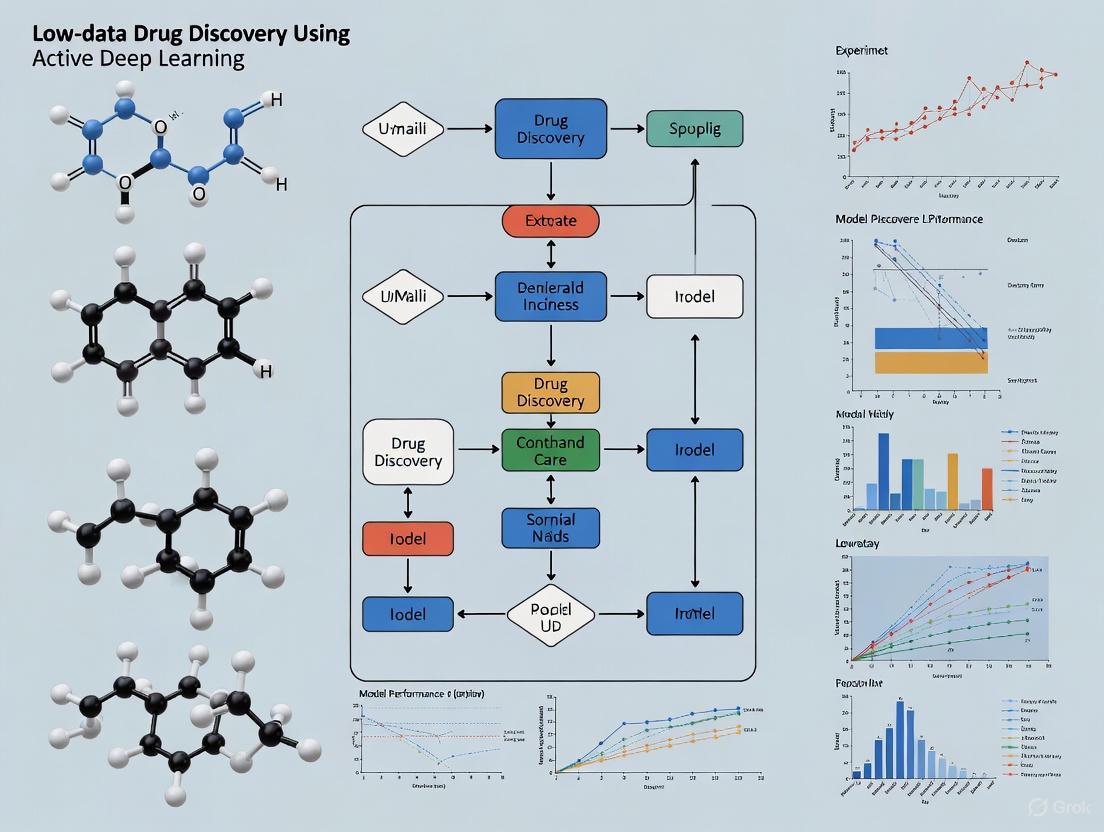
This article explores the transformative potential of active deep learning (DL) in accelerating drug discovery within data-scarce environments.
Low-Data Drug Discovery: Overcoming Data Scarcity with Active Deep Learning
Abstract
This article explores the transformative potential of active deep learning (DL) in accelerating drug discovery within data-scarce environments. Aimed at researchers and drug development professionals, it provides a comprehensive roadmap from foundational concepts to real-world validation. We first define the core challenge of limited data in pharmaceutical research and introduce active learning as a strategic solution. The discussion then progresses to practical methodologies, including novel neural network architectures and multi-task learning frameworks designed for low-data efficiency. The article critically addresses significant hurdles such as model generalizability, the 'black box' problem, and data quality, offering actionable optimization strategies. Finally, we present rigorous validation protocols, benchmarking results, and emerging success stories from the field, synthesizing key takeaways to outline a future where AI-driven discovery is both faster and more accessible.
The Low-Data Challenge in Pharma: Why Traditional AI Falls Short
The drug discovery process represents one of the most financially intensive and高风险 endeavors in modern healthcare, with traditional approaches requiring an average of $1.3-$4 billion and 10-12 years to bring a single new therapeutic to market [1] [2]. This inefficiency stems primarily from a startlingly high failure rate, with approximately 90% of drug candidates failing during pre-clinical and clinical stages [1]. At the heart of this crisis lies a fundamental constraint: the severe limitation of high-quality, relevant biological and chemical data needed to make informed decisions early in the discovery pipeline. This data bottleneck forces researchers to operate in low-information environments, where critical decisions about target validation and compound optimization must be made with insufficient evidence, ultimately contributing to late-stage failures that drive up costs and extend timelines.
The traditional drug discovery paradigm relies heavily on repetitive Design-Make-Test-Analyze (DMTA) cycles that generate data slowly and expensively through manual laboratory processes. This approach creates a fundamental constraint where the sheer size of chemical space—estimated at >10^60 synthesizable compounds—stands in stark contrast to the minute fraction that can be physically tested using conventional methods [2]. This data scarcity problem is particularly acute for the approximately 7,000 rare diseases affecting over 350 million people globally, where patient populations are small and research incentives are limited by traditional economic models [1]. The following sections quantify this data bottleneck across multiple dimensions and present emerging computational strategies that are reshaping the economics of therapeutic development.
Quantifying the Data Bottleneck: Economic and Temporal Impacts
The Economic Burden of Traditional Discovery
Table 1: Quantitative Analysis of Drug Discovery Costs and Success Rates
| Parameter | Metric | Source |
|---|---|---|
| Average Development Cost | $1.3-4.0 billion per approved drug | [1] |
| Development Timeline | 10-12 years from discovery to approval | [2] |
| Clinical Failure Rate | ~90% failure in pre-clinical/clinical stages | [1] |
| Hit-to-Lead Timeline | 3-5 years (approximately 26% of total timeline) | [2] |
| Structure Determination | 6 months and $50,000-250,000 per structure | [2] |
| Recent Expenditure Growth | 10.2% increase in 2024 to $805.9 billion total | [3] |
The economic data reveals a sector under significant pressure. Overall pharmaceutical expenditures in the U.S. reached $805.9 billion in 2024, representing a 10.2% increase from the previous year [3]. This growth significantly outpaces inflation and is driven primarily by increased utilization (7.9%) and new drug introductions (2.5%), while drug prices have remained essentially flat (0.2% decrease) [3]. This expenditure environment creates tremendous pressure to improve the efficiency of the discovery process, particularly as the days of blockbuster drugs generating >$1 billion in sales are receding in favor of targeted, personalized medicines with smaller patient populations [2].
The Data Generation Bottleneck in Experimental Processes
Table 2: Experimental Data Generation Bottlenecks in Traditional Workflows
| Process Step | Data Limitation | Impact | |
|---|---|---|---|
| Target Identification | Multi-omics data dimensionality requires AI collapse | Correlations understandable but create structural bottleneck | [2] |
| Protein Structure Determination | Physical methods (X-ray, Cryo-EM) slow and expensive | Creates dependency on virtual prediction methods | [2] |
| Compound Screening | Limited to ~2 million compounds vs. >10^60 possible | Severely restricted exploration of chemical space | [2] |
| Hit-to-Lead Optimization | Manual DMTA cycles with sparse, inconsistent data | 3-5 year timeline with high failure rate | [2] |
| Clinical Development | Heterogeneous coding, missing biomarkers in RWE | Undermines downstream analyses and regulatory utility | [4] |
The data generation constraints extend throughout the entire discovery pipeline. In the initial stages, the "data glut" from high-throughput biology techniques (genomics, proteomics, metabolomics) has created information so complex that it requires artificial intelligence to identify meaningful correlations [2]. This then creates a subsequent bottleneck in structural biology, where traditional physical methods for determining protein structure require 6 months and $50,000-250,000 per structure [2]. The compound screening phase represents another critical constraint, with conventional high-throughput screening limited to approximately 2 million compounds from a chemical space exceeding 10^60 possibilities [2]. This represents an exploration of less than 0.0000000000000001% of potential chemical space.
The hit-to-lead optimization phase typically consumes 3-5 years (approximately 26% of the total development timeline) and involves optimizing 15-20 chemical parameters simultaneously, including potency, selectivity, solubility, permeability, and toxicity [2]. This process suffers from what experts have identified as a "molecular discovery bottleneck" where AI cannot function effectively due to insufficient data [2]. The underlying causes include data confidentiality restrictions, inconsistent reporting formats, lack of reproducibility, and the high cost of producing each data point through traditional physical methods [2].
Active Deep Learning: A Paradigm Shift for Low-Data Discovery
Theoretical Framework and Experimental Evidence
Active deep learning represents a fundamental shift from traditional screening approaches by employing an iterative, query-based strategy that selects the most informative compounds for testing, thereby maximizing learning from minimal data. Recent research demonstrates that this approach can achieve up to a sixfold improvement in hit discovery compared to traditional screening methods in low-data scenarios typical of drug discovery [5]. This performance advantage stems from the algorithm's ability to strategically explore chemical space by prioritizing compounds that maximize information gain, rather than testing compounds randomly or based on structural similarity alone.
The methodology operates through a continuous feedback loop where the model's predictions guide the next round of experimental testing, with results further refining the model's understanding. This approach directly addresses the "small data regimes" that typically challenge deep learning approaches in drug discovery [6]. By focusing resources on the most chemically informative regions, active learning overcomes the limitations of conventional virtual screening, which often fails when applied to novel target classes with limited structural information [5].
Experimental Protocol for Active Deep Learning Implementation
Implementation Protocol: Active Deep Learning for Hit Identification
Initial Model Training
- Begin with a modestly-sized labeled dataset (typically 50-500 compounds with measured activity against the target)
- Utilize graph neural networks (GNNs) or molecular fingerprint-based architectures
- Implement Bayesian optimization for uncertainty quantification
Compound Selection and Prioritization
- Deploy acquisition functions (e.g., expected improvement, upper confidence bound)
- Apply diversity-based sampling to prevent clustering in familiar chemical space
- Balance exploration of novel scaffolds with exploitation of known active chemotypes
Iterative Experimental Validation
- Synthesize or procure top-ranked compounds from virtual screening (typically 20-100 compounds per cycle)
- Test selected compounds in relevant biological assays
- Incorporate results into training set for model refinement
Termination Criteria
- Continue cycles until identification of compounds meeting potency thresholds (e.g., IC50 < 100 nM)
- Typical campaigns require 3-8 cycles depending on chemical tractability and assay complexity
This protocol was validated in a recent large-scale study that simulated low-data drug discovery scenarios and systematically analyzed six active learning strategies combined with two deep learning architectures across three large molecular libraries [5]. The research identified that the most successful strategies specifically addressed the key determinants of performance in low-data regimes, including appropriate uncertainty quantification and strategic exploration-exploitation balancing.
Diagram 1: Active deep learning iterative workflow for low-data drug discovery.
Research Reagent Solutions for Implementation
Table 3: Essential Research Tools for Active Deep Learning Deployment
| Reagent/Tool | Function | Application Context | |
|---|---|---|---|
| LIT-PCBA Datasets | Benchmarking libraries for virtual screening | Validation of active learning protocols against standardized metrics | [5] |
| CETSA (Cellular Thermal Shift Assay) | Target engagement validation in intact cells | Confirmation of compound binding in physiologically relevant environments | [7] |
| AutoDock & SwissADME | Molecular docking and ADMET prediction | Preliminary assessment of binding potential and drug-likeness | [7] |
| PyTorch Geometric | Graph neural networks for molecular data | Implementation of deep learning architectures for structure-activity modeling | [5] |
| RDKit | Cheminformatics and molecular handling | Processing and featurization of chemical structures for machine learning | [5] |
| Apheris Federated Learning | Privacy-preserving collaborative modeling | Multi-institutional model training without sharing proprietary data | [4] |
| Ginkgo Datapoints | Automated antibody assay generation | Uniform biophysical data generation for model training | [4] |
The implementation of active deep learning approaches requires specialized tools and datasets. Publicly available benchmarking libraries like LIT-PCBA provide standardized datasets for validating virtual screening protocols [5]. For experimental validation, technologies like CETSA enable confirmation of target engagement in physiologically relevant environments by measuring thermal stabilization of drug targets in intact cells [7]. Computational chemistry tools including AutoDock and SwissADME provide preliminary assessment of binding potential and drug-likeness before synthesis [7].
The technical infrastructure for implementing these approaches relies on specific programming frameworks. PyTorch Geometric enables implementation of graph neural networks for molecular data, while RDKit provides essential cheminformatics capabilities for processing and featurizing chemical structures [5]. For addressing data scarcity through collaboration, federated learning platforms like Apheris enable multi-institutional model training without sharing proprietary data, while automated assay systems like Ginkgo Datapoints generate uniform biophysical data specifically for model training [4].
Emerging Technologies: Bridging the Data Gap
Large Quantitative Models (LQMs) and Physics-Based Simulation
A transformative development in addressing data scarcity is the emergence of Large Quantitative Models (LQMs) that differ fundamentally from language-based AI models [1]. While LLMs are trained on textual data, LQMs are grounded in first principles of physics, chemistry, and biology, allowing them to simulate fundamental molecular interactions and create new knowledge through billions of in silico experiments [1]. This approach represents a transition from data-driven to physics-driven AI, significantly reducing dependency on existing experimental data.
The power of LQMs has been dramatically enhanced by newly available datasets providing information on over one million protein-ligand complexes and 5.2 million 3D structures with annotated experimental potency data [1]. This structural information enables researchers to train AI models for rapid evaluation of potential drug molecules, focusing resources on compounds with the highest likelihood of success. By incorporating quantum mechanical principles, these models can predict molecular behavior at the subatomic level, providing unprecedented accuracy in forecasting how drugs will interact with biological systems [1].
Federated Learning and Data Collaboration Frameworks
To overcome the critical data access limitations imposed by proprietary archives and intellectual property concerns, the field is increasingly adopting collaborative data sharing models [4]. Pharmaceutical companies are implementing federated learning approaches that allow training models on distributed datasets without transferring sensitive proprietary data. Initiatives like OpenFold3 exemplify this approach, with companies including AbbVie, J&J, and Bristol Myers contributing co-folding data while raw structures remain behind corporate firewalls [4].
This "trust by architecture" approach allows aggregated model gradients to flow through centralized nodes while protecting underlying structural data [4]. The resulting models are then returned to each participant for local inference, creating a collaborative advantage while maintaining competitive positioning. These architectures are particularly valuable for addressing the training data void that hampers AI scalability in drug discovery, especially for novel target classes with limited structural information [4].
Diagram 2: Integrated technology solutions addressing data scarcity in drug discovery.
The quantitative evidence presented demonstrates that the high cost of data represents the fundamental bottleneck in traditional drug discovery, with economic impacts measured in billions of dollars and temporal consequences extending over decades. The emergence of active deep learning strategies capable of achieving sixfold improvements in hit discovery efficiency signals a paradigm shift from data-intensive to intelligence-intensive approaches [5]. When integrated with Large Quantitative Models grounded in physical first principles and federated learning frameworks that enable collaborative advantage without intellectual property compromise, these technologies form a powerful toolkit for overcoming the data scarcity challenge [1] [4].
For researchers and drug development professionals, the practical implementation of these approaches requires specialized infrastructure spanning algorithmic frameworks, experimental validation technologies, and collaborative data ecosystems. Organizations that successfully integrate these capabilities position themselves to significantly reduce the 90% failure rate that plagues conventional discovery efforts [1]. As these technologies mature, we anticipate continued acceleration of the discovery timeline, potentially reducing the current 10-12 year development process by years rather than months, while simultaneously expanding the therapeutic landscape to include thousands of diseases currently deemed "undruggable" due to economic rather than scientific constraints [1] [2]. The future of drug discovery lies not in generating more data, but in generating more knowledge from limited data through sophisticated computational intelligence.
Active learning (AL) represents a paradigm shift in machine learning for drug discovery, strategically addressing the field's pervasive challenge of limited labeled data. This technical guide details the core principles, methodologies, and applications of AL, with a specific focus on its role in low-data regimes. By iteratively selecting the most informative data points for labeling, AL maximizes informational gain, significantly accelerating critical tasks such as molecular property prediction, virtual screening, and hit identification. This primer provides a comprehensive overview of AL strategies, benchmarks their performance in real-world drug discovery scenarios, and offers detailed experimental protocols for implementation, serving as an essential resource for computational researchers and drug development professionals.
The primary objective of drug discovery is to identify specific target molecules with desirable characteristics within a vast and ever-expanding chemical space. The traditional experimental approach to this problem has become impractical, prompting the integration of machine learning (ML) algorithms to navigate the complexity and expedite the process [8]. However, the effective application of ML is consistently hindered by the limited availability of labeled data and the resource-intensive nature of its acquisition. Furthermore, challenges such as severe data imbalance and redundancy within labeled datasets further impede model performance [8]. In this context, active learning (AL) has emerged as a compelling solution. AL is a subfield of artificial intelligence characterized by an iterative feedback process that selects the most valuable data for labeling based on model-generated hypotheses, using this newly labeled data to iteratively enhance the model's performance [8]. This approach neatly aligns with the core challenges in drug discovery, making AL a valuable facilitator throughout the drug development pipeline.
The applicability of AL is particularly critical in low-data drug discovery, where the cost of data acquisition—whether through high-throughput screening, synthesis, or clinical experiments—is exceptionally high. Recent studies have demonstrated that AL can achieve up to a sixfold improvement in hit discovery compared with traditional screening methods and can identify 60% of synergistic drug pairs by exploring only 10% of the combinatorial space [9] [10]. By maximizing the informational gain from every experiment, AL enables the construction of robust predictive models and the efficient exploration of chemical space with minimal resource expenditure.
Core Workflow and Query Strategies
The Active Learning Cycle
The AL process is a dynamic feedback loop that begins with an initial model trained on a small set of labeled data. The core of the cycle involves selecting informative data points from a large pool of unlabeled data, querying their labels (e.g., through experimentation), and updating the model with the newly acquired information. This process continues iteratively until a predefined stopping criterion is met, such as a performance target or exhaustion of resources [8] [11]. The following diagram illustrates this continuous cycle.
Fundamental Query Strategies
The "selection function" or query strategy is the intellectual engine of AL, determining which unlabeled instances are most valuable for model improvement. These strategies generally fall into several core categories, each with distinct mechanisms and advantages.
- Uncertainty Sampling: This is one of the earliest and most straightforward AL strategies. The learner selects instances for which it is least certain about the correct label. In regression tasks, this is often implemented using techniques like Monte Carlo Dropout to estimate predictive variance [11] [12].
- Diversity Sampling: Also known as representative sampling, this approach aims to cover the underlying distribution of the data by selecting a set of instances that are maximally diverse from each other. This helps in building a model that generalizes well across the entire input space [13].
- Expected Model Change Maximization: This strategy selects instances that are expected to cause the greatest change in the current model parameters if their labels were known. It is based on the principle that the most influential data points will prompt the most significant learning.
- Hybrid Strategies: Given the complementary strengths of different principles, many modern AL strategies combine them. A common and powerful hybrid approach balances exploration (diversity) and exploitation (uncertainty). For example, a method might select a batch of points that are both uncertain and diverse from each other to avoid redundancy [11] [12].
Table 1: Comparison of Core Active Learning Query Strategies
| Strategy | Mechanism | Advantages | Limitations | Typical Use Case in Drug Discovery |
|---|---|---|---|---|
| Uncertainty Sampling | Selects data points where model prediction is least certain. | Simple to implement; highly effective for refining model decision boundaries. | Can be myopic; may select outliers. | Optimizing lead compounds; refining QSAR models. |
| Diversity Sampling | Selects a set of data points that are maximally dissimilar. | Promotes broad exploration of chemical space; improves model generalization. | Ignores model-specific informativeness. | Initial exploration of a new chemical series or library. |
| Expected Model Change | Selects points that would cause the largest change in the model. | Theoretically powerful for rapid model improvement. | Computationally expensive to calculate for complex models. | Less common in deep learning due to computational cost. |
| Hybrid (e.g., Uncertainty + Diversity) | Balances uncertainty and diversity within a selected batch. | Mitigates outliers; achieves comprehensive batch information content. | Requires tuning of balance parameters. | Most common in practice [12]; batch selection for virtual screening. |
Performance Benchmarking and Quantitative Insights
The efficacy of AL is not merely theoretical; comprehensive benchmarks across materials science and drug discovery demonstrate its significant impact on data efficiency. A large-scale benchmark study evaluating 17 different AL strategies within an Automated Machine Learning (AutoML) framework on materials science regression tasks revealed clear performance hierarchies, as summarized in Table 2 [11].
Table 2: Benchmark of Active Learning Strategies in a Low-Data Regime (Adapted from Scientific Reports, 2025)
| Strategy Type | Example Methods | Early-Stage Performance (Data-Scarce) | Late-Stage Performance (Data-Rich) | Key Characteristics |
|---|---|---|---|---|
| Uncertainty-Driven | LCMD, Tree-based-R | Clearly outperforms random baseline and geometry-only heuristics. | Performance gap narrows; converges with other methods. | Highly effective for initial model improvement. |
| Diversity-Hybrid | RD-GS | Clearly outperforms baseline; comparable to top uncertainty methods. | Performance gap narrows; converges with other methods. | Balances exploration and exploitation effectively. |
| Geometry-Only | GSx, EGAL | Underperforms compared to uncertainty and hybrid strategies early on. | Performance gap narrows; converges with other methods. | Useful for coverage but ignores model uncertainty. |
| Random Sampling | Random | Serves as the baseline for comparison. | Serves as the baseline for comparison. | Diminishing returns as labeled set grows. |
The benchmark concluded that early in the data acquisition process, uncertainty-driven and diversity-hybrid strategies are paramount for selecting informative samples and improving model accuracy rapidly. However, as the labeled set grows, the marginal gain from sophisticated AL diminishes, and all strategies tend to converge [11].
In drug discovery specifically, novel AL methods have shown remarkable results. Research from Sanofi developed two novel batch AL methods, COVDROP and COVLAP, which leverage deep learning models. These methods select batches of molecules that maximize the joint entropy (i.e., the log-determinant of the epistemic covariance), ensuring both high uncertainty and diversity within the batch [12]. When tested on public ADMET and affinity datasets, these methods consistently led to better model performance with fewer experiments compared to prior methods like BAIT or k-means sampling. For instance, on a solubility dataset of 9,982 molecules, the COVDROP method achieved a lower RMSE more quickly than other methods, indicating significant potential savings in experimental costs [12].
Experimental Protocols for Drug Discovery
Protocol 1: Batch Active Learning for ADMET Optimization
This protocol details the methodology for applying batch AL to optimize Absorption, Distribution, Metabolism, Excretion, and Toxicity (ADMET) properties, a critical step in lead optimization [12].
- Objective: To train accurate predictive models for ADMET properties with a minimal number of experimental measurements.
- Materials & Reagents:
- Unlabeled Compound Library: A large virtual library of compounds (e.g., 10,000+ molecules) represented by molecular fingerprints or graph structures.
- Oracle: An experimental assay or a high-fidelity simulation capable of providing the ground-truth property value (e.g., solubility, permeability) for any selected compound.
- Initial Training Set: A small, randomly selected set of compounds (e.g., 50-100) with measured properties.
- Computational Methods:
- Model Architecture: A graph neural network (GNN) or a multilayer perceptron (MLP) suitable for regression or classification.
- Uncertainty Estimation: Monte Carlo Dropout or Laplace Approximation is used to estimate the epistemic uncertainty of model predictions for each unlabeled compound.
- Procedure:
- Initialization: Train an initial predictive model on the small labeled dataset.
- Iteration: a. Prediction & Covariance: Use the current model to predict the properties and, crucially, the uncertainty for all compounds in the unlabeled pool. For batch selection, compute a covariance matrix that captures the predictive relationships between compounds. b. Batch Selection: Apply a greedy algorithm to select a batch of compounds (e.g., 30) from the unlabeled pool. The selection criterion is the maximization of the log-determinant of the submatrix of the covariance corresponding to the batch. This maximizes the joint information content (joint entropy) of the batch. c. Labeling: Submit the selected batch of compounds to the "oracle" (experimental assay) to obtain their true property values. d. Model Update: Add the newly labeled compounds to the training set and retrain the model.
- Termination: Repeat the iteration until a desired model performance (e.g., RMSE, R²) is achieved or the experimental budget is exhausted.
The following workflow diagram encapsulates this protocol.
Protocol 2: Active Learning for Synergistic Drug Combination Screening
This protocol outlines the use of AL to efficiently navigate the vast combinatorial space of drug-drug combinations to identify rare synergistic pairs [10].
- Objective: To maximize the discovery of synergistic drug pairs while minimizing the number of combination screenings performed.
- Materials & Reagents:
- Drug Library: A library of approved or investigational drugs.
- Cell Line Panel: A set of cancer cell lines with associated genomic features (e.g., gene expression profiles from GDSC).
- Synergy Screening Platform: A high-throughput system for measuring combination effects (e.g., Bliss synergy score).
- Computational Methods:
- Model Architecture: A neural network that takes as input the molecular representations of two drugs (e.g., Morgan fingerprints) and the genomic features of the cell line.
- Selection Strategy: An exploration-exploitation trade-off, such as selecting combinations with the highest predicted synergy (exploitation) or highest uncertainty (exploration).
- Procedure:
- Pre-training: Pre-train the synergy prediction model on publicly available data (e.g., O'Neil dataset) to obtain a prior model.
- Iteration: a. Prediction: Use the current model to predict synergy scores and uncertainties for all unexplored drug-drug-cell line combinations. b. Priority Selection: Rank combinations based on a acquisition function (e.g., expected improvement, upper confidence bound) that balances high predicted synergy with high uncertainty. c. Batch Screening: Experimentally test the top-ranked batch of combinations. d. Model Retraining: Update the model with the new experimental results.
- Termination: The campaign stops when a sufficient number of synergistic pairs have been identified or the screening budget is spent. Studies show this method can find 300 synergistic combinations in ~1,500 measurements, whereas a random search would require over 8,250 measurements [10].
Successful implementation of AL in drug discovery relies on a suite of computational and experimental resources. The table below catalogs key components of the modern AL research stack.
Table 3: Essential Research Reagents and Resources for Active Learning
| Category | Item | Function in Active Learning | Examples/Notes |
|---|---|---|---|
| Software & Libraries | DeepChem | An open-source toolkit for deep learning in drug discovery; provides implementations of AL loops and molecular ML models. | Critical resource; includes graph convolutional primitives and one-shot learning models [12] [14]. |
| Automated Machine Learning (AutoML) | Automates the process of model selection and hyperparameter tuning, making AL robust to changing model architectures. | Ensures the surrogate model in the AL loop is always near-optimal [11]. | |
| Molecular Representations | Morgan Fingerprints | Circular fingerprints representing the atomic environment within a molecule; used as input features for ML models. | A common and effective 2D representation; outperformed more complex representations in some synergy prediction tasks [10]. |
| Graph Convolutions | Learns meaningful representations directly from the molecular graph structure, capturing topological information. | Used with advanced deep learning models for superior predictive performance [12] [14]. | |
| Data Sources | Public Bioactivity Databases | Provide initial data for pre-training models and benchmarking AL strategies. | ChEMBL, DrugComb, LIT-PCBA [9] [10]. |
| Genomic Data | Cellular context features that are critical for accurate predictions in tasks like drug synergy and response. | Gene expression profiles from GDSC; as few as 10 key genes can be sufficient [10]. | |
| Experimental Systems | High-Throughput Screening (HTS) | Acts as the "oracle" in the AL loop, providing ground-truth labels for selected compounds or combinations. | Must be automated to fit the iterative AL cycle [8]. |
| Cell-Based Assays | Measure functional outcomes like permeability, toxicity, or cell viability (e.g., Caco-2, PPBR). | Used for labeling in ADMET and drug response prediction [12] [13]. |
Active learning is a powerful framework that transforms the drug discovery process from a resource-intensive, data-hungry endeavor into a strategic, iterative, and efficient search. By focusing experimental resources on the most informative data points, AL maximizes informational gain and accelerates the journey from target identification to lead optimization. As benchmark studies and novel methodologies consistently show, the integration of AL—particularly deep batch AL and hybrid query strategies—can lead to order-of-magnitude improvements in efficiency for tasks ranging from molecular property prediction to synergistic drug combination screening. For researchers operating in the critical low-data environment of drug discovery, the adoption of active learning is no longer an optimization but a necessity for maintaining a competitive and innovative pipeline.
Deep learning has ushered in a transformative era for drug discovery, promising to accelerate target identification, compound screening, and lead optimization. These algorithms demonstrate remarkable capabilities in pattern recognition and predictive modeling when applied to vast chemical and biological datasets [15]. However, the fundamental paradox limiting their widespread adoption lies in the inherent data scarcity that characterizes many critical stages of pharmaceutical research. While deep learning models are notoriously "data-hungry," real-world drug discovery pipelines often struggle to generate sufficient high-quality data, creating a critical gap between theoretical potential and practical application [6] [16].
This discrepancy is particularly pronounced during lead optimization, where researchers must refine candidate molecules with only minimal biological data available [16]. The pharmaceutical industry faces a formidable challenge: traditional deep learning approaches require millions of data points to achieve reliable performance, yet practical constraints often limit experimental validation to merely dozens or hundreds of compounds [16]. This review examines the technical foundations of this data gap, evaluates emerging solutions for low-data learning, and provides a practical framework for implementing these approaches in contemporary drug discovery pipelines.
Quantitative Landscape: Assessing the Data Discrepancy in Real-World Discovery
The disconnect between data requirements and data availability manifests across multiple dimensions of the drug discovery workflow. The following table summarizes key quantitative indicators of this challenge:
Table 1: Data Requirements vs. Reality in Drug Discovery Applications
| Application Area | Typical Deep Learning Data Requirement | Real-World Data Availability | Performance Impact |
|---|---|---|---|
| Synergistic Drug Combination Screening | Hundreds of thousands to millions of drug-cell pairs [10] | ~15,000 measurements (Oneil dataset); 3.55% synergy rate [10] | Active learning discovers 60% of synergistic pairs with only 10% combinatorial space exploration [10] |
| Lead Optimization | Millions of compound-property relationships for robust prediction [16] | Often only dozens to hundreds of characterized compounds [16] | One-shot learning significantly lowers data requirements for meaningful predictions [16] |
| Low-Data Regime Predictions | Standard deep learning fails with small datasets [6] | Often <100 compounds for rare diseases or novel targets [16] | Specialized architectures enable learning from few hundred compounds [16] |
The data scarcity problem is further compounded by the high dimensionality of biological feature spaces and the extreme class imbalance common in discovery settings. For example, in synergistic drug combination screening, synergistic pairs represent only 1.47-3.55% of all possible combinations, creating significant challenges for standard classification approaches [10].
Technical Foundations: Deep Learning Architectures for Low-Data Environments
One-Shot Learning Methodologies
One-shot learning represents a fundamental shift from traditional deep learning paradigms by focusing on metric learning rather than direct pattern recognition. These approaches learn a meaningful distance metric over the space of possible inputs, allowing them to generalize from minimal examples by comparing new data points to limited available data [16].
The mathematical formalism for one-shot learning in drug discovery involves multiple binary learning tasks, where some proportion of tasks with sufficient data are used to train a model that can then generalize to tasks with limited data [16]. Each task corresponds to an experimental assay with data points ( S = {(xi,yi)}_{i=1}^m ), where ( x ) represents compounds and ( y ) represents binary experimental outcomes. The goal is to learn a function ( h ) parameterized on support set ( S ) that predicts the probability of any query compound ( x ) being active in the same system [16].
A key architectural innovation for one-shot learning in drug discovery is the iterative refinement long short-term memory (LSTM), which modifies the matching-networks architecture to allow sophisticated metrics that trade information between evidence and query molecules [16]. This architecture enables full context embeddings, where embeddings for query compounds and support set elements influence one another, significantly strengthening one-shot learning capabilities [16].
Diagram: One-Shot Learning Architecture for Drug Discovery
Active Learning Frameworks
Active learning provides a complementary approach to data scarcity by strategically selecting the most informative experiments to perform. This creates an iterative cycle where model predictions guide experimental design, and experimental results refine model parameters [10]. In the context of synergistic drug discovery, active learning has demonstrated remarkable efficiency, discovering 60% of synergistic drug pairs while exploring only 10% of the combinatorial space [10].
The active learning workflow consists of several key components: available data, an AI algorithm to evaluate new samples, and selection criteria for prioritizing experiments [10]. Molecular encoding has limited impact on performance, while cellular environment features significantly enhance predictions [10]. Research shows that as few as 10 carefully selected genes can provide sufficient transcriptional information for effective modeling of inhibition [10].
Diagram: Active Learning Cycle for Drug Discovery
Hybrid and Specialized Architectures
Beyond one-shot and active learning, several specialized architectures have emerged to address data limitations:
Graph Neural Networks (GNNs) leverage the inherent graph structure of molecules, with atoms as nodes and bonds as edges, enabling more efficient learning from limited examples by incorporating domain knowledge directly into the model architecture [15]. These approaches have proven superior to traditional fingerprint-based methods for capturing molecular intricacies, especially with novel compounds featuring unconventional scaffolds [15].
Transfer learning and multi-task learning allow models to leverage information from related tasks or domains, increasing accuracy in low-data regimes by sharing representations across related prediction tasks [15]. Pre-training on large chemical databases like ChEMBL followed by fine-tuning on specific target data has shown particular promise for mitigating data scarcity [10].
Experimental Protocols: Implementing Low-Data Learning in Practice
One-Shot Learning Implementation
Protocol Title: Iterative Refinement LSTM for Low-Data Compound Activity Prediction
Objective: Predict compound activity in experimental assays with limited training data.
Materials and Methods:
Support Set Construction:
- Curate known active/inactive compounds for related biological targets
- Standardize molecular structures and remove duplicates
- Annotate with canonical SMILES and assay outcomes
Molecular Featurization:
- Implement graph convolutional networks to process molecular structures
- Generate molecular embeddings using message-passing neural networks
- Apply batch normalization to stabilize learning
Model Architecture:
- Implement iterative refinement LSTM for full-context embeddings
- Configure bidirectional LSTM for support set processing
- Initialize attention mechanism for similarity scoring
Training Protocol:
- Use episodic training with random task selection
- Configure Adam optimizer with learning rate 0.001
- Implement early stopping based on validation loss
Evaluation Metrics:
- Calculate precision-recall AUC for imbalanced data
- Compute ROC-AUC for overall performance
- Assess calibration curves for probability accuracy
Expected Outcomes: The protocol should enable meaningful activity predictions for novel compounds using support sets of 10-100 compounds, significantly outperforming random forest baselines and standard deep learning approaches in low-data regimes [16].
Active Learning for Synergistic Drug Discovery
Protocol Title: Batch-Aware Active Learning for Drug Combination Screening
Objective: Efficiently identify synergistic drug combinations with minimal experimental effort.
Materials and Methods:
Initial Data Collection:
- Compile existing drug combination screening data
- Encode compounds using Morgan fingerprints (radius 2, 1024 bits)
- Incorporate cellular context using GDSC gene expression profiles
Model Selection and Configuration:
- Implement multilayer perceptron with 3 hidden layers (64 neurons each)
- Configure model to predict Loewe synergy scores
- Initialize with pre-trained weights on related combination datasets
Active Learning Loop:
- Set batch size to 1-2% of total search space per iteration
- Implement uncertainty sampling for query selection
- Dynamic tuning of exploration-exploitation balance
- Retrain model after each batch of experimental results
Experimental Validation:
- Conduct combination screening in relevant cell lines
- Measure cell viability using high-throughput assays
- Calculate synergy scores using Loewe or Bliss models
Performance Assessment:
- Track synergistic pair discovery rate vs. experimental effort
- Compare against random screening baseline
- Calculate efficiency gain as experimental savings
Expected Outcomes: This protocol should identify 60% of synergistic combinations with approximately 10% of the experimental effort required for exhaustive screening [10]. Smaller batch sizes typically yield higher synergy discovery rates, with dynamic tuning of exploration-exploitation strategy further enhancing performance.
Research Reagent Solutions: Essential Tools for Implementation
Table 2: Key Research Reagents and Computational Tools for Low-Data Drug Discovery
| Resource Category | Specific Tools/Platforms | Function in Low-Data Learning | Implementation Considerations |
|---|---|---|---|
| Deep Learning Frameworks | DeepChem [16], TensorFlow [16] | Provides implementations of graph convolutional networks and one-shot learning architectures | Open-source availability; pre-built layers for molecular machine learning |
| Molecular Representations | Morgan Fingerprints [10], MAP4 [10], Graph Convolutions [15] | Encodes molecular structure for machine learning models | Morgan fingerprints with addition operation show strong performance in low-data regimes [10] |
| Cellular Context Features | GDSC Gene Expression [10], Single-cell RNA-seq | Captures cellular environment for better generalization | As few as 10 genes sufficient for convergence in synergy prediction [10] |
| Experimental Validation Platforms | High-throughput screening, CETSA [7] | Validates target engagement and compound efficacy | Provides quantitative, system-level validation in biologically relevant contexts [7] |
| Active Learning Controllers | RECOVER framework [10], Custom query strategies | Selects most informative experiments to perform | Batch size critically impacts performance; smaller batches often superior [10] |
Discussion: Bridging the Gap Between Promise and Practice
The integration of low-data learning approaches represents a paradigm shift in AI-driven drug discovery. While traditional deep learning methods struggle with the limited datasets typical of pharmaceutical research, one-shot learning, active learning, and specialized architectures offer tangible pathways to practical utility. The critical insight unifying these approaches is their focus on efficient knowledge transfer rather than de novo pattern discovery from massive datasets.
The experimental protocols and architectures presented herein demonstrate that meaningful progress is possible despite data constraints. One-shot learning's ability to leverage related assay data, combined with active learning's strategic experiment selection, creates a powerful framework for accelerating discovery while respecting practical limitations. These approaches are particularly valuable for rare diseases, novel target classes, and personalized medicine applications where data scarcity is most acute.
However, significant challenges remain. Model interpretability continues to be problematic for complex deep learning architectures, raising concerns in regulatory contexts [15]. The integration of heterogeneous data types—from chemical structures to genomic sequences and phenotypic images—poses additional technical hurdles [15]. Future research directions should focus on hybrid approaches that combine physics-based modeling with data-driven learning, enhanced uncertainty quantification for reliable decision support, and standardized benchmarking frameworks for low-data learning methodologies.
The gap between deep learning's potential and data reality in drug discovery remains substantial, but no longer insurmountable. The methodologies outlined in this review provide a roadmap for developing data-efficient AI systems that can deliver meaningful value within the constraints of real-world pharmaceutical research. By embracing one-shot learning, active learning, and specialized architectures, researchers can begin to close this critical gap while maintaining scientific rigor and biological relevance.
The future of AI in drug discovery lies not in increasingly large models trained on increasingly massive datasets, but in smarter, more efficient algorithms that respect the fundamental economics and practicalities of pharmaceutical R&D. The frameworks presented here represent significant steps toward that future—where AI accelerates discovery not despite data limitations, but by strategically working within them.
The application of artificial intelligence (AI) in drug discovery represents a paradigm shift in pharmaceutical research, yet it introduces a critical dependency: the need for vast, high-quality datasets. Modern deep learning approaches, which have demonstrated remarkable success in various domains, are inherently "data-gulping" and may fail to deliver on their promise without sufficient training data [17]. This creates a fundamental tension in drug discovery, where generating high-quality biological and chemical data is often prohibitively expensive, time-consuming, and limited by practical constraints such as patient privacy and rare disease prevalence [18]. Data scarcity—the insufficiency of adequate data for effective model training—becomes a major limiting factor that can reduce model accuracy, increase bias, and ultimately hinder the development of novel therapeutics [18] [19].
In response to these challenges, the field has developed sophisticated methodologies for operating in low-data regimes (contexts where available training data is limited) and for actively mitigating data scarcity through innovative learning paradigms. Among these, active learning cycles have emerged as a powerful strategy for maximizing information gain from minimal data points. This technical guide provides a comprehensive framework for understanding these key concepts and their practical application within drug discovery, offering researchers structured definitions, comparative analyses, experimental protocols, and practical implementations to navigate the data-scarce landscape of modern pharmaceutical research.
Key Definitions and Conceptual Framework
Core Terminology
Low-Data Regime: A learning scenario where the available training dataset is insufficient for standard deep learning models to generalize effectively without specialized techniques. In drug discovery, this often manifests when working with novel target classes, rare diseases, or proprietary chemical series where annotated data may be limited to hundreds or even dozens of examples [20] [19]. The regime is characterized by a high risk of overfitting, where models memorize training examples rather than learning generalizable patterns.
Data Scarcity: A broader condition affecting entire domains or problem spaces, defined by fundamental limitations in acquiring sufficient, high-quality data for machine learning. Causes include high acquisition costs, privacy regulations (e.g., GDPR), logistical challenges, rare events (e.g., uncommon diseases), and proprietary restrictions [18]. In pharmaceutical contexts, data scarcity affects areas like rare disease drug development and complex phenotypic screening where biological replicates are limited.
Active Learning Cycle: An iterative machine learning process that strategically selects the most informative data points for expert annotation from a pool of unlabeled examples. The cycle prioritizes quality over quantity by identifying instances where the model is most uncertain or where labeling would provide maximum information gain, thereby reducing annotation costs and improving model efficiency [18] [17].
Relationship Between Concepts
The relationship between data scarcity, low-data regimes, and active learning is hierarchical and interdependent. Data scarcity describes the fundamental resource constraint present in many scientific domains. This scarcity creates operational low-data regimes for specific machine learning tasks. To address this challenge, researchers employ strategic frameworks like active learning cycles that optimize the use of available data and guide targeted data acquisition.
Table 1: Comparative Analysis of Core Concepts in Data-Limited Drug Discovery
| Concept | Scope | Primary Cause | Typical Manifestation in Drug Discovery | Key Mitigation Strategies |
|---|---|---|---|---|
| Data Scarcity | Domain/Field-wide | Privacy regulations, rare diseases, high acquisition costs, proprietary data restrictions [18] | Rare disease research, novel target classes, complex phenotypic assays | Data augmentation, synthetic data generation, federated learning, transfer learning [18] [17] |
| Low-Data Regime | Task/Model-specific | Limited labeled examples for a specific prediction task [20] | Predicting activity for novel chemical scaffolds, toxicity prediction with limited compounds | Self-supervised learning, few-shot learning, active learning cycles [20] [19] |
| Active Learning Cycle | Process/Methodological | Need to optimize annotation resources and model performance [17] | Iterative compound prioritization in design-make-test-analyze cycles | Uncertainty sampling, diversity sampling, query-by-committee, expected model change [21] |
Technical Approaches for Low-Data Regimes
Self-Supervised Learning (SSL)
Self-supervised learning has emerged as a powerful paradigm for low-data regimes by creating supervisory signals directly from unlabeled data. The core principle involves pre-training models using pretext tasks that do not require manual annotation, followed by fine-tuning on downstream tasks with limited labeled data [20]. This approach is particularly valuable in drug discovery where unlabeled chemical and biological data is often more abundant than labeled data.
Table 2: Comparative Evaluation of Self-Supervised Learning Methods in Low-Data Regimes
| SSL Method | Mechanism | Pretext Task | Strengths | Limitations | Performance in Low-Data Drug Discovery |
|---|---|---|---|---|---|
| MAE (Masked Autoencoders) | Generative | Reconstructs masked portions of input data [20] | High robustness to noisy data; effective representation learning | Requires substantial pre-training data | Moderate performance in very low-data scenarios; improves with domain-specific pre-training |
| SimCLR | Contrastive Learning | Maximizes agreement between differently augmented views of same data instance [20] | Strong performance with limited labeled examples; effective with Vision Transformer architectures | Computationally intensive; requires careful augmentation strategy | Superior performance in limited data regimes with domain-specific adaptations |
| DINO | Self-Distillation | Knowledge distillation between different augmentations of same image [20] | Excellent generalization ability; creates semantically meaningful features | Complex training dynamics | Best transfer learning performance; maintains effectiveness across domains |
| DeepClusterV2 | Clustering-Based | Alternates between clustering representations and using cluster assignments as pseudo-labels [20] | Discovers inherent structure in data; works with unlabeled datasets | Cluster instability; sensitive to hyperparameters | Variable performance; domain-dependent effectiveness |
Few-Shot and Zero-Shot Learning
When labeled data is extremely scarce (typically fewer than 20 examples per class), few-shot learning (FSL) and zero-shot learning (ZSL) approaches become valuable. These methods leverage knowledge transfer from related tasks or domains where data is more abundant. In medical imaging and drug discovery, foundation models pre-trained on large datasets have shown remarkable effectiveness in few-shot scenarios [19].
Recent benchmarking studies demonstrate that BiomedCLIP, a vision-language model pre-trained exclusively on medical data, performs best on average for very small training set sizes in medical imaging tasks [19]. However, with slightly more training examples (typically >5 per class), very large CLIP models pre-trained on massive datasets like LAION-2B achieve superior performance. Interestingly, simple fine-tuning of standard architectures like ResNet-18 pre-trained on ImageNet can remain competitive with more sophisticated approaches when given more than five training examples per class [19].
Data Augmentation and Synthesis
Data augmentation creates expanded training sets by applying carefully designed transformations to existing data, while synthetic data generation creates entirely new examples through algorithmic means. In drug discovery, these approaches help overcome data scarcity by artificially expanding limited datasets:
- Molecular Data Augmentation: Techniques include SMILES enumeration (generating equivalent string representations of the same molecule), atom/bond masking, and scaffold-based generation of analogous structures [18].
- Synthetic Data Generation: Generative Adversarial Networks (GANs) and other generative models can create novel molecular structures with desired properties, though validation remains challenging [18] [17].
- Image-Based Augmentation: For microscopy or histology data, standard computer vision augmentations (rotation, flipping, color adjustment) are combined with domain-specific transformations [18].
Active Learning Cycles: Methodologies and Implementation
Theoretical Foundations
Active learning operates on the principle of maximum information gain—the idea that selectively choosing which data to label can yield better performance with fewer annotations than random selection. The core mathematical framework involves an acquisition function (a(x, M)) that scores the utility of labeling candidate instance (x) given the current model (M). Common acquisition strategies include:
- Uncertainty Sampling: Selects instances where the model's prediction uncertainty is highest, typically measured using entropy, least confidence, or margin-based criteria [17].
- Diversity Sampling: Prioritizes instances that differ from existing training examples to ensure broad coverage of the feature space.
- Expected Model Change: Chooses instances that would cause the greatest change to the current model parameters if their labels were known.
The active learning cycle iteratively applies this acquisition function to select the most informative batch of samples for expert annotation, then updates the model with the newly labeled data, creating a feedback loop that progressively improves model performance while minimizing labeling effort [21].
Experimental Protocol: Transcriptomics-Driven Active Learning
A recent breakthrough in Science demonstrates a practical implementation of active learning for phenotypic drug discovery. The framework leverages transcriptomic data to identify modulators of disease phenotypes through the following detailed protocol [21]:
1. Initialization Phase:
- Input: Begin with a diverse library of uncharacterized compounds (typically 10,000-100,000 molecules).
- Baseline Model: Train initial model on any available labeled data (if none, use random sampling for first cycle).
- Feature Representation: Encode compounds using molecular fingerprints (ECFP6), graph neural networks, or pre-trained molecular representations.
2. Active Learning Cycle:
- Query Strategy Implementation: Apply Bayesian optimization to select compounds that maximize expected information gain about disease-reverse activity. The acquisition function combines:
- Predictive Uncertainty: Estimated using Monte Carlo dropout or ensemble methods.
- Diversity Metric: Maximum Euclidean distance to existing labeled examples in latent space.
- Phenotypic Relevance: Incorporation of transcriptomic signature similarity to desired phenotype.
- Batch Selection: Select top 0.5-1% of compounds (typically 50-100 molecules) for experimental validation.
3. Experimental Validation & Labeling:
- Transcriptomic Profiling: Treat model systems (e.g., cell lines, patient-derived organoids) with selected compounds.
- RNA Sequencing: Perform bulk or single-cell RNA-seq to capture comprehensive transcriptional responses.
- Phenotypic Scoring: Quantify desired phenotypic outcome (e.g., disease signature reversal, viability assessment).
- Label Assignment: Assign activity labels based on statistically significant phenotypic improvement versus controls.
4. Model Update:
- Incremental Training: Fine-tune existing model with newly labeled compounds.
- Representation Learning: Optionally update feature representations based on new transcriptomic insights.
- Cycle Repetition: Execute 5-10 complete cycles or until performance plateaus.
This protocol achieved a 13-17x improvement in phenotypic hit rates compared to conventional high-throughput screening in two independent hematological discovery studies [21].
Research Reagent Solutions
Table 3: Essential Research Reagents for Transcriptomic Active Learning Experiments
| Reagent/Category | Function in Experimental Protocol | Key Considerations for Low-Data Regimes |
|---|---|---|
| DNA-Encoded Libraries (DEL) | Provides diverse chemical starting points for screening [22] | Focus on libraries with high structural diversity to maximize information gain per experiment |
| Cell-Based Disease Models | Biological context for phenotypic screening (e.g., primary cells, patient-derived organoids) [21] | Prioritize models with strong clinical relevance and well-characterized phenotypic readouts |
| RNA-Seq Kits | Transcriptomic profiling of compound effects (bulk or single-cell) | Standardized protocols to minimize technical variability; batching strategies to control costs |
| High-Content Imaging Systems | Multiparametric phenotypic characterization | Automated analysis pipelines to extract maximal information from each experiment |
| Automated Synthesis Platforms | Enables rapid compound iteration based on model predictions [22] | Integration with design software to close the design-make-test-analyze cycle rapidly |
| Multi-Well Assay Platforms | High-throughput phenotypic screening | Miniaturization (1536-well) to reduce reagent consumption and increase throughput |
Integration with Broader Drug Discovery Pipeline
The successful implementation of active learning cycles and low-data regime strategies requires seamless integration with established drug discovery workflows. This integration creates a unified framework that spans from target identification to lead optimization:
The synergy between active learning and other data-scarcity mitigation strategies creates a comprehensive approach to low-data drug discovery. Transfer learning leverages knowledge from data-rich domains (e.g., general chemical space) to bootstrap models for data-poor domains (e.g., novel target classes) [18] [17]. Multi-task learning shares representations across related prediction tasks, effectively increasing the signal available for each individual task. Federated learning enables model training across multiple institutions without sharing proprietary data, thus expanding effective dataset sizes while preserving privacy [18] [17].
The integration of these approaches within an active learning framework creates a powerful ecosystem for drug discovery in low-data regimes. For instance, a foundation model pre-trained on public chemical data can be fine-tuned on proprietary data using active learning strategies that selectively choose the most informative compounds for expensive experimental validation [19]. This approach maximizes the value of each data point while leveraging broader chemical knowledge to compensate for limited private data.
Future Directions and Challenges
Despite significant advances, several challenges remain in applying active learning and low-data regime strategies to drug discovery. The "cold start" problem—how to initialize models with little to no labeled data—still requires careful consideration, often addressed through transfer learning from related domains or sophisticated semi-supervised approaches [20]. Model calibration and uncertainty quantification remain critical in low-data settings, where overconfidence in incorrect predictions can misdirect entire research programs.
The emergence of foundation models for biology and chemistry offers promising directions for addressing data scarcity [19]. These models, pre-trained on massive diverse datasets, can potentially be adapted to specific drug discovery tasks with minimal fine-tuning. However, recent benchmarking studies highlight the need for further research on foundation models specifically tailored for medical applications and the collection of more diverse datasets to train these models effectively [19].
As the field progresses, the integration of active learning with automated synthesis and screening platforms promises to close the design-make-test-analyze cycle more rapidly [22]. This integration, coupled with continued advances in algorithmic approaches for low-data learning, will be essential for realizing the vision of accelerated therapeutic development, particularly for rare diseases and underserved patient populations where data scarcity remains the most significant barrier to innovation.
Architecting for Efficiency: Active Deep Learning Models and Pipelines
The process of drug discovery is notoriously lengthy, costly, and data-intensive. The high failure rates of candidate compounds are often exacerbated in scenarios where biological or chemical data is scarce, such as for novel targets or rare diseases. In these low-data scenarios, traditional machine learning models struggle to generalize, creating a significant bottleneck. Fortunately, two powerful paradigms in deep learning offer promising solutions: Graph Neural Networks (GNNs) and Multitask Learning (MTL).
GNNs are uniquely suited for drug discovery because they natively operate on graph-structured data, such as the molecular graph of a compound where atoms are nodes and bonds are edges [23] [24]. This allows them to learn rich representations that capture critical structural information. Multitask learning, on the other hand, enables models to leverage information from multiple related tasks simultaneously, effectively augmenting the learning signal for each individual task [25] [26]. When combined, these approaches create robust models capable of making accurate predictions even when data for any single task is limited. This technical guide explores the architectures, methodologies, and experimental protocols that make GNNs and MTL effective for low-data drug discovery.
Graph Neural Networks for Weak Information Scenarios
In real-world settings, the ideal of having complete, high-quality graph data is often not met. Practitioners must contend with weak information scenarios, which include feature loss (missing node features), structural loss (incomplete graph connectivity), and label loss (scarce labeled data) [27]. Standard GNNs, which rely on message-passing and neighbor aggregation mechanisms, can see significant performance degradation under these conditions because their core operations are compromised [27] [28].
Advanced GNN Architectures for Data Scarcity
Recent research has produced specialized GNN architectures designed to overcome these challenges:
- RM-BGNN (Residual Mechanism Bayesian Graph Neural Network): This model addresses all three aspects of weak information. It uses graph structure enhancement and long-distance message propagation to help isolated nodes connect to the main graph, mitigating structural loss. Its dual-channel design maintains both the original local graph structure and a global semantic view. Crucially, it incorporates Bayesian linear layers to handle parameter uncertainty. These layers learn the optimal probability distribution of weights and biases, improving the model's robustness and generalization ability when faced with incomplete data or unknown samples [27].
- Stable-GNN: This architecture tackles the critical problem of Out-of-Distribution (OOD) generalization. Traditional GNNs often fail when the test data distribution differs from the training data, a common occurrence in low-data regimes. Stable-GNN introduces a feature sample weighting decorrelation technique in a random Fourier transform space. This method aims to remove spurious correlations between features, forcing the model to rely on genuine causal features for predictions. This results in more stable and reliable performance across different data distributions [29].
The following diagram illustrates the core architecture and data flow of the RM-BGNN model, highlighting its key components for handling weak information.
Diagram: RM-BGNN Architecture for Weak Information Scenarios
Performance of Robust GNN Models
The table below summarizes the quantitative performance of advanced GNN models on benchmark datasets, demonstrating their effectiveness in node classification tasks under weak information scenarios compared to baseline models.
Table 1: Performance Comparison of GNN Models on Node Classification Tasks (Accuracy %)
| Model | Cora Dataset | Citeseer Dataset | Pubmed Dataset | Key Feature |
|---|---|---|---|---|
| GCN (Baseline) | 81.5 | 70.3 | 79.0 | Standard graph convolution [28] |
| GAT (Baseline) | 83.1 | 72.5 | 79.0 | Attention-based neighbor aggregation [28] |
| Stable-GNN | 85.2 | 74.8 | 80.1 | Feature decorrelation for OOD stability [29] |
| RM-BGNN | 84.7 | 74.3 | 80.1 | Bayesian layers & graph enhancement [27] |
Multitask Learning Frameworks
Multitask Learning provides a powerful alternative, or complement, to architectural innovation for tackling data scarcity. The fundamental premise of MTL is to jointly learn multiple related tasks, sharing representations between them. This acts as a form of inductive transfer and regularization, which can improve generalization and reduce the risk of overfitting on small datasets [25].
The DeepDTAGen Framework
A leading example in drug discovery is DeepDTAGen, a novel MTL framework that simultaneously predicts Drug-Target Binding Affinity (DTA) and generates novel, target-aware drug molecules [25]. This is a significant advancement because it uses a shared feature space for both predictive and generative tasks. The knowledge of ligand-receptor interactions learned during affinity prediction directly informs and conditions the drug generation process, ensuring the generated molecules are biologically relevant.
A major challenge in MTL is gradient conflict, where the gradients from different tasks point in opposing directions, hindering convergence. To solve this, DeepDTAGen introduces the FetterGrad algorithm. This algorithm mitigates gradient conflicts by minimizing the Euclidean distance between the gradients of the different tasks, keeping them aligned during training and preventing one task from dominating the learning process [25].
Comprehensive MTL Platforms
The Baishenglai (BSL) platform exemplifies the industrial application of MTL. It integrates seven core drug discovery tasks within a unified, modular framework [26]:
- Molecular property profiling
- Drug-target affinity prediction
- Drug-drug interaction prediction
- Drug-cell response prediction
- Molecular generation and optimization
- Retrosynthesis pathway prediction
By leveraging shared representations across these tasks with advanced techniques like zero-shot learning and domain adaptation, BSL achieves state-of-the-art performance even in challenging OOD settings, providing a comprehensive solution for virtual drug discovery [26].
Experimental Protocols and Methodologies
Rigorous experimentation is crucial for validating the efficacy of any model in low-data scenarios. The following protocols are standard in the field.
Dataset Splitting and Evaluation Metrics
To accurately simulate low-data and OOD conditions, datasets must be split carefully. The common i.i.d. (independent and identically distributed) random split is often insufficient. Instead, scaffold splitting is used, where molecules are grouped by their core molecular structure (scaffold), and the splits are made to ensure that training and test sets contain distinct scaffolds. This tests the model's ability to generalize to novel chemotypes [26].
Key evaluation metrics vary by task:
- Regression Tasks (e.g., DTA Prediction): Mean Squared Error (MSE), Concordance Index (CI), and the modified ( R^2 ) metric (( r_m^2 )) are standard [25] [24]. CI is particularly important as it measures the model's ability to correctly rank affinities.
- Generation Tasks: Metrics include Validity (proportion of chemically valid molecules), Uniqueness, and Novelty (fraction of valid molecules not present in the training set) [25] [24].
Detailed Protocol: DeepDTAGen DTA Prediction & Generation
The following workflow outlines the experimental procedure for training and evaluating the DeepDTAGen model, showcasing the interaction between its predictive and generative components.
Diagram: DeepDTAGen Multitask Learning Workflow
Procedure:
- Data Preparation: Use benchmark datasets like KIBA, Davis, or BindingDB. Preprocess SMILES strings and protein sequences into standardized formats and split data using scaffold splitting [25].
- Model Initialization: Construct the DeepDTAGen model with a shared encoder (e.g., using GNNs for drugs and CNNs for proteins) and two task-specific heads [25].
- Loss Function Definition:
- DTA Prediction Loss: Mean Squared Error (MSE).
- Drug Generation Loss: Cross-entropy loss for the sequence generation of SMILES strings.
- Training with FetterGrad: Implement the FetterGrad algorithm to compute gradients for both tasks, measure their conflict, and adjust the optimization direction to minimize Euclidean distance between them [25].
- Validation and Testing: Evaluate the model on held-out test sets, reporting MSE, CI, and ( r_m^2 ) for DTA prediction, and Validity, Uniqueness, and Novelty for the generated molecules.
Quantitative Results from Key Studies
The performance of these advanced models is quantified on standard benchmarks, as shown in the table below for DTA prediction.
Table 2: Drug-Target Affinity (DTA) Prediction Performance on Benchmark Datasets
| Model | KIBA (MSE/CI) | Davis (MSE/CI) | BindingDB (MSE/CI) | Approach |
|---|---|---|---|---|
| KronRLS | 0.159 / 0.836 | 0.280 / 0.872 | N/A | Traditional Machine Learning [25] |
| GraphDTA | 0.147 / 0.891 | 0.219 / 0.890 | 0.483 / 0.868 | GNN-based DTA Prediction [25] |
| DeepDTAGen | 0.146 / 0.897 | 0.214 / 0.890 | 0.458 / 0.876 | Multitask Learning (Prediction + Generation) [25] |
Successful implementation of these models requires a suite of computational tools and datasets. The table below lists essential "research reagents" for developing GNNs and MTL models for low-data drug discovery.
Table 3: Essential Research Reagents for Low-Data Drug Discovery with GNNs and MTL
| Resource Category | Specific Tool / Dataset | Function and Utility in Research |
|---|---|---|
| Benchmark Datasets | KIBA, Davis, BindingDB [25] | Standardized benchmarks for training and evaluating Drug-Target Affinity (DTA) prediction models. |
| Molecular Datasets | ESOL, FreeSolv, BBBP, Tox21 [24] | Curated datasets from MoleculeNet for various molecular property prediction tasks (solubility, permeability, toxicity). |
| Software Libraries | PyTor Geometric, Deep Graph Library (DGL) | Specialized Python libraries for building and training GNN models, offering efficient graph operations and pre-implemented layers. |
| Analysis Tools | RDKit | Open-source cheminformatics toolkit used for processing SMILES, calculating molecular descriptors, and validating generated molecules. |
| Evaluation Metrics | Concordance Index (CI), ( r_m^2 ), Validity/Novelty/Uniqueness [25] [24] | Quantitative metrics essential for objectively measuring model performance on regression, classification, and generation tasks. |
The integration of advanced GNN architectures and multitask learning frameworks represents a paradigm shift in tackling the data scarcity challenges inherent in drug discovery. Models like RM-BGNN and Stable-GNN directly address the weaknesses of standard GNNs in the face of incomplete data and distribution shifts. Simultaneously, MTL frameworks like DeepDTAGen and platforms like Baishenglai demonstrate that sharing representations across related tasks can create a powerful synergistic effect, significantly boosting generalization and predictive accuracy.
The experimental protocols and tools outlined provide a roadmap for researchers to implement and validate these approaches. As these technologies continue to mature, they hold the promise of drastically accelerating the early stages of drug discovery, reducing costs, and opening new avenues for treating diseases with limited available data. The future lies in building even more integrated, robust, and explainable AI systems that can reliably guide scientists from target identification to viable lead compounds.
In the field of drug discovery, the development of effective machine learning models is often hampered by limitations in the available data, both in terms of size and molecular diversity. This is particularly true in the early stages of research against novel targets, where labelled data is exceptionally scarce. Active deep learning represents a transformative approach to this challenge, as it enables iterative model improvement during the screening process by strategically acquiring new data [5]. This guide details the core components of the active learning loop, with a specific focus on the query strategies that determine which data points are most informative for labelling. By mastering these strategies, researchers and drug development professionals can significantly accelerate hit discovery, achieving up to a sixfold improvement over traditional screening methods in simulated low-data scenarios [5] [30].
The Active Learning Cycle: A Framework for Iterative Model Improvement
Active learning is an intelligent data labeling strategy that iteratively selects the most informative samples from a pool of unlabeled data for labeling, thereby maximizing model performance with minimal human supervision [31]. It replaces the traditional paradigm of labeling a large dataset upfront with a dynamic, iterative cycle.
The foundational cycle of active learning operates as follows [31] [32]:
- Initialization: Begin with a small, initially labeled dataset.
- Model Training: Train a machine learning model on the current set of labeled data.
- Inference and Query Strategy: Use the trained model to make predictions on a large pool of unlabeled data. Then, apply a query strategy (e.g., uncertainty sampling) to select the most informative data points from this pool.
- Human-in-the-Loop Annotation: The selected data points are labeled by a human expert, a step often referred to as "human-in-the-loop."
- Model Update: The newly labeled data points are added to the training set, and the model is retrained.
- Iteration: Steps 3 through 5 are repeated until a predefined performance threshold or labeling budget is met.
This cycle is powerfully applied in drug discovery. For instance, a generative model workflow can be integrated with two nested active learning cycles [33]. An inner cycle uses chemoinformatic oracles (e.g., for drug-likeness and synthetic accessibility) to refine generated molecules. An outer cycle then uses a physics-based oracle (e.g., molecular docking scores) to select candidates for the final training set, creating a self-improving system that explores novel chemical space while focusing on molecules with high predicted affinity [33].
Core Query Strategies: The Engine of Informed Data Selection
The "active" component of active learning is driven by its query strategies. These are the algorithms that decide which unlabeled instances would be most valuable to add to the training set. The choice of strategy is critical to the efficiency and success of the entire process.
Uncertainty Sampling
Uncertainty sampling is one of the most intuitive and widely-used strategies [31]. It operates on a simple principle: select the data points for which the model is least confident about its predictions. This method is highly effective for refining decision boundaries.
- Least Confidence: Selects samples where the model assigns the lowest predicted probability to its most likely class [31].
- Margin Sampling: Focuses on samples where the difference in probability between the two most likely classes is smallest. A small margin indicates the model struggles to distinguish between the top two choices [31].
- Entropy-Based Sampling: Entropy is a measure of uncertainty from information theory. This method selects samples with the highest entropy in their predicted class probability distribution, which corresponds to the greatest overall uncertainty [31].
Query By Committee (QBC)
The Query By Committee (QBC) method employs an ensemble of models (a "committee") to select data points [31]. Instead of relying on a single model's uncertainty, QBC selects samples where the committee of models disagrees the most, indicating regions of the feature space where the model is uncertain.
- Vote Entropy: Measures the disagreement among committee members based on the classes they predict [31].
- Kullback-Leibler (KL) Divergence: Measures the difference between the probability distributions predicted by the different models in the committee, selecting samples where these distributions diverge the most [31].
Diversity Sampling
While uncertainty and disagreement are crucial, a model can become myopic if it only explores uncertain regions. Diversity sampling aims to select a set of samples that are representative of the entire unlabeled pool, ensuring broad exploration of the feature space [31].
- Clustering-Based Sampling: This approach uses clustering algorithms (e.g., k-means) to group similar unlabeled samples. Representatives are then selected from each cluster, ensuring the labeled dataset covers a diverse range of data types [31].
Hybrid Approaches
In practice, combining different strategies often yields the best results [31]. A common hybrid approach is to first use uncertainty sampling to identify a pool of uncertain samples and then apply diversity sampling to this pool to ensure that the selected batch covers diverse regions of the feature space. This balances the need for both exploration and exploitation.
Table 1: Comparison of Active Learning Query Strategies
| Strategy | Core Principle | Advantages | Limitations | Best-Suited For |
|---|---|---|---|---|
| Uncertainty Sampling [31] | Selects points where the model is least confident. | Simple to implement; highly effective for refining decision boundaries. | Can be biased towards outliers; may miss broader data structure. | Rapidly improving model accuracy on well-defined tasks. |
| Query By Committee (QBC) [31] | Selects points with highest disagreement among an ensemble of models. | Reduces reliance on a single model; robust for complex hypothesis spaces. | Computationally expensive due to training multiple models. | Scenarios with sufficient computational resources and a need for robust uncertainty estimation. |
| Diversity Sampling [31] | Selects points that are representative of the overall data distribution. | Promotes exploration; prevents model from becoming too specialized. | May select many uninformative points that are already well-understood. | Initial phases of learning or when the data distribution is poorly understood. |
| Hybrid Approaches [31] | Combines elements of multiple strategies (e.g., uncertainty + diversity). | Balances exploration and exploitation; often delivers superior performance. | More complex to design and tune. | Complex, real-world problems like drug discovery where both novelty and performance are key. |
Experimental Protocol & The Scientist's Toolkit
To ground these strategies in practical research, this section outlines a protocol for a molecular optimization campaign, a common task in drug discovery.
Detailed Experimental Methodology
A proven protocol for leveraging active learning in drug discovery involves a workflow combining a generative model with nested active learning cycles, as demonstrated on targets like CDK2 and KRAS [33]:
Data Representation & Initial Training:
- Represent training molecules as SMILES strings, which are then tokenized and converted into one-hot encoding vectors [33].
- Train a Variational Autoencoder (VAE) on a general molecular dataset to learn a viable latent chemical space. Fine-tune the VAE on a small, target-specific training set to instill initial target engagement [33].
Nested Active Learning Cycles:
- Inner AL Cycle (Chemical Optimization): Sample the VAE to generate new molecules. Filter these molecules using chemoinformatic oracles for drug-likeness (e.g., Lipinski's Rule of Five), synthetic accessibility (SA) score, and similarity to the current target-specific set to enforce novelty. Molecules passing these filters are added to a "temporal-specific" set and used to fine-tune the VAE. This cycle iterates to build a set of novel, drug-like candidates [33].
- Outer AL Cycle (Affinity Optimization): After several inner cycles, subject the accumulated molecules in the temporal-specific set to molecular docking simulations as a physics-based affinity oracle. Molecules meeting a predefined docking score threshold are transferred to a "permanent-specific" set. This set is then used to fine-tune the VAE, directly guiding the generator towards high-affinity chemical space. The process then returns to the inner cycle, creating a continuous feedback loop [33].
Candidate Selection & Validation:
- After multiple outer AL cycles, apply stringent filtration to the permanent-specific set.
- Use advanced molecular modeling simulations, such as Protein Energy Landscape Exploration (PELE), to provide an in-depth evaluation of binding interactions and stability [33].
- Select top candidates for final validation through absolute binding free energy (ABFE) calculations and, ultimately, synthesis and bioassays [33].
Research Reagent Solutions
Table 2: Essential Computational Tools for Active Learning in Drug Discovery
| Tool Category | Specific Examples | Function |
|---|---|---|
| Deep Learning Frameworks [5] | PyTorch, PyTorch Geometric | Provides the core infrastructure for building and training deep neural networks and graph-based models on molecular data. |
| Cheminformatics Toolkits [5] | RDKit | A fundamental library for handling molecular data, calculating descriptors, processing SMILES strings, and assessing chemical properties. |
| Generative Model Architectures [33] | Variational Autoencoders (VAE) | Learns a continuous, structured latent representation of molecules, enabling smooth interpolation and generation of novel chemical structures. |
| Molecular Modeling & Simulation [33] | Docking Software (e.g., AutoDock, GOLD), PELE (Protein Energy Landscape Exploration) | Acts as a physics-based oracle to predict protein-ligand binding affinity and explore binding poses, providing critical feedback for active learning. |
| Data Visualization [5] | R with ggplot2, Adobe Illustrator | Used to create publication-quality figures and charts to analyze model performance and visualize chemical space and results. |
Workflow Visualization
The following diagram illustrates the integrated generative and active learning workflow described in the experimental protocol, highlighting the flow of data and the function of the nested loops.
Diagram 1: Integrated generative AI and active learning workflow for drug discovery, incorporating nested optimization cycles.
The strategic querying of data lies at the heart of applying active learning to low-data drug discovery. By understanding and implementing the core strategies—uncertainty sampling, query by committee, diversity sampling, and their hybrids—researchers can construct powerful, iterative loops that dramatically enhance the efficiency of molecular screening and design. When embedded within a structured framework that includes generative AI and physics-based validation, active learning transitions from a simple machine learning technique to a robust paradigm for navigating the vastness of chemical space. This approach holds exceptional promise for accelerating the discovery of novel therapeutic agents, particularly for targets where traditional high-data approaches are not feasible.
The process of drug discovery is characterized by its high costs, extended timelines, and frequent failures. Identifying novel drugs that interact with target proteins represents a particularly challenging phase in pharmaceutical development [25]. Conventional computational approaches have typically addressed drug-target binding affinity (DTA) prediction and de novo drug generation as separate tasks, despite their intrinsic interconnection in pharmacological research [25]. This fragmentation limits the efficiency and effectiveness of the drug discovery pipeline.
DeepDTAGen emerges as a novel multitask deep learning framework that simultaneously predicts drug-target binding affinities and generates target-aware drug molecules using a shared feature space [25] [34]. By learning the structural properties of drug molecules, conformational dynamics of proteins, and bioactivity between drugs and targets in a unified model, DeepDTAGen represents a significant advancement in computational drug discovery. This approach is particularly valuable for low-data scenarios, where acquiring extensive experimental data is challenging and costly [35].
This technical guide examines DeepDTAGen's architecture, performance, and implementation, positioning it within the broader context of active deep learning research for addressing data scarcity in pharmaceutical applications.
Background and Theoretical Framework
The Drug Discovery Data Challenge
Drug discovery fundamentally operates as a low-data problem due to the tremendous costs and time requirements associated with experimental data acquisition [35]. Traditional deep learning models typically require large datasets, creating a significant mismatch with real-world drug discovery constraints. This data scarcity issue has motivated research into alternative learning paradigms, including few-shot learning, meta-learning, and multitask learning [35].
Evolution of Computational Approaches
The development of computational methods for drug-target analysis has progressed through several distinct phases:
- Pre-deep learning era: Early approaches relied on statistical methods and classical machine learning using manually curated descriptors, which required extensive domain knowledge and were susceptible to feature engineering limitations [36].
- Sequence-based deep learning: Models like DeepDTA and AttentionDTA utilized 1D convolutional neural networks (CNNs) to process drug SMILES strings and protein sequences, but overlooked important structural information [37].
- Graph-based methods: Approaches such as GraphDTA represented drugs as molecular graphs, capturing structural information but often with limited atom feature sets [25].
- Multimodal and multitask approaches: Recent frameworks like DeepDTAGen integrate multiple data modalities and tasks, addressing the interconnected nature of prediction and generation tasks in drug discovery [25] [38].
DeepDTAGen Architecture and Components
DeepDTAGen employs a sophisticated multitask architecture that synergistically combines prediction and generation capabilities through shared representations.
Core Architectural Modules
The framework consists of four principal components that work in concert [39]:
Figure 1: DeepDTAGen Multitask Architecture Overview
Graph Encoder Module
The Graph Encoder processes drug molecules represented as graph structures with node feature vectors X and adjacency matrix A [39]. Key characteristics include:
- Input Processing: Transforms high-dimensional drug features into lower-dimensional representations through mini-batches of size [batchsize, Drugfeatures] [39].
- Dual-Path Output: Generates two distinct feature sets for different tasks:
- PMVO (Pre-Mean and Variance Operation): Features retained before Gaussian distribution mapping, preserving original drug characteristics for affinity prediction [39].
- AMVO (After-Mean and Variance Operation): Features transformed through multivariate Gaussian distribution mapping for drug generation [39].
Gated-CNN Module for Target Proteins
This module processes protein sequences through an embedding matrix where each amino acid is represented by 128 feature vectors [39]. The gated convolutional architecture enables effective extraction of sequential patterns from target proteins.
Transformer-Decoder Module
The Transformer Decoder p(DrugSMILES|ZDrug) generates novel drug SMILES in an autoregressive manner using the AMVO latent space and Modified Target SMILES (MTS) conditioning [39].
Fully-Connected Prediction Module
This component utilizes PMVO features from the Drug Encoder and protein features from the Gated-CNN to predict binding affinity values between drug-target pairs [39].
The FetterGrad Optimization Algorithm
A key innovation in DeepDTAGen is the FetterGrad algorithm, which addresses gradient conflicts in multitask learning [25].
Figure 2: FetterGrad Gradient Conflict Resolution
The algorithm operates by:
- Continuous Monitoring: Tracking gradients from both affinity prediction and drug generation tasks during training [25].
- Distance Computation: Calculating the Euclidean distance between task-specific gradients [25].
- Gradient Alignment: Actively minimizing the Euclidean distance to reduce conflicts and prevent biased learning toward either task [25].
This approach enables stable training and ensures balanced learning across both objectives, which is particularly crucial for effective knowledge transfer in low-data regimes.
Experimental Framework and Evaluation
Datasets and Preprocessing
DeepDTAGen was evaluated on three benchmark datasets, with preprocessing steps applied to ensure data consistency and quality [25] [39]:
Table 1: Benchmark Dataset Characteristics
| Dataset | Content | Preprocessing Steps | Application |
|---|---|---|---|
| KIBA | Drug-target interactions with KIBA scores | SMILES to graph conversion using RDKit and NetworkX | Model training and evaluation |
| Davis | Kinase inhibition data with Kd values | Protein sequence label encoding | Affinity prediction benchmarking |
| BindingDB | Drug-target binding affinity measurements | Structural standardization and filtering | Cross-validation testing |
Drug Representation Processing
- SMILES strings were converted to chemical structures using the RDKit library [39].
- Molecular graphs were constructed using NetworkX for graph-based representation [39].
- Graph structures included node features (atoms) and edges (bonds) to capture molecular topology.
Protein Representation Processing
- Protein sequences underwent label encoding to convert amino acids to numerical representations [39].
- Additional preprocessing steps were applied as detailed in the original implementation [39].
Evaluation Metrics
Affinity Prediction Metrics
- Mean Squared Error (MSE): Measures the average squared difference between predicted and actual binding affinity values [25].
- Concordance Index (CI): Evaluates the ranking quality of predictions [25].
- R squared (r²m): Assesses the goodness-of-fit of the regression model [25].
- Area Under Precision-Recall Curve (AUPR): Measures precision-recall tradeoff [25].
Drug Generation Metrics
- Validity: Proportion of chemically valid molecules among generated compounds [25].
- Novelty: Percentage of valid molecules not present in training or test sets [25].
- Uniqueness: Proportion of unique molecules among valid generated compounds [25].
- Chemical Analyses: Assessment of solubility, drug-likeness, and synthesizability [25].
Performance Results
Binding Affinity Prediction Performance
Table 2: DeepDTAGen Affinity Prediction Performance on Benchmark Datasets
| Dataset | MSE | CI | r²m | Comparison to Second-Best |
|---|---|---|---|---|
| KIBA | 0.146 | 0.897 | 0.765 | 0.68% MSE reduction, 11.35% r²m improvement |
| Davis | 0.214 | 0.890 | 0.705 | 2.2% MSE reduction, 2.4% r²m improvement |
| BindingDB | 0.458 | 0.876 | 0.760 | 5.1% MSE reduction, 4.1% r²m improvement |
DeepDTAGen demonstrated significant improvements over traditional machine learning models, achieving a 7.3% improvement in CI and 21.6% improvement in r²m on the KIBA dataset while reducing MSE by 34.2% compared to methods like KronRLS and SimBoost [25]. The model also consistently outperformed previous deep learning approaches, including DeepDTA and GraphDTA [25].
Drug Generation Performance
Table 3: DeepDTAGen Drug Generation Capabilities
| Evaluation Dimension | Metrics | Significance |
|---|---|---|
| Structural Quality | Validity, Novelty, Uniqueness | Ensures chemically valid, diverse compounds |
| Target Specificity | Binding ability to intended targets | Confirms target-aware generation |
| Chemical Drugability | Solubility, Drug-likeness, Synthesizability | Assesses practical pharmaceutical potential |
| Polypharmacological | Interaction profiles with multiple targets | Evaluates potential for complex disease treatment |
The model employed two generation strategies [25]:
- On SMILES Method: Generating variants by feeding original SMILES with target conditioning.
- Stochastic Method: Creating novel structures using random noise with target conditioning, enabling de novo drug design for specific proteins.
Implementation Guide
System Requirements and Setup
Table 4: Implementation Environment Specifications
| Component | Requirement | Purpose |
|---|---|---|
| Operating System | Ubuntu 16.04.7 LTS | Stable Linux environment for deep learning |
| CPU | Intel Xeon Silver 4114 CPU @ 2.20GHz | General computation and data loading |
| GPU | NVIDIA GeForce RTX 2080 Ti | Accelerated deep learning training |
| CUDA | Version 10.2 | GPU computing platform |
| Libraries | PyTorch, PyTorch Geometric | Core model implementation |
Research Reagent Solutions
Table 5: Essential Research Tools and Libraries
| Tool/Library | Application in DeepDTAGen | Function |
|---|---|---|
| RDKit | Drug structure processing | Converts SMILES to molecular graphs |
| NetworkX | Graph representation | Constructs and manipulates drug molecular graphs |
| PyTorch | Core model framework | Provides tensor operations and automatic differentiation |
| PyTorch Geometric | Graph neural networks | Implements graph-based deep learning layers |
| BiLSTM | Protein sequence processing | Extracts sequential patterns from amino acid sequences |
| Transformer Decoder | Drug generation | Generates novel SMILES strings autoregressively |
Training Pipeline
The implementation follows a structured pipeline [39]:
Data Preparation
Model Training
Affinity Prediction
Drug Generation
Demonstration Protocols
DeepDTAGen provides demonstration modules for practical application [39]:
- DEMO_Affinity.py: Predicts binding affinity for input drug-target pairs
- DEMO_Generation.py: Generates novel drugs conditioned on target proteins
Discussion and Research Implications
Advantages for Low-Data Drug Discovery
DeepDTAGen addresses fundamental challenges in data-scarce drug discovery environments through several mechanisms:
- Knowledge Transfer: The shared feature space enables transfer learning between predictive and generative tasks, effectively amplifying limited data [25].
- Multi-Task Regularization: Simultaneous optimization for different but related tasks acts as a natural regularizer, reducing overfitting risks common in low-data scenarios [25].
- Efficient Representation Learning: The framework learns pharmacologically relevant features directly from raw data, minimizing the need for extensive manual feature engineering [25].
These advantages align with emerging trends in few-shot learning for drug discovery, as exemplified by Bayesian meta-learning approaches that also address data scarcity [35].
Comparison with Alternative Approaches
While other recent models have incorporated structural information or binding site data, DeepDTAGen's multitask framework offers unique benefits:
- DMFF-DTA: Integrates binding site information and dual-modality feature fusion but focuses exclusively on affinity prediction [38].
- BTDHDTA: Employs bidirectional GRU, transformer encoders, and dilated convolutions for feature extraction but lacks generative capabilities [37].
- Meta-Mol: Utilizes Bayesian meta-learning for few-shot scenarios but does not incorporate drug generation functionality [35].
DeepDTAGen's unified approach provides a more comprehensive solution that bridges the gap between predictive modeling and generative design.
Limitations and Future Directions
Despite its advancements, DeepDTAGen presents certain limitations that represent opportunities for future research:
- Structural Resolution: The model does not explicitly incorporate 3D structural information of protein-ligand complexes, which could enhance binding affinity accuracy [38].
- Training Complexity: Multitask optimization with FetterGrad introduces additional hyperparameters and computational overhead [25].
- Experimental Validation: While computational results are promising, extensive wet-lab validation is needed to confirm real-world applicability.
Future developments could integrate geometric deep learning for 3D structural modeling, incorporate transfer learning from large-scale molecular pre-training, and develop more sophisticated multi-objective optimization techniques.
DeepDTAGen represents a significant paradigm shift in computational drug discovery by unifying affinity prediction and target-aware drug generation within a single multitask framework. Its innovative architecture, coupled with the FetterGrad optimization algorithm, addresses critical challenges in low-data scenarios where traditional methods struggle.
The framework's strong performance on benchmark datasets demonstrates its potential to accelerate drug discovery pipelines and reduce reliance on costly experimental screening. By generating novel target-specific compounds with predicted binding affinities, DeepDTAGen enables more efficient exploration of chemical space and facilitates the identification of promising drug candidates.
For researchers and drug development professionals, DeepDTAGen offers an extensible foundation for advancing computational methods in pharmaceutical research, particularly in contexts where data scarcity traditionally limits progress. The publicly available implementation further supports adoption and continued innovation in this critical field.
The traditional drug discovery paradigm is characterized by lengthy development cycles, prohibitive costs, and a high attrition rate, with the average process from discovery to approval spanning over a decade and costing more than $2.5 billion [40] [41]. A significant bottleneck in this process is the reliance on large, high-quality datasets for target identification, hit finding, and lead optimization. However, many promising therapeutic areas, including rare diseases and novel target classes, suffer from limited biological and chemical data, creating a critical barrier to innovation.
Artificial intelligence (AI) and deep learning (DL) methodologies have ushered in a new era for drug discovery, offering tools to navigate data-scarce environments [41]. This technical guide explores practical applications of advanced computational approaches, including novel AI frameworks and experimental technologies, that enable researchers to identify druggable targets, find hit compounds, and optimize leads even with limited starting data. By focusing on methodologies designed for small datasets, this guide provides a framework for accelerating the discovery of novel therapeutics in historically challenging areas.
Target Identification with Limited Omics Data
Target identification involves pinpointing biological molecules, typically proteins, whose modulation is expected to have therapeutic value. Conventional methods rely on extensive omics datasets, which are often unavailable for novel or rare diseases. The following approaches enable target identification with limited data.
Advanced Deep Learning Frameworks for Druggability Classification
The optSAE + HSAPSO (Optimized Stacked Autoencoder + Hierarchically Self-Adaptive Particle Swarm Optimization) framework represents a significant advancement for classifying druggable targets with limited data. This method integrates deep feature extraction with adaptive parameter optimization to achieve high accuracy on small datasets [42].
- Experimental Protocol: The workflow begins with robust preprocessing of protein sequence and structural data from databases like Swiss-Prot. A Stacked Autoencoder (SAE) then performs non-linear feature extraction to capture latent representations of the input data. Critically, the Hierarchically Self-Adaptive PSO algorithm dynamically optimizes SAE hyperparameters during training, enhancing generalization and preventing overfitting—a common challenge with small datasets [42].
- Performance Metrics: Evaluated on curated pharmaceutical datasets, this framework achieved a classification accuracy of 95.52% with significantly reduced computational complexity (0.010 seconds per sample) and exceptional stability (±0.003) compared to traditional methods like Support Vector Machines (SVMs) and XGBoost [42].
Foundation Models for In-Context Learning
TabPFN (Tabular Prior-data Fitted Network) is a generative transformer-based foundation model pre-trained on millions of synthetic tabular datasets. It excels at in-context learning, enabling it to make powerful predictions on new, small datasets (up to 10,000 samples) in a single forward pass [43].
- Methodology: TabPFN is applied by providing it with a context of your labeled training data (e.g., known druggable and non-druggable proteins) alongside unlabeled test samples. The model leverages its prior training to infer relationships and predict the labels of the test data without requiring dataset-specific training [43].
- Performance Metrics: In benchmark tests, TabPFN outperformed state-of-the-art gradient-boosted decision trees, even when the latter were allowed 4 hours of tuning, while TabPFN completed its predictions in approximately 2.8 seconds [43].
The following diagram illustrates the core operational workflow of the TabPFN model for in-context learning on a new dataset.
Table 1: Key AI Platforms for Target Identification with Limited Data
| Platform/Method | Core Technology | Data Requirement | Reported Performance | Key Advantage |
|---|---|---|---|---|
| optSAE + HSAPSO [42] | Stacked Autoencoder + Evolutionary Optimization | Small to Medium Curated Datasets | 95.52% Accuracy, 0.010s/sample | High stability & resilience to overfitting |
| TabPFN [43] | Transformer-based Foundation Model | < 10,000 samples | Outperforms 4h-tuned models in 2.8s | No dataset-specific training needed |
| BenevolentAI [44] | Knowledge-Graph & ML | Limited initial data, leverages public knowledge | Identified Baricitinib for COVID-19 repurposing | Integrates disparate data sources for novel hypotheses |
Hit Finding Strategies for Sparse Chemical Spaces
Hit finding aims to identify initial chemical compounds ("hits") that interact with a validated target. The challenge in data-limited scenarios is screening vast chemical spaces with minimal experimental cycles.
Integrated AI-Driven Virtual Screening
Virtual screening computationally prioritizes compounds for experimental testing. AI enhances this by learning complex structure-activity relationships even from sparse data.
- Experimental Protocol:
- Structure-Based Docking: If a high-resolution target protein structure is available, use molecular docking tools (e.g., AutoDock Vina, Glide) to score and rank compounds from virtual libraries based on predicted binding poses and energies [45].
- AI-Powered Prioritization: Apply AI models like TabPFN or other ML classifiers to the docking results. These models can be trained on limited known active/inactive data to re-rank docked compounds based on learned patterns of drug-likeness, potential off-target effects, and other properties that simple docking scores may miss [43] [40].
- Experimental Validation: Synthesize or acquire the top-ranked compounds (typically a few hundred) for validation in a primary biochemical assay [45].
DNA-Encoded Library (DEL) Screening with Advanced Enrichment
DEL screening allows for the ultra-high-throughput testing of billions of DNA-barcoded compounds in a single tube, generating rich datasets from a single experiment.
- Technology Overview: DELs are vast libraries of small molecules, each covalently linked to a DNA tag that records its synthetic history. The library is incubated with the target protein, and unbound compounds are washed away. Bound compounds are identified via PCR amplification and sequencing of their DNA barcodes [45].
- Advanced Protocols: Binder Trap Enrichment (BTE) technology avoids the need for protein immobilization, while Cellular BTE (cBTE) enables screening against targets in their native cellular environment, providing more physiologically relevant hit information [45]. This is particularly valuable for targets where recombinant protein production is difficult.
- Data Analysis: Hit identification relies on statistical analysis of sequencing counts, comparing enrichment in target selections versus controls. The use of platforms like Vipergen's YoctoReactor synthesis, which ensures high code-to-compound fidelity, is critical for minimizing false positives during off-DNA resynthesis and validation [45].
Table 2: Comparative Analysis of Hit Identification Methods for Data-Limited Scenarios
| Method | Theoretical Library Size | Throughput | Key Requirements | Primary Advantage in Low-Data Settings |
|---|---|---|---|---|
| AI-Virtual Screening [45] | Millions to Billions (in silico) | Days to Weeks | Target structure or ligand pharmacophore | Extremely cost-effective pre-filtering |
| DNA-Encoded Library (DEL) [45] | Millions to Billions (physical) | A few experiments | Purified protein or cellular assay; NGS capabilities | Generates a large, proprietary dataset in one experiment |
| High-Throughput Screening (HTS) [45] | Hundreds of Thousands | Weeks | Large physical compound collection; robotics | Direct activity readout in a relevant assay |
| Fragment-Based Screening [45] | Hundreds to Thousands | Weeks | Sensitive biophysical assay (e.g., SPR, NMR) | Identifies efficient, high-quality starting points |
Lead Optimization with Predictive AI on Small Data
Lead optimization transforms a "hit" into a "lead" compound with improved potency, selectivity, and ADMET (Absorption, Distribution, Metabolism, Excretion, Toxicity) properties. AI models can now predict these complex endpoints with limited training data.
Active Learning for Iterative Compound Design
Active learning creates a closed-loop design-make-test-analyze (DMTA) cycle that maximizes information gain from each synthesized compound, ideal for sparse data settings.
- Workflow Implementation:
- Initial Design: An AI model (e.g., a generative or predictive model) designs a small batch of new compounds based on initial data.
- Synthesis & Testing: These compounds are synthesized and tested for key properties (e.g., potency, metabolic stability).
- Model Retraining: The new data is added to the training set, and the model is updated.
- Informed Design: The retrained model, now more informed, designs the next batch of compounds, focusing on the most informative regions of chemical space.
- Case Study: Exscientia has reported using such AI-driven cycles to achieve a ~70% reduction in design time and a 10-fold reduction in the number of compounds needing synthesis compared to industry norms [44].
Predictive ADMET and "Fit-for-Purpose" Modeling
Model-Informed Drug Development (MIDD) leverages quantitative approaches to predict in vivo performance. With AI, these models can be built from smaller datasets.
- QSAR and Deep Learning: Quantitative Structure-Activity Relationship (QSAR) models, powered by deep learning, can predict ADMET properties from molecular structure. The optSAE+HSAPSO framework, for instance, is highly applicable here for its high accuracy on small datasets [42] [46].
- Fit-for-Purpose Strategy: The key is selecting the right model complexity for the available data. For limited data, simpler models like QSAR or semi-mechanistic PK/PD may be more robust than highly complex models like Quantitative Systems Pharmacology (QSP). The model's Context of Use (COU) must be clearly defined, such as early-stage prioritization rather than final clinical dose prediction [46].
The following flowchart illustrates the iterative active learning cycle that efficiently leverages small datasets for lead optimization.
The Scientist's Toolkit: Essential Research Reagents and Platforms
Successful execution of the described protocols requires a suite of specialized reagents, platforms, and software.
Table 3: Essential Research Reagent Solutions and Platforms
| Tool Name | Type | Primary Function in Low-Data Discovery | Example Use Case |
|---|---|---|---|
| YoctoReactor (Vipergen) [45] | Synthesis Platform | Ensures high-fidelity DNA-encoded library synthesis. | Minimizes false positives in DEL screening by eliminating truncated compounds. |
| Binder Trap Enrichment (BTE) [45] | Assay Technology | Enables DEL screening without target immobilization. | Screening against delicate protein complexes. |
| Cellular BTE (cBTE) [45] | Assay Technology | Allows DEL screening against targets in live cells. | Identifies hits for membrane proteins in a native environment. |
| TabPFN [43] | Software/Foundation Model | Provides state-of-the-art classification for small tabular datasets. | Predicting compound activity or target druggability with limited training examples. |
| AutoDock Vina [45] | Software | Performs molecular docking for structure-based virtual screening. | Prioritizing compounds from a virtual library for a new target with a known structure. |
| MO:BOT (mo:re) [47] | Automation Platform | Automates 3D cell culture and organoid screening. | Generates high-quality, human-relevant phenotypic data for validation. |
| eProtein Discovery System (Nuclera) [47] | Protein Production Platform | Rapidly produces purified protein from DNA. | Provides high-quality protein for assay development and screening campaigns. |
The convergence of advanced AI frameworks like optSAE+HSAPSO and TabPFN, integrated with powerful experimental technologies such as DEL and automated screening platforms, is fundamentally changing the feasibility of drug discovery in data-limited scenarios. These methodologies enable a more efficient, hypothesis-driven approach where each experiment is designed to maximize information gain. By adopting the structured protocols and tools outlined in this guide—from target identification through lead optimization—researchers can systematically navigate sparse chemical and biological spaces, accelerating the delivery of novel therapeutics for diseases with high unmet need.
Navigating Pitfalls: Strategies for Robust and Interpretable Low-Data Models
The application of deep learning in drug discovery is often challenged by the small data regimes typical of certain tasks, such as predicting the activity of a novel compound against a specific biological target. In these scenarios, deep learning approaches–which are notoriously ‘data-hungry’–might fail to live up to their promise, primarily due to the risk of overfitting [6]. Overfitting occurs when a model learns the noise and specific intricacies of the limited training data rather than the underlying generalizable patterns, leading to poor performance on new, unseen data. Consequently, developing novel approaches to leverage the power of deep learning in low-data scenarios is sparking great attention [6]. This guide provides an in-depth exploration of two primary defensive strategies against overfitting in low-data drug discovery: data augmentation, which artificially expands the training set, and regularization, which constrains the model to learn simpler and more robust patterns. We frame these technical methodologies within the context of active deep learning research, showcasing how they enable high-confidence predictions even in the most data-constrained settings, from predicting drug-target interactions to optimizing lead compounds.
Data Augmentation: Expanding the Chemical Universe Artificially
Data augmentation involves artificially inflating the number of instances available for training by creating slightly modified copies of existing data [48]. For molecular data, this requires strategies that generate new, plausible data points while preserving the fundamental chemical or biological meaning of the original instance.
SMILES-Based Augmentation Strategies
The Simplified Molecular Input Line Entry System (SMILES) is a line notation that represents a chemical structure as a string of characters. Its non-univocal nature (the same molecule can be represented by multiple valid SMILES strings) provides a natural foundation for augmentation [48]. Moving beyond simple enumeration, recent research introduces more advanced techniques inspired by natural language processing and chemical knowledge.
The table below summarizes four novel SMILES augmentation strategies, their variants, and their distinct advantages in low-data scenarios.
Table 1: Novel SMILES Augmentation Strategies for Chemical Language Models
| Strategy | Variants | Mechanism | Best-Suited For |
|---|---|---|---|
| Token Deletion [48] | Random deletion; Deletion with enforced validity; Deletion with protected rings/branches | Removes specific tokens from a SMILES string. | Creating novel molecular scaffolds and increasing structural diversity. |
| Atom Masking [48] | Random atom masking; Functional group masking | Replaces specific atoms with a placeholder token ('*'). | Learning desirable physico-chemical properties in very low-data regimes. |
| Bioisosteric Substitution [48] | Replacement with top-5 frequent bioisosteres | Replaces pre-defined functional groups with their bioisosteric equivalents. | Preserving biological activity while introducing chemical novelty. |
| Self-Training [48] | Low-temperature sampling (T=0.5) | Uses a model's own generated SMILES strings to augment the training set. | Iteratively refining model knowledge and exploring the chemical space. |
Experimental Protocol for SMILES Augmentation
To implement and evaluate these SMILES augmentation strategies, follow this detailed workflow:
- Data Preparation: Start with a small set of molecules (e.g., 1,000 to 10,000) relevant to your drug discovery task. Represent each molecule initially as a single canonical SMILES string.
- Augmentation Execution: Apply your chosen augmentation strategy (e.g., Token Deletion, Atom Masking) to the entire dataset. The level of perturbation is controlled by a user-defined probability
p. Systematic analysis suggests optimal starting points:p=0.05for token deletion and random masking,p=0.15for bioisosteric substitution, andp=0.30for functional group masking [48]. - Fold Augmentation: Decide on the augmentation fold (e.g., 3-fold, 5-fold, 10-fold), which determines the final size of the training set. Combine the original data with the augmented SMILES strings.
- Model Training: Train a chemical language model (e.g., a recurrent neural network with LSTM) on the augmented dataset for a next-token prediction task.
- Evaluation: Generate a large number of new SMILES strings (e.g., 3,000) from the trained model. Evaluate the quality of the augmentation strategy based on:
- Validity: The percentage of generated strings that correspond to chemically valid molecules.
- Uniqueness: The percentage of non-duplicated molecules.
- Novelty: The percentage of generated molecules not present in the original training set.
Regularization: Infusing Knowledge and Constraining Models
While data augmentation expands the training set, regularization techniques modify the learning process itself to prevent complex models from overfitting to sparse data. In modern drug discovery, this goes beyond traditional methods like L1/L2 regularization and incorporates rich biological knowledge to guide the model.
Knowledge-Based Regularization
This approach integrates prior biological knowledge from established ontologies and databases as a constraint during model training, encouraging the learned representations to be biologically plausible.
A prime example is the Hetero-KGraphDTI framework, which combines graph neural networks with knowledge integration for drug-target interaction (DTI) prediction [49]. Its knowledge-based regularization strategy works as follows:
- Knowledge Source Identification: Gather structured biological knowledge from sources like:
- Gene Ontology (GO): For functional annotations of targets.
- DrugBank: For known drug-target interactions and pharmacological information.
- Graph Construction: Build a heterogeneous graph that integrates multiple data types (chemical structures, protein sequences, interaction networks).
- Representation Learning and Regularization: A graph convolutional encoder learns embeddings for drugs and targets. A knowledge-aware regularization term is added to the loss function. This term penalizes the model if the learned embeddings of two entities (drugs or targets) are dissimilar in the model's latent space despite being closely related in the external knowledge graph (e.g., two proteins participating in the same biological process according to GO).
This method forces the model to respect established biological relationships, leading to more interpretable and generalizable predictions. The framework achieved an average AUC of 0.98 on DTI prediction benchmarks, significantly surpassing methods without such regularization [49].
Advanced Architectural and Training Regularization
State-of-the-art foundation models for drug discovery, such as Enchant v2, demonstrate the power of scale and sophisticated pre-training as a form of regularization [50]. These models are first pre-trained on a massive corpus of diverse data—spanning chemical, biological, preclinical, and clinical contexts—which provides them with a robust prior understanding of molecular and biological principles.
When fine-tuned on a small, specific dataset (e.g., for predicting a particular ADMET property), this extensive pre-training acts as a powerful regularizer. The model is less likely to overfit to the noise in the small fine-tuning dataset because its parameters have already been guided towards solutions that explain a vast amount of general data. Enchant v2 has shown remarkable "zero-shot" prediction capabilities, making reliable inferences on new tasks without any task-specific fine-tuning, which is the ultimate test of a model's generalizability [50].
Table 2: Regularization Techniques for Low-Data Drug Discovery
| Technique | Principle | Application Context | Reported Outcome |
|---|---|---|---|
| Knowledge-Based Regularization [49] | Incorporates prior biological knowledge (e.g., from GO, DrugBank) as a constraint during training. | Drug-target interaction prediction, multi-target polypharmacology. | Average AUC of 0.98 on DTI prediction; improved interpretability. |
| Transfer Learning & Foundation Models [51] [50] | Pre-trains a model on large, diverse datasets and fine-tunes it on a small, specific dataset. | Predicting molecular properties, optimizing lead compounds, identifying toxicity profiles. | High-confidence predictions in low-data regimes; Enchant v2 achieved zero-shot Pearson R=0.45 on a cell-line PD assay. |
| Federated Learning [51] | Enables collaborative model training across multiple institutions without sharing raw data. | Integrating diverse datasets for biomarker discovery, predicting drug synergies. | Enhances data privacy and security while improving model generalizability. |
Integrated Workflow and the Scientist's Toolkit
In practice, a successful strategy for low-data drug discovery involves a synergistic combination of both data augmentation and regularization. A typical integrated workflow might begin with augmenting the available small dataset using SMILES-based techniques to create a more robust training set. This augmented data is then used to fine-tune a pre-trained foundation model, which itself is a powerful regularizer. Finally, domain-specific knowledge can be incorporated through regularization terms in the loss function to further enhance the biological relevance of the predictions.
Research Reagent Solutions
The following table details key computational tools and data resources essential for implementing the techniques discussed in this guide.
Table 3: Essential Research Reagents for Low-Data Drug Discovery Research
| Reagent / Resource | Type | Function in Research | Example Sources / implementations |
|---|---|---|---|
| ChEMBL [52] [48] | Database | A manually curated database of bioactive molecules with drug-like properties, used for pre-training and benchmarking. | https://www.ebi.ac.uk/chembl/ |
| DrugBank [52] [49] | Database | Provides comprehensive drug and drug-target information, used for knowledge integration and validation. | https://go.drugbank.com |
| Gene Ontology (GO) [49] | Knowledge Base | A structured framework of defined terms representing gene function, used for knowledge-based regularization. | http://geneontology.org |
| SwissBioisostere [48] | Database | A resource of bioisosteric replacements, crucial for implementing the bioisosteric substitution augmentation. | https://www.swissbioisostere.ch |
| Chemical Language Model (CLM) | Software Tool | A deep learning model (e.g., LSTM) adapted for SMILES strings to perform molecule generation and property prediction. | Implemented in Python (e.g., with PyTorch/TensorFlow) |
| Graph Neural Network (GNN) | Software Tool | A deep learning architecture for graph-structured data, used for learning from molecular graphs and biological networks. | Implemented with libraries like PyTorch Geometric or Deep Graph Library |
| Enchant v2 Model [50] | Foundation Model | A large-scale multimodal transformer for making high-confidence molecular property predictions in low-data regimes. | Iambic (Proprietary) |
| TxGemma Model [50] | Foundation Model | A transformer-based model for drug discovery from Google DeepMind, used as a benchmark. | Google DeepMind |
The application of artificial intelligence (AI) in drug discovery represents a paradigm shift, offering the potential to drastically reduce the time and cost associated with bringing new therapeutics to market. This is particularly critical in low-data scenarios, which are typical for novel targets or rare diseases, where deep learning approaches—notoriously 'data-hungry'—can struggle to perform reliably [6]. While AI models can achieve high predictive accuracy, their widespread adoption in safety-critical pharmaceutical development has been hampered by the "black-box" problem—the inherent opacity of how these models arrive at their predictions [53] [54]. This lack of transparency is a significant barrier to building trust among researchers and, crucially, to obtaining regulatory approval for AI-driven processes and products [55].
Explainable AI (XAI) has emerged as an essential solution to this challenge. XAI encompasses a set of methodologies and techniques designed to make AI's decision-making process understandable to humans [56]. In the context of low-data drug discovery, XAI provides insights into which molecular features or descriptors contribute most significantly to a prediction, estimates the marginal contribution of each feature, and highlights specific substructures associated with predicted outcomes [54]. This transparency is not a luxury but a necessity in the pharmaceutical industry, where decisions can have life-or-death consequences and are subject to stringent regulatory scrutiny [57] [56]. This technical guide explores the integration of XAI as a foundational component for establishing model trust and navigating the complex regulatory landscape of modern drug development.
The Regulatory Landscape: Demanding Transparency
Regulatory bodies worldwide have made it clear that transparency and explainability are non-negotiable for AI/ML models used in drug development and healthcare.
Key Regulatory Frameworks and Requirements
U.S. Food and Drug Administration (FDA): The FDA's draft guidance from January 2025 outlines a risk-based credibility assessment framework for AI models. Sponsors must define the context of use, assess model risk, and execute verification/validation, documenting results thoroughly. The guidance stresses that training/validation datasets must be clearly delineated, and models validated on independent data [57] [58]. The FDA encourages early engagement and case-by-case review.
European Medicines Agency (EMA): EMA’s 2024 Reflection Paper states that sponsors are responsible for ensuring all algorithms, models, datasets, and data pipelines meet legal, ethical, technical, scientific, and regulatory standards. This often exceeds common data-science practice. EMA advises that AI affecting a medicine’s benefit-risk profile requires early regulator consultation and detailed technical substantiation in submissions [57].
International Council for Harmonisation (ICH) E6(R3): The Good Clinical Practice update (finalized in January 2025) emphasizes quality by design and validation of digital systems. It requires sponsors to freeze AI models and analysis pipelines in the statistical analysis plan for pivotal trials, as any changes during a trial could invalidate confirmatory analyses [57].
The underlying principle across all jurisdictions is that AI systems must be transparent, validated, and monitorable. Regulators expect documentation of risk assessments, human oversight mechanisms, and change-management logs [57] [55]. The "black box" is simply not an option for regulated activities.
Core XAI Methodologies for Drug Discovery
XAI techniques provide the tools to meet regulatory demands and build scientific trust. The following table summarizes the primary XAI methods relevant to drug discovery tasks.
Table 1: Key Explainable AI (XAI) Methodologies in Drug Discovery
| Method Category | Key Technique(s) | Primary Function | Common Applications in Drug Discovery |
|---|---|---|---|
| Model-Agnostic | SHapley Additive exPlanations (SHAP) [53] [54] | Quantifies the contribution of each feature to a single prediction by computing Shapley values from coalitional game theory. | Molecular property prediction, ADMET (Absorption, Distribution, Metabolism, Excretion, and Toxicity) profiling, target affinity prediction. |
| Model-Agnostic | Local Interpretable Model-agnostic Explanations (LIME) [54] [56] | Approximates a black-box model locally with an interpretable model (e.g., linear regression) to explain individual predictions. | Explaining compound classification, elucidating reasons for a molecule being flagged as toxic or inactive. |
| Model-Specific | Attention Mechanisms [54] | Allows models to focus on specific parts of the input data (e.g., amino acids in a protein sequence), providing insight into which parts are most relevant. | Processing protein sequences or molecular graphs, identifying key functional groups or binding motifs. |
| Visualization | Structural Highlighting [54] | Maps model attributions (e.g., from SHAP or attention) back onto the molecular structure, visually highlighting important substructures. | Lead optimization, toxicity prediction, and rationalizing structure-activity relationships (SAR). |
These techniques enable researchers to move beyond pure prediction and understand the "why" behind a model's output. For instance, SHAP can identify which molecular fragments in a compound are most influential in predicting strong binding affinity to a target, while attention mechanisms can highlight the specific amino acid residues in a protein that a model focuses on when making a binding prediction [54]. This is invaluable for prioritizing compounds for synthesis and for validating a model's decision against known biochemical principles.
An Integrated Experimental Protocol for XAI in Low-Data Scenarios
Implementing XAI effectively requires its integration into the core model development and validation workflow, especially when data is scarce. The protocol below outlines a robust methodology for a typical low-data task like predicting drug-target affinity (DTA).
The following diagram illustrates the integrated, iterative workflow that combines model training, explanation generation, and expert validation.
Protocol Steps
Step 1: Data Preparation and Splitting In low-data regimes, data partitioning is critical. Use a stratified split to create training, validation, and hold-out test sets, ensuring all sets are representative of the underlying data distribution (e.g., in terms of activity classes or structural scaffolds). Given the small dataset size, consider techniques like nested cross-validation for more robust hyperparameter tuning and performance estimation [6].
Step 2: Model Development and Training with Explainability in Mind
- Architecture Selection: Choose or design models that balance complexity with the available data. For deep learning models, incorporate attention mechanisms to build in interpretability from the start [54].
- Training with Constraints: Employ regularization techniques (e.g., L1/L2) and early stopping to prevent overfitting. In multitask learning frameworks, use algorithms designed to handle gradient conflicts between tasks, which can be particularly beneficial in low-data settings by leveraging shared representations [25].
Step 3: XAI Analysis and Explanation Generation
- Apply model-agnostic techniques like SHAP or LIME to the trained model on the validation and test sets.
- For each key prediction (e.g., a high-affinity drug-target pair), generate a quantitative explanation. SHAP will produce a list of input features (e.g., molecular descriptors, protein sequence features) and their respective Shapley values, indicating how much each feature pushed the model's prediction higher or lower [53] [54].
- Aggregate these local explanations to form a global understanding of the model's behavior.
Step 4: Expert Evaluation and Hypothesis Generation This is the crucial human-in-the-loop step. Present the XAI results to domain experts (e.g., medicinal chemists, biologists).
- Validation: Do the highlighted molecular features or protein residues align with known structure-activity relationships (SAR) or biological knowledge? This face-validity check is essential for building trust.
- Insight Generation: Unexplained or surprising feature importances can lead to novel scientific hypotheses about the drug-target interaction, guiding the next cycle of experimental design [54] [56].
Step 5: Iterative Model Validation and Documentation
- Refine the model based on expert feedback.
- Document the entire process: This includes the model's final architecture, training data, hyperparameters, performance metrics, and—critically—the XAI methodology used and the results of the expert evaluation. This comprehensive documentation forms the backbone of the evidence package for regulatory submission [57] [58].
The Scientist's Toolkit: Essential Research Reagents for XAI
To implement the protocols described, researchers rely on a suite of computational tools and frameworks. The following table details key "research reagent solutions" in the XAI landscape.
Table 2: Essential Research Reagents & Tools for XAI in Drug Discovery
| Tool/Reagent | Type | Primary Function | Relevance to Low-Data Discovery |
|---|---|---|---|
| SHAP Library | Software Library (Python) | Unified framework for calculating and visualizing Shapley values for any model. | Enables post-hoc interpretation of black-box models, crucial for understanding predictions when limited data constrains model simplicity. |
| LIME Package | Software Library (Python) | Generates local, interpretable approximations of complex model predictions. | Helps validate individual predictions to build confidence in a model's behavior on sparse data. |
| DeepChem | Software Framework (Python) | An open-source toolkit for AI-driven drug discovery that integrates with DL libraries like TensorFlow and PyTorch. | Provides pre-built layers for molecular featurization and model architectures (e.g., GraphCNNs) that can be trained on smaller datasets and are often easier to interpret. |
| Multitask Learning Frameworks | Algorithmic Framework (e.g., DeepDTAGen [25]) | Trains a single model on multiple related tasks simultaneously, sharing representations between tasks. | Mitigates data scarcity for any single task by leveraging synergistic information from related tasks, improving generalization. |
| Federated Learning Platforms | Distributed Learning Framework | Enables model training across decentralized data sources without sharing the raw data itself. | Allows for collaborative model development to effectively increase dataset size while respecting data privacy and IP constraints, a common hurdle. |
Signaling the Path Forward: An XAI-Integrated Development Pipeline
The ultimate goal is to embed XAI throughout the drug development pipeline. The following diagram visualizes how XAI interfaces with key stages, from initial discovery to regulatory filing, creating a continuous feedback loop that enhances both trust and efficacy.
This integrated pipeline demonstrates that XAI is not a final checkpoint but a foundational layer. In target identification, XAI can highlight the biological features a model uses, cross-validating against known biology. In de novo design, it rationalizes why a generative model proposes specific molecular scaffolds. During lead optimization, explanations for predicted ADMET properties guide chemists on which structural modifications to pursue. For clinical trials, XAI can help validate models used for patient stratification or outcome prediction. Finally, the cumulative XAI evidence provides a transparent audit trail for regulatory agencies, demonstrating that the AI-driven processes underlying a drug's development are reliable and scientifically sound [57] [54] [56].
Integrating Explainable AI is a pivotal step in maturing the application of artificial intelligence in drug discovery. It directly addresses the critical challenges of model trust and regulatory compliance, especially within the ambitious context of low-data research where the risks of model opacity are heightened. By adopting the methodologies, protocols, and tools outlined in this guide, researchers and drug development professionals can transform AI from an inscrutable black box into a powerful, transparent, and collaborative partner in the scientific process. The future of AI-driven drug discovery hinges not just on predictive power, but on the ability to understand and learn from every prediction made.
Mitigating Bias and Ensuring Generalizability Across Diverse Chemical and Biological Space
Artificial intelligence is transforming drug discovery, yet its application in low-data environments presents particular challenges regarding bias and generalizability. Deep learning approaches, notoriously "data-hungry," are increasingly applied to drug discovery tasks where available data is limited, creating conditions where biases can easily propagate and model generalizability can suffer [6]. In these scenarios, active deep learning strategies show significant promise by allowing iterative model improvement during the screening process, yet they introduce unique considerations for bias mitigation [59]. The lengthy, risky, and costly nature of pharmaceutical research and development makes it particularly vulnerable to biased decision-making at multiple stages, from initial discovery through regulatory approval [60]. Moreover, AI models can perpetuate or even amplify existing healthcare disparities if biases embedded in training data or model architectures are not systematically addressed [61]. This technical guide examines the sources of bias in low-data drug discovery, presents frameworks for bias identification and mitigation, and provides experimental protocols for ensuring models generalize across diverse chemical and biological spaces, with particular emphasis on active deep learning methodologies.
Typology of Bias in Drug Discovery AI
Bias in pharmaceutical AI can manifest in multiple forms throughout the model lifecycle. Understanding these bias types is essential for developing effective mitigation strategies.
Human Cognitive Biases
Human cognitive biases significantly impact decision-making in drug discovery. Confirmation bias causes researchers to overweight evidence consistent with favored beliefs while underweighting contradictory evidence, such as selectively trusting positive trial results over negative ones [60]. Anchoring bias occurs when initial values or estimates unduly influence subsequent judgments, potentially leading to overestimation of phase II trial results without sufficient adjustment for uncertainty [60]. The sunk-cost fallacy drives continued investment in unpromising drug candidates based on historical expenditures rather than future potential [60]. These biases become embedded in datasets and model selection criteria, creating self-reinforcing cycles that reduce model generalizability.
Data and Algorithmic Biases
Data and algorithmic biases present significant challenges for generalizability in drug discovery AI. Representation bias occurs when training data overrepresents certain chemical or biological domains while underrepresenting others, limiting model performance on novel scaffold classes [61]. Systemic bias reflects broader institutional practices that create structural inequities in data collection, such as inadequate medical resource funding for underserved communities [61]. Confounding bias arises when spurious correlations in training data are learned as predictive patterns, such as associations between specific molecular substructures and activity that do not hold across diverse chemical spaces [61]. In low-data regimes, these biases are particularly problematic as limited data availability reduces opportunities for their identification and correction.
Table 1: Types of Bias in Drug Discovery AI and Their Mitigation Strategies
| Bias Type | Description | Potential Impact | Mitigation Strategies |
|---|---|---|---|
| Confirmation Bias | Overweighting evidence consistent with favored beliefs | Advancement of compounds based on selective evidence | Prospective quantitative decision criteria; Pre-mortem analysis [60] |
| Representation Bias | Underrepresentation of certain chemical/biological domains | Poor generalization to novel scaffold classes | Chemical space analysis; Strategic data acquisition [61] |
| Anchoring Bias | Insufficient adjustment from initial estimates | Overestimation of candidate promise | Reference case forecasting; Diverse team input [60] |
| Systemic Bias | Structural inequities in data collection | Perpetuation of healthcare disparities | Diverse data sourcing; Equity-focused validation [61] |
| Framing Bias | Decisions influenced by presentation framing | Skewed benefit-risk assessments | Standardized evidence presentation; Quantitative criteria [60] |
Chemical Space Representation and Criticality Analysis
Chemical space modeling approaches directly impact a model's susceptibility to bias and ability to generalize. Traditional coordinate-based representations using molecular descriptors or fingerprints suffer from the "curse of dimensionality" and are not invariant to chosen representations [62]. Chemical Space Networks (CSNs) offer an alternative approach using graph theory, where nodes represent chemicals and edges represent pairwise molecular similarities [62].
In CSN analysis, criticality occurs at phase transitions where system behavior fundamentally changes. Research has demonstrated that betweenness centrality peaks at a critical threshold (p~5×10⁻³), corresponding to a Tanimoto similarity of approximately 0.7, signaling the formation of a giant component while preserving meaningful molecular communities [62]. This critical point represents an optimal balance between network connectivity and preservation of discriminative structural features, providing an objective method for chemical space partitioning that reduces arbitrary threshold selection bias.
At criticality, CSNs reveal Dev Tox archetypes through community detection, highlighting established toxicophores including aryl derivatives, neurotoxic hydantoins, barbiturates, amino alcohols, steroids, and volatile organic compounds [62]. These structural communities represent bias risks if overrepresented in training data, while also offering opportunities for strategic data acquisition to address representation gaps.
Active Deep Learning for Low-Data Regimes
Active deep learning represents a powerful methodology for addressing data scarcity while managing bias in drug discovery. This approach iteratively selects the most informative compounds for experimental testing, maximizing knowledge gain while minimizing resource expenditure [59]. In simulated low-data drug discovery scenarios, active learning has demonstrated up to a sixfold improvement in hit discovery compared to traditional screening methods [59].
Batch Active Learning Strategies
Batch active learning is particularly relevant to practical drug discovery workflows where compounds are tested in groups rather than individually. The covariance-based batch selection method (COVDROP) uses Monte Carlo dropout to estimate model uncertainty and selects batches that maximize joint entropy through determinant maximization of the epistemic covariance matrix [12]. This approach balances "uncertainty" (variance of individual samples) and "diversity" (covariance between samples) in batch selection [12].
Comparative studies demonstrate that covariance-based methods significantly outperform both random selection and previous approaches like k-means and BAIT across multiple ADMET and affinity datasets [12]. The method shows particular strength in early learning phases, rapidly reducing model error with minimal experimental cycles.
Experimental Protocol: Active Learning for Compound Optimization
Objective: Optimize multiple drug properties (e.g., potency, solubility, metabolic stability) under limited experimental budget.
Materials:
- Initial labeled set: 50-100 compounds with measured properties
- Unlabeled pool: 10,000-100,000 compounds from virtual libraries
- Prediction model: Graph neural network with uncertainty estimation
- Experimental validation: High-throughput screening assay
Procedure:
- Train initial model on labeled compounds using graph neural network architecture
- For each active learning cycle (20-30 cycles typically): a. Generate predictions with uncertainty estimates for all unlabeled compounds b. Compute pairwise covariance matrix using Monte Carlo dropout or Laplace approximation c. Select batch of 20-50 compounds maximizing determinant of covariance submatrix d. Obtain experimental measurements for selected compounds e. Add newly labeled compounds to training set f. Retrain or fine-tune model on expanded training set
- Evaluate final model on held-out test set representing diverse chemical scaffolds
Validation: Assess model performance on external test sets containing novel scaffold classes and compare against random selection baselines.
Bias Mitigation Framework for the AI Model Lifecycle
A comprehensive approach to bias mitigation must address all stages of the AI model lifecycle, from conceptualization through deployment and monitoring.
Pre-Development Phase: Problem Formulation and Data Collection
Before model development begins, critical attention must be paid to problem formulation and data collection strategies. Problem definition bias can emerge when research questions are framed without consideration of diverse stakeholder perspectives or potential use cases [61]. Mitigation strategies include multidisciplinary team formation with representatives from medicinal chemistry, biology, clinical development, and patient advocacy.
Data collection bias arises from unrepresentative chemical space sampling or systematic measurement errors. Chemical space analysis using CSNs or dimensionality reduction techniques can identify coverage gaps and inform strategic data acquisition [62]. Prospective documentation of data limitations and potential bias sources creates accountability and guides appropriate model use.
Development Phase: Model Architecture and Training
During model development, architectural choices and training strategies significantly impact bias propagation. Representation bias can be addressed through novel molecular representations that capture diverse chemical features without privileging familiar scaffolds [63]. Framing bias mitigation includes objective function design that balances multiple optimization criteria rather than overemphasizing single endpoints [60].
Regularization techniques including dropout, noise injection, and explicit fairness constraints can reduce model overfitting to spurious correlations in limited training data [61]. Prospective establishment of quantitative decision criteria before model evaluation helps prevent post hoc rationalization of favorable results [60].
Post-Development Phase: Validation and Monitoring
Robust validation is particularly critical in low-data environments where model performance estimates have higher uncertainty. External validation against diverse chemical classes not represented in training data provides crucial evidence of generalizability [61]. Stratified performance analysis across molecular scaffolds, target classes, and chemical properties identifies specific domains where model performance degrades.
Continuous monitoring after deployment detects model drift as compound screening strategies evolve or disease understanding advances [61]. Explicit documentation of model limitations and appropriate use cases guides responsible application and prevents overextrapolation.
Experimental Validation and Case Studies
Rigorous experimental validation is essential for demonstrating bias mitigation and generalizability in real-world drug discovery settings.
Protocol: Cross-Scaffold Validation
Objective: Evaluate model generalizability across diverse chemical scaffolds.
Materials:
- Compound library: Structurally diverse set with scaffold annotations
- Assay data: Uniformly measured biological activity
- Scaffold definitions: Bemis-Murcko or similar structural framework
Procedure:
- Cluster compounds into distinct scaffold classes using structural similarity
- Implement leave-one-scaffold-out cross-validation: a. Iteratively exclude all compounds from one scaffold class as test set b. Train model on remaining scaffold classes c. Evaluate performance on held-out scaffold class
- Compare against standard random split cross-validation
- Analyze performance degradation patterns across scaffold classes
Interpretation: Models with minimal performance degradation across scaffold classes demonstrate better generalizability, while significant drops indicate scaffold-specific biases.
Table 2: Research Reagent Solutions for Bias-Aware Drug Discovery
| Reagent/Category | Function | Application in Bias Mitigation |
|---|---|---|
| Chemical Space Networks (CSNs) | Network-based chemical space modeling | Identify representation gaps and structural biases [62] |
| Deep Batch Active Learning | Iterative compound selection with uncertainty | Optimize experimental resource allocation; reduce sampling bias [12] |
| Molecular Generative Models | De novo molecular design with target constraints | Expand chemical space exploration beyond historical patterns [63] |
| Graph Neural Networks | Structure-based property prediction | Learn directly from molecular structure without predefined features [64] |
| Fairness Metrics | Quantitative bias assessment | Measure performance disparities across population subgroups [61] |
| Multi-Objective Optimization | Simultaneous optimization of multiple properties | Prevent overemphasis on single endpoints [64] |
Case Study: Natural Product Optimization with Limited Data
Natural products present particular challenges for AI-based drug discovery due to structural complexity and limited availability of standardized data. Molecular generative models have been applied to natural product optimization through two primary strategies: target-interaction-driven approaches when protein targets are known, and molecular activity-data-driven approaches when targets are unidentified [63].
In target-known scenarios, models such as DeepFrag, FREED, and DEVELOP utilize protein-ligand interaction data to guide fragment-based structural modifications [63]. These approaches reduce bias toward familiar synthetic chemistries by incorporating structural constraints from 3D binding pockets. In target-unknown scenarios, activity-based optimization must carefully manage scaffold bias through multi-task learning across diverse assay endpoints and explicit exploration of underrepresented chemical regions.
Visualization of Bias-Aware Active Learning Workflow
The following diagram illustrates an integrated workflow for bias mitigation in active deep learning for drug discovery:
Bias-Aware Active Learning Workflow: This diagram illustrates an integrated approach to bias mitigation throughout the active learning cycle, emphasizing continuous assessment and improvement of model generalizability.
Mitigating bias and ensuring generalizability in low-data drug discovery requires systematic approaches throughout the AI model lifecycle. Active deep learning strategies offer powerful mechanisms for addressing data scarcity while managing sampling bias through intelligent compound selection. Chemical space analysis provides critical insights into representation gaps that limit model generalizability. Most importantly, a comprehensive bias mitigation framework must integrate technical solutions with methodological rigor and continuous monitoring to ensure that AI-driven drug discovery delivers safe, effective therapeutics across diverse patient populations and chemical domains. As these methodologies mature, their thoughtful implementation will be essential for realizing the full potential of AI to transform pharmaceutical research while upholding commitments to equity and scientific validity.
Multitask Learning (MTL) has emerged as a powerful paradigm in AI-driven drug discovery, enabling models to leverage shared representations across related tasks such as drug-target affinity (DTA) prediction, molecular generation, and toxicity prediction [52] [65]. However, a fundamental challenge plagues MTL optimization: gradient conflicts. This phenomenon occurs when gradients from different tasks point in opposing directions during training, leading to mutual suppression of parameter updates, slower convergence, and suboptimal solutions [66] [67]. In low-data regimes typical of pharmaceutical research—where labeled experimental data is scarce and costly to obtain—these conflicts become particularly pronounced, potentially undermining the data efficiency benefits that MTL aims to provide [6].
The core of the problem lies in the "tragic triad" of MTL, where conflicting gradient directions combine with significant differences in magnitude and high curvature in the optimization landscape [66]. Under such conditions, traditional gradient averaging often worsens performance compared to separate task training, creating a pressing need for specialized optimization algorithms that can navigate complex trade-offs between competing objectives [66]. This technical guide examines current algorithmic solutions to gradient conflicts, provides experimental protocols for their implementation, and frames these advancements within the context of low-data drug discovery.
Current Landscape of Gradient Conflict Resolution Algorithms
Algorithmic Approaches and Their Mechanisms
Table 1: Classification and Key Characteristics of Gradient Conflict Resolution Algorithms
| Algorithm Category | Representative Methods | Core Mechanism | Key Advantages | Computational Overhead |
|---|---|---|---|---|
| Projection Methods | PCGrad [66], CAGrad [66], FetterGrad [65] | Alters gradient directions through projection or transformation | Directly addresses directional conflicts; strong theoretical foundation | High (requires gradient-level operations) |
| Balancing Methods | GradNorm [66] | Dynamically adjusts loss weights to balance gradient magnitudes | Addresses task dominance; relatively simple implementation | Medium (requires norm calculations) |
| Architectural Methods | Recon [67] | Identifies and converts conflicting shared layers to task-specific | Reduces conflicts at source; minimal interference with optimization | Low (applied during model design) |
| Accumulation Methods | GCond [66] | Uses gradient accumulation for variance reduction before conflict resolution | Improved stability; compatible with large batch training | Medium (requires accumulation steps) |
Quantitative Performance Comparison
Table 2: Experimental Performance of Gradient Conflict Algorithms on Drug Discovery Tasks
| Algorithm | Dataset/Task | Performance Metrics | Baseline Comparison | Conflict Reduction |
|---|---|---|---|---|
| GCond [66] | ImageNet-1K & Head-Neck CT | L1 Loss: 15-20% reduction vs. baseline; 2x training speedup | Superior to PCGrad, CAGrad, GradNorm | High (via accumulation) |
| FetterGrad [65] | DTA Prediction (KIBA, Davis, BindingDB) | MSE: 0.146 (KIBA), CI: 0.897 (KIBA); 7.3% CI improvement vs. traditional ML | Outperforms GraphDTA, SSM-DTA | Aligns gradients via Euclidean distance minimization |
| Recon [67] | Multiple MTL Benchmarks | Performance improvement with minimal parameter increase | Enhances various SOTA methods | Reduces occurrence at root by layer conversion |
| Group Selection + Knowledge Distillation [68] | Molecular Binding Prediction | Mean AUROC: 0.719 vs 0.709 single-task; robustness: 62.3% | Outperforms classic MTL (0.690 AUROC) | Mitigates conflicts via task similarity |
Experimental Protocols and Implementation Guidelines
Implementing GCond for Medical Imaging and Drug Discovery
The GCond (Gradient Conductor) algorithm addresses gradient conflicts through a two-phase "accumulate-then-resolve" process, particularly valuable in low-data scenarios where gradient noise exacerbates conflicts [66].
Phase 1: Gradient Accumulation
- Divide training into K micro-batches (typically K=4-8 based on memory constraints)
- For each task i, compute and accumulate gradients over K steps:
g_i_accumulated = (1/K) * Σ(g_i(θ; b_k))for k=1 to K
- This reduces gradient variance by a factor of K, providing more stable estimates of true gradient directions [66]
Phase 2: Adaptive Arbitration
- Apply conflict resolution to accumulated gradients rather than noisy single-batch gradients
- Use cosine similarity between accumulated gradients to detect conflicts
- Implement projection mechanism similar to PCGrad but on variance-reduced gradients
- Strategies include:
- Stability-based: Prioritizes tasks with more stable learning trajectories
- Strength-based: Considers relative gradient magnitudes
- Domination-based: Addresses cases where one task dominates others [66]
Key Implementation Considerations:
- GCond demonstrates compatibility with modern optimizers (AdamW, Lion/LARS)
- Effective for both compact (MobileNetV3-Small) and large architectures (ConvNeXt-Base)
- Particularly beneficial when working with limited medical imaging data or small molecular datasets [66]
FetterGrad for Drug-Target Affinity Prediction and Molecular Generation
The DeepDTAGen framework employs FetterGrad to simultaneously predict drug-target binding affinities and generate novel target-aware drugs, a critical capability in low-data drug discovery [65].
Algorithm Implementation:
Training Protocol:
- Shared Feature Learning: Use common feature space for both DTA prediction and molecular generation
- Gradient Monitoring: Track gradient directions and magnitudes for both tasks at each optimization step
- Conflict Detection: Identify steps where gradient cosine similarity is negative (opposing directions)
- Alignment: Apply FetterGrad to minimize Euclidean distance between task gradients while maintaining their predictive capabilities
- Validation: Assess both binding affinity prediction accuracy and quality of generated molecules [65]
Evaluation Metrics:
- DTA Prediction: Mean Squared Error (MSE), Concordance Index (CI), R²m
- Molecular Generation: Validity, Novelty, Uniqueness, drug-likeness, synthesizability [65]
Task Grouping and Knowledge Distillation for Molecular Binding Prediction
This approach recognizes that not all tasks benefit from joint training and strategically groups similar tasks while using knowledge distillation to preserve individual task performance [68].
Task Similarity Assessment:
- Apply Similarity Ensemble Approach (SEA) to compute target similarity based on ligand sets
- Calculate raw score threshold of 0.74 for determining significant similarity
- Perform hierarchical clustering to group targets with similar binding profiles
- Result: 103 clusters from 268 targets, with largest cluster containing 11 targets [68]
Training with Knowledge Distillation:
- Teacher Training: First train single-task models for each target
- Group Formation: Cluster targets based on SEA similarity
- Student Training: Train multi-task models on target clusters
- Distillation: Guide multi-task training using predictions from single-task teachers
- Teacher Annealing: Gradually decrease reliance on teacher predictions while increasing use of true labels during training [68]
Experimental Findings:
- Multi-task learning on all 268 targets degrades performance (mean AUROC: 0.690 vs 0.709 for single-task)
- Grouped multi-task learning improves performance (mean AUROC: 0.719)
- Knowledge distillation further enhances results and minimizes individual task performance degradation
- Particularly beneficial for low-performance tasks that benefit most from knowledge sharing [68]
Visualization of Methodologies and Workflows
GCond's Accumulate-then-Resolve Workflow
Architectural Recon Approach for Conflict Reduction
Table 3: Key Research Reagents and Computational Resources for MTL in Drug Discovery
| Resource Category | Specific Tools/Databases | Primary Function | Relevance to Low-Data MTL |
|---|---|---|---|
| Bioactivity Databases | ChEMBL, BindingDB, DrugBank [52] | Source of drug-target interaction data | Provide curated data for pre-training and multi-task supervision |
| Target Information | TTD (Therapeutic Target Database) [52] | Information on therapeutic targets | Enables task grouping based on target similarity |
| Molecular Representations | ECFP fingerprints, SMILES, Graph representations [52] | Encode molecular structure | Facilitate transfer learning across related tasks |
| Protein Sequence DBs | PDB (Protein Data Bank) [52] | 3D protein structures and sequences | Source of target features for DTA prediction |
| Pathway Knowledge | KEGG (Kyoto Encyclopedia of Genes and Genomes) [52] | Biological pathways and networks | Inform task relationships and shared representations |
| Computational Platforms | Baishenglai (BSL) [26] | Integrated MTL for drug discovery | Provides implemented algorithms for virtual screening |
Optimization algorithms that address gradient conflicts represent a critical advancement in deploying multitask learning for low-data drug discovery. Methods like GCond, FetterGrad, and Recon offer distinct approaches to a common problem, each with particular strengths depending on the pharmaceutical context. GCond's accumulation-based approach provides stability for medical imaging and related tasks, FetterGrad's alignment strategy effectively coordinates predictive and generative tasks, while architectural methods like Recon offer a more fundamental solution by modifying network structures themselves.
The integration of these optimization strategies with comprehensive platforms like Baishenglai highlights the growing maturity of MTL in biomedical research [26]. As drug discovery increasingly focuses on complex diseases requiring multi-target approaches and faces persistent data scarcity challenges, sophisticated optimization algorithms will play an expanding role in bridging the gap between AI capability and pharmaceutical need. Future developments will likely combine these approaches with emerging paradigms such as few-shot learning and federated learning to further enhance their effectiveness in real-world drug discovery scenarios [6] [51].
Proof of Concept: Benchmarking, Case Studies, and Measuring Real-World Impact
The traditional drug discovery process is notoriously resource-intensive, often requiring 10-15 years and exceeding $1-2 billion to bring a new therapeutic to market, with a dismally low likelihood of approval (LoA) averaging just 14.3% from Phase I to approval [69] [70]. This inefficiency is compounded for rare diseases and novel target classes where biological data is inherently scarce. Low-data drug discovery has emerged as a critical paradigm to address these challenges, leveraging advanced artificial intelligence (AI) and machine learning (ML) approaches that can learn from limited examples. Techniques such as few-shot learning, meta-learning, and active learning are now at the forefront of this transformation, enabling researchers to extract meaningful patterns from small datasets and accelerate the identification of viable drug candidates [71] [10].
The core challenge in low-data regimes is the fundamental conflict between the data-hungry nature of conventional deep learning models and the sparse, high-dimensional nature of biomedical data. This scarcity impacts every stage of the discovery pipeline, from target identification and validation to lead optimization and preclinical assessment. Evaluating platforms designed for these conditions requires a specialized set of metrics and benchmarks that differ significantly from those used in data-rich environments. Success is no longer just about ultimate predictive accuracy but encompasses data efficiency, generalization capability, uncertainty quantification, and operational robustness [71] [72]. This guide establishes a comprehensive framework for benchmarking these essential characteristics, providing researchers with standardized methodologies to critically assess the performance and potential of low-data drug discovery platforms.
Core Metrics for Low-Data Platform Evaluation
Evaluating platforms designed for low-data environments requires a multi-faceted approach that goes traditional metrics. The following categories of metrics provide a comprehensive view of platform performance under data scarcity.
Technical Performance Metrics
Technical metrics form the foundation of any platform evaluation, assessing core predictive capabilities and data efficiency. In low-data contexts, these metrics must be interpreted with consideration for sample size and task complexity. Predictive accuracy on held-out test sets remains crucial but should be reported alongside confidence intervals to account for variability inherent in small datasets. More importantly, data efficiency curves that plot performance against training set size provide critical insights into how quickly a platform learns from limited data [71] [10].
The Few-Shot Learning Rate measures a model's ability to rapidly adapt to new tasks with only a few examples (typically 1-10 samples per class). This is particularly relevant for predicting properties for novel target classes or structural families. For generative tasks, Diversity-Uniqueness Balance assesses the variety of generated molecules while maintaining relevance to the target domain. The Frechét ChemNet Distance (FCD) and Frechét Descriptor Distance (FDD) quantitatively measure the distributional similarity between generated molecules and the desired chemical space, though these metrics require careful implementation with sufficiently large sample sizes (>10,000 designs) to avoid misleading conclusions [72]. Meta-Learning Efficiency specifically evaluates how effectively a platform can transfer knowledge from previously learned tasks to new ones, typically measured by the rate of performance improvement across successive few-shot learning episodes [71].
Table 1: Key Technical Performance Metrics for Low-Data Drug Discovery Platforms
| Metric Category | Specific Metrics | Optimal Values/Limits | Evaluation Notes |
|---|---|---|---|
| Predictive Performance | Precision-Recall AUC (PR-AUC), ROC-AUC, RMSE | PR-AUC >0.7 for imbalance data [10] | Critical for rare events (e.g., synergy) |
| Data Efficiency | Learning curve slope, Performance plateau point | Steeper slope, later plateau preferred | Measure with 1%, 5%, 10%, 20% data subsets |
| Few-Shot Adaptation | Few-shot learning rate, Task adaptation speed | >70% accuracy with 5-10 samples [71] | Assess across diverse task families |
| Generative Quality | Uniqueness, Internal diversity, FCD/FDD | Uniqueness >80%, FCD convergence [72] | Require >10,000 designs for stable metrics |
| Uncertainty Quantification | Calibration error, Posterior concentration | <5% calibration error | Test on out-of-distribution examples |
Biological and Clinical Relevance Metrics
While technical metrics are necessary, they are insufficient alone; platforms must demonstrate relevance to real-world biological systems and clinical outcomes. Pathway-centric validation assesses whether platform predictions align with established biological knowledge, such as known mechanism-of-action patterns or pathway enrichment in predicted targets. For multi-target applications, polypharmacology accuracy measures how correctly a platform predicts the spectrum of a compound's biological targets, distinguishing intentional multi-target design from undesirable promiscuity [52].
In translational contexts, clinical outcome correlation evaluates whether computational predictions align with observed clinical results, such as toxicity profiles or efficacy signals from early-phase trials. For platforms focusing on drug combinations, synergy prediction accuracy is particularly valuable, measured by the correlation between predicted and experimentally validated synergy scores (e.g., Loewe, Bliss). Research indicates that active learning frameworks can discover 60% of synergistic drug pairs while exploring only 10% of the combinatorial space, dramatically improving efficiency [10]. Target engagement predictability assesses the platform's ability to correctly forecast whether compounds will effectively engage their intended biological targets in physiological conditions, bridging the gap between computational prediction and biological reality.
Operational and Efficiency Metrics
Beyond predictive performance, practical deployment requires attention to operational factors that determine real-world utility. Computational resource requirements—including training time, inference latency, and memory footprint—are particularly important for resource-constrained research environments. Sample efficiency quantifies the number of experimental samples (e.g., assay data, protein-ligand structures) required to achieve target performance levels, directly impacting research costs and timelines. Case studies demonstrate that AI-accelerated discovery can compress target-to-candidate timelines from 4-6 years to under 18 months, with significant cost reductions [70].
The active learning yield measures the efficiency of iterative experimental-design cycles, calculated as the percentage of high-value candidates identified per experimental batch. Studies show that smaller batch sizes with dynamic exploration-exploitation balancing can significantly enhance this yield [10]. Platform stability assesses performance consistency across different data splits and task variations, while implementation complexity evaluates the expertise and infrastructure required for deployment. These operational considerations often determine whether a technically advanced platform will achieve widespread adoption in practical research settings.
Experimental Design and Methodologies
Robust evaluation requires carefully designed experiments that simulate real-world low-data scenarios. Below are standardized protocols for assessing key platform capabilities.
Few-Shot Learning Evaluation Protocol
This protocol evaluates a platform's ability to rapidly adapt to novel tasks with minimal examples, using the Meta-Mol framework as a reference standard [71].
- Step 1: Task Formulation - Define a diverse set of molecular property prediction tasks (e.g., solubility, toxicity, target binding) across multiple protein families or chemical series. Ensure task diversity to properly assess generalization.
- Step 2: Meta-Training Phase - Pre-train the model on a large, diverse compound library (e.g., ChEMBL) to learn fundamental chemical representations. This phase should use 1.5M+ compounds to establish foundational knowledge [71] [72].
- Step 3: Meta-Testing Phase - For each test task, provide only K examples (where K typically ranges from 1 to 10) for fine-tuning. Use a structured few-shot learning approach with support set (for adaptation) and query set (for evaluation).
- Step 4: Bayesian Adaptation - Implement a Bayesian meta-learning framework that learns a probabilistic structure for task-specific parameter adaptation rather than point estimates. This reduces overfitting risks in low-data regimes [71].
- Step 5: Evaluation - Assess performance on the query set after minimal adaptation (typically 1-10 gradient steps). Compare against traditional transfer learning and multi-task learning baselines.
The graph below illustrates the Meta-Mol framework's approach to few-shot learning:
Active Learning Simulation Protocol
This protocol evaluates how efficiently a platform can guide experimental campaigns to discover active compounds or synergistic combinations with minimal resources.
- Step 1: Dataset Preparation - Use a curated dataset with comprehensive experimental results (e.g., DrugComb for synergy, ChEMBL for general bioactivity). Ensure the dataset contains sufficient positive hits (actives) to simulate a realistic discovery campaign.
- Step 2: Initialization - Start with a very small seed set of randomly selected examples (typically 0.1-1% of full dataset) to simulate initial knowledge.
- Step 3: Iterative Batch Selection - In each cycle, the platform selects a batch of candidates for "experimental testing" based on its acquisition function. Standard batch sizes range from 1-5% of total dataset size [10].
- Step 4: Model Update - Update the platform's model with the new experimental results. For fairness, compare different update strategies: full retraining vs. incremental learning.
- Step 5: Performance Tracking - Monitor the cumulative yield of high-value discoveries (e.g., synergistic pairs, active compounds) versus total experiments conducted. Calculate the exploration efficiency ratio.
The active learning cycle operates as follows:
Generative Model Evaluation Protocol
This protocol assesses the quality, diversity, and relevance of molecules generated in low-data conditions, addressing common pitfalls in generative model evaluation.
- Step 1: Conditioned Generation - Fine-tune generative models on small, target-specific datasets (e.g., 320 bioactive molecules for a particular protein target) [72].
- Step 2: Large-Scale Sampling - Generate a sufficiently large library (≥100,000 designs) to ensure stable metric calculation. Studies show that evaluating with only 1,000-10,000 designs can lead to misleading conclusions [72].
- Step 3: Multi-Scale Assessment - Evaluate generated molecules at three levels: (1) Chemical validity and uniqueness (basic quality), (2) Structural and property distributions (FCD, FDD), and (3) Biological relevance (docking scores, predicted activity).
- Step 4: Novelty Assessment - Calculate the chemical novelty relative to the training set while ensuring generated molecules remain within relevant chemical space.
- Step 5: Diversity Quantification - Use multiple complementary diversity metrics: uniqueness ratio, cluster-based diversity (e.g., sphere exclusion algorithm), and substructure diversity (e.g., unique Morgan fingerprints) [72].
Table 2: Experimental Protocols for Key Low-Data Scenarios
| Protocol | Key Parameters | Evaluation Metrics | Common Pitfalls to Avoid |
|---|---|---|---|
| Few-Shot Learning | K-shot (1,5,10), Adaptation steps (1-10) | Adaptation accuracy, Learning speed | Inadequate task diversity, Overfitting to support set |
| Active Learning | Batch size (1-5%), Acquisition function | Discovery yield, Exploration efficiency | Ignoring cellular context, Fixed exploration strategy |
| Generative Design | Library size (>100k), Sampling temperature | FCD/FDD, Uniqueness, Novelty | Library size too small, Over-reliance on single metrics |
| Multi-Target Prediction | Target set size, Selectivity range | Polypharmacology accuracy, Selectivity index | Poor distinction from promiscuity, Ignoring pathway context |
Successful implementation of low-data drug discovery platforms requires specific data resources and computational tools. The table below catalogs essential reagents referenced in the evaluated studies.
Table 3: Key Research Reagent Solutions for Low-Data Drug Discovery
| Resource Category | Specific Resources | Key Applications | Low-Data Utility |
|---|---|---|---|
| Bioactivity Databases | ChEMBL, BindingDB, DrugBank [52] | Model pre-training, Transfer learning | Provides foundational knowledge for few-shot learning |
| Chemical Representations | Morgan Fingerprints, MAP4, Graph Encodings [10] | Molecular featurization | Minimal performance difference between representations |
| Protein Information | PDB, KEGG, TTD [52] | Target characterization, Pathway analysis | Contextualizes limited compound data with biological knowledge |
| Cellular Context Data | GDSC gene expression [10] | Synergy prediction, Cell-specific modeling | Significantly improves predictions (0.02-0.06 PR-AUC gain) |
| Combination Screening Data | DrugComb, O'Neil, ALMANAC [10] | Synergy model training | Provides rare positive examples for imbalance learning |
| Meta-Learning Frameworks | Meta-Mol [71] | Few-shot molecular property prediction | Bayesian approach reduces overfitting on small datasets |
| Active Learning Platforms | RECOVER framework [10] | Guided combination screening | 5-10x improvement in synergistic pair discovery |
Benchmarking low-data drug discovery platforms requires a holistic approach that integrates technical performance, biological relevance, and operational efficiency. The metrics and methodologies presented here provide a standardized framework for rigorous evaluation, addressing the unique challenges of data-scarce environments. Key principles emerge from recent research: the critical importance of proper evaluation scales (particularly for generative models), the value of incorporating cellular context, and the dramatic efficiency gains possible through active learning and meta-learning approaches [71] [72] [10].
Looking forward, several emerging trends will shape the next generation of low-data discovery platforms. Federated learning approaches will enable collaborative model training across institutions while preserving data privacy—particularly valuable for rare diseases. Explainable AI methods will become increasingly important for building trust in platform predictions and generating biologically interpretable insights. Multi-modal integration of chemical, genomic, proteomic, and clinical data will help overcome individual data limitations through complementary information sources. Generative models that incorporate physical and biological constraints will produce more synthetically accessible and biologically relevant molecules even with limited target-specific data.
As these technologies mature, standardized benchmarking practices will be essential for tracking progress, facilitating comparison across approaches, and identifying the most promising directions for future investment. The framework presented here offers a foundation for these evaluations, helping accelerate the development of more efficient, effective, and accessible drug discovery platforms for addressing unmet medical needs across diverse therapeutic areas.
The application of artificial intelligence (AI) in drug discovery has traditionally been dominated by data-intensive deep learning models that require massive, labeled datasets for effective training. However, this high-data paradigm fundamentally conflicts with the reality of pharmaceutical research, where acquiring experimental data is often prohibitively expensive, time-consuming, and limited by biological constraints. In this challenging landscape, active deep learning (Active DL) has emerged as a transformative framework that strategically navigates the exploration-exploitation trade-off to maximize knowledge gain from minimal experimental cycles [10]. This approach represents a significant departure from traditional methods, leveraging intelligent data selection to prioritize the most informative experiments rather than relying on brute-force data collection.
The core challenge that Active DL addresses is the inherent data scarcity in critical drug discovery domains. For instance, in synergistic drug combination screening, synergy is a rare phenomenon occurring in only 1.47-3.55% of drug pairs [10]. Similarly, in early-stage molecular screening, researchers often work with only hundreds of samples rather than the millions typically required for traditional deep learning approaches [73]. This review provides a comprehensive technical comparison between Active DL frameworks and traditional high-data models, examining their methodological foundations, performance metrics, and practical implementation in contemporary drug discovery pipelines.
Theoretical Foundations: Active DL vs. Traditional Models
Fundamental Methodological Differences
Active Deep Learning represents a paradigm shift from passive to intelligent data utilization. While traditional models operate on static, pre-collected datasets, Active DL implements a dynamic, iterative closed-loop system where the model actively guides subsequent experimentation.
Traditional High-Data Models typically rely on fixed training sets acquired through exhaustive screening campaigns. These approaches require large-scale data collection upfront, with models learning from randomly sampled or convenience-based datasets. The learning process is unidirectional - from data to model - with no feedback mechanism to inform future data collection. These methods excel when data is abundant and cheaply acquired but become prohibitively expensive in resource-constrained environments [74].
Active Deep Learning Frameworks establish a bidirectional learning cycle where model predictions guide experimental design, and experimental results refine model parameters. This create a continuous improvement loop that focuses resources on the most chemically or biologically relevant regions of the search space. The core innovation lies in the acquisition function, which quantifies the potential information gain of candidate experiments based on current model knowledge [75] [10].
Table 1: Core Methodological Differences Between Approaches
| Aspect | Traditional High-Data Models | Active Deep Learning |
|---|---|---|
| Data Dependency | Requires large pre-collected datasets (often 10^4-10^6 samples) | Effective with small, strategically acquired datasets (10^2-10^3 samples) |
| Learning Paradigm | Unidirectional (data → model) | Bidirectional closed-loop (model experiment) |
| Experimental Design | Random or exhaustive screening | Model-guided prioritization |
| Data Efficiency | Low - relies on volume | High - focuses on information density |
| Computational Cost | High during training, low during deployment | Moderate but continuous throughout cycles |
| Adaptability | Static once trained | Dynamic, improves with each cycle |
Algorithmic Architectures and Selection Strategies
The effectiveness of Active DL systems depends critically on their acquisition strategies, which determine how the algorithm selects the most informative experiments. Common strategies include uncertainty sampling (selecting points where model confidence is lowest), diversity sampling (maximizing coverage of the chemical space), and expected model change (prioritizing points that would most alter the current model) [10]. In practice, hybrid strategies often yield the best results by balancing exploration of unknown regions with exploitation of promising leads.
For molecular representation, Active DL frameworks employ various encoding strategies including Morgan fingerprints, graph neural networks that capture molecular topology, and learned representations from pre-trained models [10]. Recent advances incorporate geometric deep learning that respects molecular symmetry and invariance, significantly improving performance in reaction prediction tasks even with limited data [75].
Quantitative Performance Comparison
Efficiency Metrics and Benchmarking Results
Direct comparative studies demonstrate the dramatic efficiency advantages of Active DL over traditional approaches across multiple drug discovery domains. The performance gap is most pronounced in scenarios with naturally limited data availability or where exhaustive screening is practically infeasible.
In synergistic drug combination discovery, Active DL achieves remarkable efficiency, recovering 60% of synergistic drug pairs (300 out of 500) with only 1,488 measurements - representing an 82% reduction in experimental workload compared to the 8,253 measurements required through random screening [10]. This performance translates to a 13-17 fold improvement in recovering phenotypically active compounds compared to traditional screening methods [76].
In low-data molecular screening, Active DL achieves near-perfect performance with minimal samples. One study demonstrated a 97% probability of discovering at least five top-1% hits from the Developmental Therapeutics Program repository using only 110 affinity evaluations [73]. With the Enamine Discovery Diversity Set, the same approach achieved a 100% success rate with identical sample size, underscoring its reliability in resource-constrained environments.
Table 2: Quantitative Performance Comparison Across Drug Discovery Tasks
| Application Domain | Traditional Model Performance | Active DL Performance | Efficiency Gain |
|---|---|---|---|
| Synergistic Pair Discovery | Requires 8,253 measurements to recover 300 synergistic pairs | Recovers 300 synergistic pairs with 1,488 measurements | 82% reduction in experimental workload [10] |
| Molecular Hit Identification | Limited by high-throughput screening capacities | 97-100% success in identifying top-1% hits with 110 samples | 97-100% success with minimal sampling [73] |
| Compound Recovery Rate | Baseline random screening | 13-17x improvement in recovering active compounds | 1,300-1,700% improvement in hit discovery [76] |
| Batch Efficiency | Fixed batch sizes with diminishing returns | Dynamic batch sizing increases synergy yield ratio | Smaller batches with exploration-tuning enhance performance [10] |
Limitations and Boundary Conditions
Despite its advantages, Active DL performance is influenced by several factors. Batch size significantly impacts performance, with smaller batches generally yielding higher synergy discovery rates but requiring more iterative cycles [10]. The initial training set composition also affects early-stage performance, though incorporating minimal prior knowledge (e.g., a single known hit molecule) can substantially improve initial trajectories [73].
The molecular representation strategy appears to have limited impact on overall performance, with studies showing minimal difference between Morgan fingerprints, MAP4, and MACCS encodings in synergy prediction tasks [10]. In contrast, cellular context features substantially enhance prediction quality, with gene expression profiles providing 0.02-0.06 gain in PR-AUC scores compared to models without cellular context [10].
Experimental Protocols and Implementation
Active DL Framework for Molecular Screening
The following protocol outlines a validated methodology for implementing Active DL in low-data molecular screening scenarios, adapted from studies demonstrating successful hit identification with approximately 100 samples [73]:
Step 1: Experimental Design and Initialization
- Define the chemical search space using commercially available libraries (e.g., DTP repository, Enamine DDS-10)
- Select an initial random set of 10-20 compounds for baseline activity assessment
- Implement the Pairwise Difference Regression (PADRE) data augmentation technique to expand the effective training set
- Choose molecular descriptors: Continuous and Data-Driven Descriptors (CDDD) demonstrate strong performance in low-data regimes
Step 2: Model Selection and Configuration
- Employ a Multi-Layer Perceptron (MLP) architecture for the surrogate model
- Configure the acquisition function for balanced exploration-exploitation (e.g., upper confidence bound, expected improvement)
- Set active learning batch size between 5-10 compounds per cycle based on available experimental throughput
- Implement uncertainty quantification through ensemble methods or Bayesian neural networks
Step 3: Iterative Active Learning Cycle
- For each cycle (typically 10-15 cycles total):
- Train MLP model on all available experimental data
- Use acquisition function to select the most informative batch of compounds
- Conduct experimental evaluation of selected compounds (e.g., binding affinity, inhibitory activity)
- Incorporate new results into the training dataset
- Continue until experimental budget is exhausted or performance targets are met
Step 4: Validation and Hit Confirmation
- Validate top-ranked compounds from the final model through dose-response assays
- Assess chemical novelty through Tanimoto similarity analysis against known actives
- Confirm mechanism of action through secondary assays where applicable
This protocol has demonstrated 97-100% probability of identifying multiple top-1% hits within 110 total experimental evaluations [73].
Workflow Visualization
Active DL for Synergistic Drug Combination Discovery
For identifying synergistic drug pairs, the following protocol has demonstrated 60% recovery of synergistic combinations with only 10% combinatorial space exploration [10]:
Step 1: Data Preparation and Feature Engineering
- Compile drug library with appropriate molecular representations (Morgan fingerprints recommended)
- Obtain cellular context features: gene expression profiles from GDSC database (10+ genes sufficient for convergence)
- Define synergy threshold (e.g., LOEWE score >10) for binary classification
- Split available data into initialization set and validation hold-out
Step 2: Model Architecture Selection
- Implement neural network with 3 layers of 64 hidden neurons
- Use permutation-invariant combination operations (Sum operation recommended)
- Incorporate both molecular and cellular features as input
- Pre-train on public synergy datasets (e.g., Oneil, ALMANAC) when available
Step 3: Active Learning Campaign
- Initialize with 1-2% of total combinatorial space as initial training data
- For each batch (dynamic sizing recommended):
- Generate predictions for all unevaluated drug-cell pairs
- Apply selection criteria (e.g., highest predicted synergy, uncertainty sampling)
- Select batch for experimental testing (1-5% of total space per batch)
- Retrain model with newly acquired data
- Continue for 10-20 iterations or until diminishing returns observed
Step 4: Experimental Validation
- Confirm synergistic effects of predicted pairs through dose-response matrix assays
- Validate mechanism through pathway analysis where applicable
- Compare yield against random screening baselines
This approach has demonstrated the ability to save 82% of experimental time and materials compared to conventional screening [10].
Successful implementation of Active DL requires both computational frameworks and experimental resources. The following table details essential components for establishing an Active DL pipeline in drug discovery.
Table 3: Essential Research Reagent Solutions for Active DL Implementation
| Resource Category | Specific Tools/Platforms | Function in Active DL Workflow |
|---|---|---|
| Molecular Libraries | DTP Repository, Enamine DDS-10 | Provide diverse chemical search spaces for screening campaigns [73] |
| Cellular Context Data | GDSC Gene Expression Profiles | Enable cell-specific synergy predictions through genomic features [10] |
| Automation Platforms | Eppendorf Research 3 neo pipette, Tecan Veya system | Standardize experimental procedures and ensure reproducibility across cycles [47] |
| Data Management | Cenevo/Labguru platforms | Connect experimental data with AI models, ensuring traceability and metadata capture [47] |
| 3D Cell Culture Systems | mo:re MO:BOT platform | Generate human-relevant phenotypic data for more translatable predictions [47] |
| Protein Production | Nuclera eProtein Discovery System | Accelerate generation of protein targets for binding assays [47] |
| AI Transparency Tools | Sonrai Discovery Platform | Provide interpretable AI workflows with validated biological insights [47] |
Computational Architecture Diagram
The comparative analysis unequivocally demonstrates that Active DL frameworks outperform traditional high-data models across multiple efficiency metrics in resource-constrained drug discovery environments. The ability to achieve 60-100% of discovery objectives with 10-20% of the experimental workload represents a paradigm shift in pharmaceutical research methodology [73] [10]. This efficiency gain translates to substantial reductions in both cost and development timelines, potentially accelerating the delivery of novel therapeutics to patients.
Future developments in Active DL are likely to focus on hybrid quantum-classical approaches that enhance molecular exploration [77], multi-objective optimization that simultaneously balances efficacy, safety, and synthesizability, and foundation model integration that transfers chemical knowledge from large-scale pre-training to specific discovery tasks. As these technologies mature, Active DL is poised to become the standard methodology for early-stage drug discovery, particularly in academic and resource-limited settings where experimental constraints are most pronounced.
The successful implementation of Active DL requires careful attention to experimental design, appropriate molecular and cellular representation, and dynamic batch size management. By adopting the protocols and resources outlined in this review, research teams can harness the power of Active DL to navigate complex chemical and biological spaces with unprecedented efficiency, transforming the drug discovery landscape from one constrained by data scarcity to one empowered by strategic intelligence.
The biotechnology industry is undergoing a fundamental transformation driven by artificial intelligence. AI-native biotechs are not merely applying machine learning as a tool but are architecting their entire research and development processes around computational principles from inception. This approach is proving particularly powerful in addressing one of drug discovery's most persistent challenges: the inherently low-data regimes where traditional methods struggle and deep learning models typically fail. These companies are demonstrating that by rebuilding the discovery process around AI, it is possible to achieve unprecedented efficiency gains, with some companies reporting 10-50x lower costs per compound and timelines compressed from over a decade to as little as 3-6 years [78]. This whitepaper analyzes the early clinical successes emerging from this paradigm, with a specific focus on how active deep learning research enables productive discovery even when massive, labeled datasets are unavailable.
Quantitative Clinical Success of AI-Discovered Molecules
A first-of-its-kind analysis of the clinical pipelines of AI-native biotech companies reveals a significantly altered success profile compared to historical industry averages. The data indicates that AI-discovered molecules are substantially more successful in early-stage clinical trials, suggesting superior initial candidate selection.
Table 1: Clinical Trial Success Rates: AI-Discovered vs. Traditional Molecules
| Clinical Trial Phase | AI-Discovered Molecules | Historical Industry Average |
|---|---|---|
| Phase I | 80-90% Success Rate [79] [78] | 40-65% Success Rate [78] |
| Phase II | ~40% Success Rate (limited sample size) [79] | Comparable to industry averages [79] |
This elevated Phase I success rate is a critical indicator that AI algorithms are highly capable of generating molecules with desirable drug-like properties, including promising preliminary safety and pharmacokinetic profiles [79]. The success in this specific phase suggests that AI models are effectively optimizing for reduced toxicity and appropriate bioavailability during the design and selection process.
In-Depth Analysis of Pioneering AI-Native Clinical Candidates
Case Study 1: Insilico Medicine and INS018_055
Company Approach: Insilico Medicine exemplifies the AI-native platform model with its end-to-end Pharma.AI suite, which integrates target discovery (PandaOmics), molecular generation (Chemistry42), and clinical trial prediction (InClinico) [78].
Clinical Candidate: INS018_055, a potential treatment for idiopathic pulmonary fibrosis (IPF).
Achievement: This drug is notable for being the first fully AI-discovered and AI-designed molecule to advance into Phase II clinical trials. Most significantly, Insilico Medicine achieved this milestone in under 30 months, dramatically accelerating the traditional discovery timeline [78]. This case demonstrates the potential for integrated AI systems to rapidly traverse the path from novel target identification to a viable clinical candidate for a complex disease.
Case Study 2: XtalPi/PharmaEngine and PEP08
Partnership Model: This case involves a collaboration between an AI-driven drug design company (XtalPi) and a pharmaceutical company (PharmaEngine).
Clinical Candidate: PEP08, a novel PRMT5 inhibitor for cancer.
AI-Driven Discovery: The compound was discovered using XtalPi's platform, which combines AI drug design with quantum physics simulations. This hybrid approach was used to optimize the molecule for both potency and selectivity against its epigenetic enzyme target [80].
Status: PEP08 has received regulatory clearance for clinical trials in Taiwan and Australia, representing the first AI-designed compound from this partnership to enter human studies [80].
Case Study 3: Recursion Pharmaceuticals and REC-3964
Company Approach: Recursion operates a distinctively data-first AI-native model. Its platform systematically generates massive biological datasets, such as 8 billion cellular images, to train its AI models on how cells react to various genetic and compound interventions [78].
Clinical Candidate: REC-3964, a potential first-in-class, non-antibiotic treatment for recurrent Clostridioides difficile infection.
Status: The first patient was dosed in a Phase II clinical trial in October 2024 [81]. This candidate highlights the ability of AI-native approaches to identify novel therapeutic mechanisms for conditions where traditional approaches are insufficient.
Core Technical Methodologies for Low-Data Drug Discovery
The success of AI-native biotechs depends on sophisticated computational methodologies designed to overcome data scarcity.
Bayesian Meta-Learning with Hypernetworks (Meta-Mol)
The Meta-Mol framework is a novel few-shot learning approach specifically designed for low-data drug discovery [35].
- Graph Isomorphism Encoder: It uses a novel atom-bond graph isomorphism encoder to capture detailed molecular structure information at the atomic and bond levels, providing a rich representation even with limited examples.
- Bayesian Meta-Learning: This component allows for task-specific parameter adaptation, which significantly reduces the risk of overfitting—a common pitfall when applying deep learning to small datasets.
- Hypernetwork: An integrated hypernetwork dynamically adjusts weight updates across different learning tasks, facilitating more complex posterior estimation and improving model performance on new, related tasks with minimal data.
This framework has been shown to significantly outperform existing models on several benchmarks, providing a robust solution to data scarcity in molecular property prediction [35].
Context-Aware Hybrid Modeling (CA-HACO-LF)
The Context-Aware Hybrid Ant Colony Optimized Logistic Forest (CA-HACO-LF) model is another advanced architecture addressing data limitations [82].
- Feature Selection: It employs Ant Colony Optimization for efficient and intelligent feature selection, identifying the most relevant molecular descriptors from a potentially large and noisy set.
- Hybrid Classifier: It combines a customized Random Forest with Logistic Regression (the "Logistic Forest") to enhance predictive accuracy for identifying drug-target interactions.
- Context-Aware Learning: By incorporating techniques like N-Grams and Cosine Similarity to assess semantic proximity in drug descriptions, the model gains a form of contextual understanding, improving its adaptability across various data conditions.
This model has demonstrated superior performance, with an accuracy of 0.986, outperforming existing methods across multiple metrics [82].
The Closed-Loop Discovery Workflow
AI-native companies do not use these models in isolation. They are integrated into a continuous, iterative workflow that tightly couples computational design with experimental validation. The following diagram illustrates this core, cyclical process that accelerates learning and optimization.
The Scientist's Toolkit: Key Research Reagents & Platforms
The experimental validation of AI-generated hypotheses relies on a suite of advanced research tools and platforms that enable high-throughput, data-rich experimentation.
Table 2: Essential Research Reagents and Platforms for AI-Native Biotechs
| Tool/Platform | Function in AI-Driven Discovery |
|---|---|
| Cellular Phenomics Imaging (e.g., Recursion) | Generates billions of labeled cellular images to train AI models on disease phenotypes and drug effects [78]. |
| AI-Optimized Antibody Libraries (e.g., BigHat Biosciences) | Provides high-quality training data and validation for AI models designing biologic therapeutics [78]. |
| Federated Learning Platforms (e.g., Lilly's TuneLab) | Allows biotech firms to collaborate and improve AI models using proprietary datasets without sharing underlying data [80]. |
| High-Performance Computing (HPC) (e.g., Recursion's BioHive-2) | Provides the computational power necessary for training large-scale AI models on complex biological data [81]. |
| Synthetic Wet-Lab Data Generation (e.g., Synthesize Bio) | Uses foundation models to generate synthetic experimental data, augmenting limited real-world datasets for model training [83]. |
The early clinical successes from AI-native biotechs provide compelling evidence that a fundamentally new, computationally architected approach to drug discovery is yielding tangible results. The significantly higher Phase I trial success rates demonstrate an improved ability to select and design molecules with optimal drug-like properties from the outset. These successes are underpinned by advanced deep learning methodologies—such as meta-learning, Bayesian optimization, and context-aware hybrid models—that are specifically designed to thrive in the low-data environments typical of early-stage discovery.
The future trajectory points toward a widening performance gap between AI-native and traditional pharmaceutical R&D. As these platforms mature and their proprietary datasets grow, their learning cycles will accelerate further. The focus will increasingly shift toward generalist biological foundation models capable of generating novel therapeutic hypotheses across a wide range of diseases. For researchers and drug development professionals, the imperative is clear: embracing these AI-native architectures and the low-data learning techniques that power them is no longer a forward-looking strategy but a present-day necessity for remaining at the forefront of therapeutic innovation.
The application of deep learning in drug discovery faces a fundamental challenge: these data-hungry models often encounter novel compounds or target proteins with little to no available binding affinity data, a scenario known as the cold-start problem. This challenge is particularly acute in practical drug discovery settings where researchers frequently investigate novel chemical structures or previously undrugged targets. Simultaneously, the robustness of these predictive models—their ability to maintain performance despite variations in input data quality and characteristics—remains questionable without rigorous evaluation frameworks. Within the broader context of low-data drug discovery with active deep learning, proving model utility requires meticulously designed cold-start tests and comprehensive robustness evaluations that simulate real-world deployment scenarios. This technical guide examines these critical validation methodologies, providing researchers with experimental protocols and analytical frameworks to properly assess model readiness for practical drug discovery applications.
The cold-start problem manifests in several distinct scenarios in drug-target interaction (DTI) prediction. When predicting interactions for novel drugs not present in the training set (cold-drug), novel targets (cold-target), or both (blind start), conventional machine learning models experience significant performance degradation [84] [85]. This limitation severely impacts practical utility, as drug discovery inherently involves exploring novel chemical space. Meanwhile, robustness evaluation addresses the performance stability of deep neural networks (DNNs) when faced with the heterogeneous input data typical of clinical practice, where factors such as varying experimental conditions, instrumentation, and protocols create a significant domain gap between development and deployment environments [86].
Defining the Cold-Start Problem in Drug Discovery
Formal Problem Definition
In computational drug discovery, the cold-start problem formally refers to the challenge of making accurate predictions for drug-target pairs involving entities not seen during model training. Mathematically, if during training we use a set of proteins ( P{train} ) and drugs ( D{train} ), then:
- Cold-drug scenario involves testing with new drugs ( D{test} ) where ( D{test} \cap D{train} = \emptyset ), while ( P{test} \subseteq P_{train} $
- Cold-target scenario involves testing with new proteins ( P{test} ) where ( P{test} \cap P{train} = \emptyset ), while ( D{test} \subseteq D_{train} $
- Blind start scenario involves both new drugs and new proteins: ( D{test} \cap D{train} = \emptyset ) and ( P{test} \cap P{train} = \emptyset $ [84] [85]
The fundamental issue stems from the inability of standard machine learning approaches to generalize beyond their training distributions, particularly problematic in fields like drug discovery where exploring novel chemical space is the primary objective.
Limitations of Conventional Approaches
Traditional computational methods based on the key-lock theory and rigid docking often fail with novel compounds and proteins due to their inability to account for molecular flexibility and the high sparsity of compound-protein interaction (CPI) data [85]. While deep learning approaches have shown promise, standard end-to-end models typically excel only in the warm start scenario where similar compounds and proteins appear in both training and test sets [85]. These models struggle with cold-start conditions because they lack mechanisms to incorporate fundamental biological and chemical knowledge that could guide extrapolation to novel entities.
Quantitative Benchmarks: Establishing Performance Baselines
Cold-Start Performance Across Methodologies
Table 1: Comparative performance of CPI prediction methods under different start conditions (AUC scores)
| Method | Warm Start | Cold-Drug | Cold-Target | Blind Start |
|---|---|---|---|---|
| ColdstartCPI | 0.983 | 0.938 | 0.912 | 0.854 |
| DrugBAN | 0.978 | 0.847 | 0.822 | 0.724 |
| DeepDTA | 0.973 | 0.801 | 0.812 | 0.693 |
| MolTrans | 0.974 | 0.823 | 0.836 | 0.715 |
| HyperAttentionDTI | 0.975 | 0.832 | 0.819 | 0.702 |
Data adapted from ColdstartCPI benchmarking on BindingDB dataset [85]
As shown in Table 1, specialized cold-start methods like ColdstartCPI significantly outperform conventional approaches under cold-start conditions, with particularly notable advantages in the challenging blind-start scenario where both drug and target are novel. This performance gap highlights the importance of specialized architectures and training paradigms for practical drug discovery applications where novelty is the norm rather than the exception.
Active Deep Learning for Low-Data Drug Discovery
Table 2: Active deep learning performance in low-data scenarios (hit discovery rate)
| Screening Method | Number of Compounds Screened | Hit Rate (%) | Relative Improvement |
|---|---|---|---|
| Traditional screening | 50,000 | 0.5 | 1.0x |
| Random selection with DL | 50,000 | 1.2 | 2.4x |
| Active deep learning | 50,000 | 3.1 | 6.2x |
Data from van Tilborg et al. [59]
Active deep learning demonstrates remarkable potential for low-data drug discovery by enabling iterative model improvement during the screening process. As illustrated in Table 2, this approach can achieve up to a sixfold improvement in hit discovery compared with traditional screening methods [59]. This makes it particularly valuable for cold-start scenarios where initial data is scarce, as the active learning process strategically selects the most informative experiments to perform, effectively reducing the data required to identify promising drug candidates.
Methodological Approaches to Cold-Start Challenges
Transfer Learning from Related Tasks
One promising approach to addressing cold-start problems involves transfer learning from biologically related tasks. The C2P2 framework, for instance, transfers knowledge from chemical-chemical interaction (CCI) and protein-protein interaction (PPI) tasks to the drug-target affinity (DTA) prediction task [84]. This transfer is effective because the fundamental interaction mechanisms—electrostatic forces, hydrogen bonding, and hydrophobic effects—are similar across these domains. For example, in protein-protein complexes, the majority of ligand-binding pockets occur within 6 Ångström (Å) of the protein interface, revealing structural similarities that can inform drug-target interaction prediction [84].
Pre-training and Representation Learning
Unsupervised pre-training on large unlabeled datasets has emerged as a powerful strategy for cold-start scenarios. Methods like ColdstartCPI leverage pre-trained models including Mol2vec (for compound substructures) and ProtTrans (for protein sequences) to extract meaningful features that capture biochemical properties even for novel entities [85]. These pre-trained features encapsulate fundamental chemical and biological knowledge, providing a robust foundation for downstream prediction tasks with limited labeled data.
Architectural Innovations
The induced-fit theory—which recognizes that both compounds and proteins are flexible molecules that undergo conformational changes upon binding—has inspired novel neural architectures. ColdstartCPI implements this theory using Transformer modules that learn compound and protein features by extracting both inter- and intra-molecular interaction characteristics [85]. This represents a significant departure from rigid docking approaches and aligns more closely with biological reality, particularly for novel compounds and proteins where flexibility and adaptability are crucial.
Experimental Protocols for Cold-Start Evaluation
Cold-Start Testing Framework
Proper evaluation of cold-start performance requires carefully designed data splits that isolate the specific cold-start scenario of interest:
Data Partitioning: For cold-drug evaluation, ensure that all drugs in the test set are absent from the training set, while proteins may overlap. Conversely, for cold-target evaluation, all test-set proteins should be novel while drugs may overlap.
Similarity Analysis: Quantify the chemical similarity between training and test drugs using Tanimoto coefficients or other molecular similarity metrics. Similarly, quantify protein sequence similarity using BLAST scores. This analysis helps contextualize performance drops in terms of the novelty degree.
Progressive Novelty: Create test sets with varying degrees of novelty (high, medium, low similarity to training compounds) to assess how performance degrades as novelty increases.
Baseline Establishment: Compare specialized cold-start methods against standard approaches using the same data splits to quantify improvement.
Active Learning Simulation Protocol
To evaluate active deep learning approaches in low-data drug discovery scenarios:
Initialization: Start with a small seed set of labeled compounds (e.g., 1% of available data).
Iterative Cycling: For each active learning cycle:
- Train the model on currently available labeled data
- Use the model to score all unlabeled compounds
- Select compounds for "labeling" based on the active learning strategy
- Add the newly labeled compounds to the training set
Strategy Comparison: Evaluate different acquisition functions:
- Uncertainty sampling: Select compounds where model is most uncertain
- Diversity sampling: Select compounds that diversify the training set
- Expected improvement: Balance exploration and exploitation
Performance Tracking: Monitor hit discovery rates and model performance metrics throughout the active learning process [59].
Robustness Evaluation Frameworks
The Importance of Robustness Assessment
The performance of deep neural networks in idealized laboratory conditions often fails to predict real-world performance, particularly in medical applications where input data quality varies considerably. As highlighted in endoscopic image analysis, DNNs can experience performance declines of 11.6% (±1.5%) when faced with clinically realistic image degradations compared to high-quality reference images [86]. Similar challenges affect drug discovery applications, where experimental conditions, instrumentation variations, and protocol differences create a significant domain gap between development and deployment environments.
Methodologies for Robustness Evaluation
Comprehensive robustness evaluation should incorporate both synthetic and real-world data variations:
Synthetic Degradations: Apply clinically or experimentally calibrated distortions to test data, including:
- Poor illumination simulation (for imaging data)
- Motion blur effects
- Signal-to-noise ratio variations
- Resolution reductions
- Batch effect simulations
Prospective Data Collection: Include manually collected datasets with naturally occurring quality variations, such as the prospectively collected dataset of 342 endoscopic images with lower subjective quality used in robustness studies [86].
Architecture Comparison: Evaluate robustness across different DNN architectures (CNNs, Transformers, GNNs) to identify architectural patterns that confer stability.
Training Strategy Assessment: Compare the impact of different training approaches, including:
- Supervised training on clean data only
- Data augmentation techniques
- Self-supervised pre-training
- Domain-adversarial training
Table 3: Impact of training strategies on model robustness (performance drop under degradation)
| Training Strategy | Performance Drop (%) | Relative Robustness |
|---|---|---|
| Standard supervised | 11.6 ± 1.5 | Baseline |
| + Data augmentation | 9.2 ± 1.8 | 20.7% improvement |
| + In-domain pre-training | 7.7 ± 2.0 | 33.6% improvement |
| Adversarial training | 8.9 ± 1.7 | 23.3% improvement |
Data adapted from endoscopic imaging study [86]
Enhancing Model Robustness
Architectural and Training Strategies
Research across multiple domains has identified several effective approaches for enhancing model robustness:
In-domain pre-training: Self-supervised pre-training on domain-specific data (e.g., large unlabeled compound libraries or protein sequences) consistently improves robustness across test sets [86].
Advanced architectures: More sophisticated DNN architectures can naturally exhibit better robustness, though the relationship between architecture complexity and robustness is not always straightforward [86].
Multi-head training: Techniques such as multi-head auto-encoders consistently improve performance compared to standard architectures [87].
Representation learning: Deep representation learning methods demonstrate particular efficiency for certain prediction tasks, though their advantage varies across different applications [87].
Comprehensive Evaluation Pipelines
Establishing standardized evaluation pipelines is crucial for reliable robustness assessment. Key considerations include:
Repeated Holdout Cross-Validation: Mitigate the impact of data splitting variability through repeated evaluations with different random seeds.
Hyperparameter Tuning Strategy: Ensure fair comparison by applying consistent hyperparameter tuning budgets across methods.
Multiple Metrics: Evaluate using both task-specific metrics (e.g., c-index for survival prediction) and robustness-specific metrics (performance retention under degradation).
Statistical Significance Testing: Account for variability across data splits when comparing methods [87].
The Scientist's Toolkit: Essential Research Reagents
Table 4: Key research reagents and computational tools for cold-start and robustness research
| Tool/Resource | Type | Function | Application Context |
|---|---|---|---|
| ColdstartCPI | Software Framework | CPI prediction with induced-fit theory | Cold-start drug-target interaction prediction |
| ProtTrans | Pre-trained Model | Protein sequence representation | Transfer learning for novel protein targets |
| Mol2vec | Pre-trained Model | Compound substructure representation | Chemical representation learning |
| BindingDB | Dataset | Compound-protein interactions | Benchmarking cold-start performance |
| TCGA | Dataset | Multi-omics cancer data | Survival prediction robustness evaluation |
| DepMap | Dataset | Cancer cell line gene essentiality | Gene essentiality prediction tasks |
| C2P2 | Framework | Transfer learning from CCI/PPI to DTA | Addressing cold-start via related tasks |
| MAGDA | Tool | Domain modeling assistance with LLMs | Domain-specific data augmentation |
Robust evaluation of machine learning models for drug discovery requires comprehensive cold-start testing and rigorous robustness assessments. The methodologies outlined in this guide provide a framework for properly evaluating model utility in realistic scenarios, with particular relevance to low-data drug discovery with active deep learning. By adopting these practices, researchers can develop more reliable, generalizable models that maintain performance when faced with the novelty and variability inherent in real-world drug discovery applications. Future work should focus on standardizing these evaluation protocols across the field to enable more meaningful comparisons and accelerate progress in robust, data-efficient drug discovery.
Conclusion
The integration of active deep learning marks a paradigm shift in drug discovery, directly confronting the industry's crippling data scarcity and high failure rates. By strategically guiding data acquisition, these methodologies enhance model efficiency, reduce reliance on massive labeled datasets, and accelerate the entire R&D pipeline. The journey from foundational principles to validated case studies demonstrates that low-data discovery is not merely a theoretical concept but an emerging, viable practice. Key to future success will be the continued development of explainable, robust, and generalizable models, fostered through interdisciplinary collaboration. As these technologies mature, they promise to democratize drug discovery, enabling faster and more cost-effective development of therapies for rare diseases and novel targets, ultimately delivering safer, more effective medicines to patients worldwide.
References
- 1. How Large Quantitative Models Are Shaping the Future Of ... [https://www.sandboxaq.com/post/how-large-quantitative-models-are-shaping-the-future-of-drug-discovery]
- 2. The Evolving Role of AI in Shifting the Bottleneck in Early ... [https://www.appliedclinicaltrialsonline.com/view/the-evolving-role-of-ai-in-shifting-the-bottleneck-in-early-drug-discovery]
- 3. National trends in prescription drug expenditures and ... [https://pubmed.ncbi.nlm.nih.gov/40263109/]
- 4. Data Bottlenecks Challenge AI in Drug Discovery Progress [https://www.aicerts.ai/news/data-bottlenecks-challenge-ai-in-drug-discovery-progress/]
- 5. Traversing chemical space with active deep learning for ... [https://www.nature.com/articles/s43588-024-00697-2]
- 6. Deep learning for low-data drug discovery: Hurdles and ... [https://www.sciencedirect.com/science/article/pii/S0959440X24000459]
- 7. Top 5 Drug Discovery Trends 2025 Driving Breakthroughs [https://www.pelagobio.com/cetsa-drug-discovery-resources/blog/drug-discovery-trends-2025/]
- 8. The present state and challenges of active learning in drug ... [https://www.sciencedirect.com/science/article/abs/pii/S1359644624001107]
- 9. Traversing chemical space with active deep for learning - low ... data [https://www.nature.com/articles/s43588-024-00697-2?error=cookies_not_supported&code=73699838-0525-4dbc-8c6e-c3938436a0b5]
- 10. A guide for active learning in synergistic drug discovery [https://www.nature.com/articles/s41598-025-85600-3]
- 11. A comprehensive benchmark of active learning strategies ... [https://www.nature.com/articles/s41598-025-24613-4]
- 12. Deep Batch Active Learning for Drug Discovery [https://elifesciences.org/reviewed-preprints/89679]
- 13. A Comprehensive Investigation of Active Learning ... [https://pmc.ncbi.nlm.nih.gov/articles/PMC10854925/]
- 14. with One-Shot Low -Bohrium Data Drug Discovery Learning [https://www.bohrium.com/paper-details/low-data-drug-discovery-with-one-shot-learning/811040095992807425-3348]
- 15. How is deep learning used in drug discovery? [https://synapse.patsnap.com/article/how-is-deep-learning-used-in-drug-discovery]
- 16. Low Data Drug Discovery with One-Shot Learning - PMC [https://pmc.ncbi.nlm.nih.gov/articles/PMC5408335/]
- 17. Current strategies to address data scarcity in artificial ... [https://pubmed.ncbi.nlm.nih.gov/38964243/]
- 18. 数据稀缺 [https://www.flowhunt.io/zh/%E8%AF%8D%E6%B1%87%E8%A1%A8/data-scarcity/]
- 19. Navigating Data Scarcity using Foundation Models: A ... [https://arxiv.org/abs/2408.08058]
- 20. [论文评述] Self-supervised visual learning in the low-data ... [https://www.themoonlight.io/zh/review/self-supervised-visual-learning-in-the-low-data-regime-a-comparative-evaluation]
- 21. 闭环主动学习框架:利用转录组学驱动表型药物发现新范式 [https://bydrug.pharmcube.com/news/detail/6f052d6fd1427f1f383cad905d899257]
- 22. 人工智能与自动化技术如何重塑药物发现未来:从数年提速至 ... [https://www.ebiotrade.com/newsf/2025-11/20251122225530169.htm]
- 23. A Gentle Introduction to Graph Neural Networks [https://distill.pub/2021/gnn-intro]
- 24. A Survey of Graph Neural Networks for Drug Discovery [https://arxiv.org/html/2509.07887v1]
- 25. DeepDTAGen: a multitask deep learning framework for ... [https://www.nature.com/articles/s41467-025-59917-6]
- 26. Empowering Drug Discovery through Intelligent, Multitask ... [https://arxiv.org/html/2508.01195v1]
- 27. RM-BGNN: A weakly informative Bayesian graph neural ... [https://www.sciencedirect.com/science/article/abs/pii/S0925231225019563]
- 28. Evaluating graph neural networks under graph sampling ... [https://pmc.ncbi.nlm.nih.gov/articles/PMC9044246/]
- 29. Research on GNNs with stable learning | Scientific Reports [https://www.nature.com/articles/s41598-025-12840-8]
- 30. Traversing Chemical Space with Active Deep Learning: A ... [https://chemrxiv.org/engage/chemrxiv/article-details/65d8833ce9ebbb4db9098cb5]
- 31. Unlocking the Power of Active Learning: A Deep Dive into ... [https://medium.com/@juanc.olamendy/unlocking-the-power-of-active-learning-a-deep-dive-into-smart-data-labeling-bc77292a55c6]
- 32. Active Learning in Machine Learning Guide [Full Guide] [https://encord.com/blog/active-learning-machine-learning-guide/]
- 33. Optimizing drug design by merging generative AI with a ... [https://www.nature.com/articles/s42004-025-01635-7]
- 34. DeepDTAGen: A Multitask Deep Learning Framework for Drug ... [https://springernature.figshare.com/articles/dataset/DeepDTAGen_A_Multitask_Deep_Learning_Framework_for_Drug-Target_Affinity_Prediction_and_Target-aware_Drugs_Generation/28760288]
- 35. Pushing the boundaries of few-shot learning for low-data ... [https://pubmed.ncbi.nlm.nih.gov/40814226/]
- 36. A survey on deep learning for drug-target binding prediction [https://pmc.ncbi.nlm.nih.gov/articles/PMC12451107/]
- 37. Deep Drug–Target Binding Affinity Prediction Base ... [https://pmc.ncbi.nlm.nih.gov/articles/PMC11755178/]
- 38. Dual modality feature fused neural network integrating ... [https://www.nature.com/articles/s41746-025-01464-x]
- 39. CSUBioGroup/DeepDTAGen [https://github.com/CSUBioGroup/DeepDTAGen]
- 40. Progress of AI-Driven Drug–Target Interaction Prediction and ... [https://pmc.ncbi.nlm.nih.gov/articles/PMC12563295/]
- 41. Transformative Role of Artificial Intelligence in Drug ... [https://pmc.ncbi.nlm.nih.gov/articles/PMC12406033/]
- 42. Automated drug design for druggable target identification ... [https://www.nature.com/articles/s41598-025-18091-x]
- 43. Accurate predictions on small data with a tabular ... [https://www.nature.com/articles/s41586-024-08328-6]
- 44. Leading AI-Driven Drug Discovery Platforms [https://www.sciencedirect.com/science/article/abs/pii/S0031699725075118]
- 45. Hit Identification in Drug Discovery [https://www.vipergen.com/hit-identification-in-drug-discovery/]
- 46. Advancing drug development with “Fit-for-Purpose” modeling ... [https://pmc.ncbi.nlm.nih.gov/articles/PMC12436579/]
- 47. Inside ELRIG's Drug Discovery 2025 [https://www.drugtargetreview.com/article/190237/inside-elrigs-drug-discovery-2025/]
- 48. Going beyond SMILES enumeration for data augmentation ... [https://pmc.ncbi.nlm.nih.gov/articles/PMC12409607/]
- 49. Enhancing drug-target interaction prediction with graph ... [https://www.frontiersin.org/journals/bioinformatics/articles/10.3389/fbinf.2025.1649337/full]
- 50. Enchant v2: Pushing the Boundaries of Predictive Drug ... [https://www.iambic.ai/post/enchantv2]
- 51. Advances in machine learning for optimizing ... [https://www.sciencedirect.com/science/article/pii/S1570164625000153]
- 52. Machine Learning for Multi-Target Drug Discovery [https://pmc.ncbi.nlm.nih.gov/articles/PMC12473769/]
- 53. Explainable Artificial Intelligence in the Field of Drug Research [https://pmc.ncbi.nlm.nih.gov/articles/PMC12129466/]
- 54. Explainable Artificial Intelligence: A Perspective on Drug ... [https://www.mdpi.com/1999-4923/17/9/1119]
- 55. Artificial Intelligence and Regulatory Realities in Drug ... [https://globalforum.diaglobal.org/issue/april-2025/artificial-intelligence-and-regulatory-realities-in-drug-development-a-pragmatic-view/]
- 56. Unlocking the Black Box: The Role of Explainable AI (XAI) ... [https://www.linkedin.com/pulse/unlocking-black-box-role-explainable-ai-xai-pharma-pushpendra-singh-u3uvc]
- 57. AI Regulatory & Legal Frameworks for Biopharma in 2025 [https://intuitionlabs.ai/articles/ai-biopharma-regulation-2025]
- 58. Considerations for the Use of Artificial Intelligence [https://www.fda.gov/regulatory-information/search-fda-guidance-documents/considerations-use-artificial-intelligence-support-regulatory-decision-making-drug-and-biological]
- 59. Traversing chemical space with active deep learning for ... [https://pubmed.ncbi.nlm.nih.gov/39333789/]
- 60. How debunking biases in research and development ... [https://pmc.ncbi.nlm.nih.gov/articles/PMC11252826/]
- 61. Bias recognition and mitigation strategies in artificial ... [https://www.nature.com/articles/s41746-025-01503-7]
- 62. Making sense of chemical space network shows signs ... [https://www.nature.com/articles/s41598-023-48107-3]
- 63. Bridging chemical space and biological efficacy: advances ... [https://pmc.ncbi.nlm.nih.gov/articles/PMC12144013/]
- 64. Artificial Intelligence in Small-Molecule Drug Discovery [https://pmc.ncbi.nlm.nih.gov/articles/PMC12472608/]
- 65. DeepDTAGen: a multitask deep learning framework for drug ... [https://pmc.ncbi.nlm.nih.gov/articles/PMC12125237/]
- 66. GCond: Gradient Resolution via Accumulation-based... Conflict [https://arxiv.org/html/2509.07252v1]
- 67. Recon: Reducing Conflicting From the Root... | OpenReview Gradients [https://openreview.net/forum?id=ivwZO-HnzG_]
- 68. Prediction of drug–target interactions through multi-task ... [https://www.nature.com/articles/s41598-022-23203-y]
- 69. Benchmarking R&D success rates of leading pharmaceutical companies: an empirical analysis of FDA approvals (2006–2022) - ScienceDirect [https://www.sciencedirect.com/science/article/pii/S1359644625000042]
- 70. From Lab to Clinic: How Artificial Intelligence (AI) Is ... [https://pmc.ncbi.nlm.nih.gov/articles/PMC12298131/]
- 71. Pushing the boundaries of few-shot learning for low-data drug discovery with a Bayesian meta-learning hypernetwork framework - PMC [https://pmc.ncbi.nlm.nih.gov/articles/PMC12354953/]
- 72. How evaluation choices distort the outcome of generative drug ... [https://jcheminf.biomedcentral.com/articles/10.1186/s13321-025-01108-y]
- 73. Finding Drug Candidate Hits With a Hundred Samples [https://chemrxiv.org/engage/chemrxiv/article-details/67fd0377fa469535b92a5a99]
- 74. AI-Driven Drug Discovery: A Comprehensive Review - PMC [https://pmc.ncbi.nlm.nih.gov/articles/PMC12177741/]
- 75. Active and geometric deep learning advances chemical ... [https://chemrxiv.org/engage/chemrxiv/article-details/686bd23dc1cb1ecda08876d2]
- 76. How AI and cell data combine to make drug discovery faster - Drug Target Review [https://www.drugtargetreview.com/news/189880/how-ai-and-cell-data-combine-to-make-drug-discovery-faster/]
- 77. The Future of Drug Discovery: 2025 as the Inflection Year for Hybrid AI and Quantum Computing - Model Medicines [https://modelmedicines.com/newsroom/the-future-of-drug-discovery-2025-as-the-inflection-year-for-hybrid-ai-and-quantum-computing]
- 78. 7 Lessons from AI-Native Pharma Startups Achieving 10x ... [https://www.itonics-innovation.com/blog/ai-native-pharma-startups]
- 79. How successful are AI-discovered drugs in clinical trials? A ... [https://www.sciencedirect.com/science/article/pii/S135964462400134X]
- 80. AI / Machine Learning | September Round-Up 2025 [https://www.decibio.com/insights/ai-machine-learning-september-round-up-2025]
- 81. The most innovative biotech companies of 2025 [https://www.fastcompany.com/91269109/biotech-most-innovative-companies-2025]
- 82. AI-driven drug discovery using a context-aware hybrid ... [https://www.nature.com/articles/s41598-025-19593-4]
- 83. Building an AI-Driven Biotech: Why Product-Led Platforms ... [https://www.madrona.com/building-an-ai-driven-biotech-why-product-led-platforms-will-win/]
- 84. Mitigating cold-start problems in drug-target affinity ... [https://pmc.ncbi.nlm.nih.gov/articles/PMC9353967/]
- 85. ColdstartCPI: Induced-fit theory-guided DTI predictive ... [https://www.nature.com/articles/s41467-025-61745-7]
- 86. Robustness evaluation of deep neural networks for ... [https://www.sciencedirect.com/science/article/pii/S1361841524000823]
- 87. Robust evaluation of deep learning-based representation ... [https://www.nature.com/articles/s41598-024-67023-8]