Optimizing Chemical ML Models: A Comprehensive Guide to Cross-Validation and Hyperparameter Tuning
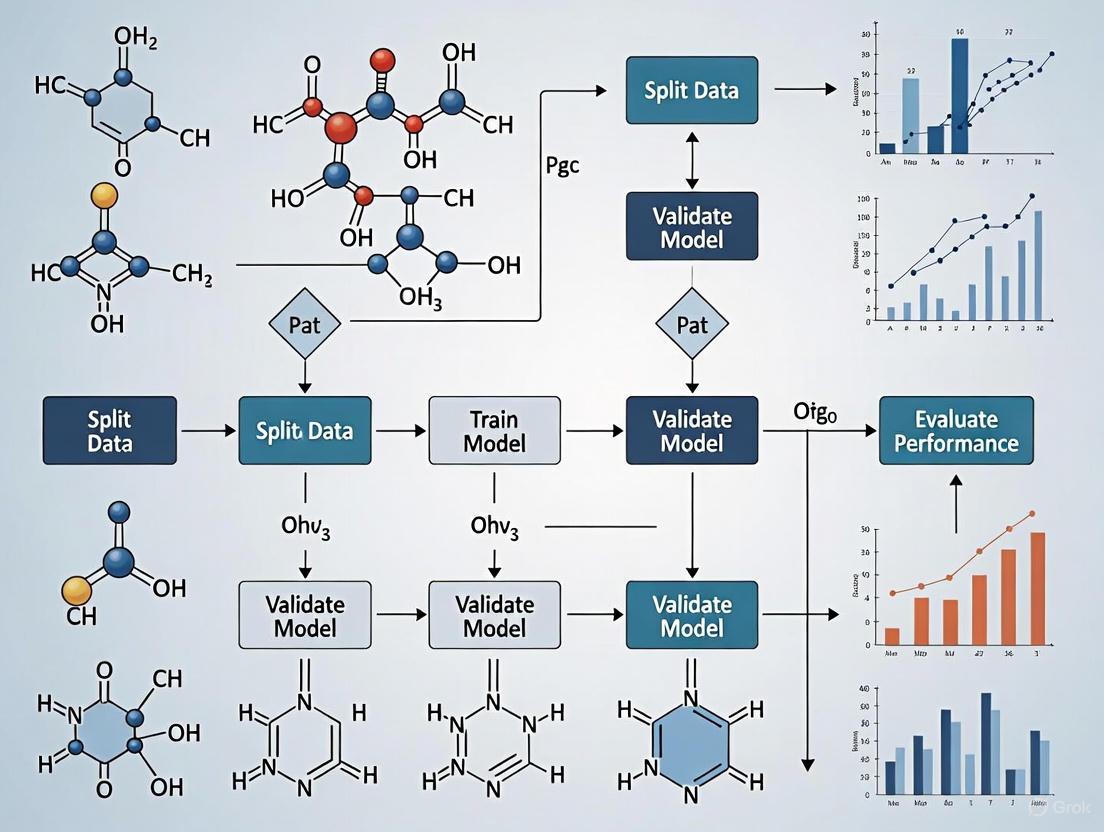
This article provides a complete framework for applying cross-validation and hyperparameter tuning to chemical machine learning applications in drug discovery and pharmaceutical development.
Optimizing Chemical ML Models: A Comprehensive Guide to Cross-Validation and Hyperparameter Tuning
Abstract
This article provides a complete framework for applying cross-validation and hyperparameter tuning to chemical machine learning applications in drug discovery and pharmaceutical development. Tailored for researchers and drug development professionals, it covers foundational concepts, practical methodologies, advanced optimization techniques using bio-inspired algorithms like Firefly and Dragonfly, and validation strategies for ensuring model generalizability. The guide addresses real-world challenges including data scarcity, class imbalance, and computational constraints, while demonstrating how these techniques enhance predictive accuracy in critical applications from pharmacokinetic prediction to pharmaceutical process optimization.
Understanding Cross-Validation and Hyperparameter Tuning in Chemical Machine Learning
The Critical Role of Model Generalization in Pharmaceutical Applications
In the high-stakes field of pharmaceutical research and development, the emergence of machine learning (ML) has introduced powerful tools for accelerating drug discovery and formulation. The global machine learning in pharmaceutical industry market, forecast to increase by USD 10.2 billion between 2024 and 2029, reflects the massive investment and confidence in these technologies [1]. However, the translation of predictive models from experimental settings to real-world applications hinges on a critical property: model generalization. This article explores how advanced hyperparameter tuning and validation frameworks serve as the cornerstone for developing robust, generalizable ML models in pharmaceutical applications, with a specific focus on predicting drug solubility and activity coefficients—key parameters in formulation development.
Generalization ensures that a model maintains its predictive performance when applied to new, unseen data, a non-negotiable requirement when model predictions inform critical decisions in drug development pipelines. Despite technical advancements, studies note that "even the best-performing models exhibit an error rate exceeding 10%, underscoring the ongoing need for careful human oversight in clinical settings" [2]. This reality highlights the imperative for methodological rigor in model development, particularly through sophisticated hyperparameter optimization and robust validation protocols that reliably estimate real-world performance.
The Generalization Imperative in Pharmaceutical ML
Model generalization represents the ultimate test of a predictive model's utility in pharmaceutical workflows. A model that performs well on its training data but fails on novel data can lead to costly missteps in candidate selection, clinical trial design, and formulation development. The challenge of generalization is particularly acute in pharmaceutical applications due to several domain-specific factors:
- Data Limitations: While pharmaceutical datasets can be large, they often suffer from sparsity, noise, and irregular sampling, especially in real-world healthcare data [3].
- High-Dimensional Spaces: Molecular descriptor data used in drug formulation typically involves numerous features (e.g., 24 input variables in one recent study [4]), creating complex optimization landscapes.
- Regulatory Scrutiny: Pharmaceutical applications often require demonstrated model robustness and reliability for regulatory approval, necessitating transparent validation approaches.
The consequences of poor generalization are not merely statistical but can directly impact patient outcomes and resource allocation. A phenomenon termed "overtuning" – a form of overfitting at the hyperparameter optimization level – has been identified as a significant risk, particularly in small-data regimes [5]. Overtuning occurs when excessive optimization of validation error leads to selecting hyperparameters that do not translate to improved generalization performance. Research indicates this occurs in approximately 10% of cases, sometimes resulting in worse performance than default configurations [5].
Methodological Framework for Robust Generalization
Hyperparameter Optimization Algorithms
Hyperparameter optimization (HPO) methods systematically search for optimal model configurations that maximize performance while ensuring robustness. Three primary approaches dominate current practice:
- Grid Search (GS): This brute-force method exhaustively evaluates all possible combinations within a predefined hyperparameter grid. While comprehensive, GS becomes computationally prohibitive for large hyperparameter spaces [6].
- Random Search (RS): RS randomly samples hyperparameter combinations from defined distributions, proving more efficient than GS for high-dimensional spaces [7].
- Bayesian Optimization (BO): BO builds a probabilistic model of the objective function to guide the search toward promising configurations, dramatically reducing the number of evaluations needed [8].
Validation Strategies
Cross-validation strategies provide the critical framework for estimating model generalization during development:
- K-Fold Cross-Validation: The dataset is partitioned into k subsets (folds), with each fold serving as a validation set while the remaining k-1 folds are used for training [3].
- Nested Cross-Validation: Also known as double cross-validation, this approach uses an outer loop for performance estimation and an inner loop for hyperparameter optimization, providing nearly unbiased performance estimates [3].
- Subject-Wise vs Record-Wise Splitting: For data with multiple records per subject, subject-wise splitting ensures all records from one subject reside in either training or validation splits, preventing data leakage [3].
Table 1: Comparison of Hyperparameter Optimization Methods
| Method | Search Strategy | Computational Efficiency | Best Use Cases |
|---|---|---|---|
| Grid Search | Exhaustive search over all combinations | Low for large spaces; becomes computationally prohibitive | Small hyperparameter spaces where exhaustive search is feasible |
| Random Search | Random sampling from parameter distributions | Higher than Grid Search; more efficient for high-dimensional spaces | Models with many hyperparameters where some are more important than others |
| Bayesian Optimization | Builds surrogate model to guide search | Highest; reduces evaluations needed by 30-50% | Complex models with expensive evaluations; limited computational budgets |
Comparative Analysis of HPO Methods in Healthcare Applications
Performance Benchmarking Studies
Recent comparative studies across healthcare domains provide compelling evidence for method selection. In a comprehensive analysis of heart failure prediction models, researchers evaluated GS, RS, and BS across three machine learning algorithms [6]. After rigorous 10-fold cross-validation, Random Forest models demonstrated superior robustness with an average AUC improvement of 0.03815, while Support Vector Machines showed signs of overfitting with a slight decline (-0.0074) [6].
The study further revealed critical differences in computational efficiency, with Bayesian Search consistently requiring less processing time than both Grid and Random Search methods [6]. This efficiency advantage makes Bayesian approaches particularly valuable in pharmaceutical applications where model complexity and dataset sizes continue to grow.
In environmental health research predicting actual evapotranspiration, Bayesian optimization demonstrated superior performance for tuning deep learning models, with LSTM achieving R²=0.8861 compared to traditional methods [8]. The authors noted "Bayesian optimization demonstrated higher performance and reduced computation time" compared to grid search approaches [8].
Pharmaceutical Formulation Case Study
A recent pharmaceutical study exemplifies the application of these methods for predicting drug solubility and activity coefficients (gamma) – critical parameters in formulation development [4]. The research employed three base models (Decision Tree, K-Nearest Neighbors, and Multilayer Perceptron) enhanced with AdaBoost ensemble method and rigorous hyperparameter tuning using the Harmony Search (HS) algorithm.
Table 2: Performance of Optimized Models in Pharmaceutical Formulation Prediction
| Model | Prediction Task | R² Score | Mean Squared Error (MSE) | Mean Absolute Error (MAE) |
|---|---|---|---|---|
| ADA-DT | Drug solubility | 0.9738 | 5.4270E-04 | 2.10921E-02 |
| ADA-KNN | Gamma (activity coefficient) | 0.9545 | 4.5908E-03 | 1.42730E-02 |
The optimized ADA-DT model for drug solubility prediction achieved remarkable performance (R²=0.9738), while the ADA-KNN model for gamma prediction also demonstrated strong predictive capability (R²=0.9545) [4]. This success was attributed to the integration of ensemble learning with advanced feature selection and hyperparameter optimization, highlighting how methodological rigor directly translates to predictive accuracy in pharmaceutical applications.
Integrated Workflows for Real-World Deployment
The NACHOS Framework
For real-world deployment, researchers have developed integrated frameworks that combine multiple methodological advances. The NACHOS (Nested and Automated Cross-validation and Hyperparameter Optimization using Supercomputing) framework integrates Nested Cross-Validation (NCV) and Automated Hyperparameter Optimization (AHPO) within a parallelized high-performance computing environment [9].
This approach addresses a critical limitation of conventional validation – the failure to quantify variance in test performance metrics when using a single fixed test set [9]. By integrating these methodologies, NACHOS provides a "scalable, reproducible, and trustworthy framework for DL model evaluation and deployment in medical imaging" [9], with principles directly applicable to pharmaceutical applications.
Experimental Protocol for Robust Pharmaceutical ML
Based on the analyzed studies, a robust experimental protocol for pharmaceutical ML applications should include:
- Data Preprocessing: Handle missing values using appropriate imputation techniques (MICE, kNN, or Random Forest imputation), remove outliers using methods like Cook's distance, and apply feature scaling [4] [6].
- Feature Selection: Implement Recursive Feature Elimination (RFE) or other selection methods to identify the most predictive molecular descriptors [4].
- Model Selection: Test multiple algorithms (e.g., Decision Trees, SVM, Random Forest, XGBoost) given their complementary strengths [6].
- Hyperparameter Optimization: Employ Bayesian Optimization for efficiency, with Random Search as a viable alternative for complex spaces [8] [6].
- Validation: Implement nested cross-validation for unbiased performance estimation, with appropriate splitting strategies (subject-wise for patient data) [3] [9].
- Performance Quantification: Report multiple metrics (AUC, accuracy, sensitivity, specificity, calibration measures) and variance estimates [6] [9].
Diagram 1: End-to-end workflow for developing generalizable ML models in pharmaceutical applications, integrating data preparation, model development with HPO, and rigorous validation.
The Scientist's Toolkit: Essential Research Reagents
Table 3: Essential Methodological "Reagents" for Pharmaceutical ML Research
| Tool/Technique | Function | Application Context |
|---|---|---|
| Bayesian Optimization | Efficient hyperparameter search using surrogate models | Optimizing complex models with limited computational budget; recommended for deep learning architectures |
| Nested Cross-Validation | Unbiased performance estimation with hyperparameter tuning | Model evaluation for regulatory submissions; quantifying performance variance |
| Recursive Feature Elimination | Iterative feature selection by eliminating weakest performers | Identifying critical molecular descriptors from high-dimensional data |
| Harmony Search Algorithm | Music-inspired metaheuristic optimization algorithm | Pharmaceutical formulation optimization when combined with ensemble methods |
| Subject-Wise Data Splitting | Ensuring all records from one subject are in same split | Preventing data leakage in patient-derived datasets with multiple measurements |
| Cook's Distance | Statistical measure for identifying influential outliers | Improving dataset quality by removing anomalous observations in molecular data |
| AdaBoost Ensemble | Boosting algorithm combining multiple weak learners | Enhancing performance of base models (DT, KNN, MLP) for solubility prediction |
The critical role of model generalization in pharmaceutical applications demands methodological rigor throughout the ML development pipeline. Evidence from comparative studies consistently demonstrates that Bayesian Optimization provides superior computational efficiency while maintaining performance, with Random Search representing a viable alternative [6]. The integration of ensemble methods with advanced HPO, as demonstrated in drug solubility prediction, achieves exceptional predictive accuracy (R²>0.95) [4].
Furthermore, frameworks like NACHOS that combine nested cross-validation, automated HPO, and high-performance computing address the crucial need to quantify and reduce variance in performance estimation [9]. For pharmaceutical researchers and developers, these methodologies provide the foundation for building trustworthy ML models that generalize reliably to novel data – ultimately accelerating drug discovery and formulation while maintaining scientific rigor and regulatory compliance.
As the field evolves, awareness of subtle challenges like overtuning – particularly in small-data regimes – will become increasingly important [5]. By adopting these sophisticated validation and optimization approaches, pharmaceutical researchers can harness the full potential of machine learning while ensuring their models deliver reliable, generalizable predictions for real-world application.
Defining Hyperparameters vs. Model Parameters in Chemical Contexts
Core Definitions and Conceptual Framework
In the realm of chemical machine learning (ML), understanding the distinction between model parameters and hyperparameters is fundamental to developing robust, predictive models. These two elements play distinct but interconnected roles in the learning process.
Model parameters are the internal variables of a model that are learned directly from the training data during the optimization process. They are not set manually but are estimated by the learning algorithm to map input features (e.g., molecular descriptors, spectroscopic data) to outputs (e.g., reaction yields, property predictions) [10] [11]. In the context of chemical ML, common examples include the weights and biases in a neural network [11] [12] or the coefficients in a linear regression model relating molecular structure to activity [11].
Hyperparameters, in contrast, are external configuration variables that are set prior to the training process and control how the learning algorithm operates [10] [13] [12]. They cannot be learned from the data and must be defined by the researcher. Examples critical to chemical ML include the learning rate of an optimization algorithm, the number of hidden layers in a neural network, or the number of trees in a random forest model [10] [12].
The relationship between them is hierarchical: hyperparameters control the process through which model parameters are learned [12]. The choice of hyperparameters directly influences which model parameters are ultimately obtained and thus the overall performance and generalizability of the final model [10].
Table 1: Fundamental Differences Between Model Parameters and Hyperparameters
| Aspect | Model Parameters | Hyperparameters |
|---|---|---|
| Origin | Learned from data [10] [11] | Set by the researcher [10] [13] |
| Objective | Define the model's mapping function for predictions [10] | Control the learning process and model structure [10] [13] |
| Examples in Chemical ML | Weights in a NN, regression coefficients [11] | Learning rate, number of layers, number of clusters [10] |
Hyperparameter Tuning and Validation in Chemical ML
In low-data regimes common to chemical research, such as predicting reaction outcomes or molecular properties with only dozens of data points, hyperparameter tuning becomes critically important to mitigate overfitting while maintaining model capacity [14].
The Challenge of Overfitting in Small Chemical Datasets
Chemical ML applications often involve small datasets, sometimes containing only 18 to 44 data points [14]. Such datasets are highly susceptible to overfitting, where a model learns noise or spurious correlations in the training data, impairing its ability to generalize to new, unseen data [14]. Non-linear models, which can capture complex structure-property relationships, are particularly prone to this issue without careful regularization and hyperparameter selection [14].
Advanced Tuning Workflows: The ROBERT Framework
Recent research has introduced automated workflows specifically designed for chemical ML in low-data scenarios. The ROBERT software, for instance, employs Bayesian hyperparameter optimization using a specialized objective function designed to minimize overfitting [14].
The core innovation in this workflow is a combined Root Mean Squared Error (RMSE) metric that evaluates a model's generalization capability by averaging performance across both interpolation and extrapolation cross-validation (CV) methods [14]:
- Interpolation is assessed via a 10-times repeated 5-fold CV process.
- Extrapolation is evaluated using a selective sorted 5-fold CV approach, which partitions data based on the target value and considers the highest RMSE between top and bottom partitions [14].
This dual approach identifies models that perform well on training data while also filtering those that struggle with unseen data, a crucial capability for predicting new chemical entities or reactions [14].
Diagram 1: Hyperparameter optimization workflow for chemical ML. The process iteratively evaluates hyperparameter sets using a combined metric of interpolation and extrapolation performance.
Performance Benchmarking: Linear vs. Non-Linear Models
Benchmarking studies on diverse chemical datasets (ranging from 18-44 data points) have demonstrated that properly tuned non-linear models can perform on par with or outperform traditional multivariate linear regression (MVL) - the historical standard in low-data chemical research [14].
In these studies, neural network (NN) models performed as well as or better than MVL in half of the tested examples, while non-linear algorithms achieved the best results for predicting external test sets in five out of eight examples [14]. This demonstrates that with appropriate hyperparameter tuning, more complex models can be successfully deployed even in data-limited chemical applications.
Experimental Protocols and Workflows
Detailed Methodology for Hyperparameter Optimization
The following protocol outlines the hyperparameter tuning process as implemented in automated chemical ML workflows [14]:
Data Preparation and Splitting
- Reserve 20% of the initial data (or minimum of four data points) as an external test set using an "even" distribution split to ensure balanced representation of target values.
- Perform all hyperparameter optimization exclusively on the remaining 80% training/validation data to prevent data leakage.
Objective Function Definition
- Define a combined RMSE metric that incorporates both interpolation and extrapolation performance:
- Interpolation RMSE: Calculate using 10-times repeated 5-fold cross-validation on the training/validation data.
- Extrapolation RMSE: Compute using a selective sorted 5-fold CV approach, where data is sorted by target value and partitioned, considering the highest RMSE between top and bottom partitions.
- The final objective function is a combination of these two RMSE values.
- Define a combined RMSE metric that incorporates both interpolation and extrapolation performance:
Bayesian Optimization Loop
- Initialize the optimization with a defined search space for all hyperparameters.
- For each iteration:
- Select hyperparameter set using Bayesian optimization algorithms.
- Train model with the selected hyperparameters.
- Evaluate model using the combined RMSE objective function.
- Update the optimization algorithm with results.
- Continue until convergence criteria are met or maximum iterations reached.
Final Model Selection
- Select the hyperparameter set that minimizes the combined RMSE metric.
- Train the final model on the entire training/validation set using these optimal hyperparameters.
- Evaluate final model performance on the held-out test set.
Comprehensive Model Evaluation Framework
Beyond standard performance metrics, advanced chemical ML workflows employ a sophisticated scoring system (on a scale of ten) based on three key aspects [14]:
Predictive Ability and Overfitting (up to 8 points):
- Evaluation of 10× 5-fold CV and external test set performance using scaled RMSE.
- Assessment of the difference between these RMSE values to detect overfitting.
- Measurement of extrapolation ability using the lowest and highest folds in sorted CV.
Prediction Uncertainty (1 point):
- Analysis of the average standard deviation of predicted values across different CV repetitions.
Detection of Spurious Models (1 point):
- Evaluation of RMSE differences after data modifications (y-shuffling, one-hot encoding).
- Comparison against a baseline error based on the y-mean test.
Table 2: Hyperparameter Categories and Their Impact in Chemical ML
| Category | Function | Chemical ML Examples | Impact on Model |
|---|---|---|---|
| Architecture Hyperparameters [13] | Control model structure and complexity | Number of layers in NN, number of trees in RF [13] | Determines capacity to capture complex structure-activity relationships |
| Optimization Hyperparameters [13] | Govern parameter learning process | Learning rate, batch size, number of epochs [10] [13] | Affects stability, speed, and convergence of training |
| Regularization Hyperparameters [13] | Prevent overfitting | L1/L2 strength, dropout rate [13] [15] | Controls model simplicity/generality trade-off |
Essential Research Reagents and Computational Tools
Successful implementation of hyperparameter tuning in chemical ML requires both computational tools and conceptual frameworks. The following table details key "research reagents" for this domain.
Table 3: Essential Research Reagent Solutions for Chemical ML Hyperparameter Tuning
| Tool/Concept | Function | Application Context |
|---|---|---|
| Bayesian Optimization [14] | Efficiently navigates hyperparameter space to find optimal configurations | Hyperparameter tuning for non-linear models (NN, RF, GB) on small chemical datasets |
| Combined RMSE Metric [14] | Objective function balancing interpolation and extrapolation performance | Prevents overfitting by evaluating model performance on both seen and unseen data regions |
| Cross-Validation Protocols (10× 5-fold CV, Sorted CV) [14] | Robust validation strategies that mitigate dataset splitting effects | Provides reliable performance estimates for small chemical datasets where single splits are unstable |
| Automated ML Workflows (e.g., ROBERT) [14] | Integrated pipelines for data curation, hyperparameter optimization, and model evaluation | Reduces human bias and enables reproducible model development in chemical ML |
| Pre-selected Hyperparameter Sets [16] | Default hyperparameter configurations that avoid over-optimization | Provides starting points for small datasets where extensive tuning risks overfitting |
In chemical machine learning, the distinction between model parameters and hyperparameters is not merely theoretical but has profound practical implications for model performance and generalizability. The proper tuning of hyperparameters through advanced workflows that explicitly address the challenges of small datasets enables researchers to harness the power of non-linear models while mitigating overfitting risks. As automated tools and specialized validation protocols continue to evolve, they promise to make sophisticated ML approaches more accessible and reliable for chemical discovery applications, from reaction outcome prediction to molecular property optimization. The integration of robust hyperparameter tuning practices represents an essential component in the modern chemoinformatics toolkit, ultimately expanding the possibilities for data-driven chemical research even in low-data regimes.
In computational chemistry and drug development, the reliability of a machine learning (ML) model is paramount. Model validation ensures that predictions for properties like chemical activity, toxicity, or hydrogen dispersion are accurate and generalizable, preventing costly errors in research and development [17]. Cross-validation is a statistical technique used to evaluate the performance and generalization ability of a machine learning model by partitioning data into subsets, training the model on some subsets, and testing it on the others [18]. This process is crucial for assessing how well a model will perform on unseen data, preventing overfitting, and guiding model selection and hyperparameter tuning [19] [18].
This guide objectively compares the most common cross-validation techniques, from the simple holdout method to advanced k-fold approaches, providing a framework for researchers to select the most appropriate validation strategy for their chemical ML applications.
Hold-Out Validation
The hold-out method, also known as train-test split, is the most straightforward validation technique. It involves randomly splitting the dataset into two parts: a training set and a testing set. A typical ratio is 70% for training and 30% for testing, though this can vary [18]. The model is trained once on the training set and evaluated once on the testing set.
Key Characteristics:
- Simplicity: The method is straightforward and easy to implement [18].
- Computational Efficiency: It requires only one training and testing cycle, making it less computationally intensive than repetitive methods [18].
- Drawbacks: The evaluation can have high variance if the single split is not representative of the overall data distribution. It also uses only a portion of the data for training, which can be inefficient, especially with smaller datasets [20] [18].
K-Fold Cross-Validation
K-fold cross-validation provides a more robust estimate of model performance by dividing the dataset into k equal-sized folds (subsets). The model is trained and tested k times. In each iteration, k-1 folds are used for training, and the remaining fold is used for testing. This process rotates until each fold has served as the test set once [20] [19]. The final performance metric is the average of the scores from all k iterations.
Key Characteristics:
- Comprehensive Data Use: All data points are used for both training and testing, maximizing data utility [19].
- Reduced Variance: Averaging results across multiple splits provides a more stable and reliable performance estimate than a single train-test split [20] [19].
- Computational Cost: Requires training the model k times, which can be computationally expensive for large datasets or complex models [20].
Table 1: Core Comparison of Hold-Out vs. K-Fold Cross-Validation
| Feature | Hold-Out Method | K-Fold Cross-Validation |
|---|---|---|
| Data Split | Single split into training and testing sets [20]. | Dataset divided into k folds; each fold used once as a test set [20]. |
| Training & Testing | Model is trained once and tested once [20]. | Model is trained and tested k times [20]. |
| Bias & Variance | Higher bias if the split is not representative; results can vary significantly [20] [18]. | Lower bias; more reliable performance estimate; variance depends on k [20] [19]. |
| Execution Time | Faster [20]. | Slower, especially for large datasets, as the model is trained k times [20]. |
| Best Use Case | Very large datasets or when a quick evaluation is needed [20] [18]. | Small to medium-sized datasets where an accurate performance estimate is critical [20]. |
Specialized Cross-Validation Techniques
For specific data structures, standard k-fold may not be optimal. Scikit-learn offers advanced variants [21]:
- StratifiedKFold: Preserves the percentage of samples for each class in every fold, which is crucial for imbalanced datasets [20] [21].
- GroupKFold: Ensures that the same group (e.g., molecules from the same experiment) is not present in two different folds. This prevents data leakage and overoptimistic performance estimates [21].
- StratifiedGroupKFold: Combines the constraints of both
GroupKFoldandStratifiedKFold, aiming to return stratified folds while keeping groups intact [21].
Experimental Protocols and Data Presentation
A Chemical ML Case Study: Predicting Hydrogen Dispersion
A study on hydrogen leakage and dispersion prediction optimized several ML models (including DNN) using Genetic Algorithms (GA). The performance of these optimized GA-ML models was then rigorously verified using k-fold cross-validation to ensure reproducibility and reliability [17].
Methodology:
- Data Generation: A comprehensive dataset of 6,561 leakage scenarios was generated using the PHAST simulation software, covering a wide range of operating conditions and meteorological factors [17].
- Model Optimization: Hyperparameters of five different ML models were optimized using Genetic Algorithms to minimize human bias and ensure optimal performance [17].
- Model Validation: The optimized models were evaluated using k-fold cross-validation. Their performance was compared using statistical metrics like R² (coefficient of determination), MSE (Mean Squared Error), and MAE (Mean Absolute Error) [17].
Results: The GA-optimized Deep Neural Network (GA-DNN) model was identified as the best-performing model for predicting hydrogen dispersion distance. The use of k-fold cross-validation provided a statistically sound basis for this conclusion, demonstrating the model's robustness and generalizability across different data splits [17].
Table 2: Quantitative Comparison of K-Fold and Hold-Out Based on Theoretical Performance
| Aspect | K-Fold Cross-Validation | Hold-Out Validation |
|---|---|---|
| Performance Estimate Reliability | More reliable; averages multiple splits [19]. | Less reliable; depends on a single split [18]. |
| Overfitting Detection | Helps detect overfitting; a large gap between training and validation performance is a clear sign [19]. | Less effective at detecting overfitting [18]. |
| Data Efficiency | High; all data used for training and validation [20] [19]. | Lower; only a portion of data is used for training [20] [18]. |
| Optimal for Hyperparameter Tuning | Yes; provides a reliable way to select optimal hyperparameters [19] [18]. | Not ideal; can lead to overfitting to a specific validation set [18]. |
Implementation with Scikit-Learn
The following code snippets illustrate how to implement k-fold cross-validation in Python, using the scikit-learn library.
Method 1: Using cross_val_score for a Single Metric
This is the most straightforward method for quick evaluation with one primary metric.
Method 2: Using cross_validate for Multiple Metrics
For a comprehensive evaluation, cross_validate allows you to compute multiple metrics and return additional information.
citation:4
Workflow Visualization
The following diagram illustrates the logical workflow for selecting and applying a cross-validation strategy in a chemical ML project, from data preparation to model selection.
Cross-Validation Strategy Selection Workflow
The Scientist's Toolkit: Research Reagent Solutions
This section details key computational tools and methodologies used in modern cross-validation experiments, analogous to essential reagents in a wet lab.
Table 3: Essential Tools for Cross-Validation Experiments
| Tool / Solution | Function in Validation | Example in Practice |
|---|---|---|
Scikit-Learn (sklearn) |
Provides a unified API for various cross-validation splitters, model training, and metrics calculation [19] [21]. | KFold, StratifiedKFold, and GroupKFold classes for data splitting; cross_val_score for evaluation. |
| Genetic Algorithms (GA) | A metaheuristic optimization technique used to find optimal model hyperparameters, minimizing human bias before cross-validation [17]. | Optimizing the number of layers and neurons in a DNN for hydrogen dispersion prediction [17]. |
| Statistical Metrics (R², MSE) | Quantify the model's performance and generalizability. Using multiple metrics provides a comprehensive view [19] [17]. | R² measures the proportion of variance explained; MSE penalizes larger errors more heavily. Both are averaged over k-folds. |
| Simulation Software (PHAST, FLACS) | Generates comprehensive datasets for chemical phenomena where real-world experimental data is scarce or dangerous to obtain [17]. | Creating a dataset of 6,561 hydrogen leakage scenarios to train and validate ML models [17]. |
| Visualization Libraries (Matplotlib) | Helps in visualizing cross-validation behavior, model performance across folds, and comparing different models [19] [21]. | Plotting individual fold scores and average performance for multiple models to aid in comparison and selection [19]. |
The choice between hold-out and k-fold cross-validation is a trade-off between computational efficiency and estimation reliability. For initial exploratory analysis with very large datasets, the hold-out method offers a quick and simple check. However, for robust model evaluation, hyperparameter tuning, and especially with limited datasets common in chemical ML research, k-fold cross-validation is the gold standard. Its ability to maximize data usage, provide a reliable performance average, and help detect overfitting makes it an indispensable tool for researchers and scientists aiming to build generalizable and trustworthy predictive models.
Why Chemical Data Requires Specialized Validation Strategies
In the field of chemical machine learning, the path from predictive models to reliable scientific insights is paved with unique challenges. Chemical data possesses inherent characteristics—from severe class imbalances to structured experimental designs and significant measurement noise—that render standard machine learning validation protocols insufficient. These domain-specific complexities necessitate specialized validation strategies to prevent overoptimistic performance estimates, ensure model generalizability, and ultimately build trust in predictions that guide critical decisions in drug discovery and materials science. This guide examines the core challenges and provides a structured comparison of validation methodologies tailored to chemical data.
Unique Challenges in Chemical Data
Chemical data exhibits several distinctive characteristics that fundamentally complicate machine learning validation:
Data Imbalance: In many chemical applications, crucial positive samples are extremely rare. Drug discovery datasets typically contain vastly more inactive compounds than active ones, while successful reaction outcomes are often outnumbered by unsuccessful attempts. Models trained on such imbalanced data tend to be biased toward the majority class without specialized handling [22] [23].
Structured Data Collection: Chemical data frequently originates from carefully designed experiments (Design of Experiments, DOE) with fixed factor combinations. This structured nature violates the common machine learning assumption of independent and identically distributed data, making standard random cross-validation problematic [24].
High Experimental Noise: Biochemical measurements, including ADMET (Absorption, Distribution, Metabolism, Excretion, and Toxicity) properties and reaction yields, often exhibit significant experimental error. This aleatoric uncertainty creates a fundamental performance ceiling that proper validation must acknowledge [25] [26].
Feature Complexity: Molecular representations range from simple descriptors to complex learned embeddings, with performance heavily dependent on the specific chemical domain and endpoint being modeled [26].
Specialized Validation Methodologies
Addressing Data Imbalance
Techniques specifically adapted for chemical data imbalance go beyond standard machine learning approaches:
Informed Sampling: The Synthetic Minority Over-sampling Technique (SMOTE) and its variants (Borderline-SMOTE, SVM-SMOTE) generate synthetic minority class samples in chemically meaningful regions of feature space. In materials science, SMOTE has been successfully integrated with Extreme Gradient Boosting (XGBoost) to predict mechanical properties of polymer materials and screen for hydrogen evolution reaction catalysts [22].
Negative Data Utilization: Incorporating information from unsuccessful experiments (negative data) through reinforcement learning can significantly improve model performance, especially when positive examples are scarce. This approach has demonstrated state-of-the-art performance in reaction prediction with as few as 20 positive data points supported by negative data [23].
The following workflow illustrates the integration of these specialized techniques into a validation framework for imbalanced chemical data:
Robust Performance Estimation
Proper validation strategies must account for the structured nature of chemical data and provide statistical rigor:
Scaffold Splitting: For molecular data, splitting by chemical scaffold (core molecular structure) provides a more challenging and realistic assessment of generalizability compared to random splitting, as it tests a model's ability to predict properties for novel chemotypes [26] [27].
Nested Cross-Validation: A nested approach, with hyperparameter tuning in the inner loop and performance estimation in the outer loop, prevents optimistic bias in model evaluation. This is particularly important for complex models with many parameters [27].
Statistical Significance Testing: Using appropriate statistical tests like Tukey's Honest Significant Difference (HSD) for method comparison accounts for multiple testing and provides confidence intervals that facilitate practical decision-making [25].
The following table compares key validation approaches for chemical data:
| Validation Method | Application Context | Advantages | Limitations |
|---|---|---|---|
| Leave-One-Out CV (LOOCV) | Small designed experiments [24] | Preserves design structure, low bias | High variance with unstable procedures |
| k-Fold Cross-Validation | General chemical datasets [24] | Balance of bias and variance | May disrupt designed experiment structure |
| Scaffold Split CV | Molecular property prediction [26] [27] | Tests generalization to novel chemotypes | More challenging performance targets |
| Reinforcement Learning with Negative Data | Reaction prediction with limited positives [23] | Leverages failed experiment information | Requires carefully characterized negative data |
Meaningful Performance Metrics
Standard metrics can be misleading for chemical data, necessitating domain-aware alternatives:
Precision-Recall Analysis: For imbalanced classification tasks common in virtual screening, the Area Under the Precision-Recall Curve (PR-AUC) provides a more informative performance measure than ROC-AUC, as it focuses on the minority class of interest [27].
Statistical Comparison Protocols: Rigorous method comparison should include effect sizes with confidence intervals rather than relying solely on point estimates or "dreaded bold tables" that highlight best performers without significance testing [25].
The experimental impact of proper metric selection is evident in benchmark studies:
| Study Context | Standard Metric | Domain-Appropriate Metric | Impact on Conclusion |
|---|---|---|---|
| Virtual Screening [27] | ROC-AUC | PR-AUC | Changed model ranking, better reflected practical utility |
| ADMET Prediction [26] | Single Test Set R² | Cross-Validation with Statistical Testing | Identified statistically insignificant "improvements" |
| Method Comparison [25] | Mean Performance | Tukey's HSD with Confidence Intervals | Distinguished practically significant differences |
Experimental Protocols for Chemical ML Validation
Protocol 1: Handling Data Imbalance in Chemical Classification
Application Context: Predicting compound activity, toxicity, or material properties with imbalanced data distributions.
Methodology:
- Data Characterization: Quantify imbalance ratio and analyze minority class distribution
- Strategic Sampling: Apply Borderline-SMOTE to generate synthetic samples along class boundaries, preserving minority class characteristics [22]
- Validation Strategy: Implement stratified cross-validation to maintain class proportions across folds
- Performance Assessment: Evaluate using PR-AUC, F1-score, and balanced accuracy alongside confusion matrix analysis
- Statistical Testing: Use paired statistical tests (e.g., Tukey's HSD) across multiple dataset splits to confirm significance of improvements [25]
Illustrative Example: In polymer material property prediction, researchers combined nearest neighbor interpolation with Borderline-SMOTE to balance datasets, enabling more accurate prediction of mechanical properties that would otherwise be obscured by data imbalance [22].
Protocol 2: Incorporating Negative Data in Low-Data Regimes
Application Context: Reaction prediction, catalyst design, or any chemical application where successful outcomes are rare.
Methodology:
- Data Curation: Collect both successful (positive) and unsuccessful (negative) experimental results
- Reward Model Design: Develop a reward function that appropriately weights positive and negative examples
- Reinforcement Learning Tuning: Fine-tune base models using policy gradient methods to maximize expected reward [23]
- Validation Framework: Use rigorous cross-validation with careful separation of positive and negative examples
- Generalization Testing: Evaluate on external datasets or temporal splits to assess real-world performance
Experimental Results: In reaction prediction, this approach achieved state-of-the-art performance using only 20 positive data points supported by negative data, significantly outperforming standard fine-tuning approaches [23].
Essential Research Reagents for Chemical ML Validation
The following tools and methodologies constitute the essential "research reagents" for robust chemical machine learning validation:
| Research Reagent | Function | Example Implementations |
|---|---|---|
| SMOTE Variants | Addresses class imbalance through intelligent oversampling | Borderline-SMOTE, SVM-SMOTE, RF-SMOTE [22] |
| Scaffold Splitting | Assesses model generalization to novel chemical structures | RDKit-based scaffold implementation [26] [27] |
| Statistical Comparison Framework | Determines significance of performance differences | Tukey's HSD test, paired t-tests with multiple testing correction [25] |
| Negative Data Integration | Leverages unsuccessful experiments to improve models | Reinforcement learning with reward model [23] |
| Multi-Metric Evaluation | Comprehensive performance assessment | PR-AUC, ROC-AUC, balanced accuracy [27] |
| Nested Cross-Validation | Provides unbiased performance estimation | Outer loop for testing, inner loop for hyperparameter tuning [27] |
Comparative Performance Analysis
The effectiveness of specialized chemical validation strategies is demonstrated through comparative experimental data:
| Validation Strategy | Chemical Application | Performance Impact | Statistical Significance |
|---|---|---|---|
| Standard Random CV | Polymer Elastic Response [28] | Baseline performance | Reference |
| SMOTE + XGBoost | Polymer Material Properties [22] | Improved minority class recall | p < 0.05 via Tukey's HSD [25] |
| Reinforcement Learning with Negative Data | Reaction Prediction [23] | +15% accuracy in low-data regime | p < 0.01 via paired testing |
| Scaffold Split vs Random Split | ADMET Prediction [26] | 20-30% performance drop highlighting overoptimism | Practical significance established |
The relationship between chemical data challenges and appropriate specialized solutions can be visualized as follows:
Chemical data demands specialized validation strategies that acknowledge its unique characteristics—severe imbalance, structured collection, significant noise, and complex feature representations. Through informed sampling techniques like SMOTE, strategic incorporation of negative data, appropriate performance metrics like PR-AUC, and rigorous statistical comparison protocols, researchers can develop models that deliver reliable, generalizable predictions. The experimental protocols and comparative data presented in this guide provide a foundation for robust chemical machine learning validation, enabling more trustworthy predictions that accelerate discovery in drug development and materials science.
The integration of artificial intelligence (AI) and machine learning (ML) has ushered in a transformative era for pharmaceutical research and development. These technologies are accelerating the discovery of novel therapeutic compounds and revolutionizing the design and optimization of drug formulations. By leveraging large, complex datasets, AI-driven approaches enable researchers to predict biological activity, optimize molecular properties, and design dosage forms with enhanced efficacy and stability more rapidly and cost-effectively than traditional methods. A critical factor in the success of these ML models is the implementation of robust hyperparameter tuning and cross-validation strategies to ensure predictive accuracy and generalizability. This guide examines real-world case studies across drug discovery and formulation, comparing the performance of different AI/ML approaches, their experimental protocols, and their tangible impact on pharmaceutical development.
Case Studies in AI-Driven Drug Discovery
Predictive Modeling for Anti-Infective Agents
Experimental Protocol: A comprehensive study trained five machine learning (Random Forest (RF), Multi-Layer Perceptron (MLP), K-Nearest Neighbors (KNN), eXtreme Gradient Boosting (XGBoost), Naive Bayes (NB)) and six deep learning algorithms (including Graph Convolution Network (GCN) and Graph Attention Network (GAT)) on highly imbalanced PubChem bioassay datasets targeting HIV, Malaria, Human African Trypanosomiasis, and COVID-19 [29]. The core methodology involved addressing significant class imbalance (ratios from 1:82 to 1:104 inactive-to-active compounds) through a novel K-ratio random undersampling (K-RUS) approach, which created specific imbalance ratios (1:50, 1:25, 1:10) for model training [29]. Model performance was rigorously assessed via external validation, and the impact of dataset content was investigated through an analysis of the chemical similarity between active and inactive classes [29].
Performance Comparison: The table below summarizes the key findings from the study, highlighting the effect of different resampling techniques on model performance metrics.
Table 1: Performance of ML/DL Models on Imbalanced Drug Discovery Datasets Using Different Resampling Techniques [29]
| Dataset (Original Imbalance Ratio) | Resampling Technique | Key Performance Outcome | Optimal Model(s) |
|---|---|---|---|
| HIV (1:90) | Random Undersampling (RUS) | Highest ROC-AUC, Balanced Accuracy, MCC, and F1-score | Multiple (RF, XGBoost, GCN) |
| Malaria (1:82) | Random Undersampling (RUS) | Best MCC values and F1-score | Multiple (RF, XGBoost, GCN) |
| Trypanosomiasis | Random Undersampling (RUS) | Best scores across multiple metrics | Multiple (RF, XGBoost, GCN) |
| COVID-19 (1:104) | SMOTE | Highest MCC and F1-score | Multiple (RF, XGBoost, GCN) |
| All Datasets | K-RUS (1:10 IR) | Consistently significant performance enhancement | Multiple |
The study concluded that a moderate imbalance ratio (IR) of 1:10, achieved via K-RUS, generally provided the best balance between true positive and false positive rates across all models and datasets, outperforming conventional resampling methods like SMOTE and ADASYN [29].
Robust Antimalarial Prediction with Random Forest
Experimental Protocol: Researchers developed a robust random forest (RF) model to predict antiplasmodial activity from a large dataset of ~15,000 molecules from ChEMBL tested at multiple doses against Plasmodium falciparum blood stages [30]. "Actives" were strictly defined as having IC50 < 200 nM (N=7039) and "inactives" as IC50 > 5000 nM (N=8079) to ensure a clear, noise-free distinction [30]. The dataset was split into 80% for training/internal validation and 20% as a held-out external test set [30]. The workflow was implemented on the KNIME platform, and nine different molecular fingerprints were evaluated, with Avalon fingerprints (RF-1 model) yielding the best results after hyperparameter optimization [30].
Performance Comparison: The optimized RF model was benchmarked and experimentally validated.
Table 2: Performance of the Optimized Random Forest Model for Antimalarial Prediction [30]
| Model | Accuracy | Precision | Sensitivity | Area Under ROC (AUROC) |
|---|---|---|---|---|
| RF-1 (Avalon MFP) | 91.7% | 93.5% | 88.4% | 97.3% |
| MAIP (Consensus Model, Benchmark) | Comparable to RF-1 | Comparable to RF-1 | Comparable to RF-1 | Comparable to RF-1 |
The study noted that hits identified by the RF-1 model and the benchmark MAIP model from a commercial library did not overlap, suggesting the models are complementary [30]. External experimental validation of six purchased molecules identified two human kinase inhibitors with single-digit micromolar antiplasmodial activity, confirming the model's real-world predictive power [30].
Case Studies in AI-Optimized Drug Formulation
Smart Formulation: Predicting Stability of Compounded Medicines
Experimental Protocol: The "Smart Formulation" AI platform was designed to predict the Beyond Use Dates (BUDs) of compounded oral solid dosage forms [31]. A curated dataset of 55 experimental BUD values from the Stabilis database was used to train a Tree Ensemble Regression model within the KNIME platform [31]. Each formulation was encoded using molecular descriptors (e.g., LogP), excipient composition, packaging type, and storage conditions [31]. The trained model was then used to predict BUDs for 3166 Active Pharmaceutical Ingredients (APIs) under various scenarios [31].
Performance Comparison: The model's predictive accuracy was validated and its findings on critical stability factors are summarized below.
Table 3: Performance of Smart Formulation Model and Key Stability Factors [31]
| Aspect | Finding | Impact/Correlation |
|---|---|---|
| Predictive Accuracy | Strong correlation with experimental values (R² = 0.9761, p < 0.001) | High model reliability |
| Key Molecular Descriptor | LogP | Significant correlation with BUD (R=0.503, p=0.012) |
| Impact of Excipient Number | Use of two excipients vs. one | Frequently reduced BUDs |
| Stability-Enhancing Excipients | Cellulose, silica, sucrose, mannitol | Associated with improved stability |
| Stability-Reducing Excipients | HPMC, lactose | Contributed to faster degradation |
The platform provides a scalable, cost-effective decision-support tool for pharmacists, helping to mitigate drug shortages and improve the quality of extemporaneous preparations [31].
Generative AI for In-Silico Formulation Optimization
Experimental Protocol: A generative AI method was developed to create digital versions of drug products from images of exemplar products [32]. This approach uses a Conditional Generative Adversarial Network (cGAN) architecture, specifically an On-Demand Solid Texture Synthesis (STS) model augmented with Feature-wise Linear Modulation (FiLM) layers [32]. The model is steered by Critical Quality Attributes (CQAs) like particle size and drug loading to generate realistic digital product variations that can be analyzed and optimized in silico [32].
Performance Comparison: The method was validated in two case studies:
- Oral Tablet: Accurately predicted a percolation threshold of 4.2% weight of microcrystalline cellulose in an oral tablet product [32].
- HIV Implant: Successfully generated implant formulations with controlled drug loading and particle size distributions. Comparisons with real samples showed that the synthesized structures exhibited comparable particle size distributions and transport properties in release media [32].
This generative AI method significantly reduces the need for physical manufacturing and experimentation during early-stage formulation development, potentially cutting costs and shortening development cycles [32].
Cross-Validation and Hyperparameter Optimization in Practice
Robust model validation is paramount. A comparative analysis of hyperparameter optimization methods for predictive models on a clinical heart failure dataset offers generalizable insights [6]. The study evaluated Grid Search (GS), Random Search (RS), and Bayesian Search (BS) across Support Vector Machine (SVM), Random Forest (RF), and XGBoost algorithms [6].
Table 4: Comparison of Hyperparameter Optimization Methods on Clinical Data [6]
| Optimization Method | Description | Computational Efficiency | Best Performing Model (AUC) | Robustness to Overfitting |
|---|---|---|---|---|
| Grid Search (GS) | Exhaustive brute-force search over a parameter grid | Low (computationally expensive) | SVM (Initial AUC > 0.66) | Low (SVM showed potential for overfitting) |
| Random Search (RS) | Random sampling of parameter combinations | Moderate | SVM (Initial AUC > 0.66) | Low (SVM showed potential for overfitting) |
| Bayesian Search (BS) | Builds a surrogate model to guide the search | High (consistently less processing time) | RF (Most robust, avg. AUC improvement +0.03815) | High |
The study demonstrated that while SVM initially showed high accuracy, Random Forest models optimized with Bayesian Search demonstrated superior robustness after 10-fold cross-validation, with the highest average AUC improvement and less overfitting [6]. This underscores the necessity of rigorous cross-validation in building reliable models for pharmaceutical applications.
The Scientist's Toolkit: Essential Research Reagents & Platforms
Table 5: Key Software Platforms and Tools for AI-Driven Drug Discovery and Formulation
| Tool/Platform Name | Type | Primary Function in Research |
|---|---|---|
| KNIME Analytics Platform [30] [31] | Data Analytics Platform | Used to build automated workflows for data curation, model training (e.g., Random Forest), and stability prediction without coding. |
| Generative Adversarial Network (GAN) [32] | AI Model Architecture | Generates novel, realistic digital structures of drug formulations (e.g., tablet microstructures) based on exemplar images and target attributes. |
| Tree Ensemble Regression [31] | Machine Learning Algorithm | Predicts continuous outcomes (e.g., Beyond Use Date) by combining predictions from multiple decision trees for improved accuracy. |
| Random Forest (RF) [29] [30] [6] | Machine Learning Algorithm | An ensemble classification algorithm used for predicting biological activity (e.g., antiplasmodial activity) and robust against overfitting. |
| Avalon Molecular Fingerprints [30] | Molecular Representation | A type of chemical fingerprint used to encode molecular structure; proved effective in building predictive models for antimalarial activity. |
| Bayesian Search (BS) [6] | Hyperparameter Optimization Method | Efficiently finds optimal model parameters by building a probabilistic surrogate model, balancing performance and computational cost. |
Experimental Workflow and Signaling Pathways
The following diagram illustrates a standardized, high-level workflow for developing and validating an AI/ML model in pharmaceutical sciences, integrating common elements from the cited case studies.
Practical Implementation of Cross-Validation and Tuning Methods
Selecting Appropriate Cross-Validation Strategies for Chemical Data
In the field of chemical machine learning (ML), where models predict bioactivity, optimize drug formulations, and characterize materials, the reliability of predictive models is paramount. Overfitting remains one of the most pervasive and deceptive pitfalls, leading to models that perform exceptionally well on training data but fail to generalize to real-world scenarios [33]. Although often attributed to excessive model complexity, overfitting frequently results from inadequate validation strategies, faulty data preprocessing, and biased model selection [33]. For researchers, scientists, and drug development professionals, selecting an appropriate cross-validation (CV) strategy is not merely a technical formality but a fundamental determinant of a model's real-world utility. This guide provides a comparative analysis of cross-validation methodologies specifically for chemical data, supported by experimental data and detailed protocols to inform robust model development.
Understanding Cross-Validation and Its Importance in Chemical Applications
The Basic Principles of Cross-Validation
Cross-validation is a set of data sampling methods used to estimate the generalization performance of an algorithm, perform hyperparameter tuning, and select between candidate models [34]. The core principle involves repeatedly partitioning the available data into independent training and testing sets. The model is trained on the training set, and its performance is evaluated on the test set. This process is repeated multiple times, with the performance results averaged over the rounds to produce a more robust estimate of how the model will perform on unseen data [34]. This process helps mitigate overfitting, where a model learns patterns specific to the training data that do not generalize to new data [34].
Domain-Specific Challenges for Chemical Data
Chemical data presents unique validation challenges that necessitate careful strategy selection:
- Data Heterogeneity: Chemical datasets often encompass diverse target classes (e.g., ion channels, receptors, transporters) and assay types (e.g., binding, functional, ADME) [27].
- Limited Data Availability: Many chemical ML studies operate in a "low-data regime," where the risk of overfitting is high [35].
- Complex Data Structure: Data may exhibit strong internal correlations, such as when multiple compounds share common molecular scaffolds, violating the assumption of data independence [27].
- Imbalanced Outcomes: Bioactivity data often shows significant class imbalance, with many more inactive than active compounds for a given target [27] [3].
Comparative Analysis of Cross-Validation Strategies
The table below summarizes the key cross-validation strategies, their mechanisms, and their suitability for various chemical data scenarios.
Table 1: Comparative Analysis of Cross-Validation Strategies for Chemical Data
| Validation Strategy | Key Mechanism | Advantages | Limitations | Ideal Chemical Data Use Cases |
|---|---|---|---|---|
| Holdout Validation [34] | One-time split into training/test sets (e.g., 80/20) | Simple, fast, produces a single model | performance estimates have high variance with small datasets; susceptible to data representation bias | Preliminary model exploration with very large datasets (>100,000 samples) [27] |
| K-Fold Cross-Validation [34] | Data partitioned into k folds; each fold serves as test set once | More robust performance estimate than holdout; uses all data for evaluation | Standard k-fold can produce optimistically biased estimates if data has inherent groupings (e.g., scaffolds) | Homogeneous data without strong internal grouping structures |
| Stratified K-Fold [3] | Preserves the percentage of samples for each class in every fold | Controls for class imbalance in classification tasks | Primarily addresses imbalance, not other data structures | Bioactivity classification with imbalanced active/inactive compounds [27] |
| Grouped/Scaffold Split CV [27] | Splits data such that all samples from one group (e.g., same molecular scaffold) are in the same fold | The most realistic simulation of real-world generalization for new chemical series; reduces optimistic bias | Can lead to high variance in error estimates if few groups exist | Primary method for bioactivity prediction; essential for model generalizability estimation [27] |
| Nested Cross-Validation [35] | Outer loop for performance estimation, inner loop for hyperparameter tuning | Provides nearly unbiased performance estimates; appropriate for both model selection and evaluation | Computationally intensive; requires careful implementation | Final model evaluation and algorithm selection when dataset size is limited [35] |
Quantitative Performance Comparison
The choice of validation strategy significantly impacts reported model performance. The following table synthesizes findings from a reanalysis of a large-scale comparison of machine learning methods for drug target prediction, highlighting how validation can alter performance conclusions.
Table 2: Impact of Validation Strategy on Model Performance Interpretation
| Study Focus | Reported Finding (Original Validation) | Finding After Re-analysis (Robust Validation) | Key Implication |
|---|---|---|---|
| Deep Learning vs. SVM for Bioactivity Prediction [27] | "Deep learning methods significantly outperform all competing methods" (p < 10⁻⁷) | The performance of support vector machines (SVM) is competitive with deep learning methods. | Apparent superiority of complex models can be an artifact of validation bias. |
| Performance Metric Choice [27] | Conclusion based primarily on Area Under the ROC Curve (AUC-ROC) | AUC-ROC can be misleading; Area Under the Precision-Recall Curve (AUC-PR) is often more relevant for imbalanced bioactivity data. | Metric selection must align with the application context (e.g., virtual screening). |
| Uncertainty Estimation [27] | Performance reported without confidence intervals for many assays | Scaffold-split nested cross-validation reveals high uncertainty in performance estimates, especially for small, imbalanced assays. | Reporting confidence intervals is crucial for realistic performance assessment. |
Experimental Protocols and Workflow Visualization
Detailed Protocol: Nested Cross-Validation for Drug Release Prediction
The following protocol is adapted from a study that successfully predicted drug release from polymeric long-acting injectables using nested cross-validation [35].
1. Problem Formulation and Data Collection:
- Objective: Predict fractional drug release over time based on descriptors of the drug, polymer, and formulation.
- Data Compilation: Assemble a dataset from literature and in-house experiments. The example dataset included 181 drug release profiles with 3783 individual release measurements for 43 unique drug-polymer combinations [35].
- Feature Selection: Define molecular and physicochemical input features based on domain knowledge. Key features included:
- Drug Properties: Molecular weight, topological polar surface area, melting temperature, LogP, pKa.
- Polymer Properties: Molecular weight, lactide-to-glycolide ratio (for PLGA), cross-linking ratio.
- Formulation Parameters: Drug loading capacity, initial drug-to-polymer ratio, surface area-to-volume ratio of the formulation.
- Experimental Conditions: Percentage of surfactant in release media, fractional release at early time points (e.g., 6, 12, 24 hours) [35].
2. Nested Cross-Validation Setup:
- Outer Loop (Performance Estimation): 20% of the drug-polymer groups are randomly held out as a test set. This process is repeated multiple times (e.g., 10) with different random splits to obtain an average performance [35].
- Inner Loop (Model Training & Tuning): The remaining 80% of data undergoes hyperparameter optimization using group k-fold cross-validation (k=10). The groups are defined by drug-polymer combinations to prevent data leakage. A random grid search is used to find the hyperparameters that yield the best average performance across the k-folds [35].
3. Model Training and Evaluation:
- Algorithm Selection: Train and compare a panel of ML algorithms (e.g., Multiple Linear Regression, Random Forest, Gradient Boosting Machines, Support Vector Regressor).
- Performance Metrics: Use relevant metrics such as Root Mean Squared Error (RMSE) for regression or AUC-ROC/AUC-PR for classification.
The workflow for this protocol is visualized below.
Detailed Protocol: Scaffold-Split Validation for Bioactivity Prediction
This protocol addresses the critical issue of molecular scaffold bias in chemoinformatics [27].
1. Data Preparation and Scaffold Analysis:
- Compound Standardization: Standardize molecular structures from the dataset (e.g., from ChEMBL).
- Scaffold Assignment: Assign each compound a molecular scaffold (e.g., using Bemis-Murcko scaffolds).
- Data Stratification: Analyze the distribution of compounds across scaffolds. This reveals if the dataset is dominated by a few common scaffolds.
2. Scaffold-Split Cross-Validation:
- Split by Scaffold, Not by Compound: Partition the data into k folds such that all compounds sharing a scaffold are contained within the same fold. This prevents any compounds from the same scaffold family from being in both the training and test sets for a given CV round.
- Stratification for Imbalance: If possible, perform scaffold splitting in a way that roughly preserves the overall class balance (active/inactive) in each fold.
3. Model Training and Evaluation:
- Training: Train the model on compounds from the training scaffolds.
- Testing: Evaluate the model on the completely unseen scaffolds in the test fold.
- Performance Aggregation: Repeat for all k folds and aggregate the results. The resulting performance is a more realistic estimate of a model's ability to generalize to novel chemical series.
The logical relationship and decision process for implementing a scaffold split is outlined below.
Table 3: Essential Tools for Cross-Validation in Chemical ML
| Tool Category | Specific Tool / Resource | Function in Validation Workflow | Application Note |
|---|---|---|---|
| Cheminformatics Libraries | RDKit [27] | Calculates molecular fingerprints (e.g., ECFP6) and descriptors; performs scaffold analysis. | The de facto standard open-source toolkit for chemical informatics. |
| Machine Learning Frameworks | Scikit-learn [34] [7] | Implements core CV splitters (KFold, StratifiedKFold, GroupKFold) and hyperparameter tuners (GridSearchCV, RandomizedSearchCV). | Excellent for prototyping; provides consistent API for various models and splitters. |
| Advanced Hyperparameter Optimization | Optuna [36] [37] | Bayesian optimization framework with pruning for efficient hyperparameter search in inner CV loops. | Can significantly reduce tuning time (e.g., 6.77 to 108.92x faster) compared to Grid/Random Search [36]. |
| Public Chemical Databases | ChEMBL [27] | Provides large-scale, structured bioactivity data for training and benchmarking predictive models. | Critical for building robust, generalizable models; data heterogeneity must be accounted for in splits. |
| Specialized CV Splitters | GroupKFold (Scikit-learn), custom scaffold splitter | Enforces separation of specific groups (e.g., scaffolds, assay protocols) across training and test sets. | Essential for implementing scaffold-split or other group-based validation strategies. |
The selection of a cross-validation strategy is a foundational decision that profoundly influences the perceived performance, reliability, and ultimate utility of chemical machine learning models. Based on the comparative analysis and experimental data presented, the following recommendations are made for researchers and drug development professionals:
- Default to Grouped/Scaffold Splits: For most chemical prediction tasks, particularly quantitative structure-activity relationship (QSAR) modeling and bioactivity prediction, scaffold-based cross-validation provides the most realistic assessment of a model's ability to generalize to novel chemical matter and should be considered the gold standard [27].
- Use Nested Cross-Validation for Final Evaluation: When performing both hyperparameter tuning and final model evaluation on a single dataset, nested cross-validation is the most rigorous approach, as it prevents optimistic bias from leaking into the performance estimate [35].
- Align Metrics with Application Goals: Do not rely solely on AUC-ROC, especially for imbalanced data common in virtual screening. Complement it with metrics like AUC-PR to gain a comprehensive view of model performance [27].
- Report Uncertainty: Always report confidence intervals or the standard error of performance metrics, especially when dealing with small or imbalanced assay data, to provide a realistic picture of model reliability [27].
By moving beyond simplistic holdout validation and adopting these more robust, domain-aware strategies, the chemical ML community can build more trustworthy, reproducible, and generalizable models that accelerate discovery and development.
In the field of chemical machine learning (ML), where models like Graph Neural Networks (GNNs) are increasingly used for molecular property prediction, drug discovery, and toxicity assessment, hyperparameter tuning represents a critical step in model development. The performance of these models is highly sensitive to architectural choices and hyperparameters, making optimal configuration selection a non-trivial task that significantly impacts predictive accuracy and generalizability [38]. Hyperparameters are configuration variables that control the learning process itself, distinct from model parameters which are learned from data during training [39]. Examples include learning rates, regularization parameters, architectural depth, and hidden layer sizes.
Within cheminformatics, where datasets are often characterized by limited samples, high dimensionality, and potential class imbalance, proper hyperparameter optimization becomes even more crucial to avoid overfitting and ensure model robustness [16]. This guide provides a comprehensive examination of GridSearchCV, a systematic approach to hyperparameter optimization, comparing it with alternative methods within the context of chemical ML applications, complete with experimental data and implementation protocols relevant to researchers and drug development professionals.
Understanding GridSearchCV: Core Mechanism and Workflow
Fundamental Principles
GridSearchCV (Grid Search with Cross-Validation) is an exhaustive hyperparameter tuning technique that operates on a simple yet systematic principle: it evaluates all possible combinations of hyperparameters specified in a predefined grid. For each combination, it performs cross-validation to assess model performance, ultimately selecting the configuration that yields the best results [40] [41]. This method leaves no stone unturned within the defined search space, ensuring that the optimal combination from the discrete values provided is identified.
The technique is particularly valuable in chemical ML contexts where the relationship between hyperparameters and model performance may be complex and non-intuitive. For instance, when training GNNs for molecular property prediction, interactions between hyperparameters like graph convolution depth, dropout rate, and learning rate can significantly impact a model's ability to capture relevant chemical patterns [38]. GridSearchCV systematically explores these interactions without relying on random sampling.
Integrated Cross-Validation
A key strength of GridSearchCV is its integration of k-fold cross-validation, which addresses the critical issue of overfitting—a particular concern in cheminformatics where datasets may be small [42]. In this process, the training data is split into k partitions (folds). The model is trained k times, each time using k-1 folds for training and the remaining fold for validation. The performance metric reported is the average across all folds [40] [43]. This approach provides a more robust estimate of model generalization compared to a single train-test split, especially important when working with limited chemical data.
Table 1: Key Components of GridSearchCV
| Component | Description | Role in Hyperparameter Tuning |
|---|---|---|
estimator |
The machine learning model/algorithm to be tuned | Determines which hyperparameters are available for optimization |
param_grid |
Dictionary with parameters names as keys and lists of parameter settings to try as values | Defines the search space and specific values to explore |
scoring |
Performance metric (e.g., 'accuracy', 'r2', 'precision') | Quantifies model performance for comparison across parameter combinations |
cv |
Cross-validation strategy (e.g., integer for k-fold) | Controls the validation methodology for robust performance estimation |
n_jobs |
Number of jobs to run in parallel | Enables parallel processing to accelerate the search process |
GridSearchCV in Practice: Implementation for Chemical ML
Basic Implementation Framework
The implementation of GridSearchCV follows a consistent pattern across different ML frameworks. In scikit-learn, the process involves defining an estimator, specifying the parameter grid, and configuring the cross-validation parameters [44]. The following example demonstrates a typic al implementation for a Random Forest model, which could be used in preliminary cheminformatics studies:
Advanced Configuration for Complex Workflows
For more advanced chemical ML applications, such as those involving pipelines or specialized metrics, GridSearchCV offers additional configuration options. The refit parameter allows automatically retraining the best model on the entire dataset after hyperparameter selection, while custom scoring functions can optimize for domain-specific objectives relevant to drug discovery, such as balanced accuracy for imbalanced toxicity datasets [44].
The following diagram illustrates the complete GridSearchCV workflow:
Comparative Analysis: GridSearchCV vs. RandomizedSearchCV
Methodological Differences
While GridSearchCV employs an exhaustive search strategy, RandomizedSearchCV takes a probabilistic approach by sampling a fixed number of parameter settings from specified distributions [41] [39]. This fundamental difference in search methodology leads to distinct performance characteristics and computational requirements. RandomizedSearchCV is particularly advantageous when dealing with continuous hyperparameters or when the importance of different hyperparameters varies significantly, as it can explore a wider range of values without exponential computational cost [41].
In chemical ML applications, where certain hyperparameters (like learning rate or regularization strength) often have more significant impact than others, RandomizedSearchCV's ability to sample from continuous distributions (e.g., scipy.stats.expon for regularization parameters) can be particularly beneficial [41]. This allows for finer exploration of critical parameters while spending less computational resources on less influential ones.
Quantitative Performance Comparison
Experimental comparisons between these approaches demonstrate clear trade-offs. A study comparing both methods for optimizing a Support Vector Machine classifier found that while both methods achieved similar final accuracy (0.94), RandomizedSearchCV completed its search in 0.78 seconds for 15 candidate parameter settings, while GridSearchCV required 4.23 seconds for 60 candidate parameter settings [45]. This represents an 81% reduction in computation time with comparable performance, though the study authors noted that the slightly worse performance of randomized search was likely due to noise effects rather than systematic deficiency [45].
Table 2: Experimental Comparison of GridSearchCV and RandomizedSearchCV
| Metric | GridSearchCV | RandomizedSearchCV | Implications for Chemical ML |
|---|---|---|---|
| Search Strategy | Exhaustive: evaluates all possible combinations | Probabilistic: samples fixed number of combinations | Choice depends on parameter space complexity and computational budget |
| Computation Time | 4.23 seconds for 60 candidates [45] | 0.78 seconds for 15 candidates [45] | Randomized search offers significant speed advantages for initial exploration |
| Best Accuracy Achieved | 0.994 (std: 0.005) [45] | 0.987 (std: 0.011) [45] | Grid search may achieve marginally better performance in some cases |
| Parameter Space Coverage | Complete within defined grid | Partial but broader distribution coverage | Randomized search better for continuous parameters or large search spaces |
| Scalability to High Dimensions | Becomes computationally prohibitive | More efficient for high-dimensional spaces | Critical for complex GNN architectures with many tunable parameters [38] |
Experimental Protocol for Hyperparameter Optimization in Chemical ML
Standardized Evaluation Framework
To ensure fair comparison between hyperparameter optimization strategies in chemical ML applications, researchers should adopt a standardized experimental protocol:
Data Preparation: Apply appropriate cheminformatics preprocessing including standardization, handling of missing values, and molecular representation (e.g., fingerprints, graph representations). For GNNs, molecular graphs must be consistently constructed with node and edge features [38].
Data Splitting: Implement stratified splitting to maintain class distribution, particularly important for imbalanced chemical datasets (e.g., active vs. inactive compounds). Consider time-split or scaffold-aware splits for more realistic validation in drug discovery contexts [16].
Search Space Definition: For GridSearchCV, define discrete parameter values based on prior knowledge or literature values. For RandomizedSearchCV, define appropriate statistical distributions for each parameter.
Performance Assessment: Use multiple metrics relevant to the application (e.g., AUC-ROC, precision, recall, F1-score) in addition to primary optimization metric, as single metrics may not capture all performance aspects important for chemical applications [44].
Final Evaluation: After hyperparameter tuning, evaluate the best model on a completely held-out test set that wasn't involved in the tuning process.
Domain-Specific Considerations for Cheminformatics
When applying GridSearchCV to chemical ML problems, several domain-specific considerations emerge. Recent studies suggest that extensive hyperparameter optimization may lead to overfitting on small chemical datasets, and that using preselected hyperparameters can sometimes produce models with similar or even better accuracy than those obtained using grid optimization for methods like ChemProp and Attentive Fingerprint [16]. This highlights the importance of matching the complexity of the hyperparameter search to the available data size.
Additionally, the choice of splitting strategy significantly impacts results in chemical ML. One study found that Uniform Manifold Approximation and Projection (UMAP) split provided more challenging and realistic benchmarks for model evaluation than traditional methods like Butina splits, scaffold splits, and random splits [16]. This suggests that the validation methodology should be carefully considered alongside hyperparameter optimization.
The Researcher's Toolkit: Essential Components for Hyperparameter Optimization
Table 3: Research Reagent Solutions for Hyperparameter Optimization
| Tool/Component | Function | Application Context |
|---|---|---|
| Scikit-learn's GridSearchCV | Exhaustive hyperparameter search with cross-validation | General-purpose ML models, including baseline chemical models |
| Scikit-learn's RandomizedSearchCV | Randomized hyperparameter search with cross-validation | Large parameter spaces, initial exploration, computational budget constraints |
| HalvingGridSearchCV | Successive halving tournament approach for more efficient search | Resource-intensive models where progressive elimination is beneficial [41] |
| HalvingRandomSearchCV | Randomized search with successive halving | Large parameter spaces with resource-intensive model training [41] |
| ChemProp with Hyperparameter Optimization | GNN specifically designed for molecular property prediction | State-of-the-art molecular property prediction with built-in hyperparameter tuning [16] |
| Attentive FP with Hyperparameter Optimization | GNN architecture for molecular representation learning | Interpretable atom-level prediction for toxicity and properties [16] |
GridSearchCV remains a valuable tool in the chemical ML researcher's arsenal, particularly when dealing with small to moderate hyperparameter spaces or when exhaustive search is computationally feasible. Its systematic approach ensures no potential combination within the defined space is overlooked, which can be crucial when deploying models for high-stakes applications like toxicity prediction or binding affinity estimation in drug discovery.
However, the comparative analysis reveals that RandomizedSearchCV often provides better computational efficiency with minimal performance sacrifice, making it particularly suitable for initial explorations, large parameter spaces, or when working with computationally expensive models like deep GNNs. For chemical ML applications, a hybrid approach may be optimal: using RandomizedSearchCV for initial broad exploration followed by a focused GridSearchCV in promising regions of the hyperparameter space.
As the field advances, techniques like successive halving and Bayesian optimization are increasingly complementing these traditional approaches. Nevertheless, GridSearchCV continues to offer unparalleled comprehensiveness for well-defined hyperparameter spaces, ensuring its ongoing relevance in the cheminformatics toolkit, particularly for applications where computational resources are adequate and parameter interactions are complex.
In the field of chemical machine learning (ML) and drug development, optimizing predictive models is crucial for accurately forecasting molecular properties, reaction outcomes, and biological activities. Hyperparameter tuning represents a critical step in this optimization process, directly impacting model performance and generalizability. For researchers dealing with computationally intensive simulations, such as predicting the elastic response of cross-linked polymers or molecular activity profiles, efficient hyperparameter optimization is not merely convenient but essential [28]. Among the available techniques, RandomizedSearchCV has emerged as a particularly efficient method for navigating complex hyperparameter spaces, especially when working with large datasets common in chemical informatics.
This guide provides an objective comparison of RandomizedSearchCV against other prevalent hyperparameter tuning methods, focusing on its applicability within chemical ML research. We will explore its mechanistic advantages, provide experimental data from benchmark studies, and detail protocols for its implementation, providing scientists with the practical knowledge needed to accelerate their model development.
Understanding Hyperparameter Tuning Methods
Hyperparameters are configuration settings that govern the machine learning training process itself. Unlike model parameters learned from data, hyperparameters are set beforehand and control aspects like model complexity and learning speed [46] [47]. In chemical ML, examples include the number of trees in a random forest used for toxicity prediction or the learning rate of a neural network approximating molecular energy surfaces.
Grid Search Cross-Validation (GridSearchCV)
GridSearchCV is an exhaustive search method that evaluates every possible combination of hyperparameters within a user-predefined grid [48] [49]. For each combination, it performs cross-validation, a resampling technique that provides a robust estimate of model performance by training and testing on different data splits [49]. While this method is thorough and guarantees finding the best combination within the grid, its main drawback is computational expense. The number of evaluations grows exponentially with each additional hyperparameter, a phenomenon known as the "curse of dimensionality," making it prohibitively slow for complex models or large datasets [48] [50].
Randomized Search Cross-Validation (RandomizedSearchCV)
RandomizedSearchCV addresses the scalability issue of GridSearchCV by randomly sampling a fixed number of hyperparameter combinations from specified distributions [48] [51] [47]. Instead of evaluating all possibilities, it explores the search space stochastically, which often leads to finding a well-performing combination in a fraction of the time. This method is particularly advantageous when dealing with a large number of hyperparameters or when some hyperparameters have a minimal impact on the final model, as it can explore a wider range of values for each parameter without a combinatorial explosion [51] [50].
Optuna: A Bayesian Optimization Framework
Optuna represents a more advanced approach, employing a technique called Bayesian optimization. It sequentially explores the hyperparameter space by learning from past trials: it uses the results of previous evaluations to decide which hyperparameter combination to test next [48] [52] [53]. This "smart" search strategy often allows it to find superior hyperparameters with fewer trials compared to both GridSearchCV and RandomizedSearchCV. However, its internal decision-making process is more complex (a "black-box"), and its success depends on careful setup [48] [53].
Comparative Analysis: Performance and Efficiency
The choice between these methods involves a direct trade-off between computational resources and the quality of the hyperparameters found. The following table summarizes their core characteristics:
Table 1: Fundamental Characteristics of Hyperparameter Tuning Methods
| Feature | GridSearchCV | RandomizedSearchCV | Optuna |
|---|---|---|---|
| Search Strategy | Exhaustive search over a grid | Random sampling from distributions | Sequential model-based optimization (Bayesian) |
| Computational Efficiency | Low (computationally expensive) | High | Variable (often high with fewer trials) |
| Best Parameter Guarantee | Within the defined grid | No guarantee, but often finds good parameters | No guarantee, but often finds high-quality parameters |
| Scalability to High Dimensions | Poor | Good | Excellent |
| Ease of Implementation | Straightforward | Straightforward | Requires more careful setup |
| Ideal Use Case | Small, well-understood parameter spaces | Large parameter spaces, limited computational budget | Complex models where evaluation is expensive |
Experimental Performance Data
To quantify these differences, consider a benchmark study using a K-Nearest Neighbors (KNN) regression model on a diabetes dataset, a typical scenario for modeling biological responses [52]. The baseline model with default hyperparameters yielded a Mean Squared Error (MSE) of 3222.12.
Table 2: Hyperparameter Tuning Performance on a Diabetes Dataset [52]
| Tuning Method | Best Hyperparameters Found | Mean Squared Error (MSE) | Key Implication |
|---|---|---|---|
| Default Parameters | n_neighbors=5, weights='uniform', metric='minkowski' |
3222.12 | Baseline performance without tuning. |
| GridSearchCV | n_neighbors=9, weights='distance', metric='euclidean' |
3133.02 | Confirms tuning improves performance, but is computationally intensive for the marginal gain. |
| RandomizedSearchCV | n_neighbors=14, weights='uniform', metric='euclidean' |
3052.43 | Superior performance over Grid Search with less computation time, demonstrating high efficiency. |
| Optuna | Varies based on trials, e.g., n_neighbors=16, weights='distance', metric='manhattan' |
~3000 (estimated from trend) | Finds the best parameters efficiently, but requires more sophisticated implementation. |
The results clearly demonstrate that RandomizedSearchCV provided a more significant performance improvement than GridSearchCV, and did so more efficiently [52]. In another study focusing on building energy prediction (a field with data characteristics similar to large-scale chemical process data), the Support Vector Machine model performed best overall, underscoring the importance of matching the model and tuning method to the dataset [54].
Implementation Guide for RandomizedSearchCV
For researchers aiming to implement RandomizedSearchCV, the following workflow and code snippets provide a practical starting point. The process involves defining the model, specifying hyperparameter distributions, and executing the search.
Research Reagent Solutions
Table 3: Essential Computational Tools for Hyperparameter Tuning Experiments
| Tool/Component | Function in the Experiment | Example/Note |
|---|---|---|
| Scikit-learn Library | Provides the core RandomizedSearchCV class and ML algorithms. |
Essential Python library for machine learning [47]. |
| Scipy.stats Module | Provides statistical distributions for sampling continuous hyperparameters. | Use uniform, randint, or loguniform for parameter distributions [49] [46]. |
| Cross-Validation (cv) | A resampling method to reliably evaluate model performance and prevent overfitting. | Typically 5-fold or 3-fold cross-validation is used [49] [47]. |
| Scoring Metric | The performance metric used to evaluate and compare hyperparameter sets. | Depends on the problem, e.g., accuracy for classification, neg_mean_squared_error for regression. |
Computational Resources (n_jobs) |
Allows parallelization of trials across multiple CPU cores to speed up the search. | Set n_jobs=-1 to use all available processors [49]. |
Experimental Protocol and Code
The following diagram and code illustrate a standard experimental workflow for using RandomizedSearchCV, readily adaptable to chemical ML datasets.
Step 1: Import libraries and prepare the dataset.
Step 2: Define the model and hyperparameter distributions. Using distributions instead of a fixed grid is key to RandomizedSearchCV's efficiency [46] [47].
Step 3: Configure and execute RandomizedSearchCV.
The n_iter parameter controls the trade-off between search time and search quality [47].
Step 4: Evaluate the best model.
For chemical ML researchers and drug development professionals working with large datasets, RandomizedSearchCV offers a compelling balance between computational efficiency and tuning effectiveness. While exhaustive methods like GridSearchCV guarantee an optimal result within a defined space, and advanced frameworks like Optuna can potentially find better parameters through intelligent search, RandomizedSearchCV stands out for its straightforward implementation and proven ability to rapidly locate high-performing hyperparameters in complex, high-dimensional spaces.
The experimental data confirms that it consistently outperforms default parameters and often matches or surpasses the accuracy of GridSearchCV with significantly less computational effort. By integrating RandomizedSearchCV into their model development workflow, scientists can accelerate their research cycles, allowing them to focus more on experimental design and interpretation of results, ultimately driving innovation in chemical informatics and drug discovery.
In the field of chemical machine learning (ML) and pharmaceutical research, optimizing model parameters is crucial for developing accurate predictive tools. Hyperparameter tuning significantly impacts model performance, generalization capability, and ultimately, the reliability of insights gained from complex chemical datasets. Traditional optimization methods often struggle with the high-dimensional, nonlinear landscapes common in chemical ML problems, leading to suboptimal models that may overlook critical structure-activity relationships or process optimizations.
Swarm intelligence algorithms offer powerful alternatives by mimicking the collective, decentralized behavior of biological societies. These metaheuristic optimization techniques have demonstrated remarkable efficiency in navigating complex search spaces, balancing exploration of new regions with exploitation of promising areas. Among these, the Firefly Algorithm (FA) and Dragonfly Algorithm (DA) have emerged as particularly effective for chemical and pharmaceutical applications, from drug formulation to process optimization.
This guide provides a comprehensive comparison of FA and DA, examining their fundamental principles, performance characteristics, and implementation protocols to assist researchers in selecting appropriate optimization strategies for their specific chemical ML challenges.
Algorithm Fundamentals and Mechanisms
The Firefly Algorithm (FA)
The Firefly Algorithm is a nature-inspired, stochastic optimization method based on the flashing patterns and social behavior of tropical fireflies. The algorithm operates on three key idealized rules: (1) all fireflies are unisex, meaning one firefly is attracted to others regardless of their sex; (2) attractiveness is proportional to brightness, which decreases with distance; and (3) the brightness of a firefly is determined by the landscape of the objective function being optimized.
In FA, each firefly's position represents a potential solution in the search space. The algorithm evolves through iterations where fireflies move toward brighter neighbors, simulating the process of finding optimal regions in the solution space. The attractiveness between fireflies is defined by an exponential function of distance, creating a nonlinear response that effectively balances local and global search capabilities. This intrinsic adaptive behavior allows FA to automatically subdivide the population into subgroups, with each group potentially exploring different optimal regions, making it particularly effective for multimodal, complex optimization problems common in chemical informatics and pharmaceutical research [55].
The Dragonfly Algorithm (DA)
The Dragonfly Algorithm simulates the swarming behavior of dragonflies in nature, which exhibits both static (feeding) and dynamic (migratory) phases. These two phases correspond directly to the major components of optimization: exploration (static phase) and exploitation (dynamic phase). The algorithm mathematically models five primary behaviors observed in dragonfly swarms: separation, alignment, cohesion, attraction to food sources, and distraction from enemies.
Separation refers to the static collision avoidance between individuals in the immediate neighborhood. Alignment indicates velocity matching between neighboring individuals. Cohesion describes the tendency of individuals toward the center of mass of the neighborhood. Attraction to food sources and repulsion from enemies represent the survival instincts of the swarm. These behaviors are mathematically computed and weighted to update the position of artificial dragonflies in the search space [56].
DA efficiently transitions between exploration and exploitation by adaptively adjusting the weights of these five behavioral factors throughout the optimization process. This dynamic adjustment enables effective navigation of complex search spaces with potentially multiple local optima, a characteristic frequently encountered in chemical ML applications such as quantitative structure-activity relationship (QSAR) modeling and pharmaceutical formulation optimization [57].
Performance Comparison in Scientific Applications
Quantitative Performance Metrics
Table 1: Comparative Performance of Firefly and Dragonfly Algorithms in Various Domains
| Application Domain | Algorithm | Performance Metrics | Comparative Results |
|---|---|---|---|
| Breast Cancer Subtype Classification [55] | Firefly-SVM | Accuracy: 93.4% | Outperformed PSO-SVM (86.6%) and GA-SVM (69.6%) |
| Depression Detection [58] | Firefly-Optimized Neural Network | F1-score: 0.86, Precision: 0.85, Recall: 0.88 | Outperformed DA (F1: 0.76) and Moth Flame Optimization (F1: 0.80) |
| Pharmaceutical Lyophilization Modeling [57] | Dragonfly-SVR | R² test: 0.999234, RMSE: 1.2619E-03, MAE: 7.78946E-04 | Demonstrated superior generalization for concentration estimation |
| Tablet Disintegration Prediction [59] | Firefly-Optimized Stacking Ensemble | Not specified | Identified wetting time as primary determinant of disintegration behavior |
| Solid Oxide Fuel Cell Optimization [60] | Multi-objective Dragonfly | Significant improvement in exergy efficiency and cost reduction | Achieved considerable techno-economic-environmental improvements |
Algorithm Characteristics Comparison
Table 2: Characteristics Comparison Between Firefly and Dragonfly Algorithms
| Characteristic | Firefly Algorithm | Dragonfly Algorithm |
|---|---|---|
| Inspiration Source | Flashing behavior of fireflies [55] | Swarming behavior of dragonflies [56] |
| Primary Strengths | Automatic subdivision, multi-modal optimization, strong global search [55] [61] | Balanced exploration-exploitation, efficient local convergence [57] [56] |
| Parameter Sensitivity | Moderate (light absorption coefficient, attractiveness) [55] | Moderate to high (multiple weight parameters) [56] |
| Computational Complexity | O(n²) per iteration (distance calculations) [55] | O(n) to O(n²) depending on neighborhood size [56] |
| Best-Suited Problems | Feature selection, multi-modal problems, spectroscopy [61] | Continuous optimization, multi-objective problems [60] [57] |
| Chemical ML Applications | Spectroscopy variable selection, tablet formulation [61] [59] | Lyophilization modeling, energy system optimization [60] [57] |
Experimental Protocols and Implementation
Firefly Algorithm Implementation for SVM Hyperparameter Tuning
The application of FA for optimizing Support Vector Machine (SVM) hyperparameters in breast cancer classification provides a robust protocol for chemical ML applications:
Dataset Preparation: The study utilized clinicopathological and demographic data collected from tertiary care cancer centers. The dataset included features relevant for distinguishing triple-negative breast cancer (TNBC) from non-triple-negative breast cancer (non-TNBC) cases. Similar preprocessing should be applied to chemical datasets, including outlier removal, feature normalization, and train-test splitting [55].
Algorithm Initialization:
- Initialize the firefly population with random positions in the search space, where each position represents a potential set of SVM hyperparameters (C, gamma).
- Define the objective function as classification accuracy or other relevant metrics (F1-score, AUC-ROC).
- Set algorithm parameters: population size (typically 15-40), maximum generation count, initial attractiveness, light absorption coefficient, and randomization parameter [55].
Iteration Process: For each generation:
- Evaluate all fireflies using the objective function with current hyperparameters.
- Rank fireflies according to their brightness (fitness value).
- For each firefly, compare with all other fireflies; if a neighboring firefly is brighter, move toward it with attractiveness decreasing exponentially with distance.
- Update positions using the movement formula: ( Xi^{t+1} = Xi^t + \beta0 e^{-\gamma r{ij}^2}(Xj^t - Xi^t) + \alpha \epsilon ) where ( \beta0 ) is the initial attractiveness, ( \gamma ) is the light absorption coefficient, ( r{ij} ) is the distance between fireflies, ( \alpha ) is the randomization parameter, and ( \epsilon ) is a random number vector [55].
- Maintain the best solutions throughout iterations.
Validation: The optimized SVM model should be evaluated using k-fold cross-validation to ensure robustness, with performance compared against alternative optimization methods [55].
Dragonfly Algorithm Implementation for SVR Hyperparameter Tuning
The DA implementation for optimizing Support Vector Regression (SVR) in pharmaceutical lyophilization modeling demonstrates its effectiveness for chemical ML applications:
Dataset Preparation: The study utilized over 46,000 data points with spatial coordinates (X, Y, Z) as inputs and corresponding concentrations (C) as target outputs. Preprocessing included outlier removal using Isolation Forest algorithm (with contamination parameter of 0.02), feature normalization using Min-Max scaling, and random splitting into training (~80%) and testing (~20%) sets [57].
Algorithm Initialization:
- Initialize the dragonfly population with random positions and step vectors.
- Define the objective function as the mean 5-fold R² score to emphasize generalizability.
- Set algorithm parameters: population size, maximum iterations, and weights for separation, alignment, cohesion, food, and enemy factors [57].
Iteration Process: For each iteration:
- Calculate the fitness of each dragonfly using the objective function.
- Update food sources and enemy positions (best and worst solutions).
- Update weights for different behavioral factors (s, a, c, f, r).
- Calculate the five behaviors (separation, alignment, cohesion, attraction to food, distraction from enemies) for each dragonfly.
- If a dragonfly has at least one neighbor, update its step vector using: ( \Delta X{t+1} = (sSi + aAi + cCi + fFi + rRi) + w\Delta X_t ) where w is the inertia weight [56].
- Update position vectors: ( X{t+1} = Xt + \Delta X_{t+1} )
- If no neighbors exist, update position using Lévy flight: ( X{t+1} = Xt + X_t \cdot levy(d) ) to enhance exploration [57] [56].
Validation: The optimized SVR model should be thoroughly evaluated on test data using multiple metrics (R², RMSE, MAE) and compared against baseline models [57].
Workflow Visualization
Research Reagent Solutions for Optimization Experiments
Table 3: Essential Computational Tools for Swarm Intelligence Optimization
| Tool/Resource | Function in Research | Application Examples |
|---|---|---|
| Python/R MATLAB Environment | Core computational platform for algorithm implementation | Custom algorithm development, model training [55] [57] |
| PLS Toolbox | Multivariate calibration and chemometric analysis | Spectroscopy data analysis, variable selection [61] |
| Isolation Forest Algorithm | Unsupervised outlier detection in datasets | Preprocessing of chemical data, noise reduction [57] |
| k-Fold Cross-Validation | Robust model evaluation technique | Hyperparameter tuning, generalization assessment [55] [57] |
| Performance Metrics Suite | Quantitative algorithm evaluation | R², RMSE, MAE, Accuracy, F1-score calculation [55] [57] |
| Grid Search Implementation | Baseline optimization method | Performance comparison with swarm intelligence methods [55] |
Based on the comparative analysis of Firefly and Dragonfly algorithms across multiple chemical and pharmaceutical applications, specific recommendations emerge for researchers:
For feature selection and spectroscopy applications, the Firefly Algorithm demonstrates superior performance, particularly in wavelength selection for multivariate calibration. Its inherent ability to automatically subdivide populations makes it exceptionally suited for identifying informative variables in high-dimensional chemical data [61]. The notable success of FA in optimizing SVM hyperparameters for medical classification (93.4% accuracy) further supports its application in QSAR modeling and chemical pattern recognition [55].
For continuous optimization of process parameters in pharmaceutical manufacturing and energy systems, the Dragonfly Algorithm offers compelling advantages. Its efficient balance between exploration and exploitation, coupled with the mathematical foundation of five distinct swarm behaviors, enables robust optimization of complex chemical processes. The exceptional performance of DA-optimized SVR in lyophilization modeling (R² > 0.999) highlights its potential for precise prediction of pharmaceutical manufacturing parameters [57].
The integration of these swarm intelligence methods with k-fold cross-validation, as demonstrated in the Dragonfly implementation for pharmaceutical lyophilization modeling, provides a robust framework for developing generalizable chemical ML models with enhanced predictive capability [57]. Future research directions should explore hybrid approaches that leverage the distinctive strengths of both algorithms, potentially combining FA's multimodal capability with DA's efficient convergence for enhanced hyperparameter tuning in chemical machine learning applications.
Implementing Nested Cross-Validation for Unbiased Performance Estimation
In the field of chemical machine learning (ML), where models predict molecular properties, activity, or toxicity, developing robust and generalizable models is paramount. The process of hyperparameter tuning—finding the optimal settings for a learning algorithm—is a critical step that, if done improperly, can lead to overly optimistic performance estimates and models that fail in real-world applications. Standard cross-validation techniques, when used for both tuning hyperparameters and evaluating model performance, can introduce a subtle but critical form of overfitting, as the model is effectively tuned to the specific test folds. This article explores the implementation of nested cross-validation as a method for obtaining unbiased performance estimates, comparing it objectively with alternative approaches, and providing detailed experimental protocols tailored for chemical ML research.
Nested cross-validation addresses a fundamental issue in model evaluation: selection bias. When the same data is used to tune model hyperparameters and to estimate future performance, the estimate becomes optimistically biased because the model has been indirectly exposed to the test data during the tuning process [62] [63]. For researchers and scientists in drug development, where model predictions can influence costly experimental decisions, this bias can be particularly dangerous. Nested cross-validation, by strictly separating the tuning and evaluation phases, provides a more honest assessment of how a model, along with its tuning procedure, will perform on truly unseen data [34] [64].
Understanding Nested Cross-Validation
Core Concept and Workflow
Nested cross-validation, also known as double cross-validation, consists of two layers of cross-validation: an inner loop and an outer loop [65] [64]. The outer loop is responsible for providing an unbiased estimate of the model's generalization error, while the inner loop is dedicated exclusively to hyperparameter tuning. In each fold of the outer loop, the data is split into a training set and a test set. Crucially, the outer test set is held back and never used during the inner loop's tuning process. The inner loop then performs a standard cross-validation (e.g., grid search) on only the outer training set to find the best hyperparameters. A model is then trained on the entire outer training set using these optimal hyperparameters and finally evaluated on the untouched outer test set. This process repeats for every fold in the outer loop, and the average performance across all outer test folds provides the final, unbiased performance estimate [63] [66].
The following diagram illustrates this two-layered structure and data flow:
Comparison with Alternative Methods
To understand the value of nested cross-validation, it is essential to compare it with the more commonly used flat cross-validation (also called non-nested CV). In flat CV, a single cross-validation loop is used for both hyperparameter tuning and performance estimation. The model with the hyperparameters that achieved the best average score across the CV folds is selected, and this same score is often reported as the model's performance [62] [63].
- Risk of Optimistic Bias: The primary flaw of flat CV is that it reuses the same data for tuning and evaluation, leading to an optimistic bias. The hyperparameters are chosen specifically because they performed well on that particular set of test folds, and thus the resulting performance estimate is not a true generalization error [63]. One study demonstrated this by showing a consistent, albeit small, positive difference between non-nested and nested CV scores [63].
- Model Selection Reliability: The central question is whether the bias from flat CV leads to the selection of a genuinely worse model. Empirical evidence from a large-scale study on 115 binary datasets suggests that for algorithms with relatively few hyperparameters, flat CV often selects a model of similar quality to nested CV [62]. The accuracy gain from using nested CV was found to be minimal in these cases. However, the bias becomes more pronounced when comparing models with vastly different numbers of hyperparameters. Models with more hyperparameters are more susceptible to overfitting the validation scheme and may be unfairly favored by flat CV [67]. Nested CV provides a more level playing field for model comparison.
The table below summarizes the key differences and trade-offs between these two methods.
Table 1: Comparison of Flat vs. Nested Cross-Validation
| Feature | Flat Cross-Validation | Nested Cross-Validation |
|---|---|---|
| Primary Use Case | Quick prototyping; models with few hyperparameters [62] [66] | Final model evaluation & comparison; models with many hyperparameters [67] [64] |
| Computational Cost | Lower | Substantially higher (k * n * k models) [64] |
| Bias in Performance Estimate | Optimistically biased [62] [63] | Unbiased or nearly unbiased [62] [64] |
| Risk of Information Leakage | Higher | Eliminated by design [66] |
| Reliability for Model Selection | Can be biased towards models with more hyperparameters [67] | More reliable, especially for complex model searches [67] [66] |
Experimental Protocols and Data
Empirical Evidence from Benchmark Studies
The theoretical advantages of nested cross-validation are supported by empirical data. A benchmark study using the Iris dataset and a Support Vector Classifier (SVC) with a non-linear kernel provides a clear quantitative demonstration. The experiment was run over 30 trials to ensure statistical reliability [63].
Table 2: Performance Estimation Bias (Iris Dataset, SVC)
| Validation Method | Average Accuracy | Standard Deviation |
|---|---|---|
| Flat (Non-Nested) CV | 0.972 | Not Reported |
| Nested CV | 0.965 | Not Reported |
| Average Difference | +0.007581 | 0.007833 |
The results show a consistent optimistic bias in the flat CV estimate, which was, on average, 0.007581 higher than the nested CV estimate [63]. While this difference may seem small for a single model, it can be critical when fine-tuning models for high-stakes applications or when comparing multiple algorithms.
A larger-scale study evaluated 12 different classifiers on 115 real-life binary datasets. It quantified the practical impact of the two methods by measuring the accuracy gain—the difference in expected future accuracy between the model selected by nested CV and the model selected by flat CV [62]. The key finding was that for most practical applications, and for algorithms with few hyperparameters, the accuracy gain was negligible. This suggests that the less costly flat CV can be sufficient for selecting a model of similar quality [62]. However, this conclusion likely holds only when the model search space is not excessively complex.
Implementation Protocol for Chemical ML
The following is a detailed step-by-step protocol for implementing nested cross-validation in a chemical ML context, for instance, when tuning a model to predict compound solubility or activity.
Protocol: Nested Cross-Validation for Hyperparameter Tuning
Problem Formulation and Data Preparation: Define your regression or classification task (e.g., predicting pIC50). Assemble and curate your molecular dataset (e.g., from ChEMBL). Preprocess the data: standardize structures, compute molecular descriptors or fingerprints, and handle missing values. This creates the clean dataset
X(features) andy(target values).Define the Outer and Inner Loops: Choose the number of folds for the outer (
k_outer) and inner (k_inner) CV. Common choices arek_outer = 5or10andk_inner = 3or5[64]. UseStratifiedKFoldfor classification to preserve class distribution in each fold.Initialize the Model and Search Space: Select the algorithm (e.g.,
RandomForestRegressor) and define the hyperparameter grid to search (e.g.,param_grid = {'n_estimators': [100, 200], 'max_depth': [10, 50, None]}).Execute the Outer Loop: For each fold
iink_outer: a. Split Data: SplitX,yinto outer training set (X_outer_train,y_outer_train) and outer test set (X_outer_test,y_outer_test). b. Inner Loop Tuning: OnX_outer_train,y_outer_train, perform a full hyperparameter search (e.g., usingGridSearchCVwithcv=k_inner). This inner search will itself use CV to find the best hyperparameters for this specific outer training set. c. Train and Evaluate: Train a new model on the entireX_outer_train,y_outer_trainusing the best hyperparameters found in step 4b. Evaluate this model onX_outer_test,y_outer_testand record the performance score (e.g., R², RMSE).Compute Final Performance: After iterating through all
k_outerfolds, compute the mean and standard deviation of all recorded outer test scores. This is your unbiased performance estimate.Train the Final Production Model: To create the model for deployment, apply the inner loop tuning procedure (e.g.,
GridSearchCV) to the entire dataset (X,y). The best estimator from this final fit, configured with the best hyperparameters, is your final model [64].
The Scientist's Toolkit
Successfully implementing nested cross-validation and related feature selection techniques requires a suite of computational tools and methods. The table below outlines key "research reagents" for your ML workflow.
Table 3: Essential Tools for Nested CV and Feature Selection in Chemical ML
| Tool / Reagent | Type | Function in the Workflow | Example Use Case |
|---|---|---|---|
| scikit-learn | Software Library | Provides the core implementation for models, CV splitters, and search objects like GridSearchCV and RandomizedSearchCV [63] [64]. |
Used to execute the entire nested CV protocol in Python. |
| ReliefF | Feature Selection Algorithm | A filter method that evaluates feature relevance by measuring how well they distinguish between nearest neighbor instances [68]. | Identifying the most important molecular descriptors or fingerprint bits for a prediction task. |
| Ensemble Feature Selection | Methodology | Combines results from multiple feature selection algorithms to create a more robust and stable set of selected features [69]. | Improving the reliability of biomarker discovery from high-dimensional miRNA or gene expression data. |
| Elastic Net (glmnet) | Embedded Feature Selection | A linear model that performs feature selection and regularization via L1 and L2 penalties, with hyperparameters tuned by CV [68]. | Building interpretable models with a sparse set of features, reducing overfitting in high-dimensional data. |
| Consensus Nested CV (cnCV) | Advanced Protocol | A variant that selects features based on consensus across inner folds without building classifiers, improving efficiency and parsimony [68]. | Rapidly identifying a stable, minimal set of features in studies with limited samples, such as for rare diseases. |
Nested cross-validation is not always the required tool for every stage of model development. Its significant computational cost can be prohibitive during initial prototyping and exploration. Therefore, its use should be strategically decided based on the project's phase and goals.
The following decision chart provides a practical guide for researchers:
In conclusion, for chemical ML and drug development professionals, nested cross-validation represents a best-practice standard for final model evaluation and selection, particularly when dealing with complex models and high-dimensional data. While flat cross-validation remains a useful tool for speedy iteration, the implementation of nested cross-validation is a critical step for ensuring that performance claims are reliable and that selected models will generalize successfully to new, unseen chemical compounds.
In the field of pharmaceutical development, machine learning (ML) models offer transformative potential for predicting critical properties like tablet disintegration time and pharmacokinetic (PK) parameters. However, the performance and reliability of these models are profoundly influenced by the strategies employed for hyperparameter tuning and cross-validation. This case study objectively compares contemporary approaches for two distinct applications: predicting tablet disintegration time and automating population pharmacokinetic (PopPK) modeling. By examining the experimental protocols, optimization frameworks, and resulting performance metrics, this guide provides drug development professionals with a clear comparison of methodologies applicable to their research.
Experimental Protocols and Methodologies
Protocol 1: Predicting Tablet Disintegration Time
A recent study developed a predictive model for tablet disintegration time using a dataset of nearly 2,000 data points encompassing molecular, physical, and compositional attributes [70]. The methodology followed a multi-step workflow:
- Data Preprocessing: The dataset first underwent outlier detection using the Subspace Outlier Detection (SOD) method. Features were then normalized using Min-Max scaling to balance their contributions to the model. Finally, Recursive Feature Elimination (RFE) was employed for feature selection [70].
- Model Selection and Tuning: Three advanced ML models were implemented: Bayesian Ridge Regression (BRR), Relevance Vector Machine (RVM), and Sparse Bayesian Learning (SBL). The hyperparameters of these models were optimized using Grey Wolf Optimization (GWO), a bio-inspired algorithm that efficiently explores the parameter search space [70].
- Model Evaluation: Model performance was assessed using the coefficient of determination (R²), Root Mean Square Error (RMSE), and Mean Absolute Percentage Error (MAPE). Model interpretability was enhanced using SHapley Additive exPlanations (SHAP) analysis to identify key feature contributions [70].
Protocol 2: Automated Population Pharmacokinetic Modeling
For PopPK modeling, researchers demonstrated an automated approach using the pyDarwin framework. The goal was to automate the development of PopPK model structures for drugs with extravascular administration [71].
- Model Search Space: A generic model search space containing over 12,000 unique PopPK model structures was defined. This space encompassed various compartment models, absorption mechanisms, and residual error models [71].
- Optimization Algorithm: The framework utilized Bayesian optimization with a random forest surrogate, combined with an exhaustive local search. This hybrid approach balanced global exploration with local refinement [71].
- Penalty Function: A key innovation was the development of a penalty function to select biologically plausible models. This function combined the Akaike Information Criterion (AIC) to prevent overparameterization with a term that penalized abnormal parameter values (e.g., high standard errors, implausible inter-subject variability) [71].
- Validation: The approach was evaluated on one synthetic and four clinical datasets. Its performance was benchmarked against manually developed expert models, assessing both the quality of the identified model structure and the computational efficiency [71].
The following diagram illustrates the core workflow for the automated PopPK modeling approach:
Protocol 3: AI-Enhanced PBPK for PK/PD Prediction
A third protocol developed an Artificial Intelligence-Physiologically Based Pharmacokinetic (AI-PBPK) model to predict the PK and pharmacodynamic (PD) properties of aldosterone synthase inhibitors [72].
- Workflow: The process involved inputting a compound's structural formula into an AI model to predict key ADME parameters. These parameters were then used in a PBPK model to predict PK profiles. Finally, a PD model predicted the enzyme inhibition rate based on plasma free drug concentrations [72].
- Validation: The model was calibrated using Baxdrostat, the compound with the most available clinical data. External validation was performed using data for Dexfadrostat and Lorundrostat [72].
Performance Comparison and Experimental Data
The following table summarizes the quantitative performance data and key characteristics of the modeling approaches featured in the case studies.
Table 1: Performance Comparison of Pharmaceutical ML Models
| Model Application | Best-Performing Model | Key Performance Metrics | Optimization Method | Dataset Size |
|---|---|---|---|---|
| Tablet Disintegration | Sparse Bayesian Learning (SBL) | Highest R², lowest RMSE and MAPE on training and test sets [70] | Grey Wolf Optimization (GWO) [70] | ~2,000 data points [70] |
| PopPK Automation | Bayesian Optimization with Random Forest | Reliably identified model structures comparable to expert models, evaluating <2.6% of the search space [71] | Bayesian Optimization + Exhaustive Local Search [71] | Four clinical datasets [71] |
| Non-Invasive Creatinine Estimation | Extreme Gradient Boosting (XGBoost) | Accuracy: 85.2%, ROC-AUC: 0.80 [73] | Optuna Framework [73] | 404 patients [73] |
A critical insight from the tablet disintegration study was that SBL demonstrated superior performance by achieving the highest R² scores and the lowest error rates (RMSE and MAPE). Its hierarchical Bayesian framework provided an inherent advantage by identifying sparse solutions and automatically emphasizing the most relevant features in the high-dimensional dataset [70]. The accompanying SHAP analysis revealed that wetting time and the presence of sodium saccharin were among the most influential factors affecting disintegration time [70].
For the automated PopPK modeling, the hybrid optimization strategy proved highly efficient. The system successfully identified model structures that were comparable to or even improved upon manually developed expert models, while only evaluating a small fraction (<2.6%) of the vast model search space. This was achieved in an average of less than 48 hours in a 40-CPU computing environment [71].
The Scientist's Toolkit: Key Research Reagents and Solutions
The following table details essential computational tools and methodologies used in the featured experiments.
Table 2: Essential Research Reagents and Computational Tools
| Tool/Resource | Type | Primary Function | Application Context |
|---|---|---|---|
| Grey Wolf Optimization (GWO) | Bio-inspired Algorithm | Hyperparameter optimization by simulating wolf pack hunting behavior [70] | Tuning SBL, RVM, and BRR models for disintegration prediction [70] |
| pyDarwin | Software Library | Automated model search and optimization for PopPK [71] | Implementing Bayesian optimization and exhaustive search for PopPK model identification [71] |
| Optuna | Hyperparameter Optimization Framework | Defining and efficiently searching multi-dimensional parameter spaces [73] | Optimizing XGBoost for non-invasive creatinine estimation [73] |
| SHAP (SHapley Additive exPlanations) | Model Interpretation Tool | Explaining output of ML models by quantifying feature contributions [70] | Identifying critical features (e.g., wetting time) in disintegration models [70] |
| Akaike Information Criterion (AIC) Penalty | Statistical Metric | Penalizing model complexity to prevent overfitting [71] | Ensuring parsimonious and plausible PopPK model structures [71] |
Cross-Validation and Hyperparameter Tuning Strategies
A consistent theme across advanced pharmaceutical ML applications is the move beyond simple validation splits. One protocol emphasized the use of fivefold cross-validation on the training set for hyperparameter tuning [74]. This involves randomly shuffling the data and splitting it into five subsets, using four for training and one for validation in a rotating fashion. This method provides a more robust estimate of model performance and helps ensure that the tuned hyperparameters generalize well to unseen data.
Furthermore, the integration of hyperparameter optimization frameworks directly with ML models has proven highly effective. As demonstrated in a study on non-invasive creatinine estimation, the use of the Optuna framework significantly improved the performance of every ML model tested, with XGBoost achieving the best results after optimization [73]. The following diagram illustrates a robust tuning and validation workflow integrating these best practices.
This comparison guide demonstrates that the choice of hyperparameter tuning strategy is inextricably linked to the specific modeling task in pharmaceutical development. For focused property prediction tasks like estimating tablet disintegration time, targeted optimization algorithms like GWO paired with interpretable models like SBL yield high performance and actionable insights [70]. In contrast, automating complex, structured decision-making processes like PopPK model development requires a more robust framework, such as the hybrid global-local search implemented in pyDarwin, guided by a carefully crafted penalty function to ensure biological plausibility [71].
The emerging trend is the tight integration of machine learning with established mechanistic models, as seen in the AI-PBPK approach [72]. This synergy leverages the pattern-finding power of ML and the physiological realism of PBPK models, creating a powerful tool for in-silico drug candidate screening and optimization. As these technologies mature, adherence to rigorous cross-validation and systematic hyperparameter optimization will be paramount for developing reliable, trustworthy, and regulatory-acceptable models that can accelerate the drug development pipeline.
Advanced Optimization Strategies and Overcoming Common Challenges
Identifying and Addressing Overfitting in Chemical Property Prediction
In the field of chemical property prediction, overfitting occurs when a complex machine learning (ML) model learns not only the underlying patterns in the training data but also the noise and random fluctuations. This results in models that perform exceptionally well on their training data but fail to generalize to new, unseen datasets—a critical flaw for real-world applications in drug discovery and materials science. Overfitting remains a central challenge in modern data science, particularly as complex analytical tools become more accessible and widely applied in fields like chemometrics [75].
The consequences of overfitting are particularly severe in chemical ML, where models guide expensive and time-consuming experimental validation. Overfit models can lead researchers toward false leads, wasting valuable resources and potentially causing promising chemical candidates to be overlooked. The challenge is exacerbated by several factors common to chemical datasets, including high-dimensional features (e.g., molecular descriptors, fingerprints, or graph representations), limited sample sizes due to costly experimental measurements, and inherent noise in experimental measurements [22] [75].
Understanding, identifying, and mitigating overfitting is therefore essential for developing reliable, robust, and generalizable predictive models that can truly accelerate scientific discovery in chemistry and related fields. This guide compares various validation methodologies and tools, providing experimental data and protocols to help researchers select the most appropriate strategies for their specific chemical property prediction tasks.
Detecting Overfitting: Methodologies and Experimental Evidence
Core Detection Principles and Performance Gaps
The most fundamental indicator of potential overfitting is a significant discrepancy between a model's performance on training data versus its performance on an independent test set. A model that demonstrates excellent training accuracy but poor testing accuracy has likely memorized the training data rather than learning generalizable relationships [75] [36].
- Performance Gap Analysis: Researchers should consistently report and compare key performance metrics (e.g., Mean Absolute Error (MAE), Root Mean Squared Error (RMSE), ROC-AUC) for both training and test sets. Several recent studies in real estate and urban sciences have highlighted this common pitfall, where models were evaluated solely on test set performance, making it difficult to assess their true generalization capability [36].
- Learning Curve Analysis: Monitoring how training and validation errors evolve as the training dataset size increases can reveal overfitting. A persistent gap between training and validation error curves typically indicates overfitting.
Cross-Validation and Hyperparameter Optimization
Cross-validation (CV) is a cornerstone technique for obtaining robust performance estimates and guiding hyperparameter tuning, thereby reducing overfitting risks.
- k-Fold Cross-Validation: In this approach, the dataset is randomly partitioned into k subsets (folds). The model is trained k times, each time using k-1 folds for training and the remaining fold for validation. This process provides a more reliable estimate of model generalizability than a single train-test split [74].
- Nested Cross-Validation: For hyperparameter optimization, a nested CV structure is recommended, with an inner loop for parameter tuning and an outer loop for performance estimation. This prevents optimistic bias that can occur when the same data is used for both tuning and evaluation [74].
A study on hyperparameter tuning for urban analytics demonstrated that advanced optimization frameworks like Optuna (which uses Bayesian optimization) could substantially outperform traditional Grid Search and Random Search, achieving lower error metrics while running 6.77 to 108.92 times faster [36]. While this research focused on urban data, the principles directly transfer to chemical informatics, where efficient hyperparameter tuning is equally critical.
Table 1: Comparison of Hyperparameter Tuning Methods
| Method | Key Principle | Computational Efficiency | Risk of Overfitting |
|---|---|---|---|
| Grid Search | Exhaustive search over specified parameter grid | Low; becomes prohibitive with many parameters | Moderate; can overfit to validation set if not properly nested |
| Random Search | Random sampling of parameter combinations | Moderate; more efficient than grid search | Moderate; similar to grid search |
| Bayesian Optimization (e.g., Optuna) | Adaptive selection based on previous results | High; focuses on promising regions | Lower; more efficient use of validation data |
Addressing Data Imbalance with Resampling Techniques
In chemical datasets, imbalanced data—where certain classes or value ranges are significantly underrepresented—can exacerbate overfitting. Most standard ML algorithms assume balanced class distributions and tend to be biased toward majority classes [22].
- Synthetic Minority Over-sampling Technique (SMOTE): This approach generates synthetic samples for the minority class by interpolating between existing instances. SMOTE has been successfully applied in various chemistry domains, including materials design and catalyst development [22].
- Advanced Variants: Techniques like Borderline-SMOTE, SVM-SMOTE, and ADASYN refine the basic SMOTE approach to better handle complex decision boundaries and internal minority class distribution differences [22].
For example, in predicting mechanical properties of polymer materials, SMOTE was integrated with Extreme Gradient Boosting (XGBoost) and nearest neighbor interpolation to resolve class imbalance issues, significantly improving model robustness [22]. Similarly, in catalyst design, SMOTE addressed uneven data distribution in the original dataset, enhancing predictive performance for hydrogen evolution reaction catalysts [22].
Visualization of Overfitting Detection Workflow
The following diagram illustrates a comprehensive experimental workflow for detecting and addressing overfitting in chemical property prediction:
Diagram 1: Comprehensive workflow for detecting overfitting in chemical property prediction (Max Width: 760px)
Comparative Analysis of Mitigation Strategies
Transductive Learning for Out-of-Distribution Generalization
A significant challenge in chemical property prediction arises when models must extrapolate to property values outside the training distribution. Traditional models often struggle with this out-of-distribution (OOD) prediction, which is essential for discovering high-performance materials and molecules with exceptional properties [76].
The Bilinear Transduction method represents a promising transductive approach that reparameterizes the prediction problem. Instead of predicting property values directly from new materials, it learns how property values change as a function of material differences [76].
Table 2: Performance Comparison of OOD Prediction Methods for Solids
| Method | OOD MAE (Average) | Extrapolative Precision | Recall of High-Performers |
|---|---|---|---|
| Ridge Regression | Baseline | Baseline | Baseline |
| MODNet | Moderate improvement | Moderate improvement | Moderate improvement |
| CrabNet | Moderate improvement | Moderate improvement | Moderate improvement |
| Bilinear Transduction | 1.8× improvement | 1.8× improvement | Up to 3× improvement |
Experimental results across three benchmarks for solid materials property prediction (AFLOW, Matbench, and Materials Project) demonstrated that Bilinear Transduction consistently outperformed baseline methods, improving extrapolative precision by 1.8× for materials and 1.5× for molecules [76]. This approach also boosted recall of high-performing candidates by up to 3×, significantly enhancing the identification of promising compounds with exceptional properties [76].
Graph Neural Network Architectures for Molecular Property Prediction
Graph Neural Networks (GNNs) have emerged as powerful tools for molecular property prediction, directly learning from molecular structures represented as graphs (atoms as nodes, bonds as edges). Different GNN architectures exhibit varying tendencies toward overfitting based on their architectural inductive biases:
Table 3: Comparison of GNN Architectures for Molecular Property Prediction
| Architecture | Key Features | Best-Suited Properties | Reported Performance |
|---|---|---|---|
| Graph Isomorphism Network (GIN) | Strong aggregation functions for local substructures | 2D topological properties | Strong baseline performance on standard benchmarks |
| Equivariant GNN (EGNN) | Incorporates 3D coordinates with Euclidean symmetries | Geometry-sensitive properties | Lowest MAE on log KAW (0.25) and log Kd (0.22) |
| Graphormer | Global attention mechanisms for long-range dependencies | Mixed topological and electronic properties | Best performance on log K_OW (MAE=0.18) and MolHIV classification (ROC-AUC=0.807) |
A comparative analysis of these architectures revealed that models incorporating structural and geometric information (EGNN, Graphormer) consistently outperformed conventional descriptor-based ML models across multiple benchmarks [77]. The alignment between architectural strengths and molecular property characteristics proved crucial for achieving optimal performance while mitigating overfitting.
Advanced Validation Protocols and Applicability Domain Assessment
Rigorous validation protocols are essential for detecting overfitting and ensuring model generalizability:
- Prospective Validation: Despite the proliferation of peer-reviewed publications describing AI systems in drug development, few tools undergo prospective evaluation in clinical trials. Retrospective benchmarking on static datasets often fails to reveal overfitting issues that become apparent in real-world deployment [78].
- External Validation: Comprehensive benchmarking of computational toxicology tools emphasized the importance of external validation using carefully curated datasets. Studies should validate models on external datasets that were not used in training and report performance specifically for compounds within the model's applicability domain [79].
- Randomized Controlled Trials: For AI models claiming clinical benefit, prospective randomized controlled trials (RCTs) represent the gold standard for validation, analogous to the drug development process itself [78].
Experimental Protocols for Robust Model Validation
Standardized Cross-Validation Protocol
Based on established methodologies from computational chemistry research [74], the following protocol ensures reliable hyperparameter tuning and performance estimation:
- Data Preparation: Standardize chemical structures, remove duplicates, and address data imbalances using appropriate resampling techniques [22] [79].
- Nested Cross-Validation Structure:
- Outer loop (Performance Estimation): Split data into k-folds (typically k=5 or k=10)
- Inner loop (Hyperparameter Tuning): For each training set in the outer loop, perform an additional cross-validation to optimize hyperparameters
- Hyperparameter Optimization: Use efficient methods like Bayesian optimization (e.g., Optuna) rather than exhaustive Grid Search to reduce computational overhead [36].
- Performance Metrics: Report comprehensive metrics for both training and test sets, including MAE, RMSE, and R² for regression tasks, or ROC-AUC, precision, and recall for classification tasks [76] [77].
Workflow for OOD Property Prediction
For researchers targeting out-of-distribution property prediction, the following experimental protocol adapted from transductive learning approaches has demonstrated significant improvements in extrapolative precision [76]:
- Dataset Curation: Collect diverse chemical compositions and property values from reliable computational or experimental sources. Address potential biases from different measurement techniques or computational methods.
- Representation Learning: Utilize stoichiometry-based representations for solid-state materials or molecular graphs for compounds.
- Transductive Training: Implement Bilinear Transduction to reparameterize the prediction problem, learning how property values change as a function of material differences rather than predicting these values directly from new materials.
- Evaluation: Assess performance specifically on OOD samples with property values outside the training distribution, using metrics like OOD MAE, extrapolative precision, and recall of high-performing candidates.
Visualization of Mitigation Strategy Selection
The following diagram illustrates the decision process for selecting appropriate overfitting mitigation strategies based on dataset characteristics and prediction goals:
Diagram 2: Decision workflow for selecting overfitting mitigation strategies (Max Width: 760px)
Essential Research Reagent Solutions
Table 4: Key Computational Tools for Robust Chemical Property Prediction
| Tool/Category | Specific Examples | Primary Function | Application Context |
|---|---|---|---|
| Hyperparameter Optimization | Optuna, Grid Search, Random Search | Efficient parameter tuning | Model selection across all chemical property prediction tasks |
| Graph Neural Networks | GIN, EGNN, Graphormer | Molecular property prediction | Structure-activity relationships, quantum chemical properties |
| Imbalanced Data Handling | SMOTE, Borderline-SMOTE, ADASYN | Data resampling | Rare event prediction, minority class identification |
| Transductive Learning | Bilinear Transduction (MatEx) | Out-of-distribution prediction | Discovery of high-performance materials and molecules |
| Model Validation | Nested Cross-Validation, Applicability Domain Assessment | Performance estimation | Reliability assessment across all prediction tasks |
| Benchmark Datasets | MoleculeNet, QM9, ZINC, OGB-MolHIV | Standardized evaluation | Comparative model performance assessment |
Identifying and addressing overfitting is a multidimensional challenge in chemical property prediction that requires careful consideration of dataset characteristics, model architectures, and validation protocols. Through comparative analysis of experimental data, we have demonstrated that no single approach universally solves overfitting, but rather a combination of strategies—tailored to specific prediction tasks—delivers the most robust results.
Advanced transductive learning methods like Bilinear Transduction show remarkable promise for OOD prediction, achieving up to 1.8× improvement in extrapolative precision for materials and 1.5× for molecules [76]. Similarly, geometrically-aware GNN architectures like EGNN outperform traditional models on geometry-sensitive properties [77], while sophisticated hyperparameter optimization frameworks like Optuna provide substantial efficiency gains over traditional methods [36].
The integration of these approaches within rigorous validation frameworks—including nested cross-validation, prospective testing, and careful applicability domain assessment—provides a comprehensive strategy for developing chemical property prediction models that generalize reliably to new chemical spaces and maintain predictive power in real-world applications.
Handling Data Scarcity and Imbalance in Pharmaceutical Datasets
In the field of artificial intelligence-based drug discovery, the quality and quantity of data are pivotal for developing robust and accurate predictive models. Pharmaceutical datasets are often characterized by data scarcity, particularly for rare diseases or novel compound classes, and severe class imbalance, where critical outcomes like active drug molecules or toxic compounds are significantly underrepresented [80] [81]. These challenges are especially pronounced in chemical machine learning (ML) applications, where models must generalize from limited or skewed experimental data to real-world scenarios. The reliability of hyperparameter tuning in chemical ML is fundamentally constrained by these data limitations, as standard cross-validation techniques can produce misleading performance estimates when applied to imbalanced or scarce datasets. This guide objectively compares contemporary methodological solutions to these challenges, providing researchers with evidence-based protocols for enhancing model performance in pharmaceutical applications.
Comparative Analysis of Methods and Performance
The table below summarizes the quantitative performance of various methods for handling data scarcity and imbalance, as demonstrated in recent pharmaceutical ML studies:
Table 1: Performance Comparison of Methods for Handling Data Scarcity and Imbalance
| Method Category | Specific Technique | Dataset/Application | Performance Metrics | Key Findings |
|---|---|---|---|---|
| Ensemble Learning with Feature Selection | AdaBoost with Decision Trees (ADA-DT) | Drug solubility prediction (12,000+ data rows) | R²: 0.9738, MSE: 5.4270E-04 [4] | Superior for solubility prediction; recursive feature selection & hyperparameter optimization critical |
| Ensemble Learning with Feature Selection | AdaBoost with K-Nearest Neighbors (ADA-KNN) | Drug activity coefficient (gamma) prediction | R²: 0.9545, MSE: 4.5908E-03 [4] | Best for gamma prediction; Harmony Search algorithm effective for tuning |
| Resampling Techniques | Synthetic Minority Over-sampling Technique (SMOTE) | Prediction of anti-parasitic peptides & HDAC8 inhibitors | Balanced dataset creation [81] | Improved model ability to identify minority class; risk of introducing noisy samples |
| Resampling Techniques | Random Under-Sampling (RUS) | Drug-target interaction (DTI) prediction | Balanced dataset creation [81] | Reduced training time; potential loss of informative majority class samples |
| Resampling Techniques | Borderline-SMOTE | Protein-protein interaction site prediction | Improved boundary sample sensitivity [81] | Enhanced prediction accuracy for interaction sites helpful for protein design |
| Advanced ML Protocols | XGBoost | Healthcare cost prediction (Multiple Sclerosis, Breast Cancer) | Outperformed traditional linear regression at large sample sizes [82] | Performance gains dependent on sample size; superior with clinically enriched variables |
| Active Learning | AI-driven strategic selection | Virtual screening (DO Challenge benchmark) | 33.5% overlap with top molecules vs. 33.6% for human expert [83] | Efficient resource use by selecting most informative data points for labeling |
Essential Research Reagents and Computational Tools
Table 2: Key Research Reagents and Computational Tools for Data-Centric Pharmaceutical ML
| Tool/Reagent Name | Type/Category | Primary Function in Research | Example Application |
|---|---|---|---|
| Harmony Search (HS) Algorithm | Hyperparameter Optimization | Efficiently searches optimal model parameters with limited data [4] | Tuning ensemble models for drug solubility prediction |
| Recursive Feature Elimination (RFE) | Feature Selection | Identifies and retains most relevant molecular descriptors [4] | Streamlining models for drug solubility and activity coefficient prediction |
| Cook's Distance | Statistical Tool | Identifies influential outliers to improve dataset quality [4] | Preprocessing pharmaceutical datasets to remove anomalous observations |
| Min-Max Scaler | Data Preprocessing | Standardizes features to a [0,1] range to prevent skewed distance metrics [4] | Preparing data for distance-based models like KNN in pharmaceutical applications |
| DO Score | Computational Benchmark | Simulates drug candidate potential via docking simulations [83] | Providing labeled data for benchmarking AI agents in virtual screening |
| Graph Neural Networks (GNNs) | Algorithm | Captures spatial-relational information in molecular structures [83] | Analyzing 3D molecular conformations in virtual screening tasks |
| LightGBM | Algorithm | High-performance gradient boosting for structured data [83] | Creating ensemble models for molecular property prediction |
Detailed Experimental Protocols
Protocol 1: Ensemble Learning with Advanced Feature Selection
Objective: Accurately predict drug solubility and activity coefficients from molecular descriptors while handling dataset limitations [4].
Methodology:
- Dataset Preparation: Utilize a comprehensive dataset containing over 12,000 data rows with 24 input features (molecular descriptors). Key variables include melting point (MP), molecular weight (DrugM, SolM), and segment energy parameters (Drugmseg, Solmseg) [4].
- Data Preprocessing:
- Feature Selection: Implement Recursive Feature Elimination (RFE), treating the number of features as a hyperparameter to be optimized [4].
- Model Training & Hyperparameter Tuning:
- Train multiple base models, including Decision Trees (DT), K-Nearest Neighbors (KNN), and Multilayer Perceptron (MLP).
- Apply the AdaBoost ensemble method to enhance base model performance.
- Conduct hyperparameter tuning using the Harmony Search (HS) algorithm [4].
- Validation: Evaluate model performance using 10-fold cross-validation, reporting R², Mean Squared Error (MSE), and Mean Absolute Error (MAE) [4].
Protocol 2: Active Learning for Virtual Screening
Objective: Identify top drug candidates from extensive molecular libraries with limited testing resources [83].
Methodology:
- Benchmark Setup: Use the DO Challenge benchmark, which provides 1 million molecular conformations with a custom DO Score label reflecting therapeutic affinity and potential toxicity [83].
- Resource Constraints: Limit the agent to accessing a maximum of 10% (100,000) of the true DO Score labels and allow only 3 submission attempts [83].
- AI Agent Strategy:
- The agent must autonomously develop a strategy involving active learning for selective data point labeling.
- Implement models like Graph Neural Networks (GNNs) or other spatial-relational architectures to analyze molecular structures.
- Use a strategic submission process, potentially using initial submissions to inform subsequent ones [83].
- Evaluation: Calculate the benchmark score as the percentage overlap between the agent's submitted 3,000 structures and the actual top 1,000 structures with the highest DO Scores [83].
Protocol 3: Resampling Techniques for Imbalanced Data
Objective: Improve ML model performance on imbalanced chemical datasets where critical classes (e.g., active compounds) are underrepresented [81].
Methodology:
- Technique Selection:
- Model Training: Train classification models (e.g., Random Forest, XGBoost) on both the original and resampled datasets.
- Performance Assessment: Evaluate models using metrics appropriate for imbalanced data, such as precision-recall curves, F1-score, or Matthews Correlation Coefficient (MCC), in addition to standard metrics [81].
Workflow and Signaling Pathways
The following diagram illustrates the integrated experimental workflow for handling data scarcity and imbalance, combining elements from the protocols described above.
Critical Considerations for Cross-Validation
When applying cross-validation for hyperparameter tuning in chemical ML with scarce or imbalanced data, several critical factors must be addressed to ensure reliable performance estimates:
Stratification: For imbalanced datasets, stratified k-fold cross-validation is essential to preserve the percentage of samples for each class in every fold, preventing skewed performance estimates [84].
Data Leakage Prevention: When using resampling techniques like SMOTE or data augmentation, these methods must be applied after splitting data into training and validation folds within the cross-validation loop. Applying them before splitting causes information leakage from the validation set into the training process, producing optimistically biased performance estimates [80].
Metric Selection: Standard accuracy is misleading for imbalanced datasets. Prioritize metrics like precision-recall curves, F1-score, Matthews Correlation Coefficient (MCC), or area under the receiver operating characteristic curve (AUC-ROC) which provide more realistic performance assessments for minority classes [82] [81].
Temporal Splitting: For datasets collected over time, temporal splitting (where training data precedes validation data chronologically) may provide more realistic performance estimates than random k-fold splitting, better simulating real-world deployment conditions [84].
Nested Cross-Validation: For small datasets, nested cross-validation (where an inner loop performs hyperparameter tuning and an outer loop provides performance estimates) provides less biased performance estimates, though it requires substantial computational resources [84].
Bio-Inspired Optimization Algorithms for Complex Parameter Spaces
In the field of chemical machine learning (ML) and drug development, optimizing models for tasks like molecular property prediction is paramount. The performance of these models is highly sensitive to their architectural choices and hyperparameters, making optimal configuration a non-trivial task [38]. Bio-inspired optimization algorithms have emerged as a powerful, derivative-free strategy for navigating these complex, high-dimensional parameter spaces, often characterized as non-convex, discontinuous, and computationally expensive to evaluate [85] [38].
This guide provides an objective comparison of recent bio-inspired optimizers, focusing on their applicability to hyperparameter tuning for chemical ML within a rigorous cross-validation framework. We present supporting experimental data, detailed methodologies, and essential resources to aid researchers and scientists in selecting appropriate algorithms for their cheminformatics pipelines.
A Comparative Analysis of Bio-Inspired Optimizers
The following section offers a data-driven comparison of several prominent and novel bio-inspired optimization algorithms, summarizing their performance on standardized benchmarks and highlighting their relevance to chemical ML challenges.
Table 1: Performance Summary of Bio-Inspired Optimization Algorithms on Benchmark Suites
| Algorithm | Core Inspiration | Key Mechanism | Reported Performance (CEC Test Suites) | Relevance to Chemical ML |
|---|---|---|---|---|
| Swift Flight Optimizer (SFO) [86] | Flight dynamics of swift birds | Multi-mode search (glide, target, micro) with stagnation-aware reinitialization. | Best average fitness on 21/30 functions (10D) and 11/30 functions (100D) of CEC2017. | Effective for high-dimensional, noisy landscapes common in molecular design. |
| Biased Eavesdropping PSO (BEPSO) [87] | Interspecific animal eavesdropping | Dynamic exemplars based on biased cooperation between particle sub-groups. | Statistically superior to 10/15 comparators on CEC'13; 1st mean rank on constrained problems. | Maintains diversity, preventing premature convergence on complex objective functions. |
| Altruistic Heterogeneous PSO (AHPSO) [87] | Altruistic behavior in animals | Energy-driven lending-borrowing relationships between particles. | Statistically superior to 10/15 comparators on CEC'13; 3rd mean rank on constrained problems. | Robust performance on both unconstrained and constrained real-world problems. |
| Improved Squirrel Search Algorithm (ISSA) [88] | Foraging behavior of squirrels | Adaptive search strategies for dynamic optimization. | Achieved 98.12% accuracy on UCI Heart Disease dataset via feature selection. | Demonstrated success in feature optimization for medical diagnostic data. |
| Bayesian Optimization (BO) [89] | Bayesian probability theory | Surrogate model (e.g., Gaussian Process) with acquisition function for guided search. | Often requires an order of magnitude fewer evaluations than Edisonian search. | Premier choice for expensive-to-evaluate functions (e.g., molecular simulation, drug discovery). |
Experimental Protocols and Methodologies
To ensure the validity and reliability of the comparative data, the algorithms discussed were evaluated using rigorous and standardized experimental protocols. Understanding these methodologies is crucial for interpreting the results and designing your own hyperparameter tuning experiments.
Standardized Benchmarking
Most novel algorithms are validated on established numerical benchmark suites that simulate a variety of challenging landscapes:
- Test Suites: The IEEE CEC2017 and earlier CEC'13/CEC'14 suites are widely used [87] [86]. These include unimodal, multimodal, hybrid, and composition functions designed to test an algorithm's capacity for exploitation, exploration, and avoiding premature convergence.
- Dimensionality: Testing is typically performed across multiple dimensions (e.g., 30, 50, 100) to assess scalability [87].
- Statistical Validation: Performance is not judged on a single run. Researchers employ statistical tests (e.g., Wilcoxon rank-sum test) to determine if the differences in performance between algorithms over multiple independent runs are statistically significant [87].
Application-Oriented Evaluation
Beyond synthetic functions, algorithms are tested on real-world problems to demonstrate practical utility:
- Constrained Optimization: Performance on problems with real-world constraints indicates an algorithm's practicality for engineering and design tasks [87].
- Feature Selection: As seen with ISSA, algorithms can be integrated into an ML pipeline to optimize feature subsets, with final performance measured by classification accuracy on a hold-out test set [88].
- Chemical ML and Materials Design: Bayesian Optimization is frequently deployed in a closed-loop with computational or physical experiments. The key metric is the number of experiments required to find a high-performing candidate (e.g., a molecule with desired properties), demonstrating a drastic reduction compared to traditional methods [89].
Workflow Diagram for Hyperparameter Optimization in Chemical ML
The following diagram visualizes the standard workflow for integrating bio-inspired optimization into a chemical machine learning pipeline, incorporating cross-validation for robust model selection.
To implement the methodologies described, researchers require both computational tools and data resources. The table below details key solutions for building and evaluating bio-inspired optimization pipelines in cheminformatics.
Table 2: Essential Research Reagents and Computational Tools
| Item Name / Resource | Type | Primary Function in Research | Relevant Citations |
|---|---|---|---|
| IEEE CEC2017/2013 Benchmark Suites | Benchmark Data | Provides standardized test functions for objective performance comparison and validation of new algorithms. | [87] [86] |
| UCI Heart Disease Dataset | Clinical Dataset | A real-world dataset used for validating optimization algorithms in a feature selection and classification context. | [88] |
| Gradient-Free-Optimizers (GFO) | Software Library | A Python toolkit offering a unified interface for various derivative-free optimizers, including population-based and sequential methods. | [90] |
| Bayesian Optimization (BO) with Gaussian Processes | Algorithmic Framework | A sequential model-based optimization ideal for expensive black-box functions; core component for automated materials design. | [89] |
| Graph Neural Network (GNN) Architectures | Machine Learning Model | The primary model architecture for molecular graph data, whose performance is heavily dependent on hyperparameter optimization. | [38] |
The landscape of bio-inspired optimization is rich and rapidly evolving. Algorithms like SFO, BEPSO, and AHPSO demonstrate that novel biological metaphors can lead to significant improvements in navigating complex parameter spaces, particularly by maintaining population diversity and balancing exploration with exploitation. For the specific context of chemical machine learning, where objective functions are notoriously expensive, Bayesian Optimization remains a gold standard, though hybrid approaches that combine its sample efficiency with the robustness of population-based methods represent a promising future direction. The choice of an optimizer should be guided by the specific characteristics of the problem: its dimensionality, the computational cost of each evaluation, and the presence of constraints.
Strategies for High-Dimensional Hyperparameter Optimization
Hyperparameter optimization (HPO) is a critical step in developing high-performing machine learning (ML) models, especially in computationally intensive and data-sensitive fields like cheminformatics. The performance of models used for molecular property prediction, including Graph Neural Networks (GNNs), is highly sensitive to architectural choices and hyperparameters, making optimal configuration selection a non-trivial task [38]. In chemical ML research, where datasets are often complex and limited, integrating robust validation protocols like k-fold cross-validation with advanced HPO strategies is paramount to building reliable, generalizable models for drug discovery and material science [91]. This guide provides a comparative analysis of modern HPO strategies, with a specific focus on their application and efficacy in high-dimensional spaces encountered in cheminformatics.
Hyperparameter Optimization Algorithms: A Comparative Analysis
A wide range of algorithms exists for automating the hyperparameter search. The table below summarizes the core families of techniques, their mechanisms, key strengths, and inherent limitations [92] [93].
| Algorithm Class | Key Examples | Mechanism | Strengths | Weaknesses |
|---|---|---|---|---|
| Bayesian Optimization | Gaussian Processes, Tree-structured Parzen Estimator (TPE) [94] | Builds a probabilistic surrogate model of the objective function to guide the search [94] | Sample-efficient; ideal for expensive-to-evaluate functions [94] | Struggles with high-dimensional spaces; performance sensitive to priors [95] |
| Population-Based | Genetic Algorithms, Particle Swarm Optimization [96] | Evolves a population of candidate solutions using selection, crossover, and mutation [96] | Explores diverse regions of the search space; good for non-differentiable spaces | Computationally intensive; can require many evaluations [96] |
| Bandit-Based | Hyperband | Dynamically allocates resources to a set of randomly sampled configurations | Effective for resource allocation; good for large search spaces | Makes specific assumptions about reward convergence; can be wasteful [95] |
| Gradient-Based | – | Computes gradients of the validation error with respect to hyperparameters | Can be fast for certain hyperparameters (e.g., learning rates) | Limited applicability; not all hyperparameters are differentiable [93] |
| Sequential / Numerical | – | – | – | – |
Advanced Strategies and Experimental Performance
For high-stakes domains, foundational HPO methods are often enhanced or combined with other techniques to boost performance and stability.
Bayesian Optimization with K-fold Cross-Validation
A powerful hybrid approach combines Bayesian Optimization (BO) with k-fold cross-validation. In this method, the training data is split into k folds, and the hyperparameter optimization process is performed across these different training and validation splits. This allows for a more robust exploration of the hyperparameter space and helps in selecting a configuration that generalizes better, rather than one that is overfit to a single validation set [91].
Experimental Evidence: A 2025 study on land cover and land use classification demonstrated the efficacy of this combined approach. Researchers used BO with k-fold cross-validation to optimize the learning rate, gradient clipping threshold, and dropout rate for a ResNet18 model on the EuroSat dataset [91].
- Result with standard BO: The model achieved an overall accuracy of 94.19% [91].
- Result with BO + k-fold CV: The model's accuracy increased to 96.33%, an improvement of 2.14% [91].
This significant accuracy gain underscores the effectiveness of combining Bayesian optimization with k-fold cross-validation as an enhanced technique for finding robust hyperparameters.
Hybrid Population-Based Methods
Another trend is the fusion of different algorithmic ideas to create more powerful optimizers. For instance, a novel Bayesian-based Genetic Algorithm (BayGA) integrates Symbolic Genetic Programming with Bayesian techniques. This hybrid aims to leverage the global exploration power of genetic algorithms with the sample efficiency of Bayesian methods [96].
Experimental Evidence: Applied to stock market prediction, a Deep Neural Network (DNN) model tuned with BayGA was reported to outperform major stock indices, achieving superior annualized returns and Calmar Ratios, highlighting its potential for complex forecasting tasks [96].
Cost-Sensitive and Multi-Fidelity Optimization
Recognizing the computational burden of HPO, especially for large models, recent research focuses on cost-sensitive strategies. These methods aim to balance the cost of training with the expected performance improvement [97]. For example, Freeze-thaw Bayesian Optimization introduces a utility function that describes the trade-off between cost and performance, allowing the HPO process to be automatically stopped when the expected improvement no longer justifies the additional computational expense [97].
Essential Experimental Protocols
To ensure reproducible and valid results in chemical ML research, adhering to rigorous experimental protocols is essential. Below is a detailed workflow for a robust HPO experiment, suitable for tuning GNNs on molecular data.
Diagram 1: Workflow for HPO with k-fold Cross-Validation
Detailed Methodology:
Define the Model and Search Space: Clearly specify the model (e.g., a specific GNN architecture like a Message Passing Neural Network) and the hyperparameters to be optimized. Common hyperparameters in chemical ML include:
Partition the Dataset: Split the entire molecular dataset (e.g., from ChEMBL or ZINC) into three parts: a training set, a validation set, and a held-out test set. The test set must only be used for the final evaluation.
Implement K-fold on the Training Set: Further split the training set into k folds (typically k=5 or 10) [91]. This creates k different (training, validation) splits.
Execute the HPO Loop: For each set of hyperparameters proposed by the HPO algorithm (e.g., BO): a. Train and Validate Across K-folds: For each of the k splits, train the model from scratch on the k-1 training folds and evaluate it on the remaining validation fold. b. Compute Aggregate Performance: Calculate the average performance metric (e.g., mean squared error for energy prediction, or ROC-AUC for toxicity classification) across all k validation folds. c. Update the HPO Algorithm: Provide this average validation score back to the HPO algorithm. The algorithm (e.g., BO) will use this robust estimate to model the objective function and propose the next, potentially better, set of hyperparameters [91] [94].
Select and Evaluate the Best Configuration: Once the HPO process concludes (based on a stopping criterion like a max number of trials or convergence), a final model is trained on the entire original training set using the best-found hyperparameters. Its performance is then evaluated on the untouched test set.
The table below lists key computational "reagents" and tools necessary for conducting HPO research in chemical ML.
| Item / Resource | Function / Description | Example Use in Chemical ML HPO |
|---|---|---|
| Bayesian Optimization Library (e.g., KerasTuner [94]) | Frameworks that implement core HPO algorithms. | Used to define the search space and run the optimization process for a GNN's hyperparameters. |
| Deep Learning Framework (e.g., TensorFlow, PyTorch) | Provides the foundation for building and training neural network models. | Used to implement the GNN model and the training loop that the HPO process will repeatedly execute. |
| Cheminformatics Dataset (e.g., QM9, FreeSolv) | Standardized molecular datasets with associated properties for benchmarking. | Serves as the training and testing ground for the model being tuned (e.g., predicting solvation energy). |
| Graph Neural Network (GNN) Architecture | A neural network designed to operate on graph-structured data. | The model of choice for representing molecules as graphs, where atoms are nodes and bonds are edges [38]. |
| Validation Metric (e.g., RMSE, ROC-AUC) | A quantitative measure of model performance on held-out data. | The objective function for the HPO algorithm to maximize or minimize (e.g., minimize RMSE for a regression task). |
| Cross-Validation Procedure | A resampling technique to assess model generalizability [91]. | Integrated with HPO to obtain a robust estimate of hyperparameter performance and prevent overfitting. |
The strategic selection and application of hyperparameter optimization techniques are vital for unlocking the full potential of machine learning models in cheminformatics. While Bayesian Optimization remains a powerful and sample-efficient baseline, hybrid approaches that combine it with k-fold cross-validation have demonstrated superior performance by ensuring robust model selection [91]. The emerging field of cost-sensitive and multi-fidelity optimization offers promising pathways to manage the extreme computational costs associated with tuning large models [97]. For researchers in drug development, adopting these advanced, validation-centric HPO strategies is no longer optional but a necessary step towards building more predictive, reliable, and generalizable models for molecular property prediction, ultimately accelerating the pace of scientific discovery.
Selecting the right hyperparameter optimization (HPO) technique is a critical step in developing machine learning (ML) models for computational chemistry, as it directly influences both the predictive accuracy and the computational cost. This guide provides an objective comparison of prevalent HPO methods, focusing on their application in chemical ML tasks such as molecular property prediction.
HPO Method Comparison: Accuracy vs. Efficiency
The table below summarizes the performance and computational characteristics of key HPO methods based on empirical studies.
| HPO Method | Key Principle | Typical Best Performance (AUC/RMSE) | Relative Computational Speed | Key Strengths & Weaknesses |
|---|---|---|---|---|
| 5-fold Cross-Validation (CV) [99] | Exhaustive search over predefined parameter grid | Best ranking for accuracy on new data [99] | One of the slowest methods [99] | Strength: Highest resulting model accuracy [99]Weakness: High execution time [99] |
| Hyperband [100] | Early-stopping of poorly performing trials | Optimal or nearly optimal prediction accuracy [100] | Most computationally efficient [100] | Strength: Superior speed and efficient resource use [100]Weakness: May occasionally miss the absolute optimum [100] |
| Bayesian Optimization [100] [14] | Surrogate model (e.g., Gaussian Process) guides search | High accuracy, competitive with CV [14] | Slower than Hyperband, faster than CV [100] | Strength: Sample-efficient, balances exploration/exploitation [101]Weakness: Higher per-trial overhead [100] |
| Random Search [100] | Random sampling of parameter space | Good accuracy, better than default parameters [102] | Faster than CV and Bayesian, slower than Hyperband [100] | Strength: Simple, easily parallelized [100]Weakness: Can miss optimal regions in high-dimensional spaces [100] |
| Distance Between Two Classes (DBTC) [99] | Internal metric based on class separation in feature space | Second best ranked for accuracy [99] | Fastest execution time [99] | Strength: Very fast, competitive accuracy [99]Weakness: Specific to Support Vector Machines [99] |
Detailed Experimental Protocols
To ensure reproducibility and provide context for the data in the comparison, the key methodologies from the cited studies are outlined below.
- Objective: To compare cross-validation with five internal metrics for tuning SVM hyperparameters.
- Dataset: 110 public binary datasets from the UCI repository.
- Models & Hyperparameters: Support Vector Machines with RBF kernel; hyperparameters
C(regularization) andγ(kernel width) were tuned. - Methods Compared: 5-fold Cross-Validation, Xi-Alpha, Radius-Margin bound, Generalized Approximate Cross Validation, Maximum Discrepancy, and Distance Between Two Classes (DBTC).
- Evaluation: Each method was used to select hyperparameters. The resulting models were evaluated based on:
- Accuracy: Rank of classification accuracy on a held-out test set.
- Speed: Mean execution time for the hyperparameter selection procedure.
- Objective: To identify the most computationally efficient and accurate HPO method for deep learning models in MPP.
- Case Studies: Predicting Melt Index (MI) of high-density polyethylene and Glass Transition Temperature (Tg) of polymers.
- Models: Dense Deep Neural Networks (Dense DNNs) and Convolutional Neural Networks (CNNs).
- HPO Methods Compared: Random Search, Bayesian Optimization, and Hyperband (along with BOHB, a hybrid approach).
- Software & Setup: Implemented using KerasTuner for parallel execution.
- Evaluation:
- Accuracy: Model prediction accuracy (e.g., RMSE, R²) on test data after HPO.
- Computational Efficiency: Total time or resource cost required for the HPO process to complete.
- Objective: To mitigate overfitting of non-linear models in low-data regimes (18-44 data points).
- Workflow: The ROBERT software automates HPO using a specialized objective function.
- Key Innovation: A combined RMSE metric that evaluates both:
- Interpolation: Via 10-times repeated 5-fold cross-validation.
- Extrapolation: Via a selective sorted 5-fold CV that tests performance on data with high and low target values.
- Process: Bayesian optimization is used to minimize this combined RMSE, directly penalizing models that are prone to overfitting during the HPO stage.
Workflow Diagram for HPO in Chemical ML
The following diagram illustrates a robust HPO workflow integrating best practices for computational efficiency and model generalizability, particularly in low-data scenarios.
HPO Selection and Evaluation Workflow
The Scientist's Toolkit: Essential Research Reagents & Software
This table details key software tools and methodological "reagents" essential for implementing efficient HPO in chemical ML research.
| Tool / Solution | Type | Primary Function | Key Insight for Application |
|---|---|---|---|
| KerasTuner [100] | Software Library | User-friendly HPO for Keras/TensorFlow models | Recommended for its intuitiveness and support for parallel execution, reducing HPO time [100]. |
| Optuna [100] | Software Framework | Advanced HPO with define-by-run API | Enables sophisticated strategies like BOHB (Bayesian Optimization and Hyperband) [100]. |
| Combined RMSE Metric [14] | Methodological Metric | Objective function for HPO in low-data regimes | Critically reduces overfitting by evaluating both interpolation and extrapolation performance during tuning [14]. |
| Scikit-learn (GridSearchCV/RandomizedSearchCV) [103] | Software Library | Standard HPO methods for classic ML | Provides robust baselines; RandomizedSearchCV is often more efficient than exhaustive GridSearchCV [103]. |
| Scaffold Split [26] | Data Splitting Method | Splits dataset based on molecular scaffolds | Creates more challenging and realistic train/test splits, ensuring models generalize to novel chemotypes [26]. |
Domain Knowledge Integration for Guided Hyperparameter Search
In the field of chemical machine learning (ML), where datasets are often characterized by high dimensionality, limited samples, and significant noise, hyperparameter optimization (HPO) transitions from a routine preprocessing step to a critical determinant of model success. The integration of domain knowledge—principles from chemistry, pharmacology, and molecular design—into the HPO process provides a powerful mechanism to guide the search for optimal model configurations. This guided approach stands in stark contrast to generic black-box optimization, as it leverages the underlying structure of chemical problems to achieve superior performance with greater computational efficiency. Within the broader context of cross-validation research for chemical ML, strategic HPO ensures that models not only achieve high predictive accuracy on known datasets but, more importantly, possess the robustness and generalizability required for reliable drug discovery and development applications.
A Comparative Analysis of Hyperparameter Optimization Methods
The selection of an HPO strategy is foundational to building effective chemical ML models. The landscape of available methods ranges from simple, intuitive approaches to sophisticated, model-guided techniques, each with distinct trade-offs between computational cost, implementation complexity, and search efficiency.
Foundational HPO Methods
Grid Search: This brute-force method performs an exhaustive search over a manually specified subset of the hyperparameter space [7] [104]. While its simplicity and completeness are advantageous for low-dimensional spaces, it suffers severely from the curse of dimensionality and becomes computationally prohibitive for models with numerous hyperparameters [104].
Random Search: In contrast to Grid Search, Random Search selects hyperparameter combinations randomly from the specified search space [7] [104]. This approach often outperforms Grid Search, particularly when some hyperparameters have significantly more influence on performance than others, as it can explore a wider range of values for each parameter without being constrained to a fixed grid [104].
Advanced and Model-Based Methods
Bayesian Optimization: This sequential optimization strategy builds a probabilistic model (surrogate function) that maps hyperparameters to the objective function, using it to select the most promising hyperparameters to evaluate next [7] [104]. By balancing exploration of uncertain regions with exploitation of known promising areas, Bayesian optimization typically achieves better performance with fewer evaluations compared to both Grid and Random Search [104] [105]. Common surrogate models include Gaussian Processes, Random Forest Regression, and Tree-structured Parzen Estimators (TPE) [7].
Evolutionary and Population-Based Methods: These algorithms, inspired by biological evolution, maintain a population of hyperparameter sets that undergo selection, recombination, and mutation across generations [104]. Population-Based Training (PBT) represents an advanced variant that simultaneously optimizes both model weights and hyperparameters during training, eliminating the need for separate tuning phases [104].
Gradient-Based Optimization: For certain learning algorithms, it is possible to compute gradients with respect to hyperparameters, enabling optimization through gradient descent [104]. This approach is particularly relevant for neural networks and has been extended to other models through techniques like automatic differentiation and hypernetworks [104].
Table 1: Comparison of Fundamental Hyperparameter Optimization Techniques
| Method | Key Mechanism | Best-Suited Scenarios | Computational Efficiency | Key Advantages |
|---|---|---|---|---|
| Grid Search [7] [104] | Exhaustive search over all combinations | Small, discrete parameter spaces with few dimensions | Low; scales poorly with dimensionality | Guaranteed to find best combination within grid; simple to implement |
| Random Search [7] [104] | Random sampling from parameter distributions | Medium to high-dimensional spaces; when some parameters matter more | Moderate; more efficient than grid search | Better coverage of high-dimensional spaces; easily parallelized |
| Bayesian Optimization [7] [104] [105] | Probabilistic model guides search | Expensive function evaluations; limited evaluation budget | High; fewer evaluations needed | Learns from previous evaluations; balances exploration/exploitation |
| Evolutionary Methods [104] | Population-based evolutionary algorithms | Complex, multi-modal objective functions | Variable; depends on population size and generations | Handles non-differentiable, complex spaces; parallelizable |
| Gradient-Based [104] | Computes gradients w.r.t. hyperparameters | Differentiable architectures and objectives | High when applicable | Leverages efficient gradient-based optimization |
Performance Benchmarking Across Domains
Recent comparative studies across various domains, including healthcare and clinical prediction, provide valuable insights into the practical performance of different HPO methods. A 2025 study comparing HPO methods for predicting heart failure outcomes evaluated Grid Search, Random Search, and Bayesian Optimization across three machine learning algorithms [6]. The research found that while Support Vector Machine (SVM) models initially showed strong performance, Random Forest (RF) models demonstrated superior robustness after 10-fold cross-validation, with an average AUC improvement of 0.03815 [6]. Bayesian Optimization consistently required less processing time than both Grid and Random Search, highlighting its computational efficiency [6].
Another comprehensive benchmarking study on HPO techniques emphasized that the relative performance of optimization methods depends heavily on dataset characteristics, including sample size, number of features, and signal-to-noise ratio [106]. This finding is particularly relevant for chemical ML applications, where dataset properties can vary significantly across different problem domains.
Table 2: Experimental Performance Comparison of HPO Methods in Healthcare Applications
| Study Context | Evaluation Metric | Grid Search Performance | Random Search Performance | Bayesian Optimization Performance | Key Findings |
|---|---|---|---|---|---|
| Heart Failure Prediction [6] | AUC Improvement | -- | Random Forest: +0.03815 AUC | -- | Bayesian Search had best computational efficiency; Random Forest most robust after CV |
| Clinical Predictive Modeling (XGBoost) [102] | AUC | Baseline: 0.82 (default) | ~0.84 | ~0.84 | All HPO methods improved performance; similar gains with large sample size, strong signal |
| Heart Failure Prediction (SVM) [6] | Accuracy | -- | -- | 0.6294 | Potential overfitting observed (-0.0074 decline after CV) |
Integrating Domain Knowledge into Hyperparameter Search
The unique challenge of chemical ML necessitates moving beyond generic HPO approaches toward strategies that explicitly incorporate domain expertise. This integration transforms the search process from undirected exploration to guided discovery, significantly improving both efficiency and outcomes.
Search Space Design with Chemical Priors
Domain knowledge informs HPO most fundamentally through the intelligent design of the hyperparameter search space. Rather than defining broad, generic ranges for all parameters, chemical expertise enables the construction of constrained, chemically-relevant search spaces. For instance:
Molecular Representation Hyperparameters: When using graph neural networks for molecular property prediction, domain knowledge can inform realistic ranges for parameters related to atomic feature dimensions, bond representation schemes, and graph connectivity patterns based on known chemical principles.
Sparsity and Regularization: Knowledge about the expected complexity of structure-activity relationships can guide the selection of appropriate regularization strengths. Models predicting well-understood endpoints with clear mechanistic interpretations may benefit from stronger regularization to select dominant features, while novel, complex endpoints may require more flexible parameterizations.
Distance Metrics and Similarity Functions: For kernel-based methods or clustering approaches, chemical knowledge about molecular similarity can directly inform the selection and parameterization of appropriate distance metrics, such as Tanimoto coefficients for fingerprint-based similarities or optimized weights for combined feature representations.
Multi-Objective Optimization for Chemical Success
Chemical ML applications frequently involve competing objectives beyond simple predictive accuracy. Domain knowledge enables the formulation of appropriate multi-objective optimization problems that balance:
Predictive Accuracy vs. Model Interpretability: While complex models may achieve marginally better accuracy, simpler, more interpretable models are often preferred in chemical applications where mechanistic understanding is crucial.
Computational Efficiency vs. Prediction Quality: In high-throughput virtual screening applications, the trade-off between screening speed and prediction accuracy must be carefully balanced based on the specific stage of the drug discovery pipeline.
Exploration vs. Exploitation in Molecular Design: In generative chemical ML, the balance between exploring novel chemical space and exploiting known promising regions represents a fundamental trade-off that can be guided by pharmaceutical development priorities.
Transfer Learning and Meta-Learning Across Chemical Domains
Chemical ML exhibits a unique advantage for HPO through the potential for transfer learning across related chemical domains. By leveraging optimization results from previously studied endpoints or structurally similar chemical series, HPO can be warm-started with chemically-informed priors rather than beginning from scratch. This approach is particularly valuable for data-scarce scenarios common in early-stage drug discovery, where historical optimization knowledge can dramatically accelerate convergence to effective hyperparameter configurations.
Experimental Protocols and Methodologies
Robust experimental design is essential for meaningful comparison and evaluation of HPO methods in chemical ML applications. The following protocols represent best practices derived from recent benchmarking literature.
Benchmarking Framework Design
The CARPS (Comprehensive Automated Research Performance Studies) framework provides a standardized approach for evaluating N optimizers on M benchmark tasks, specifically addressing the four most important HPO task types: blackbox, multi-fidelity, multi-objective, and multi-fidelity-multi-objective [107]. This framework facilitates reproducible comparison across diverse chemical ML problems through:
Standardized Task Definitions: Consistent formulation of chemical ML problems as HPO tasks, including precise specification of search spaces, objective functions, and evaluation metrics.
Representative Task Subsampling: With 3,336 tasks from 5 community benchmark collections, CARPS addresses computational feasibility through subset selection that minimizes star discrepancy in the space spanned by the full set, ensuring diverse coverage of problem characteristics [107].
Baseline Establishment: The framework establishes initial baseline results on representative tasks, providing reference points for future method comparisons [107].
Nested Cross-Validation for Unbiased Evaluation
A critical methodological consideration in HPO is the prevention of overfitting to the validation set, which can lead to overly optimistic performance estimates [108] [104]. Nested (or double) cross-validation provides a robust solution:
Inner Loop: Performs hyperparameter tuning (e.g., via Grid Search, Random Search, or Bayesian Optimization) on the training folds of the outer loop.
Outer Loop: Provides an unbiased estimate of generalization performance on held-out test sets that were not used for hyperparameter selection.
The importance of this approach is highlighted by experimental results demonstrating that biased evaluation protocols can produce performance estimates that are significantly over-optimistic compared to true generalization performance [108]. In some documented cases, the bias introduced by improper tuning procedures can be as substantial as the performance differences between learning algorithms themselves [108].
Chemical ML-Specific Evaluation Metrics
Beyond conventional metrics like accuracy or AUC, chemical ML applications require domain-specific evaluation criteria that should be incorporated into the HPO objective function:
Early Enrichment Factors: Metrics such as EF₁₀ and EF₁₀₀ that measure enrichment of active compounds early in ranked screening lists, reflecting real-world virtual screening utility.
Scaffold Diversity and Novelty: For generative models, metrics assessing the structural diversity and novelty of generated compounds relative to training data.
Synthetic Accessibility and Drug-Likeness: Penalized objective functions that balance predictive accuracy with synthetic feasibility and adherence to drug-like property spaces.
Diagram 1: Workflow for Domain-Guided Hyperparameter Optimization in Chemical ML
Successful implementation of domain-guided HPO in chemical ML requires both computational tools and domain-specific resources. The following table catalogs essential components of the modern chemical ML researcher's toolkit.
Table 3: Essential Research Reagents and Computational Resources for Chemical ML HPO
| Tool/Resource | Type | Primary Function | Relevance to Domain-Guided HPO |
|---|---|---|---|
| CARPS Framework [107] | Benchmarking Software | Standardized evaluation of HPO methods | Provides reproducible benchmarking across diverse chemical ML tasks |
| Bayesian Optimization Libraries (e.g., Scikit-Optimize) [109] | Computational Library | Implementation of Bayesian HPO methods | Enables efficient model-based hyperparameter search with limited evaluations |
| Molecular Descriptors & Fingerprints | Chemical Informatics | Numerical representation of molecular structures | Defines feature space; influences choice of model architecture and corresponding hyperparameters |
| Chemical Validation Sets | Domain Knowledge | Curated structure-activity relationship data | Provides external benchmarks for assessing generalizability beyond standard CV |
| Scikit-Learn GridSearchCV/RandomizedSearchCV [109] [7] | HPO Implementation | Automated hyperparameter tuning with cross-validation | Workhorse implementations for fundamental HPO strategies |
| Azure ML Sweep Jobs [105] | Cloud HPO Service | Large-scale distributed hyperparameter tuning | Enables computationally intensive HPO for large chemical datasets |
| Tanimoto Similarity Metrics | Chemical Domain Knowledge | Molecular similarity calculation | Informs kernel selection and parameterization for similarity-based models |
| Rule-Based Chemical Alerts | Domain Heuristics | Identification of problematic chemical motifs | Can be incorporated as constraints or penalty terms in the HPO objective function |
The integration of domain knowledge into hyperparameter optimization represents a paradigm shift from generic automated machine learning toward purpose-built, chemically-intelligent model development. By leveraging principles from chemistry and drug discovery to guide the search for optimal model configurations, researchers can achieve not only superior predictive performance but also enhanced model interpretability, robustness, and ultimately, greater scientific utility. The continuing development of benchmarking frameworks like CARPS, coupled with domain-specific evaluation metrics and nested validation protocols, provides the methodological foundation for rigorous comparison and advancement of HPO methods in chemical ML. As the field progresses, the tight integration of chemical expertise with computational optimization will undoubtedly remain essential for unlocking the full potential of machine learning in drug discovery and development.
Model Validation, Performance Benchmarking, and Comparative Analysis
Establishing Robust Validation Frameworks for Chemical ML Models
The application of machine learning (ML) in chemical research has transformed areas ranging from material property prediction to drug toxicity assessment. However, the reliability of these models is critically dependent on the validation frameworks used to develop and evaluate them. A robust validation framework ensures that ML models are not only accurate on training data but also generalizable to new chemical structures and predictive in real-world scenarios. For chemical ML models, which often inform critical decisions in drug development and material design, establishing such frameworks is paramount. This guide provides a comparative analysis of modern validation methodologies, focusing on hyperparameter tuning and cross-validation strategies, to equip researchers with the tools needed to build more reliable and chemically-relevant ML models.
Comparative Analysis of Hyperparameter Optimization Methods
Hyperparameter optimization (HPO) is a foundational step in building effective ML models. The choice of HPO method can significantly impact model performance, computational efficiency, and ultimately, the reliability of the resulting chemical predictions.
Performance and Efficiency Comparison
The table below summarizes a comparative analysis of three primary HPO methods applied to predicting heart failure outcomes, providing insights relevant to chemical ML tasks [6].
Table 1: Comparison of Hyperparameter Optimization Methods
| Optimization Method | Key Principle | Computational Efficiency | Best For | Key Findings |
|---|---|---|---|---|
| Grid Search (GS) | Exhaustive brute-force search over a defined parameter grid [6] | Low; becomes prohibitively expensive with many parameters [6] | Small, well-defined hyperparameter spaces | Simple to implement but often impractical for complex models [6] |
| Random Search (RS) | Random sampling from parameter distributions [6] | Moderate; more efficient than GS for large spaces [6] | Models with several hyperparameters | Found better performance than GS in some studies, with less processing time [6] |
| Bayesian Search (BS) | Builds a probabilistic surrogate model to guide the search [6] [110] | High; requires fewer evaluations to find good parameters [6] | Complex models where evaluations are expensive | Superior computational efficiency, consistently requiring less processing time [6] |
A broader study comparing nine HPO methods for tuning an eXtreme Gradient Boosting (XGBoost) model found that while all HPO methods improved model performance over default settings, their relative effectiveness can be context-dependent [110]. The study concluded that for datasets with a large sample size, a relatively small number of features, and a strong signal-to-noise ratio—conditions often found in chemical datasets—many HPO algorithms can yield similar gains in performance [110].
Integrating HPO with Cross-Validation
A critical aspect of robust validation is combining HPO with a reliable cross-validation (CV) strategy. The two primary approaches for this integration are:
- Approach A: Perform HPO on each fold of the CV independently, then average the best hyperparameters across all folds.
- Approach B: Use the CV folds to evaluate each candidate hyperparameter tuple, then select the single tuple with the best average performance across all folds [111].
Approach B is widely recommended for superior generalizability [111]. Averaging hyperparameters directly (Approach A) can be mathematically unsound, especially for nonlinear parameters like the L1/L2 penalties in regularized regression. In contrast, Approach B identifies a single, robust set of hyperparameters that perform consistently well across different data splits, leading to more stable and interpretable models [111].
This combined approach has demonstrated tangible benefits. In land cover classification, integrating Bayesian HPO with K-fold cross-validation led to a 2.14% increase in model accuracy compared to using Bayesian optimization alone [91]. The K-fold process allows for a more efficient exploration of the hyperparameter search space, mitigating the risk of overfitting to a single train-validation split.
Advanced Validation Frameworks for Chemical Applications
Moving beyond standard HPO, domain-specific validation frameworks are essential for ensuring the chemical relevance and predictive power of ML models.
The Three-Stage Material Science Validation Workflow
For complex chemical systems like interatomic potentials, a sequential, three-stage validation workflow has been proposed [112]:
- Preliminary Validation: Initial checks for numerical accuracy and energy-force consistency on simple structures.
- Static Property Prediction: Evaluation of the model's ability to predict equilibrium properties such as lattice parameters and elastic constants.
- Dynamic Property Prediction: The most rigorous stage, testing the model under dynamic conditions (e.g., shock loading) to simulate real-world application scenarios [112].
This workflow was successfully applied to develop a machine learning interatomic potential (MLIP) for boron carbide (B~4~C), a structurally complex ceramic. The resulting model offered significantly more accurate predictions of material properties compared to an available empirical potential, despite being trained on a relatively small dataset of ~39,000 samples [112]. This demonstrates how a structured validation pathway ensures model robustness and data efficiency.
Table 2: Essential Research Reagent Solutions for Chemical ML Validation
| Reagent / Resource | Function in Validation | Application Example |
|---|---|---|
| Curated Benchmark Datasets | Provides a standardized, high-quality ground truth for training and evaluation. | The ARC-MOF database (279,632 MOFs) was crucial for training a robust charge prediction model [113]. |
| Specialized Validation Frameworks | Offers a structured process to assess model reliability and relevance for a specific context. | The "In Vivo V3 Framework" adapts clinical validation principles (Verification, Analytical, and Clinical Validation) to preclinical digital measures [114]. |
| Domain-Specific Benchmarking Suites | Systematically evaluates model capabilities across a wide range of topics and skills. | The ChemBench framework, with over 2,700 questions, tests the chemical knowledge and reasoning of Large Language Models [115]. |
| High-Performance Computing (HPC) Resources | Enables computationally intensive steps like ab initio calculations and large-scale hyperparameter searches. | University of Florida Research Computing resources were used for the development and validation of the B~4~C MLIP [112]. |
Addressing Data Quality and Diversity
A common pitfall in chemical ML is inadequate attention to training data quality and diversity. For instance, several previous ML models for predicting partial atomic charges in Metal-Organic Frameworks (MOFs) were trained on the CoRE MOF database, which subsequent manual inspection found to contain 16% to 22% erroneous structures [113]. Models trained on such flawed data are inherently limited.
A robust solution involves using large, diverse, and carefully curated datasets. The MEPO-ML model, a graph attention network for predicting atomic charges, was developed using the ARC-MOF database containing 279,632 MOFs and over 40 million charges [113]. This focus on data quality and volume resulted in a model with a mean absolute error of 0.025e on a test set of 27,000 MOFs, demonstrating significantly better agreement with reference DFT-derived charges compared to empirical methods [113].
Experimental Protocols for Robust Validation
This section details specific methodologies cited in this guide, providing a template for rigorous experimental design.
Protocol: Comparative HPO with Cross-Validation
This protocol is based on the study comparing GS, RS, and BS for heart failure prediction [6].
- Data Preparation: Obtain a dataset with known outcomes (e.g., the Zigong heart failure dataset with 2008 patients and 167 features). Preprocess the data by handling missing values (using techniques like MICE, kNN, or RF imputation), standardizing continuous features via z-score normalization, and encoding categorical features using one-hot encoding [6].
- Algorithm and Hyperparameter Space Selection: Select the ML algorithms to evaluate (e.g., SVM, RF, XGBoost). Define a bounded search space for each algorithm's key hyperparameters.
- Optimization Execution: For each algorithm, run the three HPO methods (GS, RS, BS) using the same computational budget (e.g., a fixed number of iterations or evaluation time).
- Model Evaluation: Train a model with the best hyperparameters found by each method on the entire training set. Evaluate final model performance on a held-out test set using relevant metrics (e.g., Accuracy, Sensitivity, AUC). Perform 10-fold cross-validation on the best-performing models to assess robustness and potential overfitting [6].
- Analysis: Compare the performance, computational time, and robustness of the models resulting from each HPO method.
Protocol: Three-Stage MLIP Validation
This protocol outlines the workflow for validating a Machine Learning Interatomic Potential, as applied to boron carbide [112].
- Stage 1 - Preliminary Validation:
- Objective: Ensure fundamental numerical accuracy.
- Methods: Calculate the energy and forces for a set of diverse atomic configurations and compare them directly against DFT reference calculations. Monitor the loss function convergence during training.
- Stage 2 - Static Property Prediction:
- Objective: Validate the model's ability to predict equilibrium material properties.
- Methods: Use the MLIP in Molecular Statics (MS) simulations to compute properties like lattice constants, cohesive energy, and elastic constants. Compare the results with values obtained from empirical potentials and DFT.
- Stage 3 - Dynamic Property Prediction:
- Objective: Assess performance under realistic, non-equilibrium conditions.
- Methods: Employ the MLIP in Molecular Dynamics (MD) simulations to model complex phenomena, such as shock loading and amorphization. The model's success in this stage confirms its transferability beyond the static configurations in its training set [112].
Visualizing Validation Workflows
The following diagrams illustrate the logical flow of two key validation frameworks discussed in this guide.
Diagram 1: Three-stage sequential workflow for validating machine learning interatomic potentials (MLIPs), ensuring accuracy from basic checks to complex dynamic simulations [112].
Diagram 2: Integrated workflow combining K-fold cross-validation with hyperparameter optimization, following the recommended Approach B for robust model selection [111] [91].
Performance Metrics for Regression and Classification in Pharmaceutical Contexts
In the field of pharmaceutical research, the selection of appropriate performance metrics is fundamental to developing robust machine learning (ML) models for critical tasks such as drug response prediction (a regression problem) and drug-target interaction (a classification problem). These metrics provide the ultimate measure of a model's predictive power and generalizability, directly impacting the success of downstream experimental validation. Framed within a broader thesis on cross-validation for chemical ML hyperparameter tuning, this guide objectively compares the performance of various ML algorithms using standardized metrics, supported by experimental data from recent studies. The aim is to provide researchers, scientists, and drug development professionals with a clear framework for evaluating model performance in real-world pharmaceutical applications.
Performance Metrics and Algorithm Comparison
Metrics for Regression Problems in Drug Discovery
In regression tasks, such as predicting continuous values like drug sensitivity (e.g., IC50), the following metrics are paramount [116] [117]:
- Mean Absolute Error (MAE): Represents the average absolute difference between predicted and actual values. It is straightforward and expresses the average error in the original unit of measurement, making it highly interpretable.
- Root Mean Squared Error (RMSE): The square root of the average of squared differences. It penalizes larger errors more heavily than MAE.
- Coefficient of Determination (R²): Indicates the proportion of the variance in the dependent variable that is predictable from the independent variables.
- Correlation Coefficient: Measures the strength and direction of a linear relationship between two variables.
A comparative study on the Genomics of Drug Sensitivity in Cancer (GDSC) dataset, which utilized 3-fold cross-validation, evaluated 13 regression algorithms. The following table summarizes the top-performing models based on MAE and execution time [116].
Table 1: Performance of Regression Algorithms on Drug Response Prediction (GDSC Dataset)
| Algorithm Category | Specific Algorithm | Key Performance Findings |
|---|---|---|
| Linear-based | Support Vector Regression (SVR) | Showed the best performance in terms of accuracy and execution time [116]. |
| Tree-based | Extreme Gradient Boosting (XGBoost) | A powerful algorithm frequently used in competitive ML; performance can be competitive with proper tuning [116]. |
| Tree-based | Light Gradient Boosting Machine (LGBM) | Known for high efficiency and speed during training [116]. |
Metrics for Classification Problems in Drug Discovery
For classification tasks, such as predicting whether a drug will interact with a target (a binary outcome), a different set of metrics is used [117] [118]:
- Accuracy: The proportion of total correct predictions (both true positives and true negatives).
- Precision: The proportion of positive identifications that were actually correct.
- Sensitivity (Recall): The proportion of actual positives that were correctly identified.
- Specificity: The proportion of actual negatives that were correctly identified.
- F1-Score: The harmonic mean of precision and recall, providing a single metric that balances both concerns.
- Area Under the Receiver Operating Characteristic Curve (AUC-ROC): Measures the model's ability to distinguish between classes across all classification thresholds.
A study on Drug-Target Interaction (DTI) prediction addressed severe class imbalance using Generative Adversarial Networks (GANs) to synthesize data for the minority class. The Random Forest Classifier (RFC) was then used for prediction, yielding the following performance on the BindingDB-Kd dataset [118].
Table 2: Performance of a GAN+RFC Model on Drug-Target Interaction Classification
| Metric | Performance on BindingDB-Kd Dataset |
|---|---|
| Accuracy | 97.46% |
| Precision | 97.49% |
| Sensitivity (Recall) | 97.46% |
| Specificity | 98.82% |
| F1-Score | 97.46% |
| ROC-AUC | 99.42% |
Detailed Experimental Protocols
Protocol 1: Drug Response Prediction with GDSC Data
This protocol is derived from a comparative analysis of regression algorithms for drug response prediction [116].
1. Data Collection and Preprocessing:
- Dataset: Genomic profiles (gene expression, mutation, copy number variation) and IC50 drug response values were obtained from the GDSC database for 734 cancer cell lines.
- Feature Selection: Four methods were compared: Mutual Information (MI), Variance Threshold (VAR), Select K Best features (SKB), and a biological-experiment-based method using the LINCS L1000 dataset (which selected 627 genes).
2. Model Training and Hyperparameter Tuning:
- Algorithms: 13 regression algorithms from scikit-learn were evaluated, including SVR, Elastic Net, LASSO, Ridge, ADA, DTR, GBR, RFR, XGBoost, LGBM, MLP, KNN, and GPR.
- Cross-Validation: A 3-fold cross-validation was employed to ensure robustness and prevent overfitting. The dataset was divided into three equal parts, with two used for training and one for validation in each fold; this process was repeated three times.
- Evaluation Metric: The primary metric for final evaluation was Mean Absolute Error (MAE).
3. Key Findings:
- Support Vector Regression (SVR) demonstrated the best performance in terms of accuracy and execution time.
- Gene features selected via the LINCS L1000 dataset yielded the best results.
- The integration of mutation and copy number variation data did not significantly improve prediction accuracy.
- Drug responses for hormone-related pathway agents were predicted with relatively high accuracy.
Protocol 2: Drug-Target Interaction Prediction with GANs
This protocol outlines a hybrid framework for predicting DTIs with imbalanced data [118].
1. Data Collection and Feature Engineering:
- Datasets: BindingDB datasets (Kd, Ki, IC50) containing known drug-target pairs.
- Feature Extraction:
- Drug Features: Molecular structure was encoded using MACCS keys, a type of structural fingerprint.
- Target Features: Proteins were represented by their amino acid and dipeptide composition.
2. Addressing Data Imbalance:
- Synthetic Data Generation: A Generative Adversarial Network (GAN) was trained exclusively on the minority class (interacting pairs) to generate synthetic positive samples, thereby balancing the dataset.
3. Model Training and Evaluation:
- Classifier: A Random Forest Classifier (RFC) was trained on the balanced dataset (original data + synthetic samples).
- Model Assessment: The model's performance was rigorously evaluated using accuracy, precision, sensitivity, specificity, F1-score, and AUC-ROC on external test sets.
Workflow Visualization
The following diagram illustrates a robust ML workflow for pharmaceutical data, integrating feature engineering, data balancing, cross-validation, and model evaluation, as described in the experimental protocols.
The Scientist's Toolkit: Research Reagent Solutions
Table 3: Essential Materials and Tools for Pharmaceutical Machine Learning
| Item | Function in Research |
|---|---|
| GDSC (Genomics of Drug Sensitivity in Cancer) Database | Provides a comprehensive public resource of drug sensitivity and genomic data from cancer cell lines, serving as a primary dataset for training drug response prediction models [116]. |
| BindingDB Database | A public database of measured binding affinities for drug-target pairs, essential for curating datasets for Drug-Target Interaction (DTI) prediction tasks [118]. |
| LINCS L1000 Dataset | Offers a curated list of ~1,000 landmark genes that show significant response in perturbation experiments; used as a biologically-informed feature selection method for genomic data [116]. |
| Scikit-learn Library | A core Python library providing efficient tools for machine learning, including the implementation of numerous regression and classification algorithms, and feature selection methods [116]. |
| GANs (Generative Adversarial Networks) | A deep learning framework used to generate synthetic data for the minority class in imbalanced datasets, effectively mitigating bias and improving model sensitivity in classification tasks like DTI prediction [118]. |
Comparative Analysis of ML Algorithms in Drug Discovery Applications
The pharmaceutical industry faces a systemic crisis known as Eroom's Law, where the cost of developing new drugs increases exponentially despite technological advancements [119]. With the average drug development cost exceeding $2.23 billion and a timeline of 10-15 years per approved therapy, traditional methods have become economically unsustainable, with only one compound succeeding for every 20,000-30,000 initially tested [119]. This economic reality has catalyzed a paradigm shift from serendipity-based discovery to data-driven, predictive approaches enabled by machine learning (ML).
Machine learning represents a fundamental rewiring of the drug discovery engine, transitioning from physical "make-then-test" approaches to computational "predict-then-make" paradigms [119]. This review provides a comprehensive comparative analysis of ML algorithms transforming drug discovery, with particular emphasis on their integration with cross-validation strategies for robust hyperparameter optimization—a critical component for developing generalizable models that can reliably predict complex biological interactions.
Methodological Foundations: Cross-Validation and Hyperparameter Optimization
The Critical Role of Cross-Validation
In chemical ML applications, cross-validation serves as the cornerstone for developing models that generalize beyond their training data. This methodology is particularly crucial in drug discovery, where datasets are often limited, heterogeneous, and high-dimensional. A standard approach involves fivefold cross-validation on training sets to tune model hyperparameters before final evaluation on held-out test sets [74].
The fundamental challenge in pharmaceutical ML stems from the combinatorial explosion of potential drug-target interactions and the nonlinear relationships inherent in biological systems [120]. Cross-validation provides a robust framework for navigating this complexity by ensuring that performance metrics reflect true predictive capability rather than memorization of training artifacts. For multi-target drug discovery—increasingly important for complex diseases like cancer and neurodegenerative disorders—cross-validation strategies must account for imbalanced data distributions across target classes [120].
Hyperparameter Optimization Techniques
Hyperparameter optimization moves beyond empirical guesswork to systematic search strategies that significantly impact model performance:
Grid Search: Traditional exhaustive approach that explores all combinations within a predefined hyperparameter space. While comprehensive, it becomes computationally prohibitive for complex models with numerous hyperparameters [36].
Random Search: Samples hyperparameter combinations randomly, often finding good solutions faster than Grid Search by exploring a wider effective range [36].
Bayesian Optimization (e.g., Optuna): Builds a probabilistic model of the objective function to direct the search toward promising hyperparameters. Studies demonstrate Optuna can run 6.77 to 108.92 times faster than traditional methods while achieving superior performance [36].
Genetic Algorithms (GA): Evolutionary approach that evolves hyperparameter populations toward optimal solutions. Research shows GA-optimized Deep Neural Networks (GA-DNN) achieve exceptional performance in predicting complex phenomena like hydrogen dispersion, with optimized architectures significantly outperforming manually configured models [17].
Table 1: Hyperparameter Optimization Methods Comparison
| Method | Search Strategy | Computational Efficiency | Best For |
|---|---|---|---|
| Grid Search | Exhaustive | Low | Small parameter spaces |
| Random Search | Random sampling | Medium | Moderate complexity |
| Bayesian Optimization | Probabilistic model | High | Expensive function evaluations |
| Genetic Algorithms | Evolutionary | High | Complex, non-differentiable spaces |
Comparative Analysis of ML Algorithms in Drug Discovery
Algorithm Categories and Applications
ML algorithms in drug discovery span classical approaches to advanced deep learning architectures, each with distinct strengths for specific pharmaceutical applications:
Supervised Learning: The workhorse for predictive modeling, including:
- Random Forests (RF): Ensemble method effective for classification and regression tasks, particularly with heterogeneous data types. Used in kinase-adverse event association studies by the FDA [121].
- Support Vector Machines (SVM): Effective for binary classification tasks with clear margin of separation, historically applied to drug-target interaction prediction [120].
Deep Learning:
- Deep Neural Networks (DNN): Multi-layer networks capable of learning hierarchical representations from raw data. GA-optimized DNNs demonstrate superior performance for complex prediction tasks [17].
- Graph Neural Networks (GNN): Specifically designed for graph-structured data, making them ideal for molecular structures and biological networks. GNNs excel at learning from molecular graphs where atoms and bonds are represented as nodes and edges [120].
- Transformer-based Models: Attention-based architectures processing sequential data, increasingly applied to protein sequences (e.g., PharmBERT for drug label analysis) and chemical structures [120] [121].
Multi-Task Learning: Simultaneously learns related tasks, improving generalization by sharing representations across objectives—particularly valuable for polypharmacology prediction [120].
Table 2: Machine Learning Algorithms in Drug Discovery Applications
| Algorithm | Primary Applications | Strengths | Limitations |
|---|---|---|---|
| Random Forests | Target identification, toxicity prediction | Handles heterogeneous features, robust to outliers | Limited extrapolation capability |
| Graph Neural Networks | Molecular property prediction, drug-target interaction | Incorporates structural information, state-of-the-art performance | Computationally intensive, data hungry |
| Transformer Models | Protein structure prediction, literature mining | Contextual understanding, transfer learning | Massive data requirements, black box nature |
| Multi-Task Learning | Multi-target drug discovery, ADMET prediction | Improved data efficiency, shared representations | Task interference possible |
Performance Metrics and Evaluation
Robust evaluation requires multiple performance perspectives, particularly for imbalanced datasets common in pharmaceutical applications:
Confusion Matrix: Fundamental tabular layout showing true positives, false positives, true negatives, and false negatives [122].
Precision and Recall: Precision measures model exactness (positive predictive value), while recall measures completeness (sensitivity) [122].
F₁ Score: Harmonic mean of precision and recall, providing balanced metric for class-imbalanced datasets [122].
Micro vs. Macro Averaging: Micro-averaging aggregates contributions across all classes, favoring frequent classes, while macro-averaging computes metric independently for each class then averages, treating all classes equally regardless of frequency [122].
ML Applications Across the Drug Discovery Pipeline
Target Identification and Validation
AI-driven target discovery has accelerated from months to weeks, with platforms like Owkin's Discovery AI analyzing multimodal data (genomic, histology, clinical outcomes) to prioritize targets based on efficacy, safety, and specificity predictions [123]. ML models integrate diverse data sources—including gene expression, protein interactions, and clinical records—to identify novel therapeutic targets with higher probability of clinical success [124].
Drug Design and Lead Optimization
Deep generative models, including variational autoencoders and generative adversarial networks, create novel chemical structures with optimized properties. Companies like Insilico Medicine and Exscientia have demonstrated timeline reductions from years to months, with AI-designed molecules advancing to clinical trials [124]. Reinforcement learning further refines these structures to balance potency, selectivity, and toxicity profiles [119].
Multi-Target Drug Discovery
For complex diseases involving multiple pathological pathways, ML enables rational polypharmacology—the deliberate design of drugs to interact with specific target combinations. This approach contrasts with promiscuous drugs that lack specificity [120]. Graph neural networks and multi-task learning frameworks simultaneously predict activity across multiple targets, identifying compounds with desired polypharmacological profiles while minimizing off-target effects [120].
Clinical Trial Optimization
AI addresses critical bottlenecks in clinical development, with natural language processing mining electronic health records to identify eligible patients and predictive models optimizing trial design through patient stratification and endpoint selection [124]. ML models also predict trial outcomes, enabling adaptive designs that modify parameters based on interim results [124].
Experimental Protocols and Workflows
Standardized Cross-Validation Protocol
A rigorous cross-validation protocol for chemical ML applications involves:
Data Partitioning: Split dataset into training (∼80%) and hold-out test (∼20%) sets, preserving class distributions [74].
K-Fold Cross-Validation: Divide training data into K folds (typically K=5), using K-1 folds for training and one for validation in rotation [17].
Hyperparameter Optimization: For each fold, apply selected optimization method (e.g., Random Search, Bayesian Optimization) to identify optimal hyperparameters [36].
Model Training: Train models with optimized hyperparameters on full training set.
Performance Evaluation: Assess final model on held-out test set using multiple metrics (precision, recall, F₁, AUC) [122].
The following workflow diagram illustrates this standardized protocol for hyperparameter tuning in drug discovery applications:
Integrated AI-Driven Discovery Workflow
Advanced platforms like Owkin's Discovery AI implement comprehensive workflows for target identification and validation:
Data Collection: Multimodal data acquisition from genomic, histopathological, clinical, and literature sources [123].
Feature Engineering: Extraction of ∼700 features spanning spatial transcriptomics, single-cell modalities, and knowledge graph embeddings [123].
Model Training: Classifier development using historical clinical trial outcomes to identify features predictive of target success [123].
Target Scoring: Prioritization based on efficacy, toxicity, and specificity predictions [123].
Experimental Validation: AI-guided design of validation experiments using relevant model systems [123].
The following diagram illustrates this integrated AI-driven discovery workflow for target identification:
Table 3: Key Research Reagents and Databases for ML in Drug Discovery
| Resource | Type | Primary Function | Application Examples |
|---|---|---|---|
| ChEMBL | Bioactivity Database | Manually curated bioactive molecules with drug-like properties | Training data for target prediction models [120] |
| DrugBank | Drug-Target Database | Comprehensive drug data with target, mechanism, and pathway information | Feature generation for drug-target interaction prediction [120] |
| PHAST | Simulation Software | Integrated model for chemical leakage, dispersion, fire, and explosion | Dataset generation for predictive model training [17] |
| AlphaFold | Protein Structure Database | AI-predicted protein structures with high accuracy | Target structure analysis for molecular docking [121] |
| MOSAIC | Spatial Omics Database | World's largest spatial omics database in cancer | Training AI models for target identification [123] |
Performance Comparison and Clinical Impact
Algorithm Performance Benchmarks
While direct comparisons across studies are challenging due to dataset and evaluation metric differences, emerging patterns indicate significant performance advantages for optimized deep learning architectures:
GA-DNN Models: Achieved R² values of 0.988-0.998 in hydrogen dispersion prediction, significantly outperforming non-optimized equivalents [17].
Cross-Validated Models: Properly tuned models with k-fold cross-validation demonstrate enhanced reproducibility and generalizability compared to single train-test splits [74] [17].
Transformer Architectures: Domain-specific models like PharmBERT outperform general biomedical language models in specialized tasks like adverse drug reaction detection and ADME classification [121].
Clinical Translation and Impact
The ultimate validation of ML approaches comes from clinical translation:
Success Rates: AI-developed drugs that have completed Phase I trials show 80-90% success rates, significantly higher than ∼40% for traditional methods [121].
Timeline Acceleration: AI-designed molecules have reached clinical trials in 12-18 months compared to the typical 4-5 years for conventional approaches [124].
Pipeline Growth: The number of AI-developed candidate drugs entering clinical stages has grown exponentially—from 3 in 2016 to 67 in 2023 [121].
Future Directions and Challenges
Emerging Trends
Foundation Models: Large-scale pre-trained models for biomedicine that can be fine-tuned for specific tasks with limited data [121].
Federated Learning: Enables model training across institutions without sharing raw data, addressing privacy concerns while leveraging diverse datasets [124].
Agentic AI: Next-generation systems that autonomously design and iterate experiments, with platforms like Owkin's K Pro demonstrating early capabilities [123].
Multi-Modal Integration: Combining diverse data types (genomic, imaging, clinical, real-world evidence) in unified predictive frameworks [124].
Persistent Challenges
Data Quality and Availability: Model performance remains constrained by incomplete, biased, or noisy datasets [124].
Interpretability: Black-box models limit mechanistic insights, raising concerns for regulatory approval and scientific understanding [120] [124].
Generalization: Models trained on specific chemical or biological spaces often fail to extrapolate to novel domains [120].
Validation Gap: Computational predictions still require extensive experimental validation, maintaining resource demands despite AI acceleration [124].
Machine learning algorithms, when coupled with rigorous cross-validation and hyperparameter optimization strategies, are fundamentally transforming drug discovery across the entire pipeline from target identification to clinical development. While no single algorithm dominates all applications, graph neural networks, transformer models, and multi-task learning frameworks show particular promise for addressing the polypharmacological challenges of complex diseases.
The integration of advanced optimization techniques like Bayesian optimization and genetic algorithms with robust cross-validation protocols has proven essential for developing models that generalize beyond their training data to deliver genuine predictive value. As the field progresses toward foundation models, federated learning, and agentic AI, the continued emphasis on methodological rigor—particularly in hyperparameter tuning and validation strategies—will remain crucial for translating computational predictions into clinical realities.
With AI-developed drugs demonstrating significantly higher clinical success rates and reduced development timelines, machine learning stands poised to reverse Eroom's Law and usher in a new era of efficient, effective therapeutic discovery. The coming years will likely see the first fully AI-developed medications reach the market, validating the integrated computational and experimental approaches detailed in this comparative analysis.
Ensemble Methods and Stacking for Enhanced Predictive Performance
Ensemble methods are machine learning techniques that combine multiple models to produce a single, superior predictive model. The core premise is that a group of "weak learners" can come together to form a "strong learner," often achieving better performance than any single constituent model. These methods are particularly valuable in data-driven chemical sciences and drug development, where improving predictive accuracy can significantly accelerate research and reduce experimental costs. By leveraging techniques such as bagging, boosting, and stacking, researchers can develop more robust models for tasks ranging from chemical toxicity prediction to molecular property forecasting. This guide objectively compares the performance, computational characteristics, and optimal use cases of these ensemble strategies, with a specific focus on their application in chemical machine learning where hyperparameter tuning and cross-validation are paramount.
Core Ensemble Methodologies
Bagging (Bootstrap Aggregating)
Bagging operates by training multiple instances of the same base model in parallel, each on a different random subset of the training data created through bootstrap sampling (sampling with replacement). The final prediction is formed by aggregating the predictions of all individual models, typically by averaging for regression or majority voting for classification [125] [126].
- Primary Mechanism: Parallel training on bootstrapped data subsets with aggregation of outputs.
- Key Advantage: Significant reduction of model variance and overfitting, which is especially beneficial for high-variance models like deep decision trees.
- Common Examples: Random Forest is a quintessential bagging algorithm that also incorporates feature subsampling [125].
- Computational Profile: Well-suited for parallelization since base models are independent, leading to efficient scaling across multiple CPUs [125].
Boosting
Boosting takes a sequential approach, training models one after another where each subsequent model focuses more on the instances that previous models misclassified. This is typically implemented by adjusting weights assigned to data points, giving higher weight to misclassified observations in subsequent iterations [125] [126].
- Primary Mechanism: Sequential training with adaptive error correction and weighted model combination.
- Key Advantage: Effective reduction of bias, often achieving higher predictive accuracy than bagging on structured/tabular data.
- Common Examples: AdaBoost, Gradient Boosting Machines (GBM), XGBoost, and LightGBM [125].
- Computational Profile: Inherently sequential nature limits parallelization; typically requires more computational time and resources than bagging [127].
Stacking (Stacked Generalization)
Stacking is a more advanced ensemble technique that combines multiple different base models (heterogeneous learners) using a meta-learner. The base models (Level-0) are first trained on the original data, and their predictions are then used as input features to train a meta-model (Level-1) that learns the optimal way to combine them [125] [126].
- Primary Mechanism: Blends predictions from diverse algorithms using a meta-learner.
- Key Advantage: Leverages strengths of different modeling approaches, potentially capturing patterns that any single model might miss.
- Common Examples: Custom stacks often including tree-based models, SVMs, and neural networks with linear models or other classifiers as meta-learners.
- Computational Profile: Higher complexity due to training multiple algorithms and a meta-model; requires careful validation to prevent overfitting [125] [126].
Theoretical and Performance Comparison
The following table summarizes the core characteristics and comparative performance of the three primary ensemble methods.
Table 1: Comparative Analysis of Ensemble Methods
| Aspect | Bagging | Boosting | Stacking |
|---|---|---|---|
| Core Objective | Variance reduction | Bias reduction | Performance optimization through blending |
| Training Process | Parallel | Sequential | Hierarchical (base models then meta-learner) |
| Base Model Diversity | Homogeneous models on different data subsets | Homogeneous models focused on errors | Heterogeneous models (e.g., RF, SVM, NN) |
| Overfitting Risk | Lower due to averaging | Higher, especially with noisy data | Moderate to high, requires careful regularization |
| Parallelizability | High | Low | Moderate (base models can be trained in parallel) |
| Typical Performance | Good, reliable improvements | Often state-of-the-art for tabular data | Can achieve highest performance with proper tuning |
| Best For | Unstable models (e.g., deep trees), high-variance scenarios | Maximizing accuracy on complex patterns, structured data | Leveraging diverse model strengths, competition settings |
Recent experimental studies quantitatively demonstrate the performance differences between these approaches. On standardized datasets like MNIST, bagging shows steady but diminishing returns as ensemble complexity increases, improving from 0.932 accuracy with 20 base learners to 0.933 with 200 before plateauing. Boosting demonstrates more dramatic improvements under the same conditions, rising from 0.930 to 0.961 accuracy before showing signs of overfitting [127]. However, this enhanced performance comes with substantial computational cost - at 200 base learners, boosting requires approximately 14 times more computational time than bagging [127].
Experimental Data from Chemical ML Applications
Performance Comparison in Chemical Property Prediction
Recent research in chemical informatics provides concrete experimental data comparing ensemble method performance. The following table summarizes quantitative results from multiple studies focused on chemical property and safety prediction.
Table 2: Experimental Performance Metrics in Chemical ML Applications
| Study/Application | Ensemble Method | Key Performance Metrics | Comparative Notes |
|---|---|---|---|
| TPO Inhibition Prediction [128] | Stacking Ensemble Neural Network | Recall: 0.55, Specificity: 0.95, AUC: 0.85, Balanced Accuracy: 0.75 | Integrated CNN, BiLSTM, and Attention mechanisms; outperformed individual models |
| Flash Point Prediction [129] | Stacking (MLR, ELM, FNN, SVM) | Lower RMSE than individual models | Ensemble models exhibited improved predictive accuracy than standard individual ML models |
| Asphalt Volumetric Properties [130] | Stacking (XGBoost + LightGBM) | Superior R² and RMSE values after optimization | Ensemble with APO and GGO optimization outperformed individual models |
| Chemical Safety Properties [129] | Stacking-based Ensemble | Improved accuracy versus individual models | Effective approach for high-performance predictive modeling in safety-related risk assessments |
Methodological Protocols for Chemical ML
Implementing ensemble methods effectively in chemical machine learning requires rigorous experimental protocols, particularly regarding cross-validation and hyperparameter tuning:
Data Preparation and Feature Engineering
- In TPO inhibition prediction, researchers utilized 12 molecular feature sets including substructure-based, topology-based, electrotopological, and atom pair fingerprints for comprehensive molecular representation [128].
- Data preprocessing included removal of entries with missing or invalid SMILES, conversion to canonical SMILES, and exclusion of inorganic compounds and mixtures, resulting in a final dataset of 1,486 compounds from an initial 1,519 entries [128].
- Feature selection techniques critically reduce model parameters - in keratoconus screening research, selective feature use decreased parameters to just 6.33% of the original dataset while improving classification performance and reducing training time by over 85% [131].
Cross-Validation Strategies
- k-Fold Cross-Validation is essential for robust performance estimation, with studies commonly employing 5-fold or 10-fold approaches [125] [132].
- Data splitting typically follows 70-30 or 80-20 ratios for training-test partitions, with some studies implementing further division of training data into subtraining and validation subsets (e.g., 80-20 split) [128].
- In stacking ensembles, cross-validation is particularly crucial during meta-learner training to prevent overfitting, often implemented via the "cv" parameter in Scikit-learn's StackingClassifier [125].
Hyperparameter Optimization Techniques
- Advanced optimization algorithms significantly enhance ensemble performance. Recent studies have successfully implemented Artificial Protozoa Optimizer (APO) and Greylag Goose Optimization (GGO) for hyperparameter tuning [130].
- For neural network-based ensembles, adaptive moment estimation (ADAM) optimization with a learning rate of 0.001, batch size of 32, and binary cross-entropy loss function over 20 epochs has proven effective [128].
- Bayesian optimization and particle swarm optimization (PSO) have also demonstrated value in tuning ensemble hyperparameters, particularly for gradient boosting variants [130].
Workflow Visualization: Stacking Ensemble Framework
The following diagram illustrates the structured workflow for implementing a stacking ensemble, particularly relevant for chemical machine learning applications:
Diagram Title: Stacking Ensemble Workflow for Chemical ML
This workflow highlights the critical integration of cross-validation throughout the process, ensuring that the meta-learner generalizes effectively to unseen data - a crucial consideration for reliable chemical property prediction.
The Scientist's Toolkit: Essential Research Reagents
Table 3: Essential Computational Tools for Ensemble Methods in Chemical ML
| Tool/Category | Specific Examples | Function in Ensemble Research |
|---|---|---|
| Base Algorithms | Random Forest, Gradient Boosting, SVM, Neural Networks | Provide diverse modeling approaches for stacking ensembles; individual components for bagging/boosting |
| Molecular Descriptors | Substructure fingerprints (KlekotaRoth, PubChem), Topological fingerprints (CDK), Electrotopological state indices | Encode molecular structures for chemical ML tasks; create feature space for base models |
| Optimization Algorithms | Artificial Protozoa Optimizer (APO), Greylag Goose Optimization (GGO), Bayesian Optimization, Particle Swarm Optimization | Fine-tune hyperparameters of ensemble components to maximize predictive performance |
| Model Interpretation Tools | SHapley Additive exPlanations (SHAP), Partial Dependence Plots (PDP) | Explain ensemble model predictions and identify influential molecular features |
| Validation Frameworks | k-Fold Cross-Validation, y-Randomization, Train-Validation-Test Splits | Ensure model robustness, prevent overfitting, and validate predictive reliability |
Ensemble methods represent a powerful paradigm for enhancing predictive performance in chemical machine learning and drug development applications. Bagging provides a robust, parallelizable approach for variance reduction, while boosting often achieves higher accuracy at the cost of greater computational resources. Stacking emerges as a particularly flexible framework capable of leveraging the strengths of diverse algorithms through meta-learning, frequently achieving state-of-the-art performance in chemical property prediction tasks.
The experimental data consistently demonstrates that ensemble methods outperform individual models across various chemical informatics applications, from toxicity prediction to physicochemical property forecasting. Successfully implementing these approaches requires careful attention to cross-validation strategies, hyperparameter optimization, and molecular feature engineering. As computational chemistry continues to evolve, ensemble methods - particularly stacking - offer promising pathways for more accurate, reliable predictions that can accelerate drug discovery and chemical safety assessment.
Benchmarking Against Traditional Pharmaceutical Modeling Approaches
The adoption of machine learning (ML) in pharmaceutical research represents a fundamental paradigm shift from traditional, linear drug development processes toward a data-driven, predictive science [133]. This transition is largely motivated by "Eroom's Law," the observation that the number of new drugs approved per billion dollars spent on R&D has steadily decreased despite technological advances [133]. The traditional pharmaceutical modeling approach is characterized by a sequential, rigidly defined series of stages where each phase must be completed before progressing to the next, creating a process where failures discovered in late stages incur monumental costs [133].
Benchmarking ML approaches against these traditional methods requires rigorous comparison protocols that account for dataset characteristics, hyperparameter optimization techniques, and appropriate statistical validation [102] [134] [25]. This guide provides an objective comparison framework focused on experimental data and methodological considerations essential for researchers evaluating ML applications in drug discovery contexts, particularly emphasizing hyperparameter tuning and cross-validation strategies within chemical ML applications.
Performance Comparison: ML vs. Traditional Approaches
Quantitative Performance Metrics Across Applications
Table 1: Comparative performance of ML versus traditional pharmaceutical modeling approaches
| Application Area | Traditional Approach | ML Approach | Performance Metric | Traditional Performance | ML Performance | Key Findings |
|---|---|---|---|---|---|---|
| ADMET Prediction [134] | Linear QSAR Models | Optimized Neural Networks | Scaled RMSE | Varies by dataset | Competitive or superior on 5/8 datasets | Non-linear ML outperforms linear regression in low-data regimes (18-44 data points) when properly regularized |
| Heart Failure Prediction [6] | Statistical Models | Optimized SVM with Bayesian Search | AUC Score | 0.7747 (GWTG-HF score) | 0.8416 (XGBoost) | ML models showed significant improvement in discrimination metrics |
| Population PK Modeling [135] | NONMEM (NLME) | AI/ML Models | RMSE, MAE, R² | Gold standard | Often superior | AI/ML often outperformed NONMEM, with variations by model type and data characteristics |
| Clinical Trial Optimization [136] | Conventional Statistical Methods | Artificial Neural Networks | Prediction Accuracy | Baseline | Highest among methods | ANN achieved highest accuracy for predicting non-specific treatment response |
| Placebo Response Prediction [136] | Traditional Analysis | Multilayer Perceptron ANN | Classification Accuracy | Reference | Highest overall accuracy | ANN outperformed gradient boosting, SVM, random forests, and other ML methods |
Hyperparameter Optimization Method Performance
Table 2: Comparison of hyperparameter optimization methods for clinical predictive models
| Optimization Method | Computational Efficiency | Best For | Performance Findings | Study Context |
|---|---|---|---|---|
| Grid Search (GS) [6] | Low (brute-force) | Small parameter spaces | Simple implementation but computationally expensive | Heart failure prediction with SVM, RF, XGBoost |
| Random Search (RS) [6] | Moderate | Larger parameter spaces | More efficient than GS for large search spaces | Heart failure prediction with multiple imputation techniques |
| Bayesian Search (BS) [6] | High (surrogate modeling) | Complex, expensive-to-evaluate functions | Superior computational efficiency; best stability | Heart failure outcome prediction |
| Tree-Parzen Estimator [102] | Variable | Tabular data with strong signal | Similar gains with other methods when signal-to-noise high | Predicting high-need high-cost healthcare users |
| Gaussian Processes [102] | Variable | Continuous parameter spaces | Competitive performance in comprehensive comparison | XGBoost tuning for healthcare prediction |
| Combined RMSE Metric [14] | High with Bayesian optimization | Low-data chemical regimes | Effectively minimizes overfitting in interpolation and extrapolation | Chemical dataset modeling (18-44 points) |
Experimental Protocols and Methodologies
Robust Benchmarking Workflow for Pharmaceutical ML
The following workflow diagram illustrates the key stages in rigorous ML benchmarking for pharmaceutical applications:
Detailed Methodological Protocols
Hyperparameter Optimization with Combined RMSE Metric
For low-data regimes in chemical applications, a specialized approach was developed that incorporates both interpolation and extrapolation performance during hyperparameter optimization [14]. The protocol employs Bayesian optimization with a combined RMSE metric calculated as follows:
- Interpolation Assessment: 10-times repeated 5-fold cross-validation (10×5-fold CV) on training and validation data
- Extrapolation Assessment: Selective sorted 5-fold CV approach that partitions data based on target value (y), considering the highest RMSE between top and bottom partitions
- Objective Function: Combined RMSE averaging both interpolation and extrapolation performance
- Implementation: Bayesian optimization iteratively explores hyperparameter space to minimize the combined RMSE score
This approach specifically addresses overfitting concerns in small datasets (18-44 data points) by ensuring selected models perform well on both interpolation and extrapolation tasks [14].
Comprehensive Model Comparison Protocol
A statistically rigorous protocol for comparing ML methods in pharmaceutical applications involves:
- Multiple Train-Test Splits: Conduct 5x5-fold cross-validation to generate distributions of performance metrics rather than single point estimates [25]
- Statistical Significance Testing: Employ Tukey's Honest Significant Difference (HSD) test to identify methods statistically equivalent to the best-performing model [25]
- Paired Comparisons: Use paired t-tests comparing R² values for the same cross-validation folds between methods [25]
- Visualization: Implement plots showing confidence intervals adjusted for multiple comparisons, with methods equivalent to the best shown in grey and significantly worse methods in red [25]
This protocol addresses common shortcomings in ML comparison studies that rely solely on "dreaded bold tables" or bar plots without statistical significance indicators [25].
Table 3: Key research reagents and computational tools for pharmaceutical ML benchmarking
| Tool/Resource | Type | Function | Application Context |
|---|---|---|---|
| ROBERT Software [14] | Automated Workflow | Performs data curation, hyperparameter optimization, model selection, and evaluation | Low-data chemical regimes (18-44 data points) |
| Tree-Parzen Estimator [102] | Bayesian Optimization Method | Surrogate model for hyperparameter optimization | Clinical predictive modeling with strong signal-to-noise ratio |
| Gaussian Processes [102] | Bayesian Optimization Method | Surrogate model with uncertainty estimates | Hyperparameter optimization for clinical prediction models |
| Combined RMSE Metric [14] | Evaluation Metric | Measures both interpolation and extrapolation performance | Preventing overfitting in small chemical datasets |
| Tukey's HSD Test [25] | Statistical Analysis | Identifies methods statistically equivalent to best performer | Multiple comparison adjustments in method benchmarking |
| Cross-Validation with Statistical Testing [134] | Validation Protocol | Provides robust performance estimates with significance testing | ADMET prediction benchmarks |
| Extreme Gradient Boosting (XGBoost) [102] [6] | ML Algorithm | Gradient boosting framework with regularization | Clinical predictive modeling with tabular data |
| Neural Ordinary Differential Equations [135] | ML Architecture | Combines neural networks with differential equations | Population pharmacokinetic modeling |
Hyperparameter Optimization Landscape
The following diagram visualizes the hyperparameter optimization methods discussed, showing their relationships and typical use cases:
Benchmarking studies consistently demonstrate that properly implemented ML approaches can match or exceed the performance of traditional pharmaceutical modeling methods across diverse applications including ADMET prediction, clinical outcome forecasting, and population pharmacokinetics [134] [6] [135]. The critical factors determining ML success include appropriate hyperparameter optimization strategies, rigorous cross-validation protocols accounting for both interpolation and extrapolation performance, and statistical significance testing in method comparisons [102] [25] [14].
The integration of Bayesian hyperparameter optimization with combined performance metrics that evaluate both interpolation and extrapolation capabilities has proven particularly valuable in low-data regimes common to pharmaceutical research [14]. Furthermore, automated workflows that systematically address overfitting concerns while maintaining model interpretability are expanding the applicability of non-linear ML methods to complement traditional linear approaches in chemists' toolkits [14].
As ML methodologies continue to evolve, maintaining rigorous benchmarking standards with appropriate statistical validation remains paramount for accurate performance assessment and methodological advancement in pharmaceutical applications.
Interpreting Model Results for Scientific Insight and Decision Making
In the field of chemical machine learning (ML), the reliability of a model's prediction is paramount for informing critical decisions in areas like drug discovery and materials science. A model's performance is not an intrinsic property but a reflection of the rigorous validation strategies employed during its development. Cross-validation, particularly when integrated with hyperparameter tuning, serves as the cornerstone for obtaining unbiased performance estimates and building models that generalize well to new, unseen chemical data. This guide provides a objective comparison of prevalent methodologies, supported by experimental data from recent literature, to equip researchers with the knowledge to interpret model results with greater scientific insight.
Comparative Analysis of Model Performance
The performance of machine learning models can vary significantly depending on the dataset, the chosen algorithm, and the validation methodology. The following tables summarize key findings from large-scale benchmarking studies, offering a quantitative basis for model selection.
Table 1: Performance Comparison of ML Algorithms on Large-Scale Drug Target Prediction (ChEMBL, ~500,000 compounds, 1,300 assays) [137] [138]
| Machine Learning Method | Reported Performance Advantage | Key Notes |
|---|---|---|
| Deep Learning (FNN, CNN, RNN) | Significantly outperforms all competing methods [137] | Performance is comparable to the accuracy of wet-lab tests; benefits from multitask learning [137]. |
| Support Vector Machines (SVM) | Outperformed by deep learning methods [137] | A representative similarity-based classification method used for comparison. |
| Random Forests (RF) | Outperformed by deep learning methods [137] | A representative feature-based classification method used for comparison. |
| k-Nearest Neighbours (KNN) | Outperformed by deep learning methods [137] | A representative similarity-based classification method used for comparison. |
Table 2: Performance in Low-Data Chemical Regimes (8 datasets, 18-44 data points) [14]
| Machine Learning Model | Performance Relative to Multivariate Linear Regression (MVL) | Key Findings |
|---|---|---|
| Neural Networks (NN) | Performs on par with or outperforms MVL in 4 of 8 datasets (D, E, F, H) [14] | With proper tuning and regularization, can be highly effective even with small data. |
| Gradient Boosting (GB) | -- | -- |
| Random Forests (RF) | Yielded the best results in only one case [14] | Limitations in extrapolation may impact performance in certain validation setups. |
| Multivariate Linear Regression (MVL) | Baseline for comparison [14] | Traditional favorite due to simplicity and robustness in low-data scenarios. |
Table 3: Impact of Hyperparameter Optimization on Model Performance [100]
| Model Context | Performance Without HPO | Performance With HPO | HPO Method & Notes |
|---|---|---|---|
| DNN for Molecular Property Prediction (Case Study 1) | Suboptimal | Significant improvement [100] | Hyperband algorithm recommended for best computational efficiency and accuracy [100]. |
| DNN for Molecular Property Prediction (Case Study 2) | Suboptimal | Significant improvement [100] | Bayesian optimization and random search also evaluated [100]. |
| SVR for Pharmaceutical Drying | -- | Test R²: 0.999234, Train R²: 0.999187, RMSE: 1.2619E-03 [139] | Hyperparameters optimized using the Dragonfly Algorithm (DA) [139]. |
Detailed Experimental Protocols
To ensure the reproducibility and fair comparison of model results, a clear understanding of the underlying experimental protocols is essential. Below are detailed methodologies from key studies cited in this guide.
Nested Cluster-Cross-Validation for Drug Target Prediction
This protocol was designed to mitigate compound series bias and hyperparameter selection bias in a large-scale benchmark on the ChEMBL database [137].
- Data Preparation: A dataset of approximately 500,000 compounds and over 1,300 assays was extracted from ChEMBL. Each assay was treated as an individual binary classification task [137].
- Cluster-Cross-Validation: Instead of a random split, compounds were grouped into clusters based on their chemical scaffolds. The outer loop of the cross-validation then split these clusters into folds, ensuring that all compounds from the same scaffold were contained entirely within a single fold (either all in training or all in testing). This forces the model to predict activities for entirely new chemical series, providing a more realistic performance estimate [137].
- Nested Validation for Hyperparameter Tuning: Within each training fold of the outer loop, an inner cross-validation loop was executed. This inner loop was used exclusively to tune model hyperparameters. The performance on the inner validation folds guided the selection of the best hyperparameters, which were then used to train a model on the entire outer training fold. This model was finally evaluated on the held-out outer test fold [137].
- Performance Evaluation: The final reported performance is the average across all outer test folds. This method ensures that the test data never influences the hyperparameter selection, providing an unbiased estimate of generalization error [137].
Combined Cross-Validation for Low-Data Regime Workflows
The ROBERT software workflow employs a specialized cross-validation strategy to combat overfitting in small chemical datasets (e.g., 18-44 data points) [14].
- Data Splitting and Test Set Allocation: 20% of the initial data (or a minimum of four data points) is reserved as an external test set. This split is done with an "even" distribution to ensure a balanced representation of target values and prevent data leakage [14].
- The Combined RMSE Metric for Hyperparameter Optimization: A key feature is the use of a combined Root Mean Squared Error (RMSE) metric as the objective function for Bayesian hyperparameter optimization. This metric evaluates a model's generalization in two ways:
- Interpolation: Assessed using a 10-times repeated 5-fold cross-validation (10× 5-fold CV) on the training and validation data [14].
- Extrapolation: Assessed via a selective sorted 5-fold CV. The data is sorted by the target value (y) and partitioned; the highest RMSE from the top and bottom partitions is used to gauge extrapolative performance [14]. The combined RMSE is the average of the interpolation and extrapolation scores, guiding the optimization toward models that are robust in both scenarios.
- Model Evaluation: After hyperparameter optimization, the final model selected by this process is evaluated on the completely held-out external test set to report its final performance [14].
Hyperparameter Optimization for Deep Neural Networks
This protocol outlines a systematic approach to HPO for DNNs in molecular property prediction, focusing on both accuracy and computational efficiency [100].
- Base Model Definition: A base DNN architecture is first defined (e.g., an input layer, three hidden layers with 64 neurons each, and an output layer). This serves as a starting point before optimization [100].
- Selection of Hyperparameters: A wide range of hyperparameters is identified for optimization. This includes structural hyperparameters (number of layers, units per layer, activation functions) and algorithmic hyperparameters (learning rate, number of epochs, batch size, optimizer) [100].
- HPO Algorithm Execution: The study compares several HPO algorithms, including random search, Bayesian optimization, and Hyperband, using software platforms like KerasTuner that allow parallel execution. The Hyperband algorithm was found to be the most computationally efficient while delivering optimal or near-optimal accuracy [100].
- Validation and Final Model Training: The HPO process is typically performed using k-fold cross-validation on the training set. The best-performing hyperparameter set is then used to train a final model on the entire training set, which is then evaluated on a separate test set [100].
Workflow Diagram: Nested Cross-Validation for Robust Model Selection
The following diagram illustrates the nested cross-validation process, a gold-standard method for combining hyperparameter tuning and model evaluation without bias.
The Scientist's Toolkit: Essential Research Reagents and Solutions
This table details key computational tools and methodologies frequently employed in advanced chemical ML experiments.
Table 4: Key Research Reagents and Solutions for Chemical ML
| Tool/Reagent | Function in Experimentation | Exemplary Use-Case |
|---|---|---|
| Nested Cross-Validation | Provides an unbiased estimate of model performance by preventing information leakage from the test set into hyperparameter tuning [137] [140]. | Used in large-scale drug target prediction benchmarks to ensure a fair comparison between deep learning and other methods [137]. |
| Cluster-Cross-Validation | Splits data by chemical scaffold clusters rather than individual compounds, ensuring models are tested on entirely new chemotypes and reducing over-optimistic performance [137]. | Critical for generating realistic performance estimates in drug discovery where predicting activity for novel scaffolds is paramount [137]. |
| Combined Interpolation/Extrapolation Metric | An objective function used during hyperparameter optimization that penalizes models which overfit and fail to extrapolate, crucial for small datasets [14]. | Implemented in the ROBERT workflow for low-data regimes to guide Bayesian optimization toward more robust models [14]. |
| Bayesian Hyperparameter Optimization | A efficient strategy for navigating complex hyperparameter spaces, balancing exploration and exploitation to find optimal configurations faster than grid or random search [14] [100]. | Applied to tune non-linear models (RF, GB, NN) in low-data scenarios, enabling them to compete with traditional linear models [14]. |
| Hyperband HPO Algorithm | A state-of-the-art hyperparameter optimization method that uses adaptive resource allocation and early-stopping to achieve high computational efficiency [100]. | Recommended for HPO of Deep Neural Networks for molecular property prediction due to its efficiency and accuracy [100]. |
Conclusion
Cross-validation and hyperparameter tuning are indispensable for developing reliable, generalizable machine learning models in chemical and pharmaceutical research. By systematically implementing these techniques—from foundational K-fold validation to advanced bio-inspired optimization—researchers can significantly enhance predictive accuracy for critical applications including drug property prediction, formulation optimization, and clinical outcome forecasting. Future directions will likely involve increased automation through AI-driven hyperparameter optimization, integration with multi-omics data, and development of domain-specific validation protocols that meet regulatory standards. As these methodologies mature, they will accelerate the transition toward more predictive, personalized pharmaceutical development while ensuring models remain scientifically valid and clinically relevant.
References
- 1. Machine Learning In Pharmaceutical Industry Market ... [https://www.technavio.com/report/machine-learning-in-pharmaceutical-industry-market-industry-analysis]
- 2. Performance Evaluation of 18 Generative AI Models (ChatGPT ... [https://mededu.jmir.org/2025/1/e76925]
- 3. Practical Considerations and Applied Examples of Cross ... [https://ai.jmir.org/2023/1/e49023]
- 4. Machine learning-based analysis on pharmaceutical ... [https://pmc.ncbi.nlm.nih.gov/articles/PMC12222824/]
- 5. [2506.19540] Overtuning in Hyperparameter Optimization [https://arxiv.org/abs/2506.19540]
- 6. A Comparative Analysis of Hyper-Parameter Optimization ... [https://www.mdpi.com/2076-3417/15/6/3393]
- 7. Hyperparameter Tuning [https://www.geeksforgeeks.org/machine-learning/hyperparameter-tuning/]
- 8. Hyperparameter optimization of machine learning models ... [https://www.sciencedirect.com/science/article/pii/S2666827025000441]
- 9. Integration of nested cross-validation, automated ... [https://www.sciencedirect.com/science/article/abs/pii/S0169260725004808]
- 10. Difference Between Model Parameters VS HyperParameters [https://www.geeksforgeeks.org/machine-learning/difference-between-model-parameters-vs-hyperparameters/]
- 11. What are Model Parameters? | IBM [https://www.ibm.com/think/topics/model-parameters]
- 12. Parameters and Hyperparameters in Machine Learning ... [https://towardsdatascience.com/parameters-and-hyperparameters-aa609601a9ac/]
- 13. Model Parameters and Hyperparameters in machine learning [https://ompramod.medium.com/model-parameters-and-hyperparameters-in-machine-learning-502799f982d7]
- 14. Machine learning workflows beyond linear models in low-data ... [https://pubs.rsc.org/en/content/articlehtml/2025/sc/d5sc00996k]
- 15. Model Parameters Definition [https://encord.com/glossary/model-parameters-definition/]
- 16. Advanced machine learning for innovative drug discovery [https://jcheminf.biomedcentral.com/articles/10.1186/s13321-025-01061-w]
- 17. Performance analysis of optimized machine learning ... [https://www.sciencedirect.com/science/article/abs/pii/S0360319924043817]
- 18. “From Hold-Out to K-Fold: Understanding Cross-Validation ... [https://medium.com/@kavyasrirelangi100/from-hold-out-to-k-fold-understanding-cross-validation-methods-in-machine-learning-37402f406759]
- 19. K-Fold Cross Validation: The Gold Standard for Model ... [https://medium.com/@prathik.codes/k-fold-cross-validation-the-gold-standard-for-model-evaluation-90648b3f6b08]
- 20. Cross Validation in Machine Learning [https://www.geeksforgeeks.org/machine-learning/cross-validation-machine-learning/]
- 21. Visualizing cross-validation behavior in scikit-learn [https://scikit-learn.org/stable/auto_examples/model_selection/plot_cv_indices.html]
- 22. A review of machine learning methods for imbalanced data ... [https://pubs.rsc.org/en/content/articlehtml/2025/sc/d5sc00270b]
- 23. Negative chemical data boosts language models in reaction ... [https://pmc.ncbi.nlm.nih.gov/articles/PMC12164950/]
- 24. The Use of Cross-Validation in the Analysis of Designed ... [https://arxiv.org/html/2506.14593v1]
- 25. Even More Thoughts on ML Method Comparisons [http://practicalcheminformatics.blogspot.com/2025/03/even-more-thoughts-on-ml-method.html]
- 26. Benchmarking ML in ADMET predictions: the practical impact ... [https://jcheminf.biomedcentral.com/articles/10.1186/s13321-025-01041-0]
- 27. reanalyzing a large-scale comparison of deep learning and ... [https://pmc.ncbi.nlm.nih.gov/articles/PMC7292817/]
- 28. Machine learning computes the elastic response of cross ... [https://pubs.rsc.org/en/content/articlehtml/2025/ta/d5ta01591j]
- 29. Adjusted imbalance ratio leads to effective AI-based drug ... [https://www.nature.com/articles/s41598-025-15265-5]
- 30. Development and experimental validation of a machine ... [https://bmcchem.biomedcentral.com/articles/10.1186/s13065-025-01395-4]
- 31. Smart Formulation: AI-Driven Web Platform for Optimization ... [https://pmc.ncbi.nlm.nih.gov/articles/PMC12389346/]
- 32. In silico formulation optimization and particle engineering ... [https://www.nature.com/articles/s41467-024-54011-9]
- 33. The importance of choosing a proper validation strategy in ... [https://www.sciencedirect.com/science/article/pii/S0003267025012322]
- 34. A Guide to Cross-Validation for Artificial Intelligence in ... [https://pmc.ncbi.nlm.nih.gov/articles/PMC10388213/]
- 35. Machine learning models to accelerate the design of ... [https://www.nature.com/articles/s41467-022-35343-w]
- 36. Optimizing Machine Learning Models for Urban Sciences [https://www.mdpi.com/2413-8851/9/9/348]
- 37. Hyperparameter Tuning: Complete 2025 Guide To ML ... [https://www.futureskillguides.com/hyperparameter-tuning-guide-2025/]
- 38. Hyperparameter optimization and neural architecture ... [https://www.sciencedirect.com/science/article/pii/S0927025625002472]
- 39. Hyperparameter Tuning: GridSearchCV and ... [https://www.kdnuggets.com/hyperparameter-tuning-gridsearchcv-and-randomizedsearchcv-explained]
- 40. Hyper Parameter Tuning (GridSearchCV Vs ... [https://medium.com/analytics-vidhya/hyper-parameter-tuning-gridsearchcv-vs-randomizedsearchcv-499862e3ca5]
- 41. 3.2. Tuning the hyper-parameters of an estimator [https://scikit-learn.org/stable/modules/grid_search.html]
- 42. 3.1. Cross-validation: evaluating estimator performance [https://scikit-learn.org/stable/modules/cross_validation.html]
- 43. Tune Hyperparameters with GridSearchCV [https://www.analyticsvidhya.com/blog/2021/06/tune-hyperparameters-with-gridsearchcv/]
- 44. GridSearchCV — scikit-learn 1.7.2 documentation [https://scikit-learn.org/stable/modules/generated/sklearn.model_selection.GridSearchCV.html]
- 45. Comparing randomized search and grid search for ... [https://scikit-learn.org/stable/auto_examples/model_selection/plot_randomized_search.html]
- 46. Hyperparameter Tuning with GridSearchCV and ... [https://christianbernecker.medium.com/hyperparameter-tuning-with-gridsearchcv-and-randomizedsearchcv-in-scikit-learn-5c972faaee63]
- 47. Hyperparameter Tuning Using Randomized Search [https://www.analyticsvidhya.com/blog/2022/11/hyperparameter-tuning-using-randomized-search/]
- 48. Optuna vs GridSearchCV vs RandomSearchCV [https://medium.com/@abhishekjainindore24/optuna-vs-gridsearchcv-vs-randomsearchcv-hyperparameter-tuning-techniques-ea8e2ada28d0]
- 49. Grid Search Cross-Validation : Mastering Hyperparameter ... [https://medium.com/@prathik.codes/grid-search-cross-validation-mastering-hyperparameter-tuning-76a84d45d217]
- 50. Comparing Randomized Search and Grid Search for ... [https://www.geeksforgeeks.org/machine-learning/comparing-randomized-search-and-grid-search-for-hyperparameter-estimation-in-scikit-learn/]
- 51. Scaling Hyperparameter Tuning with RandomizedSearchCV [https://businessanalyticsinstitute.com/scaling-hyperparameter-tuning-with-randomizedsearchcv/]
- 52. Comparing Grid Search, Randomized Search, and Optuna [https://dev.to/iemsaad/optimizing-machine-learning-models-comparing-grid-search-randomized-search-and-optuna-4hnf]
- 53. Hyperparameter Tuning for Smart People: Why Optuna ... [https://www.synogize.io/hyperparameter-tuning-for-smart-people-why-optuna-beats-gridsearchcv-and-randomizedsearchcv]
- 54. Size or diversity? Synthetic dataset recommendations for ... [https://www.sciencedirect.com/science/article/pii/S2666546825000898]
- 55. Firefly-SVM predictive model for breast cancer subgroup ... [https://pmc.ncbi.nlm.nih.gov/articles/PMC10583530/]
- 56. Dragon fly Optimization [https://www.geeksforgeeks.org/machine-learning/dragon-fly-optimization/]
- 57. Machine learning analysis and simulation of ... [https://pmc.ncbi.nlm.nih.gov/articles/PMC12583511/]
- 58. Efficacy of swarm-based neural networks in automated ... [https://pmc.ncbi.nlm.nih.gov/articles/PMC12263872/]
- 59. Development of machine learning models for estimation ... [https://www.sciencedirect.com/science/article/pii/S092809872500140X]
- 60. An innovative four-objective dragonfly-inspired ... [https://www.sciencedirect.com/science/article/pii/S0360544222024938]
- 61. Firefly as a novel swarm intelligence variable selection ... [https://www.sciencedirect.com/science/article/abs/pii/S0003267014011714]
- 62. Nested cross-validation when selecting classifiers is ... [https://www.sciencedirect.com/science/article/abs/pii/S0957417421006540]
- 63. Nested versus non-nested cross-validation [https://scikit-learn.org/stable/auto_examples/model_selection/plot_nested_cross_validation_iris.html]
- 64. Nested Cross-Validation for Machine Learning with Python [https://www.machinelearningmastery.com/nested-cross-validation-for-machine-learning-with-python/]
- 65. A gentle introduction to nested cross-validation [https://ploomber.io/blog/nested-cv/]
- 66. Why Nested Cross-Validation Deserves Your Attention [https://medium.com/@pacosun/nested-cross-validation-your-weapon-against-overfitting-17401c851593]
- 67. Nested cross validation vs repeated k-fold [https://stats.stackexchange.com/questions/283303/nested-cross-validation-vs-repeated-k-fold]
- 68. Consensus features nested cross-validation - PMC [https://pmc.ncbi.nlm.nih.gov/articles/PMC7776094/]
- 69. Machine Learning-Based Ensemble Feature Selection and ... [https://www.mdpi.com/2306-5354/12/5/497]
- 70. Prediction of tablet disintegration time based on ... [https://www.nature.com/articles/s41598-025-98783-6]
- 71. A machine learning approach to population ... [https://www.nature.com/articles/s43856-025-01054-8]
- 72. Prediction of pharmacokinetic/pharmacodynamic ... [https://www.frontiersin.org/journals/pharmacology/articles/10.3389/fphar.2025.1578117/full]
- 73. An integrated machine learning and hyperparameter ... [https://www.sciencedirect.com/science/article/pii/S2772442525000140]
- 74. Cross-validation and hyperparameter optimization [https://bio-protocol.org/exchange/minidetail?id=8525285&type=30]
- 75. How to overfit [https://www.sciencedirect.com/science/article/pii/S0169743925001467]
- 76. Out-of-Distribution Property Prediction in Materials and ... [https://www.nature.com/articles/s41524-025-01808-x]
- 77. Advancing Molecular Property Prediction for Environmental ... [https://www.sciencedirect.com/science/article/abs/pii/S0169743925002667]
- 78. AI in Drug Development: Clinical Validation and ... [https://globalforum.diaglobal.org/issue/june-2025/ai-in-drug-development-clinical-validation-and-regulatory-innovation-are-dual-imperatives/]
- 79. Comprehensive benchmarking of computational tools for ... [https://jcheminf.biomedcentral.com/articles/10.1186/s13321-024-00931-z]
- 80. Current strategies to address data scarcity in artificial ... [https://www.sciencedirect.com/science/article/abs/pii/S0010482524008199]
- 81. A review of machine learning methods for imbalanced data ... [https://pmc.ncbi.nlm.nih.gov/articles/PMC12013631/]
- 82. Boosting Predictive Power: Thoughtfully Unleashing the ... [https://www.ispor.org/heor-resources/presentations-database/presentation-cti/ispor-2025/the-power-and-pitfalls-of-ai-in-health-data-analysis/boosting-predictive-power-thoughtfully-unleashing-the-potential-of-machine-learning-in-real-world-healthcare-outcome-estimation]
- 83. Benchmarking and Development of AI-Based Agentic ... [https://deeporigin.com/blog/benchmarking-and-development-of-ai-based-agentic-systems-for-autonomous-drug-discovery]
- 84. Strategies for robust, accurate, and generalizable ... [https://pmc.ncbi.nlm.nih.gov/articles/PMC12607264/]
- 85. Autotune: A Derivative-free Optimization Framework for ... [https://arxiv.org/abs/1804.07824]
- 86. Swift Flight Optimizer: a novel bio-inspired ... [https://www.nature.com/articles/s41598-025-25490-7]
- 87. Two New Bio-Inspired Particle Swarm Optimisation ... [https://www.mdpi.com/2313-7673/9/9/538]
- 88. A Bio-Inspired Approach to Feature Optimization for ... [https://www.sciencedirect.com/science/article/pii/S2772442525000462]
- 89. Bayesian optimization for chemical products and functional ... [https://www.sciencedirect.com/science/article/abs/pii/S2211339821000605]
- 90. SimonBlanke/Gradient-Free-Optimizers: Simple and ... [https://github.com/SimonBlanke/Gradient-Free-Optimizers]
- 91. Combining K-fold cross validation with bayesian ... [https://www.nature.com/articles/s41598-025-23336-w]
- 92. A systematic review of hyperparameter optimization ... [https://www.sciencedirect.com/science/article/pii/S2772662224000742]
- 93. Hyperparameter Optimization in Machine Learning [https://arxiv.org/abs/2410.22854]
- 94. Bayesian Optimization for Hyperparameter Tuning of Deep ... [https://towardsdatascience.com/bayesian-optimization-for-hyperparameter-tuning-of-deep-learning-models/]
- 95. Limitations of State-of-the-Art and a New Principled ... [https://2025.automl.cc/tutorials/limitations-of-state-of-the-art-and-a-new-principled-framework-for-hpo-and-algorithm-selection/]
- 96. A novel method of bayesian genetic optimization on ... [https://www.nature.com/articles/s41598-025-29383-7]
- 97. Cost-Sensitive Freeze-thaw Bayesian Optimization for ... [https://arxiv.org/abs/2510.21379]
- 98. Hyperparameter Optimization For LLMs: Advanced Strategies [https://neptune.ai/blog/hyperparameter-optimization-for-llms]
- 99. Empirical comparison of cross-validation and internal ... [https://www.sciencedirect.com/science/article/abs/pii/S0167865517300077]
- 100. Methodology for hyperparameter tuning of deep neural networks for efficient and accurate molecular property prediction - ScienceDirect [https://www.sciencedirect.com/science/article/abs/pii/S0098135424003466]
- 101. Bayesian Hyperparameter Optimization using Gaussian ... [https://brendanhasz.github.io/2019/03/28/hyperparameter-optimization.html]
- 102. Comparison of methods for tuning machine learning model ... [https://pmc.ncbi.nlm.nih.gov/articles/PMC12083160/]
- 103. Random Forest Hyperparameter Tuning in Python [https://www.geeksforgeeks.org/machine-learning/random-forest-hyperparameter-tuning-in-python/]
- 104. Hyperparameter optimization [https://en.wikipedia.org/wiki/Hyperparameter_optimization]
- 105. Hyperparameter tuning a model (v2) - Azure [https://learn.microsoft.com/en-us/azure/machine-learning/how-to-tune-hyperparameters?view=azureml-api-2]
- 106. Benchmarking of hyperparameter optimization techniques ... [https://www.sciencedirect.com/science/article/pii/S2666912922000265]
- 107. A Framework for Comparing N Hyperparameter Optimizers ... [https://arxiv.org/abs/2506.06143]
- 108. How bad is hyperparameter tuning outside cross-validation? [https://stats.stackexchange.com/questions/137481/how-bad-is-hyperparameter-tuning-outside-cross-validation]
- 109. Hyperparameters Tunning And Cross Validation In Depth [https://medium.com/@fraidoonomarzai99/hyperparameters-tunning-and-cross-validation-in-depth-d0918b62d986]
- 110. Comparison of methods for tuning machine learning model ... [https://bmcmedresmethodol.biomedcentral.com/articles/10.1186/s12874-025-02561-x]
- 111. regression - Comparing two cross validation methods for ... [https://stats.stackexchange.com/questions/662683/comparing-two-cross-validation-methods-for-hyperparameter-tuning]
- 112. Validation workflow for machine learning interatomic ... [https://www.sciencedirect.com/science/article/abs/pii/S0927025624002040]
- 113. MEPO-ML: a robust graph attention network model ... [https://www.nature.com/articles/s41524-024-01413-4]
- 114. Validation framework for in vivo digital measures [https://www.frontiersin.org/journals/toxicology/articles/10.3389/ftox.2024.1484895/full]
- 115. A framework for evaluating the chemical knowledge and ... [https://www.nature.com/articles/s41557-025-01815-x]
- 116. Comparative analysis of regression algorithms for drug ... [https://bmcresnotes.biomedcentral.com/articles/10.1186/s13104-024-07026-w]
- 117. 12 Important Model Evaluation Metrics for Machine ... [https://www.analyticsvidhya.com/blog/2019/08/11-important-model-evaluation-error-metrics/]
- 118. Predicting drug-target interactions using machine learning ... [https://www.nature.com/articles/s41598-025-03932-6]
- 119. How Machine Learning is Recoding the Future of Drug ... [https://www.drugpatentwatch.com/blog/the-application-of-machine-learning-in-drug-discovery-revolutionizing-pharmaceutical-research/?srsltid=AfmBOoqvpgYOV9GL31UdG8BiRQSIh50gU-m9dlPsVb7SzNn1xudTqjLe]
- 120. Machine Learning for Multi-Target Drug Discovery [https://pmc.ncbi.nlm.nih.gov/articles/PMC12473769/]
- 121. AI In Action: Redefining Drug Discovery and Development [https://pmc.ncbi.nlm.nih.gov/articles/PMC11800368/]
- 122. Performance Evaluation – CSI 4106 - Fall 2025 [https://turcotte.xyz/teaching/csi-4106/lectures/07/slides.html]
- 123. AI-driven target discovery: it's a journey [https://www.owkin.com/blogs-case-studies/ai-driven-target-discovery-its-a-journey]
- 124. Artificial Intelligence in Cancer Drug Discovery in 2025 [https://oncodaily.com/oncolibrary/artificial-intelligence-in-cancer-drug-discovery]
- 125. Bagging vs Boosting vs Stacking: Which Ensemble Method ... [https://machinelearningmastery.com/bagging-vs-boosting-vs-stacking-which-ensemble-method-wins-in-2025/]
- 126. 29.Ensemble Methods & Stacking: Combining Models for ... [https://medium.com/@kiranvutukuri/29-ensemble-methods-stacking-combining-models-for-maximum-accuracy-a244148fd90d]
- 127. Comparative analysis of algorithmic approaches in ... [https://www.nature.com/articles/s41598-025-15971-0]
- 128. Stacking Ensemble Neural Network for Chemical Safety ... [https://pmc.ncbi.nlm.nih.gov/articles/PMC12290627/]
- 129. Insights into ensemble learning-based data-driven model ... [https://www.sciencedirect.com/science/article/abs/pii/S0009250921007843]
- 130. Development of a novel ensemble learning model for ... [https://www.nature.com/articles/s41598-025-26364-8]
- 131. Highly efficient stacking ensemble learning model for ... [https://eandv.biomedcentral.com/articles/10.1186/s40662-025-00440-6]
- 132. Machine Learning-Based Stacking Ensemble Model for ... [https://www.mdpi.com/2073-8994/17/2/185]
- 133. How Machine Learning is Recoding the Future of Drug ... [https://www.drugpatentwatch.com/blog/the-application-of-machine-learning-in-drug-discovery-revolutionizing-pharmaceutical-research/?srsltid=AfmBOoqOD2TpuEHJ6J5tjeqUaO18-0fGQ7YuJCvgTgSjUrPefuv1j8PL]
- 134. Benchmarking ML in ADMET predictions: the practical ... [https://pmc.ncbi.nlm.nih.gov/articles/PMC12281724/]
- 135. A Comparative Analysis of NONMEM and AI-based Models ... [https://pubmed.ncbi.nlm.nih.gov/41254220/]
- 136. Comparison of Different Machine Learning Methodologies ... [https://pmc.ncbi.nlm.nih.gov/articles/PMC11729444/]
- 137. Large-scale comparison of machine learning methods for ... [https://pmc.ncbi.nlm.nih.gov/articles/PMC6011237/]
- 138. Large-scale comparison of machine learning methods for drug ... [https://pubs.rsc.org/en/content/articlelanding/2018/sc/c8sc00148k]
- 139. Machine learning analysis and simulation of ... [https://www.nature.com/articles/s41598-025-22276-9]
- 140. Practical Considerations and Applied Examples of Cross ... [https://pmc.ncbi.nlm.nih.gov/articles/PMC11041453/]