QSAR Techniques in Modern Drug Discovery: From Foundational Principles to AI-Driven Applications
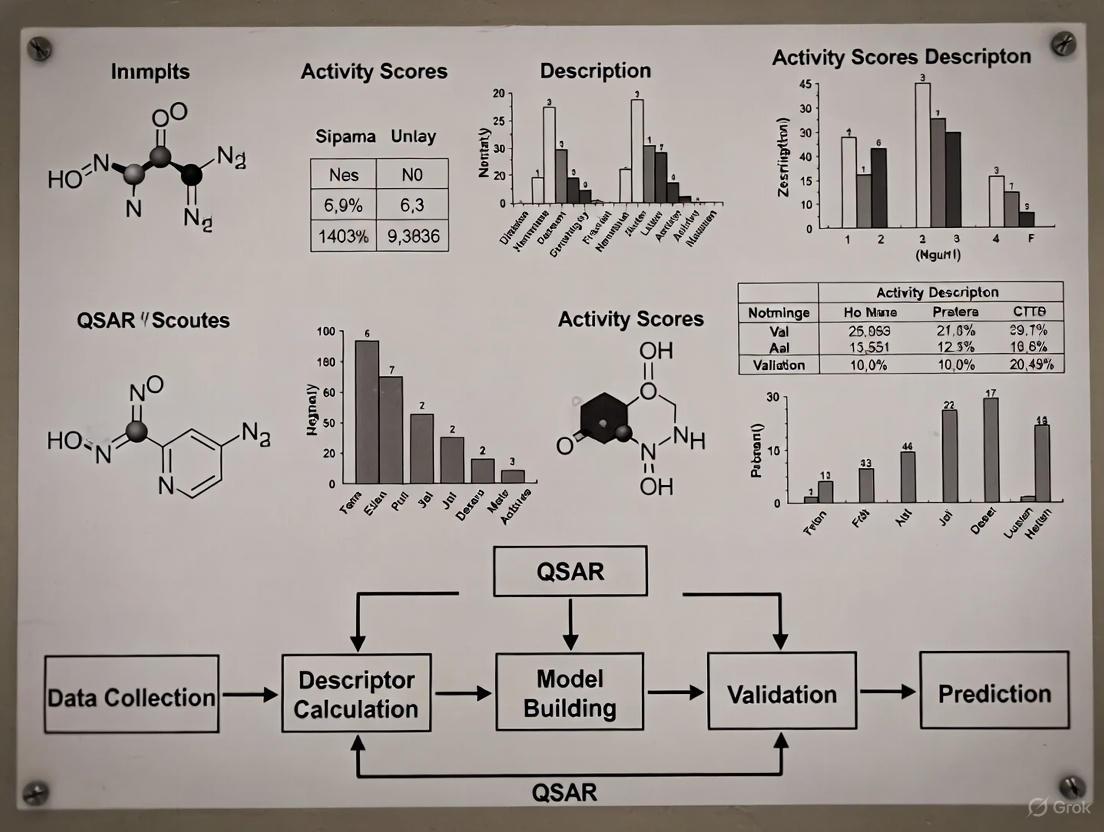
This article provides a comprehensive overview of Quantitative Structure-Activity Relationship (QSAR) modeling, a cornerstone computational method in chemical and pharmaceutical research.
QSAR Techniques in Modern Drug Discovery: From Foundational Principles to AI-Driven Applications
Abstract
This article provides a comprehensive overview of Quantitative Structure-Activity Relationship (QSAR) modeling, a cornerstone computational method in chemical and pharmaceutical research. Tailored for researchers, scientists, and drug development professionals, it explores the evolution of QSAR from its foundational principles to the integration of advanced artificial intelligence and machine learning. The scope encompasses core methodologies, diverse applications in drug design and toxicology, strategies for model optimization and troubleshooting, and rigorous validation frameworks. By synthesizing current trends and future directions, this review serves as a guide for developing robust, predictive QSAR models to accelerate efficient and ethical therapeutic discovery.
The Foundations of QSAR: From Historical Principles to Core Concepts
Quantitative Structure-Activity Relationship (QSAR) is a computational modeling approach that mathematically correlates chemical structures with biological activity [1]. These models are founded on the principle that variations in molecular structure lead to predictable changes in biological response, enabling researchers to predict the activity of new, untested compounds [2]. In QSAR, a set of "predictor" variables (molecular descriptors) is related to the potency of a "response" variable (biological activity), typically using regression or classification techniques [1]. This methodology has become a cornerstone in modern drug discovery, toxicology, and environmental risk assessment, allowing for the efficient prioritization of promising drug candidates and reducing the reliance on extensive laboratory testing [3] [2].
The fundamental equation of a QSAR model can be expressed as: Activity = f(physicochemical properties and/or structural properties) + error where the "error" term includes both model bias and observational variability [1]. Related terms include Quantitative Structure-Property Relationships (QSPR), which model chemical properties as the response variable, and specialized variants such as QSTR (toxicity), QSPR (pharmacokinetics), and QSBR (biodegradability) [1].
Core Principles and Historical Development
The conceptual foundation of QSAR was established in the 19th century. In 1868, Crum-Brown and Fraser first proposed that the physiological action of a substance was a function of its chemical composition and constitution [3]. However, it was not until 1964 that Hansch and Fujita formulated the first truly predictive mathematical QSAR tools, correlating biological activity with electronic, hydrophobic, and steric properties of phenyl substituents [4] [3]. This was complemented the same year by the Free-Wilson approach, which identified important positional features in a molecular scaffold [3].
The Hansch equation represents a landmark in QSAR development, establishing that a molecule's biological activity is primarily determined by its hydrophobic, steric, and electronic properties [4]. The classic form of the Hansch equation is:
lg(1/C) = aπ + bσ + cE_s + k
where C is the molar concentration of the compound that produces a standard biological response, π represents the hydrophobic substituent constant, σ represents the electronic Hammett constant, and E_s represents Taft's steric constant [5] [4].
Subsequent developments introduced pseudo-3D steric features in the 1970s, followed by true three-dimensional QSAR approaches in the 1980s, such as Comparative Molecular Field Analysis (CoMFA) in 1988, which revolutionized the field by considering the spatial distribution of molecular properties [5].
Essential Steps in QSAR Modeling
The development of a robust QSAR model follows a systematic workflow comprising several critical stages [1] [2]:
Data Preparation and Curatio
The initial phase involves compiling a high-quality dataset of chemical structures and their associated biological activities from reliable sources [2]. Key steps include:
- Data Cleaning: Removing duplicate, ambiguous, or erroneous entries; standardizing chemical structures (e.g., removing salts, normalizing tautomers, handling stereochemistry) [2]
- Activity Data Preparation: Converting all biological activities to a common unit (typically logarithms of half-maximal concentrations like IC₅₀ or EC₅₀) to ensure comparability [4] [6]
- Handling Missing Values: Employing appropriate techniques such as removal or imputation for compounds with missing data [2]
Molecular Descriptor Calculation and Selection
Molecular descriptors are numerical representations that quantify structural, physicochemical, and electronic properties of molecules [2]. A diverse set of descriptors should be calculated using software tools such as PaDEL-Descriptor, Dragon, or RDKit [2]. Common descriptor classes include:
Table 1: Categories of Molecular Descriptors Used in QSAR Modeling
| Descriptor Category | Description | Examples |
|---|---|---|
| Constitutional | Elementary molecular properties | Molecular weight, atom counts, bond counts, hydrogen bond donors/acceptors [4] [2] |
| Topological | Molecular connectivity and branching patterns | Molecular connectivity indices, Kier & Hall indices, graph-theoretical descriptors [5] [2] |
| Geometric | 3D molecular geometry | Molecular surface area, solvent-accessible surface area, molecular volume [5] [2] |
| Electronic | Electrical characteristics of molecules | Hammett constants (σ), dipole moment, HOMO/LUMO energies, partial atomic charges [5] [4] |
| Hydrophobic | Molecular partitioning behavior | Octanol-water partition coefficient (logP), hydrophobic substituent constants (π) [5] [4] |
Feature selection techniques are then applied to identify the most relevant descriptors, reduce dimensionality, and prevent overfitting. Common methods include filter methods (e.g., correlation analysis), wrapper methods (e.g., genetic algorithms), and embedded methods (e.g., LASSO regression) [2].
Model Building and Validation
The curated dataset is typically split into training, validation, and external test sets [2]. Various algorithms can be employed for model construction:
- Linear Methods: Multiple Linear Regression (MLR), Partial Least Squares (PLS) [3] [2]
- Non-linear Methods: Support Vector Machines (SVM), Artificial Neural Networks (ANN), Random Forest [3] [2]
Model validation is crucial to assess predictive performance and robustness [1] [7]. The OECD guidelines mandate that a valid QSAR model must have (1) a defined endpoint, (2) an unambiguous algorithm, (3) a defined domain of applicability, (4) appropriate measures of goodness-of-fit, robustness, and predictivity, and (5) a mechanistic interpretation when possible [4].
Table 2: Key Validation Parameters for QSAR Models
| Validation Type | Parameter | Description | Acceptance Criteria |
|---|---|---|---|
| Internal Validation | q² (LOO-CV) | Cross-validated correlation coefficient | q² > 0.5 considered good [6] |
| Internal Validation | R² | Coefficient of determination for training set | Closer to 1.0 indicates better fit [6] |
| External Validation | Q²ext | Predictive squared correlation coefficient for test set | Q²ext > 0.5 indicates good predictive power [1] |
| External Validation | RMSEP | Root Mean Square Error of Prediction | Lower values indicate better performance [8] |
| Randomization Test | R²scramble | Measures chance correlation | Should be significantly lower than model R² [6] |
The following workflow diagram illustrates the complete QSAR modeling process:
Types of QSAR Approaches
2D-QSAR
Traditional 2D-QSAR methods utilize molecular descriptors derived from two-dimensional molecular representations, without considering spatial orientation [5]. The primary approaches include:
- Hansch Analysis: Establishes linear relationships between biological activity and physicochemical parameters (hydrophobicity, electronic, and steric properties) [5] [4]
- Free-Wilson Analysis: Uses indicator variables to represent the presence or absence of specific substituents at particular molecular positions [5]
2D-QSAR advantages include computational efficiency, no need for molecular alignment, and easier interpretation. Limitations include inability to capture three-dimensional steric and electronic effects crucial for receptor binding [5].
3D-QSAR
3D-QSAR methods incorporate the three-dimensional structures of molecules and their spatial property distributions [5]. Key methodologies include:
- Comparative Molecular Field Analysis (CoMFA): Analyzes steric and electrostatic interaction fields around aligned molecules [1] [5] [6]
- Comparative Molecular Similarity Indices Analysis (CoMSIA): Extends CoMFA to include additional fields such as hydrophobic, hydrogen bond donor, and acceptor fields [5] [6]
The 3D-QSAR workflow involves:
- Molecular Modeling and Conformational Analysis: Generating low-energy conformations [6]
- Molecular Alignment: Superimposing molecules based on their common pharmacophoric features [6]
- Interaction Field Calculation: Placing probe atoms on grid points around molecules to compute steric, electrostatic, and other relevant fields [6]
- Partial Least Squares (PLS) Analysis: Correlating field values with biological activity [6]
The following diagram illustrates the comparative 3D-QSAR methodology:
Advanced QSAR Approaches
Recent advancements have introduced several specialized QSAR methodologies:
- HQSAR (Hologram QSAR): Utilizes molecular fragment fingerprints and does not require molecular alignment, offering advantages in speed and simplicity [8]
- GQSAR (Group-Based QSAR): Considers fragment-based descriptors and their interactions to capture nonlinear effects [1]
- q-RASAR: A hybrid approach merging QSAR with similarity-based read-across techniques [1]
Application Notes: Case Studies
HQSAR for Predicting Gas Chromatography Retention Indices of Essential Oils
A recent study demonstrated the application of HQSAR to predict gas chromatography retention indices (RI) for 60 plant essential oil components [8]. The optimized HQSAR model achieved significant predictive performance with the following parameters:
Table 3: Validation Parameters for Essential Oil RI Prediction Model [8]
| Validation Method | Parameter | Value | Interpretation |
|---|---|---|---|
| External Test Set | RMSEP | 40.45 | Good predictive accuracy |
| External Test Set | R²pred | 0.984 | Excellent model fit |
| External Test Set | CCC | 0.968 | Strong agreement |
| External Test Set | MRE | 2.20% | Low relative error |
| Leave-One-Out CV | RMSECV | 72.56 | Moderate internal consistency |
| Leave-One-Out CV | MRE | 4.17% | Acceptable relative error |
The optimal model parameters were: fragment size = 1-4 atoms, fragment distinction = "C, Ch" (atoms and chain atoms), and hologram length = 199 [8]. Molecular contribution maps revealed that aromatic compounds with hydroxyl groups attached to alkyl chains showed increased RI values, while aliphatic compounds with long alkyl chains also exhibited higher RI values [8].
AI-Powered QSAR for HGFR Inhibitor Development in Cancer Therapy
Artificial intelligence has revolutionized QSAR modeling through machine learning algorithms that automatically extract complex features from molecular structures [9]. In developing Hepatocyte Growth Factor Receptor (HGFR) inhibitors for cancer treatment, AI-powered QSAR models have demonstrated:
- Higher Predictive Accuracy: Ability to capture nonlinear relationships between molecular structure and inhibitory activity [9]
- Accelerated Screening: Rapid virtual screening of large compound libraries to identify potential HGFR inhibitors [9]
- Toxicity Prediction: Prediction of compound toxicity profiles to prioritize safer drug candidates [9]
- Structural Optimization: Guidance for medicinal chemists to optimize lead compounds based on structure-activity relationships [9]
Challenges in AI-powered QSAR include data quality dependence, model interpretability issues, and the need for experimental validation [9].
Table 4: Essential Resources for QSAR Modeling
| Resource Category | Examples | Function/Application |
|---|---|---|
| Descriptor Calculation Software | PaDEL-Descriptor, Dragon, RDKit, Mordred [2] | Generate molecular descriptors from chemical structures |
| Cheminformatics Platforms | DataWarrior, OpenBabel, ChemAxon [3] [2] | Chemical structure visualization, data analysis, and property calculation |
| 3D-QSAR Software | SYBYL (for CoMFA/CoMSIA), Schrodinger [6] | Perform 3D-QSAR analyses including molecular alignment and field calculation |
| Statistical Analysis Tools | R packages (pls, caret, randomForest), Python (scikit-learn) [3] [2] | Model building, validation, and statistical analysis |
| Chemical Databases | PubChem, ChEMBL, ZINC [2] | Sources of chemical structures and associated biological activity data |
| Model Validation Tools | QSAR Model Reporting Format (QMRF), Applicability Domain Assessment Tools [1] [4] | Standardized model reporting and reliability assessment |
Experimental Protocols
Protocol 1: Developing a 2D-QSAR Model Using Multiple Linear Regression
Purpose: To create a predictive 2D-QSAR model for a series of compounds with known biological activity.
Materials and Reagents:
- Set of chemical structures with associated biological activities (IC₅₀, EC₅₀, Ki, etc.)
- Molecular descriptor calculation software (e.g., PaDEL-Descriptor)
- Statistical analysis software (e.g., R, Python with scikit-learn)
Procedure:
- Data Preparation:
- Curate a dataset of 30-50 compounds with consistent biological activity measurements
- Convert activity values to logarithmic scale (e.g., pIC₅₀ = -logIC₅₀)
- Apply Lipinski's "Rule of Five" filters if developing drug-like compounds [4]
Descriptor Calculation and Preprocessing:
- Calculate molecular descriptors using selected software
- Remove descriptors with zero variance or high correlation (>0.95)
- Standardize remaining descriptors (mean=0, variance=1)
Dataset Division:
- Randomly split data into training set (70-80%) and external test set (20-30%)
- Ensure both sets represent similar chemical space and activity ranges
Model Development:
- Perform stepwise regression or genetic algorithm-based feature selection
- Build MLR model using training set: Activity = β₀ + β₁D₁ + β₂D₂ + ... + βₙDₙ
- Validate model using leave-one-out cross-validation
Model Validation:
- Apply model to external test set
- Calculate R²pred, RMSEP, and other validation metrics
- Perform Y-randomization test to confirm model significance
Protocol 2: Conducting a 3D-QSAR CoMFA/CoMSIA Study
Purpose: To develop a 3D-QSAR model using CoMFA/CoMSIA methodologies.
Materials and Reagents:
- Set of ligand structures with known 3D configurations
- Molecular modeling software with CoMFA/CoMSIA capabilities (e.g., SYBYL)
- Hardware capable of molecular mechanics calculations
Procedure:
- Ligand Preparation:
- Generate 3D structures for all compounds
- Perform energy minimization using appropriate force fields
- Conduct conformational analysis to identify lowest energy conformers
Molecular Alignment:
- Identify common structural framework or pharmacophore
- Align molecules using atom-based or field-based fitting methods
- Verify alignment quality through visual inspection
Field Calculation:
- Create a 3D grid box encompassing all aligned molecules
- Set grid spacing to 2.0 Å for optimal resolution
- Calculate steric (Lennard-Jones) and electrostatic (Coulombic) fields using appropriate probe atoms
CoMSIA Field Calculation (Optional):
- Calculate additional similarity fields: hydrophobic, hydrogen bond donor, hydrogen bond acceptor
- Use Gaussian distance functions with default attenuation factor (α=0.3)
Partial Least Squares (PLS) Analysis:
- Apply PLS regression to correlate field values with biological activity
- Use cross-validation to determine optimal number of components
- Generate statistical parameters (q², R², standard error)
Contour Map Analysis:
- Visualize steric and electrostatic contour maps
- Interpret regions where specific molecular features enhance or diminish activity
- Use insights for rational molecular design
Troubleshooting Tips:
- Poor alignment: Try different alignment rules or field-fit methods
- Low q² value: Check for outliers, reconsider molecular alignment, or adjust grid parameters
- Overfitting: Reduce number of components in PLS analysis or increase sample size
QSAR modeling represents a powerful computational approach that quantitatively links molecular structure to biological activity, serving as an indispensable tool in modern drug discovery and chemical risk assessment [1] [3] [7]. The methodology has evolved significantly from its origins in classical 2D-QSAR to sophisticated 3D and AI-powered approaches capable of capturing complex structure-activity relationships [5] [9]. Successful implementation requires careful attention to data quality, appropriate descriptor selection, rigorous validation, and clear definition of the model's applicability domain [1] [4] [2]. As QSAR methodologies continue to advance through integration with artificial intelligence and federated learning approaches [10] [9], their impact on accelerating chemical discovery while reducing laboratory testing requirements is expected to grow substantially.
The development of Quantitative Structure-Activity Relationships (QSAR) represents a pivotal advancement in modern chemistry and drug discovery, enabling researchers to mathematically correlate the structural features of compounds with their biological activity. This paradigm shifted pharmaceutical research from a purely empirical endeavor to a rational, predictive science. The journey began with fundamental physical organic chemistry principles established by Hammett and evolved through the pioneering work of Hansch and others, who recognized that these principles could be systematically applied to biological systems. These methodologies form the historical cornerstone of contemporary computer-aided drug design (CADD), providing a quantitative framework that continues to underpin modern virtual screening and lead optimization strategies [11]. The core premise—that molecular behavior can be predicted from quantifiable structural parameters—has expanded into a sophisticated interdisciplinary field, integrating computational chemistry, statistics, and biology to accelerate the development of new therapeutic agents.
The Hammett Equation: The Pioneering QSAR Model
In 1937, Louis Plack Hammett introduced a groundbreaking quantitative model that forever changed how chemists analyze substituent effects on reaction rates and equilibria. The Hammett equation formalized the relationship between chemical structure and reactivity for meta- and para-substituted benzoic acid derivatives, establishing the first robust linear free-energy relationship (LFER) [12].
Mathematical Formulation and Parameters
The Hammett equation is elegantly simple yet powerfully predictive:
[ \log\left(\frac{K}{K_0}\right) = \sigma\rho ]
or for reaction rates:
[ \log\left(\frac{k}{k_0}\right) = \sigma\rho ]
Where:
- ( K ) and ( k ) are the equilibrium constant and rate constant for a substituted compound
- ( K0 ) and ( k0 ) are the corresponding values for the unsubstituted reference compound (where the substituent is hydrogen)
- ( \sigma ) (sigma) is the substituent constant, a quantitative measure of a substituent's electron-withdrawing or electron-donating ability
- ( \rho ) (rho) is the reaction constant, which indicates the sensitivity of a given reaction to substituent effects [12] [13]
Experimental Protocol: Determining Substituent Constants
Principle: The substituent constant (σ) quantifies the electronic effect of a substituent relative to hydrogen. By convention, σ values are determined using the ionization of benzoic acids in water at 25°C as the model reaction, with ρ set to 1.0 [12].
Procedure:
- Prepare benzoic acid derivatives: Synthesize or obtain high-purity meta- and para-substituted benzoic acids with various substituents (e.g., -NO₂, -CN, -Cl, -CH₃, -OCH₃).
- Measure acid dissociation constants: Determine the acid dissociation constant (Kₐ) for each substituted benzoic acid in aqueous solution at 25°C using potentiometric titration or UV-spectrophotometric methods.
- Calculate substituent constants: For each substituent, calculate σ using the equation: [ \sigmaX = \log(K{X}/K{H}) ] where ( KX ) is the acid dissociation constant for the substituted benzoic acid and ( K_H ) is the constant for unsubstituted benzoic acid.
- Tabulate values: Compile σₘ (meta) and σₚ (para) values for each substituent. Electron-withdrawing groups have positive σ values, while electron-donating groups have negative σ values [12] [13].
Table 1: Selected Hammett Substituent Constants
| Substituent | σₘ (meta) | σₚ (para) |
|---|---|---|
| -N(CH₃)₂ | -0.211 | -0.83 |
| -NH₂ | -0.161 | -0.66 |
| -OCH₃ | +0.115 | -0.268 |
| -CH₃ | -0.069 | -0.170 |
| -H | 0.000 | 0.000 |
| -F | +0.337 | +0.062 |
| -Cl | +0.373 | +0.227 |
| -Br | +0.393 | +0.232 |
| -CF₃ | +0.43 | +0.54 |
| -CN | +0.56 | +0.66 |
| -NO₂ | +0.710 | +0.778 |
Source: [12]
Advanced Applications: σ⁺ and σ⁻ Constants
The standard Hammett equation has limitations when substantial resonance interactions occur between the substituent and reaction center. Extended substituent constants were developed to address these cases:
- σₚ⁻ constants: Used when a negative charge develops at a position in direct conjugation with the aromatic ring (e.g., ionization of phenols) [12] [13]
- σₚ⁺ constants: Applied when a positive charge develops in direct conjugation with the ring (e.g., SN1 reactions of cumyl chlorides) [12]
The selection between σ, σ⁺, and σ⁻ depends on the reaction mechanism and should be guided by the quality of the linear correlation in the Hammett plot [13].
Protocol: Conducting a Hammett Analysis
Objective: Determine the reaction constant (ρ) for a new reaction and gain insight into its mechanism.
Procedure:
- Select substituents: Choose a series of 8-12 meta- and para-substituted aromatic compounds with diverse electronic properties (covering both electron-donating and -withdrawing groups).
- Measure kinetic or equilibrium data: For the reaction of interest, determine rate constants (k) or equilibrium constants (K) for each substituted compound under identical conditions.
- Plot and calculate ρ: Plot log(k/k₀) or log(K/K₀) against the appropriate σ values. The slope of the resulting line provides the ρ value.
- Interpret results:
- ρ > 0: Negative charge is built (or positive charge is lost) in the rate-determining step
- ρ < 0: Positive charge is built (or negative charge is lost)
- |ρ| ≈ 0: Little charge development in the transition state
- Large |ρ|: Significant charge development that is highly sensitive to substituent effects [12] [13]
Figure 1: Workflow for conducting a Hammett analysis to determine the reaction constant ρ and gain mechanistic insights.
Hansch Analysis: Extending QSAR to Biological Systems
In the early 1960s, Corwin Hansch and Toshio Fujita revolutionized drug discovery by extending Hammett's principles to biological systems. They recognized that biological activity depends not only on electronic effects but also on lipophilicity and steric properties [14] [15] [11]. This multidimensional approach marked the formal beginning of modern QSAR as a discipline bridging chemistry and biology.
The Hansch Equation: A Multivariate Approach
The fundamental Hansch equation incorporates multiple physicochemical parameters:
[ \log(1/C) = a(\log P)^2 + b(\log P) + c\sigma + dE_s + k ]
Where:
- ( C ) is the molar concentration of compound producing a standard biological response (e.g., ED₅₀, IC₅₀)
- ( \log P ) is the logarithm of the octanol-water partition coefficient, measuring lipophilicity
- ( \sigma ) is the Hammett electronic constant
- ( E_s ) is the Taft steric parameter
- ( a, b, c, d, k ) are coefficients determined by multiple regression analysis [15] [11]
Key Physicochemical Parameters in Hansch Analysis
Table 2: Essential Physicochemical Parameters in Hansch Analysis
| Parameter | Symbol | Description | Experimental Determination |
|---|---|---|---|
| Lipophilicity | log P | Logarithm of the octanol-water partition coefficient for the whole molecule | Shake-flask method; HPLC retention time |
| Lipophilic Substituent Constant | π | π = log PX - log PH, measuring lipophilicity of a substituent | Derived from partition coefficient measurements |
| Electronic Effect | σ | Hammett constant measuring electron-withdrawing or -donating ability | Based on ionization of substituted benzoic acids |
| Steric Effect | E_s | Taft steric parameter based on acid-catalyzed hydrolysis of esters | Es = log(kX) - log(k_CH₃) |
| Molar Refractivity | MR | Measure of molecular volume and polarizability | MR = [(n²-1)/(n²+2)] × (MW/ρ), where n=refractive index |
Source: [15]
Protocol: Developing a Hansch Equation
Objective: Derive a quantitative model relating biological activity to physicochemical parameters for a series of analogous compounds.
Procedure:
- Compound selection: Assemble a congeneric series of 15-20 compounds with systematic structural variation. Ensure the biological activity data (e.g., IC₅₀, ED₅₀) is obtained under consistent experimental conditions.
- Parameter calculation: For each compound, calculate or obtain values for relevant physicochemical parameters (typically log P, π, σ, E_s, MR).
- Regression analysis: Perform multiple linear regression with log(1/C) as the dependent variable and the physicochemical parameters as independent variables.
- Model validation: Evaluate the model using statistical measures: correlation coefficient (r), standard deviation (s), and Fisher criterion (F). Use cross-validation to assess predictive power.
- Interpretation and prediction: Interpret the significance of each parameter in the final equation and use the model to predict the activity of new analogs [15] [11].
Example Application: A classic example includes the Hansch equation for the adrenergic blocking activity of β-haloaryl amines: [ \log(1/C) = 1.22\pi - 1.59\sigma + 7.89 ] This indicated that activity increased with higher lipophilicity (positive π coefficient) and electron-donating character (negative σ coefficient) [15].
The Scientist's Toolkit: Essential Research Reagents and Materials
Table 3: Essential Materials for Hammett and Hansch Analysis
| Category | Specific Items | Function and Application |
|---|---|---|
| Reference Compounds | Benzoic acid, substituted benzoic acids, phenols, anilines | Standard compounds for determining substituent constants and validating methods |
| Solvent Systems | High-purity water, n-octanol, buffers at various pH values | Partition coefficient measurements and equilibrium constant determinations |
| Analytical Instruments | pH meter with combination electrode, UV-Vis spectrophotometer, HPLC system | Quantifying concentrations, determining pKₐ values, and analyzing compound purity |
| Computational Tools | Statistical software (R, Python with scikit-learn), molecular descriptor calculation tools (PaDEL, Dragon) | Performing regression analysis and calculating molecular descriptors |
| Chemical Libraries | Substituted benzoic acids, phenethylamines, or other congeneric series | Providing structurally related compounds with systematic variation for QSAR studies |
The Free-Wilson Model: A Complementary Approach
Concurrent with Hansch's work, Free and Wilson developed an alternative approach that relies solely on the presence or absence of specific substituents. The Free-Wilson model operates on the principle of additivity, where the biological activity of a compound equals the sum of contributions from its parent structure and substituents [11].
Mathematical Formulation
The Free-Wilson model can be expressed as:
[ \log(1/C) = \mu + \sum a_{ij} ]
Where:
- ( \mu ) is the overall average biological activity
- ( a_{ij} ) is the contribution of substituent j at position i
- The summation includes all substituent positions in the molecule [15] [11]
Protocol: Implementing Free-Wilson Analysis
Procedure:
- Define molecular framework: Identify the common parent structure and relevant substitution positions.
- Create indicator matrix: Construct a data matrix where each column represents a specific substituent at a specific position, coded as 1 (present) or 0 (absent).
- Regression analysis: Perform multiple regression analysis with log(1/C) as the dependent variable and the indicator matrix as independent variables.
- Interpret substituent contributions: The regression coefficients represent the activity contribution of each substituent at each position.
Advantages and Limitations:
- Advantages: No need for measured physicochemical parameters; simple implementation; effective for congeneric series.
- Limitations: Cannot predict activity for compounds with new substitution patterns not included in the original dataset; assumes strict additivity of substituent effects [15].
Modern Applications and Future Perspectives
The principles established by Hammett and Hansch continue to evolve, finding applications in diverse areas of chemical and pharmaceutical research.
Contemporary QSAR in Drug Discovery
Modern QSAR has expanded significantly beyond its origins, now incorporating advanced machine learning algorithms and complex molecular descriptors. Key applications include:
- Anti-cancer drug development: QSAR models have been successfully applied to design novel breast cancer therapeutics, optimizing compounds against specific targets like hormone receptors and kinase enzymes [11].
- Toxicology prediction: Regulatory agencies increasingly use QSAR models to predict endocrine disruption potential, including thyroid hormone system disruption, reducing reliance on animal testing [16].
- Environmental chemistry: Predicting the environmental fate and ecotoxicity of chemicals for risk assessment [17].
Emerging Trends and Integration with Modern Approaches
Figure 2: Evolution from classical QSAR foundations to modern computational approaches.
The field continues to advance rapidly with several emerging trends:
- Machine learning and AI: Advanced algorithms including random forests, support vector machines, and deep neural networks now handle complex, high-dimensional descriptor spaces [17].
- Generative models: AI-driven generative models can design novel molecular structures with desired properties, going beyond prediction to de novo molecular design [17].
- Integrated drug discovery: QSAR is now one component of comprehensive drug discovery pipelines that incorporate structural biology, molecular dynamics, and systems pharmacology [11].
The journey from Hammett constants to Hansch analysis represents more than historical progression—it embodies the evolution of chemical thinking from qualitative observation to quantitative prediction. Hammett's insight that substituent effects could be quantified and generalized across reactions laid the essential groundwork for Hansch's revolutionary extension of these principles to biological systems. Together, these approaches established the fundamental paradigm that molecular properties and activities can be predicted from quantifiable structural parameters, a concept that continues to drive computational chemistry and drug discovery today. As QSAR methodologies continue to evolve with artificial intelligence and machine learning, the foundational principles established by these pioneers remain remarkably relevant, providing the conceptual framework for contemporary predictive toxicology and rational drug design. The integration of these classical approaches with modern computational power ensures their continued utility in addressing the complex challenges of 21st-century pharmaceutical research and chemical safety assessment.
QSAR Protocols for Predictive Toxicology and Drug Discovery
Quantitative Structure-Activity Relationship (QSAR) modeling represents a computational approach that correlates chemical structure with biological activity or physicochemical properties using mathematical models [1] [3]. These models enable researchers to predict the activity of new compounds based on their molecular descriptors, thereby accelerating drug discovery and toxicological assessment while reducing reliance on costly experimental screening [18] [19]. The fundamental QSAR equation takes the form: Activity = f(physicochemical properties and/or structural properties) + error, where the function relates molecular descriptors to a quantifiable biological response [1].
The key objectives of QSAR modeling align with three critical needs in pharmaceutical research: enabling accurate prediction of biological activities and properties for unsynthesized compounds; rationalizing mechanisms of action through identification of structurally-relevant features that drive bioactivity; and significantly reducing costs and time requirements by prioritizing the most promising candidates for experimental validation [18] [19] [20]. Modern QSAR implementations have evolved from classical statistical approaches to incorporate artificial intelligence (AI) and machine learning (ML), dramatically enhancing predictive capabilities across diverse chemical spaces [18] [20].
Experimental Protocols
Comprehensive QSAR Model Development Workflow
The development of robust QSAR models follows a systematic protocol encompassing data collection, descriptor calculation, model construction, and validation [1]. The principal steps include:
Phase 1: Data Set Selection and Preparation
- Compound Curation: Acquire bioactivity data (e.g., IC₅₀, Ki, LD₅₀) from public databases such as ChEMBL or proprietary sources. A minimum of 20 compounds is recommended for reliable modeling, though larger datasets (hundreds to thousands of compounds) improve model robustness [19] [3].
- Chemical Structure Standardization: Convert all structures to standardized representations (e.g., SMILES, InChI) and remove duplicates. Apply necessary corrections for tautomers, stereochemistry, and protonation states [19].
- Dataset Division: Split the curated dataset into training (≈80%) and test (≈20%) sets using appropriate methods such as random sampling, stratified sampling based on activity distribution, or more advanced techniques like Butina clustering or UMAP splitting to ensure chemical diversity representation [21].
Phase 2: Molecular Descriptor Calculation and Selection
- Descriptor Computation: Calculate molecular descriptors using software tools such as DRAGON, PaDEL, RDKit, or Mordred [20]. Descriptors span multiple dimensions:
- 1D descriptors: Molecular weight, atom counts, bond counts
- 2D descriptors: Topological indices, connectivity indices, molecular fingerprints
- 3D descriptors: Molecular surface area, volume, conformational energies
- Quantum chemical descriptors: HOMO-LUMO energies, dipole moments, electrostatic potential surfaces [20]
- Descriptor Filtering: Apply feature selection methods including LASSO regression, recursive feature elimination (RFE), mutual information ranking, or stepwise regression to identify the most relevant descriptors and reduce dimensionality [20].
Phase 3: Model Construction and Training
- Algorithm Selection: Choose appropriate modeling techniques based on dataset characteristics:
- Classical methods: Multiple Linear Regression (MLR), Partial Least Squares (PLS), Principal Component Regression (PCR) for linearly separable datasets with limited descriptors [1] [3]
- Machine learning methods: Random Forests (RF), Support Vector Machines (SVM), k-Nearest Neighbors (kNN) for nonlinear relationships [19] [20]
- Deep learning methods: Graph Neural Networks (GNNs), SMILES-based transformers for large, complex datasets [18] [20]
- Hyperparameter Optimization: Tune model parameters using grid search, random search, or Bayesian optimization with cross-validation to prevent overfitting [19] [21].
Phase 4: Model Validation and Performance Assessment
- Internal Validation: Assess model robustness using cross-validation techniques (e.g., leave-one-out, k-fold) and calculate Q² (cross-validated R²) [1] [3].
- External Validation: Evaluate predictive performance on the held-out test set that was not used during model training [1].
- Statistical Metrics: Compute multiple validation metrics including R² (coefficient of determination), MSE (mean squared error), and ROC-AUC for classification models [19] [22].
- Applicability Domain: Define the chemical space where the model provides reliable predictions based on the training set characteristics [1].
Phase 5: Model Interpretation and Deployment
- Feature Importance Analysis: Identify influential molecular descriptors using permutation importance, SHAP (SHapley Additive exPlanations), or LIME (Local Interpretable Model-agnostic Explanations) [20].
- Mechanistic Interpretation: Relate significant descriptors to biological mechanisms (e.g., hydrophobicity influencing membrane permeability, electronic properties affecting protein binding) [16] [3].
- Predictive Implementation: Deploy validated models for virtual screening of compound libraries to prioritize synthesis and testing [19].
Table 1: Key Validation Parameters for QSAR Models
| Validation Type | Key Metrics | Acceptance Criteria | Purpose |
|---|---|---|---|
| Internal Validation | Q² (cross-validated R²), R² | Q² > 0.5, R² > 0.6 | Assess model robustness and stability |
| External Validation | Predictive R², RMSE | R²ₑₓₜ > 0.6 | Evaluate performance on unseen data |
| Y-Scrambling | R², Q² of scrambled models | Significantly lower than original | Verify absence of chance correlation |
| Applicability Domain | Leverage, distance metrics | Compounds within domain boundaries | Define reliable prediction scope |
Integrated QSAR-TNKS2 Inhibitor Identification Protocol
This protocol exemplifies the application of QSAR modeling for target-specific inhibitor identification, as demonstrated in a recent study on Tankyrase (TNKS2) inhibitors for colorectal cancer [19]:
Step 1: Bioactivity Data Retrieval
- Source TNKS2 inhibitors from ChEMBL database (Target ID: CHEMBL6125)
- Curate a dataset of 1,100 compounds with experimentally determined IC₅₀ values
- Standardize structures and remove compounds with missing or inconsistent activity data [19]
Step 2: Descriptor Calculation and Feature Selection
- Compute 2D and 3D molecular descriptors using appropriate software
- Apply random forest-based feature selection to identify the most relevant descriptors
- Retain top descriptors based on importance ranking for model construction [19]
Step 3: Random Forest QSAR Model Development
- Implement random forest classification with optimized hyperparameters
- Train model using the curated training set (80% of data)
- Validate model performance using 5-fold cross-validation [19]
Step 4: Virtual Screening and Compound Prioritization
- Apply trained QSAR model to screen virtual compound libraries
- Rank compounds based on predicted TNKS2 inhibitory activity
- Select top candidates for further computational validation [19]
Step 5: Computational Validation of Hits
- Perform molecular docking studies to evaluate binding modes and interactions with TNKS2 binding site
- Conduct molecular dynamics simulations (100-200 ns) to assess complex stability
- Analyze binding free energies using MM-PBSA/GBSA methods
- Evaluate ADMET properties to ensure drug-likeness [19]
Step 6: Experimental Verification
- Synthesize or procure top-ranked compounds (1-5 candidates)
- Conduct in vitro TNKS2 inhibition assays to validate computational predictions
- Perform cell-based assays to assess efficacy in relevant cancer cell lines [19]
Data Presentation and Analysis
Performance Comparison of QSAR Modeling Algorithms
Table 2: Comparative Performance of Machine Learning Algorithms in QSAR Modeling
| Algorithm | MSE Range | R² Range | Best Suited Applications | Interpretability |
|---|---|---|---|---|
| Ridge Regression | 3540-3618 [22] | 0.93-0.94 [22] | Linear relationships, multicollinear descriptors | Medium |
| Lasso Regression | 3540-3618 [22] | 0.93-0.94 [22] | Feature selection, high-dimensional data | Medium |
| Random Forest | 6485 [22] | 0.66-0.98 [19] [22] | Complex nonlinear relationships, noisy data | Medium-High |
| Gradient Boosting | 1495-4488 [22] | 0.57-0.92 [22] | Imbalanced datasets, hierarchical features | Medium |
| Support Vector Machines | Variable | Variable | High-dimensional datasets, clear margin separation | Low |
| Graph Neural Networks | Variable | Variable | Large diverse chemical spaces, structure-activity learning | Low-Medium |
Consensus Modeling for Predictive Toxicology
Recent advances in predictive toxicology have demonstrated the value of consensus approaches for improving prediction reliability:
Conservative Consensus Model (CCM) for Acute Oral Toxicity [23]
- Objective: Combine predictions from multiple QSAR models (CATMoS, VEGA, TEST) to generate health-protective estimates of rat acute oral toxicity (LD₅₀)
- Methodology: Assign the most conservative (lowest) predicted LD₅₀ value from individual models as the CCM output
- Performance: CCM showed lowest under-prediction rate (2%) compared to individual models (TEST: 20%, CATMoS: 10%, VEGA: 5%), ensuring protective classification for hazard assessment
- Application: Particularly valuable under conditions of uncertainty where experimental data are limited or absent [23]
Signaling Pathways and Workflow Visualization
Diagram 1: Wnt Signaling Pathway and TNKS2 Inhibition
Diagram 2: QSAR Model Development Workflow
The Scientist's Toolkit: Research Reagent Solutions
Table 3: Essential Research Reagents and Computational Tools for QSAR Modeling
| Tool/Reagent | Category | Function | Access |
|---|---|---|---|
| ChEMBL Database | Bioactivity Data | Curated database of bioactive molecules with drug-like properties | https://www.ebi.ac.uk/chembl/ [19] |
| DRAGON Software | Descriptor Calculation | Computes >5,000 molecular descriptors covering structural, topological, and quantum chemical features | Commercial [20] |
| PaDEL-Descriptor | Descriptor Calculation | Open-source software for calculating 2D and 3D molecular descriptors and fingerprints | Open Source [20] |
| RDKit | Cheminformatics | Open-source toolkit for cheminformatics and machine learning with Python integration | Open Source [20] |
| QSARINS | Model Development | Software for MLR-based QSAR model development with comprehensive validation tools | Commercial [20] |
| ChemProp | Deep Learning | Message-passing neural networks for molecular property prediction | Open Source [21] |
| Mordred | Descriptor Calculation | Calculates >1,800 molecular descriptors with Python API | Open Source [21] |
| GNINA | Structure-Based Modeling | Deep learning-based molecular docking and scoring function | Open Source [21] |
| OECD QSAR Toolbox | Regulatory Assessment | Software to group chemicals and fill data gaps for regulatory purposes | Free for Use [24] |
Advanced Applications and Regulatory Considerations
AI-Enhanced QSAR in Modern Drug Discovery
The integration of artificial intelligence with QSAR modeling has transformed drug discovery pipelines through several key advancements:
Deep Learning Architectures
- Graph Neural Networks (GNNs): Operate directly on molecular graphs, capturing atomic interactions and structural patterns without manual descriptor engineering [18] [20]
- Transformer Models: Process SMILES strings to learn complex molecular representations and predict activities with state-of-the-art accuracy [18] [20]
- Multimodal Approaches: Combine structural information with biological context (e.g., protein sequences, binding pockets) for target-specific activity prediction [21]
Explainable AI (XAI) Integration
- SHAP Analysis: Quantifies the contribution of individual molecular features to model predictions, enabling mechanistic interpretation [20]
- Attention Mechanisms: In transformer models, attention weights highlight structurally important regions influencing bioactivity [21]
- Counterfactual Explanations: Generates modified structures to illustrate minimal changes that significantly alter predicted activity [21]
Regulatory Frameworks and Validation Standards
The Organisation for Economic Co-operation and Development (OECD) has established principles for validating QSAR models for regulatory use [24]:
OECD QSAR Assessment Framework (QAF)
- Purpose: Provides guidance for regulatory assessment of (Q)SAR predictions to establish confidence in computational approaches [24]
- Key Principles:
- Scientific Basis: Defined endpoint and unambiguous algorithm
- Applicability Domain: Clear description of chemical space coverage
- Internal Performance: Measures of goodness-of-fit and robustness
- External Predictivity: Demonstration of performance on unseen data [24]
- Impact: Facilitates regulatory acceptance of QSAR models as valid alternatives to animal testing for chemical hazard assessment [24]
Validation Best Practices
- Data Quality: Ensure experimental data from reliable sources with consistent protocols
- Model Transparency: Document all modeling steps, parameters, and descriptor definitions
- Uncertainty Quantification: Provide confidence estimates for individual predictions
- Independent Verification: External validation by third parties when possible [1] [24]
The pursuit of novel chemical entities, particularly in pharmaceutical research, is a complex, costly, and time-consuming endeavor, with an estimated duration of up to 14 years and a cost exceeding one billion USD per molecule [11]. Quantitative Structure-Activity Relationship (QSAR) modeling serves as a cornerstone computational methodology in this landscape, providing a powerful framework for predicting the biological activity and properties of compounds from their chemical structures alone [1] [25] [26]. By establishing a mathematical relationship between molecular descriptors and a biological endpoint, QSAR models enable the prioritization of synthesis and testing, thereby accelerating discovery and reducing reliance on extensive animal testing [2] [25]. The reliability and predictive power of any QSAR study hinge entirely on three fundamental pillars: a curated dataset, informative molecular descriptors, and a robust mathematical model [27] [25]. This article delineates these essential components, providing detailed protocols and resources to guide the development of validated QSAR models.
The Dataset: Foundation of the Model
A high-quality dataset is the indispensable bedrock of a reliable QSAR model. The principle that "similar molecules have similar activities" (Structure-Activity Relationship, SAR) underpins QSAR, though this principle can sometimes be paradoxical [1]. The model's predictive ability is constrained by the chemical space and data quality of its training set [27] [11].
Data Collection and Curation
The initial phase involves gathering structural information and associated biological activity data from reliable public and proprietary sources. Key public repositories include ChEMBL, PubChem, and CCRIS [28] [29]. For specialized endpoints, such as genotoxicity, targeted literature searches using text-mining tools like the BioBERT large language model can significantly expand dataset coverage [28].
Protocol: Data Preparation Workflow
- Dataset Collection: Compile chemical structures (e.g., as SMILES strings) and their associated biological activities (e.g., IC₅₀, MIC₉₀) from trusted sources [2] [29].
- Data Cleaning and Standardization:
- Handling Missing Values and Inconsistencies: Identify and address missing data through removal or imputation techniques. Resolve conflicting experimental records by applying predefined regulatory criteria or expert review [28].
- Data Normalization and Splitting: Scale molecular descriptors to have zero mean and unit variance. Partition the cleaned dataset into training, validation, and external test sets. The external test set must be reserved for final model assessment and remain entirely independent of the model training and selection process [2].
Table 1: Exemplary Dataset Construction for a Genotoxicity Endpoint [28]
| Endpoint | Source | Initial Data Points | After Curation | Positive:Negative Ratio |
|---|---|---|---|---|
| Micronucleus in vitro | Public DBs & PubMed (BioBERT) | 20,000 Abstracts | 894 Organic Chemicals | 70% : 30% |
| Micronucleus in vivo (Mouse) | Public DBs & PubMed (BioBERT) | 20,000 Abstracts | 1,222 Organic Chemicals | 32% : 68% |
Addressing Data Imbalance
Imbalanced datasets, where one activity class is underrepresented, are a common challenge that can lead to biased models. Techniques such as data balancing during model construction or the use of ensemble models that combine multiple individual models can mitigate this issue and improve predictive performance for the minority class [28].
Figure 1: Data Curation and Preparation Workflow
Molecular Descriptors: Quantifying Chemical Structure
Molecular descriptors are numerical representations of a molecule's structural, physicochemical, and electronic properties [2]. They translate chemical information into a quantitative format that statistical and machine learning algorithms can process. The accuracy and relevance of descriptors directly determine a model's predictive power and stability [27].
Types of Molecular Descriptors
Descriptors can be categorized based on their dimensionality and the nature of the properties they encode [26].
Table 2: Categorization of Common Molecular Descriptors
| Dimension | Descriptor Type | Description | Examples |
|---|---|---|---|
| 1D | Constitutional | Describe atom and bond counts, molecular weight. | Molecular Weight, Number of H-Bond Donors/Acceptors [26] |
| 2D | Topological | Based on molecular graph theory, encoding connectivity. | Molecular Connectivity Indices (χ), Wiener Index (W) [26] |
| 2D/3D | Fragment-Based | Account for contributions of specific substituents/substructures. | Hydrophobicity (π), Hammett σ constant [1] [26] |
| 3D | Geometric & Field-Based | Derived from 3D structure, representing shape and interaction fields. | Molecular Volume, CoMFA/CoMSIA fields, WHIM descriptors [1] [26] |
| Text-Based | String Representations | Use linear string notations of the molecular structure. | SMILES (Simplified Molecular-Input Line-Entry System) [30] |
Descriptor Calculation and Selection
Protocol: From Chemical Structure to Descriptor Set
- Input Structure Preparation: Provide standardized molecular structures, typically as SMILES strings or in an SDF format [29].
- Descriptor Calculation: Use specialized software to compute a wide array of descriptors.
- Software Tools: PaDEL-Descriptor, Dragon, RDKit, and Mordred are widely used to generate hundreds to thousands of descriptors [2].
- Specialized Descriptors: For specific tasks, custom descriptors like the Local atom-based stochastic quadratic indices (LQI), weighted by atomic properties, can be calculated [29].
- Feature Selection: A critical step to avoid overfitting and improve model interpretability.
The Mathematical Model: From Data to Prediction
The mathematical model serves as the bridge between molecular structure and biological activity. The choice of algorithm depends on the complexity of the relationship, dataset size, and desired model interpretability [27] [2].
Model Building and Validation
Protocol: QSAR Model Development Workflow
- Algorithm Selection: Choose appropriate linear or non-linear machine learning methods.
- Model Training and Validation:
- Training Set: Used to build the model.
- Internal Validation: Assess model robustness via k-fold cross-validation or leave-one-out (LOO) cross-validation [1] [2].
- External Validation: The definitive test of predictive power, performed on the held-out external test set that was not used in any model building steps [1] [2].
- Ensemble Modeling: To enhance predictive performance and stability, build a comprehensive ensemble by combining multiple individual models created with different algorithms, descriptors, or data samples [28] [30].
Table 3: Common Algorithms for QSAR Modeling [2] [30]
| Algorithm | Type | Key Characteristics | Typical Input |
|---|---|---|---|
| Multiple Linear Regression (MLR) | Linear | Simple, highly interpretable. Prone to overfitting with many descriptors. | Selected 1D/2D Descriptors |
| Partial Least Squares (PLS) | Linear | Handles multicollinearity well. Robust for many descriptors. | Many 1D/2D/3D Descriptors |
| Random Forest (RF) | Non-linear (Ensemble) | High performance, handles non-linearity, provides feature importance. | Molecular Fingerprints (ECFP) |
| Support Vector Machines (SVM) | Non-linear | Effective in high-dimensional spaces, robust to overfitting. | Various Descriptor Types |
| Neural Networks (NN) | Non-linear | Highly flexible, can learn complex patterns. Less interpretable. | Descriptors or SMILES strings |
Figure 2: QSAR Model Building and Validation Workflow
The Scientist's Toolkit: Essential Research Reagents & Software
The following table details key software and computational resources essential for conducting modern QSAR studies.
Table 4: Key Research Reagents and Software Solutions for QSAR
| Item Name | Type | Function in QSAR Protocol |
|---|---|---|
| ChEMBL / PubChem | Database | Public repositories for obtaining chemical structures and associated bioactivity data for model training [28] [29]. |
| RDKit | Software Library | An open-source toolkit for cheminformatics, used for descriptor calculation, fingerprint generation, and molecular standardization [28] [30]. |
| PaDEL-Descriptor | Software | Calculates a comprehensive set of molecular descriptors and fingerprints directly from chemical structures [2]. |
| Scikit-learn | Software Library | A Python library providing a wide range of machine learning algorithms (e.g., RF, SVM, PLS) and model validation utilities [30]. |
| Keras/TensorFlow | Software Library | Deep learning frameworks used to build and train complex neural network models, including end-to-end models from SMILES [30]. |
| BioBERT | Software Model | A pre-trained language model for biomedical text mining, used to automate the extraction of experimental results from scientific literature [28]. |
The Similarity Principle and the SAR Paradox
The Similarity Principle and the SAR Paradox represent two foundational, yet seemingly contradictory, concepts in quantitative structure-activity relationship (QSAR) research and modern drug discovery. The Similarity Principle, often considered a core tenet of cheminformatics, posits that structurally similar molecules are likely to exhibit similar biological activities [1] [31]. This principle provides the fundamental justification for using molecular descriptors, fingerprints, and similarity metrics to predict the activity of new compounds based on known data.
Conversely, the SAR Paradox highlights the critical limitation of this principle by demonstrating that structurally similar molecules can, in fact, exhibit dramatically different biological activities [1] [31]. This paradox presents a significant challenge in drug discovery, where minor structural modifications—sometimes as simple as a single atom substitution—can lead to unexpected and drastic changes in potency, creating what are known as "activity cliffs" in the structure-activity landscape [32].
This application note examines these competing concepts within the framework of QSAR techniques, providing researchers with practical methodologies to navigate and leverage this dichotomy for more effective drug development.
Theoretical Foundation
The Similarity Principle in QSAR
The Similarity Principle provides the philosophical and mathematical basis for most QSAR modeling approaches. In practice, this principle is operationalized through molecular descriptors and similarity metrics that quantify molecular characteristics for predictive modeling [1]. QSAR models relate a set of "predictor" variables (X), consisting of physico-chemical properties or theoretical molecular descriptors, to the potency of a biological response variable (Y) [1].
The mathematical foundation of QSAR typically follows the form: Activity = f(physicochemical properties and/or structural properties) + error [1]
This approach encompasses various methodologies including:
- 2D-QSAR: Uses computed chemical descriptors quantifying electronic, geometric, or steric properties [1]
- 3D-QSAR: Applies force field calculations requiring three-dimensional structures (e.g., CoMFA) [1]
- Fragment-based QSAR: Utilizes group contribution methods where molecular fragments are analyzed [1]
- Graph-based QSAR: Uses molecular graphs directly as input
The SAR Paradox: Limitations of Similarity
The SAR Paradox reveals situations where the Similarity Principle fails, presenting significant challenges in drug discovery. This paradox is exemplified by "activity cliffs"—regions in chemical space where small structural changes result in large potency differences [32]. Maggiora's provocative statement that, "Similarity, like pornography, is difficult to define, but you know it when you see it," highlights the subjective nature of molecular similarity and its relationship to biological activity [32].
The underlying challenge stems from the fact that different biological activities (e.g., reaction ability, biotransformation ability, solubility, target activity) may depend on different molecular features, meaning that "similarity" must be defined differently for each activity type [1] [31].
Table 1: Key Concepts in Similarity and SAR Paradox
| Concept | Definition | Implications for Drug Discovery |
|---|---|---|
| Similarity Principle | Structurally similar molecules have similar biological activities [31] | Foundation for predictive modeling, virtual screening, and lead optimization |
| SAR Paradox | Not all similar molecules have similar activities [1] [31] | Challenges prediction accuracy; requires careful model validation |
| Activity Cliffs | Sharp changes in activity with small structural modifications [32] | Creates hotspots for optimization but risks misleading SAR trends |
| Similarity-Activity Landscape | Graphical representation of SAR heterogeneity [32] | Identifies smooth regions, cliffs, and chemical bridges in SAR |
Experimental Protocols and Methodologies
Protocol 1: Similarity-Based SAR (SIBAR) Analysis
The SIBAR approach addresses the SAR Paradox by using similarity calculations to predict activity while accounting for the limitations of simple similarity measures.
Materials and Reagents:
- Compound dataset with known biological activities
- Chemical computing software (e.g., RDKit, OpenBabel)
- Molecular descriptor calculation package
- Statistical analysis software (R, Python with scikit-learn)
Procedure:
- Reference Compound Selection: Select a highly diverse reference compound set representing the chemical space of interest [33]
- Similarity Calculation: Calculate similarity values between each test compound and all reference compounds using appropriate molecular fingerprints (e.g., ECFP, FCFP, SubstructureCount) [33] [34]
- Descriptor Generation: Use the similarity values as SIBAR descriptors for subsequent analysis [33]
- Model Building: Apply Partial Least Squares (PLS) analysis or other machine learning techniques to build predictive models [33]
- Validation: Perform internal and external validation using cross-validation procedures and external test sets [33]
Application Notes: The SIBAR approach has demonstrated good predictivity for challenging ADME properties like P-glycoprotein inhibition, where traditional QSAR methods often fail due to high structural diversity of ligands [33].
Protocol 2: Activity Cliff Identification Using SALI
This protocol provides a method to identify and quantify activity cliffs in SAR datasets, directly addressing the SAR Paradox.
Materials and Reagents:
- Curated dataset of compounds with measured biological activities (IC50, Ki, etc.)
- Chemical structure standardization tools
- Similarity calculation software
- SALI calculation script or package
Procedure:
- Data Curation: Collect and standardize molecular structures and associated activity data [35]
- Similarity Matrix Calculation: Compute pairwise molecular similarities using appropriate fingerprints (e.g., Tanimoto coefficient on ECFP4 fingerprints) [32]
- SALI Calculation: For each compound pair (i, j), calculate the Structure-Activity Landscape Index (SALI) using the formula:
SALIᵢⱼ = |Aᵢ - Aⱼ| / (1 - Sᵢⱼ)
Where Aᵢ and Aⱼ are activity values, and Sᵢⱼ is the similarity value [32]
- Cliff Identification: Identify activity cliffs as compound pairs with high SALI values (typically above a defined threshold)
- Visualization: Create similarity-activity landscape maps to visualize cliffs and smooth regions [32]
Application Notes: High SALI values indicate activity cliffs where small structural changes (low 1-Sᵢⱼ) result in large activity changes (high |Aᵢ - Aⱼ|). These regions are critical for understanding key molecular interactions but challenging for predictive modeling [32].
Protocol 3: Machine Learning Classification for SAR Analysis
Modern machine learning approaches can navigate the SAR Paradox by handling complex, non-linear relationships in structural data.
Materials and Reagents:
- Balanced and imbalanced compound datasets
- Machine learning environment (Python with scikit-learn, TensorFlow)
- Molecular fingerprinting capabilities (ECFP, FCFP, SubstructureCount)
- Model validation frameworks
Procedure:
- Data Preparation: Curate inhibitors from databases like ChEMBL, applying appropriate activity thresholds [34]
- Fingerprint Generation: Compute multiple fingerprint types (e.g., SubstructureCount, ECFP, FCFP) to represent molecular structures [34] [36]
- Data Balancing: Apply oversampling or undersampling techniques to address class imbalance [34]
- Model Training: Train multiple machine learning models (Random Forest, Deep Neural Networks, etc.) using different fingerprint representations [34] [36]
- Model Validation: Perform rigorous internal validation (cross-validation) and external validation using test sets [34] [35]
- Feature Importance Analysis: Use methods like Gini index (for Random Forest) to identify structural features critical for activity [34]
Application Notes: In recent studies, Random Forest with SubstructureCount fingerprints demonstrated excellent performance for predicting PfDHODH inhibitory activity, with MCC values exceeding 0.76 in external validation [34]. Feature importance analysis revealed that nitrogenous groups, fluorine atoms, oxygenation features, aromatic moieties, and chirality significantly influenced inhibitory activity [34].
Visualization and Workflows
Diagram 1: Integrated workflow for SAR analysis that addresses both the Similarity Principle and SAR Paradox through multiple pathways.
Research Reagents and Computational Tools
Table 2: Essential Research Reagent Solutions for SAR Studies
| Reagent/Software Tool | Function/Purpose | Application Context |
|---|---|---|
| RDKit | Open-source cheminformatics toolkit | Calculation of molecular descriptors and fingerprints [37] [36] |
| ECFP/FCFP Fingerprints | Circular topological fingerprints | Molecular similarity calculations and machine learning feature generation [36] |
| SubstructureCount Fingerprints | Fragment-based molecular representation | QSAR model building with interpretable features [34] |
| Random Forest Algorithm | Ensemble machine learning method | Robust classification and regression for QSAR modeling [34] [36] |
| Deep Neural Networks (DNN) | Advanced machine learning approach | Capturing complex non-linear structure-activity relationships [36] |
| ChEMBL Database | Public repository of bioactive molecules | Source of curated training and test data for QSAR models [34] [37] |
Data Analysis and Validation Protocols
QSAR Model Validation Framework
Robust validation is essential for reliable QSAR models, particularly given the challenges posed by the SAR Paradox.
Procedure:
- Internal Validation: Perform cross-validation (leave-one-out, leave-many-out) to assess model robustness [35]
- External Validation: Split data into training and test sets to evaluate predictive performance on new compounds [35]
- Statistical Parameters: Calculate multiple validation metrics including:
- Y-Scrambling: Verify absence of chance correlations by randomizing response variables [35]
- Applicability Domain Assessment: Define chemical space where models can make reliable predictions [35]
Application Notes: Studies have shown that using the coefficient of determination (r²) alone is insufficient to indicate QSAR model validity [35]. The predictive squared correlation coefficient (r₀²) between observed and predicted values of the test set should be close to the r² of the training set, with |r₀² - r'₀²| < 0.3 indicating good predictivity [35].
Table 3: Comparative Performance of Machine Learning Methods in SAR Modeling
| Modeling Method | Training Set Size | r² (Training) | R²pred (Test) | Key Advantages |
|---|---|---|---|---|
| Random Forest | 6069 compounds | ~0.90 | ~0.90 | High accuracy, robust with diverse data [36] |
| Deep Neural Networks | 6069 compounds | ~0.90 | ~0.90 | Feature weighting, handles complexity [36] |
| Partial Least Squares | 6069 compounds | ~0.65 | ~0.65 | Traditional, interpretable [36] |
| Multiple Linear Regression | 6069 compounds | ~0.65 | ~0.65 | Simple, fast computation [36] |
| Random Forest | 303 compounds | ~0.84 | ~0.84 | Maintains performance with small datasets [36] |
| Deep Neural Networks | 303 compounds | ~0.94 | ~0.94 | Superior with limited training data [36] |
Advanced Integration Approaches
Hybrid Methods for SAR Navigation
Emerging approaches combine multiple methodologies to better address both the Similarity Principle and SAR Paradox:
q-RASAR Framework: This hybrid method merges traditional QSAR with similarity-based read-across techniques, enhancing predictive capability while providing mechanistic interpretation [1].
Matched Molecular Pair Analysis (MMPA): Coupled with QSAR models, MMPA helps identify activity cliffs by systematically analyzing small structural changes and their dramatic effects on activity [1].
Conformal Prediction: This recent QSAR approach provides information on prediction certainty, helping researchers make more informed decisions despite the uncertainties introduced by the SAR Paradox [37].
Diagram 2: Relationship between the Similarity Principle and SAR Paradox, showing how they drive different aspects of SAR analysis and method development.
The Similarity Principle and SAR Paradox together form a complementary framework that guides modern QSAR research. While the Similarity Principle provides the foundation for predictive modeling, the SAR Paradox highlights its limitations and drives the development of more sophisticated methods. Successful navigation of this landscape requires:
- Multiple Modeling Approaches: Employing various descriptors, machine learning algorithms, and validation techniques
- Activity Cliff Awareness: Systematically identifying and analyzing regions where the Similarity Principle fails
- Robust Validation: Implementing rigorous statistical validation beyond simple correlation coefficients
- Hybrid Methods: Leveraging integrated approaches like q-RASAR that combine the strengths of different methodologies
By acknowledging both the power of similarity-based prediction and its limitations, researchers can develop more reliable QSAR models that account for the complex reality of chemical-biological interactions, ultimately accelerating the drug discovery process while respecting the fundamental complexities of molecular recognition.
Within the framework of quantitative structure-activity relationship (QSAR) research, a model's reliability is not solely determined by its statistical prowess but by the clear definition of its purpose and boundaries. A good QSAR model is a predictive tool grounded in two foundational principles: a defined endpoint and a well-characterized applicability domain (AD) [25] [38]. The defined endpoint ensures the model has a clear objective, while the applicability domain delineates the chemical space within which its predictions are reliable [39]. These principles are paramount for the transparent and regulatory acceptance of QSAR models, guiding researchers and drug development professionals in their quest to optimize lead compounds and predict properties efficiently [40] [25]. This document outlines detailed protocols and application notes for establishing these critical components.
Defined Endpoint: The Cornerstone of QSAR Modeling
Concept and Significance
The defined endpoint is the specific biological activity or physicochemical property that a QSAR model is built to predict [25]. It is the model's unambiguous objective. A clearly defined endpoint is crucial because it determines the selection of experimental data, guides the choice of molecular descriptors, and forms the basis for all subsequent validation [40]. Without a precise endpoint, a model lacks direction and its predictions become unreliable and uninterpretable.
Protocol for Endpoint Definition and Data Preparation
Protocol 1: Establishing a Defined Endpoint and Curating a Robust Dataset
- Objective: To define a clear modeling endpoint and assemble a high-quality, curated dataset for QSAR model development.
Materials: A set of compounds with experimentally measured biological activities (e.g., IC₅₀, EC₅₀) or properties; chemical structure representation software (e.g., for generating SMILES strings or molecular graphs); data curation tools.
Procedure:
- Endpoint Specification: Clearly state the endpoint to be modeled. This must be a consistent, quantitative measure, such as
pIC₅₀(negative logarithm of the half-maximal inhibitory concentration) orlogP(partition coefficient) [25]. - Data Collection: Gather experimental data from reliable, peer-reviewed sources or in-house databases. The data should originate from a consistent experimental protocol to ensure comparability [3].
- Data Curation:
- Structure Standardization: Convert all chemical structures into a standardized format (e.g., canonical SMILES) [3].
- Error Detection: Identify and rectify errors in structures and associated endpoint values.
- Duplicate Removal: Eliminate duplicate entries, ensuring each unique chemical structure is represented only once.
- Outlier Examination: Professionally inspect the dataset for experimental or transcriptional outliers that may skew the model [40].
- Dataset Division: Split the curated dataset into a training set (typically 70-80%) for model construction and a test set (20-30%) for external validation [3]. This split should ensure the test set is representative of the chemical space covered by the training set.
- Endpoint Specification: Clearly state the endpoint to be modeled. This must be a consistent, quantitative measure, such as
Applicability Domain: Ensuring Reliable Predictions
Concept and Regulatory Importance
The Applicability Domain (AD) is the "physico-chemical, structural, or biological space, knowledge or information on which the training set of the model has been developed, and for which it is applicable to make predictions for new compounds" [39]. It is a critical tool for estimating the uncertainty of a prediction based on the similarity of a new compound to the training set molecules [41]. The OECD mandates the definition of an AD as one of its five principles for validating QSAR models for regulatory purposes [38] [39]. A model should only be used for prediction if a query compound falls within its AD, as extrapolation beyond this domain leads to unreliable predictions [42] [41].
Table 1: Common Types of Applicability Domain and Their Characteristics
| AD Type | Description | Common Metrics | Advantages | Limitations |
|---|---|---|---|---|
| Range-Based | Defines AD based on the min-max range of each descriptor in the training set. | Bounding Box | Simple, easy to implement. | Does not account for correlation between descriptors; can define overly large, sparse regions. |
| Distance-Based | Assesses the similarity of a new compound to its nearest neighbors in the training set. | Euclidean Distance, Mahalanobis Distance, Tanimoto Distance [42] [39] | Intuitive; based on the similarity principle. | Performance depends on the distance metric and descriptor scaling. |
| Geometric | Defines a geometrical boundary encompassing the training set data points. | Convex Hull, Leverage [41] [39] | Precisely defines the interpolation space. | Computationally intensive for high-dimensional data. |
| Probability-Density Based | Models the underlying probability distribution of the training set data. | Probability Density Function | Statistically robust. | Complex to implement; requires a large training set. |
The Critical Role of the Applicability Domain
In QSAR, prediction error has been robustly demonstrated to increase as the distance (e.g., Tanimoto distance on molecular fingerprints) between a query molecule and the nearest training set molecule increases [42]. This underscores the molecular similarity principle: similar molecules are likely to have similar activities [42] [1]. Consequently, defining the AD is not an optional step but a necessity for identifying when a prediction transitions from reliable interpolation to uncertain extrapolation.
Table 2: Impact of Distance from Training Set on QSAR Prediction Error [42]
| Mean Squared Error (MSE) on log IC₅₀ | Typical Error in IC₅₀ | Interpretation for Lead Optimization |
|---|---|---|
| 0.25 | ~3x | Sufficiently accurate to support hit discovery and lead optimization. |
| 1.0 | ~10x | Can distinguish potent leads from inactives, but reduced precision. |
| 2.0 | ~26x | Generally insufficient for reliable decision-making in lead optimization. |
Protocol for Determining the Applicability Domain
Protocol 2: Determining the Applicability Domain using the Standardization Approach
- Objective: To identify outliers in the training set and define the AD for reliable prediction of test set compounds.
Materials: The optimized QSAR model's training set; the pool of molecular descriptors used in the final model; software for basic statistical calculations (e.g., MS Excel) or standalone AD tools (e.g., "Applicability domain using standardization approach").
Procedure:
- Descriptor Standardization: For each descriptor ( i ) used in the model, standardize the values for all training set compounds using the formula:
S_ki = (X_ki - X̄_i) / σ_iwhereS_kiis the standardized value of descriptor ( i ) for compound ( k ),X_kiis the original descriptor value,X̄_iis the mean of descriptor ( i ) in the training set, andσ_iis its standard deviation [41]. - Calculate Standardization Value: For each training set compound ( k ), compute the standardized value ( S_k ) as the square root of the sum of its squared standardized descriptors:
S_k = sqrt(Σ(S_ki)²) - Set Threshold for Training Set: Establish a threshold for identifying outliers in the training set. A common threshold is a standardized value ( Sk ) of 3 [41]. Any training compound with ( Sk > 3 ) is considered an outlier and should be investigated and potentially removed to refine the model's AD.
- Apply to Test Set: For a new test or query compound, standardize its descriptors using the training set's mean (( X̄i )) and standard deviation (( σi )).
- Calculate Test Compound Svalue: Compute the ( Svalue ) for the test compound using the formula from Step 2.
- Determine AD Membership: If the test compound's ( Svalue ) is less than or equal to the threshold (e.g., 3), it resides within the AD. If its ( Svalue ) exceeds the threshold, it is outside the AD, and its prediction should be treated with caution [41].
- Descriptor Standardization: For each descriptor ( i ) used in the model, standardize the values for all training set compounds using the formula:
The following workflow diagram illustrates the key steps in building a QSAR model with a defined AD.
Workflow for QSAR Model Development with Applicability Domain
Table 3: Key Research Reagent Solutions for QSAR Modeling
| Tool Category | Example | Function | Reference/Source |
|---|---|---|---|
| Descriptor Calculation | Extended Connectivity Fingerprints (ECFP) | Encodes molecular structure as a bit string based on circular atom neighborhoods. | [42] |
| Statistical Modeling | Partial Least Squares (PLS), Random Forest (RF) | Machine learning algorithms used to correlate descriptors with the endpoint. | [42] [1] |
| AD Determination Software | "Applicability domain using standardization approach" | A standalone application to identify outliers and define AD. | [41] |
| Workflow System | KNIME with Enalos Nodes | Provides functionalities for calculating AD based on Euclidean distances or leverages. | [41] |
| Data Analysis & Visualization | DataWarrior | Open-source software for calculating descriptors, data analysis, and visualization. | [3] |
A robust QSAR model is an indispensable asset in modern drug discovery and chemical risk assessment. By rigorously adhering to the protocols for defining a clear endpoint and establishing a stringent applicability domain, researchers can ensure their models are not only statistically sound but also transparent and reliable for making predictions. This practice builds confidence in the use of QSAR predictions, ultimately accelerating the journey from a chemical structure to a viable therapeutic agent.
QSAR Methodologies and Real-World Applications in Biomedicine
Quantitative Structure-Activity Relationship (QSAR) modeling stands as a cornerstone in modern computational drug discovery, enabling researchers to correlate chemical structures with biological activity through mathematical models [11]. The predictive power and interpretability of these models fundamentally depend on molecular descriptors—numerical representations that quantify specific aspects of a molecule's structure and properties [43] [44]. Descriptors transform chemical information into a format suitable for statistical analysis and machine learning algorithms, forming the essential link between molecular structure and observed biological effects [45].
The evolution of descriptor technology has progressed from simple 1D constitutional descriptors to sophisticated 4D and quantum chemical representations [44]. This progression reflects the growing understanding that biological activity arises from complex interactions across multiple structural levels, from atom counts to dynamic molecular behavior in solution. Selection of appropriate descriptors remains critical for developing robust QSAR models with strong predictive power and mechanistic interpretability [43].
Classification and Characteristics of Molecular Descriptors
Molecular descriptors are systematically categorized based on the dimensionality of the structural information they encode and their computational derivation. The table below summarizes the key descriptor classes, their characteristics, and representative examples.
Table 1: Classification of Molecular Descriptors in QSAR Modeling
| Descriptor Class | Structural Information Encoded | Key Examples | Common Applications |
|---|---|---|---|
| 1D Descriptors | Bulk properties, atom/bond counts [44] | Molecular weight, logP, atom counts [45] | Initial screening, drug-likeness filters (e.g., Lipinski's Rule of 5) |
| 2D Descriptors | Topological & connectivity features [44] | Topological indices (Wiener, Zagreb) [43], 2D fingerprints (Morgan/ECFP) [45] | High-throughput virtual screening, similarity searching |
| 3D Descriptors | Stereochemistry, shape, surface properties [44] | 3D-MORSE, WHIM, GETAWAY descriptors [45], CoMFA/CoMSIA fields [46] | 3D-QSAR, pharmacophore modeling, scaffold hopping |
| 4D Descriptors | Ensemble of conformations & interaction fields [44] | 4D-fingerprints, GRIND descriptors [46] | Accounting for ligand flexibility, binding pose prediction |
| Quantum Chemical | Electronic structure & reactivity [47] | HOMO/LUMO energies, dipole moment, polarizability [47] | Modeling covalent binding, metabolism, reactivity-related toxicity |
Each descriptor class offers distinct advantages, with simpler 1D/2D descriptors providing computational efficiency for screening large libraries, while higher-dimensional descriptors capture more complex structural features crucial for understanding specific binding interactions [45].
Comparative Performance in Predictive Modeling
The strategic selection of descriptor types significantly impacts model performance. Recent comparative studies provide quantitative insights into their effectiveness across various prediction tasks.
Table 2: Performance Comparison of Descriptor Types for ADME-Tox Prediction Using XGBoost [45]
| Descriptor Type | Ames Mutagenicity (BA) | P-gp Inhibition (BA) | hERG Inhibition (BA) | BBB Permeability (BA) | Hepatotoxicity (BA) | CYP 2C9 Inhibition (BA) |
|---|---|---|---|---|---|---|
| 1D/2D Descriptors | 0.80 | 0.87 | 0.86 | 0.89 | 0.77 | 0.76 |
| 3D Descriptors | 0.79 | 0.89 | 0.85 | 0.87 | 0.80 | 0.81 |
| Morgan Fingerprints | 0.79 | 0.86 | 0.85 | 0.86 | 0.75 | 0.76 |
| MACCS Fingerprints | 0.76 | 0.83 | 0.81 | 0.84 | 0.72 | 0.73 |
| Atompairs Fingerprints | 0.78 | 0.85 | 0.83 | 0.85 | 0.74 | 0.74 |
| All Combined | 0.79 | 0.88 | 0.85 | 0.88 | 0.78 | 0.78 |
BA = Balanced Accuracy
Traditional 1D/2D descriptors frequently match or exceed the performance of more complex 3D descriptors and fingerprints across diverse ADME-Tox targets [45]. This demonstrates that topological and constitutional information often provides sufficient predictive power for many classification tasks, offering an excellent balance between computational expense and model performance. For specific endpoints like P-gp inhibition and hepatotoxicity, 3D descriptors show a slight advantage, likely because these properties are influenced by stereochemistry and molecular shape [45].
Experimental Protocols for Descriptor Calculation
Protocol 1: Calculating 2D Topological Descriptors
Principle: 2D descriptors are derived from the molecular graph, where atoms represent vertices and bonds represent edges, independent of molecular conformation [43].
Software Requirements: RDKit (Open-Source), PaDEL-Descriptor, Dragon.
Procedure:
- Input Preparation: Draw chemical structures or provide SMILES strings in a supported molecular file format (.sdf, .mol).
- Structure Standardization: Remove salts, neutralize charges, and generate canonical tautomers.
- Descriptor Calculation:
- Calculate constitutional descriptors: molecular weight, heavy atom count, rotatable bond count [44].
- Compute topological indices: Wiener index (sum of all shortest paths between atoms), Zagreb indices (sum of squared atom degrees) [43].
- Generate fingerprints: Create 2048-bit Morgan fingerprints (radius=3) using RDKit.
- Descriptor Preprocessing: Remove constant and near-constant variables, reduce correlated descriptors (Pearson's r > 0.95).
Technical Notes: 2D descriptor calculation is computationally inexpensive and suitable for virtual screening of million-compound libraries [43].
Protocol 2: Generating 3D Molecular Descriptors
Principle: 3D descriptors capture spatial molecular features, including stereochemistry, van der Waals surfaces, and molecular fields [44].
Software Requirements: Schrödinger Suite, Open3DALIGN, RDKit (with conformer generation).
Procedure:
- 3D Structure Generation: Convert 2D structures to 3D using RDKit's EmbedMolecule function.
- Geometry Optimization: Apply molecular mechanics force fields (MMFF94 or UFF) for energy minimization.
- Conformer Sampling: Generate multiple low-energy conformers using systematic or stochastic search.
- Descriptor Calculation:
- Compute WHIM descriptors (Weighted Holistic Invariant Molecular descriptors) encoding size, shape, symmetry, and atom distribution.
- Calculate 3D-MORSE descriptors (3D Molecular Representation of Structures based on Electron diffraction) using a reverse Fourier transform of the molecular form factor.
- For CoMFA/CoMSIA: Align molecules in a 3D grid, calculate steric and electrostatic interaction energies at each grid point [46].
Technical Notes: 3D descriptor quality depends critically on the accuracy of molecular geometry and conformation sampling [46].
Protocol 3: Computing Quantum Chemical Descriptors
Principle: Quantum chemical descriptors are derived from quantum mechanical calculations and encode electronic properties crucial for modeling chemical reactivity [47].
Software Requirements: Gaussian, GAMESS, ORCA, MOPAC.
Procedure:
- Input Structure Preparation: Use pre-optimized 3D geometries from Protocol 2.
- Quantum Chemical Calculation Setup:
- Select computational method: Semi-empirical (PM6, AM1) for large molecules (>100 atoms) or density functional theory (B3LYP/6-31G*) for smaller molecules (<50 atoms) [47].
- Specify calculation type: Single-point energy calculation for orbital energies, geometry optimization for dipole moments.
- Calculation Execution:
- Run the quantum chemical computation to convergence.
- For polarizability calculations: Include "polar" keyword to compute static polarizability tensor [47].
- Descriptor Extraction:
- Extract HOMO/LUMO energies from the output file.
- Calculate energy gap = ELUMO - EHOMO.
- Compute dipole moment components and magnitude.
- Extract polarizability volume (average of polarizability tensor diagonal elements).
Technical Notes: HOMO energy indicates electron-donating ability (nucleophilicity), while LUMO energy indicates electron-accepting ability (electrophilicity) [47]. Accurate quantum chemical calculations are computationally demanding but provide unique electronic structure information not available from other descriptor types.
Figure 1: QSAR Modeling Workflow with Descriptor Selection
Table 3: Essential Software Tools for Molecular Descriptor Calculation
| Tool Name | Descriptor Types Supported | Key Features | License Type |
|---|---|---|---|
| RDKit | 1D, 2D, Fingerprints | Comprehensive cheminformatics, Python API, Morgan fingerprints | Open-Source |
| Dragon | 1D, 2D, 3D | 5000+ descriptors, including 3D-MORSE and WHIM | Commercial |
| PaDEL-Descriptor | 1D, 2D, Fingerprints | 2D/3D descriptors and fingerprints, command-line interface | Freeware |
| Schrödinger Suite | 2D, 3D, 4D | Integrated molecular modeling and QSAR, CoMFA/CoMSIA | Commercial |
| Gaussian | Quantum Chemical | Ab initio methods, accurate HOMO/LUMO, polarizability | Commercial |
| MOPAC | Quantum Chemical | Semi-empirical methods, faster QM calculations for large molecules | Freeware |
| Open3DALIGN | 3D | Alignment-free 3D QSAR, GRIND descriptors | Open-Source |
Specialized software tools enable the calculation of different descriptor types [46] [47]. Open-source solutions like RDKit provide robust capabilities for 1D/2D descriptors, while commercial packages like Schrödinger offer integrated environments for advanced 3D-QSAR techniques such as CoMFA and CoMSIA [46]. For quantum chemical descriptors, the choice between accurate ab initio methods (Gaussian) and faster semi-empirical approaches (MOPAC) depends on the required accuracy and system size [47].
Application Notes and Best Practices
Descriptor Selection Strategy
Effective descriptor selection follows these principles:
- Begin with 1D/2D descriptors for initial screening and baseline models, as they offer the best computational efficiency [45]
- Incorporate 3D descriptors when modeling endpoints known to depend on stereochemistry or molecular shape (e.g., P-gp inhibition) [45]
- Apply quantum chemical descriptors for reactivity-dependent endpoints (e.g., Ames mutagenicity, covalent inhibition) [47]
- Use descriptor selection algorithms (genetic algorithms, stepwise selection) to identify optimal descriptor subsets and avoid overfitting [43]
Managing the Curse of Dimensionality
High-dimensional descriptor spaces require careful management:
- Remove redundant descriptors by eliminating constant variables and highly correlated pairs (r > 0.95) [45]
- Apply dimensionality reduction techniques like Principal Component Analysis (PCA) or Partial Least Squares (PLS) to transform descriptors into orthogonal variables [44] [11]
- Use regularization methods (LASSO, Ridge Regression) that penalize model complexity during machine learning [44]
Figure 2: From Molecular Structure to Descriptors
Validation and Applicability Domain
- Always validate QSAR models using external test sets not used in model training [11]
- Define the applicability domain explicitly to identify compounds for which the model can provide reliable predictions [16]
- Use consensus modeling approaches that combine predictions from models built with different descriptor types to improve robustness [45]
The strategic selection and application of molecular descriptors across the 1D-4D and quantum chemical spectrum remains fundamental to successful QSAR research. While higher-dimensional descriptors capture increasingly complex molecular features, the optimal choice depends critically on the specific biological endpoint, available computational resources, and required model interpretability. The integration of descriptor computation with robust machine learning algorithms and careful validation practices enables researchers to build predictive models that accelerate drug discovery and reduce reliance on animal testing [16]. Future developments will likely focus on improved alignment-free 3D descriptors, efficient quantum chemical computation for larger molecules, and integrated multi-scale descriptors that combine information across different dimensionality levels.
Quantitative Structure-Activity Relationship (QSAR) modeling represents a cornerstone of modern computational chemistry and drug discovery, mathematically linking a chemical compound's molecular structure to its biological activity [25] [1]. These models operate on the fundamental principle that structural variations systematically influence biological activity, enabling researchers to predict properties of novel compounds without costly synthesis and experimental testing [2]. Among the diverse statistical approaches employed in QSAR modeling, Multiple Linear Regression (MLR) and Partial Least Squares (PLS) stand as classical techniques with extensive applications in quantitative structure-activity research [48] [3]. MLR provides a transparent, interpretable framework that relates biological activity directly to molecular descriptors through linear coefficients [3]. In contrast, PLS offers a more robust solution for handling the high-dimensional, collinear descriptor spaces frequently encountered in modern QSAR studies, where the number of molecular descriptors often vastly exceeds the number of compounds [49] [50]. The strategic selection between these methodologies significantly impacts model interpretability, predictive performance, and applicability within drug development pipelines [48].
Theoretical Foundations
Multiple Linear Regression (MLR) in QSAR
Multiple Linear Regression (MLR) is one of the most straightforward and interpretable techniques for building QSAR models [2]. It establishes a linear relationship between multiple independent variables (molecular descriptors) and a single dependent variable (biological activity) [3]. The general form of an MLR QSAR model is:
Activity = w₁d₁ + w₂d₂ + ... + wₙdₙ + b + ε
Where Activity represents the biological response, wᵢ are the regression coefficients for each molecular descriptor dᵢ, b is the intercept, and ε is the error term not explained by the model [2]. The primary advantage of MLR lies in its computational simplicity and direct interpretability—each coefficient quantitatively expresses how a unit change in a specific molecular descriptor influences the biological activity [3]. However, MLR requires strict adherence to several statistical assumptions, including normality of variable distributions, minimal multicollinearity among descriptors, and that the number of observations (compounds) substantially exceeds the number of descriptors [50]. Violations of these assumptions, particularly multicollinearity, can lead to model instability and overfitting, where models perform well on training data but poorly on new compounds [48].
Partial Least Squares (PLS) in QSAR
Partial Least Squares (PLS) regression was developed to address the limitations of MLR when dealing with descriptor matrices where variables are numerous, highly correlated, or both [49] [50]. Rather than modeling the activity directly against the original descriptors, PLS projects both descriptor and activity variables into a new, lower-dimensional space of latent variables called components [50]. These components are constructed to maximize the covariance between the descriptor matrix and the response variable, effectively extracting the most relevant information for prediction while ignoring noise and irrelevant variance [49]. The PLS algorithm iteratively extracts these components, with each successive component accounting for the remaining variance not explained by previous components [50]. A critical advantage of PLS in QSAR is its ability to produce useful, robust models even when the number of descriptors far exceeds the number of compounds, a common scenario in modern QSAR studies employing thousands of automatically-calculated molecular descriptors [50]. Furthermore, PLS naturally handles strongly intercorrelated descriptors, a situation where MLR becomes statistically unstable [50].
Comparative Analysis: MLR vs. PLS
Table 1: Systematic Comparison of MLR and PLS Characteristics in QSAR Modeling
| Feature | Multiple Linear Regression (MLR) | Partial Least Squares (PLS) |
|---|---|---|
| Model Interpretability | High; direct interpretation of descriptor coefficients [48] | Lower; more abstract as it uses latent components [48] |
| Handling of Multicollinearity | Poor; correlated descriptors destabilize model [50] | Excellent; designed to handle correlated variables [50] |
| Data Requirements | Requires more compounds than descriptors [50] | Can work when descriptors >> compounds [50] |
| Variable Distributions | Requires normal distributions and orthogonality for optimal performance [50] | Low sensitivity to variable distributions [50] |
| Primary Risk | High risk of chance correlations with stepwise selection [50] | Conservative; may overlook weak correlations among many variables [50] |
| Computational Efficiency | Fast for small descriptor sets | Efficient through component limitation; cross-validation can be intensive [50] |
| Implementation Complexity | Simple and widely available | Requires careful component number selection via cross-validation [49] |
The choice between MLR and PLS involves important trade-offs. MLR offers superior interpretability, allowing medicinal chemists to directly understand which structural features influence activity, which is invaluable for lead optimization [48]. However, PLS typically provides better predictive performance and robustness, particularly with complex descriptor sets common in contemporary QSAR, such as those generated by Dragon software which can produce thousands of descriptors [49] [2]. Studies have demonstrated that PLS generally yields more reliable predictions for new compounds, as it is less susceptible to overfitting and the inflation of chance correlations [50].
Diagram 1: Decision workflow for selecting between MLR and PLS in QSAR studies
Application Notes
Protocol 1: MLR Model Development for Congeneric Series
Objective: To develop a statistically robust and interpretable MLR QSAR model for a congeneric series of compounds with well-defined molecular descriptors.
Materials and Reagents:
- Dataset: 20-50 congeneric compounds with experimentally determined biological activity (e.g., IC₅₀, EC₅₀) [3]
- Software: Molecular descriptor calculation package (Dragon, PaDEL-Descriptor, or RDKit) [2] and statistical analysis environment (R, Python with scikit-learn, or MATLAB) [49] [48]
- Descriptor Pool: Pre-selected 2D molecular descriptors (constitutional, topological, electronic) [2]
Procedure:
- Data Preparation: Standardize biological activity values (typically log-transformed) and curate molecular structures [2].
- Descriptor Calculation: Compute molecular descriptors for all compounds, focusing on chemically interpretable parameters [2].
- Descriptor Pre-screening: Apply filter methods (e.g., correlation analysis, variance threshold) to remove constant or highly correlated descriptors (r > 0.9) [3].
- Variable Selection: Implement stepwise regression (forward selection, backward elimination, or bidirectional) with F-statistic criteria (p < 0.05 for entry, p > 0.10 for removal) to identify the optimal descriptor subset [48].
- Model Construction: Fit the final MLR model using the selected descriptors:
Activity = β₀ + β₁d₁ + β₂d₂ + ... + βₙdₙ - Internal Validation: Perform leave-one-out (LOO) or 5-fold cross-validation to calculate q² and assess model robustness [3].
- Statistical Evaluation: Compute goodness-of-fit metrics (R², adjusted R², standard error) and variance inflation factors (VIF < 5 indicates acceptable multicollinearity) [1].
Key Considerations: MLR performs optimally with 5-10 carefully selected, chemically meaningful descriptors for every 20 compounds [3]. The model's applicability domain must be defined to identify compounds for which predictions are reliable [1].
Protocol 2: PLS Regression for High-Dimensional Descriptor Data
Objective: To develop a predictive PLS QSAR model when dealing with a large number of structural descriptors, including 3D fields or topological indices.
Materials and Reagents:
- Dataset: 30+ compounds with measured biological activity
- Software: PLS-capable software (SIMCA, R with pls package, or SAS) [49] [3]
- Descriptor Matrix: High-dimensional descriptors (e.g., 2688 Dragon descriptors aligned to 22 selected variables) [49]
Procedure:
- Data Preprocessing: Center and scale all descriptors to unit variance [2].
- Training-Test Split: Divide data using Kennard-Stone algorithm or random sampling (typically 70-80% training, 20-30% test) [2].
- Component Number Determination: Perform cross-validation on training set to determine optimal number of latent components [49].
- Model Fitting: Develop PLS model with optimal components, maximizing predictive squared correlation coefficient (q²) [49] [50].
- Model Interpretation: Examine variable importance in projection (VIP) scores to identify descriptors most relevant to biological activity [49].
- External Validation: Apply model to test set compounds and calculate predictive R² (R²ₚᵣₑd) [1].
- Model Validation: Apply Y-scrambling to verify absence of chance correlations [1].
Key Considerations: The optimal number of PLS components typically ranges from 3-8; too few components underfit the data, while too many capture noise [49]. Repeated double cross-validation (rdCV) provides rigorous evaluation of model performance and stability [49].
Case Study: Comparative Analysis of Alpha1-Adrenoreceptor Antagonists
A direct comparison of stepwise-MLR, PLS, and GA-MLR was performed on a dataset of alpha1-adrenoreceptor antagonists using Dragon descriptors and MATLAB codes [48]. The hybrid Genetic Algorithm-MLR (GA-MLR) approach demonstrated superior performance by combining stochastic variable selection with interpretable linear regression, effectively balancing predictive power and chemical interpretability [48]. This study highlighted that while PLS provided highly predictive models, they were more abstract and difficult to interpret compared to MLR-based approaches [48].
Table 2: Experimental Protocol for Comparative QSAR Modeling
| Step | MLR Protocol | PLS Protocol | Key Parameters |
|---|---|---|---|
| Data Collection | 20-50 congeneric compounds with measured activity [3] | 30+ compounds, can be more diverse | Activity: IC₅₀, EC₅₀, Ki [25] |
| Descriptor Calculation | Dragon software, 150-500 focused descriptors [48] | Dragon software, 2000+ comprehensive descriptors [49] | Constitutional, topological, electronic descriptors [2] |
| Variable Selection | Stepwise regression with p-value criteria [48] | VIP scores > 1.0 [49] | F-entry = 0.05, F-removal = 0.10 [48] |
| Model Validation | LOO cross-validation, external test set [3] | Repeated double cross-validation, external test set [49] | q² > 0.5, R²ₚᵣₑd > 0.6 [1] |
| Acceptance Criteria | R² > 0.8, q² > 0.6, VIF < 5 [1] | R² > 0.7, q² > 0.5, component number based on cross-validation [49] | Defined applicability domain [1] |
Diagram 2: PLS regression workflow for high-dimensional QSAR data
The Scientist's Toolkit
Table 3: Essential Research Reagents and Computational Tools for QSAR Modeling
| Tool Category | Specific Tools/Software | Function in QSAR | Application Context |
|---|---|---|---|
| Descriptor Calculation | Dragon [49] [48], PaDEL-Descriptor [2], RDKit [2] | Generates numerical representations of molecular structures | Calculates 100s-1000s of molecular descriptors from chemical structures |
| Statistical Analysis | R Environment [49], MATLAB [48], Python with scikit-learn | Performs MLR, PLS, and other statistical modeling | Provides algorithms for model building, variable selection, and validation |
| Specialized QSAR Platforms | OECD QSAR Toolbox [51] [52], SYBYL/QSAR [50] | Integrated workflows for chemical hazard assessment | Supports read-across, category formation, and (Q)SAR prediction |
| Model Validation Tools | Various R packages [49], Custom MATLAB scripts [48] | Performs cross-validation, Y-scrambling, applicability domain assessment | Ensures model robustness and predictive reliability |
Multiple Linear Regression and Partial Least Squares regression represent two foundational pillars of classical QSAR modeling, each with distinct strengths and optimal application domains. MLR provides unparalleled interpretability for congeneric series with limited, well-defined descriptors, offering direct insight into structure-activity relationships that can guide medicinal chemistry efforts [48] [3]. In contrast, PLS extends modeling capability to complex, high-dimensional descriptor spaces typical of modern chemoinformatics, robustly handling correlated variables and situations where descriptors far outnumber compounds [49] [50]. The selection between these techniques should be guided by dataset characteristics, descriptor dimensionality, and research objectives—with MLR favoring interpretation and PLS emphasizing prediction. Contemporary QSAR practice increasingly leverages both approaches within validated frameworks like the OECD QSAR Toolbox [51] [52], ensuring that models meet rigorous statistical standards for regulatory application and drug discovery decision-making. As QSAR continues to evolve, these classical techniques remain essential components of the computational chemist's toolkit, providing established, transparent methodologies for connecting molecular structure to biological activity.
The integration of machine learning (ML) into Quantitative Structure-Activity Relationship (QSAR) modeling has transformed modern drug discovery, enabling the rapid and accurate identification of therapeutic compounds from complex chemical datasets [53] [20]. While classical QSAR relied on linear statistical models, contemporary approaches leverage sophisticated ML algorithms to capture intricate, non-linear relationships between molecular structures and biological activity [27] [20]. Among these, Random Forests (RF), Support Vector Machines (SVM), and k-Nearest Neighbors (k-NN) have emerged as particularly powerful and widely-adopted methods in cheminformatics and pharmaceutical research [54]. These algorithms effectively handle high-dimensional descriptor spaces and diverse chemical structures, providing robust predictive performance for critical tasks including virtual screening, toxicity prediction, and lead optimization [53] [20]. Their ability to learn from molecular descriptor data without strict assumptions about data distribution makes them uniquely suited for addressing the complex challenges in quantitative structure-activity relationship research [54].
Algorithm Comparative Analysis
Key Strengths and Implementation Considerations
Table 1: Comparative Analysis of ML Algorithms in QSAR Modeling
| Algorithm | Key Strengths | Common QSAR Applications | Data Characteristics | Interpretability |
|---|---|---|---|---|
| Random Forest (RF) | Handles high-dimensional data, robust to outliers and noise, provides built-in feature importance, requires minimal data preprocessing [55] [54] | Virtual screening, toxicity prediction, biological activity classification [55] [54] | Effective for unbalanced, multiclass, and small sample datasets [55] | Medium (feature importance metrics available) [54] |
| Support Vector Machine (SVM) | Effective in high-dimensional spaces, strong theoretical foundations, memory efficient with support vectors [55] [54] | Classification of active/inactive compounds, regression for potency prediction [56] [54] | Performs well with clear margin of separation; requires feature scaling [54] | Low (kernel-dependent) [54] |
| k-Nearest Neighbors (k-NN) | Simple implementation, no training phase, naturally handles multi-class problems [54] | Similarity-based activity prediction, preliminary compound clustering [54] | Requires meaningful distance metrics; sensitive to irrelevant features [54] | Medium (based on neighbor analysis) [54] |
Experimental Performance Evidence
Table 2: Documented Performance of ML Algorithms in QSAR Applications
| Algorithm | Reported Performance | Application Context | Reference |
|---|---|---|---|
| Random Forest | 99.07% correct classification rate | Electronic tongue data classification for orange beverage and Chinese vinegar recognition [55] | Liu et al. (2013) [55] |
| SVM | 66.45% correct classification rate | Same electronic tongue dataset as above [55] | Liu et al. (2013) [55] |
| ANN | 86.68% correct classification rate | Same electronic tongue dataset as above [55] | Liu et al. (2013) [55] |
| MLR, SVM, ANN | R² of 0.814 for best model | Predicting removal kinetics of phenolic pollutants [56] | Qu et al. (2025) [56] |
Random Forests have demonstrated particularly strong performance in direct comparisons. In one study investigating electronic tongue data classification, RF significantly outperformed both SVM and Back Propagation Neural Networks (BPNN), achieving 99.07% correct classification rates compared to 66.45% for SVM and 86.68% for BPNN [55]. The study highlighted RF's particular advantages for classification problems involving unbalanced, multiclass, and small sample datasets without requiring extensive data preprocessing procedures [55].
Experimental Protocols
QSAR Modeling Workflow
Protocol 1: Random Forest Implementation for Compound Classification
Objective: Implement a Random Forest classifier to predict compound activity based on molecular descriptors.
Materials and Reagents:
- Chemical compounds with known biological activities (30+ compounds recommended)
- Python programming environment (version 3.7+)
- RDKit or PaDEL-Descriptor for molecular descriptor calculation
- Scikit-learn library for machine learning implementation
Procedure:
Dataset Curation:
Descriptor Calculation:
Data Preprocessing:
Feature Selection:
Model Training:
Model Validation:
Protocol 2: SVM for Regression QSAR Modeling
Objective: Develop SVM regression models to predict continuous activity values.
Procedure:
Data Preparation:
- Follow steps 1-3 from Protocol 1
- Ensure activity values are properly transformed (e.g., pEC50 = -log10(EC50 × 10⁻⁹)) [58]
Descriptor Preprocessing:
- Apply standard scaling to all descriptors (critical for SVM performance) [54]
- Remove highly correlated descriptors (Pearson correlation >0.95)
Kernel Selection:
- Test linear, polynomial, and radial basis function (RBF) kernels
- Use cross-validation performance to select optimal kernel type
Hyperparameter Optimization:
- Implement grid search or Bayesian optimization for parameter tuning
- Optimize C (regularization), gamma (kernel coefficient), and epsilon (tolerance) parameters
- Use 5-fold cross-validation to evaluate parameter combinations
Model Validation:
Protocol 3: k-NN for Similarity-Based Activity Prediction
Objective: Implement k-NN algorithm for activity prediction based on chemical similarity.
Procedure:
Similarity Metric Definition:
- Calculate molecular fingerprints (ECFP4, MACCS) [54]
- Select appropriate distance metric: Tanimoto, Euclidean, or Manhattan distance
Parameter Optimization:
- Determine optimal k value through cross-validation (typical range: 3-15)
- Optimize distance metric weights and voting schemes
Model Implementation:
- Apply distance-weighted voting for activity prediction
- Generate similarity landscapes for chemical space visualization
Validation:
- Calculate cross-validation accuracy
- Assess model performance within applicability domain
The Scientist's Toolkit
Table 3: Essential Research Reagents and Computational Tools
| Tool/Resource | Type | Function | Application Context |
|---|---|---|---|
| RDKit | Open-source cheminformatics library | Calculates molecular descriptors and fingerprints | Generates 2D and 3D molecular descriptors for QSAR [53] [54] |
| Python Scikit-learn | ML library | Implements RF, SVM, k-NN algorithms | Provides optimized ML algorithms for QSAR modeling [54] |
| MEHC-Curation | Python framework | Validates and curates molecular datasets | Ensures high-quality input data for modeling [57] |
| Dragon | Molecular descriptor software | Computes 5000+ molecular descriptors | Comprehensive descriptor calculation for QSAR [54] |
| PaDEL-Descriptor | Molecular descriptor software | Calculates molecular descriptors and fingerprints | Alternative to Dragon for descriptor generation [53] |
| QSARINS | Statistical modeling software | Develops and validates classical QSAR models | Useful for comparative studies with ML approaches [27] |
Advanced Applications and Future Directions
The application of RF, SVM, and k-NN in QSAR continues to evolve with emerging computational paradigms. Recent advances include:
Ensemble and Hybrid Approaches: Combining multiple algorithms through stacking or voting mechanisms often outperforms individual methods [54]. Automated QSAR systems (AutoQSAR, Uni-QSAR) orchestrate these steps in parallelized, self-tuning workflows [54].
Interpretability Enhancements: Modern implementations increasingly incorporate SHAP (SHapley Additive exPlanations) and LIME (Local Interpretable Model-agnostic Explanations) to elucidate feature contributions to model predictions [54]. RF's built-in feature importance metrics provide natural interpretability advantages [55] [54].
Quantum-Enhanced Methods: Emerging research explores quantum SVM implementations, with preliminary studies showing promising results (simulated accuracy up to 0.98 vs. 0.87 for classical SVM) [58]. Quantum kernel methods may offer advantages for specific molecular classification tasks [58].
Deep Learning Integration: While RF, SVM, and k-NN remain cornerstone methods, they are increasingly deployed alongside deep learning approaches (graph neural networks, transformers) in multimodal frameworks [54]. Tools like Uni-QSAR unify pretraining across 1D (SMILES), 2D (GNN), and 3D encoders, then employ ensemble stacking to leverage the strengths of different algorithm classes [54].
These advanced applications demonstrate how traditional ML algorithms like RF, SVM, and k-NN continue to evolve and integrate with newer computational paradigms, maintaining their relevance in modern QSAR research while expanding their predictive capabilities and applications domains.
The field of Quantitative Structure-Activity Relationship (QSAR) research has been fundamentally transformed by the adoption of advanced deep learning techniques. Traditional QSAR models often relied on expert-crafted molecular descriptors or fingerprints, which could introduce human bias and limit the discovery of novel complex patterns[CITATION:6] [59]. The paradigm has now shifted towards models that learn representations directly from molecular structure, with Graph Neural Networks (GNNs) and SMILES-based Transformer models emerging as two powerful and complementary approaches [60] [61].
GNNs leverage the inherent graph structure of molecules, where atoms represent nodes and bonds represent edges, allowing for an intuitive and information-rich representation [62]. Simultaneously, Transformer models adapted from natural language processing have shown remarkable success in processing SMILES (Simplified Molecular Input Line Entry System) strings, treating molecules as sequential data [61]. This application note provides a detailed comparative analysis of these methodologies, complete with experimental protocols, performance benchmarks, and implementation guidelines to equip researchers with practical tools for integrating these approaches into their QSAR workflows.
Graph Neural Networks (GNNs) for Molecular Representation
GNNs operate on the fundamental principle of message passing, where nodes in a molecular graph iteratively aggregate information from their neighbors to build sophisticated feature representations [63] [62]. This architecture naturally captures the topological structure of molecules, preserving spatial and connectivity information that is lost in simplified linear representations.
Key Architectural Variants:
- Message Passing Neural Networks (MPNNs): A general framework that forms the basis for many GNN architectures, using learned functions to pass messages between connected nodes and update node states [64].
- Edge-Conditioned Architectures: Advanced models like the Edge Conditioned Residual Graph Neural Network (ECRGNN) specifically incorporate bond information (edges) into the convolution process, which is particularly important for modeling organic molecules where bond types and aromaticity significantly influence properties [60].
- Explainable GNN Frameworks: Newer approaches like ACES-GNN (Activity-Cliff-Explanation-Supervised GNN) integrate explanation supervision directly into the training objective, forcing the model to align its attributions with chemically intuitive explanations for activity cliffs - pairs of structurally similar compounds with large potency differences [64].
SMILES-Based Transformer Models
Transformer architectures apply self-attention mechanisms to SMILES sequences, enabling the model to capture complex, long-range dependencies within the molecular string representation [61]. These models typically employ a pre-training and fine-tuning paradigm, where they are first trained on large unlabeled molecular datasets using objectives like Masked Language Modeling (MLM) before being adapted to specific property prediction tasks.
Critical Implementation Insights:
- Domain Adaptation Efficacy: Research demonstrates that domain adaptation through further training on chemically relevant molecules (as few as 4,000) with chemically informed objectives like Multi-Task Regression (MTR) of physicochemical properties significantly enhances performance on ADME tasks, more so than simply increasing pre-training data size [61].
- Data Scaling Limitations: Contrary to trends in other domains, increasing pre-training dataset size beyond approximately 400K-800K molecules provides diminishing returns for molecular property prediction, suggesting redundancy in larger molecular databases [61].
- Knowledge Integration: Emerging approaches combine structural features from pre-trained molecular models with knowledge extracted from Large Language Models (LLMs), creating hybrid systems that leverage both structural information and embedded chemical knowledge [59].
Comparative Workflow Visualization
The following diagram illustrates the fundamental architectural differences and common workflows between GNN and Transformer approaches:
Performance Benchmarking
Quantitative Performance Comparison
Table 1: Comparative performance of GNN and Transformer models on benchmark molecular property prediction tasks.
| Model Architecture | Dataset/Task | Performance Metric | Result | Key Advantage |
|---|---|---|---|---|
| ECRGNN (GNN) [60] | Lipophilicity | RMSE | Superior to SOTA | Edge feature utilization |
| ECRGNN (GNN) [60] | Boiling Point | RMSE | Superior to SOTA | Residual connections |
| Transformer (DA) [61] | ADME Endpoints (7 datasets) | Mean RMSE Improvement | Significant (P<0.001) | Domain adaptation |
| ACES-GNN [64] | 30 Pharmacological Targets | Explainability Score | Improved in 28/30 datasets | Explanation quality |
| Graph Transformer [65] | Sterimol Parameters | RMSE | Comparable to GNN | Training speed |
| ACS (Multi-task GNN) [63] | Tox21 | AUROC | Matches/exceeds SOTA | Low-data regime performance |
Computational Efficiency Analysis
Table 2: Training and inference time comparison for various molecular deep learning architectures (adapted from [65]).
| Model Type | Specific Architecture | Parameter Count | Avg Training Time/Epoch (s) | Avg Inference Time (s) |
|---|---|---|---|---|
| 2D GNN | ChemProp | ~106K | 21.5 | 2.3 |
| 2D GNN | GIN-VN | ~241K | 16.2 | 2.4 |
| 2D Transformer | Graph Transformer (2D) | ~1.6M | 3.7 | 0.4 |
| 3D GNN | ChIRo | ~834K | 49.1 | 6.9 |
| 3D GNN | PaiNN | ~1.2M | 20.7 | 3.9 |
| 3D Transformer | Graph Transformer (3D) | ~1.6M | 3.9 | 0.4 |
Experimental Protocols
Protocol 1: Implementing Edge-Conditioned Residual GNN (ECRGNN)
Objective: Predict molecular properties using graph structure with explicit edge feature conditioning.
Materials & Computational Environment:
- Python 3.8+ with PyTorch and PyTorch Geometric
- RDKit for molecular graph processing
- GPU with ≥8GB VRAM recommended
- Molecular dataset in SMILES format with associated property labels
Procedure:
- Data Preprocessing:
- Convert SMILES to molecular graphs using RDKit
- Initialize node features using atomic properties (atomic number, degree, hybridization, etc.)
- Initialize edge features using bond properties (bond type, conjugation, stereo)
- Split dataset using scaffold split to ensure generalization [63]
Model Architecture Configuration:
- Implement residual graph convolutional layers with edge conditioning [60]:
- Update node representation: ( hi^{(l+1)} = \sigma(hi^{(l)} + \sum{j\in N(i)} f\theta(e{ij}) \cdot hj^{(l)}) )
- Where ( f\theta ) is a learned function for edge features ( e{ij} )
- Stack 4-6 graph convolutional layers with skip connections
- Use GRU (Gated Recurrent Unit) for state updates across layers [60]
- Implement residual graph convolutional layers with edge conditioning [60]:
Training Protocol:
- Loss function: Huber loss for regression tasks; Cross-entropy for classification [60]
- Optimizer: Adam with learning rate 0.001
- Batch size: 32-128 depending on graph sizes
- Early stopping with patience of 50 epochs
Validation:
- Evaluate on hold-out test set with multiple metrics (RMSE, MAE, ROC-AUC)
- Generate parity plots for regression tasks [60]
- Perform ablation studies on edge feature contribution
Protocol 2: Domain-Adapted Transformer for ADME Prediction
Objective: Leverage pre-trained Transformer with domain adaptation for enhanced ADME property prediction.
Materials:
- Pre-trained molecular Transformer (MolBERT, ChemBERTa, or custom)
- Domain-relevant unlabeled molecules (≥4,000 for adaptation) [61]
- Labeled ADME dataset for fine-tuning
- HuggingFace Transformers library
Procedure:
- Base Model Selection:
- Initialize with model pre-trained on 400K-800K general molecules [61]
- Architectures: BERT-style encoder with SMILES tokenization
Domain Adaptation Phase:
- Further pre-training on domain-relevant molecules using:
- Multi-Task Regression (MTR): Predict 5-10 key physicochemical properties [61]
- Masked Language Modeling (MLM): Standard token masking with 15% masking rate
- Training duration: 10-20% of original pre-training time
- Batch size: 32-64; Learning rate: 5e-5
- Further pre-training on domain-relevant molecules using:
Task-Specific Fine-tuning:
- Add regression/classification head for specific ADME property
- Train with reduced learning rate (1e-5 to 5e-5)
- Apply gradient clipping (max norm: 1.0)
- Use weighted loss for imbalanced datasets
Evaluation:
- Compare against non-adapted baseline
- Statistical significance testing (paired t-test across multiple runs) [61]
- Analyze performance across different molecular scaffolds
Protocol 3: Explanation-Supervised GNN for Activity Cliffs
Objective: Implement ACES-GNN for improved prediction and explanation of activity cliffs [64].
Materials:
- Activity cliff dataset with ground-truth explanations [64]
- MPNN or other GNN backbone
- Gradient-based attribution method (Integrated Gradients, Saliency)
Procedure:
- Activity Cliff Identification:
- Calculate pairwise molecular similarities (ECFP Tanimoto ≥0.9) [64]
- Identify pairs with ≥10x potency difference
- Label molecules participating in such pairs as "activity cliff molecules"
Ground-Truth Explanation Generation:
- For each activity cliff pair, identify uncommon substructures
- Assign ground-truth atom attributions based on structural differences [64]
- Validate that uncommon substructures explain potency direction
Model Training with Explanation Supervision:
- Standard prediction loss: ( L{pred} = MSE(y{pred}, y_{true}) )
- Explanation supervision loss: ( L{exp} = \text{KL-divergence}(A{pred}, A_{gt}) )
- Total loss: ( L{total} = L{pred} + \lambda L_{exp} ) (λ=0.5-1.0) [64]
- Train for 100-200 epochs with early stopping
Evaluation:
- Predictive performance on activity cliff molecules
- Explanation quality metrics (ground-truth alignment)
- Comparative analysis against unsupervised GNN explanations
Table 3: Key software tools, libraries, and resources for implementing advanced molecular deep learning approaches.
| Tool/Resource | Type | Primary Function | Application Notes |
|---|---|---|---|
| PyTorch Geometric [60] | Library | Graph Neural Network implementation | Essential for GNN implementations; supports custom convolution layers |
| RDKit [62] | Cheminformatics | Molecular graph processing | Convert SMILES to graphs; extract molecular features |
| HuggingFace Transformers [61] | Library | Transformer model implementation | Access to pre-trained models; fine-tuning utilities |
| VEGA & EPI Suite [66] | QSAR Tools | Traditional descriptor calculation | Baseline comparisons; feature engineering |
| ADMETLab 3.0 [66] | Web Platform | ADME property prediction | Benchmarking dataset source; traditional method comparison |
| GuacaMol Dataset [61] | Dataset | Large-scale molecular pre-training | 400K-800K molecules optimal for pre-training [61] |
| GDSC & CCLE [62] | Dataset | Drug response data | Gene expression and IC50 values for drug discovery applications |
| GNNExplainer [64] [62] | XAI Tool | Model interpretation | Identify important substructures; validate model decisions |
Integrated Workflow for Optimal Model Selection
The following diagram presents a decision framework for selecting and applying the appropriate deep learning approach based on research objectives and data characteristics:
GNNs and SMILES-based Transformers represent complementary pillars of modern QSAR research, each with distinct strengths and optimal application domains. GNNs provide intuitive graph-based representations with inherent explainability advantages, particularly for tasks requiring mechanistic interpretation or dealing with activity cliffs [64]. Transformers excel in scenarios with sufficient data where pure predictive accuracy is paramount, especially when enhanced with domain adaptation techniques [61].
The integration of these approaches—through hybrid architectures, knowledge fusion, or ensemble strategies—represents the most promising direction for advancing molecular property prediction. By leveraging the structured protocols, performance benchmarks, and implementation guidelines provided in this application note, researchers can systematically incorporate these advanced deep learning approaches into their QSAR workflows, accelerating drug discovery and materials development.
Quantitative Structure-Activity Relationship (QSAR) methodologies represent cornerstone approaches in modern computational drug discovery, enabling researchers to predict biological activity and optimize molecular structures through mathematical modeling. This application note details two powerful QSAR strategies: fragment-based Group-Based QSAR (G-QSAR) and three-dimensional Comparative Molecular Field Analysis (CoMFA). We provide comprehensive protocols, analytical frameworks, and practical implementations for researchers engaged in rational drug design. By integrating theoretical foundations with practical applications across various therapeutic targets—including neurodegenerative diseases, oncology, and antimicrobial resistance—this document serves as an essential resource for advancing quantitative structure-activity relationship research.
Quantitative Structure-Activity Relationship (QSAR) modeling constitutes a fundamental methodology in ligand-based drug design that establishes mathematical relationships between chemical structures and their biological responses. The foundational principle asserts that molecular structure descriptors quantitatively correlate with biological activity, enabling prediction of novel compounds' efficacy [11]. Since the pioneering work of Hansch, Fujita, Free, and Wilson in the 1960s, QSAR has evolved from two-dimensional physicochemical parameter analysis to sophisticated multidimensional approaches that capture complex structural interactions [67] [11].
Fragment-based QSAR methodologies, including Group-Based QSAR (G-QSAR), deconstruct molecules into critical substituents or fragments, quantifying their individual contributions to biological activity. This approach operates on the principle that molecular fragments contribute additively to the overall biological response, allowing for strategic molecular optimization through fragment substitution [67]. 3D-QSAR techniques like Comparative Molecular Field Analysis (CoMFA) extend beyond topological descriptors to incorporate the three-dimensional nature of biological interactions, calculating steric and electrostatic fields around aligned molecular structures to generate predictive models [68] [69].
The integration of these complementary approaches provides a powerful framework for addressing diverse drug discovery challenges. As pharmaceutical research increasingly confronts challenges like antibiotic resistance, complex neurodegenerative diseases, and precision oncology needs, advanced QSAR methodologies offer efficient pathways for lead identification and optimization while reducing experimental costs [70] [71]. This application note delineates standardized protocols and applications for G-QSAR and CoMFA methodologies within a comprehensive thesis framework for quantitative structure-activity relationship research.
Theoretical Foundations
Fragment-Based QSAR (G-QSAR)
Fragment-based QSAR approaches operate on the fundamental principle that distinct molecular fragments contribute independently and additively to the overall biological activity. The G-QSAR methodology extends traditional Free-Wilson analysis by incorporating physicochemical properties of molecular fragments, creating hybrid models that capture both structural and chemical information [67]. This approach quantitatively describes the binding free energy (ΔGoi) between ligand i and receptor as the sum of contributions from all constituent fragments:
ΔGoi = Σα=1M bαΔgi,α
where Δgi,α represents the free energy contribution of fragment Fi,α and bα is a weight coefficient for each fragment [67]. The fragment free energy is further described by its physicochemical properties:
Δgi,α = Σl=1L alpi,α,l
where pi,α,l denotes the l-th property of fragment Fi,α and al is the corresponding coefficient [67]. This dual-parameter system enables comprehensive quantification of fragment contributions, facilitating rational molecular design through strategic fragment substitution.
Comparative Molecular Field Analysis (CoMFA)
CoMFA methodology revolutionized 3D-QSAR by introducing molecular interaction fields as predictive descriptors. Developed by Cramer et al. in 1988, CoMFA quantifies steric and electrostatic properties around aligned molecules using probe atoms placed at grid intersections [69] [72]. The steric field energy is calculated using the Lennard-Jones potential:
VLJ = 4ε[(σ/r)12 - (σ/r)6]
where ε represents the depth of the potential well, σ is the finite distance at which interparticle potential is zero, and r is the distance between particles [69]. The electrostatic field follows Coulomb's law:
E = (q1q2)/(4πεr)
where q1 and q2 denote point charges, r is their separation distance, and ε is the dielectric constant [69]. These field values form an extensive descriptor matrix that is correlated with biological activity through Partial Least Squares (PLS) regression, generating predictive models with visual contour maps that guide molecular optimization.
Table 1: Comparative Analysis of G-QSAR and CoMFA Methodologies
| Feature | G-QSAR | CoMFA |
|---|---|---|
| Fundamental Principle | Additive contribution of molecular fragments | 3D molecular interaction fields |
| Molecular Representation | 2D structural fragments | 3D aligned molecular structures |
| Primary Descriptors | Fragment identifiers and properties | Steric and electrostatic field energies |
| Alignment Requirement | Not required | Critical step requiring bioactive conformation |
| Key Advantages | Simple interpretation, no conformation needed | Comprehensive 3D field mapping, visual contours |
| Limitations | Limited to congeneric series | Sensitive to molecular alignment and orientation |
| Statistical Methods | Multiple Linear Regression, PLS | Partial Least Squares (PLS) analysis |
| Visual Output | Contribution tables and graphs | 3D contour maps (steric/electrostatic) |
Experimental Protocols
Protocol 1: Group-Based QSAR (G-QSAR) Analysis
Purpose: To develop a predictive G-QSAR model for fragment-based molecular design and activity prediction.
Materials and Software:
- Chemical dataset with consistent biological activity measurements
- Molecular modeling software (e.g., MOE, Schrodinger)
- Statistical analysis package (e.g., R, Python with scikit-learn)
- G-QSAR specialized software or custom scripts
Procedure:
Dataset Preparation and Fragmentation
- Curate a congeneric series of 30-50 compounds with uniform biological activity data (preferably Ki values)
- Fragment each molecule at strategic positions, typically retaining a common core with variable substituents
- Label all substitution sites (R1, R2, ..., Rn) and catalog unique fragments at each position
- Divide dataset into training (70-80%) and test (20-30%) sets using statistical molecular design principles [11]
Descriptor Calculation and Selection
- Calculate physicochemical properties for each fragment (e.g., hydrophobicity, steric bulk, electronic parameters)
- Generate fragment identifier variables using binary indicators (1 for presence, 0 for absence)
- Apply variable selection techniques (genetic algorithms, forward selection) to identify most relevant descriptors [67]
- Validate descriptor significance through correlation analysis and domain expertise
Model Development and Validation
- Construct initial model using Multiple Linear Regression (MLR) or Partial Least Squares (PLS)
- Perform leave-one-out (LOO) cross-validation to determine optimal number of components
- Validate model robustness through external test set prediction and y-scrambling
- Calculate key statistical metrics: q2 (cross-validated r2), r2, standard error of estimate [72]
- Interpret fragment contributions to identify favorable structural features
Expected Outcomes: A validated G-QSAR model with quantitative fragment contributions enabling prediction of novel compound activities and guidance for structural optimization.
Protocol 2: Comparative Molecular Field Analysis (CoMFA)
Purpose: To create a 3D-QSAR model using CoMFA methodology for spatial understanding of steric and electrostatic requirements.
Materials and Software:
- Molecular modeling suite with CoMFA capabilities (Sybyl, Schrodinger, Open3DQSAR)
- Hardware capable of molecular mechanics calculations and PLS regression
- Dataset of 20-60 compounds with consistent biological activity data
Procedure:
Molecular Structure Preparation and Alignment
- Generate 3D molecular structures using molecular mechanics (MMFF94, AMBER) or semiempirical methods (AM1, PM3) [69]
- Identify bioactive conformation through:
- Experimental data (X-ray crystallography, NMR) when available [69]
- Molecular docking to protein active site
- Systematic conformational search and energy minimization
- Superimpose molecules using:
- Atom-based fitting on common framework
- Pharmacophore-based alignment
- Database alignment methods
- Validate alignment quality through visual inspection and RMSD calculations
Field Calculation and Model Generation
- Place aligned molecules in a 3D grid with 2.0Å spacing, extending 4.0Å beyond molecular dimensions
- Calculate steric (Lennard-Jones) and electrostatic (Coulombic) fields using sp3 carbon probe with +1.0 charge
- Set energy cutoffs: 30 kcal/mol for steric fields, auto-scaling for electrostatic fields
- Perform Partial Least Squares (PLS) analysis with leave-one-out cross-validation
- Determine optimal number of components using cross-validated correlation coefficient (q2)
- Generate final non-cross-validated model with conventional r2 and standard error of estimate
Model Validation and Visualization
- Validate model using external test set (minimum 5 compounds)
- Generate CoMFA contour maps displaying sterically favorable (green) and unfavorable (yellow) regions, electrostatically favorable (blue) and unfavorable (red) regions
- Interpret contour maps in context of molecular structures and biological activity
- Perform bootstrapping analysis (minimum 100 runs) to assess model robustness
Expected Outcomes: A validated 3D-QSAR model with predictive capability (q2 > 0.5, r2 > 0.8) and visual contour maps guiding molecular design.
Figure 1: CoMFA Methodology Workflow - This diagram illustrates the sequential steps in Comparative Molecular Field Analysis, from initial structure preparation through final model interpretation.
Applications in Drug Discovery
Neurodegenerative Disease Targets
BACE1 Inhibitors for Alzheimer's Disease: Combined QSAR approaches have demonstrated significant utility in developing inhibitors for β-secretase (BACE1), a crucial target in Alzheimer's disease therapy. In a comprehensive study of cyclic sulfone hydroxyethylamines, researchers developed parallel HQSAR (q2 = 0.693, r2 = 0.981), CoMFA (q2 = 0.534, r2 = 0.913), and CoMSIA (q2 = 0.512, r2 = 0.973) models, with the CoMSIA model showing superior predictive capability for external test compounds [72]. The contour maps revealed critical structural insights: bulky substituents at the C2 position enhanced activity through favorable steric interactions, while hydrogen bond donor groups near the sulfone moiety significantly improved binding affinity.
MAO-B Inhibitors for Parkinson's Disease: 3D-QSAR approaches successfully guided the optimization of 6-hydroxybenzothiazole-2-carboxamide derivatives as potent monoamine oxidase B (MAO-B) inhibitors. The CoMSIA model exhibited excellent statistical parameters (q2 = 0.569, r2 = 0.915) and informed the design of compound 31.j3, which demonstrated exceptional predicted activity and binding stability in molecular dynamics simulations [71]. Key structural features identified included the importance of hydrophobic groups at the benzothiazole 5-position and hydrogen bond acceptors near the carboxamide nitrogen.
Oncology Targets
IDH1 Mutant Inhibitors: Recent investigations into mutant isocitrate dehydrogenase 1 (mIDH1) inhibitors for cancer therapy employed CoMFA (q2 = 0.765, r2 = 0.980) and CoMSIA (q2 = 0.770, r2 = 0.997) models to optimize pyridin-2-one based compounds [73]. The 3D-QSAR models guided scaffold hopping strategies that identified novel chemotypes with predicted activities surpassing the reference compound 29 (IC50 = 0.035 μM). Molecular dynamics simulations confirmed the binding stability of these newly designed inhibitors, with compound C2 exhibiting superior binding free energy (-93.25 ± 5.20 kcal/mol).
ACCase Herbicide Development: AI-enhanced 3D-QSAR screening combined with fragment-based design identified novel acetyl-CoA carboxylase (ACCase) inhibitors for agricultural applications. The integrated approach leveraged structural similarity screening from ZINC, CHEMBL, and DrugBank databases, followed by fragment-based optimization and molecular dynamics validation [70]. This strategy yielded four promising herbicide candidates with optimized binding affinity thresholds (-8.5 kcal/mol), demonstrating the utility of QSAR in agrochemical discovery.
Table 2: Representative QSAR Model Statistics Across Therapeutic Areas
| Therapeutic Area | Target | Method | q2 | r2 | Components | Reference |
|---|---|---|---|---|---|---|
| Neurodegenerative | BACE1 | CoMSIA | 0.512 | 0.973 | 6 | [72] |
| Neurodegenerative | MAO-B | CoMSIA | 0.569 | 0.915 | - | [71] |
| Oncology | mIDH1 | CoMFA | 0.765 | 0.980 | - | [73] |
| Oncology | mIDH1 | CoMSIA | 0.770 | 0.997 | - | [73] |
| CNS Disorders | Dopamine D2 | CoMFA | - | 0.95 | - | [74] |
Central Nervous System Targets
Dopamine D2 Receptor Antagonists: CoMFA analysis of non-basic dopamine D2 receptor antagonists addressed a critical pharmacokinetic challenge in CNS drug development—BBB penetration. The developed model (r2 = 0.95, q2 = 0.63) identified key interaction patterns for antagonists lacking the traditional protonatable nitrogen, revealing that amide nitrogen atoms could effectively interact with the conserved Asp(3.32) residue [74]. The contour maps highlighted two regions where bulky substituents enhanced activity and two regions where they were detrimental, providing clear guidance for optimizing this novel chemotype with improved pharmacokinetic properties.
The Scientist's Toolkit
Table 3: Essential Research Reagents and Computational Tools for QSAR Studies
| Category | Item/Solution | Function/Purpose | Examples/Alternatives |
|---|---|---|---|
| Software Platforms | Molecular Modeling Suites | 3D structure generation, minimization, and conformational analysis | Schrodinger Suite, SYBYL, MOE, Open3DQSAR |
| Statistical Analysis Packages | PLS regression, model validation, and statistical calculations | R, Python (scikit-learn), SIMCA, SAS | |
| Visualization Tools | Contour map generation and molecular visualization | PyMOL, Chimera, VMD | |
| Computational Methods | Molecular Mechanics | Rapid geometry optimization of molecular structures | MMFF94, AMBER, CHARMM |
| Semiempirical Methods | Balanced accuracy/efficiency for conformational analysis | AM1, PM3, PM6, PM7 | |
| Density Functional Theory | High-accuracy electronic property calculation | B3LYP, M06-2X with 6-31G(d,p) basis set | |
| Data Resources | Chemical Databases | Source of molecular structures for virtual screening | ZINC, CHEMBL, DrugBank, PubChem |
| Protein Data Bank | Experimental structures for binding mode analysis | RCSB PDB, homology models | |
| Experimental Validation | Biological Assays | Experimental activity determination for model training | Enzyme inhibition, receptor binding, cell-based assays |
| ADMET Prediction | Pharmacokinetic and toxicity profiling | QikProp, admetSAR, ProTox-II |
Figure 2: QSAR Method Selection Guide - This decision tree illustrates the strategic selection process between G-QSAR and CoMFA methodologies based on dataset characteristics and structural information availability.
Emerging Trends and Future Perspectives
The QSAR landscape continues to evolve with several transformative trends enhancing methodological capabilities and application scope. Open-source implementations like Py-CoMSIA are increasing accessibility to advanced 3D-QSAR methodologies, providing alternatives to discontinued proprietary platforms like Sybyl [75]. This democratization enables broader adoption and customization of QSAR techniques while facilitating transparency and reproducibility.
Artificial intelligence and machine learning integrations are revolutionizing QSAR predictive capabilities. Recent applications demonstrate AI-enhanced virtual screening combined with fragment-based design successfully identifies novel chemotypes with optimized binding properties [70]. Deep learning architectures now handle complex molecular representations beyond traditional descriptors, capturing subtle structure-activity relationships that escape conventional methods.
Multidimensional QSAR approaches represent another significant advancement, with 4D-QSAR incorporating ensemble molecular sampling, 5D-QSAR accounting for induced fit phenomena, and 6D-QSAR considering solvation models [67]. These developments address fundamental limitations in standard 3D-QSAR, particularly regarding flexibility and explicit solvation effects in molecular recognition.
The integration of QSAR with molecular dynamics simulations has emerged as a powerful strategy for validating model predictions and assessing binding stability. Multiple studies now employ MD simulations (typically 50-100 ns) to verify the dynamic behavior and interaction stability of compounds designed using QSAR models [74] [71] [73]. This combined approach provides both predictive power and mechanistic understanding, creating a more comprehensive drug design framework.
Future developments will likely focus on enhanced automation through cloud-based platforms, increased incorporation of quantum chemical descriptors, and deeper integration with experimental structural biology data. As these trends mature, QSAR methodologies will continue to expand their critical role in accelerating drug discovery across diverse therapeutic areas.
The application of Quantitative Structure-Activity Relationship (QSAR) techniques represents a cornerstone of modern computational drug discovery, enabling researchers to predict biological activity and optimize molecular structures efficiently. This article presents detailed application notes and protocols framed within a broader thesis on QSAR methodologies, providing actionable insights for researchers, scientists, and drug development professionals. We explore two comprehensive case studies demonstrating the successful application of integrated QSAR strategies in anti-cancer and anti-COVID-19 drug discovery, highlighting experimental protocols, data analysis techniques, and practical implementation guidelines.
Case Study 1: Discovery of Novel Anti-Cancer Agents Targeting Breast Cancer
Background and Objective
Hormone therapy targeting the aromatase enzyme in estrogen biosynthesis remains a preferred approach for treating breast cancer, which constitutes a primary cause of mortality among women. Existing therapeutic targets often face challenges with drug resistance and the considerable financial burden associated with developing new therapies. Researchers applied an integrative computational strategy to design novel anti-breast cancer agents and study their interactions with aromatase to identify potential inhibitors [76].
Experimental Protocol and Workflow
QSAR Modeling with Artificial Neural Networks (ANN)
- Data Preparation: Curate a dataset of known active compounds with established biological activities against the target.
- Descriptor Calculation: Compute molecular descriptors representing structural and physicochemical properties.
- Model Training: Develop QSAR-ANN models using the curated dataset, with descriptors as independent variables and biological activity as the dependent variable.
- Model Validation: Perform rigorous internal and external validation based on significant statistical parameters to confirm model robustness and reliability [76].
Virtual Screening and Hit Identification
- Compound Design: Design novel drug candidates (labeled L1-L12) based on QSAR predictions.
- Molecular Docking: Perform docking studies to evaluate interactions between proposed compounds and the aromatase enzyme binding site.
- Binding Affinity Assessment: Calculate binding energies and analyze binding poses to identify promising candidates [76].
ADMET Prediction and Toxicity Profiling
- Property Prediction: Use computational tools to predict absorption, distribution, metabolism, excretion, and toxicity (ADMET) properties.
- Drug-likeness Evaluation: Apply established filters (e.g., Lipinski's Rule of Five) to assess potential drug-likeness of candidates [76].
Molecular Dynamics (MD) and MM-PBSA Simulations
- System Setup: Prepare the protein-ligand complex in a solvated simulation box with appropriate ions.
- Trajectory Analysis: Run MD simulations to evaluate the stability of protein-ligand complexes over time.
- Binding Free Energy Calculation: Utilize Molecular Mechanics Poisson-Boltzmann Surface Area (MM-PBSA) methods to compute binding free energies [76].
Retrosynthetic Analysis
- Synthetic Accessibility: Perform retrosynthetic analysis to evaluate synthetic feasibility and propose optimal synthetic routes for promising candidates [76].
Key Findings and Results
The integrated computational approach resulted in the design of 12 new drug candidates (L1-L12) against breast cancer. Through comprehensive virtual screening techniques, one specific hit (L5) demonstrated significant potential compared with the reference drug (exemestane) and previously designed drug candidates. Subsequent stability studies and pharmacokinetic evaluations reinforced L5's potential as an effective aromatase inhibitor [76].
Table 1: Key Results for Promising Anti-Cancer Candidate L5
| Parameter | Result | Comparison with Exemestane |
|---|---|---|
| Binding Affinity | Superior | More favorable |
| ADMET Profile | Favorable | Comparable or improved |
| Synthetic Accessibility | Feasible | N/A |
| MM-PBSA Binding Free Energy | Promising | Competitive |
The following diagram illustrates the integrated workflow for anti-cancer drug discovery:
Case Study 2: Drug Repurposing for COVID-19 Treatment
Background and Objective
The COVID-19 pandemic initiated a global health emergency, creating an urgent need for effective treatments. Drug repurposing emerged as a promising solution for saving time, cost, and labor. Researchers joined molecular docking with machine learning approaches to find prospective therapeutic candidates for COVID-19 treatment by targeting the replicating enzyme 3CLpro (main protease) of SARS-CoV-2 [77].
Experimental Protocol and Workflow
Molecular Docking for Binding Affinity Calculation
- Target Preparation: Obtain the 3D crystal structure of SARS-CoV-2 3CLpro (PDB ID: 6LU7) and prepare it by removing water molecules, adding hydrogen atoms, and assigning charges.
- Ligand Preparation: Curate a library of 5,903 approved drugs from the ZINC database and prepare them for docking by energy minimization and format conversion.
- Docking Execution: Perform molecular docking using AutoDock Vina software to calculate binding affinities of all drugs toward 3CLpro [77].
QSAR Modeling with Machine Learning Regression
- Descriptor Calculation: Compute 12 diverse types of molecular descriptors using PaDEL descriptor software.
- Model Development: Employ multiple machine learning approaches including Decision Tree Regression (DTR), Extra Trees Regression (ETR), Multi-Layer Perceptron Regression (MLPR), Gradient Boosting Regression (GBR), XGBoost Regression (XGBR), and K-Nearest Neighbor Regression (KNNR).
- Model Validation: Split the dataset into training (80%) and test (20%) sets, using 5-fold cross-validation to evaluate model performance [77].
Virtual Screening and Hit Identification
- Binding Affinity Prediction: Use the best-performing QSAR model to predict binding affinities for the drug library.
- Compound Prioritization: Select top candidates based on predicted binding affinities within the range of -15 kcal/mol to -13 kcal/mol.
- Interaction Analysis: Examine H-bonding and hydrophobic interactions of top candidates with the 3CLpro active site [77].
Physiochemical and Pharmacokinetic Evaluation
- Property Assessment: Examine physiochemical and pharmacokinetic properties of the most potent drugs using computational tools.
- Drug-likeness Evaluation: Apply standard drug-likeness filters to prioritize clinically translatable candidates [77].
Key Findings and Results
The research outcomes demonstrated that the Decision Tree Regression (DTR) model provided the best scores of R² and RMSE, making it the most suitable model for exploring potential drugs. Six favorable drugs with their respective Zinc IDs (3873365, 85432544, 203757351, 85536956, 8214470, and 261494640) were shortlisted within the binding affinity range of -15 kcal/mol to -13 kcal/mol [77].
Table 2: Machine Learning Model Performance for COVID-19 Drug Discovery
| Model | R² Score | RMSE | Relative Performance |
|---|---|---|---|
| Decision Tree Regression (DTR) | Best | Best | Most Suitable |
| Extra Trees Regression (ETR) | High | Low | Competitive |
| XGBoost Regression (XGBR) | High | Low | Competitive |
| Multi-Layer Perceptron (MLPR) | Moderate | Moderate | Moderate |
| Gradient Boosting (GBR) | Moderate | Moderate | Moderate |
| K-Nearest Neighbor (KNNR) | Lower | Higher | Less Suitable |
The following diagram illustrates the COVID-19 drug repurposing strategy:
The Scientist's Toolkit: Essential Research Reagents and Materials
Successful implementation of QSAR-driven drug discovery requires specific computational tools and resources. The following table details essential research reagent solutions and their applications in the described case studies.
Table 3: Essential Research Reagents and Computational Tools for QSAR-Driven Drug Discovery
| Tool/Resource | Function | Application in Case Studies |
|---|---|---|
| AutoDock Vina | Molecular docking software for calculating binding affinities | Used for screening 5,903 approved drugs against SARS-CoV-2 3CLpro [77] |
| PaDEL Descriptor | Software for calculating molecular descriptors | Employed to compute 12 diverse types of molecular descriptors for QSAR modeling [77] |
| Artificial Neural Networks (ANN) | Machine learning technique for developing predictive QSAR models | Utilized for robust QSAR model development in anti-cancer drug discovery [76] |
| ZINC Database | Publicly available database of commercially available compounds | Source of 5,903 approved drugs for COVID-19 drug repurposing study [77] |
| Molecular Dynamics (MD) Software | Tools for simulating molecular movements over time | Applied to evaluate stability of protein-ligand complexes in anti-cancer study [76] |
| MM-PBSA Methods | Approach for calculating binding free energies | Used to compute binding free energies for protein-ligand complexes [76] |
These case studies demonstrate that integrated QSAR strategies combining multiple computational approaches significantly enhance the efficiency and effectiveness of drug discovery pipelines. The anti-cancer case study highlights how QSAR-ANN modeling combined with docking, ADMET prediction, and molecular dynamics can identify novel therapeutic candidates with improved profiles compared to existing treatments. The COVID-19 example illustrates the power of combining molecular docking with machine learning-based QSAR for rapid drug repurposing in response to emerging global health threats. Both protocols provide robust frameworks that can be adapted to other therapeutic areas, offering researchers comprehensive methodologies for accelerating drug discovery while reducing costs and experimental failures.
Within the framework of a broader thesis on Quantitative Structure-Activity Relationship (QSAR) techniques, this application note details the deployment of these computational methodologies to forecast chemical toxicity and, with a specific emphasis, the disruption of the thyroid hormone (TH) system. The TH system is critical for regulating metabolism, growth, and brain development, and its disruption by chemicals is a significant public health concern [78] [79]. Traditional animal-based testing for Endocrine Disrupting Chemicals (EDCs) is increasingly constrained by ethical considerations, time, and cost [78]. QSAR models, as a key component of New Approach Methodologies (NAMs), offer a powerful in silico alternative for the rapid and cost-effective identification of potential Thyroid Hormone System Disrupting Chemicals (THSDCs) [80] [79]. This document provides a curated summary of recent model developments, structured data for comparison, detailed experimental protocols, and essential resource toolkits to equip researchers and drug development professionals in advancing this field.
Current Landscape & Key Quantitative Data
Recent research has yielded high-performance QSAR models targeting specific molecular initiating events (MIEs) within the Adverse Outcome Pathway (AOP) for TH system disruption [78]. The following tables summarize the performance metrics of seminal models and the chemical classes they evaluate.
Table 1: Performance Metrics of Recent QSAR Models for Thyroid Hormone System Disruption
| Model Name / Focus | Endpoint / Target | Algorithm | Key Performance Metrics | Reference |
|---|---|---|---|---|
| iVEMPS (HA-QSAR) | Thyroid receptor (TR) activity | Support Vector Machine (SVM) | Sensitivity: 92.06%, Specificity: 99.93%, Accuracy: 99.62% (External Test Set with AD) | [81] |
| PFAS-hTTR Classifier | hTTR binding (Classification) | Machine Learning | Training Accuracy: 0.89, Test Accuracy: 0.85 | [82] [80] |
| PFAS-hTTR Regressor | hTTR binding affinity (Regression) | Machine Learning | R²: 0.81, Q²loo: 0.77, Q²F3: 0.82 | [82] [80] |
| 3D-QSAR for hTPO | Thyroid Peroxidase (TPO) inhibition | k-Nearest Neighbor (kNN), Random Forest (RF) | 100% qualitative accuracy on external set of 10 molecules | [83] |
| CoMSIA for TRβ | TRβ binding of HO-PBDEs | Comparative Molecular Similarity Index Analysis (CoMSIA) | q²: 0.571, r²: 0.951 | [84] |
Table 2: Modeled Chemical Classes and Targeted Molecular Initiating Events (MIEs)
| Chemical Class | Primary MIE Targeted | Significance / Potency Findings |
|---|---|---|
| Per- and Polyfluoroalkyl Substances (PFAS) | Binding to Human Transthyretin (hTTR) | 49 PFAS showed stronger binding affinity to hTTR than the natural ligand T4 [80]. Structural categories of major concern include per- and polyfluoroalkyl ether-based, perfluoroalkyl carbonyl, and perfluoroalkane sulfonyl compounds [80]. |
| Hydroxylated Polybrominated Diphenyl Ethers (HO-PBDEs) | Binding to Thyroid Receptor β (TRβ) | Studied using 3D-QSAR and molecular docking to illuminate structural features and binding modes that disrupt TH homeostasis [84]. |
| Diverse Chemical Libraries | Inhibition of Thyroid Peroxidase (TPO) | A model built from 466 active and 88 inactive hTPO inhibitors from the Comptox database allows for screening before synthesis [83]. |
Experimental Protocols & Workflows
Protocol: Developing a QSAR Model for hTTR Disruption by PFAS
This protocol is adapted from the development of new classification and regression QSARs for PFAS, which emphasized robustness and a broad applicability domain [82] [80].
1. Data Curation and Preparation
- Source: Obtain a high-quality dataset of experimental hTTR binding affinities for a structurally diverse set of PFAS. A recently published dataset of 134 PFAS is an example [80].
- Curate: Ensure data consistency and relevance. For classification models, convert binding affinity data into categorical data (e.g., binder/non-binder).
- Split: Partition the dataset into training and test sets using algorithms like Kennard-Stone to ensure structural diversity and balanced distribution of responses [81].
2. Molecular Descriptor Calculation and Selection
- Calculate Descriptors: Use open-source or non-commercial software to calculate a wide array of molecular descriptors from the optimized 3D structures of the compounds. This promotes model transparency and accessibility [80].
- Select Features: Apply feature selection techniques (e.g., Genetic Algorithm) to reduce descriptor dimensionality and avoid overfitting, retaining only the most relevant descriptors for the endpoint.
3. Model Training and Validation
- Train Model: Utilize machine learning algorithms (e.g., Support Vector Machine, Random Forest) on the training set.
- Internal Validation: Perform rigorous internal validation checks:
- External Validation: Evaluate the final model on the withheld test set. Calculate metrics like accuracy, sensitivity, specificity for classification, and R², Q²F1/F2/F3 for regression [85].
- Define Applicability Domain (AD): Establish the model's AD using methods like k-Nearest Neighbors based on structural analogues and result concordance. Predictions for compounds outside the AD should be treated with caution [81].
4. Model Application and Reporting
- Apply the validated model to screen large chemical libraries (e.g., the OECD List of PFAS).
- Report predictions alongside uncertainty quantification for each compound to enhance reliability assessment [80].
The following workflow diagram visualizes the key steps in this protocol.
Diagram 1: QSAR model development and validation workflow.
Protocol: Integrated 3D-QSAR, Docking, and MD Simulation for TPO Inhibition
This protocol outlines a comprehensive in silico approach for predicting Thyroid Peroxidase (TPO) inhibition, a key MIE in TH synthesis disruption [83].
1. Protein Structure Modeling and Validation
- Homology Modeling: If a crystal structure of the target (e.g., human TPO) is unavailable, model it using homology modeling tools like SWISS-MODEL. Use a suitable template (e.g., myeloperoxidase, PDB: 5UZU) [83].
- Model Validation:
- Check model quality with a Ramachandran plot.
- Perform Molecular Dynamics (MD) Simulation (e.g., for 100 ns) using software like Cresset Flare with an AMBER force field. This validates the stability of the modeled structure in a solvated system [83].
2. Dataset Preparation and Conformational Alignment
- Source Data: Curate a dataset of known inhibitors with associated IC50 values from databases like Comptox. Convert IC50 to pIC50 (-logIC50) for modeling.
- Docking and Alignment: Dock a high-affinity ligand into the target's active site. Use the resulting binding conformation as a reference to align all other molecules in the dataset after generating their possible conformers.
3. 3D-QSAR Model Building and Testing
- Stratify and Partition: Divide the aligned molecules into training and test sets using activity-stratified partitioning.
- Build Models: Construct 3D-QSAR models (e.g., CoMSIA) or machine learning models (kNN, Random Forest) using the training set and molecular field descriptors or conformations.
- Validate Externally: Test the model's predictive power on the external test set and, if possible, a small set of novel, experimentally validated compounds [83].
4. Molecular Docking and Dynamics for Mechanism Elucidation
- Docking: Perform molecular docking (e.g., using Surflex-Dock) to elucidate the binding conformations of ligands and identify key interacting amino acid residues in the binding pocket.
- MD Simulation: Run MD simulations on the ligand-receptor complexes to further validate the stability of the binding mode observed in docking and to study the dynamic binding process [84].
Signaling Pathways and Workflow Visualization
The hypothalamic-pituitary-thyroid (HPT) axis and the associated AOPs for disruption provide a critical framework for QSAR development. The following diagram maps key MIEs that can be targeted by computational models.
Diagram 2: Key MIEs for thyroid disruption targeted by QSAR.
The Scientist's Toolkit: Research Reagent Solutions
Table 3: Essential In Silico Tools and Resources for QSAR Modeling of Thyroid Disruption
| Tool / Resource Name | Type | Primary Function in Workflow | Relevance to Thyroid Disruption |
|---|---|---|---|
| alvaDesc [80] | Software | Calculates a large number of molecular descriptors from chemical structures. | Used in previous QSAR studies to characterize structures for modeling endpoints like hTTR binding. |
| Toxicity Estimation Software Tool (TEST) [86] | Software Suite | Estimates toxicity using multiple QSAR methodologies (hierarchical, consensus, etc.). | Contains models for various endpoints, facilitating general toxicity assessment alongside targeted thyroid models. |
| Cresset Flare [83] | Software Suite | Facilitates molecular dynamics simulations, protein preparation, and docking. | Used for MD simulation to validate homology models of targets like hTPO and hNIS. |
| Swiss-Model [83] | Web Server | Performs automated homology modeling of protein structures. | Essential for generating 3D structures of targets like hTPO when experimental crystal structures are unavailable. |
| Comptox Database [83] | Database | Provides access to curated chemical toxicity data, including bioactivity data for TPO inhibitors. | Serves as a critical data source for building robust QSAR models (e.g., for hTPO inhibition). |
| Support Vector Machine (SVM) [81] | Algorithm | A machine learning algorithm used for classification and regression tasks. | The core algorithm in high-accuracy QSAR models like iVEMPS for predicting thyroid receptor activity. |
| k-Nearest Neighbor (kNN) [83] | Algorithm | A simple algorithm used for classification and regression based on similarity. | Used in building 3D-QSAR models for TPO inhibition and in defining applicability domains. |
Optimizing QSAR Models: Tackling Data Quality, Overfitting, and Interpretability
In the field of Quantitative Structure-Activity Relationship (QSAR) research, the predictive power and reliability of any model are fundamentally dependent on the quality of the underlying data. The principle of "garbage in, garbage out" is particularly pertinent, as even the most sophisticated algorithms cannot compensate for erroneous or inconsistent input data [27]. A growing body of literature highlights serious concerns regarding the reproducibility and quality of publicly available chemogenomics data, with error rates found in both chemical structures and biological activities [87]. This application note details the critical importance of data curation and cleaning within QSAR workflows, providing researchers with practical protocols to ensure the development of robust, reliable, and predictive models.
The Critical Need for Data Curation in QSAR
Consequences of Poor Data Quality
The integrity of QSAR models is inextricably linked to the data from which they are built. Inaccurate chemical structures or biological measurements can lead to models that are not only predictive but also misleading. For instance, studies have shown that the presence of structural duplicates with conflicting activity values can artificially skew model predictivity [87]. Furthermore, the use of uncurated data can profoundly impact the interpretation of structure-activity relationships, potentially guiding medicinal chemists toward suboptimal structural modifications.
Alerts regarding data quality are not merely theoretical. An analysis of data in the WOMBAT database found an average of two molecules with erroneous structures per medicinal chemistry publication, with an overall error rate of 8% [87]. Similarly, investigations into biological data reproducibility have revealed concerningly low consistency rates between published findings and in-house validation studies [87]. These issues underscore the non-trivial challenge of compiling and integrating chemogenomics data without minimum scrutiny.
Quantitative Impact on Model Performance
Table 1: Documented Data Quality Issues and Their Impact on QSAR Modeling
| Quality Issue Type | Reported Error Rate/Impact | Effect on QSAR Models |
|---|---|---|
| Chemical Structure Errors | 0.1% - 8% across different databases [87] | Erroneous descriptor calculation; reduced predictive accuracy [87] [88] |
| Bioactivity Measurement Uncertainty | Mean error of 0.44 pKi units in ChEMBL data [87] | Compromised structure-activity relationships; inaccurate potency predictions |
| Structural Duplicates with Conflicting Activities | Common in public repositories [87] [88] | Artificially skewed predictivity; over-optimistic or low-accuracy models |
| Unbalanced Activity Distribution (HTS) | Often substantially more inactive compounds [88] | Biased model predictions toward majority class |
Integrated Data Curation Workflow
A comprehensive data curation strategy must address both chemical structures and associated biological data. The following integrated workflow, adapted from published best practices, provides a systematic approach to data quality assurance [87].
Experimental Protocols for Data Curation
Protocol 1: Chemical Structure Curation and Standardization
Purpose: To standardize chemical structure representations, correct errors, and remove compounds unsuitable for QSAR modeling.
Materials:
- Input Data: File containing compound identifiers (ID), structure representations (e.g., SMILES codes), and biological activity data [88].
- Software: KNIME Analytics Platform with appropriate chemistry extensions (e.g., RDKit nodes) or equivalent workflow system [87] [88].
Procedure:
- Prepare Input File: Create a tab-delimited text file with columns for ID, SMILES, and activity. Additional columns for compound names or other metadata may be included [88].
- Remove Problematic Compounds: Filter out inorganic compounds, organometallics, counterions, biologics, and mixtures, as most molecular descriptor calculation programs are not equipped to handle these [87] [88].
- Structural Standardization:
- Perform structural cleaning to detect and correct valence violations, extreme bond lengths, and angles [87].
- Apply ring aromatization according to standardized rules.
- Normalize specific chemotypes and manage tautomeric forms using empirical rules to represent the most populated tautomer consistently [87].
- Verify Stereochemistry: Check the correctness of stereochemical assignments, particularly for molecules with multiple asymmetric centers. Compare to similar compounds in authoritative databases if possible [87].
- Identify Chemical Duplicates: Detect structurally identical compounds represented differently in the dataset [87] [88].
- Output: The workflow generates three files: a file with successfully standardized compounds (
FileName_std.txt), a file with compounds that failed processing (FileName_fail.txt), and a file with warnings (FileName_warn.txt). The standardized file contains structures in canonical SMILES format and serves as the curated dataset for modeling [88].
Protocol 2: Biological Data Curation and Down-Sampling
Purpose: To verify biological activity data, resolve discrepancies for chemical duplicates, and address imbalanced activity distributions common in HTS data.
Materials:
- Input Data: The curated chemical structure file (
FileName_std.txt) from Protocol 1 [88]. - Software: KNIME Analytics Platform with data processing and statistical nodes [88].
Procedure:
- Process Bioactivities for Chemical Duplicates: For sets of structurally identical compounds, compare their reported bioactivities.
- If activity values are consistent, retain a single representative entry.
- If significant discrepancies exist, investigate experimental sources or exclude the compounds if resolution is not possible [87].
- Address Imbalanced Data via Down-Sampling: High-throughput screening data often contains substantially more inactive compounds than actives, which can bias model predictions. Apply down-sampling to select a subset of inactive compounds [88].
- Random Selection: Randomly select a number of inactive compounds equal to the number of active compounds.
- Rational Selection (Recommended): Use chemical similarity or principal component analysis (PCA) to select inactive compounds that occupy similar chemical descriptor spaces as the active compounds. This approach helps define the model's applicability domain [88].
- Partition the Data: Split the curated and balanced dataset into modeling and validation sets. The validation set should be reserved exclusively for final model assessment and not used during model training or tuning [88].
Protocol 3: Handling of Molecular Descriptors
Purpose: To compute, select, and preprocess molecular descriptors for QSAR model development.
Materials:
- Input Data: Curated and standardized chemical structures from Protocol 1.
- Software: Descriptor calculation software such as RDKit, PaDEL-Descriptor, Dragon, or Mordred [2] [27].
Procedure:
- Descriptor Calculation: Compute a comprehensive set of molecular descriptors (constitutional, topological, electronic, geometric) for all curated compounds.
- Feature Selection: Apply feature selection methods to identify the most relevant descriptors and reduce dimensionality, which helps prevent overfitting and improves model interpretability [2].
- Filter Methods: Rank descriptors based on individual correlation with the biological activity.
- Wrapper Methods: Use the modeling algorithm itself to evaluate different descriptor subsets.
- Embedded Methods: Perform feature selection as part of the model training process (e.g., LASSO regression) [2].
- Data Scaling: Scale the selected molecular descriptors to have zero mean and unit variance, ensuring all descriptors contribute equally during model training [2].
Table 2: Key Software Tools for QSAR Data Curation and Modeling
| Tool Name | Type/Function | Application in QSAR Workflow |
|---|---|---|
| KNIME [88] | Open-source data analytics platform | Orchestrates automated data curation workflows; integrates various chemistry nodes for structure processing and data sampling. |
| RDKit [87] [2] | Open-source cheminformatics library | Chemical structure standardization, descriptor calculation, and integration within KNIME workflows or Python scripts. |
| PaDEL-Descriptor [2] | Molecular descriptor calculation software | Generates a comprehensive set of 1D, 2D, and 3D molecular descriptors for QSAR modeling. |
| Dragon [2] | Molecular descriptor calculation software | Commercial software capable of calculating thousands of molecular descriptors for professional QSAR studies. |
| ChemAxon JChem [87] | Commercial cheminformatics toolkit | Provides chemical structure standardization and management functions; free for academic organizations. |
| PubChem [87] | Public chemical database | Source of high-throughput screening (HTS) data and reference chemical structures for verification. |
| ChEMBL [87] | Manually curated database of bioactive molecules | Source of high-quality, curated bioactivity data for building reliable QSAR models. |
Rigorous data curation and cleaning are not merely preliminary steps but foundational components of robust QSAR research. By implementing the systematic workflows and detailed protocols outlined in this application note, researchers can significantly enhance the reliability, interpretability, and predictive power of their QSAR models. As the field progresses with larger datasets and more complex modeling techniques, adherence to these data quality best practices will remain paramount for successful molecular design in drug discovery and beyond.
In Quantitative Structure-Activity Relationship (QSAR) modeling, the fundamental principle is that a chemical's biological activity can be mathematically correlated with quantitative representations of its molecular structure, known as descriptors [2] [1]. Modern computational tools can generate hundreds to thousands of these molecular descriptors, creating a high-dimensional space where the number of descriptors ((p)) often vastly exceeds the number of compounds ((n)) [89] [90]. This high-dimensionality presents significant challenges, including the curse of dimensionality, increased risk of overfitting, and reduced model interpretability [91] [89].
Feature selection has thus become an indispensable step in the QSAR workflow, serving to decrease model complexity, reduce overfitting risk, and identify the most relevant structural features governing biological activity [91]. By focusing on a relevant subset of descriptors, researchers can develop more robust, interpretable, and predictive QSAR models that provide meaningful insights for rational drug design [2] [92]. This application note provides a comprehensive overview of feature selection strategies for managing high-dimensional descriptor spaces in QSAR studies, including detailed protocols and practical implementation guidelines.
The Feature Selection Landscape in QSAR
The Need for Feature Selection
In QSAR modeling, molecular descriptors quantify diverse structural, physicochemical, and electronic properties [2]. However, not all calculated descriptors contribute meaningfully to predicting biological activity. Many may be redundant, irrelevant, or highly correlated with each other—a phenomenon known as multicollinearity [89] [90]. Using all available descriptors without selection often leads to overfitted models that perform well on training data but generalize poorly to new compounds [91] [90].
Feature selection addresses these challenges by identifying an optimal subset of descriptors that maintains or improves predictive performance while enhancing model interpretability [91]. This process is particularly crucial in drug discovery, where understanding which structural features influence biological activity can guide medicinal chemists in designing improved compounds [89] [92].
Taxonomy of Feature Selection Methods
Feature selection methods in QSAR can be broadly categorized into three main approaches: filter methods, wrapper methods, and embedded methods [2] [91]. More recently, interpretable machine learning techniques and causal inference approaches have emerged as advanced strategies for feature selection [89] [92].
Table 1: Classification of Feature Selection Methods in QSAR
| Method Category | Key Characteristics | Advantages | Limitations |
|---|---|---|---|
| Filter Methods | Select features based on statistical measures without involving learning algorithm | Fast computation; Model-independent; Scalable to high dimensions | Ignores feature dependencies; May select redundant features |
| Wrapper Methods | Use predictive model performance to evaluate feature subsets | Captures feature dependencies; Generally better performance | Computationally intensive; Risk of overfitting |
| Embedded Methods | Perform feature selection as part of model training process | Balances performance and computation; Model-specific selection | Limited to specific algorithms; May require specialized implementation |
| Interpretable ML | Uses model explanation techniques for feature importance | Provides mechanistic insights; High interpretability | Secondary analysis dependent on primary model performance |
The following diagram illustrates the hierarchical classification of these feature selection methods and their relationships:
Established Feature Selection Methods
Filter Methods
Filter methods assess the relevance of features based on statistical measures between descriptors and the biological response, independent of any predictive model [91]. These methods are computationally efficient and particularly valuable during initial exploratory analysis.
Common filter approaches include:
- Univariate statistical tests: Correlation coefficients, t-tests, or ANOVA to rank individual descriptors by their relationship with biological activity [2] [91]
- Descriptor-descriptor correlation analysis: Identifying and removing highly correlated descriptors to reduce redundancy (Figure 1) [90]
- Variance thresholding: Removing descriptors with low variance that contribute little discriminatory information
Table 2: Common Filter Methods in QSAR Studies
| Method | Statistical Basis | Implementation | Typical Application |
|---|---|---|---|
| Pearson Correlation | Linear correlation between descriptor and activity | Correlation coefficient and p-value | Initial descriptor screening |
| Mutual Information | Non-linear dependency measurement | Information-theoretic metrics | Non-linear relationship identification |
| ANOVA F-test | Difference between group means | F-statistic and p-value | Categorical activity data |
| Variance Threshold | Descriptor variability | Variance calculation | Removing near-constant descriptors |
Wrapper Methods
Wrapper methods utilize the performance of a predictive model to evaluate different descriptor subsets [91]. These approaches typically yield better-performing feature subsets than filter methods but require substantially more computational resources.
Key wrapper methods include:
- Genetic Algorithms (GA): Evolutionary approach that evolves population of descriptor subsets toward optimal solutions [91]
- Stepwise Selection: Forward selection (adding descriptors sequentially) or backward elimination (removing descriptors sequentially) [91]
- Swarm Intelligence Optimization: Ant Colony Optimization (ACO) and Particle Swarm Optimization (PSO) inspired by natural behaviors [91]
Embedded Methods
Embedded methods perform feature selection as an integral part of the model training process, often providing a good balance between computational efficiency and performance [2] [91].
Popular embedded approaches include:
- LASSO (Least Absolute Shrinkage and Selection Operator) Regression: Applies L1 regularization that shrinks some coefficients to exactly zero, effectively performing feature selection [91]
- Random Forest Feature Importance: Uses metrics like mean decrease in impurity or permutation importance to rank descriptor relevance [92]
- Gradient Boosting Machines: Tree-based models that naturally prioritize informative descriptors and down-weight redundant ones [90]
Advanced and Emerging Approaches
Interpretable Machine Learning with SHAP
Recent advances in interpretable machine learning have introduced powerful techniques for feature selection in QSAR. SHapley Additive exPlanations (SHAP) game theory approach quantifies the contribution of each descriptor to model predictions [92]. This method provides both global feature importance (across all compounds) and local explanations (for individual predictions), offering medicinal chemists actionable insights into structure-activity relationships.
A recent immunotoxicity prediction study demonstrated the successful application of SHAP-based feature selection, enabling identification of critical molecular determinants associated with immunosuppressive effects and extraction of potential structural alerts [92].
Causal Inference and Deconfounding
Standard QSAR models often identify correlational rather than causal relationships between descriptors and biological activity. A novel approach using Double/Debiased Machine Learning (DML) addresses this limitation by estimating the unconfounded causal effect of each molecular descriptor while treating all other descriptors as potential confounders [89].
This causal inference framework helps distinguish true pharmacophoric features from mere proxy descriptors (e.g., molecular weight), providing more reliable guidance for rational drug design [89]. When combined with False Discovery Rate (FDR) control procedures, this approach offers statistically rigorous feature selection in high-dimensional descriptor spaces.
Descriptor-Free Deep Learning
Emerging deep learning approaches circumvent traditional descriptor calculation altogether. Transformer-based models like Bidirectional Encoder Representations from Transformers (BERT) can learn meaningful molecular representations directly from SMILES strings [93]. These models use a two-stage training approach: pre-training on masked SMILES token tasks to learn general chemical representations, followed by fine-tuning on specific QSAR prediction tasks [93].
While not feature selection in the traditional sense, these methods effectively automate the representation learning process, potentially capturing relevant chemical features that might be overlooked by conventional descriptors.
Experimental Protocols and Implementation
Comprehensive Feature Selection Workflow
The following workflow represents a robust, multi-stage approach to feature selection in QSAR studies, incorporating both established and emerging techniques:
Protocol 1: Correlation-Based Initial Filtering
Purpose: To reduce descriptor redundancy by identifying and removing highly correlated descriptors.
Materials:
- Dataset of molecular structures and biological activities
- Computational chemistry software (RDKit, PaDEL-Descriptor, Dragon)
- Statistical computing environment (Python/R)
Procedure:
- Calculate molecular descriptors for all compounds using appropriate software [2]
- Generate correlation matrix of all descriptor pairs using Pearson correlation
- Identify descriptor pairs with correlation coefficient > 0.9
- From each highly correlated pair, remove one descriptor based on:
- Simpler interpretability
- Lower missing value rate
- Higher variance
- Document removed descriptors and justification for traceability
Validation: Compare model performance with and without correlation filtering using cross-validation.
Protocol 2: Recursive Feature Elimination with Gradient Boosting
Purpose: To select optimal descriptor subset using iterative performance-based elimination.
Materials:
- Pre-processed descriptor matrix
- Gradient Boosting implementation (XGBoost, Scikit-learn)
- Computational resources for cross-validation
Procedure:
- Train initial Gradient Boosting model with all descriptors after initial filtering [90]
- Rank descriptors by importance scores (mean decrease in impurity)
- Remove lowest-ranked descriptors (lowest 10-20%)
- Retrain model with reduced descriptor set
- Repeat steps 2-4 until performance degrades significantly or target descriptor count reached
- Select descriptor subset with optimal cross-validation performance
Validation: Use nested cross-validation to avoid overfitting and compute performance metrics on held-out test set.
Protocol 3: SHAP-Based Interpretable Feature Selection
Purpose: To identify causally relevant descriptors using game-theoretic approach.
Materials:
- Trained QSAR model (Gradient Boosting, Random Forest, or Neural Network)
- SHAP implementation (SHAP Python library)
- Visualization tools for interpretation
Procedure:
- Train model using selected algorithm and hyperparameters [92]
- Compute SHAP values for all compounds in training set
- Analyze global feature importance by mean absolute SHAP values
- Identify descriptors with consistent impact on predictions across compounds
- Examine interaction effects between important descriptors
- Select descriptors based on SHAP importance and chemical interpretability
Validation: Assess stability of selected descriptors through bootstrap resampling and external validation.
Case Studies and Applications
hERG Cardiotoxicity Prediction
A recent case study demonstrated the application of feature selection for predicting hERG channel inhibition, a crucial cardiotoxicity endpoint [90]. Researchers utilized 208 RDKit descriptors for 8,877 compounds and implemented a comprehensive feature selection workflow:
- Initial analysis of descriptor-descriptor correlations identified potentially redundant features
- Gradient Boosting models naturally handled remaining multicollinearity
- The final model achieved strong predictive performance (test set R² > 0.5) with minimal overfitting (R² delta = 0.041)
This case highlights how appropriate feature selection strategies enable robust QSAR models for critical safety endpoints in drug development.
Immunotoxicity Prediction with SHAP
A 2025 study on immunotoxicity prediction showcased the power of interpretable feature selection [92]. Researchers combined tree-based machine learning algorithms with SHAP-based feature selection to identify critical molecular determinants for immunosuppressive effects. This approach enabled:
- Identification of key structural features associated with immunotoxicity
- Extraction of potential structural alerts for safer chemical design
- Enhanced model interpretability without sacrificing predictive performance
The study established a scientifically grounded framework for early identification of immunotoxic chemicals, supporting safer drug development.
The Scientist's Toolkit
Table 3: Essential Software and Tools for Feature Selection in QSAR
| Tool Name | Type | Key Features | Application in Feature Selection |
|---|---|---|---|
| RDKit | Open-source Cheminformatics | 2D/3D descriptor calculation, Fingerprints | Calculate topological, constitutional descriptors |
| PaDEL-Descriptor | Descriptor Software | 1D, 2D descriptor calculation | Generate diverse molecular descriptors |
| Flare V10 | Commercial Platform | Gradient Boosting QSAR, 3D field descriptors | Built-in descriptor selection and modeling |
| SHAP Library | Python Library | Model interpretation, Feature importance | Explain model predictions and select features |
| Scikit-learn | Python Library | ML algorithms, Feature selection | Implement RFE, embedded methods, validation |
| Dragon | Commercial Software | Comprehensive descriptor calculation | Generate 5000+ molecular descriptors |
In Quantitative Structure-Activity Relationship (QSAR) modeling, overfitting presents a fundamental challenge that compromises model reliability and predictive performance. This occurs when models with excessive complexity or parameters learn noise and specific patterns from the training data rather than the underlying structure-activity relationships, resulting in poor generalization to new chemical compounds [94]. Ensemble methods have emerged as powerful computational strategies to mitigate overfitting by combining multiple diverse models to produce a single, more robust, and accurate prediction [30] [95]. These techniques effectively manage the bias-variance tradeoff, a core principle in machine learning, by reducing variance without significantly increasing bias.
The integration of artificial intelligence (AI) with QSAR modeling has further transformed modern drug discovery, enabling faster and more accurate identification of therapeutic candidates [53]. As QSAR evolved from classical statistical methods like Multiple Linear Regression (MLR) and Partial Least Squares (PLS) to advanced machine learning and deep learning approaches, the risk of overfitting intensified with increasing model complexity [53] [94]. Ensemble learning addresses this vulnerability by leveraging the collective intelligence of multiple base learners, making it particularly valuable for handling high-dimensional descriptor spaces, noisy bioactivity data, and complex nonlinear relationships in chemical datasets [30] [95].
Ensemble Fundamentals in QSAR
Theoretical Basis and Mechanism
Ensemble methods combat overfitting through two primary mechanisms: variance reduction and leveraging model diversity. By aggregating predictions from multiple base learners, ensembles smooth out individual model idiosyncrasies, producing more stable and reliable predictions [95]. This aggregation is particularly effective when the base models are both accurate and diverse, meaning they make different errors on unseen data [30]. Dietterich identified three fundamental reasons for ensemble effectiveness: statistical, computational, and representational [95]. Statistically, combining models reduces the risk of selecting an inadequate single model; computationally, ensemble methods help avoid local optima; representationally, they can represent a broader range of functions than individual models.
Random Forest (RF), a "family ensemble" using decision trees as base learners, exemplifies this approach through bootstrap aggregation (bagging) and random feature selection [30] [95]. This dual randomization creates the necessary diversity among trees while maintaining individual accuracy, making RF highly robust to overfitting and noise in QSAR data [95]. The method has become a gold standard in QSAR prediction due to its simplicity, robustness, and high predictability [30].
Critical Factors in Ensemble Design
Successful ensemble implementation depends on three critical factors: (1) the choice of base learner algorithm, (2) the strategy for generating diverse training datasets, and (3) the method for combining predictions from individual models [95]. Base learners should be "unstable"—producing significantly different models from slight perturbations in training data—with decision trees and neural networks being prime examples [95]. For dataset diversity, techniques like bootstrapping, feature subspace sampling, and instance weighting create varied learning scenarios for base models [30] [95].
Prediction combination strategies include majority voting, probability averaging, and stacked generalization (meta-learning) [95]. Research demonstrates that probability averaging (PA) can achieve over 6% improvement in accuracy compared to majority voting when base learners perform better than random guessing [95]. This advantage stems from PA's ability to leverage continuous probability estimates rather than discrete class labels, making it particularly suitable for imbalanced QSAR datasets where active compounds are rare [95].
Comprehensive Ensemble Framework
Multi-Subject Diversification
While conventional ensemble methods typically limit diversity to a single subject (e.g., data sampling variations), comprehensive ensemble approaches integrate multi-subject diversified models to achieve superior performance [30]. This strategy combines diversity across three dimensions: (1) bagging ensembles that utilize bootstrap sampling to create multiple training datasets, (2) method ensembles that incorporate different learning algorithms (RF, SVM, GBM, NN), and (3) representation ensembles that employ varied chemical compound representations including PubChem, ECFP, MACCS fingerprints, and SMILES strings [30].
This comprehensive approach consistently outperformed thirteen individual models across 19 bioassay datasets from PubChem, achieving an average AUC of 0.814 compared to 0.798 for the best individual model (ECFP-RF) [30]. The multi-subject diversification proved particularly effective because different molecular representations and algorithms capture complementary aspects of structure-activity relationships, creating a more complete predictive picture than any single approach.
Meta-Learning Integration
Comprehensive ensembles employ second-level meta-learning to optimally combine predictions from diverse base models [30]. Rather than using simple averaging or voting schemes, this approach trains a meta-learner (typically a linear model or simple neural network) on the validation predictions from first-level models to discover the optimal combination weights [30]. This allows the ensemble to dynamically emphasize the most reliable predictors for different chemical domains or activity classes.
Interpretation of the learned meta-weights provides valuable insights into model importance, revealing that end-to-end neural network classifiers using SMILES strings, while not impressive as single models, became crucial predictors within the comprehensive ensemble [30]. This highlights how comprehensive ensembles can leverage weak but complementary learners that would typically be discarded in traditional model selection.
Experimental Protocols & Validation
Comprehensive Ensemble Workflow
The following diagram illustrates the complete workflow for implementing a comprehensive ensemble in QSAR modeling:
Performance Comparison Protocol
Objective: Quantitatively compare comprehensive ensemble performance against individual models and limited ensemble approaches.
Materials:
- 19 bioassay datasets from PubChem [30]
- Three molecular fingerprints: PubChem, ECFP, MACCS [30]
- SMILES string representations [30]
- Four learning algorithms: Random Forest (RF), Support Vector Machine (SVM), Gradient Boosting Machine (GBM), Neural Network (NN) [30]
Procedure:
- Data Preprocessing:
Model Training:
- Implement 13 individual models from fingerprint-algorithm combinations
- Train SMILES-NN model using 1D-CNN and RNN architectures
- Implement comprehensive ensemble with multi-subject diversification
- Apply 5-fold cross-validation with consistent data splits
Performance Assessment:
- Evaluate models on held-out test set (25% of data)
- Calculate AUC scores for all models
- Perform statistical analysis using paired t-tests
- Compare F-measure for imbalanced data scenarios
Expected Outcomes: The comprehensive ensemble should demonstrate statistically significant improvement over individual models across multiple datasets, particularly for imbalanced class distributions.
Performance Comparison Data
Table 1: Comparative Performance of Ensemble vs. Individual QSAR Models (AUC Scores)
| Model Type | Representation | Learning Method | Average AUC | Top-3 Rank Count |
|---|---|---|---|---|
| Comprehensive Ensemble | Multi-subject | Meta-learning | 0.814 | 19/19 |
| Individual | ECFP | RF | 0.798 | 12/19 |
| Individual | PubChem | RF | 0.794 | 10/19 |
| Individual | SMILES | NN | 0.785 | 3/19 |
| Individual | ECFP | GBM | 0.781 | 5/19 |
| Individual | MACCS | RF | 0.776 | 7/19 |
| Individual | PubChem | NN | 0.772 | 6/19 |
| Individual | ECFP | SVM | 0.769 | 4/19 |
| Individual | MACCS | GBM | 0.763 | 3/19 |
| Individual | PubChem | GBM | 0.758 | 2/19 |
| Individual | ECFP | NN | 0.754 | 3/19 |
| Individual | MACCS | NN | 0.748 | 2/19 |
| Individual | PubChem | SVM | 0.743 | 1/19 |
| Individual | MACCS | SVM | 0.736 | 0/19 |
Table 2: Handling Imbalanced Data with Ensemble Methods (MBEnsemble Performance)
| Dataset Characteristics | Base Learner | Accuracy | F-measure | Improvement Over Single Model |
|---|---|---|---|---|
| High Imbalance (1:4.2) | Decision Tree | 0.82 | 0.76 | +18% F-measure |
| Moderate Imbalance (1:2.5) | k-NN | 0.85 | 0.81 | +12% F-measure |
| Low Imbalance (1:1.1) | SVM | 0.89 | 0.87 | +7% F-measure |
| Multiple Mechanisms | Random Forest | 0.83 | 0.79 | +15% F-measure |
Advanced Implementation Considerations
Addressing Data Imbalance
Class imbalance presents a particular challenge in QSAR modeling, as active compounds typically represent a small minority in screening datasets [95]. Standard ensemble methods may still bias toward the majority class, necessitating specialized approaches like MBEnsemble that automatically optimize decision thresholds to maximize the F-measure rather than accuracy [95]. This method uses probability averaging rather than majority voting and adaptively sets classification thresholds based on base learner performance.
For extreme imbalance scenarios (activity rates <0.1%), integrating resampling techniques with ensemble methods proves effective [96]. The Synthetic Minority Over-sampling Technique (SMOTE) and its variants (Borderline-SMOTE, SVM-SMOTE) generate synthetic minority class samples to rebalance datasets before ensemble training [96]. In HDAC8 inhibitor discovery, combining SMOTE with Random Forest created a balanced dataset that significantly improved prediction accuracy for active compounds [96].
The Scientist's Toolkit
Table 3: Essential Research Reagents and Computational Tools for Ensemble QSAR
| Tool/Resource | Type | Function | Application Note |
|---|---|---|---|
| RDKit | Cheminformatics Library | Molecular fingerprint generation (ECFP, MACCS) and SMILES processing | Essential for creating diverse molecular representations [30] |
| PubChemPy | Python Package | Retrieval of bioassay data and PubChem fingerprints | Facilitates standardized data access from PubChem [30] |
| Scikit-learn | Machine Learning Library | Implementation of RF, SVM, GBM, and evaluation metrics | Primary framework for traditional ML algorithms [30] |
| Keras/TensorFlow | Deep Learning Framework | Neural network implementation for SMILES-based models | Enables end-to-end SMILES processing with 1D-CNN/RNN [30] |
| SMOTE | Data Resampling Algorithm | Synthetic minority oversampling for imbalanced data | Critical for handling skewed activity distributions [96] |
| SHAP/LIME | Model Interpretation Tools | Explainable AI for ensemble decision understanding | Addresses "black box" concerns in comprehensive ensembles [53] |
Deep Learning Integration
The ensemble paradigm extends effectively to deep learning architectures, with comprehensive approaches combining various neural network models processing different molecular representations [30] [94]. Modern implementations integrate 1D-CNNs and RNNs for SMILES sequences, graph neural networks for molecular graphs, and traditional feedforward networks for fingerprint representations [30] [54]. These multi-representation ensembles automatically extract complementary features from raw inputs, eliminating manual descriptor engineering while capturing both structural and sequential molecular patterns.
The DeepSNAP-DL method demonstrates how 3D structural information can be incorporated into ensemble frameworks, using molecular images generated from three-dimensional structures to capture spatial features that two-dimensional fingerprints might miss [94]. When combined with traditional descriptor-based models in a comprehensive ensemble, these approaches achieve state-of-the-art performance while maintaining interpretability through feature importance analysis [94].
Validation and Interpretation Framework
Robust Validation Protocols
Ensemble methods require rigorous validation to ensure performance gains are genuine and not artifacts of overfitting. The recommended protocol includes:
- Stratified Data Splitting: Maintain class distribution ratios in training/test splits, typically 75%/25% for QSAR [30]
- Nested Cross-Validation: Implement 5-fold cross-validation within the training set for hyperparameter tuning, preserving the test set for final evaluation [30]
- Statistical Testing: Employ paired t-tests comparing ensemble versus individual model performance across multiple datasets [30]
- Multiple Metrics: Report both AUC and F-measure, with emphasis on F-measure for imbalanced data [95]
For the comprehensive ensemble, second-level meta-learning must be carefully validated using out-of-fold predictions from the first-level models to prevent data leakage [30]. The validation predictions from each fold are concatenated to form the meta-training set, ensuring the meta-learner never sees the same data used to train the base models [30].
Ensemble Decision Interpretation
The following diagram illustrates the interpretation framework for understanding comprehensive ensemble decisions:
Implementation Recommendations
For researchers implementing comprehensive ensembles, several practical considerations enhance success:
Diversity Strategy: Prioritize representation diversity (fingerprints, SMILES, graphs) over algorithm diversity, as different molecular encodings capture complementary chemical information [30]
Resource Allocation: Balance ensemble complexity with computational resources; start with 3-4 representation types and 2-3 algorithm types before expanding [30]
Imbalance Priority: For highly imbalanced data, implement MBEnsemble with F-measure optimization before adding representation diversity [95]
Interpretation Integration: Use SHAP or LIME explanations concurrently with ensemble development to maintain model interpretability [53]
Automation Leverage: Utilize automated QSAR systems (AutoQSAR, Uni-QSAR) that orchestrate ensemble training, hyperparameter tuning, and validation in parallelized workflows [54]
The comprehensive ensemble approach demonstrates consistent superiority across diverse bioassays, with statistical analysis confirming significant improvement over individual classifiers in 16 of 19 PubChem datasets [30]. This robust performance, combined with adaptability to data imbalance and multiple activity mechanisms, establishes comprehensive ensemble methods as a powerful strategy for combating overfitting while enhancing predictive accuracy in QSAR modeling.
In Quantitative Structure-Activity Relationship (QSAR) research, the transition from traditional statistical models to complex machine learning (ML) algorithms has introduced a significant challenge: the "black box" problem [79]. While models such as deep neural networks and ensemble methods can identify complex, non-linear relationships within chemical data, their opaque nature complicates the understanding of how molecular features contribute to a predicted biological activity. This understanding is not merely academic; it is crucial for regulatory acceptance, model debugging, and the scientific discovery of novel chemical entities [97] [98].
Explainable AI (XAI) methods, particularly SHAP (SHapley Additive exPlanations) and LIME (Local Interpretable Model-agnostic Explanations), have emerged as pivotal tools for making these models transparent [99] [100]. This document provides detailed application notes and protocols for integrating SHAP and LIME into QSAR workflows, enabling researchers to decipher model decisions and gain actionable insights into structure-activity relationships.
SHAP and LIME are post-hoc, model-agnostic explanation methods, yet they are founded on different theoretical principles and offer distinct types of insights, making them suitable for complementary applications in QSAR [101] [98].
- SHAP (SHapley Additive exPlanations): Rooted in cooperative game theory, SHAP assigns each molecular feature an importance value (Shapley value) for a specific prediction. It computes the average marginal contribution of a feature across all possible combinations of features, ensuring a fair and consistent attribution [100]. SHAP provides both local explanations (for a single compound) and global explanations (across the entire dataset) [102].
- LIME (Local Interpretable Model-agnostic Explanations): LIME operates by creating a local, interpretable surrogate model (e.g., linear regression) to approximate the black-box model's predictions in the immediate vicinity of a specific instance. It generates perturbed samples of the original compound, passes them through the complex model, and then fits a simple model to learn which features were most influential locally [103]. Its strength lies in its intuitive, local approximations.
Table 1: Comparative Analysis of SHAP and LIME for QSAR Applications
| Characteristic | SHAP | LIME |
|---|---|---|
| Theoretical Foundation | Game Theory (Shapley values) | Local Surrogate Modeling |
| Explanation Scope | Local & Global [98] | Local (instance-level) [98] |
| Core Principle | Averages feature contributions over all possible feature permutations [100] | Perturbs input data and fits an interpretable local model [103] |
| QSAR Global Use Case | Identifying dominant molecular descriptors governing overall model behavior [101] | Not designed for global interpretations [103] |
| QSAR Local Use Case | Explaining why a specific compound was predicted as active or toxic [101] | Explaining why a specific compound was predicted as active or toxic [99] |
| Stability & Consistency | High (deterministic for a given model and instance) [101] | Can exhibit variability due to random sampling in perturbation [101] |
| Computational Cost | Higher, especially with many features [102] | Generally lower and faster [98] |
| Handling Feature Correlation | Can be affected, may create unrealistic data instances when features are correlated [98] | Treats features as independent, which can be misleading with correlated descriptors [98] |
Experimental Protocols for QSAR Modeling
This section outlines a standardized workflow for developing a QSAR model and subsequently applying XAI techniques to interpret its predictions, using the prediction of Thyroid Hormone System Disruption as a representative example [79].
Protocol 1: QSAR Model Development and Validation
Objective: To construct a robust classification model for predicting a molecular initiating event (MIE) in thyroid hormone system disruption.
Materials & Reagents:
- Dataset: A curated set of chemicals with experimentally validated outcomes for the MIE (e.g., TTR binding inhibition) [79].
- Software: Python environment with libraries:
scikit-learn,pandas,numpy,xgboost. - Computational Descriptors: Molecular descriptors (e.g., from RDKit) or fingerprints (e.g., ECFP, Morgan).
Methodology:
- Data Curation and Preparation:
- Collect and curate a dataset from public sources (e.g., ToxCast, literature). Ensure clear endpoint definition.
- Calculate molecular descriptors or fingerprints for all compounds.
- Perform data pre-processing: handle missing values, remove near-constant descriptors, and standardize/normalize features.
- Dataset Splitting:
- Split the data into training (80%) and test (20%) sets using stratified sampling to maintain the active/inactive ratio.
- Model Training:
- Train multiple ML algorithms (e.g., Random Forest, XGBoost, Support Vector Machine) on the training set using 5-fold cross-validation.
- Tune hyperparameters via grid or random search to optimize cross-validation performance metrics (e.g., AUC-ROC, balanced accuracy).
- Model Validation and Applicability Domain (AD):
- Evaluate the final selected model on the held-out test set.
- Define the model's Applicability Domain using methods such as leverage or distance-based approaches to identify compounds for which predictions are reliable [79].
Protocol 2: Model Interpretation with SHAP
Objective: To generate global and local explanations for a QSAR model's predictions using SHAP.
Materials & Reagents:
- Trained QSAR Model from Protocol 1.
- Software: Python
shaplibrary. - Data: Test set from Protocol 1.
Methodology:
- Explainer Initialization:
- Select a SHAP explainer appropriate for the model. For tree-based models (e.g., XGBoost, Random Forest), use
shap.TreeExplainer(model)for optimal efficiency [102]. - For non-tree models, use
shap.KernelExplainer(model.predict, background_data).
- Select a SHAP explainer appropriate for the model. For tree-based models (e.g., XGBoost, Random Forest), use
- Compute SHAP Values:
- Calculate SHAP values for the test set:
shap_values = explainer.shap_values(X_test).
- Calculate SHAP values for the test set:
- Visualization and Interpretation:
- Global Interpretation:
- Generate a summary plot:
shap.summary_plot(shap_values, X_test). This plot ranks features by their global importance and shows the distribution of their impacts (positive/negative) on the model output [102].
- Generate a summary plot:
- Local Interpretation:
- For a single compound, generate a force plot:
shap.force_plot(explainer.expected_value, shap_values[i], X_test.iloc[i]). This visualizes how each feature's value pushes the prediction from the base value to the final output [102]. - Generate a waterfall plot for an alternative view of local feature contributions.
- For a single compound, generate a force plot:
- Global Interpretation:
Protocol 3: Local Interpretation with LIME
Objective: To obtain a local, interpretable model approximation for a specific compound's prediction using LIME.
Materials & Reagents:
- Trained QSAR Model from Protocol 1.
- Software: Python
limepackage. - Data: Training set and the specific instance to explain.
Methodology:
- Explainer Initialization:
- Create a LIME tabular explainer:
explainer = lime.lime_tabular.LimeTabularExplainer(training_data=X_train.values, feature_names=feature_names, mode='classification')[100].
- Create a LIME tabular explainer:
- Generate Explanation for an Instance:
- Select a compound from the test set (
X_test.iloc[i]). - Generate its explanation:
exp = explainer.explain_instance(data_row=X_test.iloc[i], predict_fn=model.predict_proba, num_features=10). - The
num_featuresparameter limits the explanation to the top N most important features for clarity.
- Select a compound from the test set (
- Visualization and Interpretation:
- Display the explanation in a notebook:
exp.show_in_notebook(show_table=True). - The output will show a list of features with their weights, indicating which features and their values contributed to the prediction for that specific compound, often visualized as a linear model [100].
- Display the explanation in a notebook:
Visual Workflows for XAI in QSAR
The following diagrams illustrate the logical workflows for implementing SHAP and LIME within a QSAR pipeline.
SHAP Analysis Workflow
LIME Analysis Workflow
The Scientist's Toolkit: Essential Research Reagents and Computational Solutions
Table 2: Key Software and Computational Tools for XAI in QSAR
| Tool / Reagent | Function / Purpose | QSAR-Specific Utility |
|---|---|---|
| SHAP Library (Python) | Calculates Shapley values for any model; provides multiple visualization plots. | Quantifies the exact contribution of each molecular descriptor to a prediction, both globally and locally [102]. |
| LIME Library (Python) | Generates local surrogate models to explain individual predictions. | Provides intuitive, rule-based explanations for why a specific compound was classified as active/inactive [100]. |
| RDKit | Open-source cheminformatics toolkit. | Calculates molecular descriptors and fingerprints that serve as features for the QSAR model and are explained by SHAP/LIME. |
| XGBoost / Scikit-learn | Provides high-performance machine learning algorithms. | Serves as the "black-box" model being explained. Tree-based models from these libraries are highly compatible with SHAP's TreeExplainer [102]. |
| Matplotlib / Plotly | Data visualization libraries. | Used to customize and export publication-quality figures from SHAP and LIME outputs. |
Best Practices and Critical Considerations for QSAR
Tool Selection Strategy:
- Use SHAP when you require mathematically rigorous, consistent explanations and need both global and local interpretability [101] [102].
- Use LIME for rapid prototyping and when you only require local explanations for specific compounds of interest [101].
- For tree-based models, leverage SHAP's
TreeExplainerfor its computational efficiency [100].
Addressing Feature Collinearity: Molecular descriptors are often highly correlated. This is a known limitation for both SHAP and LIME, as it can lead to unstable or misleading attributions [98]. Mitigation strategies include:
- Performing careful feature selection before model training.
- Using dimensionality reduction (e.g., PCA) on descriptors, though this may reduce interpretability.
- Acknowledging this limitation when interpreting results.
Validation with Domain Expertise: The outputs of XAI tools are the starting point for scientific insight, not the end point. Always validate the model's reasoning and the identified important features against domain knowledge and established toxicological or medicinal chemistry principles [97] [79]. A recent clinical study found that combining SHAP outputs with clinical explanations significantly increased clinician acceptance and trust compared to SHAP alone [97].
Computational Efficiency: For large datasets or high-dimensional feature spaces, SHAP can be computationally intensive. In such cases, use the
approx_valueorcheck_additivityparameters in SHAP, or explain a representative subset of the data [102].
Defining the Applicability Domain for Reliable Predictions
In the realm of Quantitative Structure-Activity Relationship (QSAR) modeling, the concept of the Applicability Domain (AD) is fundamental to ensuring the reliability of predictions [39]. The AD defines the boundaries within a chemical, structural, or biological space covered by the model's training data, establishing the region where interpolative predictions are considered trustworthy [39] [104]. According to the Organisation for Economic Co-operation and Development (OECD) principles, a defined applicability domain is a mandatory requirement for a validated QSAR model intended for regulatory purposes [39]. This protocol provides detailed methodologies for establishing and evaluating the applicability domain of QSAR models, framed within the broader thesis that rigorous AD assessment is critical for confident application of QSAR techniques in quantitative structure-activity relationship research.
Background and Theoretical Foundation
The Critical Role of the Applicability Domain
The principle underlying the applicability domain is that QSAR models are primarily valid for interpolation within the chemical space defined by the training compounds, rather than for extrapolation to distant regions of chemical space [42] [39]. Prediction error consistently increases as the distance between a query molecule and the nearest training set compound grows [42]. This phenomenon is explained by the molecular similarity principle, which states that molecules similar to known active ligands are likely active themselves, while prediction becomes difficult for molecules distant from any characterized compound [42].
The practical importance of AD is illustrated in drug discovery, where conventional QSAR models are constrained to interpolation, limiting exploration of synthesizable, drug-like chemical space [42]. Studies demonstrate that the vast majority of synthesizable compounds have significant Tanimoto distance to previously tested compounds for common targets, making extrapolation beyond conventional AD necessary to access novel chemical matter [42].
Contrast with Conventional Machine Learning
Interestingly, this limitation contrasts with conventional machine learning tasks like image recognition, where modern algorithms successfully extrapolate far beyond their training data [42]. In image classification, performance remains uncorrelated with distance to the nearest training image in pixel space, enabling models to handle novel inputs effectively [42]. This discrepancy suggests that with advanced algorithms and sufficient data, the extrapolation capabilities of QSAR models may be improved, though AD remains essential for reliable predictions with current approaches [42].
Established Methods for Defining Applicability Domain
No single, universally accepted algorithm exists for defining applicability domains, but several methods are commonly employed to characterize the interpolation space [39]. These approaches can be systematically categorized as shown in Table 1.
Table 1: Common Methods for Defining QSAR Applicability Domain
| Method Category | Specific Techniques | Underlying Principle | Key Advantages | Key Limitations |
|---|---|---|---|---|
| Range-Based | Bounding Box | Checks if descriptors fall within min-max range of training set | Simple implementation | May include large empty regions |
| Geometric | Convex Hull | Defines polyhedral boundary encompassing training points | Clear boundary definition | Complex in high dimensions; includes empty spaces |
| Distance-Based | Euclidean, Mahalanobis, Tanimoto distance to training | Measures similarity to nearest training compounds | Intuitive similarity concept | Depends on distance metric choice |
| Leverage-Based | Hat matrix diagonal elements | Identifies influential observations in regression | Statistical foundation | Limited to linear modeling frameworks |
| Density-Based | Kernel Density Estimation (KDE) | Estimates probability density in feature space | Accounts for data sparsity; handles complex geometries | Computational intensity for large datasets |
| Model-Specific | Class probability estimates, ensemble variance | Uses internal model confidence measures | Directly related to prediction confidence | Classifier-specific implementation |
Performance Comparison of AD Measures
Benchmark studies have evaluated the efficiency of different AD measures for classification models. Class probability estimates consistently perform best for differentiating between reliable and unreliable predictions, outperforming novelty detection approaches that rely solely on explanatory variables without using classifier information [105].
Table 2: Performance of Applicability Domain Measures for Classification Models
| AD Measure Type | Example Methods | Performance (AUC ROC) | Optimal Classifier Pairing |
|---|---|---|---|
| Confidence Estimation | Class probability estimates | Consistently highest | Random Forests, Neural Networks |
| Novelty Detection | Distance to training, Leverage | Variable, generally lower | k-Nearest Neighbors |
| Ensemble Methods | Prediction variance, Vote fraction | High | Random Forests, Boosted Ensembles |
| Leverage-Based | Hat matrix values | Moderate | Linear Discriminant Analysis |
Research indicates that the impact of defining an applicability domain depends on the difficulty of the classification problem, with the greatest benefit observed for intermediately difficult problems (AUC ROC 0.7-0.9) [105]. In classifier rankings, classification random forests combined with class probability estimates generally provide the best performance for predictive binary chemoinformatic classifiers with applicability domain [105].
Protocol for Implementing Applicability Domain
Comprehensive Workflow for AD Determination
The following workflow provides a systematic approach for establishing the applicability domain of QSAR models. This protocol integrates multiple complementary methods to maximize reliability of domain assessment.
Diagram 1: Workflow for establishing QSAR applicability domain. The process begins with data preparation and progresses through method selection, threshold determination, and documentation.
Detailed Experimental Protocols
Distance-Based AD Using Tanimoto Similarity
Purpose: To define applicability domain based on structural similarity to training compounds using molecular fingerprints.
Materials:
- Molecular structures of training and test sets
- Fingerprint generation software (e.g., RDKit, OpenBabel)
- Similarity calculation package (e.g., scikit-learn, custom scripts)
Procedure:
- Generate Morgan fingerprints (ECFP) for all training and test compounds with radius 2 and 1024 bits [42]
- Calculate Tanimoto distance between each test compound and all training compounds using the formula: ( T_d(A,B) = 1 - \frac{|A \cap B|}{|A \cup B|} ) where A and B are fingerprint vectors [42]
- For each test compound, record the minimum Tanimoto distance to any training set compound
- Establish threshold based on error tolerance: typically 0.4-0.6 Tanimoto distance [42]
- Classify predictions as reliable if minimum distance ≤ threshold
Validation: Plot prediction error (e.g., MSE) versus Tanimoto distance; error should increase with distance [42]
Probability-Density Based AD Using Kernel Density Estimation
Purpose: To define applicability domain using probability density estimation in feature space, accounting for data sparsity.
Materials:
- Descriptor matrix of training set (properly normalized)
- KDE implementation (e.g., scikit-learn KernelDensity)
- Density evaluation tools
Procedure:
- Preprocess training set descriptors: normalize and select most relevant features [106]
- Fit KDE model to training set descriptor matrix using Gaussian kernel with bandwidth optimized via cross-validation [106]
- Calculate log-likelihood for each training set compound under the fitted KDE model
- Establish density threshold based on desired coverage (e.g., 5th percentile of training set densities) [106]
- For new compounds, compute descriptors and evaluate log-likelihood under KDE model
- Classify as in-domain if log-likelihood ≥ threshold
Validation: Assess relationship between density values and prediction residuals; low-density regions should correlate with higher errors [106]
Model-Specific AD Using Class Probability Estimates
Purpose: To leverage internal confidence measures of classification algorithms for AD definition.
Materials:
- Trained classification model (e.g., Random Forest, Neural Network)
- Test set with known outcomes
- Model-specific probability extraction tools
Procedure:
- Train classification model using appropriate methodology [105]
- For predictions on test set, extract class probability estimates (not just predicted class)
- Calculate confidence score as ( \max(p0, p1) ) for binary classification, where ( p0 ) and ( p1 ) are class probabilities [105]
- Establish confidence threshold based on desired reliability level
- Evaluate relationship between confidence scores and prediction accuracy
- Implement AD rule: predictions with confidence score ≥ threshold are considered reliable
Validation: Construct ROC curve comparing confidence scores to prediction accuracy; calculate AUC to quantify performance [105]
The Scientist's Toolkit: Essential Research Reagents and Computational Tools
Table 3: Essential Resources for QSAR Applicability Domain Research
| Resource Category | Specific Tools/Software | Key Function | Application in AD Assessment |
|---|---|---|---|
| Cheminformatics Libraries | RDKit, OpenBabel, CDK | Molecular fingerprint generation, descriptor calculation | Generate structural representations for similarity assessment |
| Machine Learning Frameworks | scikit-learn, TensorFlow, PyTorch | Model implementation, probability estimation | Build classifiers and extract confidence measures |
| Similarity Metrics | Tanimoto, Euclidean, Mahalanobis distance | Quantify molecular similarity | Calculate distance to training set for novelty detection |
| Density Estimation | scikit-learn KernelDensity, statsmodels | Probability density estimation | Implement KDE-based domain assessment |
| Visualization Tools | Matplotlib, Plotly, Seaborn | Data visualization and exploration | Plot error vs. distance relationships and domain boundaries |
| Statistical Packages | R, SciPy, statsmodels | Statistical analysis and validation | Calculate performance metrics and validate AD methods |
| Specialized AD Tools | AMBIT, ISIDA, Model Domain App | Ready-made AD implementations | Rapid assessment without custom coding |
Advanced Considerations and Recent Developments
Novel Approaches and Benchmarking Findings
Recent research has introduced sophisticated approaches such as the ADProbDist method, which implements a probability-oriented distance-based approach for defining interpolation space [107]. This method has been shown to be more restrictive than traditional range, geometrical, distance, and leverage approaches, potentially offering more conservative reliability estimates [107].
A significant benchmarking study compared 12 machine learning models built from 12 sets of chemical fingerprints, highlighting that random forest combined with SubstructureCount fingerprint provided excellent performance with MCC values exceeding 0.76 in external validation [34]. Feature importance analysis revealed that structural characteristics including nitrogenous groups, fluorine atoms, oxygenation patterns, aromatic moieties, and chirality significantly influenced inhibitory activity in their case study [34].
Domain Adaptation and Future Directions
Emerging research explores domain adaptation techniques that aim to transform originally out-of-domain data into in-domain data through model fine-tuning [106]. However, this process remains challenging and intricate, often requiring model retraining and parameter tuning [106]. The development of automated tools for establishing dissimilarity thresholds represents an active research frontier, enabling more objective determination of when predictions transition from reliable to unreliable [106].
Regulatory and Practical Implementation
Compliance with Regulatory Standards
For regulatory applications, the European Chemicals Agency (ECHA) emphasizes that QSAR models must be scientifically validated and substances must fall within the defined applicability domain [108]. Comprehensive documentation of the AD methodology is required in registration dossiers using standardized IUCLID formats [108].
Practical recommendations include:
- Using QSAR primarily for physicochemical properties and some environmental toxicity endpoints [108]
- Applying classification models for properties with yes/no outcomes [108]
- Implementing weight-of-evidence approaches combining QSAR with additional parameters [108]
Implementation Challenges and Solutions
Common challenges in AD implementation include:
- Method selection confusion due to multiplicity of approaches [104]
- Threshold determination without clear guidelines [106]
- High-dimensional visualization limitations [39]
Solutions involve:
- Adopting simple, interpretable methods as starting points [105]
- Implementing systematic validation of error-distance relationships [42]
- Using multiple complementary methods for robust assessment [106]
The consistent finding across studies is that prediction errors increase with distance from the training set, regardless of the specific QSAR algorithm or distance metric employed [42]. This fundamental relationship underscores the critical importance of properly defining and applying applicability domains for trustworthy QSAR predictions in quantitative structure-activity relationship research.
This application note details practical protocols for overcoming three pervasive challenges in Quantitative Structure-Activity Relationship (QSAR) modeling: data scarcity, imbalanced datasets, and conformational flexibility. With the growing integration of QSAR in drug discovery pipelines, addressing these limitations is crucial for developing robust, predictive models. The methodologies outlined herein, including advanced multi-task learning, synthetic data augmentation, and dynamic molecular representation, are designed to enhance model generalizability and predictive accuracy, thereby accelerating quantitative structure-activity relationships research. The protocols have been contextualized for researchers and drug development professionals engaged in hit identification and lead optimization.
The fidelity of a QSAR model is fundamentally constrained by the quality and quantity of the underlying data. Three interconnected challenges routinely threaten model performance:
- Data Scarcity: Many pharmacological and toxicological endpoints suffer from a paucity of reliable, high-quality experimental data, a common scenario in early-stage discovery for novel targets or complex phenotypes [63]. This scarcity impedes the training of robust models, leading to poor generalizability.
- Imbalanced Datasets: In classification tasks, active compounds are frequently outnumbered by inactive ones by several orders of magnitude, a typical outcome of high-throughput screening campaigns [96] [109]. This imbalance biases standard machine learning algorithms toward the majority class, rendering them ineffective at identifying the rare, active compounds of primary interest.
- Conformational Flexibility: A molecule's biological activity is influenced by its three-dimensional structure and dynamic behavior in solution. Traditional 2D molecular representations fail to capture this essential feature, potentially missing critical interactions governing ligand-target binding [53] [110].
This document provides actionable, step-by-step protocols to navigate these challenges, complete with validated methodologies and resource recommendations.
Protocols for Addressing Data Scarcity
Data scarcity remains a major obstacle in molecular property prediction, particularly for novel targets or complex properties where experimental data is limited and expensive to acquire [63]. The following protocol outlines a Multi-Task Learning (MTL) strategy to leverage information from related tasks.
Protocol: Adaptive Checkpointing with Specialization (ACS) for MTL
Principle: MTL improves model performance on a data-scarce primary task by jointly training it alongside related, potentially data-rich, secondary tasks. The ACS scheme mitigates Negative Transfer (NT), a phenomenon where updates from one task degrade the performance of another, by adaptively saving task-specific model checkpoints [63].
- Objective: To build a predictive model for a primary task with ultra-low data (e.g., < 50 samples) by leveraging data from auxiliary tasks.
- Experimental Workflow:
Methodology:
Data Compilation and Curation:
- Gather datasets for the primary (low-data) task and
Nrelated auxiliary tasks (e.g., other ADMET properties, binding affinities to related targets). - Curation: Standardize molecular structures, remove duplicates, and handle missing values. For the primary task, ensure the limited data is of high quality.
- Splitting: Partition each task's data into training, validation, and test sets using a Murcko-scaffold split to assess the model's ability to generalize to novel chemotypes [63].
- Gather datasets for the primary (low-data) task and
Model Architecture Configuration:
- Shared Backbone: Implement a Graph Neural Network (GNN) based on message passing to generate a shared latent representation for all molecules [63].
- Task-Specific Heads: Attach separate Multi-Layer Perceptron (MLP) heads to the shared backbone for each task (primary and all auxiliaries).
ACS Training Scheme:
- Train the entire model (shared backbone + all heads) jointly on all tasks.
- Monitor the validation loss for each task independently after every training epoch.
- For a given task, if its validation loss hits a new minimum, checkpoint (save) the combined state of the shared backbone and that task's specific head.
- Continue training until all tasks have converged or a maximum epoch count is reached.
Model Deployment:
- For predictions on the primary task, use the final model composed of the shared backbone checkpointed at its validation minimum and its corresponding task-specific head.
Key Research Reagents & Solutions:
| Item | Function in Protocol | Example Tools / Implementation |
|---|---|---|
| Graph Neural Network | Learns a general-purpose molecular representation from graph-structured data. | D-MPNN [63], AttentiveFP |
| Multi-Task Dataset | Provides correlated learning signals to improve performance on the primary, data-scarce task. | MoleculeNet benchmarks (Tox21, SIDER, ClinTox) [63] |
| ACS Training Script | Implements the adaptive checkpointing logic to mitigate negative transfer. | Custom PyTorch/TensorFlow code [63] |
Protocols for Addressing Imbalanced Datasets
Imbalanced data, where certain classes are significantly underrepresented, is a widespread challenge in chemical ML, leading to models that are biased against the critical minority class (e.g., active compounds) [96]. The protocol below details a hybrid sampling approach.
Protocol: Cluster-Based Reduced Noise SMOTE (CRN-SMOTE) with Ensemble Classification
Principle: This data-level technique combines an advanced oversampling method, CRN-SMOTE, which generates synthetic samples for the minority class while reducing noise, with an algorithm-level ensemble classifier to further robustify the model against class imbalance [111].
- Objective: To build a binary classification model that accurately identifies minority class instances (e.g., active compounds) from a highly imbalanced dataset.
- Experimental Workflow:
Methodology:
Data Preprocessing and Featureization:
- Curate the dataset and remove obvious errors.
- Compute molecular descriptors or fingerprints (e.g., ECFP4, MACCS keys) to serve as features for the model.
Cluster-Based Reduced Noise SMOTE (CRN-SMOTE):
- Cluster the Minority Class: Apply a clustering algorithm like K-means (with k=1 or 2) to the minority class instances in the feature space. This helps identify the core distribution of the minority class [111].
- Generate Synthetic Samples: Within each cluster, apply the SMOTE algorithm. For each minority instance, find its k-nearest neighbors (e.g., k=5). Create synthetic samples by interpolating between the instance and its neighbors [96] [111].
- Noise Reduction: The clustering step acts as an inherent noise filter by restricting synthetic sample generation to dense regions of the minority class, avoiding the creation of samples in spurious or noisy regions [111].
- Optional Undersampling: Randomly undersample the majority class to a level that achieves the desired class balance (e.g., 1:1 or 2:1 ratio).
Model Training with Ensemble Classifier:
- Train a classifier on the balanced dataset. Random Forest (RF) is highly recommended for its robustness and built-in feature selection capability, which has been shown to perform well on balanced QSAR datasets [34].
- For enhanced performance, consider using a Balanced Random Forest or Cost-Sensitive Learning methods that assign a higher penalty for misclassifying minority class instances [111].
Performance Comparison of Sampling Techniques:
The following table summarizes the average improvement of CRN-SMOTE over other methods across various metrics, based on benchmark studies [111].
| Metric | Average Improvement of CRN-SMOTE over RN-SMOTE | Notes on Interpretation |
|---|---|---|
| Cohen's Kappa | 6.6% | Measures agreement between predictions and true labels, correcting for chance. A higher value indicates better performance on imbalanced data. |
| Matthew's Correlation Coefficient (MCC) | 4.01% | A balanced measure considering all confusion matrix categories, reliable for imbalanced datasets. |
| F1-Score | 1.87% | Harmonic mean of precision and recall, providing a single score for minority class prediction. |
| Precision | 1.7% | Proportion of correctly predicted actives among all predicted actives. |
| Recall | 2.05% | Proportion of correctly predicted actives among all true actives. |
Key Research Reagents & Solutions:
| Item | Function in Protocol | Example Tools / Implementation |
|---|---|---|
| Molecular Fingerprints | Converts molecular structures into fixed-length numerical vectors for ML. | ECFP4, MACCS keys (RDKit, PaDEL) |
| CRN-SMOTE Algorithm | Performs cluster-based oversampling of the minority class to balance the dataset. | Custom implementation based on [111] (e.g., using scikit-learn & imbalanced-learn) |
| Ensemble Classifier | Provides robust classification performance on the balanced dataset. | Random Forest, Balanced Random Forest (scikit-learn) |
Protocols for Addressing Conformational Flexibility
Accounting for a molecule's dynamic 3D structure is critical for accurate activity prediction, as biological activity is often tied to specific conformations [53] [110]. This protocol leverages machine learning-based 3D-QSAR.
Protocol: Developing a Machine Learning-Based 3D-QSAR Model
Principle: This protocol goes beyond traditional 3D-QSAR by using alignment-dependent 3D molecular fields as descriptors and feeding them into a non-linear machine learning algorithm to capture complex structure-activity relationships [110].
- Objective: To predict the biological activity (e.g., binding affinity, receptor activation) of a set of compounds based on their 3D steric and electrostatic fields.
- Experimental Workflow:
Methodology:
Conformational Sampling and Alignment:
- For each compound in the dataset, generate a representative set of low-energy conformations using molecular mechanics force fields or quantum mechanical methods.
- Select a rigid, active reference compound. Align all other molecules to this reference based on a common pharmacophore or their maximum common substructure (MCSS). This step is critical for ensuring the 3D descriptors are comparable across molecules.
3D Descriptor Calculation (Molecular Fields):
- Place each aligned molecule within a 3D grid.
- At each point in the grid, compute the interaction energy between a chemical probe and the molecule. Standard probes include:
- A steric probe (e.g., an sp³ carbon atom) to map molecular shape and van der Waals interactions.
- An electrostatic probe (e.g., a proton) to map Coulombic potentials.
- Flatten the 3D grid values into a 1D feature vector for each molecule. These are the 3D descriptors for the model.
Model Building and Validation:
- Split the dataset (the 3D descriptors and associated activity values) into training and test sets.
- Train a non-linear machine learning model. Multilayer Perceptron (MLP) has been shown to outperform traditional methods like Partial Least Squares (PLS) in this context, effectively capturing complex relationships between 3D fields and activity [110].
- Validate the model's predictive performance on the external test set. Use the model to predict the activity of new, aligned compounds.
Key Research Reagents & Solutions:
| Item | Function in Protocol | Example Tools / Implementation |
|---|---|---|
| Conformation Generation & Alignment | Produces and aligns biologically relevant 3D structures for the compound set. | OMEGA, CONFIRM, RDKit, MOE |
| Molecular Field Calculation | Computes the 3D steric and electrostatic interaction fields used as descriptors. | GRID, Open3DALIGN, RDKit |
| ML-based 3D-QSAR Software | Provides the environment to build, train, and validate the 3D-QSAR model. | scikit-learn, KNIME [53], WEKA |
Integrated Workflow and Concluding Remarks
The individual protocols for each challenge can be integrated into a comprehensive QSAR modeling pipeline. A recommended strategy is to first address data imbalance using CRN-SMOTE on the full dataset, then apply the ACS multi-task learning framework to leverage related data and combat scarcity for the specific prediction endpoint, all while utilizing 3D molecular representations to account for conformational flexibility where structurally diverse and aligned data is available.
By adopting these structured protocols, researchers can systematically overcome some of the most stubborn obstacles in modern QSAR modeling. The implementation of advanced techniques like ACS for data scarcity, CRN-SMOTE for data imbalance, and ML-powered 3D-QSAR for conformational flexibility will lead to more reliable, predictive, and ultimately, more impactful quantitative structure-activity relationships in drug discovery.
Ensuring Reliability: QSAR Model Validation, Regulatory Standards, and Performance Benchmarking
Quantitative Structure-Activity Relationship (QSAR) modeling represents a cornerstone computational approach in modern drug discovery, enabling researchers to predict the biological activity, pharmacokinetic properties, and toxicity of chemical compounds based on their structural characteristics [112] [11]. The fundamental principle underpinning QSAR is that variations in molecular structure produce corresponding changes in biological activity, allowing for the development of mathematical models that correlate molecular descriptors with biological endpoints [30]. As pharmaceutical research faces increasing pressure to reduce costs and accelerate development timelines, QSAR has emerged as an indispensable tool for prioritizing compounds for synthesis and experimental testing, potentially saving years of laboratory work and millions of dollars in research investment [112] [113].
Despite its transformative potential, the predictive power of any QSAR model is entirely contingent upon rigorous validation practices. Validation serves as the critical gatekeeper determining whether a model possesses genuine predictive capability for new chemical entities or merely represents a statistical artifact of its training data [114] [115]. The consequences of inadequate validation are severe, potentially leading to false positives, wasted resources, and failed drug development programs. This application note establishes why comprehensive validation is non-negotiable for QSAR models intended to inform drug discovery decisions, detailing the fundamental principles, protocols, and practical applications of robust QSAR validation within the broader context of quantitative structure-activity relationship research.
Foundational Principles: The OECD Guidelines for QSAR Validation
The Organisation for Economic Co-operation and Development (OECD) has established a universally recognized framework for QSAR validation consisting of five pivotal principles [114]. These principles provide the foundation for developing scientifically rigorous and regulatory-accepted QSAR models.
- A defined endpoint: The biological activity or property being modeled must be clearly specified and determined using a standardized experimental protocol. Ambiguity in the endpoint definition inevitably leads to models with questionable predictive value and limited applicability [114].
- An unambiguous algorithm: The methodology used to generate the QSAR model must be transparent and reproducible. This includes complete documentation of descriptor calculation methods, variable selection procedures, and the specific algorithm used to correlate structures with activity [114].
- A defined domain of applicability: The chemical structure space within which the model can reliably predict new compounds must be explicitly delineated. Predictions for compounds falling outside this domain are considered unreliable and should be treated with extreme caution [114] [115].
- Appropriate measures of goodness-of-fit, robustness, and predictivity: The model must demonstrate both internal consistency (fit to training data) and external predictive ability (performance on unseen data) using statistically sound validation metrics [114].
- A mechanistic interpretation, if possible: While not always mandatory, providing a mechanistic rationale for the relationship between descriptor values and biological activity significantly strengthens the model's scientific validity and regulatory acceptance [114].
These principles collectively ensure that QSAR models transition from mathematical curiosities to scientifically defensible tools for predicting compound properties [114]. The principles emphasize that validation is not a single activity but a comprehensive process encompassing assessment of model quality, applicability, and mechanistic interpretability [114].
Validation Methodologies: Protocols and Performance Metrics
Internal Validation Techniques
Internal validation assesses the stability and predictive capability of a model using only the training set data, primarily through cross-validation techniques [114]. The most common approach is leave-one-out (LOO) or leave-many-out (LMO) cross-validation, where portions of the training data are systematically removed, the model is rebuilt with the remaining data, and predictions are made for the omitted compounds [114].
Key Statistical Metrics for Internal Validation:
- Q² (Q²_cv): The cross-validated correlation coefficient, indicating the model's predictive power within the training set. Values >0.5 are generally considered acceptable, with >0.9 indicating excellent predictive capability [116] [114].
- RMSECV: The root mean square error of cross-validation, measuring the average difference between predicted and actual values during cross-validation [116].
- PRESS: The predictive residual sum of squares, representing the total squared deviation between predicted and actual values during cross-validation [114].
Internal validation provides the first indication of a model's robustness, but it is insufficient alone to demonstrate true predictive power for entirely new chemical entities [114].
External Validation: The Gold Standard
External validation represents the most rigorous approach for establishing a QSAR model's predictive capability and involves testing the model against compounds that were not used in any phase of model development [114] [115]. The standard protocol requires dividing the available dataset into training and test sets, typically using a 70:30 to 80:20 ratio, ensuring that the test set compounds span the structural diversity and activity range of the entire dataset [117] [30].
External Validation Protocol:
- Data Curation: Collect and standardize chemical structures and associated biological data. Remove duplicates, correct structural errors, and standardize tautomeric forms [112].
- Dataset Division: Split the curated dataset into training and test sets using rational methods such as Kennard-Stone or based on activity stratification to ensure representative distribution [117] [116].
- Model Development: Build the QSAR model using only the training set data, selecting optimal descriptors and algorithm parameters [116] [113].
- Prediction and Validation: Apply the finalized model to predict activities for the test set compounds and calculate statistical metrics [117] [116].
Table 1: Key Statistical Parameters for QSAR Model Validation
| Parameter | Formula | Threshold | Interpretation |
|---|---|---|---|
| R² | R² = 1 - (SSE/SSO) | >0.6 | Goodness of fit for training set |
| Q² | Q² = 1 - (PRESS/SSO) | >0.5 | Internal predictive capability |
| R²_pred | R²pred = 1 - (PRESSpred/SSO_pred) | >0.6 | External predictive capability |
| RMSE | RMSE = √(Σ(ypred - yobs)²/n) | Lower is better | Average prediction error |
| MAE | MAE = Σ|ypred - yobs|/n | Lower is better | Mean absolute error |
The Applicability Domain: Defining Model Boundaries
The applicability domain (AD) represents the chemical space defined by the training set compounds and model descriptors, establishing boundaries within which the model can generate reliable predictions [114] [115]. Determining the AD is essential for identifying when predictions for new compounds represent extrapolations beyond validated model boundaries [114].
Methods for Defining Applicability Domain:
- Leverage Approach: Calculates the hat matrix (H = X(XᵀX)⁻¹Xᵀ) and establishes a warning leverage threshold (h* = 3p'/n, where p' is the number of model parameters plus one, and n is the number of training compounds) [116] [113]. Compounds with leverage > h* are considered outside the AD.
- Distance-Based Methods: Employ Euclidean or Mahalanobis distances to measure similarity between new compounds and the training set centroid [114] [115].
- Range-Based Methods: Define the AD based on the minimum and maximum values of each descriptor in the training set [114].
Table 2: Experimental Protocol for Comprehensive QSAR Validation
| Stage | Procedure | Tools/Software | Key Outputs |
|---|---|---|---|
| Data Preparation | Structure standardization, activity data curation, duplicate removal, chemical representation | RDKit, PubChemPy, Dragon | Curated dataset, molecular descriptors/fingerprints |
| Dataset Division | Rational splitting into training/test sets (typically 70:30 to 80:20 ratio) | Kennard-Stone algorithm, random sampling, activity stratification | Training set, test set |
| Model Building | Variable selection, algorithm training, parameter optimization | Scikit-learn, WEKA, COMSIA, COMFEA | Trained QSAR model, descriptor significance |
| Internal Validation | Leave-one-out or leave-many-out cross-validation | Custom scripts, statistical software | Q², RMSECV, PRESS |
| External Validation | Prediction of test set compounds using finalized model | Statistical analysis tools | R²_pred, RMSEP, MAE |
| AD Definition | Leverage calculation, distance measurement, range analysis | Leverage approach, Euclidean distance | Applicability domain boundaries, outlier identification |
| Model Interpretation | Contour map analysis, descriptor contribution assessment | COMSIA/COMFEA contour maps, partial dependence plots | Structure-activity insights, design hypotheses |
Case Studies in Robust QSAR Validation
Anti-Alzheimer GSK-3β Inhibitors
A recent study developing 3D-QSAR models for oxadiazole derivatives as GSK-3β inhibitors for Alzheimer's disease exemplifies rigorous validation practices [117] [118]. The researchers developed both CoMFA and CoMSIA models and reported impressive validation statistics: R²cv = 0.692 and R²pred = 0.6885 for CoMFA; R²cv = 0.696 and R²pred = 0.6887 for CoMSIA [117] [118]. The minimal difference between cross-validation and external validation metrics indicates minimal overfitting and strong predictive power. The study further validated model robustness using molecular docking and molecular dynamics simulations, confirming that the key interacting residues (Ile62, Asn64, Val70, Tyr128, Val129, and Leu182) identified through QSAR aligned with structural biology insights [117] [118].
Atypical Antipsychotic Agents
In developing QSAR models for tricyclic heterocycle piperazine derivatives as multi-receptor atypical antipsychotics, researchers employed multiple validation approaches to ensure model reliability [116]. They created both 2D and 3D-QSAR models using CoMFA, multiple linear regression (MLR), and ε-support vector regression (ε-SVR), with all models undergoing thorough internal and external validation [116]. Crucially, the researchers defined the applicability domain using leverage calculations and analyzed residual plots to confirm the absence of systematic errors, enabling the successful design of new molecular entities with predicted high activity against D2, 5-HT1A, and 5-HT2A receptors [116].
Table 3: Essential Research Reagent Solutions for QSAR Modeling and Validation
| Resource Category | Specific Tools/Software | Function in QSAR Validation |
|---|---|---|
| Cheminformatics Libraries | RDKit, OpenBabel, CDK | Chemical structure standardization, descriptor calculation, fingerprint generation |
| Descriptor Calculation | Dragon, PaDEL, MOE | Computation of 1D-3D molecular descriptors for model development |
| Machine Learning Platforms | Scikit-learn, WEKA, Keras, TensorFlow | Implementation of ML algorithms, cross-validation, hyperparameter optimization |
| 3D-QSAR Software | SYBYL, Open3DQSAR | Comparative molecular field analysis (CoMFA), comparative molecular similarity indices analysis (CoMSIA) |
| Statistical Analysis | R, Python (pandas, NumPy, SciPy), MATLAB | Calculation of validation metrics, statistical significance testing, visualization |
| Chemical Databases | PubChem, ChEMBL, ZINC | Source of bioactivity data, chemical structures for external test sets |
| Applicability Domain Tools | AMBIT, QSAR Toolbox | Definition and assessment of model applicability domains |
Visualization of QSAR Validation Workflows
Comprehensive QSAR Validation Workflow
OECD Validation Principles Framework
Validation transcends being merely a recommended step in QSAR modeling—it represents a scientific imperative that distinguishes hypothetical correlations from genuinely predictive tools. The OECD principles provide a comprehensive framework for establishing model credibility, emphasizing that a QSAR model cannot be considered fit-for-purpose without rigorous assessment of its predictive power, applicability domain, and scientific basis [114]. As QSAR methodologies continue to evolve with advances in machine learning and artificial intelligence, incorporating increasingly complex algorithms and high-dimensional descriptors, the role of validation becomes even more critical to guard against overfitting and ensure translational relevance to drug discovery [113] [30].
The documented success of rigorously validated QSAR models in identifying novel bioactive compounds against targets including GSK-3β for Alzheimer's disease and multiple receptors for antipsychotic therapy demonstrates the tangible benefits of comprehensive validation protocols [117] [118] [116]. By adhering to the principles and protocols outlined in this application note, researchers can develop QSAR models with verified predictive power, clearly defined boundaries of applicability, and ultimately, the ability to reliably guide decision-making in drug discovery and development.
Within Quantitative Structure-Activity Relationship (QSAR) modelling, validation is paramount for establishing robust, reliable, and predictive models. The Organisation for Economic Co-operation and Development (OECD) has formulated principles to guide this process, ensuring models are scientifically valid and fit for regulatory purposes [119] [114]. OECD Principle 4 explicitly identifies the need for "appropriate measures of goodness-of-fit, robustness, and predictivity" [114]. This principle delineates internal validation, which assesses a model's goodness-of-fit and robustness using the training set, from external validation, which evaluates its predictivity on an independent test set [119] [114]. Internal validation techniques, including cross-validation and Y-scrambling, are critical for verifying that a model's performance is not the result of chance correlations or overfitting, thereby building confidence in its application for drug discovery and development [114].
Table 1: Key OECD Principles for QSAR Validation [114]
| Principle | Title | Core Objective in Validation |
|---|---|---|
| Principle 1 | A Defined Endpoint | Ensures clarity and consistency in the modelled biological or chemical activity. |
| Principle 2 | An Unambiguous Algorithm | Guarantees transparency and reproducibility of the model-building process. |
| Principle 3 | A Defined Domain of Applicability | Defines the structural and response space where the model can make reliable predictions. |
| Principle 4 | Appropriate Measures of Goodness-of-fit, Robustness, and Predictivity | Mandates internal and external validation to assess model performance. |
| Principle 5 | A Mechanistic Interpretation, if Possible | Encourages linking model descriptors to underlying biological or chemical mechanisms. |
Cross-Validation
Conceptual Foundation
Cross-validation is a cornerstone internal validation technique for estimating the robustness of a QSAR model. It assesses how the model's predictive performance holds up when applied to data not used in the parameter optimization phase [119]. The fundamental process involves repeatedly partitioning the available training data into a construction set (used to build the model) and a validation set (used to test the model). The key metric derived, often denoted as Q², provides an estimate of model robustness; a high Q² value indicates that the model is not overly reliant on the specific data points in the training set and is likely to generalize well [119] [114]. Research has shown that the choice of cross-validation strategy can introduce significant bias and variance in the performance estimates, with some methods like contiguous block cross-validation being particularly susceptible, while others like Venetian blind show promise [120].
Standard Cross-Validation Protocols
Several standard protocols exist for cross-validation, differing primarily in how the data is partitioned.
Leave-One-Out (LOO) Cross-Validation: In LOO, a single compound is removed from the training set to serve as the validation set. A model is built on the remaining n-1 compounds and used to predict the held-out compound. This process is repeated until every compound has been left out once [119] [121]. The primary advantage of LOO is its efficient use of data, making it suitable for smaller datasets. A robust and reliable model is generally considered to have a q² > 0.5 [121].
Leave-Many-Out (LMO) / k-Fold Cross-Validation: In LMO, a larger portion of the data (e.g., one-fifth or one-tenth) is held out as the validation set in each iteration [119]. Also known as k-fold cross-validation (where k is the number of splits), this method is computationally less intensive than LOO for large datasets. It provides a better estimate of the model's performance on unseen data by testing it on multiple, larger subsets. Studies indicate that LOO and LMO parameters can be rescaled to each other, and the choice between them can be based on computational feasibility and model type [119].
Time-Split Cross-Validation: This method is used when data has a temporal component, such as in prospective drug discovery projects. The data is split chronologically, with older compounds forming the training set and newer compounds the test set. This approach provides a more realistic estimate of a model's prospective predictive power compared to random splitting, which can yield optimistic estimates [122].
Advanced Protocol: Double Cross-Validation
For models involving variable selection or other hyperparameter tuning, double cross-validation (also known as nested cross-validation) is the recommended method to avoid model selection bias and obtain an unbiased estimate of prediction error [123]. It consists of two nested loops:
- The Outer Loop: The data is split into training and test sets. This test set is held back for final model assessment and is not used in any model building or selection.
- The Inner Loop: The training set from the outer loop is used for model building and hyperparameter tuning via an internal cross-validation (e.g., LOO or k-fold). The model with the best performance in the inner loop is selected.
The selected model is then applied to the untouched test set from the outer loop to compute a performance metric. This process is repeated for multiple splits in the outer loop [123]. Double cross-validation provides a more realistic picture of model quality under model uncertainty and should be preferred over a single test set validation [123].
Experimental Protocol: Performing k-Fold Cross-Validation
Objective: To assess the robustness of a QSAR model via k-fold cross-validation. Materials: A curated training set of compounds with calculated molecular descriptors and a measured biological activity endpoint (e.g., pIC50).
- Data Preparation: Standardize the descriptor matrix and activity values as required.
- Data Partitioning: Randomly split the entire training dataset into k approximately equal-sized folds.
- Iterative Model Building and Validation:
- For iteration i=1 to k:
- Set aside fold i to serve as the temporary validation set.
- Combine the remaining k-1 folds to form the temporary construction set.
- Build the QSAR model (e.g., PLS, MLR, SVM) using the construction set.
- Use the resulting model to predict the activity values of the compounds in the validation set (fold i).
- Record the predicted activity for each compound in the validation set.
Performance Calculation: After all k iterations, each compound has been predicted once. Calculate the cross-validated coefficient of determination, Q², using the following formula:
( Q^2 = 1 - \frac{\sum (y{obs} - y{pred})^2}{\sum (y{obs} - \bar{y}{train})^2} )
where ( y{obs} ) is the observed activity, ( y{pred} ) is the predicted activity from the cross-validation, and ( \bar{y}_{train} ) is the mean activity of the training set.
Diagram 1: k-Fold cross-validation workflow.
Y-Scrambling
Conceptual Foundation
Y-Scrambling (also known as Y-Randomization or Y-Permutation) is a crucial internal validation technique used to verify that the performance of a QSAR model is not due to a chance correlation [124] [114] [125]. The core intuition is simple: if a model has learned a real underlying relationship between the molecular descriptors (X) and the activity (Y), then destroying this relationship by randomly shuffling the Y-values should lead to a significant drop in model performance [124]. A model that performs equally well on the original data and on multiple versions of the scrambled data is likely capturing noise rather than a true structure-activity relationship. This method is considered a "necessary but not sufficient" condition for model validity, and it is particularly important when dealing with a large number of descriptors relative to the number of compounds [114].
Experimental Protocol: Performing Y-Scrambling
Objective: To confirm that a QSAR model is based on a real structure-activity relationship and not a chance correlation. Materials: The same training set of compounds and descriptors used for initial model building.
- Build Original Model: Develop the QSAR model using the original, unscrambled training data. Calculate and record the performance metric (e.g., R²) for this model.
- Initialize Iteration Loop: Set the number of scrambling iterations (e.g., 100-1000).
- Shuffle Activity Data: For each iteration, randomly shuffle (permute) the values in the activity (Y) vector. This destroys the specific pairings between the molecular structures (descriptors) and their activities while preserving the distribution of the Y-values.
- Build Scrambled Model: Using the original descriptor matrix (X) and the newly scrambled activity vector (Y_scrambled), build a new QSAR model applying the same algorithm and hyperparameters as in Step 1.
- Record Scrambled Performance: Calculate and record the performance metric (e.g., R²_scrambled) for the model built on the scrambled data.
- Repeat and Analyze: Repeat steps 3-5 for the predetermined number of iterations. Analyze the distribution of the R²scrambled values from all iterations. A valid model will have a high R² for the original data and a distribution of R²scrambled values that is centered near zero or is significantly lower.
The results can be visualized by plotting the R² of the scrambled models against the correlation coefficient between the original and scrambled Y-vectors [125]. For a robust model, all scrambled results should form a cloud of points with low R² values, clearly separated from the point representing the original model.
Diagram 2: Y-Scrambling validation workflow.
Table 2: Summary of Internal Validation Techniques
| Technique | Primary Purpose | Key Output Metric(s) | Interpretation of a Valid Model |
|---|---|---|---|
| Leave-One-Out (LOO) CV | Estimate robustness with maximal data use. | Q²LOO | Q² > 0.5 [121] |
| k-Fold / LMO CV | Estimate robustness and computational efficiency. | Q²LMO | Consistent performance across different data splits. |
| Double CV | Unbiased error estimation under model uncertainty. | Outer loop prediction error (e.g., R²pred) | Provides a reliable estimate of how the model building process will perform on new data [123]. |
| Y-Scrambling | Test for chance correlation. | Distribution of R²scrambled | Original R² is high, while all/most R²scrambled are low [124]. |
The Scientist's Toolkit: Essential Research Reagents and Materials
Table 3: Key Research Reagents and Computational Tools for QSAR Validation
| Item / Tool | Function in Validation | Example Software / Package |
|---|---|---|
| Chemical Structure Curator | Ensures uniform, accurate representation of molecular structures (e.g., handling tautomers) for reproducible descriptor calculation [126]. | ChemBioDraw, Open Babel, RDKit |
| Molecular Descriptor Calculator | Generates numerical representations of chemical structures that serve as the independent variables (X-matrix) in the model. | Dragon Software, PaDEL-Descriptor [127] |
| Data Splitting Software | Implements algorithms to divide the dataset into training and test sets, covering chemical space and activity range. | QSARINS [127] |
| Modelling & Validation Suite | Provides a unified environment to build QSAR models with various algorithms and perform internal validation (CV, Y-Scrambling). | scikit-learn (Python), R, DEMOVA package in R [125] |
| Statistical Analysis Tool | Calculates performance metrics and performs statistical tests to interpret validation results. | Built-in functions in modelling suites, Excel, custom scripts |
Internal validation through cross-validation and Y-scrambling is not merely a procedural step but a fundamental requirement for developing trustworthy QSAR models. Cross-validation provides an estimate of model robustness, while Y-scrambling acts as a guard against chance correlations. Adherence to these techniques, as part of the broader OECD principles, ensures that QSAR models used in quantitative structure-activity relationships research and drug development are reliable, reproducible, and ready for prospective application.
Within Quantitative Structure-Activity Relationship (QSAR) modeling, the predictive performance of a model is paramount. External validation with a true test set is widely recognized as the most rigorous method to evaluate this performance, providing an unbiased estimate of how a model will generalize to new, previously unseen chemical compounds [128] [114]. This process involves assessing a finalized model on a distinct set of compounds that were completely held out from every stage of model development and training [114]. The "gold standard" designation stems from its ability to deliver a realistic and reliable picture of model quality, confirming the model's utility for practical drug discovery applications such as virtual screening [128] [109]. This protocol outlines the application of this critical validation step within a comprehensive QSAR modeling workflow, providing detailed methodologies and considerations for researchers.
Key Validation Metrics for QSAR Models
A critical step in external validation is the quantitative assessment of model performance using a suite of metrics derived from the predictions on the true test set. The choice of metric can depend on the type of model (regression or classification) and the specific goal of the research.
Table 1: Key Validation Metrics for Regression and Classification QSAR Models
| Model Type | Metric | Formula | Interpretation & Rationale |
|---|---|---|---|
| Regression | Coefficient of Determination (R²) | R² = 1 - (SSₜₕᵣₑₛₕ / SSₜₒₜₐₗ) | Measures the proportion of variance in the experimental data explained by the model. Closer to 1 is better. |
| Regression | Root Mean Squared Error (RMSE) | RMSE = √(Σ(Ŷᵢ - Yᵢ)² / n) | Measures the average magnitude of prediction errors. Closer to 0 is better. |
| Classification | Balanced Accuracy (BA) | BA = (Sensitivity + Specificity) / 2 | Average of sensitivity and specificity. Useful for balanced datasets but can be misleading for imbalanced ones [109]. |
| Classification | Positive Predictive Value (PPV/Precision) | PPV = True Positives / (True Positives + False Positives) | Critical for virtual screening. Measures the proportion of predicted actives that are truly active, directly impacting experimental hit rates [109]. |
| Classification | Sensitivity (Recall) | Sensitivity = True Positives / (True Positives + False Negatives) | Measures the model's ability to identify all truly active compounds. |
| Classification | Specificity | Specificity = True Negatives / (True Negatives + False Positives) | Measures the model's ability to identify truly inactive compounds. |
| Classification | Area Under the ROC Curve (AUROC) | N/A (Graphical metric) | Measures the overall ability to discriminate between active and inactive compounds across all classification thresholds. |
For virtual screening of ultra-large chemical libraries, where only a small fraction of top-ranking compounds can be tested experimentally, the Positive Predictive Value (PPV) for the top-ranked predictions has been advocated as a more relevant and interpretable metric than Balanced Accuracy [109]. A high PPV ensures that the compounds selected for experimental testing are highly enriched with true actives, maximizing the efficiency and cost-effectiveness of the screening campaign [109].
Protocol for External Validation with a True Test Set
This protocol describes a standardized procedure for performing external validation of a QSAR model, ensuring an unbiased assessment of its predictive power.
Materials and Reagents
- Chemical Dataset: A curated collection of compounds with associated experimental biological activity data for a defined endpoint (e.g., IC₅₀, Ki). The dataset should be sufficiently large (typically > 100 compounds) to allow for meaningful splits.
- Computing Hardware: A computer workstation with adequate processing power and memory for chemical descriptor calculation and model training.
- Software Tools:
Experimental Procedure
Step 1: Define a Defined Endpoint and Unambiguous Algorithm
Adhere to OECD Principle 1 and 2. Clearly document the source and experimental protocol of the biological activity data. Predefine the QSAR algorithm (e.g., Random Forest, Support Vector Machine) and all parameters for descriptor calculation and model building to ensure reproducibility [114].
Step 2: Split Data into Training and True Test Sets
Randomly partition the entire dataset into two disjoint subsets:
- Training Set (~70-80%): Used for model building, including any variable selection and hyperparameter optimization.
- True Test Set (~20-30%): Held back and completely blinded during all model development steps. It is used solely for the final model assessment [128] [114]. To ensure representativeness, splitting can be performed using techniques such as random sampling, stratified sampling based on activity, or using a Kennard-Stone algorithm.
Step 3: Build the Final Model on the Training Set
Using only the training set data, execute the full model-building workflow. This includes calculating molecular descriptors, performing feature selection, and training the chosen algorithm. Crucially, any model selection (e.g., choosing the number of descriptors, tuning hyperparameters) must be performed using internal validation techniques like cross-validation on the training set only [128].
Step 4: Predict the True Test Set and Calculate Metrics
Apply the finalized model from Step 3 to the blinded test set. Calculate the relevant validation metrics from Table 1 by comparing the model's predictions against the known experimental values for the test set compounds.
Step 5: Define the Applicability Domain (AD)
Adhere to OECD Principle 3. Define the chemical space region where the model's predictions are reliable. This can be based on the descriptor range of the training set. Test set compounds falling outside the AD should have their predictions flagged as less reliable [114].
Diagram 1: External validation workflow showing the strict separation between training and test sets.
Advanced Consideration: Double Cross-Validation
For a more robust and data-efficient validation process that integrates model selection and assessment, Double (Nested) Cross-Validation is recommended [128]. The process, illustrated in Diagram 2, involves two nested loops:
- Outer Loop: Repeatedly splits the data into training and test sets.
- Inner Loop: Performs model selection (e.g., variable selection, hyperparameter tuning) via cross-validation using only the outer loop's training set.
The key advantage is that the test set in the outer loop remains independent of the model selection process, providing an unbiased estimate of the prediction error and mitigating model selection bias [128].
Diagram 2: Double cross-validation structure with independent model selection and assessment.
The Scientist's Toolkit: Essential Research Reagents & Materials
Table 2: Key Resources for QSAR Modeling and Validation
| Item Name | Function/Description | Example Tools / Sources |
|---|---|---|
| Molecular Descriptor Calculator | Generates numerical representations of chemical structures from which models are built. | RDKit, PaDEL-Descriptor, DRAGON [53] [30] |
| Curated Bioactivity Database | Source of experimental data for training and testing QSAR models. | ChEMBL, PubChem BioAssay [109] [30] |
| Machine Learning Library | Provides algorithms for building regression and classification models. | scikit-learn (Python), KNIME [53] [30] |
| Validation Software | Tools that facilitate rigorous internal and external validation. | QSARINS, Build QSAR [114] [53] |
| Ultra-Large Screening Library | Billions of compounds for virtual screening to identify novel hits. | eMolecules Explore, Enamine REAL Space [109] |
OECD Principles for the Validation of (Q)SAR Models
(Q)SAR models are regression or classification models that relate the physicochemical properties or structural descriptors of chemicals to a biological activity or physicochemical property [1]. The need for robust and scientifically defensible models in regulatory contexts, such as the EU's REACH regulation which aims to reduce vertebrate animal testing, led the Organisation for Economic Co-operation and Development (OECD) to establish an international set of principles for their validation [129]. Adherence to these principles is now fundamental for the application of (Q)SARs in chemical safety assessment and drug development.
The Five OECD Validation Principles: Application Notes
The OECD principles provide a framework for ensuring the scientific validity and regulatory acceptability of (Q)SAR models. The following table details each principle alongside practical application notes for researchers.
Table 1: The OECD Principles for (Q)SAR Validation and Corresponding Application Notes
| OECD Principle | Description and Regulatory Rationale | Application Notes for Researchers |
|---|---|---|
| 1. A defined endpoint [129] | The biological activity or property being predicted must be transparently and unambiguously defined. | • Protocol: Clearly document the experimental protocol (e.g., test guideline, species, exposure time) from which the training data were derived. Inconsistencies in experimental conditions can severely compromise model reliability. |
| 2. An unambiguous algorithm [129] | The algorithm used to generate the model must be explicitly described. | • Protocol: For proprietary software, seek vendor documentation detailing the algorithm. For in-house models, provide the complete equation, software, and version. This is essential for independent reproduction of predictions. |
| 3. A defined domain of applicability [129] | The model must have a description of the structural, response, and descriptor spaces for which it can reliably make predictions. | • Protocol: Use leverage-based approaches (e.g., Williams plot) or distance-based methods to define the model's chemical space. Always report the applicability domain (AD) and flag any query compounds falling outside it, as their predictions are considered unreliable. |
| 4. Appropriate measures of goodness-of-fit, robustness, and predictivity [129] | The model must be validated both internally (for robustness) and externally (for predictivity) using suitable statistical measures. | • Experimental Protocol: 1. Internal Validation: Perform Leave-One-Out (LOO) or Leave-Many-Out (LMO) cross-validation. Report the cross-validated correlation coefficient (Q²). A model is generally considered "good" if Q² > 0.5 and "excellent" if Q² > 0.9 [129]. 2. External Validation: Reserve a portion (typically 20-30%) of your dataset that is not used in model training. Use this external test set to calculate predictive performance metrics like PRESS (Predictive Residual Sum of Squares) and SDEP (Standard Deviation of Error of Prediction) [129]. 3. Goodness-of-Fit: For regression models, report the coefficient of determination (R²) and residual standard deviation (RSD). |
| 5. A mechanistic interpretation, if possible [129] | Providing a mechanistic basis for the model's activity prediction increases scientific confidence and regulatory acceptance. | • Protocol: Correlate key molecular descriptors used in the model with a known biological mechanism or mode of action (e.g., binding to a specific receptor, reactivity indicative of skin sensitization). This moves the model from a purely correlative tool to a scientifically interpretable one. |
The logical workflow for developing an OECD-compliant (Q)SAR model, incorporating these five principles, can be visualized as follows.
Successful development and application of (Q)SAR models relies on a suite of software tools and data resources. The table below lists key solutions for implementing the OECD principles.
Table 2: Essential Research Reagent Solutions for (Q)SAR Modeling
| Tool / Resource | Function and Description | Relevance to OECD Principles |
|---|---|---|
| OECD QSAR Toolbox [52] | A software application designed to facilitate data gap filling for hazard assessment by profiling chemicals, grouping them into categories, and supporting read-across. | Central to Principles 1, 3, and 5. It provides curated databases for endpoint definition, aids in identifying chemical categories for defining applicability domains, and supports Mechanistic Interpretation via profilers for mode of action. |
| Read-Across Approach [130] | A technique where endpoint information from source chemical(s) is used to predict the same endpoint for a target chemical considered "similar". | Primarily supports Principles 1 and 3. It requires a defined endpoint and a rigorous justification of similarity, which defines the applicability domain for the assessment. |
| Statistical Software (e.g., R, Python with scikit-learn) | Platforms for performing regression/classification analysis, variable selection, and calculating validation metrics (e.g., R², Q², PRESS). | Essential for Principle 4. These tools are used to construct the model and perform the necessary internal and external statistical validation. |
| Descriptor Calculation Software | Tools (commercial or open-source) that calculate theoretical molecular descriptors from chemical structure. | Provides the input variables for the model algorithm (Principle 2) and helps characterize the chemical space for the applicability domain (Principle 3). |
| Curated Experimental Data | High-quality, publicly or commercially available datasets of chemical structures and associated measured properties/activities. | The foundation for Principle 1. Data must be reliable and generated under defined conditions to build a scientifically valid model. |
A core functionality of the OECD QSAR Toolbox, which operationalizes several validation principles, is its workflow for chemical category formation and read-across.
The OECD principles for (Q)SAR validation provide a critical, systematic framework that shifts the technology from a research tool to a method fit for regulatory purpose. By rigorously applying these principles—ensuring a defined endpoint and algorithm, establishing a clear applicability domain, demonstrating statistical robustness, and seeking a mechanistic basis—researchers and drug development professionals can generate reliable, defensible predictions that support the safety assessment of chemicals while aligning with the global push to reduce animal testing.
Quantitative Structure-Activity Relationship (QSAR) modeling serves as a cornerstone in modern computational drug discovery, enabling researchers to predict the biological activity and physicochemical properties of compounds from their structural descriptors [53]. The field has undergone a significant evolution, transitioning from classical statistical methods to modern machine learning (ML) and deep learning (DL) algorithms [53] [131]. This progression aims to enhance predictive accuracy and expand model applicability across diverse chemical spaces.
Despite the emergence of sophisticated AI techniques, a critical question persists in the scientific community: do these advanced methods consistently offer statistically significant improvements over well-established classical approaches? [132] The answer is not straightforward, as evidenced by recent computational blind challenges and benchmarking studies which reveal a complex performance landscape where the optimal modeling technique often depends on the specific prediction task, data characteristics, and available computational resources [132] [133] [134]. This application note provides a structured framework for benchmarking QSAR models, delivering detailed protocols and analytical tools to guide researchers in selecting and validating modeling approaches for their specific drug discovery applications.
Comprehensive benchmarking across diverse biological endpoints reveals that no single algorithm universally outperforms all others. The optimal model selection is highly contingent upon the specific prediction task, data volume, and molecular representation.
Table 1: Comparative Performance of QSAR Modeling Approaches Across Different Tasks
| Model Category | Specific Algorithms | Performance in Potency Prediction | Performance in ADME/Tox Prediction | Key Strengths |
|---|---|---|---|---|
| Classical Methods | Multiple Linear Regression (MLR), Partial Least Squares (PLS) | Highly competitive [132] | Variable performance | Simplicity, speed, high interpretability [53] [135] |
| Machine Learning | Random Forest (RF), Support Vector Machine (SVM), XGBoost | Good overall performance [134] | Good overall performance [133] | Handles non-linear relationships, robust to noise [53] [133] |
| Deep Learning | Message Passing Neural Networks (MPNN), Graph Neural Networks (GNN), Transformers | Emerging potential with sufficient data | Significant outperformance in specific ADME tasks [132] [131] | Captures complex hierarchical features without manual descriptor engineering [53] [131] |
Table 2: Representative Benchmarking Results for Specific Endpoints
| Endpoint | Best Performing Model | Reported Metric & Performance | Key Contextual Factors |
|---|---|---|---|
| SARS-CoV-2 Mpro pIC50 | Not specified (Classical methods were competitive) | Top Pearson r in challenge [132] | Classical methods remain highly competitive for predicting potency [132] |
| Aggregated ADME | Deep Learning | 4th place ranking in challenge (Pearson r) [132] | DL significantly outperformed traditional ML in ADME prediction [132] |
| Triplex Forming Oligonucleotides | XGBoost | 96% Accuracy [135] | Tree-based models (DT, RF, XGBoost) outperformed SVM and kNN [135] |
| Reproductive Toxicity | Communicative MPNN (CMPNN) | AUC: 0.946, ACC: 0.857 [131] | DL outperformed classical ML (RF, XGBoost) which had "mediocre" results [131] |
Experimental Protocols for Model Benchmarking
Protocol 1: Standardized Workflow for QSAR Model Development and Validation
This protocol outlines a reproducible pipeline for developing and benchmarking QSAR models, ensuring robust and comparable results. The workflow is implemented using the ProQSAR framework, a modular workbench that formalizes end-to-end QSAR development [136].
3.1.1 Pre-Modeling Phase: Data Preparation and Curation
- Data Acquisition: Obtain molecular structures and associated bioactivity data from public repositories like ChEMBL [134] or specialized datasets (e.g., TDC [133]). Record Assay IDs to track the specific experimental context of each data group [134].
- Data Cleaning and Standardization:
- SMILES Standardization: Use tools like the standardisation tool by Atkinson et al. to generate consistent SMILES representations [133]. This includes removing inorganic salts and organometallic compounds, extracting organic parent compounds from salt forms, and adjusting tautomers.
- Deduplication: Remove duplicate entries. For inconsistent activity measurements among duplicates, remove the entire group of records to avoid noise [133].
- Molecular Featurization:
- Classical Descriptors: Calculate 1D/2D molecular descriptors (e.g., molecular weight, LogP, topological indices) using tools like RDKit [133] [54] or DRAGON [53].
- Fingerprints: Generate structural fingerprints such as Morgan fingerprints (also known as ECFP) [133] [54].
- Deep Learning Representations: For DL models, use algorithms that directly learn from SMILES strings (e.g., transformer encoders [54]) or molecular graphs (e.g., Graph Neural Networks [131] [54]).
- Data Splitting:
- Scaffold Split: Use Bemis-Murcko scaffolds to split data into training, validation, and test sets. This evaluates the model's ability to generalize to novel chemotypes and is more challenging and realistic than a random split [136] [134].
- UMAP Split: For an even more rigorous benchmark, consider a UMAP-based split that accounts for the underlying data manifold [137].
3.1.2 Modeling and Evaluation Phase
- Model Training: Train a diverse set of algorithms. A recommended baseline portfolio includes:
- Hyperparameter Optimization: Conduct a formal hyperparameter search for each algorithm using the validation set. Note: For small datasets, extensive optimization may lead to overfitting; using a preselected set of hyperparameters can be more effective [137].
- Model Validation and Statistical Comparison:
- Primary Metrics: Calculate standard metrics (e.g., RMSE, R² for regression; AUC, F1-score for classification) on the held-out test set [131] [54].
- Statistical Significance Testing: Integrate cross-validation with statistical hypothesis testing (e.g., paired t-tests) to determine if performance differences between models are statistically significant, moving beyond simple metric comparison [133].
- Uncertainty Quantification and Applicability Domain:
- Implement conformal prediction to generate prediction intervals with specified coverage, providing calibrated uncertainty estimates [136] [54].
- Use the applicability domain (AD) module in ProQSAR to flag molecules that are structurally distant from the training data, enabling risk-aware predictions [136].
Protocol 2: Practical Validation in a Real-World Scenario
This protocol tests the practical robustness of models trained on public data by evaluating them on an external dataset from a different source, mimicking the real-world challenge of applying a pre-trained model to proprietary data.
- Model Selection and Training: Select the top-performing models from Protocol 1 for a specific endpoint (e.g., solubility). Train these models on a cleaned public dataset, such as those from TDC [133].
- External Test Set Sourcing: Obtain a separate, high-quality dataset for the same endpoint from a different source. The Biogen in vitro ADME dataset or the NIH kinetic solubility dataset from PubChem are suitable examples [133].
- Performance Evaluation: Apply the pre-trained models to the external test set. Calculate the same performance metrics as in the initial benchmark.
- Performance Gap Analysis: Compare the performance on the external set with the original test set performance. A significant drop indicates potential dataset bias or overfitting to the specifics of the public data.
- Model Refinement (Optional): To mitigate performance loss, combine the external data with the original training data and retrain the model. Evaluate the retrained model to assess performance improvement [133].
The Scientist's Toolkit: Essential Research Reagents and Solutions
A well-equipped computational lab relies on a suite of software tools and databases for rigorous QSAR benchmarking.
Table 3: Essential Reagents and Computational Tools for QSAR Benchmarking
| Category | Item Name | Function in Experiment | Key Features / Notes |
|---|---|---|---|
| Software & Libraries | ProQSAR [136] | End-to-end reproducible QSAR pipeline. | Modular workbench; produces versioned artifacts, integrates conformal prediction and applicability domain. |
| RDKit [133] [54] | Calculates molecular descriptors and fingerprints. | Open-source cheminformatics; computes RDKit descriptors, Morgan fingerprints, etc. | |
| scikit-learn [53] | Implements classical ML models. | Provides SVM, RF, and other algorithms for model training. | |
| ChemProp [133] [137] | Implements Message Passing Neural Networks. | A specialized DL framework for molecular property prediction. | |
| LightGBM / CatBoost [133] | Gradient boosting frameworks. | High-performance, tree-based ML algorithms. | |
| Data Resources | Therapeutics Data Commons (TDC) [133] | Source of curated ADMET benchmark datasets. | Provides standardized datasets and leaderboards for model comparison. |
| ChEMBL [134] | Repository of bioactive molecules. | Provides large-scale, annotated bioactivity data for model training. | |
| Biogen ADME Dataset [133] | External validation dataset. | Used for practical scenario testing on in vitro ADME data. |
Workflow Visualization: From Data to Deployment
The following diagram synthesizes the core logical relationships and decision points in the benchmarking workflow, illustrating the path from raw data to a validated, deployable model.
In Quantitative Structure-Activity Relationship (QSAR) modeling, the transition from heuristic drug design to data-driven decision-making relies critically on robust model evaluation. Statistical metrics provide the essential framework for quantifying a model's predictive power, reliability, and applicability to new chemical entities. Within the context of computational drug discovery, evaluation metrics serve as critical gatekeepers, determining whether a model is sufficiently trustworthy to guide experimental efforts in lead optimization and virtual screening.
The fundamental challenge in QSAR lies in ensuring that models generalize beyond their training data to accurately predict the activity of novel compounds. This requires a multi-faceted evaluation strategy that assesses both explanatory power (how well the model fits the training data) and predictive power (how well it performs on new data). The metrics R², Q², and ROC-AUC collectively address these dimensions, providing complementary insights into model performance from both regression and classification perspectives.
Theoretical Foundations and Definitions
R² (Coefficient of Determination)
R², or the coefficient of determination, quantifies the proportion of variance in the dependent variable that is predictable from the independent variables. In QSAR regression models, R² indicates how well molecular descriptors explain the variance in biological activity.
Mathematical Definition: R² = 1 - (SSres / SStot) Where SSres is the sum of squares of residuals and SStot is the total sum of squares.
For QSAR models, R² values range from 0 to 1, with higher values indicating better explanatory power. However, R² alone is insufficient for validating predictive capability, as it can be artificially inflated by adding more descriptors without necessarily improving true predictive performance.
Q² (Predictive Coefficient of Determination)
Q² represents the predictive ability of a QSAR model, typically measured through cross-validation techniques. Unlike R² which measures fit to training data, Q² assesses how well the model predicts activities for compounds not included in model training.
Calculation Methods: Q² = 1 - (PRESS / SS_tot) Where PRESS is the Prediction Error Sum of Squares from cross-validation.
In rigorous QSAR practice, the difference between R² and Q² provides crucial insight into model overfitting. A large discrepancy (R² >> Q²) suggests the model may be overfitted and have limited predictive value for new chemical entities.
ROC-AUC (Receiver Operating Characteristic - Area Under Curve)
ROC-AUC measures the performance of classification models by evaluating their ability to distinguish between active and inactive compounds across all possible classification thresholds. The ROC curve plots the true positive rate against the false positive rate, while AUC quantifies the overall discriminatory power.
Interpretation in QSAR Context:
- AUC = 0.5: No discrimination (random classifier)
- 0.7 < AUC < 0.8: Acceptable discrimination
- 0.8 < AUC < 0.9: Excellent discrimination
- AUC > 0.9: Outstanding discrimination
In pharmacophore modeling and binary classification QSAR, AUC provides a threshold-independent measure of model quality that is particularly valuable for virtual screening applications where the optimal activity cutoff may be uncertain.
Quantitative Performance Comparison
Table 1: Interpretation Guidelines for Key QSAR Evaluation Metrics
| Metric | Poor | Acceptable | Good | Excellent | Primary Application |
|---|---|---|---|---|---|
| R² | < 0.6 | 0.6 - 0.7 | 0.7 - 0.8 | > 0.8 | Explanatory power for training set |
| Q² | < 0.5 | 0.5 - 0.6 | 0.6 - 0.7 | > 0.7 | Predictive power (internal validation) |
| ROC-AUC | < 0.7 | 0.7 - 0.8 | 0.8 - 0.9 | > 0.9 | Binary classification performance |
Table 2: Exemplary Metric Values from Published QSAR Studies
| Study Focus | R² Training | Q² (CV) | ROC-AUC | Model Type | Reference |
|---|---|---|---|---|---|
| COX-2 Inhibitors (Cyclic Imides) | 0.763 | 0.66 | - | MLR-QSAR | [138] |
| COX-2 Inhibitors (Validation) | 0.96 (test) | 0.84 (test) | - | MLR-QSAR | [138] |
| Carcinogenicity Classification | - | - | > 0.8 | Deep Learning QSAR | [139] |
| PIM2 Kinase Inhibitors | - | - | High (implied) | GFA-MLR QSAR | [140] |
Table 3: Critical Differences Between Key Metrics
| Characteristic | R² | Q² | ROC-AUC |
|---|---|---|---|
| Measures | Goodness-of-fit | Predictive accuracy | Classification discrimination |
| Data Used | Training set | Validation set (cross-validation) | Test set with known classes |
| Value Range | 0 to 1 | Can be negative (if poor predictor) | 0.5 to 1 |
| Optimization Goal | Maximize (but watch for overfitting) | Maximize | Maximize |
| Dependency on Threshold | No | No | No (threshold-independent) |
Experimental Protocols for Metric Evaluation
Protocol for R² and Q² Determination in QSAR Regression
Materials and Software Requirements:
- Chemical structures of compounds with experimental activity data
- Molecular descriptor calculation software (e.g., Schrödinger Maestro, RDKit)
- Statistical analysis environment (e.g., Python with scikit-learn, R)
- Dataset with minimum 20-30 compounds per descriptor (to avoid overfitting)
Step-by-Step Procedure:
Data Preparation and Curation
- Collect and curate molecular structures ensuring consistent salt, charge, and tautomeric states [141]
- Calculate molecular descriptors (topological, electronic, thermodynamic)
- Apply feature selection to reduce descriptor dimensionality
- Split data into training (70-80%) and test (20-30%) sets using stratified sampling
Model Training and R² Calculation
- Train QSAR model using selected algorithm (e.g., MLR, Random Forest, SVM)
- Calculate R² for training set using formula: R² = 1 - (SSres / SStot)
- Record R² value and examine residuals for patterns
Cross-Validation and Q² Determination
- Implement k-fold cross-validation (typically 5-10 folds) on training set
- For each fold, train model on k-1 folds and predict held-out fold
- Calculate PRESS (Prediction Error Sum of Squares): PRESS = Σ(yactual - ypredicted)²
- Compute Q² = 1 - (PRESS / SStotaltraining)
- Repeat with different random seeds to assess stability
External Validation (Critical Step)
- Apply trained model to completely held-out test set
- Calculate R²test and compare with R²training
- Evaluate predictive performance: Q²test = 1 - (PRESStest / SStotaltest)
Acceptance Criteria:
- Q² > 0.5 indicates minimum acceptable predictive ability [138]
- R² - Q² < 0.3 suggests limited overfitting
- R²_test > 0.6 demonstrates external predictive capability
Protocol for ROC-AUC Evaluation in Classification QSAR
Materials and Software Requirements:
- Curated dataset with binary activity labels (active/inactive)
- Molecular descriptors or fingerprints
- Classification algorithms (e.g., Random Forest, SVM, Naive Bayes)
- Computing environment with ROC analysis capabilities
Step-by-Step Procedure:
Data Preparation and Activity Thresholding
- Define binary activity classes based on experimental endpoints (e.g., IC50 < 10 μM = active)
- Ensure class balance or implement stratification techniques
- Split data into training (70-80%) and test (20-30%) sets preserving class ratios
Model Training and Probability Calibration
- Train classification model using appropriate algorithm
- For models that don't natively output probabilities, apply calibration methods (Platt scaling, isotonic regression)
- Generate predicted probabilities for the positive class (active compounds)
ROC Curve Generation and AUC Calculation
- Vary classification threshold from 0 to 1 in small increments (e.g., 0.01)
- At each threshold, calculate True Positive Rate (TPR) and False Positive Rate (FPR)
- Plot TPR vs FPR to generate ROC curve
- Calculate AUC using trapezoidal rule or equivalent numerical integration
- Repeat process for test set to evaluate generalization
Model Validation and Statistical Significance
- Perform k-fold cross-validation to estimate AUC variance
- Calculate confidence intervals for AUC using bootstrap or DeLong method
- Compare with random classifier (AUC = 0.5) for statistical significance
Interpretation and Acceptance Criteria:
- AUC > 0.7 indicates acceptable discrimination for preliminary screening [138]
- AUC > 0.8 represents good discrimination for lead optimization
- AUC > 0.9 indicates outstanding discrimination for high-stakes decisions
Workflow Visualization
QSAR Model Evaluation Workflow
The Scientist's Toolkit: Essential Research Reagents and Solutions
Table 4: Essential Computational Tools for QSAR Metric Evaluation
| Tool/Category | Specific Examples | Function in Metric Evaluation | Application Context |
|---|---|---|---|
| Molecular Descriptor Software | Schrödinger Maestro, RDKit, Dragon | Calculates molecular features for model building | Essential for all QSAR model development prior to metric calculation |
| Statistical Analysis Environments | Python (scikit-learn, pandas), R, MATLAB | Implements metric calculations and statistical validation | Core platform for computing R², Q², and ROC-AUC values |
| Cross-Validation Frameworks | scikit-learn crossvalscore, caret (R) | Automates Q² calculation through k-fold validation | Critical for internal validation and overfitting assessment |
| ROC Analysis Tools | scikit-learn metrics.rocaucscore, pROC (R) | Generates ROC curves and calculates AUC values | Specialized for classification model evaluation |
| QSAR-Specific Platforms | KNIME with CHEMBL nodes, DeepChem | Provides integrated workflows for QSAR validation | Combines multiple metric evaluations in drug discovery context |
| Data Curation Tools | Schrödinger LigPrep, OpenBabel | Standardizes molecular structures before descriptor calculation | Ensures metric reliability through proper data preprocessing |
The rigorous evaluation of QSAR models through R², Q², and ROC-AUC metrics represents a critical success factor in modern computational drug discovery. These complementary metrics provide a comprehensive assessment of model performance, balancing explanatory power with predictive capability. From the documented research, successful QSAR implementation consistently demonstrates R² > 0.6 for training data, Q² > 0.5 for internal validation, and ROC-AUC > 0.7 for classification tasks as minimum thresholds for useful models [138] [139].
Best practices in metric application include: (1) always reporting both R² and Q² values to expose overfitting, (2) validating with external test sets to confirm real-world performance, (3) using ROC-AUC for balanced evaluation of classification models across all thresholds, and (4) establishing domain-specific acceptance criteria before model deployment. The integration of these metrics into standardized QSAR workflows, as demonstrated in successful virtual screening campaigns for targets like COX-2 and PIM2 kinase inhibitors, provides the quantitative foundation for reliable decision-making in drug development pipelines [138] [140].
Conclusion
QSAR modeling has evolved from a simplistic linear approach into a sophisticated, AI-powered discipline indispensable to modern drug discovery. The integration of machine learning and deep learning has dramatically enhanced predictive power, enabling navigation of vast chemical spaces for applications ranging from lead optimization to toxicity assessment. However, the future of QSAR hinges not just on algorithmic complexity but on unwavering commitment to model robustness, interpretability, and rigorous validation within a defined applicability domain. Emerging trends—including the rise of quantum-inspired algorithms, increased use of multi-task learning, greater regulatory acceptance, and a stronger focus on explainable AI—will further solidify QSAR's role. By adhering to best practices in data curation, model development, and validation, researchers can leverage QSAR to its full potential, driving the development of safer and more effective therapeutics while upholding the principles of ethical, cost-effective science.
References
- 1. Quantitative structure–activity relationship [https://en.wikipedia.org/wiki/Quantitative_structure%E2%80%93activity_relationship]
- 2. A Beginner's Guide to QSAR Modeling in Cheminformatics ... [https://neovarsity.org/blogs/cheminformatics-qsar-beginner-guides]
- 3. Quantitative Structure-Activity Relationship - an overview [https://www.sciencedirect.com/topics/pharmacology-toxicology-and-pharmaceutical-science/quantitative-structure-activity-relationship]
- 4. 定量构效关系(Quantitative Structure-Activity Relationships ... [https://cadd-tutorial.readthedocs.io/zh_CN/latest/QSAR.html]
- 5. 定量构效关系- 维基百科,自由的百科全书 [https://zh.wikipedia.org/zh-hans/%E5%AE%9A%E9%87%8F%E6%9E%84%E6%95%88%E5%85%B3%E7%B3%BB]
- 6. 基于构效关系模型的药物设计(QSAR) [https://blog.csdn.net/weixin_42486623/article/details/130300777]
- 7. Quantitative structure-activity relationship methods [https://pubmed.ncbi.nlm.nih.gov/12924569/]
- 8. Hologram quantitative structure-activity relationship on the ... [https://pmc.ncbi.nlm.nih.gov/articles/PMC10988569/]
- 9. 人工智慧驅動QSAR模型助力HGFR抑制劑開發拓展癌症治療 ... [https://geneonline.news/%E4%BA%BA%E5%B7%A5%E6%99%BA%E6%85%A7%E9%A9%85%E5%8B%95qsar%E6%A8%A1%E5%9E%8B%E5%8A%A9%E5%8A%9Bhgfr%E6%8A%91%E5%88%B6%E5%8A%91%E9%96%8B%E7%99%BC%E6%8B%93%E5%B1%95%E7%99%8C%E7%97%87%E6%B2%BB%E7%99%82/]
- 10. Drug Discov Today|用于药物发现的多种去中心化机器学习 ... [https://hub.baai.ac.cn/view/32908]
- 11. A (Comprehensive) Review of the Application ... [https://www.mdpi.com/2076-3417/15/3/1206]
- 12. Hammett equation [https://en.wikipedia.org/wiki/Hammett_equation]
- 13. Hammett Equation - Mechanisms of Organic Reactions [https://www.pharmacy180.com/article/hammett-equation-1478/]
- 14. Quantitative structure—activity relationships (QSAR) [https://www.sciencedirect.com/science/article/pii/0169743989800838]
- 15. QSAR applications: Hansch analysis and Free Wilson ... [https://www.slideshare.net/slideshow/qsar-applications-hansch-analysis-and-free-wilson-analysis-cadd/250346810]
- 16. A Review of Quantitative Structure-Activity Relationship ... [https://pubmed.ncbi.nlm.nih.gov/41012420/]
- 17. QSAR Modeling Techniques: A Comprehensive Review Of ... [https://journals.stmjournals.com/ijci/article=2025/view=212193/]
- 18. AI-Integrated QSAR Modeling for Enhanced Drug Discovery [https://pubmed.ncbi.nlm.nih.gov/41096653/]
- 19. A machine learning-Assisted QSAR and integrative ... [https://www.sciencedirect.com/science/article/abs/pii/S0010482525014209]
- 20. AI-Integrated QSAR Modeling for Enhanced Drug Discovery [https://www.mdpi.com/1422-0067/26/19/9384]
- 21. Advanced machine learning for innovative drug discovery [https://jcheminf.biomedcentral.com/articles/10.1186/s13321-025-01061-w]
- 22. Improved QSAR methods for predicting drug properties ... [https://pubmed.ncbi.nlm.nih.gov/40346395/]
- 23. Conservative consensus QSAR approach for the prediction ... [https://www.sciencedirect.com/science/article/pii/S2468111325000349]
- 24. The OECD (Q)SAR Assessment Framework: A tool for ... [https://www.sciencedirect.com/science/article/pii/S2468111324000288]
- 25. Quantitative structure–activity relationship-based ... [https://pmc.ncbi.nlm.nih.gov/articles/PMC9300454/]
- 26. Modeling Structure-Activity Relationships - NCBI - NIH [https://www.ncbi.nlm.nih.gov/books/NBK6353/]
- 27. A review of quantitative structure-activity relationship [https://www.sciencedirect.com/science/article/abs/pii/S0169743924002181]
- 28. Datasets Construction and Development of QSAR Models ... [https://pmc.ncbi.nlm.nih.gov/articles/PMC10537630/]
- 29. 3.1. Dataset and Computation of the Molecular Descriptors [https://bio-protocol.org/exchange/minidetail?id=10521574&type=30]
- 30. Comprehensive ensemble in QSAR prediction for drug ... [https://bmcbioinformatics.biomedcentral.com/articles/10.1186/s12859-019-3135-4]
- 31. Lecture 10 pharmacophore modeling and sar | PDF | Chemistry paradox [https://www.slideshare.net/slideshow/lecture-10-pharmacophore-modeling-and-sar-paradox/250782455]
- 32. SAR-mediated Similarity Assessment of the Property ... [https://www.mdpi.com/1422-0067/20/21/5385]
- 33. Similarity Based SAR (SIBAR) as Tool for Early ADME ... [https://pubmed.ncbi.nlm.nih.gov/12825790/]
- 34. Quantitative structure-activity relationship (QSAR) studies ... [https://www.sciencedirect.com/science/article/pii/S3050787125000186]
- 35. Comparison of various methods for validity evaluation ... [https://pmc.ncbi.nlm.nih.gov/articles/PMC9396839/]
- 36. Comparative study between deep learning and QSAR ... [https://www.nature.com/articles/s41598-020-73681-1]
- 37. Large scale comparison of QSAR and conformal prediction ... [https://jcheminf.biomedcentral.com/articles/10.1186/s13321-018-0325-4]
- 38. (Q)SAR Assessment Framework: Guidance for the ... [https://www.oecd.org/en/publications/q-sar-assessment-framework-guidance-for-the-regulatory-assessment-of-quantitative-structure-activity-relationship-models-and-predictions-second-edition_bbdac345-en.html]
- 39. Applicability domain [https://en.wikipedia.org/wiki/Applicability_domain]
- 40. Best Practices for QSAR Model Reporting: Physical and ... [https://pmc.ncbi.nlm.nih.gov/articles/PMC6371683/]
- 41. On a simple approach for determining applicability domain ... [https://www.sciencedirect.com/science/article/pii/S0169743915000969]
- 42. Applicability domains are common in QSAR but irrelevant ... [https://variational.ai/blog/applicability-domains-are-common-in-qsar-but-irrelevant-for-conventional-ml-tasks/]
- 43. Descriptors and their selection methods in QSAR analysis [https://www.sciencedirect.com/science/article/abs/pii/S1359644616302318]
- 44. Recent Advances in Machine-Learning-Based ... [https://pmc.ncbi.nlm.nih.gov/articles/PMC10380192/]
- 45. Comparison of Descriptor- and Fingerprint Sets in Machine ... [https://www.frontiersin.org/journals/chemistry/articles/10.3389/fchem.2022.852893/full]
- 46. Predicting Biological Activities through QSAR Analysis and ... [https://pmc.ncbi.nlm.nih.gov/articles/PMC3445294/]
- 47. Tutorial: Molecular Descriptors in QSAR [https://people.chem.ucsb.edu/kahn/kalju/chem162/public/molecules_qsar.html]
- 48. Comparison of MLR, PLS and GA-MLR in QSAR analysis [https://pubmed.ncbi.nlm.nih.gov/14758986/]
- 49. mini review article multivariate linear qspr/qsar models [https://www.sciencedirect.com/science/article/pii/S2001037014600350]
- 50. Comparison Between PLS and Multiple Regression [https://life.nthu.edu.tw/~lslth/QSARandCoMFA/sybyl/sybyl/qsar/qsar_theory31.html]
- 51. QSAR Toolbox [https://qsartoolbox.org/]
- 52. OECD QSAR Toolbox [https://www.oecd.org/en/data/tools/oecd-qsar-toolbox.html]
- 53. AI-Integrated QSAR Modeling for Enhanced Drug Discovery [https://pmc.ncbi.nlm.nih.gov/articles/PMC12525248/]
- 54. Quantitative Structure-Activity Relationship Models [https://www.emergentmind.com/topics/quantitative-structure-activity-relationship-qsar-models]
- 55. Comparison of random forest, support vector machine and ... [https://www.sciencedirect.com/science/article/abs/pii/S0925400512012671]
- 56. Developing MLR, SVM and ANN QSAR models to predict ... [https://www.sciencedirect.com/science/article/abs/pii/S2213343725044227]
- 57. MEHC-Curation: A Python Framework for High-Quality ... [https://chemrxiv.org/engage/chemrxiv/article-details/69119f7cef936fb4a266439e]
- 58. Quantum QSAR for drug discovery [https://arxiv.org/html/2505.04648v1]
- 59. Enhancing Molecular Property Prediction with Knowledge ... [https://arxiv.org/html/2509.20664v1]
- 60. Graph residual based method for molecular property ... [https://www.sciencedirect.com/science/article/abs/pii/S016974392500156X]
- 61. Transformers for Molecular Property Prediction: Domain ... [https://arxiv.org/html/2503.03360v3]
- 62. Drug discovery and mechanism prediction with explainable ... [https://www.nature.com/articles/s41598-024-83090-3]
- 63. Molecular property prediction in the ultra‐low data regime [https://www.nature.com/articles/s42004-025-01592-1]
- 64. can graph neural network learn to explain activity cliffs? [https://pubs.rsc.org/en/content/articlehtml/2025/dd/d5dd00012b]
- 65. graph-based transformer versus GNN models - PMC [https://pmc.ncbi.nlm.nih.gov/articles/PMC12100853/]
- 66. Comparative Study of (Q)SAR Models for Predicting the ... [https://www.sciencedirect.com/science/article/pii/S3050620425000491]
- 67. Recent Advances in Fragment-Based QSAR and Multi ... [https://pmc.ncbi.nlm.nih.gov/articles/PMC2996787/]
- 68. QSAR and 3D QSAR in drug design Part 1: methodology [https://www.sciencedirect.com/science/article/abs/pii/S1359644697010799]
- 69. Comparative Molecular Field Analysis - an overview [https://www.sciencedirect.com/topics/biochemistry-genetics-and-molecular-biology/comparative-molecular-field-analysis]
- 70. AI-enhanced 3D-QSAR screening of fragment-based novel ... [https://www.sciencedirect.com/science/article/pii/S2214662825000222]
- 71. 3D-QSAR, design, molecular docking and dynamics ... [https://pmc.ncbi.nlm.nih.gov/articles/PMC11841475/]
- 72. Comparative QSAR studies using HQSAR, CoMFA, and ... [https://www.sciencedirect.com/science/article/abs/pii/S1476927115301389]
- 73. 3D-QSAR, Scaffold Hopping, Virtual Screening, and ... [https://pmc.ncbi.nlm.nih.gov/articles/PMC11242256/]
- 74. Comparative molecular field analysis and molecular dynamics ... [https://pmc.ncbi.nlm.nih.gov/articles/PMC5854747/]
- 75. Py-CoMSIA: An Open-Source Implementation of ... [https://pmc.ncbi.nlm.nih.gov/articles/PMC11945924/]
- 76. QSAR-ANN modeling, molecular docking, ADMET ... [https://pubs.rsc.org/en/content/articlelanding/2025/nj/d5nj02417j]
- 77. Drug repurposing targeting COVID-19 3CL protease using ... [https://www.nature.com/articles/s41598-025-02773-7]
- 78. A Review of Quantitative Structure–Activity Relationship ... [https://www.mdpi.com/2305-6304/13/9/799]
- 79. A Review of Quantitative Structure–Activity Relationship ... [https://pmc.ncbi.nlm.nih.gov/articles/PMC12474327/]
- 80. New QSAR Models to Predict Human Transthyretin ... [https://www.mdpi.com/2305-6304/13/7/590]
- 81. P18-100 A New High-Accuracy QSAR Predicting Thyroid ... [https://www.sciencedirect.com/science/article/abs/pii/S0378427425021320]
- 82. New QSAR Models to Predict Human Transthyretin ... [https://pubmed.ncbi.nlm.nih.gov/40711034/]
- 83. Development and experimental validation of 3D QSAR ... [https://pmc.ncbi.nlm.nih.gov/articles/PMC11040118/]
- 84. Combined 3D-QSAR, molecular docking and ... [https://www.sciencedirect.com/science/article/abs/pii/S0041008X12003845]
- 85. The predictivity of QSARs for toxicity [https://www.sciencedirect.com/science/article/pii/S2468111324000409]
- 86. Toxicity Estimation Software Tool (TEST) [https://www.epa.gov/comptox-tools/toxicity-estimation-software-tool-test]
- 87. A Practical Guide to Chemogenomics Data Curation - PMC [https://pmc.ncbi.nlm.nih.gov/articles/PMC5657146/]
- 88. Curating and Preparing High Throughput Screening Data ... [https://pmc.ncbi.nlm.nih.gov/articles/PMC5618105/]
- 89. Causal Descriptors in QSAR: Deconfounding High ... [https://chemrxiv.org/engage/chemrxiv/article-details/68fffd90113cc7cfff76df91]
- 90. Tackling descriptor intercorrelation in QSAR models | Cresset [https://cresset-group.com/science/science-resources/qsar-models-tackling-descriptor-intercorrelation/]
- 91. Feature selection methods in QSAR studies [https://pubmed.ncbi.nlm.nih.gov/22816254/]
- 92. Interpretable QSAR modelling for immunotoxicity prediction ... [https://pubmed.ncbi.nlm.nih.gov/41190667/]
- 93. Descriptor-Free Deep Learning QSAR Model for the ... [https://pubmed.ncbi.nlm.nih.gov/37656906/]
- 94. Ensemble Learning, Deep Learning-Based and Molecular ... [https://www.mdpi.com/1420-3049/28/5/2410]
- 95. A Model-Based Ensembling Approach for Developing ... [https://pmc.ncbi.nlm.nih.gov/articles/PMC2760036/]
- 96. A review of machine learning methods for imbalanced data ... [https://pubs.rsc.org/en/content/articlehtml/2025/sc/d5sc00270b]
- 97. Comparison of SHAP and clinician friendly explanations ... [https://www.nature.com/articles/s41746-025-01958-8]
- 98. A Perspective on Explainable Artificial Intelligence Methods [https://arxiv.org/html/2305.02012v3]
- 99. A Comparative Analysis of SHAP and LIME Interpretability [https://medium.com/the-modern-scientist/deciphering-model-decisions-a-comparative-analysis-of-shap-and-lime-interpretability-23daf26c67c6]
- 100. 39.Model Interpretability in AI: SHAP and LIME [https://medium.com/@kiranvutukuri/39-model-interpretability-in-ai-shap-and-lime-b0c29b55fc40]
- 101. LIME vs SHAP: A Comparative Analysis of Interpretability ... [https://www.markovml.com/blog/lime-vs-shap]
- 102. A Comprehensive Guide to SHapley Additive exPlanations [https://www.geeksforgeeks.org/machine-learning/shap-a-comprehensive-guide-to-shapley-additive-explanations/]
- 103. LIME Explainability: Complete Guide to Local Interpretable ... [https://mbrenndoerfer.com/writing/lime-local-interpretable-model-agnostic-explanations]
- 104. Applicability Domain: A Step Toward Confident Predictions ... [https://pubmed.ncbi.nlm.nih.gov/29934891/]
- 105. Efficiency of different measures for defining the applicability ... [https://jcheminf.biomedcentral.com/articles/10.1186/s13321-017-0230-2]
- 106. A general approach for determining applicability domain of ... [https://www.nature.com/articles/s41524-025-01573-x]
- 107. How to judge whether QSAR/read-across predictions can ... [https://pubs.rsc.org/en/content/articlelanding/2018/en/c7en00774d]
- 108. QSAR models - ECHA - European Union [https://echa.europa.eu/support/registration/how-to-avoid-unnecessary-testing-on-animals/qsar-models]
- 109. One size does not fit all: revising traditional paradigms for ... [https://jcheminf.biomedcentral.com/articles/10.1186/s13321-025-00948-y]
- 110. Machine learning-based 3D-QSAR models for predicting ... [https://www.sciencedirect.com/science/article/pii/S3050787125000137]
- 111. Addressing imbalanced data classification with Cluster-Based ... [https://journals.plos.org/plosone/article?id=10.1371/journal.pone.0317396]
- 112. QSAR-Based Virtual Screening: Advances and ... [https://www.frontiersin.org/journals/pharmacology/articles/10.3389/fphar.2018.01275/full]
- 113. Advancing QSAR models in drug discovery for best ... [https://www.sciencedirect.com/science/article/abs/pii/S0169743925002291]
- 114. Validation of QSAR Models [https://basicmedicalkey.com/validation-of-qsar-models/]
- 115. Predictive QSAR modeling workflow, model applicability ... [https://pubmed.ncbi.nlm.nih.gov/18220786/]
- 116. Robust and predictive QSAR models for predicting the D2 ... [https://www.sciencedirect.com/science/article/abs/pii/S0022286022004264]
- 117. Robust and predictive 3D-QSAR models for ... - PubMed Central [https://pmc.ncbi.nlm.nih.gov/articles/PMC11418590/]
- 118. Robust and predictive 3D-QSAR models for ... [https://pubs.rsc.org/en/content/articlelanding/2024/ra/d4ra05342g]
- 119. The Relevance of Goodness‐of‐fit, Robustness and ... [https://pmc.ncbi.nlm.nih.gov/articles/PMC9787734/]
- 120. Modelling methods and cross-validation variants in QSAR [https://pubmed.ncbi.nlm.nih.gov/30160175/]
- 121. Validation of 3D-QSAR models [https://bio-protocol.org/exchange/minidetail?id=3616172&type=30]
- 122. Time-split cross-validation as a method for estimating the ... [https://pubmed.ncbi.nlm.nih.gov/23521722/]
- 123. Reliable estimation of prediction errors for QSAR models ... [https://jcheminf.biomedcentral.com/articles/10.1186/s13321-014-0047-1]
- 124. Y Scrambling for Model Validation [https://www.geeksforgeeks.org/machine-learning/y-scrambling-for-model-validation/]
- 125. scrambling [https://search.r-project.org/CRAN/refmans/DEMOVA/html/scramb.html]
- 126. A method for in vitro data and structure curation to optimize ... [https://www.sciencedirect.com/science/article/pii/S1382668923000108]
- 127. QSAR and Chemical Read-Across Analysis of 370 ... [https://pmc.ncbi.nlm.nih.gov/articles/PMC10458236/]
- 128. Reliable estimation of prediction errors for QSAR models ... [https://pmc.ncbi.nlm.nih.gov/articles/PMC4260165/]
- 129. Validation of QSAR models for legislative purposes - PMC [https://pmc.ncbi.nlm.nih.gov/articles/PMC2984107/]
- 130. Quantitative Structure-Activity Relationships Project [https://www.oecd.org/en/topics/sub-issues/assessment-of-chemicals/quantitative-structure-activity-relationships-project.html]
- 131. A deep-learning approach to predict reproductive toxicity of ... [https://www.frontiersin.org/journals/toxicology/articles/10.3389/ftox.2025.1640612/full]
- 132. Deep Learning vs Classical Methods in Potency & ADME ... [https://chemrxiv.org/engage/chemrxiv/article-details/6908c359ef936fb4a217c384]
- 133. Benchmarking ML in ADMET predictions: the practical impact ... [https://jcheminf.biomedcentral.com/articles/10.1186/s13321-025-01041-0]
- 134. Benchmarking compound activity prediction for real-world ... [https://www.nature.com/articles/s42004-024-01204-4]
- 135. Comparison of classical Machine Learning-based ... [https://www.sciencedirect.com/science/article/pii/S2950363924000139]
- 136. ProQSAR: A Modular and Reproducible Framework for ... [https://chemrxiv.org/engage/chemrxiv/article-details/68e6a58abc2ac3a0e0f1aaed]
- 137. Advanced machine learning for innovative drug discovery [https://pmc.ncbi.nlm.nih.gov/articles/PMC12333061/]
- 138. Pharmacophore model, docking, QSAR, and molecular ... [https://pmc.ncbi.nlm.nih.gov/articles/PMC8047494/]
- 139. Intelligent QSAR Approaches: Harnessing Machine ... [https://www.researchsquare.com/article/rs-7438250/latest]
- 140. A comprehensive in-silico approach (pharmacophoric ... [https://www.sciencedirect.com/science/article/pii/S157018082500017X]
- 141. Semi-automated workflow for molecular pair analysis and ... [https://pmc.ncbi.nlm.nih.gov/articles/PMC8590336/]