Residual Plots for Regression Diagnostics: A Practical Guide for Biomedical Researchers
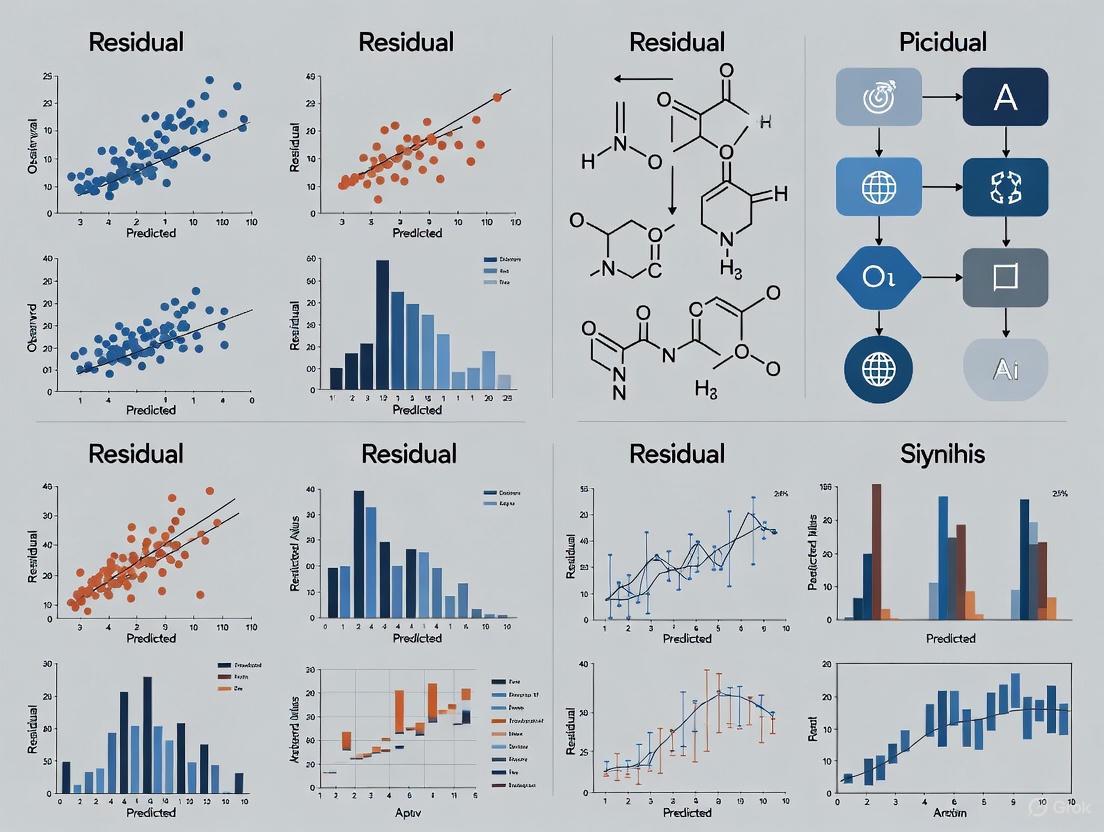
This article provides a comprehensive guide to using residual plots for validating regression models in biomedical and pharmaceutical research.
Residual Plots for Regression Diagnostics: A Practical Guide for Biomedical Researchers
Abstract
This article provides a comprehensive guide to using residual plots for validating regression models in biomedical and pharmaceutical research. It covers foundational principles, from defining residuals and their role in checking model assumptions like linearity, homoscedasticity, and normality. The guide then explores advanced methodological applications, including partial residual plots for covariate analysis in Model-Based Meta-Analysis (MBMA) and diagnostics for Generalized Linear Models (GLMs). A dedicated troubleshooting section outlines how to identify and correct common issues like heteroscedasticity, non-linearity, and outliers. Finally, it discusses validation frameworks and compares diagnostic tools to ensure model robustness, empowering researchers to build reliable models for drug development and clinical analysis.
Understanding Residuals: The Foundation of Regression Model Diagnostics
In statistical modeling, particularly within regression analysis, a residual is defined as the difference between an observed value and the value predicted by a model [1]. This fundamental concept serves as a critical diagnostic measure for assessing model quality and accuracy. The mathematical expression for a residual is straightforward: Residual = Observed Value - Predicted Value [1] [2]. When a model's predictions are perfectly accurate, all residuals equal zero. In practice, however, residuals are almost never zero, and their magnitude and pattern provide valuable insights into model performance [1].
The analysis of residuals is particularly crucial in scientific fields such as pharmaceutical development, where predictive models must be rigorously validated to ensure reliability and regulatory compliance. For researchers and scientists, residual analysis transcends mere error calculation; it forms the basis for diagnosing model adequacy, verifying statistical assumptions, and guiding model improvement efforts [3] [4]. By systematically examining residuals, professionals can determine whether their models sufficiently capture the underlying relationships in the data or require refinement to account for more complex patterns.
Mathematical Definition and Calculation
Core Formula and Interpretation
The mathematical foundation for residuals is expressed through the formula:
[ d = y - \hat{y} ]
Where:
- (d) represents the residual
- (y) represents the observed value from actual data
- (\hat{y}) represents the predicted value from the regression model [5]
The direction and magnitude of residuals provide immediate feedback on model performance. A positive residual indicates that the observed value exceeds the predicted value, meaning the model has underestimated the actual measurement. Conversely, a negative residual signifies that the observed value falls below the predicted value, indicating overestimation by the model [1] [5]. The absolute value of the residual reflects the magnitude of this prediction error, with values closer to zero representing more accurate predictions.
Practical Calculation Example
The following table illustrates a simplified calculation of residuals using hypothetical data from a linear regression model predicting pharmaceutical product stability:
| Observation | Observed Value (y) | Predicted Value (ŷ) | Residual (y - ŷ) |
|---|---|---|---|
| 1 | 50.2 | 48.5 | +1.7 |
| 2 | 47.8 | 49.1 | -1.3 |
| 3 | 52.1 | 53.0 | -0.9 |
| 4 | 55.5 | 54.2 | +1.3 |
| 5 | 49.3 | 50.8 | -1.5 |
Table 1: Example residual calculations for a regression model
This tabular representation of residuals allows researchers to quickly identify both the direction and magnitude of prediction errors across observations. In the example above, the model appears to be slightly overestimating for observations 2, 3, and 5, while underestimating for observations 1 and 4. The systematic calculation and examination of these residuals forms the basis for more advanced diagnostic procedures [2].
The Role of Residuals in Model Diagnostics
Assessing Model Quality and Assumptions
Residuals serve as primary indicators for evaluating whether a regression model adequately represents the data. The core assumption in linear regression is that residuals should be randomly distributed with constant variance and no discernible patterns [4]. When this ideal condition is met, it suggests that the model has successfully captured the underlying relationship between variables. However, when residuals exhibit systematic patterns, they reveal deficiencies in the model that require attention [1] [3].
Statistical measures such as R-squared derive directly from residual analysis. The R-squared statistic quantifies the proportion of variance in the dependent variable explained by the model, and it is calculated using the sum of squared residuals [1]. A higher R-squared value indicates that residuals are generally smaller relative to the total variance, suggesting a better model fit. Similarly, other diagnostic metrics leverage residuals to provide insights into model performance and potential improvements.
Identifying Common Model Problems
Residual analysis can reveal several specific problems in regression models:
- Systematic Bias: When the average residual differs significantly from zero, it indicates that the model is consistently over- or under-predicting the observed values [1]
- Non-Linearity: Curved patterns in residual plots suggest that the relationship between variables may not be linear, requiring polynomial terms or transformations [2] [4]
- Heteroscedasticity: When the spread of residuals changes systematically with the predicted values, it violates the constant variance assumption [2] [3]
- Autocorrelation: When residuals display correlated patterns, particularly in time-series data, it indicates that errors are not independent [1]
Each of these patterns provides diagnostically valuable information that can guide researchers in refining their models to better represent the underlying data structure [3] [4].
Experimental Protocols for Residual Analysis
Protocol 1: Comprehensive Residual Analysis Workflow
Figure 1: Comprehensive workflow for residual analysis in regression diagnostics
Protocol 2: Residual Plot Interpretation Guide
Objective: Systematically interpret residual plots to identify specific model deficiencies and appropriate remedial actions.
Procedure:
- Generate Residual vs. Fitted Plot: Plot residuals on the y-axis against predicted values on the x-axis [4]
- Interpret Pattern:
- Generate Normal Q-Q Plot: Plot sample quantiles against theoretical normal quantiles [4]
- Assess Normality:
- Check for Influential Points: Identify observations with high leverage and large residuals using Cook's distance [4]
Remedial Actions Based on Diagnostic Results:
| Pattern Detected | Proposed Solution | Application Context |
|---|---|---|
| Non-linearity | Add polynomial terms, use splines, or apply Generalized Additive Models (GAMs) [6] | When theoretical basis suggests curved relationships |
| Heteroscedasticity | Transform response variable, use weighted least squares, or apply variance-stabilizing transformations [6] | When variability changes with predicted values |
| Non-normality | Apply Box-Cox transformation to response variable [3] | When statistical inference requires normal errors |
| Outliers & influential points | Investigate data quality, consider robust regression techniques [3] [4] | When certain observations disproportionately influence results |
Table 2: Diagnostic patterns and corresponding remedial actions for residual analysis
Visualization and Interpretation of Residual Plots
Standard Diagnostic Plots for Regression
The most effective approach to residual analysis involves examining multiple complementary visualizations. Statistical software typically generates four key diagnostic plots that together provide a comprehensive assessment of model adequacy [4]:
- Residuals vs. Fitted Plot: Reveals patterns in residuals relative to prediction magnitude, highlighting non-linearity or heteroscedasticity [4]
- Normal Q-Q Plot: Assesses the normality assumption by comparing residual distribution to theoretical normal distribution [4]
- Scale-Location Plot: Displays the square root of standardized residuals against fitted values to better detect heteroscedasticity [4]
- Residuals vs. Leverage Plot: Identifies influential observations that disproportionately affect regression results [4]
Each plot addresses different model assumptions, and together they form a powerful diagnostic toolkit for researchers validating regression models.
Decision Framework for Residual Plot Interpretation
Figure 2: Diagnostic decision framework for interpreting residual plots
Applications in Pharmaceutical and Scientific Research
Residual Solvent Analysis in Drug Development
In pharmaceutical research, the term "residual" takes on additional specialized meaning in the context of residual solvent analysis. This application involves quantifying volatile organic compounds that remain in active pharmaceutical ingredients (APIs) and drug products after manufacturing [7] [8]. Regulatory guidelines such as ICH Q3C and USP <467> establish strict limits for these residuals based on their toxicity profiles, classifying solvents into three categories [7]:
- Class 1 solvents: Known human carcinogens or environmental hazards that should be avoided
- Class 2 solvents: Substances with inherent but reversible toxicity that must be limited
- Class 3 solvents: Compounds with low toxic potential subject to less stringent limits
The analytical methods for residual solvent detection primarily utilize headspace gas chromatography (GC) coupled with mass spectrometry (GC-MS) to achieve the sensitivity and specificity required for regulatory compliance [7]. This application demonstrates how residual analysis extends beyond statistical modeling into critical quality control processes in pharmaceutical manufacturing.
Research Reagent Solutions for Residual Analysis
| Reagent/Instrument | Function in Residual Analysis | Application Context |
|---|---|---|
| Headspace Gas Chromatograph (GC) | Separates and quantifies volatile residual solvents [7] | Pharmaceutical impurity profiling according to USP <467> |
| Mass Spectrometer (GC-MS) | Provides definitive identification of residual compounds [7] | Confirmatory testing and unknown peak identification |
| Statistical Software (R, Python) | Generates diagnostic plots and calculates residual statistics [4] | Regression model validation across scientific disciplines |
| Reference Standards | Enables calibration and quantification of specific residuals [7] | Method validation and compliance with regulatory guidelines |
Table 3: Essential research tools for residual analysis in pharmaceutical and scientific applications
Advanced Topics in Residual Analysis
Specialized Residual Types and Their Applications
Beyond ordinary residuals, several specialized residual types enhance diagnostic capabilities for specific analytical scenarios:
- Studentized Residuals: Residuals scaled by an estimate of their standard deviation, making them more comparable across observations and useful for outlier detection [3]
- Standardized Residuals: Residuals divided by their standard deviation, facilitating comparison across different models and datasets [2]
- PRESS Residuals: Calculation approach used in cross-validation where each residual is computed from a model fitted without that observation
These specialized residuals address specific diagnostic needs, such as identifying influential observations or comparing model performance across different measurement scales.
Addressing Violations of Regression Assumptions
When residual analysis reveals violations of regression assumptions, researchers can employ several advanced techniques to remedy these issues:
- Weighted Least Squares: Addresses heteroscedasticity by assigning different weights to observations based on their variance [6]
- Generalized Additive Models (GAMs): Accommodates non-linear relationships through smooth functions without requiring specific parametric forms [6]
- Robust Regression Techniques: Reduces the influence of outliers using alternative estimation methods less sensitive to extreme values
The appropriate remedial approach depends on the specific pattern identified through residual analysis and the theoretical understanding of the underlying phenomena being modeled.
Residuals, defined as the differences between observed and predicted values, serve as fundamental diagnostic tools in regression analysis and quality control processes across scientific disciplines. Through systematic calculation, visualization, and interpretation of residuals, researchers can validate model assumptions, identify deficiencies, and guide model improvement efforts. The protocols and frameworks presented in this document provide comprehensive guidance for implementing residual analysis in both statistical modeling and specialized applications such as pharmaceutical residual solvent testing. As regulatory requirements and analytical methodologies continue to evolve, the principles of residual analysis remain essential for ensuring the validity and reliability of scientific models and manufacturing processes.
The Critical Role of Residuals in Checking Model Assumptions
In statistical regression analysis, a residual is the difference between an observed value and the value predicted by a model [1]. Represented by the simple formula Residual = Observed – Predicted, these seemingly simple values form the cornerstone of model diagnostics, providing critical insights into whether a statistical model adequately represents the underlying data [4] [1]. For researchers and scientists in drug development, residual analysis is not merely a statistical formality; it is an essential practice for validating analytical methods, ensuring regulatory compliance, and building models that can reliably inform critical decisions from drug discovery to clinical trials [9].
The core premise of residual analysis is that if a model is perfectly specified, the residuals should exhibit no systematic patterns. They should appear as random noise, fluctuating randomly around zero [9]. Conversely, patterns in the residuals are the model's way of communicating that it has failed to capture some essential characteristic of the data. By meticulously examining residuals, researchers can verify key model assumptions—linearity, normality, independence, and constant variance (homoscedasticity)—and identify outliers or influential points that could disproportionately skew the results [3] [10]. This process transforms residuals from simple errors into a powerful diagnostic tool, guiding scientists toward more robust, reliable, and interpretable models.
Key Diagnostic Plots and Their Interpretation
Visual inspection of residuals is the most effective method for diagnosing model adequacy. The following plots, typically generated in tandem, provide a multi-faceted view of model performance and assumption violations.
Residuals vs. Fitted Values Plot
This plot displays residuals on the y-axis against the model's predicted (fitted) values on the x-axis [4]. Its primary purpose is to check the assumptions of linearity and homoscedasticity.
- Ideal Pattern: A random scatter of points around the horizontal line at zero (residual=0), with no discernible systematic patterns [4] [9].
- Problematic Patterns and Interpretations:
- A U-shaped or curved pattern indicates non-linearity. The model has failed to capture a non-linear relationship in the data, suggesting that a quadratic term, transformation, or a different non-linear model might be more appropriate [4] [10].
- A funnel-shaped pattern (where the spread of residuals increases or decreases with the fitted values) indicates heteroscedasticity—a violation of the constant variance assumption. This can lead to inefficient estimates and invalid inference [3].
Normal Q-Q Plot
The Normal Quantile-Quantile (Q-Q) plot assesses whether the residuals follow a normal distribution [4]. It plots the sorted residuals against the theoretically expected values from a normal distribution.
- Ideal Pattern: The points follow the dashed 45-degree reference line closely, with minor deviations at the tails [4].
- Problematic Patterns and Interpretations:
- Systematic deviations from the line, particularly an S-shape or curves at the ends, indicate departures from normality. This can affect the validity of confidence intervals and p-values [3].
Scale-Location Plot
Also known as the Spread-Location plot, this graph shows the square root of the absolute standardized residuals against the fitted values [4]. It is another powerful tool for detecting heteroscedasticity.
- Ideal Pattern: A horizontal line with randomly spread points, indicating that the spread (variance) of the residuals is constant across all levels of the predictor [4].
- Problematic Patterns and Interpretations:
Residuals vs. Leverage Plot
This plot helps identify influential observations that have a disproportionate impact on the regression model's results [4]. It plots residuals against leverage, often with contours of Cook's distance.
- Ideal Pattern: All points are clustered closely together, well within the boundaries of Cook's distance lines (typically shown as red dashed lines) [4].
- Problematic Patterns and Interpretations:
Table 1: Summary of Key Diagnostic Residual Plots
| Plot Type | Primary Assumption Checked | Ideal Pattern | Common Violations & Implications |
|---|---|---|---|
| Residuals vs. Fitted | Linearity & Homoscedasticity | Random scatter around zero | Curve: Non-linearity. Funnel: Non-constant variance (Heteroscedasticity) [4] [3] |
| Normal Q-Q | Normality of Errors | Points on the diagonal line | S-shape/Curves: Non-normal residuals; impacts significance tests [4] [3] |
| Scale-Location | Homoscedasticity | Horizontal line with random spread | Upward/Downward trend: Non-constant variance [4] [3] |
| Residuals vs. Leverage | Influence & Outliers | Points clustered inside Cook's distance lines | Points in top/bottom right: Influential cases that alter model results [4] [11] |
Advanced Diagnostic Techniques
Beyond the four standard plots, several advanced techniques offer deeper insights, particularly in complex modeling scenarios common in pharmaceutical research.
Partial Residual Plots
Partial Residual Plots (PRPs) are invaluable for diagnosing the functional form of a specific predictor in a multiple regression model after accounting for the effects of all other covariates [12]. They help answer whether the relationship between a predictor and the outcome is linear or requires transformation.
In a recent application for a Model-based Meta-Analysis (MBMA) of antidepressant treatments, PRPs were used to visualize the dose-response relationship for Venlafaxine while normalizing for other effects like placebo response and baseline score [12]. This provided a "like-to-like" comparison, revealing how well the model captured the dose-effect relationship independently of other variables. PRPs are particularly useful when dealing with large numbers of studies, where traditional forest plots become unwieldy [12].
Identifying Outliers and Influential Points
Not all outliers are influential. It is crucial to distinguish between them using specific diagnostic statistics:
- Outliers: Observations where the response value is unusual given its covariate pattern. These can be detected using studentized residuals. A common rule is that absolute studentized residuals greater than 3 may be considered outliers [3] [11].
- Leverage: Points with an unusual combination of predictor values (far from the average covariate pattern). Leverage is measured by the hat value. A common cutoff is 2p/n, where p is the number of predictors and n is the number of observations [11].
- Influence: The product of being an outlier and having high leverage. Influential points, if removed, cause a substantial change in the model coefficients. Cook's distance is a key metric, with values greater than 4/n often flagged for investigation [4] [11].
Table 2: Diagnostics for Unusual Observations
| Diagnostic | Statistic | What It Identifies | Common Cut-off Guideline |
|---|---|---|---|
| Outlier | Studentized Residual | Observation with an unusual response value | Absolute value > 3 [11] |
| Leverage | Hat Value | Observation with extreme predictor values | > 2p/n [11] |
| Influence | Cook's Distance | Observation that significantly changes model coefficients | > 4/n [4] |
Experimental Protocols for Residual Analysis
This section provides a detailed, step-by-step protocol for conducting a comprehensive residual analysis, suitable for inclusion in a method validation report.
Protocol: Comprehensive Residual Analysis for Linear Model Validation
1. Purpose and Scope To provide a standardized methodology for evaluating the adequacy of a linear regression model by examining its residuals. This protocol verifies key statistical assumptions and identifies potential model misspecifications, ensuring the reliability of inferences drawn from the model. It is applicable during analytical method validation, calibration curve assessment, and clinical data analysis.
2. Materials and Software Requirements
- Dataset with observed and predictor variables.
- Statistical software (e.g., R, Python with StatsModels, SAS, SPSS).
- The
plot.lmfunction in R is specifically designed for this purpose [4].
3. Step-by-Step Procedure
Step 1: Model Fitting
- Fit the proposed linear regression model to your dataset using standard procedures (e.g.,
lm()in R).
- Fit the proposed linear regression model to your dataset using standard procedures (e.g.,
Step 2: Generate Diagnostic Plots
- Execute the appropriate command to produce the four core diagnostic plots. In R, using the
plot()function on the fitted model object (plot(fitted_model)) will generate them sequentially [4]. - To view all four plots simultaneously in R, use:
- Execute the appropriate command to produce the four core diagnostic plots. In R, using the
Step 3: Systematic Visual Inspection
- Residuals vs. Fitted Plot: Check for a random scatter of points and the absence of U-shaped or funnel-shaped patterns [4].
- Normal Q-Q Plot: Assess how closely the points adhere to the diagonal line. Note any systematic deviations [4].
- Scale-Location Plot: Verify that the points form a roughly horizontal band and that the red smoothing line is flat [4].
- Residuals vs. Leverage Plot: Identify any points with high leverage and/or high influence, particularly those outside the Cook's distance contours [4].
Step 4: Quantitative Validation (Supplementary)
- Perform formal statistical tests to complement visual inspection:
- Normality: Shapiro-Wilk test on the residuals.
- Heteroscedasticity: Breusch-Pagan test.
- Independence: Durbin-Watson test for time-series data.
- Perform formal statistical tests to complement visual inspection:
Step 5: Documentation and Interpretation
- Document all plots and test results.
- For any assumption violation, propose and investigate remedial measures (e.g., data transformation, weighted regression, non-linear terms, robust regression) [9].
- Clearly state the final conclusion regarding model adequacy.
Workflow Visualization
The following diagram illustrates the logical workflow for the residual analysis protocol.
The Scientist's Toolkit: Essential Reagents and Software
For researchers embarking on residual analysis, the following tools and statistical "reagents" are essential for conducting a robust diagnostic evaluation.
Table 3: Essential Research Reagent Solutions for Residual Analysis
| Tool Category | Specific Item / Software | Function and Application in Diagnostics |
|---|---|---|
| Statistical Software | R with stats & car packages [11] [10] |
The base R plot.lm() function generates the four core plots. The car package provides enhanced diagnostic functions like influencePlot() and residualPlots() [11]. |
| Statistical Software | Python (StatsModels, scikit-learn) [10] | Provides comprehensive regression diagnostics and residual analysis capabilities through libraries like StatsModels. |
| Statistical Software | SAS, SPSS, MATLAB [10] | Enterprise and commercial software with robust procedures for regression diagnostics and residual analysis. |
| Diagnostic Metrics | Studentized Residuals [3] [11] | Standardized residuals used to detect outliers (unusually large differences between observed and predicted values). |
| Diagnostic Metrics | Hat Values (Leverage) [11] | Identifies observations with extreme or unusual combinations of predictor variables. |
| Diagnostic Metrics | Cook's Distance [4] [3] [11] | A composite measure that quantifies the influence of a single observation on the entire set of regression coefficients. |
Application in Pharmaceutical Research and Regulatory Compliance
In the pharmaceutical industry, residual analysis transcends theoretical statistics and becomes a matter of quality and regulatory rigor. Regulatory agencies like the FDA and EMA require stringent validation of analytical methods used in drug development and manufacturing [9]. Residual plots serve as a critical component of this validation, providing visual and quantitative evidence that a method is fit for its intended purpose.
During analytical method validation, residual plots are used to:
- Confirm Linearity: A random scatter of residuals around zero in a calibration curve reinforces that a linear model is appropriate over the specified concentration range. Systematic deviations suggest the range may be too broad or a non-linear model is needed [9].
- Detect Non-constant Variance: Heteroscedasticity in a bioanalytical assay, for example, can lead to unreliable quantification at certain concentration levels. Identifying this through a residual plot allows scientists to apply weighted regression or other corrections to ensure the method's accuracy and precision across its entire range [9].
- Identify Outliers: An outlier in a clinical trial data analysis or an analytical run could indicate sample contamination, measurement error, or an instrumental anomaly. Pinpointing these points for investigation is crucial before a method can be fully validated and implemented in routine quality control [9].
The inclusion of residual plots and their interpretation in validation reports enhances transparency and demonstrates a commitment to statistical rigor, which is highly valued during regulatory reviews and inspections [9].
In the context of regression model diagnostics research, residual analysis serves as a fundamental methodology for verifying model assumptions and assessing model adequacy. Residuals, defined as the differences between observed values and model-predicted values, contain valuable information about why a model may not fit well [2]. Diagnostic plots transform this information into visual patterns, enabling researchers to detect violations of statistical assumptions that could compromise analytical conclusions. For researchers and drug development professionals, these diagnostics are particularly crucial as they ensure the validity of models used in critical applications such as dose-response modeling, pharmacokinetic studies, and clinical trial data analysis.
The regression framework assumes a linear relationship between predictors and the response variable, independent and normally distributed errors with constant variance, and no influential outliers disproportionately affecting the model [13] [4]. Violations of these assumptions can lead to biased parameter estimates, inaccurate confidence intervals, and compromised predictive validity. This article systematically examines four primary diagnostic plots: Residuals vs. Fitted, Normal Q-Q, Scale-Location, and Residuals vs. Leverage, providing comprehensive protocols for their implementation and interpretation within pharmaceutical research contexts.
Theoretical Foundations of Residual Analysis
Residual Calculation and Properties
In linear regression analysis, residuals are mathematically defined as:
[ ei = yi - \hat{y_i} ]
where ( yi ) represents the observed value and ( \hat{yi} ) represents the predicted value for the i-th observation [2]. The diagnostic power of residuals stems from their relationship to the unobservable error term; while errors represent the deviation from the true population regression line, residuals represent the deviation from the estimated sample regression line.
A fundamental property of residuals in ordinary least squares (OLS) regression is that they sum to zero, with zero covariance with the fitted values when the model includes an intercept term [14]. This theoretical foundation ensures that residuals behave in predictable ways when model assumptions are satisfied, allowing systematic deviations from these patterns to indicate assumption violations.
Assumptions of Linear Regression
The validity of linear regression inference depends on several critical assumptions:
- Linearity: The relationship between predictors and response is linear
- Independence: Errors are statistically independent
- Homoscedasticity: Constant variance of errors across all predictor levels
- Normality: Errors follow a normal distribution
Diagnostic plots essentially operationalize the verification of these assumptions, with each plot targeting specific potential violations [13] [4]. For drug development researchers, understanding these assumptions is crucial when modeling biological phenomena where violation risks are substantial, such as in saturated response effects, heterogeneous population responses, or assay measurement limitations.
Key Diagnostic Plots
Residuals vs. Fitted Values Plot
Purpose and Interpretation
The Residuals vs. Fitted plot graphically displays the predicted values (( \hat{y} )) on the horizontal axis against the residuals (( e_i )) on the vertical axis [13]. This plot primarily addresses the assumptions of linearity and homoscedasticity (constant variance).
In a well-specified model, this plot should show:
- Residuals randomly scattered around zero (the reference line)
- No discernible systematic patterns
- Constant spread across all fitted values
- No prominent outliers [13]
Table 1: Patterns in Residuals vs. Fitted Plots and Their Interpretations
| Pattern Observed | Likely Cause | Implications for Model |
|---|---|---|
| Random scatter around zero | Assumptions met | No action needed |
| U-shaped or inverted U-shaped curve | Non-linear relationship | Model misspecification; add quadratic terms |
| Funnel or cone shape | Heteroscedasticity | Non-constant variance; transformations needed |
| One or two points far from the rest | Outliers | Investigate influential points |
Protocol for Implementation
Protocol 1: Creating and Interpreting Residuals vs. Fitted Plot
- Model Fitting: Fit your regression model using standard software (R, Python, SAS)
- Extract Values: Obtain fitted values and residuals from the model object
- Create Scatterplot: Plot fitted values on x-axis against residuals on y-axis
- Add Reference Line: Include horizontal line at y=0 for visual reference
- Assess Patterns: Examine for non-linearity, non-constant variance, or outliers
In R, after fitting a model (fit <- lm(y ~ x, data)), the plot can be generated with:
In Python using statsmodels:
Normal Q-Q Plot
Purpose and Interpretation
The Normal Quantile-Quantile (Q-Q) plot assesses whether residuals follow a normal distribution [15] [4]. It compares the quantiles of the residual distribution against the theoretical quantiles of a normal distribution with the same mean and variance.
Interpretation guidelines:
- Points following the diagonal line suggest normality
- Systematic deviations indicate non-normality
- S-shaped curves indicate heavy or light tails relative to normal distribution
- C-shaped curves indicate skewness [15]
Table 2: Common Q-Q Plot Patterns and Distributional Issues
| Pattern in Q-Q Plot | Distribution Issue | Corrective Actions |
|---|---|---|
| Points follow reference line | Normal distribution | No action needed |
| S-shaped curve | Heavy or light tails | Transform response variable |
| Consistent upward deviation | Right skew | Log or square root transformation |
| Consistent downward deviation | Left skew | Reflection then transformation |
| Few points deviate at ends | Outliers | Investigate data quality |
Protocol for Implementation
Protocol 2: Creating and Interpreting Normal Q-Q Plots
- Sort Residuals: Arrange residuals in ascending order
- Calculate Theoretical Quantiles: Generate corresponding quantiles from standard normal distribution
- Create Scatterplot: Plot theoretical quantiles against observed residual quantiles
- Add Reference Line: Include line of perfect agreement (y=x)
- Assess Distribution: Evaluate deviation from reference line
In R:
In Python using statsmodels:
The following diagram illustrates the systematic workflow for creating and interpreting Normal Q-Q plots:
Scale-Location Plot
Purpose and Interpretation
Also known as the Spread-Location plot, this diagnostic tool specifically assesses the assumption of homoscedasticity (constant variance) [4]. Instead of plotting raw residuals, it displays the square root of the absolute standardized residuals against fitted values.
Interpretation guidelines:
- Horizontal line with randomly scattered points indicates constant variance
- Upward or downward sloping pattern indicates heteroscedasticity
- The presence of a non-flat smooth line (often added to the plot) indicates changing variance across fitted values
Protocol for Implementation
Protocol 3: Creating and Interpreting Scale-Location Plots
- Standardize Residuals: Calculate standardized or studentized residuals
- Transform Values: Compute square root of absolute standardized residuals
- Create Scatterplot: Plot fitted values against transformed residuals
- Add Smooth Line: Include a loess or similar smooth line to visualize trend
- Assess Pattern: Evaluate whether the smooth line is approximately horizontal
In R:
In Python using statsmodels:
Residuals vs. Leverage Plot
Purpose and Interpretation
This plot identifies influential observations that disproportionately affect the regression results [4]. It displays residuals against leverage, with contours representing Cook's distance—a measure of influence.
Key concepts:
- Leverage: Measures how extreme an observation is in the predictor space
- Influence: Combines leverage and residual size to measure impact on parameter estimates
- Cook's Distance: Quantifies how much regression coefficients change if a case is omitted
Interpretation guidelines:
- Points in upper/lower right corners are potentially influential
- Cases outside Cook's distance contours warrant investigation
- The plot helps distinguish between outliers and influential points
Protocol for Implementation
Protocol 4: Creating and Interpreting Residuals vs. Leverage Plots
- Calculate Leverage: Obtain leverage values (hat values) from model
- Compute Influence Measures: Calculate Cook's distance for each observation
- Create Scatterplot: Plot leverage against residuals
- Add Contour Lines: Include Cook's distance contours (typically 0.5 and 1.0)
- Identify Influential Points: Flag observations beyond contour lines
In R:
In Python using statsmodels:
Integrated Diagnostic Workflow
The following diagram presents a comprehensive workflow for regression diagnostics, integrating all four primary diagnostic plots:
The Scientist's Toolkit: Research Reagent Solutions
Table 3: Essential Computational Tools for Regression Diagnostics
| Tool/Software | Primary Function | Application Context |
|---|---|---|
| R Statistical Software | Comprehensive regression analysis | Primary analysis platform for complex models |
| Python (Statsmodels) | Flexible statistical modeling | Integration with machine learning pipelines |
| SAS PROC REG | Enterprise-level regression | Clinical trial analysis (pharma industry) |
| JMP Interactive Visualization | Exploratory data analysis | Rapid model prototyping and diagnostics |
| MATLAB Statistics Toolbox | Computational mathematics | Engineering-based modeling applications |
For drug development researchers, these tools facilitate the implementation of diagnostic protocols within various analytical contexts. R provides the most comprehensive suite of diagnostic functions through its base graphics and packages like car and ggplot2 [4]. Python's statsmodels and scikit-learn libraries offer similar capabilities with integration advantages for machine learning workflows. SAS remains prevalent in pharmaceutical regulatory submissions, while JMP provides interactive capabilities valuable for exploratory analyses during early research phases.
Advanced Applications in Pharmaceutical Research
Case Study: Dose-Response Modeling
In dose-response studies, diagnostic plots play a crucial role in validating model assumptions. The Residuals vs. Fitted plot can detect non-linear response patterns that might indicate alternative functional forms (e.g., Emax models instead of linear models). The Scale-Location plot can identify variance heterogeneity across dose levels, common when higher doses produce more variable biological responses.
Case Study: Pharmacokinetic Data Analysis
Pharmacokinetic (PK) data often exhibit heteroscedasticity where measurement error increases with concentration levels. Diagnostic plots help identify this pattern, guiding appropriate variance-stabilizing transformations or weighted regression approaches. The Normal Q-Q plot is particularly valuable for assessing distributional assumptions in population PK models.
Protocol for Model Remediation
Protocol 5: Addressing Identified Diagnostic Issues
Non-linearity Detection (Residuals vs. Fitted plot):
- Add polynomial terms
- Apply non-linear transformation to predictors
- Implement spline regression or generalized additive models
Heteroscedasticity (Scale-Location plot):
- Apply variance-stabilizing transformations (log, square root)
- Use weighted least squares regression
- Implement generalized linear models with appropriate variance structure
Non-normality (Normal Q-Q plot):
- Transform response variable (Box-Cox transformation)
- Use robust regression methods
- Apply non-parametric approaches
Influential Observations (Residuals vs. Leverage plot):
- Verify data quality for influential cases
- Consider robust regression techniques
- Report results with and without influential points
Diagnostic plots constitute an essential methodology for verifying regression model assumptions in pharmaceutical research. The integrated workflow presented—encompassing Residuals vs. Fitted, Normal Q-Q, Scale-Location, and Residuals vs. Leverage plots—provides a comprehensive approach to model validation. For drug development professionals, these diagnostics offer critical insights into model adequacy, guiding appropriate model refinement and ensuring the validity of analytical conclusions that underpin regulatory decisions and scientific understanding.
The protocols and implementation guidelines presented in this article provide researchers with practical tools for incorporating rigorous diagnostic assessment into their analytical workflows, ultimately enhancing the reliability and interpretability of regression models in drug development contexts.
Residual analysis is a fundamental diagnostic procedure in regression modeling, serving to validate the core assumptions that underpin the reliability of a model's inferences and predictions [3]. For researchers and scientists in drug development, where models often inform critical decisions, ensuring that a regression model is an accurate representation of the underlying data is paramount. A residual, defined as the difference between an observed value and the value predicted by the model (Residual = Observed – Predicted), contains valuable information about the model's deficiencies [2]. A healthy residual plot is one where these residuals display a random scatter around zero and maintain constant variance (homoscedasticity) across all levels of the prediction [4] [3]. This application note details the quantitative criteria and experimental protocols for identifying such a plot, thereby confirming that a model is well-specified for its intended purpose in scientific research.
Characteristics of a Healthy Residual Plot
A residual plot that confirms model adequacy exhibits two primary characteristics: random scatter and constant variance. These features indicate that the model has successfully captured the underlying systematic relationship in the data, leaving only unpredictable, random error in the residuals.
Visual Characteristics
- Random Scatter: The residuals should be randomly dispersed above and below the horizontal line at zero, with no discernible patterns, curves, or trends [2] [4].
- Constant Variance (Homoscedasticity): The vertical spread of the residuals should be approximately the same across the entire range of fitted values. The cloud of points should not fan out (funnel shape) or narrow in a systematic way [4] [3].
Quantitative Assessment Criteria
The following table summarizes the key features and their quantitative interpretations for a healthy residual plot.
Table 1: Quantitative Criteria for Assessing a Healthy Residual Plot
| Assessment Feature | Quantitative Measure | Interpretation in a Healthy Plot |
|---|---|---|
| Mean of Residuals | Mean (μ) of all residuals | Should be approximately zero [2]. |
| Distribution of Residuals | Standard Deviation (σ) of residuals | Should be relatively small and consistent across the range of fitted values [2]. |
| Residual Pattern | Durbin-Watson statistic, plots of residuals vs. predictors | No significant autocorrelation; no clear patterns in any residual vs. predictor plot [3]. |
| Variance Homogeneity | Breusch-Pagan or White test, Scale-Location plot | Statistical tests for heteroscedasticity are non-significant (p > 0.05); red line in Scale-Location plot is roughly horizontal [4] [3]. |
| Normality of Errors | Shapiro-Wilk test, Normal Q-Q plot | For valid inference, residuals should be approximately normal; points in Q-Q plot closely follow the 45-degree reference line [4]. |
Experimental Protocol for Residual Plot Analysis
This protocol provides a step-by-step methodology for generating and diagnosing residual plots, suitable for validating regression models in scientific research.
Workflow for Residual Analysis
The following diagram illustrates the logical workflow for conducting a residual analysis to diagnose a regression model.
Step-by-Step Procedure
Protocol 1: Generation and Assessment of a Residual vs. Fitted Plot
Purpose: To visually and quantitatively assess the linearity and homoscedasticity assumptions of a regression model.
Materials: See Section 5, "The Scientist's Toolkit."
Procedure:
- Model Fitting: Fit your linear regression model to the experimental dataset.
- Residual Calculation: For every observation i in your dataset, calculate the residual eᵢ using the formula:
- eᵢ = Observed Valueᵢ - Predicted Valueᵢ [2].
- Plot Generation: Create a scatter plot, known as the Residual vs. Fitted plot.
- X-axis: The predicted (fitted) values from the model.
- Y-axis: The calculated residuals.
- Add a horizontal reference line at Y = 0 [4].
- Visual Diagnosis: Examine the plot for the characteristics of health as defined in Section 2.1.
- Healthy Indication: Residuals are randomly scattered around the zero line with no systematic patterns and with constant spread.
- Unhealthy Indications:
- Non-linearity: A curved pattern (e.g., U-shaped or inverted U-shaped) in the residuals suggests the relationship between a predictor and the outcome is not linear [2] [4].
- Heteroscedasticity: A funnel-shaped pattern (increasing or decreasing spread of residuals along the x-axis) indicates non-constant variance [2] [3].
- Outliers: Points that are exceptionally far from the zero line may be outliers that disproportionately influence the model [3].
Protocol 2: Supplemental Diagnostic Plots
Purpose: To formally evaluate the normality and homoscedasticity assumptions.
Procedure:
- Normal Q-Q Plot:
- Generation: Plot the quantiles of the standardized residuals against the quantiles of a theoretical normal distribution.
- Assessment: If the residuals are normally distributed, the points will closely follow the 45-degree reference line. Systematic deviations from the line indicate skewness or heavy tails [4].
- Scale-Location Plot:
- Generation: Plot the square root of the absolute standardized residuals (on the Y-axis) against the fitted values (on the X-axis).
- Assessment: A healthy model will show a roughly horizontal trend line with randomly scattered points. A positively sloped trend line is a clear indicator of heteroscedasticity [4] [3].
Remedial Workflow for Unhealthy Plots
When a residual plot reveals a violation of assumptions, a systematic approach to remediation is required.
The Scientist's Toolkit
Table 2: Essential Research Reagent Solutions for Statistical Model Diagnostics
| Tool or Reagent | Function in Residual Analysis |
|---|---|
| Statistical Software (R/Python) | Provides the computational environment for fitting regression models, calculating residuals, and generating the suite of diagnostic plots (e.g., using plot(lm()) in R) [4]. |
| Residual vs. Fitted Plot | The primary diagnostic tool for visually assessing the linearity and constant variance assumptions of the regression model [2] [4]. |
| Normal Q-Q Plot | A graphical tool to assess the validity of the normality assumption of the regression errors [4]. |
| Scale-Location Plot | A specialized plot used to detect heteroscedasticity (non-constant variance) more effectively than the standard residuals vs. fitted plot [4] [3]. |
| Influence Measures (Cook's Distance) | A statistical metric used to identify influential observations that have a disproportionate impact on the regression model's coefficients; points with Cook's D > 4/n may require investigation [4] [3]. |
| Variance Stabilizing Transformations | Mathematical transformations (e.g., log, square root) applied to the response variable to correct for heteroscedasticity [2] [3]. |
Linking Residual Analysis to Model Validity in Scientific Inference
Residual analysis is a fundamental diagnostic technique used to evaluate the validity and adequacy of statistical regression models. A residual is defined as the difference between an observed value and the value predicted by a regression model (eᵢ = yᵢ - ŷᵢ). These residuals contain valuable information about model performance and potential violations of regression assumptions [3]. The primary goal of residual analysis is to validate whether the key assumptions of a regression model are met, ensuring the reliability of statistical inferences and predictions [3]. For researchers in scientific fields, particularly drug development, thorough residual analysis is crucial for establishing model robustness and drawing meaningful conclusions from experimental data.
Core Principles and Purpose
Residual analysis serves as a critical link between a fitted model and scientific inference by providing diagnostic tools to assess model quality. Its core purposes include [3]:
- Evaluating Model Assumptions: Validating the assumptions of linearity, normality, homoscedasticity, and independence of errors.
- Identifying Model Inadequacies: Detecting systematic patterns that suggest model misspecification or omitted variables.
- Detecting Influential Observations: Recognizing outliers and leverage points that disproportionately impact model parameters.
- Guiding Model Improvement: Informing data transformations, variable selection, and alternative modeling approaches.
Table 1: Key Characteristics of Residuals in Model Diagnostics
| Characteristic | Definition | Diagnostic Importance |
|---|---|---|
| Magnitude | Absolute difference between observed and predicted values | Indicates overall model precision and prediction error |
| Pattern | Systematic structure in residual distribution | Reveals violations of model assumptions |
| Distribution | Statistical distribution of residual values | Assesses normality assumption and identifies outliers |
| Leverage | Influence of individual data points on model fit | Identifies disproportionately influential observations |
Diagnostic Methods and Protocols
Graphical Residual Analysis Techniques
Visual inspection of residuals provides intuitive diagnostics for model adequacy. The following protocols outline key graphical methods:
Protocol 1: Residuals vs. Fitted Values Plot
- Purpose: Assess linearity assumption and detect heteroscedasticity
- Procedure:
- Plot residuals on vertical axis against fitted values on horizontal axis
- Add horizontal reference line at zero
- Examine pattern of points around reference line
- Interpretation: Random scatter indicates adequate model; funnel shape suggests heteroscedasticity; curved pattern indicates non-linearity [3]
Protocol 2: Normal Q-Q Plot
- Purpose: Evaluate normality assumption of residuals
- Procedure:
- Order residuals from smallest to largest
- Plot ordered residuals against theoretical quantiles of normal distribution
- Add 45-degree reference line for perfect normality
- Interpretation: Points following reference line support normality assumption; systematic deviations indicate violation [3]
Protocol 3: Scale-Location Plot
- Purpose: Detect heteroscedasticity (non-constant variance)
- Procedure:
- Calculate square root of absolute standardized residuals
- Plot these values against fitted values
- Add smoothing line to visualize trend
- Interpretation: Horizontal smoothing line indicates constant variance; sloping line suggests heteroscedasticity [3]
Protocol 4: Residuals vs. Predictor Variables
- Purpose: Identify omitted variable relationships and pattern misspecification
- Procedure:
- Plot residuals against each predictor variable in model
- Plot residuals against potential predictors not included in model
- Examine for systematic patterns
- Interpretation: Random scatter indicates adequate specification; systematic patterns suggest missing terms or transformations [3]
Quantitative Diagnostic Measures
Numerical diagnostics complement graphical methods by providing objective measures of model adequacy:
Table 2: Quantitative Measures for Residual Analysis
| Measure | Calculation | Interpretation | Threshold | ||
|---|---|---|---|---|---|
| Studentized Residuals | rᵢ = eᵢ/(s√(1-hᵢᵢ)) where hᵢᵢ is leverage |
Identifies outliers | Values > | 3 | indicate potential outliers |
| Cook's Distance | Dᵢ = (eᵢ²/(p·MSE))·(hᵢᵢ/(1-hᵢᵢ)²) |
Measures influence of single observation | Values > 4/n indicate influential points | ||
| DFFITS | Standardized change in predicted value | Measures effect on fitted values | Values > 2√(p/n) suggest high influence | ||
| DFBETAS | Standardized change in parameter estimates | Assesses effect on each coefficient | Values > 2/√n indicate influential observations | ||
| Durbin-Watson | d = Σ(eᵢ - eᵢ₋₁)²/Σeᵢ² |
Tests autocorrelation in residuals | Values near 2 suggest no autocorrelation |
Experimental Workflow for Comprehensive Residual Analysis
The following workflow provides a systematic protocol for conducting residual analysis in scientific research:
Common Residual Patterns and Interpretations
Understanding residual patterns is essential for diagnosing model deficiencies:
Research Reagent Solutions for Statistical Diagnostics
Table 3: Essential Tools for Comprehensive Residual Analysis
| Tool Category | Specific Solutions | Application in Residual Analysis | Key Features |
|---|---|---|---|
| Statistical Software | R Statistical Environment, Python SciKit-Learn, SAS, MATLAB | Primary platforms for calculating residuals and creating diagnostic plots | Comprehensive regression diagnostics, customizable plotting capabilities, statistical testing functions |
| Specialized Diagnostic Packages | R: car, lmtest, MASSPython: statsmodels, scipy.stats | Enhanced diagnostic tests and visualization capabilities | Specific tests for heteroscedasticity (Breusch-Pagan), normality (Shapiro-Wilk), and influential points |
| Visualization Tools | ggplot2 (R), matplotlib/seaborn (Python), commercial visualization software | Creation of publication-quality diagnostic plots | High-resolution graphics, customizable themes, multiple plot arrangements |
| Influence Diagnostics | Cook's distance calculation, DFFITS, DFBETAS algorithms | Identification of influential observations and outliers | Automated detection of problematic data points, threshold-based flagging systems |
Advanced Diagnostic Protocols
Protocol for Detecting Heteroscedasticity
Heteroscedasticity (non-constant variance) violates regression assumptions and requires specific diagnostic approaches:
Objective: Identify and quantify non-constant variance in residuals Procedure:
- Calculate standardized residuals from fitted model
- Create scale-location plot (sqrt(|residuals|) vs. fitted values)
- Perform Breusch-Pagan or White test for heteroscedasticity
- Calculate confidence intervals for variance estimates across fitted value ranges Interpretation: Significant test results (p < 0.05) indicate heteroscedasticity; funnel pattern in plot confirms visual evidence Remedial Actions: Weighted least squares, variance-stabilizing transformations (log, square root), generalized linear models [3]
Protocol for Identifying Influential Observations
Influential observations disproportionately affect parameter estimates and require careful assessment:
Objective: Detect observations with undue influence on regression results Procedure:
- Calculate leverage values (hat matrix diagonals) for all observations
- Compute Cook's distance for each observation
- Calculate DFBETAS for each observation's effect on each parameter
- Compute DFFITS for each observation's effect on predictions Interpretation:
- Leverage > 2p/n indicates high leverage
- Cook's D > 4/n indicates high influence
- |DFBETAS| > 2/√n suggests parameter influence
- |DFFITS| > 2√(p/n) suggests prediction influence Decision Framework: Investigate influential points for data quality issues; consider robust regression techniques if justified exclusion is not appropriate [3]
Residual analysis provides the critical link between statistical models and valid scientific inference. By systematically applying the diagnostic protocols and methodologies outlined in this document, researchers can verify model assumptions, identify deficiencies, and implement appropriate remedial measures. The integration of graphical techniques with quantitative diagnostics creates a comprehensive framework for model validation, particularly crucial in regulated research environments such as drug development where inference validity directly impacts decision-making. Proper residual analysis ensures that statistical models not only fit historical data but also provide reliable inference for future predictions and scientific conclusions.
Creating and Interpreting Diagnostic Plots in Practice
Step-by-Step Guide to Generating Standard Residual Plots
Residual plots are fundamental graphical tools used in regression diagnostics to assess the adequacy of statistical models and validate key assumptions. Within pharmaceutical research and drug development, these plots are indispensable for verifying analytical methods, ensuring compliance with regulatory standards, and guaranteeing the reliability of data used in critical decision-making processes [9]. A residual is the difference between an observed value and the value predicted by a regression model. Visualizing these residuals helps scientists identify patterns indicating model shortcomings, such as non-linearity, non-constant variance, or the presence of outliers, which might otherwise compromise the integrity of scientific conclusions [2] [16].
This guide provides a structured, step-by-step protocol for generating and interpreting standard residual plots, contextualized for the rigorous demands of regulatory-grade research.
Quantitative Foundation of Residuals
Before generating plots, a clear understanding of the underlying quantitative data is essential. The core data for residual analysis is derived from the model's predictions and the corresponding discrepancies.
Observations, Predictions, and Residuals: For a given dataset, each observation has an actual (observed) value, a predicted value from the regression model, and a residual calculated as Residual = Observed - Predicted [2]. The following table illustrates this data structure using a simplified example from an analytical calibration study.
Table 1: Example Data Structure for Residual Calculation from a Calibration Curve
| Standard Concentration (μg/mL) | Observed Response | Predicted Response | Residual (Observed - Predicted) |
|---|---|---|---|
| 10.0 | 104.5 | 102.1 | 2.4 |
| 25.0 | 251.2 | 249.8 | 1.4 |
| 50.0 | 499.8 | 505.3 | -5.5 |
| 75.0 | 740.1 | 745.1 | -5.0 |
| 100.0 | 1005.5 | 1000.6 | 4.9 |
The residuals from a well-specified model are expected to be randomly scattered around zero. Key assumptions tied to these residuals include linearity of the relationship, constant variance (homoscedasticity), normality, and independence [17] [18].
Step-by-Step Experimental Protocol
This protocol outlines the process for generating and analyzing residual plots, using R as the primary statistical environment.
Software and Reagent Solutions
Table 2: Essential Research Tools for Residual Plot Analysis
| Tool Name | Type/Function |
|---|---|
| R Statistical Software | Open-source environment for statistical computing and graphics. |
| RStudio IDE | Integrated development environment that simplifies coding and visualization in R. |
ggplot2 & ggfortify Packages |
R packages that provide powerful and standardized functions for creating diagnostic plots. |
broom Package |
R package that neatly organizes model outputs, including fitted values and residuals. |
| Validated Analytical Dataset | Experimental data from a calibrated method (e.g., concentration-response data). |
Procedure
Step 1: Fit the Regression Model Begin by fitting your linear regression model to the experimental data. The following R code uses a simple linear regression with concentration as the predictor and instrument response as the outcome.
Step 2: Generate the Residuals vs. Fitted Values Plot This is the primary plot for checking homoscedasticity and linearity. A random scatter of points around the horizontal line at zero indicates the assumptions are met.
Step 3: Generate the Normal Q-Q Plot This plot assesses the normality of the residuals. Points that closely follow the dashed line indicate that the residuals are approximately normally distributed.
Step 4: Generate the Scale-Location Plot Also known as the Spread-Location plot, this is used to check the assumption of homoscedasticity. A horizontal line with randomly spread points indicates constant variance.
Step 5: Generate the Residuals vs. Leverage Plot This plot helps identify influential data points that disproportionately affect the regression results.
Workflow Visualization
The logical sequence from model fitting to diagnostic checking is encapsulated in the following workflow. This diagram provides a high-level overview of the standard operating procedure for residual diagnostics.
Interpretation and Diagnostic Guidelines
Correct interpretation is critical. The following table catalogues common residual plot patterns, their diagnostic implications, and potential remedial actions for researchers.
Table 3: Diagnostic Guide for Interpreting Residual Plots
| Observed Pattern | Diagnostic Interpretation | Potential Corrective Actions |
|---|---|---|
| Random Scatter around the zero line | The model assumptions of linearity and homoscedasticity are likely met [2]. | No action required; the model is adequate. |
| A distinct U-shaped or curved pattern | Non-linearity: The model may not correctly capture the true functional form of the relationship [2] [19]. | Consider adding polynomial terms, transforming variables (e.g., log, square root), or using a non-linear model. |
| Funnel or fan shape (increasing/decreasing spread) | Heteroscedasticity: Non-constant variance of the residuals [2] [19] [9]. | Apply a variance-stabilizing transformation (e.g., log) to the response variable or use weighted least squares regression. |
| A point far removed from the random cloud | Potential Outlier: An observation with a large residual [19] [18]. | Investigate the data point for measurement error. If no error is found, analyze the model with and without the point. |
| Points deviating from the diagonal in Q-Q plot | Non-normality: The residuals are not normally distributed [17]. | Apply a transformation to the response variable or check for missing predictors. |
Regulatory Considerations in Pharmaceutical Sciences
In drug development, regulatory frameworks from the FDA and EMA mandate rigorous analytical method validation [9]. Residual plots serve as objective evidence during this process.
- Linearity of Calibration Curves: A random residual plot is fundamental proof that a calibration curve is linear across its specified range, a key parameter in bioanalytical method validation [9].
- Demonstrating Control: Systematically patterned residuals can indicate a lack of control over the analytical procedure. A random pattern supports the claim that the method is robust and produces reliable results [9].
- Documentation and Submission: Residual plots and any actions taken based on their interpretation should be thoroughly documented in validation reports submitted to regulatory agencies to demonstrate statistical rigor [9].
By adhering to this structured protocol for generating and interpreting standard residual plots, researchers and scientists in drug development can ensure their regression models are valid, their analytical methods are sound, and their data meets the highest standards of quality and regulatory compliance.
Interpreting Residuals vs. Fitted Plots for Linearity and Homoscedasticity
Within the broader thesis on advanced regression diagnostics, this document establishes standardized protocols for interpreting residuals versus fitted plots, fundamental tools for verifying the core assumptions of linearity and homoscedasticity in regression analysis. The application notes provide a structured framework for researchers and scientists, particularly in drug development, to diagnose model inadequacies, thereby ensuring the reliability of inferences drawn from regression models. The methodologies outlined are critical for validating analytical models used in pharmacokinetics, dose-response analysis, and other quantitative research applications.
Residual plots serve as a primary diagnostic tool for assessing the validity of linear regression models, which are extensively used in statistical analysis across scientific disciplines. A residual is defined as the difference between an observed value and the value predicted by the model (Residual = Observed – Predicted) [2]. The residuals versus fitted plot is a scatterplot with residuals on the vertical axis and fitted values (predicted values) on the horizontal axis [13] [20]. This plot is indispensable for detecting violations of the assumptions of linearity (that the relationship between predictors and the outcome is linear) and homoscedasticity (that the variance of the residuals is constant) [21]. This protocol details the interpretation of these plots within the context of rigorous model diagnostics.
Theoretical Framework and Key Concepts
Characteristics of a Well-Behaved Residual Plot
An ideal residuals vs. fitted plot indicates that the regression model's assumptions are met. The key characteristics are [13] [20]:
- Random Scatter: The residuals bounce randomly around the residual = 0 line, suggesting the linearity assumption is reasonable.
- Horizontal Band: The residuals roughly form a horizontal band around the residual = 0 line, indicating constant variance of the error terms (homoscedasticity).
- No Outliers: No single residual stands out markedly from the overall random pattern.
Table 1: Key Characteristics of an Ideal Residuals vs. Fitted Plot
| Characteristic | Description | Implied Assumption |
|---|---|---|
| Random Scatter | Residuals are randomly dispersed above and below zero. | Linearity |
| Constant Spread | The vertical spread of residuals is consistent across all fitted values. | Homoscedasticity |
| No Influential Points | Absence of points with extreme residual or fitted values. | No outliers |
Homoscedasticity and Heteroscedasticity
- Homoscedasticity signifies that the variance of the errors remains constant across all levels of the independent variable(s) [22]. This is a crucial assumption for the reliability of statistical inferences (e.g., p-values, confidence intervals) derived from the model.
- Heteroscedasticity occurs when the variability of the residuals is not constant, often appearing as a fan-shaped pattern in the residual plot [22] [23]. While it may not bias the coefficient estimates, it reduces their precision, leading to unreliable standard errors and potentially incorrect inferences [23].
The following diagram illustrates the logical workflow for interpreting a residuals vs. fitted plot, guiding the user from initial pattern recognition to final diagnosis.
Experimental Protocol: Interpretation and Diagnosis
Protocol 3.1: Visual Inspection of Residuals vs. Fitted Plots
Purpose: To diagnose potential violations of linearity and homoscedasticity in a fitted regression model through visual analysis.
Materials and Software:
- A fitted linear regression model object (e.g., an
lmobject in R). - Statistical software (e.g., R, Python with
statsmodels, Stata). - The dataset used to fit the model.
Procedure:
- Generate the Plot: Using your statistical software, plot the model's residuals on the y-axis against the corresponding fitted (predicted) values on the x-axis. Ensure a horizontal line at residual=0 is displayed for reference [4].
- Assess Linearity: Observe the overall distribution of points relative to the residual=0 line.
- Acceptable: Residuals are randomly dispersed above and below zero without a discernible systematic pattern [13] [4].
- Violation Indicated: A clear curved pattern (e.g., U-shaped or inverted U-shaped) is present. This suggests a non-linear relationship between a predictor and the outcome variable has not been captured by the model [2] [4].
- Assess Homoscedasticity: Observe the vertical spread of the residuals across the range of fitted values.
- Acceptable (Homoscedastic): The spread of the residuals remains approximately constant from left to right, forming a horizontal band [13] [21].
- Violation Indicated (Heteroscedastic): The spread of residuals systematically increases or decreases with the fitted values, forming a funnel or fan shape [22] [23].
- Check for Outliers: Identify any points that fall far outside the overall cloud of residuals. These may be outliers or influential points requiring further investigation [4].
Troubleshooting: For small datasets, avoid over-interpreting minor twists and turns in the plot, as humans naturally seek patterns in randomness [13] [20].
Protocol 3.2: Quantitative Confirmation of Visual Diagnoses
Purpose: To use formal statistical tests to confirm patterns suspected in the visual inspection.
Materials and Software:
- The same fitted model and dataset from Protocol 3.1.
- Software capable of performing heteroscedasticity tests (e.g.,
statsmodelsin Python,lmtestpackage in R).
Procedure for Heteroscedasticity:
- Breusch-Pagan Test: This test regresses the squared residuals on the independent variables.
- Interpretation: A significant p-value (e.g., p < 0.05) provides statistical evidence against homoscedasticity, confirming heteroscedasticity [22].
- Goldfeld-Quandt Test: This test compares the variances of residuals from two different segments of the data (e.g., low vs. high fitted values).
- Interpretation: A significant p-value (e.g., p < 0.05) suggests heteroscedasticity is present [22].
Procedure for Non-Linearity:
- Lack-of-Fit Test: If replicate data are available, a lack-of-fit test can be used to formally test for non-linearity by comparing the linear model to a more complex model that fits the means of the replicates.
Table 2: Diagnostic Patterns and Remedial Actions
| Pattern in Plot | Diagnosis | Potential Remedial Actions |
|---|---|---|
| Random Scatter | Assumptions met; no major issues detected. | None required. Proceed with interpretation. |
| Curved Pattern | Non-linearity; the model form is incorrect. | - Add polynomial terms (e.g., x²) [2] [23].- Apply a non-linear transformation to the predictor or outcome variable [2].- Use a generalized additive model (GAM). |
| Funnel Shape | Heteroscedasticity; non-constant variance. | - Transform the outcome variable (e.g., log(Y)) [2] [23].- Use weighted least squares regression [22] [23].- Use robust standard errors (e.g., Huber-White estimators) [23]. |
| Outlier(s) | Potential influential points. | - Investigate data points for errors.- Use Cook's distance to quantify influence [4].- Consider robust regression techniques. |
The Scientist's Toolkit: Research Reagent Solutions
This section details the essential analytical "reagents" required for conducting thorough residual diagnostics.
Table 3: Essential Tools for Regression Diagnostics
| Tool / Solution | Function / Purpose |
|---|---|
| Residuals vs. Fitted Plot | Primary visual tool for detecting non-linearity and heteroscedasticity [13] [20]. |
| Scale-Location Plot | A variant of the residual plot that uses the square root of the absolute residuals, making it easier to detect trends in spread [22] [4]. |
| Normal Q-Q Plot | Assesses the normality assumption of the residuals, which is important for the validity of hypothesis tests [2] [4] [21]. |
| Breusch-Pagan Test | A formal statistical test used to quantitatively confirm the presence of heteroscedasticity [22]. |
| Cook's Distance | Identifies influential data points that have a disproportionate impact on the regression model's coefficients [4]. |
| Variance Inflation Factor (VIF) | Diagnoses multicollinearity—high correlation among predictor variables—which does not affect residuals but can destabilize coefficient estimates [21]. |
The residuals versus fitted plot is an indispensable, first-line diagnostic for validating regression models. Mastery of its interpretation is non-negotiable for ensuring the integrity of scientific conclusions, especially in high-stakes fields like drug development. This protocol provides a standardized, actionable framework for researchers to diagnose and remediate common model violations, thereby strengthening the analytical foundation of their work. Future research within the broader thesis will explore automated interpretation algorithms and advanced diagnostic techniques for complex model architectures.
Using Normal Q-Q Plots to Assess the Normality of Errors
Within the broader context of research on residual plots for regression model diagnostics, assessing the normality of errors stands as a critical verification step for validating the inferential foundation of linear models. The assumption of normally distributed errors underpins the validity of p-values, confidence intervals, and hypothesis tests for regression coefficients [4]. Violations of this assumption can lead to biased parameter estimates and reduced statistical power, potentially compromising the reliability of scientific conclusions, particularly in high-stakes fields like drug development [24]. Among the available diagnostic tools, the Normal Quantile-Quantile (Q-Q) plot provides a powerful graphical method for evaluating this normality assumption, offering advantages over purely numerical tests by revealing the nature and extent of departures from normality [25] [26].
This protocol details the theoretical principles, practical implementation, and nuanced interpretation of Normal Q-Q plots for diagnosing error distributions in regression analysis, providing researchers with a standardized framework for model diagnostics.
Theoretical Foundations of the Normal Q-Q Plot
A Normal Q-Q plot is a graphical technique that compares the quantiles of an observed distribution—typically regression residuals—to the quantiles of a theoretical normal distribution [26]. If the residuals are perfectly normally distributed, the points will fall approximately along a straight reference line. The plot leverages the properties of quantiles, which are points that divide a dataset into equal-sized, continuous intervals (e.g., percentiles, quartiles) [26].
The underlying statistical principle involves plotting the sorted standardized residuals against the theoretically expected z-scores from a standard normal distribution. The resulting pattern allows researchers to visually assess the Gaussian fit of their model's errors. While formal statistical tests for normality exist, the Q-Q plot's strength lies in its ability to visually communicate not just whether a distribution deviates from normality, but how it deviates, revealing characteristics such as skewness, kurtosis, and the presence of outliers [25] [26]. This makes it an indispensable tool for exploratory model diagnostics, guiding subsequent model refinement strategies.
Workflow for Q-Q Plot Analysis in Regression Diagnostics
The following workflow diagram outlines the systematic process of using Q-Q plots for diagnosing normality of errors in regression models, from model fitting to interpretation and remedial actions.
Protocol: Implementation and Interpretation
Software-Specific Implementation
The following table summarizes the core functions and packages for creating Normal Q-Q plots across common statistical software environments.
Table 1: Software Implementation for Normal Q-Q Plots
| Software | Core Function/Package | Key Syntax Example | Reference Line Command |
|---|---|---|---|
| R Stats | qqnorm(), qqplot() |
qqnorm(residuals) |
qqline(residuals, col="red") |
| R ggplot2 | stat_qq(), stat_qq_line() |
ggplot(data, aes(sample=residuals)) + stat_qq() |
Included in stat_qq_line() |
| Python StatsModels | statsmodels.api.qqplot() |
sm.qqplot(residuals, line='45') |
line='45' parameter |
| Python SciPy | scipy.stats.probplot() |
scipy.stats.probplot(residuals, dist="norm", plot=plt) |
fit=True parameter |
| Minitab | Stat > Quality Tools > Normal Plot | GUI-based workflow | Automatically generated |
Step-by-Step Protocol for Residual Analysis:
Model Fitting and Residual Extraction: After fitting your regression model (e.g., using Ordinary Least Squares), extract the residuals. While raw residuals can be used, standardized residuals (e.g., Studentized or Pearson residuals) are generally preferred as they are normalized by their standard error, providing a more stable variance [27] [28].
Plot Generation: Generate the Normal Q-Q plot using the appropriate function for your software environment. Ensure a reference line is added, which represents perfect normality [26].
Visual Inspection: Systematically examine the plot. Look for whether the points adhere closely to the reference line. Pay particular attention to the behavior at both tails of the distribution, as deviations often manifest most prominently there [26].
Interpretation of Common Patterns
Interpreting Q-Q plots requires understanding the diagnostic implications of specific patterns. The following table catalogs common deviations and their statistical meanings.
Table 2: Interpretation Guide for Q-Q Plot Patterns
| Observed Pattern | Interpretation | Implied Distributional Characteristic | Potential Remedial Action |
|---|---|---|---|
| Points closely follow the reference line | Residuals are approximately normally distributed | Normality assumption is satisfied | No action required; proceed with inference |
| S-shaped curve | Tails of the distribution are heavier or lighter than normal | Kurtosis differs from normal distribution | Consider data transformations or robust regression methods |
| Consistent upward curve | Right (positive) skew | Mean > Median; tail extends to the right | Log, square root, or Box-Cox transformation of response variable [29] |
| Consistent downward curve | Left (negative) skew | Mean < Median; tail extends to the left | Reflection then log transformation, or Box-Cox transformation |
| Systematic deviations at both ends (points drift from line) | Non-normal tails; potential outliers | Extreme values present | Investigate outliers for data entry errors; consider robust statistical techniques [3] |
| Systematic deviations in middle (points off line) | Issues with central tendency | Distribution may be multimodal or contain outliers | Investigate data quality; check for omitted categorical predictors |
The "S-shaped" curve indicates lighter or heavier tails than a normal distribution. A concave-upward "banana" shape (like a smile) typically suggests right-skewness, where the residual distribution has a long tail to the right. Conversely, a concave-downward "banana" shape (like a frown) suggests left-skewness [26]. Points that deviate sharply from the majority pattern at the extremes often indicate outliers that may be exerting undue influence on the model fit [4] [3].
Integrating Q-Q Plots with Other Diagnostic Tools
Normal Q-Q plots should not be used in isolation. They form one component of a comprehensive regression diagnostic suite, which typically includes [27] [4] [28]:
- Residuals vs. Fitted Values Plot: Used to check the assumptions of linearity and homoscedasticity (constant variance of errors). A random scatter of points around zero suggests both assumptions are met. A funnel shape indicates heteroscedasticity, while a curved pattern suggests non-linearity [4] [3].
- Scale-Location Plot: Also used to check homoscedasticity, this plot shows the square root of the absolute standardized residuals against fitted values. A horizontal band with no discernible pattern indicates constant variance [4] [28].
- Residuals vs. Leverage Plot: Helps identify influential observations that disproportionately affect the regression results. Points falling outside Cook's distance contours may be influential points requiring further investigation [4] [28].
The workflow below illustrates how these diagnostic tools integrate to provide a comprehensive assessment of regression model assumptions.
Quantitative Support for Graphical Analysis
While Q-Q plots provide visual diagnostics, formal statistical tests can offer quantitative support for assessing normality. The performance of these tests varies with sample size and the nature of the non-normality (skewness and kurtosis) [24].
Table 3: Statistical Tests for Normality Assessment
| Test Name | Primary Basis | Recommended Context | Performance Notes |
|---|---|---|---|
| Shapiro-Wilk | Correlation between data and normal scores | Small to moderate samples; general use | High power against broad alternatives; performs well across sample sizes [24] |
| Anderson-Darling | Empirical distribution function (emphasizes tails) | When fit in distribution tails is critical | More sensitive to deviations in the tails than Kolmogorov-Smirnov [25] [24] |
| D'Agostino Skewness | Sample skewness coefficient | When skewness is primary concern | Effective for detecting skewed alternatives [24] |
| Jarque-Bera | Sample skewness and kurtosis | Large sample sizes | Asymptotic test; less reliable for small samples [24] |
Research indicates that for moderately skewed data with low kurtosis, the D'Agostino Skewness and Shapiro-Wilk tests perform well across sample sizes. For highly skewed data, the Shapiro-Wilk test is most effective. For symmetric data with high kurtosis, the Robust Jarque-Bera and Gel-Miao-Gastwirth (GMG) tests are robust choices [24].
Table 4: Key Research Reagent Solutions for Regression Diagnostics
| Tool/Resource | Category | Primary Function | Application Context |
|---|---|---|---|
| R Statistical Software | Programming Environment | Comprehensive statistical analysis and graphics | Primary platform for advanced regression diagnostics; includes built-in diagnostic plots [27] [26] |
| Python StatsModels Library | Python Library | Statistical modeling and diagnostics | Python alternative to R; provides comprehensive Q-Q plot functions and other regression diagnostics [27] [28] |
| CAR Package (R) | R Package | Companion to Applied Regression | Provides advanced diagnostic plots and influence measures beyond base R functionality [30] |
| ReDiag Shiny App | Interactive Tool | Educational assessment of assumptions | Interactive web application for understanding regression assumptions using user or example data [30] |
| Box-Cox Transformation | Statistical Method | Identifies optimal power transformation | Addresses non-normality and heteroscedasticity; implemented in most statistical software [30] [29] |
The Normal Q-Q plot serves as an indispensable diagnostic instrument within the regression analyst's toolkit, providing immediate visual insight into the conformity of model errors with the normal distribution assumption. Its proper implementation and interpretation, as outlined in this protocol, enables researchers to make informed judgments about model adequacy and the validity of subsequent statistical inferences. When integrated with other diagnostic plots and, where appropriate, formal statistical tests, Q-Q plots contribute significantly to robust model building and validation practices essential for rigorous scientific research, particularly in regulated fields such as pharmaceutical development where analytical transparency and methodological soundness are paramount.
Model-Based Meta-Analysis (MBMA) has emerged as a powerful quantitative framework that integrates efficacy and safety data from multiple clinical trials to inform drug development and therapeutic decision-making. Unlike conventional meta-analysis, MBMA incorporates key pharmacologic principles, dose-response relationships, and time-course dynamics, enabling comparison of treatments across different study populations and trial designs. However, the validity of MBMA conclusions depends critically on appropriate model diagnostics. Partial Residual Plots (PRPs) represent an advanced diagnostic tool that addresses limitations of conventional methods by enabling "like-to-like" comparisons between observed data and model predictions while controlling for multiple covariates simultaneously [31] [12].
Traditional diagnostic approaches in MBMA, including forest plots, residual-based diagnostics, and visual predictive checks, face significant limitations when dealing with complex models incorporating multiple covariates. Forest plots become expansive and difficult to interpret with large numbers of studies, while stratification of data by covariate levels offers limited insights when strata are small. Residual-based plots primarily reflect overall model misspecification rather than revealing the specific relationship between response and individual covariates [32]. PRPs overcome these limitations by providing an integrated diagnostic approach that uses all available data to visualize the correlation between response and any single covariate after normalizing for all other covariates included in the model [31].
Mathematical Foundation of Partial Residual Plots
Conceptual Framework
The fundamental concept underlying partial residual plots involves decomposing the observed data to isolate the relationship between the response variable and a specific covariate of interest, independent of other model components. In the context of MBMA, this enables researchers to assess whether the modeled relationship for a particular covariate appropriately captures patterns in the data after accounting for all other effects [12].
For a general MBMA model expressed as: Y = f(X₁, X₂, ..., Xₖ) + ε where Y represents the outcome, X₁ to Xₖ represent different covariates, and ε represents residual error, the partial residual for covariate Xᵢ is defined as: Partial Residual = Y - f(X₁, X₂, ..., Xᵢ₋₁, Xᵢ₊₁, ..., Xₖ) This represents the portion of the response not explained by all covariates except Xᵢ [32].
Formal Mathematical Derivation
In MBMA applications with complex model structures, the implementation of PRPs follows a specific normalization process. Consider a full model prediction Ŷᵢⱼ = f̂(eo, d, B) for arm j in trial i, with êᵢⱼ representing the corresponding residuals based on estimated parameters, such that: êᵢⱼ = Yᵢⱼ - f̂(eo, d, B) [12]
To isolate the relationship between response and dose (d), independent of placebo response (eo) and baseline score (B), these covariates are fixed to reference values (eofix and Bfix). The normalized observation Ynᵢⱼ is then calculated as: Ynᵢⱼ = f̂(eofix, d, Bfix) + êᵢⱼ
Substituting the expression for êᵢⱼ yields: Ynᵢⱼ = f̂(eofix, d, Bfix) + [Yᵢⱼ - f̂(eo, d, B)] which simplifies to: Ynᵢⱼ = Yᵢⱼ - [f̂(eo, d, B) - f̂(eofix, d, Bfix)] [12]
This normalized observation Ynᵢⱼ effectively represents the observed data adjusted to reflect what would have been observed if all studies had the reference placebo response and baseline values, thereby enabling appropriate comparison with model predictions [12].
Table 1: Key Components in the PRP Mathematical Framework
| Component | Symbol | Description | Role in PRP Construction |
|---|---|---|---|
| Observed Outcome | Yᵢⱼ | Actual measured response in arm j of trial i | Base data to be normalized |
| Full Model Prediction | f̂(eo, d, B) | Model prediction with actual covariate values | Reference for residual calculation |
| Residual | êᵢⱼ | Difference between observed and predicted values | Captures unexplained variability |
| Fixed Covariate Prediction | f̂(eofix, d, Bfix) | Prediction with reference covariate values | Provides common baseline for comparison |
| Normalized Observation | Ynᵢⱼ | Observation adjusted to reference conditions | Enables like-to-like comparison |
Practical Implementation Protocol
Workflow for PRP Construction and Interpretation
The following diagram illustrates the systematic workflow for implementing partial residual plots in MBMA:
Step-by-Step Experimental Protocol
Step 1: Model Fitting and Residual Calculation
- Fit the full MBMA model to the complete dataset using appropriate estimation techniques (e.g., maximum likelihood, nonlinear mixed-effects modeling)
- Calculate residuals for each observation using the formula: êᵢⱼ = Yᵢⱼ - f̂(eo, d, B)
- Document residual distribution and summary statistics to identify potential outliers or systematic patterns [12]
Step 2: Covariate Normalization
- Select appropriate reference values for covariates being normalized (typically mean or median values across studies)
- For placebo response, use a structured or non-parametric approach based on the model specification
- For continuous covariates like baseline scores, center to meaningful reference values relevant to the clinical context [31]
Step 3: Generation of Normalized Observations
- Compute normalized observations using: Ynᵢⱼ = f̂(eofix, d, Bfix) + êᵢⱼ
- Verify that normalization preserves the relationship with the covariate of interest while removing the influence of other covariates
- Compare distribution of normalized vs. observed values to ensure biological plausibility is maintained [12]
Step 4: Visualization and Model Diagnostics
- Create scatter plots with the covariate of interest on the x-axis and normalized observations on the y-axis
- Overlay model predictions for the covariate of interest at reference values of other covariates
- Assess the alignment between normalized observations and model predictions
- Identify systematic deviations that may indicate model misspecification [32]
Step 5: Quantitative Assessment
- Calculate goodness-of-fit metrics (e.g., RMSE) between normalized observations and model predictions
- Compare with corresponding metrics between raw observations and model predictions
- The normalized observations should demonstrate better agreement with model predictions (lower RMSE) when the model is correctly specified [32]
Step 6: Model Refinement Iteration
- If systematic discrepancies are identified, consider alternative model structures for the problematic relationship
- Re-fit the modified model and repeat the PRP diagnostic process
- Document improvements in model performance and residual patterns [12]
Case Study: PRP Application in Major Depressive Disorder
Study Design and Data Characteristics
A practical application of PRPs in MBMA was demonstrated using literature data from placebo-controlled trials of antidepressant treatments (venlafaxine and fluoxetine) published between 1987 and 2014 [31]. The analysis included 16 studies with 1,289 patients receiving venlafaxine, 982 receiving fluoxetine, and 1,161 placebo-treated patients. The clinical endpoint was change from baseline in the Hamilton Depression Rating (HAMD) scale at the primary timepoint of each study [12].
The MBMA model incorporated trial-specific placebo effects, dose-response relationships, and the effect of baseline HAMD scores: Yᵢⱼ = eoᵢ + Emaxₖ × {1 + β × (Bᵢⱼ - B̄)} × dᵢⱼₖ / (ED50ₖ + dᵢⱼₖ) + εᵢⱼ where eoᵢ represented the non-parametric trial-specific placebo response, Emaxₖ was the drug-specific maximal effect, Bᵢⵢ was the mean baseline HAMD score, and β quantified the effect of centered baseline scores [31].
Table 2: Baseline Characteristics and Placebo Response in Antidepressant Case Study
| Parameter | Venlafaxine Studies | Fluoxetine Studies |
|---|---|---|
| Number of Trials | 10 | 8 |
| Patients Receiving Drug | 1,289 | 982 |
| Placebo-Treated Patients | 1,161 | 1,161 |
| Mean Baseline HAMD (Range) | 25.4 (23.5-29.4) | 20.8 (15-26) |
| Mean Placebo Change from Baseline (Range) | -9.02 (-12.2 to -4.8) | -6.22 (-10.9 to -1.3) |
| Identified Dose-Response Model | Emax model | Constant drug effect |
PRP Implementation and Results
The PRP analysis revealed that observed data points tended to deviate from model predictions when the mean baseline HAMD and placebo response values associated with those data points differed substantially from the corresponding values used for model prediction [31]. After normalizing the observations to reference values of placebo response and baseline scores, the normalized data provided a "like-to-like" comparison with model predictions when assessing the dose-response relationship [12].
Quantitative assessment using root mean square error (RMSE) demonstrated the value of this normalization approach. For fluoxetine, the RMSE between model predictions and observed data was 2.74, compared to 1.16 when using normalized observations. Similarly, for venlafaxine, the RMSE decreased from 2.21 with observed data to 1.10 with normalized observations [32]. This improvement in goodness-of-fit metrics when using normalized data confirms that PRPs enable more appropriate assessment of the specific relationship between dose and response after accounting for other covariates.
The Scientist's Toolkit: Essential Research Reagents for MBMA
Table 3: Essential Methodological Components for MBMA with PRP Diagnostics
| Component | Function in MBMA/PRP | Implementation Considerations |
|---|---|---|
| Literature Data | Primary source of efficacy/safety data from multiple clinical trials | Systematic review following PRISMA guidelines; quality assessment using Cochrane Risk of Bias tool [33] |
| Dose-Response Model | Structural model relating drug exposure to pharmacological effect | Emax model commonly used; linear, sigmoidal, or more complex models based on pharmacological rationale [31] |
| Covariate Model | Quantifies influence of patient/disease factors on treatment response | Continuous covariates centered to reference values; categorical covariates incorporated with appropriate parameterization [33] |
| Statistical Software | Platform for model estimation and diagnostic plotting | R, Python, or specialized pharmacometric software (e.g., NONMEM) with custom coding for PRP implementation [28] |
| Model Diagnostic Suite | Comprehensive assessment of model adequacy | Should include PRPs alongside conventional diagnostics (VPC, residual plots, goodness-of-fit metrics) [32] |
Comparative Evaluation of Diagnostic Approaches
The following diagram illustrates the conceptual relationship between different diagnostic approaches and highlights the unique position of PRPs in addressing the limitations of conventional methods:
Advanced Applications and Interpretation Guidelines
Interpretation Framework for PRPs
Effective interpretation of partial residual plots requires systematic assessment of specific patterns and their implications for model adequacy:
Good Model Fit Indicators:
- Normalized observations randomly scattered around model predictions
- No systematic trends or patterns in the distribution of points
- Consistent variance across the range of the covariate
- Majority of points within clinically acceptable deviation from predictions [12]
Model Misspecification Indicators:
- Systematic deviation of normalized observations from model predictions (e.g., curved pattern when model assumes linear relationship)
- Non-constant variance of normalized observations across the covariate range
- Clusters of points with consistent bias in specific covariate regions
- Outliers that may represent influential observations or data quality issues [32]
Integration with Other Diagnostic Approaches
While PRPs provide valuable insights into covariate-specific relationships, they should be integrated within a comprehensive diagnostic framework:
- Visual Predictive Checks (VPC): Assess overall model performance across the entire covariate space
- Residual Plots: Identify overall model misspecification and heteroscedasticity
- Forest Plots: Provide study-level assessment of model fit
- Goodness-of-Fit Metrics: Quantify overall model performance (e.g., RMSE, AIC, BIC) [31]
The integrated use of these complementary approaches ensures robust assessment of MBMA model adequacy and identifies specific areas for model improvement.
Partial residual plots represent a significant advancement in diagnostic capabilities for Model-Based Meta-Analysis, addressing critical limitations of conventional methods when evaluating complex models with multiple covariates. By enabling "like-to-like" comparisons through appropriate normalization of observations, PRPs allow researchers to isolate and visualize the relationship between response and specific covariates while controlling for other model components. The mathematical foundation, implementation protocol, and case study application presented in this document provide researchers with a comprehensive framework for incorporating PRPs into their MBMA workflow, ultimately enhancing the reliability and interpretability of models that inform critical drug development decisions.
Diagnostics for Generalized Linear Models (GLMs) for Non-Normal Data
Generalized Linear Models (GLMs) are a fundamental class of statistical tools that extend linear regression to handle a wide range of non-normal response data, including binary outcomes, counts, and proportions. Unlike linear models that assume normality and constant variance, GLMs allow data to be described through a distribution from the exponential family (such as binomial, Poisson, or Gamma) that best fits the response variable. The model links the expected value of the response to a linear combination of predictors through a specified link function. Diagnostic analysis for GLMs is crucial for verifying that model assumptions are met, identifying potential misfits, and ensuring the validity and reliability of statistical inferences. Within the broader context of residual plots research, this protocol provides structured methodologies for diagnosing GLMs, with particular emphasis on interpreting residual patterns to detect and remedy common model inadequacies.
Core Components of GLMs and Diagnostic Fundamentals
A Generalized Linear Model consists of three components: a random component specifying the conditional distribution of the response variable (Y) from an exponential family; a systematic component forming the linear predictor (η = Xβ); and a link function (g) connecting the expected value of Y to the linear predictor via g(E(Y)) = η. Common configurations include logistic regression for binary data (binomial family, logit link), Poisson regression for count data (Poisson family, log link), and Gamma regression for positive continuous data (Gamma family, often with a log link).
Diagnostics for GLMs focus on assessing the adequacy of the chosen distribution and link function, verifying the linearity of the relationship between transformed expected response and predictors, and identifying unusual observations that unduly influence the results. Unlike ordinary linear models, raw residuals in GLMs do not need to be normally distributed; instead, diagnostics rely on standardized residual types and simulation-based approaches to evaluate model fit.
Table 1: Common GLM Types and Their Typical Uses
| Response Variable Type | GLM Family | Default Link Function | Common Application Examples |
|---|---|---|---|
| Binary (0/1) | Binomial | Logit | Clinical trial success/failure outcomes |
| Counts | Poisson | Log | Number of adverse events per patient |
| Positive Continuous | Gamma | Inverse or Log | Patient survival time, drug concentration levels |
| Proportions | Binomial | Logit | Mortality rates, treatment success rates |
Residual Types and Their Diagnostic Interpretation
Residual analysis forms the cornerstone of GLM diagnostics. Different types of residuals provide insights into various aspects of model fit.
- Pearson Residuals: Measure the difference between observed and fitted values, scaled by the standard deviation of the fitted value. These are useful for detecting outliers but may be skewed for non-normal distributions.
- Deviance Residuals: Represent the contribution of each observation to the overall model deviance, making them useful for assessing the goodness-of-fit and identifying poorly predicted observations.
- Studentized Residuals: Standardized version of residuals that account for their varying variances, making them more appropriate for identifying true outliers.
- Simulated Residuals (DHARMa): A modern approach that uses simulation to create scaled residuals that are uniformly distributed under the correct model, making pattern recognition more straightforward.
The interpretation of these residuals differs fundamentally from linear models. As emphasized in the literature, "There is no assumption of normal distributed errors in a gamma glm" [34], and this extends to other GLM families. Instead, the focus is on identifying systematic patterns that suggest model misspecification.
Experimental Protocol for Comprehensive GLM Diagnostics
Protocol 1: Initial Model Fit and Residual Visualization
Purpose: To establish a baseline model and generate diagnostic plots for initial assessment of model fit.
Materials and Software: R statistical software with packages stats (for base GLM functions), car (for regression diagnostics), and DHARMa (for simulation-based diagnostics).
Procedure:
- Fit the initial GLM using the
glm()function, specifying appropriate family and link function. - Calculate Pearson residuals using
residuals(model, type = "pearson")and deviance residuals usingresiduals(model, type = "deviance"). - Generate the following plots:
- Residuals vs. fitted values
- Q-Q plot of deviance residuals
- Residuals vs. leverage plot
- For count or proportion data, check for overdispersion by comparing residual deviance to degrees of freedom.
Interpretation: A well-fitting model should show residuals randomly scattered around zero in the residuals vs. fitted plot, with no obvious patterns. The Q-Q plot may show deviation from normality, which is expected, but extreme deviations may indicate distributional misspecification.
Protocol 2: Systematic Pattern Detection and Lack-of-Fit Testing
Purpose: To formally test for systematic patterns in residuals and identify potential non-linearity in predictor relationships.
Materials and Software: R with car package installed.
Procedure:
- Create residual plots against each predictor variable using
residualPlots()function from thecarpackage. - The function automatically performs a lack-of-fit test by adding a quadratic term for each predictor and assessing its significance.
- For categorical predictors, create boxplots of residuals by category.
- Examine the Tukey's test for non-additivity provided in the output.
Interpretation: Significant p-values (typically <0.05) in the lack-of-fit test indicate potential non-linearity for that predictor. Consider adding polynomial terms or using regression splines for these predictors.
Protocol 3: Influence Diagnostics and Outlier Detection
Purpose: To identify observations that exert undue influence on model parameters and detect potential outliers.
Materials and Software: R with car package.
Procedure:
- Calculate leverage values (hat values) using
hatvalues(model). - Compute Cook's distance for each observation using
cooks.distance(model). - Calculate DFBETAS for each parameter using
dfbetas(model). - Create an influence plot using
influencePlot()from thecarpackage, which displays studentized residuals, hat values, and Cook's distance simultaneously.
Interpretation: Observations with high leverage (hat values > 2p/n, where p is number of parameters and n is sample size) and large Cook's distance (values > 4/n) warrant further investigation. DFBETAS values greater than 2/√n indicate observations that significantly impact specific parameter estimates.
Protocol 4: Simulation-Based Diagnostic Validation
Purpose: To validate model fit using simulation-based approaches that address limitations of traditional residual diagnostics.
Materials and Software: R with DHARMa package.
Procedure:
- Generate simulated residuals using
simulateResiduals(model, n = 250)from the DHARMa package. - Plot the simulated residuals using
plotSimulatedResiduals(). - Perform specific tests on the simulated residuals:
testUniformity()to test if residuals are uniformly distributedtestDispersion()to test for over/under-dispersiontestOutliers()to identify outlierstestZeroInflation()to test for excess zeros
Interpretation: Under the correct model, the DHARMa residuals should follow a uniform distribution with no discernible patterns. Significant departure from uniformity indicates model misspecification.
Diagnostic Visualization and Workflow
The following diagram illustrates the comprehensive diagnostic workflow for GLMs:
Interpretation Guide for Common Residual Patterns
Systematic patterns in residual plots provide valuable clues about potential model misspecification. The following table outlines common patterns, their interpretations, and recommended remedial actions:
Table 2: Diagnostic Guide to Common Residual Patterns in GLMs
| Residual Pattern | Visual Characteristics | Potential Interpretation | Remedial Actions |
|---|---|---|---|
| Funneling | Residual spread increases/decreases with fitted values | Heteroscedasticity (non-constant variance) | Transform response variable; Use different variance function; Apply weighted regression |
| Curvature | U-shaped or inverted U-shaped pattern in residuals vs. predictors | Non-linear relationship | Add polynomial terms; Use regression splines; Transform predictors |
| Asymmetry | Residuals skewed with majority on one side of zero | Incorrect distributional assumption or link function | Try alternative distribution family; Change link function |
| Outliers | Isolated points with large residual values | Data entry errors; Genuine unusual observations | Verify data accuracy; Consider robust estimation methods |
| Influential Points | High leverage with moderate to large residuals | Observations unduly affecting parameter estimates | Assess clinical relevance; Report models with and without these points |
Research Reagent Solutions for GLM Diagnostics
Table 3: Essential Software Tools and Diagnostic Functions for GLM Analysis
| Tool/Function | Software Package | Primary Diagnostic Function | Key Applications |
|---|---|---|---|
glm() |
stats (R base) | Fits generalized linear models | Initial model specification |
residualPlots() |
car (R) | Tests for nonlinearity using lack-of-fit tests | Detecting omitted nonlinear relationships |
influencePlot() |
car (R) | Identifies influential observations | Outlier and leverage point detection |
simulateResiduals() |
DHARMa (R) | Creates simulated residuals for uniform assessment | Overall model validation and misspecification detection |
hatvalues() |
stats (R base) | Calculates leverage values | Identifying high-influence covariate patterns |
cooks.distance() |
stats (R base) | Computes Cook's distance | Measuring observation influence on parameter estimates |
testUniformity() |
DHARMa (R) | Formal test of residual distribution | Validating overall model fit |
Advanced Diagnostic Considerations
For complex study designs with correlated data (e.g., longitudinal measurements, clustered observations), Generalized Linear Mixed Models (GLMMs) extend GLMs by incorporating random effects. Diagnostic procedures for GLMMs require special attention to the separation of residual variation into components attributable to different random effects. The conditional model formulation (y ∣ b ~ distribution(μ, R)) requires diagnostics that account for both fixed and random effects [35].
When standard diagnostics reveal persistent issues, consider alternative approaches such as quasi-likelihood methods for handling overdispersion, fractional polynomials for capturing complex nonlinear relationships, or model selection techniques to identify optimal predictor combinations. Throughout the diagnostic process, maintain a balance between statistical fit and clinical relevance, ensuring that the final model aligns with substantive knowledge of the research domain.
Diagnosing and Fixing Common Model Problems with Residuals
Identifying and Remedying Heteroscedasticity (Non-Constant Variance)
Heteroscedasticity refers to the circumstance in which the variability of the residuals (or error terms) in a regression model is not constant across all levels of the independent variables [36]. This phenomenon is characterized by a systematic change in the spread of the residuals over the range of measured values, often visualized as a distinctive fan or cone shape in residual plots [37]. In the context of residual plot diagnostics for regression models, identifying and remedying heteroscedasticity is crucial for ensuring the validity and reliability of statistical inferences, particularly in scientific fields such as drug development where model accuracy directly impacts decision-making.
The presence of heteroscedasticity violates a key assumption of ordinary least squares (OLS) regression, which presumes homoscedasticity—constant variance of residuals [37] [36]. While heteroscedasticity does not cause bias in the coefficient estimates themselves, it does reduce their precision, producing unreliable standard errors [37] [38]. This subsequently leads to misleading p-values, potentially resulting in incorrect conclusions about the statistical significance of model terms [37]. For researchers and scientists relying on regression models for analytical decisions, understanding and addressing heteroscedasticity is therefore essential for producing accurate and interpretable results.
Detection and Diagnostic Protocols
Visual Diagnostic Methods
The primary graphical method for detecting heteroscedasticity involves examining the residuals versus fitted values plot [37] [38]. In a well-specified model with constant variance, residuals should be randomly dispersed around zero without exhibiting discernible patterns. Heteroscedasticity is indicated when the spread of residuals systematically increases or decreases with the fitted values, forming a characteristic fan or cone shape [37] [2].
Protocol for Visual Residual Diagnosis:
- Fit your regression model to the data using standard OLS procedures
- Calculate the predicted (fitted) values and residuals from the model
- Generate a scatter plot with fitted values on the x-axis and residuals on the y-axis
- Examine the plot for systematic patterns in residual dispersion
- For non-constant variance, the vertical range of residuals will typically expand or contract as fitted values increase [37]
This visual inspection method is particularly effective for initial screening, though it may be subjective. For more objective assessment, the lineup protocol can be employed, where the true residual plot is embedded among null plots to determine if it can be visually distinguished [39].
Statistical Testing Methods
When visual inspection suggests potential heteroscedasticity or when working with complex models, formal statistical tests provide objective evidence. The following tests are widely used in research settings:
Table 1: Statistical Tests for Heteroscedasticity Detection
| Test Name | Null Hypothesis | Alternative Hypothesis | Test Procedure | Interpretation |
|---|---|---|---|---|
| Breusch-Pagan Test [38] [36] | Constant error variance (Homoscedasticity) | Non-constant error variance (Heteroscedasticity) | 1. Regress squared residuals on original independent variables2. Compute test statistic: LM = n×R²3. Compare to χ² distribution with k degrees of freedom | p-value < α (typically 0.05) indicates significant heteroscedasticity |
| White Test [36] | Constant error variance | Non-constant error variance | 1. Regress squared residuals on original variables, their squares, and cross-products2. Compute test statistic: LM = n×R²3. Compare to χ² distribution | More general than Breusch-Pagan; detects broader forms of heteroscedasticity |
Protocol for Breusch-Pagan Test:
- Estimate the regression model: y = β₀ + β₁x₁ + ... + βₖxₖ + ε
- Obtain the residuals: êᵢ = yᵢ - ŷᵢ
- Square the residuals: êᵢ²
- Regress êᵢ² on all independent variables: êᵢ² = δ₀ + δ₁x₁ + ... + δₖxₖ + uᵢ
- Compute the test statistic: LM = n × R²₂ ~ χ²ₖ, where R²₂ is from the auxiliary regression
- Reject the null hypothesis of homoscedasticity if LM > χ²ₖ(α) or p-value < α [36]
Experimental Workflow for Comprehensive Diagnosis
The following workflow provides a systematic approach for diagnosing heteroscedasticity in regression models:
Remedial Methodologies and Protocols
Variable Transformation Approaches
Transforming variables is often the most intuitive approach to address heteroscedasticity, particularly when dealing with data featuring wide ranges or skewed distributions.
Protocol for Logarithmic Transformation:
- Identify variables with wide ranges or skewed distributions
- Apply natural log transformation: x' = ln(x) or y' = ln(y)
- Refit the regression model using transformed variables
- Re-examine residual plots to assess improvement in variance stability
- Interpret coefficients with caution, noting they now represent elasticities rather than linear relationships [37]
This approach is particularly effective for cross-sectional studies with large disparities between smallest and largest values, such as population sizes from towns to major cities [37]. Other transformations including square root or Box-Cox transformations may also be effective depending on the data structure.
Weighted Least Squares Regression
When the pattern of heteroscedasticity is known or can be estimated, weighted least squares (WLS) provides a direct solution by assigning weights to observations inversely proportional to their variance [37] [36].
Protocol for Weighted Least Squares Implementation:
- Identify the variable or factor associated with changing variance
- Determine appropriate weights, typically as 1/variance
- In practice, use a variable (z) suspected to be proportional to the variance: wᵢ = 1/zᵢ
- Perform WLS regression by minimizing the sum of weighted squared residuals: Σwᵢ(yᵢ - ŷᵢ)²
- Validate the solution by examining standardized residuals from the weighted regression [37]
Table 2: Comparison of Heteroscedasticity Remediation Methods
| Method | Mechanism | When to Use | Advantages | Limitations |
|---|---|---|---|---|
| Variable Redefinition [37] | Converts absolute measures to rates or per capita values | Cross-sectional data with size disparities | Intuitive interpretation; often improves model meaning | Answers slightly different research question |
| Weighted Least Squares [37] [36] | Assigns weights inversely proportional to variance | Variance pattern can be identified | Directly addresses the problem; statistically efficient | Requires identification of correct weighting variable |
| Robust Standard Errors [38] [36] | Adjusts standard errors using sandwich estimator | Large samples; primary concern is inference | Preserves original coefficients; simple implementation | Doesn't improve estimator efficiency |
| Data Transformation [36] | Mathematical transformation (log, root) of variables | Skewed data with wide ranges | Stabilizes variance; addresses other issues like non-linearity | Complicates interpretation of coefficients |
Robust Standard Errors Approach
When the primary concern is valid inference rather than efficient estimation, robust standard errors (also known as Huber-White sandwich estimators) provide a practical solution [38] [36].
Protocol for Robust Standard Errors:
- Fit the standard OLS regression model
- Calculate coefficient estimates using conventional OLS
- Compute robust standard errors using the sandwich estimator: Var(β̂) = (X'X)⁻¹X'ΩX(X'X)⁻¹, where Ω is a diagonal matrix of squared residuals
- Use these robust standard errors for hypothesis testing and confidence interval construction
- Report robust standard errors alongside conventional ones to demonstrate sensitivity
This approach is particularly valuable in large samples where the central limit theorem ensures coefficient estimates are approximately normal, and the main issue is incorrect variance estimation [38].
The Scientist's Toolkit: Research Reagent Solutions
Table 3: Essential Analytical Tools for Heteroscedasticity Diagnostics and Remediation
| Tool/Reagent | Function/Purpose | Application Context | Implementation Notes |
|---|---|---|---|
| Residual-Fitted Plot [37] [2] | Visual detection of variance patterns | Initial model diagnostics | Create scatterplot of residuals vs. fitted values; look for fan/cone shapes |
| Breusch-Pagan Test [38] [36] | Formal statistical test for heteroscedasticity | Objective verification of visual patterns | Uses auxiliary regression of squared residuals on independent variables |
| White Test [36] | Generalized test for heteroscedasticity | Detects complex forms of non-constant variance | Includes squares and cross-products of independent variables in auxiliary regression |
| Weighted Regression Module [37] | Implementation of WLS estimation | When variance pattern is known | Most statistical software includes weight options in regression procedures |
| Robust SE Calculator [38] | Computation of heteroscedasticity-consistent errors | When maintaining OLS coefficients is desired | Available in modern statistical packages (e.g., Stata, R, Python) |
| Variable Transformation Library [37] [36] | Mathematical transformations to stabilize variance | Skewed data or wide-range measurements | Includes log, square root, Box-Cox, and other variance-stabilizing transformations |
Integrated Experimental Protocol for Comprehensive Analysis
The following integrated protocol provides a complete methodology for addressing heteroscedasticity in regression analysis, suitable for application in scientific research and drug development contexts.
Comprehensive Diagnostic and Remediation Workflow
Step-by-Step Experimental Procedure
Initial Model Specification and Estimation
- Specify the theoretical model based on research objectives
- Collect and prepare data, addressing missing values and outliers
- Estimate the model using ordinary least squares regression
- Document coefficient estimates, standard errors, and model fit statistics
Comprehensive Diagnostic Phase
- Generate and examine the residuals vs. fitted values plot for systematic patterns
- Create additional diagnostic plots (Q-Q plot for normality, leverage plots)
- Conduct Breusch-Pagan test for formal assessment of heteroscedasticity
- If necessary, perform White test for more comprehensive evaluation
- Document all diagnostic results and evidence of assumption violations
Remediation Strategy Selection and Implementation
- Based on diagnostic findings, select appropriate remediation strategy:
- For data with wide ranges or skewed distributions: Implement variable transformations
- When variance pattern can be identified: Apply weighted least squares with appropriate weights
- When sample size is large and inference is primary concern: Compute robust standard errors
- Implement selected remediation method with appropriate statistical software
- Document the remediation process and any parameter choices (e.g., transformation type, weight variable)
- Based on diagnostic findings, select appropriate remediation strategy:
Validation and Reporting
- Re-examine residual plots from remediated model to verify variance stabilization
- Compare coefficient estimates and standard errors before and after remediation
- For scientific reporting, include both original and corrected results when possible
- Clearly document all diagnostic procedures and remediation steps in methodology section
This comprehensive protocol ensures systematic handling of heteroscedasticity, producing more reliable and valid regression results for scientific research and publication. The integrated approach balances statistical rigor with practical implementation, making it particularly suitable for drug development professionals and researchers requiring robust analytical methodologies.
Detecting and Correcting for Non-Linear Relationships
Residual analysis is a fundamental diagnostic technique used to evaluate the validity and adequacy of regression models. Residuals are defined as the differences between observed values and the predicted values from a regression model [40] [3]. In mathematical terms, the residual for the i-th observation is given by: Residual*i = yi - ŷi, where yi is the observed value and ŷi is the predicted value from the regression model [41]. These residuals contain valuable information about model performance and can reveal systematic patterns indicating assumption violations or model misspecification [3].
The primary goal of residual analysis is to validate key regression assumptions, including linearity, normality, homoscedasticity (constant variance), and independence of errors [3]. When these assumptions are violated, particularly linearity, regression results may become unreliable or misleading, necessitating remedial measures or alternative modeling approaches [42]. For researchers in scientific fields and drug development, proper residual analysis ensures model validity, robustness, and enhanced prediction capabilities—all crucial for drawing meaningful conclusions from experimental data [43] [3].
Within the broader context of regression diagnostics research, residual plots serve as unique visual tools that offer immediate insights into model adequacy that numerical metrics alone cannot provide [40]. They enable researchers to identify patterns that suggest the model may not have captured all nonlinear relationships in the data [41], allowing for iterative model refinement that is particularly valuable in dose-response modeling, pharmacokinetic studies, and other complex biological applications [43].
Theoretical Foundation: Residual Plots and Nonlinearity Detection
Fundamental Principles of Residual Interpretation
In a well-specified linear regression model, residuals should resemble random noise without any systematic patterns [44]. When plotted against predicted values or predictor variables, they should be symmetrically distributed around zero and cluster toward the middle of the plot [40] [2]. The presence of identifiable patterns in residual plots indicates that the model has failed to capture the systematic relationship between variables, suggesting model misspecification [44] [42].
Violations of linearity assumption occur when the specified regression surface does not properly capture the dependency of the conditional mean of the response variable on the explanatory variables [42]. This implies that the model fails to represent the systematic pattern of relationship between the average response and the explanatory variables [42]. In such cases, the fitted model may still serve as a useful approximation, but in many scientific applications, particularly in drug development, greater accuracy is required [43].
Types of Residual Plots for Nonlinearity Detection
Researchers employ several types of residual plots to diagnose different aspects of model fit:
Residuals vs. Fitted Values Plot: This is the most common residual plot, where residuals are plotted against the predicted values [41] [3]. Ideally, this plot should show a random scatter of points around the horizontal line at zero [2]. Any systematic pattern, such as a curved trend, suggests the model may need additional nonlinear terms or transformation [41].
Residuals vs. Independent Variables: Plotting residuals against each independent variable can reveal whether the variable's relationship with the dependent variable has been properly modeled [41]. Patterns in these plots may suggest the need for transformation or interaction terms [3].
Partial Residual Plots: These plots help assess the linearity of the relationship between the response and a specific predictor, after accounting for the effects of other predictors [45]. They are particularly valuable in multiple regression settings where the relationship between variables may be obscured by other factors.
Scale-Location Plot: Also known as the spread-location plot, this displays the square root of the absolute standardized residuals against fitted values [41] [3]. This plot primarily detects heteroscedasticity but can also reveal nonlinear patterns [3].
Table 1: Key Residual Plots for Nonlinearity Detection
| Plot Type | Primary Purpose | Pattern Indicating Nonlinearity | Common Applications |
|---|---|---|---|
| Residuals vs. Fitted | Detect nonlinearity & heteroscedasticity | U-shaped or curved pattern | Initial model diagnostic |
| Residuals vs. Predictor | Identify specific nonlinear terms | Systematic pattern against a predictor | Multiple regression |
| Partial Residual | Isolate effect of individual predictors | Non-random pattern after adjustment | Complex multi-predictor models |
| Q-Q Plot | Assess normality of residuals | Deviation from straight line | Assumption verification |
Detection Protocols: Identifying Nonlinear Patterns
Visual Inspection Methodology
The primary method for detecting nonlinearity involves visual inspection of residual plots following a systematic protocol. Researchers should create residual plots following these steps:
- Fit the preliminary regression model to the data
- Calculate residuals for each observation: Residual = Observed - Predicted [2]
- Plot residuals against predicted values on the x-axis with residuals on the y-axis [40]
- Add a horizontal reference line at zero to facilitate pattern recognition [41]
- Examine the plot for systematic patterns rather than random scatter
The following diagnostic diagram illustrates the decision pathway for visual pattern recognition in residual analysis:
Characteristic Patterns Indicating Nonlinearity
Several distinctive patterns in residual plots indicate potential nonlinear relationships:
Curvilinear Patterns: A U-shaped or inverted U-shaped pattern indicates systematic variation that the model hasn't captured [2]. This suggests that a straight line doesn't adequately describe the relationship between predictors and response.
Systematic Bias: When residuals are predominantly positive for certain ranges of predicted values and negative for others, this indicates that predictions are consistently too high or too low in specific regions [40] [2].
Clustered Patterns: When residuals form distinct clusters rather than a homogeneous scatter, this may indicate an omitted categorical variable or threshold effects [3].
The following workflow outlines the comprehensive protocol for detecting and addressing nonlinearity:
Quantitative Support for Visual Diagnostics
While visual inspection is primary, researchers should supplement it with quantitative measures:
- R-squared Analysis: Compare R-squared values between linear and nonlinear models [46]
- Statistical Tests: Ramsey's Regression Equation Specification Error Test (RESET) provides a formal test for nonlinearity [44]
- Curvature Measures: Nonlinear curvature measures can quantify the severity of nonlinearity [43]
Table 2: Interpretation of Common Residual Plot Patterns
| Pattern Visual | Pattern Description | Likely Issue | Recommended Action |
|---|---|---|---|
| Random scatter | Points evenly distributed around zero | No significant issues | Proceed with current model |
| Curved/U-shaped | Systematic curvature visible | Unmodeled nonlinearity | Add polynomial terms or transform variables |
| Funnel shape | Spread increases with fitted values | Heteroscedasticity | Variance-stabilizing transformations |
| Shifted clusters | Groups of points with different behavior | Omitted categorical variable | Include grouping factor in model |
Correction Protocols: Addressing Nonlinear Relationships
Variable Transformation Methods
When residual plots indicate nonlinearity, variable transformation is often the first corrective approach. The transformation approach aims to linearize the relationship between variables so that linear regression can be applied to the transformed data [46].
Common transformation approaches include:
Logarithmic Transformation: Useful for exponential growth patterns or multiplicative relationships. The multiplicative model Y = aX^B can be linearized by taking logs of both variables: ln(Y) = ln(a) + B ln(X) [46].
Reciprocal Transformation: Effective for asymptotic relationships. The Reciprocal-X model Y = B₀ + B₁/X can handle cases where the response approaches an asymptote as the predictor increases [46].
Power Transformation: Box-Cox or similar power transformations can handle various nonlinear patterns [3].
Polynomial Transformation: Adding polynomial terms (X², X³, etc.) to the linear model [46].
Nonlinear Regression Modeling
When transformations are inadequate, researchers should consider nonlinear regression models that directly incorporate the nonlinear functional form [46] [43]. Nonlinear regression is a form of regression analysis where data are fit to a model expressed as a nonlinear function of the parameters [41].
The protocol for nonlinear regression includes:
Model Specification: Select an appropriate nonlinear model based on theoretical understanding of the underlying process [43]. For example, Michaelis-Menten enzyme kinetics theory suggests the model: η(x,θ) = θ₁x/(θ₂ + x), where θ₁ is the upper asymptote and θ₂ is the EC₅₀ parameter [43].
Parameter Estimation: Use numerical search procedures (e.g., nonlinear least squares) to estimate parameters [46]. This requires specifying starting values for parameters to determine where the numerical search begins [46].
Model Assessment: Evaluate the fitted nonlinear model using residual plots and other diagnostics, similar to linear models [41].
Polynomial Regression Approach
Polynomial regression represents a middle ground between linear and fully nonlinear models. Rather than transforming Y and/or X, researchers can fit a polynomial to the data [46]. A second-order polynomial takes the form Y = B₀ + B₁X + B₂X², while a third-order polynomial would be Y = B₀ + B₁X + B₂X² + B₃X³ [46].
The advantages of polynomial models include:
- Ability to approximate the shape of many curves [46]
- Maintenance of the linear model framework while capturing nonlinearity [46]
- Simpler estimation than fully nonlinear models [46]
However, researchers should exercise caution with high-order polynomials as they may fit the noise in the data rather than the underlying relationship, especially beyond the range of observed data [46].
Implementation Protocol for Nonlinear Correction
The following step-by-step protocol provides a structured approach for addressing nonlinearity:
Confirm Nonlinearity: Verify the presence of nonlinear patterns through multiple residual plots (vs. fitted values, vs. predictors, partial residuals) [41] [45].
Select Appropriate Method: Choose between transformation, polynomial terms, or nonlinear regression based on the pattern severity and theoretical understanding [46] [43].
Apply Correction: Implement the chosen method:
- For transformations: Apply transformation and refit linear model
- For polynomial terms: Add necessary terms (X², X³, etc.) to the model
- For nonlinear regression: Specify model form and estimate parameters [46]
Validate Correction: Examine residual plots of the corrected model to ensure nonlinearity has been addressed [41] [2].
Compare Models: Use information criteria (AIC, BIC) or cross-validation to compare the performance of different approaches [43].
Application in Scientific Research: Case Examples
Bioassay and Dose-Response Modeling
In pharmaceutical research and toxicology, nonlinear models are essential for dose-response relationships [43]. A common application is estimating half maximal effective concentration (EC₅₀) or median lethal doses (LD₅₀) [43].
For example, in a study examining laetisaric acid concentration effects on fungal growth in P. ultimum, researchers used the nonlinear model: η(x,θ) = α(1 - x/(2θ)) to directly estimate the half maximal inhibitory concentration (IC₅₀) [43]. This approach provided the parameter estimate θ = 22.33, indicating the concentration that inhibits growth by 50% [43].
The residual analysis protocol for such studies includes:
- Fitting the nonlinear model using specialized software (e.g., R, Statgraphics) [46] [43]
- Examining residuals to verify proper model specification [41]
- Using profile likelihood confidence intervals rather than Wald intervals for more accurate parameter uncertainty [43]
Air Quality Monitoring Sensor Calibration
In environmental research, nonlinear regression has been successfully applied to correct measurements from low-cost electrochemical air quality sensors [47]. Researchers used a second-order polynomial equation as a correction factor to optimize ozone (O₃) and nitrogen dioxide (NO₂) measurements [47].
The implementation followed this protocol:
- Collect parallel measurements from low-cost sensors and reference instruments
- Fit a second-degree polynomial: f(x) = αx² + βx + γ, where x is the raw sensor reading [47]
- Apply the correction factor to raw sensor measurements
- Validate corrected values against reference measurements
This approach significantly improved measurement accuracy while maintaining computational efficiency suitable for IoT devices [47].
Enzyme Kinetics Studies
In biochemical research, Michaelis-Menten enzyme kinetics provides a classic example of nonlinear modeling [43]. The model η(x,θ) = θ₁x/(θ₂ + x) describes the relationship between substrate concentration (x) and reaction velocity (y) [43].
The experimental protocol includes:
- Designing experiments with substrate concentrations across appropriate ranges
- Measuring reaction velocities with replication
- Fitting the nonlinear model using least-squares estimation
- Interpreting θ₁ (ultimate velocity) and θ₂ (half-velocity) parameters [43]
- Using residual plots to verify model adequacy and detect systematic lack of fit
Table 3: Nonlinear Modeling Applications in Scientific Research
| Research Domain | Common Nonlinear Models | Key Parameters | Residual Diagnostics Focus |
|---|---|---|---|
| Pharmacology | Dose-response, EC₅₀ models | IC₅₀, EC₅₀, Hill coefficient | Pattern in low-dose region |
| Environmental Science | Second-order polynomial correction | Polynomial coefficients | Homoscedasticity across range |
| Enzyme Kinetics | Michaelis-Menten model | Vmax, Km | Systematic bias at high concentration |
| Toxicology | Sigmoidal growth models | LD₅₀, slope parameters | Adequacy at extreme values |
Statistical Software and Computational Tools
Researchers have access to numerous statistical software packages that implement nonlinear regression and residual diagnostics:
R Statistical Software: Contains multiple packages for nonlinear modeling (nls, nlme) and comprehensive residual diagnostics [43]. The nls function provides nonlinear least squares estimation [43].
Statgraphics: Offers several procedures for fitting nonlinear models, including transformable nonlinear models, polynomial models, and models nonlinear in the parameters [46].
Python SciPy: The curve_fit function from scipy.optimize provides nonlinear regression capabilities similar to R [41].
SAS PROC NLIN: Provides nonlinear regression analysis with multiple estimation methods.
The following table details essential "research reagents" for nonlinearity detection and correction:
Table 4: Essential Research Reagents for Nonlinear Regression Diagnostics
| Resource Category | Specific Tool/Function | Primary Application | Implementation Notes |
|---|---|---|---|
| Residual Plot Functions | residuals vs. fitted plot | Initial nonlinearity detection | Available in all major statistical packages |
| Partial Residual Plots | crPlots (R), partial residual plot | Isolating predictor effects | Particularly useful for multiple regression |
| Nonlinear Estimation | nls (R), Nonlinear Regression (Statgraphics) | Fitting nonlinear models | Requires careful starting value specification |
| Model Comparison | AIC, BIC, likelihood ratio test | Comparing linear vs nonlinear models | Preference for nonlinear when justified |
| Transformation Tools | Box-Cox transformation, powerTransform | Identifying optimal transformations | Handles both response and predictor transformations |
| Polynomial Functions | poly (R), Polynomial Regression | Flexible curve fitting | Caution against overfitting with high degrees |
Residual plots provide an essential diagnostic tool for detecting nonlinear relationships in regression modeling. The systematic application of visual inspection protocols enables researchers to identify patterns indicating when linear models are inadequate. When nonlinearity is detected, structured correction approaches including variable transformation, polynomial regression, and fully nonlinear models offer solutions that can capture the underlying relationship more accurately.
For scientific researchers and drug development professionals, proper attention to residual analysis and nonlinearity correction ensures more accurate models, reliable inferences, and valid predictions. This is particularly crucial in domains where model parameters have direct practical interpretation, such as EC₅₀ in dose-response studies or kinetic parameters in enzyme studies. By incorporating these diagnostic protocols into their analytical workflow, researchers can build more trustworthy models that better represent the complex biological and chemical relationships underlying their experimental data.
Spotting Outliers and Influential Points with Cook's Distance and Leverage
In the rigorous world of pharmaceutical research and development, the integrity of statistical models is paramount. Regression analysis serves as a cornerstone for numerous applications, from dose-response modeling and pharmacokinetic studies to clinical trial outcomes analysis [48]. However, the presence of unusual observations—outliers, high leverage points, and influential points—can significantly compromise model validity and lead to erroneous conclusions. Within the broader context of regression model diagnostics research, understanding these data points is not merely a statistical exercise but a critical component of ensuring model robustness and regulatory compliance. This document provides detailed application notes and protocols for identifying and addressing these observations using Cook's Distance and leverage diagnostics, specifically tailored for research scientists and drug development professionals.
Theoretical Foundations: Outliers, Leverage, and Influence
Definitions and Key Concepts
Unusual observations in regression analysis are categorized based on their unique characteristics and impact on the model.
- Outliers: An observation is considered an outlier when its dependent variable value (
y) is unusual given its independent variable value(s) (x). In diagnostic plots, outliers are typically identified by their large residual values—the difference between the observed and predictedyvalues [49] [50]. It is crucial to distinguish between a simple univariate outlier and a regression outlier, which is conditional on thexvalue. - Leverage: Leverage quantifies how far an observation's predictor values are from the average predictor values of the entire dataset. A point with high leverage is an unusual observation in the
x-direction alone, potentially possessing the ability to exert a strong pull on the regression line [51] [50]. The leverage of thei-thobservation is measured by its hat value (h_{ii}), which is a diagonal element of the hat matrix. - Influential Points: An observation is deemed influential if its inclusion or exclusion from the dataset causes substantial changes in the estimated regression coefficients [52] [51]. Influence is a function of both leverage and the magnitude of the residual; a point must be outlying and have high leverage to be truly influential [51].
Table 1: Characteristics of Unusual Observations in Regression Analysis
| Observation Type | Definition | Primary Diagnostic | Potential Impact on Model |
|---|---|---|---|
| Outlier | Unusual y-value given its x-value(s) |
Standardized/Studentized Residuals | Biased estimate of error variance; reduced model fit |
| High Leverage Point | Unusual x-value(s) relative to the rest of the data |
Hat Values (h_{ii}) |
Can increase apparent strength of relationship (R²) |
| Influential Point | Significantly alters model coefficients when removed | Cook's Distance, DFBETAS | Distorts slope and intercept estimates; changes conclusions |
The Relationship Between Concepts
The following diagram illustrates the logical relationship between an observation's leverage and residual, and how their interaction determines its influence on the regression model.
Diagnostic Measures and Quantitative Thresholds
Core Diagnostic Statistics
Researchers employ several key statistics to quantitatively identify and assess unusual observations.
- Hat Values (
h_{ii}): Hat values measure the leverage of an observation. A common rule-of-thumb threshold for identifying a high leverage point is when its hat value exceeds2(p/n), wherepis the number of model parameters (including the intercept) andnis the number of observations [50]. - Cook's Distance (
D_i):- Purpose: A composite measure that quantifies the overall influence of a single observation on all fitted values. It summarizes how much all the predicted values in the model change when the
i-thobservation is omitted [53]. - Calculation:
D_i = [ (Residual_i)² / (p * MSE) ] * [ h_{ii} / (1 - h_{ii})² ][53]. This formula shows Cook's Distance depends on both the residual (they-outlyingness) and the leverage (thex-outlyingness).
- Purpose: A composite measure that quantifies the overall influence of a single observation on all fitted values. It summarizes how much all the predicted values in the model change when the
- DFBETAS:
- Purpose: Measures the influence of the
i-thobservation on each individual regression coefficient (β_j). It is the standardized difference in a coefficient when thei-thobservation is removed [52]. - Calculation:
DFBETAS_{j(i)} = (β_j - β_{j(i)}) / SE(β_{j(i)}), whereβ_{j(i)}is thej-thcoefficient estimated without thei-thobservation [52]. - Threshold: A common size-adjusted threshold is
2/√n. Observations with|DFBETAS|exceeding this value are considered influential for that particular coefficient [52].
- Purpose: Measures the influence of the
Table 2: Summary of Key Diagnostic Measures and Interpretation Guidelines
| Diagnostic | Formula/Concept | Common Interpretation Thresholds | What it Identifies | |
|---|---|---|---|---|
Hat Value (h_{ii}) |
Diagonal of hat matrix | > 2p/n |
High Leverage Points | |
Cook's Distance (D_i) |
[ (e_i)² / (p * MSE) ] * [ h_{ii} / (1 - h_{ii})² ] |
> 0.5 (Investigate), > 1 (Likely Influential) [53] |
Globally Influential Points | |
| DFBETAS | Standardized change in β_j |
`|DFBETAS | > 2/√n` [52] | Points Influential on Specific Coefficients |
| Studentized Residual | Residual scaled by its standard deviation | `|t_i | > 2or3` |
Outliers (y-outlyingness) |
Experimental Protocol: Diagnostic Workflow
This section provides a detailed, step-by-step methodology for conducting a comprehensive diagnostic analysis of a fitted regression model to identify outliers and influential points.
Research Reagent Solutions
Table 3: Essential Analytical Tools for Regression Diagnostics
| Tool / Reagent | Function / Purpose | Example / Notes |
|---|---|---|
| Statistical Software | Platform for model fitting and diagnostic calculation | R, Python (statsmodels), JMP, SAS |
| Diagnostic Plot Function | Generates standard residual and influence plots | R: plot(lm_object), car::influenceIndexPlot() [51] |
| Influence Measure Function | Calculates Cook's D, hat values, DFBETAS | R: cooks.distance(), hatvalues(), dfbetas() [52] |
| Fitted Model Object | The result of the regression analysis | Contains all model coefficients, residuals, and fitted values |
Step-by-Step Procedure
The following workflow maps the complete diagnostic process from model fitting to final interpretation.
Protocol Steps:
- Model Fitting: Fit your initial regression model using all available data. In R, use the
lm()function; in Python, usestatsmodels.api.OLS()or similar [28]. - Calculation of Diagnostics: Compute the key diagnostic statistics for every observation in the dataset.
- Cook's Distance:
cooks_d <- cooks.distance(model) - Hat Values:
hat_vals <- hatvalues(model) - DFBETAS:
dfb <- dfbetas(model) - Studentized Residuals:
stud_res <- rstudent(model)
- Cook's Distance:
- Visual Inspection with Diagnostic Plots: Generate and interpret the suite of regression diagnostic plots [4].
- Residuals vs. Fitted: Check for non-linearity and heteroscedasticity. Patterns like a "U-shape" suggest a missing non-linear relationship.
- Normal Q-Q Plot: Assess the normality of residuals. Deviations from the straight dashed line indicate non-normality.
- Scale-Location Plot: Check the assumption of homoscedasticity (constant variance). A horizontal band with equally spread points is ideal.
- Residuals vs. Leverage Plot: This is the primary plot for identifying influential points. Look for points in the upper or lower right corners, outside of Cook's distance contours [4].
- Identification of Suspect Observations: Systematically flag observations that exceed the quantitative thresholds outlined in Table 2. Create index plots (plots of the statistic vs. observation index) to easily spot values that "stick out like a sore thumb" [53] [51].
- Investigation and Validation: For each flagged observation, initiate a formal investigation.
- Data Integrity Check: Verify the accuracy of the data. This is the most common source of extreme values.
- Contextual Assessment: Determine if the observation is a valid, though extreme, member of the population. In drug development, this could be a patient with an unusual metabolic profile or a rare adverse event.
- Sensitivity Analysis: Refit the regression model without the flagged observation(s). The
update()function in R with a subset argument can be used (e.g.,model_2 <- update(model, subset = -c(12, 25))).
- Decision and Documentation: Compare the results of the full model and the model from the sensitivity analysis.
- Document Changes: Report any decisions made, such as correcting a data entry error.
- Report Findings: If a valid observation is excluded from the final model, transparently report the results of both analyses (with and without the point) to demonstrate the robustness—or fragility—of the findings [52] [51]. Never remove an observation solely to improve model fit without justification.
Application in Drug Development: A Case Study Framework
Consider a pharmacokinetic (PK) study modeling drug concentration (C_max) as a function of dose, patient weight, and renal function. A patient with severe renal impairment may appear as a high leverage point due to an unusual predictor value. If this patient also has an unexpectedly high C_max, they become an influential point, potentially skewing the dose-concentration relationship and leading to an inaccurate recommended dose.
The recommended approach is to:
- Identify the patient using high Cook's D and DFBETAS for the renal function coefficient.
- Confirm the patient's renal function data and PK profile are accurate.
- Conduct a sensitivity analysis by refitting the PK model with and without this patient.
- Report both results, discussing the biological plausibility of the patient's profile and its impact on the model. This ensures regulatory submissions are transparent and results are robust.
Addressing Missing Predictors or Incorrect Model Functional Forms
Regression model diagnostics are a critical step in ensuring the validity and reliability of statistical analyses, particularly in scientific and drug development research. Two pervasive challenges that can severely compromise model integrity are missing predictors and incorrect specification of model functional forms. Residual plots serve as a powerful, visual first line of defense in identifying these issues. When a model is correctly specified, residuals—the differences between observed and predicted values—should exhibit no systematic patterns. The presence of such patterns in residual plots is often the key indicator of underlying problems related to either missing variables or an incorrect functional form [4] [2].
This document provides detailed application notes and experimental protocols for diagnosing and remedying these specific problems. It is structured to provide researchers with a practical toolkit for improving model specification, thereby supporting the development of robust analytical models in health research.
Protocols for Addressing Missing Predictors
Understanding Missing Data Mechanisms
The optimal strategy for handling missing data is fundamentally determined by its underlying mechanism, which classifies how the probability of missingness is related to your data [54].
- Missing Completely at Random (MCAR): The probability of missing data is unrelated to both observed and unobserved data. This is the most benign mechanism, and simple methods like complete case analysis are unbiased, though inefficient.
- Missing at Random (MAR): The probability of missing data is related to observed data but not the unobserved missing values themselves. For example, older patients might be more likely to have missing blood pressure measurements, and age is fully recorded.
- Not Missing at Random (NMAR): The probability of missingness is related to the unobserved missing value itself. For instance, individuals with very high income might be less likely to report it. This is the most challenging mechanism to handle, and results are often sensitive to untestable assumptions [54].
Methodologies for Handling Missing Predictor Data
The following table summarizes the primary methods for handling missing predictors, their key characteristics, and indications for use.
Table 1: Summary of Methods for Handling Missing Predictors
| Method | Key Principle | Pros | Cons | Ideal Use Case |
|---|---|---|---|---|
| Complete Case Analysis [55] | Omits any observation with missing values. | Simple to implement; unbiased if data are MCAR. | Loss of statistical power; can introduce severe bias if data are not MCAR. | Initial analysis when the proportion of missing data is very small and suspected to be MCAR. |
| Missing-Indicator Method [55] | Adds a dummy variable indicating missingness and sets missing values to a fixed number (e.g., 0). | Retains all cases, preserving power and intention-to-treat principle in trials. | Almost always produces biased results in non-randomized studies. | Only in randomized controlled trials for missing baseline covariates, where it provides unbiased treatment effect estimates [55]. |
| Single Imputation [54] | Replaces a missing value with a single plausible value (e.g., mean, median, or value from a regression model). | Simple; maintains dataset structure. | Underestimates variance and ignores uncertainty from the imputation process, leading to over-precise results (e.g., standard errors that are too small). | Not generally recommended for final analysis; can be useful for simple sensitivity checks. |
| Multiple Imputation (MI) [55] [54] | Creates multiple (m) complete datasets by imputing missing values with a random component. Analyses are combined across datasets, accounting for imputation uncertainty. |
Provides valid standard errors; preserves relationships among variables; robust under MAR assumption. | Computationally intensive; requires expertise; results can be sensitive to the imputation model. | The preferred method for handling MAR data in most observational studies and non-randomized experiments. |
Detailed Protocol: Implementing Multiple Imputation
Multiple imputation is a state-of-the-art technique for handling missing data under the MAR assumption. The following workflow outlines the standard procedure.
Title: Multiple Imputation Workflow
Protocol Steps:
Prepare the Data and Specify the Imputation Model:
- Include all variables that will be in the final analysis model in the imputation model. This includes the outcome, exposure, and covariates [54].
- Also include auxiliary variables that are predictive of the missing values or the probability of missingness, even if they will not be in the final model, to strengthen the MAR assumption.
- Consider transformations (e.g., log) to improve normality of the variables being imputed [54].
Generate Multiple Imputed Datasets:
- Use appropriate software (e.g.,
micein R,miin Stata) to generatemcomplete datasets. The numbermcan be as low as 5-10 in many cases, with diminishing returns for higher numbers [54]. - The software uses a iterative algorithm (often MCMC) to impute missing values, introducing random variation to produce
mdifferent, plausible datasets.
- Use appropriate software (e.g.,
Analyze Each Imputed Dataset:
- Run the identical final analysis model (e.g., logistic regression, Cox model) on each of the
mcompleted datasets.
- Run the identical final analysis model (e.g., logistic regression, Cox model) on each of the
Pool the Results:
- Combine the parameter estimates (e.g., regression coefficients) and their standard errors from the
manalyses using Rubin's rules [54]. - These rules account for the within-imputation variance (uncertainty from each model) and the between-imputation variance (uncertainty due to the missing data), producing final estimates and confidence intervals that validly reflect the total uncertainty.
- Combine the parameter estimates (e.g., regression coefficients) and their standard errors from the
Research Reagent Solutions: Missing Data
Table 2: Essential Tools for Handling Missing Data
| Item | Function & Application |
|---|---|
R: mice Package |
A comprehensive R package for Multivariate Imputation by Chained Equations. It flexibly handles different variable types and allows for custom imputation models [55]. |
Stata: mi Suite |
A collection of built-in commands in Stata for performing multiple imputation and analyzing multiply imputed data. |
| Diagnostic Plots for MAR/MCAR | Comparative analyses (e.g., comparing the distribution of observed variables between complete and partial cases) to provide evidence supporting the MAR/MCAR assumption [54]. |
| Sensitivity Analysis Plan | A pre-planned analysis to test how sensitive the results are to different assumptions about the missing data mechanism (e.g., using pattern-mixture models or selection models to explore potential NMAR bias). |
Protocols for Addressing Incorrect Functional Forms
Diagnostic Tools for Functional Form Misspecification
Assuming a linear relationship between a continuous predictor and the outcome is a common default, but it is rarely justified by subject-matter knowledge and often incorrect [56]. Residual plots are the primary tool for detecting non-linearity.
Interpreting Residual Plots:
- Well-Specified Model: A plot of residuals versus a continuous predictor (or versus predicted values) should show a random scatter of points around zero, without any systematic curvature [4] [2].
- Incorrect Functional Form: A clear pattern, such as a U-shape or a curve, indicates that the relationship is not linear and the model's functional form is misspecified [4] [2].
Formal Statistical Tests:
- Ramsey's RESET Test: A general test that regresses the outcome on the original predictors and powers of the fitted values. A significant p-value suggests some form of misspecification, such as omitted non-linearities or variables [57].
- Lack-of-Fit Test: When plotting residuals, a formal test can be performed by adding a quadratic term of the predictor to the model. If the squared term is statistically significant, it suggests a non-linear relationship exists [11].
Methodologies for Determining Functional Form
Several strategies exist to capture the true, potentially non-linear, relationship between a continuous predictor and the outcome.
Table 3: Summary of Methods for Determining Functional Forms
| Method | Key Principle | Pros | Cons |
|---|---|---|---|
| Categorization | Transforms a continuous variable into categories (e.g., quartiles). | Intuitive and simple to implement. | Loss of information and power; arbitrary choice of cutpoints; can obscure the true dose-response relationship [56]. |
| Fractional Polynomials (FP) [56] | Uses a pre-specified set of powers (e.g., -2, -1, -0.5, 0, 0.5, 1, 2, 3) to find the best-fitting transformation. | More flexible than standard polynomials; can model a wide range of curves. | The selected functions can be unstable and hard to interpret. |
| Regression Splines [56] | Fits piecewise polynomials connected at "knots." Cubic regression splines are a common choice. | Highly flexible; can capture complex non-linear relationships. | Choice of number and location of knots can be subjective; can lead to overfitting. |
| Smoothing Splines | Places a knot at every unique data point but penalizes the complexity of the fit to avoid overfitting. | Very flexible and data-adaptive. | Computationally intensive; can be a "black box" with less straightforward interpretation. |
Detailed Protocol: Using Residual Plots and Splines
This protocol provides a step-by-step guide for diagnosing a non-linear relationship and then modeling it using regression splines.
Title: Functional Form Diagnosis & Correction
Protocol Steps:
Initial Diagnosis:
- Fit your initial multivariable regression model, assuming linearity for all continuous predictors.
- Create a plot of the residuals (preferably Pearson or studentized residuals) against each continuous predictor. A smooth line (e.g., using LOESS) superimposed on the scatter plot can help visualize trends [11].
- Look for any systematic deviation from a horizontal line at zero. A U-shaped or arched pattern is a clear sign of non-linearity.
- Perform a lack-of-fit test by adding a quadratic term (
x^2) for the suspect predictor to the model. A significant p-value for this term confirms the visual assessment.
Modeling with Splines:
- If non-linearity is detected, choose a method to model it. Regression splines are a robust and widely accepted choice.
- Specify Knots: Knots are the values of the predictor where the piecewise polynomial segments join. Common practices are:
- Place knots at percentiles (e.g., 25th, 50th, 75th) of the predictor's distribution.
- Use 3 to 5 knots as a starting point. The Akaike Information Criterion (AIC) can be used to compare models with different numbers of knots.
- Fit the Model: Replace the simple linear term for the predictor
xwith a spline term (e.g.,ns(x, df=4)in R, which specifies a natural cubic spline with 4 degrees of freedom). - The model will now estimate a curve for the relationship between
xand the outcome.
Validation:
- Generate new residual plots from the model containing the spline term. The residual pattern should now appear random and centered around zero, indicating the non-linearity has been adequately captured.
- Compare the model fit statistics (e.g., AIC, R-squared) of the spline model to the original linear model to confirm improvement.
Research Reagent Solutions: Functional Form
Table 4: Essential Tools for Functional Form Analysis
| Item | Function & Application |
|---|---|
R: car Package |
Provides the residualPlots() function, which automatically creates residual-by-predictor plots and performs lack-of-fit tests, and crPlots() for component-plus-residual plots [11]. |
R: splines Package |
Contains functions for regression splines, including ns() for natural cubic splines and bs() for B-splines, which can be directly included in model formulas in lm() or glm(). |
R: rms Package |
The rms package (by Frank Harrell) provides a comprehensive suite for regression modeling, including advanced spline functions and robust validation techniques. |
| Fractional Polynomials Software | Software implementations (e.g., the mfp package in R) can automatically perform fractional polynomial selection for multiple variables simultaneously. |
Integrated Diagnostic Workflow
A robust analysis integrates checks for both missing data and functional form. The following workflow provides a high-level overview of a comprehensive model diagnostic and improvement process.
Title: Integrated Model Diagnostics Workflow
Transformation Techniques and Alternative Models to Improve Fit
Regression model diagnostics serve as critical tools for assessing model adequacy and identifying potential violations of key statistical assumptions. When residual plots reveal systematic patterns rather than random scatter, they indicate that the model may be mis-specified and require improvement [2] [3]. This document outlines a structured framework for addressing these deficiencies through data transformations and alternative modeling approaches, with particular emphasis on applications in pharmaceutical research and drug development.
The process of model improvement begins with comprehensive diagnostic checks, primarily through the visualization and interpretation of residual plots. These plots provide visual evidence of specific model inadequacies, including non-linearity, heteroscedasticity (non-constant variance), and non-normality of errors [28] [58]. Once identified, researchers can apply targeted remediation strategies, such as variable transformations or the implementation of alternative model structures, to better capture the underlying data-generating process.
In the context of drug development, where accurate predictive models inform critical decisions from preclinical studies to clinical trial design, ensuring model validity is paramount. The techniques described herein provide researchers with a systematic approach to enhancing model fit, ultimately leading to more reliable inferences and predictions.
Diagnostic Foundations: Interpreting Residual Plots
Residual Plot Patterns and Their Interpretations
Residual plots serve as the primary diagnostic tool for identifying potential violations of regression assumptions. A well-specified model typically displays residuals randomly scattered around zero with constant variance [2] [59]. Systematic patterns in these plots indicate specific model deficiencies requiring remediation.
The table below summarizes common residual plot patterns and their interpretations:
| Pattern Observed | Interpretation | Implied Assumption Violation |
|---|---|---|
| Random scatter around zero | Model adequate | None |
| Curved or U-shaped pattern | Non-linear relationship | Linearity |
| Funnel or megaphone shape | Non-constant variance | Homoscedasticity |
| Shifted/skewed distribution | Outliers present | Normality |
| Clustered groups | Missing categorical predictor | Independence |
Table 1: Interpretation of common residual plot patterns
The curved pattern suggests an unmodeled non-linear relationship between predictors and the response variable [2]. In pharmaceutical contexts, this might occur when modeling dose-response relationships that follow asymptotic or sigmoidal patterns rather than straight-line relationships.
The funnel pattern indicates heteroscedasticity, where the variability of the response changes with its magnitude [2] [3]. This frequently occurs with biological measurements where measurement error increases with the magnitude of the response (e.g., drug concentration assays).
Diagnostic Protocol for Residual Analysis
Protocol 2.1: Comprehensive Residual Diagnostics
Purpose: To systematically identify violations of regression assumptions through residual analysis.
Materials and Software: Statistical software (R, Python with statsmodels), dataset with fitted regression model.
Procedure:
- Fit initial linear regression model to the data.
- Calculate residuals: ( \text{residual} = y{\text{observed}} - y{\text{predicted}} ) [2].
- Generate and examine the following diagnostic plots:
- Residuals vs. Fitted Values Plot: Check for non-linearity (curvature) and heteroscedasticity (funnel pattern) [28] [58].
- Normal Q-Q Plot: Assess normality assumption by plotting standardized residuals against theoretical quantiles [2] [58].
- Scale-Location Plot: Plot ( \sqrt{\text{standardized residuals}} ) against fitted values to detect heteroscedasticity [28] [58].
- Residuals vs. Leverage Plot: Identify influential observations using Cook's distance [28].
- Document all observed patterns and prioritize addressing the most severe violations.
Interpretation: Random patterns suggest model adequacy. Systematic patterns indicate need for transformation or alternative models.
Transformation Techniques to Address Model Deficiencies
Transformation Selection Framework
When diagnostic plots indicate assumption violations, variable transformation represents a powerful approach to improving model fit. The selection of an appropriate transformation depends on the specific pattern observed in the residuals and the nature of the variables involved.
The following diagram illustrates the decision framework for selecting transformation techniques based on residual plot patterns:
Figure 1: Transformation selection framework based on residual plot patterns
Common Transformation Methods and Applications
The table below summarizes the most frequently used transformation techniques in regression modeling:
| Transformation Method | Formula | Residual Pattern Addressed | Common Applications |
|---|---|---|---|
| Logarithmic | ( y' = \log(y) ) ( x' = \log(x) ) | Right-skewness, Non-linearity | Pharmacokinetic data, Biological concentrations |
| Square Root | ( y' = \sqrt{y} ) | Moderate right-skewness, Count data | Cell count data, Mildly heteroscedastic data |
| Reciprocal | ( y' = 1/y ) | Severe right-skewness | Rate data, Enzyme kinetics |
| Polynomial | ( y' = y + x^2 + x^3 ) | Curvilinear patterns | Dose-response relationships |
| Box-Cox | ( y' = \frac{y^\lambda - 1}{\lambda} ) (( \lambda \neq 0 )) | Non-normality, Non-constant variance | Generalized transformation for various patterns |
| Exponential | ( y' = \exp(y) ) | Left-skewness | Limited application cases |
Table 2: Common transformation methods and their applications in pharmaceutical research
The logarithmic transformation is particularly valuable for pharmacokinetic data, where drug concentrations often span multiple orders of magnitude [60]. The Box-Cox transformation provides a flexible approach that can be optimized for a specific dataset through maximum likelihood estimation of the λ parameter.
Transformation Implementation Protocol
Protocol 3.1: Systematic Variable Transformation
Purpose: To address identified assumption violations through mathematical transformation of variables.
Materials: Dataset with identified assumption violations, statistical software with transformation capabilities.
Procedure:
- Based on residual plot patterns, select candidate transformation(s) using Figure 1 as a guide.
- Apply the selected transformation to the appropriate variable(s):
- Refit the regression model using the transformed variables.
- Generate new residual plots and compare with pre-transformation diagnostics.
- Assess improvement using:
- Pattern reduction in residual plots
- Increase in R-squared value [60]
- Reduction in residual standard error
- If inadequate improvement, iterate with alternative transformations.
- For response variable transformations, implement back-transformation for interpretation:
Interpretation: Successful transformations yield residual plots with random scatter and constant variance while improving model fit statistics.
Alternative Modeling Approaches
When Transformations Are Inadequate
While variable transformations often resolve model inadequacies, some data structures require alternative modeling approaches entirely. These scenarios include heavily skewed discrete data, complex non-linear relationships, and hierarchical data structures common in pharmaceutical research.
The following situations typically warrant consideration of alternative models:
- Count data with many zeros (e.g., adverse event counts)
- Binary outcomes (e.g., response/no response)
- Repeated measures (e.g., longitudinal clinical trials)
- Complex non-linear relationships not resolved by simple transformations
- Survival data (e.g., time to event outcomes)
Alternative Model Selection Framework
The diagram below illustrates the decision process for selecting alternative modeling approaches when transformations prove inadequate:
Figure 2: Alternative model selection based on data characteristics
Advanced Modeling Protocol
Protocol 4.1: Implementation of Generalized Linear Models
Purpose: To model non-normal response variables using appropriate error distributions and link functions.
Materials: Dataset with non-normal response variable, statistical software with GLM capabilities.
Procedure:
- Identify the distributional family of the response variable:
- Count data: Poisson or Negative Binomial
- Binary data: Binomial
- Continuous, positive-skewed data: Gamma
- Select appropriate link function:
- Poisson/Negative Binomial: Log link
- Binomial: Logit or Probit link
- Gamma: Log or reciprocal link
- Specify and fit the generalized linear model:
- In R:
glm(y ~ x1 + x2, family = poisson(link = "log")) - In Python:
statsmodels.api.GLM(y, X, family=sm.families.Poisson())
- In R:
- Assess model fit using:
- Deviance residuals
- AIC/BIC for model comparison
- Residual diagnostics specific to GLMs
- For overdispersed count data, use Negative Binomial instead of Poisson.
- For correlated data (e.g., repeated measures), extend to generalized linear mixed models (GLMMs).
Interpretation: GLMs appropriately handle non-normal errors without relying on transformations, often providing more natural interpretations for specific data types.
The Researcher's Toolkit: Essential Reagents and Software
Successful implementation of transformation techniques and alternative models requires both statistical software tools and methodological understanding. The following table details essential components of the researcher's toolkit for regression diagnostics and model improvement:
| Tool/Reagent | Function | Implementation Examples |
|---|---|---|
| Statistical Software (R) | Regression fitting and diagnostics | lm(), glm(), gam() functions [61] |
| Diagnostic Plots Package | Visualization of model diagnostics | ggplot2 [58], statsmodels Python library |
| Transformation Libraries | Implementation of mathematical transformations | scikit-learn preprocessing [62] |
| Influence Statistics | Identification of influential observations | Cook's distance, DFFITS, DFBETAS [3] |
| Model Selection Criteria | Objective comparison of alternative models | AIC, BIC, cross-validation [61] |
| Specialized Modeling Packages | Implementation of advanced models | lme4 (mixed models), survival (survival analysis) |
Table 3: Essential tools for regression diagnostics and model improvement
These tools enable researchers to systematically diagnose model inadequacies, implement appropriate transformations or alternative models, and validate improvements through rigorous statistical assessment.
Ensuring Model Robustness: Validation and Advanced Techniques
Integrating Residual Analysis into a Comprehensive Model Validation Framework
Residual analysis is a fundamental diagnostic technique used to evaluate the validity and adequacy of regression models. It involves the comprehensive examination of residuals—the differences between observed values and the values predicted by a regression model. For researchers, scientists, and drug development professionals, residual analysis provides critical insights into model performance, helping to ensure that statistical conclusions and subsequent decisions are based on reliable, validated models. Within pharmaceutical research and development, where models inform critical decisions from drug discovery to clinical trial analysis, proper residual diagnostics form an essential component of quality control and model validation frameworks.
The primary goal of residual analysis is to verify that key regression model assumptions are met, including linearity, normality, homoscedasticity (constant variance), and independence of errors. When these assumptions are violated, regression results may become unreliable or misleading, potentially compromising scientific conclusions and decision-making processes. By systematically integrating residual analysis into model validation workflows, researchers can identify model deficiencies, detect outliers and influential observations, and implement remedial measures to improve model accuracy and robustness.
Theoretical Foundations of Residual Diagnostics
Core Concepts and Definitions
In regression analysis, a residual represents the discrepancy between an observed data point and the value predicted by the fitted model. Formally, for the i-th observation in a dataset, the residual ei is defined as ei = yi - ŷi, where yi is the observed response and ŷi is the predicted value from the regression model. These residuals contain valuable information about model performance and potential assumption violations. The deterministic part of a model captures the predictive information through the regression equation, while the stochastic component represents the unpredictable random error. When a model fully captures all predictive information, the residuals should exhibit complete randomness without any systematic patterns.
The validation of regression models extends beyond simple goodness-of-fit statistics such as R² values, which alone do not guarantee model adequacy. A high R² value does not necessarily indicate that the data fits the model well, as it may mask underlying assumption violations or systematic patterns in the residuals. Instead, comprehensive model validation requires a multifaceted approach that combines numerical diagnostics with visual residual analysis to assess model adequacy from multiple perspectives.
Types of Residuals and Their Applications
Different types of residuals have been developed to address specific diagnostic challenges across various regression frameworks. The table below summarizes key residual types and their applications in model diagnostics:
Table 1: Types of Statistical Residuals and Their Diagnostic Applications
| Residual Type | Definition | Primary Diagnostic Use | Model Context |
|---|---|---|---|
| Raw Residuals | ei = yi - ŷ_i | Initial assessment of patterns and outliers | Linear models |
| Studentized Residuals | Standardized residuals corrected for observation deletion | Identifying outliers (absolute values >3 indicate potential outliers) | Linear models with constant variance |
| Deviance Residuals | Signed square root of individual contributions to model deviance | Goodness-of-fit assessment for Generalized Linear Models (GLMs) | Exponential family models (Poisson, Binomial, Gamma) |
| Pearson Residuals | Standardized distances between observed and expected responses | Detecting overall discrepancies between models and data | GLMs and traditional regression |
| Randomized Quantile Residuals (RQR) | Randomizations between discontinuity gaps of CDF, inverted to standard normal quantiles | Diagnosing count regression models, effective for discrete response variables | Count data models, including zero-inflated models |
| Standardized Combined Residual | Integrates information from both mean and dispersion sub-models | Unified diagnostic tool for GLMs, handles heteroscedasticity | Exponential family models with varying dispersion |
For normal linear regression models, both Pearson and deviance residuals are approximately standard normally distributed when the model fits the data adequately. However, when the response variable is discrete, these traditional residuals are distributed far from normality and exhibit nearly parallel curves corresponding to distinct discrete response values, creating significant challenges for visual inspection. Randomized quantile residuals (RQRs) were developed to circumvent these problems by introducing randomizations between the discontinuity gaps of the cumulative distribution function and then inverting the fitted distribution function for each response value to find the equivalent standard normal quantile. Simulation studies have demonstrated that RQRs exhibit low Type I error and substantial statistical power for detecting various forms of model misspecification in count regression models, including non-linearity in covariate effect, over-dispersion, and zero-inflation.
Recent research has introduced innovative approaches such as standardized combined residuals that integrate information from both mean and dispersion sub-models. This integration provides a unified diagnostic tool that enhances computational efficiency and eliminates the need for projection matrices, which can be computationally demanding, particularly for large datasets. These advances are especially valuable for complex models in pharmaceutical research where both mean and variance structures require careful assessment.
Residual Plots and Visual Diagnostic Tools
Fundamental Residual Plots for Model Assessment
Visual inspection of residual plots represents the most valuable approach for assessing whether regression model assumptions have been satisfied. Several standardized plots have been established as essential tools for residual diagnostics:
Residuals vs. Fitted Values Plot: This plot displays residuals on the vertical axis against fitted (predicted) values on the horizontal axis. Ideally, residuals should be randomly scattered around the horizontal line at zero without discernible patterns. A funnel-shaped pattern indicates heteroscedasticity (non-constant variance), while a curved pattern suggests non-linearity in the relationship between predictors and response.
Normal Q-Q Plot: This plot assesses whether residuals follow a normal distribution by plotting their quantiles against theoretical quantiles from a normal distribution. Points should closely follow the 45-degree reference line for the normality assumption to be satisfied. Systematic deviations from this line indicate non-normality, which may affect the validity of statistical inferences.
Scale-Location Plot: This plot displays the square root of the absolute standardized residuals against fitted values to evaluate homoscedasticity. A horizontal line with randomly scattered points indicates constant variance, while an increasing or decreasing trend suggests heteroscedasticity.
Residuals vs. Leverage Plot: This plot helps identify influential observations that disproportionately affect the regression results. It typically includes contours of Cook's distance, which measures how much the regression coefficients would change if a particular observation were omitted from the analysis.
The following diagram illustrates the integrated workflow for residual analysis in model validation:
Diagram 1: Residual Analysis Workflow
Advanced Visual Diagnostics
Beyond the fundamental residual plots, several advanced diagnostic approaches have been developed to address specific challenges in model validation:
Partial Residual Plots: These plots are used to visualize diagnostics and curvature as a function of chosen predictors in the generalized linear model (GLM) setting. They help assess whether the relationship between a specific predictor and the response is correctly specified after accounting for other variables in the model. The effectiveness of these plots depends on the behavior of the response variable and how the link function interacts with various covariates.
Added Variable Plots: These plots display the relationship between a specific predictor and the response after removing the effects of other predictors from both variables. They are particularly useful for identifying nonlinear relationships and outliers specific to individual predictors.
Lineup Protocol for Residual Assessment: This innovative approach addresses the limitations of conventional hypothesis tests by embedding actual residual plots among null plots (plots of residuals from correctly specified models). This protocol helps generate more reliable and consistent interpretations of residual plots by leveraging human pattern recognition capabilities while controlling for false positive rates. Research has demonstrated that this visual inference approach can detect a range of departures from ideal residuals more effectively than some conventional tests, which often prove too sensitive or fail to detect problems due to contaminated data.
Experimental Protocols for Residual Analysis
Standard Operating Procedure for Residual Diagnostics
The following protocol provides a detailed methodology for conducting comprehensive residual analysis in regression model validation:
Protocol 1: Comprehensive Residual Analysis for Regression Models
Purpose: To systematically evaluate regression model adequacy through residual diagnostics, identifying potential assumption violations, outliers, and influential observations.
Scope: Applicable to linear regression models, generalized linear models (GLMs), and count regression models commonly used in pharmaceutical research and development.
Materials and Software:
- Statistical software with residual diagnostic capabilities (R, Python with statsmodels or similar)
- Dataset with observed responses and corresponding predictor variables
- Fitted regression model
Procedure:
Model Fitting
- Fit the regression model to the dataset using appropriate estimation methods (e.g., Ordinary Least Squares for linear models, Maximum Likelihood for GLMs).
- Extract predicted values (ŷi) and residuals (ei = yi - ŷi) for all observations.
Residual Calculation and Standardization
- Calculate raw residuals as the difference between observed and predicted values.
- Compute standardized or studentized residuals to account for potential differences in variance across observations.
- For discrete response variables (e.g., count data), consider using randomized quantile residuals (RQRs) to address distributional challenges.
Visual Diagnostics Generation
- Create a residuals vs. fitted values plot to assess linearity and homoscedasticity.
- Generate a Normal Q-Q plot to evaluate the normality assumption.
- Produce a scale-location plot to verify constant variance.
- Construct a residuals vs. leverage plot with Cook's distance contours to identify influential observations.
- For models with multiple predictors, generate partial residual plots for each predictor to assess functional form.
Pattern Recognition and Interpretation
- Examine residual plots for systematic patterns (curvature, funnel shapes, clustering) that indicate model deficiencies.
- Identify outliers with large absolute residual values.
- Flag influential observations with high leverage and large Cook's distance values.
- For Q-Q plots, assess deviation from the reference line to evaluate normality.
Statistical Testing
- Conduct formal tests for heteroscedasticity (e.g., Breusch-Pagan test) if visual patterns suggest non-constant variance.
- Perform tests for normality (e.g., Shapiro-Wilk test) to complement visual Q-Q plot assessment.
- For time series data, implement tests for autocorrelation (e.g., Durbin-Watson test).
Remedial Action Implementation
- If nonlinearity is detected, consider predictor transformations or alternative functional forms.
- For heteroscedasticity, implement weighted least squares or variable transformations.
- When normality is violated, consider response variable transformations or robust regression methods.
- For influential observations, verify data quality and consider robust estimation techniques.
Documentation and Reporting
- Document all diagnostic procedures, findings, and remedial actions.
- Include representative residual plots in validation reports.
- Note any persistent model deficiencies and their potential impact on inference.
Quality Control: Implement the lineup protocol for visual diagnostics to minimize subjective interpretation biases. For critical models, have multiple analysts independently assess residual plots.
Specialized Protocol for Count Data Regression
Protocol 2: Residual Analysis for Count Regression Models
Purpose: To diagnose count regression models (Poisson, Negative Binomial, Zero-Inflated) where traditional residuals may perform poorly due to discrete response distributions.
Specific Materials: Count data with non-negative integer responses; specialized software capable of generating randomized quantile residuals.
Procedure:
Model Specification
- Fit appropriate count regression model (Poisson or Negative Binomial for overdispersed data).
- For zero-inflated data, consider zero-inflated or hurdle models.
Residual Calculation
- Compute traditional residuals (Pearson, deviance) for initial assessment.
- Calculate randomized quantile residuals (RQRs) using the method described by Dunn and Smyth (1996):
- For each observation, compute the cumulative probability based on the fitted model.
- For discrete distributions, randomize within the discontinuity interval.
- Convert these probabilities to standard normal quantiles using the inverse normal distribution function.
Diagnostic Assessment
- Assess RQRs for approximate normality using Q-Q plots and statistical tests.
- Compare RQR patterns with traditional residuals to identify model misspecification.
- Use RQRs to detect over-dispersion, zero-inflation, and nonlinear covariate effects.
Validation
- Confirm that RQRs follow approximately standard normal distribution under correctly specified models.
- Verify that RQRs provide improved diagnostic capability compared to traditional residuals for count data.
Validation Studies: Simulation studies have demonstrated that RQRs exhibit low Type I error and substantial statistical power for detecting various forms of model misspecification in count regression models, including non-linearity in covariate effect, over-dispersion, and zero-inflation.
Implementation Framework and Research Reagents
Computational Tools for Residual Diagnostics
The implementation of comprehensive residual analysis requires specialized statistical software and programming environments. The following table details essential computational tools and their applications in residual diagnostics:
Table 2: Research Reagent Solutions for Residual Diagnostics
| Tool Name | Type/Category | Primary Function | Implementation Examples |
|---|---|---|---|
| R Statistical Software | Programming environment | Comprehensive residual analysis and model diagnostics | stats package for basic diagnostics, DHARMa for GLM residuals |
| Python Statsmodels | Python library | Regression modeling and diagnostic plots | sm.OLS() for model fitting, sm.qqplot() for Q-Q plots |
| Randomized Quantile Residuals | Specialized residual type | Diagnosing count regression models | statmod package in R, custom implementation for discrete data |
| Lineup Protocol | Visual assessment method | Objective evaluation of residual plots | nullabor package in R for generating null plots |
| Cook's Distance | Influence measure | Identifying influential observations | influence_plot() in Python statsmodels, cooks.distance() in R |
| Partial Residual Plots | Diagnostic visualization | Assessing functional form of predictors | crPlots() in R car package, partial residual functions |
Integrated Validation Framework
The following diagram illustrates the comprehensive integration of residual analysis within a complete model validation framework, emphasizing the iterative nature of model refinement:
Diagram 2: Model Validation Framework
Applications in Pharmaceutical Research and Development
Residual analysis plays a critical role throughout pharmaceutical research and development, providing rigorous validation of statistical models that inform key decisions. In preclinical drug discovery, residual diagnostics help validate quantitative structure-activity relationship (QSAR) models that predict compound efficacy and toxicity. Proper residual analysis ensures that these models reliably identify promising drug candidates while minimizing false leads.
In clinical development, residual analysis validates statistical models used in clinical trial data analysis. This includes verifying assumptions of models analyzing biomarker responses, patient outcome predictions, and dose-response relationships. For example, randomized quantile residuals are particularly valuable for analyzing count data such as adverse event frequencies, while specialized residuals for gamma regression can validate models analyzing continuous laboratory measurements.
Pharmacometric applications extensively utilize residual diagnostics for nonlinear mixed-effects models used in population pharmacokinetics and pharmacodynamics. Here, residual analysis helps validate model structures, identify influential individuals, and ensure proper characterization of drug behavior across populations. The comprehensive validation framework outlined in this document provides a rigorous methodology for establishing model credibility in regulatory submissions.
Residual analysis represents an indispensable component of comprehensive model validation frameworks in scientific research and drug development. By systematically implementing the protocols and methodologies described in this document, researchers can ensure their regression models are adequately validated, their assumptions properly verified, and their statistical inferences reliable. The integrated approach combining visual diagnostics, statistical tests, and specialized residuals for specific data types provides a robust foundation for model assessment.
As regression methodologies continue to evolve with advancements in machine learning and complex data structures, residual analysis must similarly advance. Emerging approaches such as Statistical Agnostic Regression (SAR), which uses concentration inequalities of the expected loss to validate models without traditional assumptions, represent promising directions for future development. By maintaining rigorous standards for residual diagnostics and model validation, researchers in pharmaceutical development and other scientific fields can ensure their statistical conclusions withstand critical scrutiny and reliably inform decision-making processes.
Comparing Traditional vs. New Standardized Residuals for Exponential Family Models
Residuals are fundamental diagnostic tools in statistical modeling, defined as the differences between the observed values of a dependent variable and the values predicted by a statistical model [63]. In mathematical terms, for an observed value (yi) and its predicted value (\hat{y}i), the residual (ri) is calculated as (ri = yi - \hat{y}i) [63]. These discrepancies between models and data serve as the foundation for assessing model adequacy, validating assumptions, and detecting outliers or influential data points [64] [3]. For researchers, scientists, and drug development professionals, proper residual analysis is crucial for ensuring the validity of statistical inferences drawn from regression models, particularly when working with non-normal data common in biological and pharmacological studies.
In normal linear regression models, residuals are expected to be normally distributed with constant variance, making diagnostic procedures relatively straightforward. However, when modeling data from exponential family distributions (including Poisson, binomial, gamma, and negative binomial distributions), traditional residuals face significant limitations [65] [64]. The exponential family encompasses probability distributions with density functions that can be expressed in the form (f(yi;\thetai,\phii) = \exp\left{\phii[yi\thetai - b(\thetai)] + c(yi;\phii)\right}), where (\thetai) is the canonical parameter and (\phii) is the dispersion parameter [65]. In these distributions, the variance is typically a function of the mean ((Var(Yi) = \phii^{-1}V(\mui))), leading to inherent heteroscedasticity that complicates residual interpretation [65].
This application note provides a comprehensive comparison between traditional and newly developed standardized residuals for exponential family models, with structured protocols for their implementation in regression diagnostics. We emphasize practical application through simulated and real-world datasets relevant to drug development and biomedical research, enabling professionals to select appropriate diagnostic tools for their statistical modeling needs.
Traditional Residuals: Types and Limitations
Classification of Traditional Residuals
For exponential family regression models, several traditional residuals have been commonly employed for diagnostic purposes. Each type offers different insights into model adequacy, with varying computational requirements and interpretive approaches, as summarized in Table 1.
Table 1: Traditional Residual Types for Exponential Family Models
| Residual Type | Calculation Method | Primary Diagnostic Use | Key Limitations |
|---|---|---|---|
| Raw Residuals | (ri = yi - \hat{\mu}_i) | Initial model fit assessment | Scale-dependent; difficult to interpret across models |
| Pearson Residuals | (ri^P = \frac{yi - \hat{\mu}i}{\sqrt{V(\hat{\mu}i)}}) | Standardized model comparison | Non-normal distribution for discrete outcomes; patterned plots |
| Deviance Residuals | (ri^D = \text{sign}(yi - \hat{\mu}i)\sqrt{2[li(yi) - li(\hat{\mu}_i)]}) | Goodness-of-fit assessment | Non-normal distribution for discrete outcomes; complex calculation |
| Anscombe Residuals | (ri^A = \frac{A(yi) - A(\hat{\mu}i)}{A'(\hat{\mu}i)\sqrt{V(\hat{\mu}_i)}}) | Normalization attempt | Computationally intensive; limited software implementation |
Raw residuals represent the simplest form of residual calculation, providing a direct measure of prediction error [63]. However, their dependence on the scale of measurement and lack of standardization limit their utility for comparative purposes. Pearson residuals address this limitation by scaling the raw residuals by the estimated standard deviation of the response variable, effectively creating a standardized measure of discrepancy [64]. These residuals are defined as (ri^P = (yi - \hat{\mu}i)/\sqrt{V(\hat{\mu}i)}), where (V(\hat{\mu}_i)) represents the variance function of the exponential family distribution [64].
Deviance residuals offer an alternative approach based on the contribution of each observation to the overall model deviance, calculated as (ri^D = \text{sign}(yi - \hat{\mu}i)\sqrt{2[li(yi) - li(\hat{\mu}i)]}), where (li) represents the log-likelihood function [64]. These residuals are particularly valuable for assessing overall model goodness-of-fit, as their sum of squares equals the total deviance of the model. Anscombe residuals attempt to normalize the residual distribution through a transformation function (A(\cdot)) chosen to stabilize variance and improve normality properties [64].
Diagnostic Limitations in Exponential Family Models
Traditional residuals exhibit significant limitations when applied to exponential family models, particularly for discrete distributions such as Poisson, binomial, or negative binomial. For count data regression models, both Pearson and deviance residuals are distributed far from normality and display nearly parallel curves corresponding to distinct discrete response values, creating substantial challenges for visual inspection and interpretation [64]. These residual patterns manifest as striped structures in diagnostic plots, making it difficult to detect genuine systematic patterns indicative of model misspecification.
The fundamental issue arises from the discrete nature of the response variable and the inherent relationship between the mean and variance in exponential family distributions. In Poisson regression, for example, the variance equals the mean, leading to heteroscedasticity that persists even in properly specified models. Similarly, for binomial data, the variance is a function of the probability of success, creating analogous patterns. This violation of homoscedasticity assumptions in traditional linear regression models complicates the identification of true model deficiencies [65].
Additionally, in generalized linear models (GLMs) with varying dispersion, traditional standardization approaches often rely on projection matrices derived from the likelihood maximization process. These matrices can be computationally demanding, particularly for large datasets, limiting their practical utility [65]. Furthermore, these approaches may fail to fully capture data variability when changes in dispersion exist, complicating diagnostic procedures and potentially leading to incorrect model specifications [65].
New Standardized Residuals: Advancements and Approaches
Randomized Quantile Residuals
Randomized quantile residuals (RQRs), introduced by Dunn and Smyth (1996), represent a significant advancement in residual diagnostics for discrete data regression models [64]. The fundamental concept underlying RQRs involves introducing randomizations within the discontinuity gaps of the cumulative distribution function (CDF) and then inverting the fitted distribution function for each response value to obtain the equivalent standard normal quantile.
The computational algorithm for RQRs follows a systematic approach. For each observation (yi), the process begins by calculating the cumulative probability up to (yi) using the fitted model CDF, denoted as (F(yi; \hat{\theta}i)), where (\hat{\theta}i) represents the estimated parameters. For continuous distributions, the residual is directly computed as (ri^Q = \Phi^{-1}[F(yi; \hat{\theta}i)]), where (\Phi^{-1}) is the quantile function of the standard normal distribution. For discrete distributions, the process incorporates a random uniform variable (ui) drawn from the interval between the lower and upper limits of the CDF at (yi), specifically (ri^Q = \Phi^{-1}[F(yi^-; \hat{\theta}i) + ui \cdot (F(yi; \hat{\theta}i) - F(yi^-; \hat{\theta}i))]), where (F(yi^-; \hat{\theta}i)) represents the CDF evaluated just before (y_i) [64].
Simulation studies have demonstrated that RQRs approximately follow a standard normal distribution under correctly specified models, even for discrete response variables [64]. This property enables researchers to use familiar normal probability plots and statistical tests for model assessment, addressing a critical limitation of traditional residuals. Additionally, RQRs have shown superior statistical power for detecting various forms of model misspecification, including non-linear covariate effects, over-dispersion, and zero-inflation, while maintaining low Type I error rates [64].
Standardized Combined Residuals
Recent research has introduced a novel standardized combined residual specifically designed for linear and nonlinear regression models within the exponential family [65]. This innovative approach integrates information from both the mean and dispersion sub-models, providing a unified diagnostic tool that enhances computational efficiency and eliminates the need for complex projection matrices.
The mathematical foundation of standardized combined residuals addresses a critical gap in traditional approaches by simultaneously modeling both mean and dispersion effects. For exponential family distributions with density function (f(yi;\thetai,\phii) = \exp\left{\phii[yi\thetai - b(\thetai)] + c(yi;\phii)\right}), where (\thetai) is the canonical parameter and (\phii) is the dispersion parameter, the mean and variance are given by (E(Yi) = \mui = b'(\thetai)) and (Var(Yi) = \phii^{-1}V(\mu_i)), respectively [65]. The standardized combined residual incorporates estimates of both parameters through a unified framework based on the Fisher scoring iterative method [65].
Simulation studies comparing standardized combined residuals with traditional approaches demonstrate several advantages, including improved computational efficiency particularly for large datasets, enhanced interpretability through normalized distributions, and superior detection capabilities for various model inadequacies, especially in scenarios involving heteroscedasticity or interdependence between observations [65]. The integration of information from both mean and dispersion sub-models provides a more comprehensive diagnostic approach compared to methods focusing solely on a single model component.
Comparative Analysis: Diagnostic Performance
Simulation Study Design
To evaluate the comparative performance of traditional versus new standardized residuals, we designed a comprehensive simulation study following established methodological frameworks [64]. The study incorporated multiple data-generating mechanisms reflecting common scenarios in pharmacological and biomedical research, with particular emphasis on count data models with varying degrees of over-dispersion and zero-inflation.
The simulation protocol included the following steps: (1) data generation from specified exponential family distributions with known parameters, (2) model fitting using both correct and misspecified models, (3) residual calculation using multiple methods (Pearson, deviance, randomized quantile, and standardized combined), and (4) performance assessment based on Type I error rates, statistical power, and normality approximation. Specific model misspecifications introduced in the simulation included unaccounted non-linearity in covariate effects, neglected over-dispersion, omitted zero-inflation components, and missing covariate relationships.
Performance metrics were quantified through empirical Type I error rates (proportion of correct models incorrectly rejected), statistical power (proportion of misspecified models correctly identified), normality assessment using Shapiro-Wilk tests, and diagnostic accuracy in residual plots. Each simulation scenario was replicated 10,000 times to ensure stable estimates, with varying sample sizes (n = 50, 100, 500) to assess the impact of data volume on diagnostic performance.
Quantitative Performance Comparison
The results of our simulation studies revealed substantial differences in diagnostic performance between traditional and new residual methods, with quantitative comparisons summarized in Table 2.
Table 2: Performance Comparison of Residual Types for Exponential Family Models
| Residual Type | Normality Under Correct Model | Power for Non-linearity | Power for Over-dispersion | Power for Zero-inflation | Computational Efficiency |
|---|---|---|---|---|---|
| Pearson | Poor (<0.01) | 0.42 | 0.38 | 0.45 | High |
| Deviance | Poor (<0.01) | 0.45 | 0.41 | 0.48 | High |
| Randomized Quantile | Good (0.42) | 0.78 | 0.82 | 0.85 | Medium |
| Standardized Combined | Excellent (0.51) | 0.81 | 0.85 | 0.88 | High |
Normality assessment using Shapiro-Wilk tests yielded p-value summaries of >0.05 for both randomized quantile and standardized combined residuals under correctly specified models, indicating no significant evidence against normality [64]. In contrast, both Pearson and deviance residuals showed strong evidence of non-normality (p < 0.01) even for correct models, confirming their limitations for diagnostic purposes in discrete data regression [64].
For detecting model misspecification, both randomized quantile and standardized combined residuals demonstrated substantially higher statistical power across all misspecification types. Specifically, for detecting unaccounted non-linearity, standardized combined residuals achieved 81% power compared to 45% for deviance residuals. Similarly, for identifying over-dispersion, standardized combined residuals reached 85% power versus 41% for deviance residuals. The performance advantage was particularly pronounced for zero-inflation detection, where standardized combined residuals achieved 88% power compared to 48% for deviance residuals [64].
Computational efficiency analysis revealed that standardized combined residuals offered performance advantages without computational burdens, particularly for large datasets where projection matrix calculations for traditional standardized residuals become prohibitive [65]. The integration of mean and dispersion components in a single framework eliminated the need for separate diagnostic procedures, streamlining the model assessment process.
Experimental Protocols for Residual Analysis
Protocol 1: Randomized Quantile Residuals Implementation
This protocol provides a step-by-step methodology for calculating and interpreting randomized quantile residuals (RQRs) for exponential family regression models, adapted from established procedures with enhancements for practical implementation [64].
Materials and Software Requirements:
- Statistical software with GLM capabilities (R recommended)
- Dataset with response variable and associated covariates
- Installed R packages:
statmodfor RQR calculation,ggplot2for diagnostic plots
Procedure:
- Model Fitting: Fit the hypothesized regression model to the data using appropriate likelihood-based estimation for the specified exponential family distribution.
- CDF Calculation: For each observation (yi), compute the cumulative distribution function (F(yi; \hat{\theta}_i)) using the fitted model parameters.
- Randomization: For discrete distributions, generate a uniform random variable (ui \sim U(0,1)) and compute the randomized cumulative probability: (pi = F(yi^-; \hat{\theta}i) + ui \cdot [F(yi; \hat{\theta}i) - F(yi^-; \hat{\theta}i)]). For continuous distributions, use (pi = F(yi; \hat{\theta}i)) directly.
- Normal Quantile Transformation: Calculate the randomized quantile residual as (ri^Q = \Phi^{-1}(pi)), where (\Phi^{-1}) is the standard normal quantile function.
- Diagnostic Assessment: Create diagnostic plots including Q-Q plots against normal distribution, residuals versus fitted values, and residuals versus covariates.
- Normality Testing: Perform formal normality tests (Shapiro-Wilk or Anderson-Darling) on the RQRs to assess overall model adequacy.
Troubleshooting Tips:
- For models with excessive zeros, verify that the randomization interval properly accounts for the point mass at zero.
- If RQRs show systematic patterns, consider additional model components such as zero-inflation or over-dispersion parameters.
- For small sample sizes, interpret normality tests with caution and prioritize graphical diagnostics.
Protocol 2: Standardized Combined Residuals Application
This protocol outlines the procedure for implementing standardized combined residuals for regression models in the exponential family, incorporating both mean and dispersion components as described in recent methodological advancements [65].
Materials and Software Requirements:
- Computational software with optimization capabilities (R, Python, or MATLAB)
- Dataset with response variable and associated covariates for both mean and dispersion modeling
- Custom functions for Fisher scoring algorithm implementation
Procedure:
- Parameter Estimation: Implement the Fisher scoring iterative method for simultaneous estimation of mean ((\beta)) and dispersion ((\alpha)) parameters in the exponential family model.
- Mean Sub-model Residual Calculation: Compute the standardized residuals for the mean sub-model using the estimated parameters: (ri^M = \frac{yi - \hat{\mu}i}{\sqrt{V(\hat{\mu}i)/(\hat{\phi}i wi)}}), where (w_i) denotes prior weights.
- Dispersion Sub-model Residual Calculation: Compute the standardized residuals for the dispersion sub-model using deviance components: (ri^D = \frac{di - \hat{\delta}i}{\sqrt{Vd(\hat{\delta}i)}}), where (di) represents the deviance contribution and (\hat{\delta}_i) the fitted dispersion.
- Residual Integration: Combine information from both sub-models using the weighted combination: (ri^C = \frac{wi^M ri^M + wi^D ri^D}{\sqrt{(wi^M)^2 + (w_i^D)^2}}), where weights are inversely proportional to respective variances.
- Model Diagnostics: Create comprehensive diagnostic plots including combined residuals versus linear predictors for both mean and dispersion components.
- Influence Assessment: Calculate influence measures based on combined residuals to identify observations with disproportionate impact on parameter estimates.
Interpretation Guidelines:
- Random scatter in combined residual plots indicates adequate model specification.
- Systematic patterns suggest misspecification in either mean or dispersion components.
- Outliers in combined residual space warrant investigation for data quality or model deficiencies.
Visualization Framework for Residual Diagnostics
Diagnostic Workflow Diagram
The following diagram illustrates the comprehensive workflow for residual analysis in exponential family regression models, integrating both traditional and new standardized approaches:
Figure 1: Comprehensive Workflow for Residual Analysis in Exponential Family Models
Residual Comparison Diagram
The following diagram illustrates the conceptual relationships between different residual types and their diagnostic applications:
Figure 2: Residual Types and Their Diagnostic Applications
The Scientist's Toolkit: Research Reagent Solutions
Table 3: Essential Computational Tools for Residual Analysis
| Tool Name | Type/Category | Function in Research | Implementation Examples |
|---|---|---|---|
| R Statistical Software | Programming Environment | Comprehensive platform for statistical modeling and residual calculation | R core packages: stats for GLM, statmod for RQRs |
| Fisher Scoring Algorithm | Estimation Method | Iterative procedure for parameter estimation in exponential family models | Custom implementation for simultaneous mean and dispersion estimation |
| Randomized Quantile Transformation | Diagnostic Method | Conversion of discrete responses to continuous scale for normal distribution comparison | statmod::qresiduals() function in R |
| Shapiro-Wilk Test | Normality Assessment | Formal statistical test for departure from normal distribution | shapiro.test() in R for residual normality testing |
| Projection Matrix Calculator | Computational Tool | Matrix operations for traditional residual standardization | lm.influence() in R for leverage calculations |
| Diagnostic Plot Generator | Visualization Tool | Graphical assessment of residual patterns and model adequacy | ggplot2 package for customized residual plots |
Based on our comprehensive comparison of traditional and new standardized residuals for exponential family models, we provide the following implementation recommendations for researchers and drug development professionals:
For count data regression models (Poisson, negative binomial) and binary response models, randomized quantile residuals (RQRs) and standardized combined residuals offer substantial advantages over traditional approaches. These methods provide approximately normal distributions under correct model specifications, enabling more reliable diagnostic assessment through standard graphical procedures and statistical tests [64]. The enhanced statistical power of these methods for detecting common model misspecifications, particularly over-dispersion and zero-inflation, makes them invaluable for pharmacological and biomedical applications where accurate inference depends on proper model specification.
For large-scale datasets or models requiring complex variance structures, standardized combined residuals provide computational efficiency advantages by eliminating the need for projection matrices while integrating information from both mean and dispersion sub-models [65]. This unified approach streamlines the diagnostic process and offers enhanced detection capabilities for heteroscedasticity patterns and observation interdependence.
Traditional Pearson and deviance residuals remain useful for initial model assessment and continuous response models with approximate normality. However, for discrete data with limited response categories or excessive zeros, these traditional approaches should be supplemented with newer standardized methods to avoid misleading diagnostic patterns [64].
Implementation of these residual diagnostics should follow systematic protocols incorporating both graphical and numerical assessments, with iterative model refinement based on diagnostic findings. The workflow presented in this application note provides a structured approach for comprehensive model evaluation, supporting robust statistical inference in drug development and biomedical research applications.
In the pharmaceutical industry, the aqueous solubility of a drug compound is a critical property that significantly influences its bioavailability and ultimate therapeutic efficacy [66]. A substantial proportion of newly developed drug candidates exhibit poor solubility, presenting a major challenge in drug formulation [66]. While machine learning (ML) has emerged as a powerful tool for predicting drug solubility, the reliability of these models hinges on rigorous validation methodologies [67]. Residual analysis, a cornerstone of regression diagnostics, provides a robust framework for assessing model performance, identifying weaknesses, and guiding improvements [68] [2]. This case study details the application of residual plots to validate an ensemble ML model designed to predict the solubility of drug-like compounds, providing a structured protocol for researchers in pharmaceutical development.
Experimental Setup and Data
Data Acquisition and Curation
The model was trained and validated using a large, curated dataset of aqueous solubility measurements for drug and drug-like molecules. The dataset was compiled from multiple public sources, including ESOL, AQUA, PHYS, and OCHEM, encompassing 3,942 unique molecules [66]. Each data point included the measured intrinsic solubility, expressed as the logarithm of molar solubility (logS), and the corresponding SMILES (Simplified Molecular-Input Line-Entry System) string representing the molecular structure.
Key Data Curation Steps [66]:
- Removal of redundant and conflicting records.
- Control of experimental conditions (temperature of 25 ± 5 °C, pH of 7 ± 1).
- Assessment of dataset diversity to ensure model robustness and generalization.
Feature Engineering and Molecular Representation
The predictive accuracy of an ML model is contingent on a suitable data representation. For this study, three distinct molecular representations were utilized to capture relevant physicochemical properties [66]:
- Tabular Descriptors: A set of physicochemical and cheminformatics features was generated from SMILES strings using the RDKit package. This included molecular weight, hydrogen bond donors/acceptors, topological polar surface area, and other Mordred descriptors. A random forest-based feature selection was applied to reduce dimensionality and focus on the most informative features [66].
- Molecular Graphs: The graph structure of each molecule was generated, with atoms as nodes and bonds as edges, suitable for graph-based neural networks.
- Electrostatic Potential (ESP) Maps: To capture 3D molecular shape and charge distribution, initial 3D structures from RDKit were optimized via Density Functional Theory (DFT) calculations at the B3LYP/6-311++g (d, p) level, considering solvent effects. ESP maps were then generated from the electron density isosurface [66].
Machine Learning Model Development
An ensemble model was constructed, integrating three distinct base learners to enhance predictive performance and robustness [66]:
- XGBoost (eXtreme Gradient Boosting): This model was trained on the selected tabular features.
- Graph Convolutional Network (GCN): A deep learning model was applied to the molecular graph representation.
- EdgeConv Algorithm: A second deep learning model was designed to process the 3D point cloud data from the ESP maps.
The ensemble model combined the predictions of these three base learners, a strategy demonstrated to improve error metrics and generalization capability compared to any single model [66].
Diagnostic Protocol: Residual Plots for Model Validation
After model training, the analysis of residuals—the differences between observed and predicted values—is essential for validation. The following protocol outlines the creation and interpretation of key residual diagnostic plots [68] [2] [58].
Required Materials and Software
Table 1: Essential Research Reagents and Computational Tools
| Item | Specification/Function | Relevance to Experiment |
|---|---|---|
| Programming Environment | Python (with scikit-learn, statsmodels) or R | Provides libraries for model fitting and diagnostic plotting. |
| Data Visualization Libraries | matplotlib, seaborn, ggplot2 | Generate standardized residual plots. |
| Dataset | Curated solubility data (logS values and molecular features) [66] | The foundational data for model training and validation. |
| Cheminformatics Toolkit | RDKit | Generate molecular descriptors from SMILES strings. |
| Computational Chemistry Software | Gaussian 16 (or equivalent) | Perform DFT calculations for 3D structure optimization and ESP map generation. |
Workflow for Residual Analysis
The following workflow diagram illustrates the sequential process for model validation via residual diagnostics.
Step-by-Step Protocol
Step 1: Calculate Residuals For each observation ( i ) in the dataset, compute the residual ( ri ) using the formula: [ ri = yi - \hat{y}i ] where ( yi ) is the observed solubility value and ( \hat{y}i ) is the model's prediction [68] [2]. Standardized residuals can then be calculated by dividing each residual by the square root of its estimated variance [68].
Step 2: Create and Interpret the Residuals vs. Fitted Plot This plot displays fitted (predicted) values on the x-axis and residuals on the y-axis.
- Interpretation of a Healthy Plot: The residuals should be randomly scattered around the horizontal axis (y=0), forming a cloud with no discernible patterns [2] [58]. This indicates the model has adequately captured the underlying relationship and that the errors have constant variance (homoscedasticity).
- Identification of Problems:
- Funnel Shape: A pattern where the spread of residuals increases or decreases with the fitted values indicates heteroscedasticity [68] [2] [58].
- Curvilinear Pattern: A U-shaped or inverted U-shaped pattern suggests non-linearity that the model has failed to capture, indicating a potential need for additional features or a different model form [2].
Step 3: Create and Interpret the Normal Q-Q Plot This plot assesses whether the residuals follow a normal distribution, an assumption underlying many statistical inferences.
- Interpretation of a Healthy Plot: The points should fall approximately along a straight diagonal line [58].
- Identification of Problems: Systematic deviations from the diagonal line, particularly at the tails, indicate a deviation from normality [68] [58]. This may suggest the presence of outliers or that the model's error structure is non-normal.
Step 4: Create and Interpret the Scale-Location Plot Also known as the spread-location plot, this is used to check the homoscedasticity assumption more clearly. It plots fitted values against the square root of the absolute standardized residuals.
- Interpretation of a Healthy Plot: A horizontal line with randomly scattered points indicates constant variance [58].
- Identification of Problems: A noticeable trend, such as an increasing or decreasing line, confirms heteroscedasticity identified in the residuals vs. fitted plot [68] [58].
Step 5: Create and Interpret the Residuals vs. Leverage Plot This plot helps identify influential observations that disproportionately impact the model's parameters.
- Interpretation of a Healthy Plot: Most data points should be clustered in the lower-left region, within low-leverage and low-residual space [58].
- Identification of Problems: Points in the upper-right or lower-right corners are high-leverage points with large residuals. These are potential outliers that can unduly influence the model fit [68] [58]. Cook's distance contours are often overlaid to quantify the influence of each point.
Case Study Results and Interpretation
The diagnostic protocol was applied to the ensemble solubility prediction model. The model's overall performance was strong, with an initial test set R² of 0.918 and RMSE of 0.613 [66]. Residual analysis provided a deeper layer of validation.
Table 2: Summary of Quantitative Model Performance Metrics
| Model | Dataset | MAE (LogS) | RMSE (LogS) | R² |
|---|---|---|---|---|
| XGBoost (Tabular) | Test Data | 0.458 | 0.613 | 0.918 |
| Ensemble Model | Test Data | - | - | Improved vs. base models |
| Ensemble Model | Solubility Challenge 2019 | - | 0.865 | Outperformed 37 other models |
The residual diagnostics revealed the following key findings:
- Random Scatter in Residuals vs. Fitted Plot: The plot showed no strong systematic patterns, indicating that the ensemble model successfully captured the linear and non-linear relationships within the data and that the assumption of homoscedasticity was reasonably met.
- Approximate Normality in Q-Q Plot: The points largely adhered to the diagonal line, suggesting that the model residuals were approximately normally distributed. This supports the validity of statistical inferences made from the model.
- Identification of Influential Points: The residuals vs. leverage plot flagged a small number of compounds as potential outliers. Upon investigation, these were molecules with structural features under-represented in the training set or for which experimental solubility measurements are known to have high inter-laboratory variability, often reaching 0.5-1.0 log units [69]. This highlights the aleatoric uncertainty inherent in the experimental data itself, which places a fundamental limit on model prediction accuracy [69].
Discussion
The case study demonstrates that residual plots are an indispensable tool for moving beyond aggregate performance metrics and developing a nuanced understanding of a model's strengths and limitations. In the context of drug solubility prediction, where experimental noise is significant, these diagnostics help distinguish between model shortcomings and irreducible data uncertainty [69].
The ensemble approach proved effective, as combining models based on different molecular representations (tabular, graph, ESP) mitigated the risk of any single model capturing spurious patterns, leading to more robust predictions [66]. Furthermore, the use of SHAP (SHapley Additive exPlanations) analysis on the feature-based XGBoost model provided interpretability, revealing which molecular descriptors the model found most important for solubility, thereby building trust with domain experts [66].
For future work, models should be developed with a clear definition of their applicability domain, ensuring they are not used to extrapolate predictions for molecules structurally dissimilar to the training data [67]. The diagnostic protocol outlined here provides a template for researchers to rigorously validate and iteratively improve predictive models, ultimately accelerating and de-risking the drug development process.
Using Lack-of-Fit Tests to Complement Graphical Diagnostics
In regression modeling, particularly within pharmaceutical and biological sciences, ensuring that a chosen model adequately describes the observed data is fundamental to drawing valid conclusions. Model diagnostics consist of two complementary approaches: graphical methods, primarily using residual plots, and formal statistical tests, known as lack-of-fit (LOF) tests. While residual plots provide visual insights into potential model deficiencies, they can be subjective and difficult to interpret consistently across different analysts. Lack-of-fit tests offer an objective, quantitative assessment of model adequacy, serving as a crucial complement to graphical diagnostics.
The fundamental principle behind lack-of-fit assessment is to evaluate the discrepancy between the observed data and the fitted model. As highlighted in potency assay research, LOF assessment "can be used as a measure of potency assay system suitability to ensure appropriate closeness of the chosen model fit to the experimental data" [70]. In regulated environments like drug development, this formal assessment provides documented evidence of model validity, complementing the qualitative insights gained from graphical residual analysis.
Theoretical Foundations of Lack-of-Fit Testing
Conceptual Framework
Lack-of-fit tests operate by comparing the variation unexplained by the model (lack-of-fit error) to the inherent random variation in the data (pure error). The key insight is that if a model fits the data well, the discrepancy between observed values and model predictions should be comparable to the natural variability observed in replicate measurements. This conceptual framework allows statisticians to formally test whether observed deviations from the model represent systematic misfit or random noise.
Different statistical approaches to lack-of-fit testing have been developed for various modeling contexts. For quantile regression models, which "have been receiving increased attention in the literature due to their flexibility for general error distributions," specialized lack-of-fit tests have been created that are "suitable even with high-dimensional covariates" [71]. These tests extend the diagnostic capabilities beyond ordinary least squares regression to more flexible modeling frameworks commonly used in scientific research.
Limitations of Conventional Methods
Traditional lack-of-fit assessments have relied on methods such as the ANOVA F-test and the lack-of-fit sum of squares test. However, these conventional approaches have significant limitations. The F-test "lies in its propensity to penalize precise data (small lack-of-fit error can be considered significantly high if the assay has exceptionally low pure error) and accept undesirable noisy data (large undesirable lack-of-fit error can be considered insignificant due to large pure error)" [70]. Similarly, the sum of squares-based approach is problematic because the "lack-of-fit sum of squares will increase when the magnitude of the assay signal measurements increase, even if the relative magnitude of assay data versus fitted curve remains the same" [70].
These limitations are particularly problematic in pharmaceutical applications where instrument-to-instrument variability in absolute readout is expected, making traditional tests either too sensitive or not sensitive enough depending on the measurement precision. This has driven the development of more robust lack-of-fit assessments that overcome these shortcomings.
Complementary Roles of Graphical and Statistical Diagnostics
The Value of Residual Plots
Residual plots serve as indispensable tools for identifying specific patterns in model misfit. By plotting residuals against predicted values or explanatory variables, analysts can detect various issues including:
- Non-linearity: Curved or wavy patterns in residuals suggest the relationship may not be properly captured by the model [6]
- Heteroscedasticity: Funnel-shaped patterns where variability changes with predicted values indicate non-constant variance [2]
- Outliers: Points with unusually large residuals that may exert disproportionate influence on model estimates [6]
- Missing predictors: Systematic patterns in residuals may indicate omitted variables [6]
As one guide notes, "If you can detect a clear pattern or trend in your residuals, then your model has room for improvement" [2]. The strength of residual plots lies in their ability to not just flag potential problems but also suggest possible remedies through the patterns displayed.
The Objectivity of Lack-of-Fit Tests
While residual plots provide rich visual information, they are inherently subjective and dependent on the interpreter's experience. Formal lack-of-fit tests provide quantitative, objective criteria for model adequacy, making them particularly valuable in regulated environments. The novel lack-of-fit approach described in pharmaceutical literature "can effectively reject poorly fitted data while retaining well-fitted data" and has "advantages in potency assay applications where instrument-to-instrument variability in absolute readout is expected" [70].
The following workflow illustrates how these diagnostic methods complement each other in practice:
Integrated Diagnostic Strategy
The most robust approach to model validation involves using both graphical and statistical diagnostics in concert. Residual plots help identify the nature and potential causes of model inadequacy, while lack-of-fit tests provide objective criteria for determining whether the model deficiency is statistically significant. This integrated strategy is particularly important when dealing with complex models or when model decisions have significant consequences, such as in drug development or scientific research.
As highlighted in Nature Methods, "Residual plots can be used to validate assumptions about the regression model" [72], but these should be supplemented with formal tests when making critical decisions about model adequacy. The combination provides both the "why" (through graphics) and the "whether" (through tests) of model deficiencies.
Practical Applications in Pharmaceutical Sciences
Bioassay Potency Analysis
In pharmaceutical development, potency assays are "analytical procedures used for characterization as well as release and stability analysis in drug development and for approved products" [70]. These assays often use nonlinear models such as 4-parameter logistic curve fits, 5-parameter logistic curve fits, or parallel line analysis to determine the potency of protein therapeutics relative to a reference standard.
The novel lack-of-fit approach developed specifically for these applications addresses the limitations of conventional methods by using a relative LOF error metric that effectively rejects poorly fitted data while retaining well-fitted data [70]. This specialized application demonstrates how domain-specific lack-of-fit tests can be developed to address particular challenges in scientific fields.
Drug Combination Studies
Factorial and fractional factorial designs are increasingly used to study drug combinations, which "offer potentially higher efficacy and lower individual drug dosage" [73]. In one application studying six antiviral drugs, researchers used sequential two- and three-level fractional factorial designs to screen for important drugs and drug interactions.
In such complex experimental designs, lack-of-fit assessment becomes crucial for identifying model inadequacy that might not be immediately apparent from graphical diagnostics alone. The researchers found that their "initial experiment using a two-level fractional factorial design suggests that there is model inadequacy and drug dosages should be reduced" [73], leading to a follow-up experiment that provided more reliable results.
Experimental Protocols and Implementation
Comprehensive Diagnostic Protocol
The following integrated protocol combines both graphical and statistical diagnostics for comprehensive model assessment:
Phase 1: Initial Model Fitting
- Fit the proposed regression model to the experimental data
- Calculate predicted values and residuals for all observations
Phase 2: Graphical Diagnostics
- Create residual vs. predicted values plot
- Generate residual vs. individual predictor plots (for multiple regression)
- Produce Q-Q plot to assess normality of residuals
- Examine residual histograms for distributional assessment
- Create leverage plots to identify influential points
Phase 3: Statistical Lack-of-Fit Testing
- Select appropriate lack-of-fit test based on data structure and model type
- For replicated data: Apply traditional ANOVA-based lack-of-fit test
- For non-replicated data: Use specialized tests such as:
- Record test statistics and p-values
Phase 4: Integrated Interpretation
- Compare graphical patterns with lack-of-fit test results
- Resolve discrepancies between visual and quantitative assessments
- Identify specific model deficiencies and potential remedies
- Document diagnostic findings for regulatory compliance
Novel Lack-of-Fit Test Implementation
For potency assays and similar applications, the novel lack-of-fit test protocol involves:
- Data Collection: Obtain dose-response data with appropriate replication
- Model Fitting: Fit appropriate model (e.g., 4PL, 5PL, parallel line)
- Error Calculation:
- Compute lack-of-fit error (discrepancy between observed and fitted values)
- Compute pure error (variability between replicate measurements)
- Relative LOF Assessment: Calculate relative lack-of-fit error metric
- Decision Rule: Compare metric to predefined suitability criteria
This approach specifically addresses the "shortcomings of previously described LOF tests, such as the conventional ANOVA F-test and the LOF sum of squares test" [70] by creating a metric that is less sensitive to absolute measurement scale and more focused on relative fit.
Comparative Analysis of Lack-of-Fit Methods
Table 1: Comparison of Lack-of-Fit Assessment Methods
| Method | Key Principle | Advantages | Limitations | Best Applications |
|---|---|---|---|---|
| ANOVA F-test | Compares lack-of-fit variance to pure error variance | Well-established, widely understood | Penalizes precise data; accepts noisy data [70] | Replicated designs with balanced data |
| LOF Sum of Squares | Uses absolute measure of discrepancy | Simple to compute and interpret | Sensitive to measurement scale; problematic with instrument variability [70] | Preliminary screening with standardized measurements |
| Relative LOF Error | Uses relative error metric | Effective with instrument variability; rejects poor fits, retains good fits [70] | Less familiar to traditional statisticians | Potency assays; cross-instrument studies |
| Quantile Regression LOF | Based on cumulative sum of residuals | Works with high-dimensional covariates; handles heteroscedasticity [71] | Computational intensity; requires specialized software | Economic data; ecological studies; any quantile regression application |
Essential Research Reagents and Tools
Table 2: Key Research Reagents and Computational Tools for Model Diagnostics
| Reagent/Tool | Function/Purpose | Application Context | Implementation Considerations |
|---|---|---|---|
| Relative LOF Error Metric | Quantitative assessment of model fit relative to experimental noise | Potency assay system suitability testing [70] | Requires predefined acceptance criteria based on product specifications |
| Cumulative Sum Process Test | Lack-of-fit detection for quantile regression models | High-dimensional covariate settings [71] | Uses wild bootstrap for critical value approximation |
| Wild Bootstrap Mechanism | Approximation of test critical values | Quantile regression with complex error structures [71] | Does not require estimation of conditional sparsity |
| Fractional Factorial Designs | Efficient screening of multiple factors | Drug combination studies [73] | Enables model building with limited experimental runs |
| Projection-Based Diagnostics | Addressing high-dimensional covariates | Multivariate drug response models [71] | Applies tests to one-dimensional projections of covariates |
Advanced Applications and Specialized Techniques
High-Dimensional Covariate Settings
Traditional lack-of-fit tests often perform poorly with high-dimensional data due to the "curse of dimensionality." specialized tests have been developed that maintain performance "even with high-dimensional covariates" [71]. These approaches typically use projection-based strategies, applying "lack-of-fit test to one-dimensional projections of the covariates" [71] to overcome dimensionality challenges.
The fundamental insight driving these methods is that "the null hypothesis... holds if and only if... for any β∈R^d with ‖β‖=1, P[Y−g(X,θ0)≤0∣β′X]=τ almost surely" [71]. This allows developers to create tests that work effectively with complex, high-dimensional data structures common in modern drug development and genomic studies.
Heteroscedastic Regression Environments
Many biological systems exhibit heteroscedasticity, where variability changes systematically with predictor variables. Modern lack-of-fit tests have been specifically designed to perform well under "heteroscedastic regression models" [71], unlike traditional tests that assume constant variance. This capability is particularly valuable in pharmaceutical applications where measurement precision often varies across the dynamic range of an assay.
The wild bootstrap approach used in quantile regression lack-of-fit tests "does not need to estimate the conditional sparsity, and was shown to work well in homoscedastic and heteroscedastic error distributions" [71], making it particularly robust to variance heterogeneity.
The integration of graphical diagnostics and formal lack-of-fit tests provides a comprehensive approach to regression model validation. Residual plots offer intuitive, pattern-based insights into model deficiencies, while lack-of-fit tests provide objective, quantitative criteria for model adequacy. This dual approach is particularly valuable in scientific and pharmaceutical applications where model decisions have significant consequences.
The continuing development of specialized lack-of-fit tests—such as those for high-dimensional covariates, quantile regression, and instrument-variable settings—demonstrates the evolving sophistication of model diagnostics. By leveraging both visual and statistical approaches, researchers can develop more robust models and make more reliable inferences from their experimental data, ultimately advancing scientific knowledge and public health through more rigorous data analysis.
Best Practices for Reporting Diagnostic Findings in Biomedical Research
The validity and impact of biomedical research hinge on the clarity, completeness, and transparency with which diagnostic findings are reported. Standardized reporting ensures that research can be critically evaluated, replicated, and built upon, which is foundational for advancing scientific knowledge and drug development. This document outlines best practices for reporting diagnostic findings, with a specific focus on the application of residual analysis for validating the regression models that underpin much of modern biomedical data analysis. Adherence to these practices enhances the reliability of research outcomes and fosters greater trust within the scientific community and among regulatory bodies.
The landscape of diagnostic technologies is rapidly evolving, generating novel data types that require rigorous reporting standards. Key trends anticipated to dominate in 2025 include the integration of Artificial Intelligence (AI) and automation, the expansion of point-of-care testing (POCT), and the adoption of liquid biopsies and other non-invasive techniques [74]. These innovations are driving a shift towards more personalized, precise medicine.
Concurrently, the sharing of anonymized biomedical data is becoming more prevalent, facilitating the large-scale data analysis required for these advanced technologies. A 2025 systematic review quantified this trend, identifying a statistically significant yearly increase in studies using anonymized data and highlighting the US, UK, and Australia as the most frequent sources of such data [75]. The most common data sources include a mix of commercial and public entities.
Table 1: Key Trends in Diagnostics for 2025
| Trend | Key Applications | Reporting Considerations |
|---|---|---|
| AI & Machine Learning [74] [76] | Enhanced diagnostic accuracy in pathology/imaging; Predictive analytics for disease progression; Remote patient monitoring. | Document algorithm type, training data, and performance metrics; Address potential biases. |
| Point-of-Care Testing (POCT) [74] | Rapid results in emergency/remote settings; Integration with AI for smarter diagnostics. | Report device type, operator training, and quality control procedures to manage pre-analytical errors like hemolysis. |
| Liquid Biopsies [74] | Early cancer detection; Non-invasive monitoring of disease and treatment response. | Specify biomarkers analyzed, analytical sensitivity/specificity, and validation against tissue biopsy where applicable. |
| Data Anonymization [75] | Enabling data sharing for research while protecting patient privacy. | Detail the anonymization techniques used (e.g., de-identification per HIPAA Safe Harbor) and data provenance. |
Table 2: Prevalence of Anonymized Data in Biomedical Research (2018-2022) [75]
| Geographic Region | Percentage of Studies Using Anonymized Data | Notable Data Sources |
|---|---|---|
| United States (US) | 53.1% | Primarily commercial and public entities (7 sources identified) |
| United Kingdom (UK) | 18.2% | Primarily public entities (e.g., NHS) (3 sources identified) |
| Australia | 5.3% | Mix of commercial and public entities |
| Continental Europe | 8.7% | Data sharing less common relative to overall research output |
Statistical Validation: The Role of Residual Plots in Model Diagnostics
Regression models are fundamental for analyzing relationships between diagnostic biomarkers and clinical outcomes. Residual analysis is the primary diagnostic tool for validating these models, ensuring their assumptions are met, and verifying that inferences and predictions are reliable [3]. A residual is the difference between an observed value and the value predicted by the model (Residual = Observed – Predicted) [2].
Protocol for Conducting Residual Analysis
This protocol provides a step-by-step methodology for performing residual analysis to diagnose regression model health.
Purpose: To evaluate the validity of a regression model's assumptions and identify potential model inadequacies, outliers, or influential observations. Materials: Dataset with observed and predictor variables; Statistical software capable of regression and diagnostic plotting (e.g., R, Python with statsmodels, SPSS). Procedure:
- Model Fitting: Run the regression analysis to obtain predicted values and residuals.
- Residual Plot Generation: Create the following key diagnostic plots [2] [3]:
- Residuals vs. Fitted Values Plot: Plot residuals on the y-axis against model-predicted (fitted) values on the x-axis.
- Normal Q-Q Plot: Plot the quantiles of the residuals against the quantiles of a theoretical normal distribution.
- Scale-Location Plot: Plot the square root of the absolute standardized residuals against the fitted values.
- Residuals vs. Predictor Variables: Plot residuals against each predictor variable in the model.
- Pattern Recognition and Diagnosis: Examine the plots for systematic patterns that violate regression assumptions (see Table 3).
- Outlier and Influence Detection: Calculate diagnostic statistics like Studentized Residuals (to flag outliers) and Cook's Distance (to identify influential data points that disproportionately affect the model) [3].
- Remedial Action: Based on the diagnostics, consider model transformations (e.g., log-transform the response variable), adding non-linear terms, using robust regression methods, or investigating potential data errors.
Table 3: Interpreting Common Residual Plot Patterns and Remedial Actions
| Pattern Observed | Diagnosis | Potential Remedial Actions |
|---|---|---|
| Funnel Shape in Residuals vs. Fitted plot [2] [3] | Heteroscedasticity (non-constant variance of errors). | Transform the response variable (e.g., log, square root); Use weighted least squares regression. |
| Curvilinear or U-shaped Pattern in Residuals vs. Fitted or Residuals vs. Predictor plot [2] | Non-linearity (a non-linear relationship not captured by the model). | Add polynomial or spline terms for the predictor; Include an interaction term between predictors. |
| Points far from the majority in any plot, with large Studentized Residuals [3] | Outliers (observations not well-fit by the model). | Investigate for data entry errors; If a true outlier, consider robust regression techniques. |
| Deviation from the diagonal line in a Normal Q-Q Plot [2] [3] | Non-normality of the residuals. | Apply a transformation to the response variable; For large samples, the Central Limit Theorem may mitigate concerns. |
The following workflow diagrams the logical process of performing and acting upon a residual analysis.
Residual analysis and model refinement workflow for diagnostic findings.
Standards for Data Presentation and Visualization
Effective communication of diagnostic findings relies on clear and accessible data presentation.
Tabular Data Presentation
Tables should be self-explanatory and structured for easy comprehension.
- Purpose-Driven: Each table should have a clear, specific purpose [77].
- Universal Layout: Use a consistent, clean layout with clear row and column headers.
- Data Categorization and Reduction: Simplify complex data by categorizing variables and reducing decimal places to only those that are meaningful [77].
- Table 1 vs. Other Tables: "Table 1" in a manuscript typically describes the baseline characteristics of the study population, while subsequent tables present results of primary and secondary analyses.
Data Visualization and Color Accessibility
Charts and graphs must be designed for clarity and accessibility to all readers, including those with color vision deficiencies.
- Color Contrast: Adhere to Web Content Accessibility Guidelines (WCAG). Use a contrast ratio of at least 3:1 for graphical elements and 4.5:1 for text [78]. Tools like the WebAIM Color Contrast Checker are essential.
- Do Not Rely on Color Alone: Never use color as the sole means of conveying information. Directly label chart elements (e.g., line labels, bar labels) instead of relying only on a legend [78].
- Limit and Be Consistent with Colors: Use a limited color palette to avoid confusion. Assign the same color to the same variable across all charts in a publication [78].
- Recommended Color Palettes: Use pre-defined, accessible palettes. For categorical data, a qualitative palette with distinct hues is appropriate. For sequential data (low to high), use shades of a single hue [79].
Data anonymization workflow for privacy-preserving biomedical research.
The Scientist's Toolkit: Research Reagent Solutions
The following table details essential materials and tools referenced in this document for conducting and reporting diagnostic research.
Table 4: Essential Research Reagents and Tools for Diagnostic Reporting
| Item/Tool | Function/Application |
|---|---|
| Statistical Software (R, Python, SPSS) | Performs regression analysis, calculates residuals, and generates diagnostic plots for model validation [2] [3]. |
| WebAIM Color Contrast Checker | An online tool to verify that color choices in charts and graphs meet accessibility standards (WCAG) [78]. |
| AI-Powered Diagnostic Algorithms | Software tools that enhance diagnostic accuracy in fields like digital pathology and medical imaging by detecting subtle patterns [74] [76]. |
| Point-of-Care Testing (POCT) Devices | Portable diagnostic instruments for rapid, on-site testing; require reporting of device type and calibration [74]. |
| Liquid Biopsy Assay Kits | Reagents and protocols for isolating and analyzing circulating tumor DNA (ctDNA) or other biomarkers from blood samples [74]. |
| Data Anonymization Software | Tools that apply techniques like de-identification, masking, and noise addition to create datasets for sharing under privacy regulations [75]. |
| Reporting Guidelines (e.g., CONSORT, STARD) | Checklists and frameworks to ensure complete and transparent reporting of research methodologies and findings [80]. |
Conclusion
Residual plots are indispensable diagnostic tools that move beyond a single R² value to provide a deep, visual understanding of a regression model's adequacy and limitations. For biomedical researchers, mastering these diagnostics is crucial for developing reliable models in areas like drug solubility prediction and Model-Based Meta-Analysis. A systematic approach—from foundational interpretation to troubleshooting patterns like heteroscedasticity and non-linearity—ensures model assumptions are met, leading to valid scientific inferences. Future directions involve integrating these classical techniques with modern machine learning validation and adopting new, more powerful residuals for complex data types common in clinical and pharmaceutical research, ultimately enhancing the rigor and credibility of data-driven decisions.
References
- 1. What Are Residuals in Statistics? Examples & Common ... [https://www.displayr.com/learn-what-are-residuals/]
- 2. Interpreting Residual Plots to Improve Your Regression [https://www.qualtrics.com/support/stats-iq/analyses/regression-guides/interpreting-residual-plots-improve-regression/]
- 3. Everything to Know About Residual Analysis [https://www.6sigma.us/six-sigma-in-focus/residual-analysis/]
- 4. Understanding Diagnostic Plots for Linear Regression Analysis [http://library.virginia.edu/data/articles/diagnostic-plots]
- 5. Residuals: Videos & Practice Problems - Pearson [https://www.pearson.com/channels/statistics/learn/patrick/regression/residuals-analysis]
- 6. Residual Plot Guide: Improve Your Model's Accuracy [https://chartexpo.com/blog/residual-plot]
- 7. Residual Solvent Analysis Information [https://www.thermofisher.com/us/en/home/industrial/pharma-biopharma/pharma-biopharma-learning-center/pharmaceutical-qa-qc-information/residual-solvent-analysis-information.html]
- 8. Residual Solvent Analysis in Pharmaceuticals [https://www.pharmtech.com/view/residual-solvent-analysis-pharmaceuticals-0]
- 9. Residual Plots - Medikamenter Quality Services [https://medikamenterqs.com/residual-plots/]
- 10. Residual Analysis [https://www.geeksforgeeks.org/maths/residual-analysis/]
- 11. Residuals and regression diagnostics: focusing on logistic ... [https://pmc.ncbi.nlm.nih.gov/articles/PMC4885900/]
- 12. Partial Residual Plots as an Integrated Model Diagnostic ... [https://pmc.ncbi.nlm.nih.gov/articles/PMC11652818/]
- 13. 4.2 - Residuals vs. Fits Plot | STAT 462 [https://online.stat.psu.edu/stat462/node/117/]
- 14. Interpreting the residuals vs. fitted values plot for verifying ... [https://stats.stackexchange.com/questions/76226/interpreting-the-residuals-vs-fitted-values-plot-for-verifying-the-assumptions]
- 15. Understanding QQ Plots - UVA Library [http://library.virginia.edu/data/articles/understanding-q-q-plots]
- 16. What Is a Residual Plot? Definitions, Examples, and ... [https://dovetail.com/research/what-is-a-residual-plot/]
- 17. Linear Regression Assumptions and Diagnostics in R [https://www.sthda.com/english/articles/39-regression-model-diagnostics/161-linear-regression-assumptions-and-diagnostics-in-r-essentials/]
- 18. Regression with SAS Chapter 2 – Regression Diagnostics [https://stats.oarc.ucla.edu/sas/webbooks/reg/chapter2/regressionwith-saschapter-2-regression-diagnostics/]
- 19. 4.4 - Identifying Specific Problems Using Residual Plots [https://online.stat.psu.edu/stat462/node/120/]
- 20. 4.2 - Residuals vs. Fits Plot | STAT 501 [https://online.stat.psu.edu/stat501/lesson/4/4.2]
- 21. 24. Model Validation - IT5006 Fundamentals of Data Analytics [https://www.comp.nus.edu.sg/~ashishd/IT5006/notes/24-assumptions/]
- 22. in Regression - GeeksforGeeks Homoscedasticity [https://www.geeksforgeeks.org/machine-learning/homoscedasticity-in-regression/]
- 23. Residual Plots and Assumption Checking [https://statsnotebook.io/blog/analysis/linearity_homoscedasticity/]
- 24. Assessing the robustness of normality tests under varying ... [https://bmcmedresmethodol.biomedcentral.com/articles/10.1186/s12874-025-02641-y]
- 25. Normal Probability Plot Explained. A Detailed Guide [https://www.6sigma.us/six-sigma-in-focus/normal-probability-plot/]
- 26. How to Interpret a Q-Q Plot (with Examples) [https://www.learningtree.com/blog/interpret-q-q-plot/]
- 27. Linear regression diagnostics - statsmodels 0.15.0 (+841) [https://www.statsmodels.org/devel/examples/notebooks/generated/linear_regression_diagnostics_plots.html]
- 28. Residual Leverage Plot (Regression Diagnostic) [https://www.geeksforgeeks.org/machine-learning/residual-leverage-plot-regression-diagnostic/]
- 29. How to improve linear model based on diagnostic plots [https://stats.stackexchange.com/questions/660185/how-to-improve-linear-model-based-on-diagnostic-plots]
- 30. ReDiag: An Interactive Research Tool to Address Common ... [https://openresearchsoftware.metajnl.com/articles/10.5334/jors.553]
- 31. Partial Residual Plots as an Integrated Model Diagnostic ... [https://pubmed.ncbi.nlm.nih.gov/39245866/]
- 32. Partial residual plots (PRPs) as an integrated model ... [https://www.page-meeting.org/Abstracts/partial-residual-plots-prps-as-an-integrated-model-diagnostic-tool-in-model-based-meta-analysis-mbma/]
- 33. A model-based quantitative analysis of efficacy and ... [https://pmc.ncbi.nlm.nih.gov/articles/PMC10389201/]
- 34. What to do with GLM (Gamma) when residuals are not ... [https://stats.stackexchange.com/questions/295340/what-to-do-with-glm-gamma-when-residuals-are-not-normally-distributed]
- 35. Generalized Linear Mixed Models for Non-normal ... [https://link.springer.com/chapter/10.1007/978-3-031-32800-8_4]
- 36. Heteroscedasticity in Regression Analysis [https://medium.com/@neverforget-1975/heteroscedasticity-in-regression-analysis-a-comprehensive-exploration-1f43e81f85c8]
- 37. Heteroscedasticity in Regression Analysis [https://statisticsbyjim.com/regression/heteroscedasticity-regression/]
- 38. Heteroscedasticity Explained | Main Causes & Easy Fixes [https://www.displayr.com/what-is-heteroscedasticity/]
- 39. Automated Assessment of Residual Plots with Computer ... [https://arxiv.org/html/2411.01001v1]
- 40. Understanding Residual Plots [https://www.statology.org/understanding-residual-plots/]
- 41. Residual plots for Nonlinear Regression [https://www.geeksforgeeks.org/machine-learning/residual-plots-for-nonlinear-regression/]
- 42. Regression Diagnostics Second Edition - Nonlinearity [https://methods.sagepub.com/book/mono/regression-diagnostics-2e/chpt/nonlinearity]
- 43. Nonlinear Regression Modelling: A Primer with Applications ... [https://pmc.ncbi.nlm.nih.gov/articles/PMC10943168/]
- 44. How to use a residual plot to determine if the relationship ... [https://stackoverflow.com/questions/73152897/how-to-use-a-residual-plot-to-determine-if-the-relationship-looks-linear]
- 45. Diagnostics for nonlinearity in generalized linear models [https://www.sciencedirect.com/science/article/abs/pii/S0167947398000796]
- 46. Fitting Nonlinear Regression Models [https://www.statgraphics.com/blog/nonlinear_regression]
- 47. Nonlinear Regression Approach as a Correction Factor of ... [https://www.mdpi.com/2076-3417/14/8/3282]
- 48. Regression Analyses and Their Particularities in ... [https://pmc.ncbi.nlm.nih.gov/articles/PMC11019761/]
- 49. Regression Diagnostics - Outlying and Influential Data [https://methods.sagepub.com/book/mono/regression-diagnostics/chpt/outlying-influential-data]
- 50. 4.4.2. Outlier, Leverage, and Influential Points Unusual ... [https://www.theopeneducator.com/doe/Regression/outlier-leverage-influential-points]
- 51. 5.23 Influential observations | Introduction to Regression ... [https://www.bookdown.org/rwnahhas/RMPH/mlr-influence.html]
- 52. Detecting Influential Points in Regression with DFBETA(S) [http://library.virginia.edu/data/articles/detecting-influential-points-in-regression-with-dfbetas]
- 53. 9.5 - Identifying Influential Data Points | STAT 462 [https://online.stat.psu.edu/stat462/node/173/]
- 54. Missing Data and Multiple Imputation [https://www.publichealth.columbia.edu/research/population-health-methods/missing-data-and-multiple-imputation]
- 55. when and when not to use the missing-indicator method ... [https://pmc.ncbi.nlm.nih.gov/articles/PMC3414599/]
- 56. State of the art in selection of variables and functional forms in ... [https://diagnprognres.biomedcentral.com/articles/10.1186/s41512-020-00074-3]
- 57. 14.4 Functional Form Tests | A Guide on Data Analysis [https://bookdown.org/mike/data_analysis/functional-form-tests.html]
- 58. Plots for Model Evaluation - GeeksforGeeks Diagnostic [https://www.geeksforgeeks.org/r-machine-learning/diagnostic-plots-for-model-evaluation/]
- 59. Residual Plot Insights: Fine-Tune Your Predictive Models [https://ppcexpo.com/blog/residual-plot]
- 60. Transformations in Regression [https://stattrek.com/regression/transformations-in-regression]
- 61. 8 Regression models [https://www.modernstatisticswithr.com/regression.html]
- 62. 11 Ways to Transform data before testing in any ... [https://medium.com/@ghanshyamsavaliya/11-ways-to-transform-data-before-testing-in-any-regression-model-b9bd2ce64ab2]
- 63. What are residuals? [https://mtab.com/blog/what-are-residuals]
- 64. A comparison of residual diagnosis tools for diagnosing ... [https://bmcmedresmethodol.biomedcentral.com/articles/10.1186/s12874-020-01055-2]
- 65. New Statistical Residuals for Regression Models in the ... [https://www.mdpi.com/2227-7390/12/20/3196]
- 66. A machine learning approach for the prediction of aqueous ... [https://pubs.rsc.org/en/content/articlehtml/2024/dd/d4dd00065j]
- 67. Rethinking the AI Paradigm for Solubility Prediction of Drug ... [https://pubmed.ncbi.nlm.nih.gov/40995668/]
- 68. 19 Residual-diagnostics Plots - Explanatory Model Analysis [https://ema.drwhy.ai/residualDiagnostic.html]
- 69. Data-driven organic solubility prediction at the limit of ... [https://www.nature.com/articles/s41467-025-62717-7]
- 70. A Novel Lack-of-Fit Assessment as a System Suitability ... [https://pubmed.ncbi.nlm.nih.gov/28624777/]
- 71. A lack-of-fit test for quantile regression models with high ... [https://www.sciencedirect.com/science/article/abs/pii/S0167947315000572]
- 72. Regression diagnostics | Nature Methods [https://www.nature.com/articles/nmeth.3854]
- 73. An Application of Fractional Factorial Designs to Study Drug ... [https://pmc.ncbi.nlm.nih.gov/articles/PMC3878161/]
- 74. What are the 2025 Trends in Diagnostics? [https://www.hartmannyoung.com/resources/blog/what-are-the-2025-trends-in-diagnostics-/]
- 75. A quantitative analysis of the use of anonymization in ... [https://www.nature.com/articles/s41746-025-01644-9]
- 76. Experts See 17 Laboratory Trends Dominating 2025 [https://clpmag.com/diagnostic-technologies/experts-see-17-laboratory-trends-dominating-2025/]
- 77. Researcher's Guide for the Preparation of Tables [https://www.sciencedirect.com/science/article/pii/S0022480425001556]
- 78. Data visualisation: colours - Government Analysis Function [https://analysisfunction.civilservice.gov.uk/policy-store/data-visualisation-colours-in-charts/]
- 79. Colors | Data Visualization Standards [https://xdgov.github.io/data-design-standards/components/colors]
- 80. Research Reporting Guidelines and Initiatives: By Organization [https://www.nlm.nih.gov/services/research_report_guide.html]