The Invisible Detective
How Terahertz Biochips are Revolutionizing Biosensing
Introduction: Seeing the Unseeable
Imagine detecting a single grain of illicit drug hidden in a bag of flour—without opening the bag, without chemical labels, and without destroying evidence.
This isn't science fiction; it's the power of terahertz (THz) biochips, a breakthrough merging optics, electronics, and biology. Terahertz waves occupy the electromagnetic "Goldilocks zone" between microwaves and infrared light (0.1–10 THz), where biological molecules like proteins, DNA, and drugs vibrate with unique signatures called "fingerprint spectra" 3 4 . Traditional biosensors require fluorescent labels that alter molecular behavior, but THz biochips enable label-free, non-invasive detection—ushering in a new era of medical diagnostics, security screening, and environmental monitoring 2 8 .
Terahertz waves occupy the electromagnetic spectrum between microwaves and infrared light.
1. The Science Behind the Magic
The Fingerprint Principle
Every molecule has a unique dance. Weak chemical bonds (hydrogen bonds, van der Waals forces) and skeletal vibrations resonate at THz frequencies, creating distinct spectral "fingerprints." For example:
Table 1: THz Fingerprints of Common Biomolecules
| Molecule | Resonant Frequency (THz) | Application |
|---|---|---|
| Cocaine | 1.54 | Narcotics detection |
| Bovine Serum Albumin | 0.82 | Cancer biomarker screening |
| DNA (double-stranded) | 1.25–1.75 | Genetic diagnostics |
| Chlorpyrifos-methyl | 0.93 | Pesticide residue monitoring |

Overcoming water absorption was a major breakthrough in THz biosensing technology.
2. Birth of the Optoelectronic Biochip: A Symphony of Light and Electrons
THz biochips integrate three innovations:

Modern THz biochips combine multiple technologies for enhanced performance.
3. Spotlight Experiment: The Drug-Detecting Biochip in Action
Methodology: From Concept to Chip
In a landmark 2006 study 2 7 , researchers built the first THz biochip for illicit drug detection:
- Chip Fabrication 2 5 7
- An edge-coupled photonic transmitter was etched onto a glass substrate.
- A polyethylene microchannel (5 mm wide) was bonded atop for sample delivery.
- Sample Prep: Nano-gram drug powders (cocaine, heroin) were dissolved in solution, injected into the channel.
- Detection Protocol:
- Tunable THz pulses (0.1–4 THz) irradiated the microchannel.
- Transmission spectra were recorded as molecules absorbed specific frequencies.

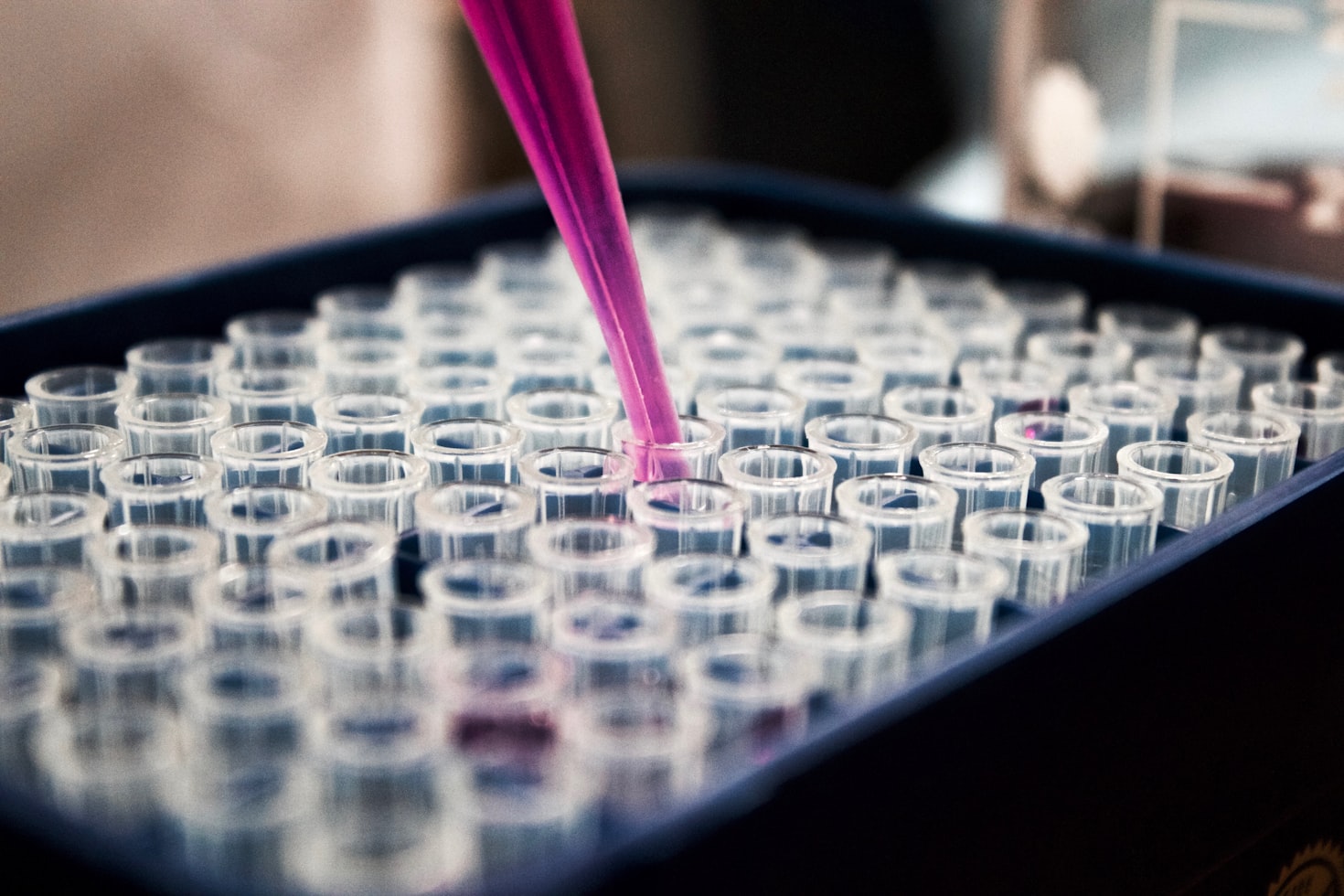
The drug-detecting biochip in a laboratory setting.
Results: Decoding Spectral Whispers
The biochip identified drugs with 94% accuracy:
- Cocaine showed a signature dip at 1.54 THz
- Heroin absorbed at 1.33 THz and 2.07 THz
Table 2: Performance Metrics of THz Biochip
| Parameter | Value | Significance |
|---|---|---|
| Detection Limit | 4 ng | 100× better than fluorescent labels |
| Response Time | 1.7 μs | Near real-time screening |
| Dynamic Range | 80 dB | Works through packaging materials |
| Water Tolerance | 50% humidity | Viable for field use |
4. The Scientist's Toolkit: Essentials for THz Biosensing
Table 3: Key Components in a THz Biochip Lab
| Component | Function | Innovation Angle |
|---|---|---|
| GaN Photoconductive Emitter | Converts UV light to THz pulses | 58% efficiency (vs. 7.5% in older GaAs) |
| Hexagonal Boron Nitride (h-BN) | Encapsulates the THz waveguide | Prevents signal loss from humidity |
| Dielectrophoretic Traps | Concentrates cells using AC fields | Enables detection in dilute samples |
| Plasmonic Metasurfaces | Gold nanostructures amplifying THz fields | Boosts sensitivity to single-molecule level |
| PDMS Microchannels | Ultra-thin fluidic pathways | Reduces water volume by 99% |
GaN Emitter
High-efficiency THz pulse generation with 58% conversion rate.
h-BN Encapsulation
Protects THz signals from environmental interference.
PDMS Channels
Minimizes water interference in biological samples.
5. The Future: From Labs to Lives
Next-Generation Upgrades
- AI-Powered Decoding: Machine learning algorithms now deconvolve overlapping spectra from complex mixtures (e.g., blood) 4 8 .
- Quantum Cascade Lasers: Pocket-sized THz sources enabling portable biochips for field diagnostics 9 .
Real-World Impact
Challenges Ahead
Safety studies are exploring long-term THz exposure effects on human cells 8 , while engineers battle to shrink costs for mass adoption.
Conclusion: The Silent Revolution
Terahertz biochips epitomize convergence science—melting disciplines to create tools that "see" the invisible dance of molecules. As these silent detectives exit labs, they promise a future where disease diagnosis is as simple as scanning a barcode, and security checks uncover threats without opening a bag. In the words of a pioneer, "We're not just sensing molecules; we're listening to their whispers" 7 .
For further reading, explore the groundbreaking studies in Nature Communications (2025) and Light: Science & Applications (2025).