Uncertainty Quantification in Computational Chemistry: Building Trust in AI for Drug Discovery and Materials Design
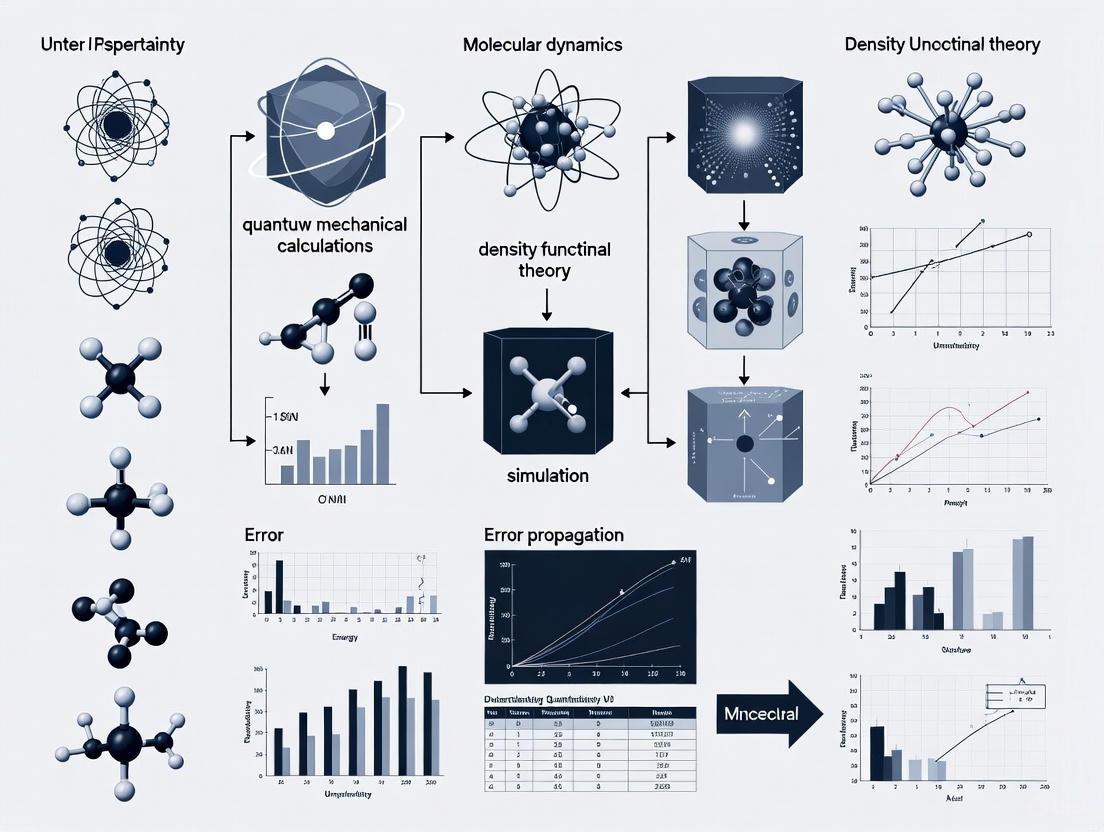
This article provides a comprehensive guide to uncertainty quantification (UQ) in computational chemistry, tailored for researchers and drug development professionals.
Uncertainty Quantification in Computational Chemistry: Building Trust in AI for Drug Discovery and Materials Design
Abstract
This article provides a comprehensive guide to uncertainty quantification (UQ) in computational chemistry, tailored for researchers and drug development professionals. As artificial intelligence and machine learning models become central to molecular design, assessing their reliability is crucial. We explore the fundamental sources of uncertainty—aleatoric and epistemic—and detail state-of-the-art UQ methods, including ensemble, Bayesian, and similarity-based approaches. The article further addresses practical challenges in optimizing UQ for real-world applications, compares the performance of different techniques, and validates their impact through case studies in drug discovery and materials science, offering a roadmap for implementing trustworthy computational models.
What is Uncertainty in Computational Models? Core Concepts and Sources of Error
In computational chemical data research, the reliability of machine learning (ML) models is paramount for accelerating discovery, particularly in high-stakes fields like drug development. Uncertainty Quantification (UQ) has thus emerged as a critical discipline, enabling researchers to gauge the confidence of model predictions and make more informed decisions [1]. Without effective UQ, predictions of molecular properties or drug candidate viability can lead to costly failed experiments and misguided research directions [2]. The foundation of robust UQ lies in distinguishing between two fundamental types of uncertainty: aleatoric and epistemic.
Aleatoric uncertainty (from the Latin alea, meaning "dice") refers to the inherent randomness or noise intrinsic to the data itself, while epistemic uncertainty (from the Greek epistēmē, meaning "knowledge") stems from a model's lack of knowledge [2] [3]. This distinction is not merely philosophical; it provides a diagnostic framework for researchers to understand the sources of error in their models and determine the most effective strategies for improvement—whether by refining experimental protocols to reduce noise or by collecting more data in underrepresented regions of chemical space to enhance model knowledge [3]. This guide provides an in-depth technical examination of these concepts, their mathematical foundations, quantification methodologies, and practical applications within computational chemistry research.
Theoretical Foundations and Definitions
Aleatoric Uncertainty: The Irreducible Stochastic Component
Aleatoric uncertainty captures the innate stochasticity of a system. It arises from the natural variability in data generation processes, such as random measurement errors, inherent biological stochasticity, or the unpredictable fluctuations in experimental conditions [2] [4]. A key characteristic of aleatoric uncertainty is its irreducibility; it cannot be diminished by collecting more data or refining the model architecture, as it is an inherent property of the data-generating process itself [1] [3].
In a regression model, this is often represented mathematically as: y = f(x) + ε, where ε ~ N(0, σ²) Here, the noise term ε, assumed to follow a Gaussian distribution with variance σ², represents the aleatoric uncertainty [1]. Aleatoric uncertainty can be further categorized as:
- Homoscedastic: The uncertainty σ² is constant for all input data points [5].
- Heteroscedastic: The uncertainty σ² varies as a function of the input x, which is more reflective of reality in most chemical systems, where noise may depend on the specific molecular context or experimental setup [5].
In drug discovery, aleatoric uncertainty can manifest as the inherent variability in measuring molecular binding affinities due to biological stochasticity or human intervention in experimental protocols [4].
Epistemic Uncertainty: The Reducible Knowledge Gap
Epistemic uncertainty arises from a model's incomplete knowledge or ignorance about the system. This type of uncertainty is attributable to insufficient training data, model limitations, or a fundamental lack of understanding of the underlying processes [6] [7]. In contrast to aleatoric uncertainty, epistemic uncertainty is reducible. It can be mitigated by incorporating more high-quality training data, especially in regions of the chemical space where the model is currently uncertain, or by improving the model's architecture and training procedures [2] [3].
From a Bayesian perspective, epistemic uncertainty is quantified by placing a probability distribution over the model's parameters, θ. Before observing data, this belief is encoded in the *prior distribution, p(θ). After observing data *D, this belief is updated to form the *posterior distribution, p(θ|D), using Bayes' theorem: *p(θ|D) = [p(D|θ) p(θ)] / p(D) The spread of this posterior distribution reflects the epistemic uncertainty; a wider spread indicates greater uncertainty about the correct model parameters [1]. In practical terms, a model will exhibit high epistemic uncertainty when making predictions for molecules that are structurally dissimilar to those in its training set, effectively operating outside its "applicability domain" (AD) [2].
Table 1: Core Characteristics of Aleatoric and Epistemic Uncertainty
| Feature | Aleatoric Uncertainty | Epistemic Uncertainty |
|---|---|---|
| Origin | Inherent randomness in data [2] | Model's lack of knowledge [6] |
| Reducibility | Irreducible [3] | Reducible [3] |
| Primary Cause | Measurement noise, biological stochasticity [4] | Lack of training data, model limitations [6] [2] |
| Mathematical Representation | Variance of the noise term ε in y=f(x)+ε [1] | Variance of the posterior predictive distribution [1] |
| Context in Drug Discovery | Inherent unpredictability of molecular interactions [4] | Predictions for novel scaffolds outside the model's training domain [2] |
Mathematical Frameworks for Uncertainty Quantification
Quantifying both types of uncertainty typically involves probabilistic models that output a distribution instead of a single, deterministic value.
Quantifying Aleatoric Uncertainty
For aleatoric uncertainty, the model directly learns to predict the parameters of a distribution. In regression, a common approach is Mean-Variance Estimation, where a neural network has two output neurons: one for the predicted mean, μ(x), and another for the predicted variance, σ²(x), which represents the heteroscedastic aleatoric uncertainty [5] [3]. The model is trained by minimizing the Gaussian negative log-likelihood (NLL) loss: L_NLL(θ) = (1/2) log(2πσ²_θ(x)) + (y - μ_θ(x))² / (2σ²_θ(x)) This loss function encourages the model to assign high uncertainty (large σ²) to predictions with large errors, thereby learning the inherent noise in the data.
Quantifying Epistemic Uncertainty
For epistemic uncertainty, the goal is to estimate uncertainty over the model parameters. Bayesian Neural Networks (BNNs) are a fundamental approach, where the model weights are treated as probability distributions rather than fixed values [2] [1]. Performing inference in a BNN involves marginalizing over the posterior distribution of the weights, a process that approximates the integral: p(y|x, D) = ∫ p(y|x, θ) p(θ|D) dθ This integral is typically intractable and is approximated using techniques like Monte Carlo (MC) Dropout or Markov Chain Monte Carlo (MCMC) methods [1]. In MC Dropout, for example, dropout is applied at test time, and multiple stochastic forward passes are performed. The variance across these different predictions provides an estimate of the epistemic uncertainty [1].
Ensemble Methods for Combined Quantification
A highly effective and widely used practical alternative is ensemble learning [2]. Multiple models (e.g., neural networks with different random initializations) are trained on the same task. The disagreement or variance in the predictions of these individual models serves as a measure of epistemic uncertainty, while the average of their predicted variances captures the aleatoric uncertainty [3] [8]. Ensembling is known to be a reliable tool for quantifying and improving model performance, specifically for reducing the variance component of epistemic uncertainty [3].
Diagram 1: Ensemble UQ Workflow. An input molecule is passed through an ensemble of models. The mean of the predicted variances (⟨σ²ᵢ⟩) quantifies aleatoric uncertainty, while the variance of the predicted means (Var(μᵢ)) quantifies epistemic uncertainty.
Experimental Protocols in Computational Chemistry
The theoretical concepts of aleatoric and epistemic uncertainty are best understood through their manifestation in practical experimental settings. The following protocols outline standard methodologies for characterizing these uncertainties in chemical data research.
Protocol 1: Characterizing Uncertainty with Censored Data in Drug Discovery
Objective: To enhance uncertainty quantification in molecular property prediction (e.g., binding affinity) by incorporating censored experimental data, which provides thresholds rather than precise values [4].
Background: In early drug discovery, assays often have a limited measurement range. If a compound shows no activity within the tested concentration range, the result is censored—the exact half-maximal inhibitory concentration (IC₅₀) is unknown, but it is known to be above a certain threshold. Standard ML models typically discard this partial information [4].
Methodology:
Data Preparation:
- Precise Labels: Data points with directly measured quantitative values (e.g., IC₅₀ = 10 nM).
- Censored Labels: Data points where the measurement is only known to be above (right-censored) or below (left-censored) a specific threshold (e.g., IC₅₀ > 100 μM) [4].
Model Adaptation:
- Adapt ensemble-based, Bayesian, or Gaussian models to learn from both precise and censored labels using the Tobit model from survival analysis [4].
- The loss function (e.g., Gaussian NLL or MSE) is modified to be one-sided for censored data points. For a right-censored observation with threshold C, the loss becomes ∫_C^∞ N(y | μ(x), σ²(x)) dy [4].
Uncertainty Decomposition:
Evaluation:
- Compare the predictive performance (e.g., RMSE, calibration) and the quality of uncertainty estimates (e.g., correlation between uncertainty and prediction error) between models trained with and without censored data [4].
Table 2: Key Research Reagents for Censored Data Analysis
| Reagent / Tool | Function in Protocol |
|---|---|
| Internal Bioassay Data (e.g., IC₅₀/EC₅₀ from target or ADME-T assays) | Provides the experimental data containing both precise and censored labels for model training and validation [4]. |
| Tobit Regression Model | A statistical model from survival analysis that forms the basis for adapting standard loss functions to handle censored regression labels [4]. |
| Ensemble of Neural Networks | A practical modeling framework that can be adapted with a censored data loss function to disentangle aleatoric and epistemic uncertainty [4] [3]. |
| Temporal Data Splitting | A realistic data splitting strategy that approximates the true predictive performance in a drug discovery pipeline by evaluating on data generated after the training data was collected [4]. |
Protocol 2: Systematic Error Analysis in Molecular Property Prediction
Objective: To systematically dissect the total prediction error of an ML model for a molecular property (e.g., enthalpy) into contributions from data noise (aleatoric), model bias, and model variance (both epistemic) [3].
Background: Optimizing a model requires understanding the primary source of its error. A large bias suggests a need for architectural change, while large variance suggests a need for more data or regularization [3].
Methodology:
Controlled Data Set Construction:
- Use a synthetic, noise-free data set, such as one built using group additivity principles for molecular enthalpy, to establish a ground-truth baseline [3].
- Systematically introduce controlled levels of Gaussian noise to the target values to simulate aleatoric uncertainty.
- Vary the training set size to study its impact on epistemic uncertainty.
Model Training and Evaluation:
- Train multiple model architectures (e.g., Graph Neural Networks vs. Random Forests) and molecular representations (e.g., fingerprints vs. graphs) on the data sets from step 1 [3].
- For a given architecture, create an ensemble of models trained with different random seeds.
Error Decomposition:
- Total Error: Mean Squared Error (MSE) on a held-out test set.
- Aleatoric Uncertainty: Estimated as the mean of the predicted variances from the ensemble.
- Epistemic Uncertainty - Model Variance: Computed as the variance of the predicted means across the ensemble members [3].
- Epistemic Uncertainty - Model Bias: Estimated as the residual error: Bias² ≈ Total Error - (Aleatoric Uncertainty + Model Variance). This captures the error due to the model's architectural limitations [3].
Interpretation and Model Improvement Guidelines [3]:
- High Aleatoric Dominance: The model has learned the data's inherent noise. Further model improvement is unlikely to reduce error; focus on improving data quality (e.g., repeat experiments).
- High Model Variance Dominance: The model is sensitive to small changes in the training data. Mitigate by increasing training data, using ensembles, or applying regularization.
- High Model Bias Dominance: The model is too simple to capture the underlying relationship. Address by using a more complex model architecture, a more informative molecular representation, or extended training.
Diagram 2: Error Decomposition Protocol. An ensemble of models is trained on a molecular data source. Their combined predictions are used to calculate the total error, which is then decomposed into aleatoric uncertainty and the epistemic components of model variance and model bias.
Application Scenarios and Case Studies
Case Study 1: Uncertainty in Quantum Chemical Reference Data
Context: When training neural networks on potential energy surfaces (PESs), the reference data from quantum chemical calculations contain both aleatoric and epistemic errors [9].
- Aleatoric Errors: Statistical noise introduced by convergence thresholds in self-consistent field (SCF) iterations [9].
- Epistemic Errors: Systematic errors due to specific choices, such as the basis set used in the calculation, which limit the completeness of the theoretical model [9].
Findings: A study on H₂CO and HONO molecules found that for chemically "simple" cases like H₂CO (a single-reference problem), the effect of noise from standard single-point calculations did not significantly deteriorate the quality of the final PES. However, for molecules like HONO with significant multi-reference character, a clear correlation was found between model quality and the degree of multi-reference character (measured by the T1 amplitude). This highlights that epistemic errors arising from an insufficient theoretical model (e.g., using a single-reference method for a multi-reference system) require careful attention and can introduce substantial uncertainty [9].
Case Study 2: Active Learning for Efficient Drug Discovery
Context: The drug discovery process is resource-intensive, and deciding which compounds to synthesize and test next is a major challenge.
Application: An active learning loop uses epistemic uncertainty as a selection criterion.
Workflow:
- An initial model is trained on a small set of labeled compounds.
- The model screens a large virtual library and predicts the properties of all compounds.
- The compounds for which the model has the highest epistemic uncertainty (i.e., they are most different from the training set) are selected for experimental testing [2].
- The new experimental data is added to the training set, and the model is retrained.
- This loop repeats, strategically reducing the model's epistemic uncertainty and expanding its applicability domain with each iteration, thereby maximizing the informational gain per experiment [2].
The explicit distinction between aleatoric and epistemic uncertainty provides a powerful and necessary framework for advancing computational chemical data research. As demonstrated, aleatoric uncertainty defines the fundamental limit of predictability imposed by irreducible noise, while epistemic uncertainty serves as a diagnosable and actionable measure of a model's ignorance. The systematic quantification and decomposition of these uncertainties, through methods like ensembling, Bayesian inference, and tailored experimental protocols, enable researchers to make more reliable predictions, strategically guide resource-intensive experiments, and ultimately build more trustworthy AI models for drug discovery and materials design. Embracing this distinction is not just an academic exercise; it is a practical prerequisite for developing robust, efficient, and credible computational pipelines that can truly accelerate scientific discovery.
In the high-stakes landscape of drug discovery, decisions regarding which experiments to pursue are heavily influenced by computational models for quantitative structure-activity relationships (QSAR). These decisions are critical due to the time-consuming and expensive nature of wet-lab experiments, where missteps can cost millions of dollars and years of development time. The central challenge is that computational methods for QSAR modeling often suffer from limited data and sparse experimental observations, creating a trust deficit in model predictions [10].
Within this context, Uncertainty Quantification (UQ) has emerged as a transformative approach for assessing prediction reliability. UQ provides a statistical framework that not only delivers predictions but also quantifies the confidence in those predictions, enabling researchers to distinguish between reliable and unreliable results. This is particularly vital when exploring expansive chemical spaces where models must operate beyond their training data, a common scenario in molecular design [11].
Perhaps the most significant advancement in UQ involves leveraging previously underutilized information—censored labels. In pharmaceutical settings, approximately one-third or more of experimental labels are censored, providing thresholds rather than precise values of observations. Traditional machine learning approaches discard this partial information, but modern UQ frameworks can now incorporate it to significantly enhance reliability [10].
The Fundamentals of Uncertainty Quantification
Defining Uncertainty in Computational Chemical Data
Uncertainty in drug design manifests in two primary forms:
- Epistemic uncertainty: arises from limited data and knowledge, affecting model predictions for molecules structurally different from those in the training set.
- Aleatoric uncertainty: stems from inherent noise in experimental measurements, which is particularly relevant when dealing with censored data or stochastic biological assays.
The integration of UQ becomes essential when models guide exploration of broad chemical spaces. Without accurate uncertainty estimates, optimization algorithms may become trapped in false maxima or pursue chemically unrealistic molecules [11].
Current UQ Methodologies in Computational Chemistry
| Method Category | Key Examples | Strengths | Limitations |
|---|---|---|---|
| Ensemble Methods | Deep Ensemble D-MPNN | Simple implementation High scalability | Computationally intensive Requires multiple models |
| Bayesian Approaches | Bayesian Neural Networks | Theoretical foundations Coherent uncertainty estimates | Complex implementation Computationally demanding |
| Gaussian Processes | GPR, Kriging models | Accurate uncertainty estimates Non-parametric | O(n³) computational complexity Limited to smaller datasets |
| Hybrid Methods | UQ-enhanced GNNs | Scalable with large datasets Balances accuracy with efficiency | Requires specialized implementation [11] |
Each methodology offers distinct advantages for pharmaceutical applications. Ensemble methods train multiple models and measure disagreement as uncertainty, while Bayesian approaches infer probability distributions over model parameters. Gaussian process regression provides theoretically grounded uncertainty estimates but becomes computationally prohibitive with large datasets [11].
Advanced UQ Implementation: Methodologies and Protocols
Learning from Censored Data with the Tobit Model
A groundbreaking advancement in UQ for drug discovery involves adapting ensemble-based, Bayesian, and Gaussian models to learn from censored labels using the Tobit model from survival analysis. This approach transforms how partial information is utilized in pharmaceutical research [10].
Experimental Protocol for Censored Regression:
- Data Preparation: Collect experimental measurements with identified censored regions (e.g., solubility values reported as ">10μM" due to detection limits)
- Model Adaptation: Implement Tobit likelihood function within chosen UQ framework (ensemble, Bayesian, or Gaussian)
- Training Procedure: Optimize parameters using maximum likelihood estimation accounting for both precise and censored observations
- Uncertainty Calibration: Validate uncertainty estimates against holdout set with known outcomes
The critical innovation lies in modifying the loss function to handle censored data. For right-censored data (common when compounds exceed detection limits), the model maximizes the probability that the true value exceeds the censoring threshold, rather than treating these observations as missing data [10].
UQ-Enhanced Graph Neural Networks for Molecular Design
The integration of UQ with Graph Neural Networks (GNNs), particularly Directed Message Passing Neural Networks (D-MPNNs), represents a paradigm shift in computational-aided molecular design (CAMD) [11].
Experimental Workflow for UQ-Enhanced GNNs:
Figure 1: UQ-Enhanced Molecular Design Workflow
This workflow demonstrates how uncertainty estimates directly influence molecular optimization decisions. The Probabilistic Improvement Optimization (PIO) method quantifies the likelihood that candidate molecules will exceed predefined property thresholds, enabling more reliable exploration of chemical space [11].
Detailed Protocol for UQ-GNN Implementation:
- Molecular Representation: Convert molecular structures into graph representations with atoms as nodes and bonds as edges
- D-MPNN Architecture: Implement directed message passing to capture complex molecular interactions
- Uncertainty Quantification: Employ ensemble methods by training multiple GNNs with different initializations
- Genetic Algorithm Integration: Use uncertainty estimates to guide mutation and crossover operations
- Multi-objective Optimization: Apply probabilistic improvement to balance competing property objectives
This approach has demonstrated particular effectiveness in multi-objective tasks, where it balances competing objectives and outperforms uncertainty-agnostic approaches [11].
Benchmarking and Validation: Quantitative Evidence
Performance Metrics for UQ in Drug Discovery
Robust evaluation is essential for validating UQ methodologies. Key metrics include:
- Calibration: How well predicted confidence intervals match empirical frequencies
- Sharpness: The tightness of prediction intervals (should be minimized subject to calibration)
- Temporal Performance: Model accuracy and uncertainty reliability under dataset shift over time
Temporal evaluation is particularly crucial, as drug discovery projects evolve over time, and models must maintain reliability as chemical space exploration expands [10].
Benchmarking Results Across Pharmaceutical Applications
| Application Domain | Dataset | Without UQ | With UQ | Improvement with Censored Data |
|---|---|---|---|---|
| Organic Emitter Design | Tartarus OLED | 62% success | 78% success | +12% success rate |
| Protein Ligand Design | Tartaurus Docking | 55% success | 72% success | +14% success rate |
| Reaction Substrate Design | Tartarus Reaction | 58% success | 75% success | +11% success rate |
| Multi-objective Optimization | GuacaMol Suite | 47% success | 68% success | +21% success rate |
Table 2: Performance comparison of UQ methods across pharmaceutical design tasks. Data synthesized from benchmark studies [11].
The tabulated results demonstrate that UQ integration substantially improves optimization success rates across diverse pharmaceutical applications. The most significant improvement occurs in multi-objective optimization tasks, where UQ methods better balance competing constraints [11].
The value of censored data is particularly notable in real pharmaceutical settings, where approximately one-third or more of experimental labels are censored. Models that incorporate this previously discarded information show significantly enhanced reliability in uncertainty estimation [10].
Practical Implementation: The Scientist's Toolkit
Essential Research Reagent Solutions
| Tool/Category | Specific Examples | Function in UQ for Drug Design |
|---|---|---|
| Computational Frameworks | Chemprop, PyTorch, TensorFlow Probability | Implements D-MPNN and Bayesian neural networks for molecular property prediction |
| UQ Methodologies | Ensemble Methods, Bayesian NNs, Gaussian Processes | Quantifies prediction uncertainty for reliable decision-making |
| Optimization Algorithms | Genetic Algorithms, Probabilistic Improvement Optimization | Guides exploration of chemical space using uncertainty estimates |
| Data Handling Tools | Tobit Model, Survival Analysis Extensions | Enables learning from censored experimental data |
| Benchmarking Platforms | Tartarus, GuacaMol | Provides standardized evaluation across diverse drug discovery tasks |
Table 3: Essential computational tools for implementing UQ in drug design workflows
Implementation Workflow for Pharmaceutical Research Teams
Figure 2: Practical UQ Implementation Protocol
The integration of Uncertainty Quantification into computational drug design represents a fundamental shift from point-estimate predictions to confidence-aware forecasting. By systematically quantifying uncertainty, particularly through innovative approaches that leverage censored data, pharmaceutical researchers can make more informed decisions, reduce costly experimental failures, and accelerate the discovery of novel therapeutics.
The evidence from rigorous benchmarking demonstrates that UQ-enhanced methods, particularly those combining graph neural networks with probabilistic optimization frameworks, significantly improve success rates in molecular optimization tasks. As the field advances, the adoption of these uncertainty-aware approaches will become increasingly critical for navigating the complex trade-offs between exploration and exploitation in vast chemical spaces.
Trust in computational predictions is no longer a qualitative notion but a quantifiable property that can be optimized, validated, and integrated into the strategic planning of drug discovery campaigns. The organizations that embrace this paradigm will possess a decisive advantage in the efficient translation of computational insights into tangible therapeutic breakthroughs.
The Applicability Domain (AD) of a predictive model defines the boundaries within which the model's predictions are considered reliable and accurate [12]. It represents the chemical, structural, or biological space encompassed by the training data used to develop the model [12]. In the context of computational chemistry and quantitative structure-activity relationship (QSAR) modeling, establishing a well-defined AD is a fundamental principle for ensuring predictions are used appropriately and safely, particularly for regulatory decision-making [13] [12].
The core premise is that predictive models are primarily valid for interpolation within the chemical space of their training data rather than for extrapolation beyond it [12]. When a new compound falls outside a model's AD, its predictions become less reliable, and using them could lead to incorrect conclusions with significant consequences, especially in fields like drug development and toxicological safety assessment [14]. The Organisation for Economic Co-operation and Development (OECD) mandates that a defined AD is a necessary condition for a QSAR model to be considered valid for regulatory purposes [12].
The Critical Need for a Defined Applicability Domain
The Problem of Model Over-Extrapolation
Without a clear understanding of its Applicability Domain, any predictive model can be misapplied to compounds or materials for which it was never designed, leading to severe performance degradation. This degradation can manifest as high prediction errors and/or unreliable uncertainty estimates [15]. In computational chemistry and materials science, where machine learning (ML) is increasingly used for property prediction, the exponential growth of publications makes the rigorous assessment of model domain a prerequisite for trustworthy science [15].
Consequences in Drug Discovery and Development
The stakes for defining model limits are exceptionally high in drug development. Alzheimer's disease (AD) drug development, for instance, has a failure rate of over 99% [16]. While this high attrition is due to many factors, the pursuit of biologically unvalidated targets is a significant contributor [16]. This context underscores the importance of "the right target"—a critical aspect of the "rights" of precision drug development [16]. Computational models used for target validation, lead compound identification, and toxicity prediction must therefore be used within their well-characterized domains to avoid costly late-stage failures. The process from target identification to approved drug can take over 12 years and cost an average of $2.6 billion, making early, reliable predictions from computational models invaluable [17].
Table: The "Rights" of Precision Drug Development Aligned with Applicability Domain Concepts
| The "Right" Principle | Description | Connection to Applicability Domain |
|---|---|---|
| Right Target | Identifying the appropriate biologic process for a therapeutic intervention. | Ensures models are built on a relevant biological and chemical space. |
| Right Drug | A molecule with well-understood PK/PD properties, BBB penetration, and acceptable toxicity. | Confirms a candidate molecule is within the AD of property prediction models (e.g., for solubility, toxicity). |
| Right Participant | Selecting patients in the correct phase of the disease who are most likely to respond. | Defines the population for which clinical outcome models are applicable. |
| Right Trial | A well-conducted trial with appropriate clinical and biomarker outcomes. | Establishes the boundaries for extrapolating trial results to the broader patient population. |
Methodological Approaches for Defining the Applicability Domain
There is no single, universally accepted algorithm for defining an AD [12]. Instead, multiple methods are commonly employed to characterize the interpolation space of a model, each with its own strengths and weaknesses [13] [12]. These methods can be grossly classified into several categories.
Range-Based and Geometrical Methods
These are among the simplest approaches. The bounding box method defines the AD as the multidimensional space within the minimum and maximum values of each descriptor in the training set. A new compound is considered within the domain only if all its descriptor values fall within these ranges [13] [12]. While simple to implement, this method can include large, empty regions of chemical space where no training data exists.
The convex hull method defines a geometrical boundary that encompasses all training compounds in the descriptor space. A prediction is considered reliable if the new compound falls within this hull [12]. A limitation is that the convex hull may include vast regions with no training data, and it is computationally intensive to calculate in high-dimensional spaces.
Distance-Based Methods
These methods assess the similarity of a new compound to the training set based on distance metrics in the descriptor space.
- Leverage Approach: For regression-based QSAR models, the leverage of a compound is calculated from the hat matrix of the molecular descriptors. A commonly used rule is the Williams plot, which plots standardized residuals versus leverage values. A threshold value (typically h* = 3p/n, where p is the number of model parameters and n is the number of training compounds) is used to identify compounds with high leverage, which are structurally influential or outside the AD [13] [12].
- Euclidean and Mahalanobis Distance: The average Euclidean distance to the k-nearest neighbors in the training set is a simple measure. The Mahalanobis distance, which accounts for the correlation between descriptors, is another measure used to determine if a new compound is too distant from the training set mean [13] [15].
Probability Density and Kernel-Based Methods
Kernel Density Estimation (KDE) offers several advantages over other approaches. It provides a density value that acts as a dissimilarity measure, naturally accounts for data sparsity, and can handle arbitrarily complex geometries of data and ID regions without being limited to a single, pre-defined shape like a convex hull [15]. KDE-based methods have been shown to effectively differentiate data points that are inside the domain (with low residuals and reliable uncertainties) from those that are outside (with high errors and unreliable uncertainty estimates) [15].
Comparison of Key AD Methods
Table: Comparison of Applicability Domain Definition Methods
| Method | Brief Description | Advantages | Limitations |
|---|---|---|---|
| Bounding Box | Defines AD based on min/max values of each descriptor. | Simple to implement and interpret. | Can include large, empty regions of chemical space; sensitive to outliers. |
| Convex Hull | Creates a geometrical boundary encompassing all training data. | Provides a well-defined interpolation region. | Computationally intensive in high dimensions; includes empty spaces within the hull. |
| Leverage | Uses the hat matrix to identify influential/remote compounds. | Standardized approach in QSAR; easy to visualize (Williams plot). | Limited to linear model frameworks. |
| k-Nearest Neighbors (k-NN) | Measures distance (e.g., Euclidean) to the k-nearest training compounds. | Intuitive; accounts for local data density. | Choice of k and distance metric can affect results; suffers from the "curse of dimensionality." |
| Kernel Density Estimation (KDE) | Estimates the probability density distribution of the training data. | Handles complex data distributions and multiple ID regions; accounts for sparsity. | Choice of kernel and bandwidth can impact results. |
The following diagram illustrates the logical workflow for determining the Applicability Domain of a model and deciding on a prediction for a new compound.
A Formal Framework: Decomposing the Applicability Domain
The variety of methodologies has led to confusion among end-users. To address this, a formal framework proposes that the AD is not a monolithic concept but can be broken down into three distinct sub-domains [18]:
- Model Domain: This defines the chemical space where the model is, in principle, applicable. It is determined solely by the information from the training set and the model's descriptors.
- Prediction Domain: This assesses the confidence for a specific prediction. A compound can be within the model's global domain, but if it lies in a sparsely populated region of the feature space, the confidence for that specific prediction may be low.
- Decision Domain: This incorporates regulatory or business context, defining the level of prediction confidence required for a particular decision (e.g., prioritization for screening vs. regulatory submission).
This separation provides a more nuanced and actionable understanding of model reliability, moving beyond a simple binary "in/out" classification [18].
Experimental Protocols for AD Determination and Validation
Protocol 1: Defining Domain with Kernel Density Estimation (KDE)
This protocol is based on a recent general approach for determining the AD of machine learning models [15].
- Feature Space Preparation: Standardize the features (descriptors) of the training set. Dimensionality reduction (e.g., PCA) may be applied to simplify the density estimation.
- KDE Model Fitting: Fit a Kernel Density Estimation model to the preprocessed training data. The kernel type (e.g., Gaussian) and bandwidth must be selected, often via cross-validation.
- Density Threshold Determination: Calculate the density value for every training compound using the KDE model. Establish a density threshold,
T, below which a compound is considered out-of-domain. A common method is to setTas a low percentile (e.g., the 5th percentile) of the density distribution of the training set. - Validation: Apply the trained KDE model and the threshold
Tto an external test set. The protocol should confirm that test compounds with KDE likelihoods belowTare chemically dissimilar to the training set and are associated with higher prediction errors and/or unreliable uncertainty estimates.
Protocol 2: Validation of Prediction Uncertainty in the Calibration-Sharpness Framework
This protocol is essential for validating that the uncertainty estimates for a model's predictions are themselves reliable, which is a key aspect of understanding a model's limits [19].
- Data Collection: For a set of
Npredictions (e.g., from a test set), collect the triples(y_i, ŷ_i, u_i)wherey_iis the true value,ŷ_iis the predicted value, andu_iis the predicted uncertainty (e.g., standard deviation). - Calibration Check: A model is well-calibrated if, for example, a 95% prediction interval contains the true value about 95% of the time. This can be assessed graphically by plotting the observed versus predicted confidence levels, or by calculating metrics like the root mean square calibration error (RMSCE).
- Sharpness Check: Sharpness evaluates how narrow the prediction intervals are. A model with tighter intervals is more informative, provided it is well-calibrated. Sharpness can be measured by the average width of the prediction intervals.
- Interpretation: The ideal model is both well-calibrated and sharp. Poor calibration indicates that the model's uncertainty estimates are not trustworthy, which is a critical failure for assessing the applicability domain.
The Scientist's Toolkit: Key Reagents and Computational Tools
Table: Essential "Reagents" for Applicability Domain Research
| Tool / Reagent | Type | Primary Function in AD Analysis |
|---|---|---|
| Molecular Descriptors | Software-Derived Metrics | Quantify chemical structure and properties to define the feature space for models (e.g., logP, polar surface area, topological indices). |
| Training Set Compounds | Chemical Library | The set of molecules used to build the predictive model; defines the initial chemical space of the AD. |
| External Test Set Compounds | Chemical Library | An independent set of molecules used to validate the model's performance and the robustness of its defined AD. |
| KDE Software Library | Computational Tool | (e.g., scikit-learn in Python) Used to estimate the probability density of the training data in feature space, serving as a distance measure. |
| PCA Software Library | Computational Tool | (e.g., scikit-learn in Python) Used for dimensionality reduction to simplify the feature space before AD analysis. |
| Reference Compounds | Chemical Standards | Well-characterized compounds, often including those known to be structurally distinct from the training set, used to test the boundaries of the AD. |
Applications in Computational Chemistry and Drug Discovery
Role in QSAR and Nano-QSAR
In QSAR modeling, the AD is crucial for estimating the uncertainty of a prediction for a new chemical based on its similarity to the chemicals used in model development [13]. The concept has also expanded into nanotechnology and nanoinformatics. For nano-QSARs, which predict the properties or toxicity of engineered nanomaterials, assessing the AD helps determine if a new nanomaterial is sufficiently similar to those in the training set to warrant a reliable prediction, thereby addressing challenges of data scarcity and heterogeneity [12].
Supporting Target Validation in Drug Discovery
A critical step in drug discovery is target validation—determining that a biological target is relevant to a disease and can be modulated to provide a therapeutic effect [17] [20]. Computational models are often used to predict the activity of compounds against a novel target. Using these models within their strict AD increases confidence that a predicted "hit" is a true positive, helping to de-risk the expensive and long process of drug development. This is particularly important for complex diseases like Alzheimer's, where the failure rate for drug candidates is exceptionally high [16] [20]. The following diagram summarizes how AD integrates into the broader drug discovery workflow.
Artificial Intelligence (AI) has ushered in a transformative era for computational chemical data research, offering unprecedented capabilities in predicting molecular properties, optimizing reactions, and accelerating drug discovery. However, a critical challenge threatens to undermine its scientific value: AI overconfidence. This phenomenon occurs when models produce confident, incorrect predictions without appropriate uncertainty quantification, potentially leading research down costly and unproductive paths [21] [22].
The consequences of overconfident AI are particularly acute in drug development, where decisions based on faulty predictions can compromise patient safety, waste extensive resources, and delay life-saving therapies. This technical guide examines the roots and repercussions of AI overconfidence within computational chemistry, providing researchers with methodologies to detect, quantify, and mitigate these risks in their scientific workflows. Understanding and addressing this uncertainty is not merely a technical exercise but a fundamental requirement for responsible AI adoption in chemical sciences [23].
The High Stakes: Consequences in Drug Development
In the high-risk domain of pharmaceutical research, overconfident AI predictions manifest with particular severity across several critical areas.
Toxicity Prediction Failures
AI-driven toxicity prediction has emerged as a promising alternative to traditional methods, which are often hampered by high costs, low throughput, and uncertain cross-species extrapolation [24]. However, when these models are overconfident, they produce misleading results with serious consequences:
- Misleading Safety Profiles: Overconfident models may generate incorrect toxicity classifications with high certainty, leading to the advancement of toxic compounds while potentially discarding safe candidates based on flawed predictions.
- Clinical Trial Risks: Compounds with unanticipated toxicity profiles can progress to clinical stages, exposing trial participants to preventable risks and resulting in late-stage failures that cost billions of dollars [24].
- Resource Misdirection: Research efforts may be channeled toward optimizing compound series that appear promising according to flawed AI predictions but ultimately fail due to unanticipated toxicity issues.
Table 1: Quantitative Impact of AI Toxicity Prediction Errors
| Error Type | Development Phase | Estimated Cost Impact | Timeline Impact |
|---|---|---|---|
| False Negative (Toxic compound advanced) | Preclinical | $5-15 million in wasted research | 6-18 months lost |
| False Positive (Safe compound discarded) | Early Discovery | $1-3 million in missed opportunity | 3-9 months for replacement |
| Late-Stage Toxicity Failure | Clinical Phase II/III | $100-500 million total costs | 2-4 years delay to market |
Regulatory and Compliance Challenges
The regulatory landscape for AI in drug development remains complex and evolving. Overconfident models that lack proper validation create significant regulatory hurdles [23]:
- Validation Deficits: Regulatory agencies require demonstrated reliability through rigorous validation processes. Overconfident models that cannot quantify uncertainty properly fail to meet these standards.
- Explainability Gaps: The "black box" nature of many advanced AI systems obscures their reasoning, making it difficult to justify predictions to regulatory bodies such as the FDA, which emphasizes transparency in its evolving AI/ML frameworks [23].
- Intellectual Property Risks: Overconfident predictions based on improperly trained models may inadvertently utilize copyrighted or proprietary data, creating legal exposure as seen in cases against major AI developers [21].
Technical Roots of AI Overconfidence
Understanding the technical foundations of overconfidence is essential for developing effective countermeasures.
Model Architecture Limitations
Current AI architectures, particularly large language models, exhibit fundamental limitations that contribute to overconfidence:
- Surface-Level Pattern Matching: Research indicates that models often rely on statistical patterns in training data rather than genuine comprehension or reasoning capabilities. A 2025 Apple study found that large reasoning models suffer from "complete accuracy collapse" when faced with even low-complexity reasoning tasks [21].
- Lack of Actual Comprehension: These models statistically predict likely sequences without understanding content or context, generating confident-sounding answers that are fundamentally incorrect [21].
- Architectural Blind Spots: Standard neural network architectures often lack built-in uncertainty quantification mechanisms, treating all predictions with equal confidence regardless of the model's actual knowledge about a specific chemical domain.
Data Quality and Bias Issues
The foundation of any AI system—its training data—introduces multiple pathways to overconfidence:
- Unrepresentative Training Data: Models trained on limited chemical spaces or biased compound libraries develop skewed confidence boundaries, performing poorly on novel structural classes outside their training distribution.
- Data Scraping Controversies: Many AI models are trained on data scraped from diverse sources without sufficient oversight, transparency, or consent, potentially incorporating low-quality or problematic data that undermines reliability [21].
- Ecological Fallacies: The probability structure of the training environment may not match real-world chemical spaces, leading to systematic miscalibration when models encounter compounds with different properties from their training sets [25].
Detection and Quantification Methods
Researchers must employ rigorous methodologies to identify and measure overconfidence in AI systems for chemical data.
Calibration Techniques
Proper calibration ensures that a model's confidence scores align with its actual accuracy:
- Temperature Scaling: A popular calibration method that adjusts a model's confidence by scaling its output logits using a temperature parameter. The MIT "Thermometer" approach builds a smaller, auxiliary model that runs on top of a primary model to automatically predict the optimal temperature for new tasks without requiring labeled validation data [22].
- Universal Calibration: Unlike traditional machine learning models calibrated for specific tasks, large chemical AI models require calibration approaches that work across diverse prediction tasks, from toxicity endpoints to physicochemical properties [22].
- Confidence Interval Validation: Models should be tested to ensure that their 90% confidence intervals actually contain the true value approximately 90% of the time, addressing the tendency toward overconfidence observed in AI forecasting [26].
Table 2: Experimental Protocols for Detecting AI Overconfidence
| Method | Experimental Protocol | Key Metrics | Interpretation |
|---|---|---|---|
| Confidence Calibration | 1. Split data into training/validation/test sets2. Train model on training set3. Measure confidence vs. accuracy on validation set4. Apply calibration method5. Verify on test set | Expected Calibration Error (ECE)Maximum Calibration Error (MCE)Brier Score | Lower ECE/MCE indicates better calibrationLower Brier score indicates better overall accuracy |
| Out-of-Distribution Testing | 1. Train model on primary chemical library2. Test on structurally distinct compound library3. Compare confidence scores between libraries | Confidence Drop RatioOut-of-Distribution AUCSelectivity Index | Significant confidence drop indicates proper uncertainty awareness |
| Adversarial Validation | 1. Generate slight perturbations to molecular structures2. Measure confidence change3. Assess robustness of predictions | Confidence Stability MetricAdversarial Robustness Score | High stability indicates reliable confidence estimates |
Uncertainty Quantification Frameworks
Implementing robust uncertainty quantification is essential for trustworthy AI predictions:
- Epistemic vs. Aleatoric Uncertainty: Distinguishing between uncertainty from the model itself (epistemic) and inherent data noise (aleatoric) provides clearer insights into the sources of unreliability.
- Bayesian Neural Networks: These architectures provide natural uncertainty estimates by maintaining distributions over weights rather than point estimates, though they require significant computational resources.
- Ensemble Methods: Multiple models with different architectures or training data subsets can yield confidence estimates through prediction variance, offering a practical approach to uncertainty quantification without architectural changes.
Mitigation Strategies for Research Applications
Implementing targeted strategies can effectively reduce AI overconfidence in chemical data research.
Technical Solutions
- The "Thermometer" Approach: This method, developed by MIT researchers, provides efficient calibration for large models across diverse tasks without extensive retraining or significant computational overhead, preserving model accuracy while improving reliability [22].
- Federated Learning Systems: These approaches enable collaborative model training without centralizing sensitive chemical data, addressing privacy concerns while expanding the diversity of training compounds to reduce biased confidence estimates [23].
- Explainable AI (XAI) Integration: Implementing XAI techniques provides transparency into model reasoning, allowing researchers to understand the basis for predictions and identify unjustified confidence. The FDA emphasizes XAI in its evolving regulatory frameworks for AI/ML-based medical products [23].
Process and Validation Improvements
- Comprehensive Benchmarking: Regular testing against diverse chemical databases ensures models maintain appropriate confidence boundaries across different compound classes and properties [24].
- Human-in-the-Loop Validation: Maintaining expert chemical oversight for high-stakes predictions creates essential safeguards against automated overconfidence, particularly for critical decisions like compound advancement [27].
- Continuous Monitoring and Updating: Implementing systems to track prediction accuracy versus confidence over time enables early detection of emerging overconfidence patterns as models encounter novel chemical spaces.
Table 3: Research Reagent Solutions for AI Overconfidence Mitigation
| Reagent / Resource | Type | Primary Function | Application in Overconfidence Mitigation |
|---|---|---|---|
| TOXRIC Database | Toxicity Database | Provides comprehensive toxicity data for compounds | Benchmarking AI predictions against established toxicity endpoints |
| ChEMBL Database | Bioactivity Database | Manually curated database of bioactive molecules | Training and validating models on reliable bioactivity data |
| DrugBank Database | Pharmaceutical Knowledge Base | Detailed drug and drug target information | Grounding predictions in established pharmaceutical knowledge |
| OCHEM Platform | Modeling Environment | Enables building QSAR models for chemical properties | Implementing and testing calibration methods |
| FAERS Database | Adverse Event Reporting System | FDA database of adverse drug reactions | Validating safety predictions against real-world outcomes |
| Thermometer Calibration | Software Method | MIT-developed calibration technique for LLMs | Adjusting confidence scores to align with actual accuracy |
| Differential Privacy | Mathematical Framework | Provides formal privacy guarantees | Enabling secure data sharing for model training |
Future Directions and Research Agenda
Addressing AI overconfidence requires ongoing research and development across multiple fronts.
Emerging Technical Approaches
- Hybrid AI-Quantum Systems: UK-based Riverlane is developing quantum error correction systems that could enable more stable quantum computing platforms, potentially overcoming current data generation limitations that constrain AI training for novel chemical spaces [28].
- Causal Reasoning Integration: Moving beyond correlation-based pattern matching to incorporate causal reasoning frameworks would address fundamental limitations in current AI architectures, potentially reducing unjustified confidence in spurious relationships.
- Adaptive Confidence Boundaries: Developing models that dynamically adjust confidence thresholds based on chemical domain complexity and data quality would provide more nuanced uncertainty quantification.
Regulatory and Standards Evolution
The regulatory landscape for AI in drug development continues to evolve, with significant implications for confidence calibration:
- FDA Framework Development: The FDA is actively working on regulatory frameworks for evaluating AI/ML-based medical products, emphasizing validation processes, transparency, and accountability [23].
- Global Regulatory Alignment: Disparities between regulatory approaches (EU AI Act, US state-level laws, Canada's AIDA) create compliance challenges for global pharmaceutical companies, necessitating harmonized standards for AI validation [21].
- Independent Oversight Mechanisms: Implementing third-party auditing and certification of AI systems for chemical prediction would establish trustworthiness standards similar to other validated scientific instruments.
Overconfident AI predictions represent a critical vulnerability in modern computational chemical research, with potential consequences ranging from minor inefficiencies to serious clinical risks. By understanding the technical roots of this overconfidence and implementing rigorous detection, quantification, and mitigation strategies, researchers can harness AI's transformative potential while maintaining scientific integrity.
The path forward requires a fundamental shift from treating AI as an oracle to approaching it as a tool—one with remarkable capabilities but significant limitations. Through improved calibration techniques, robust uncertainty quantification, human oversight, and evolving regulatory frameworks, the research community can develop AI systems that not only predict but also know the boundaries of their knowledge. This nuanced understanding of uncertainty will ultimately enable more reliable, trustworthy, and impactful AI applications across drug discovery and development.
How to Quantify Uncertainty: A Guide to Modern UQ Methods and Their Applications
In computational chemical data research, the ability to quantify the confidence of a prediction is as critical as the prediction itself. Decisions in drug discovery—such as selecting a compound for costly synthesis or a protein target for further validation—are inherently risky and resource-intensive. Ensemble methods, which leverage committees of models, have emerged as a powerful paradigm for providing reliable confidence scores alongside these predictions. By combining the predictions of multiple individual models, ensemble approaches mitigate the limitations of any single model and provide a natural framework for uncertainty quantification (UQ). The variance in the predictions of committee members directly estimates the epistemic uncertainty in a model, arising from a lack of knowledge, while the inherent noise in the data is captured as aleatoric uncertainty [29] [30]. In drug discovery, where data is often scarce, noisy, and subject to distribution shifts, this quantified uncertainty becomes an indispensable tool for prioritizing experiments and allocating resources efficiently [10] [31].
Theoretical Foundations of Ensemble-Based Uncertainty
Aleatoric vs. Epistemic Uncertainty
In the context of ensemble methods for molecular property prediction, it is essential to distinguish between the two fundamental types of uncertainty:
- Aleatoric Uncertainty: This is the uncertainty inherent in the data itself. It stems from measurement errors, experimental noise, or stochastic processes. Aleatoric uncertainty is considered irreducible because collecting more data of the same type will not eliminate it. In ensemble models, it is often quantified by the average predictive variance of the individual models [29] [32].
- Epistemic Uncertainty: This uncertainty arises from a lack of knowledge in the model. It is caused by insufficient training data in certain regions of the chemical space or by model limitations. Epistemic uncertainty is reducible by gathering more relevant data or improving the model architecture. In an ensemble, it is quantified by the statistical dispersion (e.g., variance) among the predictions of the different committee members [29] [33] [30].
The total predictive uncertainty is a combination of these two components. A well-designed ensemble can disentangle and quantify both, providing deep insight into the potential sources of error for a given prediction [29].
The Ensemble Paradigm for Uncertainty Quantification
The core principle of ensemble-based UQ is to train multiple models that exhibit diversity. This diversity can be introduced through various mechanisms, such as different model initializations, different subsets of the training data, or even different model architectures. For a given input molecule, each model in the committee produces a prediction. The committee's final prediction is typically the mean of these individual predictions for regression tasks, or the average probability for classification tasks.
The confidence score, or total uncertainty, is derived from the spread of these individual predictions. A large variance indicates high epistemic uncertainty, suggesting the input is unlike what the models encountered during training. A consensus among models, indicated by low variance, suggests high confidence. The mathematical representation of this paradigm often treats the final predictive distribution as a mixture of the distributions from the individual models, allowing for a principled estimation of both types of uncertainty [29].
Implementing Ensemble Committees: Architectures and Methods
Common Ensemble Techniques
Several practical methods exist for constructing model committees. The table below summarizes the most prominent ones used in computational chemistry and drug discovery.
Table 1: Common Ensemble Methods for Uncertainty Quantification
| Method | Key Mechanism | Uncertainty Type Captured | Key Advantages |
|---|---|---|---|
| Deep Ensembles [29] | Train multiple models independently with different random initializations. | Both Epistemic and Aleatoric | Simple, highly effective, considered a strong baseline. |
| Bootstrap Ensembles [34] [33] | Train multiple models on different random subsets (with replacement) of the training data. | Primarily Epistemic | Captures uncertainty due to data sampling variability. |
| Monte Carlo (MC) Dropout [31] [32] | Apply dropout during both training and inference; multiple stochastic forward passes act as an ensemble. | Epistemic | Computationally efficient, requires only a single model. |
| Snapshot Ensembles [33] | Collect multiple models (snapshots) from different local minima along a single training trajectory. | Epistemic | Lower training cost than full deep ensembles. |
| Divergent Ensemble Networks (DEN) [30] | A single network with a shared base and multiple independent output branches. | Both Epistemic and Aleatoric | More parameter-efficient than independent deep ensembles. |
Advanced Architectures: The Divergent Ensemble Network (DEN)
To address the computational overhead of traditional ensembles, novel architectures like the Divergent Ensemble Network (DEN) have been proposed. DEN uses a shared input layer to learn a common representation of the molecule, which is then processed by multiple independent branching networks. This design balances efficiency with diversity: the shared layer reduces redundant parameter usage, while the independent branches maintain the prediction variance necessary for robust uncertainty estimation [30]. This is particularly advantageous for large-scale virtual screening or real-time prediction scenarios.
Experimental Protocol for Benchmarking Ensembles
To reliably compare the performance of different ensemble methods, a standardized evaluation protocol is essential. The following methodology outlines key steps for a robust benchmark, drawing from practices in recent literature [10] [33] [11].
- Data Partitioning: Split the dataset into training, calibration (optional), validation, and test sets. A temporal split, where the test set comes from a later time period than the training set, is highly recommended for drug discovery applications to simulate real-world performance degradation and assess model robustness to distribution shift [10].
- Model Training: For each ensemble method (e.g., Deep Ensembles, MC Dropout), train the required number of models or configure the network as specified. Ensure diversity is introduced via the method's specific mechanism (e.g., random initialization, bootstrapping, dropout).
- Uncertainty Quantification:
- For regression tasks, predict the mean (µ) and variance (σ²) for each molecule. The total uncertainty can be derived from the ensemble's predictive variance.
- For classification, use the average predicted probability from the ensemble. The uncertainty can be quantified via the entropy of the predictive distribution or the variance of the predicted probabilities.
- Evaluation Metrics:
- Predictive Accuracy: Standard metrics like Root Mean Squared Error (RMSE) for regression or Area Under the Curve (AUC) for classification.
- Calibration: Measure how well the predicted confidence scores align with actual accuracy. Use Expected Calibration Error (ECE) or plot reliability diagrams [31].
- Uncertainty Quality: Assess if uncertainty estimates are higher for incorrect predictions and for out-of-distribution (OOD) data [33].
Practical Applications in Drug Discovery
Leveraging Uncertainty for Decision-Making
Quantified uncertainty directly informs critical decision-making processes in the drug discovery pipeline. The table below summarizes key applications.
Table 2: Applications of Ensemble-Based Uncertainty in Drug Discovery
| Application | Description | Impact |
|---|---|---|
| Compound Prioritization | Rank candidates not just by predicted activity, but by a utility function that balances high predicted potency with low uncertainty [10] [11]. | Focuses experimental resources on promising and reliable predictions, increasing the success rate of hit identification. |
| Active Learning | Use epistemic uncertainty to identify which compounds, if experimentally tested, would provide the most information to the model [29]. | Dramatically reduces the number of wet-lab experiments needed to explore a vast chemical space. |
| Out-of-Distribution (OOD) Detection | Flag predictions with high epistemic uncertainty as potentially OOD, indicating novel chemotypes not well-represented in the training data [33]. | Prevents over-reliance on predictions for unfamiliar chemical structures, alerting researchers to potential model extrapolation. |
| Model Diagnostics and Explainability | Attribute uncertainty estimates to specific atoms or substructures within a molecule, providing chemical insight into unreliable predictions [29] [32]. | Helps chemists understand model failures and guides the design of better compounds or the curation of more informative training data. |
Uncertainty-Guided Molecular Design and Optimization
In computational-aided molecular design (CAMD), ensemble uncertainty is integrated directly into the optimization loop. For instance, a Genetic Algorithm (GA) can use a fitness function based not only on the predicted property but also on the associated uncertainty. One effective approach is Probabilistic Improvement Optimization (PIO), which calculates the likelihood that a candidate molecule will exceed a predefined property threshold, given the model's prediction and its uncertainty [11]. This strategy encourages exploration of chemically diverse regions with reliable property estimates, leading to more robust and successful optimization, particularly in multi-objective tasks where balancing competing properties is essential.
The Scientist's Toolkit: Essential Research Reagents
Implementing and applying ensemble methods requires a suite of computational tools and conceptual "reagents." The following table details key components of the modern UQ toolkit for computational chemists.
Table 3: Key "Research Reagent Solutions" for Ensemble Modeling
| Item / Tool | Function / Description | Relevance to Ensemble Methods |
|---|---|---|
| Deep Learning Frameworks (PyTorch, TensorFlow) | Flexible libraries for building and training neural network models. | Essential for implementing custom ensemble architectures, loss functions, and training loops. |
| UQ-Specialized Libraries (Chemprop, KLIFF) | Domain-specific software with built-in support for UQ methods. | Chemprop provides D-MPNN models with ensemble UQ for molecules [11]. KLIFF supports UQ for interatomic potentials [33]. |
| Censored Regression Labels [10] | Data points where the precise value is unknown, but a threshold (e.g., ">10 μM") is known. | Specialized techniques (e.g., Tobit model) allow ensembles to learn from this abundant, imperfect data, improving uncertainty estimates. |
| Post-Hoc Calibration (e.g., Platt Scaling) [31] | A method to adjust the output probabilities of a classifier to better match true frequencies. | Corrects for over- or under-confidence in ensemble models, ensuring that a "80% confidence" prediction is correct 80% of the time. |
| Graph Neural Networks (GNNs) | Neural networks that operate directly on graph-structured data, such as molecular graphs. | The primary architecture for modern molecular property prediction. Ensembles of GNNs are a standard for high-performance, uncertainty-aware modeling [11]. |
Visualizing Workflows and Architectures
Standard Ensemble Workflow for Molecular Property Prediction
The following diagram illustrates the end-to-end process of applying ensemble methods for uncertainty-aware prediction in drug discovery.
Standard Ensemble Workflow for Molecular Property Prediction
Divergent Ensemble Network (DEN) Architecture
The DEN architecture provides a computationally efficient alternative to traditional ensembles by sharing lower-level representations.
Divergent Ensemble Network (DEN) Architecture
Ensemble methods represent a mature and powerful approach for deriving confidence scores from computational chemical models. By leveraging model committees, researchers can move beyond single-point predictions to obtain a probabilistic understanding of a forecast's reliability. This is paramount in drug discovery, where well-informed decision-making under uncertainty directly impacts the efficiency and success of bringing new therapeutics to market. As the field progresses, the integration of ensemble UQ into automated design platforms, coupled with advances in model calibration and explainability, will further solidify its role as a cornerstone of reliable, data-driven molecular research.
In computational chemistry and drug development, deep neural networks (DNNs) have emerged as powerful tools for predicting molecular properties, binding affinities, and reaction outcomes. However, traditional DNNs trained via maximum a posteriori (MAP) estimation provide only point estimates of their predictions, lacking crucial uncertainty quantification. This limitation poses significant risks in scientific applications where understanding the confidence of predictions informs downstream experimental decisions [35] [36]. Bayesian Neural Networks (BNNs) address this fundamental limitation by treating network weights as probability distributions rather than fixed values, naturally providing uncertainty estimates that are essential for reliable scientific applications [36] [37].
The inherent flexibility of conventional neural networks makes them particularly susceptible to overfitting, especially when working with the small, noisy datasets common in experimental materials science and chemistry [36]. This overfitting problem manifests mathematically through the optimization process: where standard neural network training aims to minimize a loss function (L(D, w)) with respect to weights (w) given dataset (D = {xi, yi}), equivalent to maximum likelihood estimation. This approach finds weights that perform well on training data but may generalize poorly to test data [36]. BNNs fundamentally reformulate this learning paradigm through Bayesian inference, thereby enabling researchers to distinguish between reliable and uncertain predictions when exploring new chemical spaces or molecular structures [37].
Theoretical Foundations of Bayesian Neural Networks
From Deterministic to Probabilistic Deep Learning
In a conventional neural network, the mapping (y \approx f(x, w)) is deterministic once the weights (w) are learned through optimization. In contrast, a BNN represents the weights as probability distributions, transforming the network into a probabilistic model [38]. This probabilistic formulation enables BNNs to naturally quantify uncertainty in their predictions, making them particularly valuable for scientific applications where understanding reliability is crucial [36].
The Bayesian framework defines a prior distribution (p(w)) over the weights, representing our initial beliefs about plausible parameter values before observing data. After collecting data (D), Bayes' theorem is used to compute the posterior distribution over the weights:
[ p(w | D) = \frac{p(D|w)p(w)}{p(D)} = \frac{p(D|w)p(w)}{\int_{w'} p(D|w')p(w') dw'} ]
This posterior distribution captures updated beliefs about the weights after considering the evidence provided by the data [36]. For prediction, BNNs use the posterior predictive distribution:
[ p(\hat{y}(x)| D) = \int{w} p(\hat{y}(x)| w) p(w | D) dw = \mathbb{E}{p(w|D)}[p(\hat{y}(x)|w)] ]
which can be interpreted as an infinite ensemble of networks, with each network's contribution weighted by the posterior probability of its weights [36] [38].
Categorizing Uncertainty in Bayesian Neural Networks
BNNs naturally disentangle two fundamental types of uncertainty that are crucial for scientific applications:
Epistemic uncertainty (model uncertainty) arises from uncertainty in the model parameters themselves. This uncertainty reflects limited knowledge about the true data-generating process and can be reduced by collecting more data. In materials science, this might manifest when predicting properties for molecular structures far from the training distribution [37].
Aleatoric uncertainty (data uncertainty) stems from inherent noise or stochasticity in the observations. This uncertainty cannot be reduced by collecting more data. In experimental chemical data, this might include measurement errors or intrinsic variability in experimental conditions [37].
The predictive variance (U_{post}) naturally combines both epistemic and aleatoric uncertainty, providing a comprehensive measure of predictive uncertainty [37].
Computational Approaches for Bayesian Inference
The posterior distribution (p(w|D)) is typically intractable for deep neural networks due to the high-dimensional integral in the denominator of Bayes' rule. Several approximation methods have been developed:
Table 1: Computational Methods for Bayesian Neural Networks
| Method | Key Principle | Advantages | Limitations |
|---|---|---|---|
| Markov Chain Monte Carlo (MCMC) | Generates samples from the posterior using stochastic sampling | Asymptotically exact, theoretical guarantees | Computationally intensive for large networks [38] [37] |
| Variational Inference (VI) | Approximates posterior with parameterized distribution (q_\phi(w)) | Faster than MCMC, scalable to larger networks | May underestimate uncertainty [36] [37] |
| Monte Carlo Dropout | Approximates Bayesian inference through dropout at test time | Easy implementation, minimal computational overhead | Less accurate uncertainty estimates [35] |
| Stochastic Variational Inference | Combines variational inference with stochastic optimization | Scalable to large datasets, compatible with standard optimizers | Requires careful selection of approximate posterior [36] |
For molecular property prediction, advanced MCMC methods such as Hamiltonian Monte Carlo (HMC) and its extension, the No-U-Turn Sampler (NUTS), have shown particular promise. These methods efficiently explore the posterior distribution of neural network parameters in high-dimensional spaces without significant manual tuning [37].
Experimental Framework and Implementation Protocols
Workflow for Bayesian Neural Network Implementation
The following diagram illustrates the complete workflow for implementing and applying Bayesian Neural Networks in computational chemical research:
Protocol 1: Implementing a Basic Bayesian Neural Network with Pyro
For molecular property prediction, the following protocol implements a BNN with Gaussian priors using the Pyro probabilistic programming language [38]:
Materials and Experimental Setup:
- Software Environment: Python 3.7+, PyTorch 1.8+, Pyro 1.7+
- Hardware: GPU-enabled system for accelerated sampling (recommended)
- Data Requirements: Molecular descriptors or features with associated property values
Step-by-Step Procedure:
Network Architecture Definition:
Posterior Sampling with MCMC:
Predictive Distribution Calculation:
This protocol provides full posterior distributions over both network weights and predictive outputs, enabling comprehensive uncertainty quantification for molecular property predictions [38].
Protocol 2: Partially Bayesian Neural Networks for Efficient Uncertainty Quantification
For large-scale chemical datasets or applications requiring frequent retraining, partially Bayesian neural networks (PBNNs) offer a computationally efficient alternative [37]:
Rationale: PBNNs transform only selected layers to be probabilistic while keeping others deterministic, significantly reducing computational cost while maintaining accurate uncertainty estimates.
Implementation Workflow:
Step-by-Step Procedure:
Deterministic Pre-training:
- Train a conventional neural network on available chemical data
- Apply Stochastic Weight Averaging (SWA) to enhance robustness against noisy training objectives
- Regularize using a Gaussian MAP prior to prevent overfitting
Probabilistic Layer Selection:
- Identify critical layers for uncertainty propagation (typically later layers)
- Common configurations include making only the final layer probabilistic or alternating probabilistic and deterministic layers
Bayesian Fine-tuning:
- Initialize prior distributions using pre-trained weights from selected layers
- Freeze deterministic layers
- Apply HMC/NUTS sampling only to probabilistic layers
Predictive Combination:
- Combine samples from probabilistic layers with frozen deterministic layers
- Compute predictive mean and variance using Monte Carlo integration [37]
Table 2: Performance Comparison of Fully Bayesian vs. Partially Bayesian Neural Networks on Materials Science Datasets
| Model Architecture | Predictive Accuracy (RMSE) | Uncertainty Calibration | Computational Cost (Hours) | Recommended Use Case |
|---|---|---|---|---|
| Fully Bayesian NN | 0.124 ± 0.015 | Excellent | 48.2 | Small datasets (< 1,000 samples), high-stakes applications |
| PBNN (All Hidden Layers) | 0.131 ± 0.018 | Very Good | 24.7 | Medium datasets, balanced accuracy/efficiency needs |
| PBNN (Final Layer Only) | 0.145 ± 0.022 | Good | 8.3 | Large datasets (> 10,000 samples), screening applications |
| Deterministic NN | 0.152 ± 0.035 | Poor | 4.1 | Baseline comparison only, not recommended for AL |
Advanced Applications in Chemical and Materials Research
Active Learning for Efficient Materials Exploration
Active learning (AL) represents one of the most impactful applications of BNNs in computational chemistry and materials science. By iteratively selecting the most informative data points for experimental measurement, AL dramatically reduces the resources required to explore complex chemical spaces [37].
The active learning cycle with BNNs consists of four key phases:
- Initial Model Training: A BNN is trained on initially available experimental data
- Uncertainty-Guided Acquisition: The acquisition function selects promising candidates from unmeasured data pools
- Experimental Measurement: Selected candidates are synthesized and characterized
- Model Update: New data is incorporated into the training set and the BNN is retrained
For molecular property prediction, a common acquisition function simply maximizes the predictive uncertainty:
[ x{next} = \arg\max{x \in X{pool}} U{post}(x) ]
where (U_{post}(x)) is the predictive variance at point (x) [37]. This approach preferentially selects points where the model is most uncertain, effectively exploring uncharted regions of chemical space.
Uncertainty-Quantified Machine Learning Interatomic Potentials
In molecular dynamics simulations, BNNs provide uncertainty-quantified machine learning interatomic potentials (MLIPs) that enable reliable simulations of atomic interactions. Recent systematic comparisons demonstrate that variational BNNs and deep ensembles offer complementary strengths for uncertainty quantification in MLIPs, particularly when applied to complex oxide systems like TiO₂ [39].
The uncertainty estimates provided by BNNs are critical for assessing model reliability when simulating atomic systems under conditions far from the training distribution, such as extreme temperatures or pressures not represented in the original training data [39].
Explainable Bayesian Neural Networks for Interpretable Chemical Insights
Beyond predictive uncertainty, recent advances in explainable AI for BNNs enable interpretation of which molecular features drive specific predictions. By extending local attribution methods to Bayesian models, explanation techniques can now provide attribution maps that capture uncertainty in feature importance [35].
For cheminformatics applications, this means that researchers can not only identify which molecular substructures or descriptors influence a particular property prediction but also quantify how confident the model is about these attributions. This is particularly valuable for guiding molecular design, as it helps distinguish robust structure-property relationships from spurious correlations [35].
Table 3: Essential Research Reagents for Bayesian Neural Network Applications in Computational Chemistry
| Resource Category | Specific Tools/Libraries | Function/Purpose | Application Context |
|---|---|---|---|
| Probabilistic Programming Frameworks | Pyro (PyTorch), TensorFlow Probability, NumPyro | Implement Bayesian inference for neural networks | General BNN development and deployment [38] |
| Chemical Representation Libraries | RDKit, DeepChem, SMILES parsers | Convert chemical structures to machine-readable features | Molecular property prediction, QSAR modeling |
| MCMC Sampling Tools | NUTS (No-U-Turn Sampler), HMC (Hamiltonian Monte Carlo) | Efficient posterior sampling for Bayesian inference | High-dimensional parameter spaces [37] |
| Uncertainty Quantification Metrics | Expected Calibration Error (ECE), predictive entropy | Evaluate quality of uncertainty estimates | Model validation and comparison [37] |
| Active Learning Controllers | Custom acquisition functions, experimental design modules | Select informative samples for experimental measurement | Efficient materials discovery [37] |
| High-Performance Computing | GPU clusters, parallel processing frameworks | Accelerate sampling and training procedures | Large-scale chemical datasets [38] [37] |
Bayesian Neural Networks represent a fundamental advancement in applying deep learning to computational chemistry and drug development. By providing principled uncertainty quantification alongside accurate predictions, BNNs enable more reliable and interpretable models for molecular property prediction, materials discovery, and chemical optimization.
The emerging paradigm of partially Bayesian neural networks offers a practical compromise between computational efficiency and uncertainty quantification, making Bayesian methods accessible for larger-scale chemical applications. When combined with active learning frameworks, these approaches dramatically accelerate the exploration of chemical space while providing natural stopping criteria based on uncertainty reduction.
As computational chemistry continues to embrace data-driven approaches, Bayesian Neural Networks will play an increasingly central role in bridging the gap between computational predictions and experimental validation, ultimately accelerating the discovery and development of novel materials and therapeutic compounds.
In modern computational chemistry and drug discovery, chemical space serves as a fundamental conceptual framework for understanding molecular diversity. As ultra-large virtual compound libraries now encompass trillions of make-on-demand molecules [40], the ability to navigate this vast space efficiently has become paramount. Simultaneously, the increasing reliance on machine learning (ML) models for predicting molecular properties has highlighted the critical need for uncertainty quantification (UQ) to gauge prediction reliability, particularly when exploring regions distant from known training data [41].
Similarity-based approaches bridge these two concepts by leveraging a simple but powerful premise: the reliability of a prediction for a query compound correlates with the presence and density of known, similar compounds in the training data. These methods provide a model-agnostic framework for UQ, making them applicable across diverse ML architectures without requiring modifications to the underlying algorithms [41]. This technical guide explores the theoretical foundations, methodological implementations, and practical applications of using chemical space proximity to assess prediction confidence within the broader context of uncertainty-aware computational chemical research.
Theoretical Foundations of Similarity-Based Uncertainty Quantification
The Chemical Space Paradigm
Chemical space can be conceptualized as a multi-dimensional space where each molecule is represented by a point, with its coordinates defined by molecular descriptors or features. The relative positions of these points reflect molecular similarities and differences. In pharmaceutical research, chemical spaces constructed from robust, synthetically accessible reactions provide practical starting points for drug discovery campaigns. For example, the "eXplore" chemical space contains approximately 2.8 trillion virtual product molecules generated from 47 well-established chemical reactions using readily available building blocks, ensuring both relevance and synthetic feasibility [40].
The structure of this space enables key discovery workflows. Scaffold hopping allows identification of structurally distinct compounds with similar bioactivity, while SAR-by-Space explores proximal chemical space around active compounds to optimize lead molecules [40]. These approaches rely fundamentally on quantified molecular similarity.
Molecular Similarity Principles
Molecular similarity is typically calculated using representation schemes that encode chemical structure information:
- Structural fingerprints (e.g., ECFP, FCFP) encode molecular substructures as bit vectors, with similarity computed using metrics like Tanimoto coefficient [40].
- Feature-based methods (e.g., Feature Trees/FTrees) use fuzzy pharmacophore properties to calculate similarity, treating certain structural variations as equivalent [40].
- Maximum Common Substructure (MCS) approaches identify the largest overlapping chemical substructure between molecules, with similarity scores based on atom matches [40].
Each method offers distinct advantages: fingerprints provide rapid similarity screening, feature-based methods enable scaffold hopping, and MCS identifies conserved structural motifs.
From Similarity to Uncertainty quantification
Similarity-based UQ methods operate on the principle that predictions for molecules situated in densely populated regions of chemical space (with many similar training examples) will be more reliable than those in sparsely populated regions. This approach is inspired by applicability domain estimation techniques in chemoinformatics, which define the chemical subspace where a model provides reliable predictions [41].
The theoretical basis connects to the smoothness assumption underlying most ML models in chemistry: similar molecules are expected to have similar properties. Therefore, a query molecule with numerous close neighbors in the training set allows for robust property estimation through local interpolation, while isolated molecules require problematic extrapolation.
Methodological Approaches and Algorithms
The Δ-Metric for Uncertainty Quantification
A recently developed similarity-based UQ measure, the Δ-metric, provides a universal approach applicable to diverse ML models [41]. Inspired by k-nearest neighbor methods, it quantifies uncertainty for a test compound by weighting the errors of its most similar training compounds. The formal definition for the i-th test structure is:
$$\begin{array}{*{20}c} {{\Delta }{i} = \frac{{\mathop \sum \nolimits{j} K{ij} \left| {\varepsilon{j} } \right|}}{{\mathop \sum \nolimits{j} K{ij} }}} \ \end{array}$$
where εj represents the error between true and predicted values for the j-th neighbor in the training set, and Kij is a weight coefficient based on the similarity between the i-th and j-th structures [41].
The weight Kij is typically computed using a smooth overlap of atomic positions (SOAP) descriptor or other kernel functions:
$$\begin{array}{*{20}c} {K{ij} = \left( {\frac{{p{i} p{j} }}{{p{i} p_{j} }}} \right)^{\zeta } } \ \end{array}$$
where p is a global descriptor vector and ζ is a positive integer [41].
Table 1: Comparison of Similarity-Based UQ Approaches
| Method | Underlying Principle | Advantages | Limitations |
|---|---|---|---|
| Δ-metric | Weighted average of training errors based on similarity kernel | Model-agnostic; provides continuous uncertainty scores | Computationally intensive for large training sets |
| k-NN Applicability Domain | Average distance to k nearest training compounds | Simple implementation; intuitive parameters | Sensitive to choice of k; depends on distance metric |
| Siamese Networks | Learns similarity metric directly from data | Can capture complex similarity relationships | Requires specialized architecture; pairing strategy critical |
| SpaceLight | Tanimoto similarity on molecular fingerprints | Fast screening of billion-molecule spaces | Limited to structural similarity [40] |
| SpaceMACS | Maximum common substructure similarity | Identifies conserved structural motifs | Computationally demanding [40] |
Siamese Neural Networks for Similarity Learning
Siamese Neural Networks (SNNs) represent an alternative approach that learns similarity metrics directly from data. SNNs consist of two identical subnetworks sharing weights that process different inputs, then compare their activation patterns [42]. For molecular property prediction, SNNs can be trained to predict property differences (Δ-properties) between compound pairs, effectively learning how structural changes affect molecular properties.
A significant challenge in SNN training is the combinatorial explosion of possible compound pairs. Similarity-based pairing strategies address this by selecting pairs with high structural similarity, reducing algorithm complexity from O(n²) to O(n) while maintaining prediction performance [42]. This approach aligns with Matched Molecular Pair analysis, focusing on small, interpretable structural transformations.
Uncertainty Quantification with Siamese Networks
SNNs naturally enable uncertainty quantification through variance in predictions across multiple reference compounds. By comparing a query molecule against a set of diverse reference compounds with known properties, the variance in predicted properties provides an uncertainty estimate [42]. This approach leverages the network's consistency across similar compounds: high variance suggests the query compound resides in a poorly characterized region of chemical space.
Experimental Protocols and Implementation
Workflow for Similarity-Based UQ Implementation
The following workflow diagram illustrates the complete process for implementing similarity-based uncertainty quantification in computational chemistry applications:
Detailed Protocol for Δ-Metric Implementation
Materials and Data Requirements
- Training Set: Curated molecular dataset with experimentally validated properties
- Query Molecules: New compounds for prediction and uncertainty assessment
- Descriptor Calculator: Software for molecular featurization (e.g., RDKit, DScribe)
- Similarity Kernel: Appropriate similarity function for the chemical domain
Step-by-Step Procedure
Data Preprocessing and Featurization
- Generate feature representations for all training and query compounds
- For the Δ-metric, SOAP descriptors provide a comprehensive representation of molecular structure [41]
- Normalize descriptors to ensure balanced similarity calculations
Similarity Matrix Calculation
- Compute pairwise similarities between query compounds and training set molecules
- Select appropriate similarity metric (Tanimoto for fingerprints, cosine for continuous descriptors)
- For large datasets, approximate nearest neighbor algorithms can improve efficiency
Neighbor Selection and Weighting
- For each query compound, identify k-nearest neighbors in training set (typical k: 5-50)
- Calculate weight coefficients Kij using selected kernel function
- Higher ζ values in the kernel increase weight on closest neighbors [41]
Δ-Metric Computation
- Retrieve prediction errors εj for each neighbor in training set
- Compute weighted average of absolute errors using similarity weights
- Normalize by sum of weights to obtain final Δi value
Uncertainty Interpretation and Decision
- Establish uncertainty thresholds based on application requirements
- Categorize predictions as high, medium, or low confidence
- Flag high-uncertainty predictions for experimental validation or model improvement
Protocol for Siamese Network Implementation
Network Architecture and Training
Input Representation
- Select molecular representation (ECFP fingerprints, SMILES strings, or graph structures)
- For SMILES inputs, use transformer-based encoders like Chemformer [42]
Pair Selection Strategy
- Implement similarity-based pairing to select structurally related compounds
- Define similarity threshold (Tanimoto > 0.8-0.9 for ECFP4) [42]
- Balance pairs to include diverse molecular transformations
Network Configuration
- Design identical subnetworks with appropriate architecture for input type
- Include difference layer to compute latent representation disparities
- Implement readout network to map differences to property deltas
Uncertainty Quantification
- For each query compound, generate predictions against multiple reference compounds
- Calculate variance across these predictions as uncertainty estimate
- Establish confidence thresholds based on prediction variance
Research Reagents and Computational Tools
Table 2: Essential Research Reagents and Computational Tools
| Item | Function/Application | Implementation Notes |
|---|---|---|
| eXplore Chemical Space | 2.8 trillion synthetically accessible virtual compounds for similarity searching [40] | Building blocks from eMolecules Tier I/II (max 10-day delivery) |
| SOAP Descriptors | Generate unified molecular representations for similarity calculations [41] | Implement via DScribe library; parameters: nmax=8, lmax=6, ζ=4 |
| ECFP4 Fingerprints | Structural fingerprints for rapid molecular similarity assessment [42] | 2048-bit length provides optimal performance for most applications |
| FTrees Algorithm | Feature tree similarity for scaffold hopping and pharmacophore matching [40] | Identifies functionally similar compounds with structural variations |
| SpaceLight | High-performance similarity searching in trillion-molecule spaces [40] | Uses fCSFP3 fingerprints for Tanimoto similarity calculations |
| SpaceMACS | Maximum common substructure similarity searching [40] | Identifies conserved structural cores between molecules |
| Chemformer | Transformer-based molecular representation from SMILES strings [42] | 6 encoding layers, 8 attention heads, model dimension 512 |
| Siamese Network Framework | Deep learning architecture for similarity-based property prediction [42] | Implements similarity-based pairing to reduce O(n²) complexity |
Case Studies and Validation
Validation on FDA-Approved Drug Set
The eXplore chemical space was evaluated using 2,793 FDA-approved drugs as reference compounds. Three similarity methods were employed to assess coverage and identify analogs:
- FTrees identified high-similarity analogs (score ≥0.95) for 55% of drugs, with 12% having functionally equivalent analogs (score=1) [40]
- SpaceLight found exact matches (Tanimoto=1) for 10% of drugs, with 8% having very close analogs (0.90-0.99 similarity) [40]
- SpaceMACS identified the exact molecule for 8% of approved drugs within eXplore, with 18% having very high similarity (0.90-0.99) [40]
For 45% of drugs, both SpaceLight and SpaceMACS found only low-similarity analogs (<0.80), primarily due to complex synthetic origins not covered by the one-to-two-step reactions used in eXplore generation [40].
Celecoxib Analog Analysis
The anti-inflammatory drug celecoxib serves as an illustrative case study. All three similarity methods identified the exact molecule within eXplore. However, each method identified different closest analogs:
- FTrees identified an analog with three modifications: sulfonamide position shift (para to meta), pyrazole to imidazole ring conversion, and methyl to fluorine substitution, demonstrating its pharmacophore-based approach [40]
- SpaceMACS identified an analog with MCS similarity of 0.96, differing by an additional methyl group substitution [40]
- SpaceLight identified an analog with Tanimoto similarity of 0.978, differing primarily in sulfonamide position (para to meta) [40]
All identified analogs were synthetically accessible via copper(I)-catalyzed N-arylation reactions using commercially available building blocks costing $100-200 per compound [40].
Performance in Low-Data Regimes
Active deep learning approaches that leverage chemical space exploration demonstrate particular value in low-data scenarios typical of early drug discovery. These methods achieve up to a sixfold improvement in hit discovery compared to traditional screening approaches by iteratively focusing resources on chemically promising regions [43].
Similarity-based pairing in Siamese networks consistently outperforms exhaustive pairing on physicochemical property prediction tasks, demonstrating superior data efficiency in low-resource environments [42].
Similarity-based approaches for reliability assessment provide powerful, intuitive, and model-agnostic methods for uncertainty quantification in computational chemistry. By leveraging the fundamental principle that prediction reliability correlates with proximity to known chemical space regions, these methods enable more informed decision-making in drug discovery campaigns.
The ongoing growth of synthetically accessible chemical spaces to trillions of compounds [40] creates both opportunities and challenges for similarity-based methods. Future developments will likely focus on:
- Advanced similarity metrics that better capture complex structure-property relationships
- Hybrid approaches combining similarity-based UQ with model-specific uncertainty methods
- Integration with active learning for targeted exploration of uncertain chemical regions [43]
- Real-time applicability domain assessment in automated discovery platforms
As chemical data continues to expand, similarity-based reliability measures will play an increasingly crucial role in guiding efficient exploration of chemical space and prioritizing experimental resources.
Deep Graph Kernel Learning (DGKL) represents a scalable framework that integrates Graph Neural Networks (GNNs) with sparse variational Gaussian Processes (SVGP) to address the critical need for uncertainty quantification in materials property prediction. This framework facilitates robust high-throughput catalytic material discovery by providing principled uncertainty estimates, enabling researchers to discern reliable predictions, particularly for out-of-domain data. DGKL consistently outperforms existing uncertainty quantification methods across key metrics, including ranking correlation and calibration error, while maintaining computational efficiency. Its integration allows for more informed decision-making in exploratory research and active learning pipelines for applications such as adsorption energy prediction and molecular design.
The accelerated discovery of novel materials, such as catalysts and pharmaceuticals, relies heavily on computational models that can predict properties from chemical structure. GNNs have emerged as a powerful tool for this purpose, mapping molecular graphs to target properties. However, a significant limitation of standard GNNs is their inability to quantify the reliability of their predictions, which is paramount for guiding experimental validation and for exploring uncharted regions of the chemical space. Without a measure of uncertainty, there is a high risk of misallocating resources based on overconfident but erroneous predictions on novel, out-of-domain structures.
DGKL addresses this gap by merging the representational power of GNNs with the principled probabilistic framework of Gaussian Processes (GPs). This hybrid approach provides a scalable solution for predicting material properties like adsorption energies while quantifying both epistemic (model-related) and aleatoric (data-inherent) uncertainties. Framing this within the broader context of computational chemical data research, trust in predictive models is the cornerstone for efficient discovery. DGKL provides the necessary toolkit to build that trust through robust uncertainty quantification.
Core Framework: Deep Graph Kernel Learning
The DGKL framework is built upon a dual-component architecture: a GNN backbone for learning meaningful graph representations and a sparse variational Gaussian Process (SVGP) layer for uncertainty-aware prediction.
Architectural Components
- GNN Backbone: The first component is a standard GNN (e.g., MPNN, GCN) that processes the input graph (e.g., a molecule) into a fixed-dimensional vector representation. This network learns to capture complex topological and feature-related information from the graph structure.
- Sparse Variational Gaussian Process (SVGP): The latent representations from the GNN are fed into an SVGP layer. This layer treats the final prediction as a Gaussian distribution, providing a mean and a variance for each prediction. The variance directly quantifies the uncertainty. The "sparse" aspect refers to the use of inducing points, a small set of pseudo-data points that make GP inference scalable to large datasets.
The Deep Graph Kernel
The key innovation is the learning of a deep graph kernel. A kernel function measures the similarity between two data points. In DGKL, this kernel is not pre-defined but is learned end-to-end with the model:
k(G_i, G_j) = k_θ(φ_ω(G_i), φ_ω(G_j))
Here, ( Gi ) and ( Gj ) are two molecular graphs, ( φω ) is the GNN backbone with parameters ( ω ) that projects the graphs into a latent space, and ( kθ ) is a base kernel (e.g., RBF) operating on those latent representations. The parameters ( ω ) and ( θ ) are jointly optimized, allowing the model to learn a similarity metric specifically tailored for graph-structured data and the prediction task.
Uncertainty Quantification
The SVGP layer natively provides two types of uncertainty:
- Epistemic Uncertainty: Captures the uncertainty in the model parameters due to a lack of training data in certain regions of the input space. It is high for predictions on graph structures that are dissimilar to those in the training set.
- Aleatoric Uncertainty: Captures the inherent noise in the observation data (e.g., experimental noise). This is typically assumed to be homoscedastic (constant) but can be modeled as heteroscedastic (input-dependent).
Table 1: Key Features of the DGKL Framework
| Component | Description | Role in Uncertainty Quantification |
|---|---|---|
| GNN Backbone | Learns task-specific vector representations of molecular graphs. | Projects input graphs into a latent space where similarity is meaningful for the property of interest. |
| Differentiable Kernel | A kernel function operating on the GNN-derived latent representations. | Defines a similarity measure between graphs, which forms the basis for the GP posterior. |
| Sparse Variational GP | A scalable GP approximation using inducing points. | Provides the predictive distribution (mean and variance) for a given input, enabling UQ. |
| Joint Optimization | The GNN and GP parameters are trained together end-to-end. | Ensures the learned representations are optimal for both accurate and well-calibrated prediction. |
Experimental Benchmarking and Performance
DGKL has been rigorously evaluated against state-of-the-art UQ methods, including ensemble learning and Monte Carlo Dropout, on several materials science benchmarks, particularly focusing on adsorption energy prediction.
Key Performance Metrics
- Ranking-based Metrics: These evaluate the quality of the uncertainty estimates by checking if they correlate with prediction error. Ideal models show high rank correlation (e.g., Spearman's ( ρ )) between the predicted uncertainty (variance) and the actual prediction error.
- Calibration-based Metrics: These assess if the predicted confidence intervals are accurate. For example, a 95% predictive interval should contain the true observation 95% of the time. Miscalibration area (MA) and Expected Normalized Calibration Error (ENCE) are common metrics.
Quantitative Results
In benchmark studies, DGKL demonstrated superior performance. For instance, the correlation coefficient between RMSE and the root mean variance (RMV) for DGKL ranged from 0.98 to 1.00, slightly exceeding the next best method (ensemble learning) [44]. More significantly, DGKL showed excellent calibration, with ENCE values ranging from 0.06 to 0.15 across different datasets and GNN backbones. In contrast, the ensemble method exhibited a wider and less reliable range of 0.36 to 1.55 [44]. This indicates that DGKL provides uncertainty estimates that are both better correlated with error and more statistically trustworthy.
Table 2: Comparative Performance of UQ Methods on a Representative Adsorption Energy Dataset
| UQ Method | Spearman's ( ρ ) | Negative Log-Likelihood | ENCE | Computational Efficiency |
|---|---|---|---|---|
| DGKL | ~0.99 | Lowest | 0.06-0.15 | High (with SVGP) |
| Ensemble Learning | ~0.98 | Medium | 0.36-1.55 | Medium |
| Monte Carlo Dropout | ~0.90 | High | ~0.25 | High |
| Standard Gaussian Process | Varies | Low | Varies | Low (Cubic complexity) |
Detailed Experimental Protocol
This section outlines a generalized protocol for training and evaluating a DGKL model for a material property prediction task, such as predicting creep rupture life or adsorption energy.
Data Preparation and Feature Engineering
- Dataset Curation: Assemble a dataset of molecular structures (as SMILES strings or graphs) and their corresponding target property values. Example datasets include the NIMS creep dataset (Stainless Steel 316, 617 samples) or catalysis datasets for adsorption energies [45].
- Graph Representation: Convert each molecule into a graph representation where nodes are atoms (with features like atom type, charge) and edges are bonds (with features like bond type, distance).
- Physics-Informed Features (Optional): To enhance model generalizability, incorporate features derived from domain knowledge or physics. For creep life prediction, this could include parameters from governing creep laws [45].
Model Training and Validation
- Architecture Selection: Choose a GNN backbone (e.g., MPNN, D-MPNN) and a base kernel for the GP layer (e.g., RBF).
- Loss Function: The model is trained by minimizing the negative evidence lower bound (ELBO), which is the standard objective for SVGP. This loss function jointly optimizes for predictive accuracy and a regularizer that constrains the approximate GP posterior to be close to the true prior.
- Inducing Points Initialization: Initialize the set of inducing points, typically by randomly selecting a subset of the training graph embeddings. The number of inducing points is a key hyperparameter that balances fidelity and computational cost.
- Hyperparameter Tuning: Perform a hyperparameter search over learning rate, GNN architecture depth and width, number of inducing points, and kernel length-scales. Use a held-out validation set to monitor performance on both predictive accuracy (RMSE) and uncertainty calibration (ENCE/NLL).
Model Evaluation and Testing
- Predictive Performance: Report standard metrics like RMSE, MAE, and R² on a completely held-out test set.
- Uncertainty Quality Evaluation:
- Calculate the rank correlation (Spearman's ( ρ )) between the predicted variances and the squared errors across the test set.
- Plot the calibration curve: the observed frequency vs. the predicted confidence for various confidence levels (e.g., from 0% to 100%). Calculate the miscalibration area.
- Compute the negative log-likelihood (NLL) of the test set under the predictive distribution, which penalizes both inaccurate and over/under-confident predictions.
The Scientist's Toolkit: Research Reagent Solutions
The following table details key computational tools and components essential for implementing and applying the DGKL framework.
Table 3: Essential "Research Reagents" for DGKL Implementation
| Tool / Component | Function / Description | Example or Note |
|---|---|---|
| Graph Neural Network (GNN) | Learns vector representations from molecular graph structures. | Backbones like D-MPNN (in Chemprop) or MPNN are commonly used [11]. |
| Gaussian Process (GP) | A probabilistic model that provides predictive distributions. | Offers principled UQ but is computationally heavy in its vanilla form [44]. |
| Sparse Variational GP (SVGP) | A scalable approximation of full GP using inducing points. | Makes GP inference feasible on large material datasets [44]. |
| Deep Graph Kernel | A kernel function learned end-to-end on GNN embeddings. | Captures task-specific similarity between molecular graphs [44]. |
| Benchmarking Platforms | Provide datasets and tasks for evaluating molecular design algorithms. | Tartarus and GuacaMol platforms are used for rigorous testing [11]. |
| Optimization Algorithms | Guide the search for optimal molecules based on model predictions. | Genetic Algorithms (GAs) and Bayesian Optimization (BO) are frequently paired with UQ-aware models like DGKL [11]. |
Applications in Molecular Design and Discovery
The reliable uncertainty estimates from DGKL unlock several advanced applications in computational materials research.
Active Learning for Efficient Discovery: DGKL can be embedded within an active learning loop. The model is initially trained on a small dataset. It then iteratively proposes new candidate materials for simulation or experiment by selecting those with the highest predictive uncertainty (for exploration) or the best predicted property (for exploitation). This maximizes the information gain per experiment, significantly accelerating the discovery process [44] [11].
Guiding Multi-Objective Optimization: In molecular design, multiple properties often need to be optimized simultaneously (e.g., high activity and low toxicity). DGKL's uncertainty estimates can be used in acquisition functions like Probabilistic Improvement (PIO) to balance these competing objectives. PIO quantifies the likelihood that a candidate molecule will exceed predefined thresholds for all target properties, leading to more robust and reliable design outcomes [11].
Atomic-Level Uncertainty Analysis: A unique variation of DGKL can predict uncertainty at the atomic level [44]. This provides fine-grained insights, helping researchers identify which parts of a molecule or material structure are most responsible for the model's overall uncertainty. This can guide not only data acquisition but also molecular engineering by highlighting unreliable or unstable substructures.
Deep Graph Kernel Learning represents a significant advancement in the quest for reliable and interpretable machine learning models in materials science. By seamlessly integrating the representation learning capability of GNNs with the principled uncertainty quantification of Gaussian Processes, it provides a scalable and robust framework for predicting material properties. As the field moves towards increasingly autonomous discovery pipelines, frameworks like DGKL that can articulate the limits of their knowledge will become indispensable tools for computational chemists and material scientists, enabling smarter exploration and more trustworthy predictions.
In computational chemical data research, a significant challenge is the presence of censored data, particularly measurements that fall outside the quantitative range of instrumentation. These data points, often reported as "below the limit of quantification" (BLQ) or "above the detection limit," create substantial gaps in datasets that must be addressed for accurate modeling and prediction. Uncertainty Quantification (UQ) provides a rigorous framework for addressing these data limitations by systematically characterizing and incorporating measurement uncertainties into computational models. The core issue with traditional approaches lies in their failure to properly account for the additional uncertainty introduced by censored observations, potentially leading to biased parameter estimates and unreliable predictions in downstream applications such as drug development and molecular simulation [46].
The integration of UQ principles with censored data handling is particularly relevant for computational chemistry applications where experimental measurements are often constrained by technical limitations. For example, in pharmacokinetic studies, a substantial proportion of concentration measurements may fall below the quantification limit during terminal elimination phases, while in nanomaterial risk assessment, instrumental constraints may prevent precise quantification of extremely low nanoparticle concentrations [47]. Properly adapting UQ methods for these scenarios requires both statistical rigor and practical implementation strategies that balance computational complexity with experimental feasibility.
Theoretical Foundation: Statistical Methods for Censored Data
Classification of Censoring Mechanisms
Censored data in experimental chemistry manifests through several distinct mechanisms, each requiring specific handling approaches. Type I censoring occurs when measurements beyond a specific threshold are reported simply as being above or below that threshold, without further quantification. This is commonly encountered with laboratory instrumentation having fixed detection limits. Random censoring arises when the censoring threshold varies across experiments due to changing experimental conditions or instrumental sensitivity. Multiple detection limits may be present in aggregated datasets from different laboratories or equipment, creating a complex censoring pattern that must be accounted for in UQ frameworks [46].
The fundamental distinction between censored data and missing data is crucial for proper methodological application. While missing data implies no information is available for certain observations, censored data provides partial information—the knowledge that the true value lies beyond a known threshold. This partial information can and should be incorporated into likelihood functions during parameter estimation to avoid selection bias and improve statistical efficiency [46].
Likelihood-Based Methods for Parameter Estimation
The M3 method, initially proposed by Beal for pharmacokinetic modeling, represents the gold standard for handling censored data through a likelihood-based approach [46]. This method treats censored observations as known only to lie within a specific interval (e.g., between zero and the lower limit of quantification) and incorporates this information directly into the likelihood function:
L(θ|y) = ∏_{i=1}^{n} f(y_i|θ) × ∏_{j=1}^{m} [F(LLOQ_j|θ) - F(0|θ)]
where f(y_i|θ) represents the probability density function for observed measurements, F(LLOQ_j|θ) represents the cumulative distribution function at the lower limit of quantification, and θ denotes the model parameters. This approach maintains statistical consistency and efficiency but introduces numerical challenges in optimization, particularly for complex nonlinear models [46].
Adapting Uncertainty Quantification for Censored Experimental Labels
UQ Challenges in Machine Learning Interatomic Potentials
In computational chemistry, machine learning interatomic potentials (MLIPs) have emerged as powerful tools for simulating molecular dynamics with near-quantum accuracy at significantly reduced computational cost. However, these models face substantial UQ challenges when trained on datasets containing censored experimental measurements [48]. A primary issue is the poor correlation between high error and high uncertainty predictions, which undermines the reliability of active learning frameworks that depend on uncertainty estimates to guide experimental design [48].
Recent methodological advances address this limitation through statistical error cutoffs that distinguish regions of high and low UQ performance. These approaches recognize that poor UQ performance often stems from the machine learning model already adequately describing the entire dataset, leaving no datapoints with error greater than the statistical error distribution. By establishing a rigorous connection between error and uncertainty distributions, researchers can define uncertainty thresholds that effectively separate high and low prediction errors, enabling more reliable active learning despite data censorship [48].
Practical UQ Implementation Strategies
Table 1: Comparison of UQ Methods for Censored Data Handling
| Method | Mechanism | Advantages | Limitations | Implementation Complexity |
|---|---|---|---|---|
| M3 Method | Likelihood-based incorporating censoring interval | Statistical consistency, minimal bias | Numerical instability, convergence issues | High [46] |
| Ensembling | Multiple model instances with variation | Robustness, parallelizable | Computational cost, storage requirements | Medium [48] |
| Sparse Gaussian Processes | Probabilistic non-parametric modeling | Uncertainty calibration, data efficiency | Kernel selection sensitivity | Medium-High [48] |
| Latent Distance Metrics | Distance in latent representation space | Computational efficiency, scalability | Architecture dependence | Low-Medium [48] |
| Imputation with Inflated Error (M7+) | Replacement with LLOQ/2 plus error inflation | Numerical stability, simple implementation | Approximate nature, potential bias | Low [46] |
For computational chemistry applications requiring both accuracy and computational efficiency, sparse Gaussian processes and latent distance metrics offer promising alternatives to more expensive ensembling approaches. These methods can provide comparable uncertainty quantification for censored data at a fraction of the computational cost, particularly when integrated with the statistical cutoff framework for distinguishing reliable from unreliable predictions [48].
Experimental Protocols and Methodologies
Protocol for Pharmacokinetic Modeling with BLQ Data
The following protocol outlines a standardized approach for handling censored data in pharmacokinetic studies, adaptable to other computational chemistry domains:
Data Preprocessing: Identify all observations below the lower limit of quantification (LLOQ) and document the analytical justification for the LLOQ determination. For data with multiple quantification limits, maintain the specific limit applicable to each measurement [46].
Method Selection: Based on dataset characteristics and modeling objectives, select an appropriate censored data handling method. For initial model development, consider the M7+ method (imputing LLOQ/2 with inflated additive error) for numerical stability. For final model estimation, implement the M3 method with multiple starting points to address convergence challenges [46].
Model Implementation: Implement the selected method in appropriate computational environment (e.g., NONMEM for pharmacokinetics). For M3 method, use FOCE-I/Laplace estimation and conduct parallel retries with perturbed initial estimates to assess numerical stability [46].
Diagnostic Evaluation: Assess model performance using stochastic simulations and estimations (SSE) to evaluate bias and precision. Calculate relative root mean square error (rRMSE) for key parameters and compare across methods [46].
Uncertainty Propagation: Propagate uncertainty from censored observations through to model predictions using either analytical methods or simulation-based approaches, ensuring proper accounting for both measurement error and censorship uncertainty.
Benchmarking Framework for UQ Methods
Establishing rigorous benchmarks for UQ method performance with censored data requires carefully designed validation protocols:
Dataset Construction: Create datasets with known censorship patterns, including varying proportions of censored observations (e.g., 5%, 15%, 30%) and different censorship mechanisms (single threshold, multiple thresholds, random censorship) [46].
Reference Standard Generation: For synthetic datasets, establish ground truth through high-precision measurements or computational simulation. For experimental datasets, use auxiliary measurements or orthogonal analytical techniques to establish reference values where possible [49].
Performance Metrics: Evaluate methods using multiple metrics including bias, precision (rRMSE), numerical stability (variation in objective function across estimation attempts), and computational efficiency [46].
Validation Against Experimental Outcomes: Where possible, validate computational predictions against subsequent experimental results not used in model training, particularly focusing on the accuracy of uncertainty intervals through calibration plots [48].
Diagram 1: UQ workflow for censored data
Table 2: Essential Research Reagents and Computational Tools for Censored Data UQ
| Category | Specific Tool/Reagent | Function in Censored Data UQ | Implementation Considerations |
|---|---|---|---|
| Software Platforms | NONMEM | Pharmacometric modeling with specialized BLQ handling methods | Supports M1, M3, M6, M7 methods; FOCE-I/Laplace estimation [46] |
| Statistical Environments | R/Python with censored regression packages | Flexible implementation of custom UQ methods | Enables method customization; requires statistical expertise |
| UQ Libraries | Sparse Gaussian Process implementations | Efficient uncertainty quantification for large datasets | Reduces computational cost versus ensembling [48] |
| Benchmark Datasets | Experimental chemistry data with documented censorship | Method validation and comparison | Should include varying censorship proportions and mechanisms [46] |
| Visualization Tools | Data visualization libraries with censorship annotation | Diagnostic assessment and result communication | Critical for identifying censorship patterns and method performance |
Case Study: UQ for Metal Oxide Nanoparticle Risk Assessment
The risk assessment of metal oxide nanoparticles (MeO NPs) exemplifies the challenges and solutions for censored data UQ in computational chemistry. MeO NPs exhibit size-dependent toxicity that creates complex censorship patterns in experimental data, particularly at extremely small sizes (below 5nm) where quantum effects dominate behavior [47]. Traditional dose-response models often fail to adequately account for measurements falling below detection limits, potentially leading to inaccurate toxicity predictions.
In this context, quantitative structure-activity relationship (QSAR) and quantitative structure-toxicity relationship (QSTR) models have been adapted to incorporate censorship-aware UQ methods [47]. These approaches leverage computational descriptors such as electronic band gap, surface formation energy, and reactive site density to predict toxicity while properly accounting for censored experimental measurements. The integration of UQ for censored data has been particularly valuable for addressing regulatory requirements under REACH and TSCA frameworks, which encourage alternative testing methods to reduce animal experimentation [47].
The implementation follows a structured workflow: (1) experimental characterization of MeO NP properties with explicit documentation of detection limits; (2) computation of nano-descriptors representing electronic and surface properties; (3) model development using censorship-aware regression techniques; and (4) uncertainty propagation through to risk estimates using the statistical cutoff method for identifying reliable predictions [48] [47].
Diagram 2: MeO NP risk assessment workflow
The integration of censorship-aware uncertainty quantification methods represents a critical advancement for computational chemical data research. As experimental techniques push detection limits further and regulatory requirements become more stringent, proper handling of censored data will increasingly distinguish reliable from questionable computational predictions. Future methodological development should focus on several key areas: (1) improving the numerical stability of likelihood-based methods like M3 through advanced optimization algorithms; (2) developing hybrid approaches that combine the statistical rigor of likelihood-based methods with the computational efficiency of approximation techniques; and (3) creating standardized benchmarking datasets that enable fair comparison across methods and applications [46] [48].
For computational chemists and drug development professionals, the adoption of these advanced UQ methods requires both statistical understanding and practical implementation skills. The M7+ method, which involves imputing half the quantification limit while inflating the additive residual error for BLQs, offers a pragmatic balance between implementation complexity and statistical performance, particularly during model development phases [46]. As methodological development continues, the translation of statistical innovations into accessible software implementations will be crucial for widespread adoption across the chemical sciences.
In conclusion, adapting uncertainty quantification for censored experimental labels requires a multifaceted approach that combines statistical theory with computational practicality. By explicitly addressing the unique challenges posed by censored data, computational chemists can enhance the reliability of their predictions and contribute to more robust chemical risk assessment and drug development processes.
Beyond Theory: Solving Common UQ Challenges and Optimizing Workflows
In computational chemistry and drug discovery, machine learning (ML) models are tasked with accelerating the design of novel materials and molecules. This process is inherently an out-of-distribution (OOD) prediction problem, as the goal is to discover candidates with property values or chemical structures that extend beyond the boundaries of known training data [50]. The reliability of these models, however, is critically dependent on the quality of their uncertainty estimates. When these estimates fail, they can lead to misplaced confidence in erroneous predictions, misdirecting experimental resources and hampering the discovery process. This whitepaper examines the core challenges of OOD generalization in chemical ML, evaluates the performance of current models, and outlines methodologies and solutions to build more robust and reliable predictive systems.
The OOD Generalization Gap in Chemical Property Prediction
Quantitative Evidence from Benchmarking Studies
Large-scale benchmarks provide concrete evidence of a significant generalization gap between in-distribution (ID) and OOD performance for molecular and materials property prediction models.
The BOOM (Benchmarking Out-Of-distribution Molecular property predictions) study evaluated over 140 combinations of models and property prediction tasks. Its key finding was that no existing model achieved strong OOD generalization across all tasks; even the top-performing model exhibited an average OOD error that was 3x larger than its in-distribution error [50]. This indicates that high ID performance does not guarantee reliable extrapolation.
A complementary benchmark for materials property prediction, MatUQ, which encompasses 1,375 OOD tasks, confirmed that standard Graph Neural Networks (GNNs) experience a significant performance drop when faced with OOD samples [51]. This benchmark also highlighted that uncertainty-aware training protocols, which combine techniques like Monte Carlo Dropout and Deep Evidential Regression, can improve model prediction accuracy, reducing errors by an average of 70.6% in challenging OOD scenarios [51].
Table 1: OOD Performance of Model Types from Benchmark Studies
| Model Type | Representative Examples | Key OOD Finding | Primary Limitation |
|---|---|---|---|
| Transformers | ChemBERTa, MolFormer, Regression Transformer | Current chemical foundation models do not show strong OOD extrapolation capabilities [50]. | Struggles with property value extrapolation despite pre-training on large datasets. |
| Graph Neural Networks (GNNs) | CGCNN, ALIGNN, DeeperGATGNN, coGN, coNGN | Performance significantly degrades on OOD test sets compared to their ID baselines [52]. | Top ID-performing models (coGN, coNGN) can be less robust OOD than simpler GNNs [52]. |
| Traditional ML | Random Forest (with RDKit descriptors) | Serves as a baseline; outperformed by deep learning on some ID tasks but lacks OOD robustness [50] [53]. | Relies on hand-crafted features that may not capture OOD structural nuances. |
Why OOD Prediction Fails: Core Challenges
The failure of models to generalize reliably stems from several interconnected challenges:
Dataset Redundancy and Random Splitting: Public materials databases contain inherent redundancy due to historical discovery processes, leading to many highly similar materials [52]. Standard benchmarking practices that use random dataset splits create artificially high similarity between training and test sets. This results in over-optimistic performance assessments that do not reflect real-world discovery scenarios where truly novel candidates are sought [52].
The Extrapolation Problem: ML models, particularly deep learning models, are inherently better at interpolation (making predictions within the bounds of their training data) than extrapolation (predicting beyond those bounds) [53]. Regression models struggle to predict property values that fall outside the range observed during training, which is precisely the requirement for discovering high-performance materials [53].
Faulty Uncertainty Estimation: Without robust uncertainty quantification, models often make overconfident predictions on OOD data. For example, a model trained on certain chemical faults may incorrectly but confidently classify a new, unseen fault as "fault-free" because its softmax scores remain high, offering no signal of its failure [54]. This lack of reliable confidence scoring makes it difficult for scientists to trust model predictions during virtual screening.
Methodologies for Evaluating OOD Performance
To objectively evaluate model performance, rigorous methodologies for creating OOD test sets are required. The following protocols are established in recent literature.
Protocol 1: OOD Splitting by Property Value (Target-based)
This method tests a model's ability to extrapolate to extreme property values.
- Application: As used in the BOOM benchmark for molecular property prediction [50].
- Procedure:
- Fit a Probability Distribution: For a given molecular property dataset (e.g., QM9), fit a kernel density estimator (KDE) with a Gaussian kernel to the distribution of the target property values.
- Calculate Probabilities: For each molecule, calculate the probability of its property value given the fitted KDE.
- Define OOD Split: Select the molecules with the lowest probabilities (e.g., the lowest 10%) to form the OOD test set. These molecules reside at the tail ends of the property value distribution.
- Define ID Splits: Randomly sample from the remaining, higher-probability molecules to create in-distribution (ID) validation and test sets. The rest are used for training.
- Rationale: This directly aligns with the goal of molecule discovery—identifying candidates with exceptional, out-of-the-ordinary properties [50].
Protocol 2: Structure-Aware Splitting (Input-based)
This method tests generalization to novel chemical structures or compositions.
- Application: As used in the MatUQ benchmark for materials [51] and other inorganic materials studies [52].
- Procedure:
- Choose a Representation: Compute a descriptor that captures the structural or compositional identity of each sample. For materials, the Orbital Field Matrix (OFM) is effective. For molecules, a clustering based on Magpie features of compositions or structural fingerprints can be used [55].
- Cluster Data: Use a clustering algorithm (e.g., K-means) to group the entire dataset into clusters based on the chosen representation.
- Define OOD Split: Hold out one or more entire clusters as the OOD test set. A more granular method, SOAP-LOCO (Leave-One-Cluster-Out), uses a Smooth Overlap of Atomic Positions (SOAP) descriptor to better capture local atomic environments [51].
- Define ID Splits: Use the remaining clusters for training and ID testing.
- Rationale: This ensures that the model is evaluated on chemistries that are structurally distinct from those it was trained on, simulating a realistic discovery scenario [51] [52].
Quantitative Evaluation Metrics
After splitting, models are evaluated using standard regression metrics and specialized OOD metrics.
Table 2: Key Metrics for OOD Model Evaluation
| Metric | Formula | Interpretation in OOD Context |
|---|---|---|
| Mean Absolute Error (MAE) | MAE = (1/n) * Σ|y_i - ŷ_i| |
Standard measure of prediction error; compare ID vs. OOD MAE to quantify the generalization gap. |
| OOD Recall | Recall = True Positives / (True Positives + False Negatives) |
Measures the ability to retrieve true top-performing OOD candidates from a screened list. A study reported a 3x boost in OOD recall using advanced methods [53]. |
| Extrapolative Precision | Precision = True Positives / (True Positives + False Positives) |
Fraction of predicted top candidates that are truly top OOD performers. Critical for efficient resource allocation in discovery [53]. |
| D-EviU | (Novel metric from MatUQ) | An uncertainty metric based on Deep Evidential Regression that shows a strong correlation with prediction errors, helping to flag unreliable predictions [51]. |
Improving OOD Robustness: Techniques and Solutions
Architectural and Representational Strategies
Leverage Physical Encoding: Replacing standard one-hot encoding of atoms with physically-informed feature vectors significantly improves OOD generalization. Encoding atomic properties such as group number, period, electronegativity, covalent radius, and valence electrons provides models with foundational chemical knowledge, enhancing their ability to reason about unseen elements or compounds [55]. This is particularly impactful when training data is limited [55].
Adopt Equivariant and Inductive Architectures: Models with high inductive biases aligned with physics, such as E(3)-equivariant GNNs (e.g., EGNN, MACE) that respect rotational and translational symmetries, can perform better on OOD tasks with specific properties [50]. The BOOM benchmark found that deep learning models with high inductive bias can perform well on OOD tasks with simple, specific properties [50].
Implement Transductive Learning: Methods like Bilinear Transduction reparameterize the prediction problem. Instead of predicting a property from a new material's representation, they predict based on a known training example and the difference in representation space between the known and new material [53]. This approach has been shown to improve extrapolative precision by 1.8x for materials and 1.5x for molecules, and boost recall of high-performing candidates by up to 3x [53].
Uncertainty Quantification (UQ) as a Safeguard
Robust UQ is not just an add-on but a critical component for reliable OOD detection.
Deep Ensembles and Evidential Regression: The MatUQ benchmark advocates for a unified uncertainty-aware training protocol combining Monte Carlo Dropout with Deep Evidential Regression (DER) [51]. DER models the evidence for predictions, providing a natural measure of uncertainty. The benchmark introduced the D-EviU metric, which correlates strongly with prediction errors, flagging potentially faulty predictions [51].
Conflict-based UQ: An emerging approach applies Dempster-Shafer Theory to deep ensembles. It converts model softmax outputs into Basic Belief Assignments and measures the conflict between ensemble members' predictions. High conflict indicates uncertain predictions that require expert review, proving effective in biomedical applications like lung cancer classification [56].
The following diagram illustrates a recommended workflow integrating UQ for robust OOD detection in a chemical ML pipeline.
Workflow for uncertainty-aware OOD detection
The Scientist's Toolkit: Research Reagents and Solutions
Table 3: Essential Tools for OOD-Aware Computational Research
| Tool / Solution | Function | Relevance to OOD Problem |
|---|---|---|
| SOAP-LOCO Splitting | A structure-aware method for generating OOD test sets based on the Smooth Overlap of Atomic Positions. | More effectively captures novel local atomic environments than composition-based splitting, enabling better evaluation of model generalization [51]. |
| Physical Atomic Encodings | Feature vectors for elements that include properties like electronegativity, radius, and valence electrons. | Provides models with fundamental chemical knowledge, significantly improving OOD performance, especially with small datasets [55]. |
| Deep Evidential Regression (DER) | A Bayesian-inspired method that models evidence for predictions, outputting both a prediction and its uncertainty. | Allows for the calculation of the D-EviU metric, which flags high-error predictions on OOD data without needing ground truth [51]. |
| Bilinear Transduction | A transductive learning method that predicts properties based on differences from known examples. | Specifically designed to improve extrapolation to OOD property values, boosting precision and recall for high-performing candidates [53]. |
| Conflict-based UQ | An ensemble method using Dempster-Shafer Theory to quantify disagreement between models as "conflict". | Serves as a high-level uncertainty measure to identify predictions that are likely wrong due to OOD inputs, prompting human intervention [56]. |
The Out-of-Distribution problem represents a fundamental challenge in the application of machine learning to computational chemistry and drug discovery. Benchmarks have conclusively shown that state-of-the-art models experience a significant performance drop when faced with OOD data, and their uncertainty estimates can fail to warn users of this degradation. Addressing this requires a multi-faceted approach: moving beyond naive random splits to rigorous, structure-aware benchmarking; incorporating physical knowledge and inductive biases into model architectures; and, most critically, integrating robust uncertainty quantification as a core component of the prediction pipeline. By adopting these strategies, researchers can build more trustworthy systems that not only predict but also know the limits of their knowledge, thereby accelerating the reliable discovery of novel molecules and materials.
In computational chemical research, machine learning (ML) models are increasingly deployed to predict molecular properties, simulate potential energy surfaces, and accelerate drug discovery. While these models often achieve high accuracy on their training data, their real-world reliability in exploratory research hinges on a crucial, often overlooked, property: the quality of their uncertainty estimates [57]. A model can be accurate yet unreliable if it is miscalibrated—meaning its predicted uncertainties do not align with the real errors observed when the model is applied to new, unseen data. For instance, if a model repeatedly predicts a force on an atom with an uncertainty of 0.1 eV/Å, but the actual error against quantum mechanical calculations is consistently 0.5 eV/Å, the model is overconfident and its uncertainty estimates are misleading [58]. In safety-critical applications like drug development, where decisions are based on model predictions, such miscalibration can lead to wasted resources, failed experiments, and incorrect scientific conclusions.
This whitepaper defines calibration as the state in which a model's predictive uncertainty perfectly matches its expected error. The process of improving this state is termed recalibration [59]. A well-calibrated model allows researchers to make risk-aware decisions; for example, trusting a prediction when the uncertainty is low and flagging it for further ab initio verification when the uncertainty is high. This is particularly vital in active learning pipelines, where calibrated uncertainties can strategically select the most informative data points for expensive validation, leading to substantial computational savings—reducing redundant ab initio evaluations by more than 20% in some cases [57]. This paper provides an in-depth technical guide to the principles, methodologies, and evaluation of uncertainty calibration, framed within the broader thesis of building trustworthy ML models for computational chemistry and drug development.
The Critical Need for Calibration in Computational Chemistry
In molecular ML, uncertainty originates from two primary sources:
- Aleatoric uncertainty: This is the inherent noise in the data, stemming from the stochastic nature of molecular systems or the numerical approximations in the underlying quantum mechanical methods like Density Functional Theory (DFT). It is generally considered irreducible.
- Epistemic uncertainty: This arises from a lack of knowledge, typically due to insufficient training data in a region of chemical space. This uncertainty is reducible by collecting more data in the underrepresented regions [58].
Many popular uncertainty quantification (UQ) methods, such as Deep Ensembles or Evidential Regression, provide raw estimates of these uncertainties. However, these raw estimates are often systematically miscalibrated [57]. For example, a committee of models (an ensemble) might produce sharp but underconfident uncertainty estimates, while evidential methods might struggle to cleanly separate noise from model uncertainty. Without post-hoc calibration, these estimates remain descriptive metrics rather than actionable signals for resource-efficient molecular modeling [57].
The Covariate Shift Problem
A fundamental challenge in applying ML to computational chemistry is the covariate shift [58]. During production, an ML interatomic potential (MLIP) samples molecular structures that are inherently different from those in its training set. An MLIP might perform excellently on its validation set but fail catastrophically when encountering a novel molecular conformation during a molecular dynamics (MD) simulation. This occurs because the model is operating in a region of feature space where its knowledge is incomplete, and its epistemic uncertainty should be high. A well-calibrated model would reflect this lack of knowledge with a large uncertainty estimate, signaling the need for caution or further investigation. Calibration ensures that the model's uncertainty is a faithful guide, not just on the training data, but throughout the vast and unexplored regions of chemical space.
Quantitative Frameworks for Calibration
Calibration Metrics and Their Interpretation
Evaluating calibration requires specific metrics that measure the discrepancy between predicted uncertainties and observed errors. A wide variety of such metrics exist, but they differ significantly in their definitions, assumptions, and scales, making comparison across studies challenging [59]. A systematic benchmark has identified the Expected Normalized Calibration Error (ENCE) and the Coverage Width-based Criterion (CWC) as among the most dependable metrics for assessing calibration [59].
Table 1: Key Metrics for Evaluating Calibration Quality
| Metric Name | Definition | Interpretation | Ideal Value |
|---|---|---|---|
| Expected Normalized Calibration Error (ENCE) | Root mean squared of the relative difference between predicted and observed errors [59]. | Measures the homogeneity of the model's error across different uncertainty levels. | 0 |
| Coverage Width-based Criterion (CWC) | A metric that jointly evaluates prediction interval coverage and width [59]. | Balances the correctness and precision of the uncertainty intervals. | Lower is better |
| Calibration Ratio (r) | ( r = \frac{\hat{y} - y_{\text{ref}}}{\sigma} ) [58]. | The distribution of this ratio should be a standard normal for a perfectly calibrated model. | Mean = 0, Std = 1 |
A Workflow for Model Calibration
The following diagram illustrates a generalized workflow for assessing and achieving model calibration, integrating the core concepts of uncertainty quantification, metric evaluation, and recalibration.
Experimental Protocols for Recalibration
Post-Hoc Recalibration Techniques
Post-hoc recalibration is a powerful approach that adjusts a model's uncertainty estimates after training, without modifying the model parameters. The search results highlight several effective techniques:
- Isotonic Regression: A non-parametric method that learns a piecewise constant, non-decreasing function to map uncalibrated uncertainties to calibrated ones. It is particularly useful when the relationship between raw and calibrated uncertainties is non-linear [57].
- Standard Scaling (Variance Scaling): A linear method that applies an affine transformation to the uncertainty estimates. It is computationally efficient and works well when miscalibration is primarily a matter of scaling [57].
- Power Law Calibration: This method, used effectively for force uncertainties in MLIPs, applies a power law transformation to the raw uncertainty estimates. The calibrated uncertainty, ( \sigma{\text{cal}} ), is computed as ( \sigma{\text{cal}} = a \cdot \hat{\sigma}^{b} ), where ( \hat{\sigma} ) is the raw committee uncertainty, and parameters ( a ) and ( b ) are determined by optimizing the negative log-likelihood over a set of structures [58].
Protocol: Power Law Calibration for Machine Learning Interatomic Potentials
This protocol details the power law calibration method as described in the context of calibrating force uncertainties for MLIPs [58].
- Prerequisites: A pre-trained committee of MLIPs (e.g., an ensemble); a calibration dataset of molecular structures ( {\mathbf{x}i} ) with corresponding reference *ab initio* forces ( {y{\text{ref}, i}} ).
- Compute Raw Predictions and Uncertainties: For each structure ( \mathbf{x}i ) in the calibration set, compute the committee mean force prediction ( \bar{y}i ) and the raw committee uncertainty (standard deviation) ( \hat{\sigma}_i ) using Equation 2.
- Compute True Errors: Calculate the root mean square error (RMSE) for the forces on the calibration set, which serves as the observed error.
- Optimize Calibration Parameters: Find the optimal parameters ( a ) and ( b ) by minimizing the negative log-likelihood loss function (Equation 5) over the calibration dataset: ( a, b = \arg \min{a', b'} \sum{\mathbf{x}} \left[ \ln(a' \hat{\sigma}^{b'})^2 + \frac{|\hat{y}(\mathbf{x}) - y_{\text{ref}}(\mathbf{x})|^2}{(a' \hat{\sigma}^{b'})^2} \right] ) This optimization can be performed using standard gradient-based optimizers.
- Apply Calibration: For new predictions, the calibrated uncertainty for any structure is now given by ( \sigma_{\text{cal}} = a \cdot \hat{\sigma}^{b} ).
Protocol: Integrating Calibrated Adversarial Attacks in Active Learning
The Calibrated Adversarial Geometry Optimization (CAGO) algorithm demonstrates how calibration can be actively used to improve data efficiency [58]. The following diagram and protocol outline this advanced workflow.
- Initialization: Begin with a small, initial training set of structures with reference ab initio calculations.
- Model Training and Calibration: Train a committee of MLIPs and calibrate their force uncertainties using a method like power law calibration (see Protocol 4.2).
- Target Assignment: The user assigns a target force error, ( \delta ), which is a moderately challenging error value from which the model can learn effectively.
- Adversarial Structure Generation: Instead of running standard MD, perform geometry optimization on seed structures to intentionally find configurations where the model's calibrated uncertainty matches the target ( \delta ). This is done by minimizing the loss function ( \mathcal{L} = (\sigma_{\text{cal}}(\mathbf{x}) - \delta)^2 ).
- Reference Calculation and Augmentation: Perform a reference ab initio calculation on this adversarially discovered structure and add it to the training set.
- Iteration: Retrain the MLIP committee on the augmented dataset and repeat steps 2-5 until the model's performance converges and becomes robust across a range of properties. This approach has been shown to stabilize MLIPs for systems like liquid water, achieving convergence with only hundreds of training structures instead of thousands [58].
Applications and Benchmarks in Chemical Research
The practical benefits of uncertainty calibration are demonstrated across various chemical and molecular machine learning applications. Benchmarks on standard datasets like QM9 reveal that raw uncertainties from methods like Deep Ensembles and Evidential Regression are systematically miscalibrated. However, after applying calibration techniques, these uncertainties become powerful tools for filtering high-confidence predictions and guiding resource allocation [57].
Table 2: Impact of Calibration on Model Performance and Efficiency
| Application Context | Calibration Method | Key Quantitative Result | Interpretation |
|---|---|---|---|
| Active Learning on WS22 Dataset [57] | Isotonic Regression, Standard Scaling, GP-Normal | >20% reduction in redundant ab initio evaluations. | Calibration enabled more efficient experiment selection, leading to direct computational savings. |
| Liquid Water MLIP Development [58] | Power Law Calibration + CAGO | Convergence of structural, dynamical, and thermodynamical properties within hundreds (vs. thousands) of training structures. | Calibrated adversarial attacks provided maximal learning content per new data point, drastically improving data efficiency. |
| Model Robustness on QM9 [57] | Post-hoc calibration (e.g., Isotonic Regression) | Calibrated DER outperformed ensembles in filtering high-confidence predictions. | Improved reliability of predictions for downstream tasks and decision-making. |
The Scientist's Toolkit: Essential Reagents for Calibration
This section details key computational "reagents" – the methods, metrics, and software concepts – essential for performing uncertainty calibration in computational chemistry research.
Table 3: Key Research Reagent Solutions for Uncertainty Calibration
| Item / Reagent | Function / Purpose | Brief Explanation and Implementation Note |
|---|---|---|
| Model Committee (Ensemble) | Provides baseline uncertainty estimates. | Train multiple models (e.g., with different initializations or bootstrapped data); prediction variance is the raw uncertainty [58]. |
| Calibration Dataset | Serves as a reference for fitting recalibration parameters. | A held-out set of structures with reference ab initio calculations. Must be representative but distinct from the training set. |
| Expected Normalized Calibration Error (ENCE) | Evaluates the quality of the calibrated uncertainty. | The primary metric for assessing calibration performance; a lower ENCE indicates better calibration [59]. |
| Power Law Transformation | Recalibrates raw uncertainty estimates to match true errors. | A simple, two-parameter function (( \sigma_{\text{cal}} = a \cdot \hat{\sigma}^{b} )) that can correct for common non-linear miscalibrations [58]. |
| Adversarial Geometry Optimizer | Actively generates informative data for training. | An optimizer (e.g., in CAGO) that perturbs molecular geometries to reach a user-defined target uncertainty/error level [58]. |
| Likelihood Function (Surface-Matching) | Incorporates error dependence on physical conditions into UQ. | Advanced likelihood function for experimental design that quantifies dissimilarity between simulation and experimental surfaces, optimizing joint dependence on physical conditions [60]. |
In computational chemical data research, the efficient allocation of finite resources is a fundamental challenge. Active learning (AL) has emerged as a powerful iterative framework that addresses this by strategically using epistemic uncertainty—the uncertainty inherent in the model's parameters due to a lack of data—to guide the selection of the most informative experiments. This guide details how leveraging epistemic uncertainty enables researchers to navigate vast chemical spaces, significantly accelerating tasks like drug discovery and materials design while reducing computational and experimental costs.
Theoretical Foundation of Epistemic Uncertainty
Epistemic uncertainty, also known as model uncertainty, refers to the uncertainty that arises from a lack of knowledge. In machine learning models, this type of uncertainty is reducible by collecting more data, specifically data that the model is most uncertain about. This contrasts with aleatoric uncertainty, which is the inherent noise in the observations and is generally irreducible.
Within an active learning framework for drug discovery, the epistemic uncertainty of a model's prediction on an unlabeled data point is used as a criterion for sample selection. Compounds for which the model exhibits high uncertainty in its predicted properties (e.g., binding affinity) are prioritized for evaluation by the computational or experimental "oracle." By iteratively training the model on these newly labeled, high-uncertainty samples, the model's knowledge of the chemical space is rapidly improved, leading to faster convergence and more efficient resource allocation [61] [62].
Quantifying Epistemic Uncertainty in Practice
Several practical methods exist for quantifying epistemic uncertainty in machine learning models, particularly with complex deep learning architectures.
- Monte Carlo (MC) Dropout: This technique involves performing multiple stochastic forward passes through a neural network with dropout layers activated during inference. The variance in the resulting predictions provides an approximation of the model's epistemic uncertainty [62].
- Laplace Approximation: This method approximates the posterior distribution of the neural network's parameters by computing a Gaussian distribution around the maximum a posteriori (MAP) estimate, using the Hessian matrix of the loss. The covariance matrix of this distribution can then be used to estimate uncertainty [62].
- Ensemble Methods: Training multiple models with different initializations or on different subsets of data creates an ensemble. The disagreement, or variance, in the predictions across the ensemble members serves as a robust measure of epistemic uncertainty.
The following table summarizes and compares these key techniques.
Table 1: Methods for Quantifying Epistemic Uncertainty in Machine Learning Models
| Method | Key Principle | Computational Cost | Key Advantage |
|---|---|---|---|
| MC Dropout | Multiple stochastic forward passes with dropout at inference time [62]. | Moderate | Simple implementation; requires no model changes. |
| Laplace Approximation | Approximates parameter posterior using a Gaussian at the MAP estimate [62]. | High (requires Hessian) | Provides a principled Bayesian approximation. |
| Ensemble Methods | Variance of predictions from multiple independently trained models. | High (multiple models) | Simple, robust, and highly effective. |
Advanced Uncertainty-Based Selection Strategies
Simply selecting the most uncertain samples can be suboptimal. In batch active learning, where multiple samples are selected per cycle, it is crucial to consider both uncertainty and diversity to avoid selecting a batch of highly similar, and therefore redundant, compounds [62].
Advanced strategies address this challenge:
- The mixed strategy first identifies the top candidates based on predicted performance and then selects the most uncertain ones from this subset, balancing exploration and exploitation [61].
- Methods like COVDROP and COVLAP compute a covariance matrix between predictions on unlabeled samples. They then use a greedy algorithm to select a batch of compounds that maximizes the joint entropy, effectively maximizing the information content by considering both individual uncertainty and inter-sample correlation [62].
Experimental Protocols in Computational Chemistry
Active learning protocols are being successfully integrated into various computational chemistry workflows, from high-level free energy calculations to scalable drug design platforms.
Active Learning with Alchemical Free Energy Calculations
Alchemical free energy calculations provide a high-accuracy but computationally expensive "oracle" for predicting ligand binding affinity. An active learning protocol can efficiently navigate large chemical libraries [61].
- Workflow Overview: The process begins with a large library of compounds. A small subset is selected via a weighted random strategy to ensure initial diversity. The binding affinities of this initial batch are computed using free energy perturbation (FEP) or related methods. An ML model is trained on this data and used to predict affinities for the entire library. Based on a selection strategy (e.g., mixed, uncertain), a new batch of compounds is chosen for FEP calculation. This cycle repeats, with the model being retrained after each iteration [61].
- Ligand Pose Generation:
- A reference crystal structure with a bound inhibitor is selected.
- For each ligand, the largest common substructure with the reference is constrained.
- The remaining atoms are generated using a constrained embedding algorithm (e.g., ETKDG in RDKit).
- The pose is refined via hybrid topology molecular dynamics simulations, morphing the reference inhibitor into the target ligand [61].
- Oracle Implementation: Relative binding free energy calculations are performed using a dual-topology approach. The system is solvated and equilibrated, and then free energy differences are computed along an alchemical coupling parameter, typically using non-equilibrium methods [61].
Active Learning for De Novo Drug Design with FEgrow
The FEgrow platform automates the building and scoring of congeneric series, and when interfaced with active learning, it efficiently searches the combinatorial space of linkers and R-groups [63].
- Workflow:
- Initialization: Provide a protein structure, a ligand core, and libraries of linkers and R-groups.
- Building: FEgrow merges the core with selected linkers and R-groups, generating an ensemble of conformers.
- Optimization: Conformers are optimized in the context of the rigid protein pocket using a hybrid ML/MM potential.
- Scoring: The binding affinity of the optimized pose is predicted using a scoring function like gnina.
- Active Learning Loop: The results train an ML model, which then suggests the next promising set of linkers and R-groups to evaluate, iteratively improving the design [63].
Table 2: Key Software and Tools for Active Learning in Drug Discovery
| Tool/Resource | Type | Primary Function | Application in Workflow |
|---|---|---|---|
| RDKit | Cheminformatics Library | Molecular fingerprinting, descriptor calculation, and manipulation [61] [63]. | Feature engineering, ligand preparation, and structural manipulation. |
| OpenMM | Molecular Dynamics Engine | High-performance molecular simulations and energy minimization [63]. | Binding pose optimization and refinement. |
| gnina | Docking Software | CNN-based scoring function for predicting protein-ligand binding affinity [63]. | Serving as the oracle for rapid affinity estimation. |
| FEgrow | De Novo Design Platform | Builds and scores congeneric series of ligands in a protein binding pocket [63]. | Automated molecule generation and pose optimization. |
| DeepChem | Deep Learning Library | Provides implementations of graph neural networks and other models for molecules [62]. | Building and training predictive models for molecular properties. |
Case Studies and Performance Analysis
The practical efficacy of uncertainty-driven active learning is demonstrated across multiple domains in computational chemistry.
Drug Discovery: Affinity and ADMET Optimization
In a study evaluating ADMET and affinity datasets, active learning methods significantly outperformed random sampling. The COVDROP method, which uses MC Dropout to compute a covariance matrix for batch selection, consistently led to better model performance with fewer iterations. For instance, on aqueous solubility and lipophilicity datasets, models trained with COVDROP reached a lower root-mean-square error (RMSE) much faster than those using random selection or other batch selection methods like k-means, demonstrating substantial potential savings in experimental costs [62].
Targeting SARS-CoV-2 Main Protease
A prospective study applied an active learning-driven FEgrow workflow to design inhibitors for the SARS-CoV-2 Mpro protein. Starting only from fragment screen data, the system automated the building and scoring of compounds. The active learning cycle successfully identified several novel designs with high similarity to known inhibitors discovered by the large-scale COVID Moonshot effort. Out of 19 compounds selected for purchase and testing, three showed weak activity, validating the approach for prospective, automated hit identification [63].
Table 3: Summary of Active Learning Performance in Case Studies
| Case Study | AL Method | Key Result | Implication |
|---|---|---|---|
| PDE2 Inhibitor Affinity Prediction [61] | Mixed Strategy with FEP Oracle | Identified high-affinity binders by explicitly evaluating only a small fraction of a large library. | Robust protocol for identifying true positives with high efficiency. |
| ADMET & Affinity Model Training [62] | COVDROP & COVLAP | Achieved lower RMSE faster than random or other batch methods across multiple datasets. | Leads to significant savings in the number of experiments needed. |
| SARS-CoV-2 Mpro Inhibitor Design [63] | FEgrow with Active Learning | Identified 3 active compounds and designs similar to known hits from fragment data. | Enables fully automated, structure-based hit expansion with high efficiency. |
The Scientist's Toolkit
Table 4: Essential Research Reagent Solutions for an Active Learning Lab
| Item | Function | Example Use Case |
|---|---|---|
| Alchemical Free Energy Software | Provides a high-accuracy oracle for binding affinity prediction. | Used as the expensive computational experiment in an AL cycle for lead optimization [61]. |
| Hybrid ML/MM Potential | Combines quantum-mechanical accuracy with molecular mechanics speed for pose optimization. | Refining ligand conformations within a rigid protein binding pocket in FEgrow [63]. |
| Pre-annotated Compound Libraries | Provides synthetically accessible, readily available compounds for virtual screening. | Seeding the chemical search space in FEgrow with molecules from the Enamine REAL database [63]. |
| Graph Neural Network (GNN) Framework | Models complex molecular structures for accurate property prediction. | Serving as the machine learning model within an AL cycle to predict properties from molecular graphs [62]. |
| Structured Databases (e.g., ChEMBL) | Provides large, publicly available datasets of bioactive molecules for model training. | Used for pre-training models or as a source for retrospective benchmark studies [62]. |
Integrating UQ into Molecular Optimization with Genetic Algorithms
The exploration of novel chemical materials is a pivotal scientific endeavor with major implications for advancing medical therapies, developing innovative catalysts, and creating more efficient technologies [11]. Computational-aided molecular design (CAMD) has emerged as a crucial innovation that conceptualizes material design as an optimization problem, where molecular structures and their properties are treated as variables and objectives [11]. However, a fundamental challenge persists: data-driven models in CAMD often fail to accurately predict properties for molecules outside their training distribution, leading to unreliable suggestions and failed experiments [11].
Uncertainty quantification (UQ) provides a mathematical framework to address this limitation by assessing prediction reliability, thereby enabling more informed decision-making in molecular optimization [11] [64]. When integrated with genetic algorithms (GAs)—evolutionary-inspired optimization techniques that iteratively generate improved candidates through mutation and crossover operations—UQ creates a powerful paradigm for navigating complex chemical spaces [11] [65]. This technical guide examines the integration of UQ into GA-driven molecular optimization, providing researchers with both theoretical foundations and practical implementation methodologies essential for advancing computational chemical data research.
Core Concepts: Uncertainty Types and Quantification Methods
Fundamental Uncertainty Classification
In machine learning-based modeling, including molecular property prediction, uncertainties are primarily categorized based on their origin and reducibility [64]:
- Aleatoric uncertainty reflects irreducible randomness inherent in natural systems, such as stochastic molecular interactions or experimental measurement noise. This type of uncertainty is also referred to as data uncertainty.
- Epistemic uncertainty arises from incomplete knowledge, insufficient training data, or model limitations. This uncertainty can be reduced through additional information, higher-quality data, or refined modeling strategies, and is also known as model uncertainty.
In molecular design applications, both uncertainty types manifest distinctly. Aleatoric uncertainty may appear as variability in property measurements under identical conditions, while epistemic uncertainty becomes pronounced when exploring regions of chemical space poorly represented in training data [11] [64].
Uncertainty Quantification Techniques
Multiple UQ techniques can be integrated with machine learning models for molecular optimization, each with distinct advantages and computational characteristics:
Table 1: Comparison of Uncertainty Quantification Methods
| Method | Key Principle | Strengths | Computational Considerations |
|---|---|---|---|
| Gaussian Processes (GPs) | Non-parametric Bayesian models using kernel-based covariance functions [66] | Naturally provides uncertainty estimates; Strong theoretical foundations | O(n³) scaling with dataset size; Becomes costly for large datasets [11] |
| Deep Gaussian Processes (DGPs) | Multi-layer compositions of GPs for hierarchical feature learning [67] [66] | Enhanced representation capability; Uncertainty propagation through layers | Complex training; Potential vulnerability to distribution shifts [66] |
| Ensemble Modeling | Multiple models trained with different initializations or data subsets [64] | Simple implementation; Parallelizable training; Robust performance | Increased computational cost during training; Multiple models to maintain |
| Bayesian Neural Networks (BNNs) | Neural networks with probability distributions over weights [64] | principled uncertainty decomposition; Compatible with various architectures | Computationally intensive inference; Approximation often required |
| Dropout Networks | Using dropout during inference as approximate Bayesian inference [67] [64] | Minimal implementation changes; No additional parameters | May provide less calibrated uncertainties than other methods |
For molecular optimization with GAs, selection of UQ methods must balance computational efficiency with uncertainty estimation quality, particularly as the optimization process may require thousands of sequential predictions [11].
Integration Framework: UQ-Enhanced Genetic Algorithms
System Architecture and Workflow
The integration of UQ into GA-based molecular optimization follows a structured workflow that combines machine learning surrogate models with evolutionary optimization principles. The directed message passing neural network (D-MPNN) has emerged as a particularly effective architecture for molecular representation, operating directly on molecular graphs to capture detailed connectivity and spatial relationships between atoms [11] [68].
The following diagram illustrates the complete UQ-GA integration workflow for molecular optimization:
Uncertainty-Guided Selection Strategies
Integrating UQ into GA requires specialized fitness functions that leverage uncertainty estimates. Several acquisition functions adapted from Bayesian optimization have proven effective:
Probabilistic Improvement Optimization (PIO): Quantifies the likelihood that a candidate molecule will exceed predefined property thresholds, reducing selection of molecules outside the model's reliable range [11] [68]. This approach is particularly valuable when molecular properties must meet specific thresholds rather than extreme values.
Expected Improvement (EI): Balances both the probability and magnitude of improvement, potentially leading to more aggressive exploration of promising regions [11].
Upper Confidence Bound (UCB): Combines the predicted mean and uncertainty in an additive formulation, explicitly managing the exploration-exploitation tradeoff [11].
Research across 19 molecular property datasets from Tartarus and GuacaMol platforms has demonstrated that PIO consistently delivers superior performance, particularly in multi-objective optimization tasks where balancing competing objectives is essential [11] [68].
Experimental Protocols and Implementation
Benchmarking Methodology
Comprehensive evaluation of UQ-enhanced molecular optimization requires standardized benchmarks across diverse molecular design tasks. The following protocols are adapted from established frameworks:
Platform Selection: Utilize both Tartarus and GuacaMol platforms, which provide complementary benchmarking environments [11]. Tartarus employs physical modeling across various software packages to estimate target properties, effectively simulating experimental evaluations, while GuacaMol focuses specifically on drug discovery tasks including similarity searches and physicochemical property optimization [11].
Dataset Composition: Implement benchmarks across both single-objective and multi-objective tasks. A comprehensive evaluation should include at least 10 single-objective and 6 multi-objective tasks spanning applications in organic electronics, protein ligand design, and reaction substrate design [11].
Evaluation Metrics: Employ multiple performance indicators including optimization success rate, computational efficiency, and diversity of generated molecules. For UQ-specific assessment, utilize proper scoring rules (Negative Log-Likelihood) and calibration metrics (Expected Calibration Error) [66].
Table 2: UQ-Enhanced GA Performance Across Molecular Design Tasks
| Task Category | Benchmark Platform | Baseline Success Rate | UQ-Enhanced Success Rate | Key Improvement Factors |
|---|---|---|---|---|
| Organic Emitter Design | Tartarus | 42% | 67% | Better exploration of chemically diverse regions [11] |
| Protein Ligand Design | Tartarus | 38% | 61% | Reduced selection of false positives [11] |
| Reaction Substrate Design | Tartarus | 45% | 63% | Improved navigation of reaction space [11] |
| Drug Likeness Optimization | GuacaMol | 51% | 72% | Effective threshold-based selection [11] [68] |
| Multi-Objective Tasks | Tartarus & GuacaMol | 29% | 54% | Superior balance of competing objectives [11] |
Technical Implementation Guide
Surrogate Model Development:
- Implement D-MPNN architecture using established frameworks such as Chemprop [11].
- Train on molecular datasets with standardized representations (SMILES strings or molecular graphs).
- Integrate UQ method selected from Table 1, with ensemble approaches providing a robust starting point.
Genetic Algorithm Configuration:
- Initialize with diverse population from available chemical libraries.
- Implement molecular-aware mutation and crossover operations that maintain chemical validity.
- Set population size (typically 100-1000 molecules) and generation count based on computational budget.
UQ Integration:
- Replace traditional fitness function with UQ-aware acquisition function (PIO recommended).
- Implement batch selection to leverage parallel evaluation capabilities.
- Establish termination criteria based on convergence metrics or computational limits.
Essential Research Toolkit
Successful implementation of UQ-enhanced GA for molecular optimization requires several key computational components and resources:
Table 3: Essential Research Reagents and Computational Tools
| Tool/Resource | Function | Implementation Notes |
|---|---|---|
| D-MPNN Architecture | Molecular graph representation and property prediction | Implement via Chemprop; handles molecular graphs natively [11] |
| UQ Method Library | Provide uncertainty estimates alongside predictions | Ensemble methods recommended for initial implementations [64] |
| Genetic Algorithm Framework | Evolutionary optimization of molecular structures | Custom implementation often required for molecular applications [11] |
| Chemical Space Benchmarks | Performance evaluation and comparison | Tartarus and GuacaMol provide standardized tasks [11] |
| Molecular Representation | Standardized structure encoding | SMILES strings or molecular graph representations [11] |
Integrating uncertainty quantification with genetic algorithms represents a significant advancement for computational-aided molecular design. This approach provides a principled methodology for navigating expansive chemical spaces while maintaining awareness of prediction reliability, ultimately leading to more efficient and robust molecular discovery.
The PIO method, which leverages uncertainty to estimate the likelihood of meeting property thresholds, has demonstrated particular effectiveness across diverse molecular design tasks, with performance improvements of 20-25% over uncertainty-agnostic approaches [11] [68]. This strategy proves especially valuable in multi-objective optimization scenarios where balancing competing molecular properties is essential for practical applications.
Future research directions should address several emerging challenges, including developing more computationally efficient UQ methods scalable to ultra-large chemical libraries, improving uncertainty calibration under significant distribution shifts, and creating integrated frameworks that combine the strengths of generative models with UQ-enhanced optimization [11] [64]. As these methodologies mature, uncertainty-aware molecular optimization will play an increasingly central role in accelerating the discovery of novel materials and therapeutic compounds.
Benchmarking UQ Methods: Validation Metrics, Case Studies, and Performance Comparisons
In computational chemical research and drug discovery, machine learning (ML) models are increasingly deployed for high-stakes predictions, from molecular property estimation to clinical trial outcome forecasting. The reliability of these predictions hinges not just on their accuracy, but on the model's ability to quantify its own uncertainty—known as Uncertainty Quantification (UQ). A prediction with an accurately quantified uncertainty allows researchers to assess its reliability and make informed, risk-aware decisions. For instance, in high-throughput screening, predictions with low uncertainty can be prioritized, while in active learning, high-uncertainty regions can be targeted for further data collection. However, an uncertainty estimate is only as valuable as its quality is verifiable. This necessitates robust evaluation frameworks to determine whether the provided uncertainties are meaningful and trustworthy. This guide focuses on three core concepts for evaluating UQ: the ranking ability of uncertainties, their calibration, and the calculation of the miscalibration area. Within the context of computational chemistry, a well-evaluated UQ method is paramount for building trust in AI-assisted workflows and avoiding costly missteps in the drug development pipeline [69] [2].
Core Concepts and Definitions
The Fundamental Goal of UQ Evaluation
The primary assumption in UQ for regression tasks is that the error of an ML prediction is normally distributed around the true value, with the predicted uncertainty representing the standard deviation of this distribution. Formally, for a prediction ( y_p ) and a true value ( y ), the error ( \varepsilon ) is assumed to follow:
( \qquad y_{p} - y = \varepsilon \sim \mathcal{N}(0,\sigma^{2}) )
where ( \sigma ) is the predicted standard deviation, representing the uncertainty [69]. The goal of UQ evaluation is to assess how well the declared uncertainties (( \sigma )) match the actual distribution of observed errors (( \varepsilon )).
Disentangling Aleatoric and Epistemic Uncertainty
When evaluating UQ, it is crucial to understand the sources of uncertainty, as they have different implications and are mitigated through different strategies. The table below summarizes the two primary types.
Table: Key Types of Uncertainty in Drug Discovery
| Uncertainty Type | Source | Reducible? | Practical Implication in Chemistry |
|---|---|---|---|
| Aleatoric Uncertainty | Inherent noise in the data (e.g., experimental error) [2]. | No | Represents the reproducibility limit of an assay; indicates maximal model performance [2]. |
| Epistemic Uncertainty | Model's lack of knowledge, often due to insufficient training data in a region of chemical space [2]. | Yes, with more data | Highlights areas for experimental data acquisition in active learning; signals when a molecule is outside the model's applicability domain [2]. |
The Three Pillars of UQ Evaluation
Ranking Ability
- Concept: Ranking ability assesses whether a UQ method can correctly rank predictions so that those with higher uncertainty tend to have larger errors [2]. This is vital for prioritizing compounds in a virtual screen; a model with good ranking ability will reliably flag its least reliable predictions.
- Evaluation Metric: Spearman's Rank Correlation Coefficient (( \rho_{rank} )) is the standard metric. It measures the monotonic relationship between the absolute errors and the predicted uncertainties [69] [2].
- Interpretation: A higher positive coefficient (closer to 1.0) indicates a better ranking. However, perfect correlation is impossible due to the intrinsic randomness of error. The metric is highly sensitive to the distribution of uncertainties in the test set. Studies have shown that the same model can yield vastly different ( \rho_{rank} ) values (e.g., 0.05 vs. 0.65) on different test sets, highlighting the need for cautious interpretation and representative test set design [69].
Calibration
- Concept: Calibration is the statistical consistency between the predicted uncertainties and the observed errors. A model is perfectly calibrated if, for all predictions where the predicted variance is ( \sigma^2 ), the root mean square error (RMSE) of those predictions equals ( \sigma ) [69] [70].
Theoretical Basis: For a perfectly calibrated UQ method, the following relationships should hold on a sufficiently large set of samples:
( \qquad \langle |\varepsilon| \rangle =\frac{1}{n} \sum i^n |yi^p-y| = \sqrt{\frac{2}{\pi }}\sigma )
( \qquad \langle \varepsilon ^2 \rangle =\frac{1}{n} \sum i^n (yi^p-y)^2 = \sigma ^2 )
Here, the average absolute error and the mean squared error should be proportional to the predicted uncertainty [69].
- Visual Evaluation: The error-based calibration plot, introduced by Levi et al., is a powerful tool for visualization. It involves:
- Bin predictions based on their predicted uncertainty (( \sigma )).
- For each bin, calculate the average predicted uncertainty (x-axis) and the observed RMSE (y-axis).
- Plot the results. A perfectly calibrated model will have points lying on the y = x line [69].
Miscalibration Area
- Concept: The miscalibration area quantifies the deviation from perfect calibration by measuring the area between the calibration curve and the line of perfect calibration [69]. It provides a single scalar value to summarize the quality of calibration.
- Connection to Other Metrics: This metric is closely related to the distribution of the normalized errors ( Z = |\epsilon|/\sigma ). For a perfectly calibrated model, the distribution of Z should follow a standard normal distribution. The miscalibration area quantifies the difference between the empirical cumulative distribution of Z and the theoretical cumulative distribution of the standard normal [69].
- Caveat: A small miscalibration area can sometimes be misleading, as it may result from the cancellation of opposing miscalibrations (e.g., systematic over-estimation in one uncertainty range and under-estimation in another) [69].
Table: Summary of UQ Evaluation Metrics
| Metric | Evaluates | Ideal Value | Key Advantage | Key Limitation |
|---|---|---|---|---|
| Spearman's ( \rho_{rank} ) | Ranking of errors by uncertainty | +1.0 | Intuitive; useful for prioritization [2]. | Sensitive to test set design; does not assess absolute uncertainty magnitude [69]. |
| Error-based Calibration Plot | Statistical consistency of uncertainties | Points lie on y=x line | Direct, visual assessment of calibration; no error cancellation [69]. | Requires a sufficient number of data points for reliable binning. |
| Miscalibration Area | Overall calibration error | 0.0 | Single quantitative score for calibration quality. | Can mask local miscalibration due to error cancellation [69]. |
| Negative Log-Likelihood (NLL) | Joint quality of the predictive distribution (both mean and variance) [69]. | Lower is better | Proper scoring rule; evaluates both. | Can be difficult to interpret on its own; a lower NLL does not always guarantee better error-uncertainty agreement [69]. |
Experimental Protocols for UQ Evaluation
Implementing a robust evaluation protocol is as critical as understanding the metrics. The following workflow provides a detailed methodology for a comprehensive UQ assessment.
Data Splitting Strategy
For a realistic evaluation that simulates real-world deployment, avoid simple random splits. Instead, use:
- Temporal Split: Split data based on the date the compound was tested. This best approximates the real-world scenario of predicting for new, previously unseen compounds [4] [71].
- Scaffold Split: Ensure that the test set contains molecular scaffolds not present in the training set. This evaluates the model's ability to generalize to novel chemotypes and is a stricter measure of UQ performance [4].
Step-by-Step Protocol
- Generate Predictions: Use your model to predict both the target property (( y_p )) and the associated uncertainty (( \sigma )) for every molecule in the test set.
- Calculate Errors: Compute the absolute error ( |\varepsilon| = |yp - y{true}| ) for each test molecule.
- Evaluate Ranking Ability:
- Create two ordered lists: one of the absolute errors and one of the predicted uncertainties.
- Assign a rank to each item in both lists (the smallest error/uncertainty gets rank 1).
- Compute Spearman's rank correlation coefficient between these two lists of ranks [69].
- Evaluate Calibration and Miscalibration Area:
- Sort the test set predictions by their predicted uncertainty (( \sigma )).
- Divide the sorted list into ( K ) bins (e.g., 10-20 bins) with an equal number of data points.
- For each bin ( i ):
- Calculate the average predicted uncertainty: ( \bar{\sigma}_i )
- Calculate the observed Root Mean Square Error (RMSE): ( \text{RMSE}i = \sqrt{ \frac{1}{ni} \sum{j=1}^{ni} (y{p,j} - y{true,j})^2 } )
- Plot ( \bar{\sigma}i ) vs. ( \text{RMSE}i ) for all bins to create the calibration plot.
- Calculate the miscalibration area as the absolute area between this curve and the line ( \text{RMSE} = \sigma ). This can be computed using numerical integration methods like the trapezoidal rule [69].
- Synthesize Results: A reliable UQ method should perform well across all metrics. Be wary of methods that optimize for one metric at the expense of others.
The Scientist's Toolkit: Research Reagents & Computational Solutions
This section details key computational tools and conceptual "reagents" essential for conducting rigorous UQ experiments in computational chemistry.
Table: Essential Tools for UQ Evaluation
| Tool / "Reagent" | Category | Primary Function | Relevance to UQ Evaluation |
|---|---|---|---|
| Ensemble Methods [2] | UQ Generation | Generate multiple predictions for one input via slightly different models. | Provides a simple, robust baseline for epistemic uncertainty; standard deviation of predictions serves as ( \sigma ). |
| Deep Evidential Regression [57] | UQ Generation | A single neural network models a higher-order distribution over predictions. | Directly outputs parameters for a distribution, jointly capturing aleatoric and epistemic uncertainty. Requires calibration. |
| Applicability Domain (AD) Methods [2] | UQ Generation (Similarity-based) | Define the chemical space where the model is expected to be reliable. | Conceptually covered by UQ; provides an input-oriented check. High epistemic uncertainty should correlate with being outside the AD. |
| Latent Space Distance [69] | UQ Generation (Similarity-based) | Calculate the distance of a test molecule to the training set in the model's internal representation. | Serves as a heuristic uncertainty estimate; molecules far from the training distribution are assigned higher uncertainty. |
| Isotonic Regression / Standard Scaling [57] | Post-hoc Calibration | Re-calibrate raw uncertainty estimates to better match observed errors. | Corrects for systematic miscalibration (e.g., under/over-confident uncertainties), improving the miscalibration area. |
| Temporal & Scaffold Splits [4] | Evaluation Design | Create test sets that are meaningfully distinct from training data. | Provides a stress test for UQ methods, ensuring they fail gracefully and assign high uncertainty on genuinely novel inputs. |
Evaluating Uncertainty Quantification is a multi-faceted process that is indispensable for deploying trustworthy AI in computational chemistry and drug discovery. No single metric provides a complete picture. Ranking ability (Spearman's ( \rho_{rank} )) ensures that unreliable predictions can be identified and prioritized. Calibration (assessed via error-based plots) guarantees that the predicted uncertainty value is statistically meaningful—a uncertainty of 0.1 should correspond to a typical error of 0.1. The miscalibration area condenses this calibration assessment into a single, comparable figure of merit. A comprehensive evaluation strategy must leverage all these metrics in concert, using realistic data splits that challenge the model. By rigorously applying these evaluation principles, researchers can move beyond point estimates, build models that know what they don't know, and ultimately accelerate the discovery process with greater confidence and reliability.
The exploration of novel chemical materials is a pivotal scientific endeavor with the potential to significantly advance both the economy and society, leading to breakthroughs in medical therapies, innovative catalysts, and more efficient carbon capture technologies [11]. Historically, these discoveries resulted from labor-intensive experimental processes characterized by extensive trial and error [11]. Computational-aided molecular design (CAMD) has emerged as a crucial innovation to address these limitations, conceptualizing material design as an optimization problem where molecular structures and properties are treated as variables and objectives [11].
However, a fundamental challenge persists in data-driven CAMD models: their tendency to fail in accurately predicting properties for molecules outside their training distribution, a problem known as domain shift [11] [72]. This limitation is particularly problematic when exploring vast chemical spaces for novel compounds, where models frequently encounter out-of-domain samples. Without knowing the reliability of predictions, researchers may make critical errors in prioritizing molecular candidates for synthesis and testing [73].
Uncertainty Quantification (UQ) has emerged as an essential capability for addressing these challenges [11]. In atomistic modeling, rigorous uncertainty analysis—from density functional theory (DFT) calculations to machine learning models trained on DFT results—remains relatively underdeveloped compared to experimental sciences [74]. This poses a significant challenge for innovation in materials science, given the crucial role of multiscale numerical simulations in contemporary research [74]. This case study examines how integrating UQ with Graph Neural Networks (GNNs) creates more reliable molecular design systems, enabling trustworthy exploration of expansive chemical spaces.
Core Methodology: Integrating UQ with GNNs for Molecular Design
Graph Neural Networks for Molecular Representation
Graph Neural Networks (GNNs) have emerged as state-of-the-art approaches for molecular property prediction due to their ability to capture complex atomic interactions directly from molecular structures [72]. Unlike traditional models that rely on fixed molecular descriptors, GNNs operate directly on molecular graphs, where atoms represent nodes and bonds represent edges, capturing detailed connectivity and spatial relationships with high fidelity [11]. Among various GNN architectures, the Directed Message Passing Neural Network (D-MPNN) has demonstrated particular effectiveness for molecular property prediction [11]. The D-MPNN architecture, implemented in tools like Chemprop, enables efficient learning of complex structure-property relationships by propagating and updating atomic features through multiple message-passing steps [11].
Uncertainty Quantification Methods
UQ methods for GNNs aim to estimate both aleatoric uncertainty ( inherent noise in the data) and epistemic uncertainty (model uncertainty due to limited training data) [75]. Several approaches have been developed:
- Deep Ensembles: This benchmark method involves training multiple models independently with diverse initializations and aggregating their predictions [72]. While providing reliable uncertainty estimates, it is computationally expensive due to training multiple models [72].
- Direct Propagation of Shallow Ensembles (DPOSE): A computationally efficient alternative that uses shallow ensembles with weight sharing and Negative Log-Likelihood loss [72]. DPOSE modifies the final layer of a model into multiple output heads, enabling efficient uncertainty propagation with minimal architectural changes [72].
- Monte Carlo Dropout: Applies dropout during inference to sample multiple predictions [72]. Less computationally demanding than ensembles but can lack robustness in high-dimensional data [72].
- Bayesian Neural Networks (BNNs): Treat model weights as distributions rather than fixed parameters [72]. Theoretically grounded but face scalability issues due to high computational costs [72].
For molecular design applications, the D-MPNN architecture integrated with ensemble-based UQ has shown particular promise, providing robust uncertainty estimates while maintaining scalability to large chemical datasets [11].
The Probabilistic Improvement Optimization (PIO) Framework
The innovative core of the UQ-enhanced molecular design approach is the Probabilistic Improvement Optimization (PIO) framework [11]. Unlike traditional optimization that simply maximizes or minimizes property values, PIO calculates the probability that a candidate molecule will exceed a specified threshold [11] [73].
The PIO method quantifies the likelihood that a candidate molecule will exceed predefined property thresholds using the formula:
PIO = Φ((μ(x) - T) / σ(x))
Where:
- μ(x) is the predicted property value for molecule x
- T is the target threshold value
- σ(x) is the predicted uncertainty for molecule x
- Φ is the cumulative distribution function of the standard normal distribution [11]
This probabilistic approach is particularly valuable in real-world applications where meeting specific thresholds (rather than reaching extreme values) is often sufficient [73]. For example, a drug might need solubility above a specific level to be effective, but pushing for the highest possible solubility might compromise other important properties [73].
Table 1: Comparison of Molecular Optimization Strategies
| Strategy | Core Approach | Advantages | Limitations |
|---|---|---|---|
| Direct Objective Maximization (DOM) | Maximizes or minimizes predicted property value without considering uncertainty | Simple implementation; Computationally efficient | Prone to overconfident extrapolations; Selects molecules outside model's reliable range |
| Expected Improvement (EI) | Balances property value and uncertainty; Favors high-uncertainty regions | Promotes exploration of chemical space | Can over-prefer high-uncertainty molecules; Less reliable predictions |
| Probabilistic Improvement Optimization (PIO) | Quantifies likelihood of exceeding threshold values | Reduces selection of unreliable molecules; Better aligns with practical design goals; Effective in multi-objective optimization | Requires defining appropriate thresholds; Performance depends on UQ calibration |
Integrated Workflow: UQ-Enhanced Molecular Design
The complete UQ-enhanced molecular design workflow combines GNNs, UQ, and genetic algorithms into an integrated system. The following diagram illustrates this workflow:
Workflow for UQ-enhanced molecular design with GNNs
Experimental Validation and Benchmarking
Benchmark Platforms and Tasks
To evaluate the effectiveness of UQ-enhanced molecular design, researchers conducted comprehensive testing using two established benchmarking platforms: Tartarus and GuacaMol [11] [68].
Tartarus offers a sophisticated suite of benchmark tasks tailored to address practical molecular design challenges in materials science, pharmaceuticals, and chemical reactions [11]. It utilizes established computational chemistry techniques, including force fields and density functional theory (DFT), to model complex molecular systems with high computational efficiency [11]. Tartarus benchmarks encompass optimizing organic photovoltaics, discovering novel organic light-emitting diodes (OLEDs), designing protein ligands, and pioneering new chemical reactions [11].
GuacaMol focuses specifically on drug discovery tasks such as similarity searches and physicochemical property optimization [11]. The platform provides a standardized framework for evaluating generative models and optimization algorithms across various therapeutic objectives [11].
The study encompassed 19 molecular property datasets, including 10 single-objective and 6 multi-objective tasks [11]. These tasks reflected key challenges in organic electronics, reaction engineering, and drug development, including multi-objective scenarios that require balancing trade-offs between competing molecular properties [68].
Table 2: Molecular Design Tasks from Tartarus and GuacaMol Platforms
| Platform | Task Category | Specific Objectives | Computational Methods |
|---|---|---|---|
| Tartarus | Organic Emitter Design | Optimizing emission properties for OLED applications | Conformer sampling, semi-empirical quantum mechanical methods for geometry optimization, time-dependent DFT for single-point energy calculations [11] |
| Tartarus | Protein Ligand Design | Discovering molecules with optimal binding affinity | Docking pose searches to determine stable binding energies, empirical functions for final score calculations [11] |
| Tartarus | Reaction Substrate Design | Designing substrates for specific reaction pathways | Force fields for optimizing reactant and product structures, SEAM method for transition state refinement [11] |
| GuacaMol | Drug Discovery | Similarity searches, physicochemical property optimization | Various machine learning models and molecular descriptors tailored to pharmaceutical applications [11] |
Implementation Details
Graph Neural Network Architecture
The researchers implemented Directed Message Passing Neural Networks (D-MPNNs) using the Chemprop framework [11]. The key architectural components included:
- Graph Representation: Molecular structures represented as graphs with atoms as nodes and bonds as edges
- Message Passing: Iterative updating of atom features through directed bond messages
- Readout Phase: Aggregation of atom features into molecular-level representations
- Output Heads: Multiple prediction heads for uncertainty estimation through ensemble methods [11]
For UQ implementation, the ensemble approach trained multiple D-MPNN models with different initializations, with predictive uncertainty quantified as the variance across ensemble predictions [11].
Genetic Algorithm Configuration
The optimization process employed a genetic algorithm with the following components:
- Representation: Molecular graphs or SMILES strings as genetic representations [11]
- Initialization: Diverse initial population generated from chemical space sampling
- Selection: Fitness-based selection using PIO scores
- Crossover: Combining molecular fragments from parent structures
- Mutation: Chemical valid modifications to molecular structures [11]
The algorithm iteratively applied these operations over multiple generations, guided by the PIO fitness function to steer the population toward promising regions of chemical space [11].
Quantitative Results
The experimental results demonstrated significant advantages for the UQ-enhanced PIO approach across multiple benchmark tasks [11]. Key findings included:
- Enhanced Optimization Success: UQ integration via PIO enhanced optimization success in most cases, supporting more reliable exploration of chemically diverse regions [11]
- Multi-objective Optimization Advantage: In multi-objective tasks, PIO proved especially advantageous, effectively balancing competing objectives and outperforming uncertainty-agnostic approaches [11]
- Threshold Achievement: The PIO method substantially improved the likelihood of meeting threshold requirements, particularly valuable when molecular properties need to satisfy specific thresholds rather than extreme values [11]
Table 3: Performance Comparison of Optimization Strategies Across Benchmark Tasks
| Optimization Strategy | Single-Objective Tasks Success Rate | Multi-Objective Tasks Success Rate | Chemical Diversity of Solutions | Computational Efficiency |
|---|---|---|---|---|
| Direct Objective Maximization (DOM) | Variable performance; high in trained regions but poor under domain shift | Limited success in balancing competing objectives | Moderate to low diversity | High efficiency but unreliable results |
| Expected Improvement (EI) | Inconsistent performance; sometimes over-prefers high-uncertainty regions | Moderate success but suboptimal trade-offs | High diversity but potentially irrelevant | Moderate efficiency |
| Probabilistic Improvement Optimization (PIO) | Superior and consistent performance across most tasks | Highest success in satisfying multiple constraints simultaneously | High diversity in chemically relevant regions | Balanced efficiency and reliability |
Technical Implementation Guide
Researcher's Toolkit: Essential Components for UQ-Enhanced Molecular Design
Implementing UQ-enhanced molecular design requires specific computational tools and methodologies. The following table details the essential "research reagents" for this field:
Table 4: Research Reagent Solutions for UQ-Enhanced Molecular Design
| Component | Function | Example Implementations |
|---|---|---|
| Molecular Representation | Encodes molecular structure as machine-readable input | Molecular graphs (atoms=nodes, bonds=edges); SMILES strings; 3D coordinate systems [11] |
| GNN Architecture | Learns complex relationships between molecular structure and target properties | D-MPNN (Directed Message Passing Neural Network); SchNet; other graph neural network architectures [11] [72] |
| UQ Method | Quantifies reliability of model predictions | Deep Ensembles; DPOSE (Direct Propagation of Shallow Ensembles); Monte Carlo Dropout; Bayesian Neural Networks [72] [75] |
| Optimization Algorithm | Navigates chemical space to discover optimal molecules | Genetic Algorithms (GAs); Bayesian Optimization (BO); Monte Carlo Tree Search (MCTS) [11] |
| Acquisition Function | Balances exploration and exploitation in molecular optimization | Probabilistic Improvement Optimization (PIO); Expected Improvement (EI); Upper Confidence Bound (UCB) [11] |
| Benchmarking Platform | Provides standardized evaluation tasks | Tartarus (materials science focus); GuacaMol (drug discovery focus) [11] |
| Computational Chemistry Methods | Validates predictions and generates training data | Density Functional Theory (DFT); force fields; docking simulations [11] |
Protocol for UQ-Enhanced Molecular Design
Step 1: Surrogate Model Development
- Dataset Curation: Collect diverse molecular structures with corresponding property values from experimental measurements or computational chemistry calculations [11]
- Data Partitioning: Split data into training, validation, and test sets, ensuring chemical diversity across splits
- Model Architecture Selection: Choose appropriate GNN architecture (e.g., D-MPNN) based on task requirements and molecular complexity [11]
- UQ Integration: Implement ensemble methods or other UQ approaches by modifying the final layers of the GNN and training multiple models [72]
- Model Training: Optimize model parameters using appropriate loss functions (e.g., Negative Log-Likelihood for UQ models) with regularization to prevent overfitting [72]
- Validation: Assess model accuracy and uncertainty calibration on validation set, ensuring uncertainty estimates correlate with prediction errors [75]
Step 2: Optimization Loop Implementation
- Initial Population Generation: Create diverse set of initial molecular candidates using chemical heuristics or random sampling from chemical space [11]
- Fitness Evaluation: Apply PIO fitness function to all candidates in the population using the UQ-enhanced surrogate model [11]
- Selection Operation: Select molecules for reproduction based on PIO scores, using techniques like tournament selection or roulette wheel selection
- Genetic Operations: Apply crossover (combining molecular fragments) and mutation (making valid chemical modifications) to create new candidate molecules [11]
- Iteration: Repeat steps 2-4 for multiple generations, maintaining population diversity to prevent premature convergence
- Termination: Stop optimization when convergence criteria are met (e.g., no improvement after set number of generations or reaching target property thresholds) [11]
Step 3: Experimental Validation and Model Refinement
- Candidate Selection: Choose top-ranking molecules from optimization for experimental or high-fidelity computational validation
- Model Updating: Incorporate new experimental data into training set to refine surrogate model through active learning cycles [72]
- Uncertainty Calibration: Assess correlation between predicted uncertainties and actual errors, refining UQ approach if necessary [75]
The following diagram illustrates the decision logic of the PIO method compared to traditional approaches:
Decision logic comparison of optimization strategies
Applications and Future Directions
Practical Applications in Chemical and Pharmaceutical Research
The UQ-enhanced molecular design approach has broad applicability across multiple domains:
- Drug Discovery: Optimizing multiple pharmaceutical properties simultaneously, such as binding affinity, solubility, and metabolic stability, while satisfying specific threshold requirements [68] [73]
- Materials Design: Developing novel materials for organic electronics, including OLEDs and organic photovoltaics, where balancing multiple electronic and processing properties is essential [11]
- Reaction Engineering: Designing optimal reaction substrates and pathways by considering multiple competing factors like activation energy, selectivity, and yield [11]
- Carbon Capture Technologies: Discovering novel materials with optimal CO2 absorption capacity and kinetics while maintaining stability and low regeneration energy [11]
Limitations and Future Research Directions
Despite promising results, several challenges and opportunities for improvement remain:
- UQ Calibration: Current UQ methods sometimes struggle to accurately assess uncertainty in highly extrapolated regions, requiring better calibration techniques [11]
- Complex Structural Tasks: The approach faced challenges with certain complex structural tasks, indicating need for more sophisticated molecular representations [73]
- Computational Efficiency: While more scalable than Gaussian Process Regression, ensemble methods still incur computational overhead that motivates development of more efficient UQ approaches [11] [72]
- Integration with High-Fidelity Simulations: Future work could strengthen connections between errors in DFT calculations and those in machine learning models, creating end-to-end uncertainty propagation [74]
Future research directions include developing more computationally efficient UQ methods like DPOSE [72], integrating active learning for automated model improvement [72], and creating multi-fidelity modeling frameworks that combine cheap approximate calculations with expensive high-fidelity simulations [74].
The integration of uncertainty quantification with graph neural networks represents a significant advancement in computational-aided molecular design. By guiding the exploration process with awareness of prediction reliability, scientists can more effectively identify promising candidates while avoiding the pitfalls of overconfident extrapolation [11] [73]. The Probabilistic Improvement Optimization (PIO) framework provides a principled approach to molecular optimization that aligns with practical design goals, where meeting specific thresholds is often more important than pursuing extreme property values [11].
This case study demonstrates that UQ-enhanced GNNs, particularly when combined with genetic algorithms and the PIO acquisition function, offer a robust framework for navigating the vast and uncertain landscape of chemical space. As computational power grows and machine learning methods advance, uncertainty-aware approaches are likely to become increasingly essential for bridging the gap between computational prediction and experimental reality in molecular discovery [73].
The accurate prediction of adsorption energy, the energy released or absorbed when a molecule binds to a catalyst surface, is a critical determinant in computational catalyst discovery. Traditional methods reliant on Density Functional Theory (DFT), while accurate, are computationally prohibitive for large-scale screening. This whitepaper examines the paradigm shift towards machine learning (ML) models, such as the multi-modal transformer AdsMT and the AdsorbML algorithm, which achieve DFT-level accuracy with a speedup of ~2000x [76] [77]. A core theme is the necessity of integrating uncertainty quantification (UQ) into these workflows, a practice now recognized as essential for propagating error bounds from DFT calculations through to ML model predictions, thereby ensuring the trustworthiness of high-throughput virtual screens [76] [74].
In heterogeneous catalysis, the interaction between an adsorbate and a catalyst surface governs reaction pathways, selectivity, and efficiency. The global minimum adsorption energy (GMAE) represents the most stable binding configuration and is a key descriptor for catalytic activity, as described by the Sabatier principle [76]. The conventional approach to identifying the GMAE involves using DFT to relax numerous initial adsorbate-surface configurations—a process that can take days per system and is intractable for exploring vast material spaces [77]. This computational bottleneck has driven the development of machine learning potentials and novel ML architectures that bypass the need for exhaustive configuration sampling, enabling rapid and reliable prediction of adsorption energies [76] [77].
Computational Methodologies and Architectures
The AdsMT Multi-Modal Transformer
The AdsMT framework is designed to predict the GMAE directly without enumerating all possible adsorption configurations, using a cross-attention mechanism to capture complex adsorbate-surface interactions [76].
- Input Modalities: The model ingests two distinct data types:
- Catalyst Surface: Represented as a periodic graph, capturing the atomic structure and bonding.
- Adsorbate: Represented as a feature vector of molecular descriptors.
- Model Architecture: AdsMT comprises three core components [76]:
- Graph Encoder (EG): A specialized graph transformer (AdsGT) processes the surface graph. It incorporates a novel positional encoding based on an atom's fractional height to differentiate top-layer atoms (critical for adsorption) from bottom-layer atoms [76].
- Vector Encoder (EV): A multilayer perceptron (MLP) processes the adsorbate's feature vector into an embedding.
- Cross-Modal Encoder (EC): This is the core innovation. It uses cross-attention layers to model interactions between the adsorbate and all surface atoms, and self-attention layers to model subsequent atomic displacements within the surface. The outputs are aggregated to predict the GMAE [76].
- Interpretability and UQ: A significant advantage of AdsMT is its use of cross-attention scores to identify the most favorable adsorption sites, providing interpretability. The model also integrates calibrated uncertainty estimation to gauge prediction reliability [76].
Diagram 1: The AdsMT multi-modal transformer architecture integrates surface graphs and adsorbate vectors to predict global minimum adsorption energy (GMAE).
The AdsorbML Hybrid Workflow
AdsorbML adopts a complementary, hybrid approach that leverages generalizable ML potentials to accelerate the search for low-energy configurations, which are then refined with selective DFT calculations [77].
- Algorithm Workflow: The process involves several key stages [77]:
- Heuristic and Random Sampling: A large number of initial adsorbate-surface configurations are generated.
- ML-Relaxation: These configurations are relaxed using fast ML potentials instead of DFT, identifying candidate low-energy structures.
- DFT Refinement: The best candidates from the ML step undergo a final, accurate single-point or full relaxation using DFT to determine the final adsorption energy.
- Accuracy-Efficiency Trade-off: This workflow offers a spectrum of operating points. One balanced option finds the lowest-energy configuration 87.36% of the time while achieving a ~2000x speedup over brute-force DFT [77].
Diagram 2: The AdsorbML hybrid workflow uses machine learning for rapid screening and DFT for final verification.
Uncertainty Quantification: A Foundational Pillar
UQ is emerging as a standard practice to ensure reliability in computational data, bridging errors from both DFT and ML domains.
- UQ in DFT: DFT calculations are subject to errors from numerical parameters (basis sets, energy tolerances). Heuristic parameter selection can lead to inconsistent, unquantified errors, complicating data comparison [74].
- UQ in Atomistic ML: As statistical models, ML potentials inherently require UQ. Methods exist to provide uncertainty estimates, enabling error propagation to final physical observables like adsorption energy. On-the-fly UQ can also guide active learning strategies for robust dataset construction [74].
- Integrated UQ Framework: The ultimate goal is a comprehensive approach that links errors from the underlying DFT calculations with those from the statistical inference of ML models, providing a holistic uncertainty bound on predictions [74]. AdsMT's integration of calibrated uncertainty estimation is a direct implementation of this principle for GMAE prediction [76].
Experimental Protocols and Benchmarking
Standardized Benchmark Datasets
Robust benchmarking is essential for evaluating GMAE prediction methods. The field has moved towards curated datasets that provide a dense sampling of configurations for each adsorbate-surface combination.
Table 1: Benchmark Datasets for Global Minimum Adsorption Energy Prediction
| Dataset Name | Size (Combinations) | Surface Diversity | Adsorbate Diversity | GMAE Range (eV) | Key Feature |
|---|---|---|---|---|---|
| OC20-Dense [77] | ~1,000 | 800+ inorganic surfaces (intermetallics, ionic compounds) | 74 (O/H, C1, C2, N-based) | -8.0 to 6.4 | Dense sampling for ~100,000 configurations |
| Alloy-GMAE [76] | 11,260 | 1,916 bimetallic surfaces | 12 small adsorbates (<5 atoms) | -4.3 to 9.1 | Focus on binary alloys |
| FG-GMAE [76] | 3,308 | 14 pure metal surfaces | 202 with diverse functional groups | -4.0 to 0.8 | Complex organic adsorbates |
Performance Metrics and Results
Models are evaluated primarily using the Mean Absolute Error (MAE) between predicted and DFT-calculated GMAE values on these benchmarks.
Table 2: Performance of ML Models on GMAE Prediction
| Model / Framework | OCD-GMAE MAE (eV) | Alloy-GMAE MAE (eV) | FG-GMAE MAE (eV) | Key Innovation |
|---|---|---|---|---|
| AdsMT (with transfer learning) [76] | 0.09 | 0.14 | 0.39 | Multi-modal transformer; direct GMAE prediction |
| AdsorbML (balanced mode) [77] | - | - | - | Hybrid ML-DFT workflow; ~2000x speedup |
The higher MAE for AdsMT on the FG-GMAE dataset highlights the increased challenge of predicting energies for complex, flexible adsorbates with diverse functional groups [76].
Detailed Protocol: Computing Adsorption Energy
The foundational calculation of adsorption energy, whether by DFT or as a reference for ML, follows a standardized protocol. The adsorption energy (ΔEads) is defined as [78]: ΔEads = Esys - Eslab - E_gas where:
- E_sys is the total energy of the adsorbate-surface system in its relaxed configuration.
- E_slab is the energy of the clean, relaxed catalyst surface.
- E_gas is the energy of the adsorbate molecule in its gas-phase state.
In practice, for high-accuracy methods like CCSD(T) or Diffusion Monte Carlo (DMC), an interaction energy (Eint) is often computed first using geometries frozen from the relaxed adsorbate-surface system, with corrections for basis-set superposition error (BSSE). The final ΔEads is then obtained by adding a Δ_geom term, which accounts for the energy cost of deforming the isolated adsorbate and surface from their equilibrium geometries to the geometries they adopt in the adsorbed system [78].
Table 3: Key Computational Tools and Datasets for Adsorption Energy Prediction
| Item Name | Type | Function / Application |
|---|---|---|
| OC20-Dense Dataset [77] | Benchmark Data | Provides a standardized benchmark with dense configuration sampling for validating GMAE search algorithms. |
| AdsMT Model [76] | Software/Model | A multi-modal transformer for direct GMAE prediction, offering interpretability and uncertainty quantification. |
| AdsorbML Algorithm [77] | Software/Algorithm | A hybrid workflow that combines ML-potential relaxations with selective DFT refinement for efficient GMAE calculation. |
| d-band Descriptors [79] | Electronic Feature | Critical features (d-band center, width, upper edge) used in ML models to predict adsorption energy trends on metal surfaces. |
| Density Functional Theory (DFT) [77] [78] | Computational Method | The foundational quantum mechanical method for calculating accurate reference energies for training and validation. |
| Graph Neural Networks (GNNs) [77] | ML Model Architecture | A class of neural networks that operate on graph representations of molecules and surfaces, widely used in atomistic ML. |
| Uncertainty Quantification (UQ) Methods [74] | Analytical Framework | Techniques to estimate the uncertainty of ML model predictions, essential for trustworthy high-throughput screening. |
The field of adsorption energy prediction is undergoing a rapid transformation driven by machine learning. Architectures like AdsMT that directly predict the global minimum and hybrid workflows like AdsorbML that efficiently search for it are achieving accuracies close to DFT while offering orders-of-magnitude speedups. For computational data to be truly actionable in catalyst discovery—especially within the high-stakes context of drug development and energy research—these advancements must be built upon a foundation of rigorous uncertainty quantification. The integration of UQ at all stages, from DFT parameter selection to ML model inference, is no longer optional but a mandatory practice for producing reliable, trustworthy computational data.
Uncertainty Quantification (UQ) is a critical component of trustworthy computational chemical data research, enabling scientists to assess the reliability of model predictions in applications ranging from molecular property prediction to drug development. In computational chemistry, where models often interpolate or extrapolate beyond available experimental data, understanding predictive uncertainty is not merely a statistical exercise but a fundamental requirement for scientific credibility and risk management. UQ methods help distinguish between aleatoric uncertainty (inherent noise in the data) and epistemic uncertainty (model uncertainty due to limited data or knowledge) [80]. This distinction is particularly valuable for guiding experimental design through active learning and for establishing confidence in virtual screening results.
This technical guide provides a comparative analysis of three dominant UQ paradigms in computational chemistry: Ensemble methods, Bayesian approaches, and Gaussian Process (GP) regression. We examine their theoretical foundations, practical implementations, and performance characteristics through the lens of contemporary chemical informatics research, with a focus on providing actionable insights for researchers and drug development professionals.
Methodological Foundations
Ensemble Methods
Ensemble methods quantify uncertainty by aggregating predictions from multiple models. The diversity among models—achieved through varying initializations, architectures, or training data subsets—captures epistemic uncertainty about the true relationship being modeled.
Key Variants: Common ensemble strategies include:
- Bootstrap Ensembles: Multiple models trained on different bootstrap samples of the original dataset [33].
- Deep Ensembles: Independently trained neural networks with different random initializations [81].
- Snapshot Ensembles: Multiple models generated from different epochs of a single training trajectory [33].
- Random Initialization Ensembles: Models differing only in their initial parameter values [33].
In molecular machine learning, ensembles of graph neural networks have been employed for property prediction, though initial uncertainty estimates often require post-hoc calibration to achieve proper coverage probabilities [82]. For neural network interatomic potentials (NNPs), ensembles help identify regions of configuration space where model predictions are unreliable [33] [80].
Bayesian Methods
Bayesian approaches frame UQ as a problem of inferring posterior distributions over model parameters, naturally incorporating epistemic uncertainty through the principles of Bayesian probability.
Theoretical Framework: The Bayesian paradigm shifts from point estimates of model parameters to full posterior distributions:
θ̂_MAP = argmax_θ P(θ|D) = argmax_θ P(D|θ)P(θ)/P(D) [83]
This framework explicitly incorporates prior knowledge P(θ) and yields predictive distributions that marginalize over parameter uncertainty.
Practical Implementations: Exact Bayesian inference for complex models is often computationally intractable, leading to several approximation strategies:
- Variational Inference (VI): Approximates the true posterior with a more tractable distribution [83].
- Stochastic Weight Averaging-Gaussian (SWAG): Approximates the posterior distribution using a Gaussian distribution centered on the SGD trajectory [83].
- Monte Carlo (MC) Dropout: Enables approximate Bayesian inference in deep neural networks by performing multiple stochastic forward passes during prediction [83].
- Bayesian Neural Networks (BNNs): Assume probability distributions over network weights rather than point estimates [83].
Bayesian methods have been successfully applied to diverse chemical problems, including spectral data processing [83] and network-wide traffic flow prediction [84].
Gaussian Process Regression
Gaussian Process (GP) regression is a non-parametric Bayesian approach that places a prior directly over functions, providing naturally calibrated uncertainty estimates through the posterior predictive distribution.
Theoretical Foundation: A GP is defined by its mean function m(x) and kernel (covariance) function k(x, x'):
f(x) ~ GP(m(x), k(x, x'))
The kernel function encodes prior assumptions about function properties such as smoothness and periodicity. For chemical applications, popular kernels include the squared exponential (Radial Basis Function) and Matérn kernels [85].
Predictive Distribution: For a test point x*, the predictive distribution is Gaussian:
p(f*|x*, X, y) = N(μ*, σ²*)
where the predictive variance σ²* naturally incorporates both epistemic and aleatoric uncertainty.
In computational chemistry, GPs have been hybridized with group contribution methods to correct systematic biases in property prediction while providing uncertainty estimates [86]. Similarly, derivative-informed GPs have been used to learn thermodynamic equations of state [85].
Comparative Performance Analysis
Quantitative Comparison of UQ Methods
Table 1: Performance characteristics of UQ methods across chemical applications
| Method | Computational Cost | Uncertainty Quality | Best-Suited Applications | Key Limitations |
|---|---|---|---|---|
| Ensemble Methods | High (multiple models) | Can be overconfident OOD [33] | Active learning [82], NNPs [80] | Cost scales with ensemble size |
| Bayesian NN (VI) | Moderate | Often suboptimal accuracy [83] | Spectral data analysis [83] | Complex training, convergence issues [83] |
| MC Dropout | Low | Good accuracy/coverage balance [83] | Spectral data [83], soil properties [83] | Requires careful parameter tuning [83] |
| SWAG | Moderate | Consistent performance [83] | Chemometrics [83] | Requires careful tuning [83] |
| Gaussian Process | High (cubic in data) | Naturally calibrated uncertainties [86] | Small-data regimes, bias correction [86] | Poor scalability to large datasets |
Table 2: Empirical performance metrics across studies
| Study Context | Best Performing Method | Key Metric | Performance Value | Reference |
|---|---|---|---|---|
| Spectral Data (Mango) | MC Dropout | Coverage rate at 3σ | Acceptable calibration at low cost | [83] |
| Thermophysical Properties | GC-GP (Group Contribution + GP) | R² on test set | ≥0.90 for 4/6 properties | [86] |
| Neural Network Potentials | Readout Ensembling | MAE (meV/e⁻) | 0.721 | [80] |
| Neural Network Potentials | Quantile Regression | MAE (meV/e⁻) | 0.890 | [80] |
| Stiff Chemical Kinetics | Deep Ensembles | Speed-up vs CVODE | ≈9.4-fold | [81] |
Method Selection Guidelines
The optimal UQ method depends on multiple factors:
Data Volume and Dimensionality: For small to medium datasets (n < 10,000), Gaussian Processes provide excellent uncertainty calibration and interpretability [86]. As data volume increases, ensemble and Bayesian methods become more practical, though recent advancements in sparse GP approximations can extend their applicability [84].
Computational Constraints: When training cost is a primary concern, MC Dropout offers a favorable balance between computational efficiency and uncertainty quality [83]. For prediction-time efficiency, pre-trained ensembles or GPs may be preferable despite their higher training costs.
Uncertainty Interpretation Needs: If distinguishing between epistemic and aleatoric uncertainty is important, hybrid approaches combining ensembles (epistemic) with quantile regression (aleatoric) show promise [80].
Domain-Specific Considerations: In molecular property prediction, hybrid methods that combine traditional chemical knowledge with data-driven UQ have demonstrated particular success. For example, Group Contribution-Gaussian Process (GC-GP) models leverage prior chemical knowledge while learning complex corrections [86].
Experimental Protocols and Implementation
Protocol 1: Implementing Ensemble UQ for Molecular Properties
Objective: Quantify uncertainty in molecular property prediction using deep ensembles.
Materials:
- Dataset: Quantum chemical calculations or experimental property measurements
- Model Architecture: Equivariant Graph Neural Network (EGNN) or similar
- Training Framework: PyTorch or TensorFlow with RDKit integration
- Uncertainty Metric: Standard deviation across ensemble predictions
Procedure:
- Data Preparation: Split data into training/validation/test sets (typical ratio: 80/10/10)
- Ensemble Generation: Train 5-10 models with different random initializations on the same training set [33]
- Uncertainty Calibration: Apply post-hoc calibration methods (isotonic regression, standard scaling) to correct underconfident uncertainties [82]
- Validation: Assess uncertainty quality using coverage probability and calibration plots
Key Parameters:
- Ensemble size: Typically 5-10 models [80]
- Training: Independent training with different random seeds
- Calibration: Isotonic regression on validation set [82]
Protocol 2: Bayesian UQ with MC Dropout for Spectral Data
Objective: Estimate prediction uncertainties in spectral calibration models.
Materials:
- Dataset: Spectral measurements with reference values (e.g., mango dry matter [83])
- Architecture: Convolutional neural network for spectral data
- Implementation: PyTorch with dropout layers
Procedure:
- Model Design: Incorporate dropout layers after convolutional and dense layers
- Training: Train model with dropout enabled using standard optimization
- Prediction: Perform 50-100 stochastic forward passes with dropout enabled
- Uncertainty Estimation: Calculate mean and standard deviation of predictions
- Validation: Assess coverage rate at various sigma levels (e.g., 3σ) [83]
Key Parameters:
- Dropout rate: 0.1-0.5 (requires tuning) [83]
- Number of stochastic passes: ≥50 for stable estimates
- Coverage target: 99.7% for 3σ interval (under Gaussian assumption)
Protocol 3: Gaussian Process Regression for Thermophysical Properties
Objective: Predict thermophysical properties with inherent uncertainty estimates.
Materials:
- Dataset: Experimental property data (e.g., normal boiling point, critical temperature) [86]
- Features: Group contribution predictions and molecular weight [86]
- Implementation: GPyTorch or scikit-learn with custom kernels
Procedure:
- Feature Engineering: Calculate group contribution estimates using established method [86]
- Kernel Selection: Test Matérn and Radial Basis Function kernels
- Model Training: Optimize kernel hyperparameters via marginal likelihood maximization
- Prediction: Generate predictive mean and variance for new molecules
- Validation: Compare R² values and uncertainty calibration on hold-out set
Key Parameters:
- Kernel: Matérn 5/2 for smooth functions [85]
- Hyperparameter optimization: Type-II maximum likelihood
- Mean function: Group contribution prediction [86]
Visualization of UQ Method Workflows
Ensemble Method Workflow
Bayesian UQ Workflow
Gaussian Process Workflow
Table 3: Essential resources for implementing UQ methods in computational chemistry
| Resource Category | Specific Tools/Libraries | Function/Purpose | Compatible Methods |
|---|---|---|---|
| Deep Learning Frameworks | PyTorch, TensorFlow, JAX | Model implementation and training | Ensembles, Bayesian NN, MC Dropout |
| GP Libraries | GPyTorch, GPflow, scikit-learn | Gaussian Process modeling | Gaussian Process Regression |
| Chemoinformatics | RDKit, OpenBabel | Molecular representation and featurization | All methods |
| Uncertainty Calibration | Uncertainty Toolbox, NetCal | Post-hoc calibration of uncertainties | Ensembles, Bayesian methods |
| Molecular Dynamics | LAMMPS, ASE, OpenMM | Simulation and validation | Neural Network Potentials |
| Benchmark Datasets | Mango Dry Matter [83], Materials Project [80] | Method validation and benchmarking | All methods |
| Active Learning | CHEMAL, DeepChem | Uncertainty-guided data acquisition | All UQ methods |
The comparative analysis reveals that no single UQ method dominates across all chemical informatics applications. Ensemble methods provide a practical, model-agnostic approach but at significant computational cost. Bayesian methods offer principled uncertainty decomposition but often require sophisticated implementation and tuning. Gaussian Processes deliver naturally calibrated uncertainties with strong theoretical foundations but scale poorly to large datasets.
Emerging trends point toward hybrid approaches that combine the strengths of multiple paradigms. For example, GC-GP methods integrate traditional group contribution models with Gaussian Processes to correct systematic biases while providing uncertainty estimates [86]. Similarly, readout ensembling reduces computational costs for foundation models while maintaining uncertainty quality [80]. As computational chemistry increasingly influences critical decision-making in drug development and materials design, robust uncertainty quantification will transition from an optional enhancement to an essential component of trustworthy computational research.
Quantitative Structure-Activity Relationship (QSAR) models are computational frameworks that predict biological activity or physicochemical properties of molecules directly from their structural descriptors, serving as foundational tools in cheminformatics and drug discovery [87]. The practical adoption of QSAR models has historically been impeded by ad-hoc tooling, inconsistent validation protocols, and poor reproducibility [88]. Furthermore, without robust uncertainty quantification (UQ), predictions lack calibrated risk assessment, limiting their utility in critical decision-making processes like drug development.
ProQSAR addresses these challenges as a modular, reproducible workbench that formalizes end-to-end QSAR development. It integrates conformal calibration and explicit applicability-domain diagnostics to provide calibrated, risk-aware decision support [88]. This technical guide details ProQSAR's architecture, methodologies, and experimental protocols, framing its UQ advancements within the broader context of managing uncertainty in computational chemical data research.
Core Architecture and Workflow
ProQSAR composes interchangeable modules into a cohesive pipeline designed for both flexibility and rigor. Its architecture enforces best practices while permitting independent use of individual components.
Modular System Design
The framework is structured around discrete, versioned modules for key tasks in the QSAR modeling process [88]:
- Molecular Standardization: Ensures consistent structural representation.
- Feature Generation: Calculates molecular descriptors and fingerprints.
- Data Splitting: Implements scaffold-aware and cluster-aware splits to reduce overoptimistic performance estimates.
- Preprocessing & Feature Selection: Handles outlier detection, scaling, and descriptor reduction.
- Model Training & Tuning: Supports a spectrum of machine learning algorithms.
- Validation & Analysis: Performs statistical comparison, conformal calibration, and applicability-domain assessment.
The pipeline executes end-to-end to produce versioned artifact bundles, including serialized models, transformers, split indices, and provenance metadata, ensuring full reproducibility [88].
End-to-End Workflow Logic
The following diagram illustrates the integrated logical flow from data input to deployable, uncertainty-aware predictions.
Experimental Protocols and Methodologies
Data Acquisition and Representation
ProQSAR employs sophisticated molecular featurization, transforming chemical structures into numerical descriptors [87] [89].
Molecular Representations:
- 1D Representations: SMILES token sequences processed with BERT/transformer encoders for sequence-based feature learning [87].
- 2D Descriptors and Fingerprints: Extended-connectivity fingerprints (ECFP4), physicochemical vectors, and topological indices provide baseline representations valued for predictive efficacy and interpretability [87].
- 3D and Graph-Based Representations: Graph neural networks (GIN, D-MPNN, CGCNN) encode molecular topology and spatial relationships, offering state-of-the-art performance [87].
Data Preprocessing Protocol:
- Standardization: Remove duplicate structures and compounds with doubtful biological values [89].
- Descriptor Calculation: Generate a data matrix with compounds as columns and descriptors as rows using tools like RDKit or Dragon [87].
- Data Splitting: Randomly divide the data matrix into a training set and a test/validation set. ProQSAR emphasizes scaffold-aware Bemis–Murcko protocols to ensure structures in the test set are chemically distinct from those in the training set, providing a more realistic assessment of predictive performance [88].
Model Construction and Training
The framework supports a wide array of machine learning techniques, which can be selected based on the problem context [87].
Algorithm Spectrum:
- Linear Models: Ridge, Lasso, ElasticNet, Bayesian Ridge for interpretable, regularized regression.
- Nonlinear Methods: Decision Trees, Extra-Trees, Random Forests, and Gradient Boosting for capturing complex relationships.
- Kernel Methods: Support Vector Regression (SVR) and Kernel Ridge.
- Neural Architectures: Multi-layer perceptrons, deep neural networks, and graph neural networks.
Feature Selection and Regularization: Given the high-dimensional descriptor space (p ≫ n regimes), ProQSAR implements stringent regularization and feature selection to mitigate overfitting [87]. Key strategies include:
- Random Forest feature importance to select top descriptors.
- Variance thresholding and mutual information filtering.
- Embedded methods using L₁/Lasso, L₁/₂, and ElasticNet penalties to enforce sparsity and automatically select meaningful descriptors [87].
Core Uncertainty Quantification Framework
ProQSAR's UQ framework ensures predictions are accompanied by calibrated confidence intervals and domain flags.
Conformal Prediction:
- Method: Implements inductive conformal prediction (ICP) to generate theoretically valid prediction intervals with user-specified coverage (e.g., 95%) [87]. This technique is model-agnostic.
- Output: For a new molecule, the model provides a prediction interval (e.g., pIC50 = 5.2 ± 0.3) rather than a single point estimate. Adaptive variants using DNN dropout variance achieve tighter, reliably calibrated intervals (interval width 20–40% narrower; marginal coverage error ≤2%) [87].
Applicability Domain (AD) Assessment:
- Purpose: The AD defines the chemical space where the model's predictions are reliable. It identifies out-of-scope inputs to prevent over-extrapolation [88] [89].
- Protocol: The AD is calculated based on the training set's descriptor distribution. New compounds are evaluated against this domain (e.g., using similarity metrics like Tanimoto distance). Predictions for compounds falling outside the AD are flagged as less reliable [88] [89].
Performance Benchmarking and Validation
Robust validation is critical for assessing the predictivity and reliability of QSAR models.
Validation Protocols and Metrics
ProQSAR employs rigorous validation protocols [88] [87]:
- Group-Aware Cross-Validation: Uses scaffold-aware and cluster-aware splits during k-fold cross-validation to prevent artificial inflation of performance metrics.
- External Validation: Models are ultimately evaluated on a held-out external test set.
- Statistical Metrics:
- Regression: Root Mean Square Error (RMSE), Mean Absolute Error (MAE), and R².
- Classification: ROC–AUC, Balanced Accuracy, F₁-score.
Benchmark Performance on MoleculeNet
ProQSAR was evaluated on standard MoleculeNet benchmarks under Bemis–Murcko scaffold-aware protocols, achieving state-of-the-art descriptor-based performance [88].
Table 1: ProQSAR Performance on Regression Benchmarks
| Dataset | ProQSAR RMSE | Comparative Graph Method RMSE |
|---|---|---|
| ESOL | Not Specified | Not Specified |
| FreeSolv | 0.494 | 0.731 |
| Lipophilicity | Not Specified | Not Specified |
| Regression Suite Mean | 0.658 ± 0.12 | Not Specified |
Table 2: ProQSAR Performance on Classification Benchmarks
| Dataset | ProQSAR ROC-AUC (%) | Comparative Performance |
|---|---|---|
| ClinTox | 91.4% | State-of-the-art |
| BACE | Competitive | Not Specified |
| BBBP | Competitive | Not Specified |
| Classification Average | 75.5 ± 11.4 | Not Specified |
These results demonstrate that ProQSAR attains highly competitive performance, with a particularly substantial improvement on the FreeSolv dataset, while providing the added value of uncertainty estimates [88].
The Scientist's Toolkit: Essential Research Reagents
Implementing a reproducible QSAR pipeline requires a suite of software tools and conceptual components.
Table 3: Key Research Reagent Solutions for QSAR Modeling
| Tool/Component | Type | Primary Function |
|---|---|---|
| RDKit | Software Library | Open-source cheminformatics for descriptor calculation and fingerprint generation (e.g., ECFP4). |
| GUSAR | Software | Creates QSAR models using QNA and MNA descriptors and self-consistent regression. |
| ProQSAR Artifact Bundle | Output | Versioned bundle containing serialized model, transformers, provenance metadata for full reproducibility. |
| Applicability Domain (AD) | Conceptual Framework | Defines the chemical space where the model is reliable, identifying out-of-scope inputs. |
| Conformal Prediction | Statistical Framework | Provides calibrated prediction intervals and reliable uncertainty quantification for any model type. |
Integrated UQ Workflow and Deployment
ProQSAR unifies its components into a seamless workflow for risk-aware prediction, visualized as follows.
This workflow yields a final report containing the activity prediction, a calibrated confidence interval, and an explicit applicability-domain flag, enabling scientists to make informed, risk-aware decisions [88].
Regulatory Acceptance and Best Practices
For regulatory use, QSAR models must adhere to principles established by the Organisation for Economic Cooperation and Development (OECD) [89]:
- A defined endpoint
- An unambiguous algorithm
- A defined domain of applicability
- Appropriate measures of goodness-of-fit, robustness, and predictivity
- A mechanistic interpretation, when possible
ProQSAR's design, with its emphasis on reproducible artifact bundles, explicit applicability domain assessment, and statistical validation, directly supports compliance with these guidelines, as promoted by regulations like EU REACH [89].
ProQSAR represents a significant advancement in reproducible and uncertainty-aware QSAR modeling. By integrating modular design, rigorous group-aware validation, and a robust UQ framework based on conformal prediction and applicability domain assessment, it provides a trusted platform for predictive tasks in drug discovery and toxicology. Its state-of-the-art performance on standard benchmarks, coupled with its ability to generate deployable, auditable models, makes it an essential tool for modern computational chemical research. Framing this within the broader thesis of uncertainty in computational data, ProQSAR offers a tangible and effective methodology for making computational predictions not just powerful, but also reliable and interpretable.
Conclusion
Uncertainty quantification is no longer an optional add-on but a foundational component of reliable computational chemistry and drug discovery. By understanding the sources of uncertainty, implementing robust UQ methods like ensembles and Bayesian frameworks, and rigorously validating them against real-world tasks, researchers can build more trustworthy AI models. The integration of UQ into molecular design workflows, exemplified by UQ-enhanced GNNs and active learning, enables more efficient and risk-aware exploration of chemical space. Future progress hinges on developing better-calibrated models that remain reliable under domain shift and on creating standardized frameworks, like ProQSAR, to ensure reproducibility. Ultimately, mastering UQ will accelerate the transition of in-silico predictions into successful biomedical and clinical outcomes, de-risking the entire drug and materials development pipeline.
References
- 1. Exploring Uncertainty Quantification Techniques in Artificial ... [https://arxiv.org/html/2501.03282v1]
- 2. quantification: Can we trust artificial intelligence Uncertainty ... in drug [https://pmc.ncbi.nlm.nih.gov/articles/PMC9391523/]
- 3. Characterizing Uncertainty in Machine Learning for Chemistry [https://pmc.ncbi.nlm.nih.gov/articles/PMC10336963/]
- 4. Enhancing Uncertainty Quantification in Discovery with... Drug [https://arxiv.org/html/2409.04313v1]
- 5. Aleatoric uncertainty - AWS Prescriptive Guidance [https://docs.aws.amazon.com/prescriptive-guidance/latest/ml-quantifying-uncertainty/aleatoric-uncertainty.html]
- 6. Epistemic uncertainty - AWS Prescriptive Guidance [https://docs.aws.amazon.com/prescriptive-guidance/latest/ml-quantifying-uncertainty/epistemic-uncertainty.html]
- 7. Epistemic uncertainty [https://forrt.org/glossary/english/epistemic_uncertainty/]
- 8. Ale Epi [https://www.stat.berkeley.edu/~aldous/Real_World/ale_epi.html]
- 9. Effects of aleatoric and epistemic errors in reference data ... [https://www.sciencedirect.com/science/article/pii/S2949747723000337]
- 10. Enhancing uncertainty quantification in drug discovery with ... [https://www.sciencedirect.com/science/article/pii/S2667318525000042]
- 11. Uncertainty quantification with graph neural networks for ... [https://www.nature.com/articles/s41467-025-58503-0]
- 12. Applicability domain [https://en.wikipedia.org/wiki/Applicability_domain]
- 13. Applicability Domain - an overview [https://www.sciencedirect.com/topics/pharmacology-toxicology-and-pharmaceutical-science/applicability-domain]
- 14. Comparative Evaluation of Applicability Domain Definition ... [https://arxiv.org/abs/2411.00920]
- 15. A general approach for determining applicability domain of ... [https://www.nature.com/articles/s41524-025-01573-x]
- 16. The “rights” of precision drug for Alzheimer’s disease development [https://alzres.biomedcentral.com/articles/10.1186/s13195-019-0529-5]
- 17. discovery and Drug : Role of basic biological research... development [https://pmc.ncbi.nlm.nih.gov/articles/PMC5725284/]
- 18. Applicability domain: towards a more formal definition [https://pubmed.ncbi.nlm.nih.gov/27827546/]
- 19. Prediction uncertainty validation for computational chemists [https://arxiv.org/abs/2204.13477]
- 20. Frontiers | Microglial Drug Targets in AD : Opportunities and... [https://www.frontiersin.org/journals/pharmacology/articles/10.3389/fphar.2019.00840/full]
- 21. The Reality of AI Oversold and Underdelivered [https://www.isaca.org/resources/news-and-trends/industry-news/2025/the-reality-of-ai-oversold-and-underdelivered]
- 22. Method prevents an AI model from being overconfident ... [https://news.mit.edu/2024/thermometer-prevents-ai-model-overconfidence-about-wrong-answers-0731]
- 23. Artificial Intelligence and Regulatory Realities in Drug ... [https://globalforum.diaglobal.org/issue/april-2025/artificial-intelligence-and-regulatory-realities-in-drug-development-a-pragmatic-view/]
- 24. Artificial Intelligence-Driven Drug Toxicity Prediction [https://pmc.ncbi.nlm.nih.gov/articles/PMC12299075/]
- 25. Measuring overconfidence: Methodological problems and ... [https://www.sciencedirect.com/science/article/abs/pii/S014829631400099X]
- 26. AI forecasting retrospective: you're (probably) over-confident [https://nicholas.carlini.com/writing/2025/forecasting-ai-2025-update.html]
- 27. AI Overconfidence: Smarter Than Us or Just More ... [https://nextlinklabs.com/resources/insights/ai-overconfidence]
- 28. Beyond The Hype: AI's Real Impact Is In Quiet Changes All ... [https://www.forbes.com/sites/victordey/2025/09/24/beyond-the-hypeais-real-impact-is-in-quiet-changes-all-around-us/]
- 29. Explainable uncertainty quantifications for deep learning ... [https://jcheminf.biomedcentral.com/articles/10.1186/s13321-023-00682-3]
- 30. Divergent Ensemble Networks: Enhancing Uncertainty ... [https://arxiv.org/html/2412.01193v3]
- 31. Achieving well-informed decision-making in drug discovery: a ... [https://jcheminf.biomedcentral.com/articles/10.1186/s13321-025-00964-y]
- 32. Uncertainty Qualification for Deep Learning-Based ... [https://pubmed.ncbi.nlm.nih.gov/39441973/]
- 33. Comparative study of ensemble-based uncertainty ... [https://arxiv.org/html/2508.06456v1]
- 34. Ensemble deep learning models for prediction and ... [https://www.frontiersin.org/journals/astronomy-and-space-sciences/articles/10.3389/fspas.2022.1031407/full]
- 35. Explaining Bayesian Neural Networks [https://arxiv.org/html/2108.10346v2]
- 36. Bayesian Neural Networks [https://www.cs.toronto.edu/~duvenaud/distill_bayes_net/public/]
- 37. Active and transfer learning with partially Bayesian neural ... [https://pubs.rsc.org/en/content/articlehtml/2025/dd/d5dd00027k]
- 38. Tutorial 1: Bayesian Neural Networks with Pyro [https://uvadlc-notebooks.readthedocs.io/en/latest/tutorial_notebooks/DL2/Bayesian_Neural_Networks/dl2_bnn_tut1_students_with_answers.html]
- 39. Bayesian Neural Networks versus deep ensembles for ... [https://arxiv.org/abs/2509.19180]
- 40. Relevance of the Trillion-Sized Chemical “eXplore” as a Source... Space [https://pmc.ncbi.nlm.nih.gov/articles/PMC10108389/]
- 41. A universal similarity based approach for predictive ... [https://www.nature.com/articles/s41598-022-19205-5]
- 42. Similarity-based pairing improves efficiency of siamese ... [https://pmc.ncbi.nlm.nih.gov/articles/PMC10469421/]
- 43. Traversing chemical with active deep learning for low-data space ... drug [https://www.nature.com/articles/s43588-024-00697-2?error=cookies_not_supported&code=73699838-0525-4dbc-8c6e-c3938436a0b5]
- 44. Deep Graph Kernel Learning for Material and Atomic Level ... [https://chemrxiv.org/engage/chemrxiv/article-details/67dc2d6381d2151a022b2aad]
- 45. Uncertainty quantification in multivariable regression for ... [https://www.nature.com/articles/s41598-024-61189-x]
- 46. A Pragmatic Approach to Handling Censored Data Below ... [https://pubmed.ncbi.nlm.nih.gov/40067154/]
- 47. Toward computational and experimental characterisation for ... [https://pubs.rsc.org/en/content/articlehtml/2018/en/c8en00389k]
- 48. Statistical methods for resolving poor uncertainty ... [https://arxiv.org/abs/2308.15653]
- 49. Verification and validation benchmarks [https://www.sciencedirect.com/science/article/abs/pii/S0029549307003548]
- 50. BOOM: Benchmarking Out-Of-distribution Molecular ... [https://arxiv.org/html/2505.01912v1]
- 51. Benchmarking GNNs for OOD Materials Property ... [https://www.arxiv.org/abs/2511.11697]
- 52. Structure-based out-of-distribution (OOD) materials ... [https://www.nature.com/articles/s41524-024-01316-4]
- 53. Out-of-Distribution Property Prediction in Materials and ... [https://www.nature.com/articles/s41524-025-01808-x]
- 54. Out-of-Distribution Detection for Deep Neural Networks [https://www.mathworks.com/help/deeplearning/ug/out-of-distribution-detection-for-deep-neural-networks.html]
- 55. Physical encoding improves OOD performance in deep ... [https://www.sciencedirect.com/science/article/abs/pii/S0927025624008243]
- 56. C-UQ: Conflict-based uncertainty quantification—A case ... [https://www.sciencedirect.com/science/article/pii/S0010482525001751]
- 57. Uncertainty Calibration in Molecular Machine Learning [https://chemrxiv.org/engage/chemrxiv/article-details/68f1fb38bc2ac3a0e0805b98]
- 58. Learning atomic forces from uncertainty-calibrated ... [https://www.nature.com/articles/s41524-025-01703-5]
- 59. Evaluating the Quality of the Quantified Uncertainty for (Re) ... [https://arxiv.org/html/2508.17761v2]
- 60. Iterative experimental design for model uncertainty ... [https://www.sciencedirect.com/science/article/pii/S2666352X25000949]
- 61. Chemical Space Exploration with Active Learning and ... [https://pmc.ncbi.nlm.nih.gov/articles/PMC9558370/]
- 62. Deep Batch Active Learning for Drug Discovery [https://elifesciences.org/reviewed-preprints/89679]
- 63. Active learning driven prioritisation of compounds from on ... [https://pubs.rsc.org/en/content/articlehtml/2025/dd/d4dd00343h]
- 64. Systematic review on uncertainty quantification in machine ... [https://www.sciencedirect.com/science/article/abs/pii/S1364032125004903]
- 65. Uncertainty quantification in genetic algorithm-optimized ... [https://link.springer.com/article/10.1007/s40808-024-02176-z]
- 66. Evaluating Uncertainty in Deep Gaussian Processes [https://arxiv.org/html/2504.17719v1]
- 67. Deep Gaussian process with uncertainty estimation for ... [https://www.nature.com/articles/s41746-025-01580-8]
- 68. AI enhances molecular design with uncertainty quantification [https://labspotlight.ntu.edu.tw/focus/90]
- 69. Uncertain of uncertainties? A comparison of uncertainty ... [https://jcheminf.biomedcentral.com/articles/10.1186/s13321-023-00790-0]
- 70. Uncertainty in the era of machine learning for atomistic modeling [https://pubs.rsc.org/en/content/articlehtml/2025/dd/d5dd00102a]
- 71. Uncertainty Quantification and Interpretability for Clinical ... [https://pmc.ncbi.nlm.nih.gov/articles/PMC11031120/]
- 72. Uncertainty Quantification in Graph Neural Networks with ... [https://arxiv.org/html/2504.12627v1]
- 73. Uncertainty Quantification with Graph Neural Networks for ... [https://www.linkedin.com/pulse/uncertainty-quantification-graph-neural-networks-design-jatasra-iwh2c]
- 74. Uncertainty quantification in atomistic modeling: From ... [https://www.cecam.org/workshop-details/uncertainty-quantification-in-atomistic-modeling-from-uncertainty-aware-density-functional-theory-to-machine-learning-1380]
- 75. Uncertainty quantification for molecular property ... [https://pubs.rsc.org/en/content/articlelanding/2024/dd/d4dd00088a]
- 76. A multi-modal transformer for predicting global minimum ... [https://www.nature.com/articles/s41467-025-58499-7]
- 77. AdsorbML: a leap in efficiency for adsorption energy ... [https://www.nature.com/articles/s41524-023-01121-5]
- 78. Computing Adsorption Energy [https://bio-protocol.org/exchange/minidetail?id=16810037&type=30]
- 79. Machine learning for catalyst optimization: Outlier detection ... [https://www.sciencedirect.com/science/article/abs/pii/S0926860X25003357]
- 80. Uncertainty quantification for neural network potential ... [https://www.nature.com/articles/s41524-025-01572-y]
- 81. On-the-fly uncertainty-aware deep ensembles for stiff ... [https://www.sciencedirect.com/science/article/pii/S1540748925001105]
- 82. A Comparative Study of Deep Evidential Regression and ... [https://chemrxiv.org/engage/chemrxiv/article-details/67bdcdd481d2151a02ffa113]
- 83. Simple methods for uncertainty estimation in neural ... [https://www.sciencedirect.com/science/article/abs/pii/S0169743925002175]
- 84. A Bayesian clustering ensemble Gaussian process model ... [https://www.sciencedirect.com/science/article/abs/pii/S0968090X23000219]
- 85. "Using Gaussian Process Regression to Learn ... [https://scholarworks.uark.edu/cheguht/218/]
- 86. Enhanced thermophysical property prediction with ... [https://pubs.rsc.org/en/content/articlelanding/2025/me/d5me00126a]
- 87. Quantitative Structure-Activity Relationship Models [https://www.emergentmind.com/topics/quantitative-structure-activity-relationship-qsar-models]
- 88. ProQSAR: A Modular and Reproducible Framework for ... [https://chemrxiv.org/engage/chemrxiv/article-details/68e6a58abc2ac3a0e0f1aaed]
- 89. QSAR models [https://protoqsar.com/en/publications/qsar-models/]