Validating Active Learning FEP+ Predictions: A Framework for Accelerating Drug Discovery
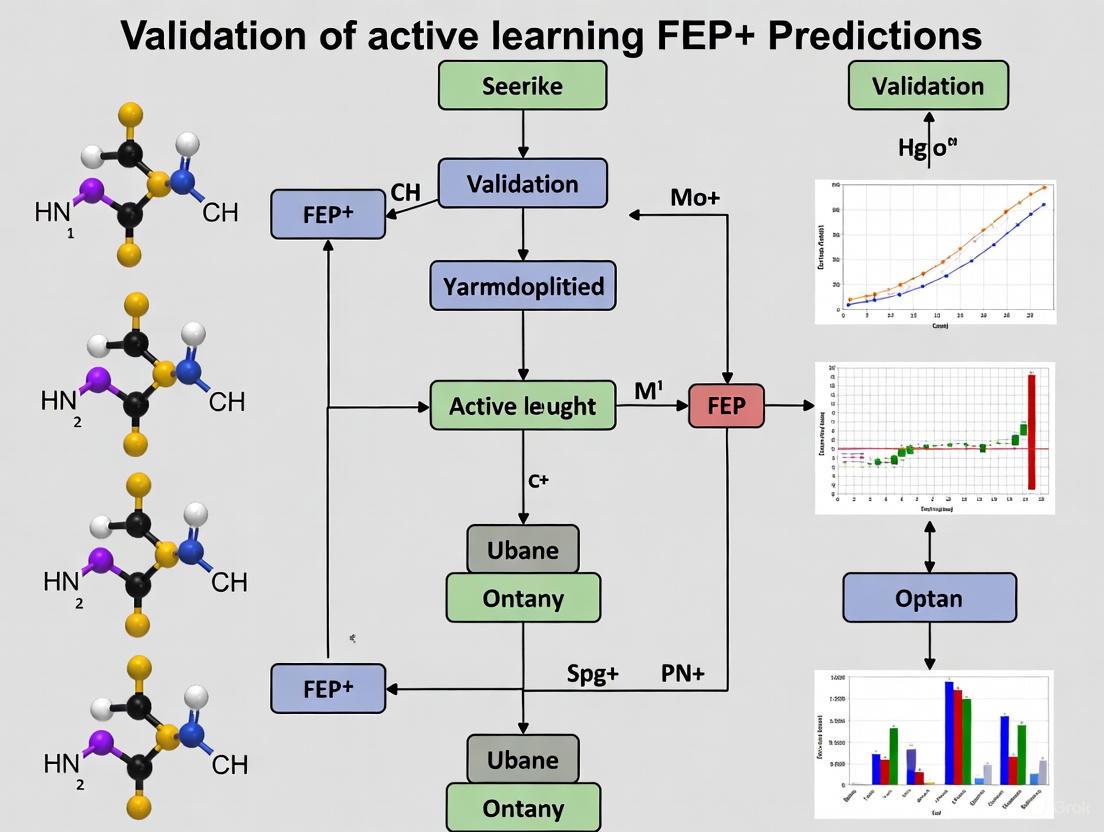
This article provides a comprehensive framework for the validation of Active Learning (AL) driven Free Energy Perturbation (FEP+) predictions in drug discovery.
Validating Active Learning FEP+ Predictions: A Framework for Accelerating Drug Discovery
Abstract
This article provides a comprehensive framework for the validation of Active Learning (AL) driven Free Energy Perturbation (FEP+) predictions in drug discovery. Aimed at researchers and development professionals, it explores the foundational principles of AL-FEP+, detailing its core mechanism of iteratively guiding molecular selection with machine learning. The piece covers practical methodologies and real-world applications across hit discovery and lead optimization, addressing common challenges and solutions for robust protocol setup. Finally, it synthesizes performance benchmarks and comparative analyses against traditional methods, highlighting the proven impact of AL-FEP+ in reducing computational costs and expanding explorable chemical space, as demonstrated in prospective drug discovery campaigns.
Understanding the Core Engine: How Active Learning Transforms FEP+
Active Learning Free Energy Perturbation+ (Active Learning FEP+) is a sophisticated computational methodology that merges the high accuracy of physics-based free energy calculations with the efficiency of machine learning. It is designed to rapidly and cost-effectively predict protein-ligand binding affinities across vast chemical spaces, a critical task in drug discovery.
This guide provides an objective comparison of its performance against other computational methods and details the experimental protocols used for its validation.
Core Concept and Workflow of Active Learning FEP+
At its core, Active Learning FEP+ uses an iterative cycle to build a predictive machine learning (ML) model. This model is trained on specific, project-derived FEP+ data, which are among the most accurate but computationally expensive physics-based methods for binding affinity prediction [1].
The goal of the active learning loop is to identify the most informative compounds for FEP+ simulation, maximizing predictive accuracy while minimizing the number of costly calculations [2]. The workflow follows these key steps, illustrated in the diagram below.
Active Learning FEP+ Workflow
This iterative cycle allows the ML model to learn the structure-activity relationships for a specific project with high efficiency. The "Active Learning" component intelligently selects which compounds to simulate next, often focusing on those where the model is most uncertain or which are predicted to be most potent, thereby improving the model as quickly as possible [2].
Performance Comparison with Alternative Methods
The performance of computational methods for binding affinity prediction involves a fundamental trade-off between speed and accuracy. The following table summarizes how Active Learning FEP+ positions itself among other common approaches.
| Method | Key Principle | Reported Performance Metrics | Relative Computational Speed | Key Advantages | Key Limitations |
|---|---|---|---|---|---|
| Active Learning FEP+ | Hybrid physics-based/ML; iterative training on FEP+ data [3]. | ~70% top-hit recall at 0.1% cost of brute-force docking [3]. | Medium (highly efficient per unit of accuracy) | High accuracy at a fraction of the cost of exhaustive FEP+; suitable for ultra-large libraries [3] [2]. | Performance depends on initial rounds and selection strategy [4]. |
| Standard FEP+ (Physics-Based) | Alchemical simulations using molecular mechanics force fields [5]. | Accuracy approaching 1 kcal/mol, matching experimental reproducibility [1]. | Slow | Considered the gold standard for accuracy; proven impact in drug discovery campaigns [5] [1]. | Computationally intensive; not feasible for screening billions of compounds [6]. |
| Machine Learning (AEV-PLIG) | Graph neural network trained on structural and binding data [6]. | PCC: 0.59, Kendall's τ: 0.42 on FEP benchmark [6]. | Very Fast (~400,000x faster than FEP) [6] | Extremely fast; no simulations required; good for initial broad screening [6]. | Accuracy lower than FEP+; performance heavily dependent on training data [7] [6]. |
| Molecular Docking (Glide SP) | Empirical scoring of static ligand poses in a rigid protein [7]. | Performance highly variable (e.g., PCC: 0.65 for one target, no signal for others) [7]. | Very Fast | Very high throughput; low cost; standard for initial pose prediction [7]. | Lower empirical accuracy; scoring functions can be unreliable for affinity prediction [7]. |
Abbreviations: PCC (Pearson Correlation Coefficient); τ (Kendall's Tau rank correlation coefficient).
The data shows that Active Learning FEP+ effectively bridges the gap between high-throughput ML methods and high-accuracy physics-based simulations. While pure ML models like AEV-PLIG are orders of magnitude faster, they do not yet match the accuracy of FEP+ [6]. Active Learning FEP+ leverages the best of both: it uses limited, high-fidelity FEP+ data to guide the exploration of chemical space, achieving high predictive performance far more efficiently than exhaustive FEP+ [3].
Key Experimental Protocols and Validation
The validation of Active Learning FEP+ relies on rigorous retrospective studies and specific experimental protocols.
Benchmarking and Validation Studies
A primary method for validation involves retrospective benchmarking on congeneric ligand series with known experimental binding affinities [4] [1]. For example, one study on bromodomain inhibitor series demonstrated that well-performing Active Learning FEP+ models could be generated within several rounds of active learning, efficiently identifying potent compounds [4]. These studies often measure success by the enrichment of high-affinity ligands in the selected subset and the statistical correlation (e.g., R²) between predicted and experimental affinities [4].
A critical finding from broader research is that the accuracy of rigorous FEP calculations can now match the reproducibility of experimental measurements themselves [1]. This sets a fundamental limit on the achievable accuracy for any predictive method, including Active Learning FEP+, and underscores its utility as a reliable in silico assay.
The FEP Protocol Builder (FEP-PB)
For challenging protein systems where standard FEP+ settings fail, an automated workflow called FEP Protocol Builder (FEP-PB) is used. This tool itself employs an active learning cycle to iteratively search a multi-dimensional parameter space (e.g., ligand atom mapping, residue protonation states, water placement) to develop a customized and accurate FEP protocol [3] [8].
This workflow was successfully applied to systems like MCL1 and p97, which were previously problematic, enabling the generation of predictive FEP models with minimal human intervention [8]. The process is summarized in the diagram below.
FEP Protocol Builder Workflow
Essential Research Reagent Solutions
The following table details key computational tools and resources essential for implementing and validating Active Learning FEP+, as featured in the cited research.
| Research Reagent / Tool | Function in Active Learning FEP+ |
|---|---|
| FEP+ Software (Schrödinger) | Provides the core physics-based engine for running high-accuracy relative free energy calculations [5]. |
| Active Learning Applications (Schrödinger) | The dedicated platform that implements the active learning loop, managing the ML model and compound selection [3]. |
| OPLS Force Field | A modern molecular mechanics force field that defines the potential energy terms for the atoms in the system, critical for the accuracy of FEP+ simulations [5]. |
| GPU Computing Clusters | Essential hardware for running the intensive FEP+ molecular dynamics simulations in a feasible timeframe [5]. |
| Structural Data (e.g., PDB) | Experimentally determined (or modeled) 3D structures of the protein target are the essential starting point for setting up FEP+ calculations [1]. |
| Experimental Binding Affinity Data (Ki, IC₅₀) | Crucial for training the active learning model initially and for conducting retrospective benchmarks to validate prediction accuracy [4] [1]. |
Active Learning FEP+ represents a powerful synergy, merging the rigorous physical basis of free energy calculations with the adaptive efficiency of machine learning. It establishes a new paradigm for navigating ultra-large chemical spaces in drug discovery, offering a balanced solution that is both highly accurate and computationally tractable. As force fields, sampling algorithms, and machine learning models continue to advance, the scope and impact of this hybrid approach are expected to grow further, solidifying its role as a cornerstone of modern, computationally-driven drug design.
Free Energy Perturbation (FEP+) has established itself as a gold standard in computational drug discovery for predicting protein-ligand binding affinities with accuracy approaching experimental limits (∼1 kcal/mol) [5]. However, the computational expense of traditional FEP+ protocols has historically limited their throughput, restricting their application to lead optimization stages involving hundreds of compounds rather than the virtual screening of millions. The integration of machine learning (ML) with physics-based sampling has created a transformative iterative cycle that dramatically accelerates and refines binding affinity predictions. This synergistic approach, often implemented through active learning frameworks, enables researchers to explore vast chemical spaces with unprecedented efficiency while maintaining the rigorous physical foundations of FEP+ [9] [10]. This article examines the mechanisms and performance of this integrated approach, comparing it with alternative methodologies and providing experimental validation of its predictive capabilities.
Table: Key Terminology in Active Learning FEP+
| Term | Definition | Role in Workflow |
|---|---|---|
| FEP+ | Schrödinger's physics-based free energy perturbation technology | Provides high-accuracy binding affinity predictions for a subset of compounds |
| Active Learning | A machine learning paradigm that strategically selects informative data points | Guides the selection of which compounds to simulate with FEP+ next |
| Exploitation | Selecting compounds similar to known high-performers | Improves the accuracy of predictions for promising chemical regions |
| Exploration | Selecting chemically diverse or uncertain compounds | Expands the model's knowledge to novel chemical space |
| Absolute Binding FEP (ABFEP+) | Calculates absolute binding free energies without a reference ligand | Enables screening of diverse chemotypes and scaffolds [10] |
The Active Learning FEP+ Workflow: An Iterative Feedback Loop
The integration of machine learning with FEP+ creates a cyclic, adaptive workflow that maximizes learning efficiency. This process begins with an initial, often sparse, set of FEP+ calculations that serve as the first training data for a machine learning model. The trained ML model then predicts the binding affinities for a vast virtual library of compounds. Critically, the model also quantifies its prediction uncertainty for each compound. The next FEP+ calculations are not chosen at random; instead, the active learning algorithm strategically selects compounds based on a balance of high predicted affinity (exploitation) and high uncertainty (exploration). These newly selected compounds are then simulated with the rigorous FEP+ method, and the results are fed back into the next training cycle, continuously improving the model's accuracy and reliability with each iteration [9] [10]. This cycle typically converges within three rounds, providing an optimal trade-off between computational cost and predictive performance.
Performance Comparison: Active Learning FEP+ vs. Alternative Methods
Quantitative Benchmarking Against Other Computational Methods
Rigorous benchmarking is essential to validate the performance of computational drug discovery tools. The table below compares the performance of Active Learning FEP+ with other leading methods, including standard FEP+, the open-source OpenFE platform, and pure machine learning scoring functions.
Table: Performance Comparison of Free Energy Calculation Methods
| Method | Typical RMSE (kcal/mol) | Computational Speed | Key Strengths | Key Limitations |
|---|---|---|---|---|
| Active Learning FEP+ | ~1.0 (on benchmark sets) [5] | Enables screening of 100,000s of compounds [10] | High accuracy at scale; explores novel chemistry | Requires initial calibration; complex setup |
| Standard FEP+ | 0.7 - 1.3 [11] | ~100 GPU hours for 10 ligands (RBFE) [9] | Gold-standard accuracy for congeneric series | Low throughput; high computational cost |
| OpenFE | ~2.0 (on public benchmarks) [11] | Comparable to FEP+ | Open-source; good ranking capability | Lower absolute accuracy vs. FEP+ |
| ML Scoring (AEV-PLIG) | ~1.5 - 2.0 [6] | ~400,000x faster than FEP [6] | Extremely fast; absolute binding affinity | Struggles with OOD compounds [6] |
The data reveals a clear trade-off between speed and accuracy. While pure ML methods like AEV-PLIG are orders of magnitude faster, their performance can degrade on out-of-distribution (OOD) compounds not represented in their training data [6]. In contrast, a large-scale benchmark of the open-source OpenFE protocol, involving 59 protein-ligand systems and 876 ligands, showed it was competitive with FEP+ in ranking compounds but had higher overall errors (RMSE of ~2.0 kcal/mol versus ~1.0 for FEP+) [11]. Active Learning FEP+ strikes a balance by using ML to guide the expensive, high-fidelity FEP+ simulations to the most informative regions of chemical space.
Performance in Real-World Drug Discovery Applications
The true test of any computational method is its performance on real-world drug discovery projects, which are often messier and more diverse than curated public benchmarks. When OpenFE was tested on 37 private pharma datasets, a noticeable drop in accuracy occurred, with more outlier predictions, underscoring the challenge of real-world applications [11]. Active Learning FEP+ is designed for this reality. Its iterative nature allows it to adapt to project-specific chemical space. Furthermore, the ability of Absolute Binding FEP (ABFEP+) to calculate binding free energies without a reference ligand is particularly valuable for hit identification, as it enables the evaluation of diverse chemotypes and scaffold-hopping beyond congeneric series [9] [10]. This makes the active learning workflow particularly powerful for early-stage discovery where chemical matter is sparse and diverse.
Experimental Protocols and Validation
Detailed Methodology for Active Learning FEP+ Benchmarking
To ensure reproducibility and transparent evaluation, the following methodology is typically employed in large-scale validation of Active Learning FEP+ workflows:
- Dataset Curation: Benchmarks use large-scale, publicly available datasets designed to reflect real-world drug discovery challenges. For example, the Uni-FEP Benchmarks dataset comprises approximately 1,000 protein-ligand systems with around 40,000 ligands, capturing chemical challenges like scaffold replacements and charge changes [12].
- Workflow Initialization: The process begins by selecting a small, diverse subset of ligands (e.g., 1-5% of the total library) for the initial round of FEP+ calculations. These calculations are run using established FEP+ protocols, which involve:
- System Preparation: Protein structures are prepared using the Protein Preparation Wizard, and ligands are prepared with LigPrep. Protonation states are assigned at physiological pH.
- Force Field Application: The OPLS4 force field is used to model molecular interactions [13].
- Sampling Protocol: Simulations are run with a defined number of lambda windows and simulation length to ensure convergence. Recent advances include automated lambda scheduling to optimize GPU efficiency [9].
- Active Learning Cycle:
- Model Training: A machine learning model (e.g., a graph neural network) is trained on the accumulated FEP+ results, learning to map molecular features to predicted binding affinity and uncertainty.
- Compound Selection: The trained model predicts affinities and uncertainties for the entire virtual library. The next batch for FEP+ simulation is selected by prioritizing compounds with a high balance of predicted potency and model uncertainty.
- Iteration: Steps 2 and 3 are repeated for typically 2-3 cycles [10].
- Validation and Metrics: The final predictions from the Active Learning workflow are compared against experimental binding affinity data. Key performance metrics include:
- Root Mean Square Error (RMSE): Measures the absolute accuracy of predictions.
- Kendall's Tau (τ): Assesses the ranking capability of a series of ligands.
- Fraction of Best: A metric gaining traction that evaluates the method's ability to identify the most potent ligands in a series [11].
The Scientist's Toolkit: Essential Research Reagents and Solutions
Table: Key Research Tools for Active Learning FEP+ Implementation
| Tool/Resource | Function | Application in Workflow |
|---|---|---|
| FEP+ Software (Schrödinger) | Provides the core physics-based free energy calculation engine | Runs the high-fidelity FEP simulations that generate training data for the ML model [5] |
| OPLS4/OPLS5 Force Field | A modern, comprehensive force field that describes molecular interactions | Critical for accurately modeling the protein-ligand system during FEP+ simulations [5] [13] |
| Active Learning Platform | The ML framework that manages the iterative selection process | Automates the cycle of prediction, selection, and retraining; scales screening to millions of compounds [5] [10] |
| Uni-FEP Benchmarks | A large-scale, public dataset for evaluating FEP performance | Provides a standardized and realistic set of systems for method validation and comparison [12] |
| ABFEP+ (Absolute Binding FEP) | Calculates absolute binding free energies without a reference ligand | Enables the inclusion of diverse, non-congeneric chemotypes in the virtual screen [9] [10] |
Discussion and Future Directions
The iterative cycle of machine learning-guided FEP+ sampling represents a significant evolution in computational drug discovery. By combining the scalability of machine learning with the rigorous accuracy of physics-based simulations, this approach allows researchers to navigate chemical space more intelligently and efficiently. The quantitative benchmarks show that while pure ML methods are rapidly advancing, the hybrid Active Learning FEP+ approach currently offers a superior balance for practical applications where accuracy is paramount [6] [11].
Future developments in this field are likely to focus on improving the accuracy of force fields, particularly for challenging systems like covalent inhibitors and membrane-bound targets [9]. Furthermore, the rise of large-scale benchmark sets [12] and open-source platforms [11] fosters transparency and accelerates methodological improvements across the scientific community. As machine learning models become more sophisticated at learning the physical principles of molecular recognition, the synergy between ML and FEP+ will continue to tighten, further reducing the time and cost required to discover novel therapeutic agents.
Free Energy Perturbation (FEP+) has established itself as a gold-standard, physics-based method for predicting protein-ligand binding affinity in drug discovery, with accuracy often matching experimental methods (approaching 1 kcal/mol mean unsigned error) [5]. However, its computational expense traditionally limits throughput to several tens or hundreds of compounds. Active Learning FEP+ (AL-FEP+) is an advanced workflow that synergistically combines the high accuracy of FEP+ with the efficiency of machine learning (ML) to enable the exploration of vastly larger chemical spaces—up to millions of compounds [5] [4]. This guide details the key components of the AL-FEP+ workflow, from the initial training set to the final predictive model, and objectively compares its performance against other computational approaches.
Core Components of the AL-FEP+ Workflow
The AL-FEP+ workflow is an iterative process designed to build an accurate machine learning model for binding affinity prediction by strategically using FEP+ calculations to generate high-quality training data.
The following diagram illustrates the sequential stages and cyclical nature of the AL-FEP+ protocol.
Detailed Breakdown of Workflow Components
1. Initial Training Set Selection The process begins with a large, diverse virtual library generated through methods like bioisostere replacement (e.g., Spark) or virtual screening (e.g., Blaze) [9]. From this library, an initial subset of compounds is selected for the first round of FEP+ calculations. This selection can be random, based on maximum chemical diversity, or informed by preliminary docking scores to ensure a representative starting point for the ML model [4] [14].
2. FEP+ Calculations on Selected Compounds The selected compounds undergo rigorous FEP+ simulations. This involves running relative binding free energy calculations between pairs of ligands. The simulations use molecular dynamics with an explicit solvent model and a modern force field like OPLS4/OPLS5 to alchemically "morph" one ligand into another, providing highly accurate (≈1 kcal/mol) ΔΔG predictions [5] [15]. This step is computationally intensive but provides the gold-standard labels for ML training.
3. ML Model Training on FEP+ Results A machine learning model (e.g., a Gaussian Process model or a graph neural network) is trained to predict binding affinity using the FEP+ results as the ground truth [4] [14]. The model learns from the structural and chemical features of the compounds and their corresponding FEP+-calculated binding affinities.
4. ML Model Prediction on Unexplored Compounds The trained ML model is then deployed to rapidly predict the binding affinities for the remaining vast number of compounds in the virtual library that have not yet been simulated with FEP+. This step is orders of magnitude faster than running FEP+ calculations [4].
5. Active Learning Selection for the Next FEP+ Batch An "active learning" algorithm queries the ML model's predictions to identify the most valuable compounds for the next cycle of FEP+ calculations. The selection strategy balances exploration (selecting chemically diverse compounds to improve model robustness) and exploitation (focusing on regions of chemical space predicted to have high potency) [4]. This step is critical for efficient convergence.
6. Iteration and Final Model Steps 2 through 5 are repeated. With each iteration, the ML model is retrained on an increasingly large and informative FEP+ dataset, continually improving its predictive accuracy. The loop continues until a performance threshold is met (e.g., model accuracy stabilizes or a potent compound is identified), yielding a final, highly informed model and a prioritized list of compounds for synthesis [5] [4].
Performance Comparison and Experimental Data
AL-FEP+ occupies a unique position in the landscape of binding affinity prediction tools, bridging the gap between high-speed, low-accuracy methods and high-accuracy, low-throughput methods like standard FEP+.
Quantitative Performance Comparison
Table 1: Comparison of Binding Affinity Prediction Methods on Key Metrics
| Method | Throughput (Compounds/Day) | Typical RMSE/Error (kcal/mol) | Key Strength | Primary Use Case |
|---|---|---|---|---|
| AL-FEP+ | 100s - 1,000s [5] [4] | ~1.0 (on par with FEP+) [4] | Optimal balance of accuracy and scale | Lead optimization across large, enumerated libraries |
| FEP+ (Standard) | 10s - 100s [5] | ~1.0 [5] [15] | Gold-standard physics-based accuracy | Focused lead optimization on congeneric series |
| Boltz-2 (AI) | 100,000s+ [16] | Variable (R² ~0.15-0.55 on blinded tests) [16] | Extreme speed and high throughput | Initial virtual screening of massive diverse libraries |
| ML Scoring (AEV-PLIG) | 100,000s+ [6] | ~1.5-2.0 (RMSE, worse on OOD data) [6] | Fast absolute affinity prediction | Pre-screening when no congeneric series exists |
| Molecular Docking | 1,000,000s+ [9] | >2.0 (Low correlation with experiment) [6] [16] | Highest possible throughput | Initial hit finding from ultra-large libraries |
Experimental Validation of AL-FEP+ Performance
A 2025 retrospective study by Lonsdale et al. provides critical experimental data validating the AL-FEP+ workflow [4] [14]. The study applied AL-FEP+ to two different bromodomain inhibitor series from historic GSK projects.
Experimental Protocol:
- Compound Sets: Two series were tested: one with a constant molecular core and another involving significant core changes ("scaffold hopping").
- AL-FEP+ Protocol: The workflow involved iterative cycles of FEP+ calculations and ML model training. Key parameters investigated included the compound selection strategy (explore-exploit ratio) and the number of compounds selected per cycle.
- Performance Validation: The final ML models from the AL-FEP+ process were evaluated by comparing their predictions to held-out experimental biochemical potency data. Key metrics included model enrichment (ability to find the most potent compounds) and correlation (R²) with experimental data [4].
Results and Performance Data:
- High Accuracy with Constant Core: For the series with a constant core, the AL-FEP+ workflow generated "well-performing models" within several rounds of active learning. The models demonstrated high enrichment and correlation, successfully identifying the most potent compounds from the virtual library [4].
- Effect of Chemical Diversity: Performance was somewhat attenuated in the series involving core changes, highlighting that the chemical diversity of the virtual library impacts the efficiency and final performance of the model. Nonetheless, the workflow remained effective [4].
- Impact of Protocol Parameters: The study found "significant differences in performance in terms of model enrichment and R²" based on the active learning parameters. It concluded that the optimal settings depend on the project context—whether the goal is to maximize potency (favoring exploitation) or to achieve broad-range prediction accuracy (favoring exploration) [4].
Table 2: Key Experimental Findings from Lonsdale et al. (2025) AL-FEP+ Study
| Experimental Condition | Performance Outcome | Implication for Workflow Design |
|---|---|---|
| Constant Core Series | Well-performing models achieved in few cycles [4] | Ideal scenario for highly efficient AL-FEP+ application |
| Series with Core Changes | Models achieved, but performance was lower [4] | Requires more cycles and a strategy emphasizing exploration |
| Selection Strategy (Explore vs. Exploit) | Significant impact on model enrichment and R² [4] | Parameter must be tuned to the specific project goal |
Essential Research Reagent Solutions
Implementing a successful AL-FEP+ campaign relies on a suite of specialized computational tools.
Table 3: Key Research Reagent Solutions for an AL-FEP+ Workflow
| Tool / Resource | Function in the Workflow | Notes |
|---|---|---|
| FEP+ (Schrödinger) | Core physics engine for generating high-accuracy ΔΔG training data [5] | Uses OPLS force fields; proven industrial impact with candidates in the clinic |
| Active Learning Application (Schrödinger) | Automated workflow managing the ML training and compound selection cycle [5] | Incorporates validated active learning algorithms |
| Maestro (Schrödinger) | Integrated graphical environment for system setup, simulation, and analysis [5] | Provides a unified modeling environment |
| De Novo Design Workflow (Schrödinger) | Generates the initial large virtual library for exploration [5] | Explores ultra-large scale chemical space |
| Spark / Blaze (Cresset) | Alternative tools for bioisostere replacement and virtual screening to create input libraries [9] | |
| NVIDIA GPUs | High-performance computing hardware to run FEP+ simulations efficiently [5] | Schrödinger software is optimized for NVIDIA architecture |
The AL-FEP+ workflow is a powerful hybrid approach that effectively merges the rigorous, physics-based accuracy of FEP+ with the scalable predictive power of machine learning. Its key components—the iterative cycle of selective FEP+ calculation, ML model refinement, and intelligent active learning—enable researchers to navigate millions of compounds with an accuracy that was previously restricted to small, congeneric series. Experimental data demonstrates that AL-FEP+ can generate highly predictive models efficiently, particularly for series with a constant core, and that careful tuning of the active learning parameters is critical for success. While pure AI methods like Boltz-2 offer unparalleled speed for initial screening and standard FEP+ remains the undisputed benchmark for focused calculations, AL-FEP+ carves out a vital niche in the drug discovery toolkit, making the rigorous exploration of vast chemical spaces a practical reality for lead optimization.
In the landscape of modern drug discovery, the efficient navigation of vast chemical spaces is a fundamental challenge. Active learning (AL) represents a powerful iterative framework that addresses this by strategically selecting which compounds to evaluate, thereby maximizing information gain while minimizing resource-intensive simulations or assays. At the core of every AL strategy lies the critical balance between exploration—broadly searching chemical space to discover novel scaffolds—and exploitation—focusing on optimizing known hit compounds to enhance their properties. This strategic balancing act is particularly crucial when integrated with rigorous but computationally expensive methods like Free Energy Perturbation (FEP+), which provides high-accuracy binding affinity predictions. The validation of these FEP+ predictions within an AL cycle is essential for building reliable and efficient drug discovery pipelines. This guide objectively compares the performance of different selection strategies and the experimental protocols used to validate them, providing a framework for researchers to optimize their own molecular selection processes.
Comparative Analysis of Selection Strategies
The choice of acquisition function—the algorithm that selects the next set of compounds for evaluation—directly controls the exploration-exploitation balance. The table below summarizes the performance characteristics of predominant strategies based on retrospective simulation studies.
Table 1: Performance Comparison of Molecular Selection Strategies in Active Learning
| Selection Strategy | Primary Focus | Chemical Space Coverage | Hit-Finding Efficiency | Best-Suited Application Phase | Key Performance Findings |
|---|---|---|---|---|---|
| Greedy/Exploitative | Picks top predicted binders [2] | Narrow | High initial recall [2] | Late-stage lead optimization | Identifies potent binders quickly but risks scaffold collapse [2] |
| Uncertainty-Based | Picks most uncertain predictions [2] | Broad | Lower initial recall [2] | Early-stage virtual screening | Improves model robustness; covers diverse chemical space [2] |
| Mixed/Hybrid | Balances top picks and uncertain candidates [2] | Moderate to Broad | Sustained high recall [2] | Mid-stage hit-to-lead | Balances early hits with long-term discovery [2] |
| Narrowing | Starts broad, switches to greedy [2] | Broad to Narrow | High final recall [2] | Multi-phase campaigns | Efficiently identifies potent binders after initial exploration [2] |
| Random Selection | Picks compounds randomly | Broad (Unguided) | Low (Baseline) | Control experiments | Provides a performance baseline; highlights value of guided AL [2] |
Beyond the acquisition function, the molecular representation also impacts performance. Studies indicate that using RDKit molecular fingerprints can outperform more complex physics-based descriptors or protein-ligand interaction fingerprints in AL workflows, offering a robust balance between performance and computational cost [2].
Experimental Protocols for Validating Active Learning FEP+ Workflows
The validation of an Active Learning FEP+ pipeline requires carefully designed experimental protocols to ensure its predictive power translates to real-world success. The following sections detail the methodologies from key studies that have demonstrated prospective experimental validation.
Protocol: Generative AI with Nested Active Learning Cycles
A study published in Communications Chemistry successfully generated novel CDK2 and KRAS inhibitors by integrating a generative model with a physics-based AL framework [17]. The protocol is designed to explicitly manage exploration and exploitation through nested cycles.
- 1. System Preparation: The generative model (a Variational Autoencoder or VAE) is first pre-trained on a large, general molecular dataset (e.g., ZINC) to learn fundamental chemical rules. It is then fine-tuned on a target-specific training set to initialise target engagement [17].
- 2. Inner AL Cycle (Exploration for Drug-Likeness): The VAE generates new molecules. These are filtered using chemoinformatic oracles for drug-likeness (e.g., Lipinski's rules), synthetic accessibility (SA), and dissimilarity from the training set. Molecules passing these filters are added to a temporal set and used to fine-tune the VAE, encouraging exploration of novel, synthesizable chemical space [17].
- 3. Outer AL Cycle (Exploitation for Affinity): After a set number of inner cycles, molecules in the temporal set are evaluated using physics-based affinity oracles, primarily molecular docking. Compounds with favorable docking scores are promoted to a permanent-specific set. The VAE is then fine-tuned on this high-quality set, exploiting regions of chemical space with high predicted affinity [17].
- 4. Experimental Validation: For CDK2, nine molecules generated by this workflow were synthesized. Of these, eight exhibited in vitro activity, with one achieving nanomolar potency—a direct experimental validation of the workflow's output [17].
Protocol: Active Learning FEP with QSAR Models
Another approach integrates FEP directly with Quantitative Structure-Activity Relationship (QSAR) models in an AL loop, aiming to reduce the number of expensive FEP calculations required for virtual screening [2].
- 1. Initialization: A large virtual library is assembled. A small, diverse subset of molecules is selected for the initial training set. FEP+ calculations are performed on this initial set to obtain high-accuracy binding affinity data [2].
- 2. Model Training and Selection: A QSAR model (e.g., using a graph neural network or random forest) is trained on the initial FEP+ data. Multiple models with different hyperparameters or descriptors can be trained, and the top performers are selected [2].
- 3. Iterative Active Learning Loop:
- a. Acquisition: The trained QSAR model predicts affinities for the entire remaining library. Based on a chosen strategy (e.g., greedy, uncertainty, mixed), a new batch of compounds is selected for FEP+ calculation [2].
- b. Evaluation and Retraining: FEP+ is run on the newly selected batch. These new, high-fidelity data points are added to the training set, and the QSAR model is retrained [2].
- c. Termination: The loop repeats until a predefined stopping criterion is met, such as a target number of high-affinity compounds identified or a convergence in model performance [2].
- 4. Performance Metric: The key metric is recall—the fraction of all high-affinity compounds in the library that have been successfully identified—plotted against the number of FEP+ calculations performed. This quantitatively demonstrates the efficiency gain over random screening or naive methods [2].
Validation via the LigUnity Foundation Model
The LigUnity model offers a unified approach for both virtual screening (exploration) and hit-to-lead optimization (exploitation). Its validation provides a template for assessing model generalizability [18] [19].
- 1. Benchmarking: The model is evaluated on eight public benchmarks (e.g., DUD-E, LIT-PCBA, FEP benchmarks) against a wide field of competitors (e.g., 24 other methods for virtual screening). Key metrics include enrichment factors, correlation coefficients (R², RMSE), and computational speedup [18] [19].
- 2. Generalization Testing: To test robustness, models are evaluated under challenging data splits: split-by-scaffold (testing on entirely new molecular scaffolds), split-by-time (testing on data from a later time period), and on novel protein targets not seen in training [18].
- 3. Prospective Simulation: In a simulated AL campaign for TYK2 inhibitors, LigUnity was used to iteratively select compounds. Its embedding space, which clusters ligands by target and ranks them by affinity, directly facilitates a balance between exploring new scaffolds and exploiting high-affinity regions [18].
Workflow Visualization: Active Learning FEP+ Cycle
The following diagram illustrates the logical flow and iterative nature of a typical Active Learning FEP+ workflow, integrating the components discussed above.
The Scientist's Toolkit: Key Research Reagents and Computational Solutions
Successful implementation of the strategies and protocols described above relies on a suite of specialized software tools and computational resources.
Table 2: Essential Research Reagent Solutions for Active Learning FEP+
| Tool/Solution | Type | Primary Function in Workflow | Application in Exploration/Exploitation |
|---|---|---|---|
| FEP+ (Schrödinger) | Physics-Based Simulation | Provides high-accuracy relative binding free energy predictions [1] [2]. | Core oracle for exploiting and validating affinity during lead optimization. |
| LigUnity | Foundation AI Model | Jointly embeds ligands and pockets for affinity prediction & screening [18] [19]. | Unifies exploration (screening) and exploitation (optimization) in a single model. |
| Generative VAE | Generative AI Model | Creates novel molecular structures from a learned latent space [17]. | Drives exploration of novel chemical space; can be fine-tuned for exploitation. |
| RDKit | Cheminformatics Toolkit | Generates molecular descriptors and fingerprints; handles SMILES [2]. | Provides feature sets for QSAR models and filters for drug-likeness (exploration). |
| Gnina | Deep Learning Docking | Uses convolutional neural networks for molecular docking and pose scoring [20]. | Fast, structure-based filter for initial affinity estimation (exploration). |
| AlphaFold/NeuralPLexer | Protein Structure Prediction | Generates accurate 3D protein structures for targets with unknown experimental structures [2]. | Enables structure-based design for novel targets, expanding explorable space. |
| Open Force Field | Force Field Parameterization | Provides accurate, extensible force fields for small molecules and proteins [2]. | Improves the accuracy of FEP+ simulations, leading to more reliable exploitation. |
In the field of computational drug discovery, the ultimate benchmark for any predictive method is its ability to achieve accuracy comparable to experimental laboratory measurements. Free Energy Perturbation (FEP), a rigorous, physics-based computational technique, has emerged as a leading method for predicting protein-ligand binding affinities. Among available FEP implementations, Schrödinger's FEP+ has established itself as a widely adopted industry standard, with numerous studies demonstrating its capacity to predict binding affinities at an accuracy approaching 1 kcal/mol—matching the reproducibility of experimental methods across diverse protein classes and ligand series [5] [21]. This guide provides an objective comparison of FEP+ against other computational approaches, examining the experimental data and protocols that validate its performance claims, with particular focus on its role in active learning workflows for drug discovery.
Methodological Comparison: FEP+ Versus Alternative Approaches
Fundamental Principles and Technical Implementation
Free Energy Perturbation (FEP) is a statistical mechanics-based method for computing free energy differences between two states through molecular dynamics or Monte Carlo simulations. The approach relies on the Zwanzig equation, which enables the calculation of free energy differences by sampling configurations from a reference state and computing the energy difference to a target state [22]. In drug discovery, this typically involves calculating the relative binding free energies between pairs of ligands binding to the same protein target, allowing for efficient optimization of compound potency.
FEP+ is Schrödinger's proprietary implementation of FEP that incorporates advanced sampling algorithms, the OPLS force field, and automated workflow management to enhance accuracy and usability [5]. The platform is continuously refined through active R&D, expanding its domain of applicability to include challenging transformations such as scaffold hopping, macrocyclization, charge-changing perturbations, and buried water displacement [21].
Machine Learning Approaches like the Boltz-2 model represent an alternative strategy that leverages artificial intelligence for rapid affinity predictions. These methods prioritize computational efficiency over physical rigor, achieving speeds up to 1000x faster than FEP but with generally lower accuracy [16].
Table 1: Core Methodological Comparison Between Computational Approaches
| Feature | FEP+ | Traditional FEP | ML Models (e.g., Boltz-2) |
|---|---|---|---|
| Theoretical Basis | Physics-based with enhanced sampling | Physics-based with standard sampling | Pattern recognition from training data |
| Accuracy | ~1 kcal/mol, matching experimental reproducibility [5] [21] | Variable, depends on implementation | Lower than FEP+ on real-world benchmarks (R² = 0.15-0.38 in blinded tests) [16] |
| Speed | Hours to days per calculation | Similar to FEP+ | Up to 1000x faster than FEP [16] |
| Structural Flexibility | Models protein flexibility and binding site adjustments | Limited flexibility in most implementations | Static lock-and-key model [16] |
| Solvent Treatment | Explicit solvent models | Varies by implementation | Implicit solvent treatment [16] |
| Domain of Applicability | Broad: R-group modifications, scaffold hopping, macrocyclization, covalent inhibitors [5] [21] | Typically limited to congeneric series | Limited by training data diversity |
Performance Benchmarking and Validation
Large-scale validation studies provide critical insights into the real-world performance of predictive methods. When carefully applied with proper structural preparation, FEP+ achieves accuracy comparable to the reproducibility of experimental measurements [21]. One comprehensive assessment created the largest publicly available dataset of proteins and congeneric series of small molecules to evaluate the leading FEP workflow, finding that with careful preparation of protein and ligand structures, FEP can achieve accuracy comparable to experimental reproducibility [21].
The introduction of the Uni-FEP Benchmarks, a large-scale publicly available dataset constructed from drug discovery cases curated from the ChEMBL database, represents a significant advancement in benchmarking methodology. This dataset includes approximately 1000 protein-ligand systems with around 40,000 ligands, capturing a wide range of chemical challenges such as scaffold replacements and charge changes that reflect real medicinal chemistry efforts [12]. This benchmark provides a more realistic assessment of performance under practical drug discovery conditions compared to earlier, more simplified datasets.
Table 2: Quantitative Performance Comparison Across Methods
| Method | Correlation with Experiment (R²) | Mean Absolute Error (kcal/mol) | Key Applications |
|---|---|---|---|
| FEP+ | 0.52 (OpenFE subset) [16] | ~1.0, approaching experimental reproducibility [5] [21] | Lead optimization, selectivity profiling, ADMET prediction [5] |
| OpenFE | 0.40 (OpenFE subset) [16] | Not specified | Research applications |
| Boltz-2 | 0.38 (OpenFE subset), 0.15 average on blinded sets [16] | Not specified | Virtual screening, affinity funneling [16] |
| Traditional Docking | Typically much lower | Often >2.0 | Initial screening, pose prediction |
Notably, Boltz-2 demonstrates significantly variable performance across different test systems. While it achieves reasonable correlation (R² = 0.38) on the OpenFE subset of the FEP+ benchmark set, its performance drops substantially (average R² = 0.15) across eight blinded ligand/target sets from Recursion Pharmaceuticals, each comprising hundreds of experimental assay points [16]. This variability highlights a key limitation of ML approaches: their dependence on the similarity between training data and specific application cases.
Experimental Protocols and Validation Methodologies
Standard FEP+ Validation Protocol
The predictive accuracy of FEP+ claims relies on rigorous experimental validation protocols. A typical validation study follows these key steps:
System Selection: Researchers assemble a diverse set of protein-ligand complexes with experimentally determined binding affinities (Kd, Ki, or IC50 values). These datasets typically include congeneric series with a range of chemical transformations and multiple protein classes to ensure broad applicability [21].
Structure Preparation: Protein structures are prepared using tools like Schrödinger's Protein Preparation Wizard, which optimizes hydrogen bonding networks, assigns appropriate protonation states, and fills missing side chains or loops. Ligand structures are generated with accurate tautomeric and stereochemical states [5] [21].
Binding Pose Prediction: For ligands without experimentally determined binding modes, initial poses are generated using methods like Induced Fit Docking (IFD) or core-constrained docking to ensure realistic starting configurations for FEP simulations [5].
FEP+ Simulation Setup: The perturbation network is designed to connect all ligands through a series of alchemical transformations. Simulations typically run with explicit solvent models, using enhanced sampling techniques to improve convergence [5].
Results Analysis and Validation: Predicted relative binding free energies are compared to experimental values. Standard metrics include Pearson R, Spearman rank correlation, root-mean-square error (RMSE), and mean absolute error (MAE) relative to experimental reproducibility [21].
Active Learning FEP+ Workflow
The integration of active learning with FEP+ represents a significant advancement for exploring large chemical spaces efficiently. The workflow combines physical simulations with machine learning to prioritize calculations:
This active learning approach enables researchers to extend accurate FEP+ predictions from hundreds of calculations to millions of compounds by using machine learning to guide the selection of the most informative compounds for simulation [5]. The ML model is trained on project-specific FEP+ data, then used to predict affinities across vast chemical libraries, with iterative refinement through additional FEP+ calculations on strategically chosen compounds.
Experimental Data Reproducibility as Benchmark
A critical consideration in validating any predictive method is the inherent variability in experimental measurements themselves. Studies surveying the reproducibility of binding affinity measurements have found that the root-mean-square difference between independent measurements ranges from 0.77 kcal/mol to 0.95 kcal/mol [21]. This establishes a fundamental limit on the accuracy any predictive method can realistically achieve—predictions cannot be more accurate than the experimental data used to validate them. The observation that carefully applied FEP+ achieves accuracy within this range demonstrates its maturity as a predictive tool [21].
Integrated Workflows: Combining FEP+ with Complementary Methods
The Affinity Funneling Approach
Rather than viewing different computational approaches as mutually exclusive, integrated workflows leverage their complementary strengths. The "affinity funneling" concept combines the high-throughput screening capability of ML methods with the high accuracy of FEP+ in a synergistic pipeline [16]:
This workflow uses rapid ML methods to process large compound libraries, identifying potentially interesting subsets (typically hundreds of compounds) that merit the more computationally expensive but accurate FEP+ analysis. This approach maintains high accuracy while dramatically reducing the computational resources required to explore vast chemical spaces [16].
Key Research Reagent Solutions
Successful implementation of FEP+ and related computational methods requires specific computational tools and resources:
Table 3: Essential Research Reagents and Computational Tools
| Resource | Type | Function | Example Applications |
|---|---|---|---|
| FEP+ [5] | Commercial Software Platform | High-accuracy binding affinity prediction | Lead optimization, selectivity profiling, solubility prediction |
| OPLS Force Field [5] | Molecular Mechanics Force Field | Defines energy terms for molecular interactions | All molecular dynamics simulations in FEP+ |
| Maestro [5] | Molecular Modeling Environment | Integrated platform for structure preparation and analysis | Visualization, simulation setup, results analysis |
| Uni-FEP Benchmarks [12] | Public Benchmark Dataset | Standardized performance assessment | Method validation, comparison studies |
| Active Learning Applications [5] | Machine Learning Module | Extends FEP+ to large compound libraries | Ultra-large virtual screening, chemical space exploration |
The rigorous validation studies conducted to date demonstrate that FEP+ has achieved its stated goal of predictive accuracy rivaling experimental methods. With careful application and proper system preparation, FEP+ consistently predicts binding affinities with accuracy approaching 1 kcal/mol—matching the reproducibility of experimental measurements across diverse protein targets and ligand series [5] [21]. While emerging machine learning methods like Boltz-2 offer compelling advantages in computational efficiency, they currently cannot match the consistent accuracy and robustness of physics-based FEP+ across the broad range of challenges encountered in real-world drug discovery projects [16].
The most promising path forward lies in the continued development of integrated workflows that leverage the complementary strengths of both approaches. The combination of ML-based pre-screening followed by FEP+ validation represents a powerful strategy for efficiently exploring vast chemical spaces while maintaining the high accuracy required for confident decision-making in drug discovery. As both computational methodologies and validation benchmarks continue to evolve, the scientific community moves closer to the ultimate goal of fully predictive drug design, with FEP+ remaining an essential tool in the computational chemist's toolkit.
From Theory to Practice: Implementing AL-FEP+ in Discovery Workflows
Active Learning Free Energy Perturbation (AL-FEP+) represents a significant methodological advancement in computational drug discovery, combining the rigorous, physics-based predictions of FEP+ with the efficiency of machine learning. The FEP+ methodology uses molecular dynamics simulations and advanced force fields to computationally predict protein-ligand binding affinities at an accuracy that often matches experimental methods [5]. This approach has become particularly valuable in the critical drug discovery phases of hit discovery and lead optimization, where accurately predicting binding affinities while efficiently exploring chemical space is paramount. The integration of active learning creates a closed-loop system where machine learning models trained on initial FEP+ results can rapidly pre-screen millions of compounds, focusing costly FEP+ calculations only on the most promising candidates [5]. This review comprehensively evaluates the performance of AL-FEP+ against other computational methods, providing experimental validation data and detailed protocols to guide research applications.
Performance Comparison of Free Energy Methods
Quantitative Accuracy Benchmarks
Table 1: Performance Comparison of Free Energy Calculation Methods on Benchmark Datasets
| Method | Mean Absolute Error (MAE, kcal/mol) | Pearson Correlation | Key Applications | Computational Efficiency |
|---|---|---|---|---|
| FEP+ | ~1.0 [1] | 0.61-0.82 [23] | Hit discovery, lead optimization, scaffold hopping [5] | High (with GPU acceleration) [5] |
| ATM | ~1.2 [23] | 0.58-0.80 [23] | Relative binding free energy calculations | Moderate |
| Amber TI | ~1.3 [23] | 0.50-0.75 [23] | Academic research, method development | Moderate to Low |
| pmx | ~1.4 [23] | 0.45-0.70 [23] | Protein-ligand systems with different force fields | Moderate |
| ESMACS | Variable (system-dependent) [24] | Not reported | Absolute binding free energies for diverse ligands [24] | High |
The performance data compiled in Table 1 demonstrates that FEP+ achieves accuracy approaching experimental reproducibility limits (approximately 1 kcal/mol), with its mean absolute error matching the typical reproducibility of experimental binding affinity measurements [1]. The method maintains strong correlation coefficients across diverse protein targets and ligand classes, indicating robust predictive capability. A key advantage of FEP+ is its proven impact in actual drug discovery campaigns, with several drug candidates driven by FEP+ predictions currently in clinical development [5].
Application-Specific Performance
Table 2: Performance Across Different Application Domains
| Application Domain | FEP+ Performance | Competitive Methods | Key Considerations |
|---|---|---|---|
| Hit Discovery | Identifies diverse hits via ABFE; enables scaffold hopping [5] | Docking: faster but less accurate; ML: requires training data | AL-FEP+ combines accuracy with coverage of chemical space |
| Lead Optimization | MAE ~1.0 kcal/mol for congeneric series [1] [25] | MM/PBSA: faster but larger errors; QSAR: limited extrapolation | Optimal for 10-atom changes or less in ligand pairs [9] |
| Selectivity Optimization | Accurately predicts relative affinities across gene families [5] | Docking struggles with binding site flexibility | Requires high-quality structures for both on-target and off-targets |
| Challenging Targets | Successful with GPCRs, protein-protein interactions [24] [25] | Many methods fail with membrane proteins and flexible systems | System preparation critically important for accurate results |
For lead optimization applications, FEP+ consistently demonstrates mean absolute errors of approximately 1.0 kcal/mol across diverse target classes including kinases, GPCRs, and protein-protein interaction targets [25]. This accuracy enables reliable compound prioritization before synthesis. In hit discovery, absolute binding free energy (ABFE) calculations, though more computationally demanding (~1000 GPU hours for 10 ligands), provide greater freedom to explore diverse chemical space without the structural similarity constraints of relative binding free energy calculations [9].
Experimental Protocols and Methodologies
Standard FEP+ Workflow Protocol
The standard FEP+ protocol employs a rigorous methodology with multiple stages of system preparation and simulation:
System Preparation:
- Protein structures from crystallography or homology modeling are prepared using Protein Preparation Wizard, which adds hydrogen atoms, samples hydrogen-bonding networks, and predicts ionization states using Propka at pH 7.0 [25].
- Ligands are parameterized using the OPLS4 force field, with partial charges assigned via quantum mechanical calculations [5].
- The system is solvated in explicit water molecules (typically with a 5-10 Å buffer) with appropriate counterions to neutralize the system [23].
Simulation Parameters:
- FEP+ uses the Desmond molecular dynamics engine with enhanced sampling via the REST2 (Replica Exchange with Solute Tempering) algorithm [25].
- Transformations proceed through 12-24 λ windows, with simulations of 20-50 ns per window, depending on system complexity [23] [9].
- Hamiltonian replica exchange is typically performed every 1-2 ps to improve phase space sampling [23].
Analysis and Validation:
- Free energy differences are calculated using the Bennet Acceptance Ratio (BAR) method or MBAR [5].
- Cycle closure corrections are applied to improve consistency across perturbation networks [25].
- Statistical uncertainties are estimated through bootstrapping analysis.
Active Learning FEP+ Workflow
Figure 1: Active Learning FEP+ Workflow for Hit Discovery
The AL-FEP+ protocol implements an iterative feedback loop that maximizes the information gained from each FEP+ calculation:
Initial Selection: A diverse subset of compounds (typically hundreds to thousands) is selected from a much larger virtual library (potentially millions of compounds) using chemical diversity metrics [5].
FEP+ Calculation: The subset undergoes rigorous FEP+ calculations to obtain accurate binding affinity predictions [5].
Machine Learning Model Training: The FEP+ results train a project-specific machine learning model that learns structure-activity relationships [5].
Prediction and Selection: The trained ML model rapidly predicts affinities for the entire virtual library, and the most promising candidates are selected for the next iteration [5] [9].
Iterative Refinement: The process repeats, with each iteration refining the ML model and focusing on more promising regions of chemical space [5].
This approach typically reduces the number of required FEP+ calculations by 10-100 fold while still exploring massive chemical spaces, making it particularly valuable for hit discovery from ultra-large virtual screens [5].
Experimental Validation and Case Studies
Validation Against Experimental Reproducibility
The ultimate validation of any predictive method comes from comparison to experimental data. A comprehensive 2023 study assessed the maximal achievable accuracy of FEP methods by first quantifying the reproducibility of experimental binding affinity measurements [1]. This survey found that experimental reproducibility itself varies significantly, with root-mean-square differences between independent measurements ranging from 0.77 to 0.95 kcal/mol [1]. This establishes the fundamental limit for predictive accuracy.
When careful preparation of protein and ligand structures is undertaken, FEP+ achieves accuracy comparable to experimental reproducibility, with mean unsigned errors of approximately 1.0 kcal/mol across diverse test sets [1]. This performance demonstrates that FEP+ has reached a level of accuracy where its predictions are practically useful for decision-making in drug discovery projects.
Prospective Application Case Studies
Several published case studies demonstrate the successful application of FEP+ in prospective drug discovery:
GPCR Target Optimization: Researchers applied FEP+ to discover novel and highly potent A2A adenosine receptor inhibitors, demonstrating the method's capability for challenging membrane protein targets [25]. The predictions successfully guided synthetic efforts toward high-affinity compounds.
Kinase Selectivity Optimization: In a prospective study on Tyk2 kinase, FEP+ predictions accurately identified compounds with improved selectivity profiles against related kinases, highlighting the method's utility for optimizing drug selectivity [25].
Scaffold Hopping: FEP+ has been successfully applied to core hopping applications, where the central scaffold of a molecule is replaced while maintaining binding affinity, enabling exploration of novel intellectual property space [5] [25].
Research Reagent Solutions
Table 3: Essential Research Tools for AL-FEP+ Implementation
| Tool/Resource | Function | Availability |
|---|---|---|
| Schrödinger FEP+ | Core FEP calculation platform with automated setup and analysis | Commercial (Schrödinger) |
| Desmond MD Engine | High-performance molecular dynamics simulator optimized for GPUs | Commercial (Schrödinger) |
| OPLS4 Force Field | Modern force field for accurate description of protein-ligand interactions | Commercial (Schrödinger) |
| Protein Preparation Wizard | Automated protein structure preparation, including H-bond assignment and protonation states | Commercial (Schrödinger) |
| LigPrep | Ligand structure preparation and parameterization | Commercial (Schrödinger) |
| OpenMM | Open-source MD engine supporting alternative methods like ATM | Open Source |
| GAFF/AM1-BCC | Force field parameters for small molecules in academic implementations | Open Source |
| AToM-OpenMM | Implementation of Alchemical Transfer Method (ATM) | Open Source |
The research tools listed in Table 3 represent the essential components for implementing AL-FEP+ workflows. The commercial Schrödinger platform provides an integrated, well-validated solution with high automation levels, while open-source alternatives like OpenMM with the ATM plugin offer flexibility for method development and customization [23]. The choice between platforms depends on research objectives, available resources, and required throughput.
Limitations and Methodological Considerations
Despite its strong performance, AL-FEP+ has several important limitations that researchers must consider:
Chemical Space Limitations: Relative FEP+ works best for congeneric series with limited structural changes (typically <10 heavy atom changes) [9]. Absolute FEP+ expands this capability but requires substantially more computational resources [9].
Charged Ligands and Protonation States: Perturbations involving formal charge changes remain challenging, though recent improvements like alchemical water methods have significantly enhanced capability in this area [15]. Careful treatment of protonation states for both protein residues and ligands is critical for accuracy [1].
System Preparation Dependencies: The accuracy of predictions depends heavily on proper system preparation, including binding site water placement, protein conformation selection, and treatment of flexible regions [1]. Inadequate preparation can significantly degrade performance.
Membrane Protein Considerations: For GPCRs and other membrane proteins, additional considerations include proper membrane bilayer representation and potential need for system truncation to balance computational cost with accuracy [9] [24].
AL-FEP+ represents a powerful combination of rigorous physics-based calculations and efficient machine learning that accelerates drug discovery. The method achieves accuracy matching experimental reproducibility for relative binding affinity predictions, enabling reliable compound prioritization. Performance benchmarks demonstrate FEP+'s competitive advantage over alternative computational methods across diverse target classes and applications. While limitations remain, particularly for charge-changing transformations and highly diverse chemical series, ongoing methodological developments continue to expand the domain of applicability. When implemented with careful system preparation and validation, AL-FEP+ provides researchers with a robust tool for hit discovery and lead optimization that can significantly reduce experimental effort and focus resources on the most promising chemical matter.
The explosion in size of commercially available and virtual chemical libraries, now encompassing billions of molecules, presents both unprecedented opportunities and formidable challenges for structure-based drug discovery. Traditional virtual screening methods, which rely on exhaustive molecular docking of entire libraries, become computationally prohibitive at this scale. In response, active learning (AL) strategies have emerged as a powerful solution, intelligently selecting the most informative compounds for evaluation to maximize screening efficiency. Among these, Active Learning Glide (AL Glide) represents a significant advancement, combining Schrödinger's established physics-based docking with cutting-edge machine learning to navigate ultra-large chemical spaces effectively. This guide objectively examines the performance of AL Glide against other computational screening methodologies, providing researchers with comparative data to inform their virtual screening strategy selection.
Performance Benchmarking: AL Glide Versus Alternative Approaches
Computational Efficiency and Hit Recovery
The primary justification for active learning workflows is their dramatic reduction in computational requirements while maintaining high hit recovery rates. Performance varies significantly based on the specific AL protocol and docking method employed.
Table 1: Comparative Performance of Active Learning Virtual Screening Protocols
| Screening Method | Top 1% Recovery Rate | Computational Cost (Relative to Brute Force) | Key Performance Findings |
|---|---|---|---|
| Active Learning Glide (Schrödinger) | ~70% of top hits recovered [3] | ~0.1% of exhaustive docking cost [3] | Recovers majority of top-scoring hits found by full docking [3]. |
| Vina-MolPAL | Highest top-1% recovery [26] | Not explicitly quantified | Achieved the highest recovery of top molecules in benchmark study [26]. |
| SILCS-MolPAL | Comparable accuracy at larger batch sizes [26] | Not explicitly quantified | Provides more realistic membrane environment description [26]. |
| Traditional Glide SP (Exhaustive Docking) | 100% (baseline) | 100% (baseline) | Consistently excels in physical validity (PB-valid rates >94%) [27]. |
Performance Against Other Deep Learning Docking Paradigms
A 2025 multidimensional evaluation of docking methods reveals a complex performance landscape. While specialized deep learning methods can achieve superior pose accuracy, traditional and hybrid methods often provide a better balance of physical validity and screening utility.
Table 2: Multidimensional Benchmarking of Docking Methodologies (2025 Study)
| Method Category | Pose Accuracy (RMSD ≤ 2 Å) | Physical Validity (PB-valid Rate) | Combined Success (RMSD ≤ 2 Å & PB-valid) | Notable Strengths and Limitations |
|---|---|---|---|---|
| Traditional Methods (e.g., Glide SP) | High [27] | >94% across all datasets [27] | Top-tier combined success [27] | Excellent physical validity and reliability [27]. |
| Generative Diffusion Models (e.g., SurfDock) | Exceptional (>70% across datasets) [27] | Suboptimal (e.g., 40-63%) [27] | Moderate (e.g., 33-61%) [27] | Superior pose generation but overlooks physical constraints [27]. |
| Regression-Based Models | Often fails [27] | Often fails [27] | Lowest tier [27] | Frequently produces physically implausible poses [27]. |
| Hybrid Methods (AI scoring + traditional search) | High [27] | High [27] | Second only to traditional methods [27] | Best balance of AI power and physical realism [27]. |
Core Experimental Protocols and Workflows
Standard Active Learning Glide Workflow
The following diagram outlines the iterative machine learning process at the heart of Active Learning Glide, which enables efficient exploration of ultra-large chemical space.
Active Learning Glide Screening Workflow diagram illustrates the iterative machine learning process that minimizes computational cost while maximizing hit discovery.
Detailed Protocol Steps:
System Preparation: The protein receptor structure is prepared using Schrödinger's Protein Preparation Wizard, which adds hydrogen atoms, corrects ionization states, optimizes hydrogen bonding, and performs restrained minimization [28]. A receptor grid is generated defining the binding site coordinates.
Initial Sampling: An initial subset of compounds from the large library (e.g., thousands from billions) is selected and docked using the physics-based Glide SP method to generate robust training data [3] [28].
Model Training: A machine learning model (surrogate model) is trained on the collected docking scores, learning to correlate chemical features with computed binding affinities [3].
Iterative Prediction and Selection: The trained ML model predicts docking scores for the entire unscreened library. The next compounds for docking are selected based on a combination of high predicted scores and high model uncertainty (exploration vs. exploitation). This iterative process typically runs for 3-5 rounds [28].
Final Selection: After convergence, the final model identifies the top-scoring compounds from the entire library. A selection of these top-ranked hits may be re-docked with Glide SP to confirm their predicted binding poses and scores before experimental validation [3].
Benchmarking Study Protocol
To ensure fair and meaningful comparisons between different active learning and docking methods, benchmarking studies typically follow a rigorous protocol.
Standardized Evaluation Methodology [26]:
- Dataset Curation: A known target protein with a well-defined binding site is selected. A diverse chemical library of known actives and inactives/decoys is compiled.
- Performance Metrics: Key metrics include Enrichment Factor (EF), which measures the concentration of true actives in the top-ranked fraction compared to random selection; Area Under the Curve (AUC) of the Receiver Operating Characteristic (ROC) curve; and the BEDROC metric, which emphasizes early enrichment.
- Pose Prediction Accuracy: The root-mean-square deviation (RMSD) of predicted ligand poses compared to experimental crystal structures is calculated, with RMSD ≤ 2.0 Å considered a successful prediction [27] [29].
- Physical Validity Check: Tools like the PoseBusters toolkit are used to validate the chemical and geometric plausibility of predicted poses, checking for proper bond lengths, absence of steric clashes, and correct stereochemistry [27].
The Scientist's Toolkit: Essential Research Reagents and Solutions
Table 3: Key Computational Tools for Active Learning-Enhanced Virtual Screening
| Tool/Resource | Type | Primary Function in Workflow |
|---|---|---|
| Glide [3] | Molecular Docking Software | Industry-standard tool for predicting binding poses and scoring protein-ligand interactions. Provides the physics-based data for ML model training. |
| Active Learning Applications (Schrödinger) [3] | Active Learning Platform | Orchestrates the iterative ML workflow, training surrogate models on docking data to prioritize compounds in ultra-large libraries. |
| AutoDock Vina [27] | Molecular Docking Software | Widely used open-source docking engine; can be integrated with active learning pipelines like MolPAL. |
| MolPAL [26] | Active Learning Framework | A scalable active learning solution that can be combined with different docking backends (Vina, Glide, SILCS) for virtual screening. |
| SILCS (Site Identification by Ligand Competitive Saturation) [26] | Monte Carlo Docking Method | Provides a more realistic description of heterogeneous membrane environments, crucial for targets like GPCRs. |
| LigUnity [18] | Foundation ML Model for Affinity | A unified model for virtual screening and hit-to-lead optimization; can be used in an active learning framework to efficiently find optimal ligands. |
| PoseBusters [27] | Validation Toolkit | Systematically evaluates docking predictions for physical plausibility and geometric consistency. |
| AlphaFold2 Protein Models [30] | AI-Powered Structure Prediction | Provides accurate 3D protein models for targets without experimental structures, enabling structure-based screening. |
The benchmarking data clearly demonstrates that active learning frameworks like AL Glide successfully achieve their primary objective: dramatically reducing the computational cost of screening ultra-large libraries while recovering a high percentage of top-quality hits. The choice between specific implementations (e.g., AL Glide vs. Vina-MolPAL) involves trade-offs, and the optimal tool may depend on the specific target, library characteristics, and computational resources.
The integration of active learning represents a paradigm shift in virtual screening. By merging the accuracy of physics-based methods with the efficiency of machine learning, these workflows make the exploration of billion-molecule libraries a practical reality for drug discovery teams. As foundation models like LigUnity continue to develop, offering high speed and accuracy across both virtual screening and hit-to-lead optimization tasks, the future points toward even more integrated and efficient AI-driven discovery pipelines [18]. For researchers, this means that the rigorous validation of these computational predictions, as part of a broader thesis on active learning FEP+ validation, remains crucial for translating in silico hits into successful lead compounds.
In modern drug discovery, the lead optimization phase represents a critical bottleneck where researchers must balance conflicting parameters such as potency, selectivity, and pharmacokinetic properties while navigating vast chemical spaces [31]. Traditional optimization methods, reliant on iterative synthesis and biological testing cycles, struggle to efficiently explore the structural diversity necessary to identify optimal drug candidates. This challenge has catalyzed the development of computational approaches, particularly free energy perturbation (FEP) methods, which provide accurate binding affinity predictions to guide molecular design [9] [32].
The integration of active learning frameworks with FEP calculations represents a paradigm shift in chemical space exploration [33]. This case study objectively evaluates the performance of Schrödinger's FEP+ platform against alternative free energy methods, specifically focusing on their application within active learning workflows for lead optimization. We present experimental data and protocols to validate the comparative efficiency, accuracy, and scalability of these approaches for diverse chemical space exploration.
Methodological Framework
Free Energy Calculation Approaches
Relative Binding Free Energy (RBFE) Methods
Relative Binding Free Energy calculations computationally transform one ligand into another through alchemical pathways to determine differences in binding affinity [34]. Traditional equilibrium methods like FEP and thermodynamic integration (TI) simulate gradual transformations using a series of intermediate steps that must reach thermodynamic equilibrium, requiring substantial computational resources [34] [35].
Schrödinger's FEP+ implements an equilibrium-based approach with enhanced sampling algorithms and force field optimizations [5]. The platform employs the OPLS force field and incorporates advanced sampling techniques to improve accuracy across diverse protein classes [5]. Key advancements include automated lambda window scheduling, hybrid solvent models, and enhanced charge change handling, enabling calculations with predictive accuracy approaching experimental error (1 kcal/mol) [9] [5].
OpenEye's FE-NES (Free Energy Nonequilibrium Switching) implements a non-equilibrium approach that uses short, bidirectional transformations between ligands [34] [35]. Rather than simulating equilibrium pathways, FE-NES employs many rapid, independent transitions executed far from equilibrium. Mathematical frameworks then extract free energy differences from the collective statistics of these non-equilibrium processes [35]. This approach enables massive parallelization and significantly higher throughput compared to equilibrium methods [34].
Absolute Binding Free Energy (ABFE) Methods
Absolute Binding Free Energy calculations predict binding affinities without requiring structural similarities between compounds [9]. ABFE methods decouple ligands from their environments in both bound and unbound states, providing greater freedom for exploring diverse chemotypes, particularly valuable in early hit identification phases [9]. However, ABFE calculations remain computationally more demanding than RBFE, often requiring 5-10× more GPU hours [9].
Active Learning Integration
Active learning frameworks iteratively combine rapid ligand-based methods with accurate FEP calculations to efficiently navigate chemical space [33]. The workflow begins with a subset of molecules evaluated using FEP, then employs machine learning models trained on this data to predict properties of larger compound libraries [9] [33]. Promising candidates identified by ML are subsequently validated with FEP, continuously refining the model in an iterative cycle [33].
Table 1: Active Learning Performance Metrics for Chemical Space Exploration
| Metric | Standard FEP | Active Learning FEP | Improvement Factor |
|---|---|---|---|
| Chemical Space Coverage | Limited congeneric series (<10 atom changes) | Diverse chemotypes via ABFE integration | 5-10× larger space [9] |
| Computational Efficiency | 100% compounds via FEP | 6% sampling to identify 75% top compounds | ~16× reduction in FEP calculations [33] |
| Resource Requirements | 100 GPU hours for 10 ligands (RBFE) | 10-20 GPU hours for equivalent coverage | 5-10× cost reduction [33] |
| Identification Accuracy | Direct FEP accuracy (1 kcal/mol) | 75% top binders with 6% sampling | Comparable to exhaustive FEP [33] |
Experimental Protocols & Validation
Benchmarking Studies Design
Dataset Composition
Comparative evaluations utilized publicly available benchmark datasets (Wang et al., 2015; Schindler et al., 2020) featuring diverse protein targets including kinases, GPCRs, and nuclear receptors [35]. These datasets provide experimental binding affinities for hundreds of ligand-protein complexes with varying chemical structures and binding motifs, enabling standardized accuracy assessments across different computational platforms [35].
Performance Metrics
Quantitative assessments employed multiple statistical measures:
- Kendall's Tau Rank Correlation: Evaluates ligand ranking accuracy compared to experimental data
- Mean Absolute Error (MAE): Measures deviation from experimental binding free energies
- Cost-Efficiency Metrics: GPU hours per compound and throughput (compounds/day)
- Success Rate: Percentage of calculations completing without technical failures
Experimental Workflows
Standard RBFE Protocol
The conventional RBFE workflow involves several standardized steps:
- System Preparation: Protein structures are prepared through hydrogen atom addition, bond order assignment, and protonation state optimization at pH 7.0 ± 2.0
- Ligand Parameterization: Ligands are parameterized using appropriate force fields (OPLS4 for FEP+, OpenFF for FE-NES) with partial charge assignment
- Perturbation Map Generation: A network of alchemical transformations connecting ligand pairs is constructed with cycle closure considerations
- Equilibration Phase: Each system undergoes 5-10 ns of equilibration under NPT conditions
- Production Simulation: Data collection phase of 20-50 ns per transformation window
- Free Energy Estimation: Application of Bennet's Acceptance Ratio (FEP+) or Jarzynski's equality (FE-NES) for ΔΔG calculation
Active Learning Enhanced Protocol
The integrated active learning workflow combines FEP with machine learning:
Active Learning FEP Workflow
Comparative Performance Results
Table 2: Platform Performance Comparison in Lead Optimization Applications
| Performance Characteristic | Schrödinger FEP+ | OpenEye FE-NES | Traditional FEP |
|---|---|---|---|
| Accuracy (Kendall's Tau) | 0.60-0.65 on benchmark sets [5] | 0.58-0.63, no significant difference from FEP+ [35] | 0.55-0.62 (implementation dependent) |
| Calculation Speed | 24-36 hours for 40 ligands [35] | 2-3 hours for 40 ligands (5-10× faster) [35] | 24-72 hours for similar sets |
| Cost Efficiency | Moderate (~$100-200/ligand) | High (~$20-50/ligand, 2-5× better) [35] | High (~$150-300/ligand) |
| Scalability | ~1000 compounds/month with standard resources | ~5000-10000 compounds/month with equivalent resources [34] | ~100-300 compounds/month |
| Charge Change Handling | Supported with counterion neutralization [9] | Explicitly supported for formal charge differences [35] | Limited and often problematic |
| Force Field Flexibility | OPLS4 with torsion optimization [5] | Bespoke force field options available [35] | Varies by implementation |
The Scientist's Toolkit: Essential Research Reagents
Table 3: Key Computational Tools for Active Learning FEP Workflows
| Tool Category | Representative Solutions | Primary Function | Application in Workflow |
|---|---|---|---|
| FEP Platforms | Schrödinger FEP+, OpenEye FE-NES, Cresset Flare FEP | Binding affinity prediction | Core free energy calculations for validation |
| Force Fields | OPLS4/5, OpenFF, AMBER | Molecular system parameterization | Defining energy terms for simulations |
| Active Learning Frameworks | Custom Python implementations, Google Research AL4FEP | Iterative compound selection | Guiding chemical space exploration |
| Cloud Computing | AWS, Google Cloud, Orion Platform | Computational resource provision | Scalable simulation execution |
| Visualization & Analysis | Maestro, PyMOL, Jupyter Notebooks | Result interpretation and decision support | Analyzing simulation trajectories and predictions |
| Automation Tools | Knime, Nextflow, Snakemake | Workflow orchestration | Streamlining multi-step processes |
Discussion
Performance Trade-offs in Platform Selection
The comparative analysis reveals distinct performance trade-offs between platforms. Schrödinger's FEP+ demonstrates robust accuracy across diverse target classes with extensive validation in drug discovery campaigns, including several candidates advanced to clinical stages [5]. This proven track record comes at the expense of computational speed, with FEP+ requiring significantly more time per calculation than non-equilibrium approaches [35].
OpenEye's FE-NES provides substantial speed advantages (5-10× faster) and cost reductions (2-5× more cost-effective) while maintaining comparable accuracy on benchmark datasets [35]. The non-equilibrium approach particularly excels in high-throughput scenarios requiring rapid iteration, though it has less extensive published validation in advanced lead optimization campaigns.
Active Learning Implementation Considerations
The integration of active learning frameworks dramatically enhances exploration efficiency regardless of the specific FEP method employed. Research demonstrates that with optimal active learning parameters, researchers can identify 75% of the top 100 compounds by sampling only 6% of a 10,000-molecule library [33]. This efficiency gain proves relatively insensitive to the specific machine learning method or acquisition function employed, with the number of molecules sampled per iteration representing the most critical performance factor [33].
Application Scope and Limitations
Both platforms effectively handle standard drug targets, but more challenging systems like membrane proteins (GPCRs, ion channels) require specialized protocols [9]. For such targets, extended simulation times, membrane-embedded system setup, and potential system truncation strategies become necessary to maintain accuracy while managing computational costs [9].
Absolute Binding Free Energy methods present an emerging alternative for exploring more diverse chemical spaces beyond congeneric series, though at substantially higher computational costs (5-10× RBFE requirements) [9]. The development of active learning frameworks that intelligently combine RBFE and ABFE approaches represents a promising direction for comprehensive chemical space exploration.
This comparative analysis demonstrates that both Schrödinger's FEP+ and OpenEye's FE-NES provide robust platforms for lead optimization, with the optimal choice dependent on project-specific priorities regarding accuracy validation, computational efficiency, and chemical diversity requirements. The integration of active learning frameworks substantially enhances the exploration capabilities of both platforms, enabling more efficient navigation of chemical space while maintaining predictive accuracy.
The continued development of force fields, sampling algorithms, and machine learning integration promises to further expand the accessible chemical space, potentially transforming lead optimization from a sequential, resource-intensive process to a parallel, efficient exploration of diverse molecular architectures. These advancements will ultimately accelerate the delivery of novel therapeutics through more informed and efficient compound design strategies.
The integration of Active Learning Free Energy Perturbation (AL-FEP+) with AI-driven de novo protein design represents a paradigm shift in computational biophysics and drug discovery. This synergy creates a powerful feedback loop: physics-based validation informs and refines data-driven generative models, leading to more reliable and predictive protein engineering pipelines. The core thesis of this research domain posits that rigorous validation of AL-FEP+ predictions is not merely a final checkpoint but an integral component that enhances the entire design process. By providing quantitative, physics-based assessment of binding affinities and protein stability, AL-FEP+ moves de novo design from pattern recognition grounded in evolutionary data to a process guided by fundamental thermodynamic principles [36] [37]. This guide objectively compares the performance of leading tools and workflows at this intersection, providing researchers with a framework for selecting and applying these technologies.
Quantitative Performance Comparison of Integrated Technologies
The table below summarizes the key performance metrics of technologies relevant to an integrated AL-FEP+ and de novo design workflow.
Table 1: Performance Comparison of Key Technologies in Protein Design and Affinity Prediction
| Technology | Primary Function | Reported Accuracy/Performance | Key Strengths | Known Limitations |
|---|---|---|---|---|
| FEP+ (Schrödinger) | Relative Binding Affinity Prediction | Accuracy approaching experimental reproducibility (~1 kcal/mol) [1]; MUE of <1.2 kcal/mol on curated set [38] | Gold-standard accuracy; proven impact in drug discovery campaigns; highly versatile for various perturbation types [5] | Computationally expensive; challenges with large conformational changes, scaffold hopping, and certain charge changes [38] [9] |
| AL-FEP+ (Schrödinger) | Accelerated FEP via Machine Learning | Enables processing of up to millions of compounds with FEP+ level accuracy [5] | Dramatically increases throughput; combines FEP accuracy with ML efficiency for large chemical space exploration [5] | Relies on quality of initial FEP+ data and project-specific ML model training |
| AlphaFold 3 (Google DeepMind/Isomorphic) | Biomolecular Structure Prediction | >50% more precise than traditional methods; GDT up to 90.1 [39] | Exceptional accuracy for complexes (proteins, ligands, nucleic acids); strong correlation with experimental stability data (r=0.89) [39] | Struggles with dynamic behavior, disordered regions, and conformational changes; sometimes produces physically implausible atomic overlaps [39] |
| Boltz 2 | Biomolecular Interaction & Affinity | Pearson of 0.62 in binding affinity prediction; double the average precision in hit-discovery vs. other ML/docking [39] | Open access; integrates physics-based potentials (Boltz-steering); approaches FEP performance with 1000x better computational efficiency [39] | New tool with variable performance across assays; struggles with large complexes and cofactors [39] |
| RFdiffusion (Baker Lab) | De Novo Protein Backbone Generation | Experimental success for binders, symmetric assemblies; Cryo-EM validation near-identical to design models [37] | Generates diverse, novel protein folds and complexes from simple specifications; enables functional site scaffolding [37] | In silico validation (e.g., with AF2) remains crucial as not all designs are successful [37] |
Experimental Protocols for Validating De Novo Designs
Protocol 1: De Novo Design of Small-Molecule Binding Proteins
This protocol, derived from a study designing proteins to bind PARP1 inhibitors, outlines a hybrid informatics-and-physics approach [36].
- Binding Site Design with COMBS Algorithm: The binding site is designed using a recursive version of the COMBS algorithm. This identifies protein backbone positions where side chains can form favorable interactions (van der Waals, aromatic, hydrogen bonds) with key polar and chemical groups of the target small molecule [36].
- Flexible Backbone Sequence Design: The remainder of the protein sequence is designed around the fixed "keystone" binding residues using flexible backbone design. This allows the mainchain to adapt, typically moving ~1 Å RMSD, to accommodate the optimal sequence [36].
- Iterative Refinement: A second round of interaction sampling (van der Mers) is performed on the relaxed backbone, potentially identifying improved mutations. A final round of flexible backbone design then converges on stable sequence/structure combinations [36].
- Selection and Filtering: Final designs are chosen based on multiple criteria: low Rosetta energy, favorable interaction scores, satisfaction of all buried hydrogen bond donors, and avoidance of clashes with related target molecules [36].
- Physics-Based Affinity Prediction: Crucially, binding free-energy calculations (FEP) are performed directly on the designed models to predict affinities for a series of related drug molecules before experimental testing [36].
Protocol 2: Validating AL-FEP+ Predictions in a Prospective Study
This protocol provides a best-practice framework for benchmarking and applying AL-FEP+ in a design project, based on community guidelines [38].
- System Curation and Preparation:
- Target Selection: Construct a benchmark set covering the intended domain of applicability (e.g., diverse protein classes, perturbation types). Ensure high-quality structural and bioactivity data [38].
- Ligand Preparation: Generate accurate 3D structures, determine protonation and tautomeric states at physiological pH, and ensure chemical correctness [38].
- Protein Preparation: Resolve ambiguities in the protein structure (missing loops, flexible regions). Carefully consider protonation states of binding site residues, which may be ligand-dependent [38] [9].
- AL-FEP+ Workflow Execution:
- Initial FEP+ Calculations: Run FEP+ on a diverse, representative subset of the chemical series or designed proteins to establish a baseline of high-accuracy data [5] [9].
- Machine Learning Model Training: Train a project-specific machine learning model (e.g., a 3D-QSAR model) on the initial FEP+ results [5].
- Active Learning Cycle: Use the trained model to predict affinities for a much larger library of virtual designs or compounds. Select the most promising candidates from the ML prediction for subsequent FEP+ calculation. These new FEP+ results are then fed back to retrain and improve the ML model. This cycle repeats until no further improvements are found or the design goals are met [5] [9].
- Analysis and Validation:
- Hysteresis Analysis: Check the consistency between forward and reverse transformations in relative FEP+ calculations to identify issues with sampling or hydration [9].
- Comparison to Experiment: Compare predicted ΔΔG or ΔG values to experimental measurements (Kd, Ki, IC50). Use statistical metrics (e.g., MUE, R², Pearson correlation) to quantify accuracy, always in the context of known experimental error [1] [38].
Integrated Workflow and Signaling Pathways
The synergy between de novo design and AL-FEP+ validation can be visualized as a cyclic, self-improving workflow. The diagram below maps the logical and operational relationships between these components.
Diagram 1: Integrated De Novo Design and AL-FEP+ Validation Workflow. This cycle shows how generative design is informed and refined by physics-based and experimental validation.
The integration of these tools also creates a data-driven signaling loop that enhances the predictive power of computational models. The following diagram details this functional data flow.
Diagram 2: Functional Data Flow for Predictive Model Signaling. The pathway illustrates how specifications are transformed into validated designs through a series of computational and experimental steps.
The Scientist's Toolkit: Essential Research Reagents and Solutions
This section details key software tools and resources essential for implementing the integrated workflow described in this guide.
Table 2: Essential Research Reagent Solutions for Integrated Workflows
| Tool/Resource | Type | Primary Function in Workflow | Access Model |
|---|---|---|---|
| FEP+ [5] | Software Workflow | Gold-standard for relative binding free energy calculations; core of the AL-FEP+ engine. | Commercial (Schrödinger) |
| AlphaFold 3 [39] | AI Model | Predicts structures of protein-ligand complexes; provides initial models for FEP+ setup and de novo design inspiration. | Server/Database (Free/Paid) |
| RFdiffusion [37] | AI Model | Generates novel protein backbones and complexes from functional specifications (unconditional, binder design, symmetric assemblies). | Open Source (Academia) |
| Boltz 2 [39] | AI Model | Predicts biomolecular interactions and binding affinity rapidly; useful for initial screening before more costly FEP+. | Open Access |
| ProteinMPNN [37] | AI Model | Designs sequences for RFdiffusion-generated protein backbones, optimizing for foldability and stability. | Open Source |
| OpenForceField [9] | Force Field | Provides accurate, modern force fields for small molecules, crucial for reliable FEP+ outcomes. | Open Source |
| PDBbind [1] | Curated Database | Provides a community standard of protein-ligand complexes with binding data for method benchmarking and validation. | Open Access |
| OPLS4/OPLS5 [5] | Force Field | Schrödinger's integrated force field for proteins and ligands, used in FEP+ calculations. | Commercial (Schrödinger) |
In the field of computer-aided drug design, Active Learning Free Energy Perturbation (AL-FEP+) represents an advanced paradigm that combines rigorous, physics-based binding affinity predictions with machine learning to guide the exploration of vast chemical spaces efficiently. Free Energy Perturbation (FEP) is a gold-standard computational technique for predicting the relative binding affinities of small molecules to a biological target, with an accuracy that can rival experimental methods [5] [21]. The "plus" in FEP+ denotes a comprehensive workflow that incorporates advanced force fields, enhanced sampling algorithms, and automated setup and analysis [5] [25]. When integrated with an Active Learning (AL) framework, the platform intelligently selects the most informative compounds for subsequent FEP+ calculations, effectively creating a closed-loop system that accelerates the identification and optimization of lead compounds while reducing computational costs [5].
Prospective validation is the critical process of testing a fully trained model's ability to guide the selection of new compounds for synthesis and experimental testing, with the model's predictions directly influencing the experimental design [40]. Unlike retrospective studies, which test models on existing data, prospective validation incorporates the trained model into the real-world data generation process, providing a true measure of its utility and impact in a drug discovery campaign [40]. This article provides a comparative analysis of prospectively validated drug candidates discovered using the AL-FEP+ framework, detailing the experimental protocols and performance data that underscore its growing role in modern drug discovery.
Performance Comparison: AL-FEP+ in Prospective Campaigns
The following tables summarize key prospective drug discovery campaigns where AL-FEP+ predictions successfully led to the identification and/or optimization of novel drug candidates. The data highlights the accuracy of the predictions and their subsequent experimental confirmation.
Table 1: Prospectively Validated AL-FEP+ Applications in Lead Optimization
| Target Protein | Application Type | Key Result | Reported Accuracy (Predicted vs. Experimental ΔG) | Citation |
|---|---|---|---|---|
| SOS1 (Son of Sevenless 1) | Optimizing salt-bridge interactions | Discovery of potent inhibitors by exploiting solvent-exposed interactions | MUE < 1.0 kcal/mol for prospective compounds | [5] |
| MALT1 (Mucosa-Associated Lymphoid Tissue Lymphoma Translocation Protein 1) | Discovery of allosteric inhibitors | Identification of clinical candidate SGR-1505 (potent MALT1 allosteric inhibitor) | Prospective predictions guided optimization to clinical candidate | [5] |
| DHODH (Dihydroorotate Dehydrogenase) | Discovery for malaria chemoprevention | Identification of highly potent inhibitors for once-monthly malaria prevention | Predictions enabled discovery of novel, potent series | [5] |
| A2A Adenosine Receptor (GPCR) | Lead optimization and agonist design | Discovery of novel, highly potent A2A inhibitor; prediction of agonist affinity | Framework for designing ligands with tailored properties | [5] [41] |
Table 2: Performance of FEP+ on Diverse Target Classes Using Experimental and Predicted Structures
| Target Class | System Details | Performance with Crystal Structure | Performance with Homology/AI-Predicted Model | Citation |
|---|---|---|---|---|
| Kinase (Tyk2) | Congeneric ligand series | R² = 0.65-0.78, MUE ~ 0.8-1.0 kcal/mol | R² and MUE comparable to crystal structure performance | [25] |
| Bromodomain (BRD4) | Congeneric ligand series | Accurate ranking of ligand potencies | Robust predictions with models from templates as low as 22% identity | [25] |
| GPCR (A2A) | Ligand binding affinity | Successful prospective application | Accurate results using homology models, enabling target pursuit | [25] |
| Protein-Protein (MCL-1) | Inhibitor binding at PPI interface | Successful application in discovery | Performance on par with crystal structures in benchmark tests | [25] |
| Multiple (e.g., Thrombin) | Benchmark with HelixFold3 models | R² = 0.856-0.882, MUE = 0.152-0.381 kcal/mol (Thrombin) | HF3 Holo models: R² and MUE statistically indistinguishable from crystals | [42] |
Experimental Protocols for Prospective AL-FEP+ Validation
A typical prospective AL-FEP+ campaign follows a structured workflow to ensure predictive rigor and experimental relevance.
Computational Protocol and Workflow
The core methodology involves a cyclical process of prediction, compound selection, synthesis, and testing [5] [40].
- System Preparation: The protein structure (either experimental or a high-quality homology/AI-predicted model) is prepared by assigning correct bond orders, protonation states, and tautomeric states for both the protein residues and the ligands. Missing loops or side chains are modeled [25] [42].
- Ligand Parametrization: The ligands are parameterized using a modern force field such as OPLS4, which describes the energetics of molecular interactions [5] [21].
- FEP Map Generation: An FEP map is automatically generated, linking chemically related ligands in a network. This map defines the alchemical transformations that will be simulated [5] [42].
- Molecular Dynamics and FEP Simulations: The FEP+ workflow runs molecular dynamics simulations using an engine like Desmond on GPUs. Enhanced sampling techniques, such as REST (Replica Exchange with Solute Tempering), are employed to improve conformational sampling. The adaptive lambda windowing algorithm is often used to enhance computational efficiency [5] [42].
- Active Learning Cycle:
- An initial set of FEP+ calculations is run on a defined chemical series.
- A machine learning model is trained on the resulting FEP+ data.
- The AL model is used to predict the relative binding affinities for a vast virtual library (potentially millions of compounds) and to select the most informative and promising candidates for the next cycle of FEP+ calculations [5].
- The top-ranked compounds from the AL-FEP+ cycle are selected for synthesis and experimental testing.
The workflow is summarized in the following diagram:
Experimental Binding Assays
The prospective validation of computational predictions requires robust experimental determination of binding affinities. Common assays include:
- Inhibition Constant (Ki) Measurements: Determined using functional enzymatic inhibition assays to measure the potency of inhibitors [21] [1].
- Dissociation Constant (Kd) Measurements: Determined using direct binding assays, such as isothermal titration calorimetry (ITC) or surface plasmon resonance (SPR), which provide a more direct measure of binding affinity [21] [1].
- Half-Maximal Inhibitory Concentration (IC50): Measured in cell-based or biochemical assays. Under specific conditions, the ratio of IC50s for two ligands is equivalent to the ratio of their Kis, allowing for relative affinity comparisons [21] [1].
The experimental reproducibility of these assays sets the fundamental limit for the accuracy achievable by any computational method. Studies have found that the root-mean-square difference between independent experimental measurements of binding affinity can range from 0.77 to 0.95 kcal/mol [21] [1]. When carefully applied, FEP+ can achieve an accuracy comparable to this experimental reproducibility [21] [1].
The Scientist's Toolkit: Essential Research Reagents and Solutions
Successful implementation of an AL-FEP+ campaign relies on a suite of specialized software and computational resources.
Table 3: Essential Research Reagents and Solutions for AL-FEP+
| Tool/Solution | Function | Application in AL-FEP+ Workflow |
|---|---|---|
| FEP+ Software (e.g., Schrödinger's FEP+) | Provides the integrated platform for running relative binding free energy calculations. | Core physics-based prediction engine for calculating ΔΔG of ligand binding [5]. |
| Active Learning Applications (e.g., Schrödinger's AL) | Machine learning model that uses project-specific FEP+ data to predict affinities for large libraries. | Enables efficient exploration of ultra-large chemical spaces by prioritizing computations [5]. |
| Molecular Dynamics Engine (e.g., Desmond) | GPU-accelerated software for performing the molecular dynamics simulations. | Executes the high-performance sampling required for converged free energy results [5] [25]. |
| Modern Force Field (e.g., OPLS4) | A set of parameters defining the energetics of atomic interactions. | Critical for accurate description of protein-ligand interactions; underpins predictive accuracy [5] [21]. |
| Protein Structure Models (X-ray, Cryo-EM, or AI-predicted) | Provides the initial 3D structural context for the simulations. | Starting point for simulations; can be experimental or predicted models (e.g., HelixFold) [25] [42]. |
| High-Performance Computing (HPC)/Cloud GPU Clusters | Provides the necessary computational power. | Runs the intensive FEP+ simulations within project timelines [5] [41]. |
Prospective validation studies demonstrate that AL-FEP+ is a powerful and reliable tool for accelerating drug discovery. The technology has moved beyond retrospective benchmarking to actively drive lead optimization and the discovery of novel clinical candidates across diverse target classes, including kinases, GPCRs, and protein-protein interfaces. Its ability to deliver high predictive accuracy—often within the error of experimental measurements—even when starting from homology or AI-predicted structures, significantly expands its domain of applicability. As the field progresses, the continued emphasis on prospective testing, coupled with advancements in force fields, sampling algorithms, and active learning, will further solidify the role of AL-FEP+ as an indispensable asset in the medicinal chemist's toolkit.
Solving Real-World Challenges: A Guide to Robust AL-FEP+ Protocols
In the pursuit of accelerating drug discovery, Active Learning (AL) combined with Free Energy Perturbation (FEP+) has emerged as a powerful framework for navigating vast chemical spaces efficiently. This approach synergizes the high accuracy of physics-based FEP calculations with the throughput of machine learning (ML), creating an iterative cycle of prediction and validation [9] [43]. However, the predictive power of these hybrid models is critically dependent on the robustness of the underlying FEP+ simulations. This guide objectively compares performance and pitfalls, focusing on three foundational pillars: system preparation, sampling protocols, and convergence, drawing on experimental data and validation studies.
System Preparation: The Cornerstone of Predictive Accuracy
Inadequate system preparation is a primary source of error in FEP+ calculations, often leading to inaccurate predictions that can misdirect a discovery campaign. Key challenges involve modeling the correct protonation states, hydration environment, and handling complex molecular systems.
- Force Field Limitations and Torsional Parameters: The accuracy of an FEP calculation hinges on the force field's ability to correctly describe molecular interactions. Significant errors can arise, especially for ligands with torsion angles not well-described by the standard force field parameters [9]. One solution is to use quantum mechanics (QM) calculations to generate improved parameters for specific torsions, which in turn enhances the accuracy of the FEP simulation [9]. Ongoing efforts, such as those by the Open Force Field Initiative, aim to develop more accurate and comprehensive force fields for diverse ligands [9].
- Water Placement and Hydration: The positioning of water molecules within a binding site is crucial. In Relative Binding Free Energy (RBFE) calculations, inconsistent hydration between the forward and reverse transformations of a ligand pair can lead to significant hysteresis in the calculated ΔΔG [9]. Techniques such as 3D-RISM, GIST, and Grand Canonical Monte-Carlo (GCNCMC) can be employed to identify hydration sites and ensure the ligand-binding site complex is adequately hydrated [9].
- Modeling Charged Ligands and Covalent Inhibitors: Perturbations involving formal charge changes have traditionally been problematic [9]. A common strategy is to neutralize charged ligands with counterions to maintain the same formal charge across the perturbation map [9]. Furthermore, simulating covalent inhibitors presents a unique challenge, as standard force fields often lack parameters to correctly model the bond formation between the ligand and the protein residue. Research is ongoing to develop reliable methods for these systems [9].
- Protein Structure and Flexibility: The choice of protein structure is critical. While using a single, high-resolution crystal structure is common, this may not be sufficient for flexible targets. For proteins with flexible loop regions or those undergoing significant conformational changes, using a single static structure can lead to poor results [44]. Running preliminary molecular dynamics (MD) simulations can help identify critical protein movements and establish the correct binding mode for ligands, providing a more reliable starting structure for FEP+ calculations [44]. For some systems, applying REST (Replica Exchange with Solute Tempering) to important flexible protein residues in the binding site (a technique known as pREST) has been shown to considerably improve results [44].
Table 1: System Preparation Pitfalls and Mitigation Strategies
| Pitfall Category | Impact on Calculation | Recommended Protocol |
|---|---|---|
| Incorrect Torsional Potentials | Poor ligand conformational sampling, leading to inaccurate free energy estimates. | Run QM calculations to refine specific torsion parameters [9]. |
| Inadequate Hydration | High hysteresis between forward/reverse transformations due to unstable water networks [9]. | Use GCNCMC or similar techniques to sample water placement [9]. |
| Charge Change Complexities | Reduced reliability and predictive accuracy for charged ligands [9]. | Neutralize with counterions; run longer simulation times for charge-changing perturbations [9]. |
| Rigid Protein Structure | Failure to capture induced-fit binding, leading to incorrect ligand ranking [44]. | Perform preliminary MD simulations; utilize pREST for key flexible residues [44]. |
Sampling Protocols: Balancing Cost and Precision
Insufficient sampling is a major limitation in FEP+ calculations, particularly for systems with significant flexibility or multiple metastable states. The choice of sampling protocol—specifically the duration of the pre-REST and REST simulation phases—directly impacts the precision and accuracy of the results.
A detailed study probing numerous combinations of sampling times established that the default FEP+ protocol (0.24 ns/λ pre-REST) is often inadequate [44]. The research proposed two improved sampling protocols based on extensive testing:
- Standard Protocol (5 ns/λ pre-REST, 8 ns/λ REST): This is suitable for systems with high-quality starting structures and no major conformational rearrangements. The extended pre-REST phase allows the system to relax and the ligand to equilibrate properly [44].
- Enhanced Protocol (2 × 10 ns/λ pre-REST): This is recommended for systems with significant structural changes, such as large side-chain motions or loop rearrangements. Using two independent pre-REST runs helps sample different free energy minima, providing a more robust convergence [44].
Table 2: Impact of Sampling Time on FEP+ Predictive Accuracy
| Studied System | Default Protocol Performance (0.24 ns/λ pre-REST) | Improved Protocol Performance | Experimental Protocol |
|---|---|---|---|
| PPARγ | Poor correlation with experiment [44]. | Significant improvement in accuracy and precision [44]. | Protocol development base case [44]. |
| TYK2 | -- | Improved precision (lower error) and correct sign of ΔΔG [44]. | 5 ns/λ pre-REST, 8 ns/λ REST [44]. |
| AKT1 | -- | Much more precise ΔΔG values and decreased error [44]. | 5 ns/λ pre-REST, 8 ns/λ REST [44]. |
Extending the REST phase alone does not always guarantee better predictions. The study found that the pre-REST phase is critical for achieving proper equilibration, and optimizing it is a significant factor in improving outcomes [44]. The following workflow outlines the decision process for applying these optimized sampling protocols:
Convergence and Error Analysis: Ensuring Reliability
Convergence is the ultimate indicator of a reliable FEP+ calculation. A lack of convergence manifests as large statistical errors and hysteresis, rendering the results non-predictive.
- Hysteresis as a Diagnostic Tool: Hysteresis, the difference in free energy between the forward and reverse legs of an alchemical transformation, is a key metric for assessing convergence. A large hysteresis indicates that the simulation has not adequately sampled the necessary configurational space, often due to slow-moving degrees of freedom like protein side-chains or water molecules rearranging [9].
- Statistical Error and Sampling Time: The standard error of the calculated ΔΔG is directly related to the sampling time. Extending the REST phase from 5 ns to 8 ns or longer per lambda window has been shown to improve free energy convergence and reduce errors [44]. For instance, extending REST simulations for a series of JNK1 ligands from 5 ns to 10 ns per replica improved the average absolute energy difference from 0.7 to 0.4 kcal/mol [44].
- Active Learning for Protocol Optimization: A powerful approach to address challenging systems is the use of Active Learning workflows to iteratively search the FEP+ protocol parameter space. Tools like FEP+ Protocol Builder automate this process, saving researcher time and increasing the chances of successfully enabling FEP+ for targets that perform poorly with default settings [3].
Table 3: Convergence Issues and Resolution Strategies
| Convergence Issue | Diagnostic Signature | Resolution Strategy |
|---|---|---|
| Ligand/Protein Rearrangements | High hysteresis (> 1 kcal/mol) between forward/reverse transformations [9]. | Implement enhanced sampling (2 × 10 ns/λ pre-REST); include flexible protein residues in pREST region [44]. |
| Poor Statistical Precision | Large standard error (> 0.5 kcal/mol) in reported ΔΔG [44]. | Extend REST simulation time to 8 ns/λ or longer [44]. |
| Protocol Sensitivity | Failures on specific targets with default parameters. | Use Active Learning-based FEP+ Protocol Builder to optimize parameters automatically [3]. |
The Scientist's Toolkit: Essential Research Reagents
The following table details key computational tools and resources frequently used in advanced FEP and Active Learning research.
Table 4: Key Research Reagent Solutions for Active Learning FEP
| Tool / Resource | Function in Research | Access / Vendor |
|---|---|---|
| FEP+ | Industry-applied physics-based platform for running relative and absolute binding free energy calculations [45]. | Schrödinger [45] |
| Open Force Field | Initiative to develop improved, open-source force fields for more accurate description of small molecules and their interactions [9]. | Open Force Field Consortium [9] |
| Active Learning Applications | Machine learning tool that iteratively trains on FEP+ or docking data to efficiently explore ultra-large chemical spaces [3]. | Schrödinger [3] |
| Desmond Molecular Dynamics System | High-performance MD simulation software used for system equilibration and preliminary trajectory analysis [43] [44]. | Schrödinger [43] |
| AEV-PLIG | A novel attention-based graph neural network model for binding affinity prediction; used in research to benchmark ML against FEP+ [6]. | Academic Research Code [6] |
The integration of Active Learning with FEP+ represents a paradigm shift in computational drug design, offering a path to explore chemical space with unprecedented efficiency. However, this promise is contingent upon addressing the fundamental challenges of system preparation, sampling, and convergence. Evidence shows that employing rigorous preparation workflows, adopting optimized and system-specific sampling protocols, and meticulously checking for convergence are not merely best practices but essential requirements for generating predictive and reliable data. As these methodologies continue to mature, their disciplined application will be key to narrowing the gap between in silico prediction and experimental reality, ultimately accelerating the discovery of new therapeutics.
Free Energy Perturbation (FEP+) has established itself as a gold standard technology in structure-based drug design for predicting protein-ligand binding affinities with accuracy approaching experimental methods (≈1 kcal/mol) [5]. However, a critical challenge in deploying FEP+ has been the need for protocol optimization, particularly for complex biological systems that perform poorly with default settings [46]. The FEP+ Protocol Builder represents a transformative solution to this challenge—an automated, machine learning-driven workflow designed to efficiently identify optimized predictive models for challenging protein-ligand systems [46].
This automated protocol optimization capability must be understood within the broader context of active learning strategies being applied to FEP workflows. While active learning has primarily been used to accelerate chemical space exploration [33] [2], FEP+ Protocol Builder applies similar iterative learning principles to the optimization of the FEP protocol parameters themselves. This represents a significant advancement in making FEP+ more accessible and reliable for drug discovery professionals working with difficult targets.
Methodological Comparison: Manual vs. Automated Protocol Optimization
Traditional FEP+ Protocol Development
Traditional FEP+ protocol optimization has relied heavily on researcher expertise and manual adjustment of key parameters. This approach typically involves:
- Extended Sampling Times: Increasing simulation durations to improve convergence, with studies showing benefits from extending REST simulations from 5 ns to 8-20 ns per lambda window [44].
- Enhanced Pre-REST Sampling: Modifying prior to REST (pre-REST) sampling from default 0.24 ns/λ to 5 ns/λ for regular flexible-loop motions or 2 × 10 ns/λ for systems with considerable structural changes [44].
- Protein REST (pREST) Implementation: Including critical flexible protein residues in the REST region to improve sampling of key structural rearrangements [44].
- Preliminary Molecular Dynamics: Conducting extended MD simulations (100-300 ns) to identify correct binding modes and stabilize protein conformations before FEP+ calculations [44].
These manual approaches, while effective, demand substantial computational resources and expert knowledge, creating barriers to consistent success across diverse protein systems [46].
FEP+ Protocol Builder Methodology
The FEP+ Protocol Builder implements a fully automated, machine learning-driven workflow that systematically explores the protocol parameter space to identify optimal settings [46]. Key methodological aspects include:
- Active Learning Framework: The technology uses an Active Learning workflow to iteratively search the protocol parameter space, efficiently developing accurate FEP+ protocols for systems that prove challenging with default settings or initial manual optimization attempts [46].
- Comprehensive Parameter Optimization: The system automatically tests and evaluates multiple sampling protocols, including variations in pre-REST and REST sampling times, pREST configurations, and other critical parameters [46].
- Validation-Centric Design: The workflow is designed to validate and optimize the model for the specific protein-ligand system of interest, ensuring predictive accuracy before deployment in drug discovery campaigns [46].
Table 1: Key Technical Components of FEP+ Protocol Builder
| Component | Function | Benefit |
|---|---|---|
| Active Learning Engine | Iteratively searches protocol parameter space | Reduces human intervention and expertise requirements |
| Automated Validation | Tests protocol performance against known data | Ensures reliability before prospective application |
| Machine Learning Model | Learns optimal parameter combinations | Accelerates identification of effective protocols |
| Integration with FEP+ Infrastructure | Leverages existing Desmond GPU acceleration | Maintains computational efficiency |
Performance Comparison and Experimental Data
Efficiency Metrics
The implementation of automated protocol optimization through FEP+ Protocol Builder demonstrates significant advantages in time efficiency:
- Rapid Protocol Development: Case studies have shown effective prospective use of protocols generated by FEP+ Protocol Builder in active drug discovery programs, with substantial reductions in researcher time required for protocol optimization [46].
- Resource Optimization: The automated workflow reduces the computational waste associated with manual trial-and-error approaches, focusing resources on protocol parameters that demonstrate improved predictive accuracy [46].
Accuracy Validation
The critical metric for any FEP protocol remains predictive accuracy. When careful preparation of protein and ligand structures is undertaken, FEP can achieve accuracy comparable to experimental reproducibility [1]. Studies have shown that:
- Experimental Correlation: Properly optimized FEP+ protocols achieve correlations with experimental binding affinities approaching 1 kcal/mol accuracy [5] [1].
- Reproducibility Alignment: The accuracy of rigorously validated FEP calculations matches the reproducibility of experimental relative affinity measurements, which show root-mean-square differences between 0.77-0.95 kcal/mol⁻¹ across independent laboratories [1].
Table 2: Performance Comparison of FEP Protocol Optimization Approaches
| Optimization Method | Time Investment | Expertise Required | Success Rate | Applicability Domain |
|---|---|---|---|---|
| Default FEP+ Settings | Minimal | Low | Variable: High for simple systems, low for complex targets | Limited to well-behaved systems |
| Manual Protocol Optimization | High: Days to weeks | High: Requires deep FEP+ expertise | Moderate to high, but inconsistent | Broad, but system-dependent |
| FEP+ Protocol Builder | Moderate: Automated process | Medium: Requires general knowledge | High for most challenging systems | Extensive, including flexible targets |
Integration with Active Learning for Compound Selection
The FEP+ Protocol Builder represents a specialized application of active learning principles that complements the broader use of AL in FEP workflows for compound prioritization. While AL for compound selection focuses on efficiently exploring chemical space [33] [2], Protocol Builder applies similar iterative learning strategies to the parameter space of the FEP protocol itself.
Recent research has quantified the performance of active learning for FEP, demonstrating that under optimal conditions, 75% of the top 100 scoring molecules can be identified by sampling only 6% of a 10,000 compound dataset [33]. The most significant factor impacting AL performance was the number of molecules sampled at each iteration, where selecting too few molecules hurts performance [33].
The relationship between these complementary applications of active learning can be visualized in the following workflow:
The Scientist's Toolkit: Essential Research Reagents
Table 3: Key Research Reagent Solutions for Automated FEP Protocol Optimization
| Tool/Resource | Function | Application in Protocol Builder |
|---|---|---|
| FEP+ Protocol Builder | Automated protocol parameter optimization | Identifies optimal sampling protocols for challenging systems |
| Active Learning Algorithms | Iterative search and selection | Guides parameter space exploration and compound prioritization |
| OPLS4/OPLS5 Force Fields | Modern, comprehensive force fields | Provides accurate potential energy functions for simulations |
| Desmond GPU Acceleration | High-performance molecular dynamics | Enables practical simulation timescales |
| Maestro Modeling Environment | Integrated computational platform | Provides visualization and workflow management |
| LiveDesign | Collaborative molecular design platform | Enables team-based decision making and analysis |
| Protein Preparation Wizard | Structure preprocessing | Ensures proper protonation states and structural integrity |
| FEgrow Open-Source Builder | Ligand structure preparation | Generates reliable input structures for free energy calculations |
The development of FEP+ Protocol Builder represents a significant milestone in the evolution of free energy calculations for drug discovery. By applying active learning principles to the challenge of protocol optimization, this automated workflow addresses one of the most persistent barriers to consistent FEP+ success across diverse protein systems.
The integration of automated protocol optimization with active learning for compound selection creates a powerful framework for accelerating drug discovery. This combined approach enables research teams to reliably apply FEP+ to challenging targets while efficiently exploring vast chemical spaces—a capability that significantly enhances the impact of computational methods in structure-based drug design.
As the field continues to evolve, the convergence of machine learning with rigorous physics-based methods like FEP+ promises to further expand the accessibility and applicability of high-accuracy binding affinity prediction across both academic and industrial pharmaceutical research [2].
In the field of computer-aided drug discovery, Active Learning (AL) combined with Free Energy Perturbation (FEP+) has emerged as a powerful strategy to accelerate the exploration of chemical space while maintaining the high accuracy of physics-based binding affinity predictions. This approach aims to identify the most promising drug candidates by iteratively selecting small subsets of compounds for computationally intensive FEP+ calculations, thereby maximizing information gain while minimizing resource expenditure [9] [2]. The efficiency of this cycle is not automatic; it critically depends on the configuration of key parameters, particularly the number of molecules processed in each iteration (batch size) and the method for selecting these molecules (sampling strategy) [2] [33]. This guide provides an objective comparison of how these parameters impact performance, presenting supporting experimental data to equip researchers with evidence-based configuration protocols.
Analytical Comparison of Key Parameters
The Dominant Impact of Batch Size
Extensive benchmarking reveals that batch size is the most significant parameter affecting the efficiency of Active Learning FEP+ workflows. A landmark systematic study utilizing an exhaustive dataset of 10,000 Relative Binding Free Energy (RBFE) calculations demonstrated that selecting an inappropriate batch size can severely hinder performance, while optimal sizing can identify 75% of the top 100 compounds by sampling just 6% of the dataset [33].
Table 1: Impact of Batch Size on Active Learning FEP+ Performance
| Batch Size | Performance Impact | Recommended Use Cases |
|---|---|---|
| Too Small (< 20 molecules) | Hurts model performance; insufficient data for effective model retraining [33]. | Not recommended for standard workflows. |
| Moderate (20-100 molecules) | Enables optimal balance of exploration and exploitation; maximizes efficiency [33] [47]. | Ideal for most lead optimization campaigns and virtual screening. |
| Too Large (> 100 molecules) | Reduces iterative learning benefits; mimics random sampling efficiency [33]. | Potentially useful for initial model building with very large libraries. |
Strategic Selection of Sampling Algorithms
The method for selecting molecules within each batch—the acquisition function—determines the balance between exploring new chemical areas and exploiting known promising regions. The choice of molecular descriptors for representing chemical structures also plays a crucial role in this process.
Table 2: Comparison of Sampling Strategies and Molecular Descriptors
| Parameter | Options | Performance and Characteristics |
|---|---|---|
| Acquisition Function | Explorative (Uncertainty Selection) | Broadly covers chemical space; better for overall space description [2]. |
| Exploitative (Greedy Selection) | Rapidly identifies high-affinity binders; focuses on known promising areas [2]. | |
| Hybrid/Mixed (e.g., Narrowing) | Combines broad initial exploration with focused later exploitation; often recommended for optimal performance [2]. | |
| Molecular Descriptors | RDKit Molecular Fingerprints | Outperformed interaction fingerprints and physics-based descriptors in identifying potent binders [2]. |
| Protein-Ligand Interaction Fingerprints (PLEC) | Offers a more structural representation but was less effective in benchmark studies [2]. |
Advanced batch selection methods like COVDROP, which use joint entropy maximization, have shown superior performance in various optimization tasks, including ADMET and affinity property prediction, leading to significant potential savings in the number of experiments needed [47].
Experimental Protocols and Workflows
Standardized Active Learning FEP+ Protocol
A robust AL-FEP+ protocol involves a cyclic process of machine learning prediction and FEP+ validation. The following workflow represents the established methodology used in benchmark studies:
Active Learning FEP+ Workflow
Step-by-Step Implementation:
Initialization: Begin with a large virtual compound library and a small initial set of compounds with known binding affinities (either from experiment or previous FEP+ calculations) [2].
Model Training: Train a machine learning model (e.g., a quantitative structure-activity relationship or QSAR model) on the available FEP+ data. The model learns to predict binding affinities based on molecular features [2].
Batch Selection: Use an acquisition function to select the next batch of compounds from the large unlabeled library. The choice of function (e.g., uncertain, greedy, mixed) determines the exploration-exploitation balance [2] [48].
FEP+ Validation: Run accurate, physics-based FEP+ calculations on the selected batch to obtain reliable binding affinity predictions for these compounds [5].
Data Update: Add the new FEP+ results to the training dataset, expanding the ground truth information available to the ML model.
Iteration: Repeat steps 2-5 until a convergence criterion is met (e.g., no further improvement in identified hits or exhaustion of resources). This iterative process progressively improves the ML model's accuracy in the most relevant regions of chemical space [9] [2].
Benchmarking Methodology
The performance data cited in this guide primarily comes from large-scale retrospective validation studies. The key benchmark involved a massive dataset of 10,000 RBFE calculations on congeneric molecules, which allowed for systematic testing of different AL parameters in a controlled environment [33]. Performance is typically measured by the recall of high-affinity compounds—the number of top binders identified divided by the total number of top binders in the full dataset—as a function of the total number of FEP+ calculations performed [2]. This metric directly reflects the method's efficiency in finding the most valuable compounds with minimal computational cost.
Implementation Guide for Drug Discovery Pipelines
Configuration Recommendations
Based on the experimental evidence, researchers can implement the following configurations to optimize their Active Learning FEP+ campaigns:
For Novel Scaffold Exploration: Prioritize explorative strategies (uncertainty sampling) with moderate batch sizes (40-60 molecules) during initial cycles to efficiently map the structure-activity relationship landscape [2] [33].
For Lead Optimization Series: Employ hybrid or narrowing strategies, beginning with explorative selection and transitioning to exploitative (greedy) selection in later iterations. This approach refines promising chemical series with high efficiency [2].
For Large Virtual Screens: Utilize 3D structural features extracted from docking poses (e.g., Glide poses) in the ML model building to enhance the diversity of top-scoring ligands identified by the active learning process [48].
The Scientist's Toolkit: Essential Research Reagents
Table 3: Key Computational Tools for Active Learning FEP+
| Tool Name | Type | Function in Workflow |
|---|---|---|
| FEP+ (Schrödinger) | Physics-Based Simulation | Provides high-accuracy binding affinity predictions to validate and extend the ML model's training data [5] [49]. |
| Active Learning Applications (Schrödinger) | ML Infrastructure | Enables automated batch selection, model retraining, and iteration management within an enterprise drug discovery platform [5] [48]. |
| Desmond Molecular Dynamics | Simulation Engine | Underlies the FEP+ technology, running the enhanced sampling simulations for free energy calculations [50]. |
| DeepChem Library | Open-Source ML | Provides alternative, flexible frameworks for building deep learning models for molecular property prediction [47]. |
| RDKit | Cheminformatics | Generates molecular fingerprints and descriptors that serve as effective input features for the ML models [2]. |
The integration of Active Learning with FEP+ represents a significant advancement in computational drug discovery, enabling efficient navigation of vast chemical spaces. The critical findings from rigorous benchmarking studies are clear: batch size is not a minor implementation detail but a dominant performance factor, with moderate sizes (20-100 molecules) yielding optimal results. Furthermore, the choice between explorative, exploitative, or hybrid sampling strategies should be intentionally matched to the specific campaign goal, whether that is broad exploration or focused optimization. By systematically applying these evidence-based parameter configurations, research teams can significantly accelerate their discovery timelines and improve the probability of identifying high-quality clinical candidates.
Computational prediction of mutational effects is a cornerstone of modern protein science, with applications ranging from understanding genetic diseases to engineering therapeutic proteins. Among the various computational approaches, free energy perturbation (FEP) has emerged as a particularly accurate method for predicting changes in protein stability and binding affinity. However, the accurate prediction of two specific mutation classes—charge-changing mutations and proline mutations—has remained a formidable challenge for FEP methodologies. Charge-changing mutations introduce complexities in electrostatic treatment and solvation effects, while proline mutations present unique topological challenges due to proline's cyclic structure that covalently links side chain and backbone atoms [51] [15]. This guide objectively compares the performance of FEP+ (Schrödinger's FEP implementation) against alternative protocols in addressing these complex systems, contextualized within active learning validation frameworks that optimize computational resource allocation in drug development pipelines.
Performance Comparison of FEP Protocols
Quantitative Accuracy Across Mutation Classes
Table 1: Overall Performance Metrics for Protein Stability Predictions
| FEP Protocol | Mutation Types Tested | Number of Mutations | MUE (kcal/mol) | RMSE (kcal/mol) | Key Innovations |
|---|---|---|---|---|---|
| FEP+ [15] | All 20 amino acids (including proline and charge changes) | 87 across 5 proteins | 0.86 | 1.11 | Co-alchemical water for charge changes; soft bond potential for prolines |
| QresFEP-2 [52] | Broad spectrum including prolines | ~600 across 10 proteins | ~1.0 | ~1.3 | Hybrid topology approach; spherical boundary conditions |
| PMX [52] | Side-chain mutations (limited prolines) | Not specified | ~1.1 | ~1.4 | Dual-topology; GROMACS-based; full protein PBC |
| Traditional FEP [15] | Neutral and small side-chain mutations | Varies | Often >1.5 | Often >2.0 | Standard alchemical transformation; unable to handle prolines/charge changes reliably |
Table 2: Performance on Specific Challenging Mutation Categories
| FEP Protocol | Proline Mutations Performance | Charge-Changing Mutations Performance | Buried Charge/Bond Mutations |
|---|---|---|---|
| FEP+ [15] [53] | Accurate treatment enabled by soft bond-stretch potential [15] | RMSE of ~1.2 kcal/mol with co-alchemical water method [15] [53] | Requires additional scrutiny; possible empirical corrections [53] |
| QresFEP-2 [52] | Handled via hybrid topology | Not specifically reported | Not specifically reported |
| MSλD with New Strategy [51] | Enabled via dual backbone with restraints and soft proline ring bond | Not the focus of study | Not specifically reported |
| Traditional FEP [51] [15] | Previously inaccessible due to ring topology changes [51] | Large errors without specialized treatment [15] | Often problematic |
Critical Analysis of Performance Claims
The quantitative data demonstrates that FEP+ achieves accuracy comparable to state-of-the-art small molecule binding affinity predictions (RMSE ~1.1 kcal/mol for stability) while uniquely handling the full palette of amino acid mutations [15]. The co-alchemical water method addresses charge-changing mutations by explicitly including water molecules in the alchemical transformation, correctly modeling the hydration changes that accompany charge modifications [15] [53]. For proline mutations, the soft bond-stretch potential enables smooth formation or breaking of the proline ring's covalent bond during alchemical transformations [15].
Independent validation through the QresFEP-2 protocol confirms that accurate proline mutation prediction is achievable through alternative technical approaches, particularly their hybrid topology method that combines single-topology backbone with dual-topology side chains [52]. However, FEP+ maintains an advantage in comprehensive validation across diverse protein systems and mutation types.
Experimental Protocols and Methodologies
FEP+ Protocol for Charge-Changing Mutations
The FEP+ methodology for charge-changing mutations employs several key innovations to achieve accurate predictions [15] [53]:
Co-alchemical Water Molecules: Water molecules within the solvation shell of the mutating residue are included in the alchemical transformation. This allows proper hydration energy changes to be captured as the residue charge changes.
Enhanced Sampling Parameters: Extended simulation times and specialized λ schedules ensure sufficient sampling of the slow reorganization of water networks and ion atmospheres around charge-changing residues.
Unfolded State Modeling: For protein stability calculations, unfolded states are represented using capped peptides of varying lengths (monopeptide to heptapeptide) with the mutation site at the center, extracted from native protein structures.
Solvation Treatment: Increased solvation buffer widths (8Å for folded proteins, 10Å for unfolded models) ensure proper dielectric screening for charged residues.
The protocol was validated on a carefully curated dataset of 87 mutations across five proteins, with experimental measurements at pH 7±1 to ensure physiological relevance [15].
Proline Mutation Methodologies Across Platforms
FEP+ Proline Protocol [15]:
- Soft Bond Potential: A specially parameterized bond potential allows smooth formation/breaking of the proline ring's covalent bond during alchemical transformations, preventing numerical instability.
- Dual-Topology Approach: Complete separation of wild-type and mutant topologies with dedicated sampling of the ring closure/opening process.
- Backbone Parameter Scaling: Appropriate scaling of backbone dihedral terms to accommodate proline's constrained φ angle.
MSλD Proline Strategy [51]:
- Dual Backbone with Restraints: A dual-backbone representation with harmonic restraints facilitates backbone parameter changes between proline and other residues.
- Scaling of Bonded Terms: Careful scaling of bonded terms involving the proline ring to enable topology changes.
- Soft Bond in Proline Ring: Implementation of a soft bond potential specifically for the proline ring formation/breaking.
QresFEP-2 Hybrid Approach [52]:
- Hybrid Topology: Single-topology representation for conserved backbone atoms with dual topology for variable side-chain atoms.
- Dynamic Restraint Application: Automatic identification of topologically equivalent atoms with spatial proximity (<0.5Å) for application of distance restraints during transformation.
- Spherical Boundary Conditions: Utilizes spherical boundary conditions instead of periodic boundary conditions for computational efficiency.
Active Learning Integration for Validation
Active learning frameworks provide crucial validation infrastructure for FEP+ predictions by optimizing the selection of which mutations to test experimentally [54]. The integration follows this paradigm:
- Initial FEP+ Screening: Computational prediction of all possible mutations of interest.
- Uncertainty Quantification: Estimation of prediction uncertainty for each mutation.
- Informativeness Ranking: Active learning algorithms prioritize mutations with high uncertainty or high potential impact.
- Iterative Experimental Validation: Selected mutations are tested experimentally, with results fed back to refine future predictions.
This approach maximizes the information gain per experimental dollar spent, particularly valuable in resource-constrained protein engineering projects.
The Scientist's Toolkit: Essential Research Reagents and Solutions
Table 3: Computational Tools for Challenging Mutation Analysis
| Tool/Resource | Function | Application Context |
|---|---|---|
| FEP+ (Schrödinger) [15] [53] | Comprehensive FEP suite with specialized methods | Industry-standard for charge-changing and proline mutations in drug discovery |
| QresFEP-2 [52] | Open-source FEP with hybrid topology | Academic research; computationally efficient protein engineering |
| PMX [52] | GROMACS-based FEP framework | Academic research; compatible with community-developed force fields |
| MODELLER [55] | Protein structure modeling | Building mutant 3D models for structural analysis of proline mutations |
| AutoML Frameworks [54] | Automated machine learning integration | Active learning implementation for optimal mutation selection |
| CHARMM36 [51] | Biomolecular force field | MSλD simulations with specialized proline mutation protocols |
| OPLS3e [15] | Biomolecular force field | FEP+ simulations with optimized parameters for protein mutations |
The accurate computational prediction of charge-changing and proline mutations represents a significant advancement in protein science. FEP+ demonstrates robust performance for these challenging cases, with specialized protocols that achieve errors of approximately 1 kcal/mol—sufficient to guide protein engineering projects. The integration of these physical methods with active learning frameworks creates a powerful paradigm for efficient protein optimization, reducing experimental burden by strategically selecting informative mutations for validation. As force fields continue to improve and sampling algorithms become more efficient, the accessibility and accuracy of these methods is expected to increase further, solidifying their role in the protein engineer's toolkit.
Ensuring Hydration and Handling Covalent Inhibitors
The accurate prediction of protein-ligand binding affinities is a central challenge in computational drug discovery. This is particularly true for covalent inhibitors, a distinct class of therapeutics that form a covalent bond with their target protein, leading to prolonged duration of action and the potential to target challenging binding sites [56]. The validation of active learning Free Energy Perturbation+ (FEP+) predictions represents a significant advancement in this field, enabling more efficient and accurate exploration of chemical space. A critical, yet often overlooked, factor in the accuracy of these simulations is the explicit handling of hydration thermodynamics. The displacement of water molecules, particularly those with unfavorable free energy, can drive binding affinity [57]. This guide provides a comparative analysis of methodologies for ensuring proper hydration in simulations and for handling the unique complexities of covalent inhibitors, framed within the context of validating active learning FEP+ protocols.
Comparative Analysis of Computational Platforms for Hydration and Covalent Modeling
The accurate computational treatment of hydration and covalent bonding mechanisms is not uniform across available platforms. The table below compares the capabilities of key technologies and methods relevant to active learning FEP+ research.
Table 1: Comparison of Computational Platforms and Methods for Hydration and Covalent Inhibition
| Platform / Method | Primary Application | Key Strengths | Documented Accuracy / Performance | Handling of Hydration | Handling of Covalent Inhibition |
|---|---|---|---|---|---|
| FEP+ (Schrödinger) [5] | Binding affinity prediction across chemical space | Gold-standard accuracy (~1 kcal/mol); integrated active learning; proven impact in drug discovery campaigns. | Validated across diverse protein and ligand classes; several drug candidates in clinic. | Uses explicit solvent models to account for water displacement. | Supports covalent linkage via predefined warhead chemistry. |
| WaterMap [57] | Hydration thermodynamics analysis | Predicts locations and free energies of hydration sites; identifies displacement of unfavorable waters. | Useful metric for estimating catalytic rate constants (kcat) in serine proteases. | Core methodology based on inhomogeneous fluid theory and MD. | Can be applied to acyl-enzyme intermediates to model hydrolytic water. |
| COOKIE-Pro [58] | Proteome-wide covalent inhibitor profiling | Unbiased method to determine kinact and KI for on- and off-target proteins. | Validated with BTK inhibitors; reproduces known kinetic parameters. | Not the primary focus of the method. | Quantifies binding kinetics (kinact/KI) across the entire proteome. |
| Linear Discriminant Analysis (LDA) with ΔGwat & Eorb [57] | Discriminating covalent inhibitors from substrates | Combines hydration free energy (ΔGwat) and molecular orbital energy (Eorb). | Perfectly discriminated training and test sets of trypsin ligands. | Uses ΔGwat of hydrolytic water as a key descriptor. | Uses Eorb of carbonyl C=O to estimate reaction barrier. |
Experimental Protocols for Key Validation Experiments
Protocol for Hydration Thermodynamics Analysis in Covalent Intermediates
This protocol, adapted from studies on serine proteases, details how to calculate the Gibbs free energy of hydrolytic water molecules (ΔGwat) in a covalently bound enzyme-intermediate complex [57].
- System Preparation:
- Obtain or model the atomic structure of the acyl-enzyme intermediate. For ligands without a crystal structure, use flexible molecular superposition to model the complex.
- Prepare the protein-ligand system using a standard protein preparation workflow, assigning bond orders, adding hydrogens, and optimizing hydrogen bonds.
- Molecular Dynamics (MD) Simulation:
- Solvate the system in an explicit water box with appropriate buffer dimensions.
- Energy-minimize the structure and equilibrate the system under suitable temperature and pressure conditions.
- Run a production MD simulation to sample the conformational space of the solvated protein-ligand complex.
- Hydration Thermodynamics Analysis:
- Using a tool like WaterMap, perform a restricted MD simulation and apply inhomogeneous fluid solvation theory.
- Identify all hydration sites in the active site region, particularly the site occupied by the putative hydrolytic water molecule.
- For each hydration site, calculate the enthalpy (ΔH) and entropy (-TΔS) of the water molecule relative to bulk solvent.
- Compute the total Gibbs free energy (ΔGwat) for the hydrolytic water site as ΔGwat = ΔH - TΔS.
- Data Interpretation:
- A lower (more negative) ΔGwat indicates a more stable water molecule, suggesting a lower chance for favorable nucleophilic attack and thus a slower hydrolysis rate, a characteristic of a covalent inhibitor [57].
Protocol for Proteome-Wide Kinetic Profiling of Covalent Inhibitors (COOKIE-Pro)
The COOKIE-Pro method uses mass spectrometry-based proteomics to quantitatively measure the binding kinetics of irreversible covalent inhibitors across the proteome [58].
- Sample Preparation and Incubation:
- Use permeabilized cells to preserve the native environment of protein complexes while ensuring consistent compound access.
- Divide the sample into aliquots and incubate with the covalent inhibitor at varying concentrations and time points.
- Proteomic Processing and Enrichment:
- Quench the reaction and lyse the cells.
- Digest the proteins into peptides using a protease like trypsin.
- If using desthiobiotin-labeled inhibitors, enrich for modified peptides using streptavidin affinity purification.
- Mass Spectrometry and Quantification:
- Analyze the peptides using liquid chromatography-tandem mass spectrometry (LC-MS/MS).
- Use isobaric labeling (e.g., TMT) to multiplex different time and concentration points in a single run.
- Quantify the relative abundance of modified and unmodified peptides for thousands of proteins.
- Kinetic Parameter Calculation:
- For each protein, the covalent occupancy ( [EI*] / [Eo] ) is calculated from the MS data.
- The time- and concentration-dependent occupancy data is globally fitted to the irreversible binding model to determine the inactivation efficiency (kinact/KI) for both on-target and off-target proteins [58].
Visualization of Workflows and Relationships
Integrated Workflow for Covalent Inhibitor Validation
The diagram below illustrates the integrated computational and experimental workflow for validating active learning FEP+ predictions for covalent inhibitors, emphasizing the role of hydration.
Two-Step Mechanism of Covalent Inhibition
This diagram details the fundamental two-step mechanism of covalent inhibition, which is critical for understanding the kinetic parameters measured in validation experiments.
The Scientist's Toolkit: Essential Research Reagents and Solutions
The following table lists key materials and computational tools essential for conducting research in the validation of active learning FEP+ predictions for covalent inhibitors.
Table 2: Key Research Reagent Solutions for Covalent Inhibitor Validation
| Item / Reagent | Function / Application | Specific Example / Vendor |
|---|---|---|
| FEP+ Software [5] | Physics-based platform for predicting relative binding free energies with high accuracy. | Schrödinger FEP+ [5]. |
| WaterMap Software [57] | Calculates the location and thermodynamics of hydration sites on protein surfaces. | WaterMap, part of the Schrödinger suite [57]. |
| COOKIE-Pro Method [58] | An unbiased proteomics method to quantify covalent inhibitor binding kinetics (kinact/KI) across the proteome. | Protocol as described in Nature Communications [58]. |
| Permeabilized Cell Systems [58] | Preserves native protein environments while allowing uniform compound access for proteome-wide studies. | Cells treated with digitonin or saponin [58]. |
| Tandem Mass Tag (TMT) Reagents [58] | Enable multiplexed quantitative proteomics by labeling peptides from different experimental conditions. | Thermo Fisher Scientific TMTpro 18-plex kits [58]. |
| Desthiobiotin-Labeled Inhibitor Probes [58] | Used for affinity enrichment of covalently modified proteins/peptides in chemoproteomic studies. | Synthesized spebrutinib-desthiobiotin for BTK profiling [58]. |
| α-Cyanoacrylamide Warhead [59] | A reversible covalent warhead that targets cysteine residues; allows tuning of residence time. | Used in Rilzabrutinib (BTK inhibitor) [59]. |
| Pre-vinylsulfone Warhead [60] | A novel prodrug warhead designed to covalently target histidine residues, a difficult-to-label amino acid. | Described for carbonic anhydrase IX inhibitors [60]. |
Benchmarking Success: Performance Metrics and Comparative Analysis of AL-FEP+
In the field of computational drug discovery, establishing "gold-standard" accuracy is not merely an academic exercise but a practical necessity for leveraging simulations in critical decision-making. The term gold standard refers to a benchmark that is the best available under reasonable conditions, not a perfect test, but the most definitive measure for comparison in a given context [61] [62]. For free energy perturbation (FEP) methods, and specifically the FEP+ workflow, this benchmark is rooted in experimental binding affinity measurements. The central thesis of this validation paradigm is that for a computational method to be considered a gold standard, its predictive accuracy must reach the fundamental limit set by the reproducibility of experimental data itself [1]. This guide provides a comprehensive comparison of FEP+ performance against experimental benchmarks, detailing the protocols that enable this accuracy and contextualizing its significance for researchers employing active learning FEP+ in drug development projects.
Defining the Gold Standard: Experimental Reproducibility as the Ultimate Benchmark
The Theoretical Limit of Predictive Accuracy
The accuracy of computational predictions cannot be meaningfully assessed without first understanding the variability inherent in the experimental data used for validation. A 2023 study surveyed the reproducibility of experimental relative binding affinity measurements, analyzing cases where the same compound series was measured in multiple independent assays [1]. This research revealed that the root-mean-square difference between independent experimental measurements typically ranges from 0.56 to 0.69 pKi units (0.77 to 0.95 kcal·mol⁻¹) [1]. This variability establishes the practical upper bound for predictive accuracy—no computational method can reasonably be expected to outperform the consistency of the experiments themselves.
Implications for Method Validation
This experimental variability has profound implications for validating computational methods:
- Realistic Targets: Prediction errors below approximately 1.0 kcal·mol⁻¹ approach this experimental variability limit [1]
- Context Dependence: The "acceptable" error depends on the specific experimental context and the requirements of the drug discovery project
- Comparative Framework: Method accuracy should be evaluated relative to experimental reproducibility rather than an unattainable ideal of perfect prediction
FEP+ Accuracy Assessment: Comprehensive Benchmarking Against Experimental Data
Large-Scale Validation Studies
The FEP+ methodology has undergone extensive validation across diverse protein targets and ligand series. In what is described as the largest publicly available dataset of proteins and congeneric series of small molecules, FEP+ demonstrated accuracy comparable to experimental reproducibility when careful preparation of protein and ligand structures was undertaken [1]. This assessment evaluated the leading FEP workflow across multiple targets and transformation types, with rigorous attention to structural modeling and simulation protocols.
Table 1: Overall FEP+ Performance Metrics Across Diverse Targets
| Metric | Performance | Context |
|---|---|---|
| Accuracy Relative to Experiment | Comparable to experimental reproducibility | Achieved with careful protein/ligand preparation [1] |
| Typical RMSE | ~1.0 kcal·mol⁻¹ | For relative protein-ligand binding affinity predictions [15] |
| Domain of Applicability | Broad | Across diverse ligands and protein classes [5] |
Specialized Application Performance
Beyond general binding affinity prediction, FEP+ has been optimized for specialized applications requiring specific methodological extensions:
Table 2: Performance in Specialized Applications
| Application | Performance | Key Methodological Advances |
|---|---|---|
| Protein Thermostability Prediction | MUE = 0.86 kcal·mol⁻¹, RMSE = 1.11 kcal·mol⁻¹ | Modeling all natural amino acids, including proline mutations [15] |
| Charge-Changing Mutations | RMSE = 1.2 kcal·mol⁻¹ | Alchemical water method for net charge changes [15] |
| Scaffold Hopping & Macrocycle Formation | Successful prospective applications | Soft bond-stretch potential for covalent topology changes [15] |
Experimental Protocols and Methodologies
FEP+ Simulation Workflow
The accuracy of FEP+ predictions depends on rigorous simulation protocols. The standard methodology involves:
- System Preparation: Protein structures are prepared using Protein Preparation Wizard in Maestro, with hydrogen atoms added and hydrogen-bonding networks sampled [15]. Ionization states are predicted using Propka at pH 7.0, followed by minimization with restraints on heavy atoms using the OPLS3e or OPLS4 force fields [15] [1]
- Solvation: Prepared protein structures are solvated in a water box with a 5 Å buffer width; no counterions are added in standard protocols [15]
- Unfolded State Modeling: For protein stability calculations, unfolded states are modeled using capped peptides (monopeptide to heptapeptide) with the mutation site centered, extracted from native protein structures [15]
- Simulation Parameters: Alchemical transformations are computed using molecular dynamics simulations with explicit solvent model, with the OPLS force field providing the parameters for energy calculations [5] [15]
Diagram 1: FEP+ simulation workflow
Experimental Binding Affinity Measurement Protocols
The experimental benchmarks used for FEP+ validation originate from standardized assays:
- Data Curation: Only data measured at pH 7±1 is typically included, with crystal structures requiring resolution below 2.5 Å [15]
- Affinity Measurements: Dissociation constants (Kds), inhibition constants (Kis), or half-maximal inhibitory concentrations (IC50s) are used, with understanding of their interconversion under common assay conditions [1]
- Congeneric Series: Compounds within the same chemical series are evaluated to ensure meaningful relative affinity comparisons [1]
Active Learning FEP+: Enhancing Efficiency for Large-Scale Applications
Integration of Machine Learning with Physics-Based Methods
Active learning (AL) has been integrated with FEP+ to extend its application to much larger chemical libraries. This approach uses machine learning to direct the search strategy iteratively:
- Initial Sampling: A small set of molecules is selected for initial FEP+ calculations
- Model Training: A machine learning model is trained on the FEP+ data
- Iterative Selection: The model guides the selection of additional compounds for FEP+ calculations, balancing exploration of chemical space with exploitation of promising regions [33]
Performance and Optimization
Studies optimizing active learning for free energy calculations have demonstrated:
- High Efficiency: Under optimal conditions, 75% of the top 100 scoring molecules can be identified by sampling only 6% of a 10,000 compound dataset [33]
- Parameter Insensitivity: AL performance is largely insensitive to the specific machine learning method and acquisition functions used [33]
- Critical Factor: The number of molecules sampled at each iteration significantly impacts performance, with too few molecules hurting effectiveness [33]
Diagram 2: Active learning FEP+ workflow
Table 3: Key Research Reagent Solutions for FEP+ Implementation
| Tool/Resource | Function | Application Context |
|---|---|---|
| OPLS3e/OPLS4 Force Field | Modern, comprehensive force field for accurate molecular simulations | Provides parameters for energy calculations in FEP+ [5] |
| Protein Preparation Wizard | Structure preparation and optimization tool | Preprocesses protein structures, adds hydrogens, samples H-bond networks [15] |
| Maestro | Comprehensive modeling environment | Integrated platform for running FEP+ calculations [5] |
| Active Learning Applications | Machine learning-guided compound selection | Accelerates discovery by prioritizing compounds for FEP+ calculations [5] [33] |
| IFD-MD (Induced Fit Docking MD) | Accurate binding mode prediction for novel chemotypes | Generates reliable starting structures for FEP+ calculations [5] |
Comparative Analysis with Alternative Approaches
Performance Relative to Other Computational Methods
While numerous computational methods exist for binding affinity prediction, FEP+ has emerged as one of the most consistently accurate approaches:
- Consistent Accuracy: FEP is recognized as "the most consistently accurate method available" for relative binding affinity predictions among computational techniques [1]
- Broad Applicability: The method has been successfully applied to R-group modifications, macrocyclization, scaffold-hopping, covalent inhibitors, and buried water displacement [1]
- Industrial Adoption: FEP+ has seen wide adoption in industry, with several drug candidates in the clinic driven by FEP+ results [5]
Limitations and Considerations
Despite its strong performance, researchers should consider certain limitations:
- Structural Dependence: Accuracy depends on careful preparation of protein and ligand structures, including protonation and tautomeric states [1]
- Computational Cost: While active learning reduces the burden, FEP+ remains computationally intensive compared to empirical or machine learning approaches
- Transformation Design: Meaningful results require well-designed alchemical pathways between structurally related compounds
The comprehensive benchmarking of FEP+ against experimental data demonstrates that physics-based free energy calculations can achieve accuracy comparable to experimental reproducibility when implemented with rigorous protocols and careful system preparation. The integration of active learning strategies further enhances the method's utility by enabling efficient exploration of vast chemical spaces. For drug discovery researchers, this validation provides confidence in deploying FEP+ as a gold-standard tool for critical optimization decisions, potentially reducing experimental screening costs and accelerating the development of candidate molecules. As the field advances, continued benchmarking against experimental data will remain essential for validating methodological improvements and expanding the domain of applicability.
In the field of structure-based drug design, free energy perturbation (FEP+) calculations have established themselves as a gold standard for predicting protein-ligand binding affinities with accuracy rivaling experimental methods [5]. However, the application of FEP+ to ultra-large chemical libraries has traditionally been constrained by prohibitive computational costs when using brute-force approaches that calculate every candidate molecule [3] [2]. The integration of Active Learning (AL), a machine learning method that iteratively directs computational resources, represents a paradigm shift that dramatically enhances the efficiency of exploring vast chemical spaces [3] [2]. This guide objectively compares the computational performance of Active Learning FEP+ against traditional brute-force methods, providing researchers with quantitative data and methodological insights to inform their computational strategies.
Performance Comparison: AL vs. Brute-Force FEP+
The efficiency gains achieved by integrating Active Learning with FEP+ are substantial and consistent across multiple studies. The tables below summarize key quantitative comparisons of computational cost and performance.
Table 1: Overall Computational Efficiency of AL-FEP+ vs. Brute-Force Docking
| Metric | Brute-Force Glide Docking | Active Learning Glide | Efficiency Gain |
|---|---|---|---|
| Computational Cost | 100% (Baseline) | ~0.1% of brute-force cost | 1,000x reduction [3] |
| Time Requirement | Significantly higher (days) | Significantly lower | "Faster" and "a fraction of the time" [3] |
| Hit Recovery Rate | 100% (Baseline) | ~70% of top-scoring hits recovered | High-value output preserved [3] |
Table 2: Detailed Performance Metrics from Systematic AL-FEP Studies
| Study Context | Sampling Strategy | Performance Outcome | Key Parameters |
|---|---|---|---|
| Systematic Benchmark [33] | Sampled 6% of 10,000-compound library | Identified 75% of top 100 binders | Batch size was most critical factor |
| Kinase Target (PFKFB3) [63] | Hybrid ML + FEP framework | State-of-the-art accuracy with lower computational expense | Combined ML-predicted structures with FEP |
| GSK Bromodomain Projects [14] | Applied to constant-core & core-hopping series | Effective exploration of synthetically accessible chemical space | Used retrosynthetic analysis for enumeration |
Experimental Protocols for AL-FEP+
Standard Active Learning Workflow for FEP+
The general AL framework for FEP+, as detailed across multiple sources [3] [2], follows an iterative cycle:
- Initialization: A large chemical library of interest is selected, and a small, diverse subset of compounds is chosen as the initial training set.
- FEP+ Calculation: Relative or absolute binding free energies are calculated using FEP+ for the current batch of molecules.
- Model Training: A machine learning model (e.g., a quantitative structure-activity relationship or QSAR model) is trained on the accumulated FEP+ data. Molecular descriptors such as RDKit fingerprints or protein-ligand interaction fingerprints are typically used as features [2].
- Prediction and Acquisition: The trained model predicts binding affinities for all unscreened compounds in the library. An acquisition function then selects the next batch of compounds for FEP+ calculation. Key strategies include:
- Exploitative (Greedy): Selects compounds predicted to have the highest binding affinity.
- Explorative (Uncertainty): Selects compounds where the model's prediction has the highest uncertainty.
- Mixed/Narrowing: Combines strategies, often starting with explorative sampling before switching to exploitative to refine search [2].
- Iteration: Steps 2-4 are repeated, with each new batch of FEP+ results refining the ML model, which then guides the next selection until a stopping criterion is met (e.g., budget exhaustion or performance plateau).
This workflow is visualized in the following diagram:
Key Experimental Parameters and Optimizations
Systematic studies have identified critical parameters that influence the success of AL-FEP+ campaigns:
- Batch Size: The number of molecules sampled in each iteration is a major performance factor. Sampling too few molecules per iteration hurts overall performance and efficiency [33].
- Acquisition Function: The strategy for selecting the next compounds must balance exploration (broadly covering chemical space) and exploitation (focusing on predicted high-affinity regions). A narrowing strategy that begins with exploration before switching to exploitation is often effective [2].
- Molecular Descriptors: The choice of features for the ML model is crucial. Studies indicate that RDKit-generated molecular fingerprints can outperform more complex physics-based descriptors or protein-ligand interaction fingerprints in some scenarios [2].
- Initial Training Set: The composition of the initial set of molecules used to bootstrap the first ML model can impact how quickly the AL loop converges on high-affinity regions of chemical space [33].
Table 3: Key Computational Tools and Resources for AL-FEP+
| Tool / Resource | Type | Primary Function in AL-FEP+ |
|---|---|---|
| FEP+ Software [5] | Physics-Based Simulation Engine | Provides high-accuracy binding affinity data for ML model training. |
| Active Learning Applications [3] | Integrated ML Workflow | Automates the iterative cycle of model training, prediction, and compound selection. |
| Glide [3] | Molecular Docking Tool | Used for initial pose generation and can be integrated with its own AL workflow for ultra-large library screening. |
| RDKit [2] | Cheminformatics Library | Generates molecular fingerprints and descriptors used as features for QSAR models. |
| OPLS Force Field [5] | Molecular Mechanics Force Field | Defines interatomic potentials and energy terms for accurate FEP+ simulations. |
| Maestro [5] | Modeling Environment | Provides a unified platform for setting up, running, and analyzing FEP+ and AL calculations. |
The integration of Active Learning with FEP+ delivers transformative efficiency gains, enabling the exploration of ultra-large chemical spaces that were previously computationally intractable. Quantitative benchmarks consistently show that AL-FEP+ can recover ~70-75% of top-performing compounds while requiring only a fraction (0.1% - 6%) of the computational resources of brute-force approaches [3] [33]. The effectiveness of this hybrid strategy hinges on carefully designed experimental protocols that optimize key parameters like batch size, acquisition functions, and molecular descriptors. As these methodologies continue to mature, AL-FEP+ is poised to become an indispensable tool in the computational drug discovery pipeline, powerfully combining the predictive accuracy of physics-based simulations with the scalability of machine learning.
The integration of computational methods into early drug discovery represents a paradigm shift from traditional, resource-intensive screening towards predictive in silico assays. Within this landscape, Free Energy Perturbation (FEP) calculations, particularly when enhanced by active learning frameworks (FEP+), have established a gold standard for predicting protein-ligand binding affinity with accuracy rivaling experimental methods [9] [5]. However, the rigorous validation of any predictive model requires large-scale studies assessing its recall rates and performance in hit identification—the critical first step of discovering novel bioactive compounds. This guide objectively compares the performance of FEP+ and emerging machine learning (ML) alternatives, focusing on their validated success in these areas. The analysis is framed within the broader thesis that active learning FEP+ provides a uniquely powerful and validated approach for drug discovery, yet is being challenged by new, highly efficient computational models.
Performance Benchmarking: Hit Rates and Computational Efficiency
The ultimate test for a computational method in hit identification is its ability to prioritize compounds that demonstrate experimental bioactivity. The table below summarizes the large-scale validation performance of FEP+ and several leading alternative platforms, with a focus on hit rates and the crucial metric of chemical novelty.
Table 1: Comparative Hit Identification Performance of Computational Platforms
| Platform / Model | Type | Reported Hit Rate | Key Performance Context |
|---|---|---|---|
| FEP+ (Schrödinger) | Physics-based / ML-enhanced | ~26% [64] | High accuracy (~1 kcal/mol); used as an in silico affinity assay; requires significant GPU resources [9] [5]. |
| LigUnity | Foundation ML Model | Approaches FEP+ accuracy [18] | 106x speedup over Glide-SP docking; >50% improvement in virtual screening over 24 methods; cost-efficient alternative to FEP [18]. |
| ChemPrint (Model Medicines) | AI Framework | 46% (Average across targets) [64] | Demonstrated high hit rates with strong chemical novelty (Tanimoto ~0.3-0.4) and high hit diversity [64]. |
| Other AI Models (e.g., RNNs) | Various AI | 27% - 88% [64] | Some models show high hit rates but often with low chemical novelty (Tanimoto >0.5), indicating rediscovery of known chemistry [64]. |
A critical finding from large-scale validation is that raw hit rates can be misleading without considering chemical novelty. A model may achieve a high hit rate by simply recommending compounds highly similar to known actives. The Tanimoto similarity metric, where a score below 0.5 typically indicates significant novelty, is used to assess this [64]. For instance, while some RNN models show hit rates exceeding 80%, their high Tanimoto scores suggest they are largely rediscovering known chemical space. In contrast, platforms like ChemPrint achieve high hit rates (41-58%) while maintaining low Tanimoto scores (0.3-0.4), demonstrating a superior ability to identify truly novel hits [64].
Furthermore, a direct trade-off exists between computational expense and throughput. Physics-based FEP+ provides high accuracy and is considered a gold standard but requires substantial GPU hours, making large-scale screening expensive [9] [5]. Methods like LigUnity and ChemPrint challenge this paradigm by offering a favorable balance, delivering FEP+-level or superior hit rates at a fraction of the computational cost, thereby enabling the screening of ultralarge chemical libraries [18] [64].
Experimental Protocols for Validation
To ensure a fair comparison of the performance data presented, it is essential to understand the standard experimental protocols used for validation in the cited studies.
Validation of Hit Identification Campaigns
For AI-driven hit discovery, a robust validation protocol involves several key stages to ensure the reported hit rates are meaningful and not inflated. The workflow below outlines this multi-stage process.
The validation process involves several critical steps:
- In-Vitro Bioassay: Compounds predicted and synthesized from the AI model are tested in laboratory assays to confirm binding affinity (Kd) and/or functional biological activity against the target protein [64].
- Data Filtering: To ensure statistical rigor and accuracy, studies are filtered to include only campaigns where at least ten compounds were tested per target. Furthermore, only the exact compounds predicted by the AI are counted as hits, excluding easily accessible analogs that could inflate success rates [64].
- Hit Validation & Novelty Assessment: A compound is typically defined as a "hit" if it shows biological activity at or below a concentration of 20 μM. Crucially, its chemical novelty is assessed by calculating the Tanimoto similarity to the model's training data and all known bioactive compounds for that target in databases like ChEMBL [64].
Validation of Active Learning FEP+ Workflows
The validation of active learning FEP+ involves a cyclical workflow that integrates physics-based simulation with machine learning to efficiently explore chemical space. The process, depicted below, is validated by its ability to identify high-affinity ligands with reduced synthetic and computational effort.
Key methodological considerations for validating this workflow include:
- Initial FEP+ Calculations: A initial set of compounds, often representing diverse chemical scaffolds, is selected for rigorous FEP+ calculation. These simulations are computationally intensive but provide highly accurate (~1 kcal/mol) relative binding affinities, serving as the gold-standard ground truth for training the ML model [9] [5].
- Active Learning Loop: A machine learning model is trained on the FEP+ results to learn the structure-activity relationship. This model rapidly screens millions of compounds in a virtual library. The top-ranked candidates, along with compounds the model is uncertain about, are selected for the next round of FEP+ calculation. This iterative process continues, with each round of FEP+ refining the ML model, leading to highly accurate predictions across a vast chemical space while minimizing the number of expensive FEP+ runs required [9] [5].
The Scientist's Toolkit: Research Reagent Solutions
The following table details key computational tools and resources essential for conducting large-scale validation studies in computational hit identification.
Table 2: Essential Research Reagent Solutions for Computational Hit Identification
| Tool / Resource | Type | Function in Validation |
|---|---|---|
| FEP+ (Schrödinger) | Software Platform | Provides high-accuracy, physics-based binding affinity predictions used as a gold-standard benchmark or within active learning cycles [5]. |
| Active Learning Workflows | Integrated Software Module | Automates the iterative cycle of ML-based screening and FEP+ validation, enabling efficient exploration of ultra-large chemical spaces [9] [5]. |
| Open Force Fields (e.g., OPLS4/5) | Molecular Force Field | Critical for accurate molecular dynamics simulations in FEP; improved force fields enhance the reliability of predictions for diverse ligands [9] [5]. |
| PocketAffDB | Structural/Affinity Database | A comprehensive database integrating bioassay data with protein pocket structures; used for training and benchmarking structure-aware models [18]. |
| ChEMBL / BindingDB | Bioactivity Database | Public repositories of curated bioactivity data; essential for defining known actives, assessing chemical novelty, and benchmarking model predictions [18] [64]. |
| Tanimoto Similarity (ECFP4) | Computational Metric | A standard metric for quantifying molecular similarity; used to validate the chemical novelty of identified hits against known actives [64]. |
Large-scale validation studies reveal a nuanced landscape for recall rates and hit identification performance. FEP+, particularly when powered by active learning, remains a gold standard for predictive accuracy and has proven its value in driving several drug candidates to the clinic [5]. Its primary strength lies in its physics-based foundation, which provides high accuracy for congeneric series, though this comes at a significant computational cost.
However, emerging foundation AI models like LigUnity and novel AI frameworks like ChemPrint are demonstrating comparable and sometimes superior hit rates with massive gains in speed and efficiency [18] [64]. Their key advantage is the ability to reliably explore novel chemical scaffolds, moving beyond the chemical space of known actives. The choice between these approaches is not necessarily binary. A powerful emerging strategy uses ultra-fast AI models for initial broad screening and scaffold identification, followed by more targeted, high-fidelity FEP+ calculations for lead optimization. This synergistic approach leverages the respective strengths of both paradigms to accelerate the entire drug discovery pipeline.
Structure-based virtual screening (VS) and quantitative structure-activity relationship (QSAR) modeling represent foundational computational approaches in modern drug discovery, yet they face significant challenges in predictive accuracy and efficiency [65] [66]. The integration of active learning with free energy perturbation (AL-FEP+) has emerged as a transformative methodology that combines physics-based simulations with machine learning-driven prioritization [65] [5]. This comparative analysis objectively evaluates the performance characteristics, computational requirements, and application domains of AL-FEP+ against traditional VS and QSAR methods, providing researchers with empirical data to inform method selection for drug discovery pipelines.
Methodological Foundations
Active Learning Free Energy Perturbation (AL-FEP+)
AL-FEP+ represents an integrated workflow that couples the rigorous statistical framework of free energy calculations with Bayesian optimization for iterative compound selection [65] [33]. The methodology employs a physics-based scoring function derived from absolute free energy perturbation (AFEP) principles but optimized for speed through reduced simulation times per lambda window (typically shorter than standard 5ns windows) and targeted sampling of thermodynamic states relevant to the proposed ligand pose [65]. The active learning component utilizes machine learning surrogate models that are progressively refined through cycles of FEP+ calculation and model retraining, enabling efficient exploration of vast chemical spaces while focusing computational resources on the most promising regions [5] [33].
Traditional Virtual Screening
Conventional structure-based virtual screening relies primarily on molecular docking with empirical scoring functions to rapidly evaluate compound libraries [65]. These methods typically employ simplified force fields and rough approximations of binding energetics, prioritizing computational speed over physical accuracy [65]. Docking calculations require only seconds to minutes per ligand on standard GPU hardware but struggle with accurately predicting true binding energies and correct binding poses, particularly for flexible receptor systems or when subtle chemical modifications significantly impact activity [65] [67].
Quantitative Structure-Activity Relationship (QSAR)
QSAR modeling establishes statistical correlations between molecular descriptors and biological activity using various machine learning approaches, including multiple linear regression (MLR), partial least squares (PLS), random forest (RF), and deep neural networks (DNN) [66] [67]. The predictive capability of QSAR models depends critically on validation protocols, with external validation serving as the primary method for assessing model reliability for predicting activities of unsynthesized compounds [66]. Traditional QSAR approaches frequently encounter challenges with overfitting, descriptor selection, and applicability domain limitations, particularly when structural diversity increases within compound libraries [66] [67].
Performance Benchmarking
Computational Efficiency and Throughput
Table 1: Computational Requirements Across Methods
| Method | Time per Ligand | Hardware Requirements | Typical Library Capacity | Human Intervention Required |
|---|---|---|---|---|
| AL-FEP+ | 1-2 hours [65] | High (GPU clusters) | 10,000+ compounds [33] | Moderate (setup and monitoring) |
| Traditional Docking | Seconds to minutes [65] | Low to moderate (single GPU) | Millions of compounds [65] | Low (automated pipelines) |
| QSAR | Minutes to hours (model training) [67] | Low (CPU/GPU) | 1,000-10,000 compounds [67] | High (feature engineering, validation) |
| MMGBSA | Minutes to hours [65] | Moderate (GPU) | Thousands of compounds | Low to moderate |
| Traditional FEP | 1 day to 1 week [65] | High (GPU clusters) | Dozens to hundreds of compounds | High (network setup, validation) |
The integration of active learning with FEP+ dramatically enhances computational efficiency compared to traditional FEP approaches. Where conventional absolute FEP required approximately one week per ligand, AL-FEP+ reduces this to 1-2 hours per ligand while screening larger chemical spaces [65]. This efficiency gain enables the evaluation of thousands of compounds versus the dozens typically feasible with traditional FEP. In one systematic study, AL-FEP+ identified 75% of the top 100 scoring molecules by sampling only 6% of a 10,000 compound library [33].
Predictive Accuracy and Enrichment Performance
Table 2: Accuracy Metrics Across Prediction Methods
| Method | Binding Affinity Accuracy | Pose Prediction Reliability | Activity Cliff Identification | External Validation Performance |
|---|---|---|---|---|
| AL-FEP+ | ~1 kcal/mol approaching experimental error [5] [25] | High (explicit sampling) [65] | Excellent (physics-based approach) [65] | Consistently high across targets [25] |
| Traditional Docking | Low to moderate (>3 kcal/mol) [65] | Variable (single pose evaluation) | Poor (empirical scoring) [65] | Highly variable [65] |
| QSAR (DNN/RF) | Moderate (R²~0.84-0.94) [67] | Not applicable | Moderate (depends on training data) [67] | R²pred 0.60-0.90 [67] |
| QSAR (Traditional) | Moderate to low (R²~0.69) [67] | Not applicable | Poor [66] | R²pred often <0.6 [66] |
| MMGBSA | Moderate (~2-3 kcal/mol) [65] | Moderate (ensemble sampling) | Limited [65] | Variable [65] |
AL-FEP+ demonstrates superior ranking performance in virtual screening applications compared to traditional scoring functions. In validation studies, the method achieved binding affinity predictions approaching 1 kcal/mol accuracy, matching experimental error margins [5] [25]. This precision enables reliable identification of true binders from decoy compounds, with significant enrichment of hit rates across diverse target classes including kinases, GPCRs, and protein-protein interaction interfaces [65] [25].
Traditional QSAR models show considerable variability in external validation performance, with even high R² values (>0.6) for training sets not guaranteeing predictive capability for test compounds [66]. Studies comparing deep learning approaches with traditional QSAR methods found that DNN and RF maintained higher prediction accuracy (R²~0.84-0.94) with decreasing training set size, while traditional methods like PLS and MLR showed substantial performance degradation [67].
Application Scope and Limitations
Optimal Application Domains
Table 3: Method Applicability Across Drug Discovery Stages
| Discovery Stage | AL-FEP+ | Traditional Docking | QSAR Methods |
|---|---|---|---|
| Hit Identification | Excellent (with AQFEP) [65] | Primary method [65] | Limited (requires activity data) |
| Hit-to-Lead | Excellent (core exploration) [4] [68] | Moderate (initial prioritization) | Good (with sufficient data) |
| Lead Optimization | Gold standard [5] [25] | Limited accuracy | Excellent (congeneric series) [67] |
| Selectivity Optimization | Excellent [5] | Limited | Moderate |
| ADMET Prediction | Emerging (solubility FEP+) [5] | Limited | Primary method [69] |
AL-FEP+ demonstrates particular strength in lead optimization phases where accurate relative binding affinity predictions drive medicinal chemistry decisions [5] [25]. The method effectively handles diverse perturbation types common in drug discovery scenarios, including R-group replacements, core hopping, and scaffold morphing [5] [68]. For projects without high-resolution crystal structures, AL-FEP+ maintains predictive accuracy when using homology models, significantly expanding its application domain [25].
Traditional docking remains the primary method for initial hit identification from ultra-large libraries (>1 million compounds) due to its unmatched throughput [65]. QSAR approaches excel in ADMET property prediction and optimization of congeneric series where substantial activity data exists for model training [67] [69].
Methodological Constraints and Considerations
AL-FEP+ requires careful setup and validation, including convergence monitoring with methods like Multistate Bennett Acceptance Ratio (MBAR) to ensure statistical reliability [65]. Performance depends on initial pose quality, with optimal results obtained through consensus docking or experimental structure alignment [65]. The computational resource requirements, while significantly reduced from traditional FEP, remain substantial compared to docking or QSAR methods [65].
Traditional QSAR models face challenges with activity cliffs, where minor structural modifications cause significant potency changes [65] [66]. Model transferability to novel chemotypes remains problematic, requiring frequent retraining with new experimental data [66] [67]. QSAR validation must extend beyond R² values to include multiple statistical parameters to ensure predictive reliability [66].
Experimental Implementation
AL-FEP+ Workflow Protocol
The AL-FEP+ workflow begins with molecular docking of the entire compound library using scoring functions such as Vinardo implemented in GNINA 1.0 [65]. An initial diverse subset of 100-200 compounds is selected for first-principle FEP+ calculations using the double-decoupling alchemical protocol with shortened simulation times per lambda window to optimize for throughput [65]. The resulting binding affinity data trains machine learning models that guide subsequent selection cycles via Bayesian optimization, balancing exploration of uncertain regions with exploitation of predicted high-affinity chemical space [65] [33]. Convergence is typically achieved within 5-10 cycles, identifying 75-90% of top binders while calculating only 5-10% of the full library [33].
Traditional QSAR Validation Protocol
Robust QSAR model development requires rigorous validation protocols to ensure predictive capability [66]. The process begins with calculation of molecular descriptors (e.g., ECFP, FCFP, AlogP) followed by appropriate division into training and test sets [67]. Model training employs various algorithms with careful parameter optimization. Internal validation via leave-one-out (LOO) or leave-many-out (LMO) cross-validation provides initial performance estimates [66]. Crucially, external validation using the held-out test set assesses true predictive capability, with multiple statistical metrics (r², r₀², r'₀²) required to comprehensively evaluate model performance [66]. Studies demonstrate that relying solely on R² values is insufficient for establishing model validity, with some models showing high R² but poor predictive performance [66].
Essential Research Reagents and Computational Tools
Table 4: Key Research Solutions for Implementation
| Tool/Category | Specific Examples | Primary Function | Accessibility |
|---|---|---|---|
| FEP Platforms | Schrödinger FEP+ [5] [25], AQFEP [65] | Binding affinity prediction | Commercial, Academic licenses |
| Active Learning Frameworks | Custom Python implementations [33] | Bayesian optimization for compound selection | Open source |
| Molecular Dynamics Engines | Desmond [25], OpenMM [65] | Molecular simulations | Mixed |
| Docking Software | GNINA [65] | Molecular docking and pose generation | Open source |
| QSAR Modeling | RDKit [65], KNIME [65] | Descriptor calculation and model building | Open source |
| Validation Tools | Various statistical packages [66] | Model validation metrics | Open source |
| Compound Libraries | MCULE, ChEMBL [65] [67] | Starting compounds for screening | Commercial, Public |
Successful implementation of AL-FEP+ requires integration of multiple computational tools, beginning with protein preparation using tools like PyMol and RDKit for 3D structure generation and protonation state assignment [65]. Molecular docking with GNINA using the Vinardo scoring function provides initial poses, while FEP+ calculations utilize the OPLS force field and Desmond MD engine or OpenMM for simulation [65] [25]. Active learning components typically employ custom Python implementations with scikit-learn or Gaussian process libraries for surrogate modeling and acquisition function optimization [33]. Traditional QSAR relies on descriptor calculation platforms and machine learning libraries for model development, with comprehensive statistical packages for validation [66] [67].
The comparative analysis demonstrates that AL-FEP+ represents a significant advancement over traditional virtual screening and QSAR methods in accuracy and applicability for structure-based drug design. While docking remains essential for initial library screening and QSAR methods excel in ADMET optimization, AL-FEP+ provides unparalleled binding affinity prediction accuracy for lead optimization and scaffold exploration. The integration of active learning with physics-based simulations creates a powerful paradigm for efficient exploration of chemical space, reducing computational costs while maintaining gold-standard accuracy. As methodology continues to evolve and implementations become more accessible, AL-FEP+ is positioned to become an increasingly central technology in computational drug discovery pipelines.
Free Energy Perturbation (FEP) has emerged as a transformative computational technique in drug discovery, enabling researchers to predict protein-ligand binding affinities and protein stability changes with accuracy approaching experimental methods. As the pharmaceutical industry faces increasing pressure to reduce development costs and timelines, validating these computational predictions has become paramount. This guide examines the validation paradigms for active learning FEP+ implementations, focusing specifically on retrospective analyses that benchmark accuracy against historical data and prospective applications that guide real-world drug discovery decisions.
The integration of artificial intelligence and machine learning with physics-based FEP simulations has created powerful hybrid approaches. Active learning FEP+ represents a significant advancement, where machine learning models are trained on project-specific FEP+ data to efficiently explore vast chemical spaces. The validation of these methodologies ensures they can be deployed with confidence in industrial settings, ultimately impacting protein design projects and small-molecule drug discovery [9] [70] [71].
Comparative Performance Analysis of Leading FEP Platforms
Key Performance Metrics Across Diverse Applications
Table 1: Performance Benchmarks of Leading FEP Platforms Across Various Applications
| Platform/Protocol | Primary Application Domain | Reported Accuracy (kcal/mol) | Computational Efficiency | Key Strengths |
|---|---|---|---|---|
| FEP+ (Schrödinger) | Protein-ligand binding, protein stability | ~1.0 kcal/mol for binding affinity [70] | High (leverages GPU acceleration) | Broadest validation, extensive drug discovery applications [5] |
| QresFEP-2 | Protein stability, protein-protein interactions | High accuracy on comprehensive stability dataset [52] | Highest efficiency among available protocols [52] | Open-source, optimized for protein mutagenesis studies |
| Viva Biotech FEP Suite | Covalent binders, biologics, diverse modalities | Not explicitly quantified in results | Integrated with active learning virtual screening | Specialized for challenging targets (PROTACs, molecular glues) [71] |
Validation Dataset Scope and Diversity
Table 2: Validation Dataset Composition and Performance Metrics
| Validation Type | System Types | Number of Mutations/Ligands | Correlation with Experiment (R²) | Mean Unsigned Error (kcal/mol) |
|---|---|---|---|---|
| Protein-Protein Binding FEP+ [70] | 9 protein-protein systems | 208 single-point mutations | Improved correlation with protonation state treatment | Reduced error with empirical outlier correction |
| Protein Stability (QresFEP-2) [52] | 10 protein systems | Nearly 600 mutations | Excellent accuracy demonstrated | Robust across diverse protein classes |
| GPCR Mutagenesis (QresFEP-2) [52] | A2A adenosine receptor | 26 site-directed mutations | High accuracy maintained | Applicable to membrane protein targets |
Experimental Protocols and Methodologies
Standardized FEP+ Validation Workflow
The core validation methodology for FEP+ follows a rigorous protocol to ensure reproducible and reliable results. For protein-protein binding affinity studies, the process begins with curated benchmark datasets comprising binding affinity measurements from public sources and unpublished experimental work. These datasets specifically include measurements made by isothermal calorimetry (ITC) or surface plasmon resonance (SPR) to ensure data reliability [70].
Structural preparation involves all-atom models derived from RCSB Protein Data Bank structures, with added hydrogen atoms and assigned protonation states expected to be dominant in the bound complex at experimental pH conditions. For mutations involving titratable residues, the protocol includes alternate protonation state sampling, where perturbations from the starting model to all alternate protonation states of the perturbed residue are included for mutations to or from Asp, Glu, His, and Lys [70].
The perturbation map construction creates a network graph with nodes representing unique variants and edges representing FEP+ perturbations between node endpoints. Simulations typically run for extended durations (up to 100ns) to assess convergence, with post-processing to obtain ΔΔG values at multiple timepoints. This approach allows functional equivalence to running initial shorter simulations followed by extensions [70].
Advanced Active Learning FEP+ Implementation
Active learning FEP+ represents a sophisticated workflow combining FEP simulations with 3D-QSAR methods. The protocol begins with generating a large ensemble of virtual hits/designs using bioisostere replacement approaches or virtual screening studies. Researchers then select a subset of these molecules for FEP calculation and use QSAR methods to rapidly predict the binding affinity of the remaining set based on the initial FEP result [9].
The iterative active learning cycle continues by adding molecules from the larger set that show interesting properties to the FEP set, recalculating, and repeating the process until no further improvement is obtained. This hybrid approach leverages the accuracy of FEP methods with the speed of ligand-based approaches, creating an efficient exploration strategy for vast chemical spaces [9].
Diagram 1: Active Learning FEP+ Workflow. This diagram illustrates the iterative process of combining FEP+ calculations with machine learning to efficiently explore chemical space.
Absolute Binding Free Energy (ABFE) Protocol
While relative binding free energy (RBFE) calculations remain the standard for congeneric series, absolute binding free energy (ABFE) protocols have emerged for applications requiring greater chemical diversity. ABFE calculations employ a different free energy cycle where the ligand is decoupled from its environment in both bound and unbound states by first turning off electrostatic interactions, followed by van der Waals parameters [9].
The ABFE approach offers distinct advantages for hit identification phases, where exploration of larger chemical space is necessary. Each ligand can be calculated independently, and researchers are not restricted to using the same protein structure for all compounds. This flexibility allows different protein structures with different protonation states to be used depending on the ligand being studied [9].
However, ABFE calculations are computationally more demanding than RBFE experiments. Benchmark studies indicate that running RBFE calculations for a congeneric series of 10 ligands typically takes approximately 100 GPU hours, while equivalent ABFE experiments require about 1000 GPU hours [9].
Key Research Reagents and Computational Solutions
Table 3: Essential Research Reagents and Computational Tools for FEP Validation
| Reagent/Solution | Function in Validation | Specific Application Context |
|---|---|---|
| SKEMPI 2.0 Database | Provides curated protein-protein binding affinity data | Benchmark dataset for protein FEP+ validation [70] |
| OPLS4 & OPLS5 Force Fields | Modern, comprehensive force fields for accurate molecular simulations | Molecular description in FEP+ calculations [5] |
| T4 Lysozyme (T4L) Dataset | Well-characterized protein stability benchmark | Protocol calibration for stability predictions [52] |
| Desmond Molecular Dynamics | Advanced sampling engine for FEP simulations | Core MD technology in FEP+ platform [50] |
| Active Learning Applications | Machine learning acceleration for large compound libraries | Processing millions of compounds with FEP+-level accuracy [5] |
Signaling Pathways and Methodological Framework
The validation of active learning FEP+ predictions follows a structured pathway that ensures computational rigor while maximizing predictive value. The process integrates multiple computational and experimental components into a cohesive framework that drives confident decision-making in drug discovery projects.
Diagram 2: FEP+ Validation and Refinement Pathway. This diagram outlines the iterative process of validating FEP+ predictions, identifying outliers, and applying corrections to improve model accuracy.
The validation pathway incorporates specialized handling for different mutation types. For charged perturbations, the protocol includes specific treatments such as introducing counterions to neutralize charged ligands and running longer simulations to maximize reliability. For neutral perturbations, standard protocols apply, focusing on adequate sampling and proper hydration environment maintenance [9] [70].
A critical component involves automated outlier detection, where scripts identify probable outlier cases satisfying specific chemical and structural criteria. For one class of outliers involving unpaired buried charges, researchers have developed a single-parameter empirical correction to account for incomplete system relaxation [70].
The comprehensive validation of active learning FEP+ methodologies has established these tools as reliable assets in modern drug discovery. The demonstrated accuracy approaching 1 kcal/mol for binding affinity predictions, coupled with the ability to handle diverse targets including GPCRs and protein-protein interactions, positions these technologies as valuable components of the drug discovery toolkit.
The integration of active learning approaches with traditional FEP protocols represents a significant advancement in computational efficiency. This hybrid methodology enables researchers to leverage the accuracy of physics-based simulations while mitigating computational costs through intelligent compound selection. As these validation frameworks continue to mature, they promise to further accelerate drug discovery timelines and increase the success rates of development programs.
The future of FEP validation will likely focus on expanding applicability to increasingly challenging targets, including covalent inhibitors, RNA targets, and multi-specific molecules. Continued refinement of force fields, sampling algorithms, and automated setup tools will further enhance the reliability and accessibility of these powerful computational methods across the pharmaceutical industry.
Conclusion
The validation of Active Learning FEP+ establishes it as a transformative technology that robustly and accurately accelerates drug discovery. By synergizing rigorous physics-based calculations with efficient machine learning sampling, AL-FEP+ enables the exploration of vast chemical spaces at a fraction of the traditional computational cost, without sacrificing the gold-standard accuracy required for project decisions. Key takeaways include its proven ability to identify up to 75% of top compounds by sampling only 6% of a library, its successful application from hit-finding to lead optimization, and the availability of automated tools for troubleshooting challenging systems. Future directions point toward wider application of Absolute Binding FEP (ABFE), increased automation through tools like FEP+ Pose Builder, tighter integration with experimental data platforms like LiveDesign, and the continued development of more accurate force fields. This progression will further solidify AL-FEP+'s role as an indispensable, predictive assay for tackling increasingly challenging drug targets and streamlining the path to clinical candidates.
References
- 1. The maximal and current accuracy of rigorous protein ... [https://www.nature.com/articles/s42004-023-01019-9]
- 2. Integrating Machine Learning into Free Energy ... [https://pmc.ncbi.nlm.nih.gov/articles/PMC12529772/]
- 3. Active Learning Applications - Schrödinger [https://www.schrodinger.com/platform/products/active-learning-applications/]
- 4. Active Learning FEP: Impact on Performance of AL ... [https://pubmed.ncbi.nlm.nih.gov/40243401/]
- 5. FEP+ - Schrödinger [https://www.schrodinger.com/platform/products/fep/]
- 6. Narrowing the gap between machine learning scoring ... [https://www.nature.com/articles/s42004-025-01428-y]
- 7. Machine Learning Methods as a Cost-Effective Alternative ... [https://pmc.ncbi.nlm.nih.gov/articles/PMC10893267/]
- 8. FEP Protocol Builder: Optimization of Free Energy ... [https://pubmed.ncbi.nlm.nih.gov/37594480/]
- 9. FEP in 2025: We're Going to Need a Bigger Drug Discovery ... [https://cresset-group.com/science/science-resources/fep-in-2025/]
- 10. Integrating Physics-Based Modeling and Machine Learning to ... [https://extrapolations.com/integrating-physics-based-modeling-and-machine-learning-to-advance-virtual-screening/]
- 11. The Free Energy of Everything: Benchmarking OpenFE [https://blog.omsf.io/the-free-energy-of-everything-benchmarking-openfe/]
- 12. Breaking Barriers in FEP Benchmarking: A Large-Scale ... [https://chemrxiv.org/engage/chemrxiv/article-details/687294afe1957b8c618d81e6]
- 13. Schrödinger Release Notes - Release 2025-3 [https://www.schrodinger.com/life-science/download/release-notes/release-2025-3/]
- 14. Active Learning FEP: Impact on Performance of AL ... [https://www.semanticscholar.org/paper/904878dbfb2164116e1fd238d6835b4adfbdf25e]
- 15. Improving the Accuracy of Protein Thermostability ... [https://pmc.ncbi.nlm.nih.gov/articles/PMC7335905/]
- 16. Boltz-2 vs. FEP? The Wrong Question. Here's Why They're ... [https://medium.com/@dapscience/boltz-2-vs-fep-the-wrong-question-heres-why-they-re-stronger-together-6863be348aa2]
- 17. Optimizing drug design by merging generative AI with a ... [https://www.nature.com/articles/s42004-025-01635-7]
- 18. Hierarchical affinity landscape navigation through learning ... [https://pmc.ncbi.nlm.nih.gov/articles/PMC12546767/]
- 19. Hierarchical affinity landscape navigation through learning ... [https://www.sciencedirect.com/science/article/pii/S2666389925002193]
- 20. Advanced machine learning for innovative drug discovery [https://pmc.ncbi.nlm.nih.gov/articles/PMC12333061/]
- 21. The maximal and current accuracy of rigorous protein ... [https://pmc.ncbi.nlm.nih.gov/articles/PMC10576784/]
- 22. Free-energy perturbation - Wikipedia [https://en.wikipedia.org/wiki/Free-energy_perturbation]
- 23. Validation of the Alchemical Transfer Method for ... [https://pmc.ncbi.nlm.nih.gov/articles/PMC10577236/]
- 24. Hit-to-lead and lead optimization binding free energy ... [https://pmc.ncbi.nlm.nih.gov/articles/PMC7653344/]
- 25. Relative Binding Free Energy Calculations Applied to Protein ... [https://pmc.ncbi.nlm.nih.gov/articles/PMC5777225/]
- 26. Benchmarking Active Learning Virtual Screening across ... [https://chemrxiv.org/engage/chemrxiv/article-details/691a1736a10c9f5ca1edf1f1]
- 27. Decoding the limits of deep learning in molecular docking for ... [https://pubs.rsc.org/en/content/articlehtml/2025/sc/d5sc05395a]
- 28. Active and machine learning-enhanced discovery of new ... [https://pmc.ncbi.nlm.nih.gov/articles/PMC11196408/]
- 29. Computational evaluation and benchmark study of 342 ... [https://www.nature.com/articles/s41598-024-65228-5]
- 30. AI meets physics in computational structure-based drug ... [https://www.nature.com/articles/s44386-025-00019-0]
- 31. Lead Optimization in Drug Discovery [https://chem-space.com/news/chemspace-lead-otimization]
- 32. Navigating Lead Optimization in Drug Discovery - Cresset Group [http://cresset-group.com/postprocessing-scoring-metrics-2/]
- 33. Optimizing active learning for free energy calculations [https://www.sciencedirect.com/science/article/pii/S2667318522000204]
- 34. Fast, scalable free energy prediction with nonequilibrium ... [https://www.drugtargetreview.com/article/190846/fast-scalable-free-energy-prediction-with-nonequilibrium-switching/]
- 35. Lead Optimization - Relative Binding Free Energy ... [https://www.eyesopen.com/relative-binding-free-energy]
- 36. De novo design of drug-binding proteins with predictable ... [https://pmc.ncbi.nlm.nih.gov/articles/PMC10769398/]
- 37. De novo design of protein structure and function with ... [https://www.nature.com/articles/s41586-023-06415-8]
- 38. Best Practices for Constructing, Preparing, and Evaluating ... [https://pmc.ncbi.nlm.nih.gov/articles/PMC9662604/]
- 39. Protein Engineering with AI: OpenFold3 vs Boltz 2 vs ... [https://blackthorn.ai/blog/protein-engineering-with-ai/]
- 40. Pursuing a Prospective Perspective [https://www.sciencedirect.com/science/article/abs/pii/S2589597420302720]
- 41. Alchemical Free Energy Calculations on Membrane ... [https://pmc.ncbi.nlm.nih.gov/articles/PMC11017255/]
- 42. Validating AI protein structure prediction models using Free ... [https://cresset-group.com/science/science-resources/validating-ai-protein-structure-prediction-models-using-free-energy-perturbation/]
- 43. FEP Augmentation as a Means to Solve Data Paucity ... [https://pmc.ncbi.nlm.nih.gov/articles/PMC11094716/]
- 44. An Improved Free Energy Perturbation FEP+ Sampling ... [https://www.nature.com/articles/s41598-019-53133-1]
- 45. FEP+ for academic research - Schrödinger [https://www.schrodinger.com/platform/products/fep/academics/]
- 46. Expediting FEP+ model optimization for challenging systems ... [https://www.schrodinger.com/life-science/learn/webinar/expediting-fep-model-optimization-for-challenging-systems-with-a-fully-automated-machine-learning-driven-workflow/]
- 47. Deep Batch Active Learning for Drug Discovery [https://elifesciences.org/reviewed-preprints/89679]
- 48. Schrödinger Release Notes - Release 2025-1 [https://www.schrodinger.com/life-science/download/release-notes/release-2025-1/]
- 49. Harnessing free energy calculations for kinome-wide ... [https://www.nature.com/articles/s41467-025-62722-w]
- 50. FEP+ State of the Union: Advancing computational rigor and ... [https://www.schrodinger.com/life-science/resources/webinar/fep-state-of-the-union-advancing-computational-rigor-and-scaling-predictivity-in-drug-discovery/]
- 51. A Strategy for Proline and Glycine Mutations to Proteins ... [https://pmc.ncbi.nlm.nih.gov/articles/PMC8628859/]
- 52. Accurate predictions of protein mutational effects ... [https://www.nature.com/articles/s42004-025-01771-0]
- 53. Robust Prediction of Relative Binding Energies for Protein– ... [https://www.sciencedirect.com/science/article/abs/pii/S0022283624002353]
- 54. A comprehensive benchmark of active learning strategies ... [https://www.nature.com/articles/s41598-025-24613-4]
- 55. Stereochemical Criteria for Prediction of the Effects of Proline ... [https://journals.plos.org/ploscompbiol/article?id=10.1371/journal.pcbi.0030241]
- 56. Recent advances in the development of covalent - RSC... inhibitors [https://pubs.rsc.org/en/content/articlehtml/2021/md/d1md00068c]
- 57. Linear Discriminant Analysis for the in Silico Discovery of... [https://www.jstage.jst.go.jp/article/cpb/66/4/66_c17-00854/_html/-char/ja]
- 58. COOKIE-Pro: covalent inhibitor binding kinetics profiling on ... [https://www.nature.com/articles/s41467-025-63491-2]
- 59. An update on the discovery and development of reversible covalent ... [https://pmc.ncbi.nlm.nih.gov/articles/PMC10148018/]
- 60. Targeted anticancer pre-vinylsulfone covalent of carbonic... inhibitors [https://elifesciences.org/reviewed-preprints/101401]
- 61. What is gold standard and what is ground truth? - PMC [https://pmc.ncbi.nlm.nih.gov/articles/PMC4296658/]
- 62. Gold standard (test) [https://en.wikipedia.org/wiki/Gold_standard_(test)]
- 63. Leveraging Alchemical Free Energy Calculations with ... [https://chemrxiv.org/engage/chemrxiv/article-details/67b705ad81d2151a02442c4a]
- 64. AI Hit Rates and Novelty [https://modelmedicines.com/newsroom/ai-hit-rate]
- 65. Machine Learning Guided AQFEP: A Fast and Efficient ... [https://pmc.ncbi.nlm.nih.gov/articles/PMC11360131/]
- 66. Comparison of various methods for validity evaluation ... [https://pmc.ncbi.nlm.nih.gov/articles/PMC9396839/]
- 67. Comparative study between deep learning and QSAR ... [https://www.nature.com/articles/s41598-020-73681-1]
- 68. Active learning FEP using 3D-QSAR for prioritizing ... [https://chemrxiv.org/engage/chemrxiv/article-details/67e2b297fa469535b97c58fe]
- 69. Progress of AI-Driven Drug–Target Interaction Prediction ... [https://www.mdpi.com/1422-0067/26/20/10037]
- 70. Robust prediction of relative binding energies for protein ... [https://pmc.ncbi.nlm.nih.gov/articles/PMC11339910/]
- 71. Viva Biotech Receives Frost & Sullivan's 2025 APAC ... [http://www.vivabiotech.com/news/995.html]